The Story Behind
Three Levels of Tribeca Penthouse Perfection Above Manhattan's Skyline
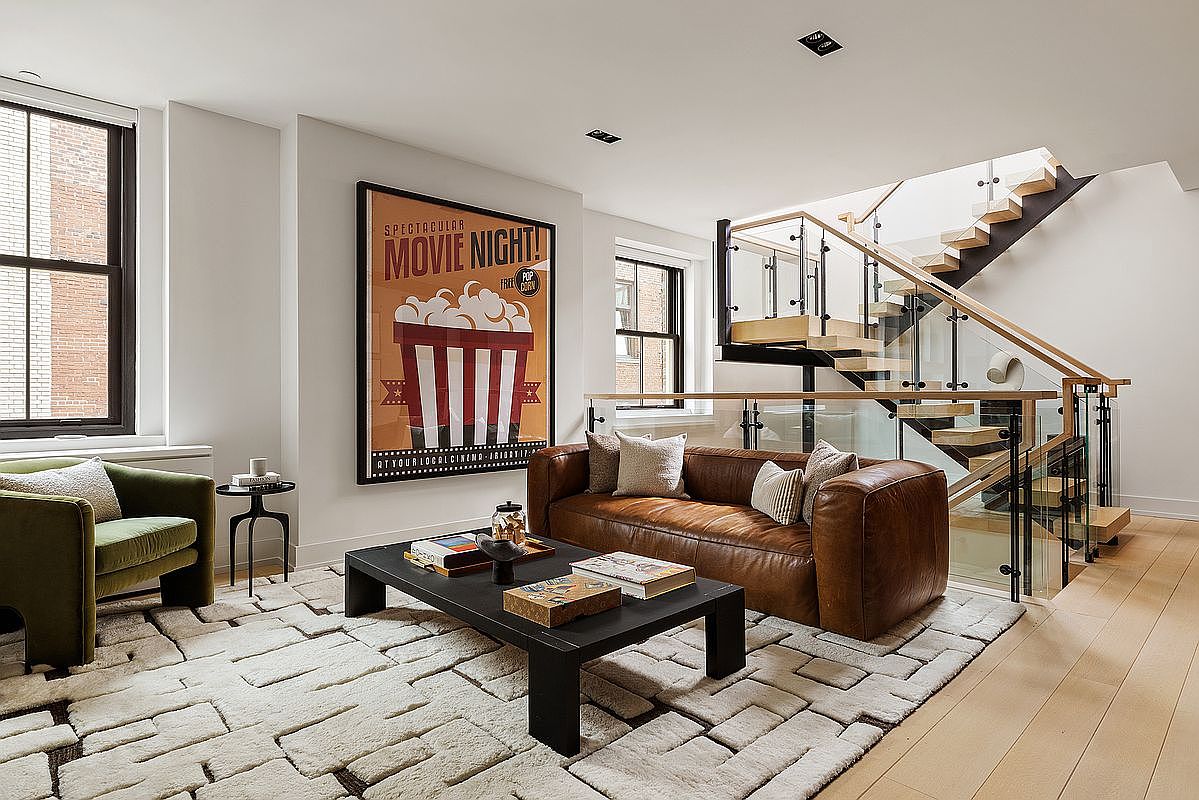
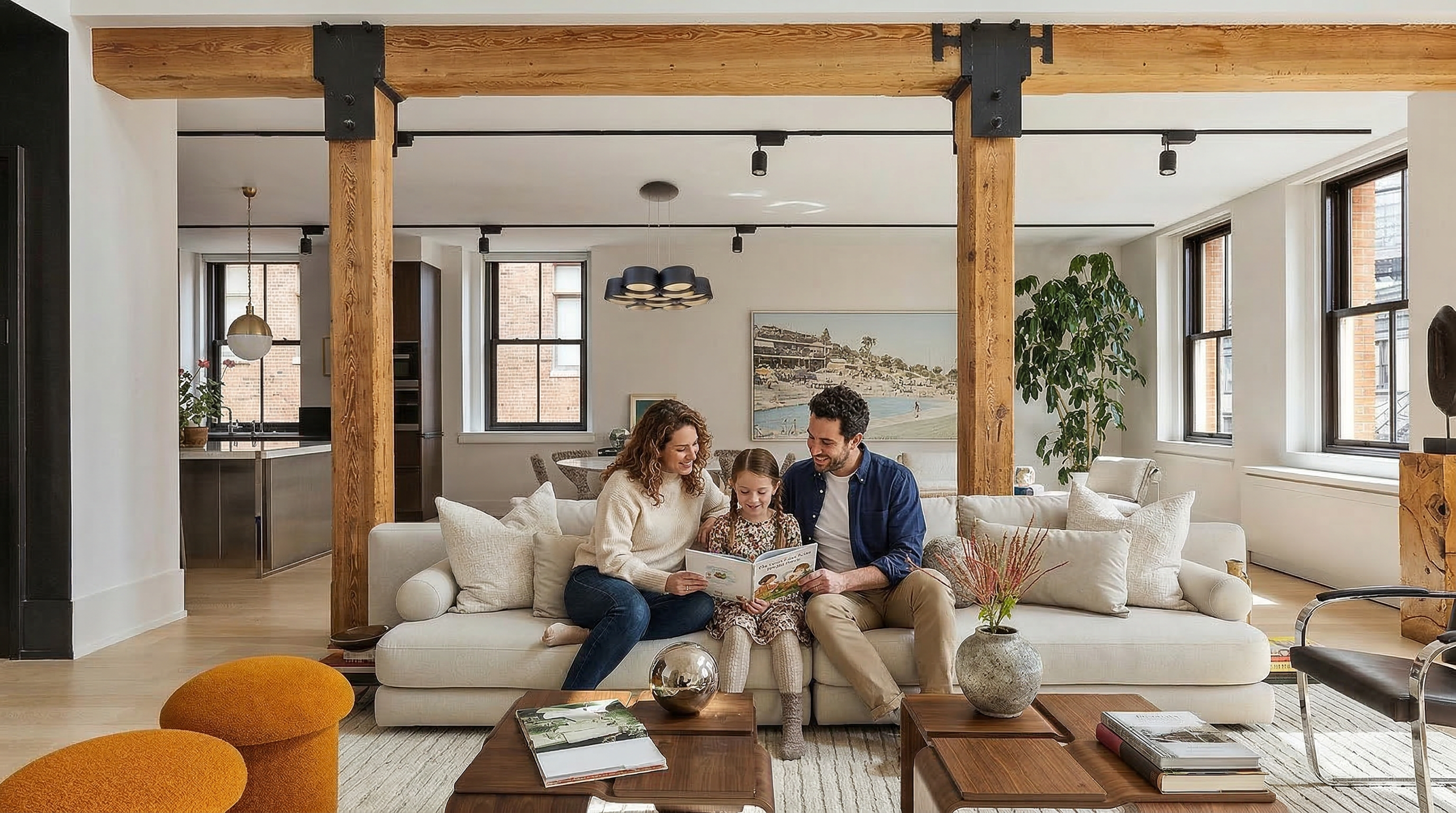
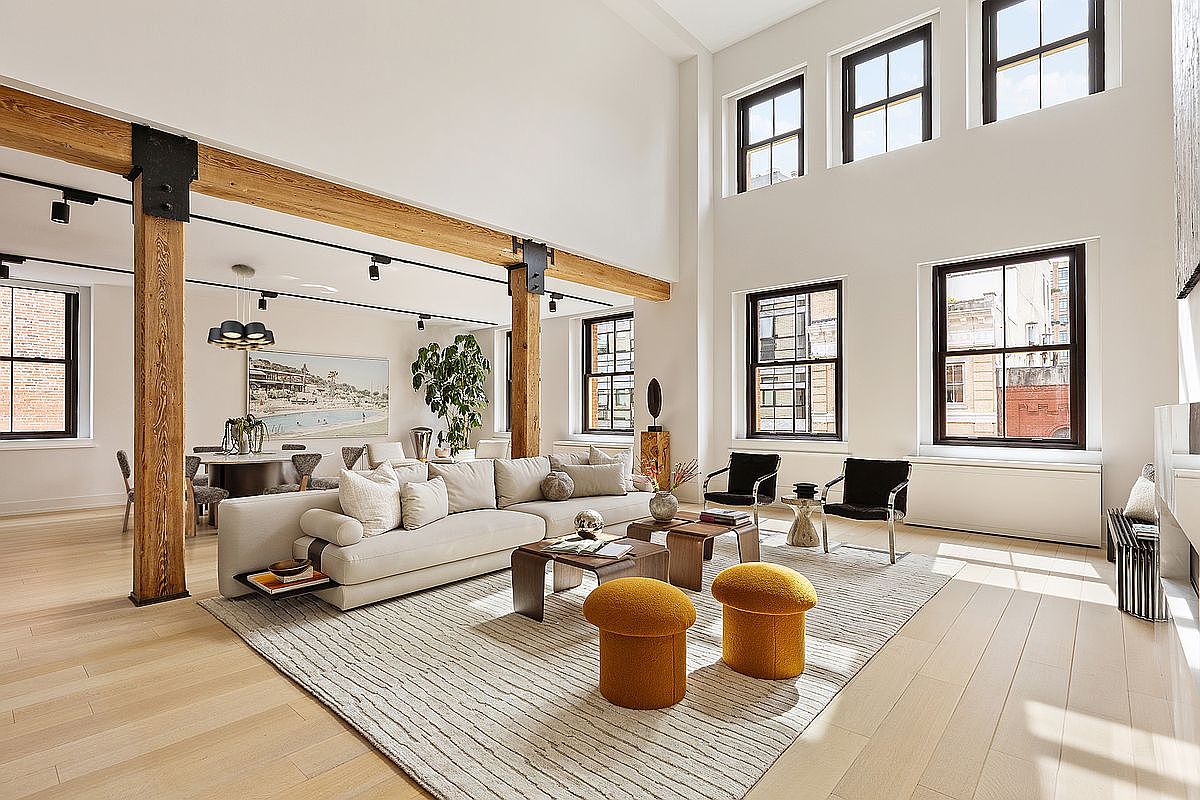
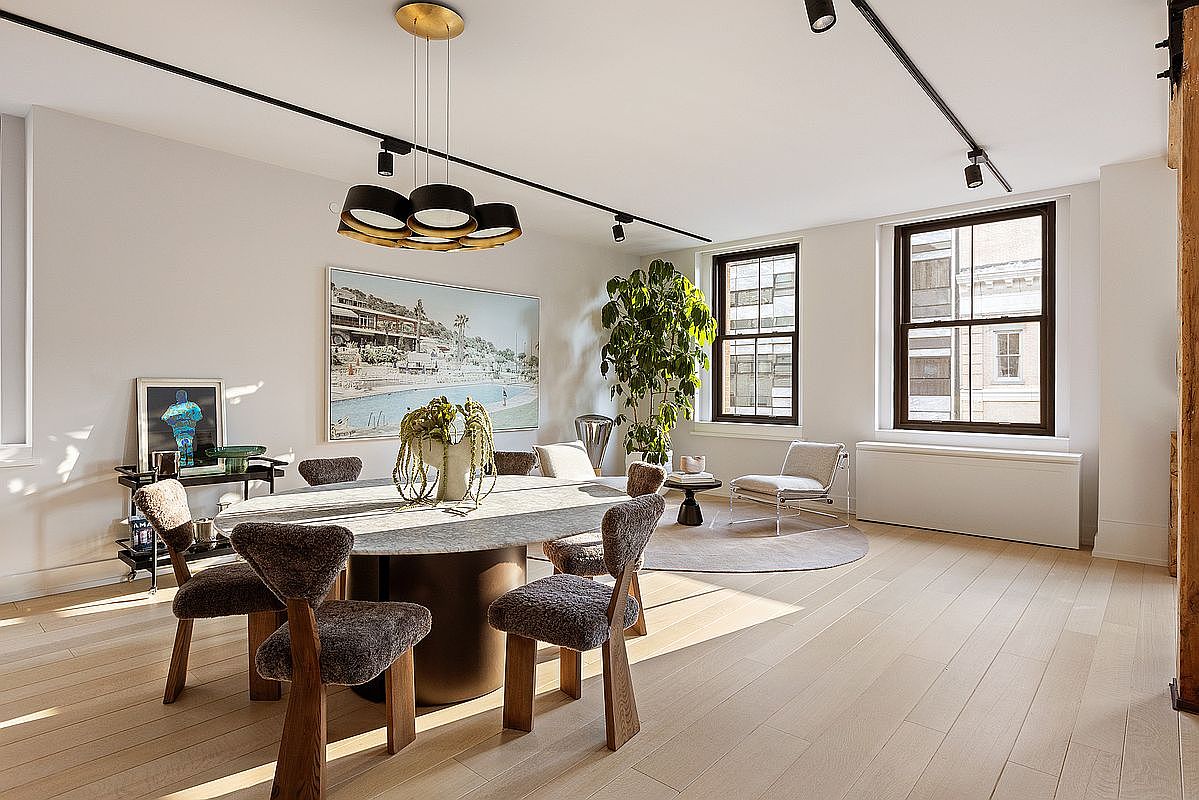
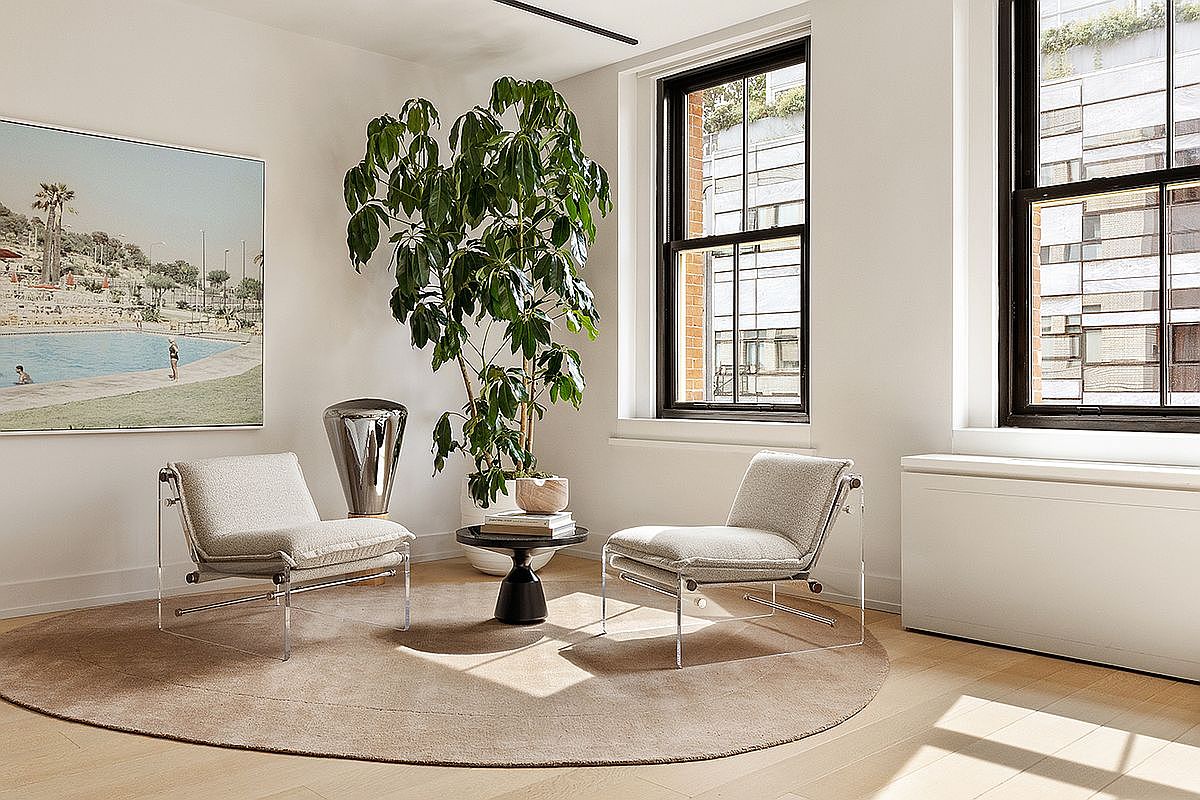
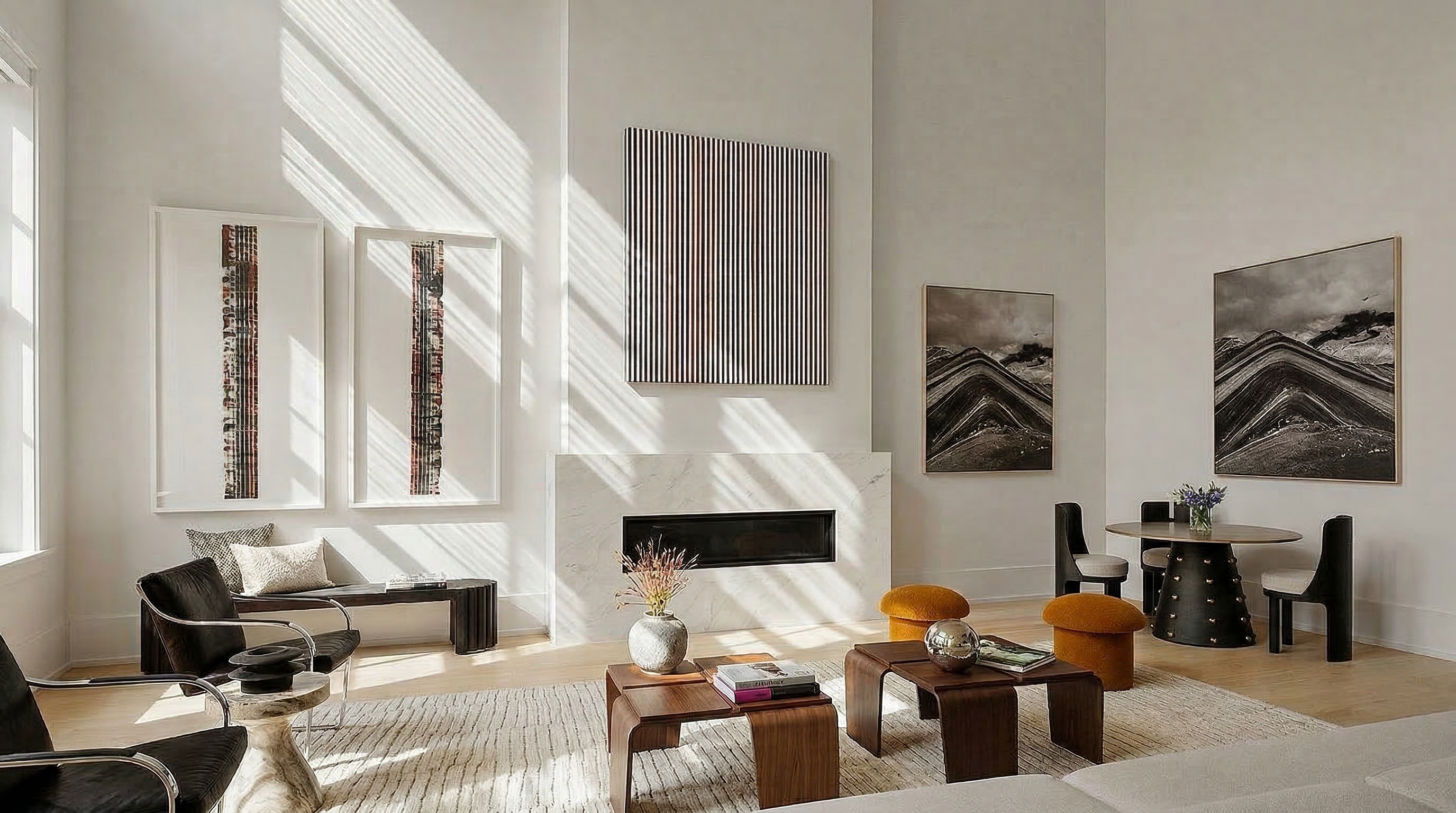
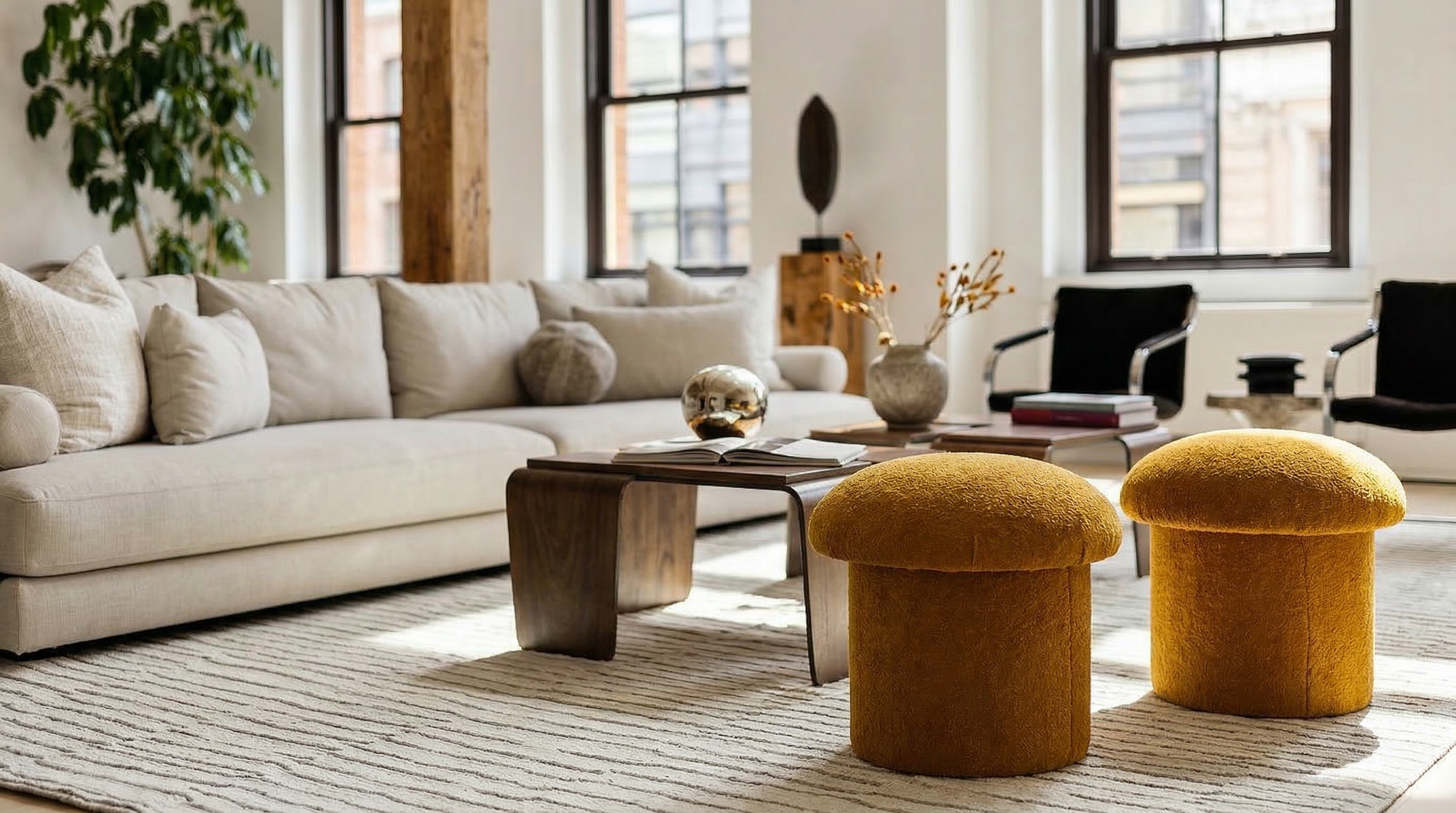
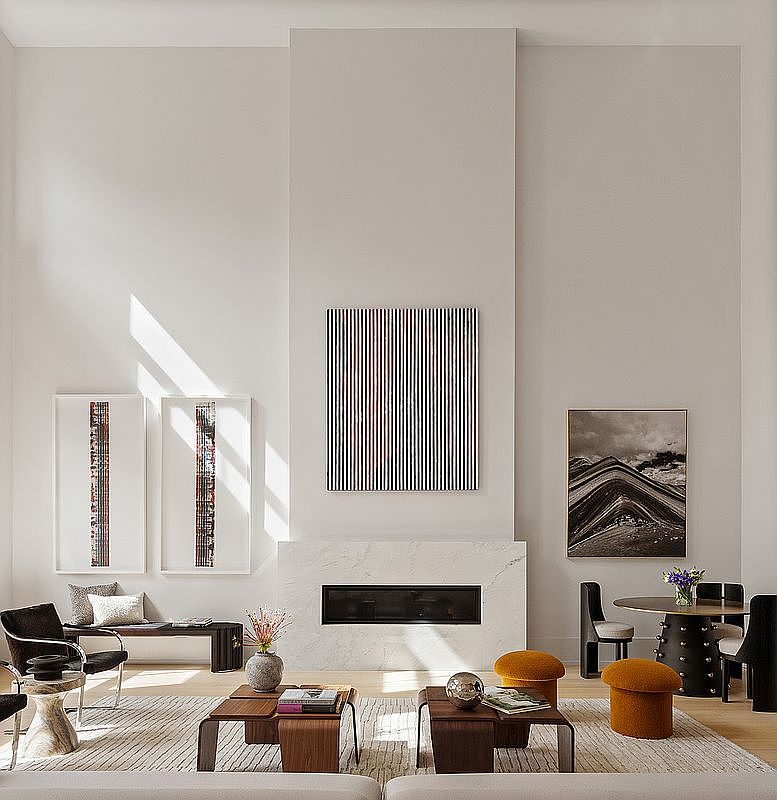
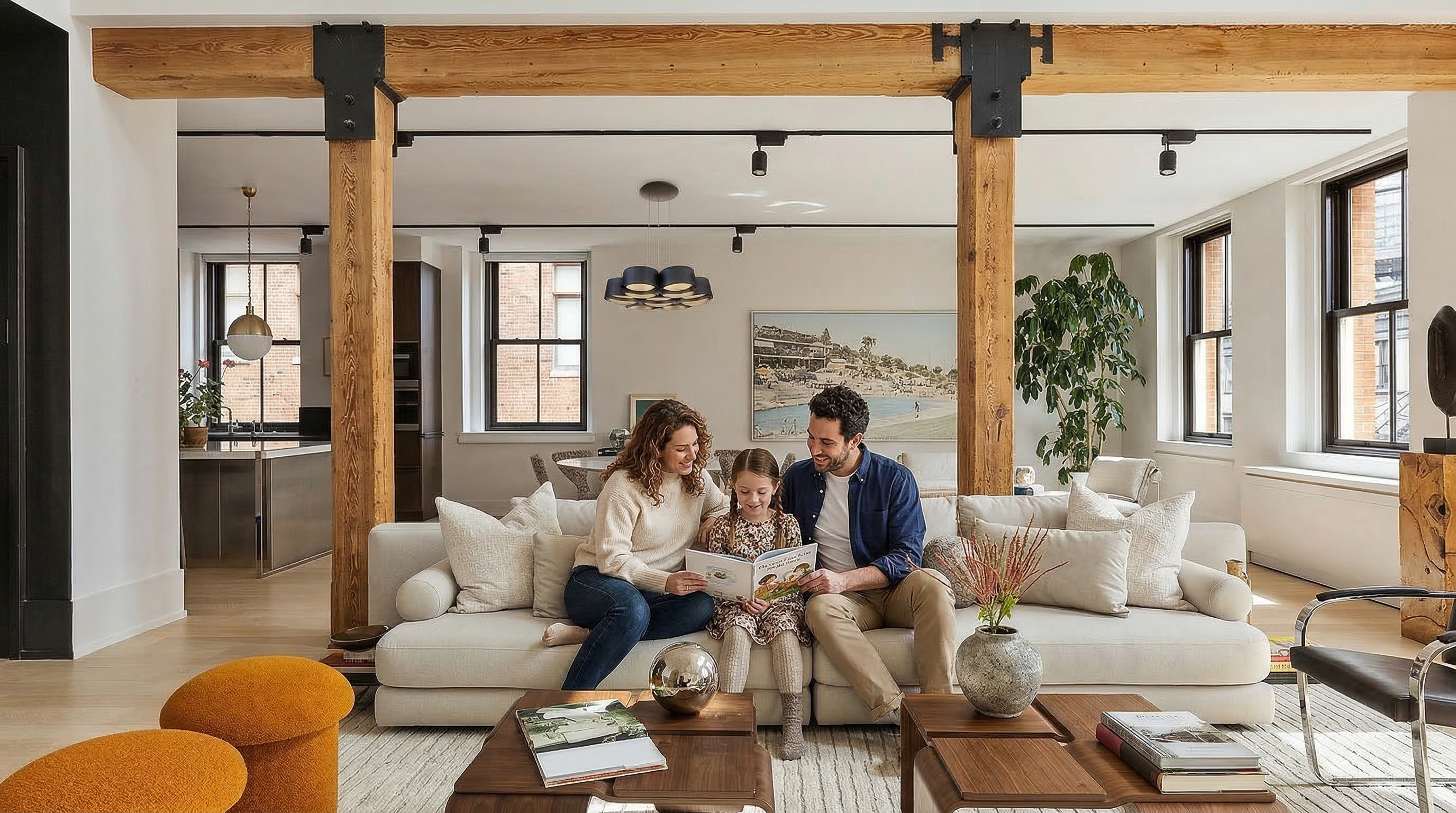
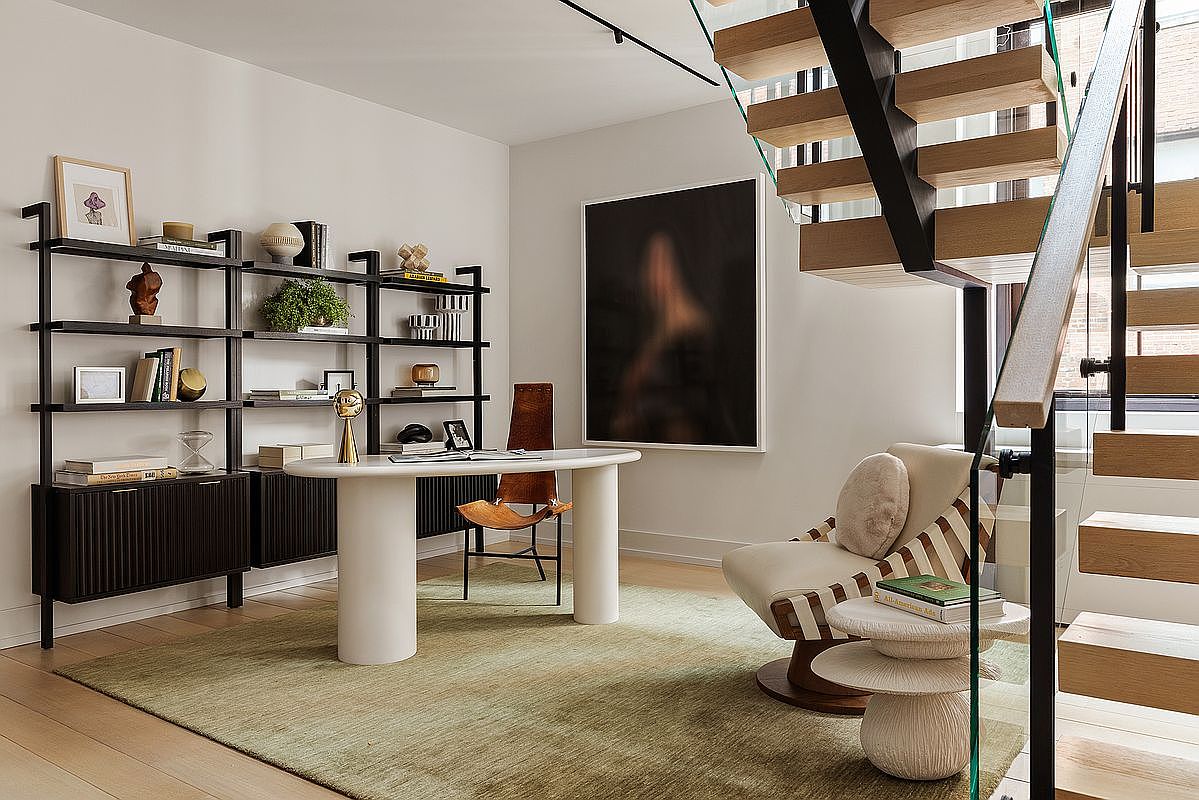
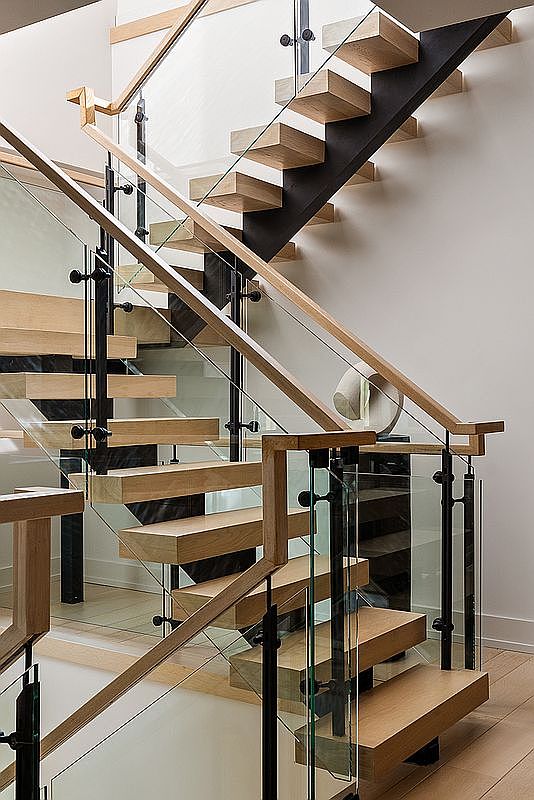
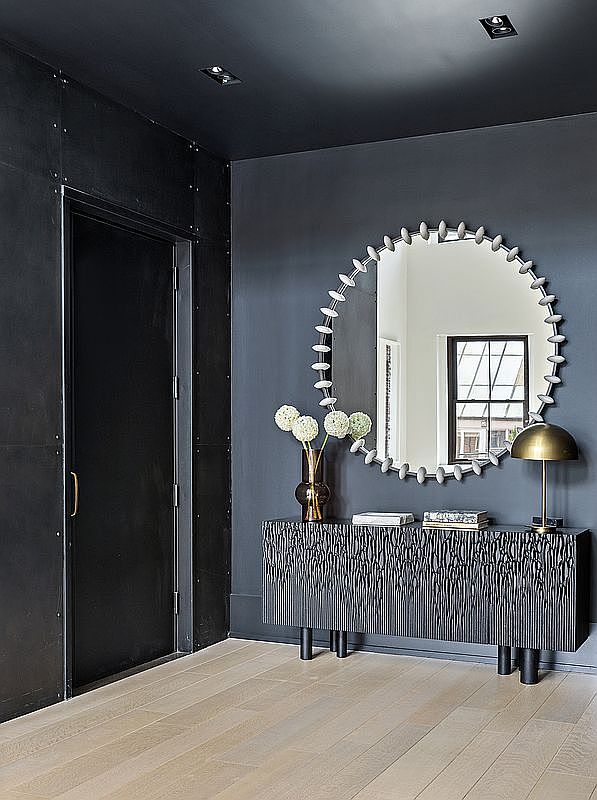
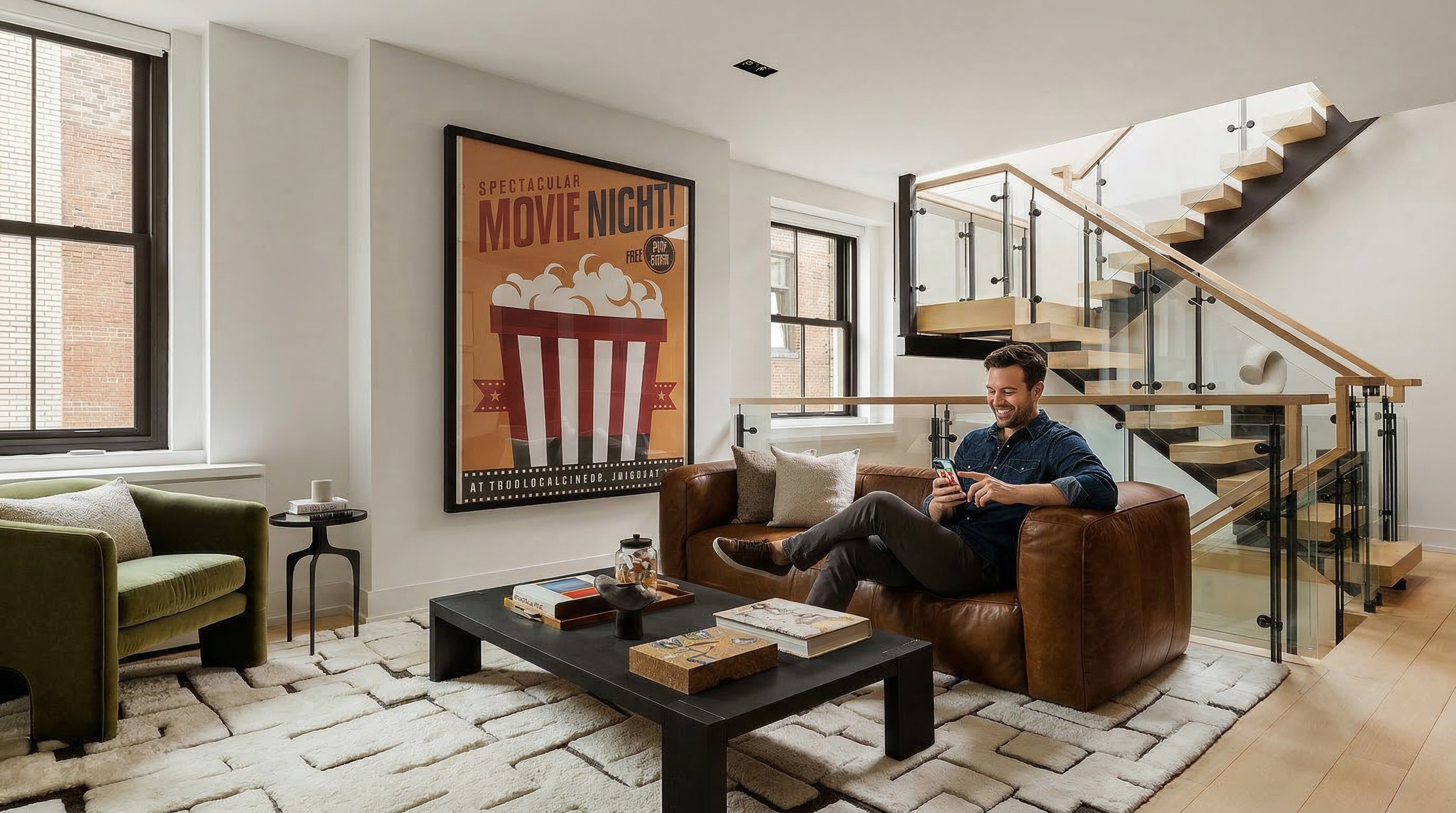
There is a particular kind of architecture that refuses to let you settle into indifference — spaces that demand a response the moment you cross the threshold. Penthouse D at 443 Greenwich Street is precisely that kind of architecture. Arriving by key-locked private elevator into a marble-clad foyer, the great room announces itself with the full authority of its double-height ceilings, exposed reclaimed beams, and seven oversized south-facing windows that pour light across wide-plank white oak floors. A marble-wrapped gas fireplace anchors the room with quiet permanence, while a floating staircase with glass railings and black metal supports traces a precise architectural line between the levels. It is a room that is at once monumental and genuinely livable — a combination that is harder to achieve than it appears.
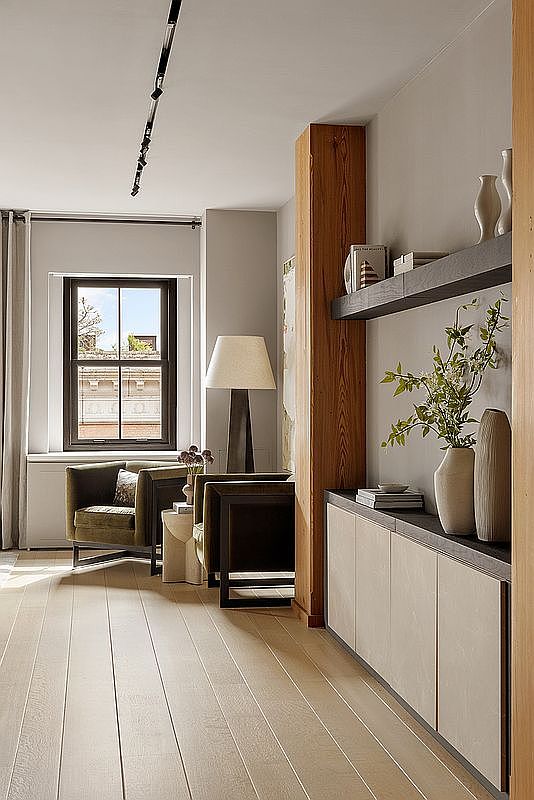
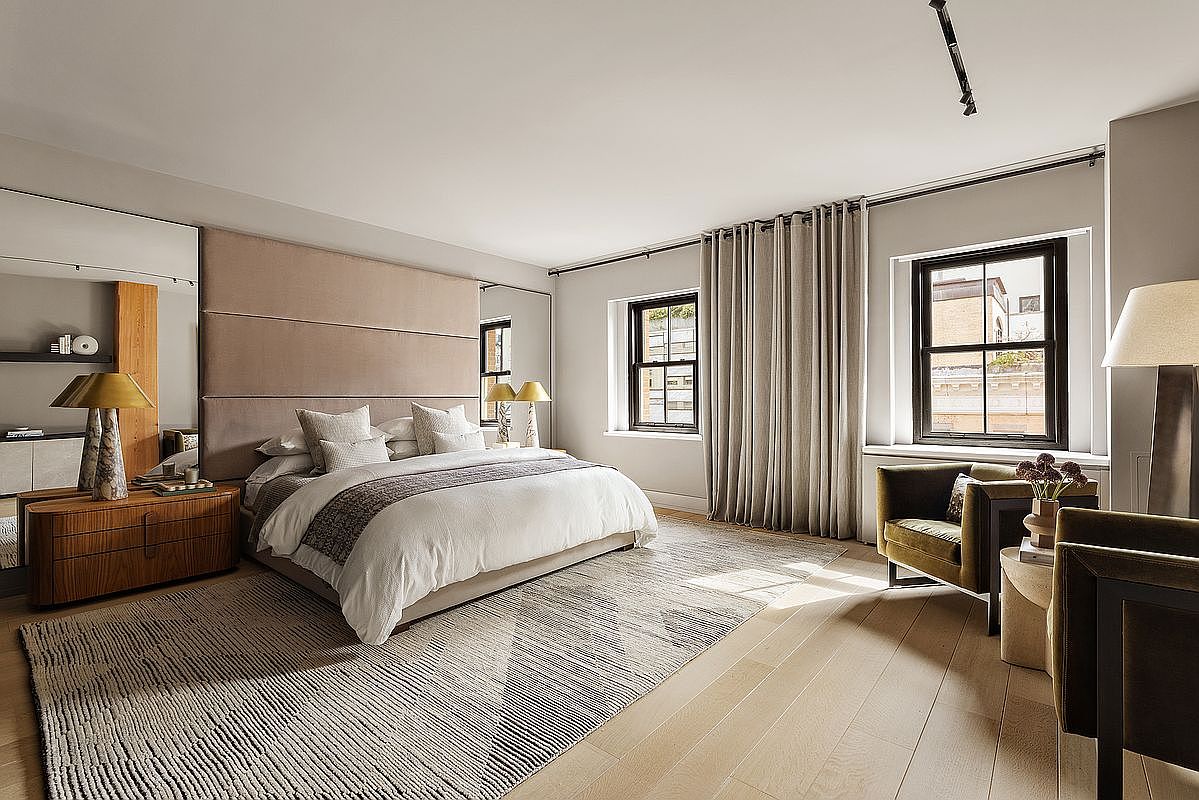
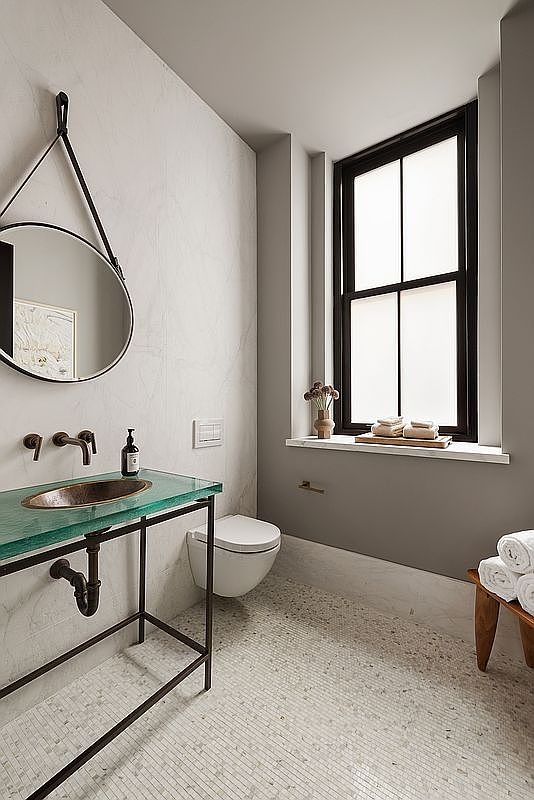
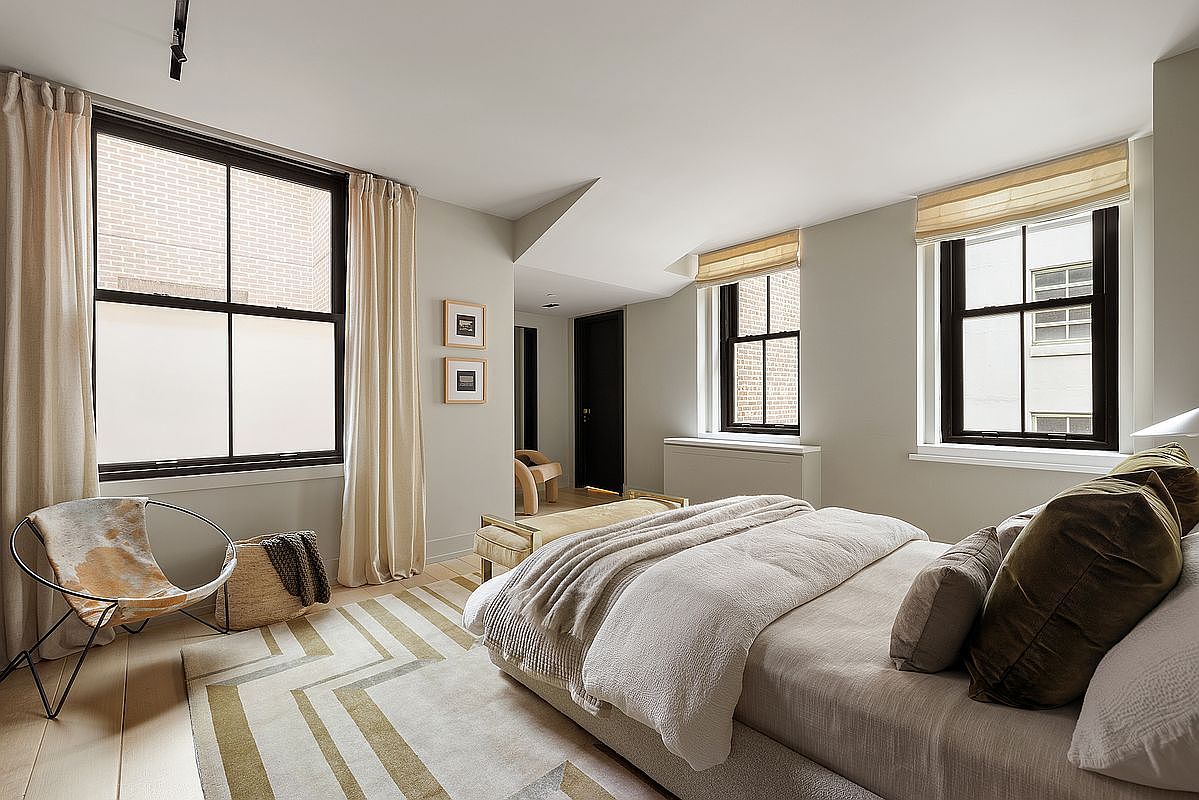
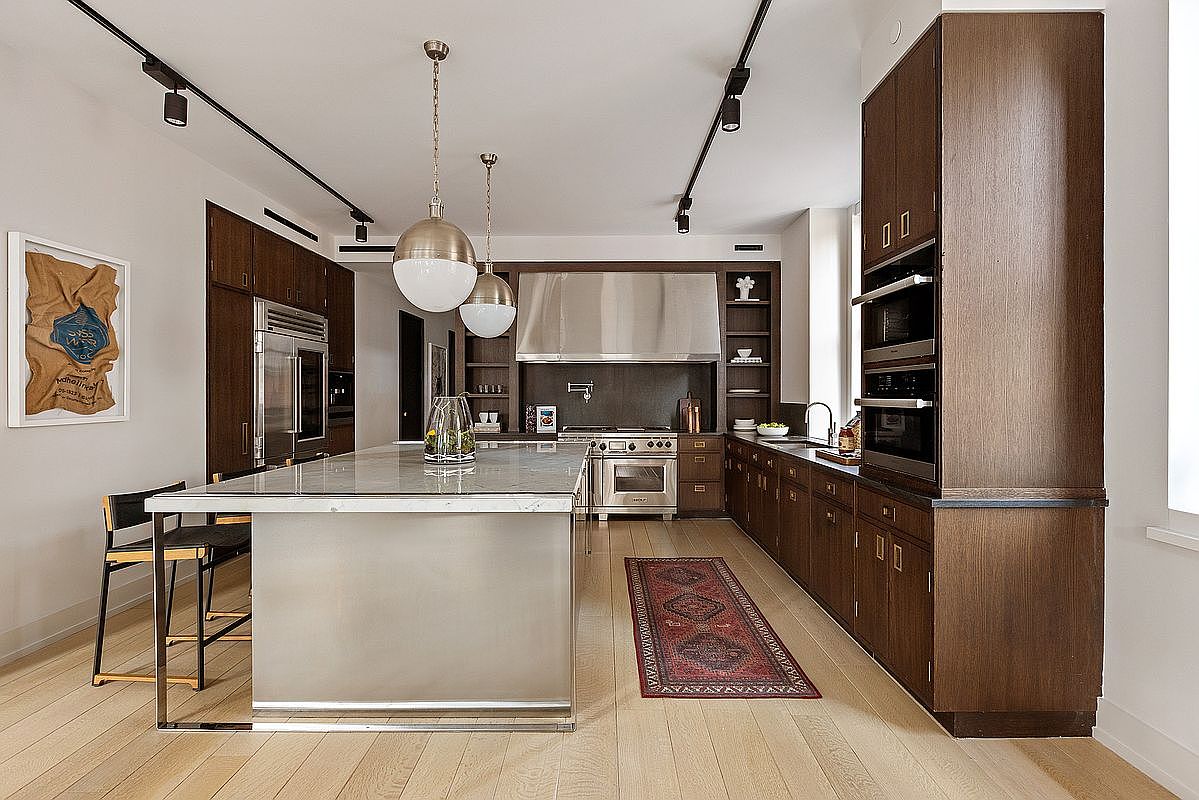
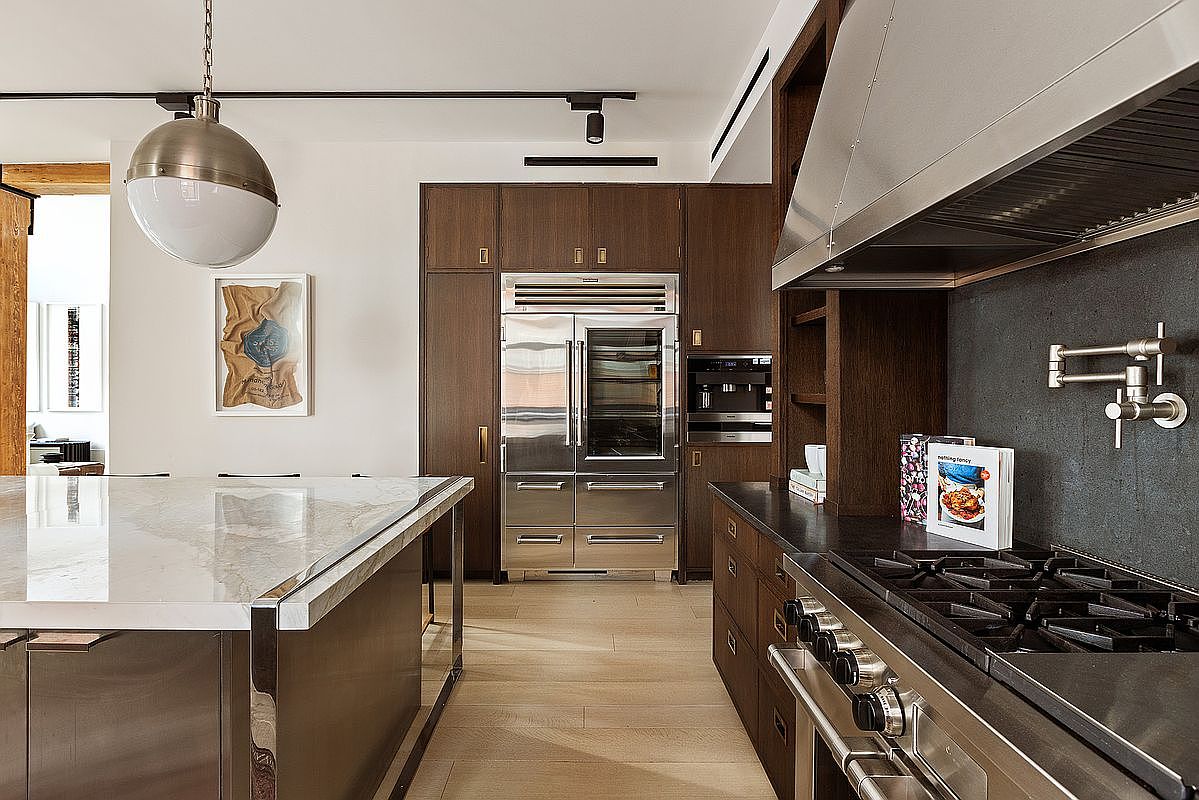
The kitchen is designed for the kind of entertaining that makes it look effortless. Christopher Peacock cabinetry sets the tone, refined and timeless, while a two-inch-thick Calacatta marble island provides both a dramatic visual centerpiece and a practical surface for serious cooking. The appliance suite — a 48-inch Wolf range, Sub-Zero refrigerator and freezer, dual dishwashers, built-in Miele coffee station, and an integrated Gaggenau wine refrigerator — leaves nothing to improvisation. Completing the main level are a windowed home office, a generous en-suite bedroom with dressing area, a powder room, and a well-appointed laundry room with sink and storage.
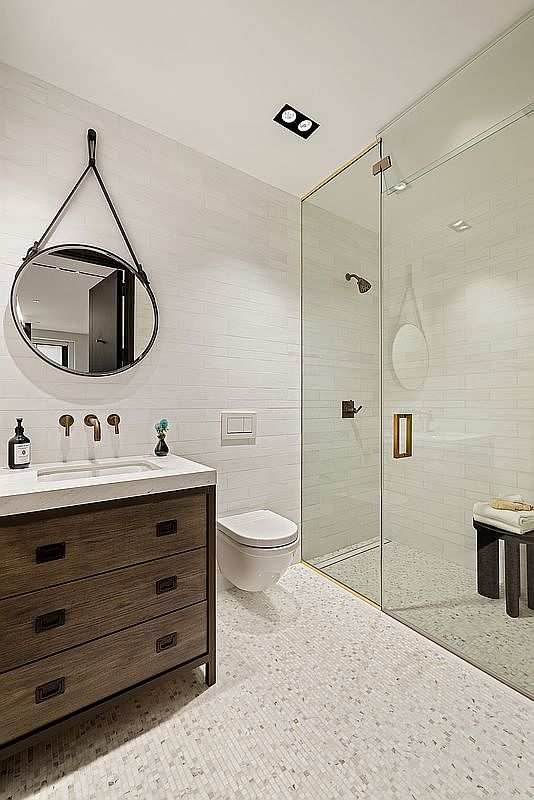
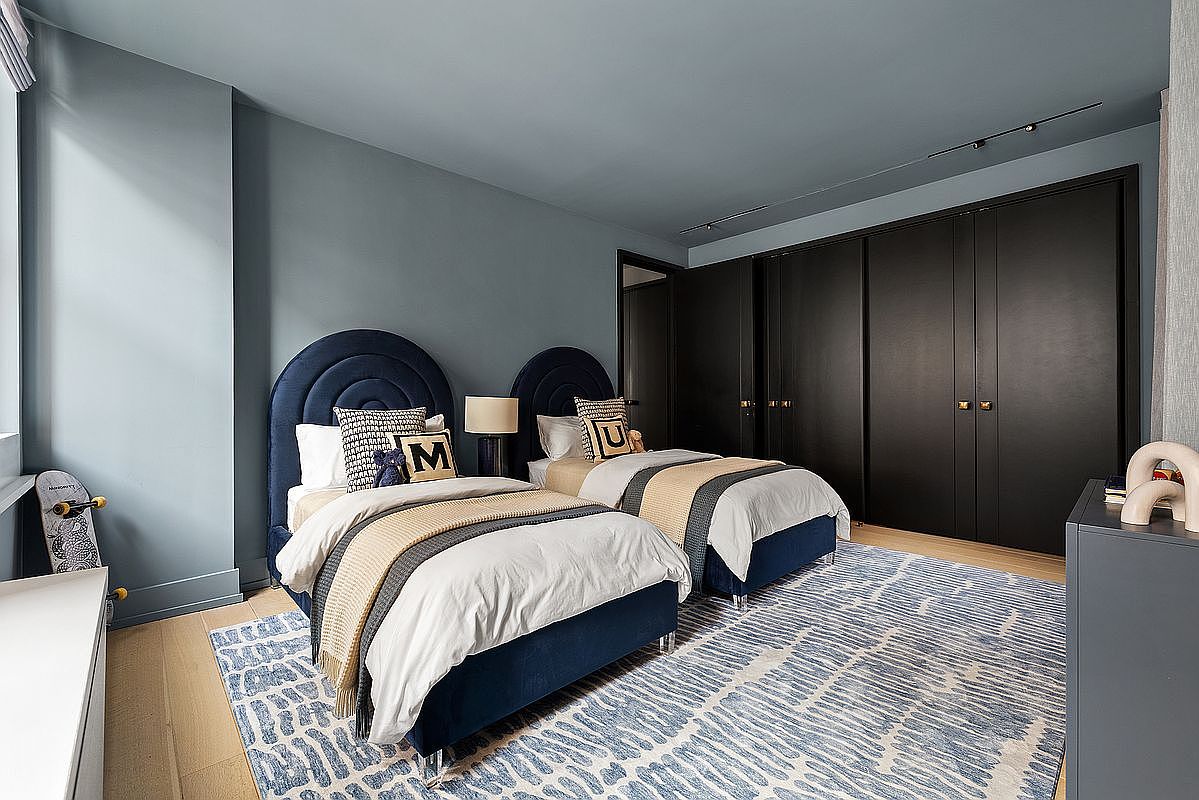
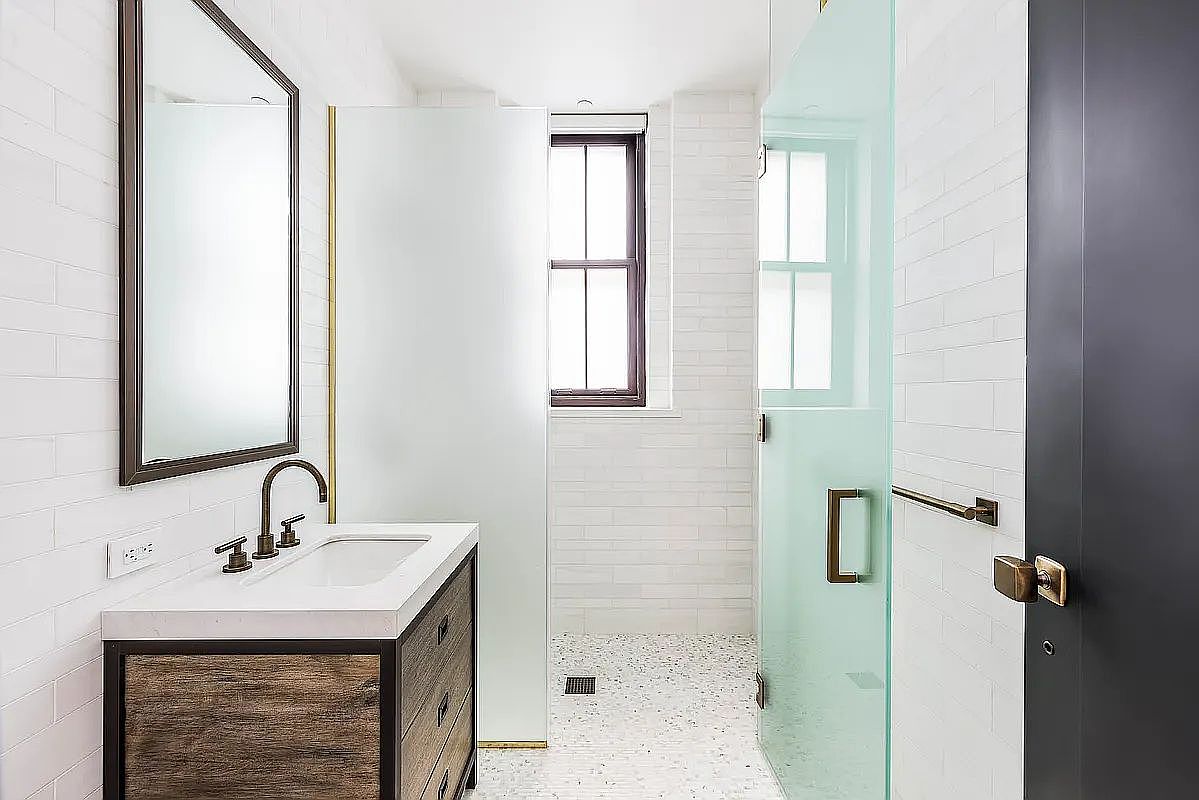
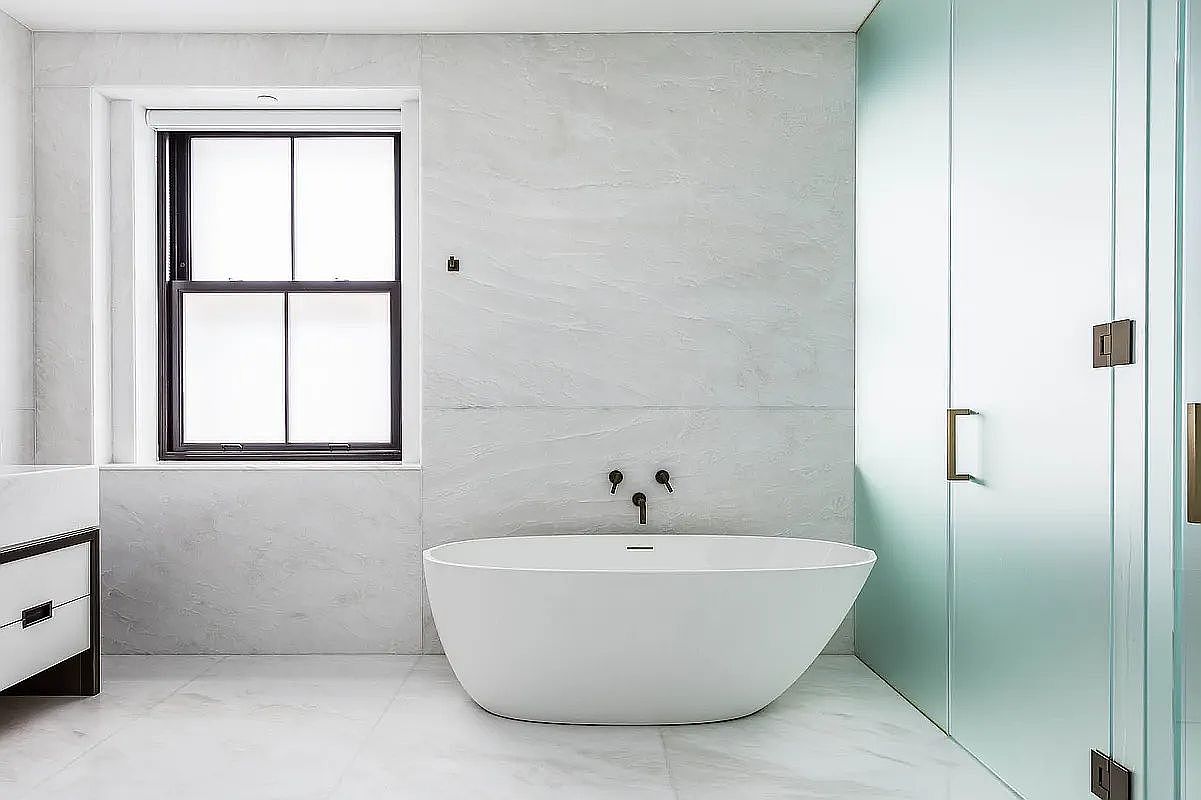
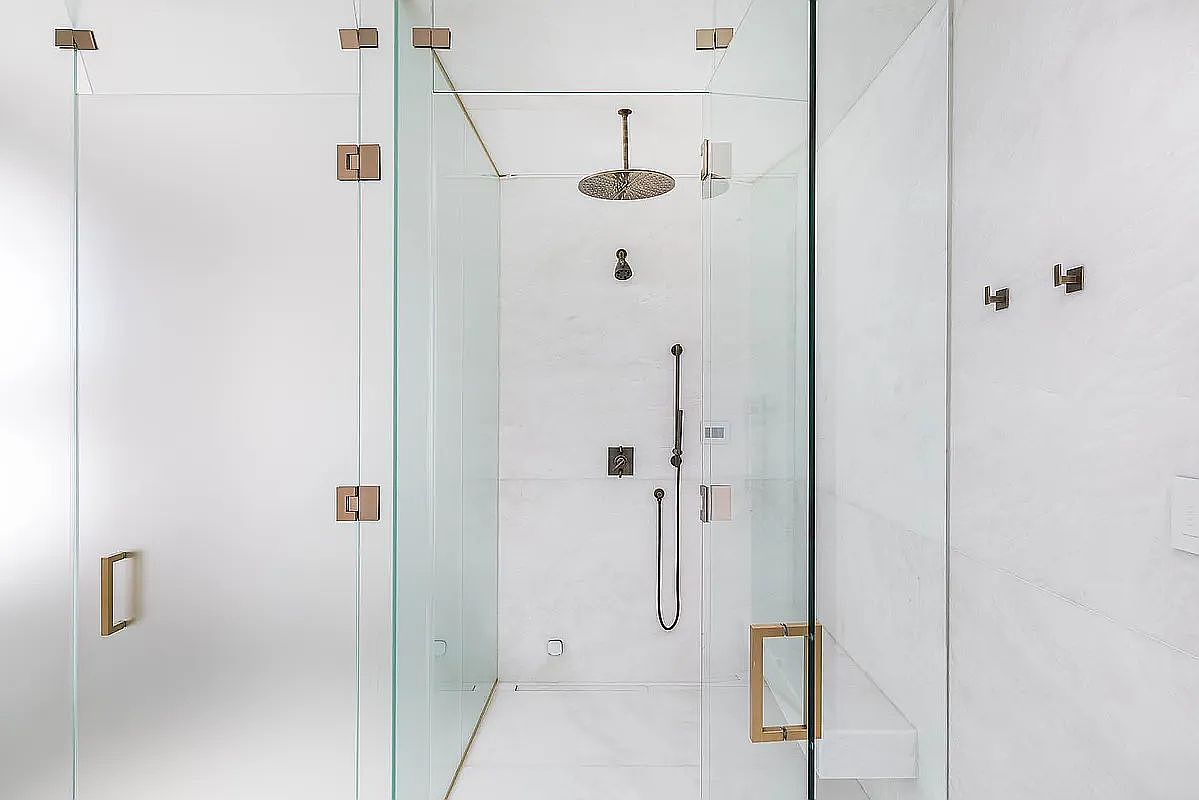
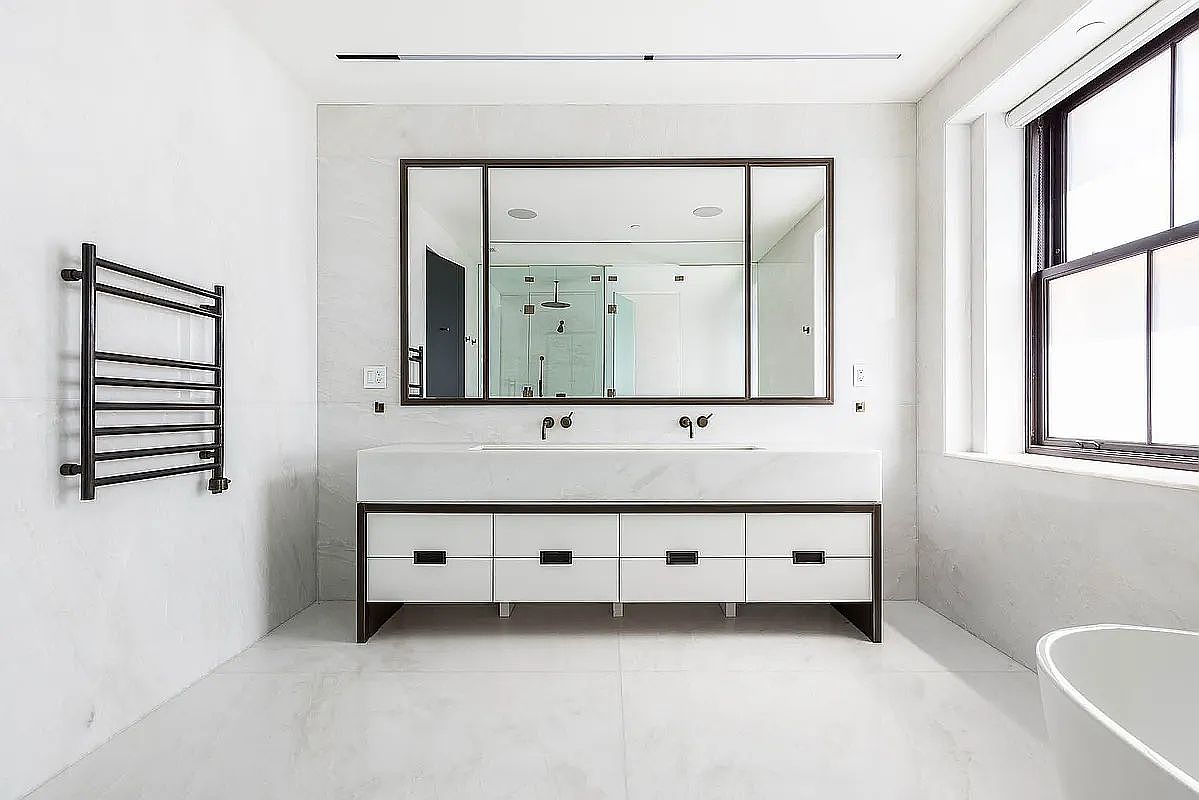
The second level is defined by the primary suite, a room that earns the word sanctuary without apology. Multiple closets give way to a bathroom wrapped entirely in Italian Calacatta marble: a freestanding soaking tub, a glass-enclosed steam shower with rain dome and body sprays, radiant heated floors, dual bronze vanities, and a separate wash closet with bidet. The material palette is cohesive and deeply considered, the kind of bathroom that rivals the finest European hotels. An additional en-suite bedroom and a flexible den — easily configured as a fourth bedroom — round out this level, alongside an additional full bath.
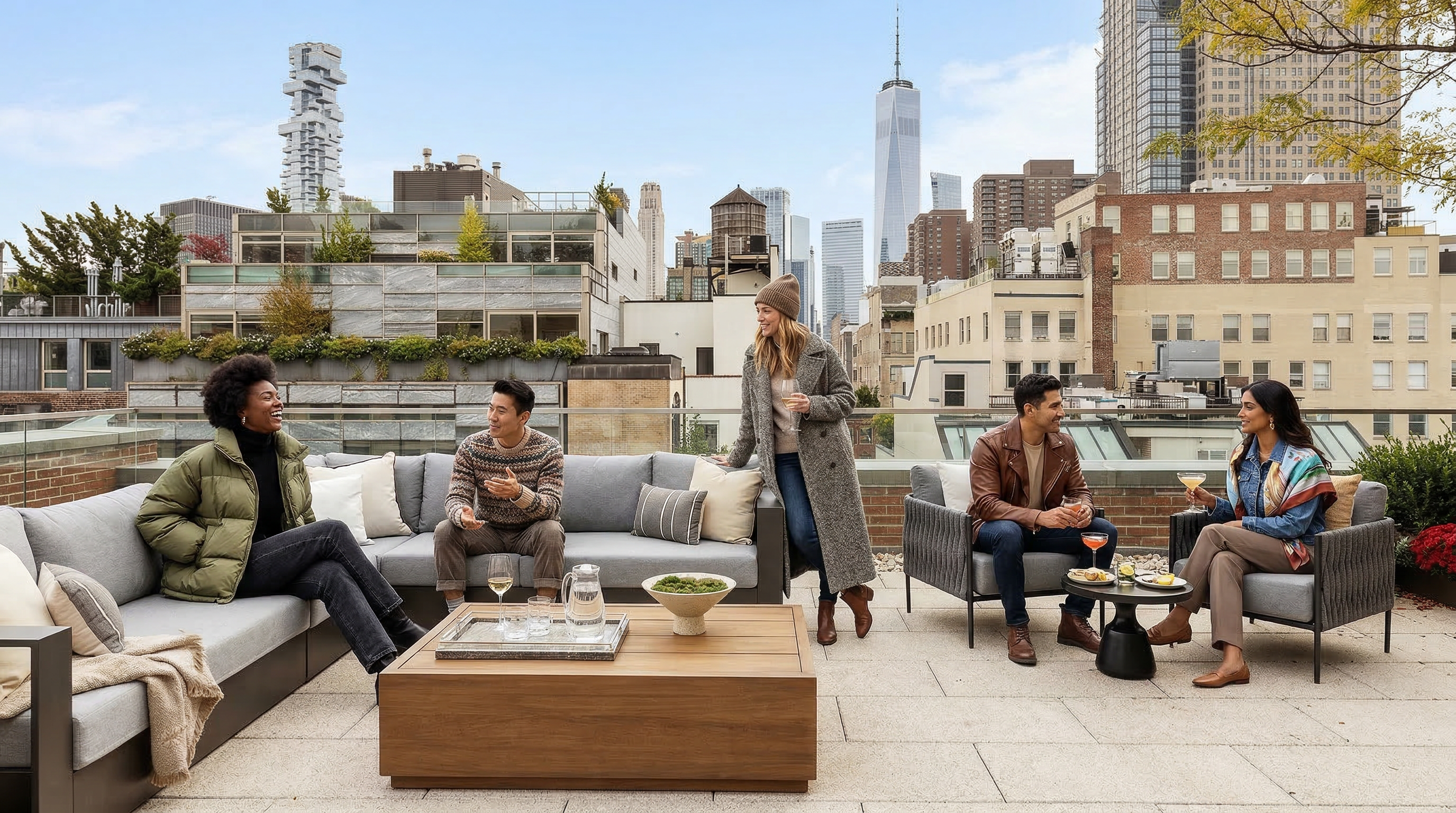
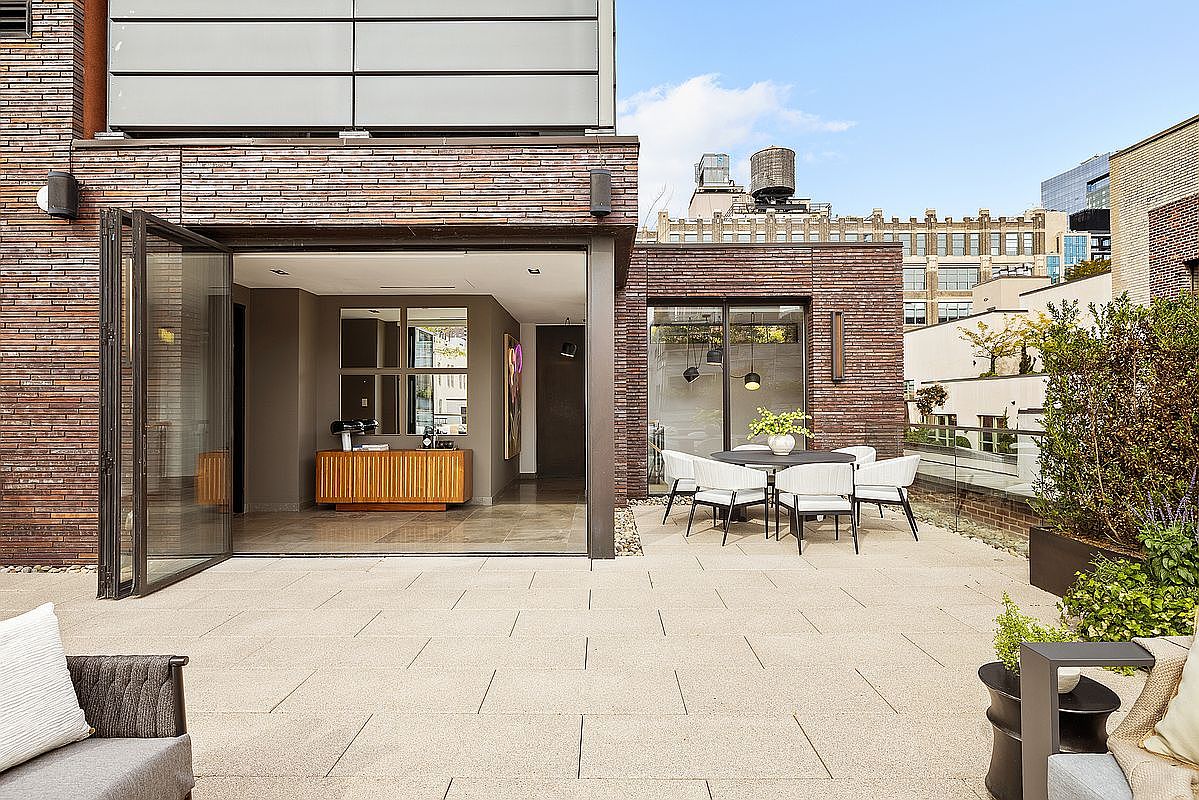
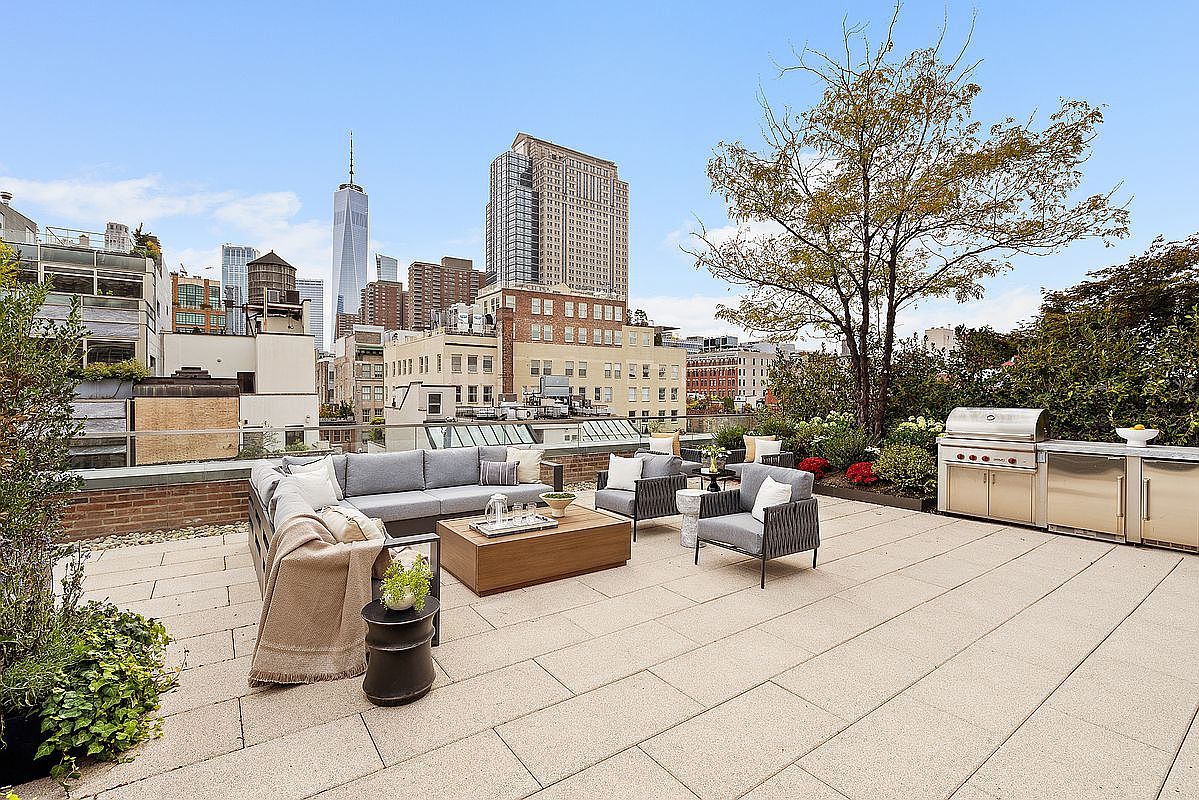
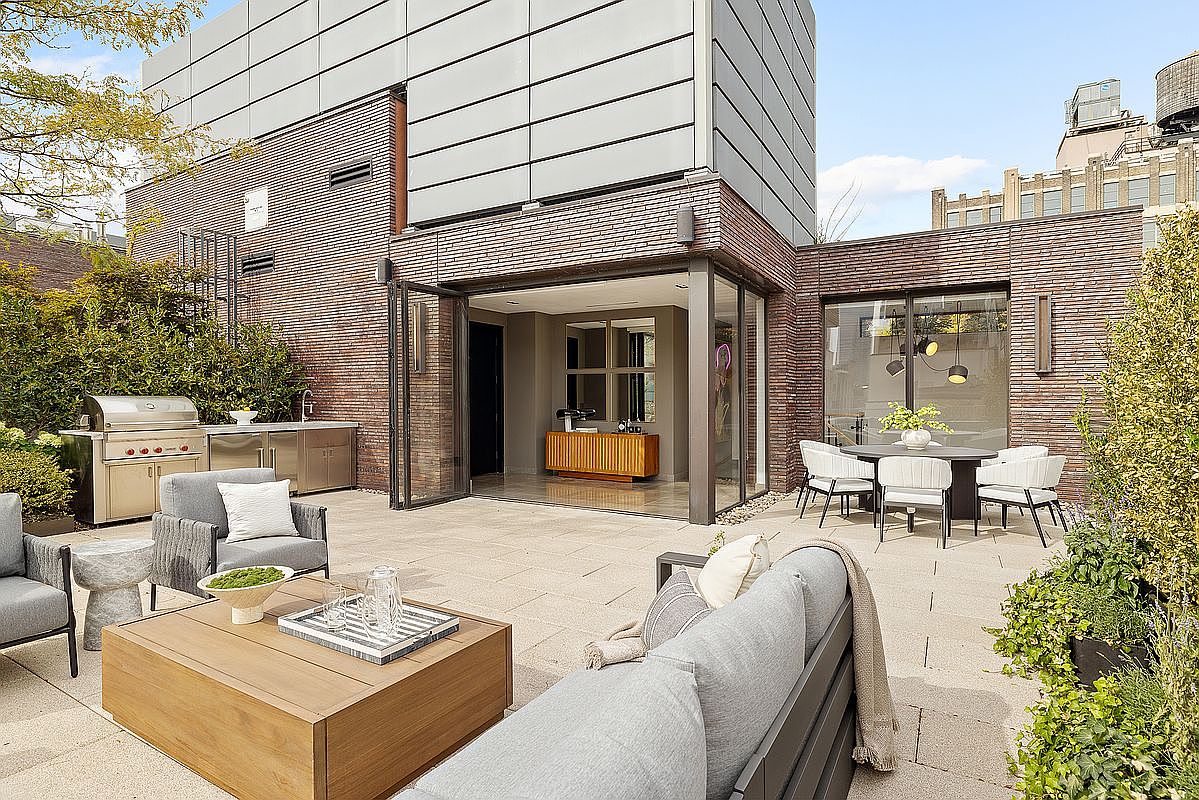
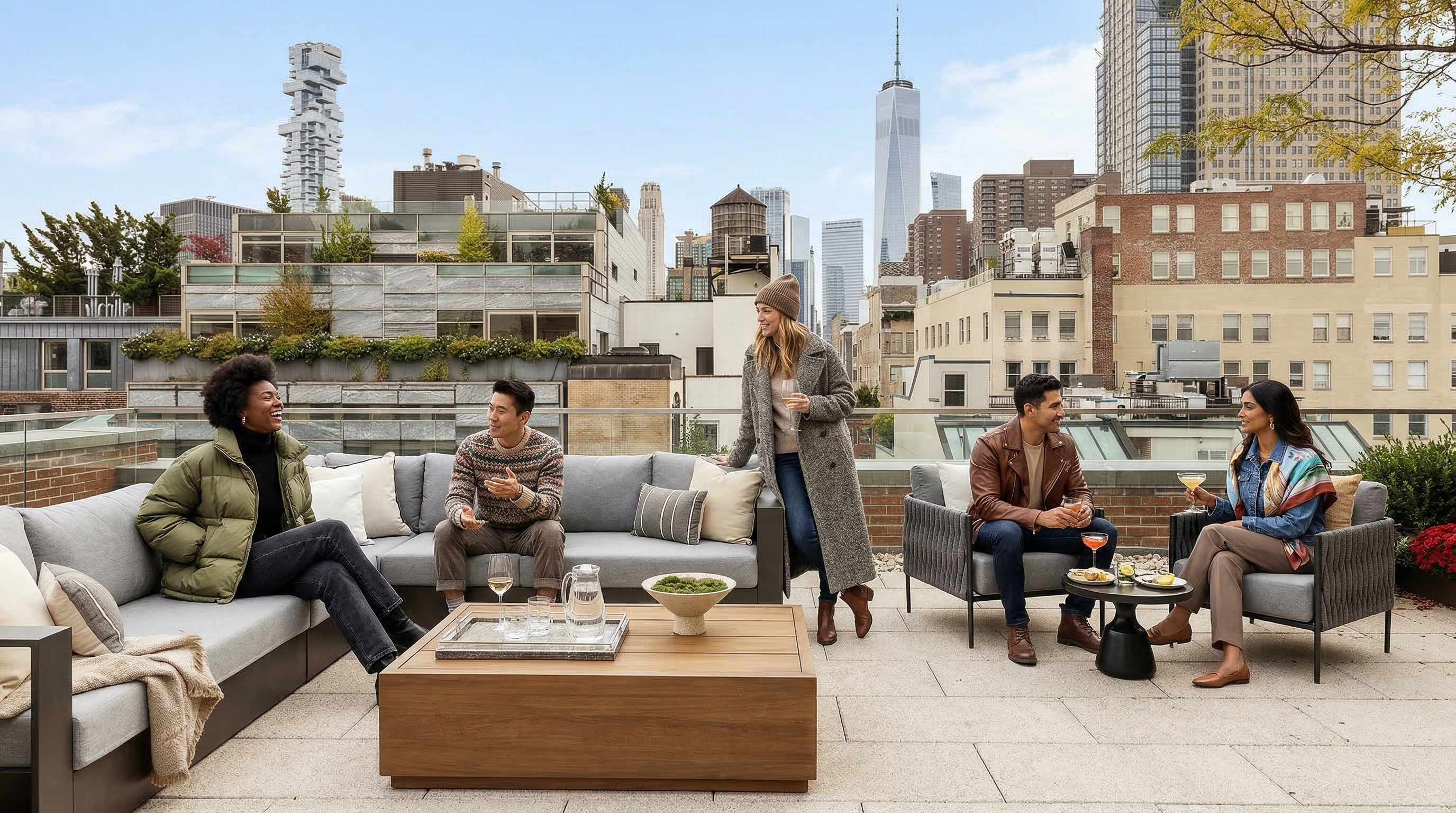
The crown of the residence is its top-floor lounge, where accordion glass doors retract entirely to dissolve the boundary between interior and the open sky. The roof terrace is not a finishing gesture but a fully realized destination: an outdoor kitchen with Wolf grill, landscaped garden, built-in lighting, irrigation, and integrated speakers frame unobstructed southern views that include One World Trade Center on the horizon. Whether hosting a summer evening under the stars or watching the city lights emerge at dusk, this terrace is the kind of space that recalibrates one's expectations of what urban living can be.
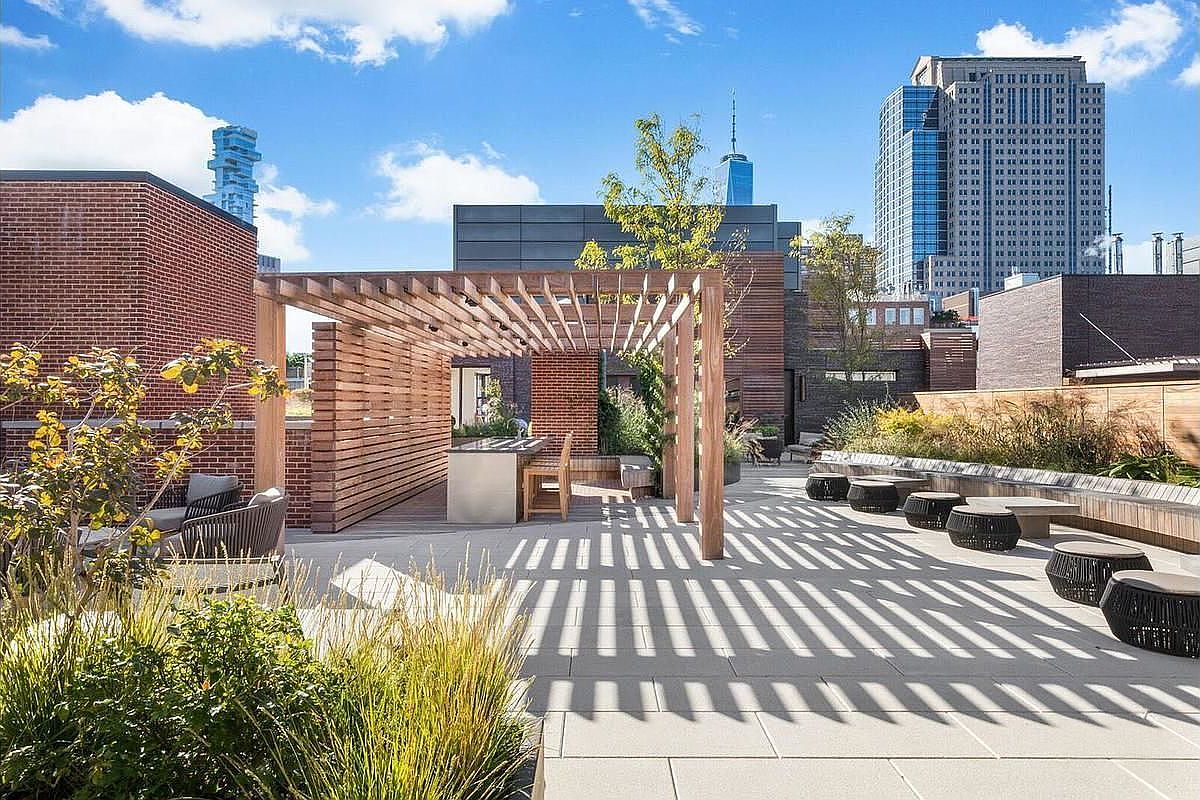
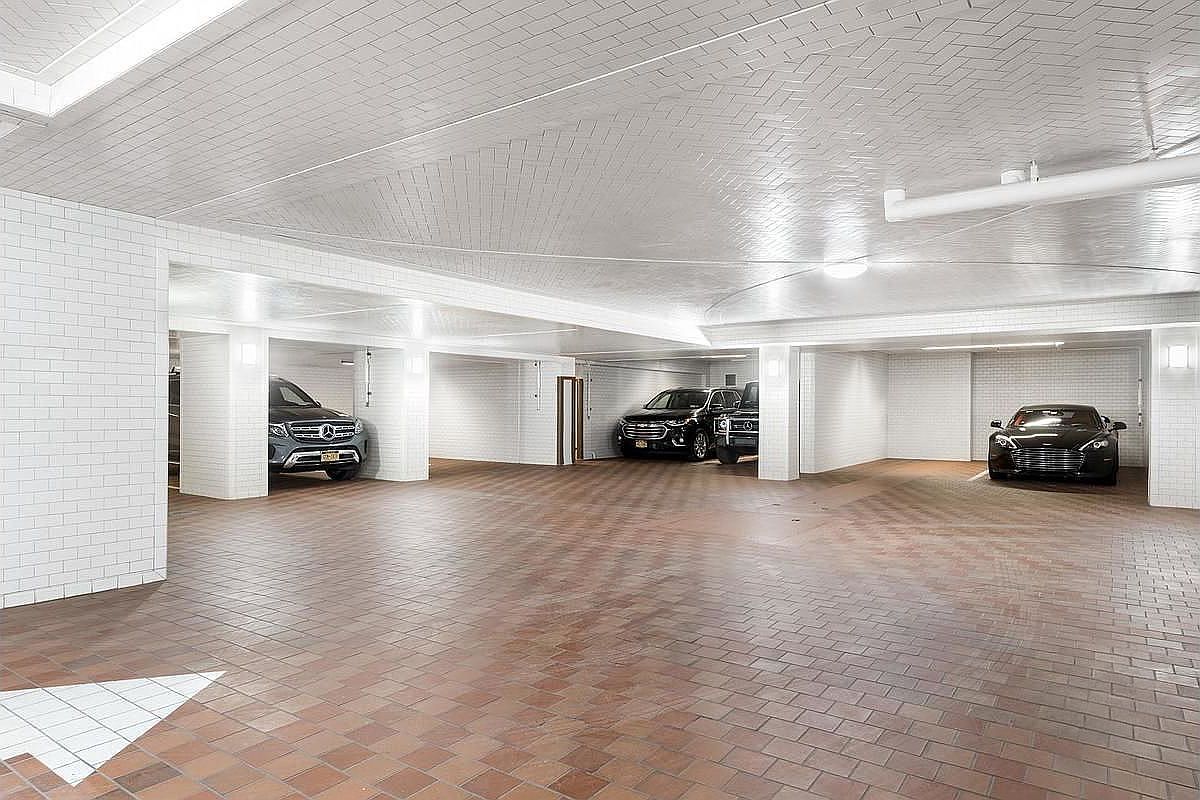
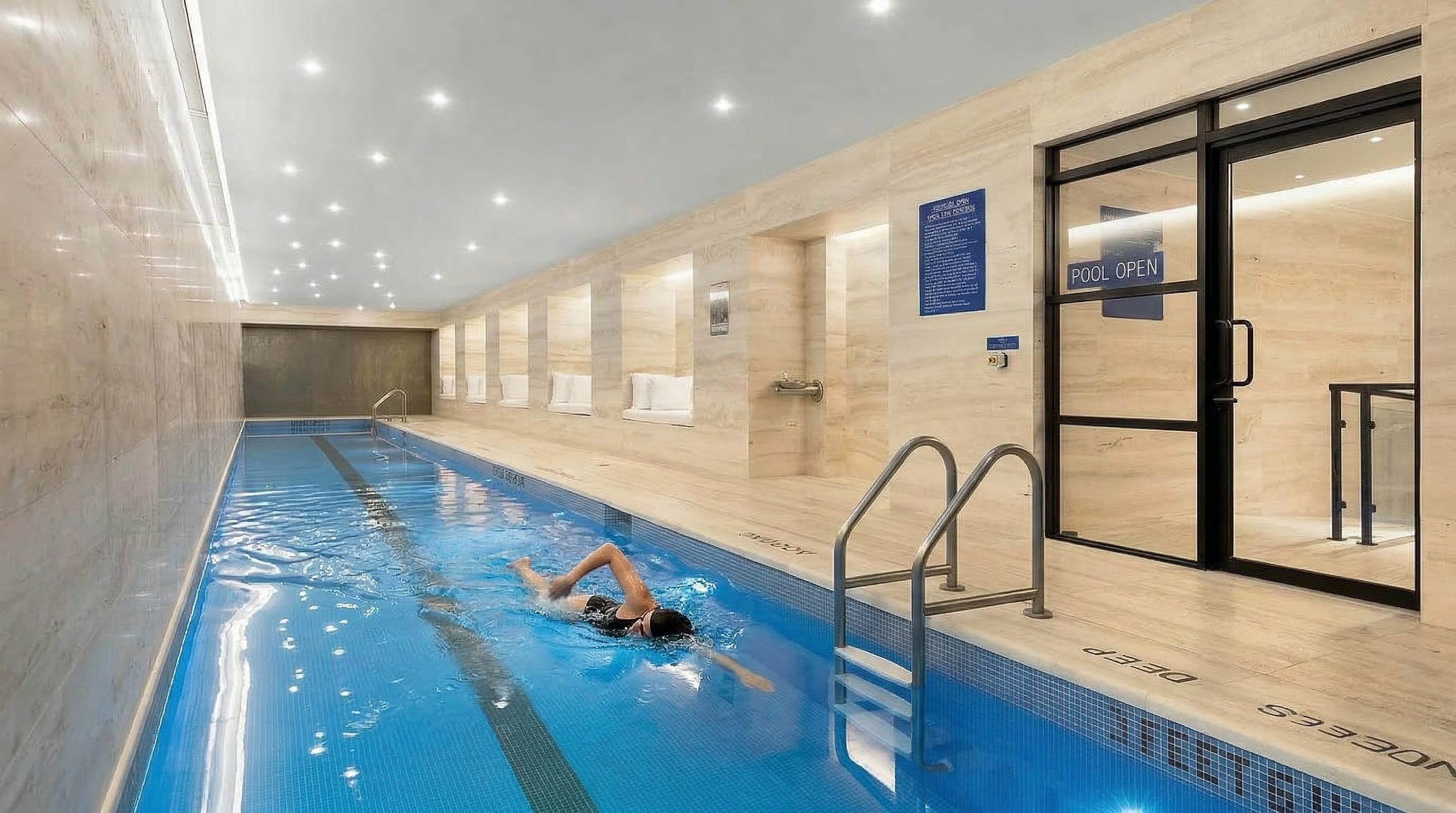
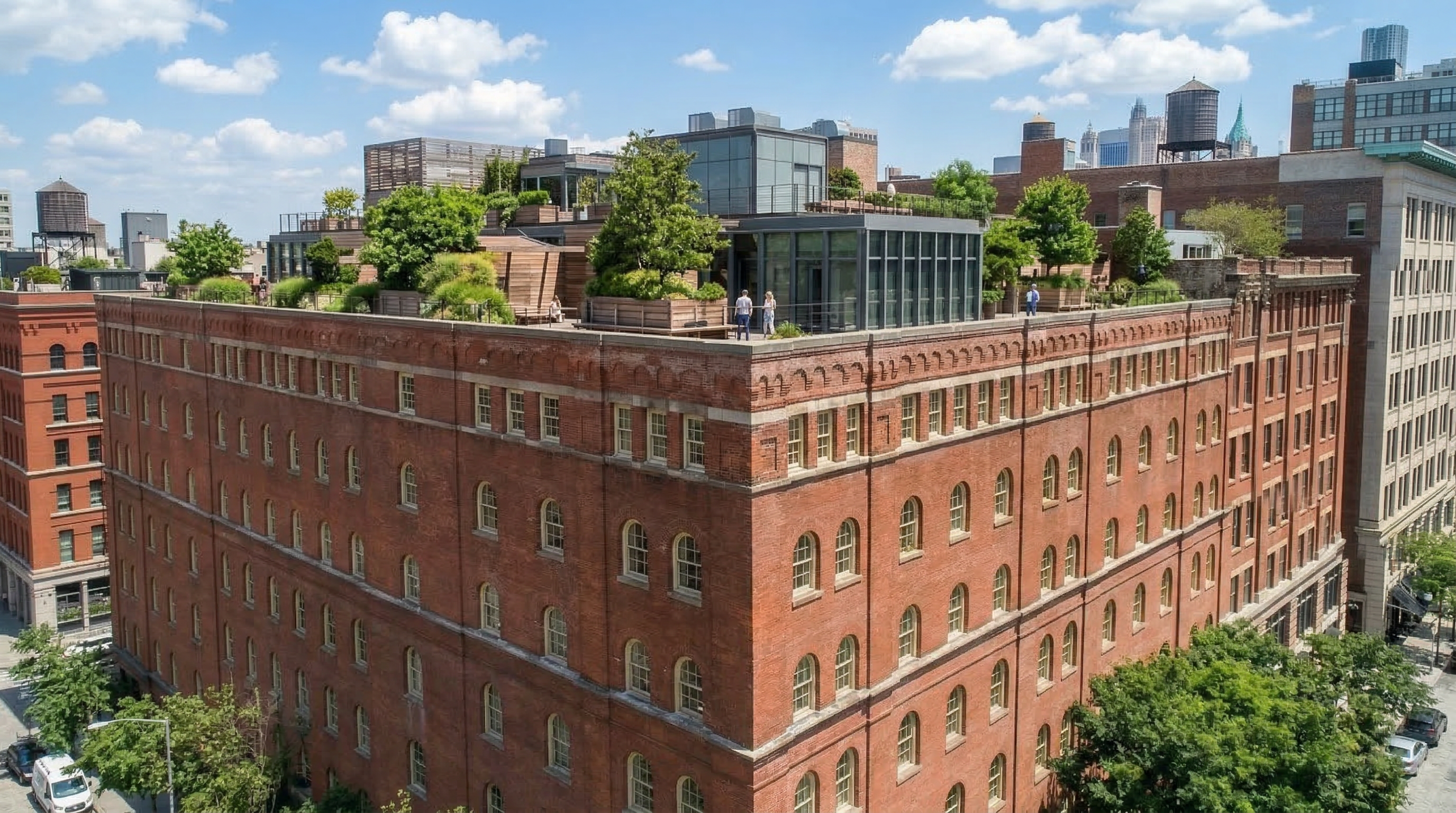
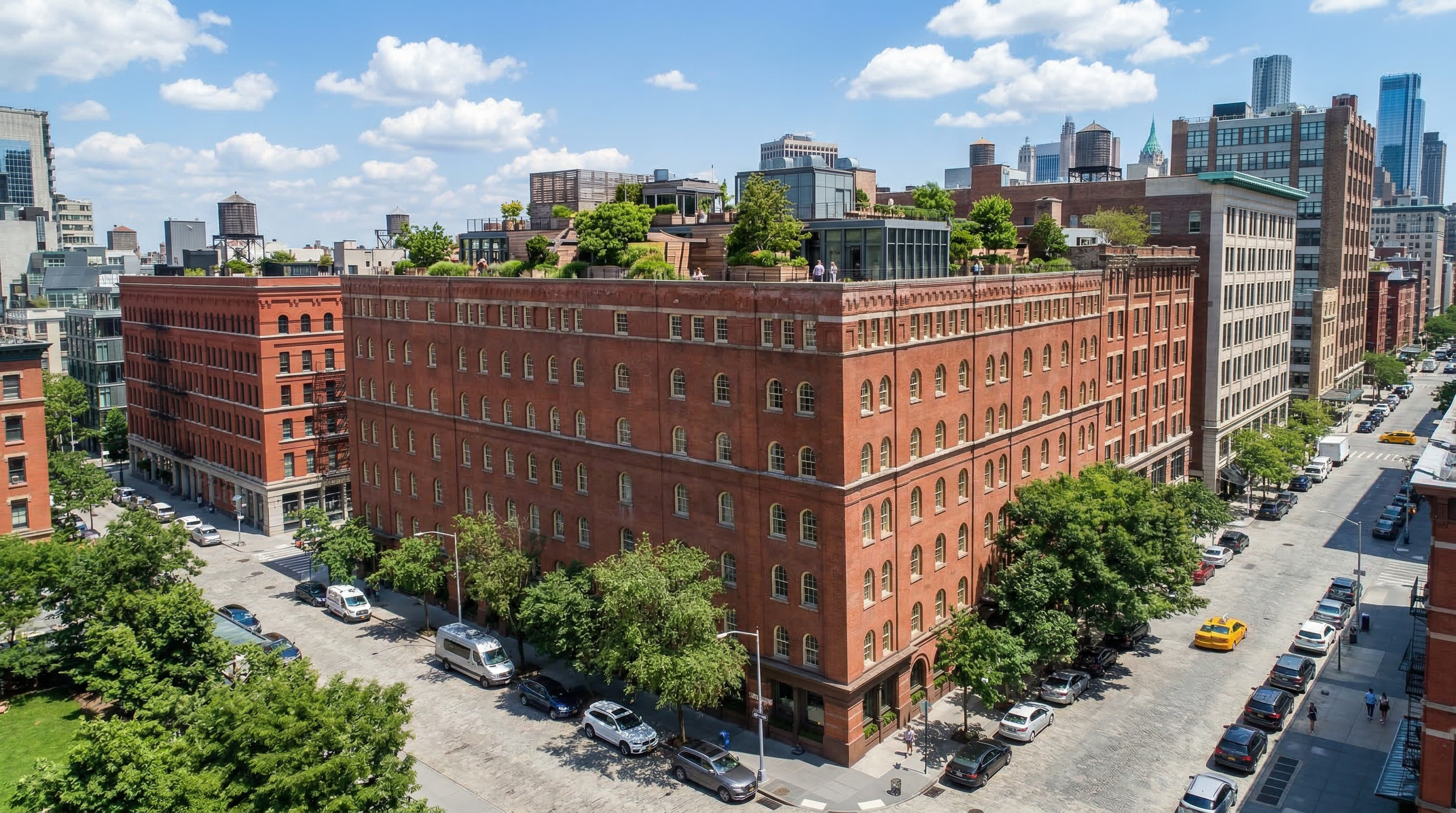
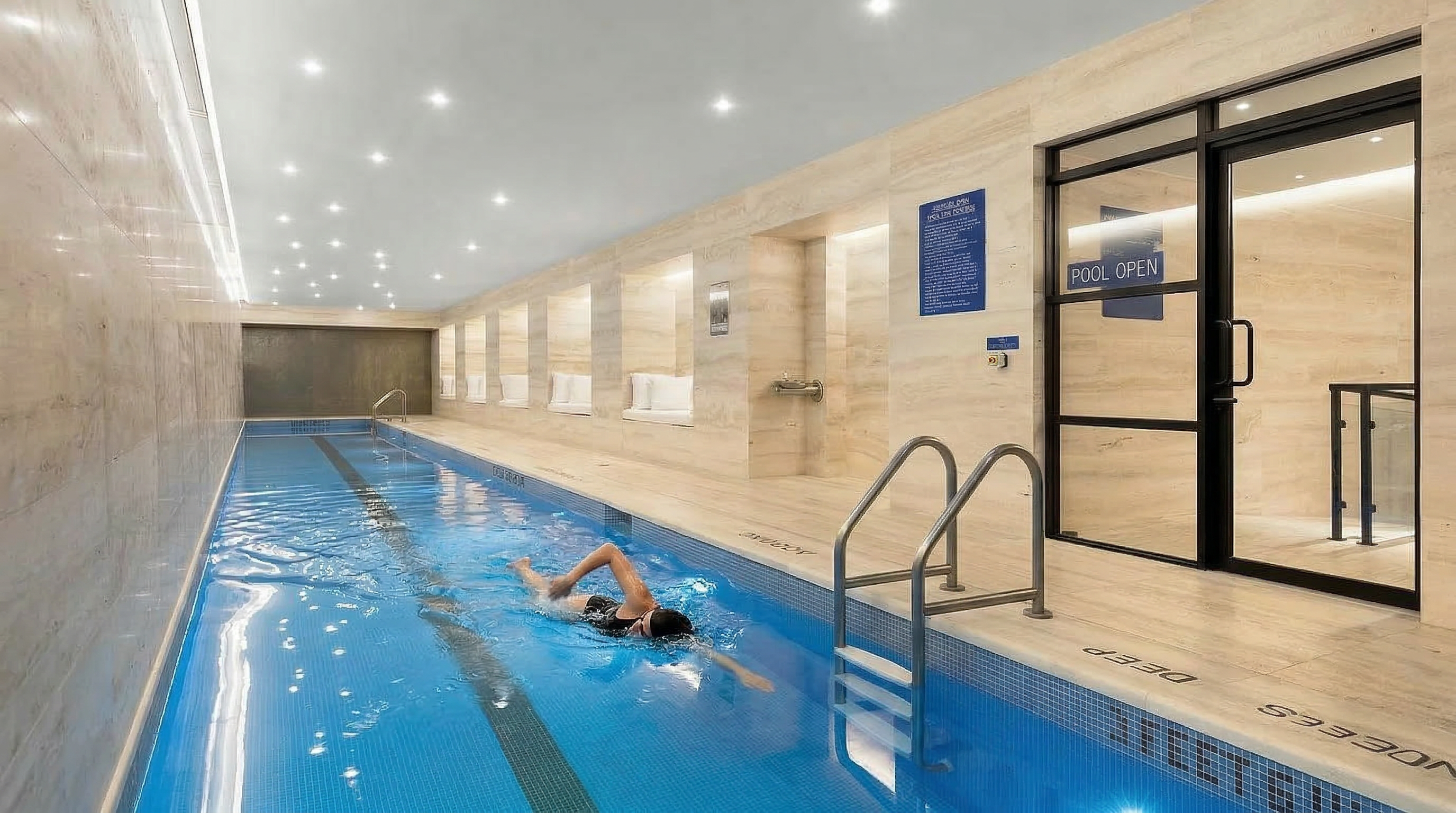
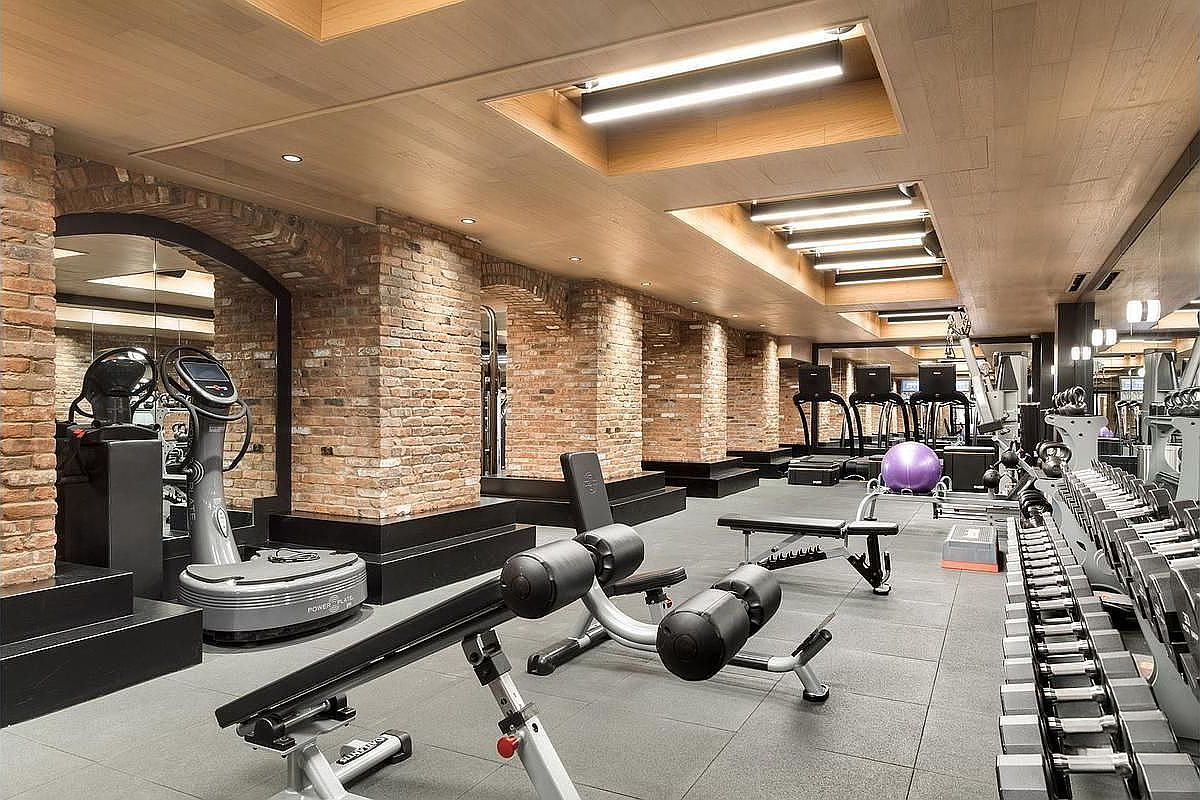
Throughout, in-wall iPads orchestrate climate, lighting, shades, and whole-home Sonos audio with seamless precision. Custom-fitted closets, a massive dedicated storage room, and a private parking space complete a home that has genuinely anticipated every need. The building itself — a LEED-certified full-service condominium with 24-hour doorman, concierge, and live-in resident manager — offers a 70-foot indoor pool, Turkish baths, infrared sauna, a 5,000-square-foot landscaped roof, fitness center with private yoga and dance studios, a renovated children's playroom, wine storage, and valet parking. Penthouse D is not a compromise between grandeur and livability. It is the rare place where the two are the same thing.
Tribeca — an acronym for Triangle Below Canal Street — occupies a roughly 40-block stretch of lower Manhattan between Canal Street to the north, Chambers Street to the south, Broadway to the east, and the Hudson River to the west. It is one of New York City's most architecturally coherent neighborhoods, defined by the cast-iron and brick warehouse buildings that once served the city's wholesale trade in the 19th and early 20th centuries. Beginning in the 1970s, artists and creative professionals were drawn to these vast, light-filled industrial lofts, transforming the neighborhood much as they had done in neighboring SoHo a decade earlier. By the 1980s and 1990s, Tribeca had evolved into one of Manhattan's most desirable residential addresses, attracting a discerning population that valued its wide cobblestone streets, human-scaled architecture, and relative quiet — a counterpoint to the intensity of Midtown that has never gone out of fashion.
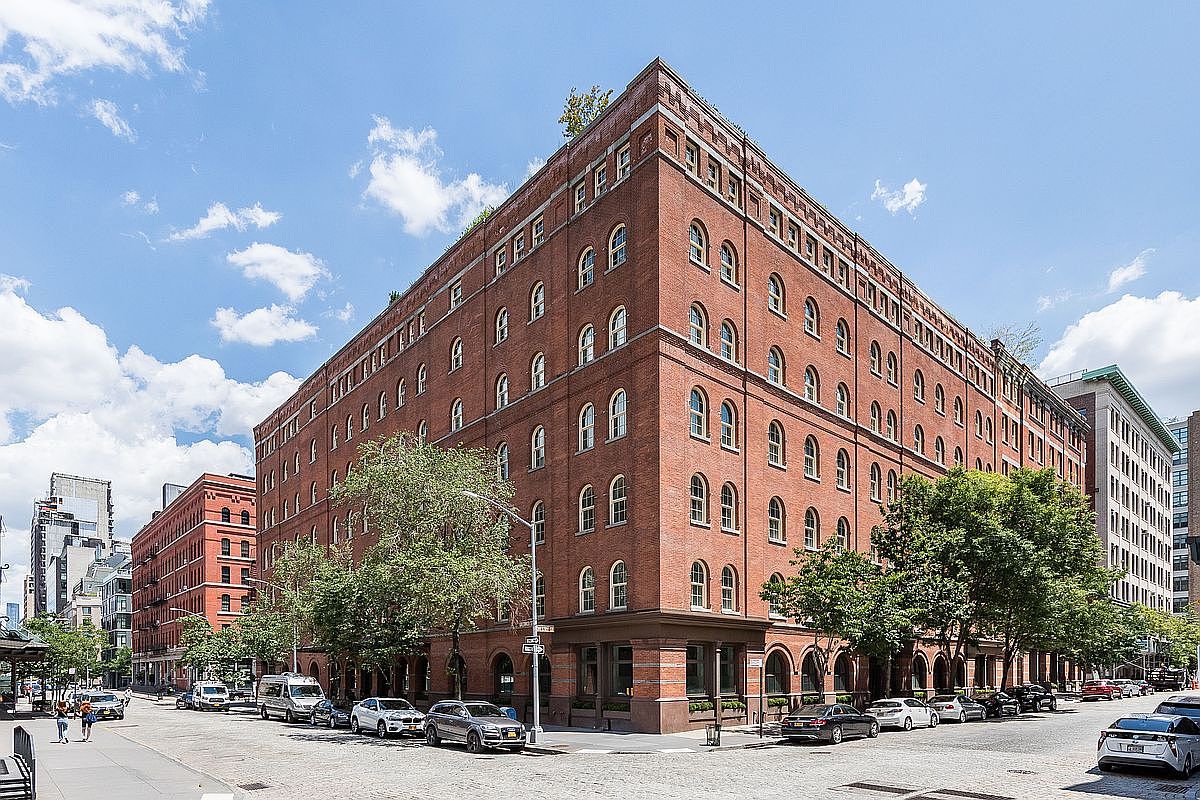
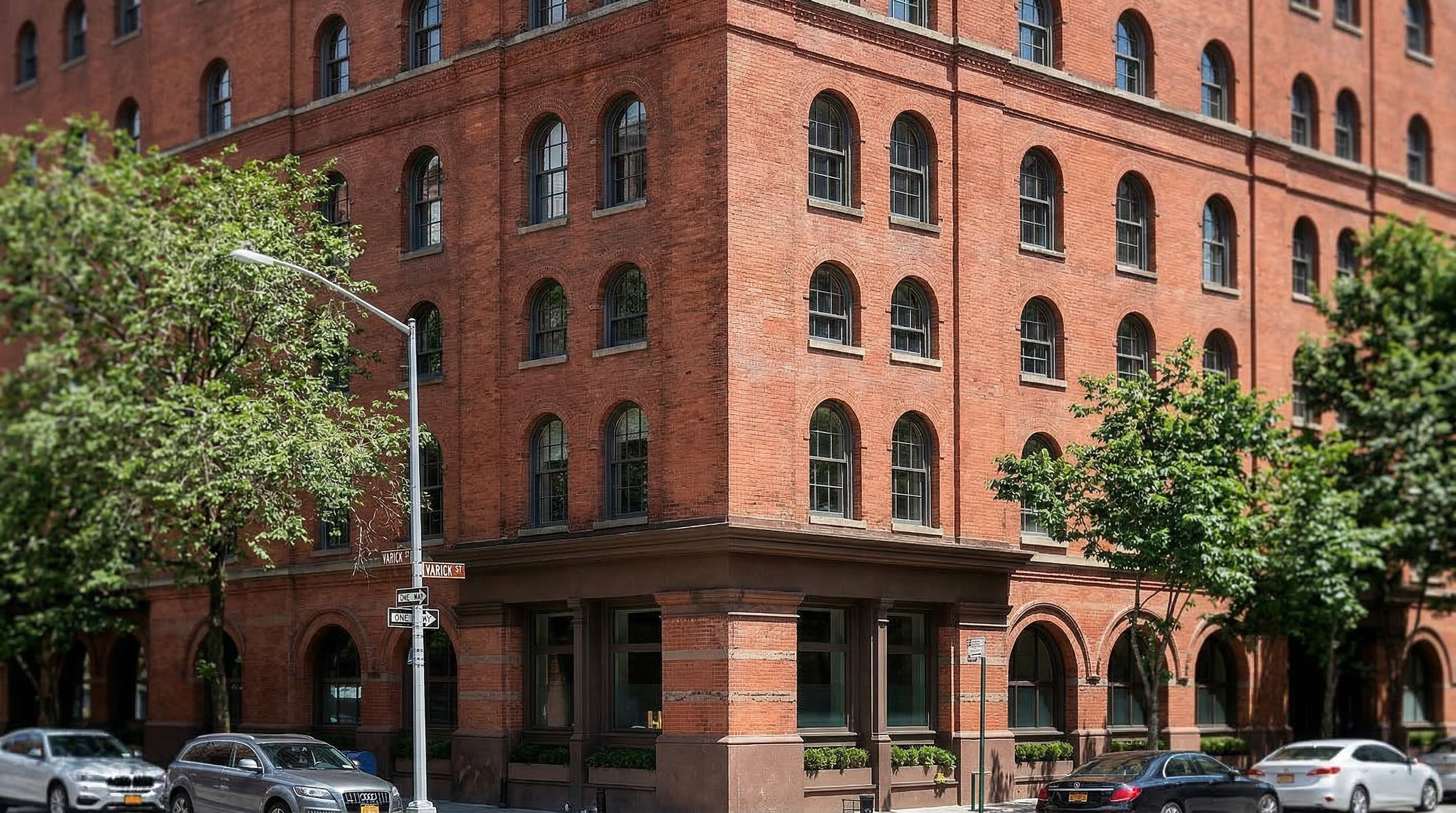
443 Greenwich Street sits at the heart of this neighborhood, in a section sometimes called the Hudson Square area, where the blocks retain much of their original 19th-century streetscape. The building's red-brick facade and arched windows are entirely at home in this context — a landmarked structure that has been transformed rather than erased, maintaining a visual dialogue with the neighborhood's industrial heritage while offering interiors of a thoroughly contemporary standard.
The streets surrounding the building reflect Tribeca's particular character: locally owned restaurants and cafés occupy ground-floor spaces in former warehouses, galleries and design showrooms draw a culturally engaged population, and the relative absence of chain retail has preserved an atmosphere of considered, unhurried sophistication. The neighborhood's dining scene is among the most consistently excellent in the city, with long-established destinations alongside newer arrivals that reflect the tastes of a resident population with high expectations.
Hudson River Park is immediately to the west, offering miles of waterfront paths, piers, and green space along the Manhattan shoreline. The park connects to a broader network of cycling and running paths that extend north through Chelsea and the West Village and south toward Battery Park City, making it a genuine recreational resource for residents who value outdoor access without sacrificing the density and energy of urban life.
Families are well served by the neighborhood's proximity to several well-regarded schools, and the area's general safety and walkability make it a practical as well as aspirational choice for those raising children in Manhattan. The 1 train at Franklin Street provides direct access to Midtown, while the A, C, E, J, Z, N, Q, R, W, and 6 trains are accessible within a short walk or ride, connecting residents efficiently to the broader city.
What Tribeca offers, ultimately, is a form of Manhattan living that feels both complete and contained — a neighborhood with its own identity, its own rhythms, and its own standards. For a residence of the scale and distinction of Penthouse D, it is precisely the right address: a place where the building's history and the city's energy meet without friction, and where the view from the roof terrace encompasses a skyline that is, still, like no other in the world.
Featured Highlights
Curated Content • Presented by Jared Schwadron