The Story Behind
A Legacy Estate on the Shores of Lake Tahoe
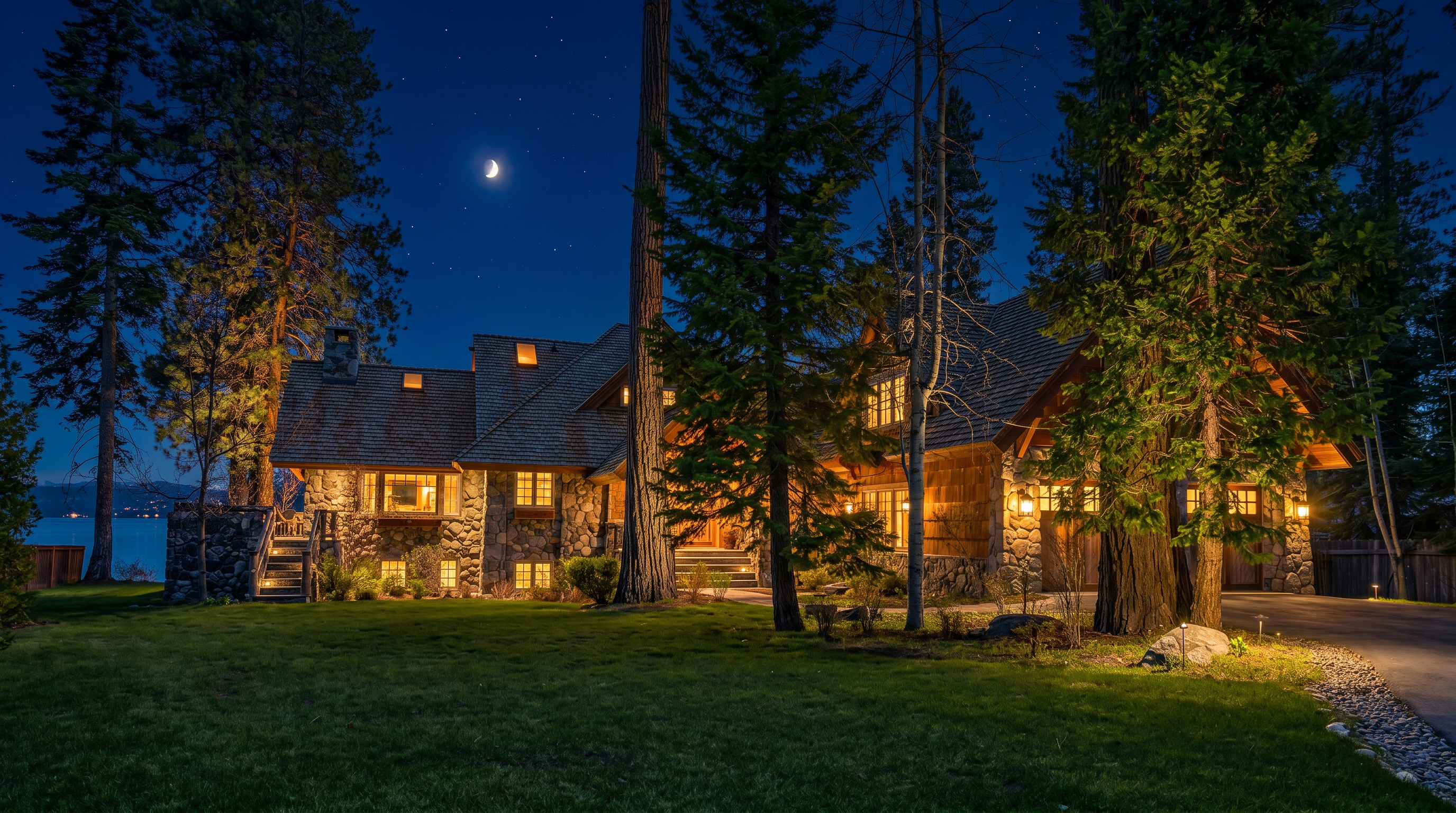
There is a particular quality of stillness that settles over a home when it has been built in true harmony with its setting — when the stone was chosen to echo the granite of the surrounding Sierra Nevada, when the timber beams carry the weight of the roof the way the mountains carry the sky. This estate on the shores of Lake Tahoe possesses exactly that quality.
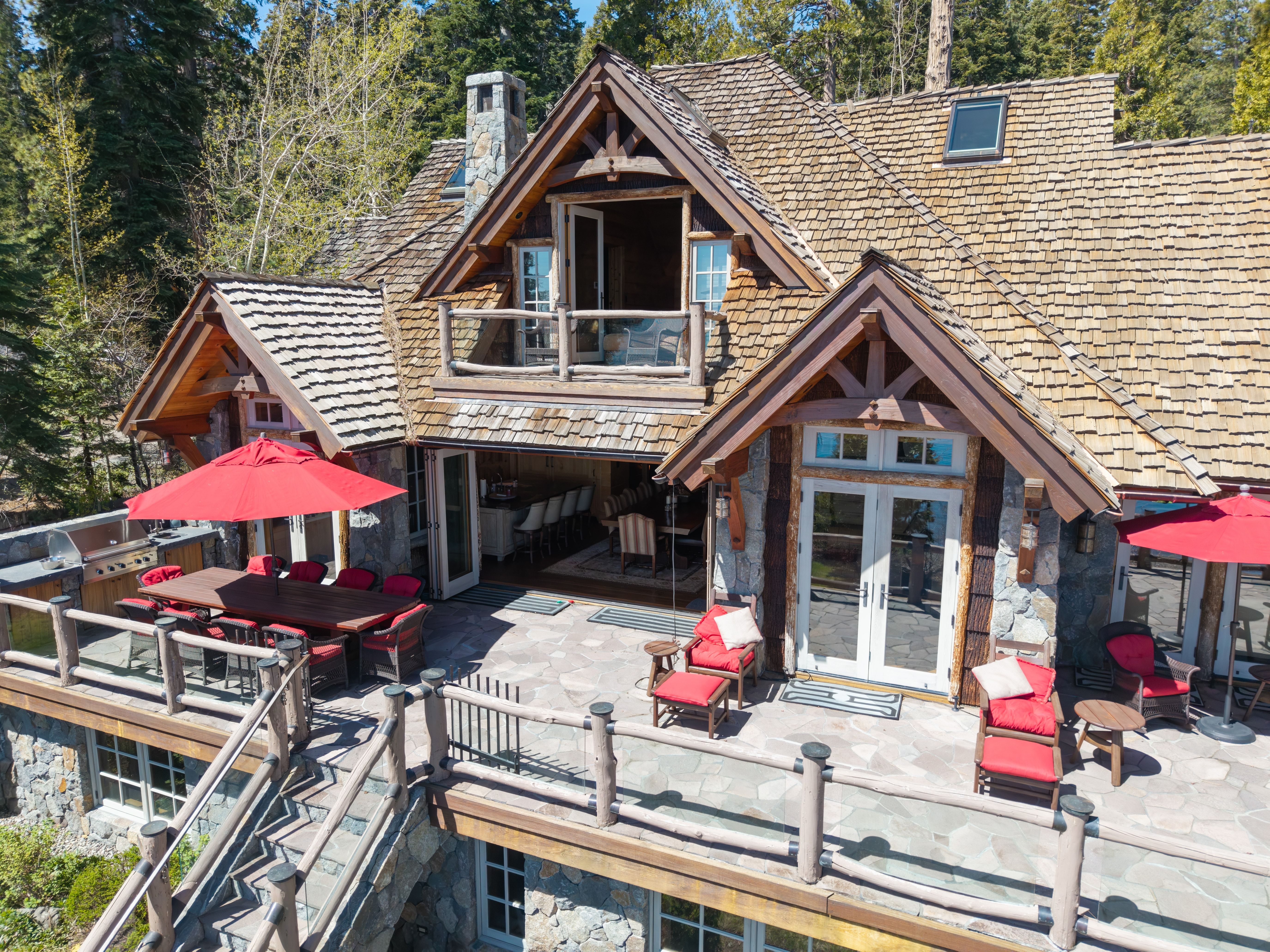
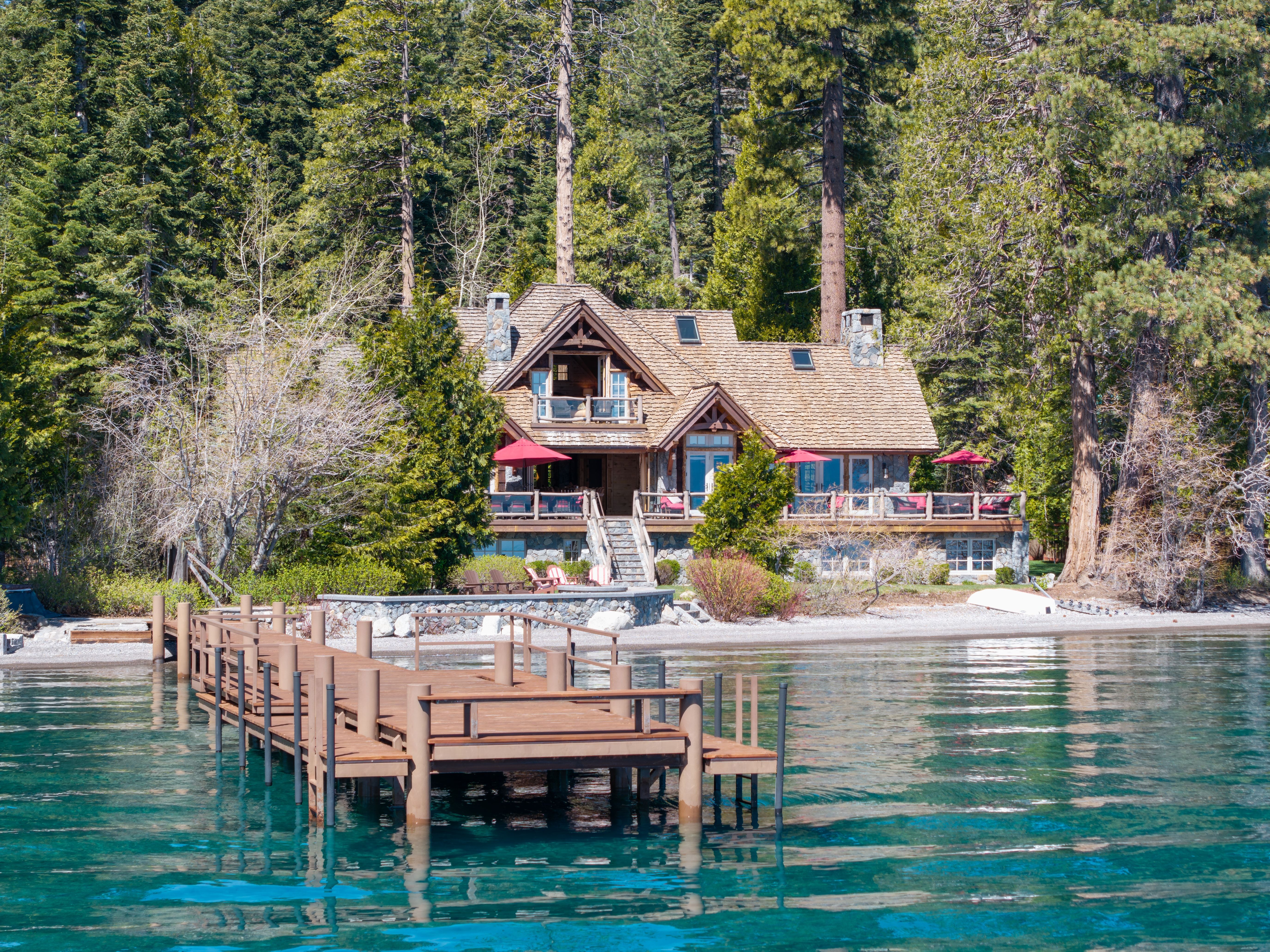
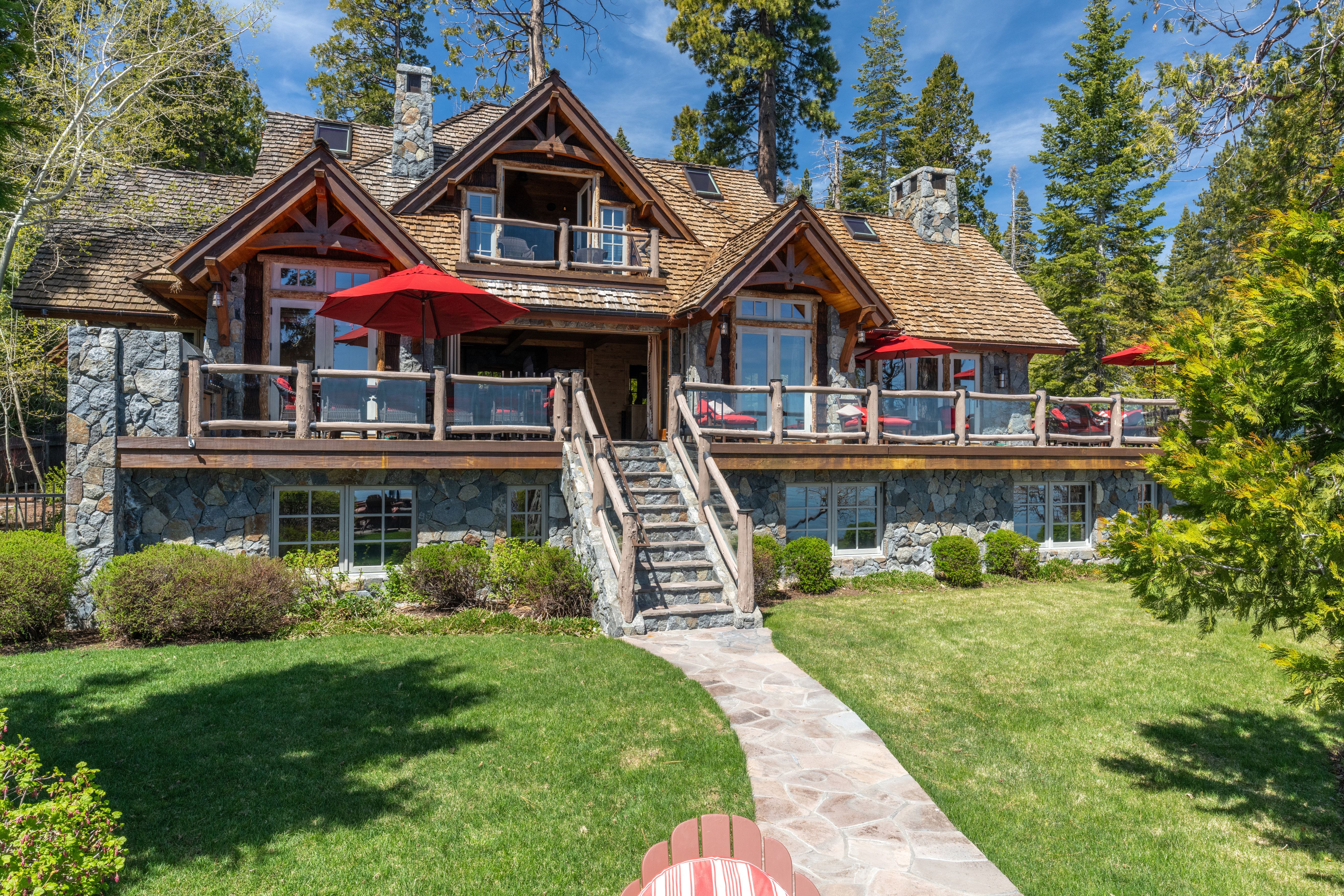
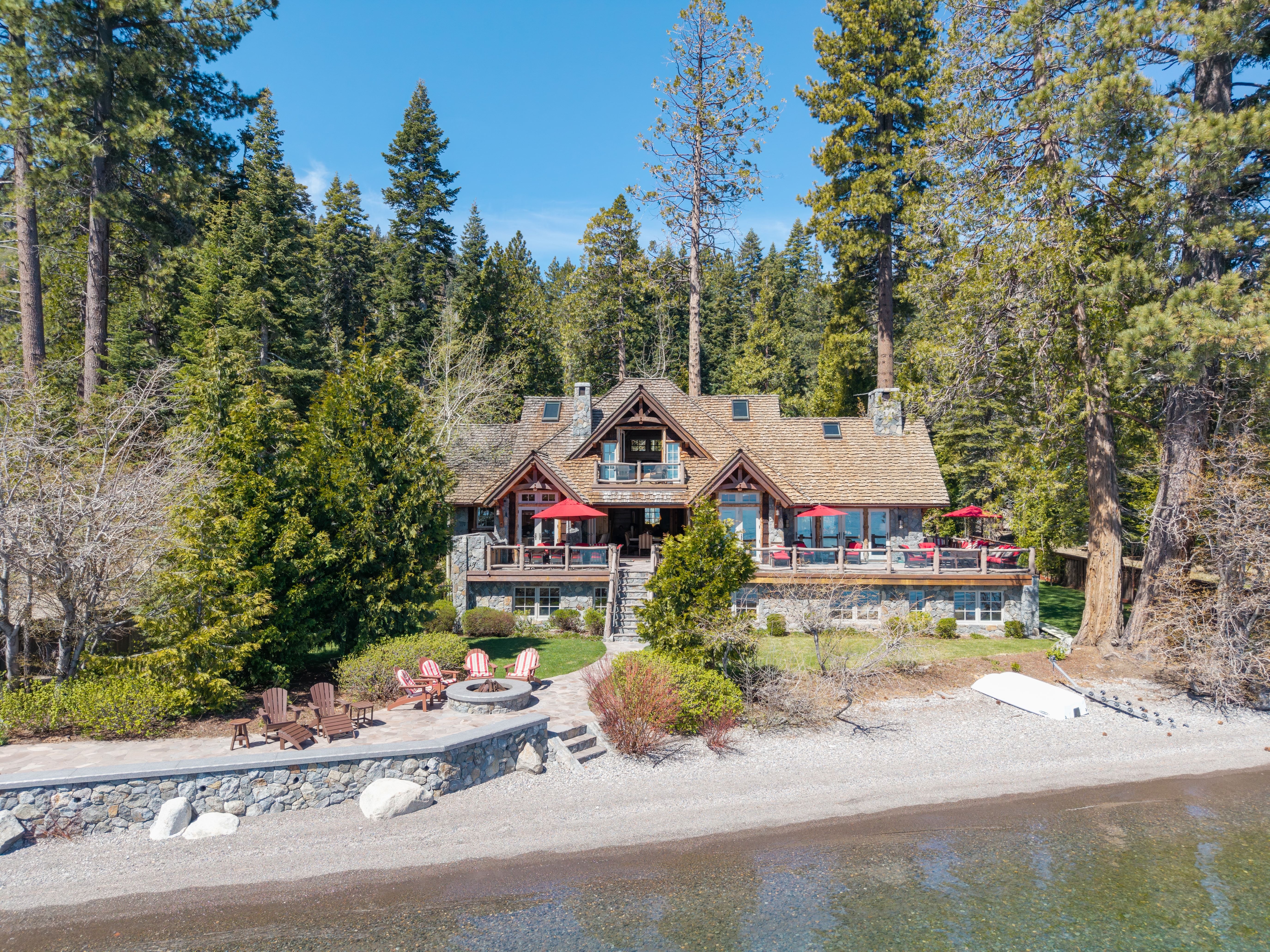
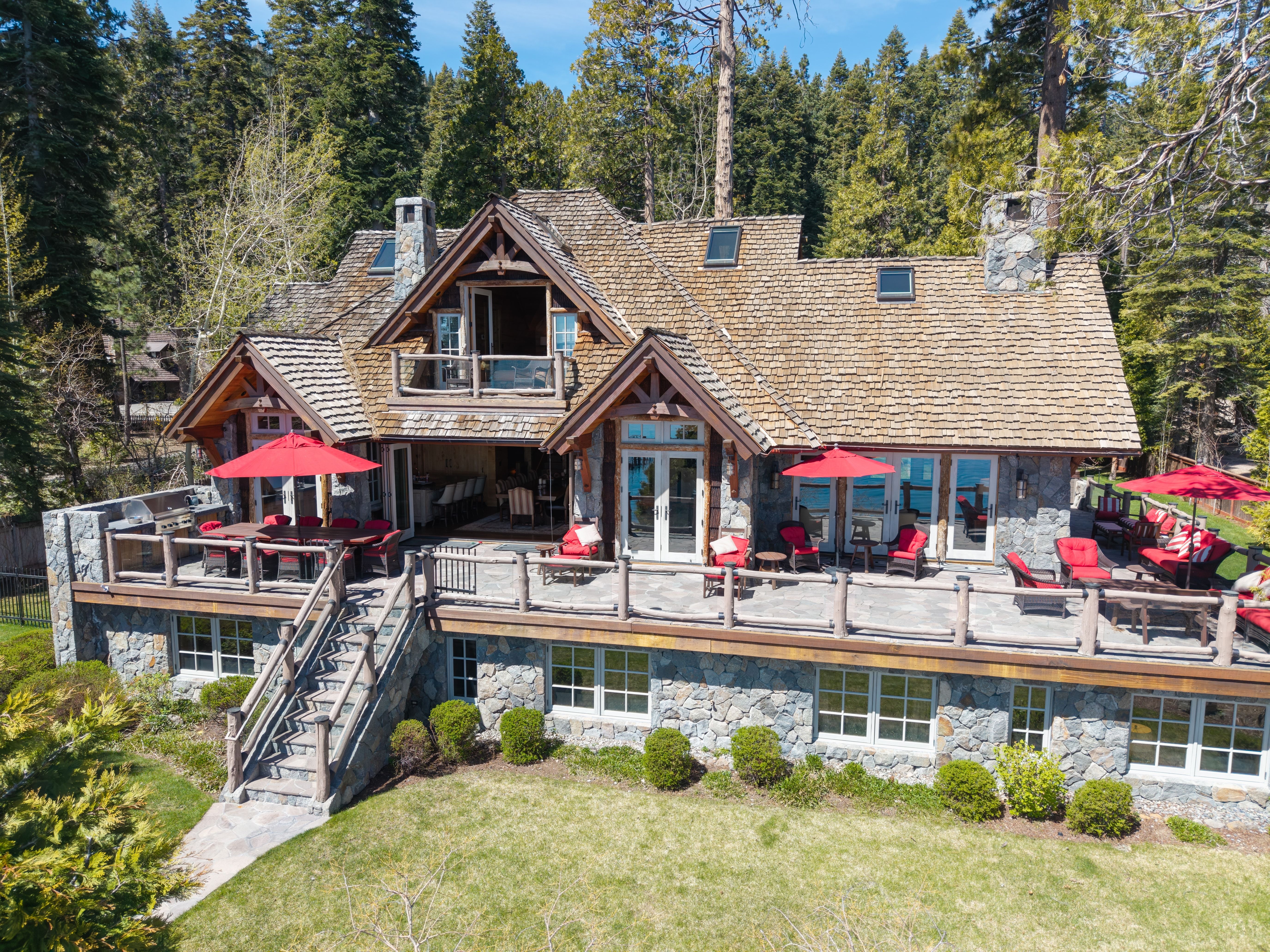
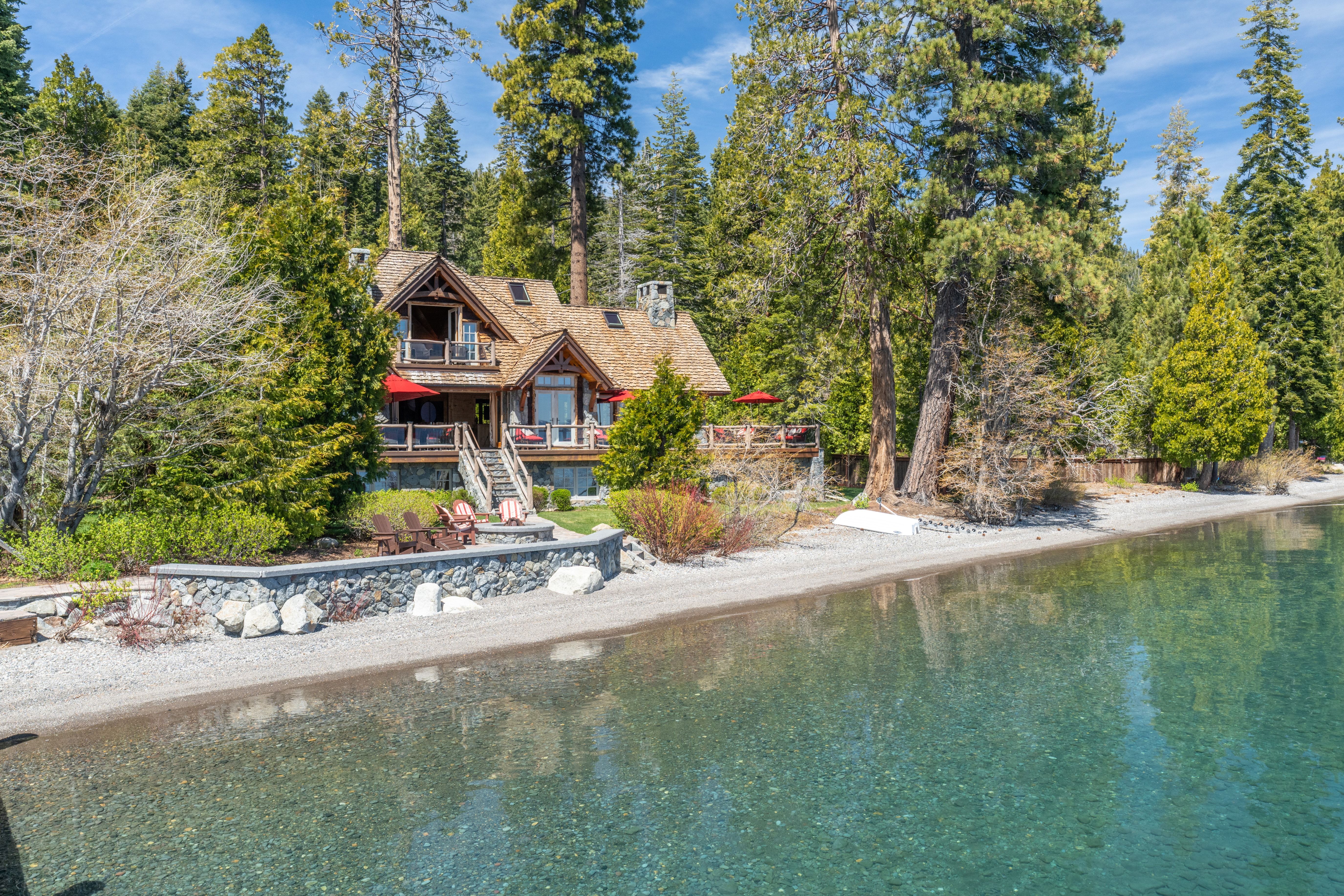
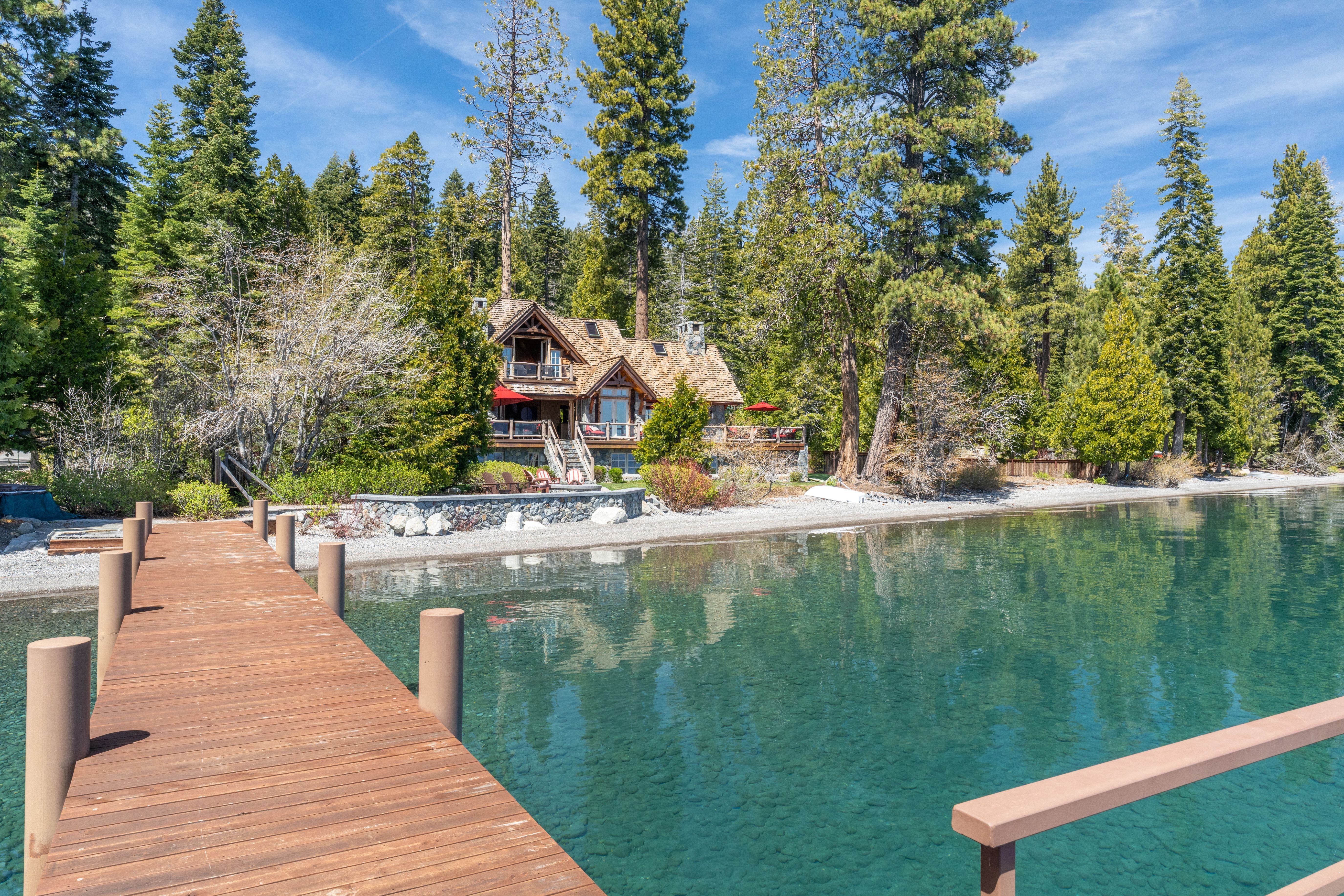
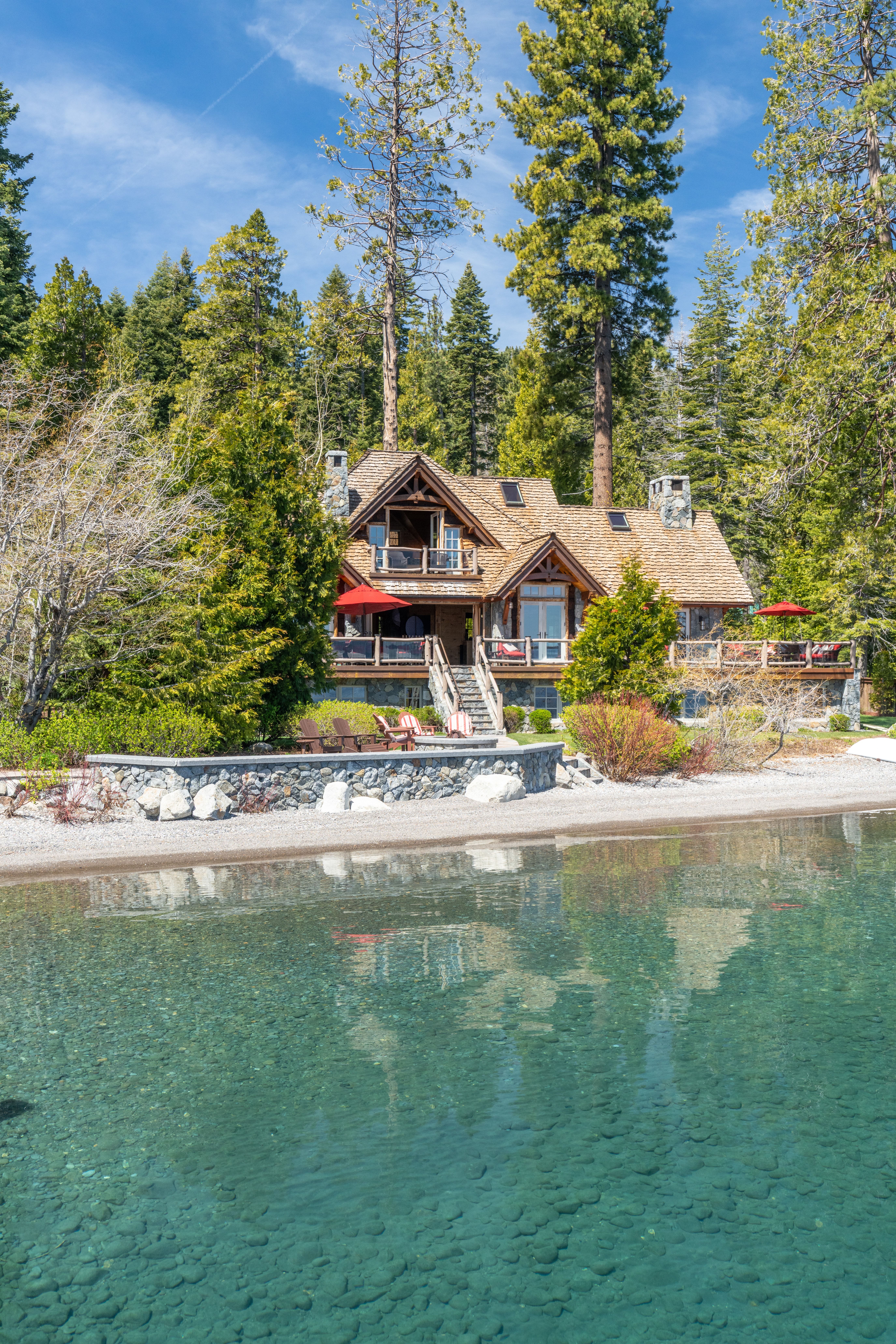
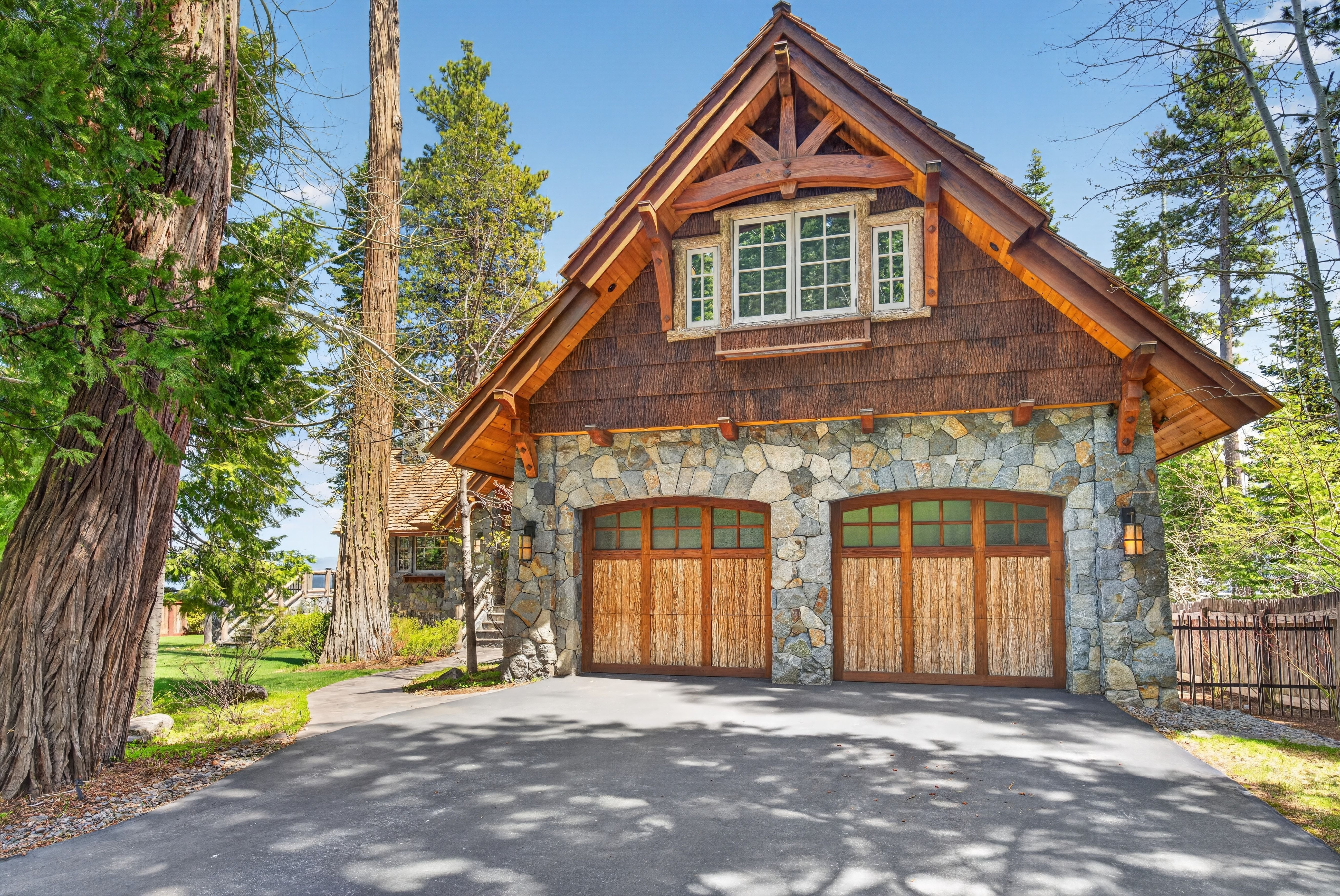
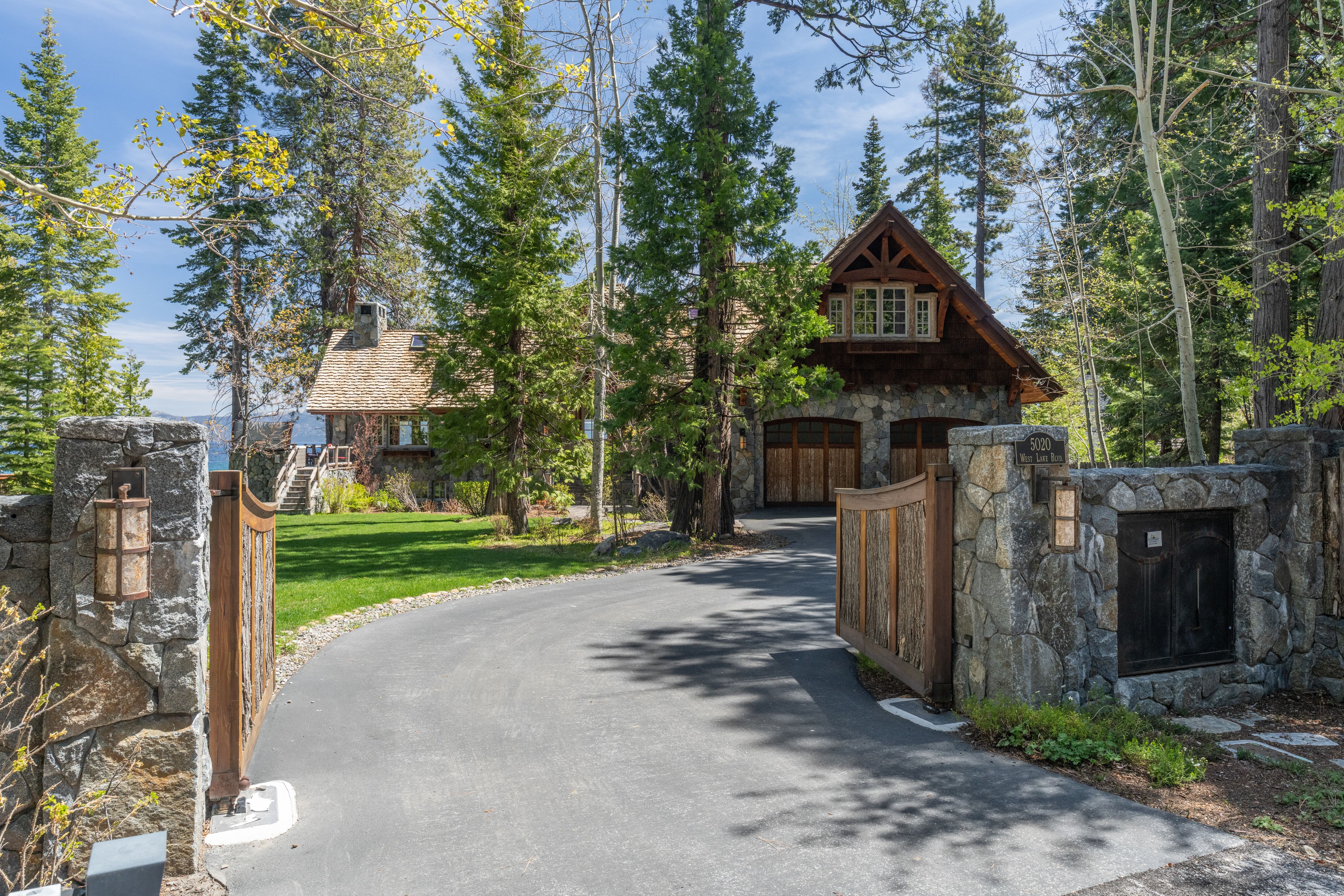
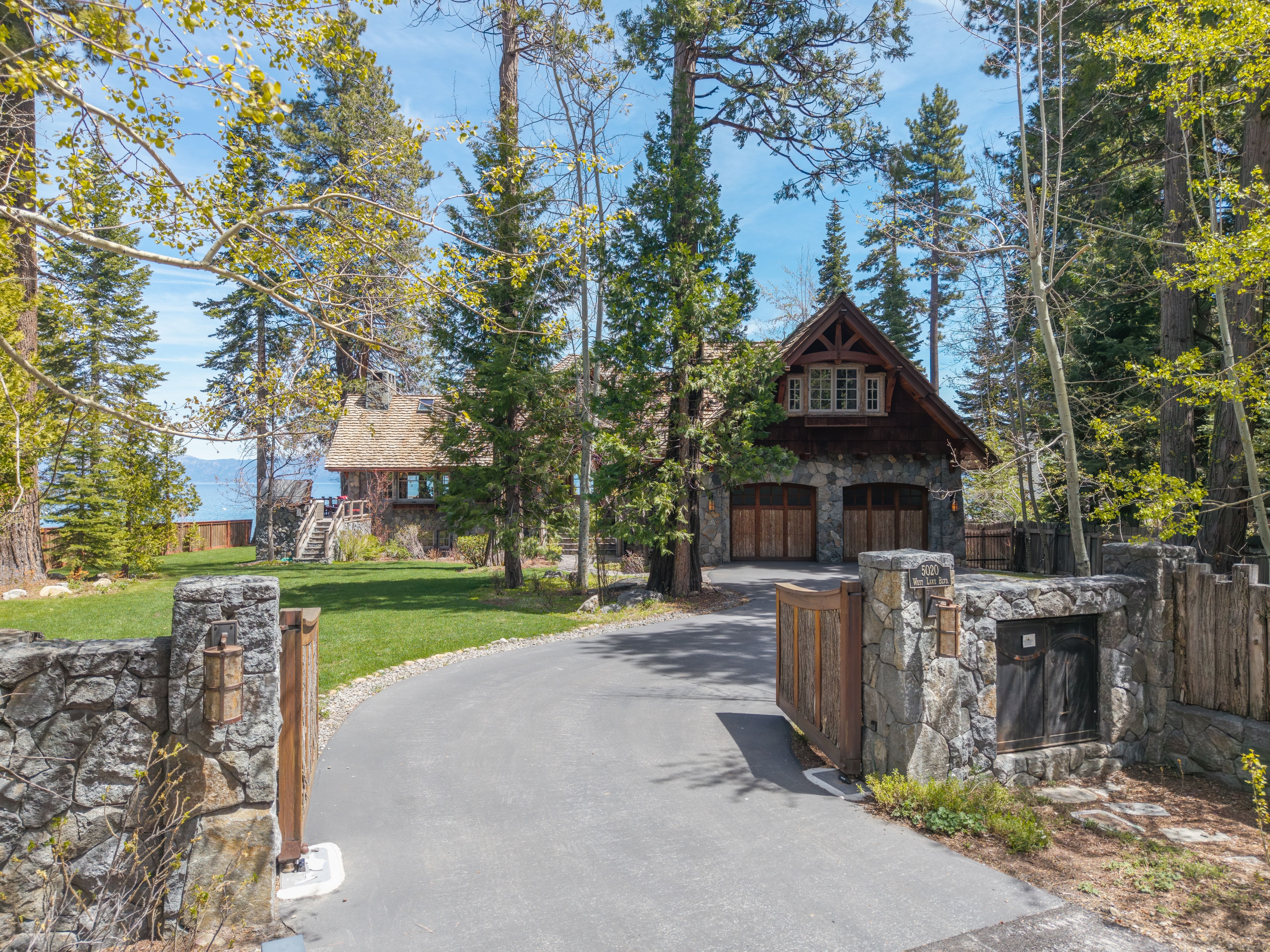
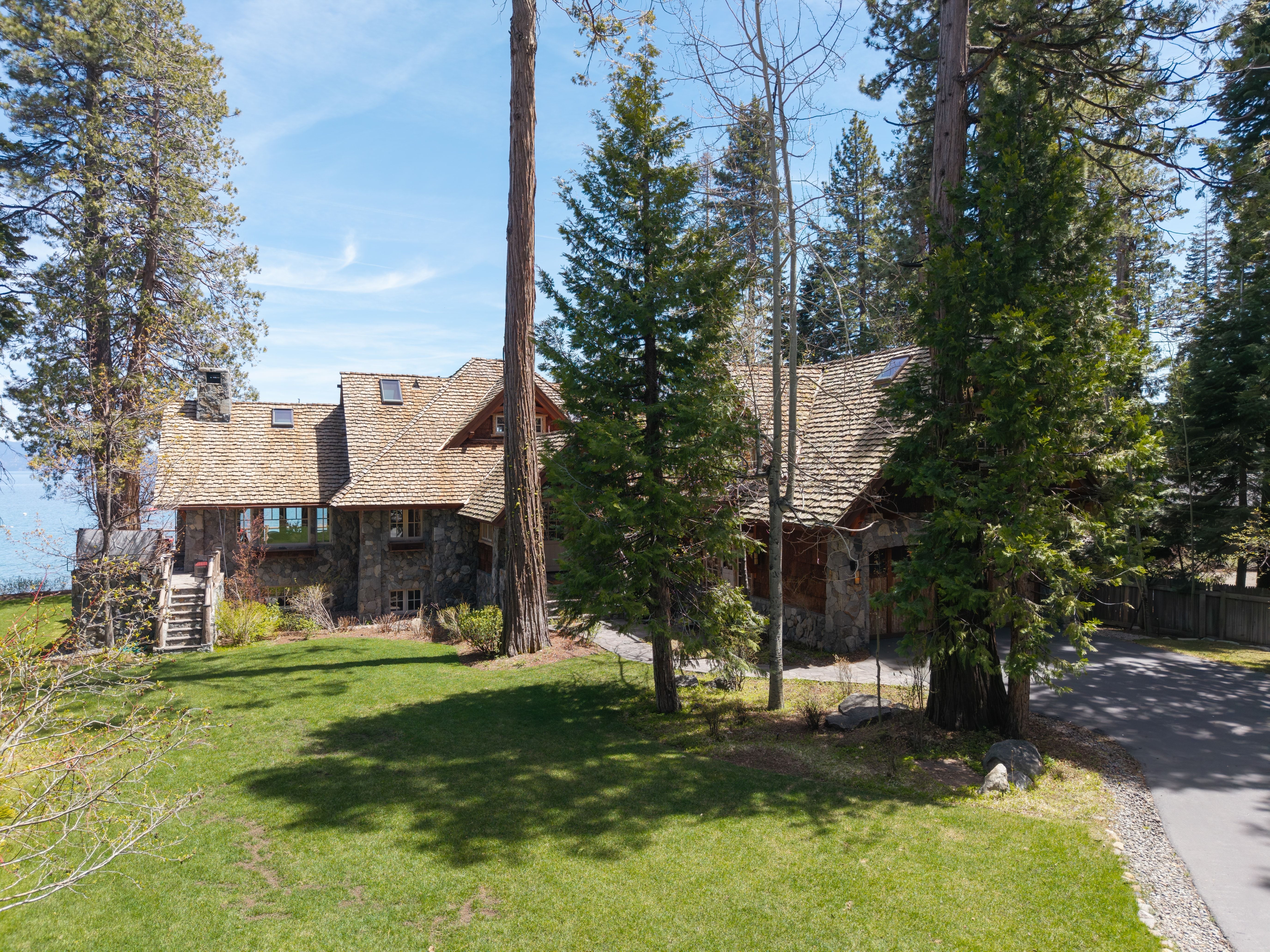
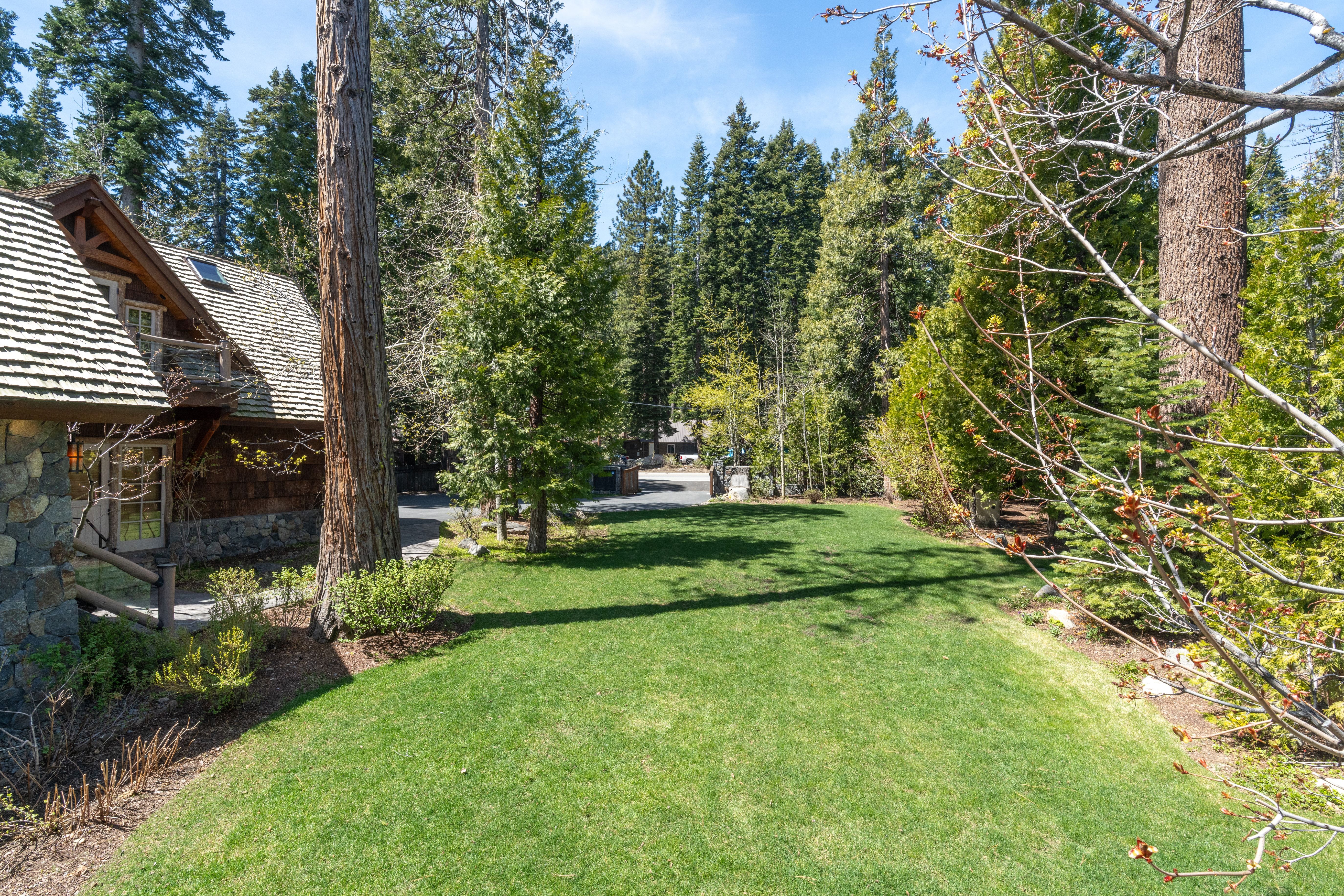
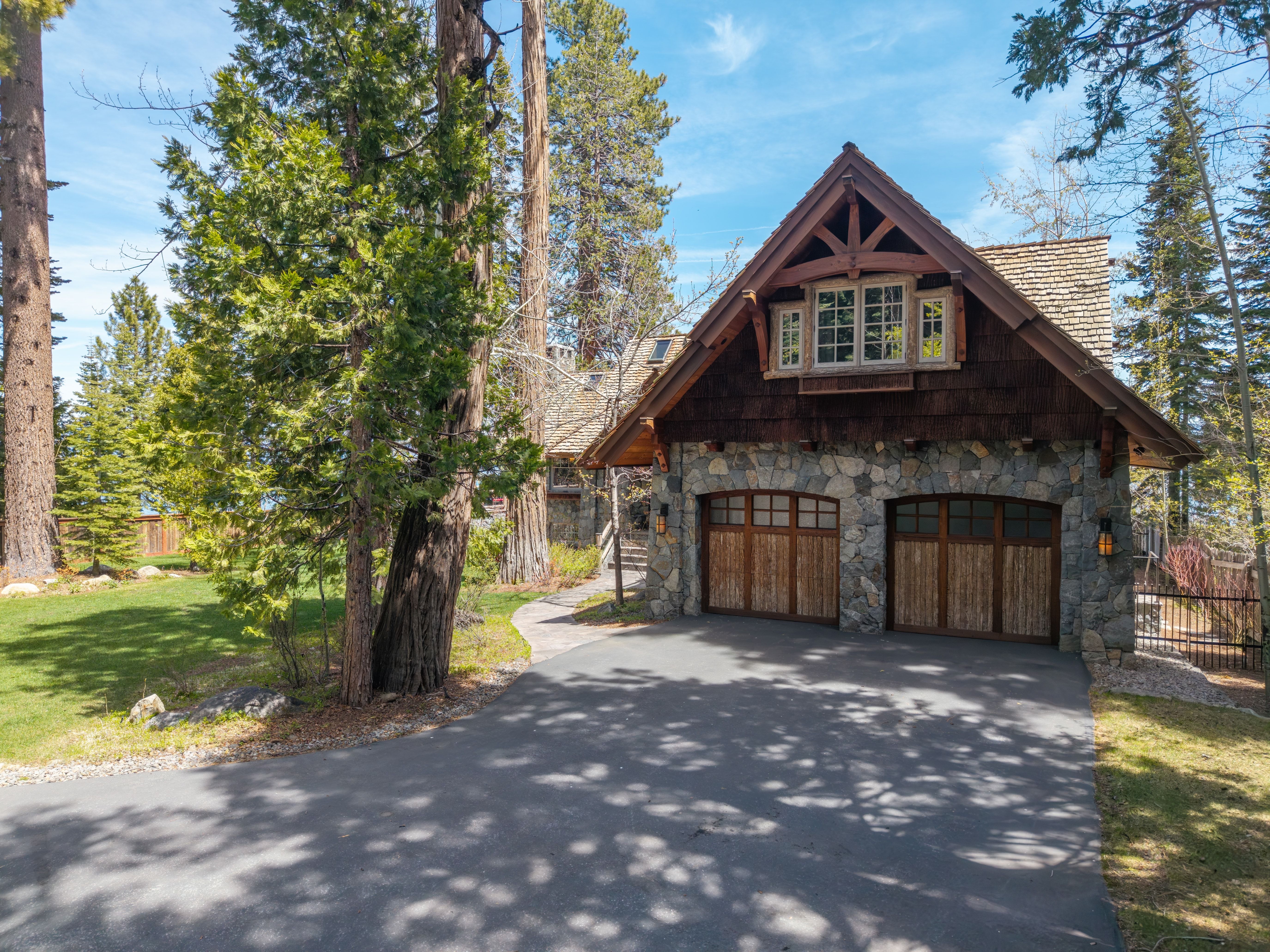
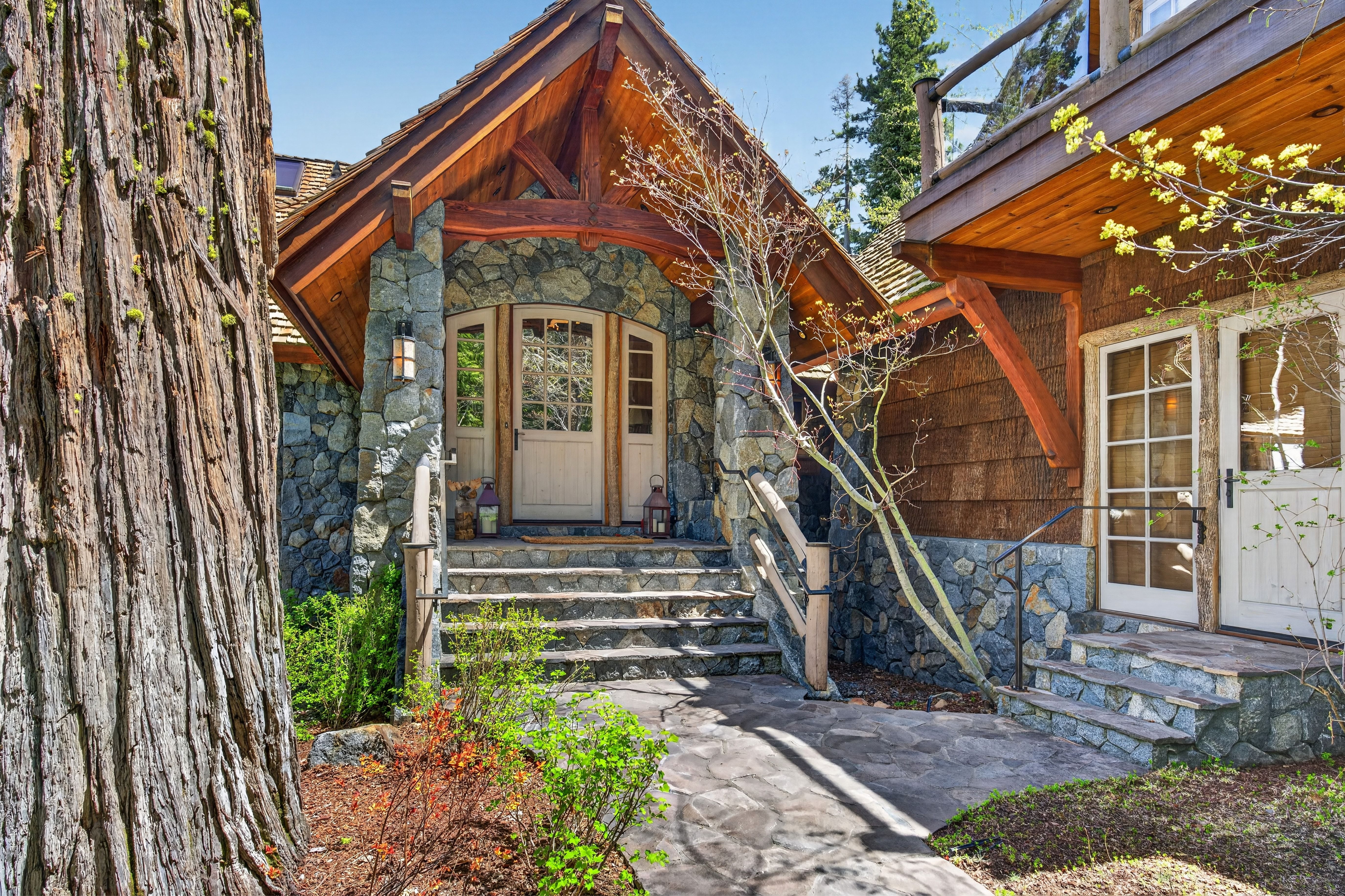
Approach through a gated entry framed by stone pillars and towering pines, and the intention of the architecture announces itself immediately. The exterior — a masterful composition of rough-hewn stone masonry, cedar shingle siding, and exposed timber roof trusses — reads less as a house than as a natural formation, as though it grew organically from the lakeside landscape rather than being placed upon it. A stone-paved walkway leads to the arched stone threshold, where the transition from outdoors to indoors feels less like crossing a boundary and more like stepping deeper into the same world.
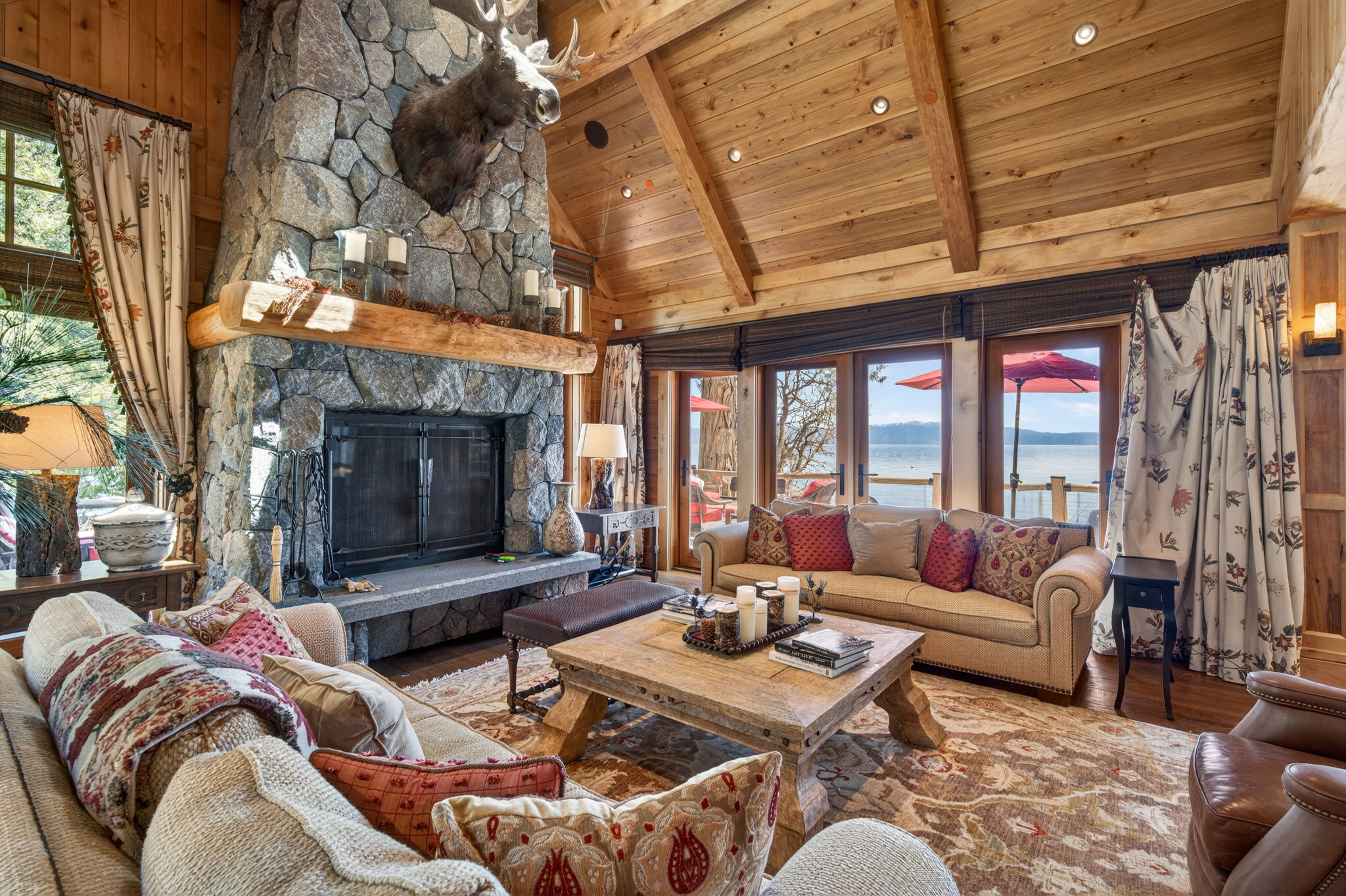
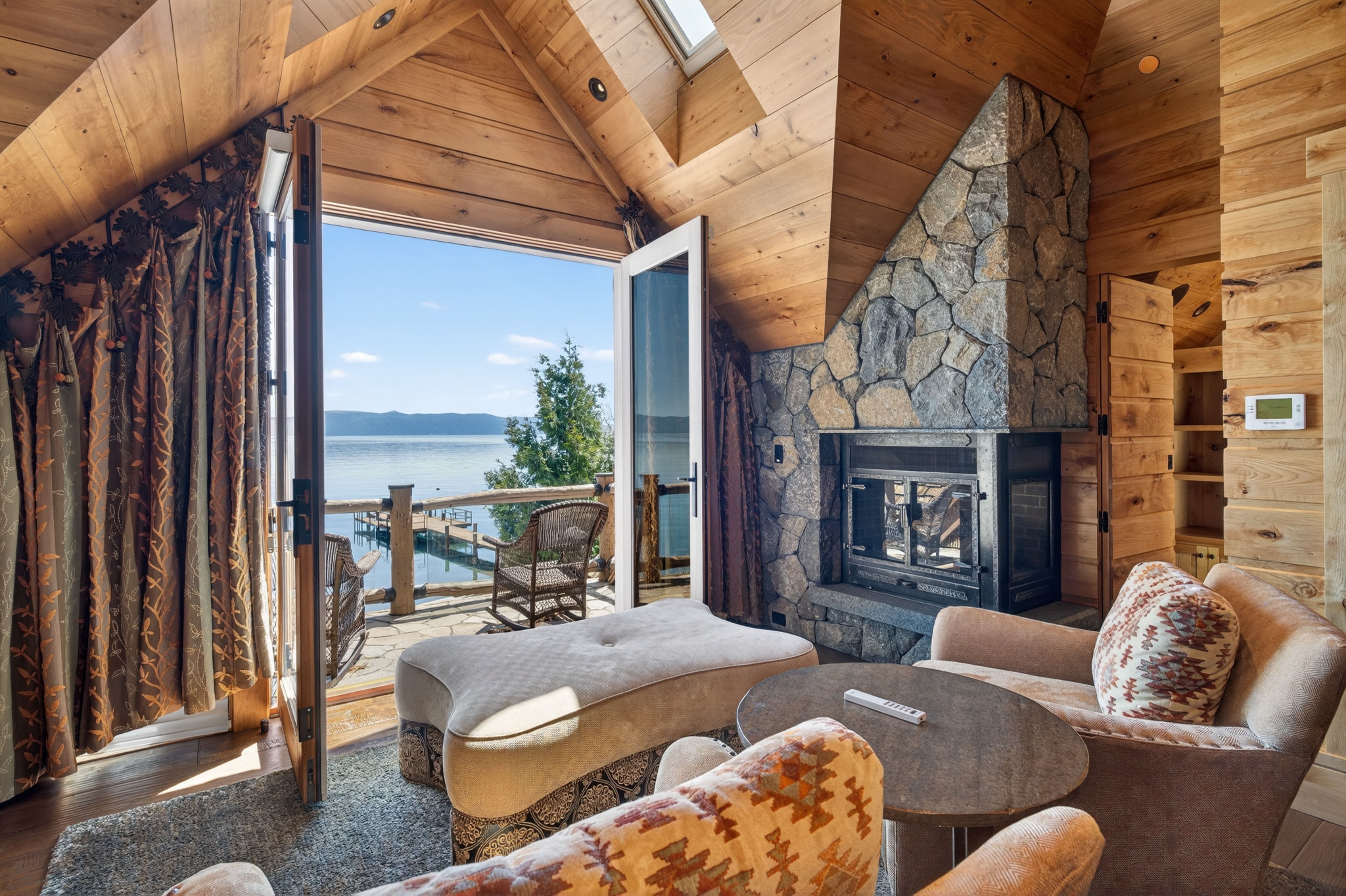
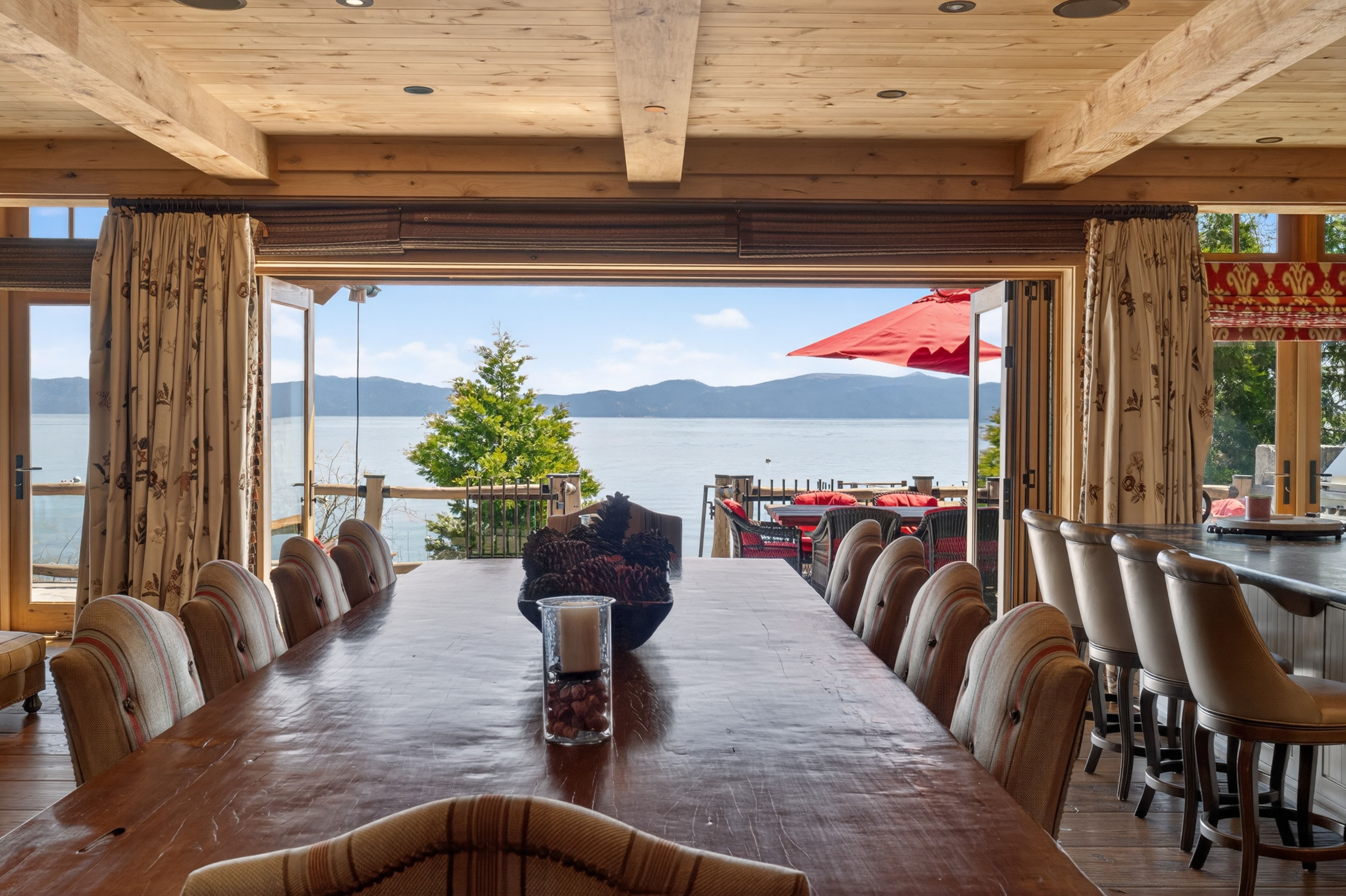
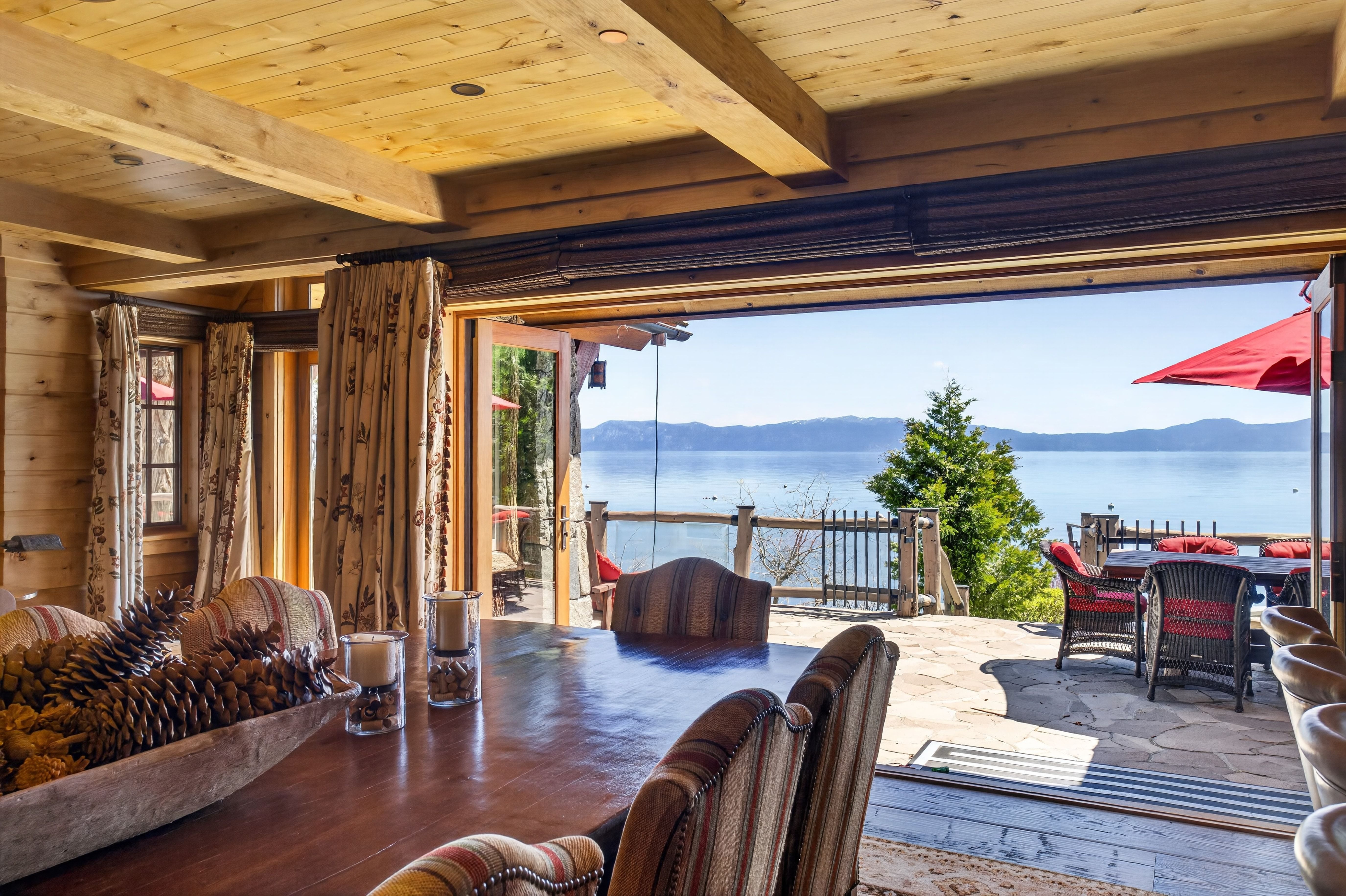
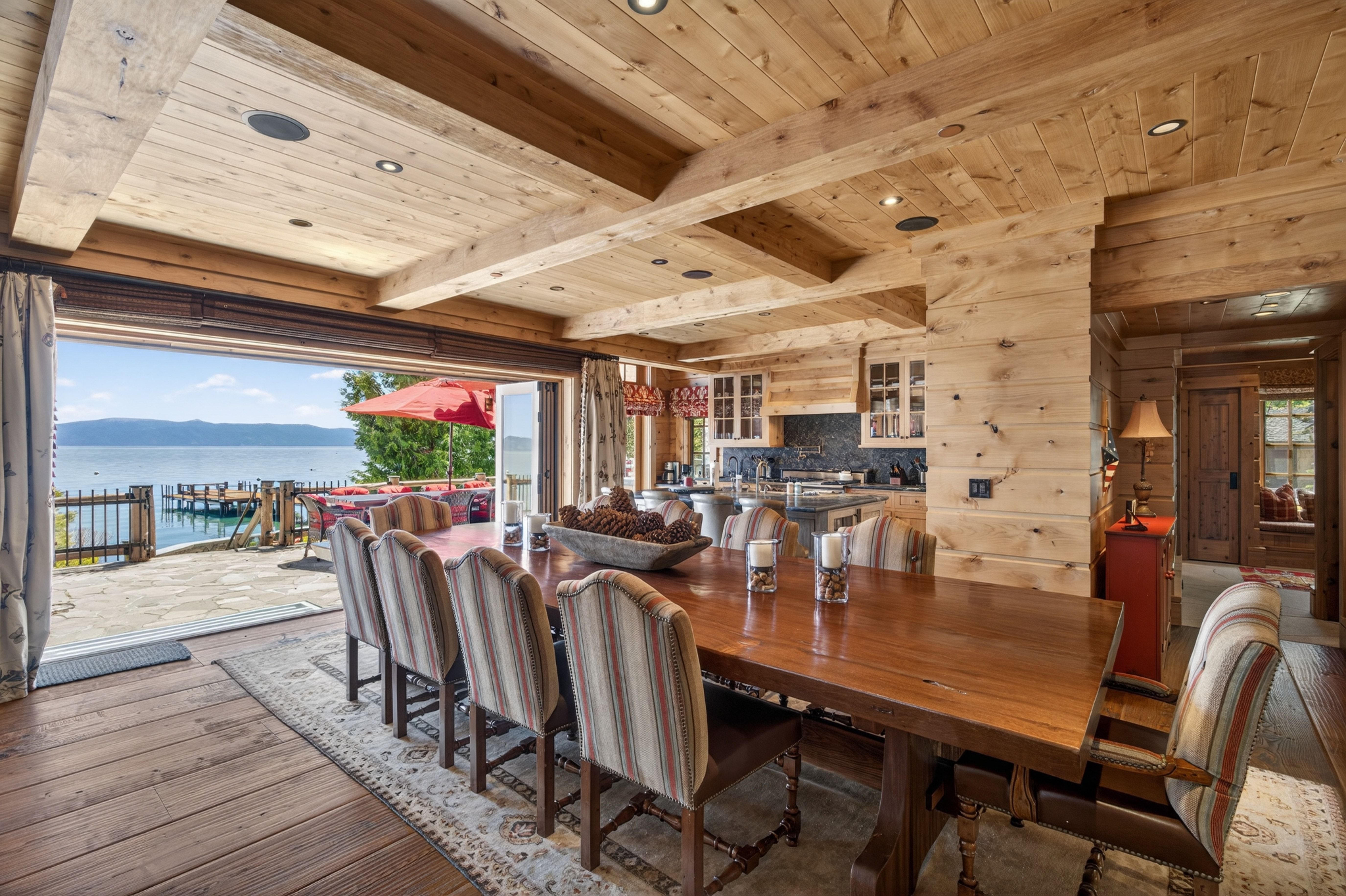
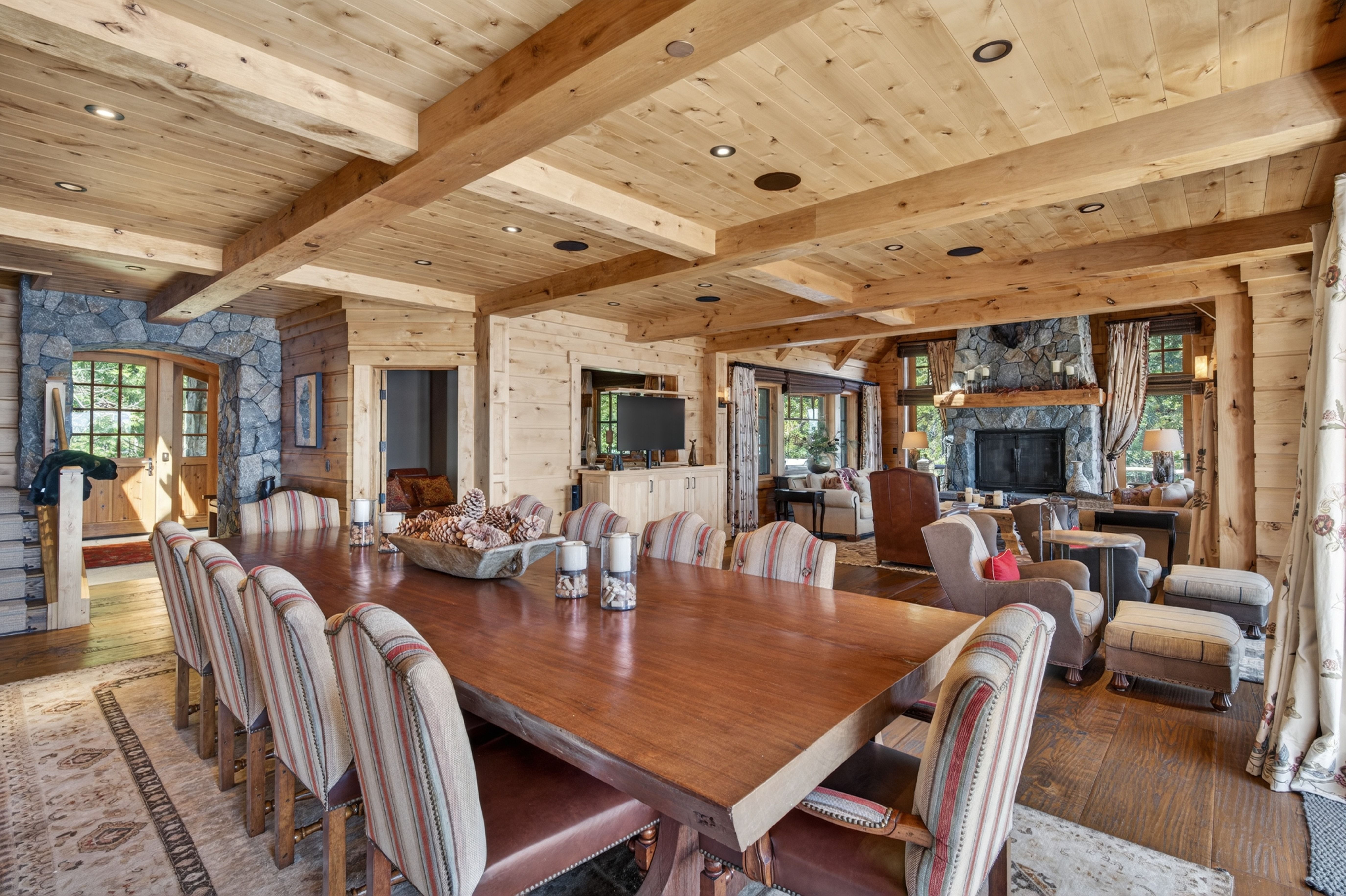
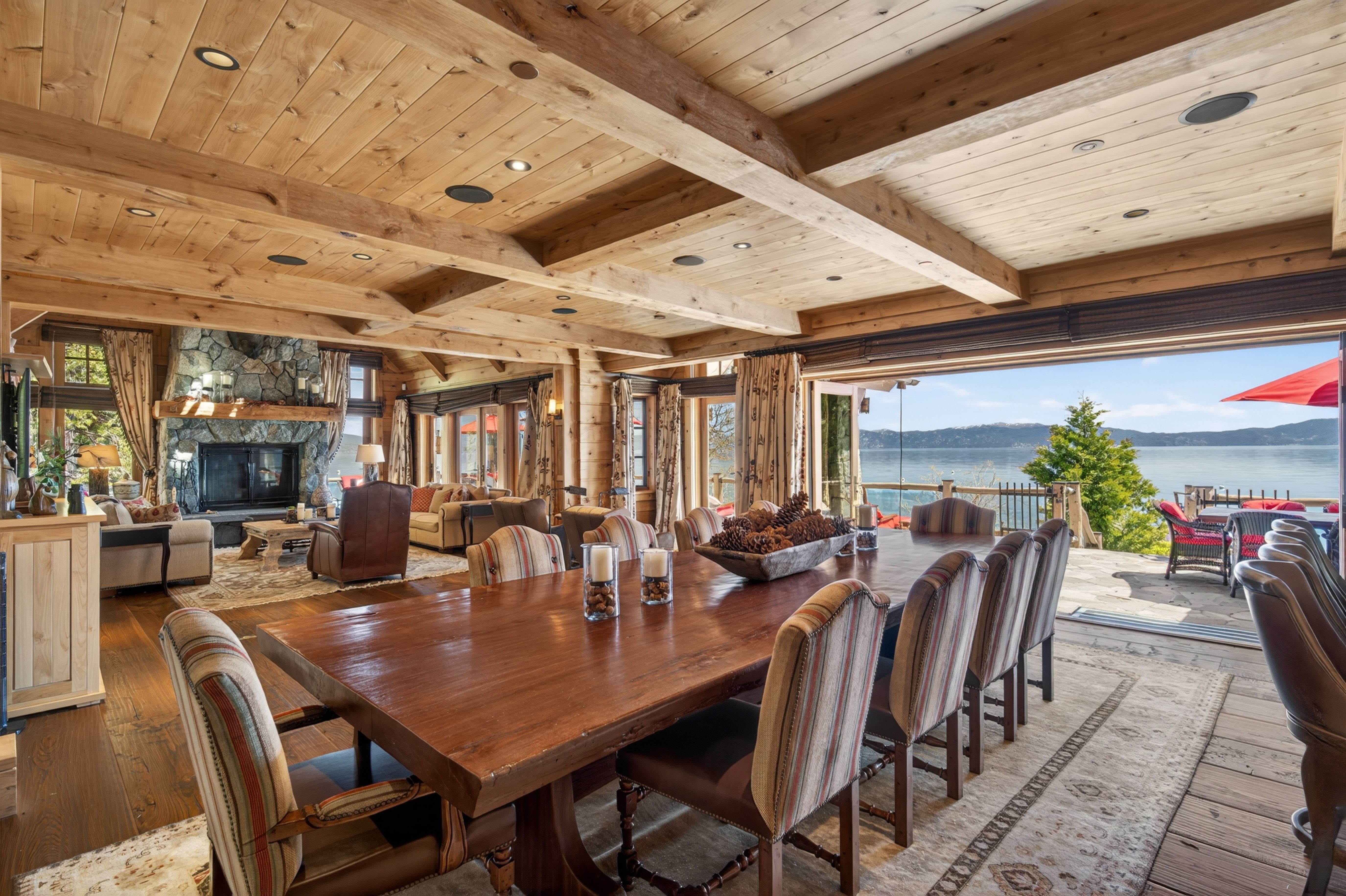
The grand entry sets the register with knotty pine woodwork and stone flooring, a foretaste of the material consistency that defines the entire residence. The great room is the heart of the home: vaulted wood-planked ceilings carried by exposed timber beams soar overhead while a floor-to-ceiling stone fireplace anchors the space below. Dual skylights draw the Sierra light downward, and expansive sliding glass doors dissolve the boundary between the living room and the lake beyond — a view that, in this position on the water, is genuinely irreplaceable.
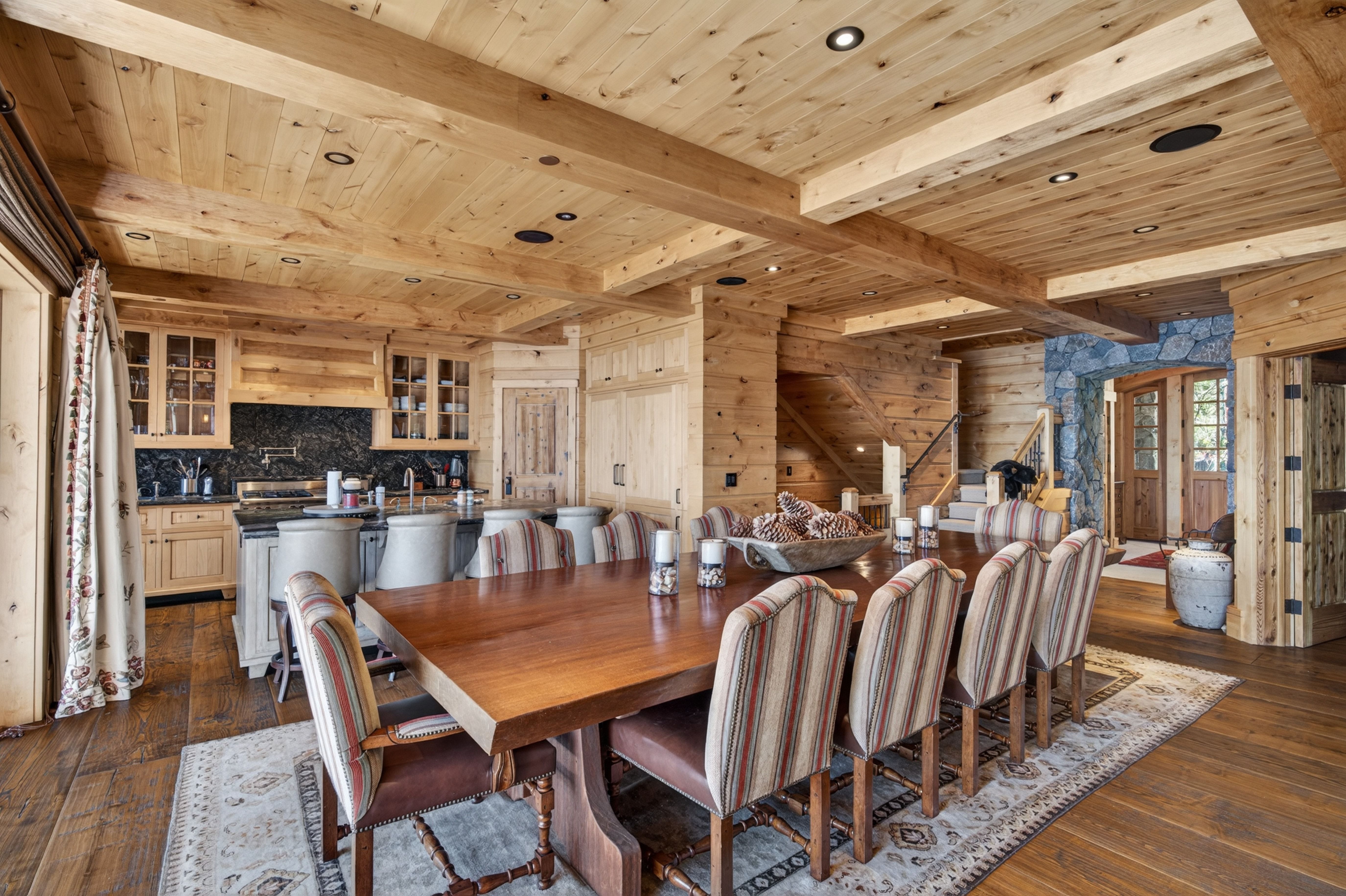
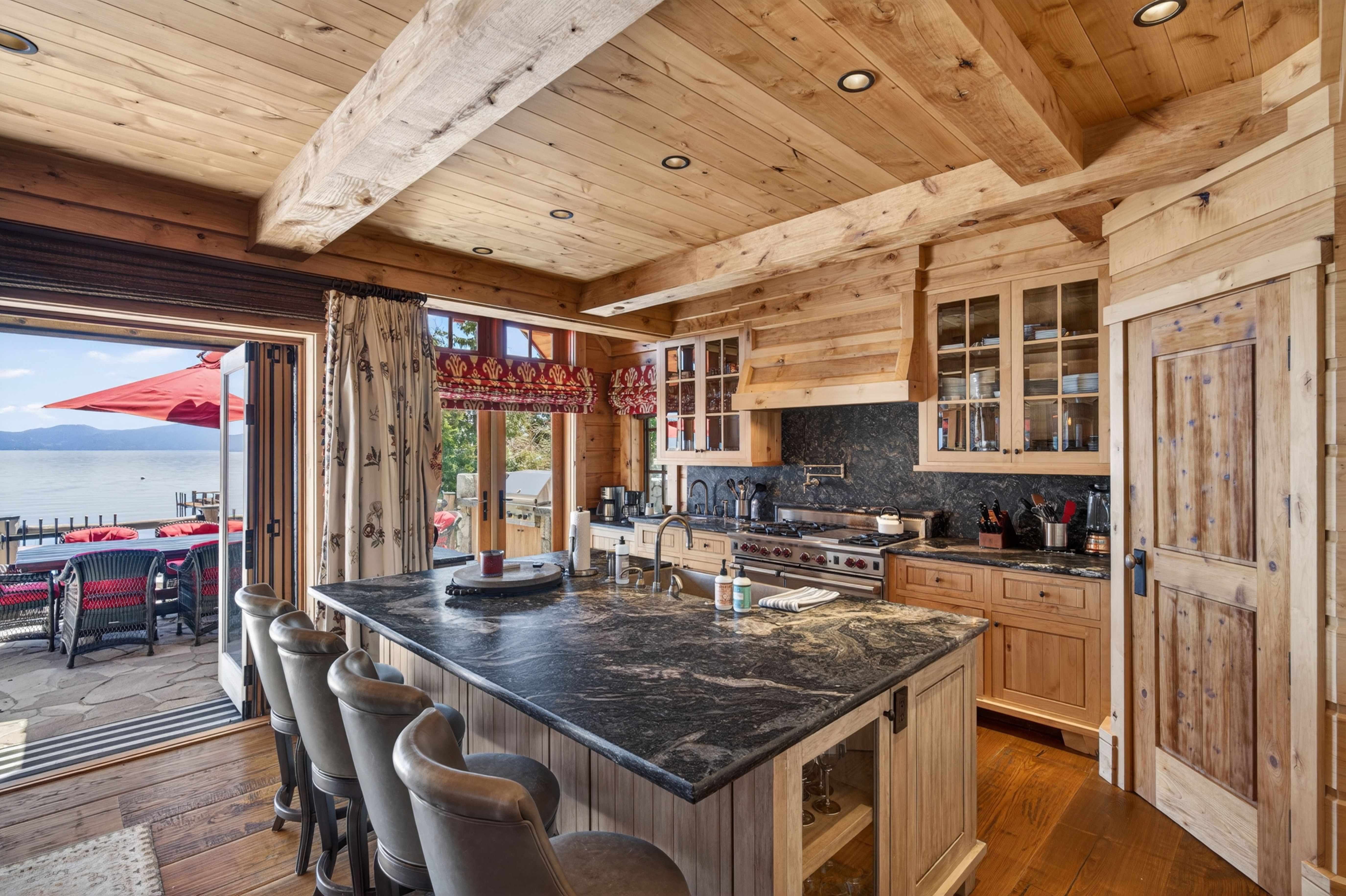
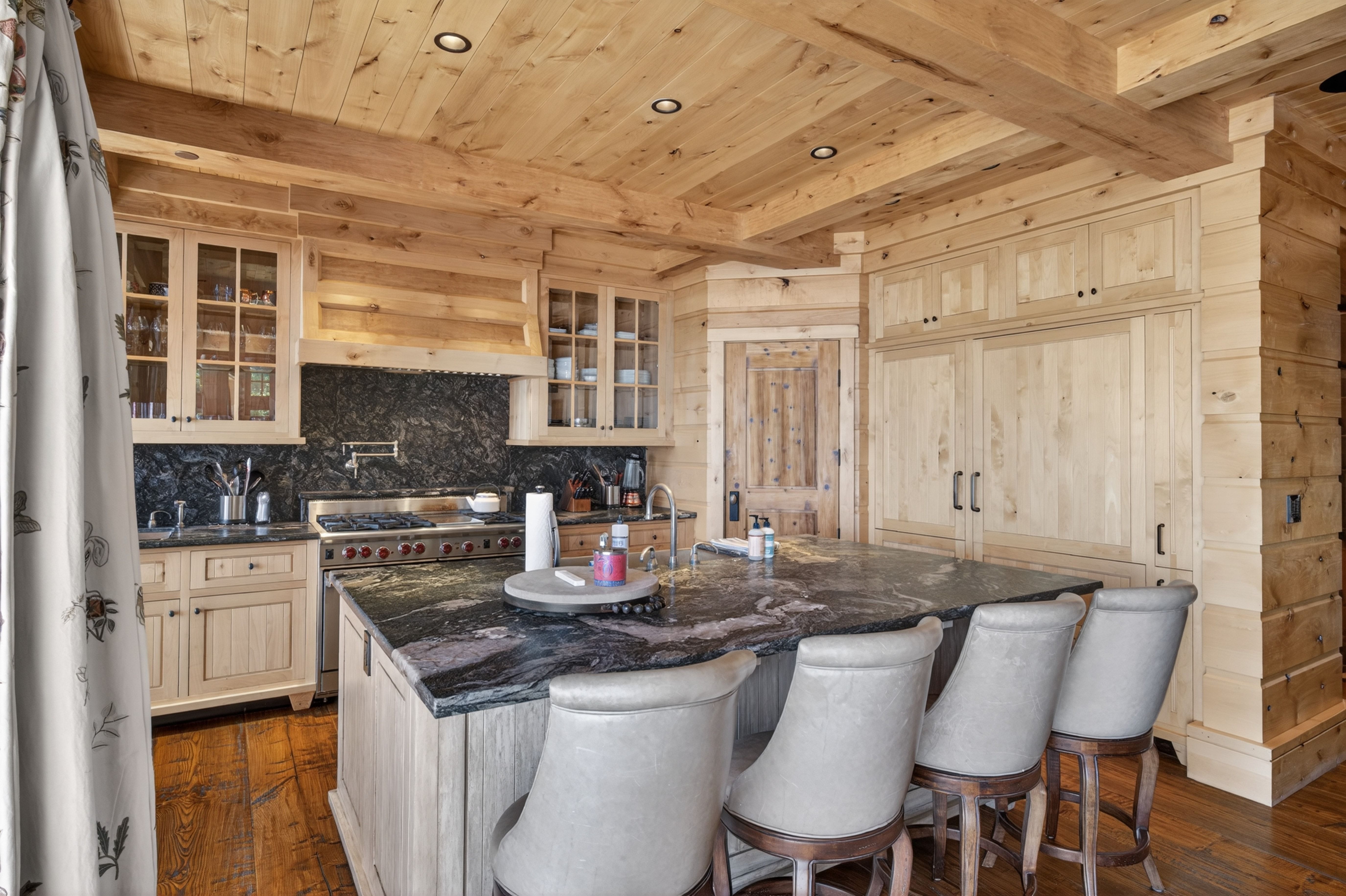
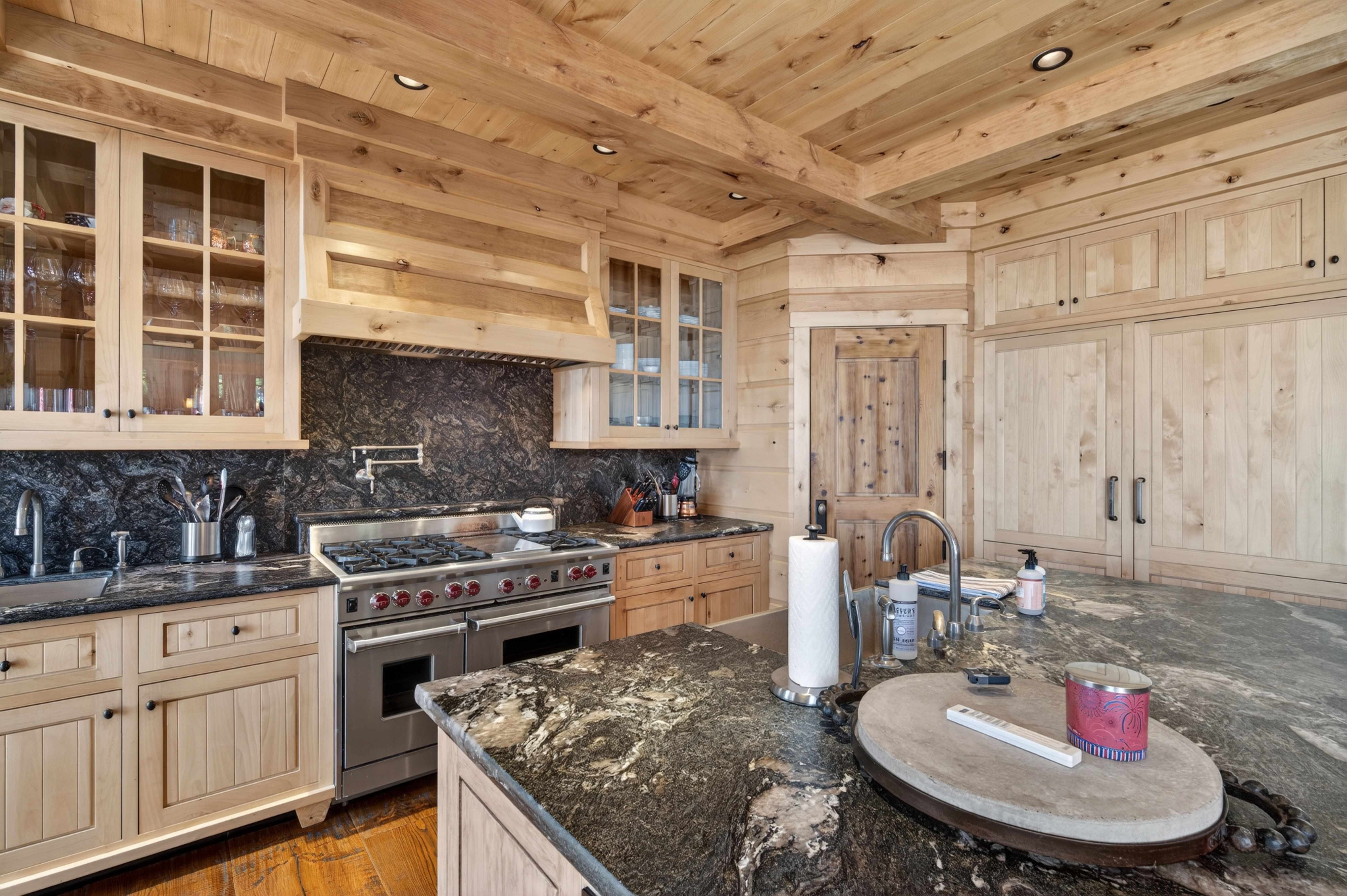
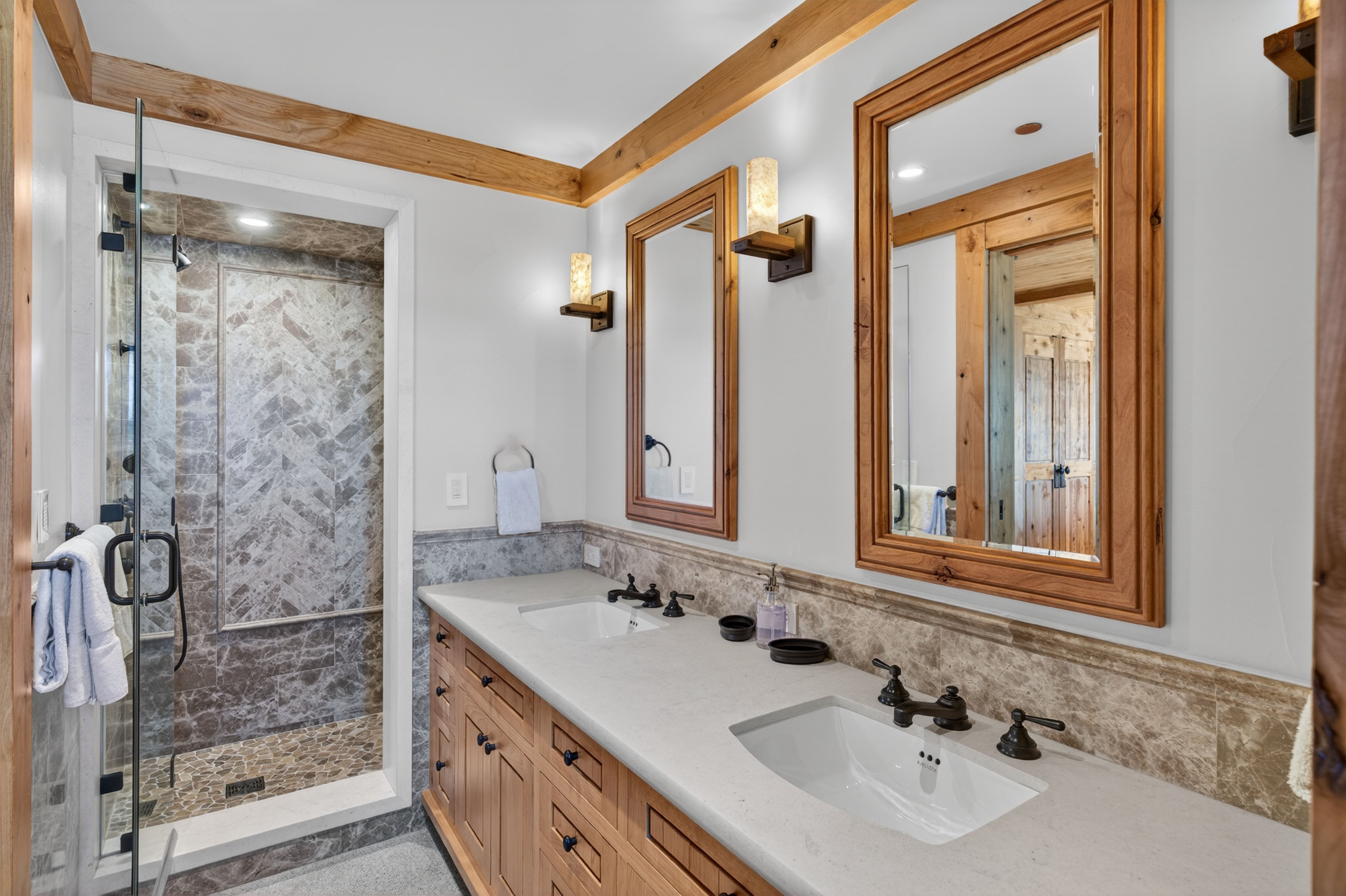
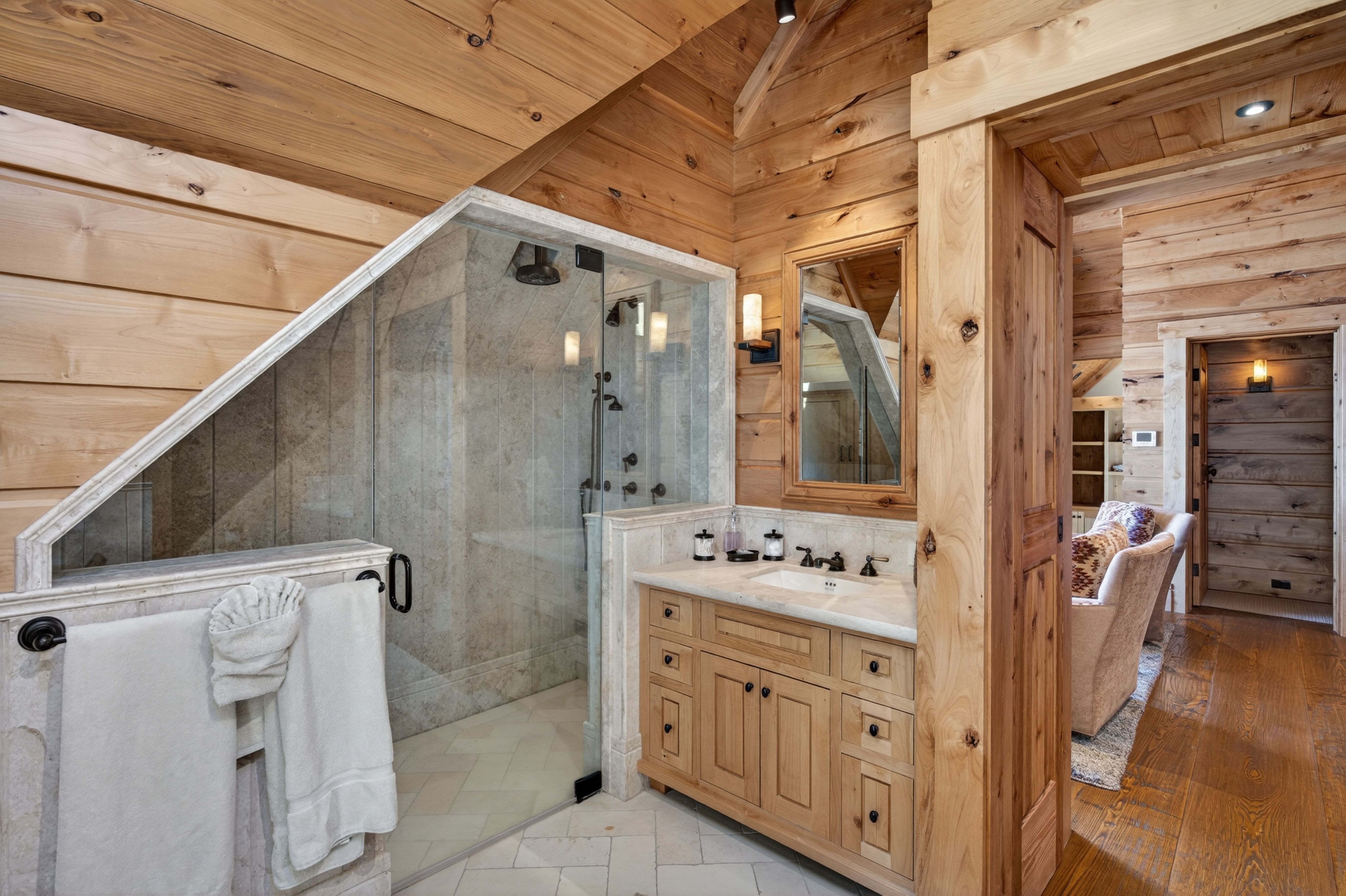
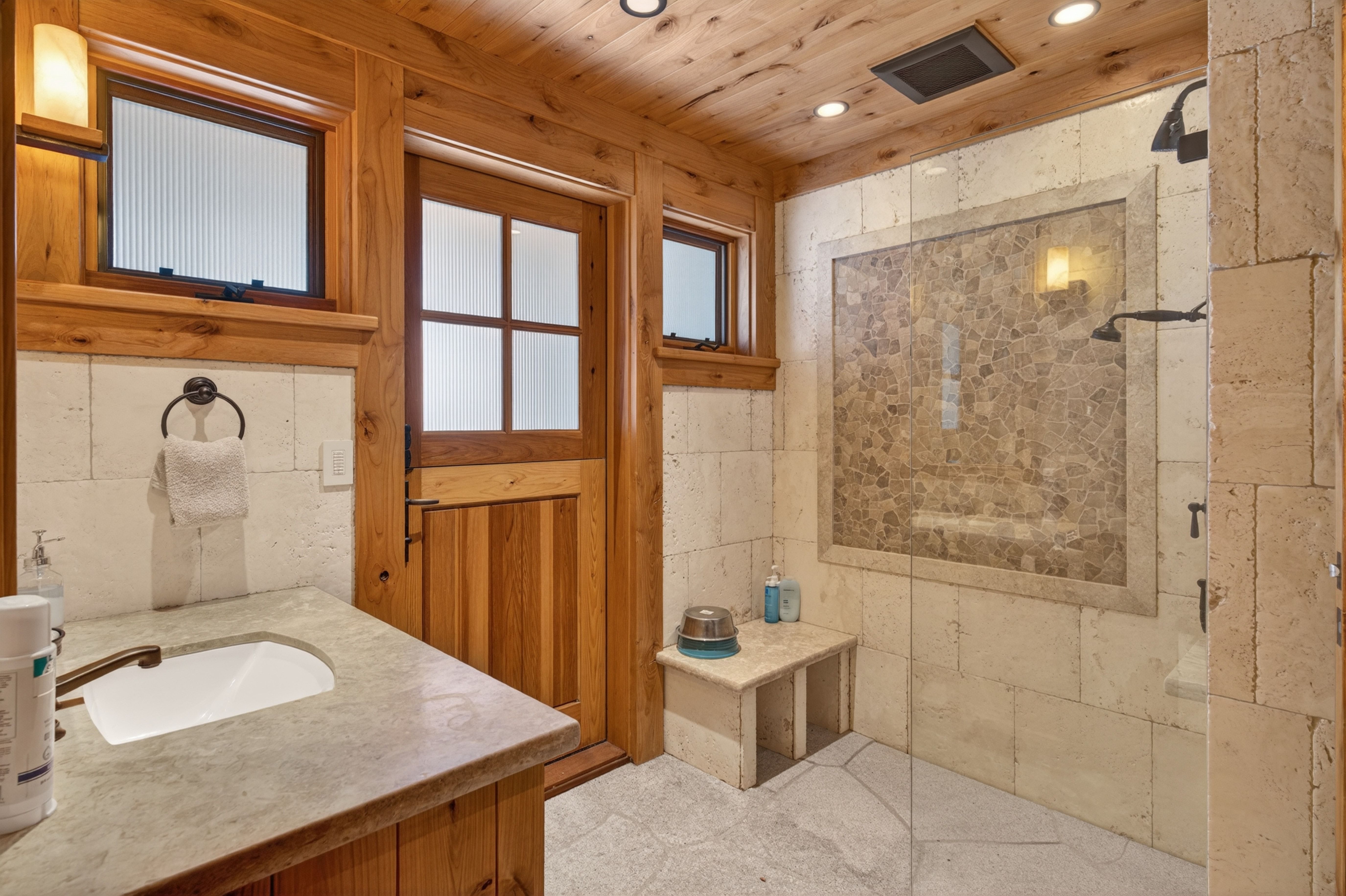
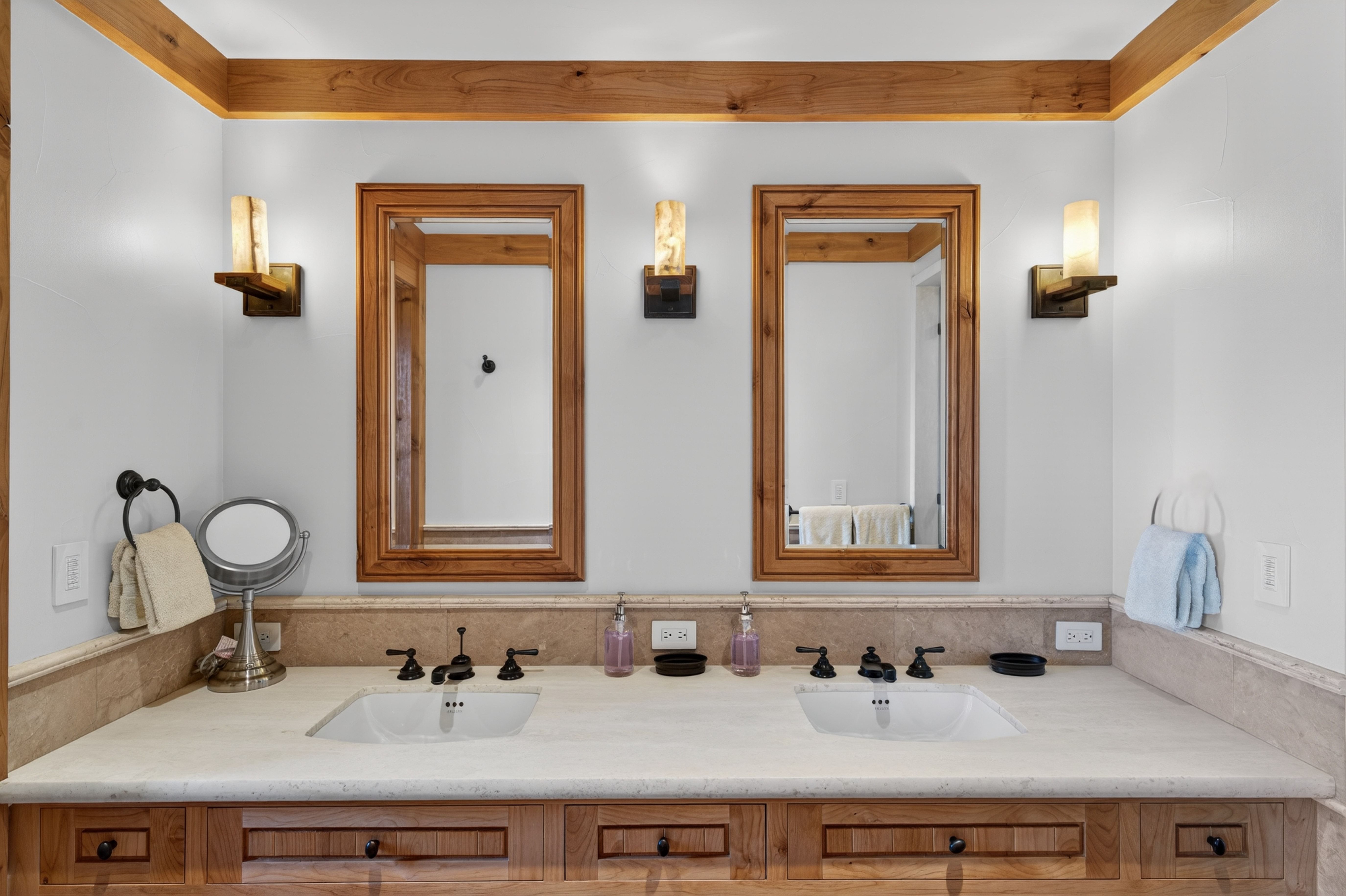
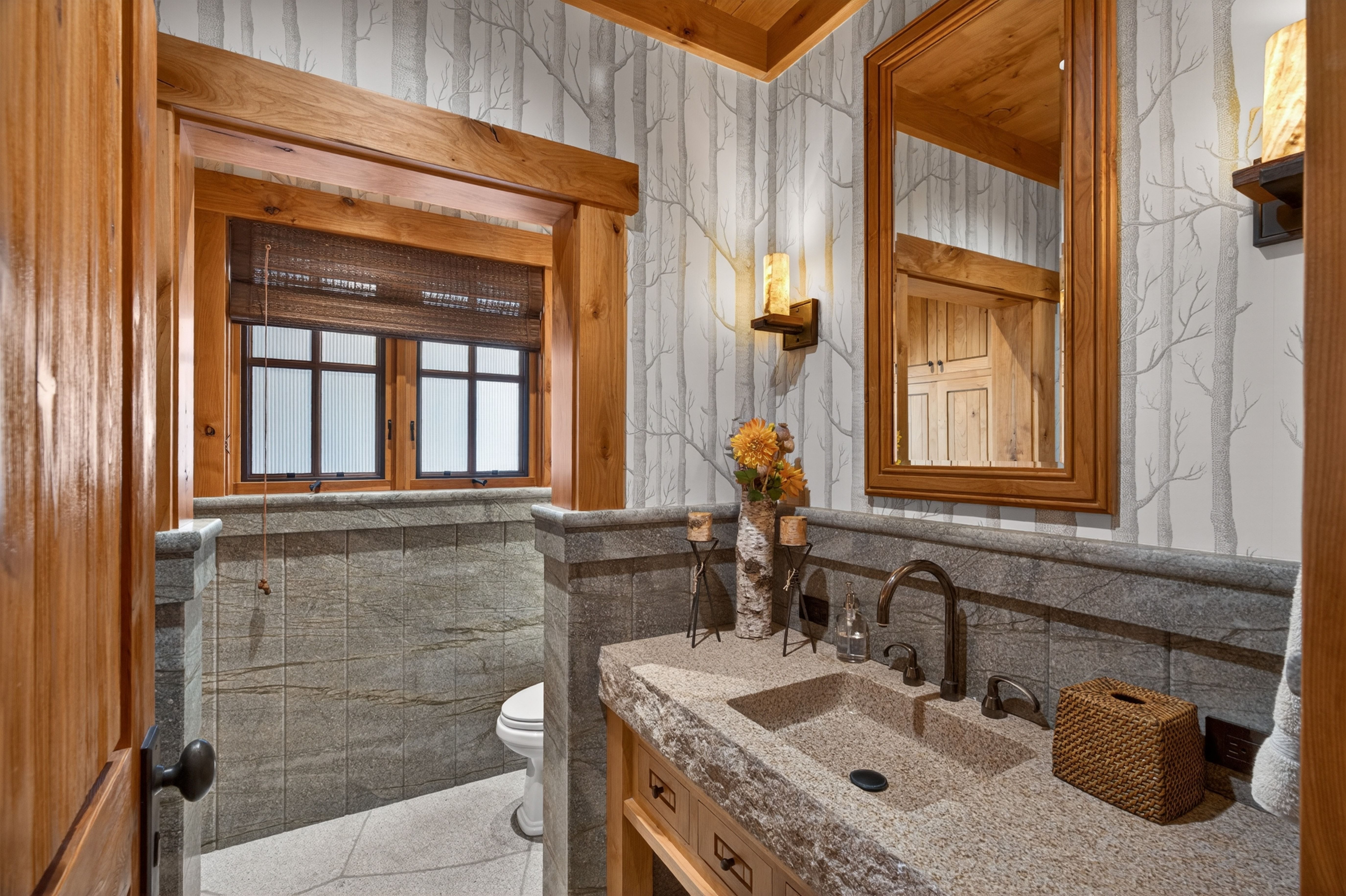
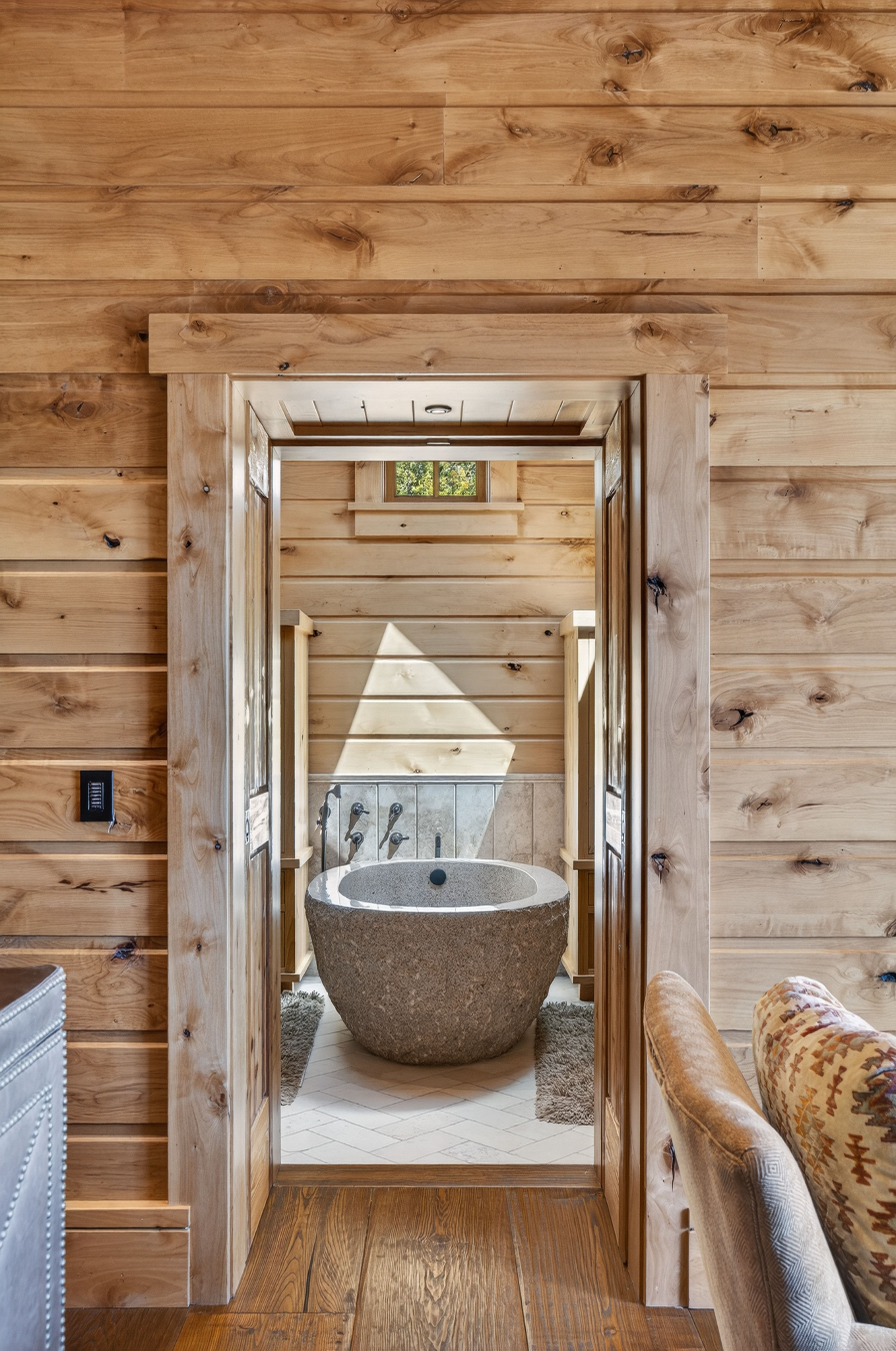
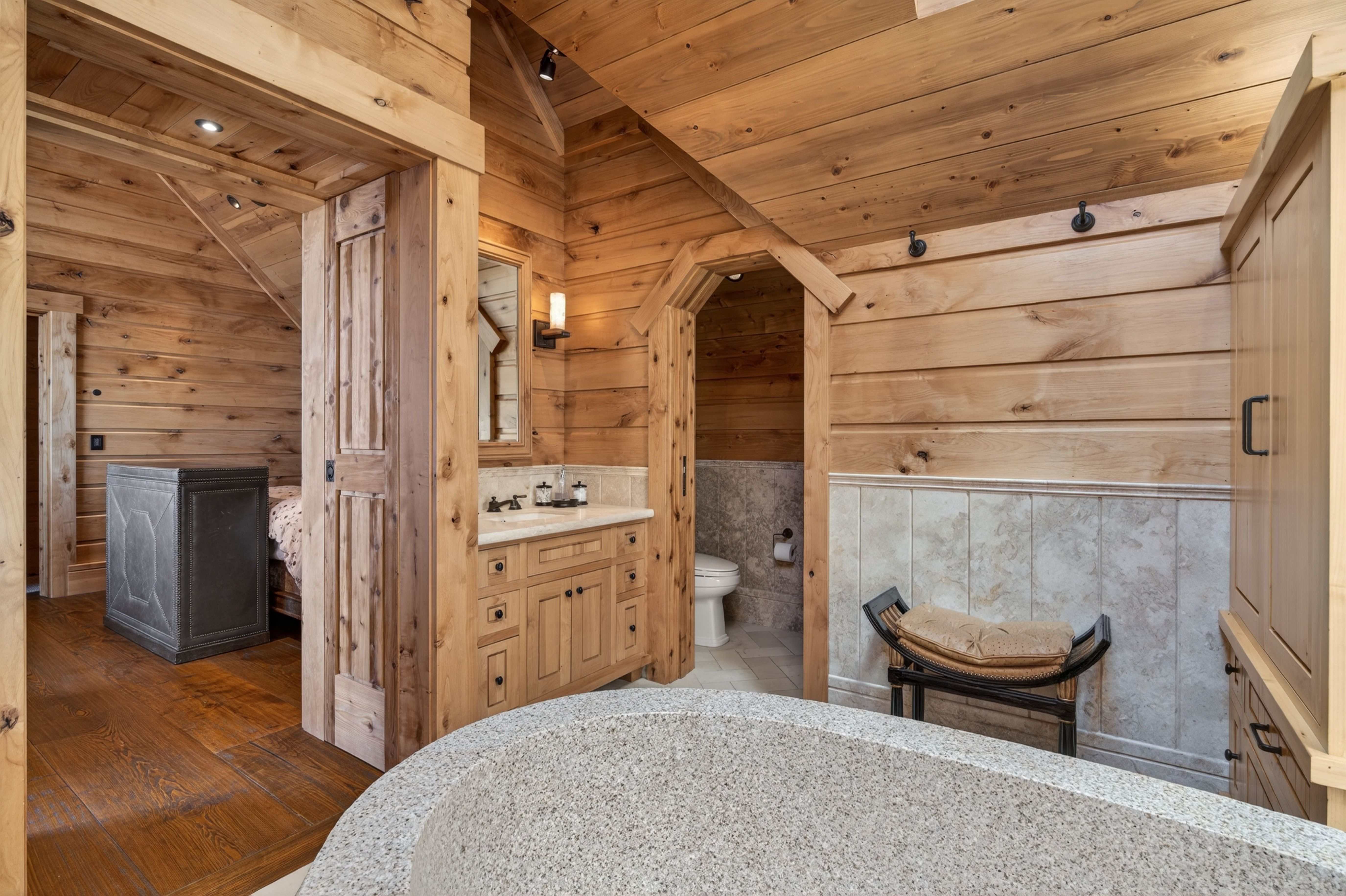
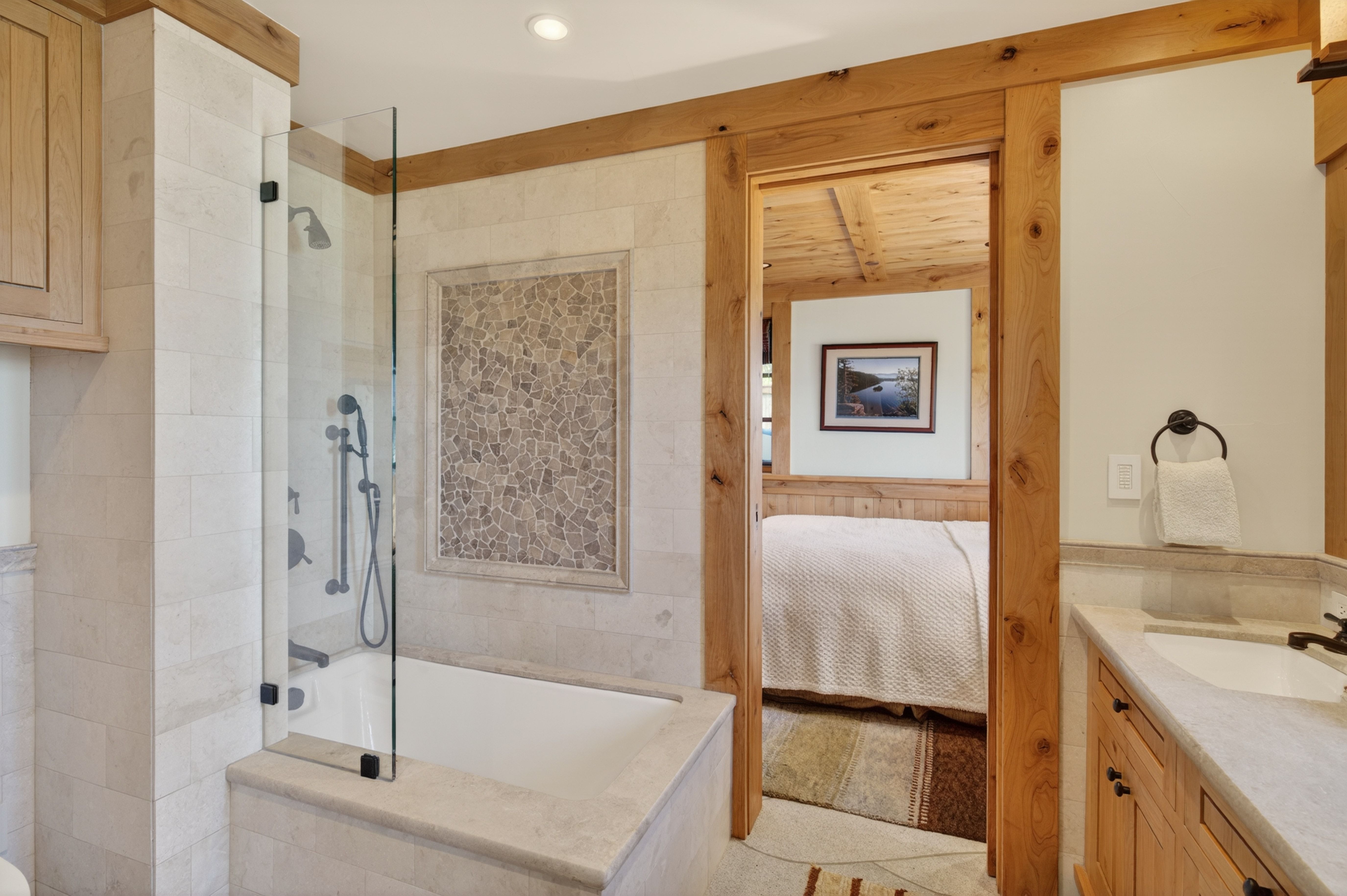
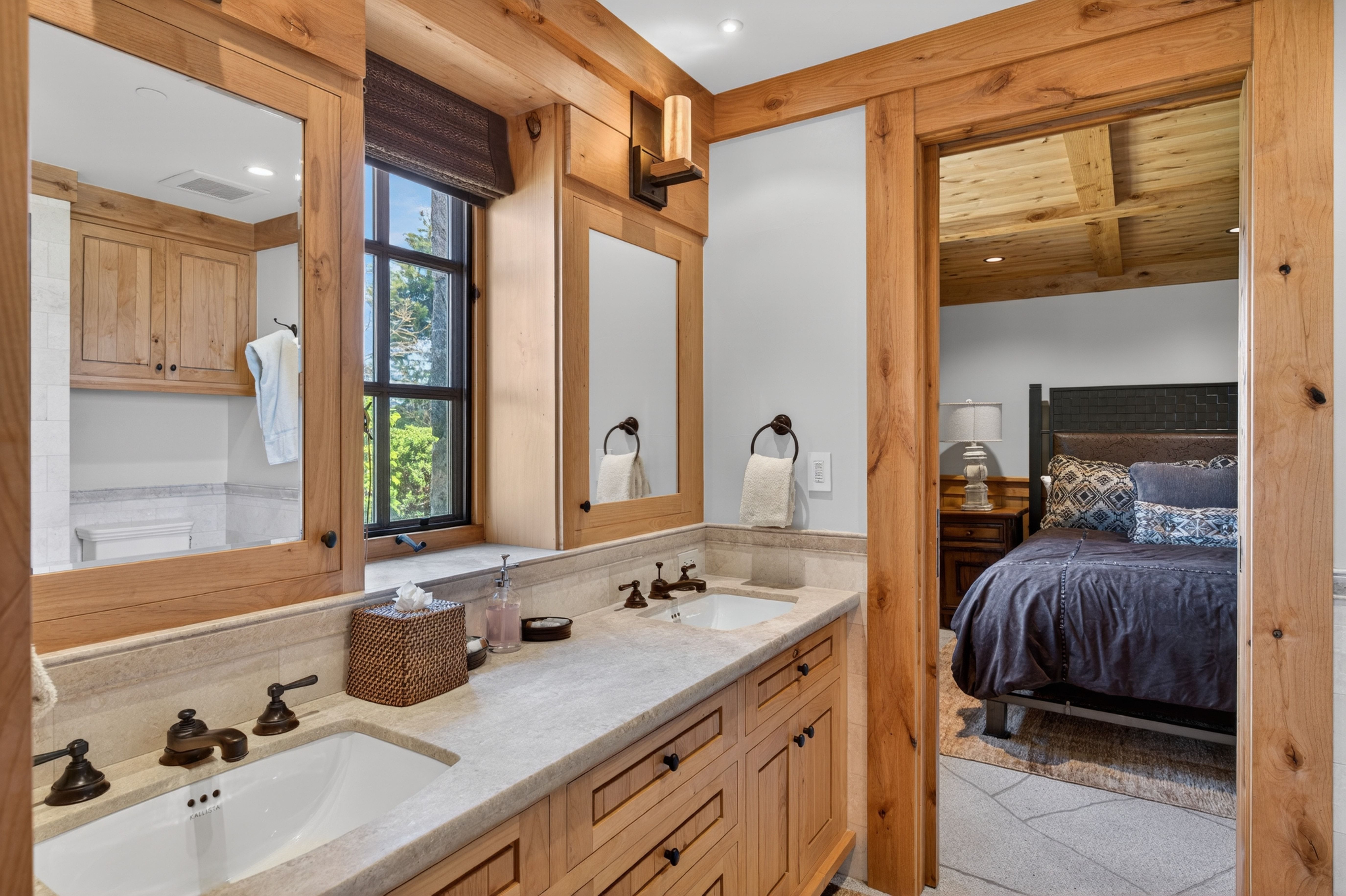
The kitchen is a study in purposeful craft. Custom light wood cabinetry pairs with black granite countertops and a professional-grade gas range equipped with a pot filler. A large center island with a prep sink serves as both a functional workspace and a natural gathering point, while wide-paned doors open directly to the deck, extending the kitchen into the open air. The primary suite continues the lodge aesthetic with its own stone fireplace and a dedicated seating area, while the en-suite bathroom delivers warm wood-paneled walls and ceilings surrounding a custom stone soaking tub — a space that achieves the rare balance between rugged materiality and genuine luxury.
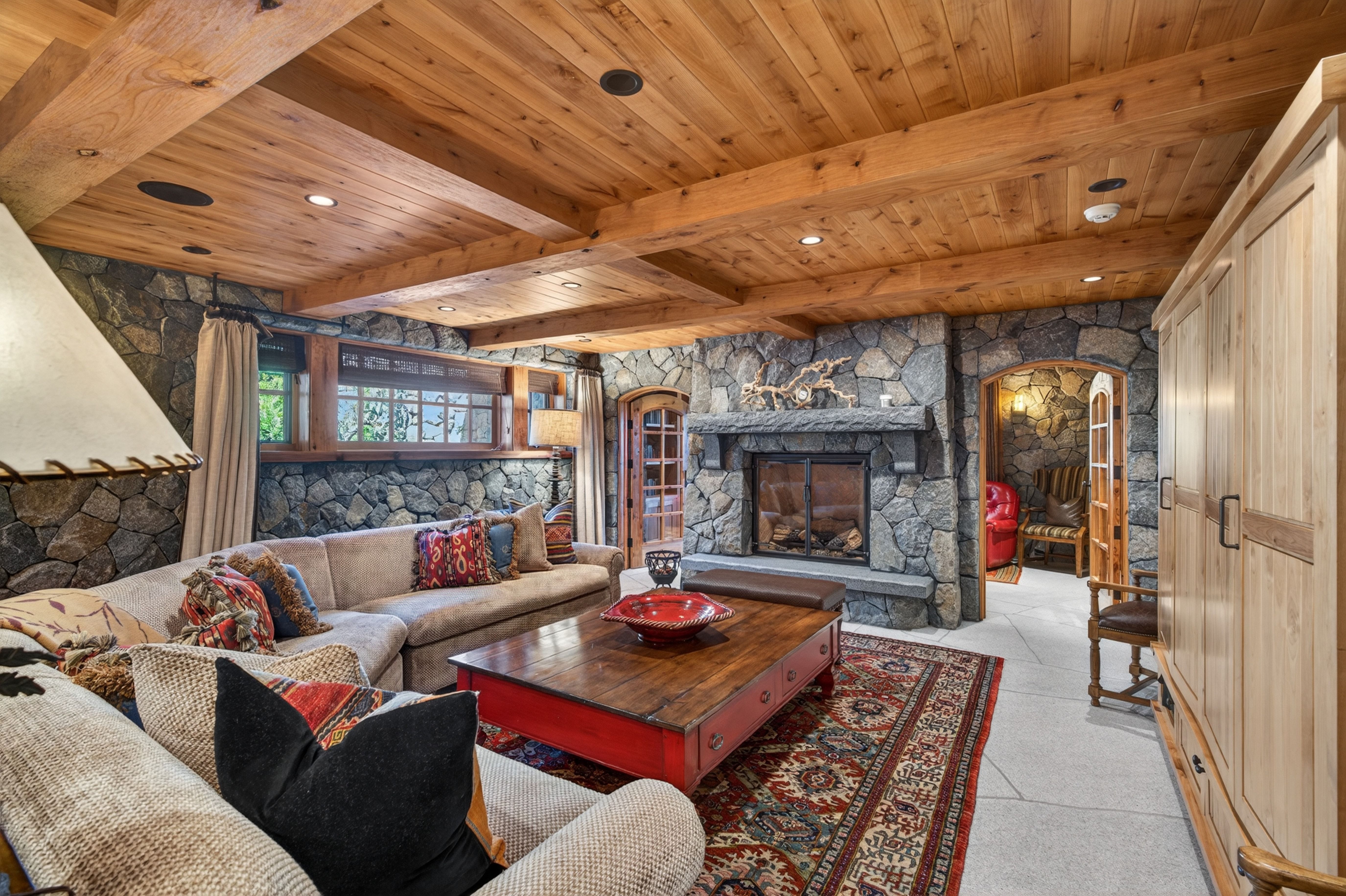
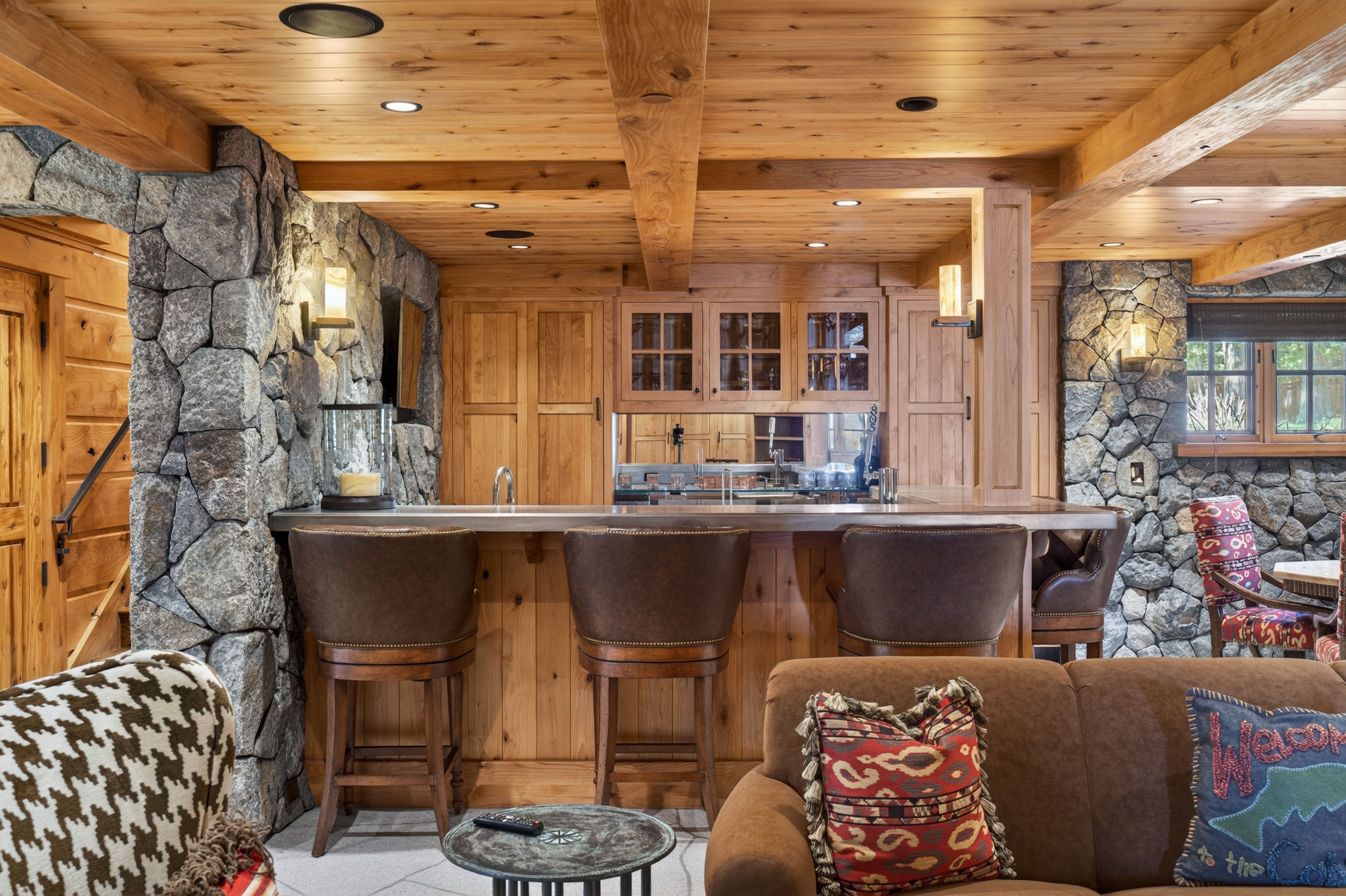
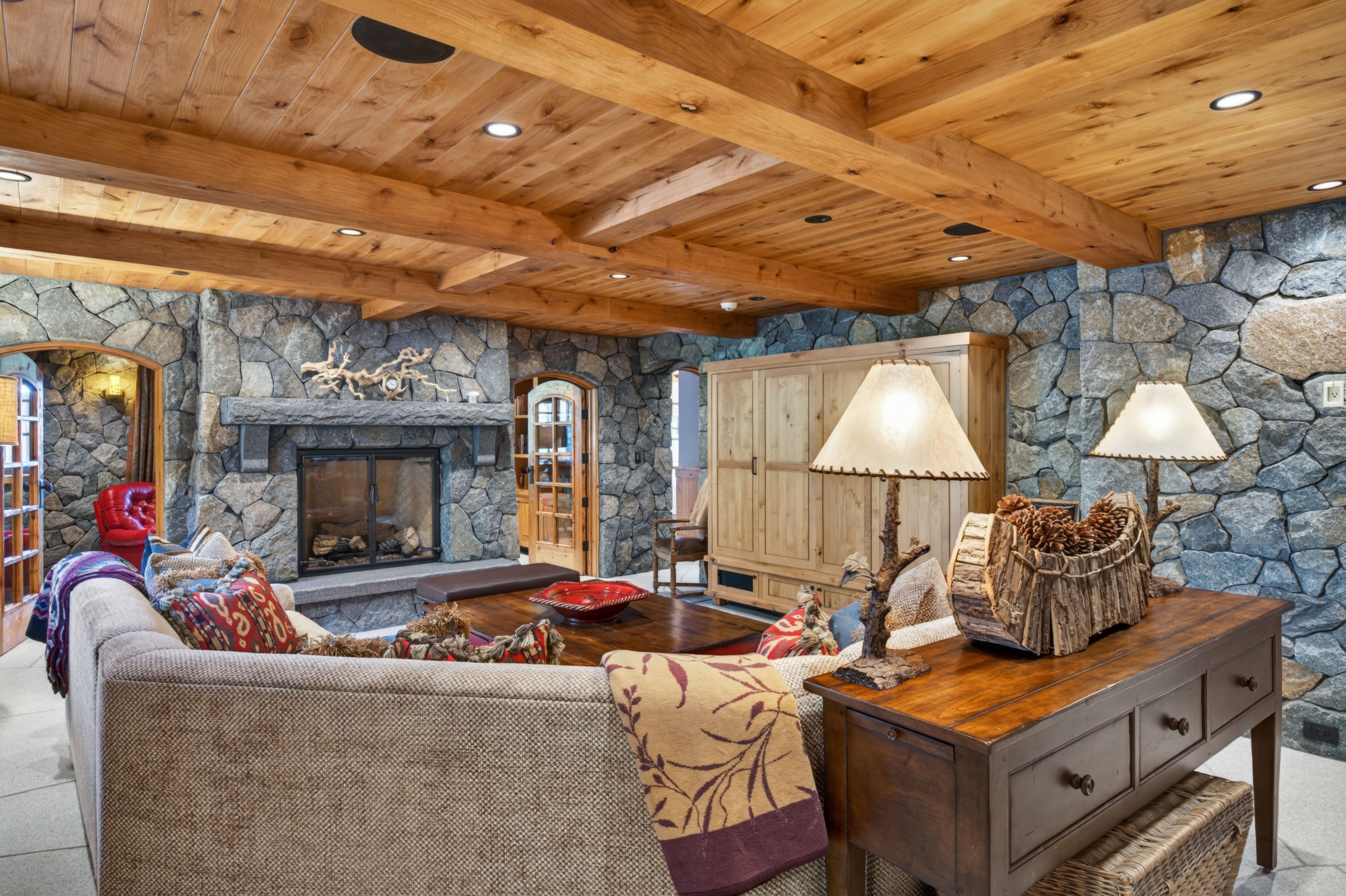
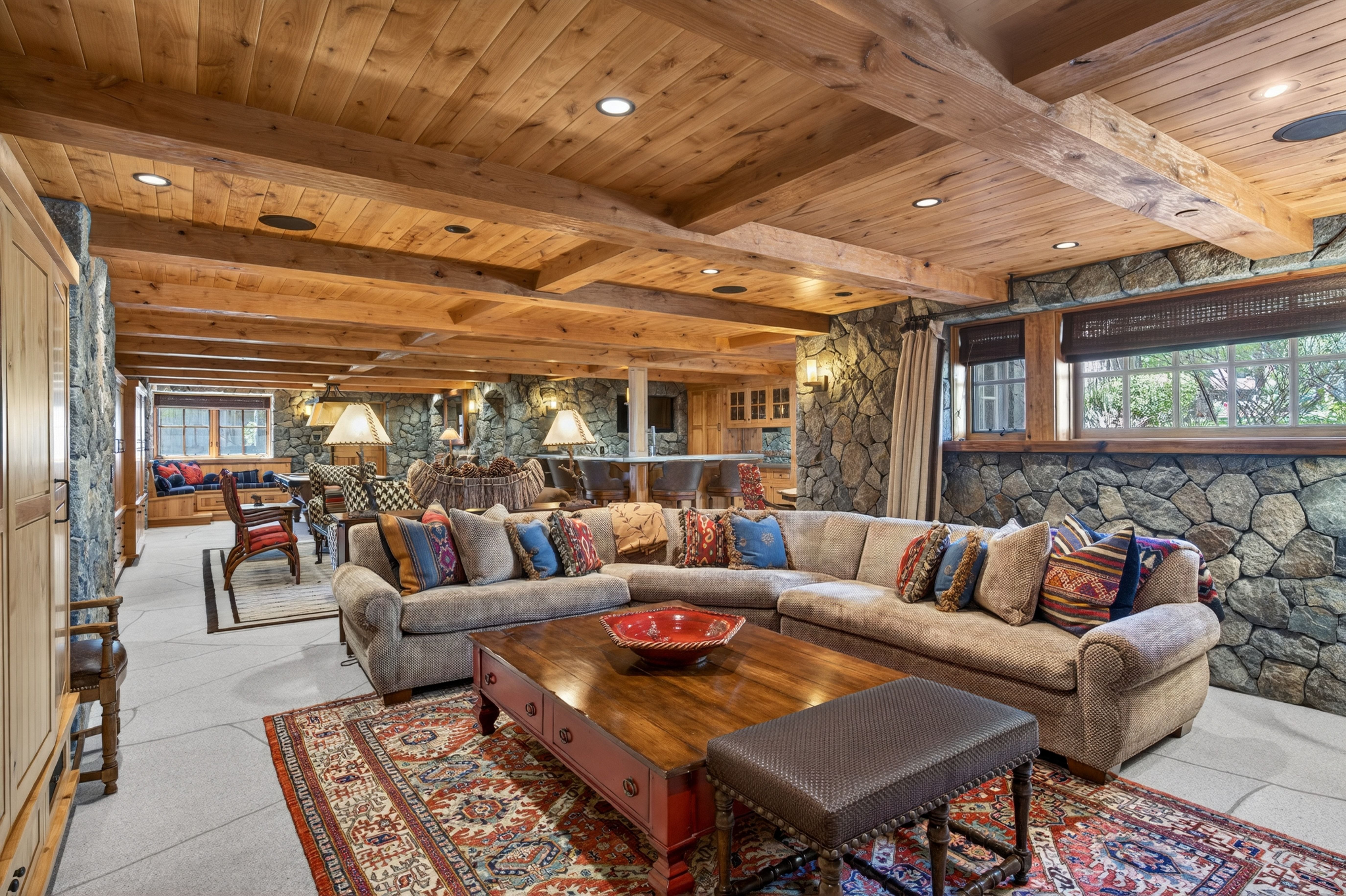
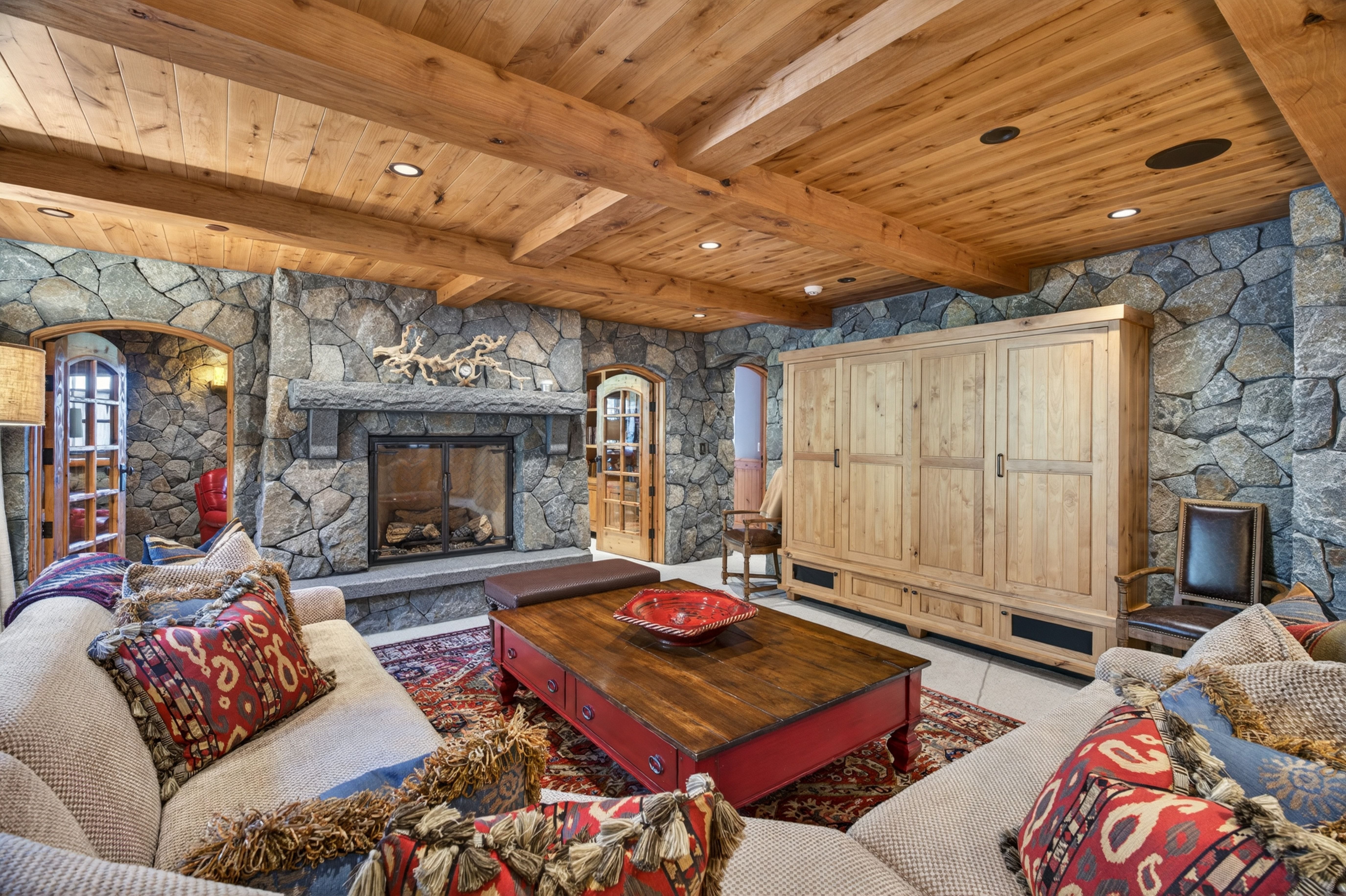
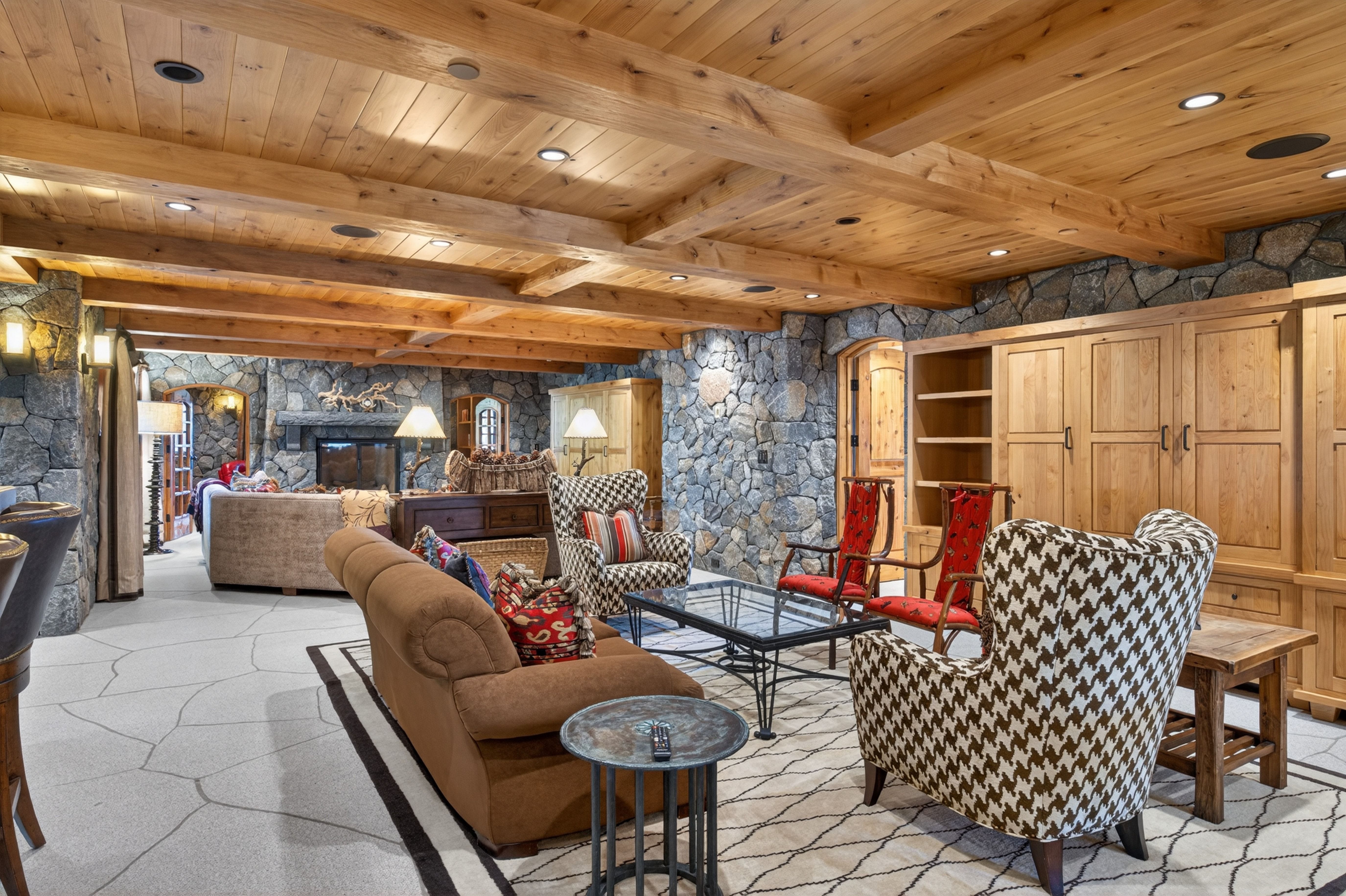
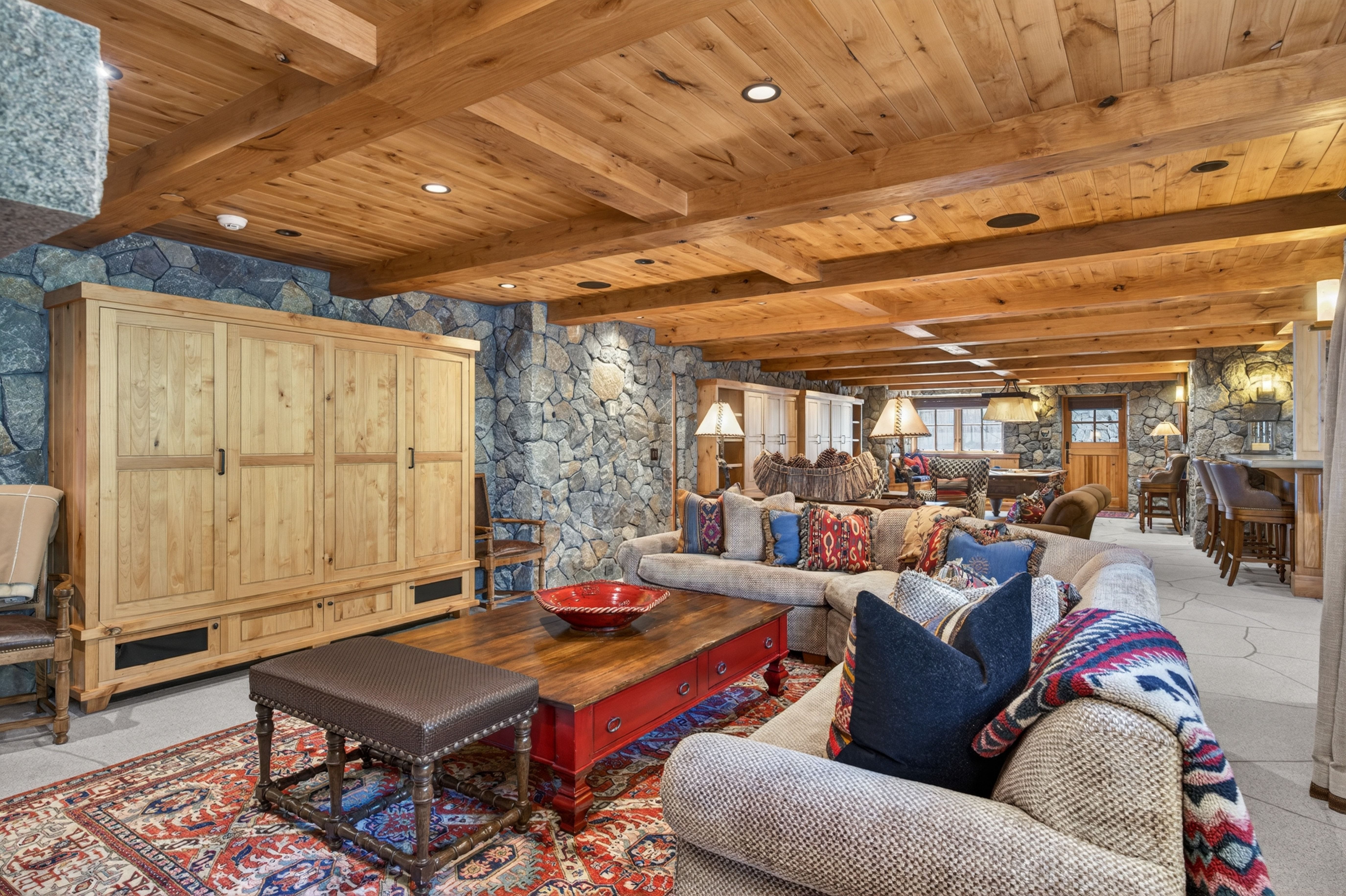
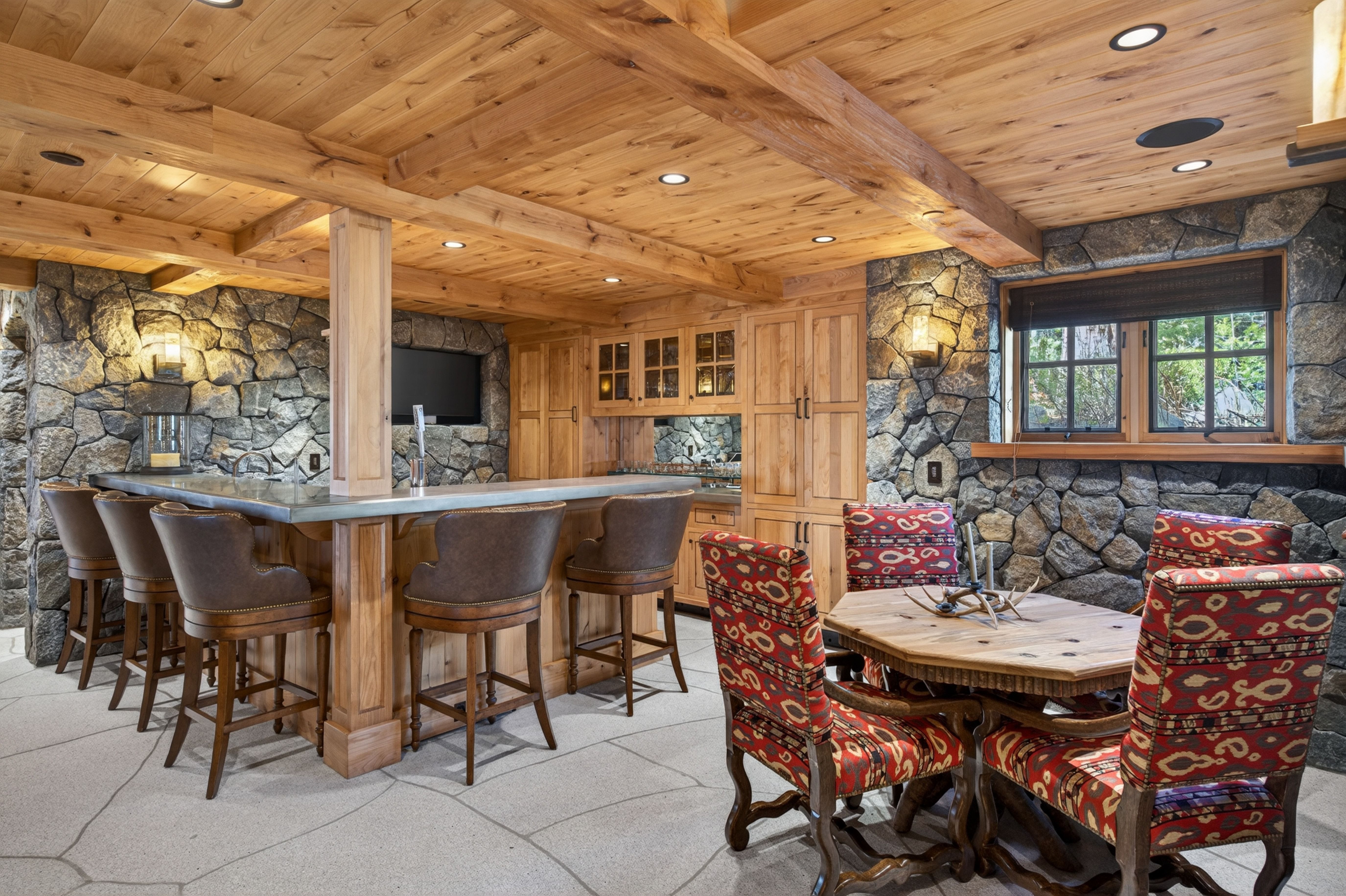
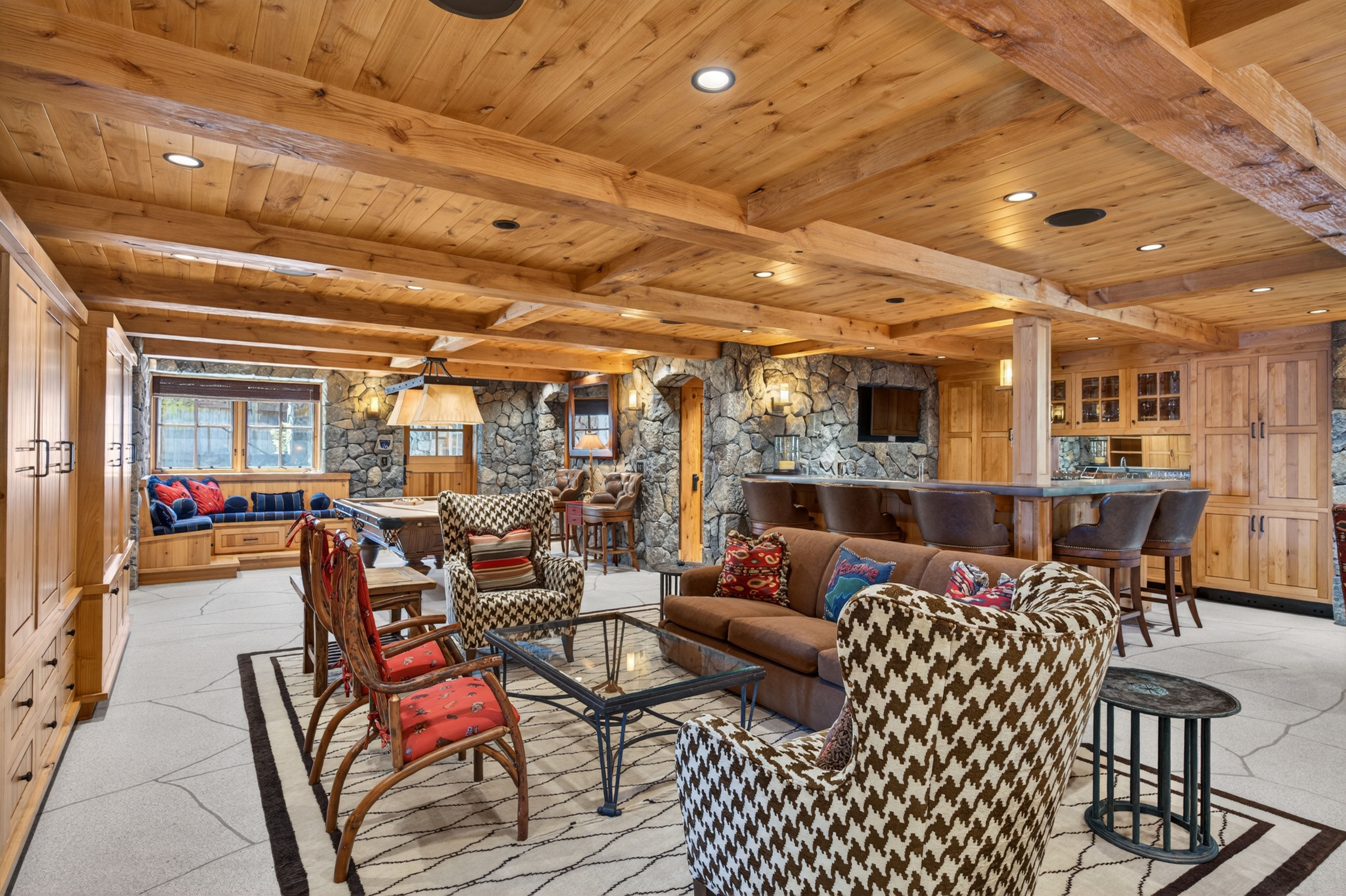
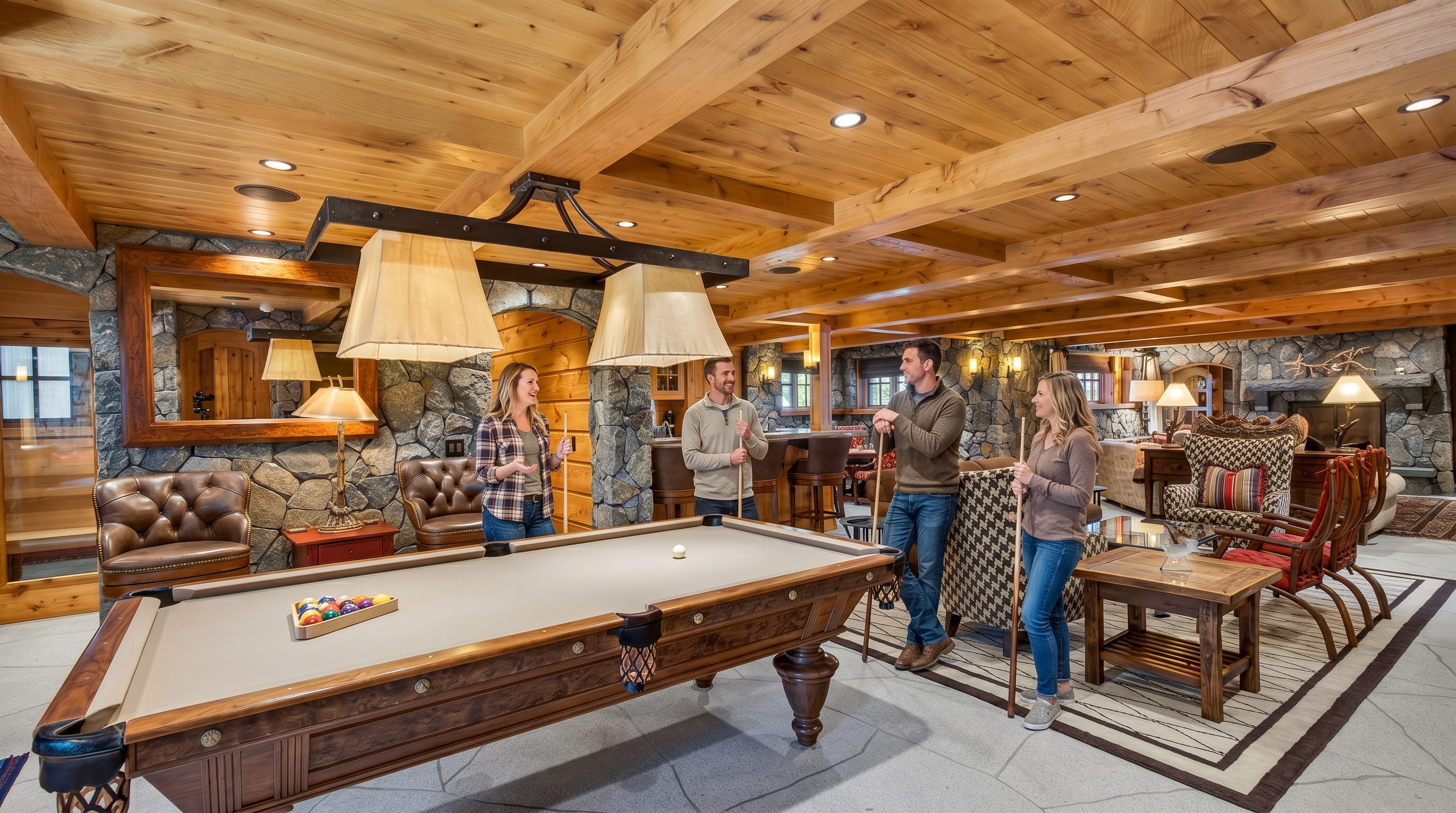
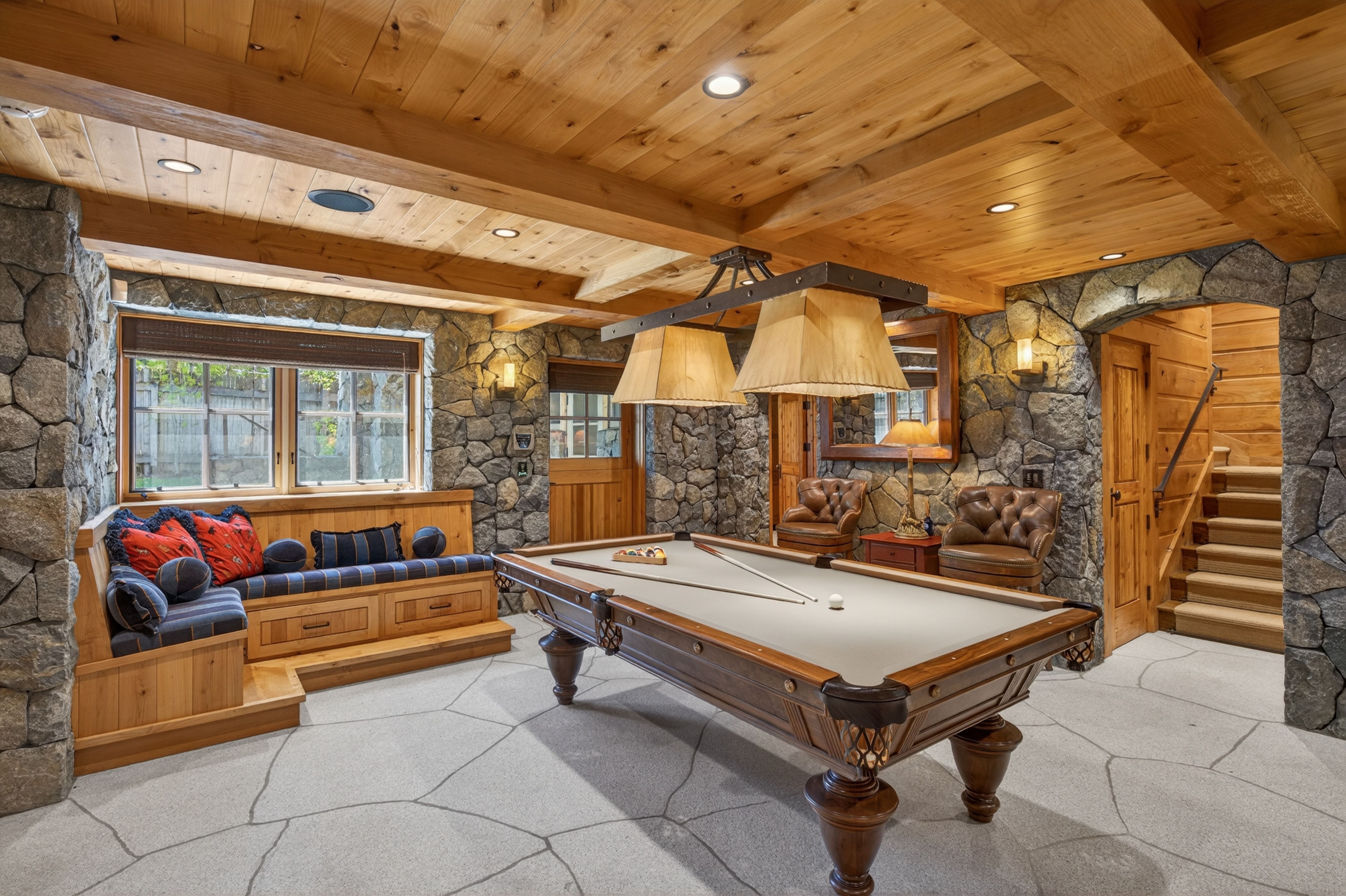
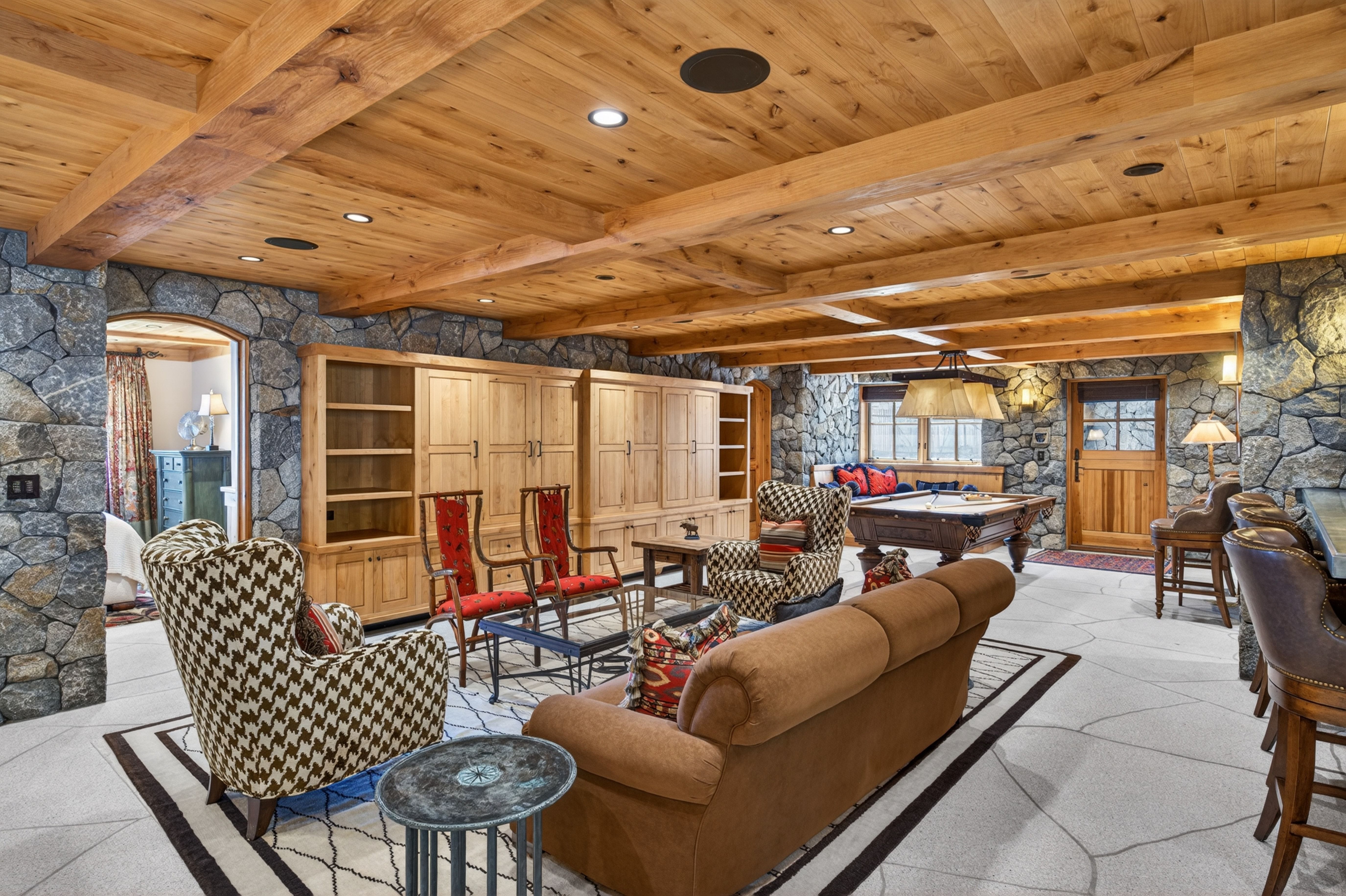
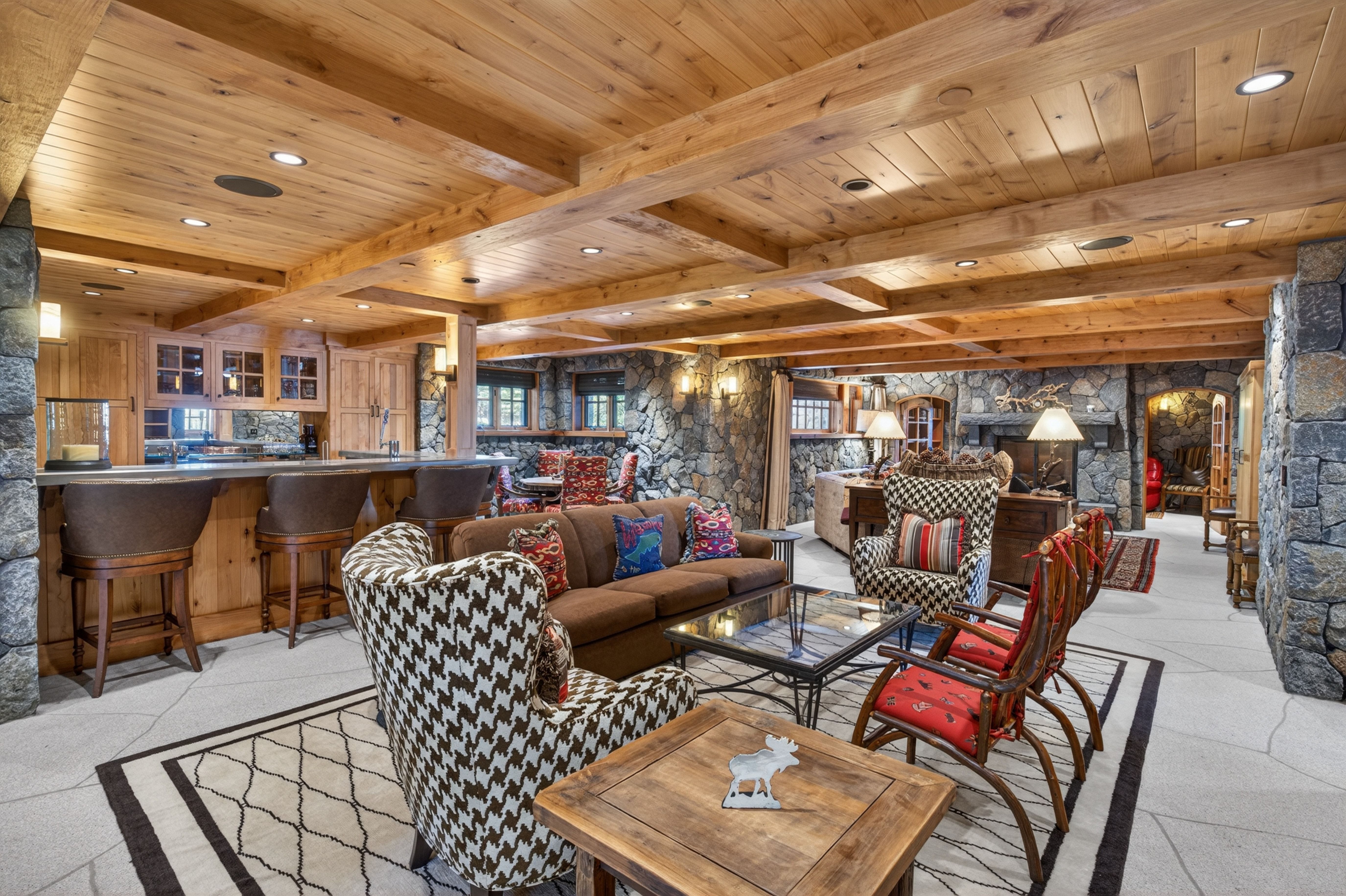
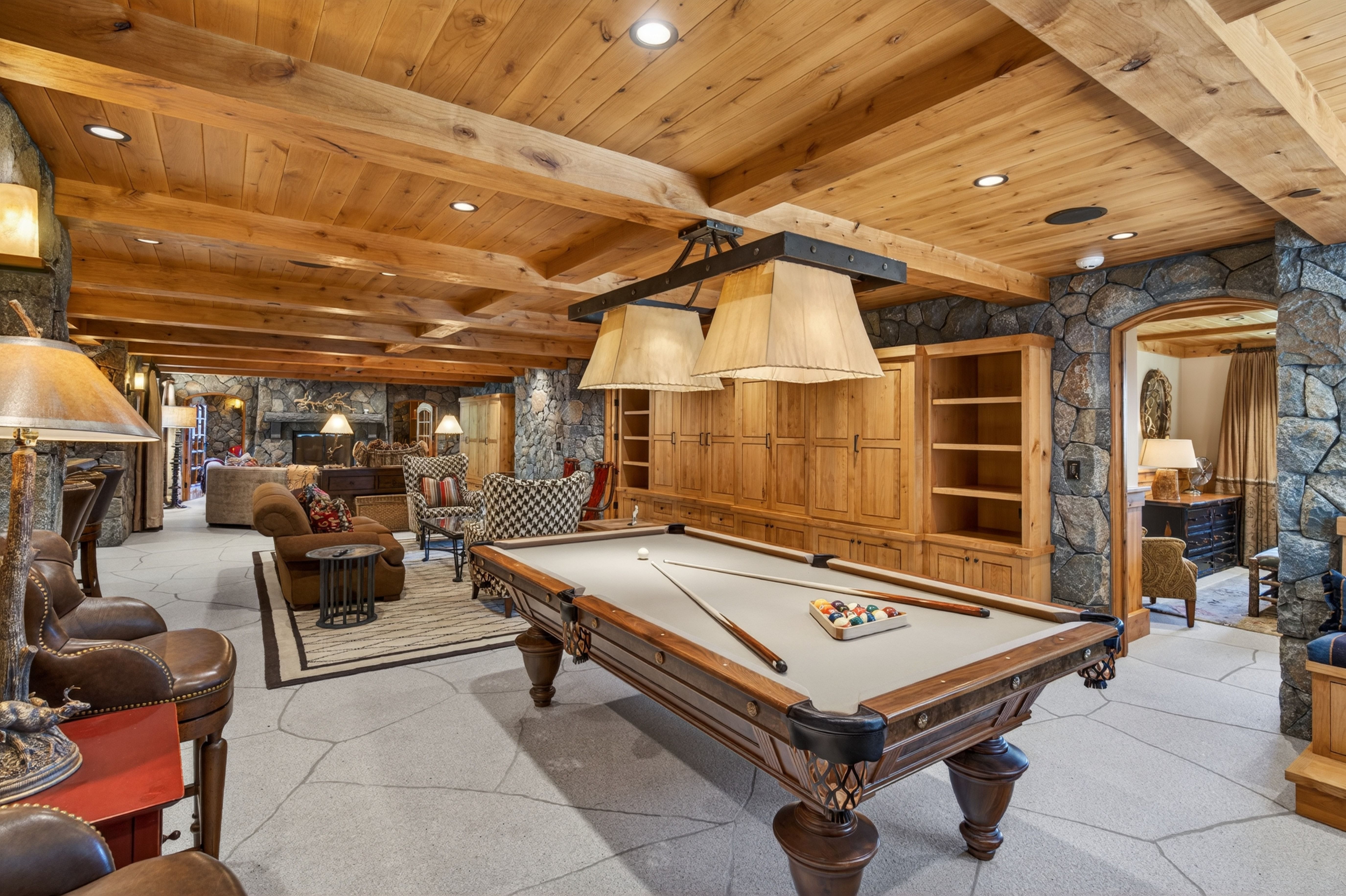
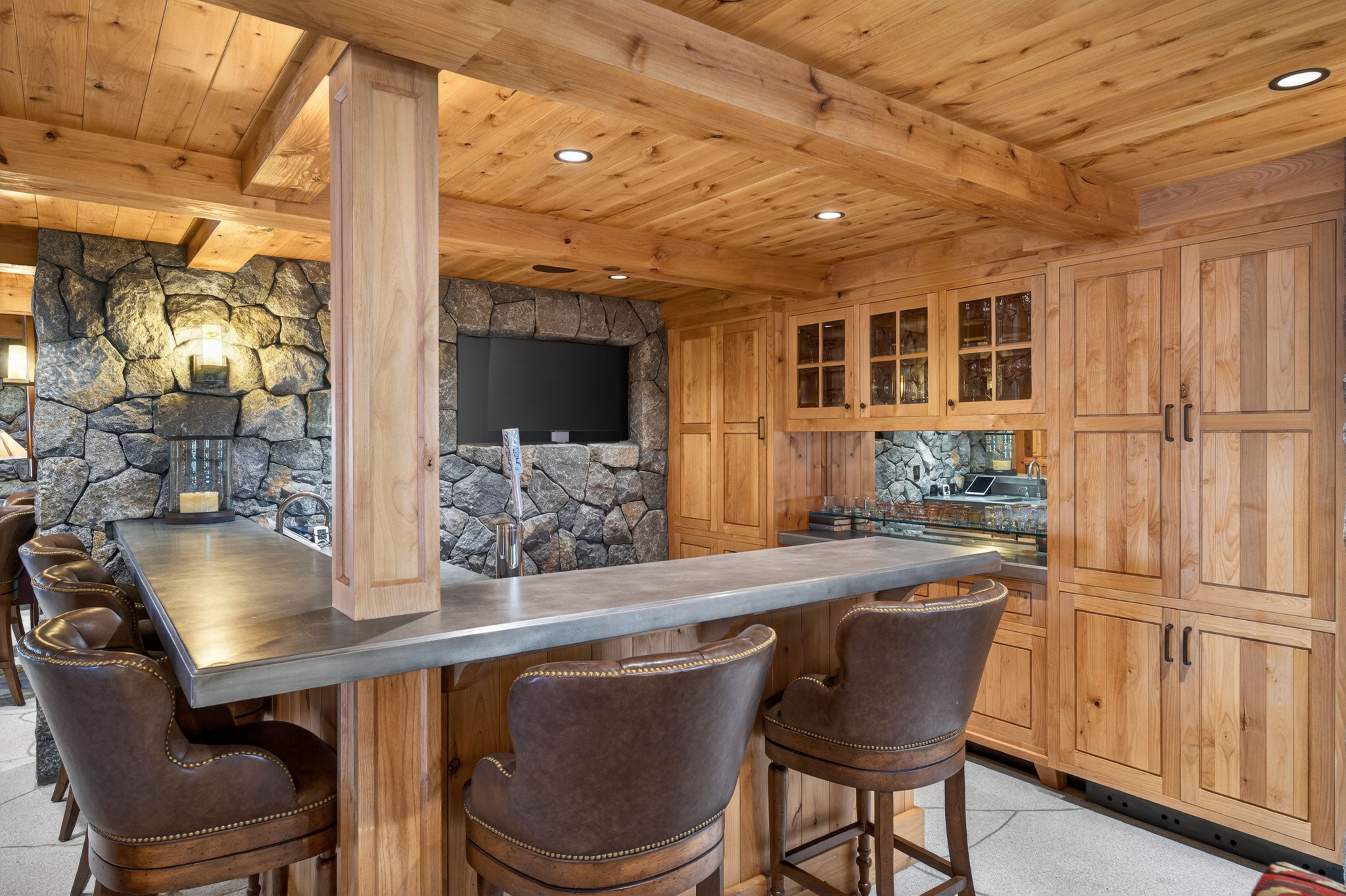
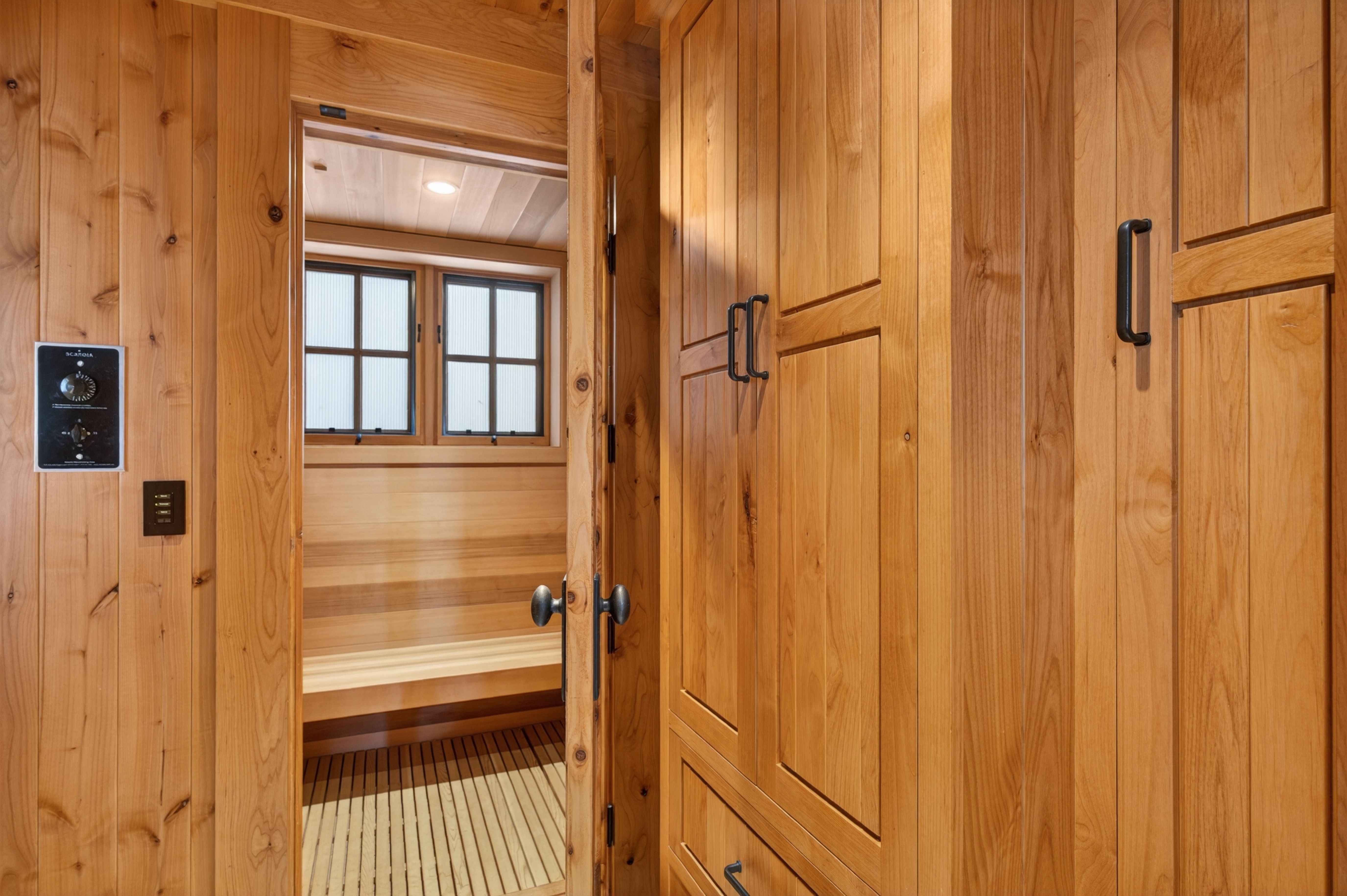
The lower level unfolds as a full entertainer's pavilion: stone accent walls, exposed beam ceilings, a built-in bar, a billiards area, and a dedicated wine cellar with glass-door refrigeration create an environment designed for unhurried evenings among close company. A stone fireplace anchors the lounge, while a cedar-clad sauna with built-in benches completes a wellness offering that rivals any private retreat.
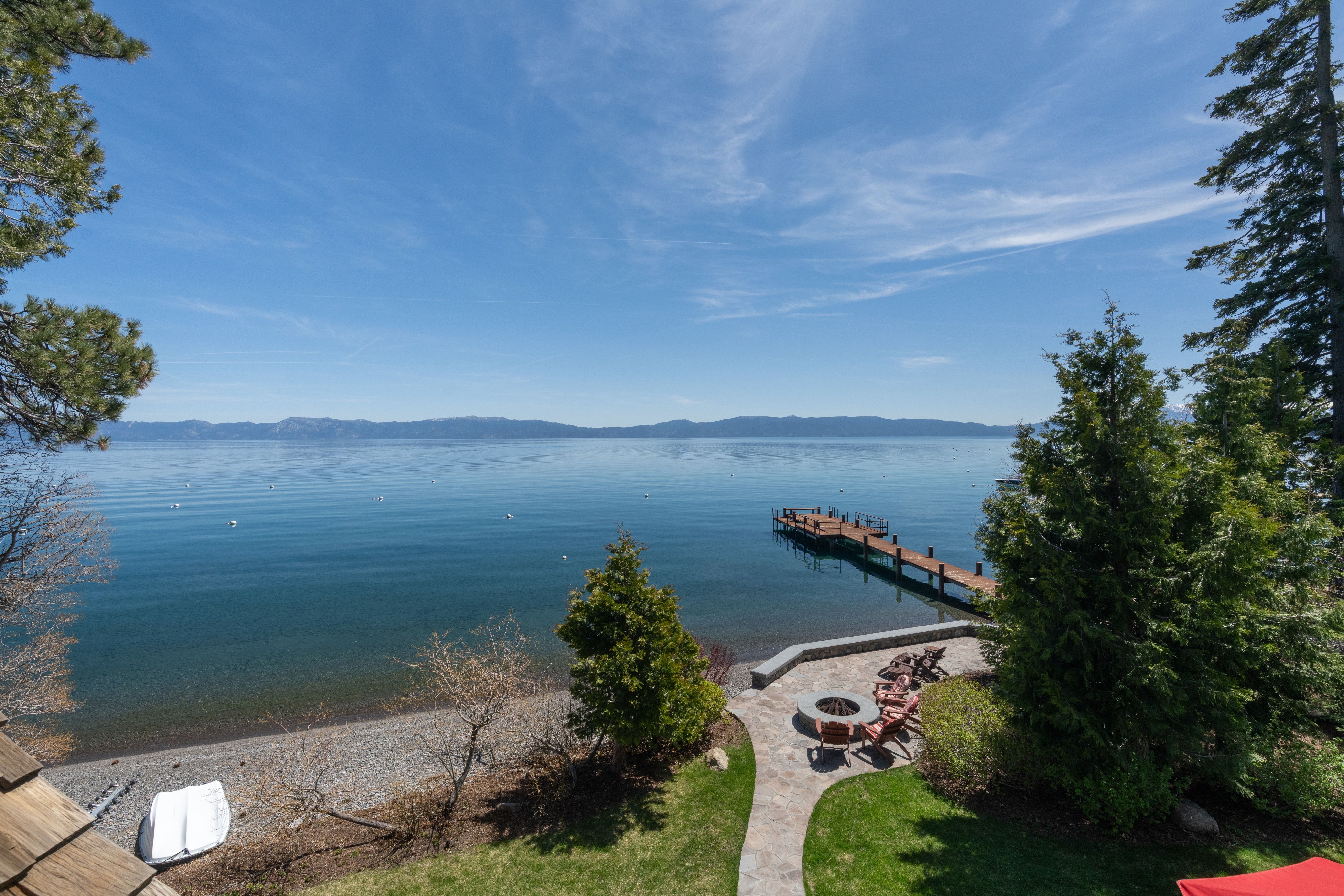
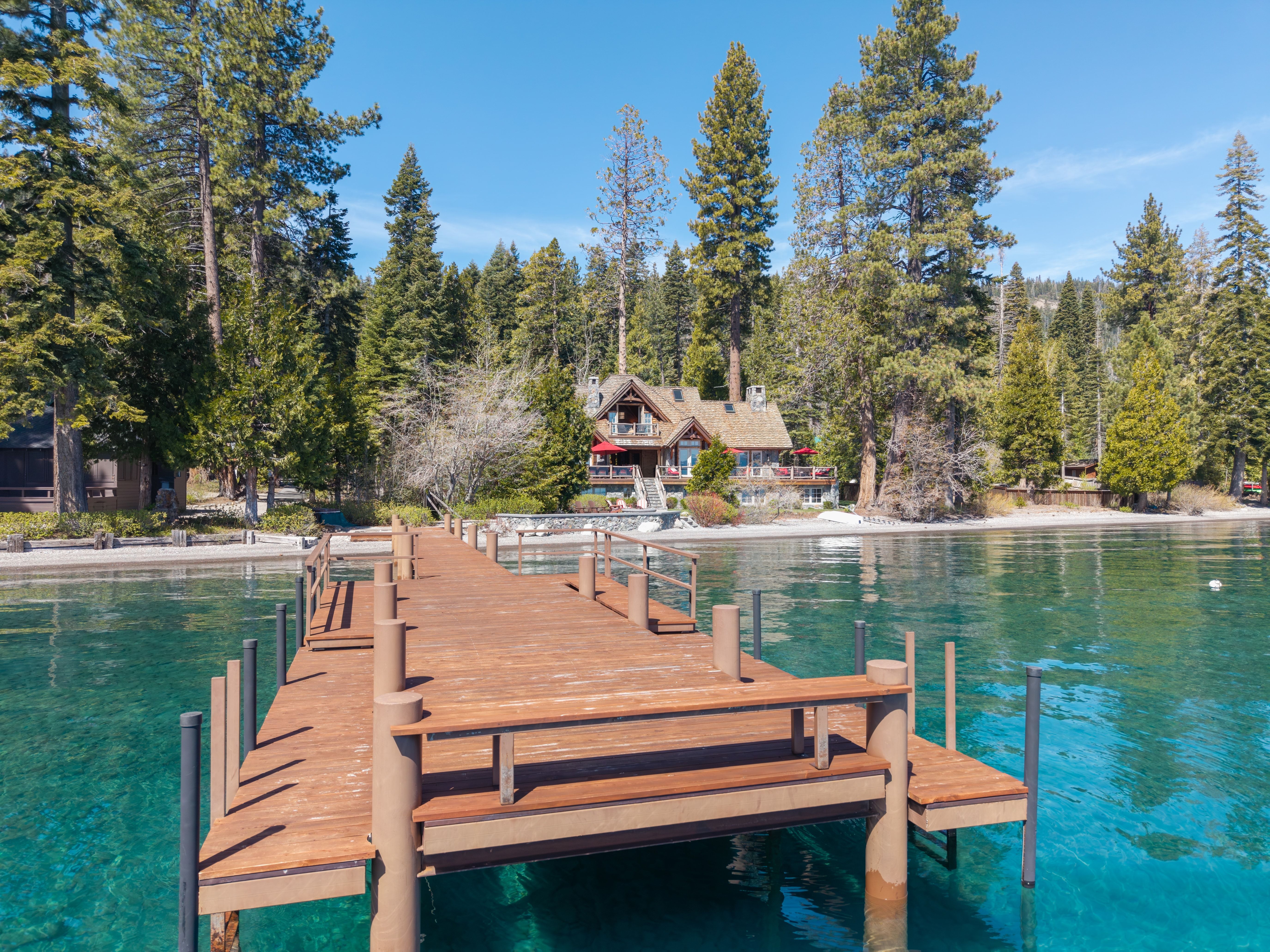
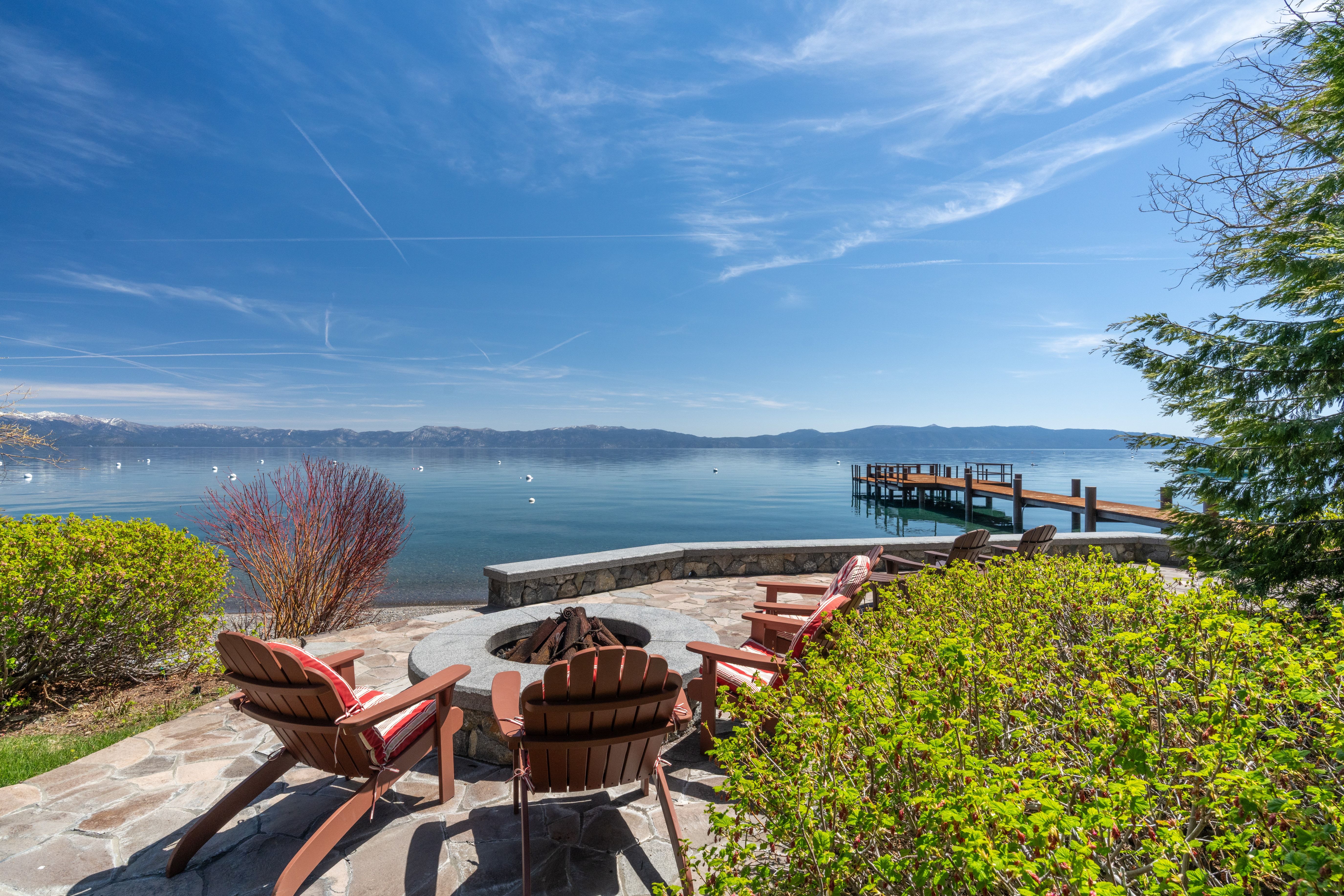
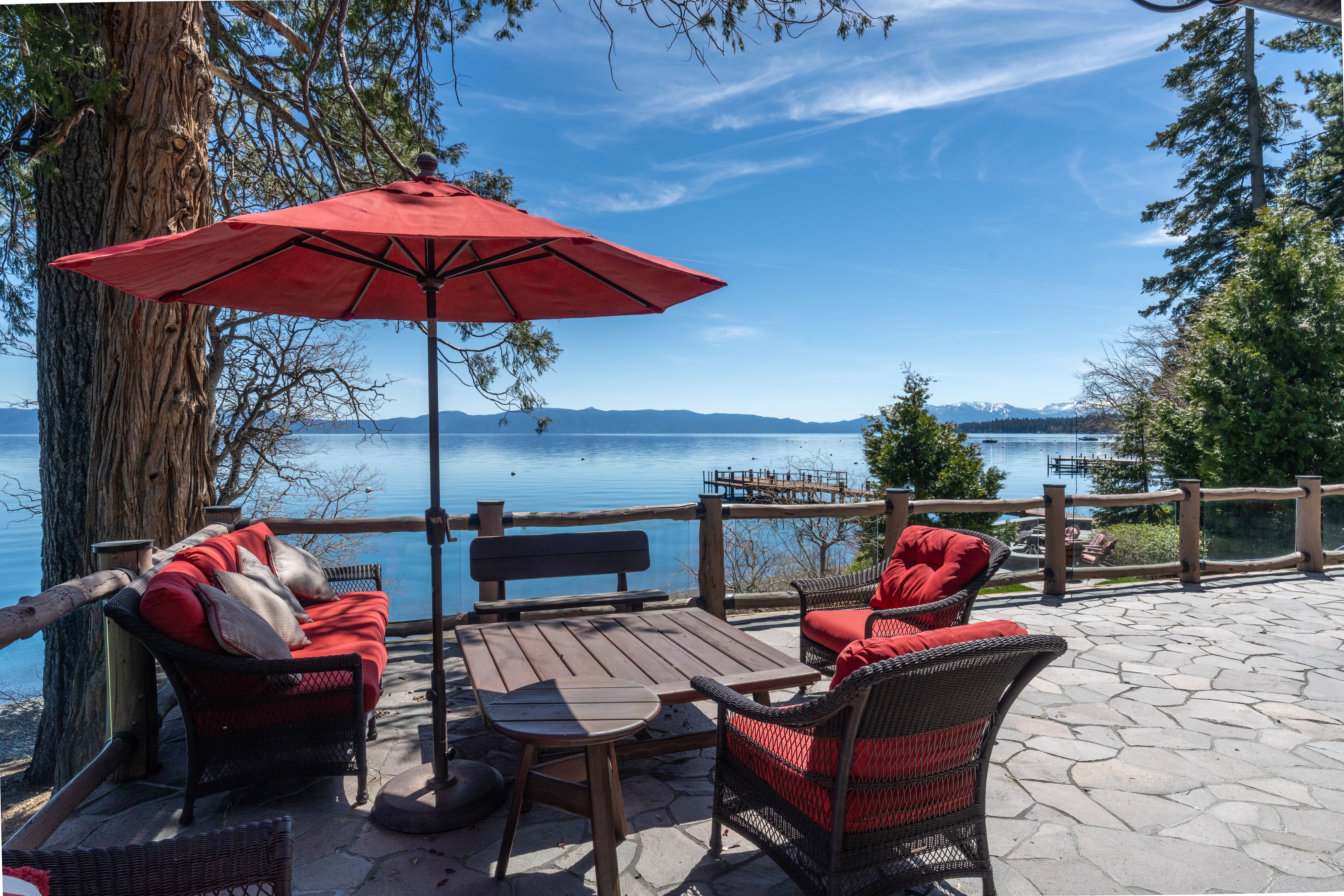
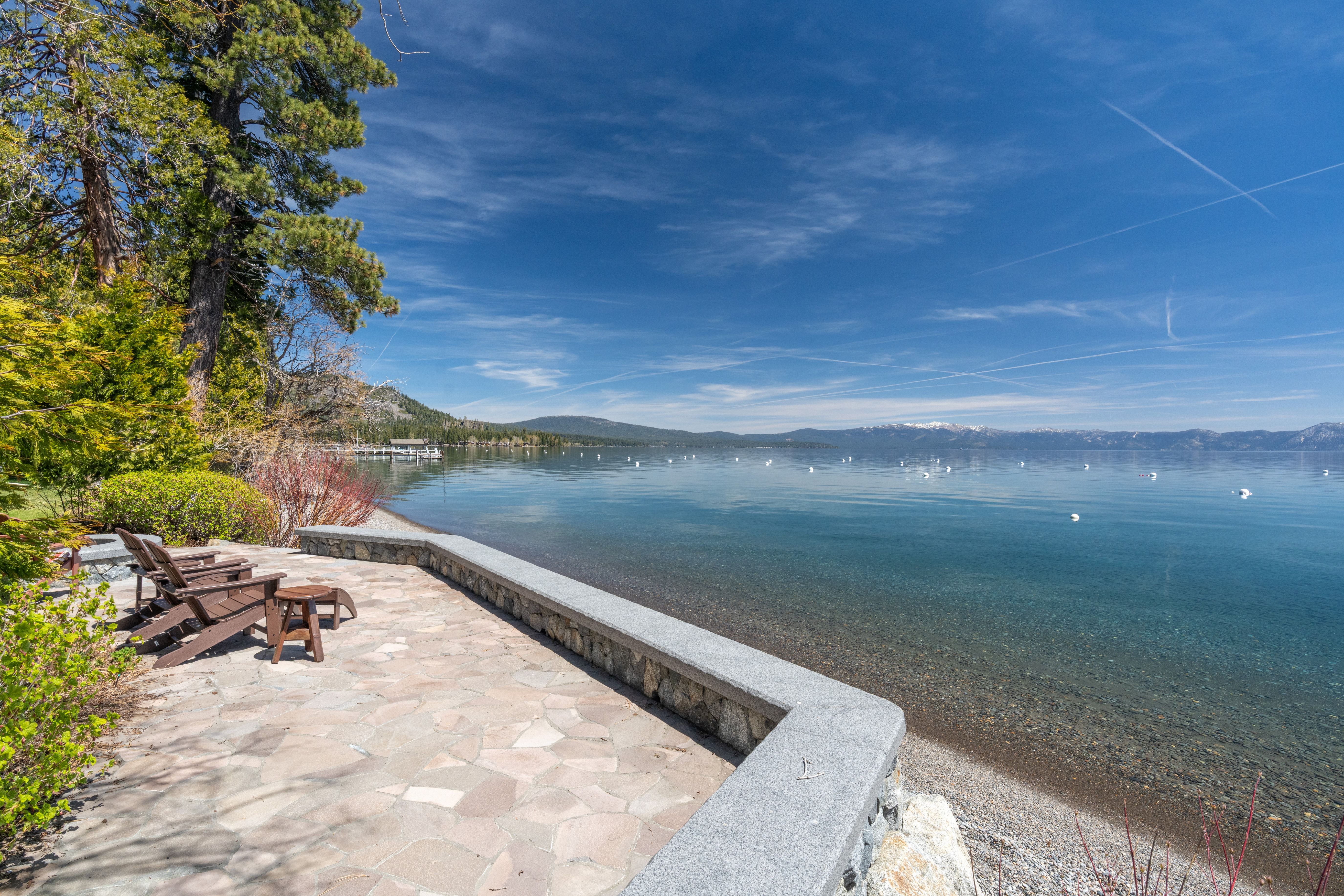
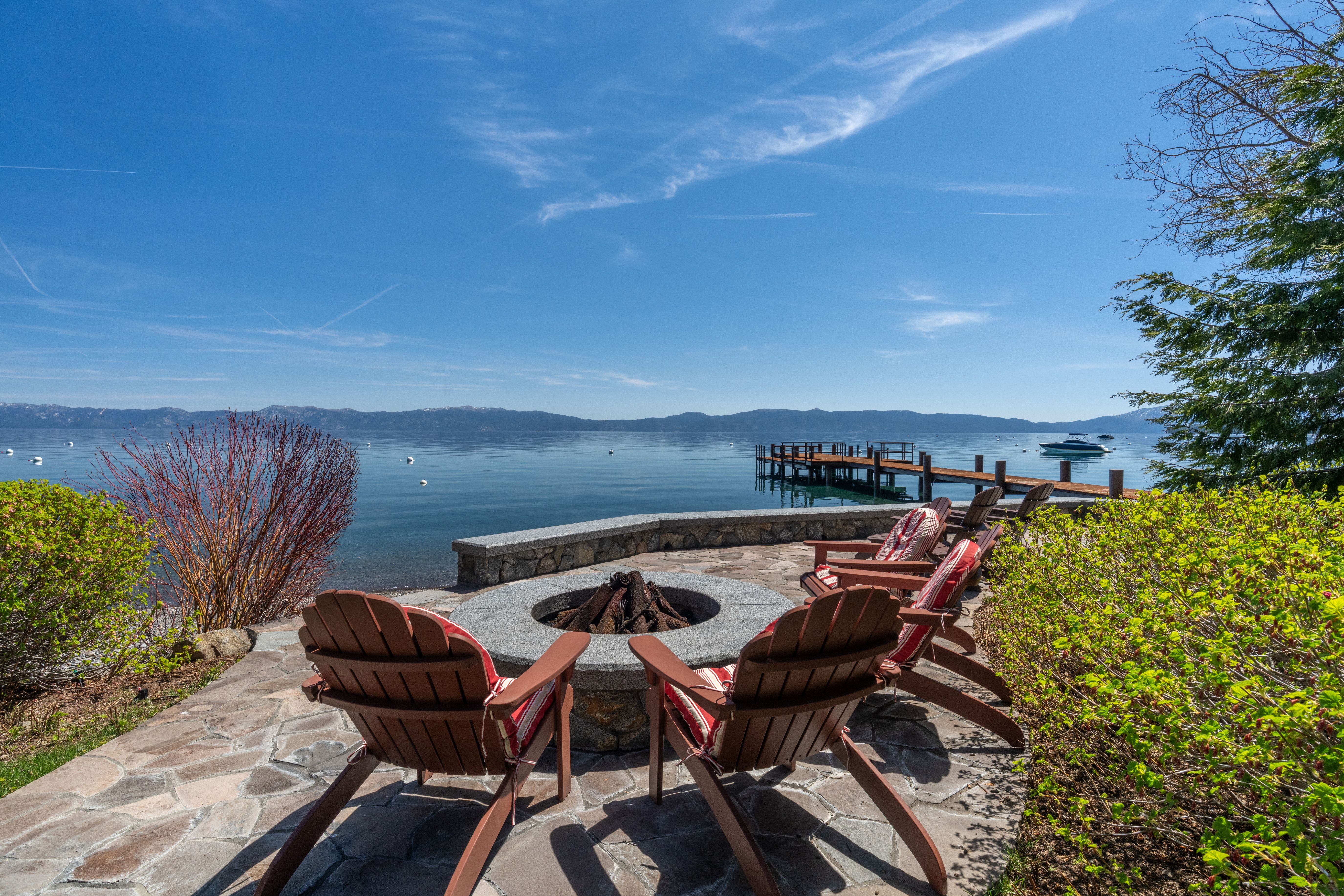
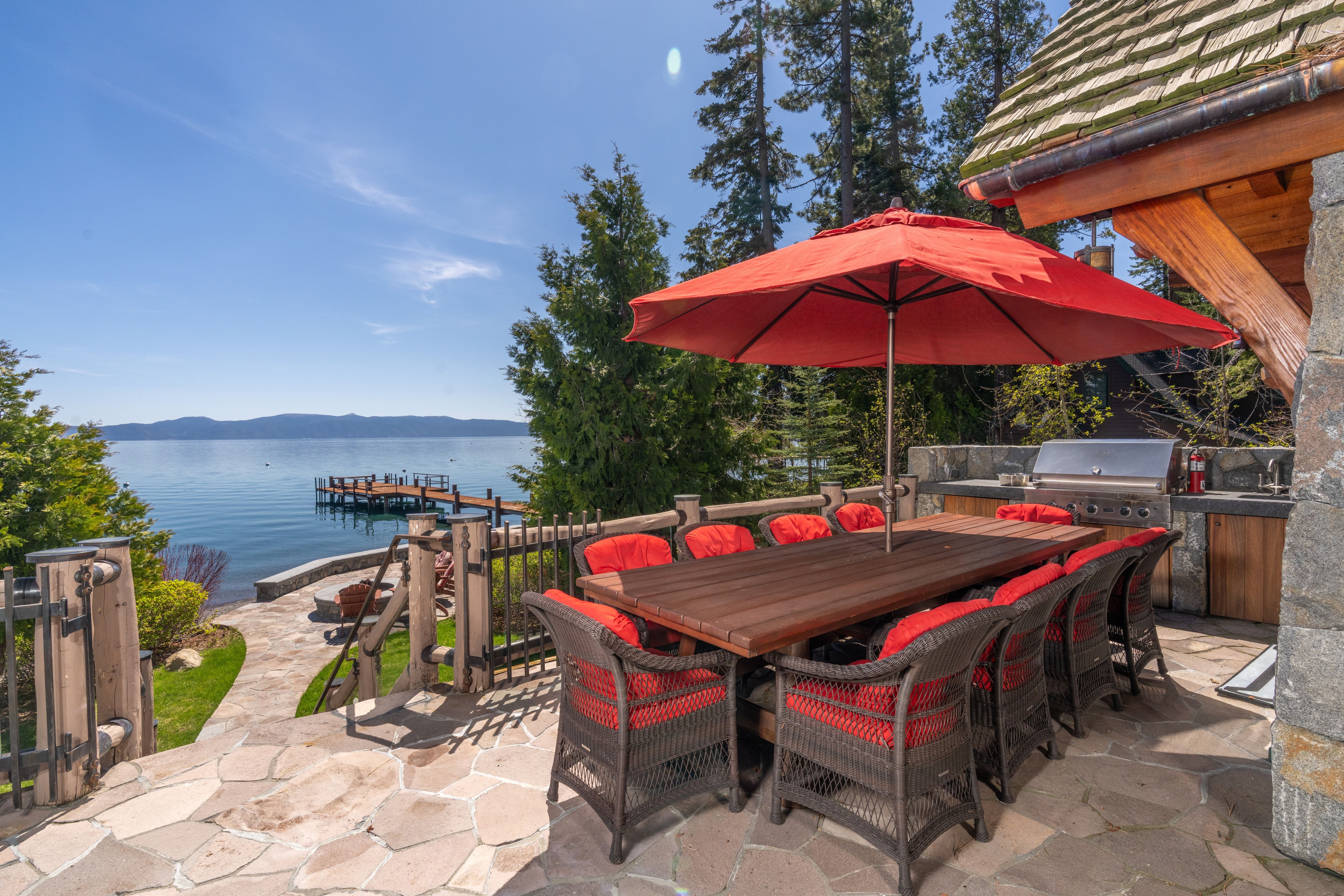
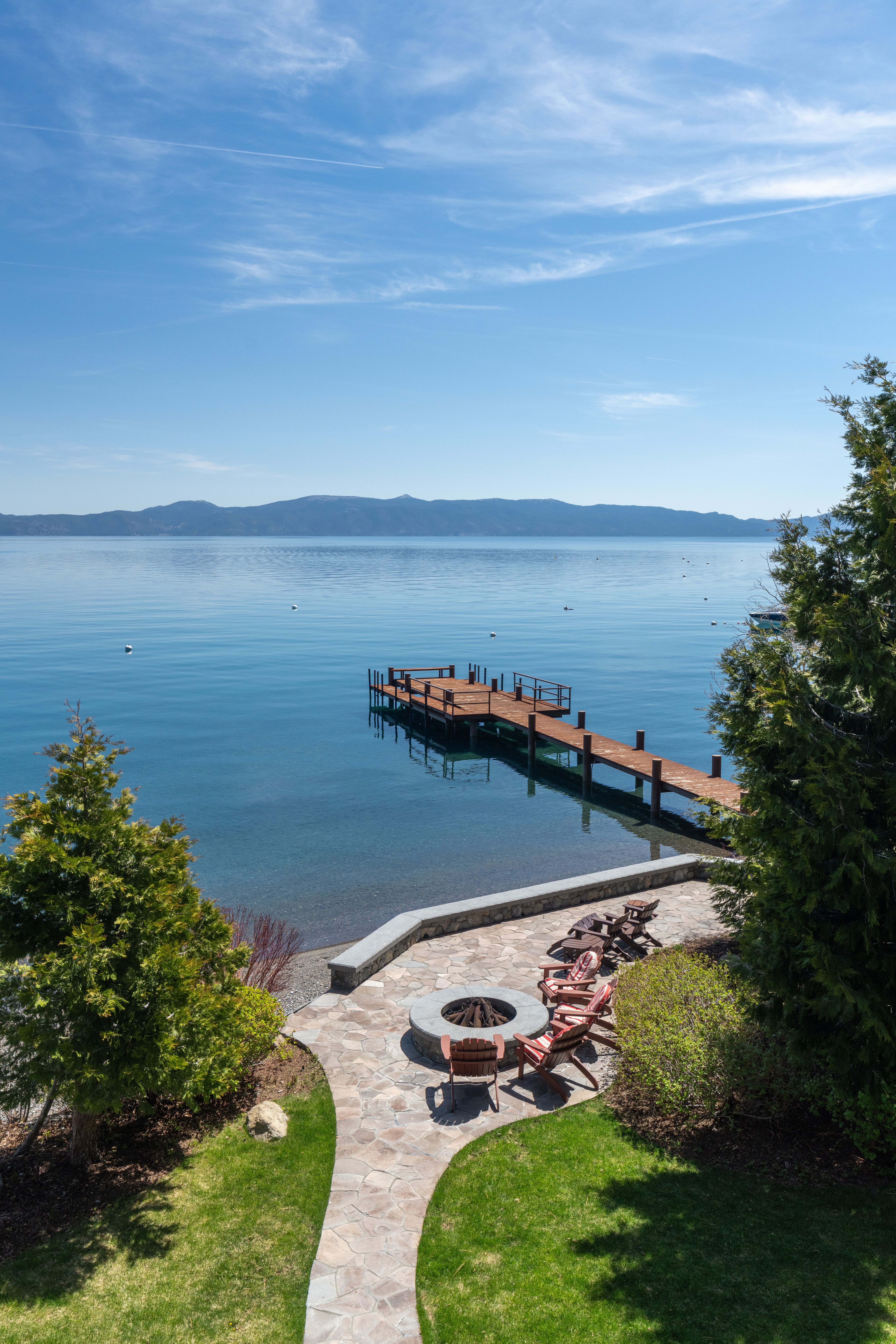
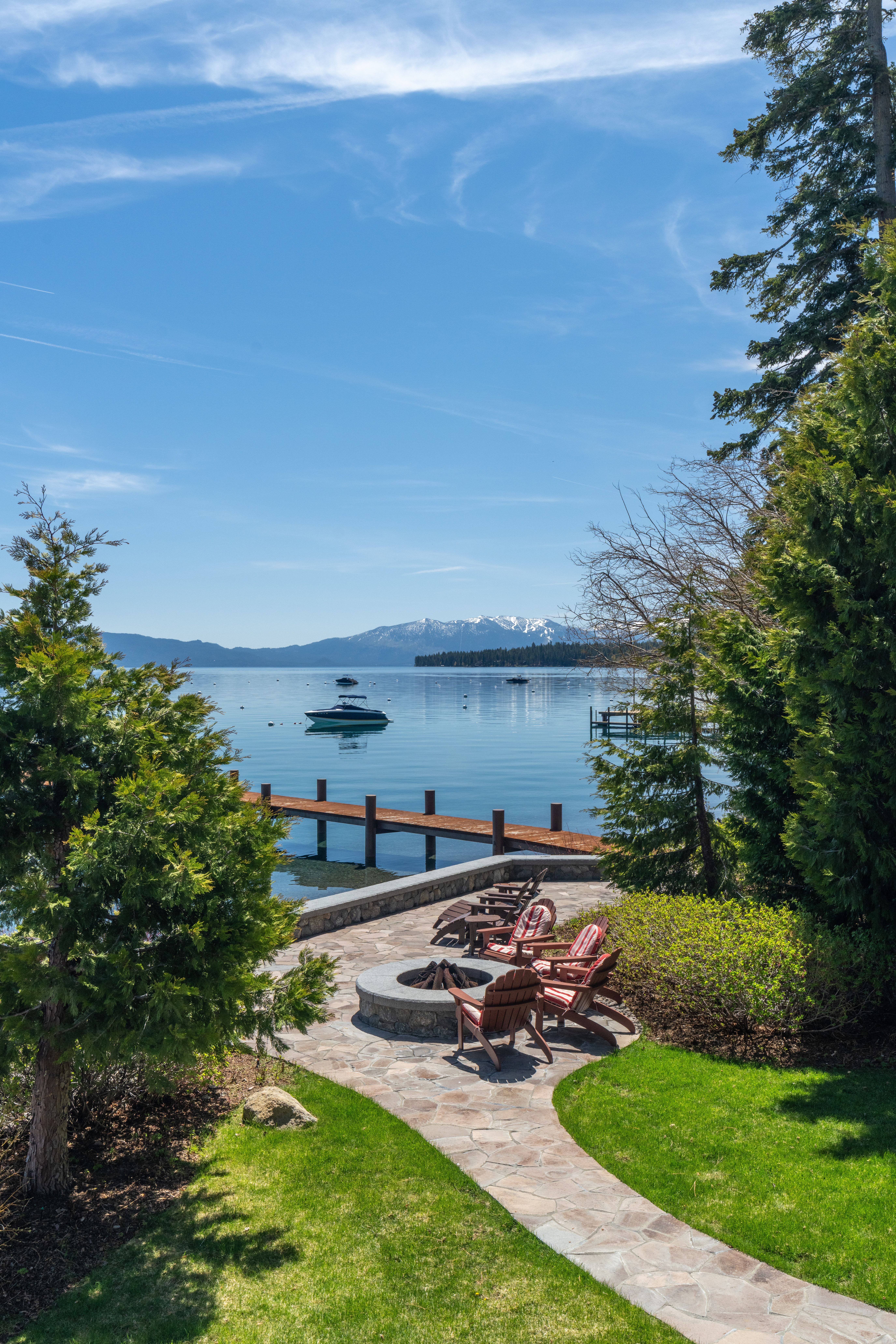
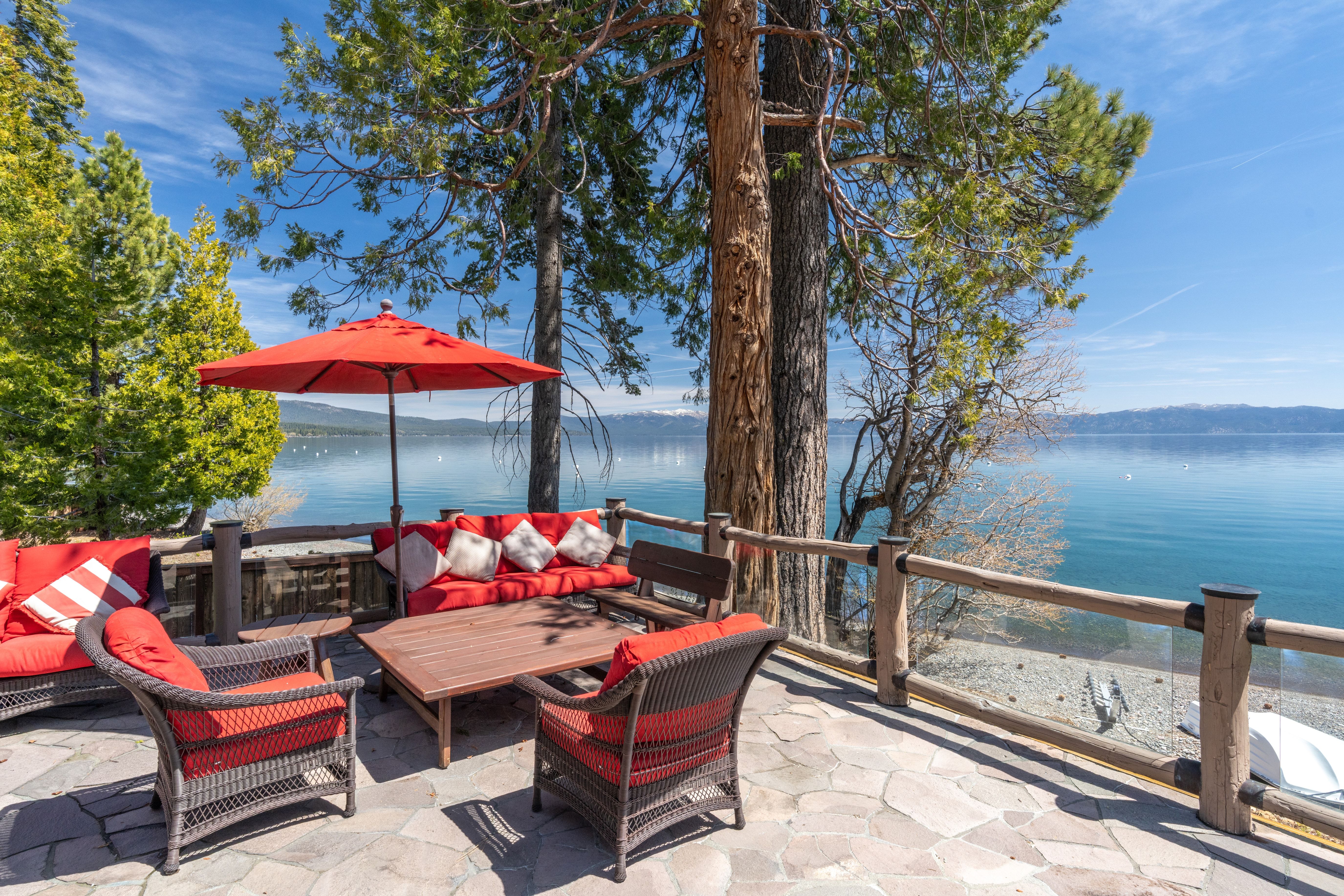
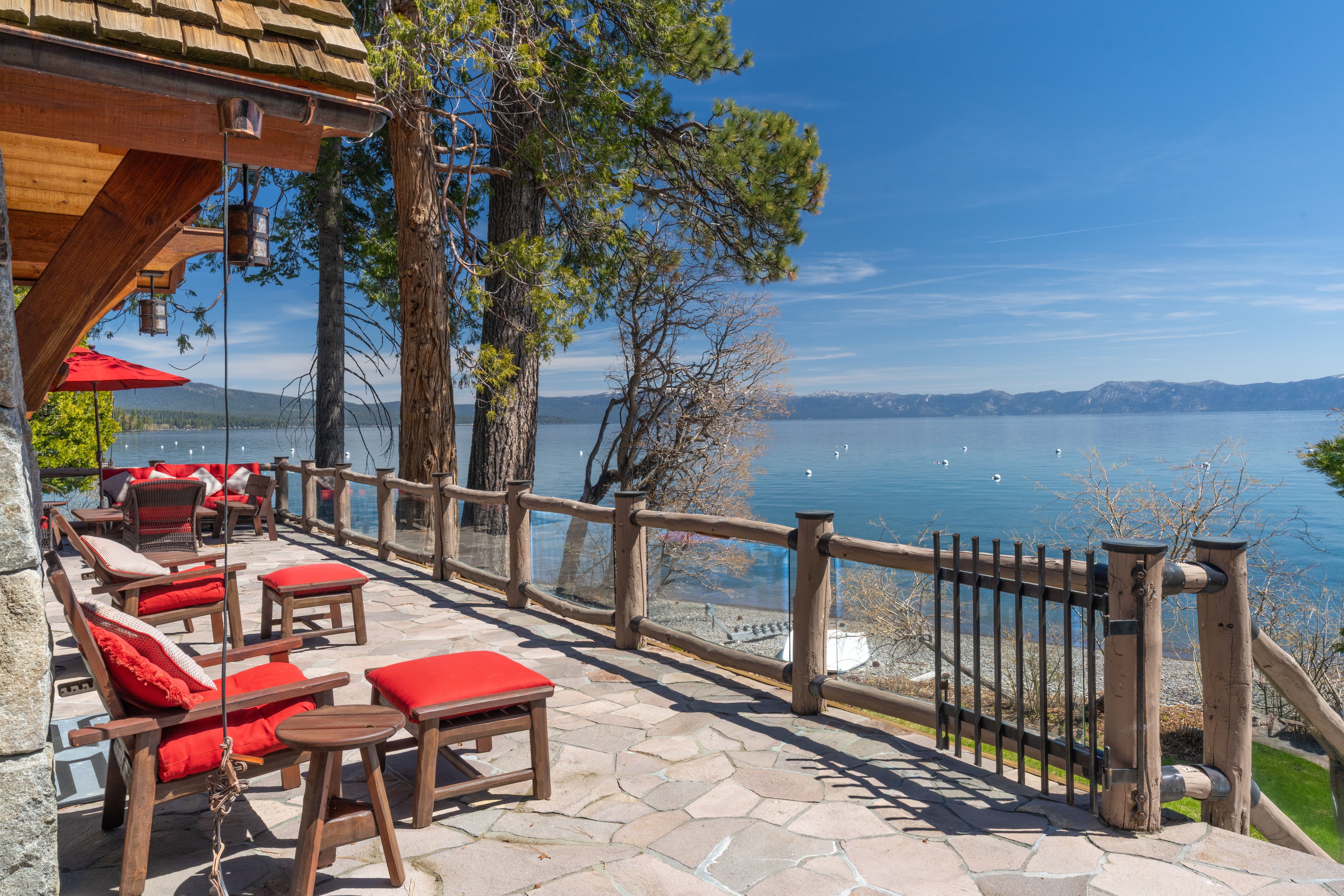
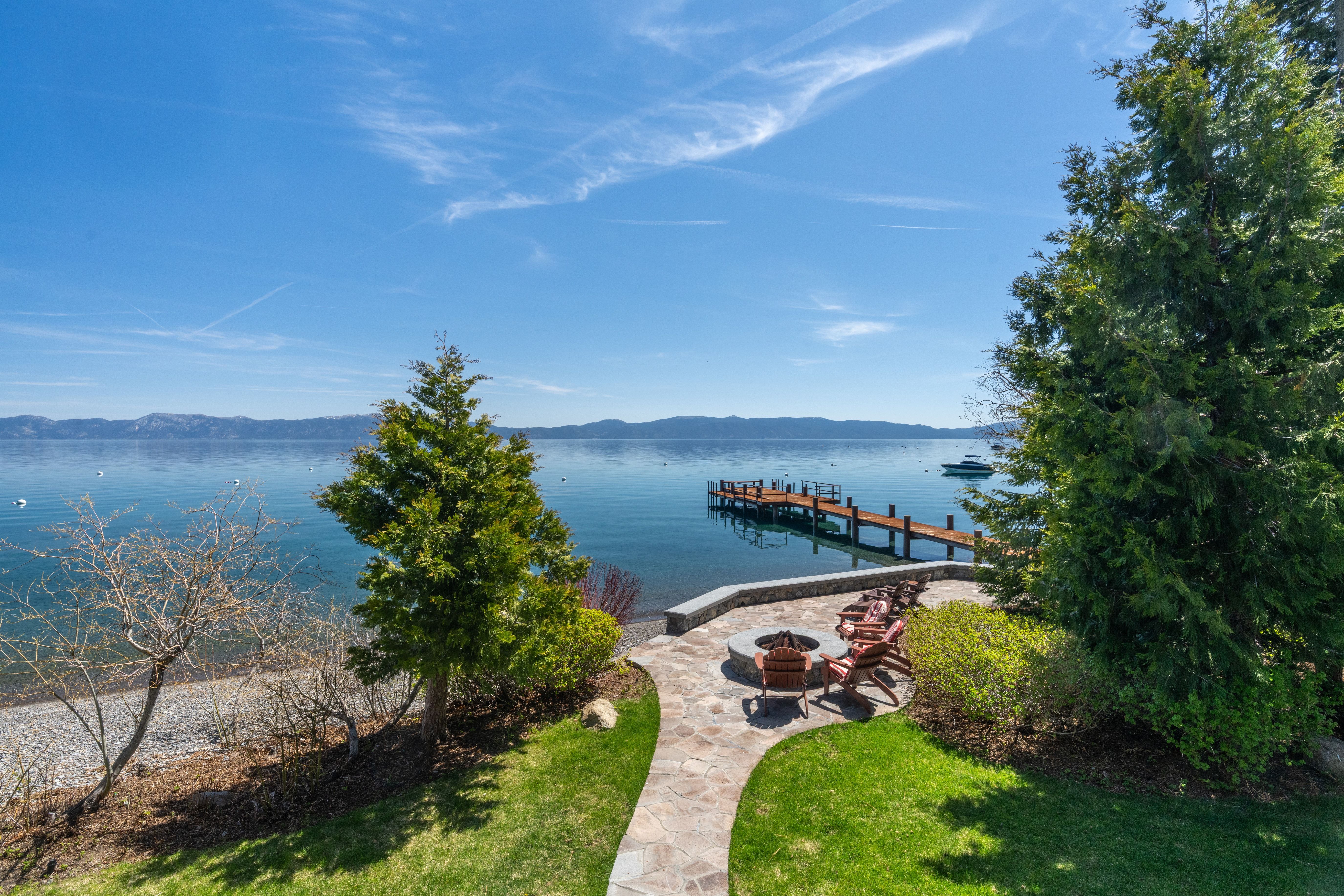
Outside, the property's waterfront position is celebrated across multiple stone patios, a built-in fire pit, a hot tub, an outdoor grill station, and — extending from the private pebbled shoreline into the crystal-clear water — a wooden pier that transforms the lake from a view into a destination.
Lake Tahoe occupies a singular position in the American landscape — a high-altitude alpine lake straddling the California-Nevada border at approximately 6,225 feet above sea level, its waters reaching depths of nearly 1,645 feet and maintaining a clarity that has made it legendary. At 22 miles long and 12 miles wide, it is the largest alpine lake in North America, and its surface reflects a shade of deep cobalt blue that photographers and painters have chased for more than a century without ever quite capturing it faithfully.
The Homewood area, situated along the lake's western shore in Placer County, California, is among the most historically rooted and scenically intact communities on the lake. Sheltered by the Sierra Nevada's eastern ridgeline, the west shore has long attracted those who seek the lake in its quieter, less commercialized form. The character here is shaped by the landscape itself — dense forests of Jeffrey pine and white fir, granite outcroppings, and a shoreline that remains largely undeveloped.
Homewood's identity is closely tied to Homewood Mountain Resort, one of the oldest ski areas in the Lake Tahoe region, which has operated on the slopes directly above the community for decades. Its position — ski runs descending almost to the lake's edge — gives the area a rare combination of ski-in access and waterfront living that is essentially unmatched in the American West. In warmer months, the community transitions seamlessly into a boating, paddleboarding, and swimming destination, with the calm, sheltered waters of the west shore offering some of the most protected swimming conditions on the lake.
The broader Lake Tahoe basin is managed in significant part by the Tahoe Regional Planning Agency and the US Forest Service, which has worked to preserve the environmental character of the shoreline and surrounding wilderness. This regulatory framework, while occasionally limiting in terms of new development, has had the meaningful effect of protecting property values and ensuring that the natural qualities that define the region — the water clarity, the forest density, the quality of light — are maintained for future generations.
Emerald Bay State Park, one of California's most photographed natural landmarks, lies just to the south, its glacially carved inlet and Vikingsholm castle drawing visitors from around the world. The historic lakeside communities, including Tahoe City , provide access to dining, cultural events, farmers markets, and year-round recreation within a short drive. Truckee, approximately 20 miles to the north, offers a historic downtown corridor with acclaimed restaurants, boutique retail, and direct Amtrak access.
For those who require proximity to major metropolitan areas, Reno-Tahoe International Airport is approximately one hour from the west shore, and San Francisco is reachable in roughly three and a half hours under favorable conditions — a distance that places this estate within range of the Bay Area while remaining genuinely removed from it. Private aviation is also served by Truckee Tahoe General Aviation Airport. To live here is to inhabit a place that California has spent more than a century trying to protect — and largely succeeding.
Featured Highlights
Curated Content • Presented by Trinkie Watson