The Story Behind
An Entire Floor of Ralph Walker's Art Deco Masterpiece
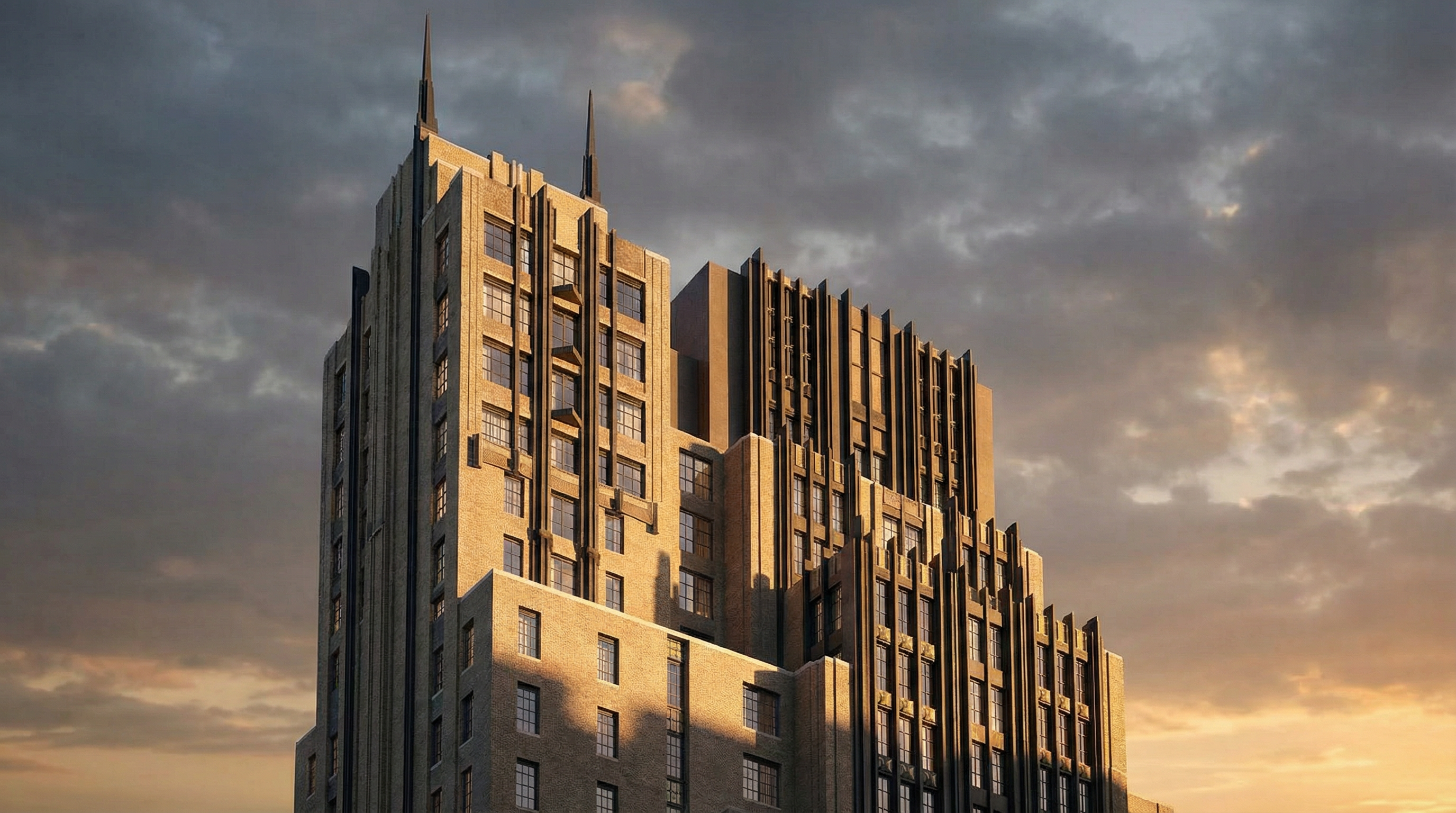
There are buildings that merely occupy a city, and then there are buildings that define it. Walker Tower belongs unmistakably to the latter category. Designed by Ralph Walker — once proclaimed by the American Institute of Architects as "the architect of the century" — the building began its life in 1929 as the New York Telephone Company's exchange tower, a purpose that demanded both structural ambition and artistic conviction. Walker answered with a façade of richly textured brick, setback massing that anticipates the Manhattan skyline's own silhouette, and ornamental detail so refined it continues to draw architects and historians to its base nearly a century later. Penthouse 2 does not merely inhabit this legacy — it presides over it.
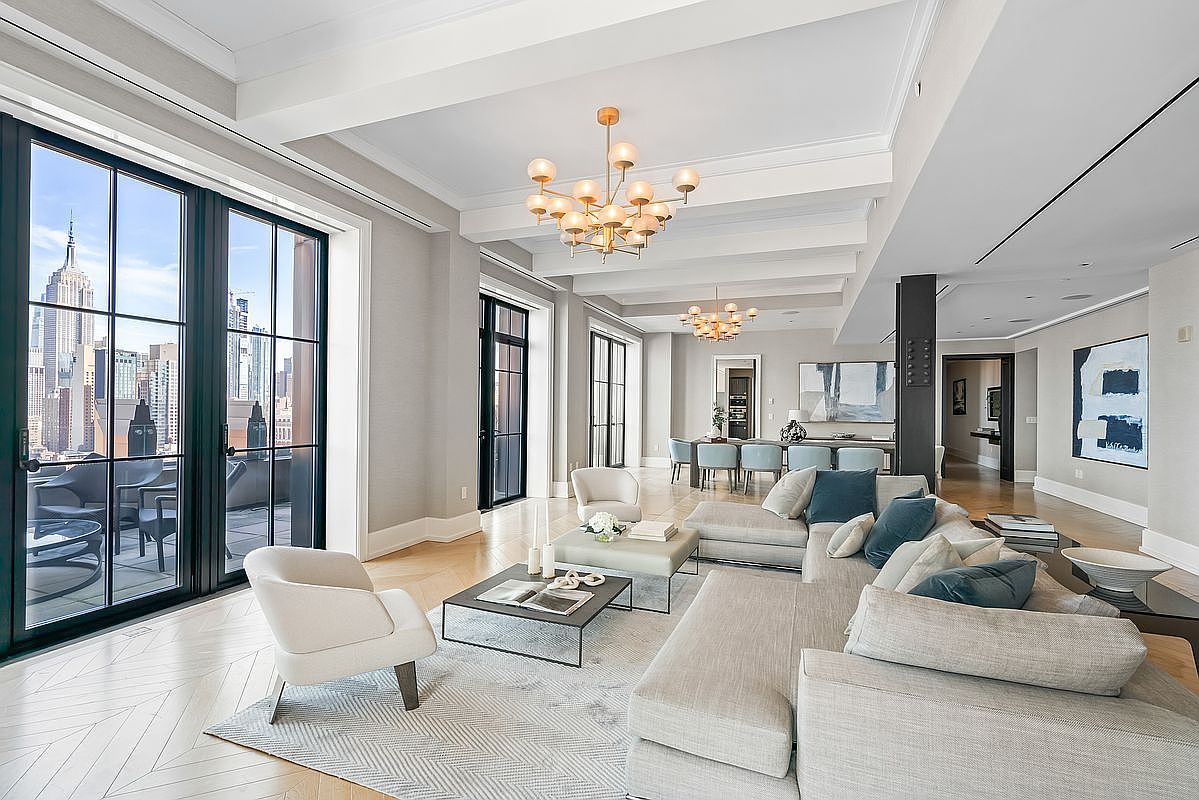
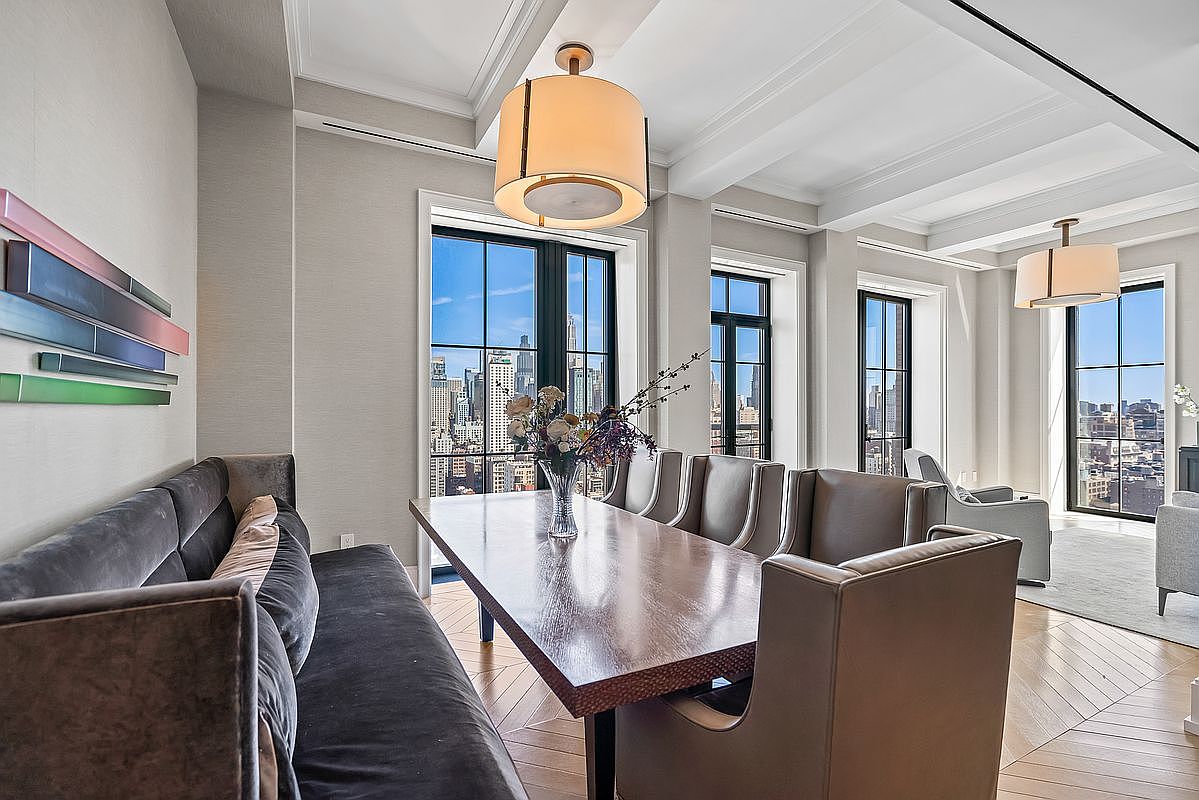
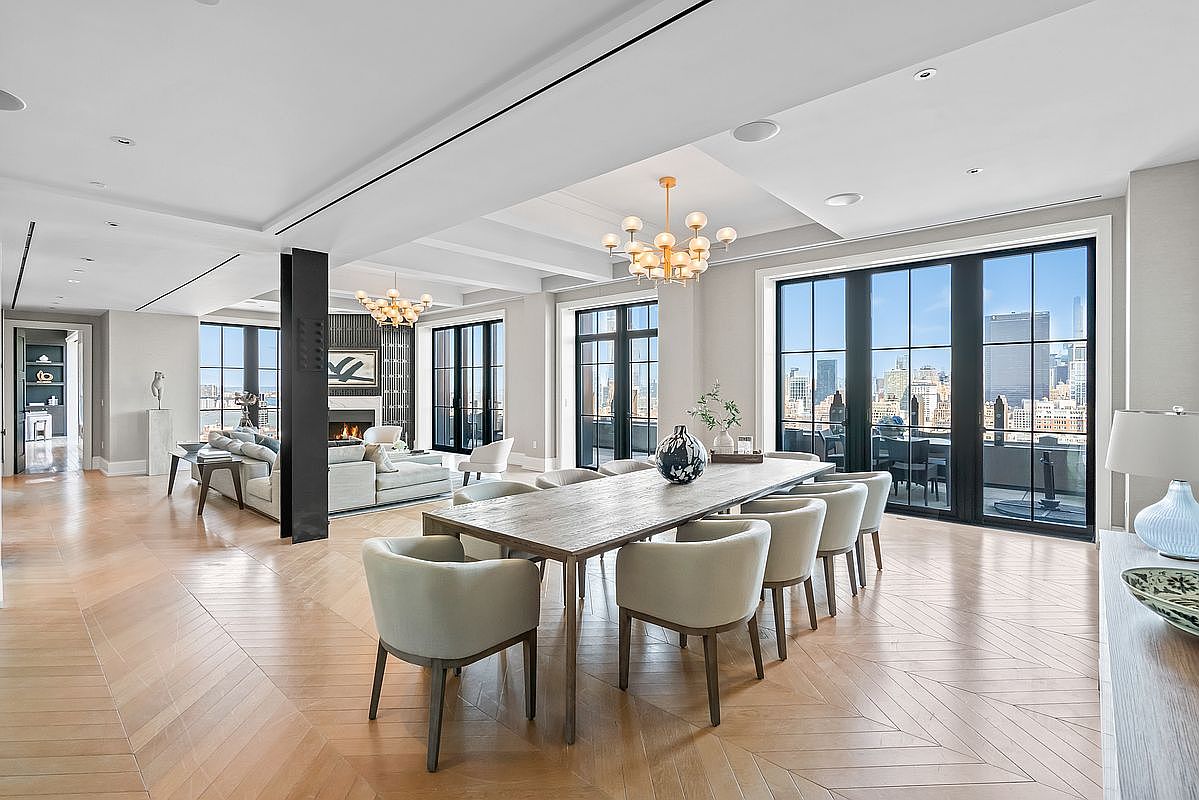
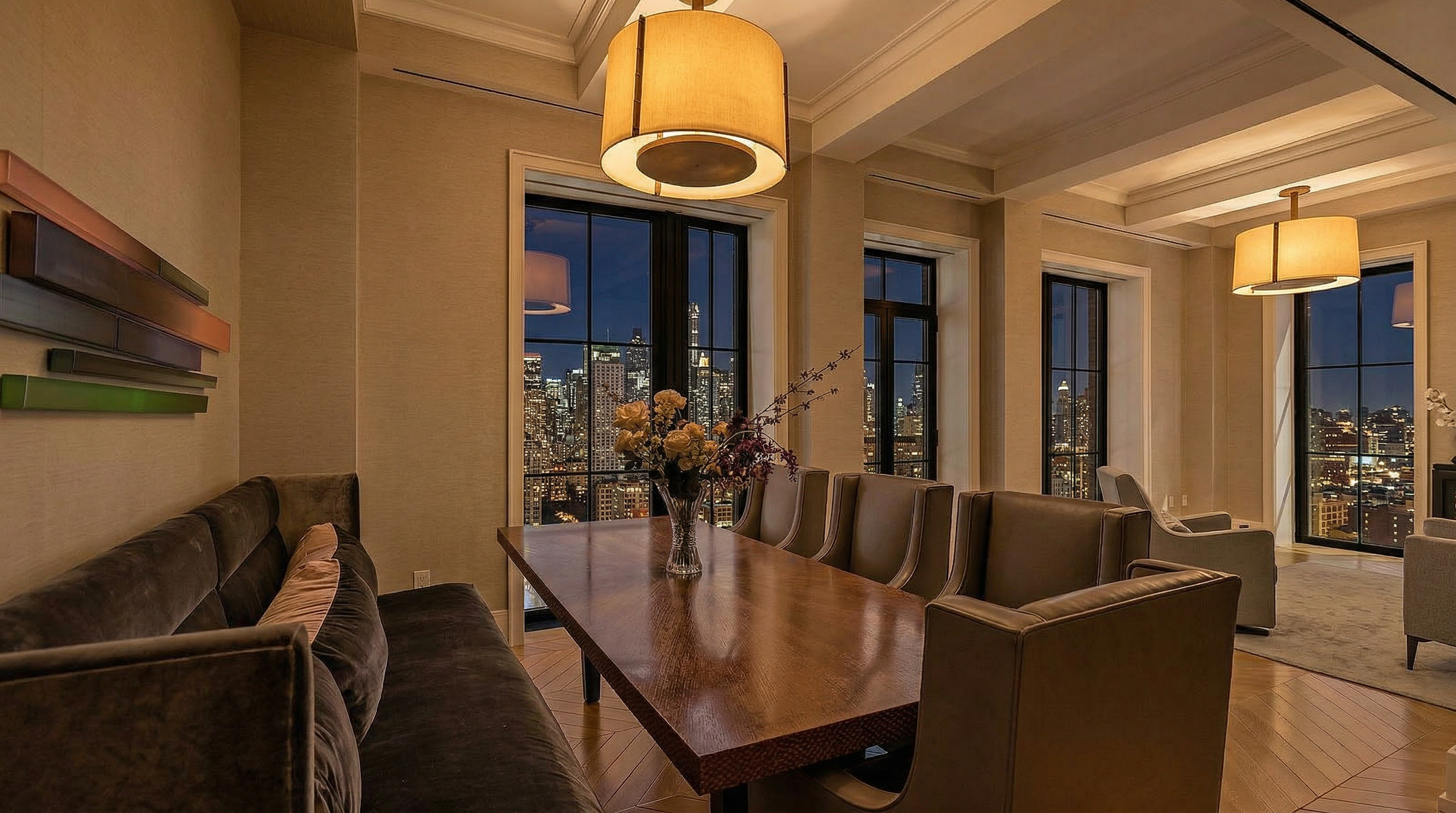
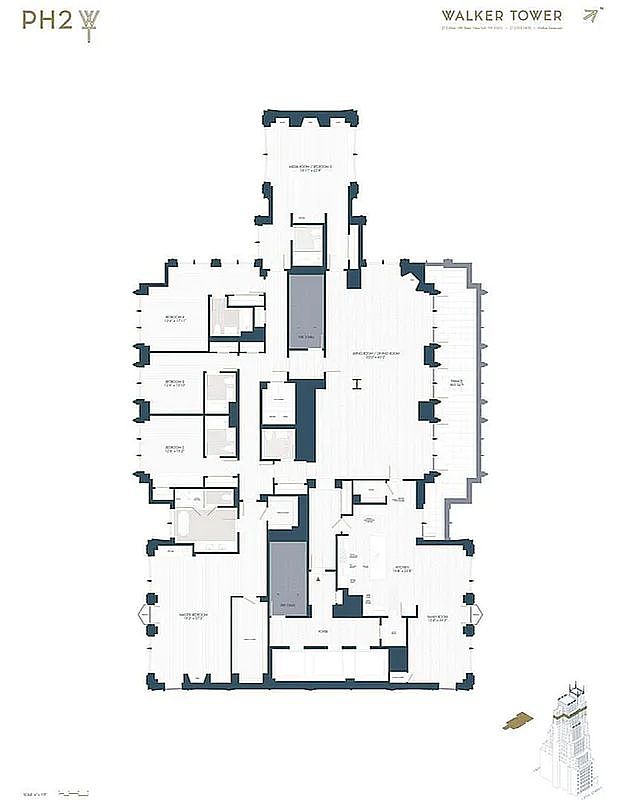
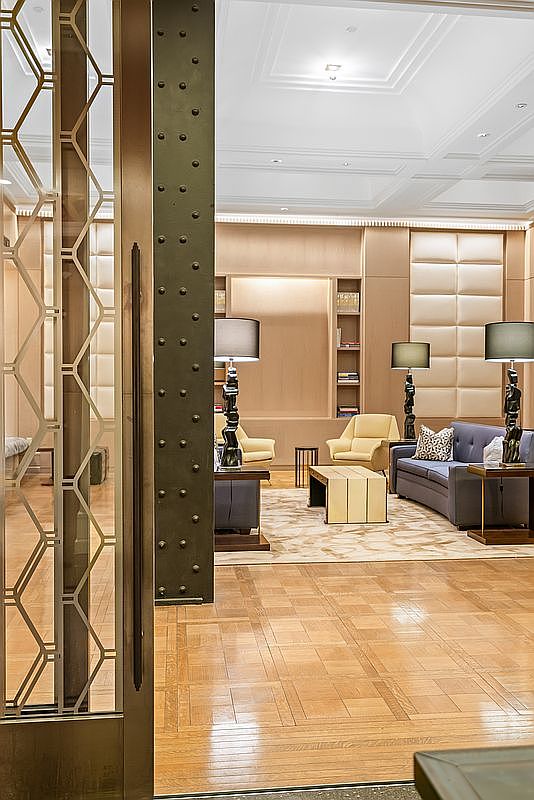
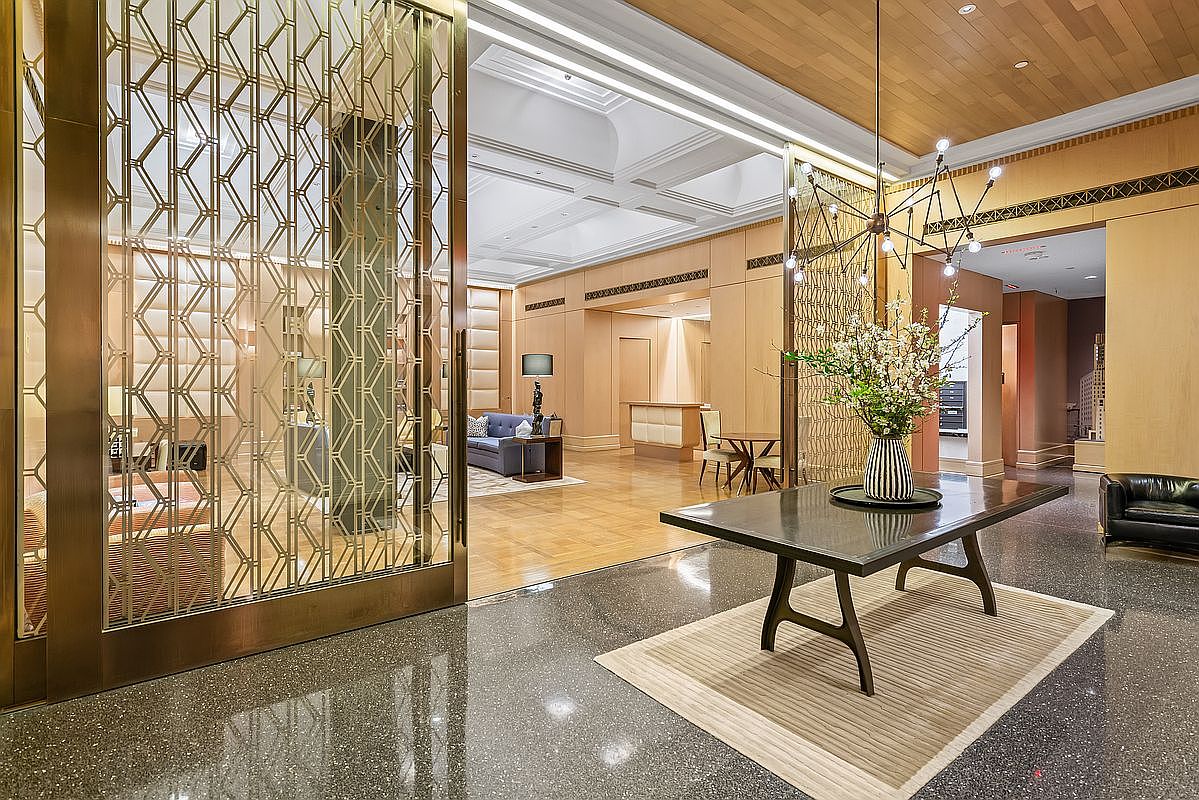
Spanning the entire penthouse floor at 6,738 square feet, the residence was conceived during a meticulous restoration that honored Walker's original vision while delivering the infrastructure and finishes expected of contemporary luxury at the highest level. The moment one enters through the gracious entry corridor, the home announces its intentions: radiant-heated French herringbone oak floors extend beneath coffered ceilings and custom millwork that echo the building's architectural bones without replicating them. The effect is a dialogue between eras — one that the residence wins on every count.
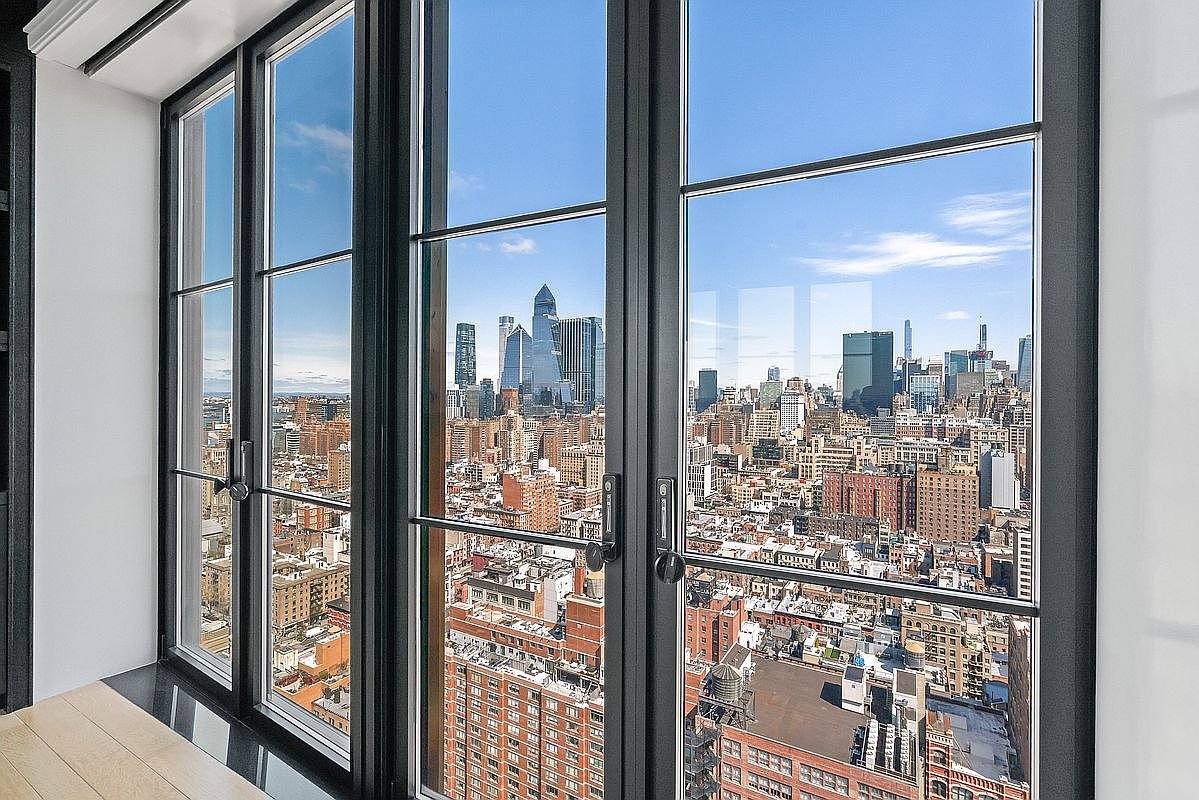
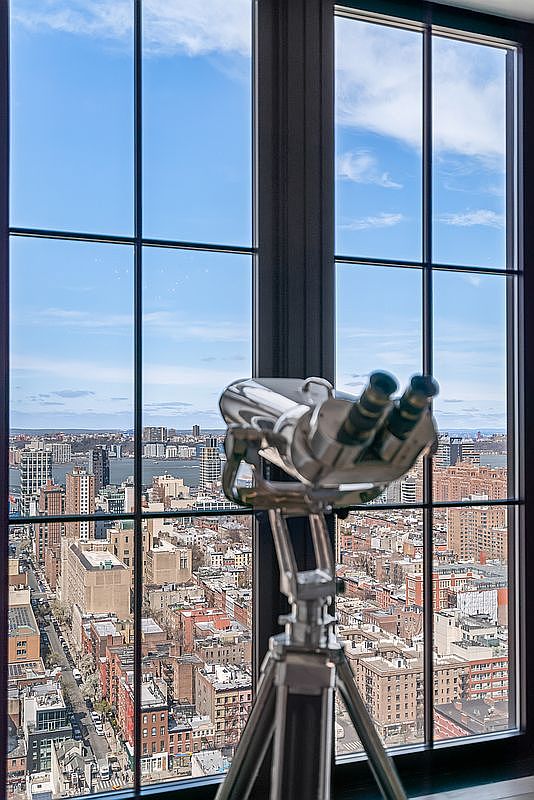
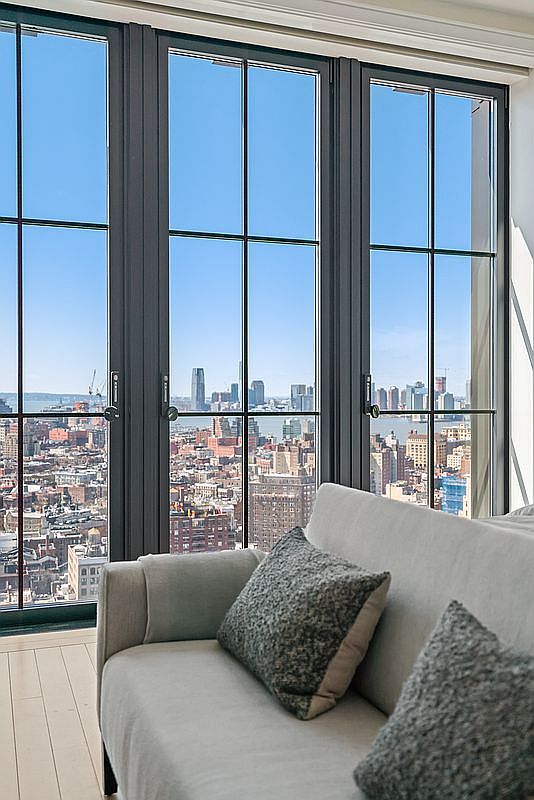
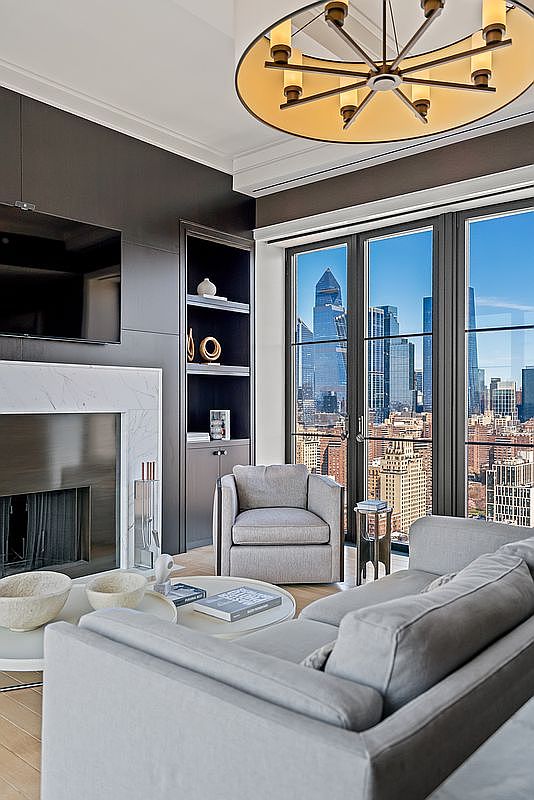
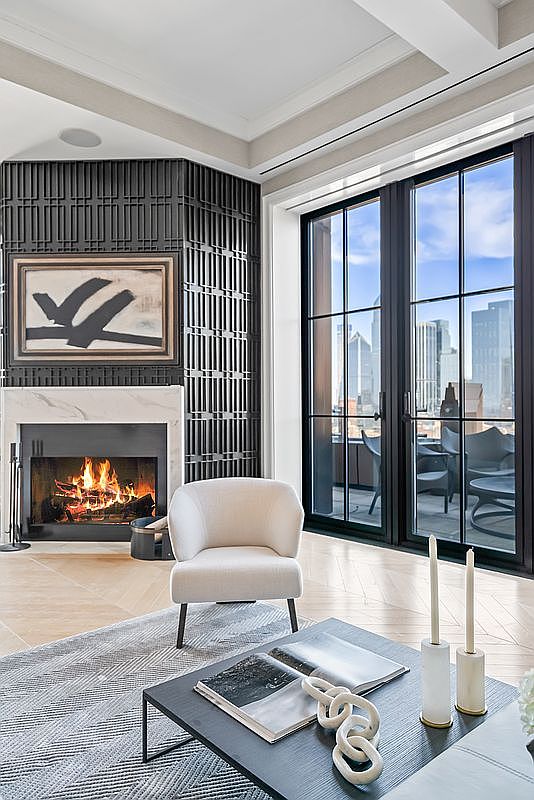
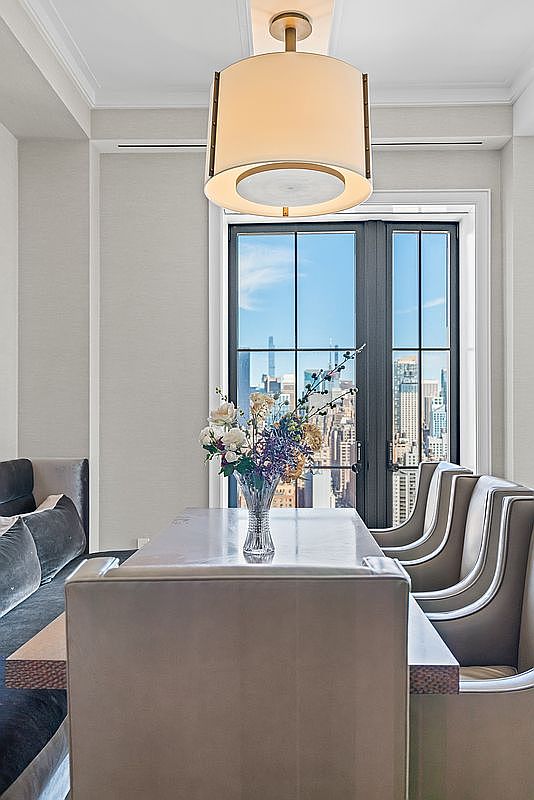
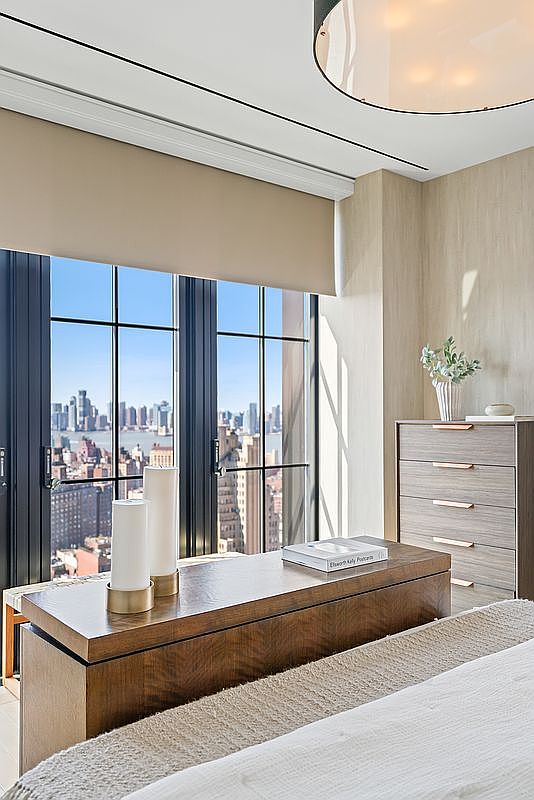
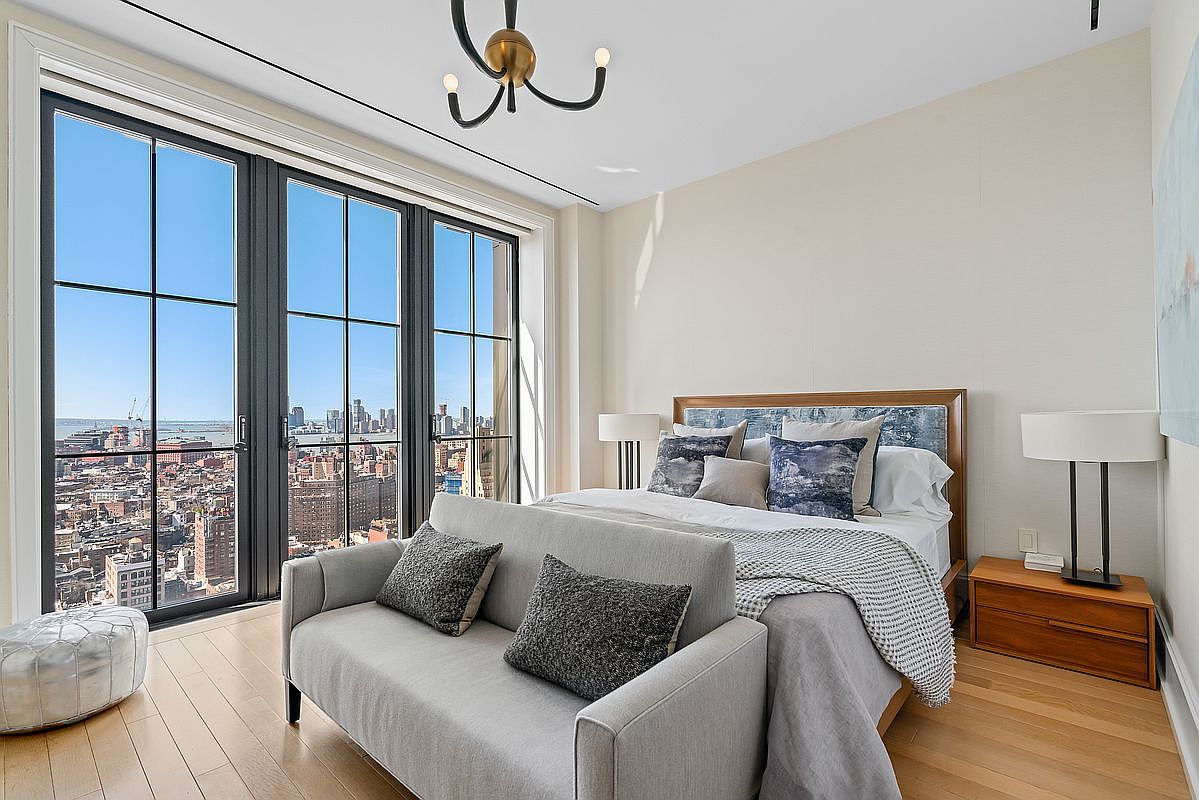
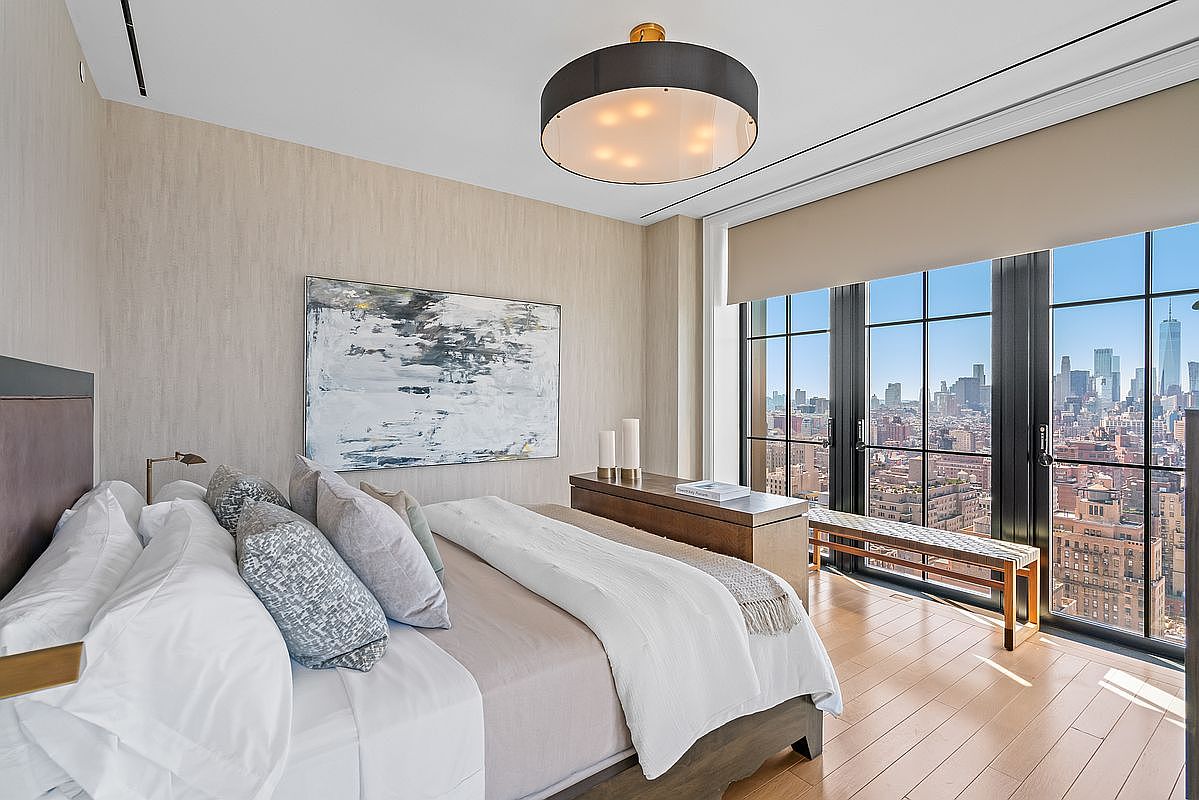
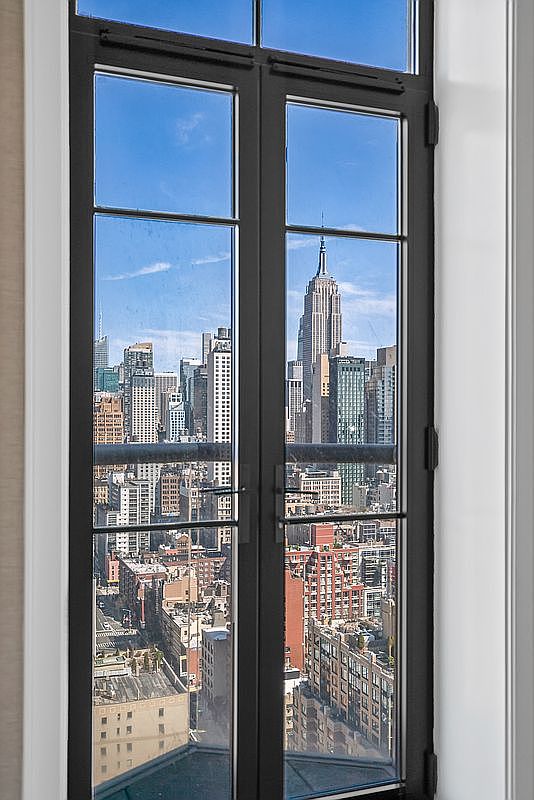
The great room is the residence's commanding center of gravity. Floor-to-ceiling black-framed windows — themselves a nod to Walker's industrial origins — deliver unobstructed, simultaneous views of One World Trade Center, the Empire State Building, the Hudson River, and the harbor beyond. It is the kind of panorama that renders a telescope, thoughtfully positioned near the glass, not an affectation but a necessity. A marble-surround fireplace anchors one wall with quiet authority, while the adjoining dining area, framed by a contemporary chandelier and herringbone floors, accommodates the scale of serious entertaining.
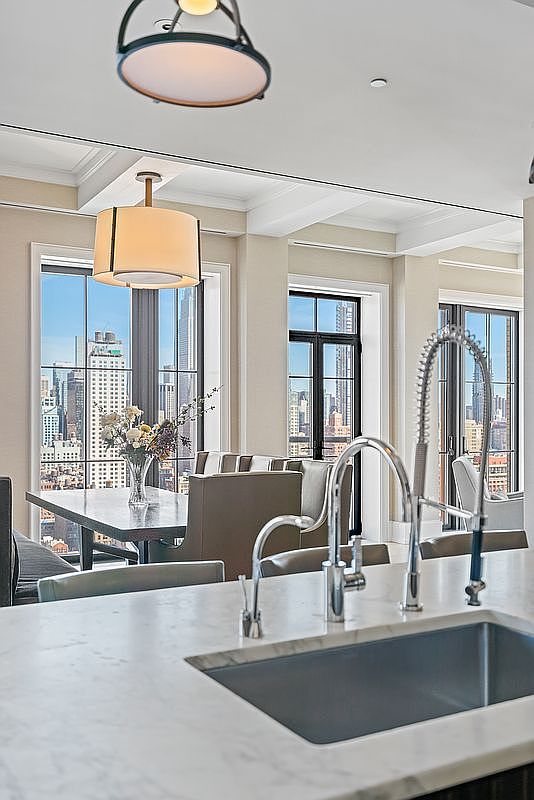
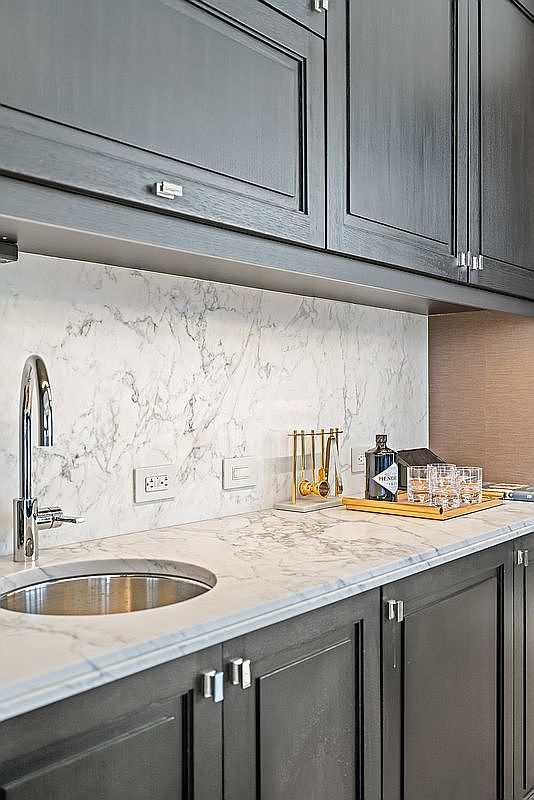
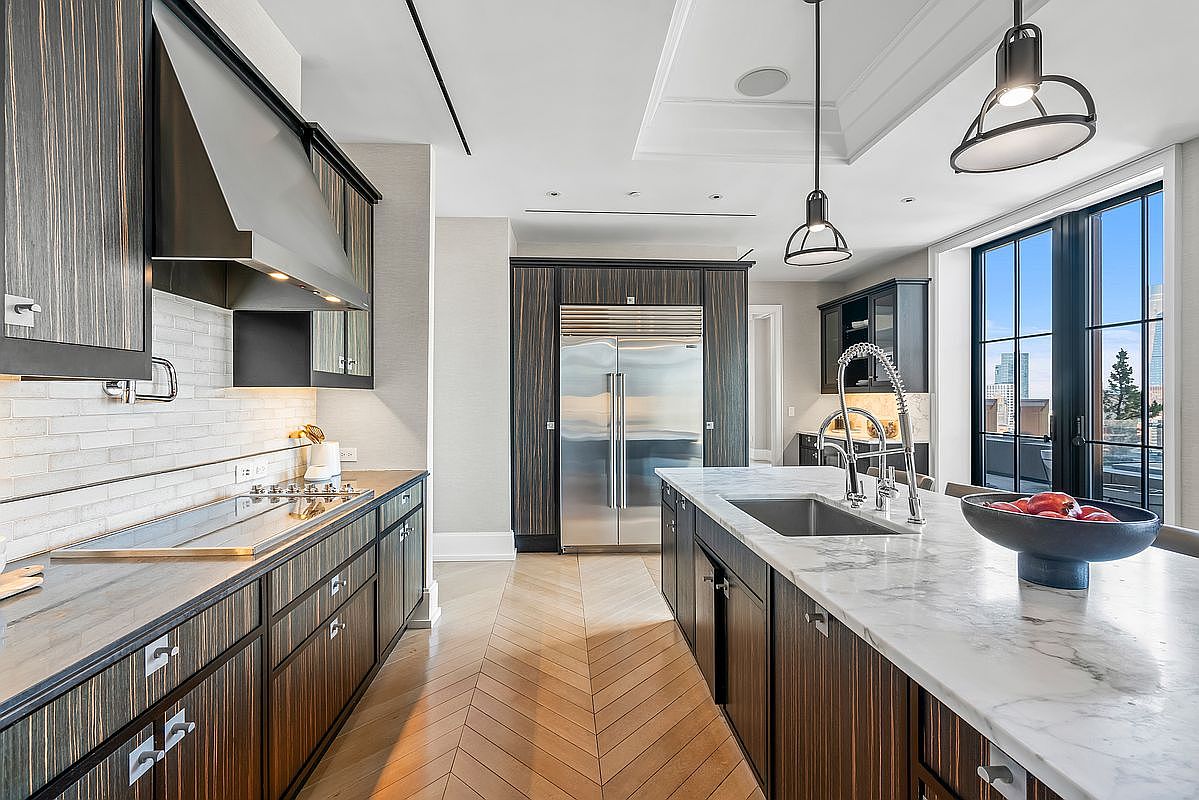
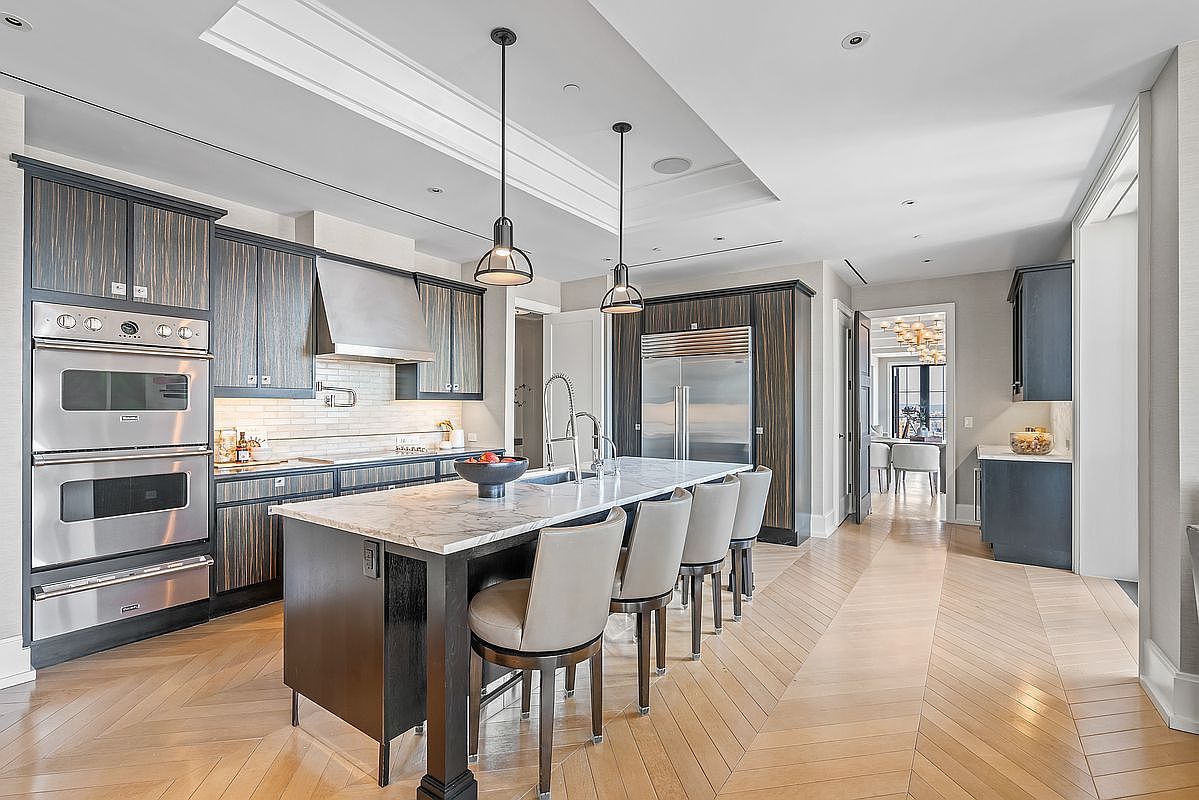
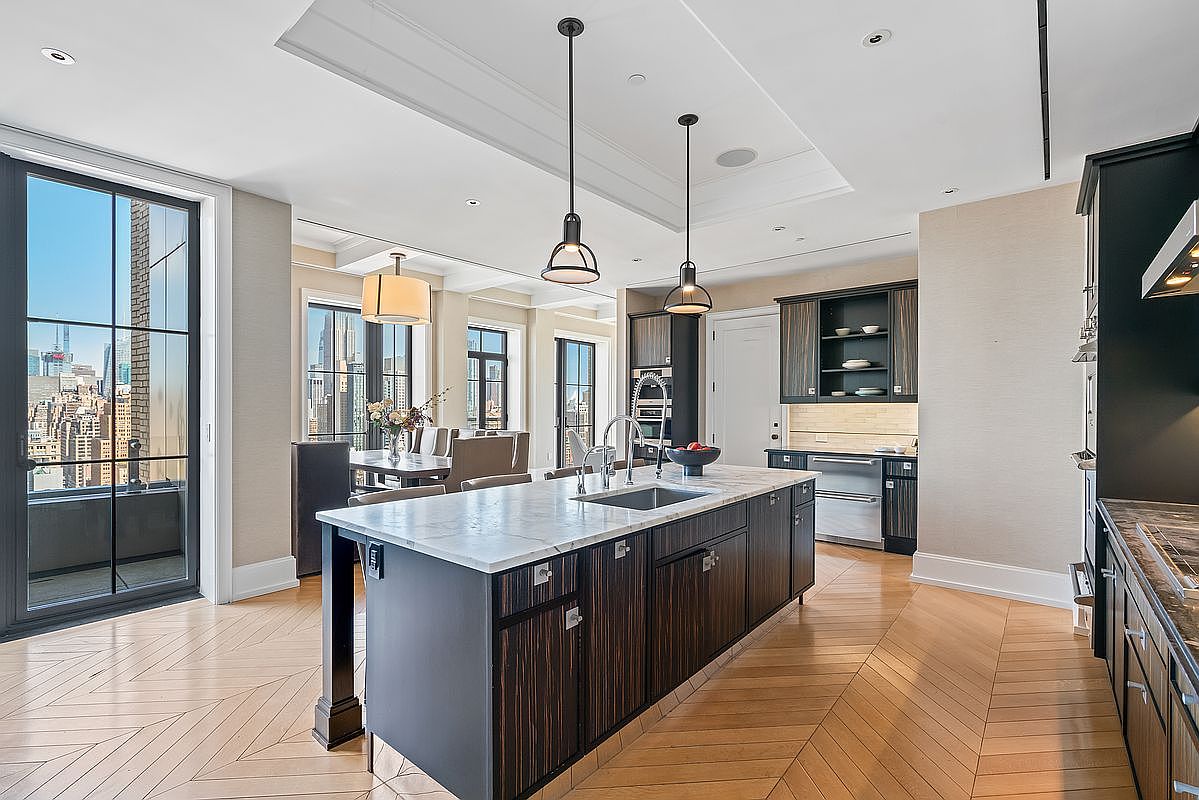
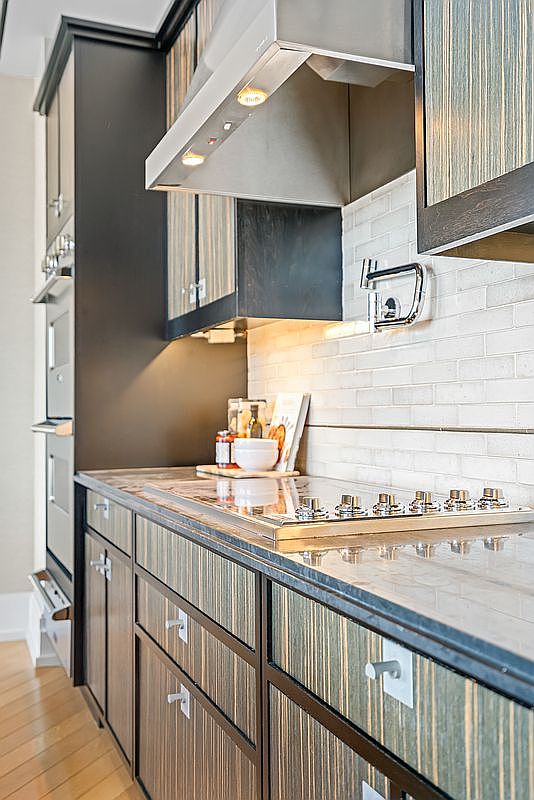
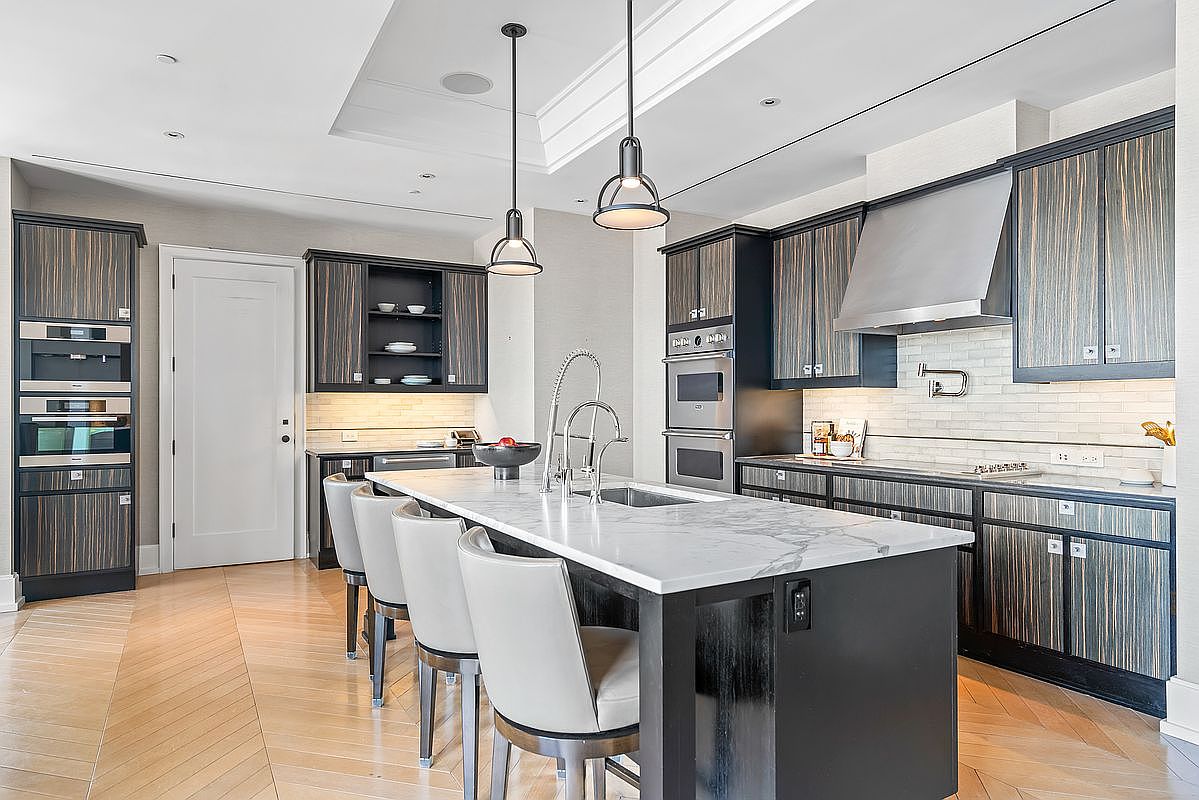
The kitchen is built for both performance and presence. Dark, vertically-grained wood cabinetry rises against a marble backsplash; a generously proportioned island in marble provides workspace and gathering place alike. Professional-grade appliances, a pot-filler faucet, and chevron hardwood flooring beneath speak to an owner for whom cooking is ceremony.
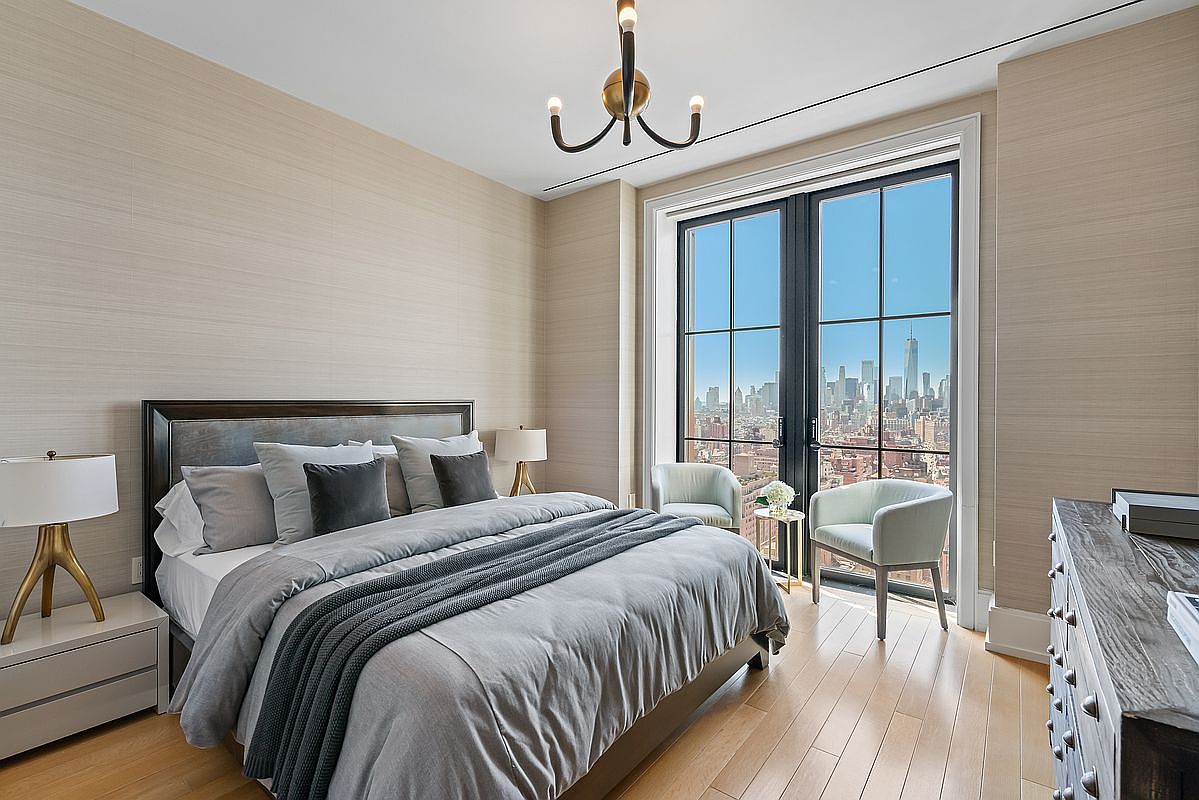
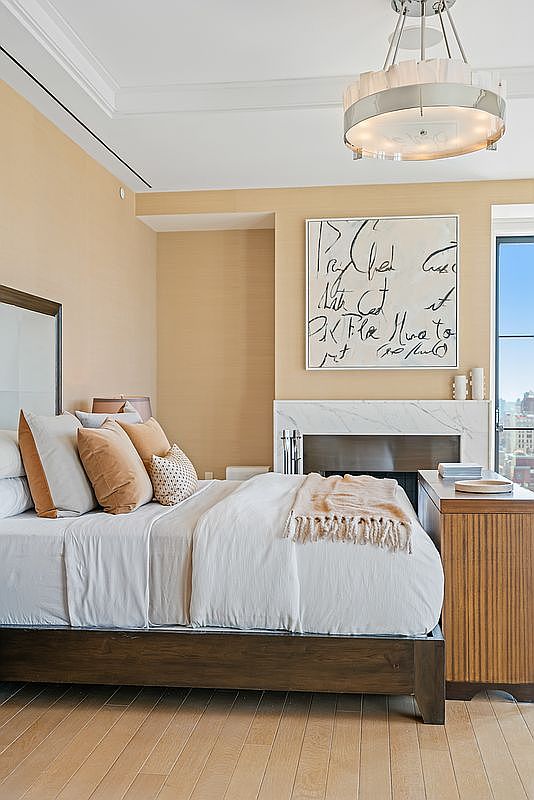
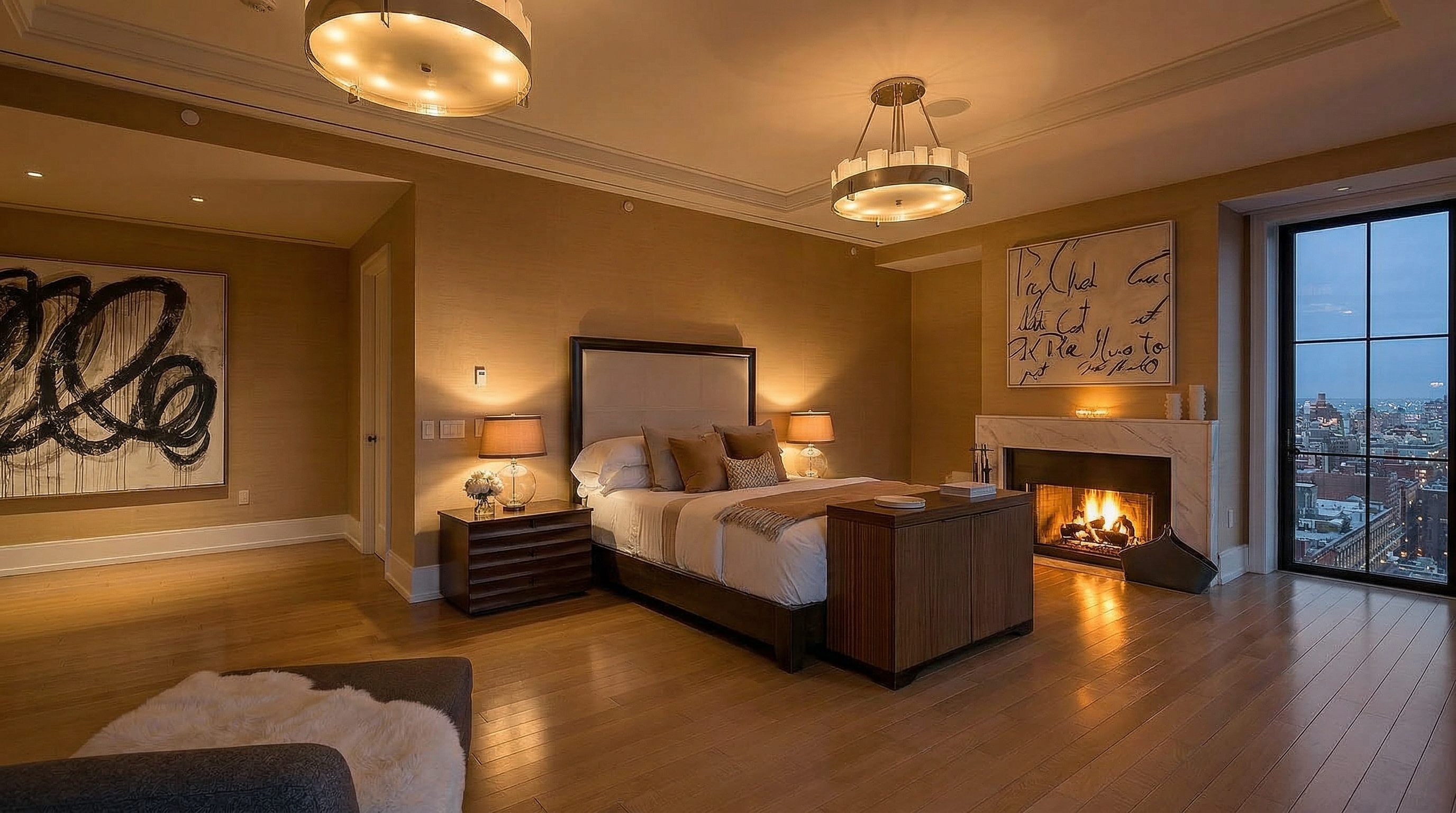
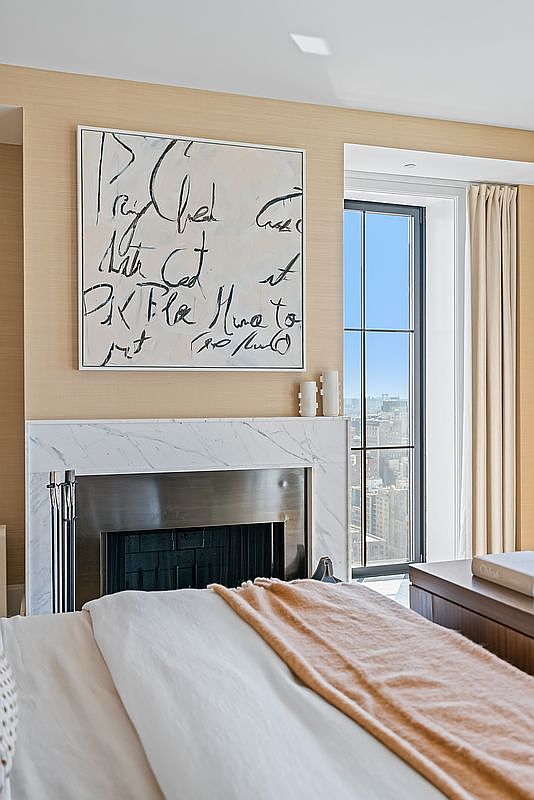
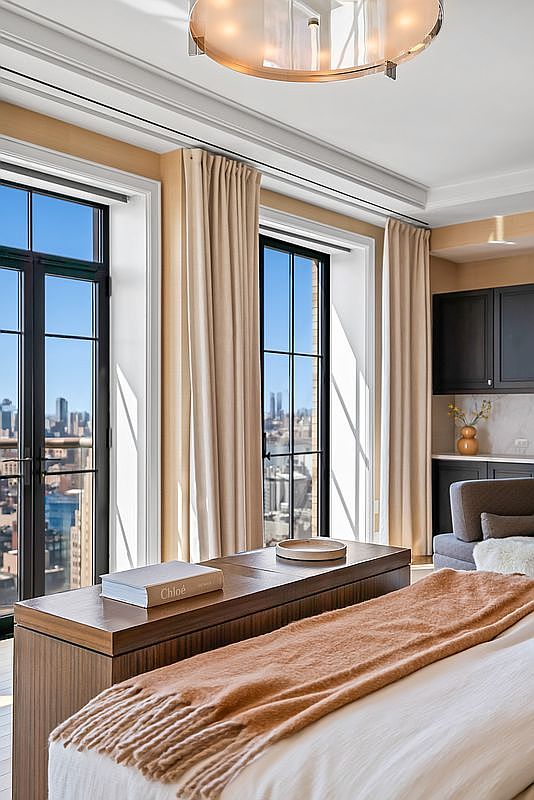
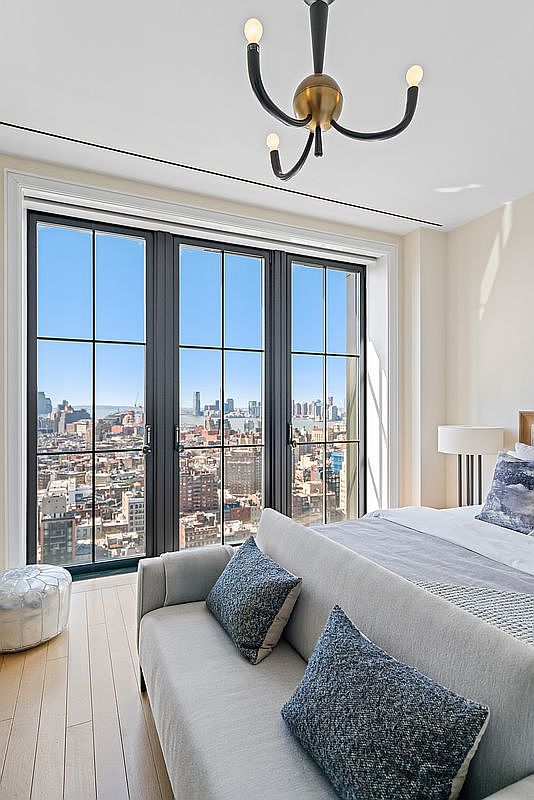
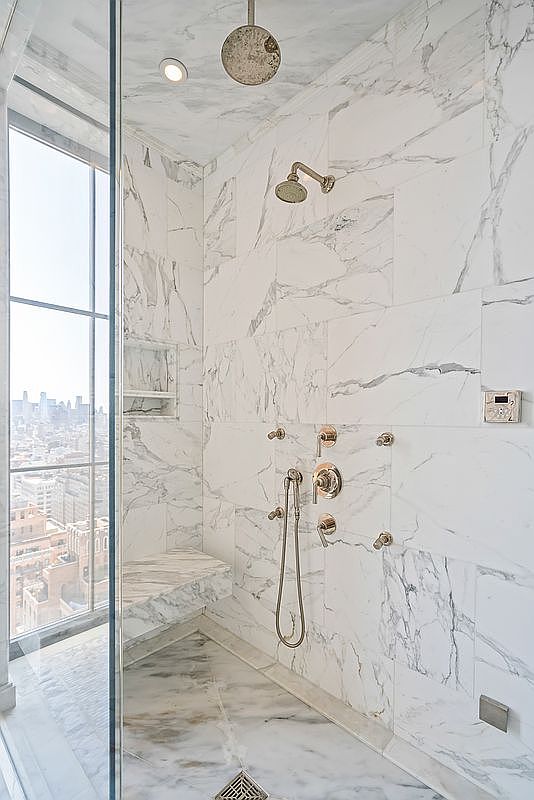
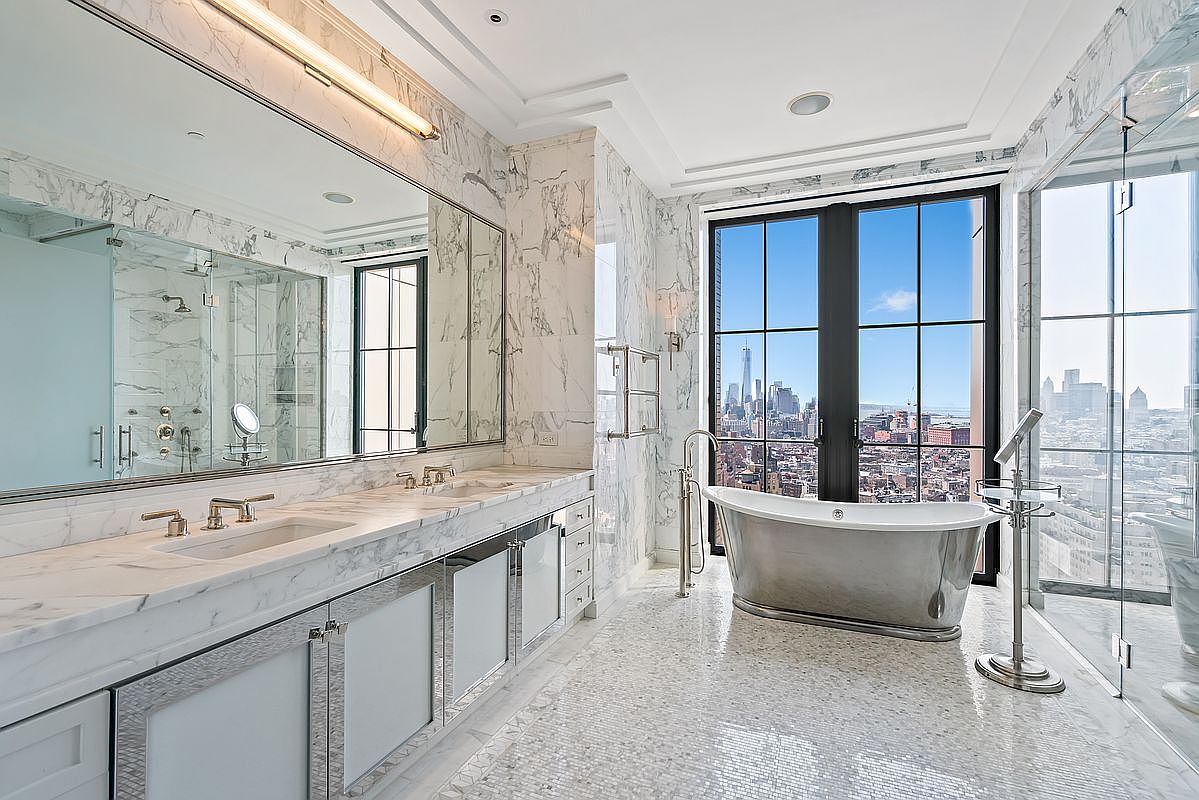
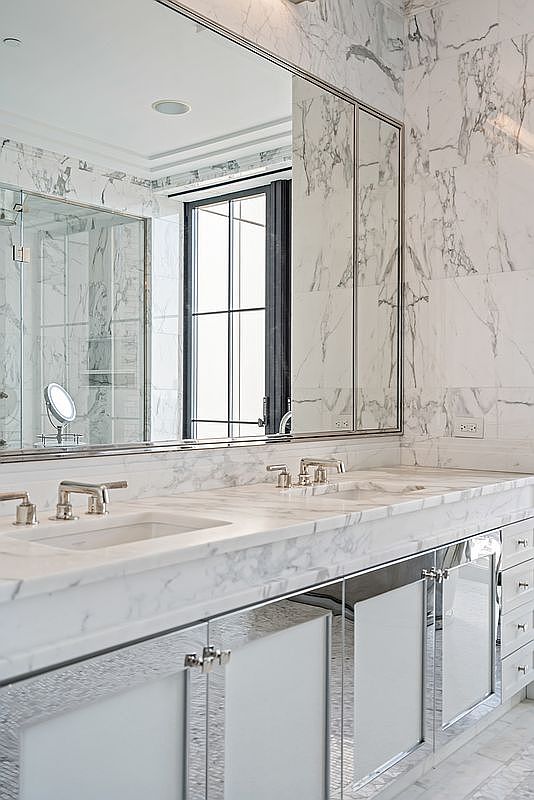
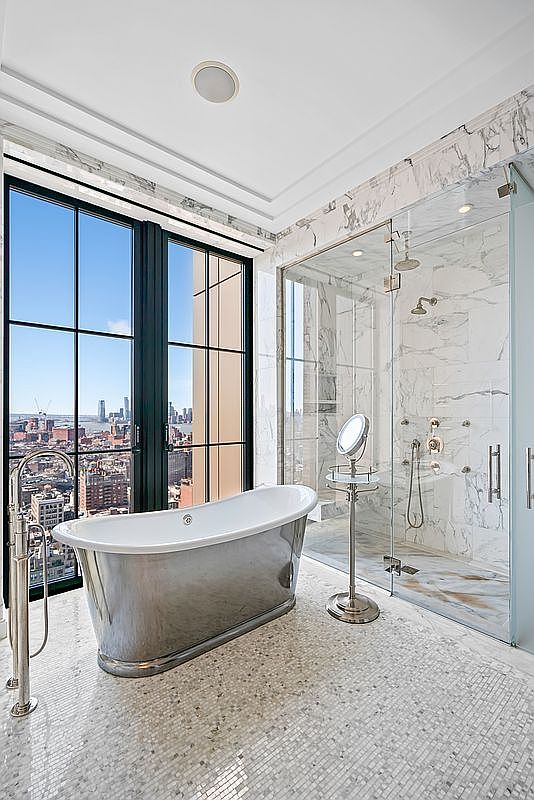
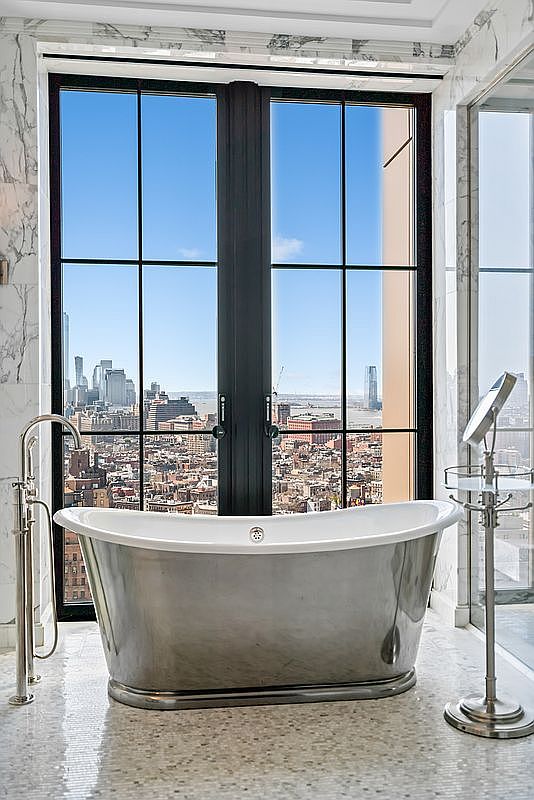
The primary suite occupies its own wing with the authority befitting the residence's finest room. A marble-surround wood-burning fireplace, floor-to-ceiling skyline windows, and a walk-in closet finished entirely in dark wood cabinetry with integrated shelving create a private world of considered luxury. The primary bath represents perhaps the home's most singular gesture: a freestanding metallic soaking tub positioned directly before panoramic city windows, where the skyline itself becomes the backdrop to one's most private rituals. A floor-to-ceiling marble shower with rainfall fixtures and polished gold hardware completes a space that rivals the finest hotel suites in the city it surveys.
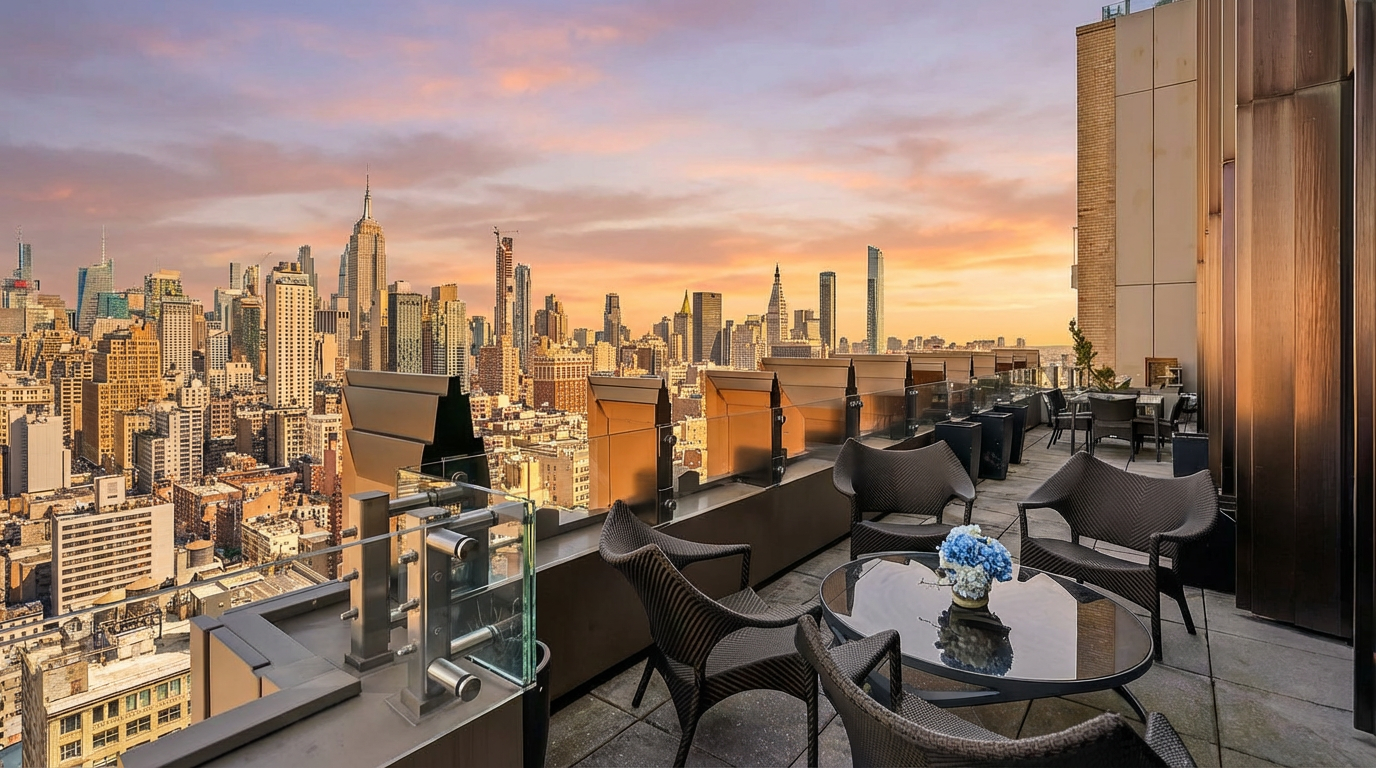
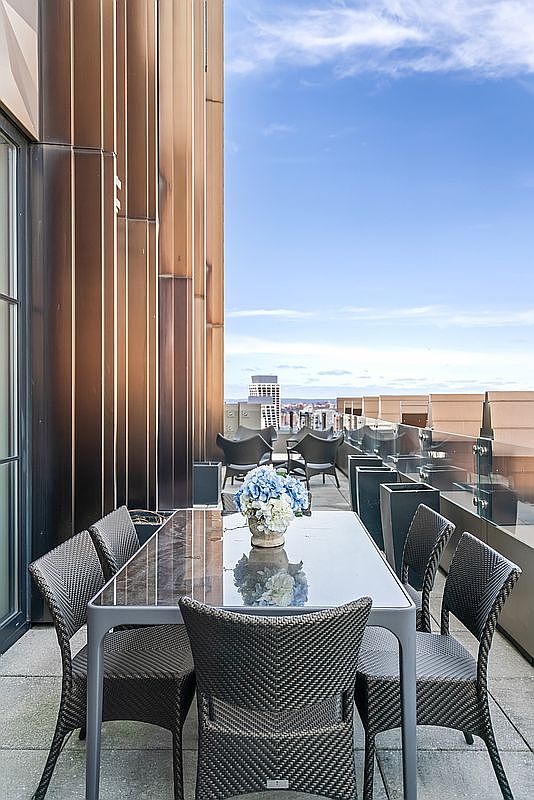
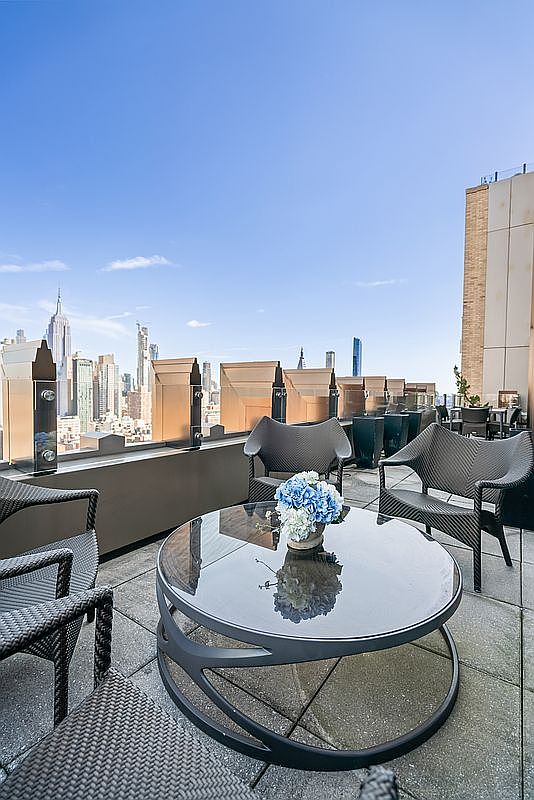
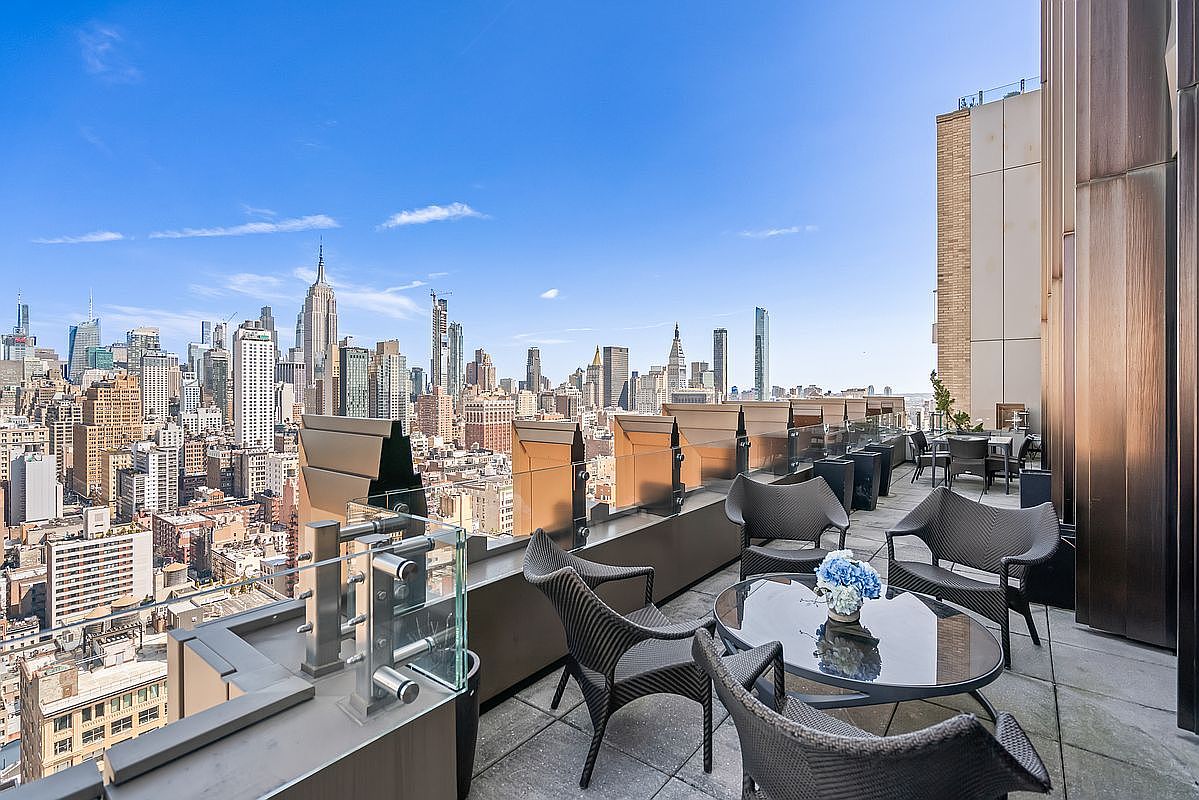
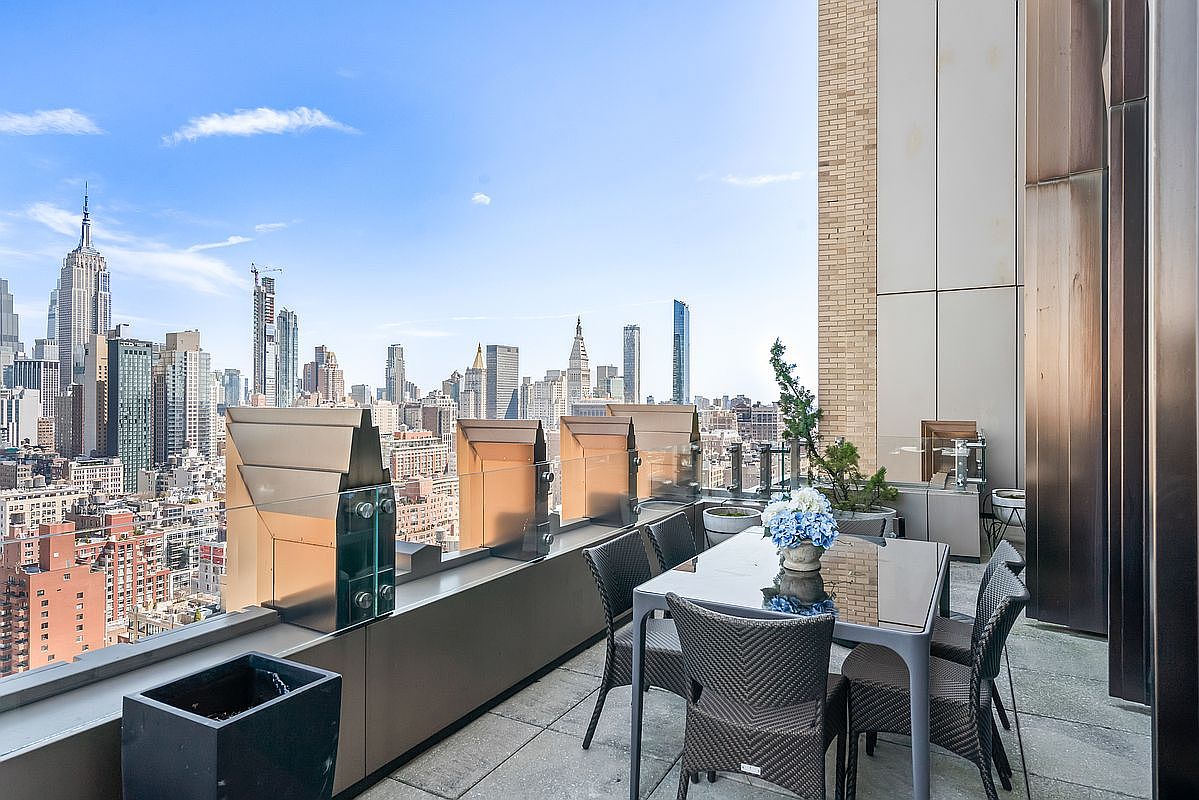
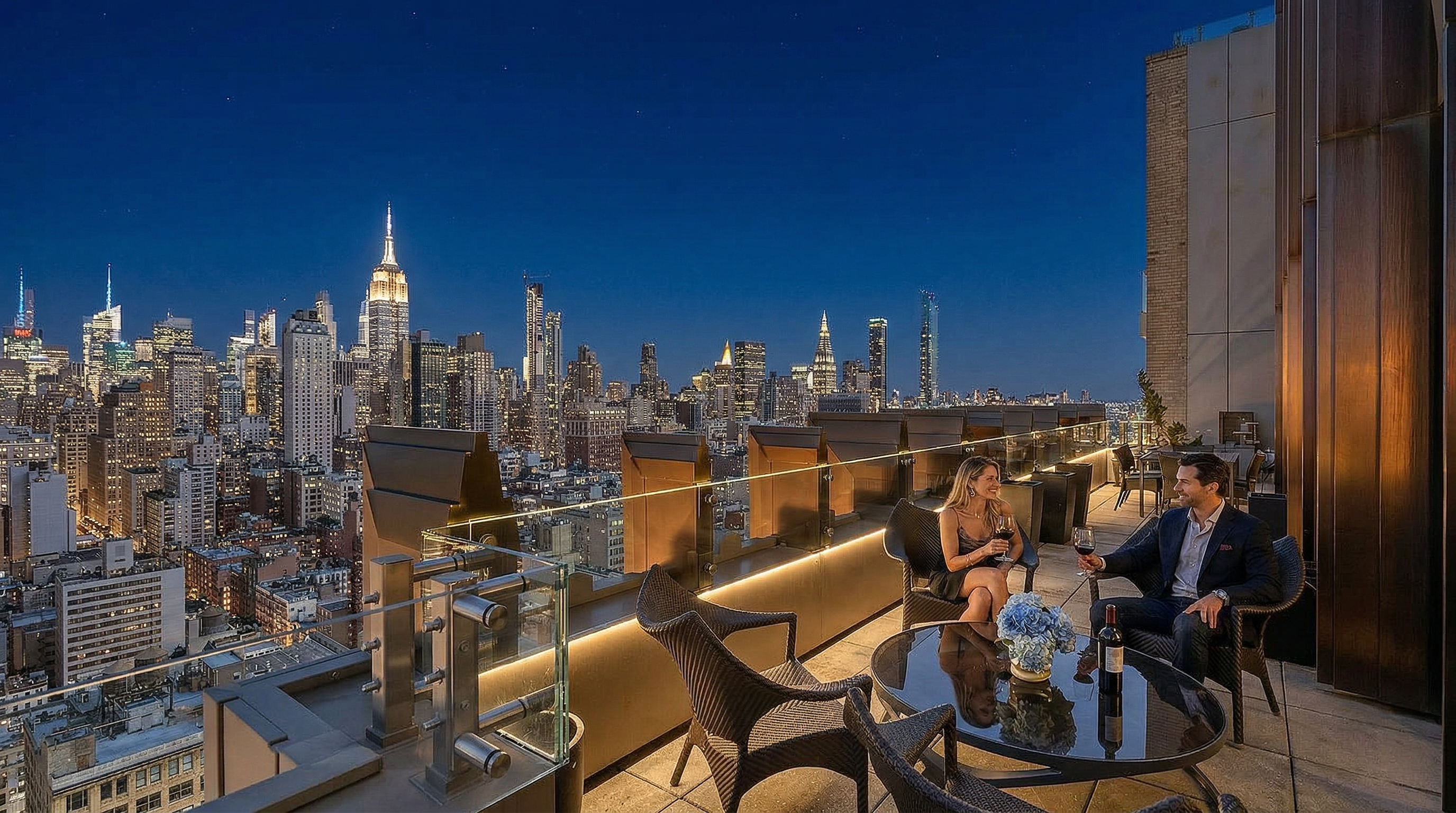
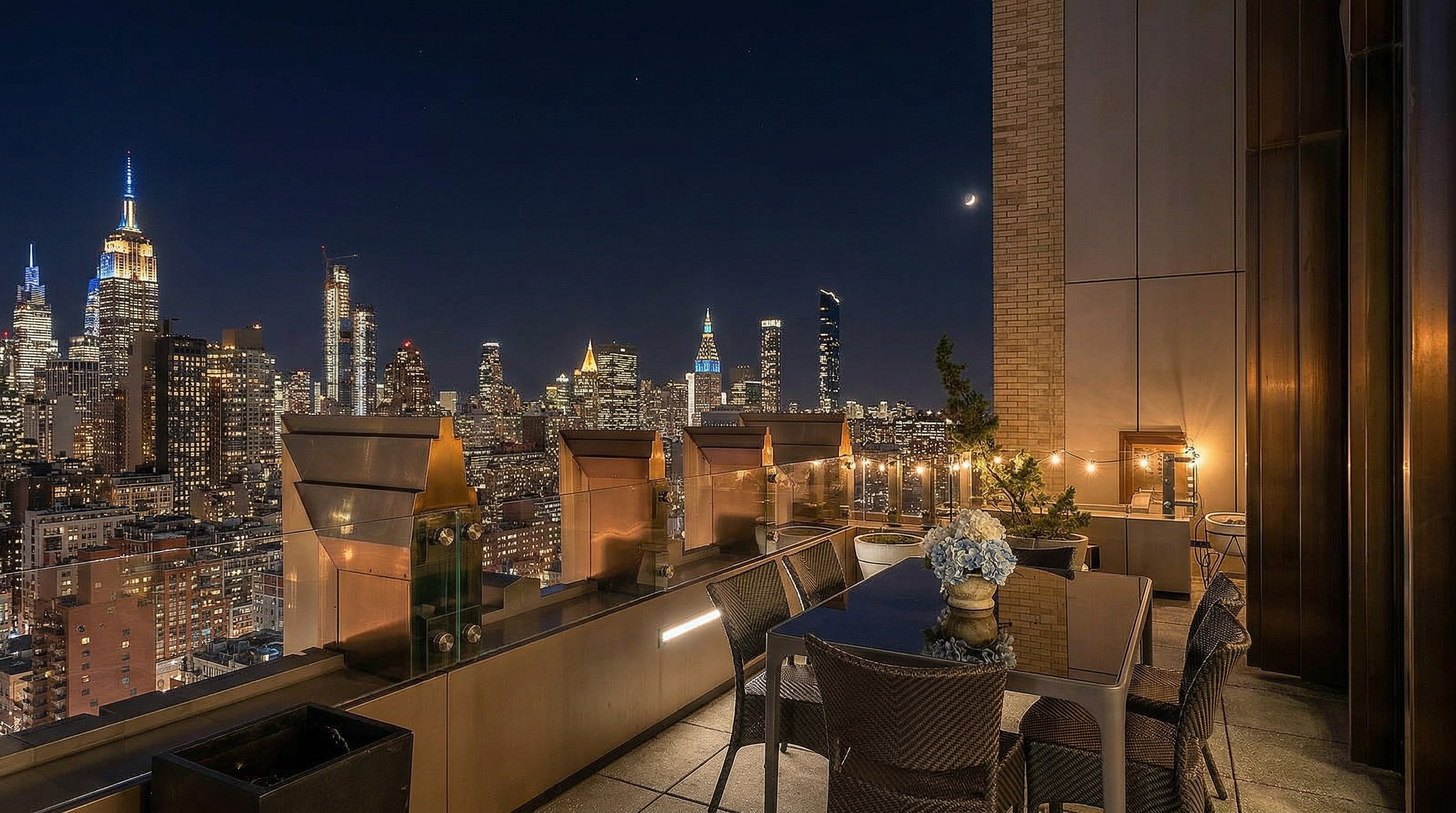
Two additional wood-burning fireplaces serve secondary spaces — including a dedicated home office with custom built-in shelving, city views, and the focused quiet that productive work demands. The north-facing terrace, framed by copper-toned architectural panels and glass railings, extends the living floor into the open air, offering a private stage above Chelsea from which the city performs on every side.
Chelsea occupies a singular position in the geography of Manhattan — a neighborhood that has continuously reinvented itself without ever surrendering the character that makes it irreplaceable. Bounded roughly by 14th Street to the south, 34th Street to the north, Sixth Avenue to the east, and the Hudson River to the west, Chelsea carries within it layers of history that give the present its texture. In the 19th century, the neighborhood was shaped by Clement Clarke Moore, the landowner and scholar who subdivided his family estate into the orderly residential blocks that still define much of its western reaches. The row houses and churches that survive from that era stand in quiet conversation with the galleries, restaurants, and towers that followed.
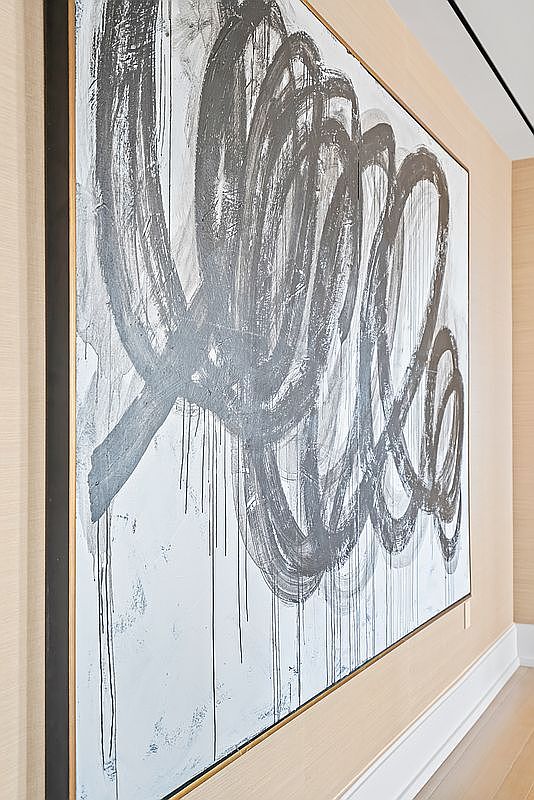
By the 1990s and early 2000s, Chelsea had claimed its identity as the center of New York's contemporary art world. The concentration of galleries along West 24th and 25th Streets — many housed in repurposed industrial buildings — draws collectors, curators, and artists from around the world on any given weekend. Gagosian, Pace, David Zwirner, and dozens of other internationally recognized galleries maintain a presence within walking distance of Walker Tower, making the arts not merely an amenity but a daily condition of life in this neighborhood.
The High Line, the elevated linear park built on a former freight rail spur that runs along the western edge of Chelsea, transformed the neighborhood's relationship to public space when it opened in 2009. Stretching from Gansevoort Street in the Meatpacking District north through Hudson Yards, it offers landscaped promenades, commissioned public art installations, and sweeping views of the Hudson River and the New Jersey Palisades — all accessible on foot from Walker Tower within minutes. Hudson River Park, extending along the waterfront, provides additional green space, recreational piers, and cycling paths that connect Chelsea to the broader fabric of Manhattan's riverfront.
The culinary landscape surrounding Walker Tower reflects Chelsea's cosmopolitan character. The Chelsea Market, housed in the former National Biscuit Company complex on Ninth Avenue, anchors a food hall of considerable distinction, with purveyors ranging from the Lobster Place to Dickson's Farmstand Meats. The surrounding blocks support a dining culture that spans every register, from neighborhood institutions to destination restaurants that draw guests from across the boroughs.
For families, the neighborhood offers proximity to some of Manhattan's most respected schools and cultural institutions. The Joyce Theater on 19th Street has been a cornerstone of American dance for decades. The General Theological Seminary, occupying a serene mid-block campus steps from Walker Tower, contributes a quietly academic presence to the streetscape. Madison Square Park and the Flatiron District are within easy reach to the east, while the West Village and Greenwich Village lie just to the south — extending the walker's radius into some of the most storied urban terrain in the country.
To live at Walker Tower is to occupy one of Chelsea's most historically significant addresses while remaining embedded in the living, evolving neighborhood that surrounds it — a balance that few properties, in any city, can credibly offer.
Featured Highlights
Curated Content • Presented by Huailing Deng