The Story Behind
A Chestnut Hill Masterpiece Where Light, Scale, and Craft Converge
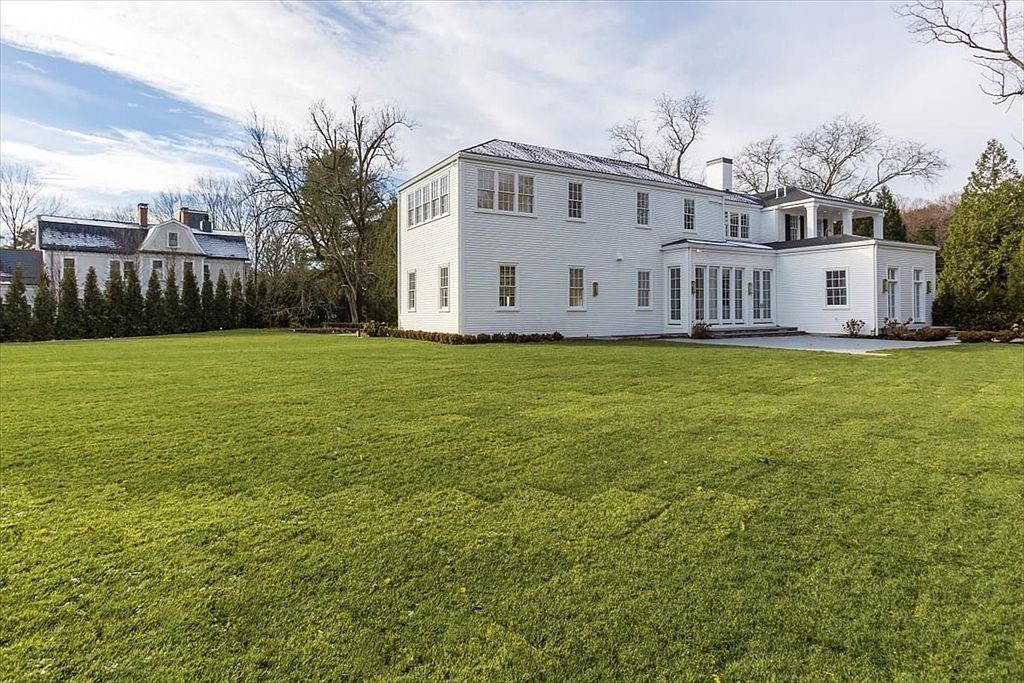
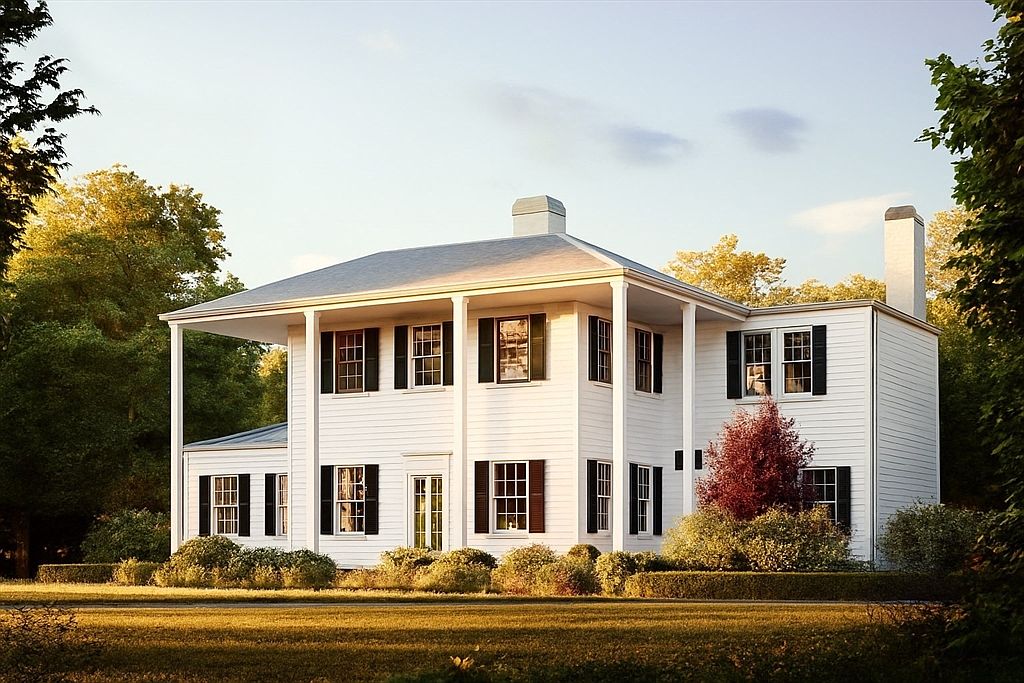
From the moment you approach 222 Warren Street, the home announces itself with a quiet confidence that only the finest architecture possesses. The white colonial facade — symmetrical, composed, and anchored by a covered front porch flanked by dark shutters and multi-paned windows — speaks to a builder who understood that restraint is its own form of luxury. This is not a house that shouts. It is one that endures.
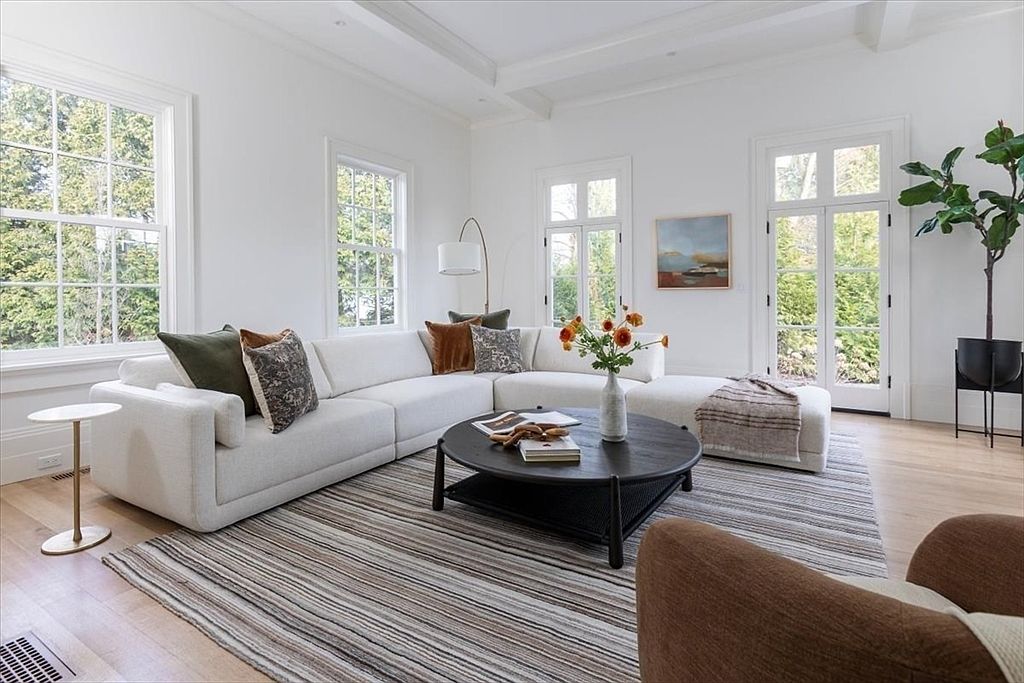
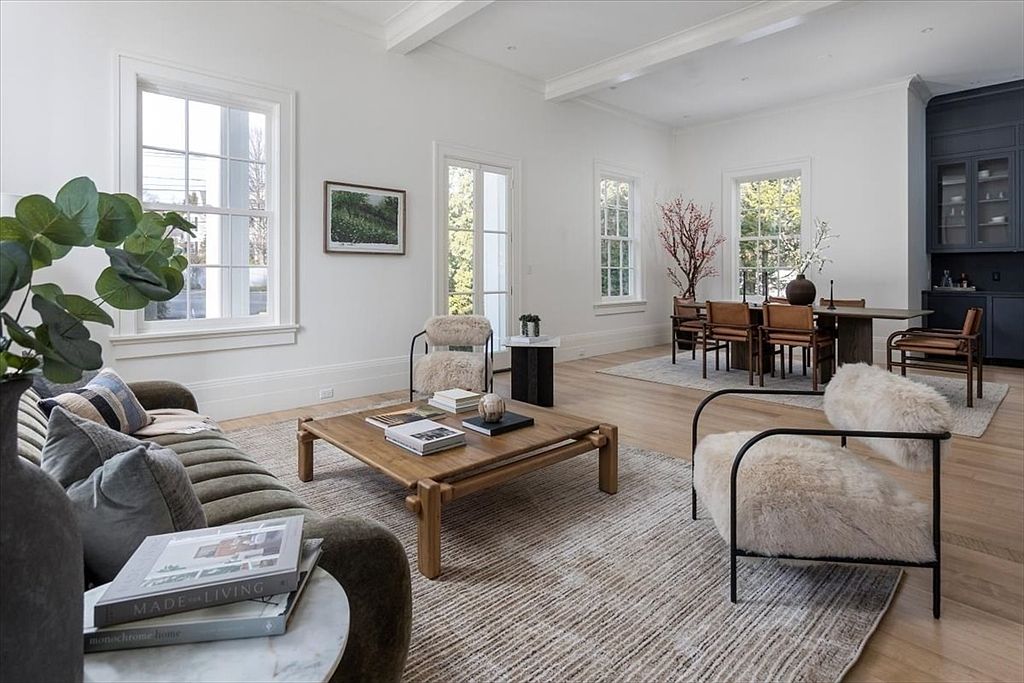
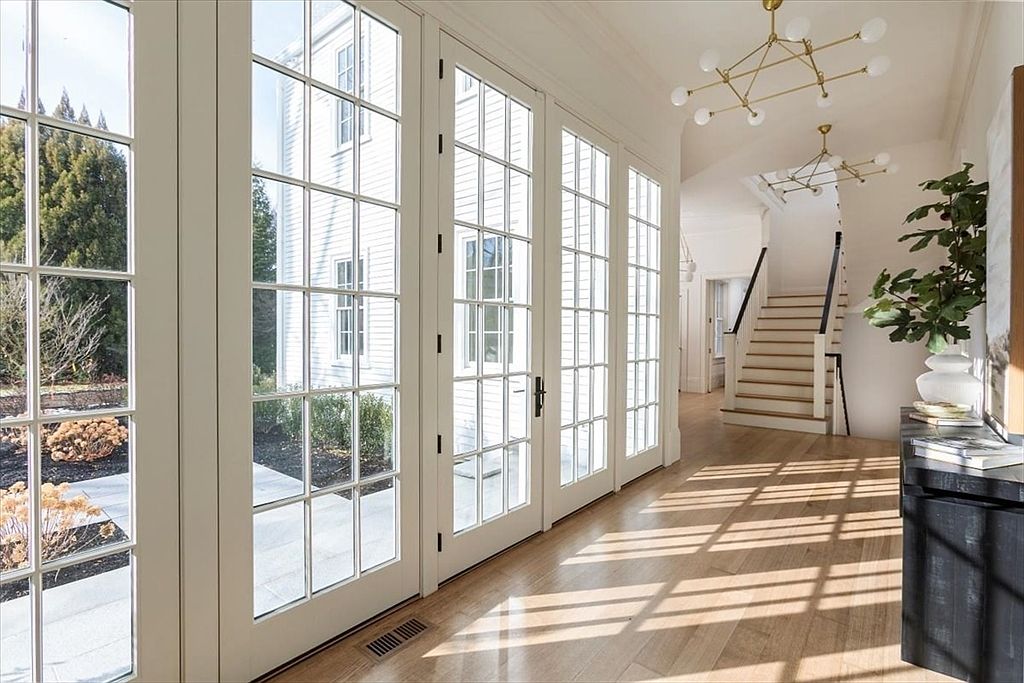
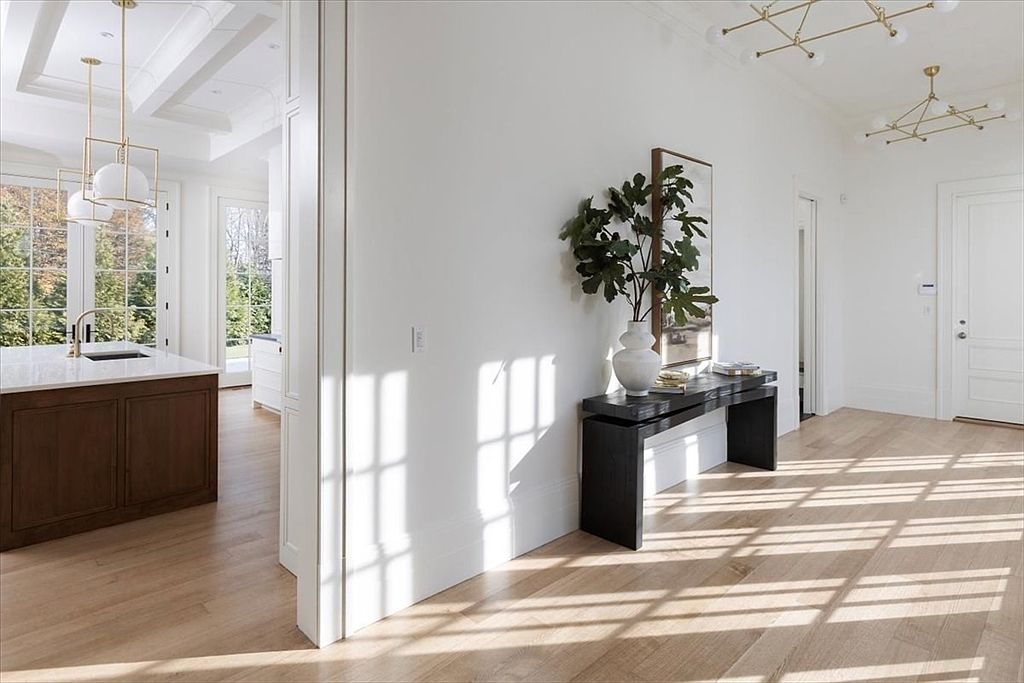
Step through the front door and the scale of the interior reveals itself immediately. Light wood flooring flows through the entry hall beneath gold-toned chandeliers, while tall multi-paned glass doors draw the eye forward and inward, orienting you toward the home's open, luminous core. The living spaces unfold with an architectural generosity rarely achieved in new construction — a stone-clad fireplace surround anchors the main gathering room, while dark built-in cabinetry provides a deliberate tonal contrast that grounds the space without ever weighing it down. Sight lines extend effortlessly from room to room, underscoring an open layout conceived for both intimate living and gracious entertaining.
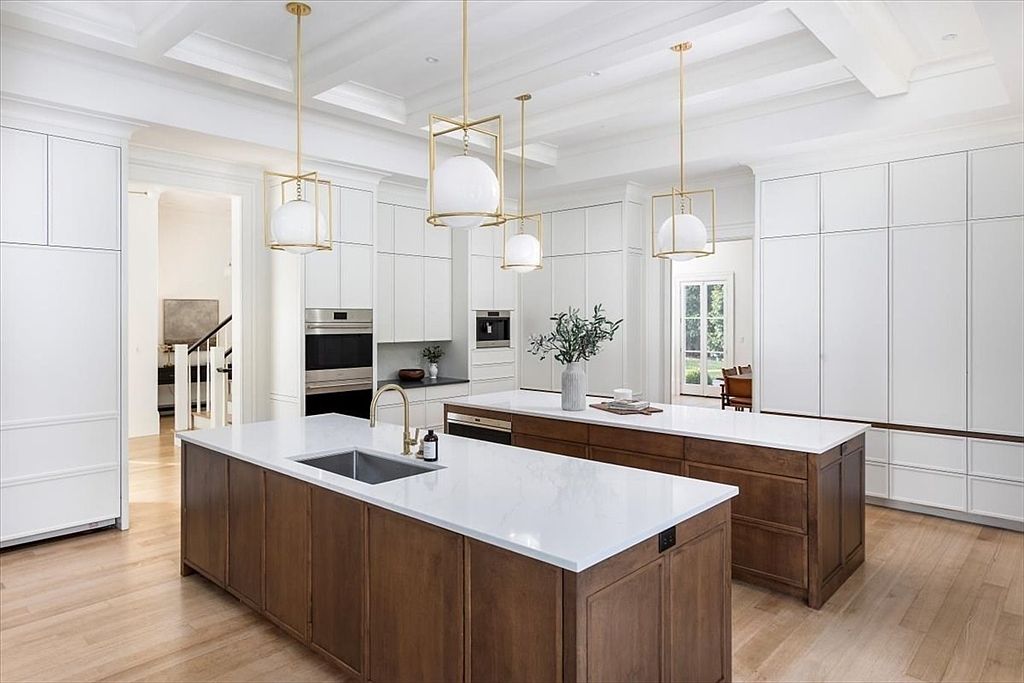
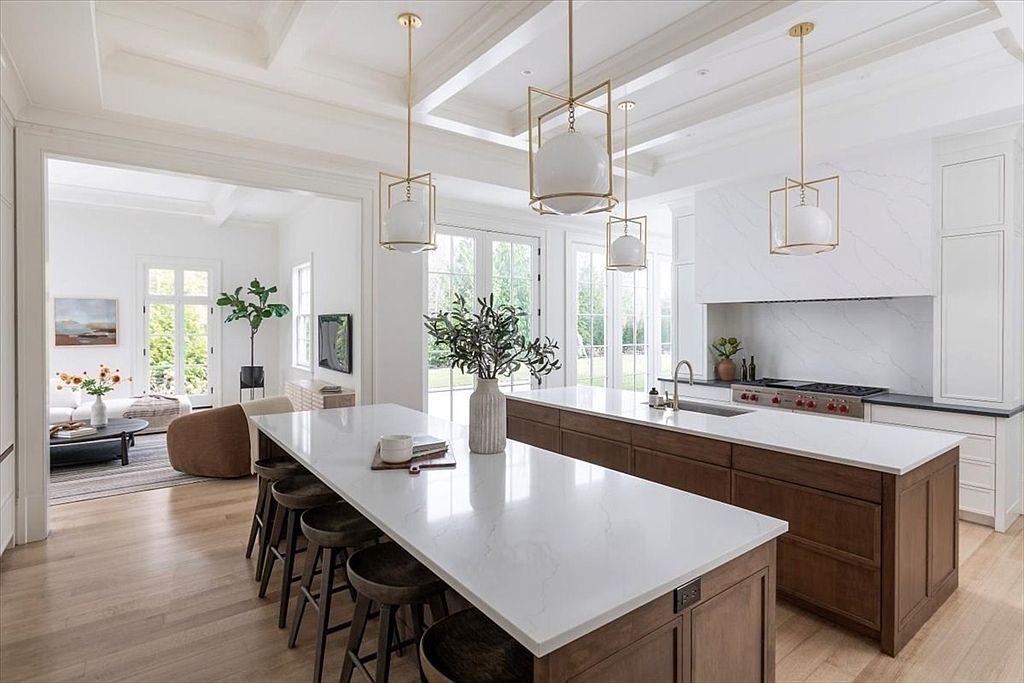
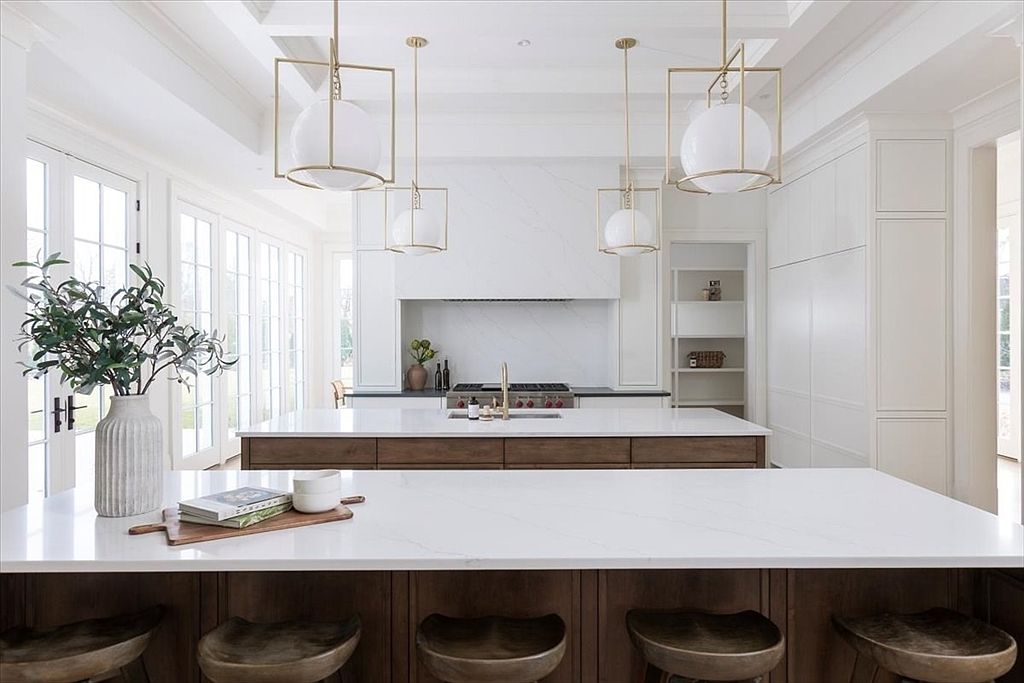
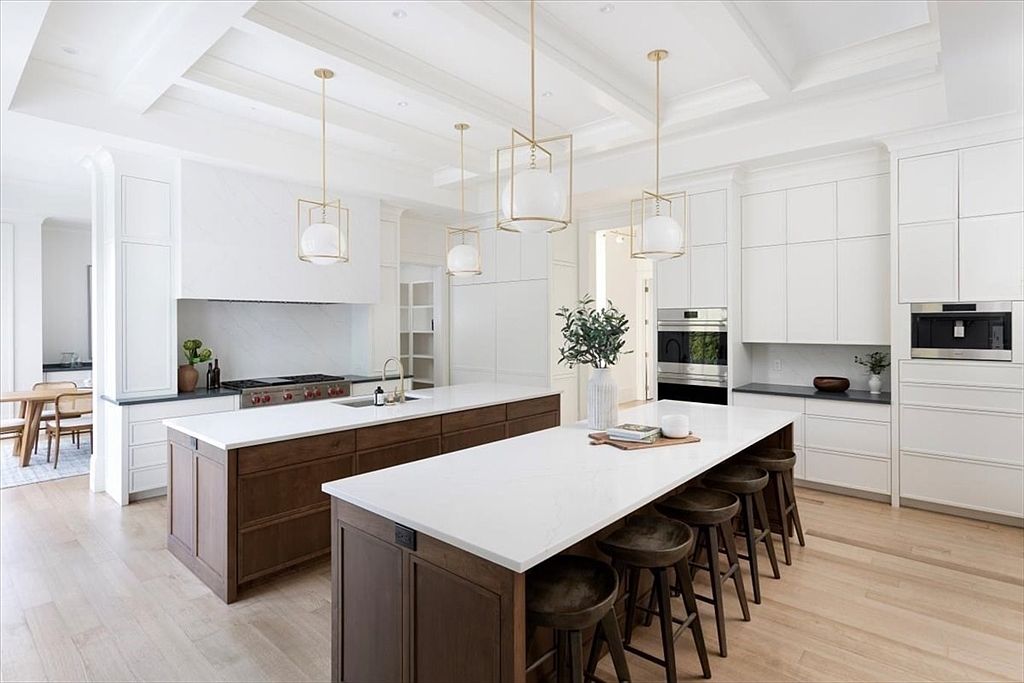
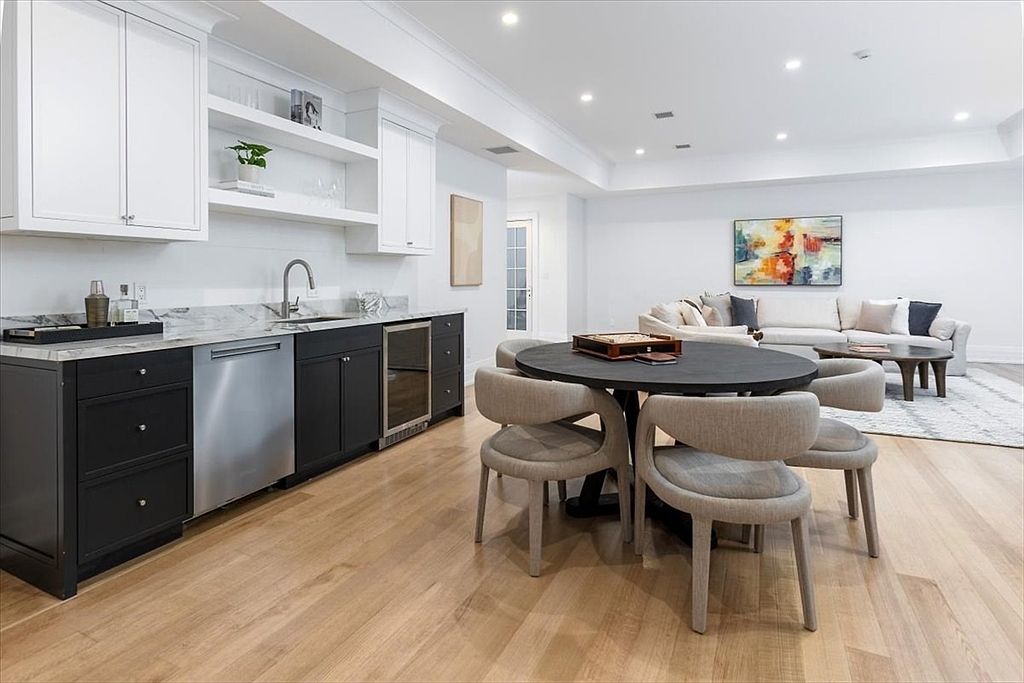
The kitchen is the home's undeniable command center. A dual-island layout wrapped in rich dark wood cabinetry and stone countertops is counterbalanced by white perimeter cabinets that rise toward a coffered ceiling, lending the room a sense of volume and verticality. Pendant lights in a warm gold tone hang above each island with sculptural precision. Adjacent, a wet bar — appointed with dark cabinetry, a wine cooler, and stone counters — extends the home's entertaining range well beyond the kitchen itself, providing a secondary stage for hosting without interrupting the kitchen's flow.
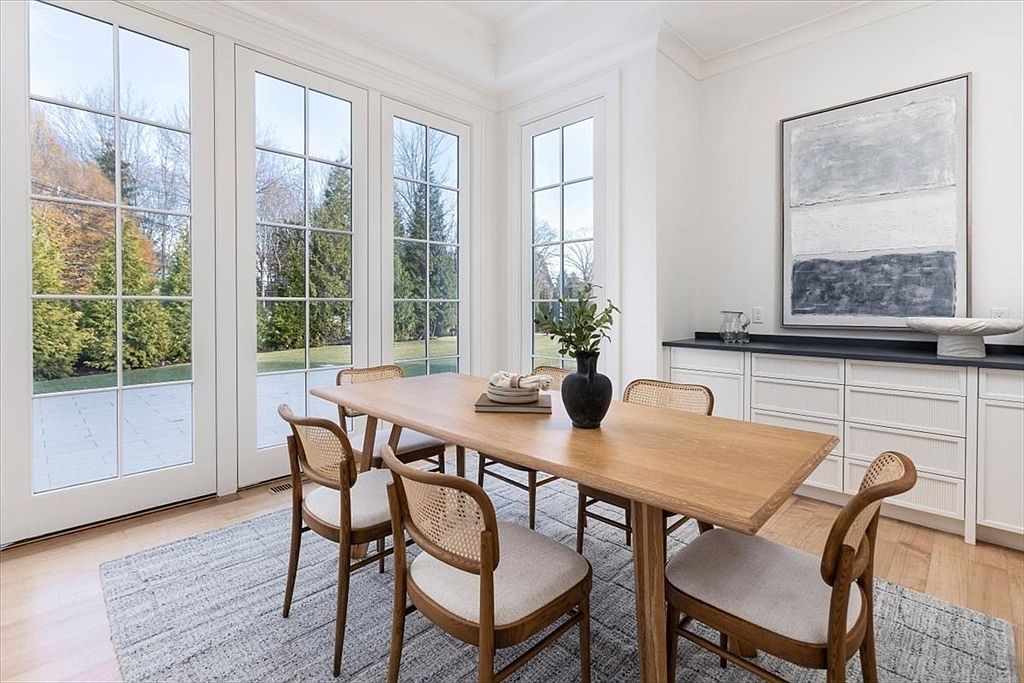
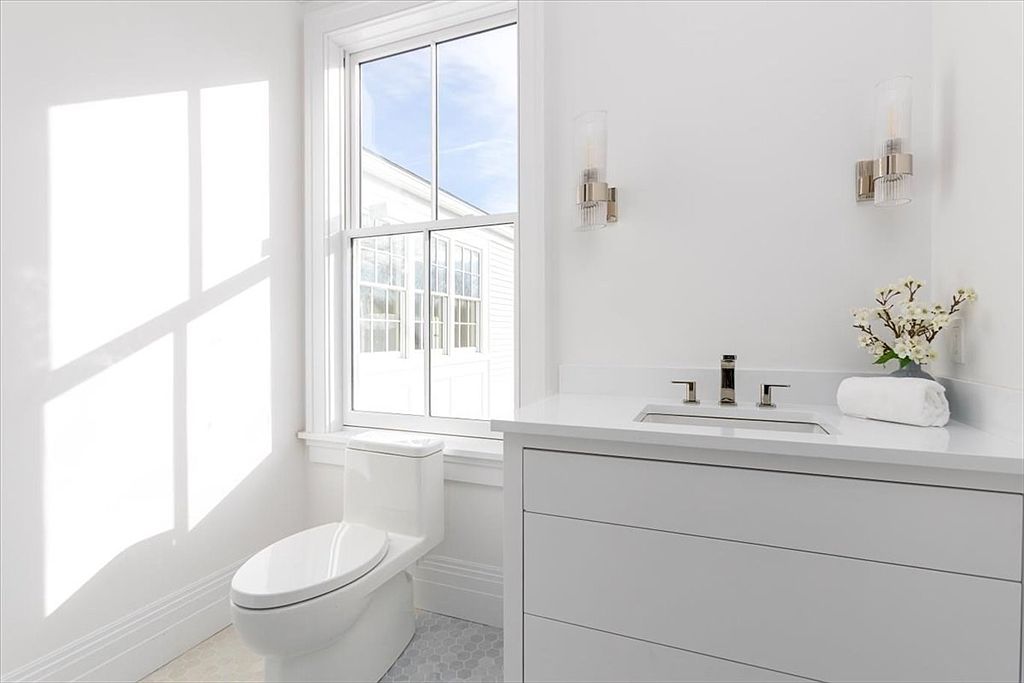
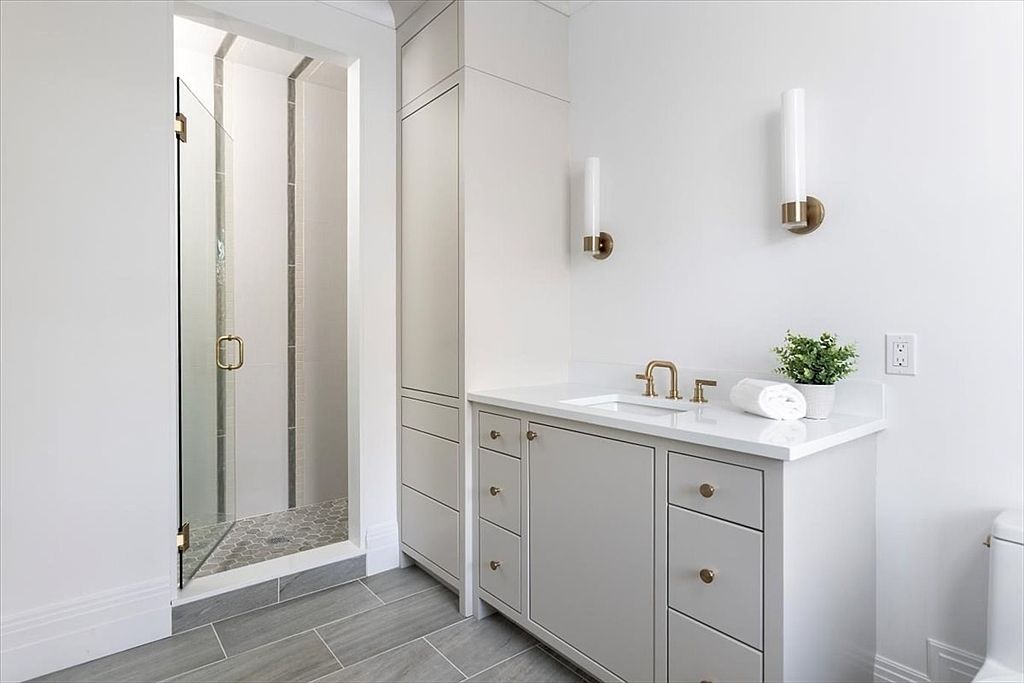
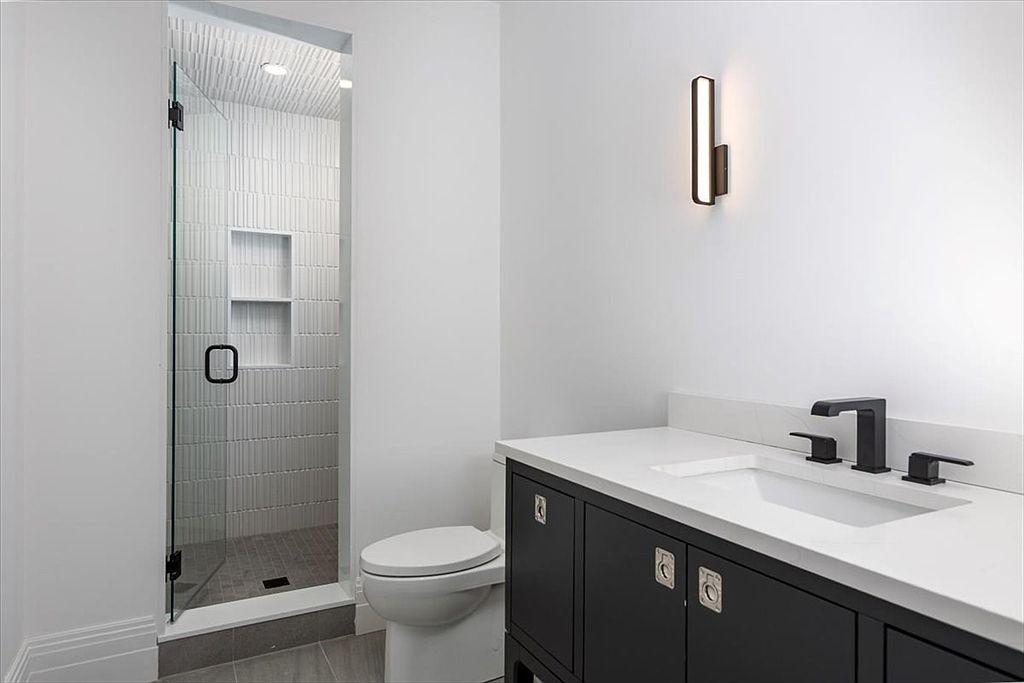
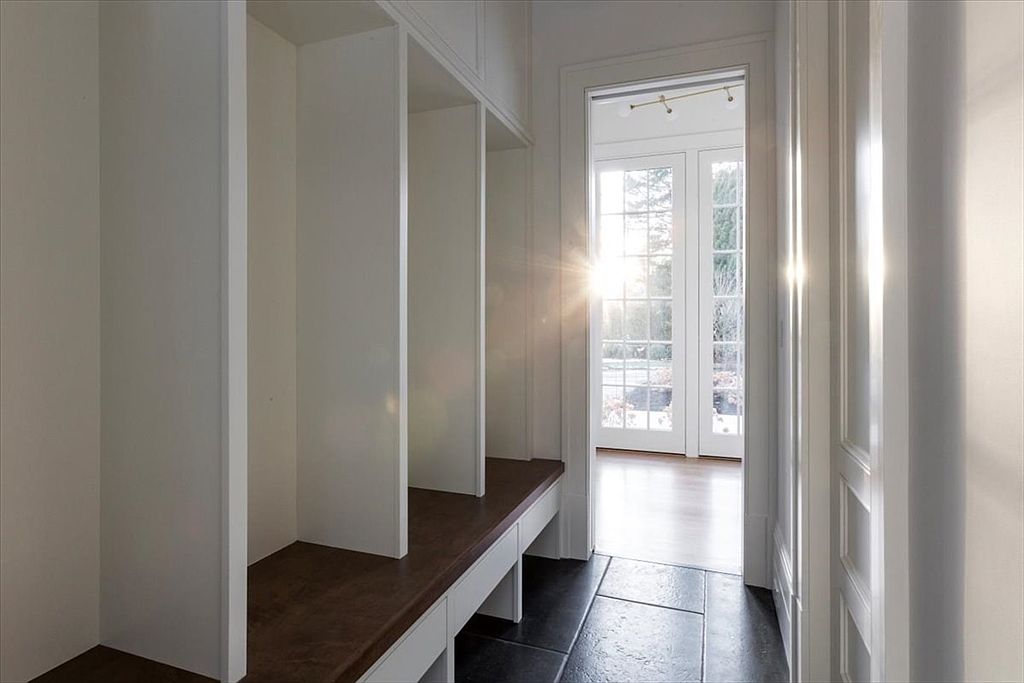
The first floor is further distinguished by a breakfast room bathed in natural light, a dedicated home office, a functional mudroom, and two powder rooms — each element considered, each transition seamless. The esteemed local builder behind this residence clearly approached each square foot as an opportunity rather than an obligation.
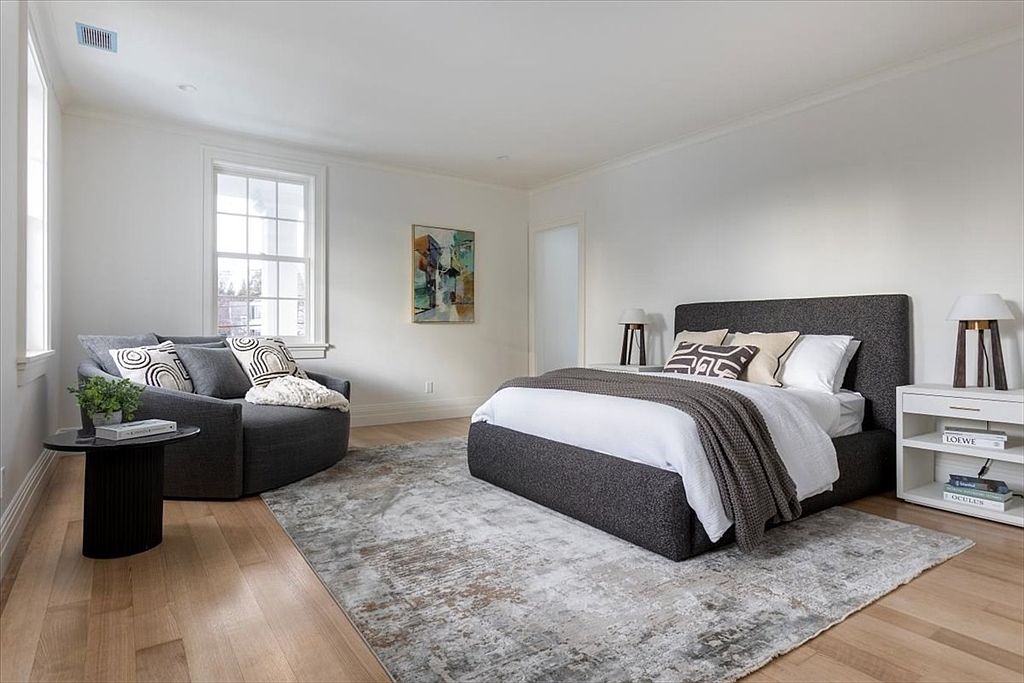
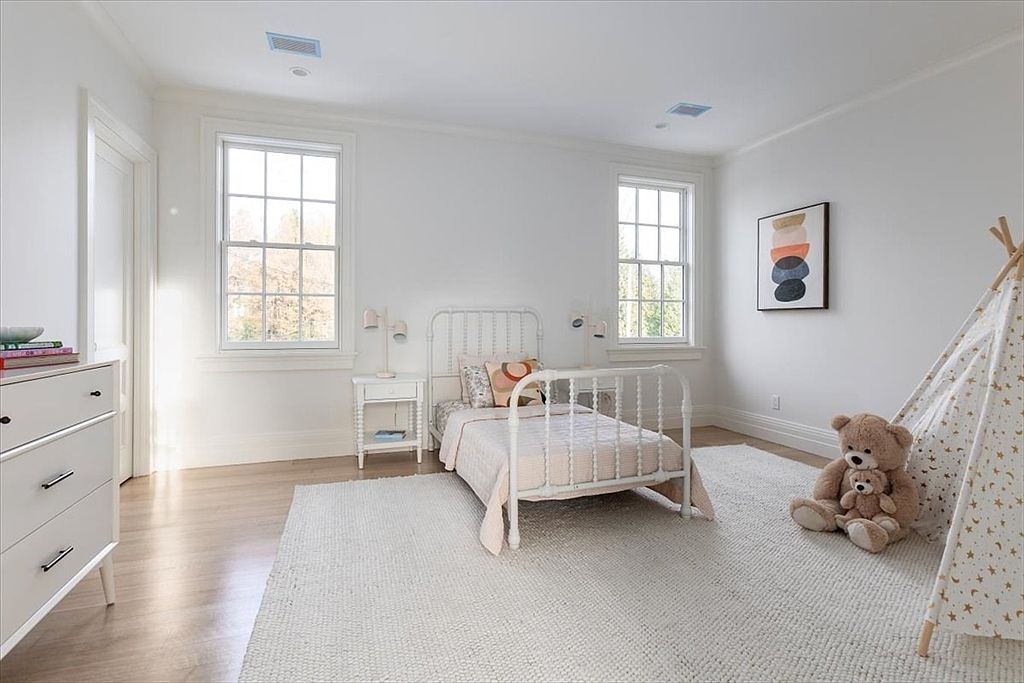
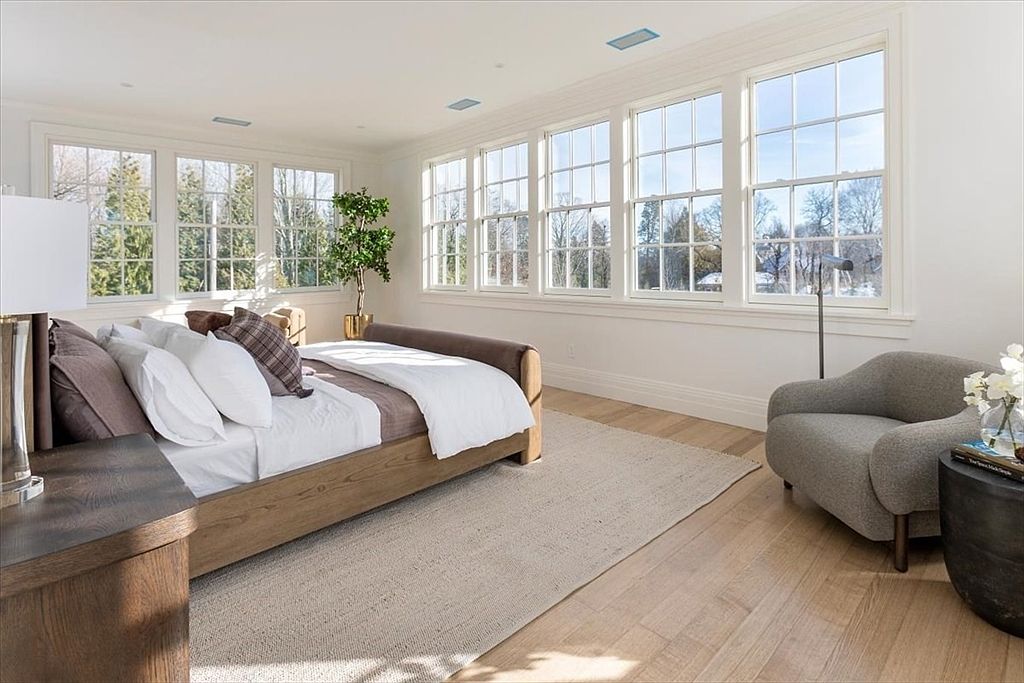
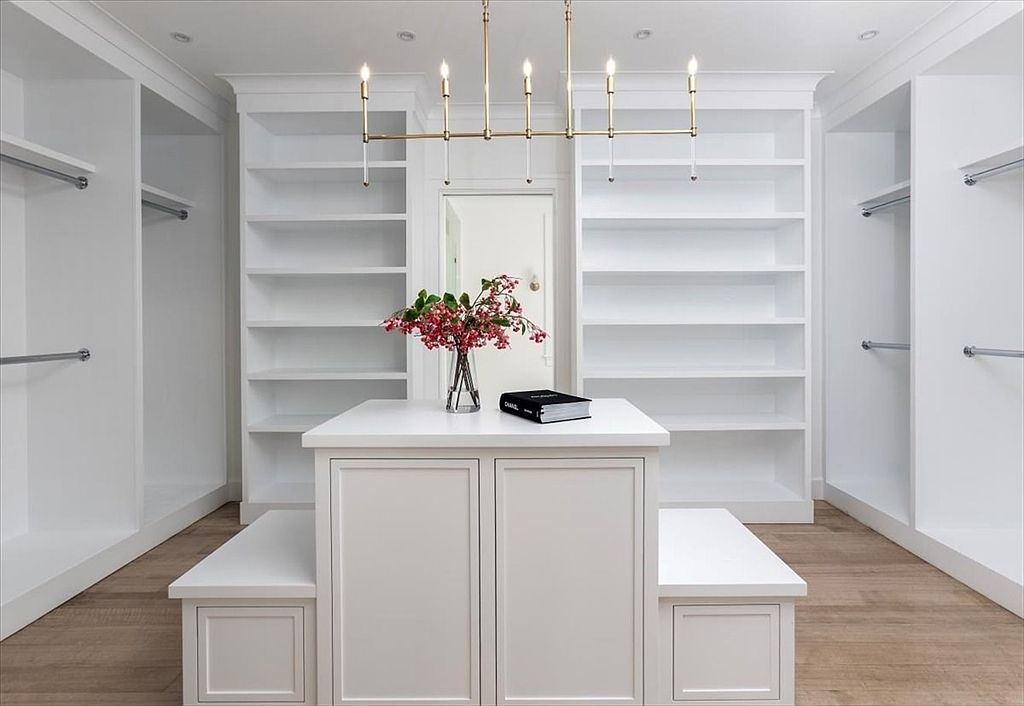
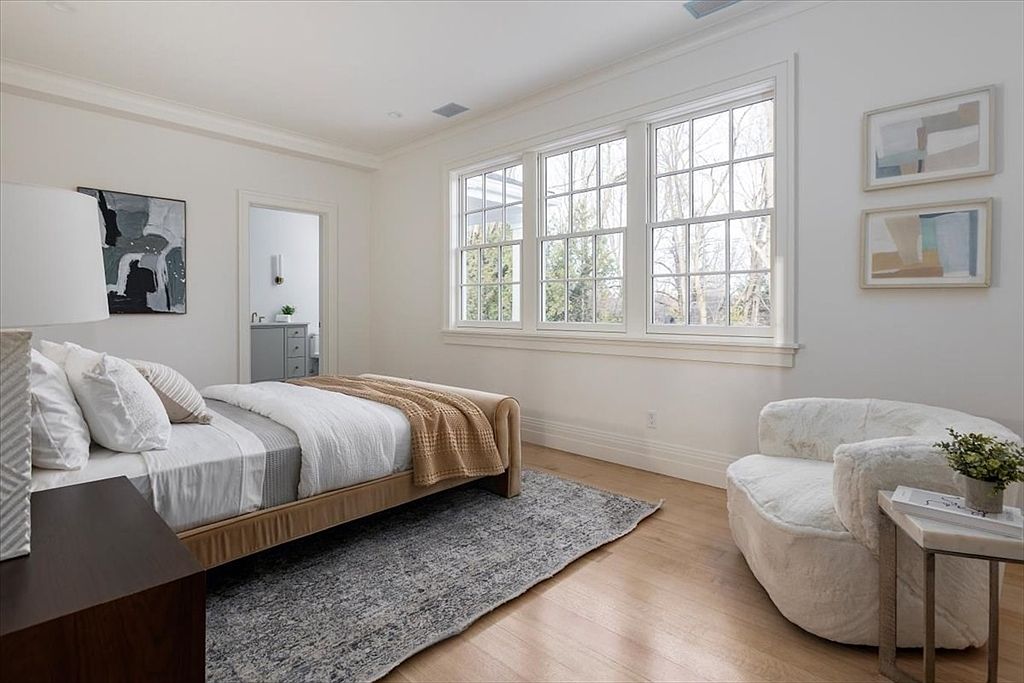
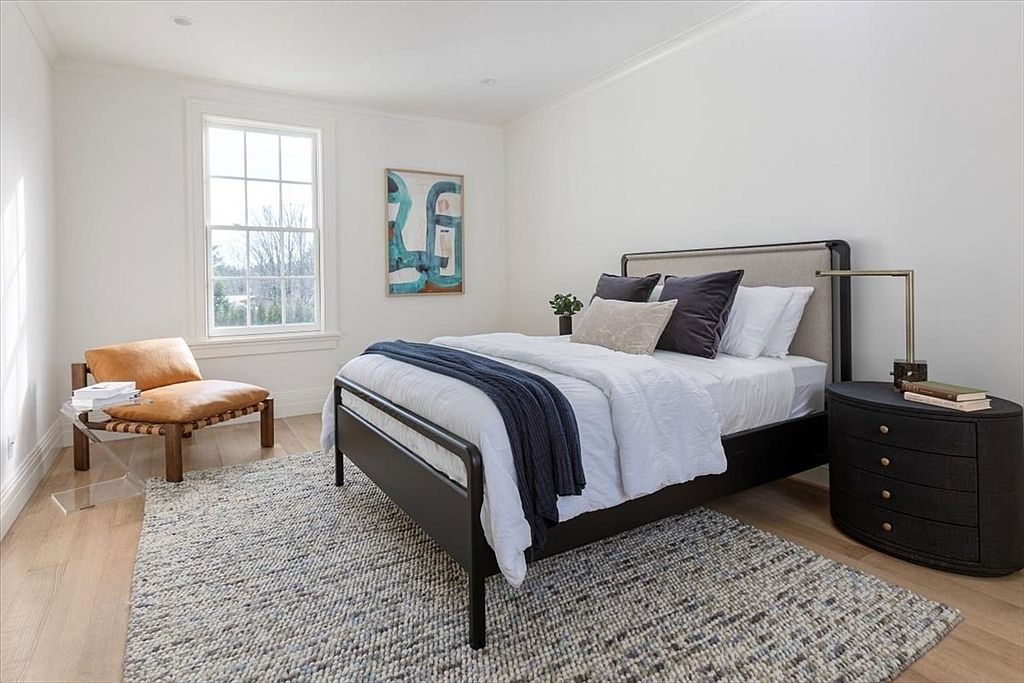
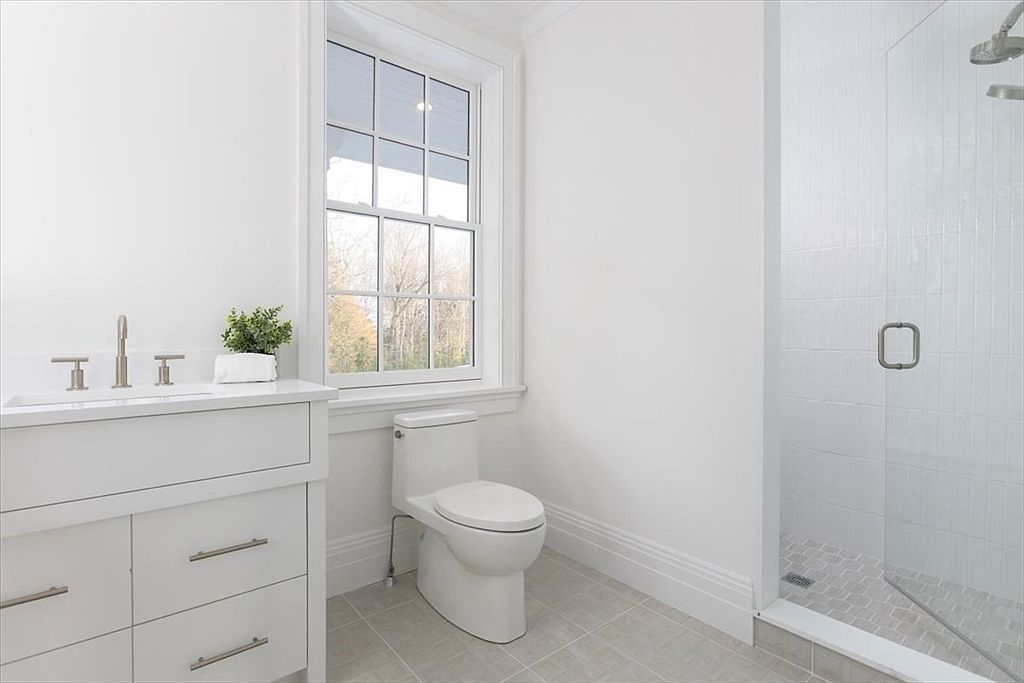
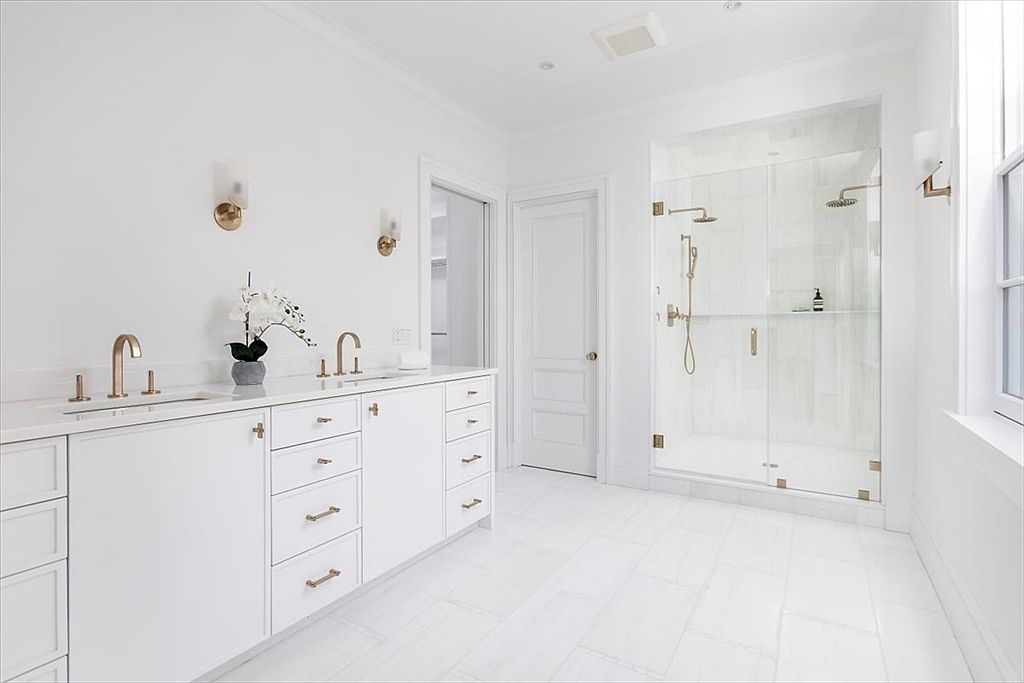
Upstairs, the primary suite is a study in curated calm. Walls of multi-paned windows frame the surrounding tree canopy, filling the room with filtered, ever-changing light. The custom walk-in closet — fitted with white cabinetry, symmetrical open shelving, and a central island beneath a gold chandelier — rivals those found in the most refined fashion houses. The spa bath, finished in white tile with stone counters and gold-toned fixtures, offers a daily ritual of genuine restoration. Four additional ensuite bedrooms carry the same level of finish, ensuring that no guest or family member experiences anything less than the home's full standard.
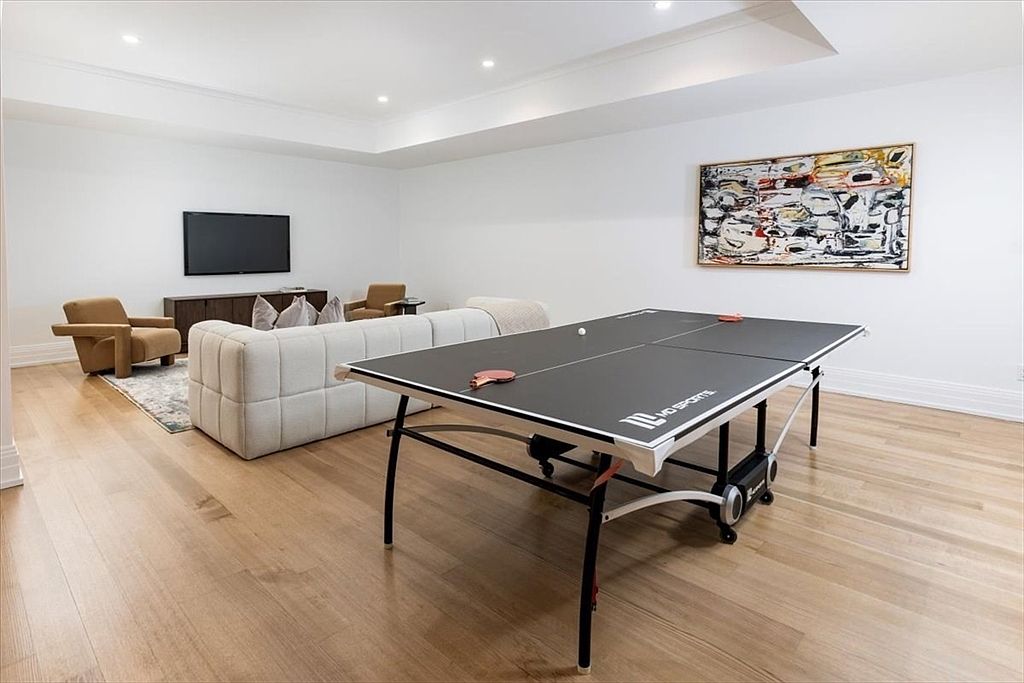
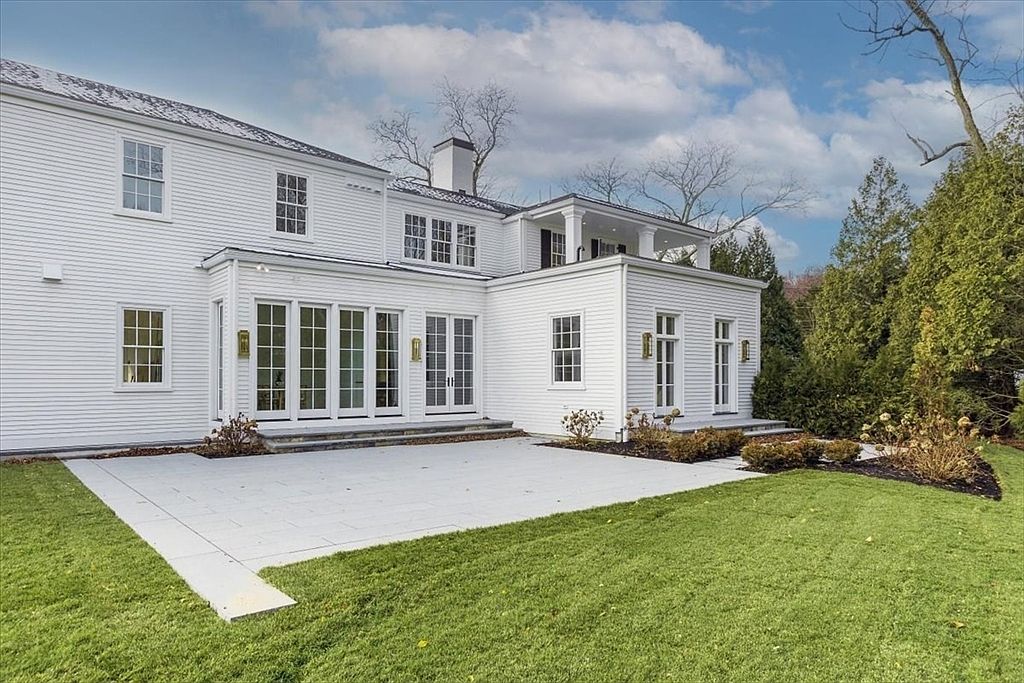
The lower level delivers a recreation room and flex space ready to become a golf simulator, home gym, or screening room, alongside a dedicated wine room. Outside, a stone patio opens to a manicured lawn, with permits already secured for a pool — and the option to add a pool house or accessory dwelling unit should the vision call for it. Lutron lighting and Sonos sound complete the picture. This is a home built not merely for the present, but for a life that continues to expand.
Chestnut Hill occupies a singular position in the geography of Greater Boston — neither fully city nor suburb, but something more considered than either. Straddling the boundary between Brookline and Newton, it has long attracted those who seek proximity to one of the world's great urban centers without surrendering the qualities that define a thoughtfully scaled, beautifully landscaped residential community. Warren Street sits squarely within this tradition.
The neighborhood's character was shaped in the late nineteenth and early twentieth centuries, when Brookline emerged as one of the country's first planned suburban communities, its street layouts and green spaces influenced by the landscape architecture movement championed by Frederick Law Olmsted, whose firm designed the Emerald Necklace — Boston's celebrated chain of parks and parkways — portions of which remain accessible from Chestnut Hill today. The legacy of that era is visible in the mature tree canopy, the generous lot sizes, and the architectural diversity that gives the neighborhood its unhurried, established feeling.
For residents of 222 Warren Street, the practical geography is equally compelling. The Chestnut Hill shopping district, anchored by the Chestnut Hill Mall and The Street at Chestnut Hill, places a curated collection of retail, dining, and services within minutes. Wegmans, Whole Foods, and an array of independent restaurants serve the daily rhythms of a discerning household. The Longwood Medical Area — home to Beth Israel Deaconess Medical Center, Dana-Farber Cancer Institute, Boston Children's Hospital, and Brigham and Women's Hospital — is a short drive, as is the main campus of Harvard University and the Harvard Business School along the Charles River.
Boston's cultural institutions are equally accessible. The Museum of Fine Arts, the Isabella Stewart Gardner Museum, and the Boston Symphony Orchestra at Symphony Hall are all reachable within twenty minutes, situating residents comfortably within the city's rich artistic and intellectual life without requiring them to navigate its densest corridors on a daily basis. The Green Line's D Branch, with a stop in Chestnut Hill, provides a direct connection into downtown Boston and Copley Square for those who prefer to leave the car at home.
For families, the educational landscape is exceptional. The Brookline Public Schools system is widely regarded as among the strongest in Massachusetts, and the surrounding region offers an unparalleled concentration of independent schools, including Dexter Southfield, Beaver Country Day School, and others. Colleges and universities — Boston College, Boston University, Northeastern, and MIT among them — form a near-continuous academic corridor accessible from the neighborhood.
Outdoor life in Chestnut Hill is anchored by the Chestnut Hill Reservoir, a historic landmark managed by the City of Boston that offers a beloved walking and running path encircling its tranquil waters. Larz Anderson Park in nearby Brookline Village provides additional open space, sledding hills, and a beloved auto museum. Golf, tennis, and country club amenities are available through several private clubs in the immediate area.
This is a neighborhood defined by what it has always been — and by the quiet confidence of those who have long chosen to make it home.
Featured Highlights
Curated Content • Presented by Maggie Gold Seelig