The Story Behind
Where the Harbor Meets the Height of Architectural Ambition
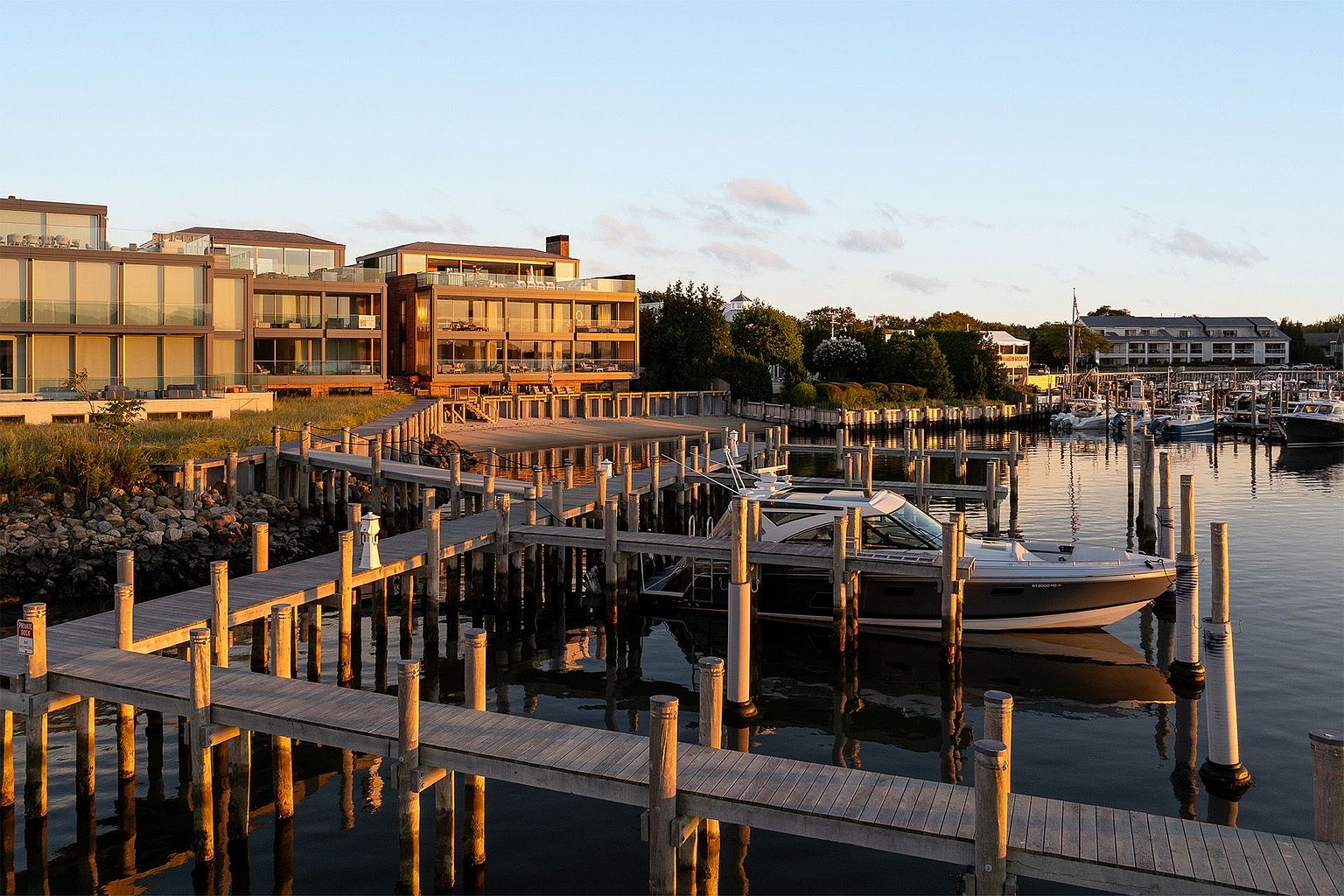
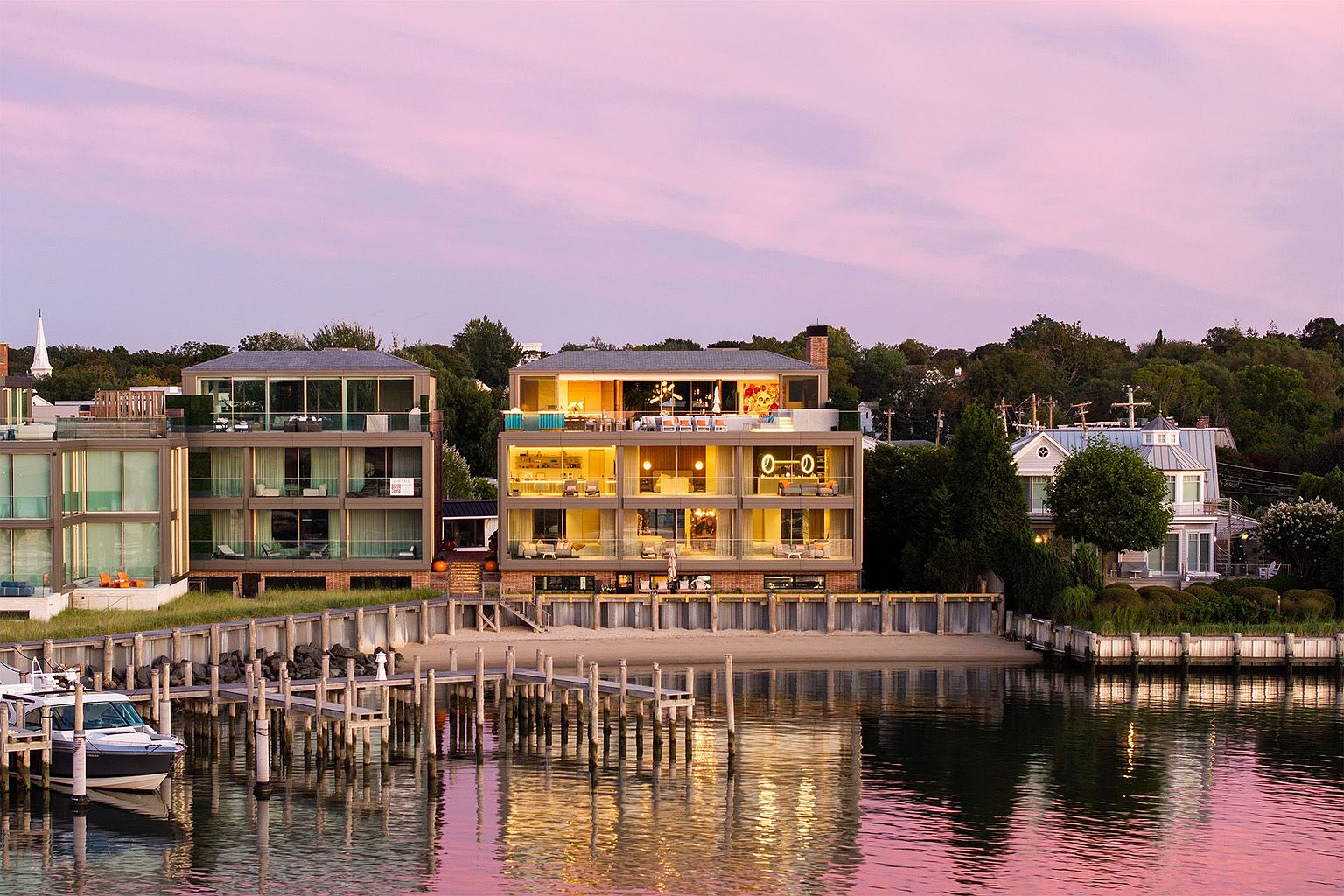
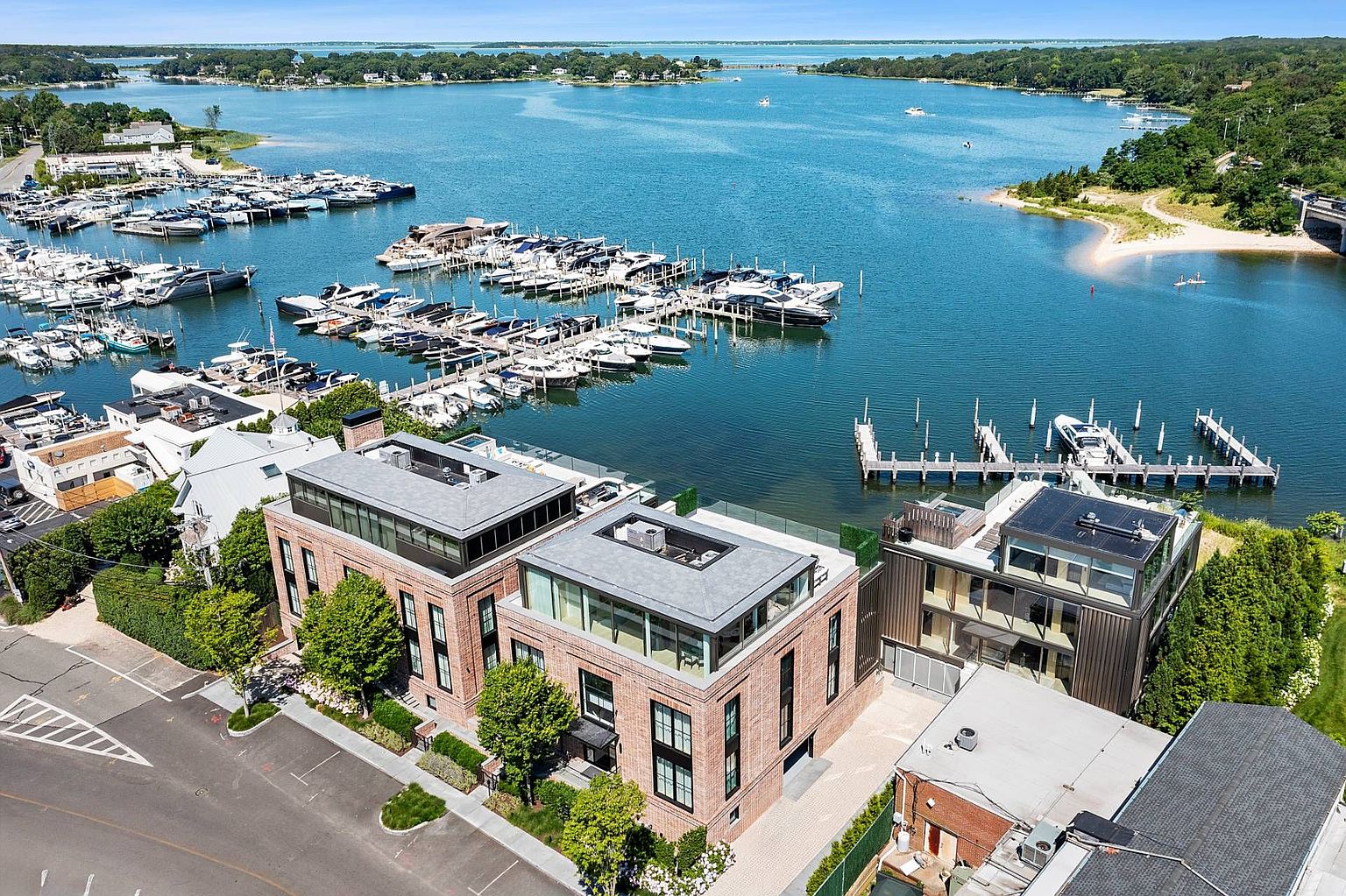
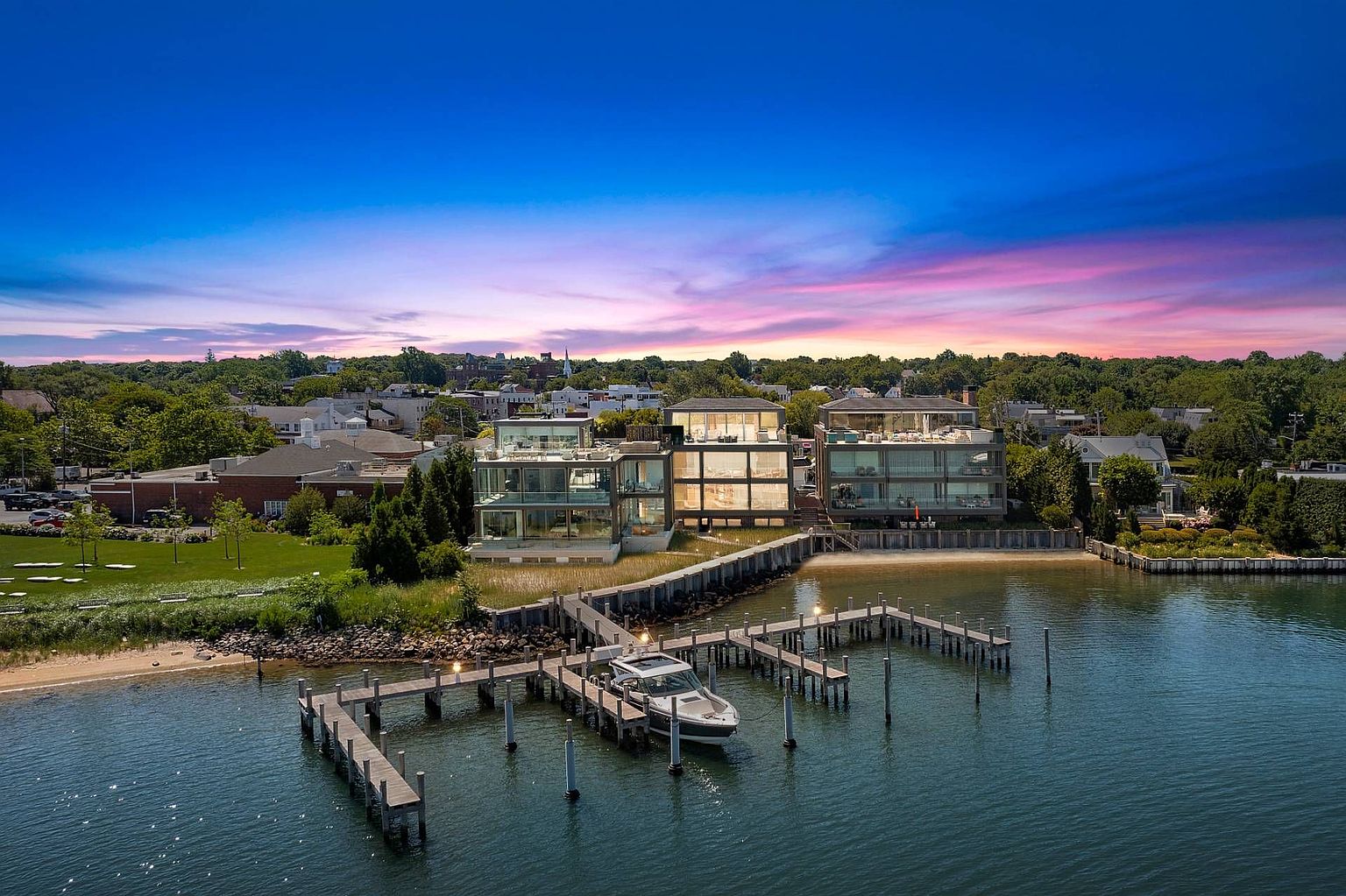
There are properties that occupy a waterfront, and then there are properties that belong to it — that seem to have grown organically from the water's edge, shaped by the same forces that sculpt coastlines and define horizons. 2 West Water Street is unambiguously the latter. Rising across four glass-wrapped levels along Sag Harbor's storied shoreline, Residences A and B are a study in architectural restraint and material confidence: a building that says everything through precision rather than ornamentation.
The exterior presents a disciplined composition of glass, steel, and warm brick — a dialogue between industrial heritage and contemporary refinement that feels entirely at home in a village whose identity has always been shaped by the water. Tiered balconies extend from every level, creating a cascading relationship between interior living space and the harbor views that define this address. At golden hour, the glazed facades ignite with reflected light, and at dusk, the warm glow of illuminated interiors transforms each residence into a lantern above the pier.
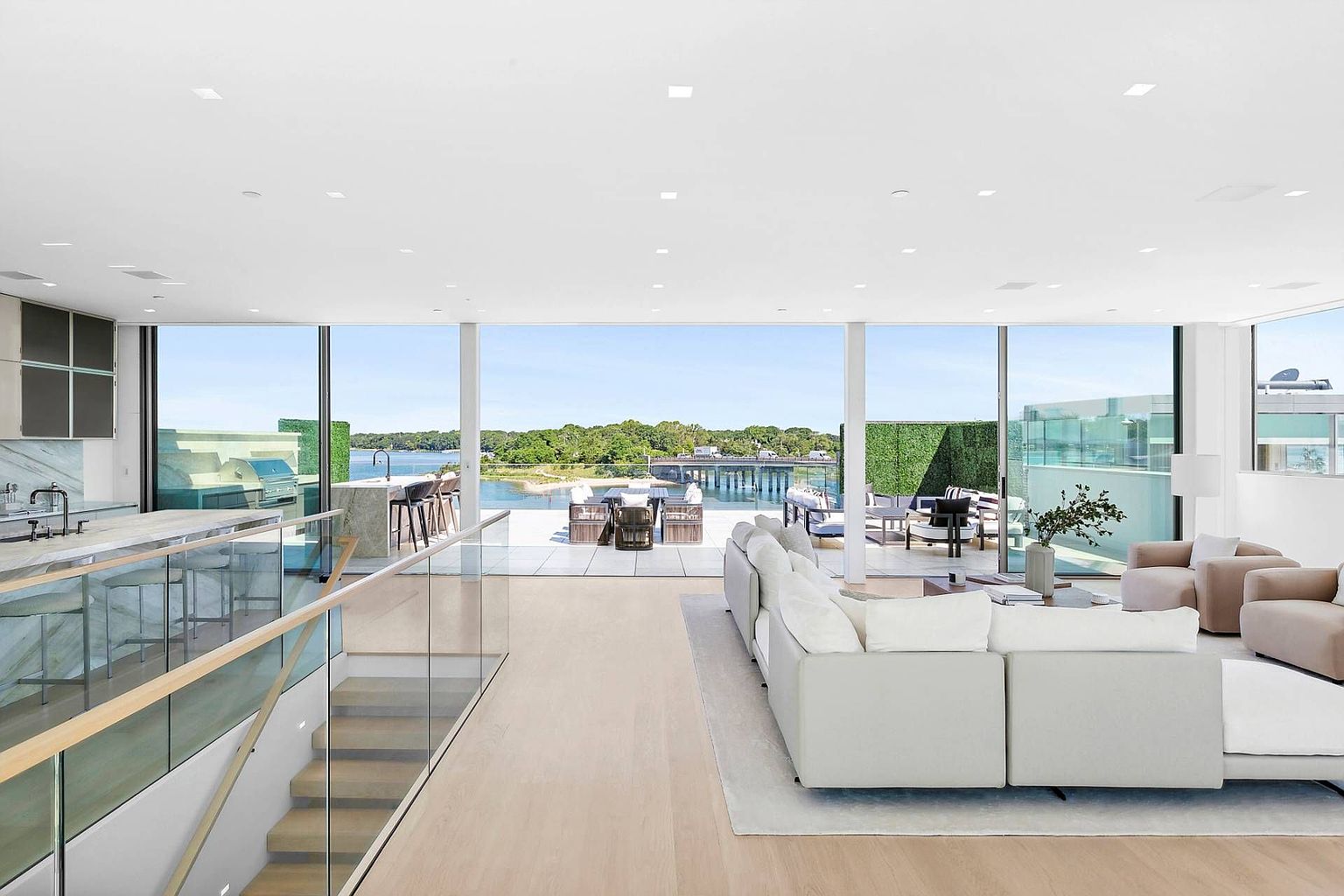
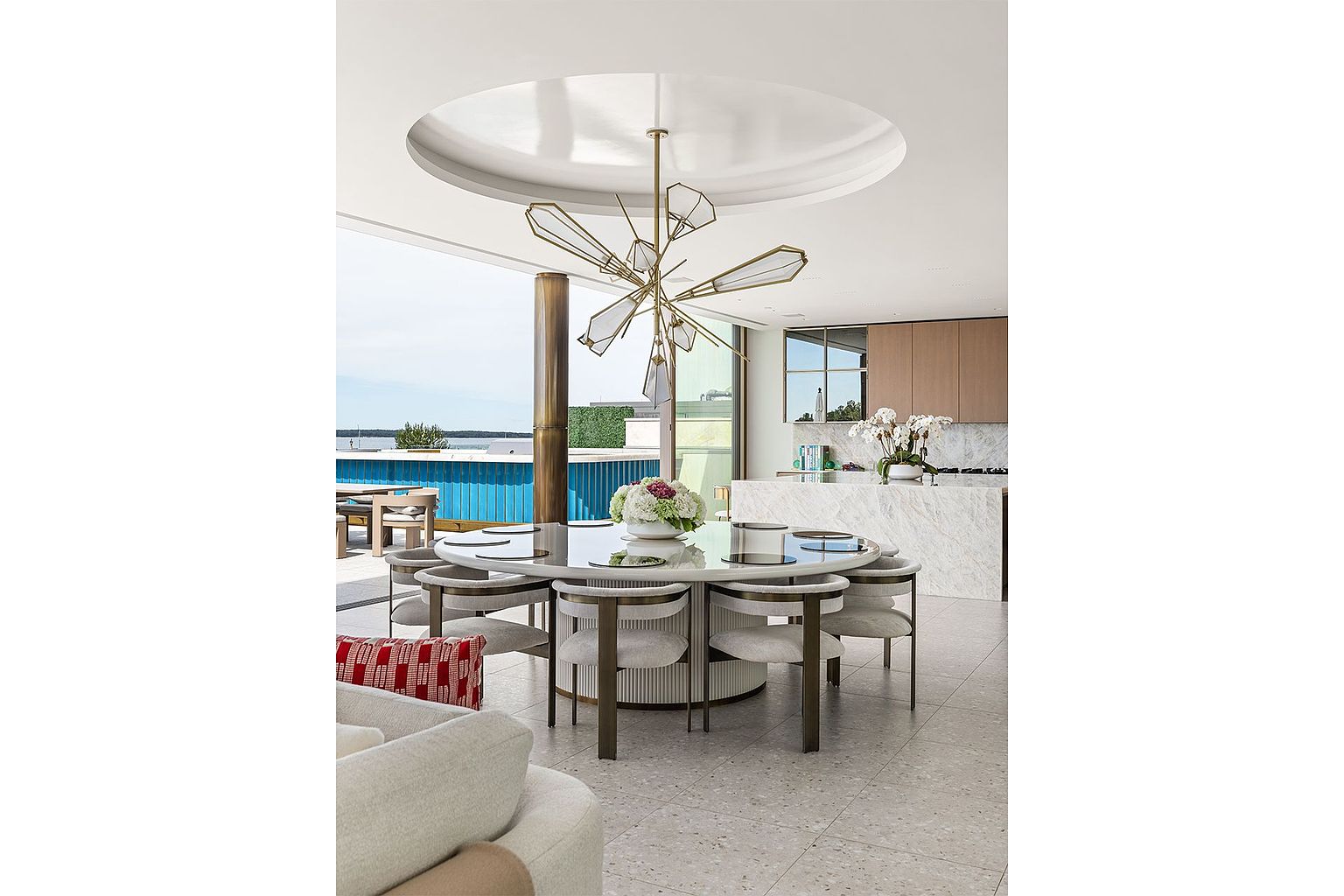
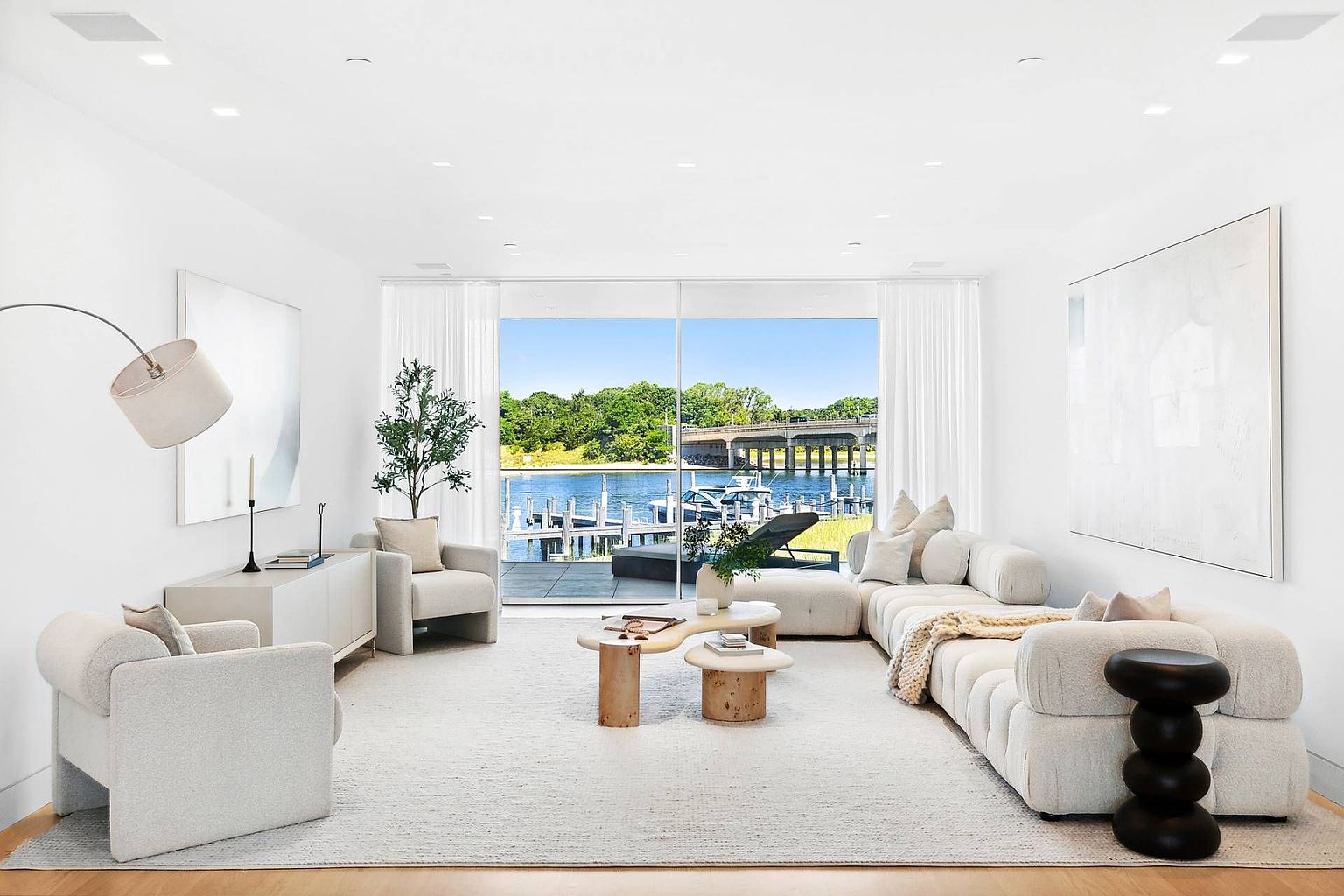
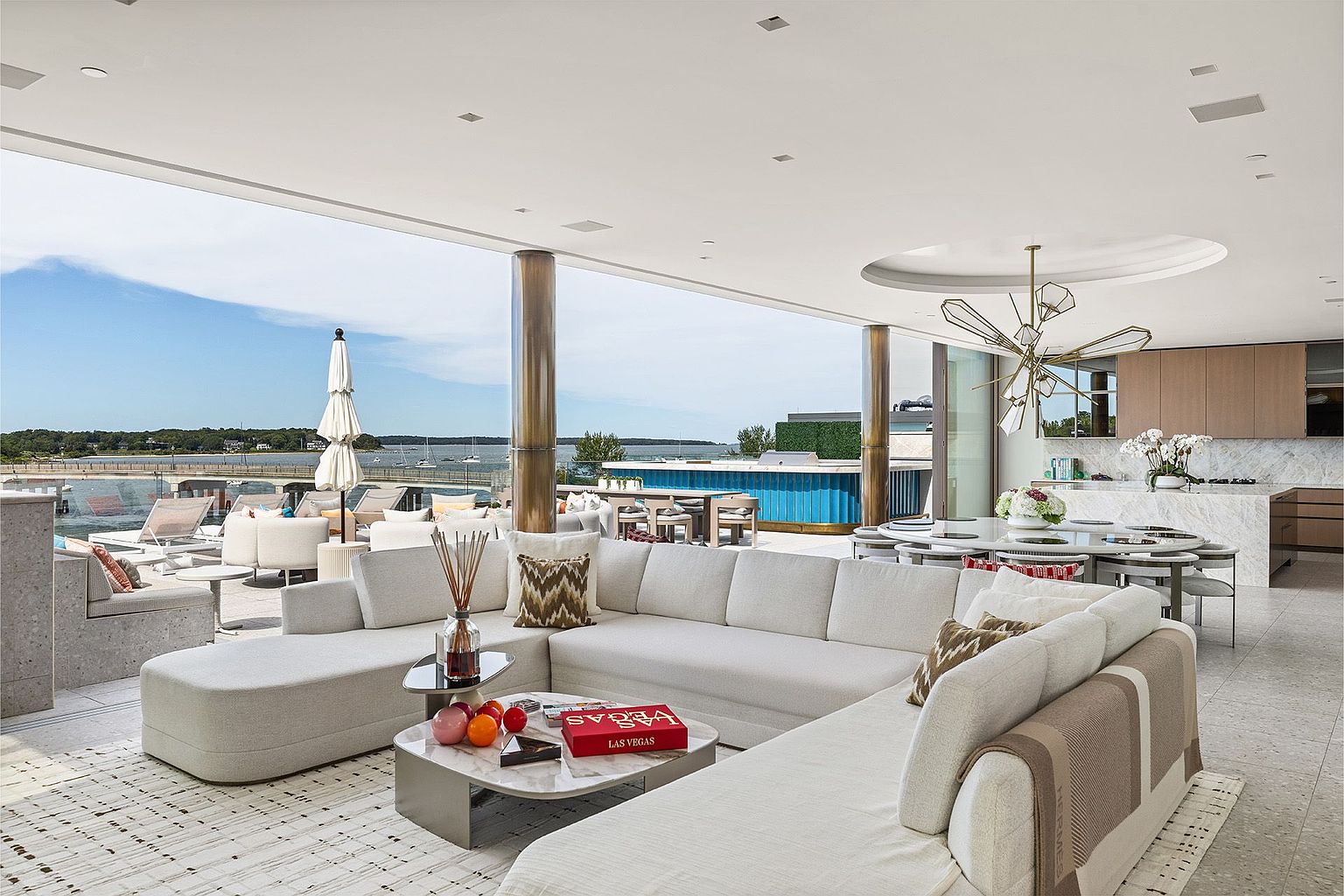
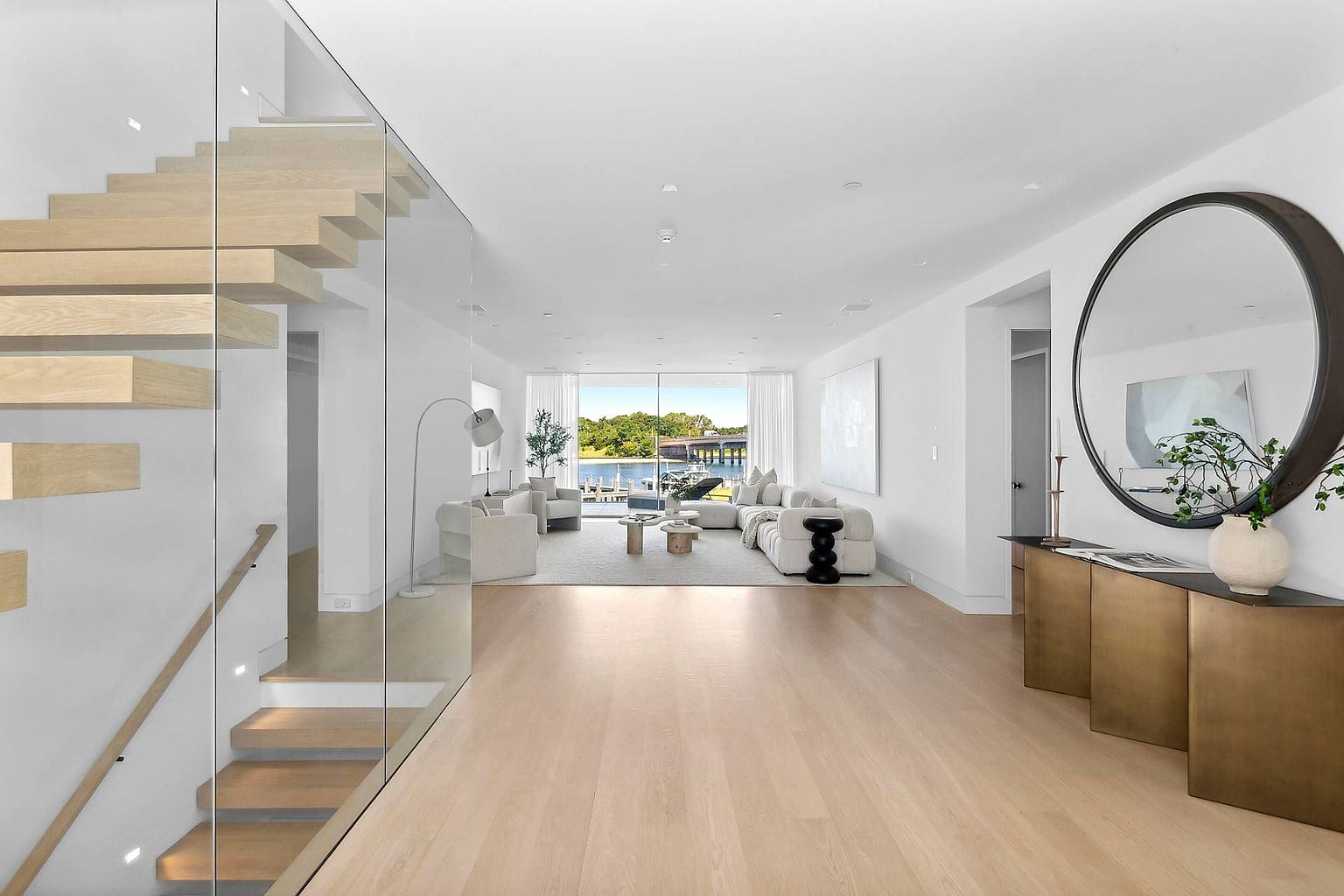
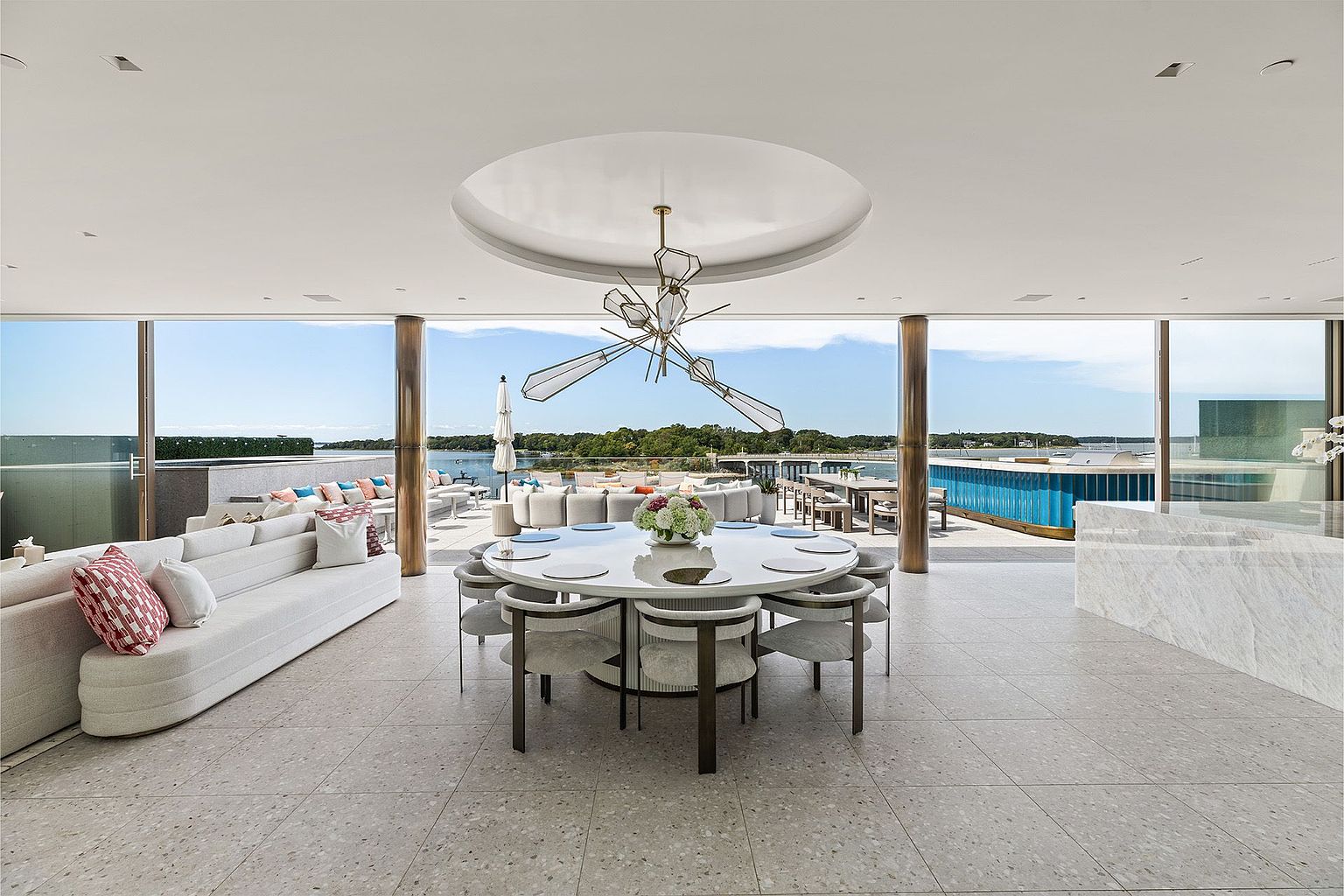
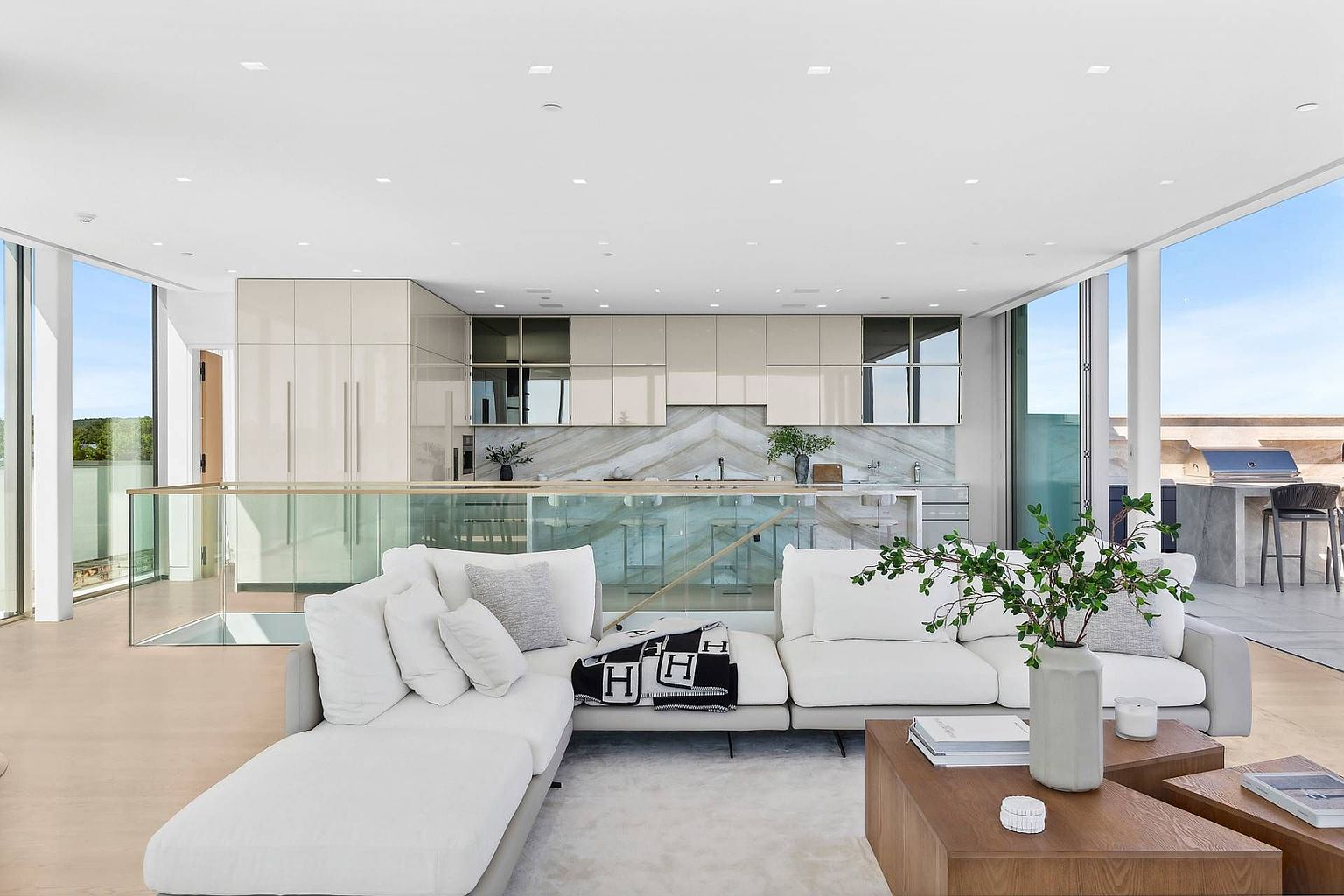
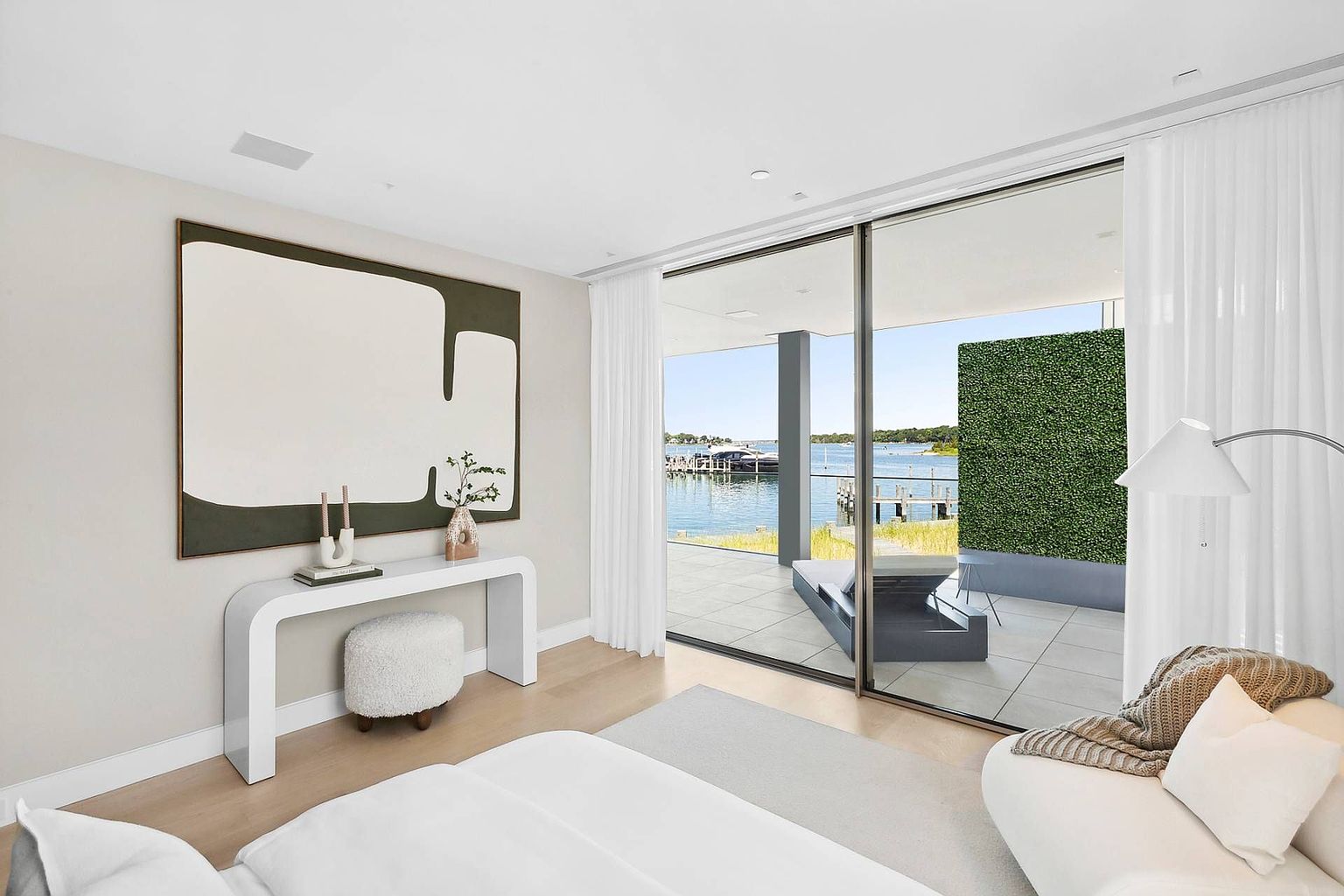
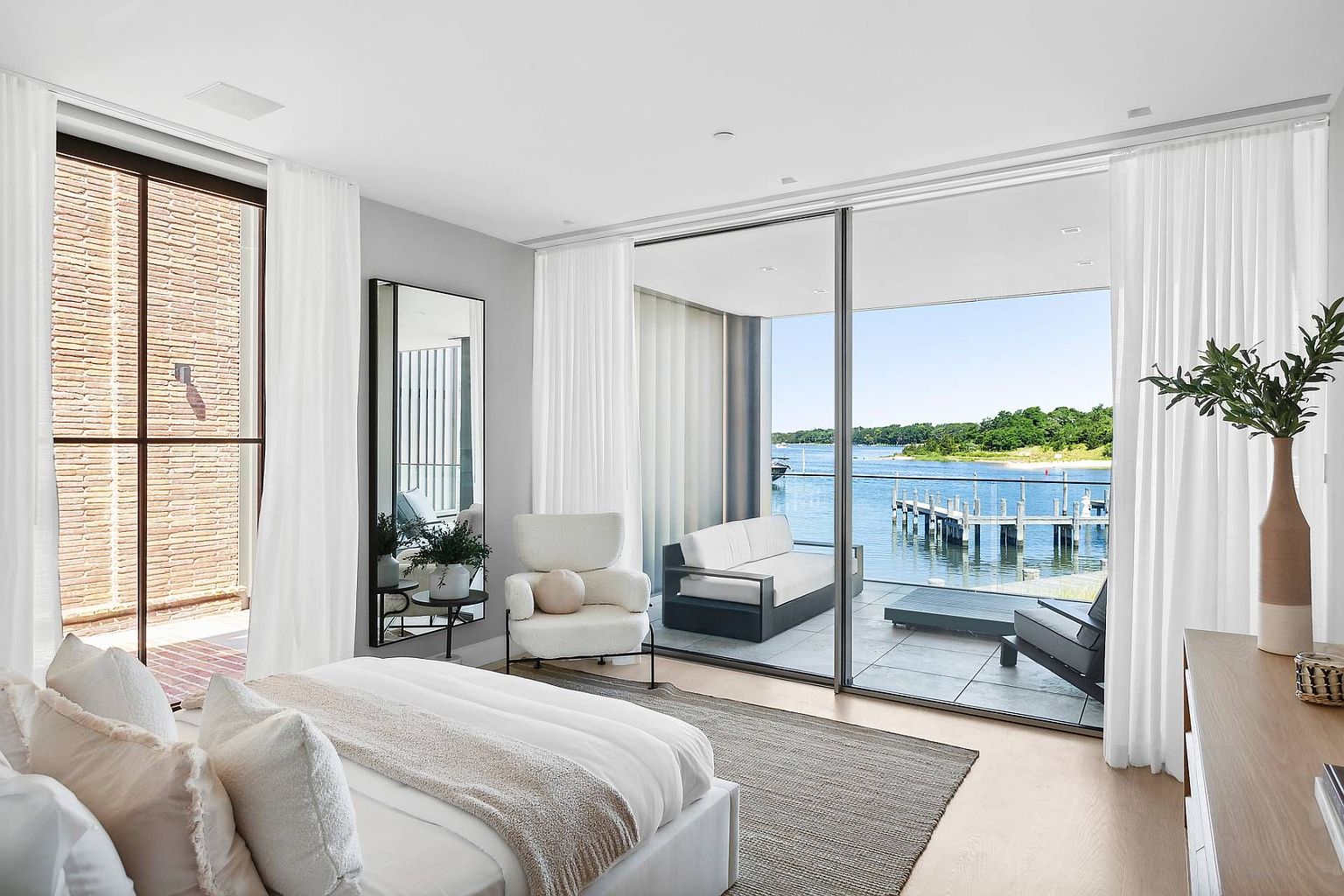
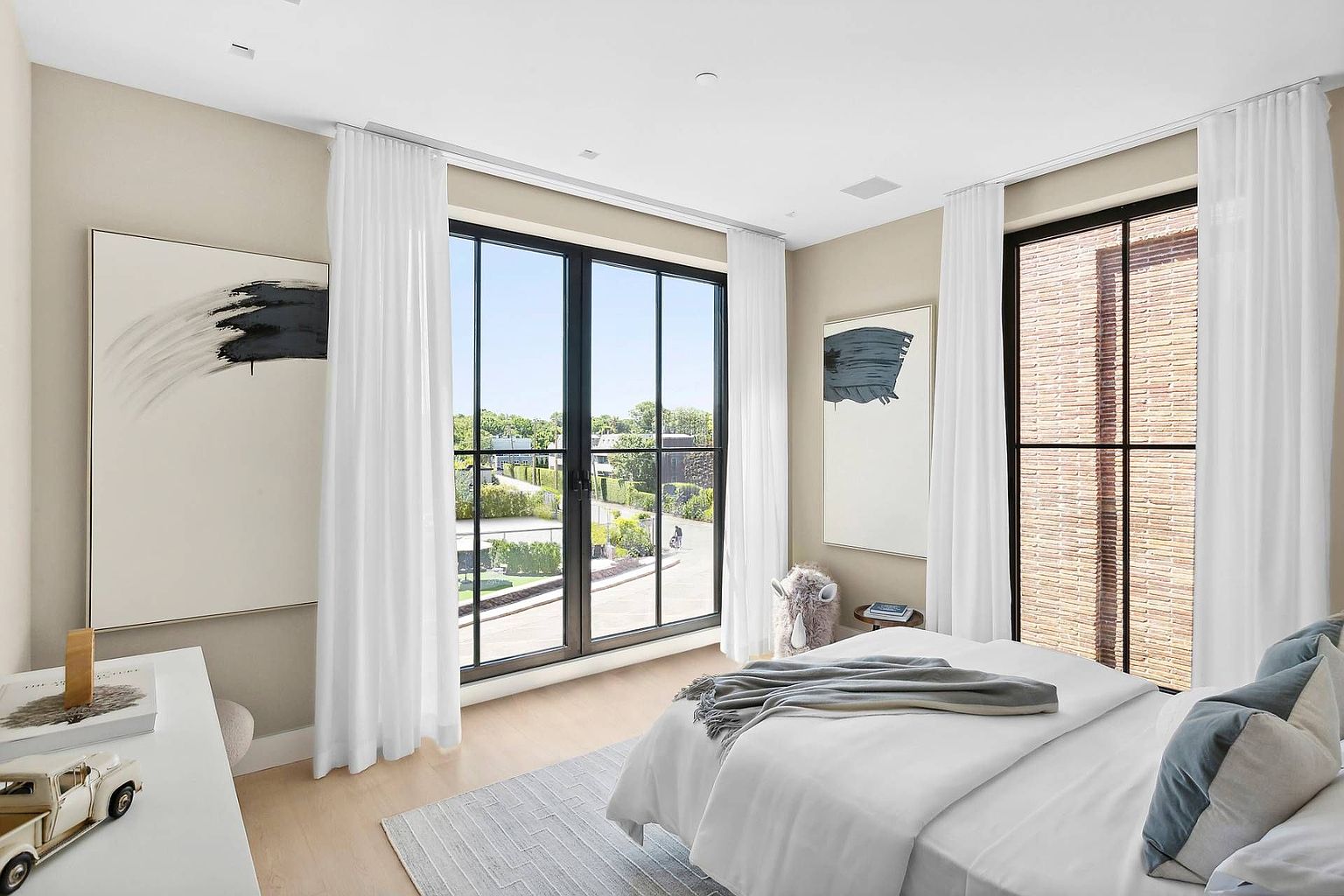
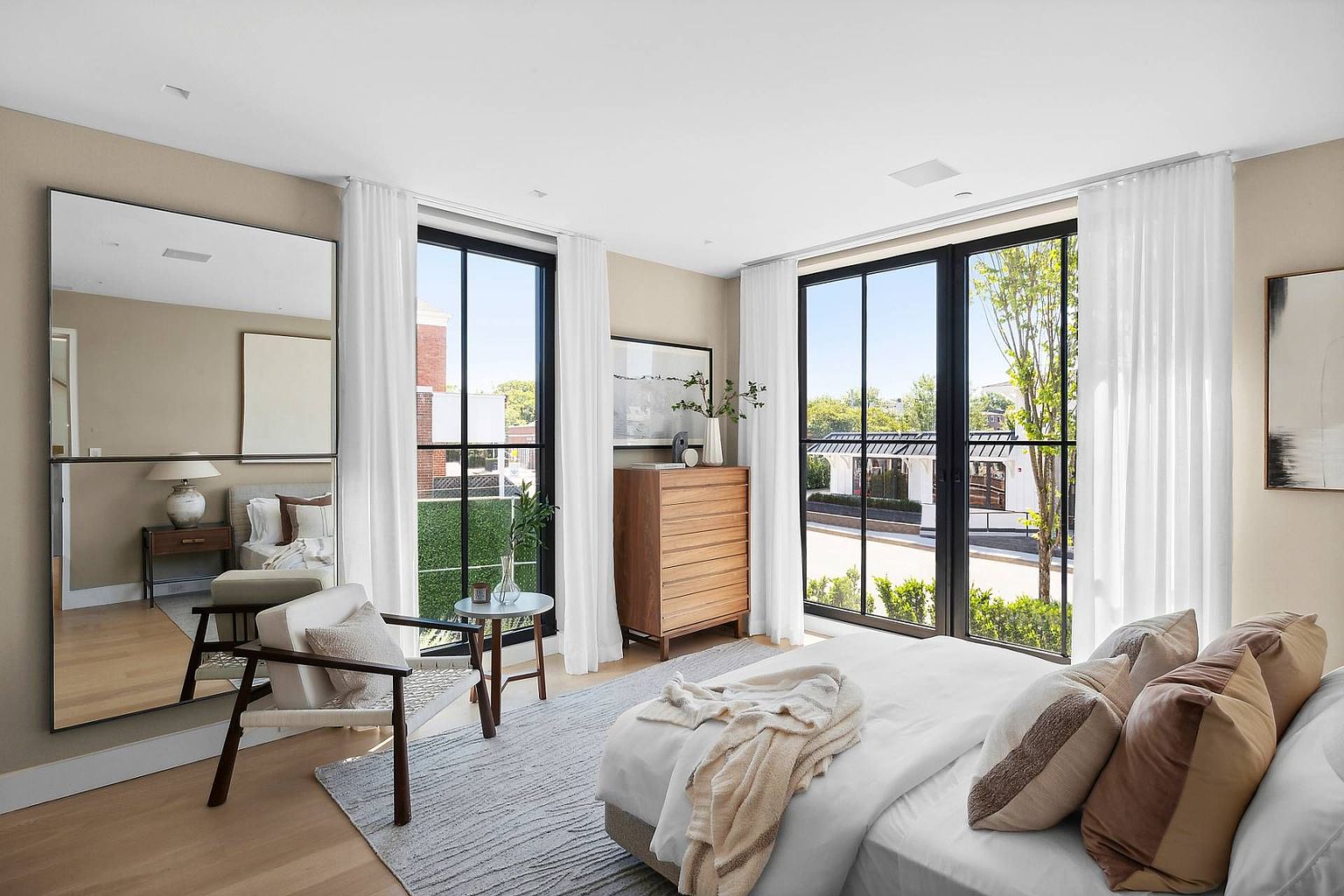
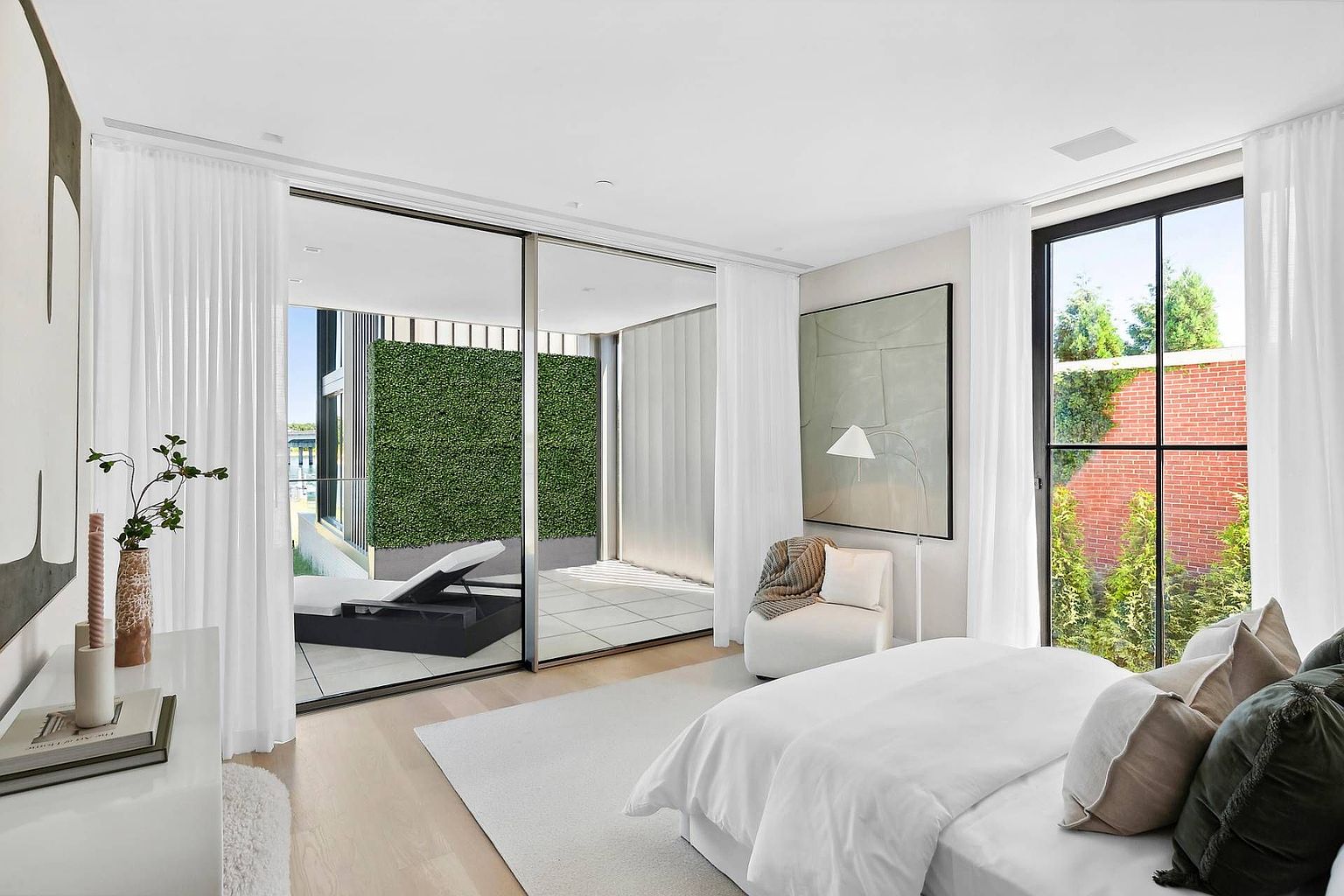
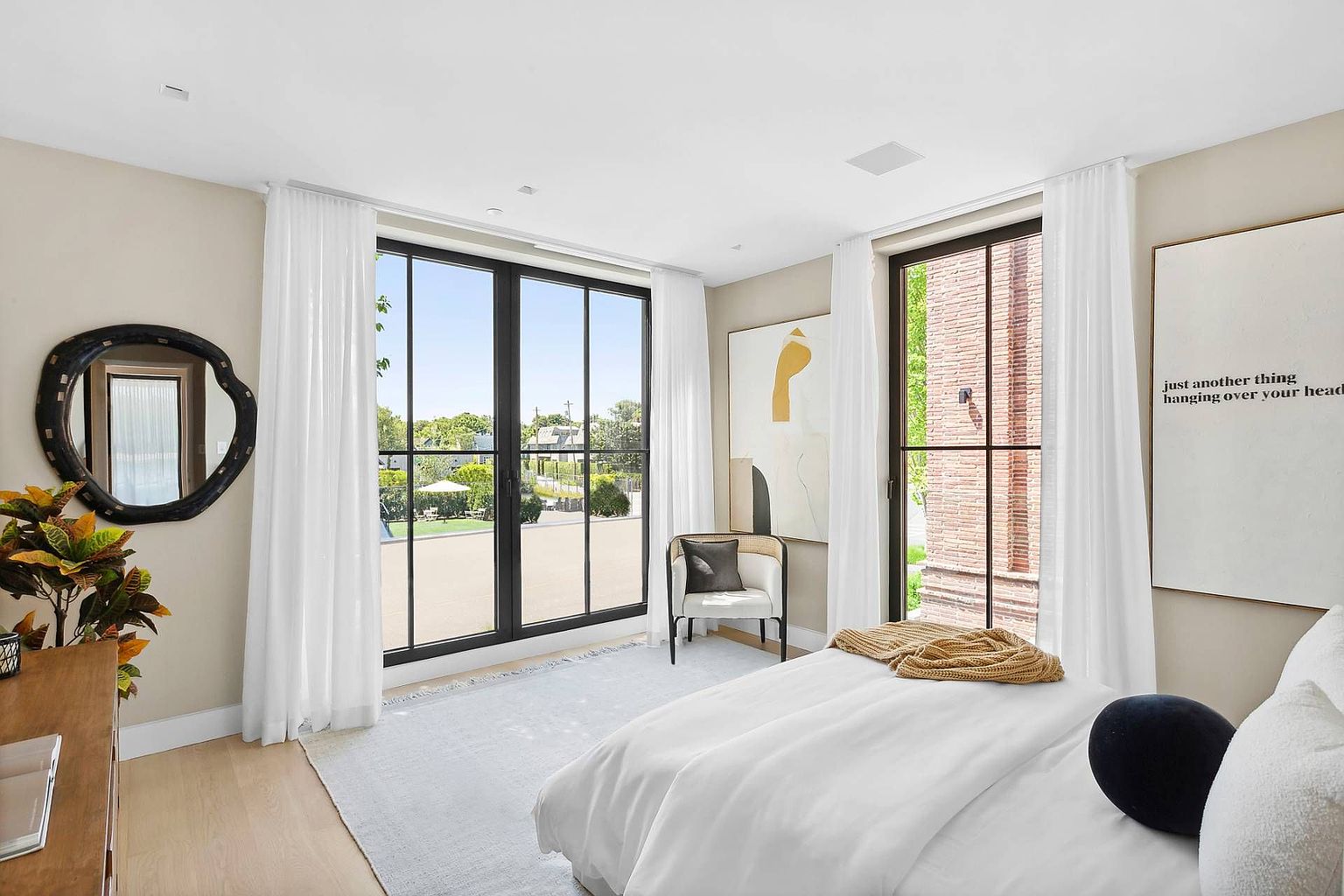
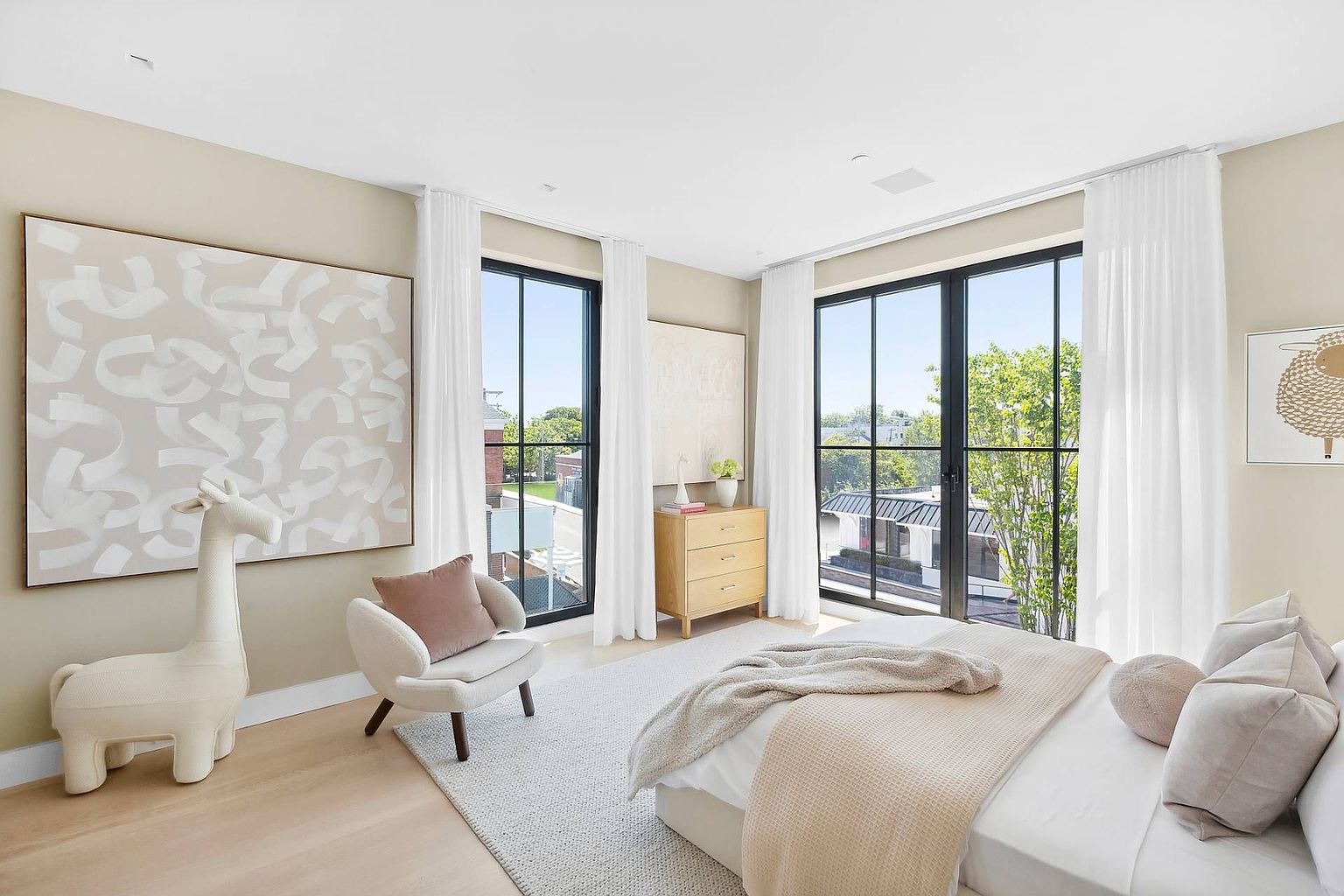
Step inside and the architecture yields completely to the view. Floor-to-ceiling glass walls dissolve the boundary between room and harbor, drawing the eye outward across the water and toward the bridge beyond. Light wood flooring and a restrained neutral palette ensure the interior never competes with this ever-changing backdrop — instead, each room is composed as a frame for the landscape outside. Floating staircases with glass railings ascend through the home with an almost sculptural elegance, while geometric chandeliers and circular stone-topped dining tables introduce moments of considered drama.
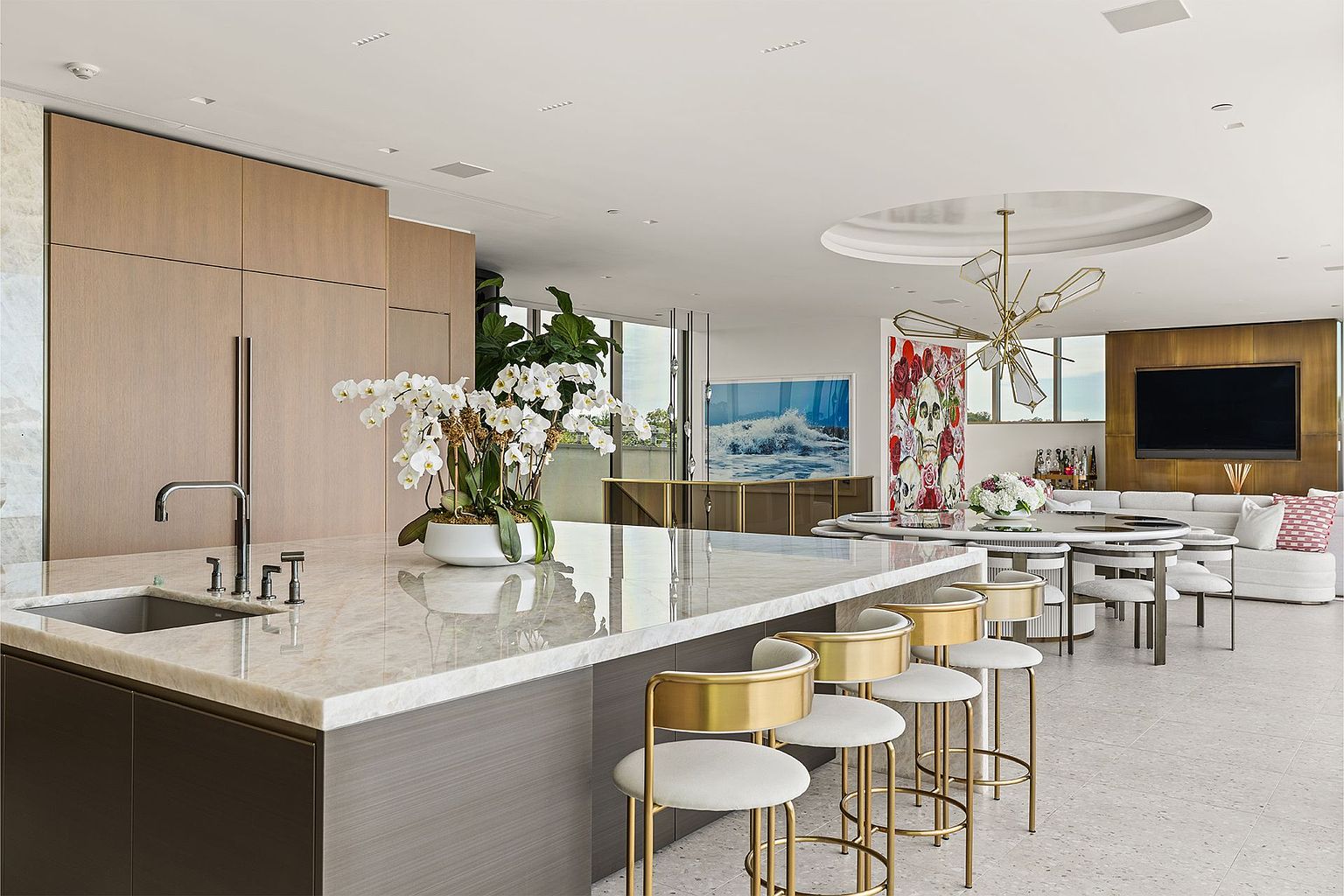
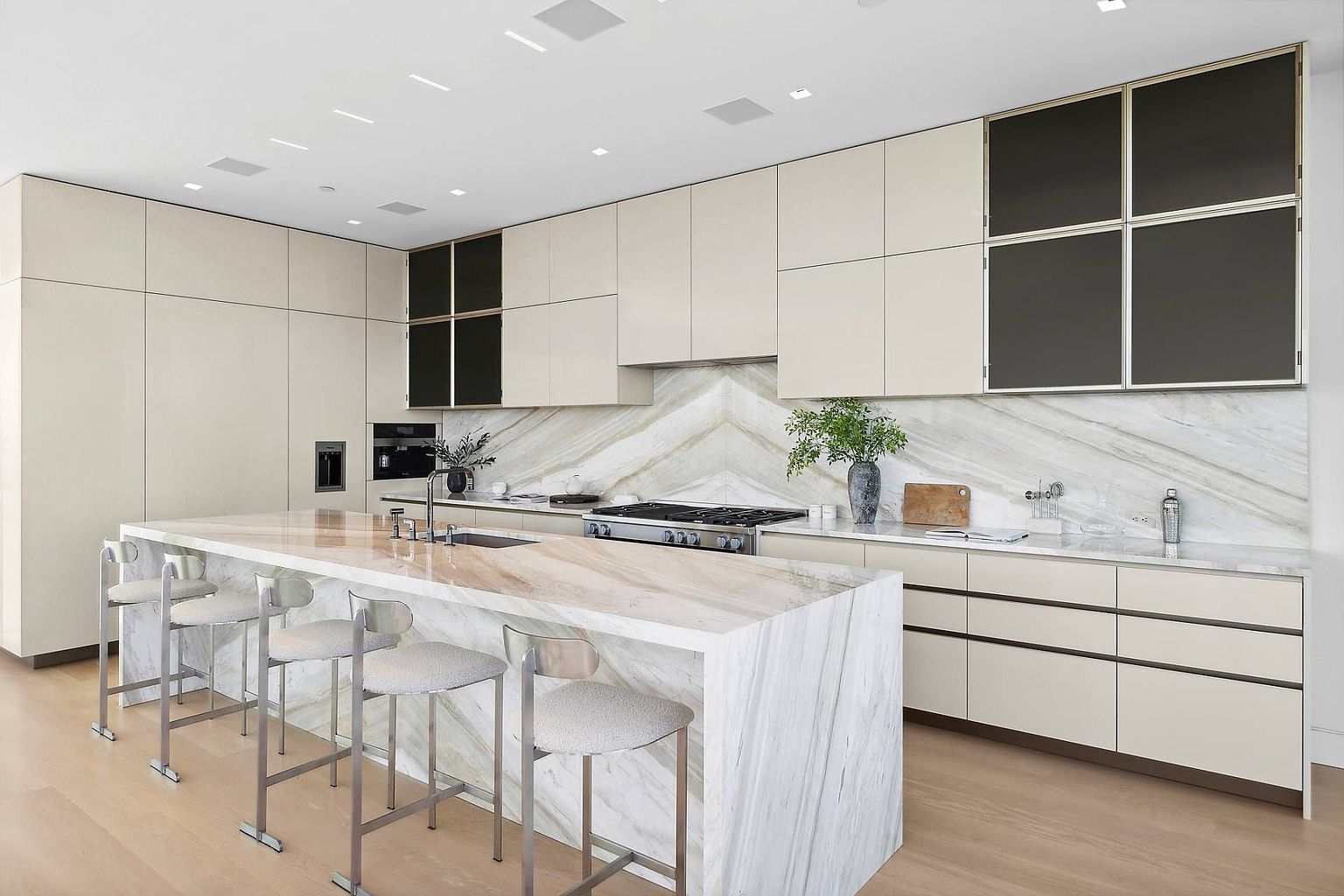
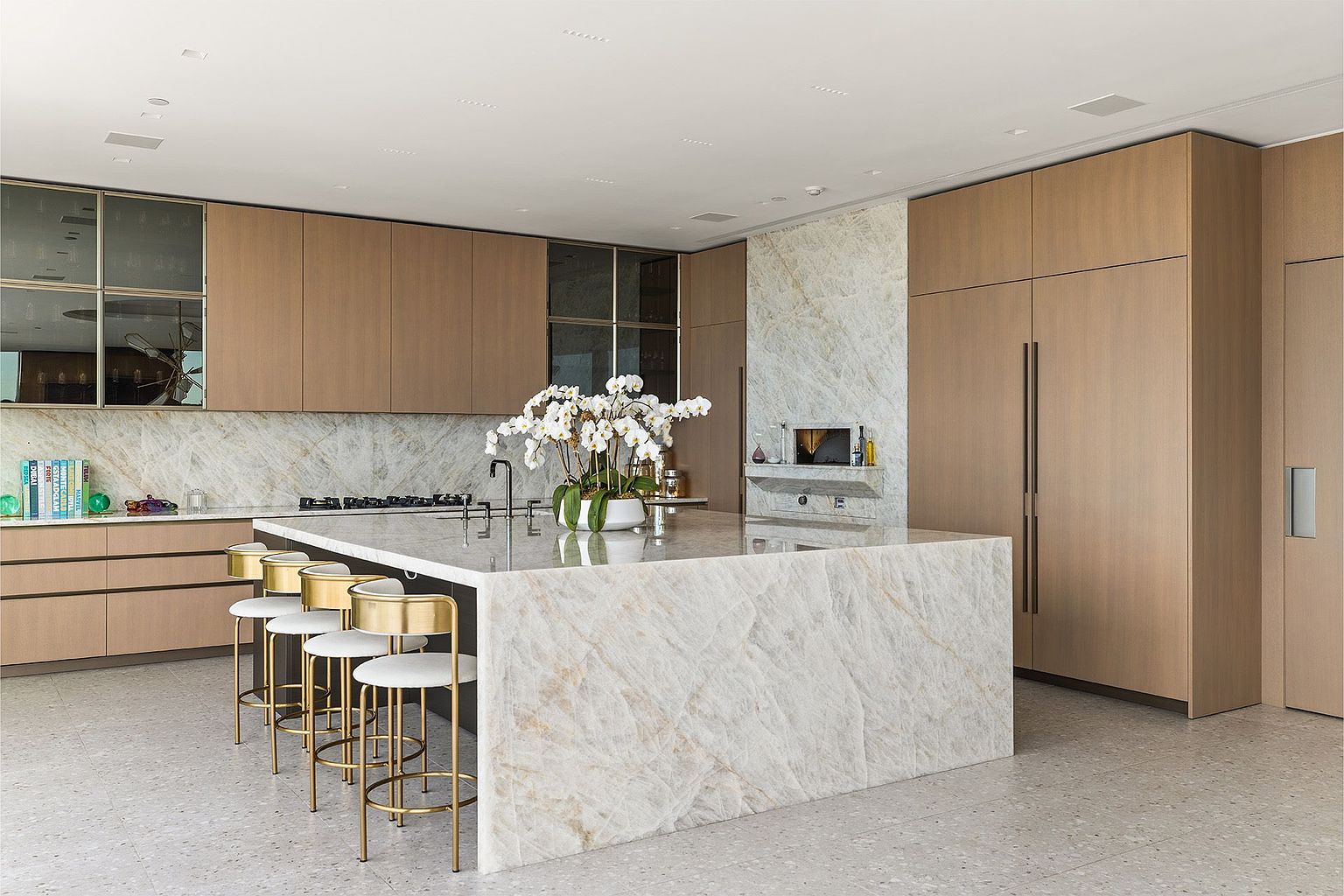
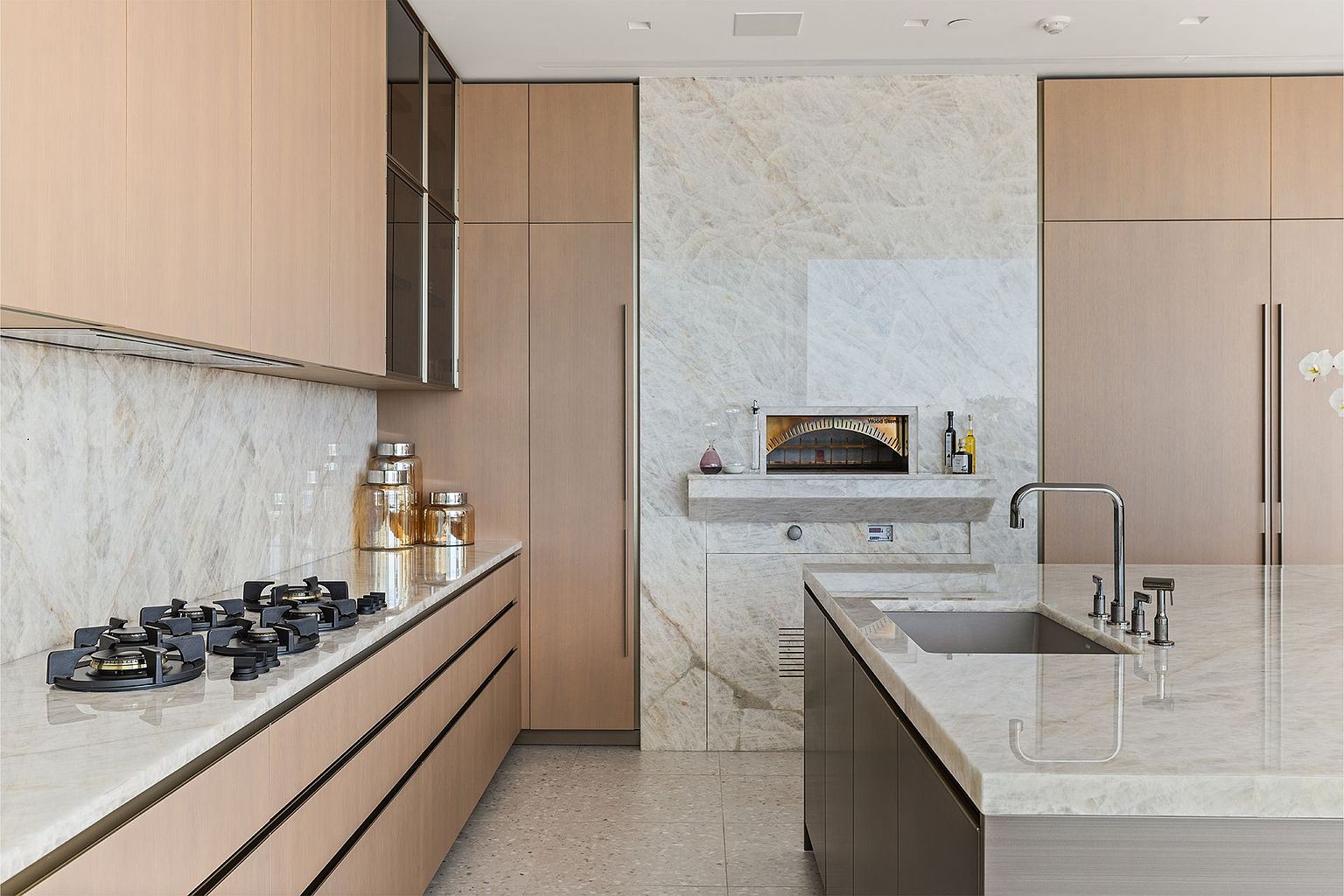
The Gaggenau-appointed kitchens are among the most refined spaces in each residence. Stone-topped islands with waterfall edges anchor open-concept living floors, while light wood cabinetry, dark-framed glass-front uppers, and a striking chevron-patterned stone backsplash frame a professional gas range with the precision of a gallery installation. Integrated sinks, gold-toned bar stools, and recessed lighting complete a kitchen that performs as beautifully as it photographs.
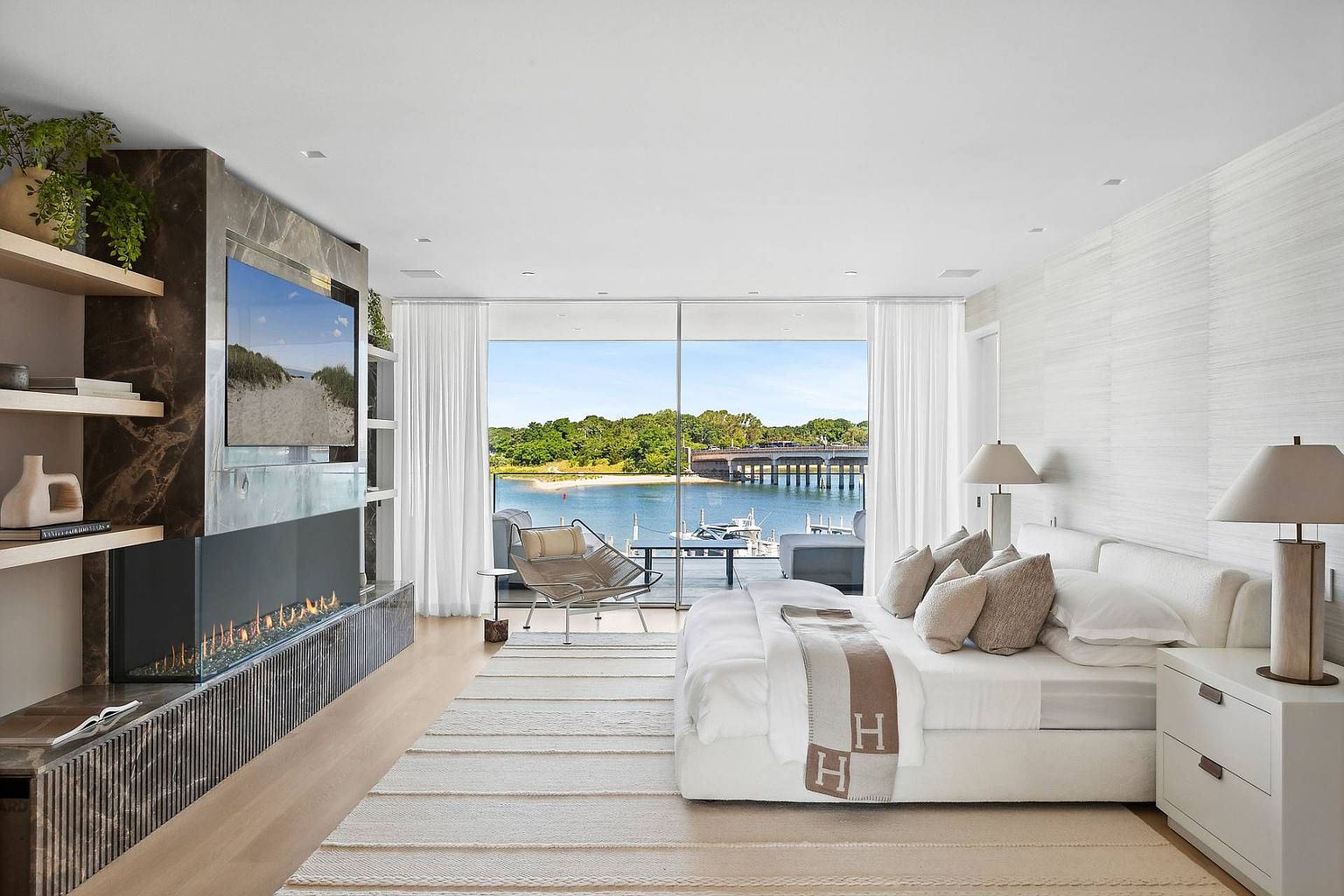
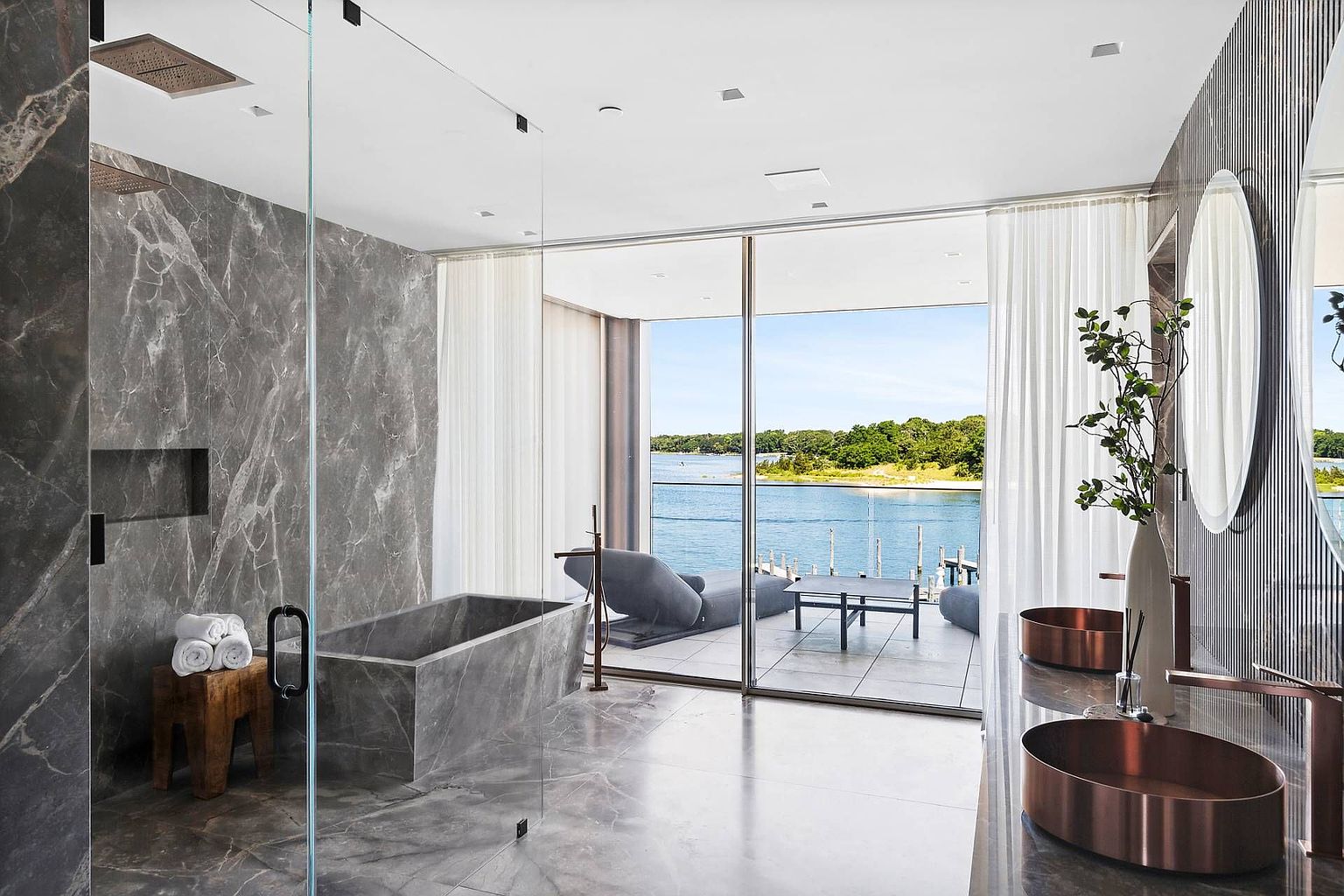
In the primary suites, a linear fireplace set into a dark stone chimney breast creates a focal point of quiet drama, while expansive glass panels frame the harbor and bridge as a living artwork. The adjoining primary bathrooms ascend to the level of private spa sanctuaries: stone-clad soaking tubs, dark-veined stone walls, metallic vessel sinks, and glass-enclosed shower areas open directly onto private balconies above the water.
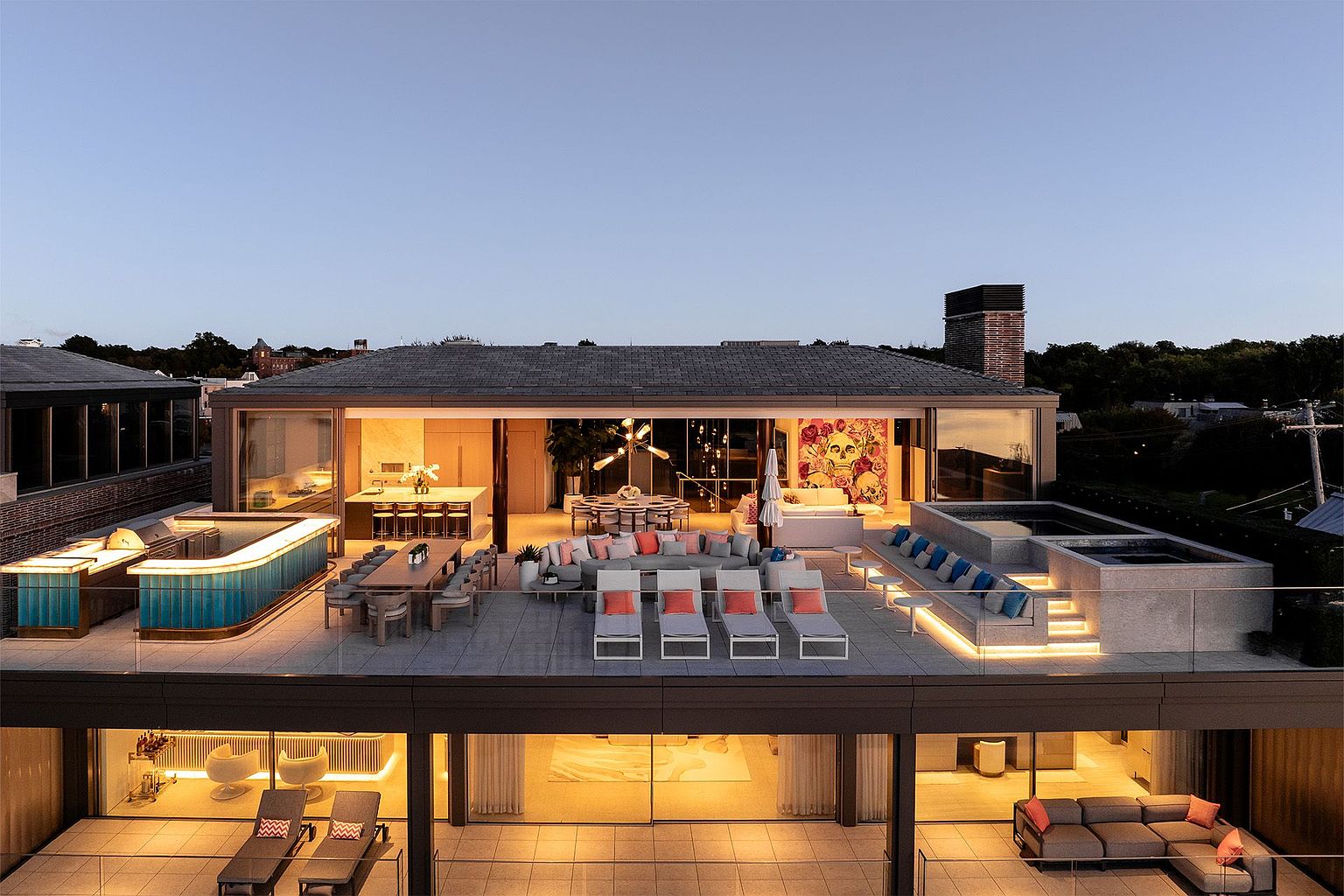
Ascend to the rooftop and the full breadth of what has been achieved here becomes clear. A vibrant blue-tiled bar, long dining table, plush lounge seating, and a raised spa terrace — all framed by open sky and the harbor below — offer an entertaining platform without parallel on the East End.
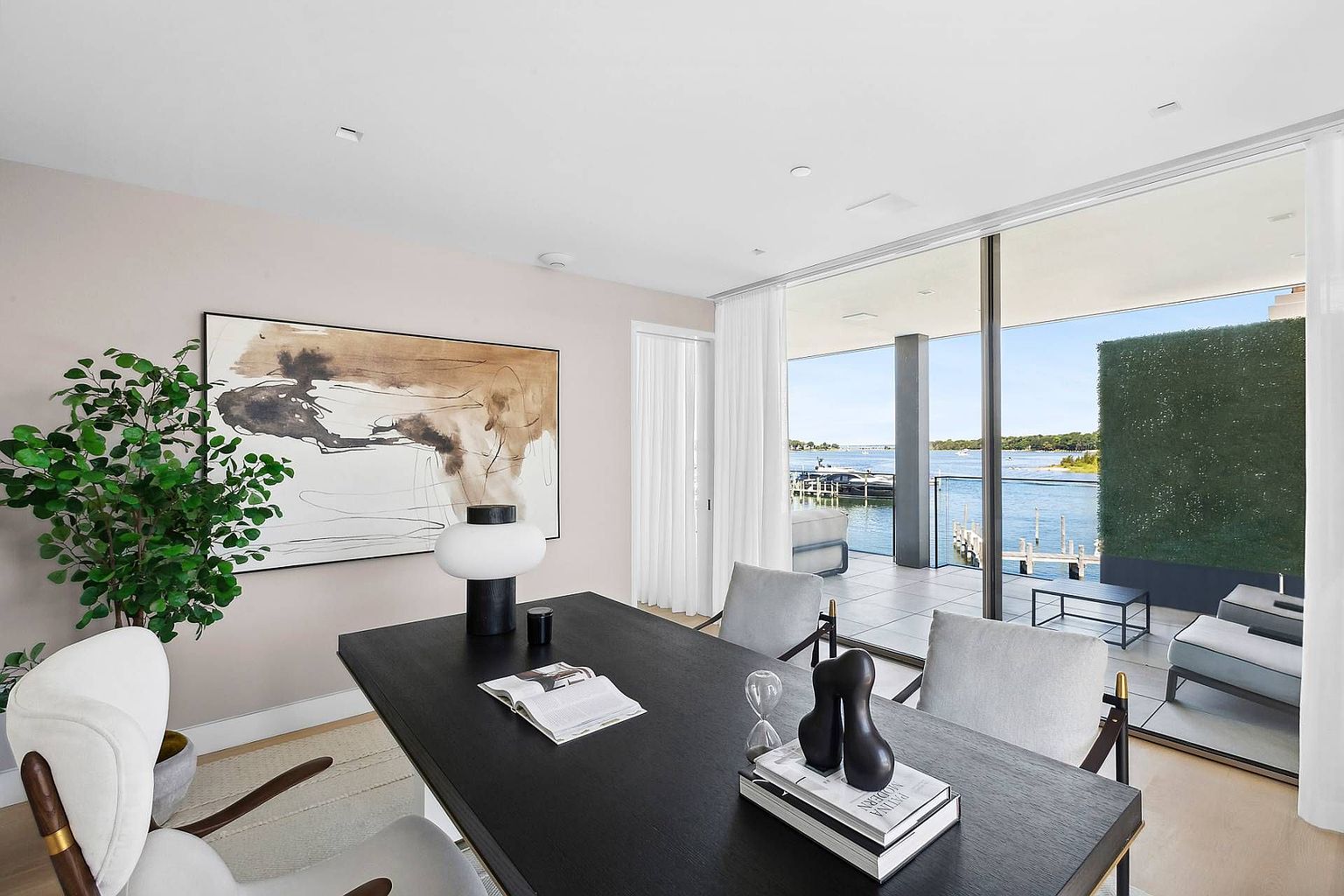
For the yachting enthusiast, four 60-foot boat slips below the private dock make departure and return as effortless as opening a door. Private gyms, home offices with balcony access, and guest accommodations of exceptional quality complete a compound engineered for a life lived entirely on one's own terms.
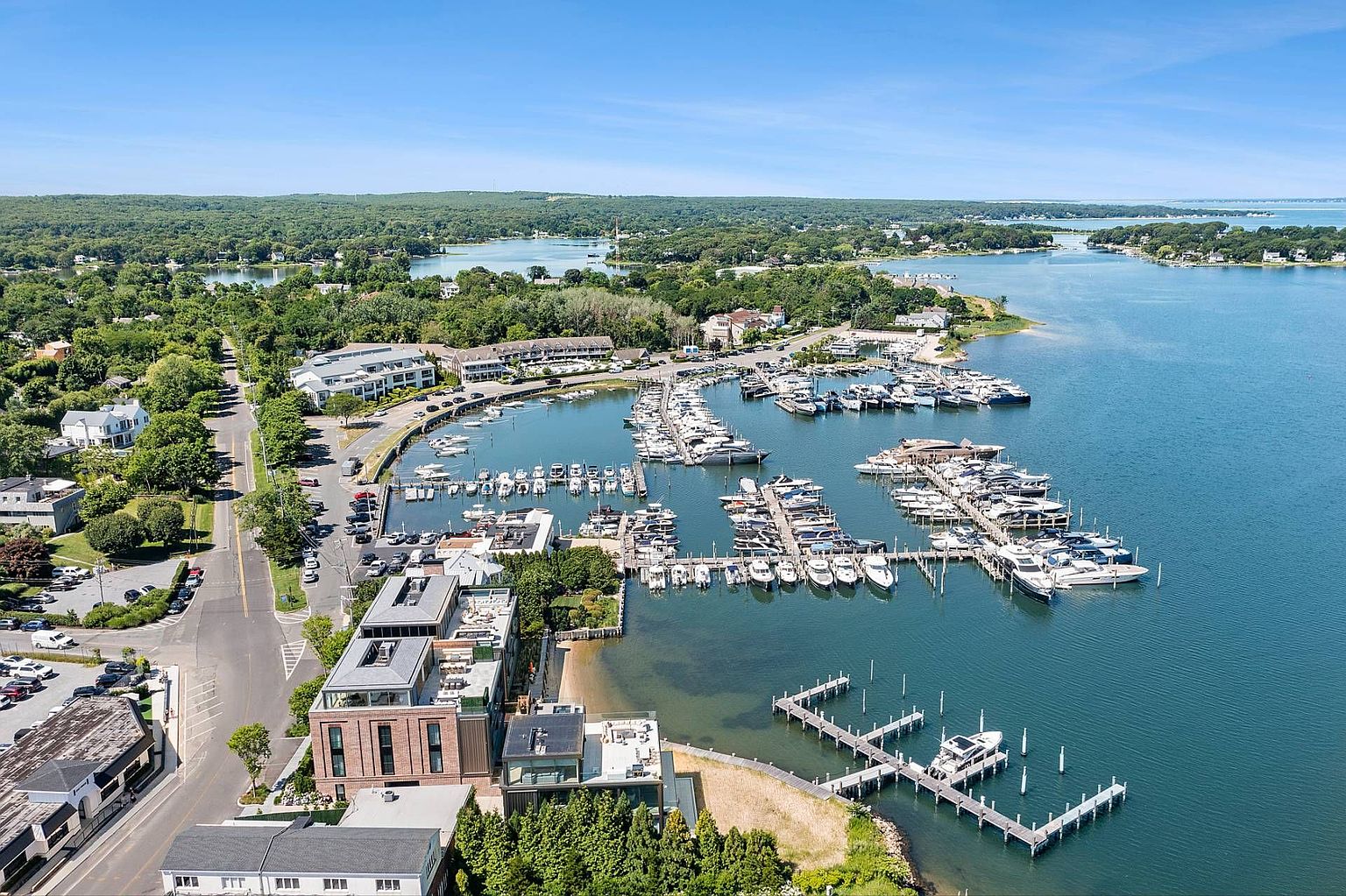
Sag Harbor occupies a singular position in the American imagination. Long before the Hamptons became synonymous with summer wealth, this compact village at the confluence of Shelter Island Sound and the North Haven Peninsula was already a place of consequence. In the late 18th and early 19th centuries, Sag Harbor was one of the most active whaling ports in the world — a place where fortunes were made and lost on the open Atlantic, and where the architecture, civic ambition, and cultural life of a prosperous maritime community left an indelible mark on the streetscape that endures to this day.
Walking the village today, the legacy of that era is everywhere. The Sag Harbor Whaling and Historical Museum, housed in the 1845 former home of whaling merchant Benjamin Hunting, anchors Main Street with a sense of historical gravity that few Hamptons communities can match. The Custom House, built around 1789 and recognized as a National Historic Landmark, stands as one of the oldest surviving federal buildings in New York State. The Old Whalers' Church, with its Egyptian Revival facade, has presided over the village since 1844. These are not stage-set approximations of history — they are the genuine article, and they give Sag Harbor a depth of character that newer resort communities simply cannot manufacture.
Yet Sag Harbor has never been merely a museum piece. The village has long attracted artists, writers, and intellectuals drawn to its combination of authentic community life, natural beauty, and relative remove from the more frenetic social circuits of Southampton and East Hampton. John Steinbeck lived nearby, and the village's independent bookstore, Bay Street Theater, and a constellation of galleries and independent restaurants sustain a cultural vitality that rewards year-round residency as much as seasonal escape.
Main Street itself is a pleasure to navigate on foot: a mix of boutiques, acclaimed restaurants, wine shops, and cafés that cater to a discerning local population without sacrificing the small-town warmth that defines the village's appeal. The American Hotel, a landmark since 1846, remains one of the most storied dining rooms on the East End. Nearby, the Sag Harbor Cinema — restored and reopened as a beloved community institution — hosts film screenings, events, and conversations that draw engaged audiences from across the region.
On the water, Sag Harbor's Long Wharf and marina have been the heart of the village's maritime life for generations, offering easy access to the protected waters of the sound and, beyond, the open Atlantic. The surrounding landscape — barrier beaches, nature preserves, and the quiet roads of North Haven — provides a natural counterpoint to village activity that residents find endlessly restorative.
To own at 2 West Water Street is to inhabit this history from its most privileged vantage point: not as a visitor passing through, but as a permanent fixture on the waterfront that has always defined Sag Harbor's identity. The address is, in every sense, where the village's past and its present converge.
Featured Highlights
Curated Content • Presented by Nicole Tunick - Real Estate Sales Person