The Story Behind
Contemporary Lakeside Retreat on Six Private Acres in Sugar Hill
There is a particular clarity of intention in a home built from the ground up to belong exactly where it stands. Completed in 2022, 237 Hidden Acres Drive is that kind of house — a contemporary residence conceived not to impose upon its landscape but to inhabit it, to frame it, to celebrate it at every turn.
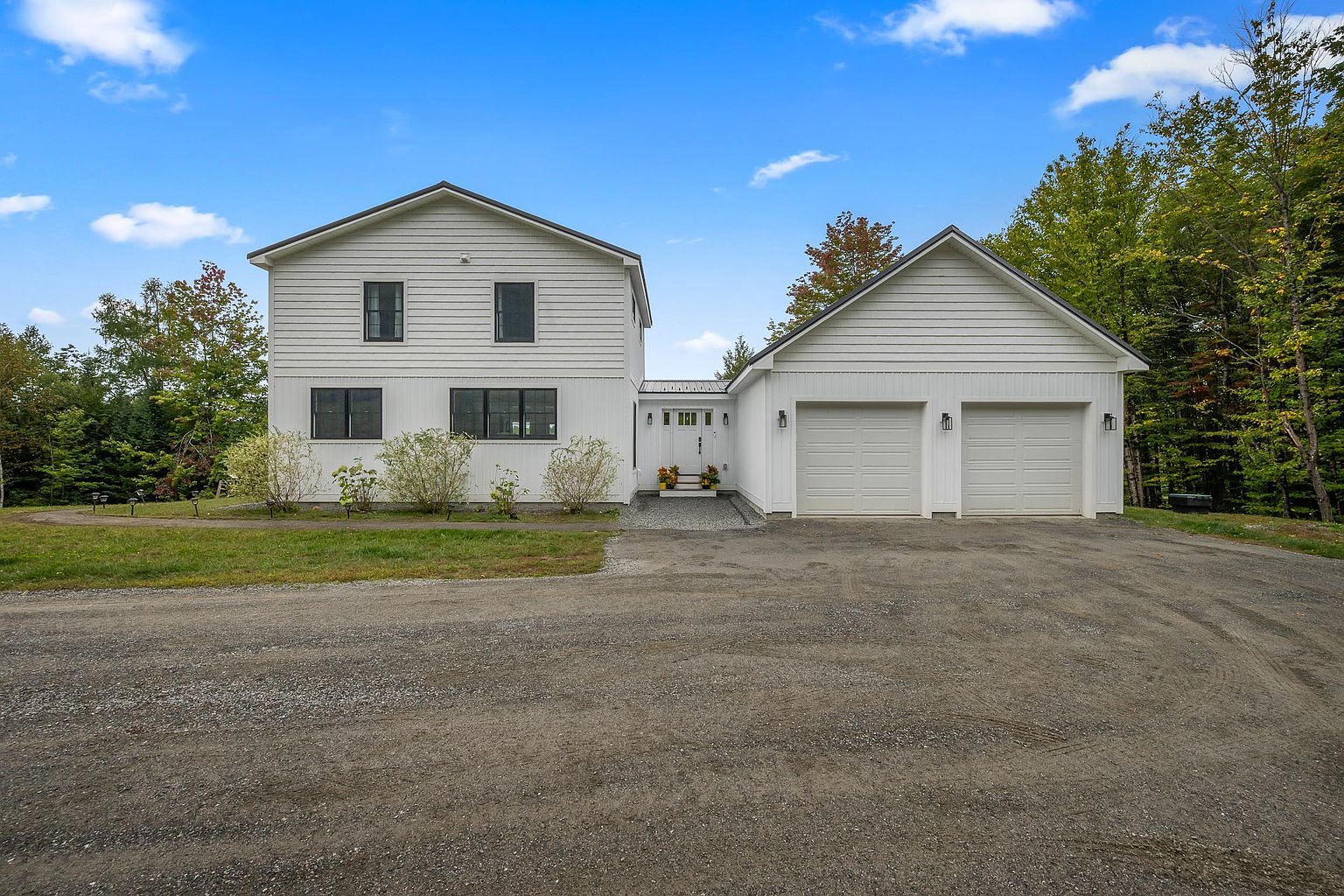
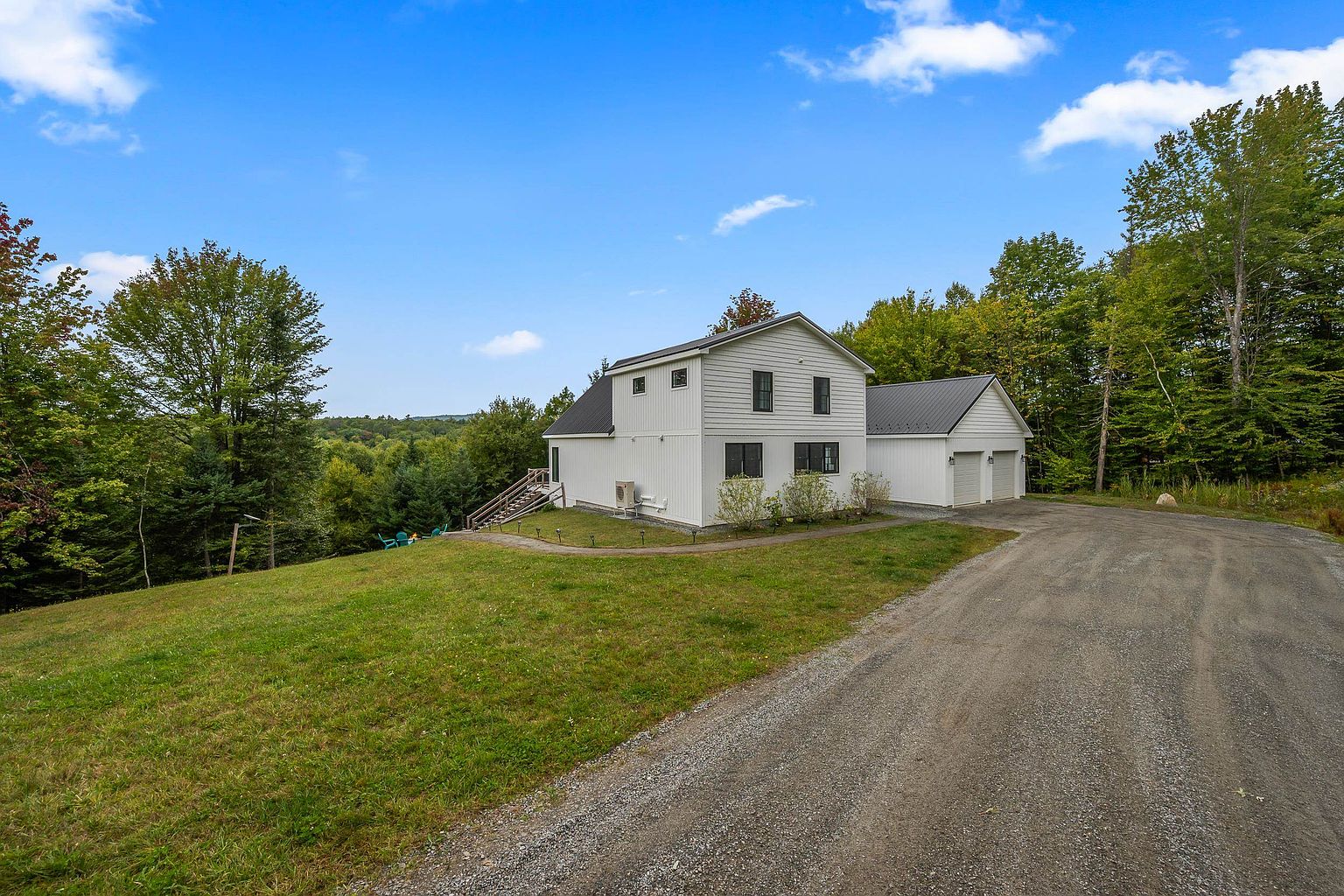
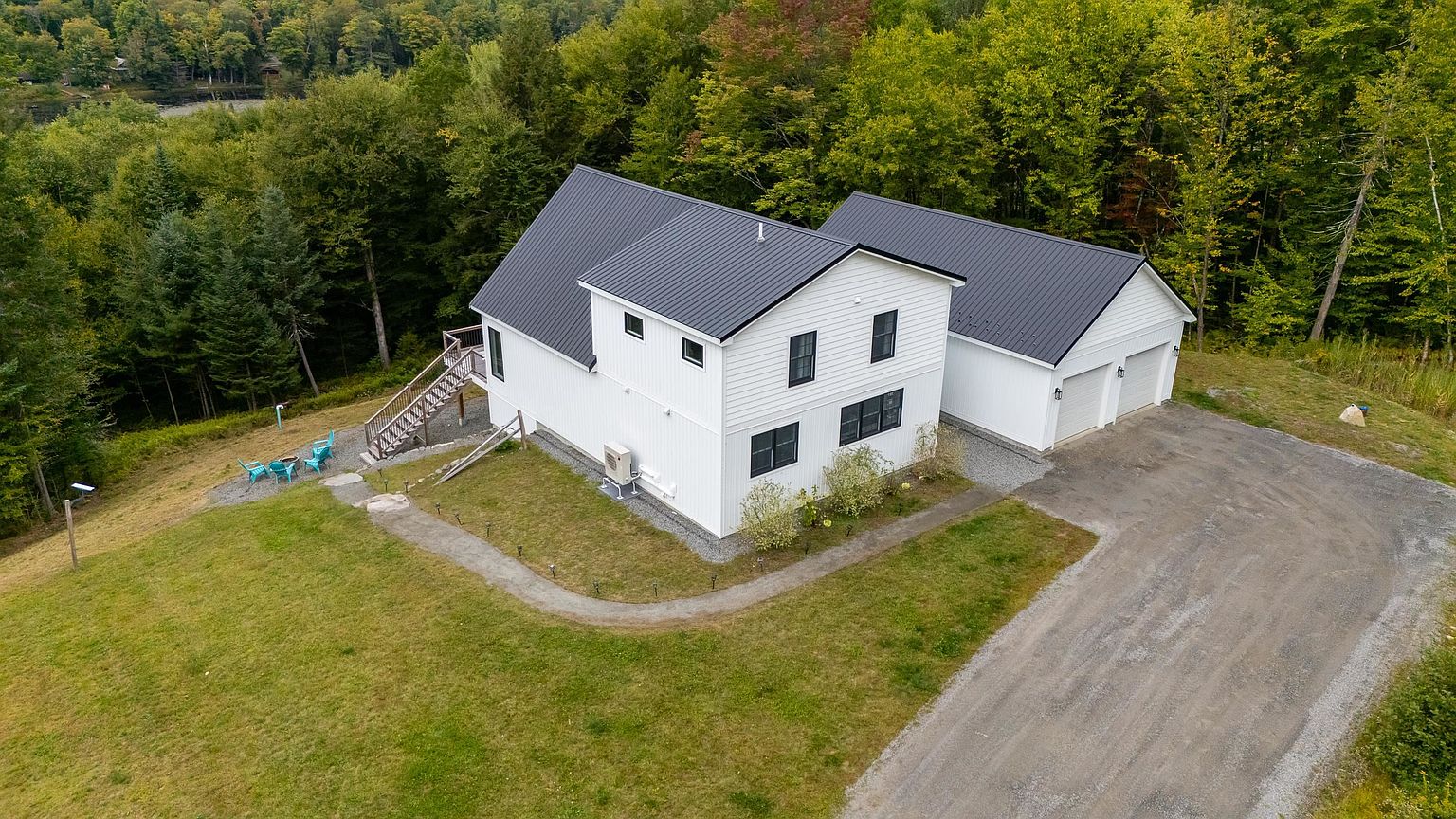
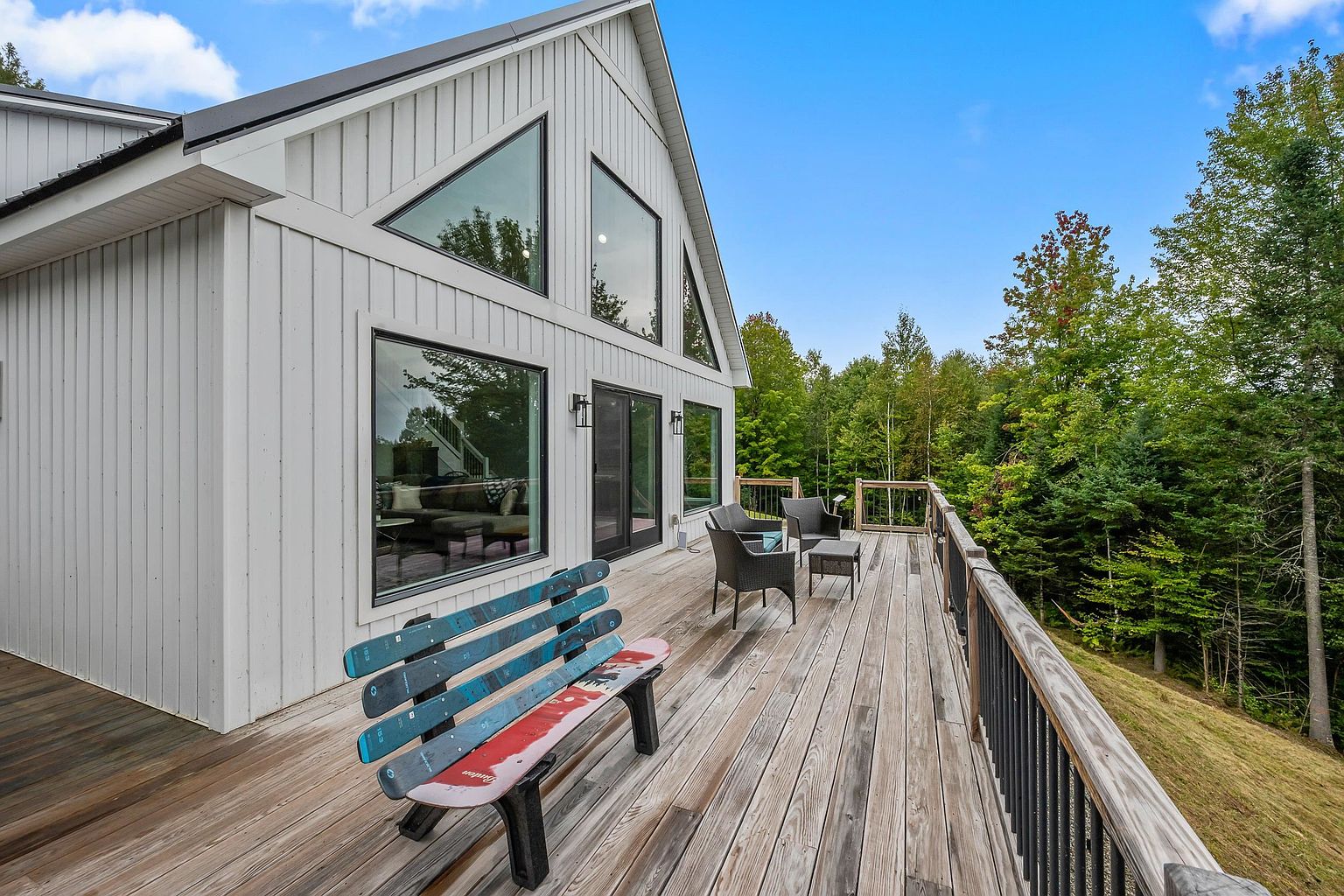
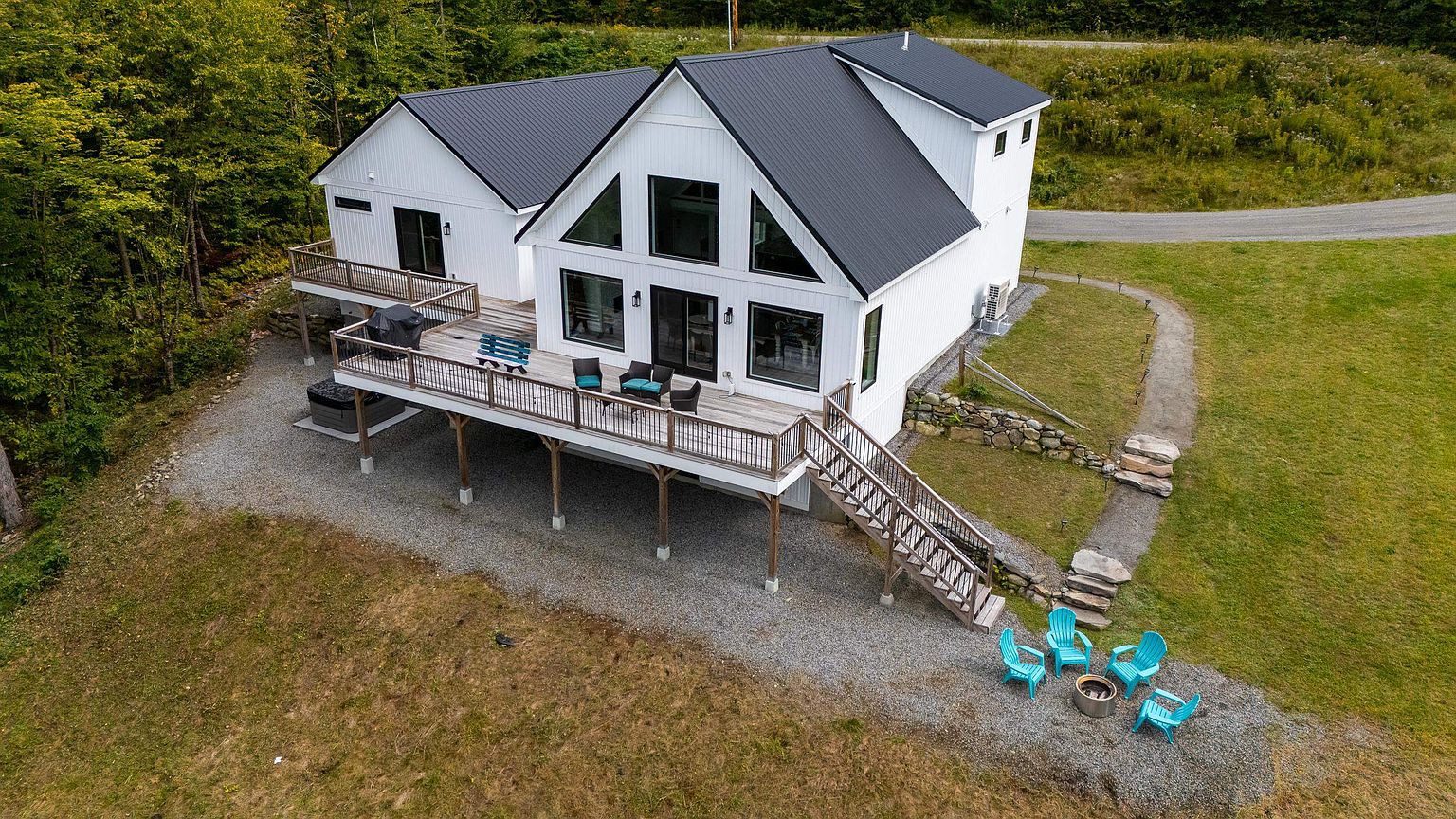
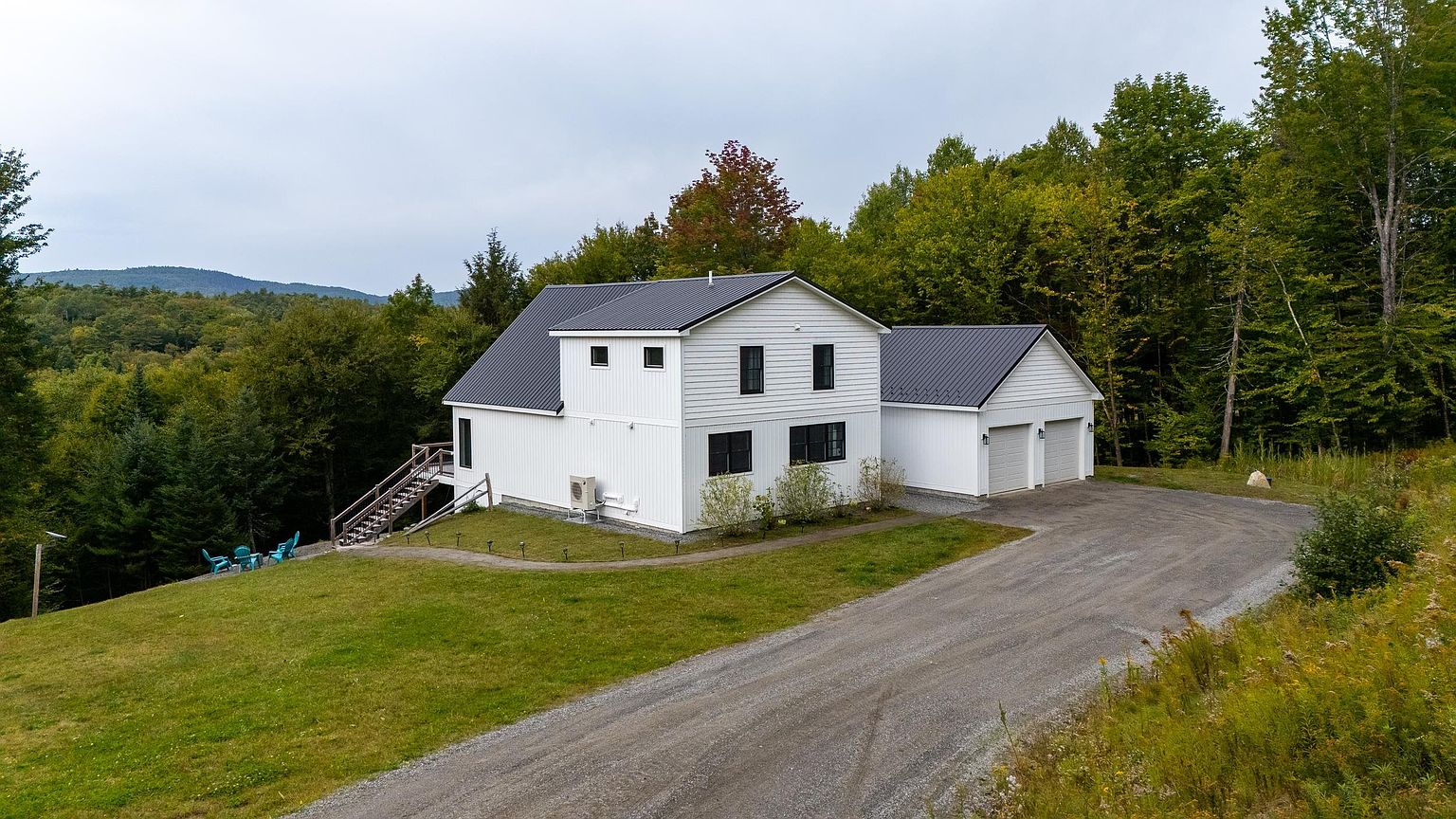
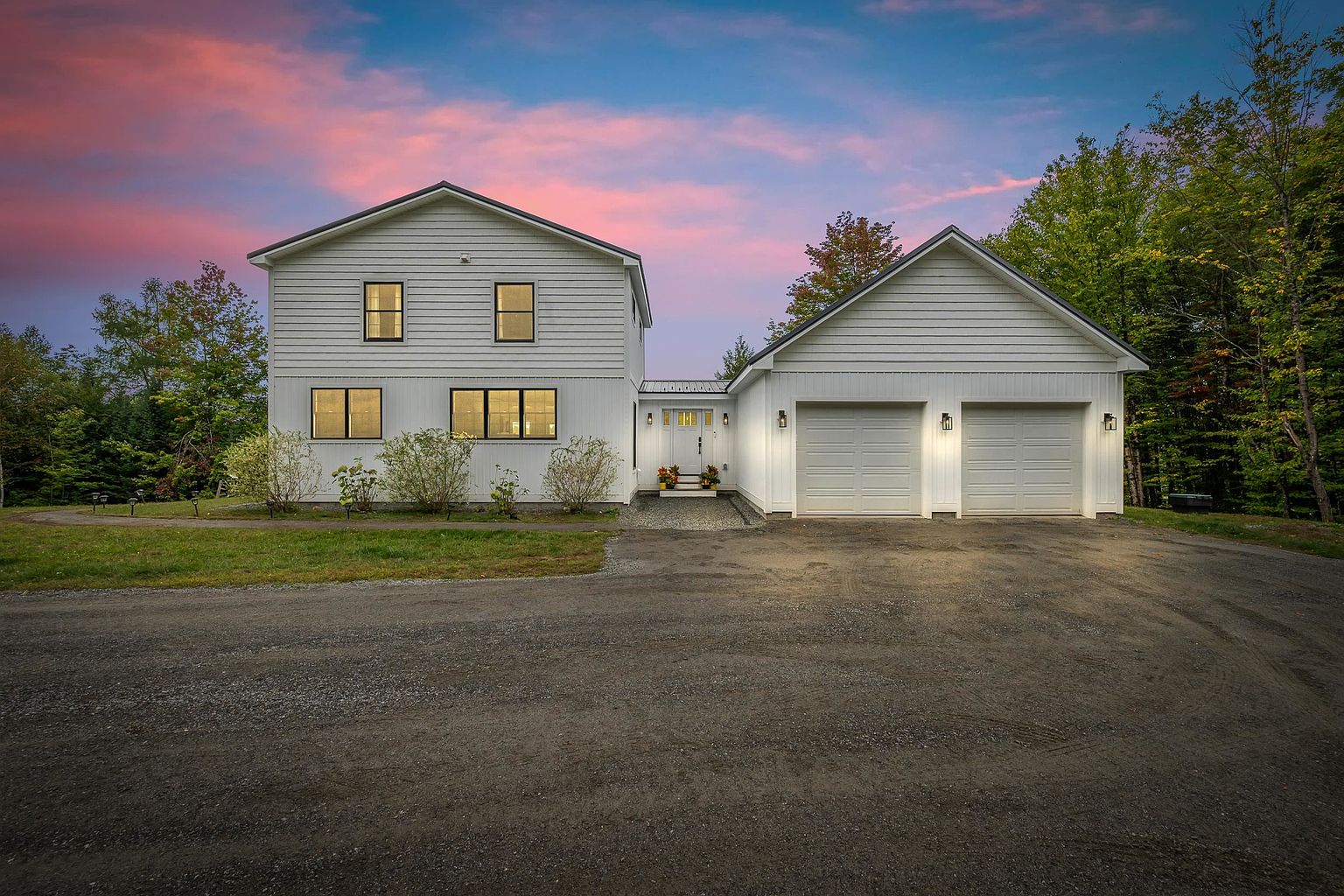
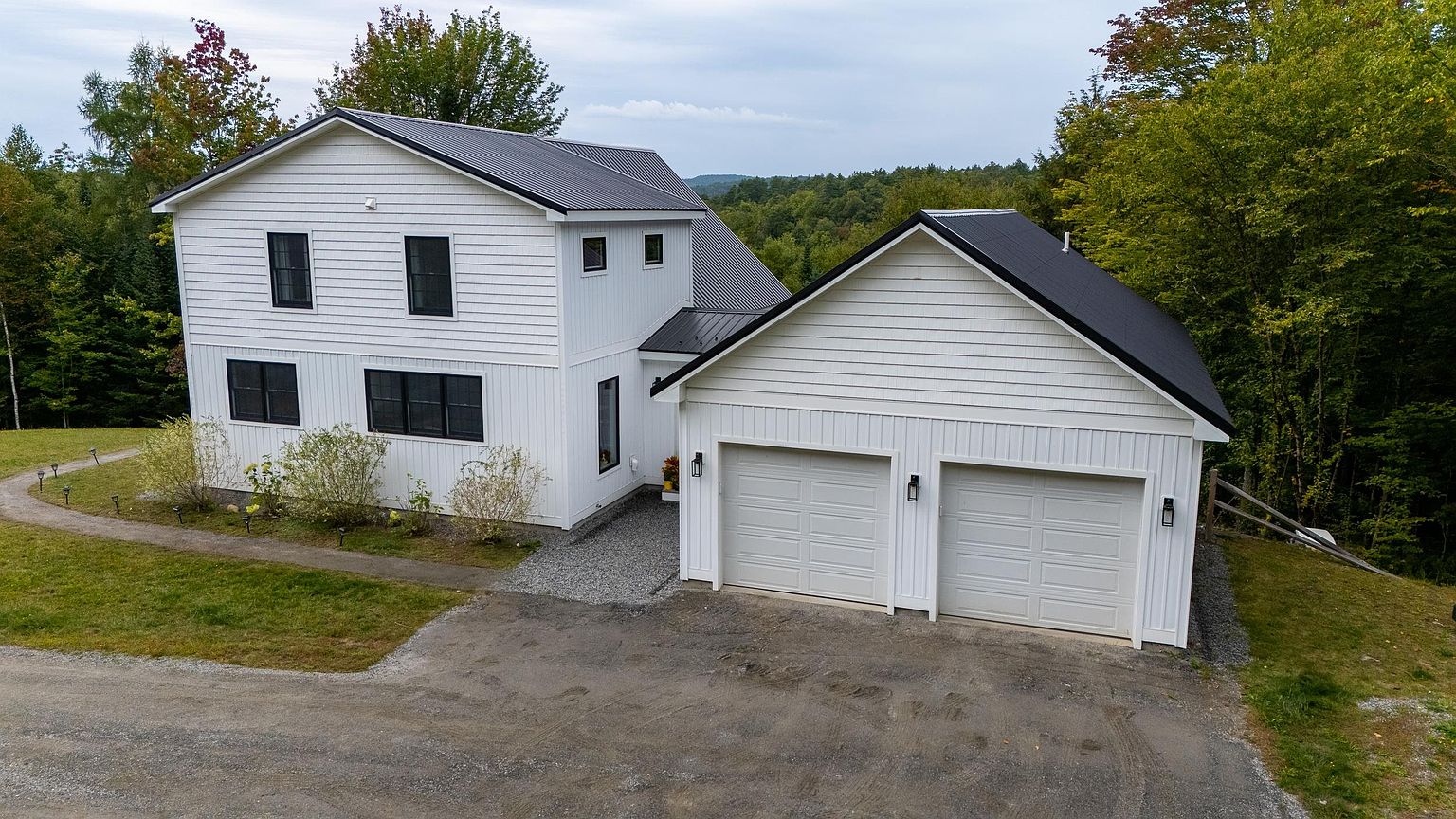
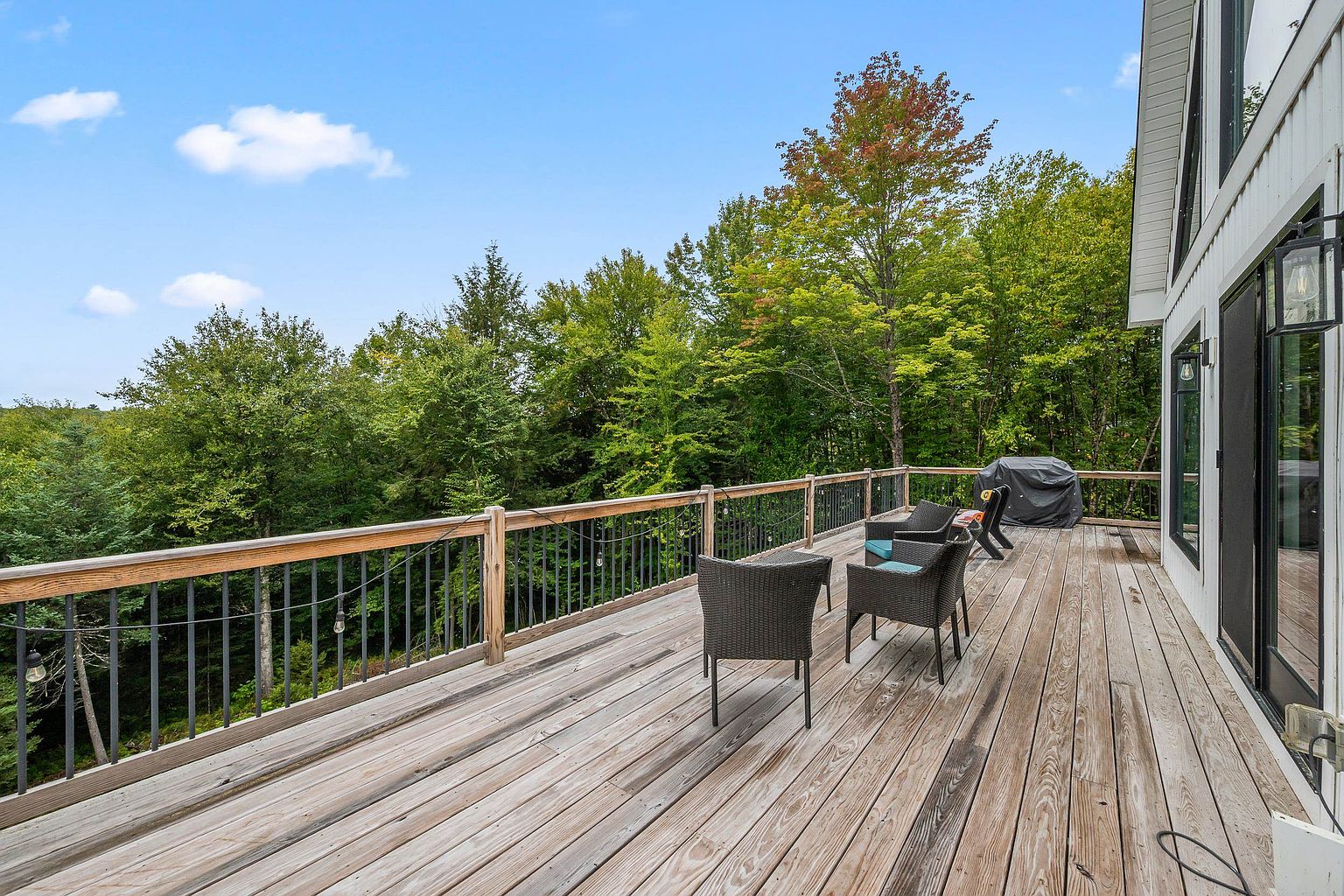
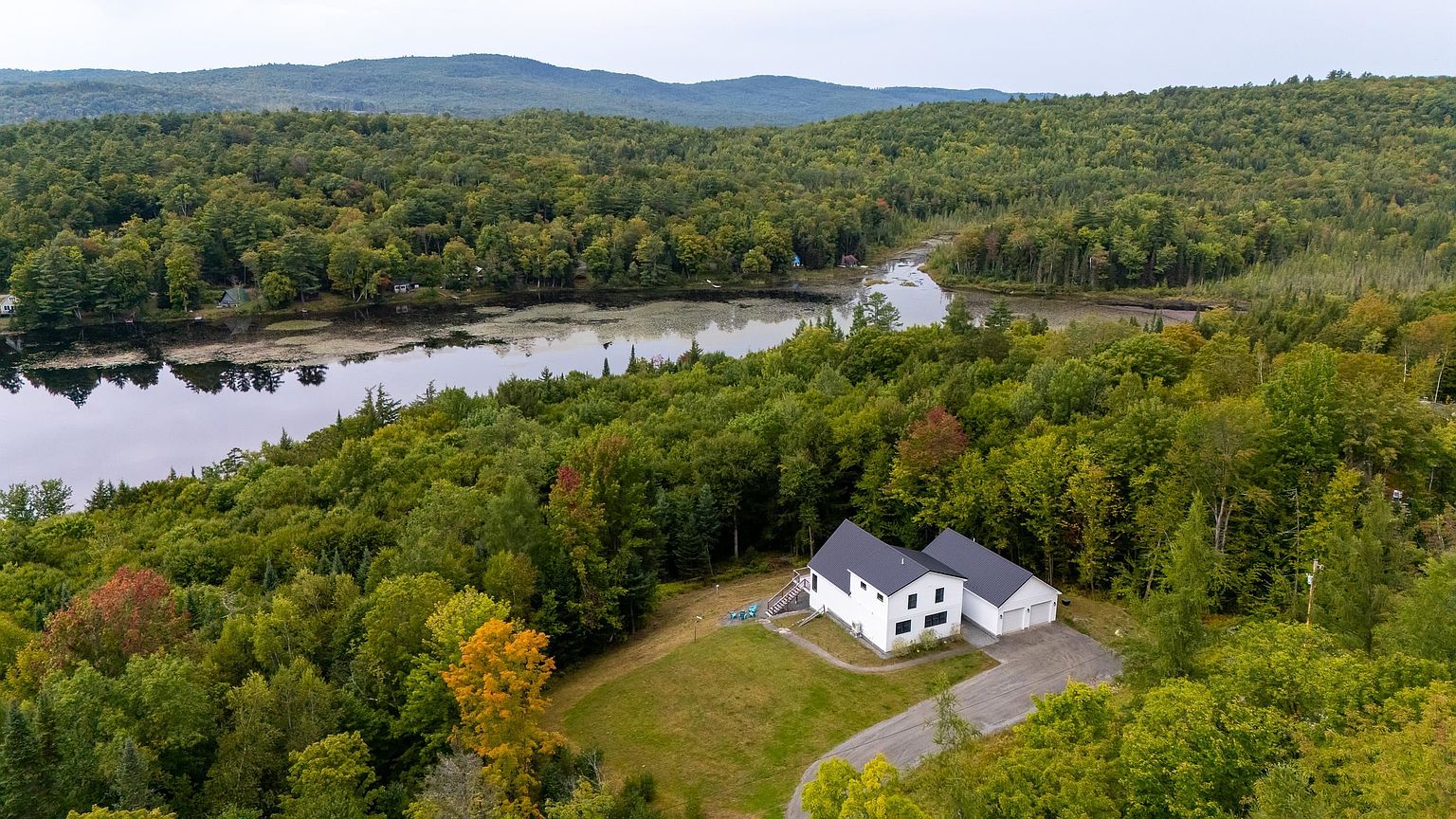
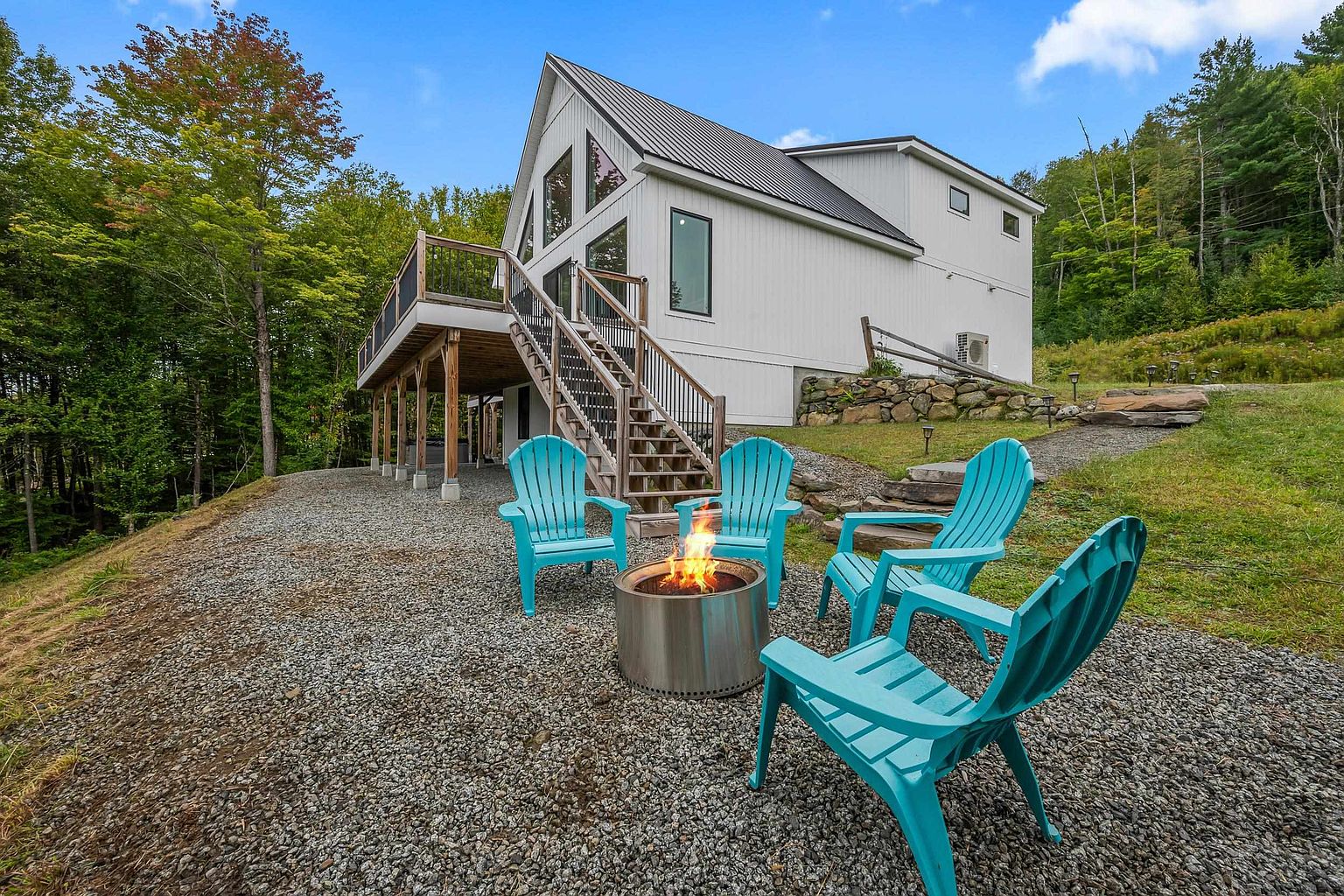
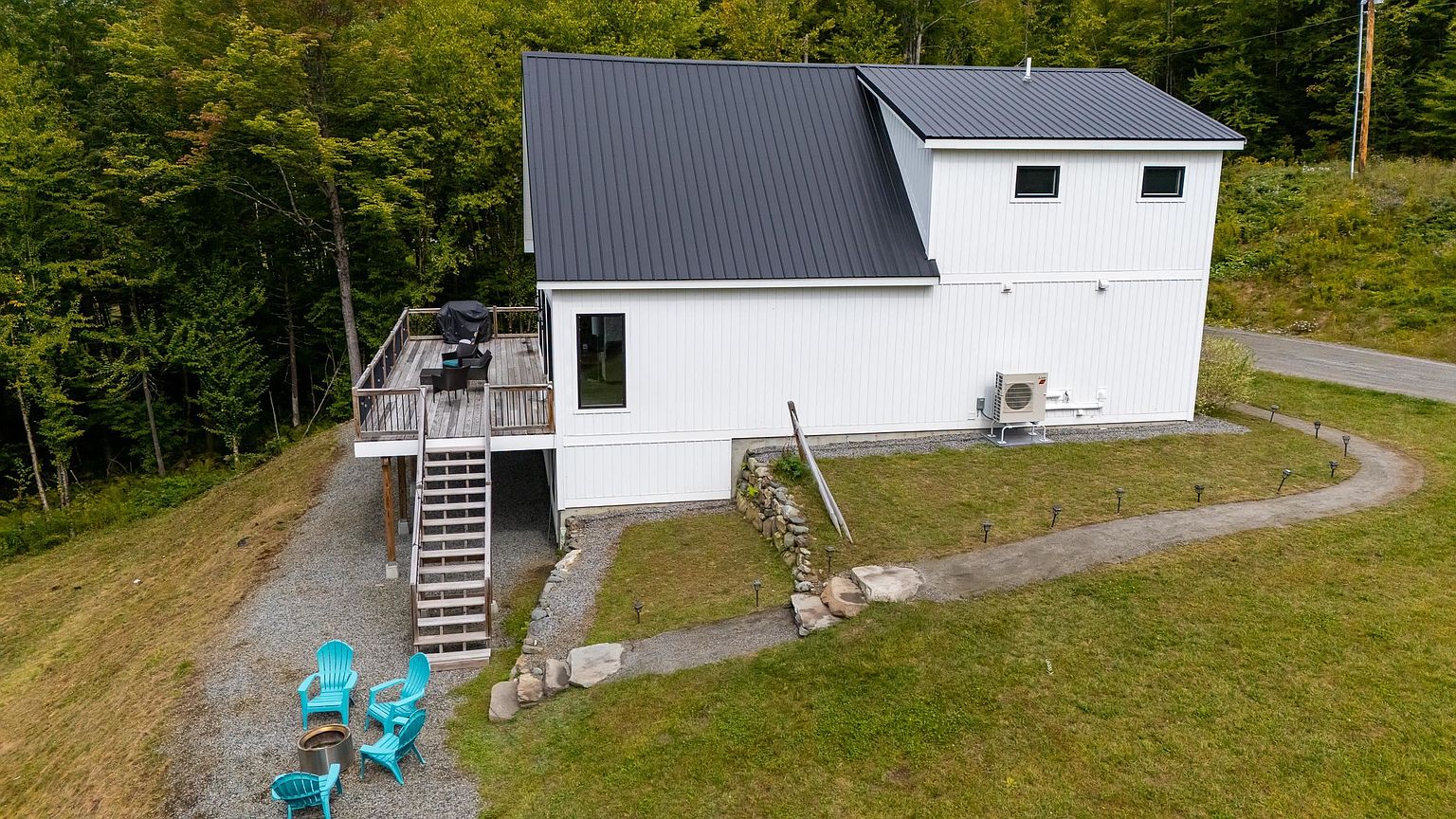
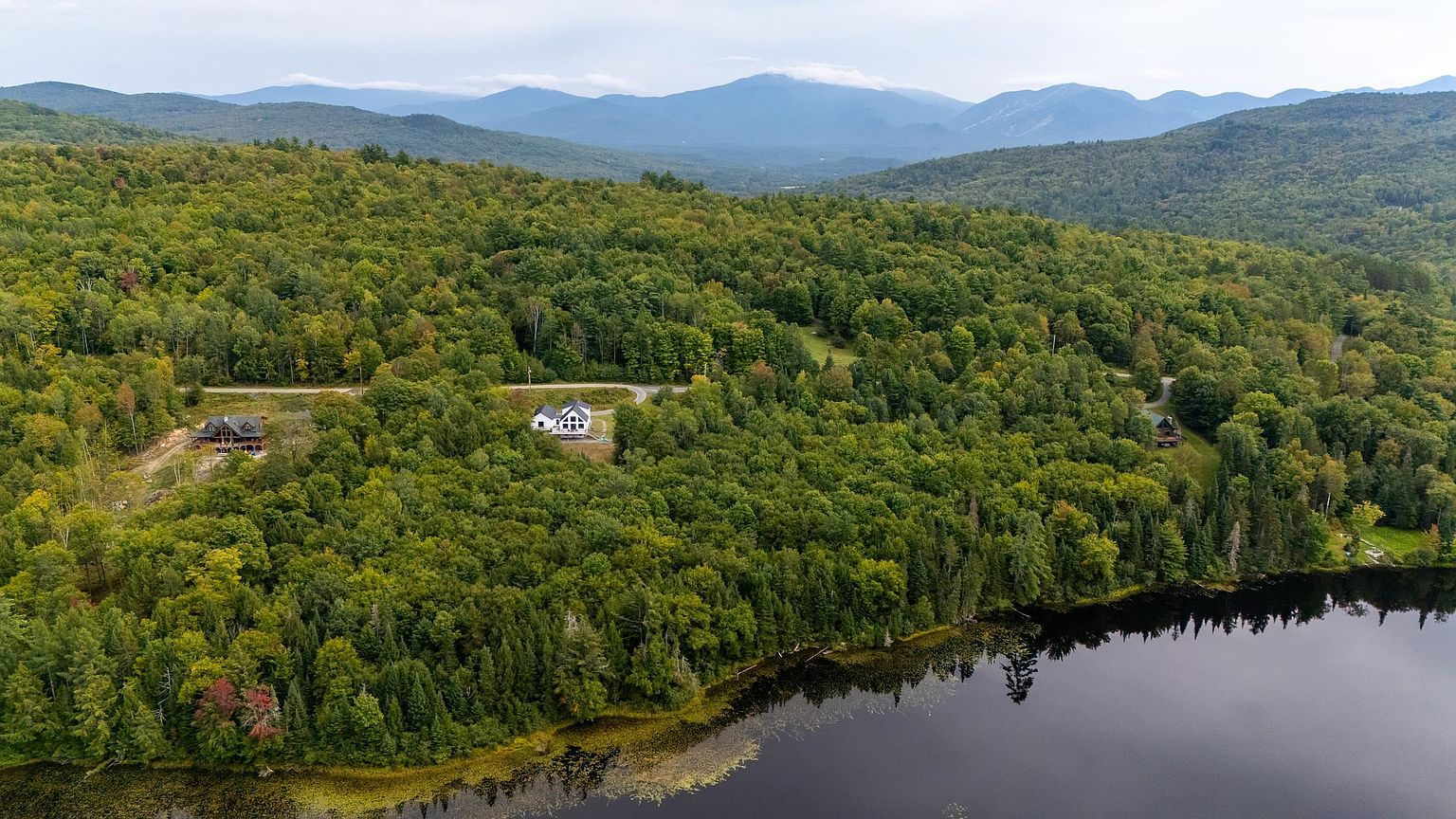
The architecture announces itself quietly from the exterior: crisp white horizontal siding, dark metal roofing, and black-framed windows arranged with a precision that is modern without being cold. The attached two-car garage and clean rooflines give the structure a confident, unhurried presence against its wooded backdrop, while an elevated deck wraps the rear of the home and extends the living space outward into the trees.
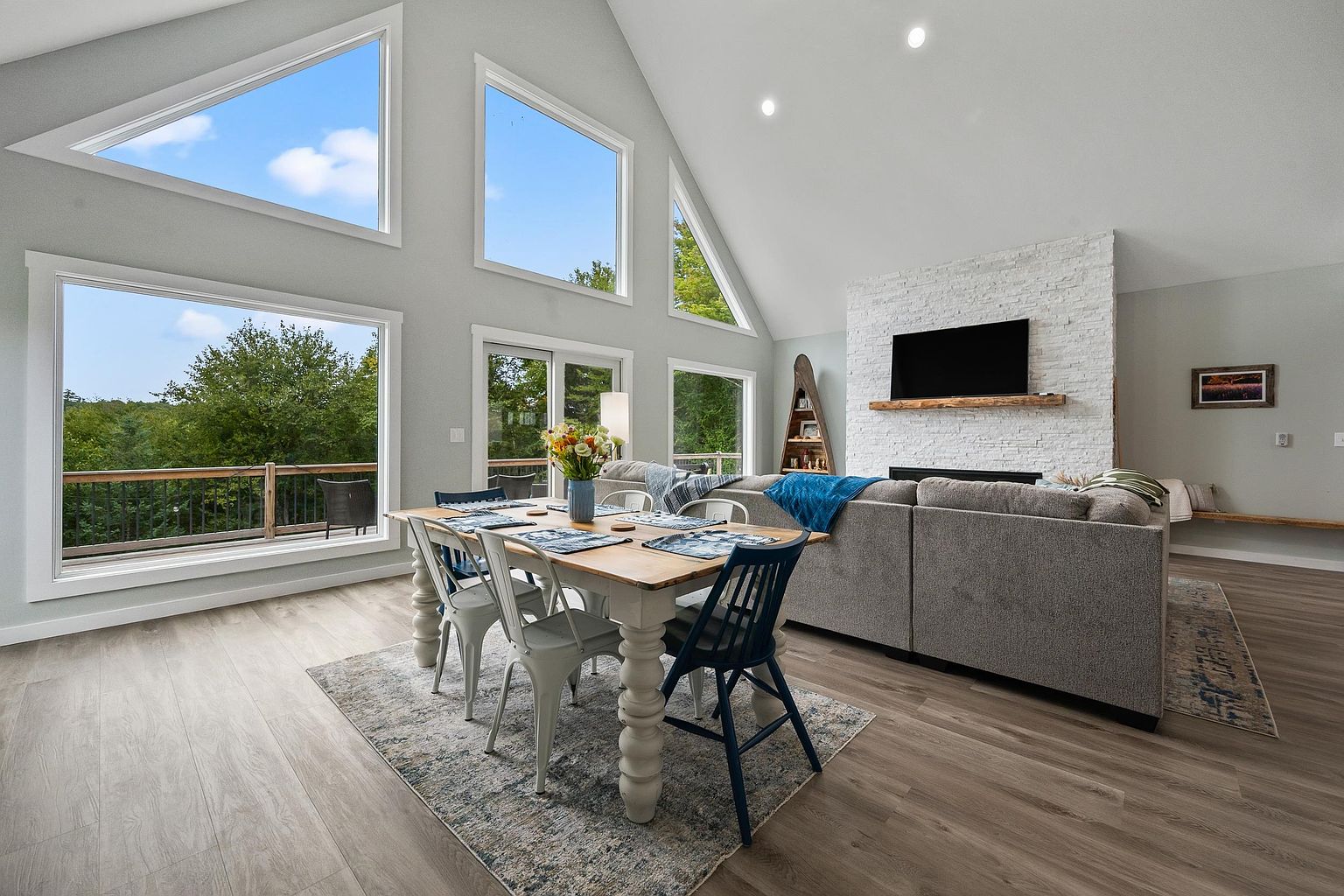
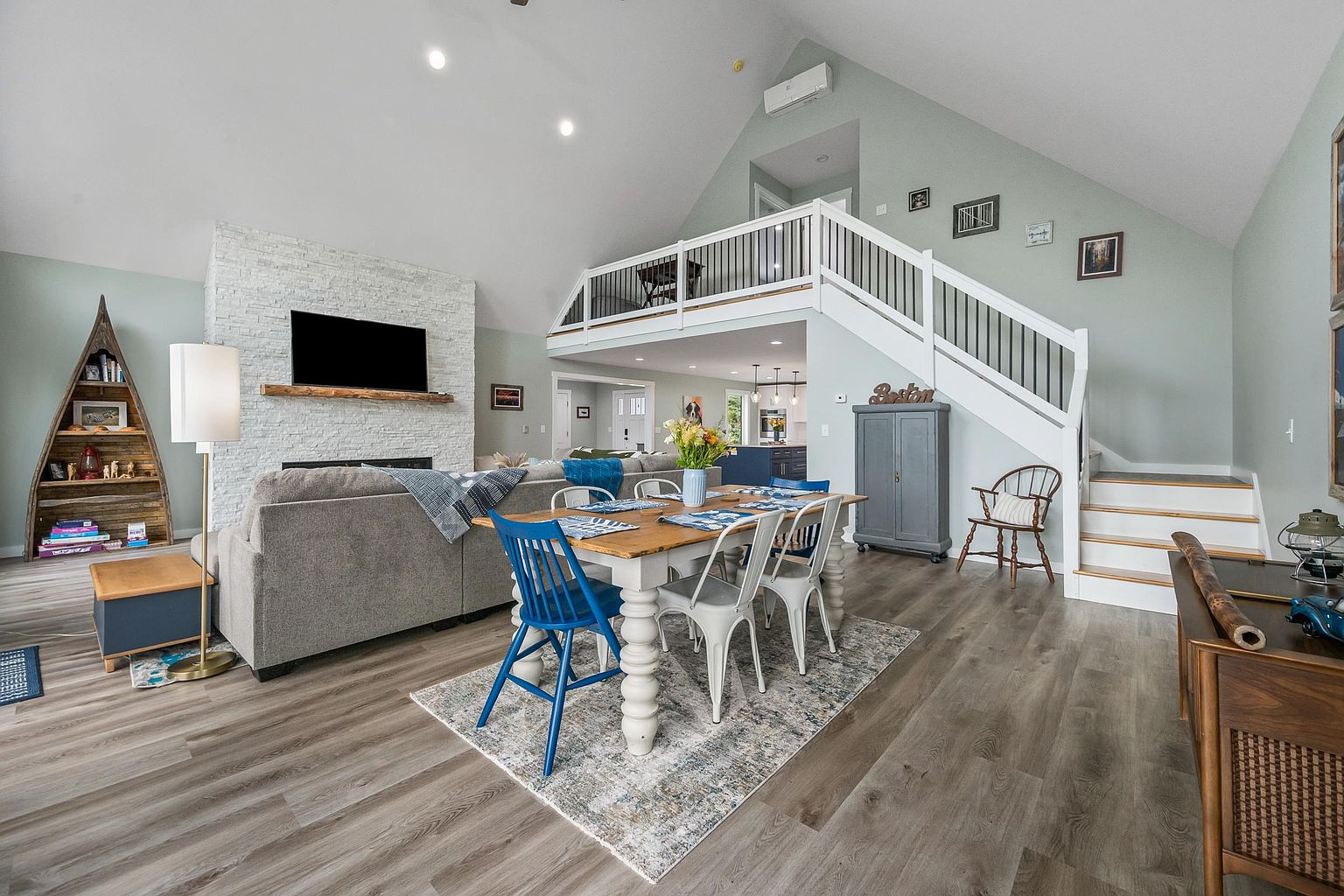
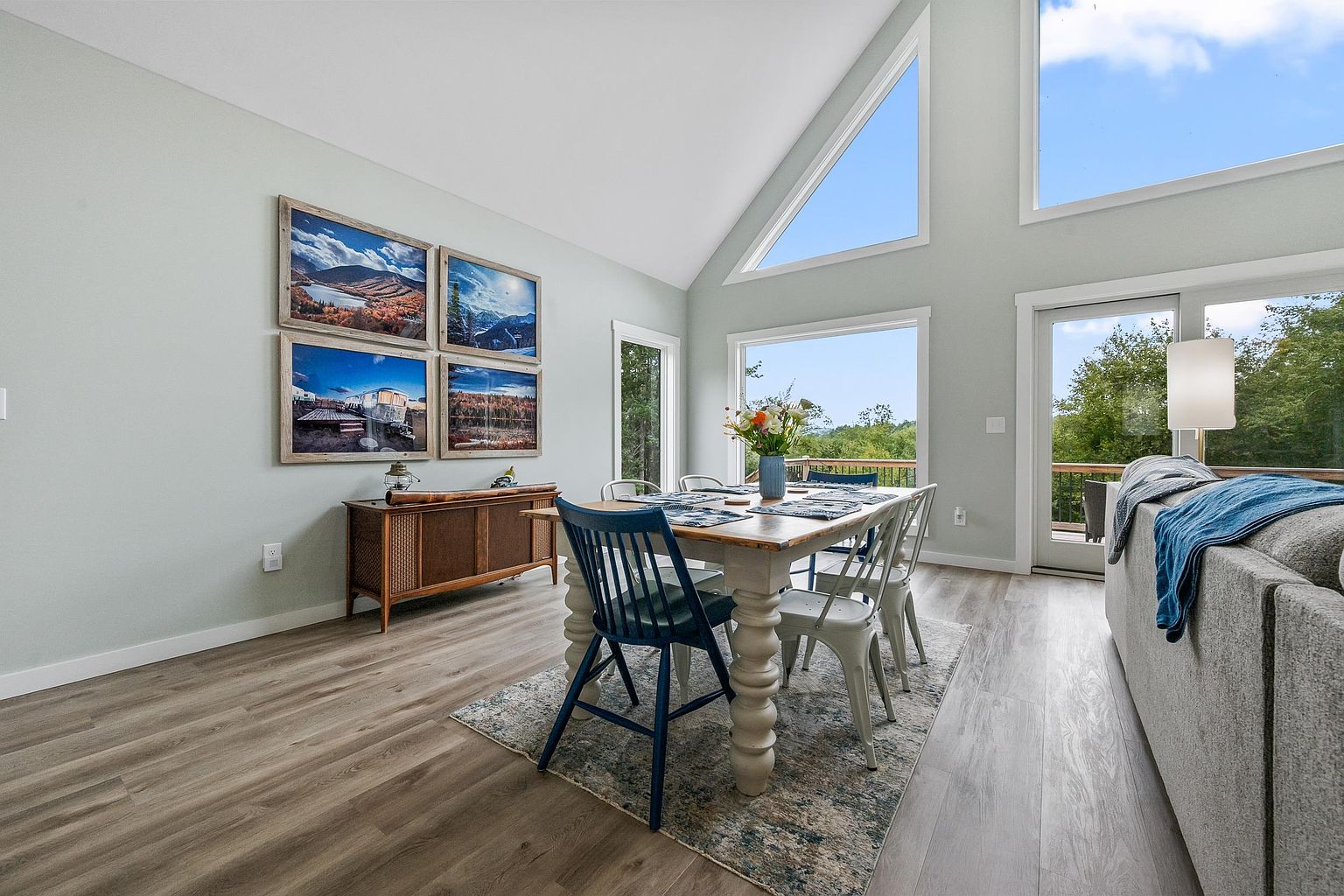
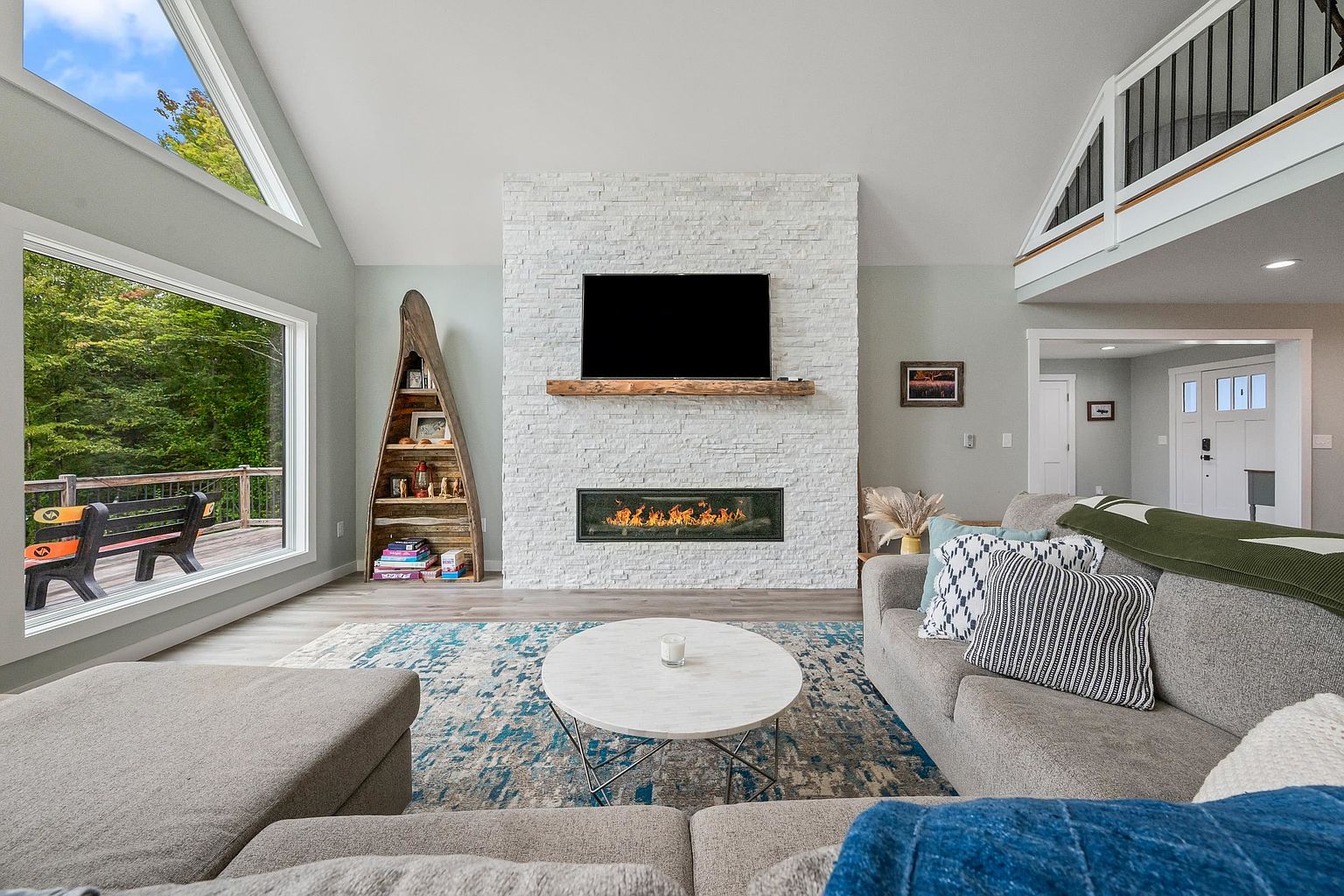
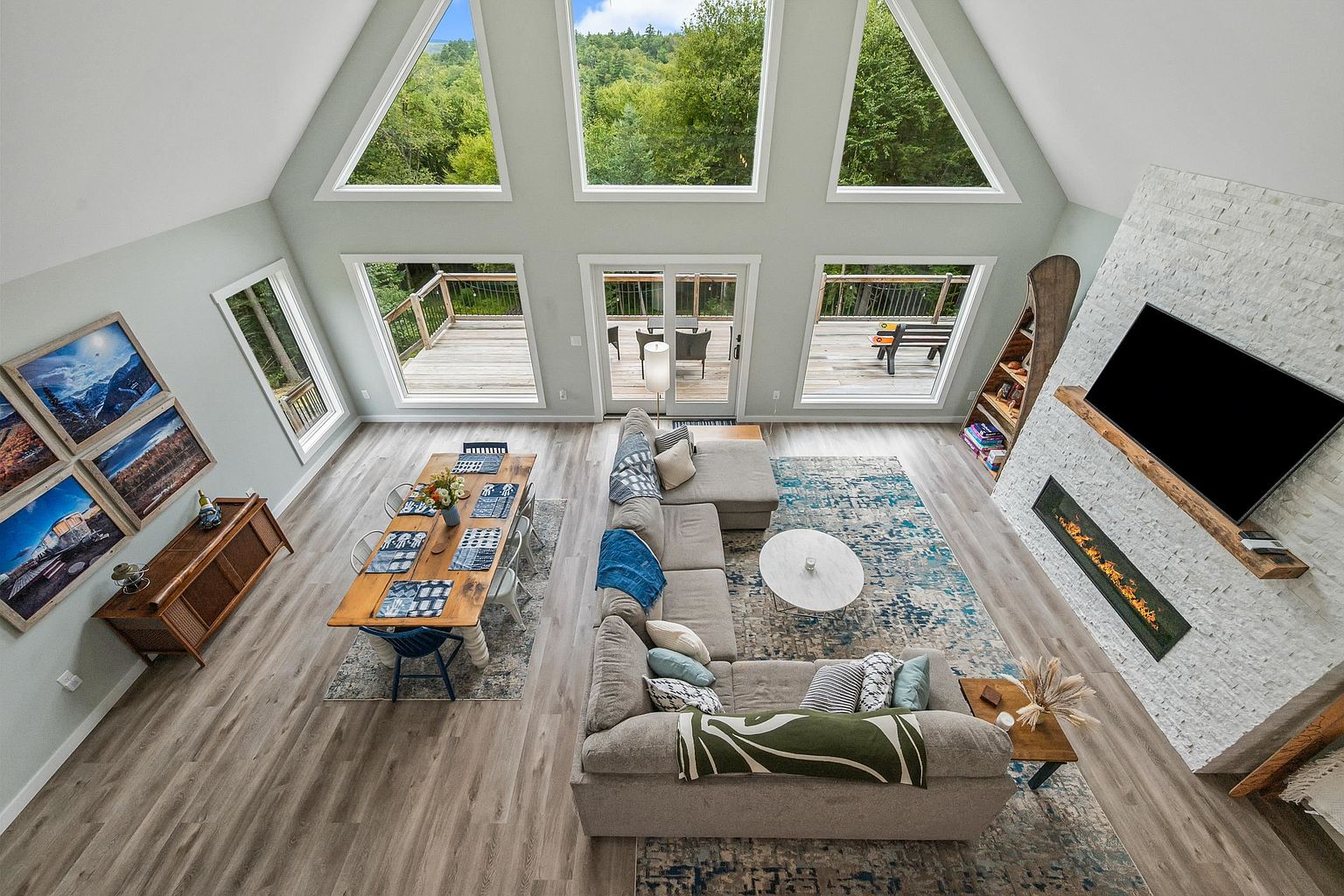
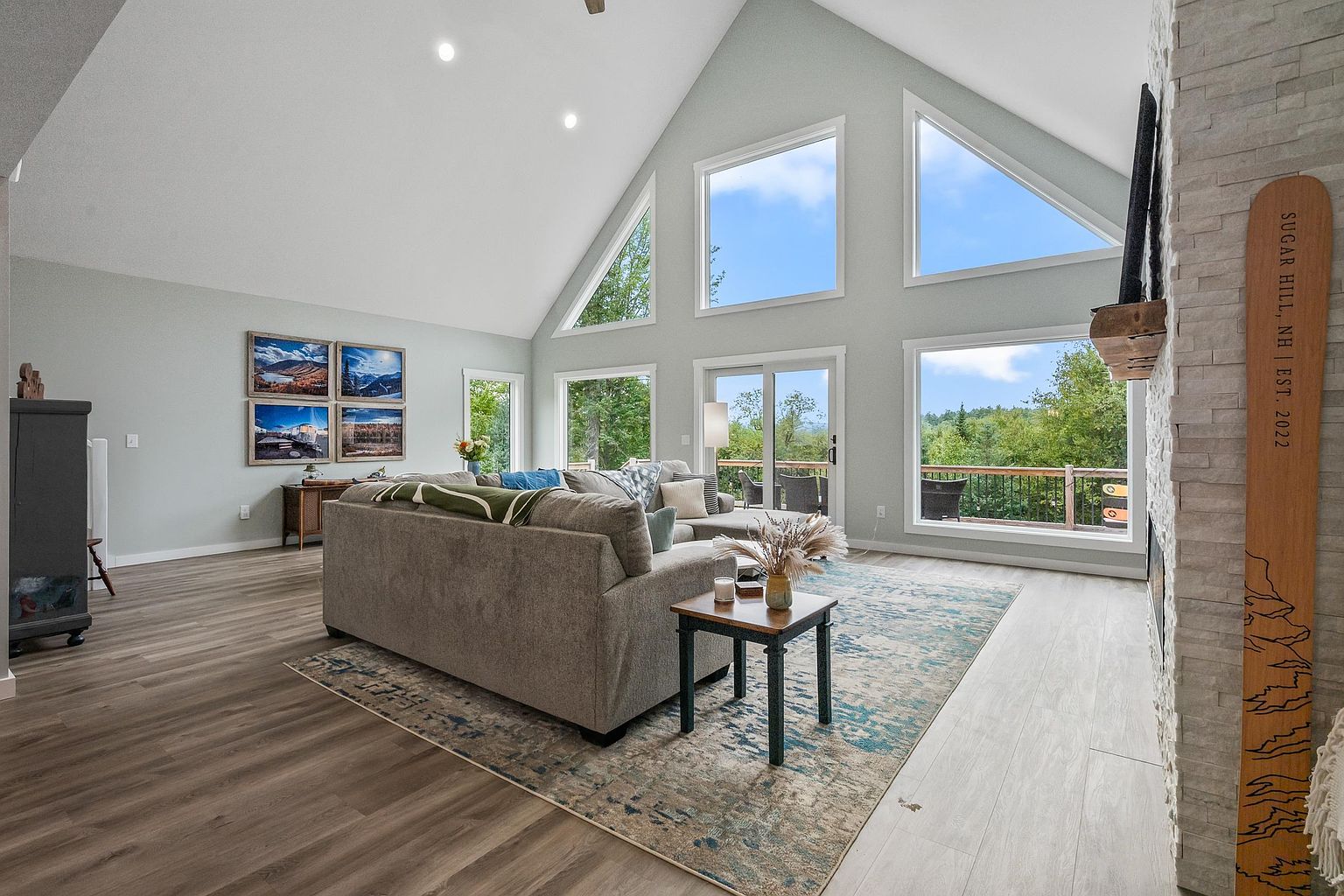
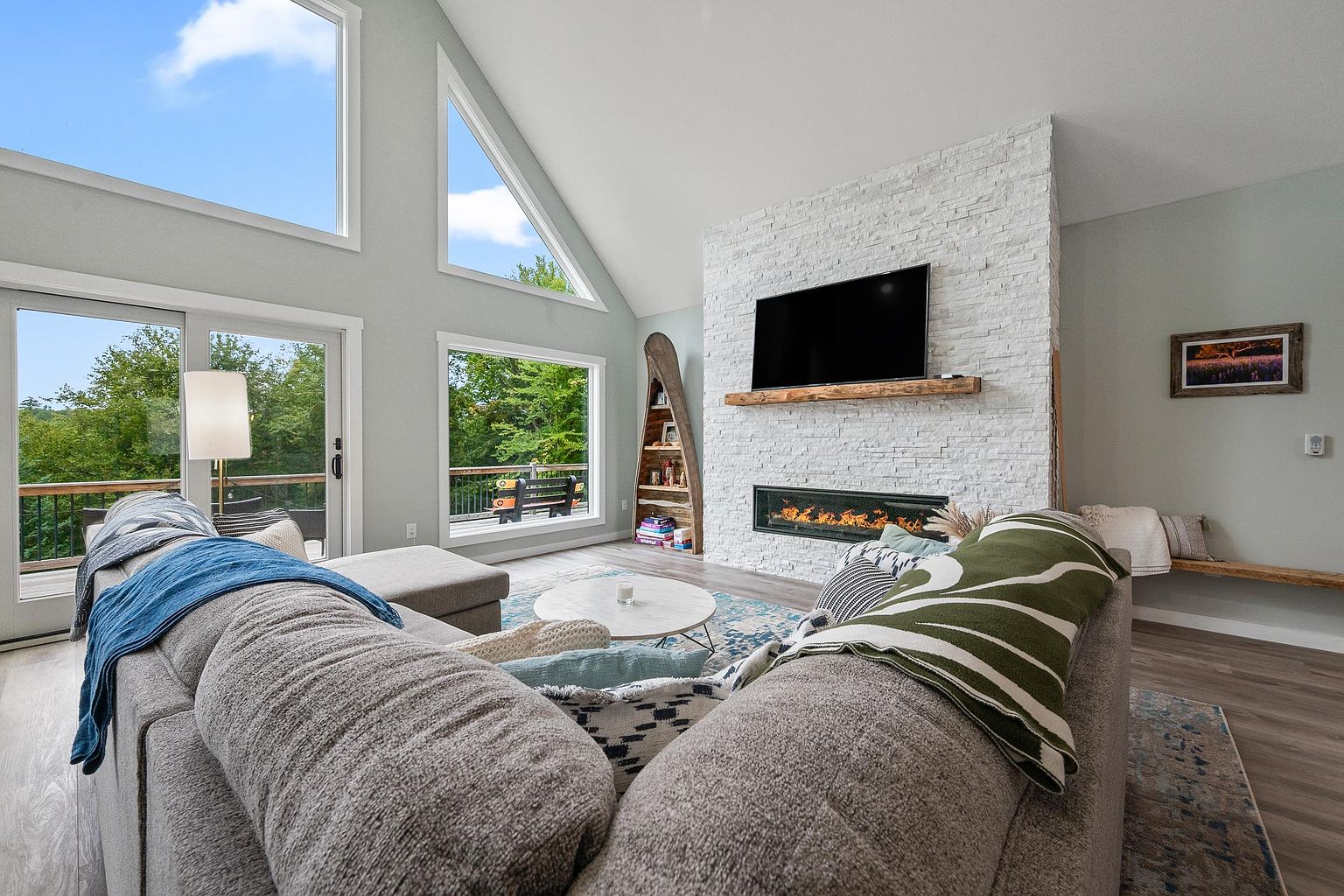
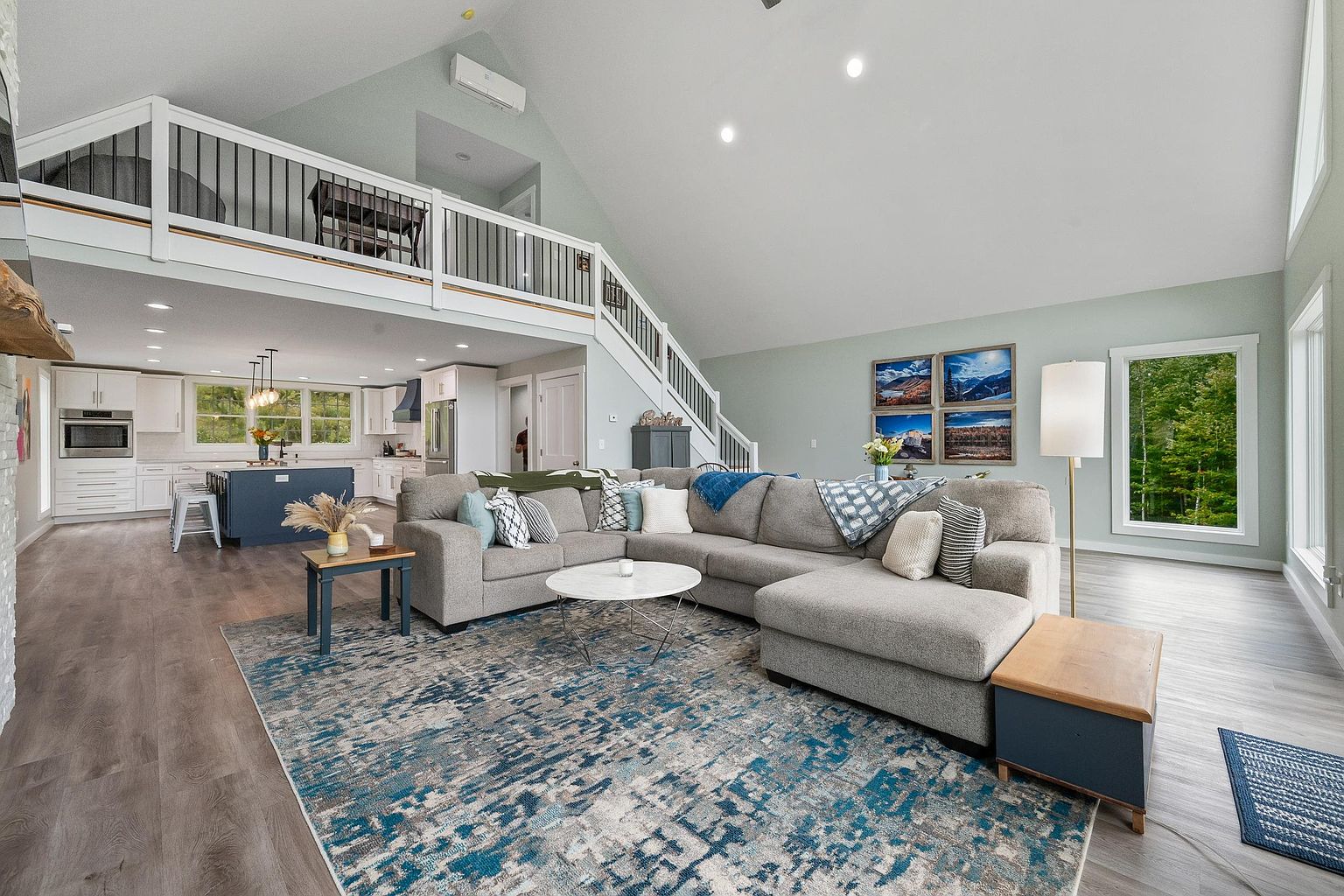
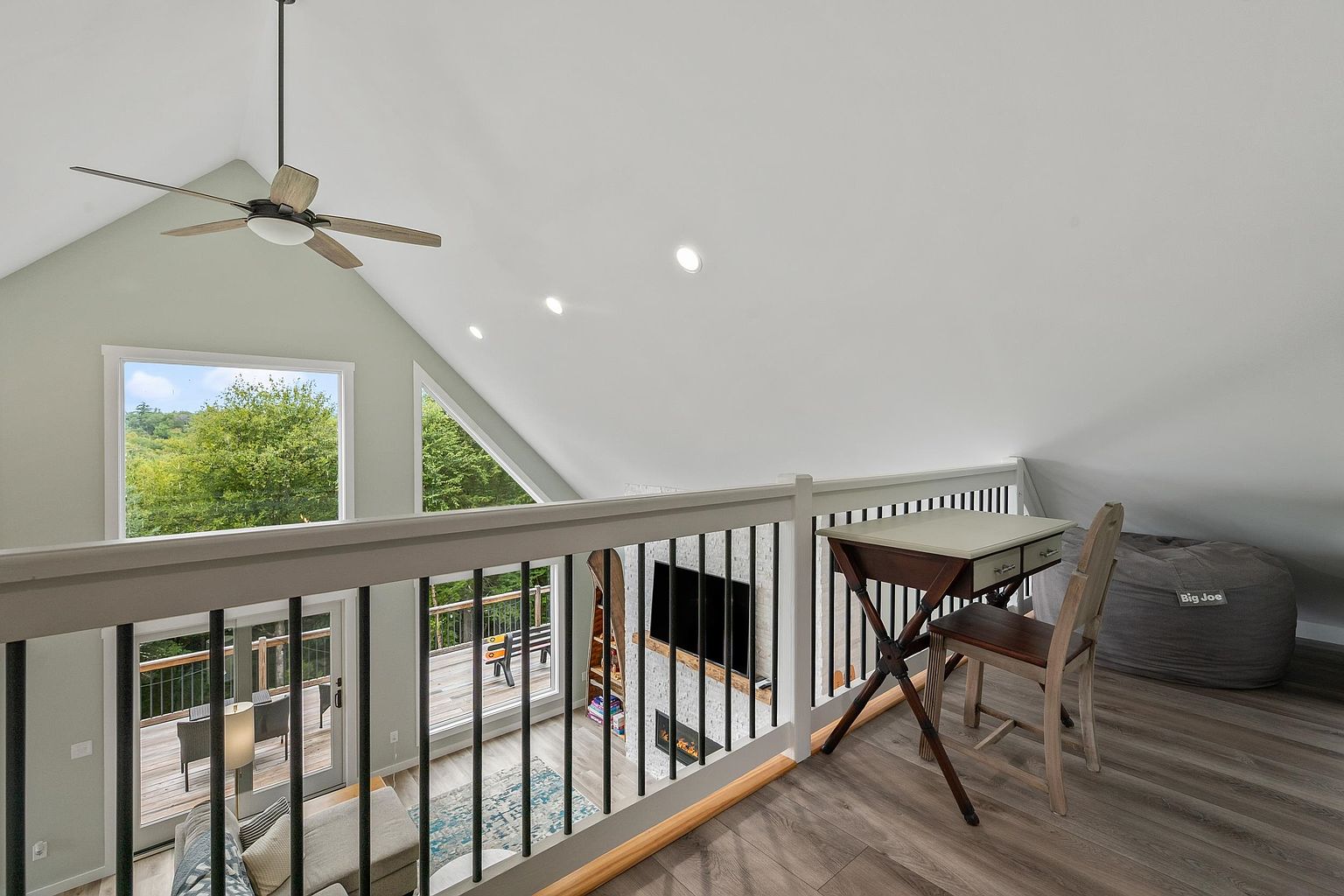
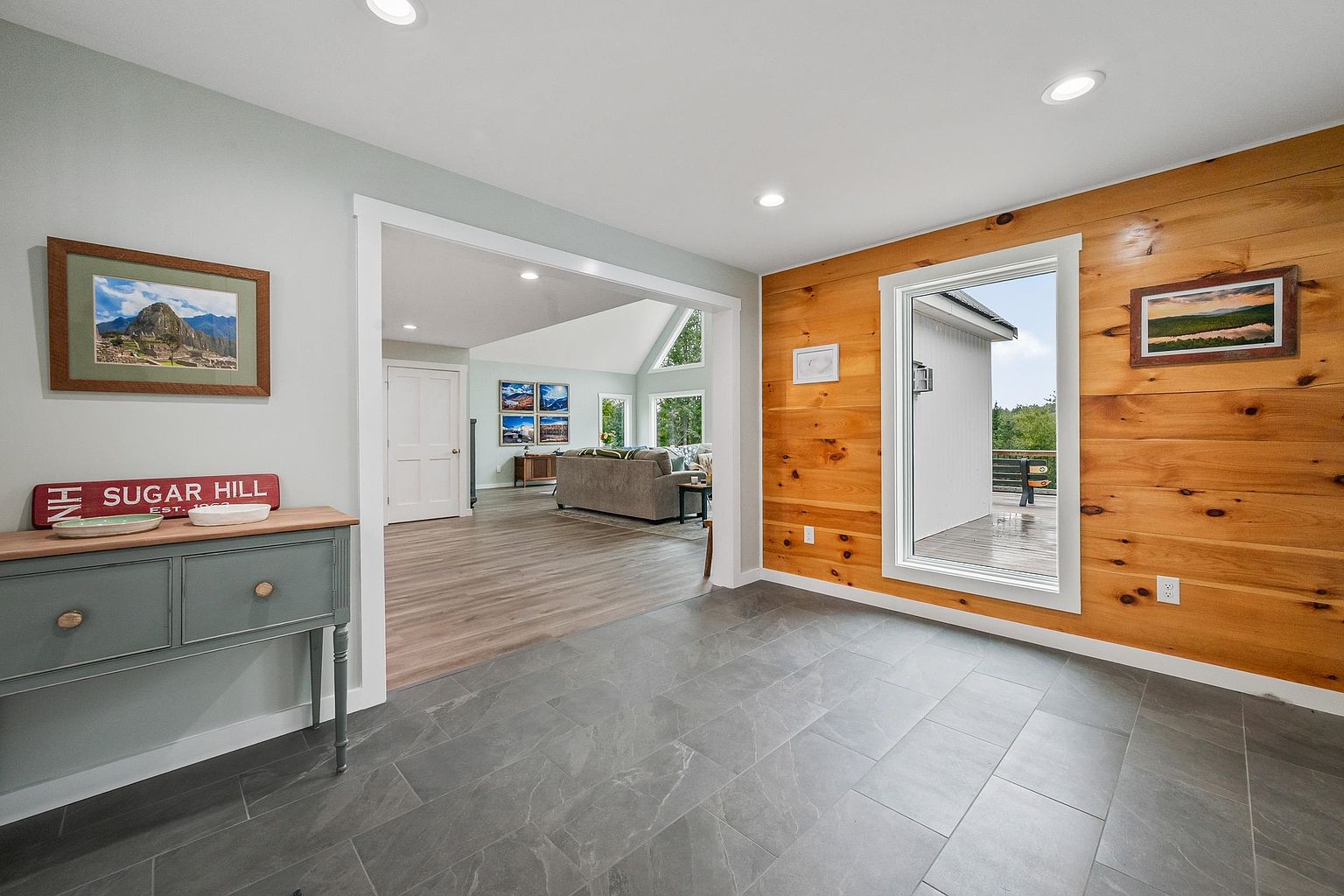
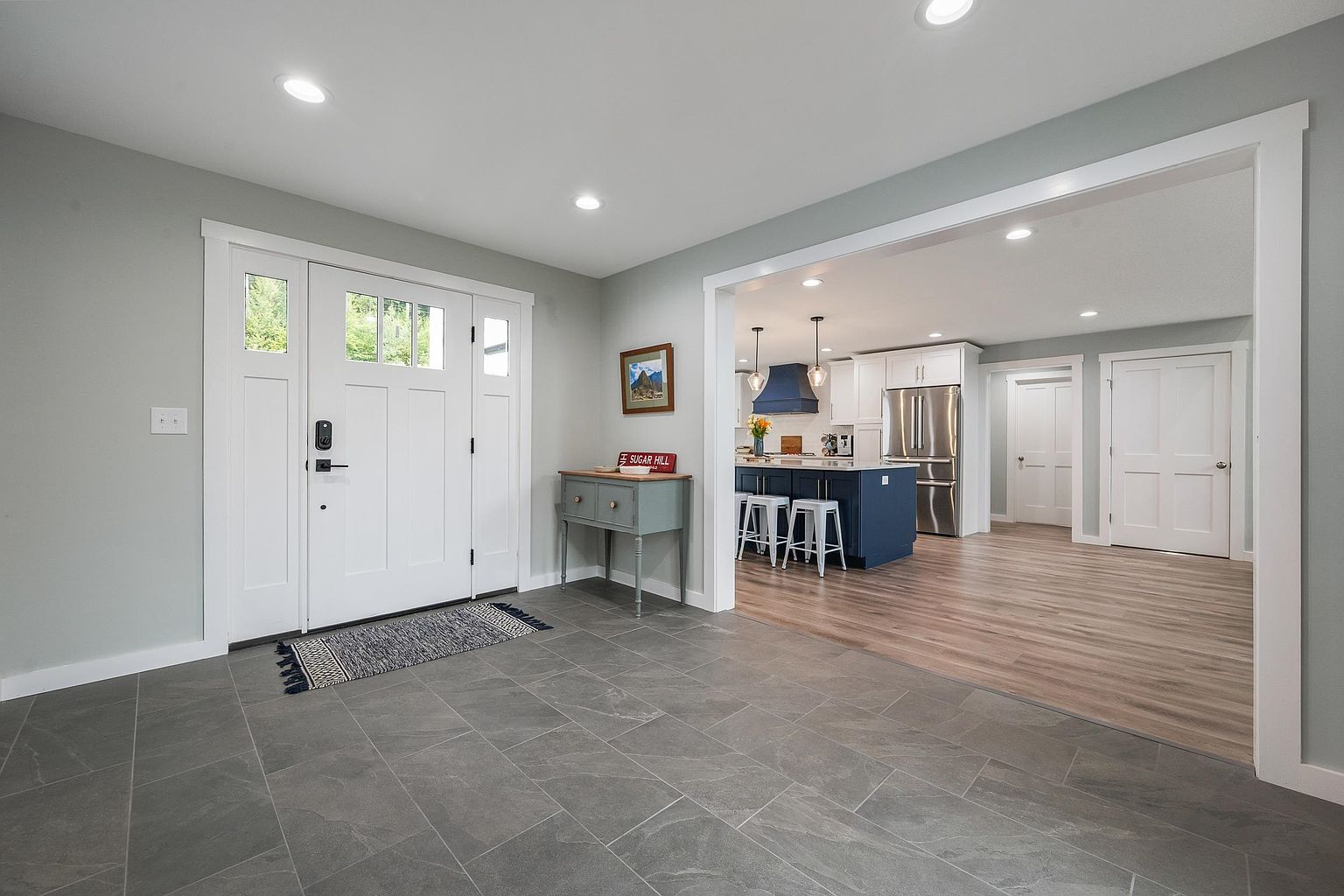
Step inside and the home's true character emerges. The entry foyer, finished in large-format gray tile, transitions seamlessly into the main living level where the architecture opens dramatically upward. A vaulted ceiling amplifies the sense of space while a continuous run of oversized windows draws the eye outward to the surrounding forest, filling the interior with the kind of shifting, seasonal light that no fixture can replicate. The stone-clad chimney breast — white, sculptural, anchoring — rises as the room's defining element, housing a linear gas fireplace beneath a rustic wood mantel. Around it, the open-concept living and dining areas flow together without interruption, the lofted walkway above adding a sense of vertical dimension that keeps the plan from ever feeling ordinary.
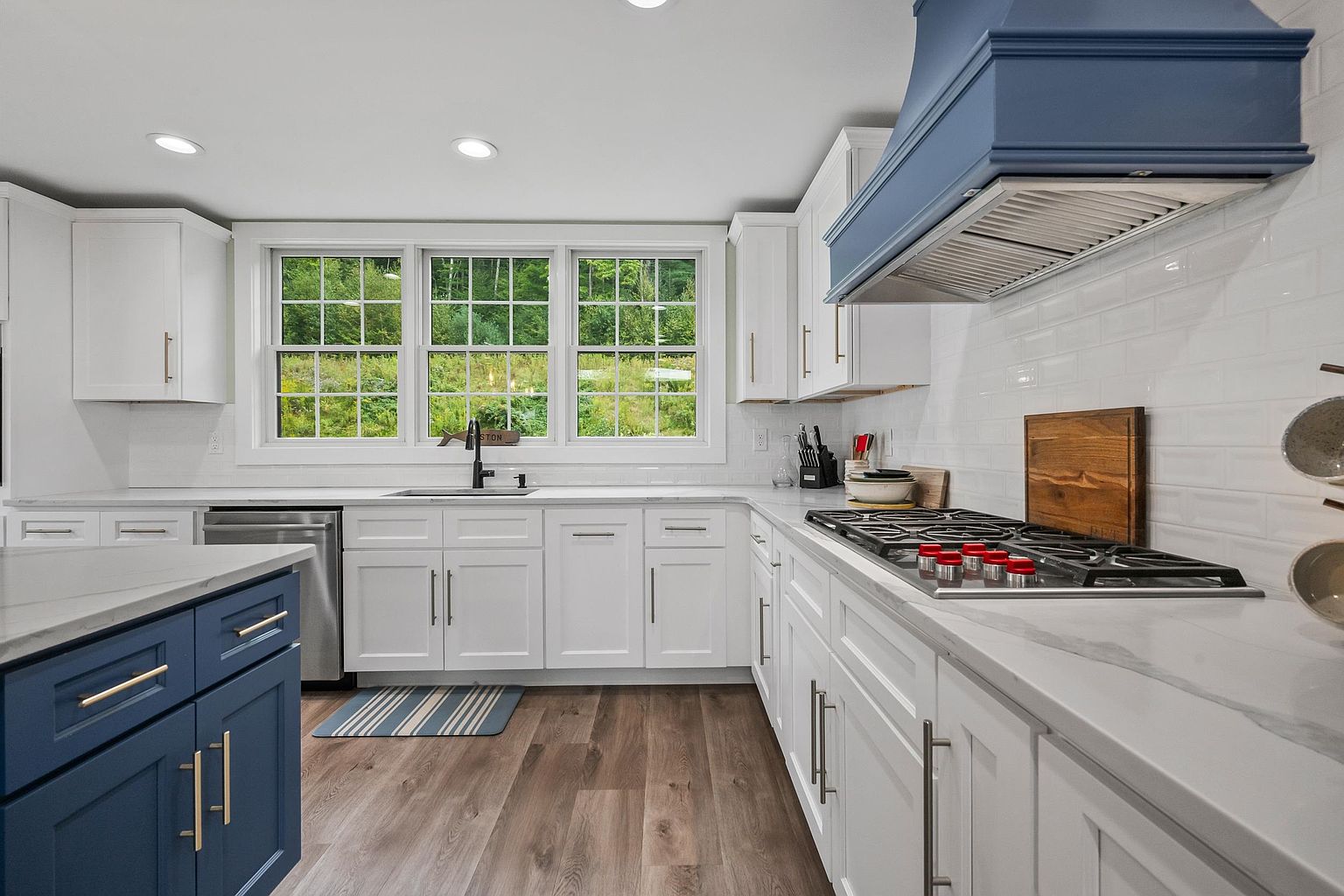
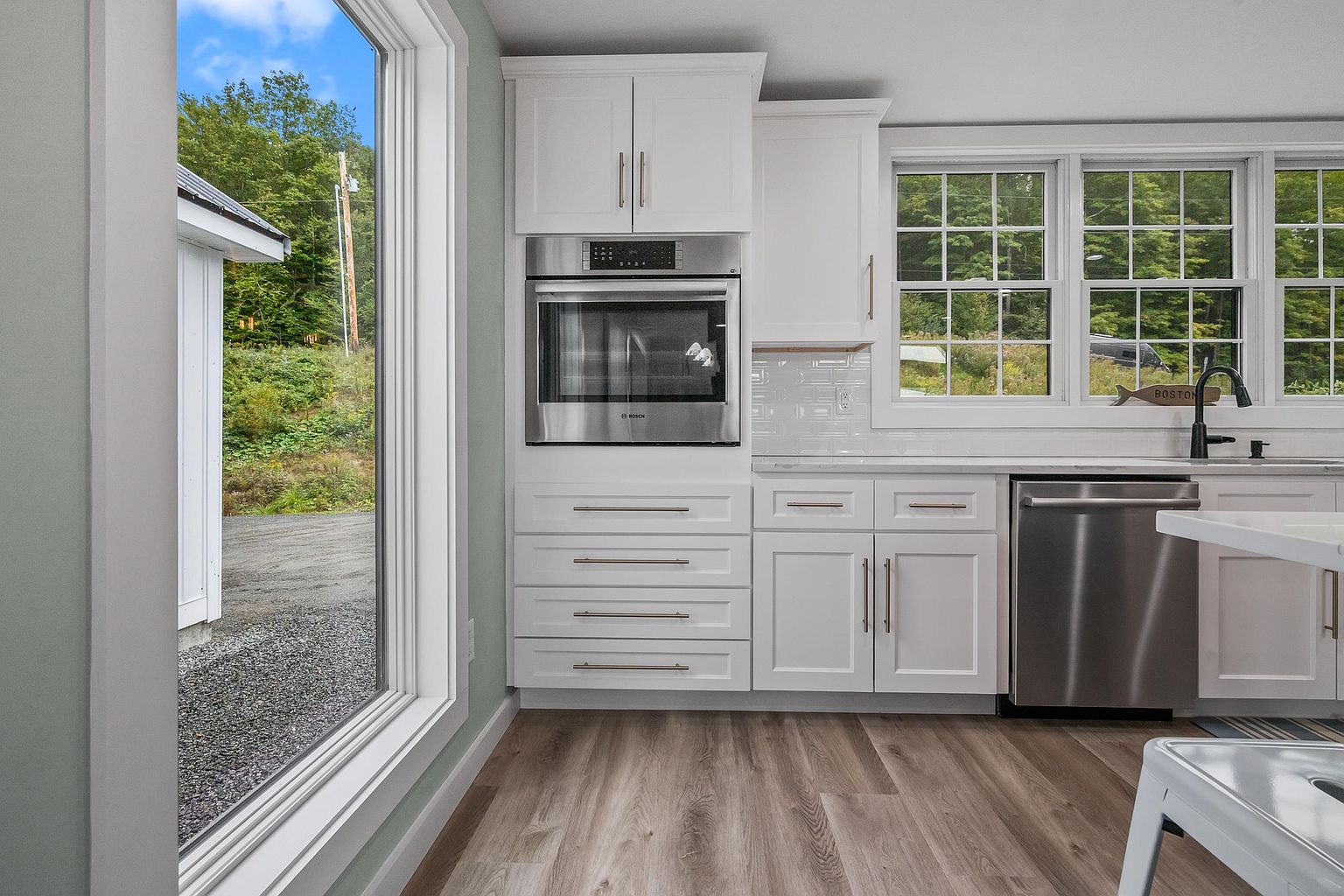
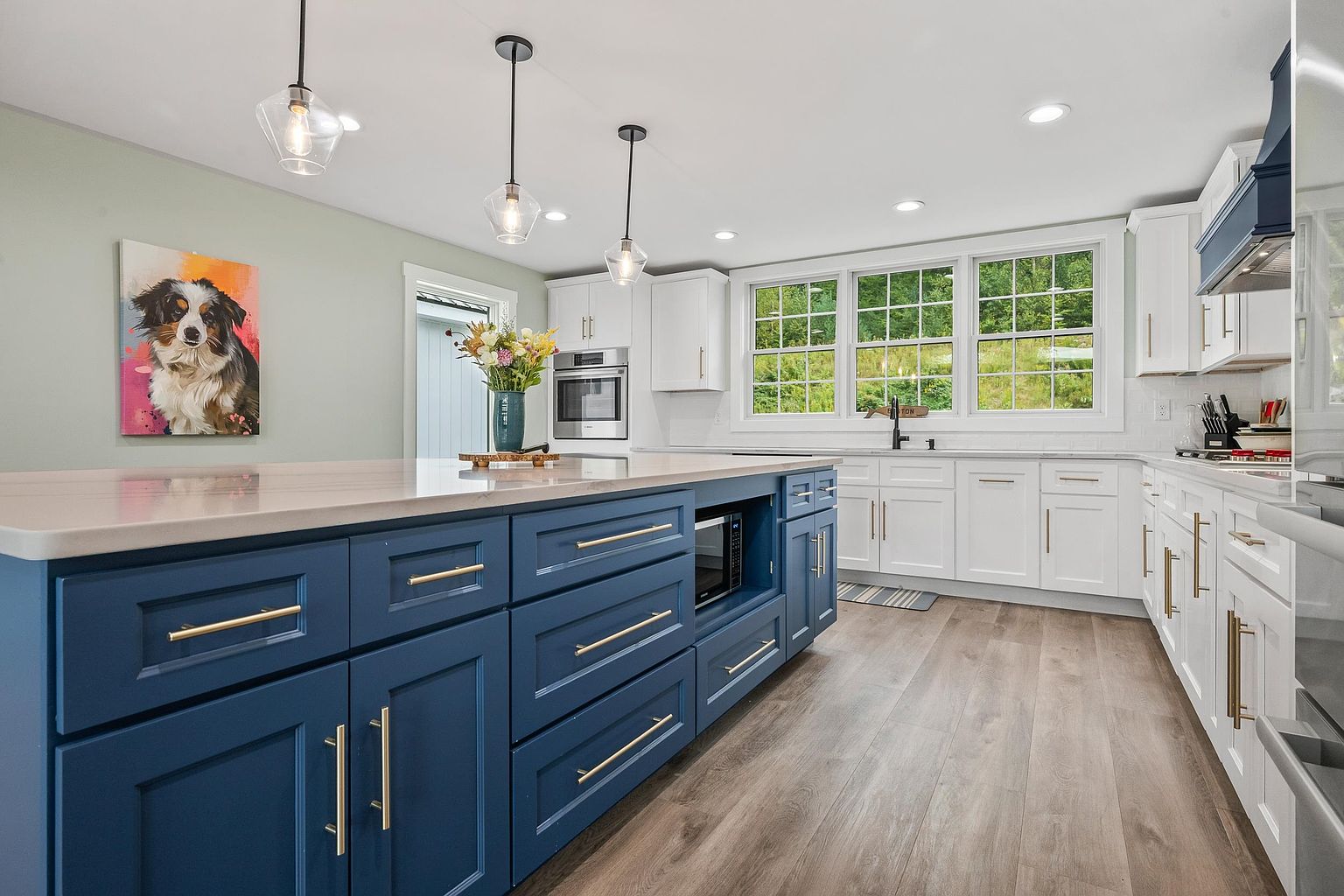
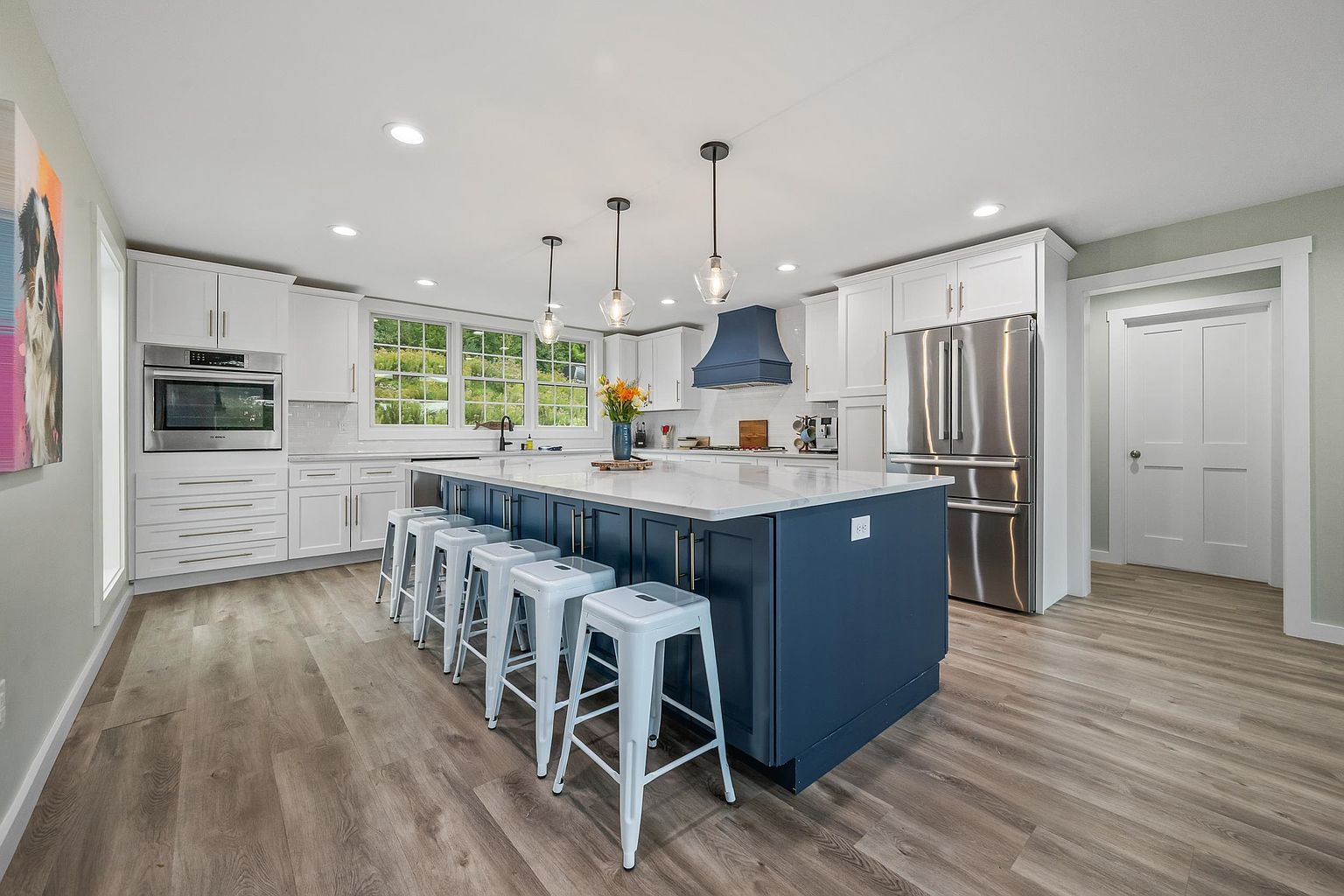
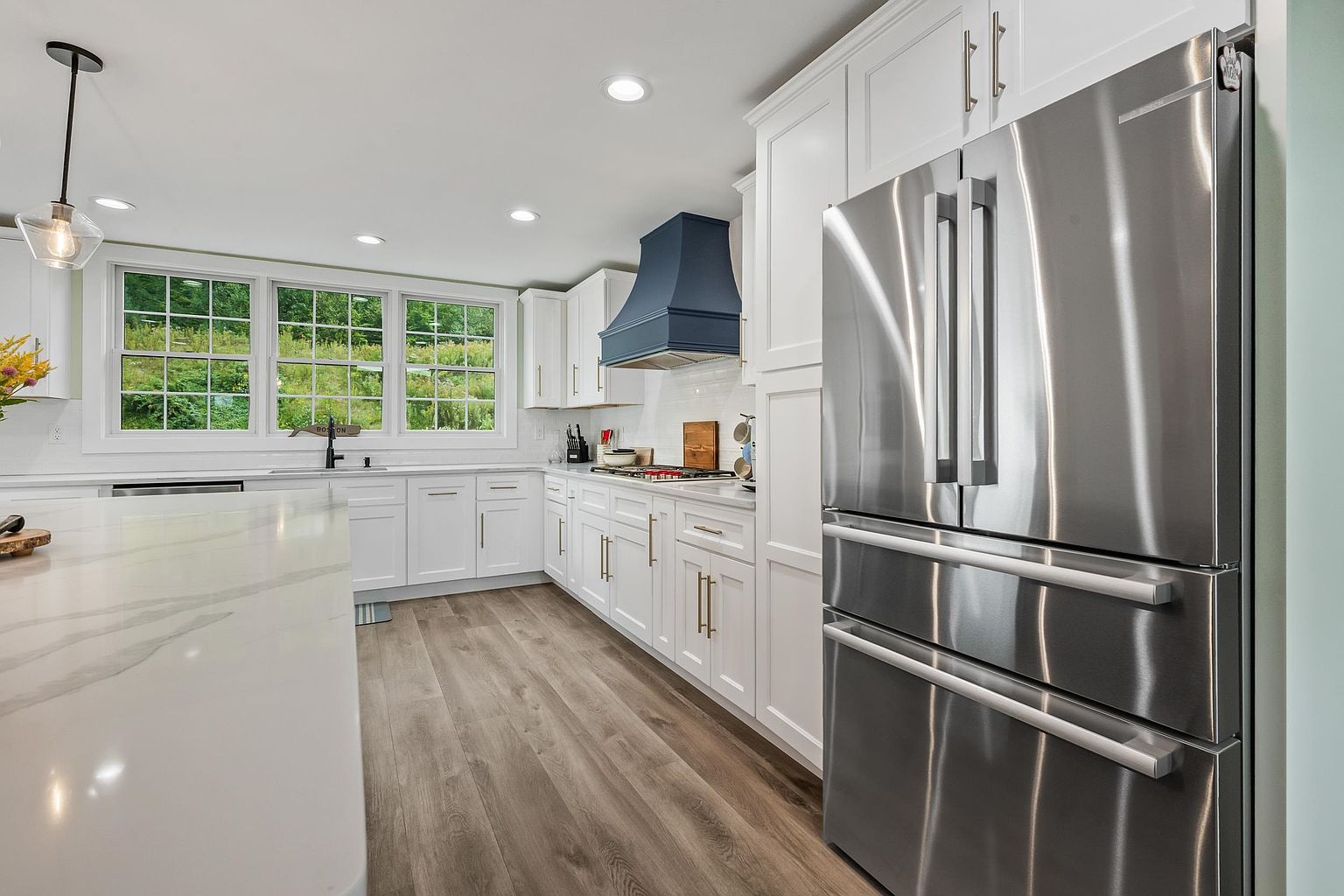
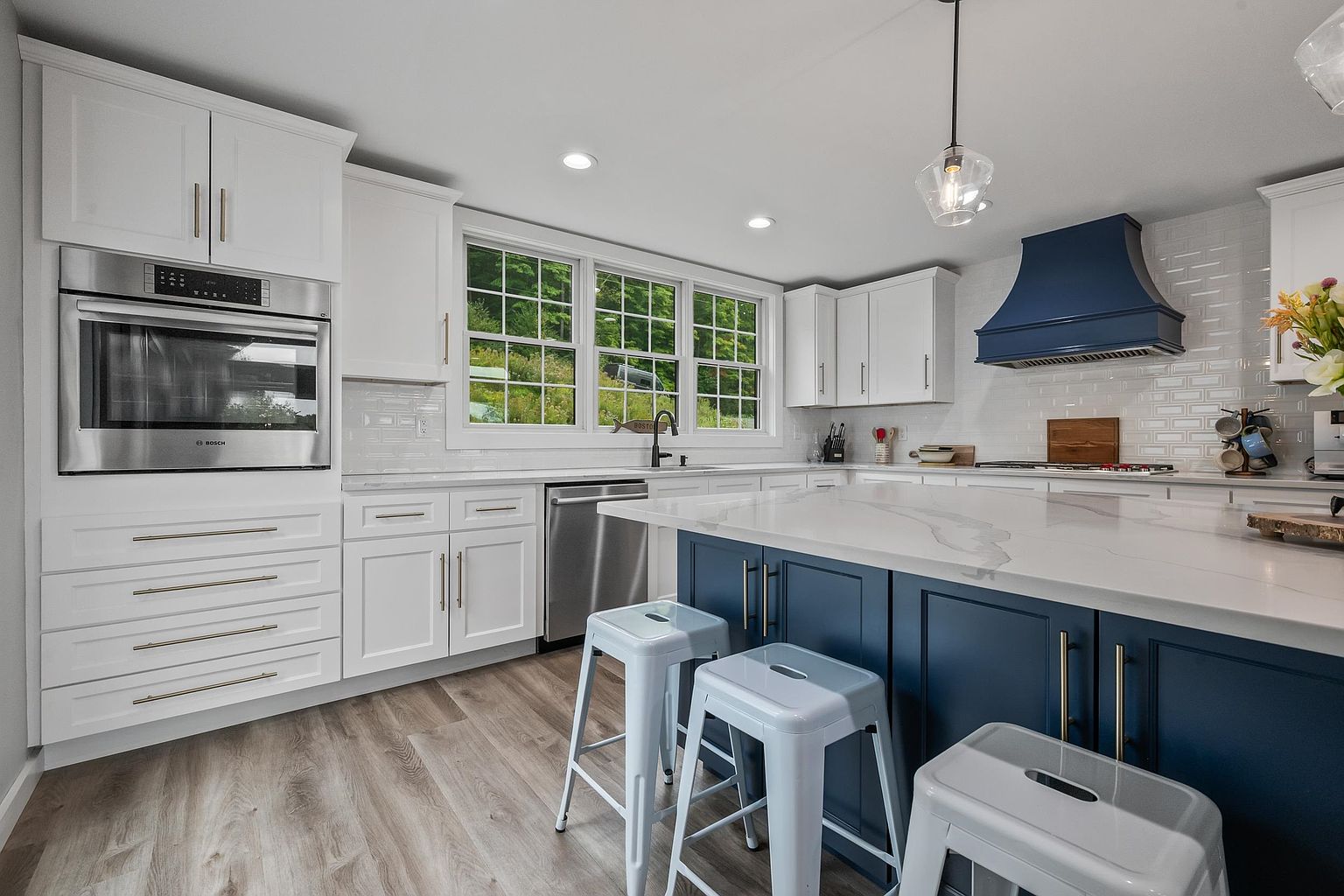
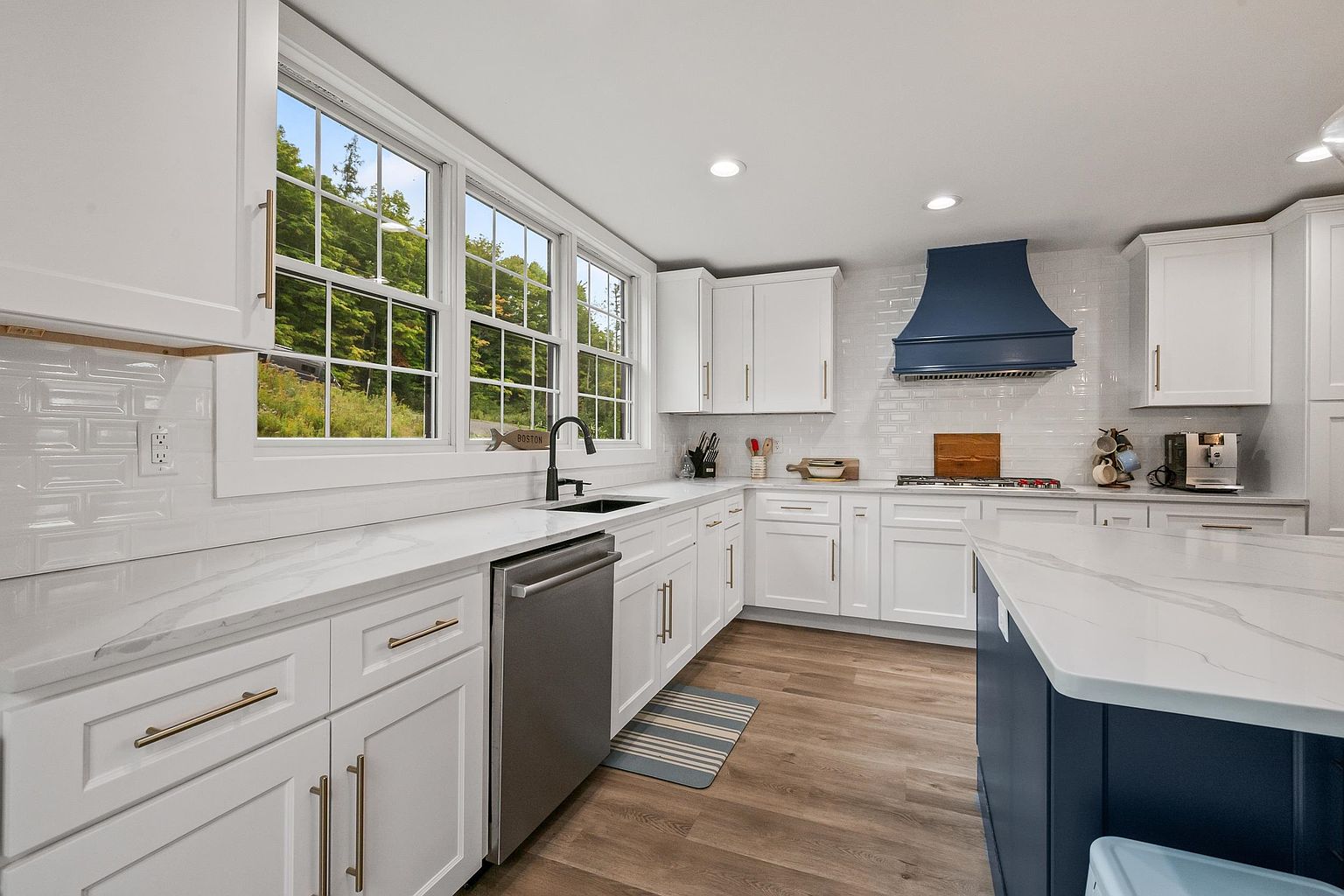
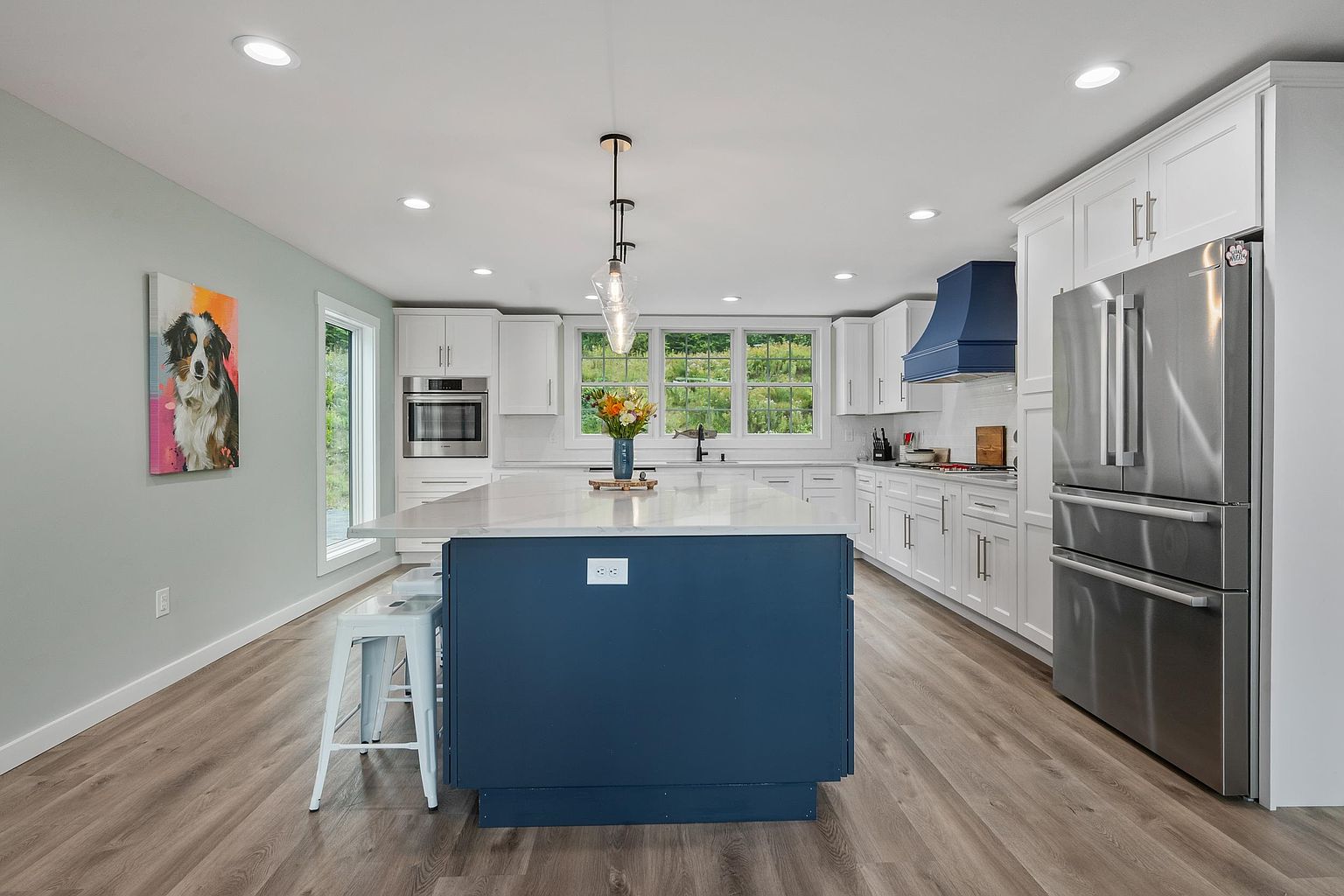
The chef's kitchen is a genuine centerpiece. A deep navy island — substantial in scale, topped in light-toned quartz, and surrounded by white metal counter stools — commands the space with the ease of a piece of furniture rather than a fixture. Navy carries through to the custom range hood above a professional gas cooktop, creating a bold, deliberate design statement against the otherwise crisp white perimeter cabinetry. Stainless steel appliances, a subway tile backsplash, a deep undermount sink, and a generous bank of windows overlooking the green exterior complete a kitchen that is built for both serious cooking and easy entertaining.
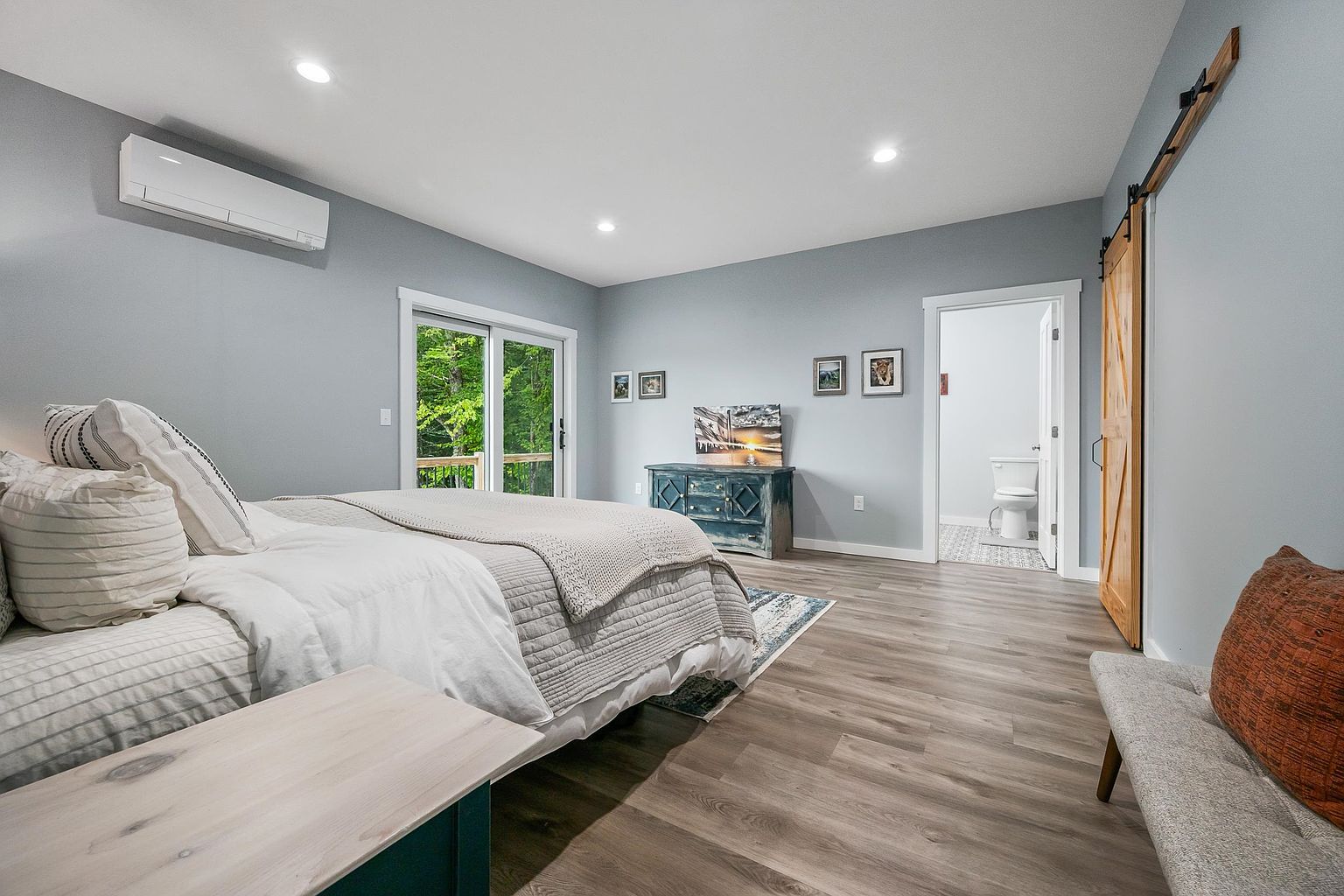
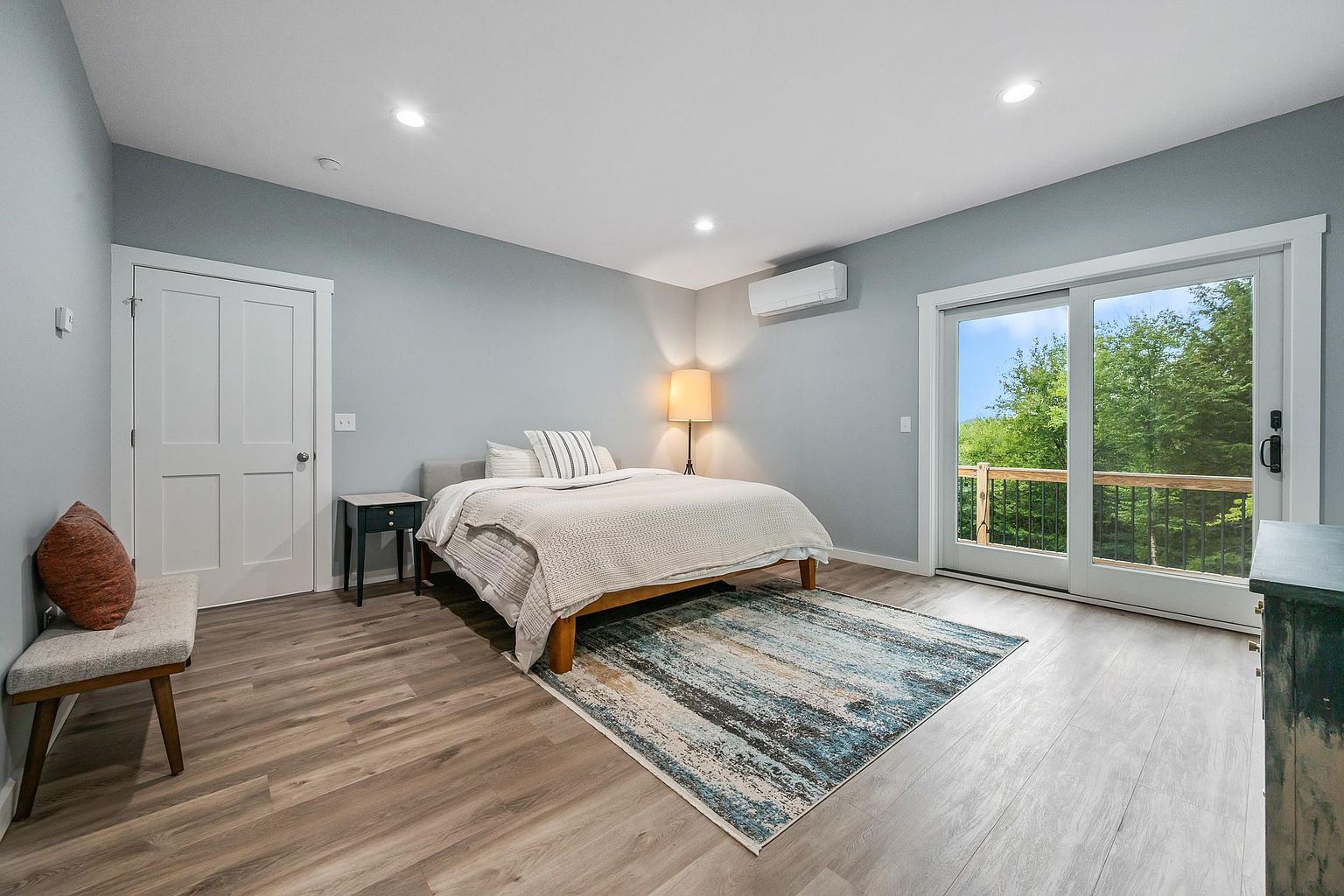
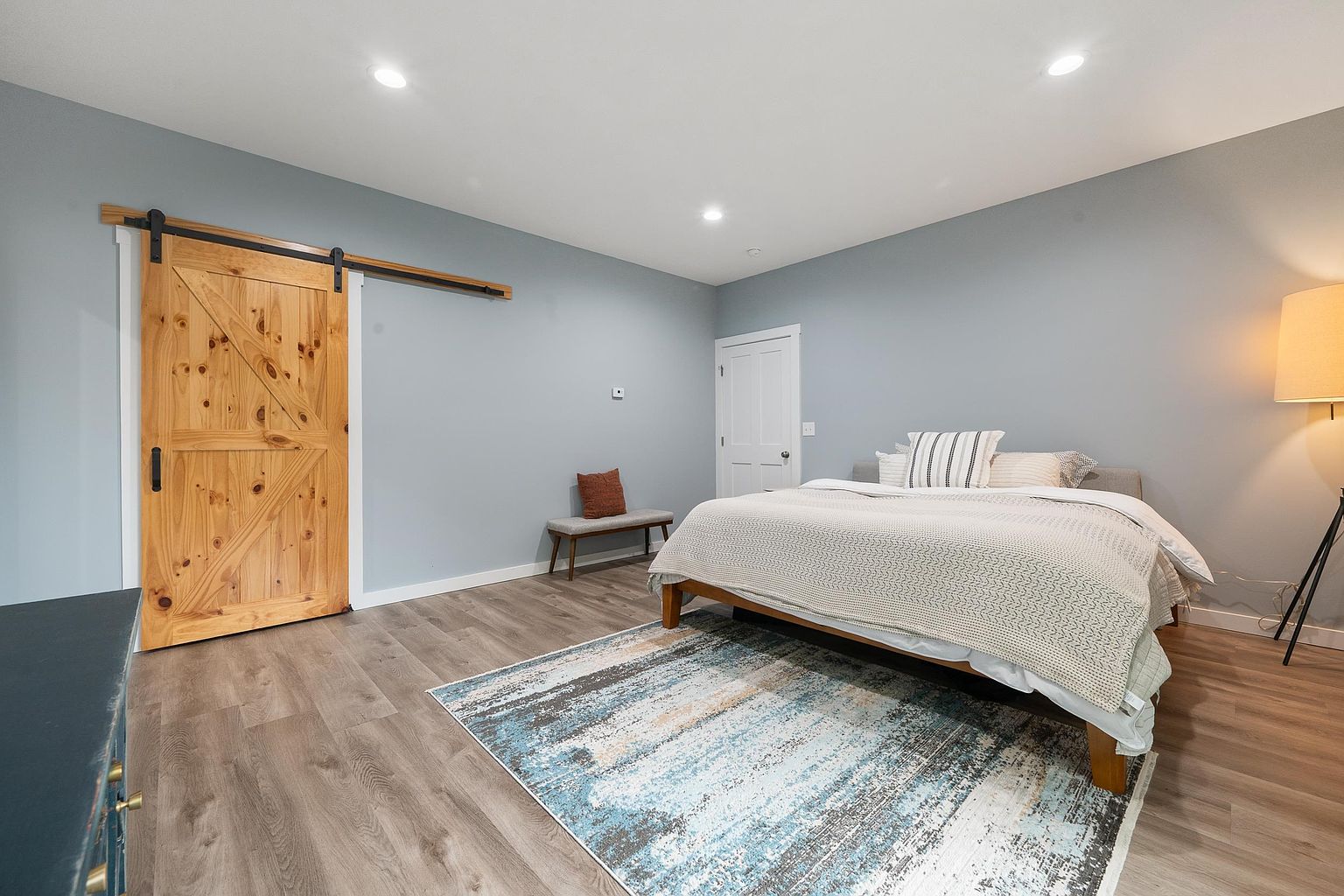
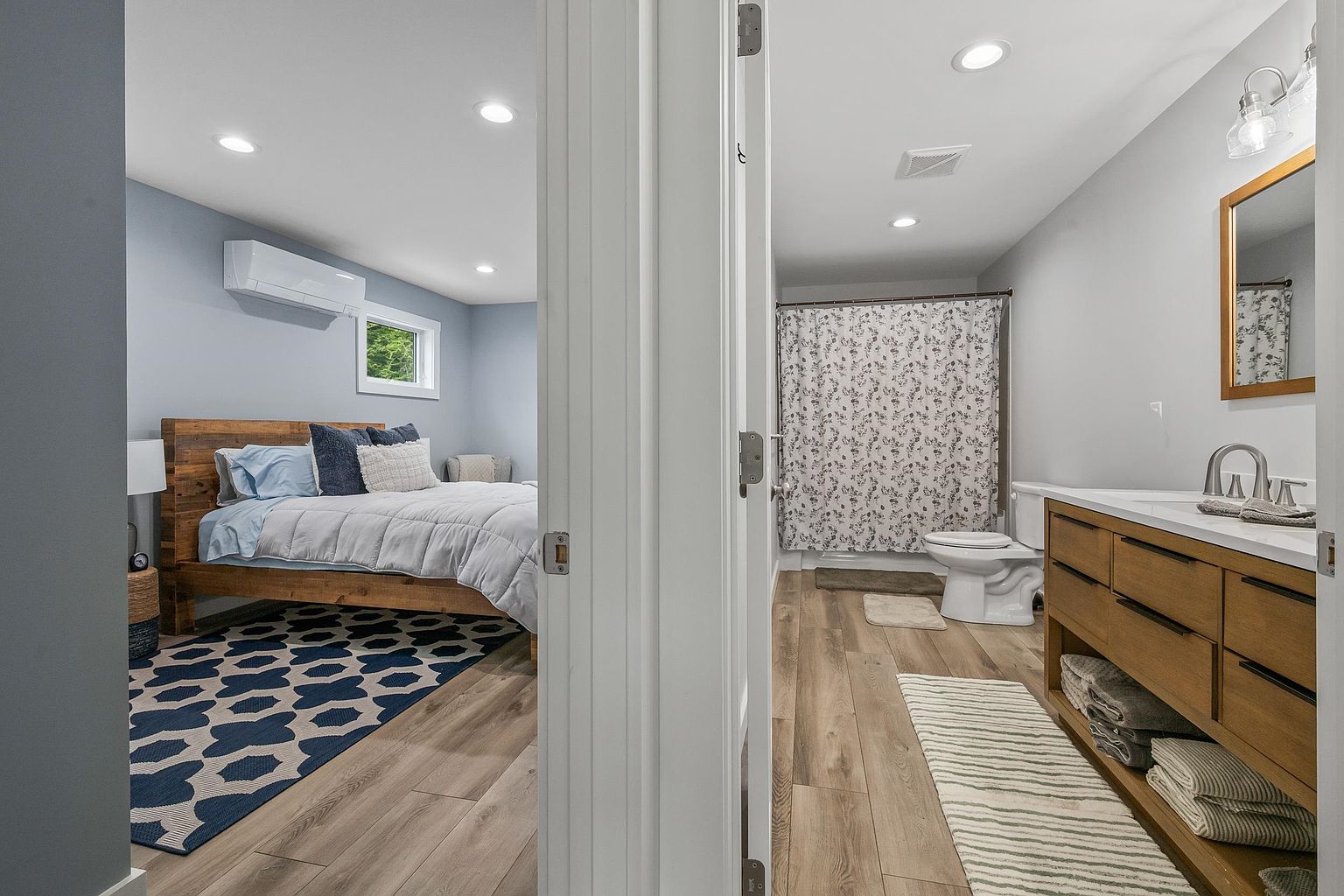
Comfort is engineered into the bones of the home. Radiant heat beneath the floors provides the steady, enveloping warmth that New Hampshire winters demand, while a system of ductless mini-splits handles the warmer months with quiet efficiency. The main-level primary suite — with sliding glass doors to the deck, a barn-style door to the ensuite bath, and a calm palette of soft blue and natural wood — offers the ease of single-level living without sacrificing style.
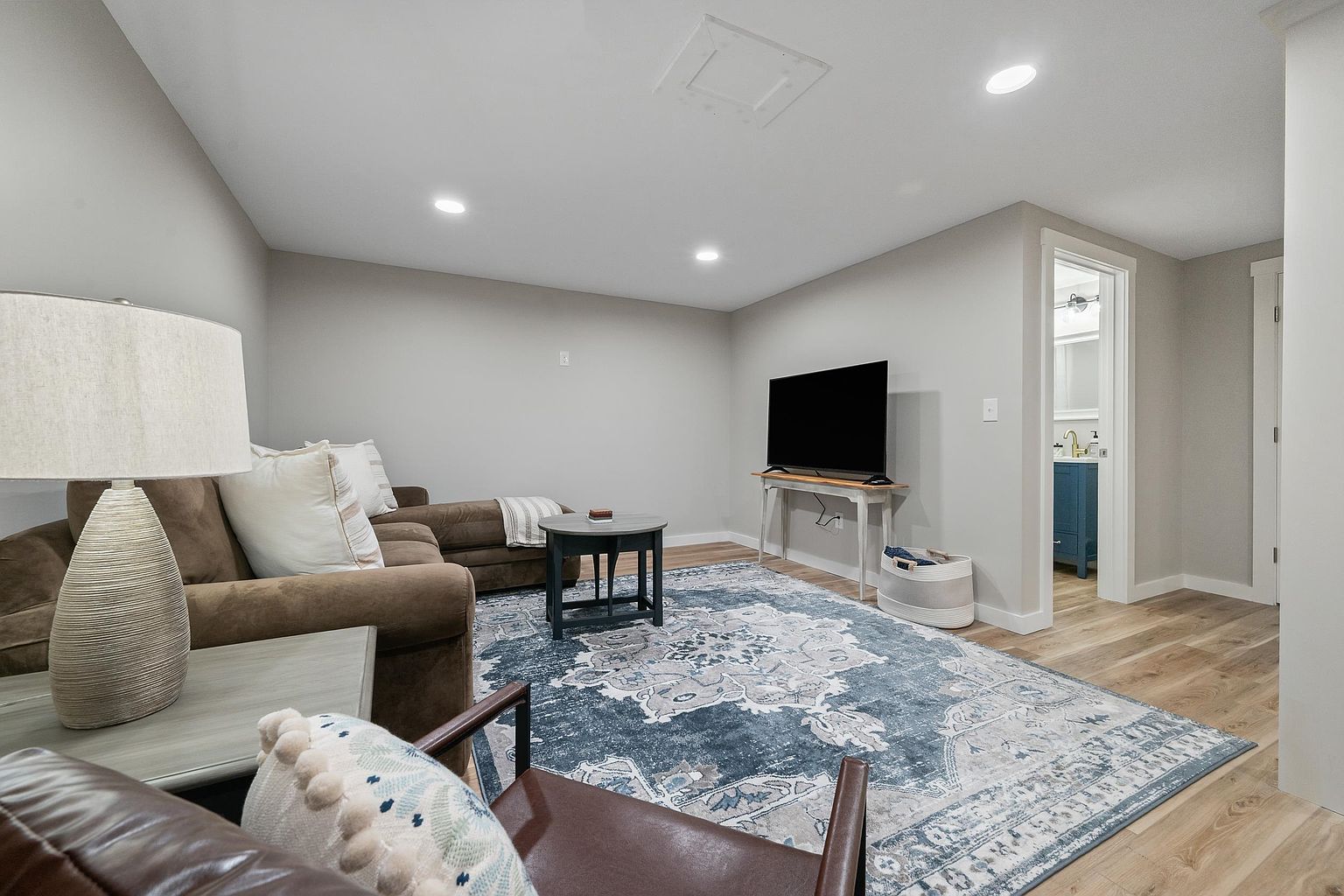
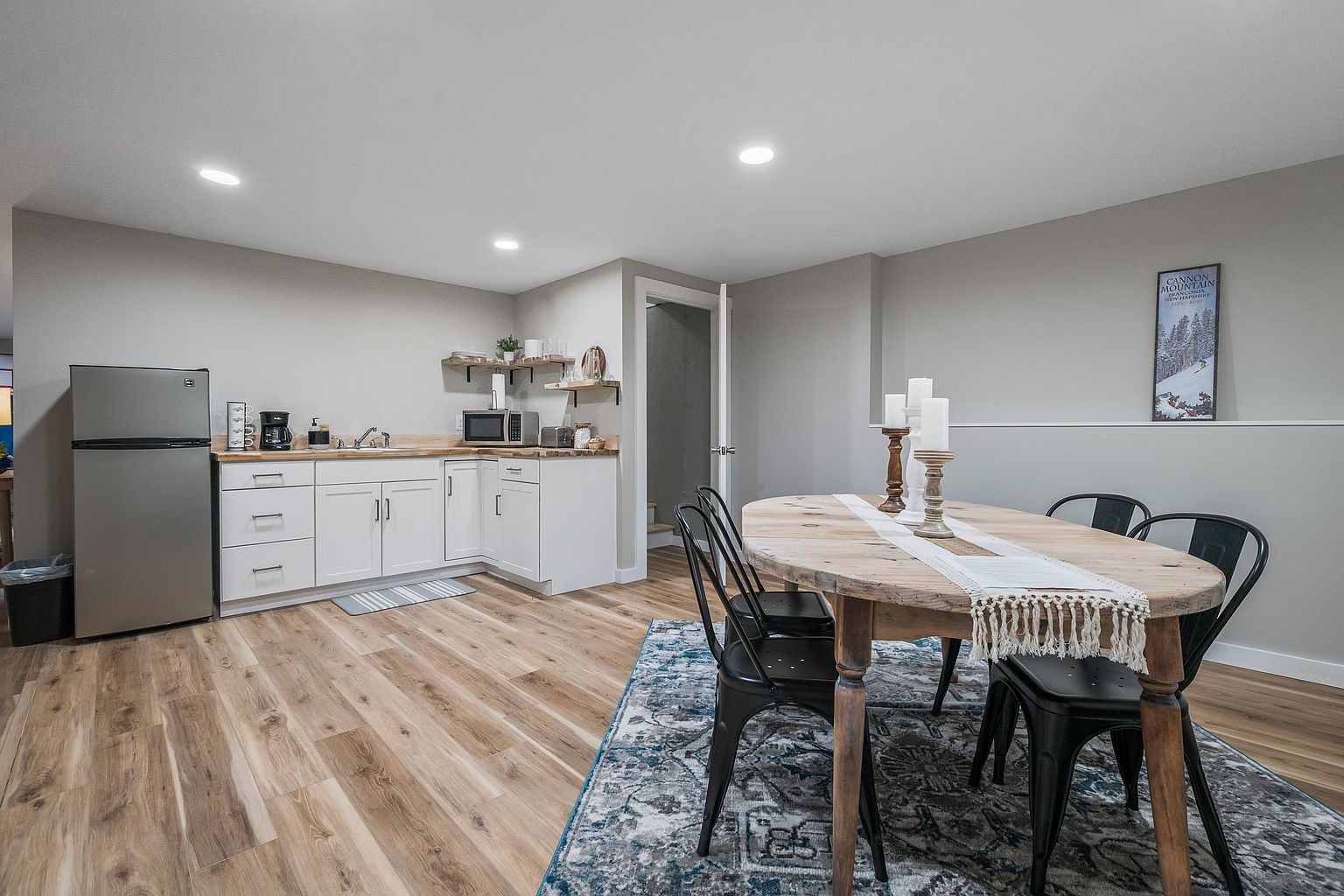
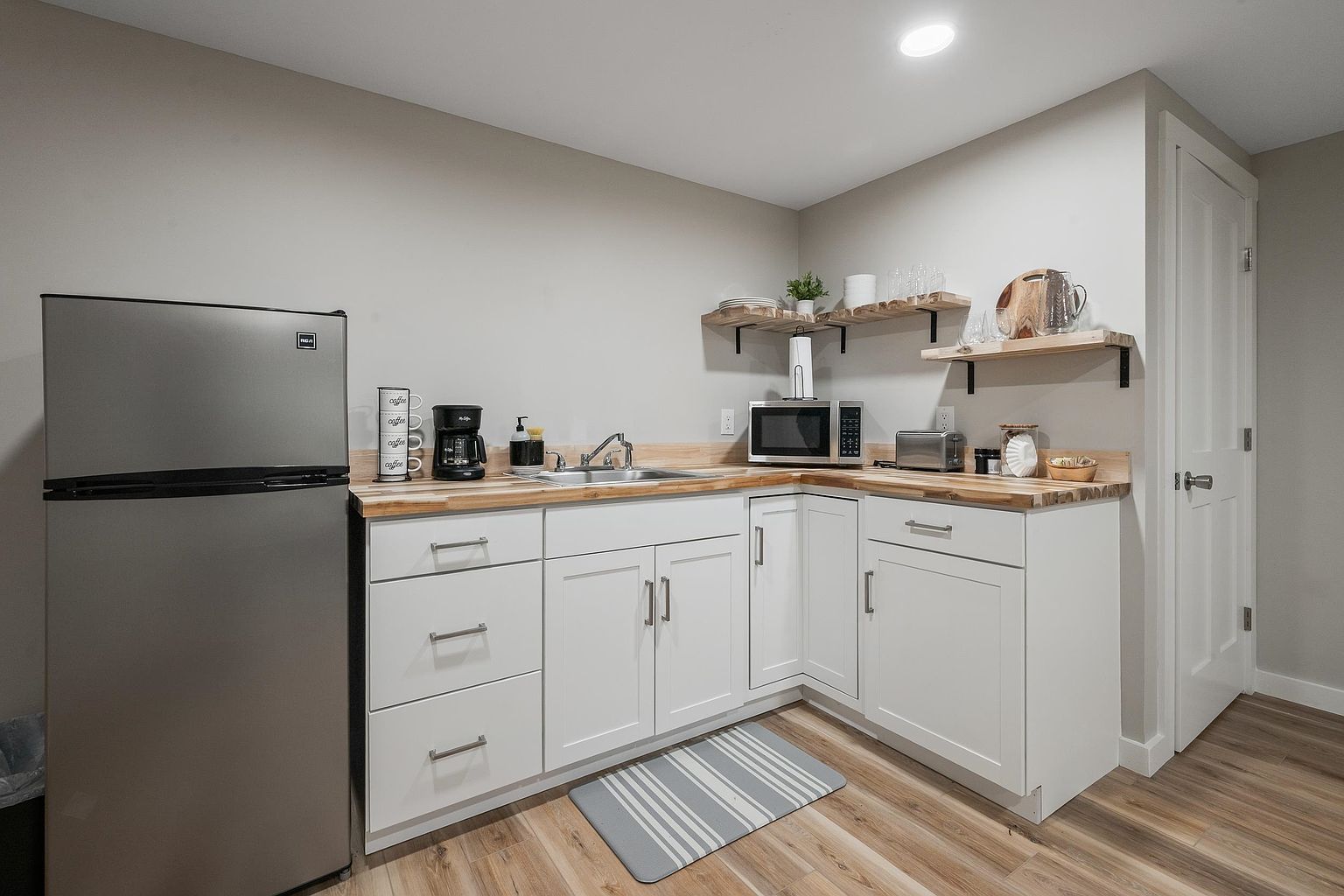
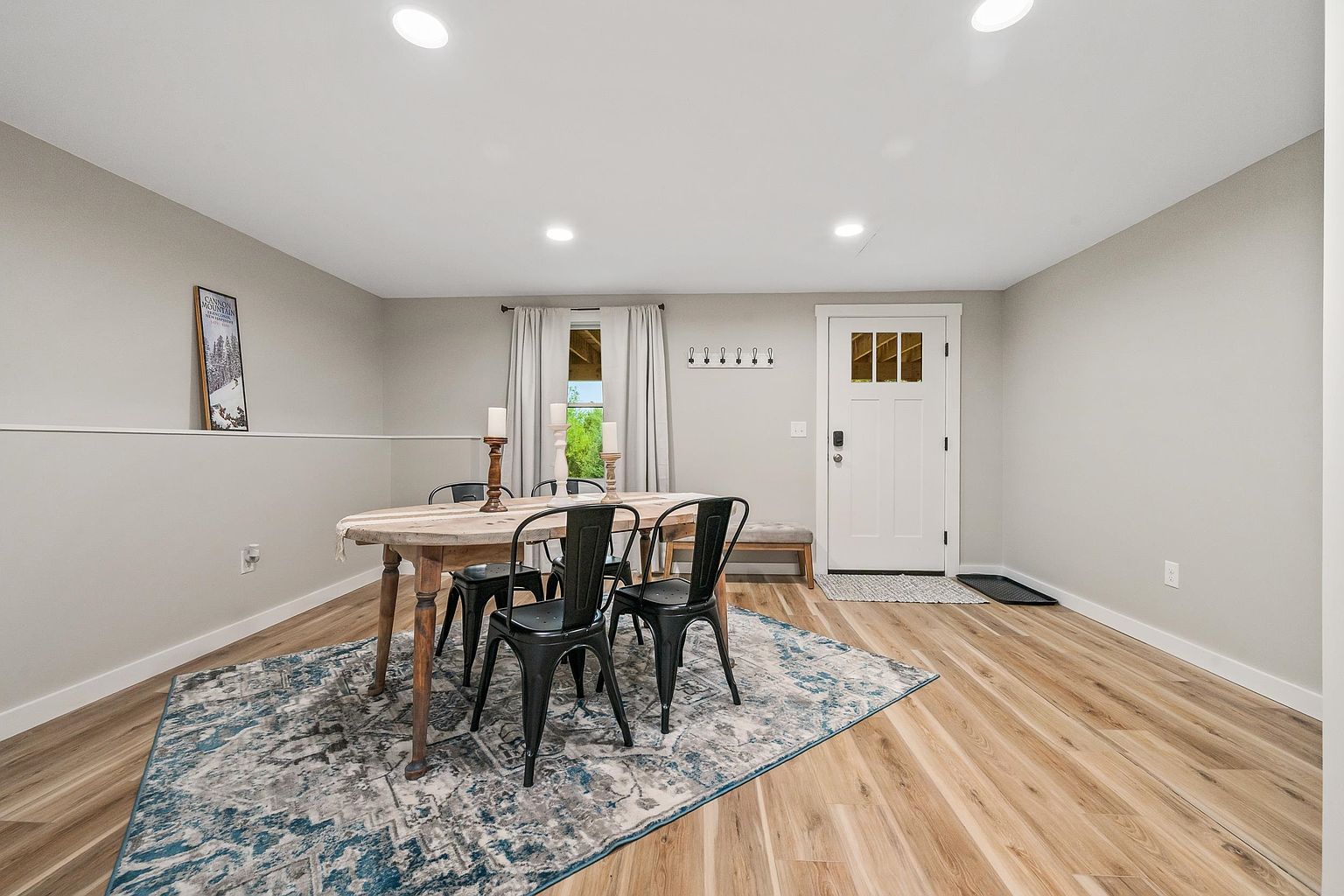
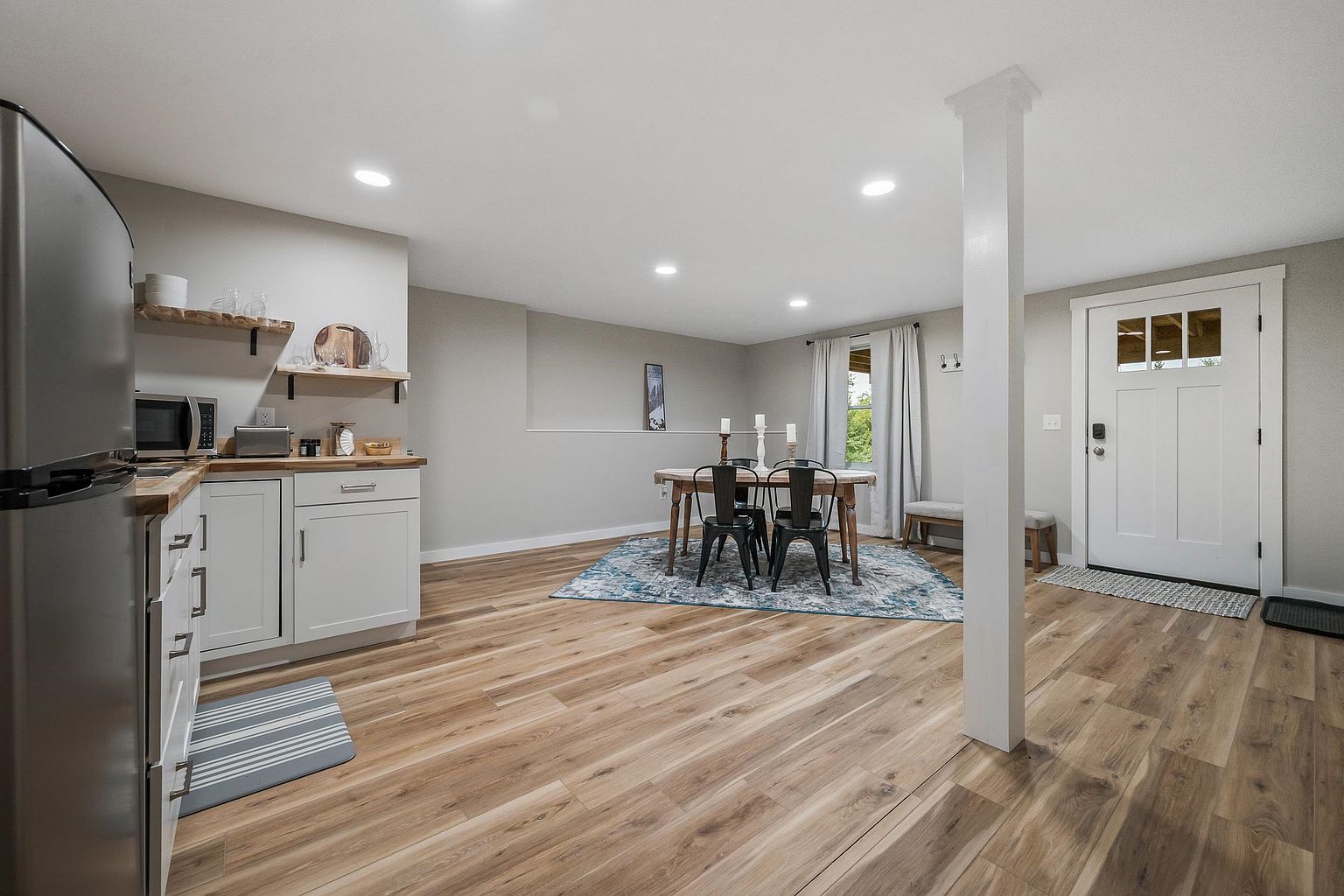
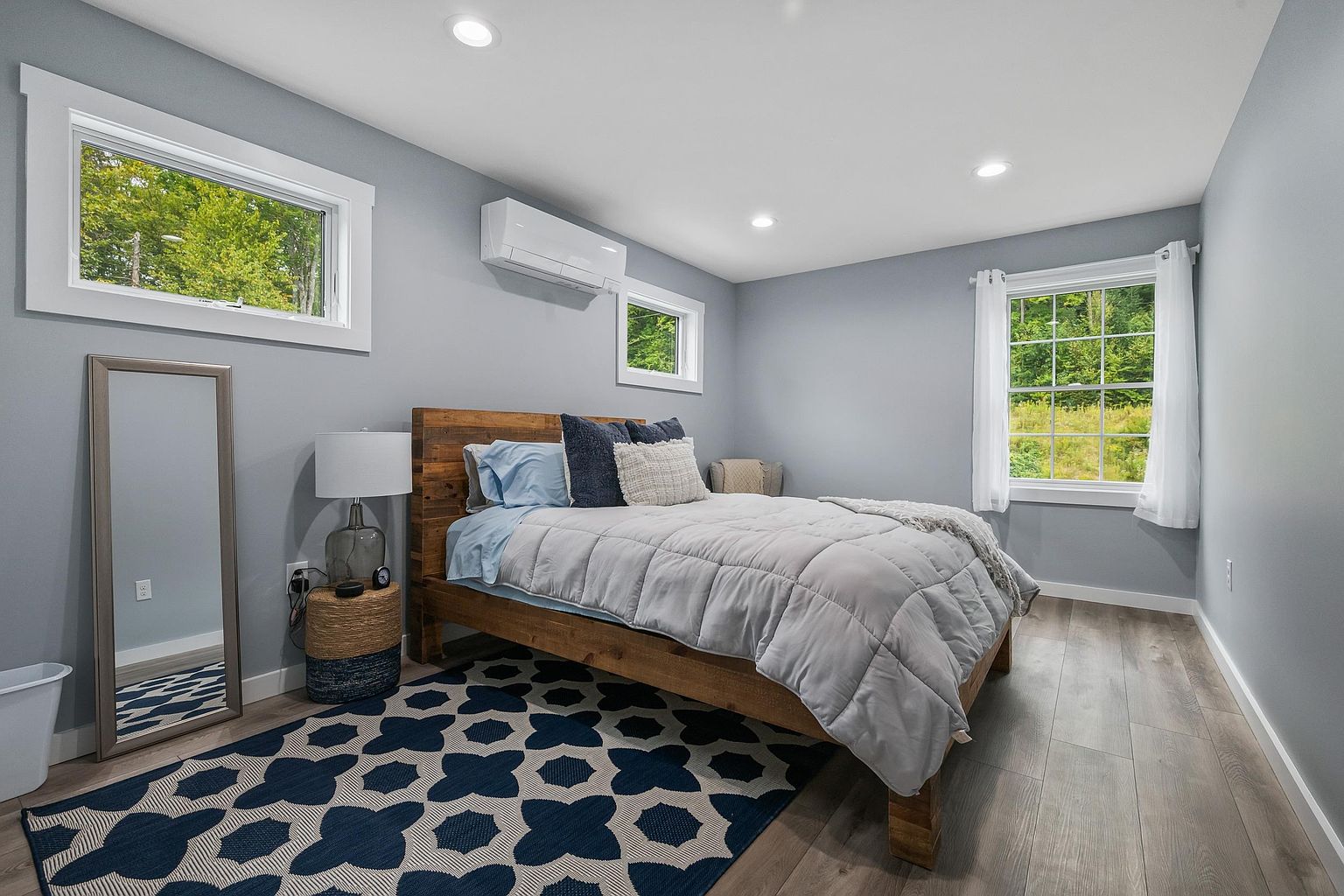
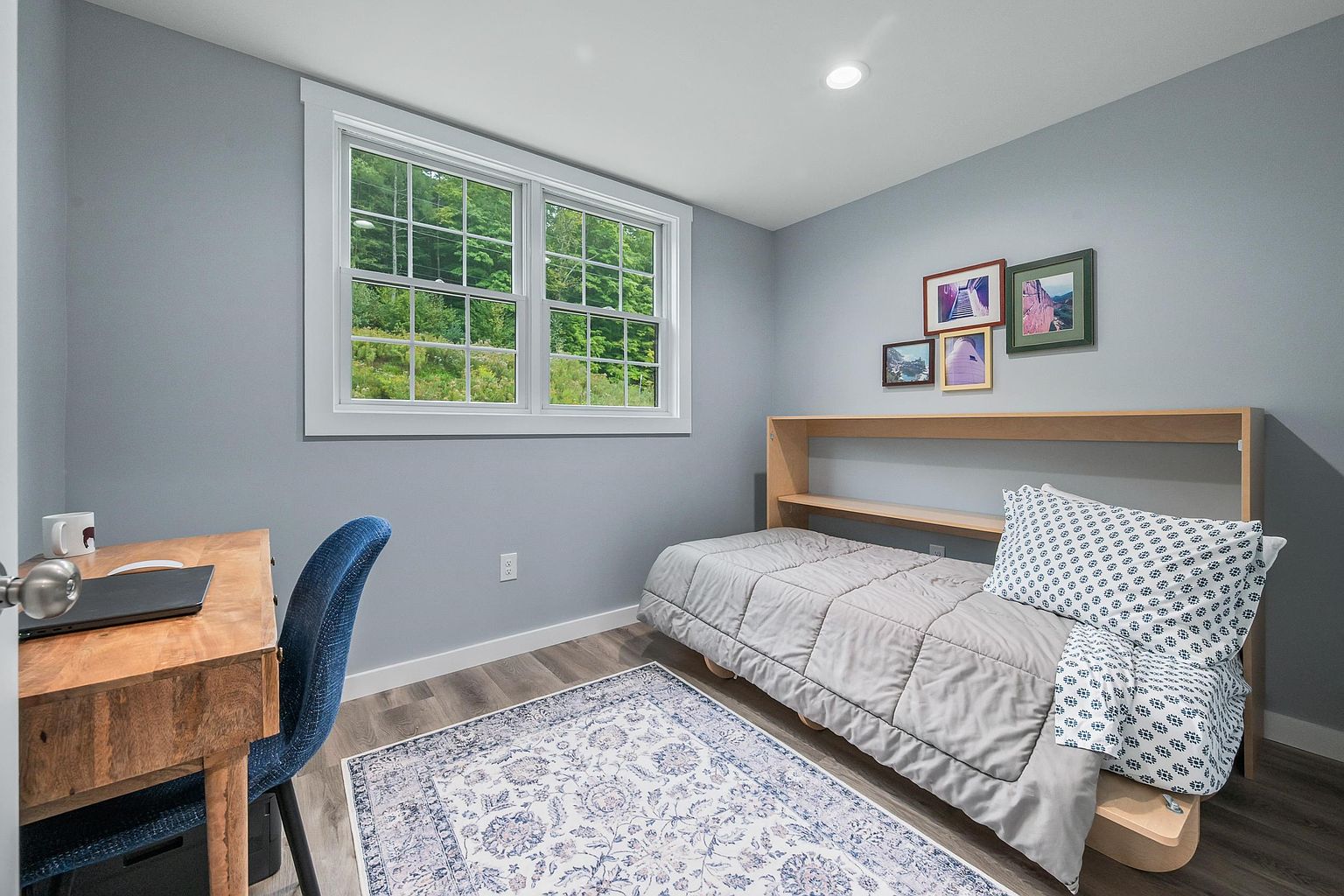
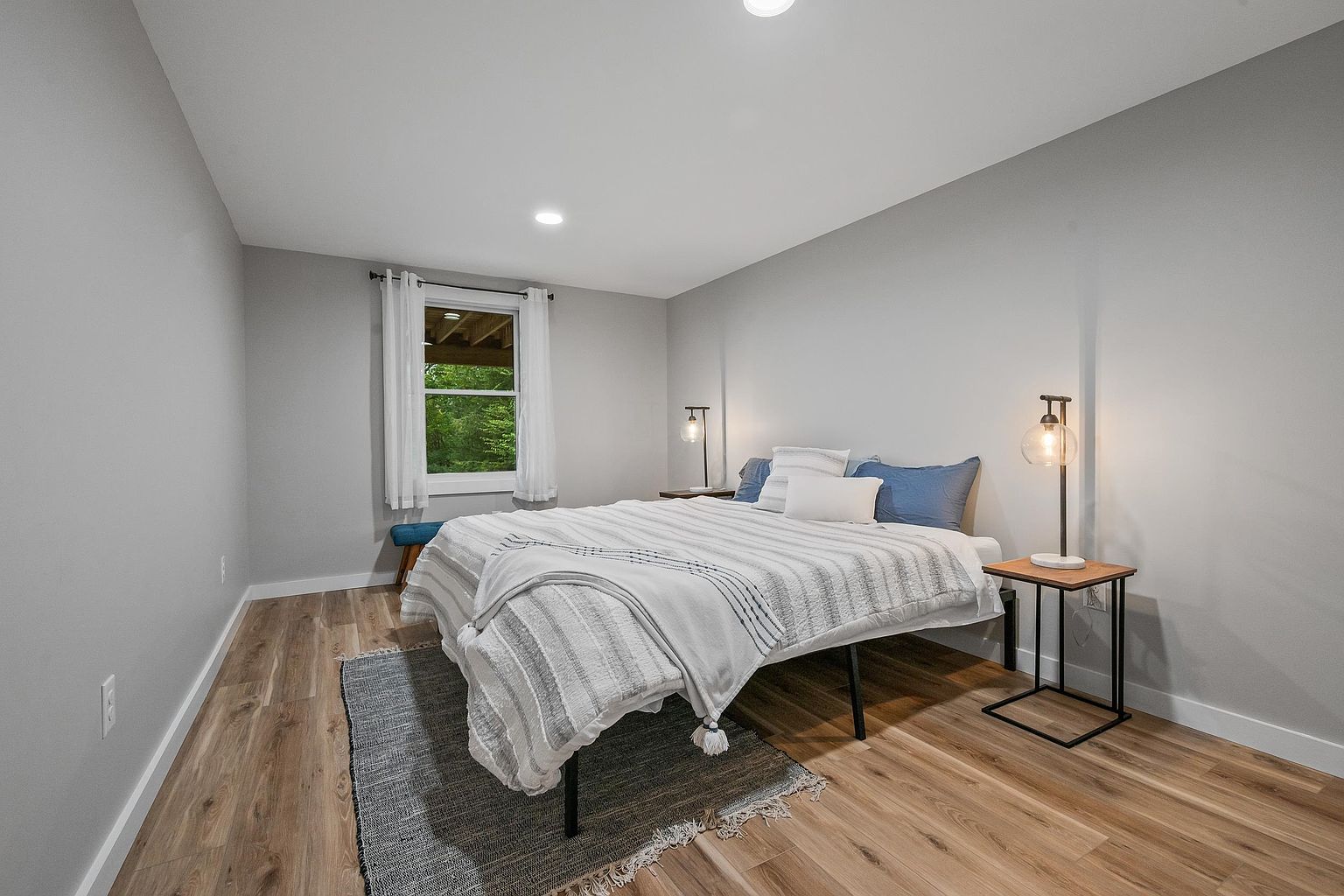
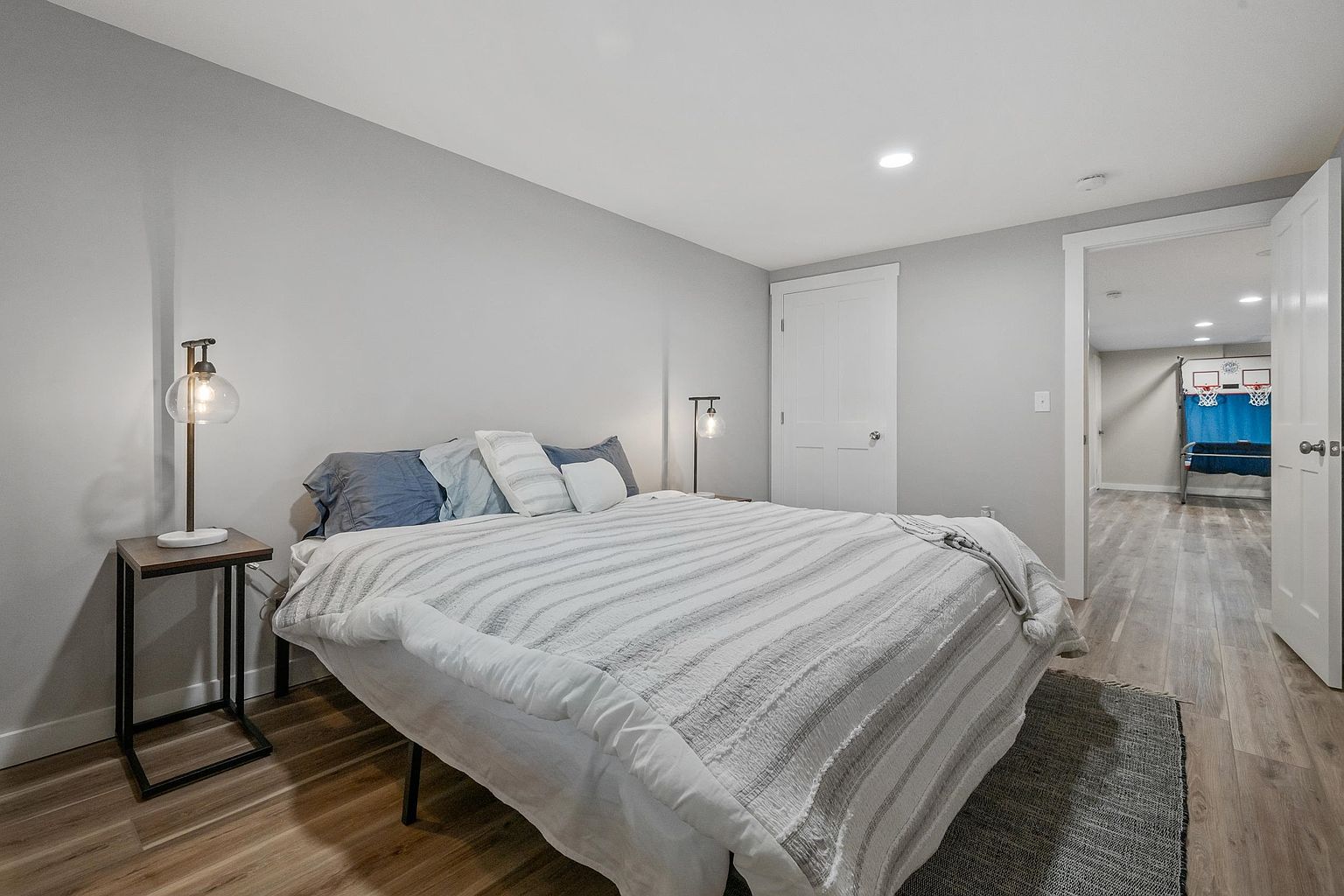
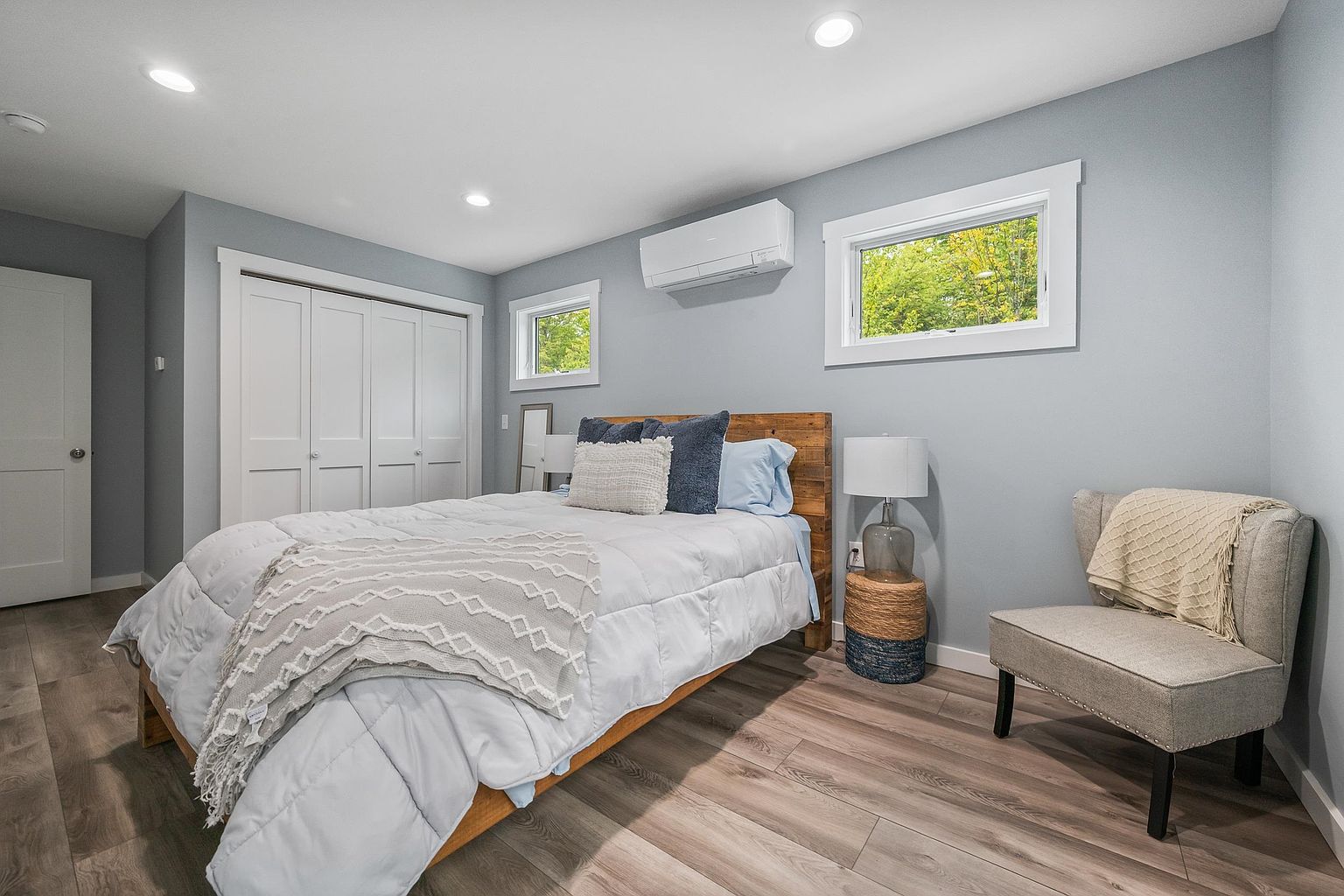
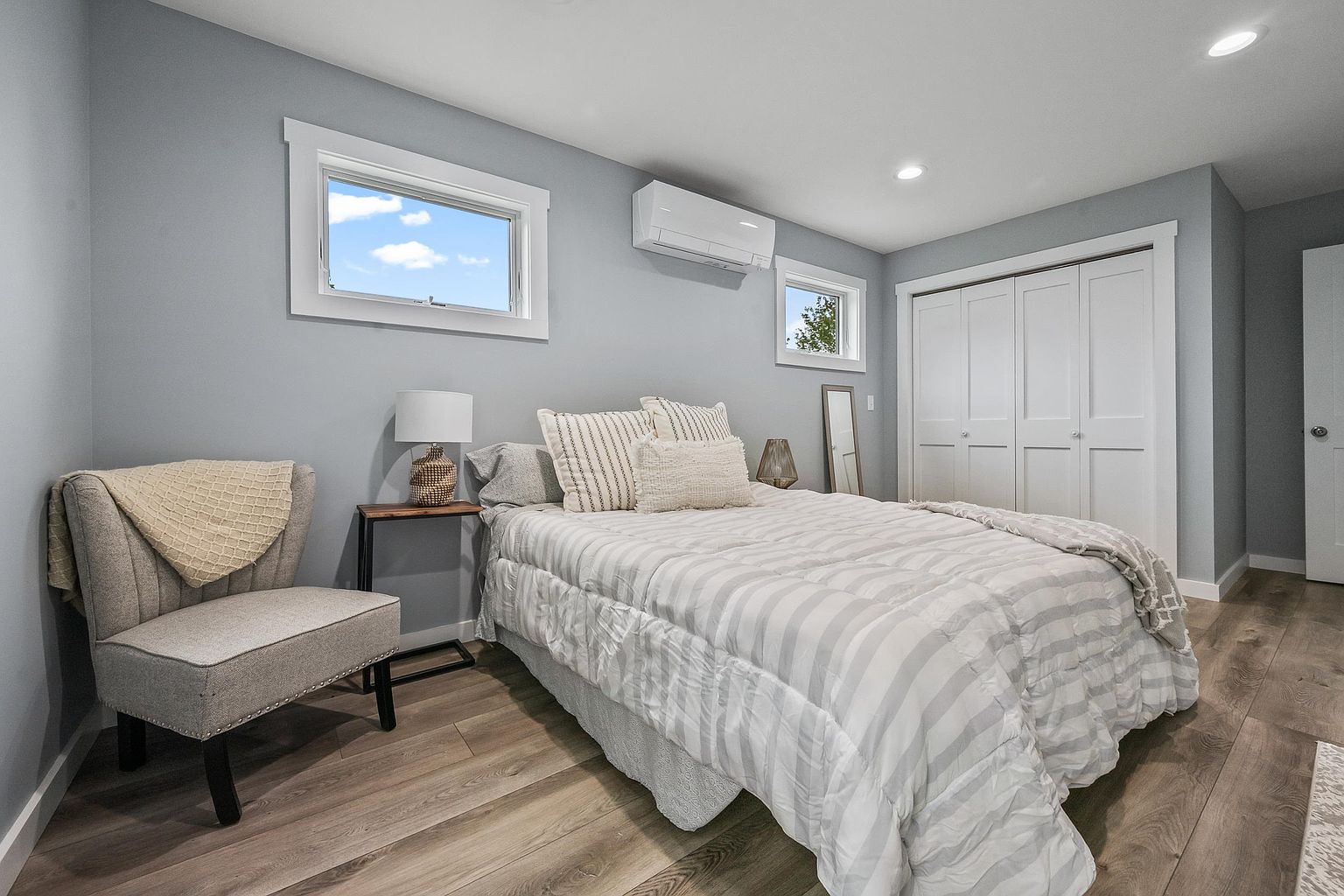
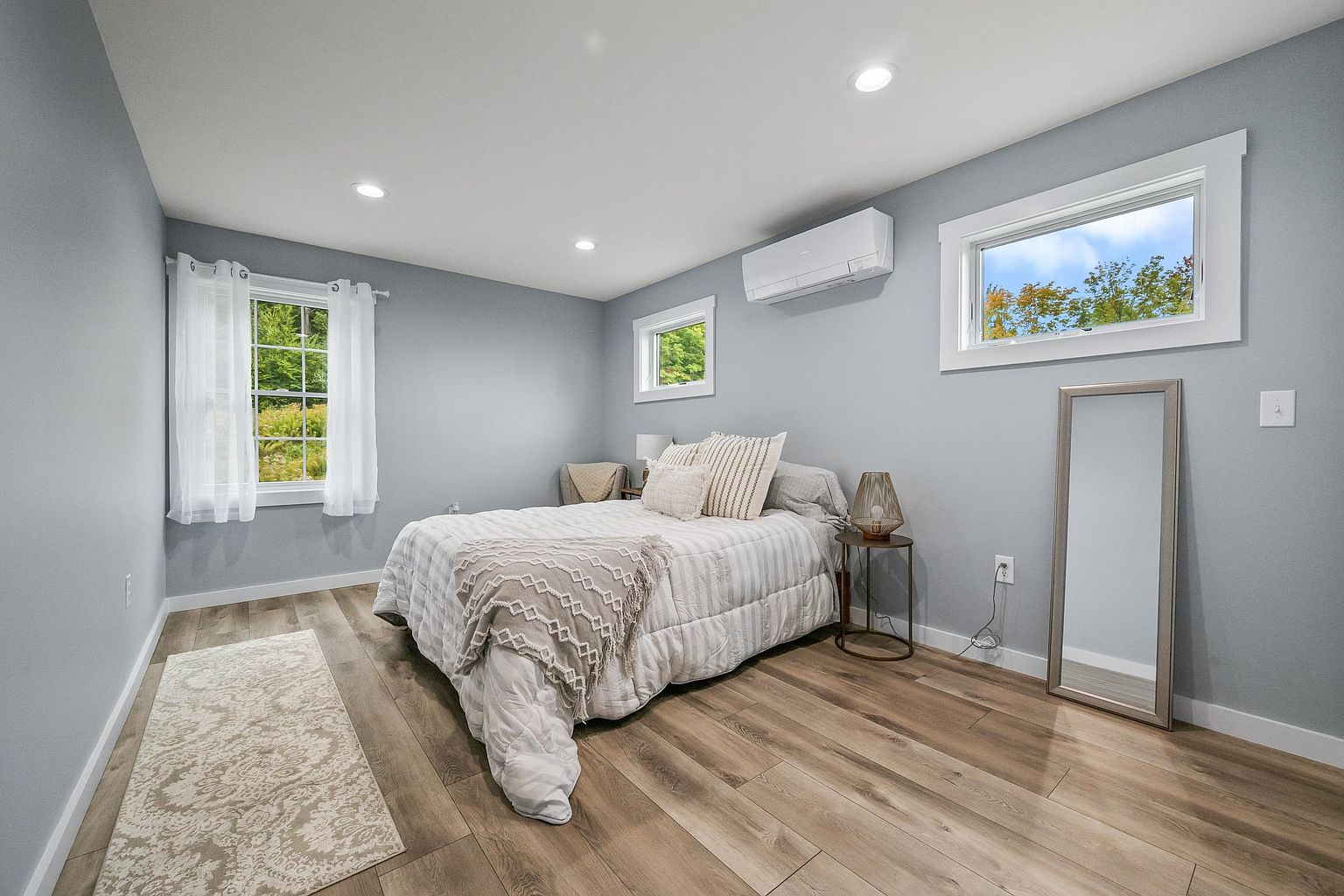
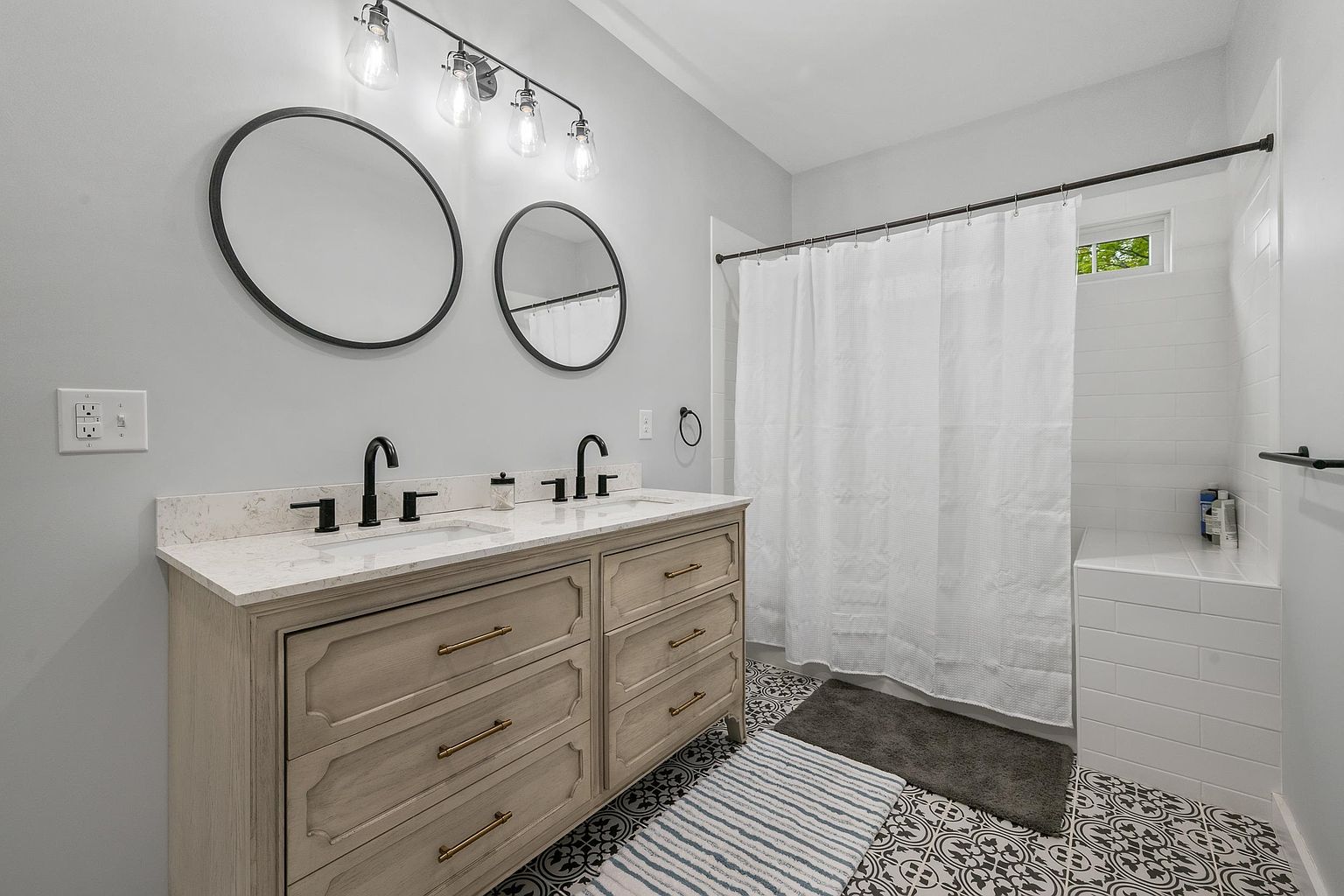
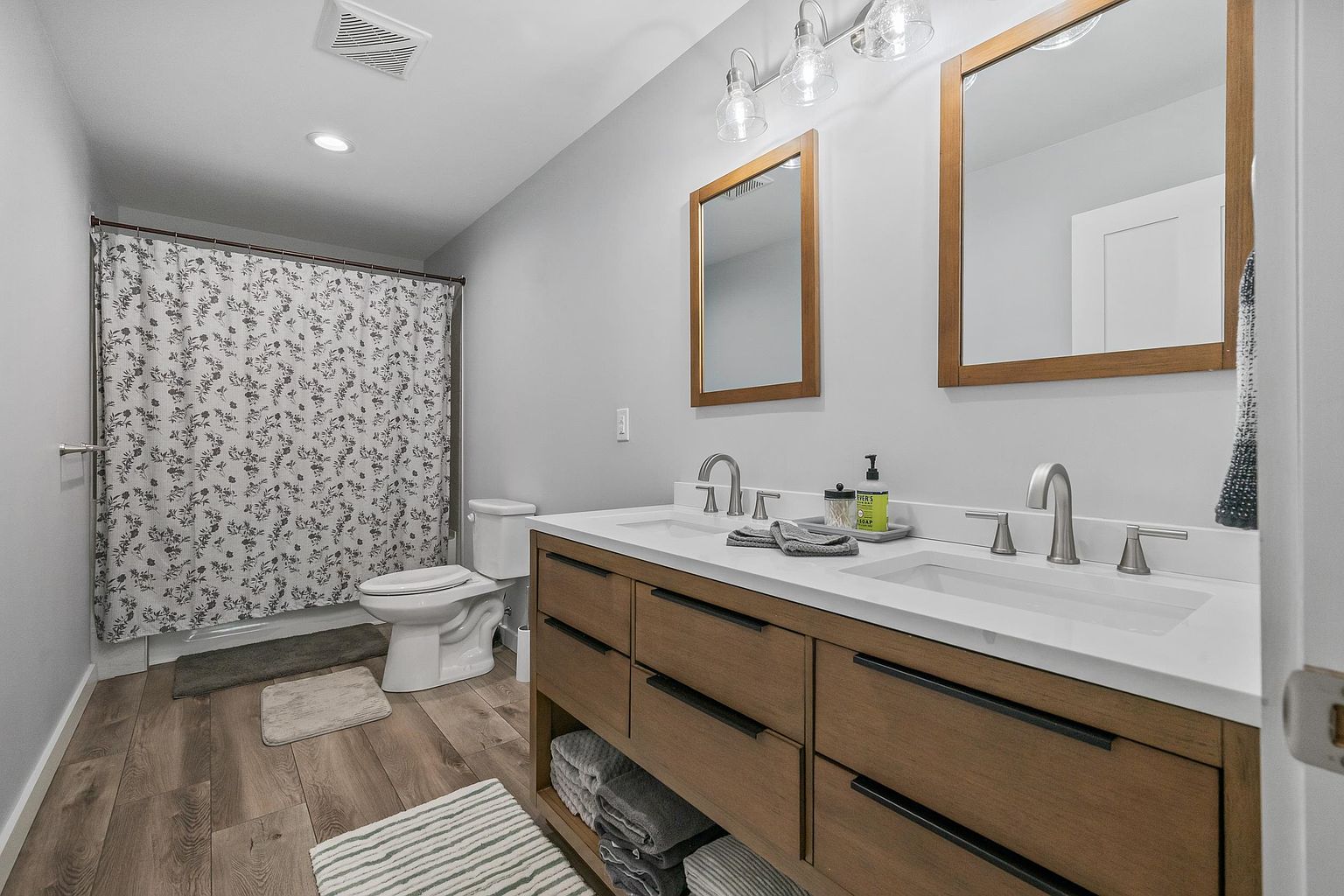
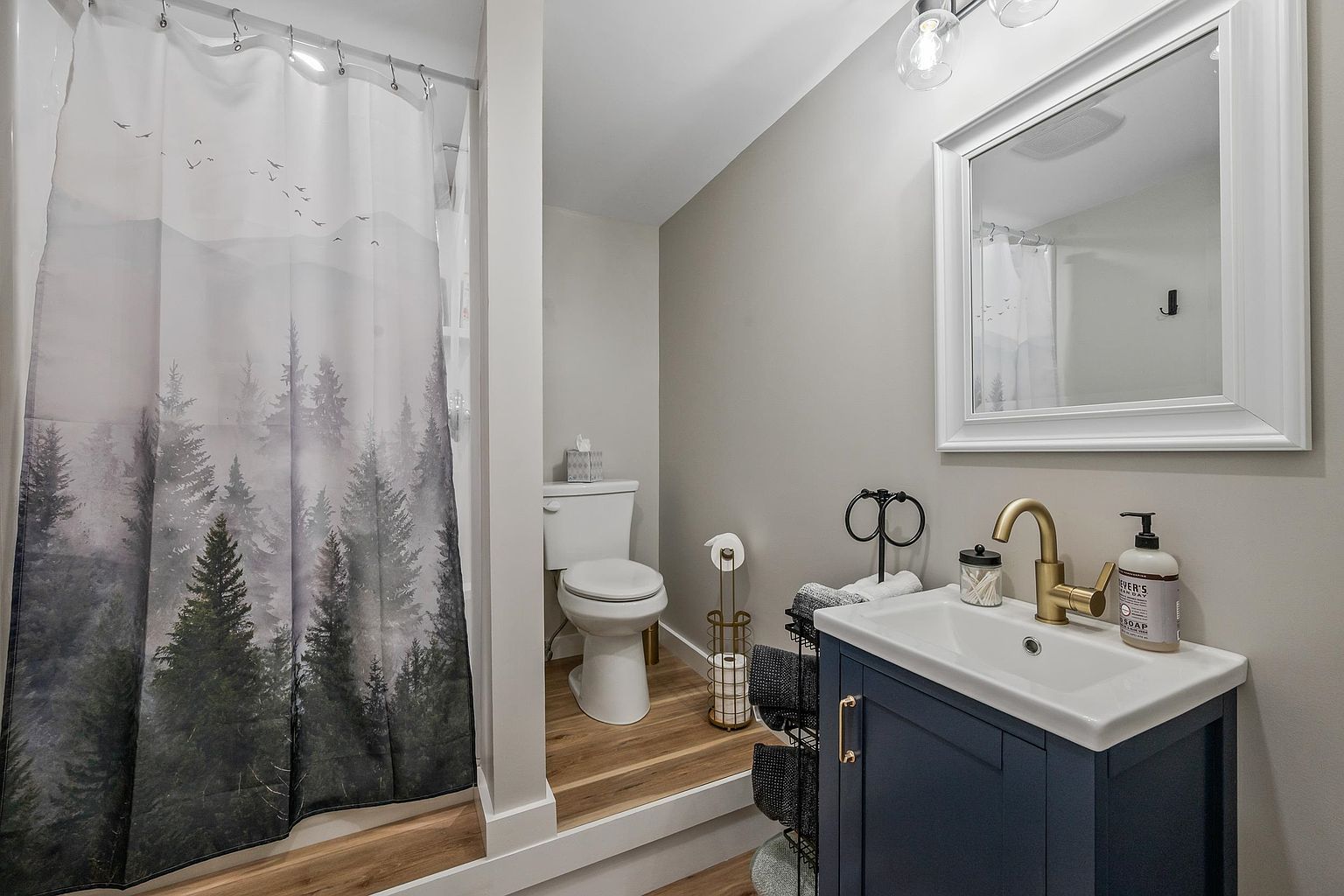
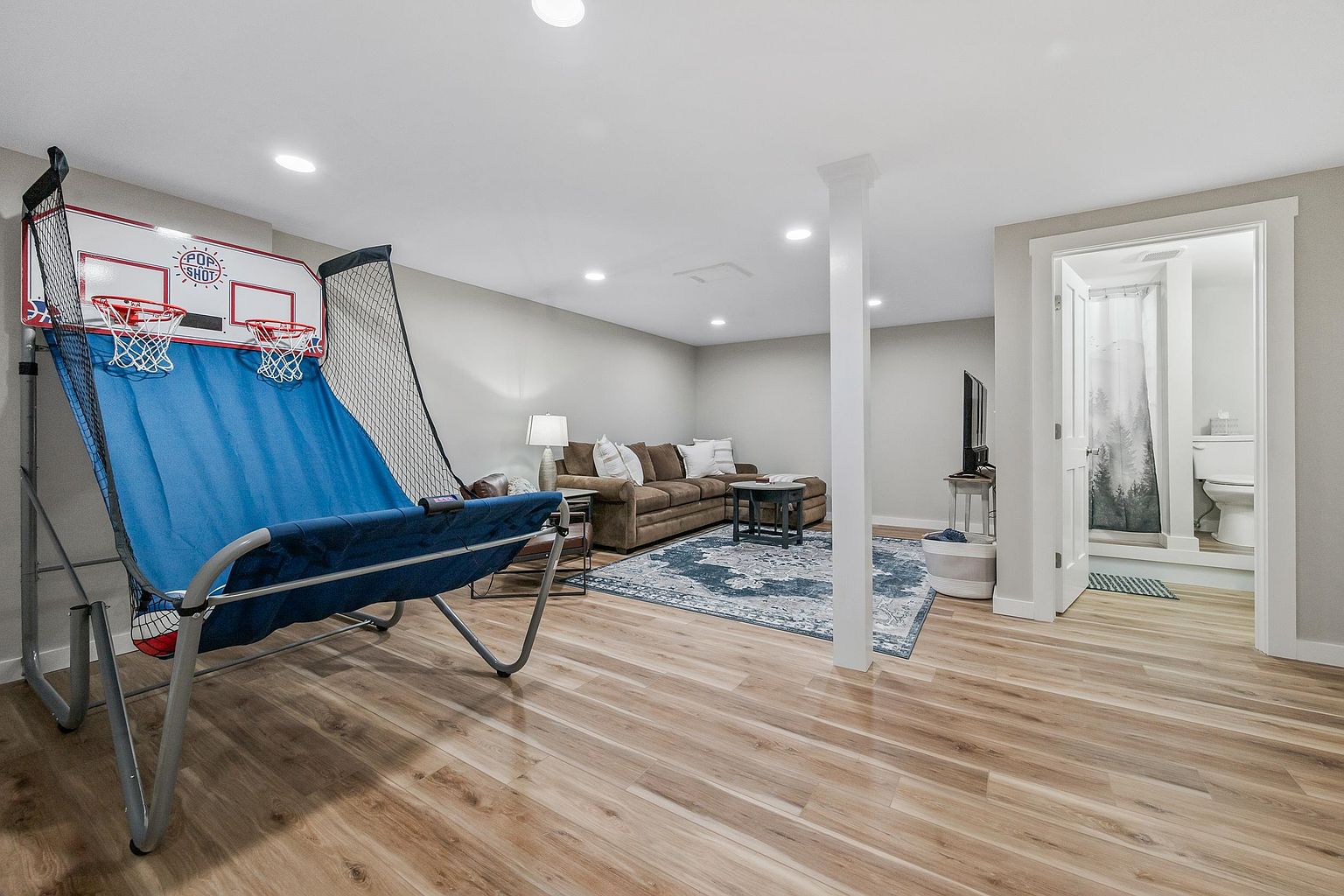
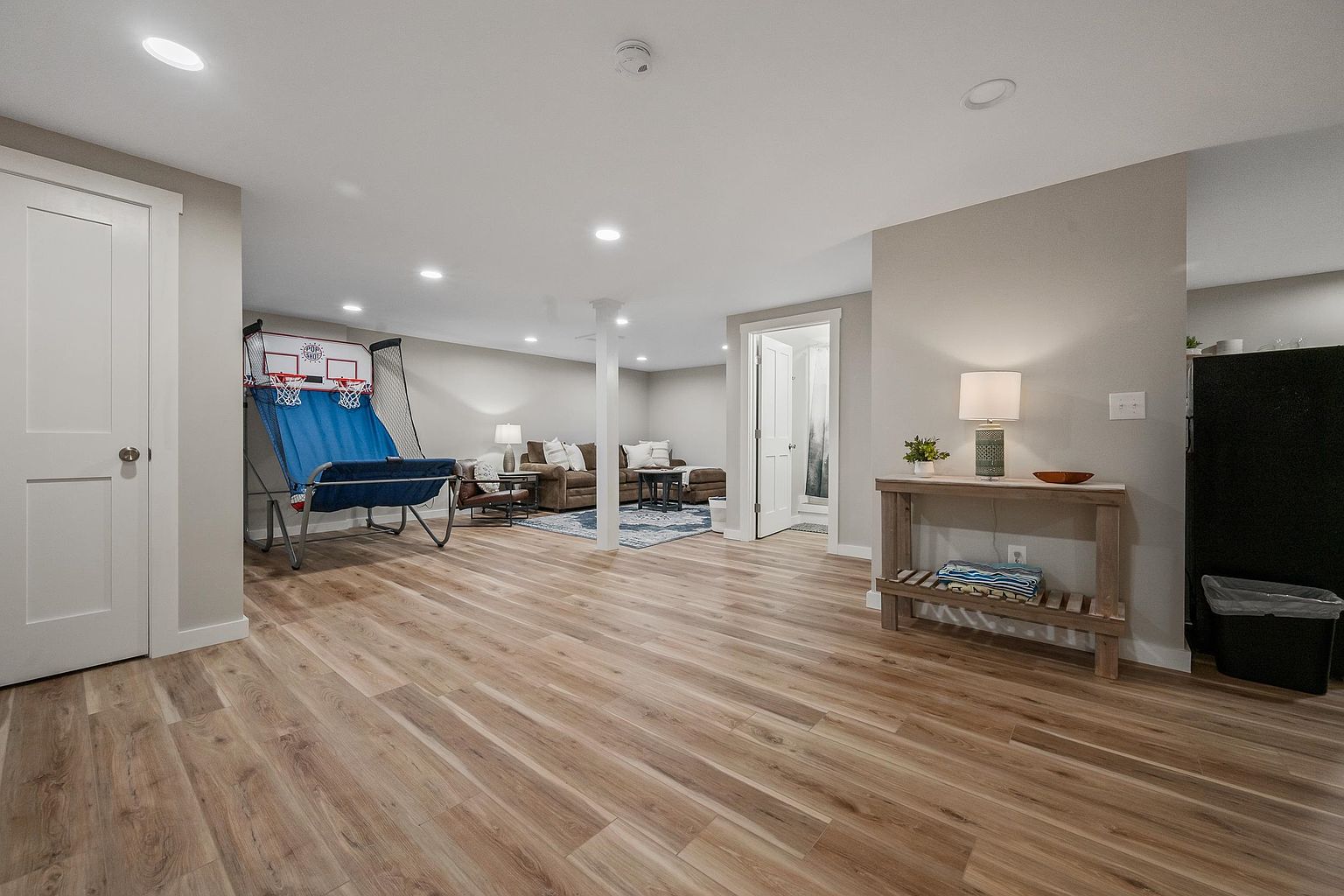
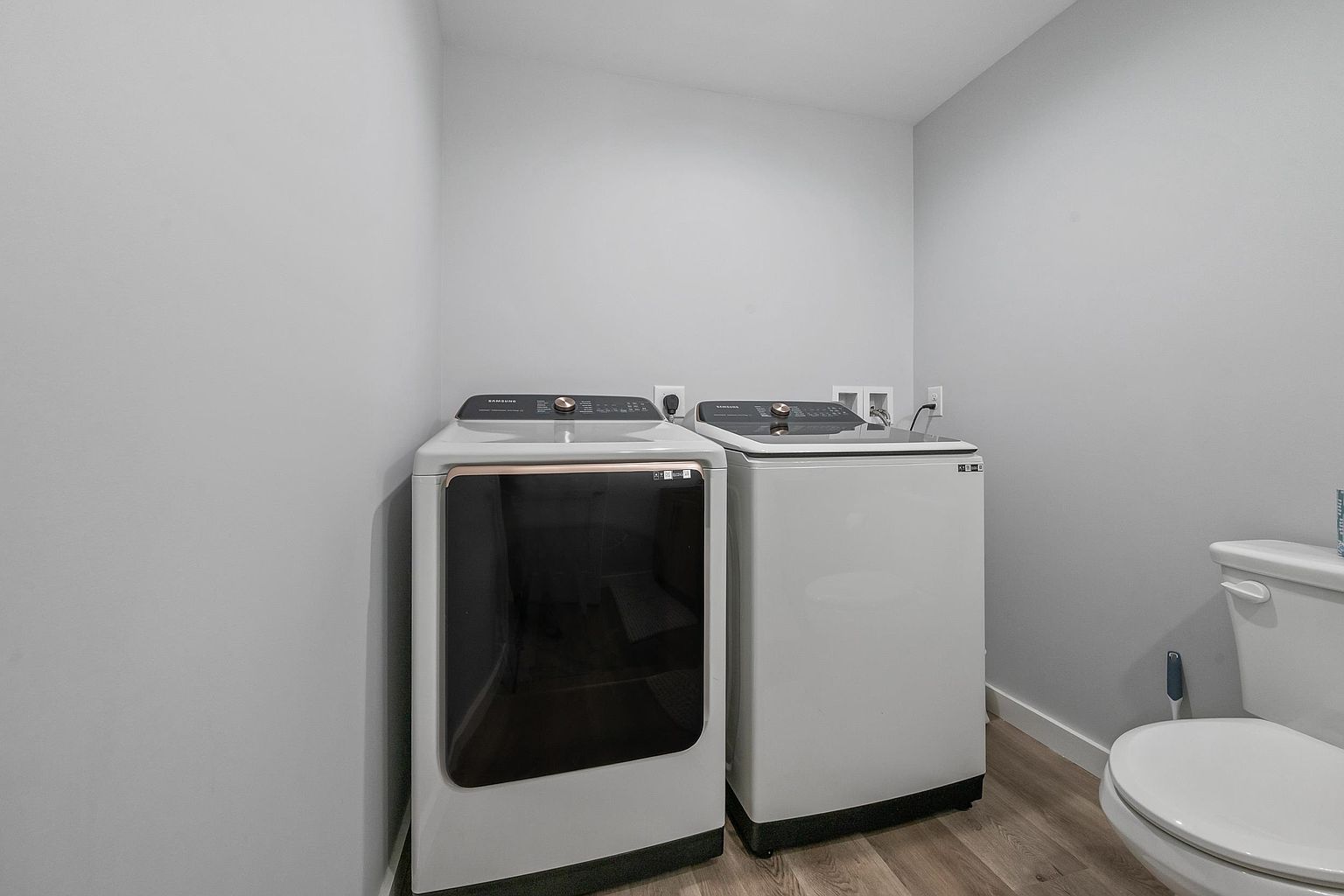
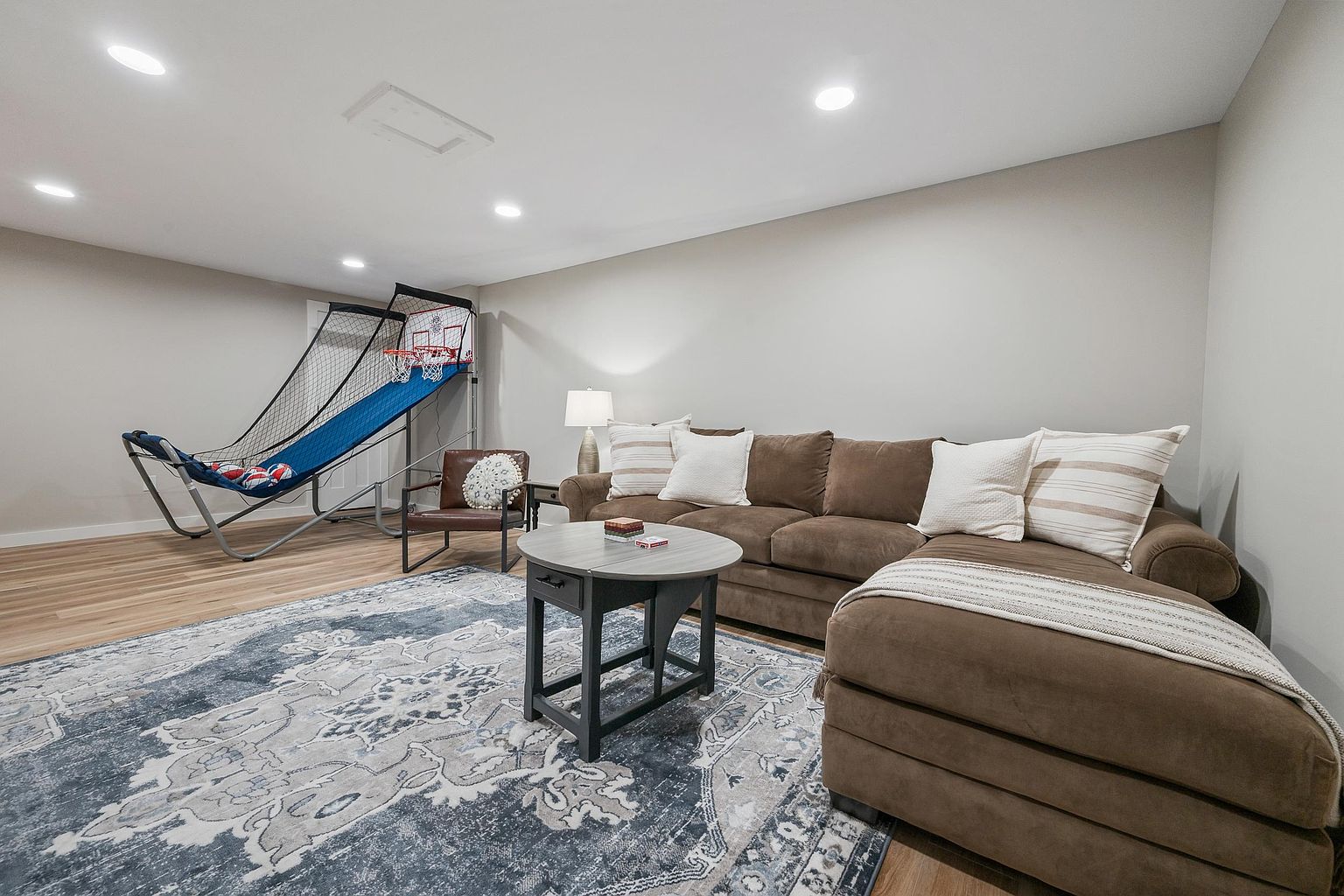
Upstairs, two additional guest bedrooms share access to a well-appointed full bath, each room bright with natural light and views of the surrounding canopy. Downstairs, the finished walkout level delivers a fully appointed private apartment — complete with its own kitchenette, dining area, lounge, and bathroom — a versatile space that accommodates guests, extended family, rental income, or a dedicated home office with equal grace.
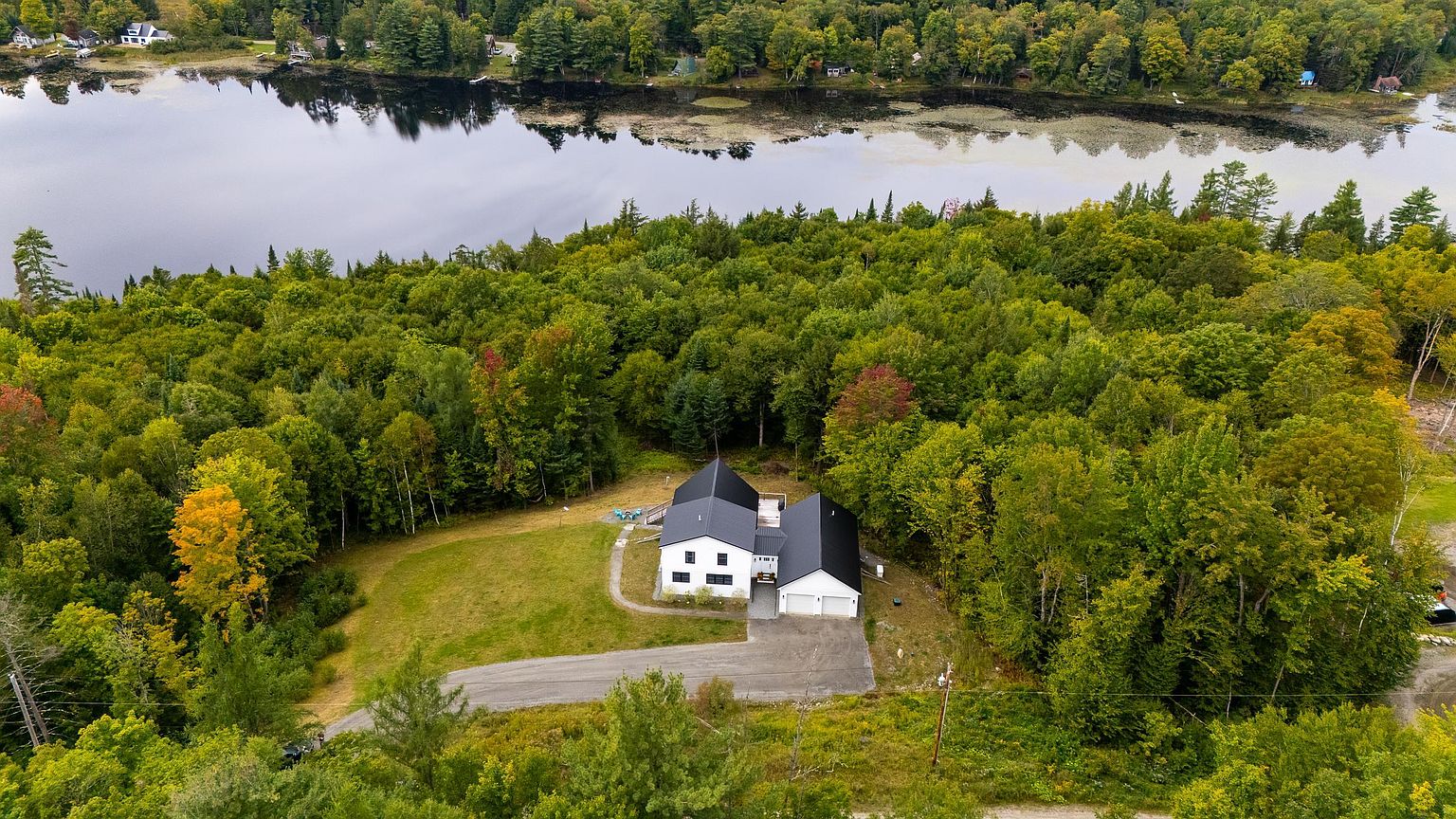
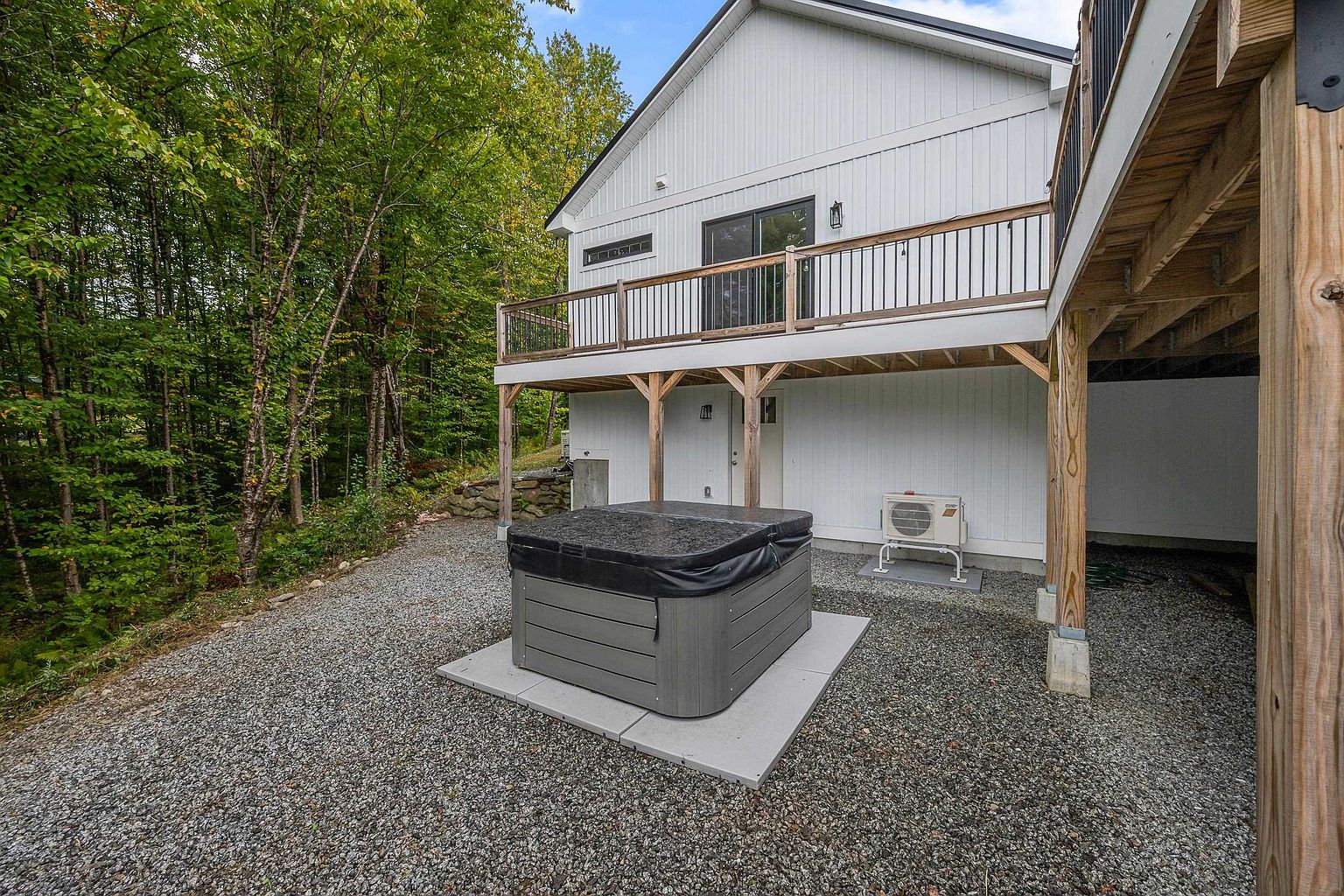
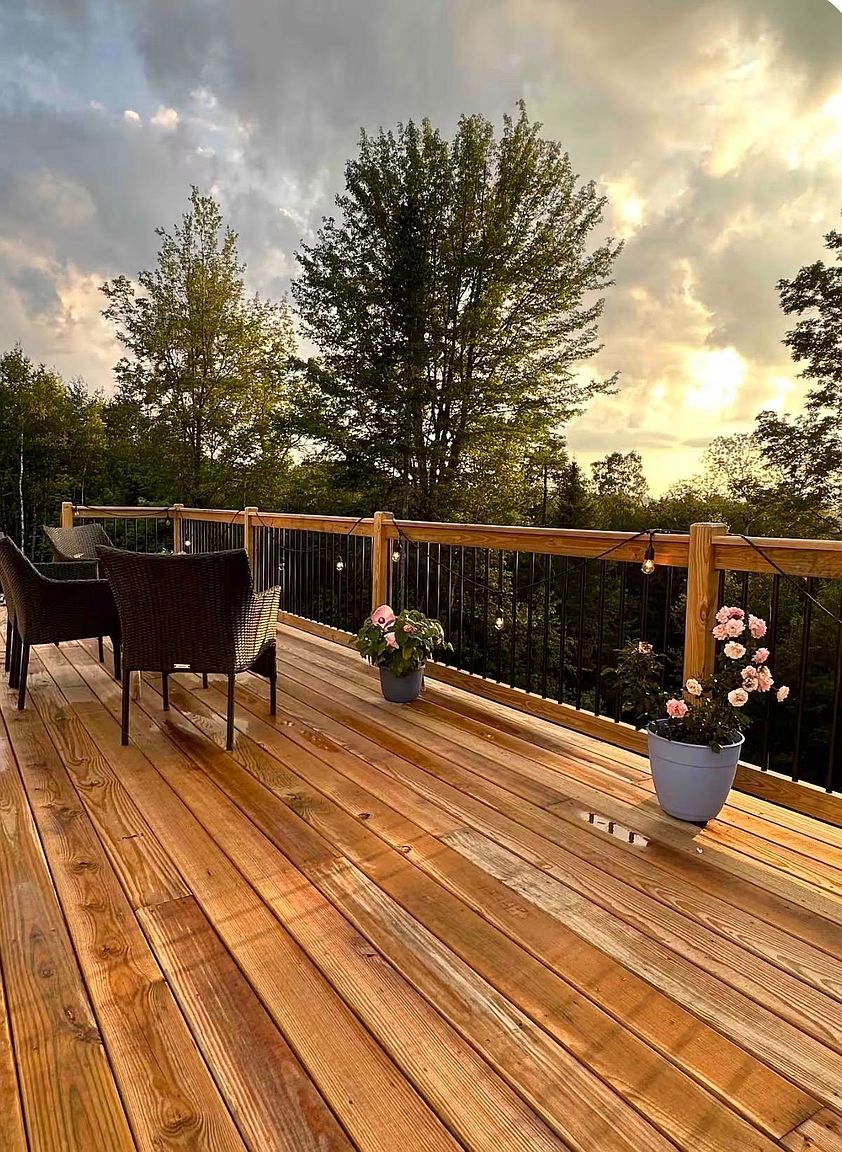
Outside, a deck furnished for four-season use overlooks a gravel yard where a hot tub occupies a private concrete pad, and a fire pit area ringed with Adirondack chairs offers another gathering point under open sky. The pond is there, just beyond the trees, waiting.
Sugar Hill is one of those New Hampshire towns that rewards the people who find it. Incorporated in 1962 after separating from Lisbon, it remains among the smallest and quietest communities in Grafton County — a hillside village of fewer than 600 residents perched above the Franconia Valley with long views toward the Kinsman Ridge and the Presidential Range. It is a place that has always drawn people who understand the difference between solitude and isolation, between privacy and remoteness.
The town is perhaps best known to leaf-peepers and landscape painters for its hillside fields of wild lupine, which bloom each June in sweeping drifts of purple and pink — a spectacle that draws visitors from across the region and has long made Sugar Hill synonymous with the most picturesque face of the North Country. But the appeal here is genuinely year-round, grounded in the kind of landscape that earns its beauty across every season.
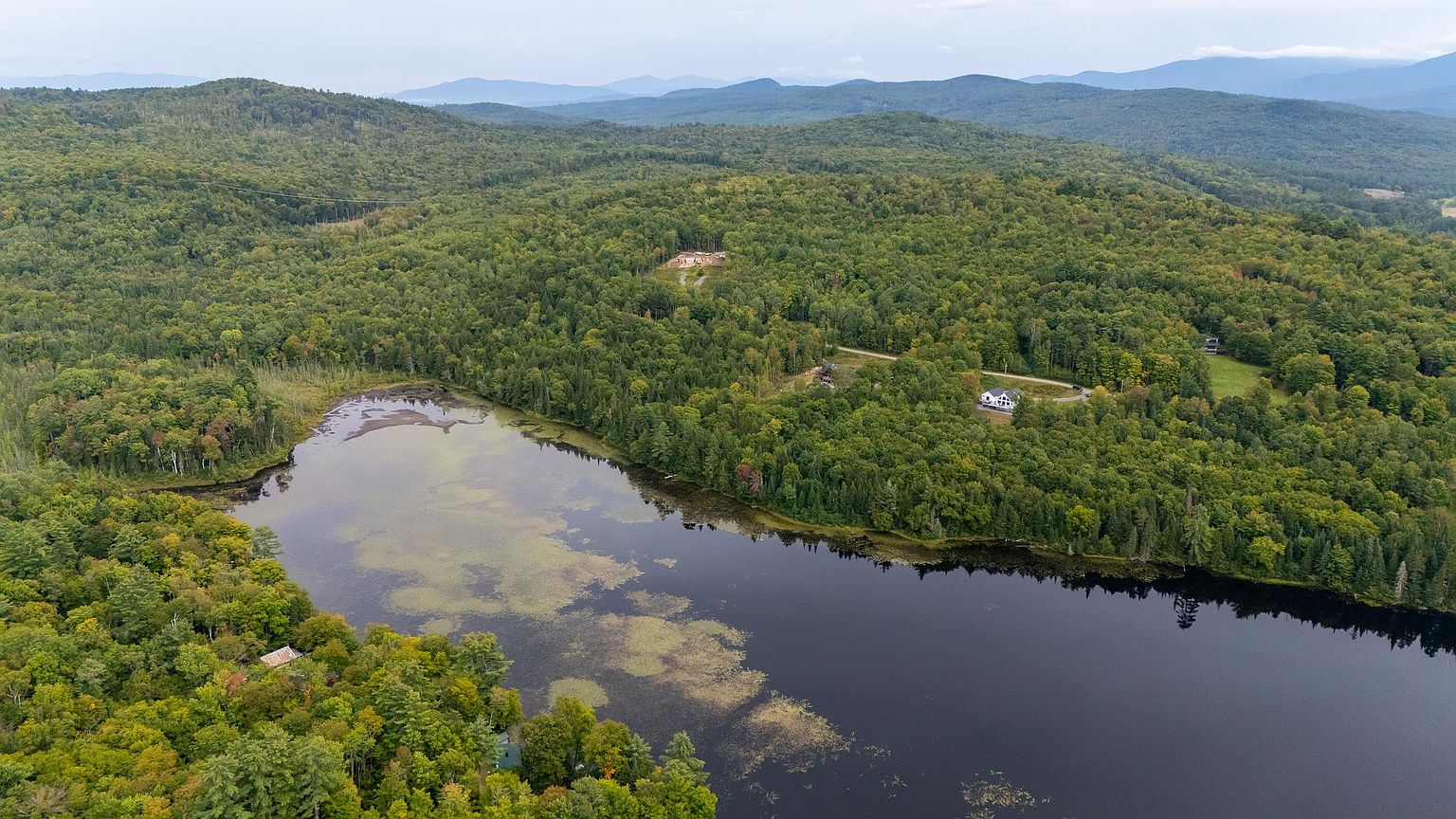
Streeter Pond, on which this property enjoys more than 500 feet of direct frontage, is a quiet, intimate body of water set within a landscape of mature forest and rolling terrain. Aerial views confirm its serenity — lily pads near the shore, a calm surface reflecting the surrounding ridgelines, and an almost complete absence of development visible from the water. It is the kind of waterfront that feels genuinely private, a resource rather than an amenity.
The town of Franconia lies just minutes away, offering a genuinely walkable and welcoming village center with the kind of independent businesses that define the New Hampshire character. The Iron Furnace Brewing Company has become a beloved gathering place for locals and visitors alike, its industrial-chic taproom housed in a building that honors the town's 19th-century iron-making heritage. The Franconia Coffee House and the Hungry Bear Cafe provide the kind of daily rhythms — morning coffee, a neighborhood lunch — that make a place feel like home rather than a destination.
For those drawn to the outdoors, the surrounding landscape is extraordinary in scope. Franconia Notch State Park, accessible via I-93 just minutes from the property, encompasses nearly 7,000 acres of protected mountain terrain anchored by Cannon Mountain, one of New Hampshire's premier ski areas and home to the aerial tramway that has carried passengers to the summit since 1938. The park's trail network, including sections of the Appalachian Trail and routes to Lonesome Lake and the summits of the Franconia Ridge, is among the most celebrated in the northeastern United States. Echo Lake, the Flume Gorge, and the Basin round out a portfolio of natural landmarks that draw visitors from across the country.
I-93 provides the practical infrastructure that makes this kind of retreat genuinely livable: Boston is approximately two and a half hours south, Burlington roughly an hour and a half to the north. The combination of deep natural privacy, a charming local village, and proximity to world-class outdoor recreation is a combination that the North Country rarely assembles so neatly in a single address.
Featured Highlights
Curated Content • Presented by Nikki Morrison