The Story Behind
An Architectural Masterpiece Where Russian Hill Meets the Sky
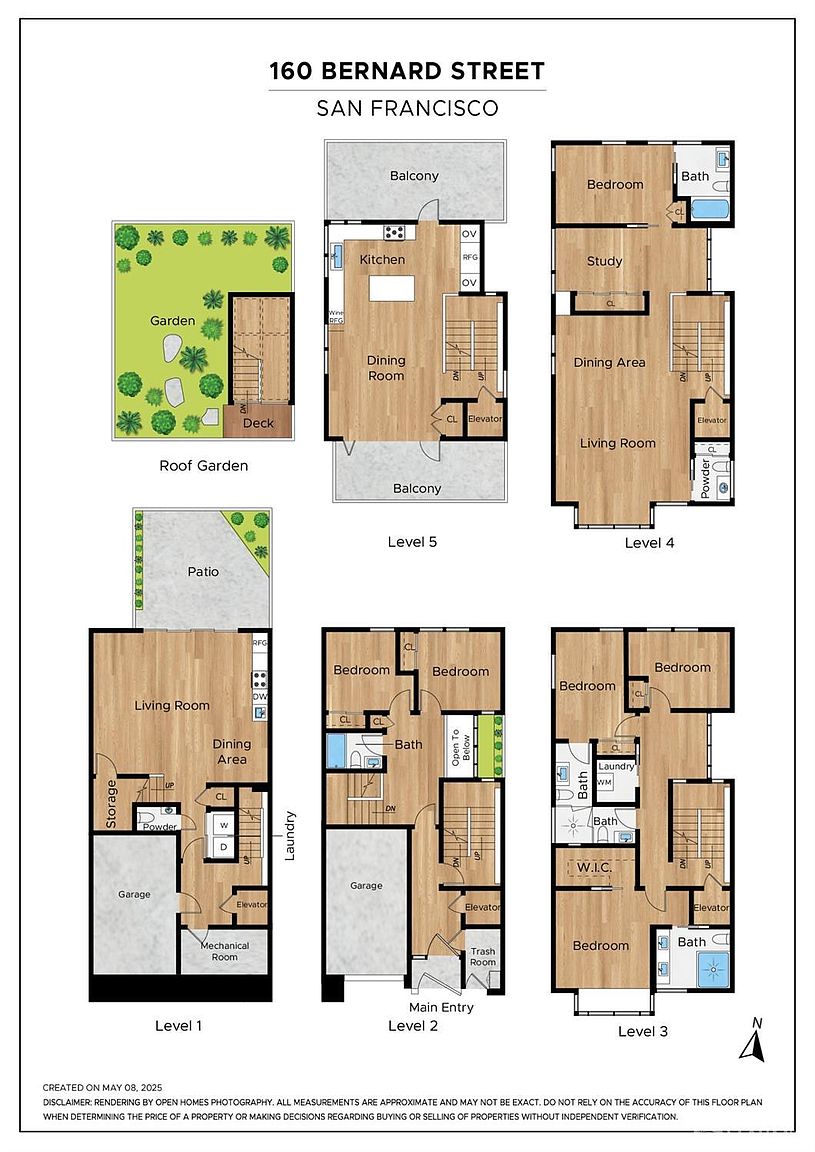
There are homes that are purchased, and then there are homes that are conceived — born from an owner's singular vision of how architecture should shape the way one inhabits a city. 160 Bernard Street belongs firmly to the latter category. Custom-built by its owners from the ground up and subsequently honored with a feature on the San Francisco AIA Home Tour, this five-level residence is a testament to what becomes possible when design ambition is matched by meticulous execution.
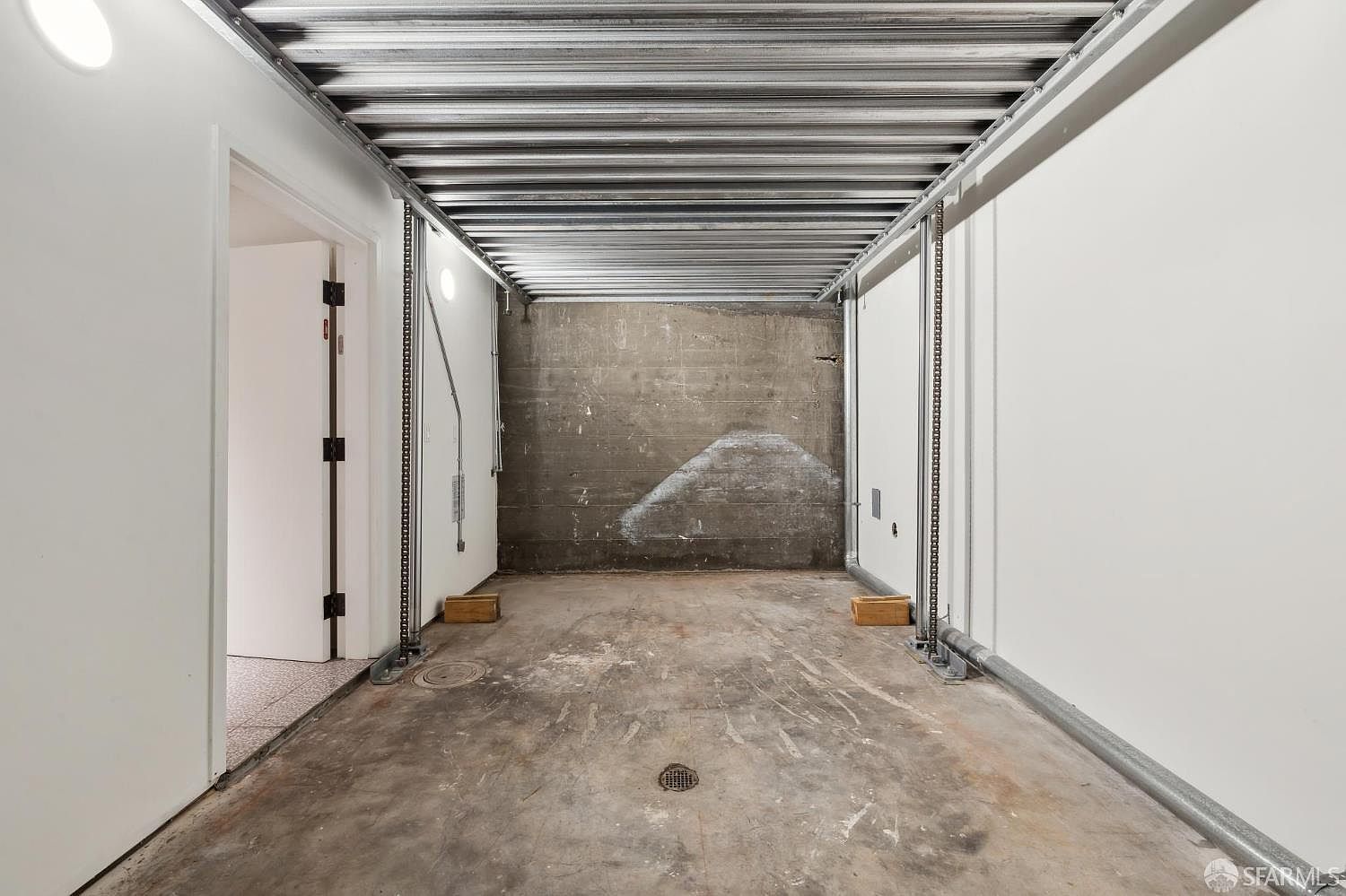
From the street, the home announces itself with quiet authority. A bold contemporary facade of smooth white surfaces is punctuated by a black-framed window projection and a geometric metal screen — a composition that signals the precision and intentionality at work within. The ground level's recessed entryway and two-car garage are integrated into the massing with studied restraint, ensuring the architecture reads as a unified whole rather than a series of afterthoughts.
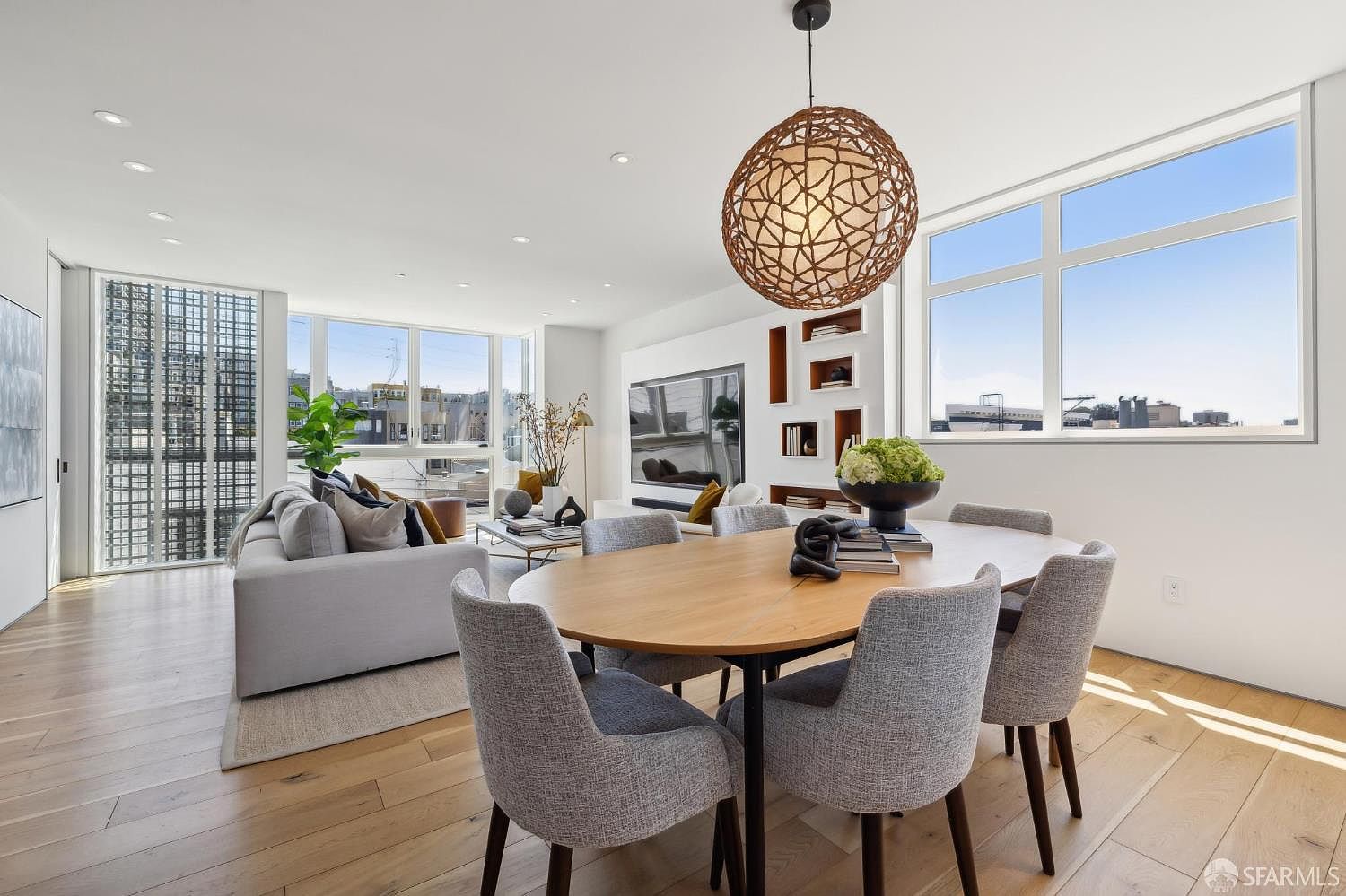
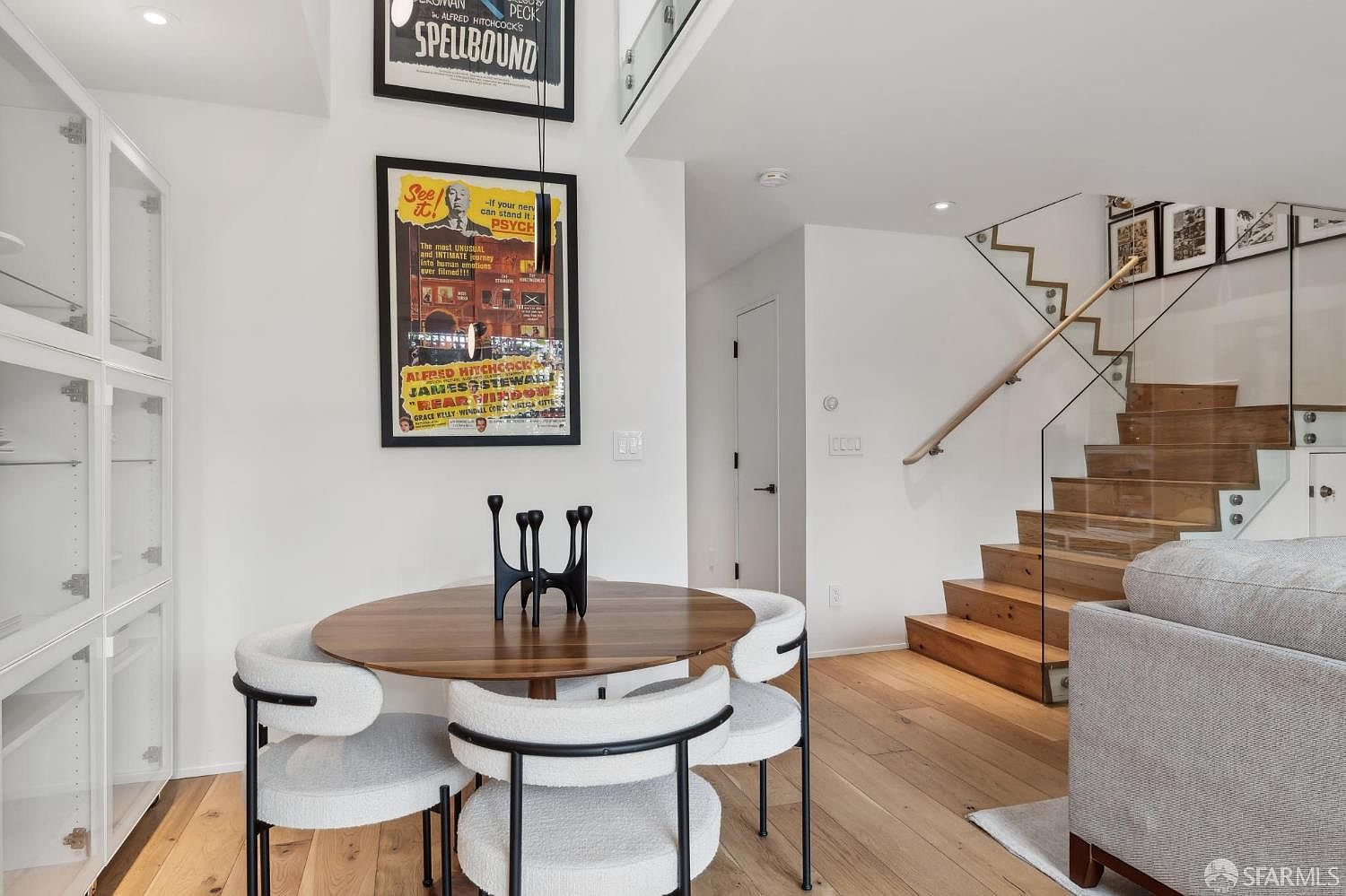
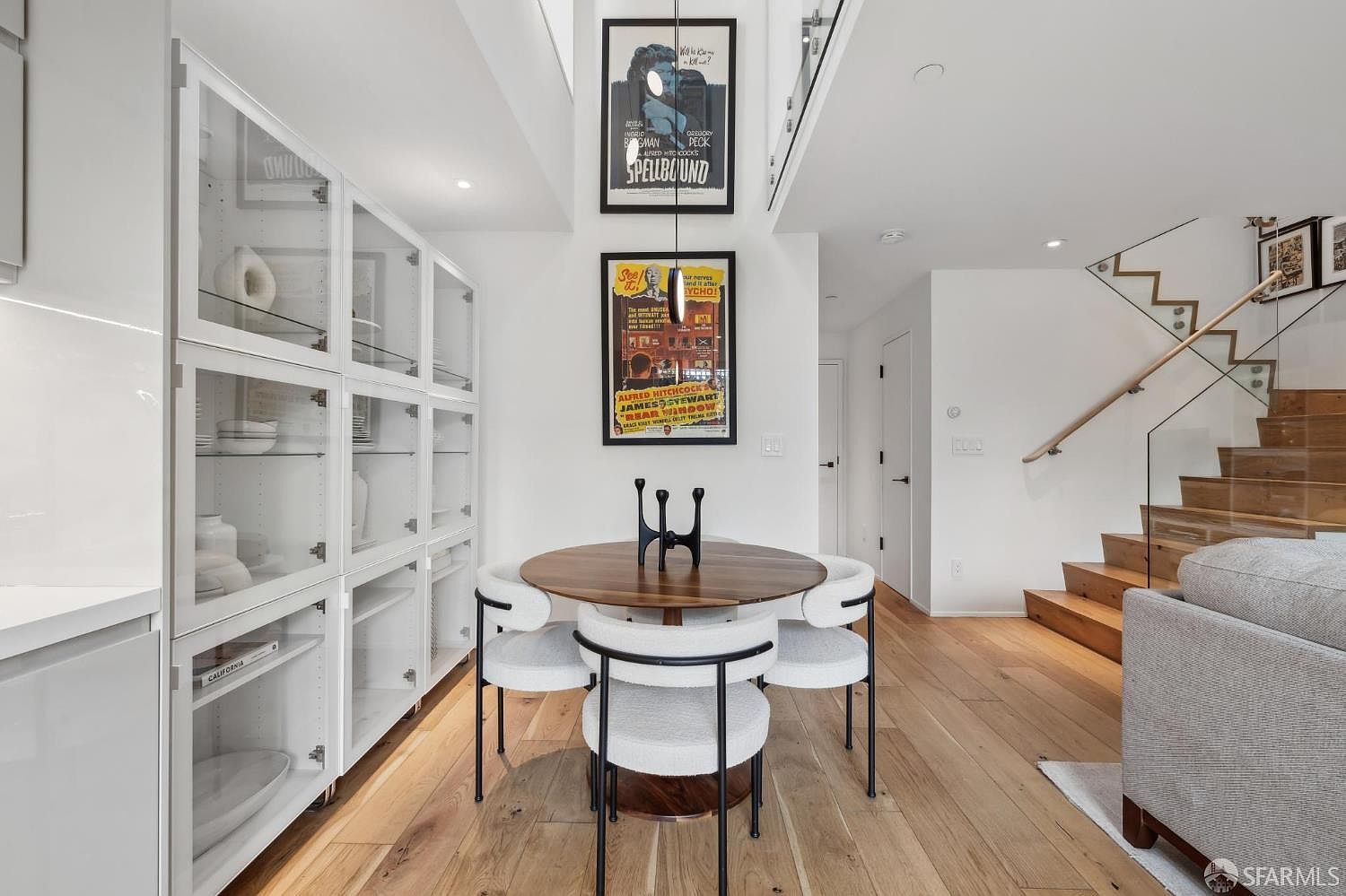
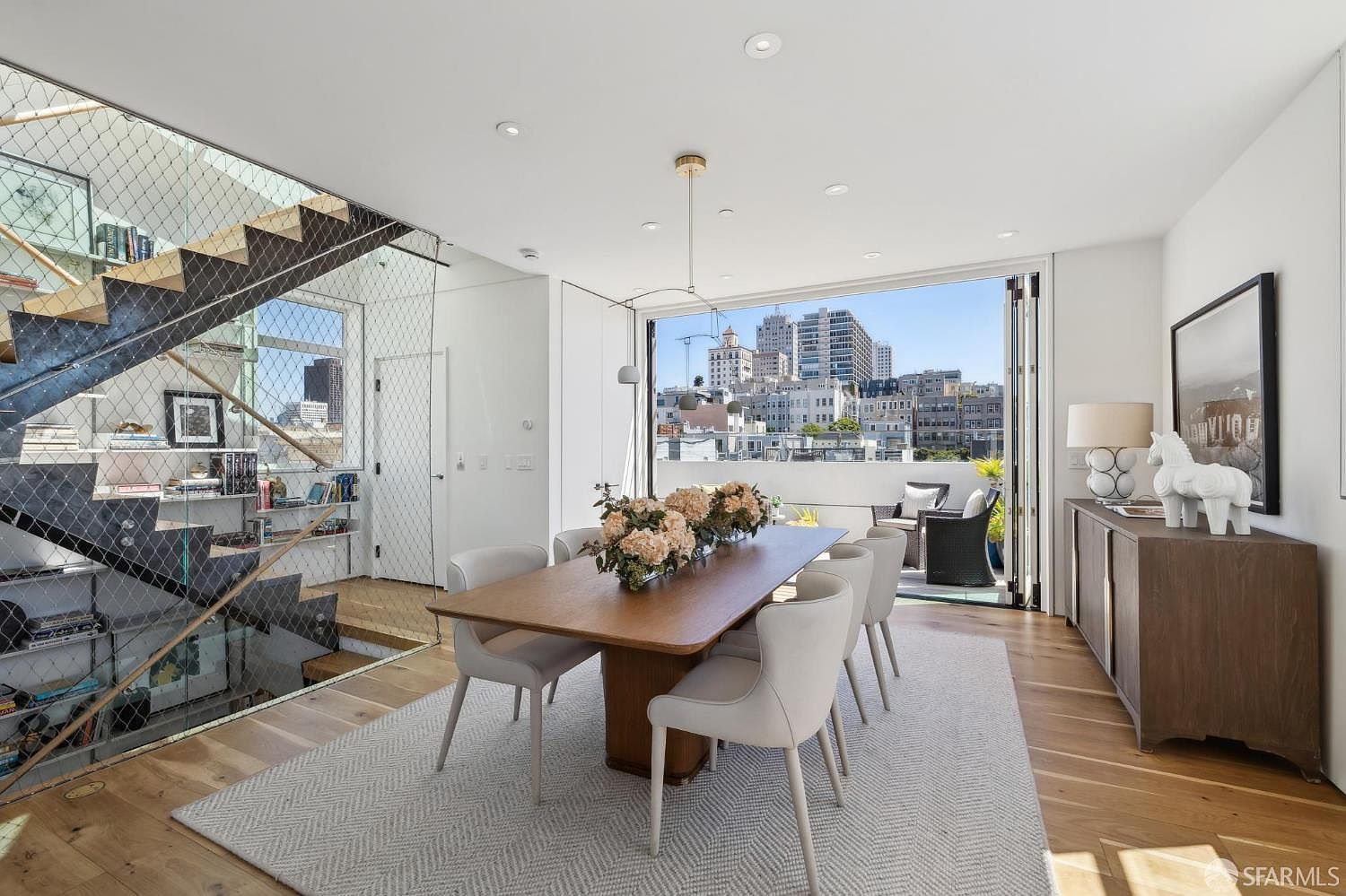
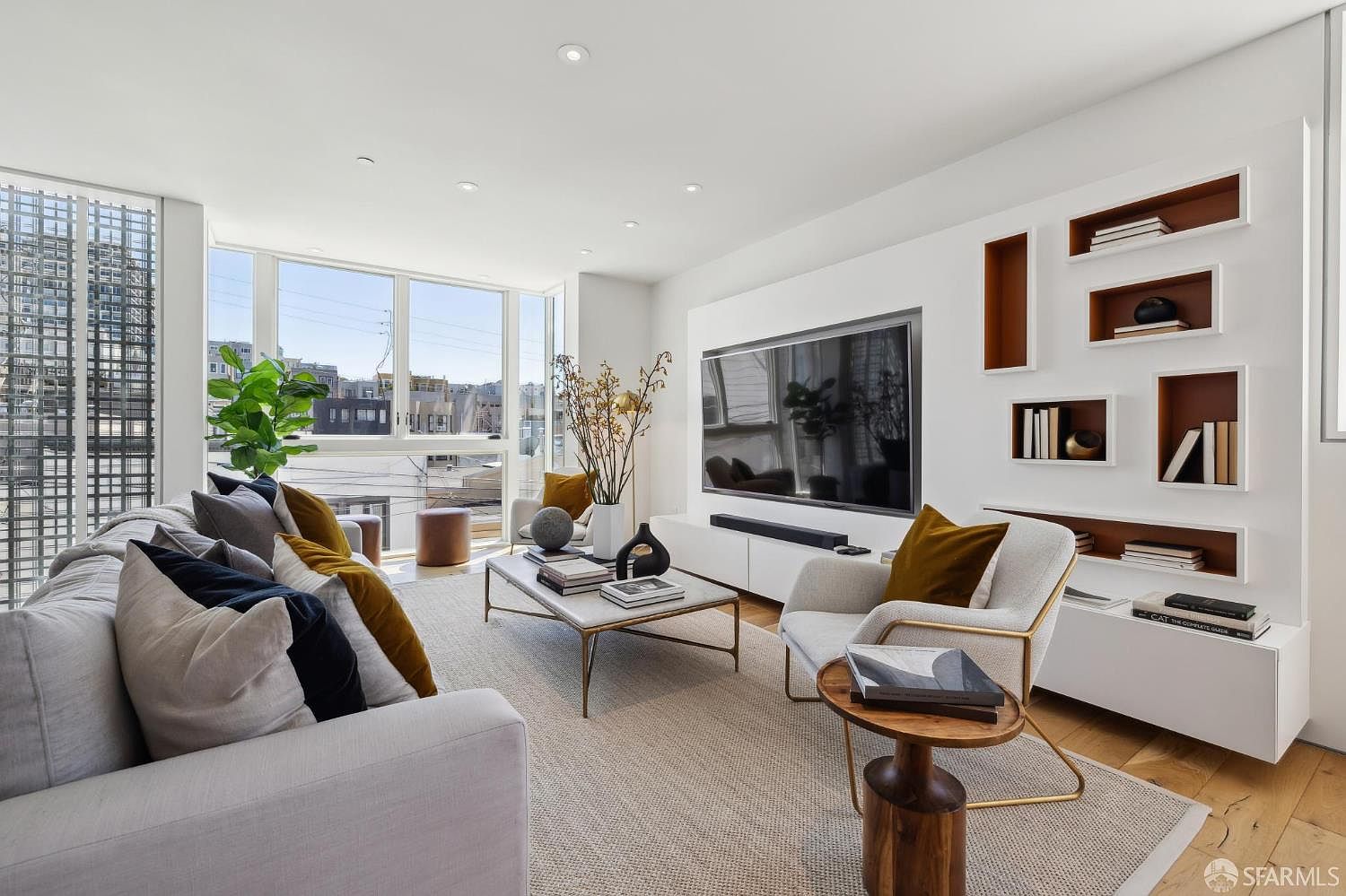
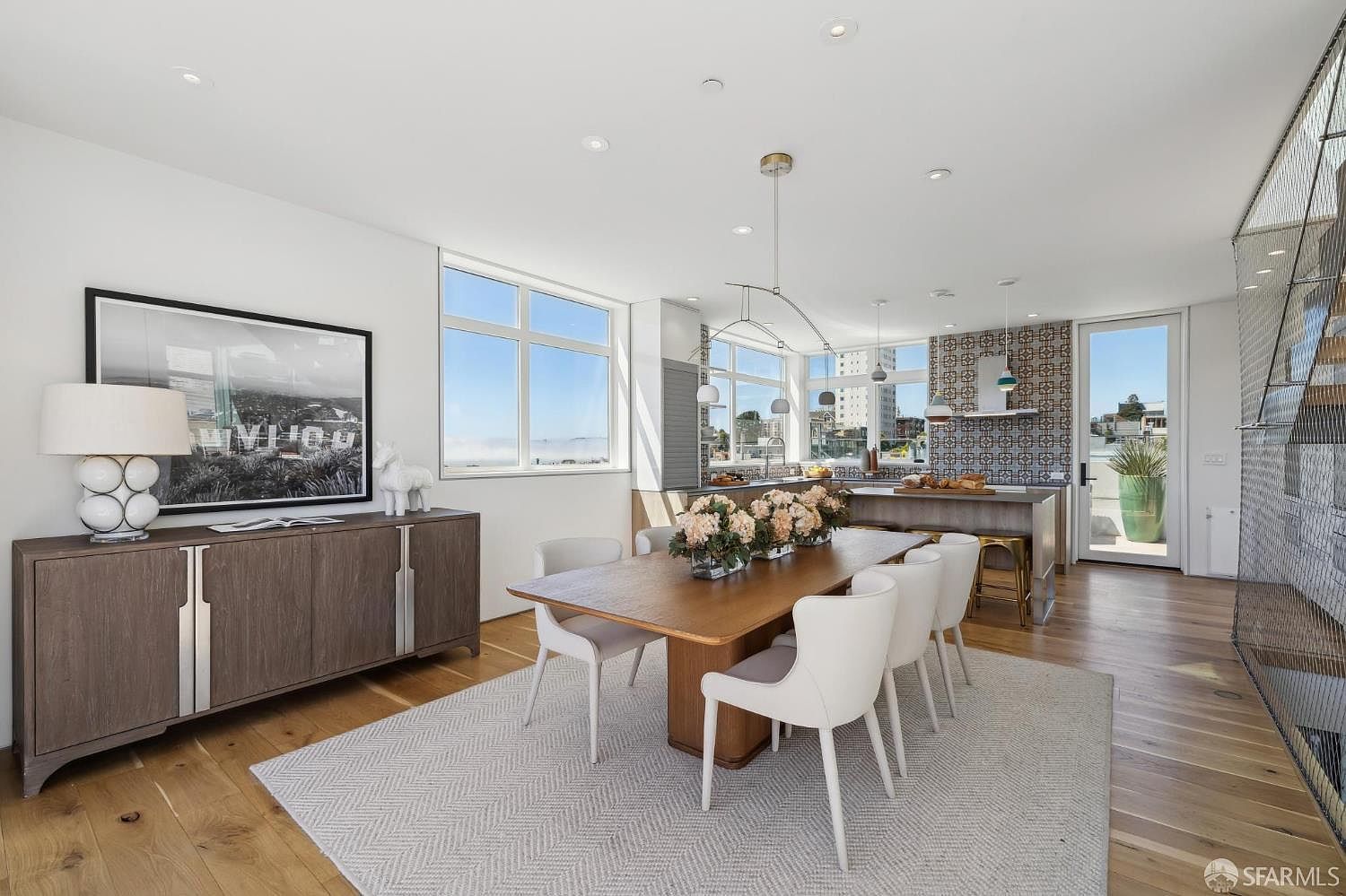
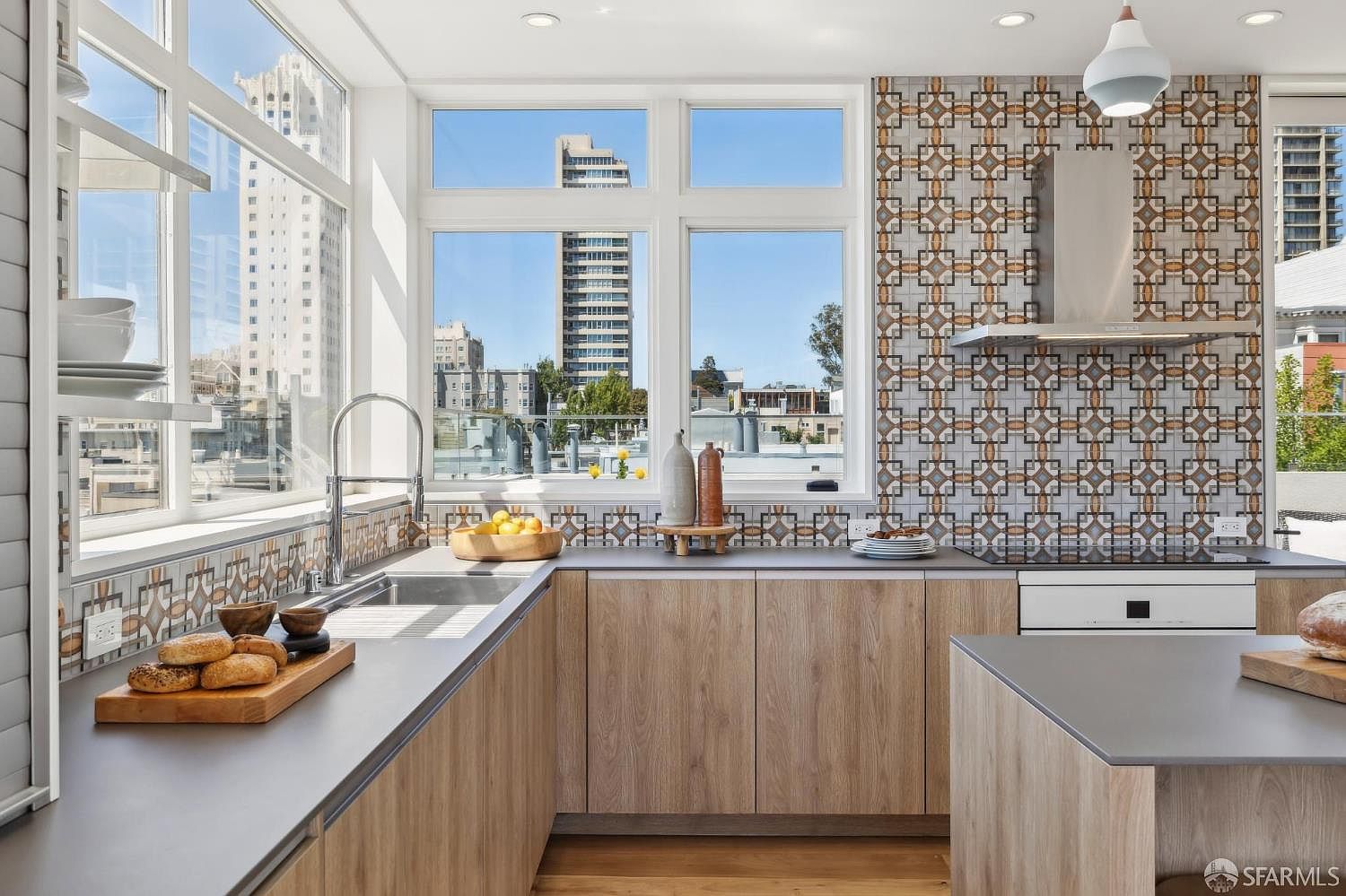
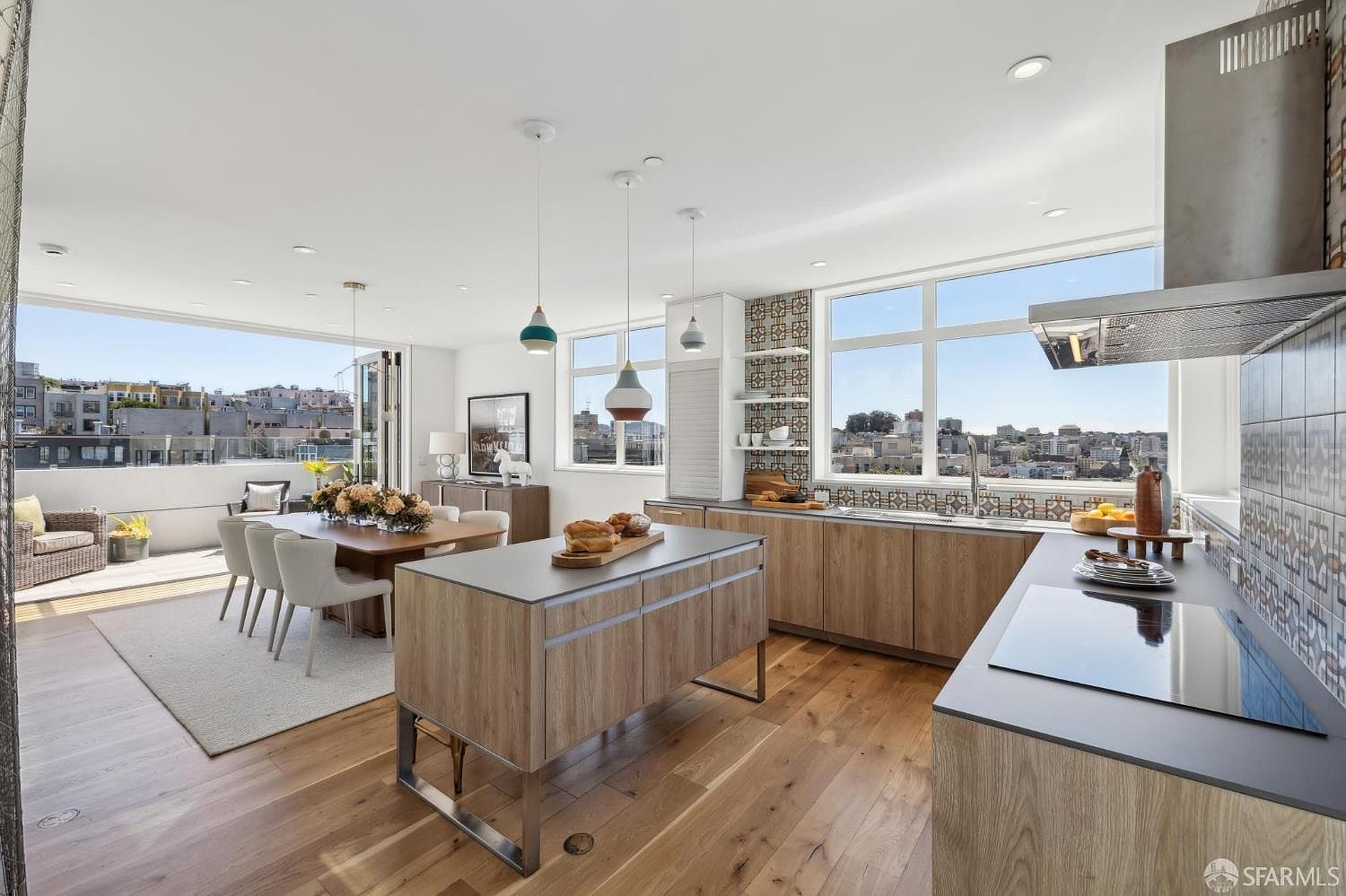
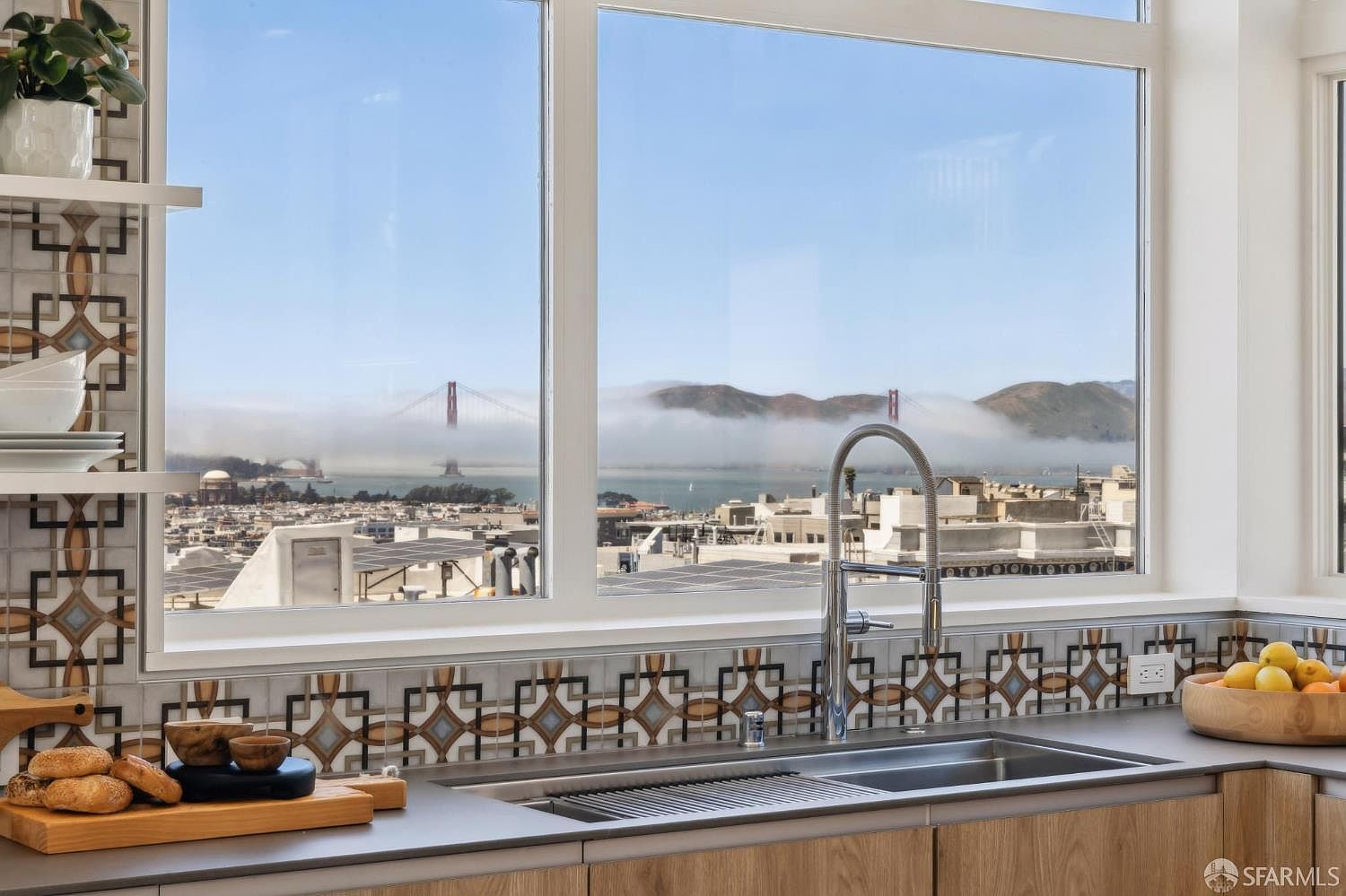
Step inside, and light wood flooring carries the eye through an open-concept living and dining space of genuine warmth and proportion. The gourmet kitchen is a central set piece: light wood cabinetry, a commanding central island beneath bespoke pendant lighting, and a patterned tile backsplash that adds artisanal texture without competing for attention. But it is the view from the sink that stops every visitor — the Golden Gate Bridge, framed by the kitchen window like a painting commissioned specifically for this room, partially veiled in fog or blazing in afternoon sun depending on the season.
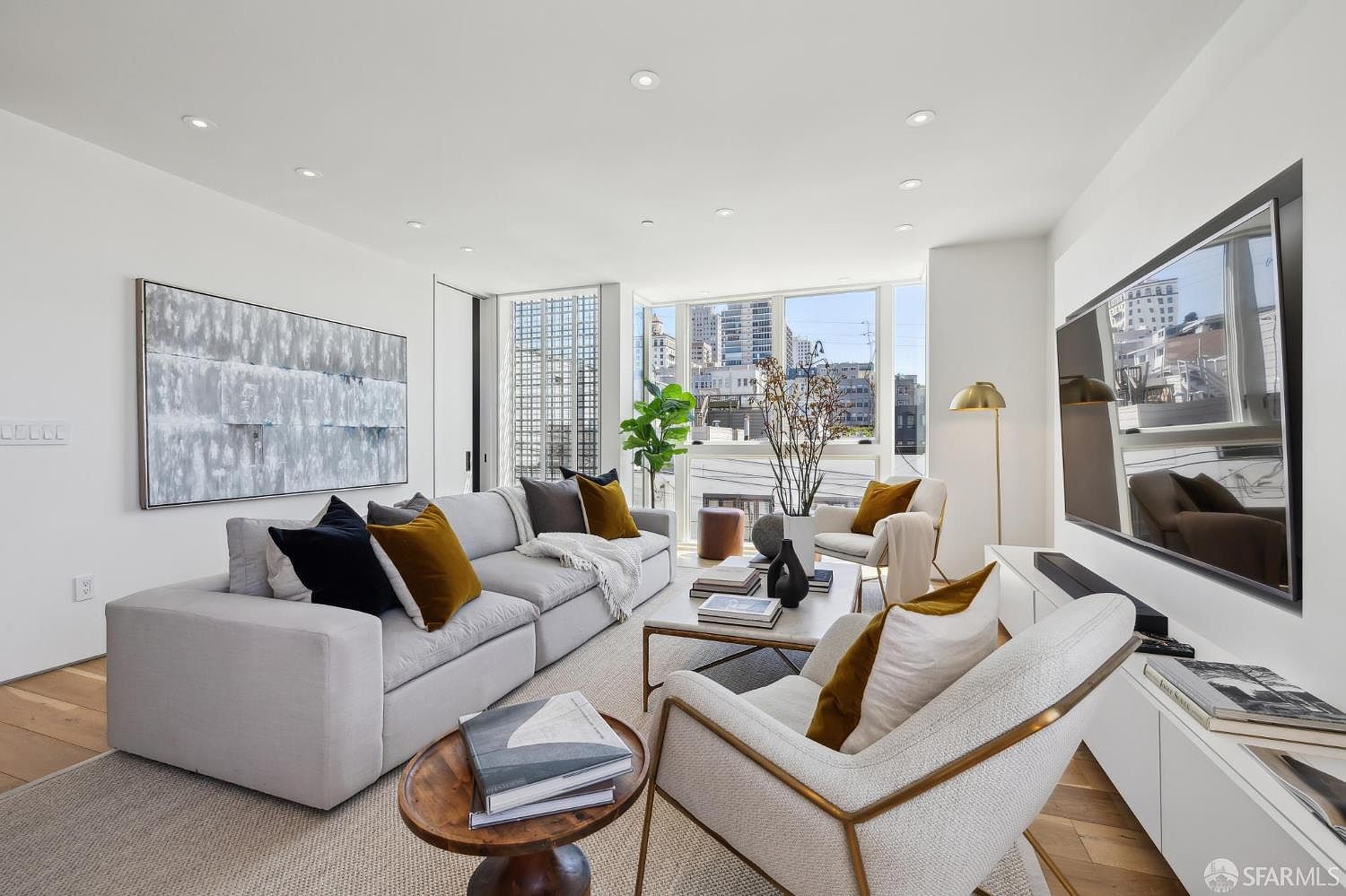
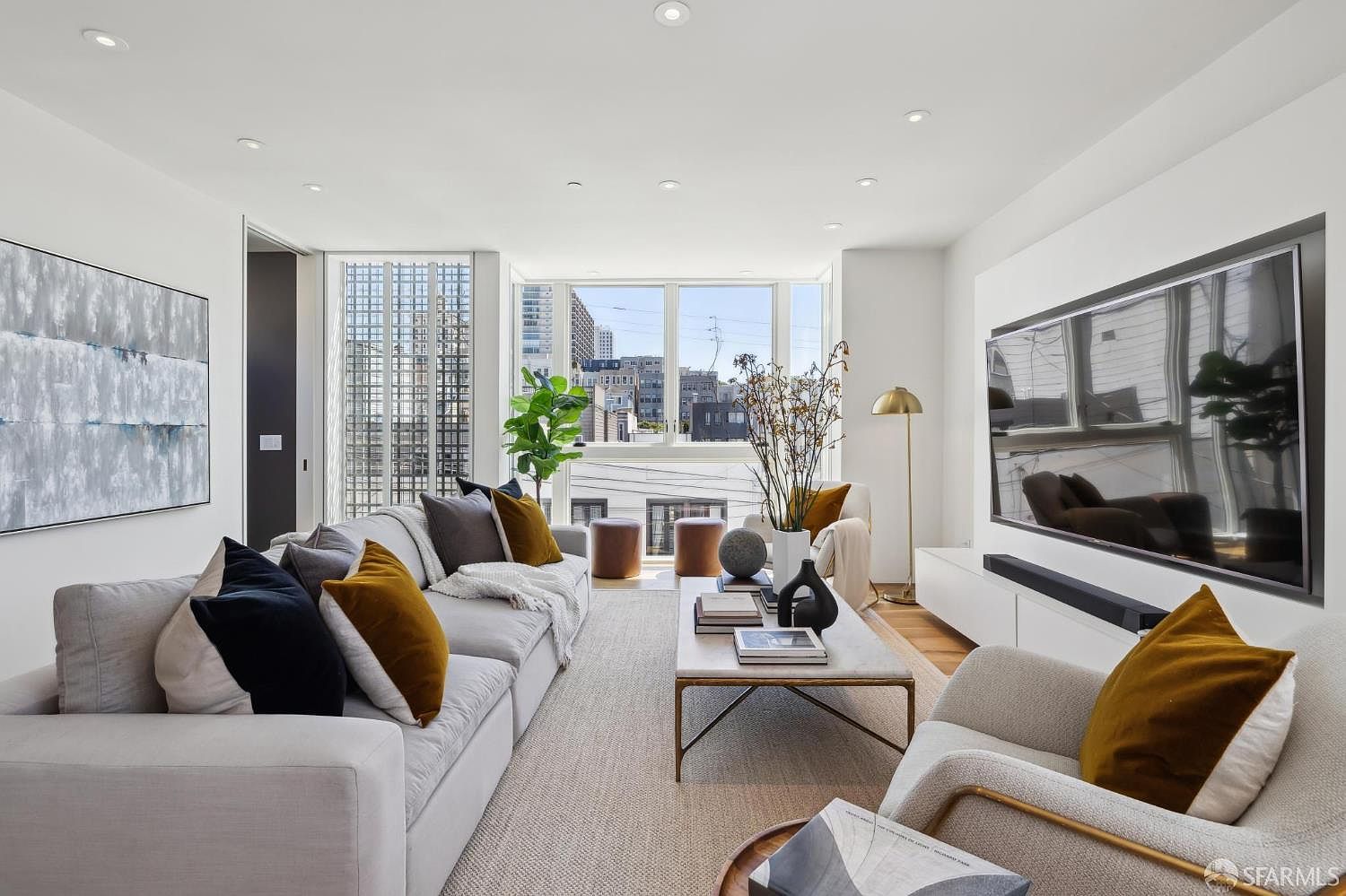
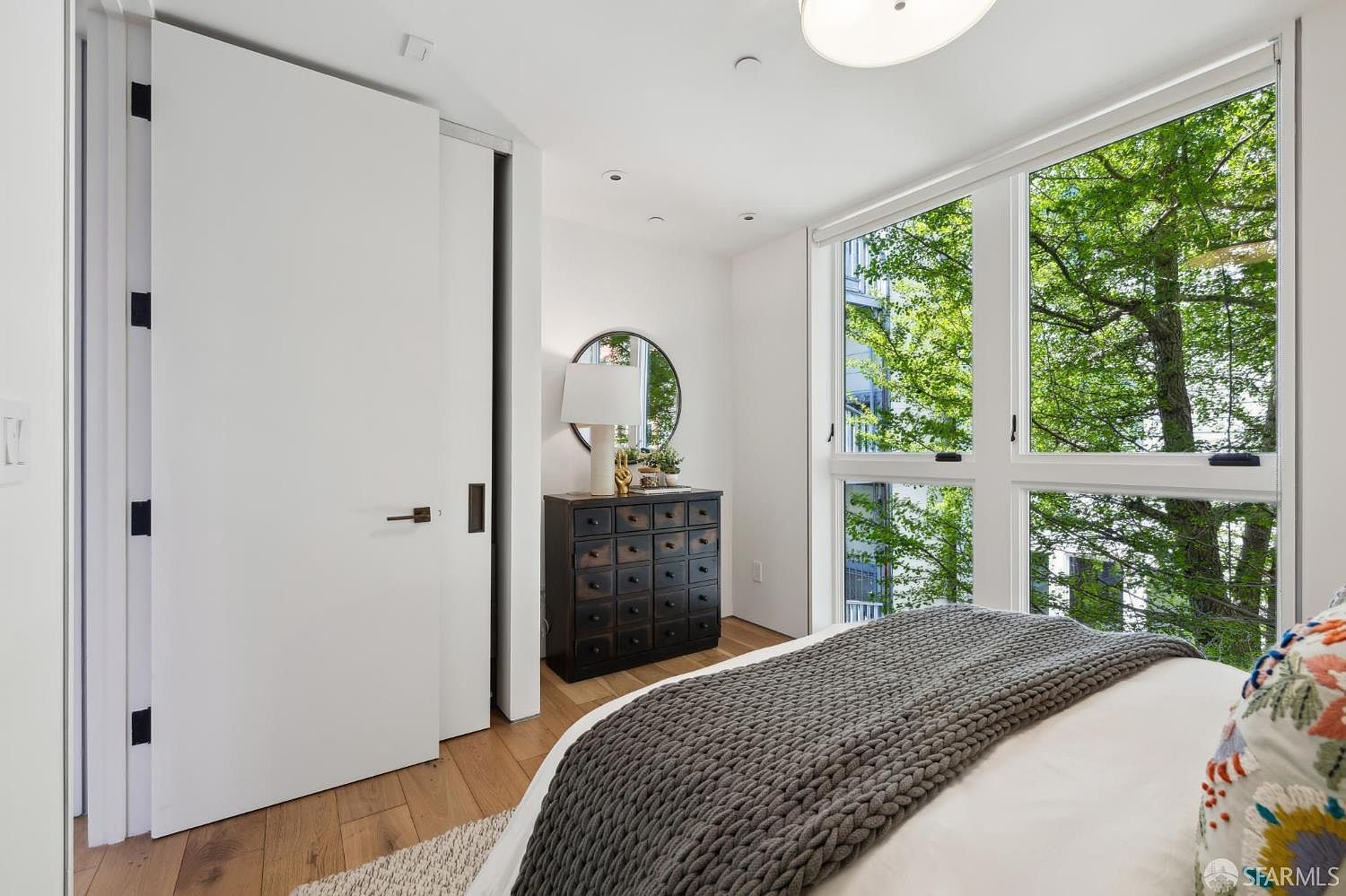
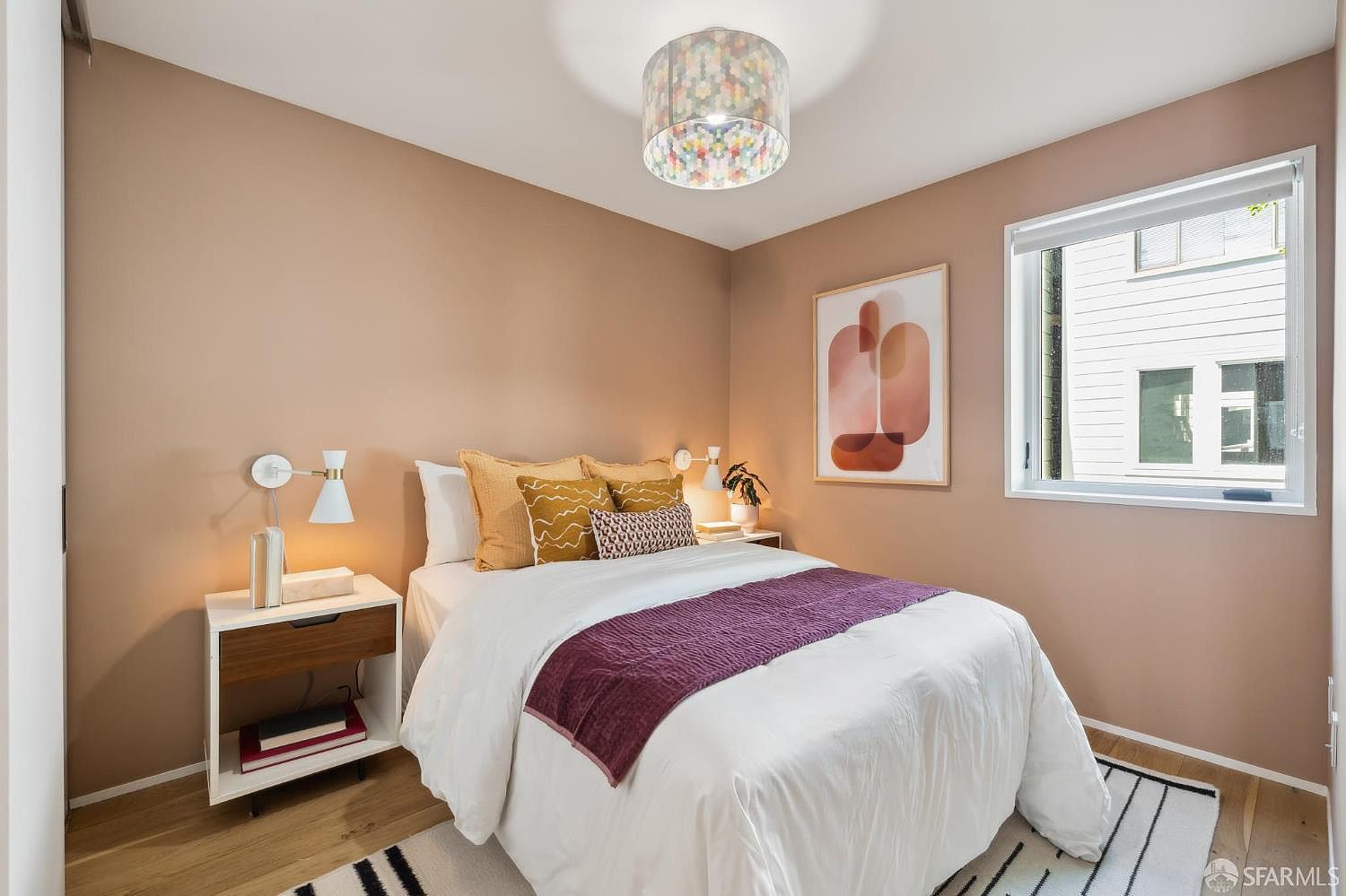
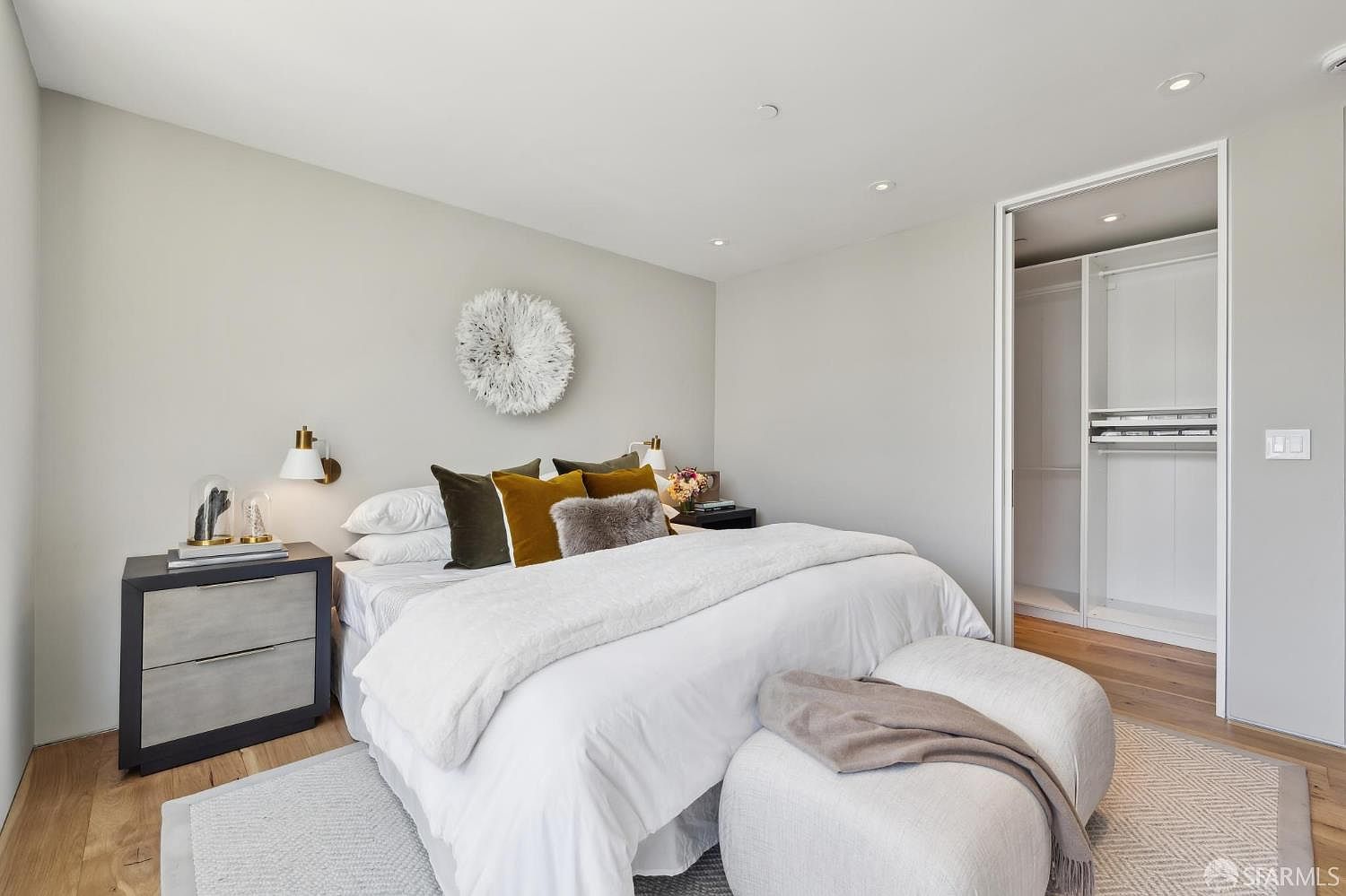
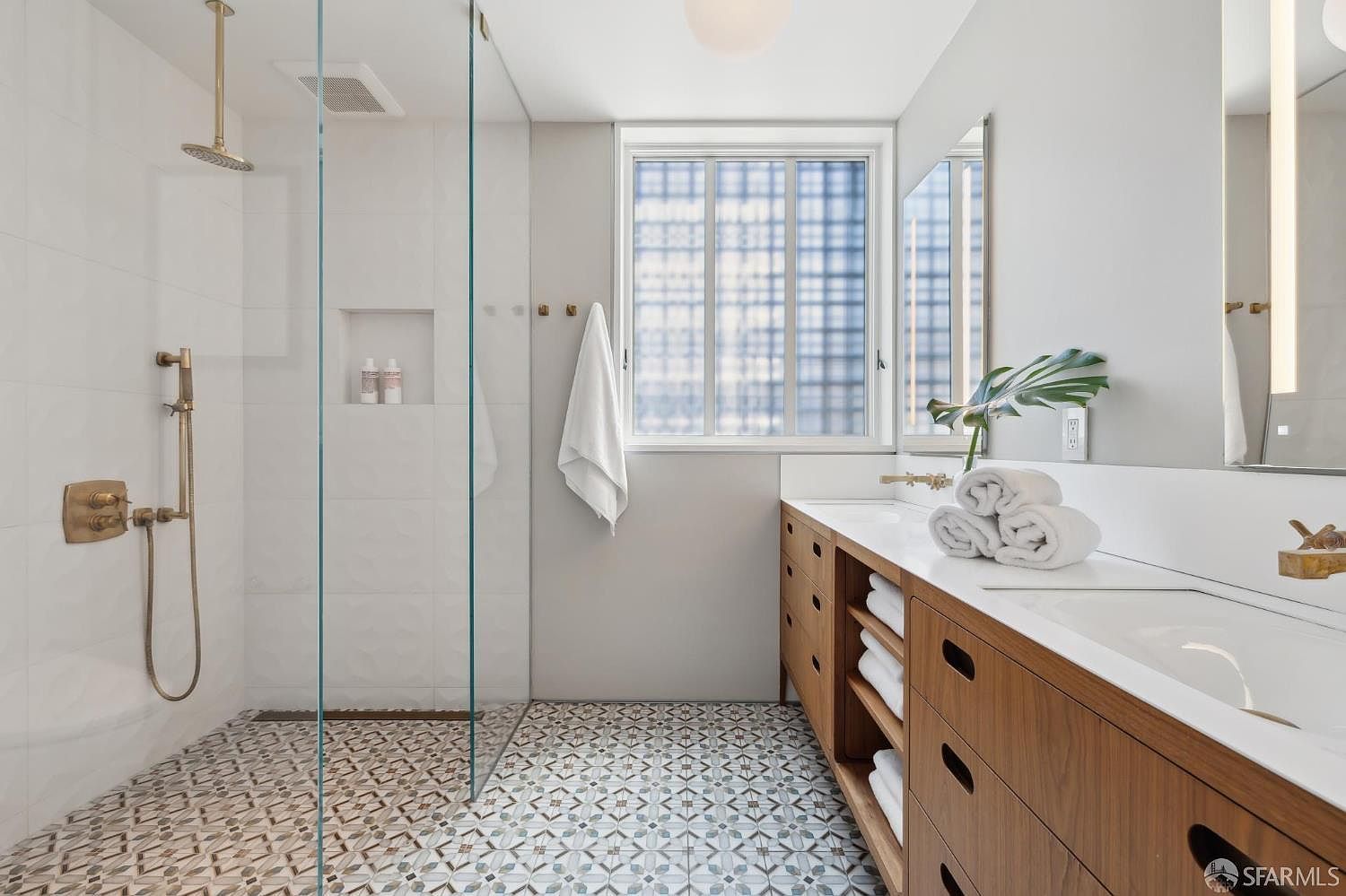
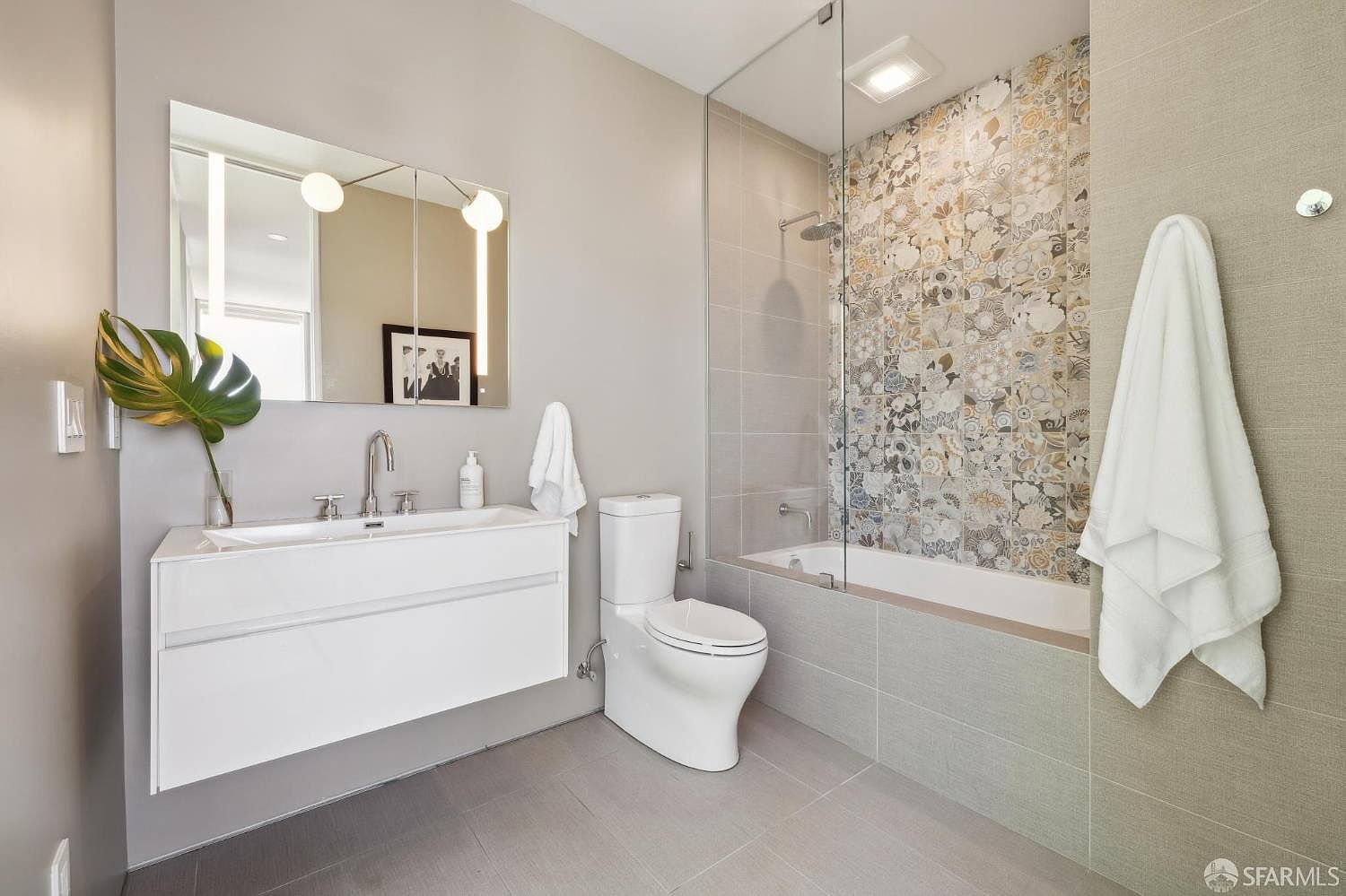
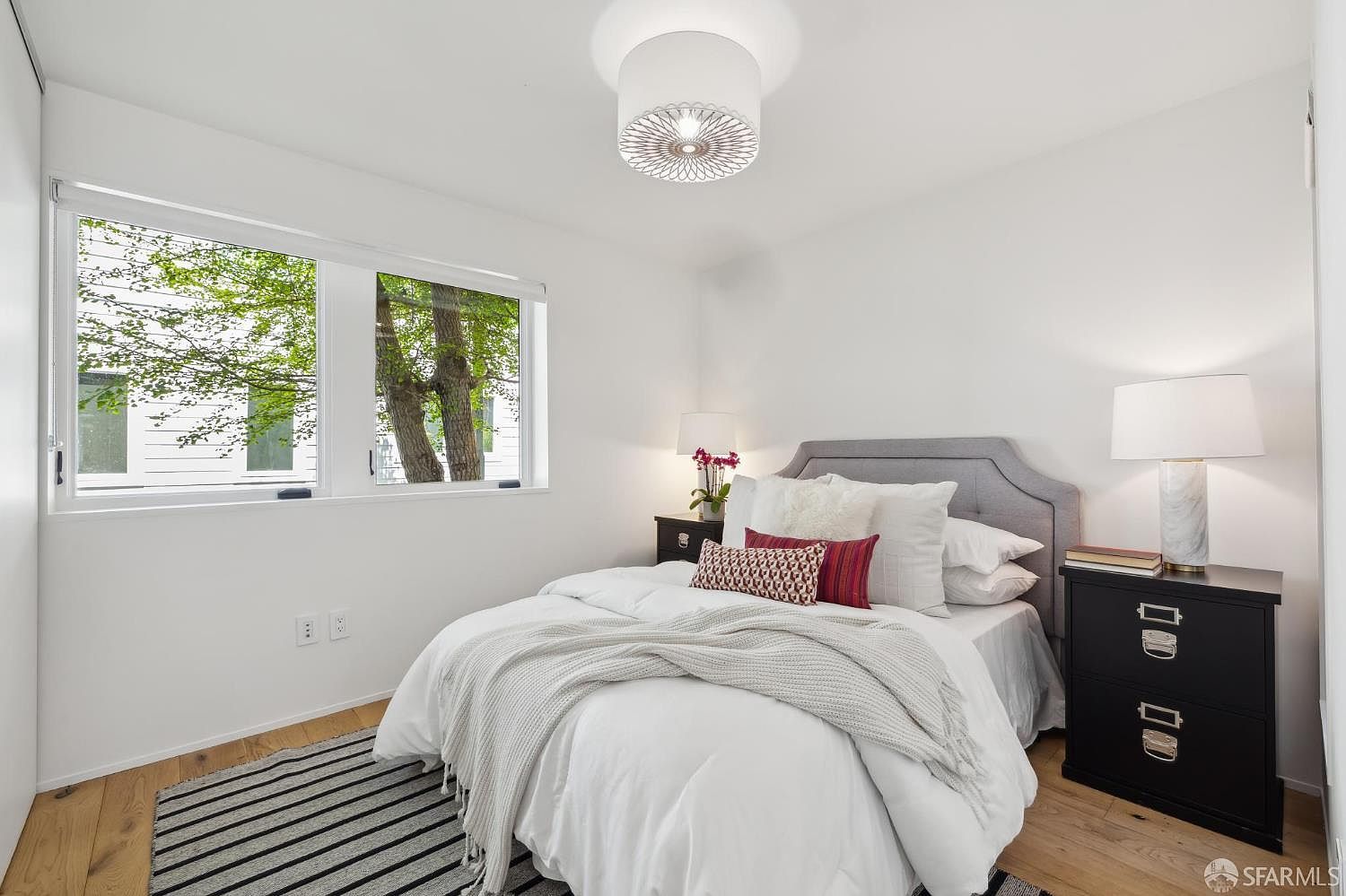
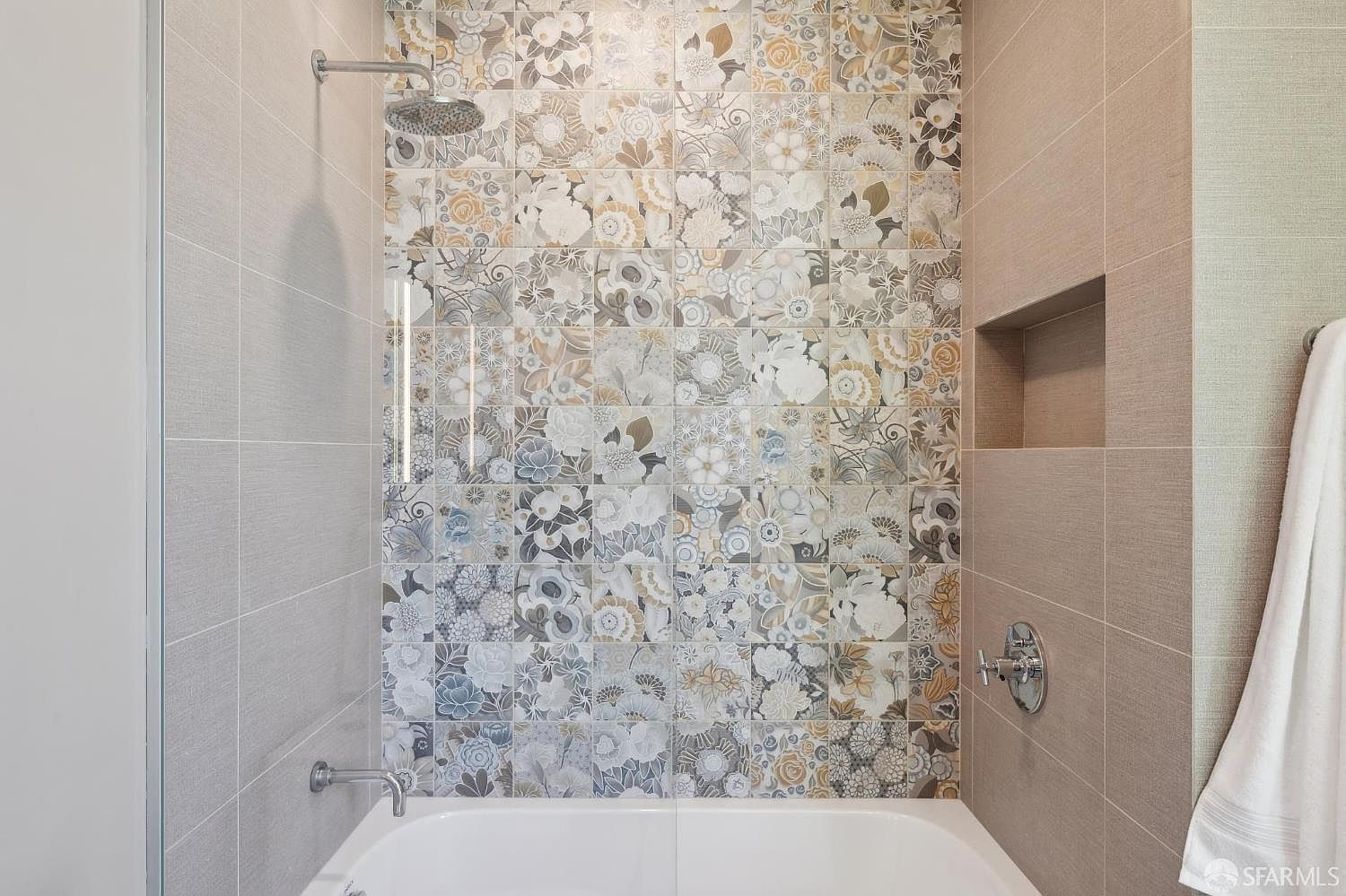
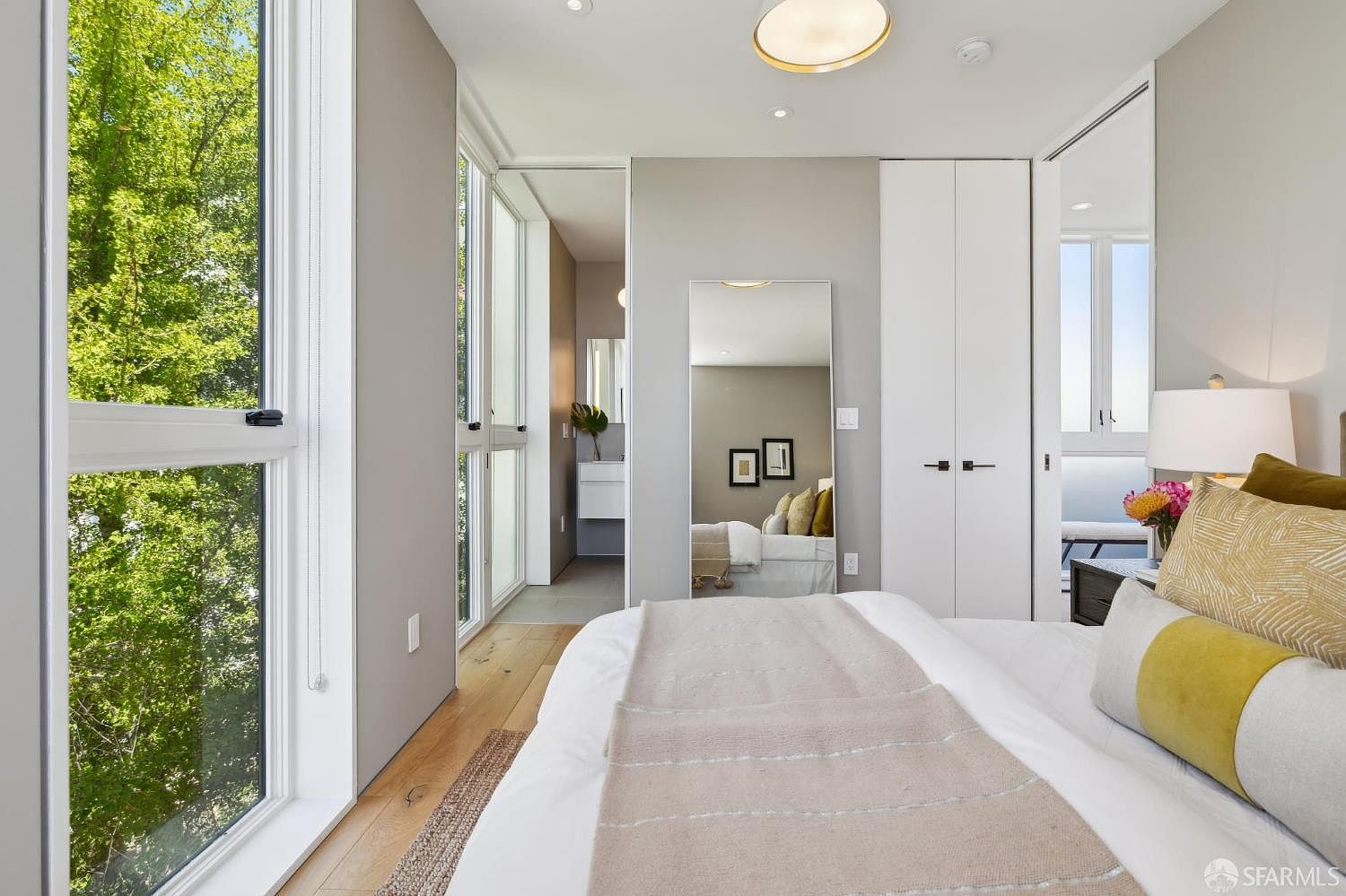
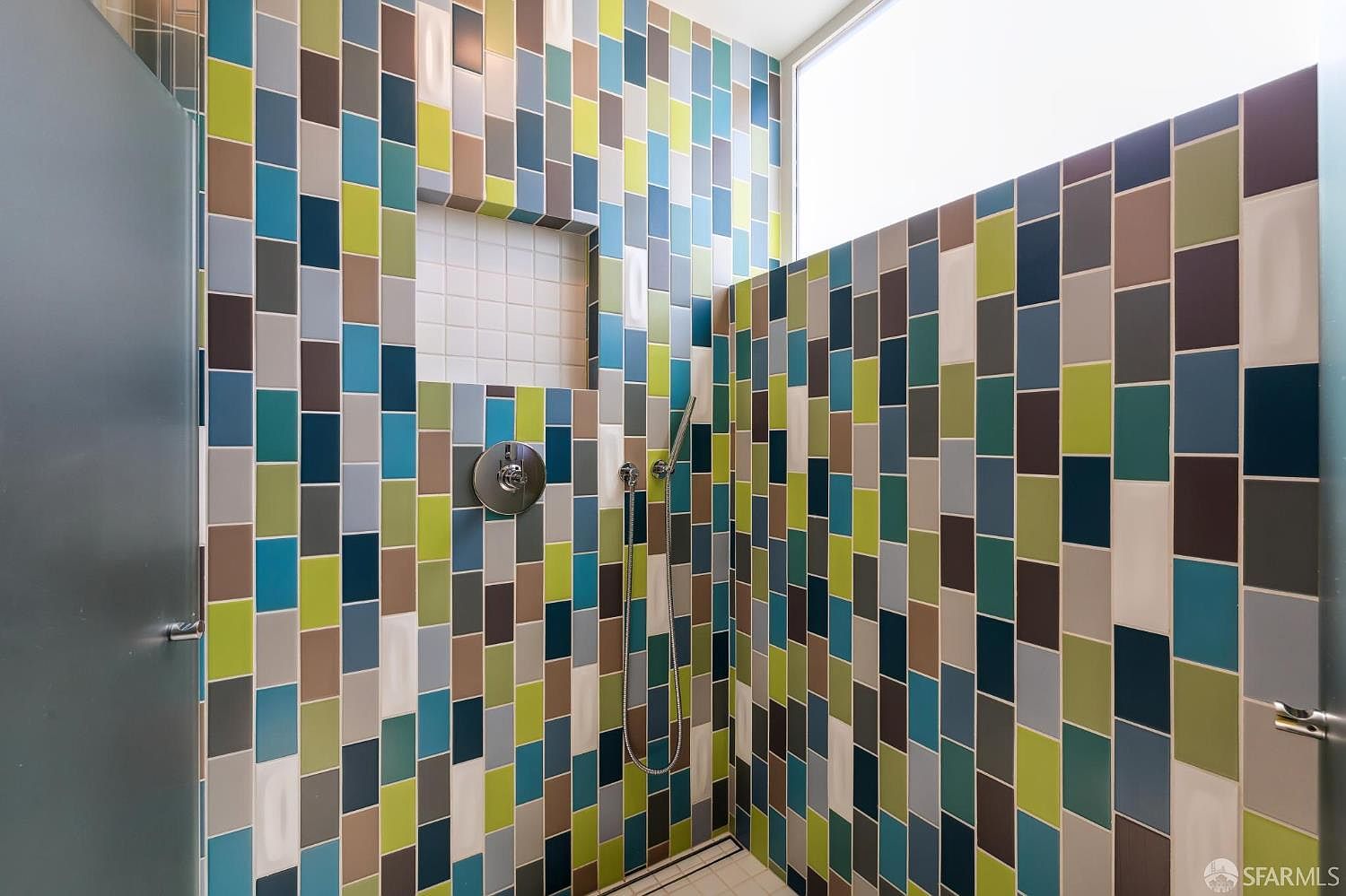
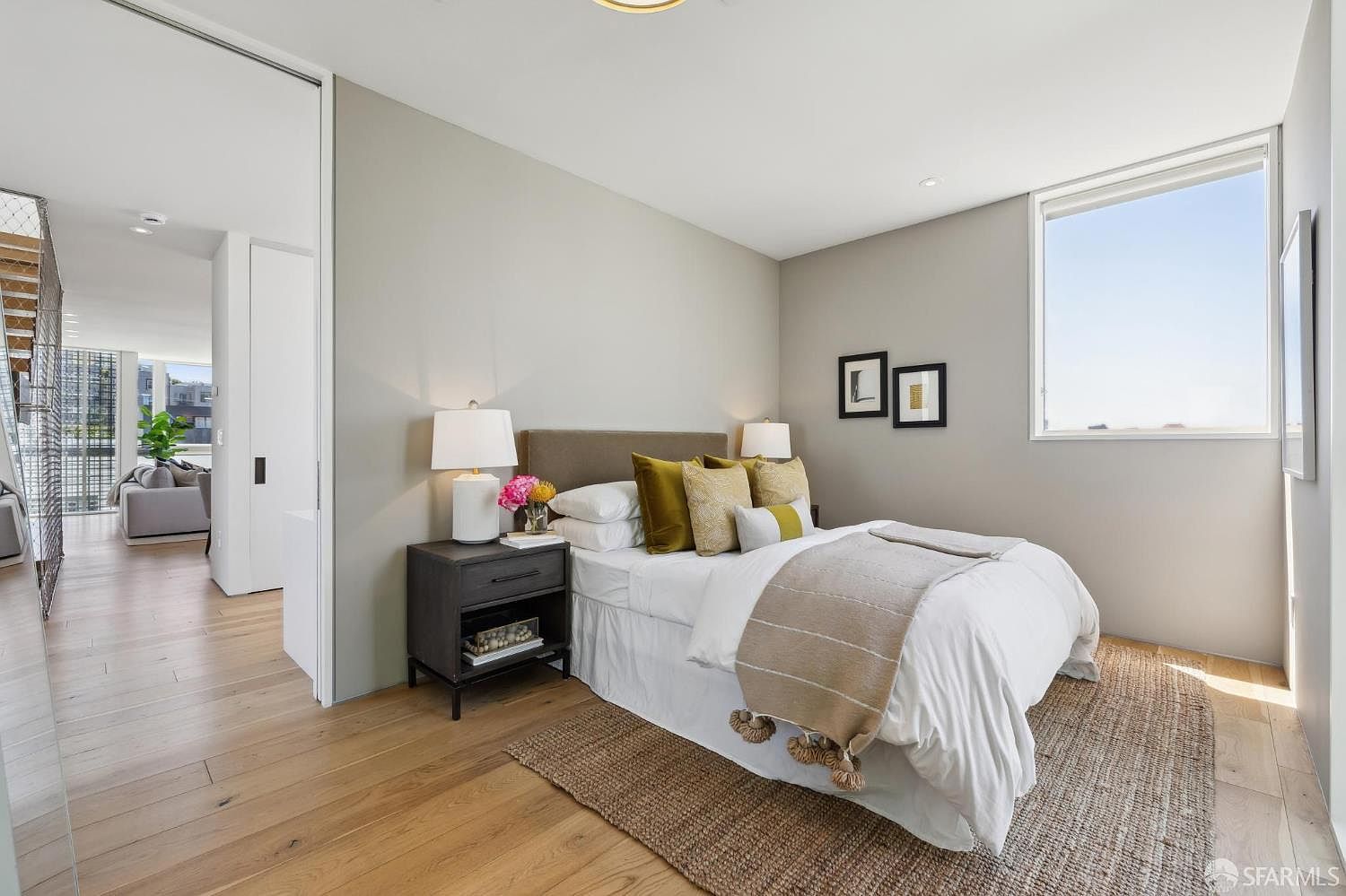
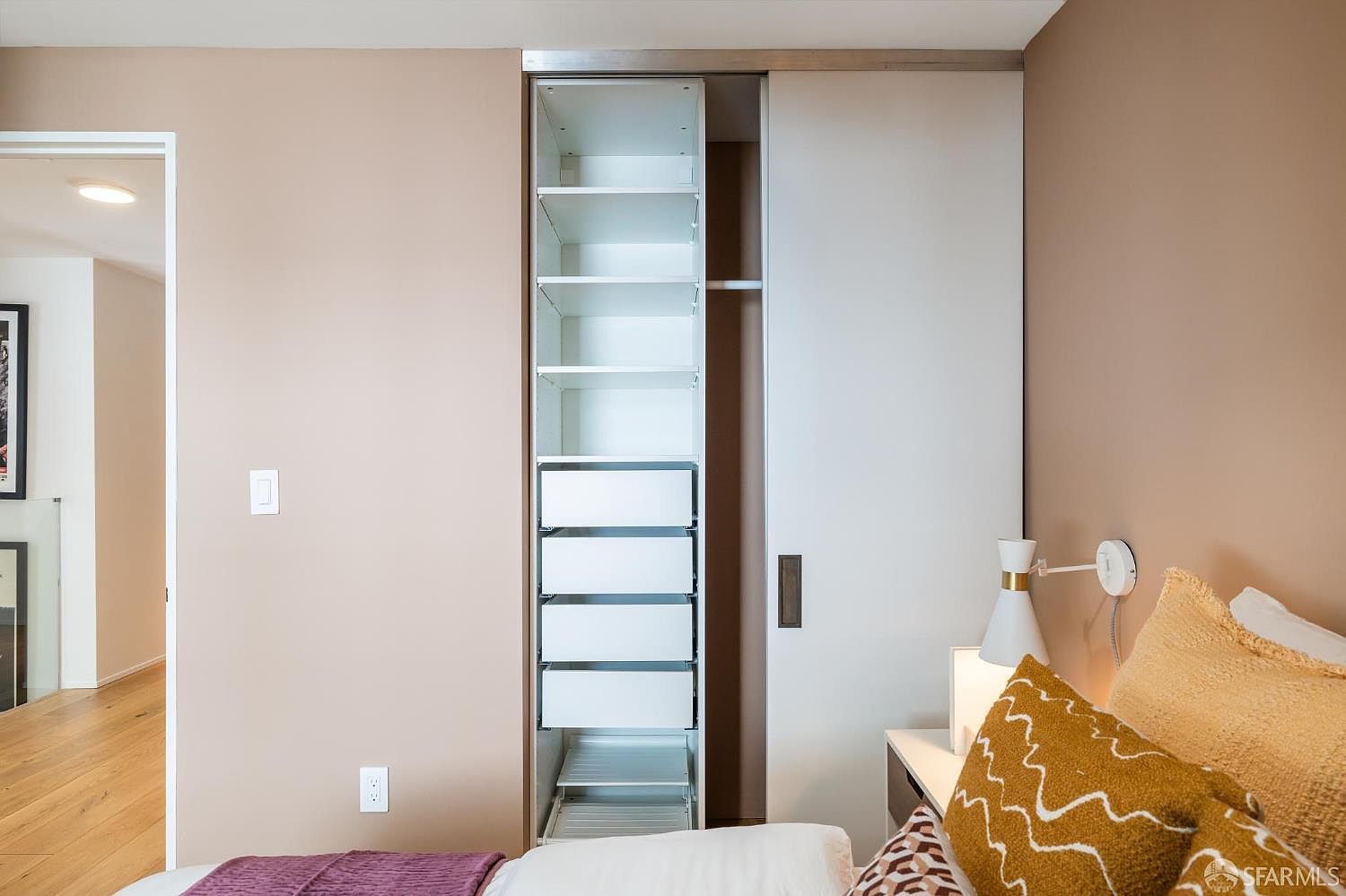
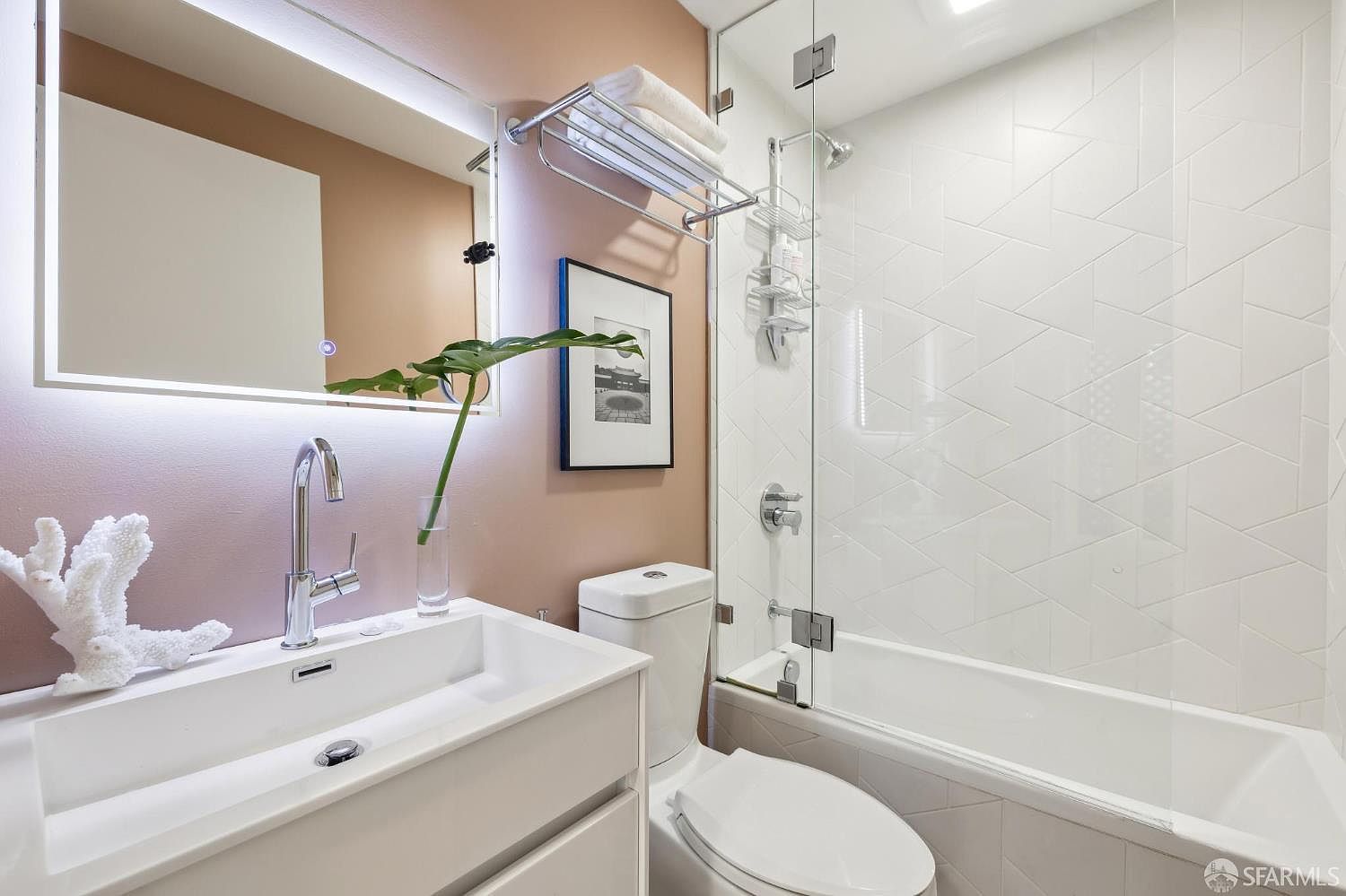
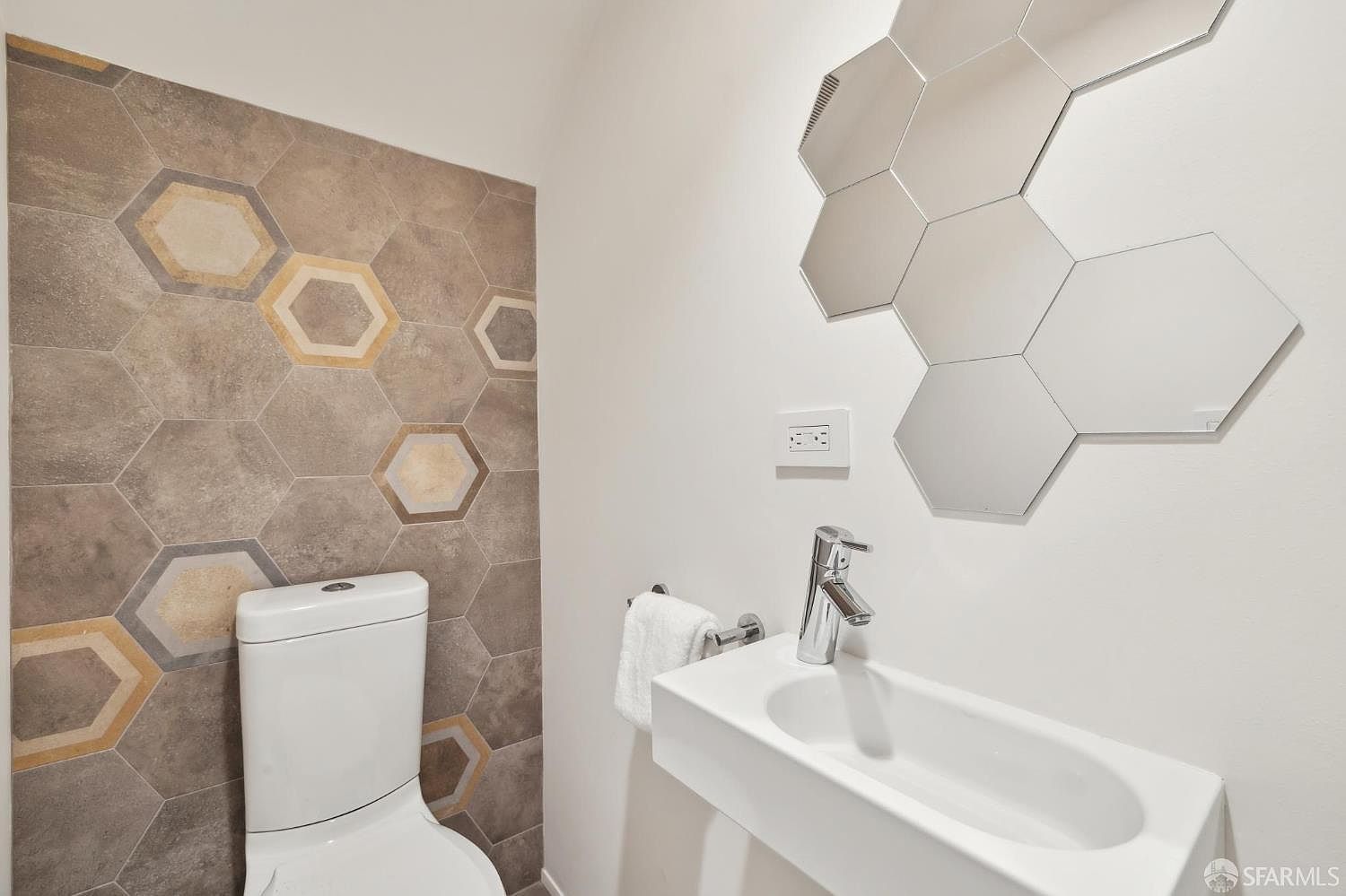
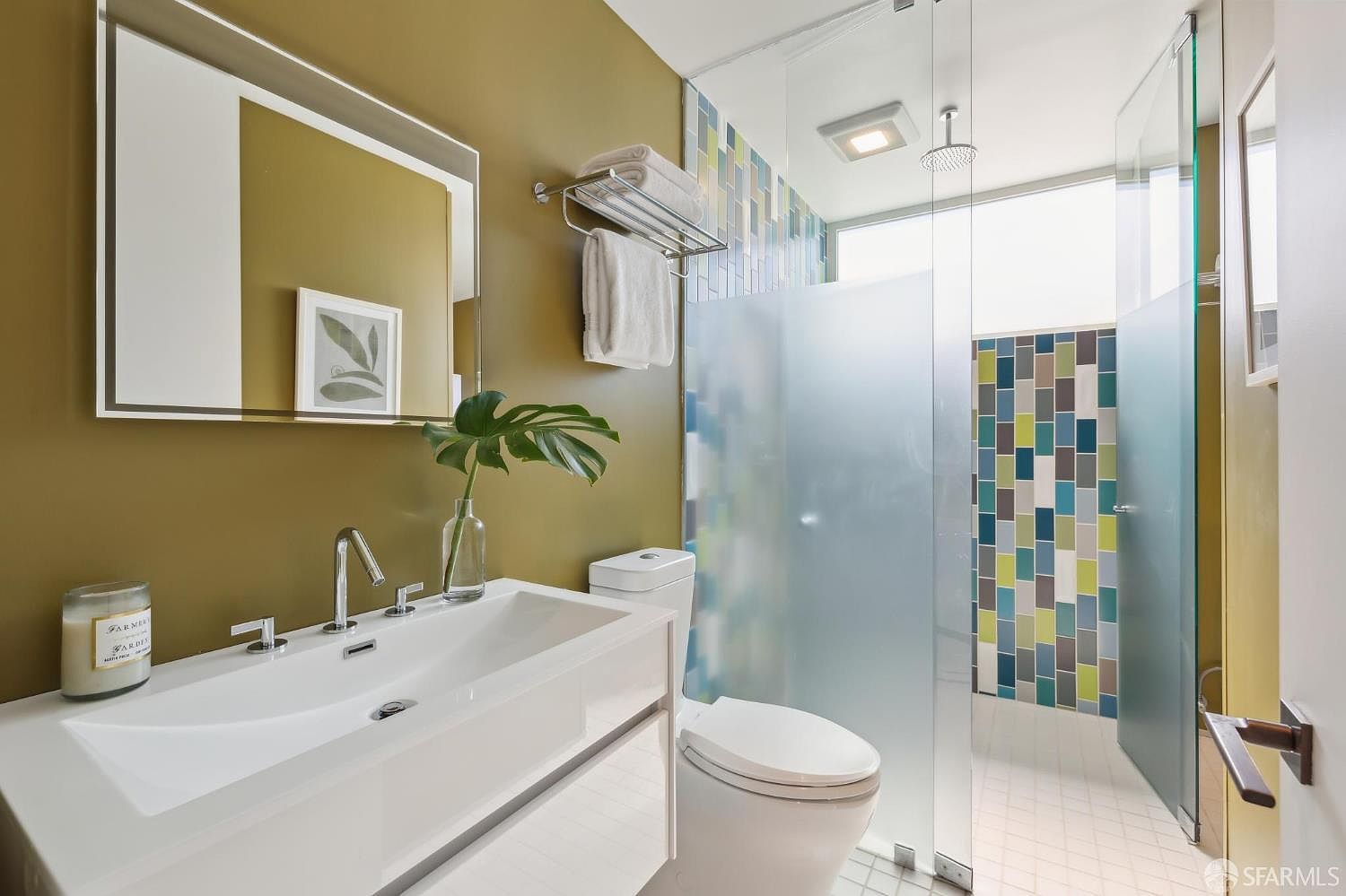
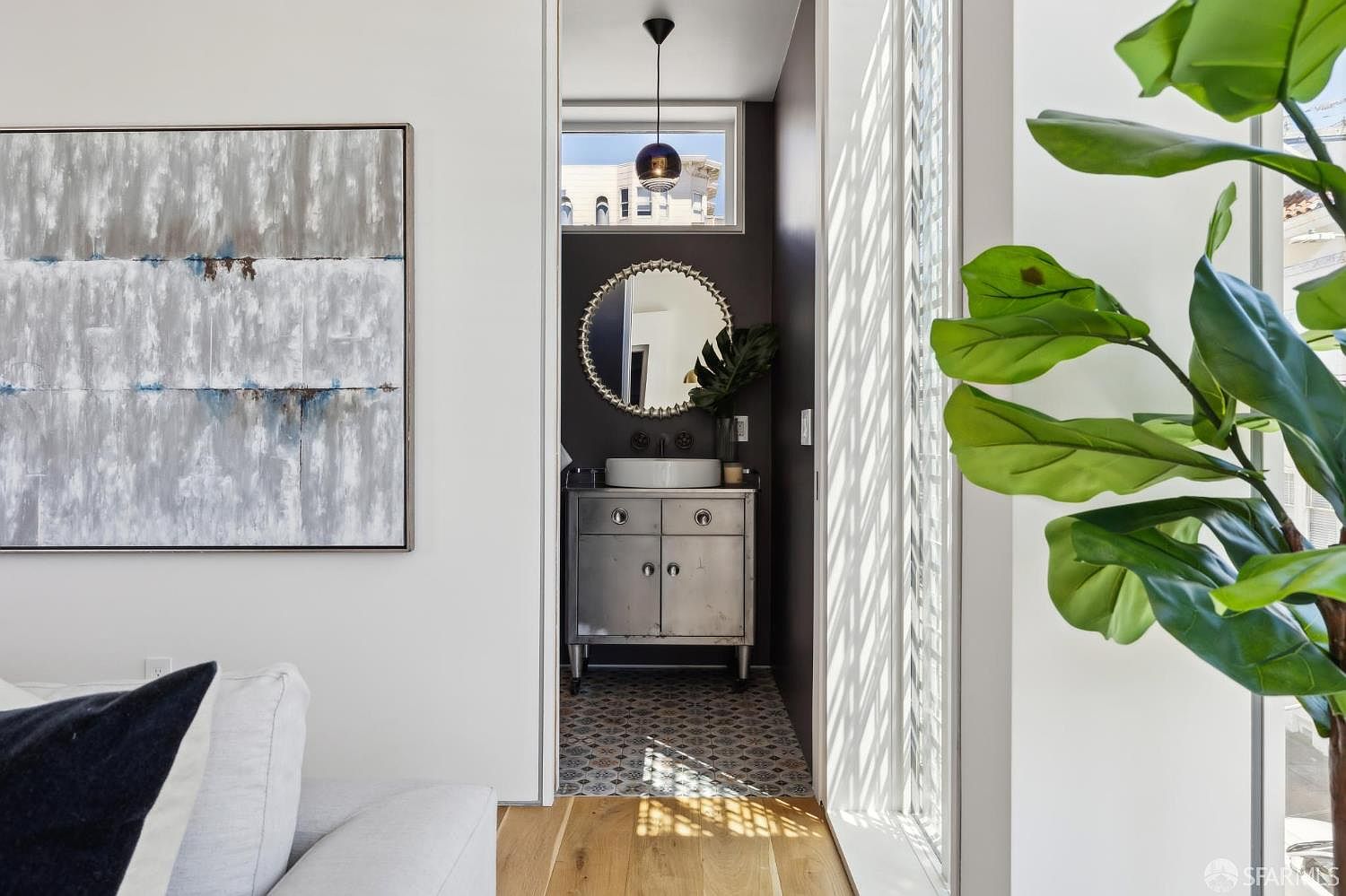
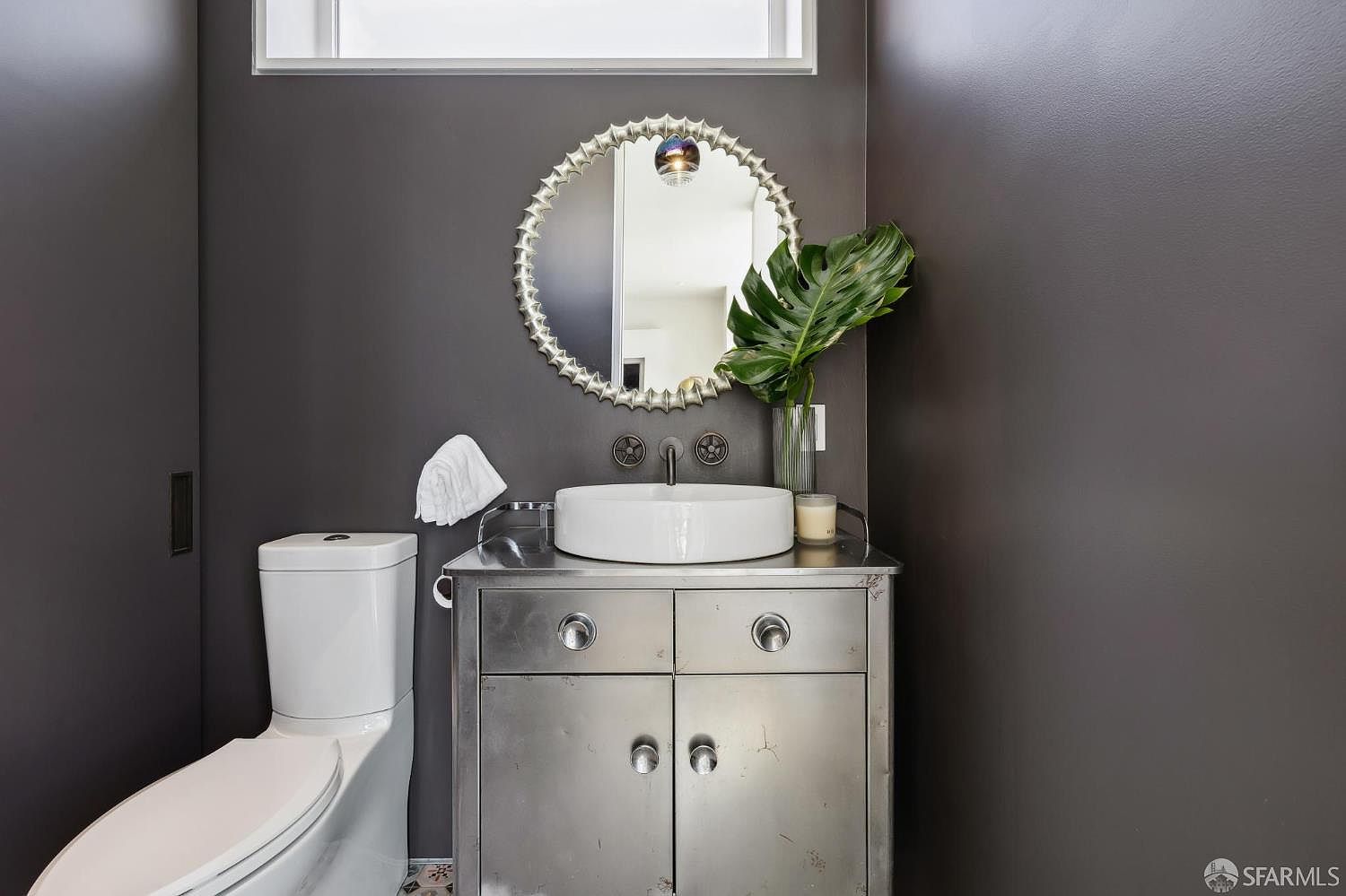
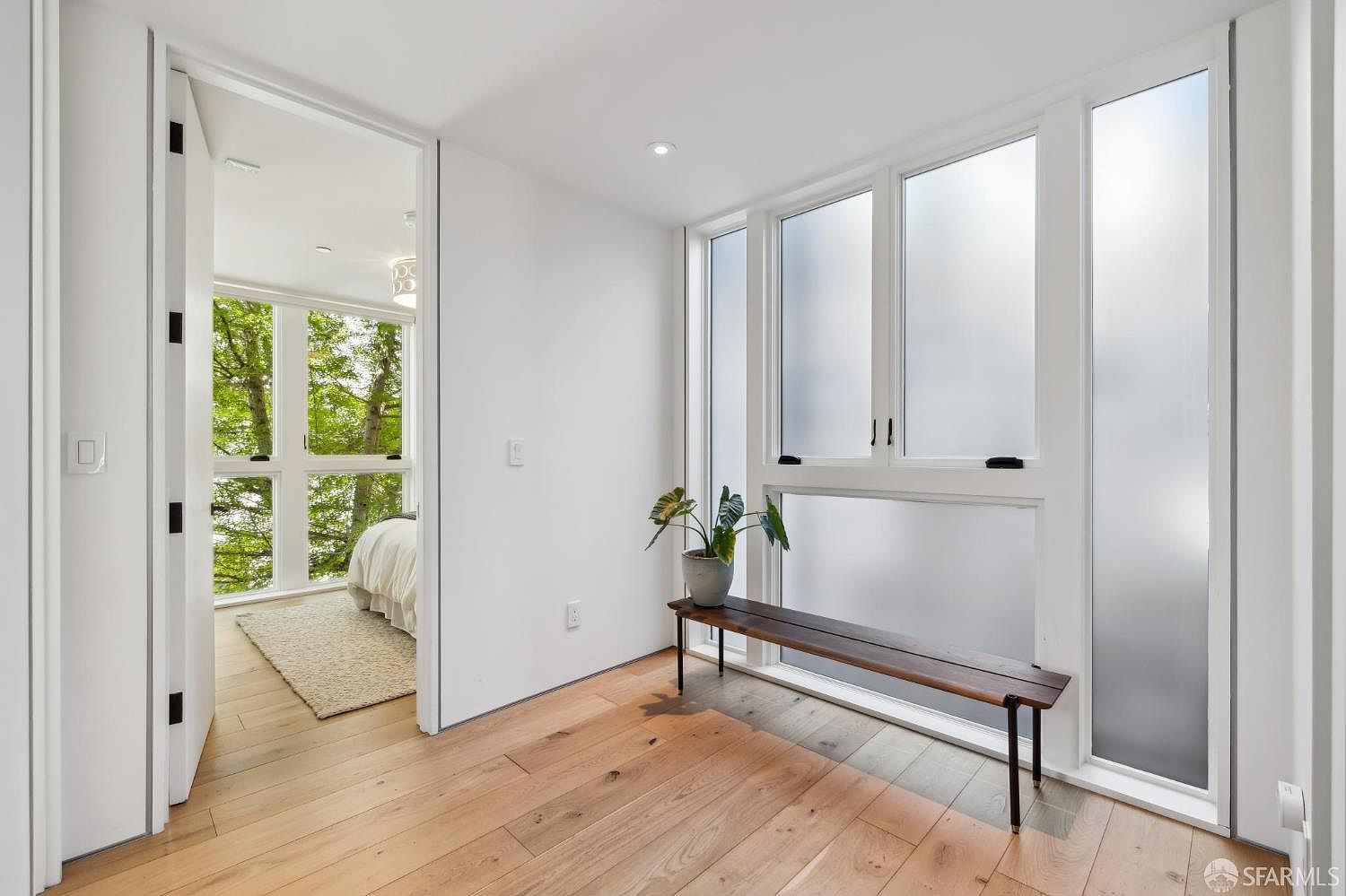
Across five levels, six bedrooms are distributed with a sensitivity to privacy and purpose. Two primary en-suite retreats each offer walk-in closets and spa-calibrated bathrooms featuring rainfall showers, gold-toned fixtures, and patterned tile work that elevates the utilitarian into the experiential. A dedicated home office, flooded with natural light through generous glazing, and a media room round out the interior programming — ensuring the home serves the full spectrum of modern life, from focused work to generous entertaining.
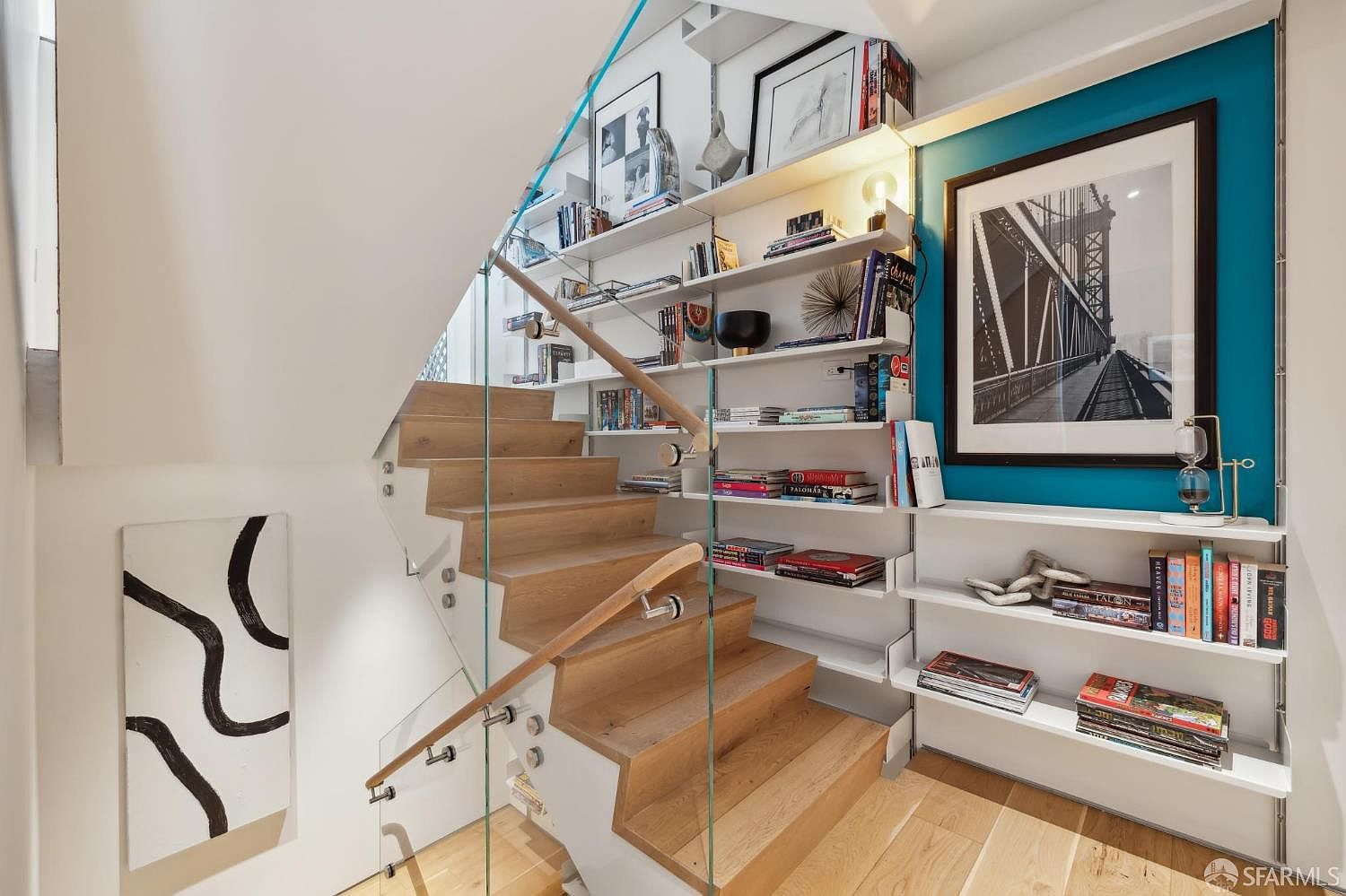
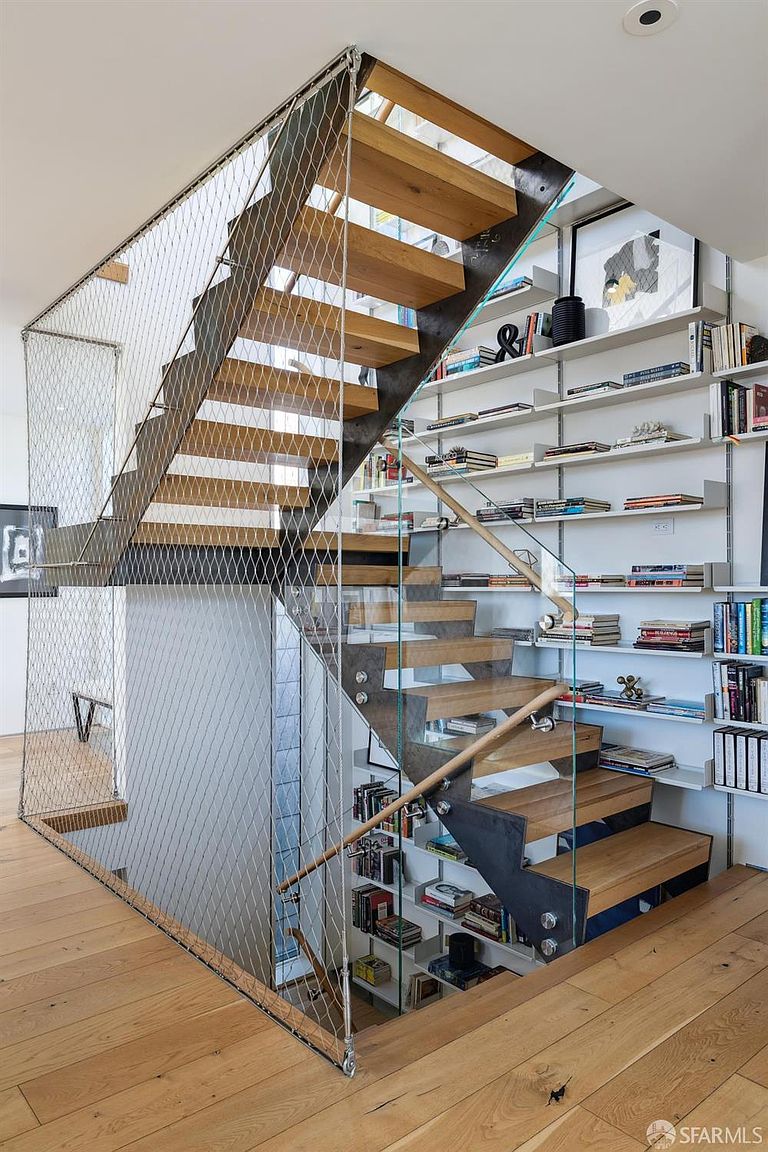
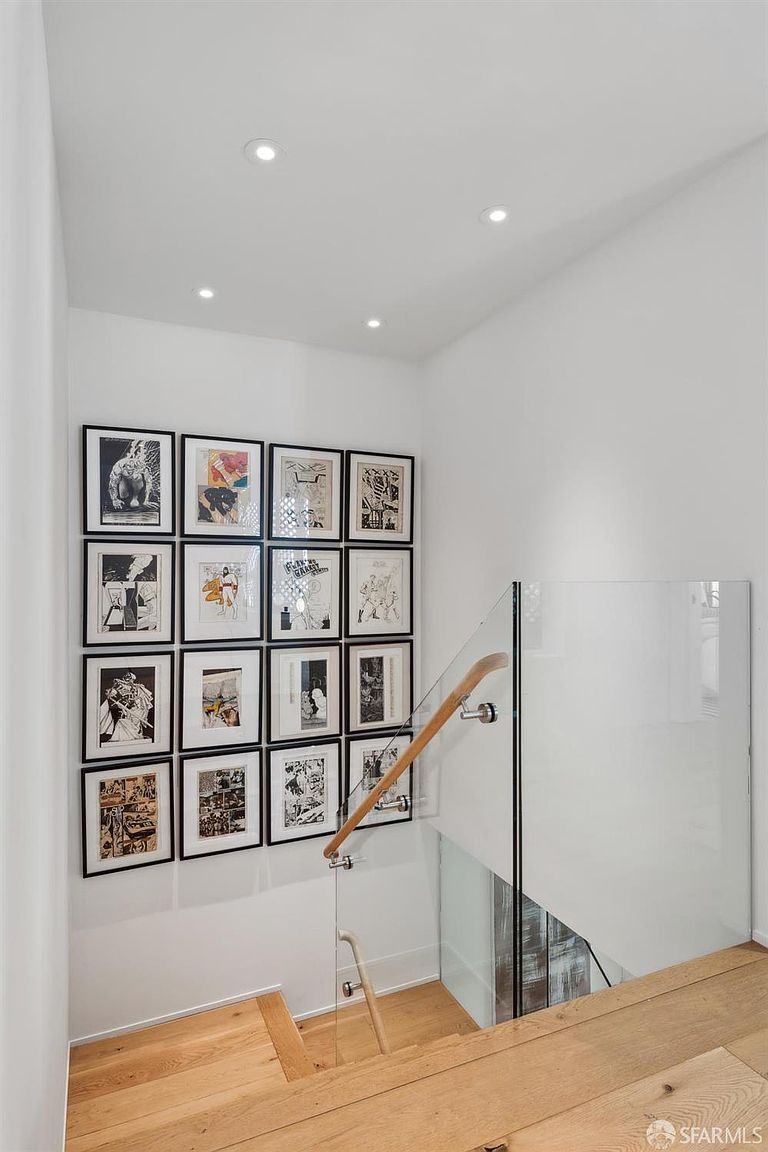
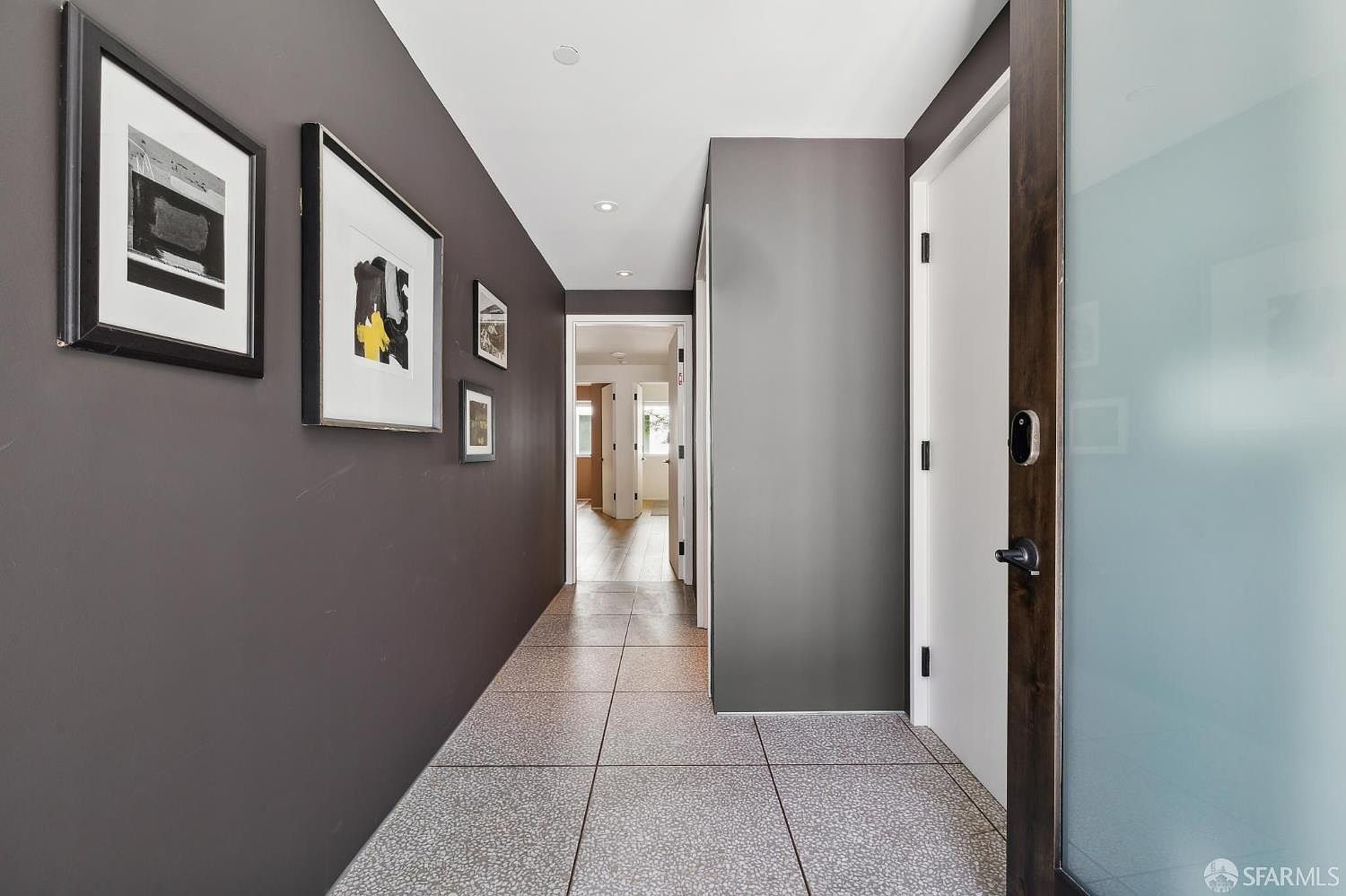
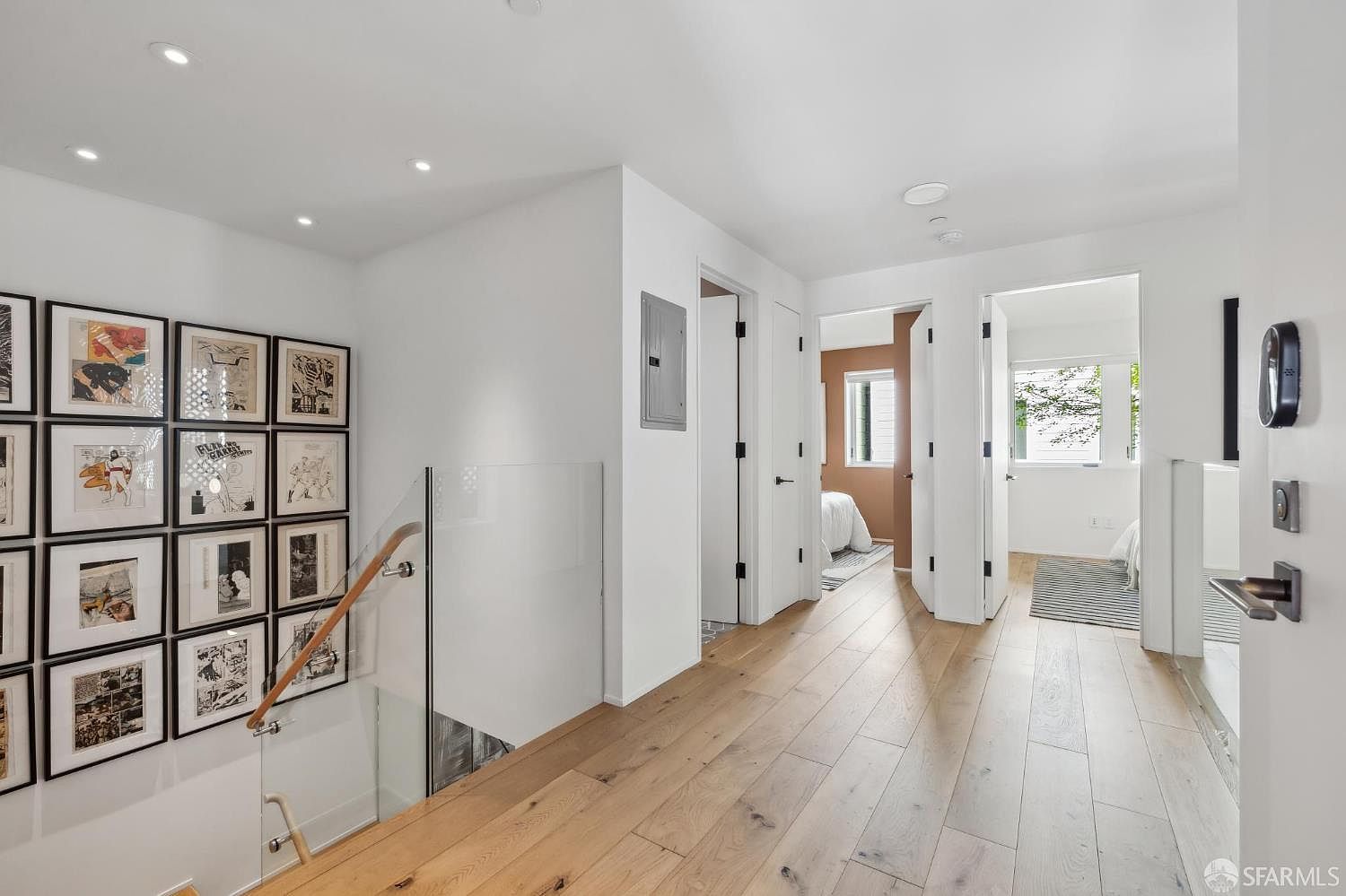
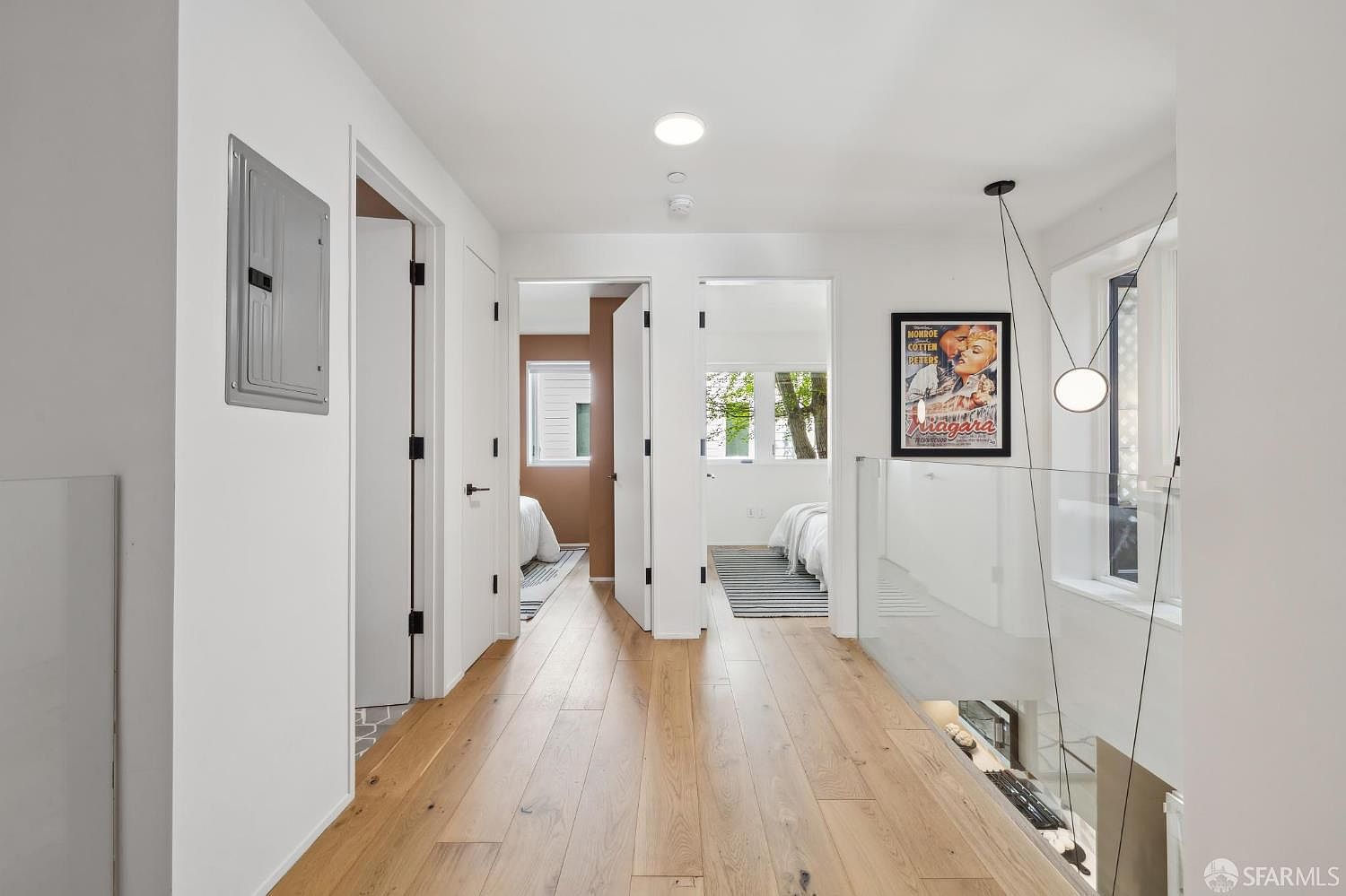
The staircase system is itself an architectural element worth dwelling upon. Glass railings, light wood treads, and accent walls ranging from vibrant teal to deep charcoal create a sequence of distinct moments as one moves between levels — a gallery of built-in shelving here, a curated art wall there — ensuring that transition spaces feel as considered as the principal rooms.
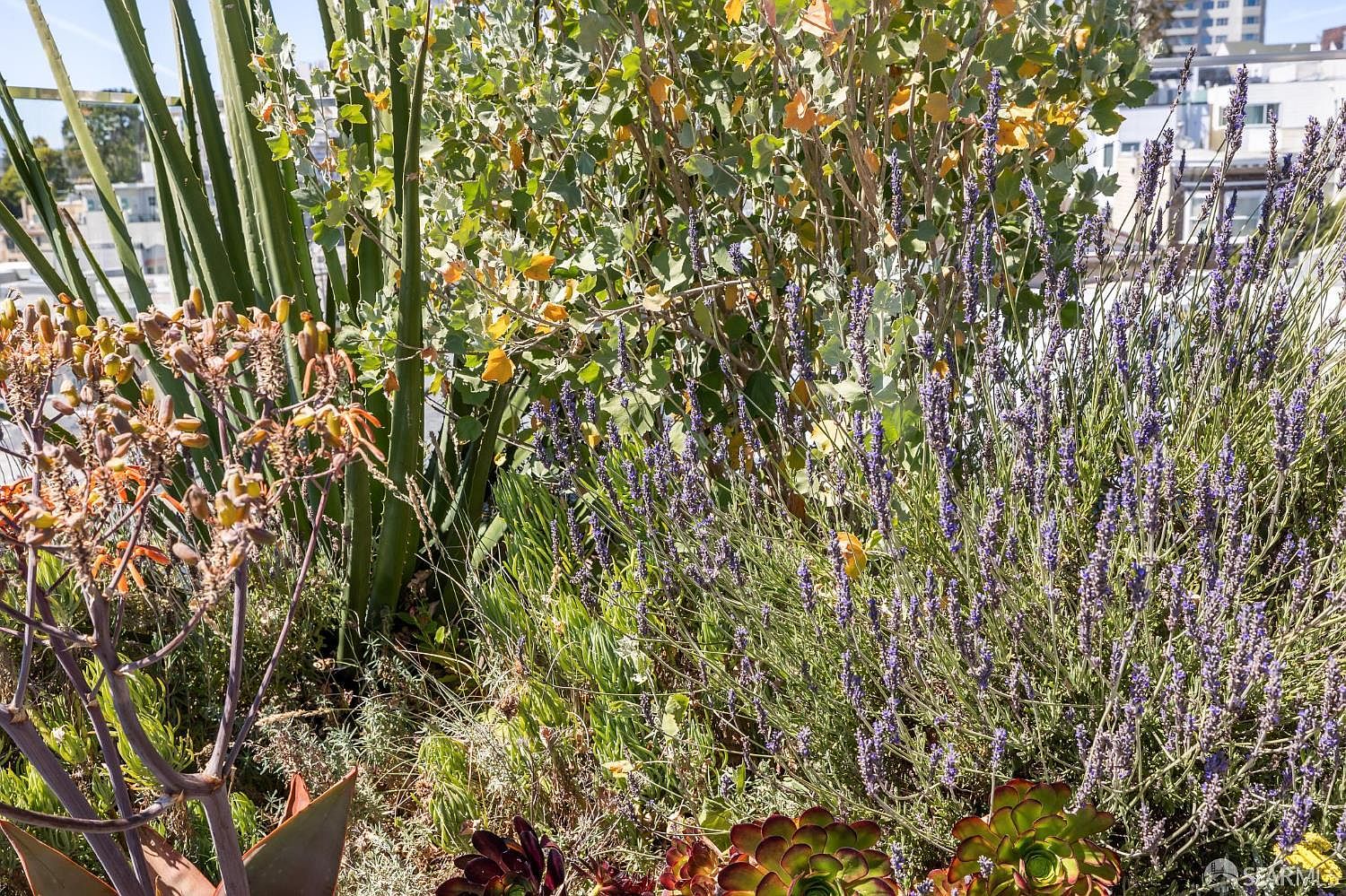
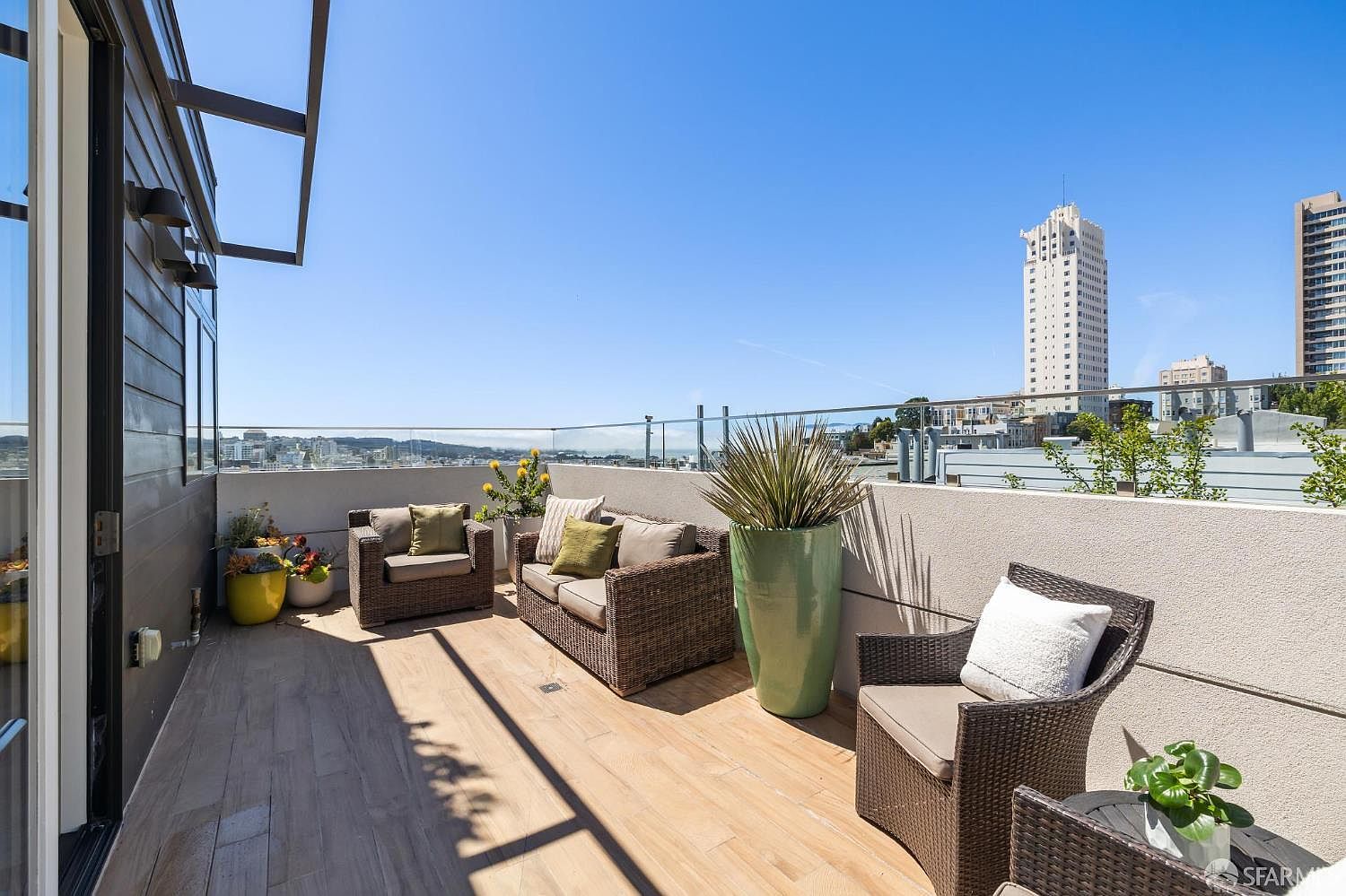
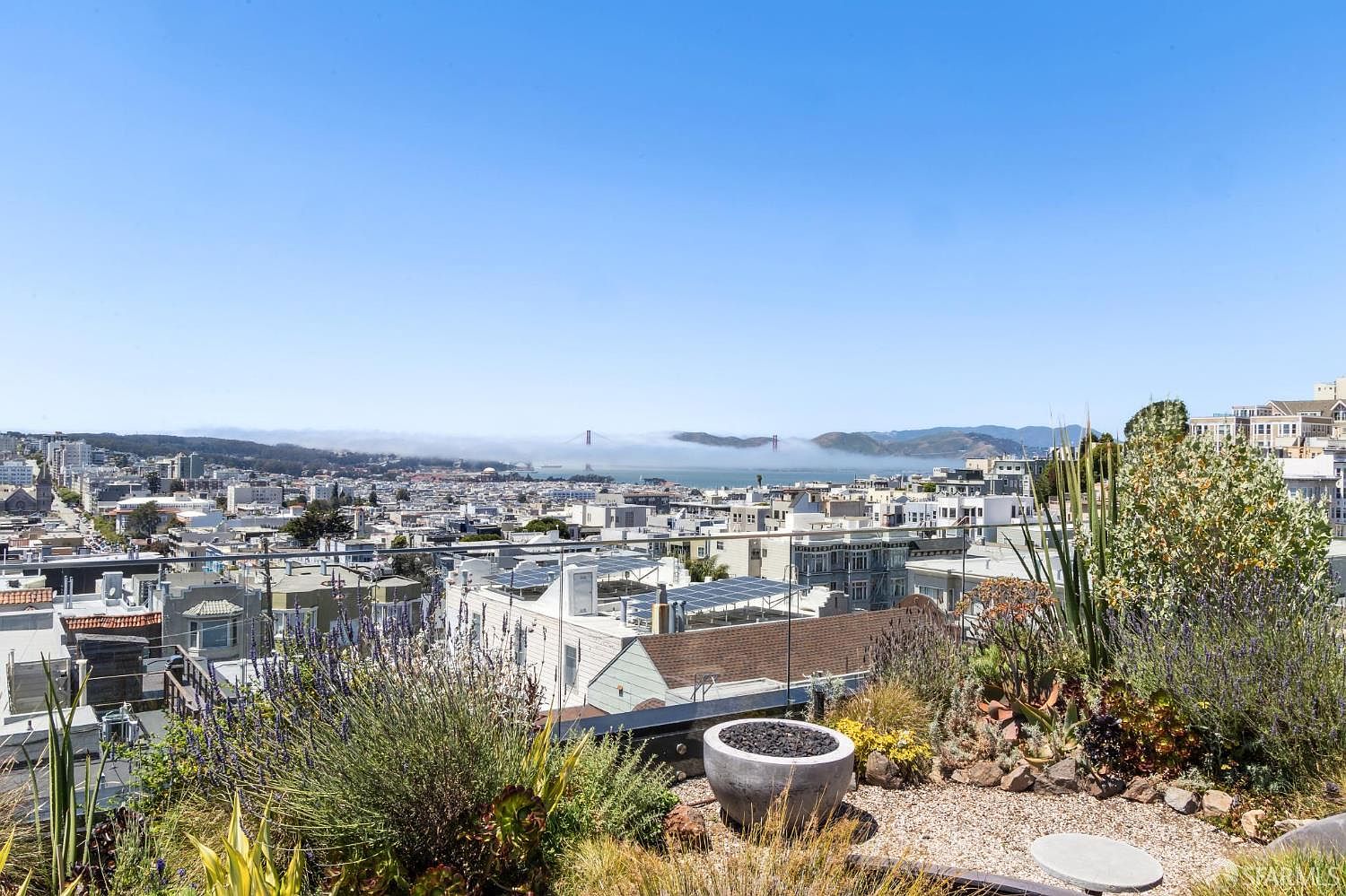
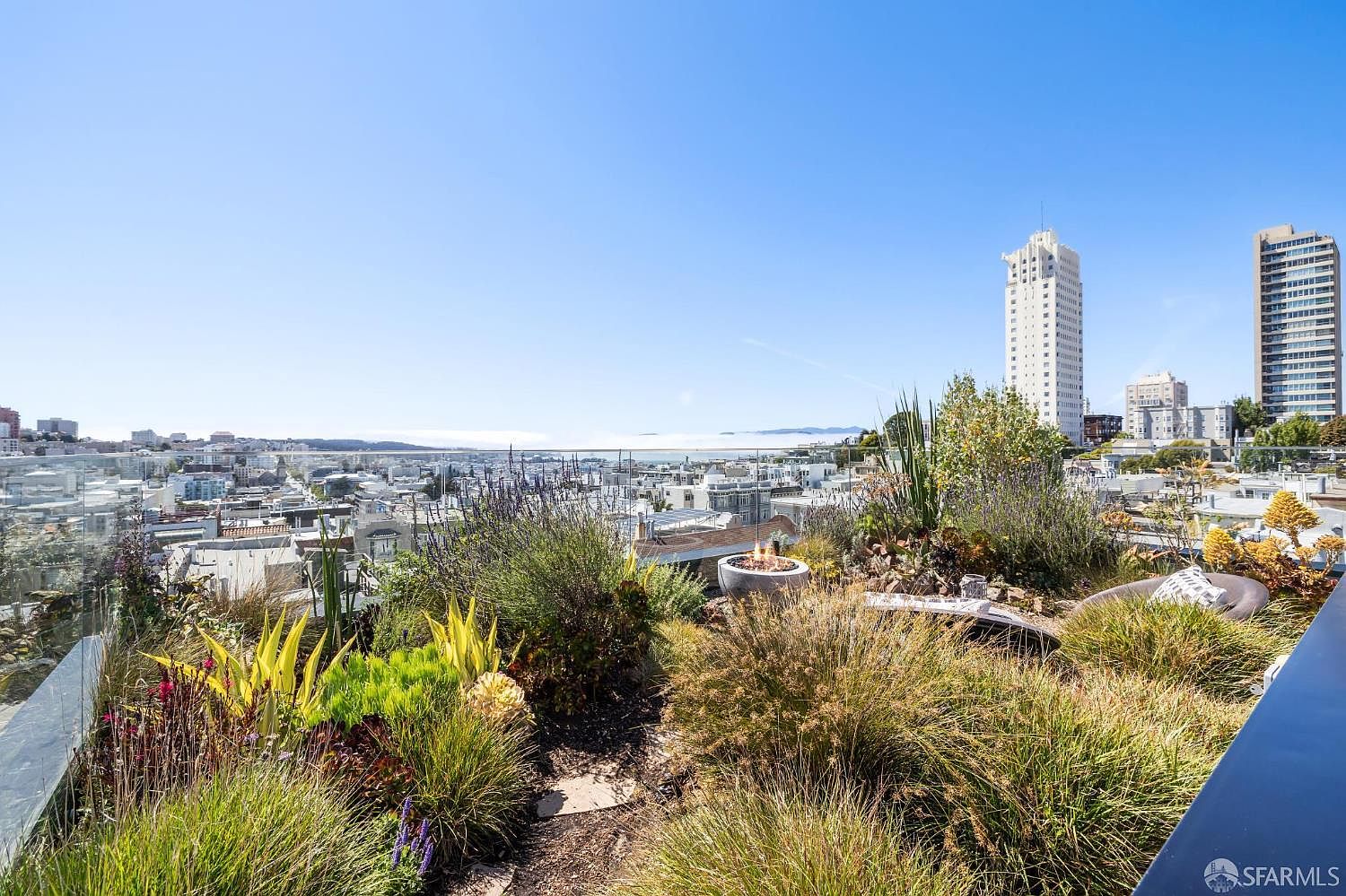
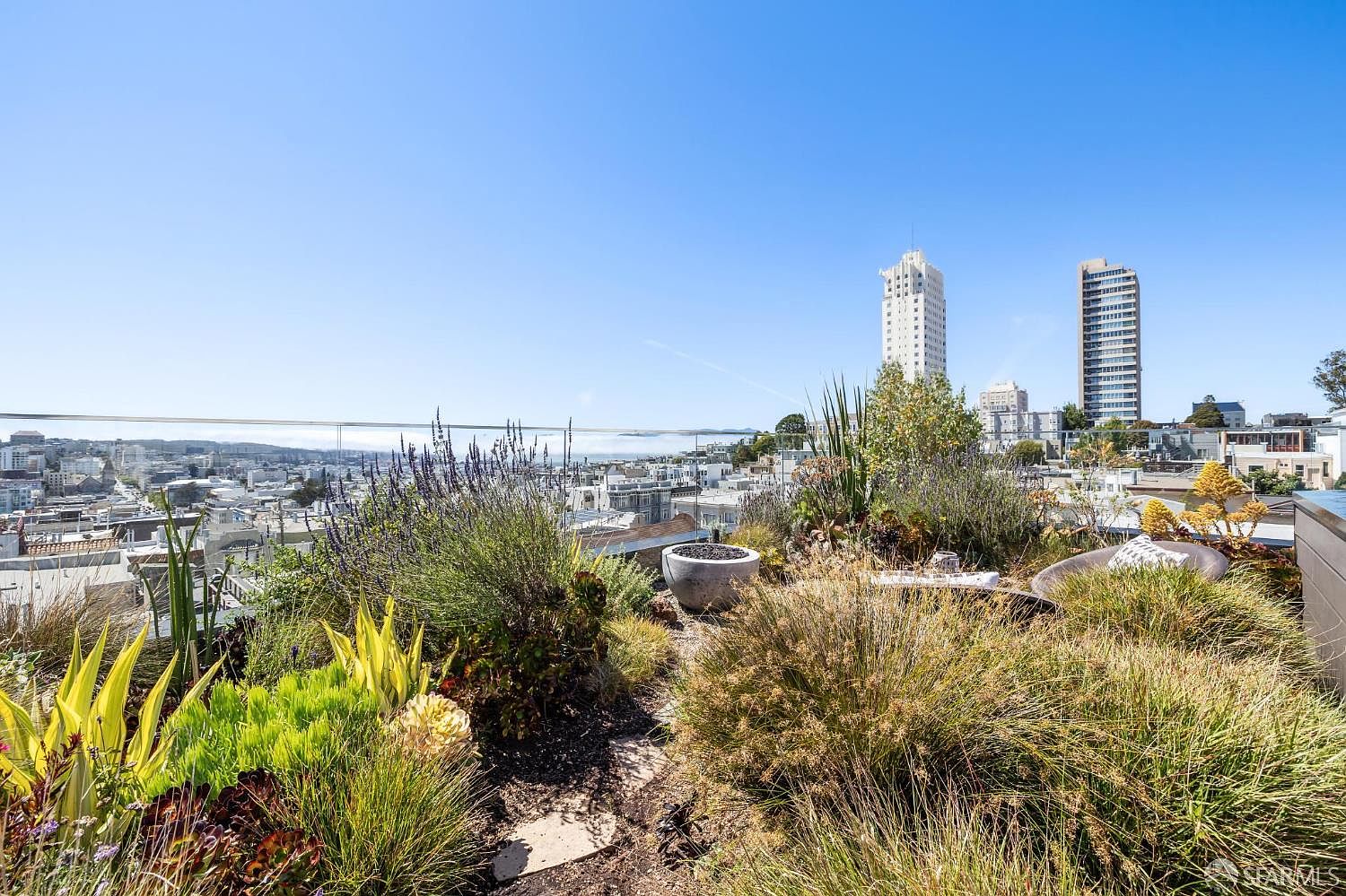
Above it all, the living roof deck is the home's crowning gesture. A 360-degree panorama takes in San Francisco's skyline, the bay, and the iconic silhouette of the Golden Gate Bridge, while a built-in fire pit nestled among a professionally designed rooftop garden of succulents, lavender, and ornamental grasses transforms the space into a year-round sanctuary for both intimate evenings and expansive gatherings.
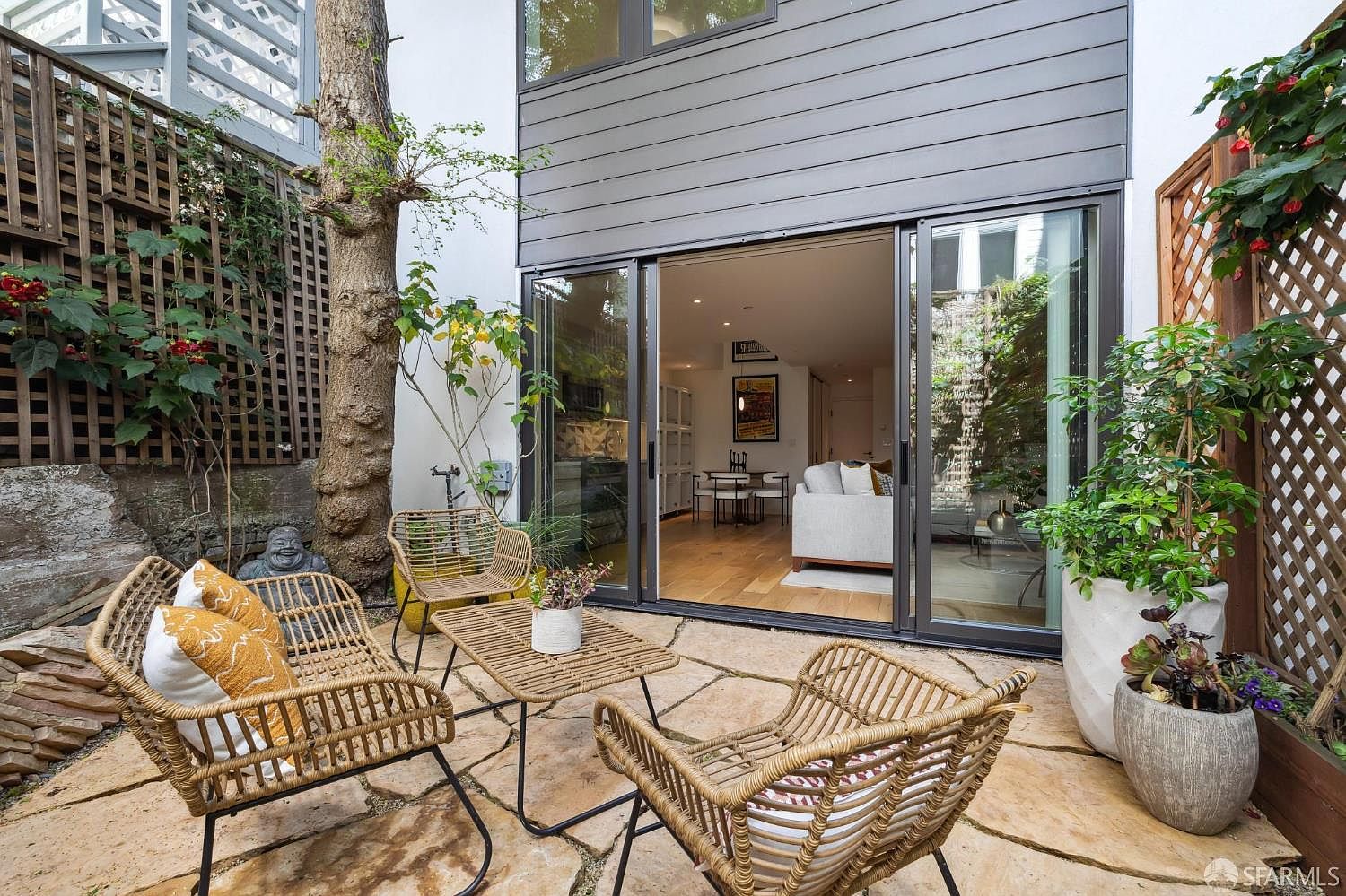
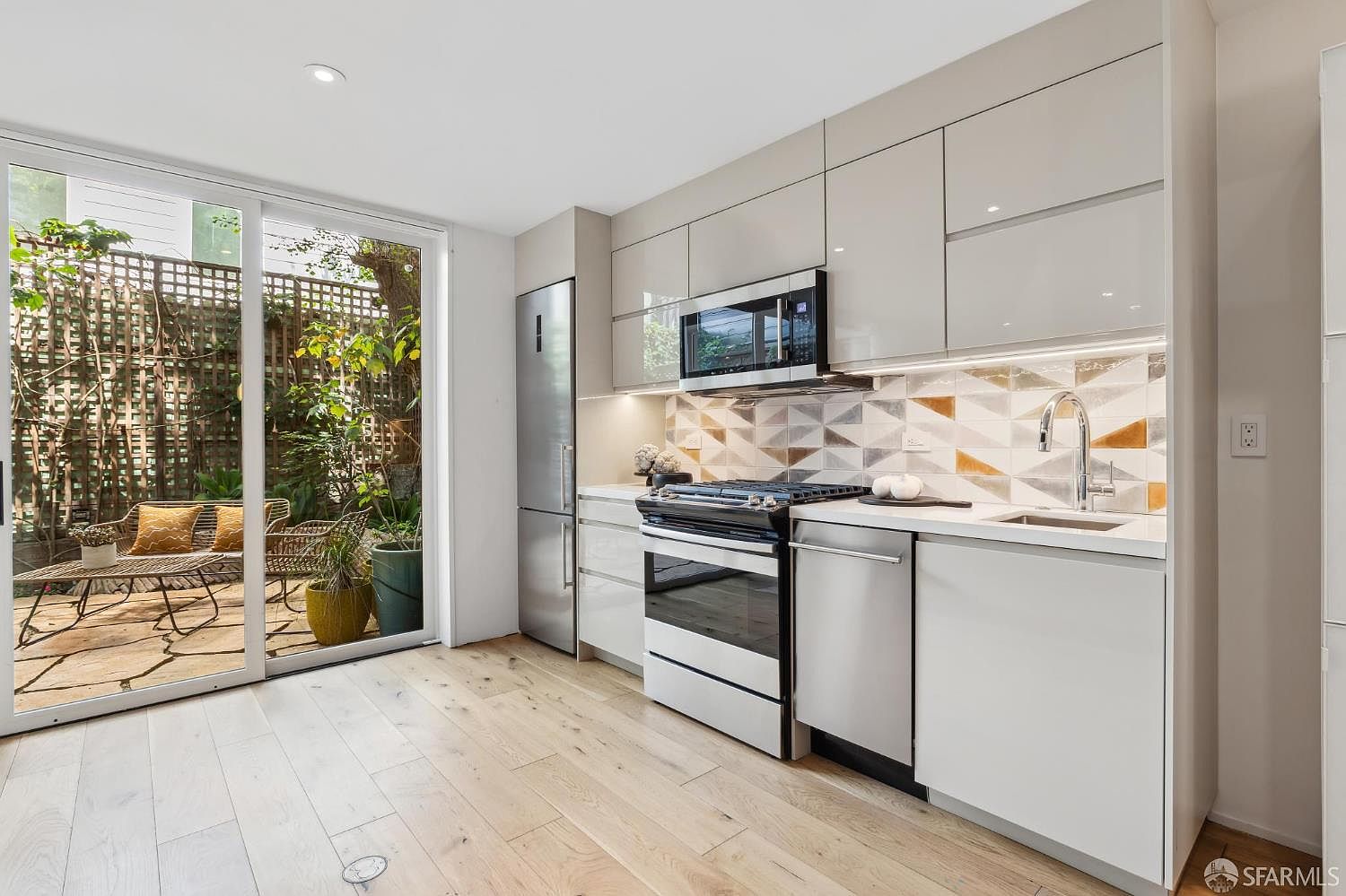
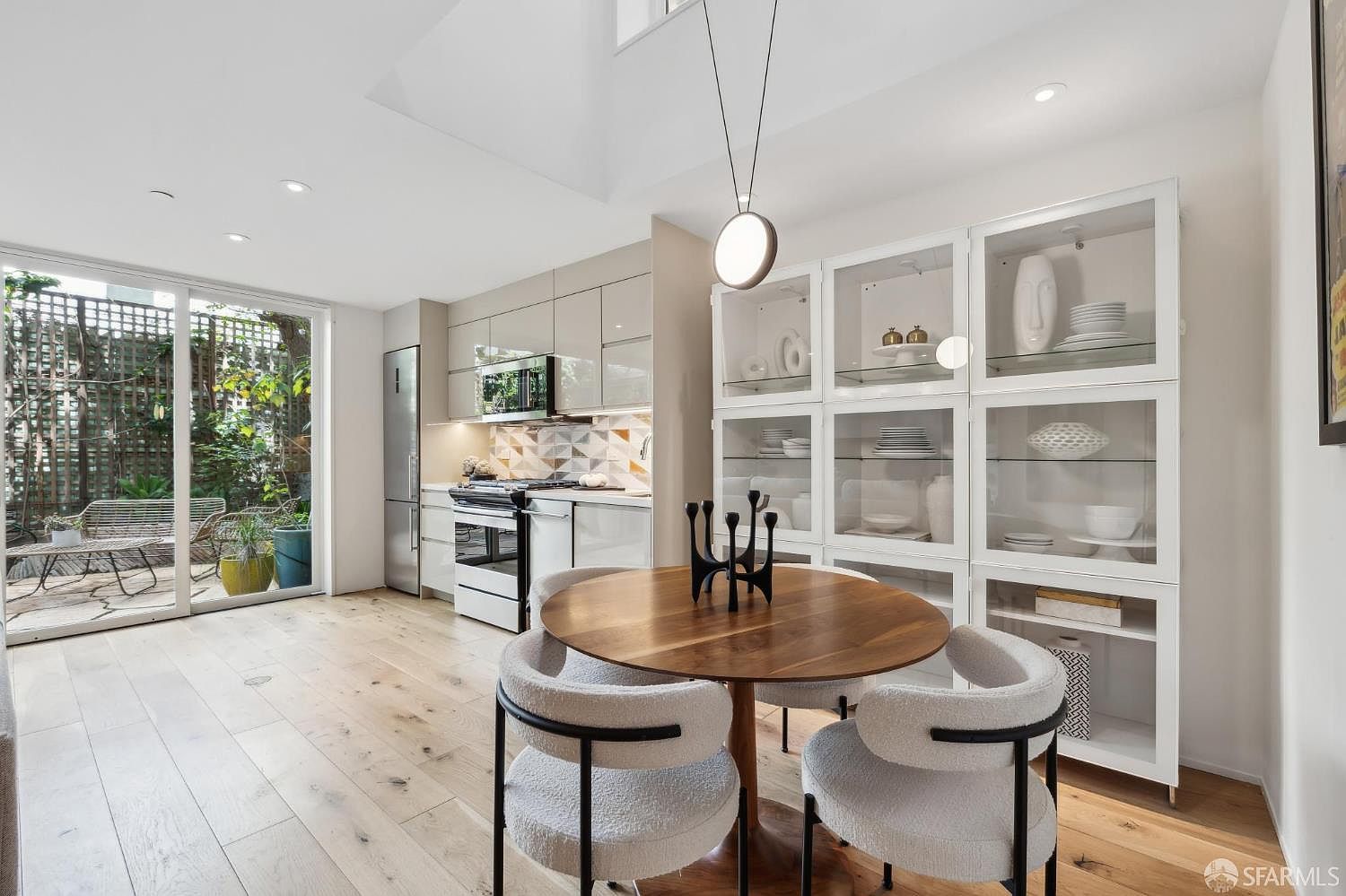
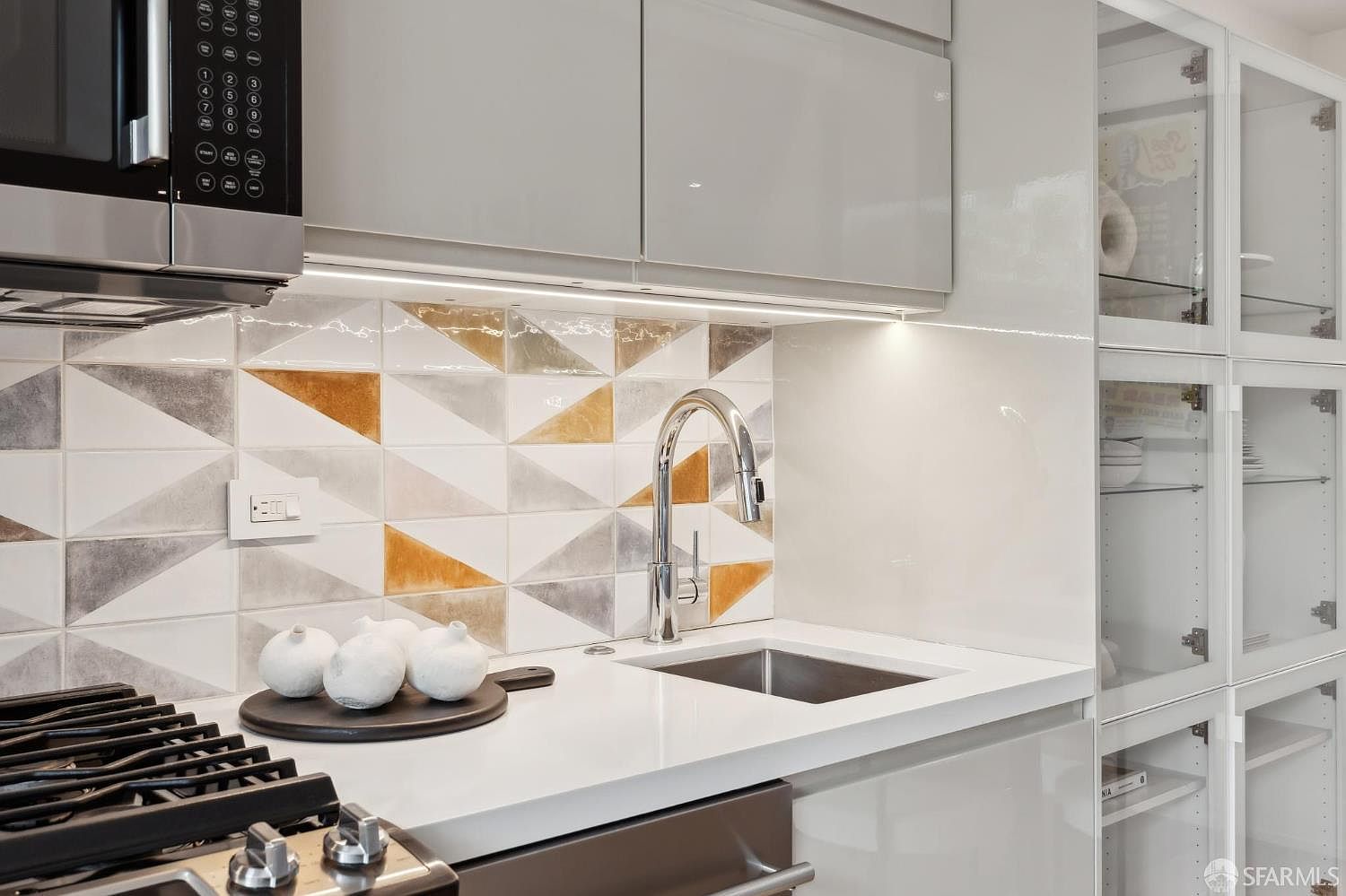
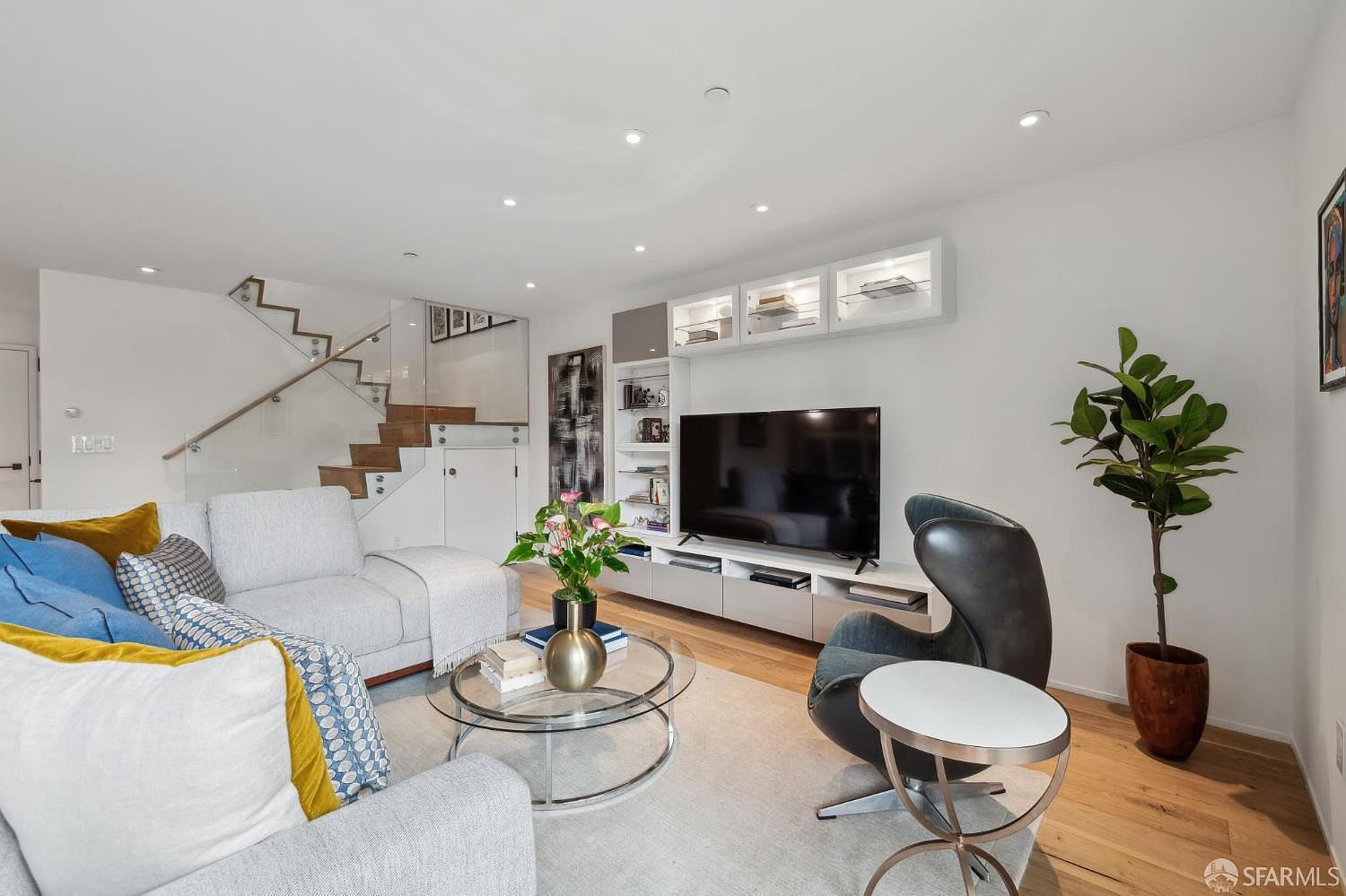
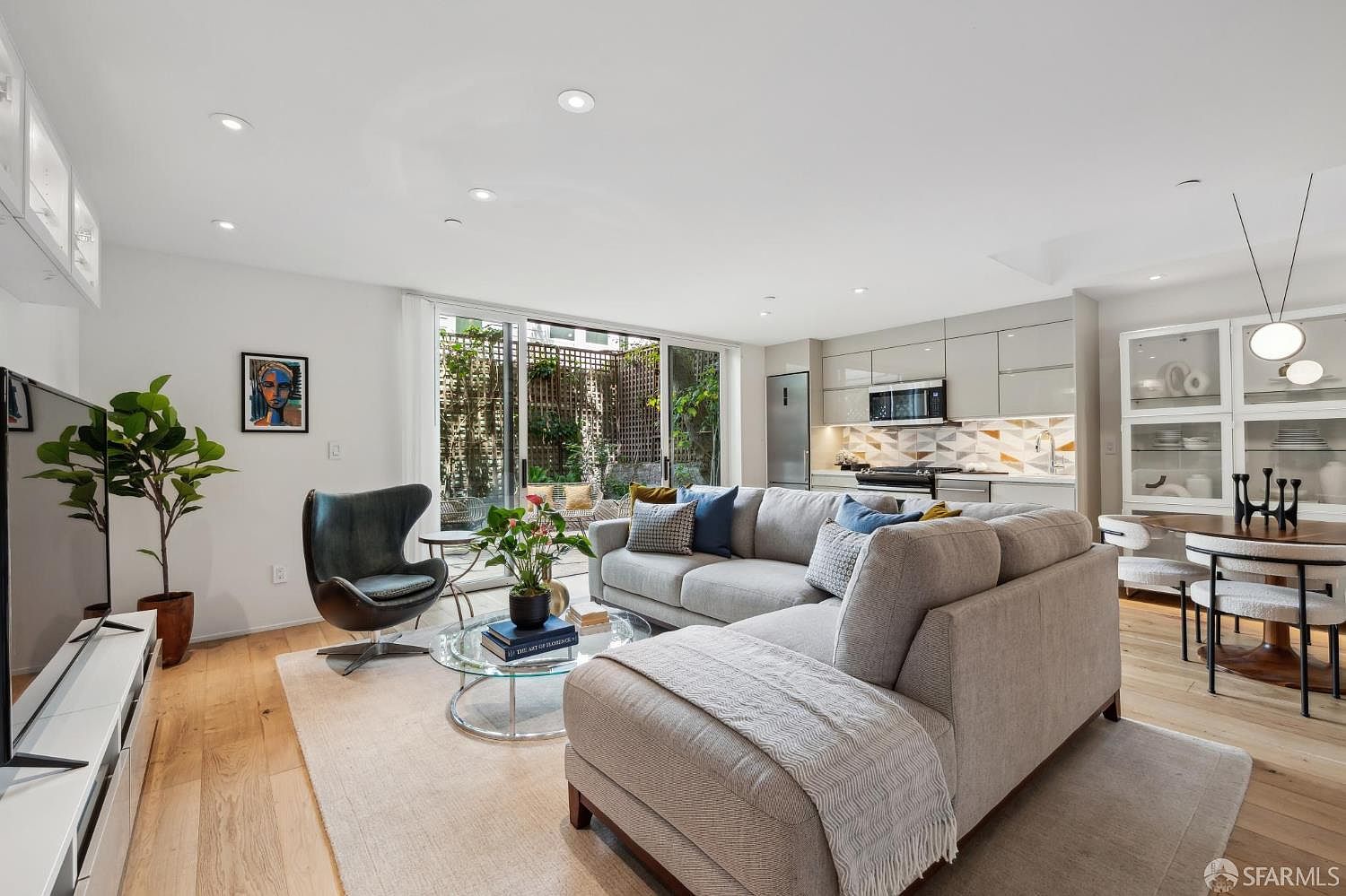
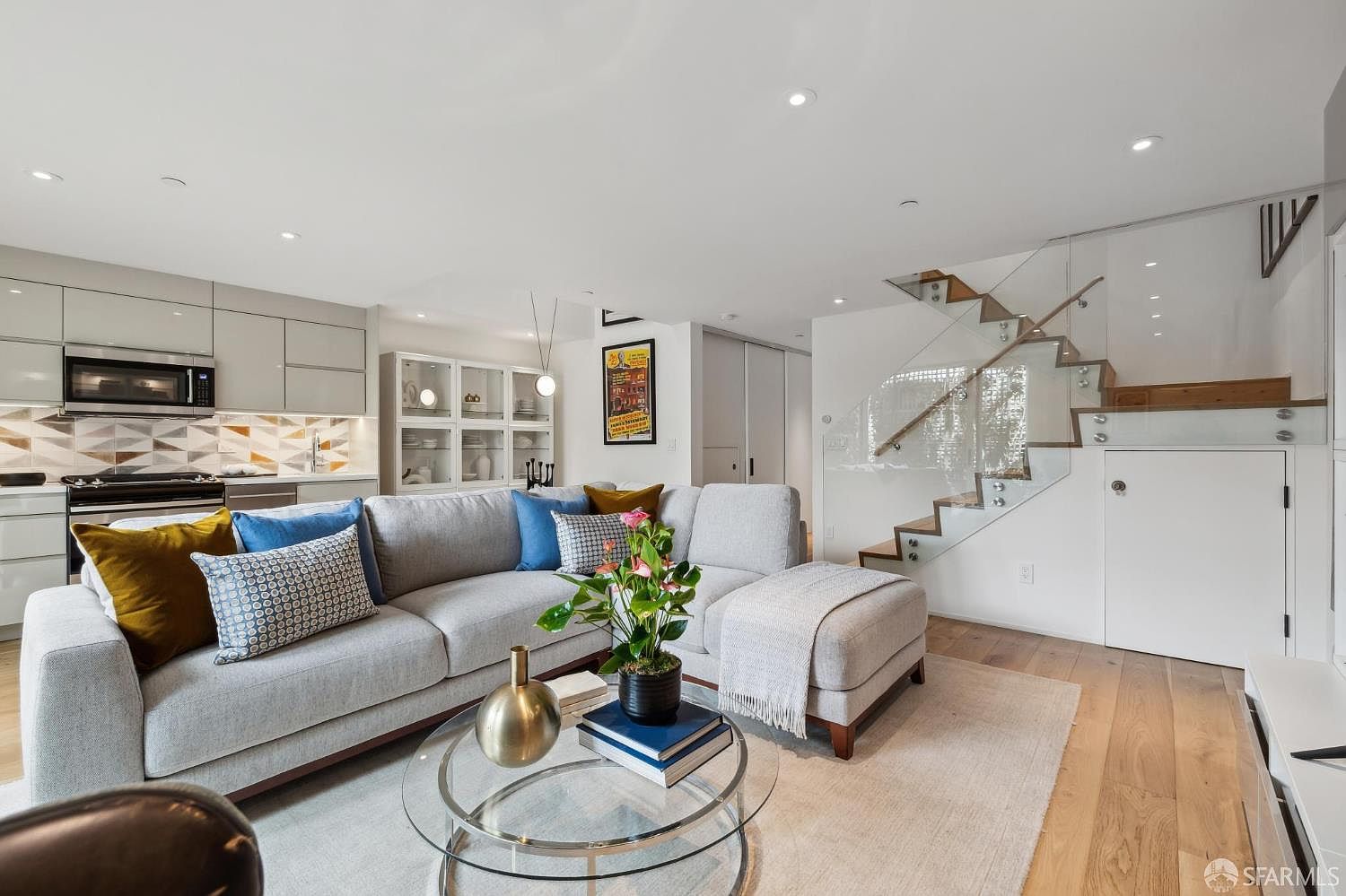
Below the main residence, the legal two-level ADU presents its own complete world: two bedrooms, one-and-a-half baths, an open living, dining, and kitchen area with a geometric tile backsplash and sleek cabinetry, and direct access to a beautifully landscaped private garden courtyard enclosed by wooden lattice trellises draped in climbing greenery. Whether configured as a premium income-generating suite, a private retreat for extended family, or a guest residence of genuine quality, the ADU adds a dimension of versatility rarely found at this level of the market.
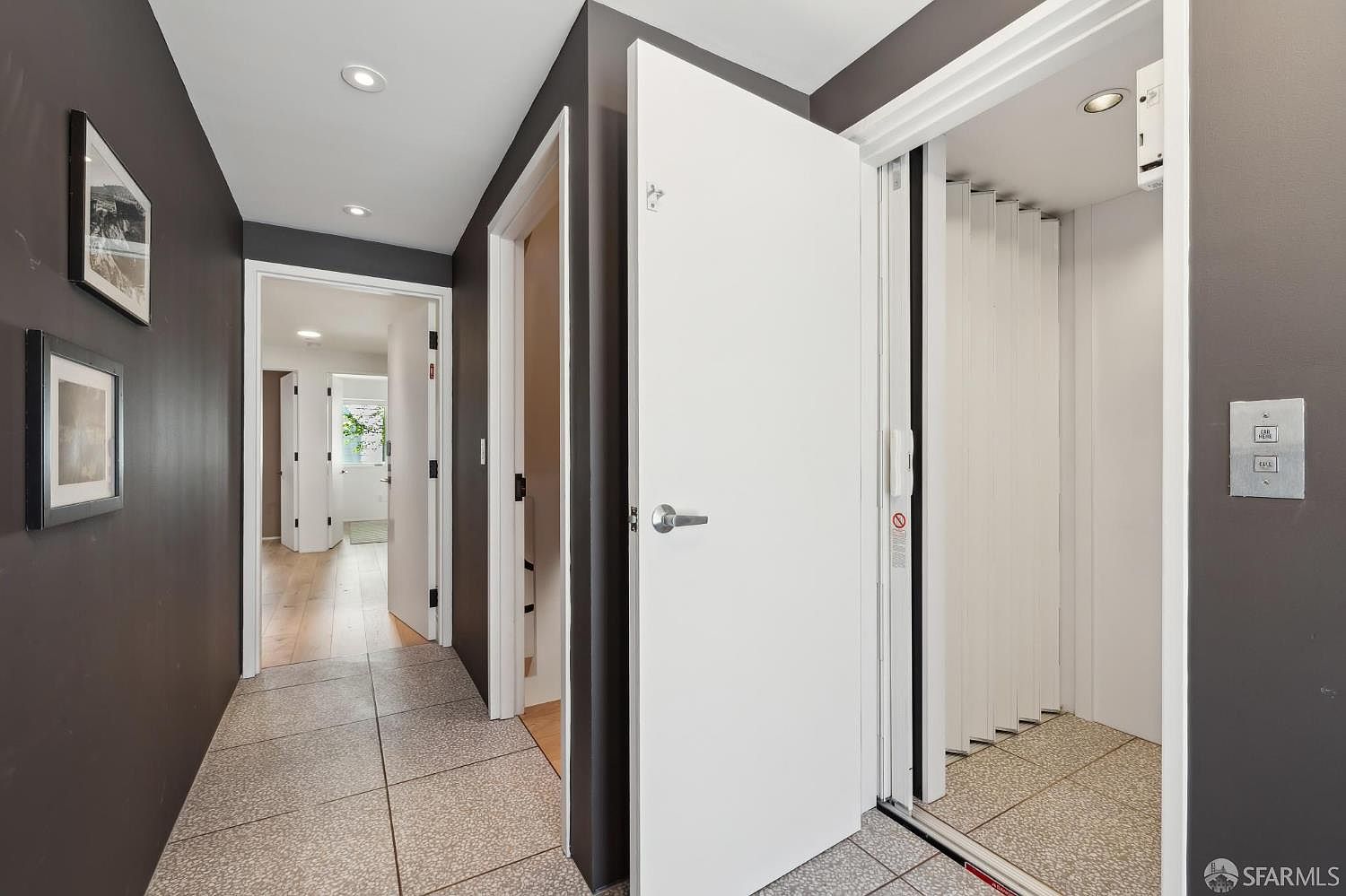
Throughout every floor, a private residential elevator ensures seamless vertical connectivity — a detail that speaks as much to forward-thinking design as it does to everyday convenience.
To live at the intersection of Russian Hill and Nob Hill is to occupy one of San Francisco's most storied and sought-after residential landscapes — a neighborhood defined by Victorian and Edwardian architectural heritage, dramatic topography, and a refined street-level culture that has remained remarkably consistent across generations.
Russian Hill takes its name, by most historical accounts, from a small cemetery of Russian sailors and traders discovered on its slopes during the mid-nineteenth century — a detail that underscores just how deeply layered the neighborhood's history runs. By the late 1800s and early 1900s, the hill had become home to a community of writers, artists, and intellectuals who were drawn by its relative seclusion and its extraordinary views. The poet Ina Coolbrith, California's first poet laureate, lived here. Ambrose Bierce and Frank Norris were among its literary habitués. That tradition of creative and intellectual life has never entirely departed.
Today, Russian Hill's residential streets — many of them quiet, tree-lined, and blessedly removed from the city's commercial corridors — offer a pace of life that feels genuinely rare for a neighborhood so close to the urban core. Macondray Lane, a beloved pedestrian path of wooden cottages and overhanging gardens, sits just blocks away and has long been considered one of San Francisco's most enchanting hidden passages. Lombard Street's famously sinuous block draws visitors from across the world while remaining a charming daily backdrop for residents.
The adjacency to Nob Hill compounds the location's appeal considerably. One of San Francisco's most historically prestigious neighborhoods, Nob Hill is home to Grace Cathedral — the third-largest Episcopal cathedral in the United States, whose neo-Gothic facade and labyrinth garden are landmarks of both architectural and contemplative significance — as well as Huntington Park, a tranquil public green space surrounded by the neighborhood's landmark hotels and historic apartment buildings. The Pacific-Union Club, housed in the only mansion to survive the 1906 earthquake and fire in the immediate area, stands as a reminder of the neighborhood's Gilded Age legacy.
For daily life, the surrounding streets offer an enviable array of resources. The shops, cafés, and restaurants of Polk Street are within comfortable walking distance, providing everything from specialty coffee roasters and independent bookshops to acclaimed restaurants and neighborhood markets. The Embarcadero waterfront, the Ferry Building Marketplace, and the cultural institutions of the Civic Center are all easily accessible by foot, bicycle, or the city's historic cable car lines — the Powell-Hyde and Powell-Mason routes both traverse the neighborhood, connecting residents to the broader city with a mode of transit that is as practical as it is iconic.
Fitnessand recreation are equally well served. The Ina Coolbrith Park, a terraced hilltop green space named for the neighborhood's literary patron saint, offers some of the city's finest informal views of the bay and the Marin Headlands. The proximity to the Embarcadero running path, the recreational amenities of the Marina Green, and the open space of the Presidio ensures that an active outdoor lifestyle is always within reach.
At 160 Bernard Street, one does not simply acquire a home. One assumes a place within a neighborhood that has shaped San Francisco's cultural and civic identity for more than a century — and a vantage point, quite literally, above it all.
Featured Highlights
Curated Content • Presented by Tasha Delancy