The Story Behind
A Legendary Prewar Penthouse Crowning Central Park West
There are properties that come to market, and then there are properties that arrive — announced by decades of quiet distinction and an architectural legacy that precedes every introduction. Penthouse F at 101 Central Park West belongs irrevocably to the latter category. Perched at the crown of one of the avenue's most celebrated prewar buildings, this remarkable residence has been held by a single family for more than forty-five years, its rooms shaped by private life rather than the revolving door of the market. That extraordinary continuity speaks to something elemental: this is a home that inspires devotion.
The building itself was conceived in 1929 by architects Simon Schwartz and Arthur Gross, whose Neo-Renaissance vision produced one of Central Park West's most architecturally distinguished addresses. The facade's carefully composed detailing, the building's commanding presence between 70th and 71st Streets, and its enduring reputation for impeccable service have made it a benchmark against which other prewar addresses are measured. The penthouse, naturally, represents its highest expression.
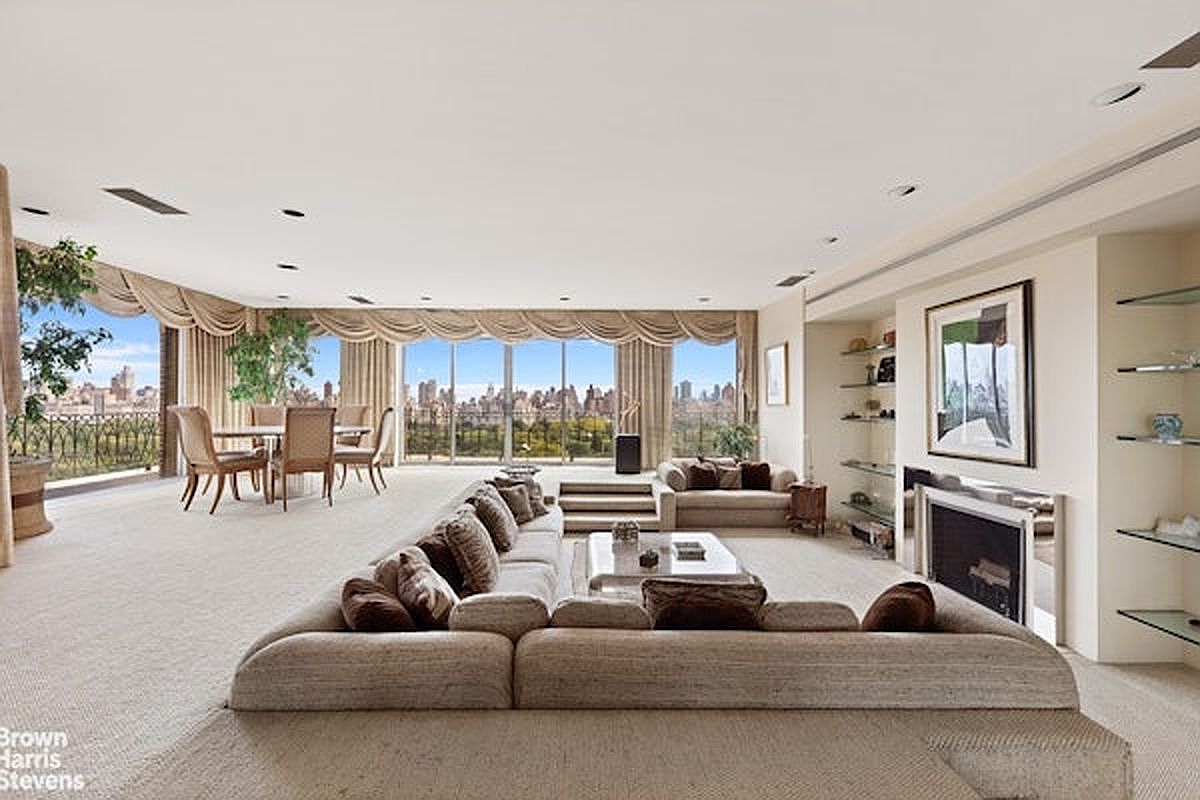
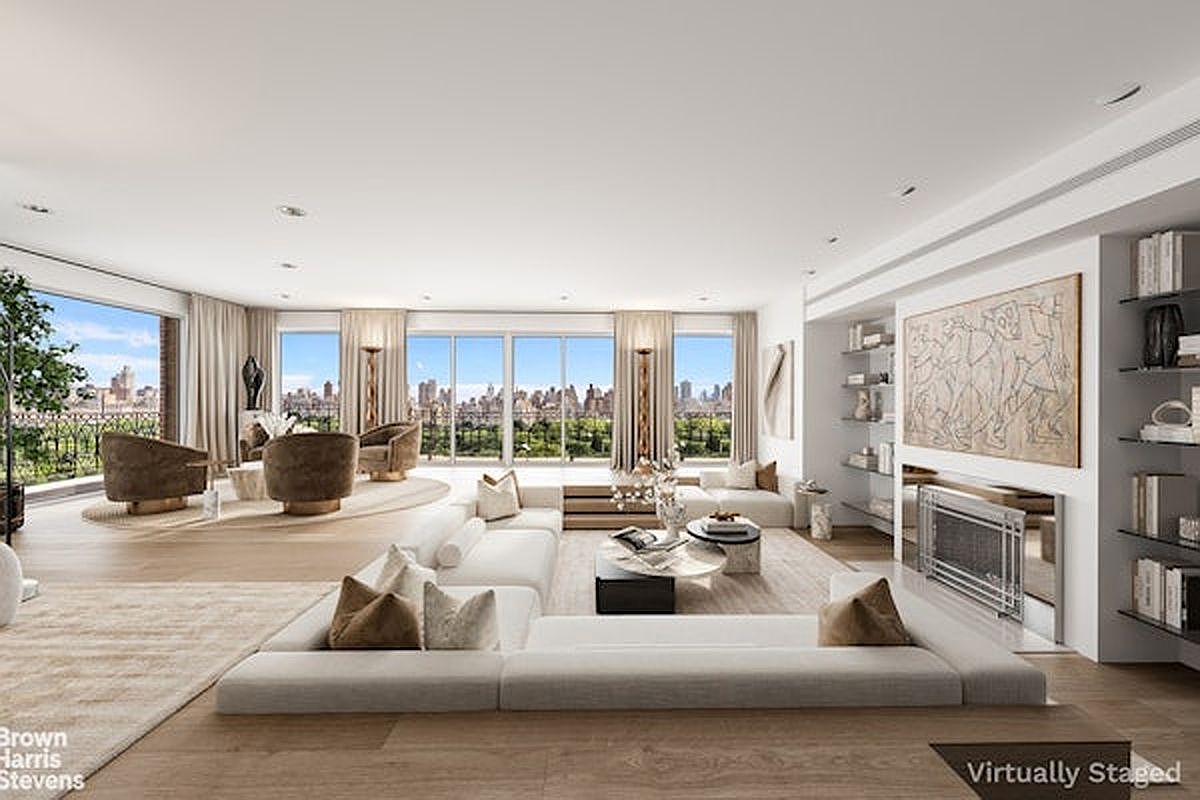
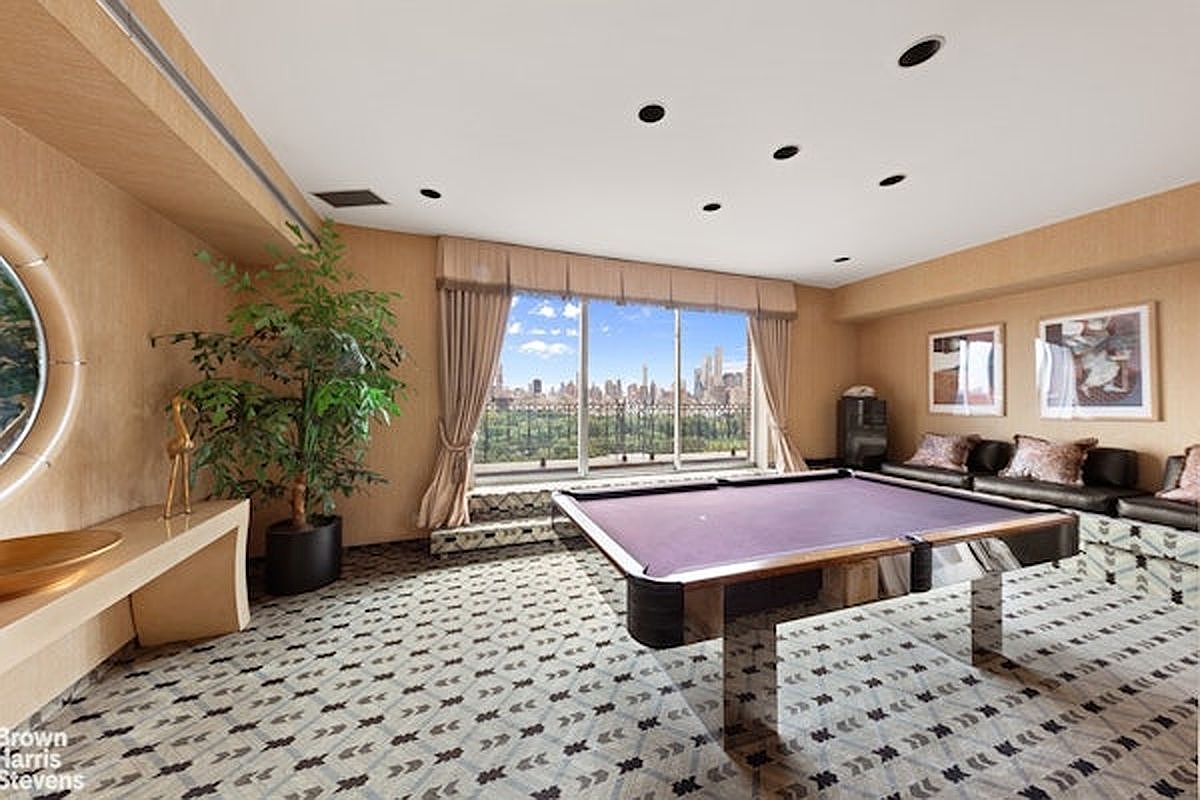
Entry is made through a private elevator landing that opens into an eighteen-by-ten gallery finished in polished stone — a composed, gallery-like threshold that immediately signals the scale of what lies beyond. The corner living room is nothing short of theatrical: a wood-burning fireplace anchors the space while oversized floor-to-ceiling windows frame sweeping, unobstructed views of Central Park and the Midtown skyline in a tableau that shifts with every hour of light. Adjoining the living room, the formal dining room commands the same breathtaking panorama, creating an entertaining sequence of rare fluidity and grandeur.
The library, paneled in rich dark wood, offers a more intimate counterpoint — a room of intellectual gravity with its own private city outlook, equally suited to quiet reading and discreet conversation. Throughout the principal rooms, the seamless flow between spaces reflects a design sensibility that understood both the art of living and the art of entertaining.
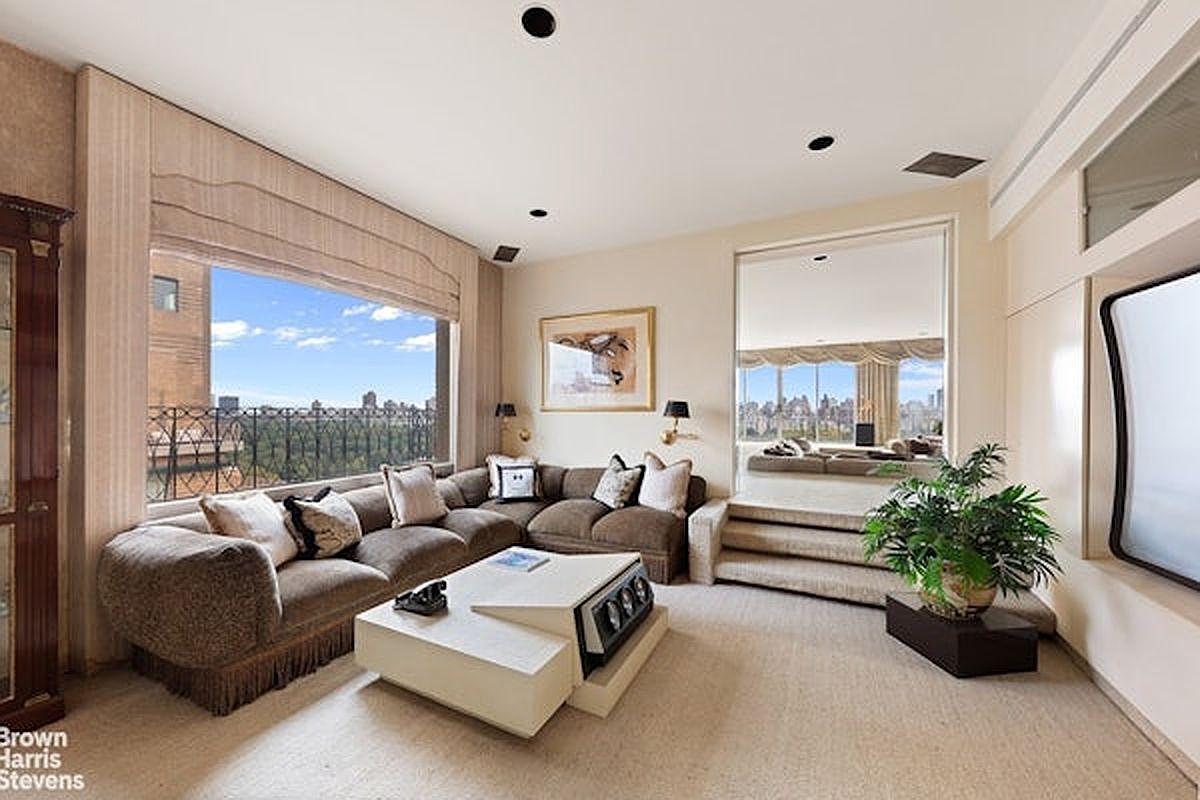
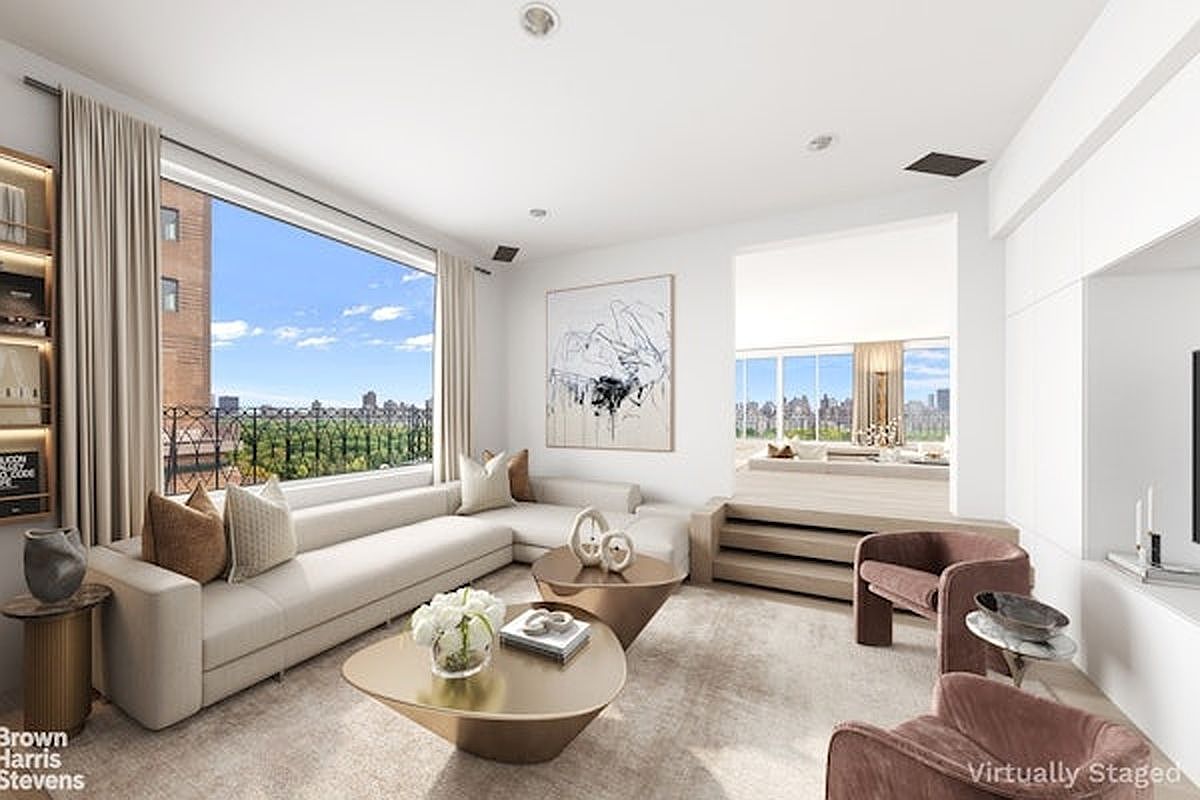
The south wing is anchored by an expansive twenty-seven-by-fourteen eat-in kitchen that belies the building's prewar origins with abundant natural light and a generous breakfast area for six. An adjoining flexible space — currently configured as a den — adapts gracefully to the needs of contemporary life, whether as a home office, a study, or an additional media room.
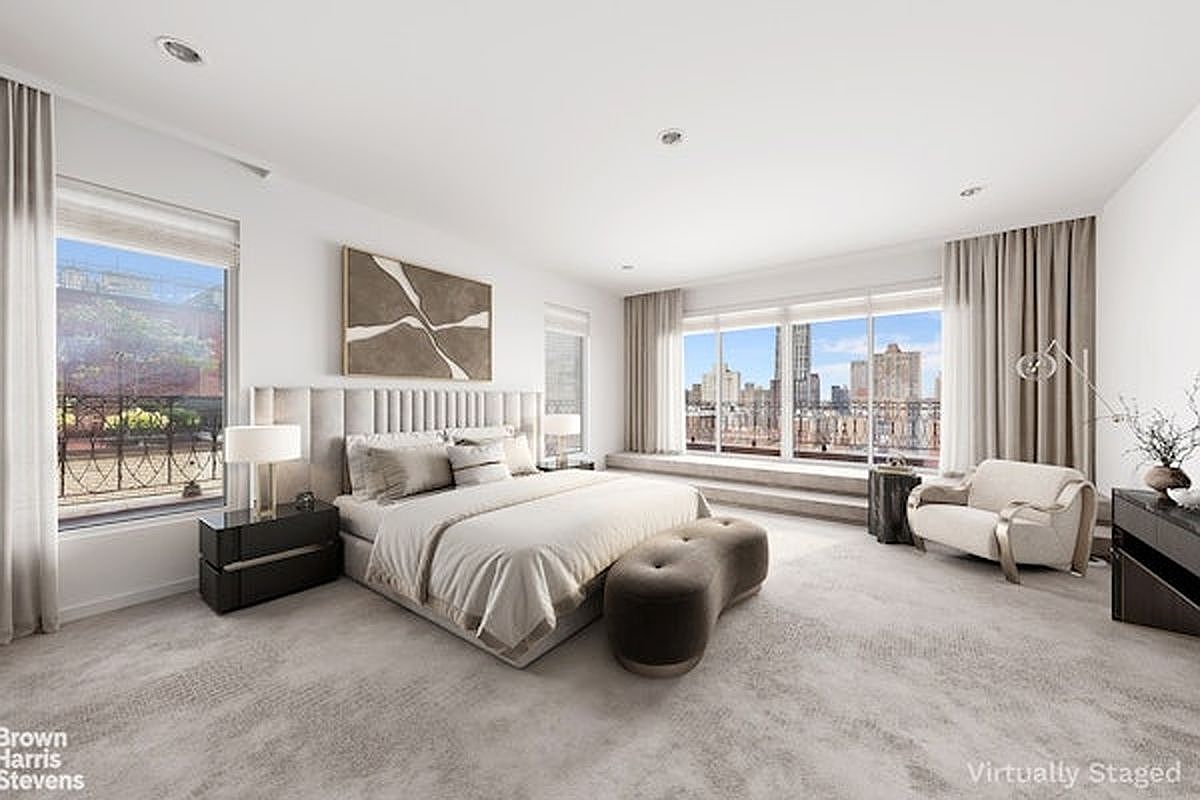
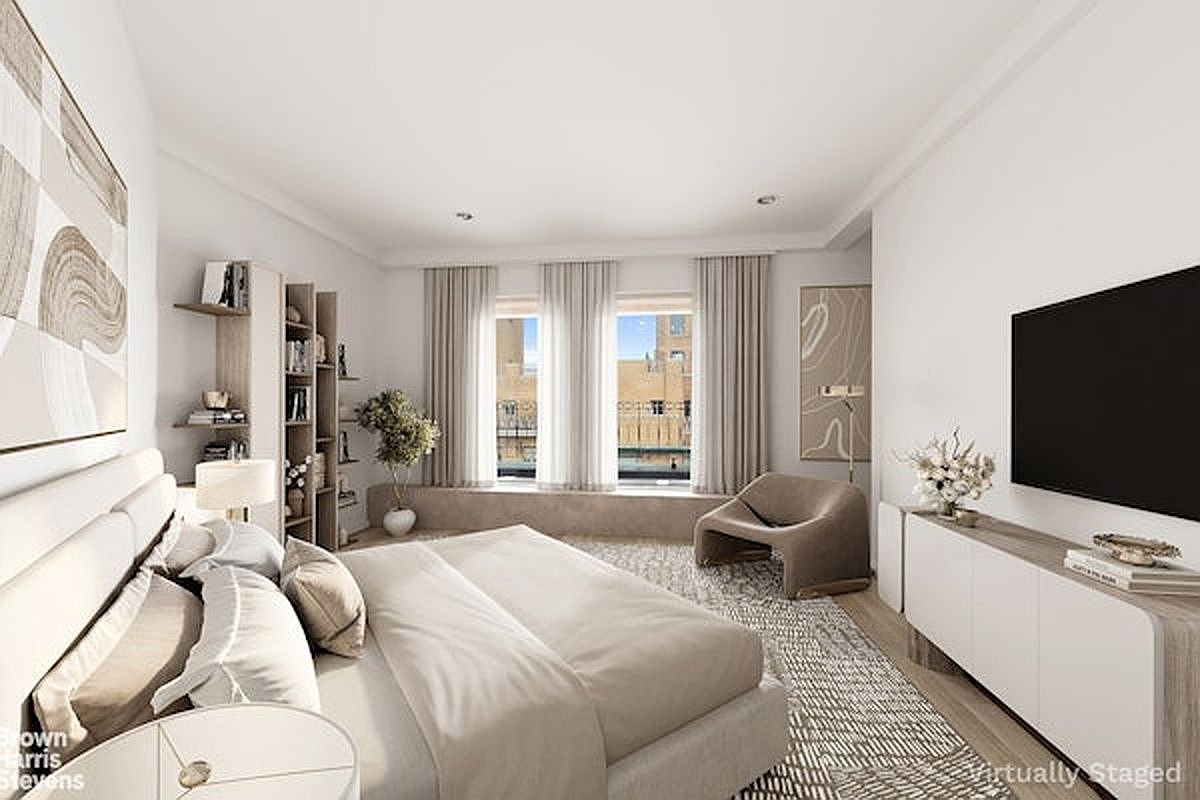
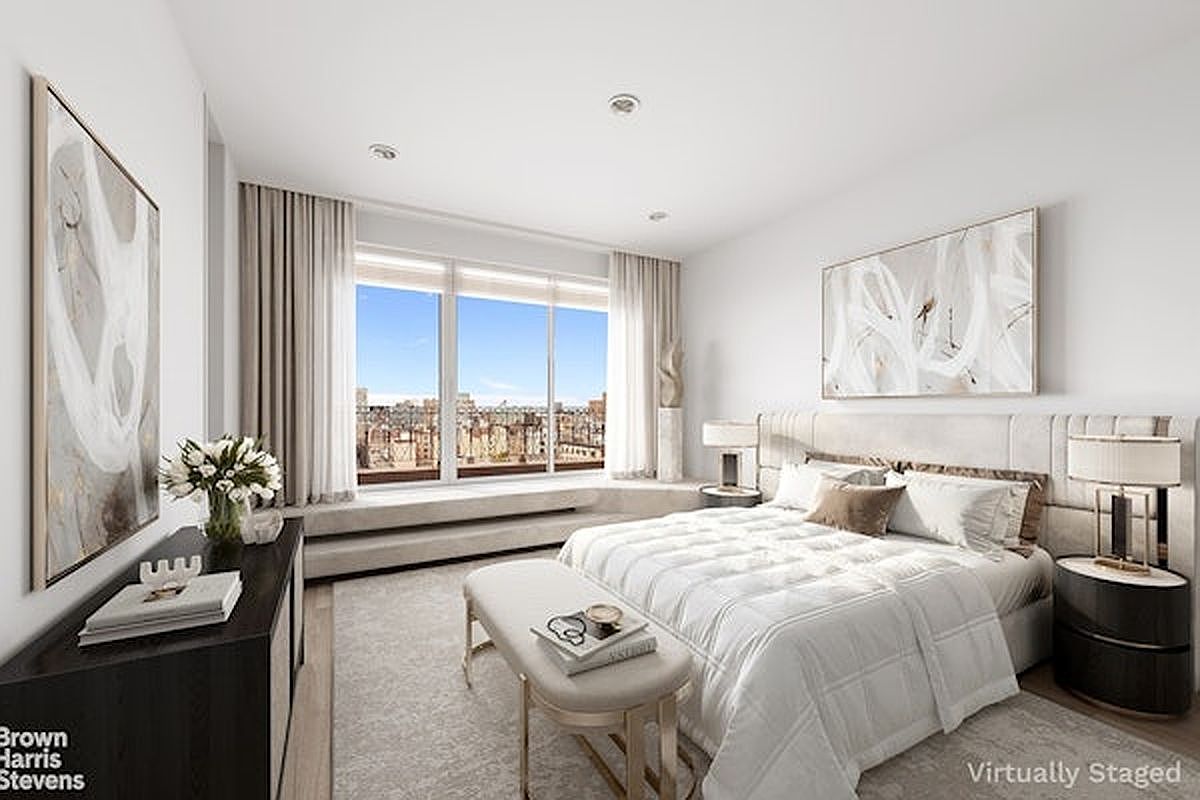
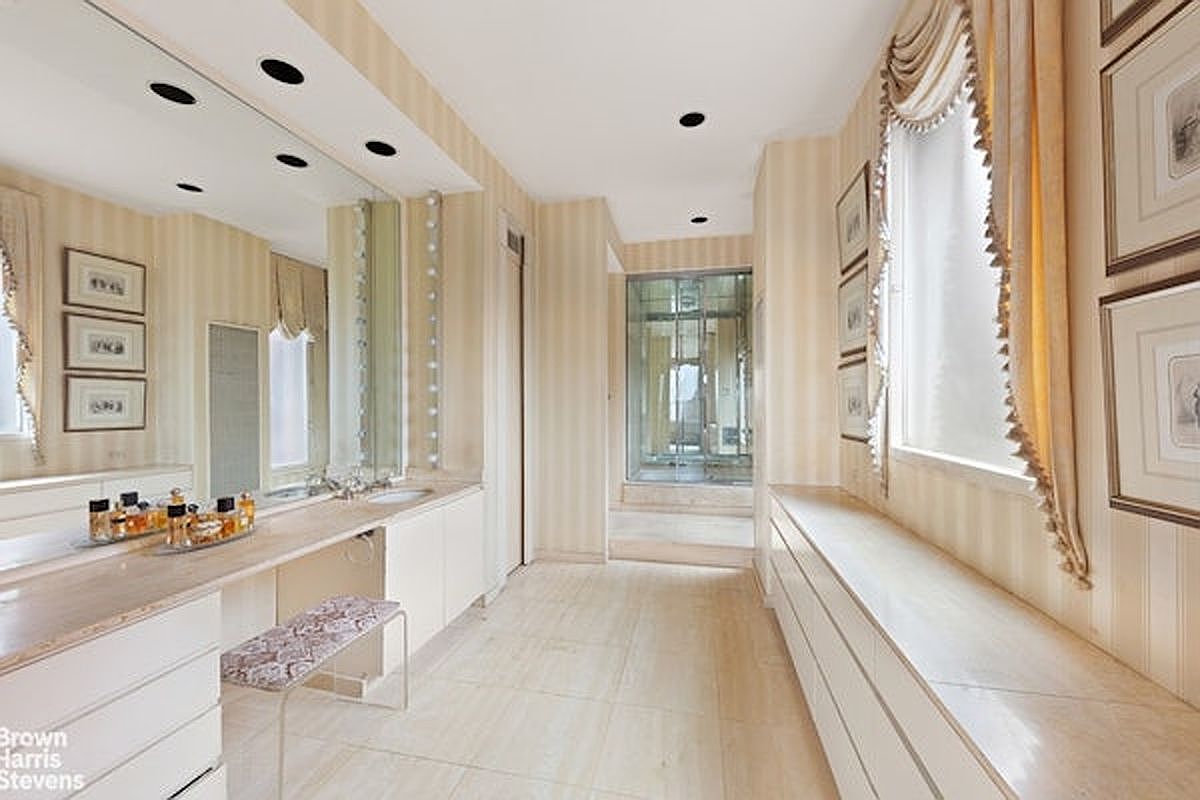
The private west wing is devoted entirely to rest and retreat. Three spacious bedrooms each offer en-suite windowed baths and direct access to the wraparound terrace, where red brick flooring and wrought-iron railings frame one of the city's most cinematic open-air prospects. The primary suite is palatial by any measure — among the largest in Manhattan — with a vast dressing room, a luxuriously appointed bathroom, and panoramic views that render every morning a private spectacle. In its totality, this penthouse represents a standard of residential life that the city rarely relinquishes.
Central Park West occupies a singular place in the geography of New York City — not merely as an address, but as an idea. Stretching along the western edge of Frederick Law Olmsted and Calvert Vaux's 843-acre masterwork, the avenue has long attracted those who understand that true luxury is measured not only in square footage but in what lies beyond the window. To live on Central Park West is to live in perpetual dialogue with one of the world's great urban landscapes, its moods shifting with the seasons from the vivid greens of summer to the spare, luminous beauty of a winter snowfall.
The block between 70th and 71st Streets sits at the geographic and cultural heart of the Upper West Side, a neighborhood whose identity has been shaped by generations of artists, intellectuals, musicians, and civic leaders. The American Museum of Natural History, one of the world's preeminent cultural institutions, anchors the neighborhood to the north on 79th Street, while the New-York Historical Society — the city's oldest museum — stands just steps away at 77th Street. Lincoln Center for the Performing Arts, home to the Metropolitan Opera, the New York Philharmonic, and the New York City Ballet, lies a short walk to the south, embedding this address within one of the densest concentrations of world-class cultural life on earth.
Central Park itself functions as the penthouse's private front yard in the most meaningful sense. The 72nd Street transverse provides immediate access to the park's interior network of paths, meadows, and waterways. Bethesda Terrace and Fountain, the Ramble, the Conservatory Garden, and the Reservoir — one of the park's most beloved landmarks for runners and walkers alike — are all within easy reach. The Loeb Boathouse on the 72nd Street lake offers rowing and al fresco dining during warmer months, its terrace one of the most coveted tables in the city.
The surrounding streets of the Upper West Side offer a rich tapestry of daily life that few neighborhoods can rival. Broadway and Columbus Avenue are lined with acclaimed independent restaurants, specialty food markets including Zabar's and Fairway, independent bookshops, and cultural venues that sustain a genuine neighborhood vitality. Nearby Riverside Park, running along the Hudson River from 72nd Street northward, provides an additional ribbon of green space, offering Hudson River views, athletic facilities, and a quieter counterpoint to the energy of Central Park.
The area is exceptionally well served by public transportation, with multiple subway lines providing rapid access to Midtown, Downtown, and the broader city. Private car services and the relative proximity to major transit hubs make connectivity effortless for those with global schedules.
Within the building itself, white-glove service sets a standard consistent with the neighborhood's most distinguished addresses. A twenty-four-hour doorman, concierge, porters, and a resident manager ensure that every detail of residential life is attended to with discretion and care. A state-of-the-art fitness center, a welcoming policy toward pets, and financing up to fifty percent complete a profile of a building — and a location — designed for those who expect nothing less than the finest.
Featured Highlights
Curated Content • Presented by John Burger