The Story Behind
A Storied Back Bay Brownstone on Commonwealth Avenue's Most Celebrated Block
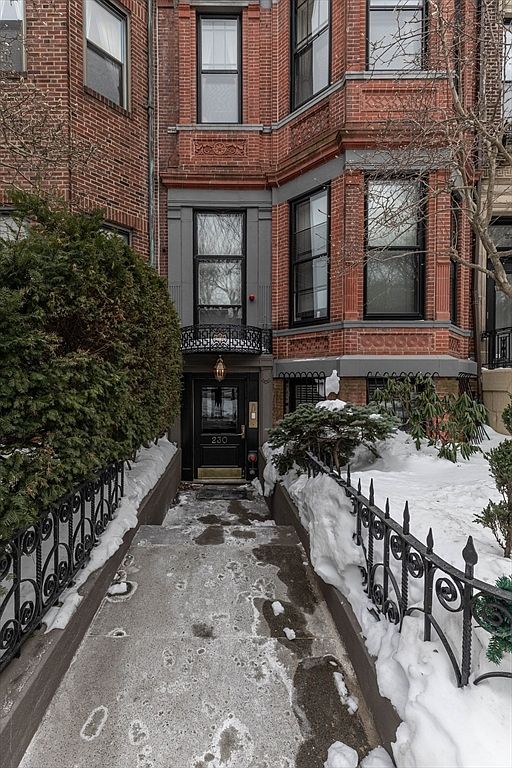
There are buildings that merely occupy a street, and then there are buildings that define it. 230 Commonwealth Avenue belongs unmistakably to the latter category. From the moment you approach — past the decorative black iron fencing, up the stone entry walk, and through the dark-painted front door framed by tall multi-pane windows — the building announces its pedigree with quiet authority.
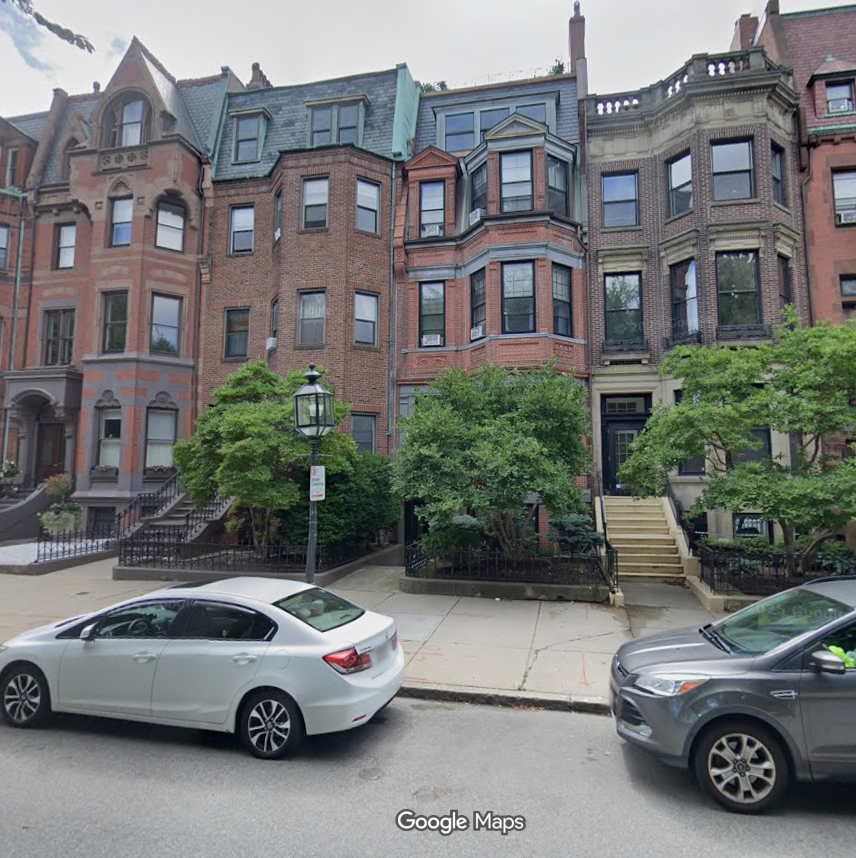
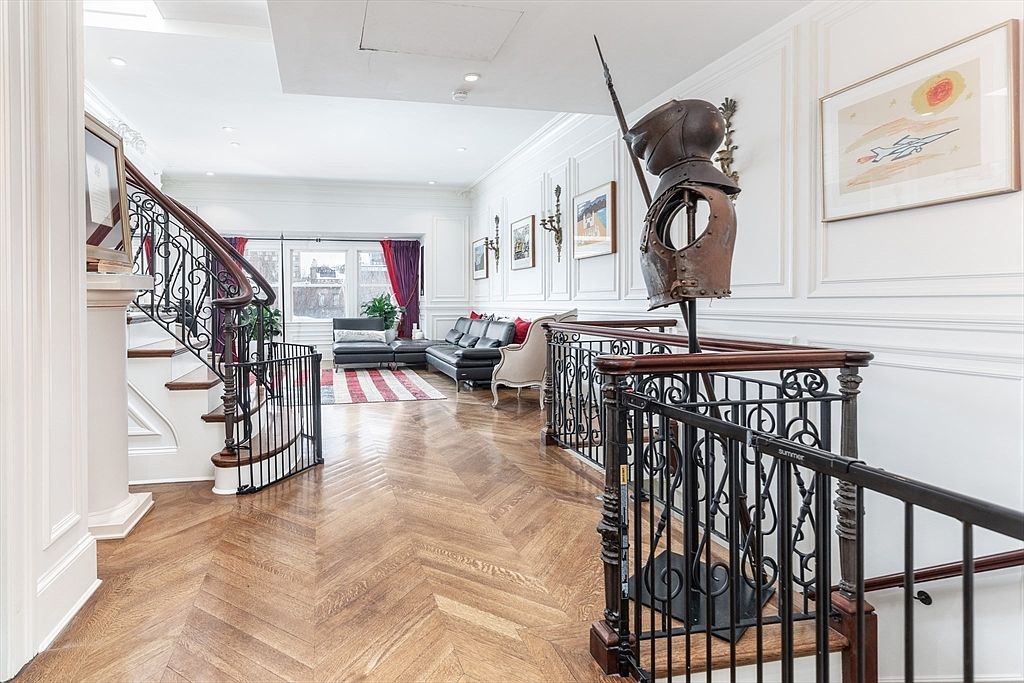
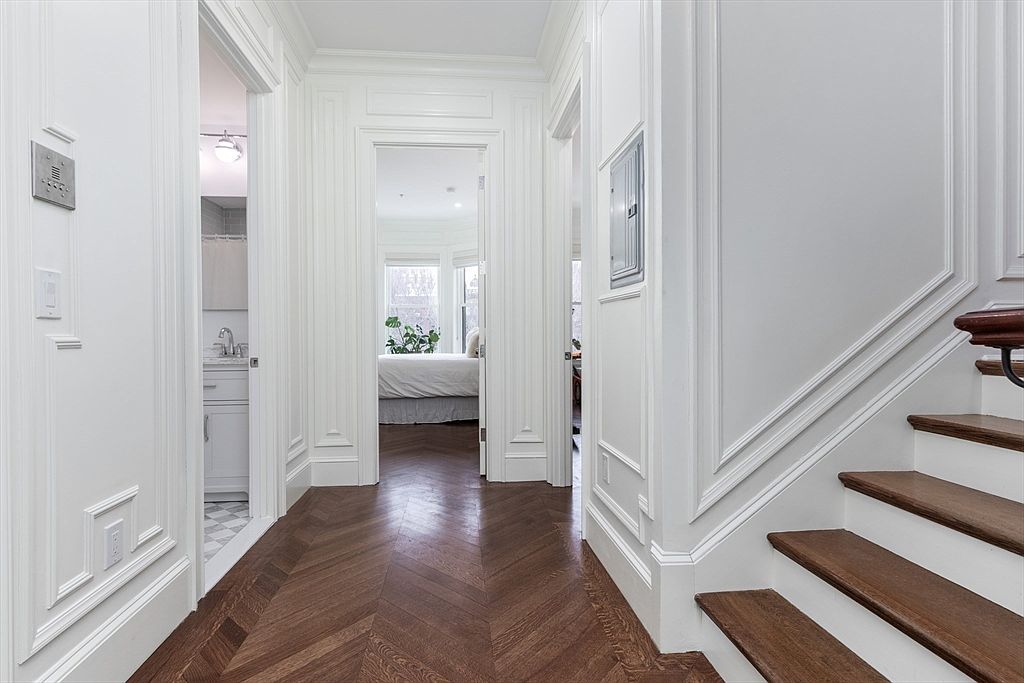
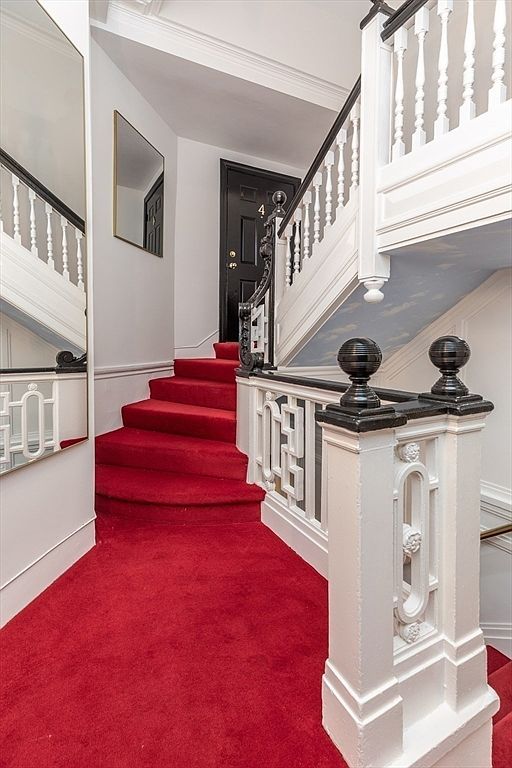
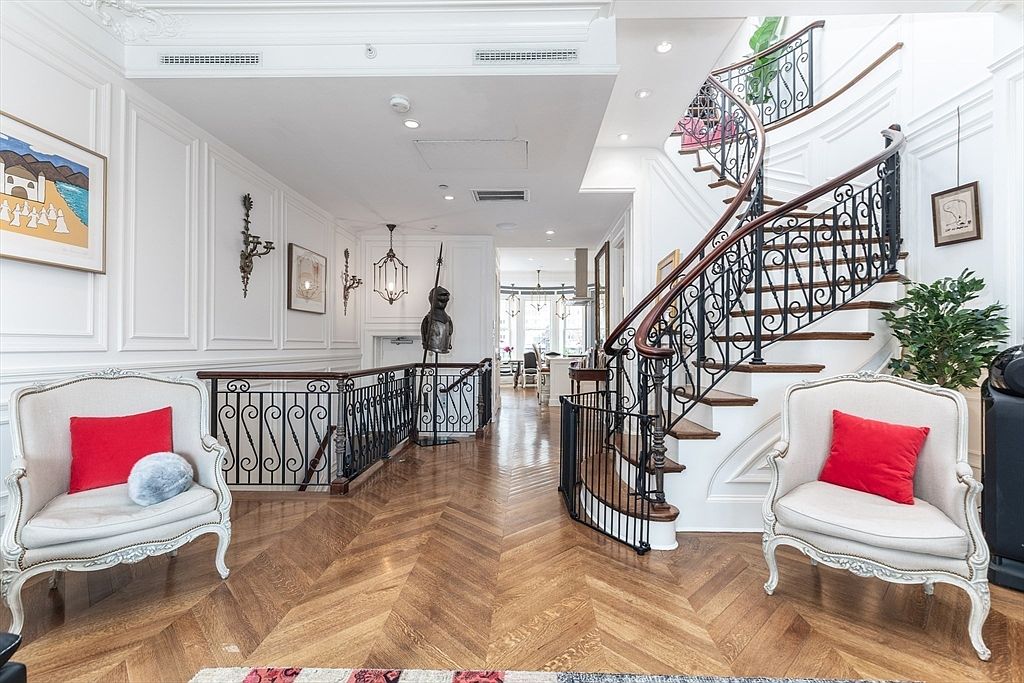
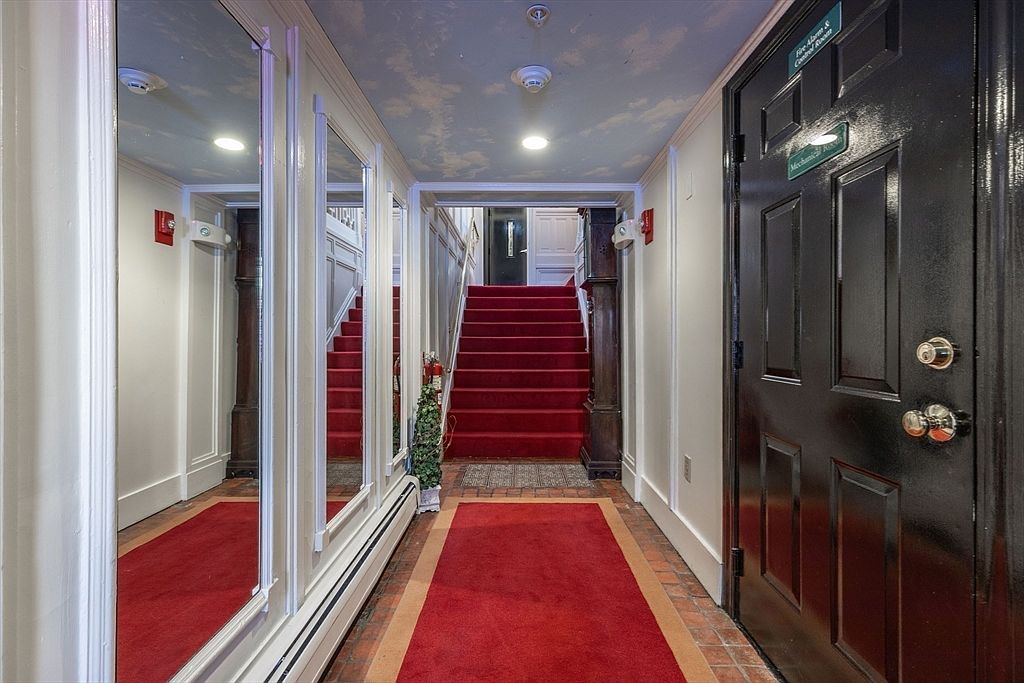
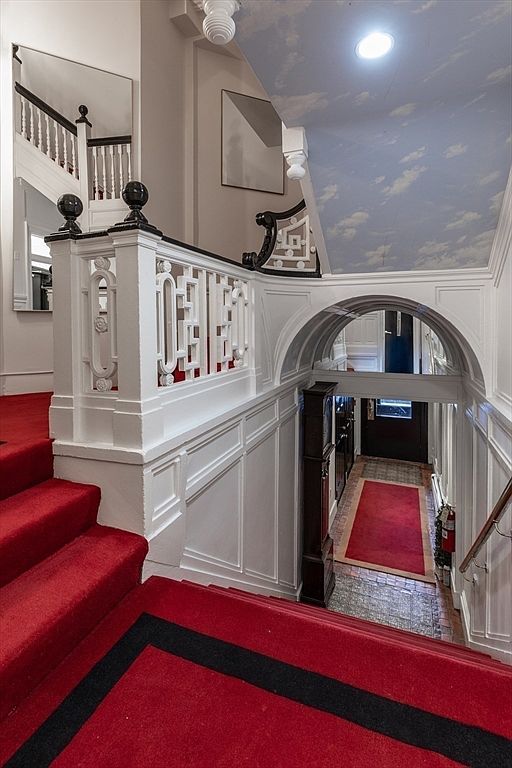
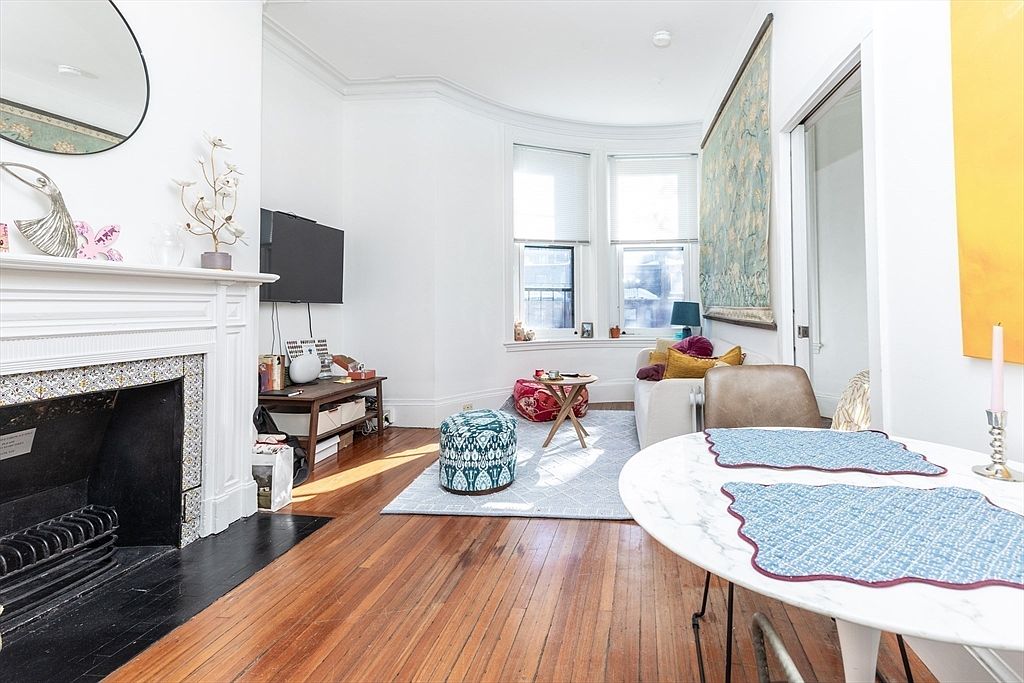
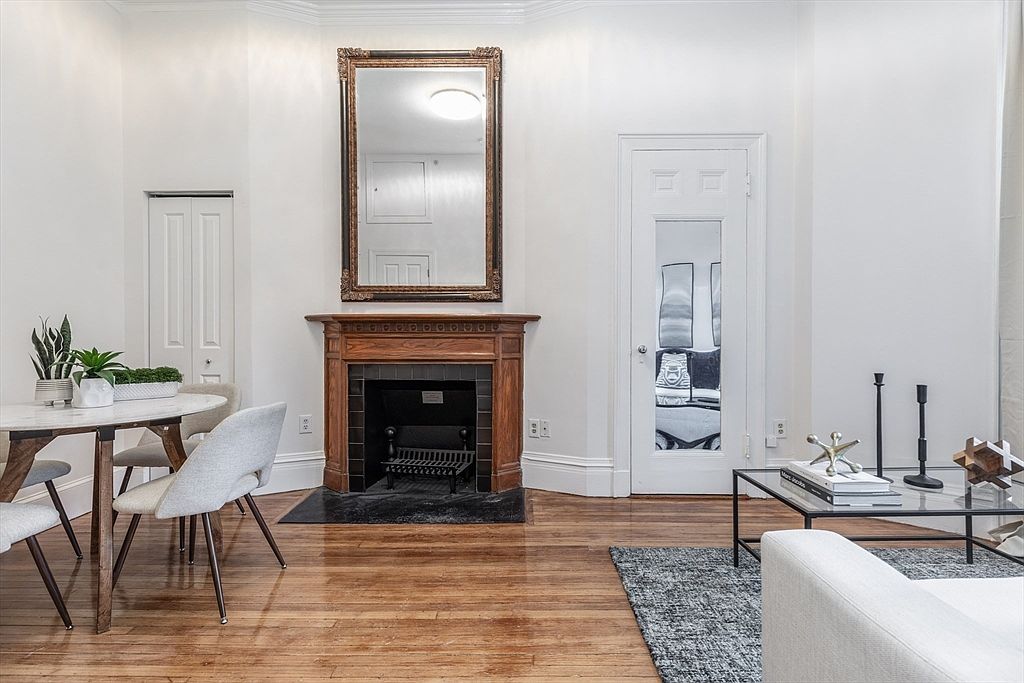
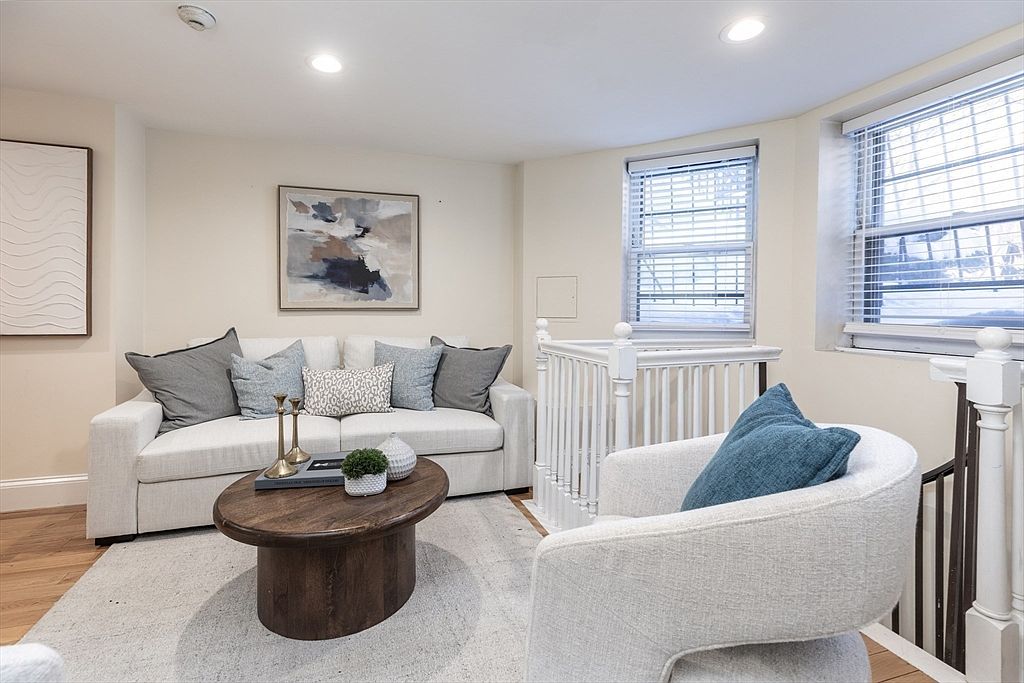
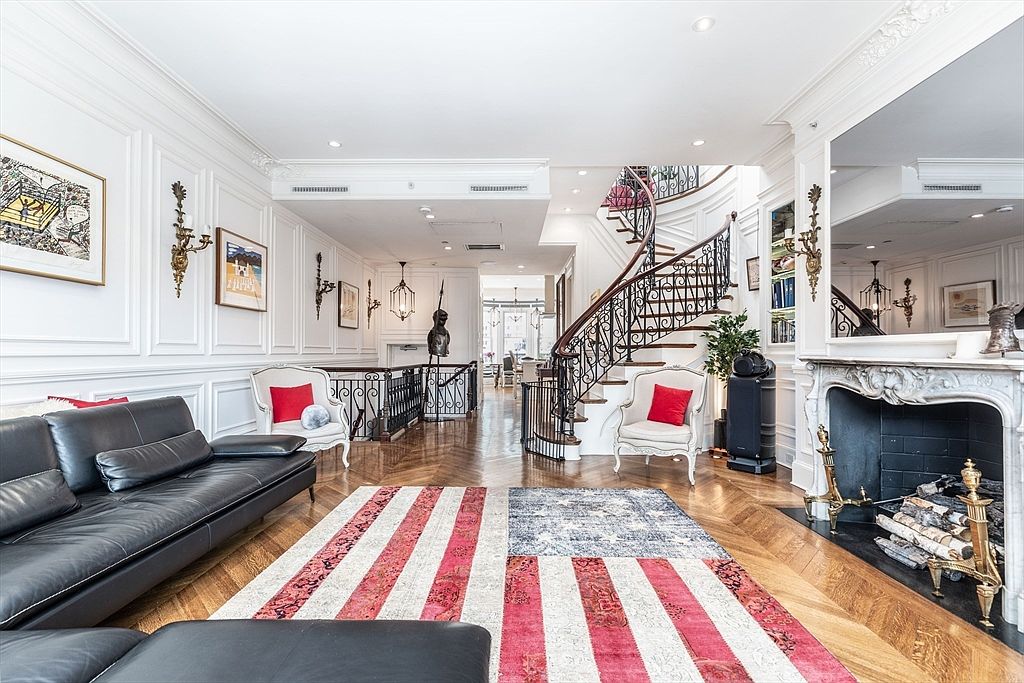
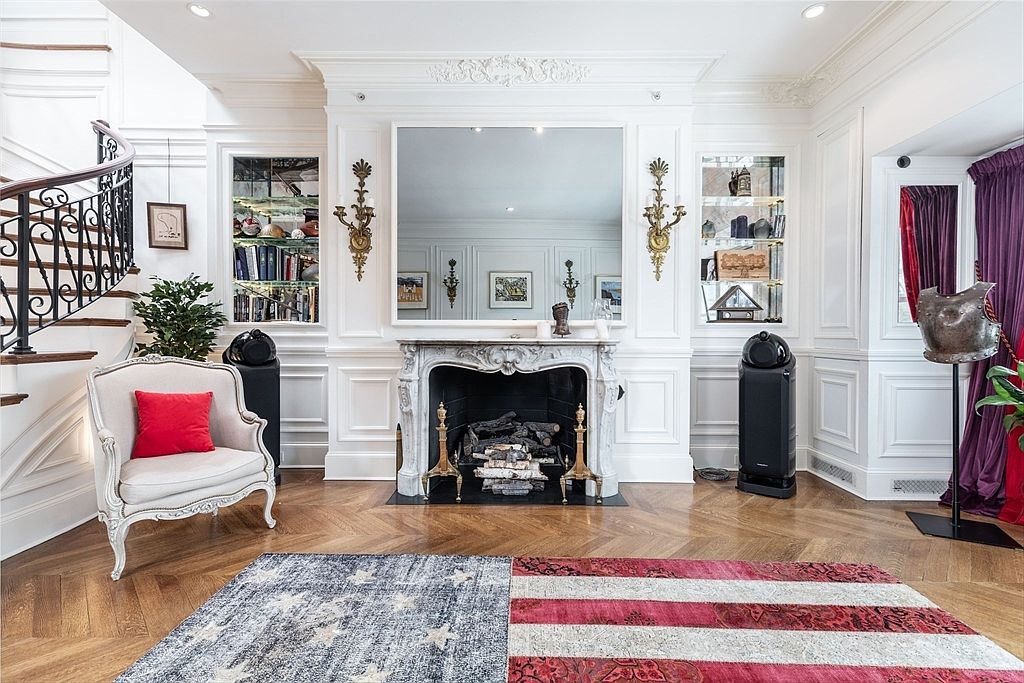
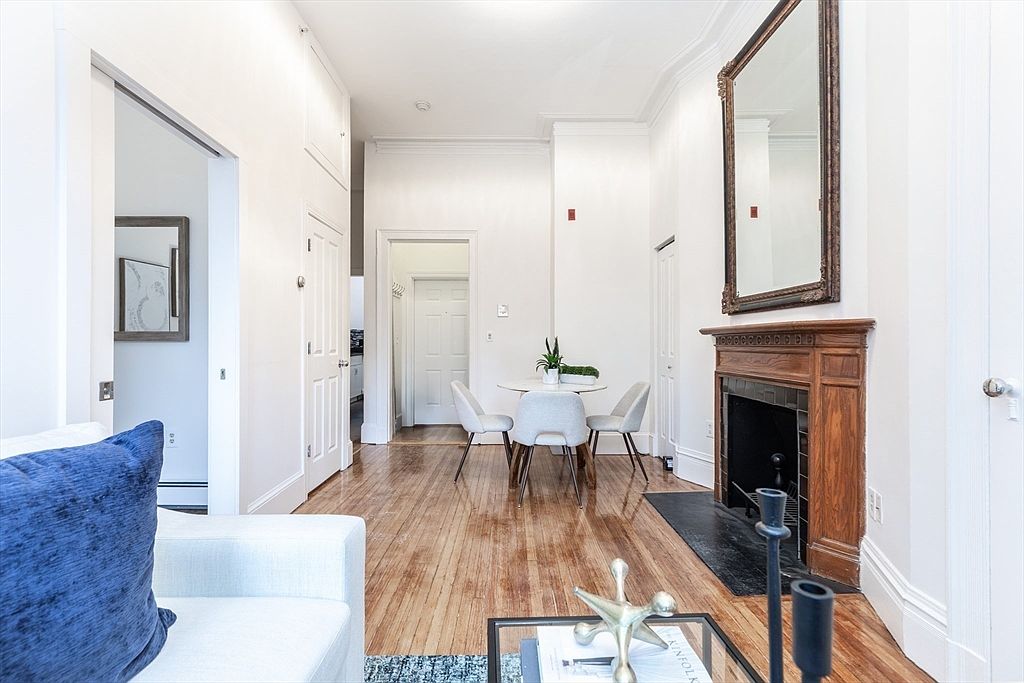
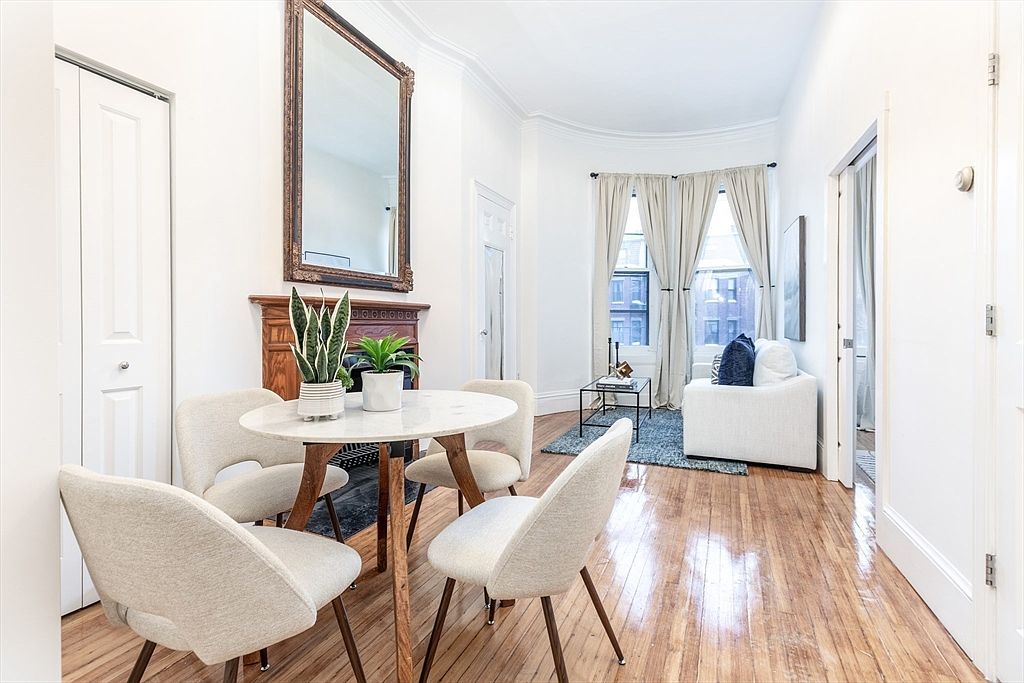
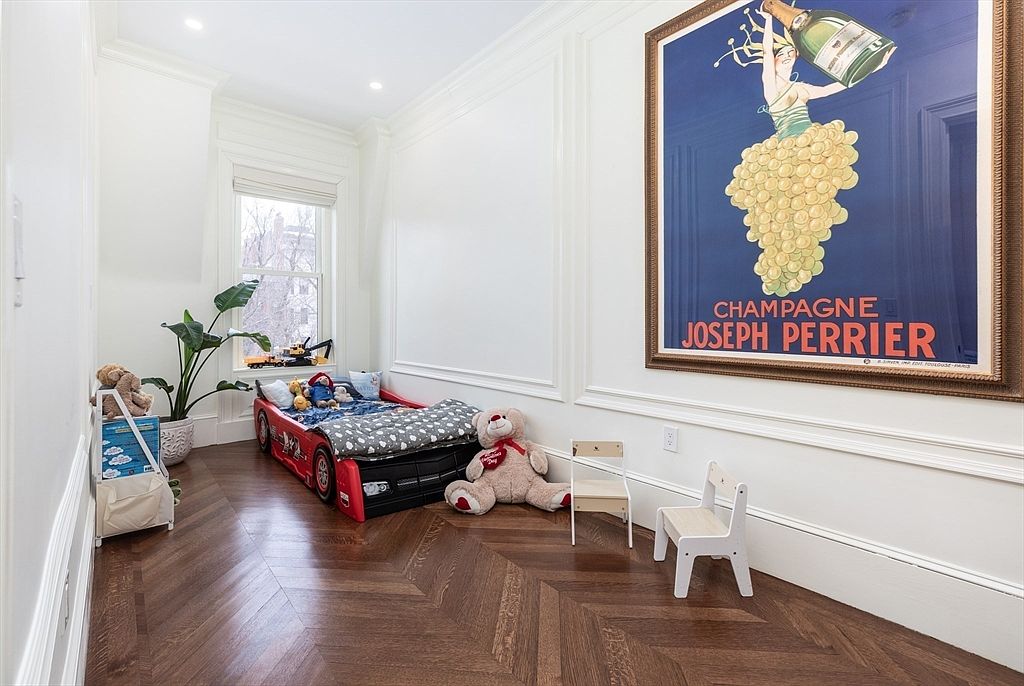
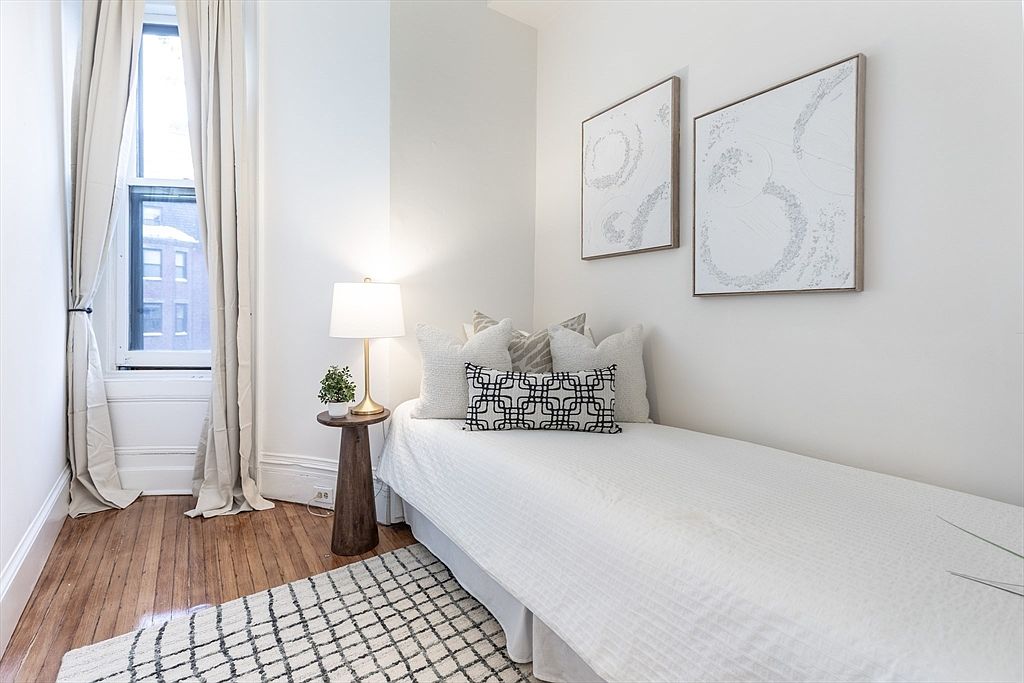
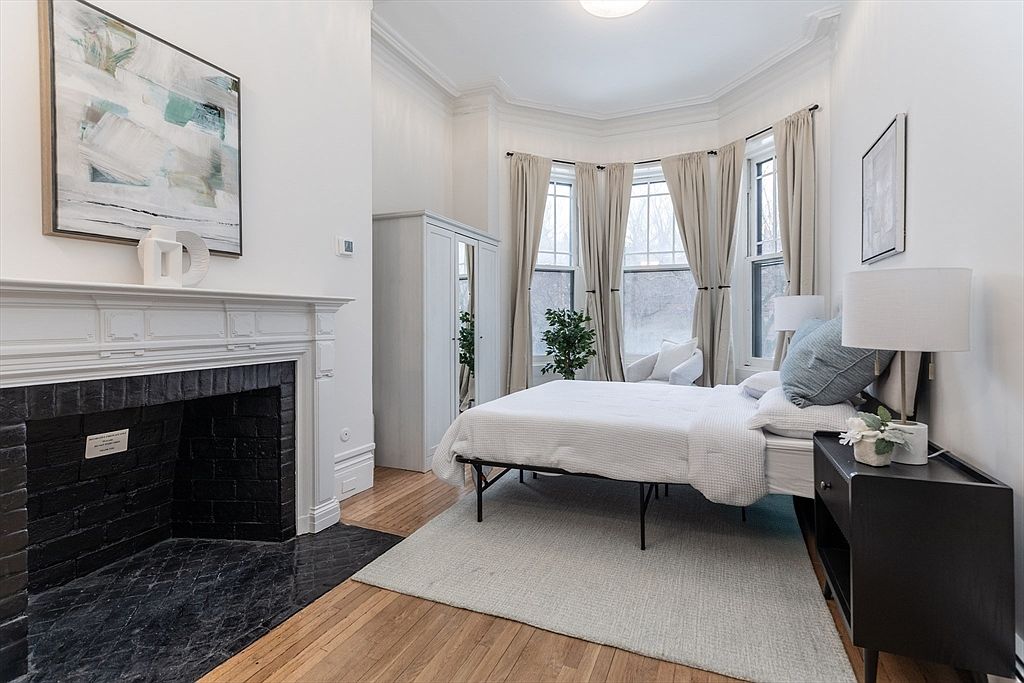
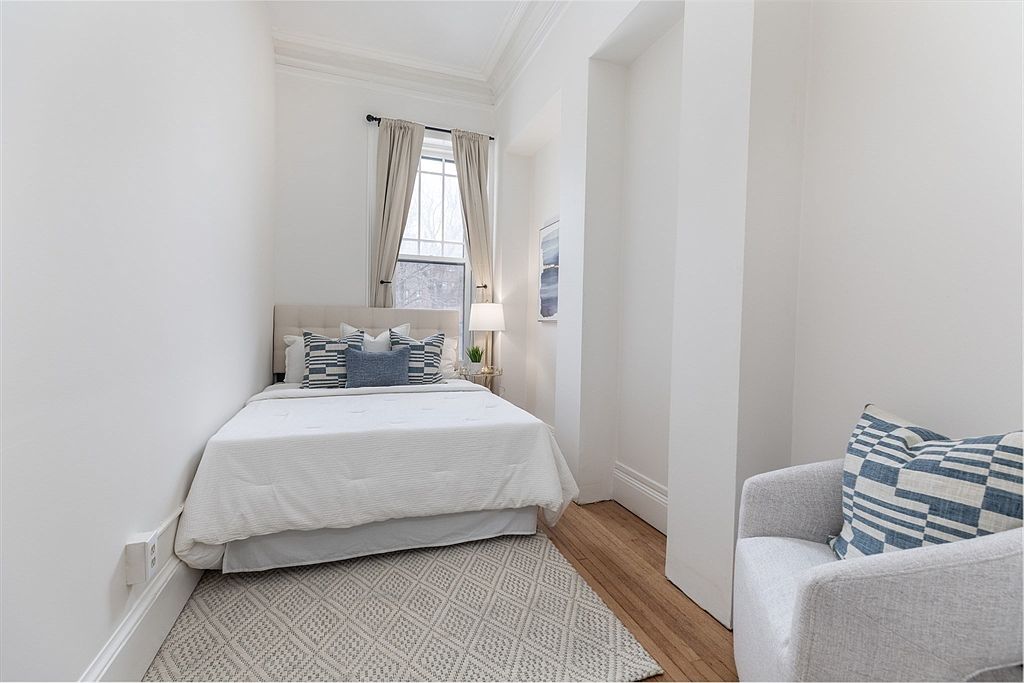
Constructed in the architectural tradition that shaped Boston's Back Bay, the brownstone's brick façade is a study in restrained elegance. Inside, grand ceiling heights set the tone across all seven units, each one preserving the original period millwork, herringbone-patterned wood floors, and carved fireplace mantels that defined the neighborhood's nineteenth-century domestic ideal. Curved staircases rise through the building with wrought-iron railings and polished wood handrails, their ornate balustrades echoing the craftsmanship of an era when detail was not an afterthought but a commitment.
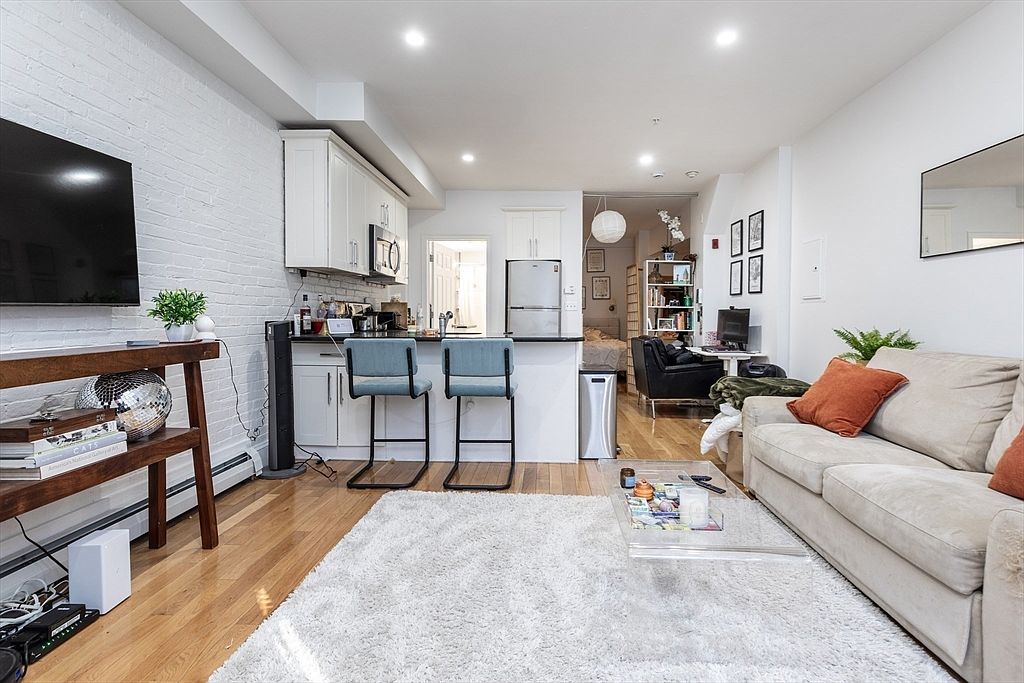
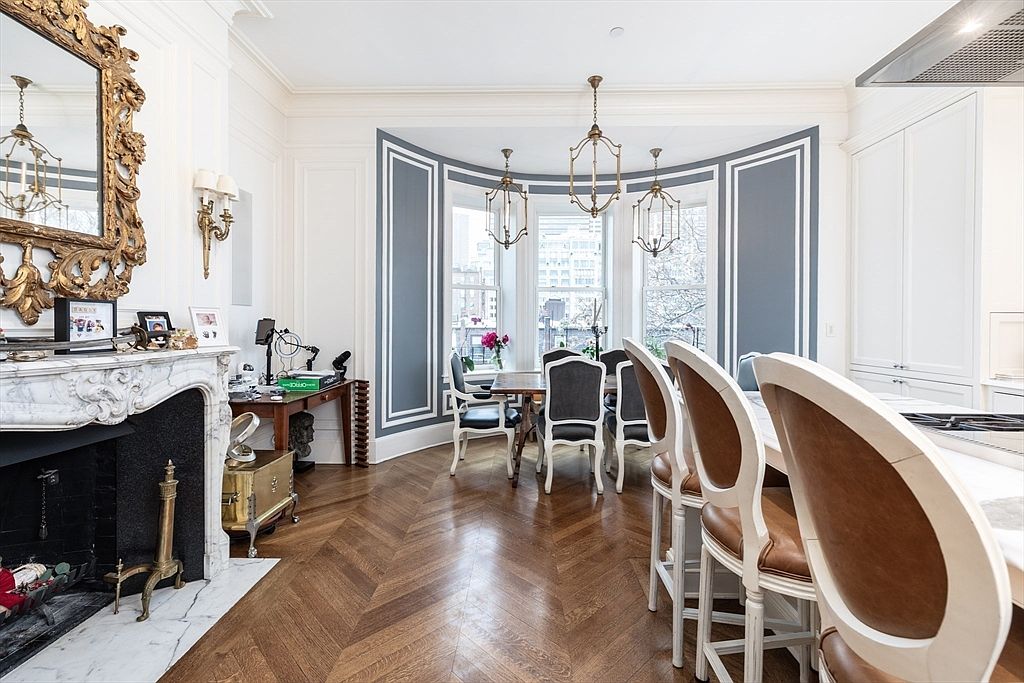
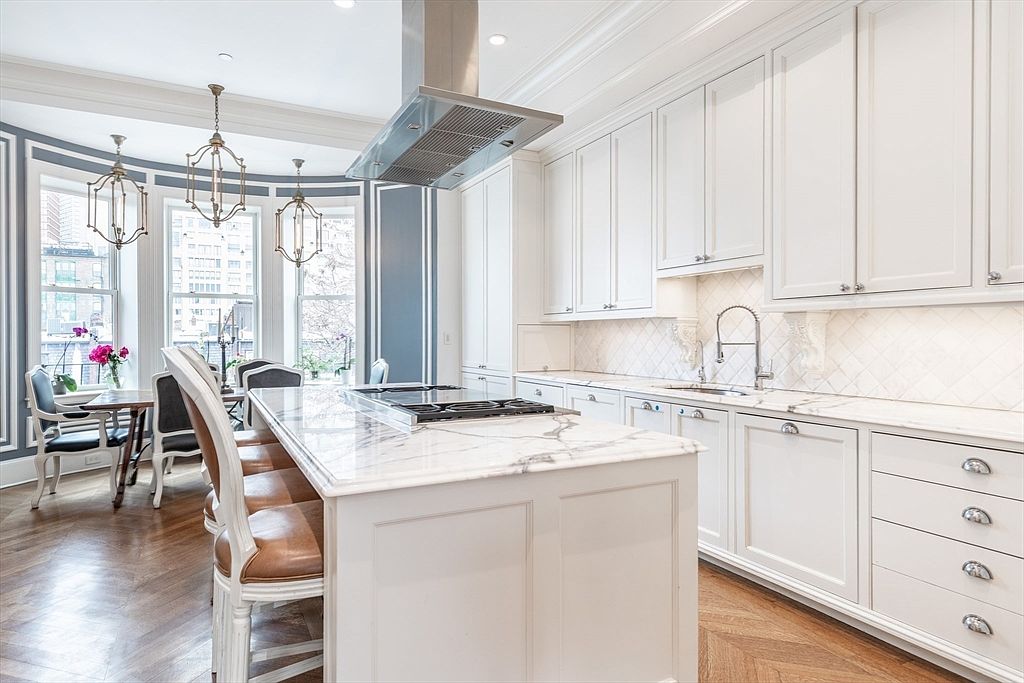
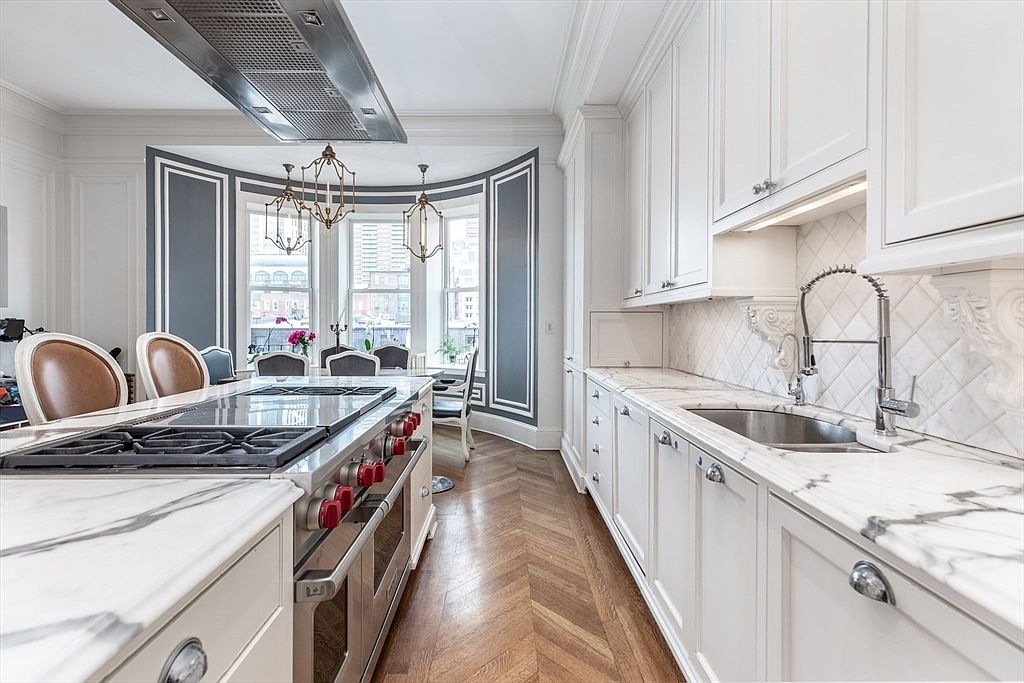
The kitchens balance original charm with considered function — white cabinetry, stone countertops, central islands with gas cooktops, and bay window breakfast areas that draw morning light deep into each floor plan. Stately fireplaces with stone surrounds and carved mantels anchor the living spaces, while built-in glass-front display cabinets and classical wall molding complete the architectural vocabulary of each residence.
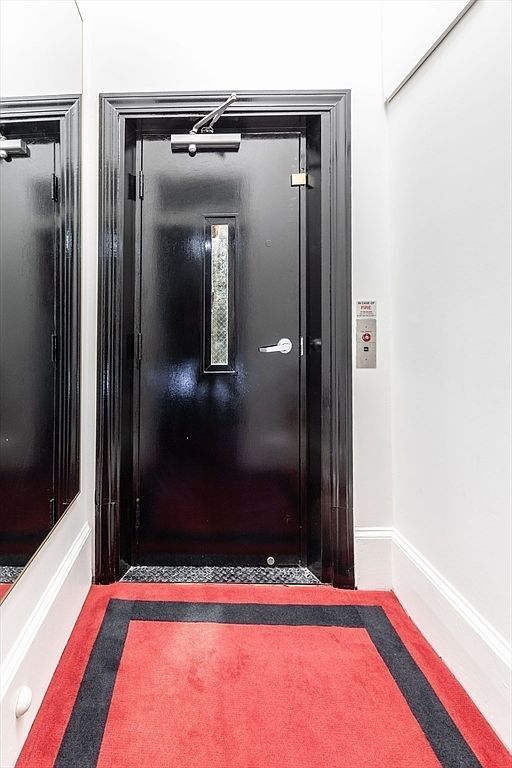
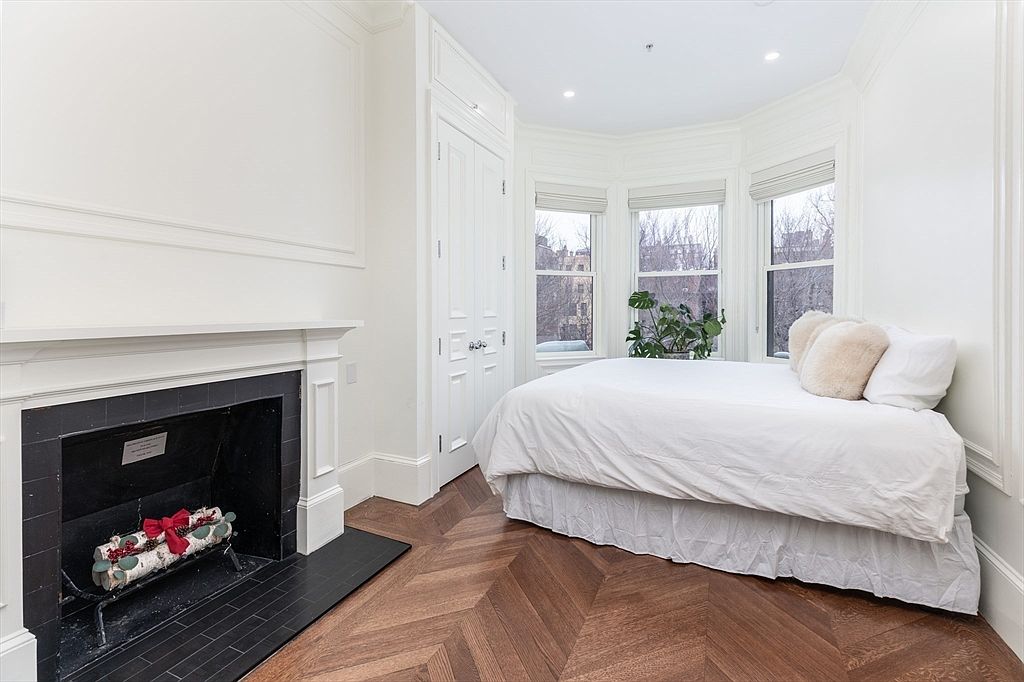
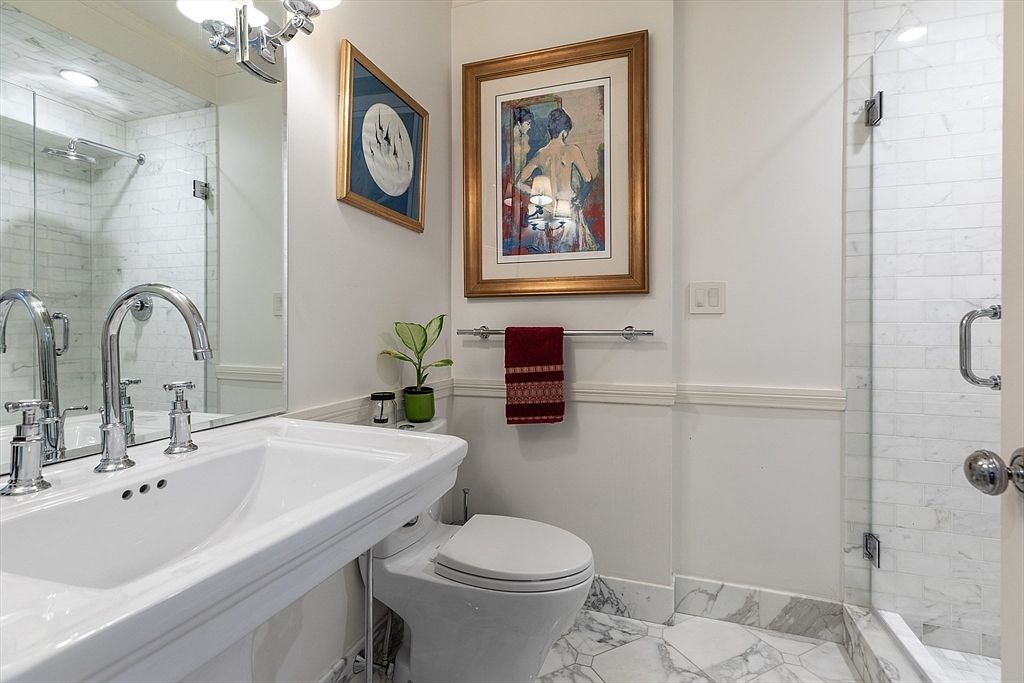
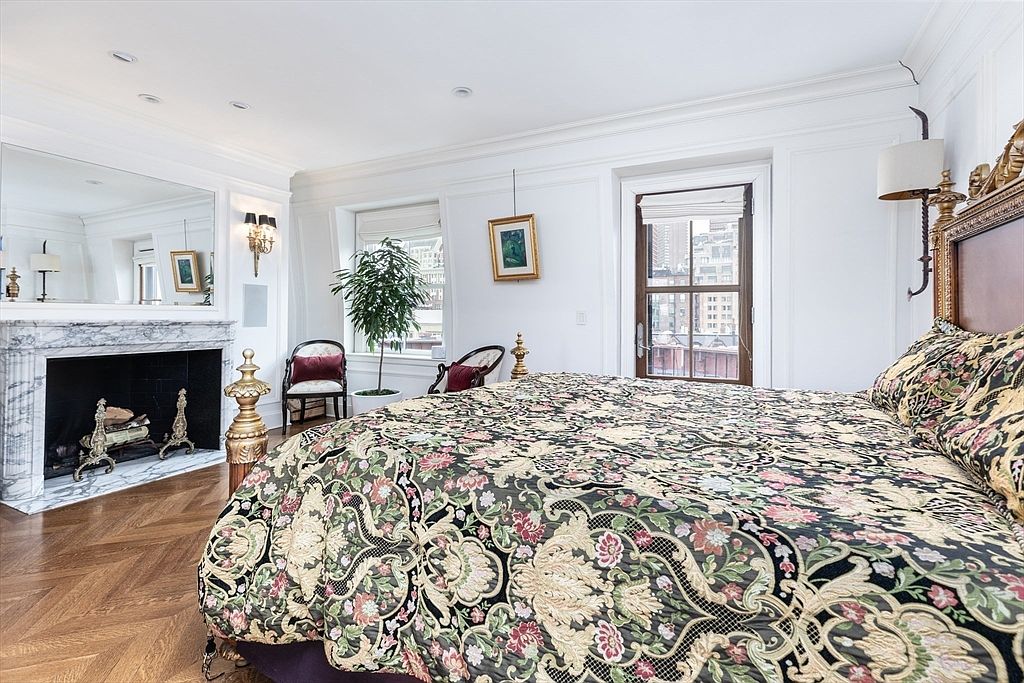
At the building's apex, a private elevator delivers you directly to the three-level penthouse — a residence that operates on an entirely different register. Three bedrooms, three baths, three kitchens, and three distinct outdoor spaces create a layered sense of privacy and luxury rarely encountered in urban multifamily buildings. The primary suite features a stone fireplace, herringbone floors, and a glass-paned door opening to a private terrace. The wet-room primary bath is a study in material refinement: a deep soaking tub, a spacious walk-in shower, light-toned stone wall tile, and mosaic flooring work in concert to create a space that feels less like a bathroom and more like a private spa.
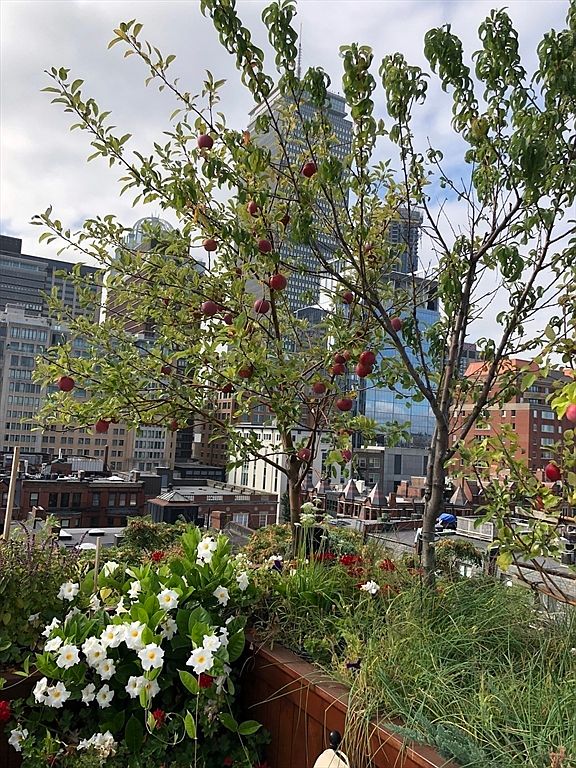
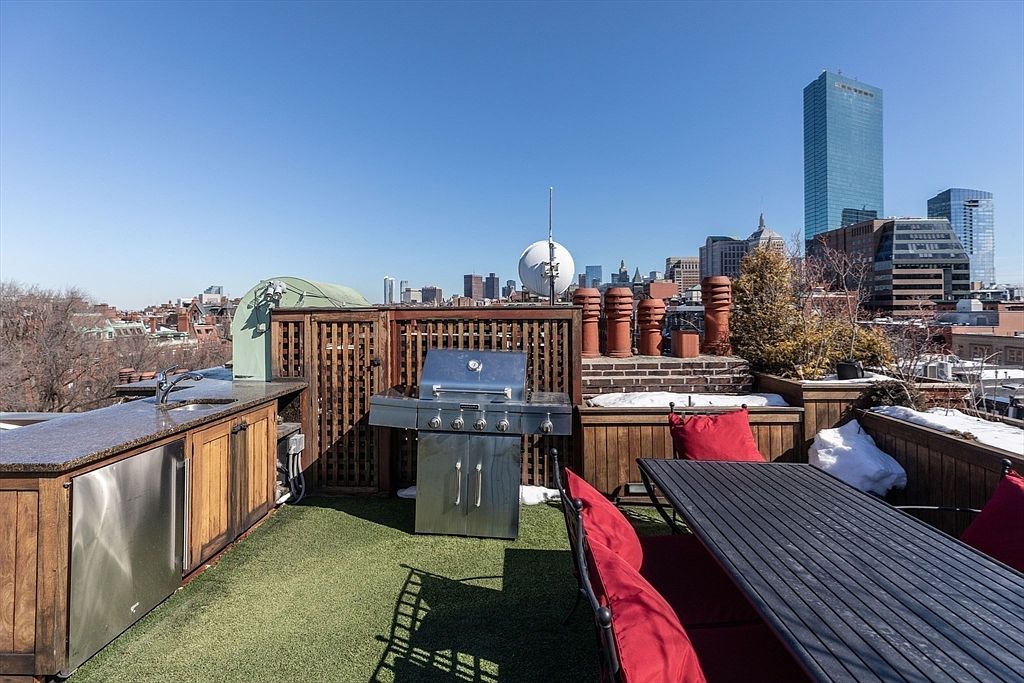
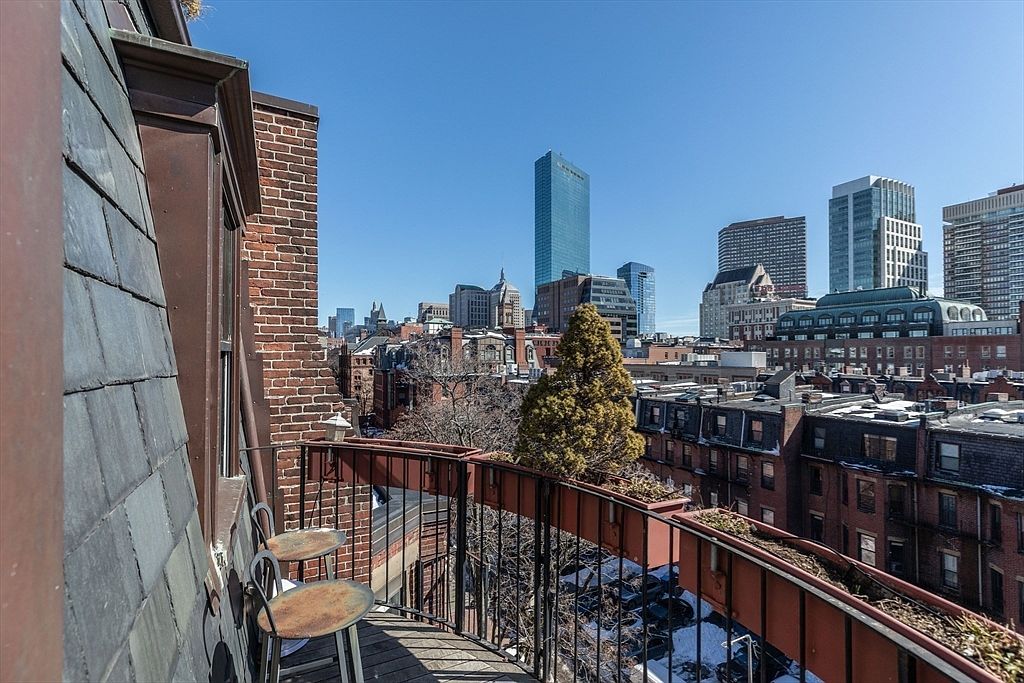
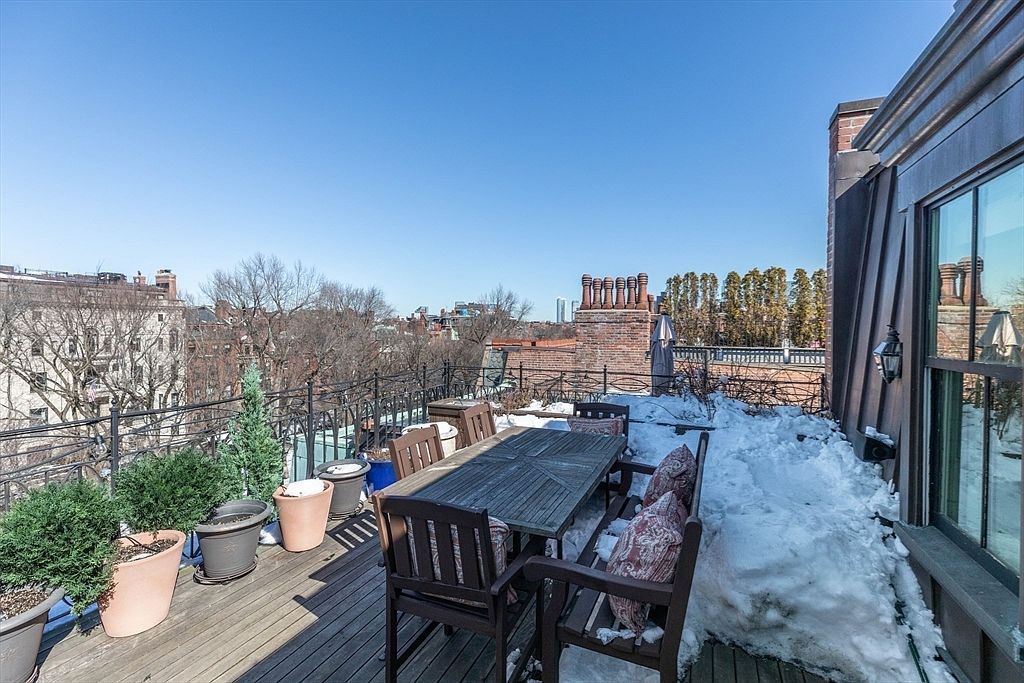
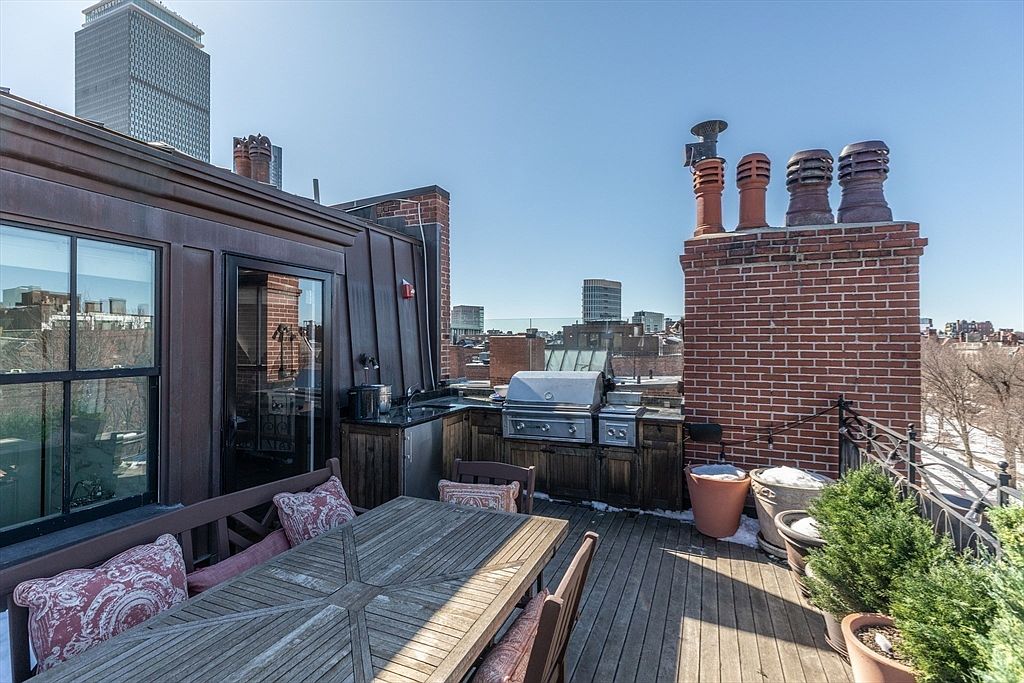
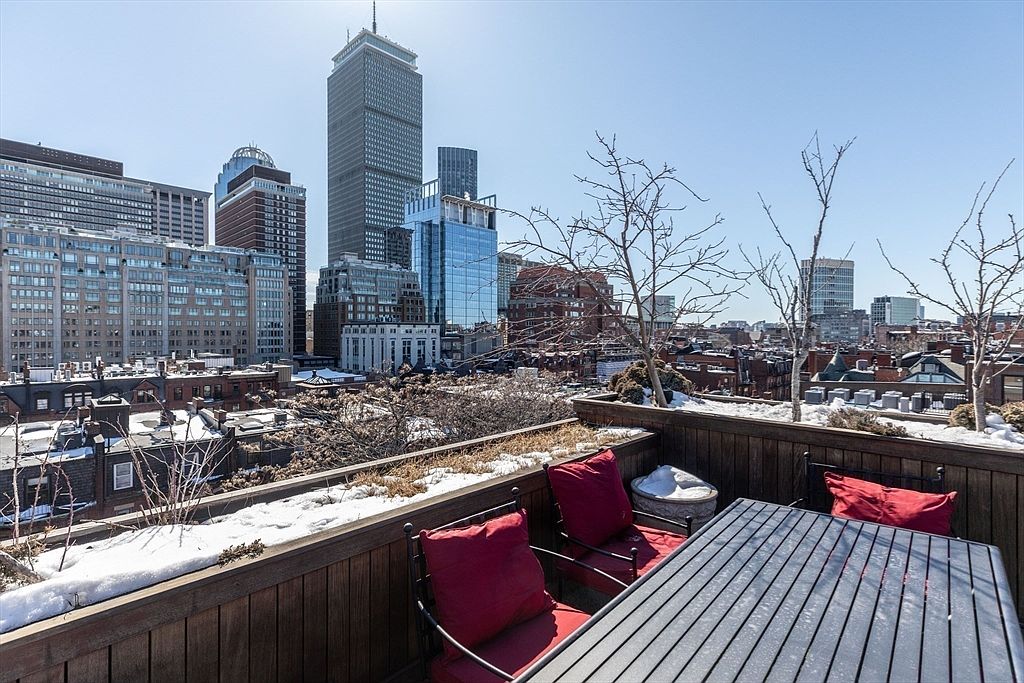
Above it all, the penthouse roof deck reframes the city entirely. A built-in outdoor kitchen with a stainless steel grill and stone countertop, a long dining table with cushioned seating, and artificial turf underfoot create an entertaining environment with panoramic skyline views as its backdrop. Lower terraces with bistro seating and planter boxes filled with flowering vines and small fruit trees add layers of greenery against the urban horizon.
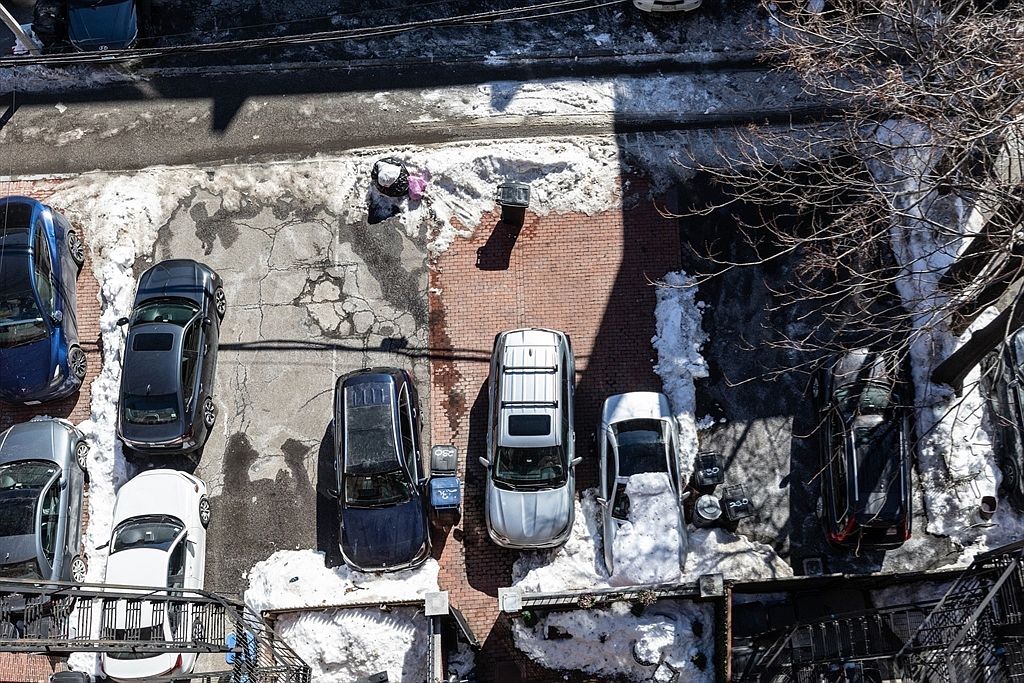
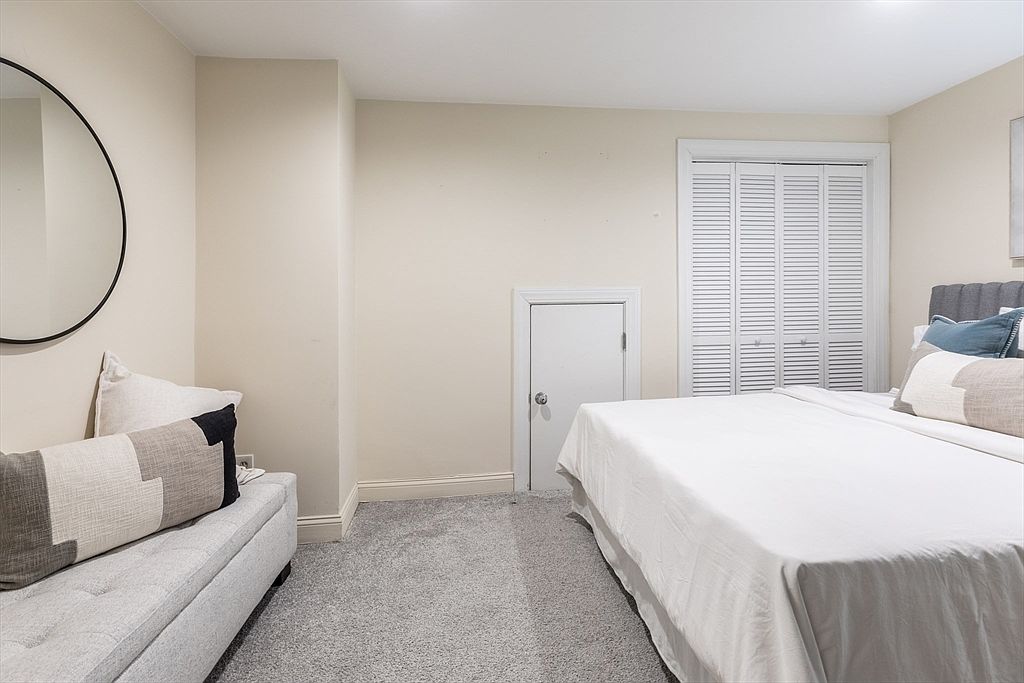
The building's infrastructure is equally well-considered. Four off-street parking spaces — a genuine rarity on Commonwealth Avenue — are included. Separate electrical meters serve each unit, the basement level offers a dedicated office and gym space alongside common laundry, and central air conditioning serves the penthouse. The result is a building that functions as intelligently as it presents — one equally suited to the owner-occupant seeking income-producing units and the investor assembling a portfolio of irreplaceable assets.
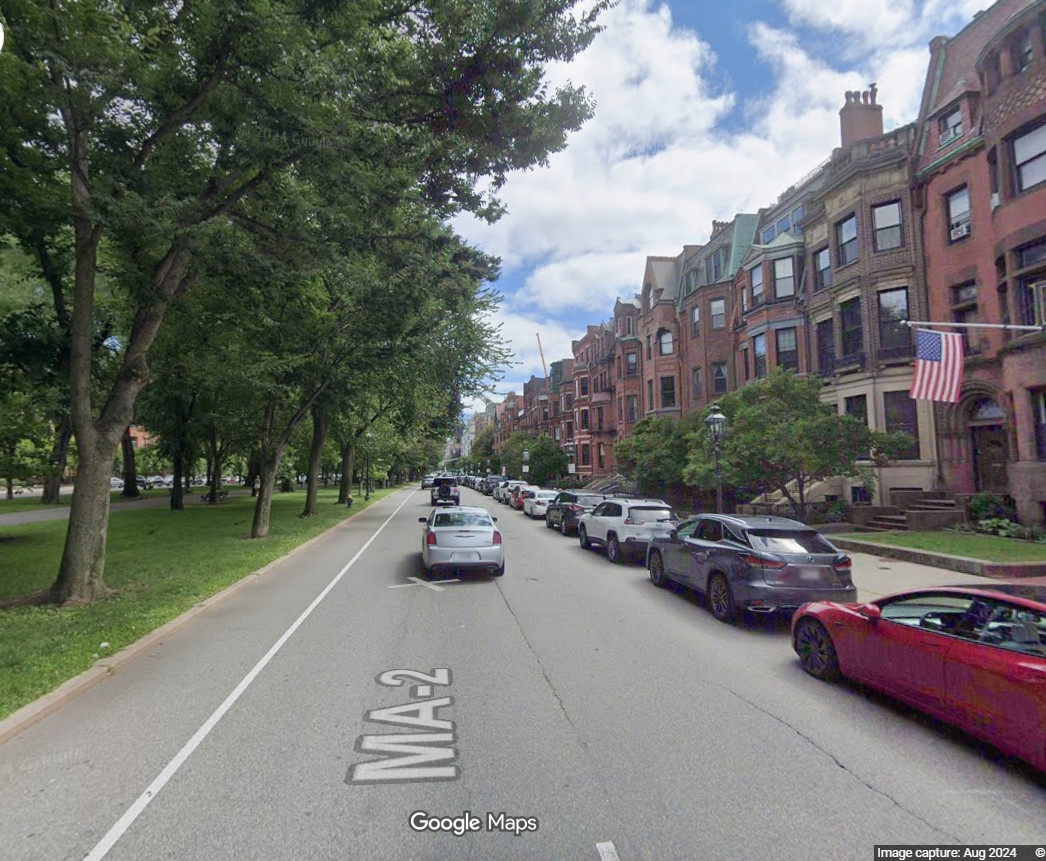
Commonwealth Avenue is not simply a street. It is Boston's most celebrated residential promenade — a 220-foot-wide boulevard conceived in the 1850s as the centerpiece of Arthur Gilman's ambitious grid plan for the Back Bay neighborhood, itself a feat of Victorian-era urban engineering that transformed a tidal flat into one of America's most architecturally cohesive urban districts. The Commonwealth Avenue Mall, a tree-lined pedestrian median stretching from the Public Garden to Kenmore Square, serves as the neighborhood's living room — a place where residents walk, gather, and move through a landscape of flowering cherry trees, bronze sculpture, and historic gas-style lamp posts that have illuminated this corridor for more than a century.
Back Bay's architectural legacy is federally recognized and locally protected. The neighborhood is listed on the National Register of Historic Places and governed by the Boston Landmarks Commission, ensuring that the streetscape of bow-front brownstones, French Academic facades, and ornate Romanesque Revival row houses that define its character will be preserved in perpetuity. Owning here is not merely acquiring real estate — it is becoming a steward of one of America's great urban environments.
The immediate surroundings of 230 Commonwealth Avenue offer a lifestyle of exceptional convenience and cultural richness. The Boston Public Garden, one of the oldest public botanical gardens in the United States, lies just steps to the east — a 24-acre landscape of seasonal plantings, weeping willows, and the storied Swan Boats that have operated on its lagoon since 1877. The adjacent Boston Common, the nation's oldest public park, extends the green space further, connecting residents on foot to Beacon Hill and the Theater District beyond.
Newbury Street, running parallel one block south, presents eight blocks of independent boutiques, international flagship stores, acclaimed restaurants, and art galleries that consistently rank among Boston's most vibrant commercial corridors. Boylston Street anchors the southern edge of the neighborhood with access to the Prudential Center, Copley Place, and the Boston Public Library — a McKim, Mead & White masterpiece completed in 1895 whose Italian Renaissance courtyard remains one of the city's great architectural interiors.
Cultural institutions are woven throughout the surrounding blocks. The Isabella Stewart Gardner Museum and the Museum of Fine Arts are accessible within minutes by the Green Line, which serves the neighborhood from multiple surface stops along Boylston and Huntington. Massachusetts Avenue marks the western boundary of Back Bay and serves as a connective artery to the South End, Cambridge, and the broader metropolitan region.
For those who prefer to move on foot, Back Bay's Walk Score consistently places it among the most walkable neighborhoods in the country — groceries, dining, fitness, and transit all within a compact, navigable radius. The Back Bay Amtrak and MBTA commuter rail station, one of the busiest in New England, sits at the neighborhood's southern edge, placing South Station, Logan International Airport, and Providence within easy reach.
To live on Commonwealth Avenue is to inhabit a particular idea of what urban life can be — one where history, architecture, culture, and daily convenience converge on a single, extraordinary boulevard.
Featured Highlights
Curated Content • Presented by The Annette Given Team