The Story Behind
A Palatial Italianate Landmark Reimagined for Modern Village Life
There is a particular kind of ambition that defines the finest residential renovations in New York — not the ambition to erase history, but to honor it while insisting on the present. At 34 West 12th Street, that ambition is evident from the first moment: the restored Italianate brownstone façade, its cornice and arched entryway intact, gives way to an interior that is wholly, unapologetically modern, yet deeply respectful of the bones beneath.
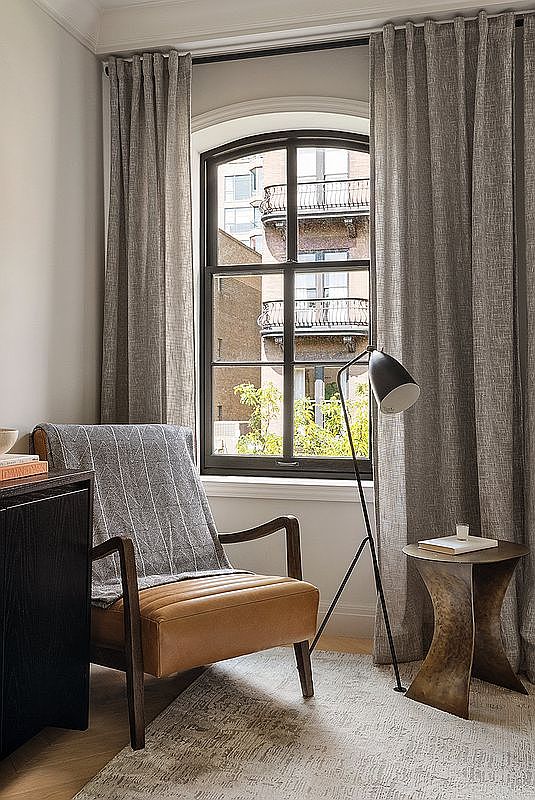
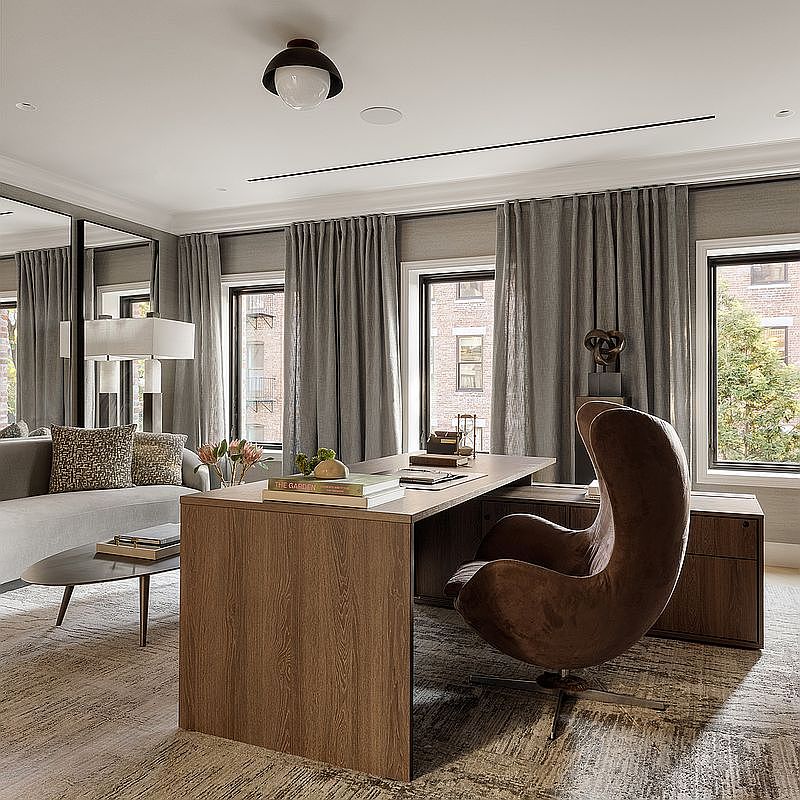
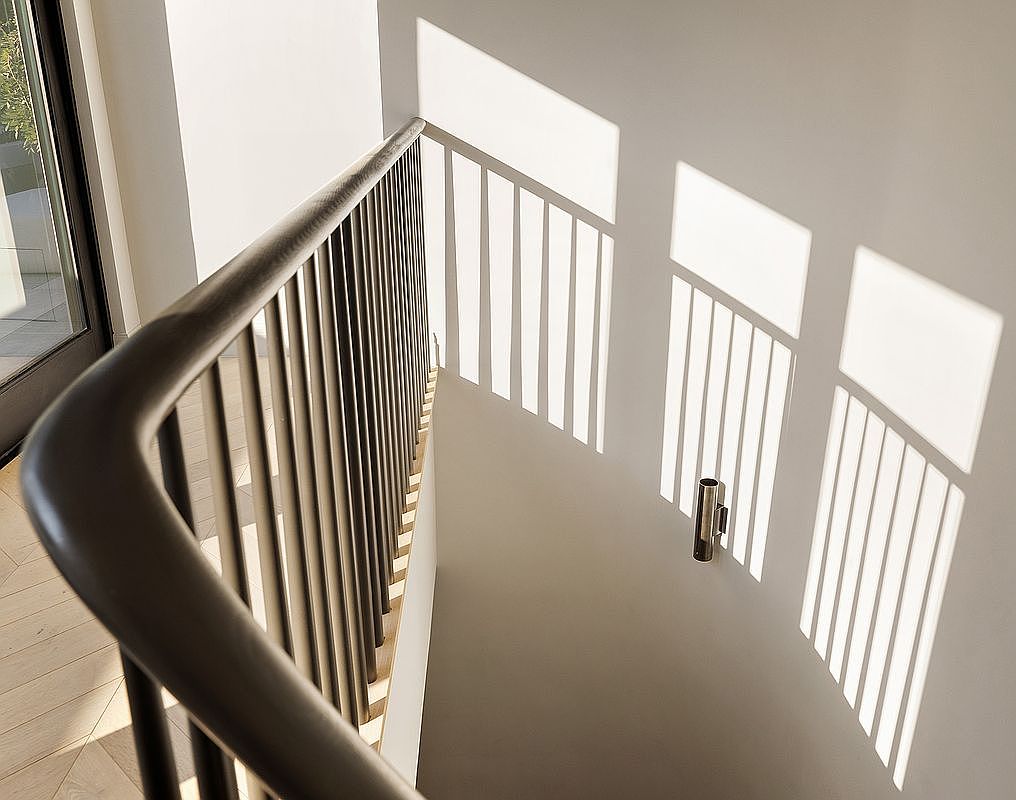
The three-year renovation, executed by StudioSC — an award-winning architecture and design firm — proceeded with the conviction that heritage and innovation are not opposing forces. Arched entryways frame movement between rooms. Heritage wainscoting and walnut-lined built-ins thread craft through spaces anchored by imported white oak chevron floors from Spain. A curved staircase with light oak treads and a dark metal railing rises through the full height of the home, its form at once sculptural and functional — a spine around which six stories of considered living are organized.
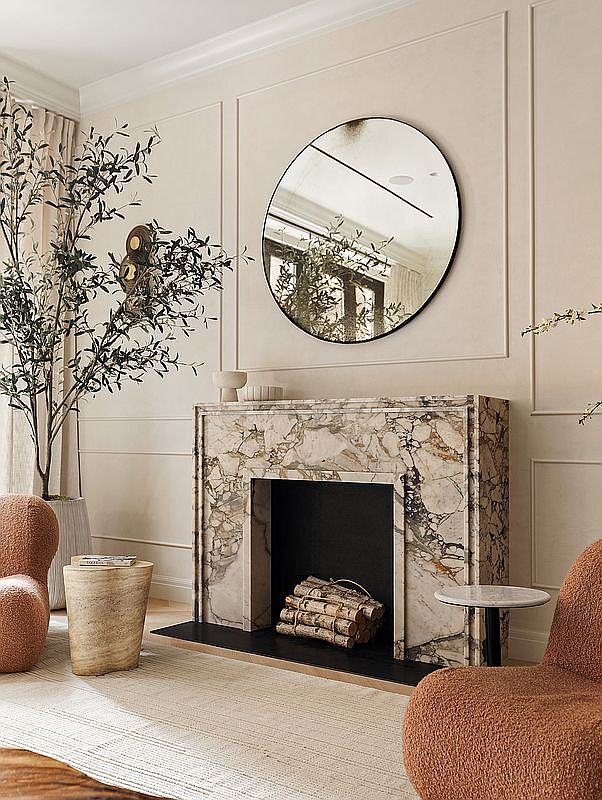
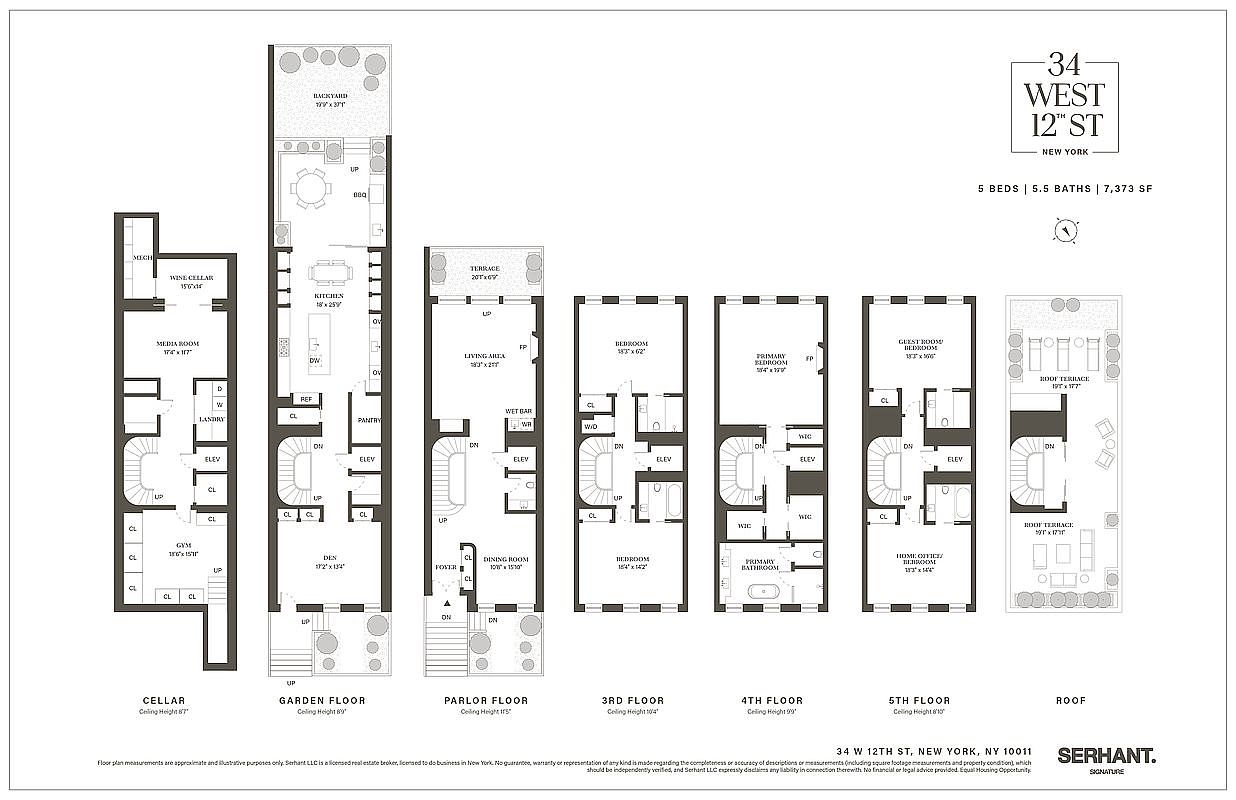
On the parlor level, ceilings climb past eleven and a half feet. The formal living room, flooded in southern light, is anchored by a Calacatta Rubino marble fireplace mantel and opens through clay and wood-paneled walls to a garden-facing terrace. A built-in wet bar extends the room's entertaining capacity without interrupting its elegance. The formal dining room commands the north end with equal authority, its proportions generous and its light warm.
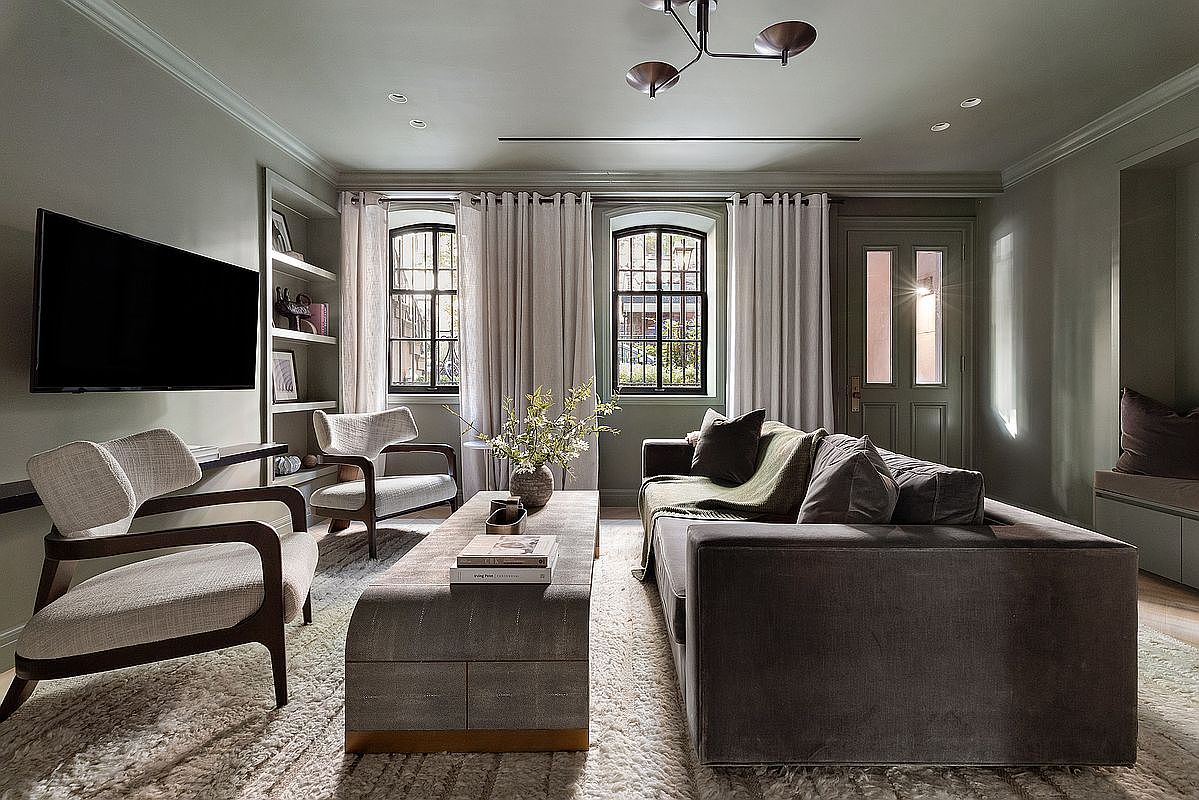
One level below, the garden floor resolves into something more intimate. A den with custom walnut built-ins flows into a casual dining area and a chef's kitchen that is, by any measure, a serious room. The centerpiece is a massive eat-in island clad in polished Breccia Capraia marble. A six-burner gas range and handcrafted hood by L'Atelier Paris — the celebrated Parisian atelier known for bespoke culinary equipment — anchor the cooking alcove, accompanied by a wall-mounted pot filler and two L'Atelier sinks. Accordion glass doors dissolve the threshold between kitchen and the lush rear garden, where cobblestones, ipe wood decking, large hand-carried trees, an outdoor kitchen, and integrated lighting and sound create a private landscape that feels genuinely removed from the city.
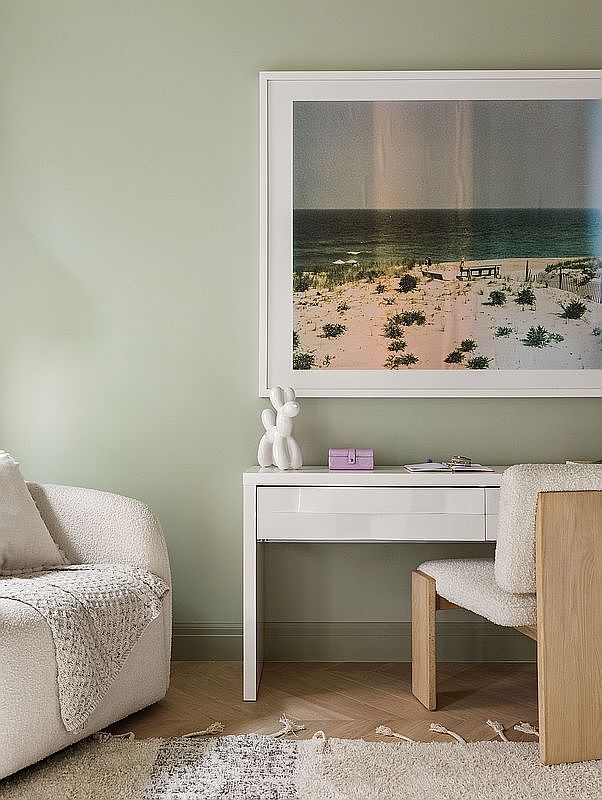
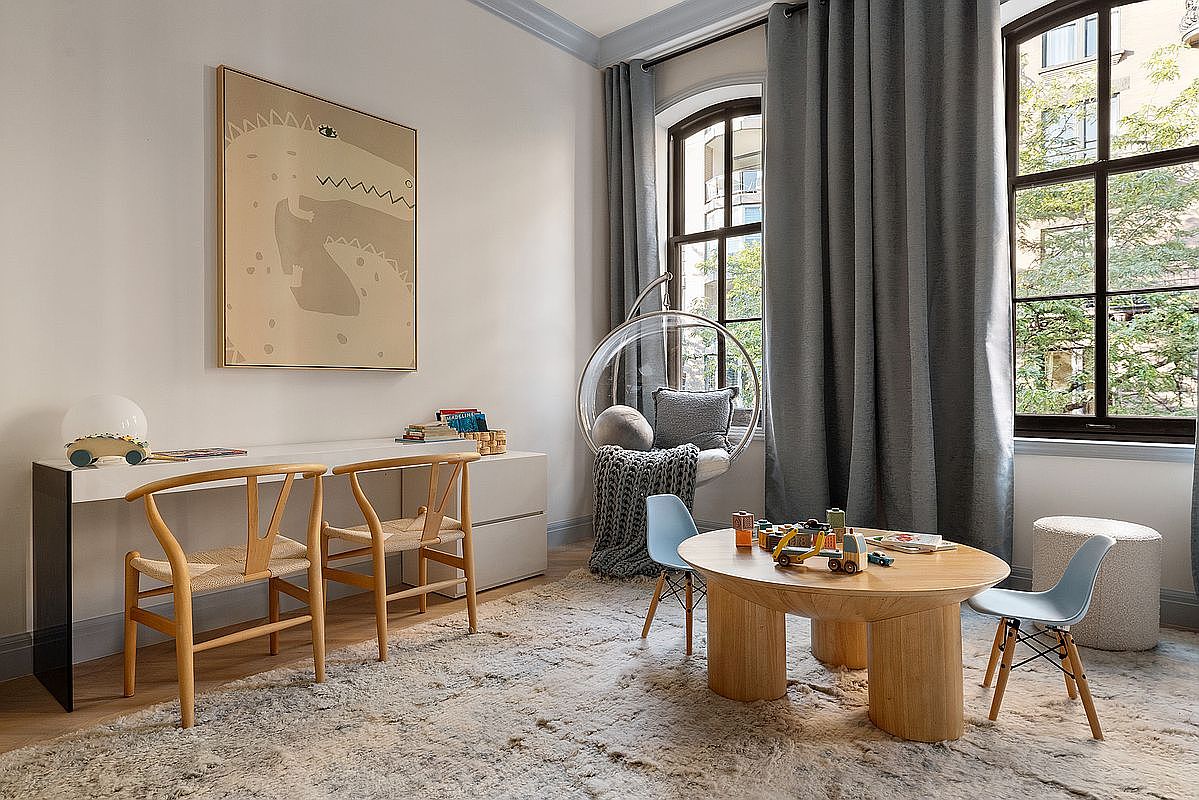
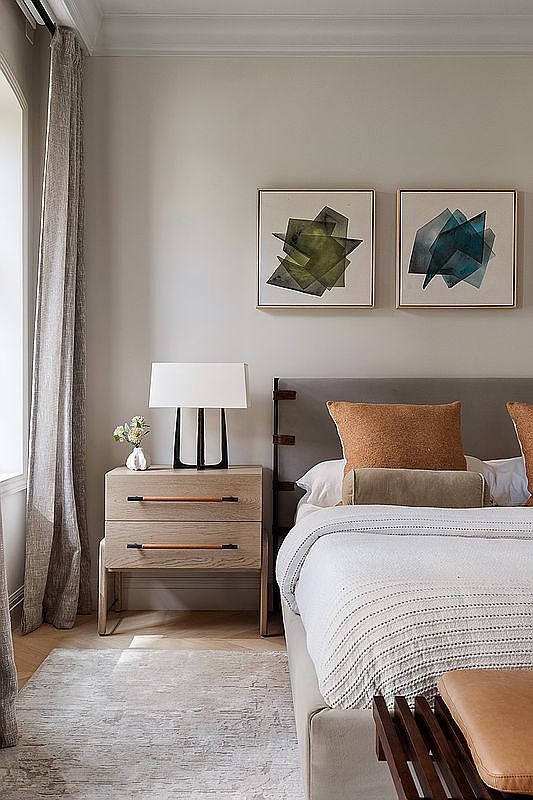
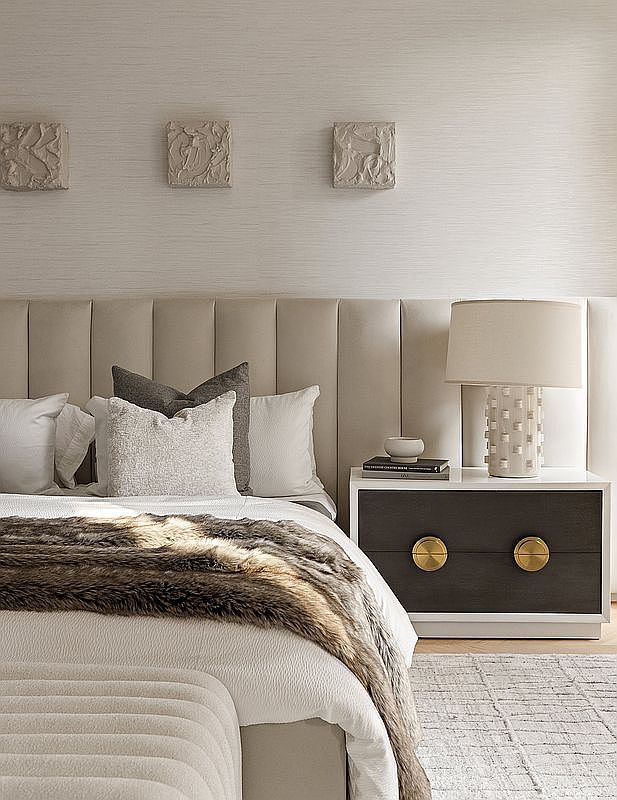
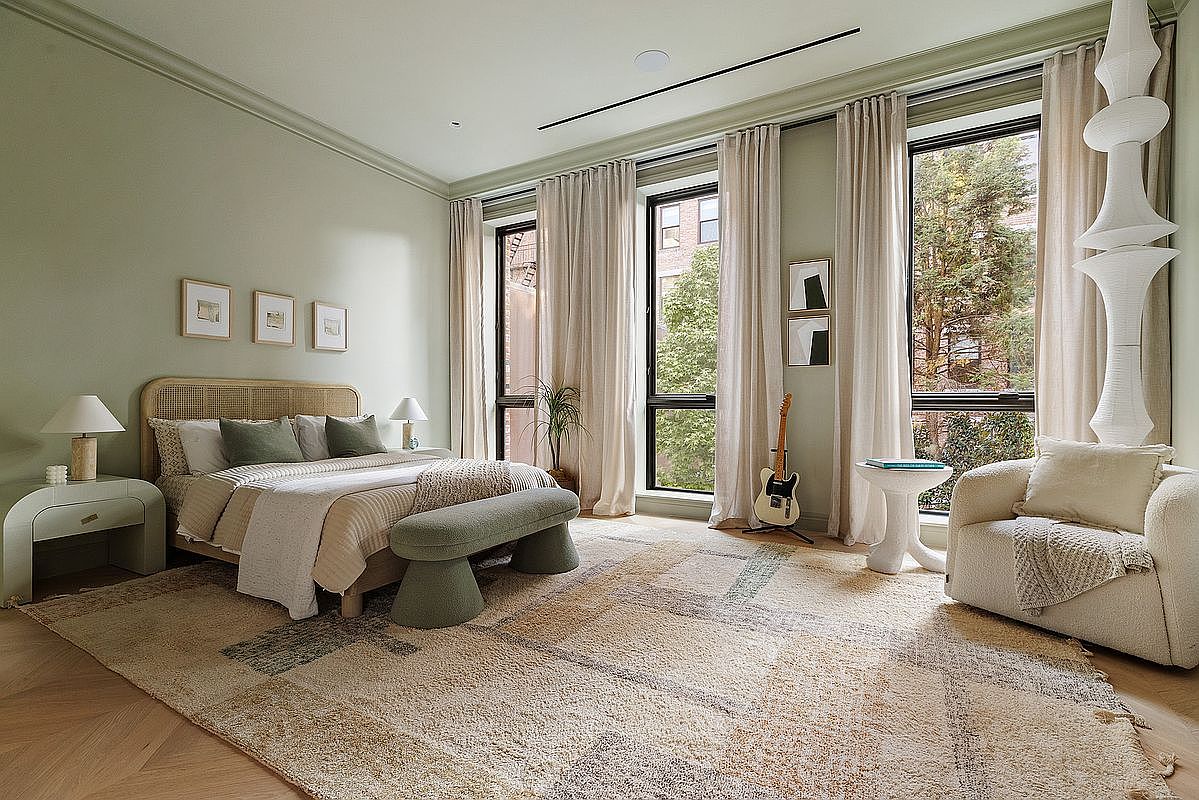
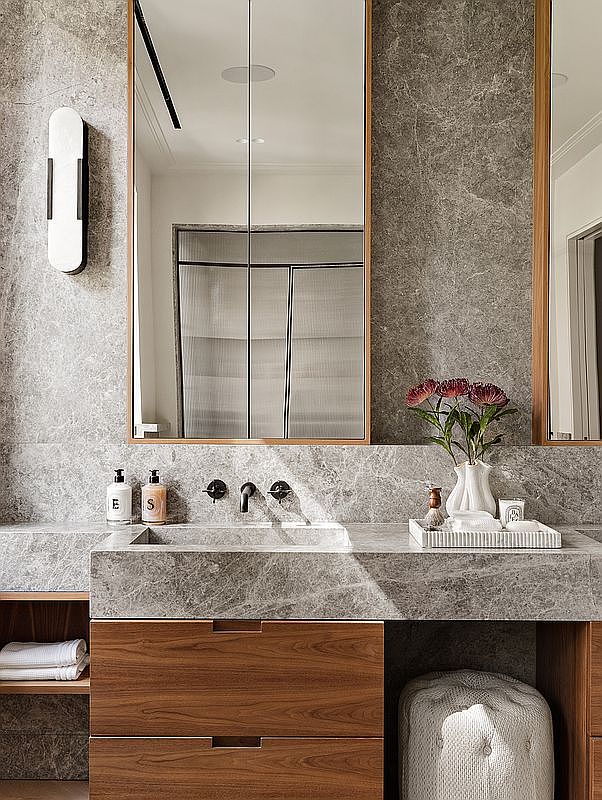
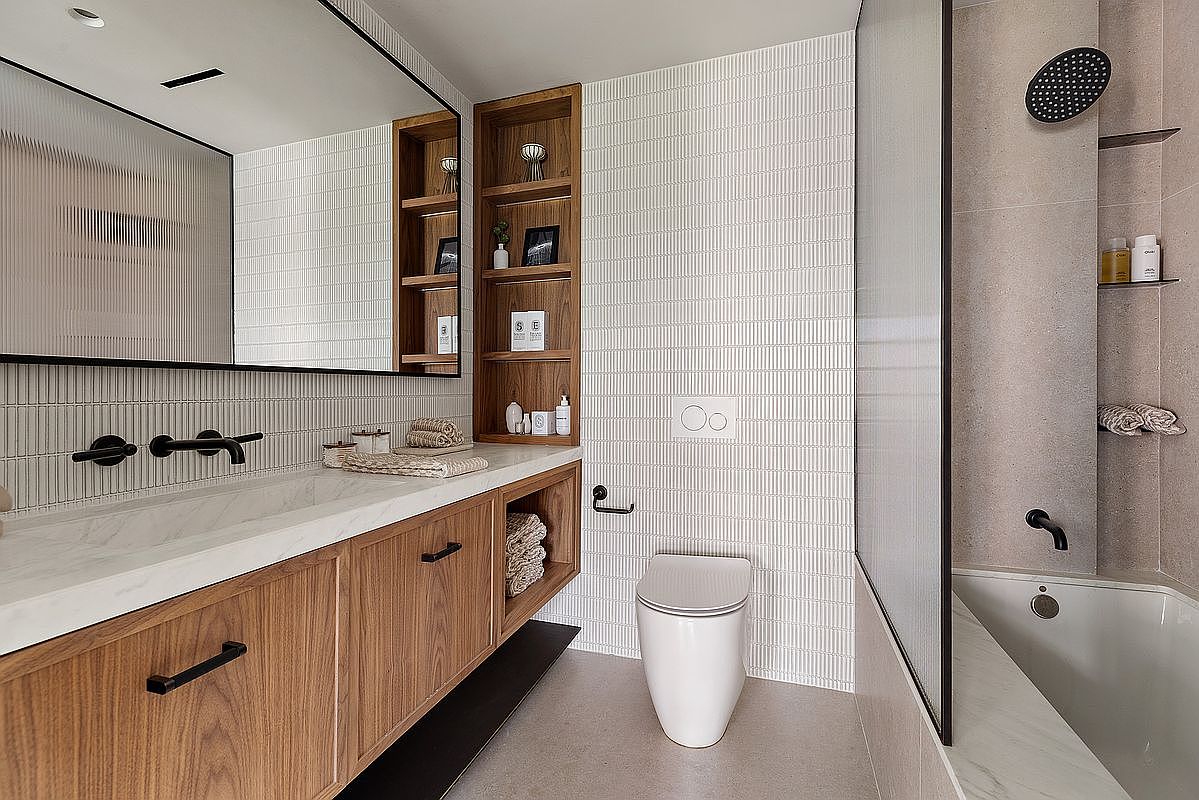
The fourth floor belongs entirely to the primary suite — a full-floor sanctuary anchored by a Caldia Verde marble fireplace and three custom Ornare walnut walk-in closets imported from Italy. The spa bathroom, finished in Tundra Grey marble, offers a fluted glass double walk-in shower, a custom double vanity with Waterworks fixtures, and a freestanding Duravit soaking tub positioned beneath arched windows. The remaining bedrooms, distributed across the third and fifth floors, each include ensuite bathrooms and built-out closets.
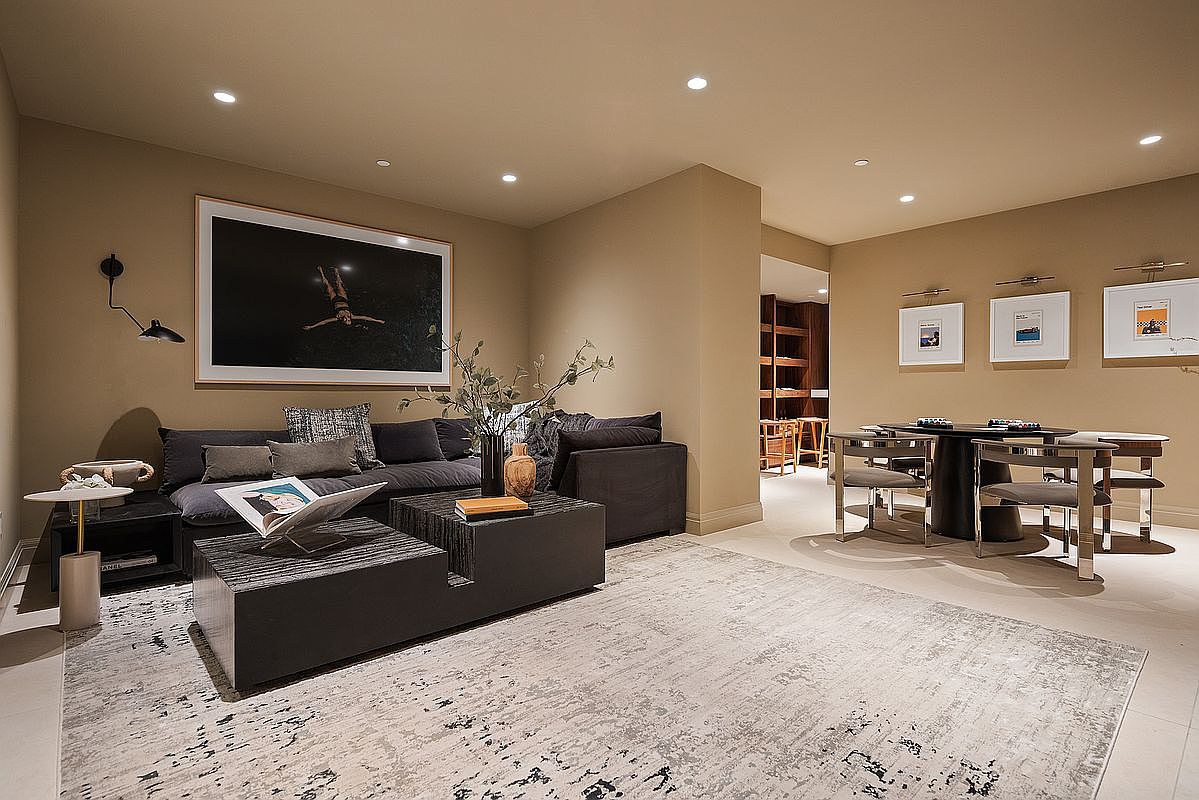
Below grade, the cellar level delivers a media room, wine cellar, powder room, laundry, and flexible gym or playroom space. Above, the rooftop sun deck — with planters, multiple seating areas, and expansive city views — completes a home whose scale of living is, in the Village, genuinely rare.
Throughout, lighting design operates as its own art form: recessed fixtures by Belgian company Delta Lighting are paired with sculptural sconces and pendants by Roll & Hill, Allied Maker, and Apparatus, while a Savant home automation system governs shades, lighting, music, and security across fourteen HVAC zones. Radiant heated floors run through every level. The result is a home that is simultaneously a historic artifact and a precision instrument — one that asks nothing of its residents except that they inhabit it fully.
Greenwich Village has long occupied a singular position in the geography of New York City — not merely as a neighborhood, but as a state of mind. Its irregular street grid, a consequence of its pre-grid development and the paths of old streams and farm lanes, gives it a pedestrian intimacy that the ordered blocks of Midtown or the Upper East Side cannot replicate. To live here is to navigate a city that feels, at its best, like a village — one that happens to contain some of the most culturally significant real estate in the Western world.
West 12th Street sits within the Greenwich Village Historic District, a designation that has preserved the neighborhood's 19th-century architectural character and ensured that the blocks of Federal, Greek Revival, and Italianate rowhouses that line its streets remain largely as they were built. The Gold Coast stretch between Fifth and Sixth Avenues — where 34 West 12th Street stands — is among the most architecturally distinguished in the district, its wide sidewalks and mature street trees lending it a residential grandeur that feels earned rather than contrived.
Washington Square Park, the neighborhood's defining public space, is moments away. Redesigned and restored over the years, the park remains the social and symbolic heart of Greenwich Village — a place where NYU students, longtime residents, chess players, and tourists share the same benches and fountain plaza beneath the iconic Stanford White arch, completed in 1892. The park's proximity to New York University has long made this corner of the Village intellectually alive, a quality that persists in its bookshops, lecture halls, and the general disposition of its residents.
Union Square, a short walk east, anchors another kind of civic life. The Union Square Greenmarket — operating four days a week and recognized as one of the premier farmers markets in the country — draws chefs and home cooks alike, its seasonal offerings a reliable measure of what is best to eat in any given week. The square itself serves as a gathering point, flanked by retail, dining, and transit infrastructure that connects the Village to the broader city with ease.
The dining culture of Greenwich Village is, by any measure, exceptional. The neighborhood has historically attracted chefs and restaurateurs drawn by its walkable scale, discerning clientele, and the sense that a restaurant here can become an institution. That tradition continues on every block. Independent boutiques, specialty food shops, and wine merchants fill the ground floors of the same brownstones that have lined these streets for 150 years.
Culturally, the Village retains its reputation as one of New York's most storied ZIP codes — home to the Cherry Lane Theatre, the Film Forum, the IFC Center, and the Village Vanguard, the jazz club on West 11th Street that has operated continuously since 1935. The High Line, the Whitney Museum, and Chelsea's gallery district are all within comfortable walking distance to the west.
For the resident of 34 West 12th Street, all of this arrives not as an abstraction, but as the texture of daily life — the greenmarket on a Saturday morning, dinner at a neighborhood table on a Tuesday evening, a walk through the park at dusk. It is, in the most precise sense, a neighborhood in which one actually lives.
Featured Highlights
Curated Content • Presented by Brandon Bogard