The Story Behind
A Full-Floor Penthouse Commanding the Dallas Arts District Skyline
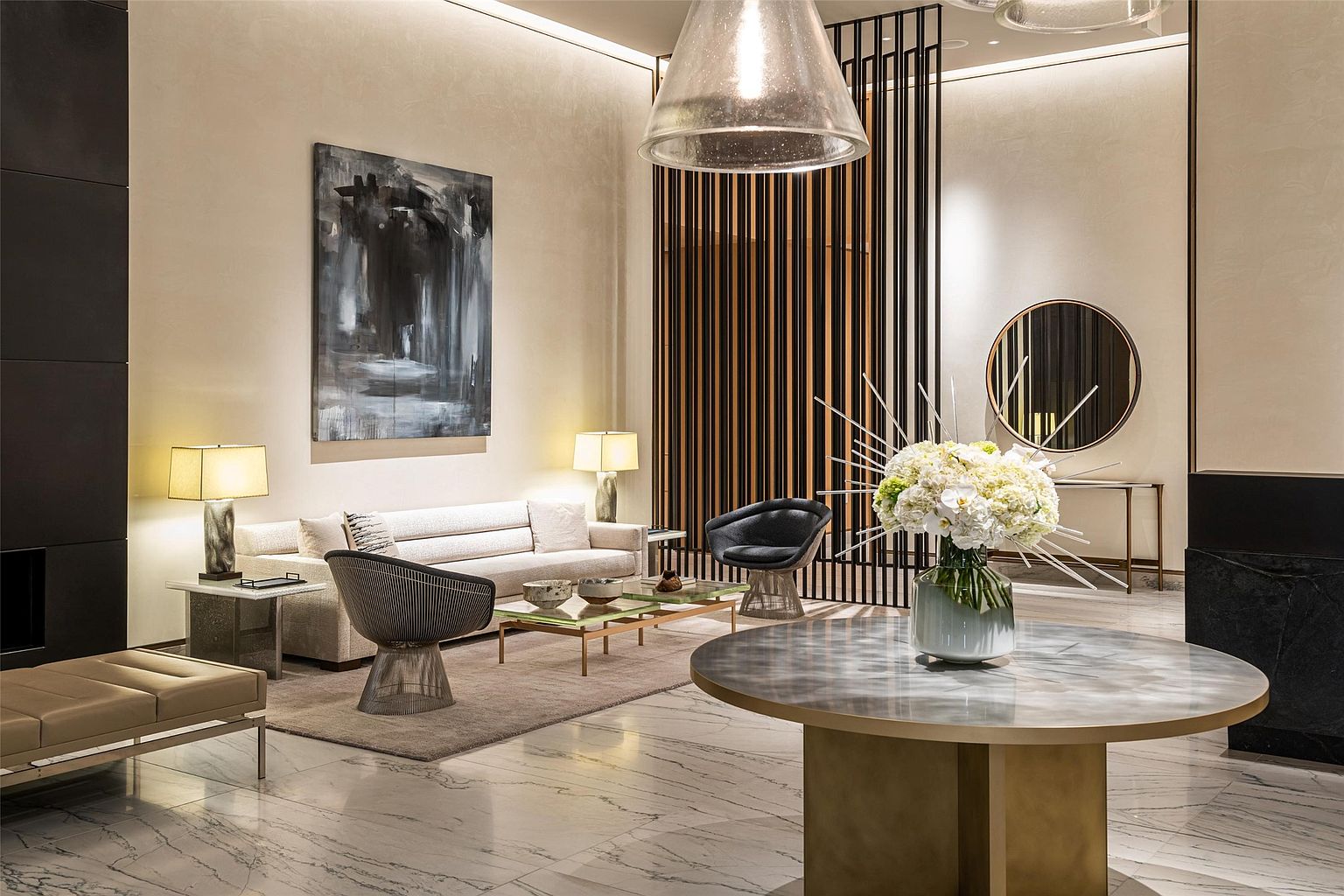
There are penthouses, and then there is the Gallery Penthouse — a distinction that becomes self-evident the moment the private elevator opens directly into the residence. Conceived by Abeyta Tibbs Architecture and realized with an uncompromising commitment to craft, this full-floor home on the twenty-sixth floor of HALL Art Residences was designed not merely to occupy space, but to elevate it.
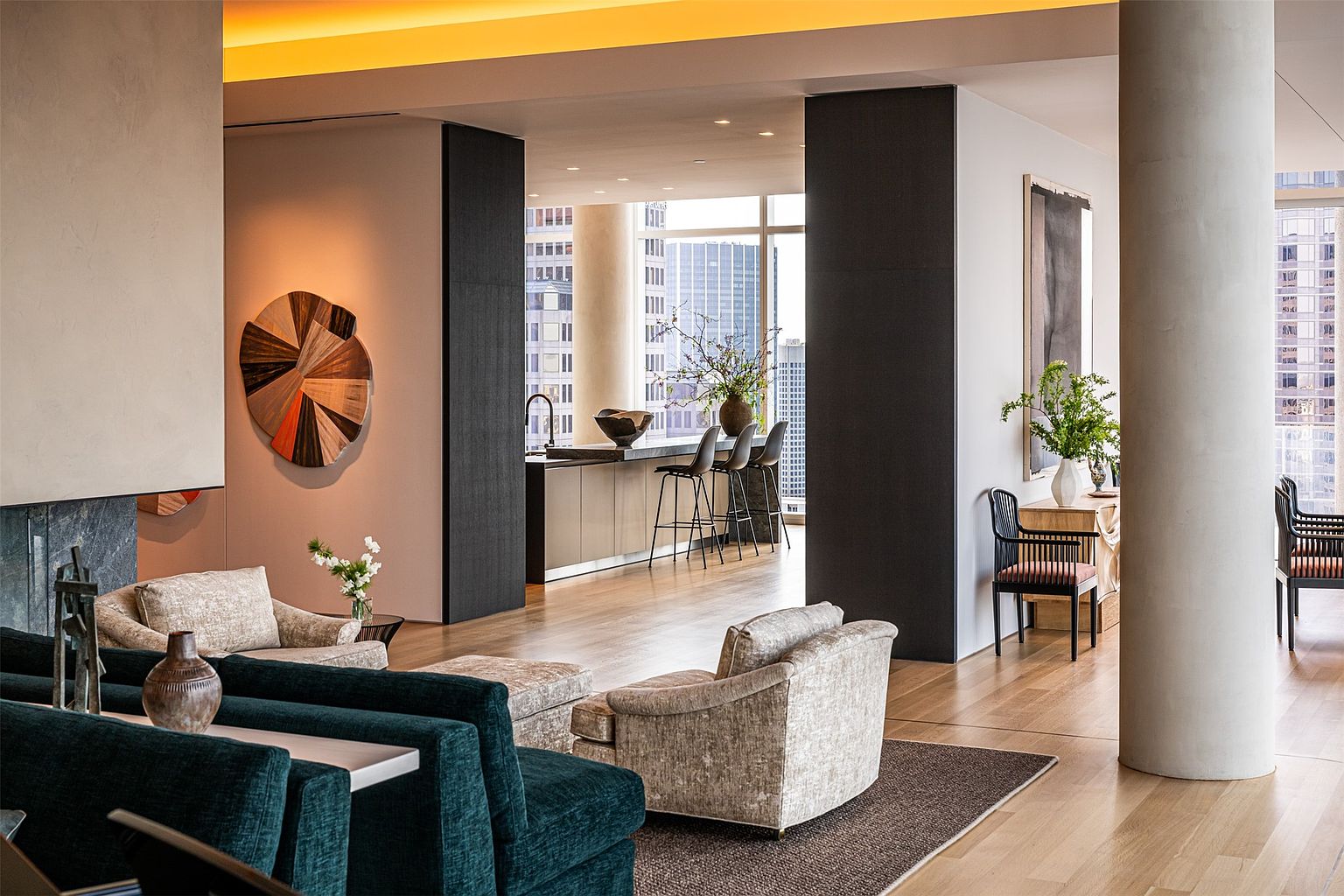
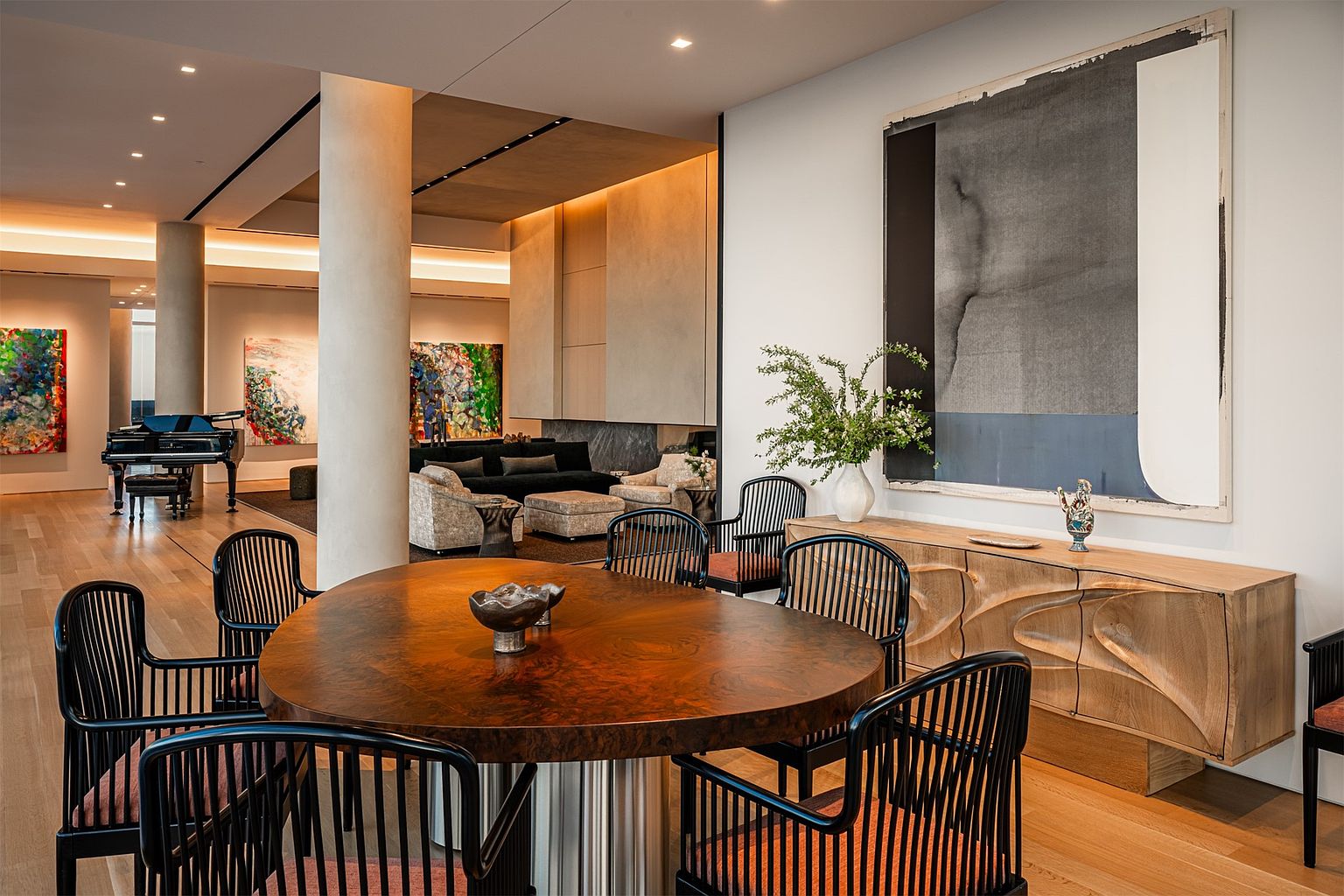
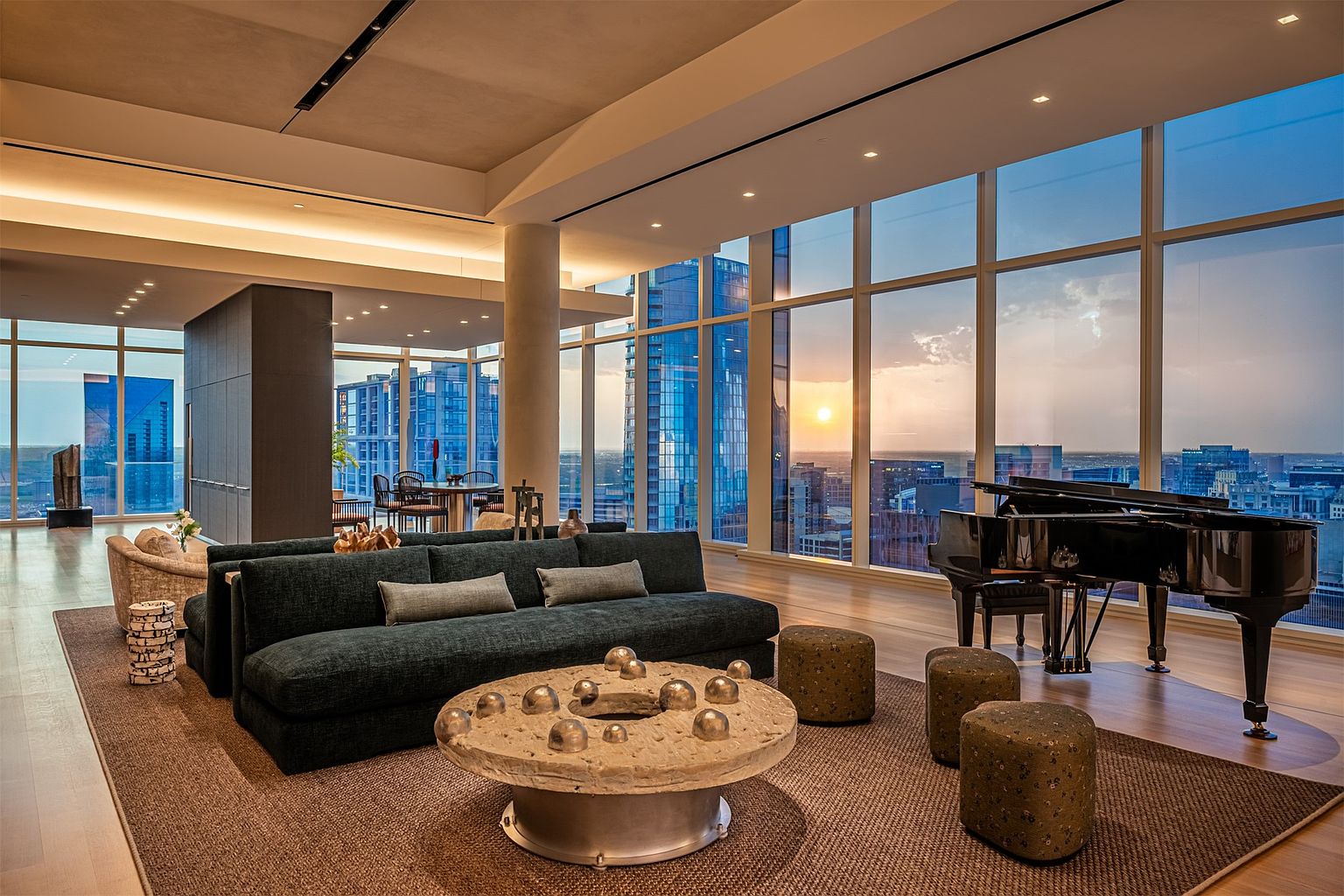
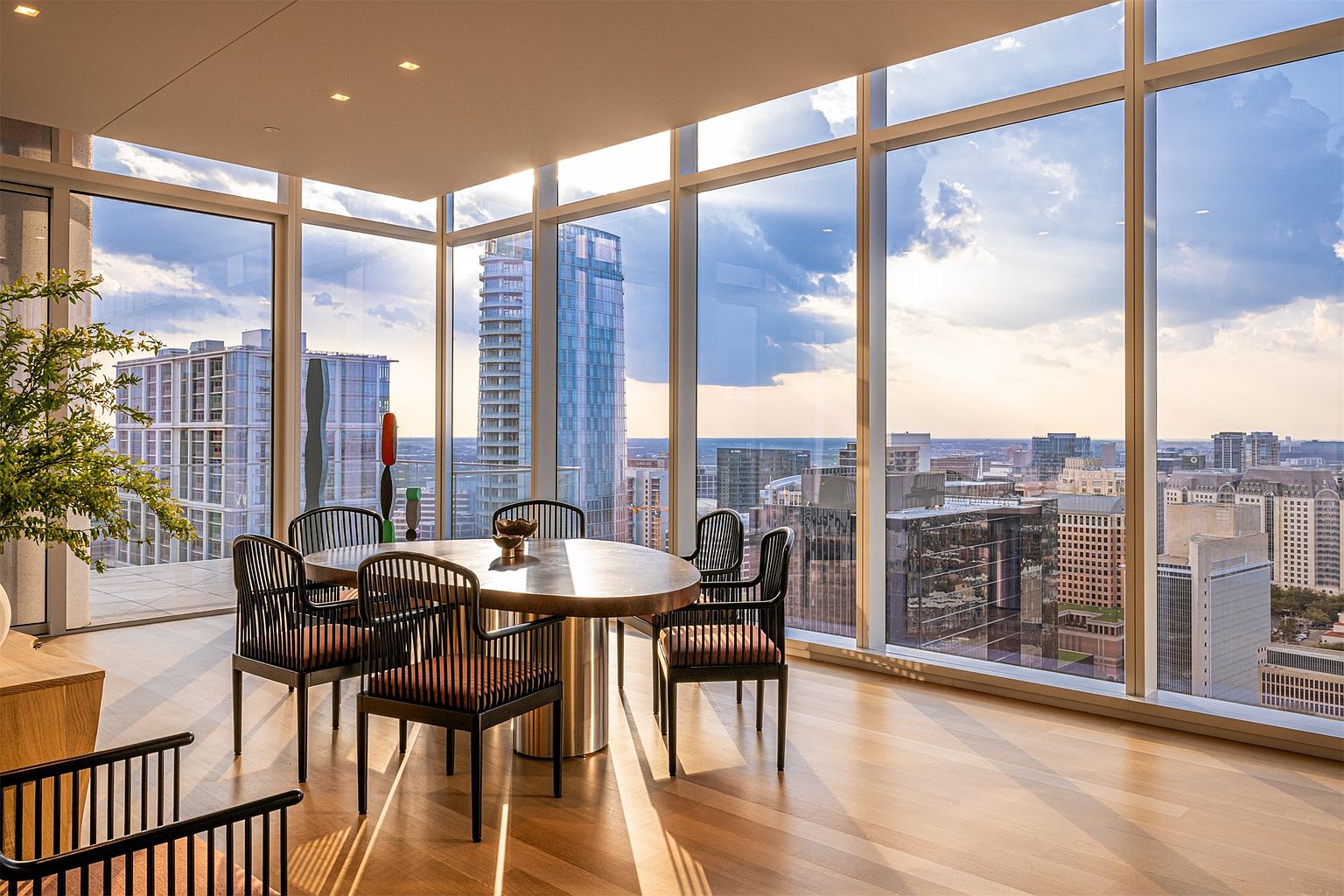
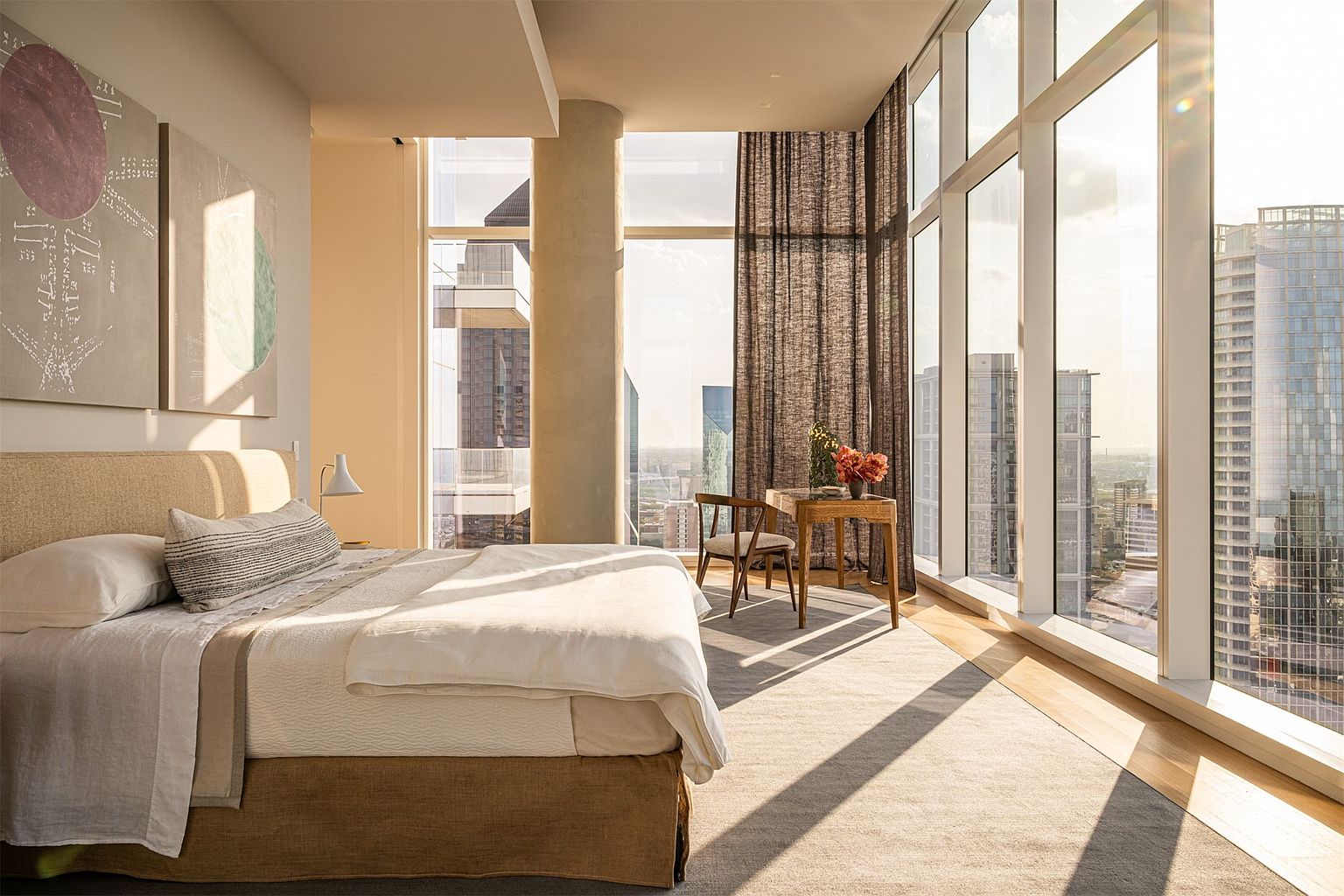
The entry sequence sets the tone immediately. Twelve-foot pocket doors slide away to reveal interiors defined by hand-troweled plaster columns — a technique that speaks to artisanal patience in an era of mass production — and floor-to-ceiling windows that dissolve the boundary between interior and the sprawling Dallas skyline beyond. Underfoot, a raised flooring system conceals the mechanical infrastructure of a truly intelligent home while preserving the seamless visual continuity that the architecture demands.
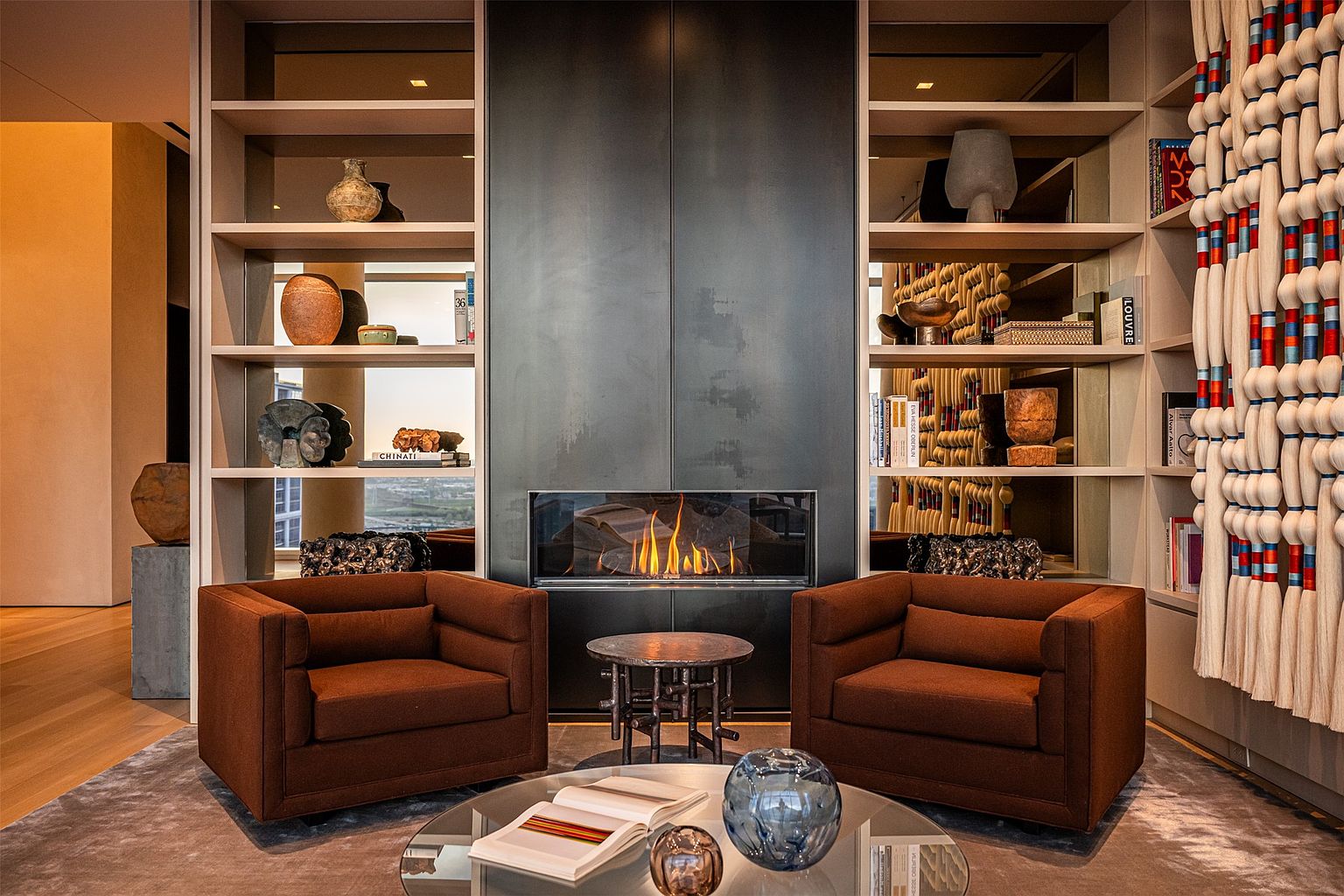
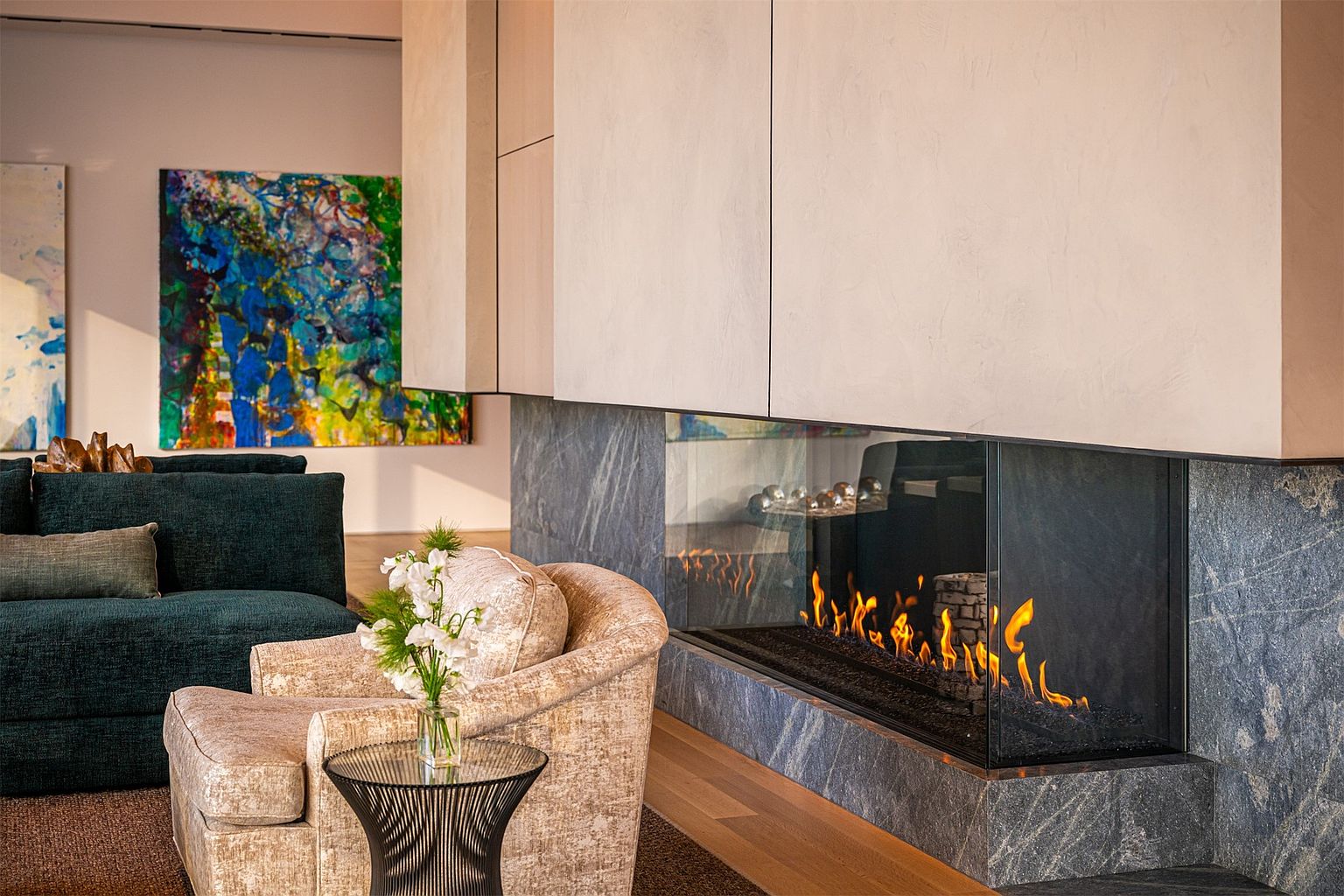
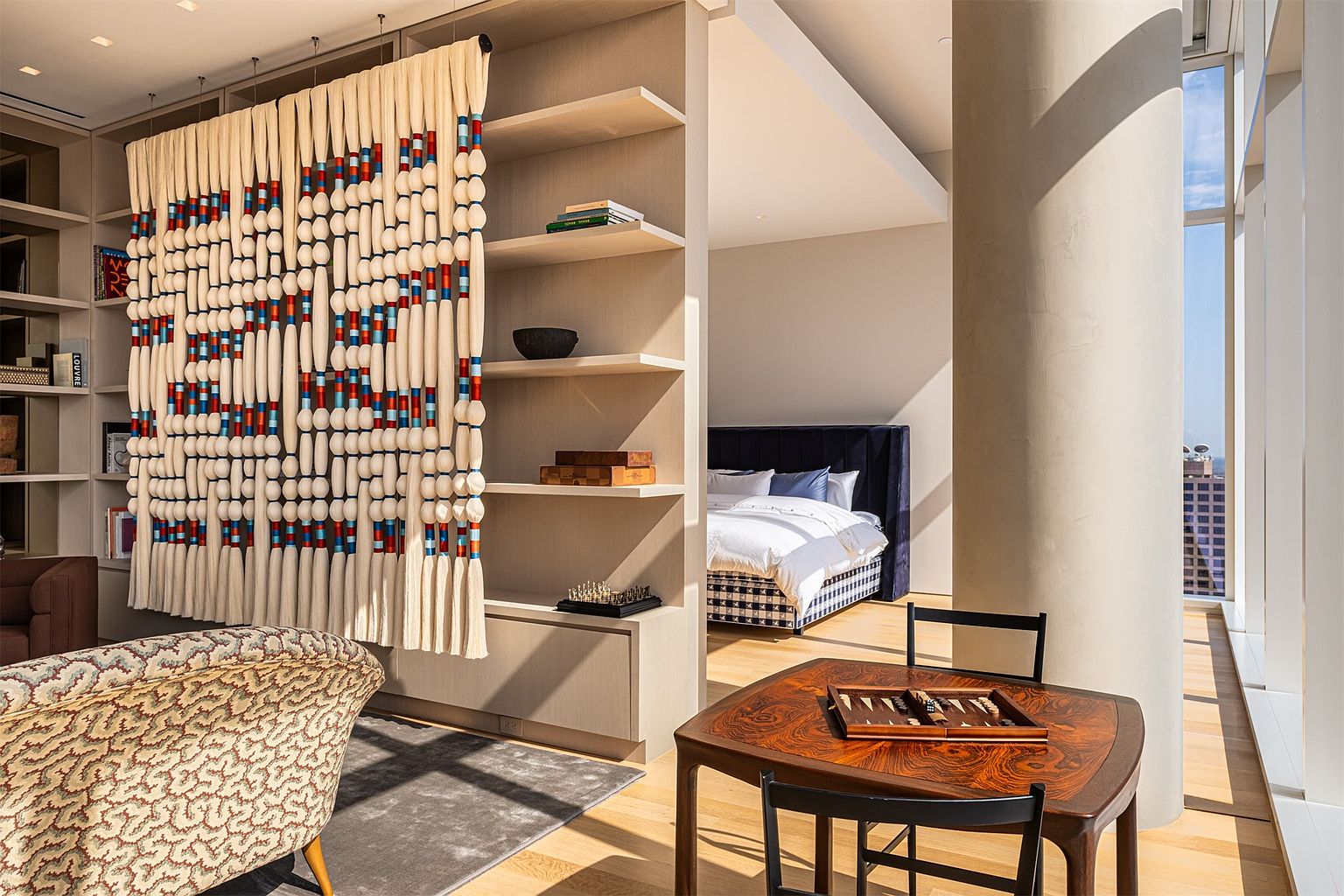
The living room is the residence's ceremonial heart. At fourteen feet, the ceilings soar with a confidence that few urban homes can claim, and the monumental fireplace — clad in a tall plaster surround and flanked by symmetrical built-in shelving — anchors the room with quiet authority. This is a space designed equally for intimate evenings and for the kind of cultural gathering that feels native to an arts district address.
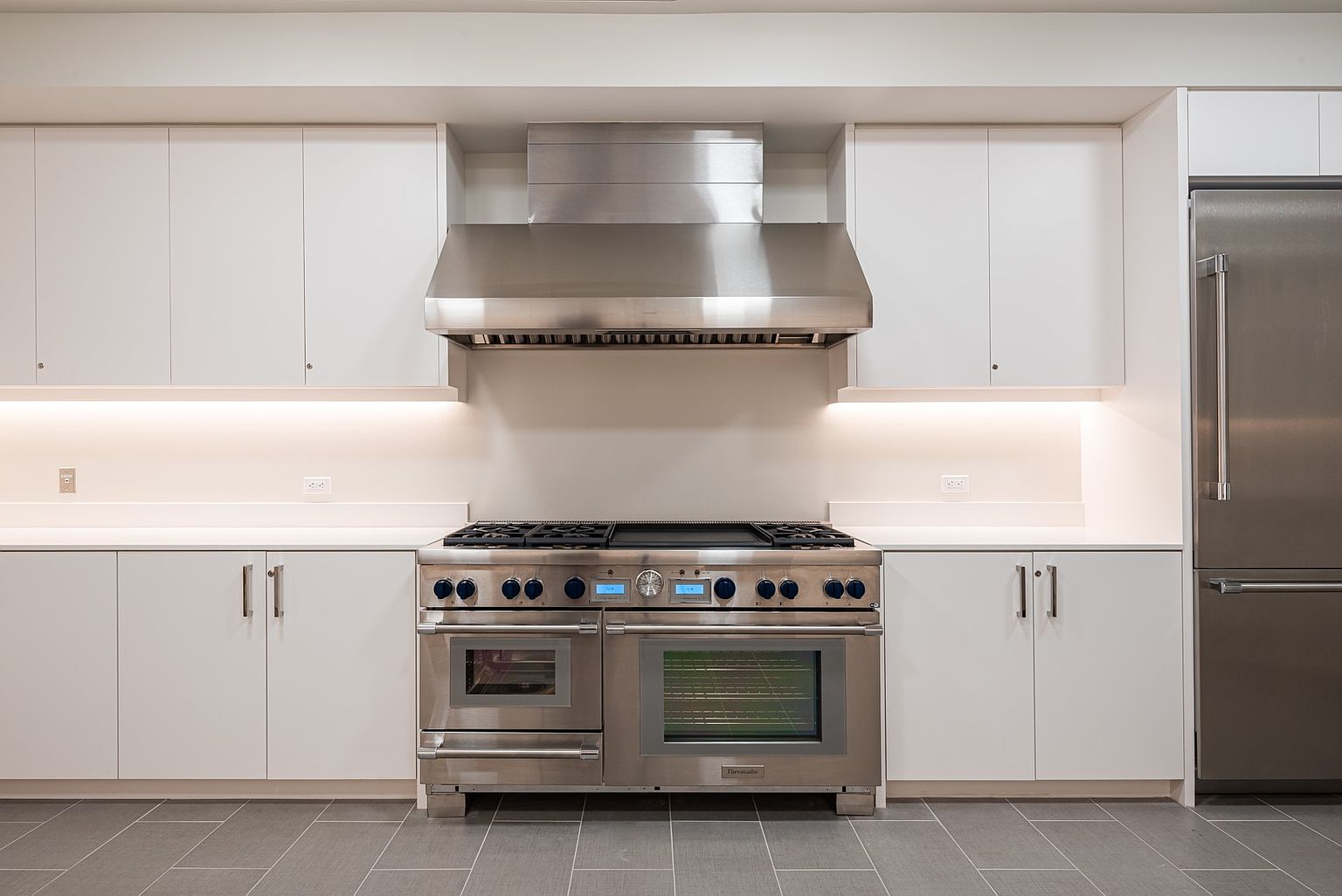
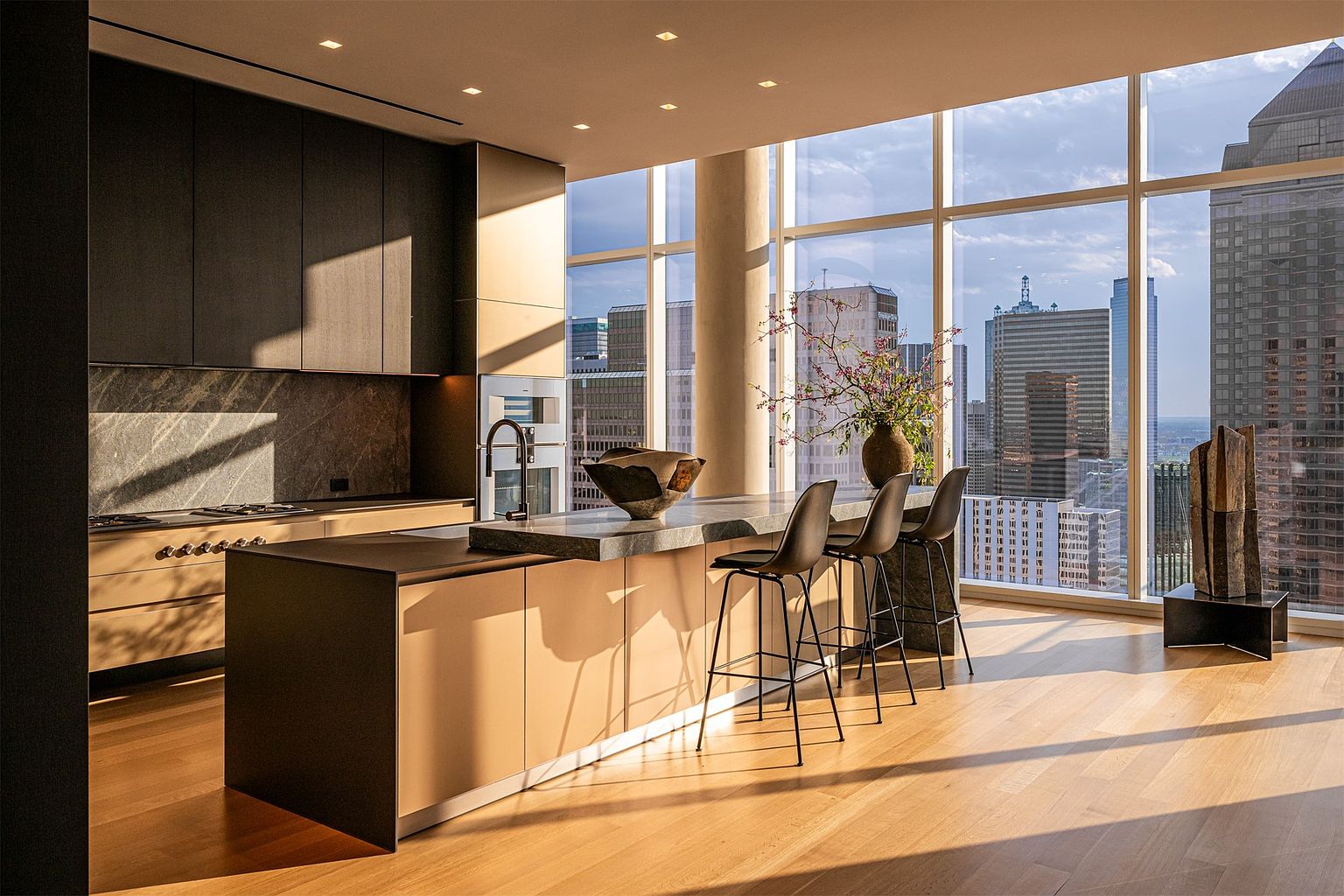
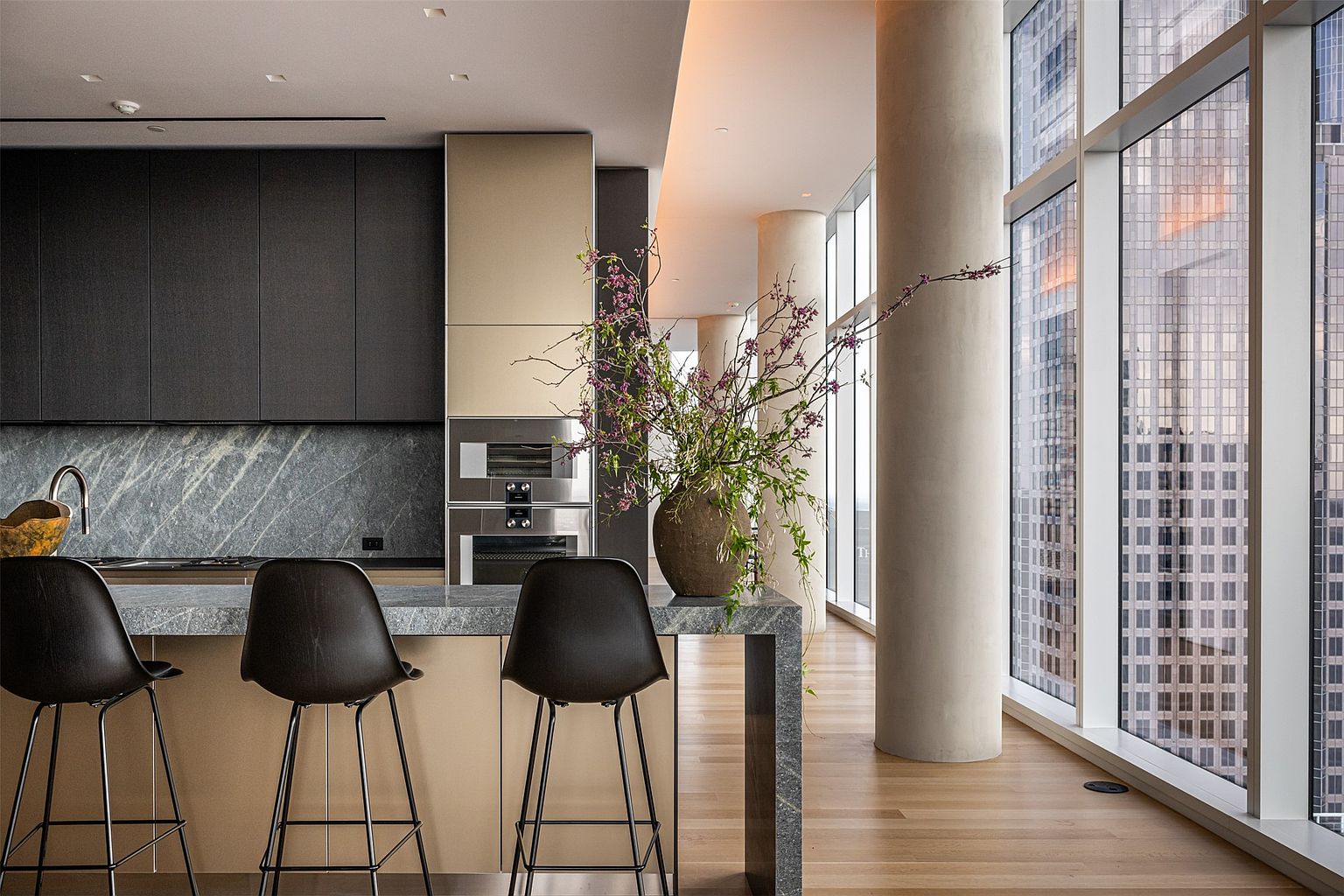
In the kitchen, the pairing of bulthaup cabinetry and Gaggenau appliances represents a considered alignment of two of the world's most respected names in culinary design. Bulthaup's philosophy — that the kitchen is the most important room in the home — finds full expression here, where an oversized, customizable butler's pantry extends the workspace and provides the kind of behind-the-scenes preparation infrastructure that serious entertaining demands.
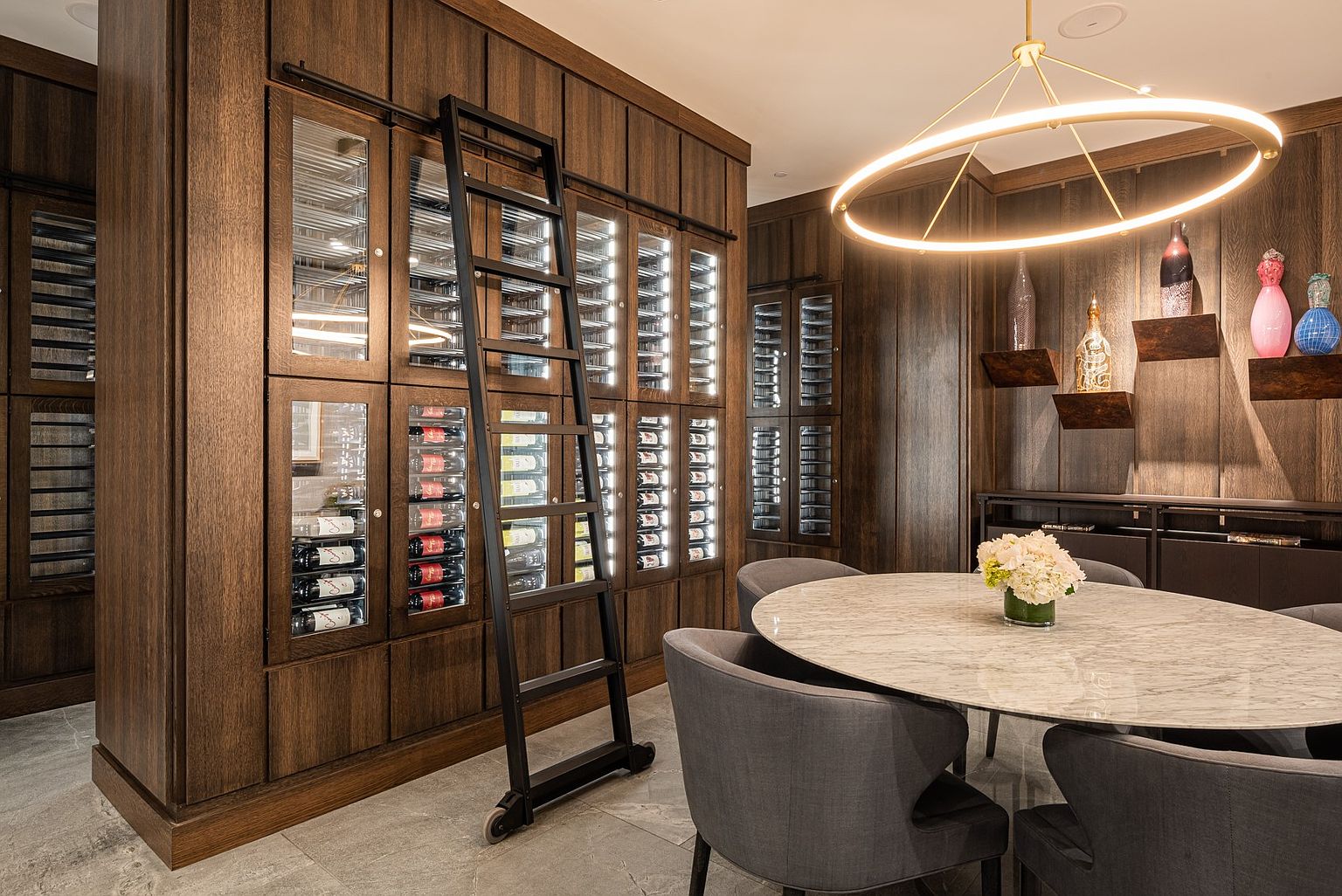
The wine cellar is a room unto itself: custom glass-front cabinetry with integrated lighting, a rolling library ladder that traverses the full height of the collection, and a central stone-topped tasting table create a space that honors the ritual of wine as much as the bottles themselves.
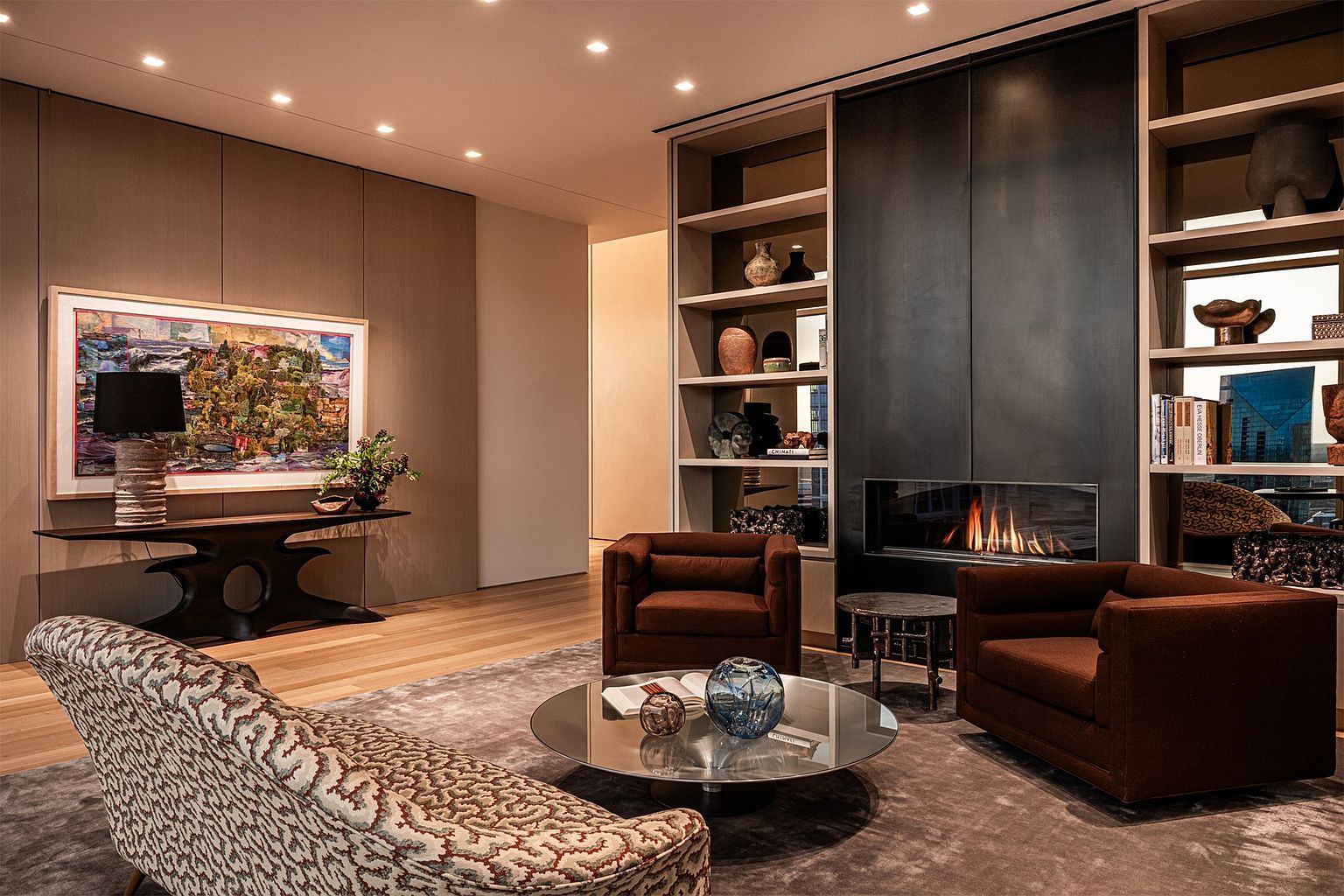
A private library with its own fireplace offers a rare and deeply considered counterpoint — a room designed for stillness and reflection within a residence that otherwise commands attention at every turn. It is perhaps the most telling detail of the home's design intelligence: the acknowledgment that great luxury includes the freedom to disappear.
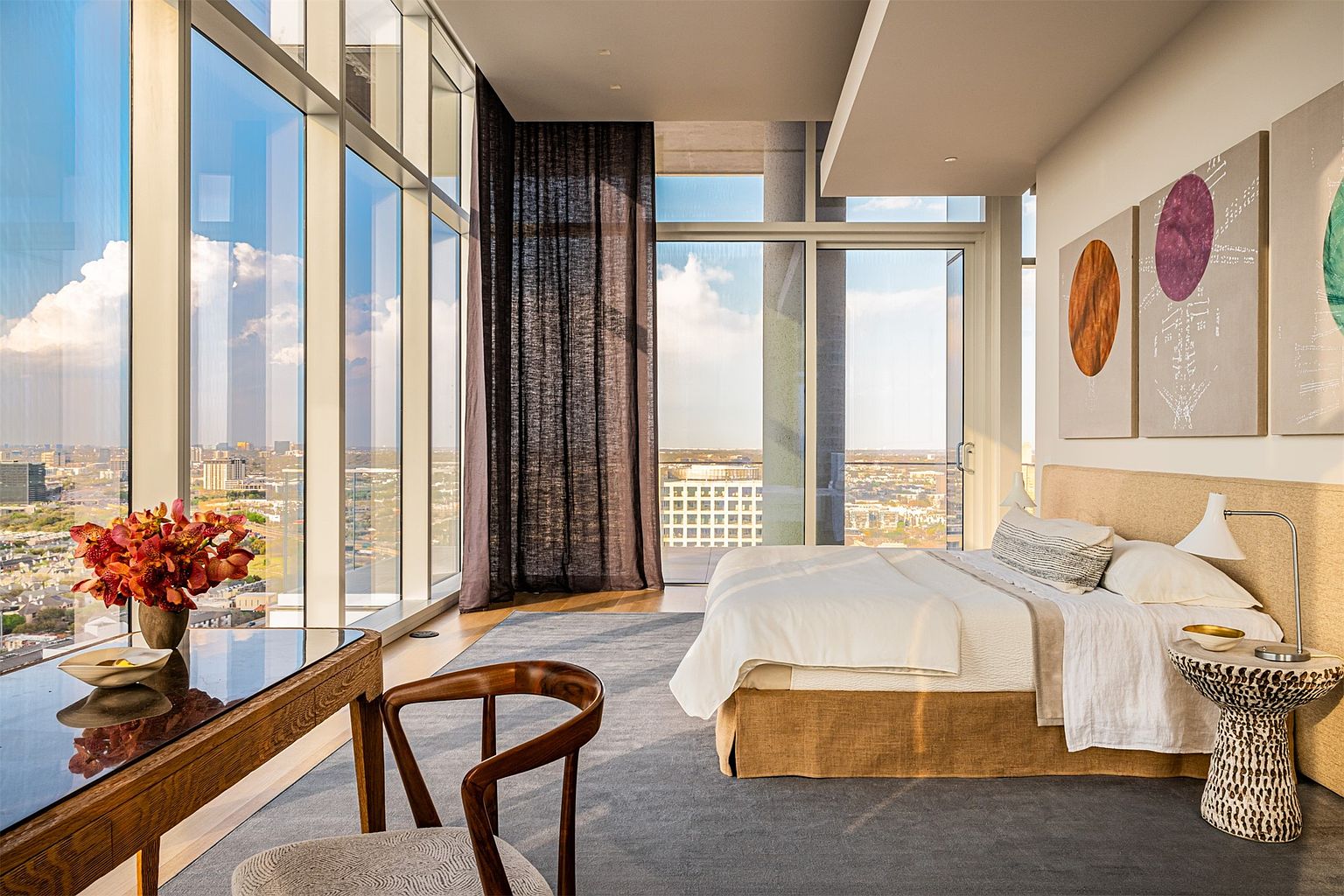
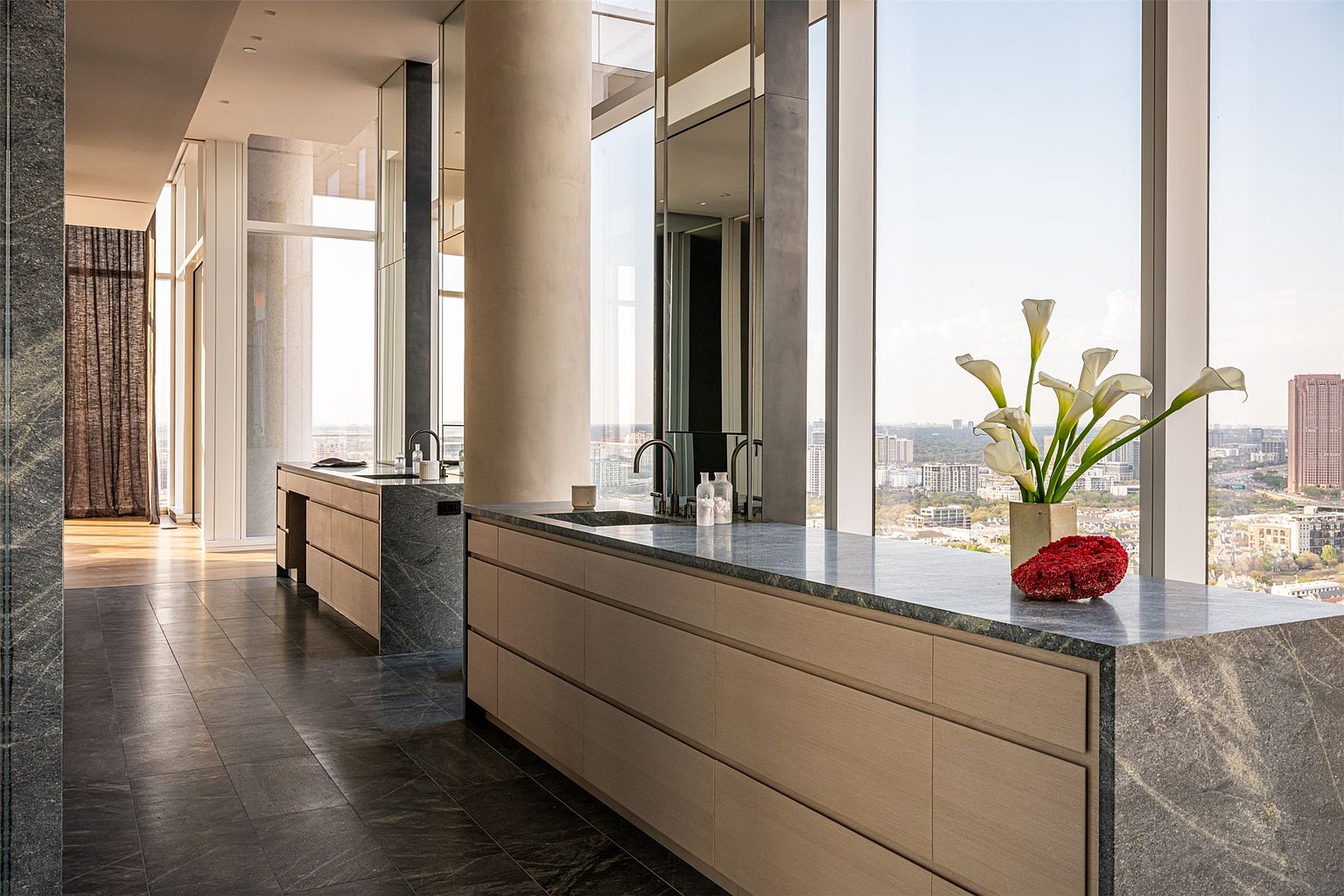
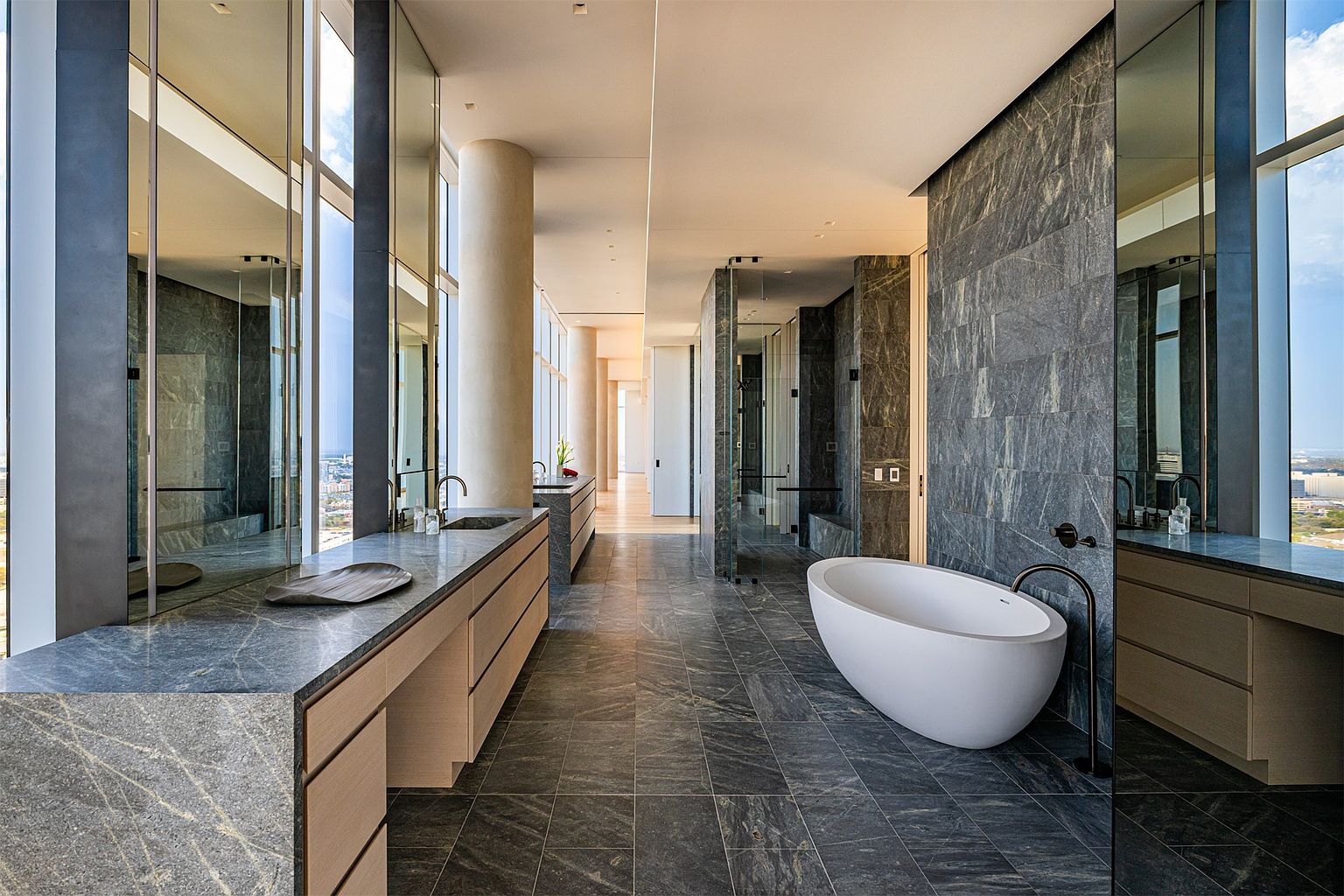
The primary suite opens to its own private terrace, where the Dallas skyline becomes a personal backdrop. Inside, the spa-inspired en-suite bath delivers a freestanding soaking tub, a generously proportioned shower, heated floors, dual floating vanities with dark stone countertops, and a smart mirror — an ensemble of finishes that performs as beautifully as it photographs. Two spacious walk-in closets complete the suite with the kind of considered storage that transforms daily routine into quiet ceremony.
Throughout, the raised flooring system, dual utility rooms, and bespoke architectural detailing speak to a home designed not for the moment of sale, but for a lifetime of distinguished occupation.
To live in the Dallas Arts District is to reside at the intersection of civic ambition and cultural achievement — a neighborhood that, over the course of four decades, has evolved from an urban planning aspiration into one of the most concentrated arts precincts in the United States.
The Arts District occupies approximately 68 acres in the northern edge of downtown Dallas, making it the largest contiguous urban arts district in the nation. Its anchor institutions are among the finest of their kind anywhere in the country. The AT&T Performing Arts Center — comprising the Margot and Bill Winspear Opera House, the Dee and Charles Wyly Theatre, the Annette Strauss Artist Square, and Strauss Square — brings world-class opera, theater, and performance to within walking distance. The Winspear, designed by Sir Norman Foster, is widely regarded as one of the most acoustically and architecturally distinguished opera houses built in the twenty-first century.
The Nasher Sculpture Center, designed by Renzo Piano, presents one of the world's premier collections of modern and contemporary sculpture within a serene garden setting that feels almost improbable given its downtown location. Directly adjacent, the Dallas Museum of Art offers free general admission and houses a permanent collection spanning more than 5,000 years of human creativity — one of the largest and most encyclopedic collections in the American South. The Crow Museum of Asian Art and the Perot Museum of Nature and Science further enrich a cultural landscape of genuine depth and diversity.
The neighborhood's architectural pedigree extends beyond its cultural institutions. HALL Art Residences itself occupies a building that reflects the district's commitment to design excellence, positioning residents within a community where the built environment is held to an elevated standard. The presence of the Klyde Warren Park — a celebrated 5.2-acre deck park built over the Woodall Rodgers Freeway — provides a verdant, programmed public space that connects the Arts District to Uptown Dallas, offering weekly events, food trucks, a dog park, a children's park, and open lawn space that has become a beloved gathering place for Dallas residents.
Uptown Dallas, immediately to the north, extends the lifestyle proposition considerably. The neighborhood's dense concentration of acclaimed restaurants, boutique retail, and vibrant street life along McKinney Avenue and the West Village creates an urban walkability that is rare in a Texas city. The McKinney Avenue Trolley — a free, vintage streetcar line — connects residents to points throughout Uptown with a charm that feels entirely consistent with a neighborhood that prizes culture and character.
Downtown Dallas is equally accessible, placing residents in proximity to the city's major corporate corridors, the Perot Museum, and the rapidly evolving Farmers Market District. For those who travel frequently, Dallas Love Field and Dallas/Fort Worth International Airport are both within a practical drive from the city center.
To hold an address at 1747 Leonard Street is to claim a position at the cultural and architectural apex of a city in full stride — a city that has invested meaningfully in the belief that great urban life and great art are inseparable.
Featured Highlights
Curated Content • Presented by Kyle Richards