The Story Behind
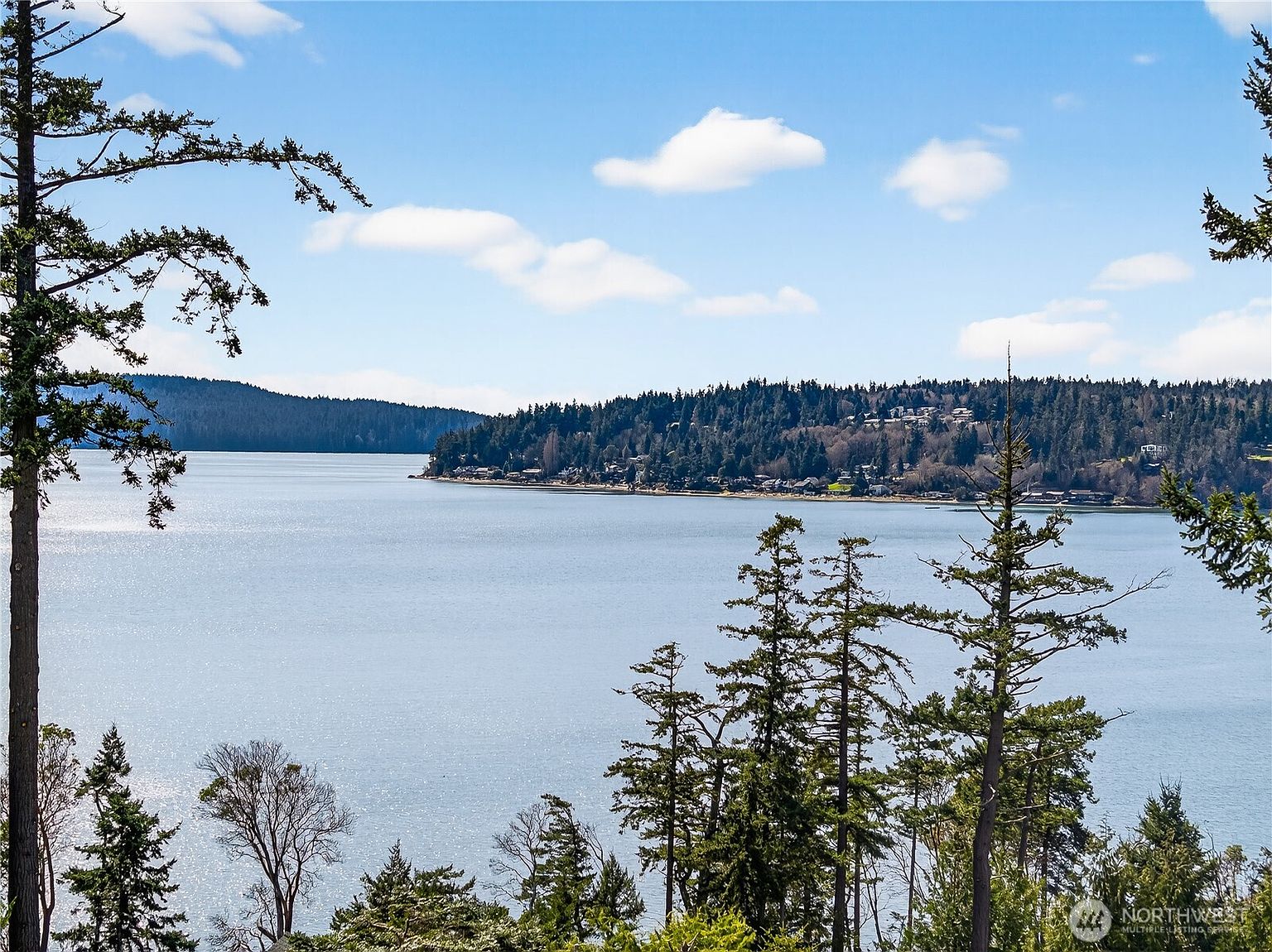
Gated Shoreline Sanctuary with Panoramic Water Views
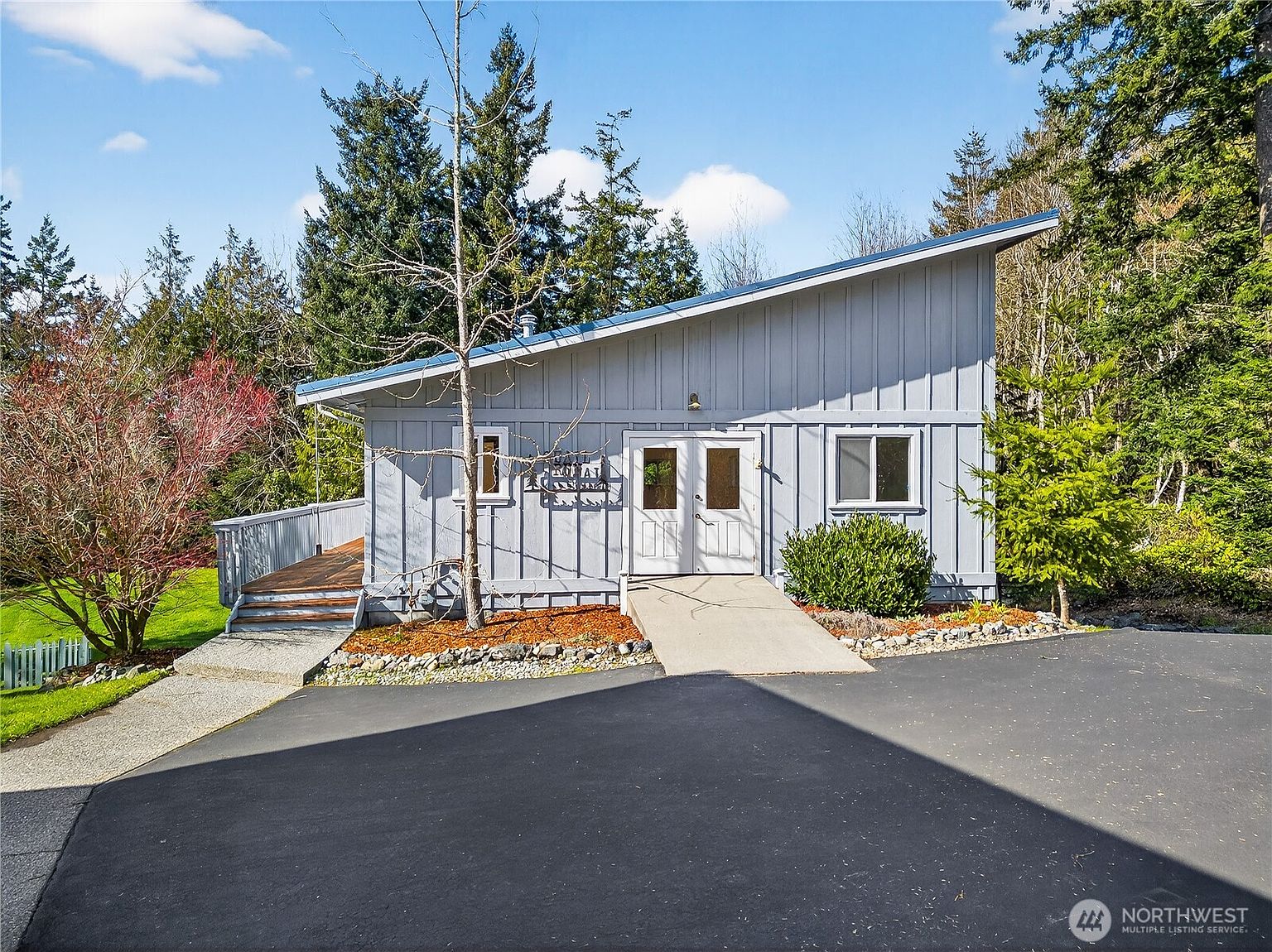
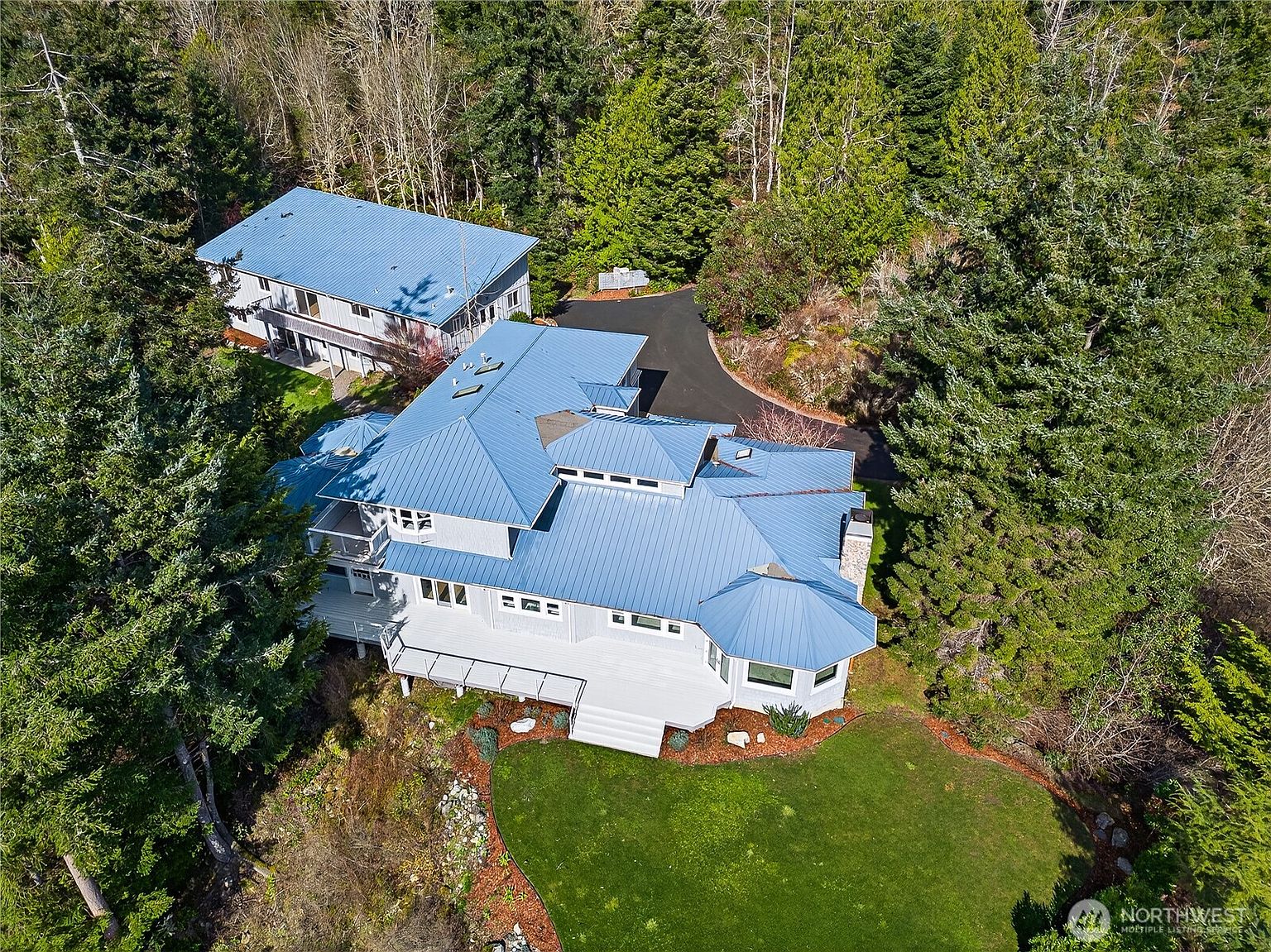
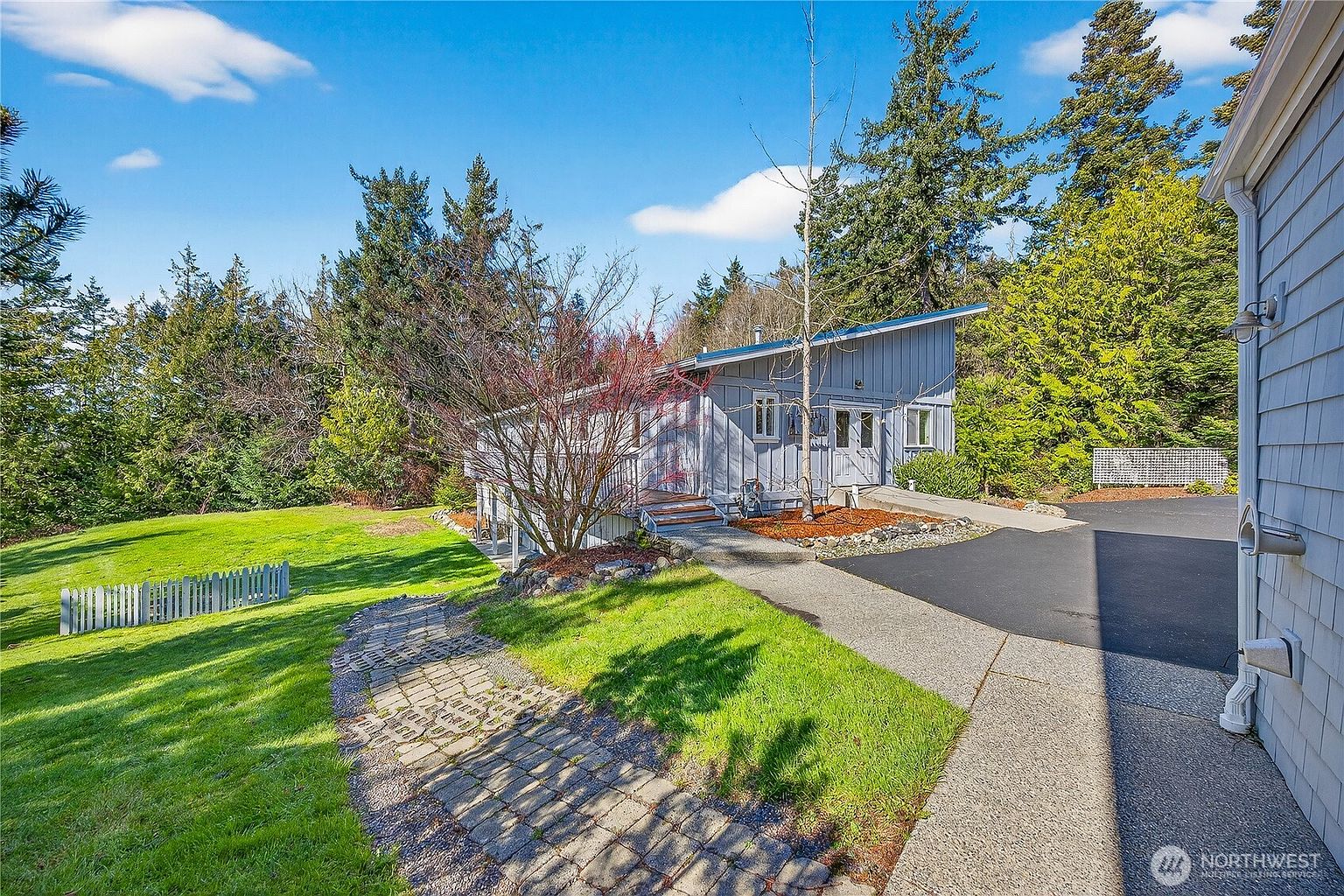
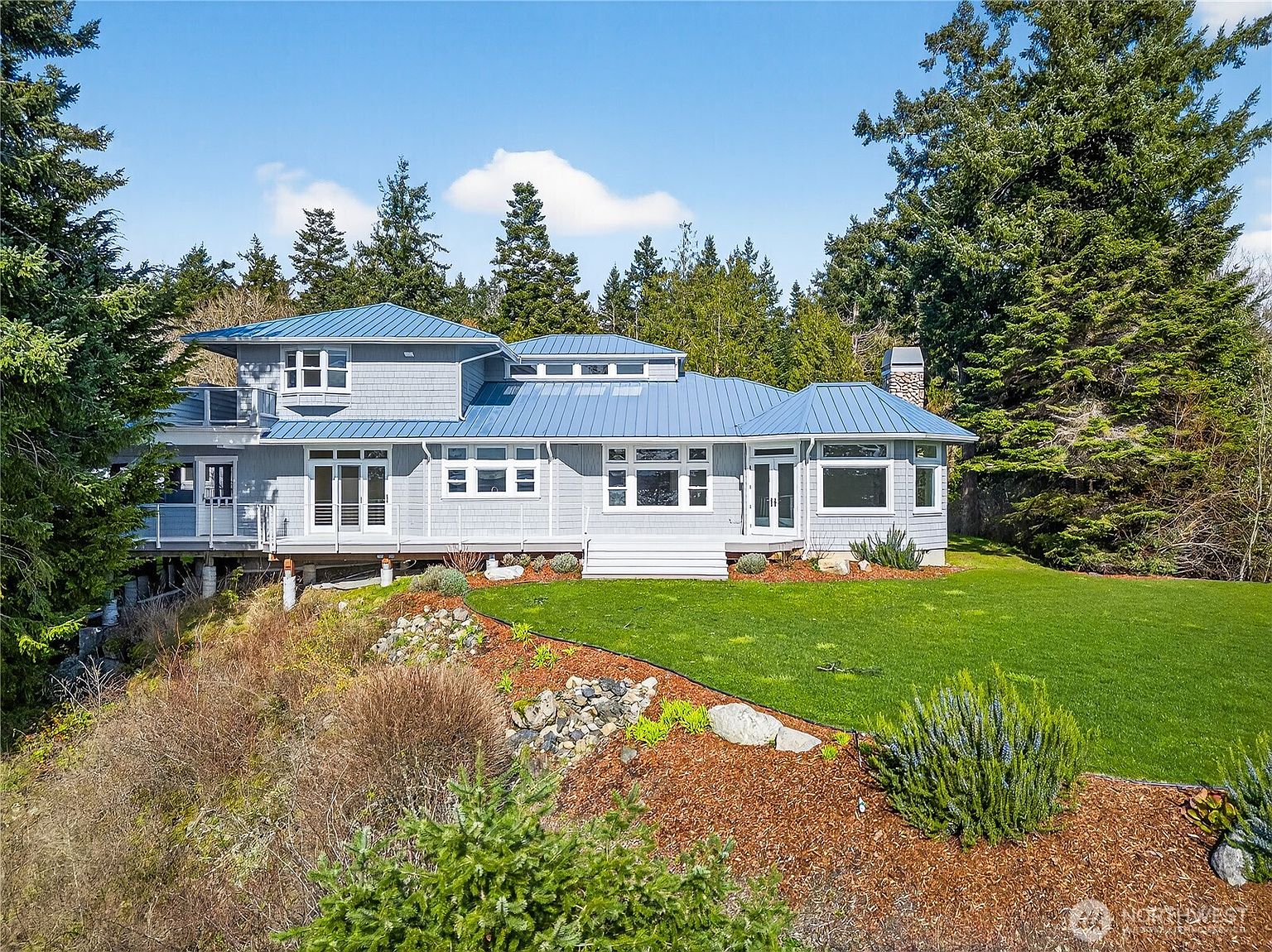
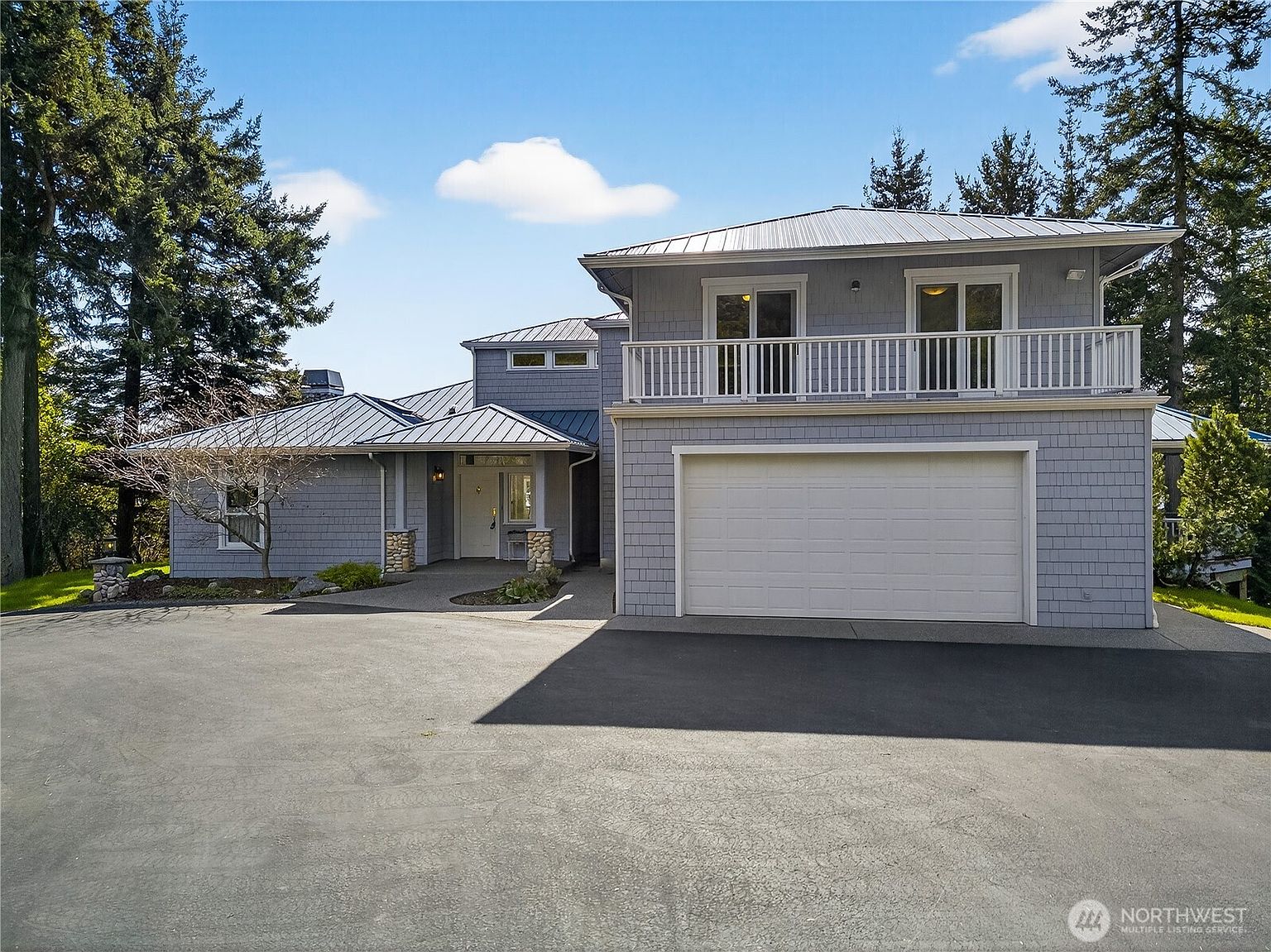
There is a particular kind of architecture that does not demand attention so much as reward it—homes whose details reveal themselves slowly, whose proportions feel inevitable rather than imposed. The residence at 8651 Turners Bay Place belongs to that tradition. Approaching through the gated, tree-lined entry, the home presents itself with quiet confidence: a distinctive shed-style roofline clad in blue metal, light-gray vertical siding, and a covered entry that extends a genuine welcome before you ever step inside.
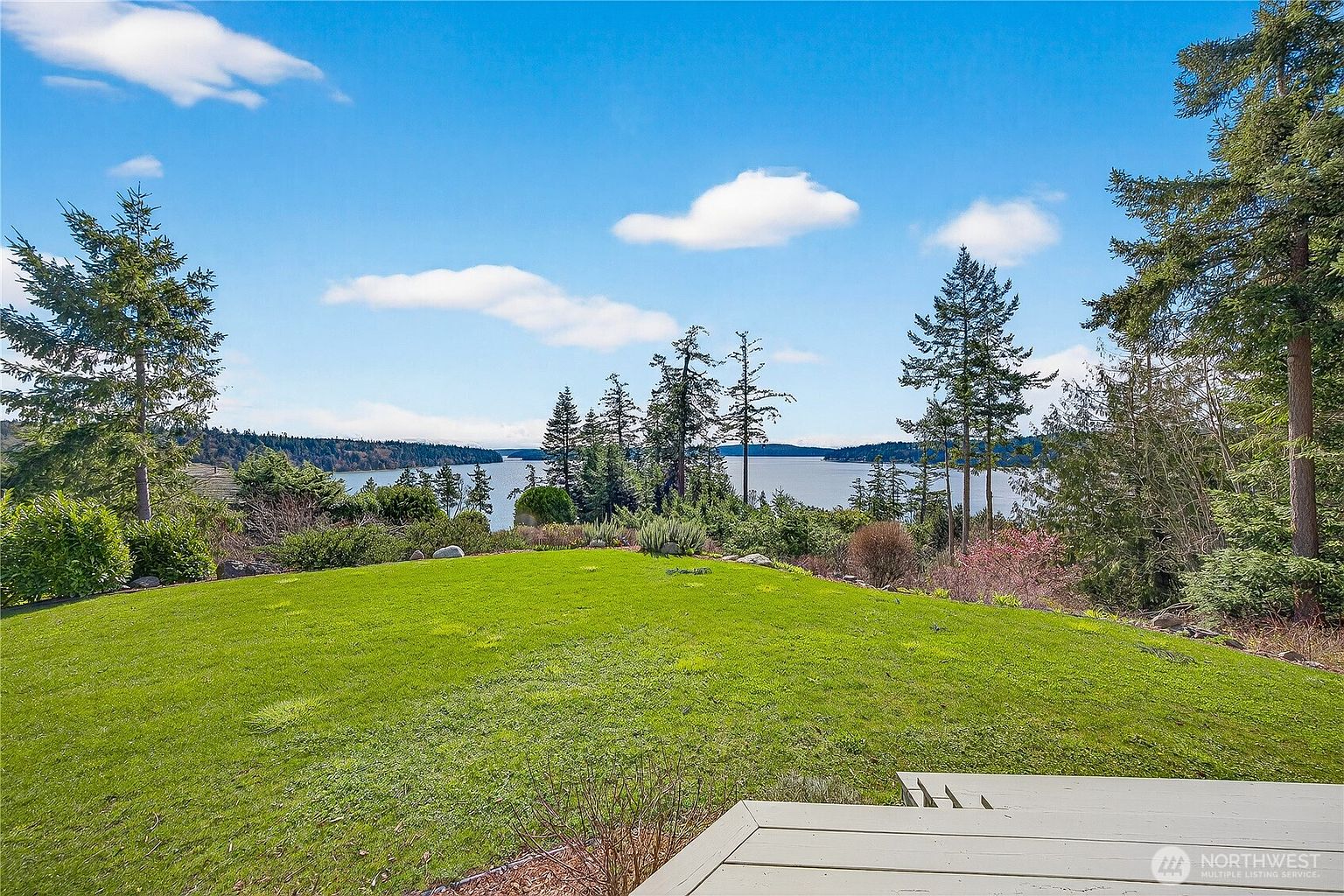
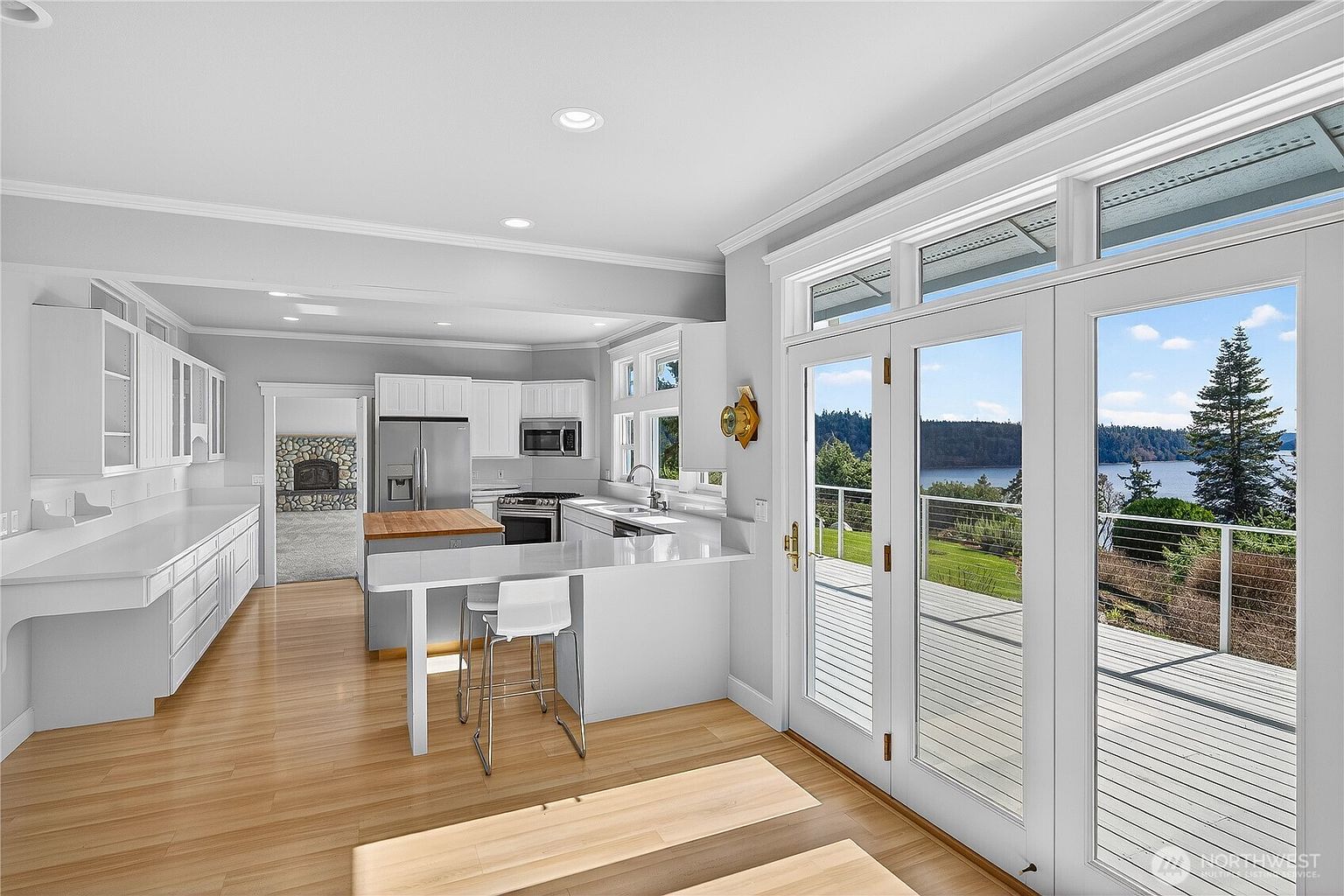
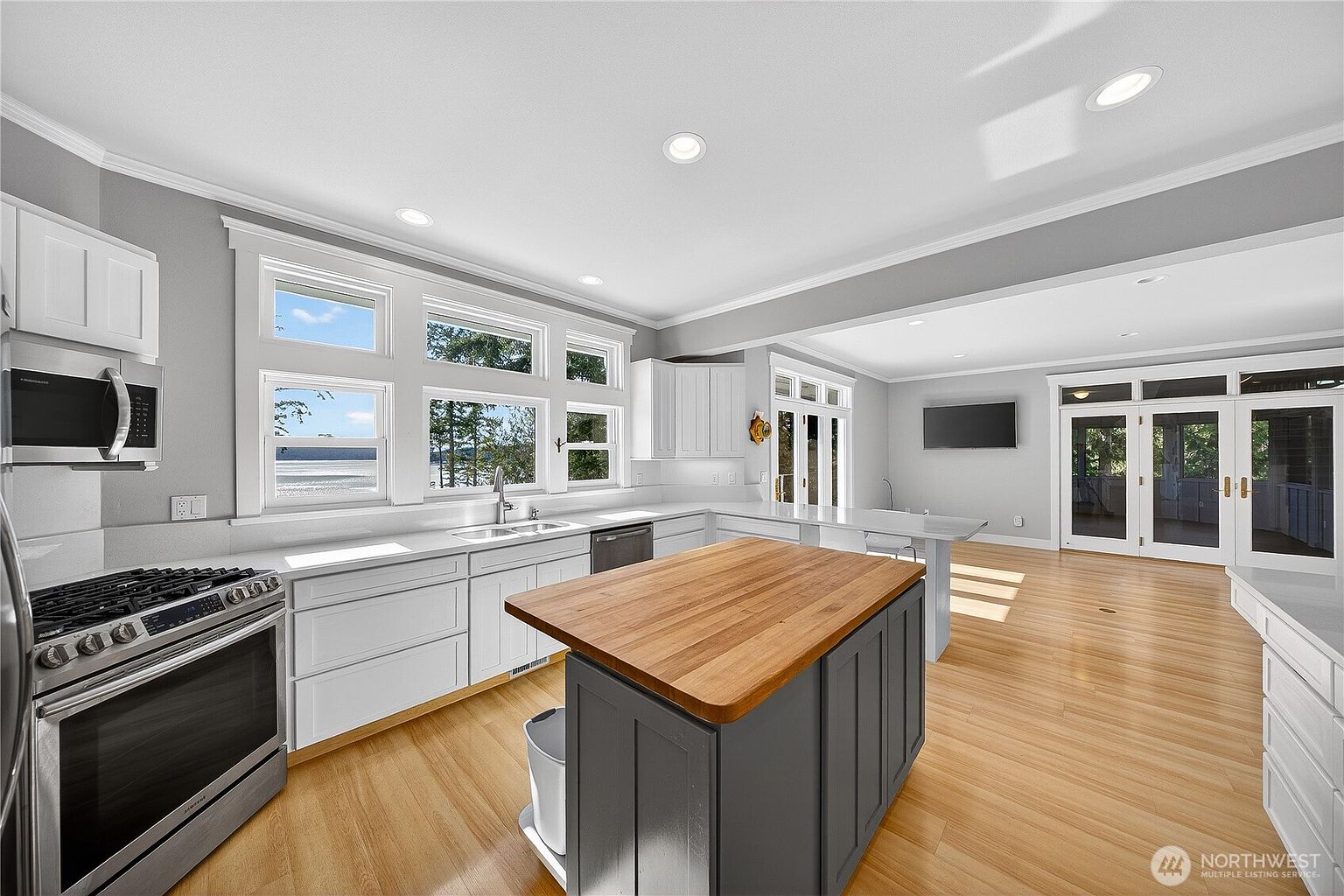
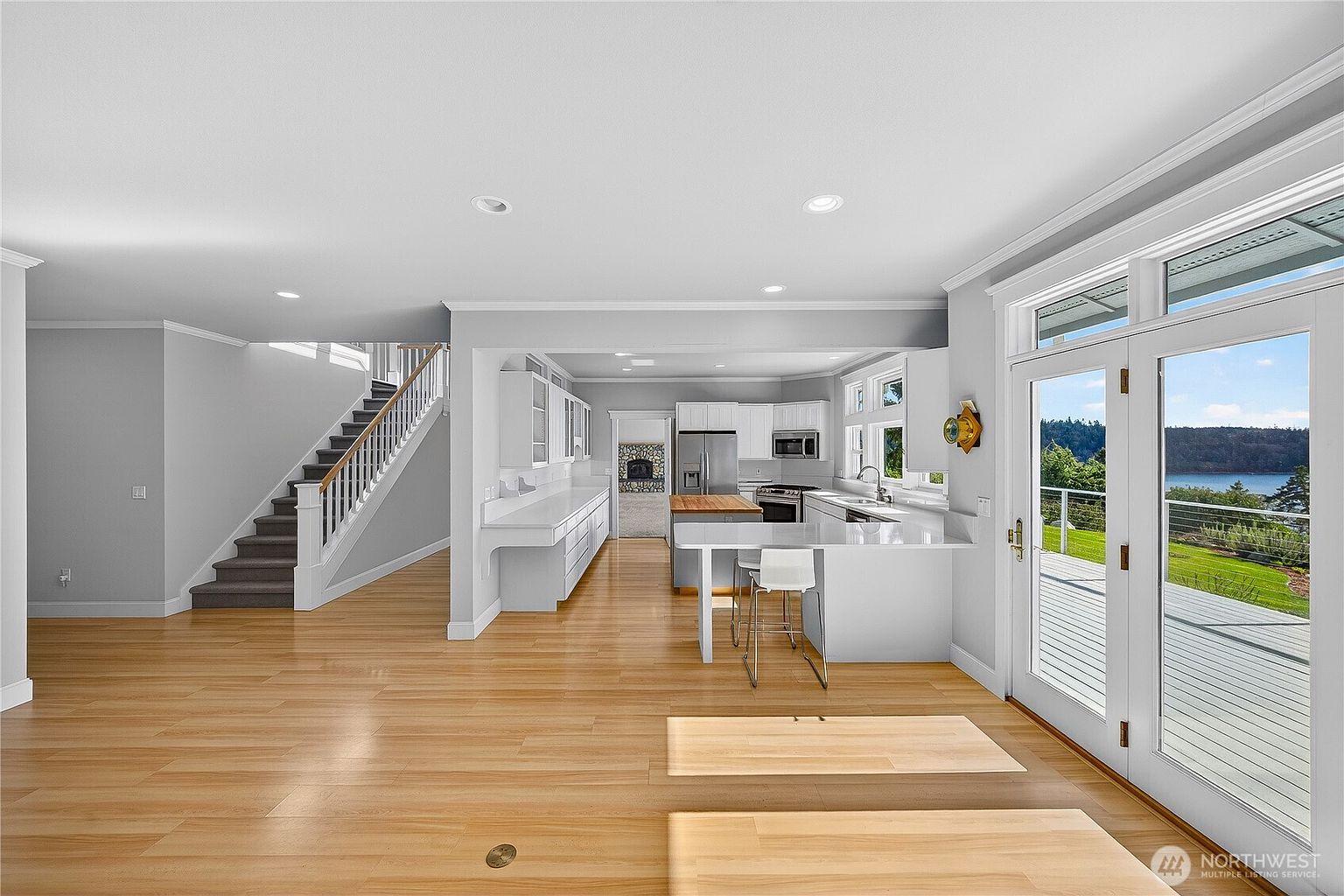
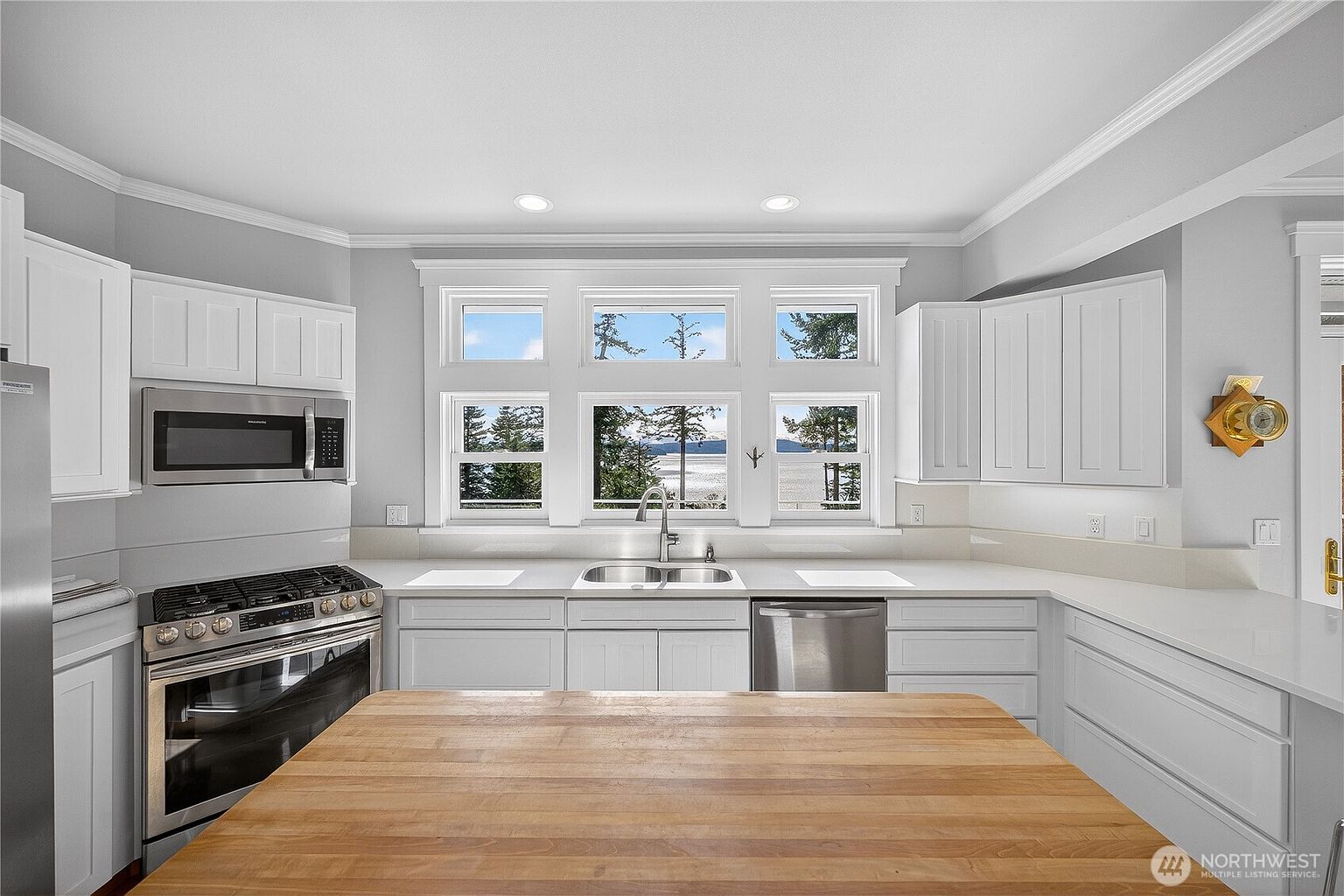
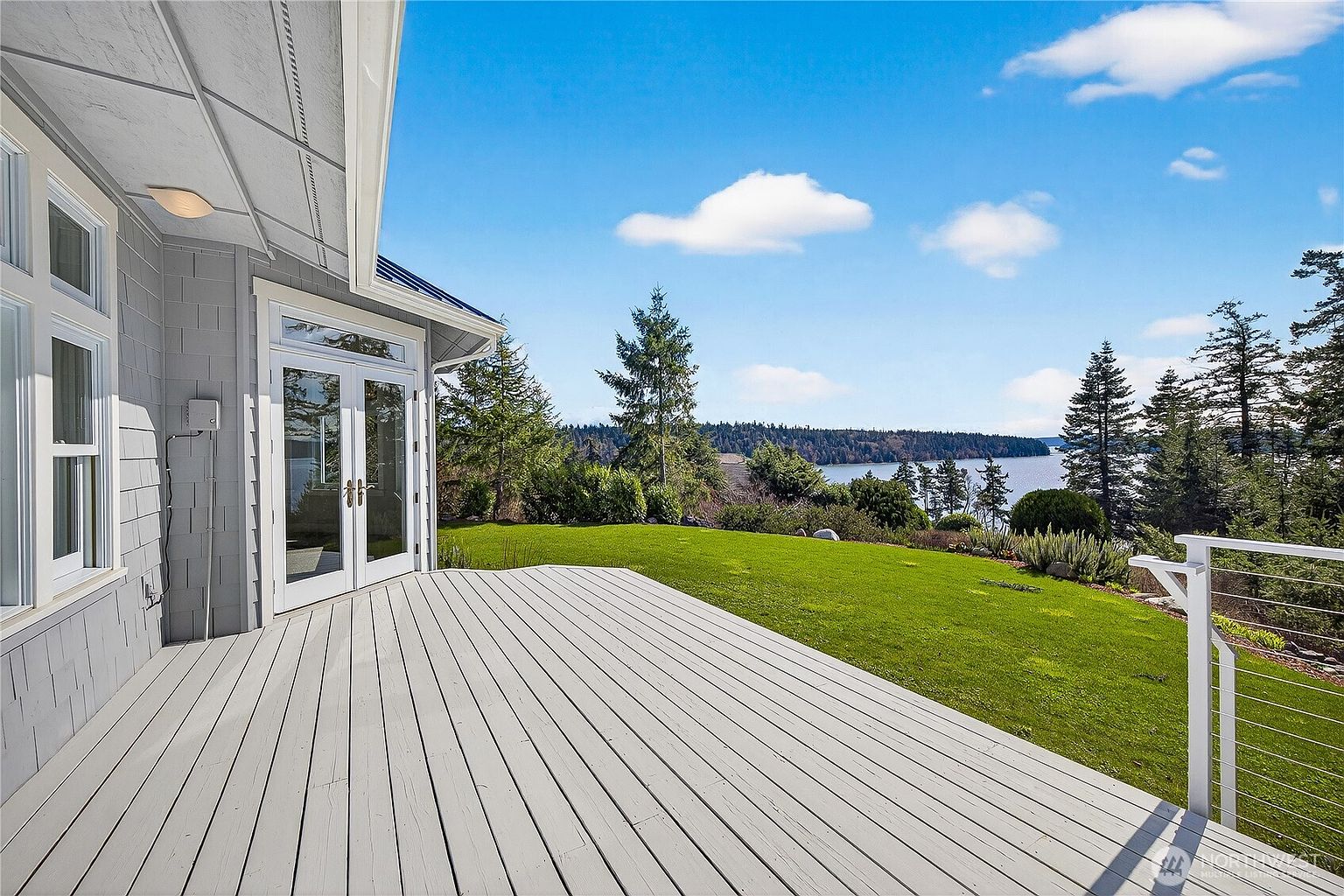
The interior unfolds with the logic of a well-considered plan. An open-concept main living area anchors the home, where oversized windows perform the essential function of dissolving the boundary between inside and out. Natural light moves through the space generously, catching the warm tones of light hardwood flooring and illuminating the updated kitchen—a room designed as much for the pleasure of gathering as for the act of cooking. Crisp white cabinetry runs clean lines across the space, while quartz countertops and a large island with a butcher block surface offer both visual warmth and practical utility. A multi-pane window above the sink frames a panoramic view of the water and surrounding evergreens, ensuring that even the most routine moments carry a sense of place.
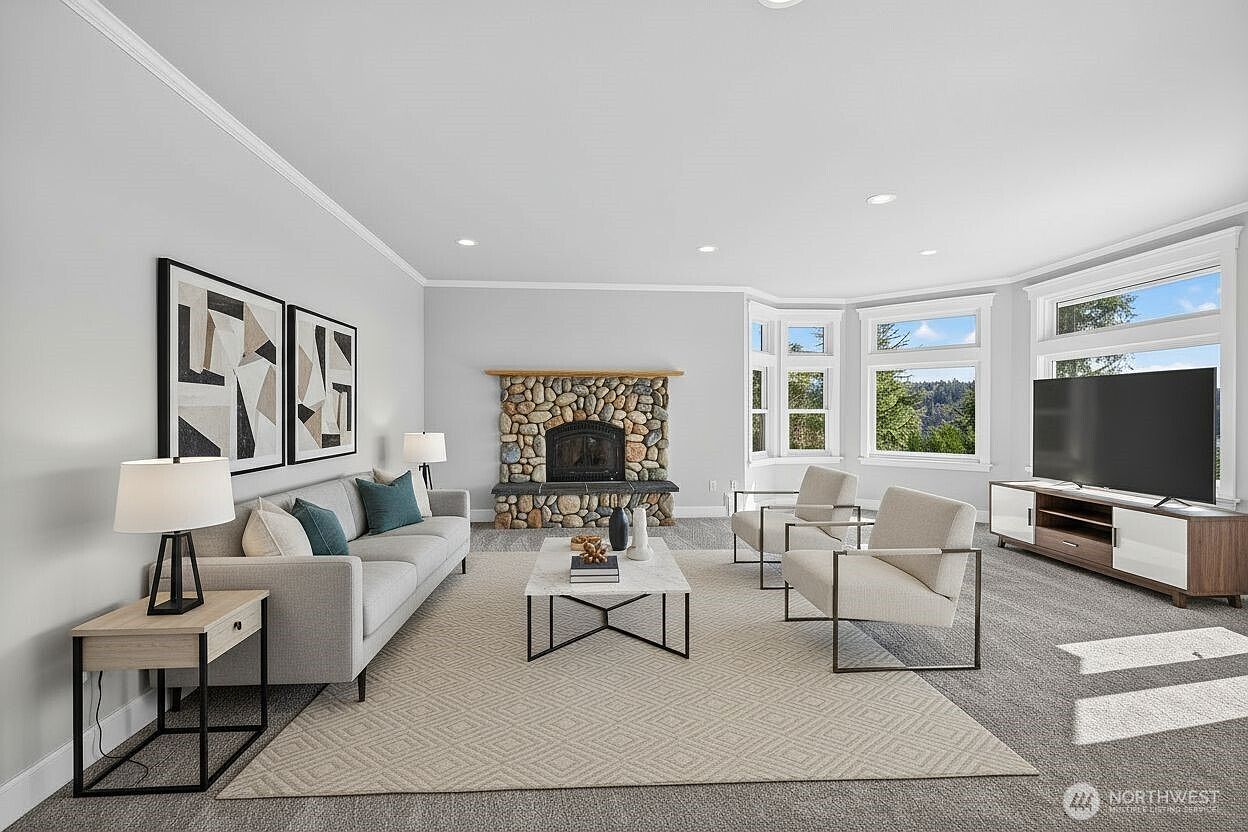
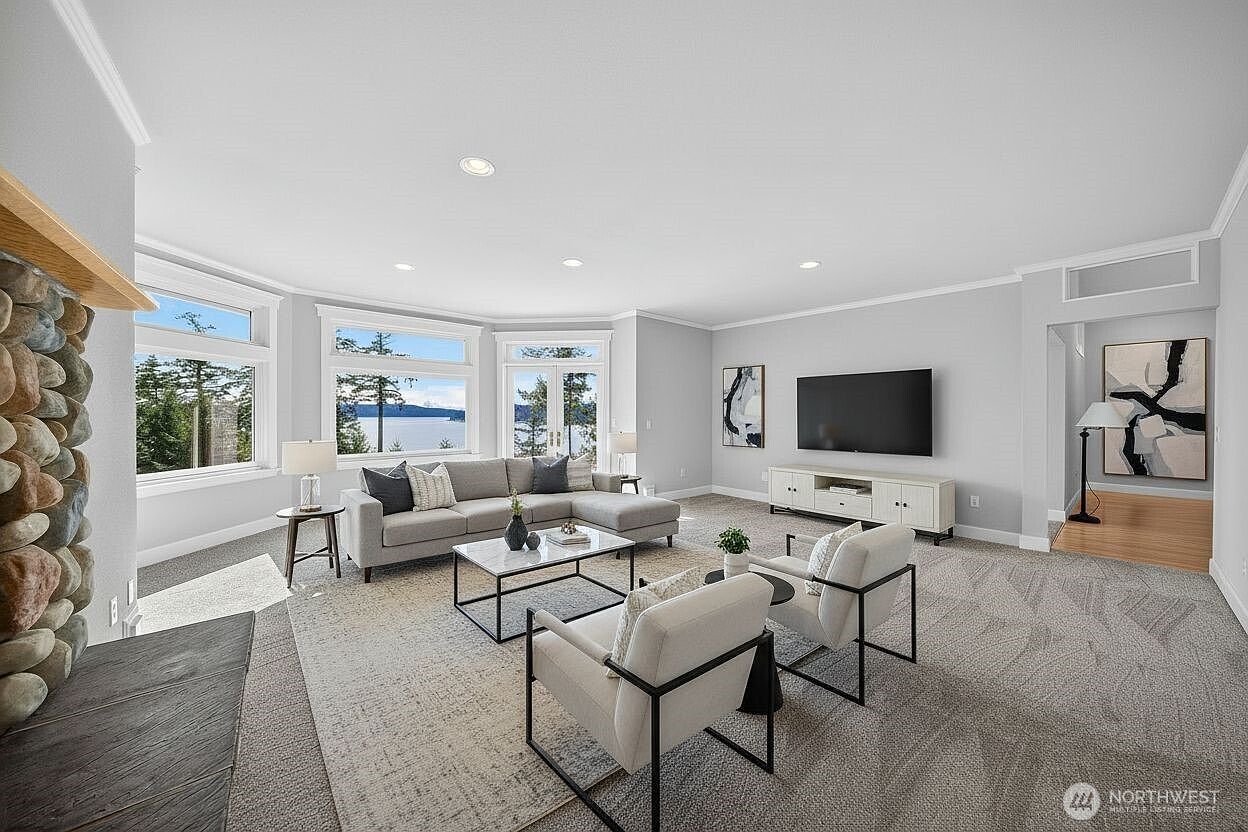
The living room anchors itself around a stone-clad fireplace, a natural focal point that grounds the room without overwhelming it. Large windows draw the eye outward toward the water, and the arrangement of seating—generous, modern, comfortable—suggests a home designed for both solitude and sociability in equal measure.
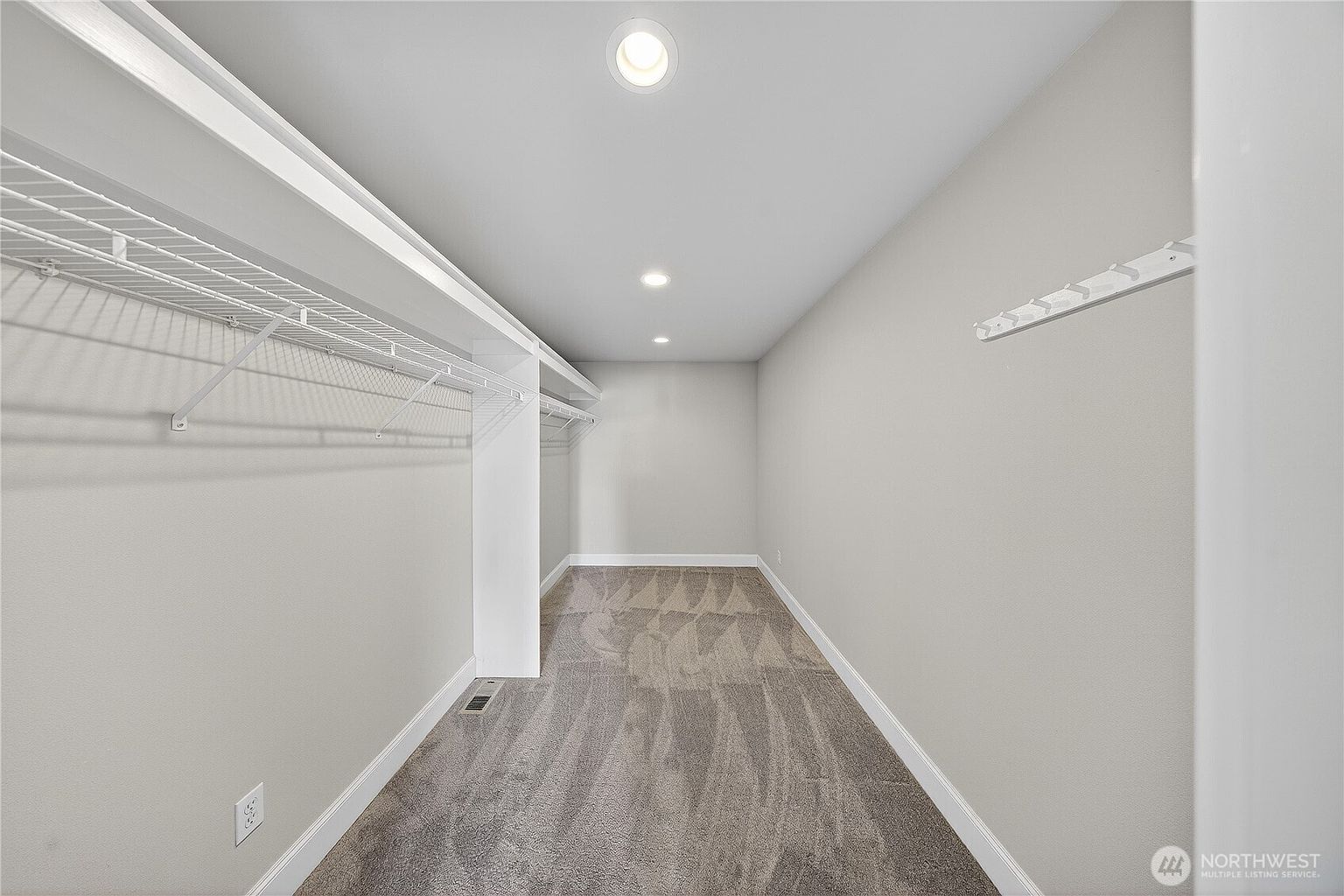
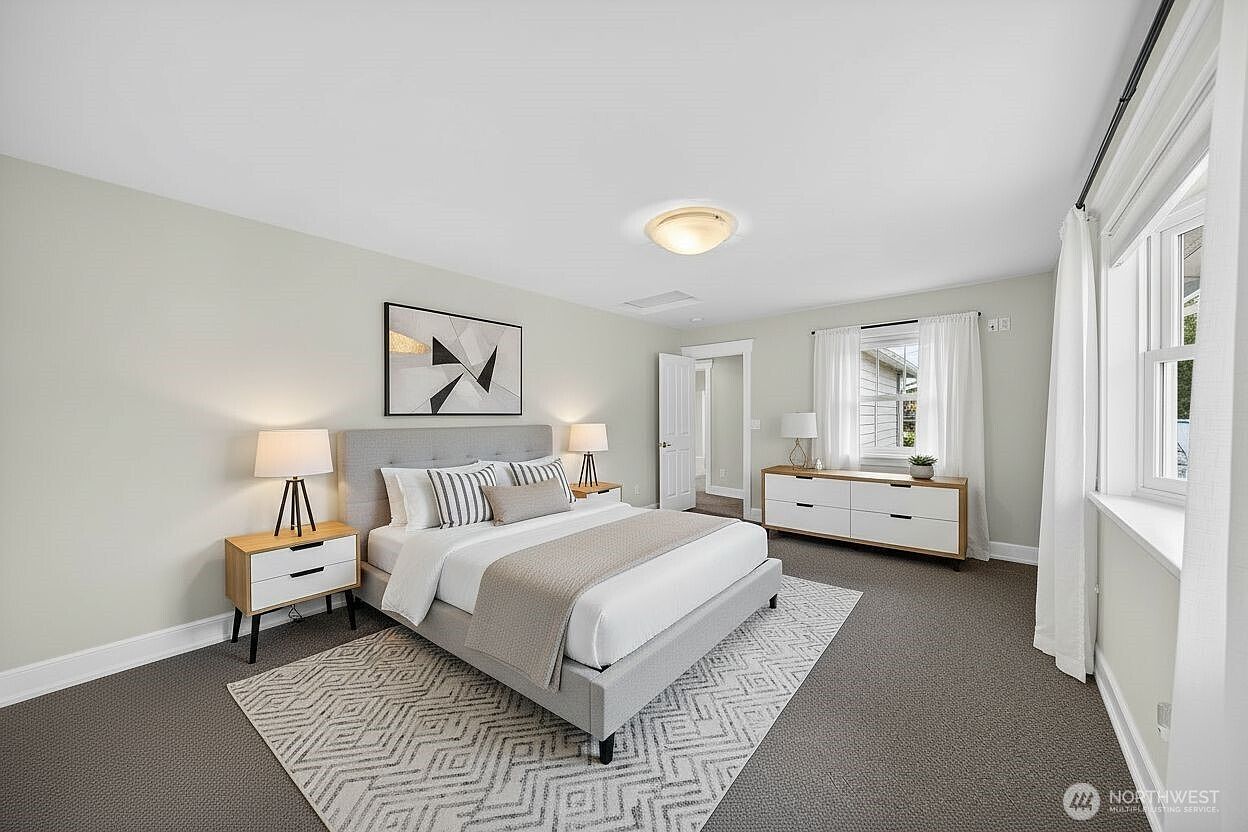
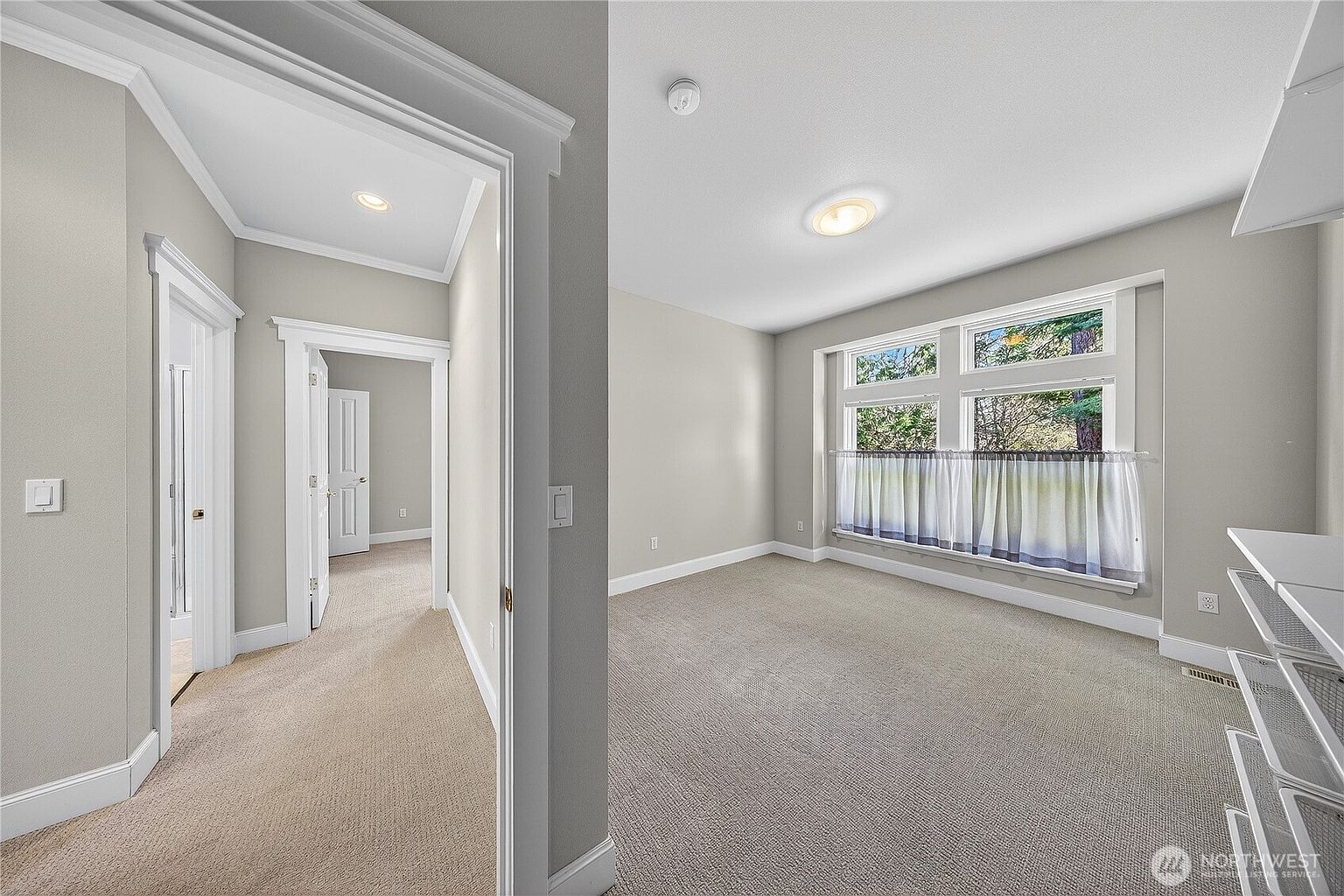
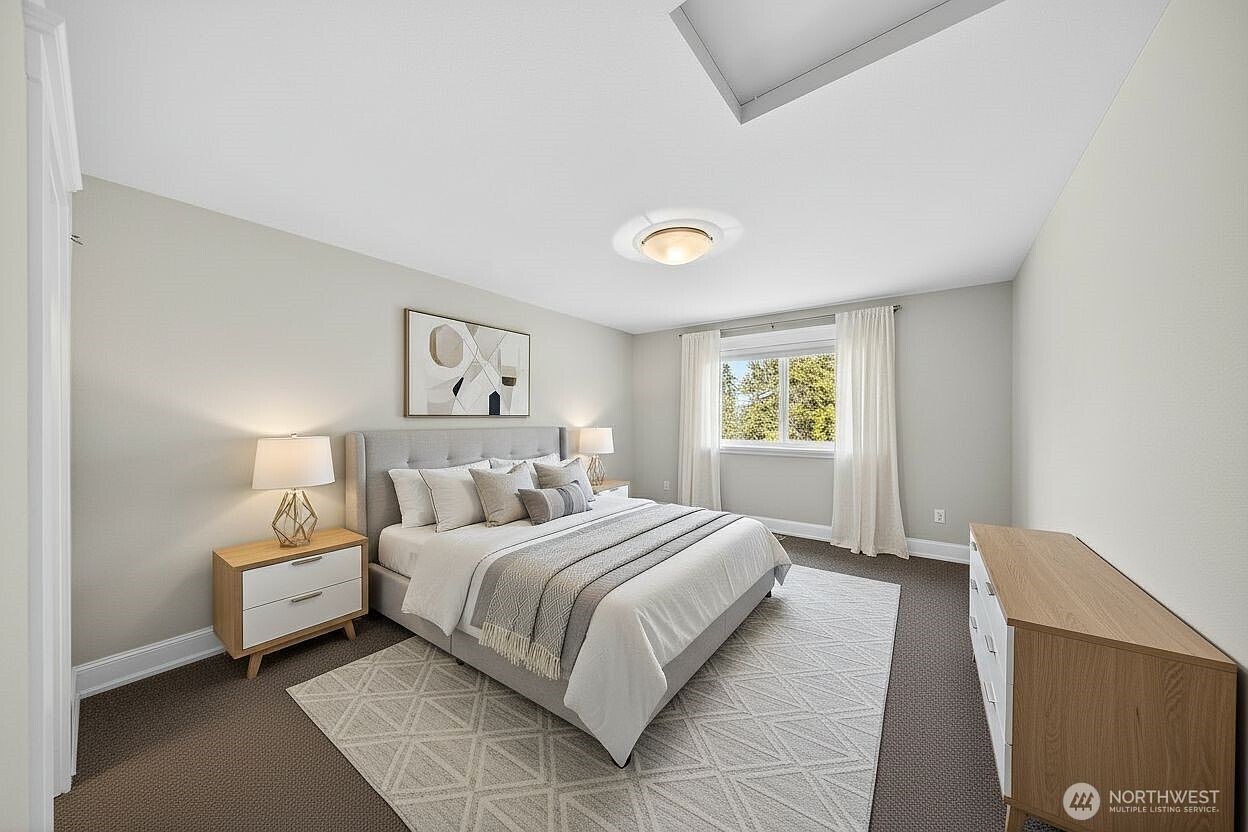
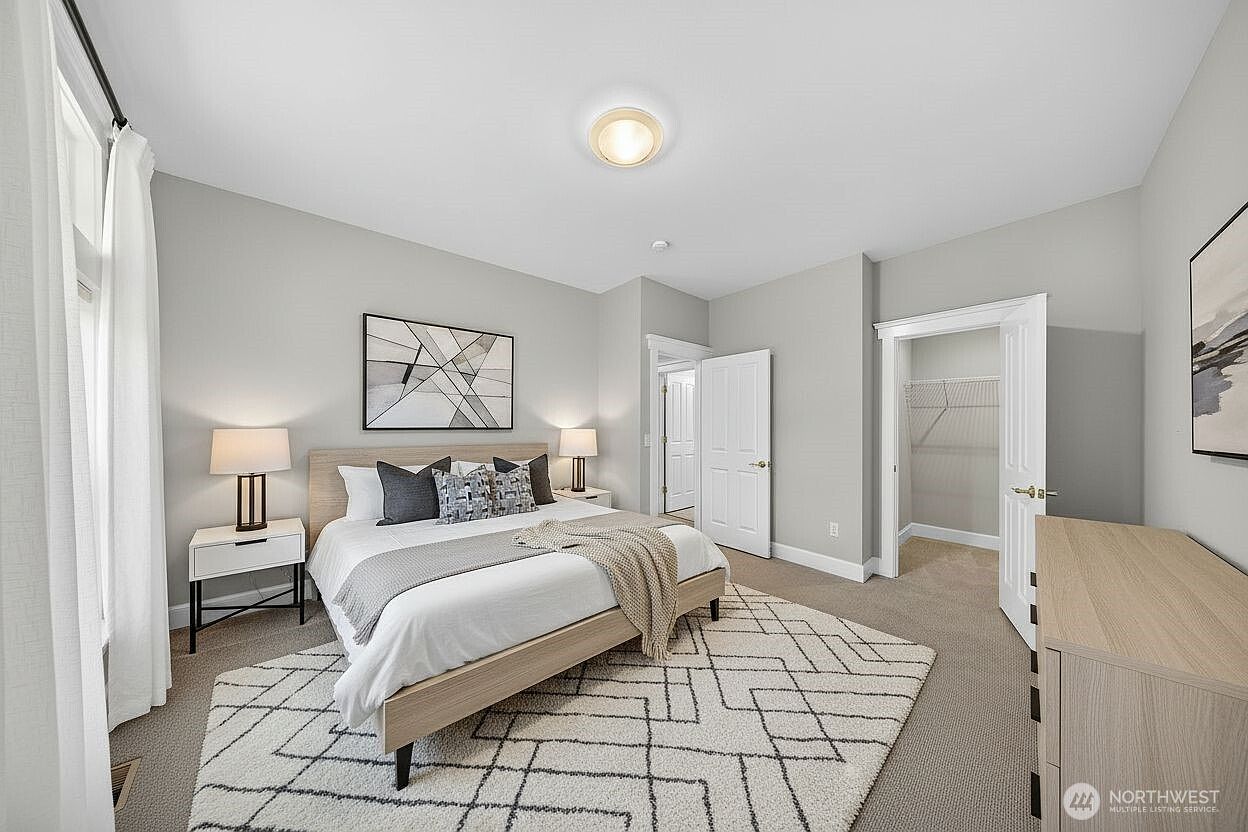
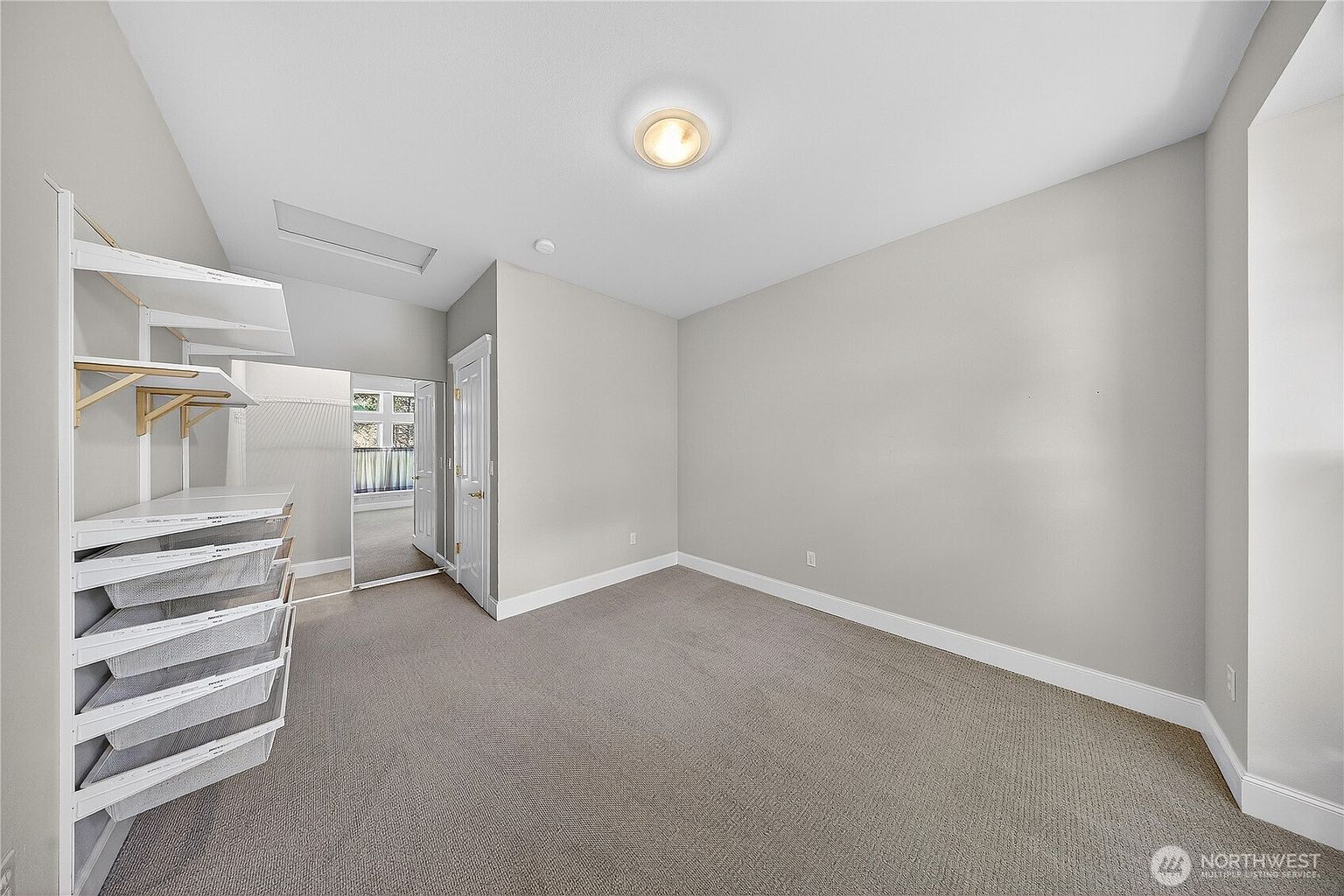
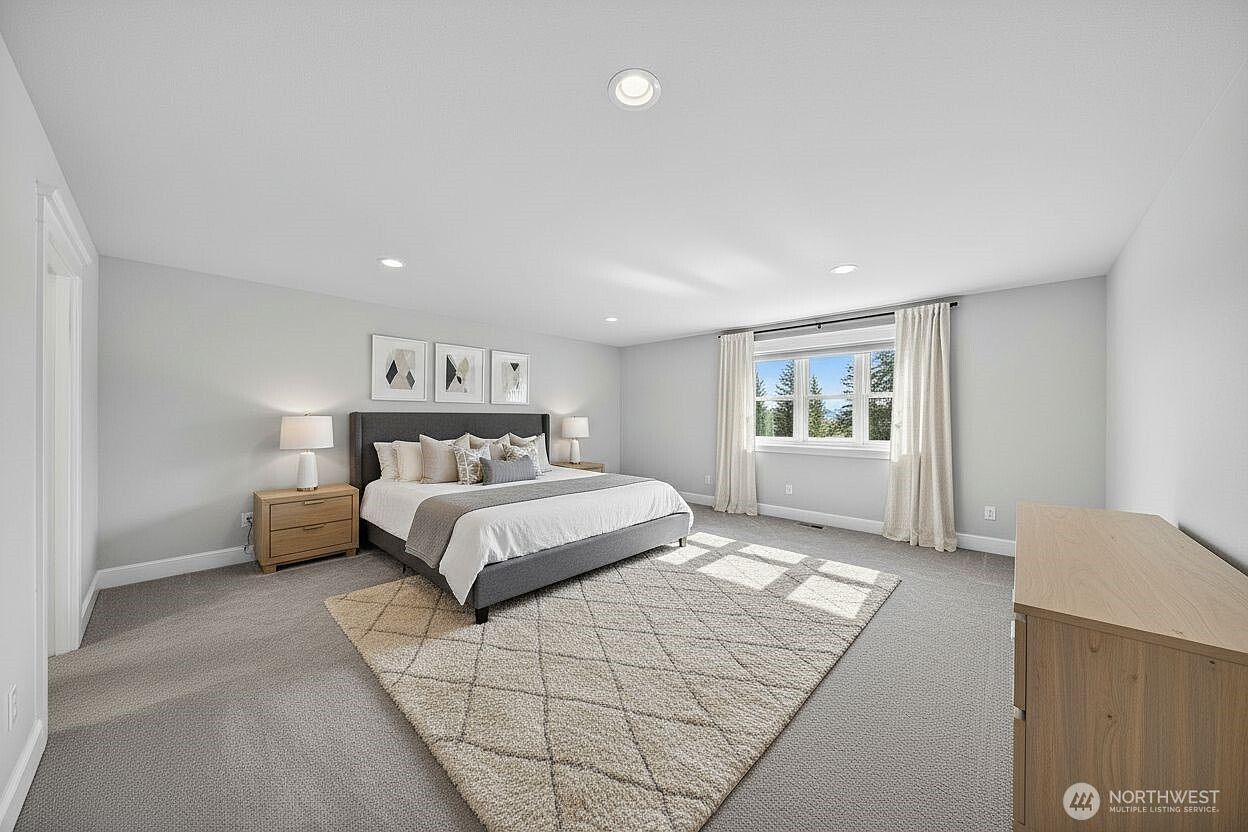
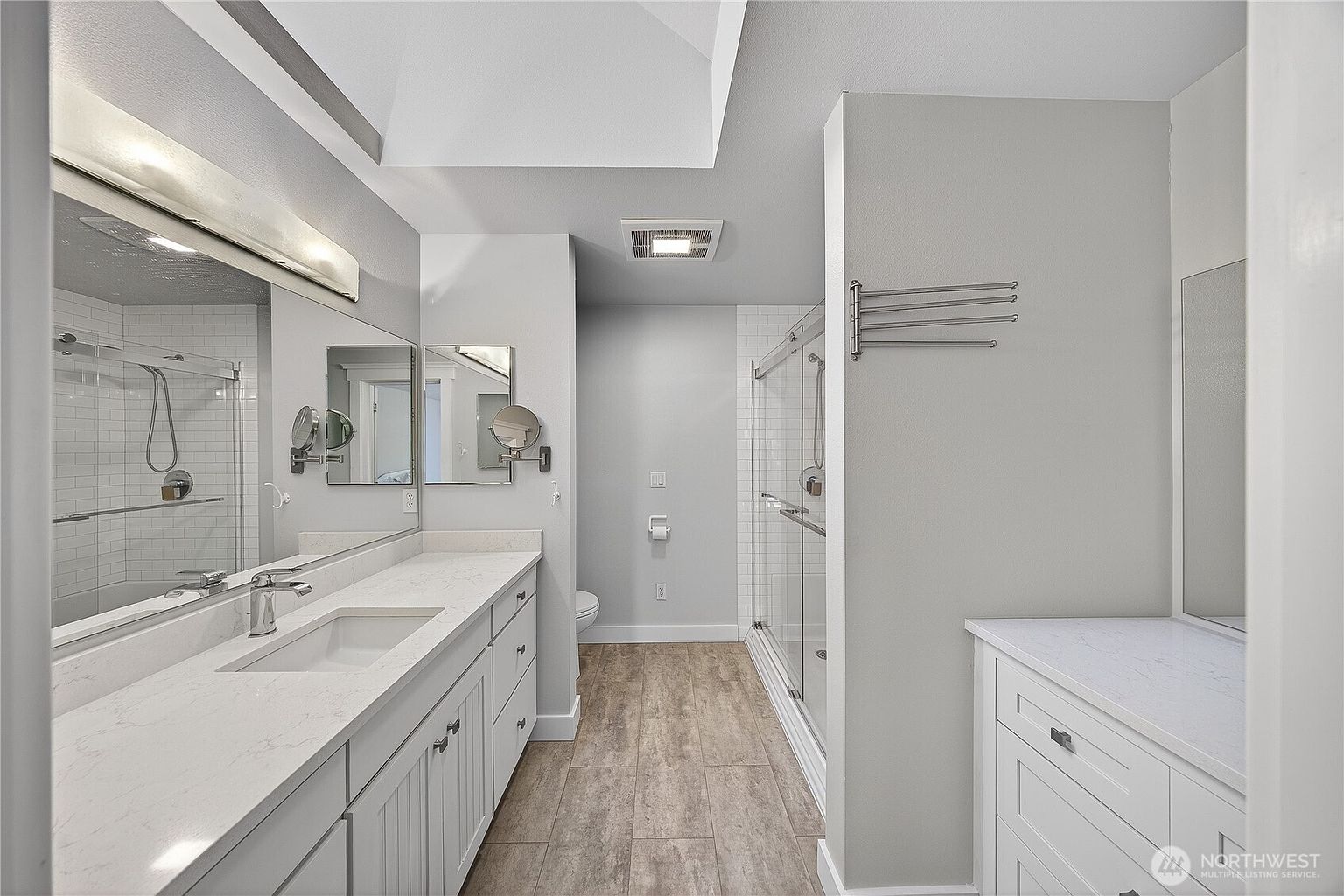
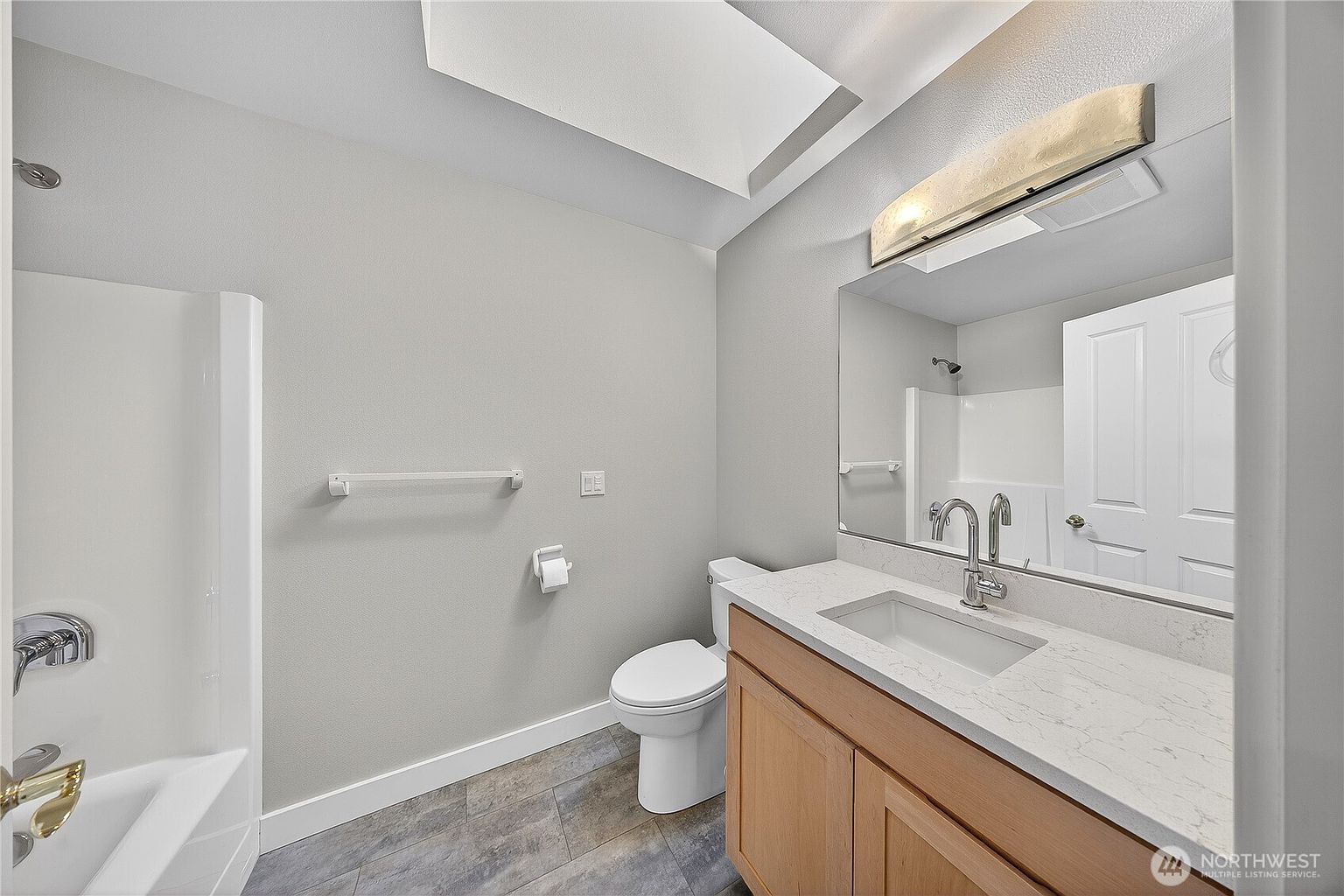
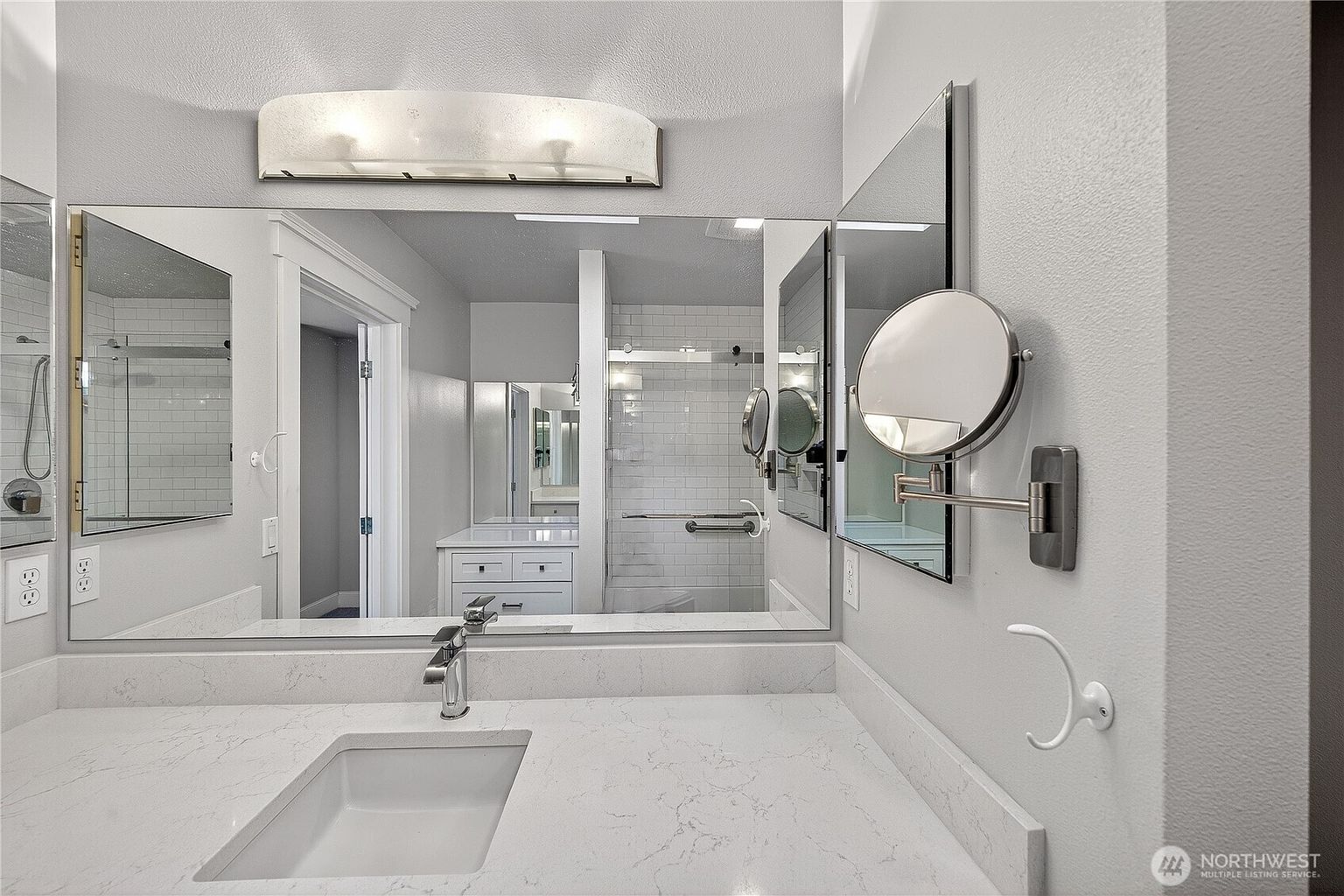
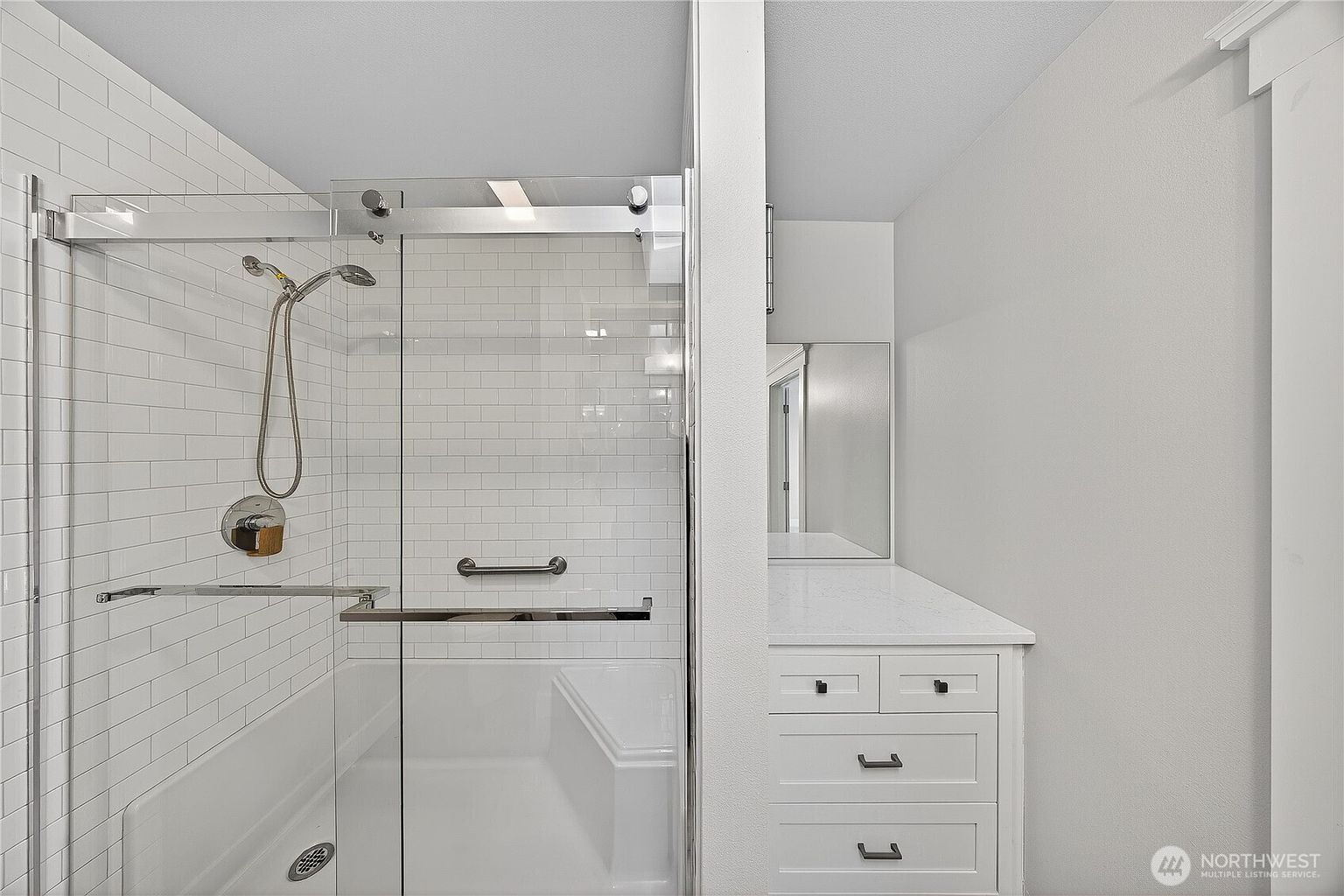
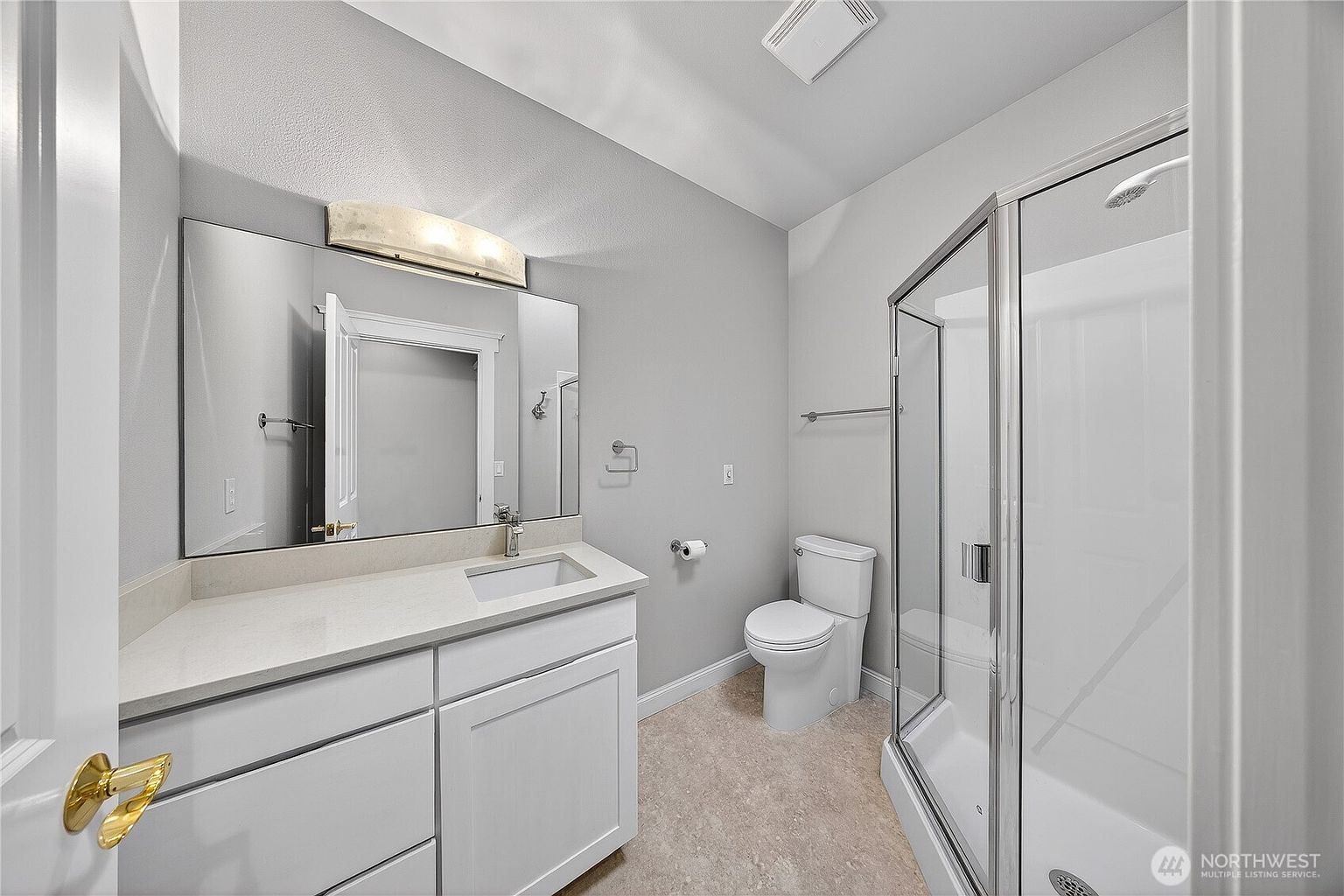
The primary suite is a study in calm restraint. Soft gray walls and plush carpeting create a backdrop that recedes in favor of the view, while a beautifully appointed en-suite bathroom delivers spa-caliber finishes: a dual-sink vanity with quartz countertops, a glass-enclosed walk-in shower with white subway tile, and a layout that moves with intuitive ease. The walk-in closet, fitted with white wire shelving and pull-out baskets, reflects the same commitment to thoughtful organization found throughout the home.
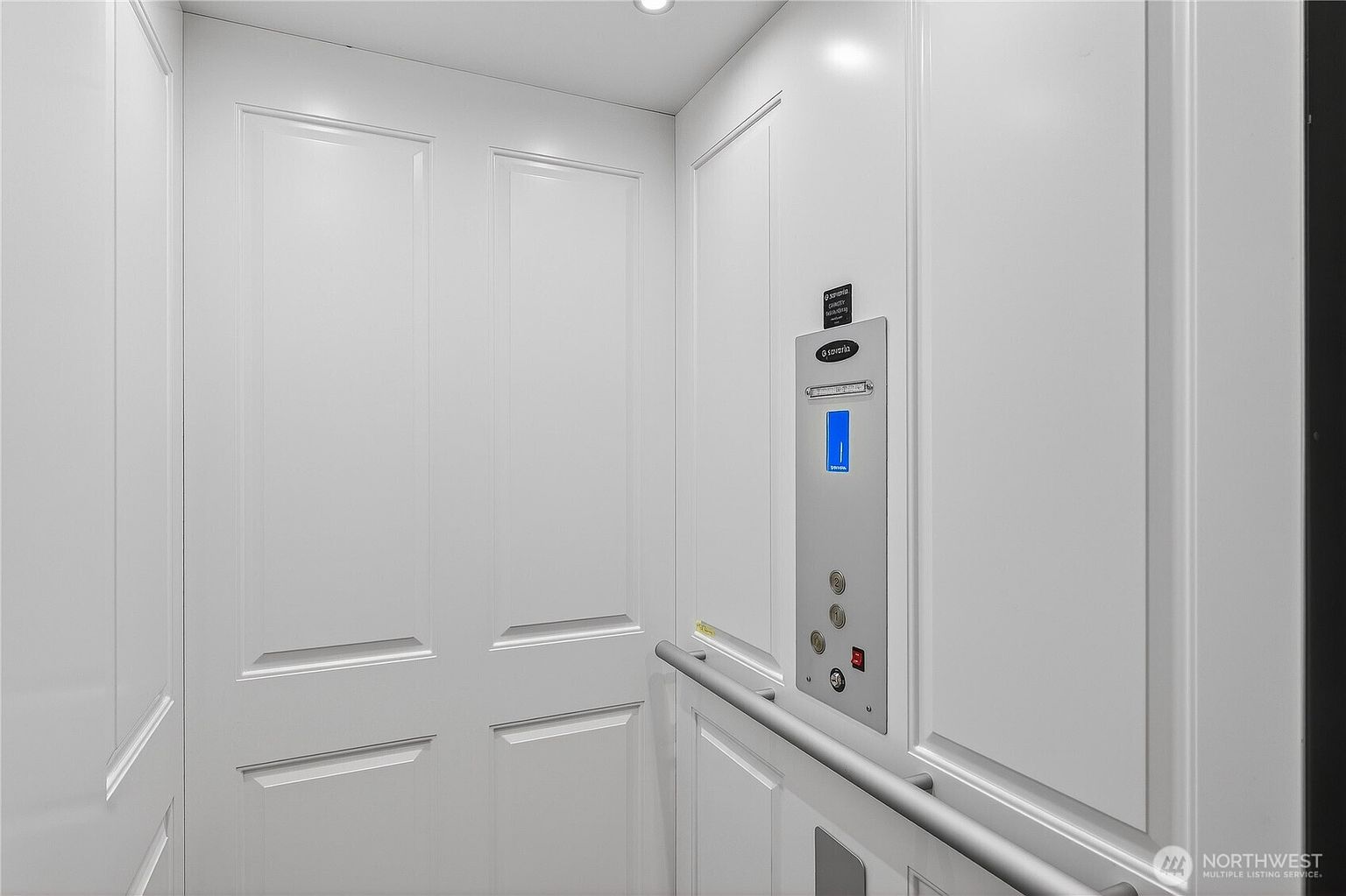
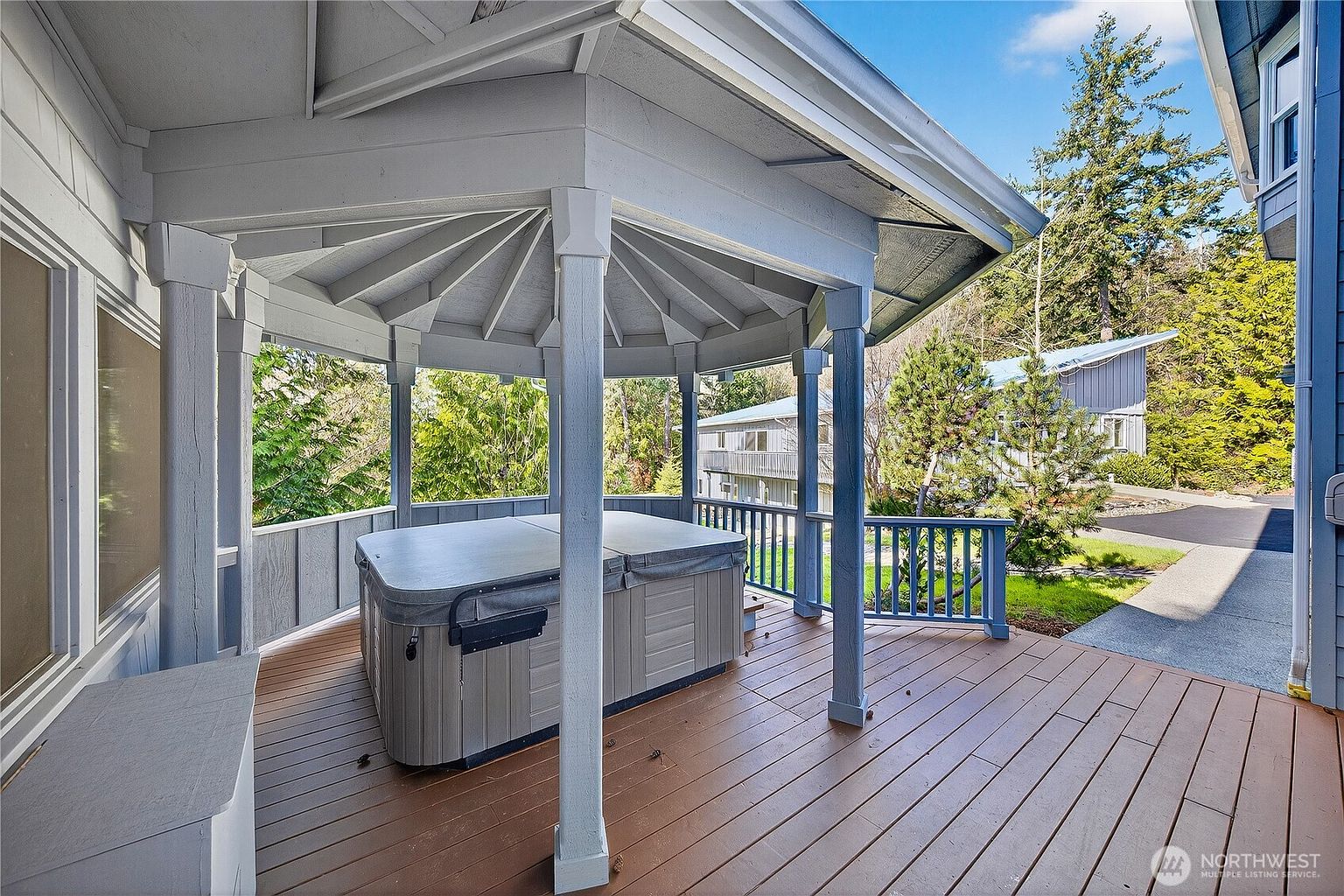
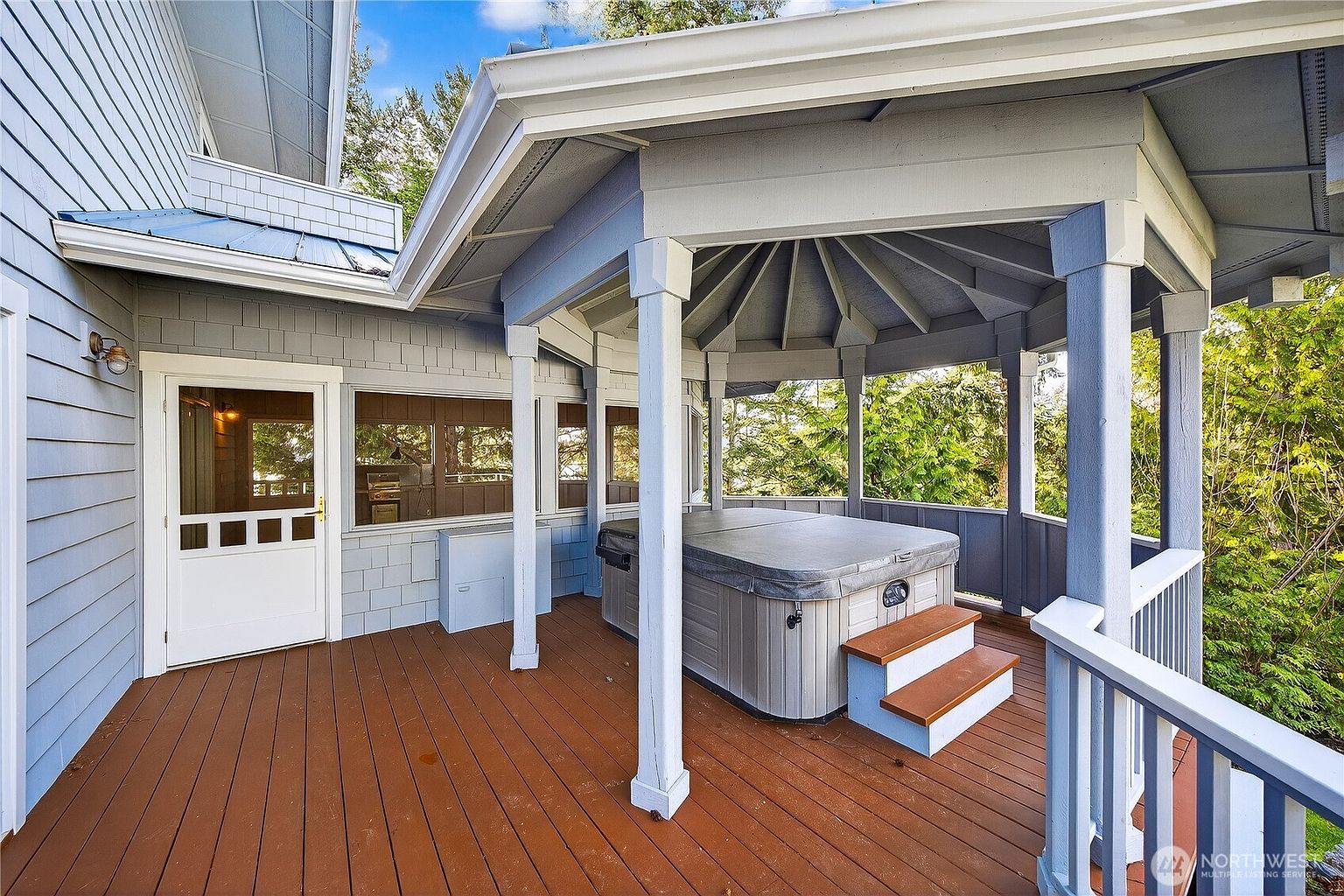
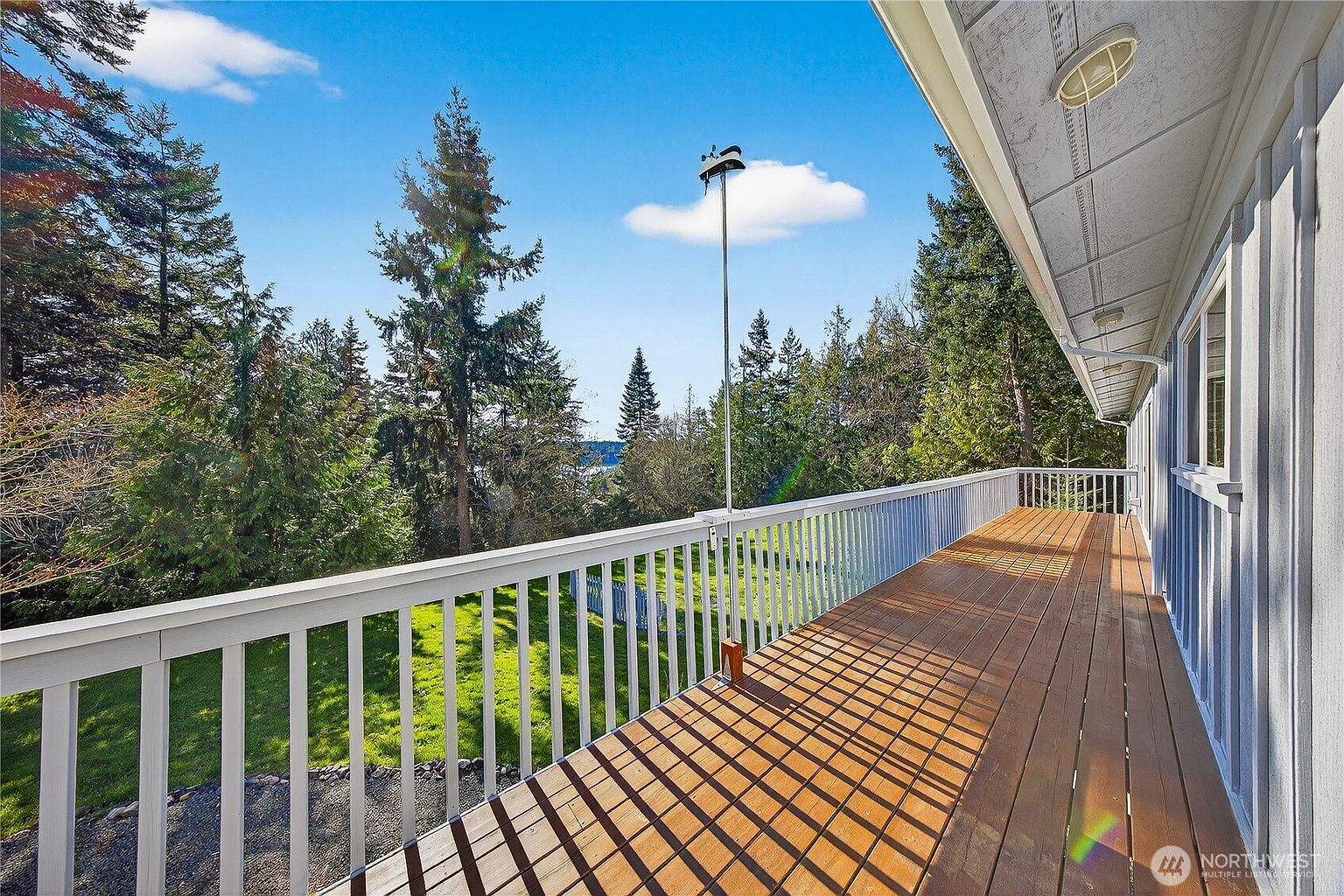
An in-home elevator connects each level with unobtrusive accessibility—an amenity that speaks to long-term livability as much as immediate convenience. The covered deck extends the living space outward, where a large hot tub invites an unhurried end to any day, framed by elevated shoreline views that shift with the light and the season.
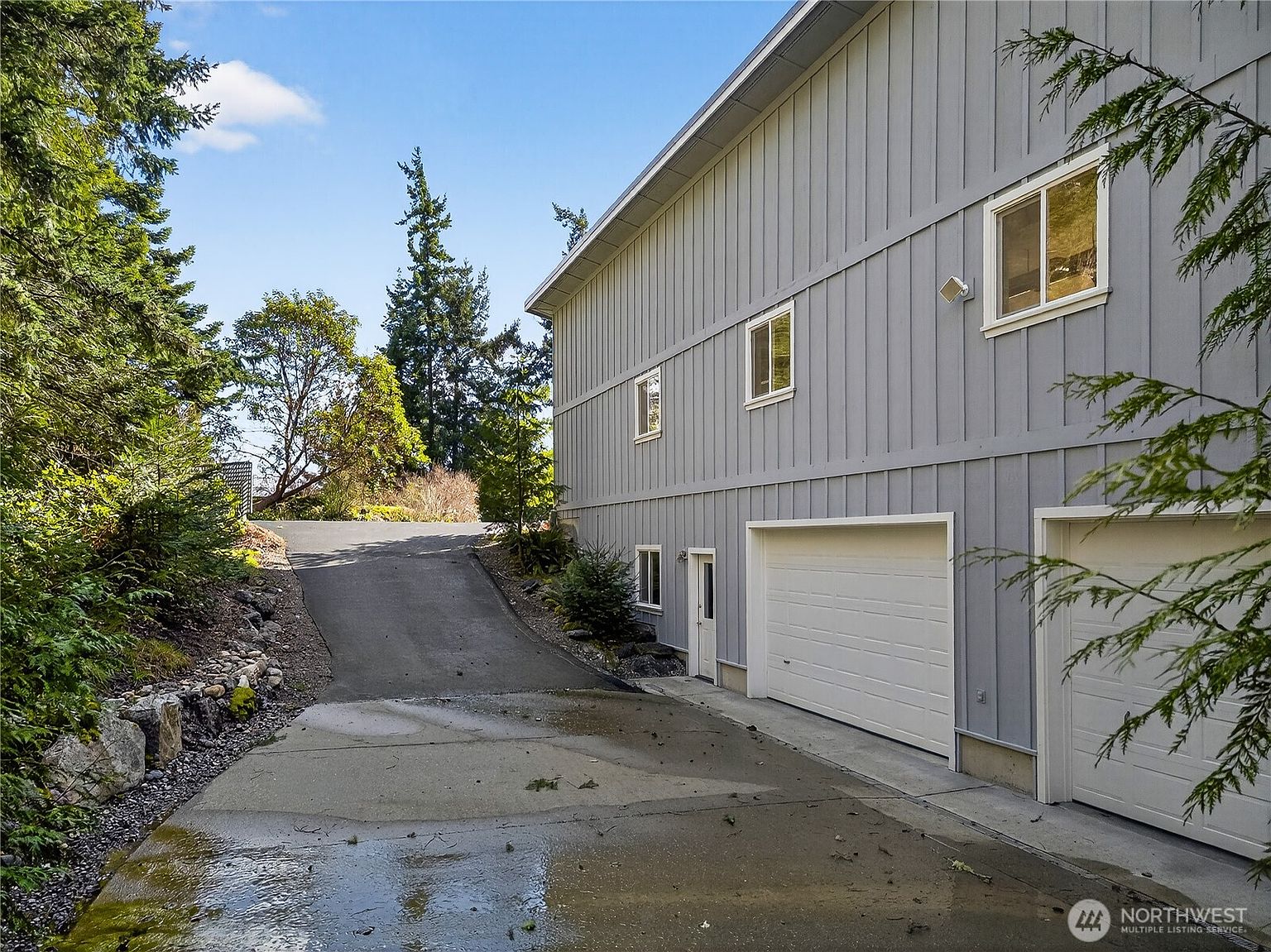
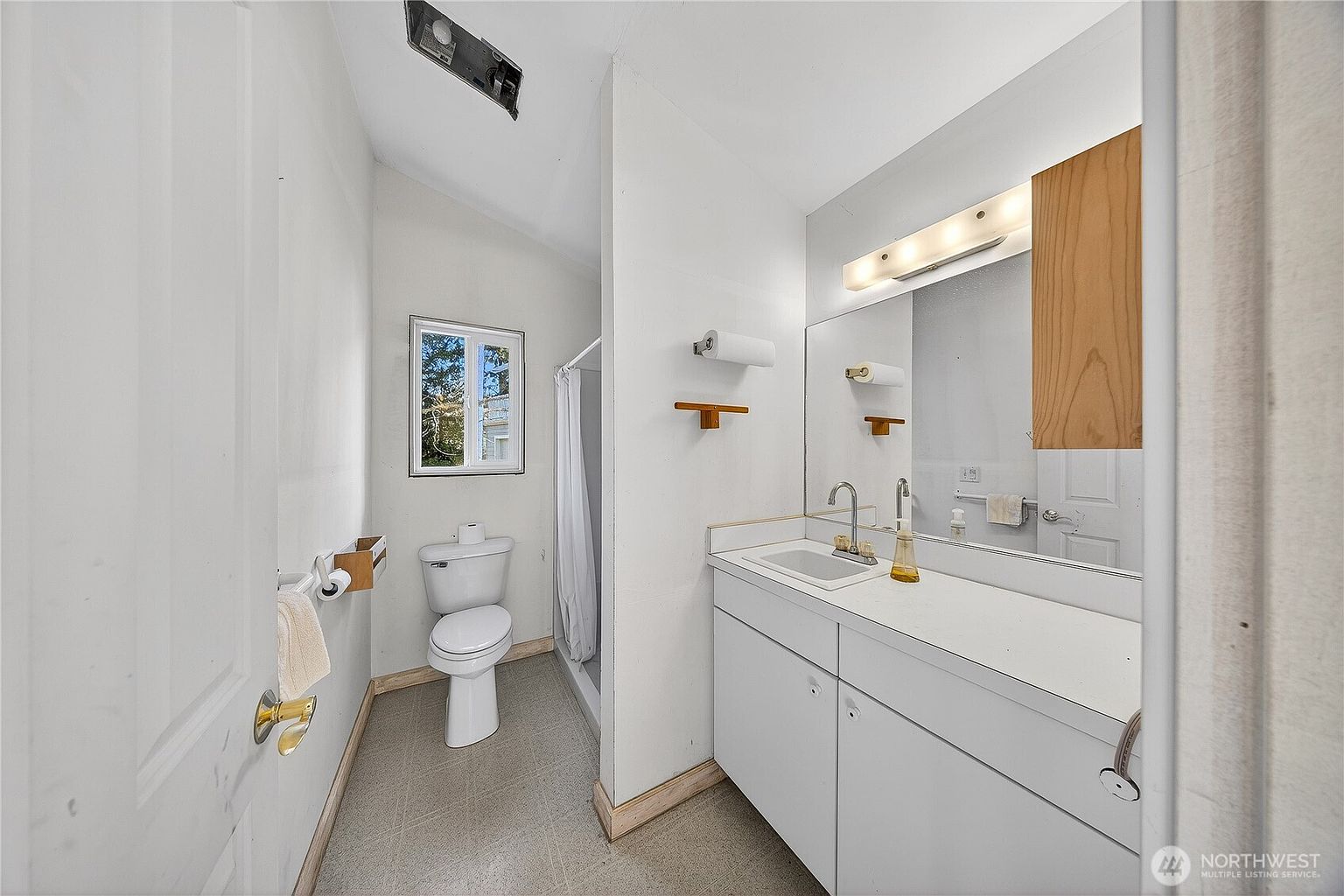
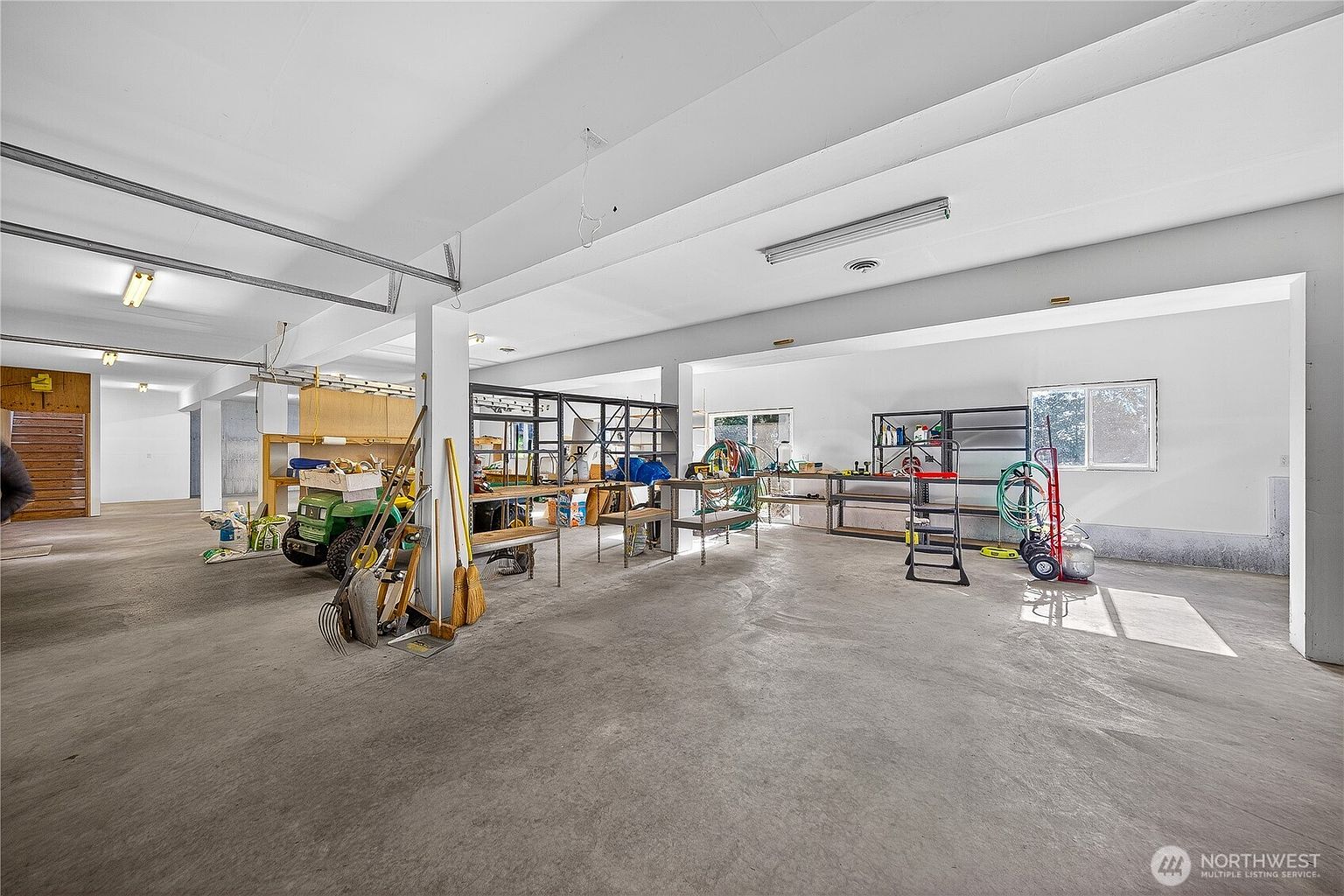
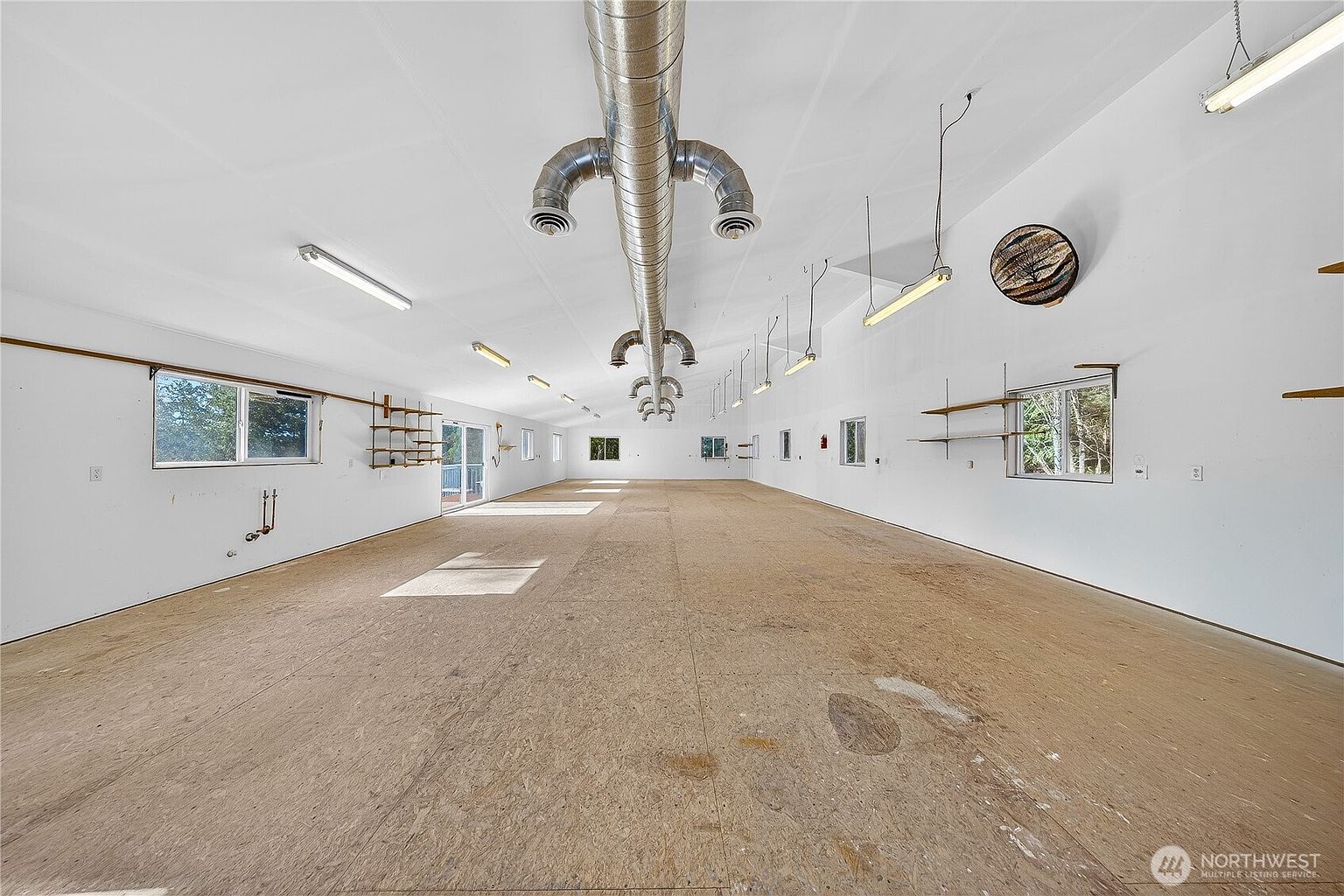
Perhaps the property's most distinctive feature is the detached 30x70 shop—a structure of genuine versatility. Plumbed and finished across two levels, it functions equally well as a serious workshop, a creative studio, a home gym, or an in-law suite. The expansive garage areas throughout the property accommodate vehicles, recreational equipment, and the full range of Pacific Northwest pursuits with room to spare. This is a home that does not ask you to compromise.
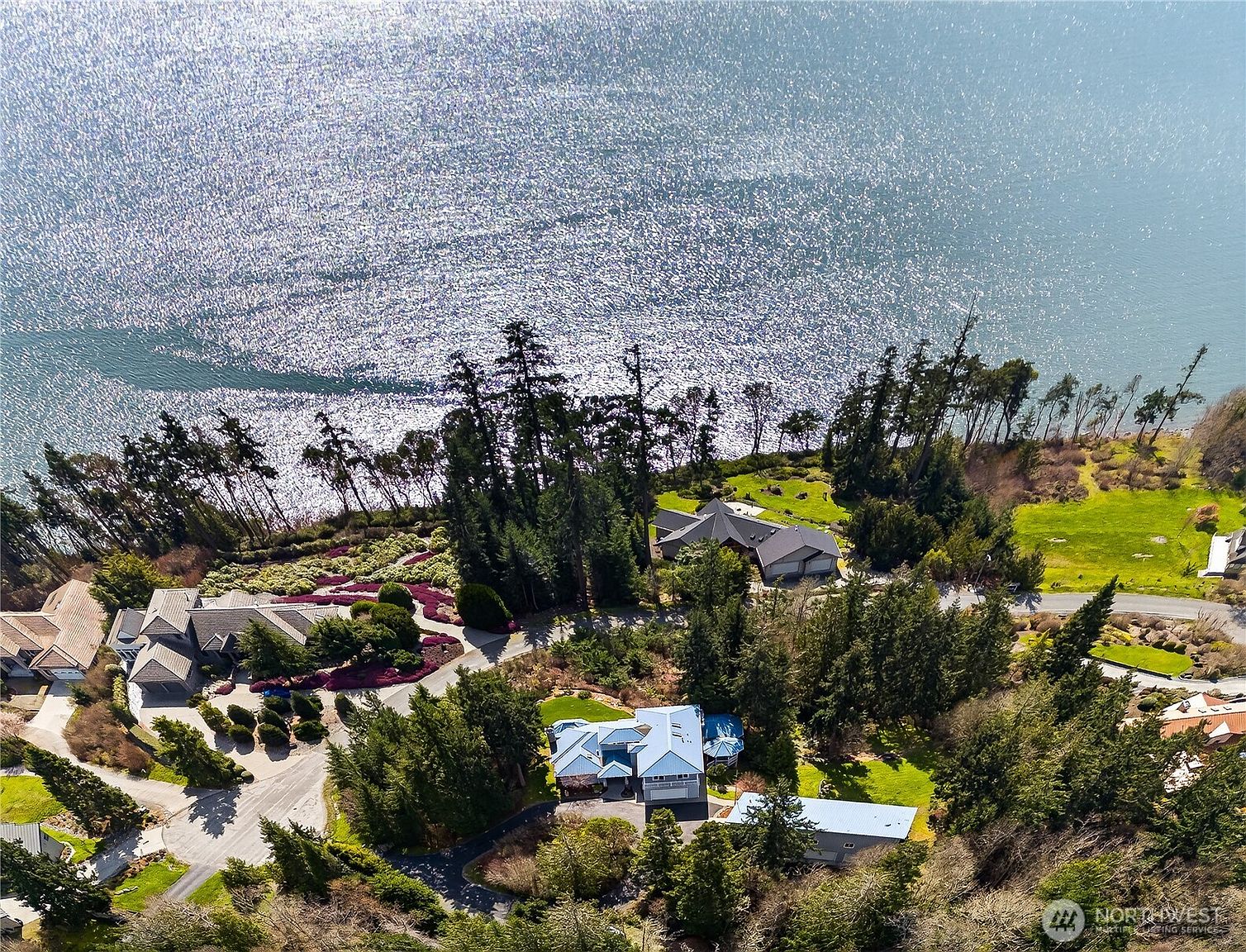
Anacortes occupies a geography that feels like a deliberate gift—a city positioned on the northern tip of Fidalgo Island in Skagit County, Washington, surrounded on three sides by water and connected to the mainland by a series of bridges that do little to diminish its sense of island character. It is a place where the Salish Sea defines daily life: the light on the water in the morning, the ferry traffic threading through the San Juan Islands, the presence of herons and eagles as ordinary fixtures of the landscape.
The city's history is rooted in the late nineteenth century, when it grew as a hub for fishing, logging, and canning industries along the Pacific Northwest coast. That working-waterfront heritage still informs the town's character—Anacortes retains a genuine, unperformed sense of place that distinguishes it from more self-consciously curated communities. The historic downtown along Commercial Avenue is lined with locally owned shops, restaurants, and galleries housed in well-preserved early twentieth-century storefronts, many of which are decorated with the large-scale murals that have become a signature of the city's public identity.
For those drawn to the outdoors, Anacortes functions as something close to a base camp for the Pacific Northwest's finest natural experiences. Washington Park, a 220-acre city park at the western end of Fidalgo Island, offers forested trails, saltwater camping, and sweeping views of Rosario Strait and the Olympic Mountains. The Anacortes Community Forest Lands encompass more than 2,800 acres of protected forest with an extensive trail network winding through second-growth forest, past lakes, and along rocky outcroppings. Cap Sante Park, with its commanding hilltop views over the marina and surrounding islands, is among the most accessible vistas in the region.
The Washington State Ferry terminal in Anacortes serves as the primary gateway to the San Juan Islands—Friday Harbor on San Juan Island, Orcas Island, Lopez Island, and beyond—making the city a natural point of departure for one of the Pacific Northwest's most celebrated archipelagos. Whale watching, kayaking, sailing, and sport fishing are not weekend novelties here but regular expressions of how people choose to live.
Turners Bay itself is a quiet inlet on the southern edge of Fidalgo Island, characterized by the kind of protected, calm water that rewards contemplative mornings and unhurried afternoons. The surrounding neighborhood reflects the broader character of Anacortes residential life: homes set generously apart, mature evergreen trees providing natural screening, and a community that values privacy without insularity.
Practical amenities are close at hand. The Anacortes Farmers Market, Island Hospital, local marinas, and a range of dining options—from waterfront seafood to casual Pacific Northwest fare—are all within easy reach. Seattle lies approximately 75 miles to the south, accessible via Interstate 5, making this a viable location for those who value proximity to a major metropolitan center without the compromises of urban density. In Anacortes, distance from the city is not a concession. It is the point.
Featured Highlights
Curated Content • Presented by Kelli Lang