The Story Behind
Commanding Oceanfront Bluff Estate Above Private Southern California Shoreline
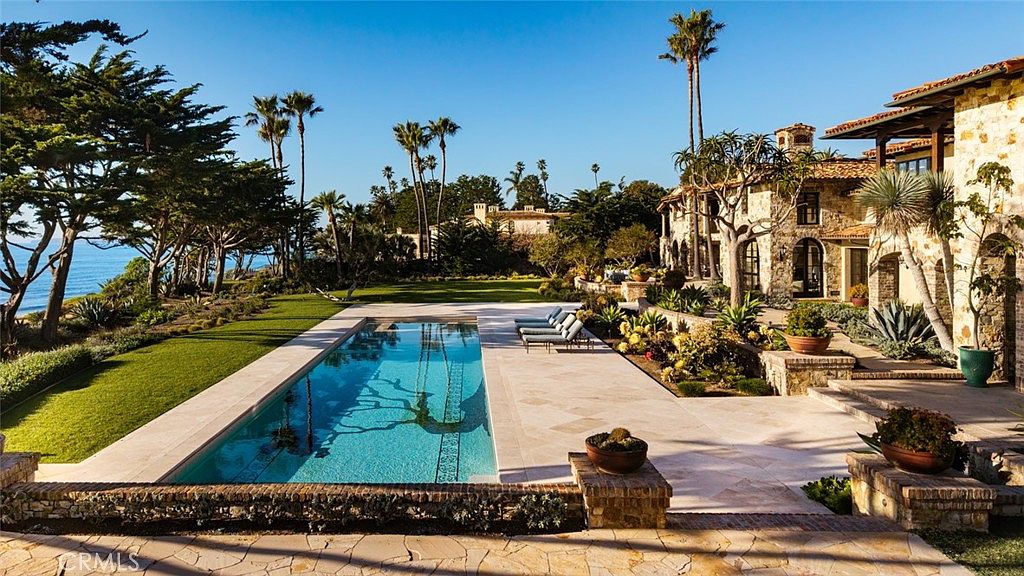
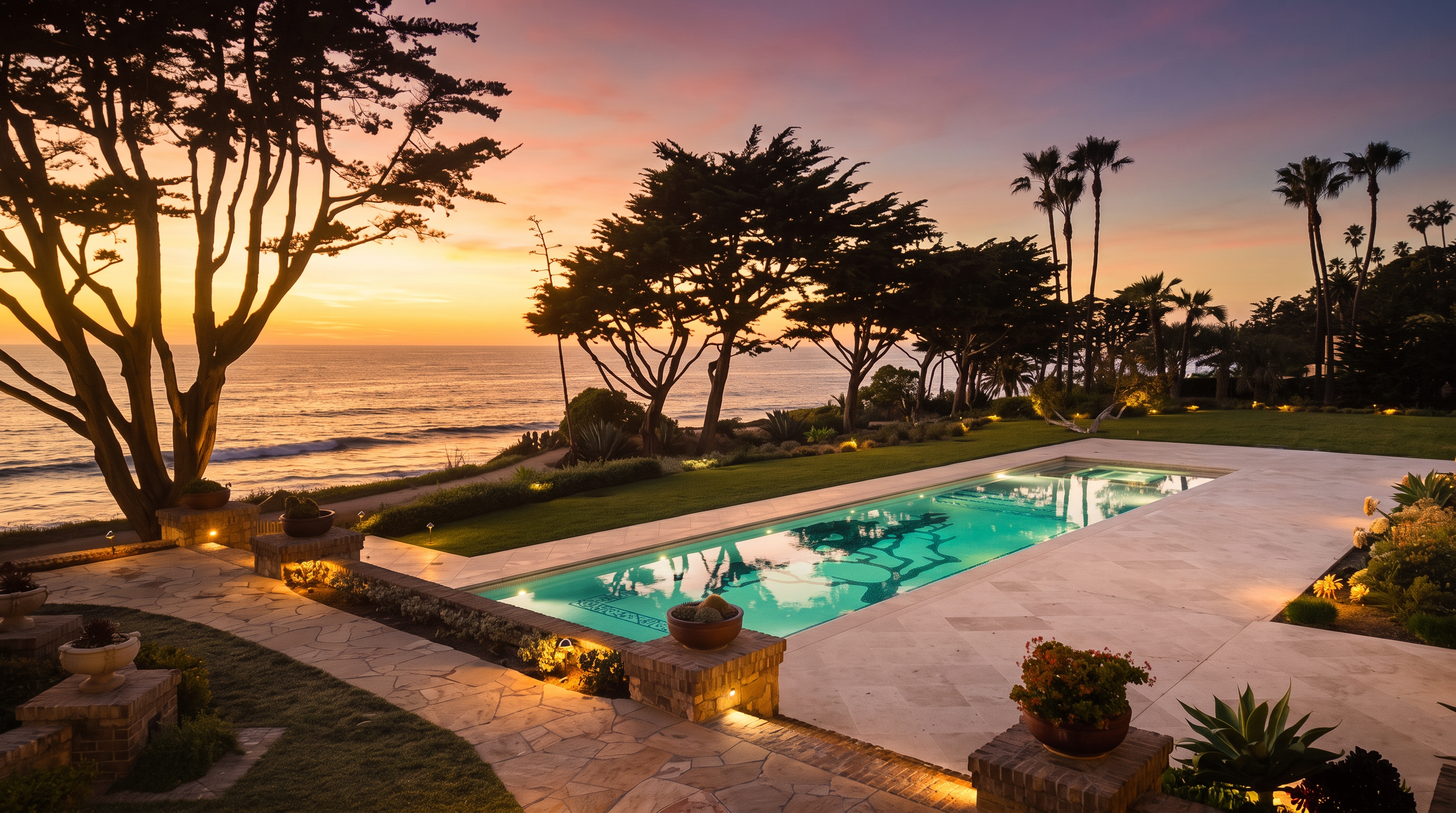
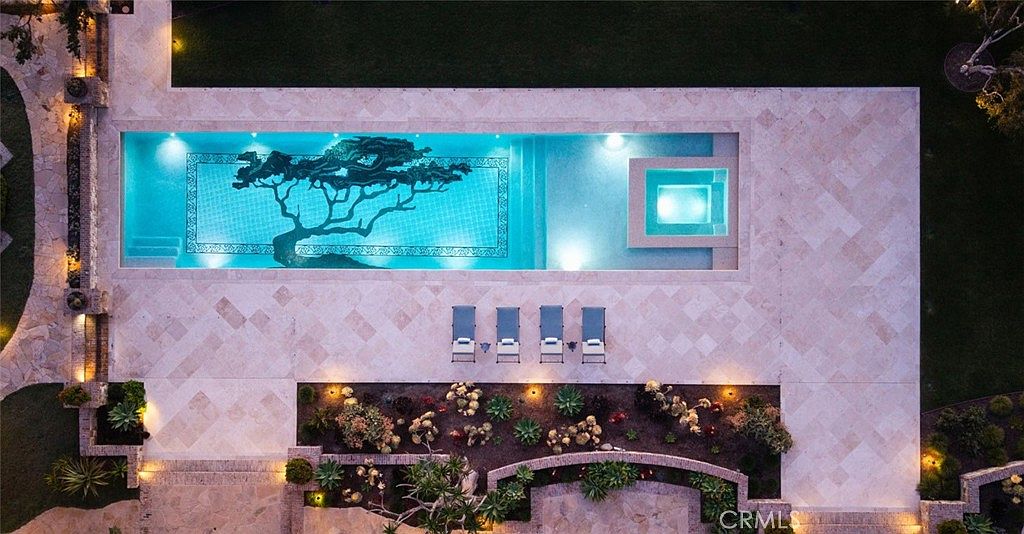
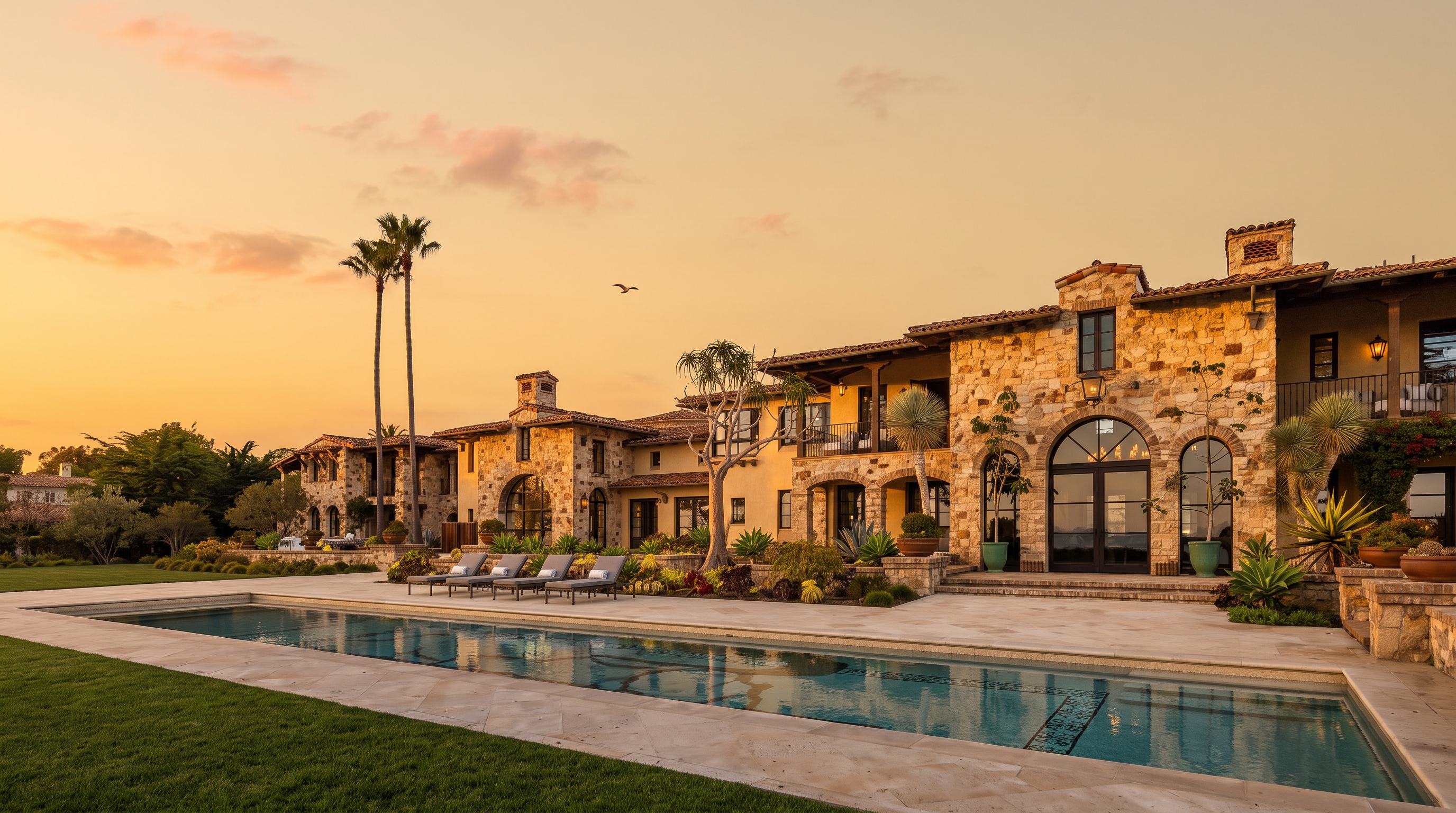
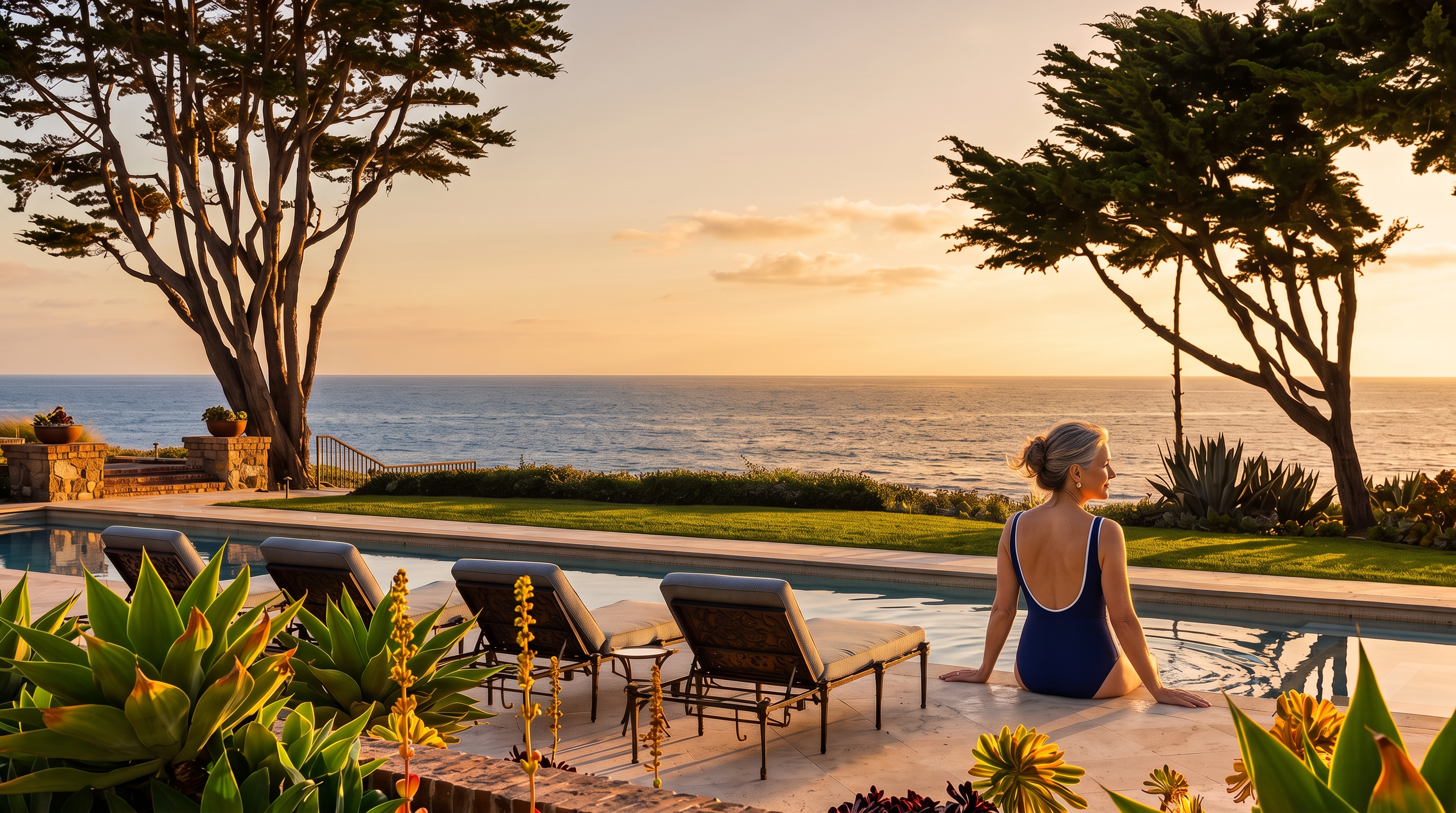
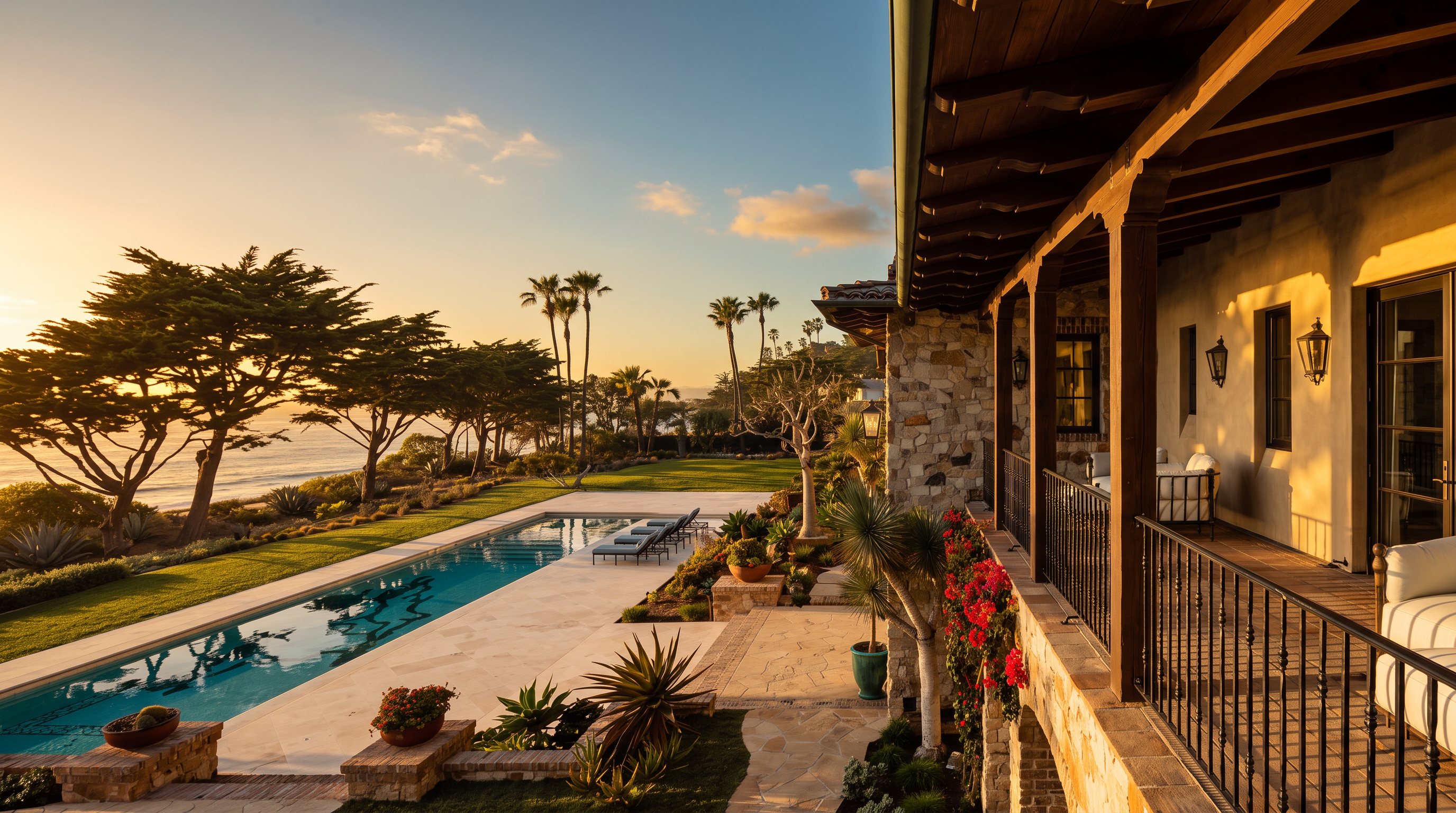
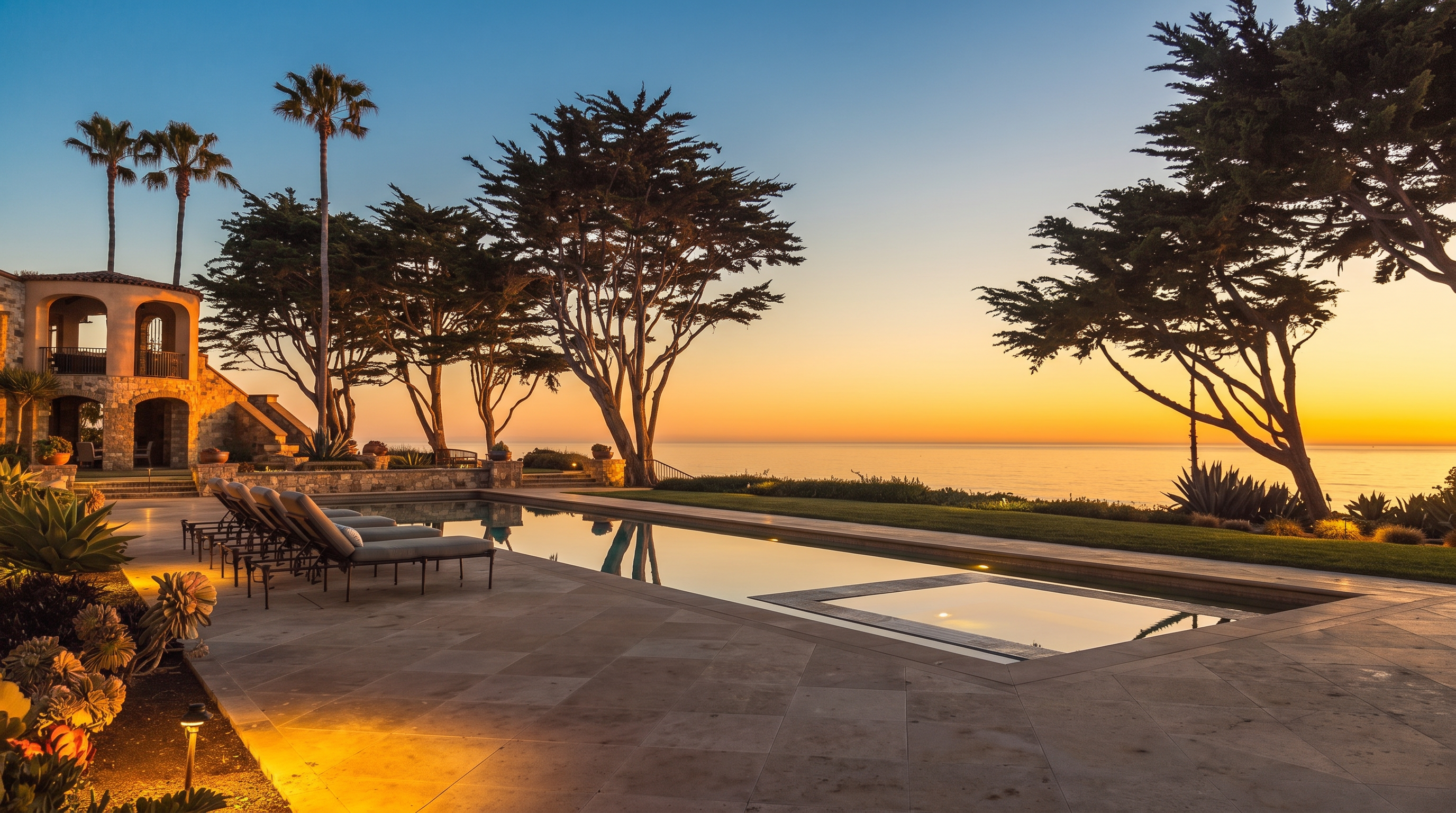
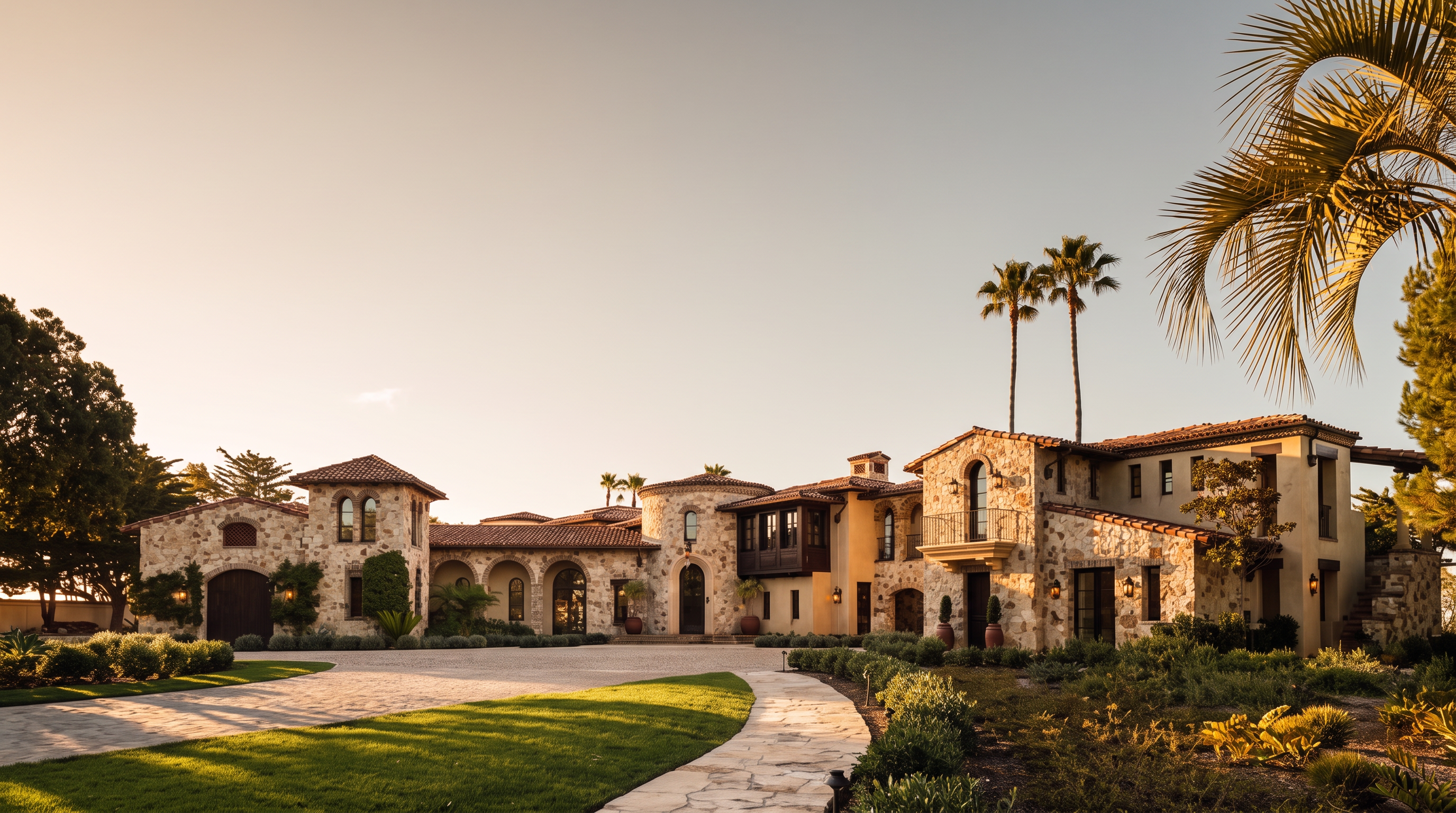
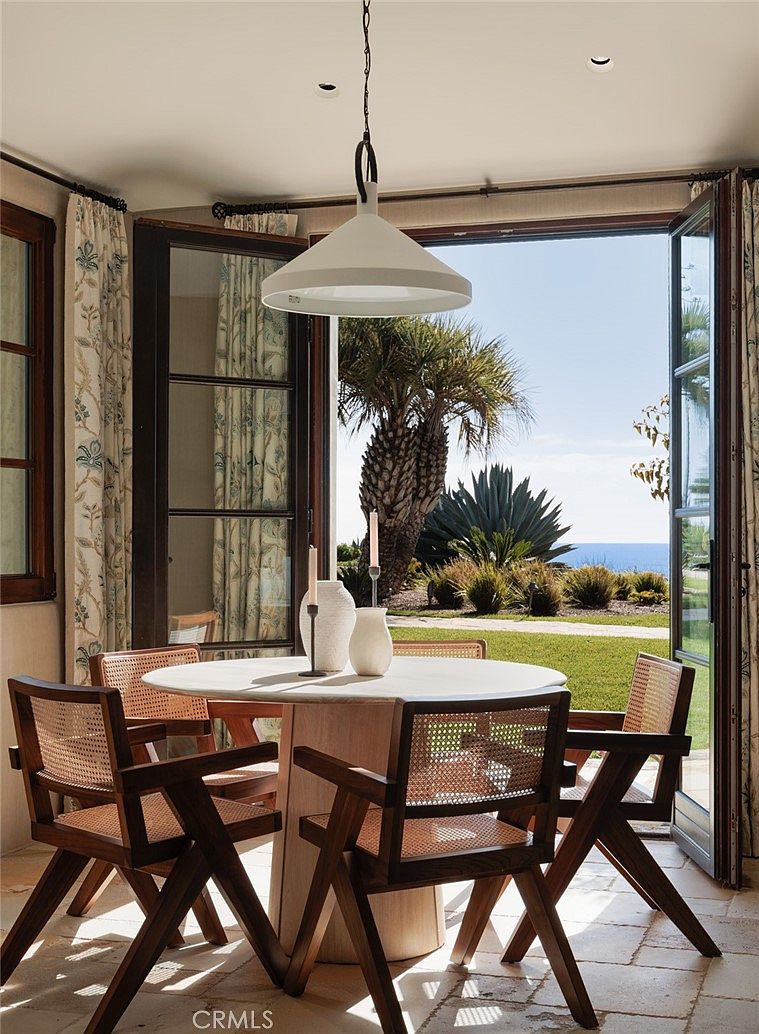
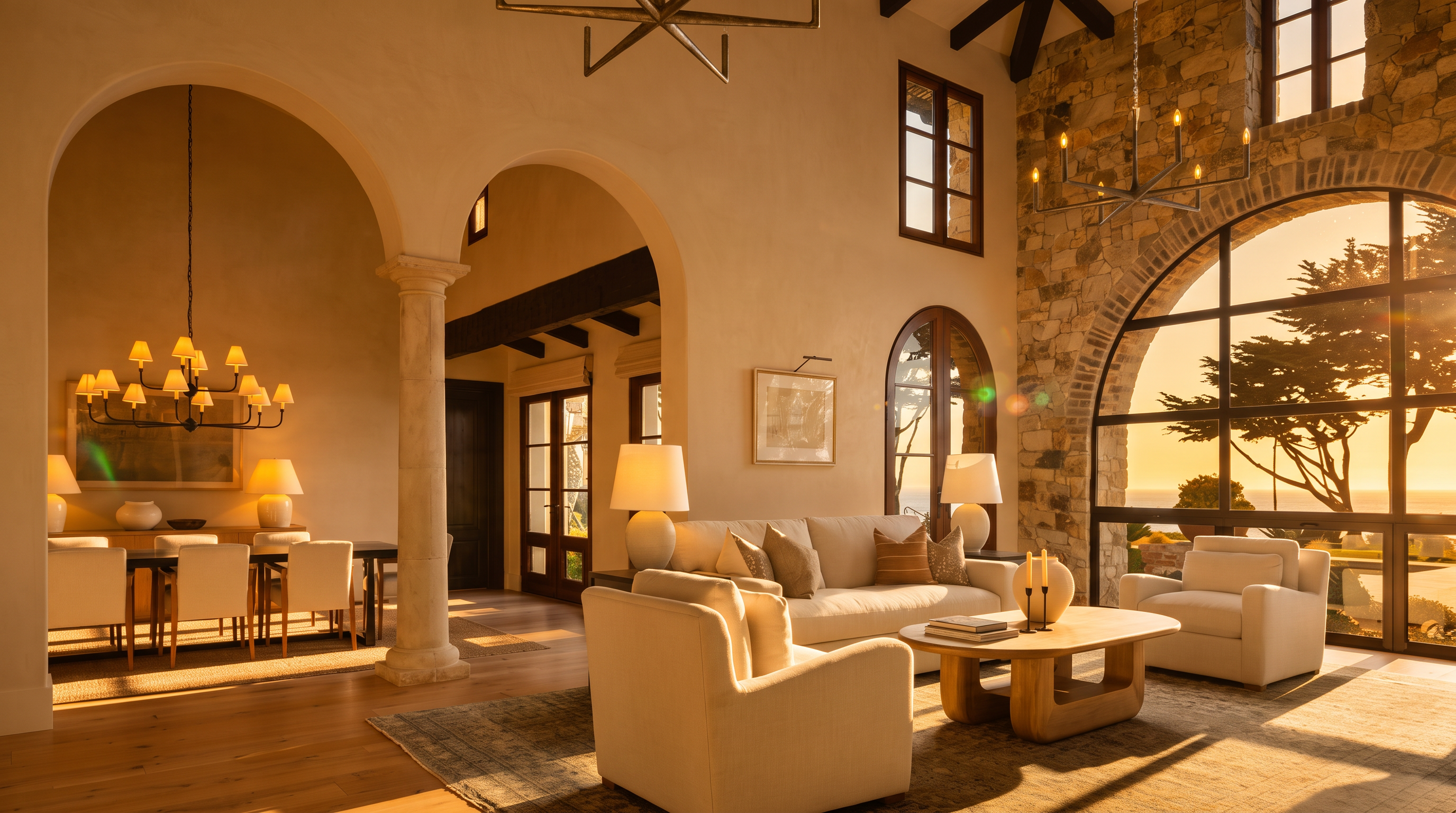
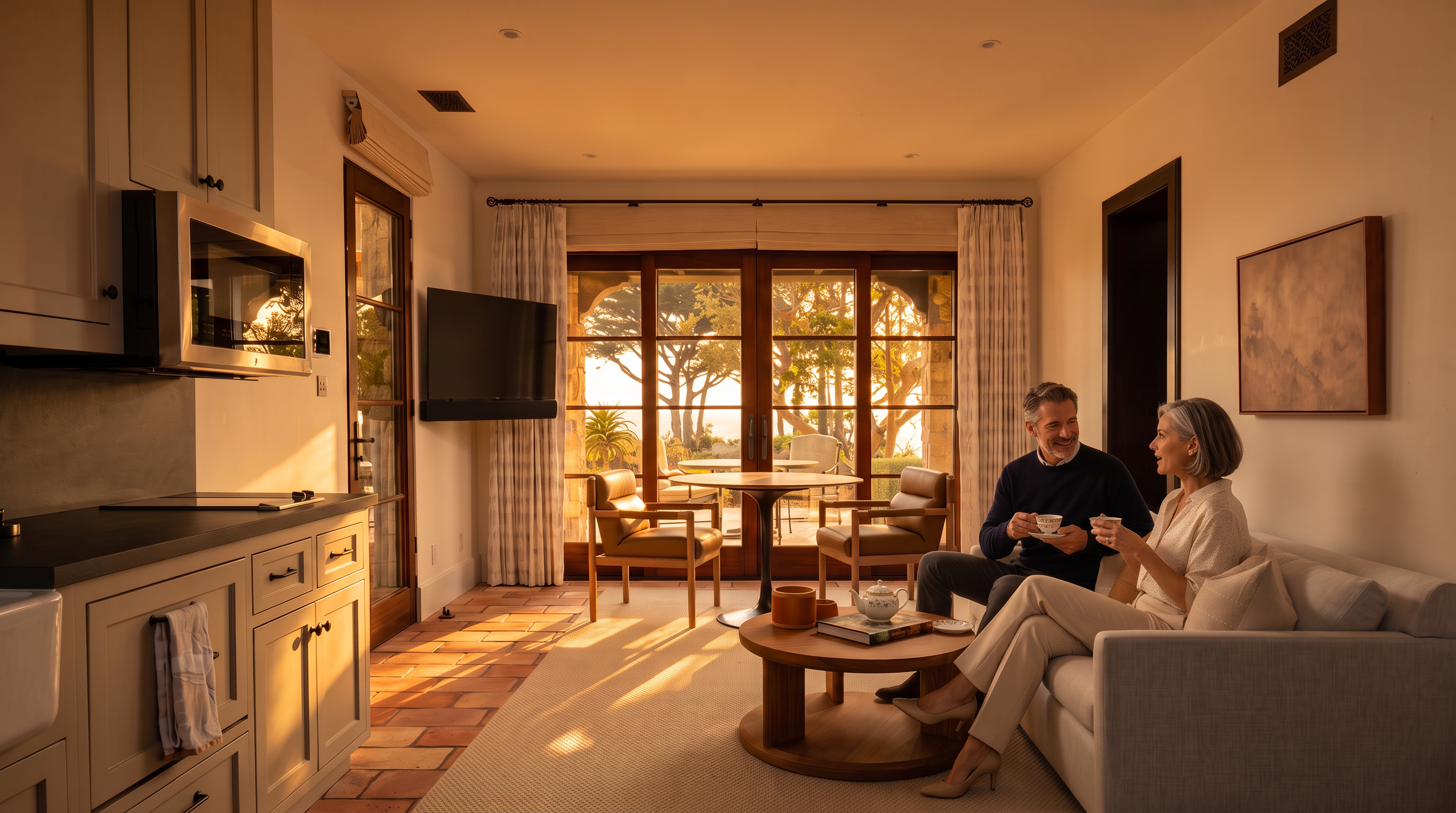
There is a particular quality of light that arrives at Cotton Point in the late afternoon — a warm, low-angled Pacific glow that moves across stone facades, settles into exposed beam ceilings, and turns the surface of a 55-foot pool into something resembling hammered bronze. At 4130 Calle Isabella, that light was not left to chance. It was designed for.
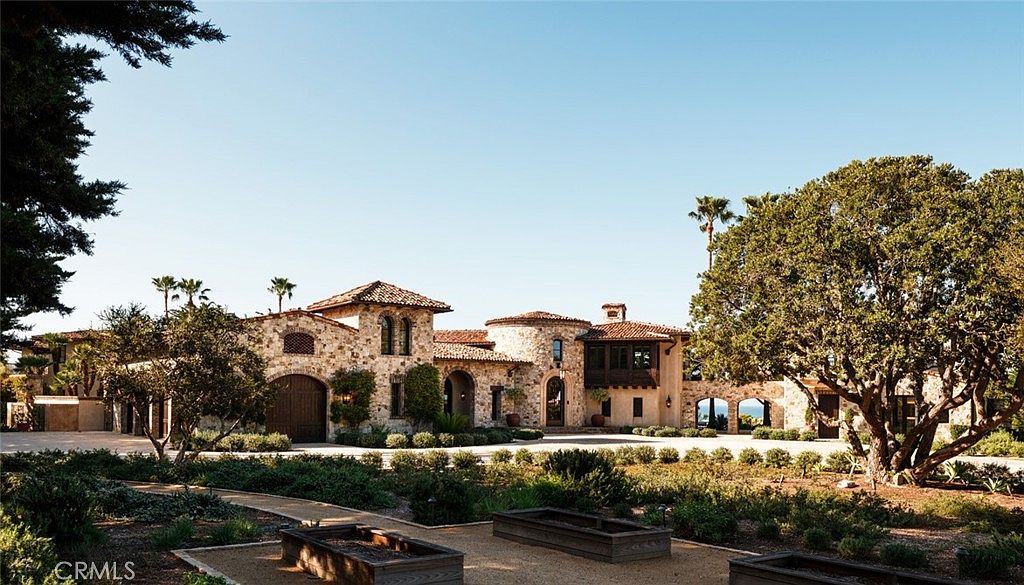
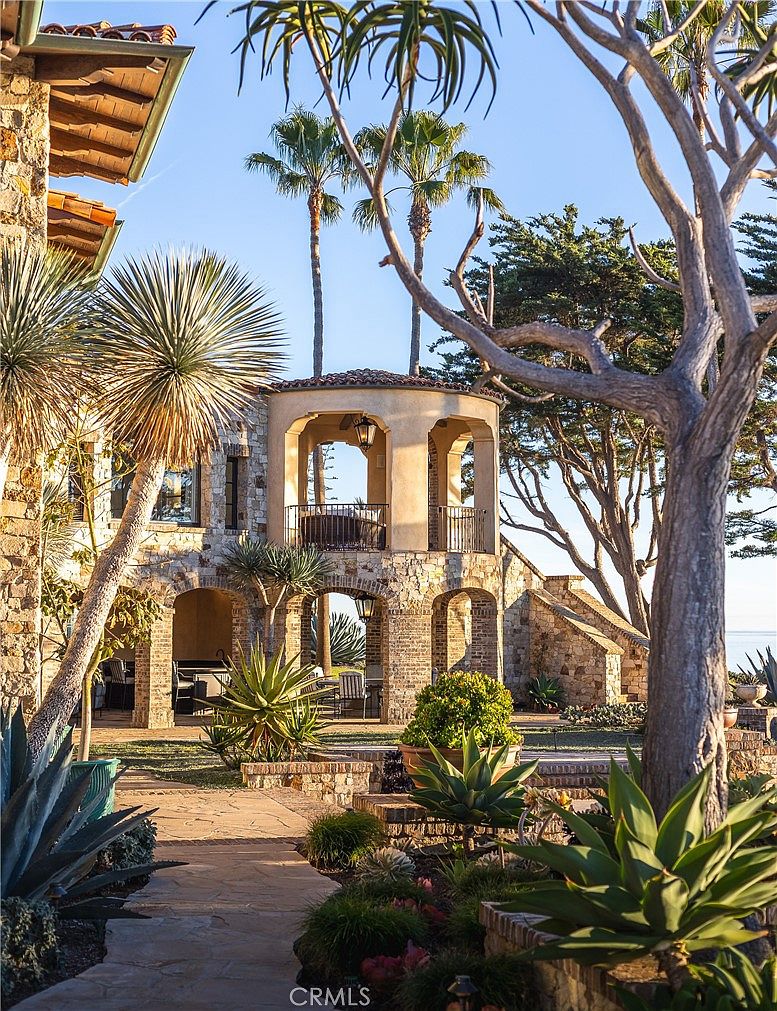
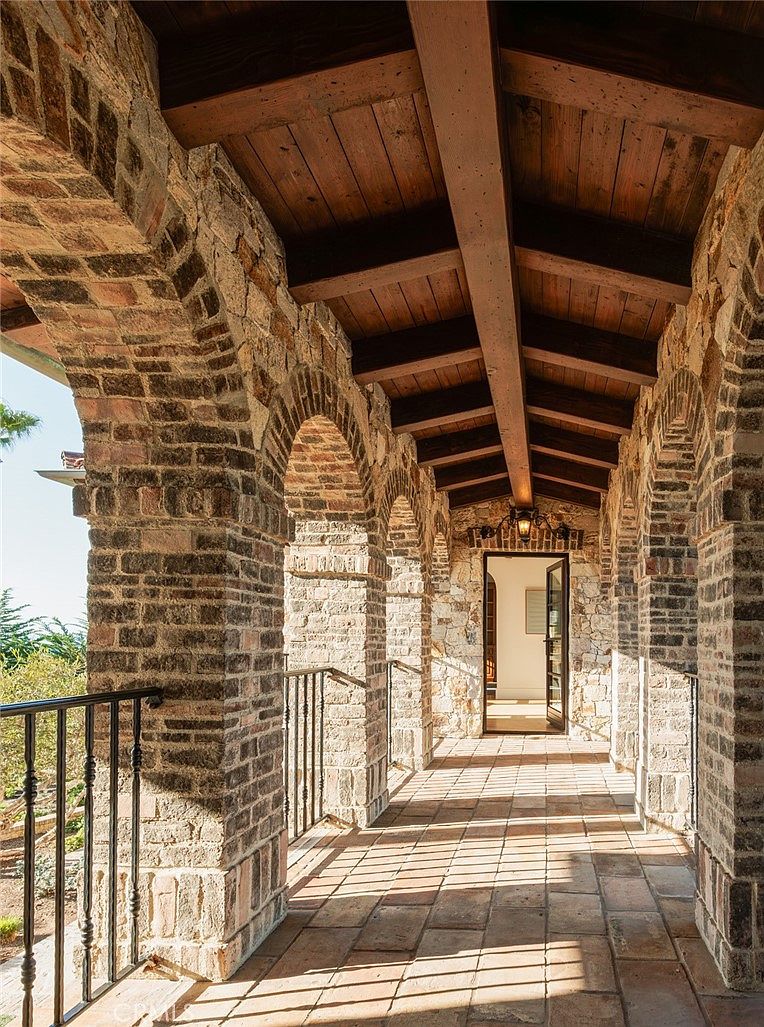
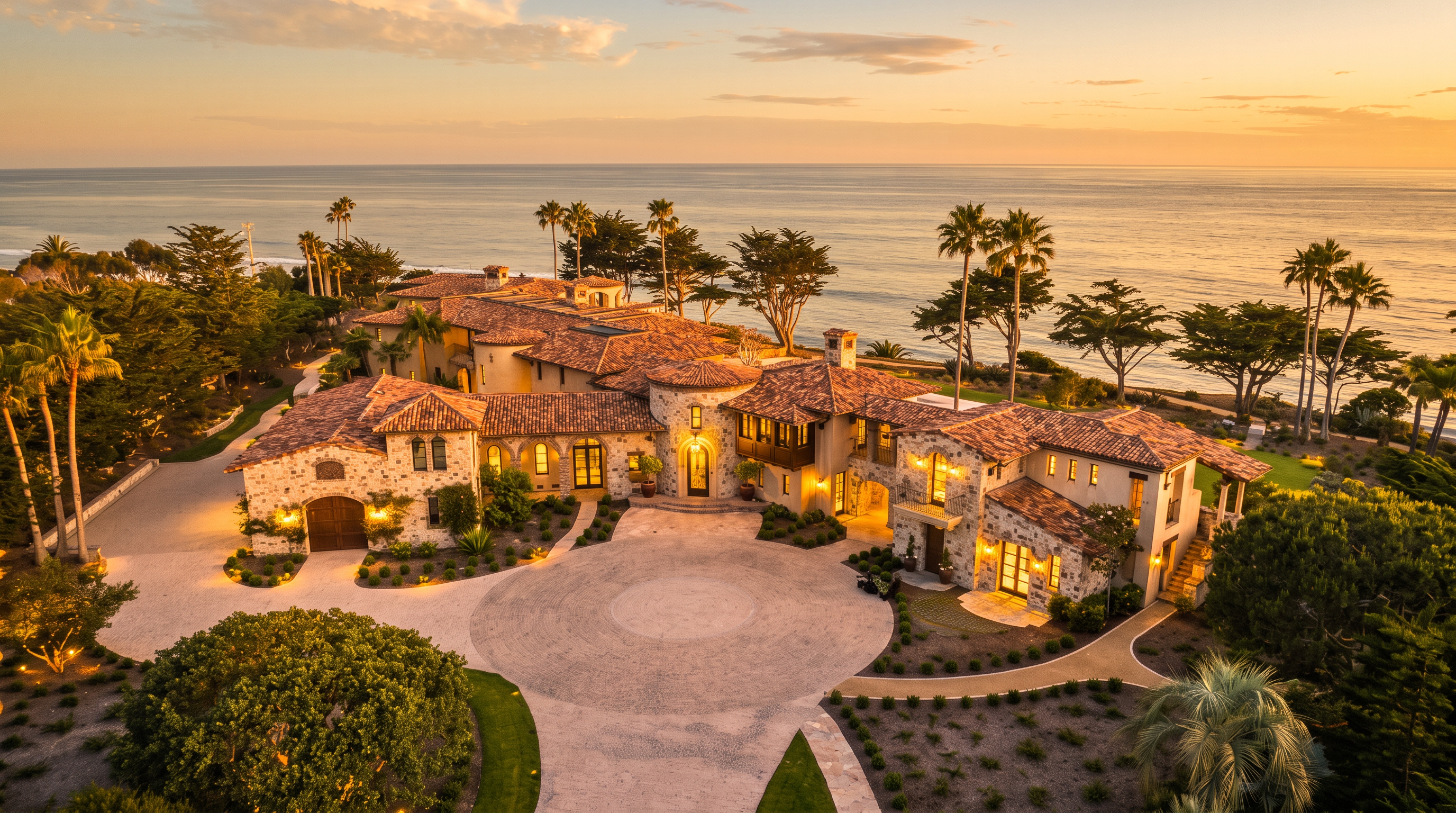
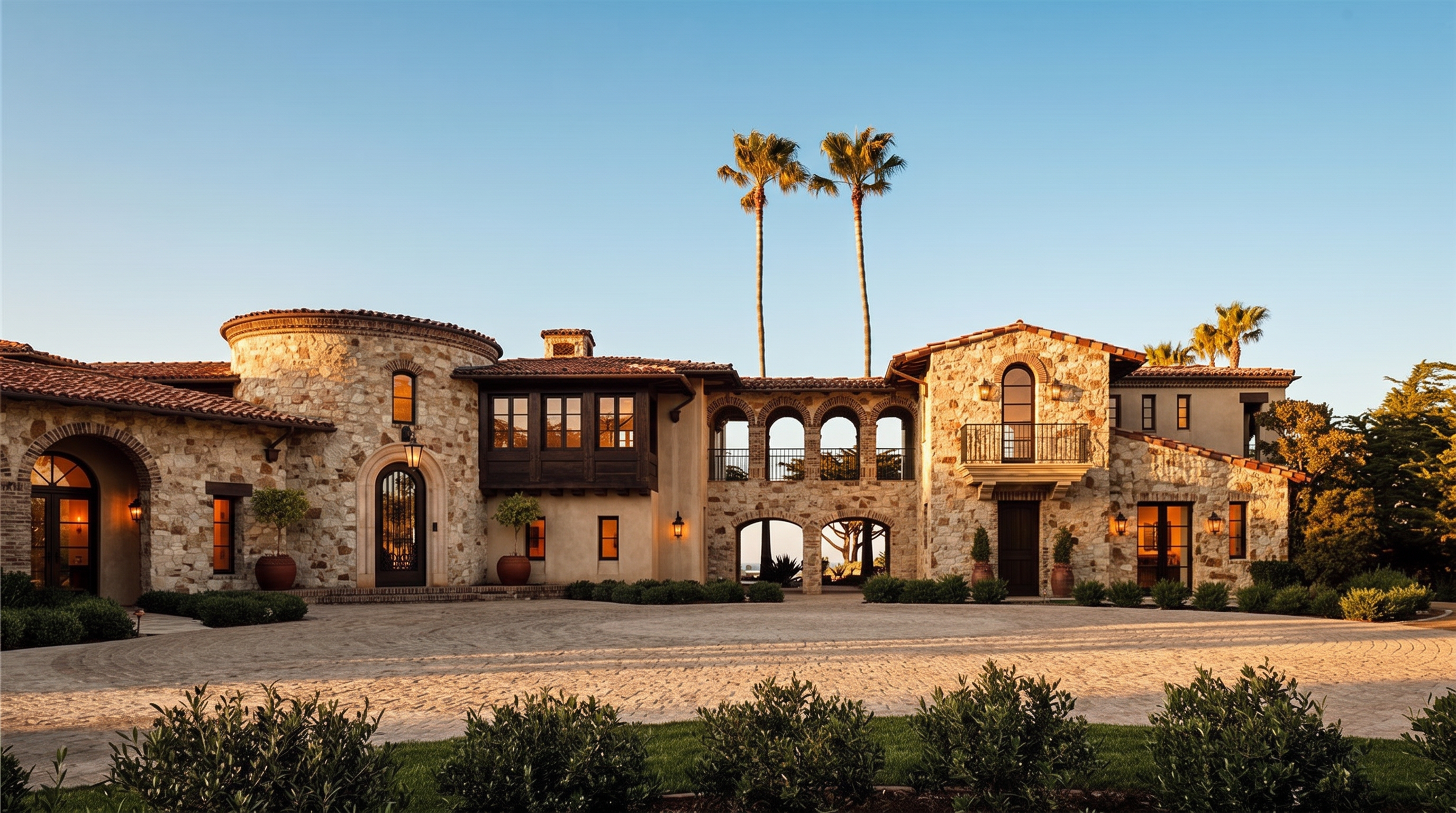
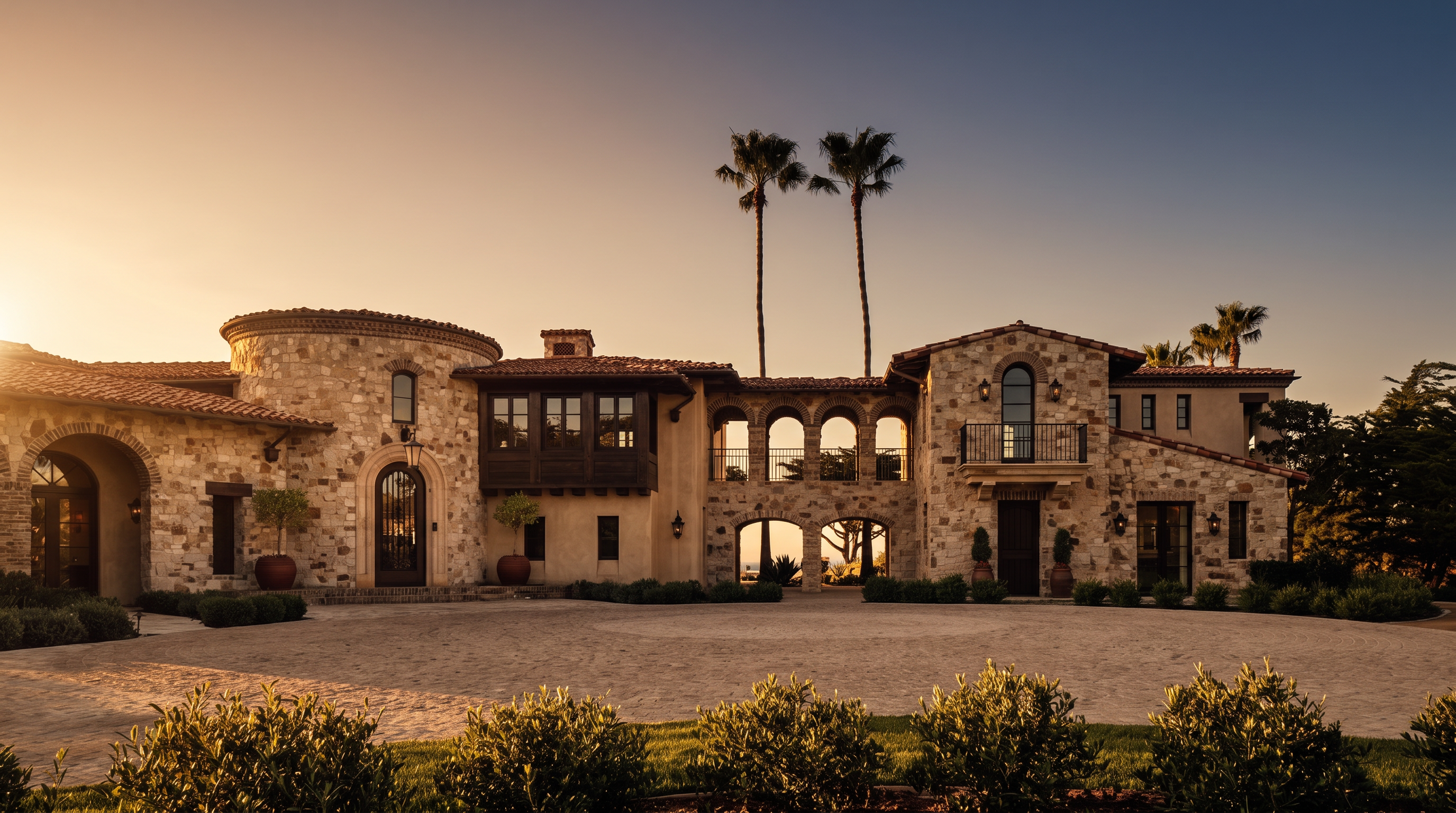
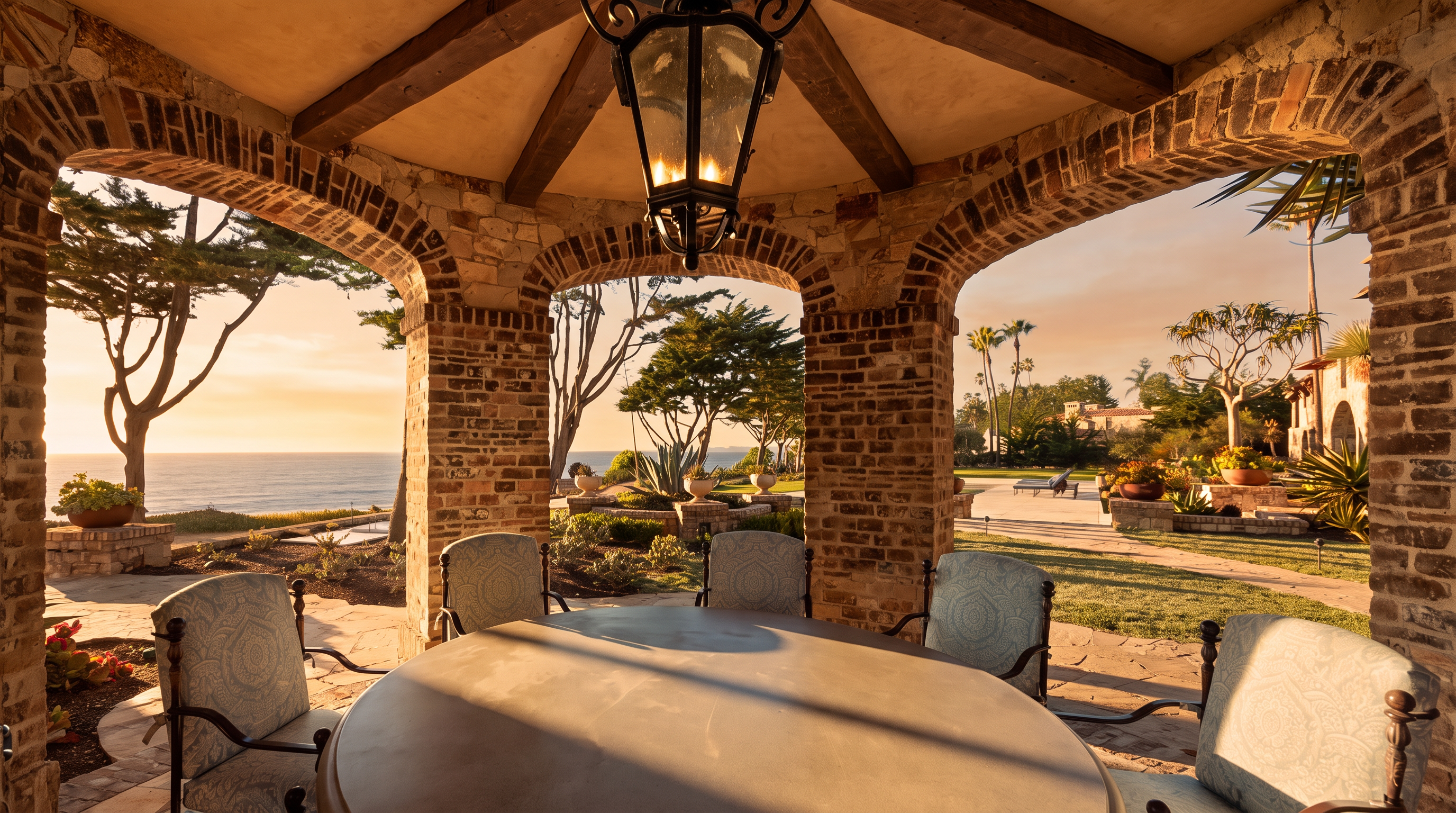
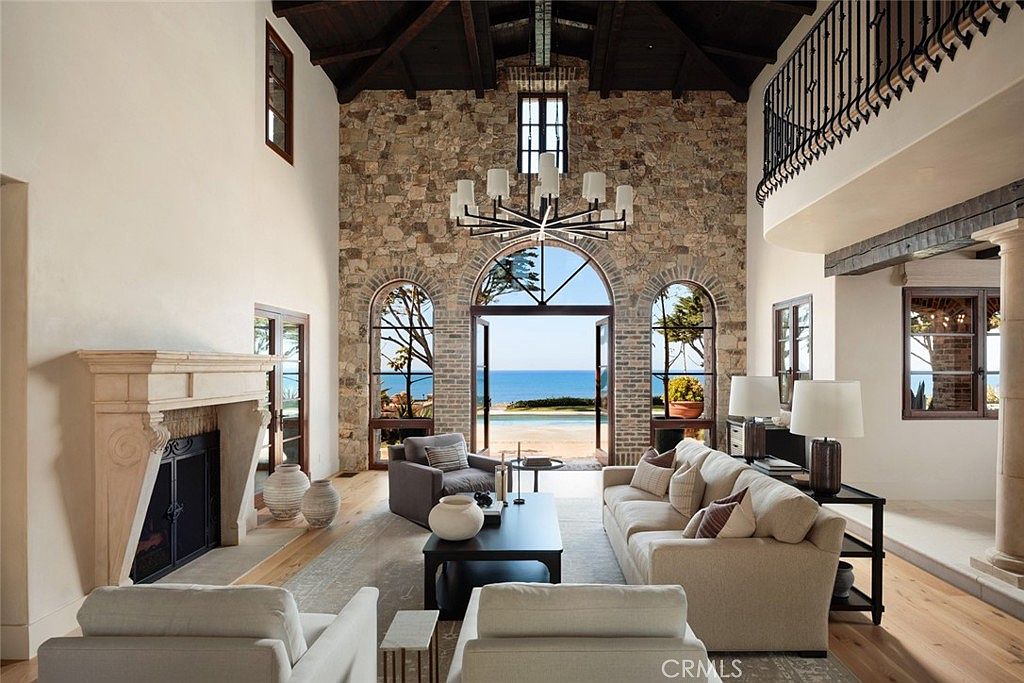
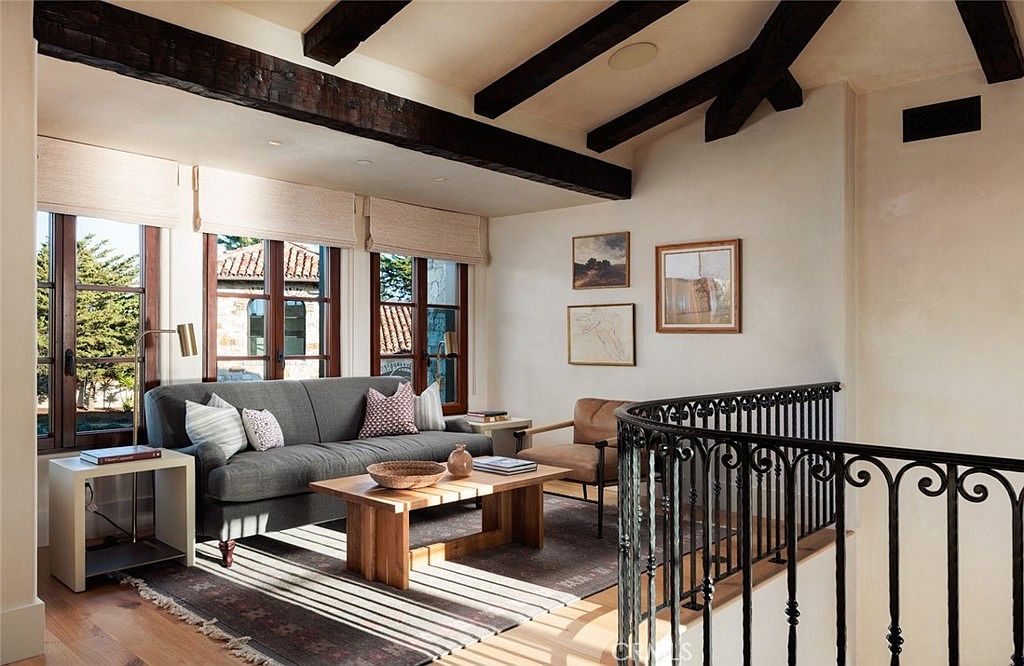
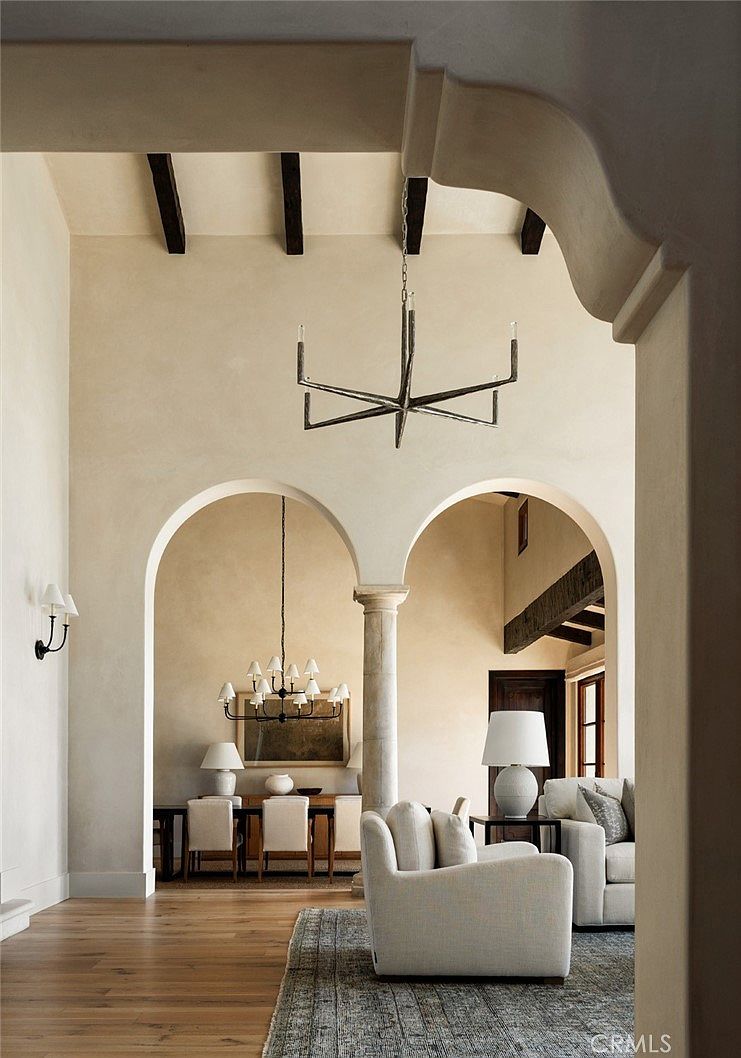
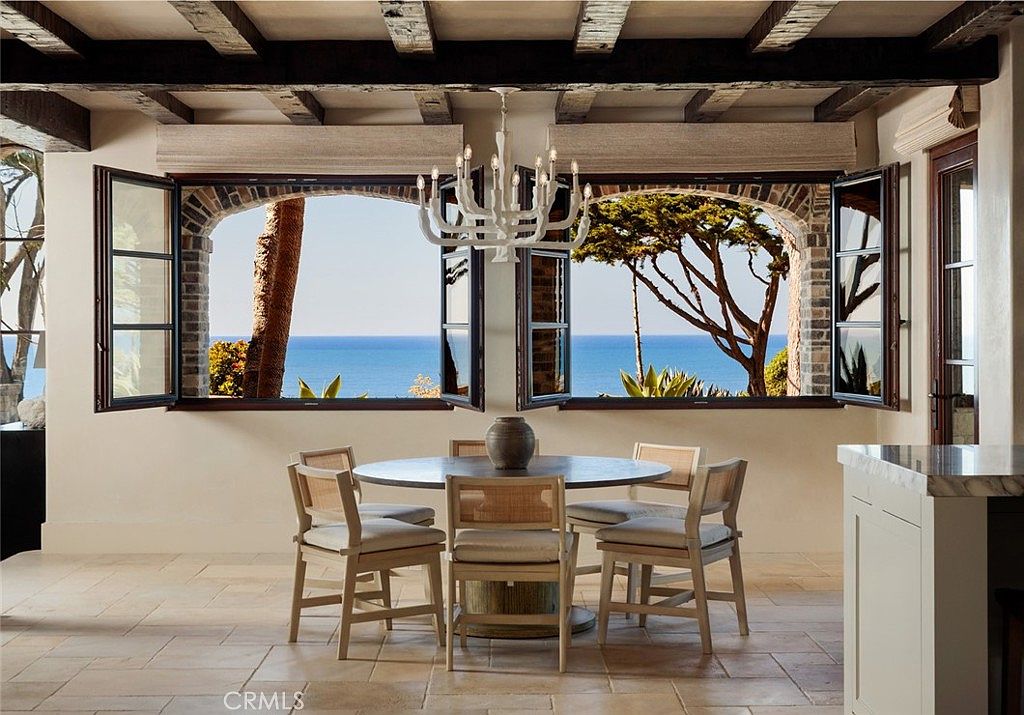
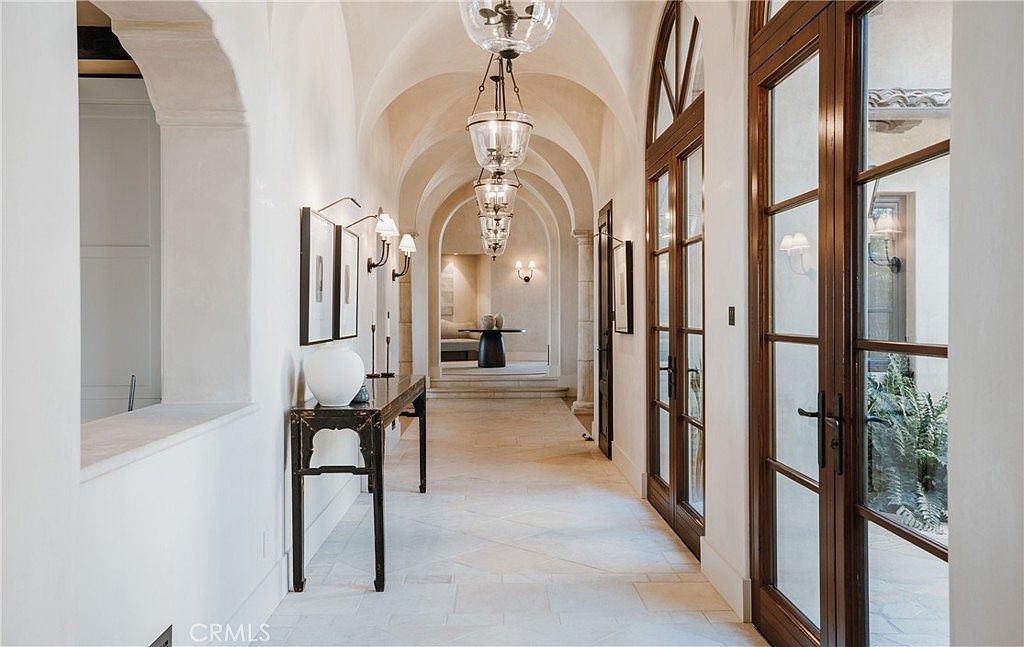
Originally conceived in 2007 by architect James Glover, the residence was shaped around the Spanish Colonial and Mediterranean vernacular that has long defined California's most distinguished coastal estates — an architectural language of arched openings, terracotta-tiled rooflines, stone masonry, and wrought-iron detail that ages with grace and connects a home to its landscape rather than imposing upon it. The principal rooms were oriented with deliberate care, each principal axis drawn toward ocean, sky, or the layered horizon where the two meet.
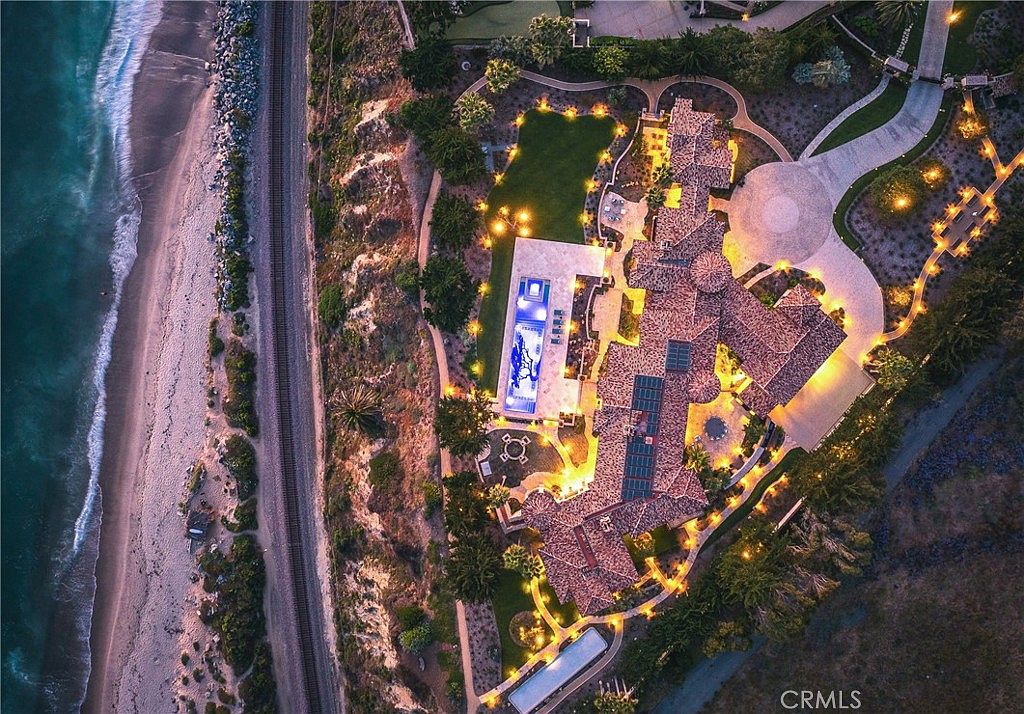
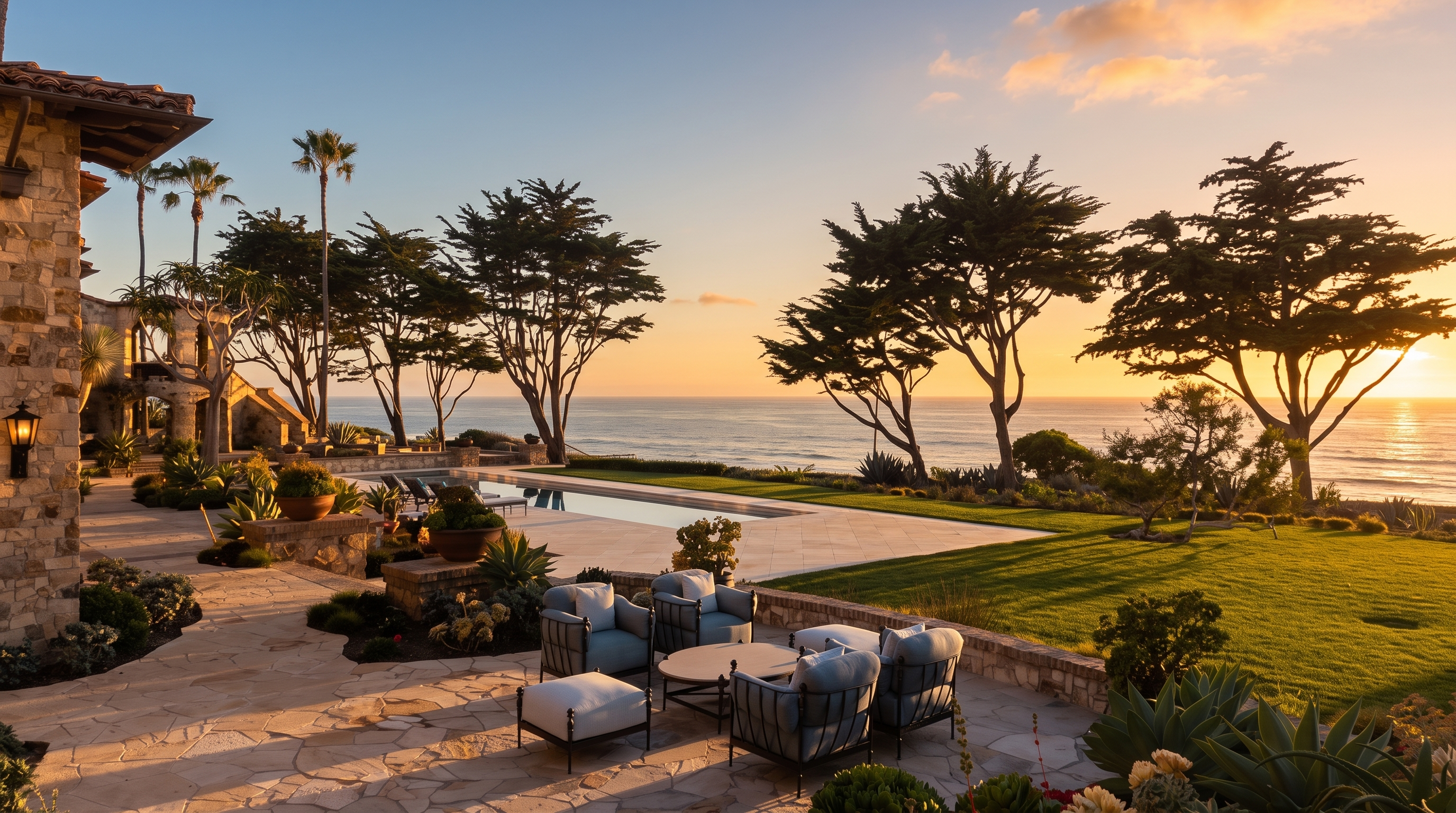
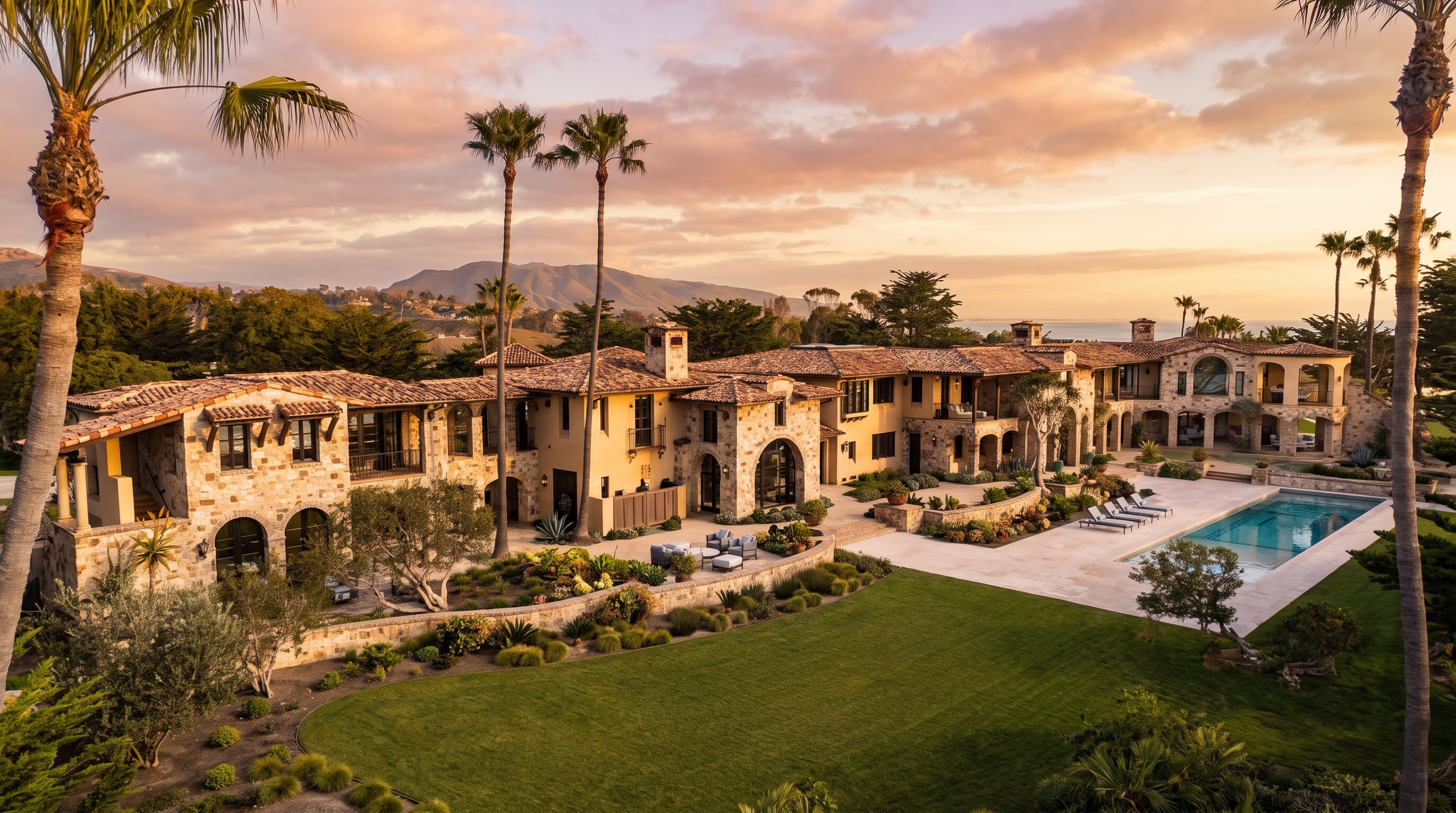
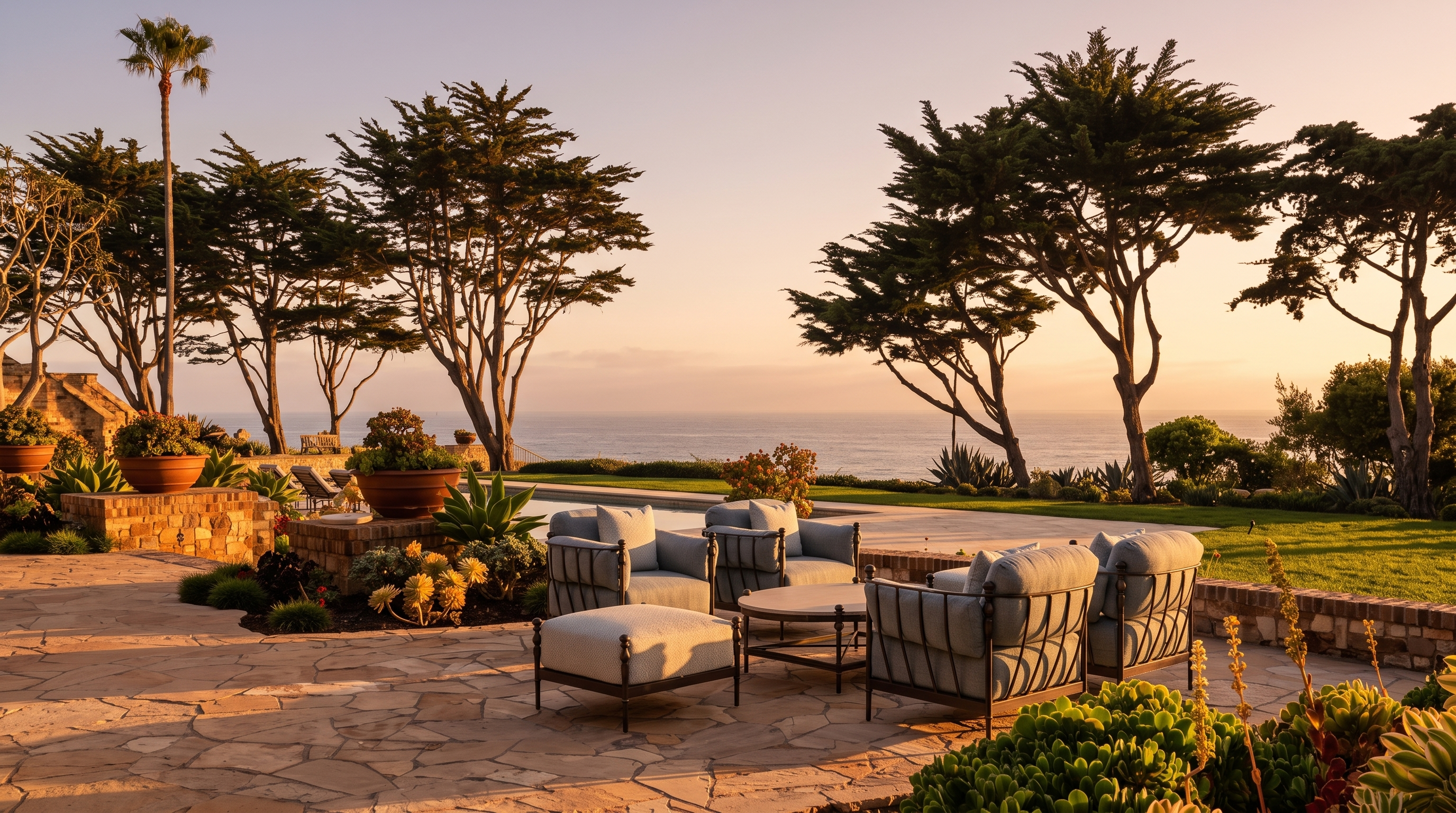
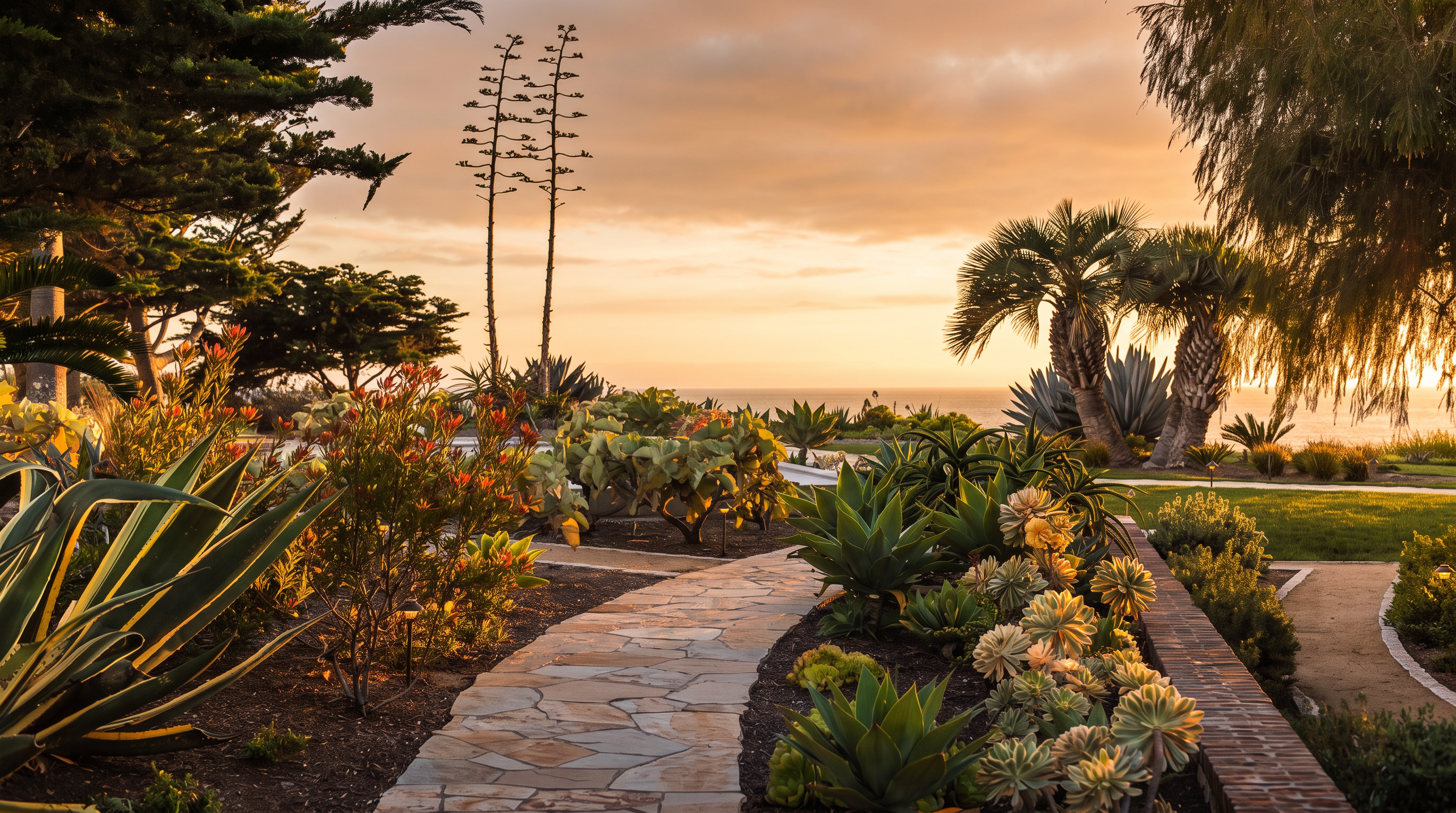
Following its acquisition, the estate entered a comprehensive multi-year transformation. What emerged was not a departure from Glover's original vision but a rigorous elevation of it. Architectural renovation addressed the bones and the details simultaneously: custom plasterwork was refined, infrastructure and systems were rebuilt to contemporary standards, and advanced audio-visual integration was woven invisibly through the compound. The pool was reconstructed and repositioned to command an uninterrupted coastal sightline. Landscaping was reimagined across sweeping lawns, secluded courtyards, and layered terraces that descend naturally toward the bluff's edge.
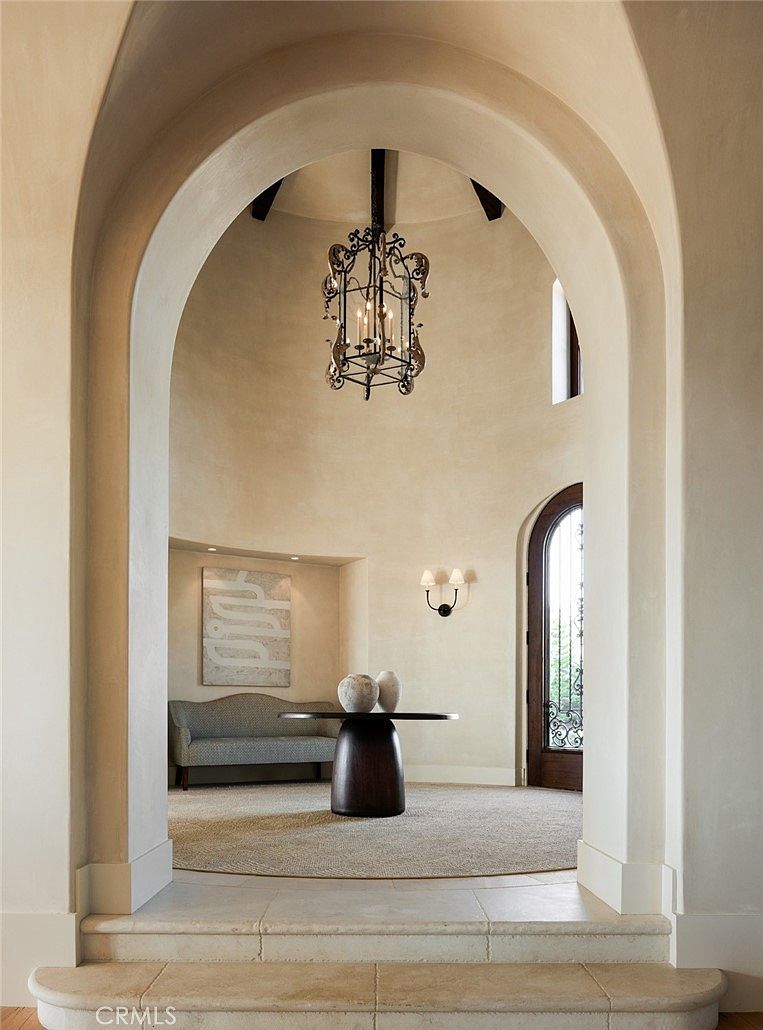
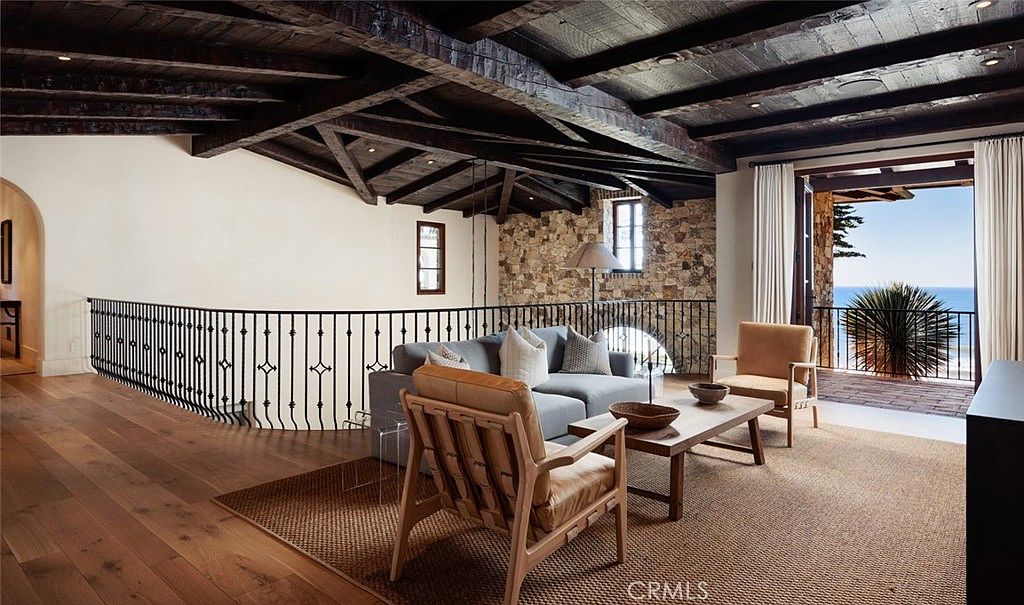
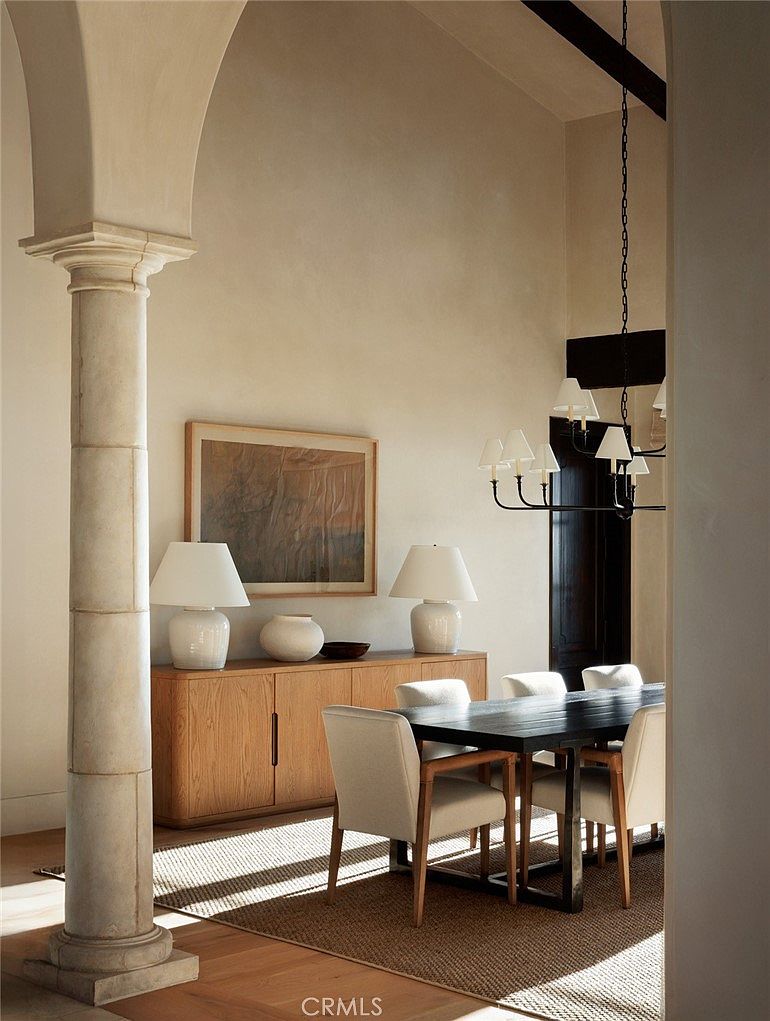
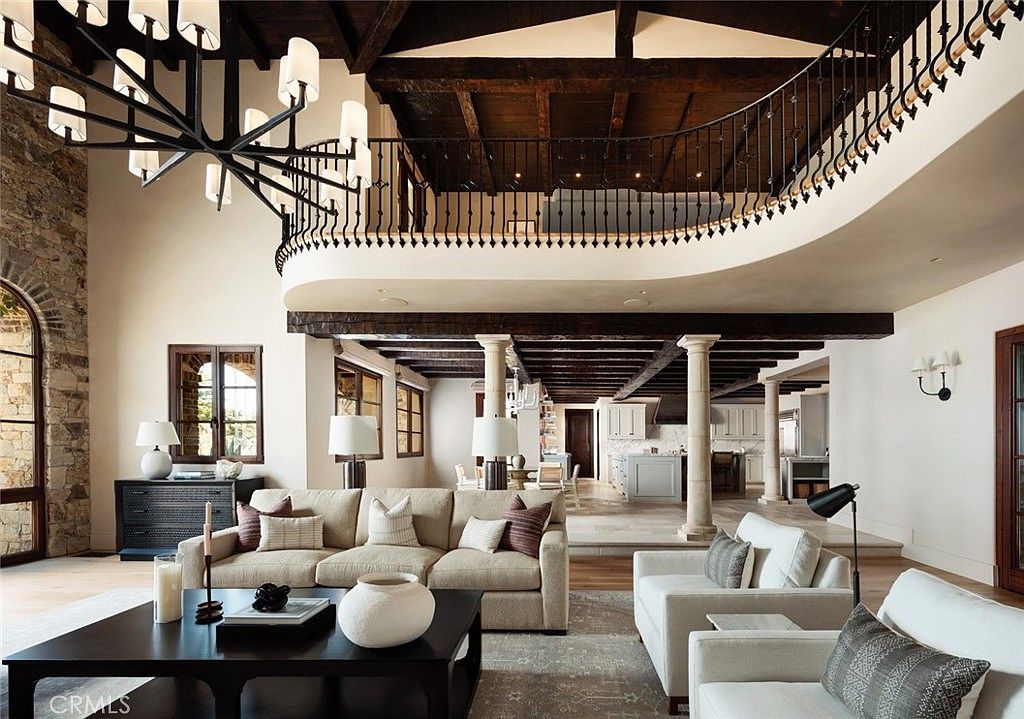
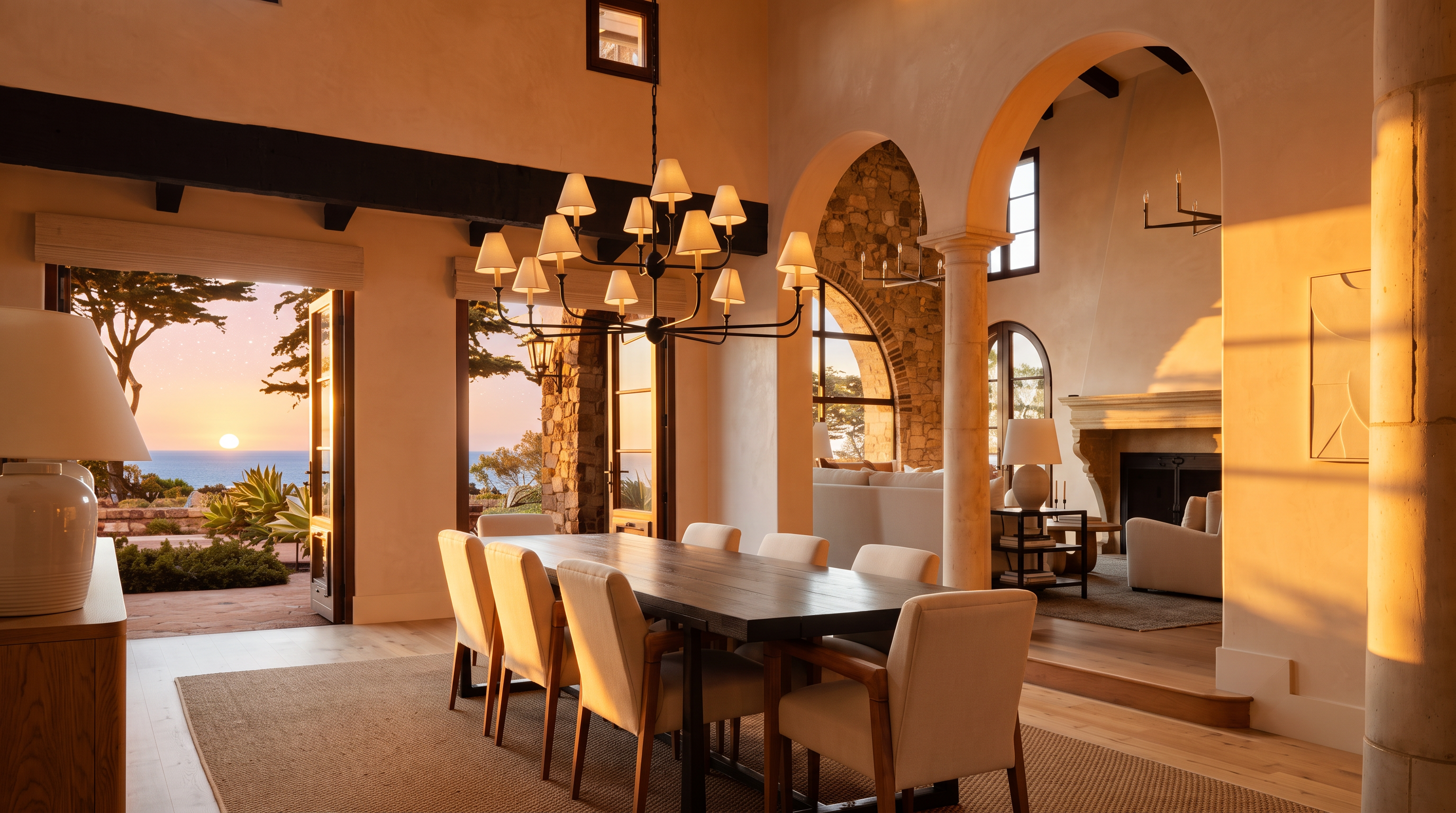
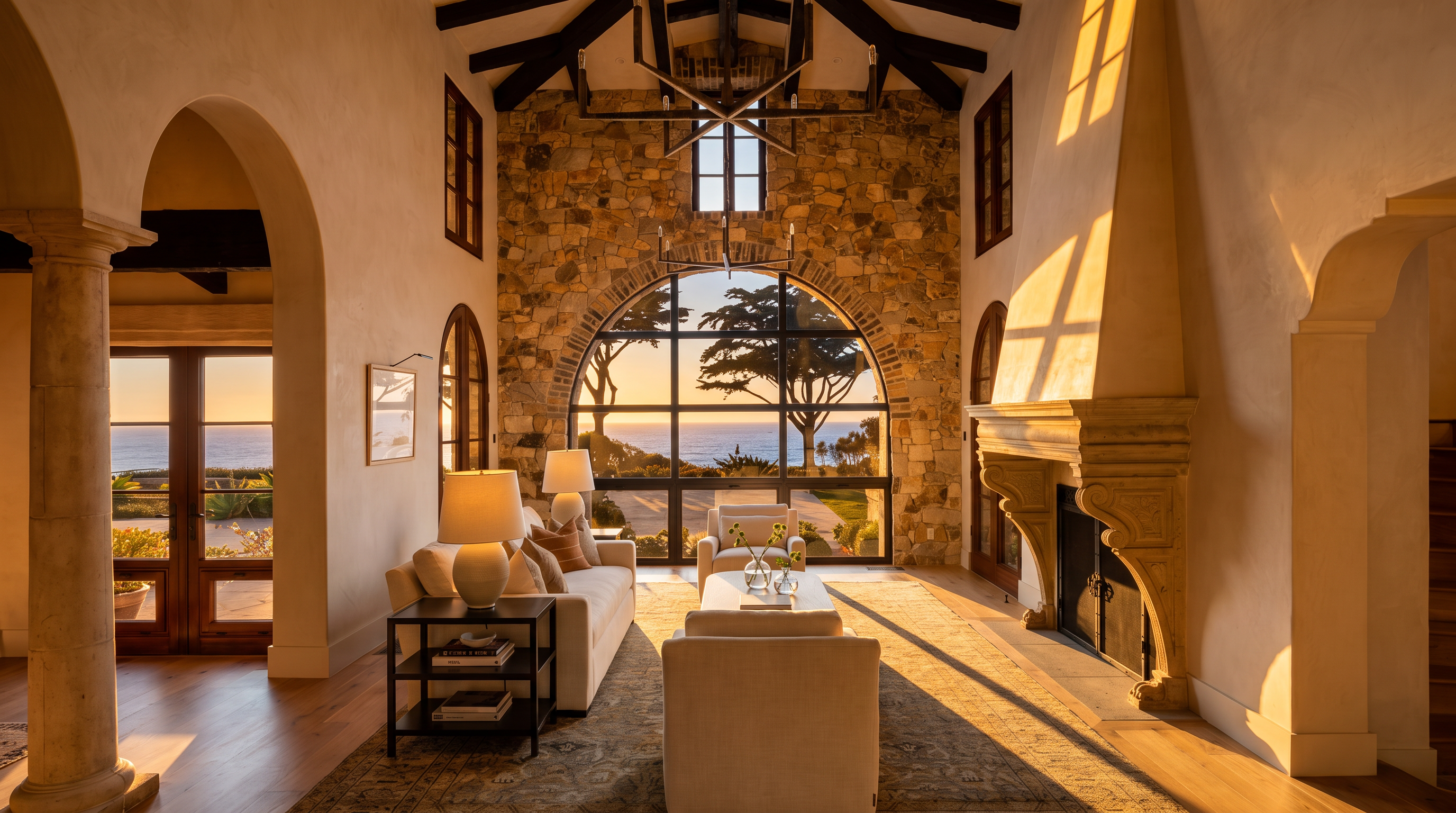
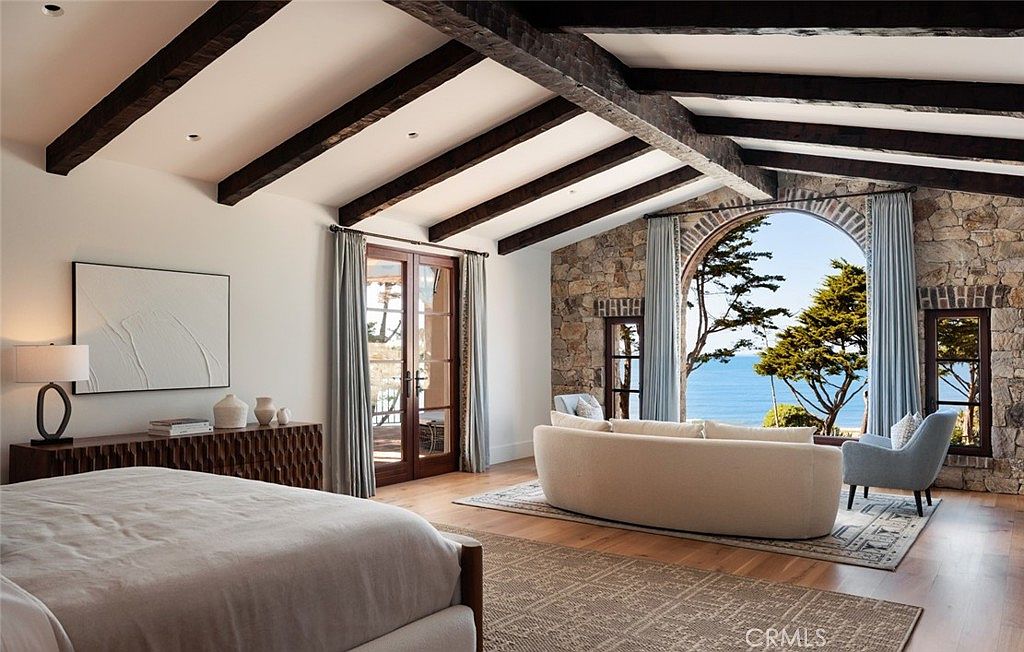
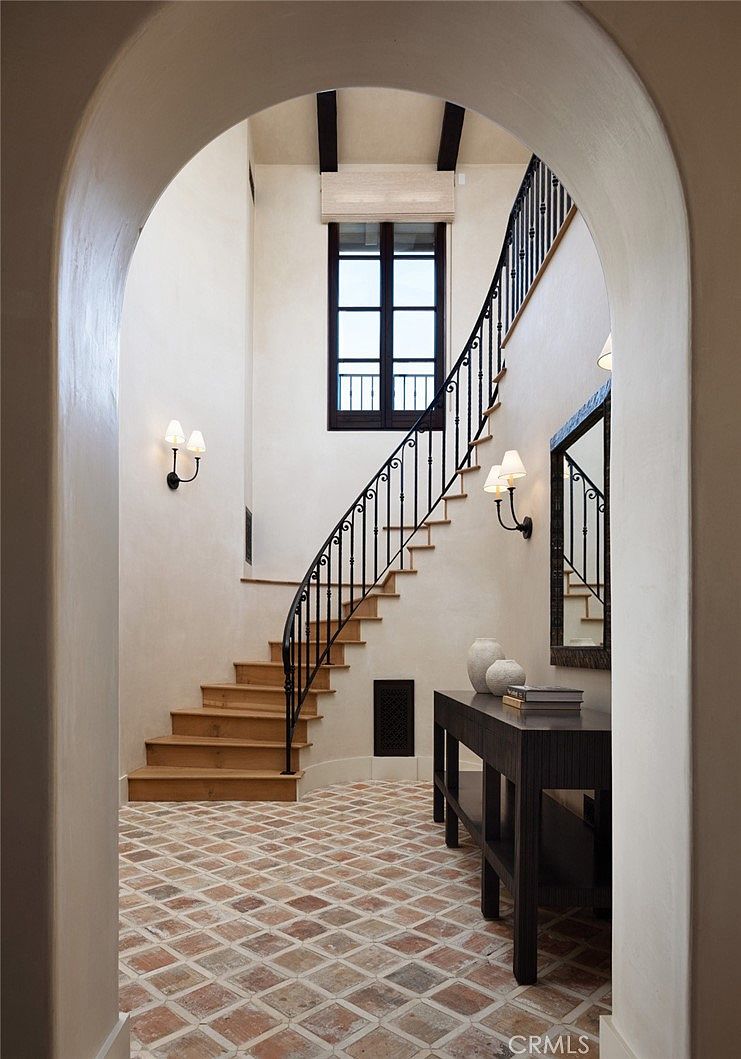
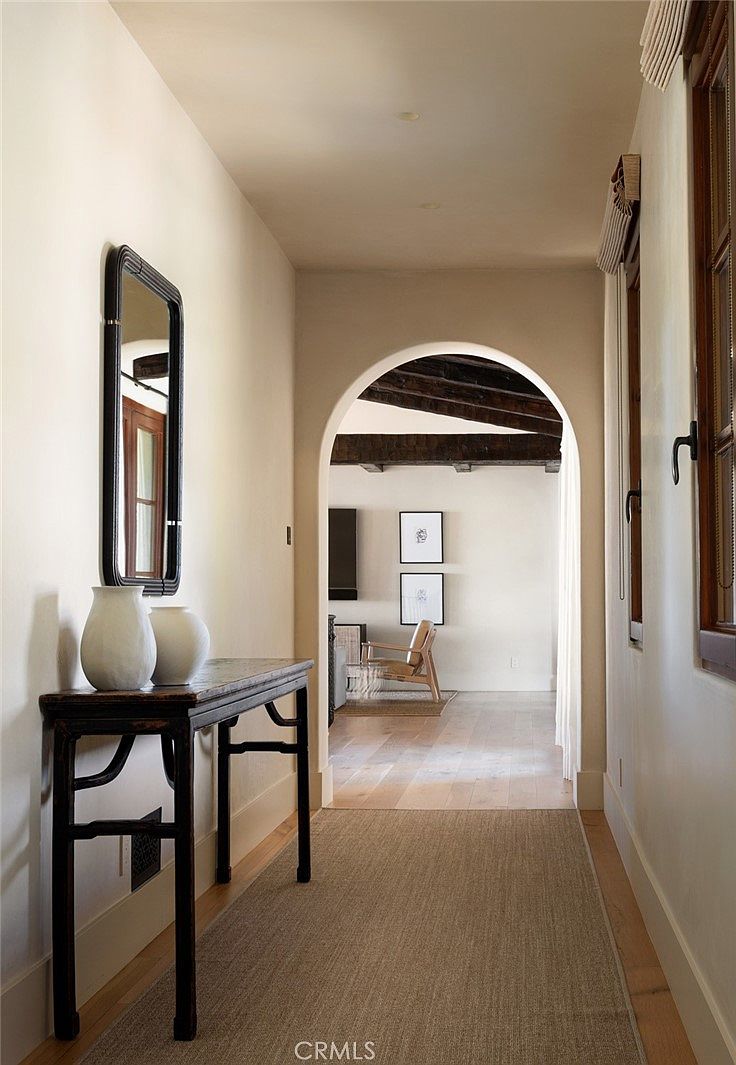
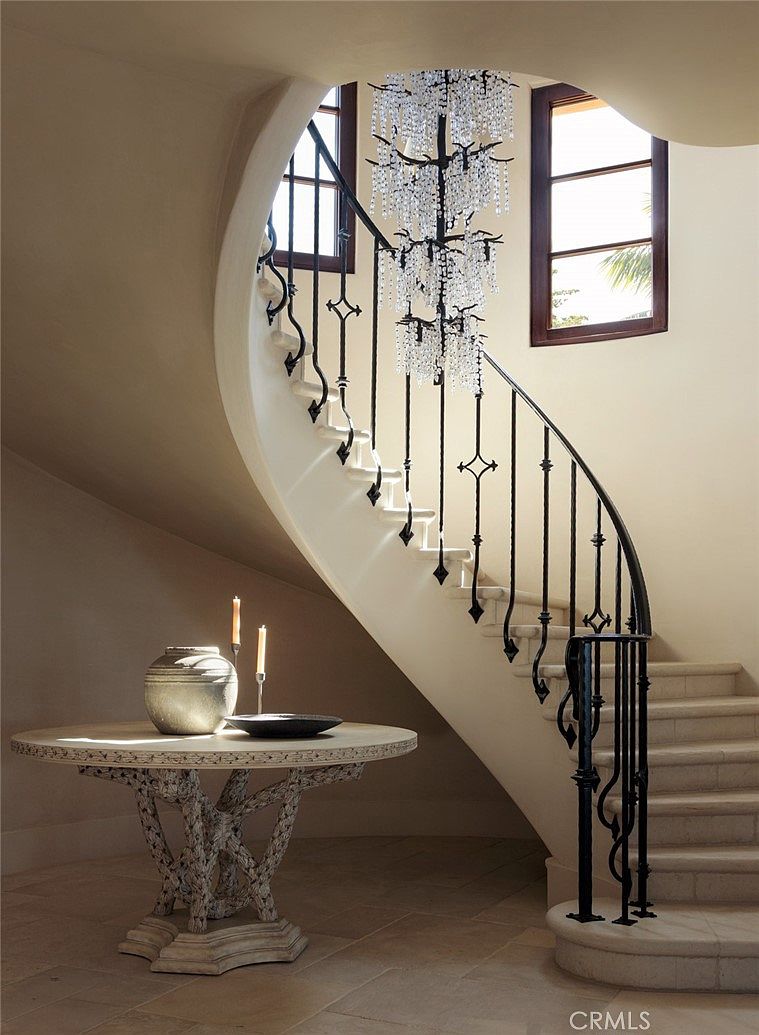
Inside, the scale is immediately apparent and immediately human. The entry rotunda announces the home with a vaulted ceiling, a prominent wrought-iron chandelier, and a curved stone archway that frames the progression into the residence beyond. A grand staircase with intricate wrought-iron railings and stone treads rises through the foyer, lit by a crystal chandelier that scatters warmth across the neutral-toned walls. Throughout, dark wood ceiling beams — exposed and substantial — anchor rooms that might otherwise feel untethered by their own generosity of volume.
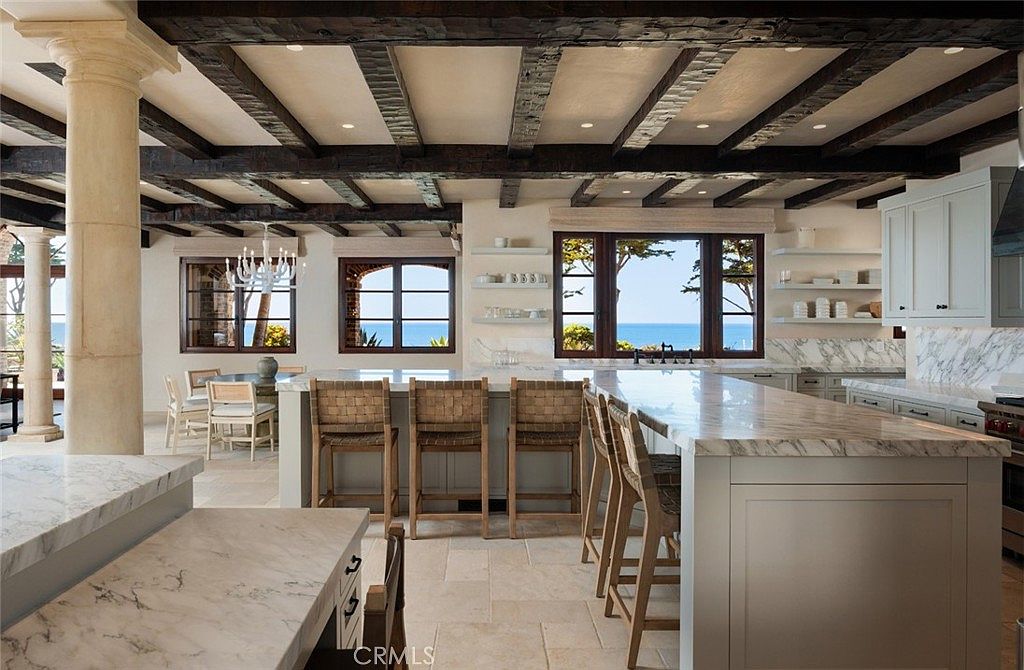
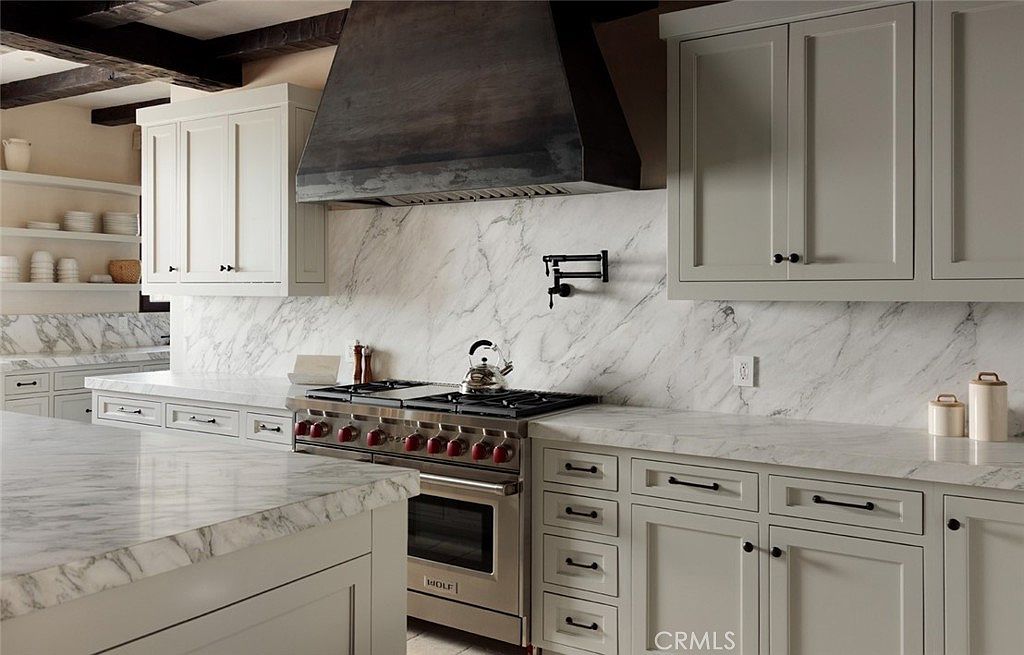
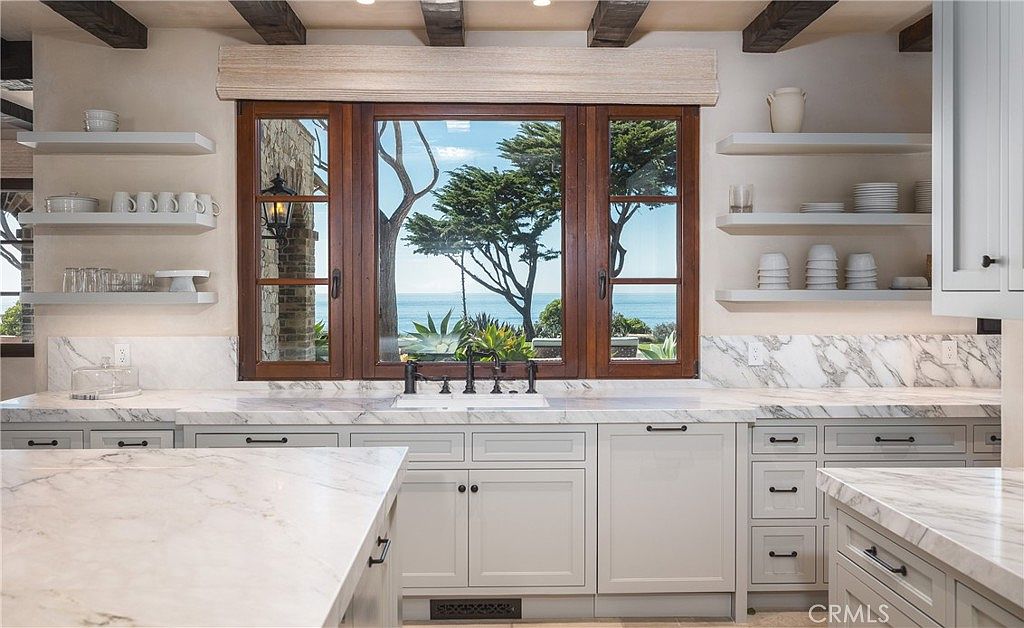
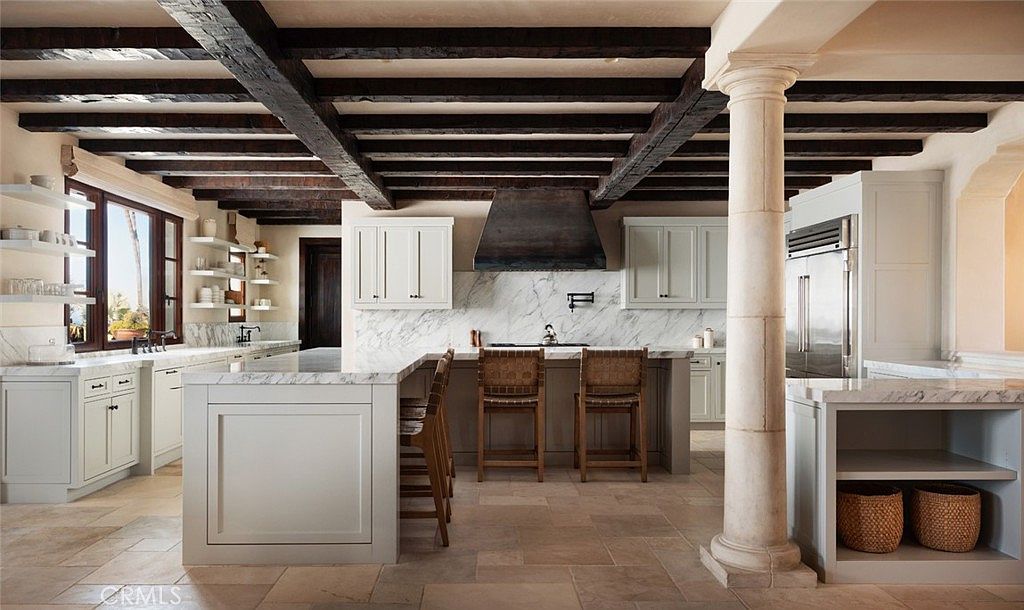
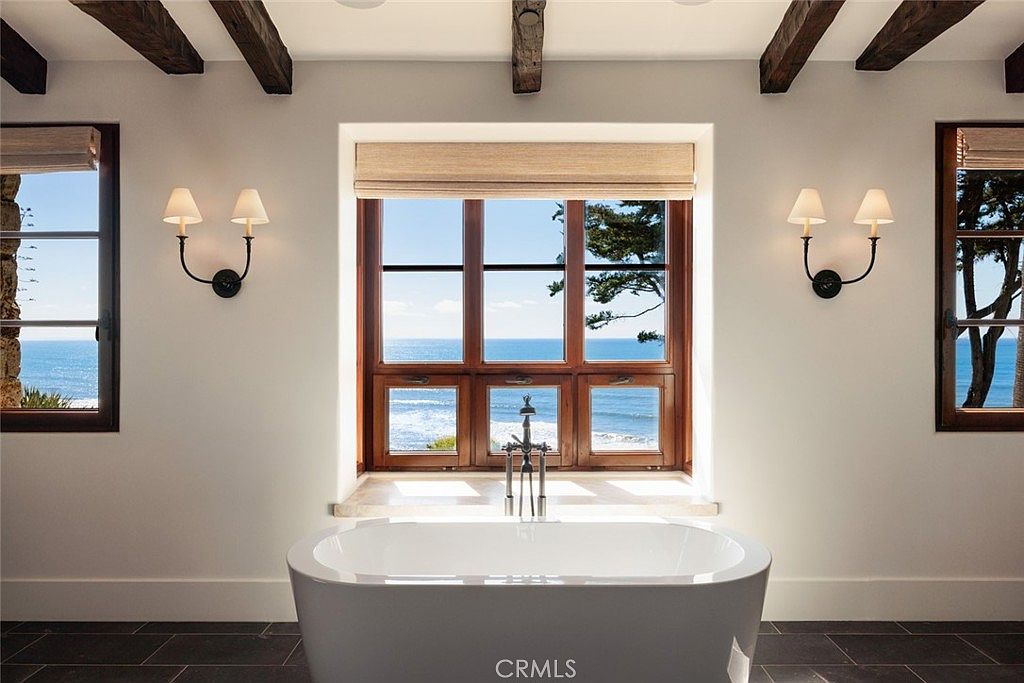
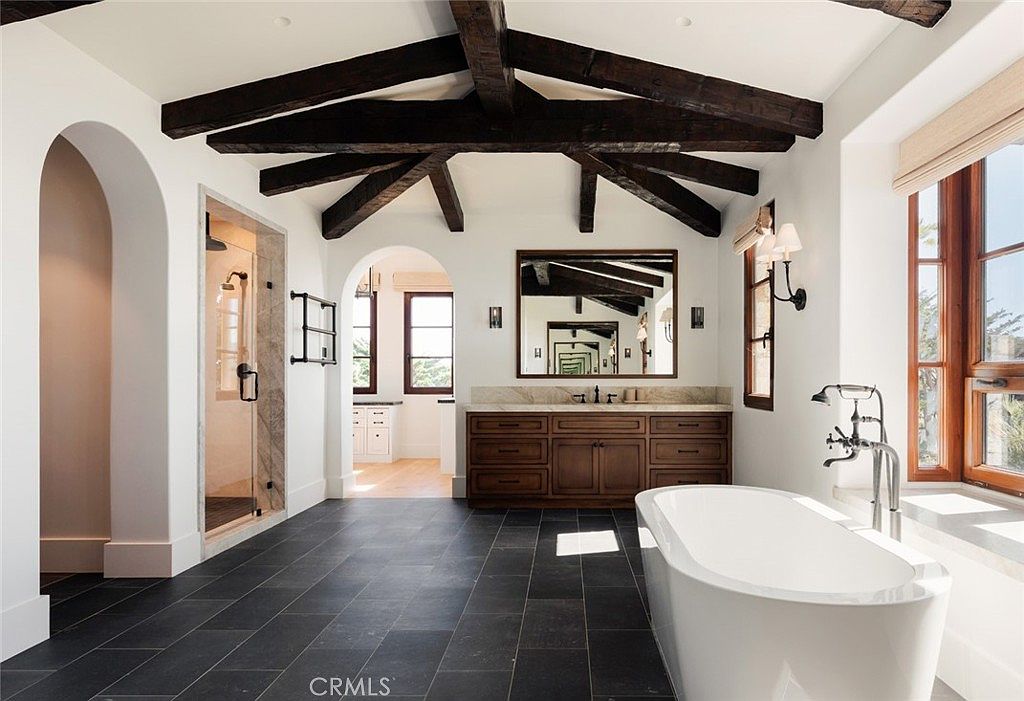
The kitchen is a working room of genuine sophistication: a large central island with stone countertops, dark exposed beams overhead, professional-grade range beneath a prominent metal hood, and a window above the sink framing an unobstructed ocean view. The primary bath offers a freestanding soaking tub positioned directly before a multi-pane window, the Pacific visible and unhurried beyond it.
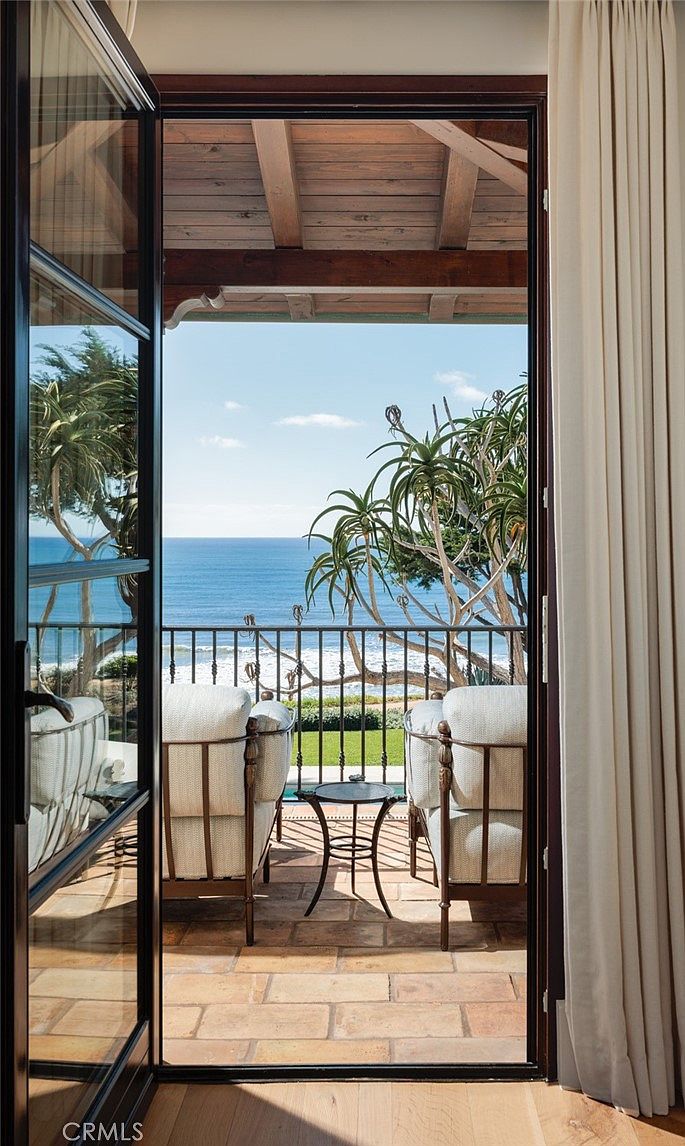
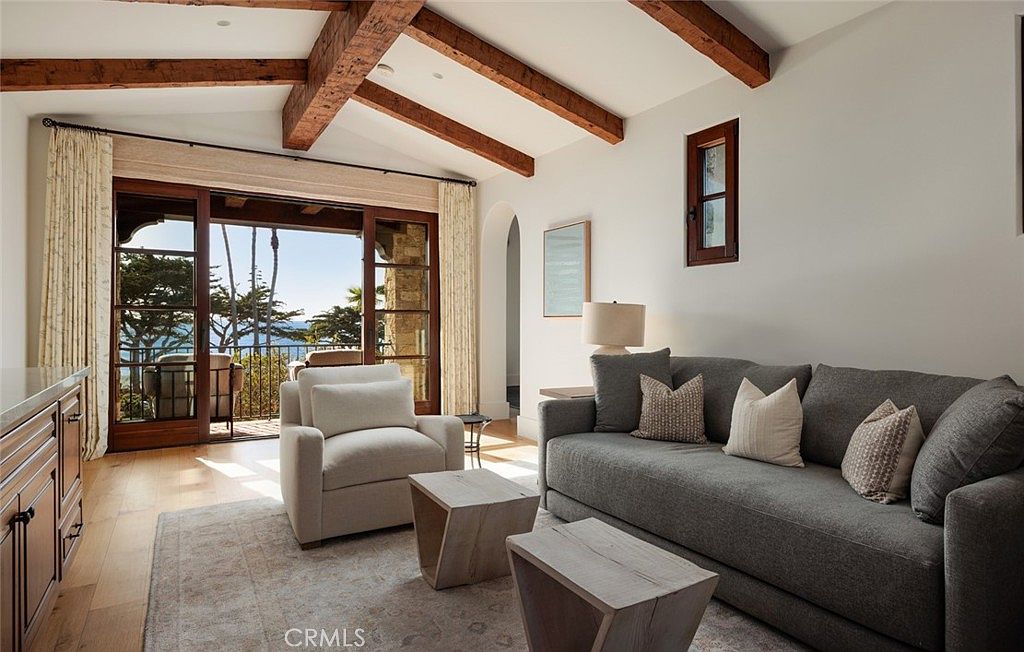
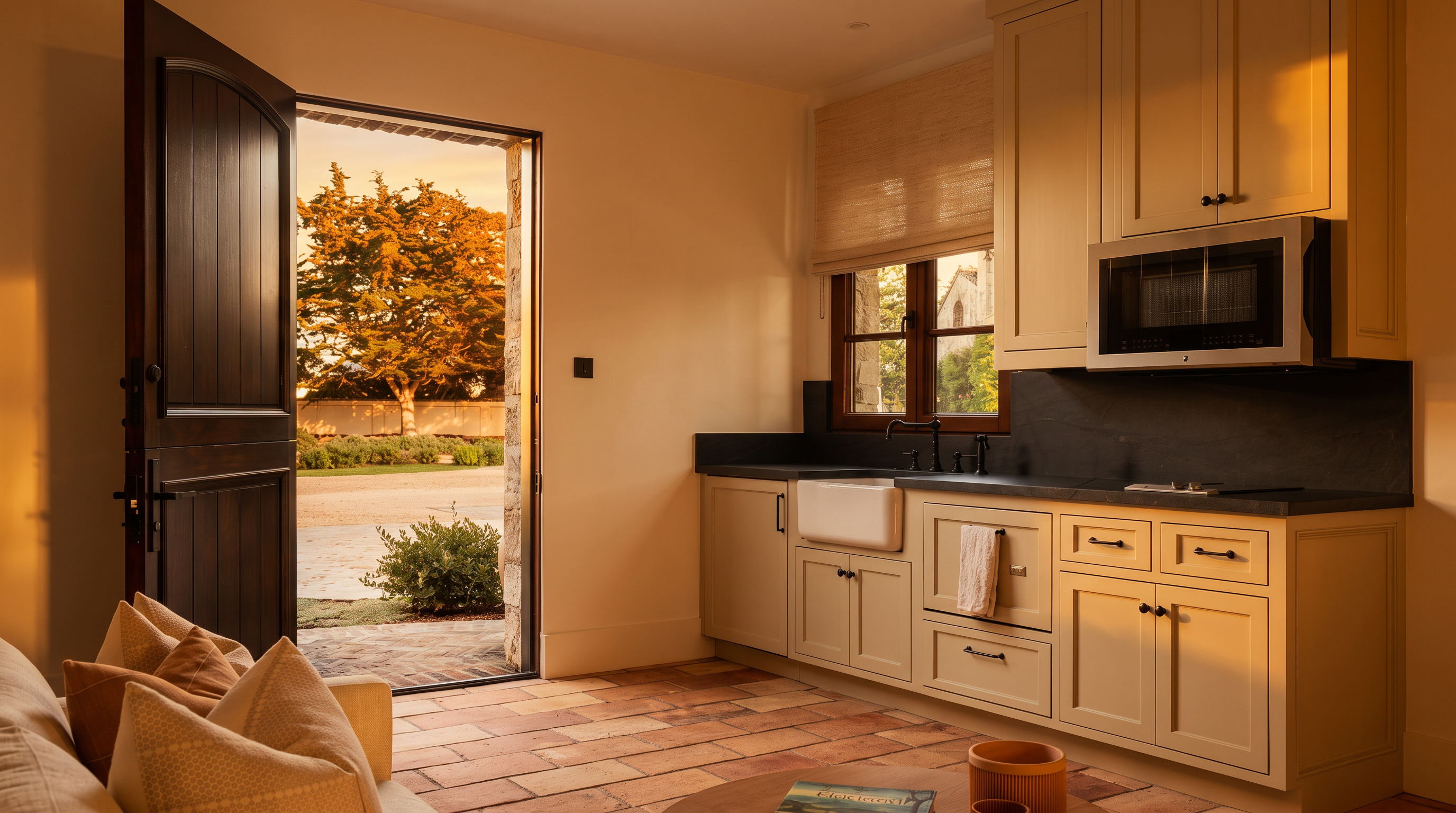
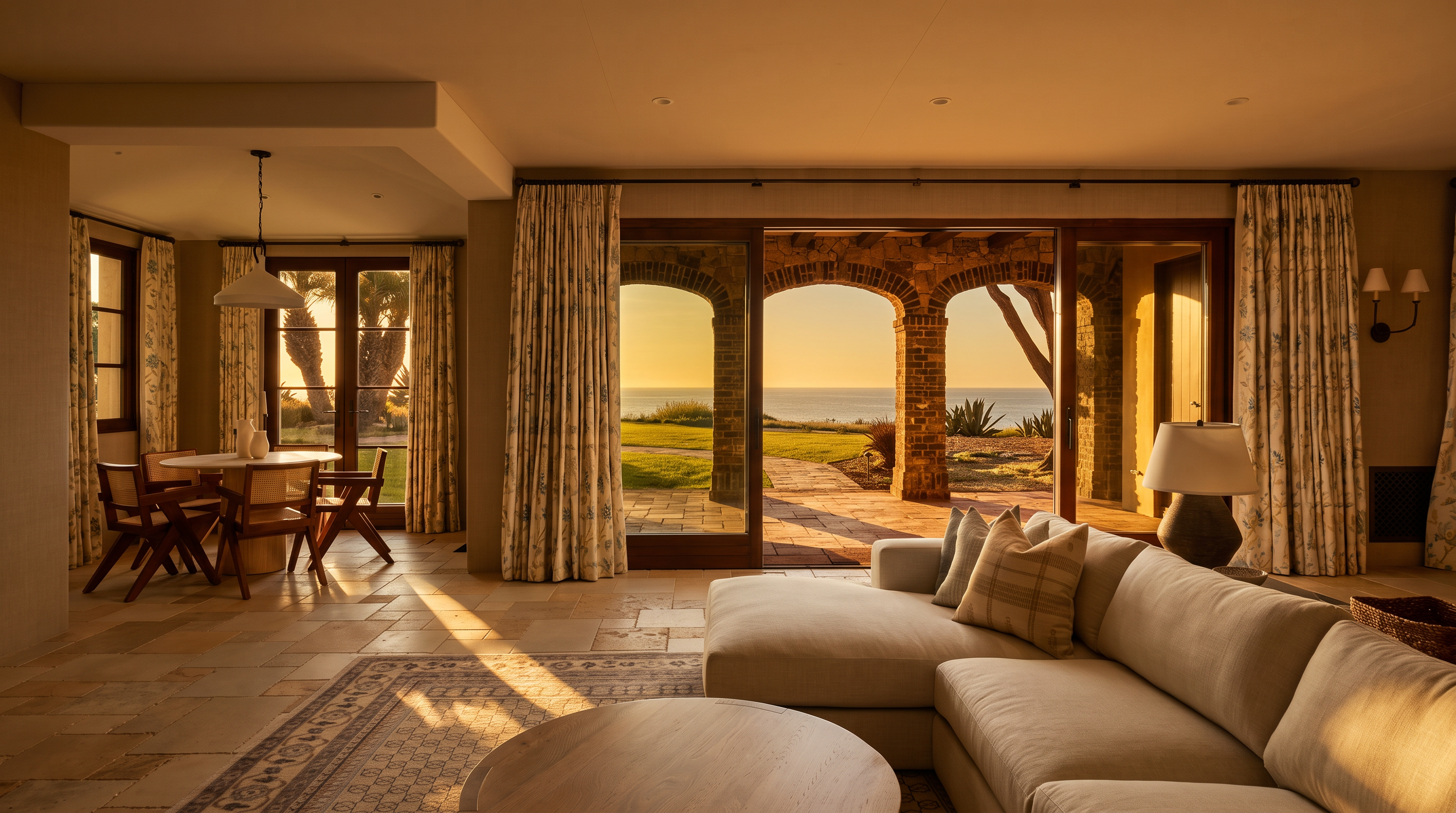
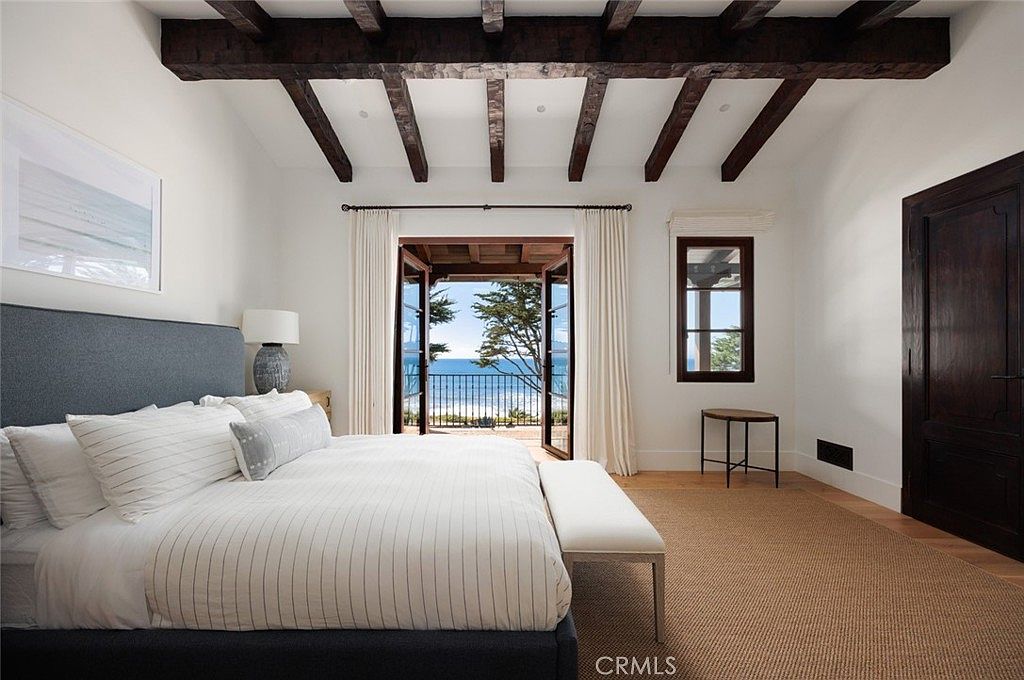
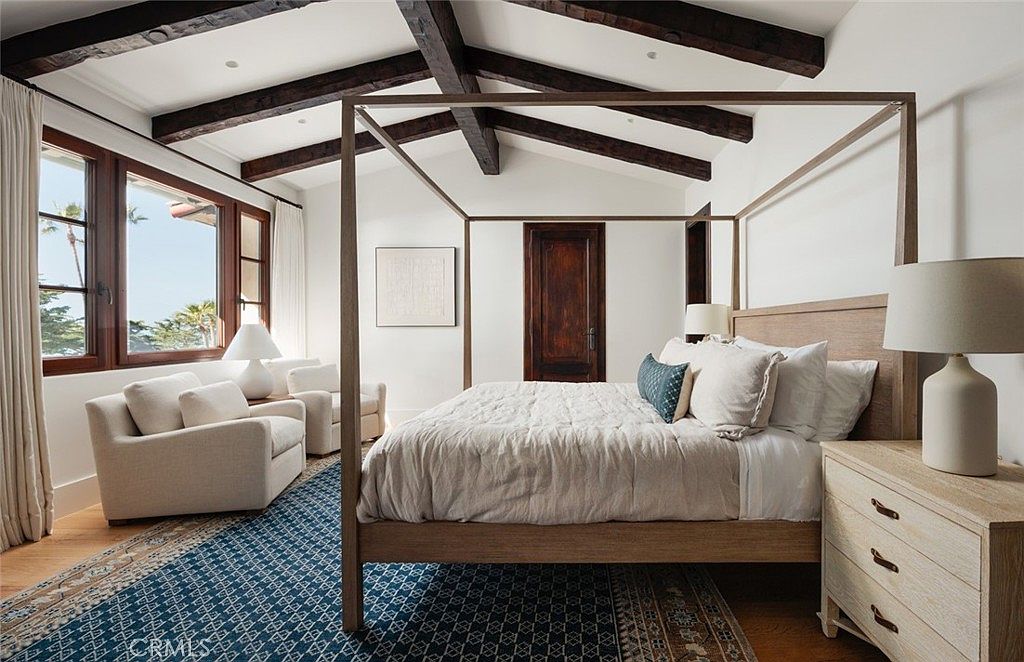
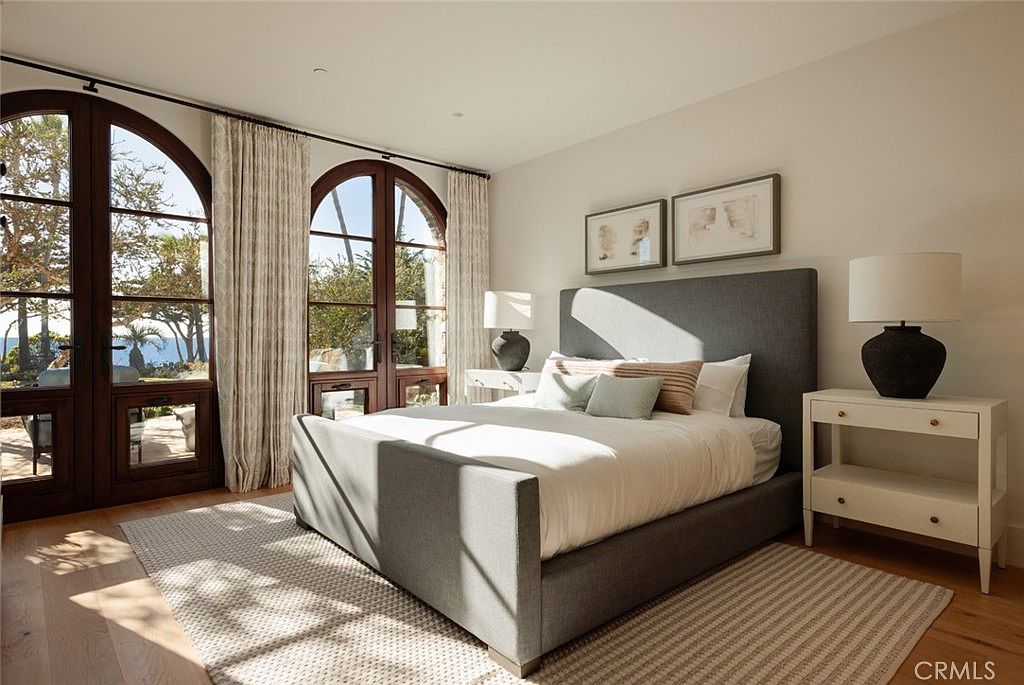
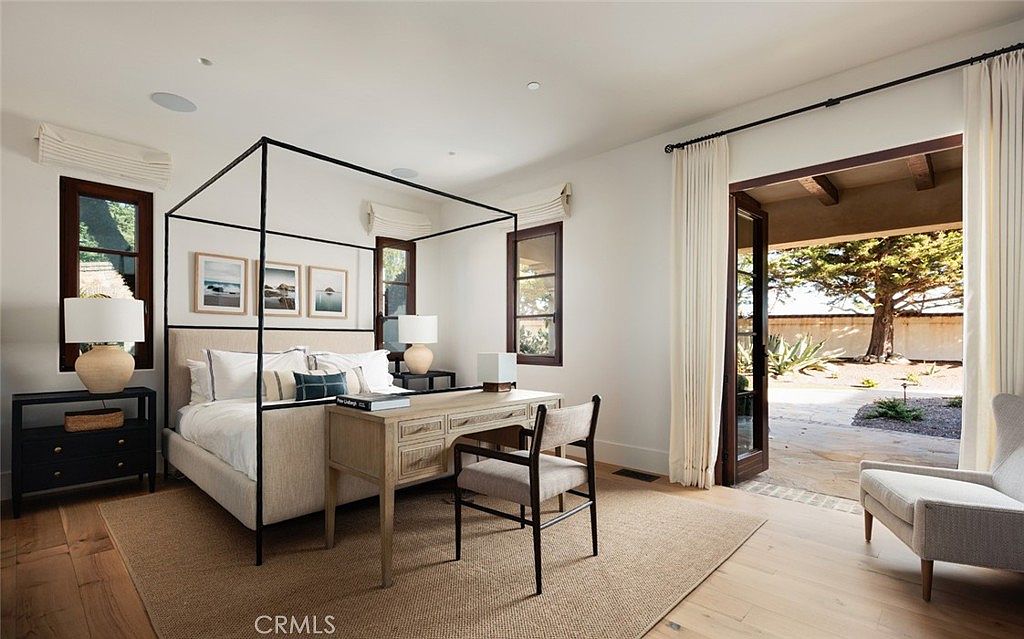
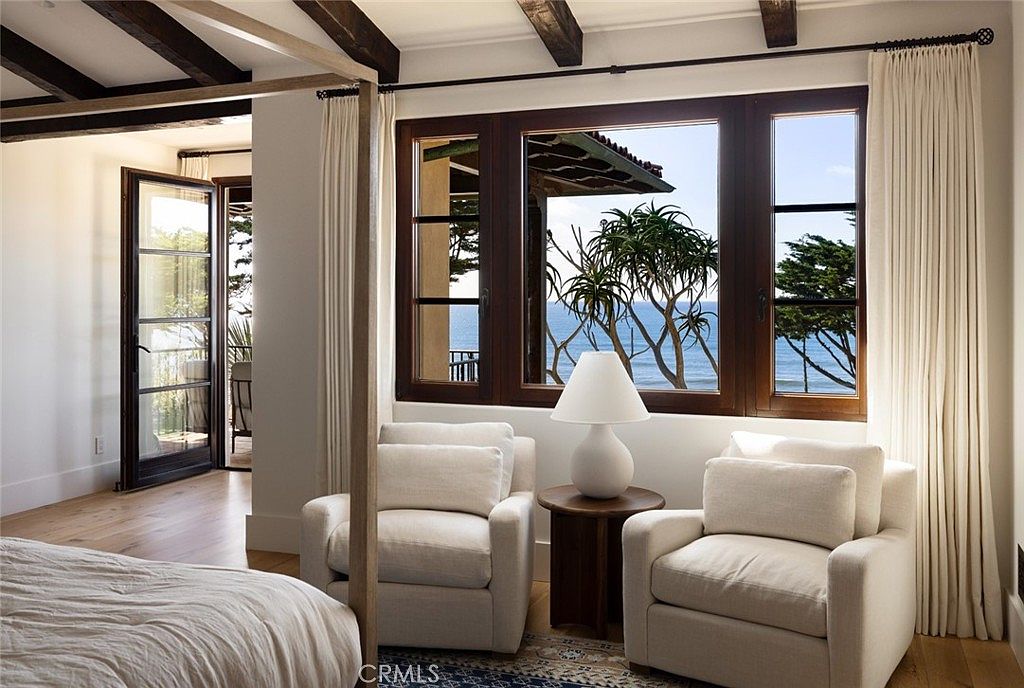
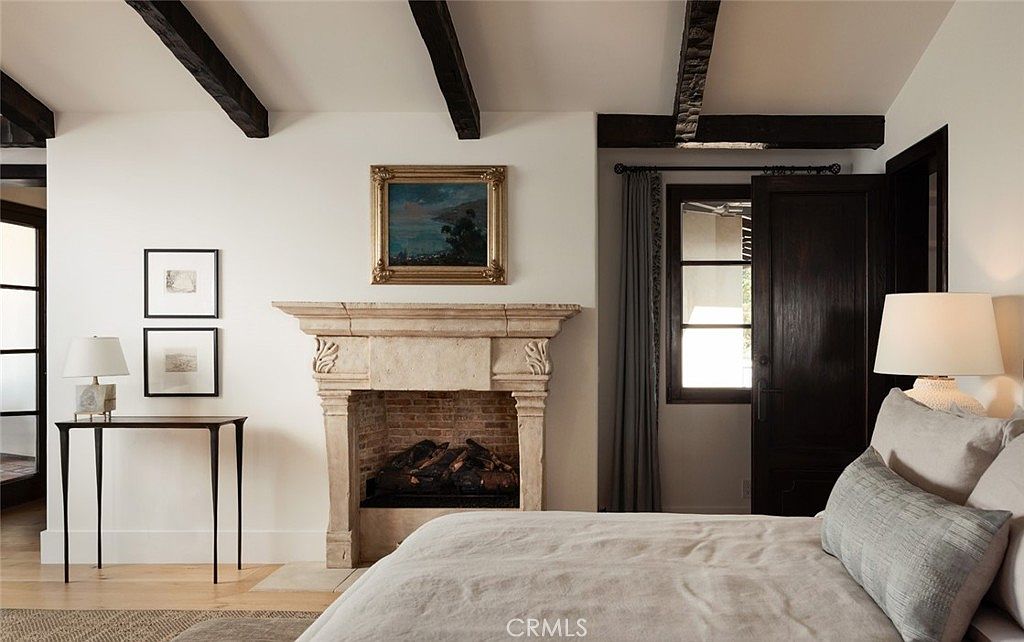
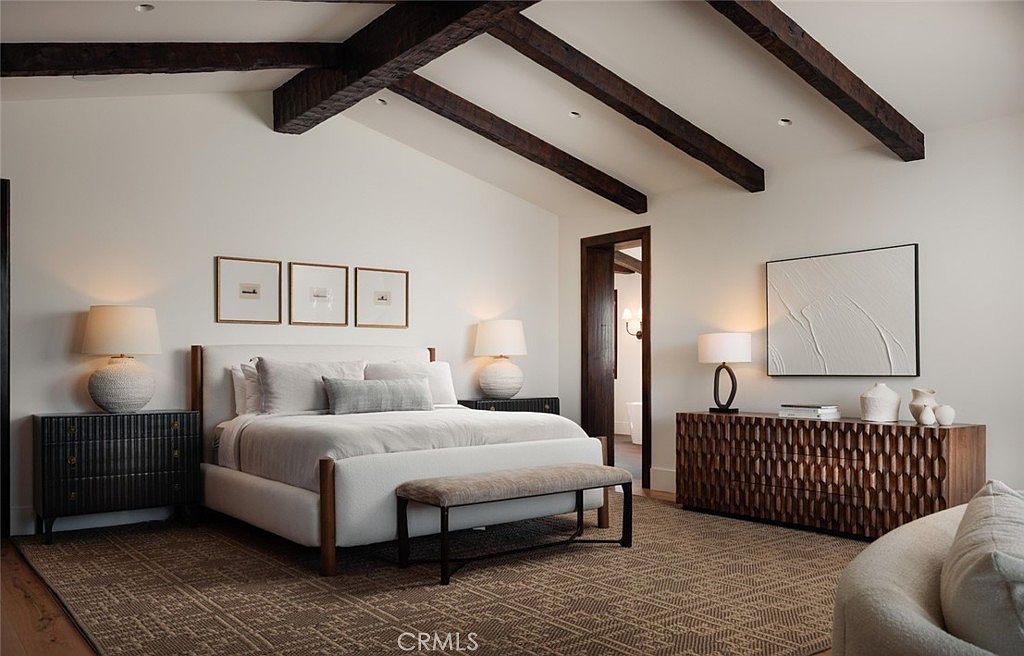
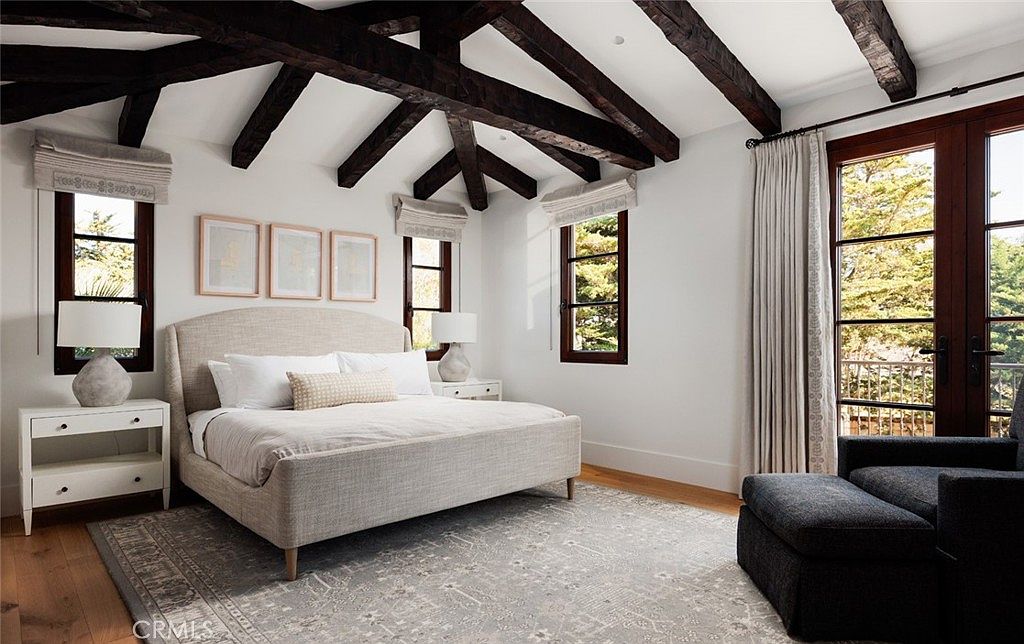
Of the compound's seven bedrooms, each carries its own character — stone fireplaces, arched windows, four-poster frames, French doors opening to private terraces — yet all share the same organizing principle: connection to the outdoor world and the water beyond it. The separate three-bedroom guest residence provides an autonomous retreat within the estate, making extended visits feel considered rather than accommodated.
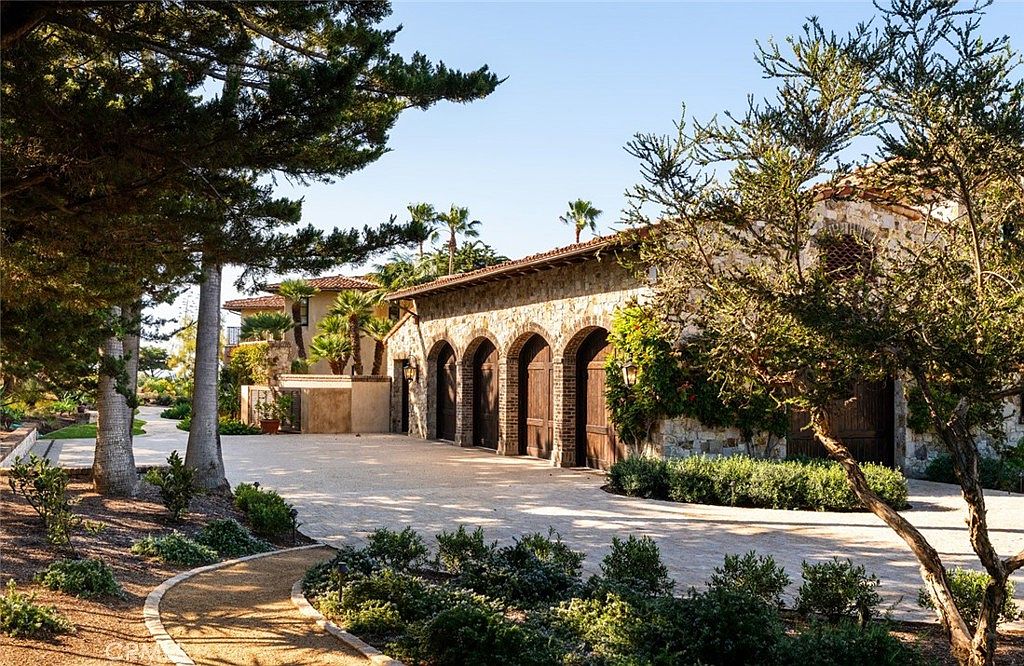
At roughly 13,000 square feet across the main residence and guest wing, with a nine-car garage, event lawn, wine cellar, and prep kitchen completing the program, 4130 Calle Isabella is a compound designed with equal fluency for quiet mornings and large-scale gatherings. The architecture earns its setting. The renovation honors its origins. The result is a property that belongs, unmistakably, to this particular stretch of coastline.
San Clemente occupies a stretch of the Southern California coast that has resisted, more than most, the pressures of overdevelopment. Incorporated in 1928 and shaped from the beginning by founder Ole Hanson's vision of a Spanish village by the sea, the city retains a coherent architectural identity — white stucco, red tile, wrought-iron detail — that gives its hillside neighborhoods a sense of continuity rare in coastal Southern California. The town sits between Los Angeles and San Diego, close enough to both to be genuinely convenient, far enough from either to feel like its own place.
Cotton Point Estates, where 4130 Calle Isabella is positioned, represents the most private and protected residential address within that city. The guard-gated enclave sits at the southernmost tip of San Clemente, where the bluff meets the Pacific with particular drama. The neighborhood's name references Cotton Point itself — the headland that shelters the surf break directly below, a break known to the wider surfing world as Trestles.
Trestles is not simply a local beach. It is one of the most celebrated surf spots in the world, a venue for professional competition and a destination for serious surfers across generations. The waves at Lower Trestles in particular — long, consistent, and precisely shaped by the point's geometry — have made this stretch of coast a pilgrimage site within surfing culture. For residents of Cotton Point Estates, that same break is a short walk from home.
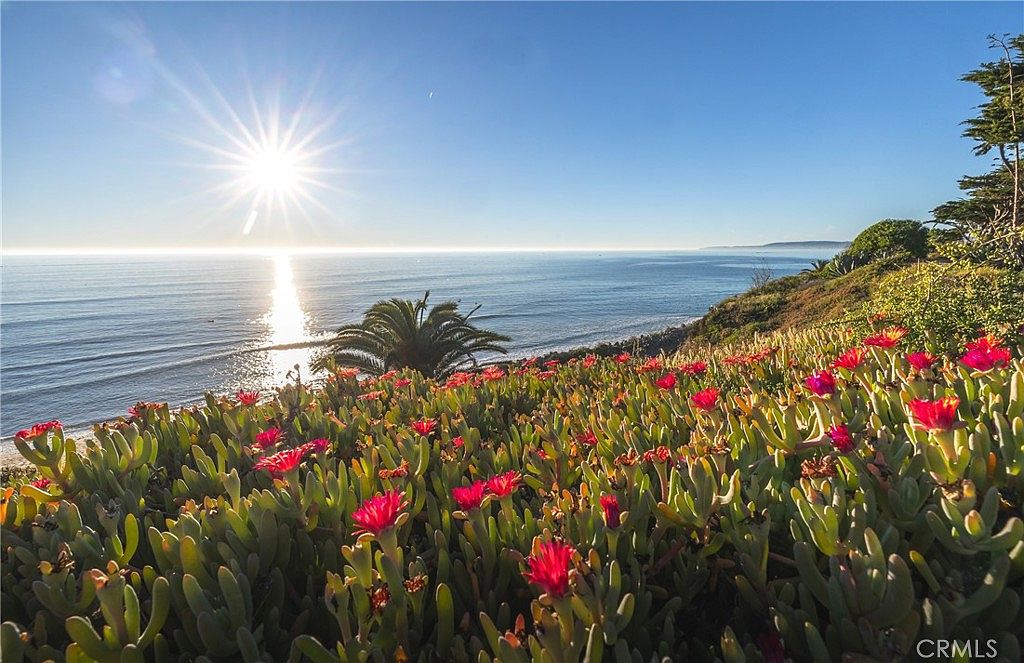
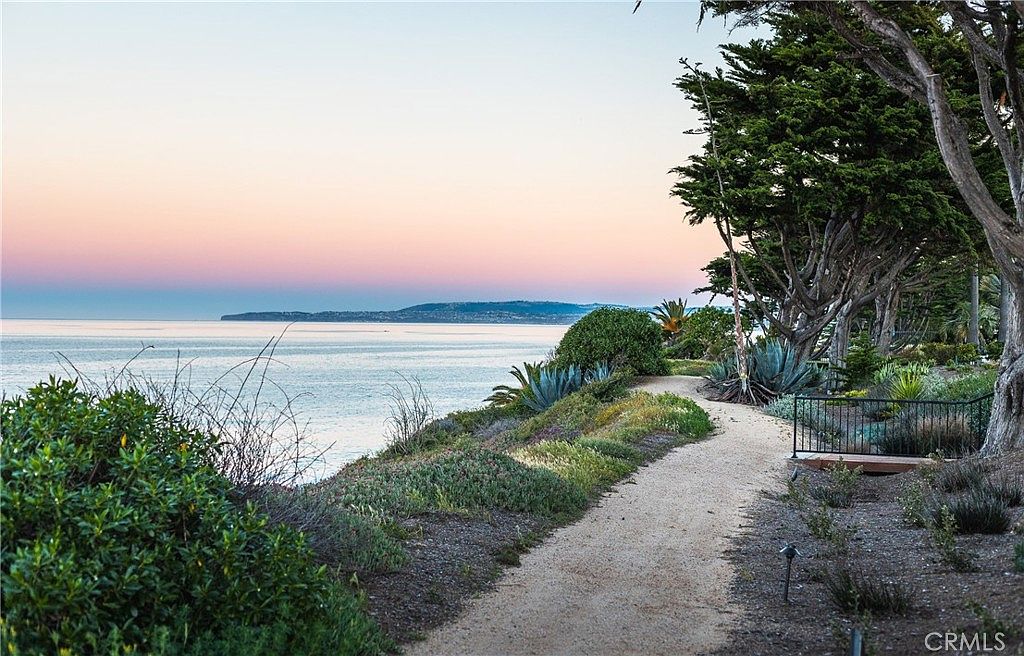
The coastline here also carries a layer of American history. The adjacent San Onofre State Beach and the surrounding lands have been among the most carefully preserved stretches of the Southern California coast, their limited development a consequence of both state stewardship and military ownership to the south. The result is a landscape that still reads, in places, as it might have a century ago: low bluffs, native scrub, and the Pacific horizon unbroken by any visible structure.
San Clemente's downtown, anchored by the Del Mar Street corridor and the historic pier, offers the kind of walkable village character that coastal towns of this scale rarely sustain. Independent restaurants, surf and lifestyle boutiques, and a genuine community of year-round residents give the town center an authenticity that distinguishes it from resort-adjacent developments to the north and south. The pier, rebuilt and extended over the decades, remains the social and visual heart of the waterfront.
The city's trail network is extensive, connecting neighborhoods to the coast and to one another along routes that take advantage of the dramatic topography. The Coastal Trail, in particular, runs for miles along the bluff above the beach, offering the kind of daily access to open landscape that residents of denser coastal cities rarely enjoy.
For those whose lives require proximity to broader infrastructure, San Clemente sits along the Metrolink corridor connecting to Los Angeles, and both John Wayne Airport in Orange County and San Diego International are within practical reach. Private aviation operates from nearby facilities as well.
What Cotton Point Estates offers, within all of this, is a specific and irreplaceable combination: the social and cultural richness of a genuine coastal community, the wild beauty of a coastline that has largely escaped transformation, and a level of privacy and security that makes it possible to be fully present within both.
Featured Highlights
Curated Content • Presented by Ariana Gaffoglio