The Story Behind
A Masterwork of Historic Brownstone Reimagined for Modern Living
There are renovations, and then there are reinventions. 205 Clinton Street belongs emphatically to the latter category. When award-winning architect Mike Ingui was commissioned to transform this mid-19th-century Cobble Hill brownstone, the mandate was not merely to update a historic structure but to reimagine what a Brooklyn townhouse could be — to push the boundaries of space, light, and livability while honoring every original detail worthy of preservation. The result, more than two years in the making and completed with full landmark approvals, is a home of extraordinary depth and intention.
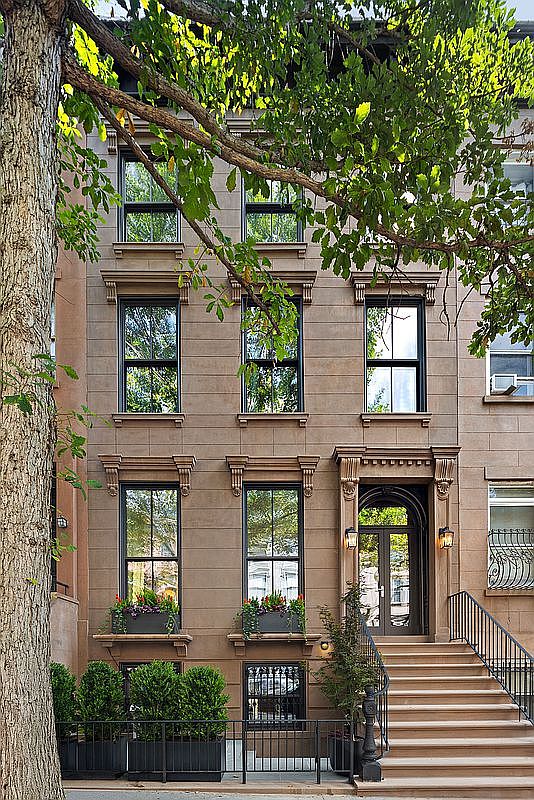
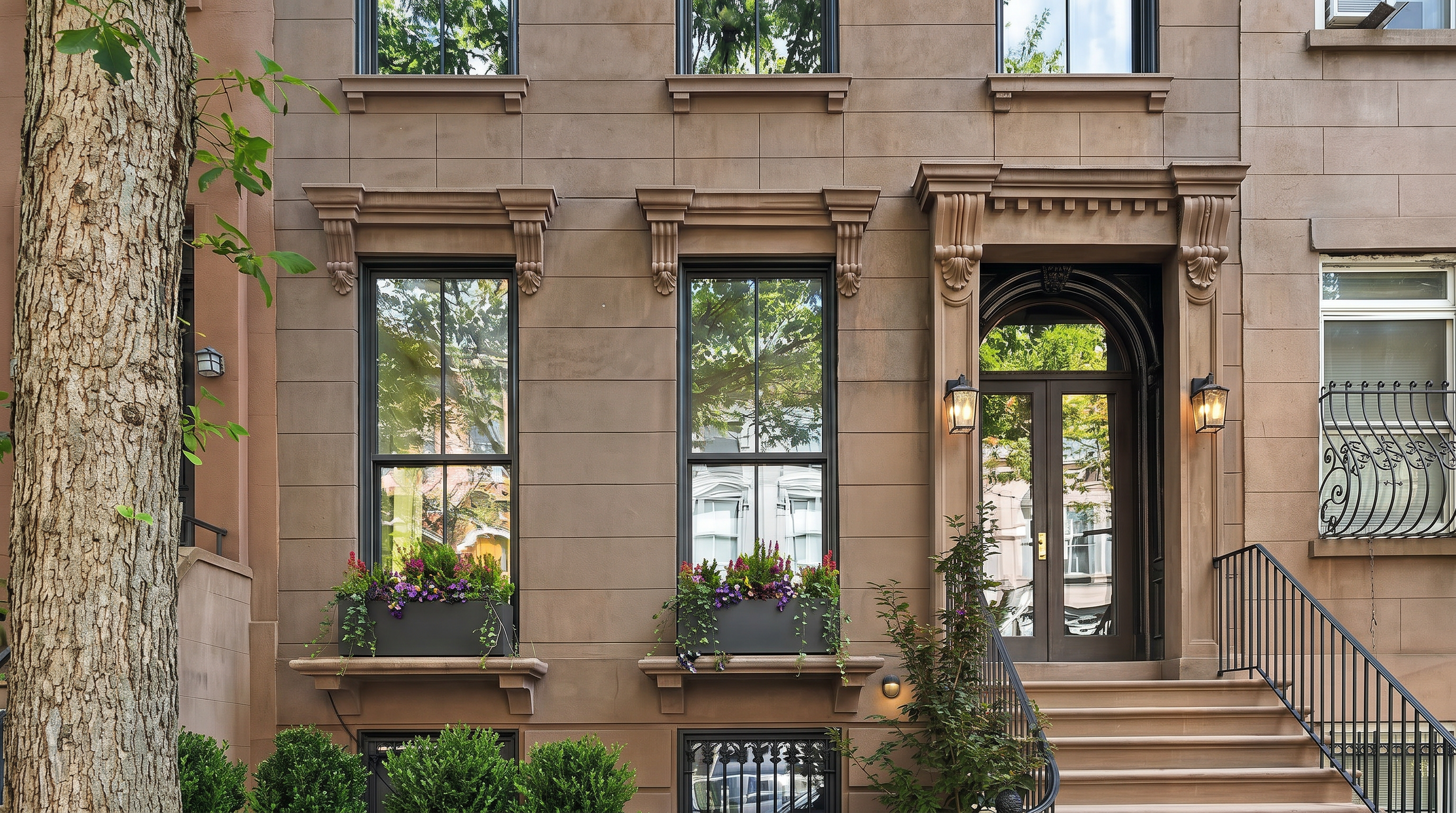
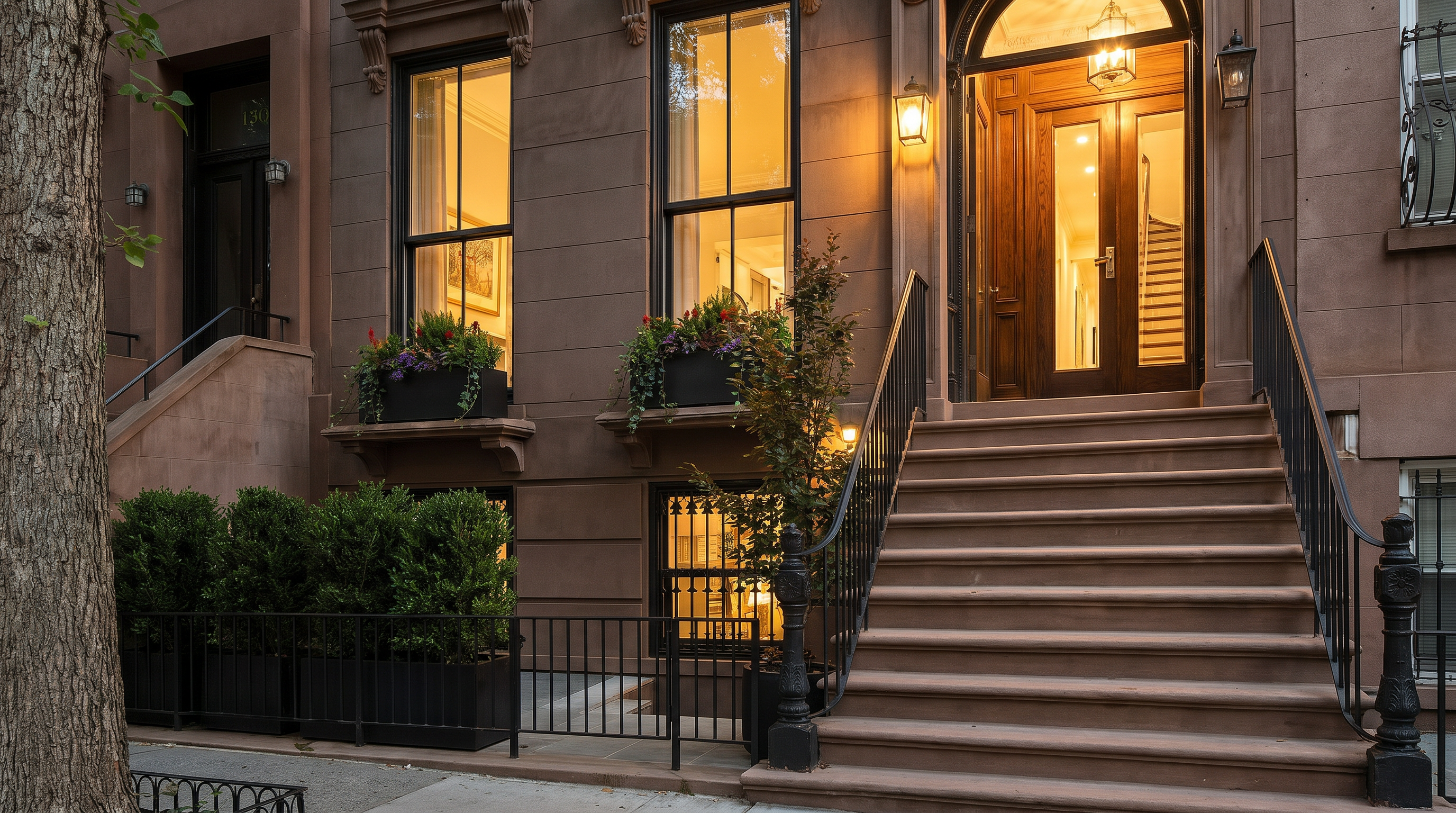
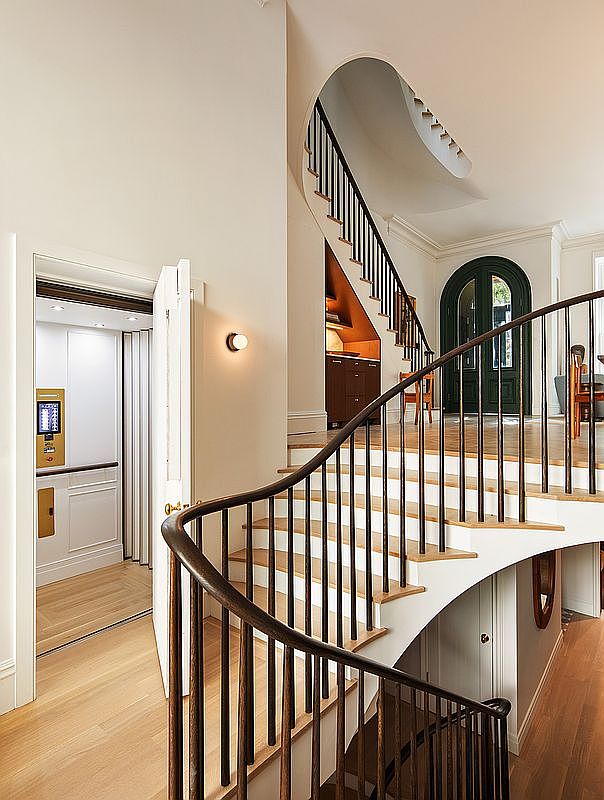
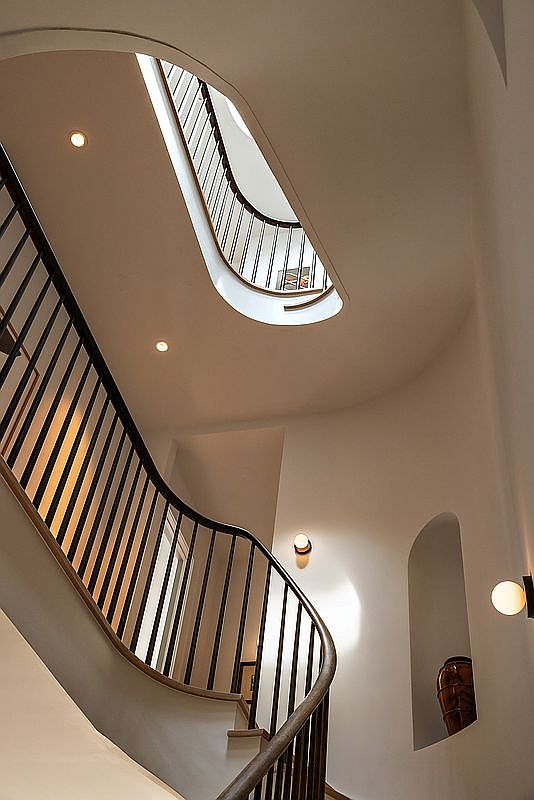
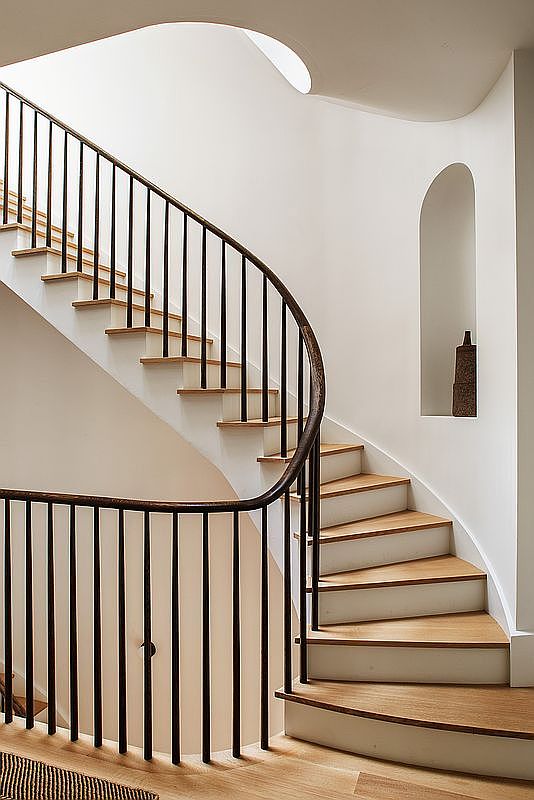
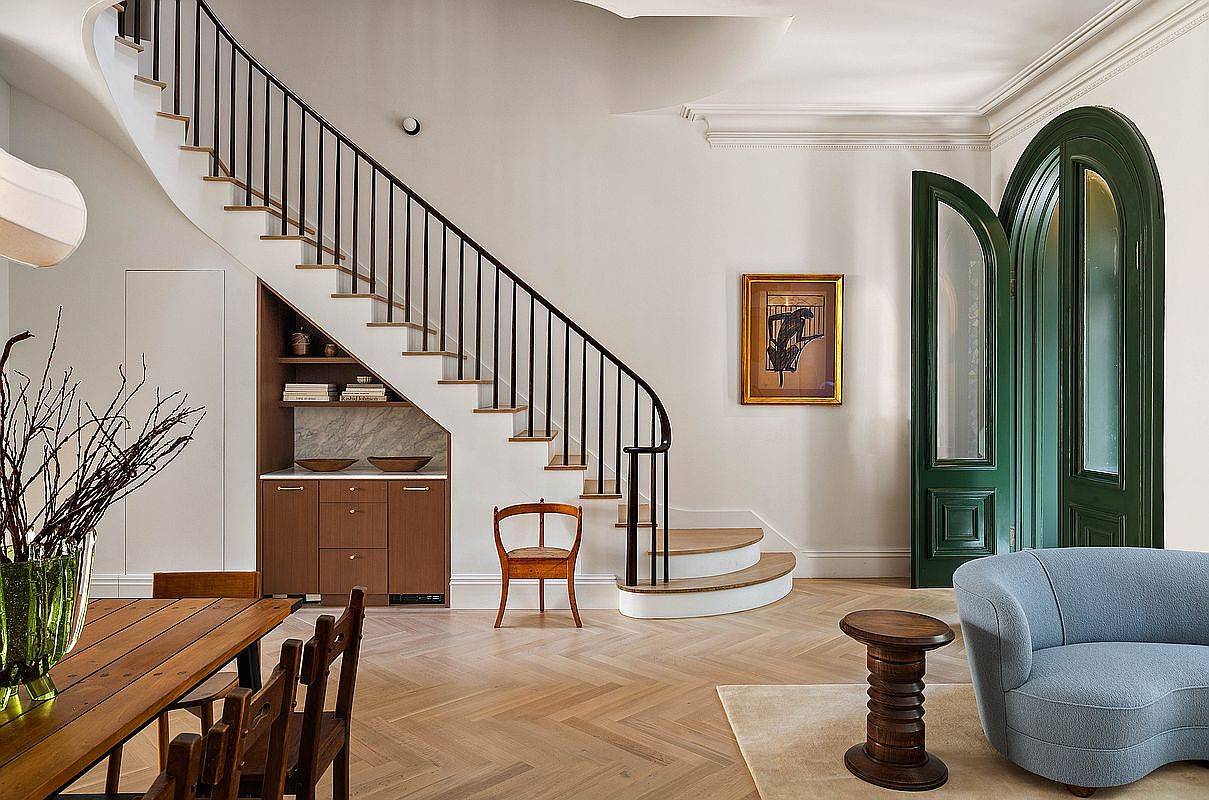
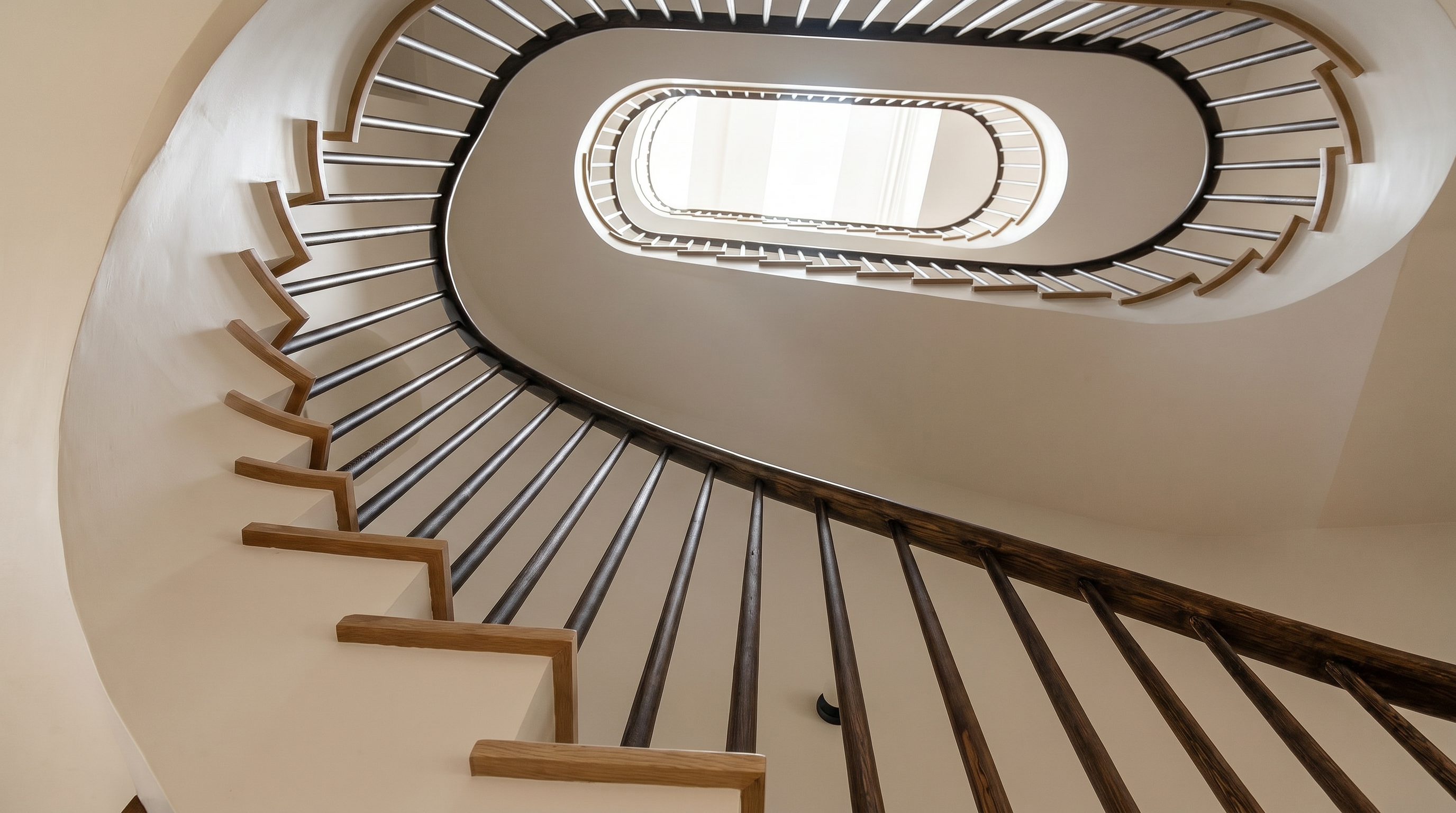
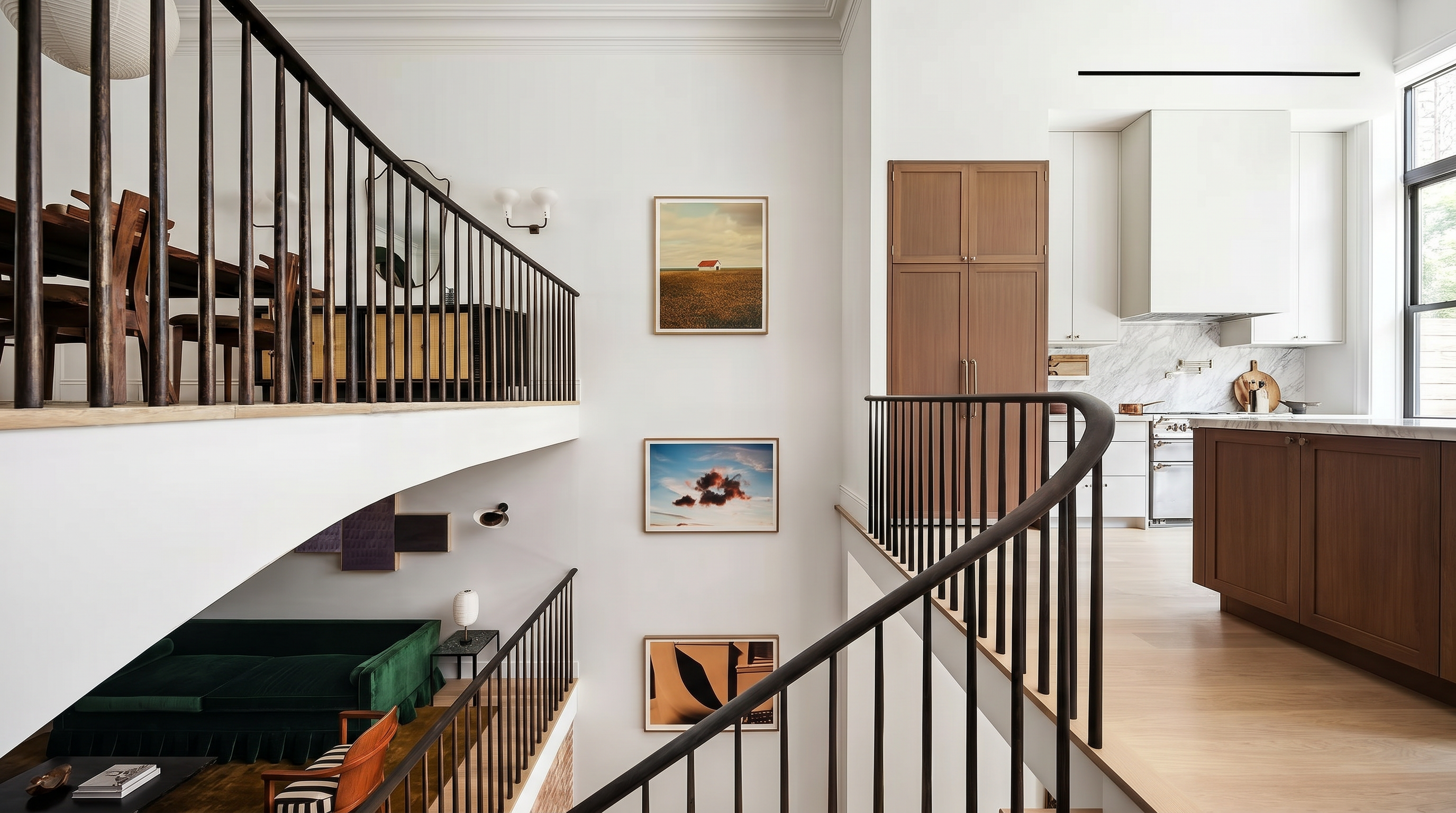
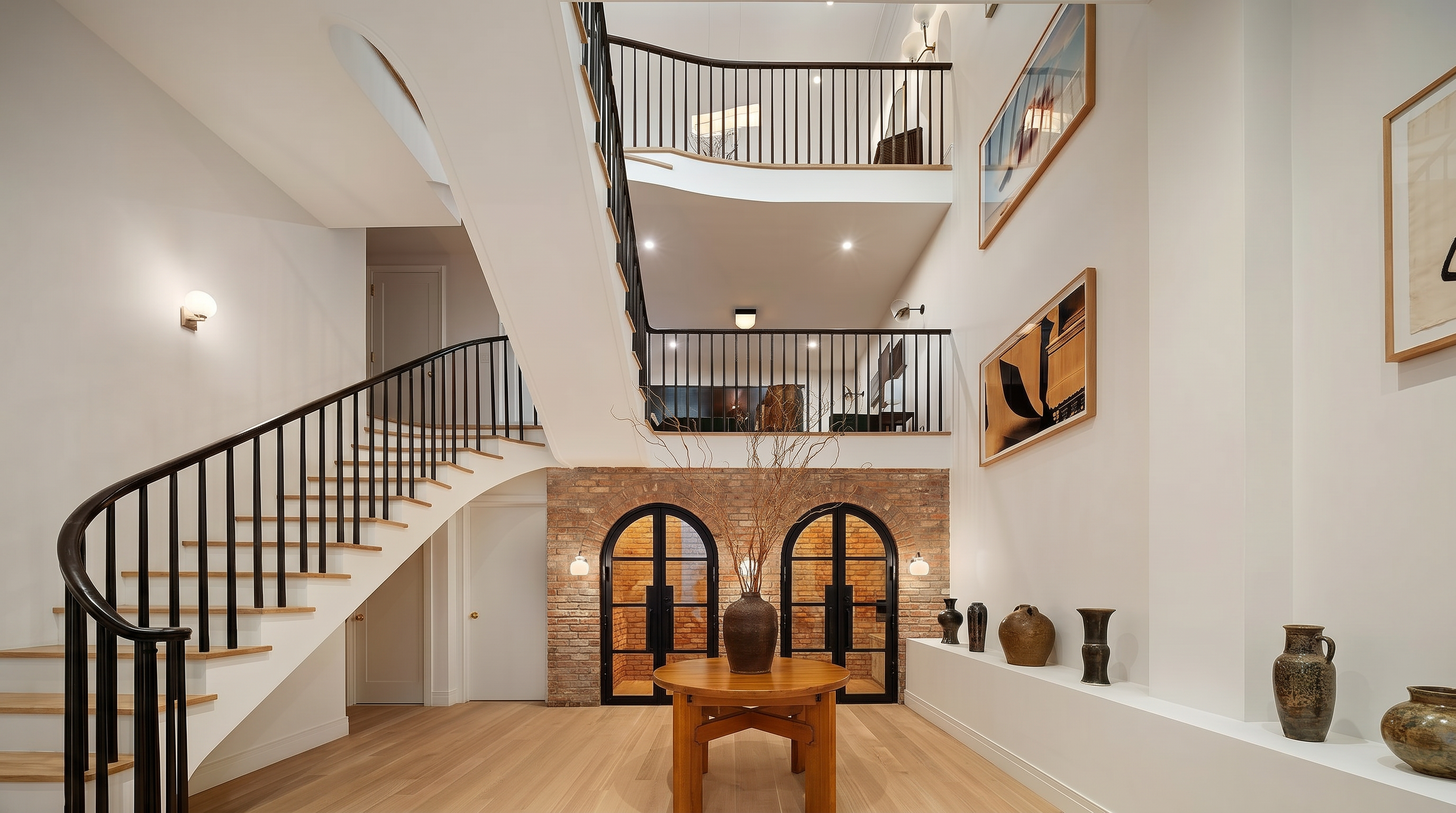
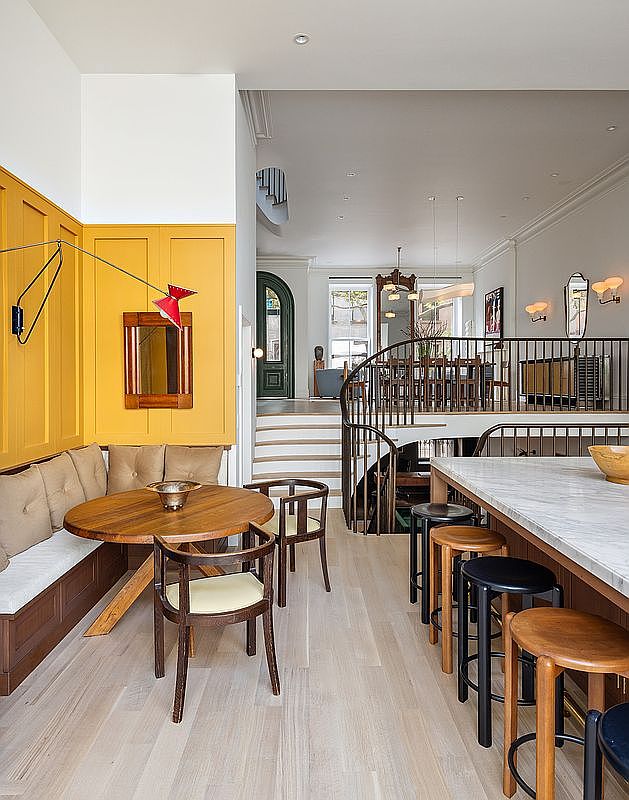
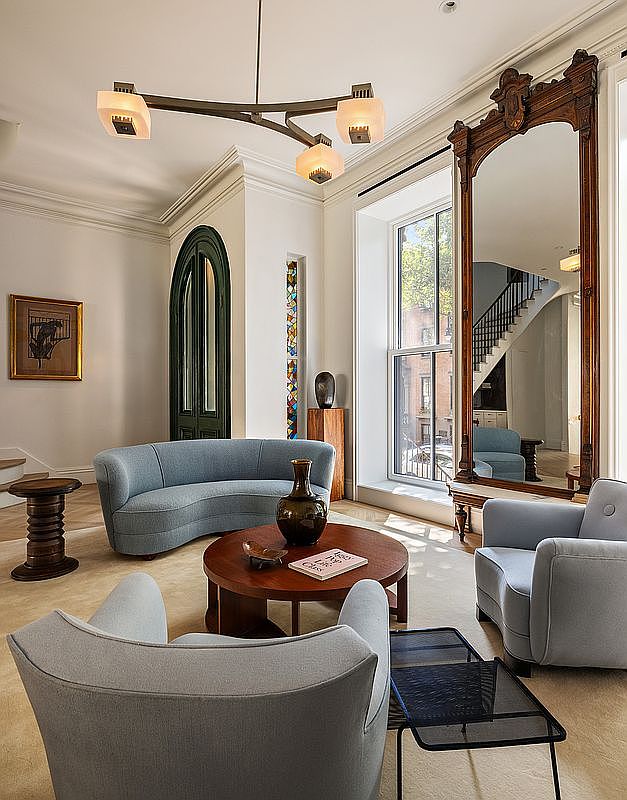
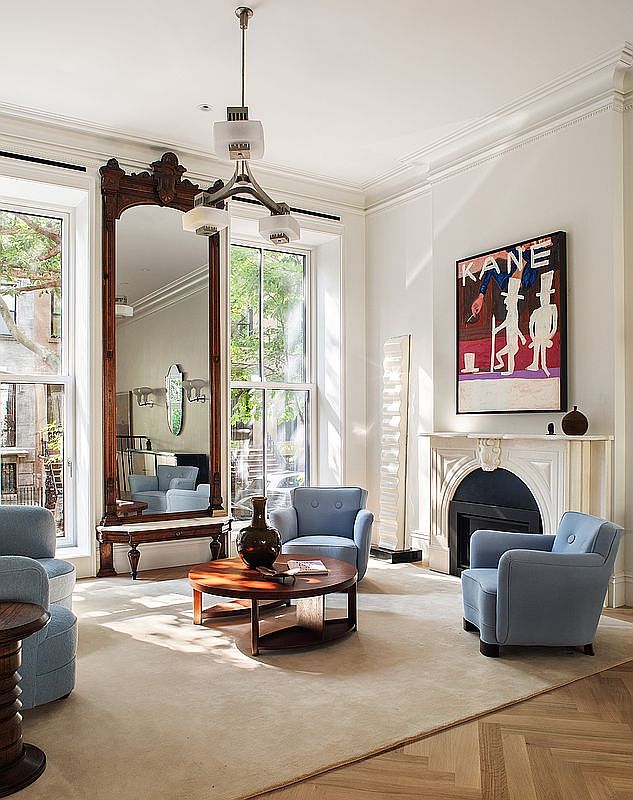
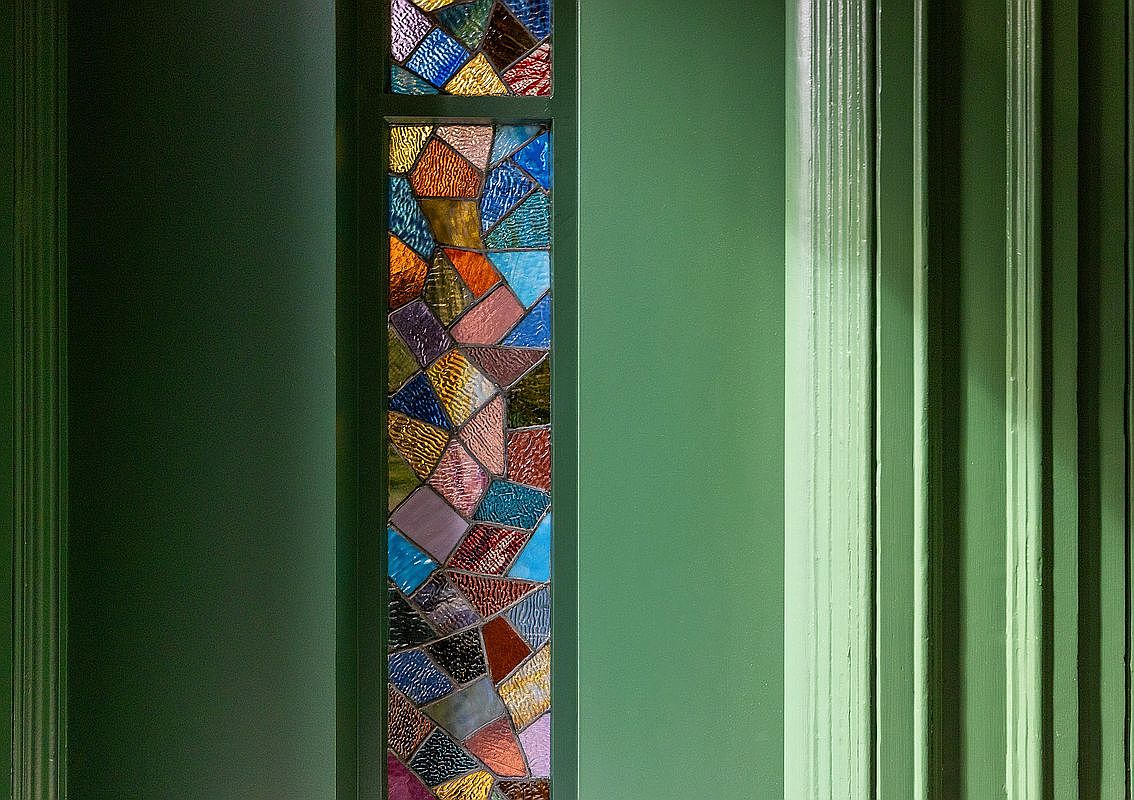
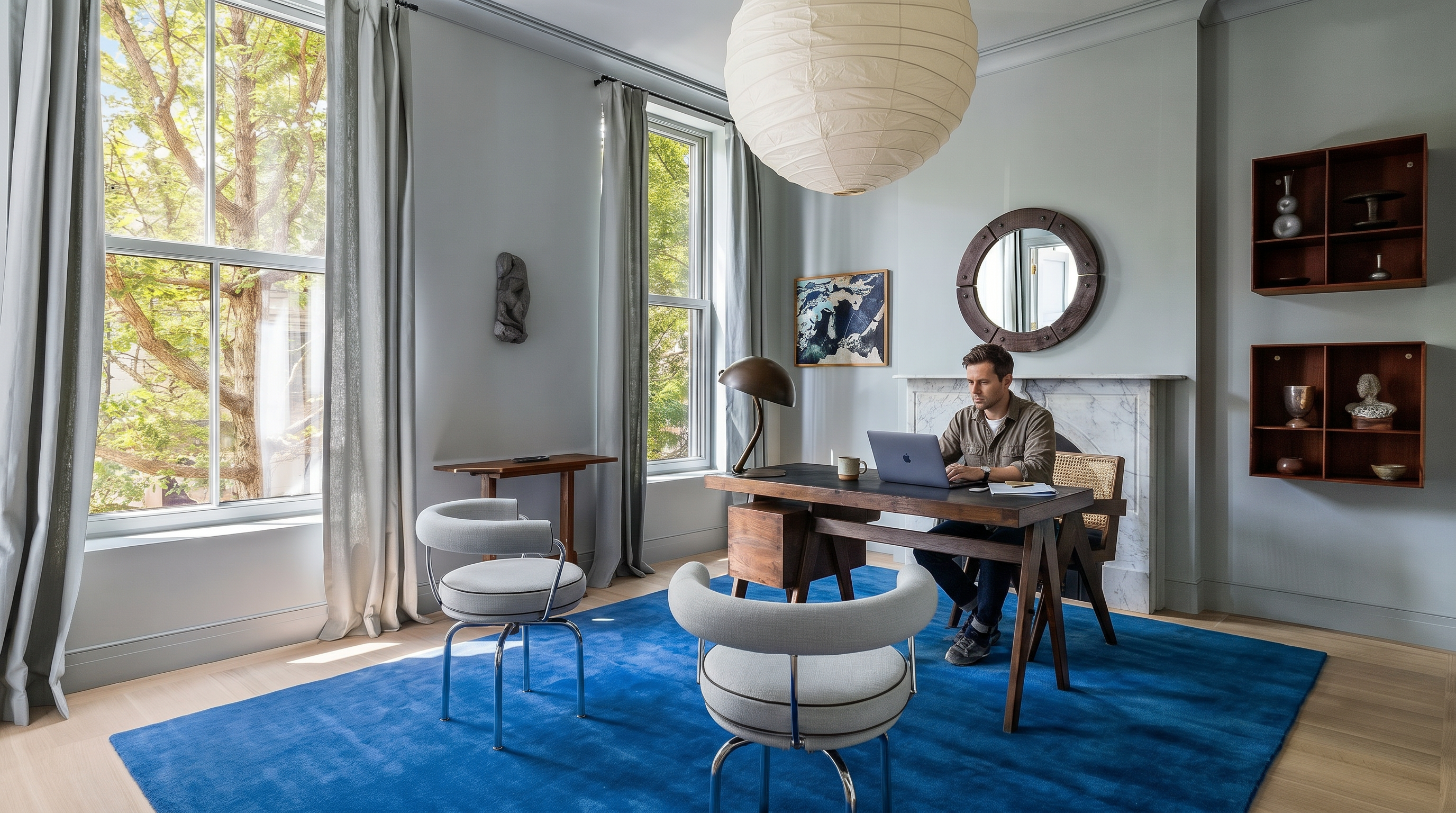
From the street, the restored façade announces its lineage with quiet authority — symmetrical windows dressed in flower boxes, an arched entryway framed in ornate stone, and a grand stoop that speaks to generations of craft. Step inside, and the home reveals itself in layers. A hand-carved staircase spirals upward beneath ceilings that soar to fourteen feet, while restored stained glass panels cast jewel-toned light across white oak floors. Original fireplace mantels and a striking pier mirror remain precisely where history placed them, now in elegant dialogue with custom millwork, Waterworks fixtures, and triple-pane windows engineered for both silence and thermal comfort.
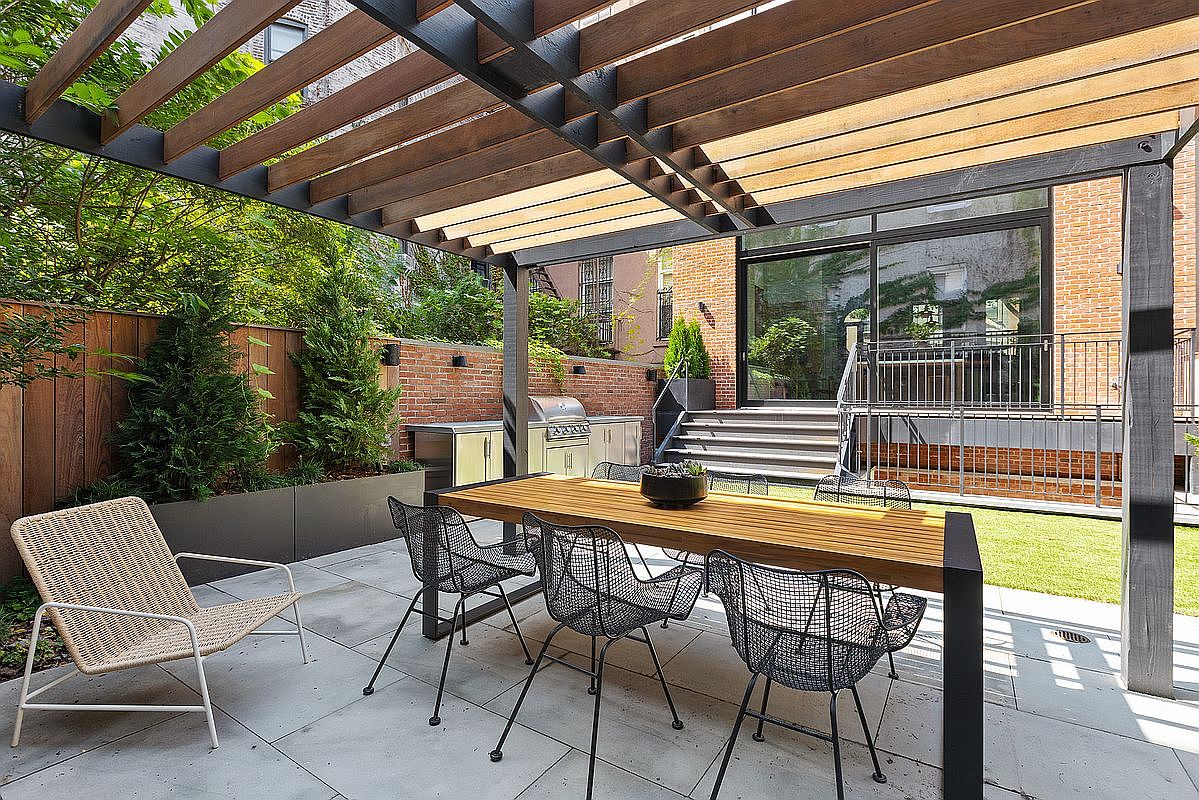
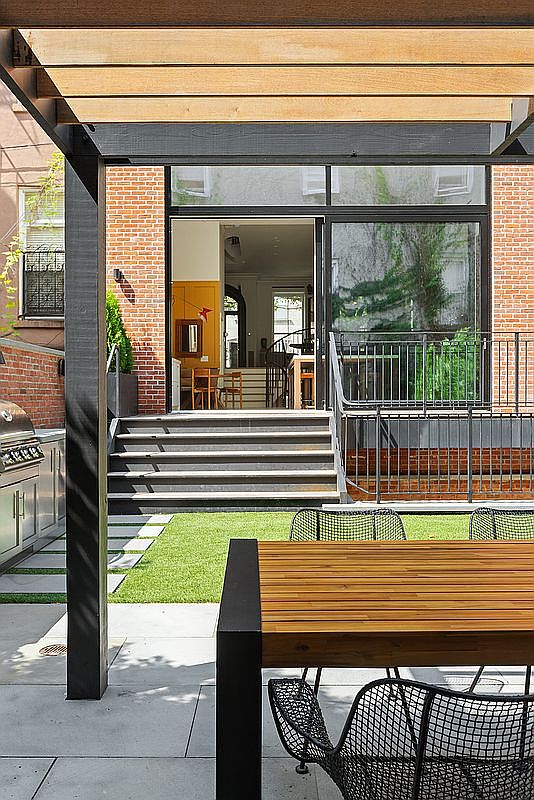
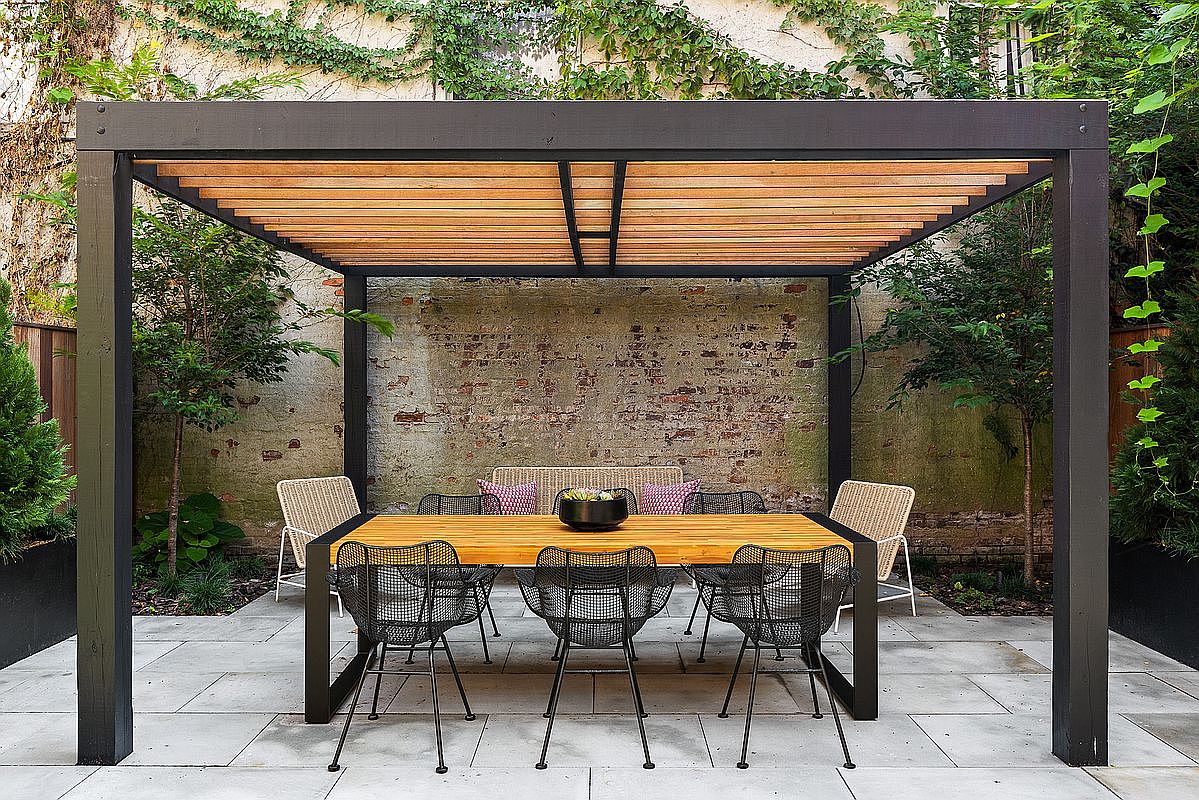
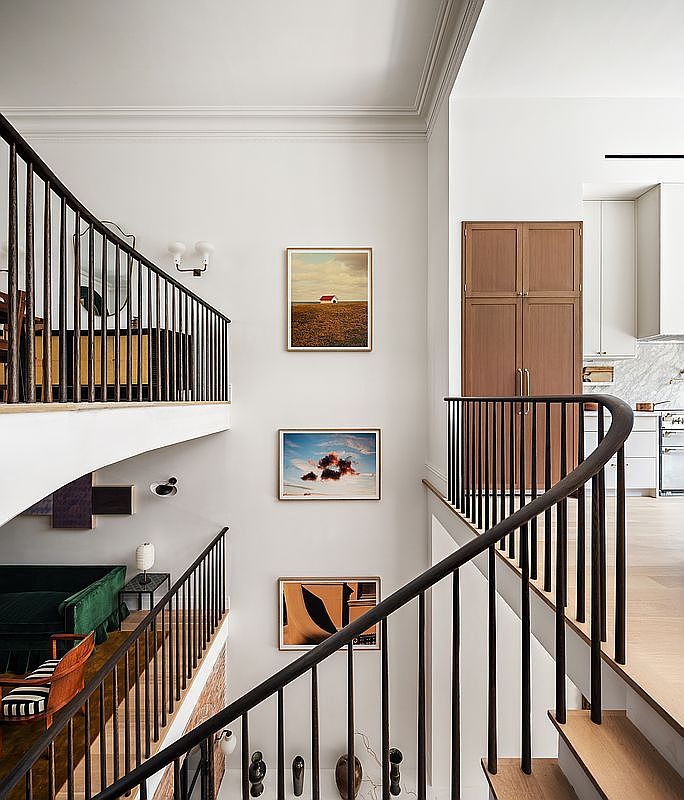
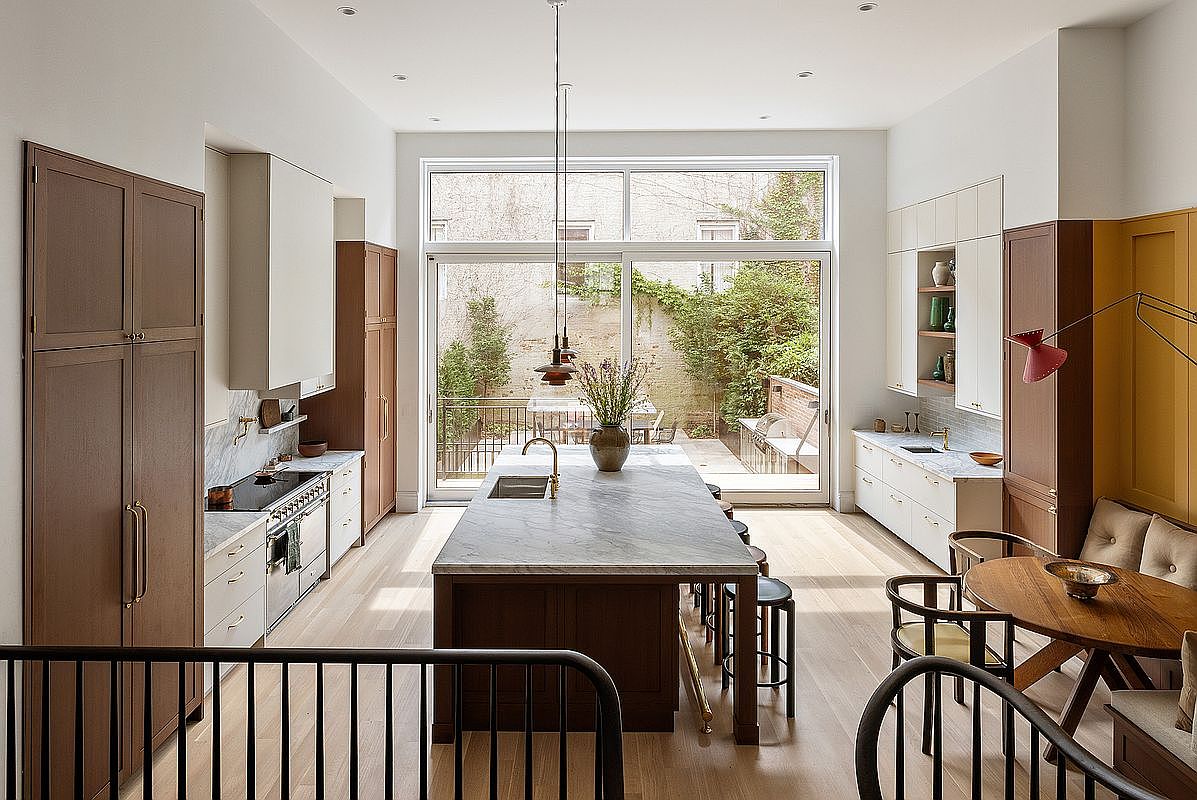
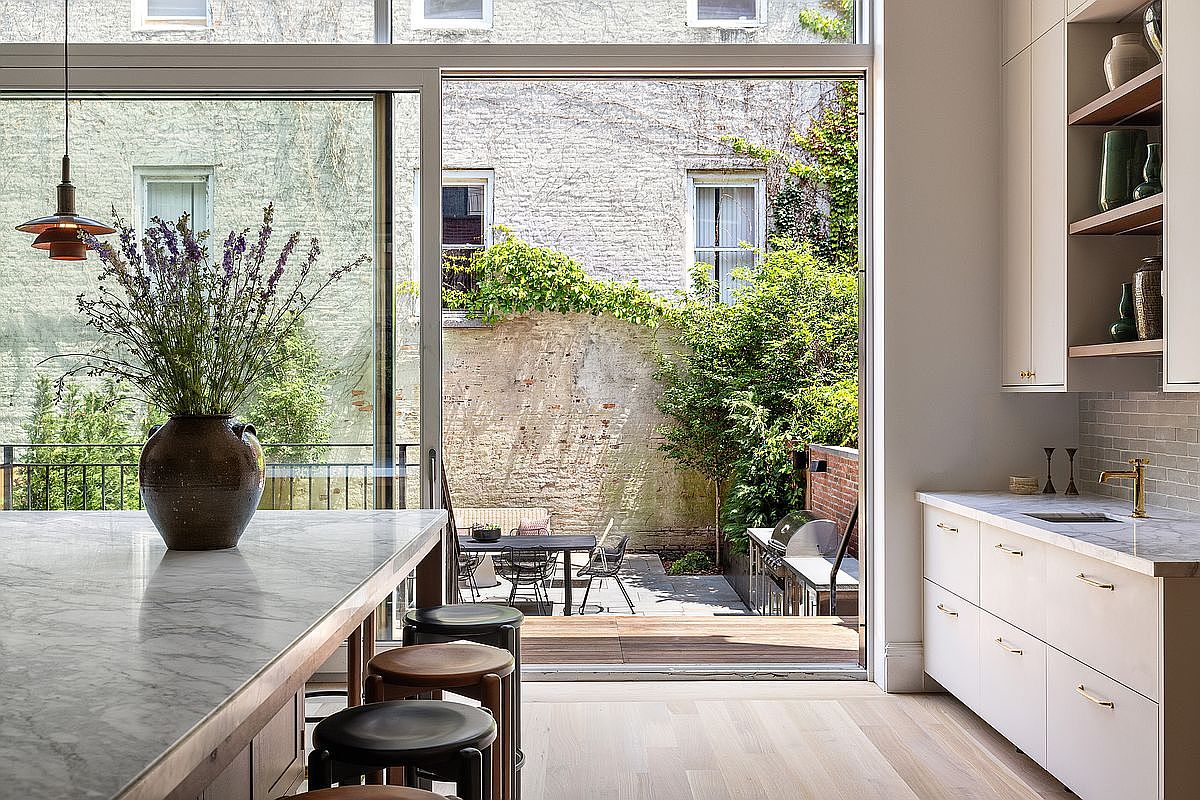
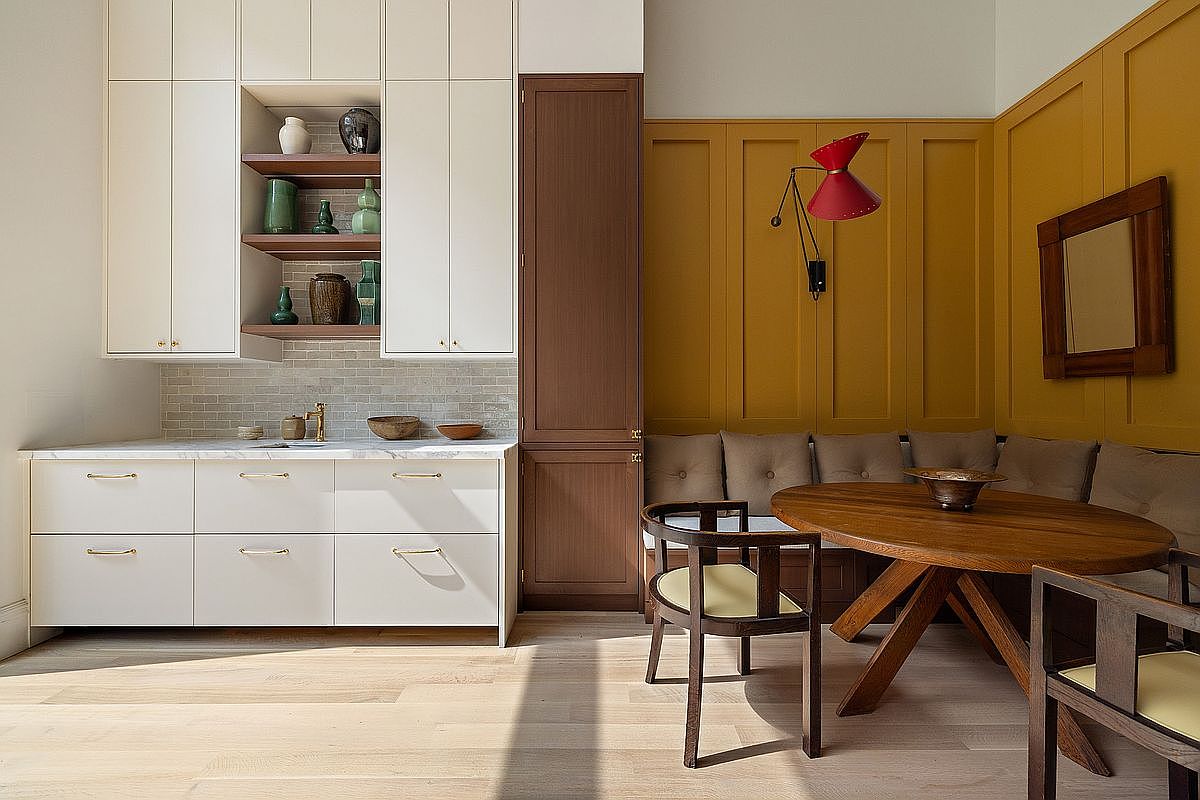
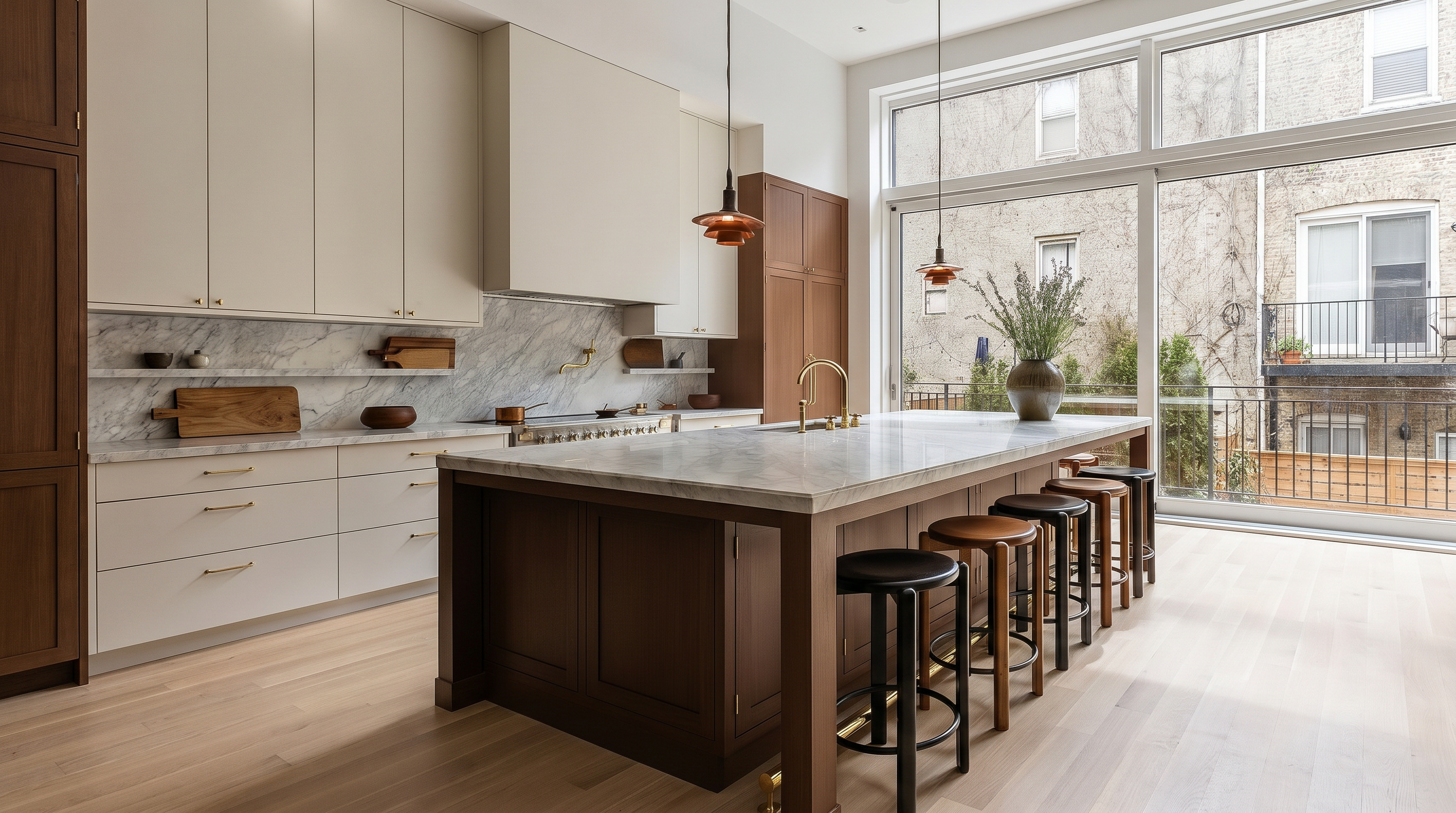
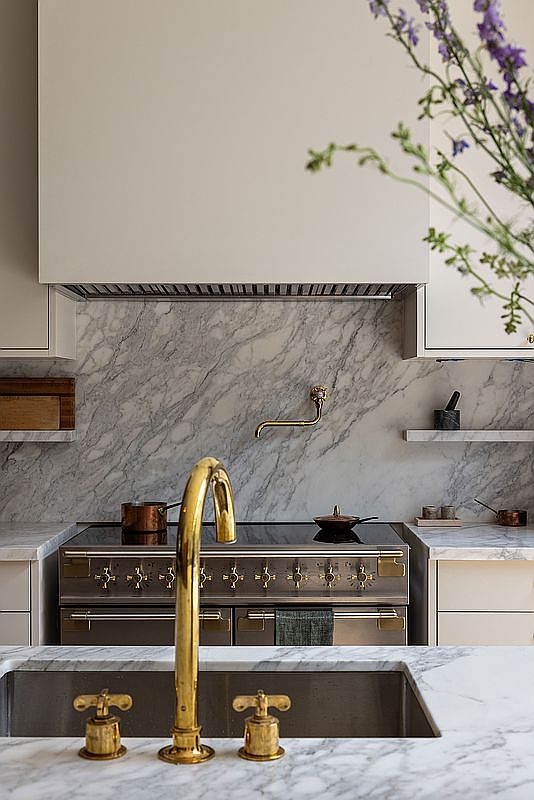
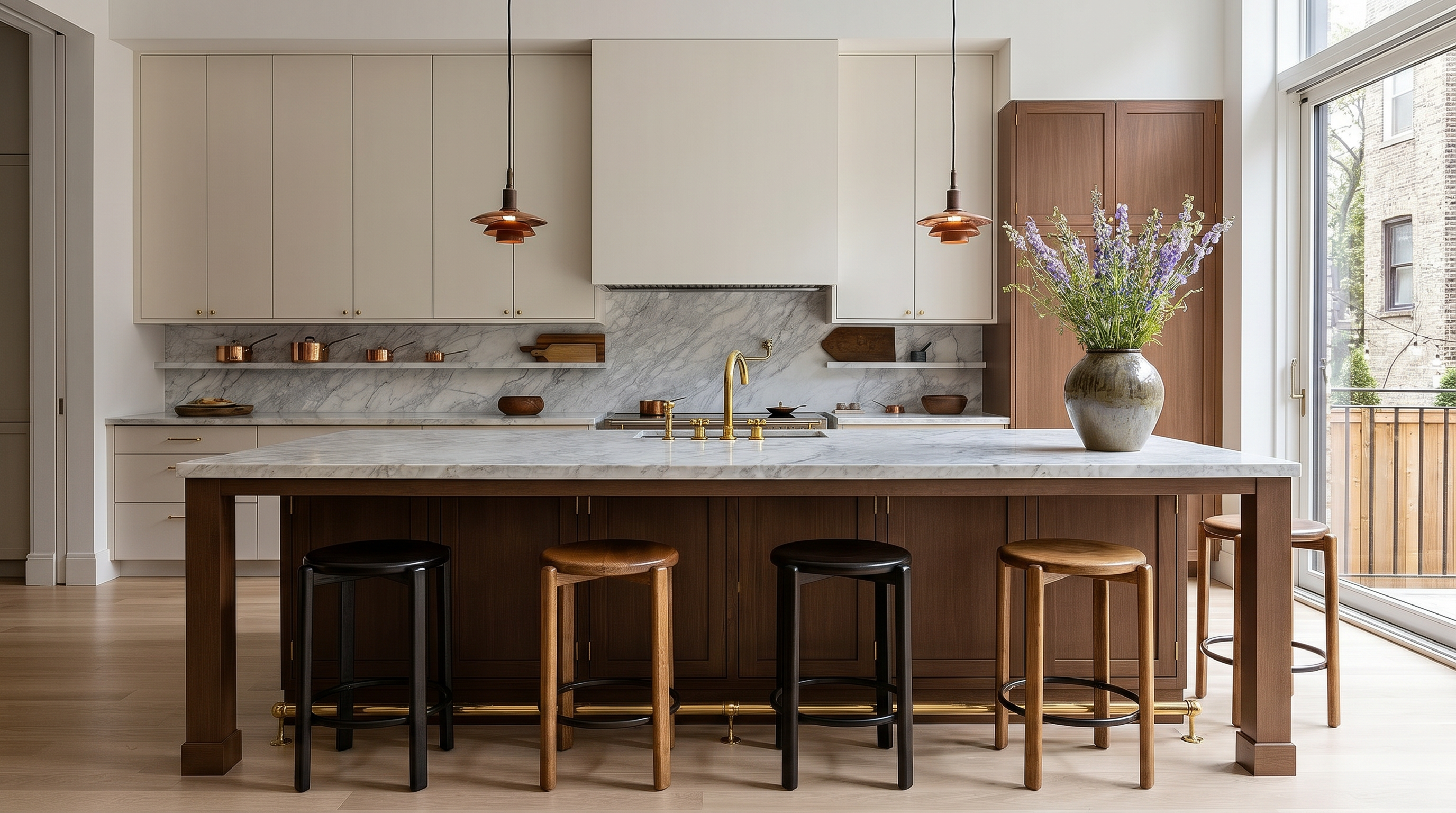
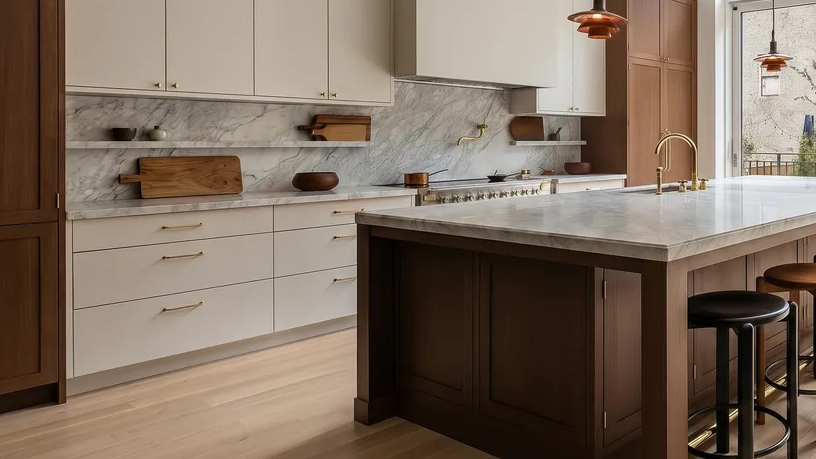
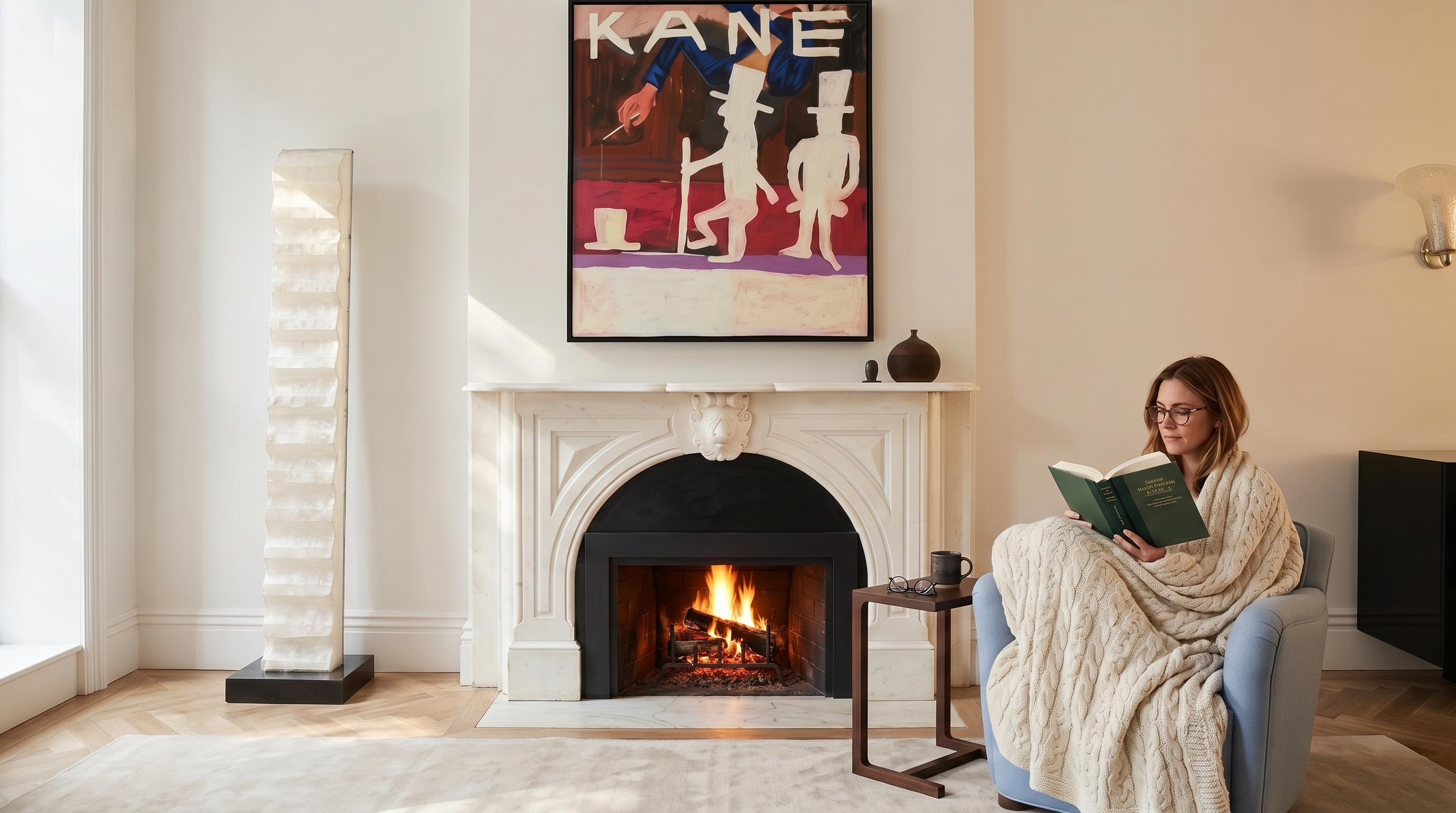
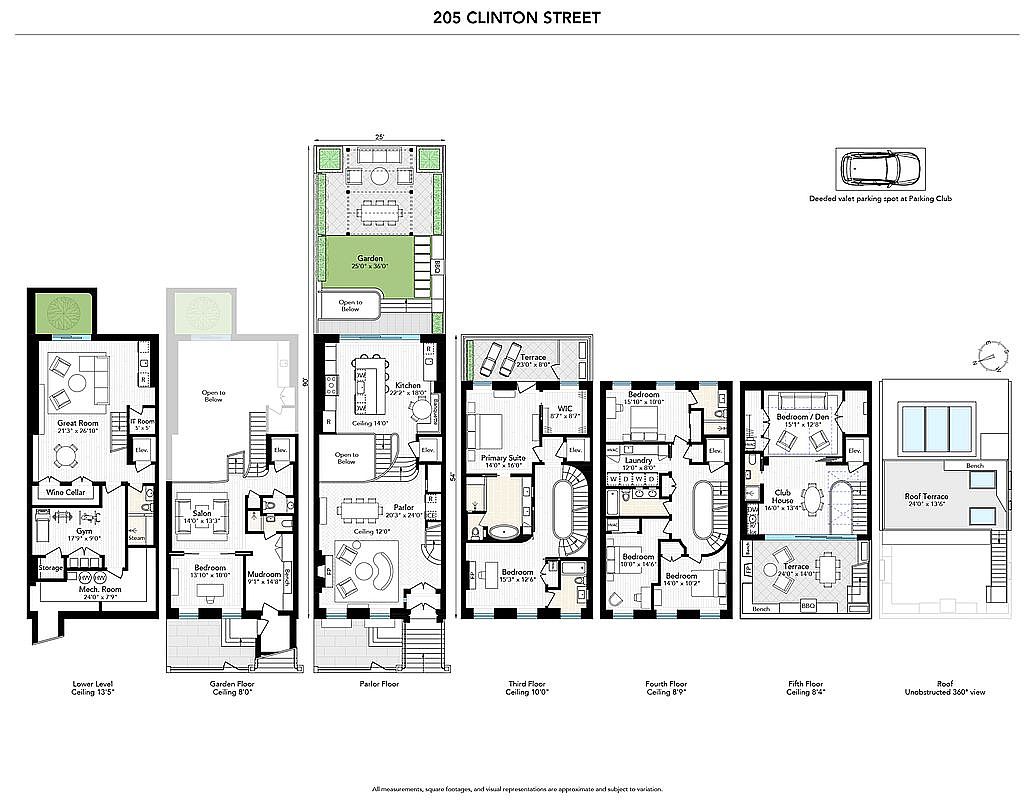
The parlor level sets the tone for the entire residence. Here, the living and dining spaces unfold with loft-like openness, anchored by a marble gas fireplace and a custom walnut-and-marble bar outfitted with a Sub-Zero wine cooler and ice maker. The gaze is drawn forward into a thirty-foot triple-height atrium, where the gourmet kitchen commands attention: an AGA Elise induction range, Sub-Zero refrigerator and freezer columns, dual Miele dishwashers, and a two-inch marble slab island of almost theatrical proportion. Beyond the glass, a bluestone patio with SynLawn yard, Ipe pergola, and a fully equipped outdoor kitchen extends the entertaining vocabulary into the open air.
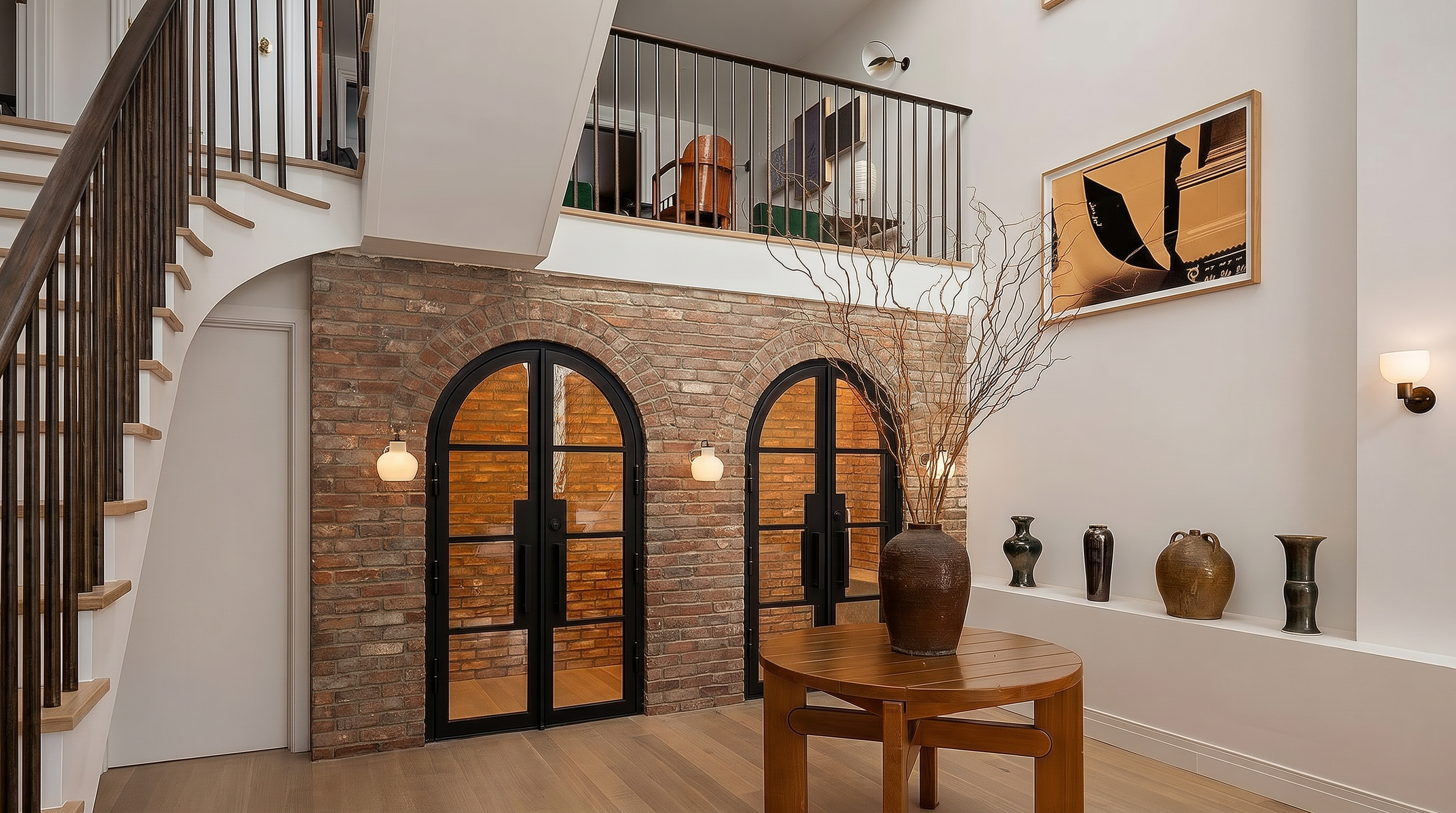
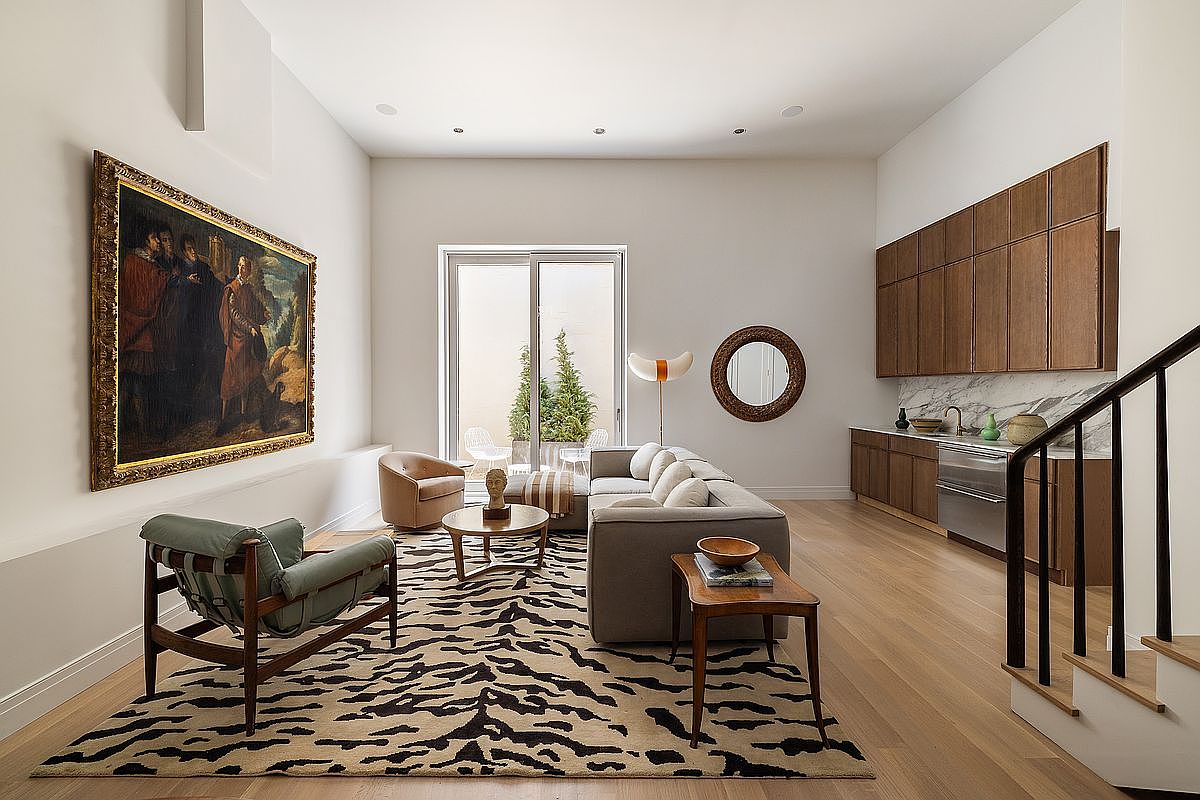
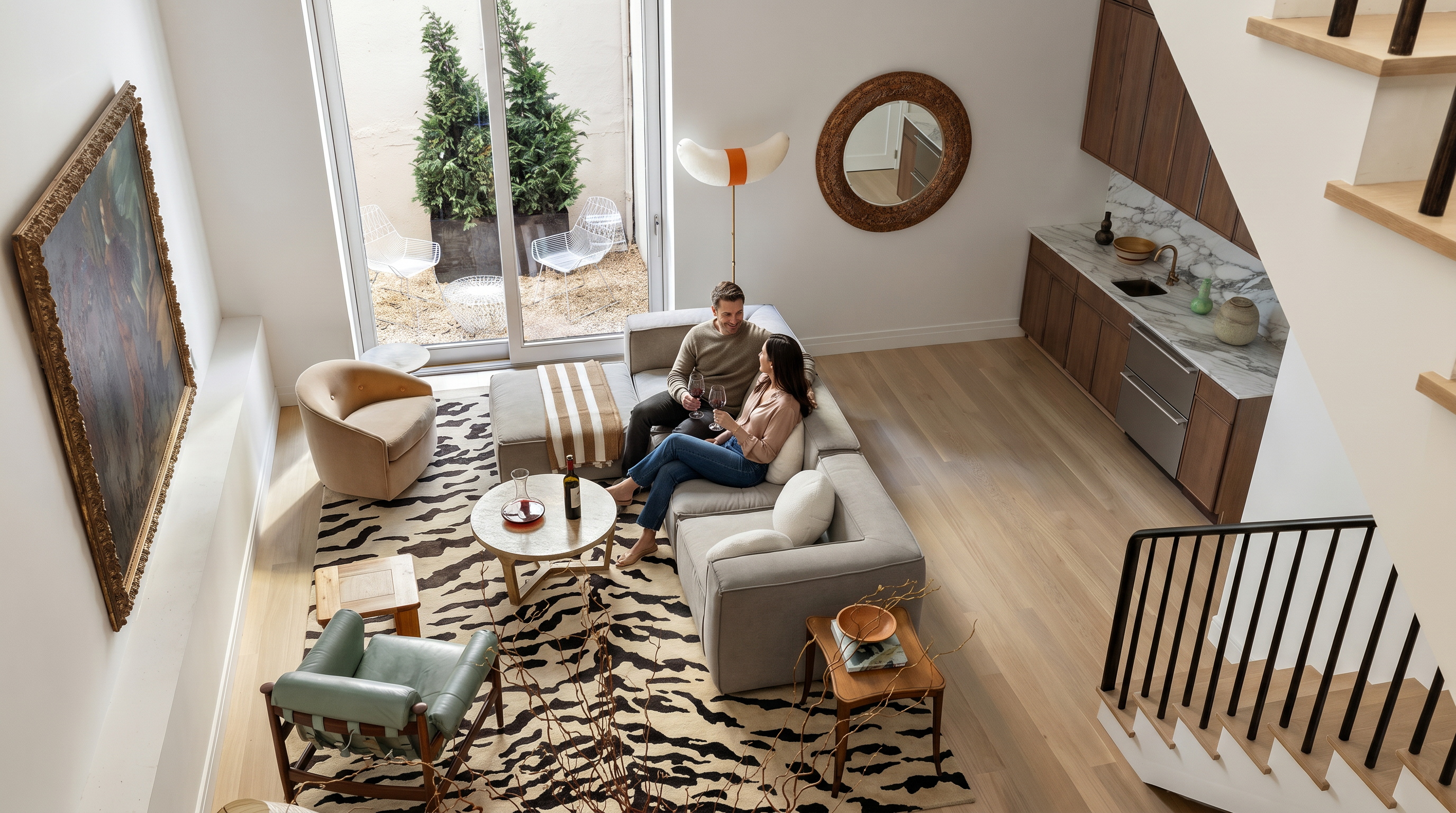
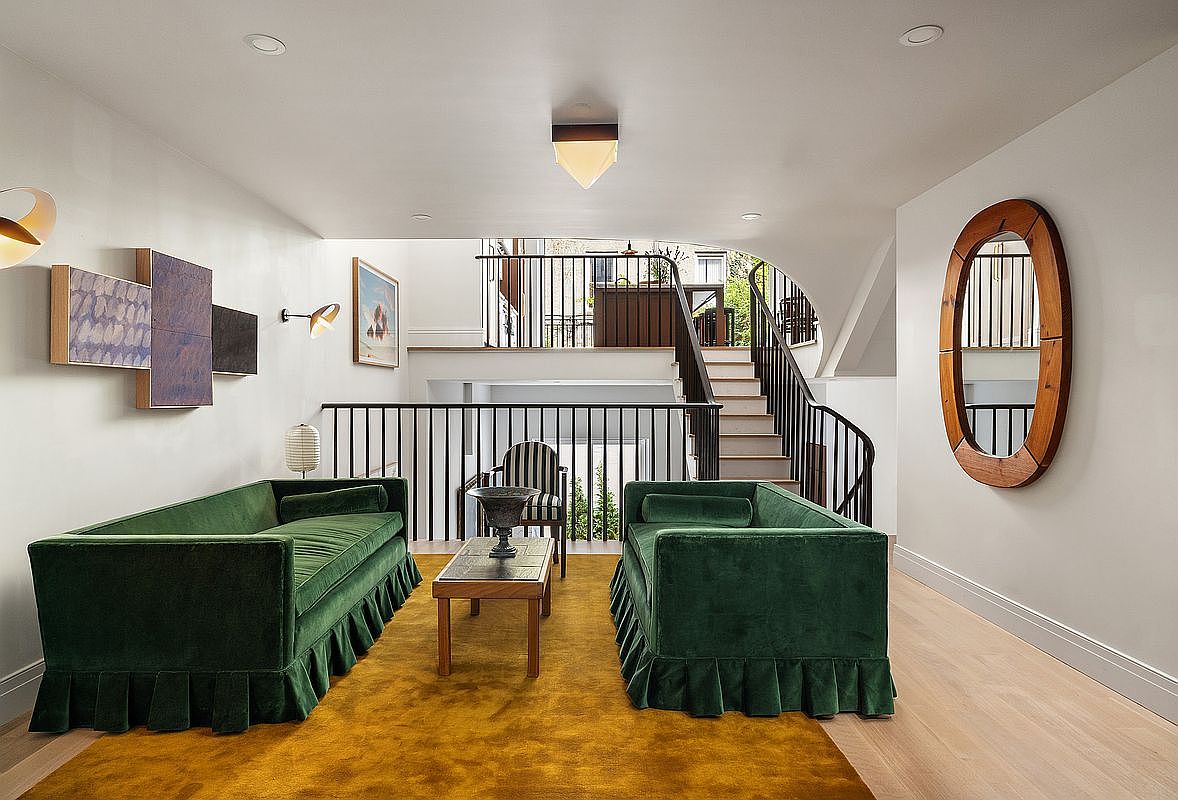
Descending below grade, the home grows more quietly spectacular. A thirteen-foot great room anchors the lower level, accompanied by a 500-bottle wine cellar framed by arched brick doorways and a dedicated cooling system — a space that feels as much like a private club as a residential amenity. A spa bathroom with steam shower and a dedicated fitness space complete this subterranean retreat.
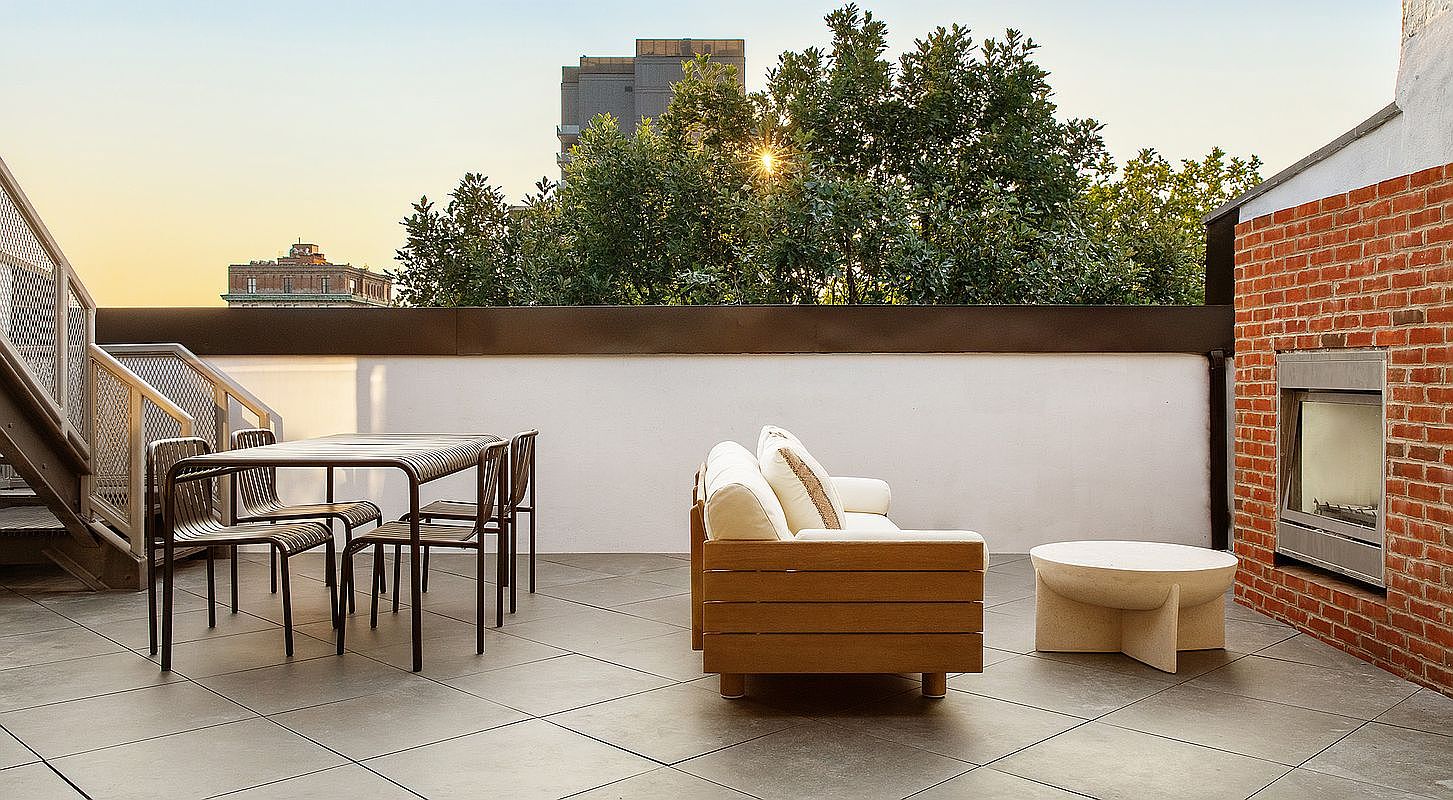
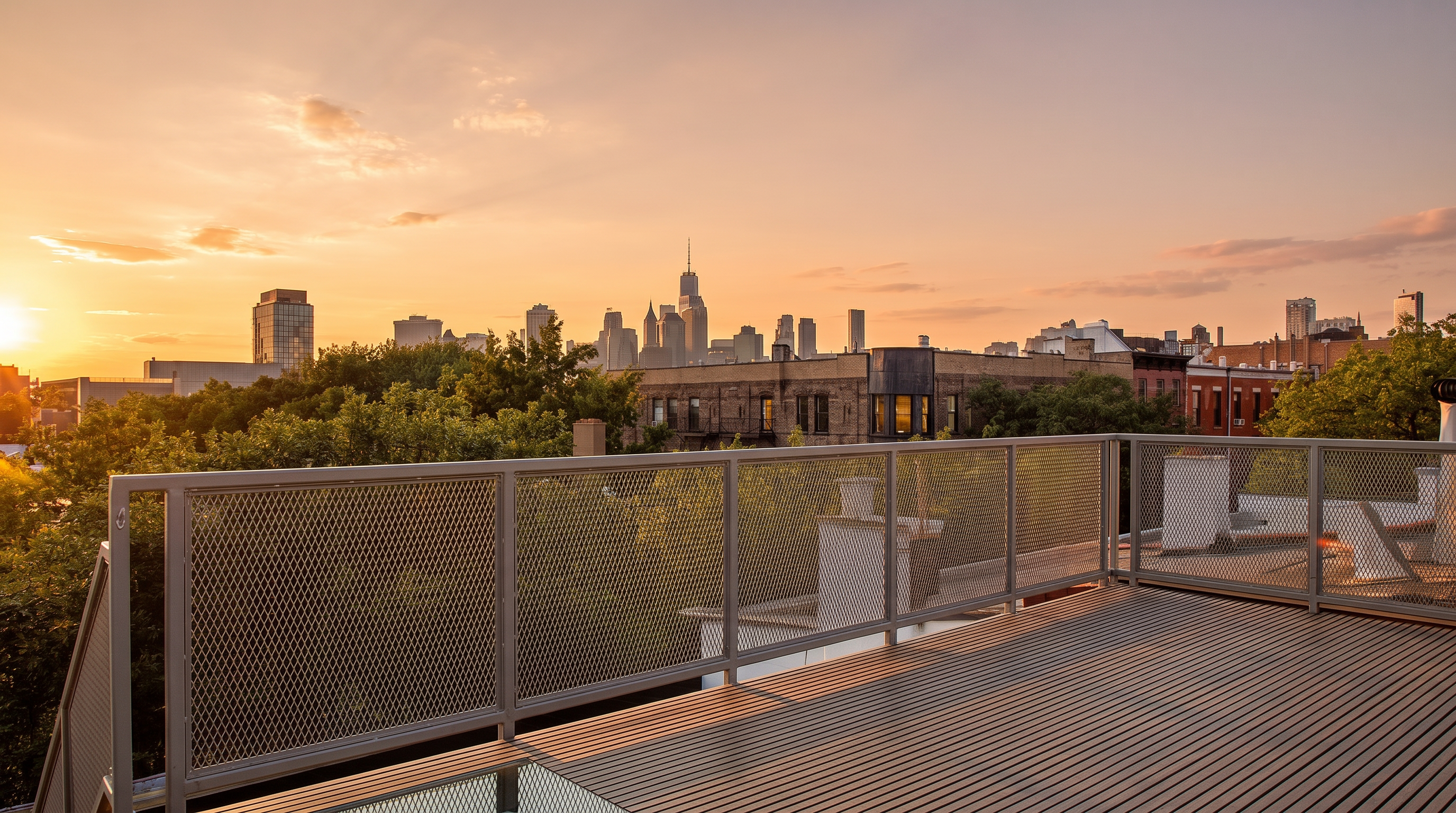
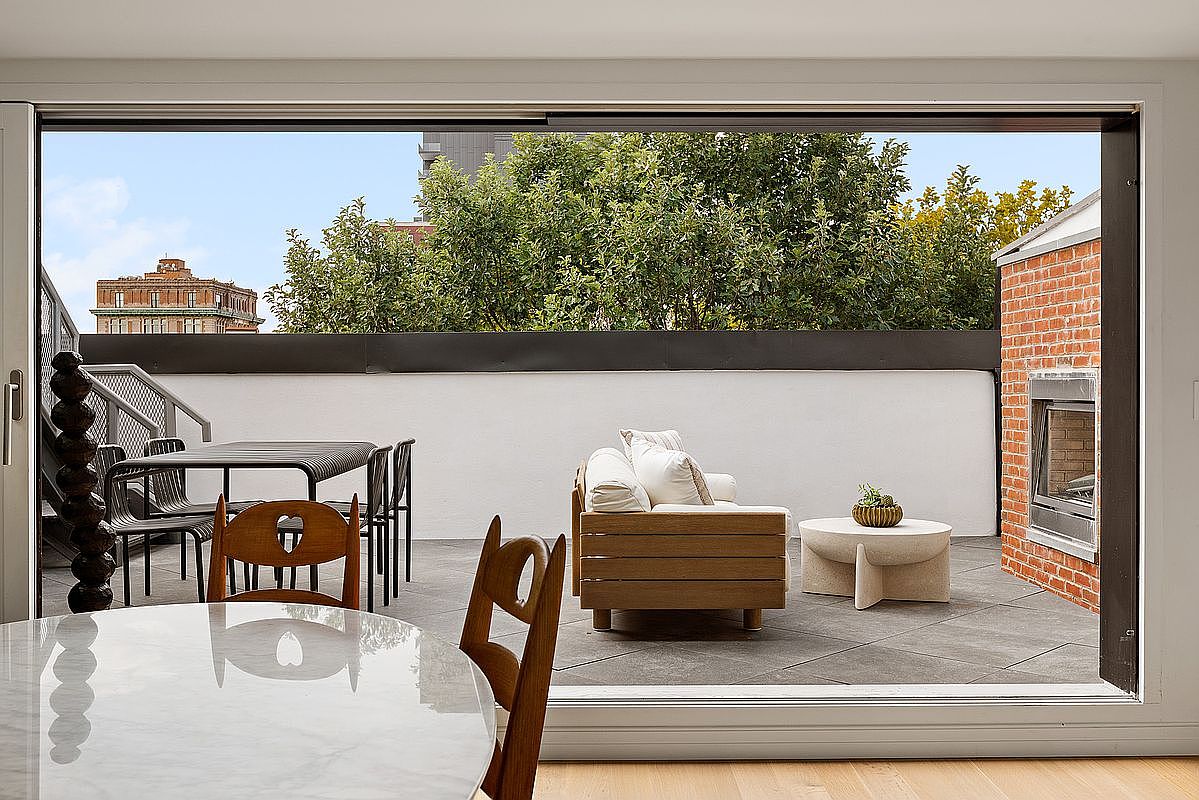
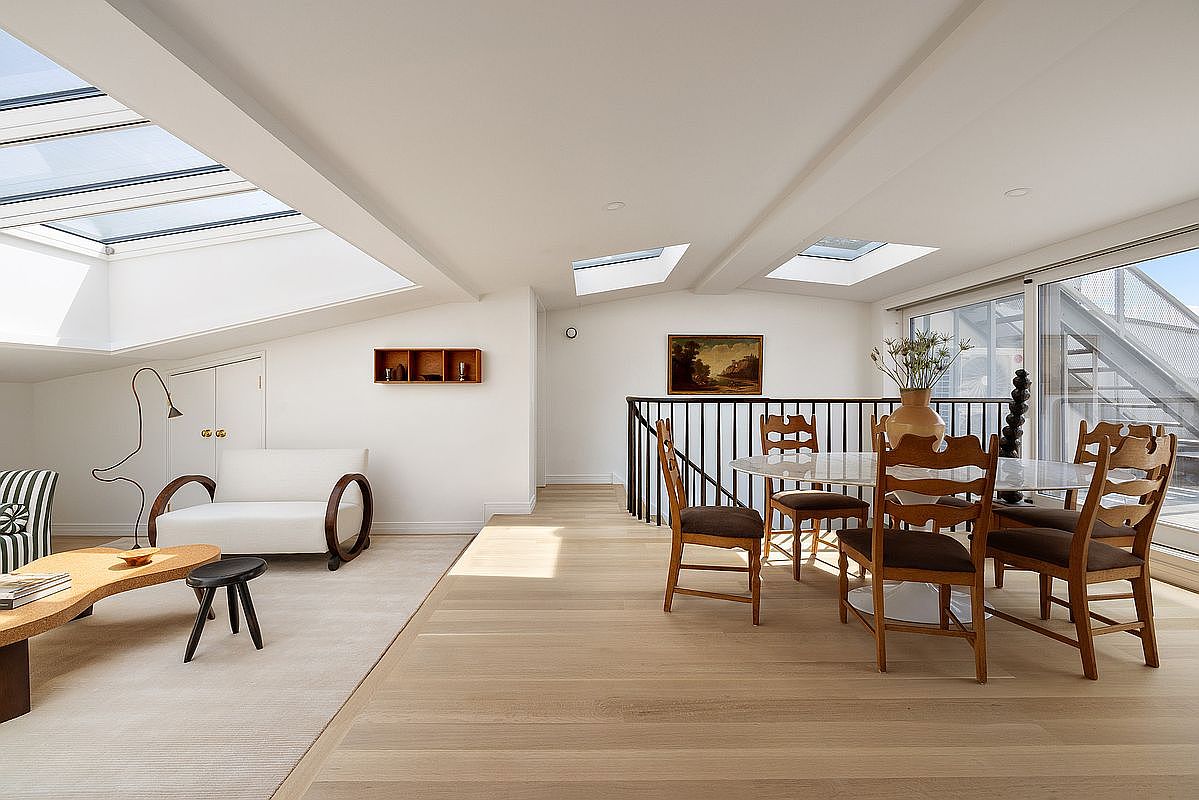
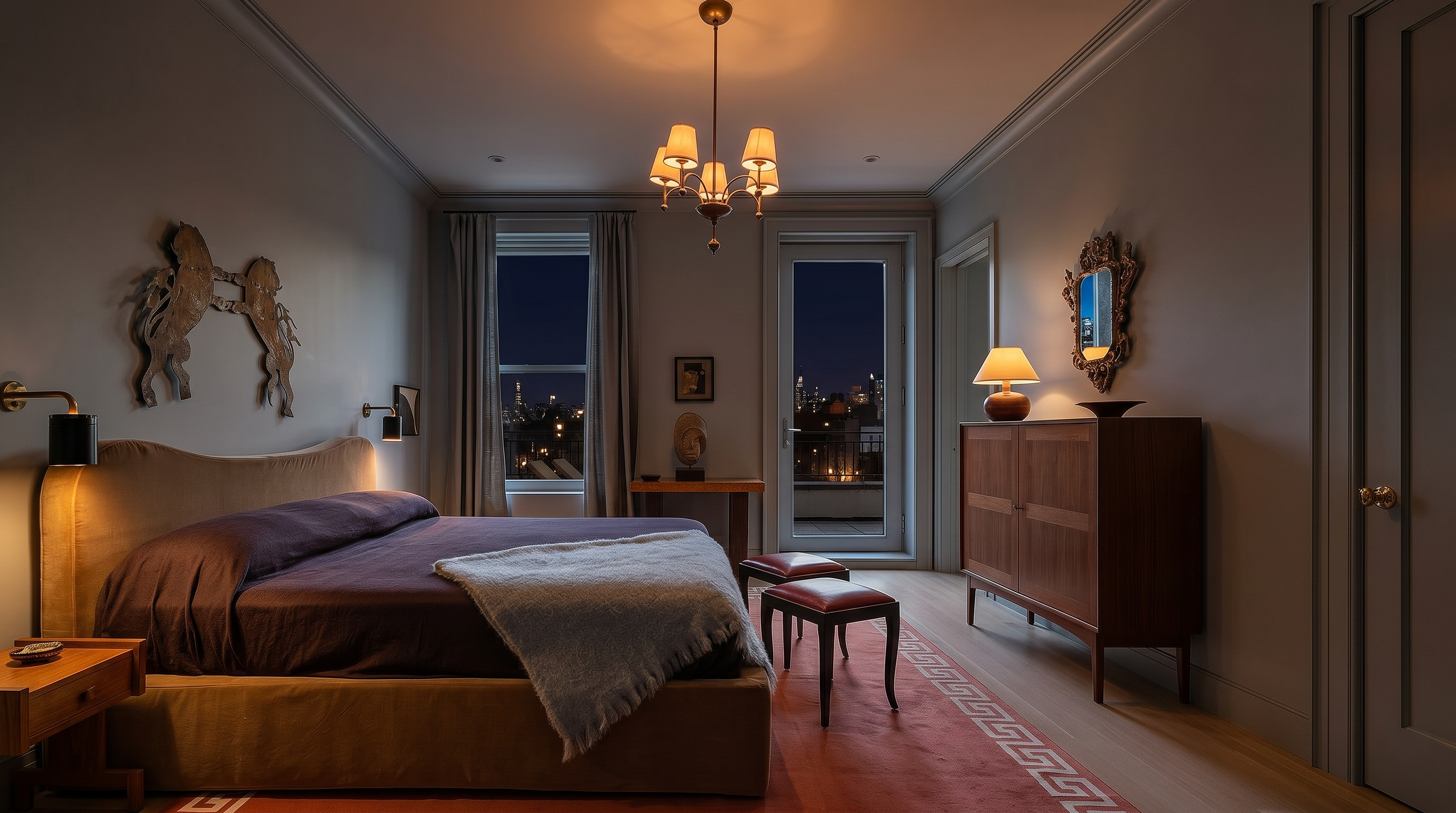
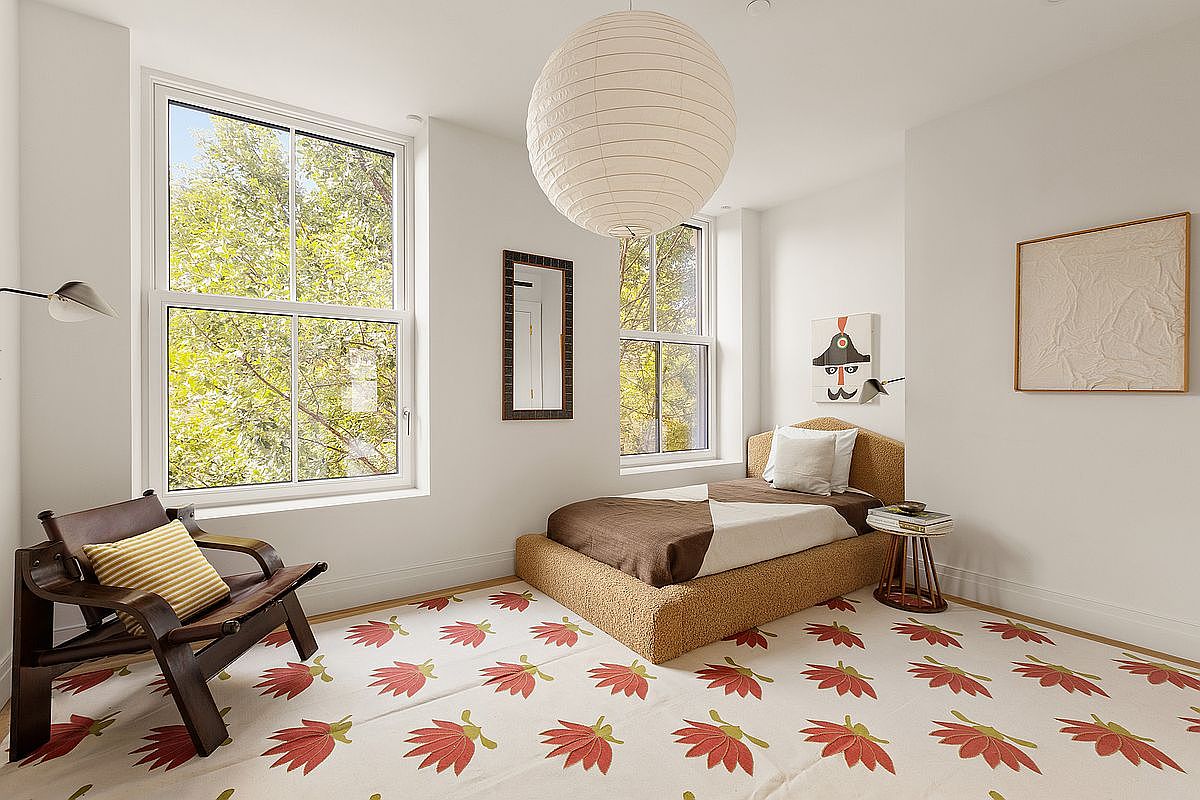
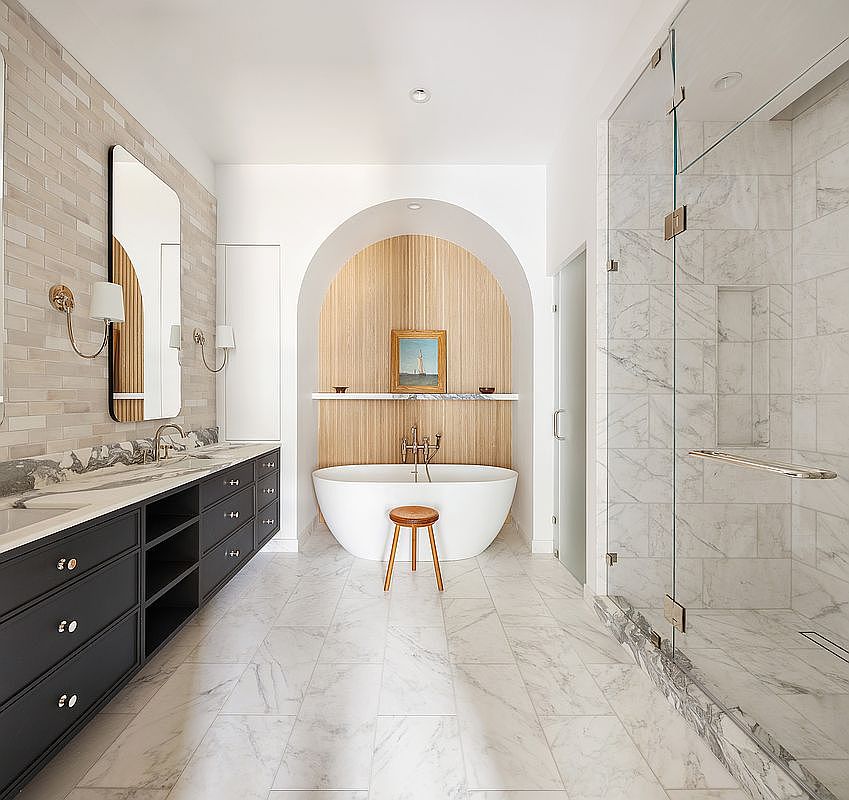
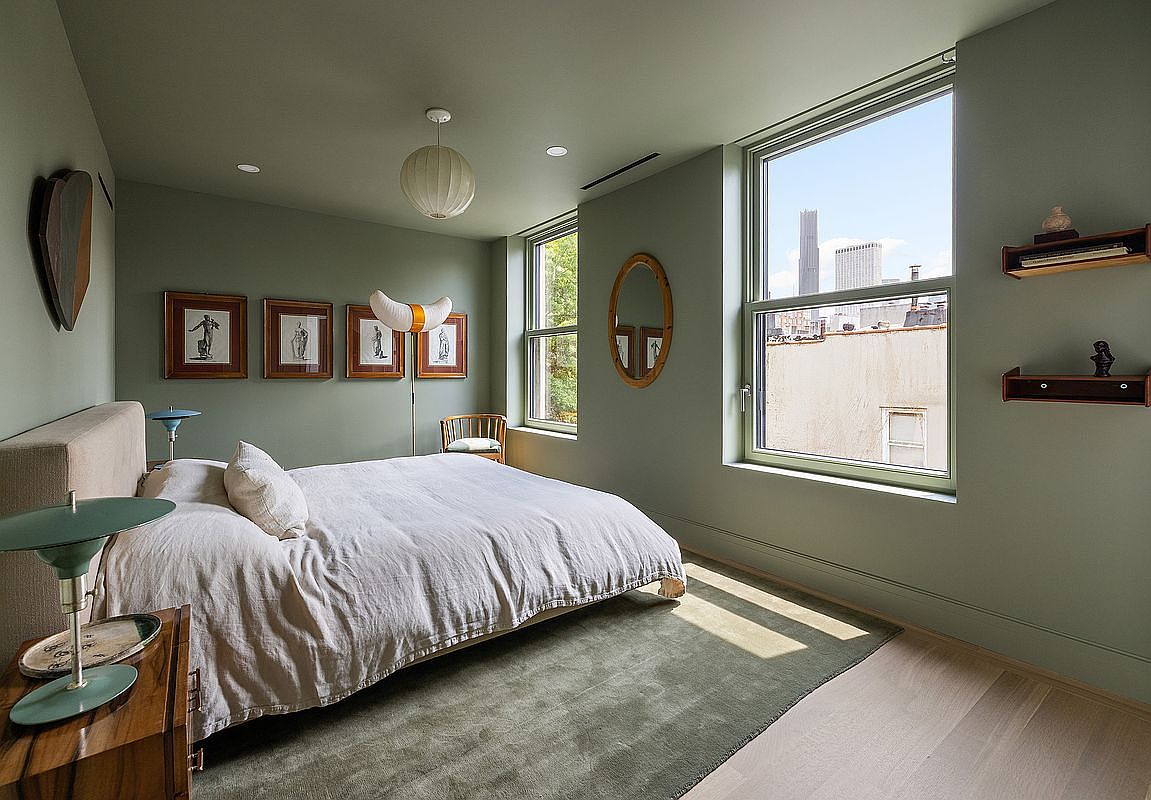
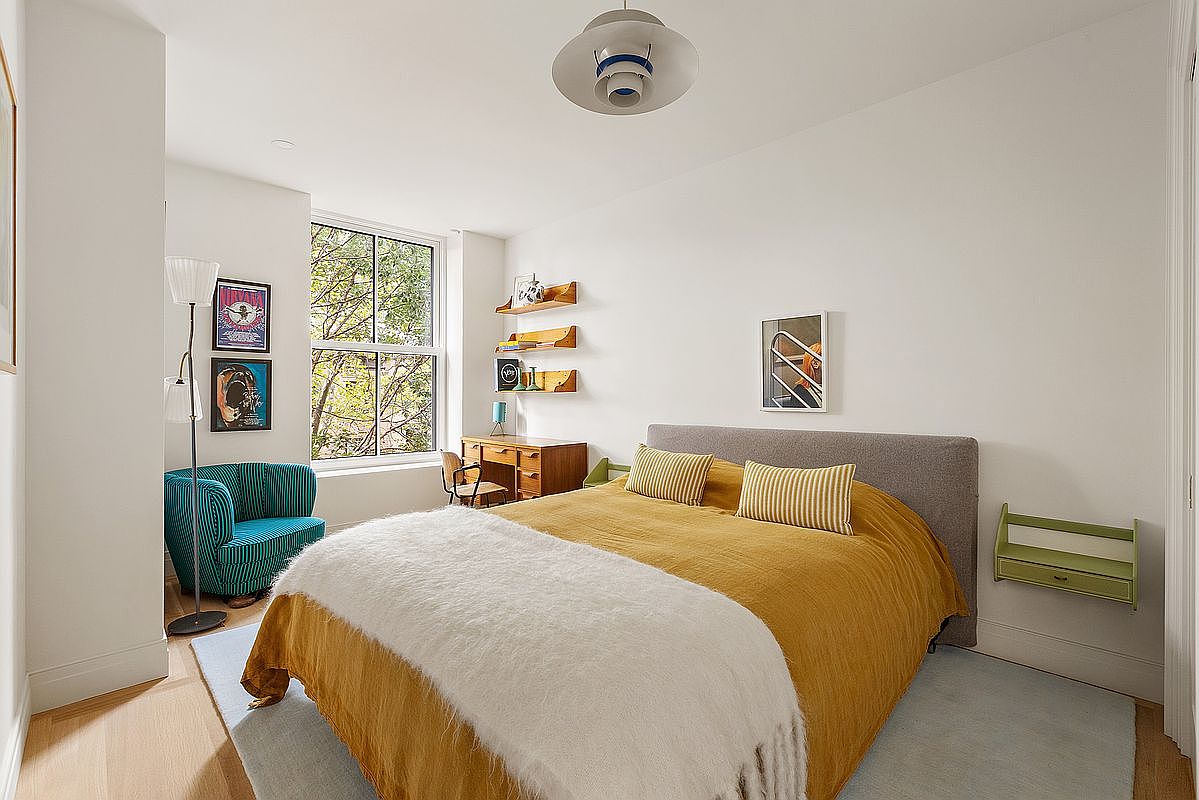
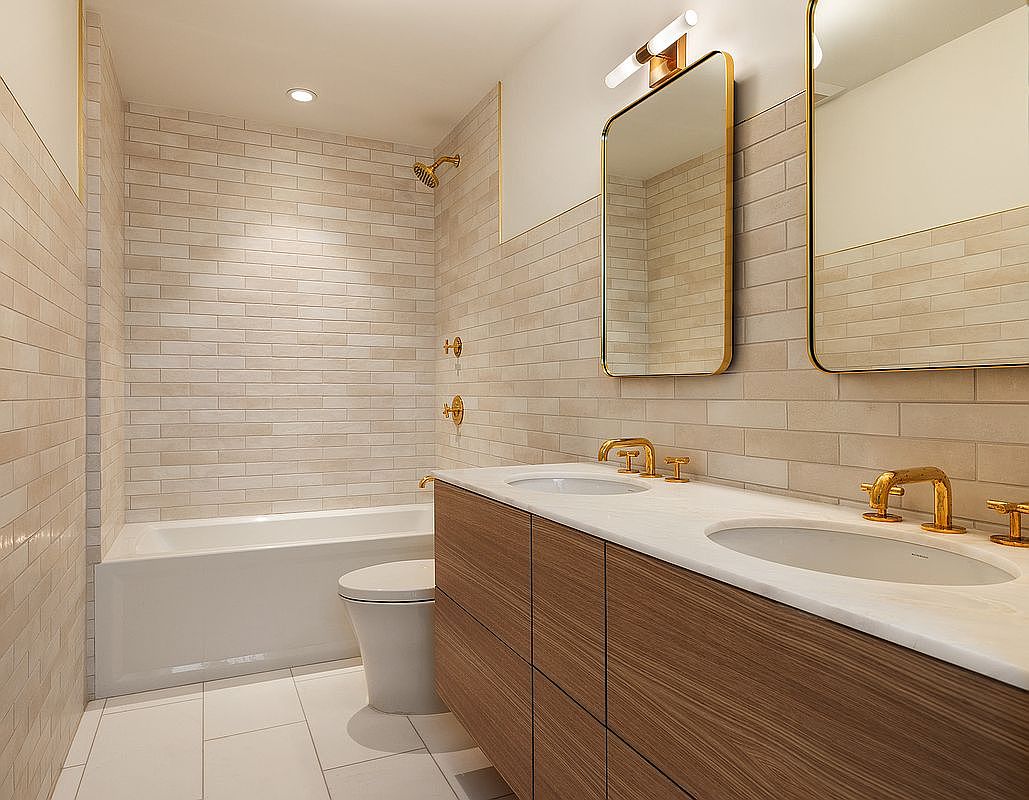
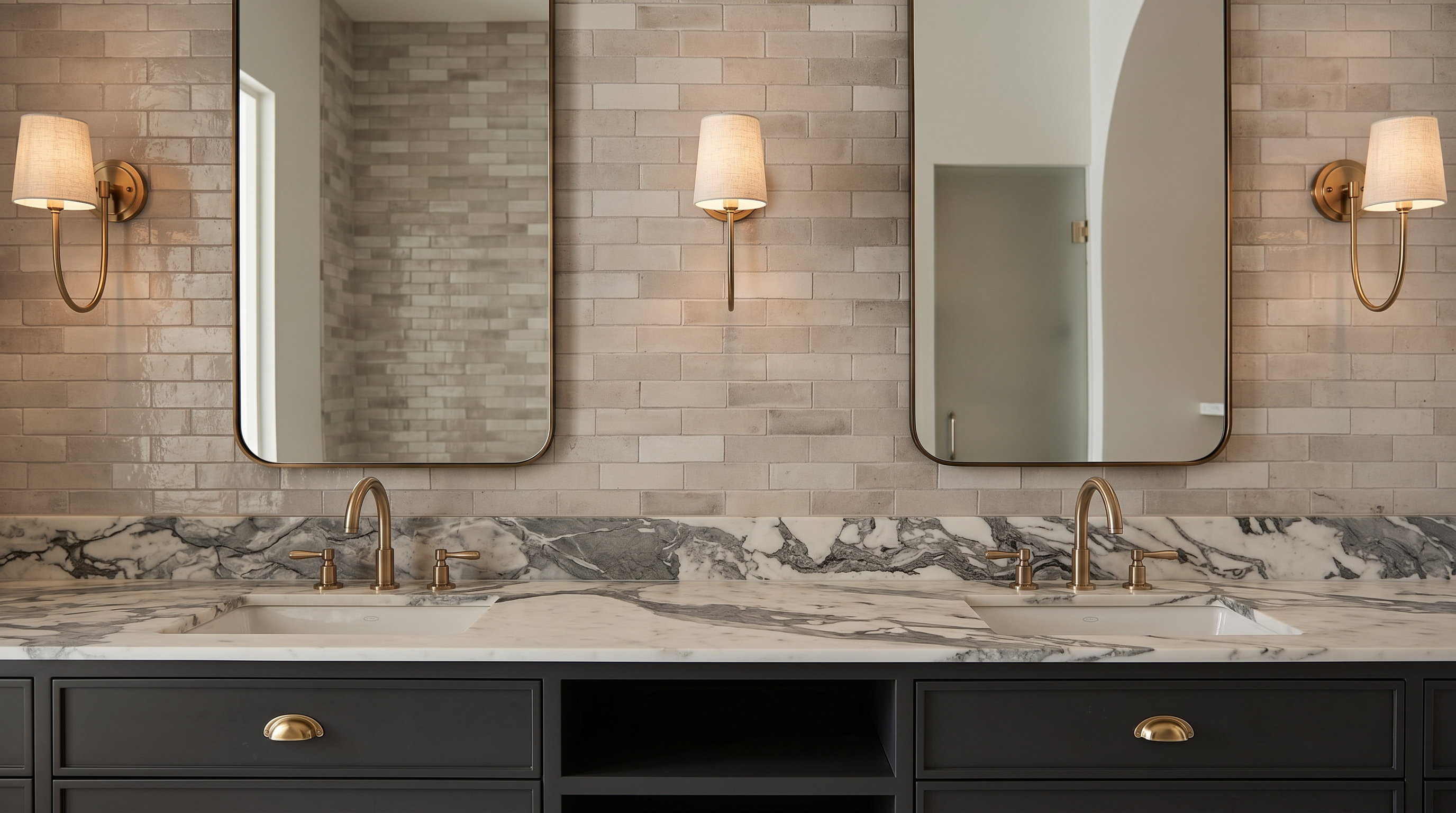
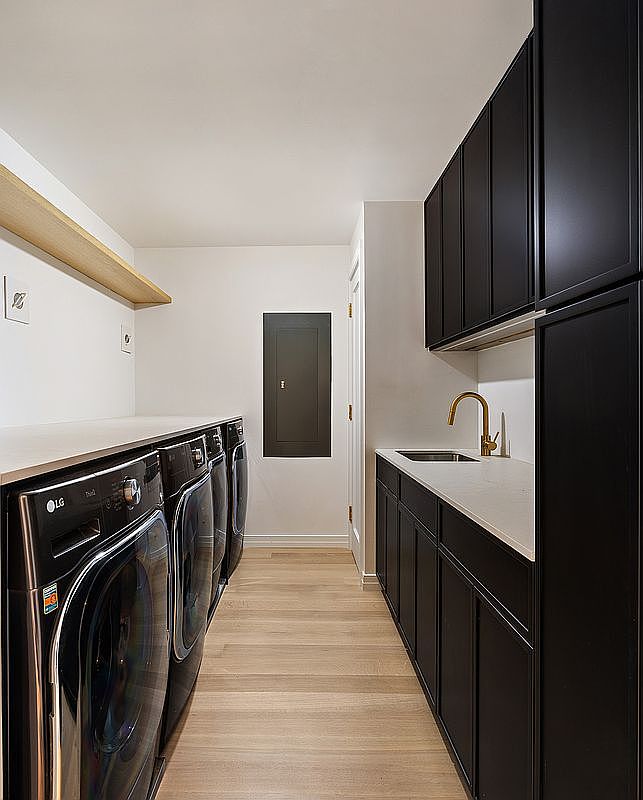
Above the parlor, the primary suite is a study in considered luxury: an East-facing terrace, a windowed walk-in closet, and an en suite bath featuring a soaking tub set within an arched alcove, a glass-enclosed marble shower, heated floors, and a double vanity. Higher still, two additional bedroom suites and a proper laundry room occupy the upper floor, while the penthouse level delivers the home's most theatrical gesture — a clubhouse with a fifteen-foot skylight and twelve-foot sliding doors opening to a terrace with fireplace and grill. Above it all, a rooftop deck offers 360-degree views of the Brooklyn and Manhattan skylines and the shimmering East River beyond.
Throughout, the infrastructure is as sophisticated as the finishes: 12-zone HVAC, 400-amp electrical service, Lutron lighting, six-zone Polk audio, Ring camera integration, and a private elevator serving every level. This is a home built not for a moment, but for a lifetime.
Cobble Hill occupies a particular place in Brooklyn's imagination — quieter than Carroll Gardens to the south, less trafficked than Boerum Hill to the east, and possessed of a residential intimacy that feels almost improbable given its proximity to the energy of Lower Manhattan. Bounded by Atlantic Avenue to the north, Court Street to the east, Degraw Street to the south, and the Brooklyn-Queens Expressway to the west, the neighborhood has long attracted those who prize architectural beauty, civic-minded community, and the pleasures of an authentically urban yet deeply livable street life.
The historic district designation that governs much of Cobble Hill — including the block on which 205 Clinton Street stands — is not merely a bureaucratic designation but a genuine reflection of the neighborhood's character. The rows of Italianate and Neo-Grec brownstones that line its tree-canopied streets were largely constructed between the 1840s and 1880s, and their preservation has created one of Brooklyn's most cohesive and visually distinguished residential environments. Landmark approvals of the kind required for a project as ambitious as this one are hard-won, and their attainment speaks to both the rigor of the design and the integrity of its relationship to its surroundings.
Court Street and Smith Street — two of Brooklyn's most beloved commercial thoroughfares — run parallel just steps away, offering an exceptionally curated mix of independent restaurants, boutique retail, specialty food shops, and neighborhood institutions that have made this corridor a destination in its own right. Atlantic Avenue, marking the neighborhood's northern edge, adds another dimension: a diverse and vibrant stretch known for its Middle Eastern grocers, antique dealers, and acclaimed dining establishments.
For those drawn to the outdoors, the neighborhood's park infrastructure is exceptional. Cobble Hill Park, a small and beloved green space on Congress Street, serves as an informal gathering place for the community. Far grander in scale, Brooklyn Bridge Park — one of the most significant public park developments in New York City's recent history — lies within comfortable reach, offering expansive lawns, waterfront promenades, athletic facilities, and sweeping views of the Manhattan skyline and the East River. The Brooklyn Heights Promenade, a short walk to the north, remains one of the city's most iconic public vantage points.
Transportation connectivity is seamless. The F and G subway lines at Bergen Street and the F and R lines at Jay Street-MetroTech provide direct access to Manhattan, while the neighborhood's walkability makes the car largely optional for daily life. Cycling infrastructure throughout the area continues to improve, and the Brooklyn Bridge offers a celebrated pedestrian and cycling crossing into the Financial District.
The community itself reflects the neighborhood's layered history — long-established families who have lived here for decades coexist with creative professionals, academics, and those drawn by the area's particular combination of beauty, convenience, and quietude. Public and private schooling options in the area are well regarded, and the neighborhood's cultural programming — through institutions, local galleries, and community events — adds texture to everyday life. To live in Cobble Hill is to inhabit one of Brooklyn's most enduring and genuinely civilized neighborhoods.
Featured Highlights
Curated Content • Presented by Lindsay Barrett