The Story Behind
An Entire Floor of Sky Above Tribeca's Most Storied Street
There is a particular quality of light that belongs only to the uppermost reaches of a building — the way it enters unobstructed, from every angle, at every hour. At 143 Reade Street's penthouse, that light is not a feature. It is the organizing principle of the entire home.
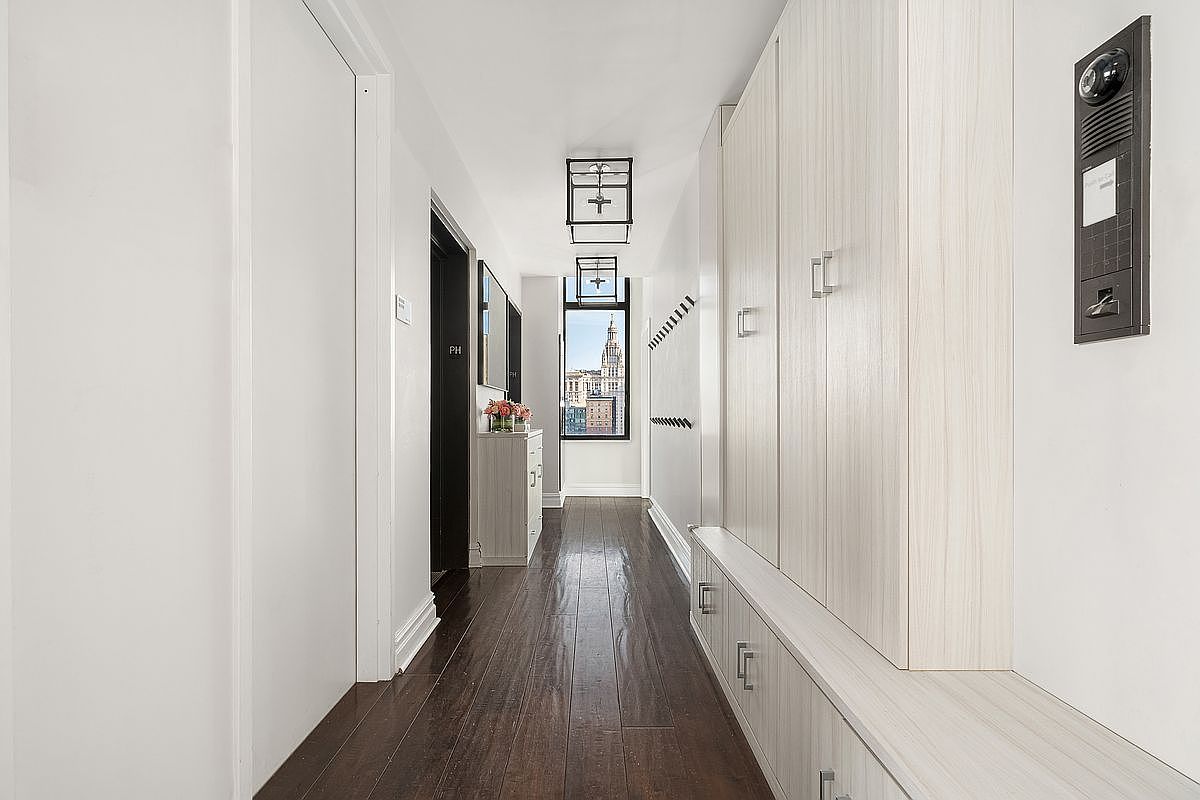
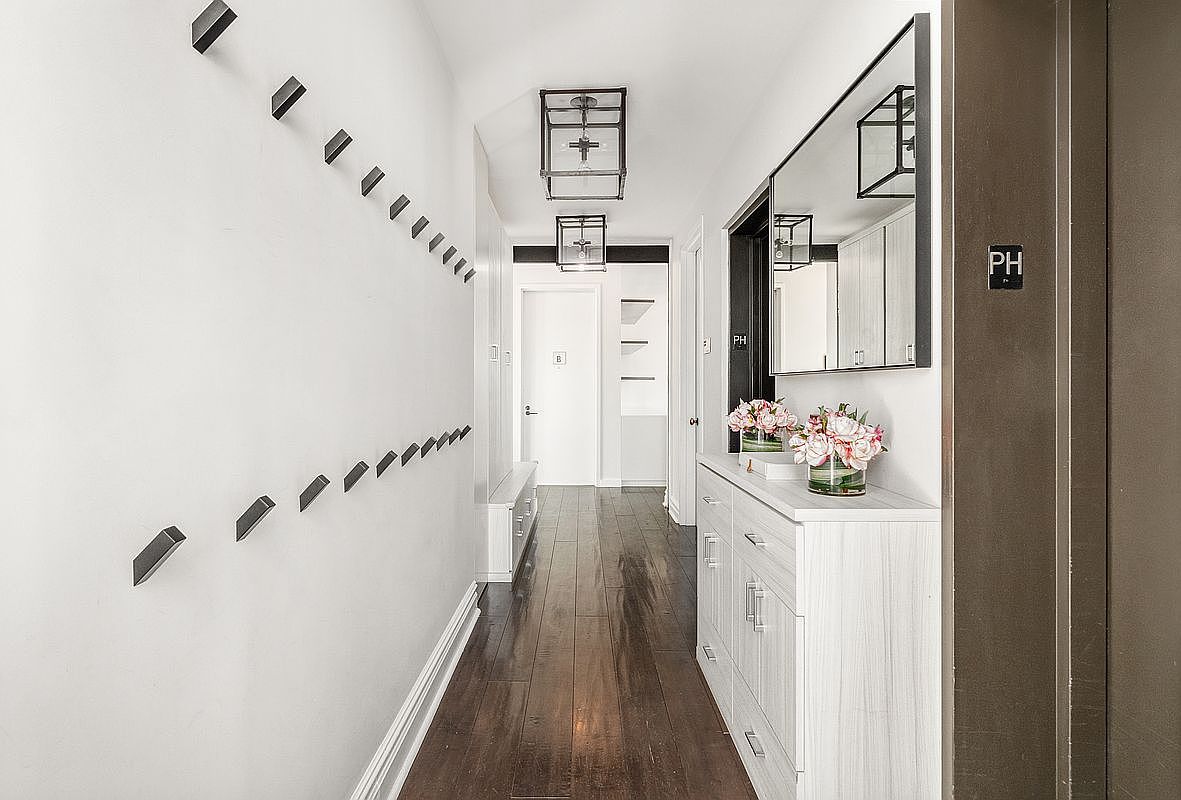
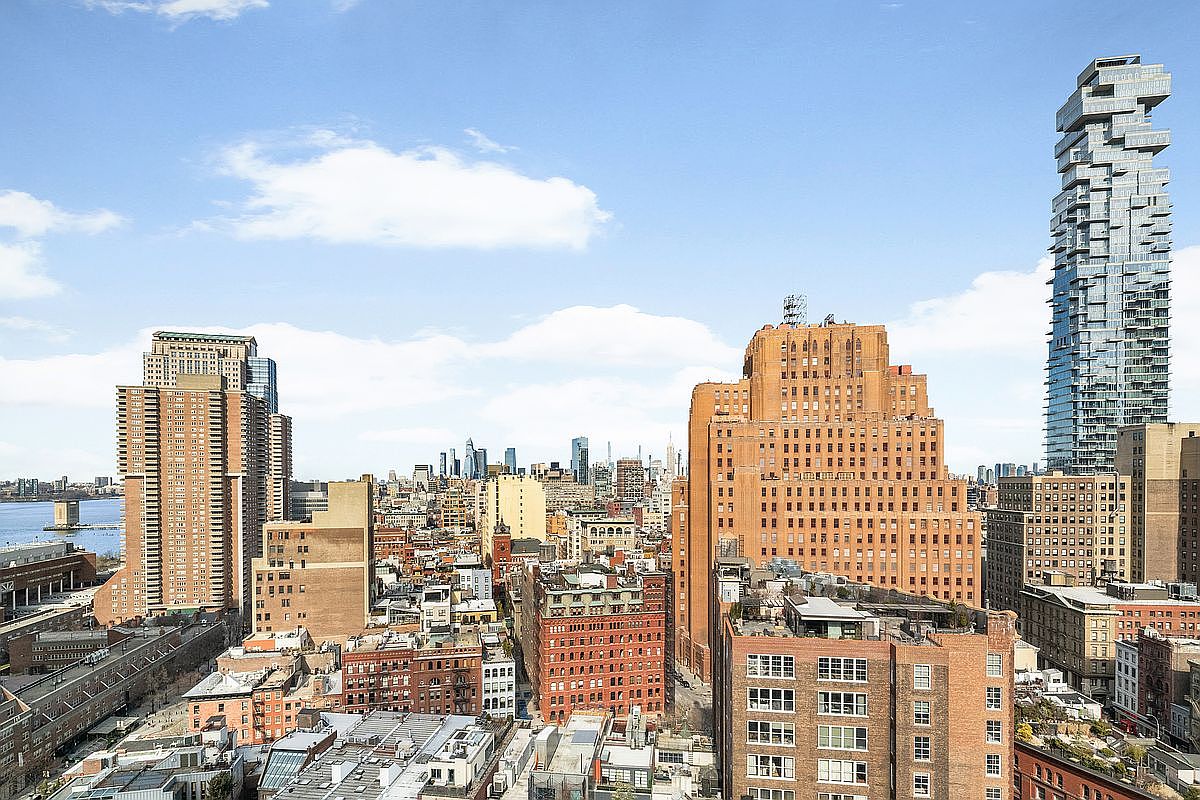
The journey begins the moment the private key-locked elevator opens onto the entry gallery, where the view is not merely framed but composed: City Hall's neoclassical dome and the Brooklyn Bridge's gothic towers appear like a living architectural installation, calibrated to the sightline of whoever enters. It is a threshold that immediately communicates the ambition of everything that follows.
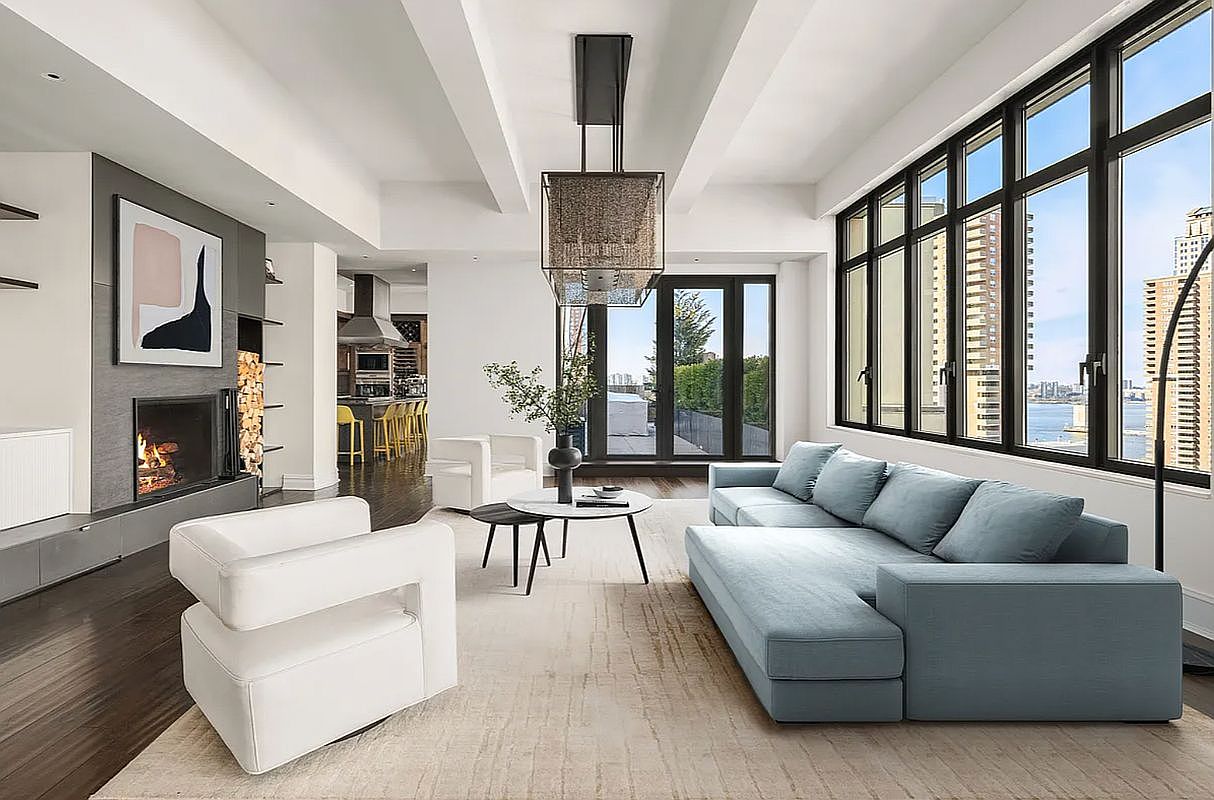
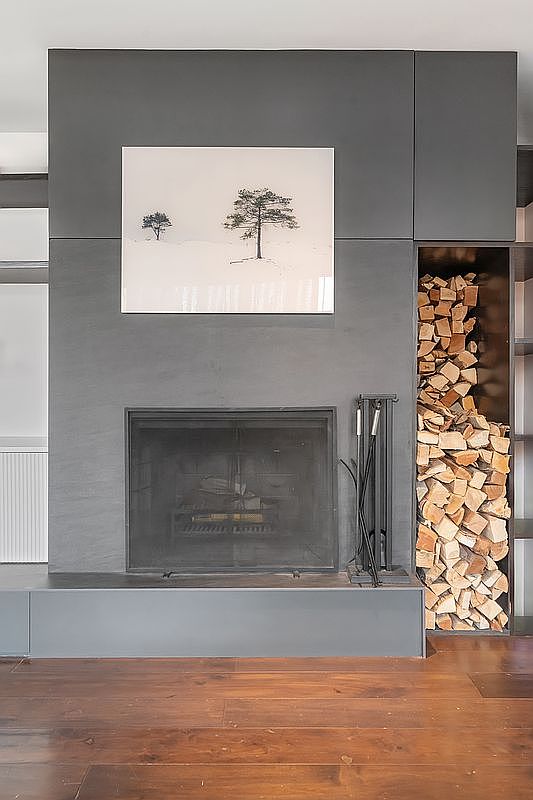
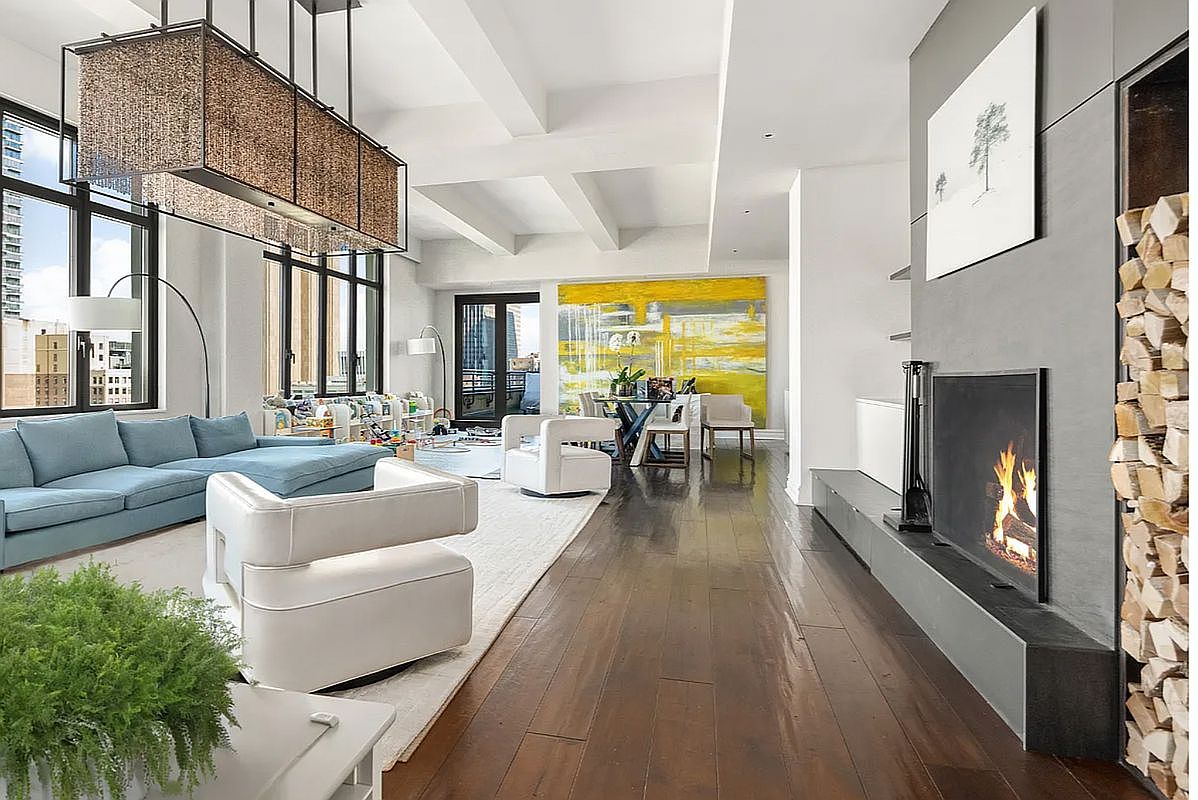
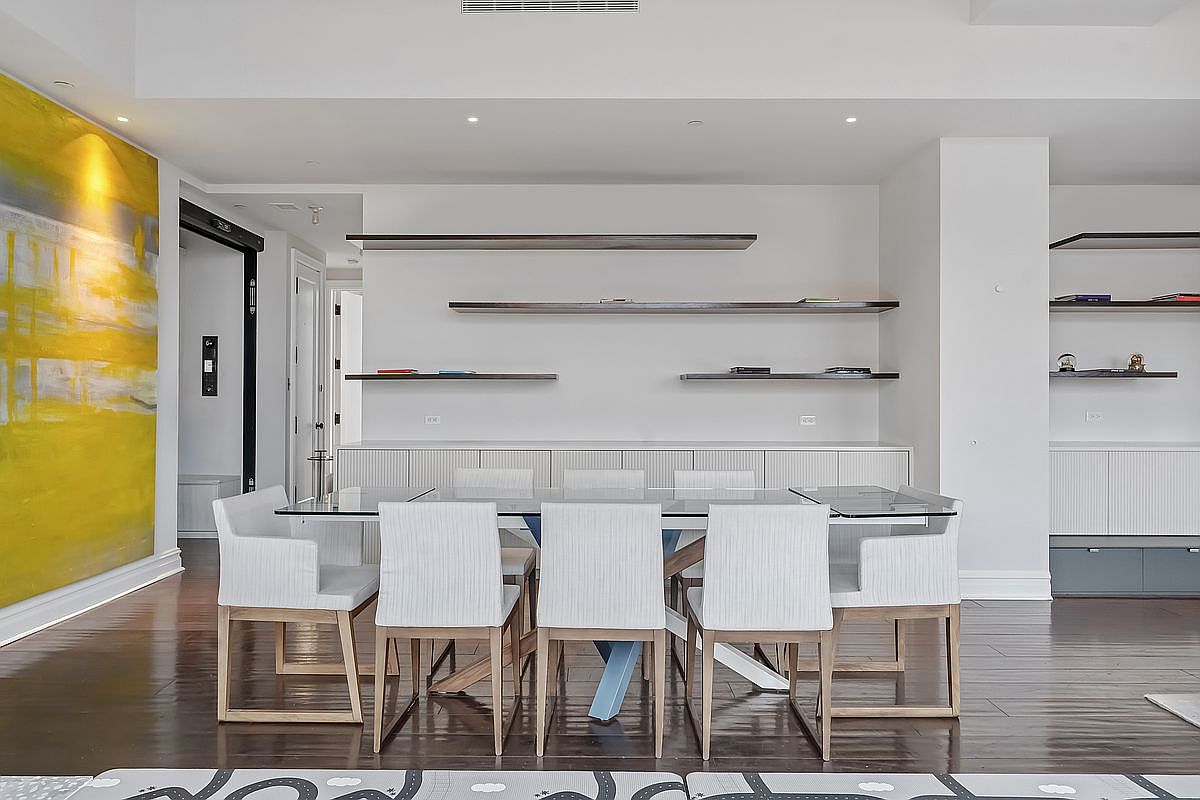
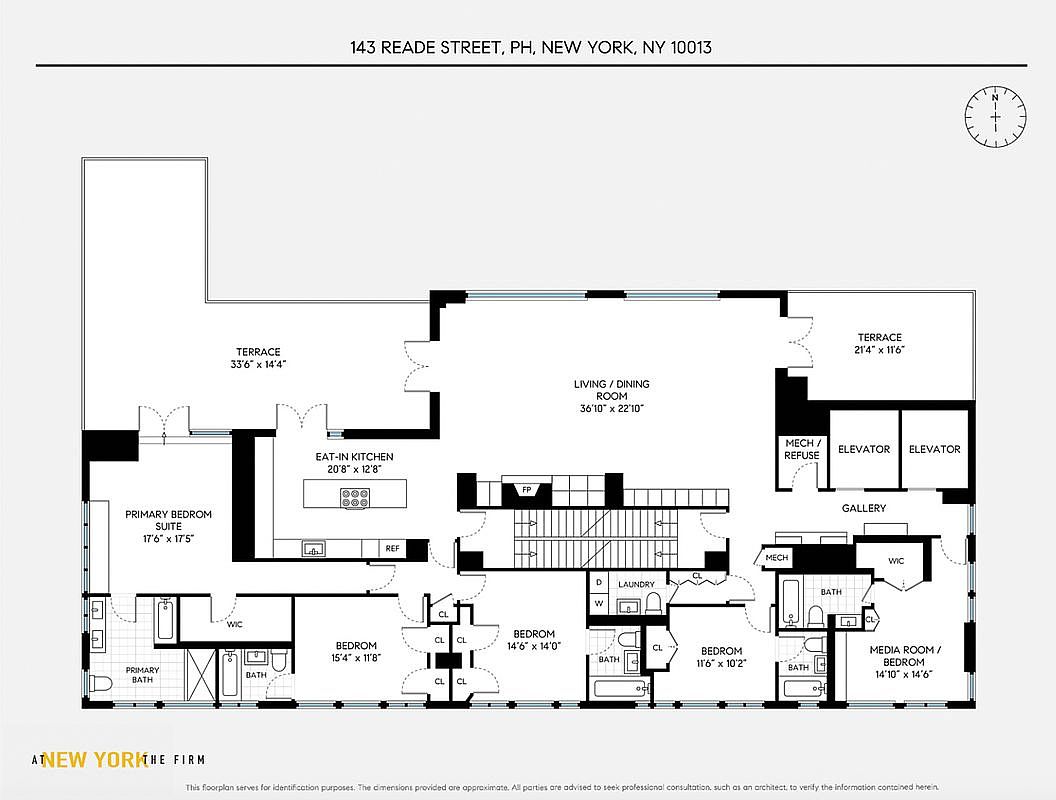
The thirty-six-foot main living and dining area is the residence's great room in the truest sense — a space of genuine scale and considered restraint. Eleven-foot ceilings rise above dark hardwood flooring that runs the full length of the room, grounding an environment that might otherwise feel untethered from the city below. A wood-burning fireplace commands the primary wall, its matte charcoal surround anchored by a floor-to-ceiling vertical niche that stores firewood with the precision of a design object. Custom millwork cabinetry lines adjacent walls, and an electronic vault-style security door can seamlessly enclose the space from the elevator bank and den — a detail that speaks to a level of residential engineering rarely encountered in even the most refined New York apartments.
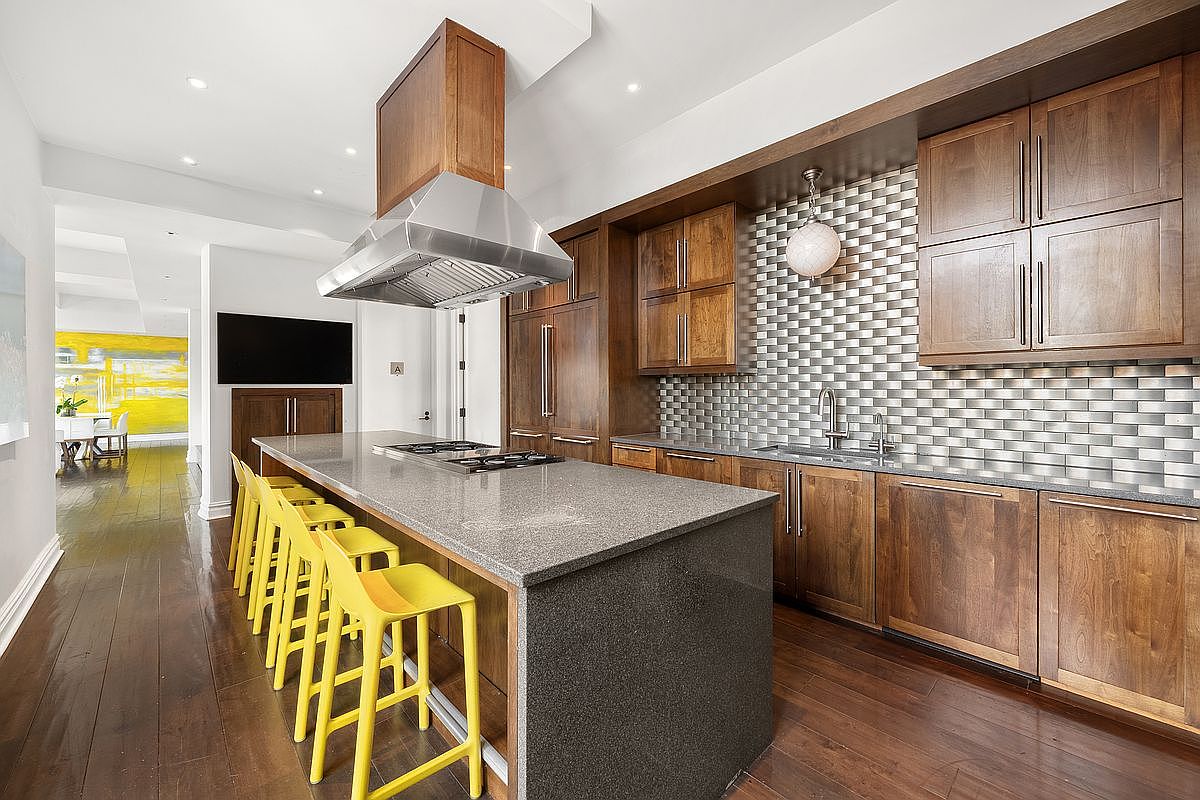
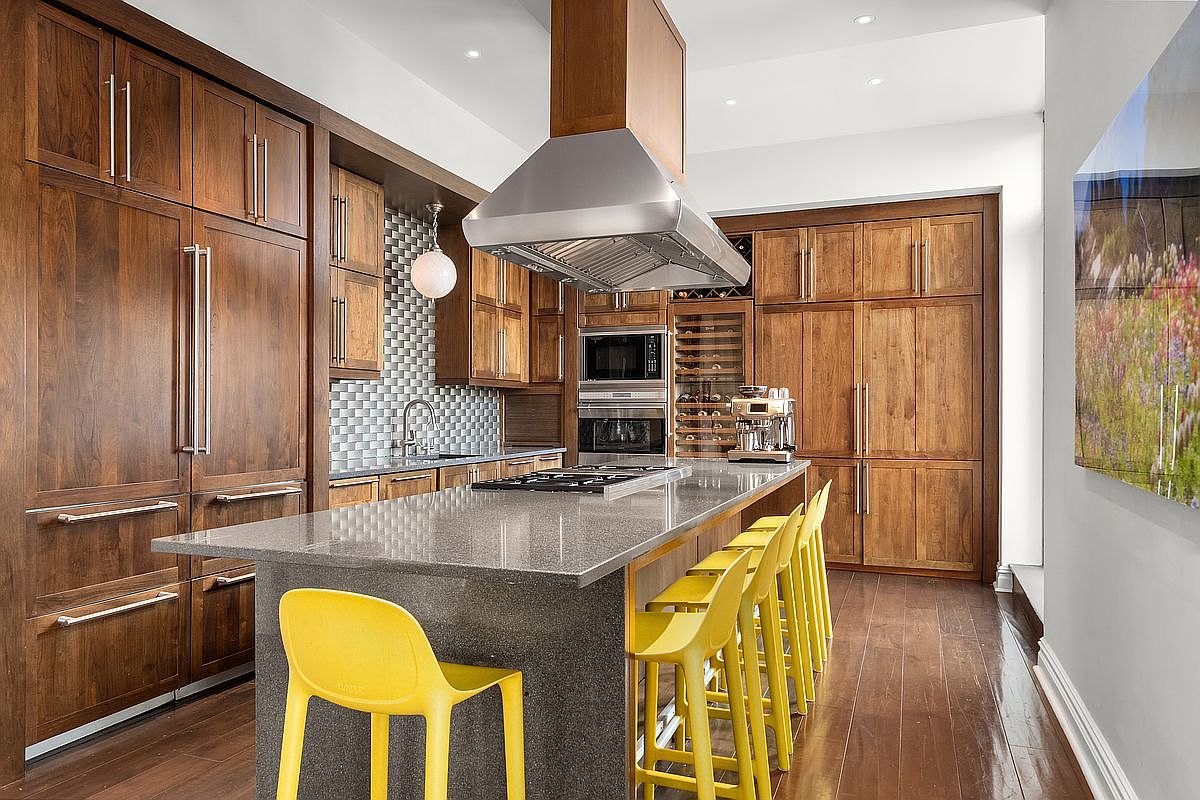
The kitchen is a serious culinary environment that refuses to announce itself as such. Dark wood cabinetry, speckled stone island and countertops, and a metallic tile backsplash create a palette that is warm without being domestic. The appliances — a vented six-burner Wolf cooktop, double Wolf ovens, SubZero side-by-side refrigerators, a full-height wine cooler, and twin Miele dishwashers — are selected with the same rigor one might apply to a professional kitchen, arranged here within a space that opens directly onto the western terrace.
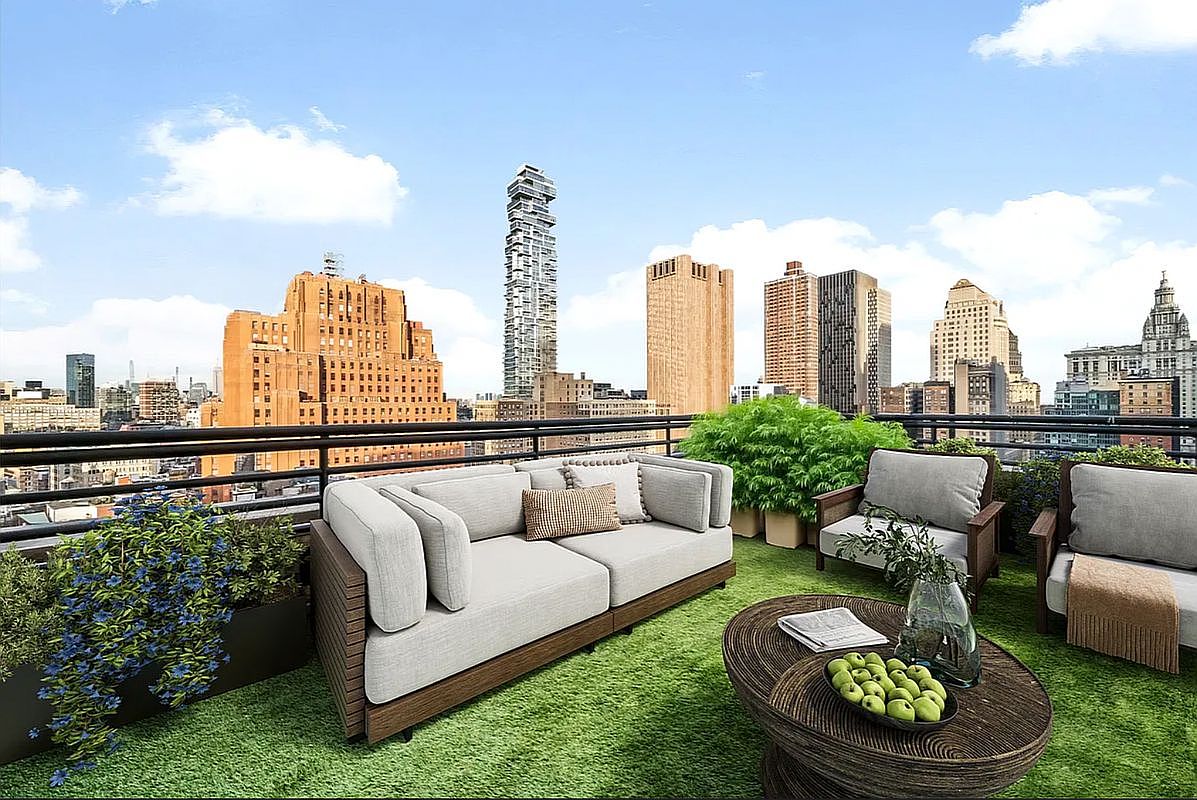
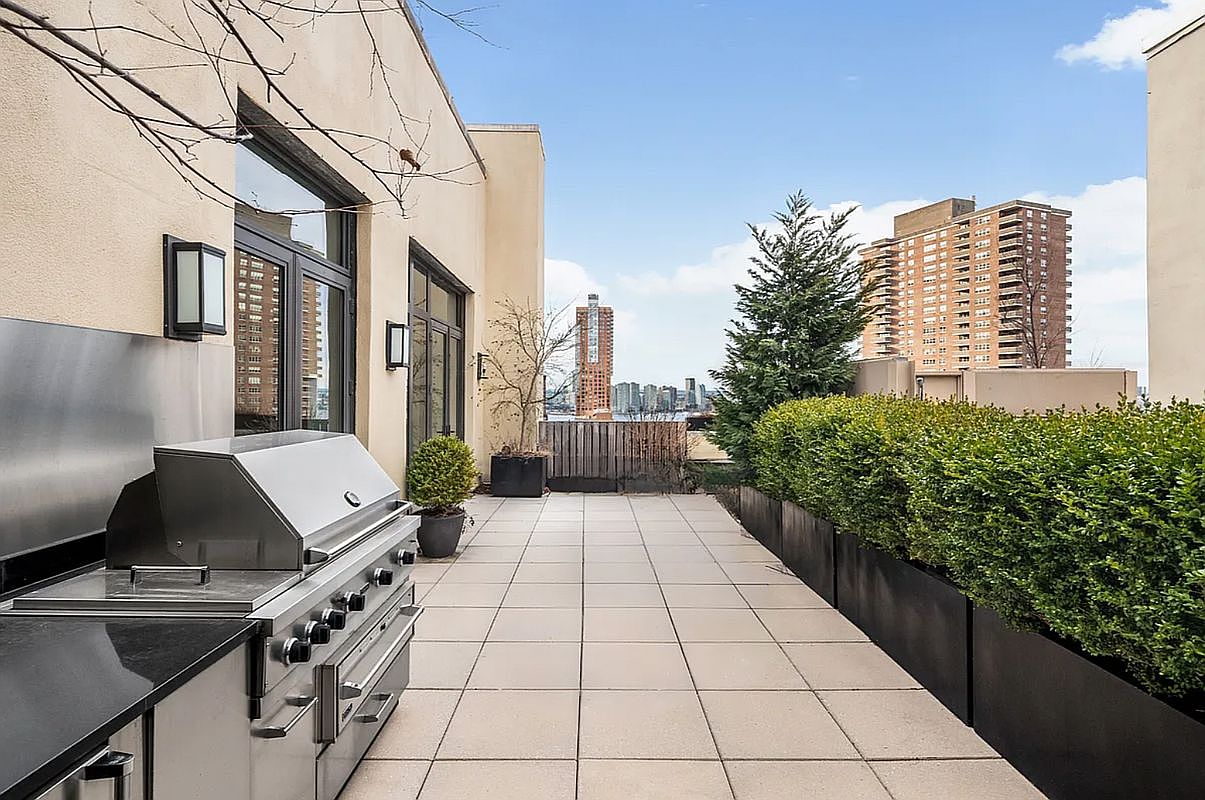
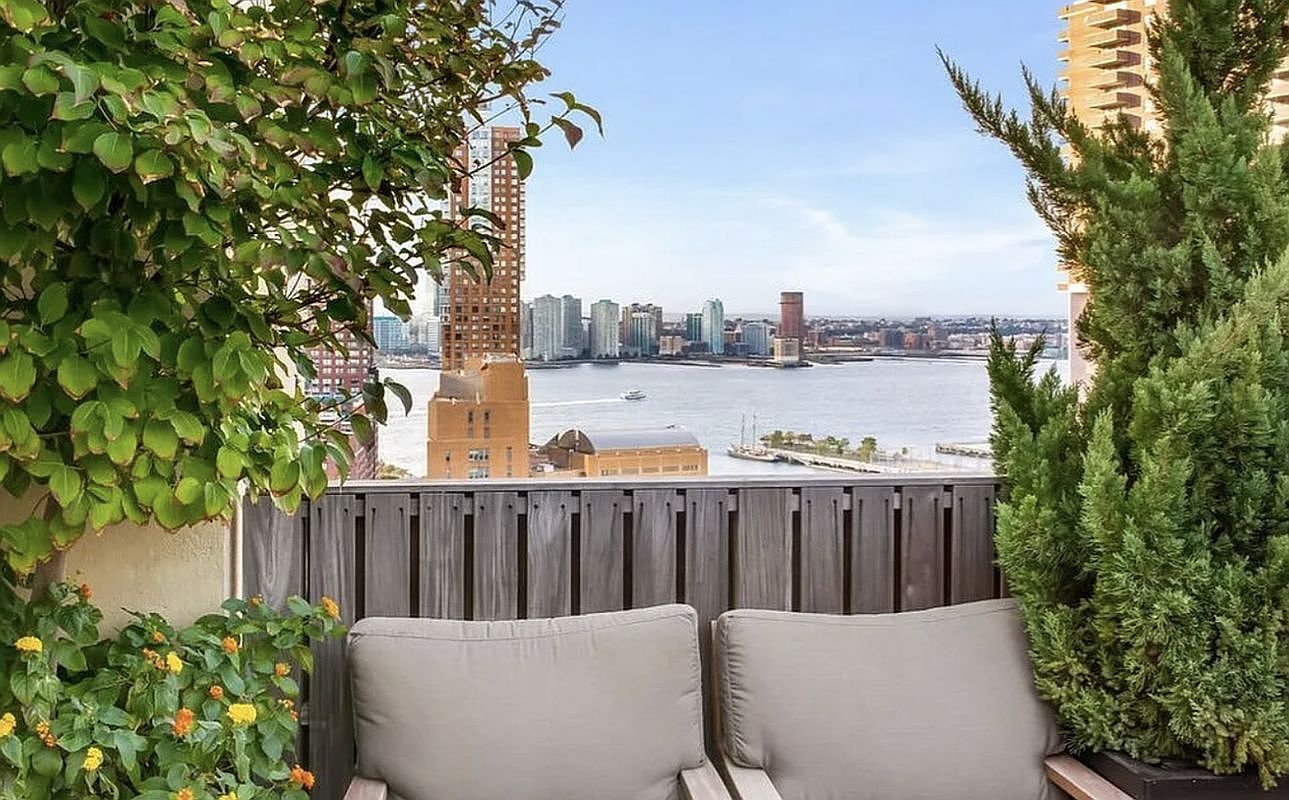
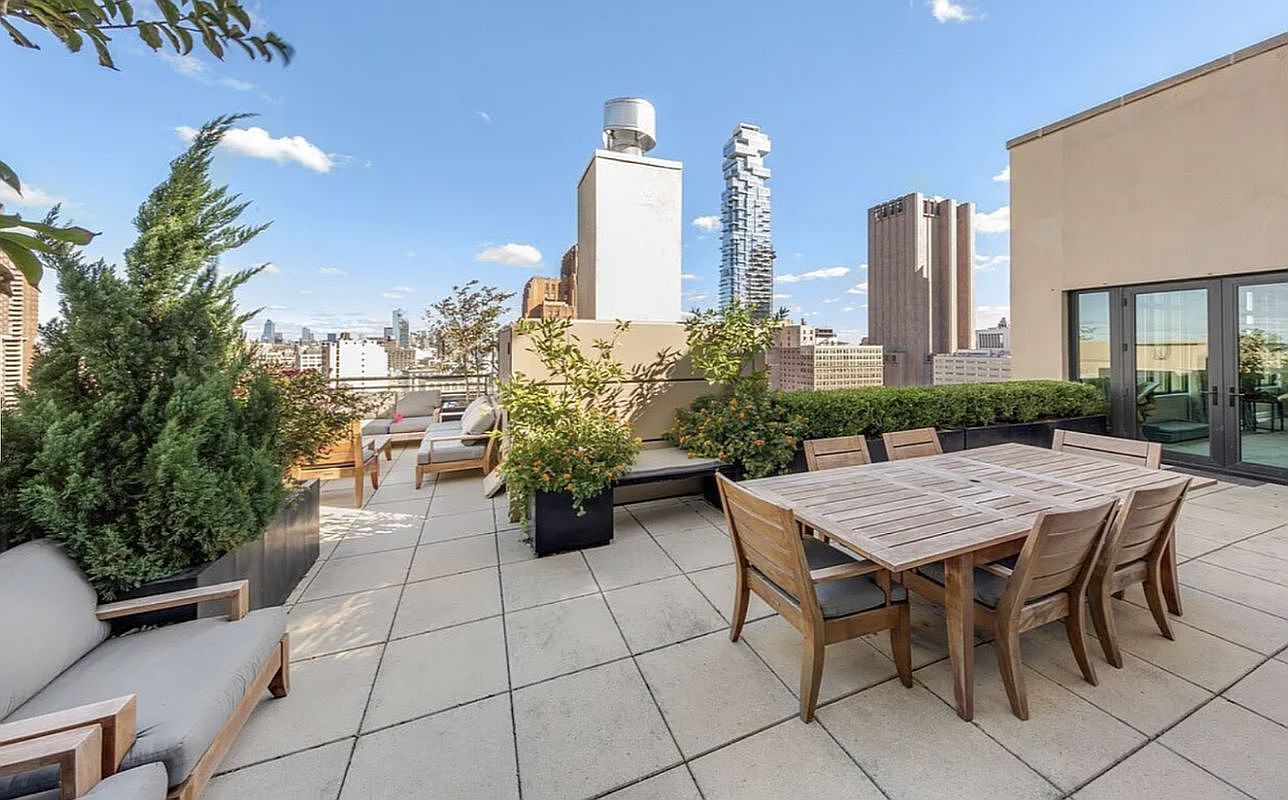
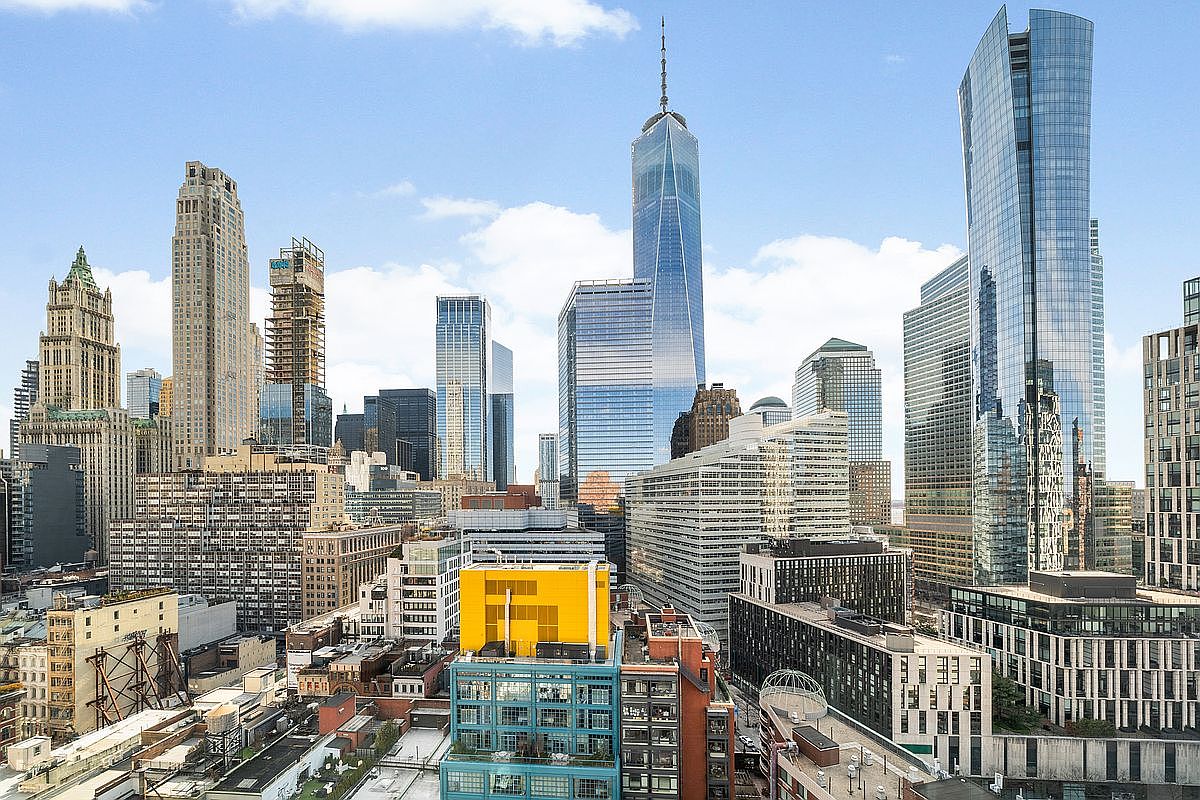
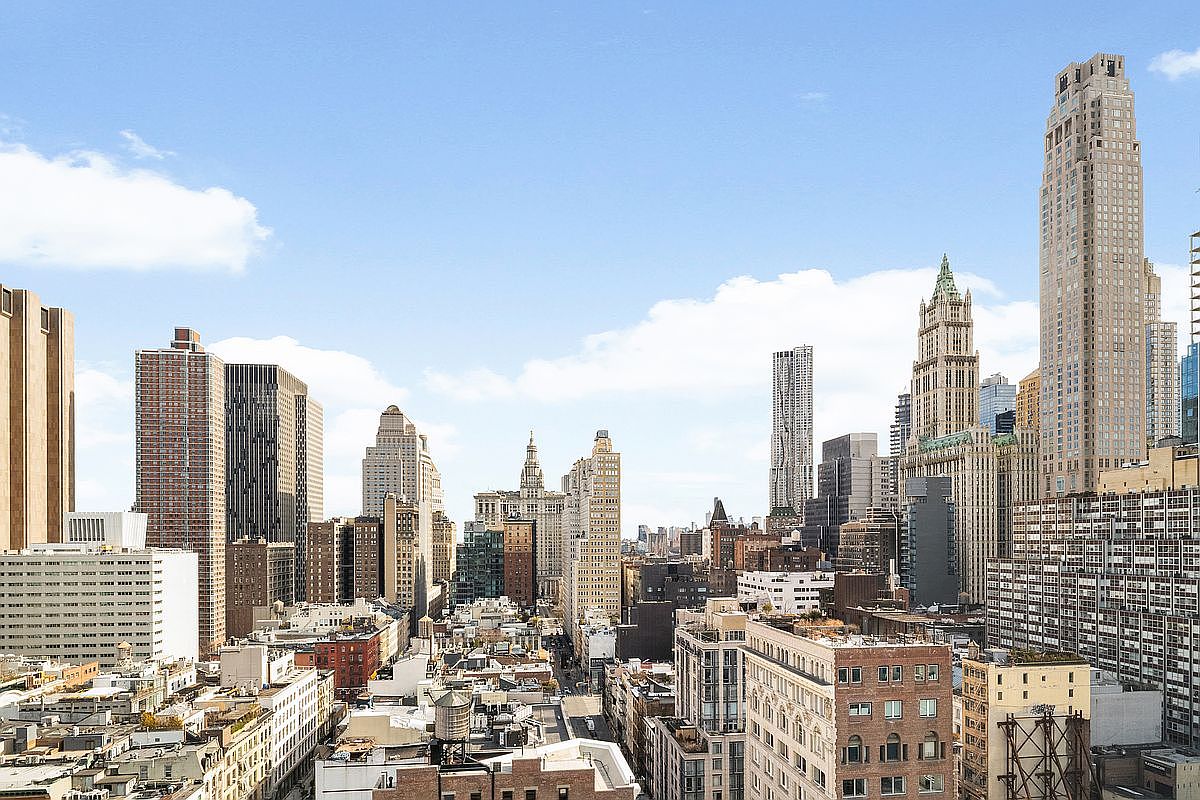
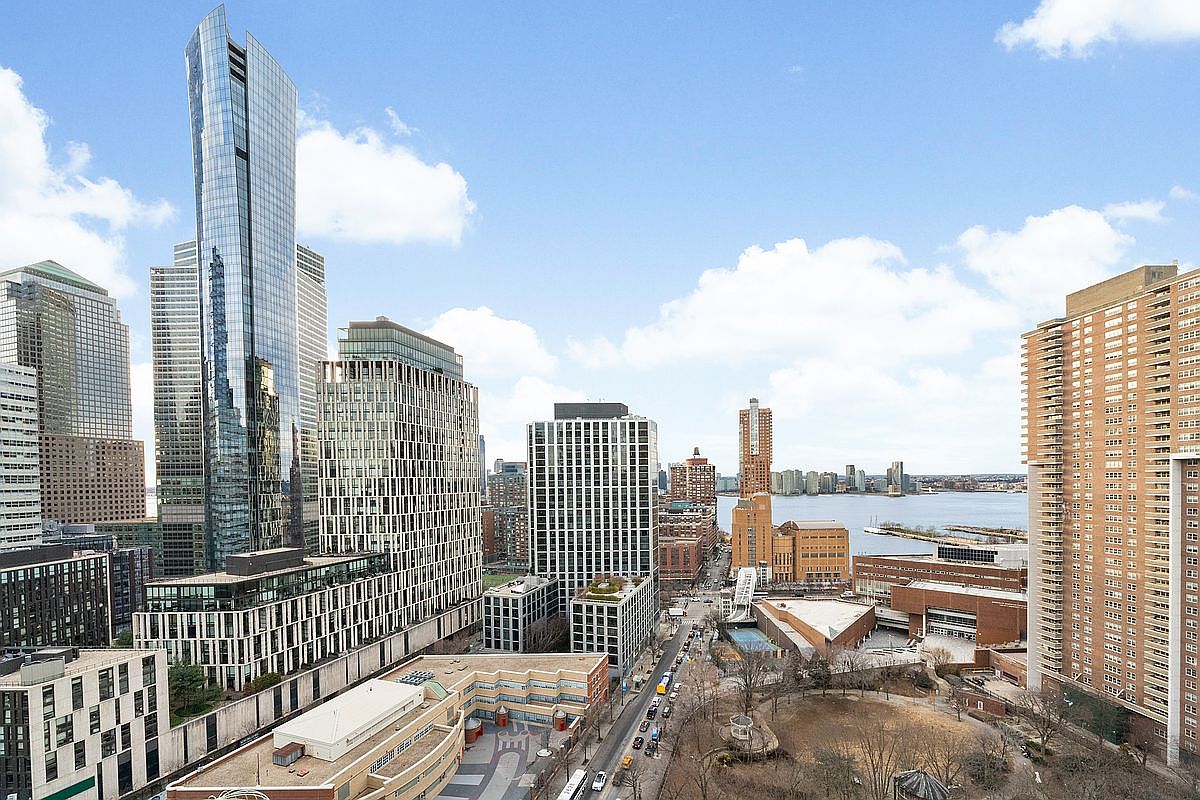
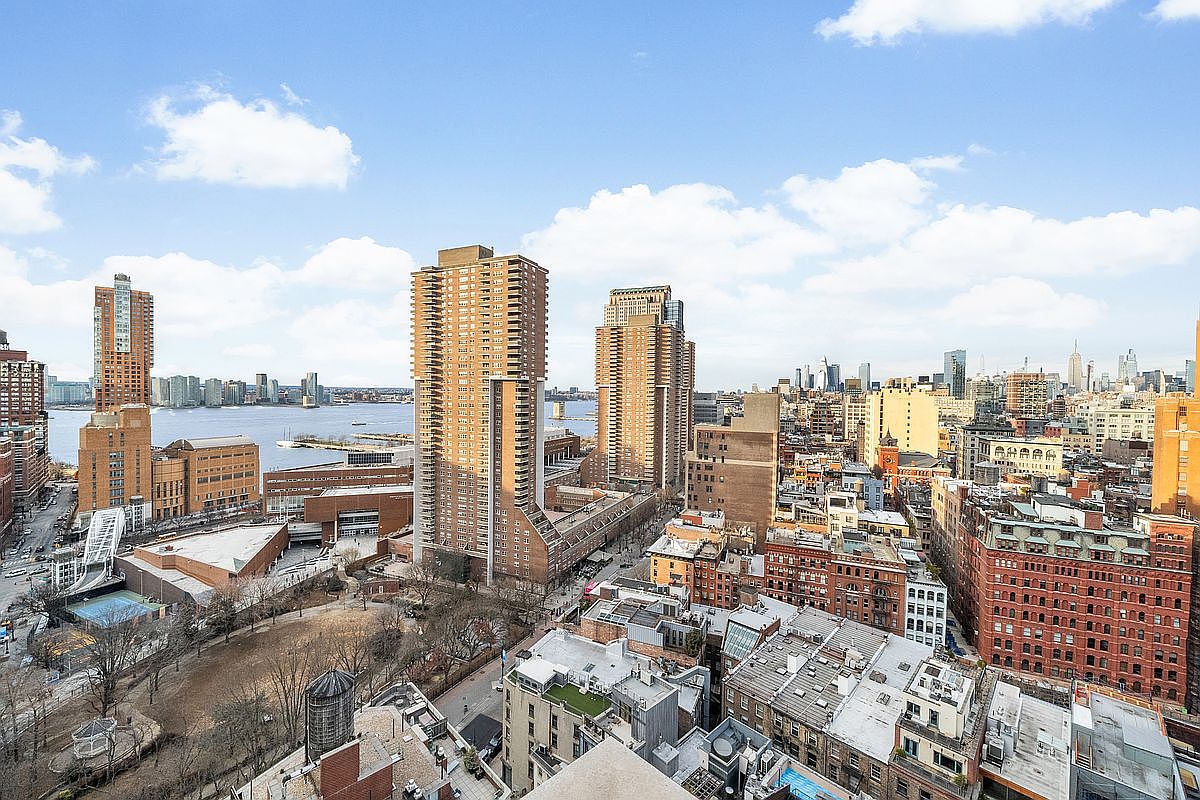
That terrace, equipped with a commercial-grade Viking grill, double burner, and Viking refrigerator, is among two private outdoor spaces that together extend the home's living area into open sky. The views from both terraces — north toward the Empire State Building, west across the Hudson, east over the Brooklyn Bridge — do not diminish with familiarity. They are the kind that reward daily presence.
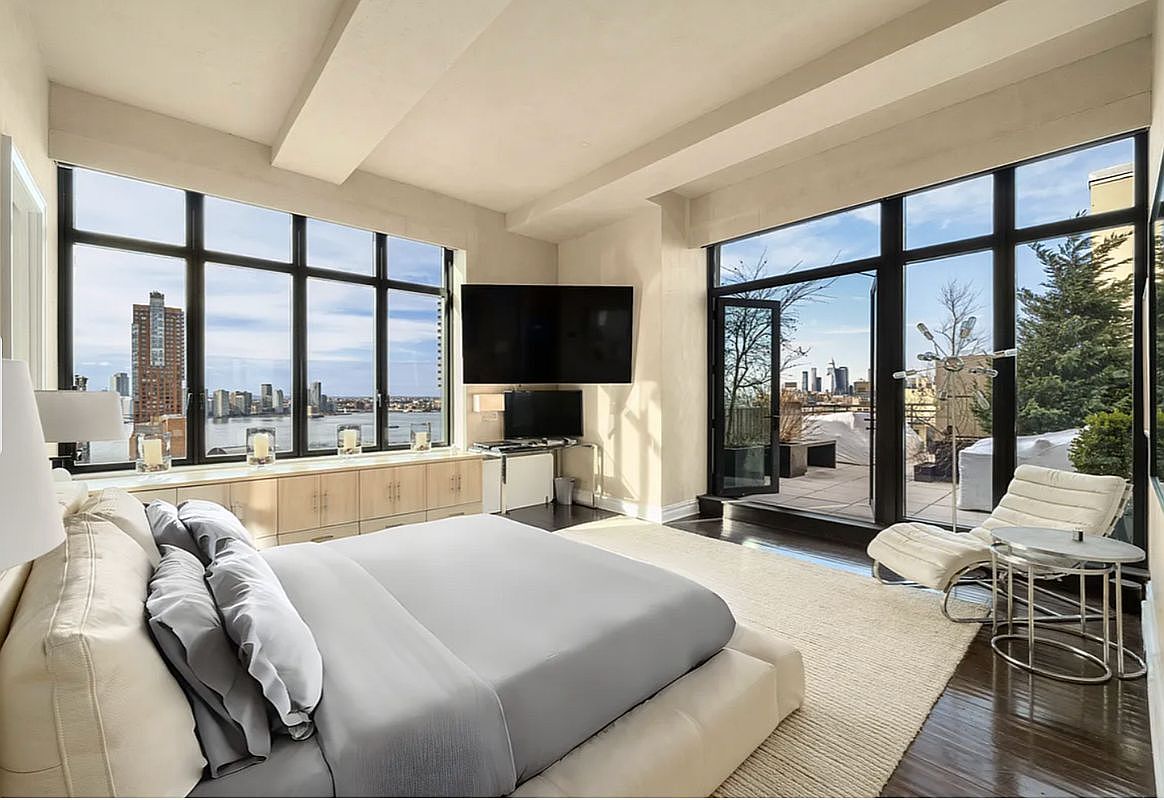
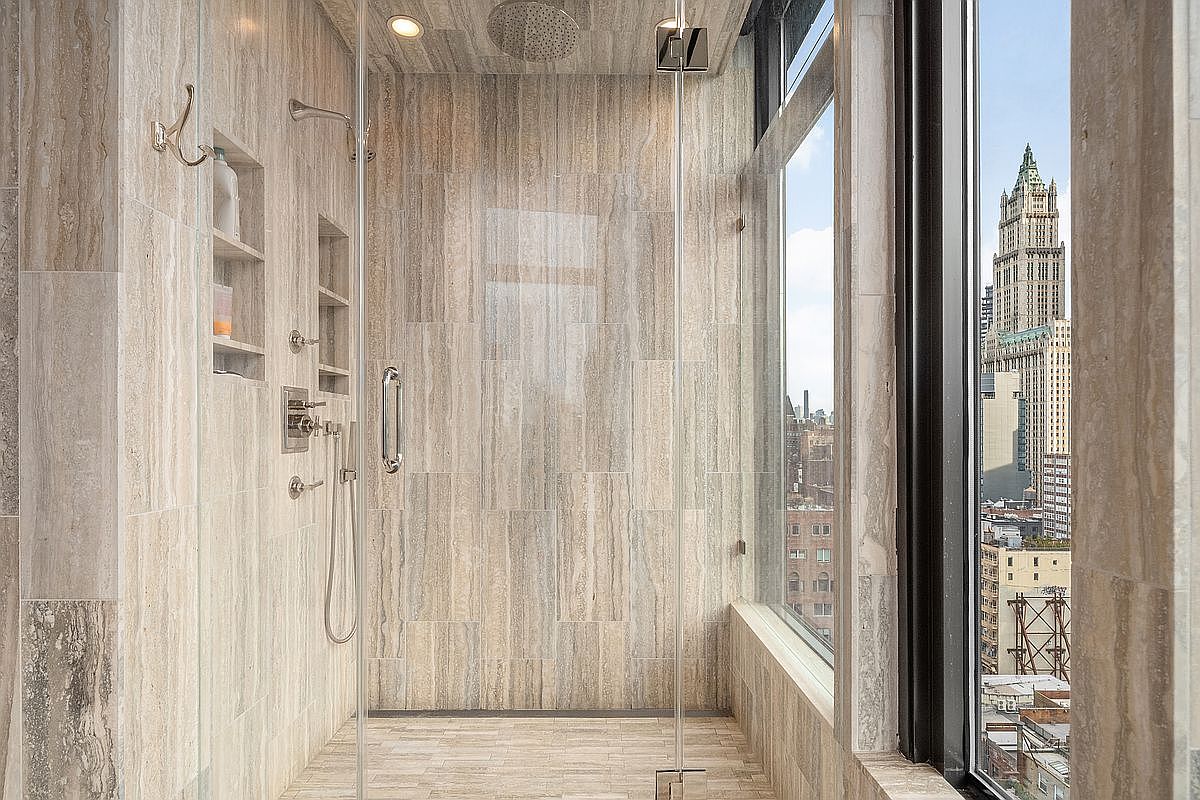
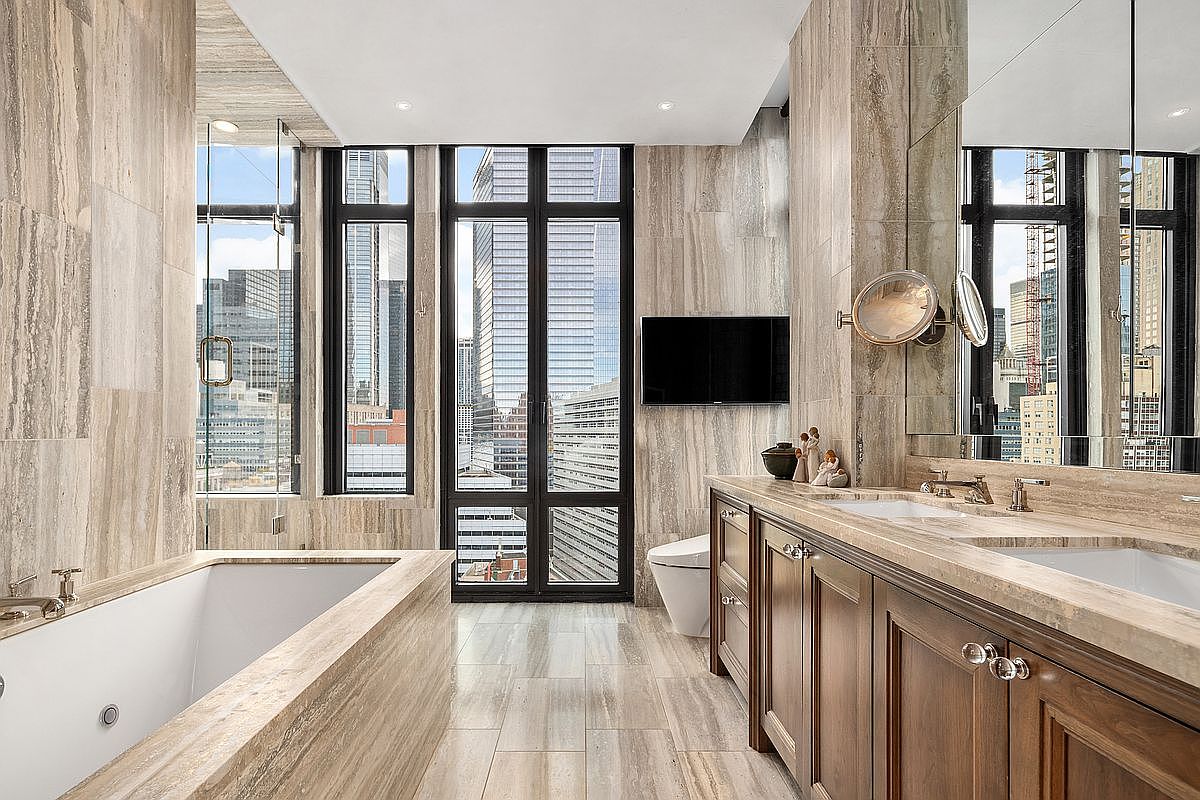
The primary suite occupies its own wing of the floor, wrapped in floor-to-ceiling glass on multiple exposures with direct access to a private terrace. The primary bathroom is finished entirely in travertine stone, a deep soaking tub positioned beside expansive windows so that the act of bathing becomes something closer to a meditative ritual. A double vanity with rich wood cabinetry and a walk-in shower with a rainfall fixture complete a bathroom that functions as a genuine spa environment.
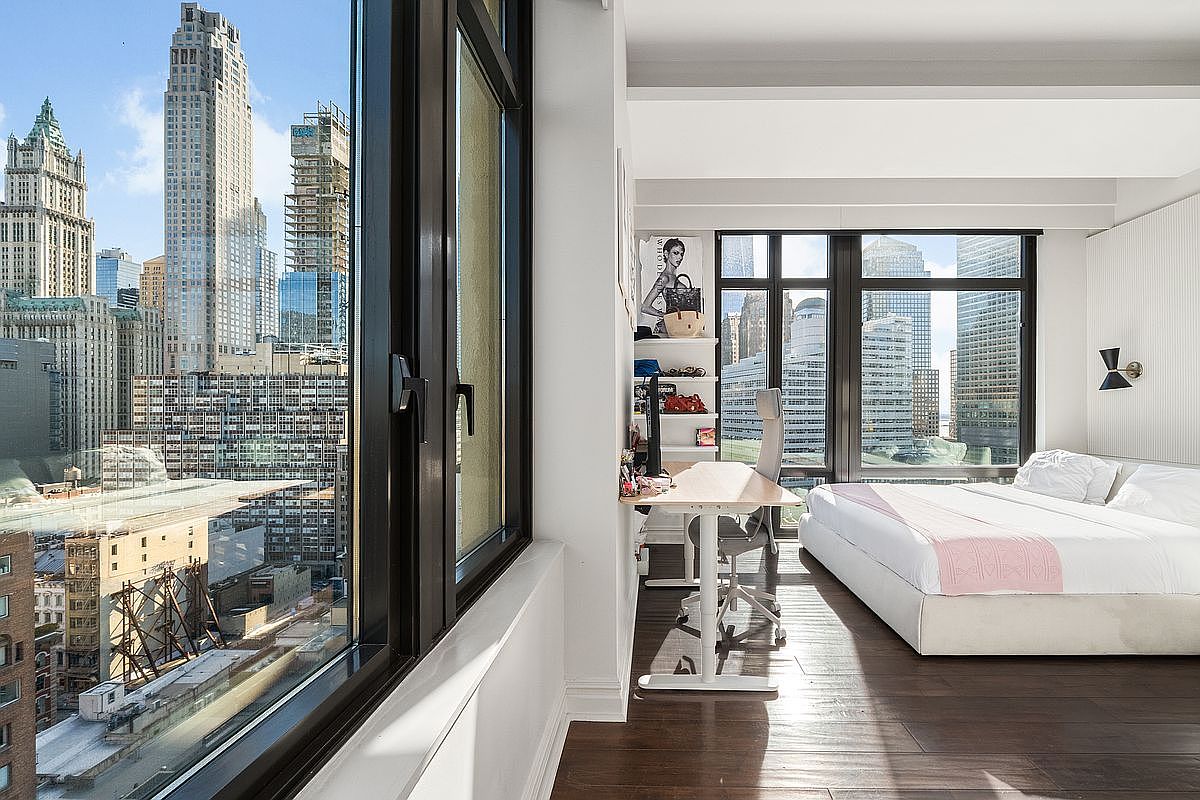
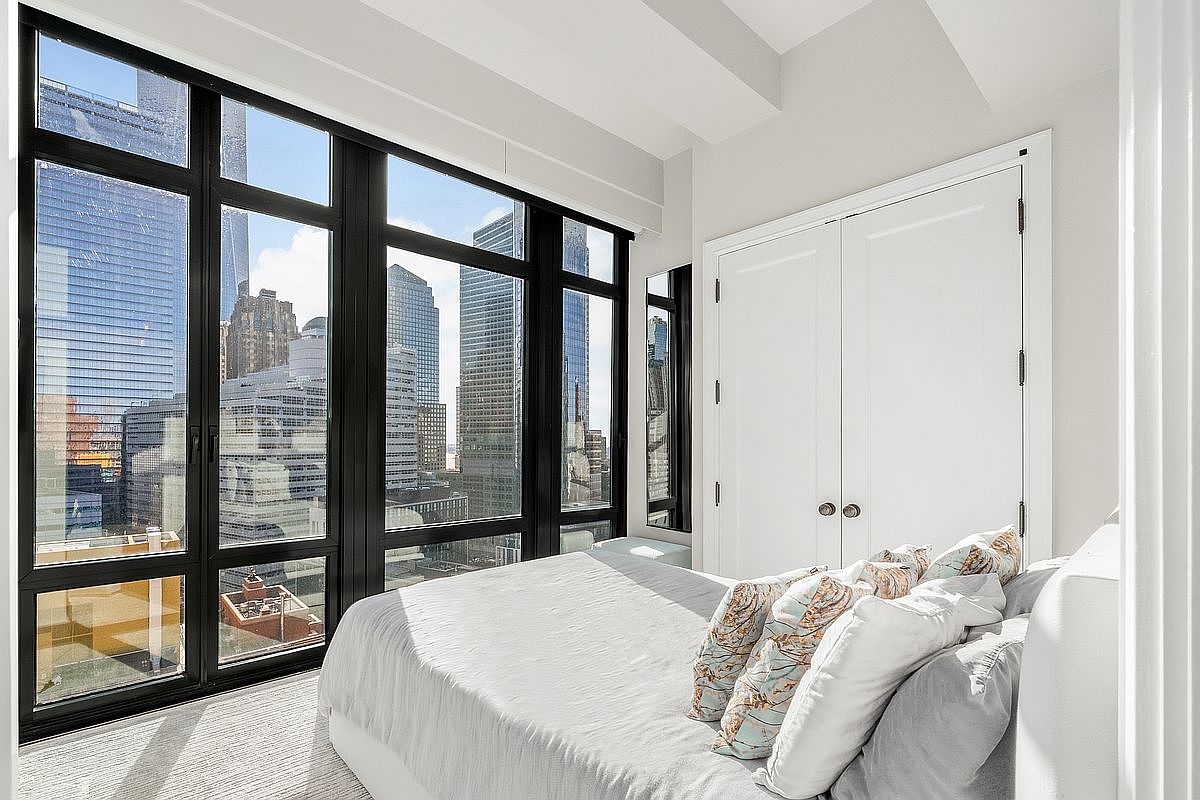
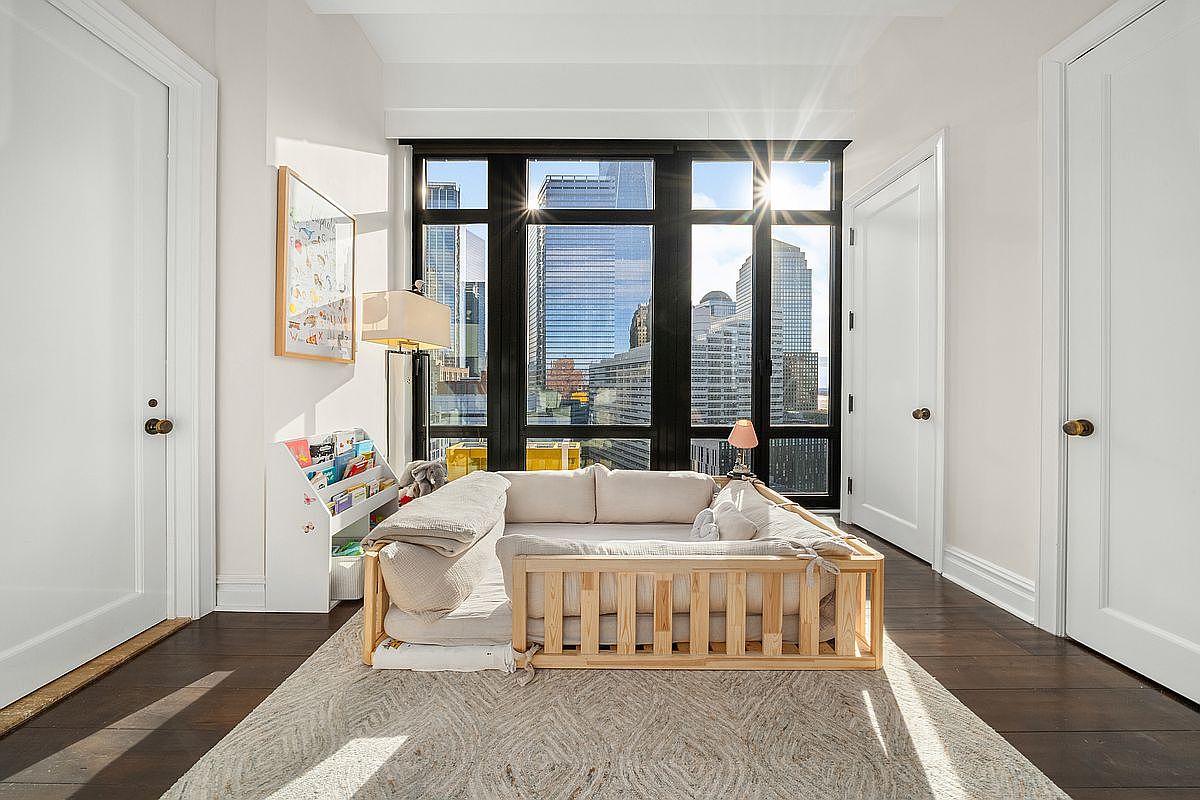
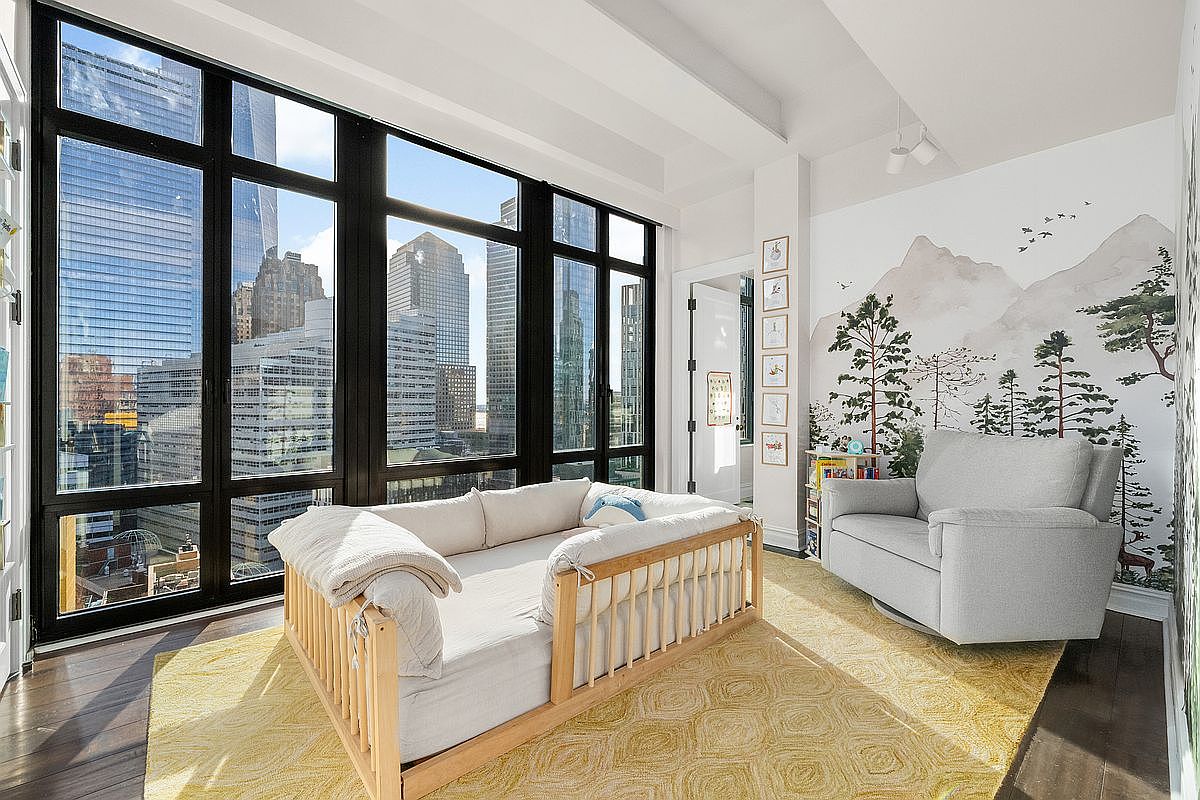
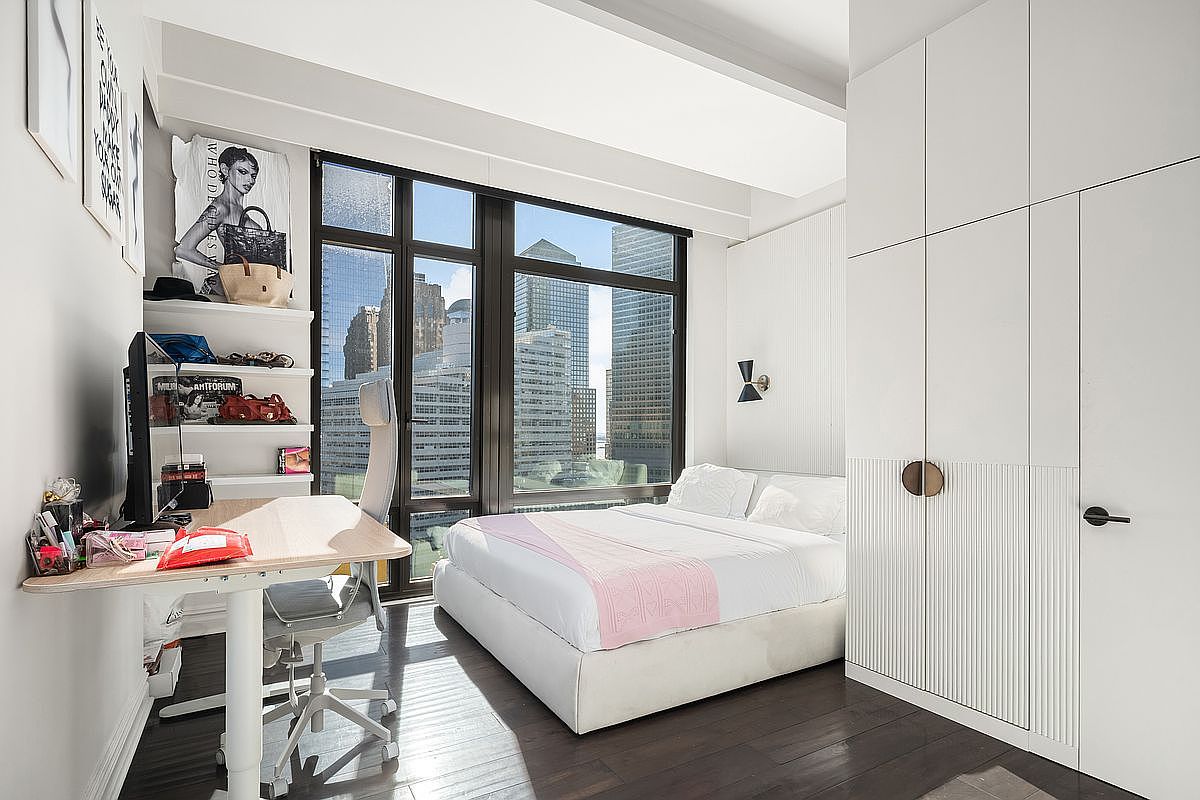
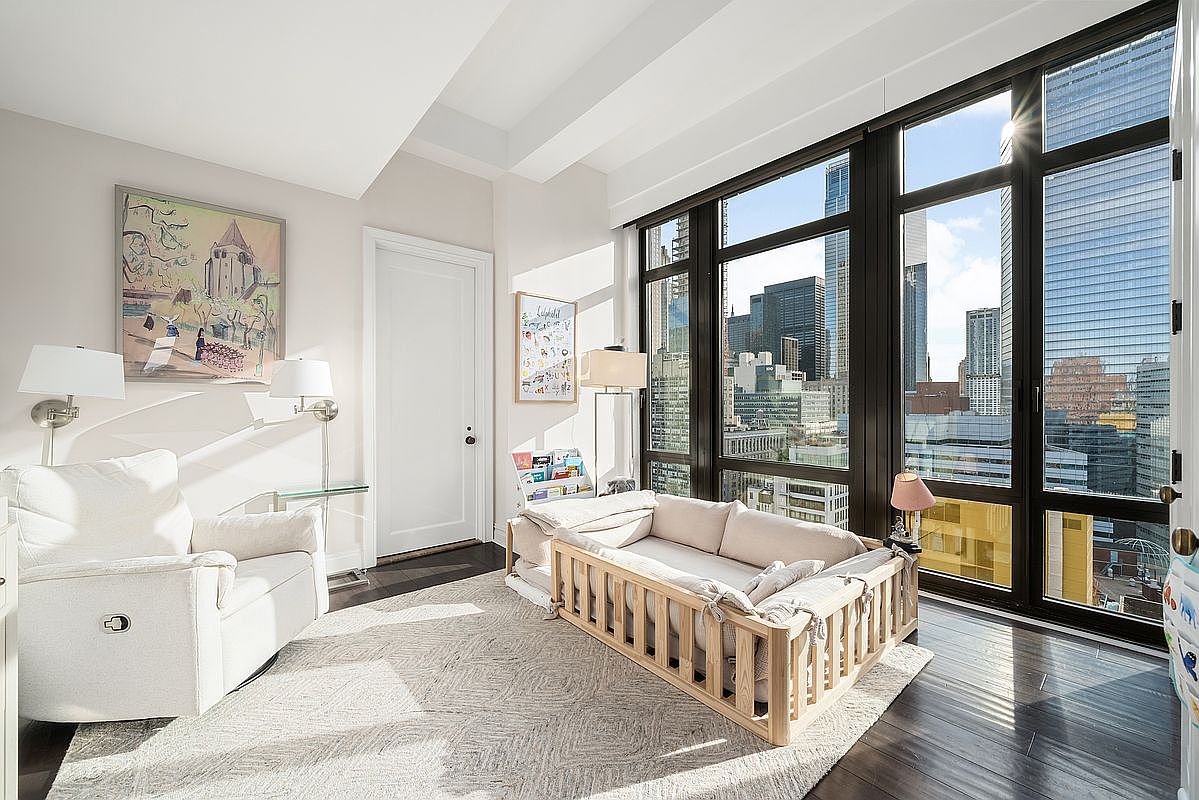
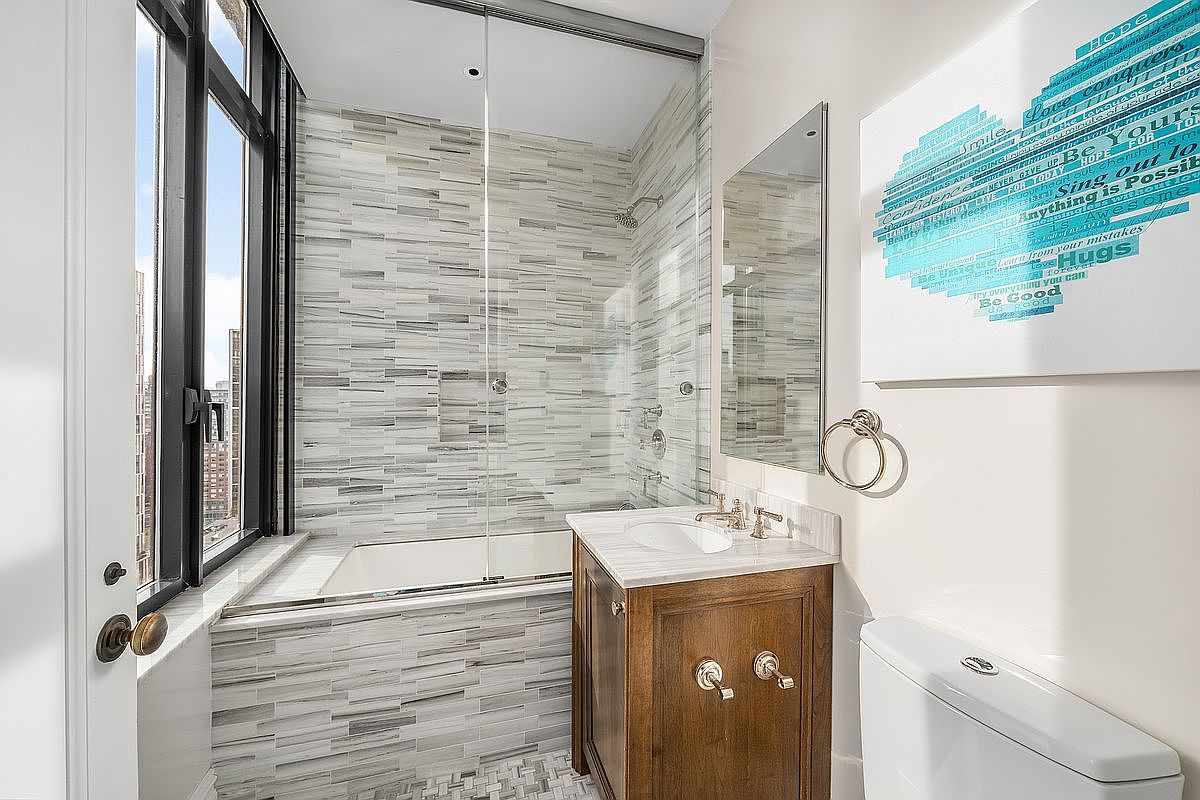
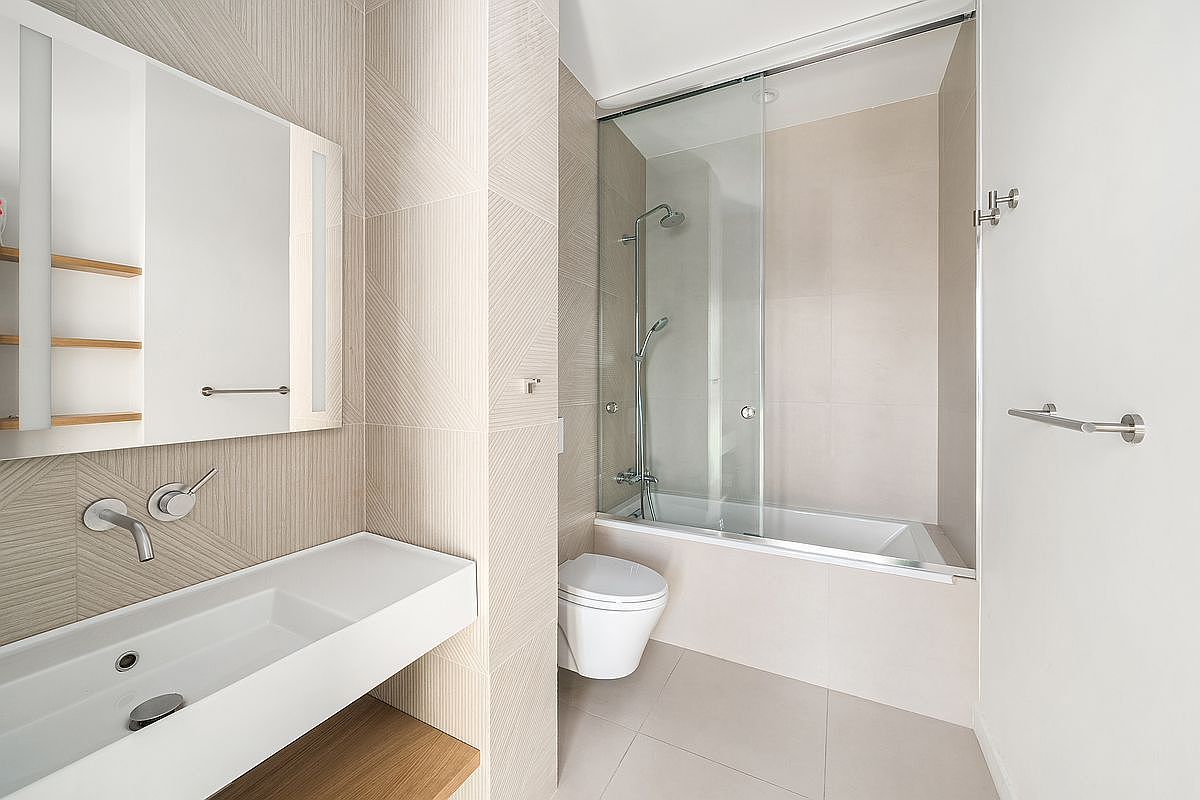
Two additional bedrooms each offer their own floor-to-ceiling city views and en-suite baths. A versatile corner den — with eastern and southern exposures — serves equally as a fifth bedroom, a home office, or staff quarters, its dual aspects making it among the most flexible rooms in the residence. The building itself, designed by Roman and Williams and BKSK Architects, comprises only forty-five apartments, ensuring a level of intimacy and discretion that larger condominium towers cannot replicate.
Tribeca — the Triangle Below Canal Street — occupies a singular position in the geography of New York City, and not merely a geographic one. It is a neighborhood that has undergone one of the most remarkable transformations in American urban history, evolving from a nineteenth-century commercial and industrial district of cast-iron warehouses and textile merchants into what is today widely regarded as one of the most desirable residential enclaves in the world.
The neighborhood's character is inseparable from its architectural heritage. The landmarked cast-iron and Romanesque Revival buildings that line its cobblestone streets were built primarily between the 1860s and 1890s to house the commercial trade that once dominated lower Manhattan. When artists and creative professionals began converting these warehouses into live-work lofts during the 1970s, they established an aesthetic and cultural identity that has proven remarkably durable. Today, those same bones — high ceilings, generous floor plates, deep-set windows — define the most coveted residential product in the neighborhood, and the DNA of Artisan Lofts itself.
Reade Street, where 143 sits, is among Tribeca's most distinguished residential addresses, running east-west through the neighborhood's historic core. The street benefits from proximity to the neighborhood's finest amenities while maintaining a quieter, more residential scale than the avenues.
The dining landscape surrounding the building reflects Tribeca's long-standing reputation as one of Manhattan's most culinarily serious neighborhoods. Locanda Verde, Nobu Tribeca, and The Odeon — one of the neighborhood's enduring institutions — are within easy reach, alongside a constellation of independent restaurants and wine bars that reflect the neighborhood's sophisticated residential population. The Tribeca Farmers Market operates seasonally in the area, and the neighborhood's independent retail offerings range from specialty food purveyors to internationally recognized design and art galleries.
Cultural life in Tribeca is anchored by institutions that have chosen the neighborhood precisely for its creative legacy. The Tribeca Film Festival, founded in the aftermath of September 11, 2001 to help revitalize lower Manhattan, has grown into one of the most significant film festivals in the United States and takes place annually across venues throughout the neighborhood. The area also benefits from proximity to the Hudson River Park, whose piers offer running and cycling paths, athletic facilities, and public green space along more than four miles of Manhattan's western waterfront.
Families are well served by a selection of both public and independent schools in and around the neighborhood, and the area's relative quiet — particularly on its residential side streets — makes it unusually livable for a neighborhood so close to the center of the city. The 1, 2, 3, A, C, and E subway lines provide direct connections to Midtown and beyond, while the neighborhood's proximity to the Holland Tunnel and to lower Manhattan's financial and legal districts makes it a practical choice for professionals across multiple industries.
What distinguishes Tribeca above all, however, is the texture of daily life it offers — a neighborhood that is simultaneously deeply rooted in New York history and entirely present-tense in its ambitions, where cobblestone streets and converted warehouses coexist with world-class restaurants, significant architecture, and a residential community that has chosen this particular corner of the city with great deliberateness.
Featured Highlights
Curated Content • Presented by Andrew Azoulay