The Story Behind
Top-Floor Penthouse with Vaulted Ceilings and Vail Mountain Views
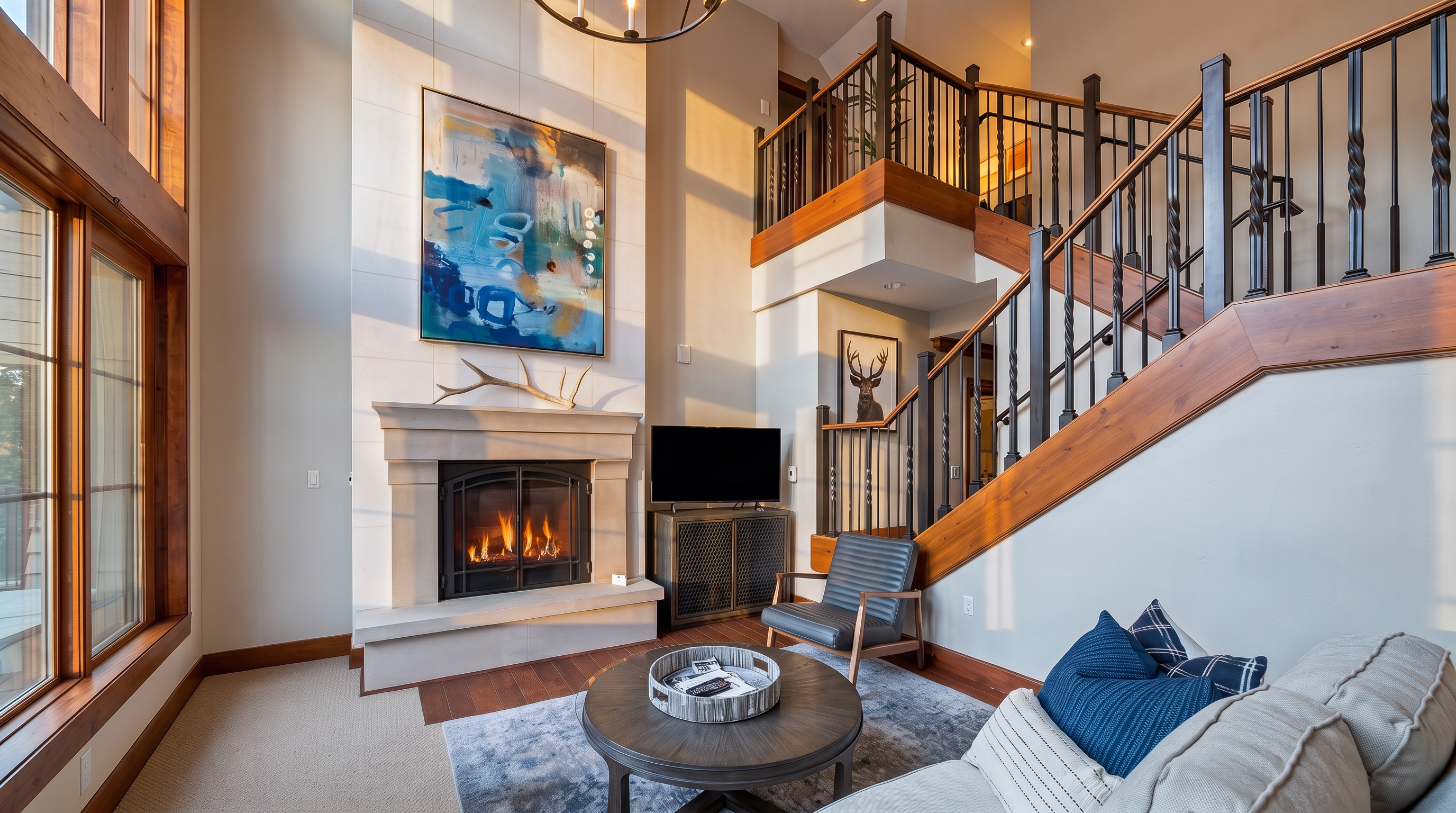
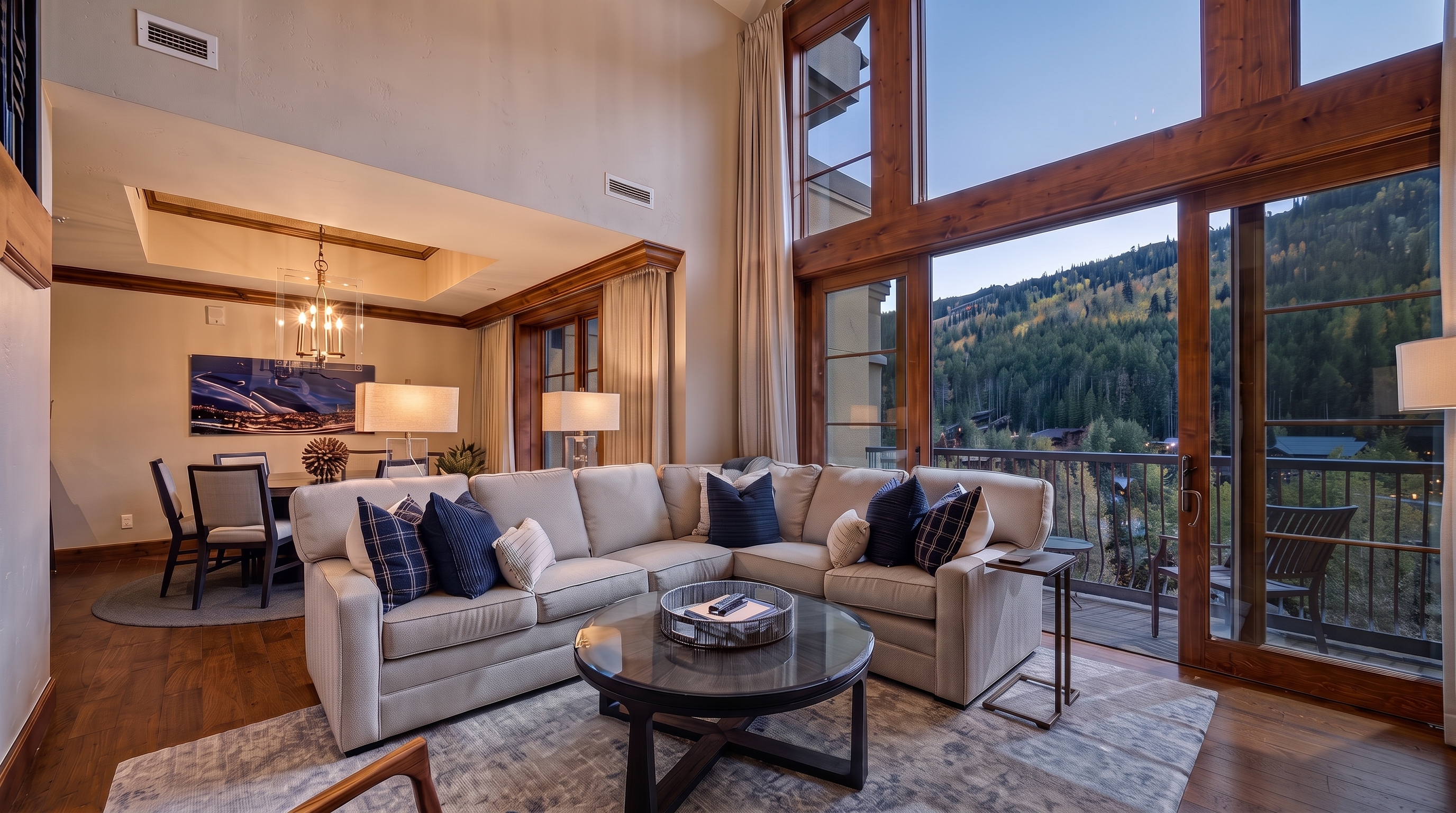
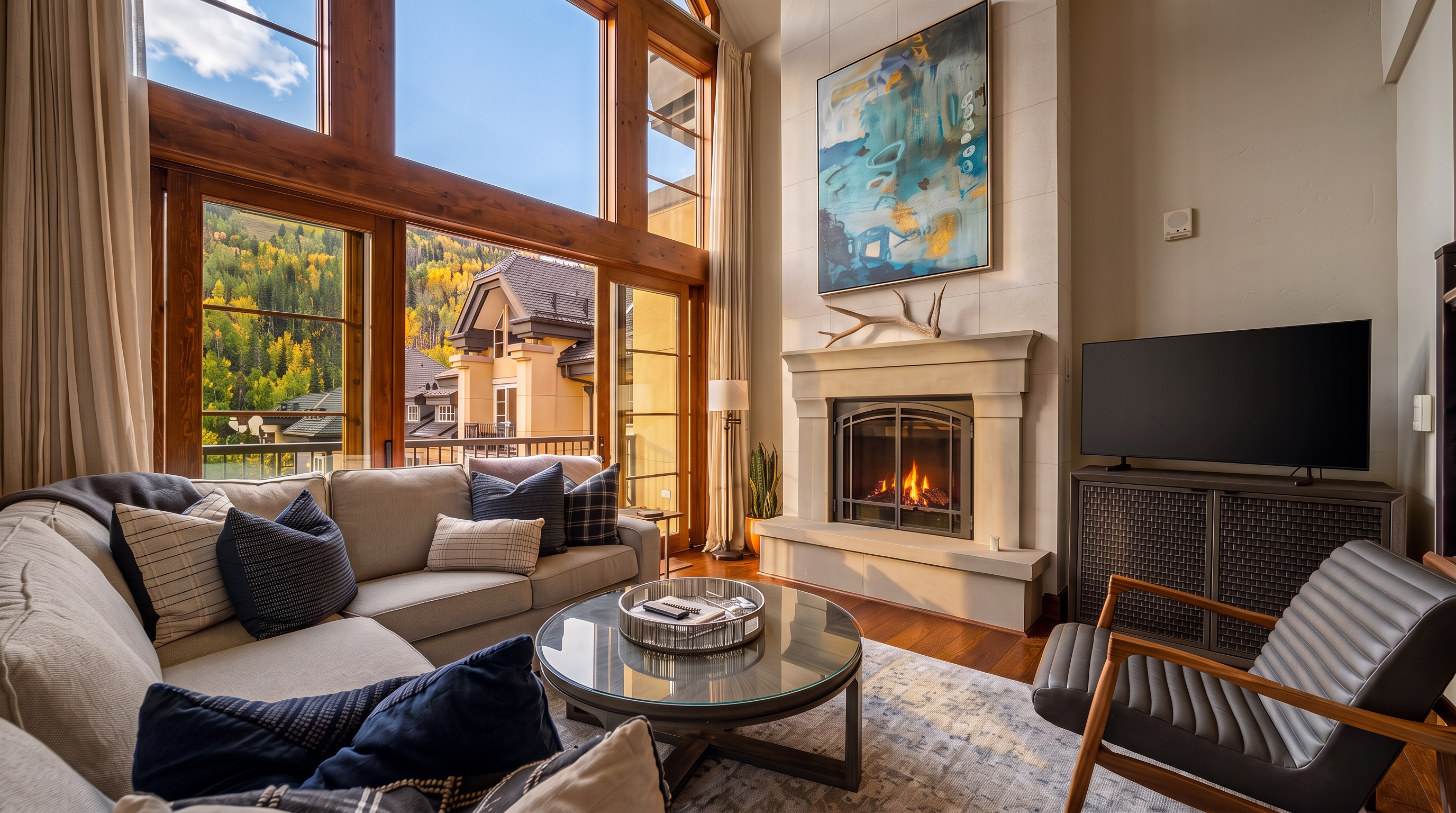
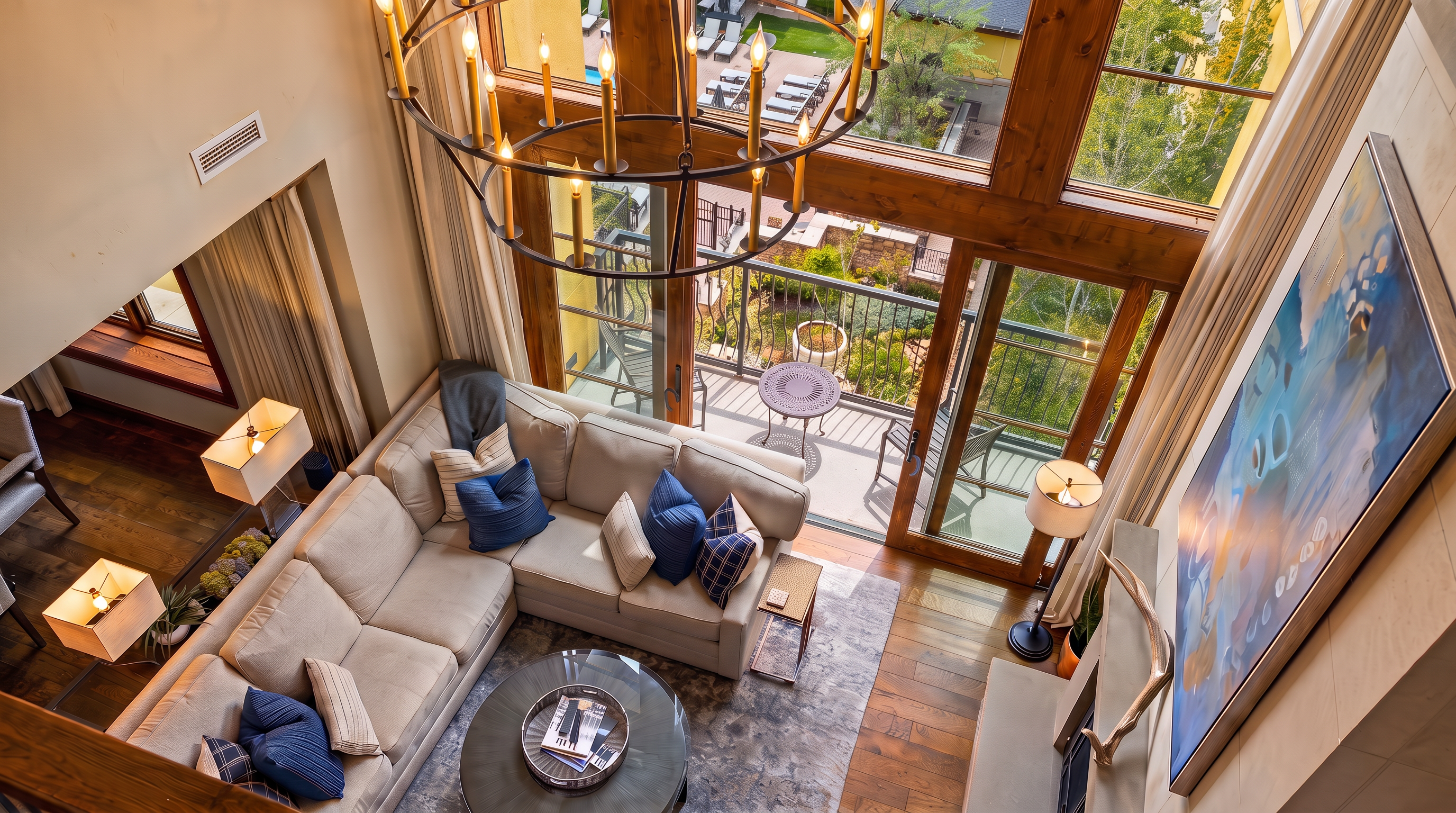
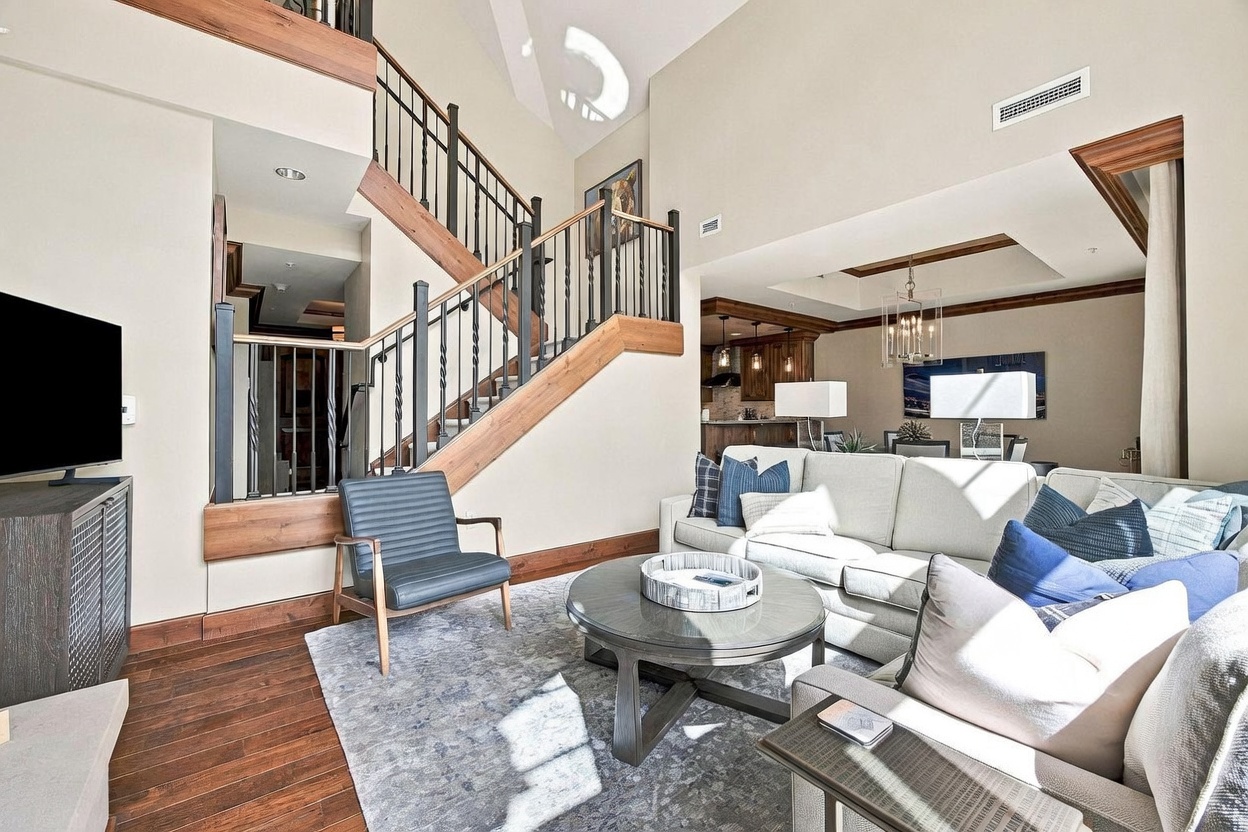
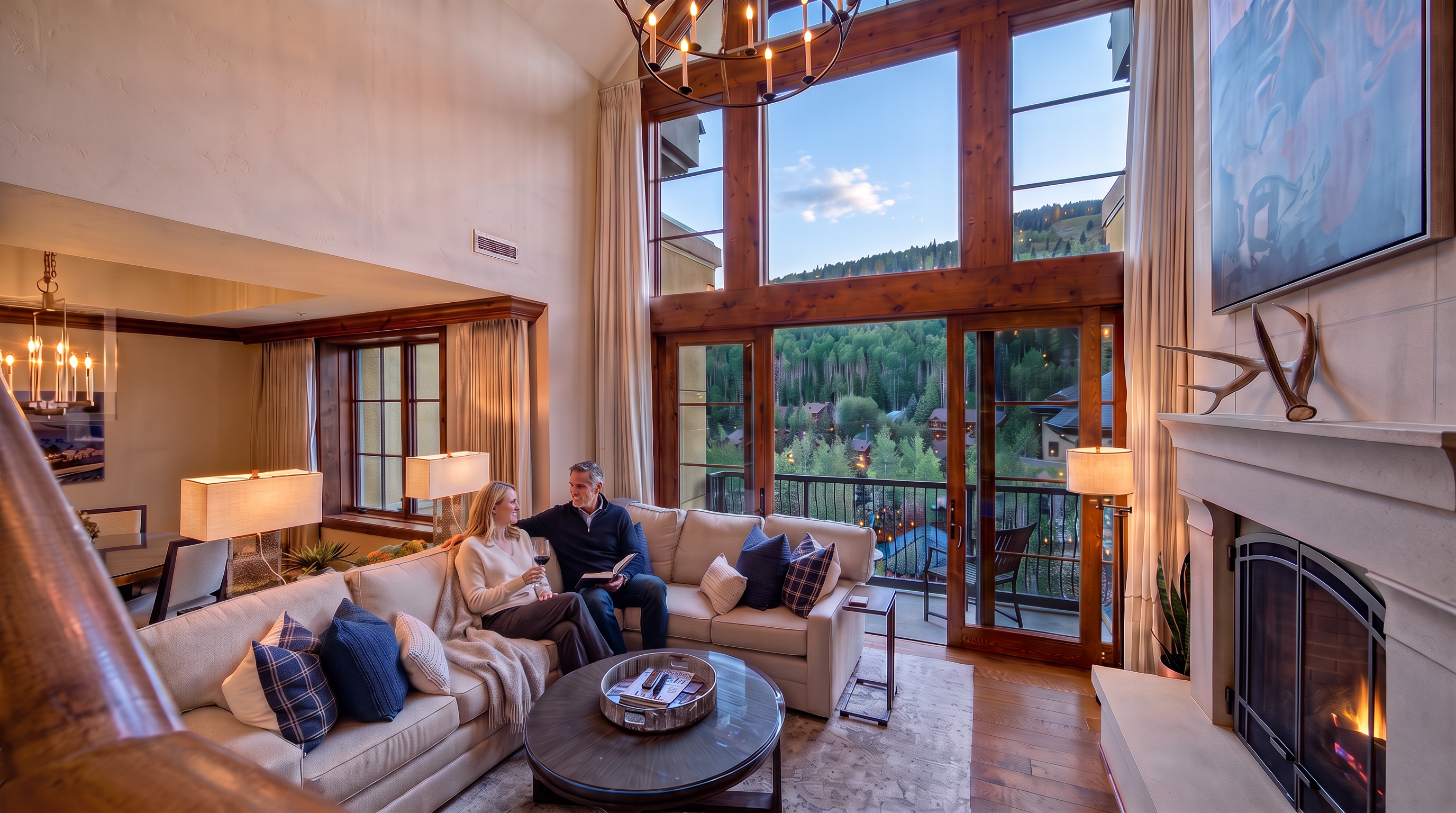
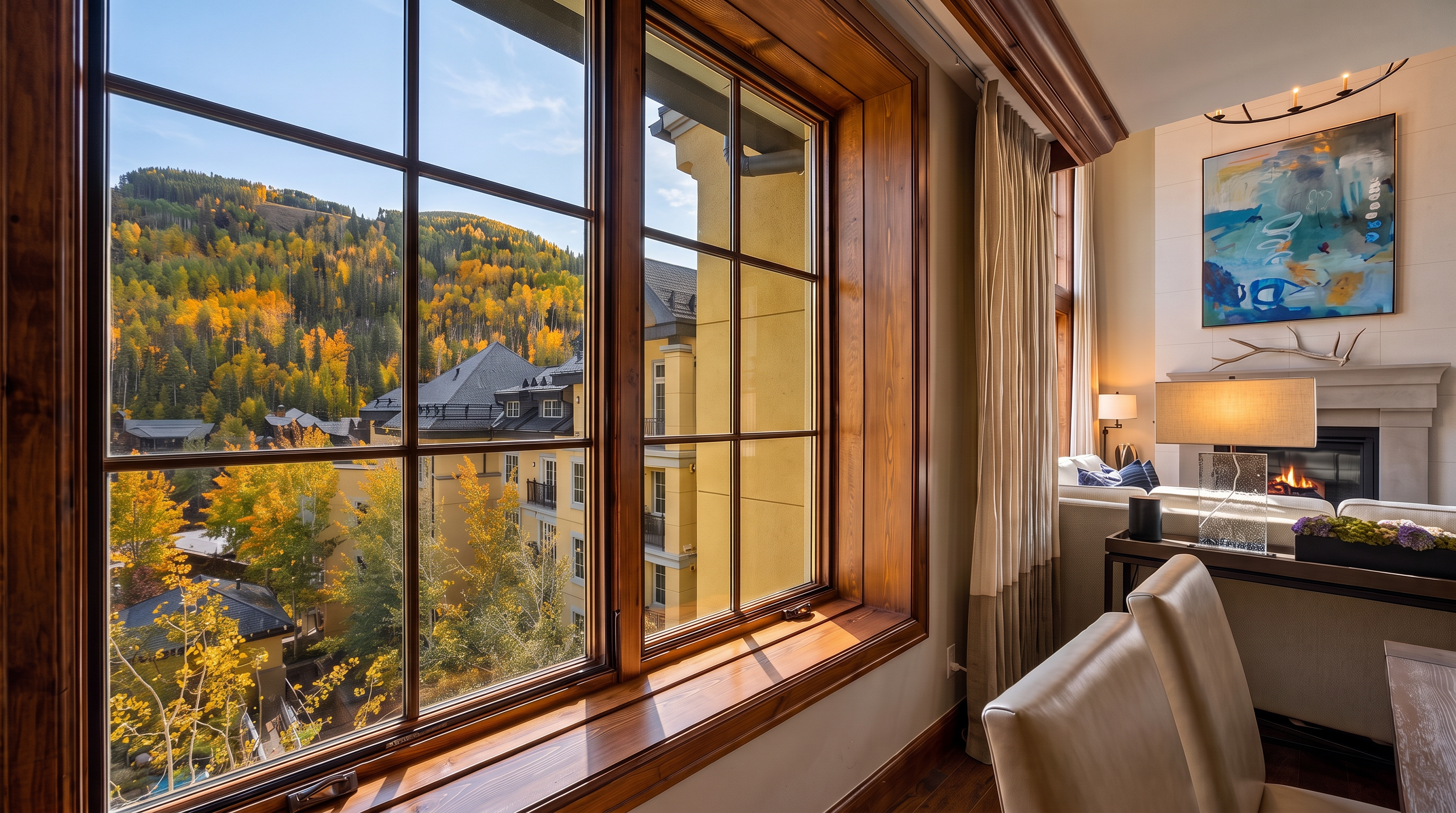
There is an immediacy to this penthouse that sets it apart from the moment you step inside. Morning light arrives early and stays long, pouring through the south-facing windows and sliding glass doors of the two-story great room, where vaulted ceilings climb high above a stone-clad fireplace and a generous sectional arranged for both intimate evenings and effortless entertaining. The scale of the space is rare within the building—this is, as of now, the only two-bedroom penthouse available at The Ritz-Carlton Residences—and the combination of top-floor privacy, southern orientation, and dramatic ceiling height gives it a quality that photographs can suggest but only presence can fully communicate.
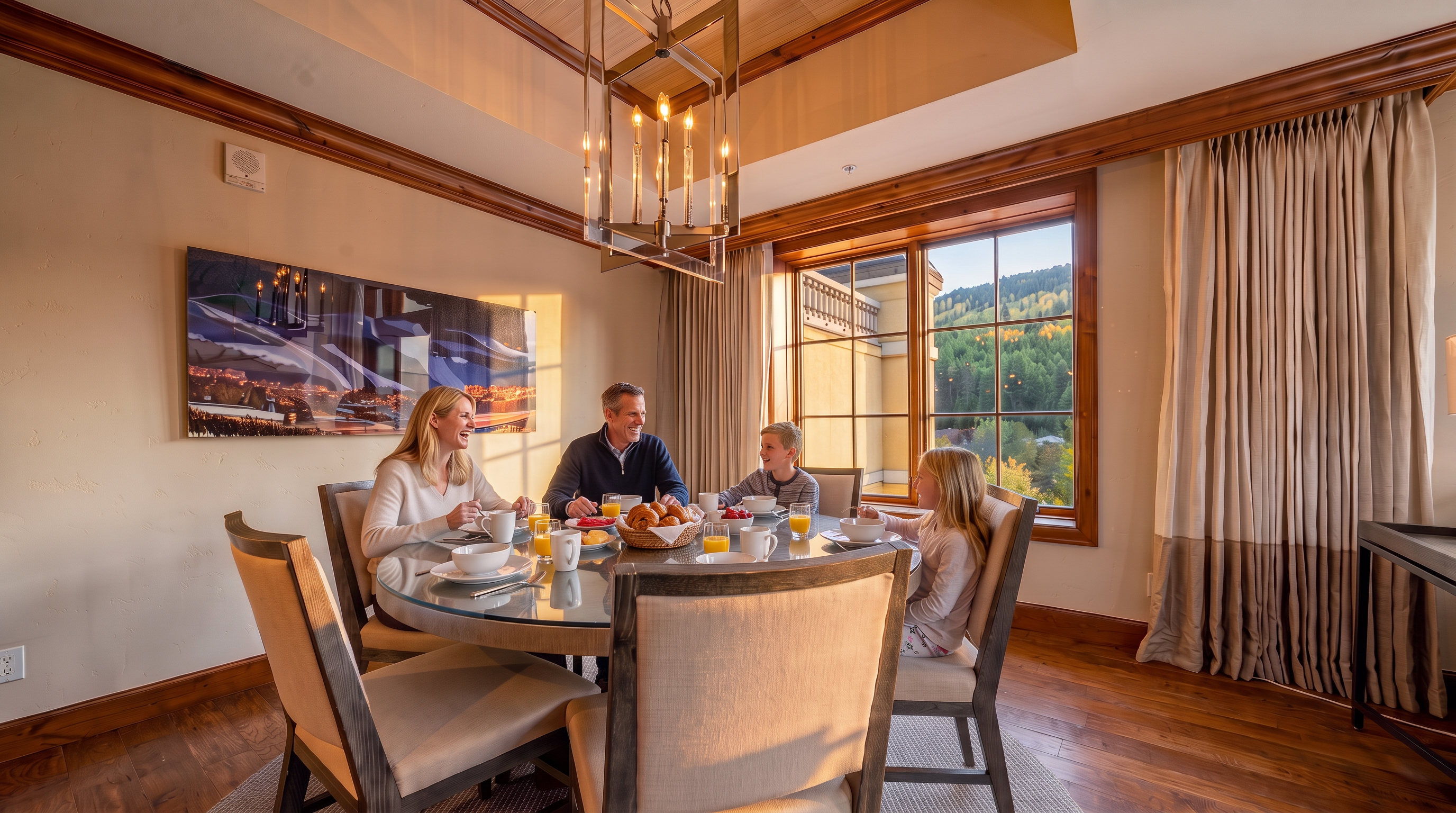
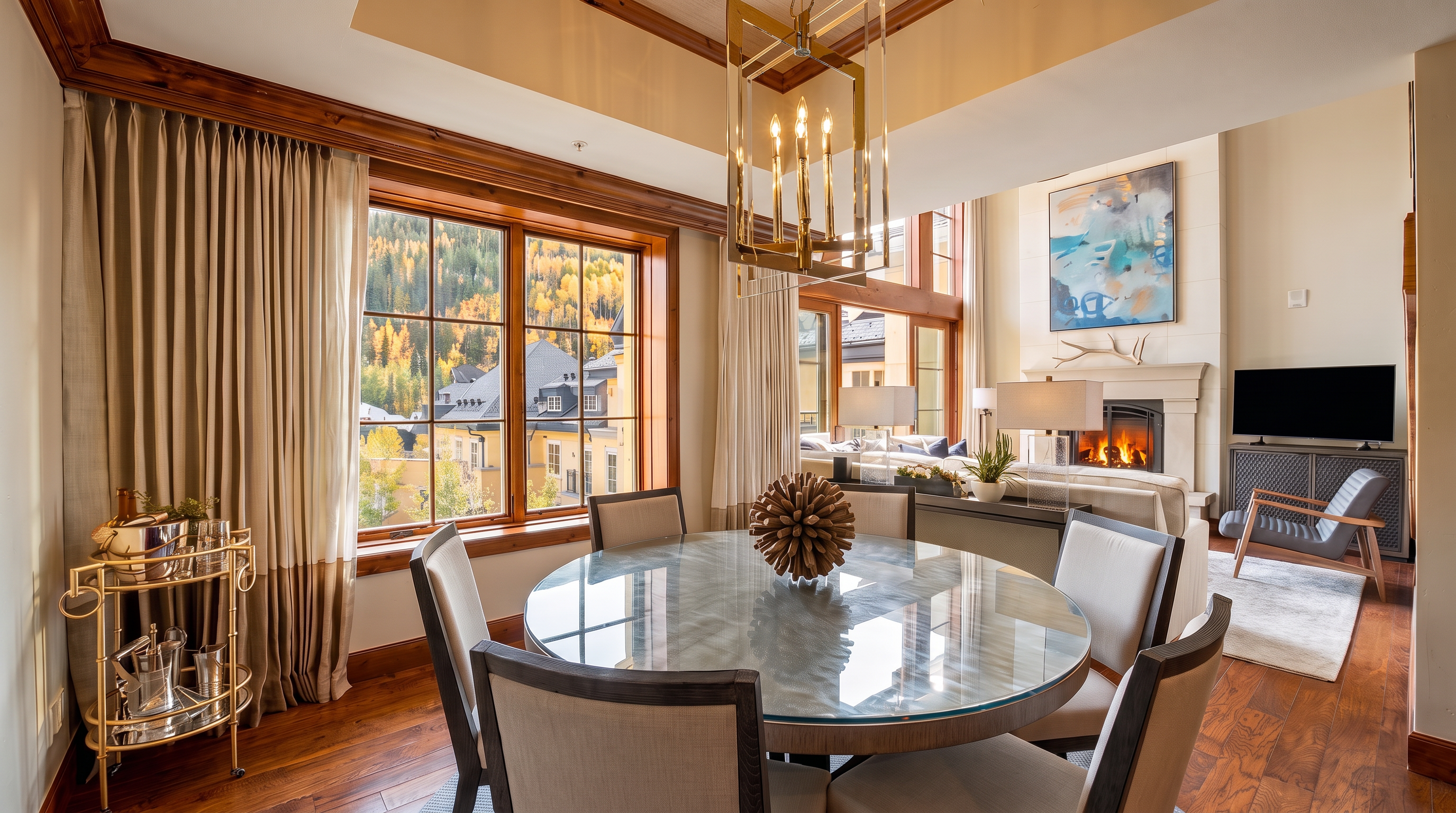
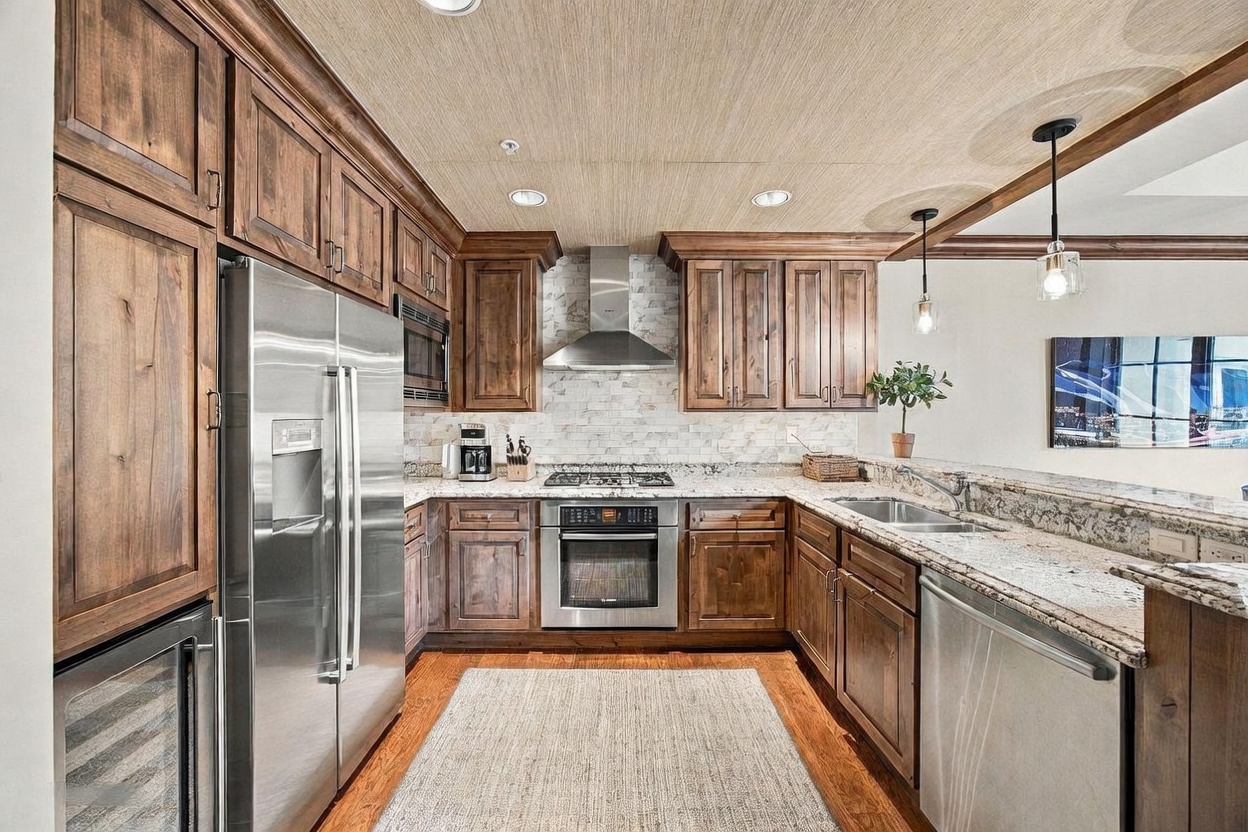
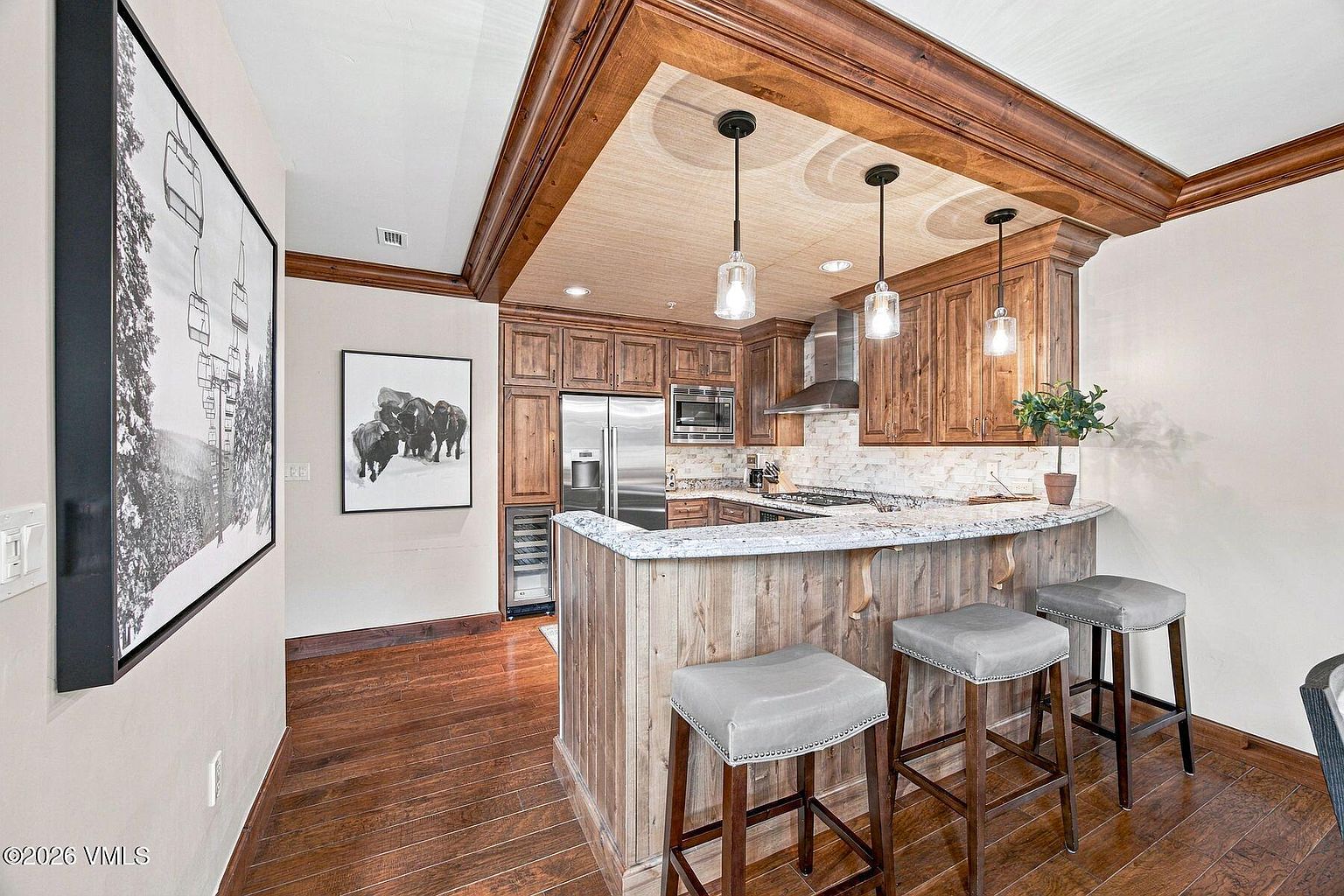
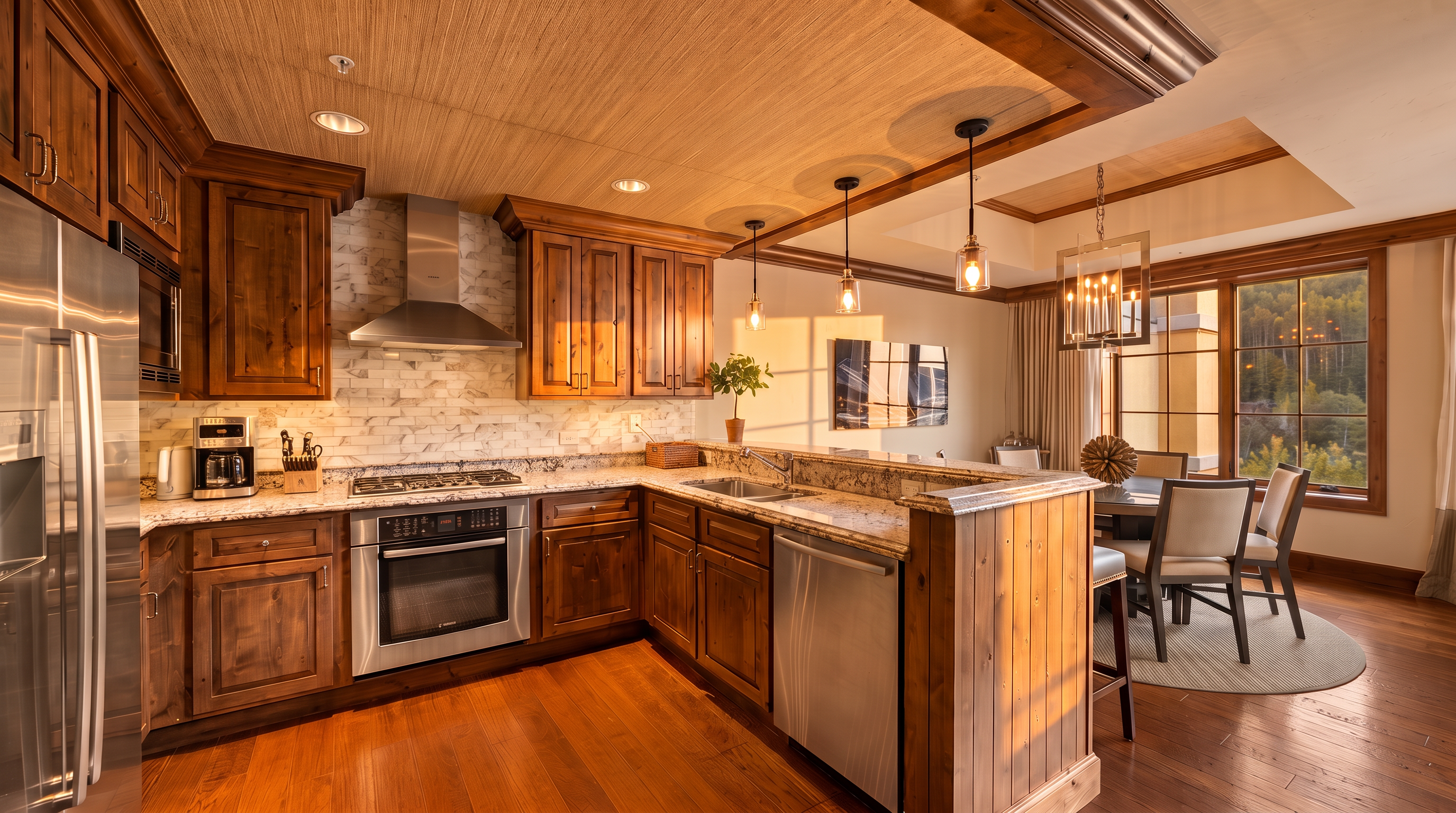
The design philosophy throughout is mountain-modern in the most considered sense: knotty alder cabinetry in the kitchen, slab granite countertops, a tile backsplash that was recently refreshed, and stainless steel appliances that perform as well as they look. Pendant lighting anchors the peninsula, while the open sightline from kitchen through dining room to the great room preserves the sense of generous, uninterrupted space. A round glass-topped dining table beneath a geometric chandelier provides a natural gathering point, framed by windows that pull the forested mountainside indoors.
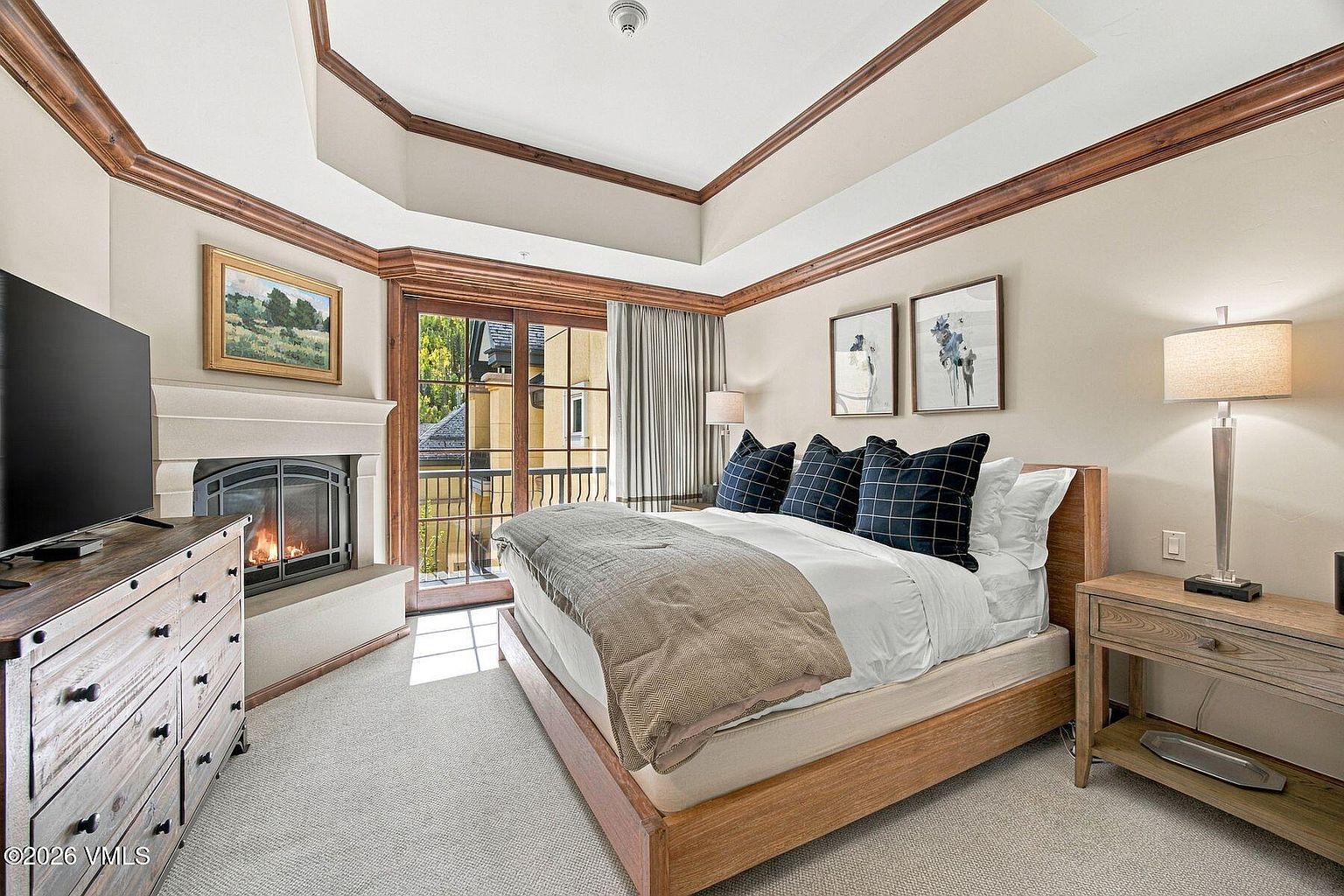
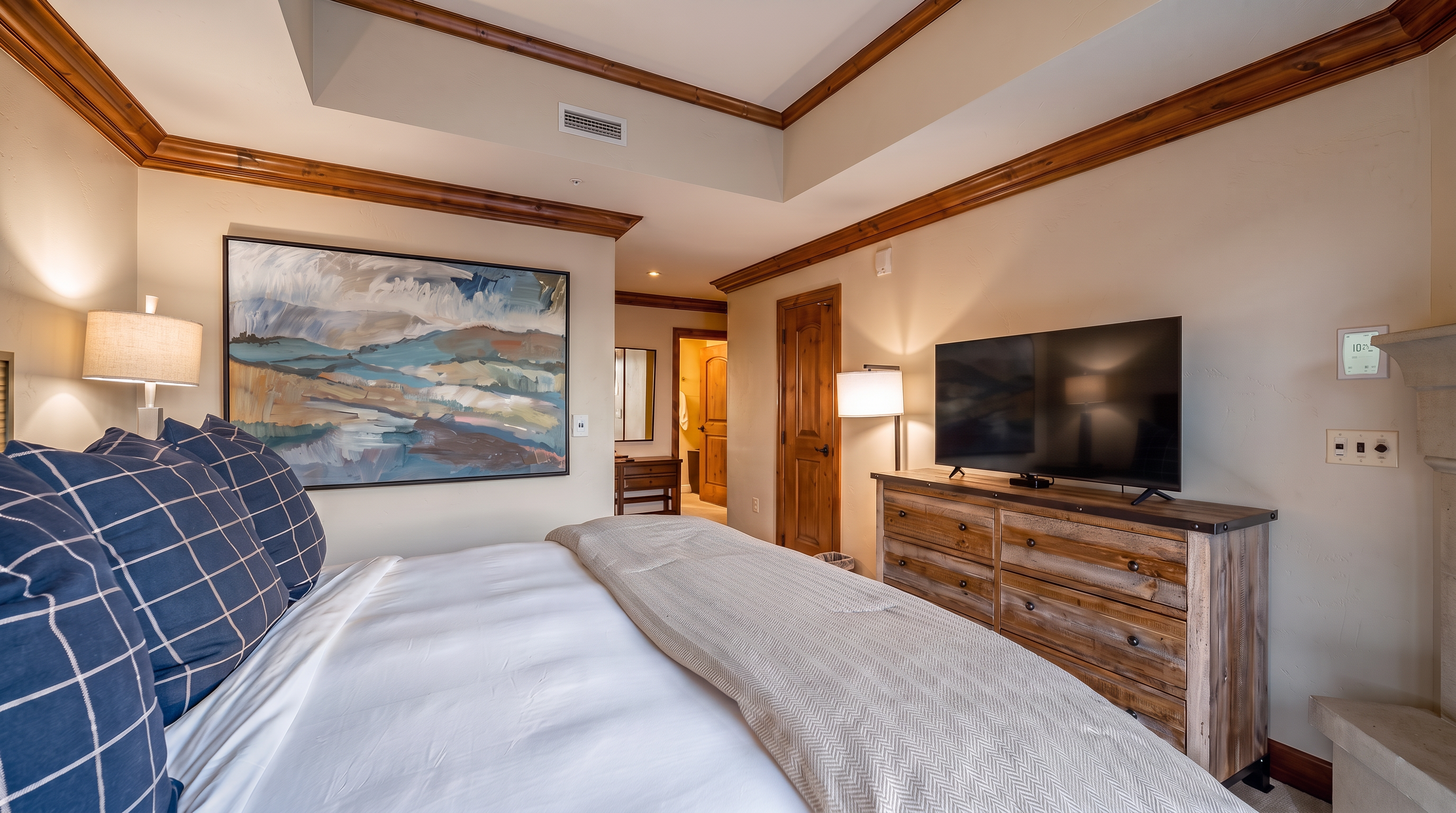
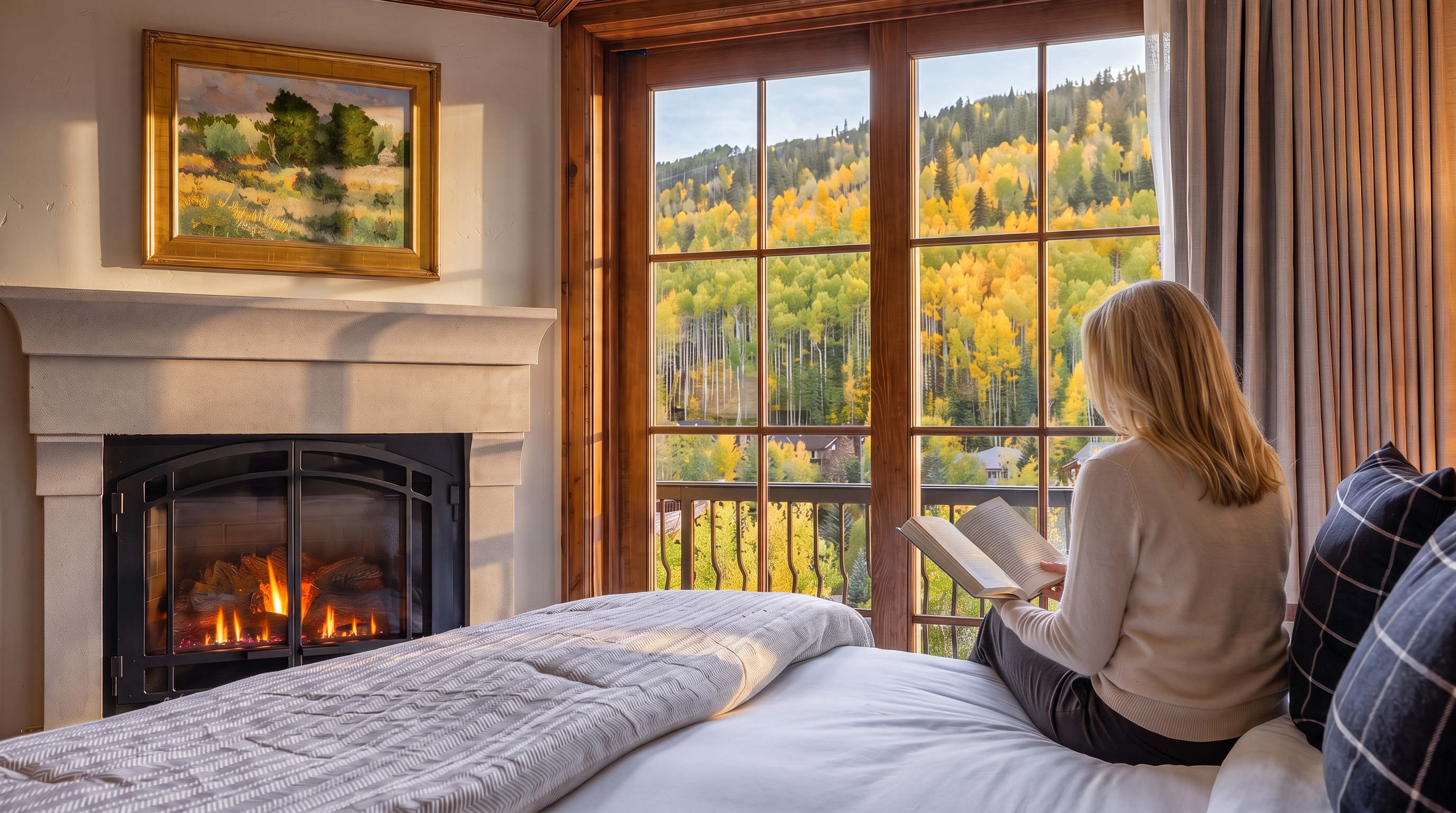
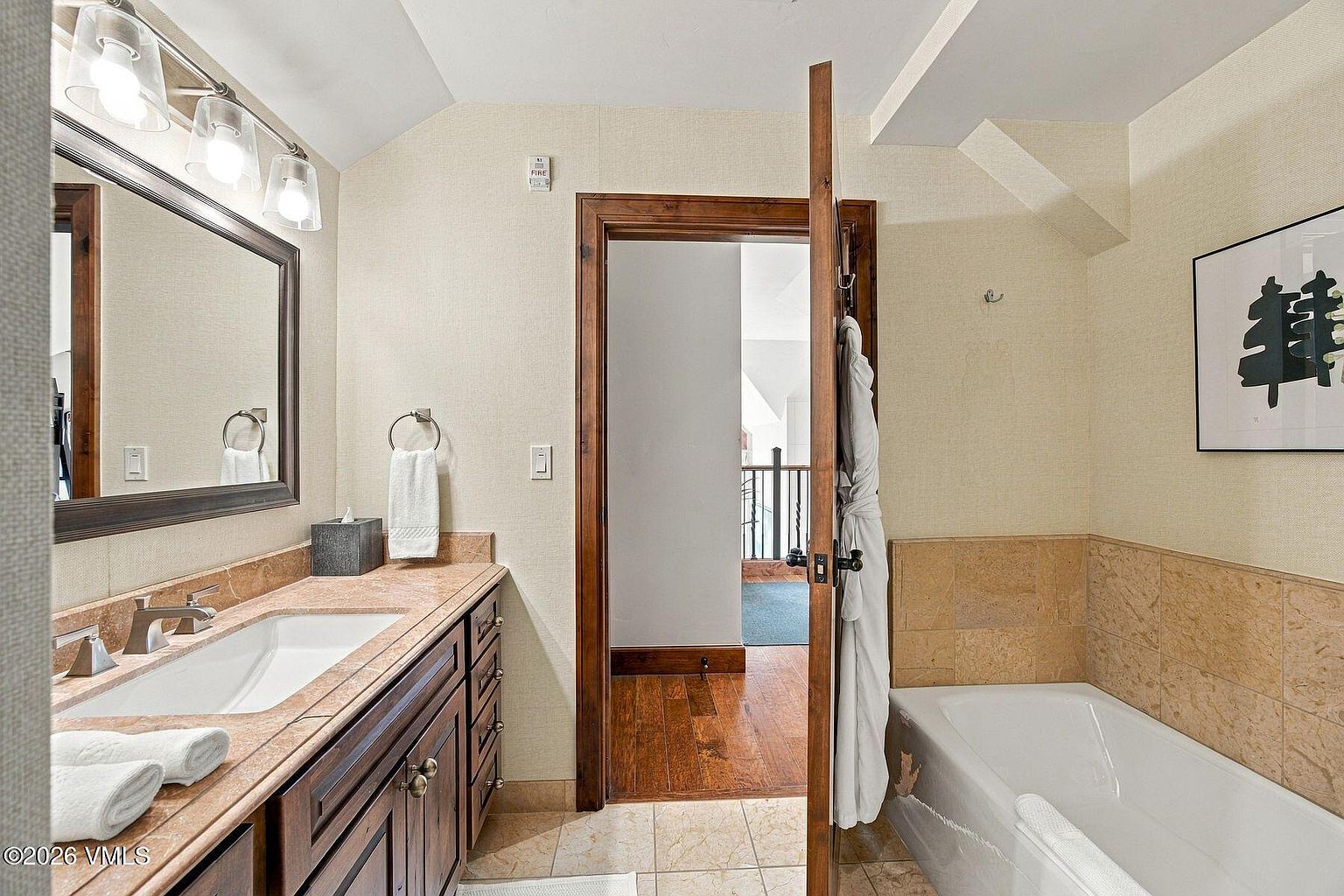
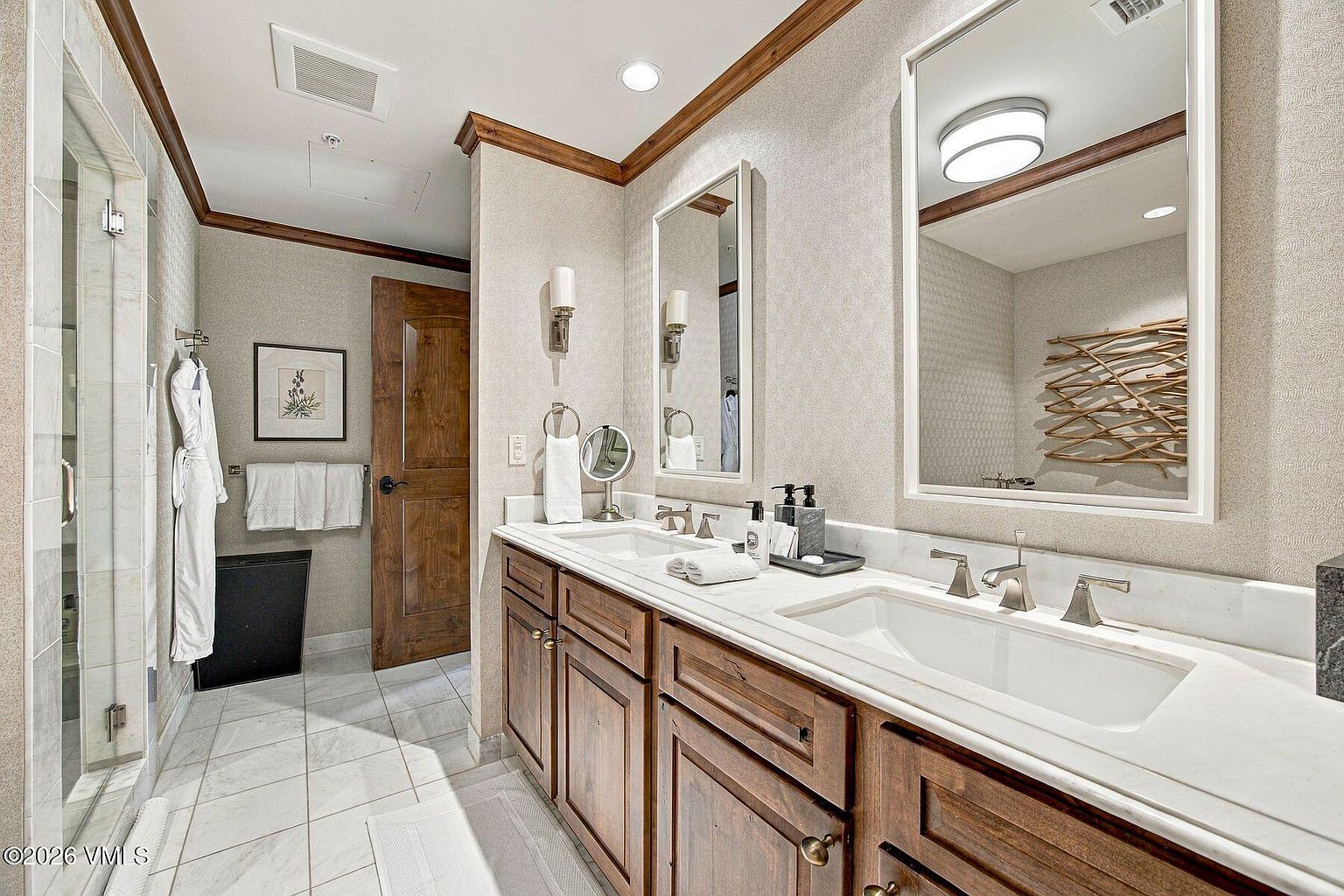
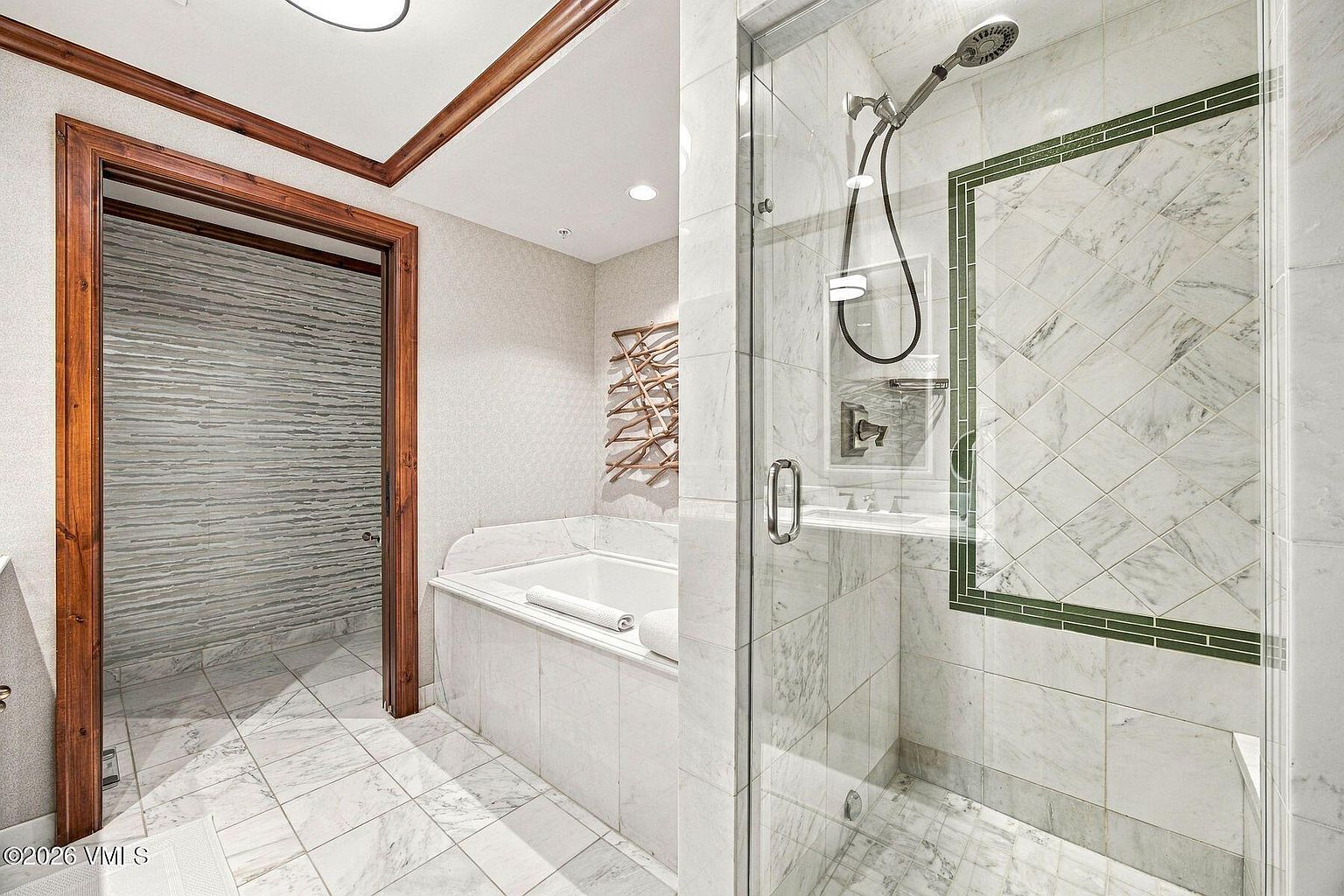
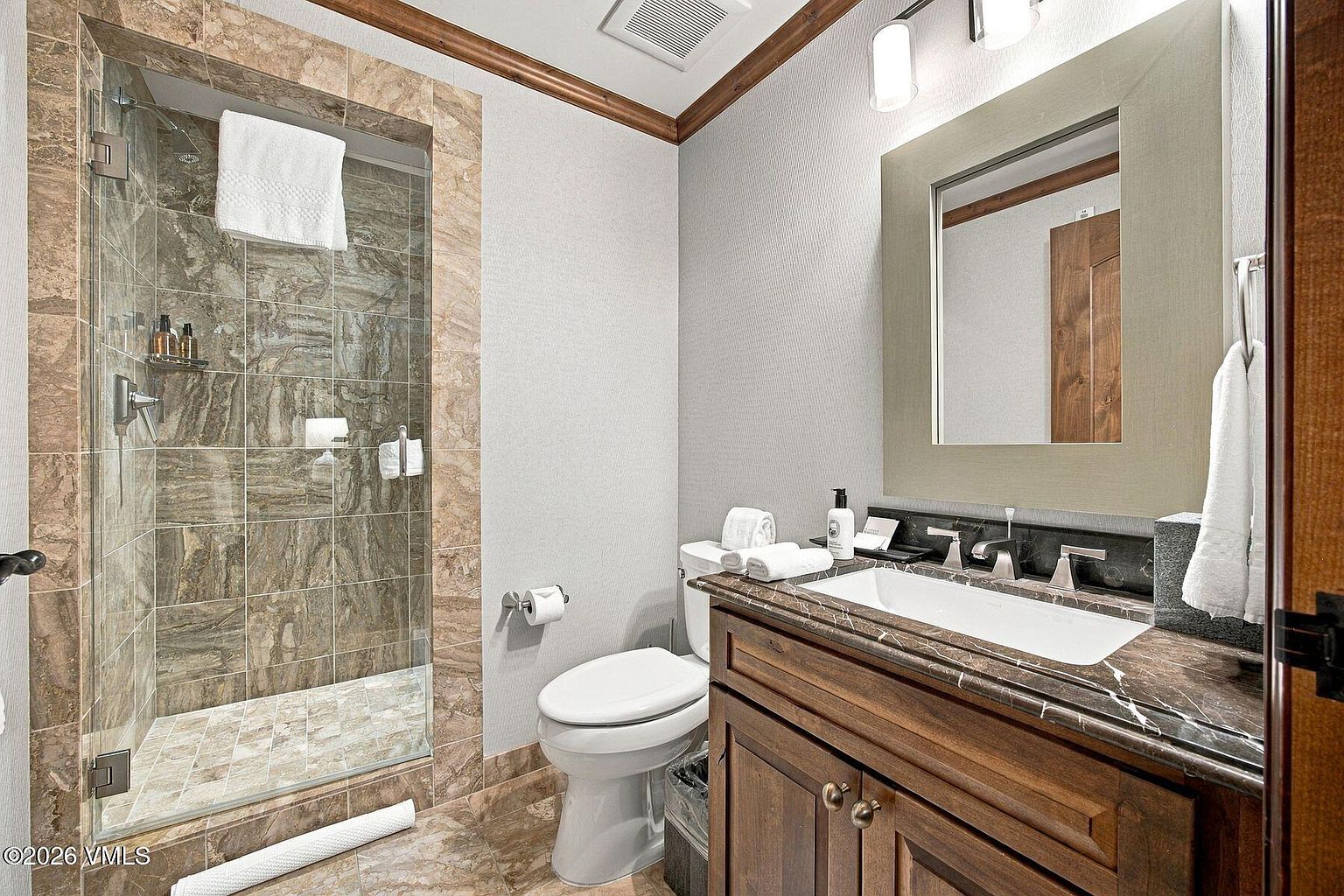
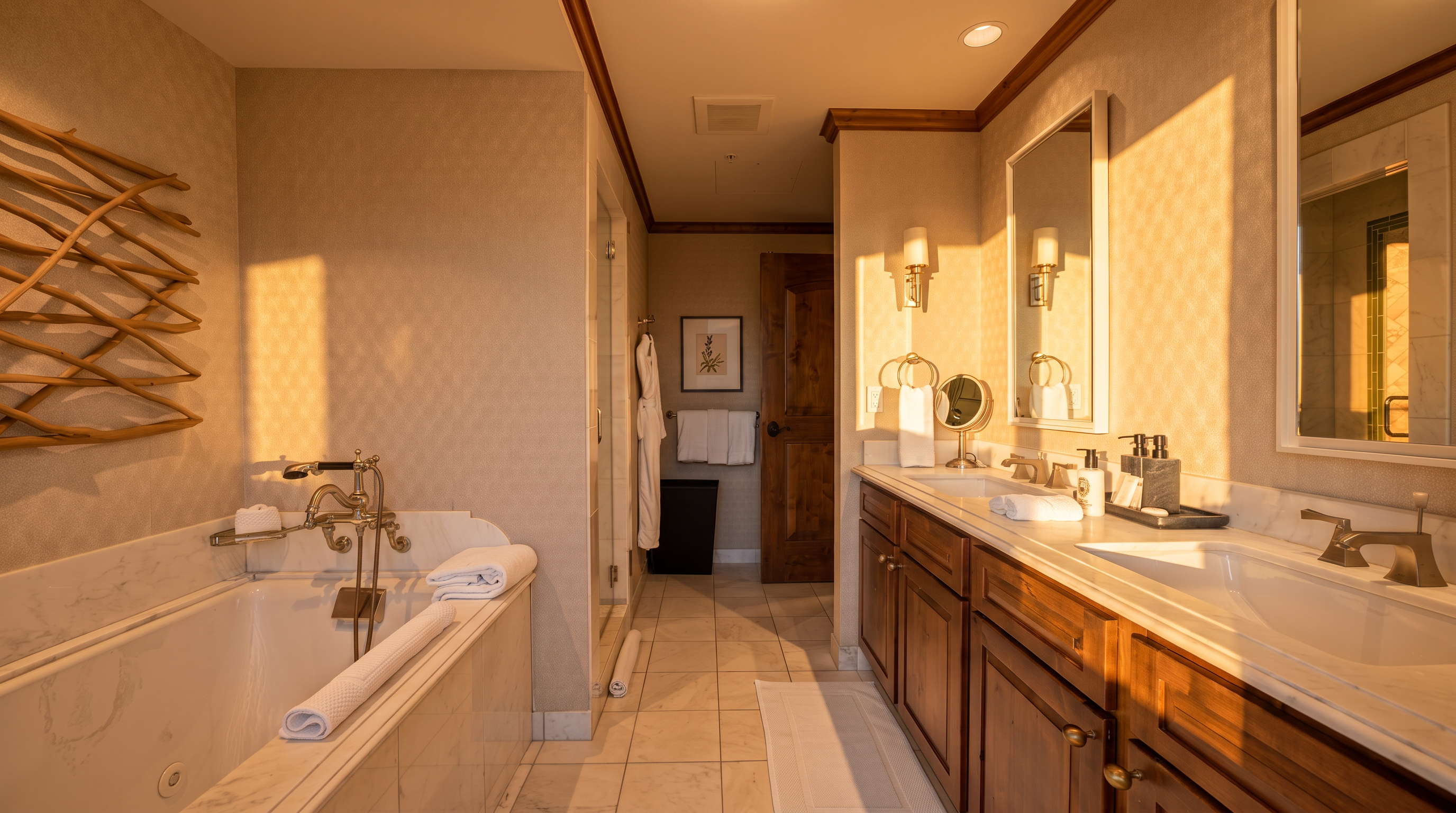
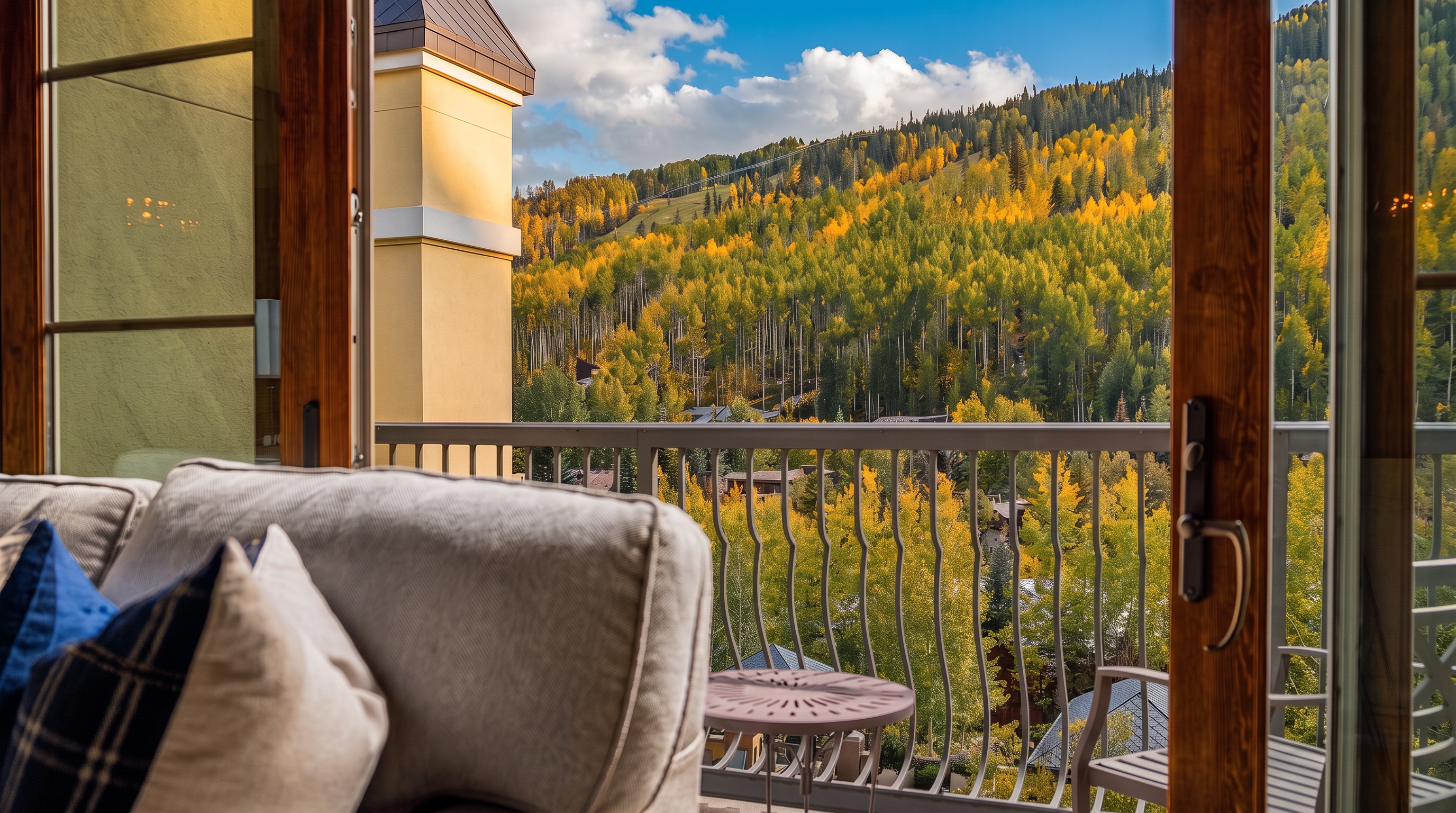
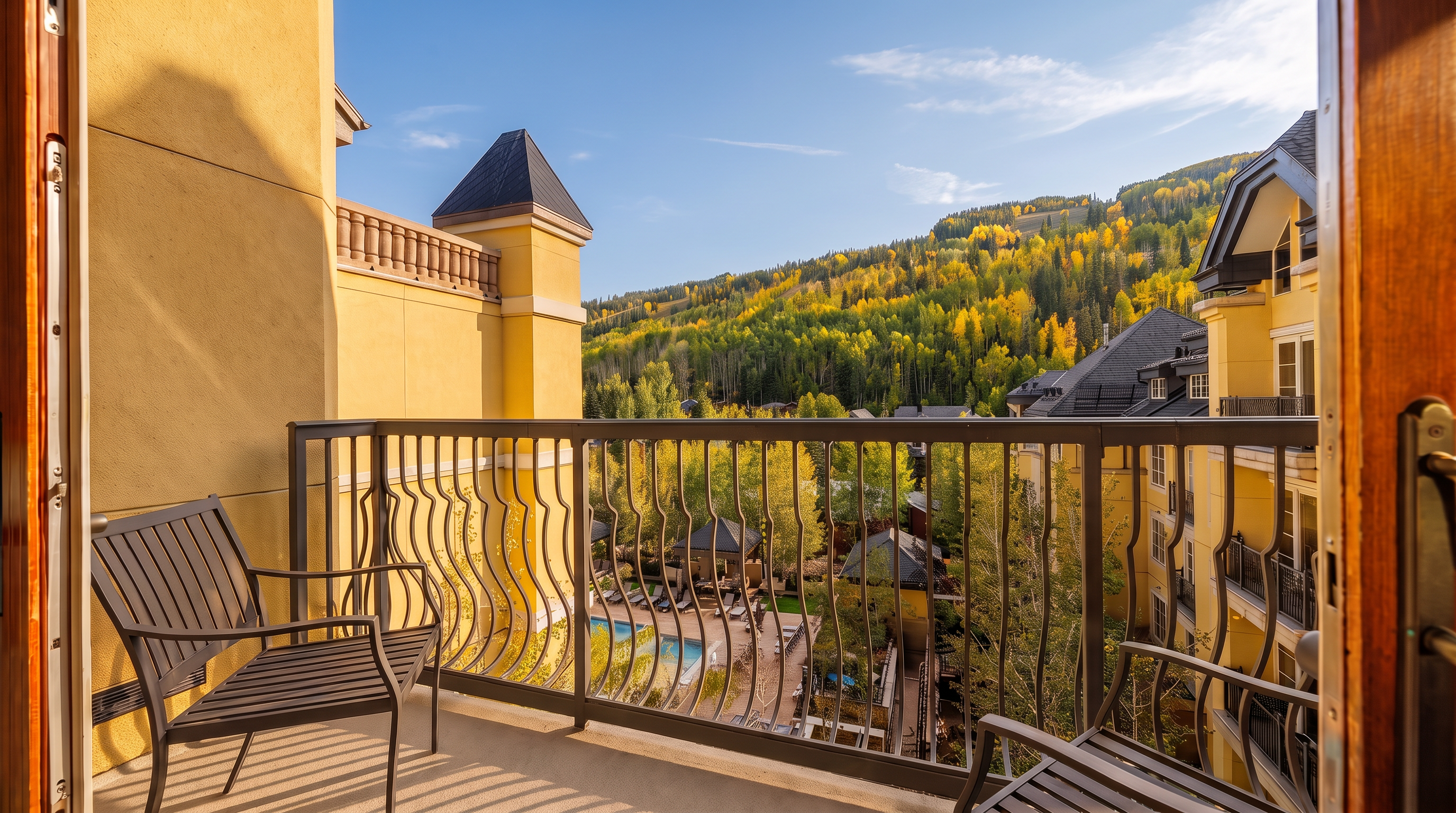
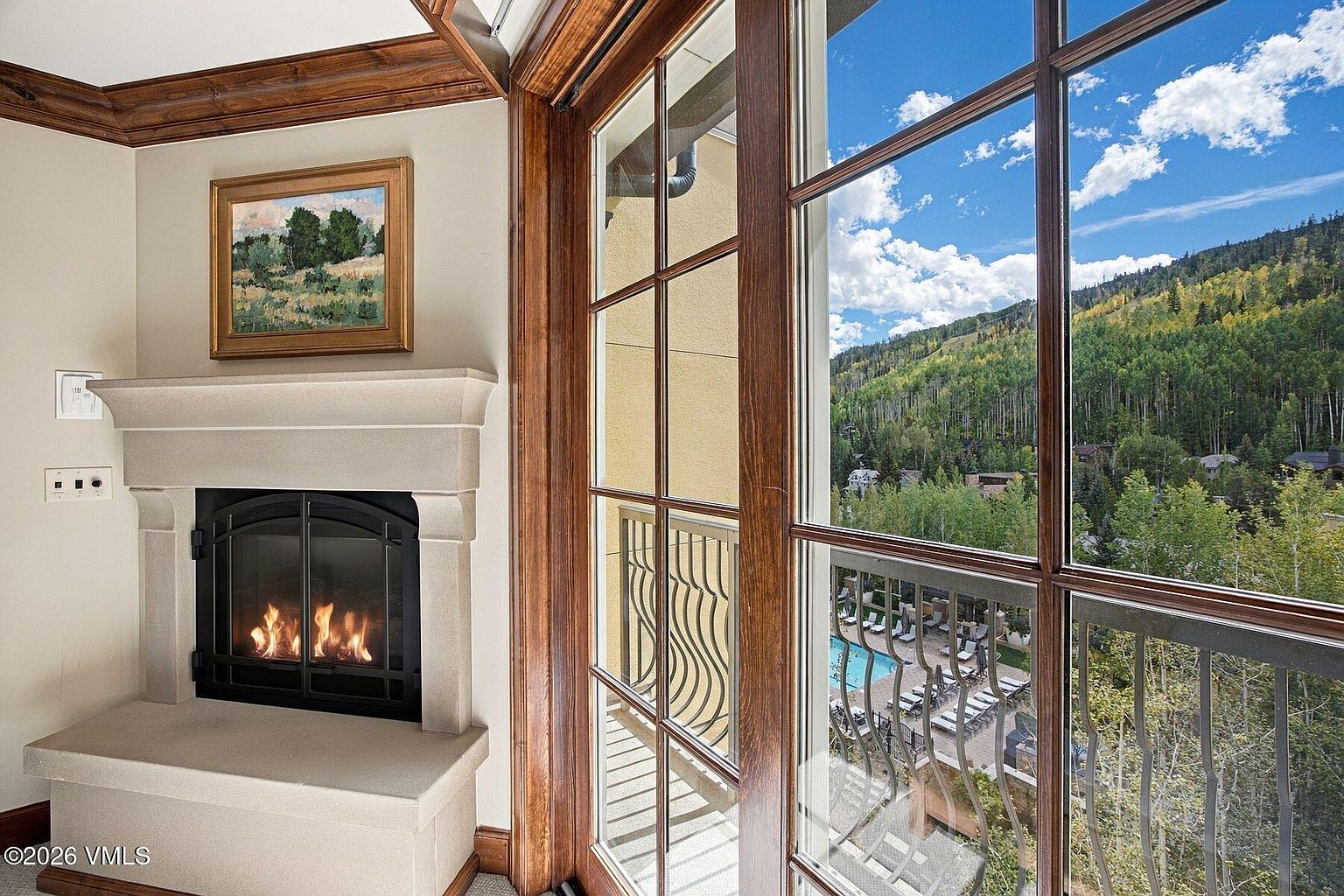
The main-level primary suite is a study in calm. A stone fireplace with a detailed mantel anchors one wall, a coffered ceiling adds architectural character overhead, and sliding glass doors open to the balcony where Vail Mountain fills the horizon. The en-suite bath is finished with a dual-sink vanity in dark wood cabinetry, a glass-enclosed steam shower, and a jetted soaking tub positioned beneath a decorative wall sculpture—a genuinely spa-like environment that rewards the end of a long day on the mountain. An additional three-quarter bath on the main floor provides practical flexibility for guests.
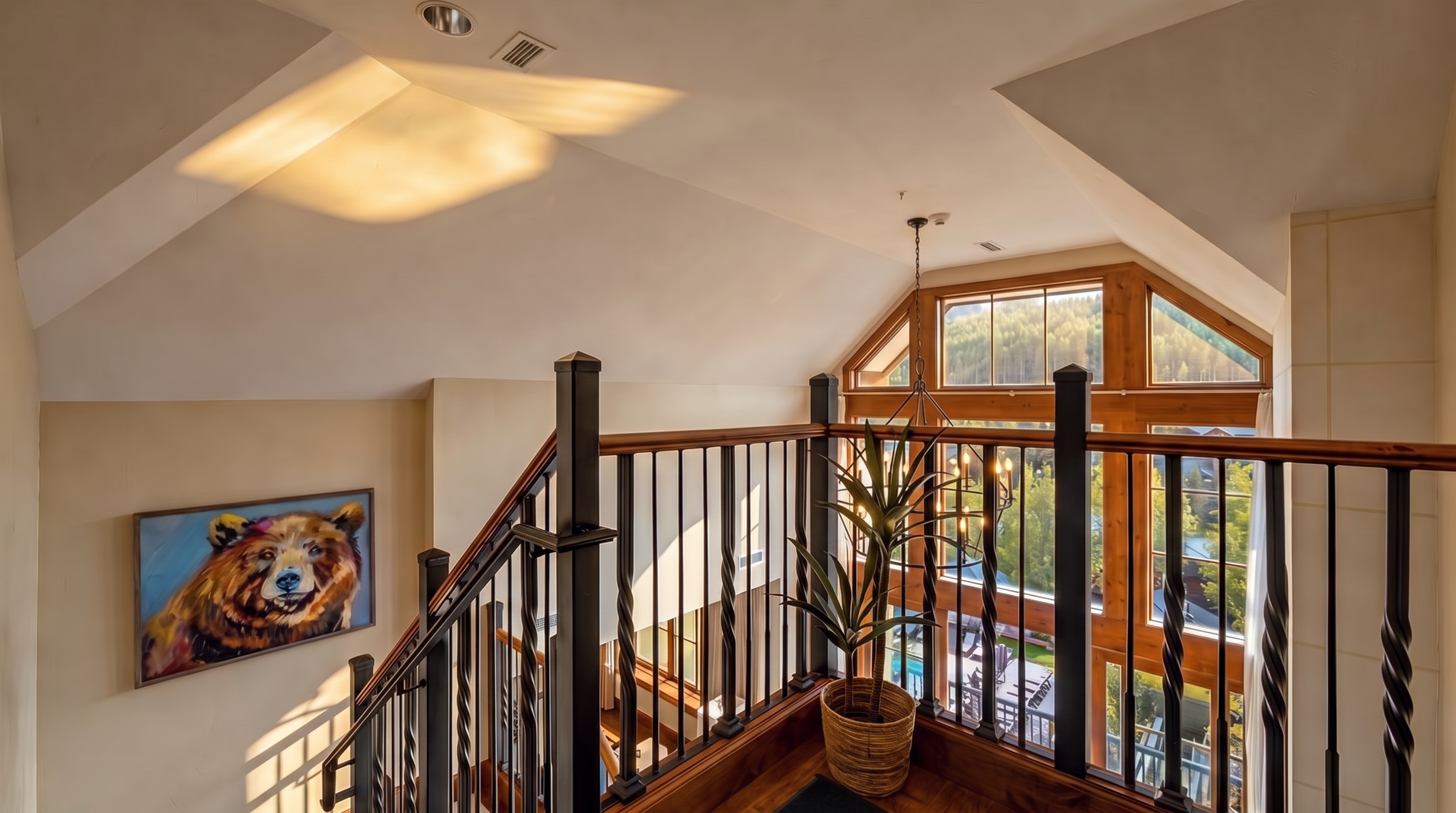
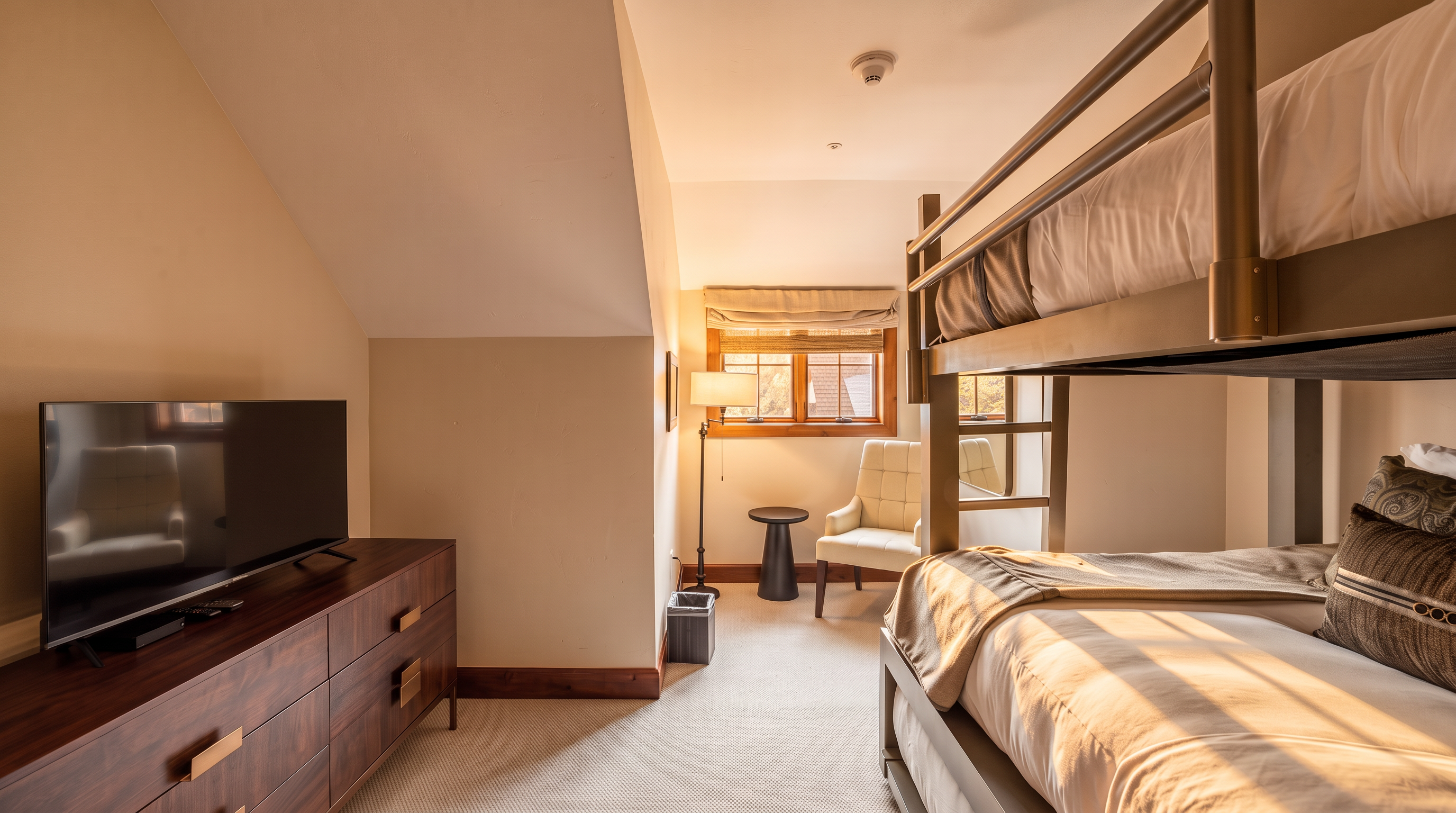
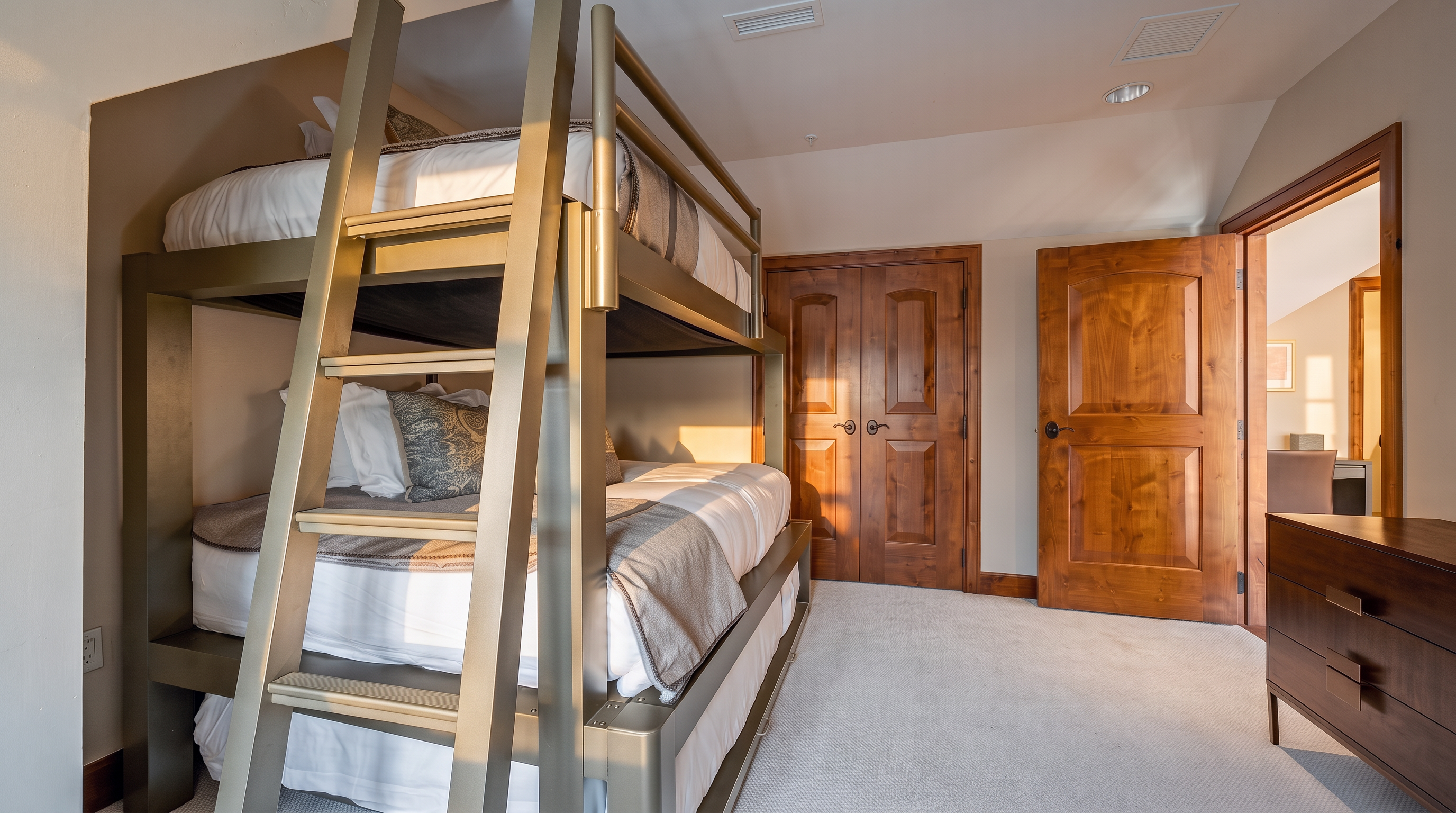
The upper level functions as a private retreat entirely separate from the main living spaces. Currently configured with custom bunk-style sleeping accommodations and a cozy loft study tucked into the eaves, it offers the kind of separation that families and frequent hosts genuinely value—a place where guests can settle in with their own rhythm while the rest of the residence remains undisturbed. The landing overlooks the great room below through the open railing, and a large multi-pane window frames a wall of forest and sky.
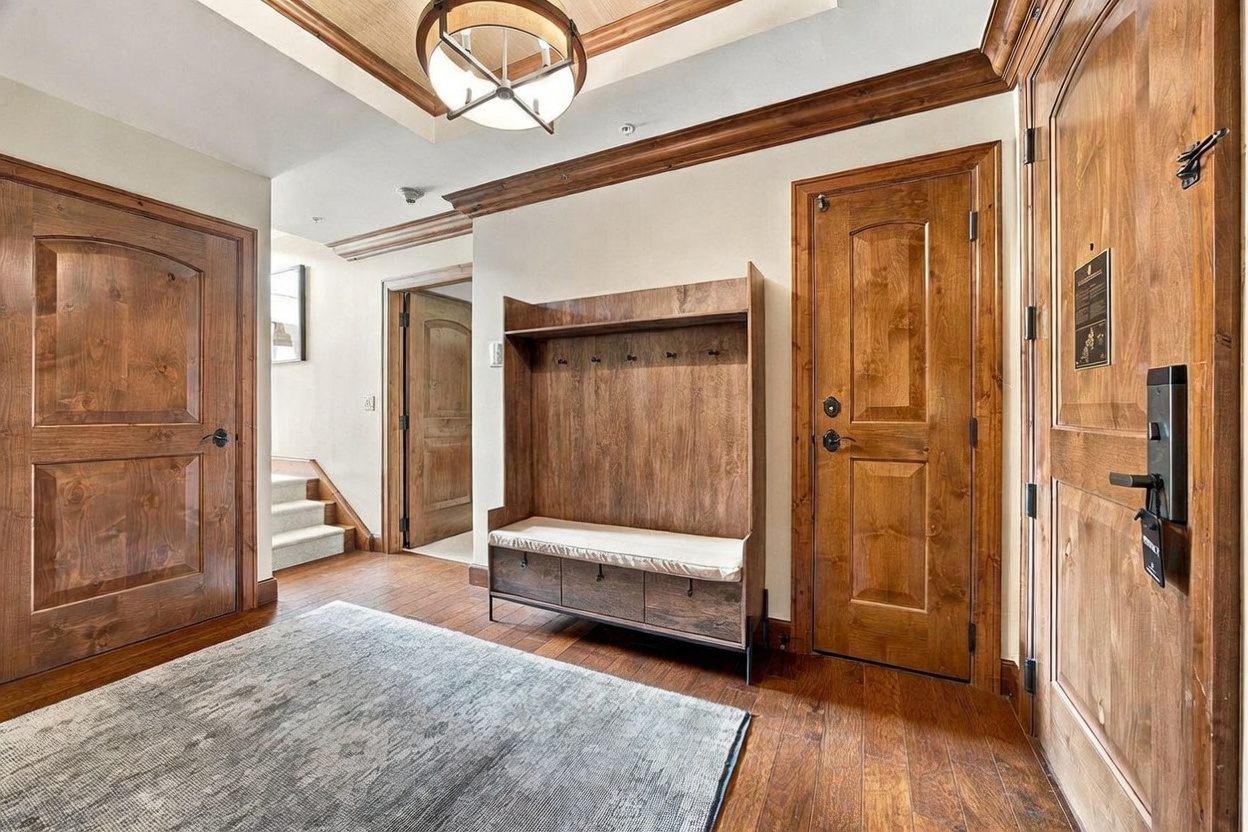
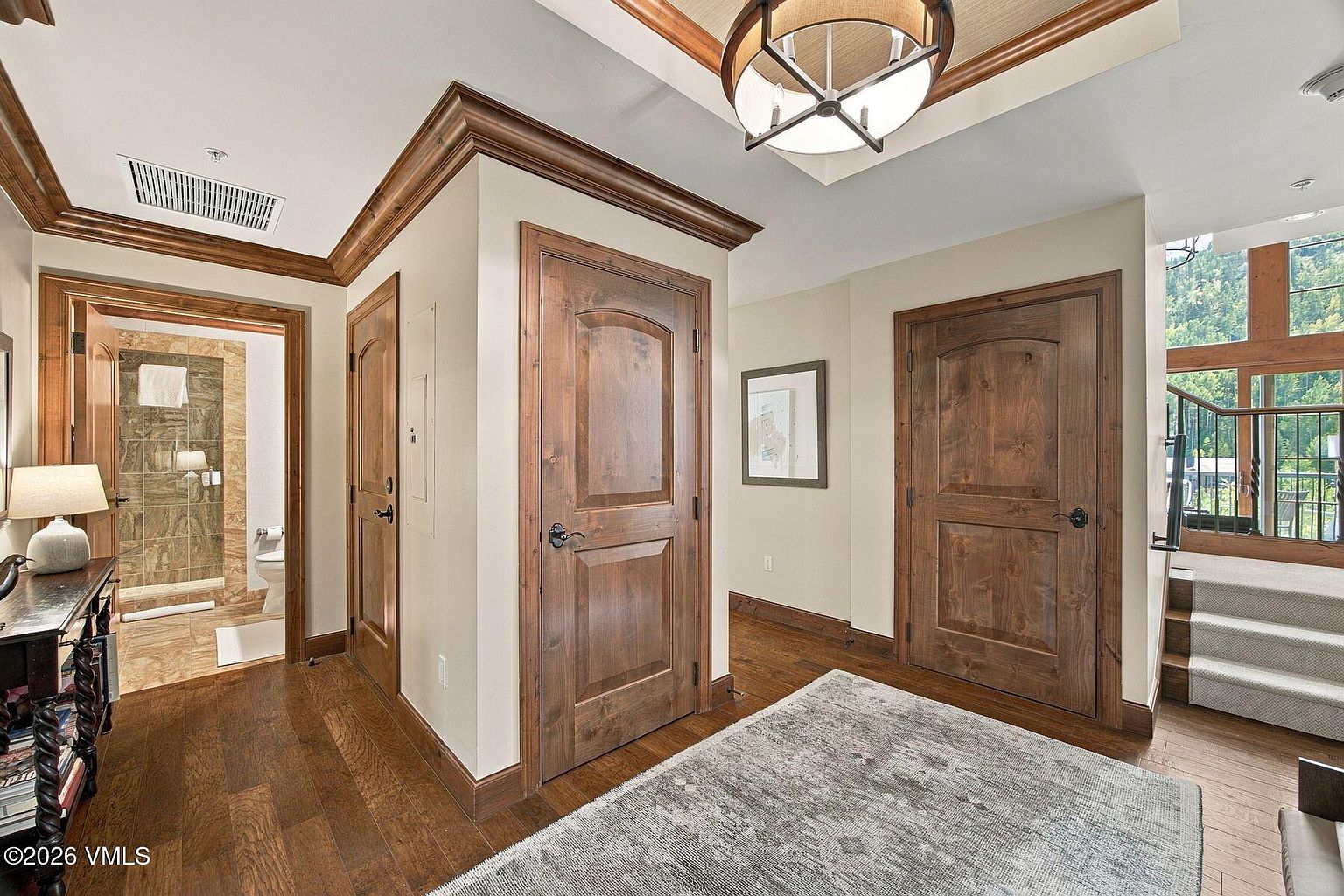
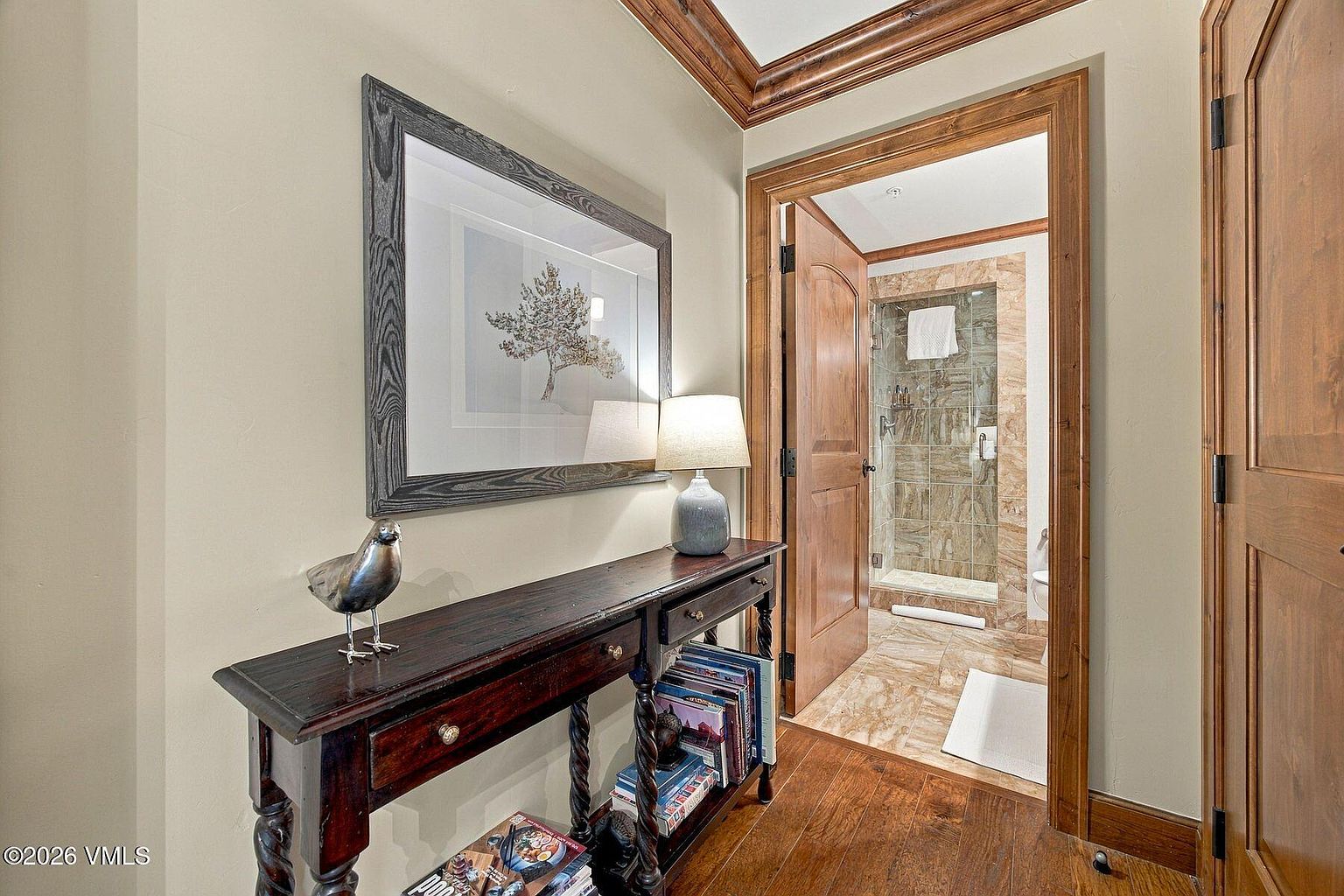
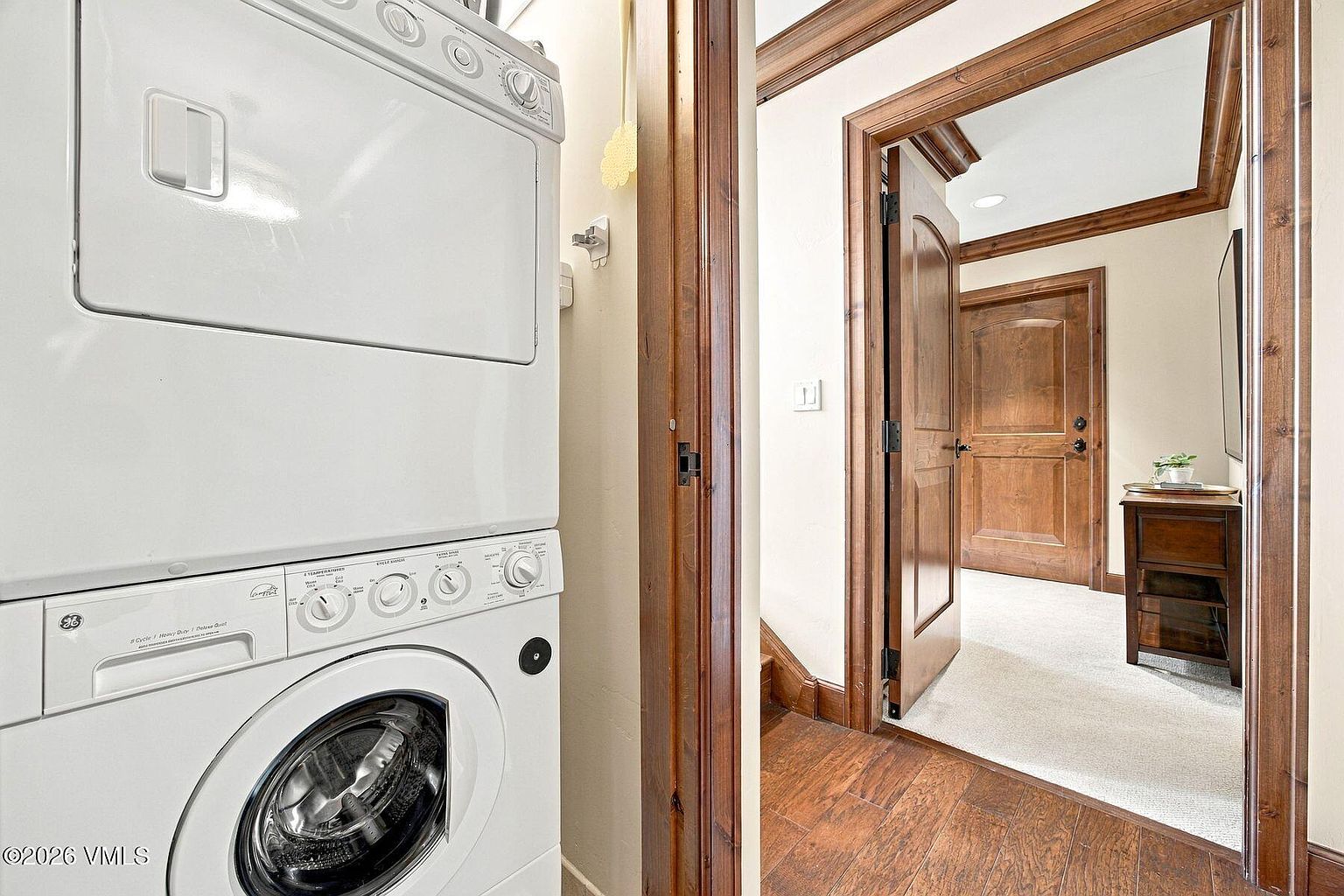
Recent investment of $75,000 in furnishings, lighting, and paint has elevated the interior to a polished, turnkey standard. The entryway, with its rich wood trim, built-in bench, and tray ceiling fixture, sets a tone that carries through every room: warm, intentional, and crafted with an eye toward both beauty and livability. A stacked washer and dryer are tucked neatly into a dedicated laundry area, a small but meaningful detail that speaks to the practicality woven throughout the residence. This is a penthouse designed not just to impress but to inhabit—and to return to, season after season.
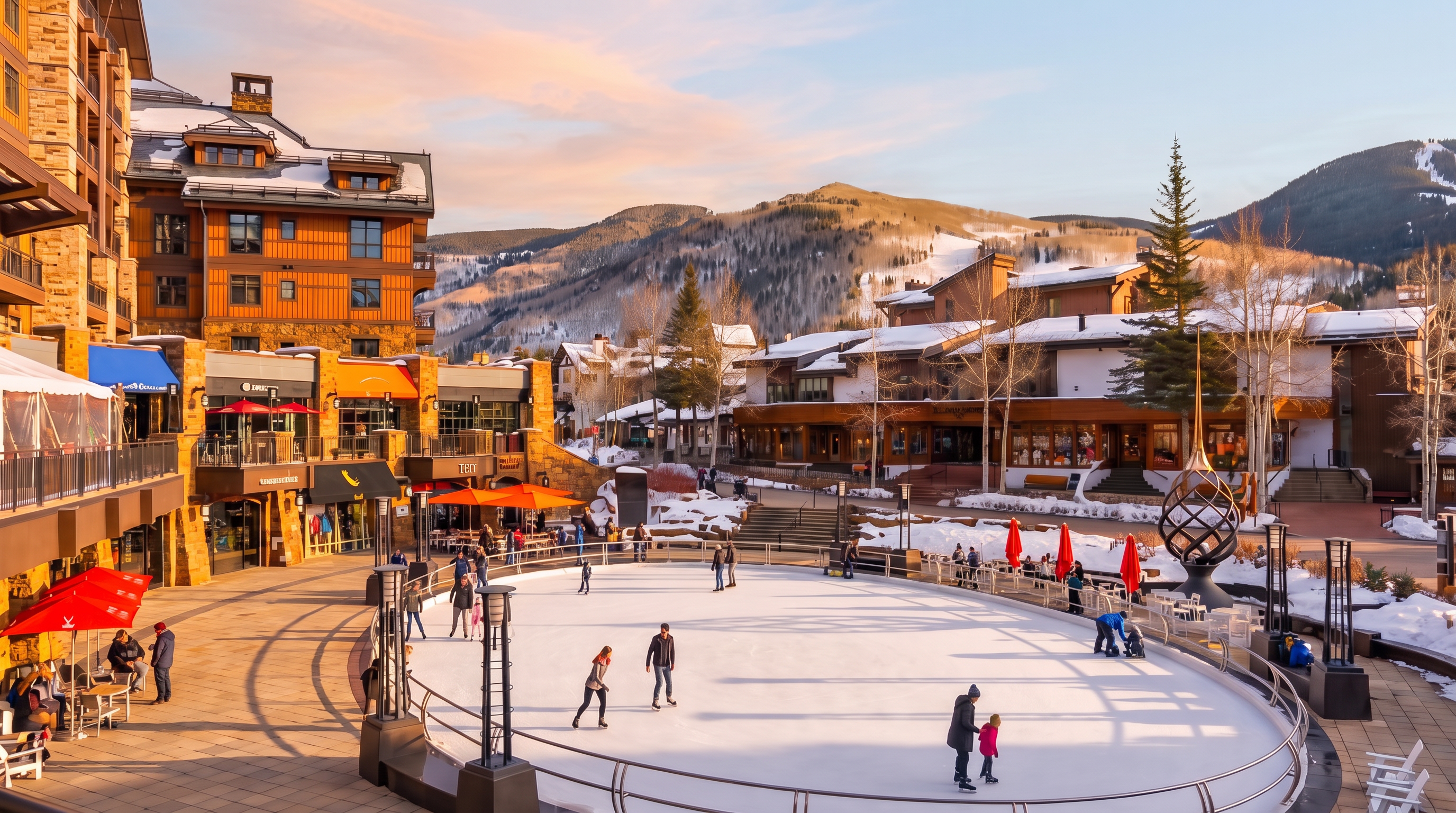
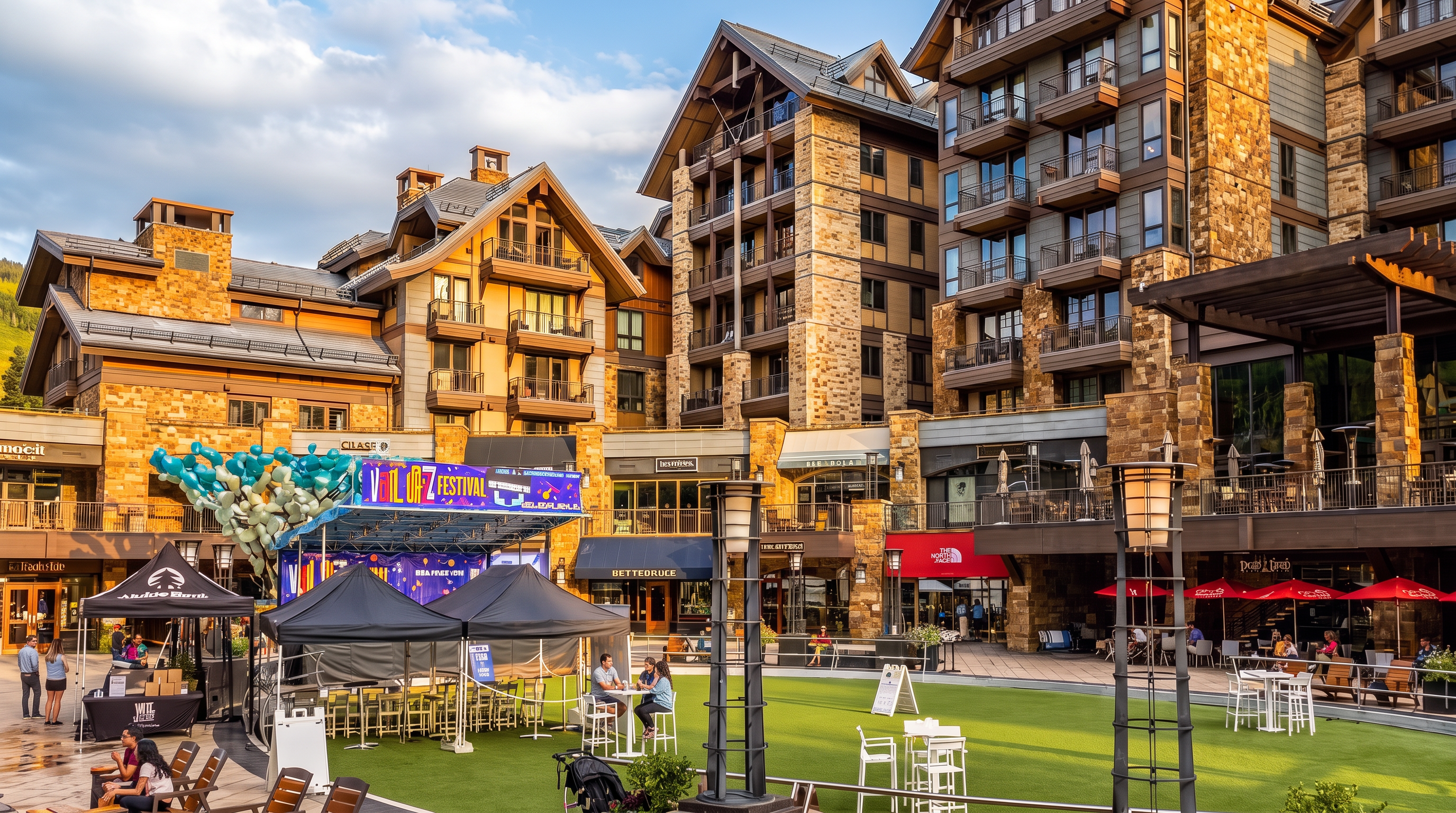
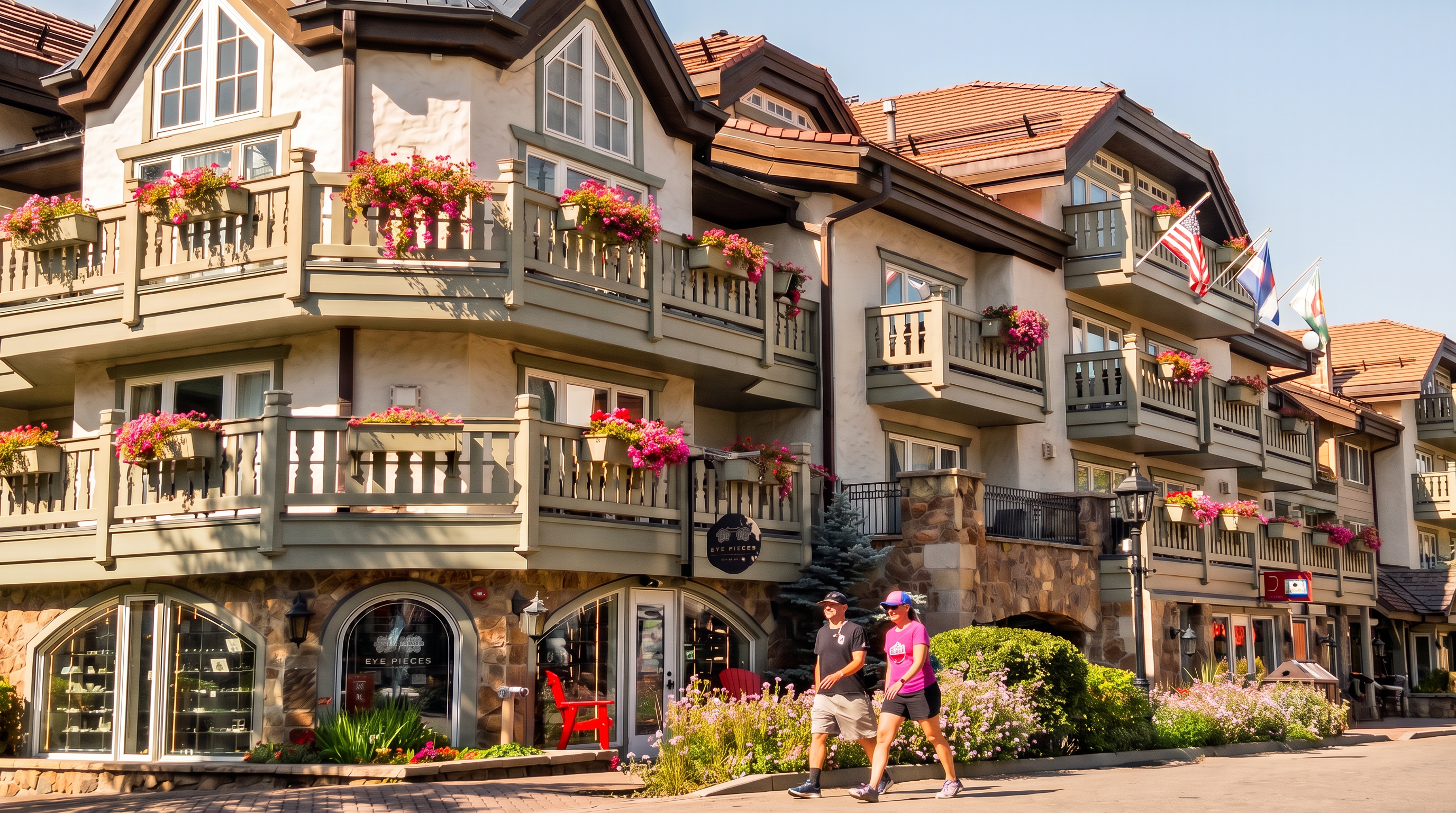
Lionshead is Vail's western village center, a pedestrian enclave that has evolved steadily since the 1960s from a secondary access point into a fully realized mountain destination in its own right. Where Vail Village to the east carries the weight of its founding mythology—Austrian-inspired architecture, cobblestone lanes, and decades of après-ski tradition—Lionshead has developed a slightly more contemporary character while preserving the alpine scale and walkability that define life in Vail. The reconstruction and expansion of Lionshead's core, completed in phases over the past two decades, produced the plaza that anchors the neighborhood today: a European-style outdoor square ringed by stone and timber retail buildings, restaurants, and gathering spaces that host everything from summer jazz performances to winter ice skating beneath the open sky.
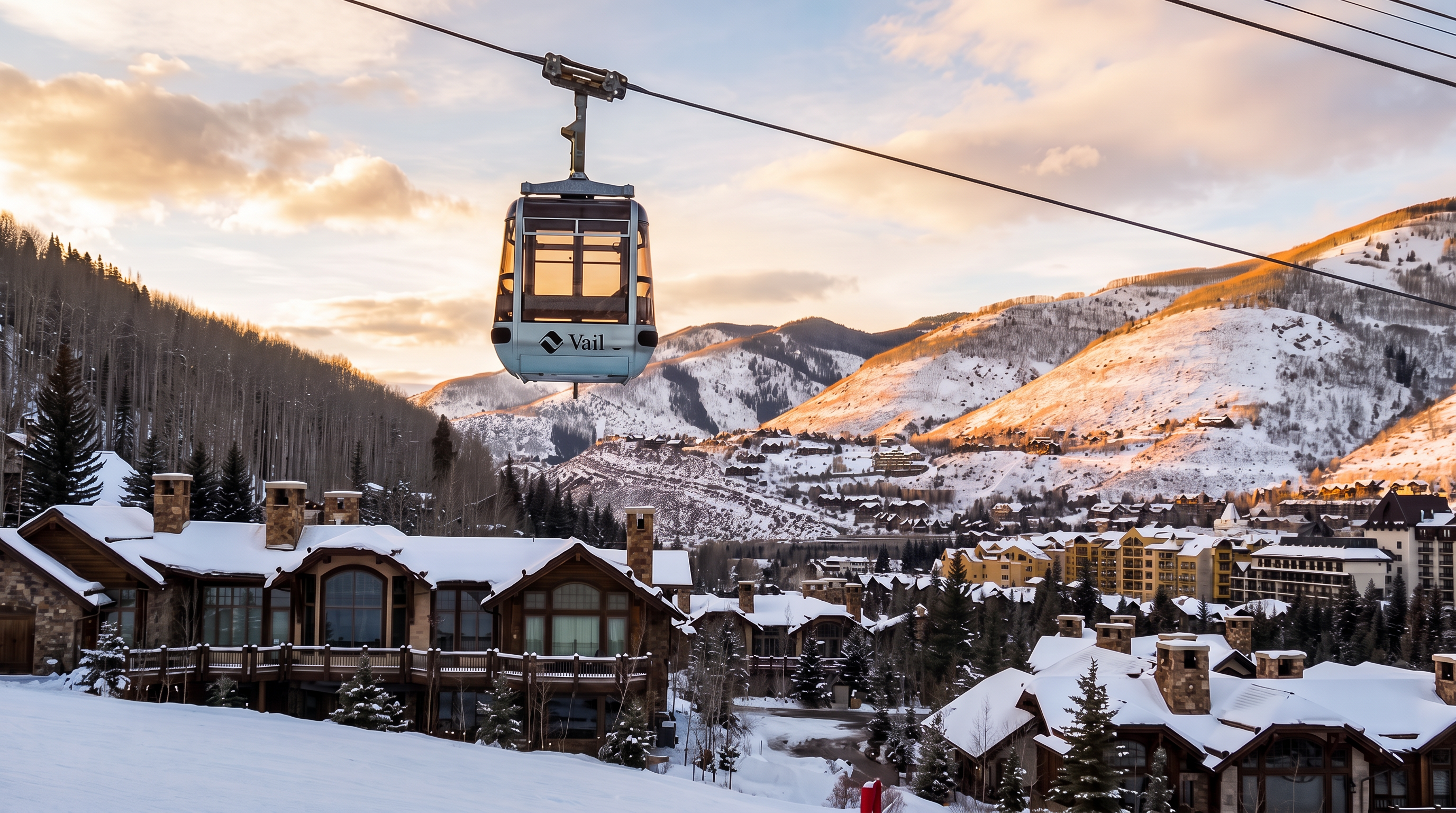
At the heart of Lionshead's appeal is the Eagle Bahn Gondola, one of Vail's primary mountain access points, which rises directly from the village into the Back Bowls and Blue Sky Basin terrain above. For residents of The Ritz-Carlton Residences, the gondola is not a destination requiring planning—it is simply the end of a short walk, a fact that reshapes the rhythm of a ski day entirely. First tracks become genuinely achievable. Midday returns for lunch are practical rather than aspirational. The mountain feels less like an event and more like an extension of daily life.
Vail itself occupies a narrow valley along Interstate 70 approximately 100 miles west of Denver, a geography that concentrates its energy and creates the walkable, self-contained atmosphere that distinguishes it from more sprawling resort communities. The town operates year-round, with summer and fall drawing visitors for hiking, cycling, outdoor dining, and the Bravo! Vail music festival, among other cultural events. The Ford Amphitheater brings live performances to the valley floor through the warmer months, and the Betty Ford Alpine Gardens—the highest botanical garden in North America—offer a quietly extraordinary experience just across Gore Creek in the adjacent village.
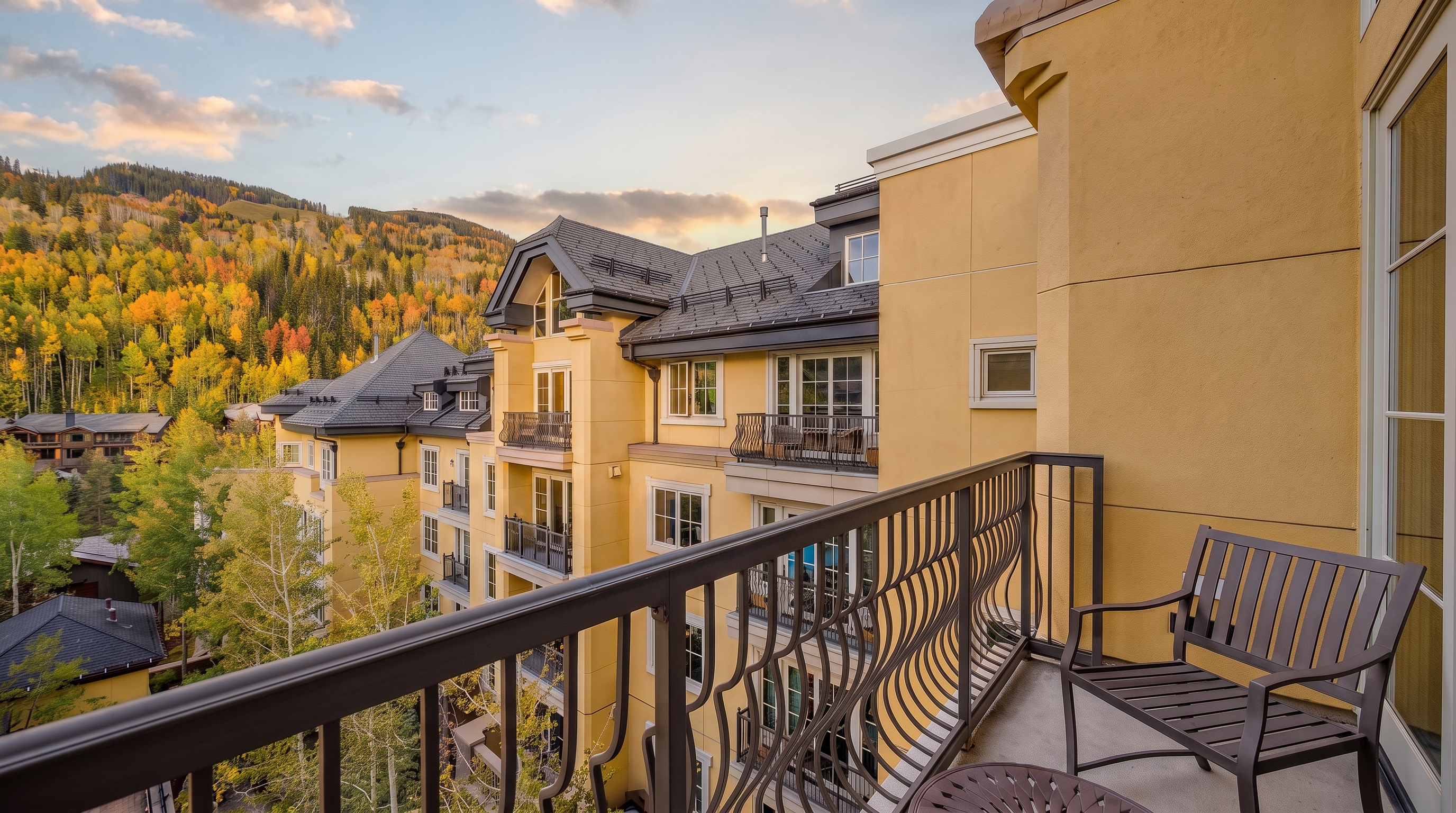
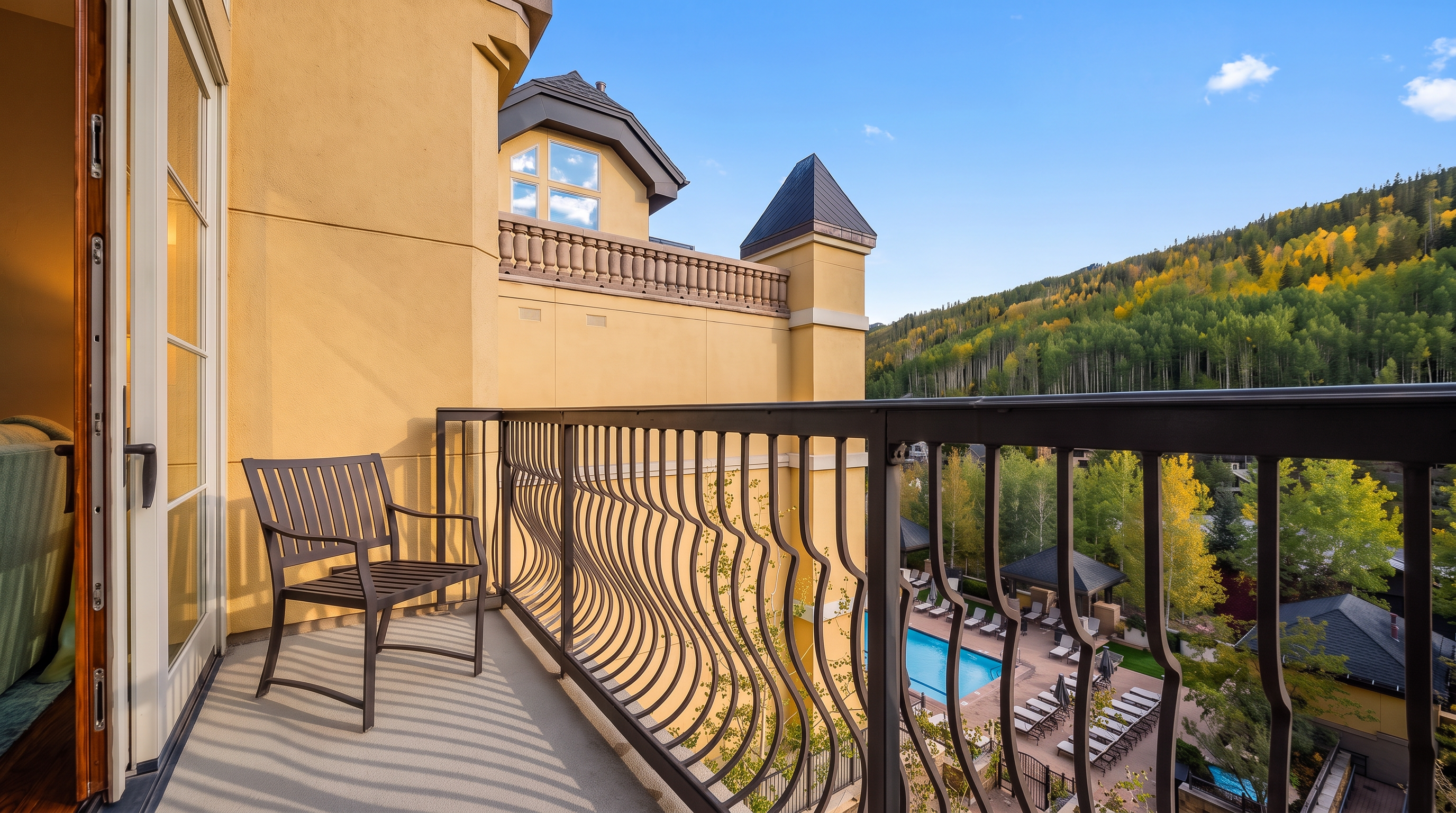
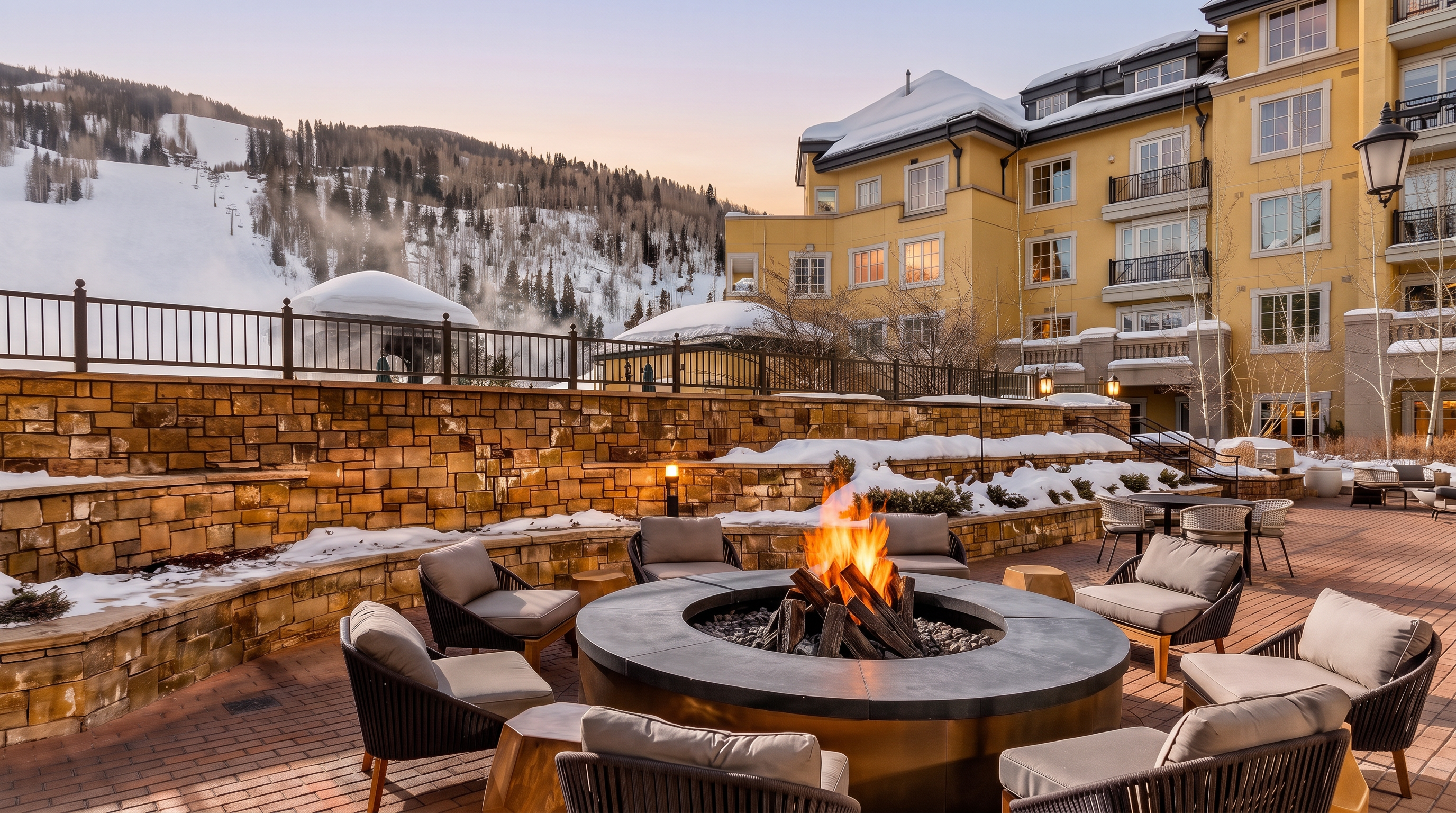
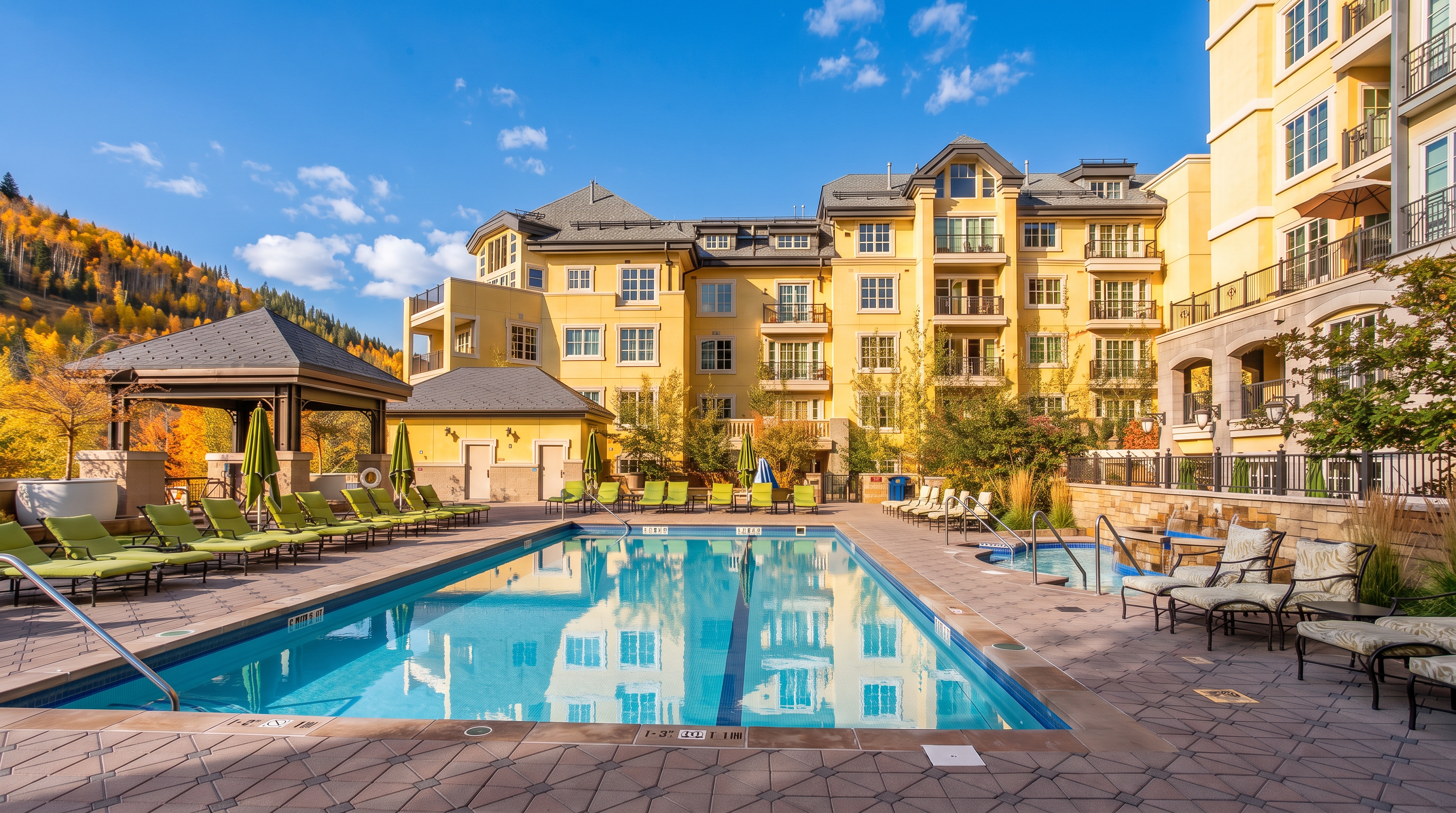
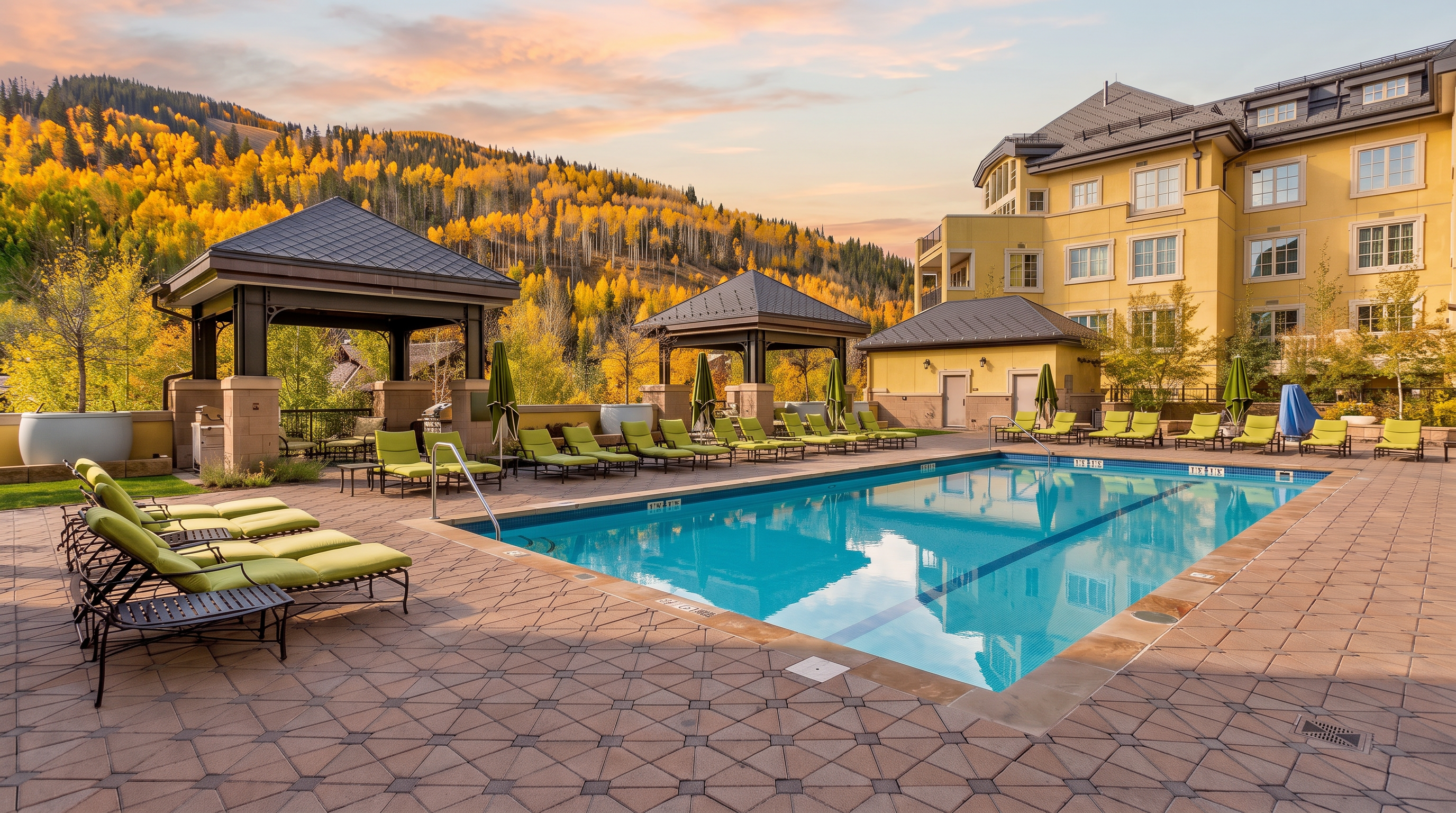
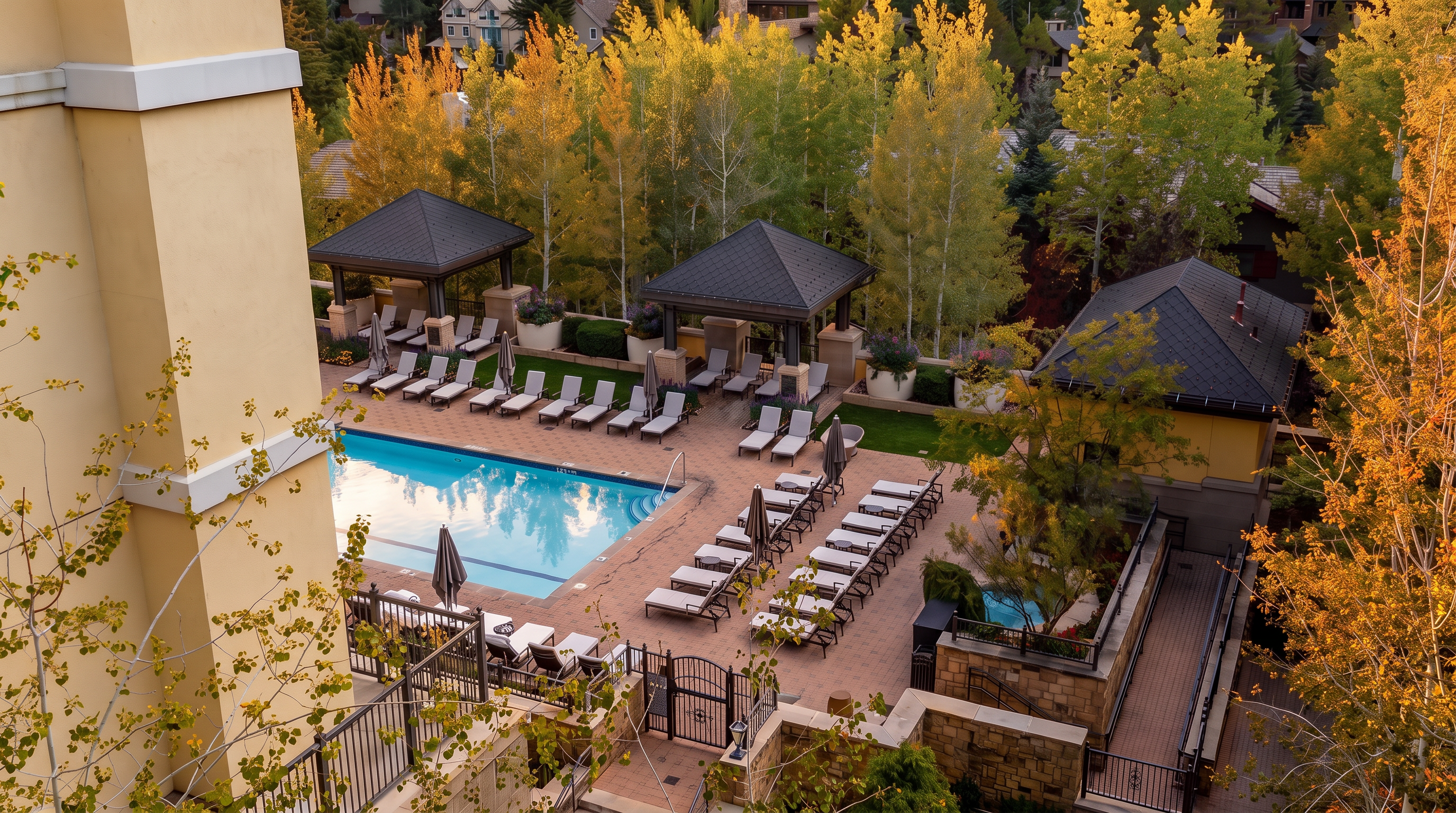
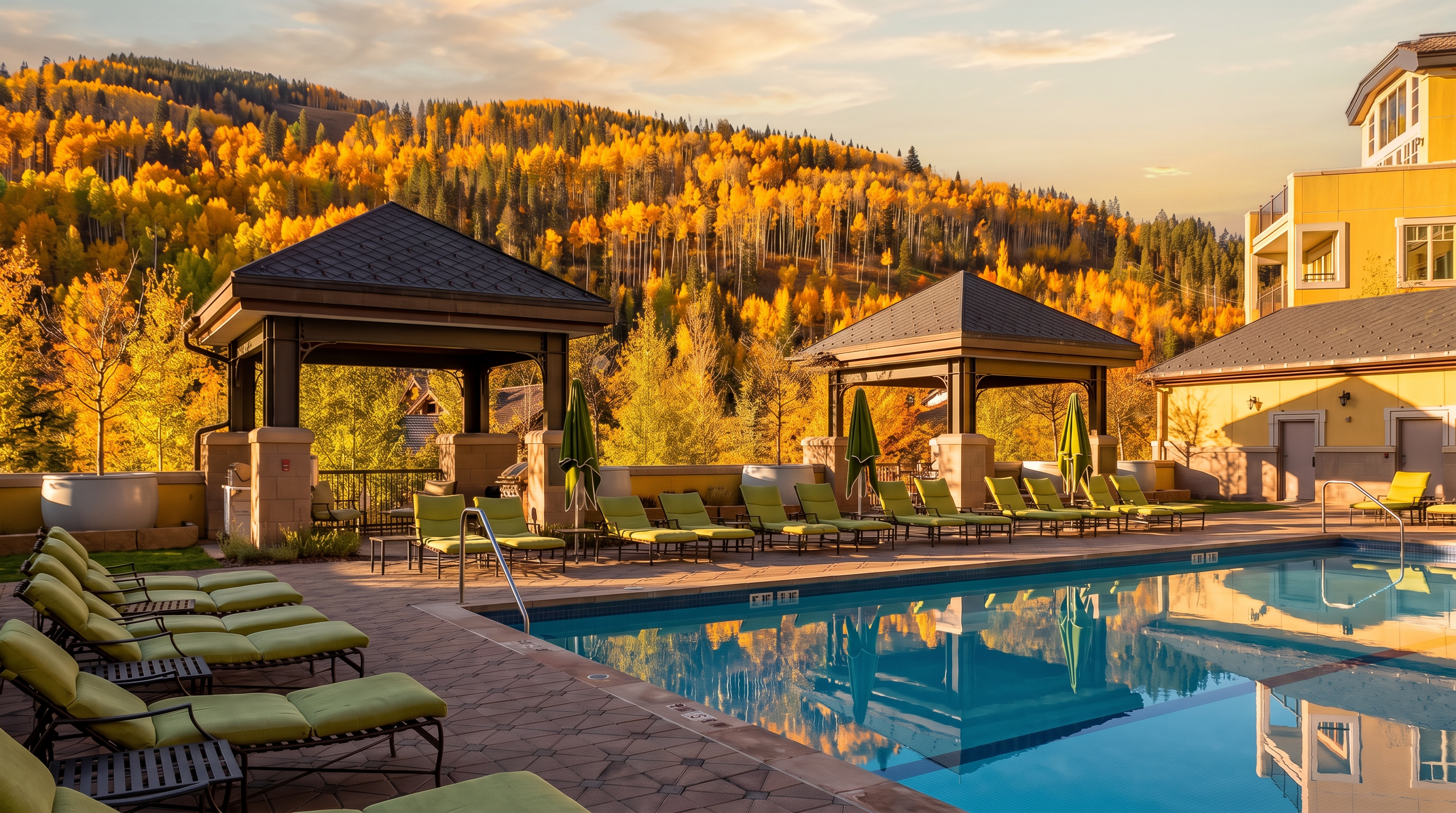
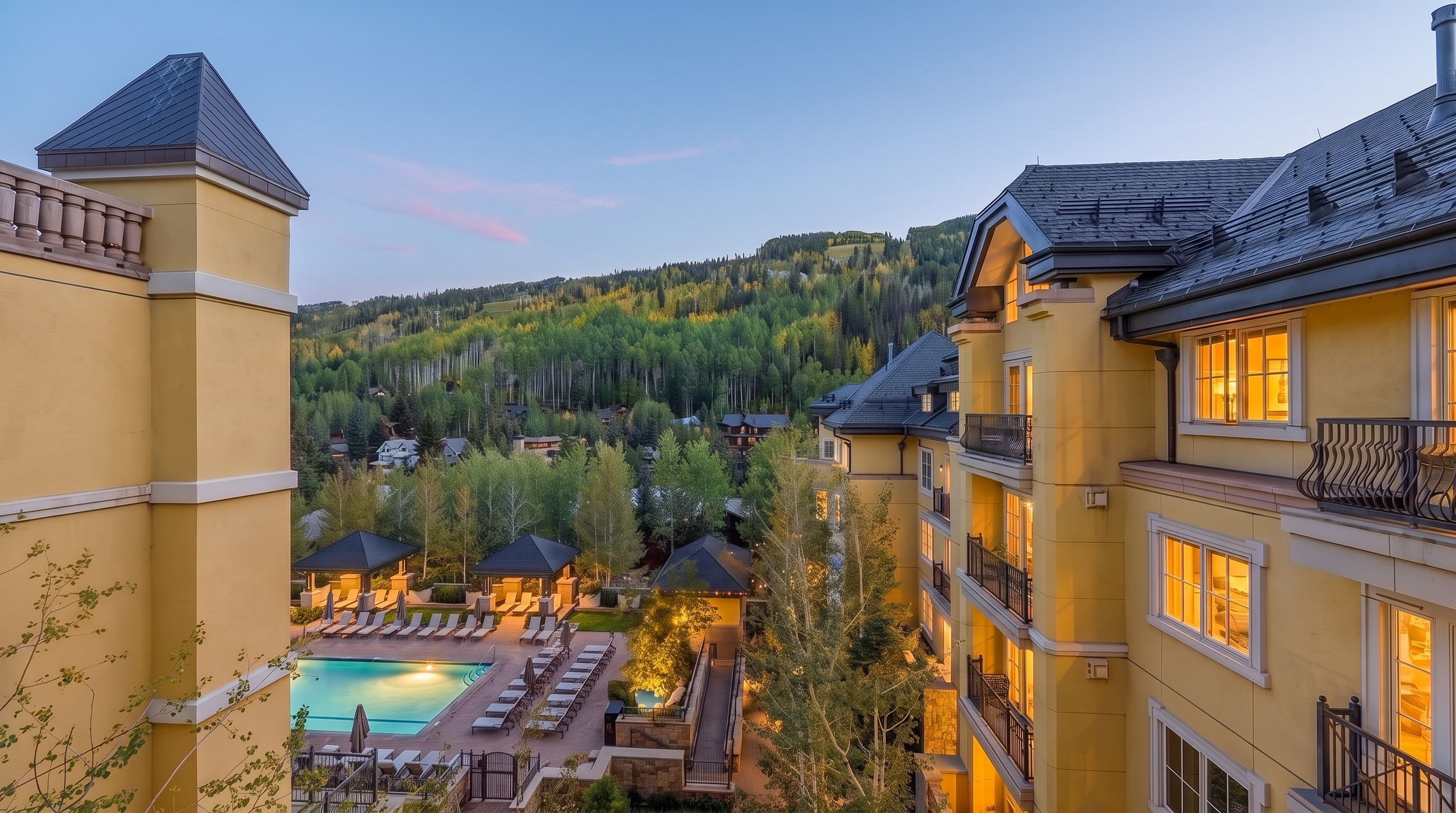
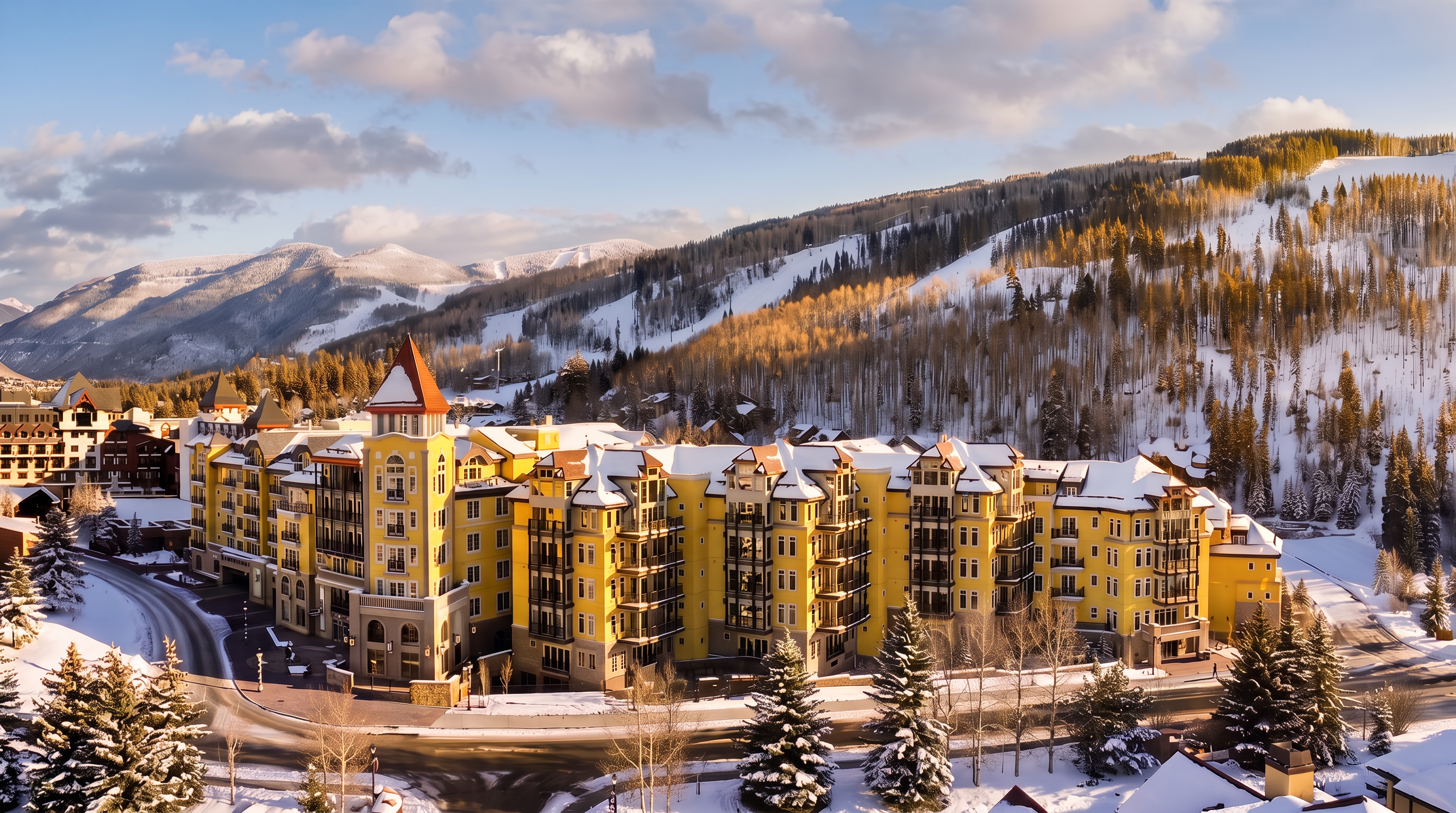
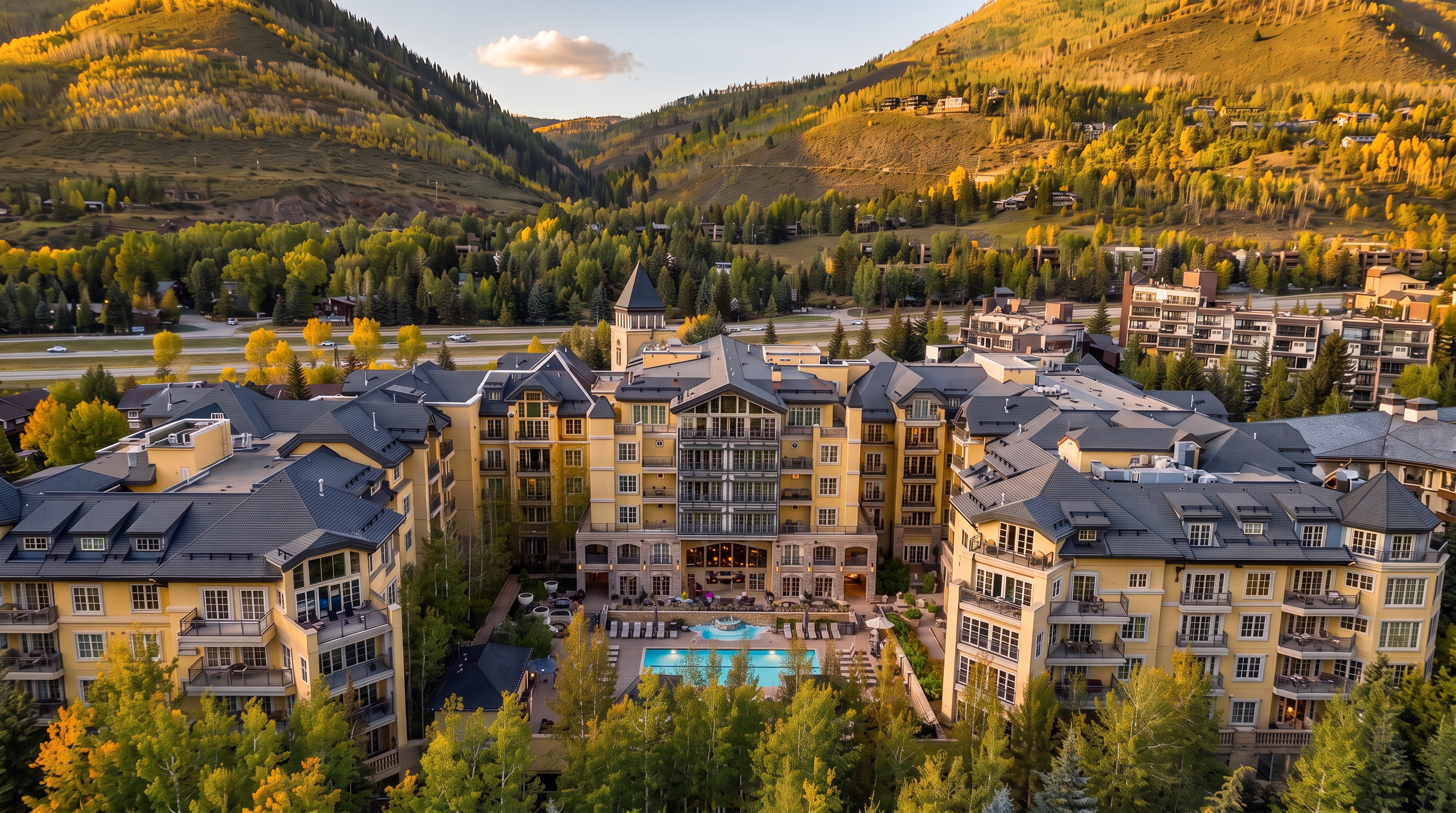
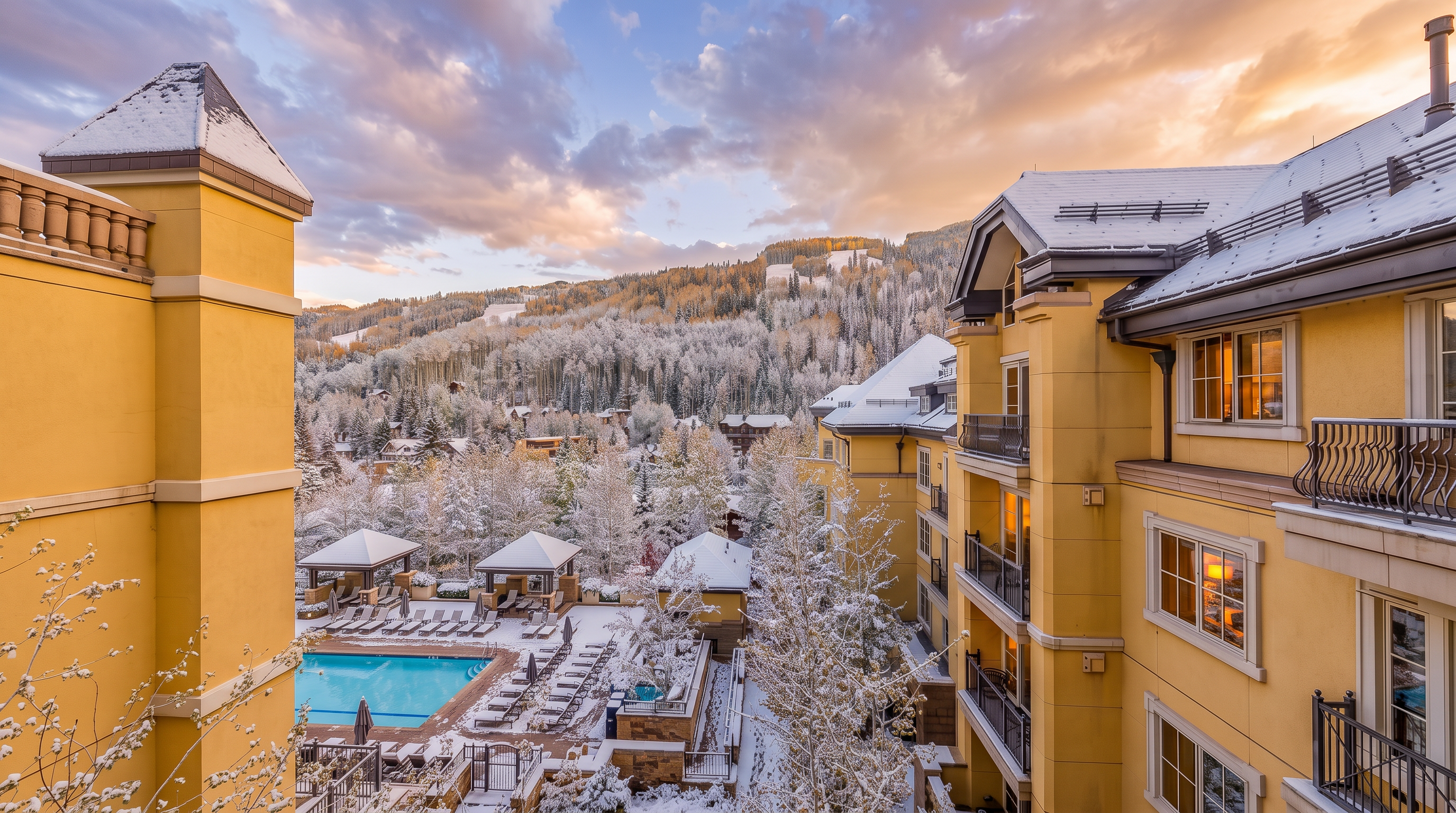
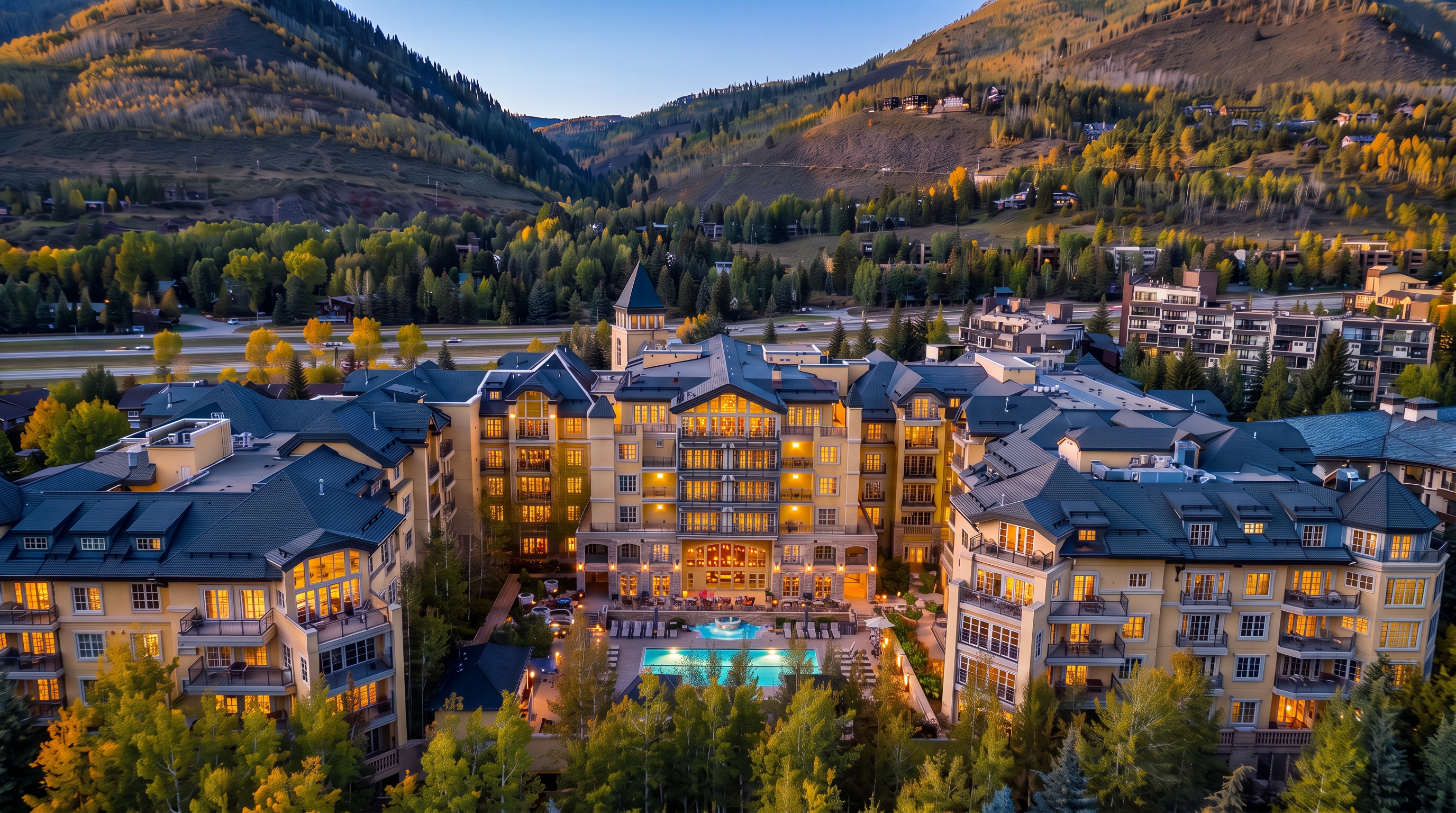
The Ritz-Carlton Residences at Lionshead sits at the center of this ecosystem, its warm yellow facade and alpine rooflines integrating naturally into the village fabric. The amenities available to owners—ski valet, concierge services, an outdoor heated pool and hot tubs, spa facilities, a fitness center, and complimentary shuttle service throughout Vail—reflect the standards of the brand while responding specifically to the demands of mountain resort living. The owners' lounge provides a gracious gathering space that extends the social life of the building beyond individual residences.
Beyond the village boundaries, Vail's broader context rewards those who look for it. The White River National Forest surrounds the valley on all sides, offering trail networks that shift in character through the seasons. The drive west along I-70 opens onto the Colorado River corridor and the high desert terrain of the Colorado Plateau. Denver International Airport connects the valley to the wider world, and the journey, particularly in clear conditions, is among the more scenic airport drives in the American West. This is a place that earns its reputation across every season.
Featured Highlights
Curated Content • Presented by Andie H Ohde