The Story Behind
Tadao Ando's Masterwork Penthouse Above the Manhattan Skyline
There are rare moments in residential architecture when a building transcends the boundaries of real estate and enters the realm of cultural artifact. The Penthouse at 152 Elizabeth Street is one of those moments. Designed by Tadao Ando — the self-taught Japanese architect whose meditative mastery of concrete, light, and geometry earned him the Pritzker Prize in 1995 — and appointed throughout by the legendary New York studio Gabellini Sheppard, this residence does not merely occupy space. It redefines it.
Entry is made through a key-fob elevator that opens directly into the penthouse's private foyer, where the Gabellini Sheppard-designed staircase commands immediate attention. Wrought from glass and satin stainless steel and paved in honed Pietra Cardosa stone, it is at once a functional connector and a sculptural centerpiece — a declaration of intent that sets the register for everything that follows.
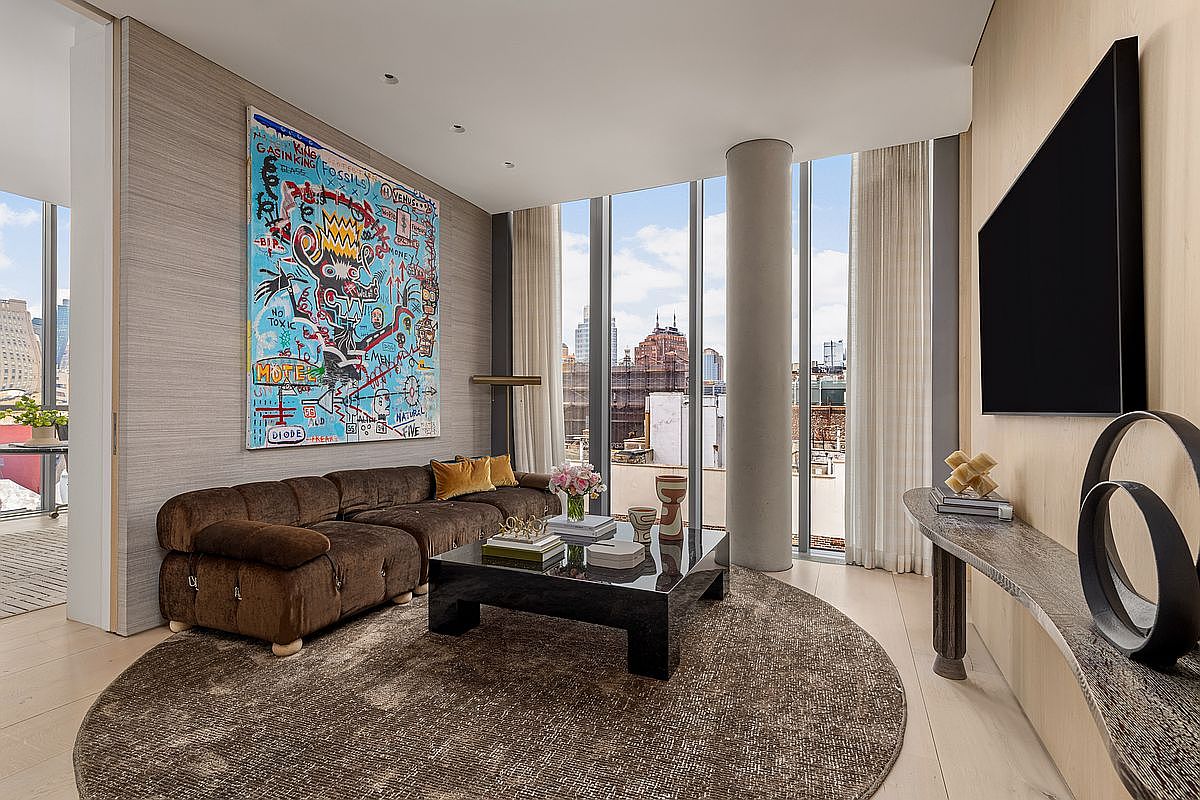
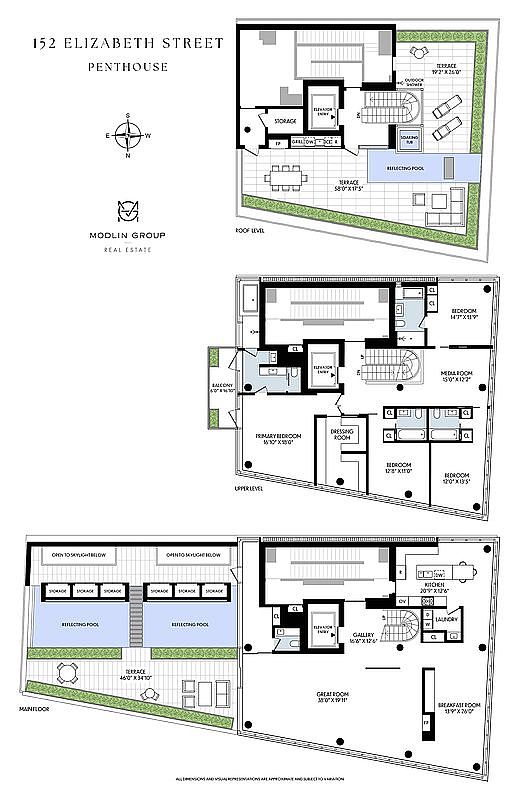
The great room, stretching an extraordinary fifty-two feet in length beneath ten-foot ceilings, is the heart of the residence. Floor-to-ceiling windows dissolve the boundary between interior and exterior, drawing the planted terrace — with its signature water walls and reflecting pools — into the living experience. A gas-burning fireplace, framed in the same honed Pietra Cardosa stone that runs through the staircase, grounds the space with warmth and material continuity. Underfoot, Dinesen HeartOak wide-plank flooring with butterfly joints extends throughout, its warm grain complemented by Dinesen White Oak wall paneling that imbues every room with an organic, considered depth.
The chef's kitchen is a study in refined functionality. Italian milk glass surfaces, a sliding island countertop, and custom Italian Eucalyptus wood cabinetry frame a fully integrated Gaggenau appliance package — a configuration that satisfies the most discerning culinary sensibility without compromising an ounce of aesthetic grace. Adjacent, a breakfast room offers an intentionally intimate counterpoint: a sun-bathed nook for morning rituals, thoughtfully scaled against the grandeur that surrounds it.
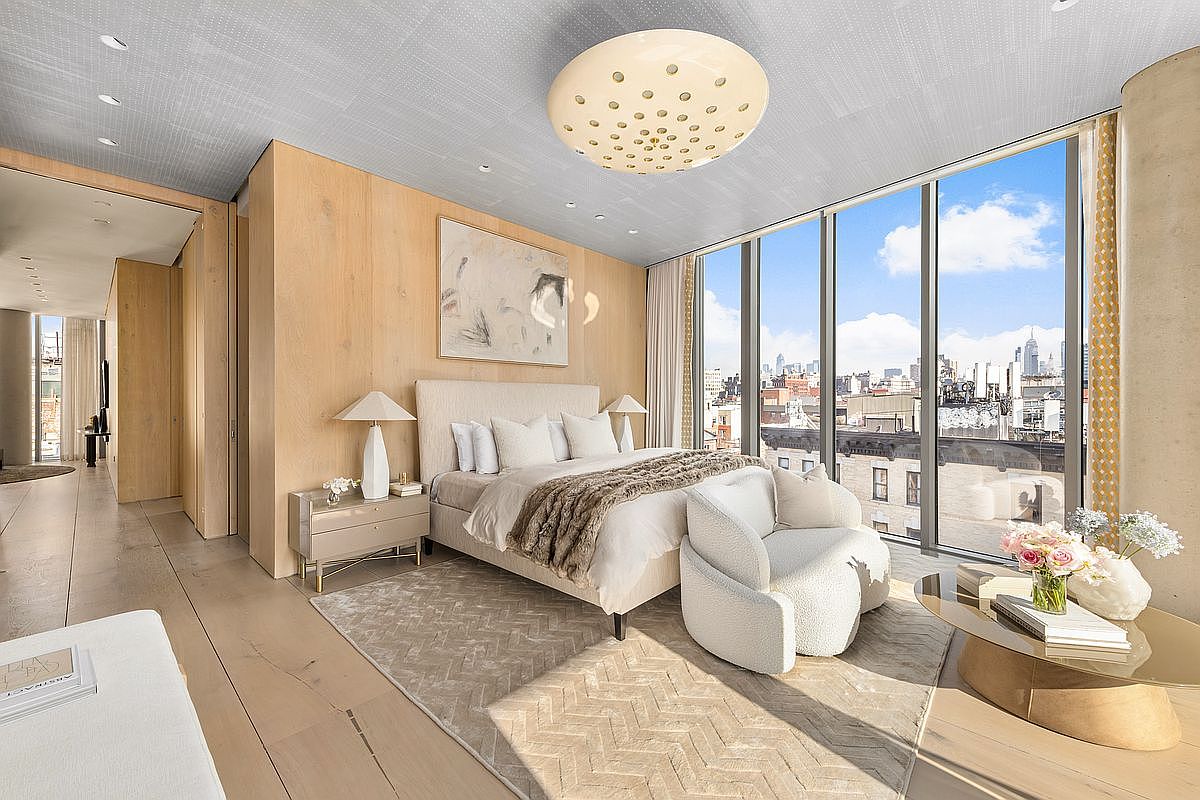
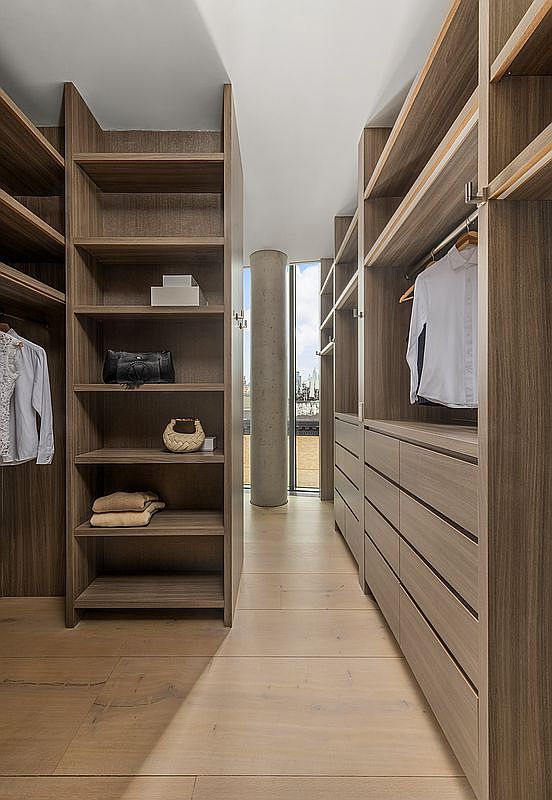
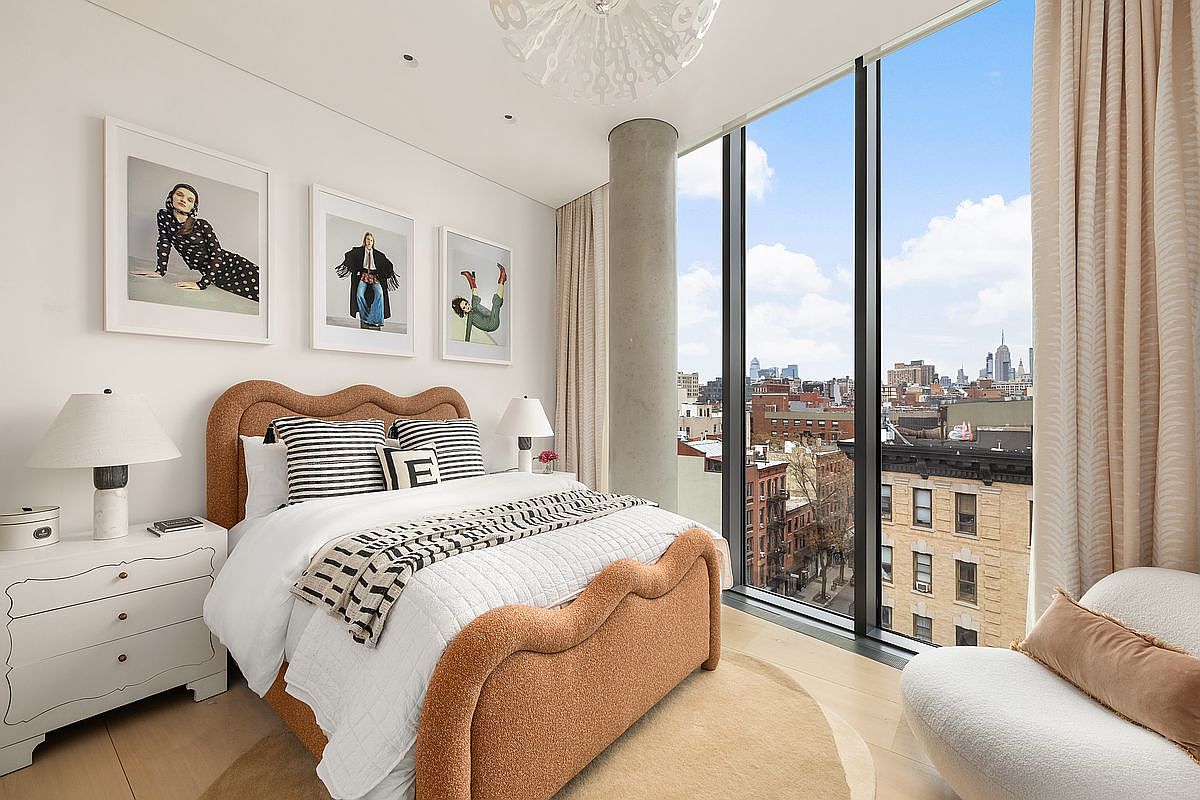
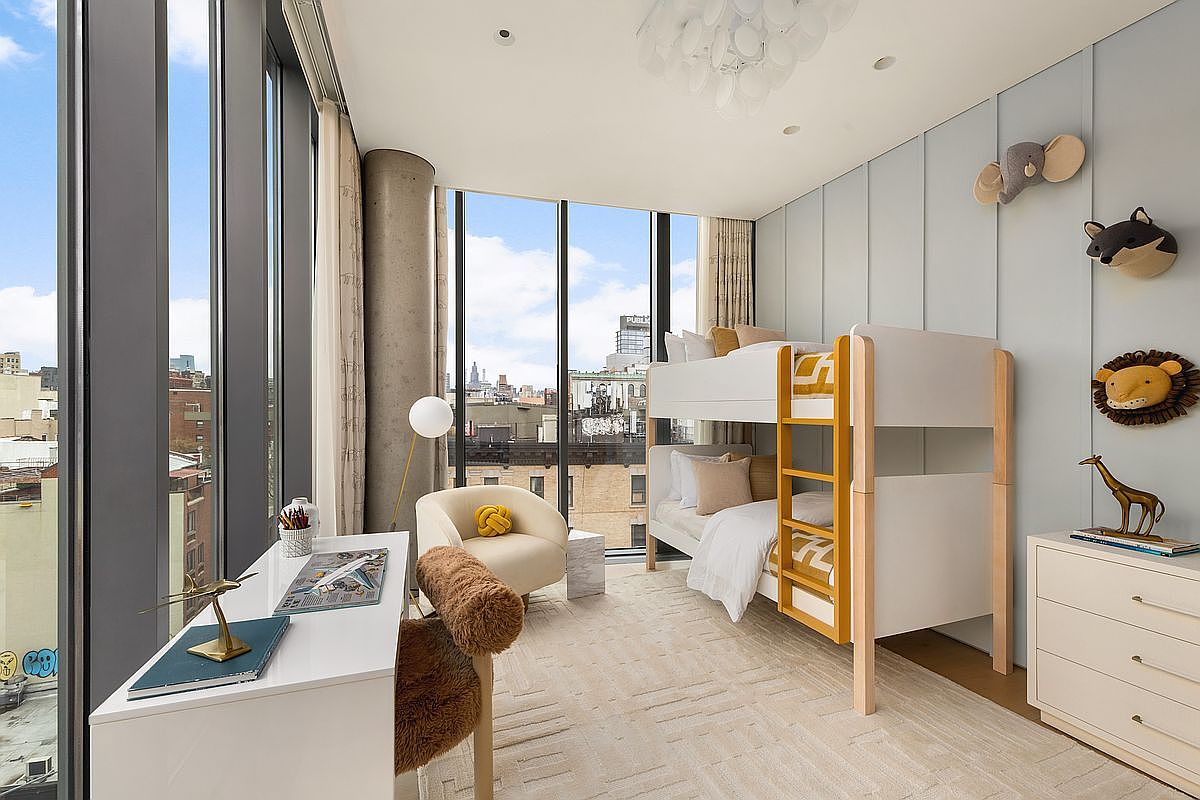
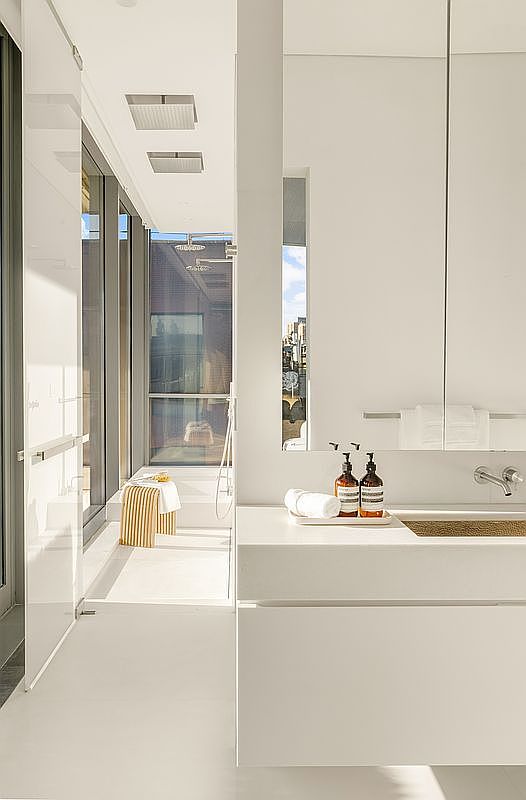
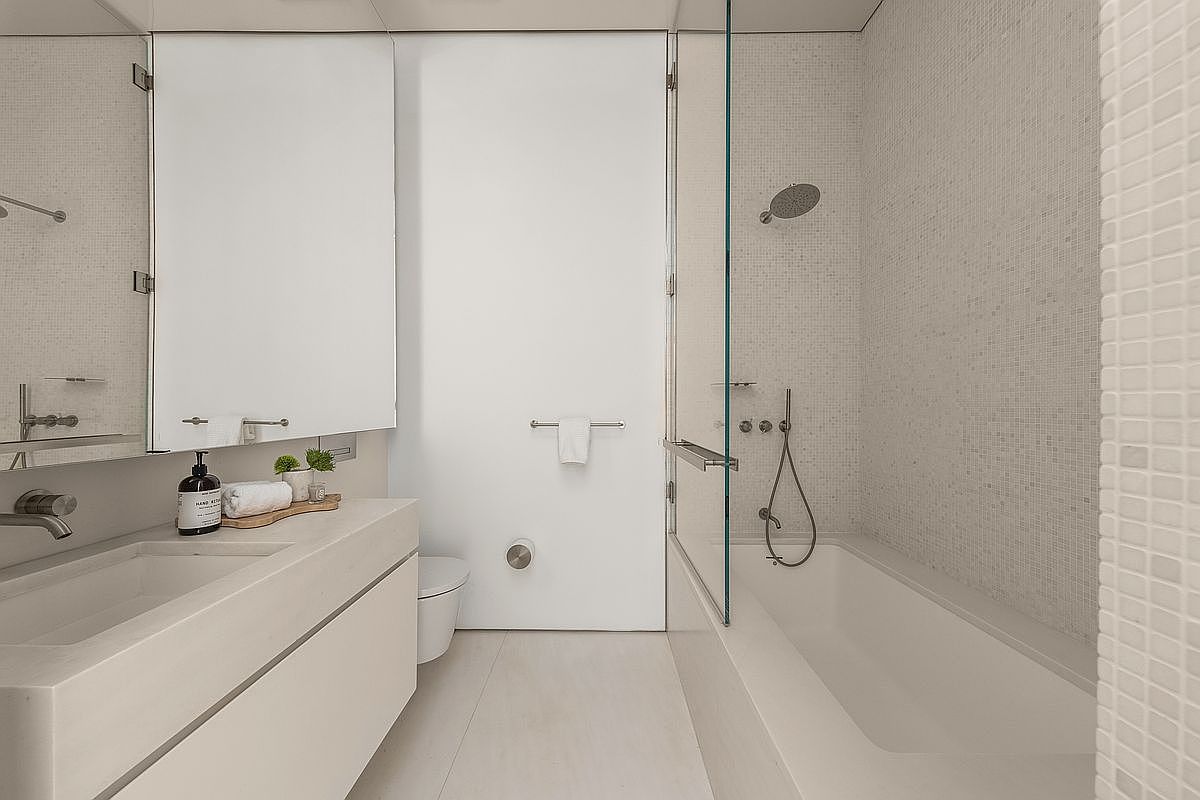
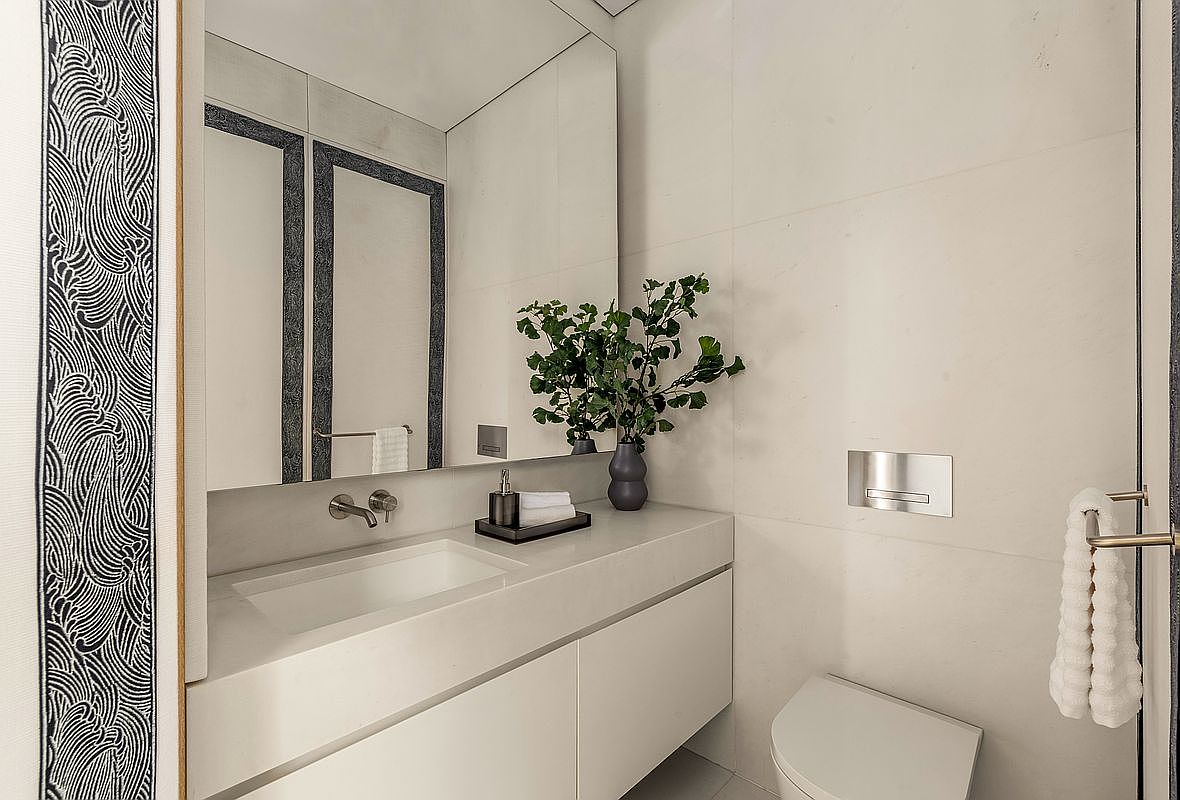
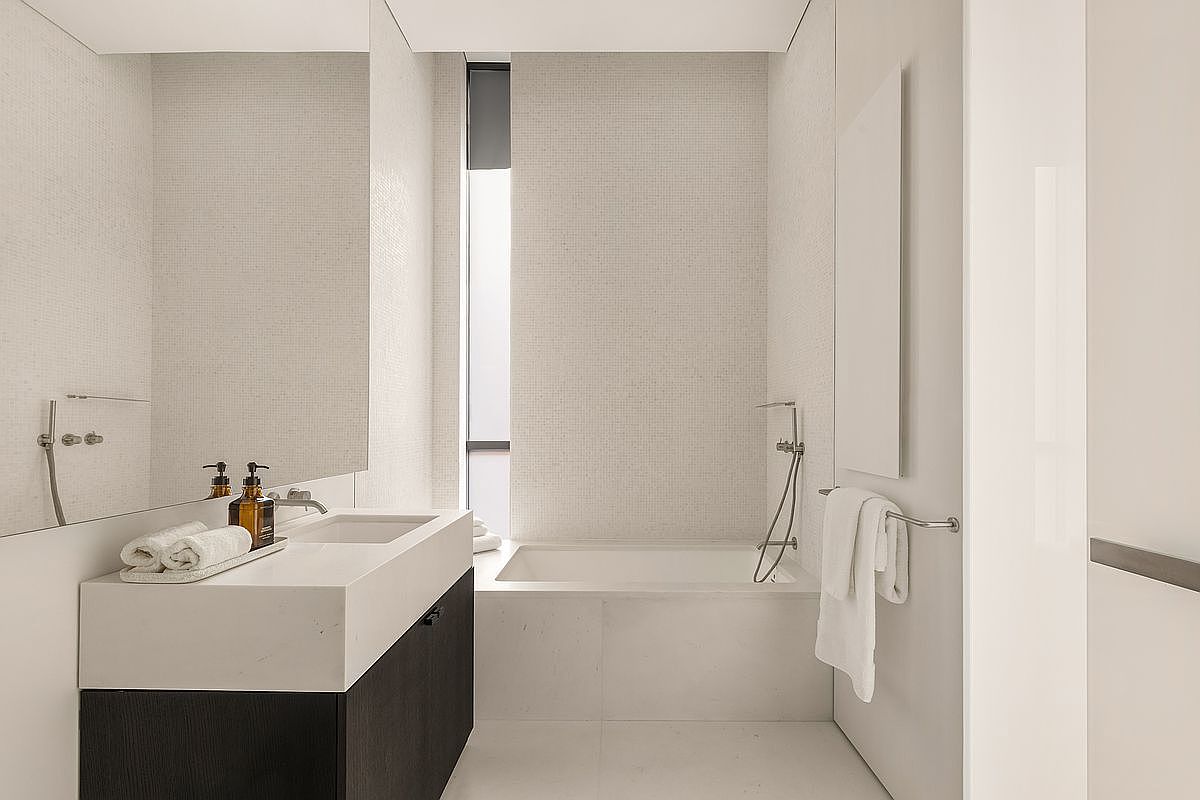
The upper level houses four sound-attenuated bedroom suites, each upholstered in acoustic fabric to create a private, enveloping calm. The primary suite extends to a spacious walk-in closet, a dedicated dressing room, and a covered private balcony. En-suite bathrooms throughout are finished in honed Bianco Sivec marble paired with glacier white Corian vanities and wall-mounted faucets — a palette of cool, luminous restraint that evokes a world-class spa.
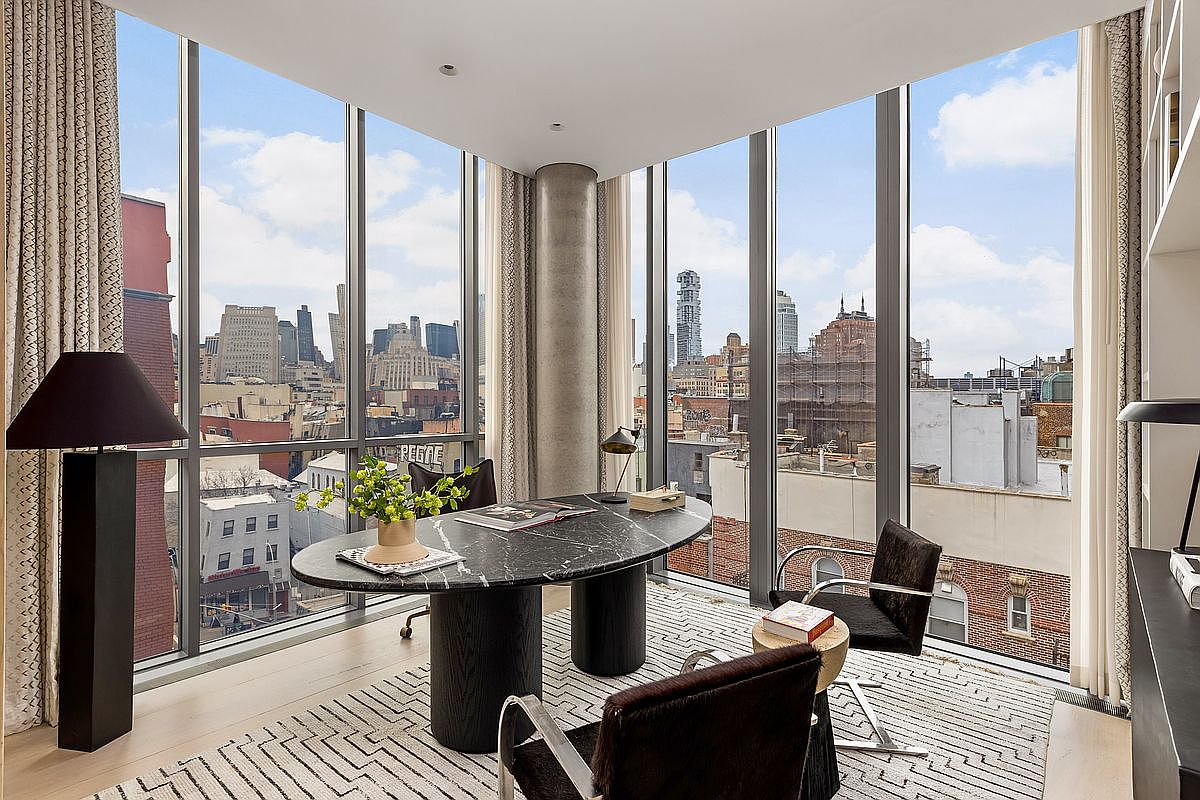
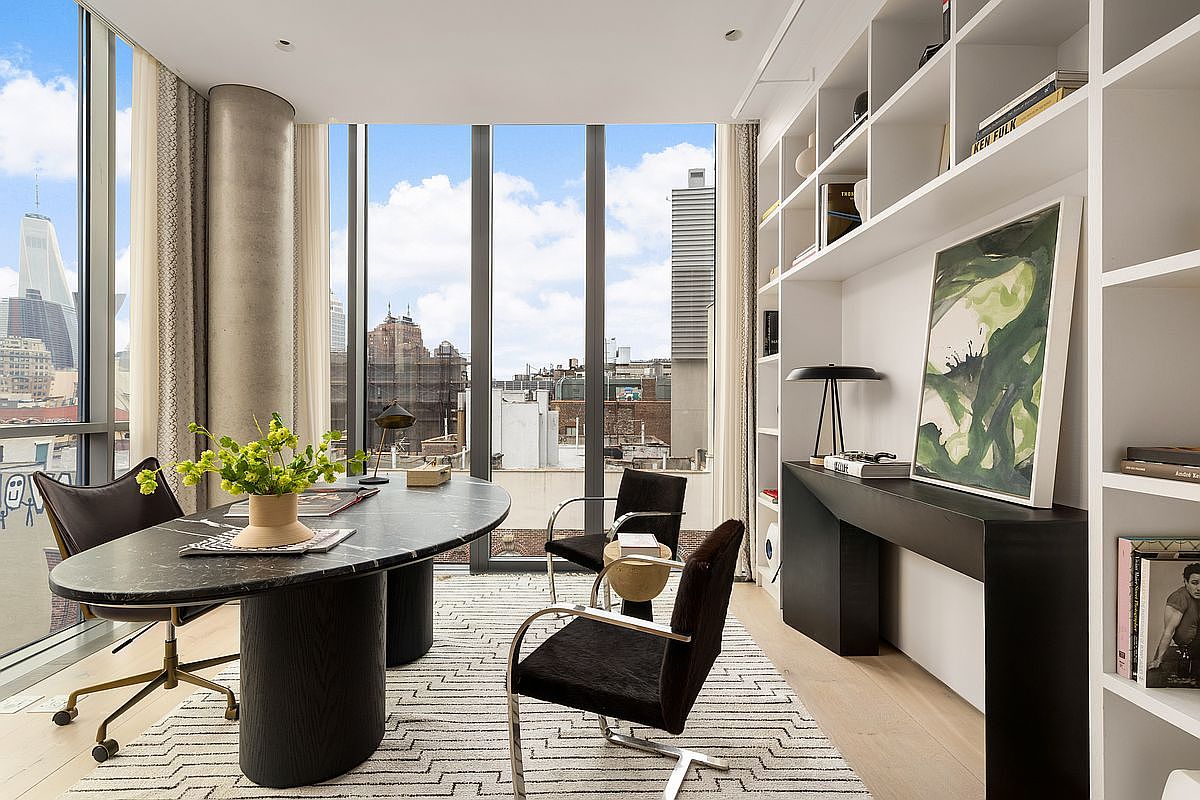
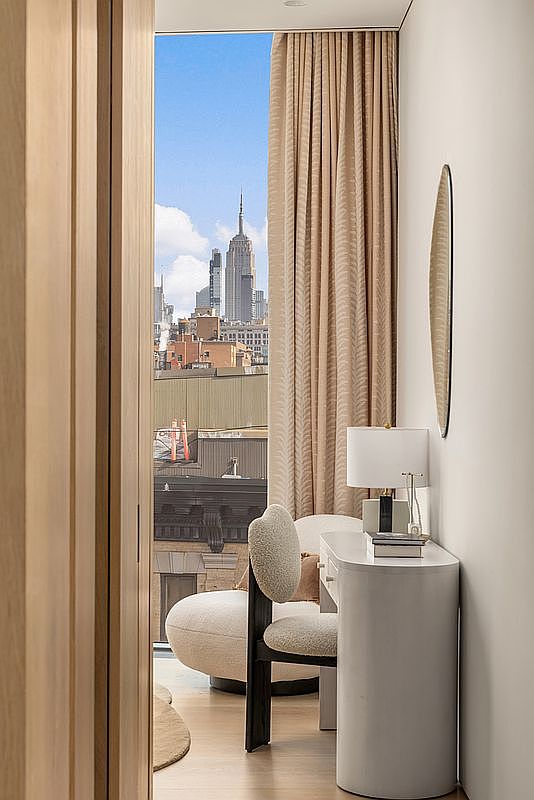
Above it all, the landscaped roof terrace is Ando's crowning gesture. A full outdoor kitchen, a custom granite fireplace of Ando's own design, a hand-carved granite soaking tub, and the architect's iconic reflecting pool occupy this elevated sanctuary, all oriented toward boundless panoramas of the Empire State Building, One World Trade Center, and the Williamsburg Bridge. Two automated valet parking spaces and private storage complete a residence that offers not only beauty, but the rarest of Manhattan commodities: true, unhurried ease.
152 Elizabeth Street sits at the precise intersection of Nolita and Little Italy — a location that is, in the truest sense, Manhattan distilled. Nolita, an acronym for North of Little Italy, emerged as one of New York City's most coveted neighborhoods through a gradual cultural evolution that began in the 1990s, when artists, designers, and tastemakers were drawn to its narrow, tree-lined streets, its human scale, and its quiet resistance to the homogenizing forces that transformed other parts of the city. Today, it retains that original character while commanding some of the most sought-after addresses in all of downtown Manhattan.
The neighborhood's streets — Elizabeth, Mott, Mulberry, and Prince among them — are lined with independently owned boutiques, acclaimed restaurants, and the kind of lived-in, considered streetscape that can only be built over generations. The area's architectural fabric is a largely intact collection of late-nineteenth and early-twentieth-century cast-iron and brick buildings, lending the blocks a coherent, historic texture that makes a building of Ando's caliber all the more striking in contrast.
Culturally, the surrounding area is exceptionally rich. The New Museum, one of the city's most important contemporary art institutions, sits nearby on the Bowery, anchoring a corridor that has become synonymous with the vitality of New York's contemporary art world. SoHo, immediately to the west, remains a global destination for design, fashion, and architecture, its landmark district of cast-iron buildings housing flagship galleries and internationally recognized retailers. To the south, Chinatown and the Financial District extend the neighborhood's gravitational reach across centuries of New York history.
For daily life, Nolita offers an enviable intimacy. The proximity to some of downtown Manhattan's finest dining — spanning Italian-American institutions with decades of history to contemporary restaurants earning international recognition — means that world-class cuisine is a short walk in any direction. Specialty food purveyors, wine merchants, and the weekend greenmarkets of nearby Union Square further enrich the everyday experience of living here.
Central Park lies to the north, reachable by taxi or subway within minutes, while the Hudson River Greenway and the East River waterfront trails offer accessible outdoor recreation within the broader downtown landscape. The area is exceptionally well served by public transit, with multiple subway lines providing swift connections to Midtown, the Financial District, and the outer boroughs.
Perhaps most significantly, Nolita has maintained its identity as a neighborhood of genuine discernment. It has not been scaled to the impersonal heights of other luxury corridors; it remains a place where the finest coffee, the most carefully curated bookshop, and a centuries-old Italian bakery can coexist on the same block. For the resident of the Penthouse at 152 Elizabeth Street, this is the essential promise of the address — not merely a view of New York City, but an immersive, textured, and irreplaceable position within it.
Featured Highlights
Curated Content • Presented by Adam Modlin