The Story Behind
A Landmark 1886 Estate Reimagined for Modern City Living
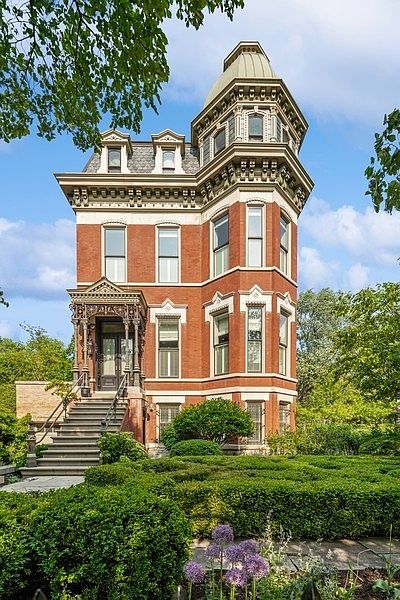
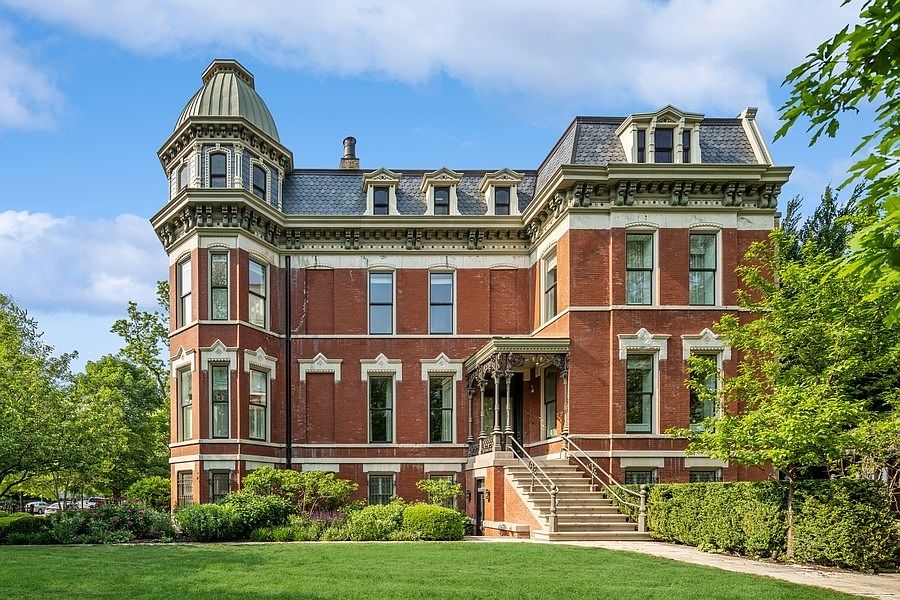
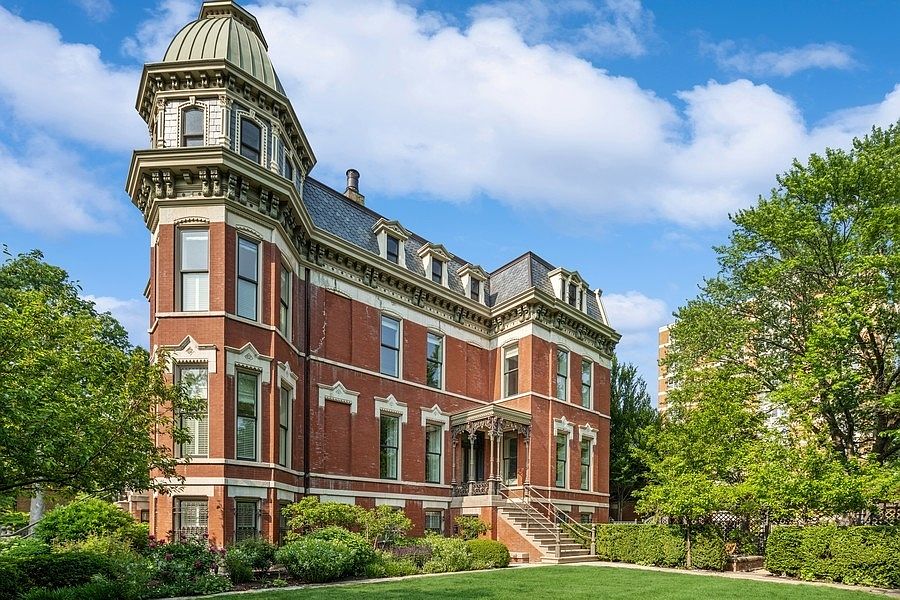
There are homes that occupy a lot, and then there are homes that command one. 1407 N. Hoyne Avenue belongs unmistakably to the latter category. Built in 1886 for John H. Rapp, one of Chicago's prominent beer barons of the Gilded Age, the residence was conceived as a statement of permanence — a Second Empire brick manor with a mansard roof, dormered roofline, and a corner tower that rises above the surrounding streetscape with quiet authority. More than a century later, following a meticulous multi-year renovation and restoration led by Rugo Raff Architects, the home has been returned to its full grandeur while being entirely recast for contemporary life.
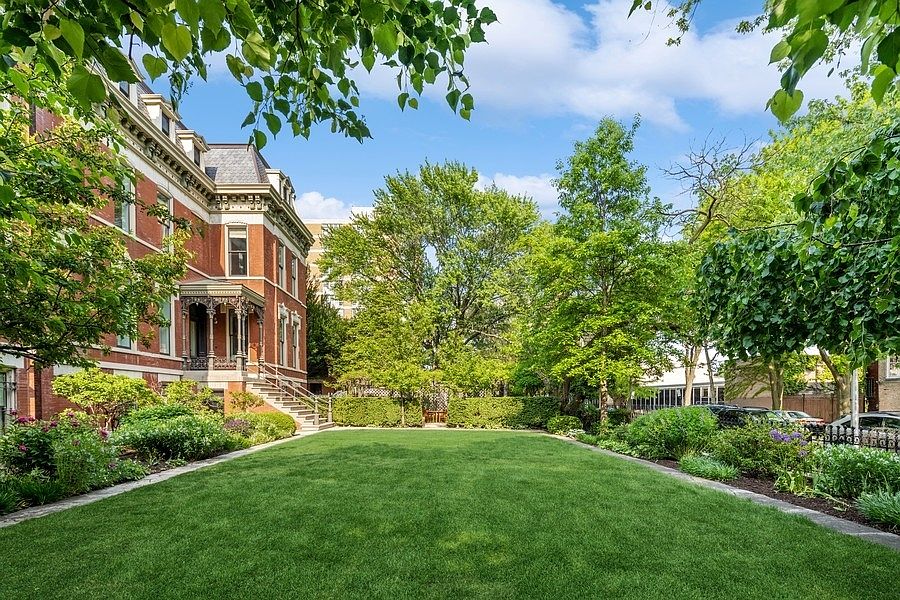
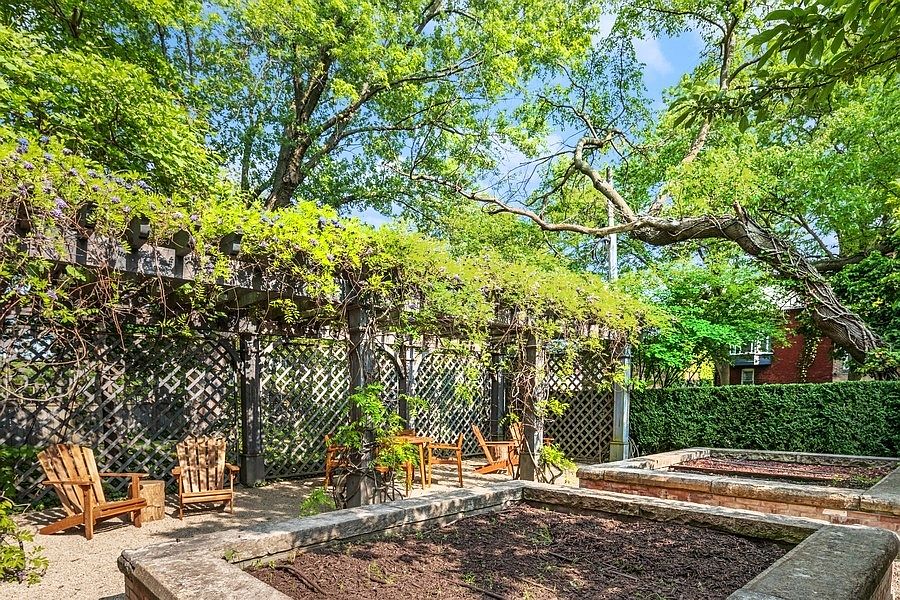
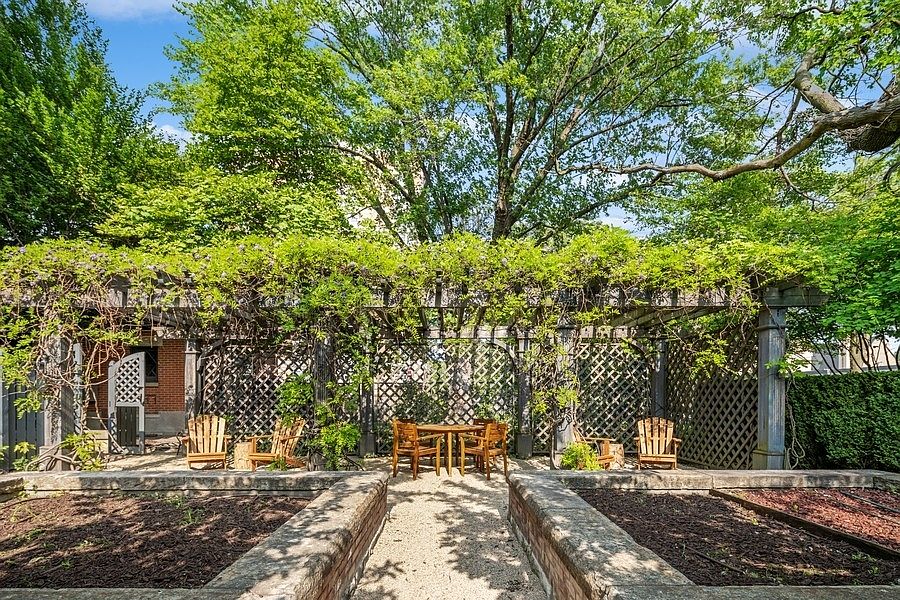
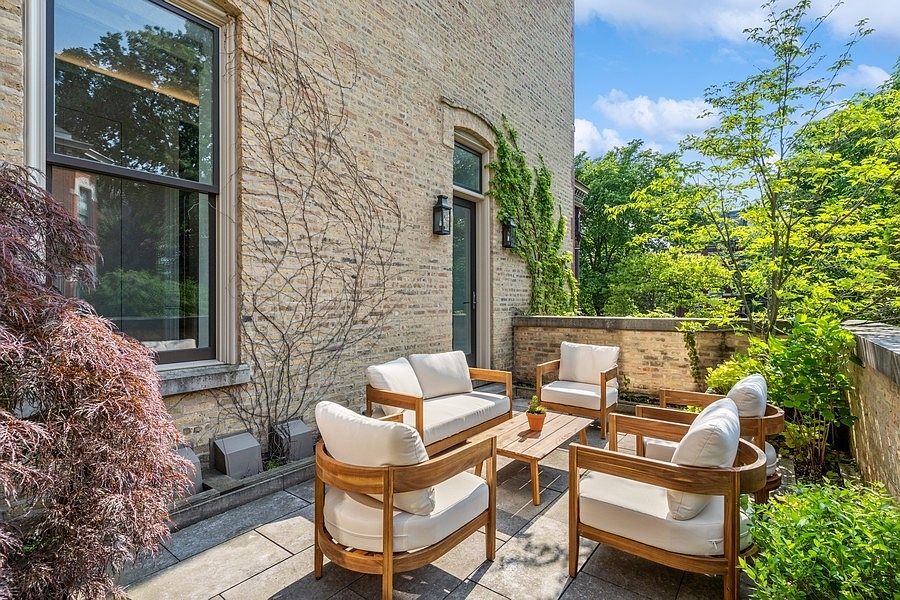
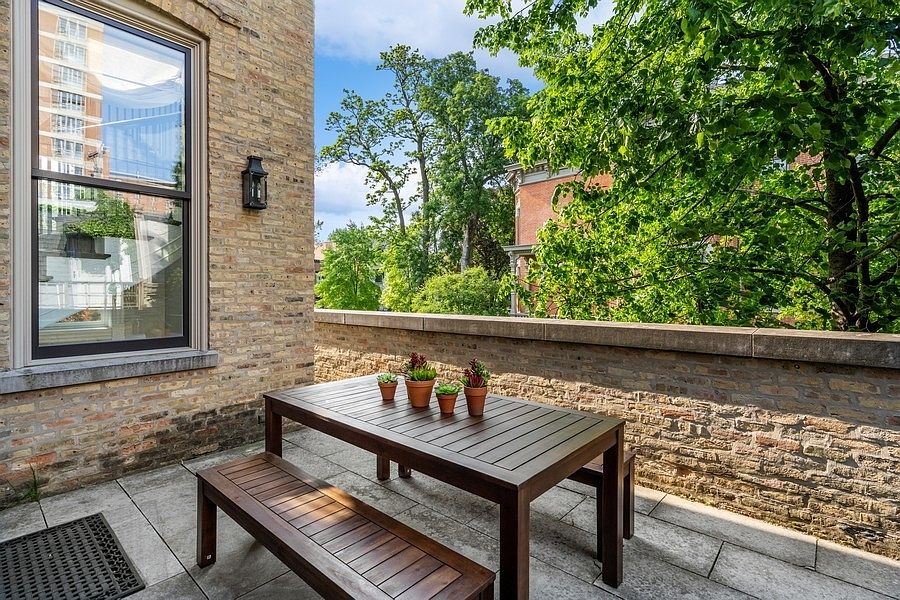
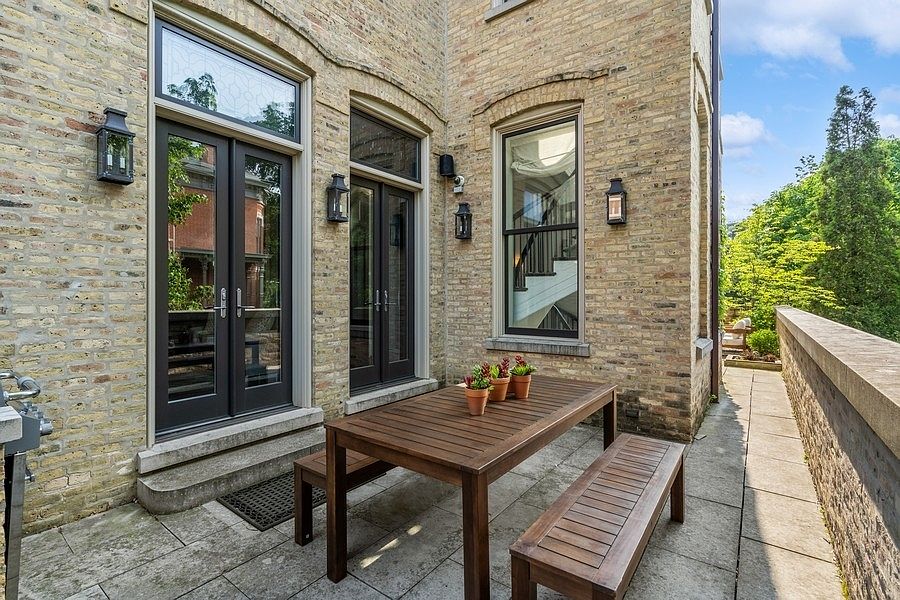
The approach begins at the street, where a sweeping stone staircase ascends through mature landscaping and manicured boxwood to an ornate covered entrance. The 98' x 110' lot — an almost inconceivable footprint for a Chicago single-family home — affords a deep front yard, a side yard with raised garden beds, and a European-style pergola draped in climbing vines. Two limestone terraces extend from the main level: a 12' x 23' west terrace for open-air entertaining and a 12' x 17' side terrace appointed with an outdoor kitchen and built-in grill, each fitted with self-irrigating planters.
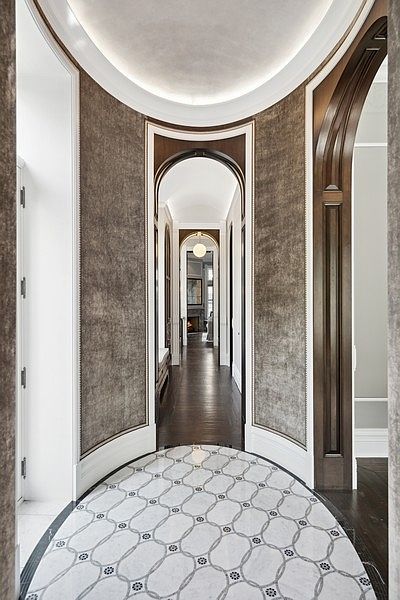
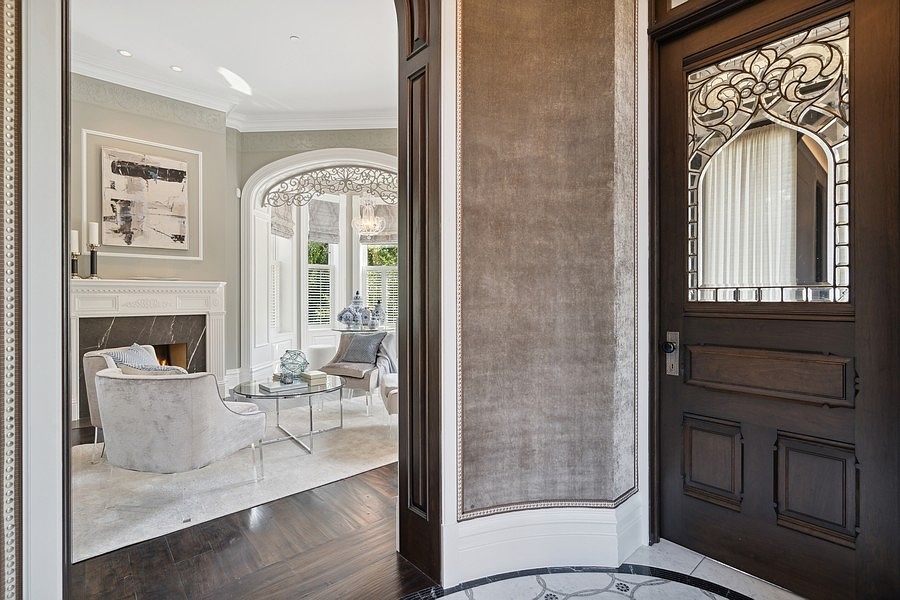
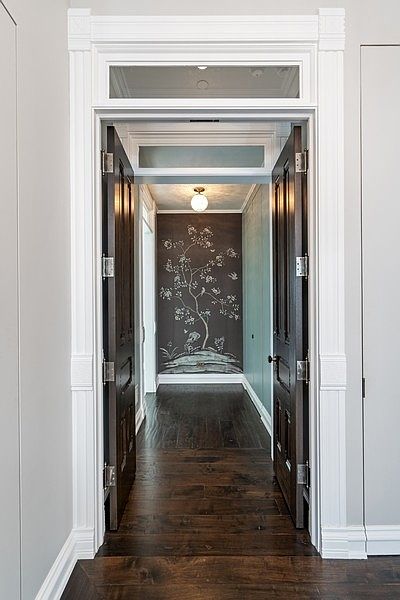
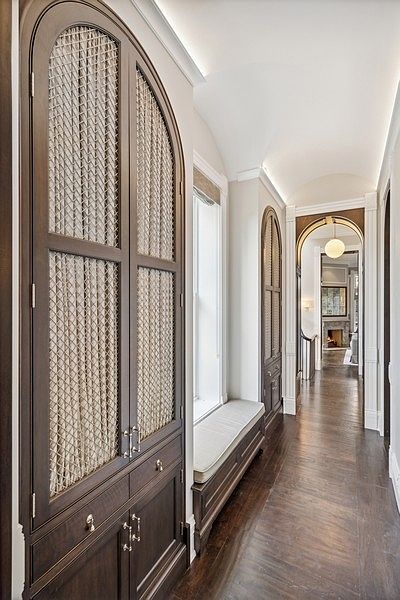
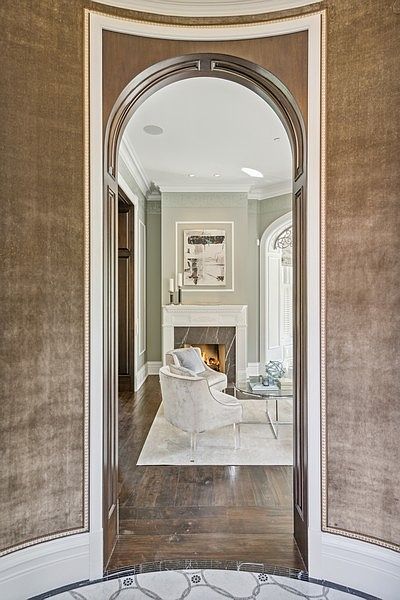
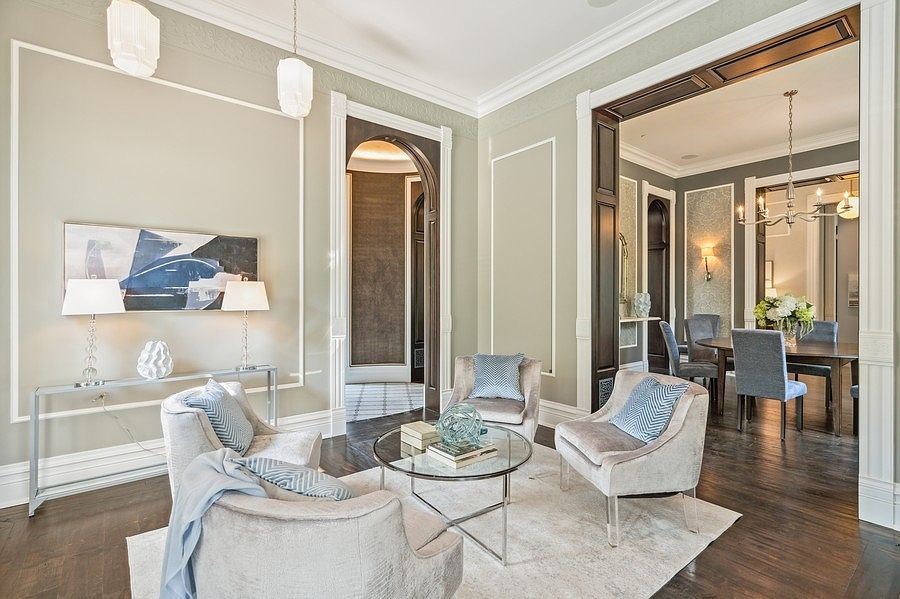
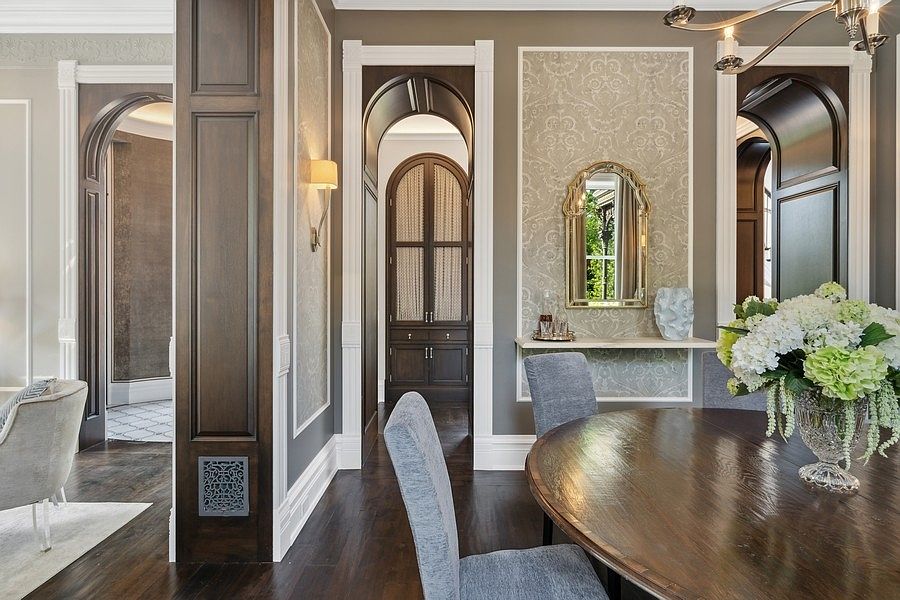
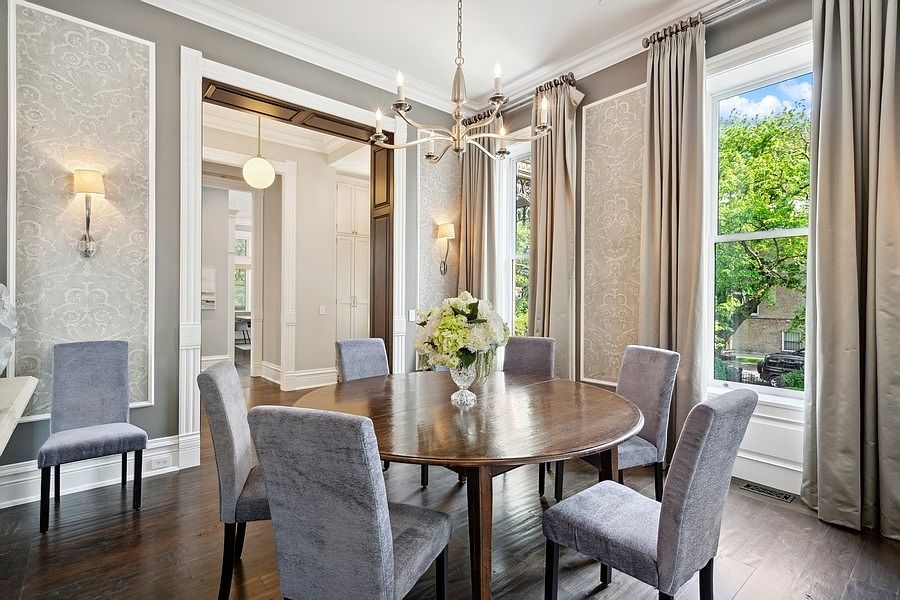
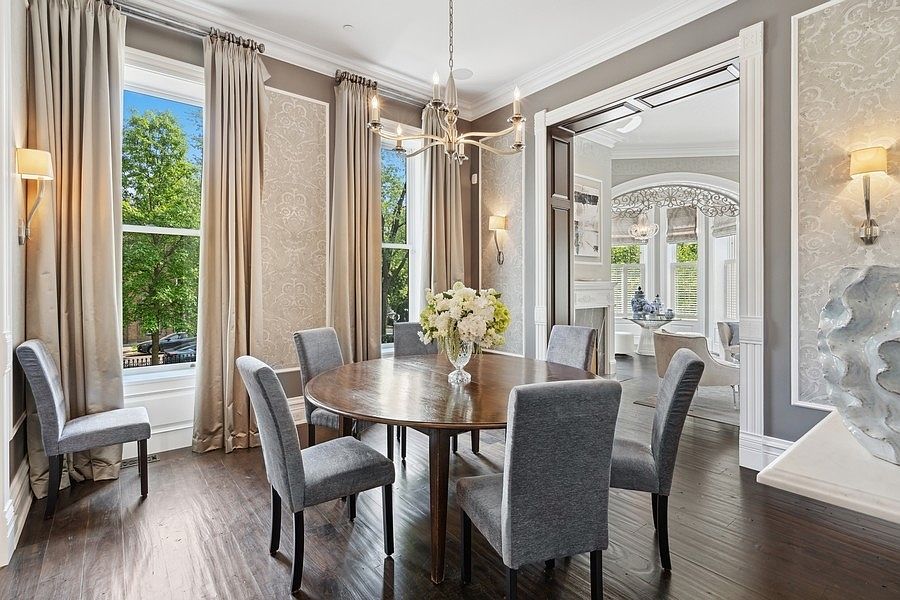
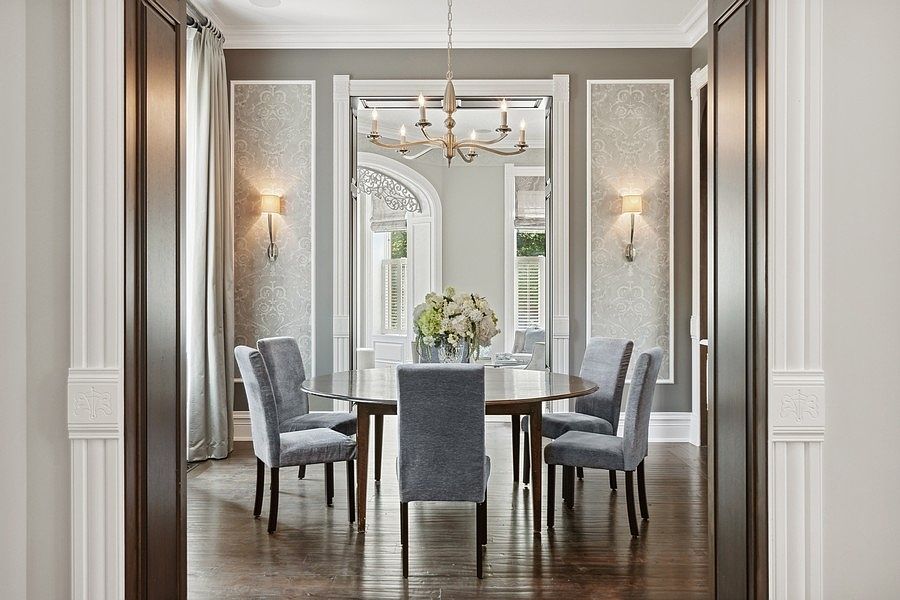
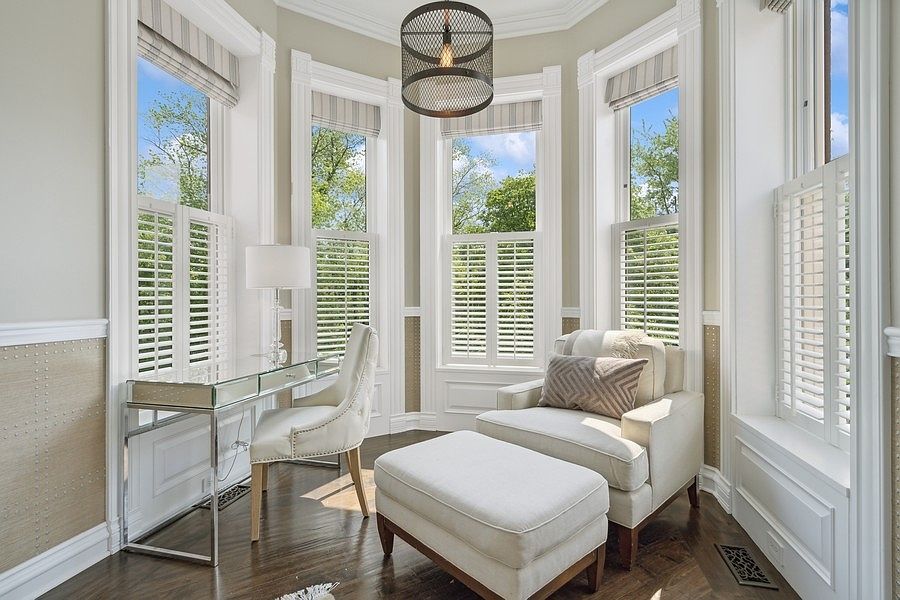
Inside, the home announces itself through an oval-shaped entry hall with patterned stone floors, its arched doorways and textured wall coverings establishing a sense of architectural rhythm that carries throughout. Original doors and hardware have been carefully restored, and 97 Marvin windows bathe the interiors in natural light while preserving the building's historic profile. Hand-scraped walnut floors run through the formal living and dining rooms, where a stone fireplace surround and a traditional turret bay anchor the living space with understated elegance.
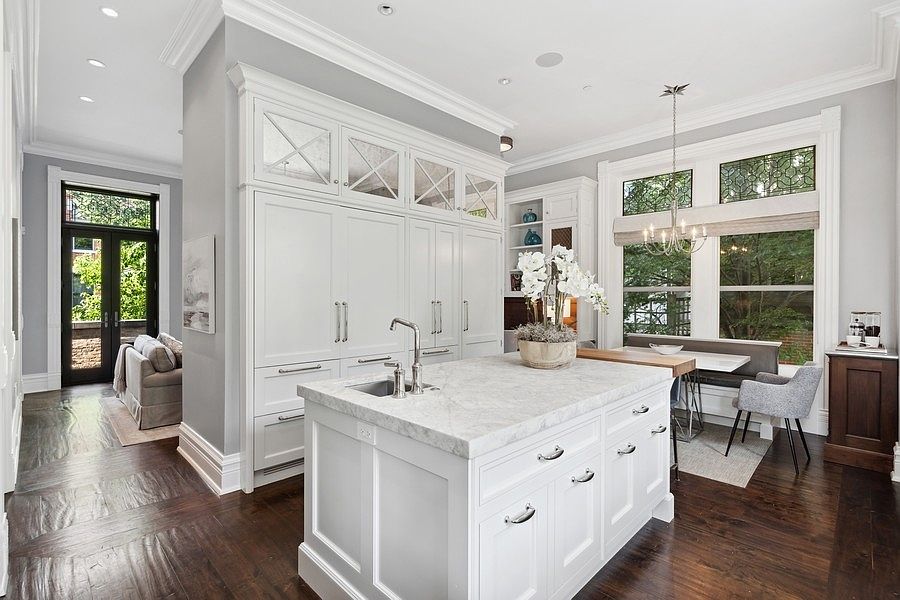
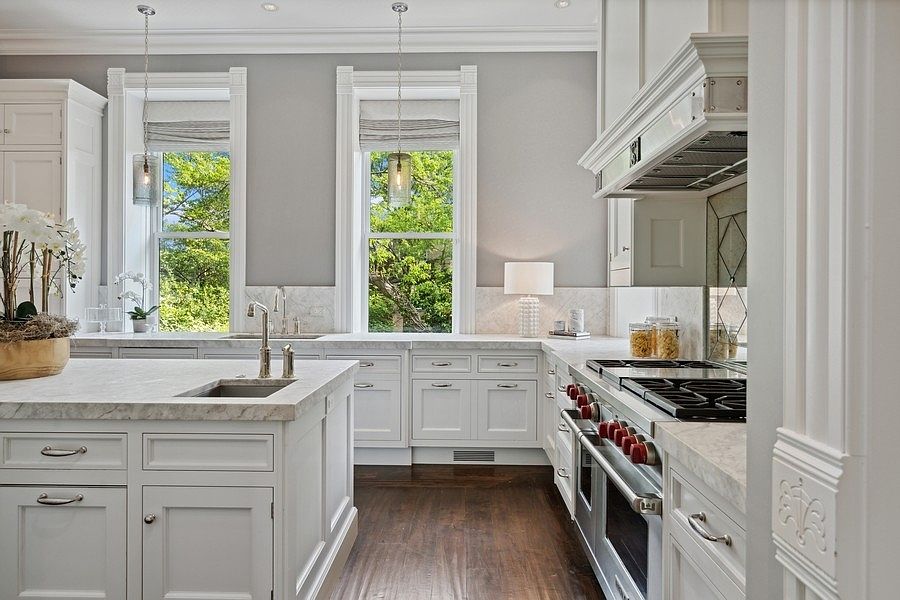
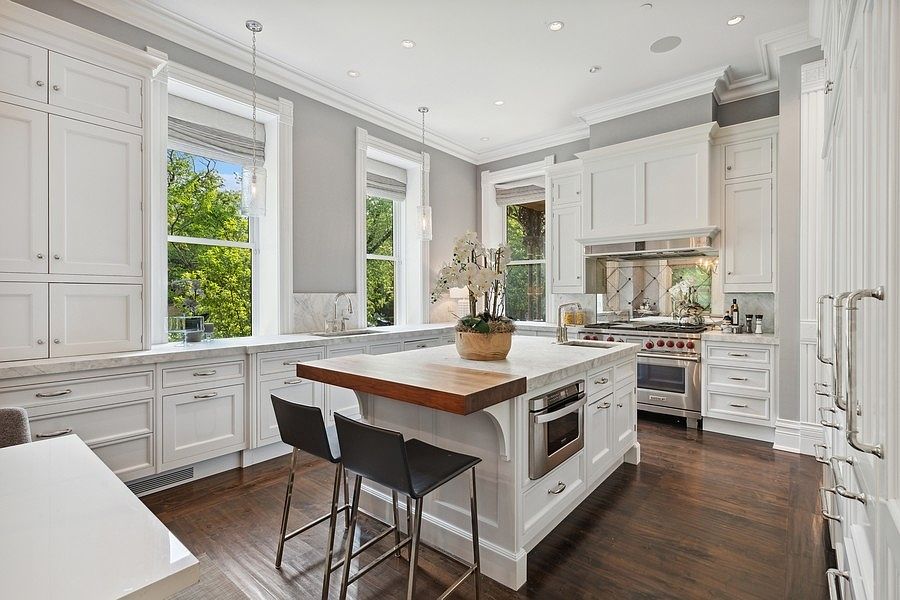
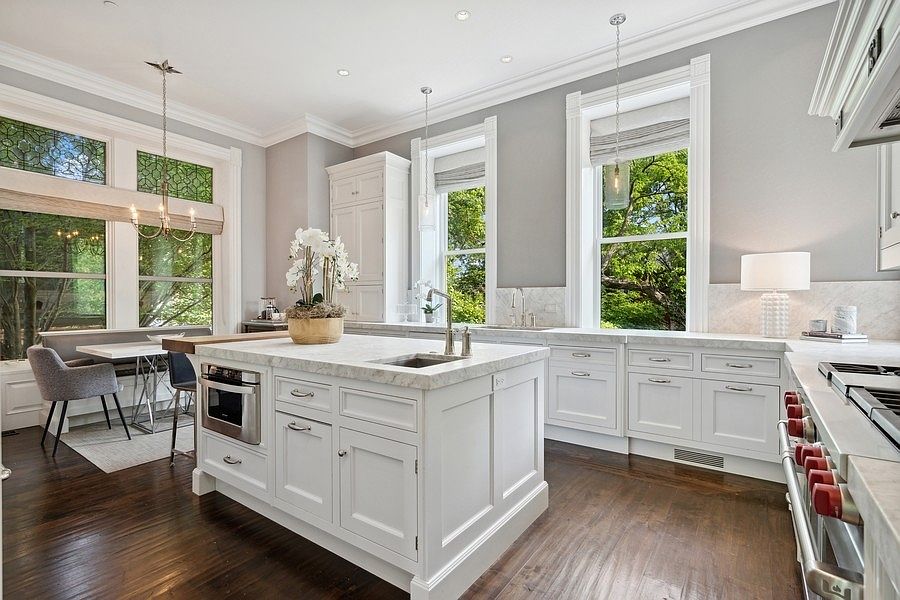
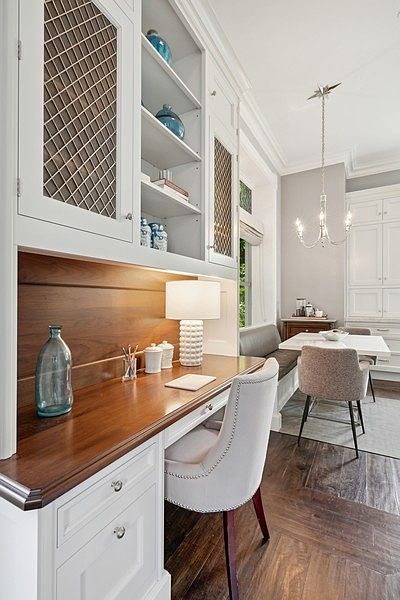
The custom chef's kitchen represents the renovation at its most considered: O'Brien Harris cabinetry in crisp white, quartzite countertops, professional-grade Wolf and Sub-Zero appliances, a full butler's pantry, an herb garden, and a banquette breakfast nook framed by stained glass accent windows. An adjacent family room with built-in walnut cabinetry and a beverage center offers a more intimate counterpoint.
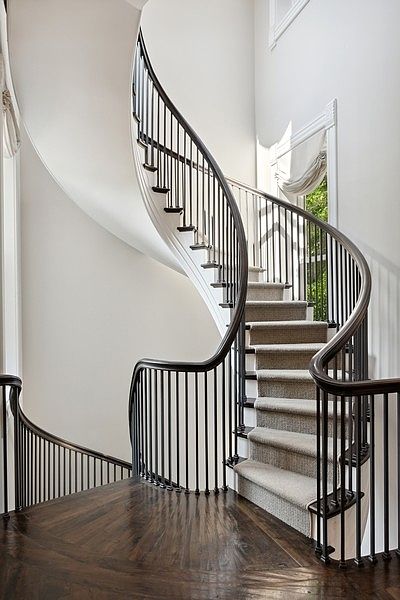
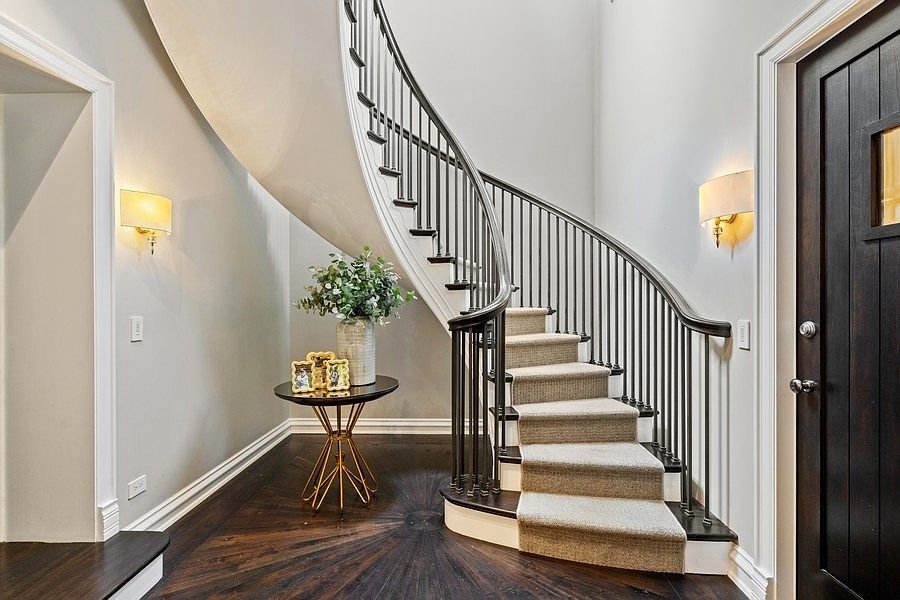
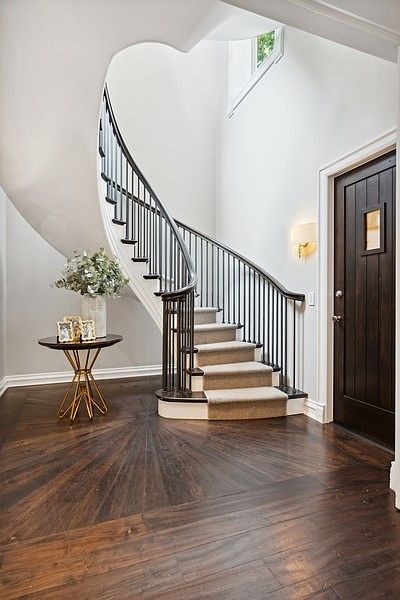
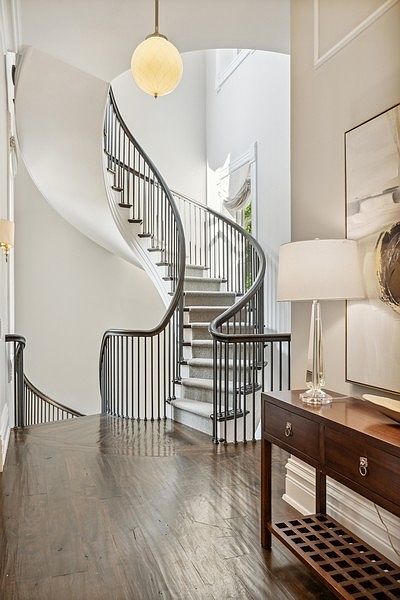
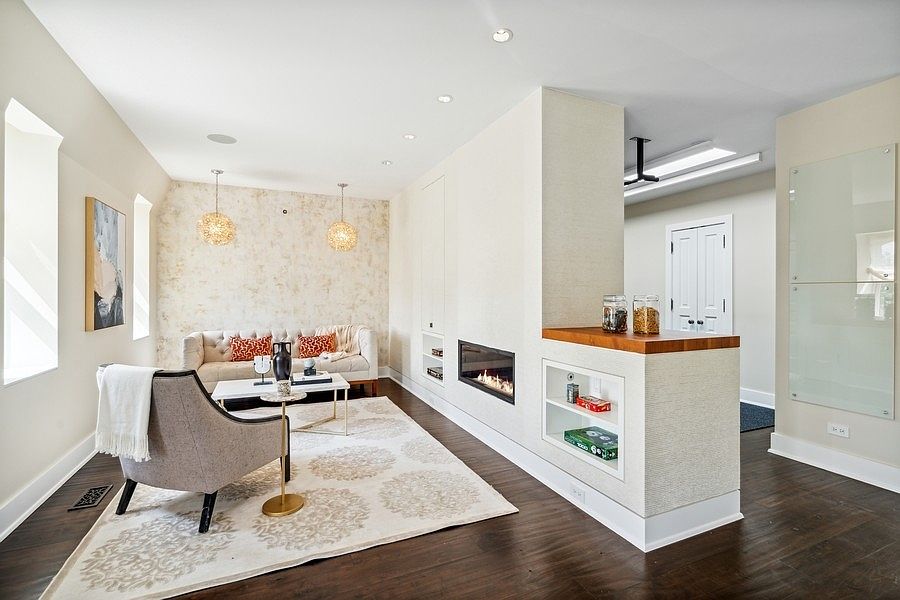
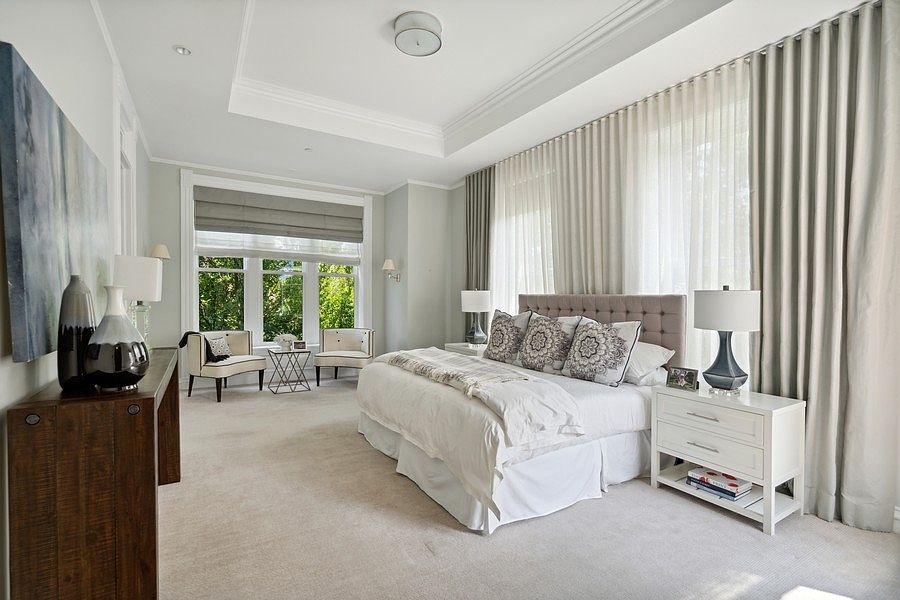
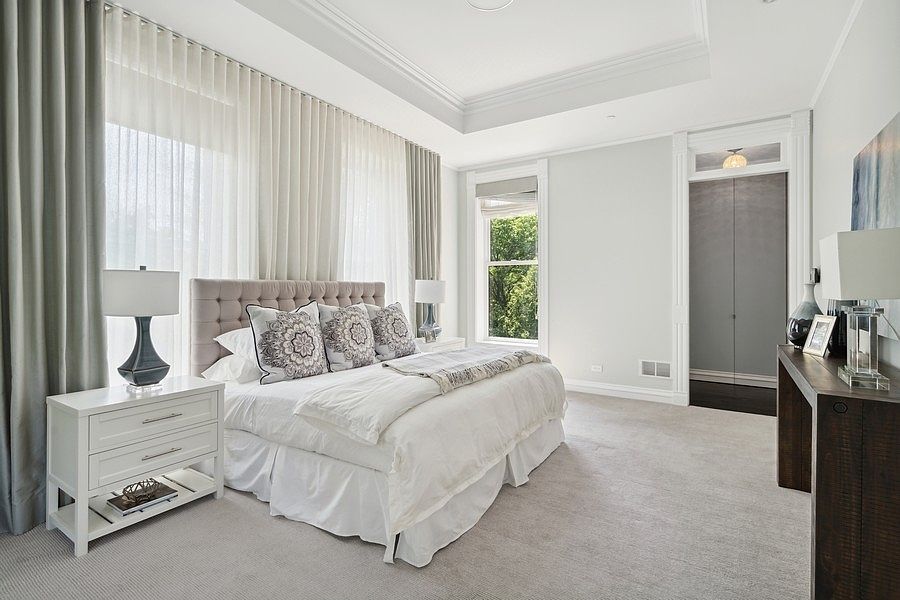
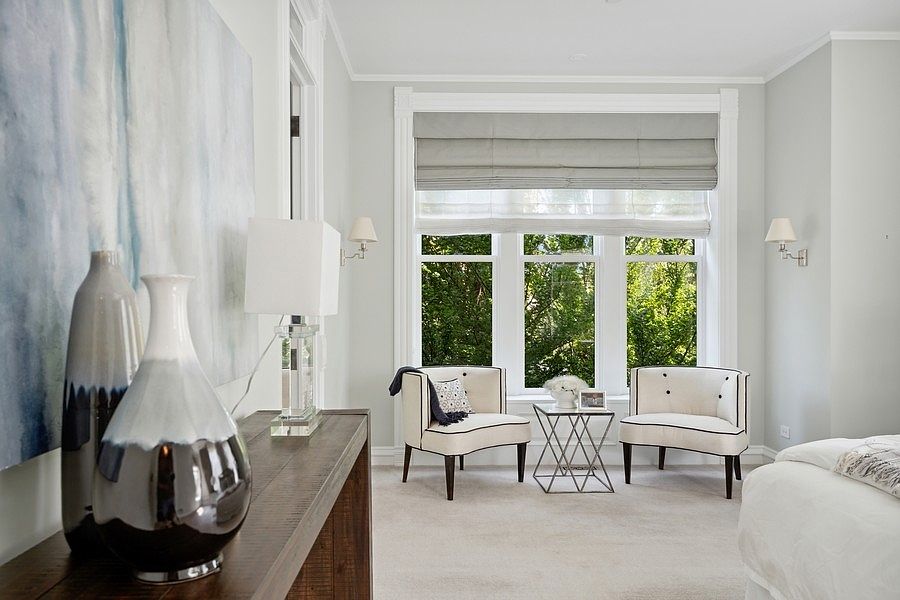
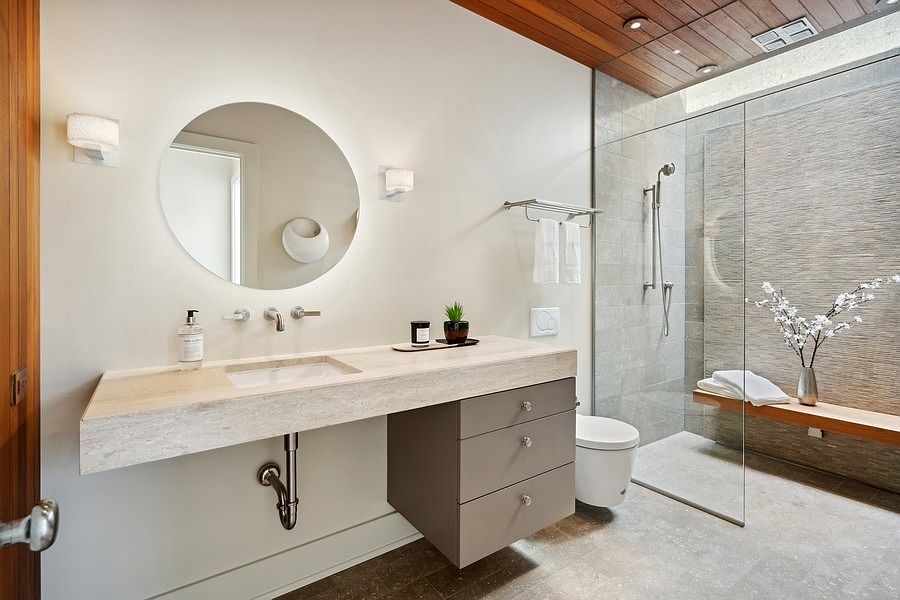
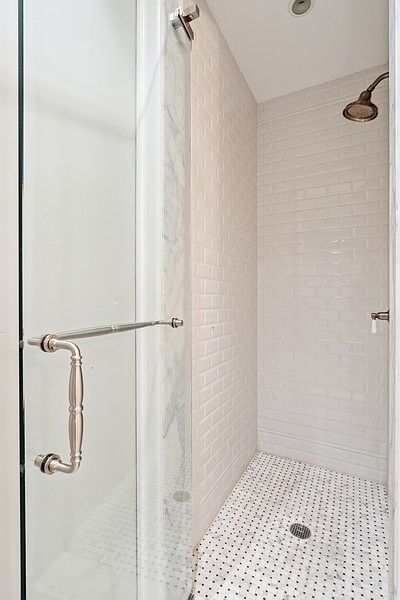
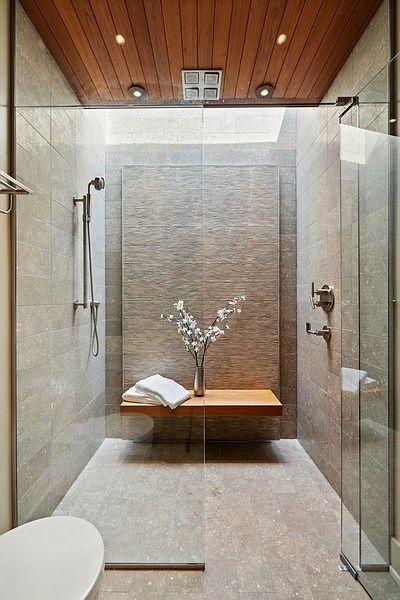
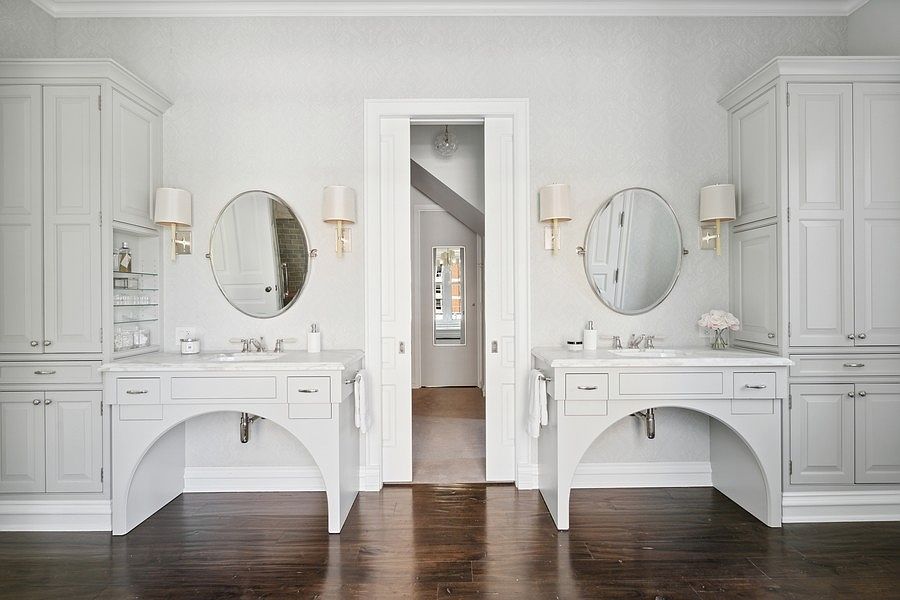
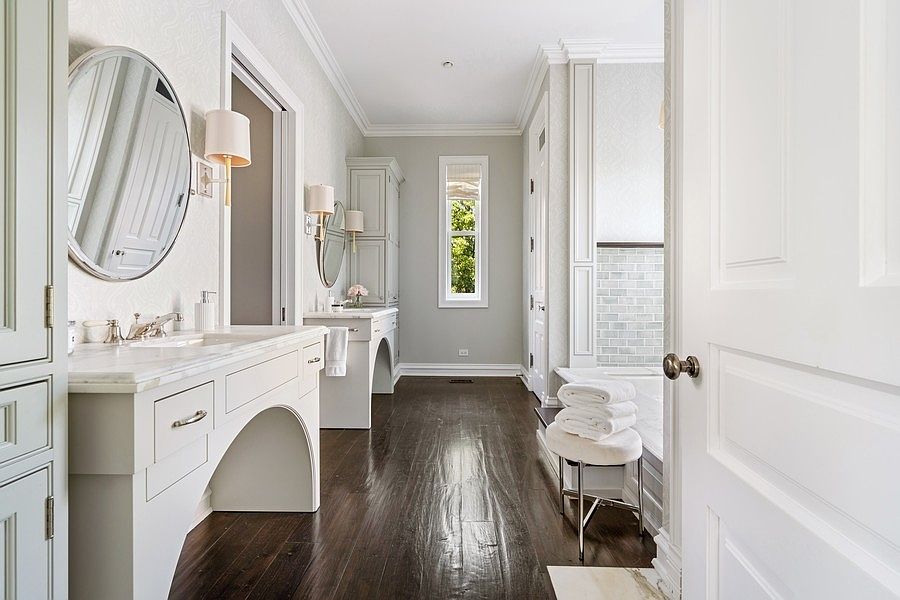
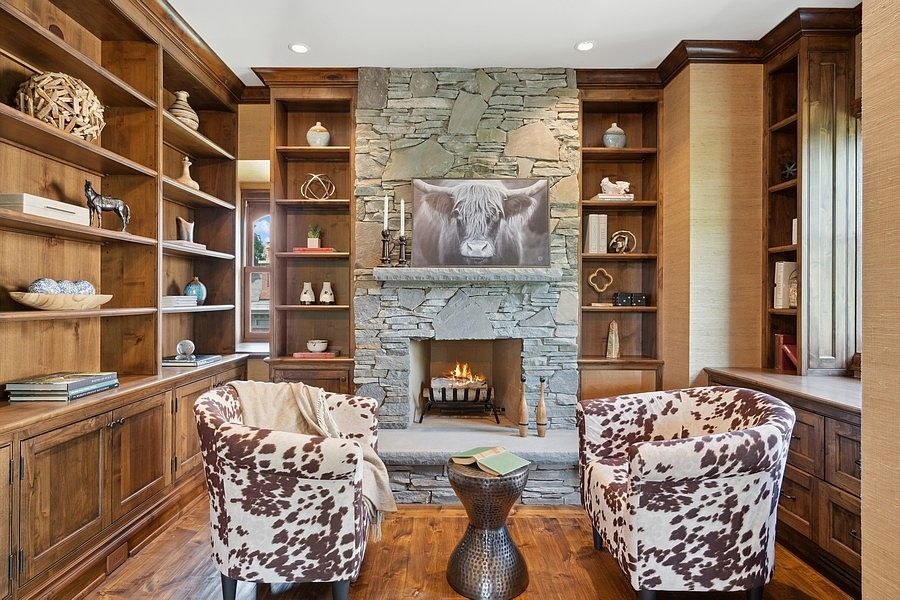
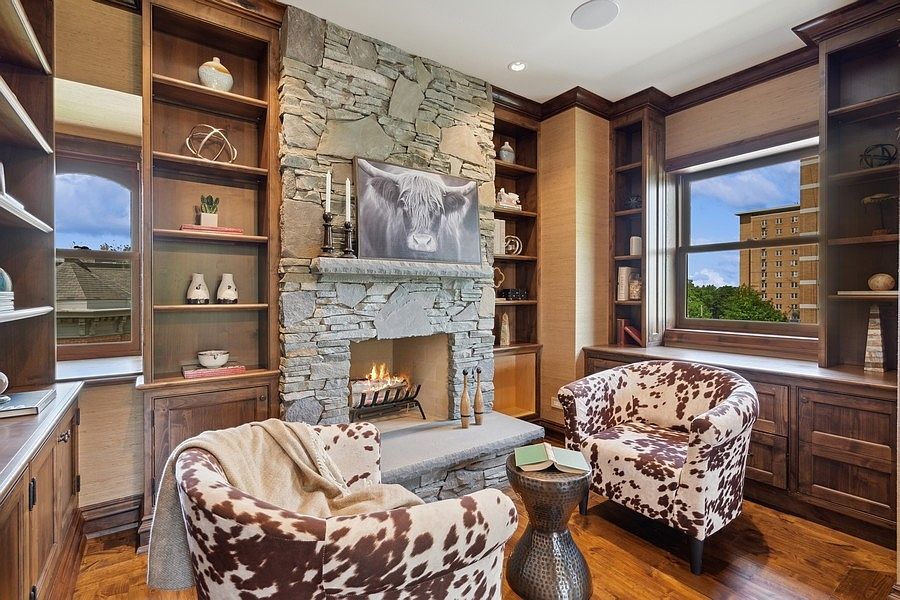
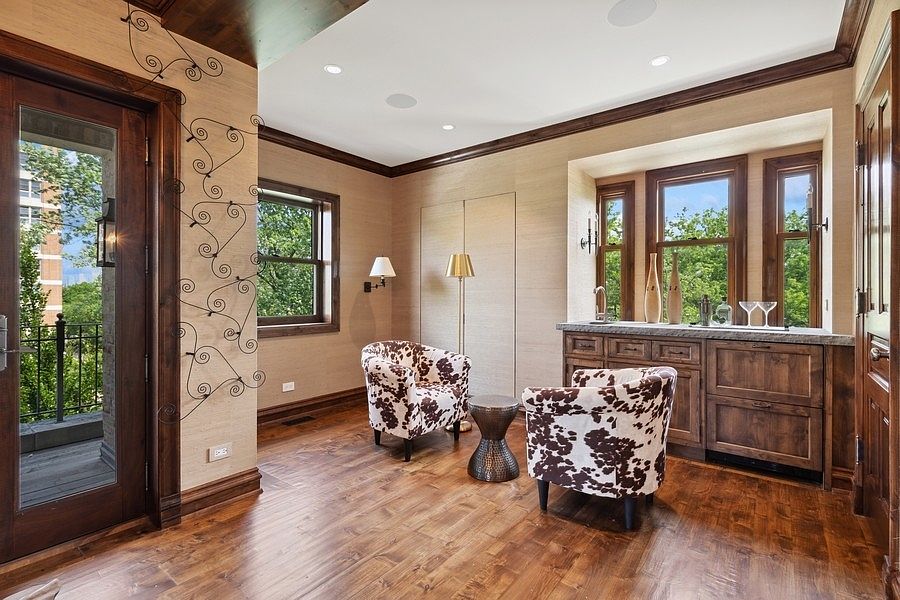
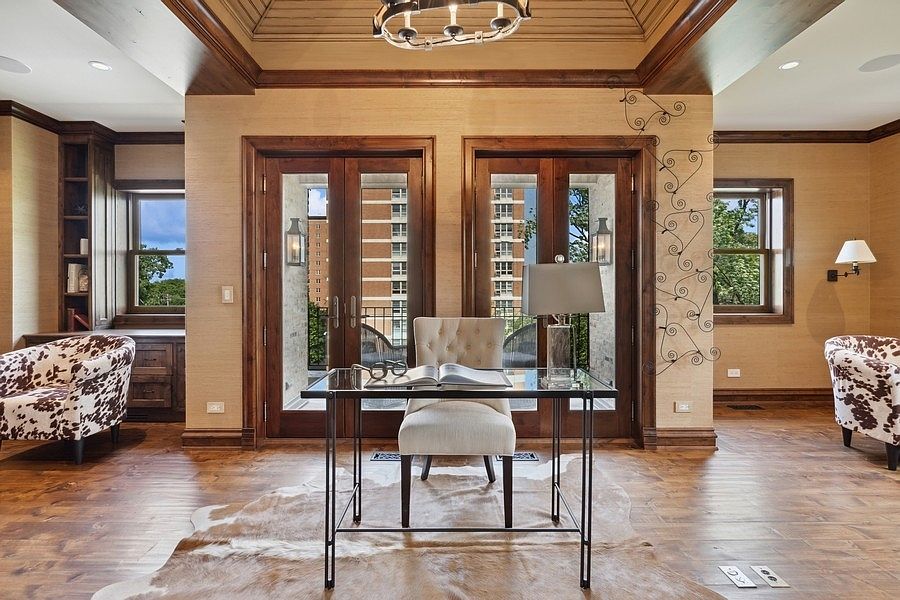
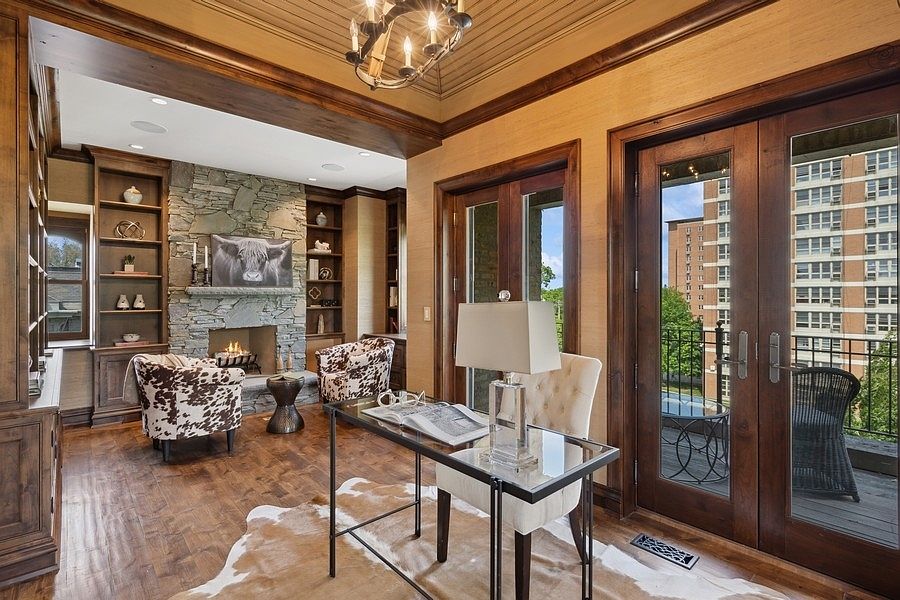
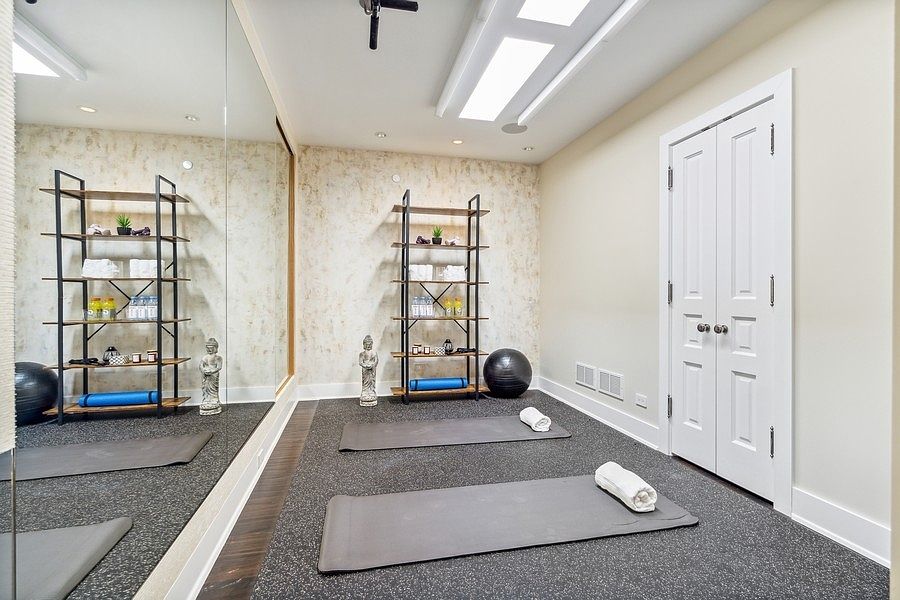
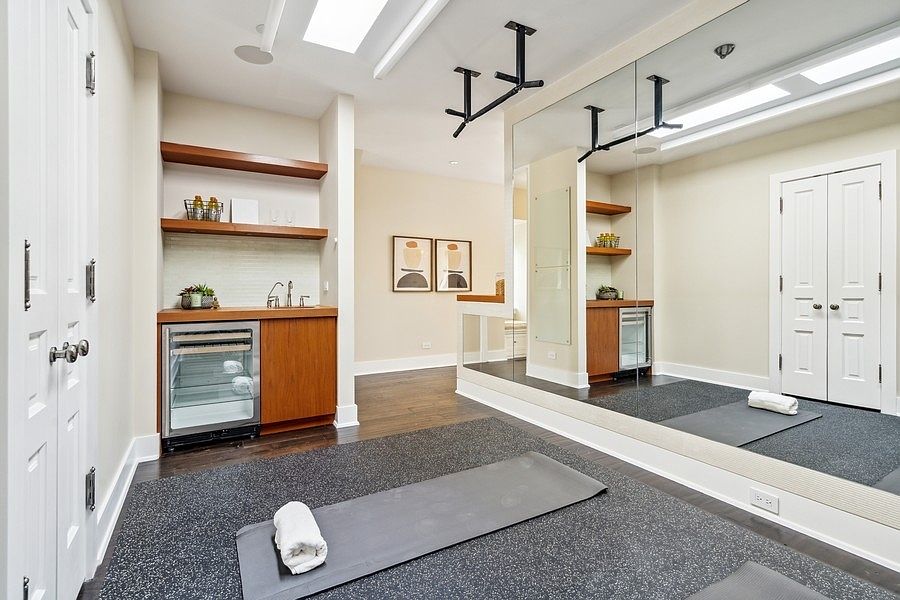
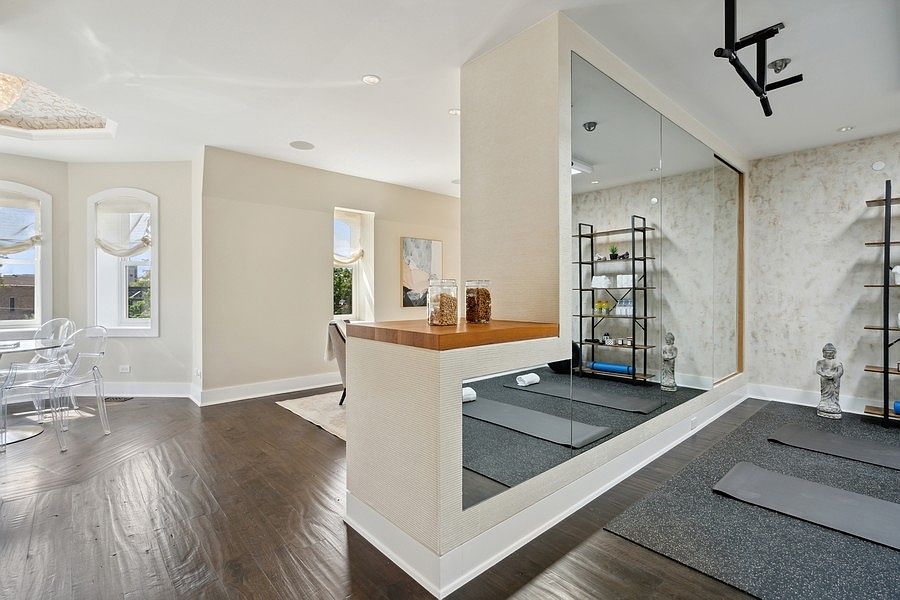
Perhaps no single element better captures the home's interior ambition than the centrally positioned, curving suspended staircase — a sculptural gesture that rises through all levels with the confidence of a building that knows exactly what it is. The primary suite on the second floor encompasses a sitting area, a custom dressing room, a walk-in closet, and a marble-clad ensuite bath with dual vanities, a soaking tub, and a deluxe shower. The third floor presents two designer offices, including a handsome den with knotty alder floors and a gas fireplace, a wet bar, and an exercise room.
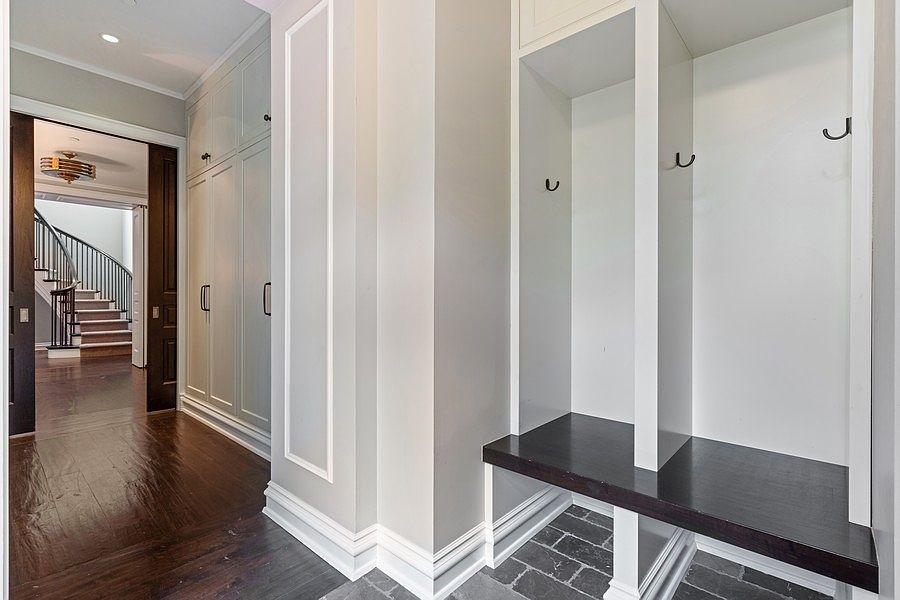
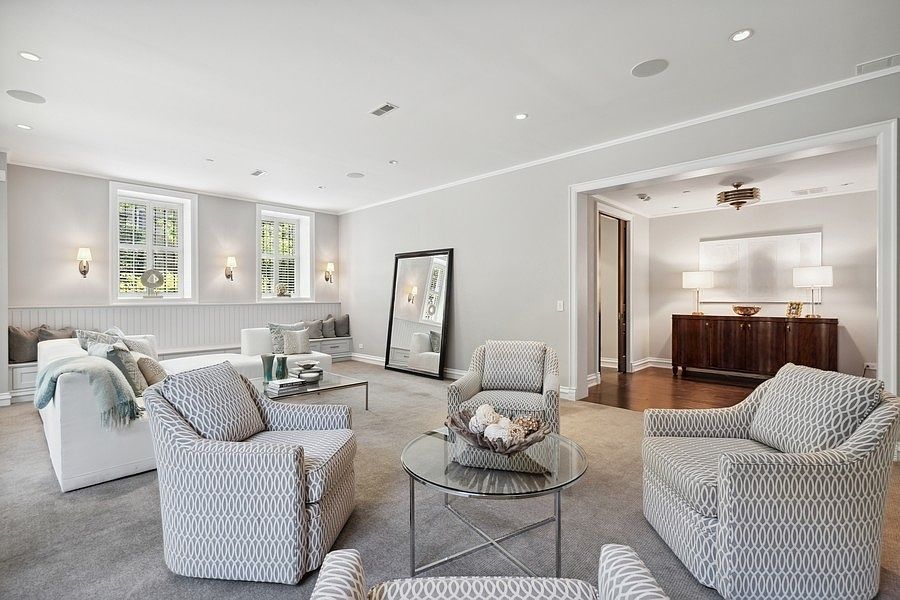
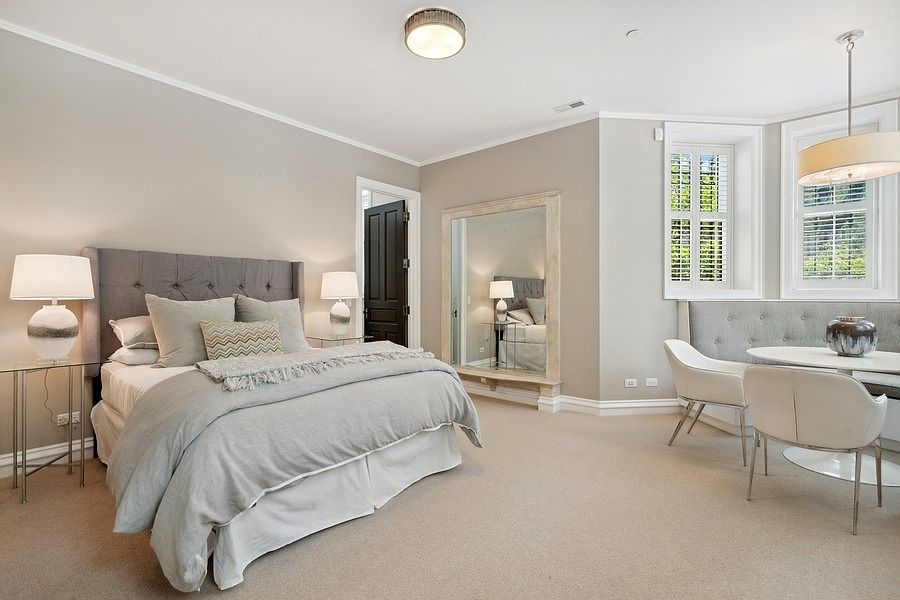
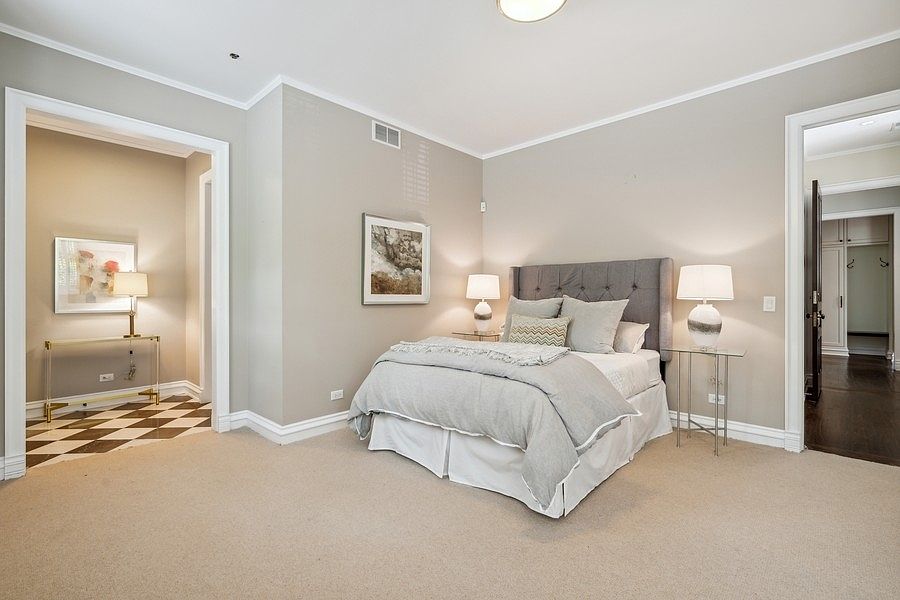
The fully finished garden level completes the program with a massive playroom opening onto a basement terrace, a wine room, a kitchenette, a guest bedroom suite, a second laundry room, and a custom mudroom connecting to the attached garage. A Lutron lighting system, designer wallcoverings, four total fireplaces, and an abundance of custom interior storage attend to every detail. This is a home built with conviction — and restored with equal care.
Wicker Park occupies a particular position in Chicago's cultural geography — a neighborhood that has cycled through immigrant working-class roots, artistic bohemia, and contemporary urban sophistication without ever losing its essential character or its architectural bones. Situated on the city's near northwest side, roughly two miles from the Loop, it remains one of the most walkable and visually compelling neighborhoods in Chicago, defined by a dense inventory of Victorian and Greystone architecture, tree-lined residential streets, and a commercial corridor of genuine vitality.
The neighborhood takes its name from the two-acre park at the intersection of Damen, Milwaukee, and North Avenues — the famed Six Corners that has served as the neighborhood's social and commercial center for well over a century. Today, that corridor hosts an eclectic and acclaimed mix of independent restaurants, chef-driven dining destinations, boutique retail, and cultural venues that draw residents and visitors from across the city. The stretch of Milwaukee Avenue running through Wicker Park and into neighboring Bucktown has long been recognized among Chicago's most dynamic dining and nightlife districts, home to establishments that have earned national recognition.
The broader neighborhood offers a walkable daily life of genuine quality. The 606 Trail — a 2.7-mile elevated linear park built along a former rail corridor — runs along the southern edge of Wicker Park and connects the neighborhood westward through Bucktown, Humboldt Park, and Logan Square, providing a car-free recreational artery for cyclists, runners, and pedestrians. Wicker Park proper, the green space itself, serves as a community gathering point through warmer months, hosting outdoor programming and providing a rare pocket of open space within a dense urban fabric.
Culturally, the neighborhood maintains an active arts presence rooted in decades of creative residency. The Flat Iron Arts Building, a landmark structure at the Milwaukee-Damen-North intersection, houses artist studios and galleries and anchors a broader ecosystem of creative enterprises. The Empty Bottle, one of Chicago's most respected independent music venues, has operated in the neighborhood for decades and continues to draw both local and touring acts of significance.
For families, the neighborhood is served by a range of public and private school options, and the density of parks, playgrounds, and recreational programming throughout the area supports an active family life. The proximity to the Blue Line CTA stations at Damen and Division provides direct, rapid transit access to the Loop and O'Hare International Airport, making the neighborhood as practical as it is desirable.
N. Hoyne Avenue itself is among Wicker Park's most distinguished residential addresses, a quieter tree-canopied street that sits within easy walking distance of the neighborhood's full amenity set while maintaining the residential tranquility that defines Chicago's best blocks. For a home of this scale, pedigree, and outdoor ambition, there may be no more fitting setting in the city.
Featured Highlights
Curated Content • Presented by Timothy Salm