The Story Behind
Mediterranean Corner Residence in Coveted Lincoln Manor
There is a particular quality of light that belongs to San Francisco's western neighborhoods — soft and salt-tinged in the mornings, warm and amber-edged in the afternoons — and at 499 36th Avenue, that light finds its way into nearly every room. Built in 1920 and carefully tended across the decades, this Mediterranean corner residence stands as one of Lincoln Manor's finest expressions of early twentieth-century San Francisco domesticity: architecturally grounded, beautifully proportioned, and quietly assured in the way that only genuinely well-built homes can be.
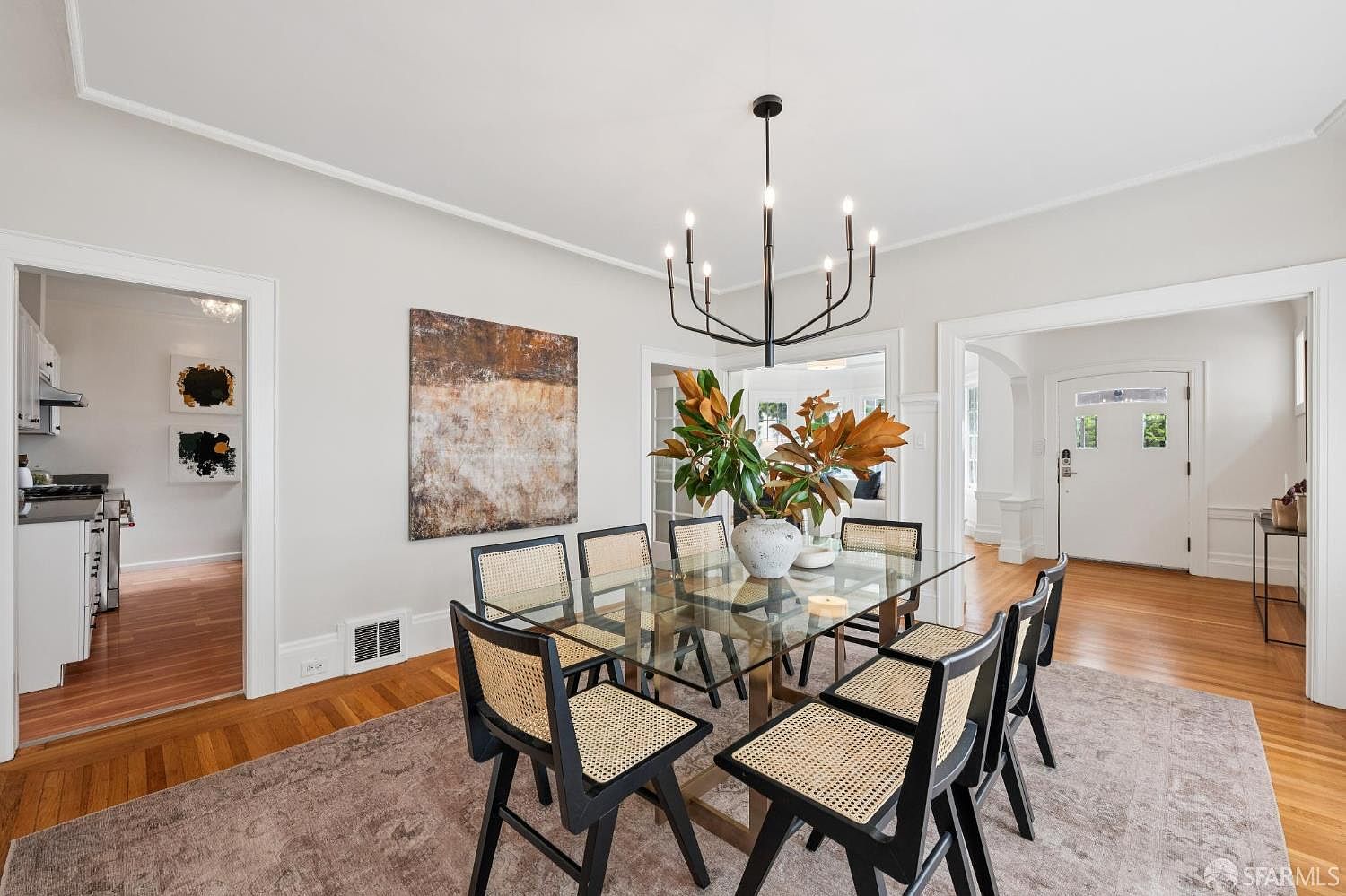
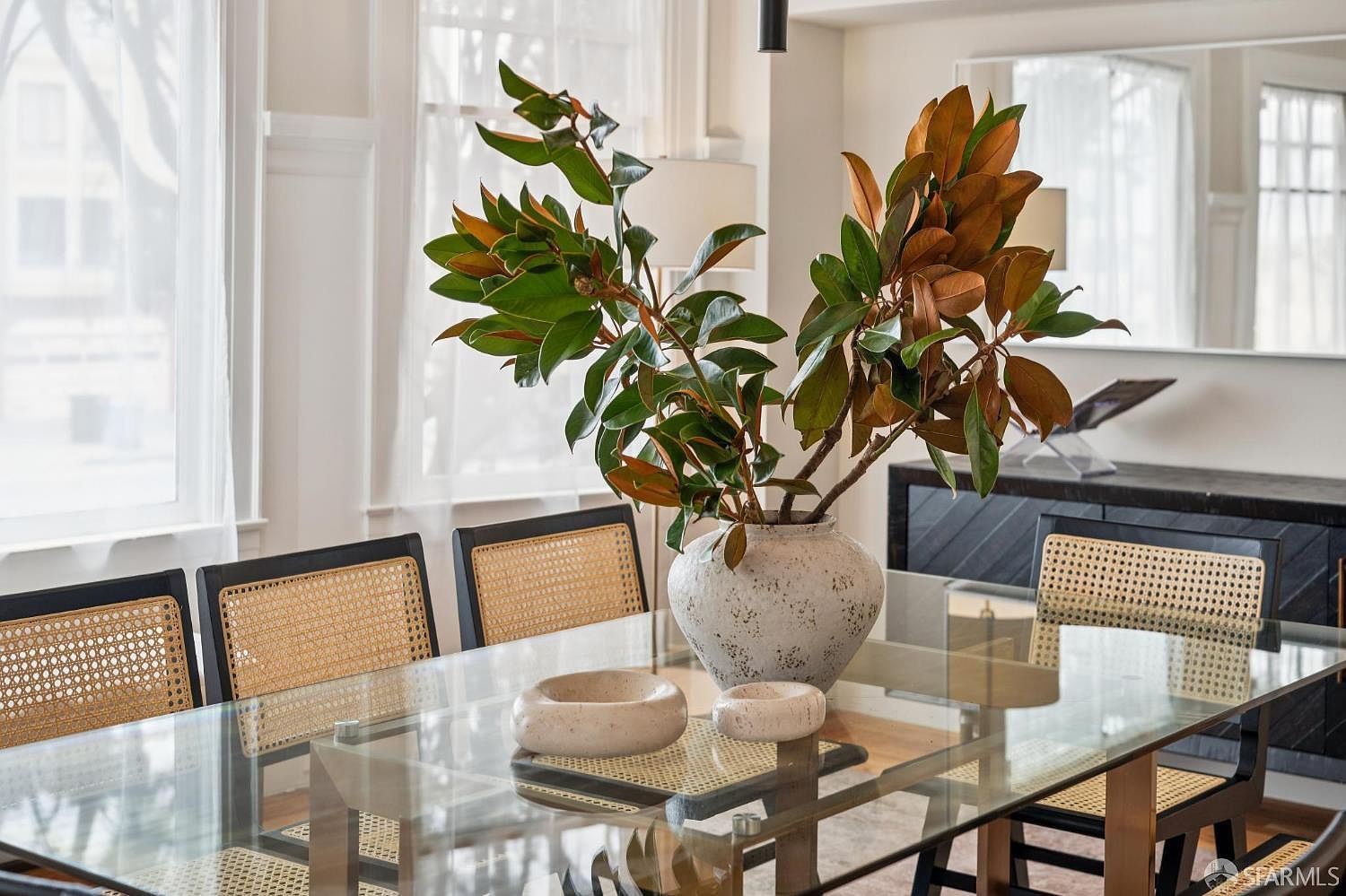
The facade announces itself with understated confidence — warm stucco, a distinctive enclosed sunroom porch framed by a decorative pergola, dark brick entry steps, and a signature red door that offers a flash of personality against the neutral exterior. A curved bay window along the front elevation speaks to the home's period origins while admitting the kind of generous natural light that transforms an interior. Inside, hardwood floors and a white-painted brick fireplace with flanking built-in shelving anchor the living room, where a round mirror above the classic mantel reflects the room's easy sophistication back upon itself. The formal dining room, accessible through a wide arched opening, accommodates generous entertaining with the same ease it lends to a quiet weeknight dinner — crown molding, tall windows dressed in sheer curtains, and a sculptural multi-arm chandelier completing the composition.
The updated gourmet kitchen strikes a considered balance between period character and contemporary function. White cabinetry, dark stone countertops, a professional-grade stainless steel range with matching hood, and a central island with bar seating make the space as practical as it is handsome. An adjoining breakfast area with its own glass-topped dining table and direct access to the flow of the home ensures that the kitchen serves as a genuine gathering place rather than merely a utility room.
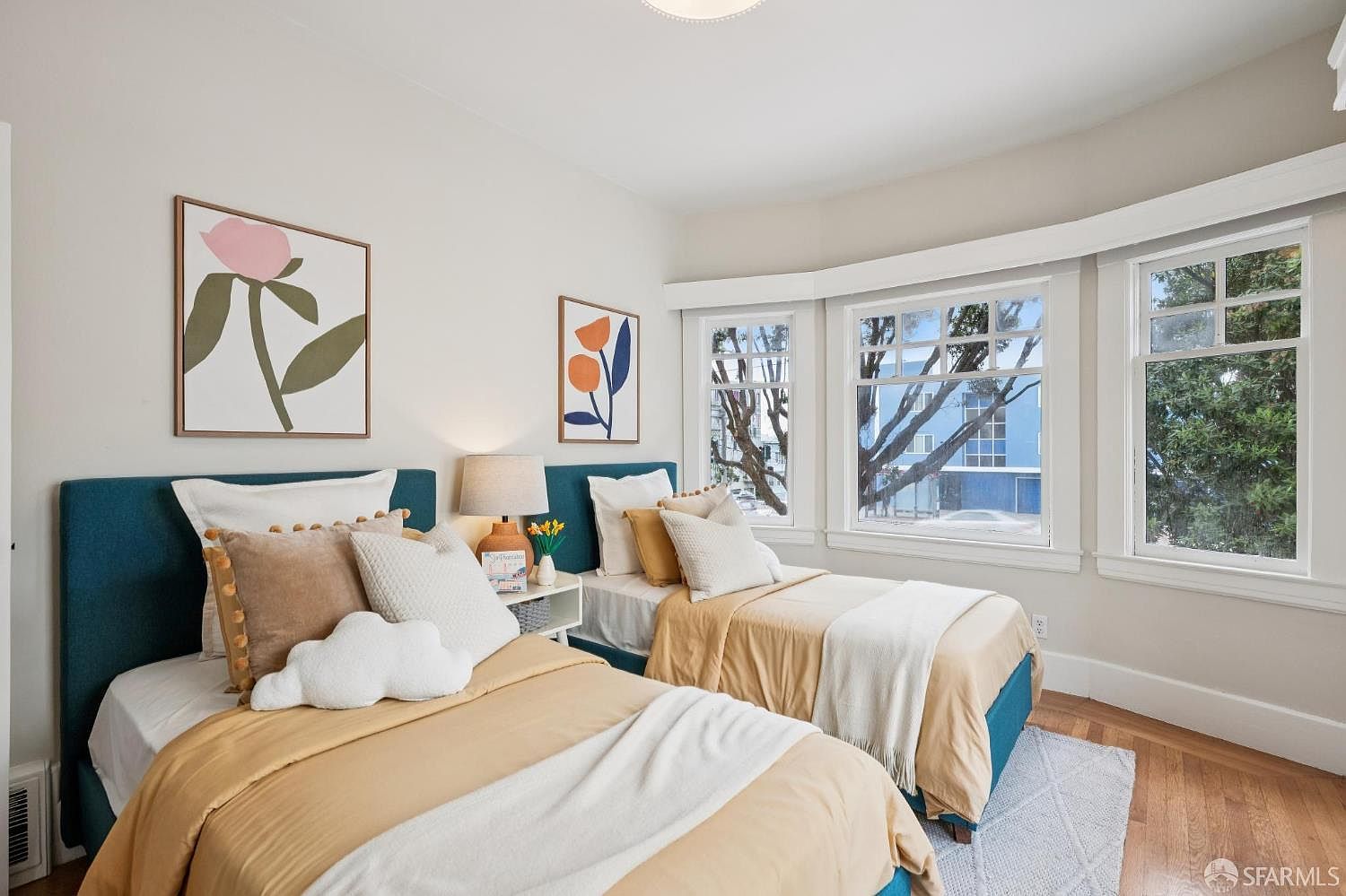
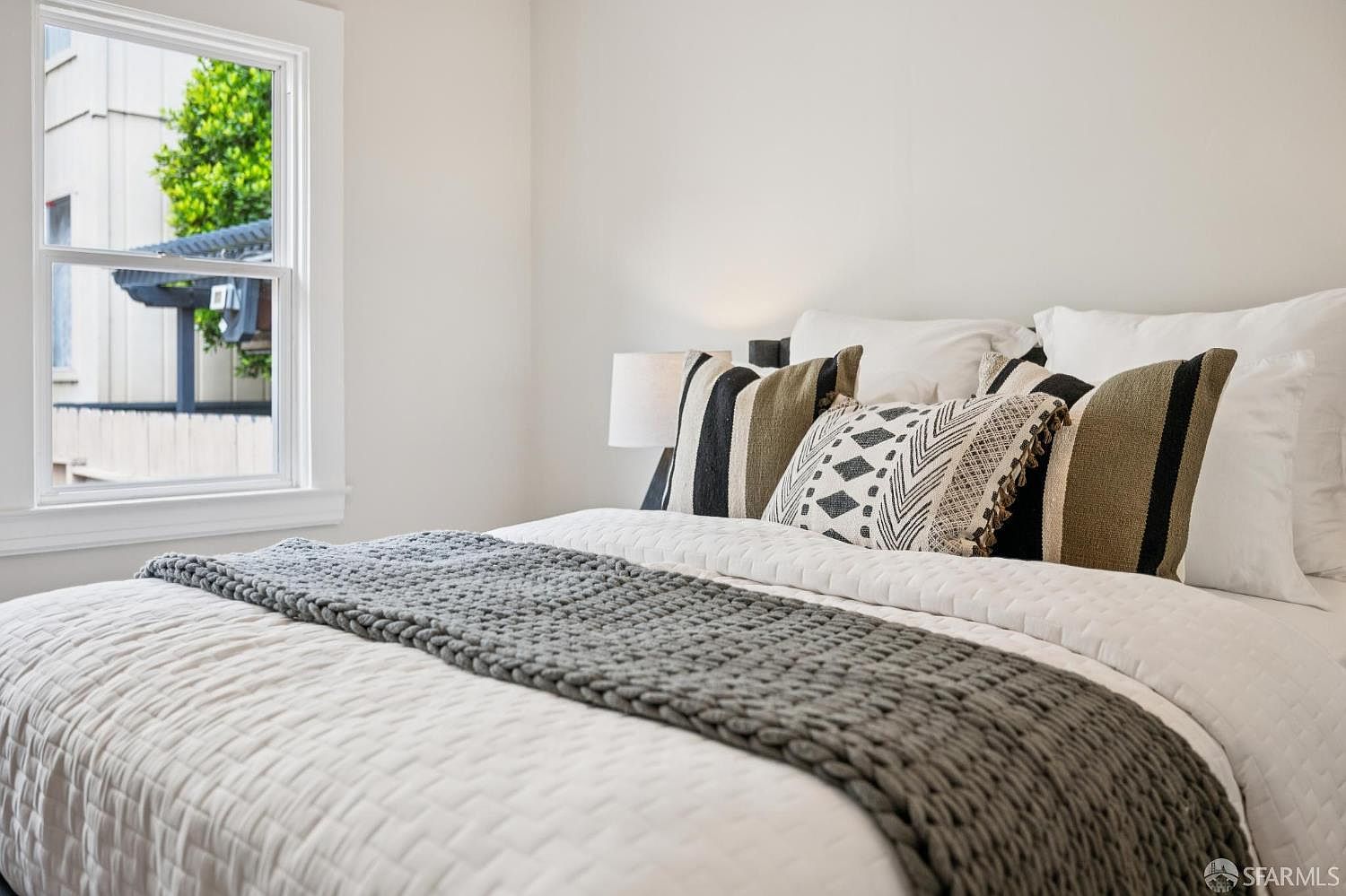
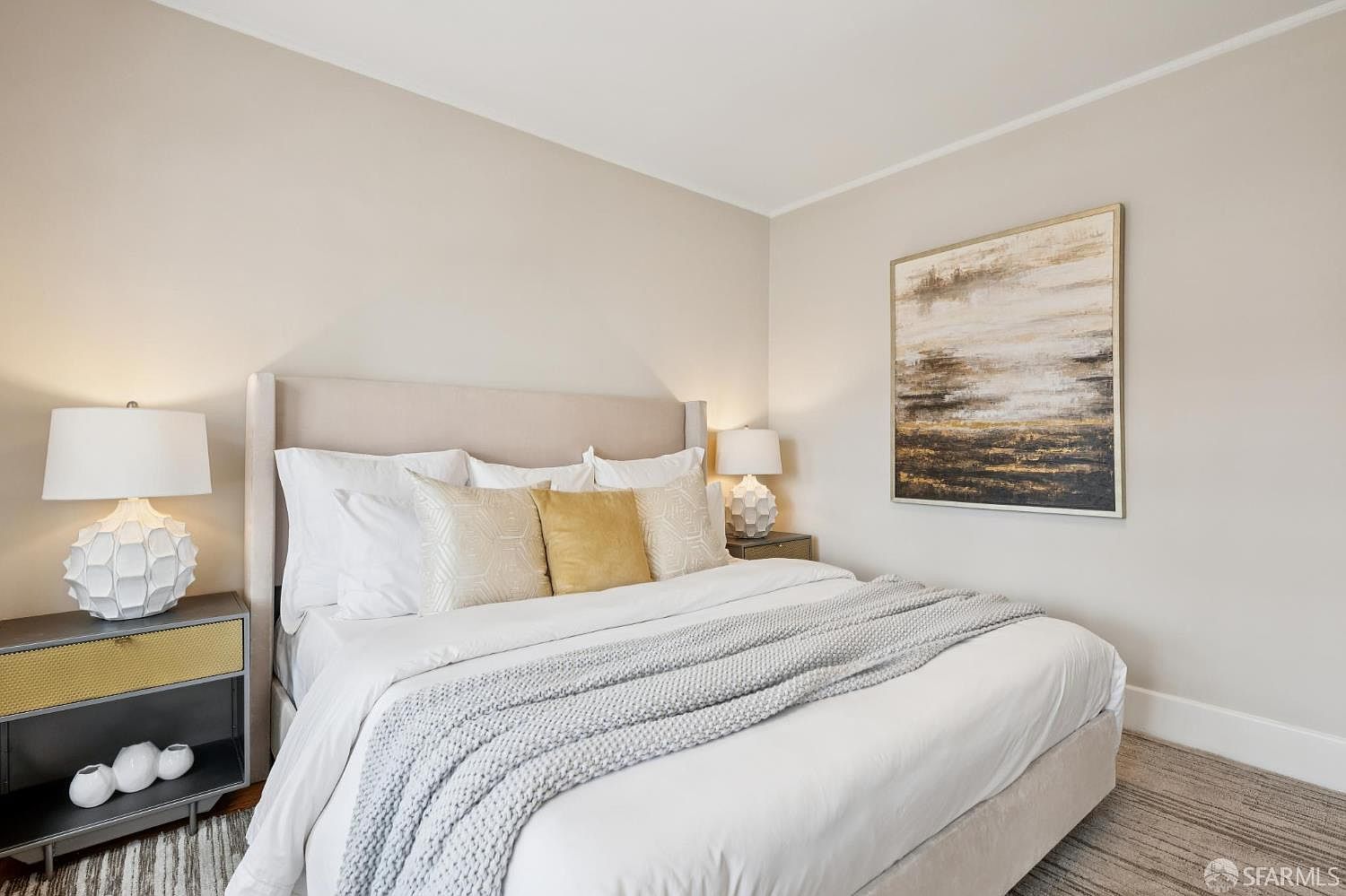
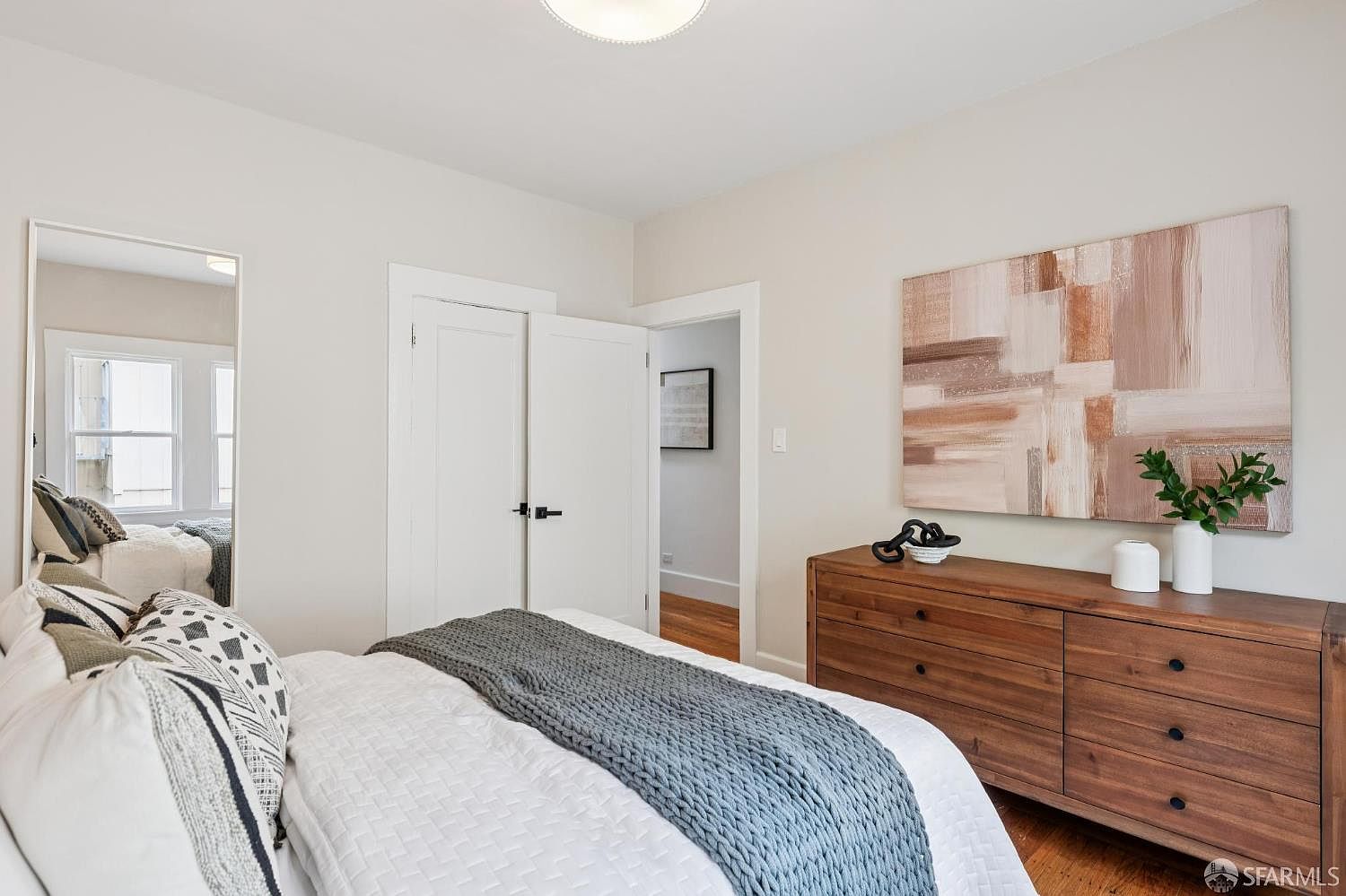
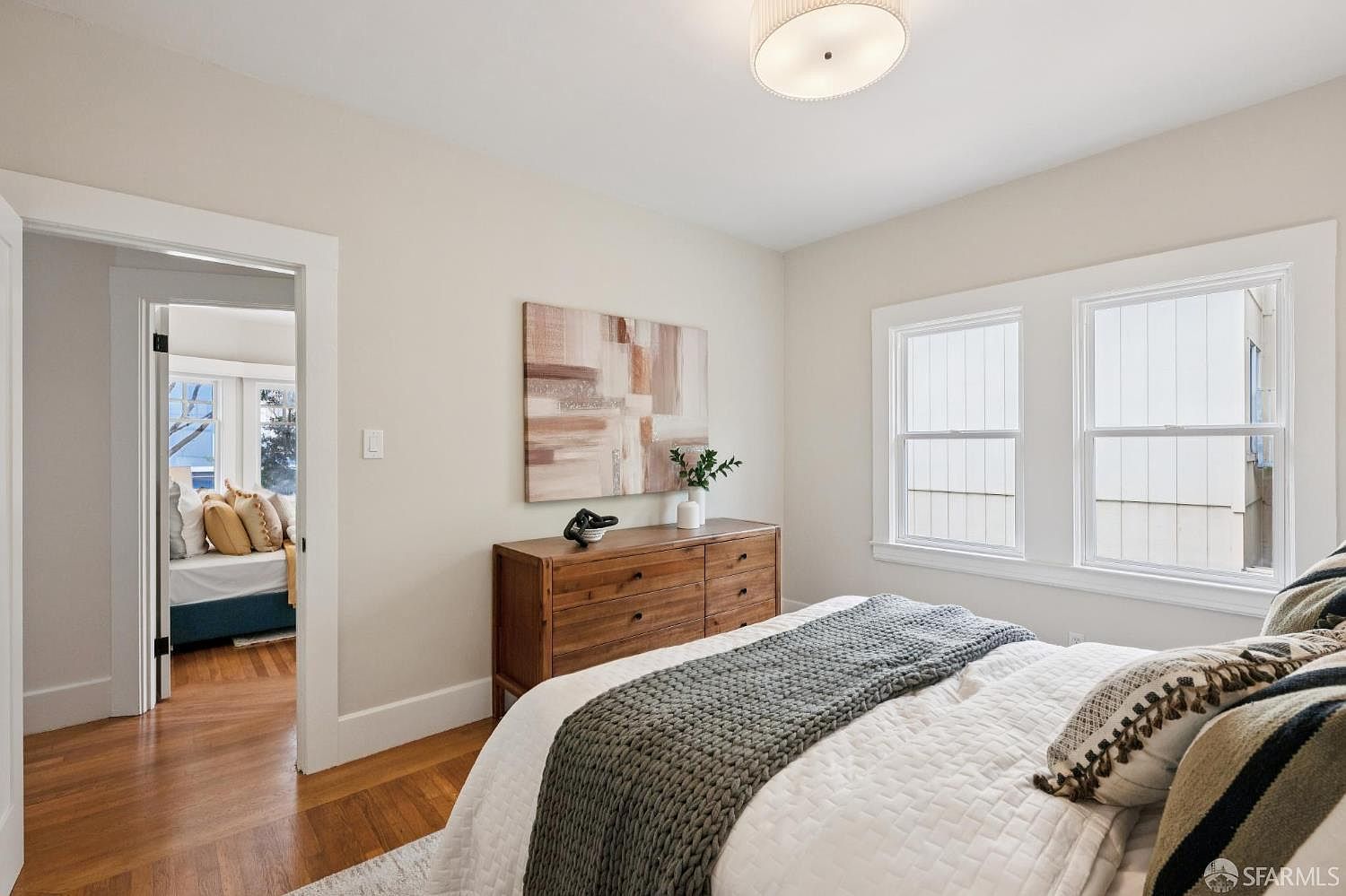
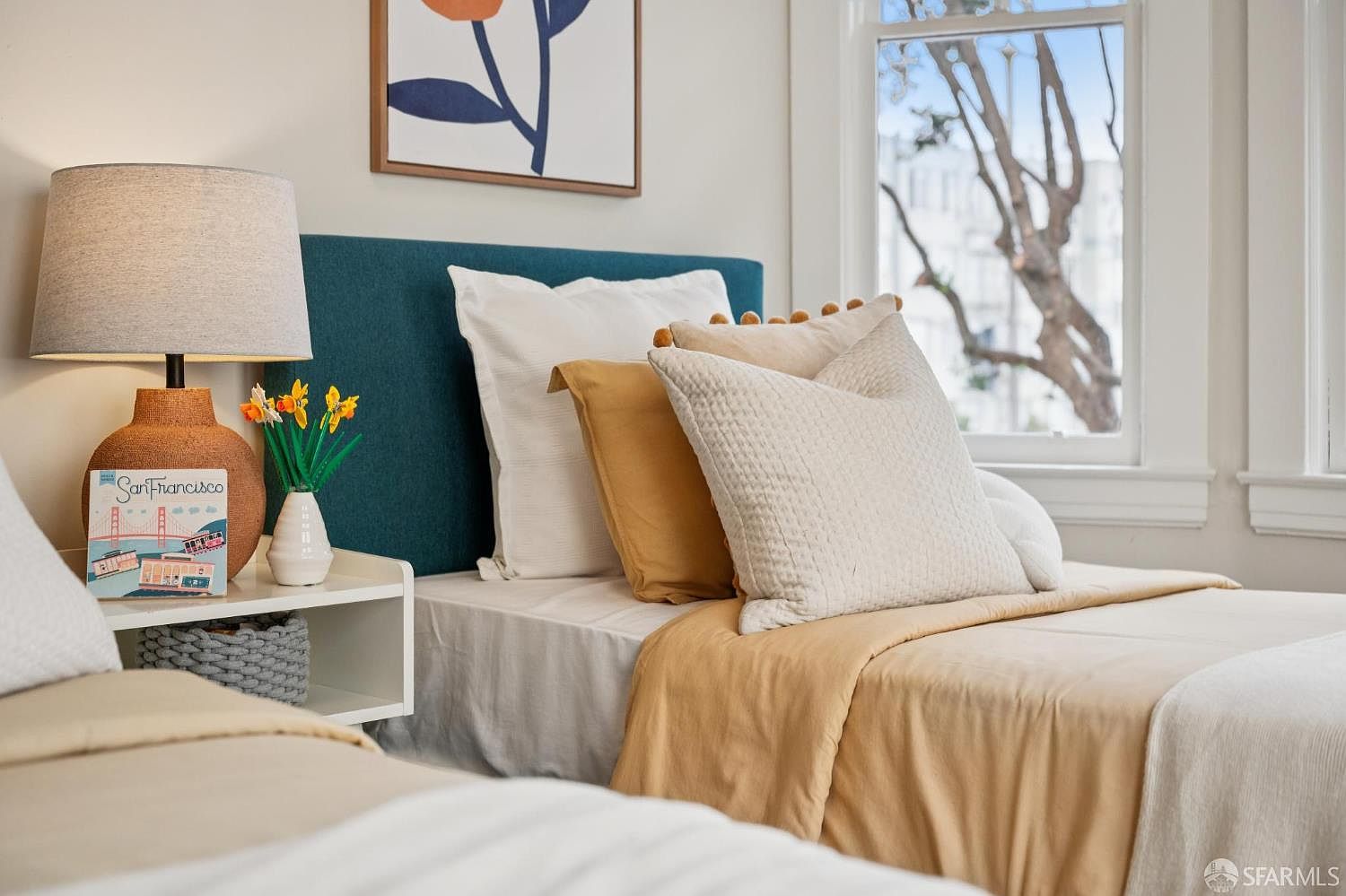
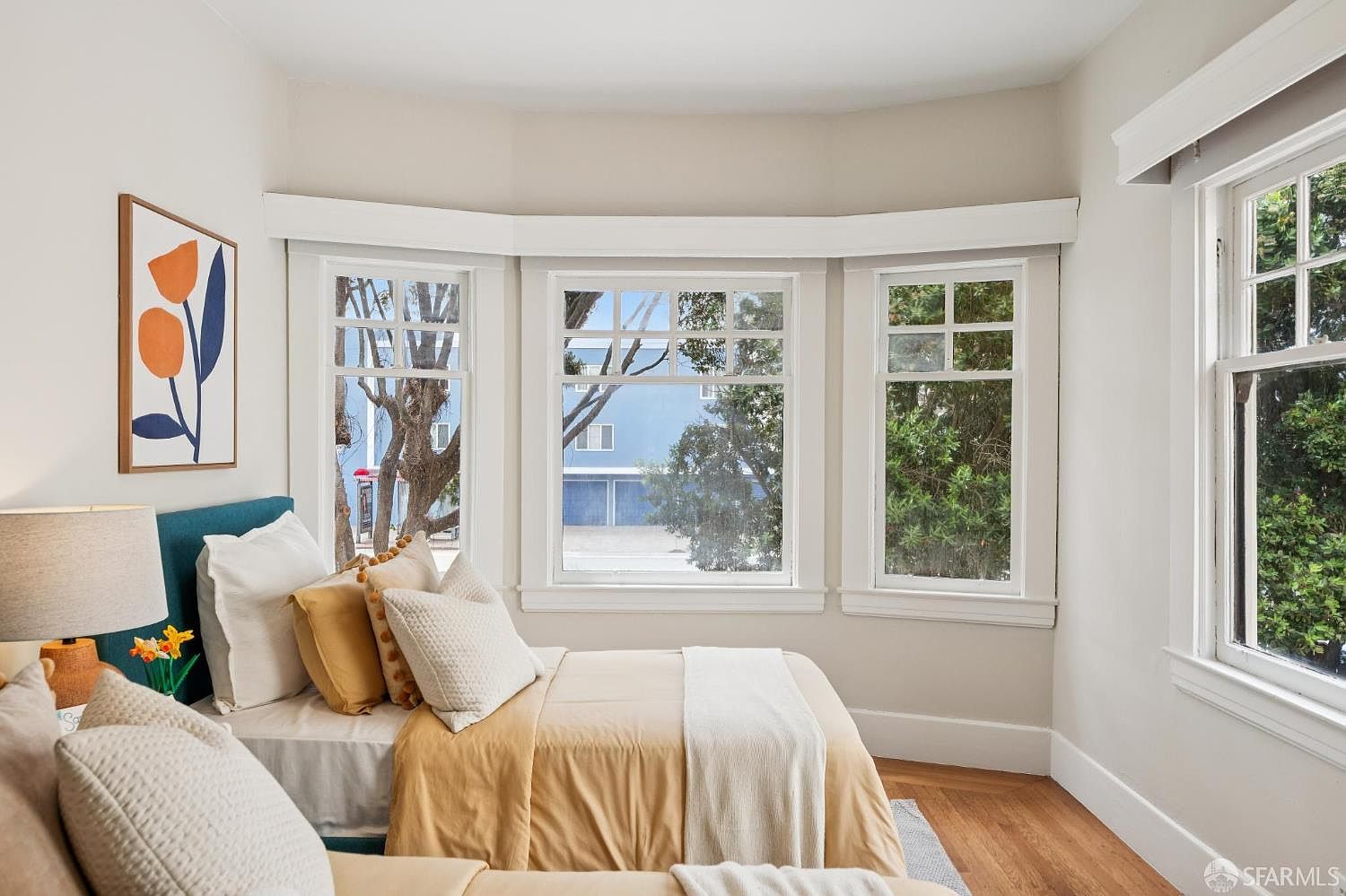
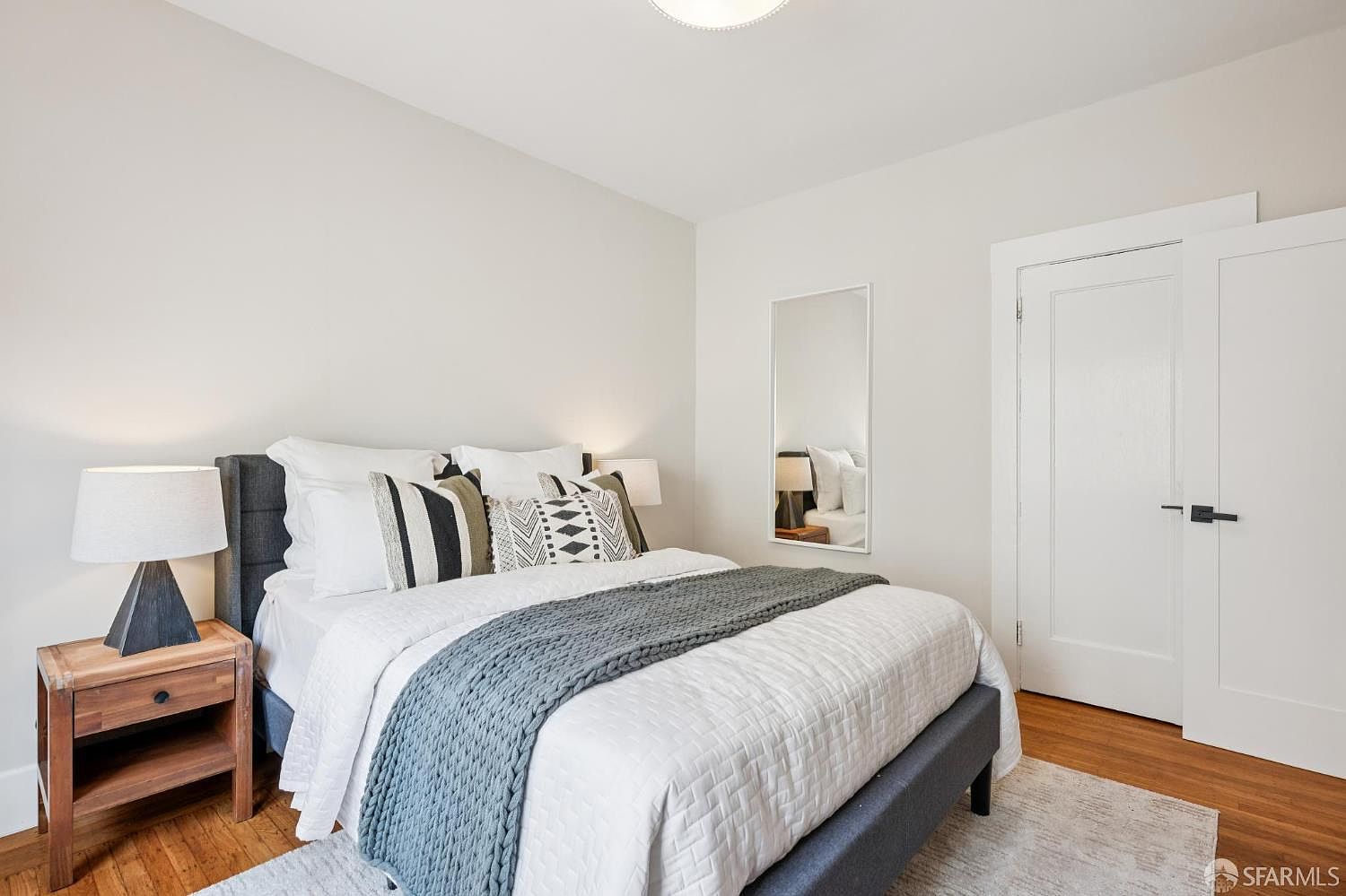
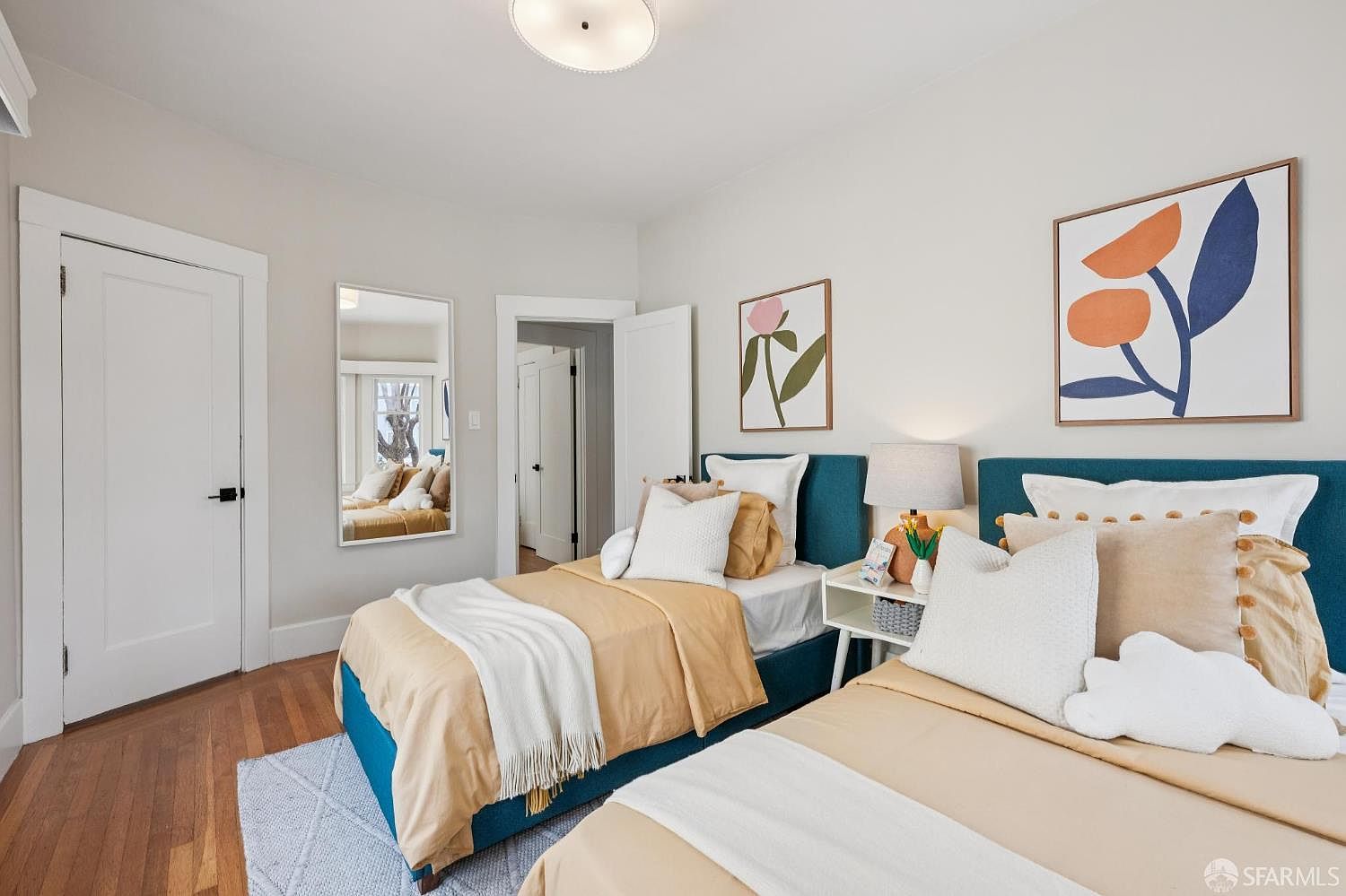
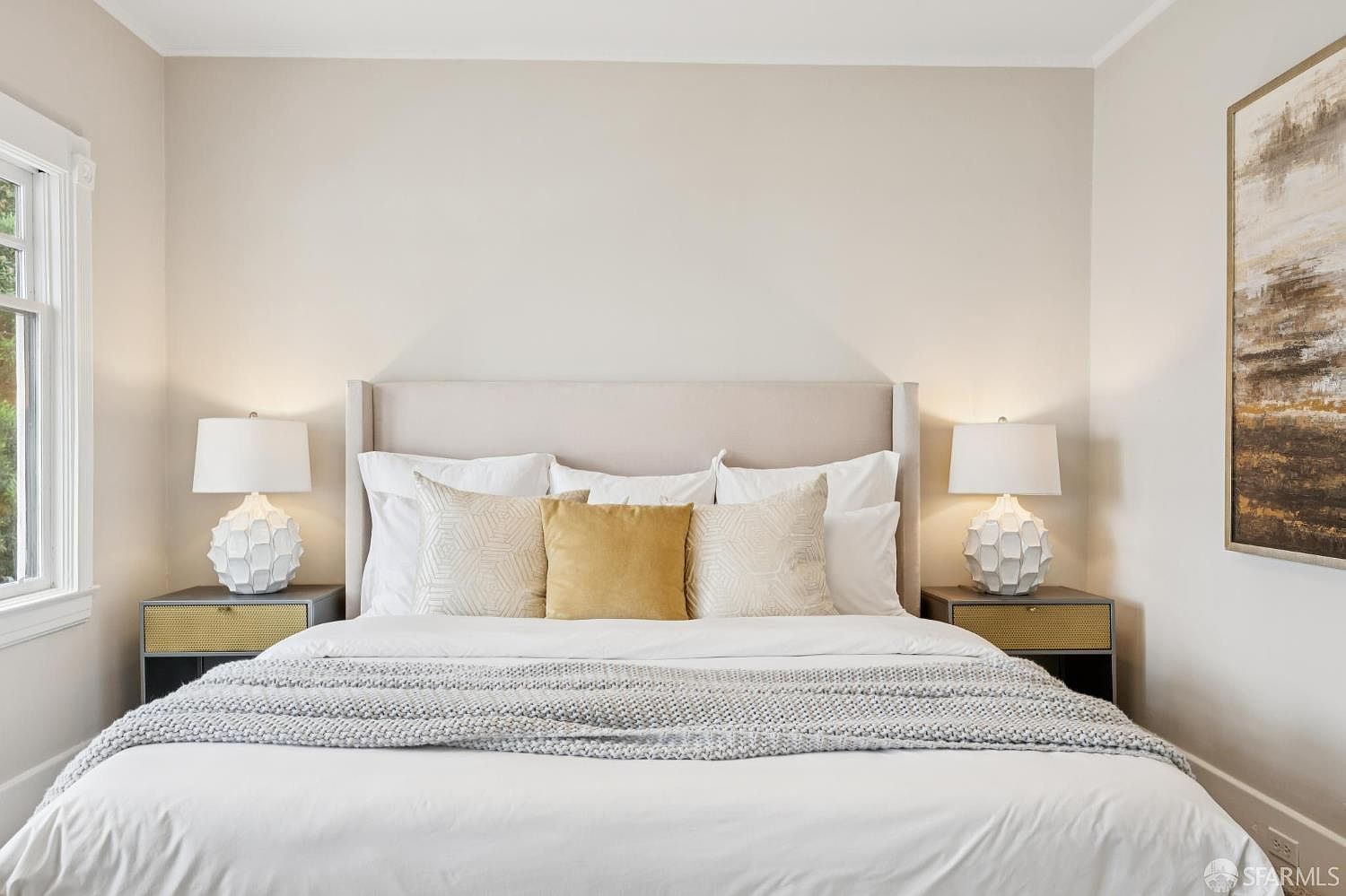
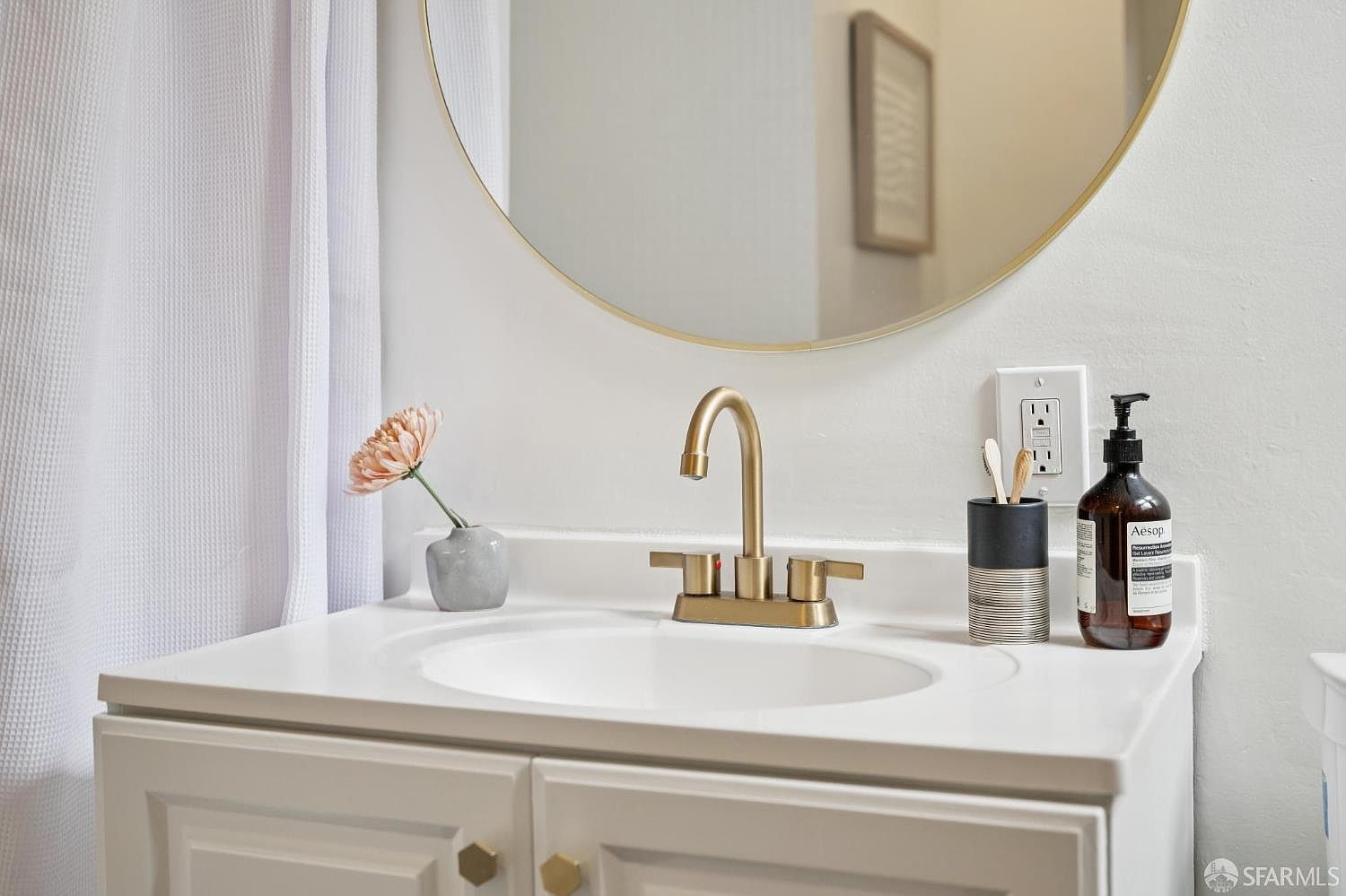
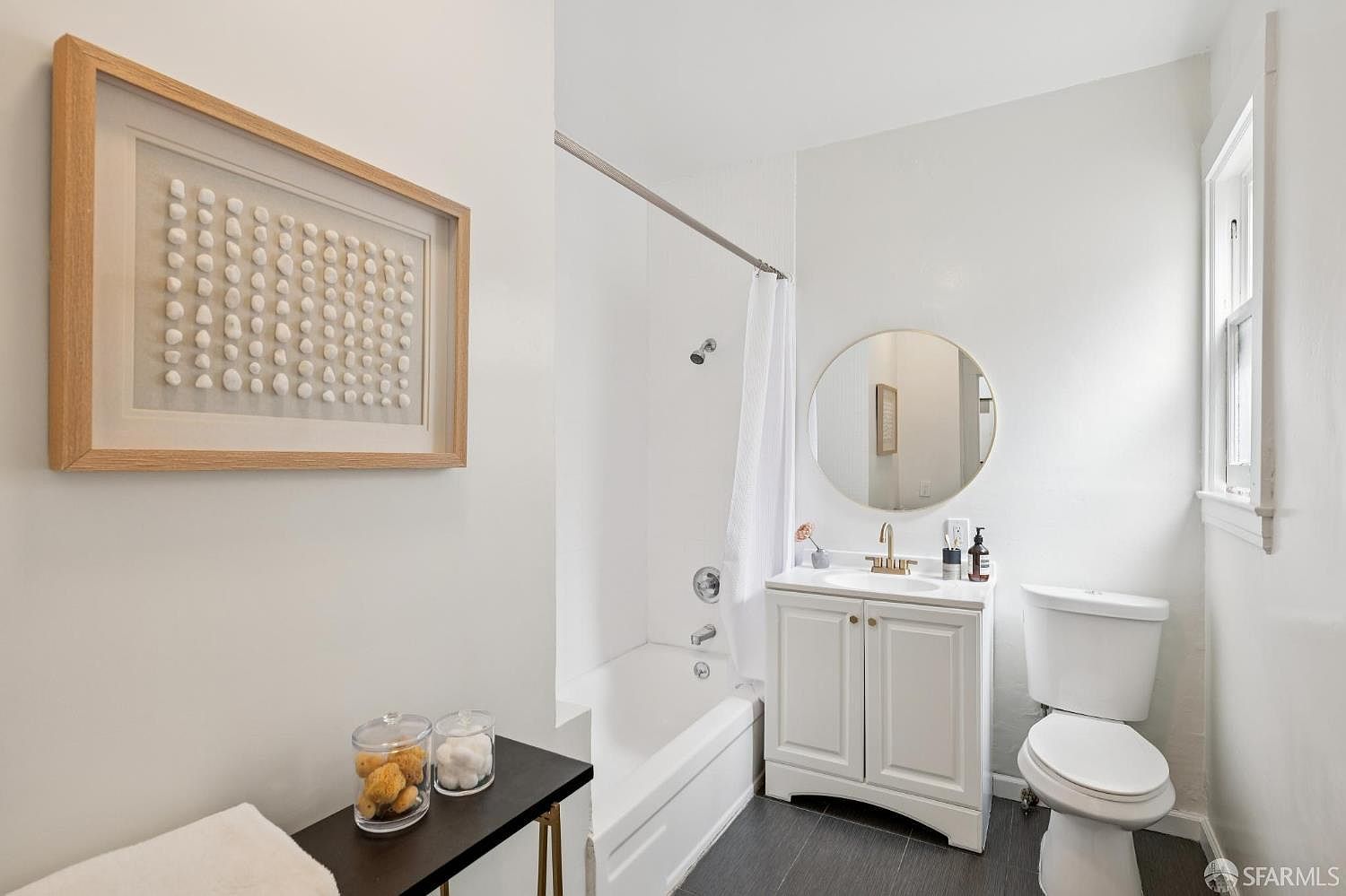
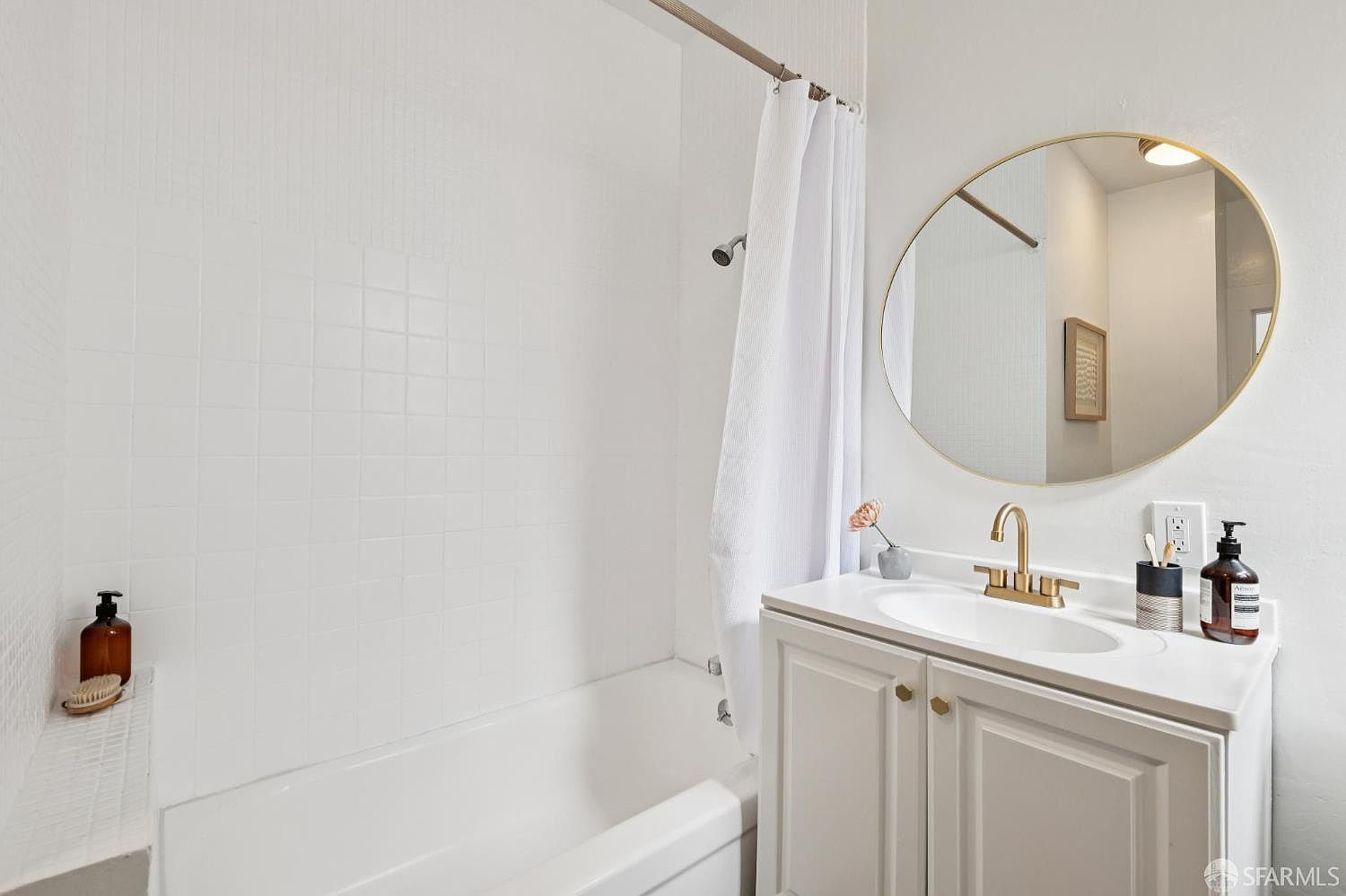
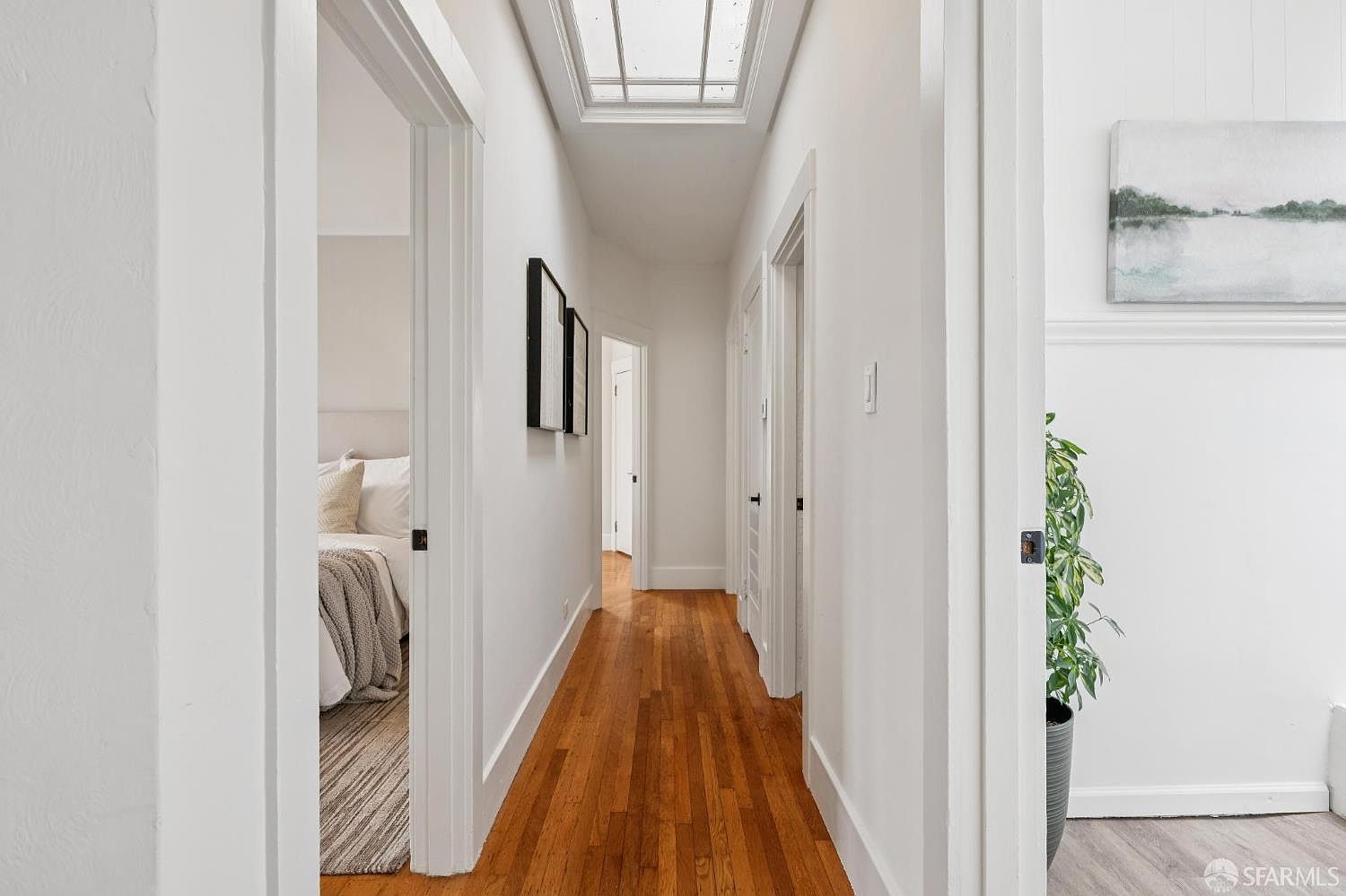
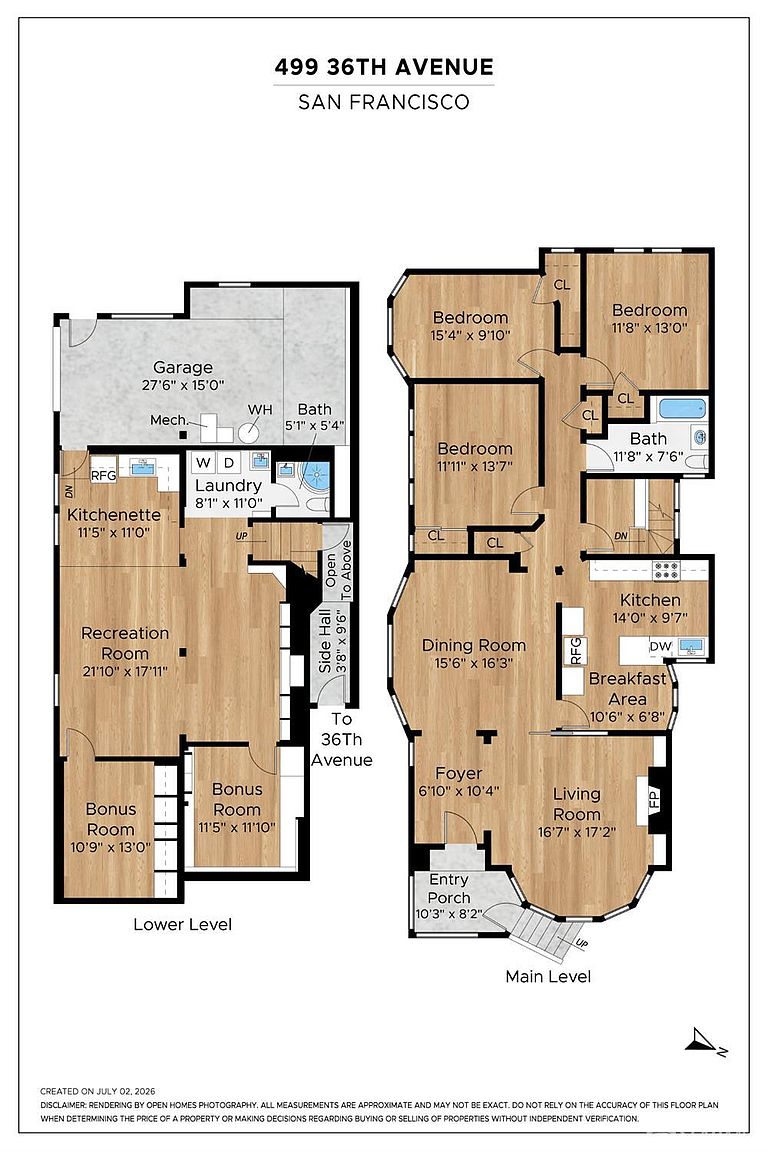
Three generously proportioned bedrooms on the main level — including a serene primary suite with warm wood flooring, an upholstered bed as its focal point, and mirrored closet doors that amplify the natural light — offer comfort calibrated to real life. A full bath on this level has been finished with restraint and care: white vanity, gold-toned fixtures, and a circular mirror that feels both current and timeless.
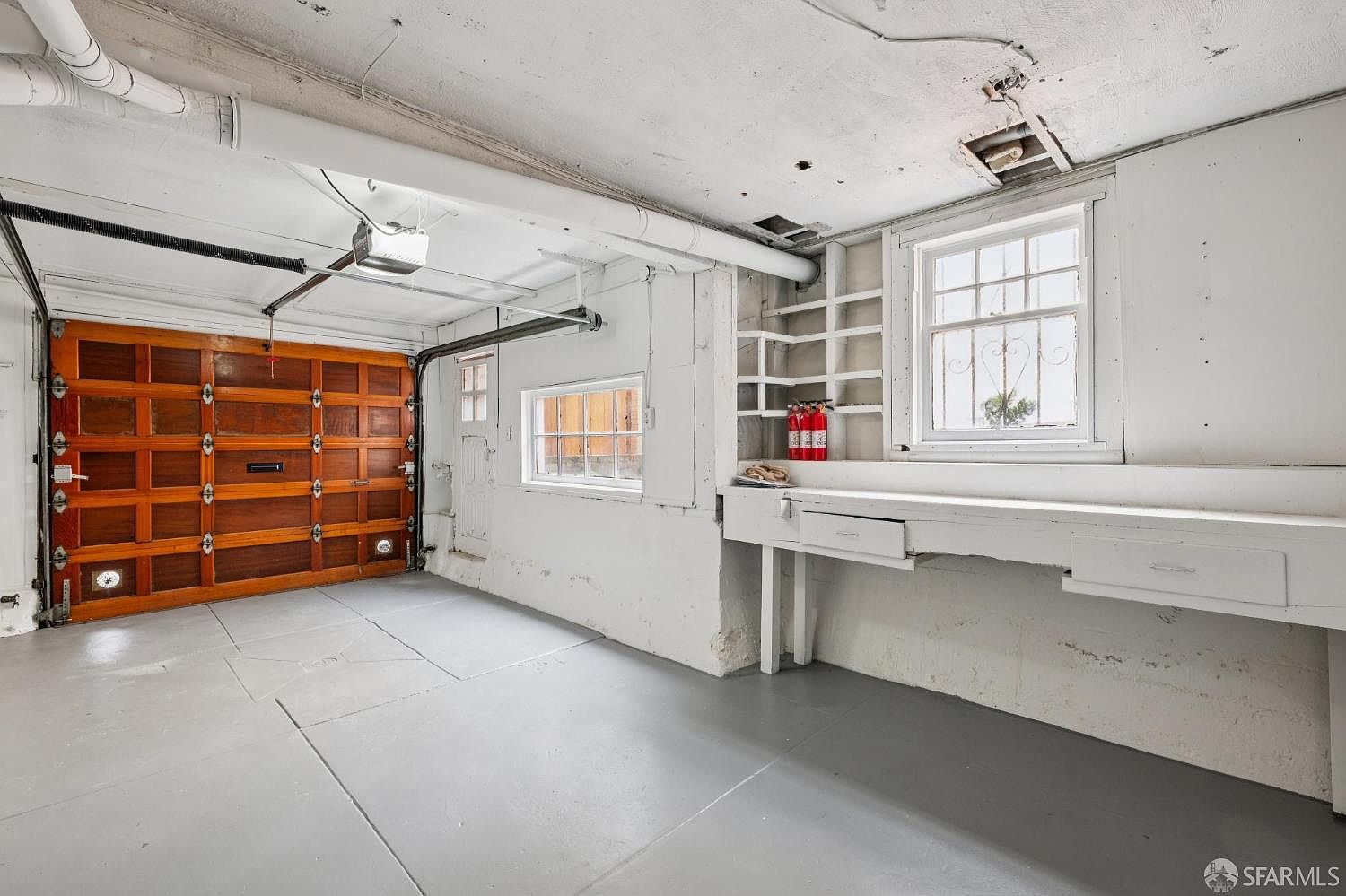
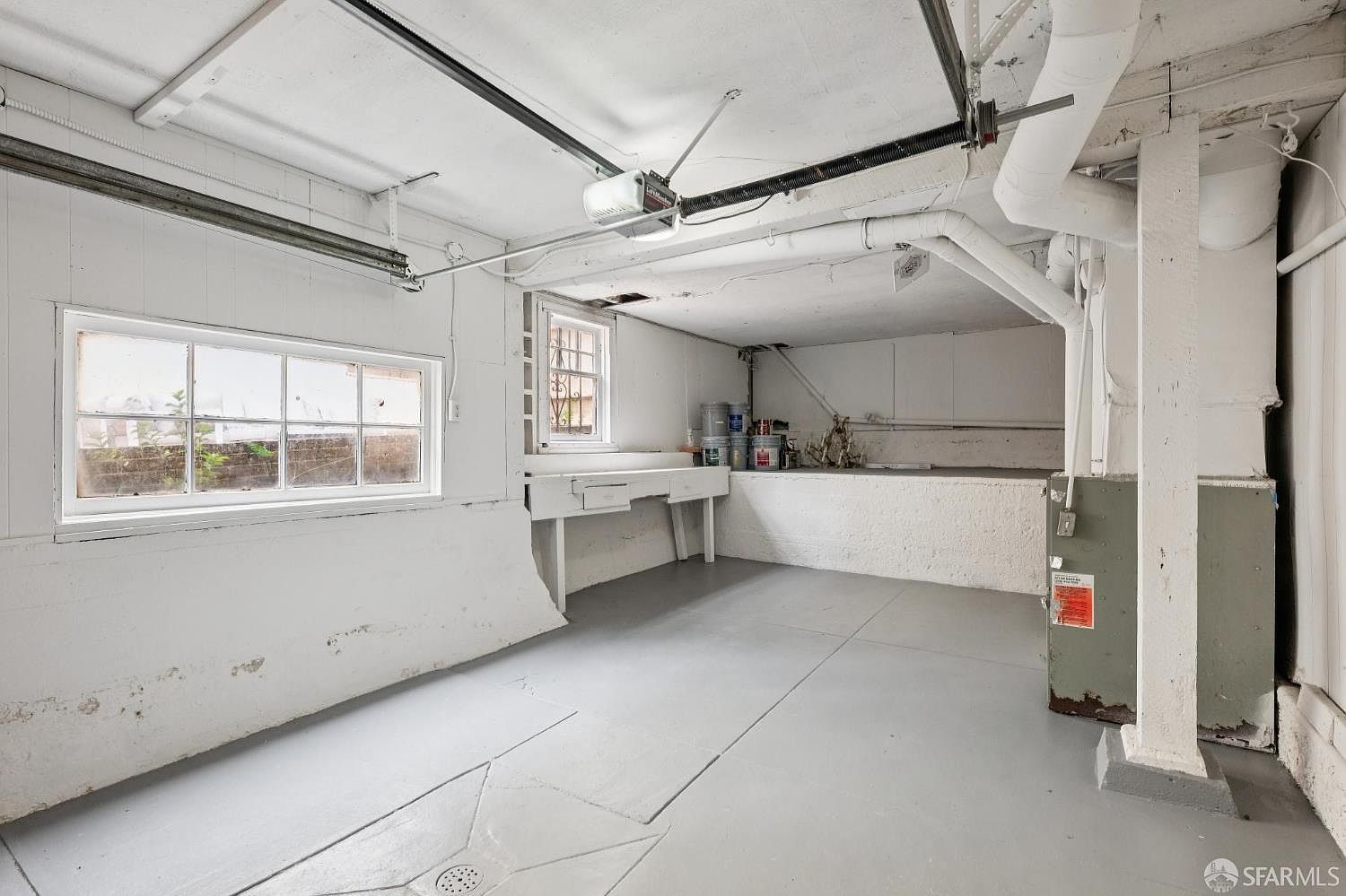
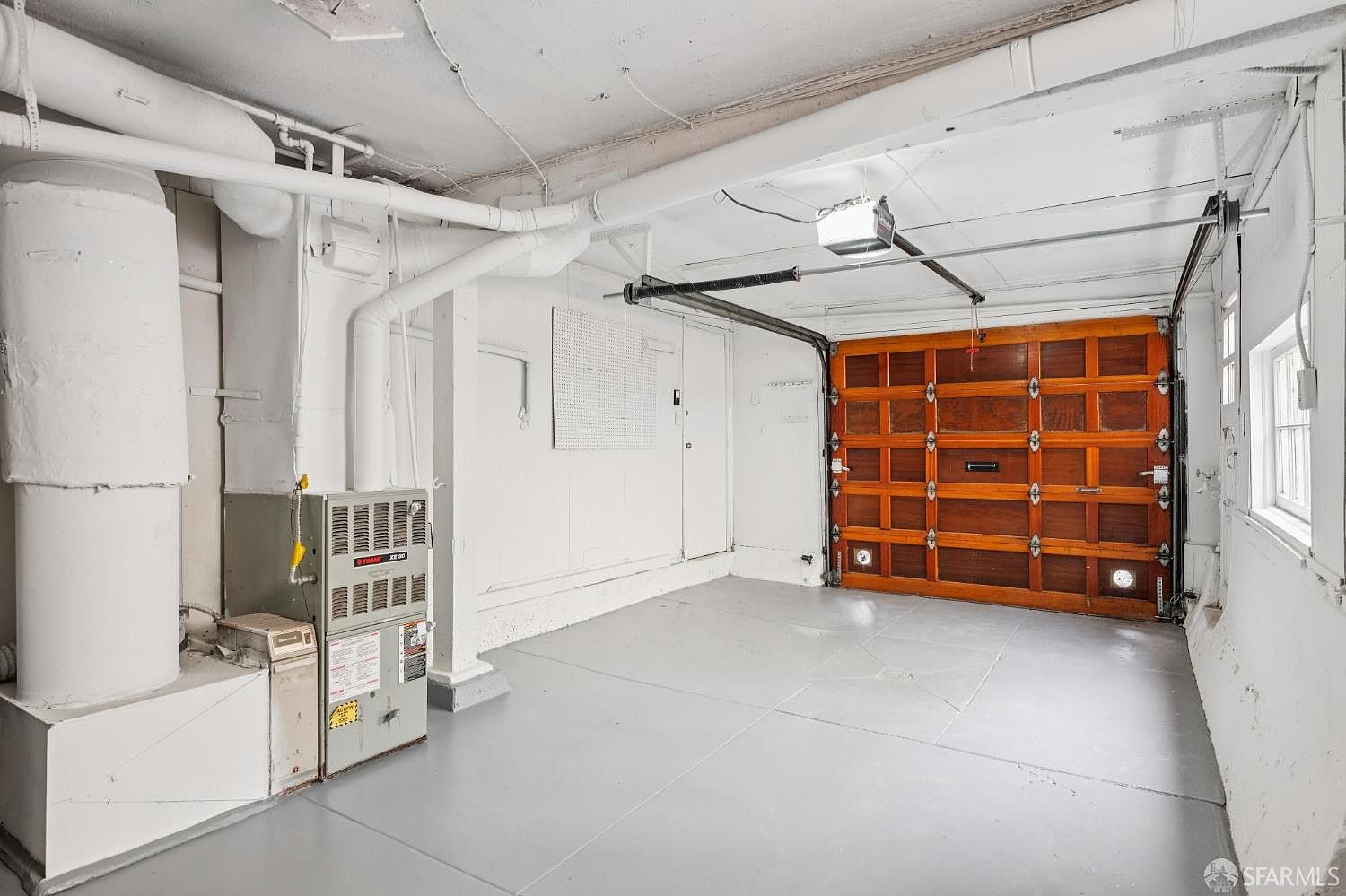
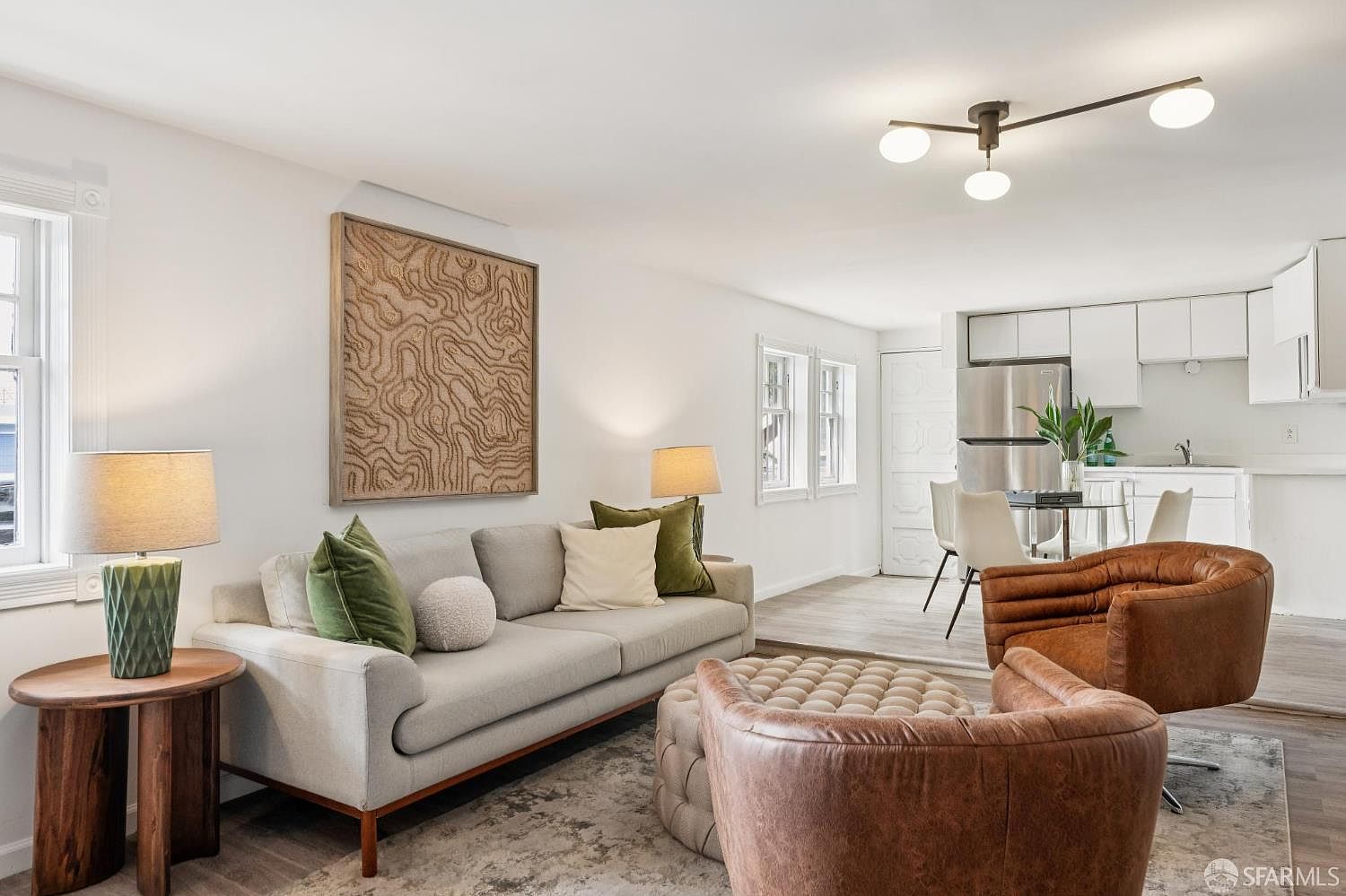
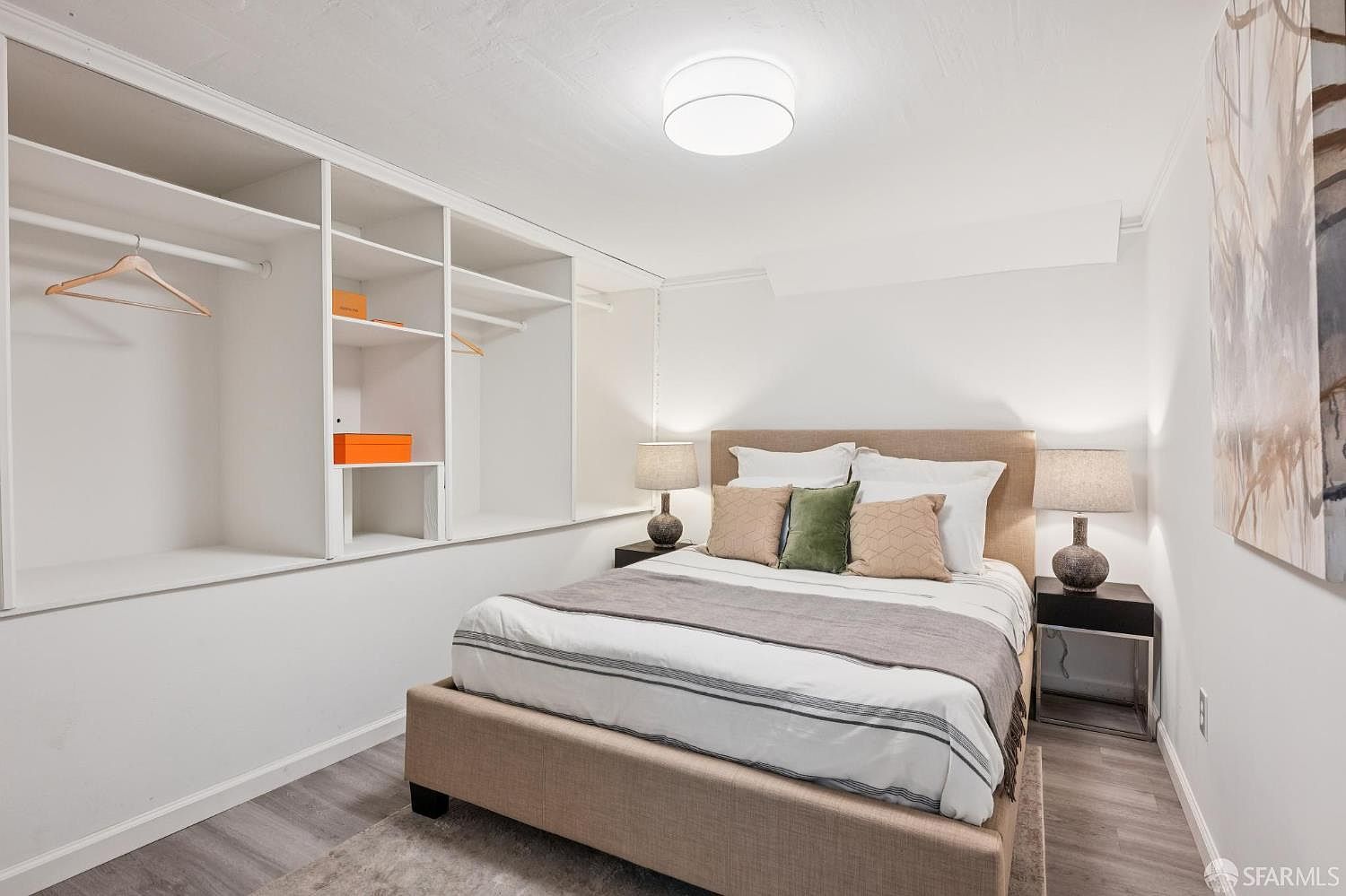
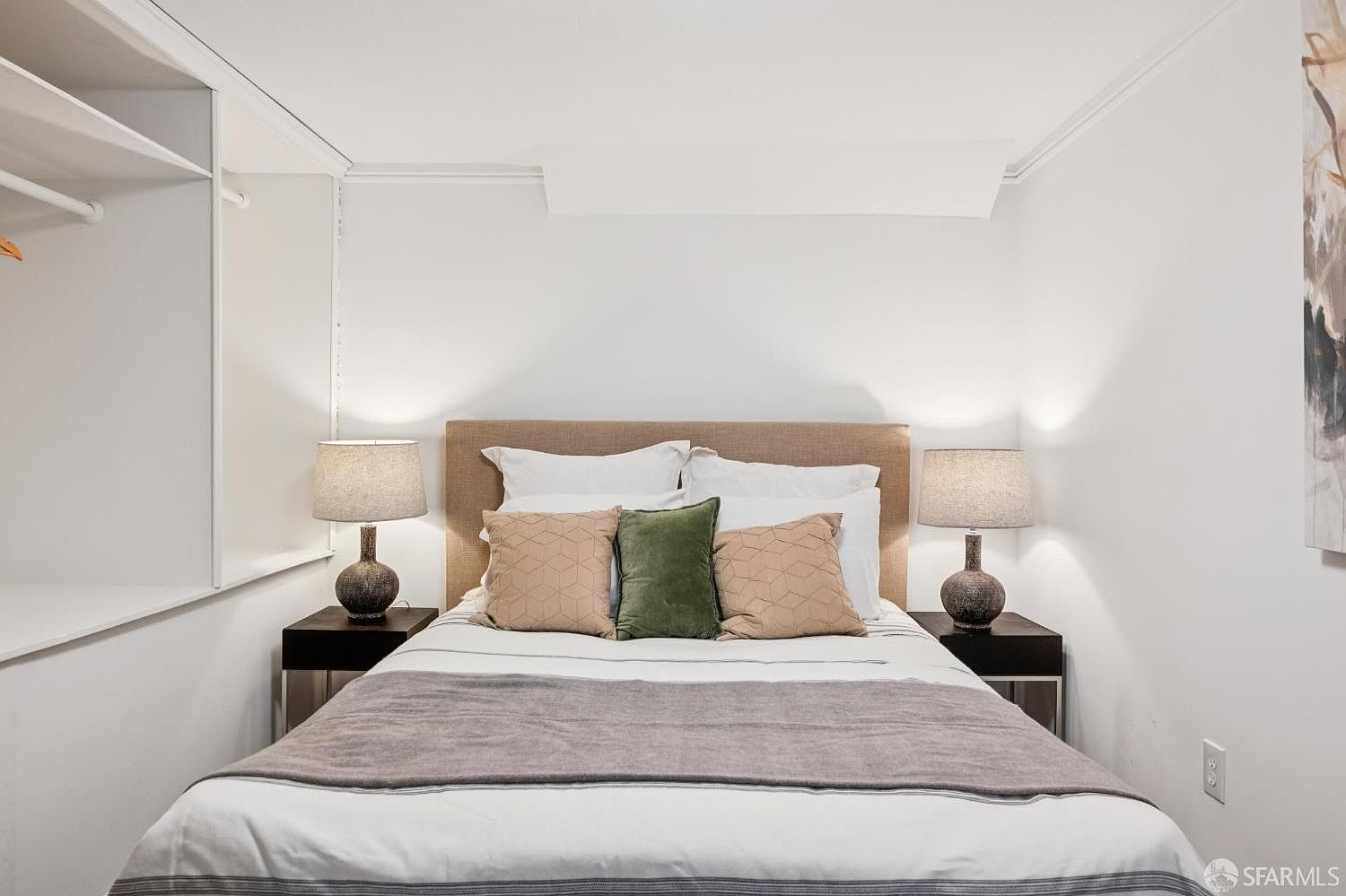
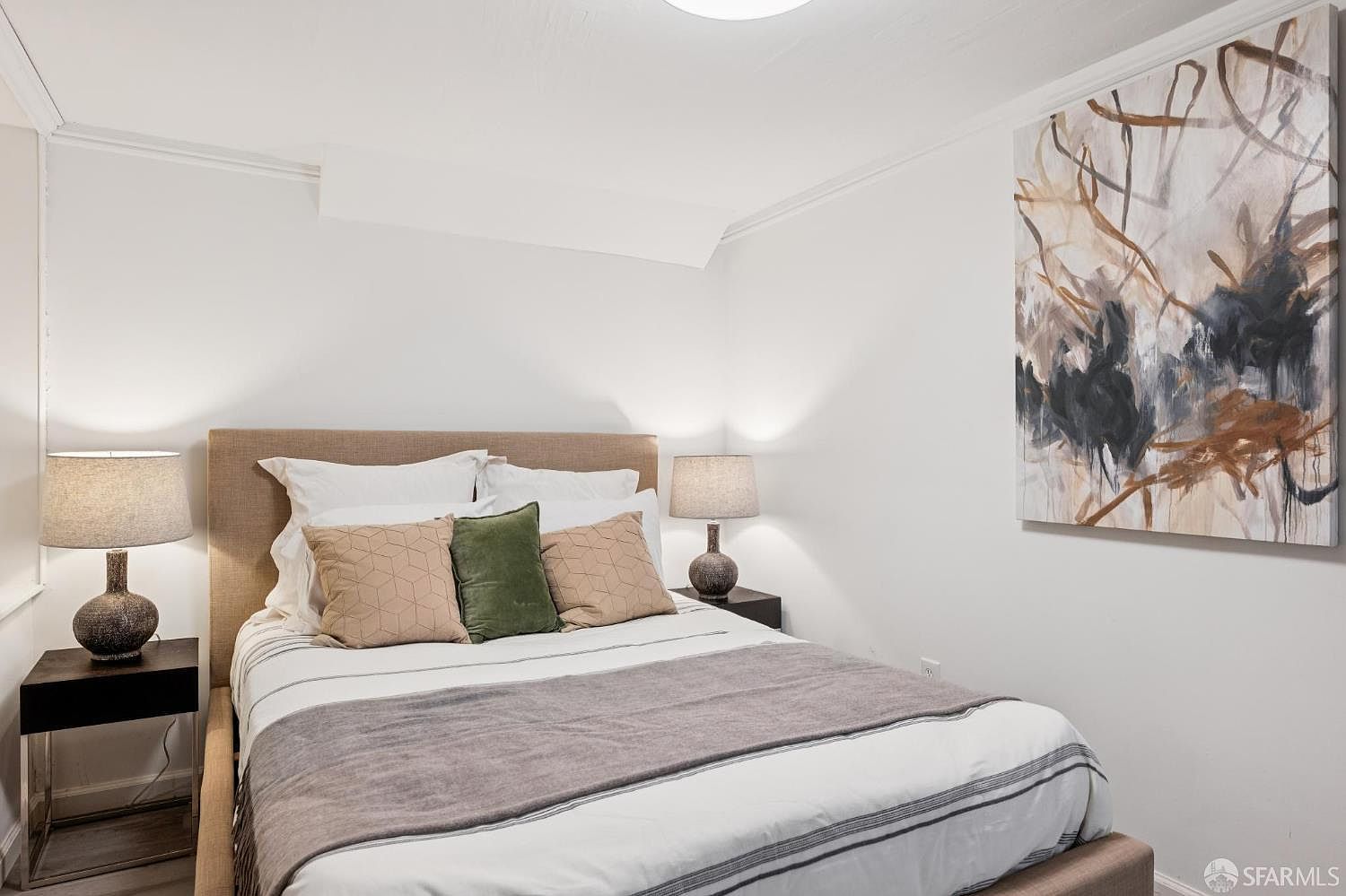
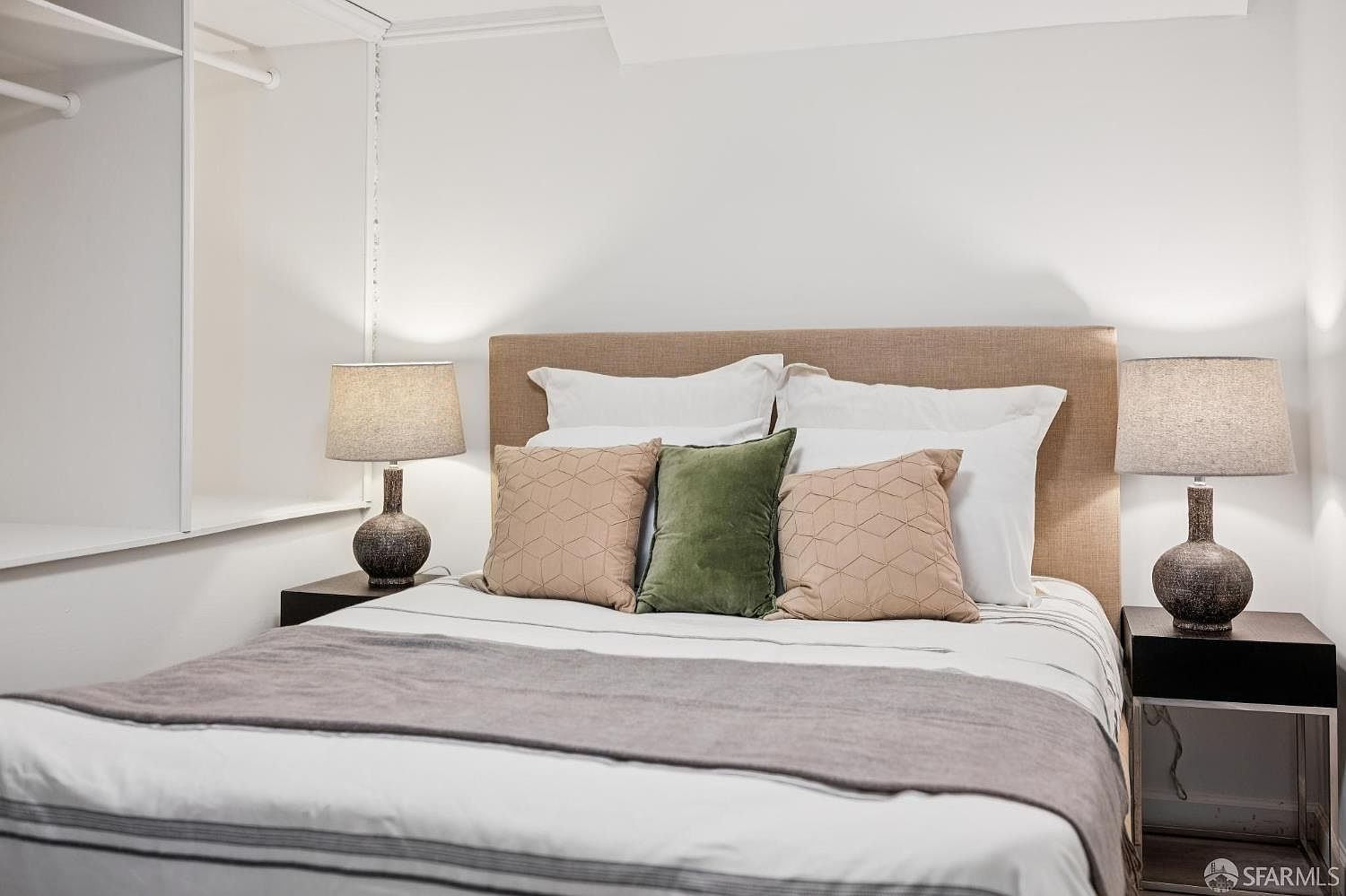
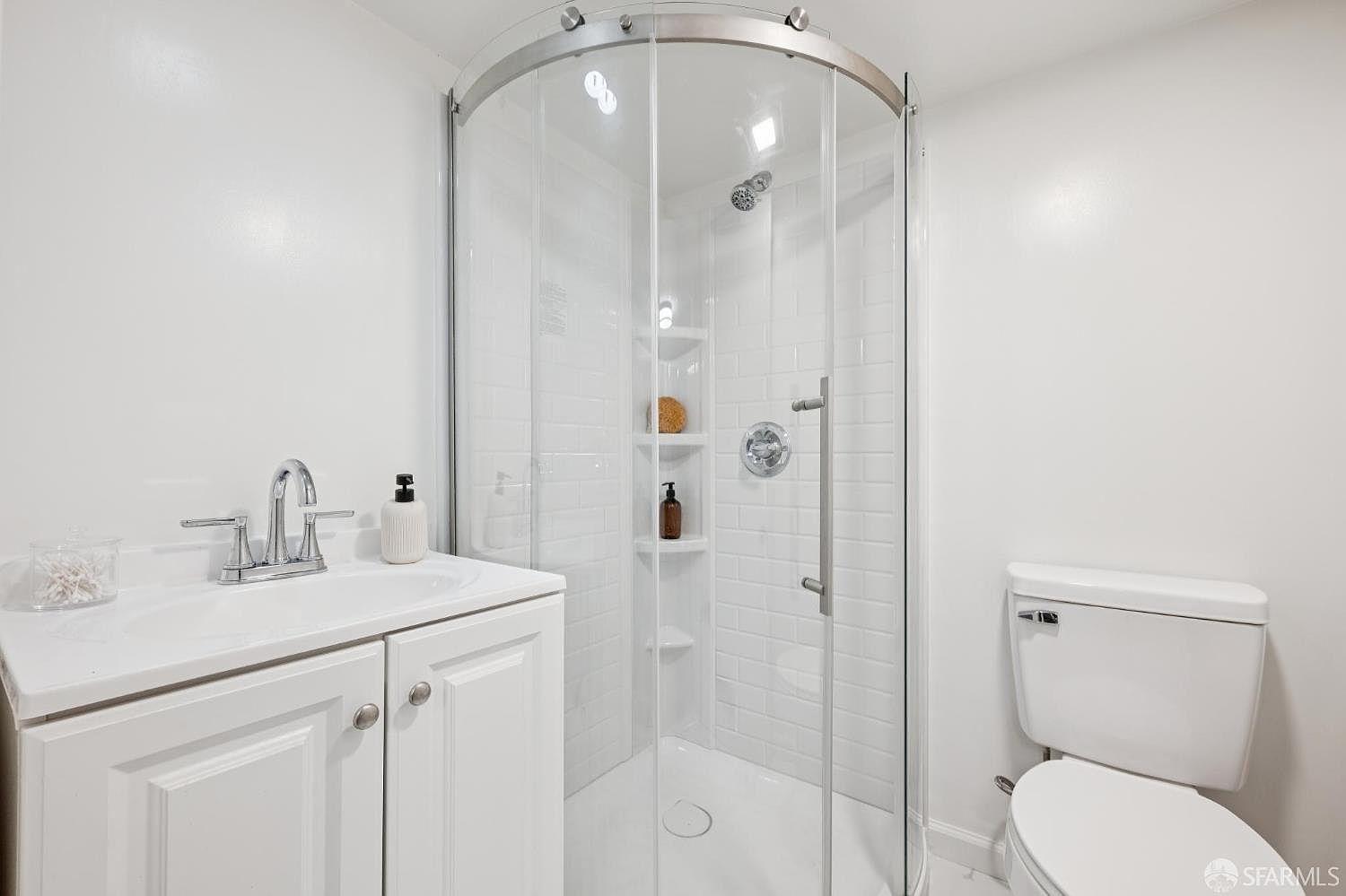
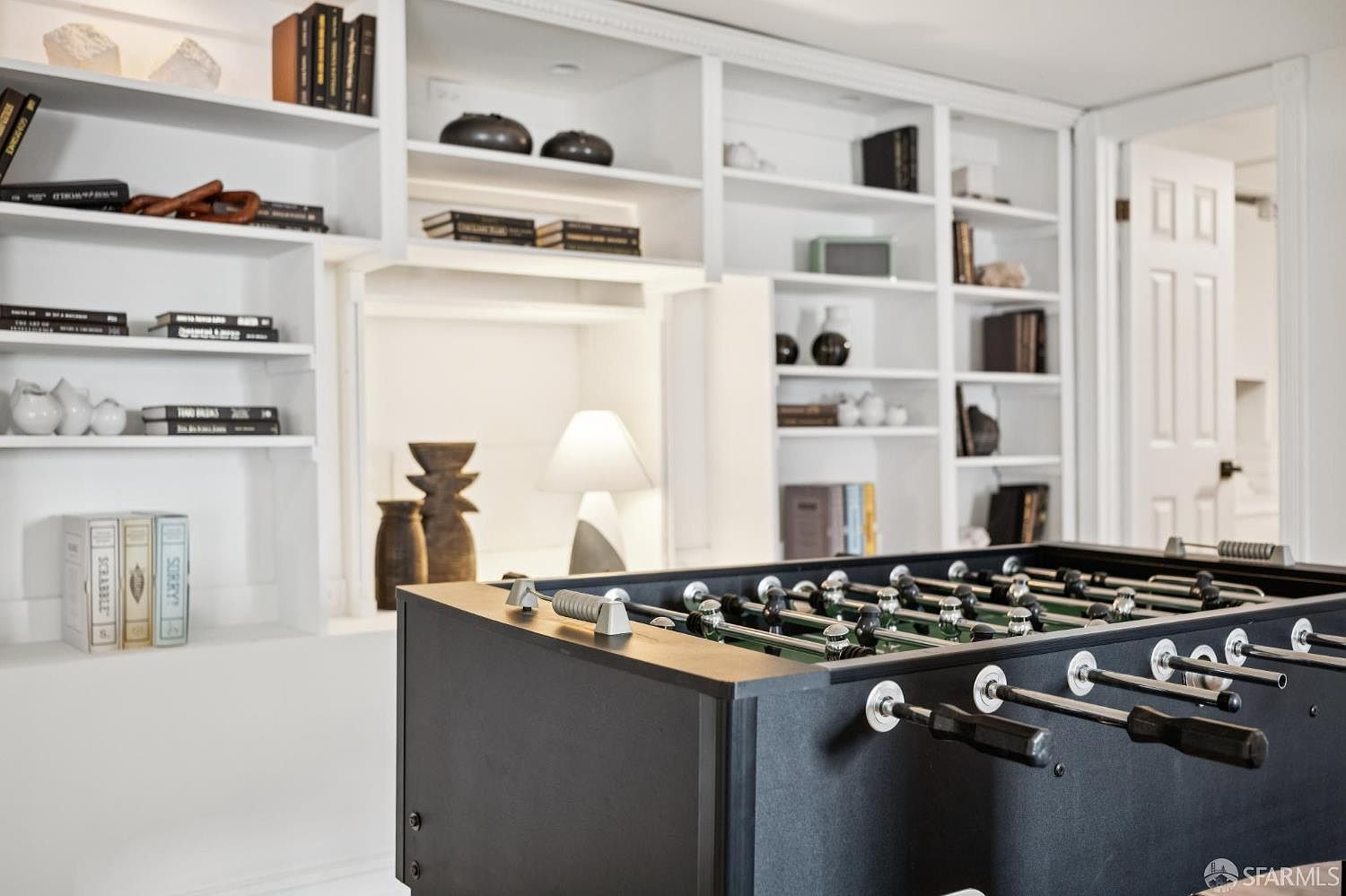
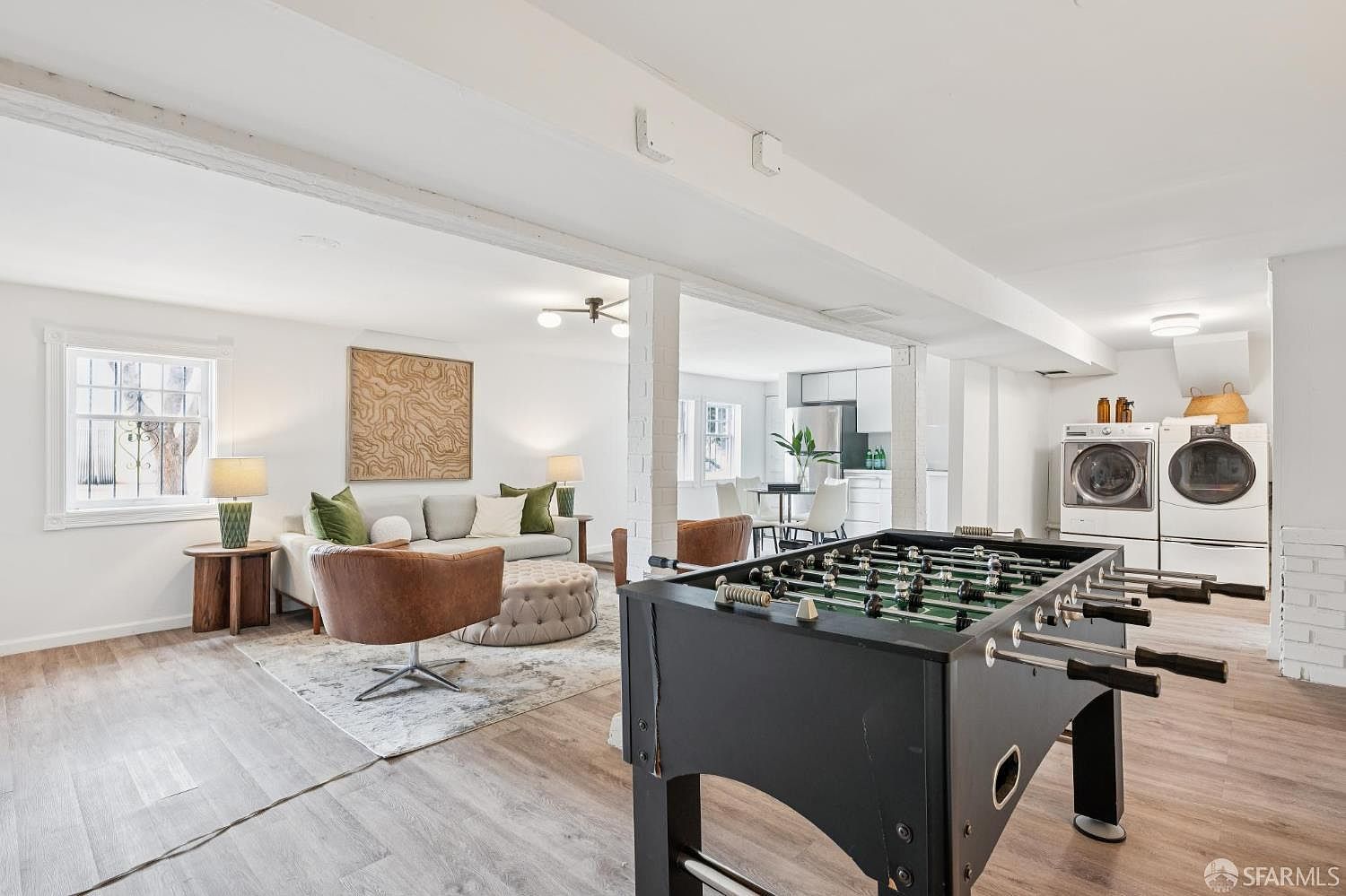
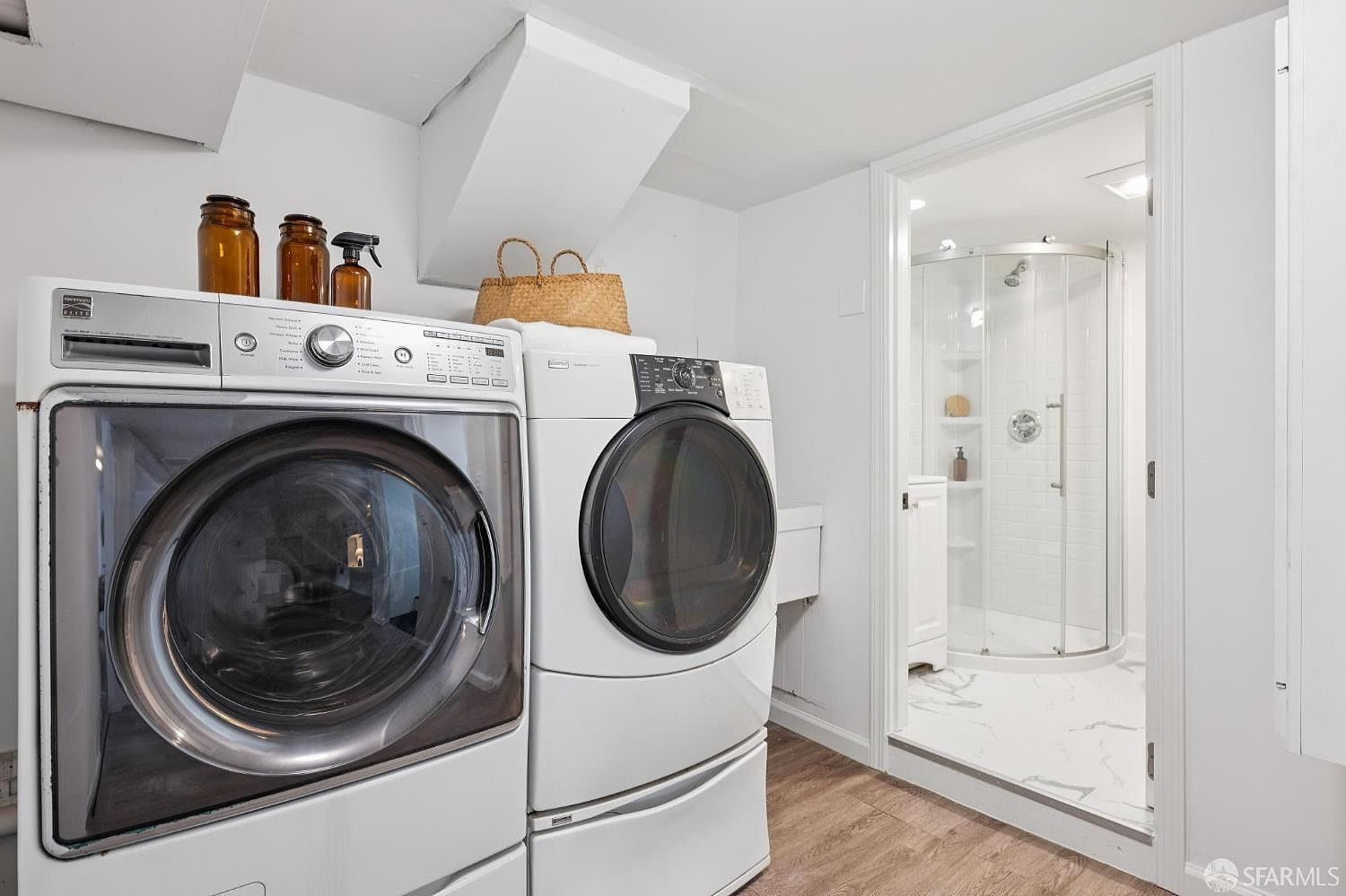
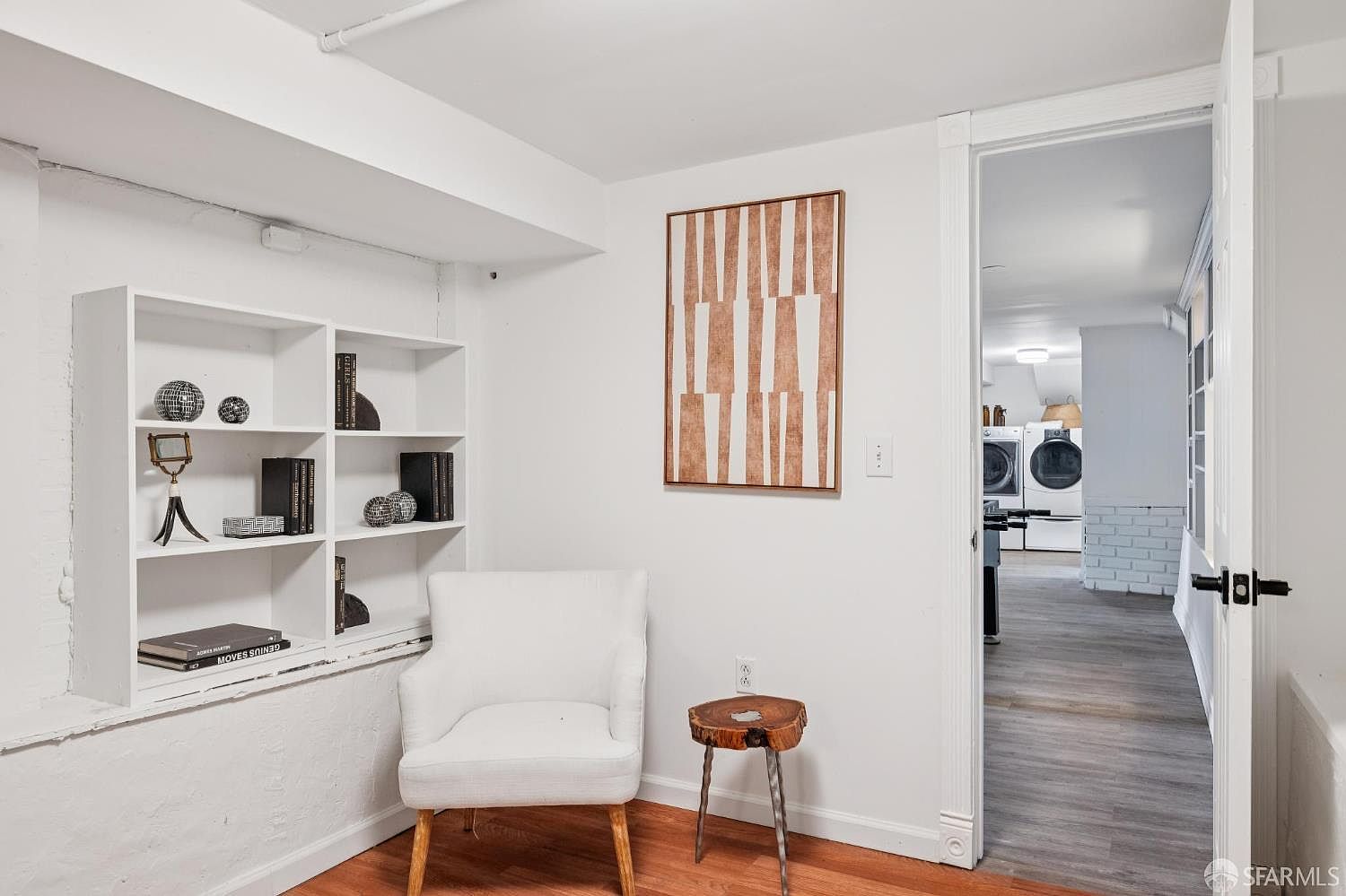
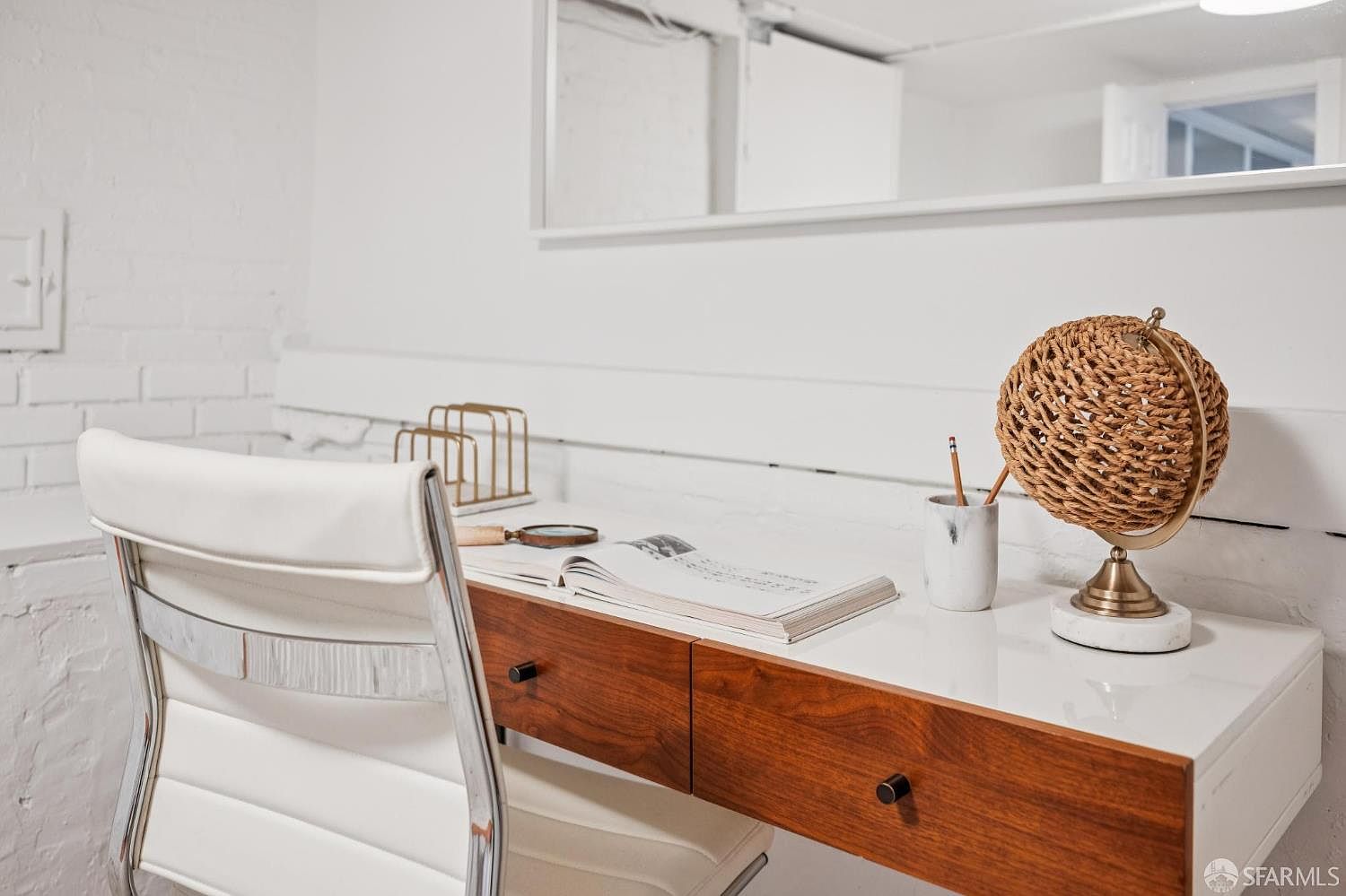
The lower level is where the home reveals its full breadth. A spectacular open-concept recreation room — bright, white-walled, and anchored by custom built-in shelving — combines a comfortable lounge with a dedicated game area, creating the kind of space that adapts effortlessly from family film nights to lively celebrations. A fourth bedroom, a dedicated home office with white-painted brick walls and built-in shelving, a beautifully remodeled full bath, a laundry area, and interior access to the one-car garage complete a floor plan of exceptional functionality.
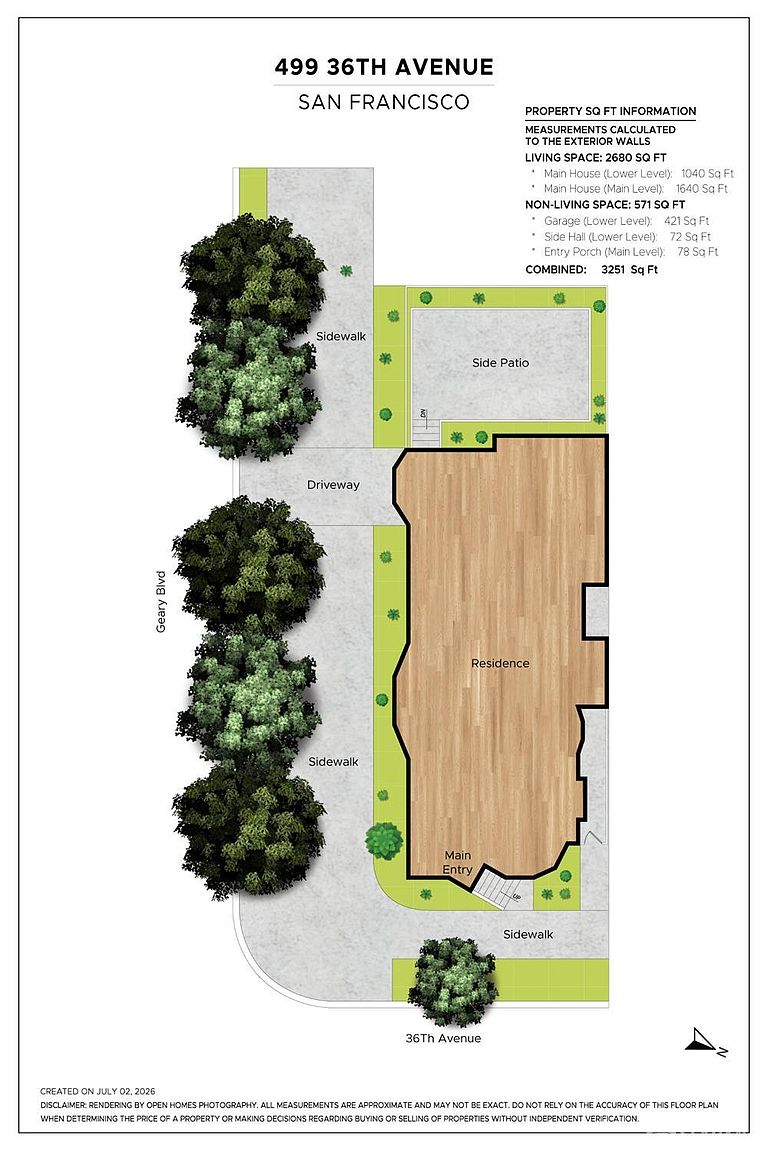
Outside, a private tiled patio enclosed by a tall wooden fence and accented by a fire pit seating arrangement offers a genuinely inviting outdoor room — sheltered, sunny, and quietly removed from the city's energy just steps beyond the gate.
Lincoln Manor occupies a particular kind of place in San Francisco's residential imagination — a neighborhood of wide, tree-lined streets, well-maintained period homes, and a palpable sense of community that the city's denser quarters rarely afford. Situated within the outer Richmond District, it sits at the intersection of urban convenience and genuine neighborhood calm, where the grid of the city gives way to the vast green expanse of Golden Gate Park to the south and the rugged coastal headlands to the west.
The Richmond District itself has long been one of San Francisco's most culturally layered neighborhoods. First developed in earnest in the late nineteenth and early twentieth centuries, it grew steadily through waves of immigration that gave it the density of community life still palpable today. The outer Richmond, where Lincoln Manor is centered, retains a quieter residential character than the avenues closer to downtown, with a scale and pace that feels deliberately unhurried. The architectural fabric of the neighborhood — largely Mediterranean and Edwardian single-family homes built in the first decades of the twentieth century — lends the streets a cohesion and handsomeness that rewards the daily walker.
Clement Street, the neighborhood's beloved commercial spine, runs just blocks away and offers one of San Francisco's most genuinely local retail and dining experiences. Independent bookshops, dim sum parlors, Vietnamese pho houses, Irish pubs, and specialty grocery stores coexist along its length in the manner of a neighborhood street that has never entirely yielded to homogenization. On weekend mornings, it hums with the particular energy of a community that still uses its own streets.
The parks and open spaces accessible from 499 36th Avenue are among the finest in any American city. Golden Gate Park — one of the largest urban parks in the United States at over 1,000 acres — begins just blocks to the south, offering everything from the Conservatory of Flowers and the Japanese Tea Garden to miles of bicycle paths and quiet meadows. Lands End, the dramatic coastal trail that winds along the cliffs above the Pacific between the Sutro Baths ruins and the Legion of Honor, is within easy reach and offers one of the city's most spectacular walking experiences. Ocean Beach, stretching along San Francisco's entire western edge, provides an ever-present reminder of the city's relationship with the Pacific — whether for early morning runs, afternoon dog walks, or simply watching the sun descend toward the horizon.
The California Palace of the Legion of Honor, perched on the bluffs above Lands End, brings world-class fine arts to the neighborhood, while Sutro Heights Park — the former grounds of Adolph Sutro's Victorian estate — offers sweeping views of the Marin Headlands and the Golden Gate Bridge from its elevated promontory. The bridge itself is visible from various vantage points in the surrounding area, a constant and iconic presence on the northwestern skyline.
For a home of this character, in a neighborhood of this caliber, proximity to so much of what makes San Francisco singular is not incidental — it is the point.
Featured Highlights
Curated Content • Presented by Robert N. Moffatt