The Story Behind
Oceanfront Masterwork on La Jolla's Street of Dreams
There are homes that face the ocean, and then there are homes that belong to it. 5910 Camino De La Costa occupies that rare second category — a contemporary oceanfront masterwork set directly on a picturesque cove along La Jolla's legendary Street of Dreams, where the Pacific is not merely a backdrop but an active and ever-present participant in daily life.
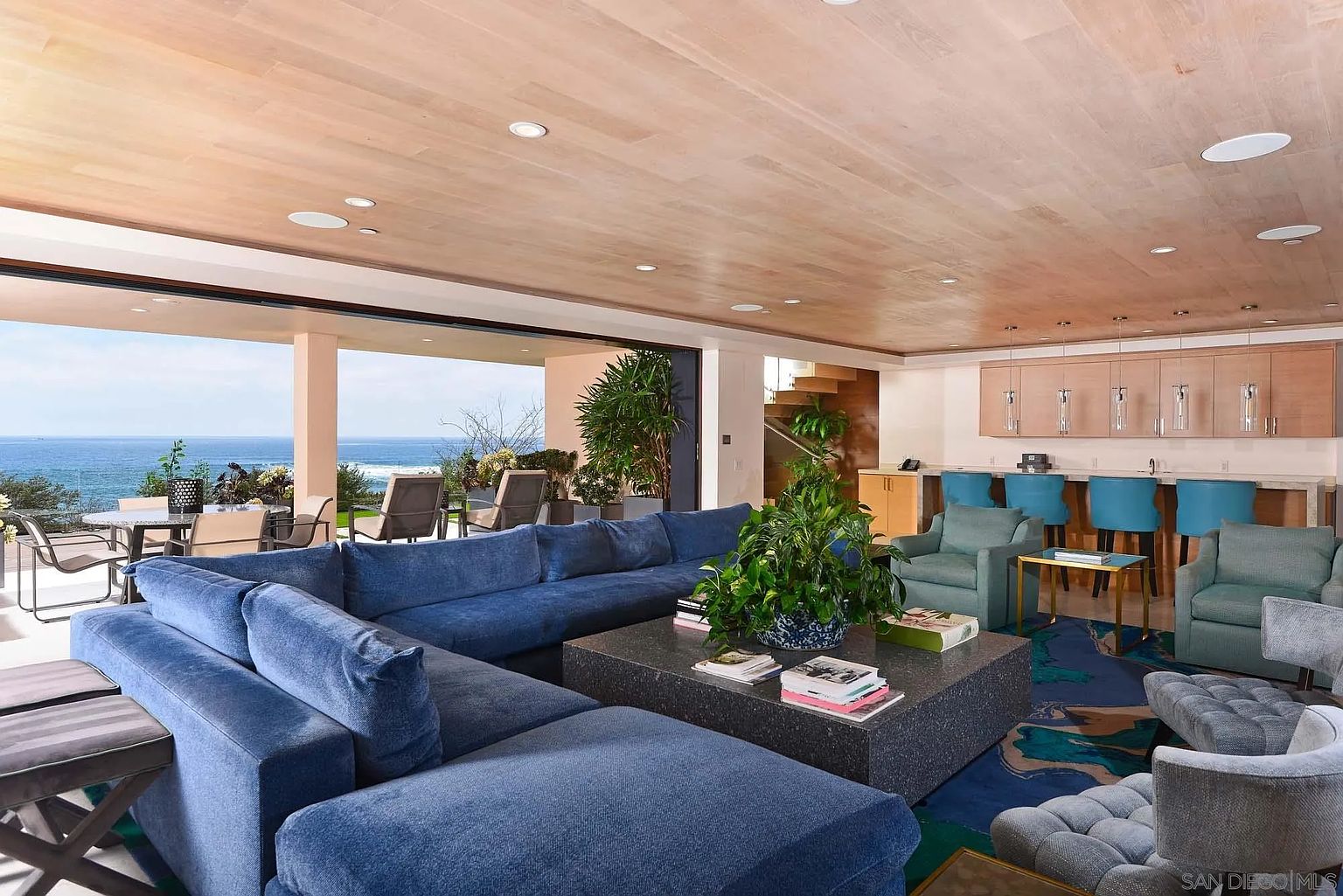
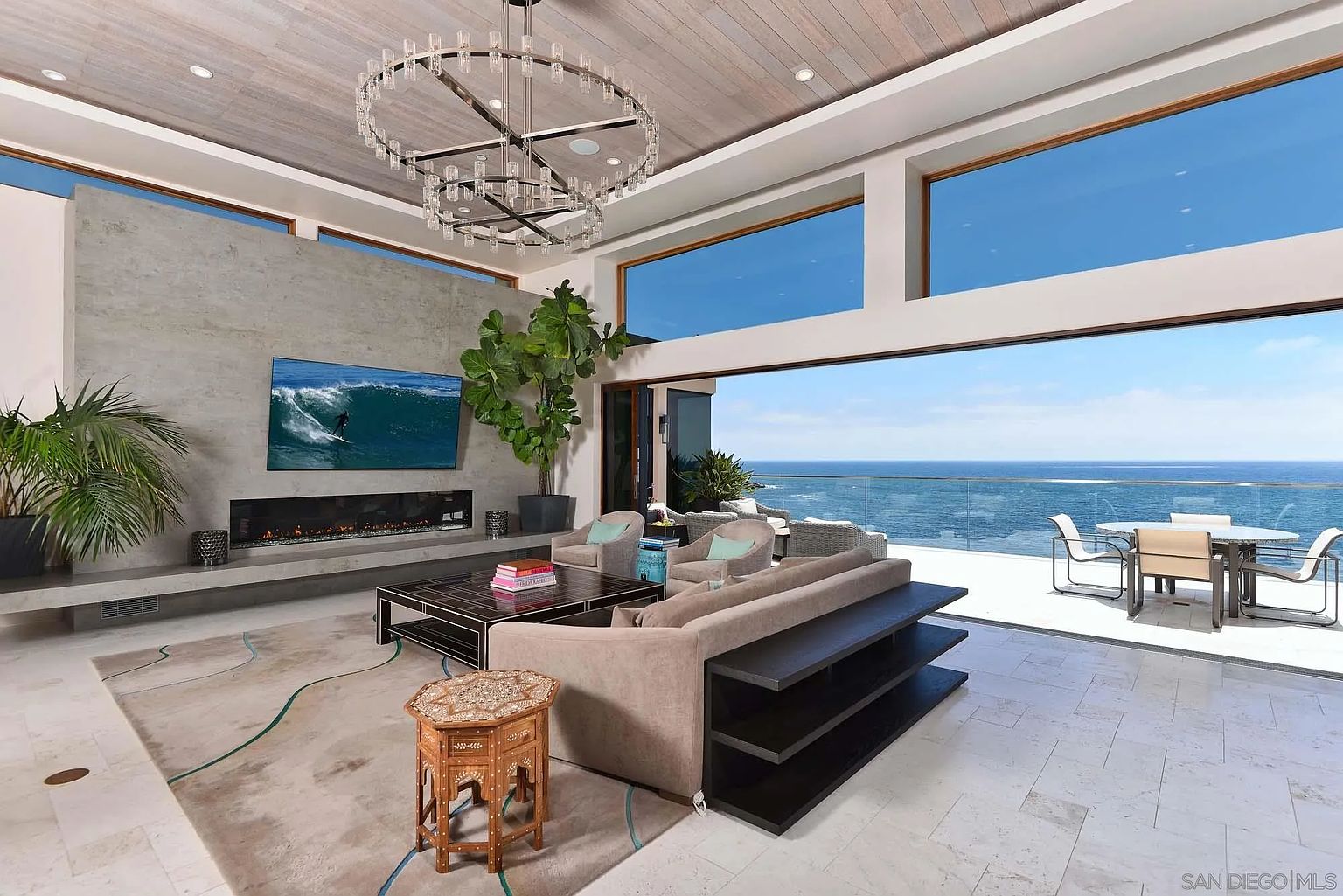
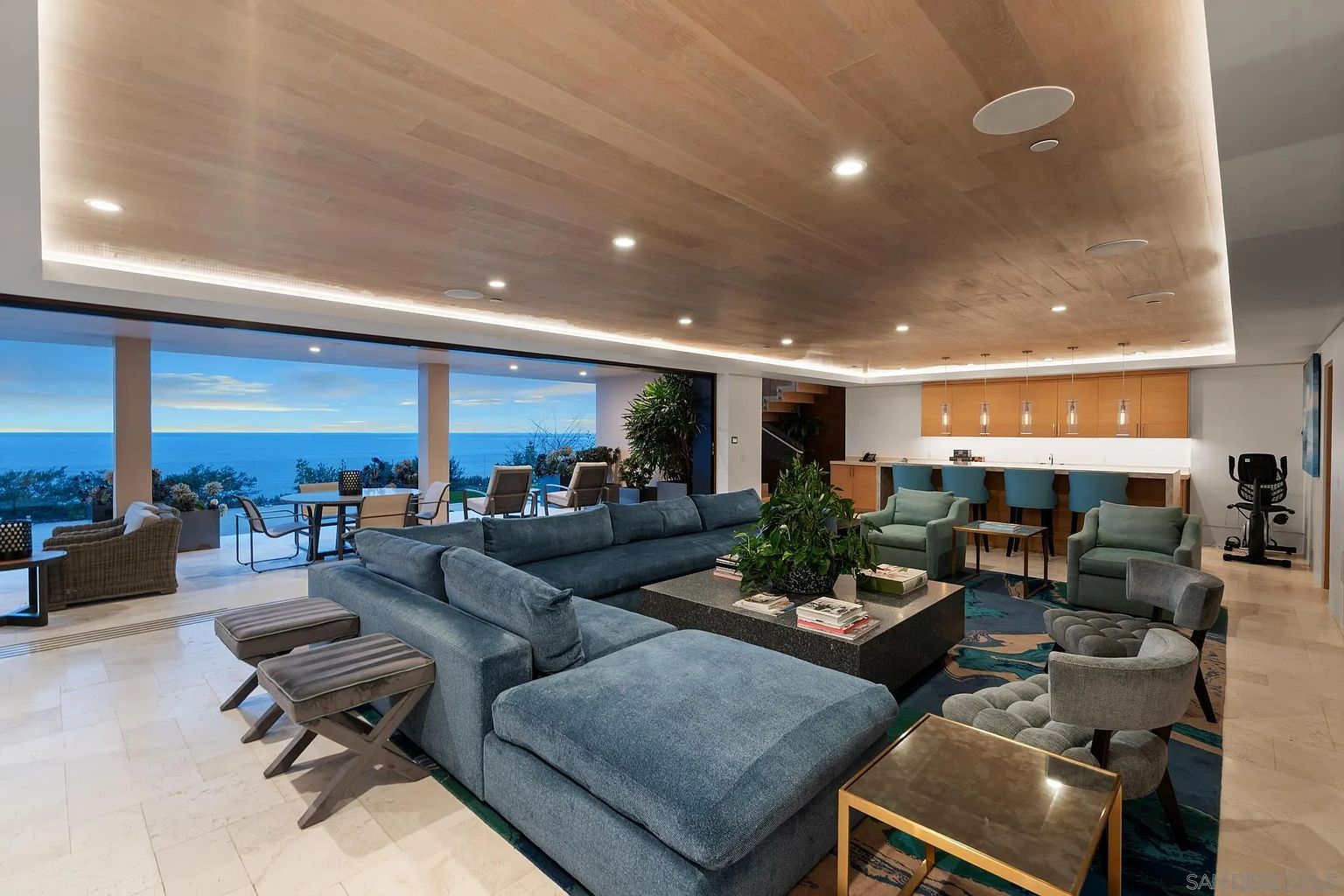
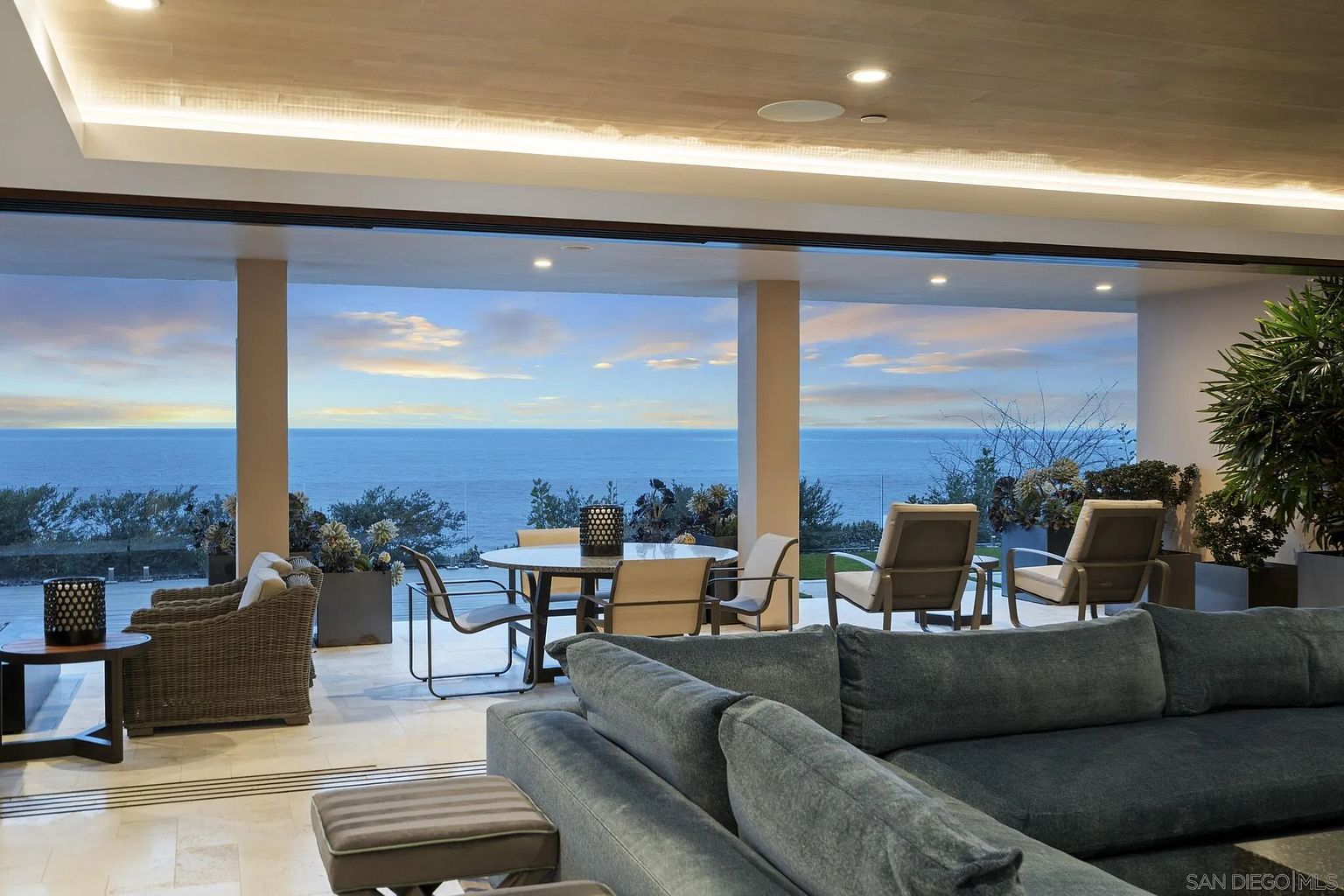
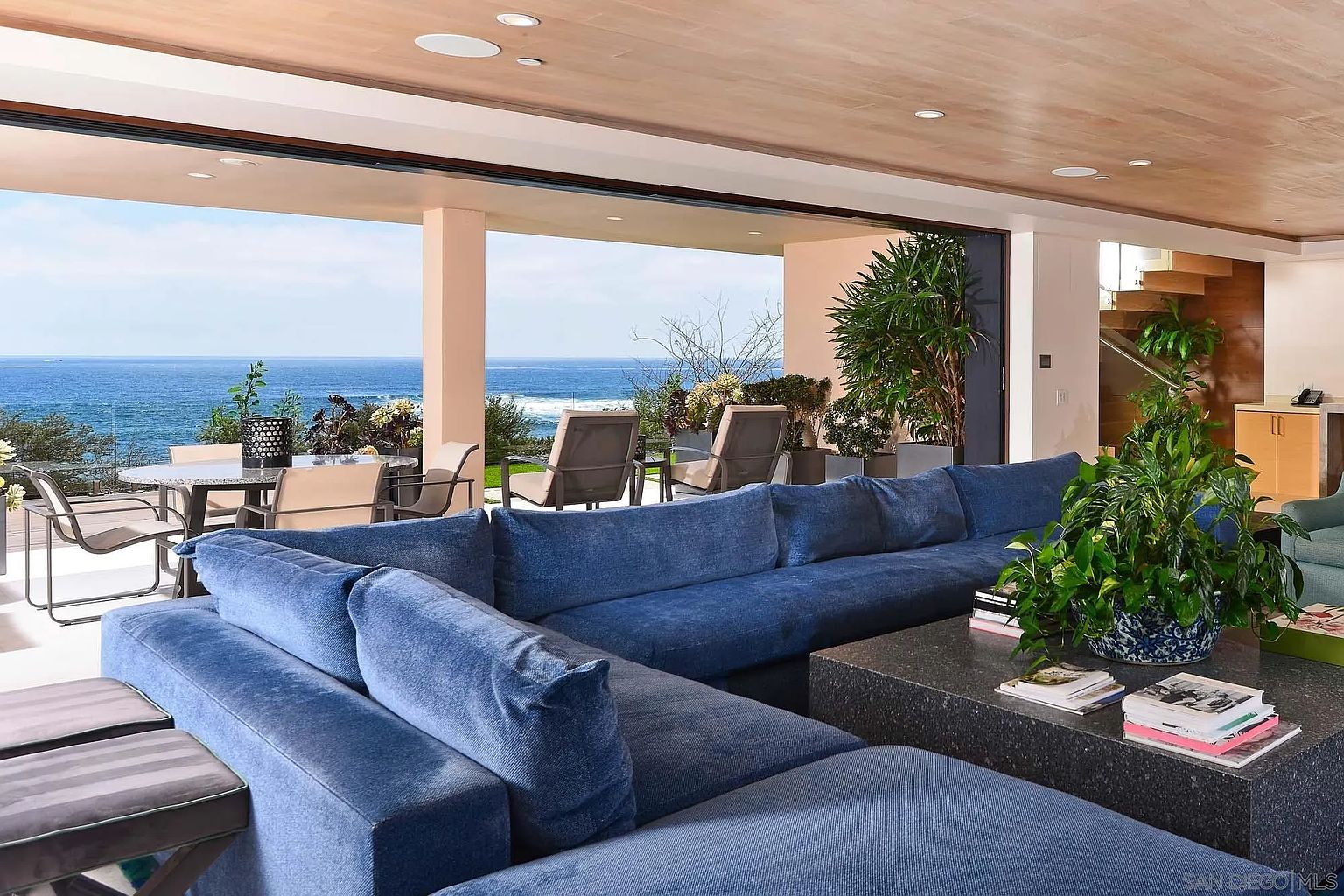
The architecture announces its intentions immediately. A dramatic entry gives way to main-level living areas of extraordinary scale, their proportions calibrated to hold their own against one of the most powerful natural settings on the California coast. The defining gesture is a wall of massive 14-foot disappearing glass doors that open the principal living spaces entirely to the seaside terrace beyond, allowing ocean breeze, the sound of gentle surf, and uninterrupted horizon views to move freely through the home. When those doors fold away, the distinction between interior and exterior dissolves almost completely.
The material language throughout is warm and considered. Timber ceilings finished in light wood planking lend an organic softness to rooms of considerable volume. Stone surfaces — appearing at kitchen countertops, fireplace surrounds, and vanities — provide tactile weight and a sense of permanence. Metal accents thread through the composition with quiet precision, grounding the palette without hardening it. The result is an interior atmosphere that feels genuinely welcoming rather than merely impressive.
A striking glass-wrapped staircase serves as one of the home's great architectural set pieces. Pendant lights descend in elegant clusters through the double-height stairwell, while the transparent railing and expansive windows frame ocean views on three distinct sides — making the act of moving between floors an experience worth savoring. A private elevator offers a second, effortless connection between levels.
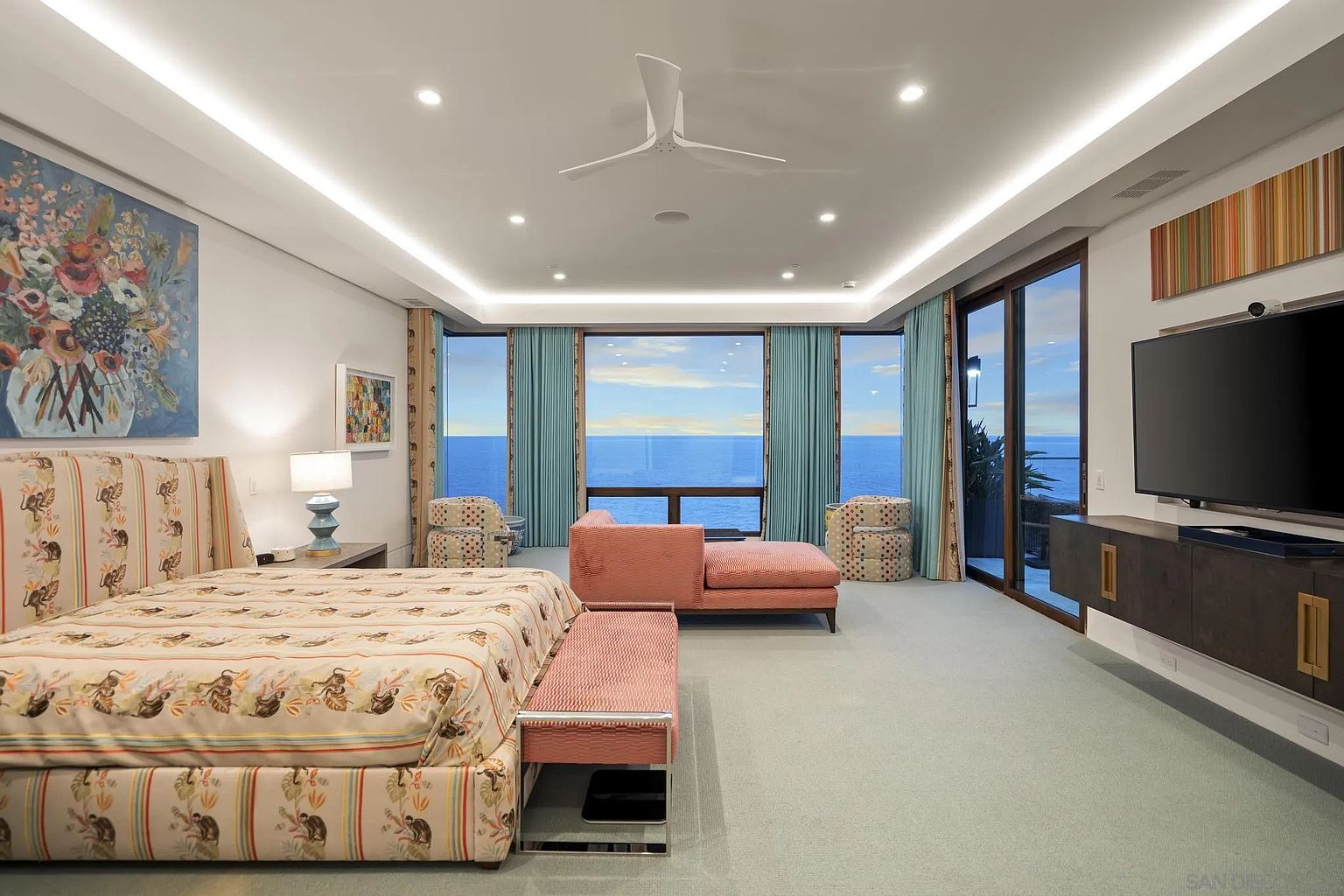
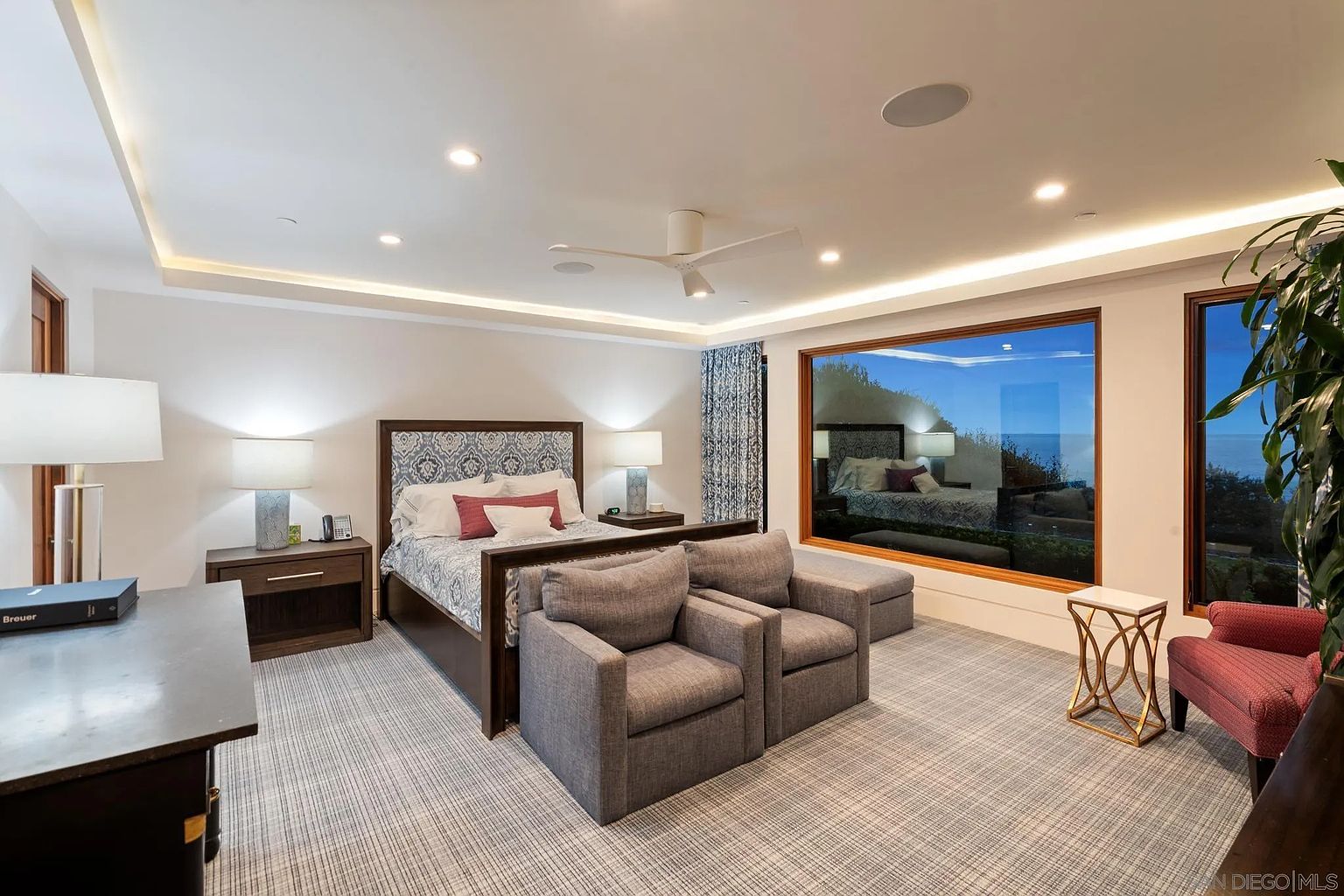
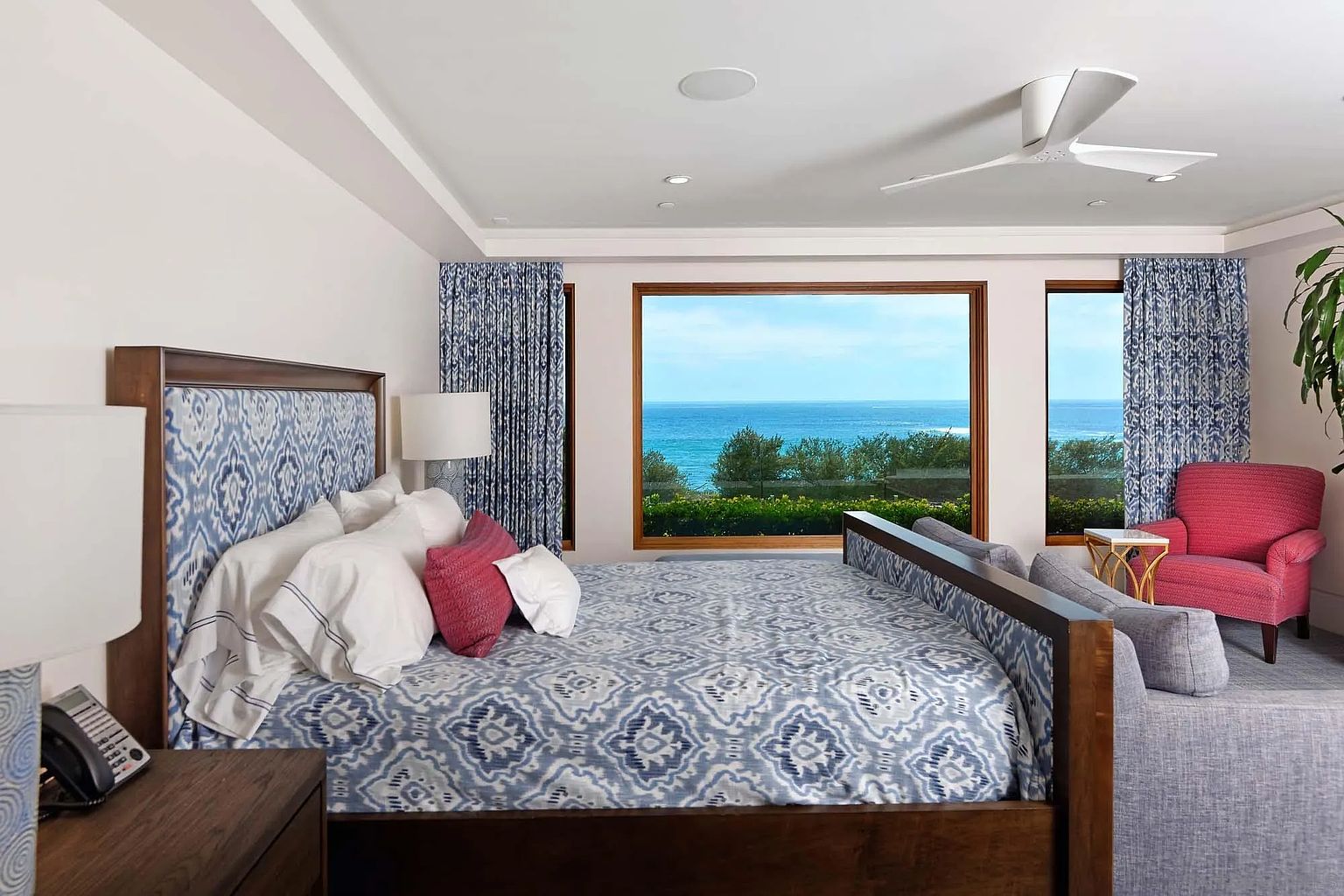
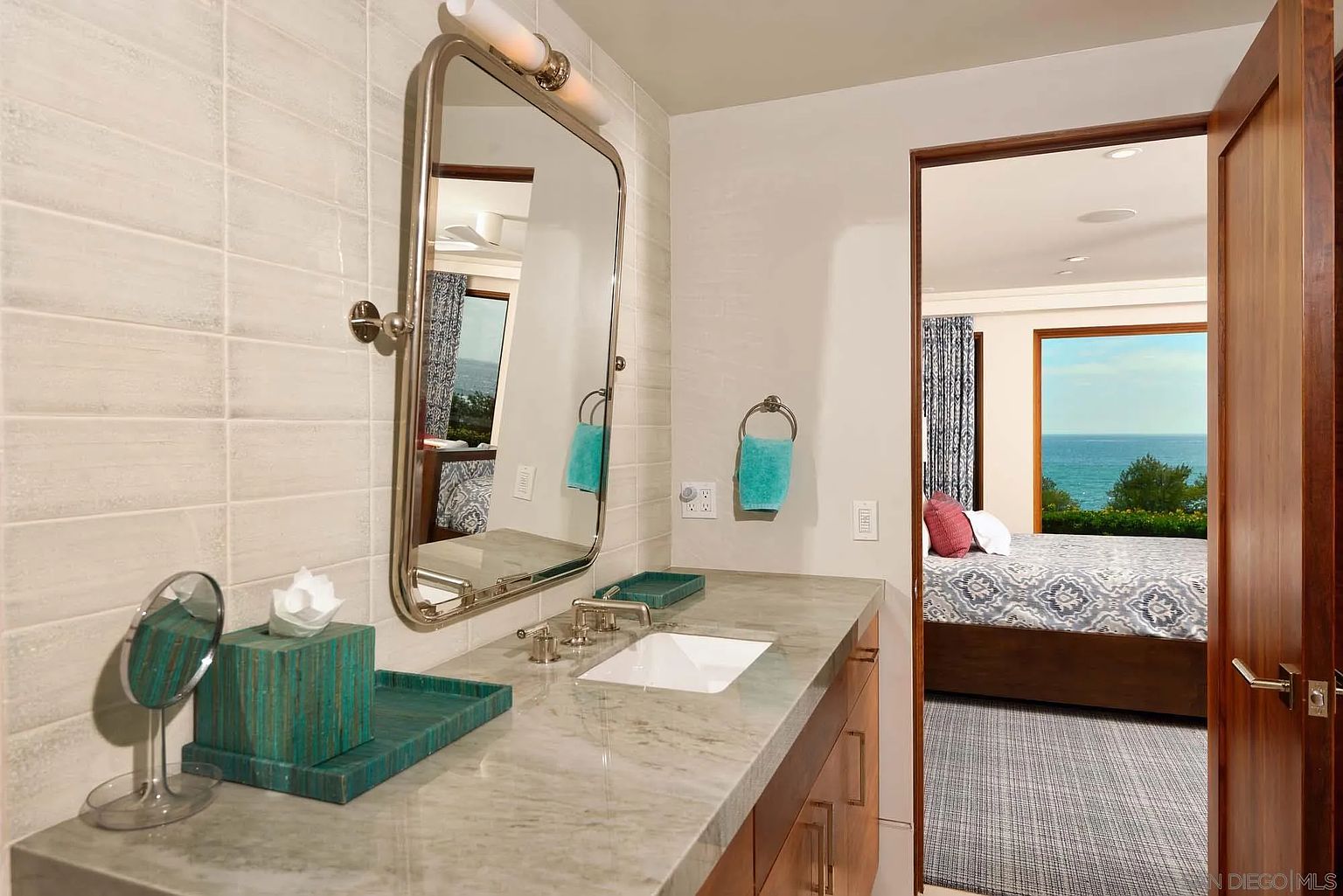
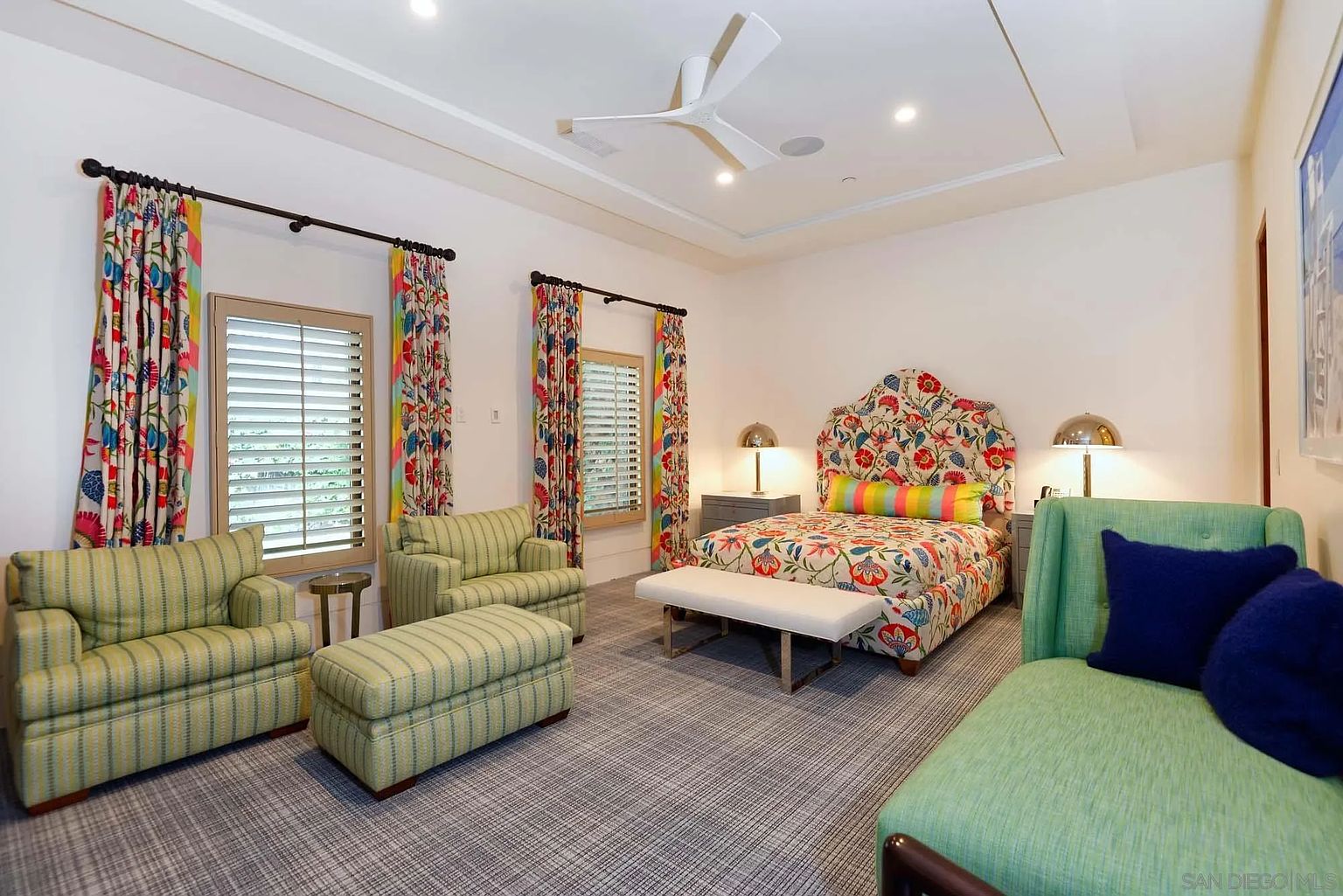
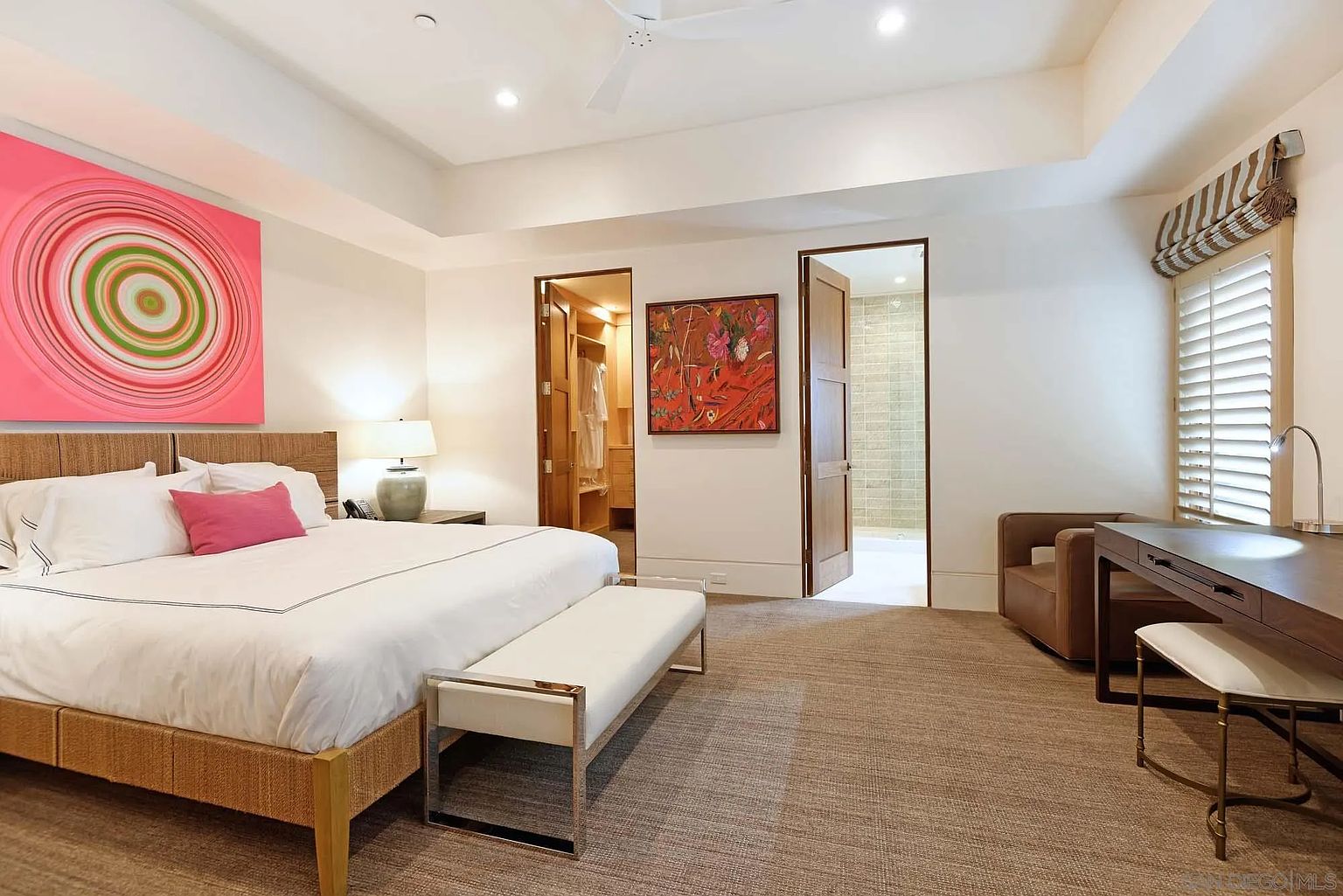
The main level is organized around the rhythms of both grand entertaining and quiet daily life. The primary suite is positioned to capture ocean views and is appointed with an exceptionally large bathroom — featuring long stone vanities, a glass-enclosed shower, and direct access to a spacious walk-in closet — and a dressing space built to accommodate a serious collection. Guest bedroom suites on the same level ensure that visitors are housed with the same care and comfort as the home's owners.
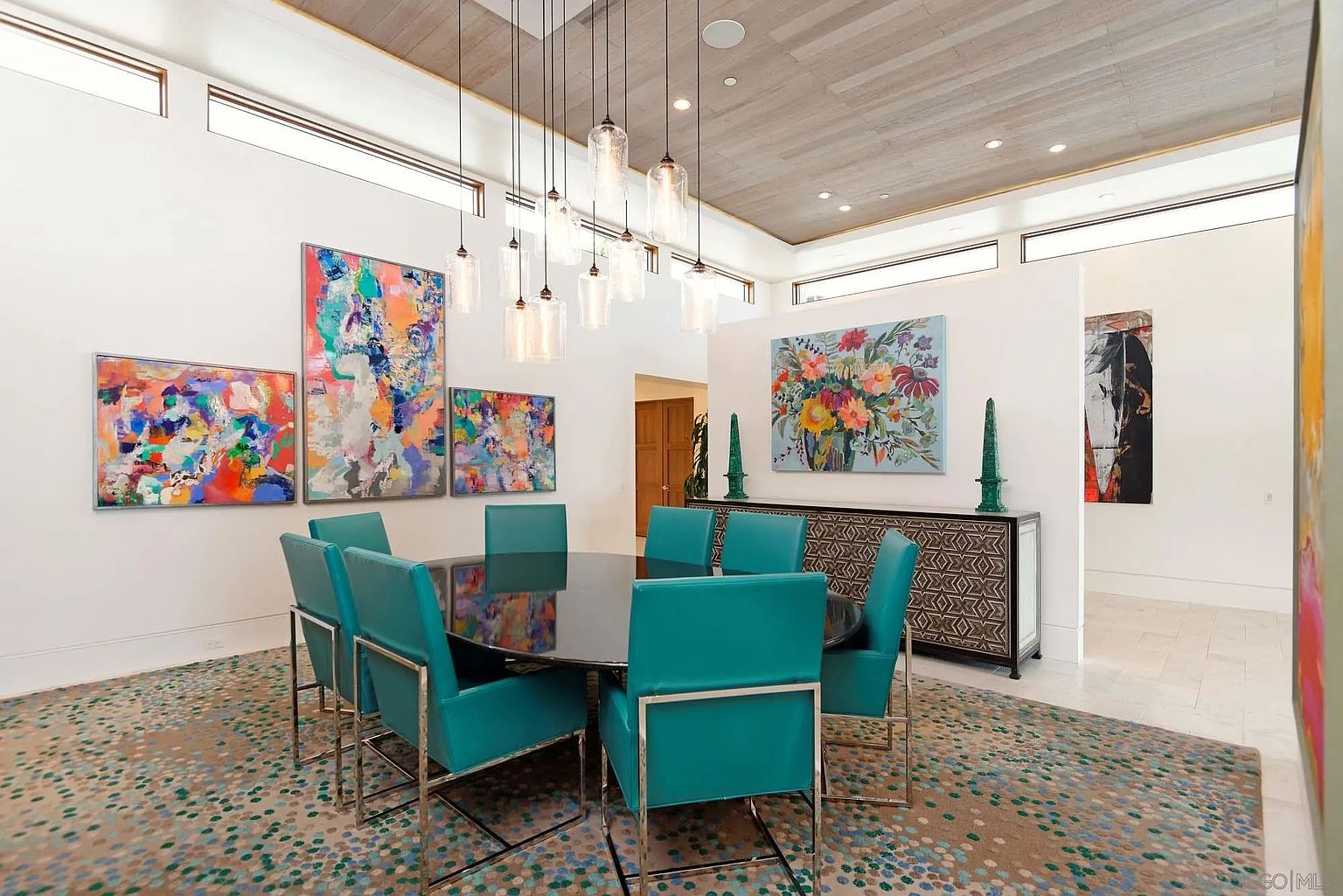
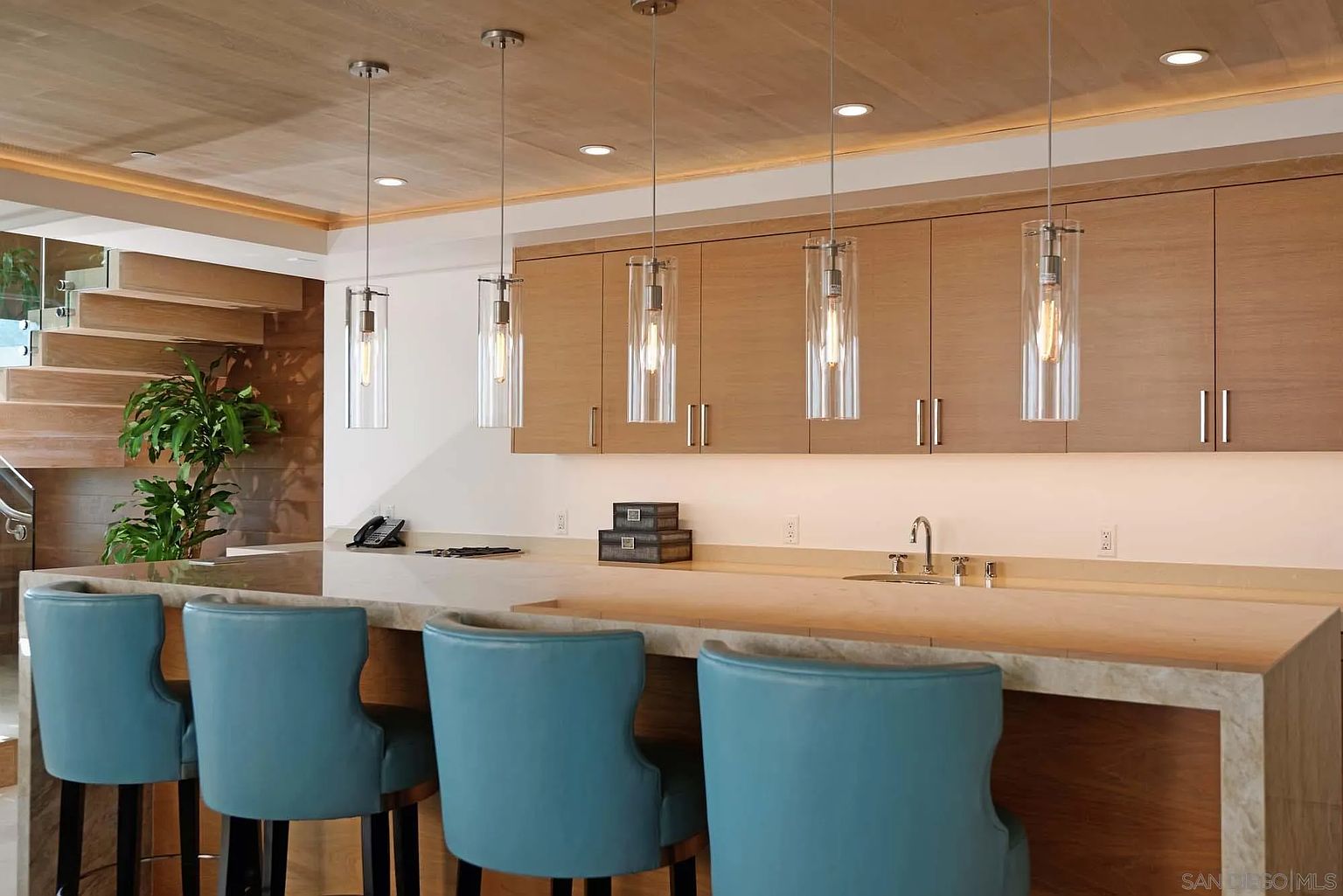
A 2018 renovation introduced two non-load-bearing interior walls that thoughtfully separate the kitchen and dining room from the principal living areas, establishing the classic estate-house distinction between culinary workspace and formal gathering rooms. The kitchen itself is a well-proportioned professional environment, centered on a broad stone island beneath cylindrical pendant lights, with a professional-grade range set into a stone backsplash and warmed by clerestory windows above. Notably, the non-structural nature of both dividing walls means a future owner retains the full option to reopen these spaces to the ocean view, should a more contemporary open-plan configuration be preferred.
The lower level extends the home's relationship with the water further still, opening onto a covered view terrace that gives way to turf lawns, decking, and a fire feature — a setting perfectly composed for unhurried sunset evenings, casual gatherings on the green, or simply the quiet pleasure of watching the Pacific light shift through the afternoon hours. A dedicated wine cellar, fitted with custom X-pattern wood shelving, ensures that no such evening need go without the right bottle.
La Jolla occupies a singular position in the geography of Southern California — a coastal village of uncommon natural beauty and cultivated civic character, set along a stretch of coastline where sandstone bluffs meet the Pacific with a drama that has drawn artists, scientists, architects, and discerning residents for well over a century. The name itself, widely understood to derive from the Spanish "La Joya" — the jewel — speaks to a reputation that the place has more than earned.
Camino De La Costa runs along the shoreline just north of Vista Point and Bird Rock, in a stretch of La Jolla that has long been known informally as the Street of Dreams — a designation that reflects not marketing ambition but simple geographic fact. The homes along this corridor occupy some of the most directly oceanfront positions available anywhere along the California coast, with cove access, unobstructed horizon views, and the particular quality of light that belongs only to this latitude and this exposure. The rocky shoreline immediately below is alive with tide pools, nesting seabirds, and the rhythmic activity of the Pacific — a natural environment of genuine ecological richness.
The broader La Jolla community offers a density of cultural and intellectual life that is unusual for a coastal enclave of its scale. The University of California San Diego anchors the area's identity as a center of scientific research and innovation, while the nearby Salk Institute for Biological Studies — its Louis Kahn–designed campus among the most architecturally significant in the United States — and the Scripps Institution of Oceanography contribute to a local culture that values both rigorous inquiry and considered design. The La Jolla Playhouse, a Tony Award–winning regional theater on the UCSD campus, has launched productions to Broadway and built an international reputation over decades of programming.
Village La Jolla, the walkable commercial heart of the community, is within comfortable strolling distance of Camino De La Costa. Prospect Street and Girard Avenue form the spine of a retail and dining district that includes acclaimed restaurants, independent galleries, and boutiques that reflect the community's sustained interest in quality and craft. The Museum of Contemporary Art San Diego maintains its primary La Jolla campus here, offering a program of exhibitions that draws from both its permanent collection and major traveling shows.
For those oriented toward the water, La Jolla offers an extraordinary range of engagement — from the sheltered swimming cove at La Jolla Cove, a beloved landmark of the California coast, to the open ocean kayaking, snorkeling, and diving opportunities available along the protected underwater park that extends through much of the local shoreline. The La Jolla Beach and Tennis Club and the La Jolla Country Club serve the community's recreational life with long-established facilities and a membership culture rooted in the neighborhood's history.
To live on Camino De La Costa is to inhabit a place where natural grandeur, cultural seriousness, and the particular ease of coastal California life have reached a durable and distinctive equilibrium — a setting that rewards both the eye and the imagination, in every season and at every hour of the day.
Featured Highlights
Curated Content • Presented by Greg Noonan