The Story Behind
141 Years of San Francisco Ambition, Perfectly Preserved
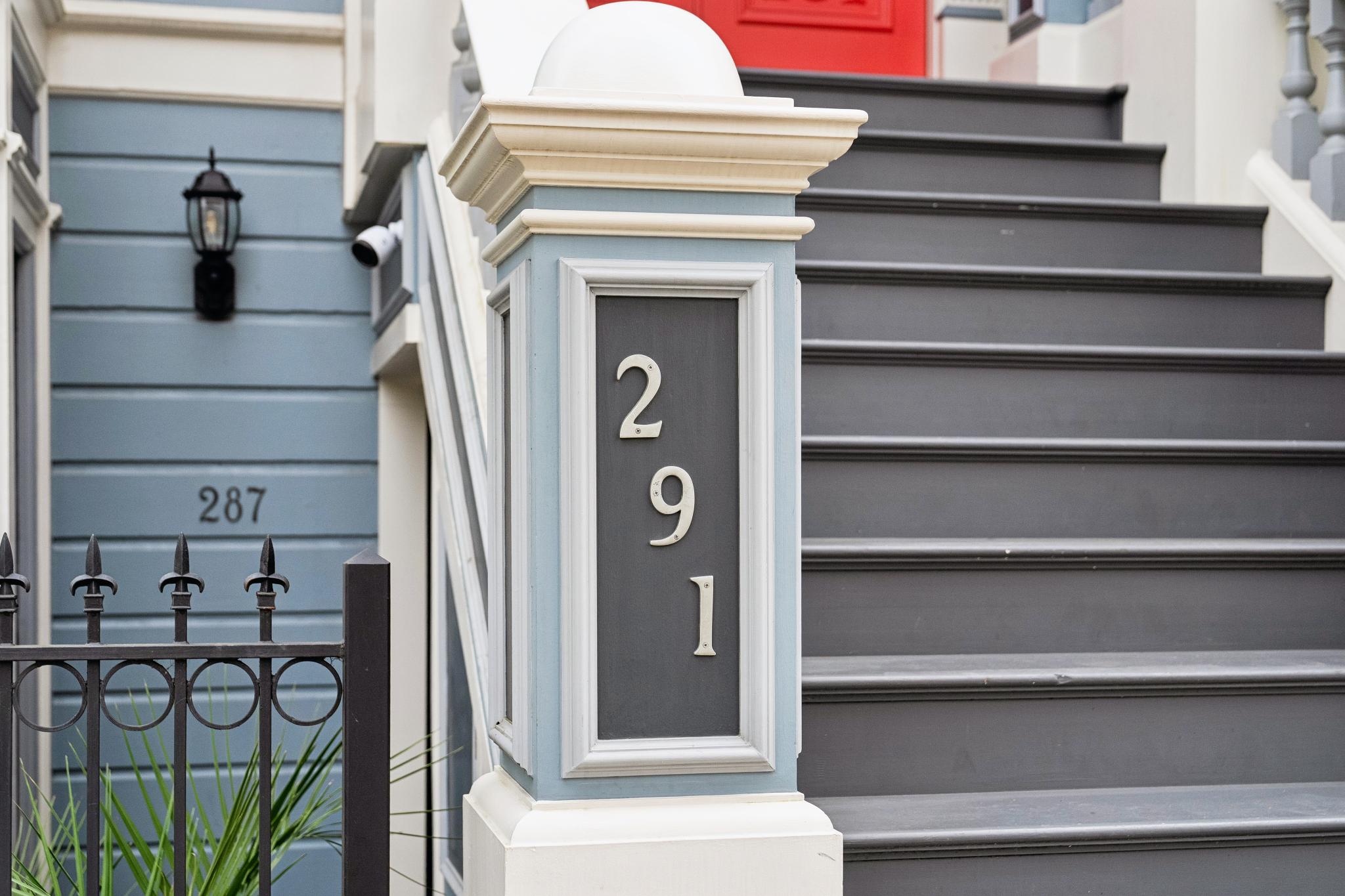
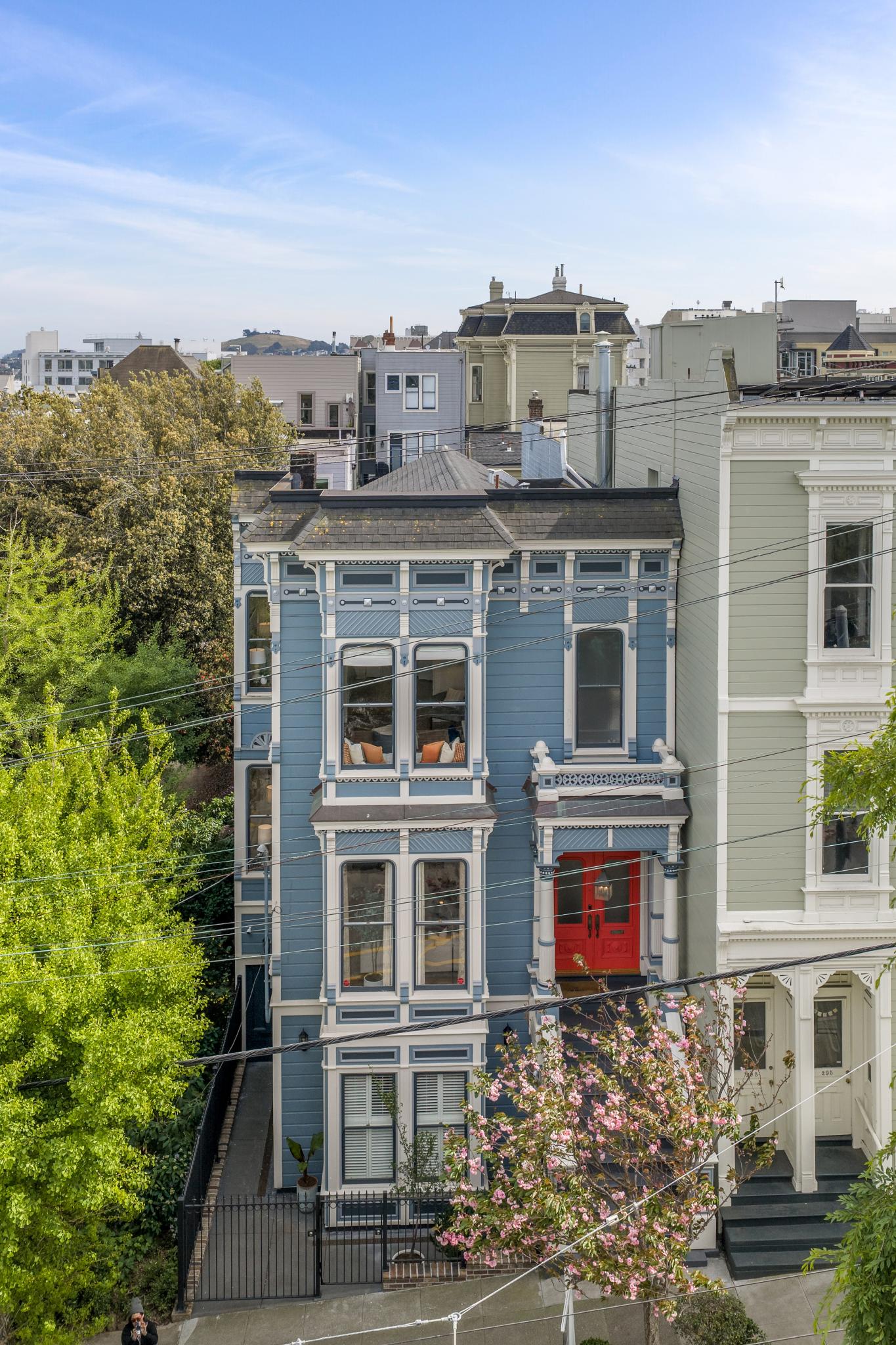
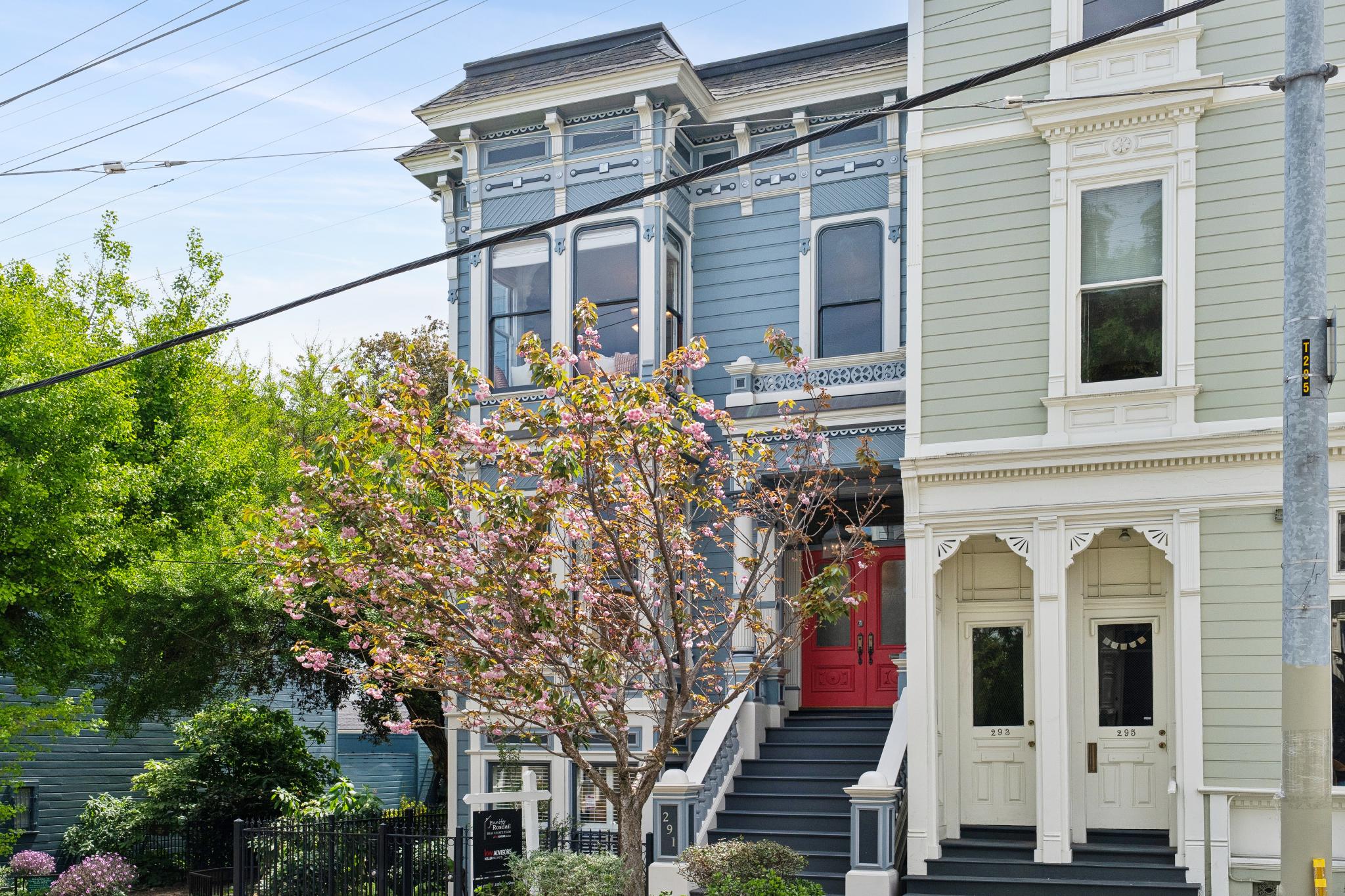
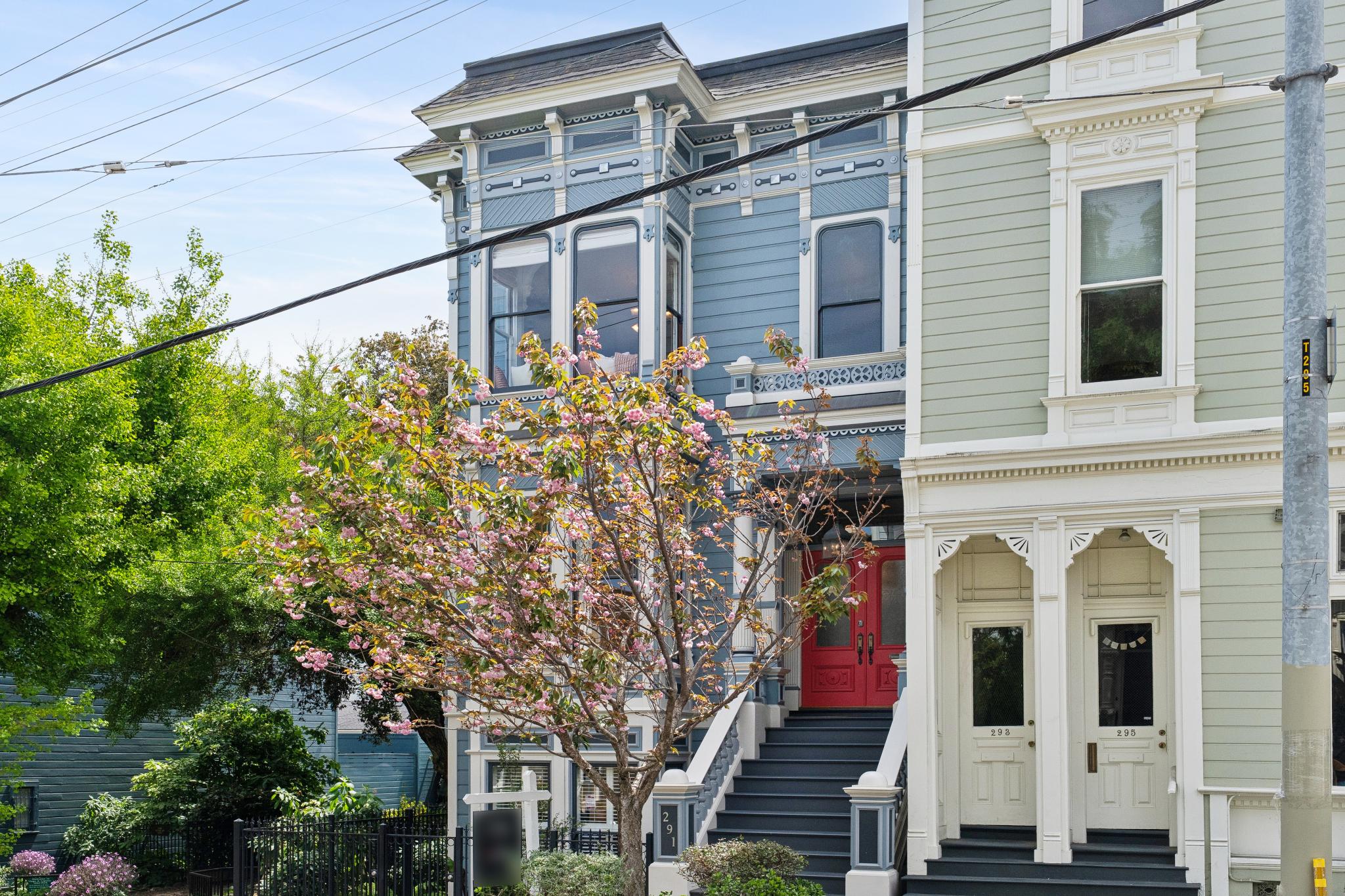
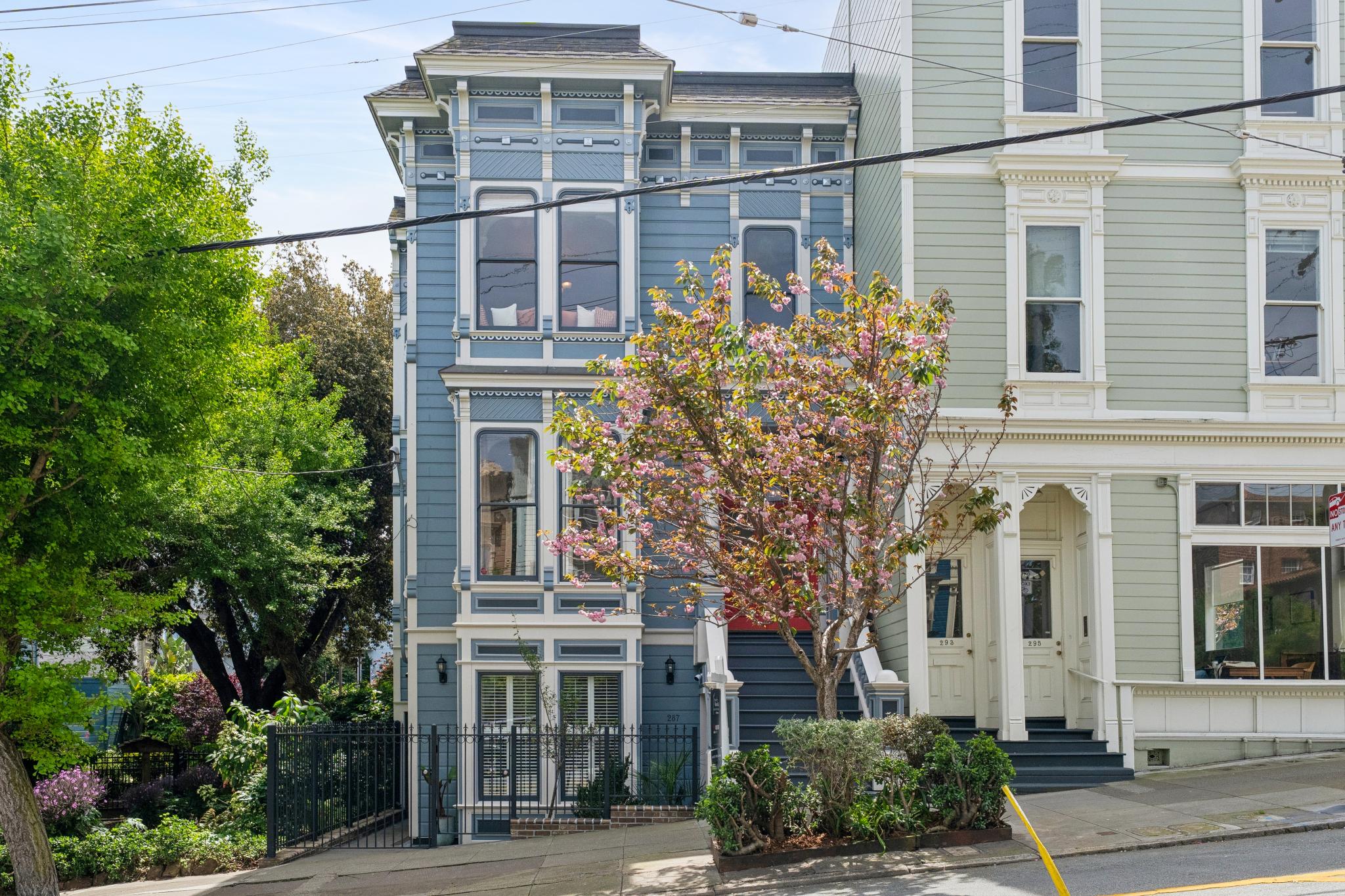
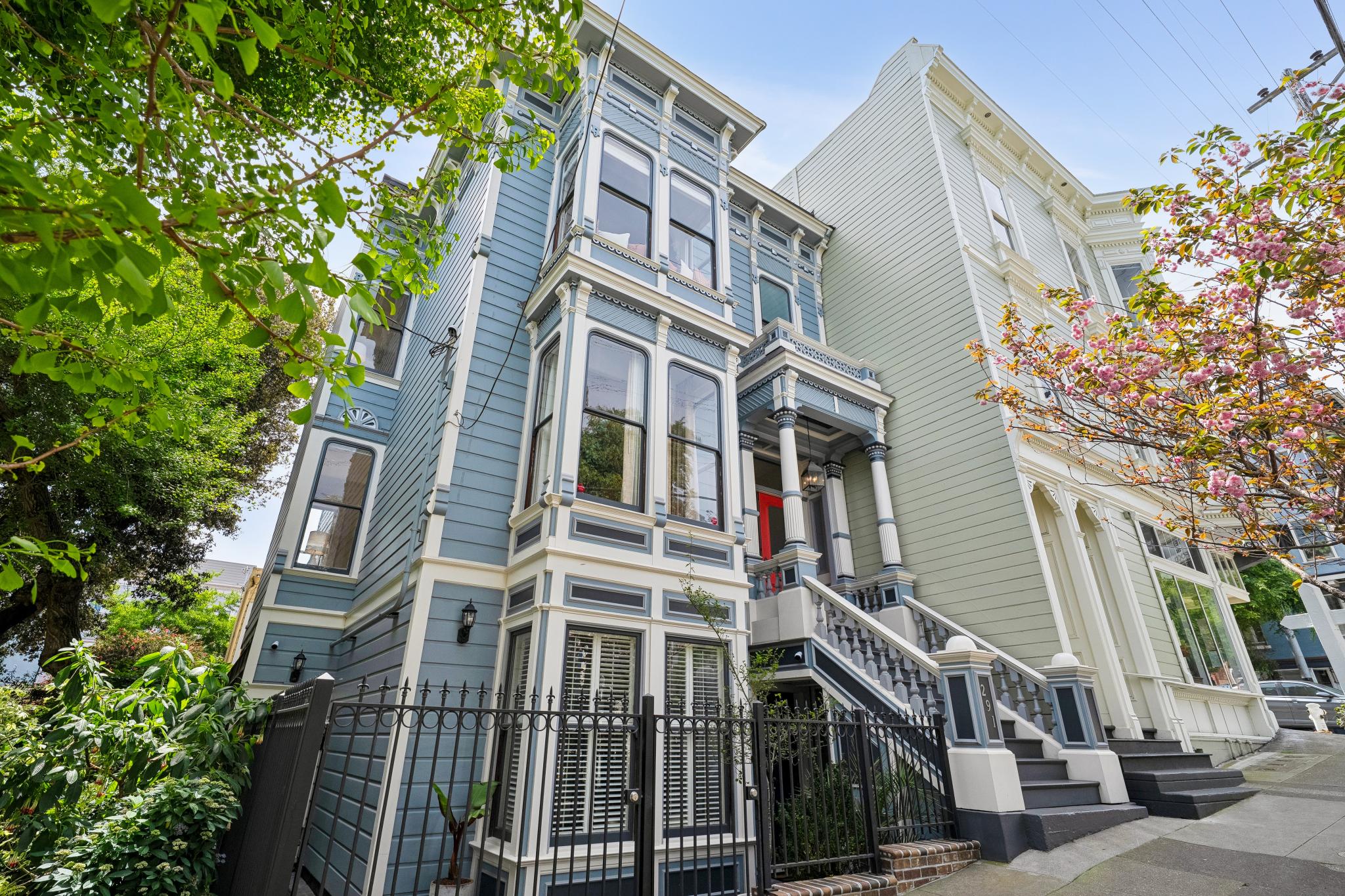
There is a particular quality of ambition embedded in the bones of 287-291 Page Street — one that has not dimmed in the 141 years since the home was raised on what was then the fashionable frontier of a rapidly expanding city. Built in 1885 in the Eastlake Stick style, the home belongs to a distinctly American architectural moment: an era when the emerging merchant and professional class embraced the ornamental vocabulary of the catalog — turned spindles, incised geometric details, projecting bays, and layered facade articulation — as a means of expressing individuality within a newly democratic ideal of domestic life. The result was a building type that managed to be both exuberant and disciplined, personal and civic. This home remains one of its finest surviving examples.
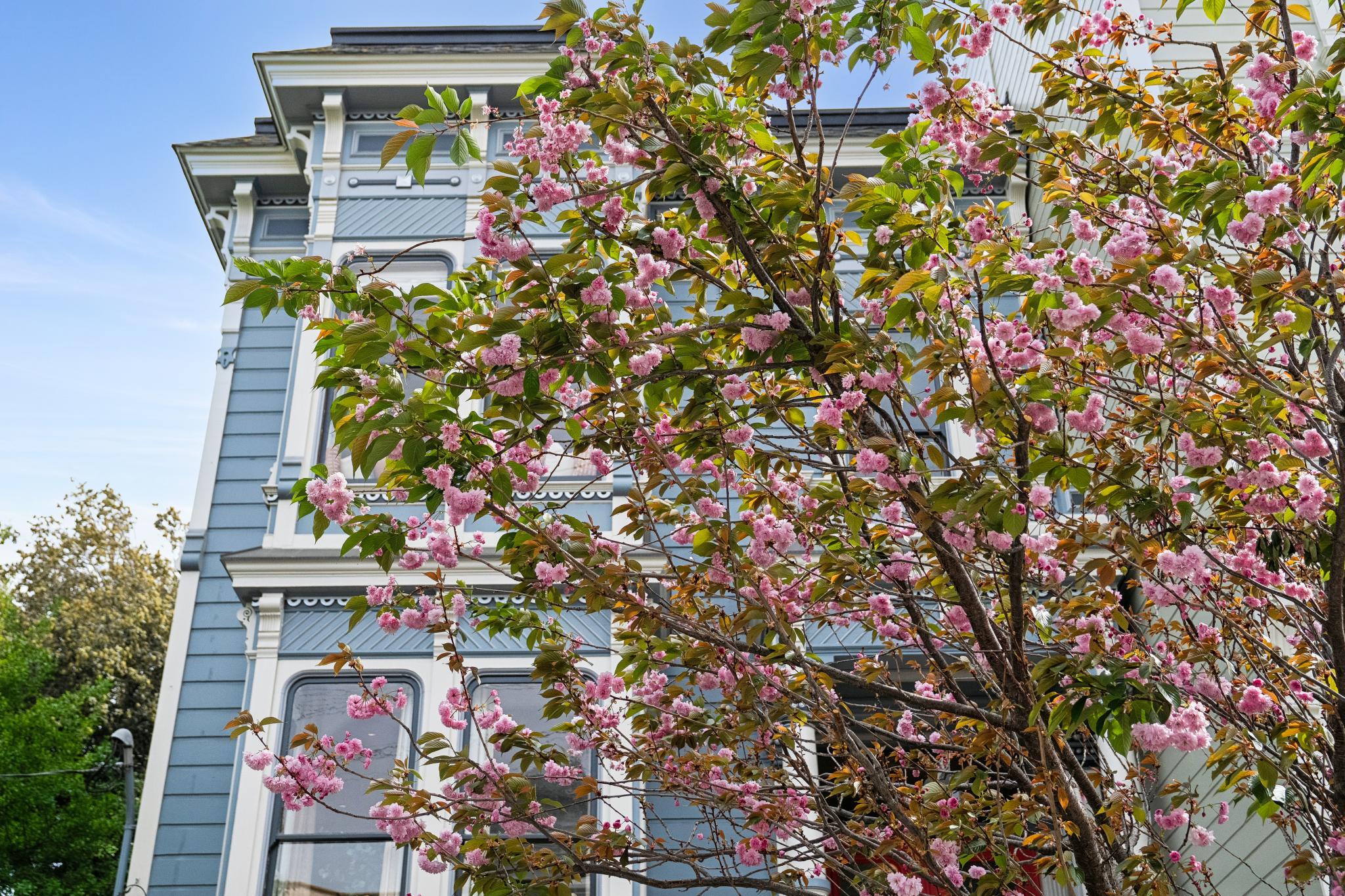
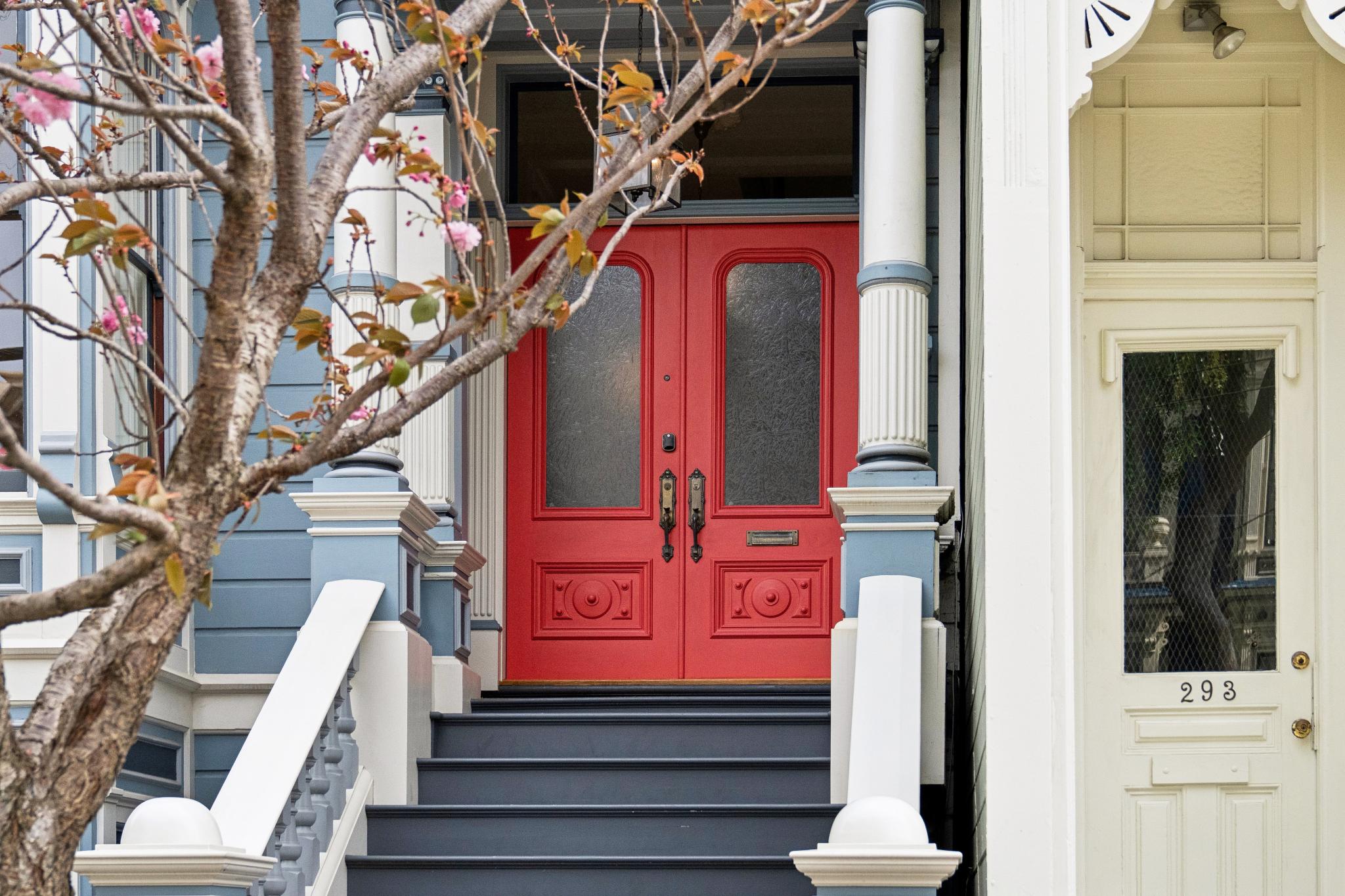
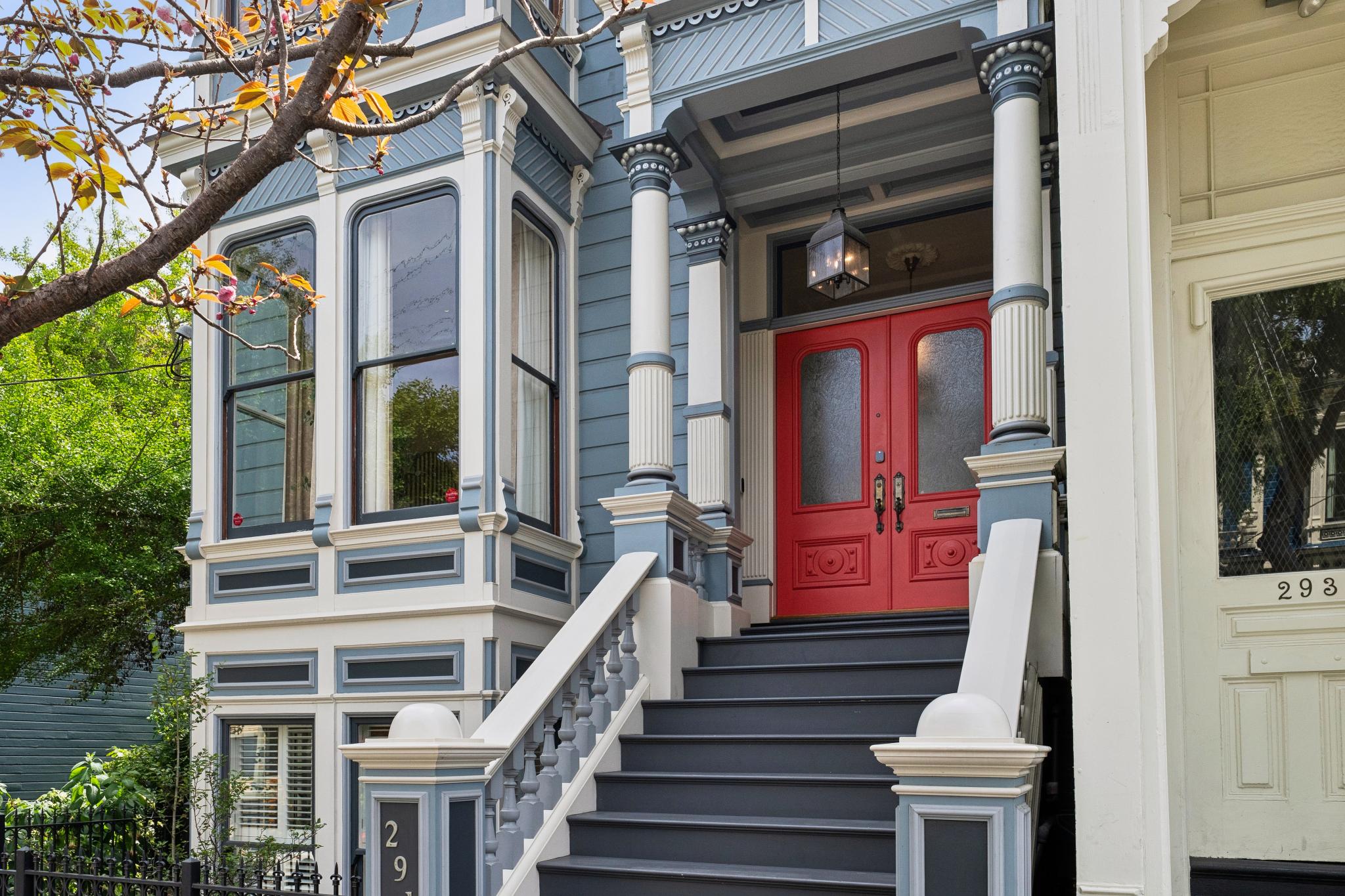
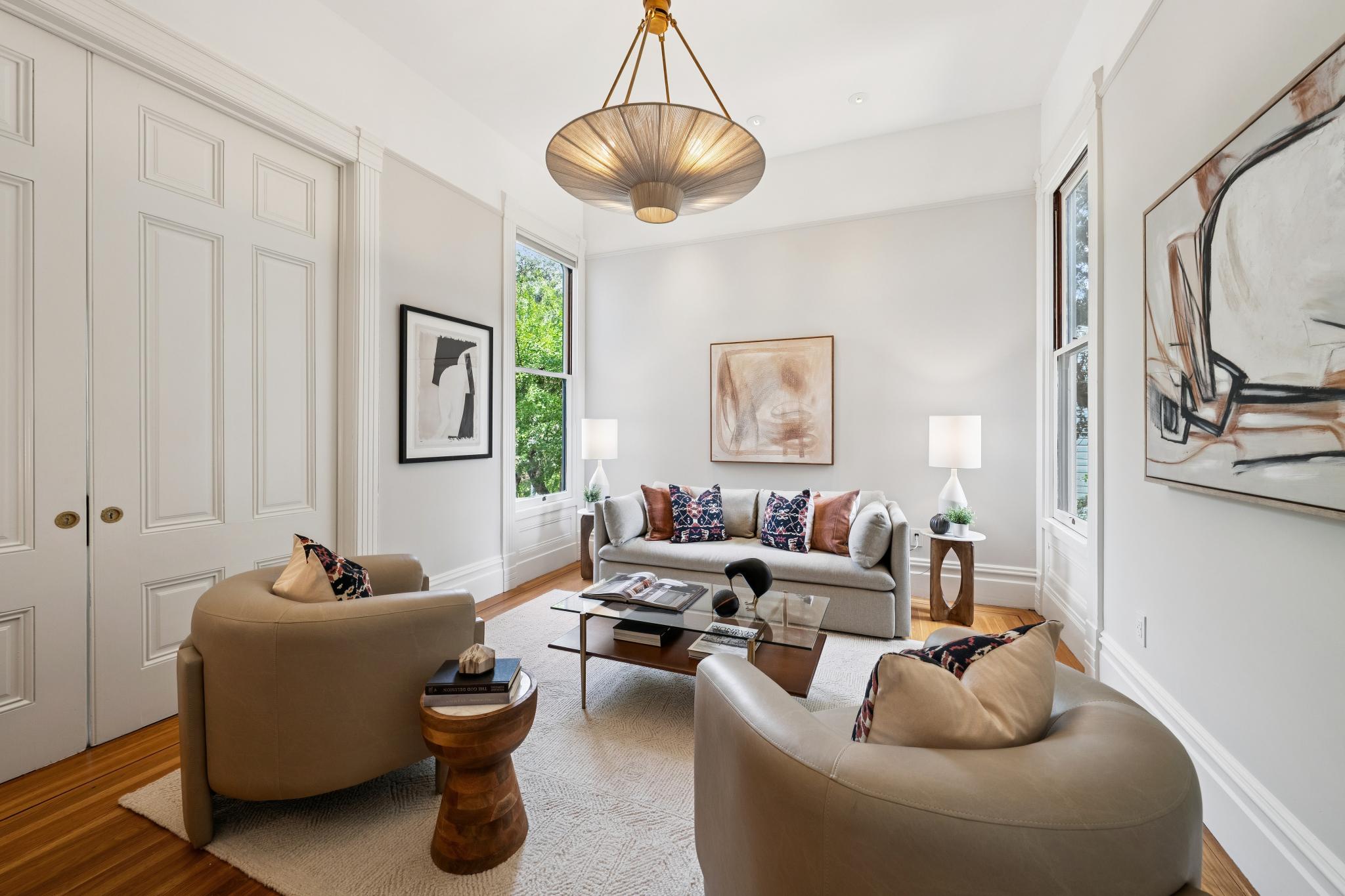
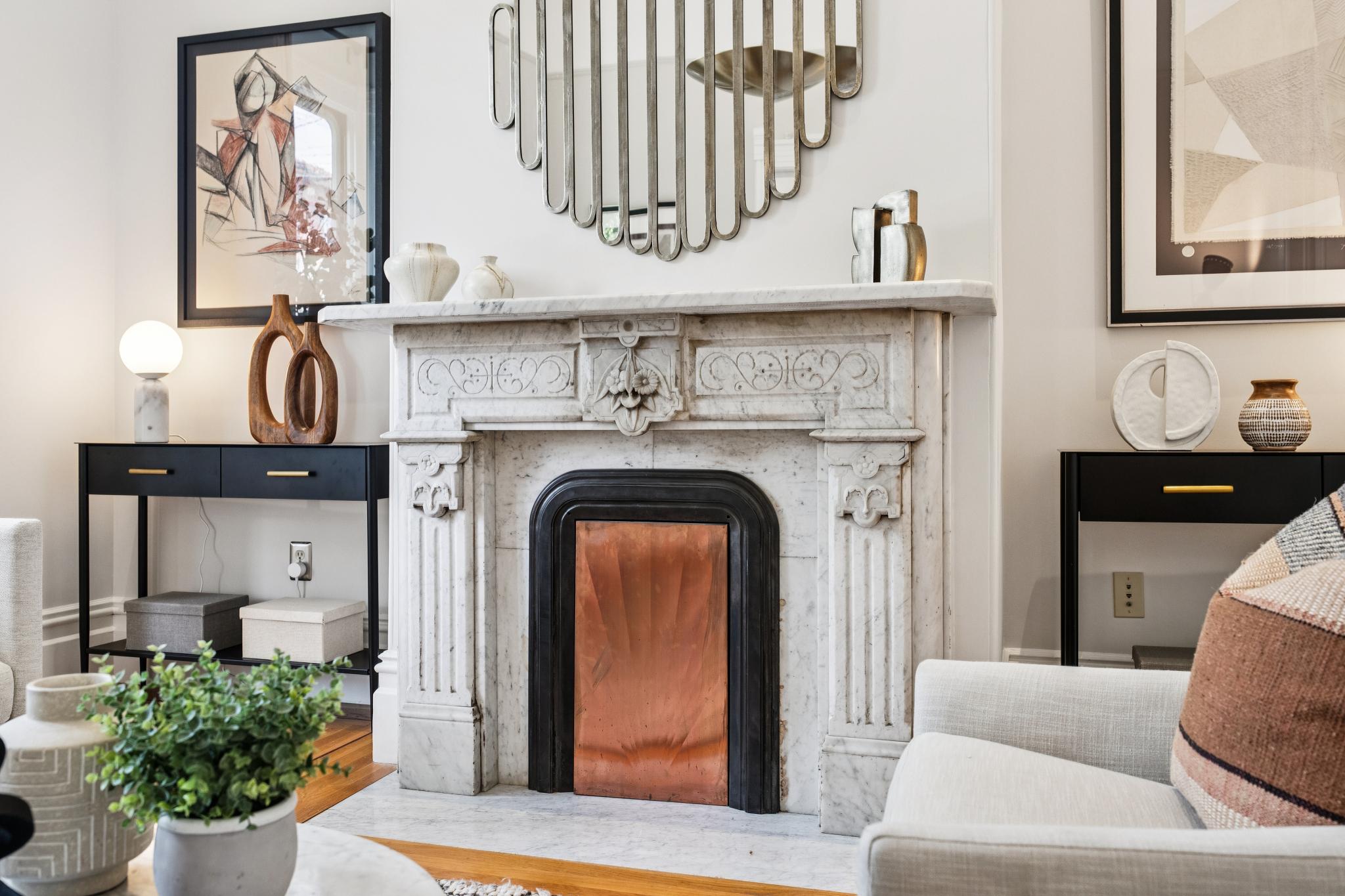
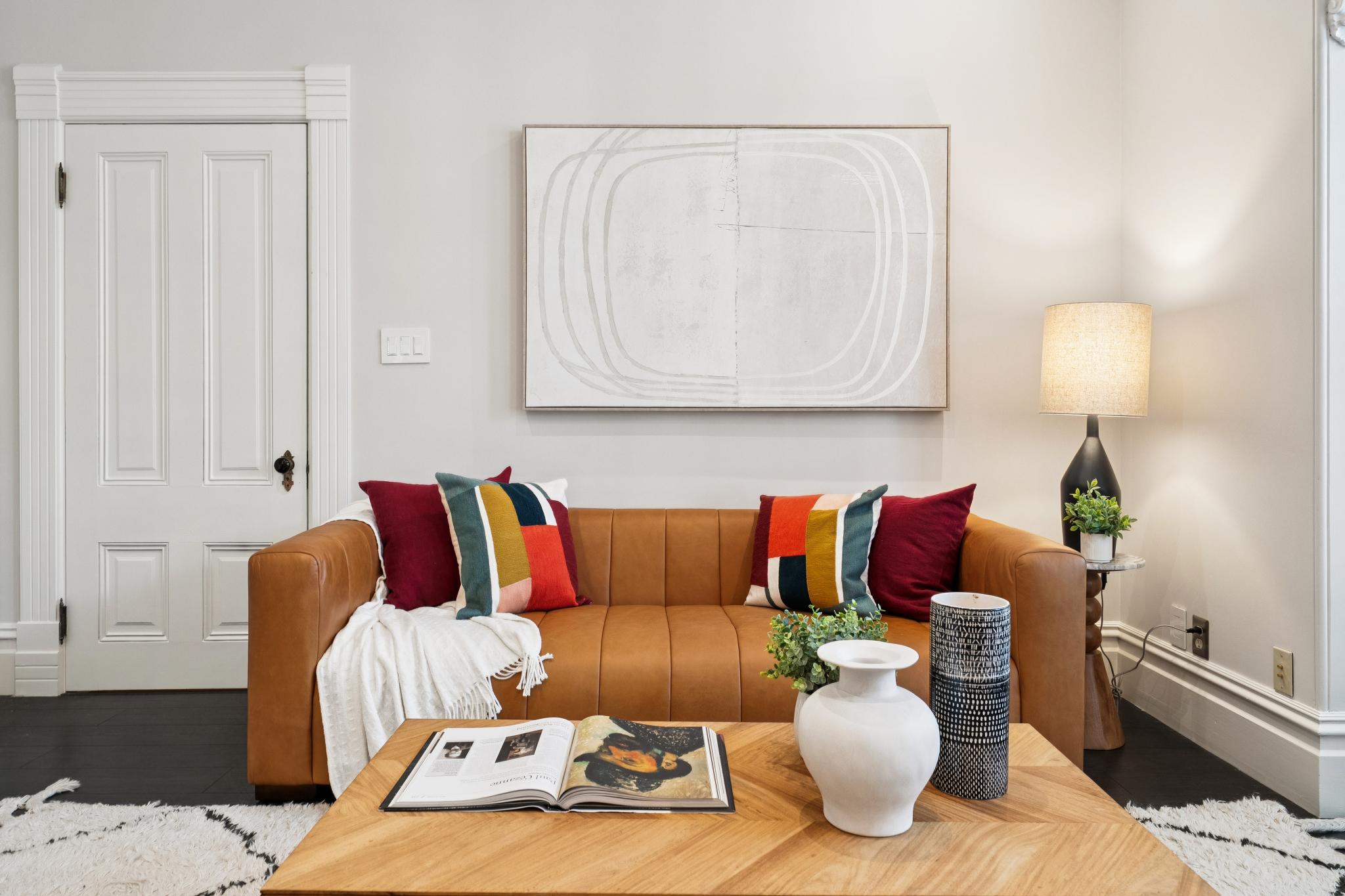
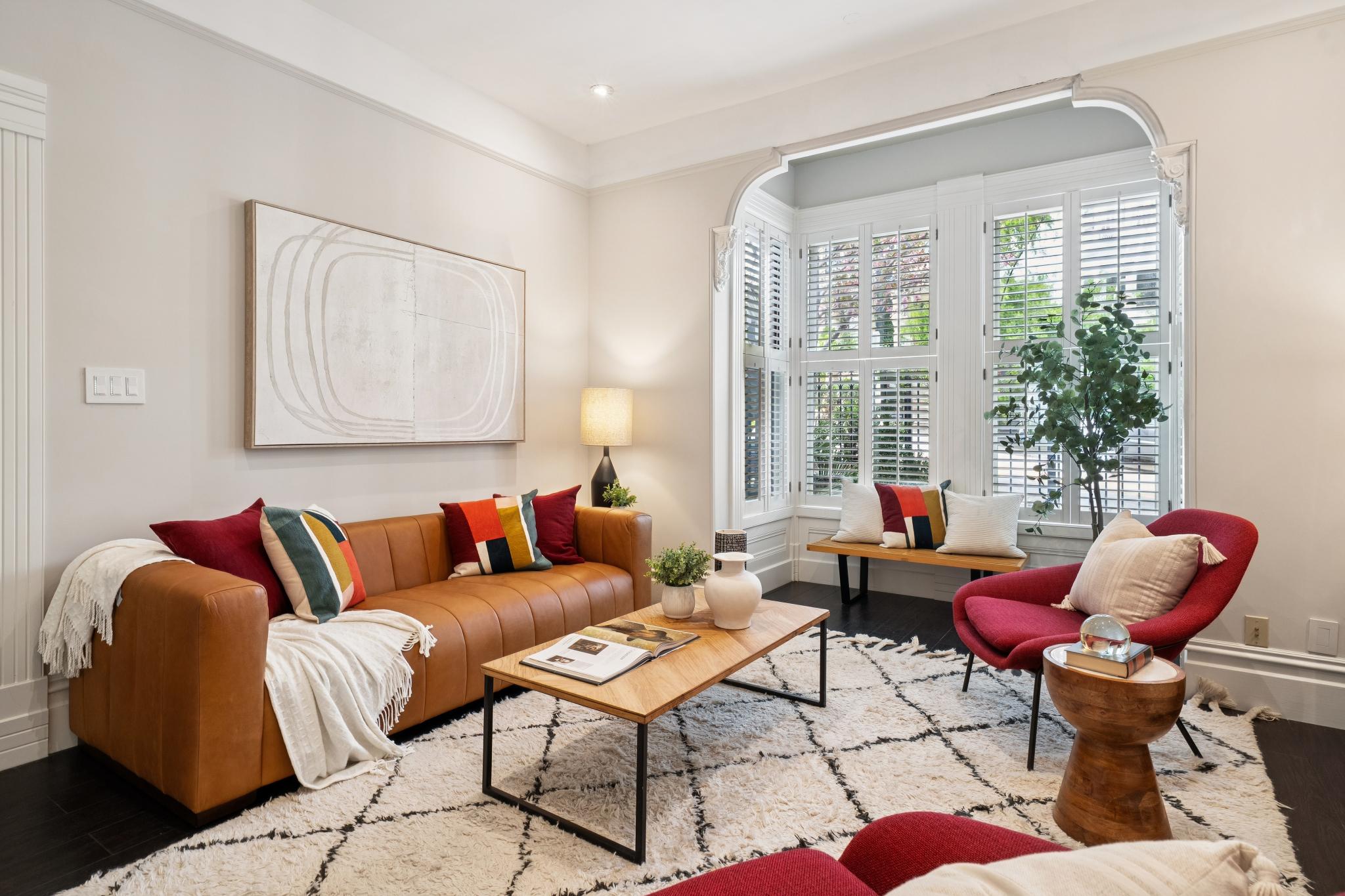
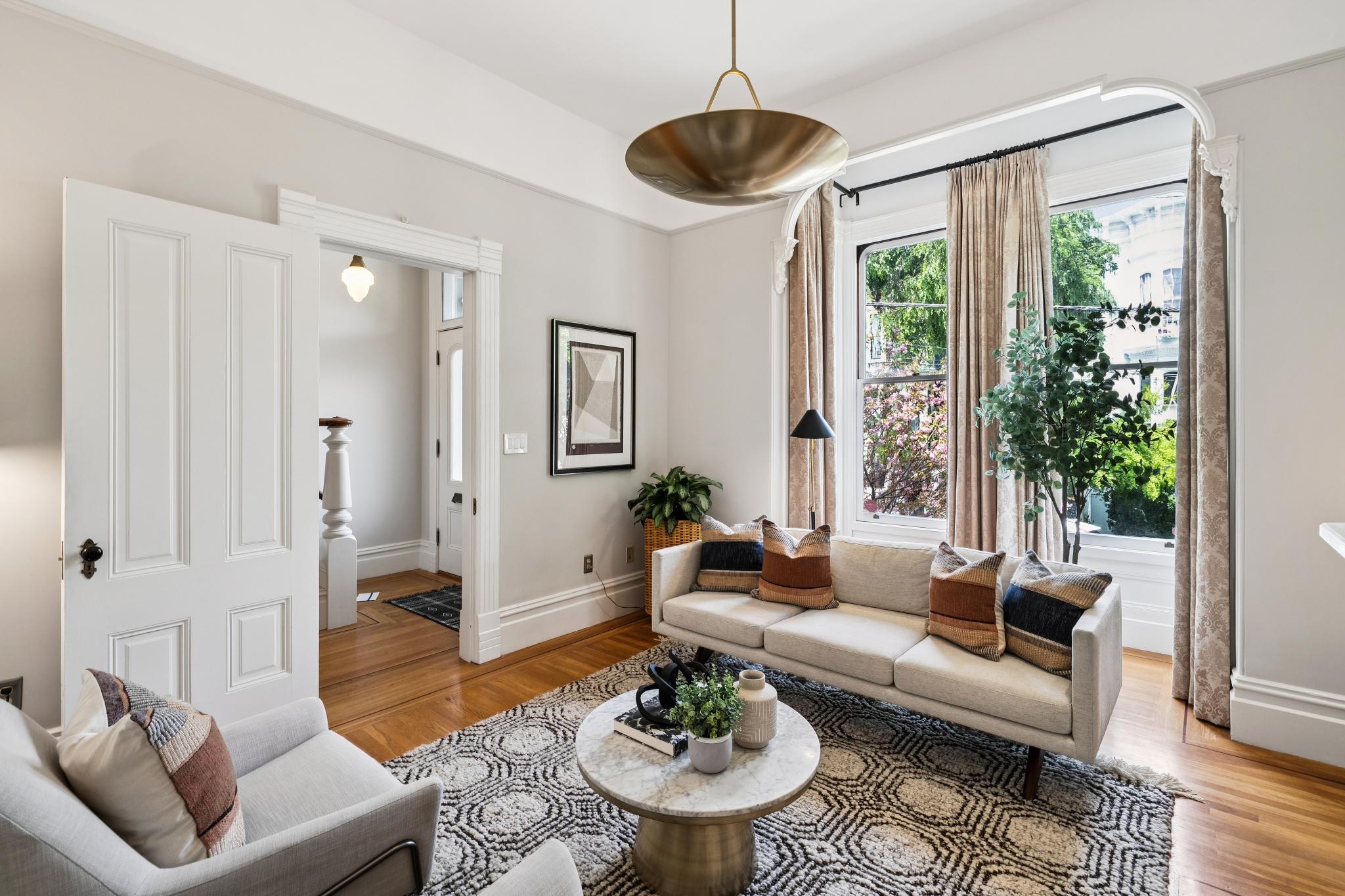
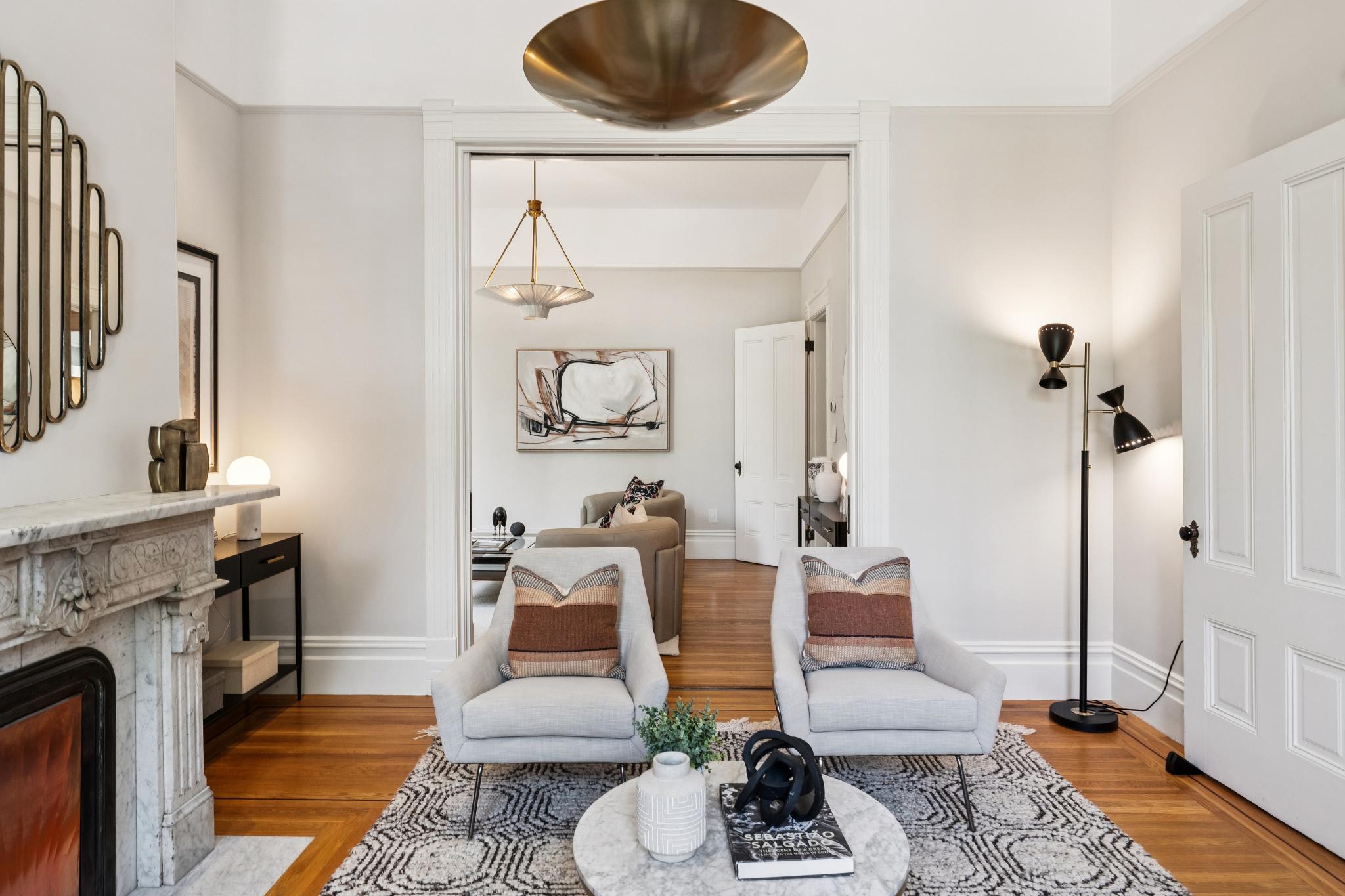
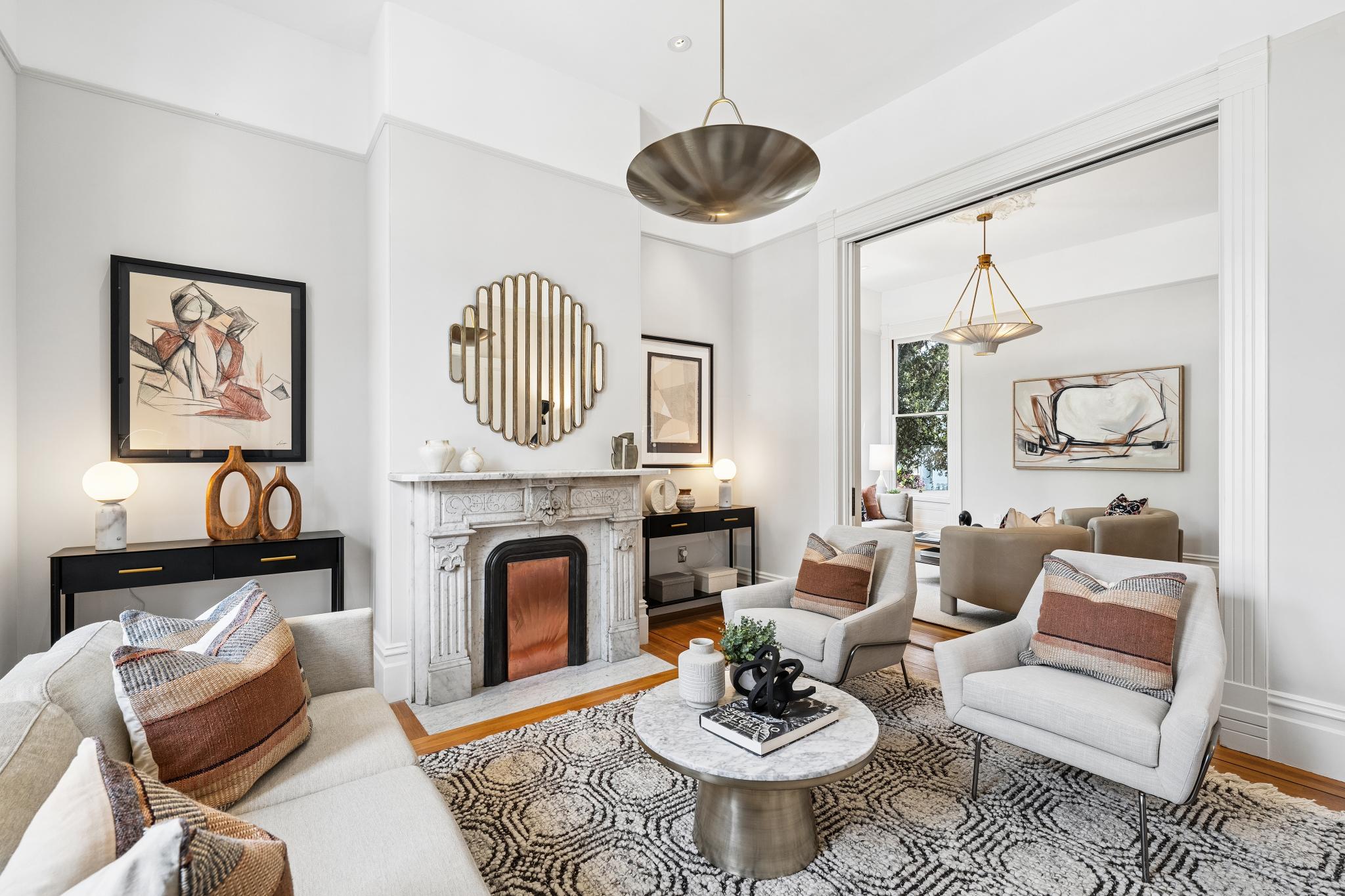
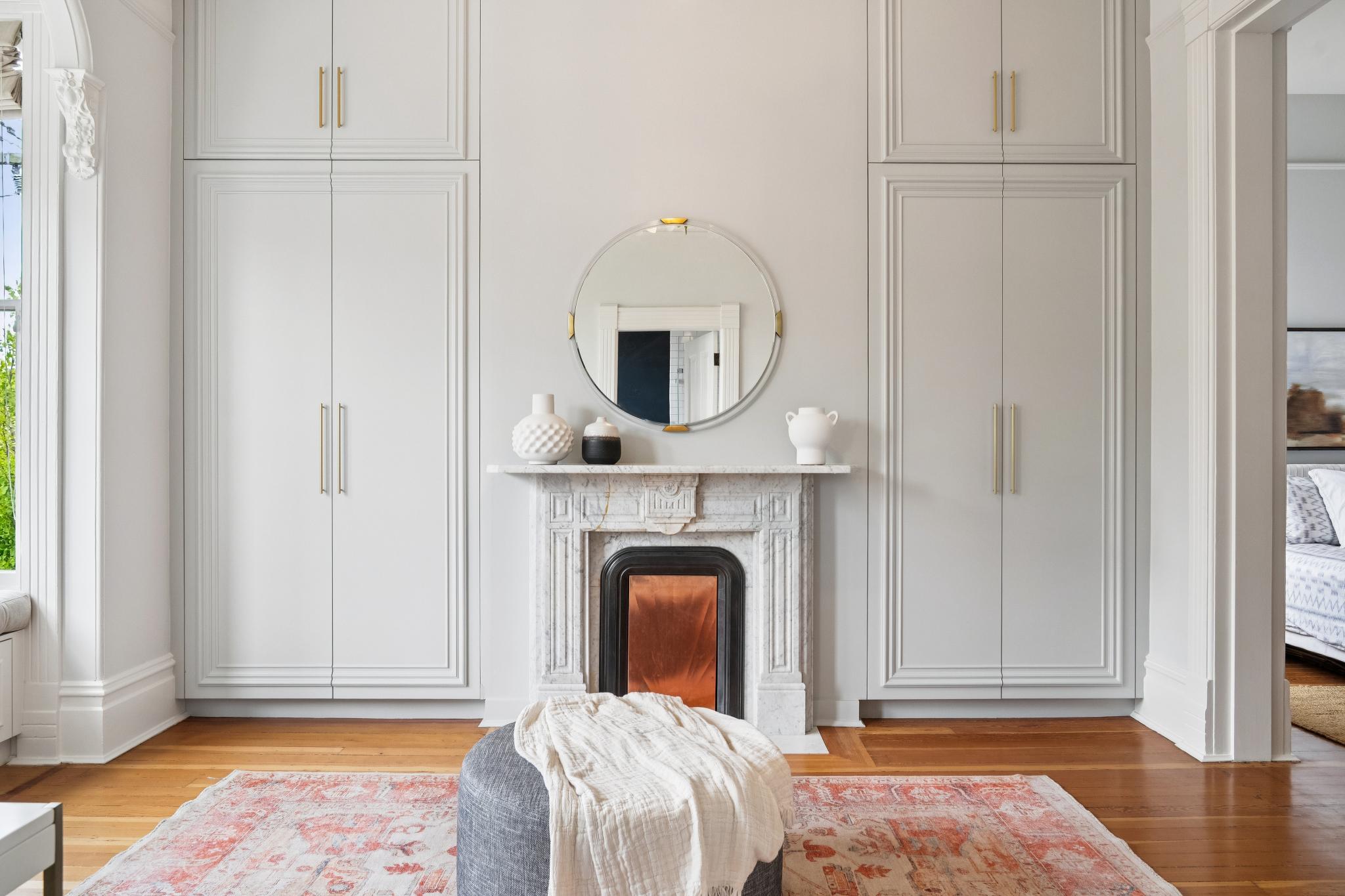
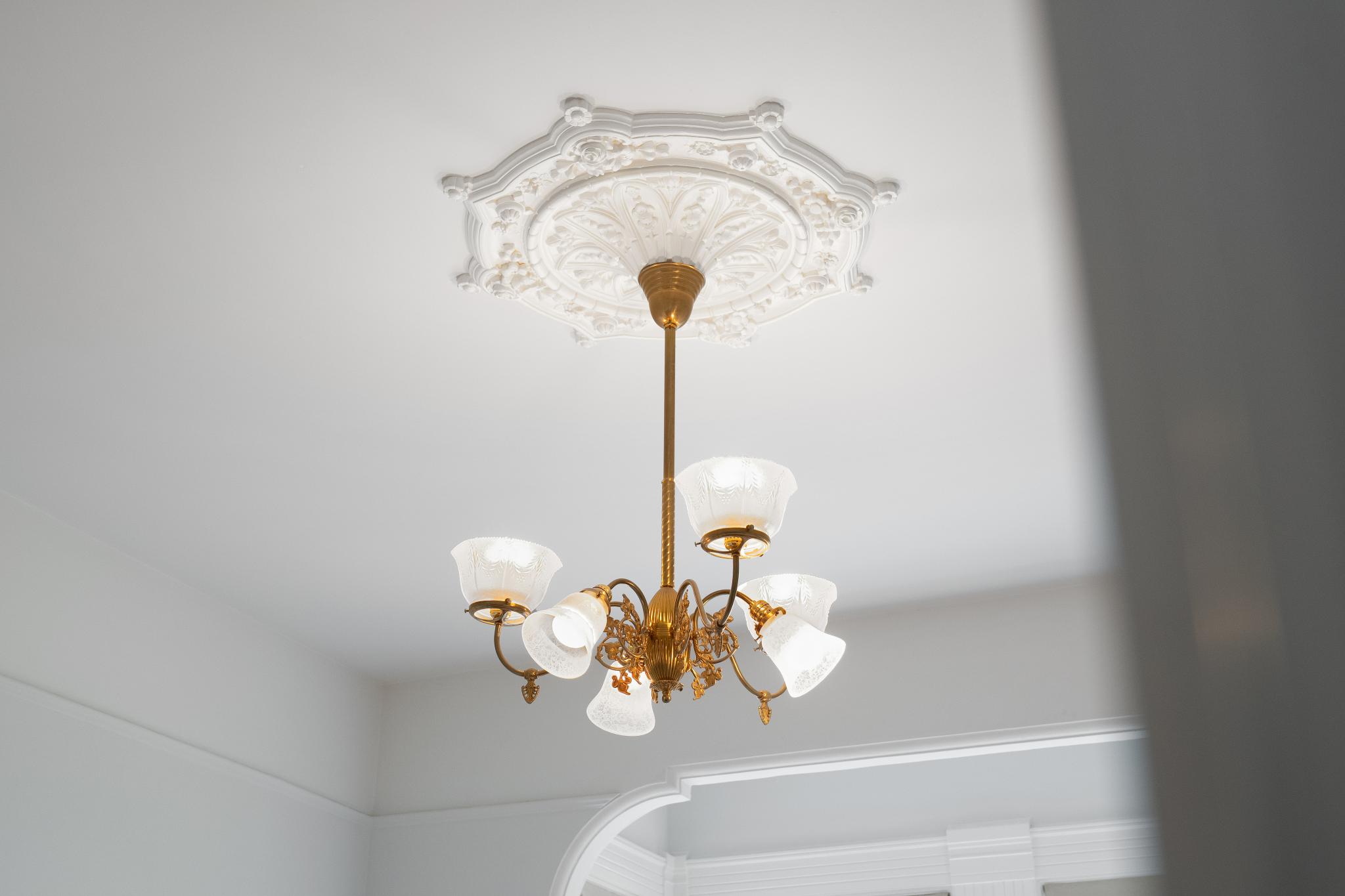
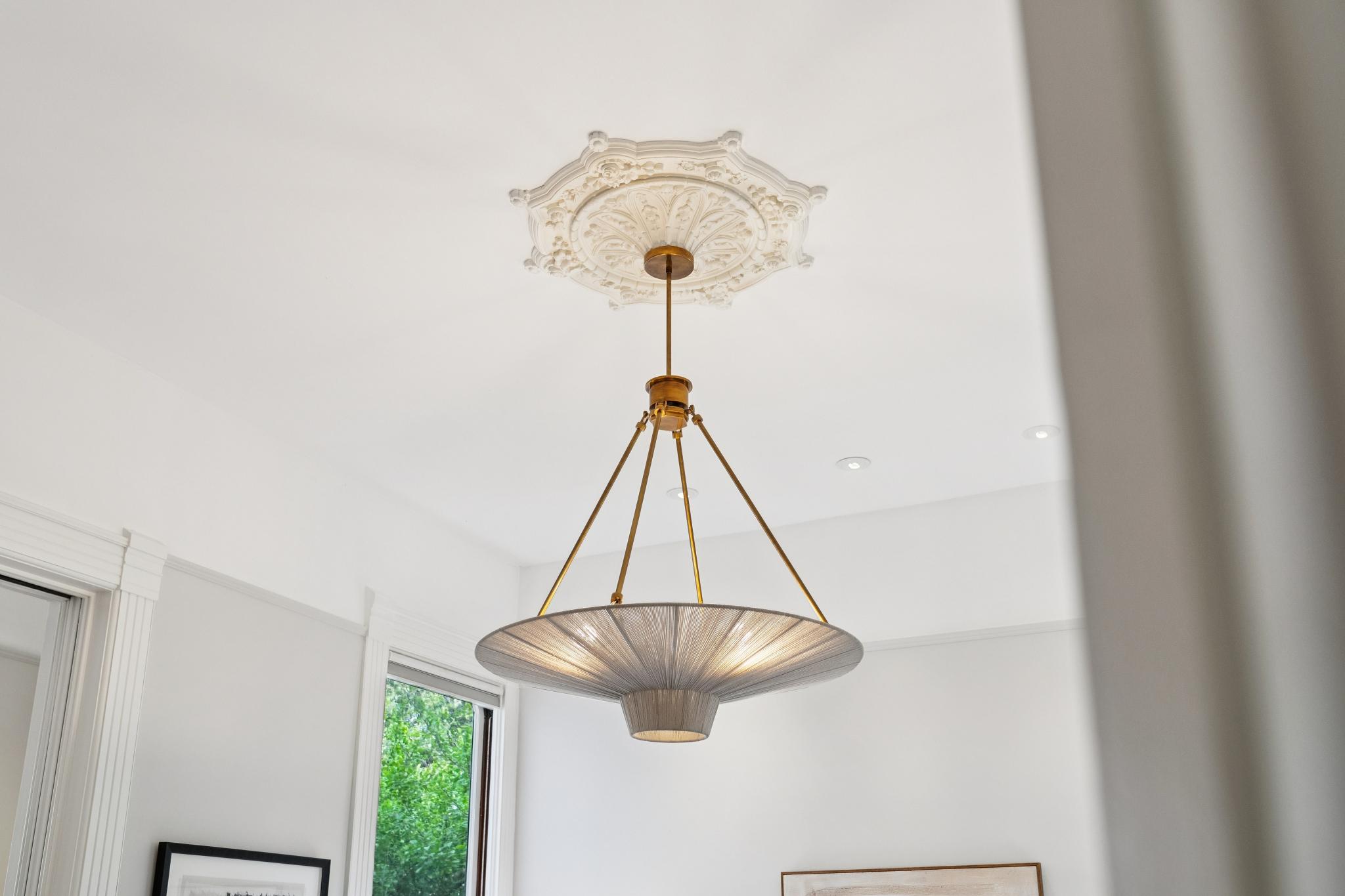
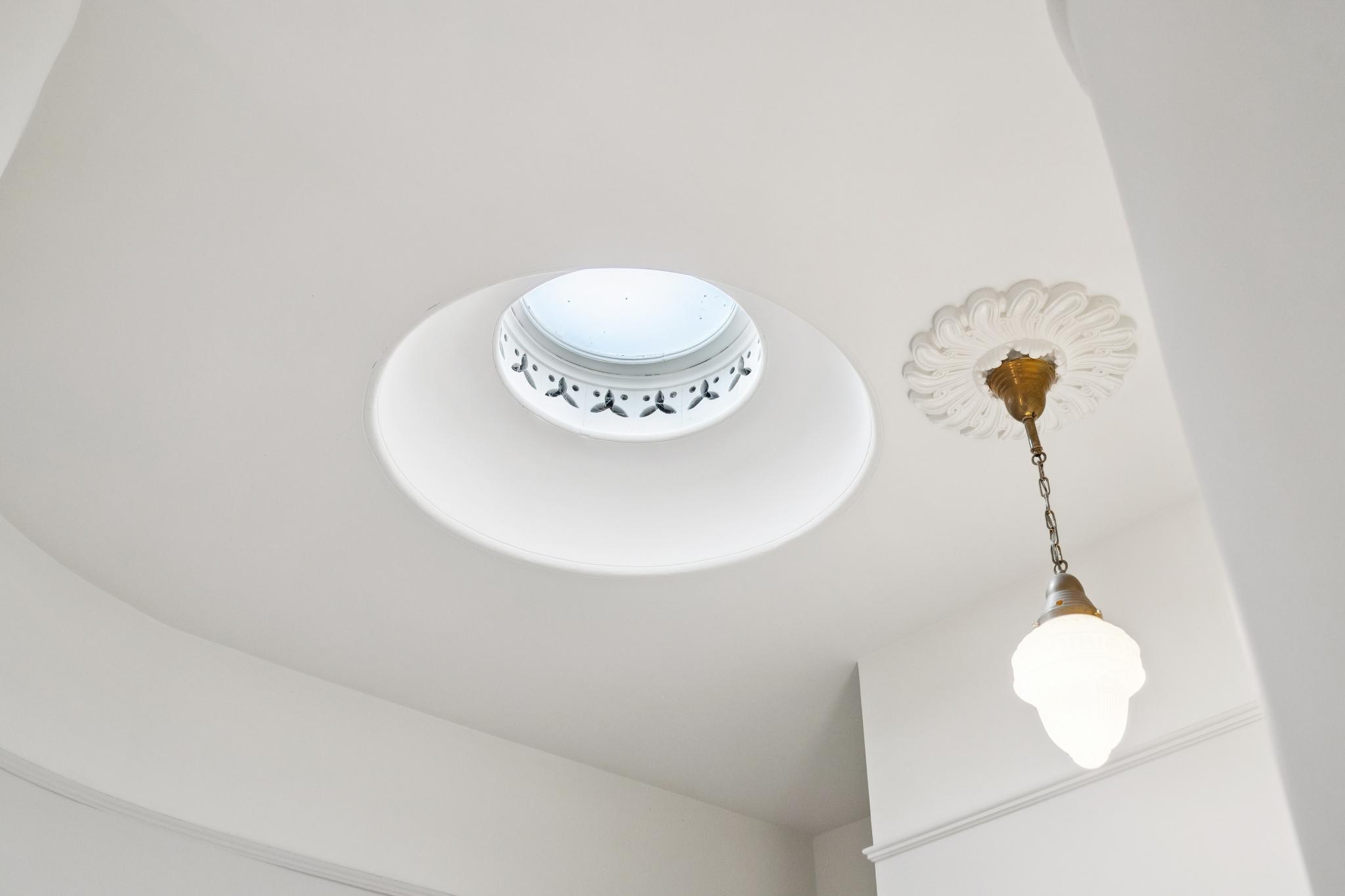
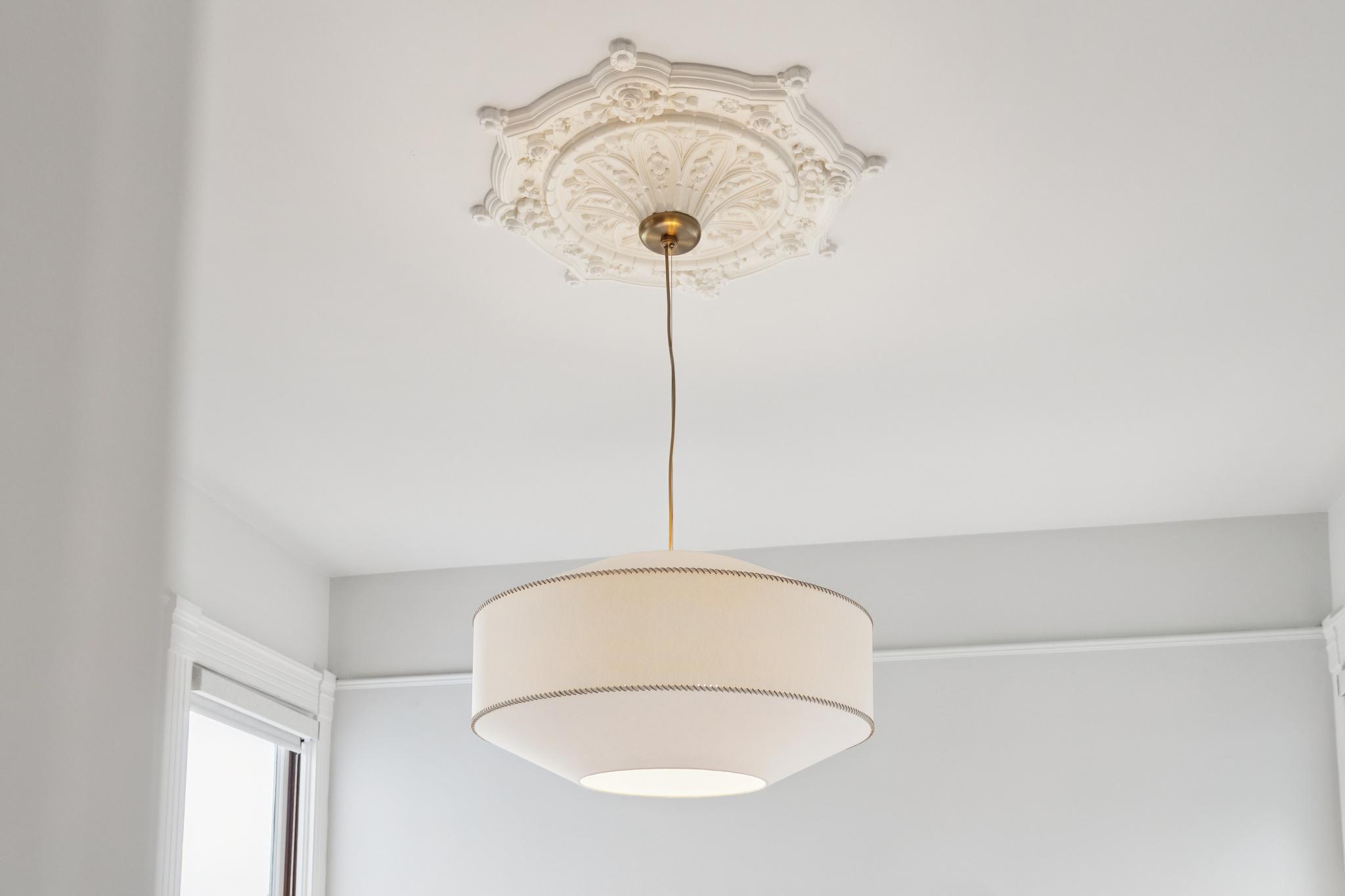
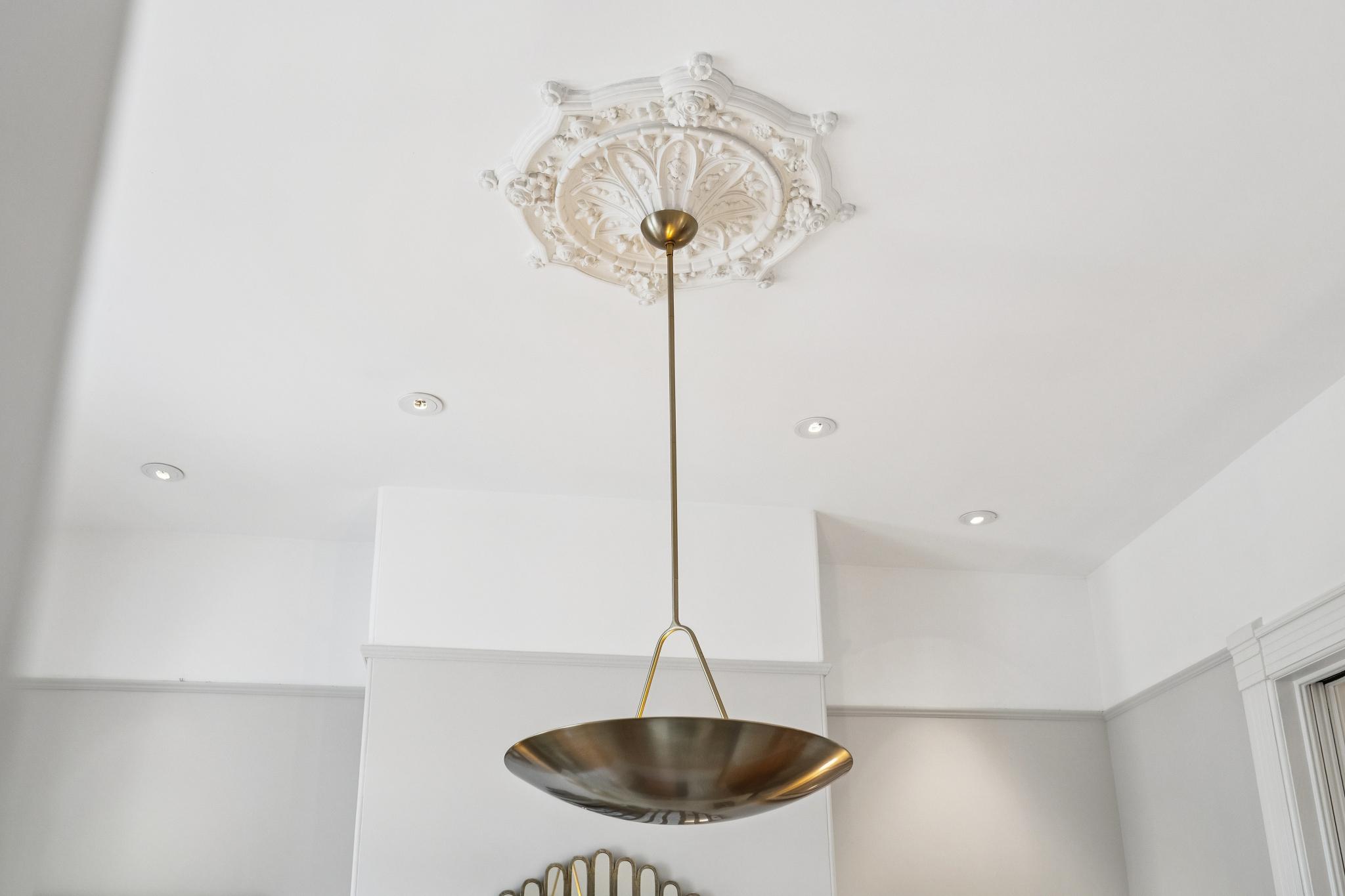
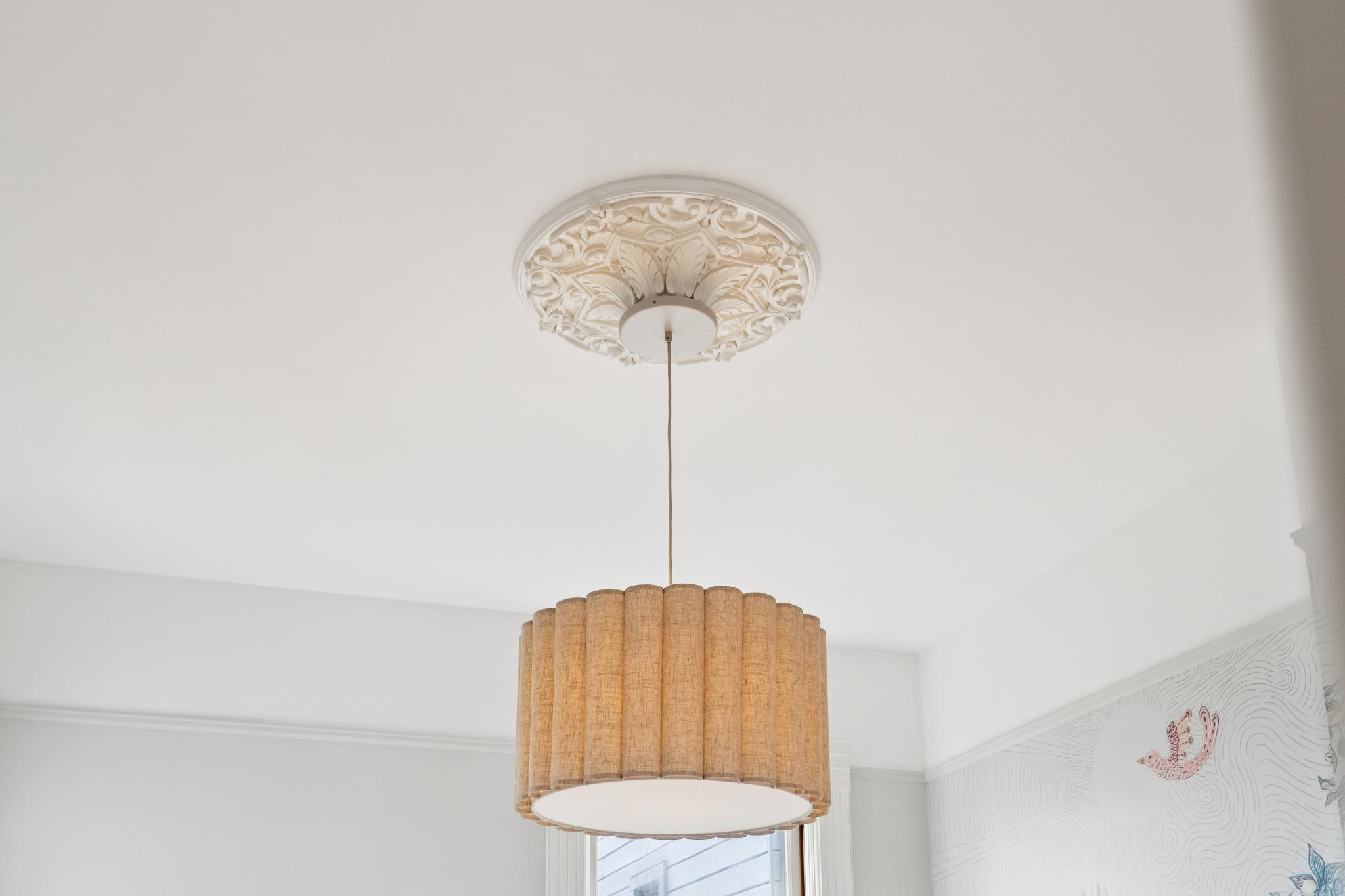
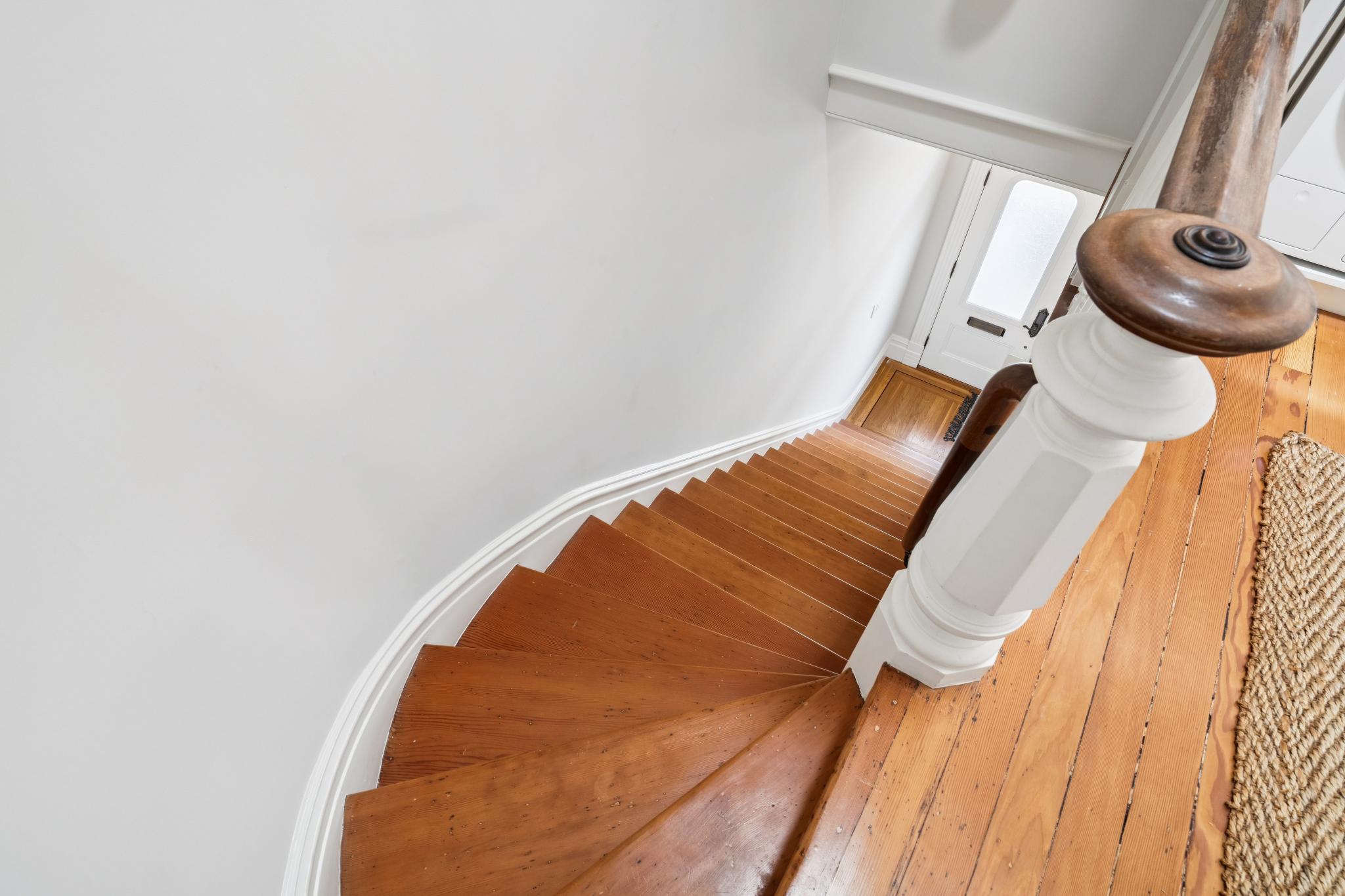
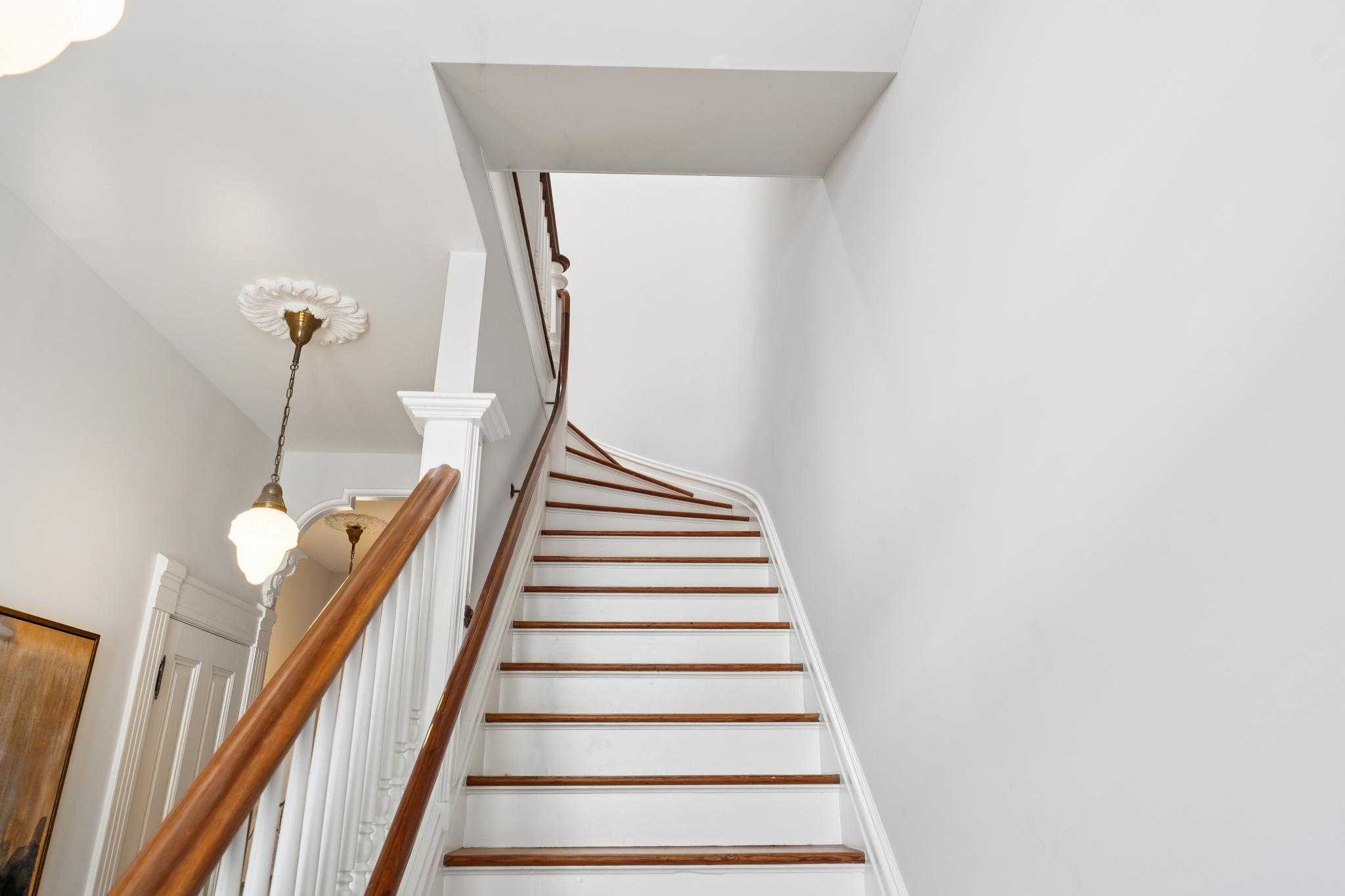
The approach announces its pedigree immediately. The soft blue facade with its precise white trim, the elevated double-doored entry framed by ornate classical columns, and the cherry blossom that softens the streetscape in season together compose a tableau that feels genuinely cinematic. Through those striking red double doors — fitted with frosted glass panels and a modern smart lock that nods to contemporary life without apology — the architecture declares itself fully. A sweeping curved staircase rises to the right, its warm wood treads, white balustrade, and polished handrail ascending beneath a vintage pendant suspended from an ornate plaster ceiling medallion. To the left, the formal entertaining rooms open with the kind of easy, unhurried scale that newer construction cannot replicate: high ceilings, wide-plank hardwood floors, marble fireplaces with copper inserts, and windows that fill the rooms with natural light at nearly every hour.
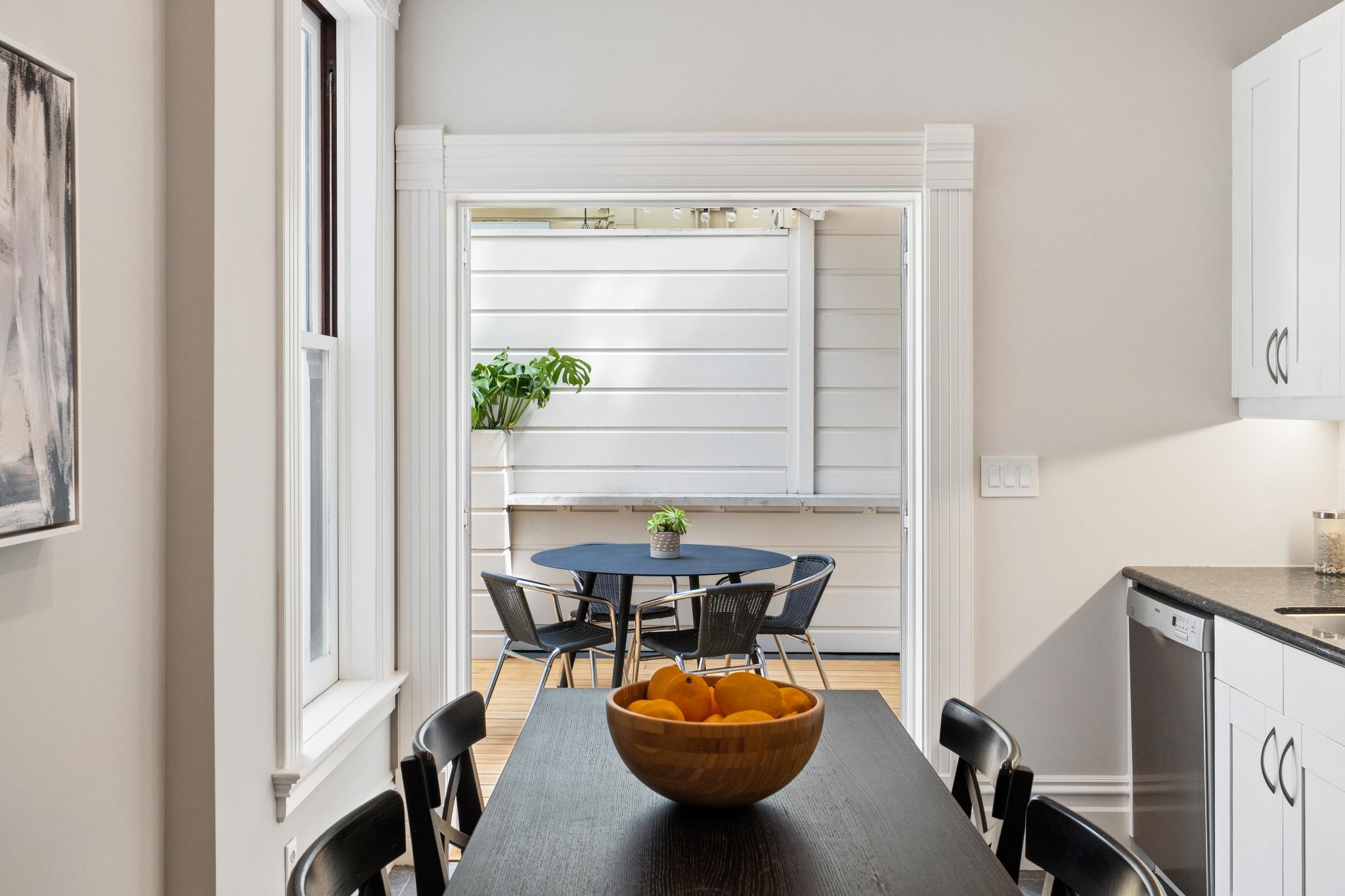
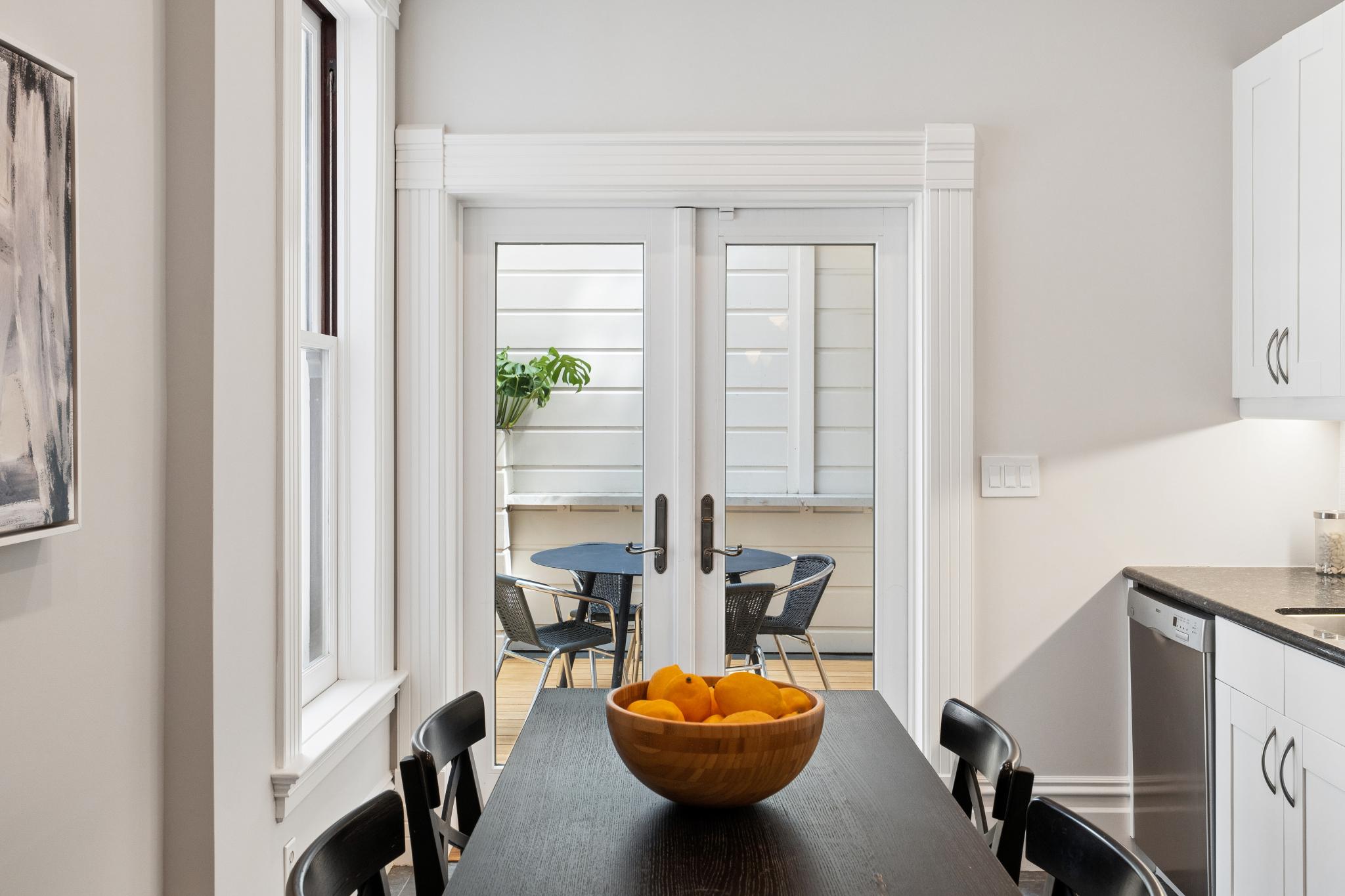
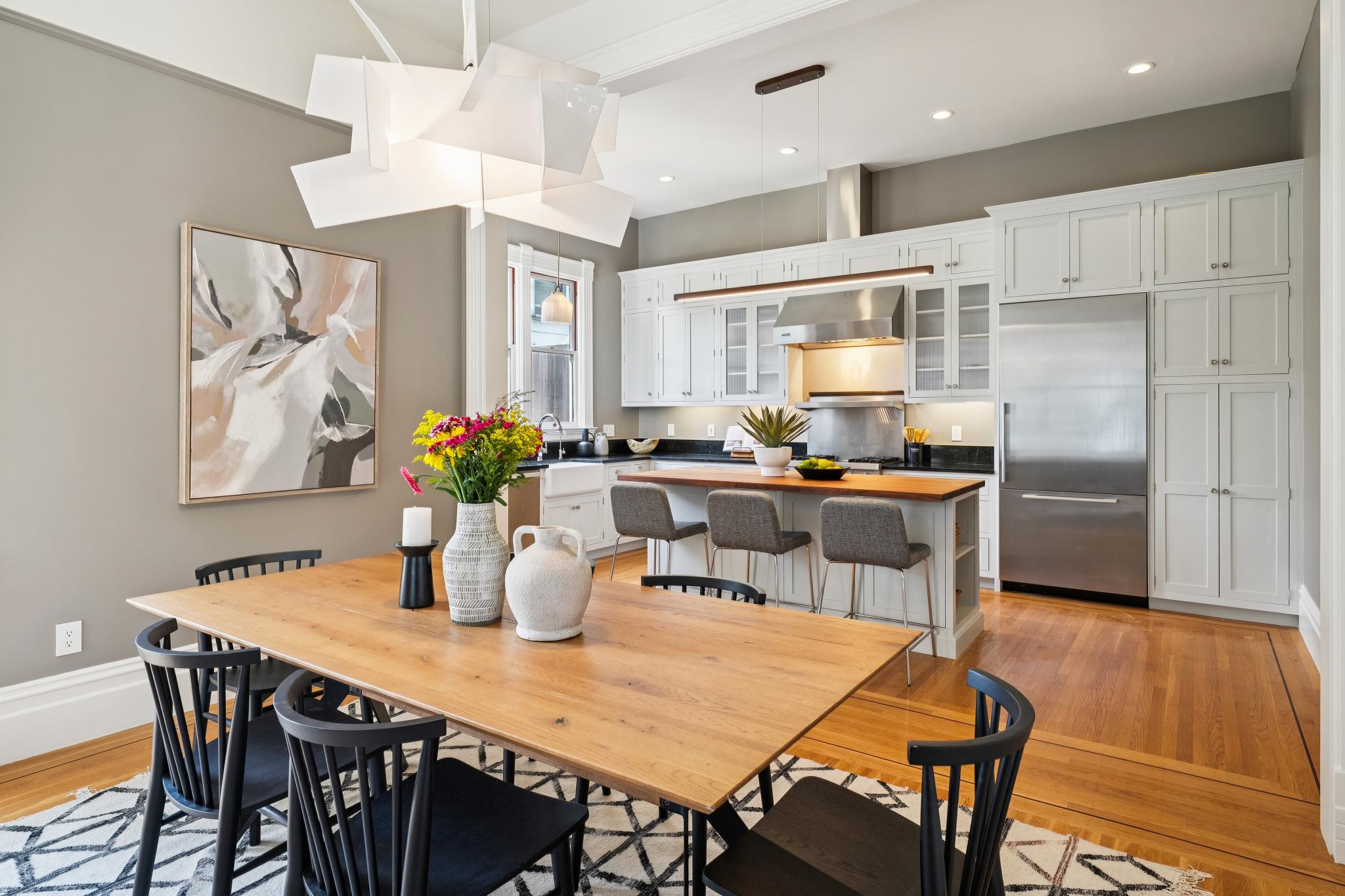
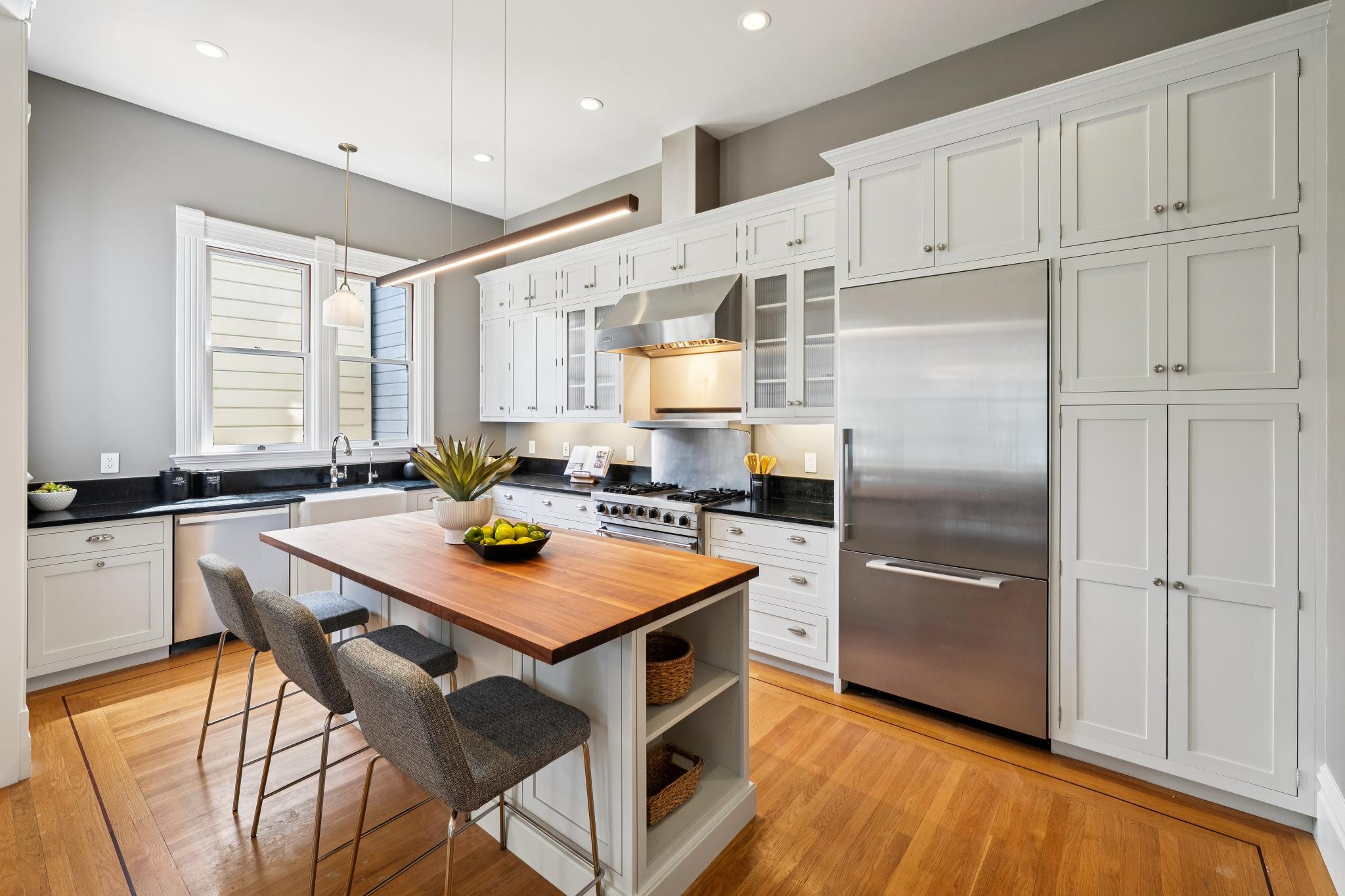
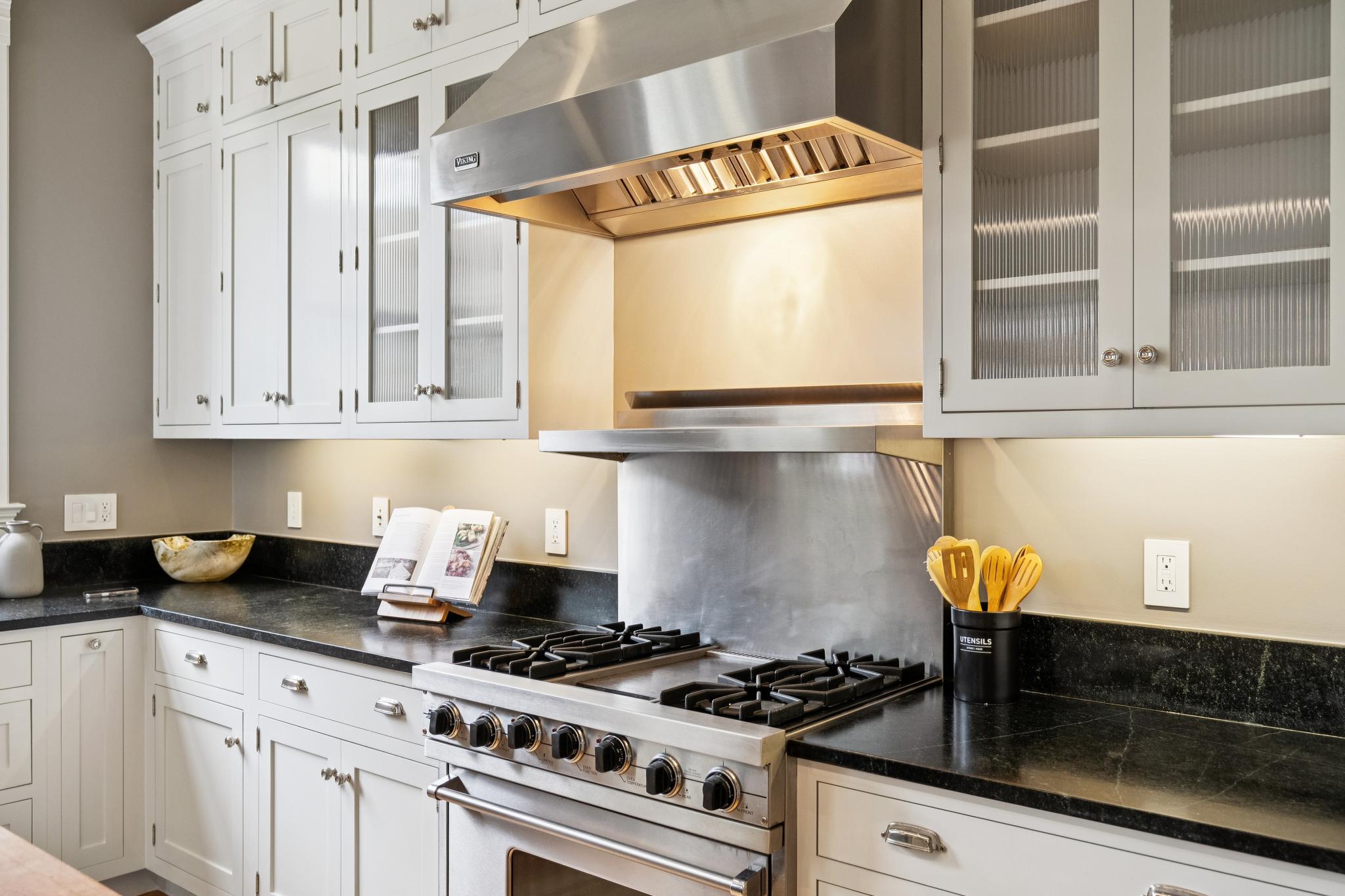
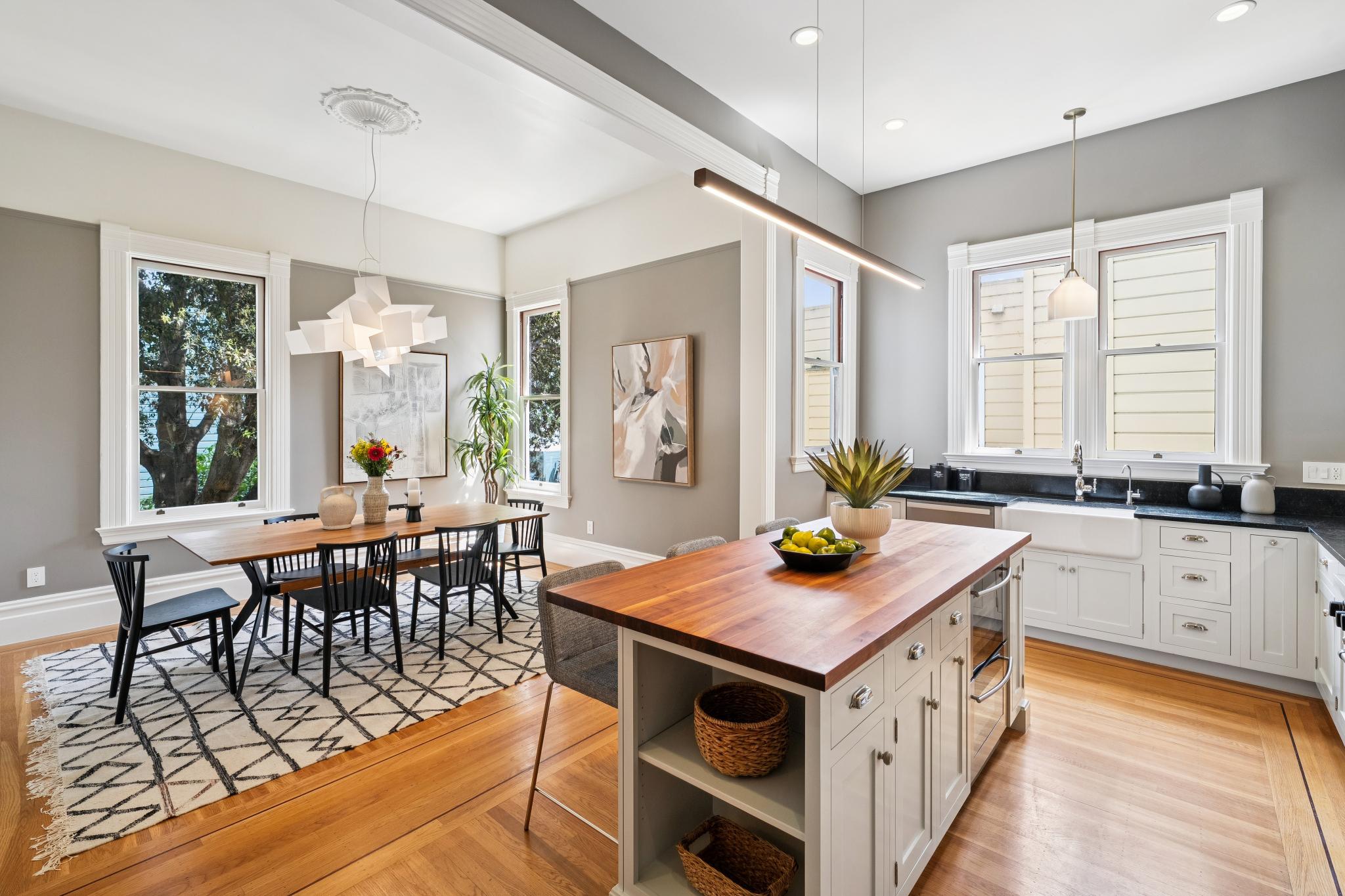
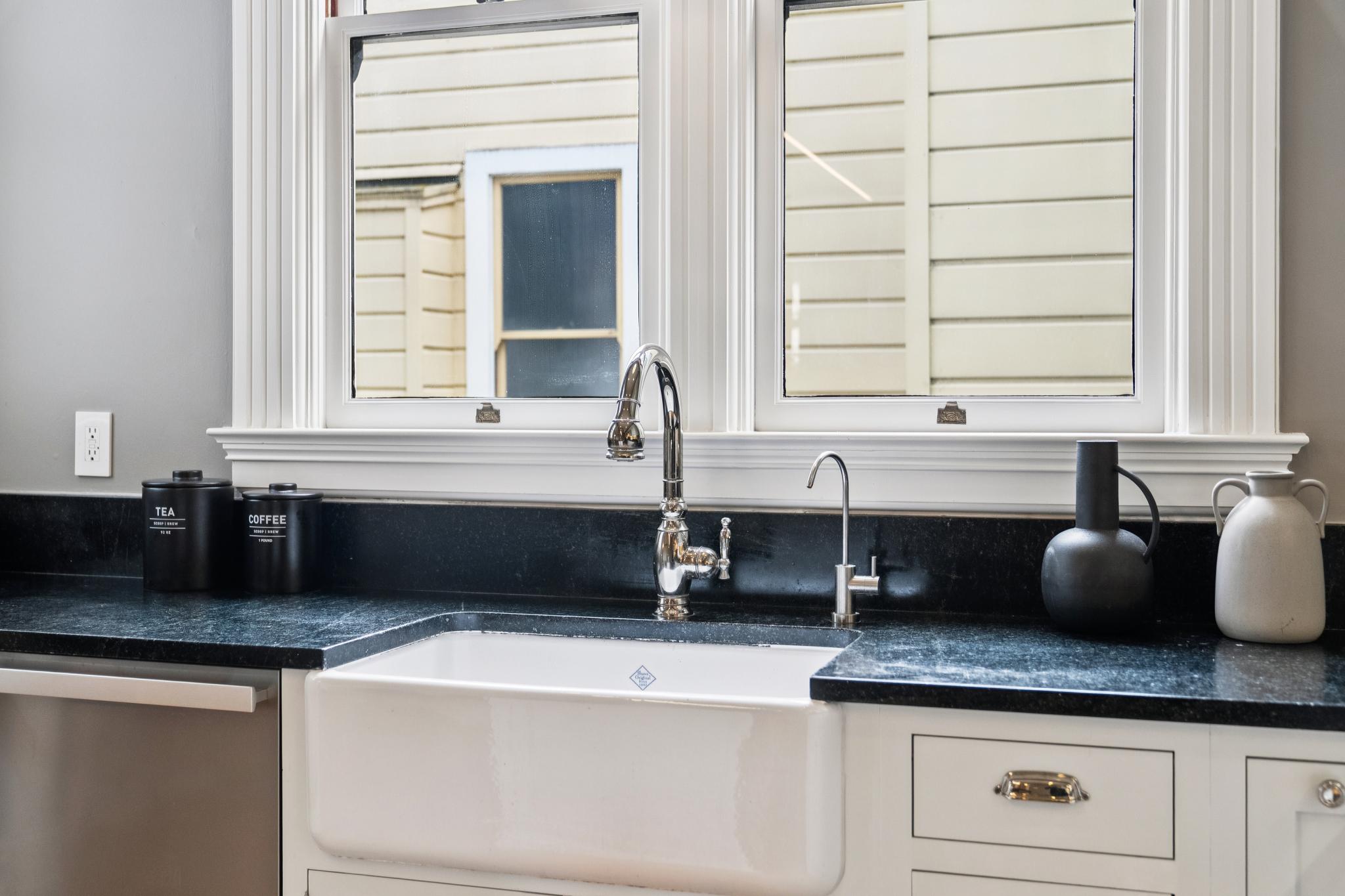
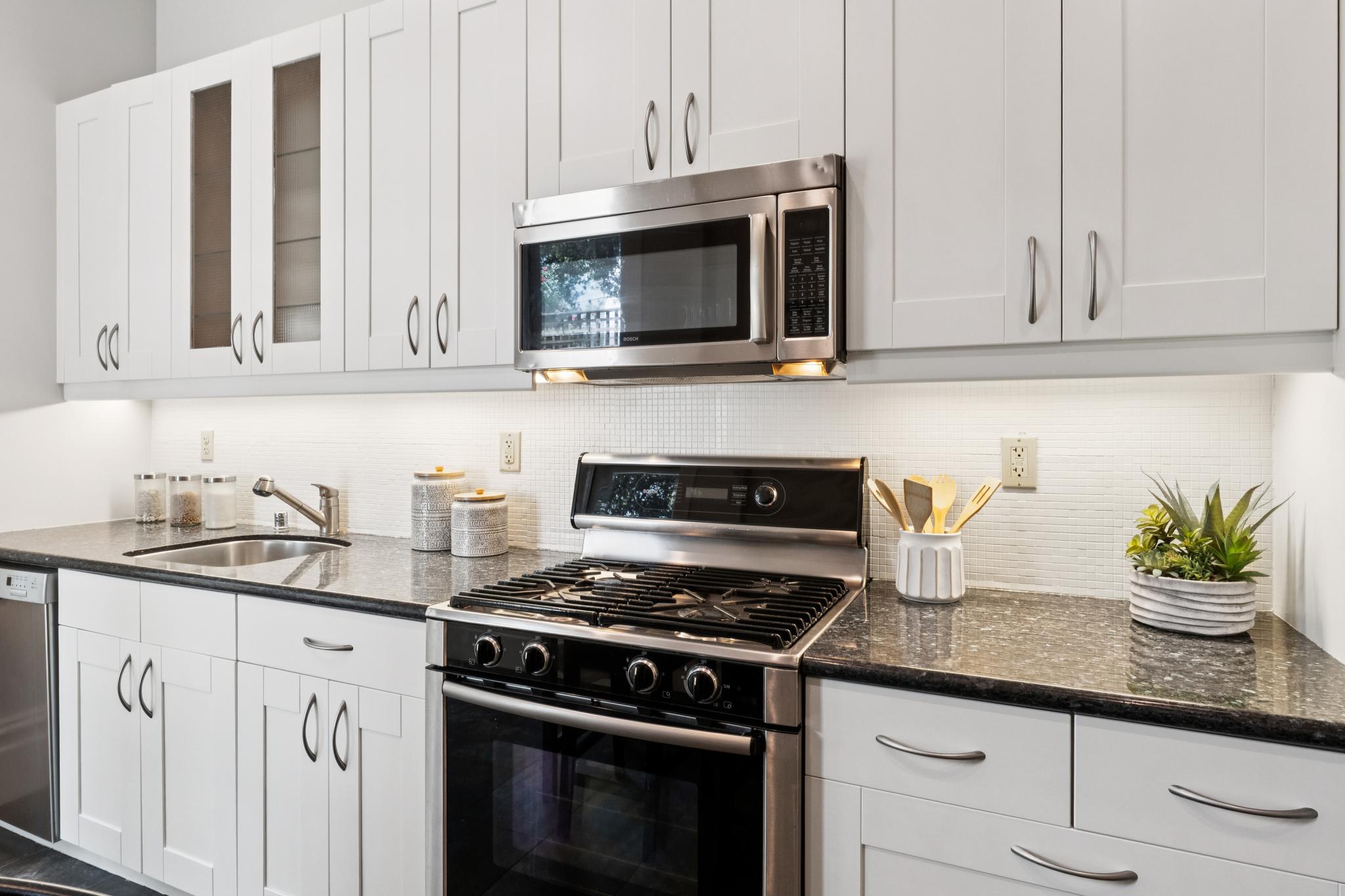
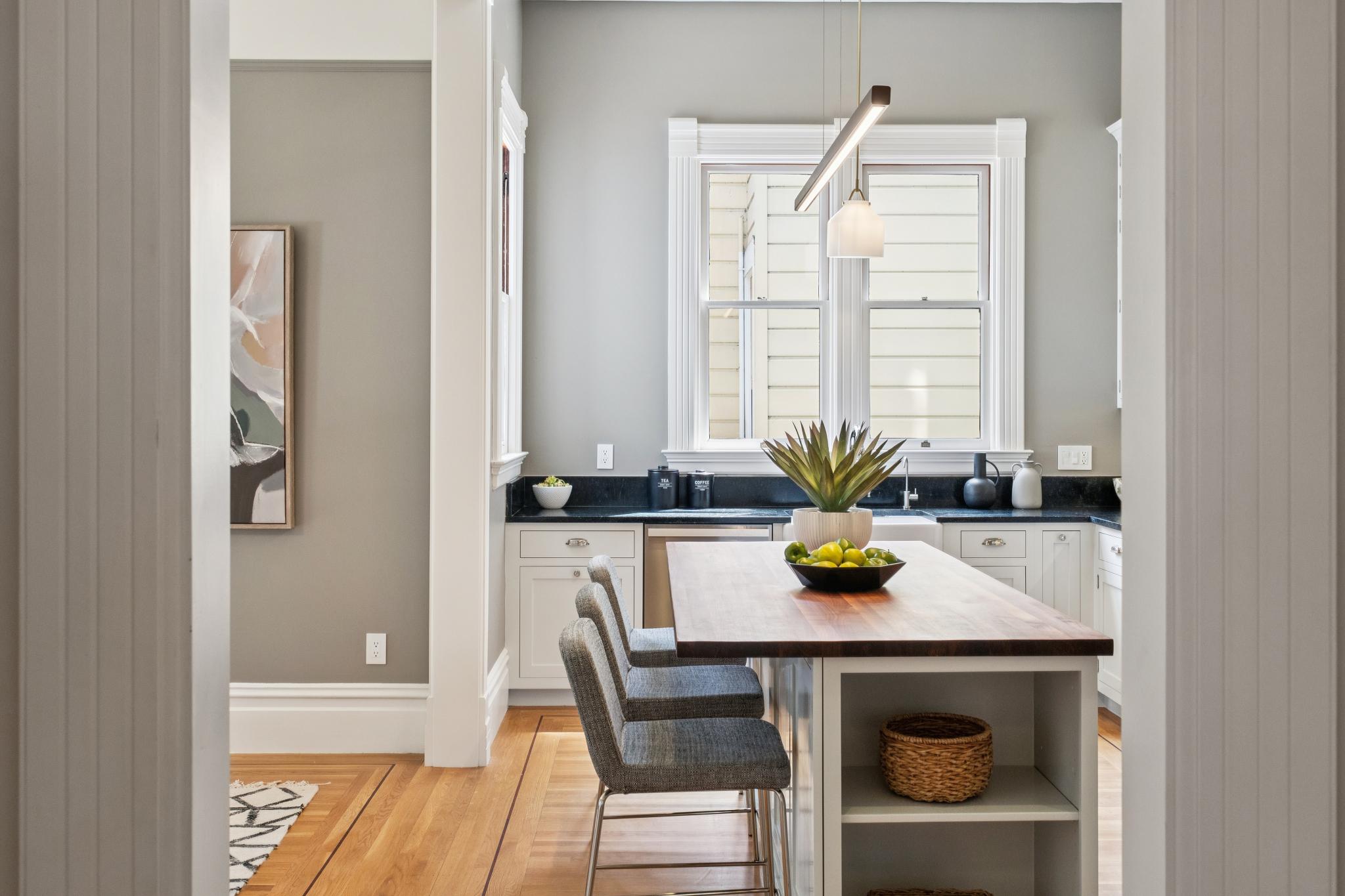
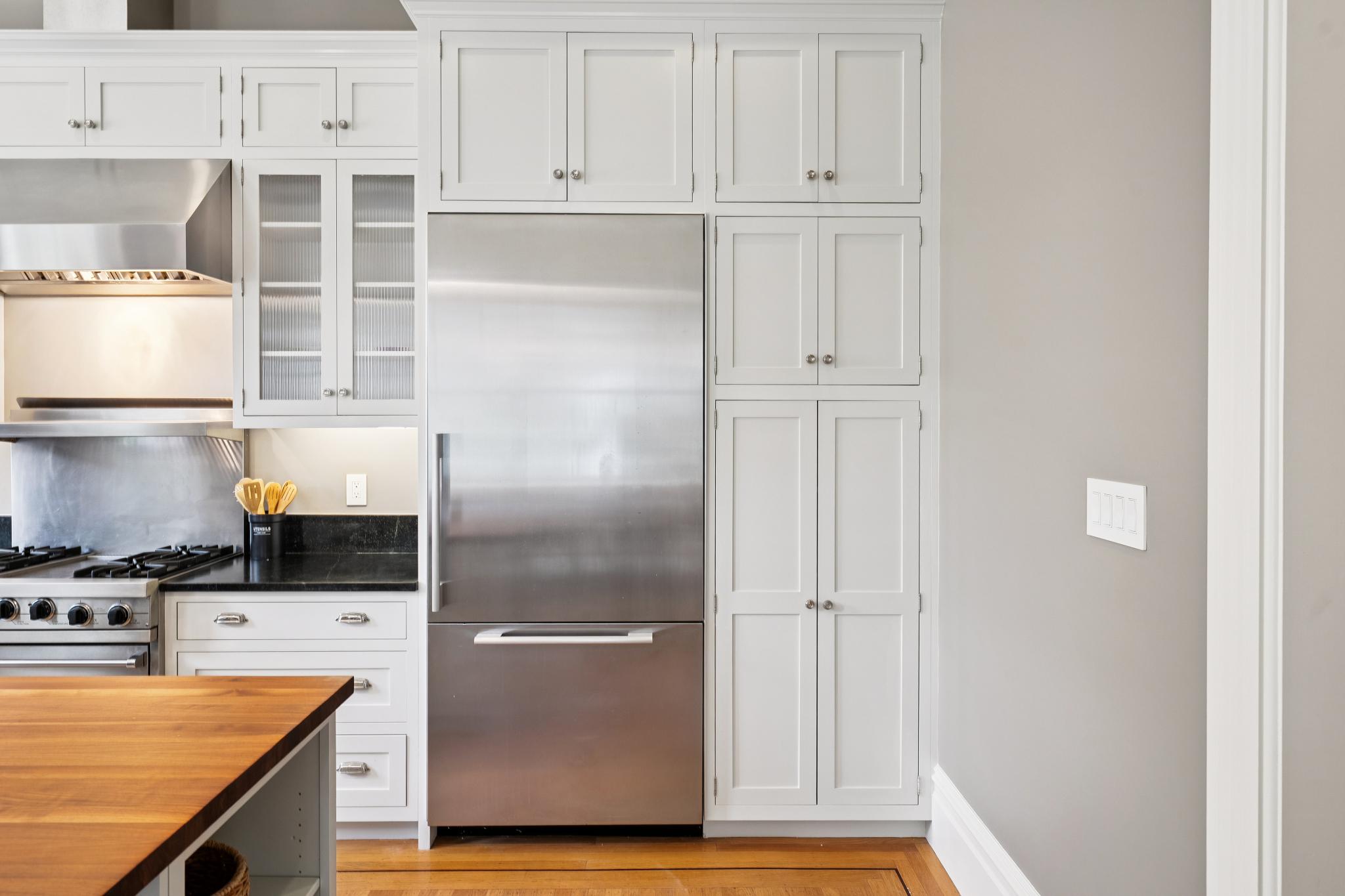
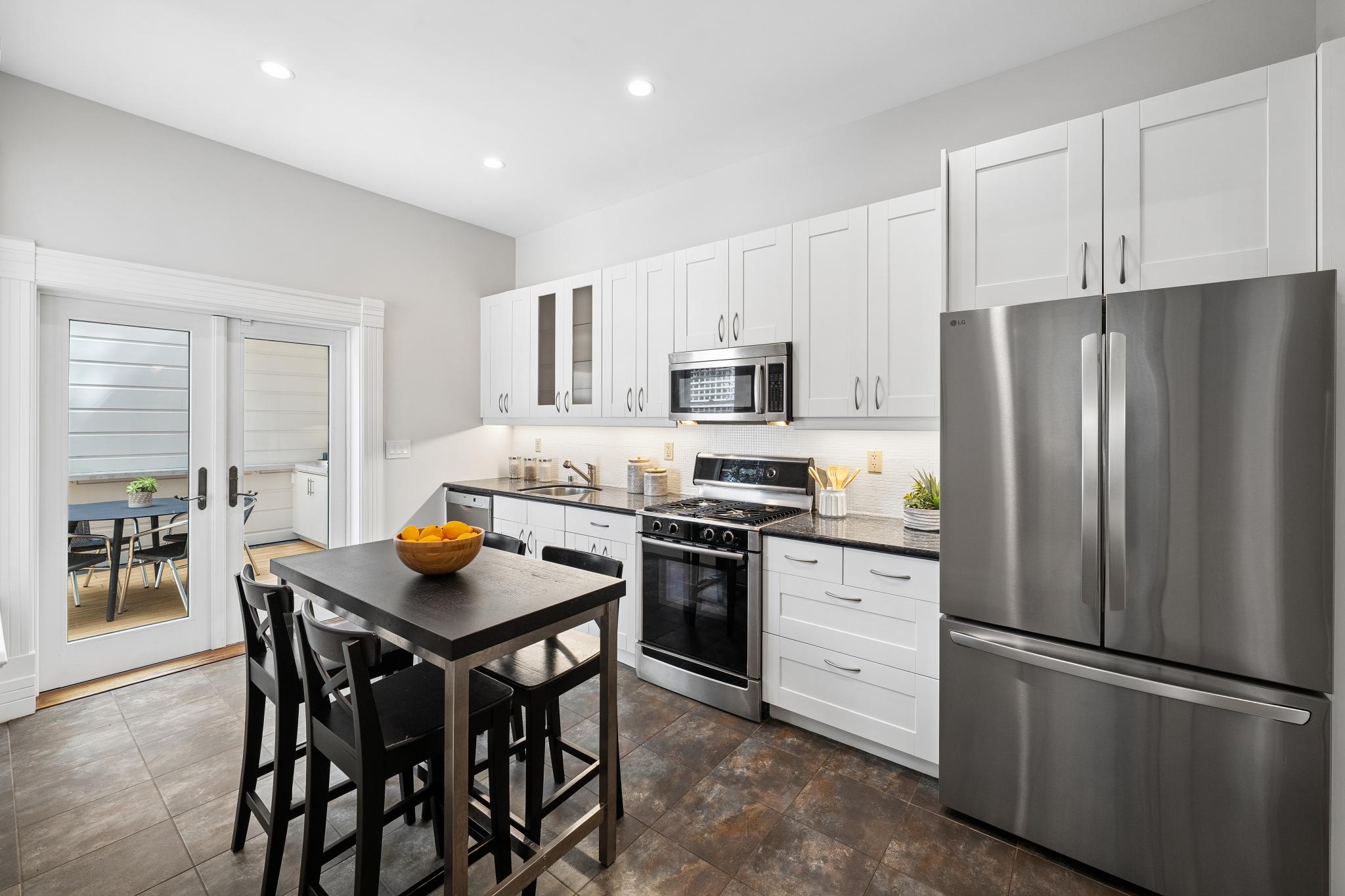
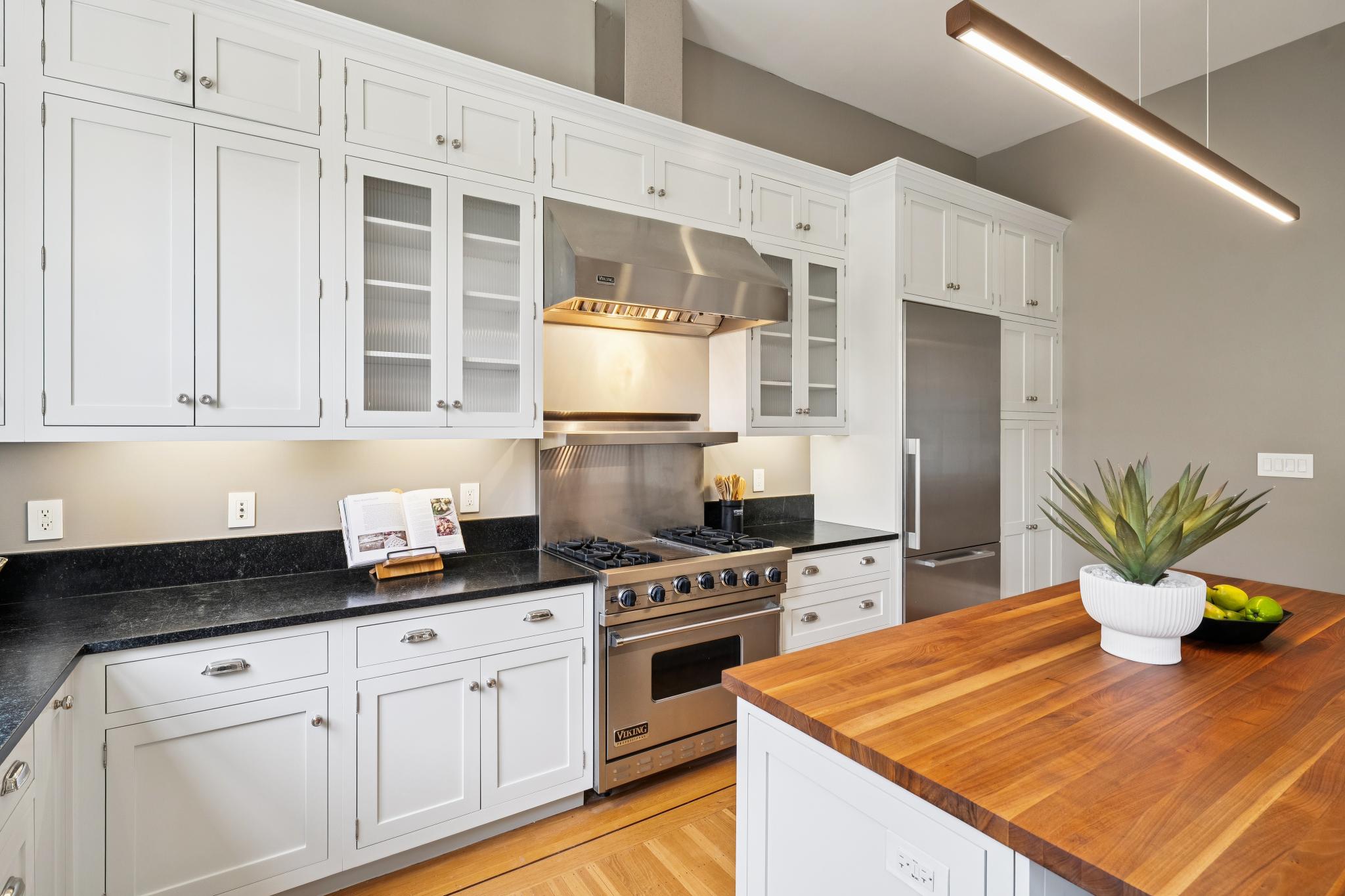
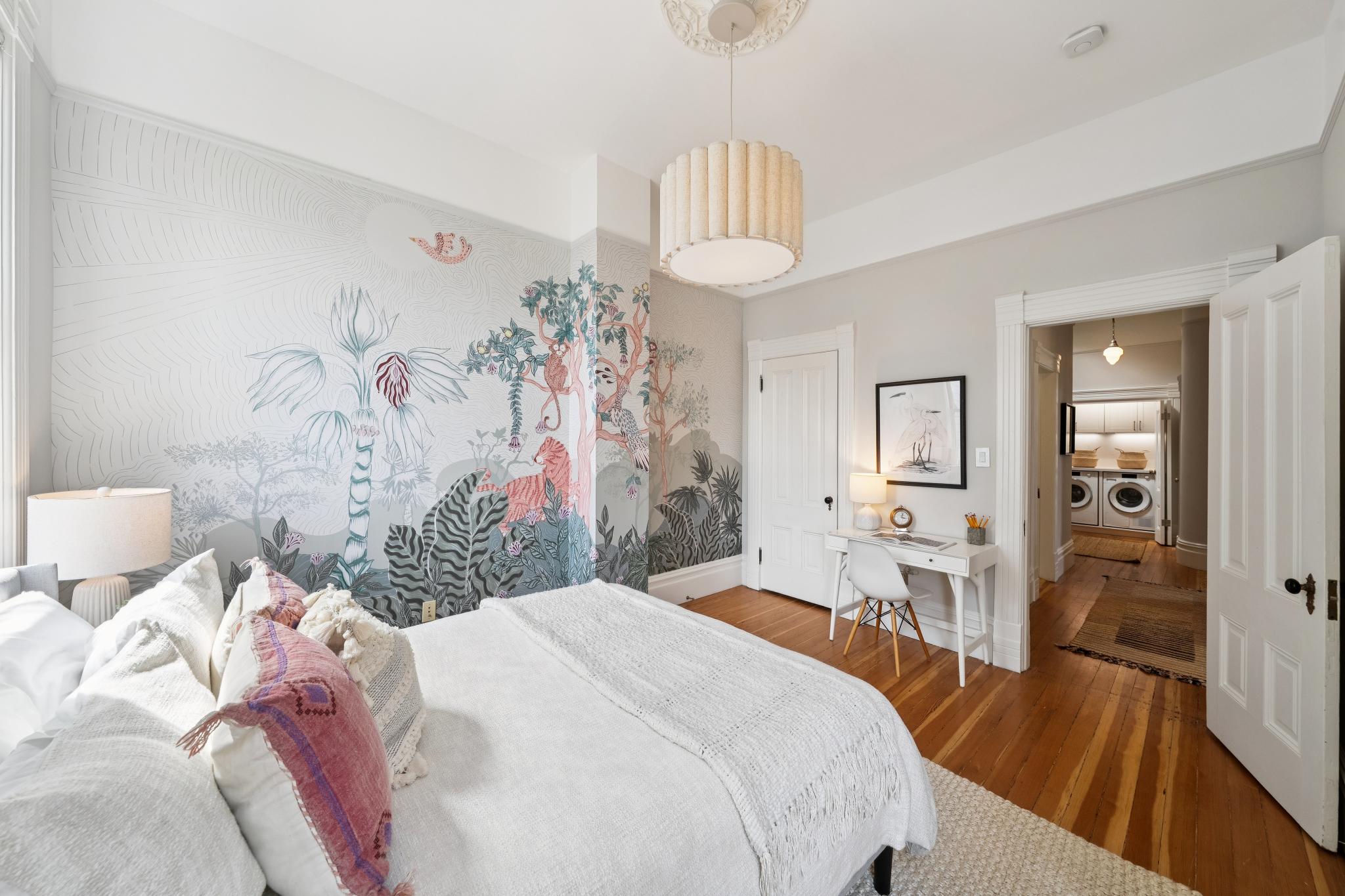
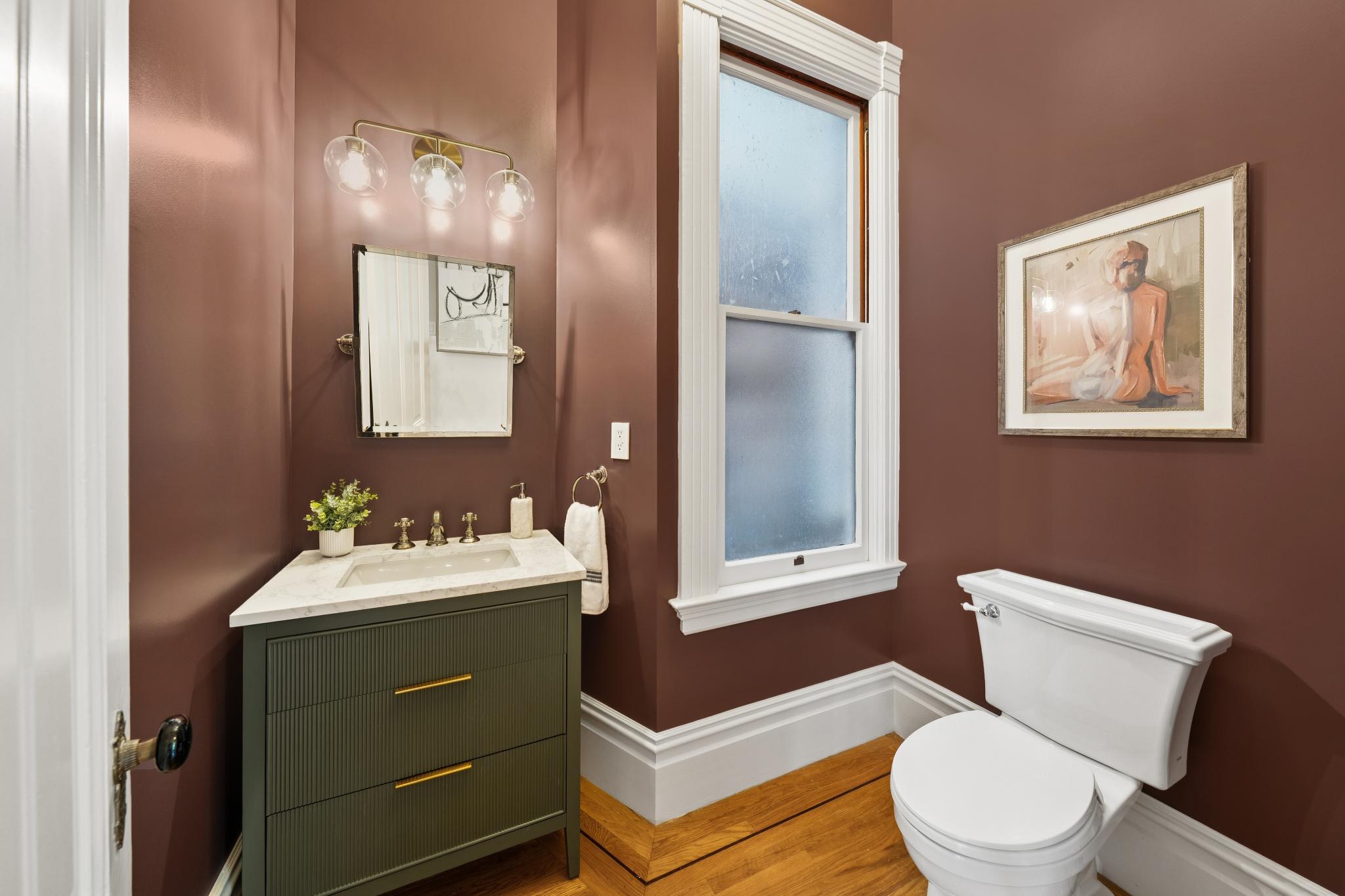
At the rear of the main floor, past a beautifully appointed powder room, the open kitchen and dining room function as the home's true social heart. The professional Viking range anchors the culinary core, while a combination of walnut and soapstone countertops brings material warmth and intelligent contrast to every surface. A Bosch dishwasher — one that requires no detergent — speaks to the considered, detail-oriented upgrades that distinguish this renovation from the merely cosmetic. A laundry closet on the upper level, housing a Miele stacked set, and a second laundry closet serving the lower level mean that the practical rhythms of daily life are met with equal thoughtfulness.
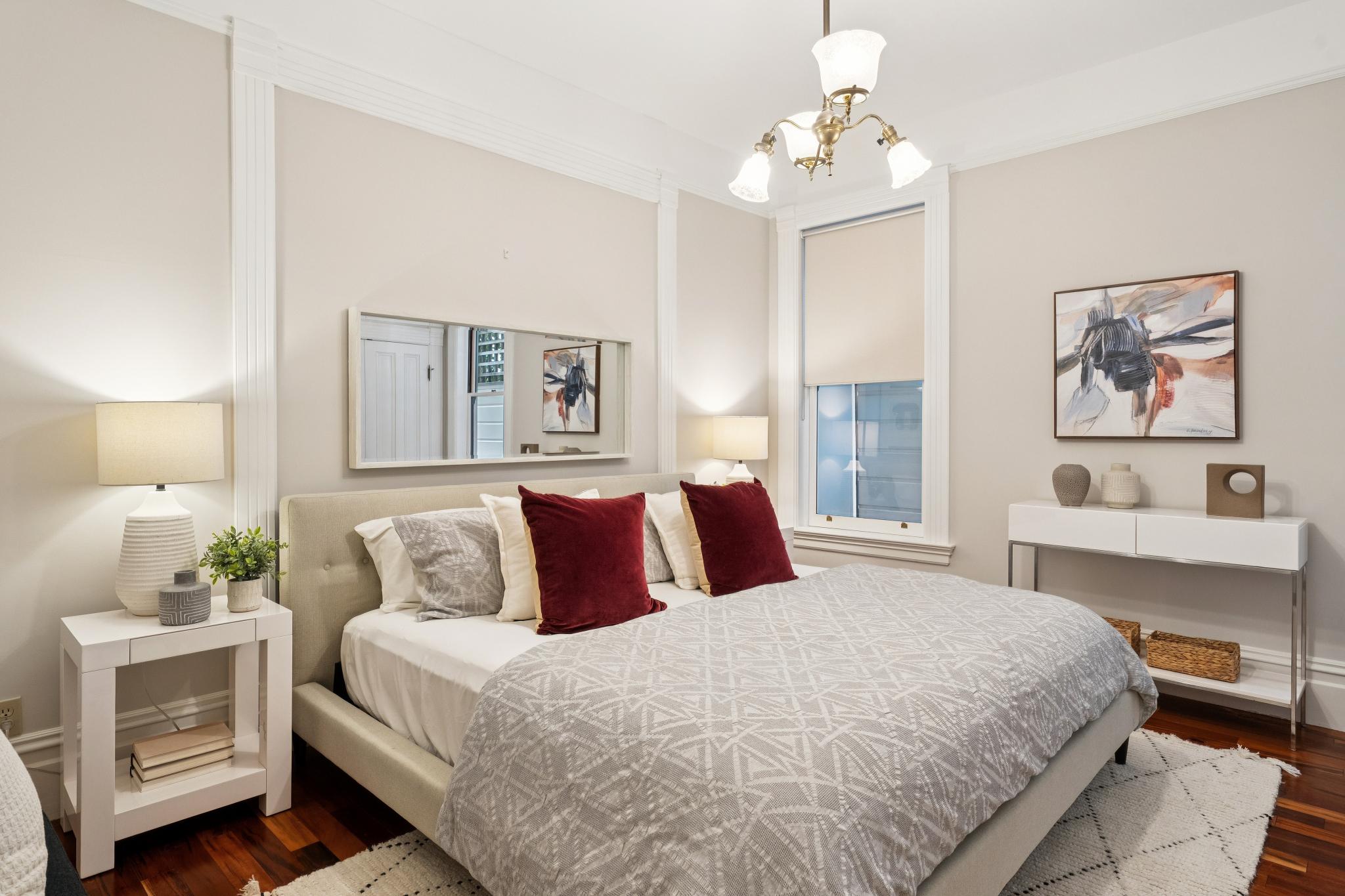
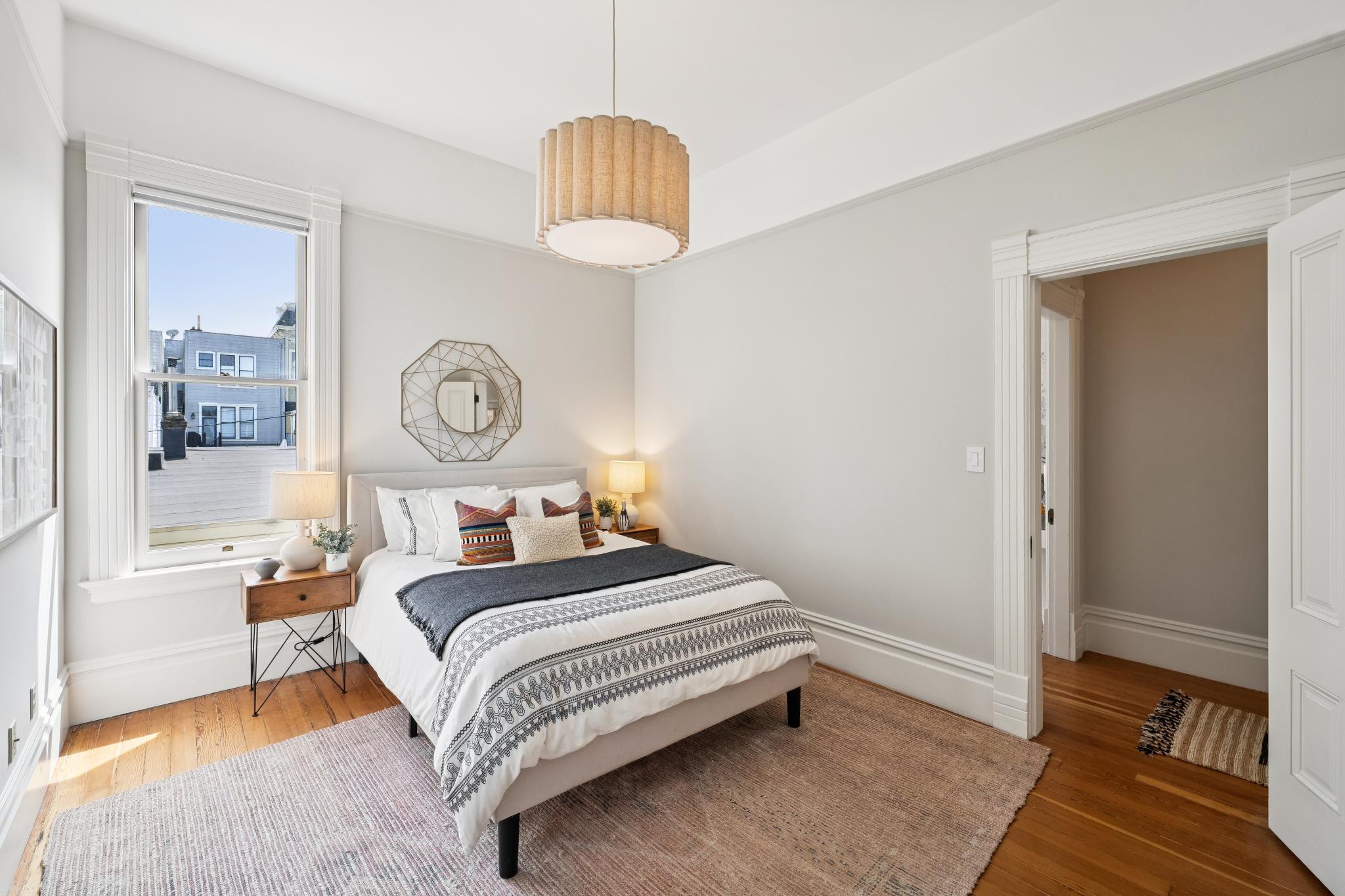
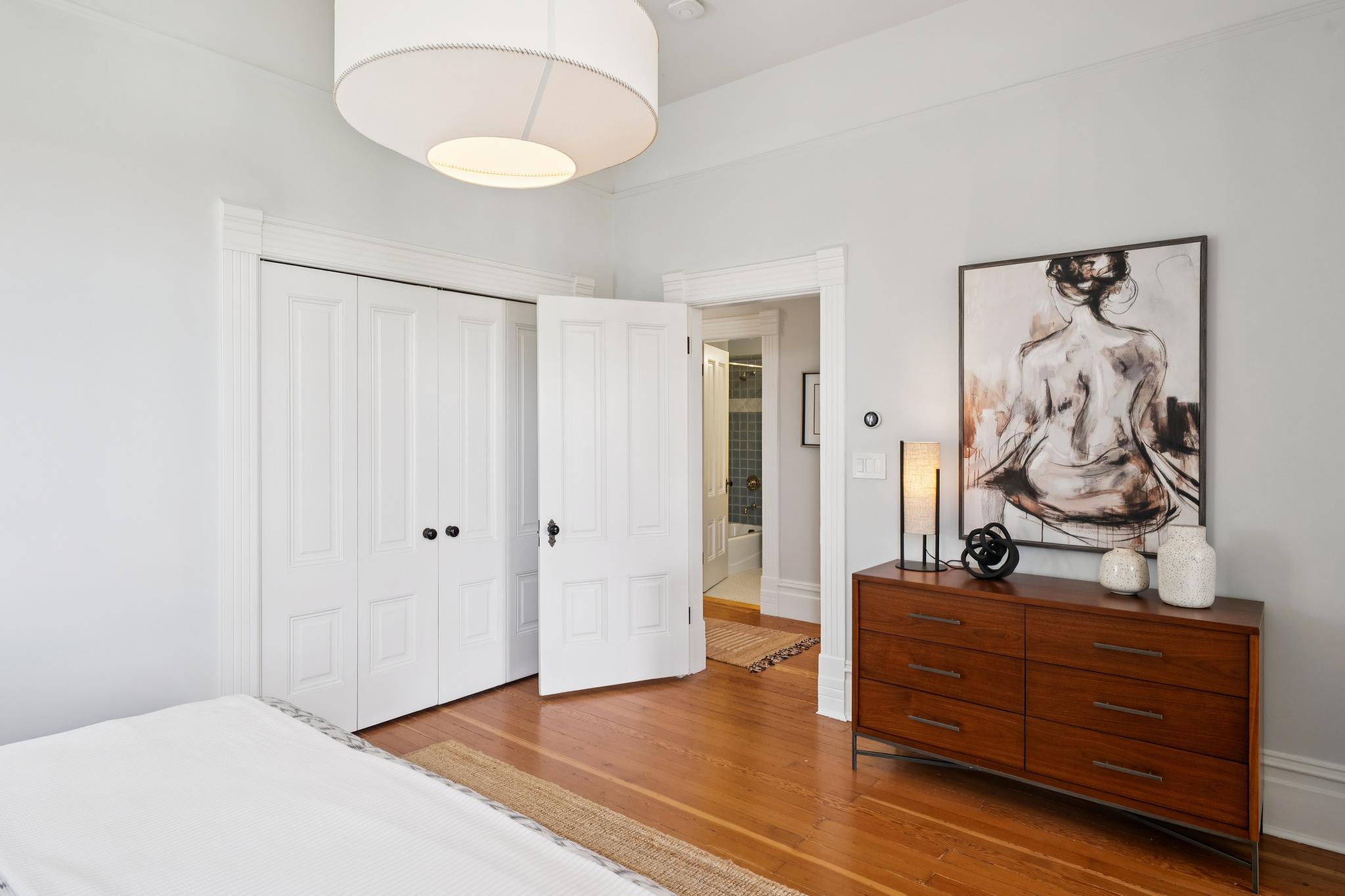
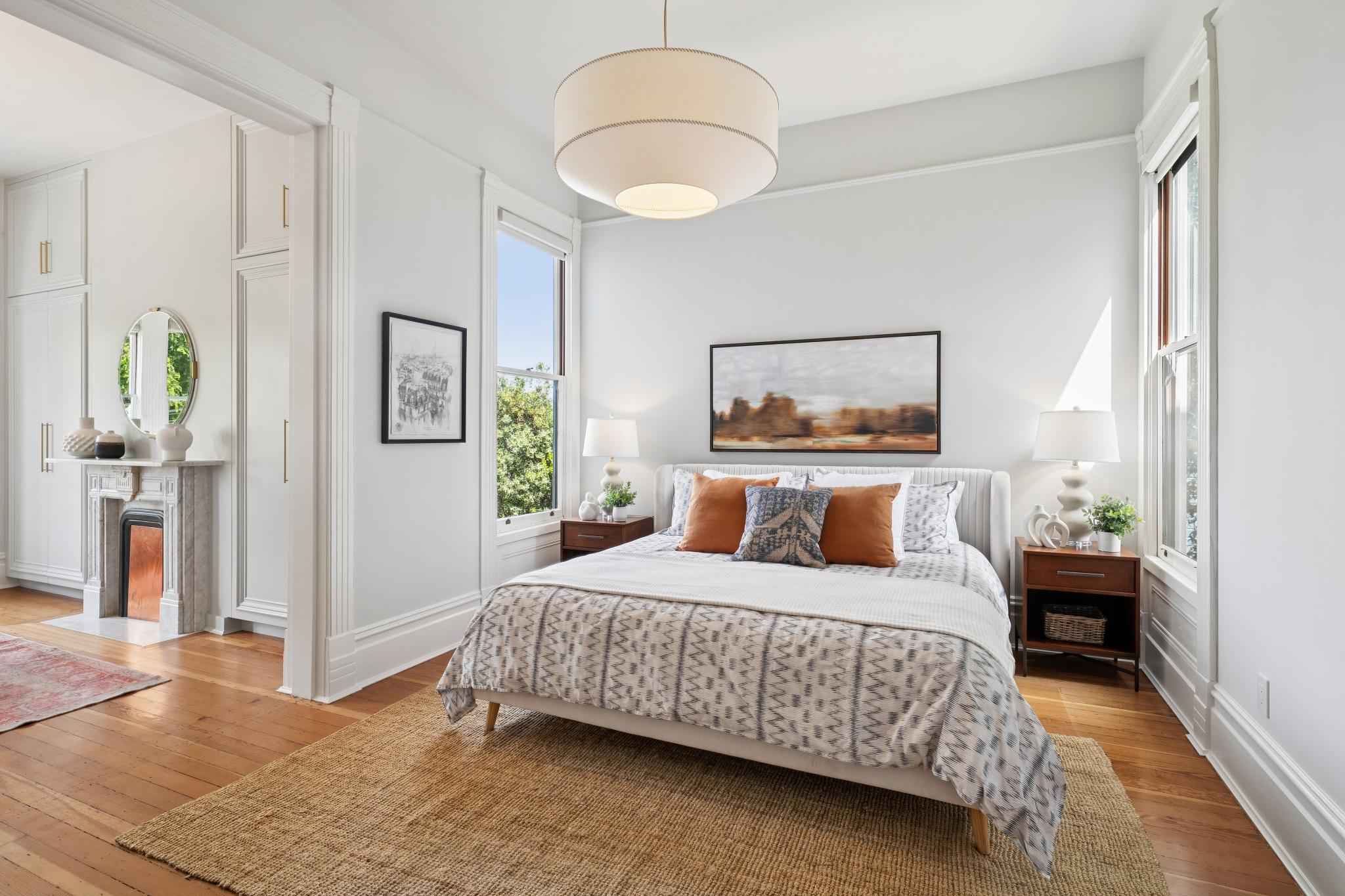
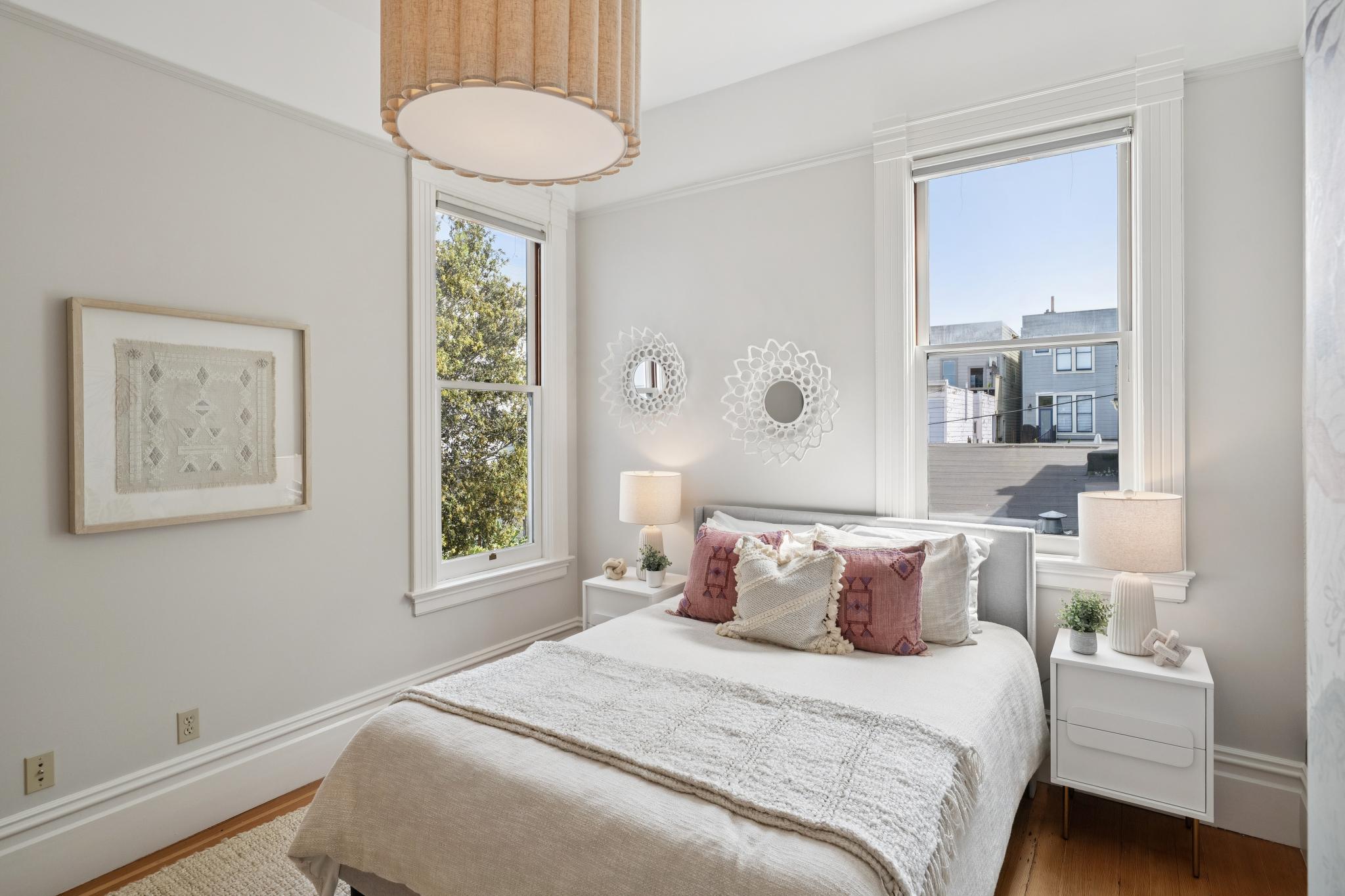
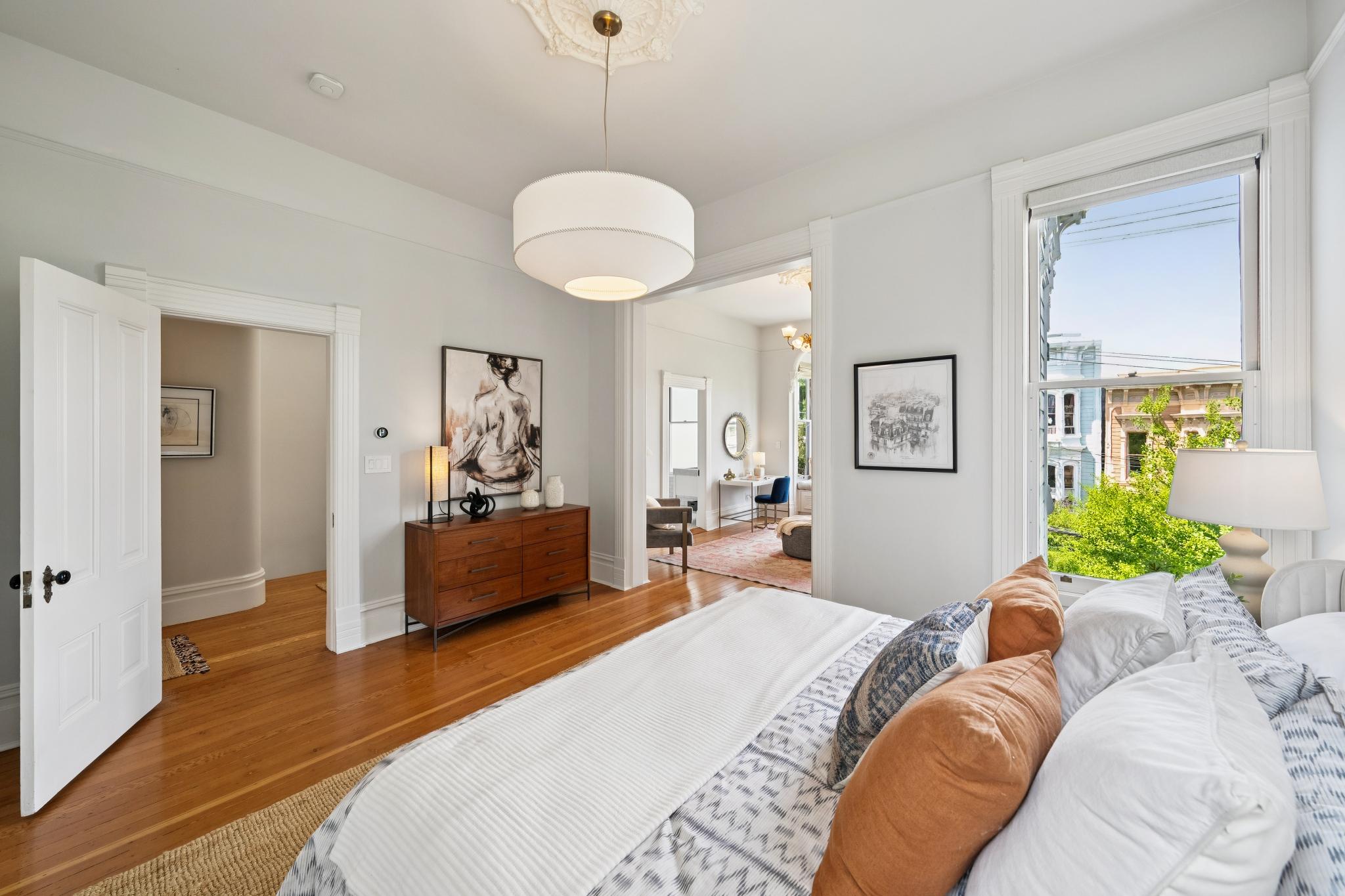
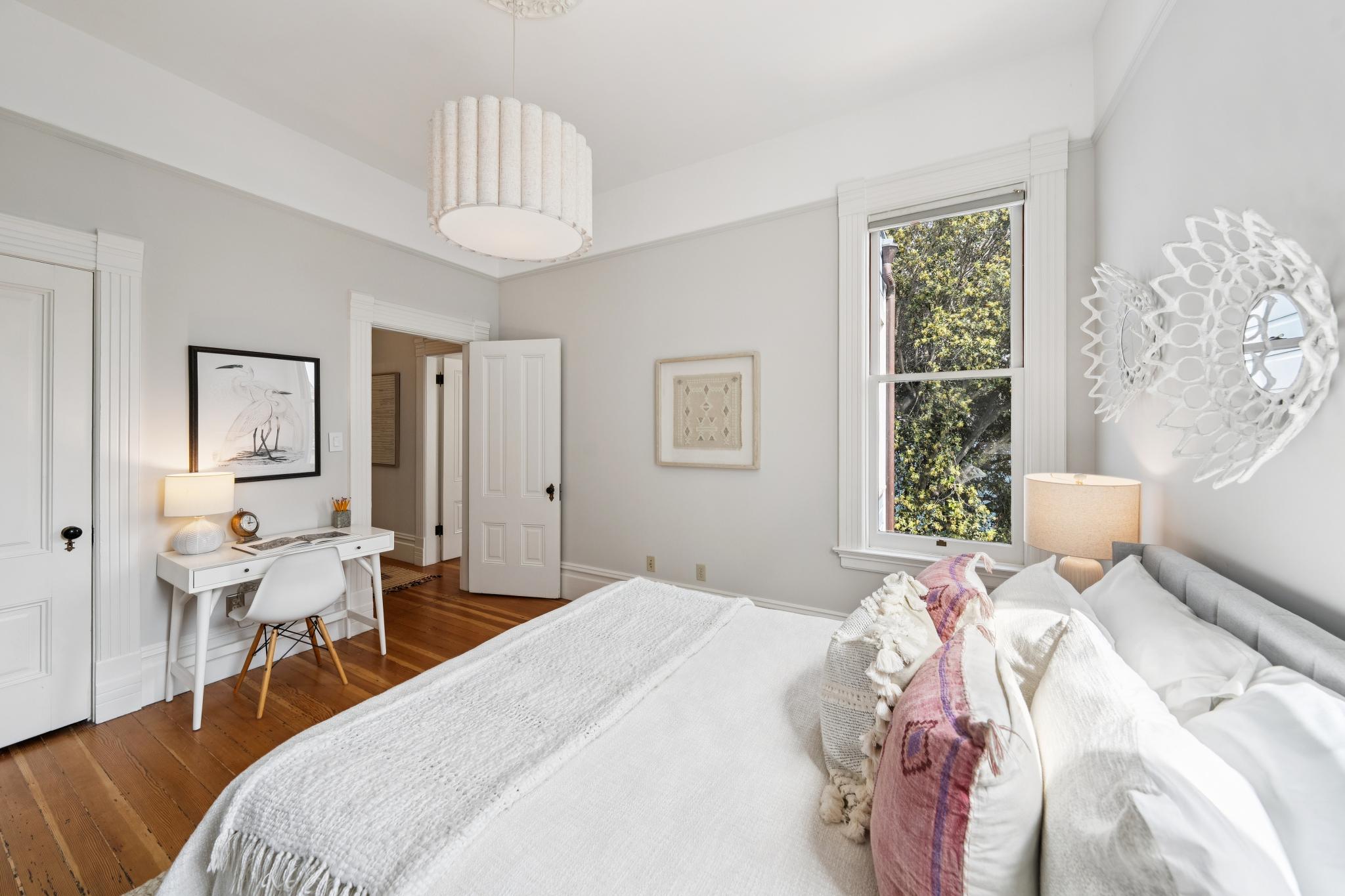
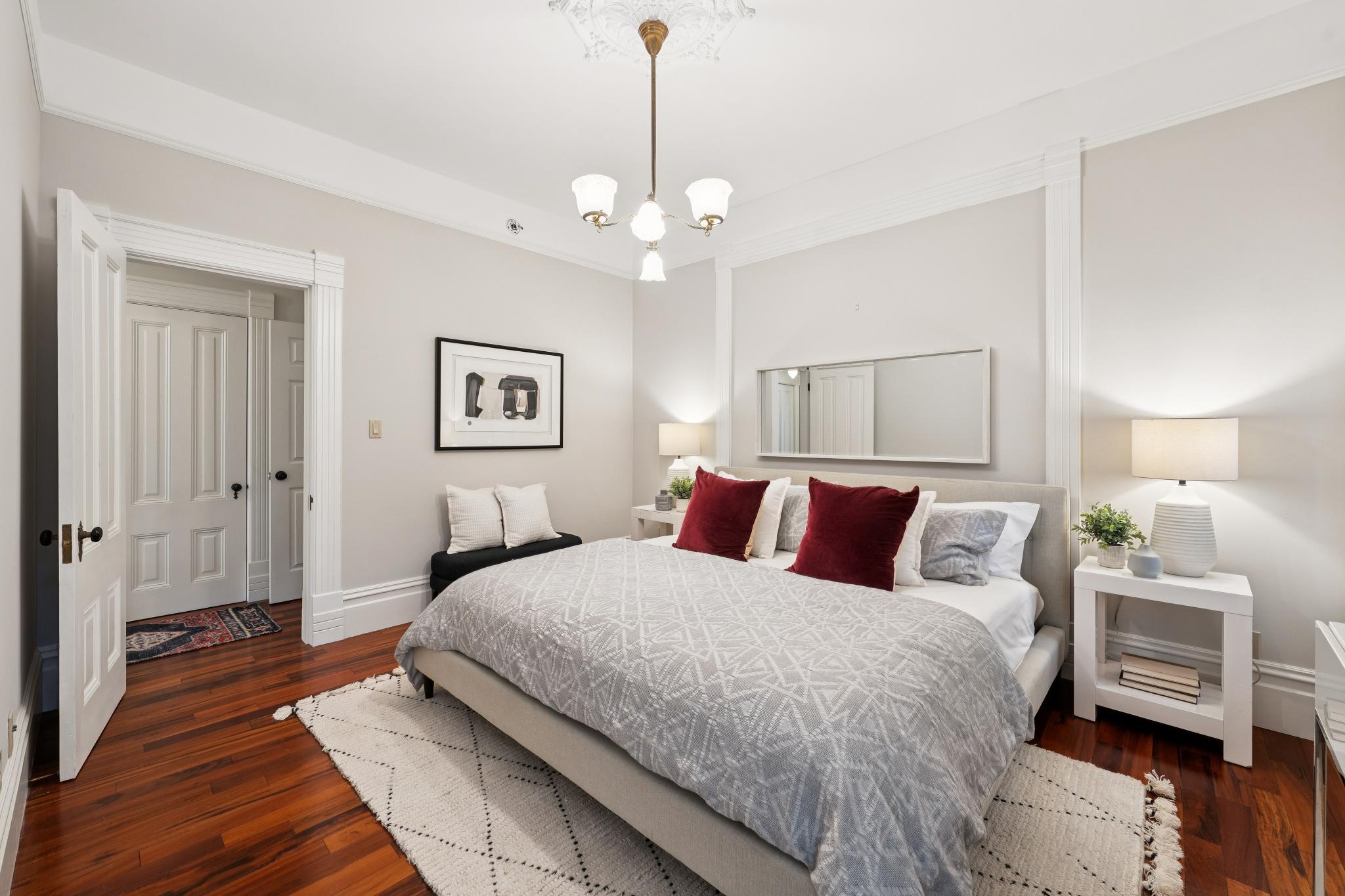
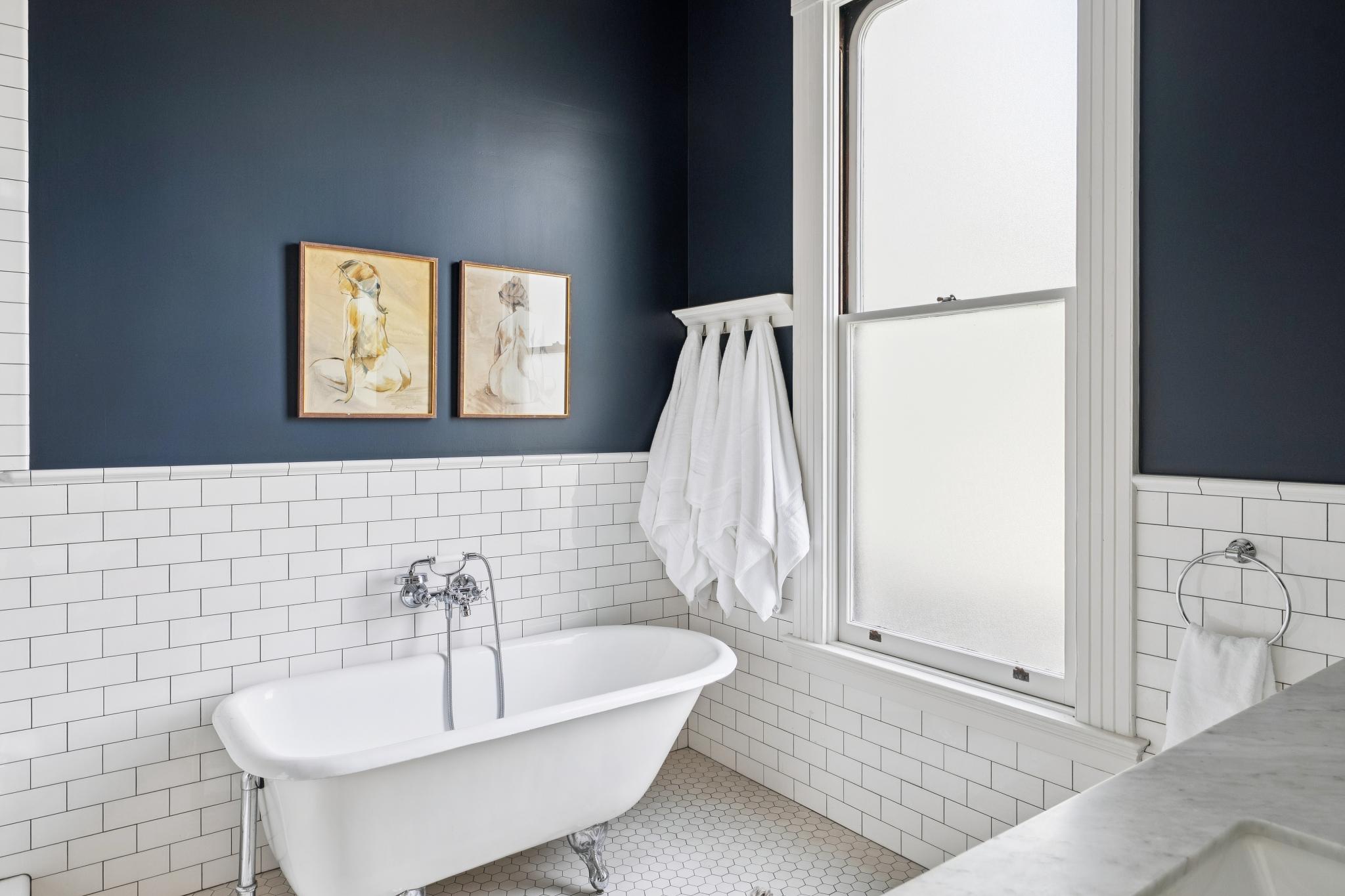
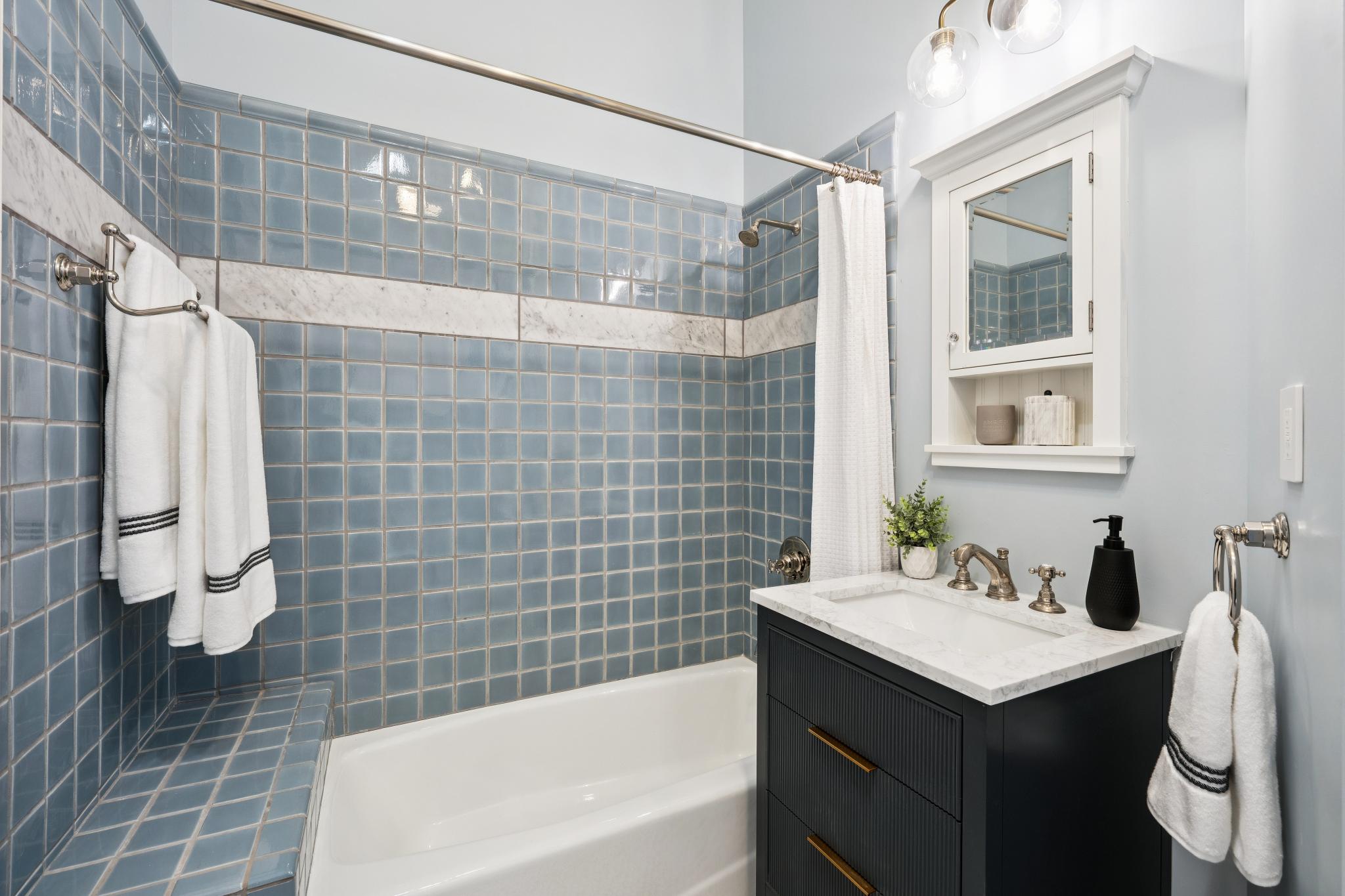
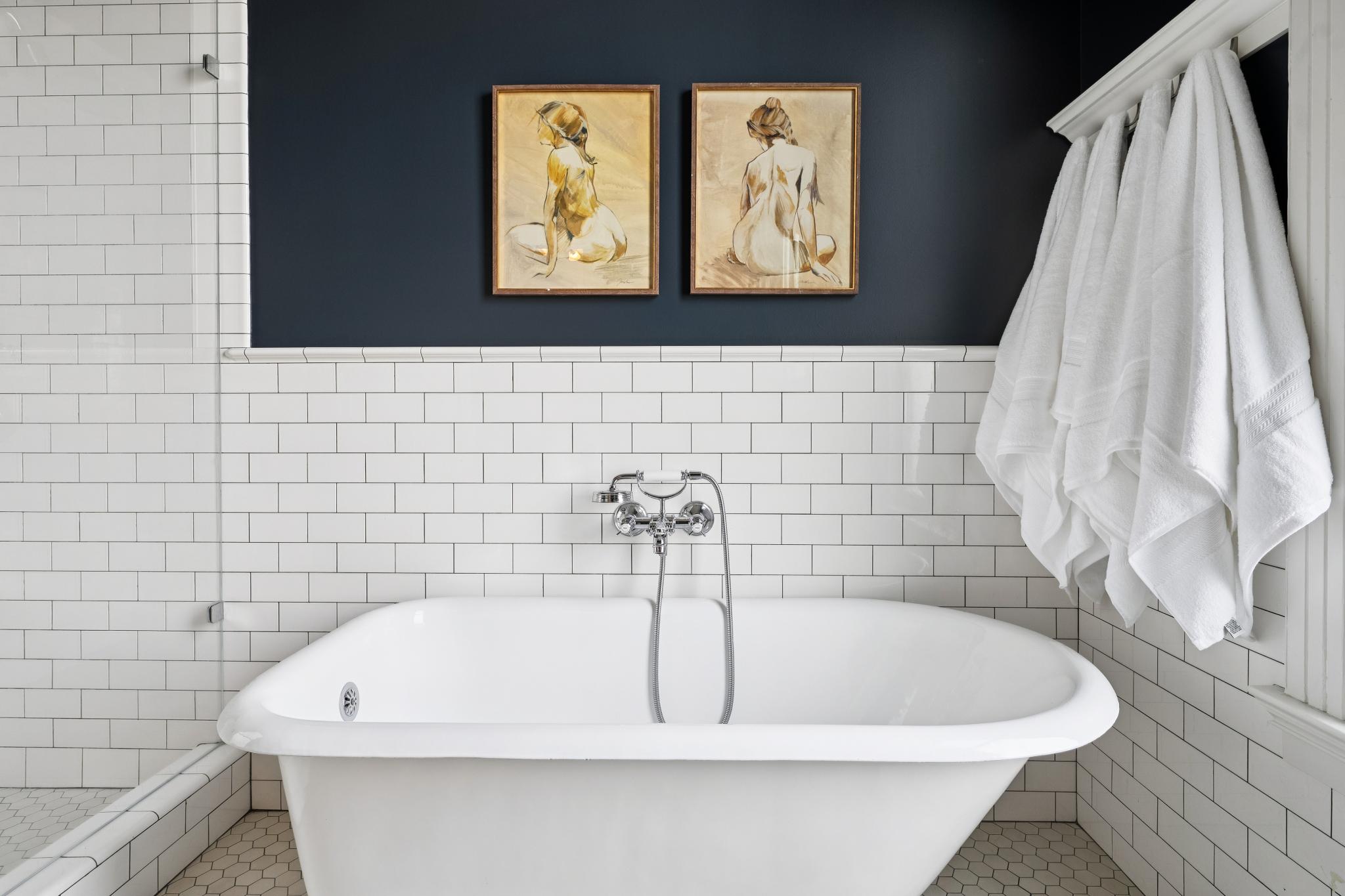
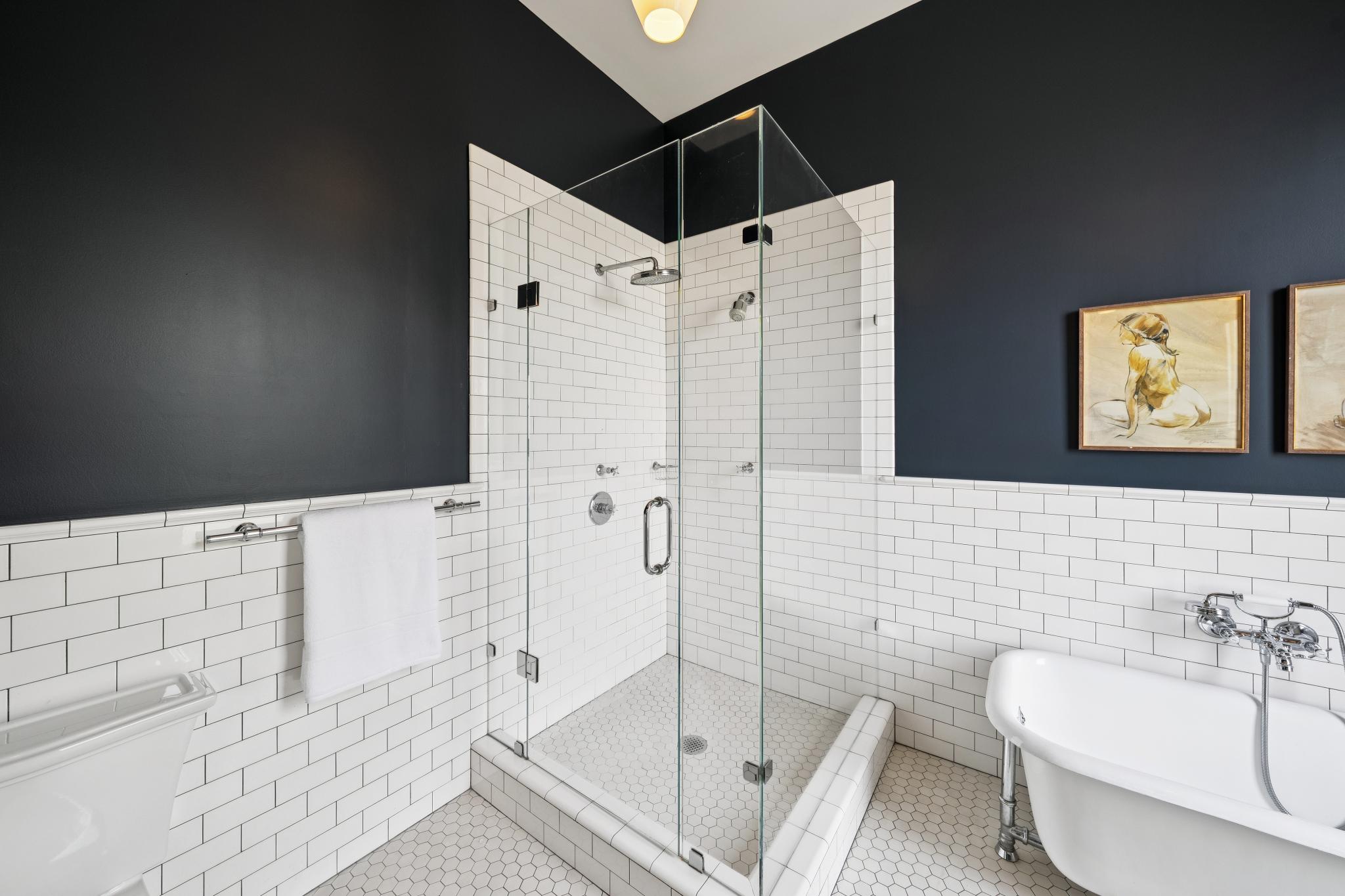
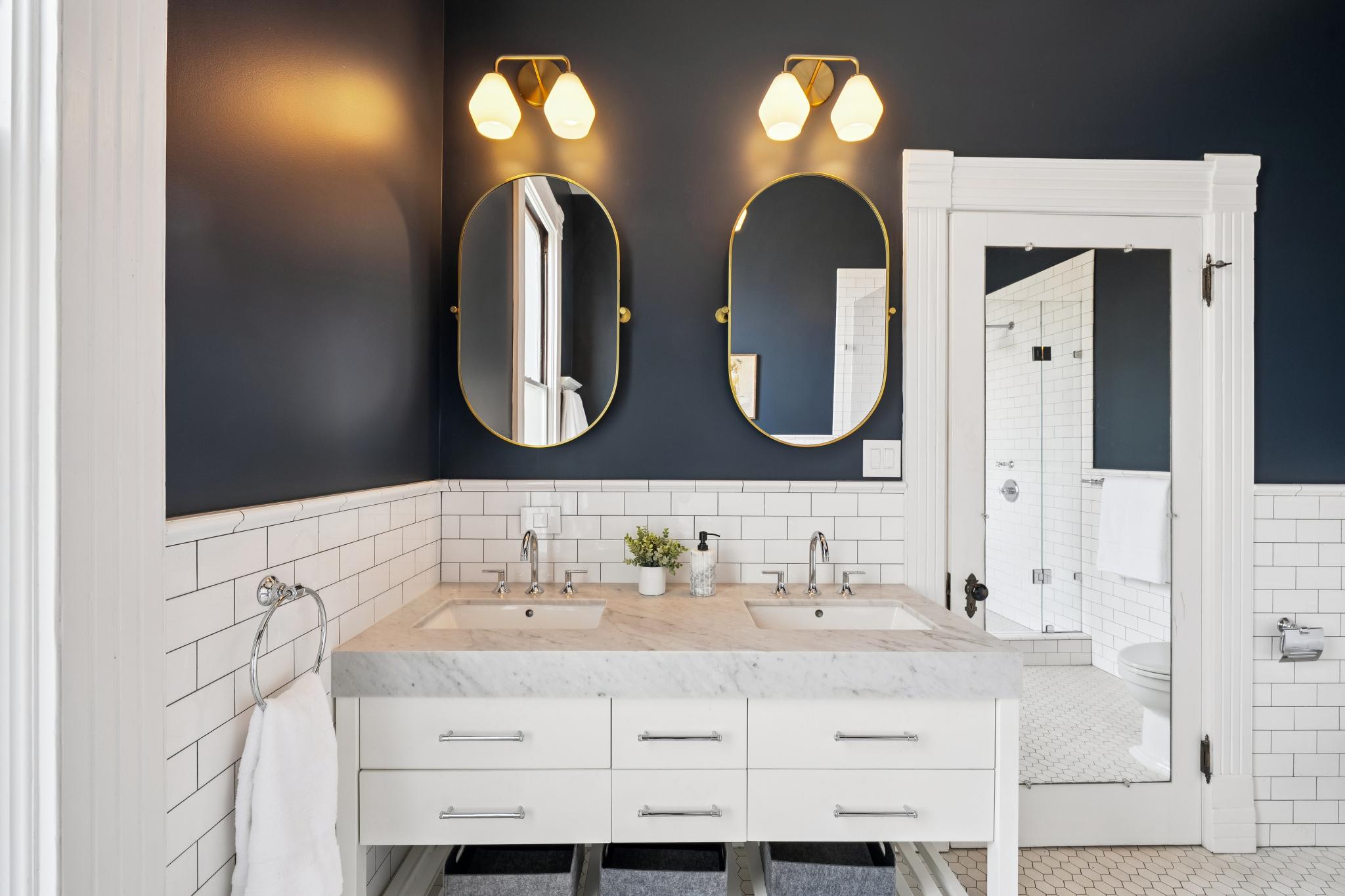
The upper level is anchored by a generous two-room primary suite at the front of the home, complete with custom built-in closets, a romantic window seat overlooking the neighborhood, and a luxurious bath featuring a soaking tub, double vanity with gold-toned fixtures, and a step-in shower tiled in classic subway tile against a dramatic navy accent wall. Two additional large bedrooms and a full bath complete the upper floor.
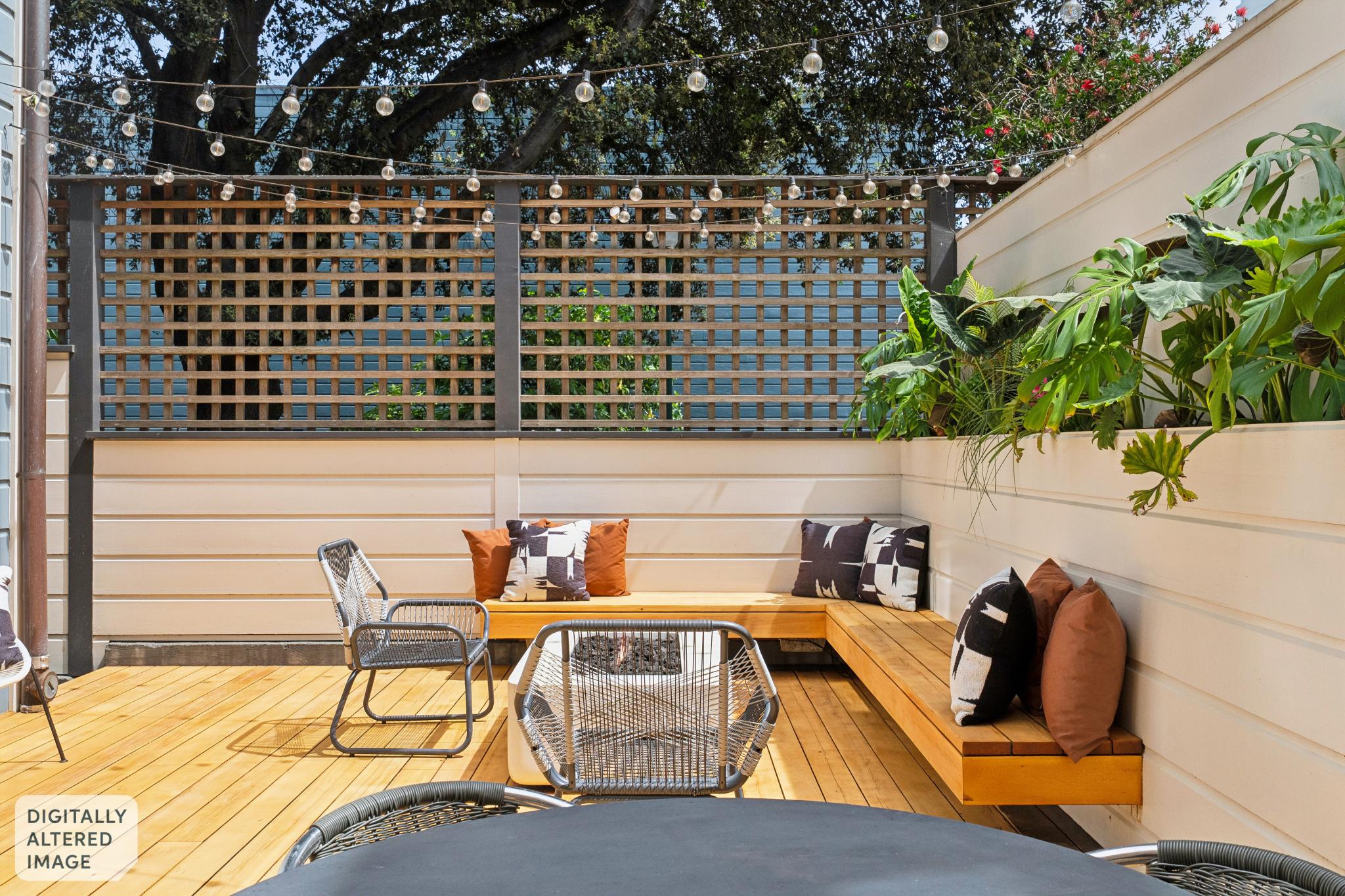
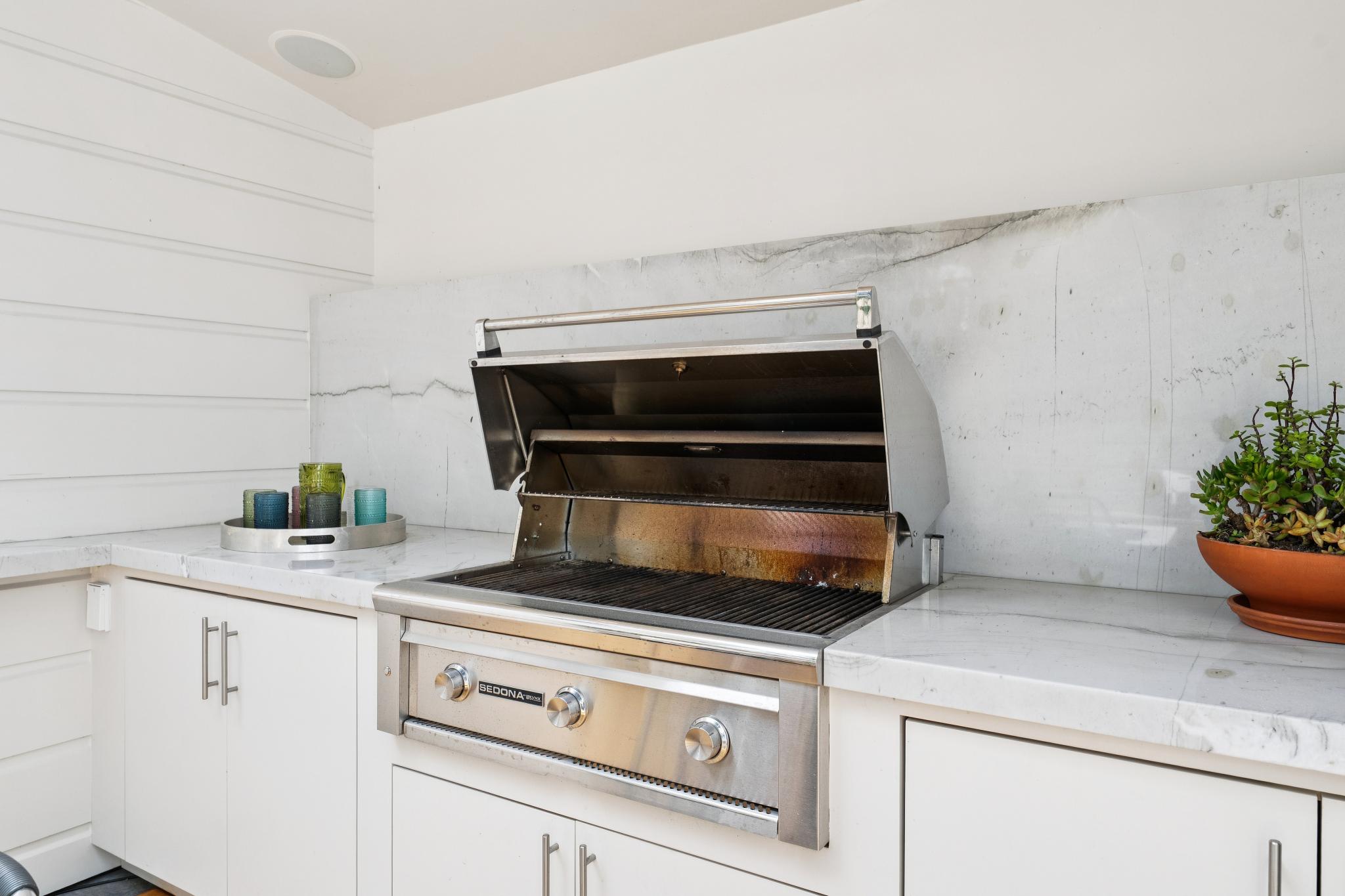
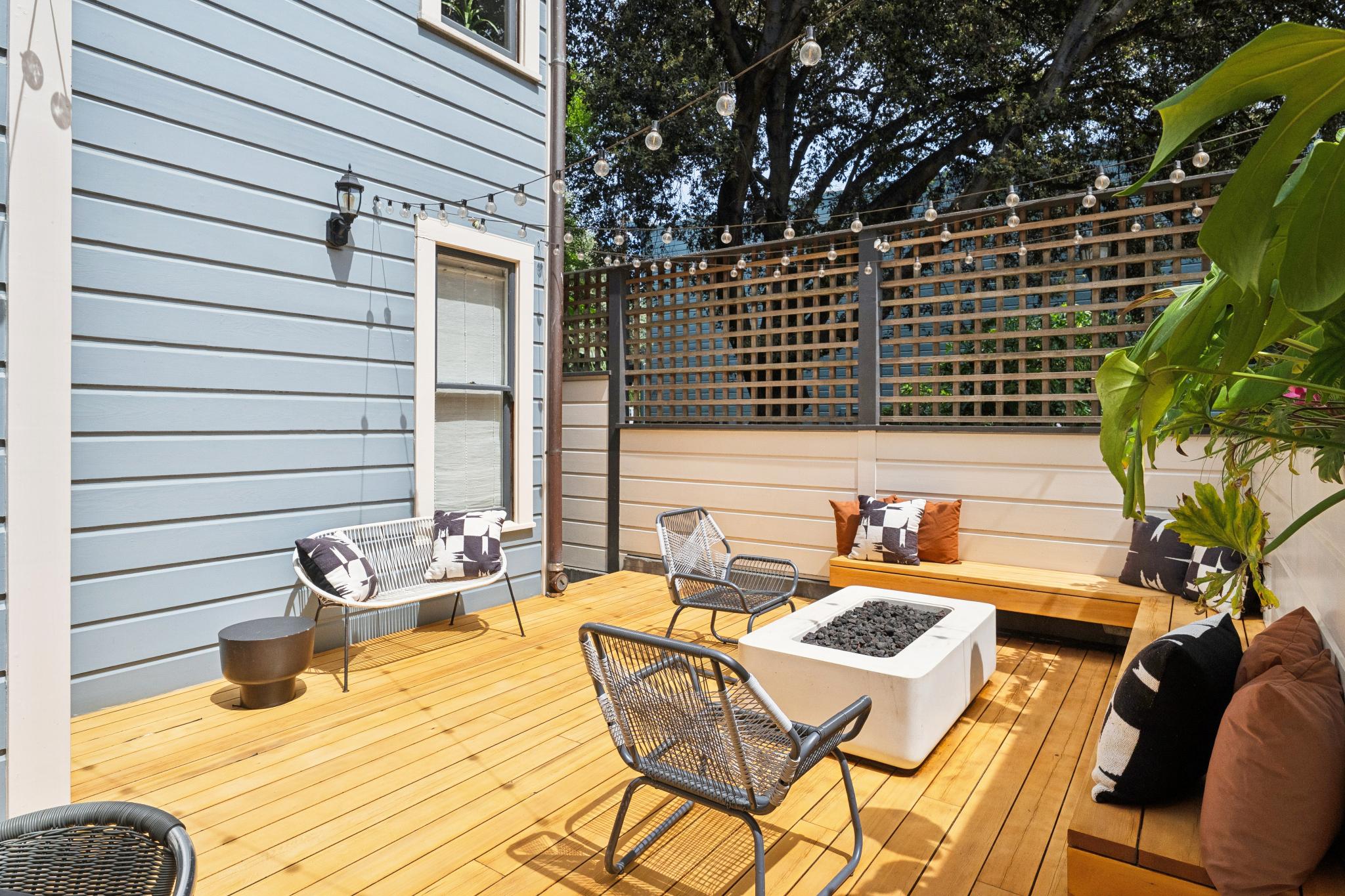
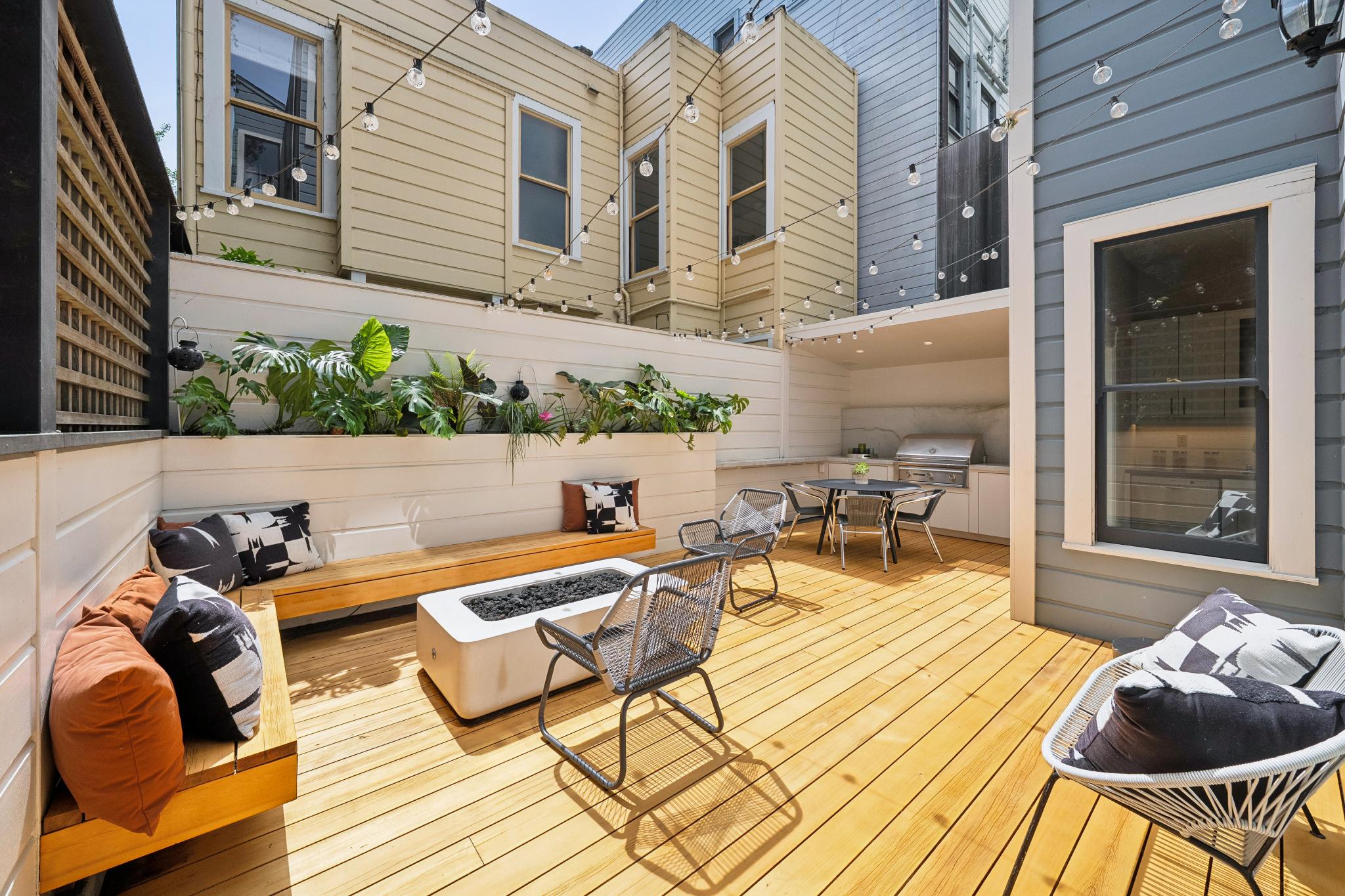
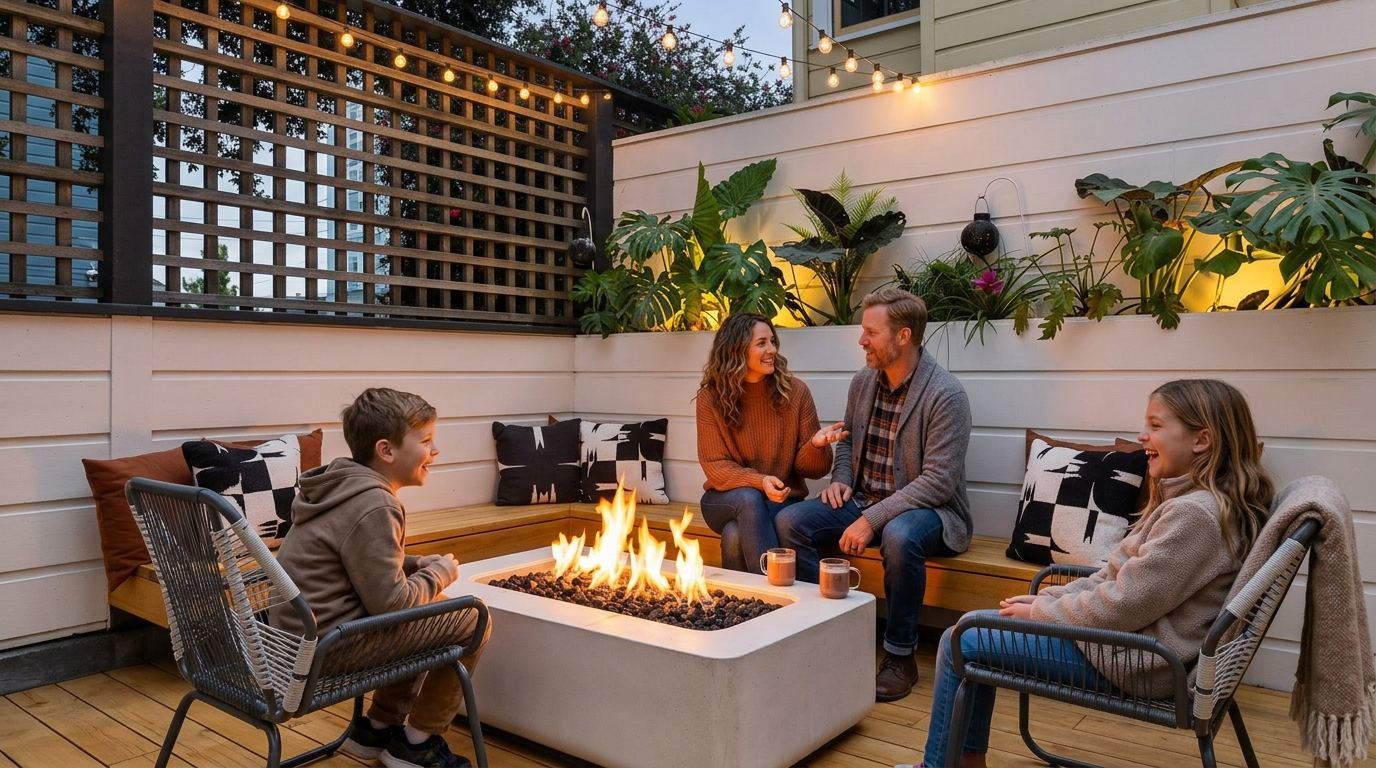
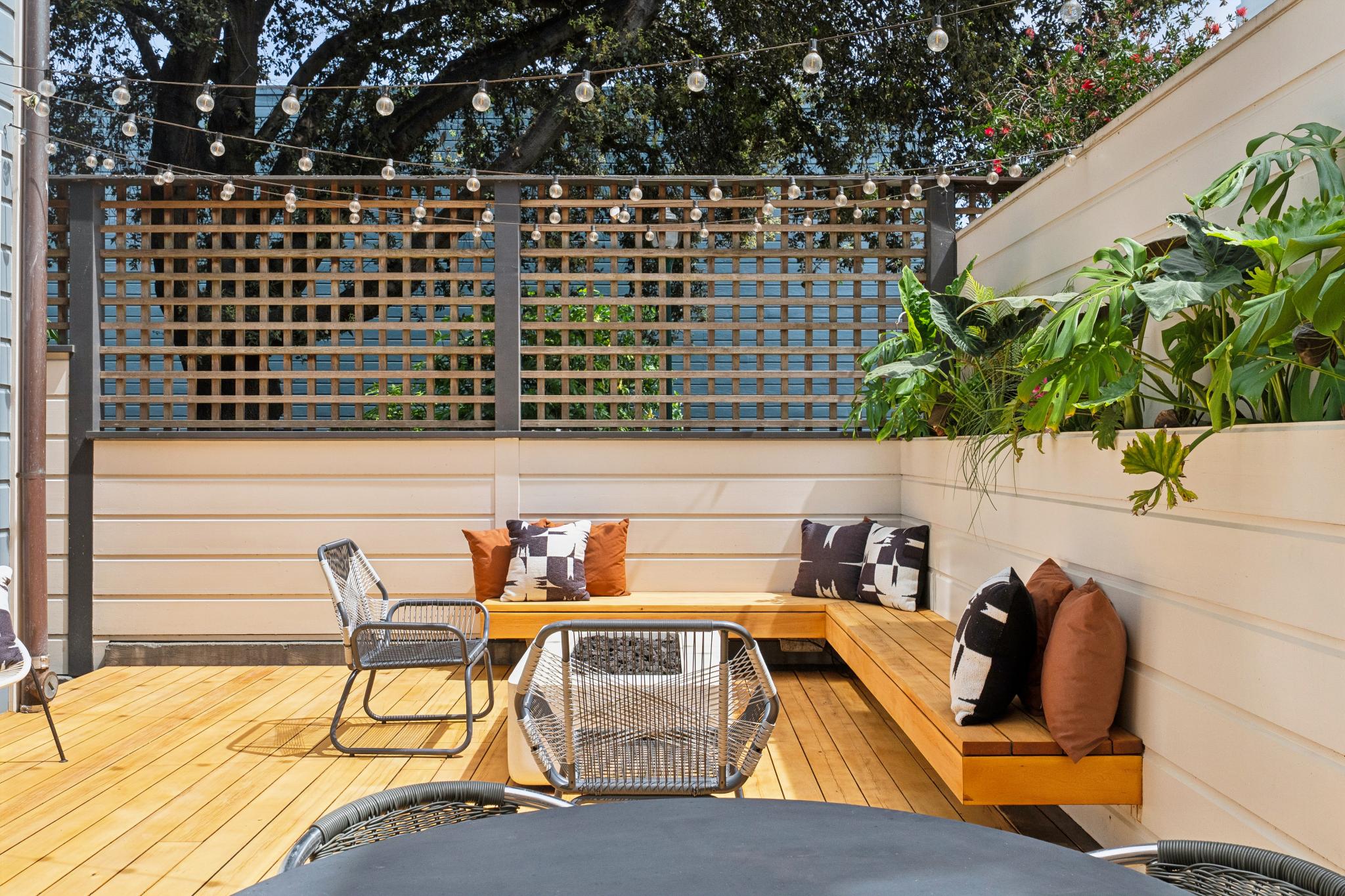
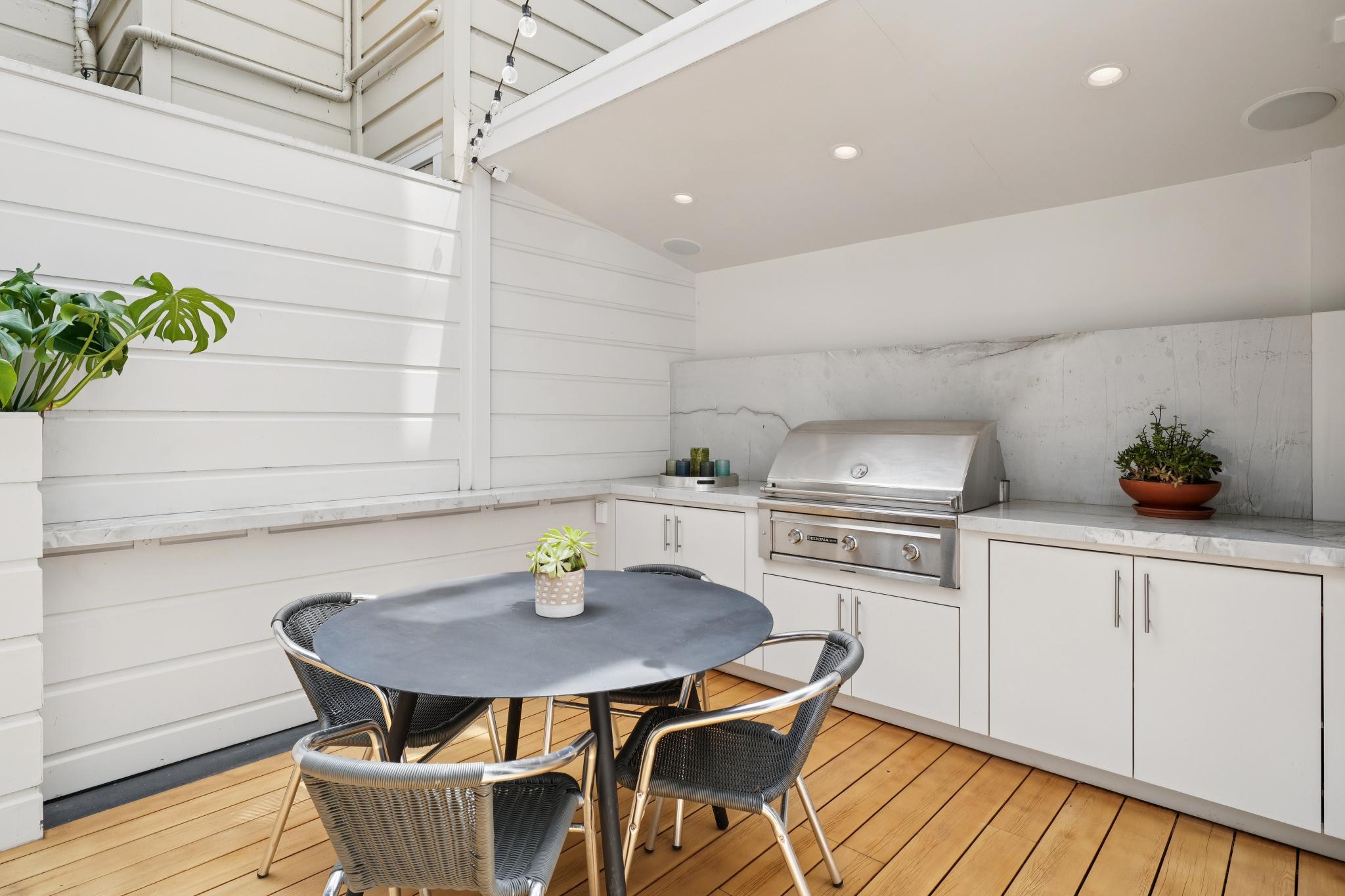
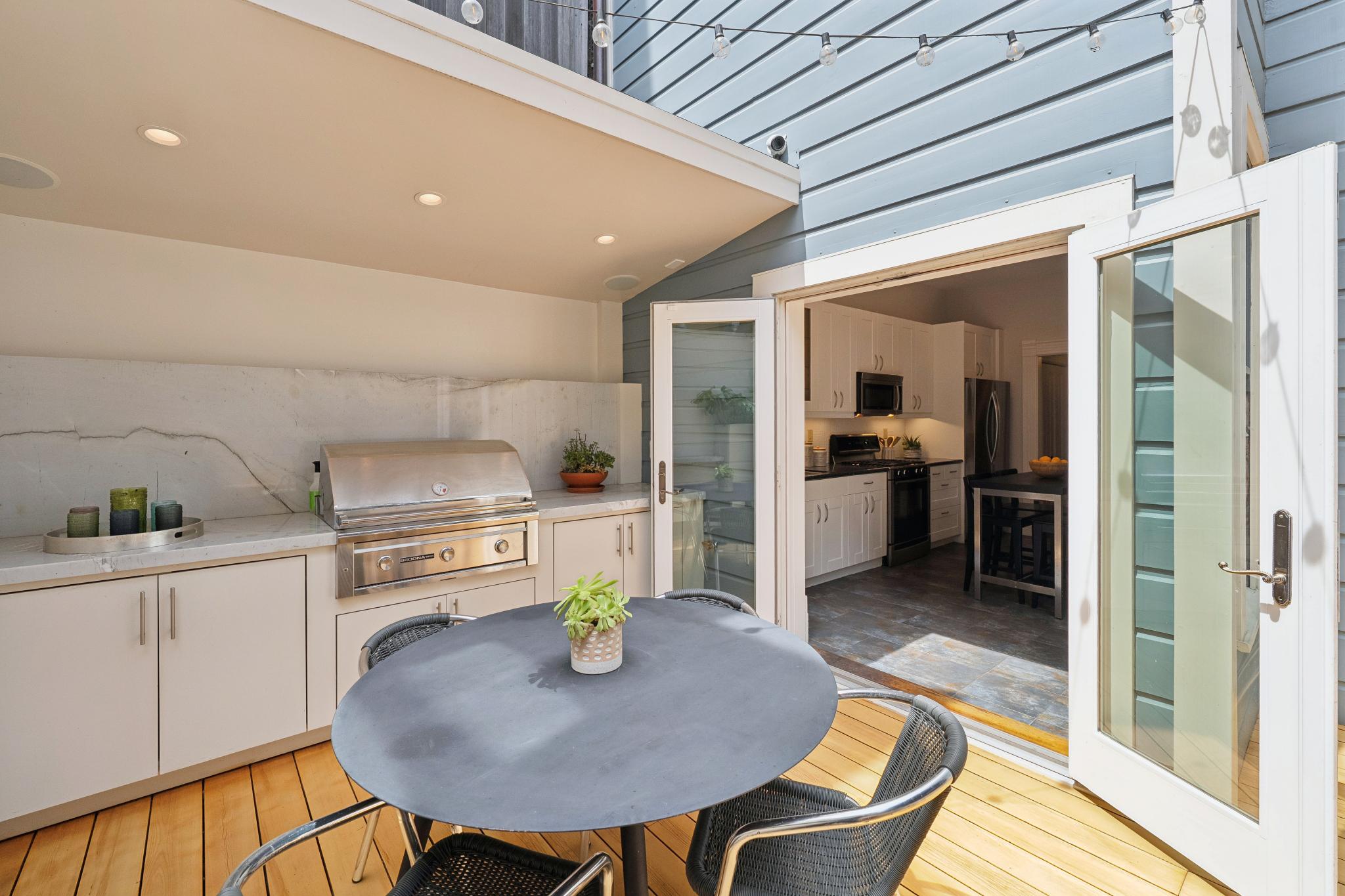
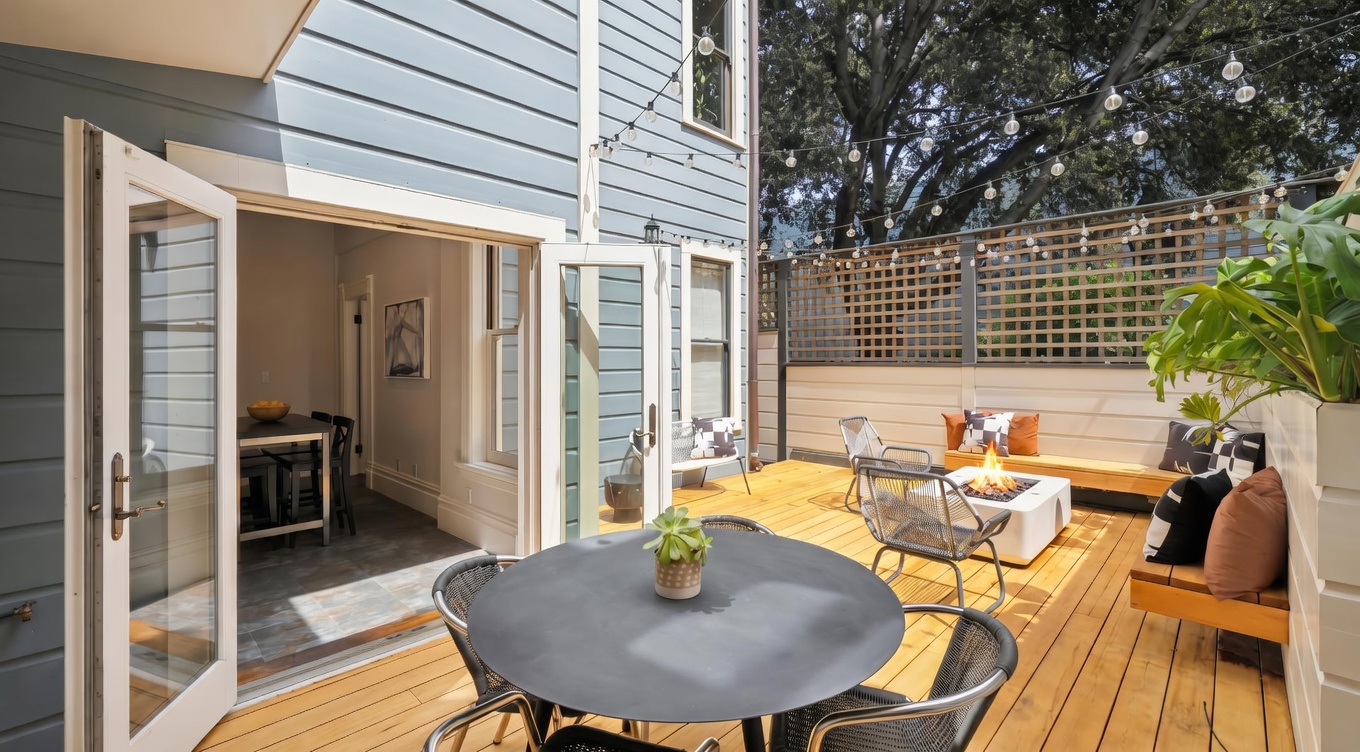
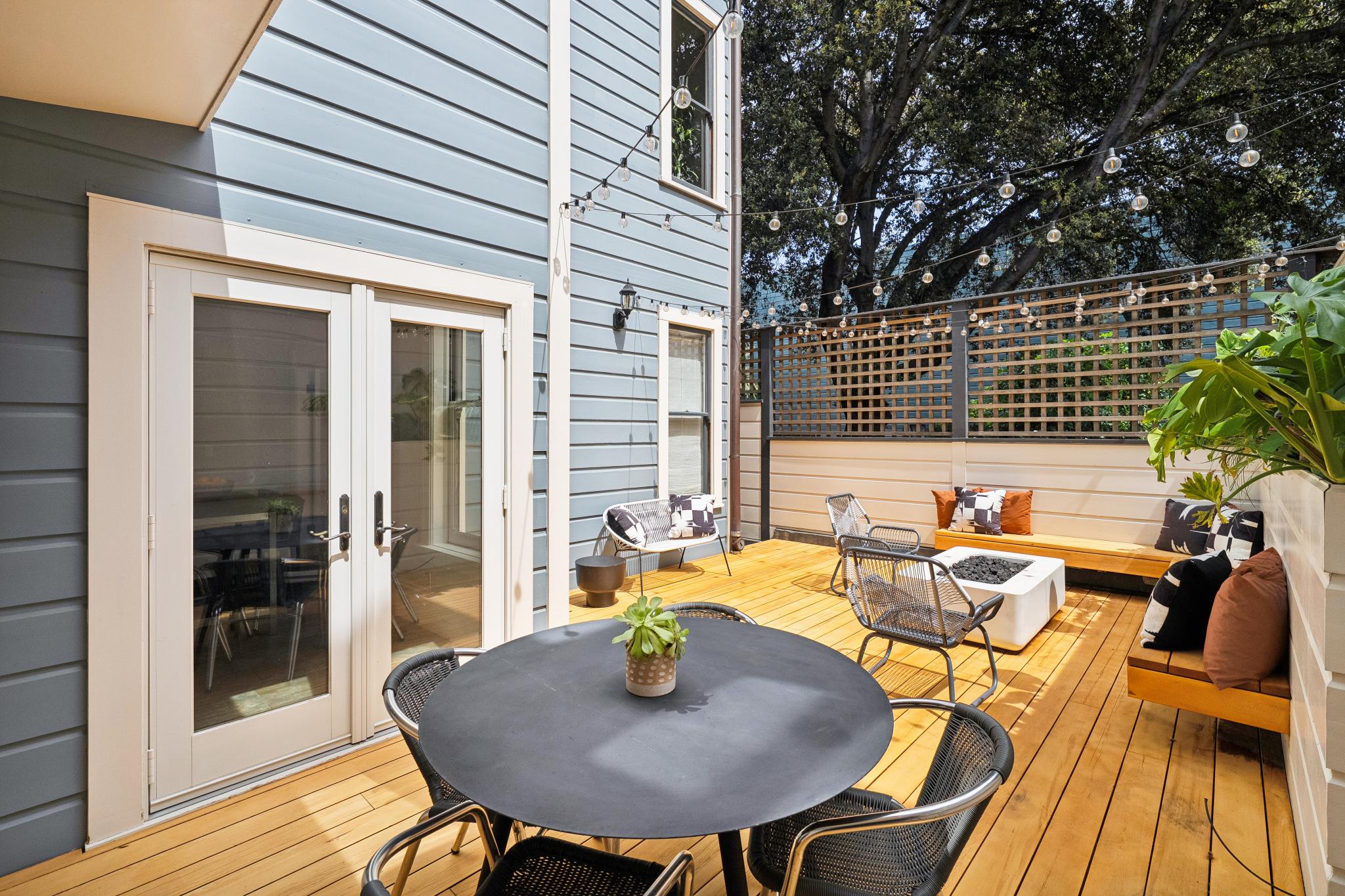
The lower level offers three bedrooms, a full kitchen, and a direct garden entrance — functioning seamlessly as a legal two-bedroom-and-one-bath unit or as a generous extension of the household. Step outside and the rear garden reveals the home's most quietly spectacular amenity: a multi-level deck with built-in bench seating, a concrete fire pit, and a dedicated outdoor kitchen anchored by a Sedona stainless steel grill set into marble countertops with white cabinetry — a year-round outdoor room in every meaningful sense. String lights overhead, lush potted greenery, and a lattice privacy screen complete a space that manages to feel both designed and genuinely livable. Radiant floor heating runs throughout the home, ensuring that the building's historic character is matched by thoroughly modern comfort.
Hayes Valley occupies a singular position in the geography of San Francisco — not merely at its physical center, but at the intersection of its most enduring cultural energies. The neighborhood's story is one of remarkable reinvention. For much of the twentieth century, the elevated Central Freeway bisected and shadowed the area, suppressing what had once been a thriving Victorian residential district. When the 1989 Loma Prieta earthquake damaged the structure and the freeway was ultimately demolished in the late 1990s, Hayes Valley experienced one of the most celebrated urban recoveries in the city's recent history. In its place emerged Patricia's Green, a linear park and public gathering space that functions today as the neighborhood's living room — a place for weekend markets, public art installations, and the kind of spontaneous community life that defines a truly walkable urban district.
The cultural infrastructure surrounding 287-291 Page Street is extraordinary by any measure. The San Francisco Jazz Center, which opened its purpose-built home on Franklin Street in 2013, is among the finest dedicated jazz venues in the United States, hosting international artists in an intimate, acoustically refined setting. Davies Symphony Hall, home of the San Francisco Symphony, is a short walk away, as is the War Memorial Opera House, which hosts the San Francisco Opera and the San Francisco Ballet — two world-class performing arts institutions that anchor the city's broader civic and cultural identity. City Arts and Lectures, the celebrated public interview and lecture series, draws writers, thinkers, scientists, and artists of global significance to its nearby Nourse Theater venue.
At the street level, Hayes Valley has cultivated one of the city's most distinctive and genuinely local retail and dining cultures. The block immediately surrounding the property offers an almost implausible concentration of daily pleasures: the SF Zen Center, one of the largest Buddhist communities outside Asia, sits nearby, offering meditation programs open to the public; Mercury Café provides a neighborhood coffee anchor with serious craft credentials; Hazie's delivers weekend brunch with the kind of warmth that turns first-time visitors into regulars; and Revelry Café rounds out the immediate block with thoughtful evening dining. Radiating outward, the neighborhood's dining scene deepens considerably. Zuni Café, a San Francisco institution of nearly five decades, remains one of the city's essential restaurants. Rich Table has earned national recognition for its inventive, ingredient-driven California cooking. Suppenkuche anchors a beloved Bavarian tradition in the neighborhood, and the Blue Bottle Coffee outpost in Linden Alley — a pedestrian laneway that has become a destination in its own right — offers one of the more civilized morning rituals the city affords.
Practically speaking, Hayes Valley is exceptionally well connected. The neighborhood sits at the convergence of several Muni lines, with freeway access and Caltrain proximity making both the peninsula and the broader Bay Area readily accessible. The result is a location that offers the texture and walkability of a true urban village while maintaining effortless connectivity to everything the wider city has to offer — a balance that is genuinely rare, and that this address has held for 141 years.
Featured Highlights
Curated Content • Presented by Jennifer Rosdail