The Story Behind
A Contemporary Coastal Estate Above the Pacific in Malibu
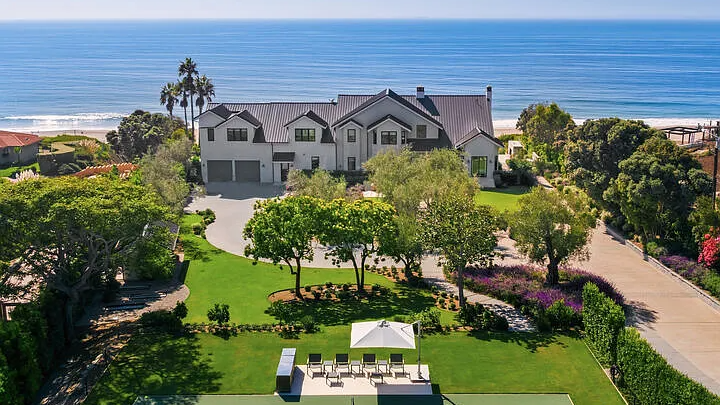
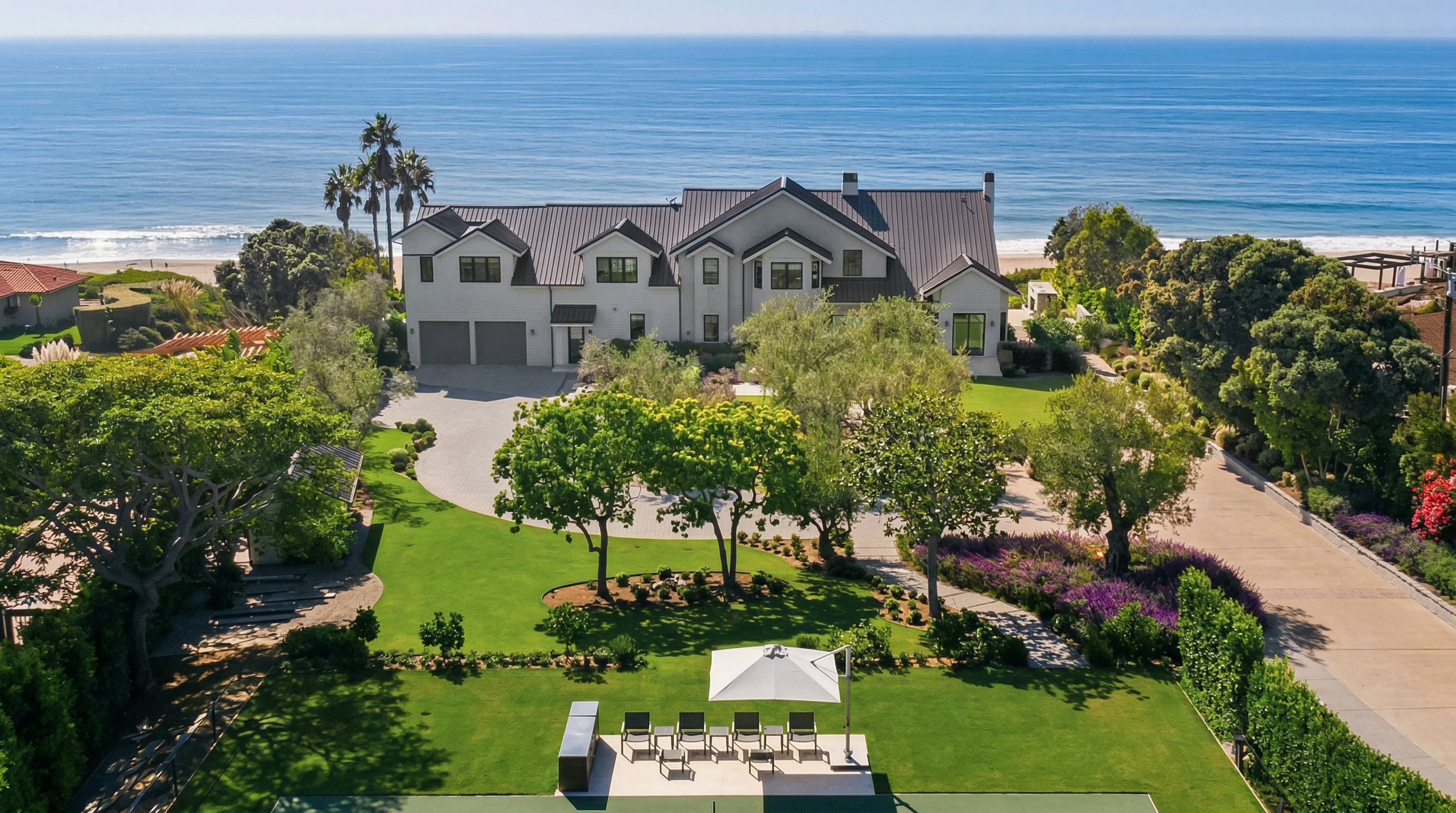
There is a particular quality of light that exists only where the land ends and the Pacific begins — a luminosity that floods a room differently depending on the hour, the season, and the mood of the sea. At 29754 Baden Place, the architecture has been conceived entirely around that phenomenon. Clean modern lines, an absence of visual clutter, and an almost disciplined restraint in the material palette ensure that the ocean is never competing with the building — it is always the building's reason for being.
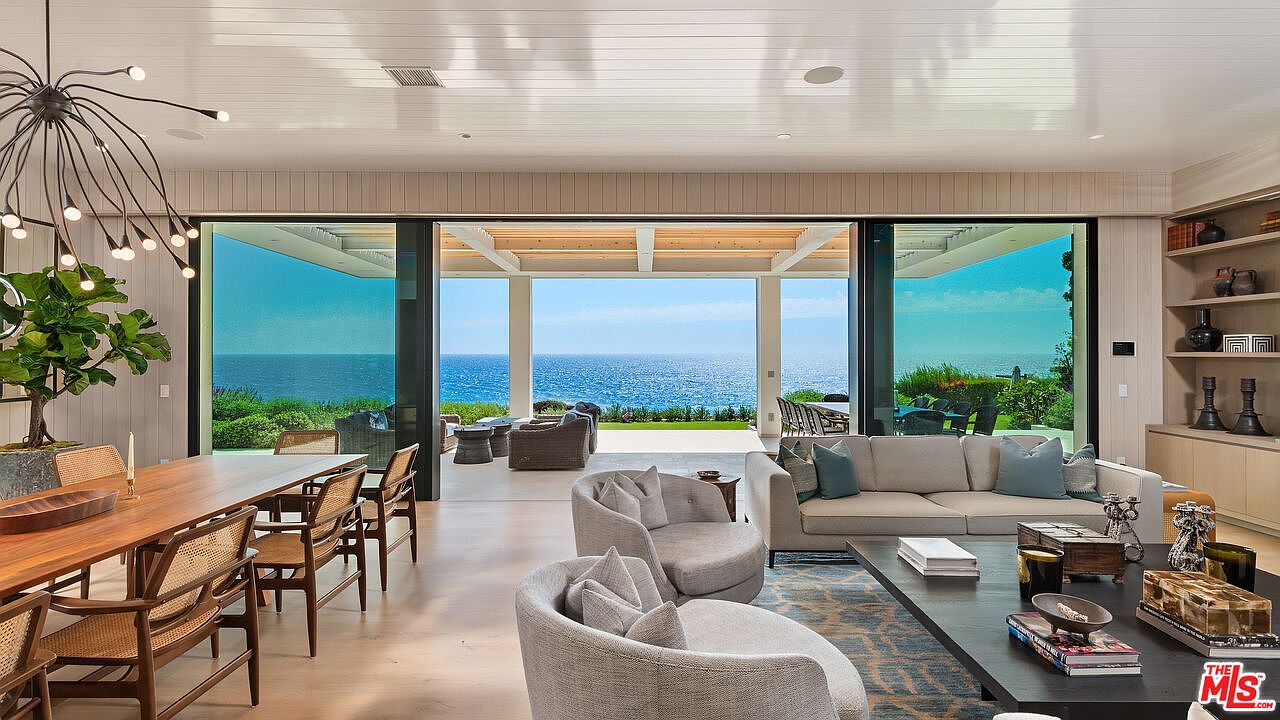
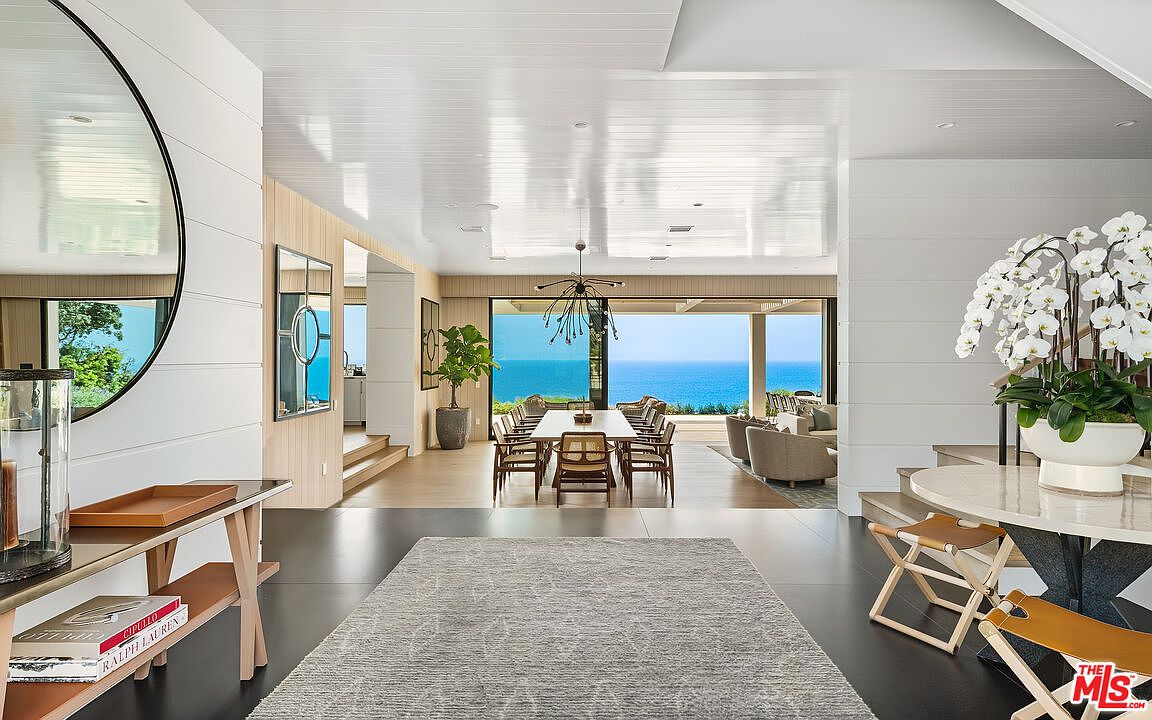
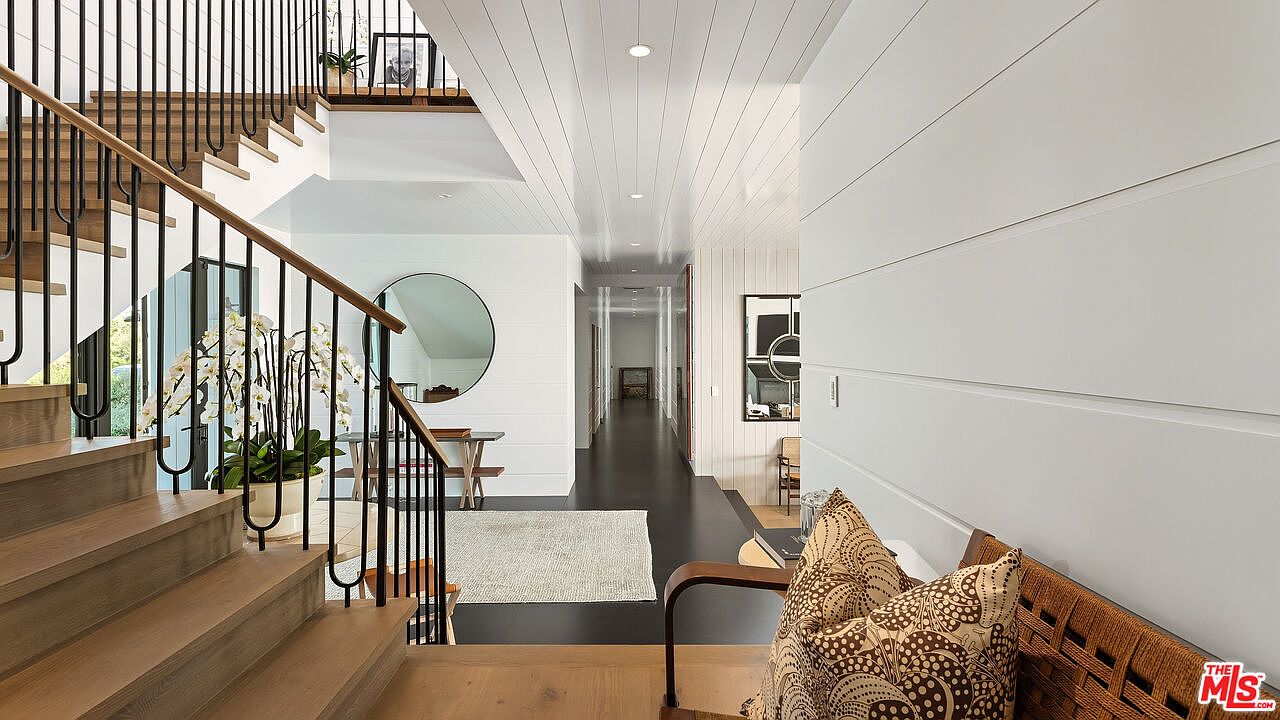
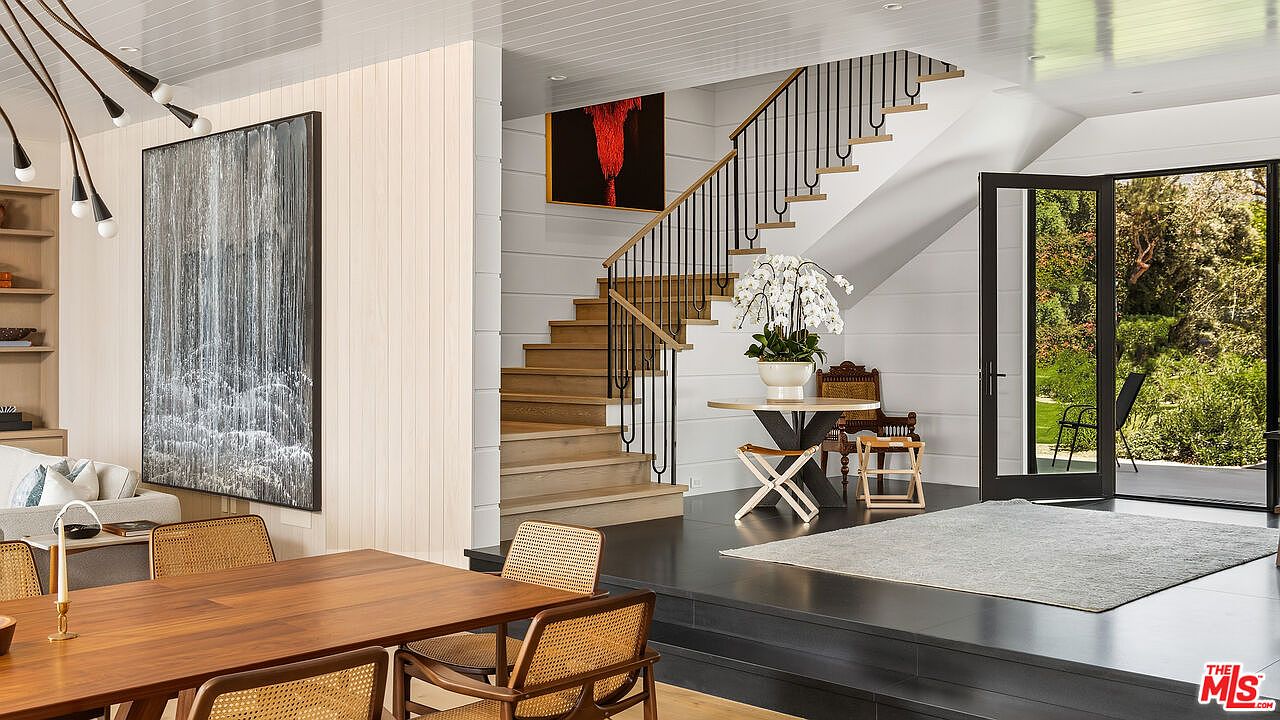
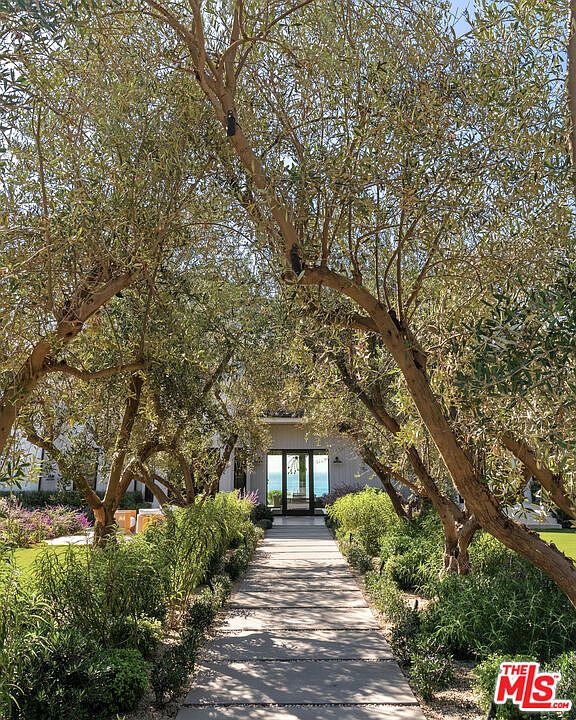
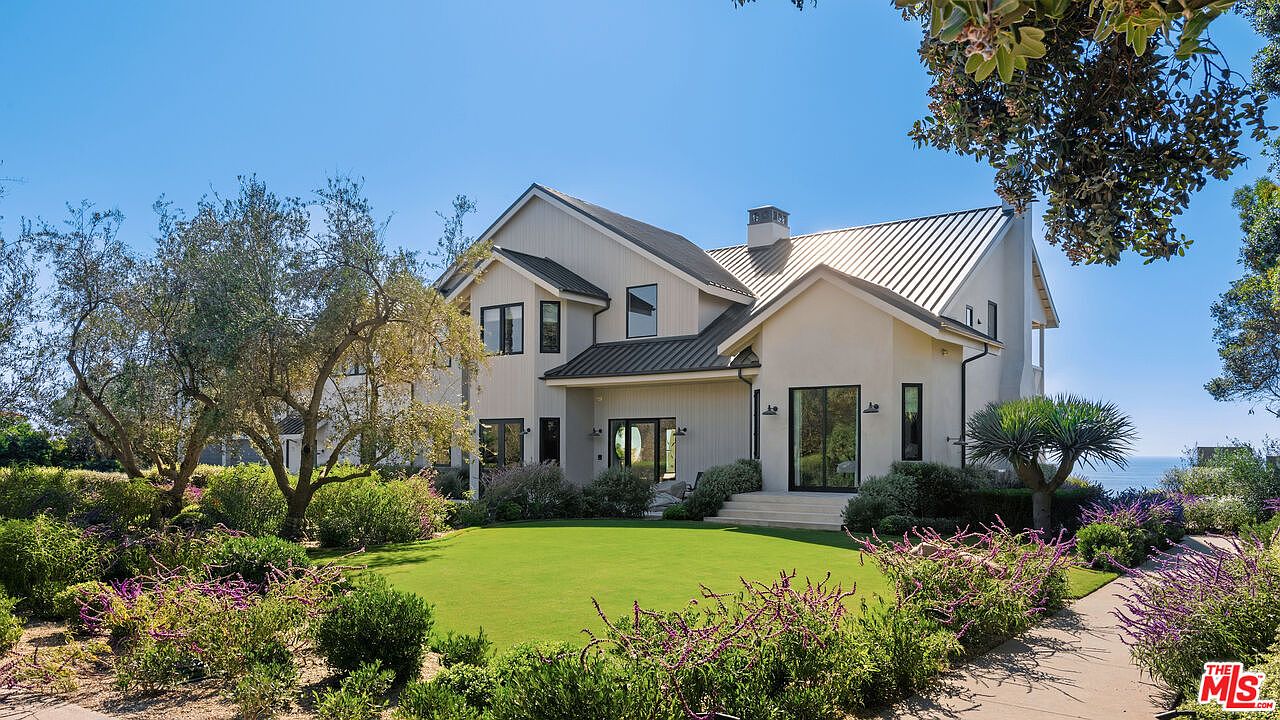
The approach through a canopy of mature olive trees sets an immediate tone of considered calm. Inside, the foyer gives way to glass-lined living spaces in which the horizon feels continuous, as though the interior simply extends outward until it meets the water. Hand-troweled plaster walls carry a warmth and texture that machine-finished surfaces cannot replicate, while natural wood flooring grounds each room with an organic counterpoint to the cool coastal light. The details are precise without being cold, and luxurious without announcing themselves.
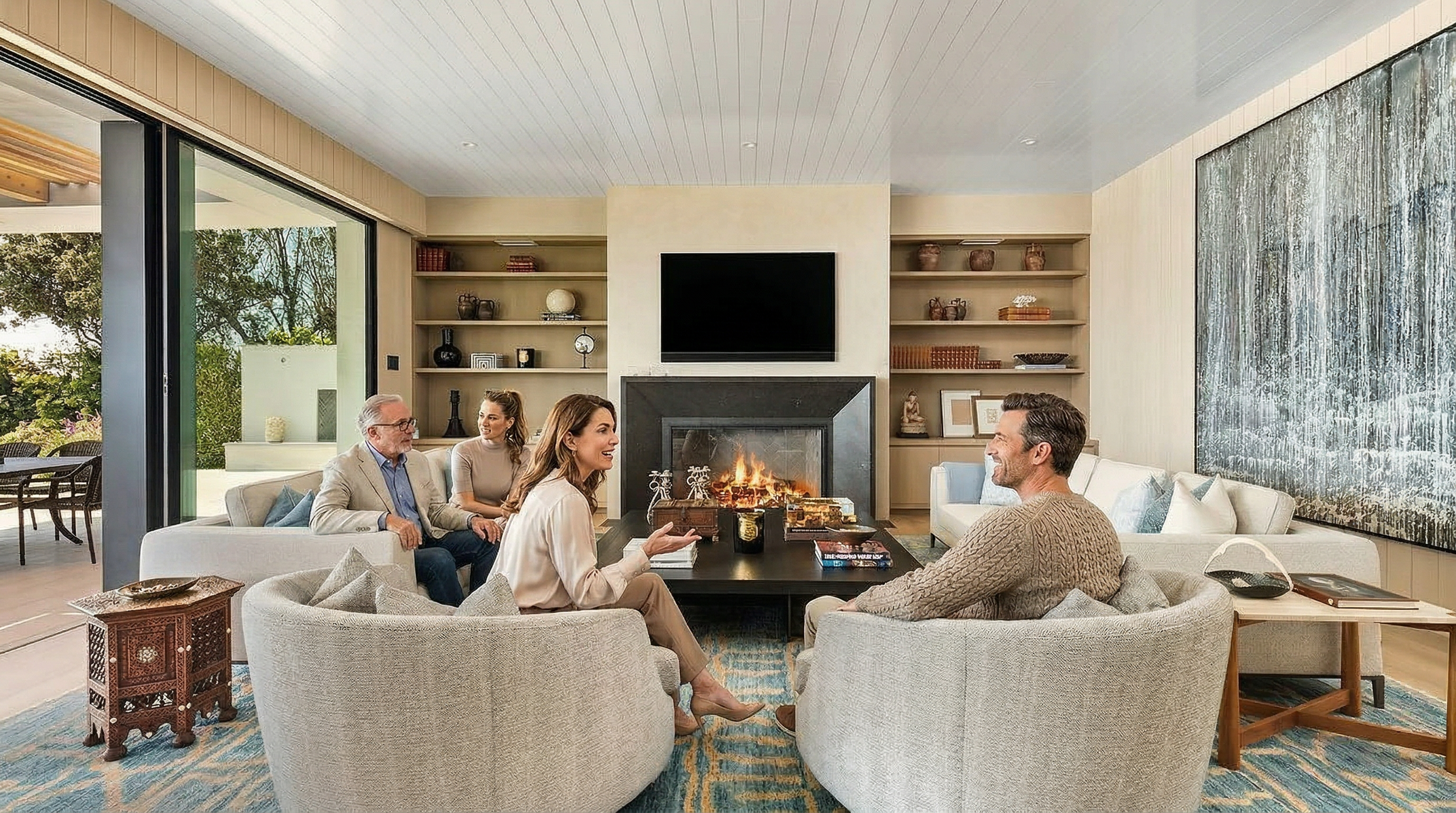
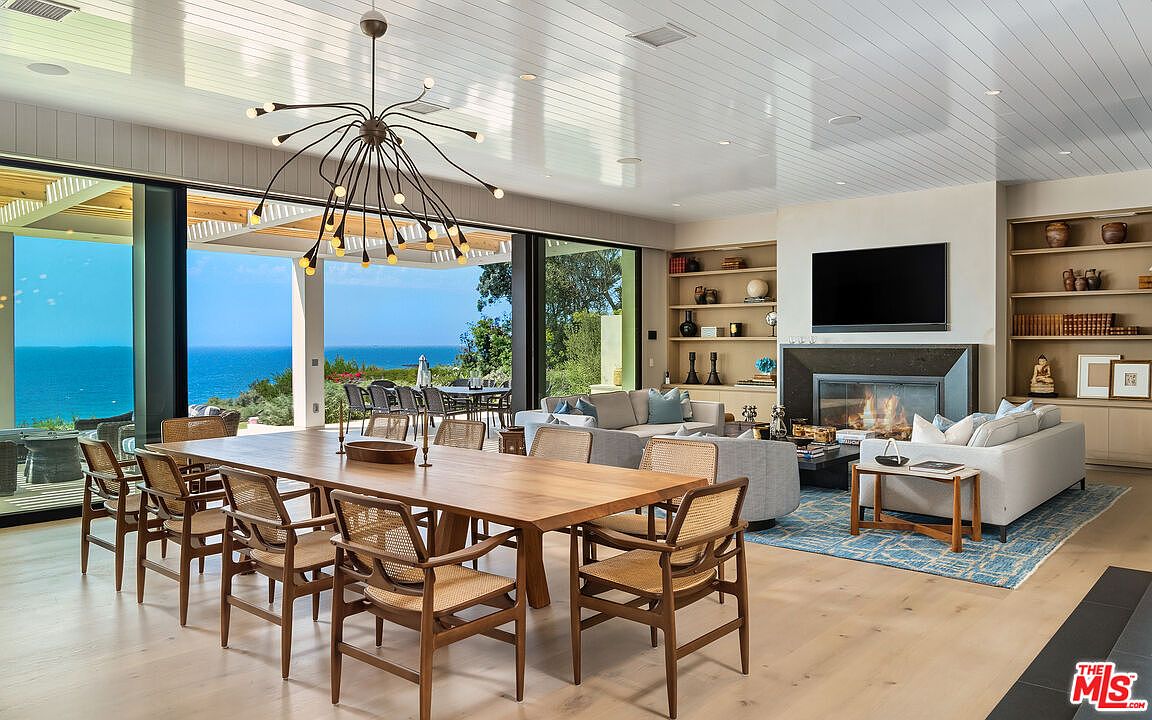
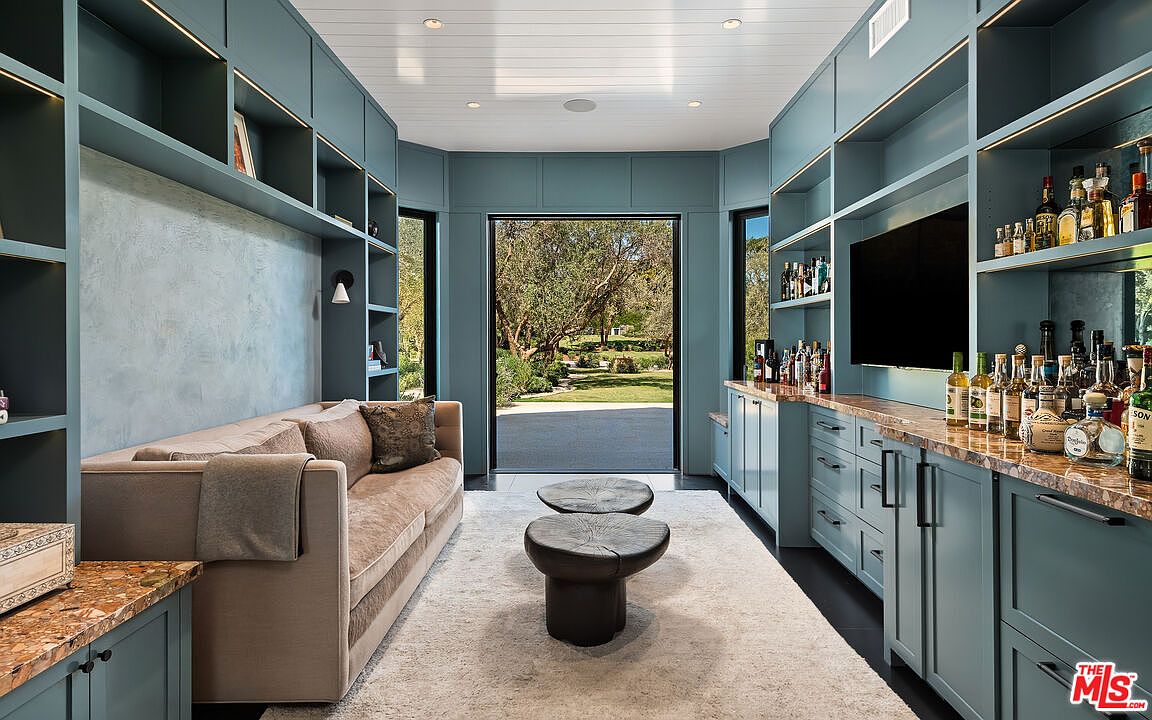
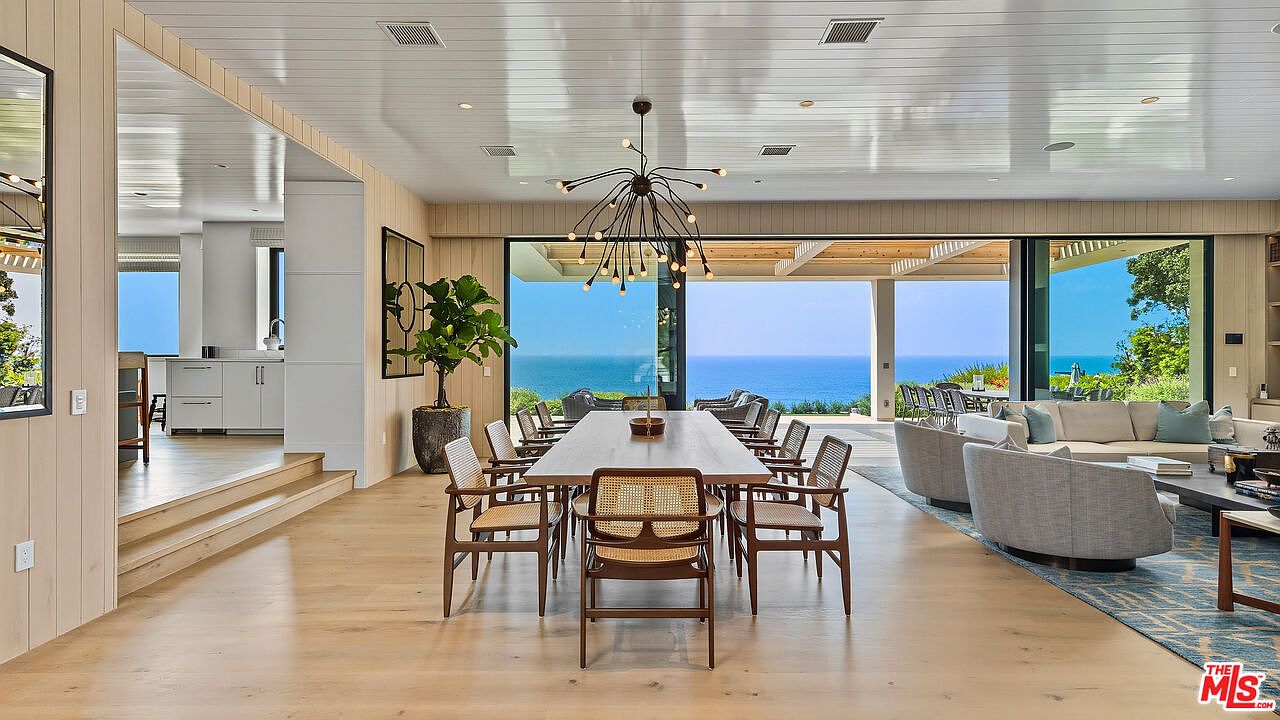
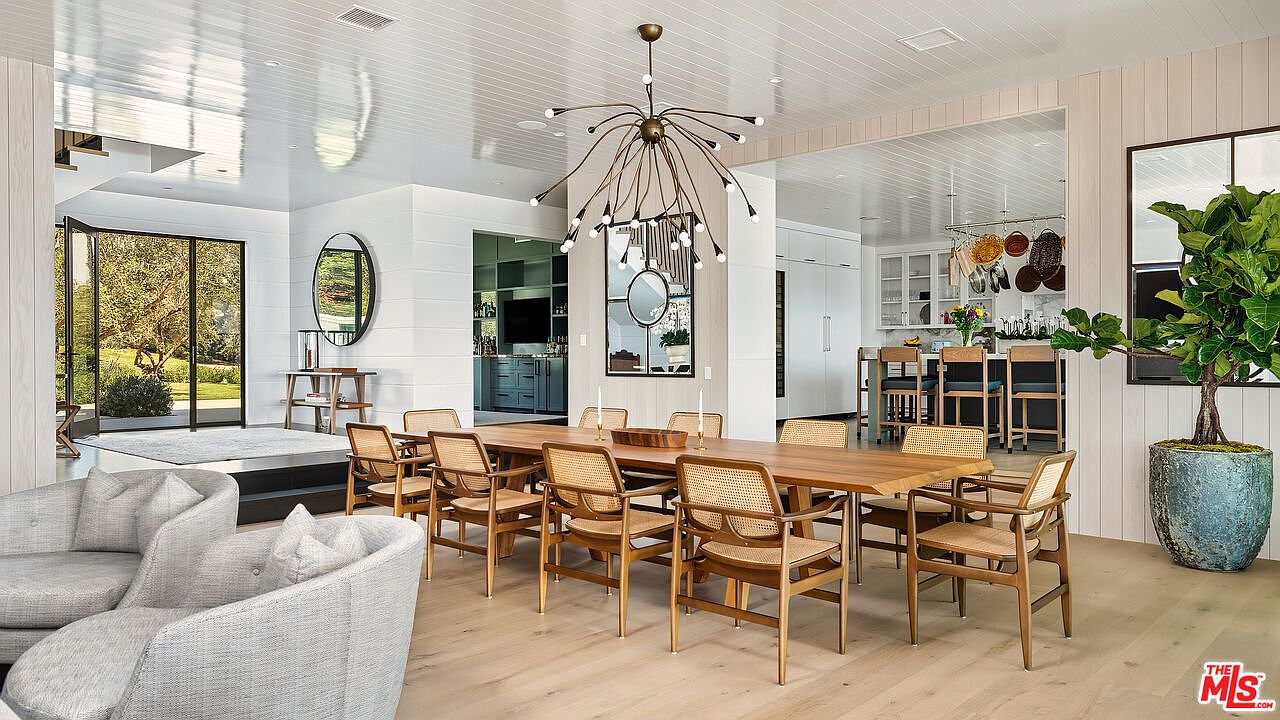
The main level is arranged for both gracious entertaining and private retreat. The fireside lounge and formal dining room — animated by a striking sputnik-style chandelier and flanked by floor-to-ceiling glass — offer a stage that requires very little additional staging. The library and bar lounge function as a quieter counterpoint, a place to withdraw from the panorama and settle into conversation. Every transition between rooms feels deliberate, each threshold a considered editorial decision.
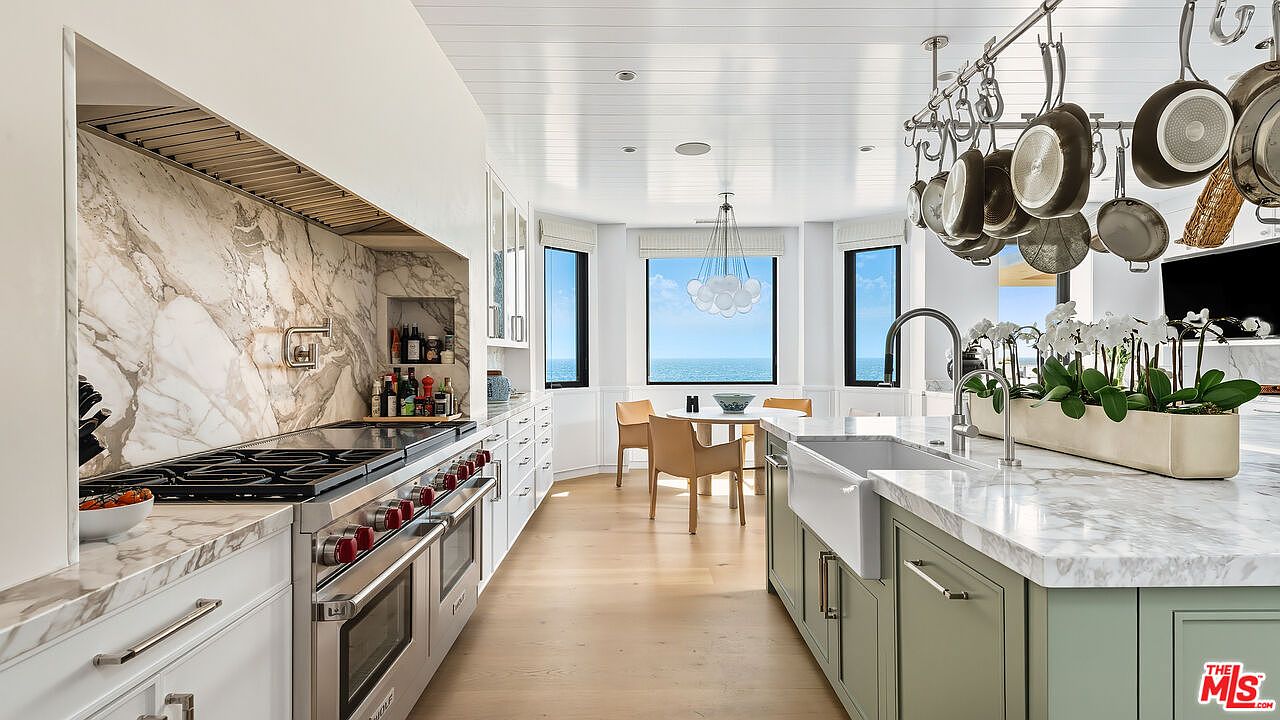
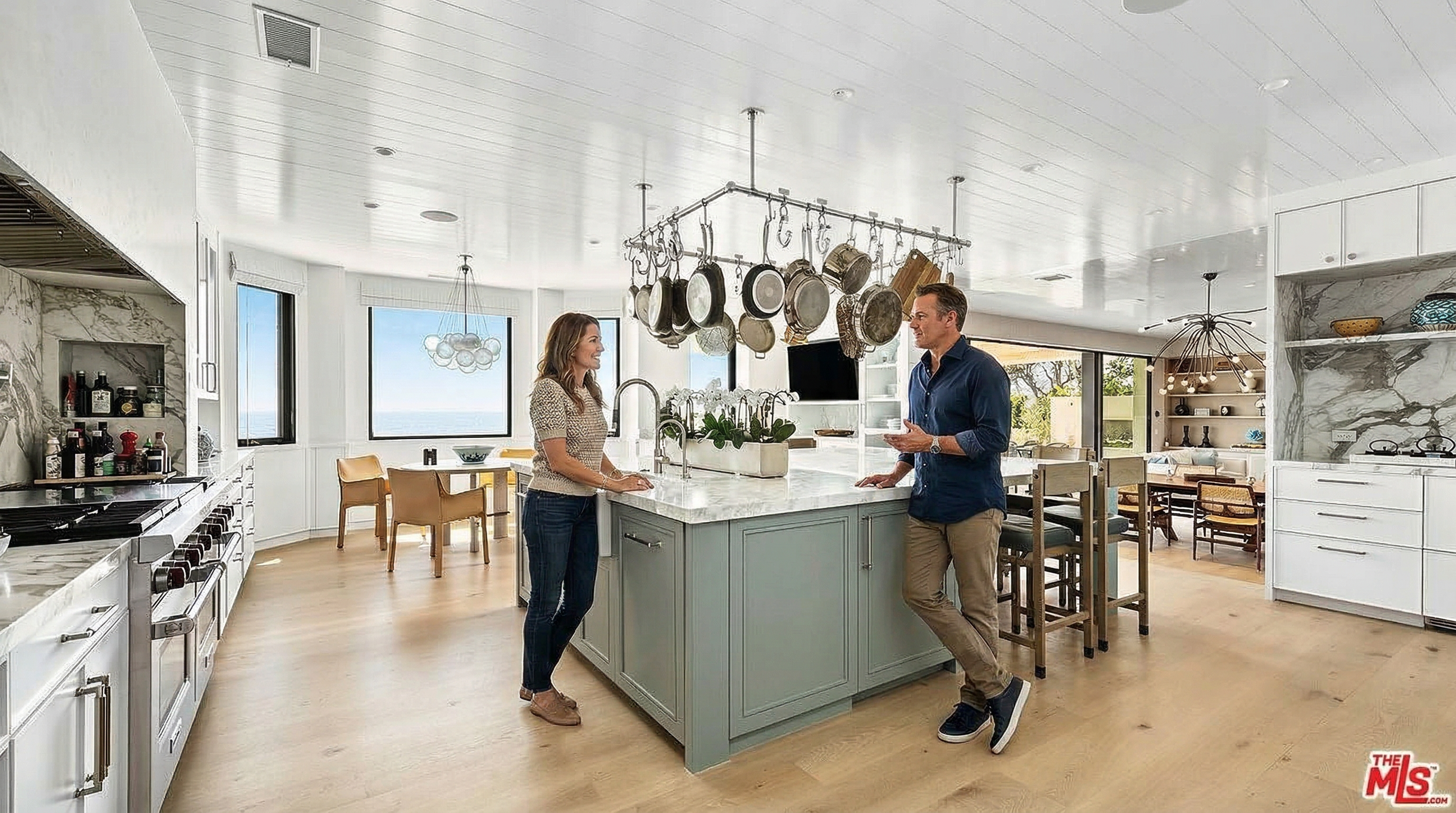
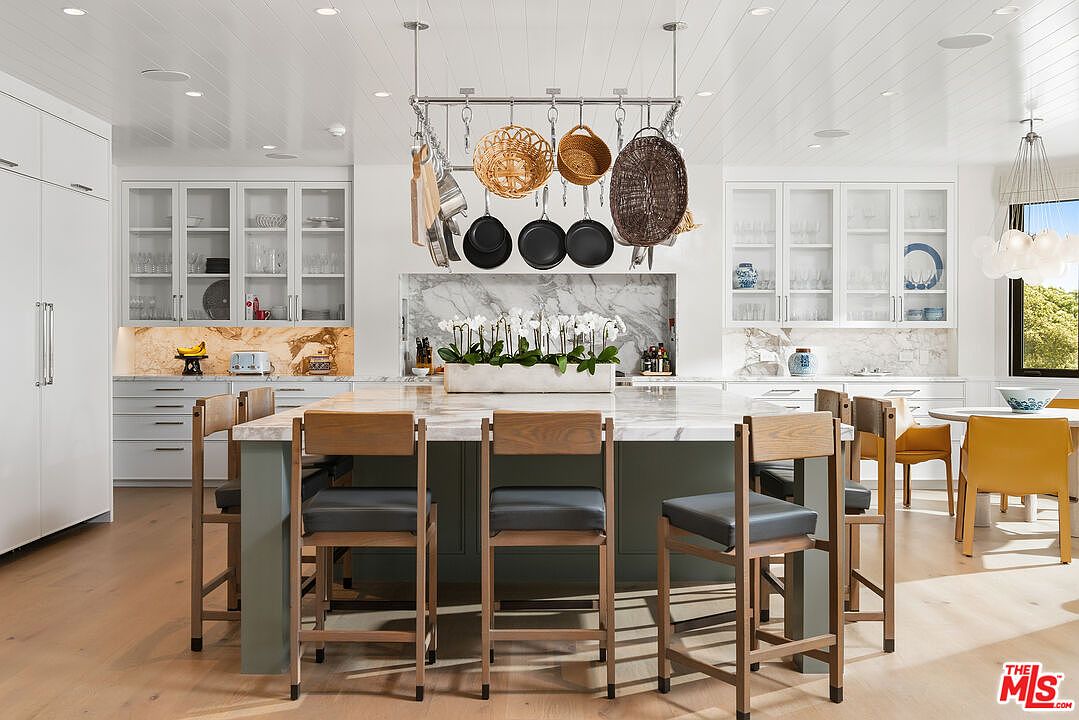
The chef's kitchen is a study in high-function elegance. Marble counters, a sage-green island with integrated farmhouse sink, a professional pot rack, and a suite of Miele and Wolf appliances combine to create a workspace that is as serious as it is beautiful. The adjacent breakfast nook, positioned to face open water, transforms the simplest morning ritual into something worth lingering over.
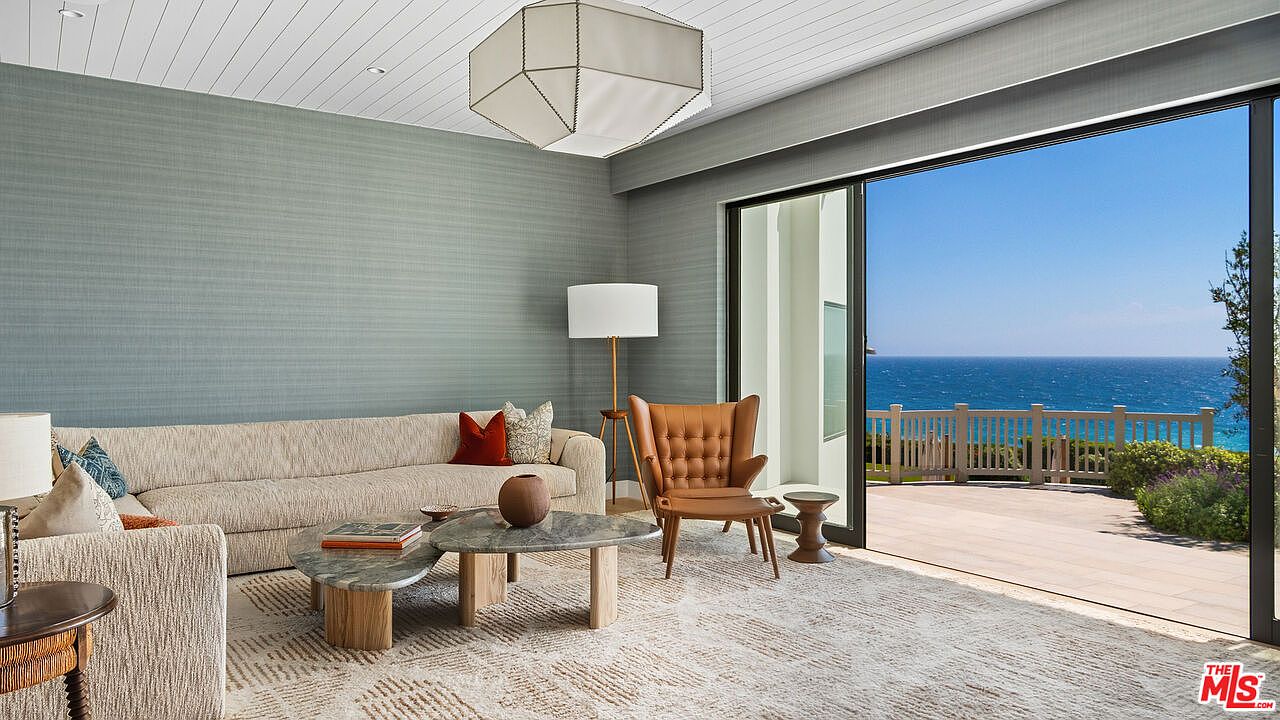
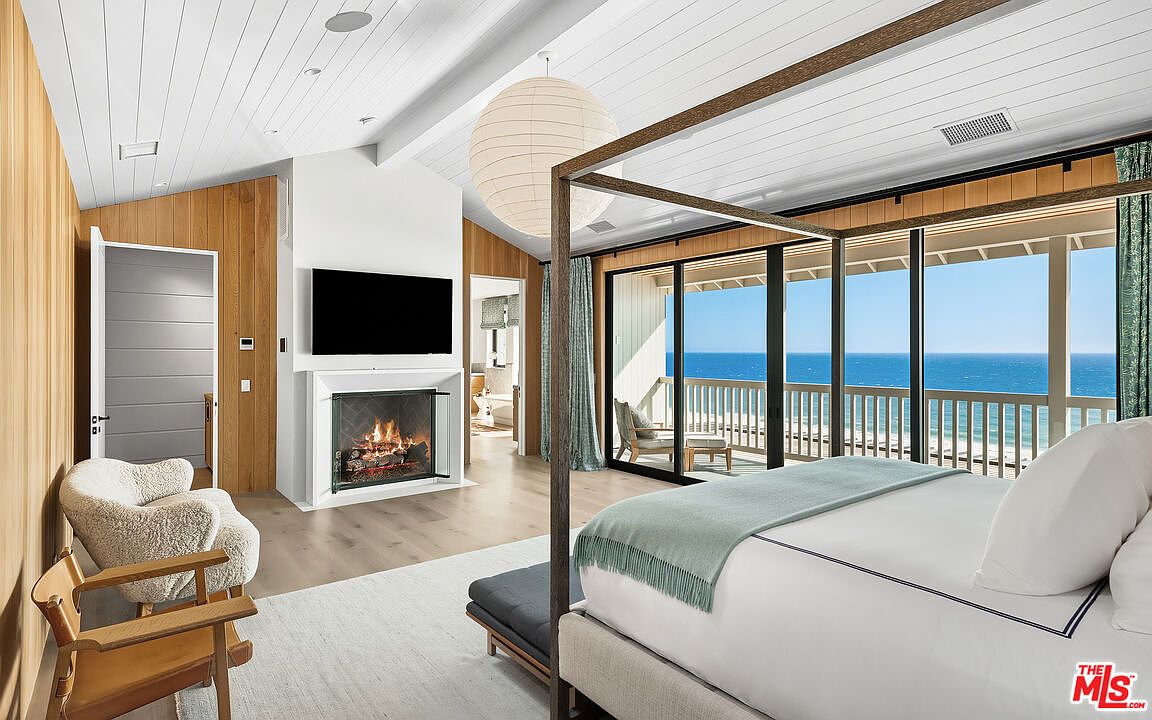
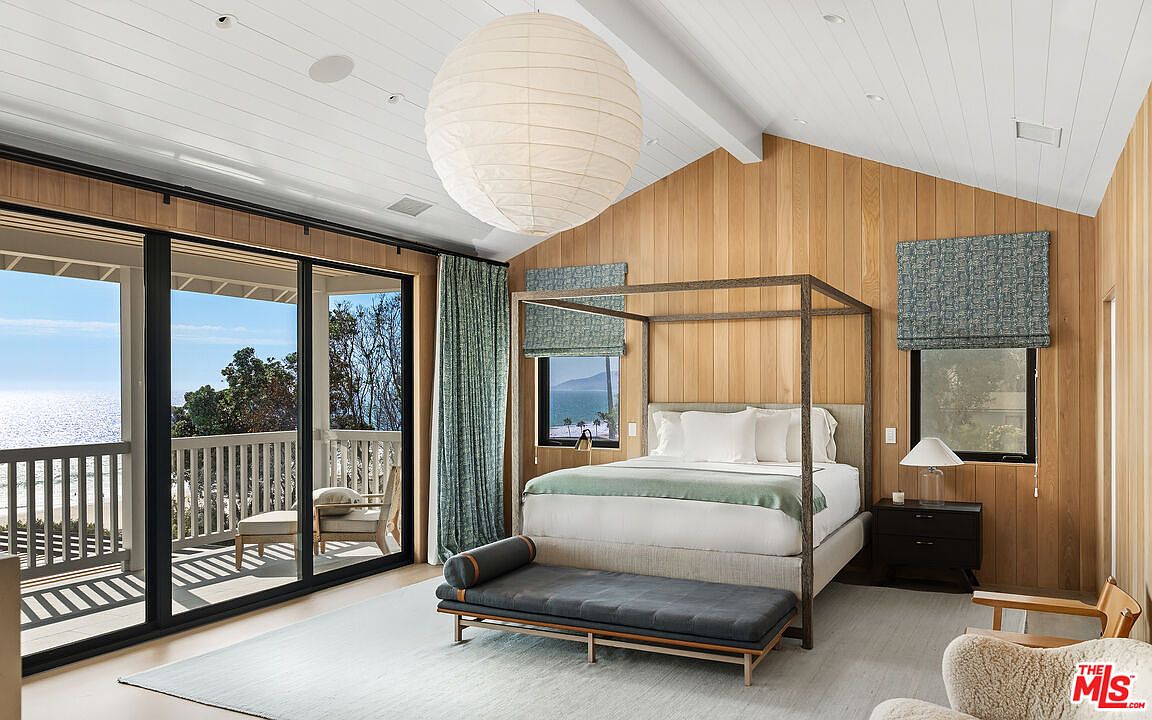
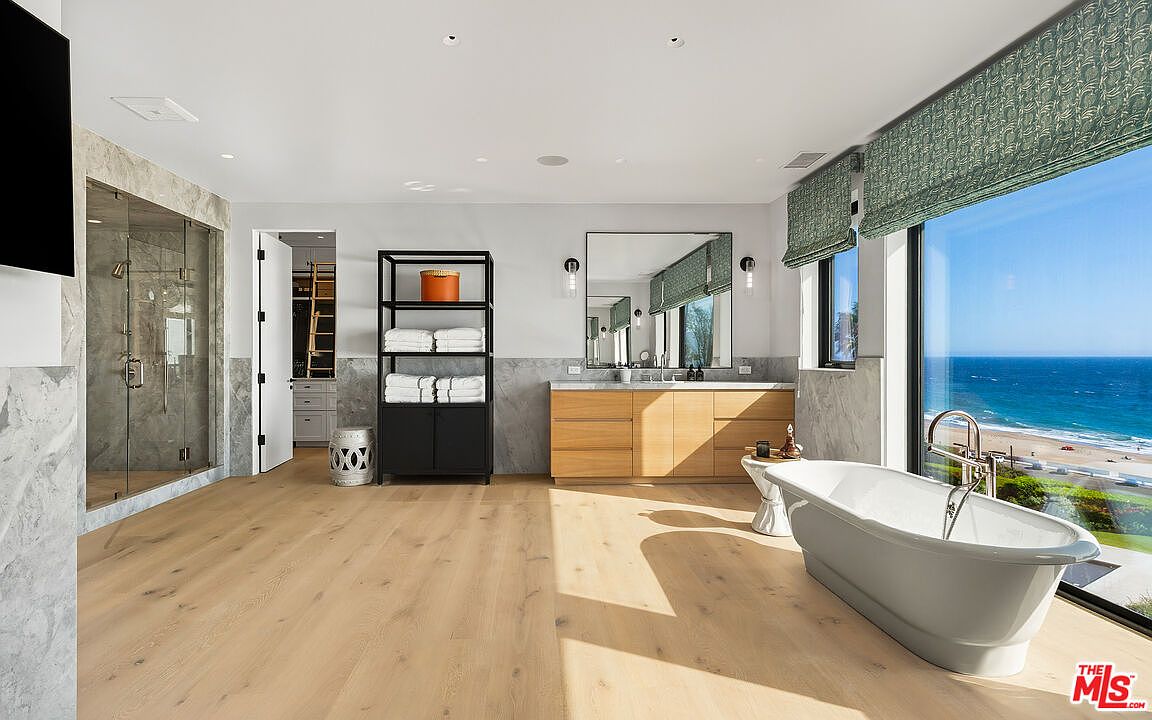
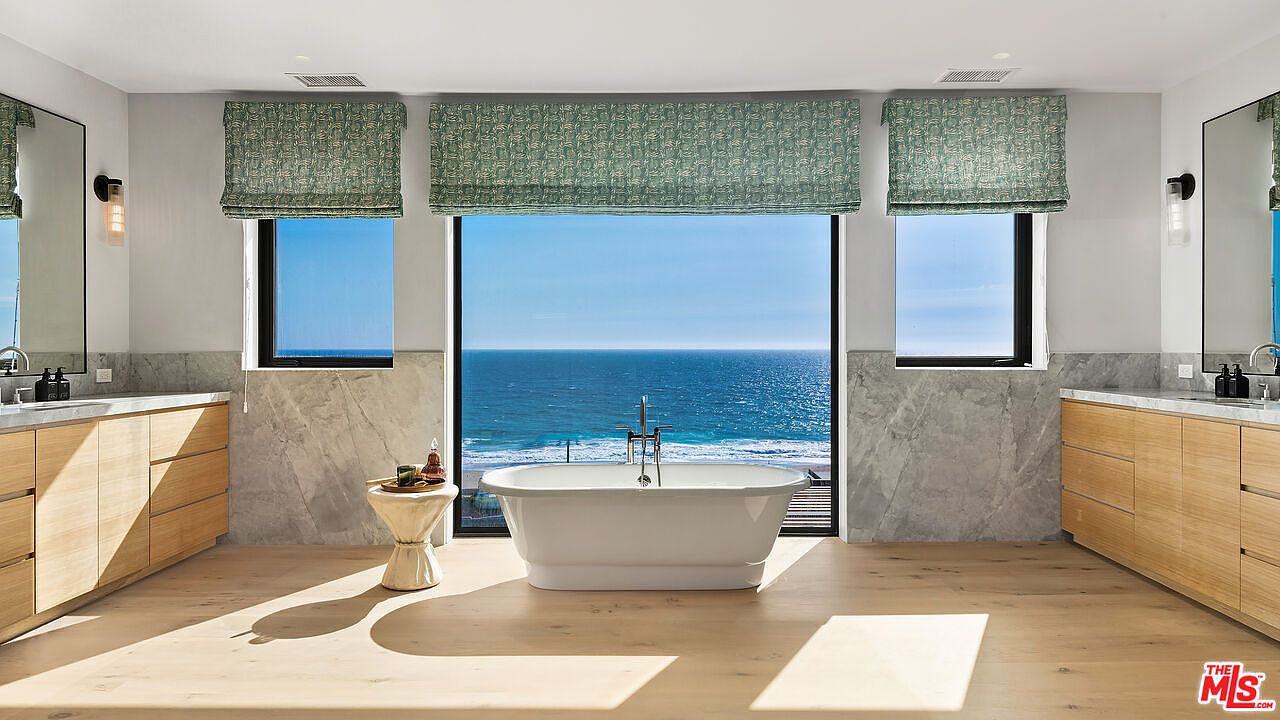
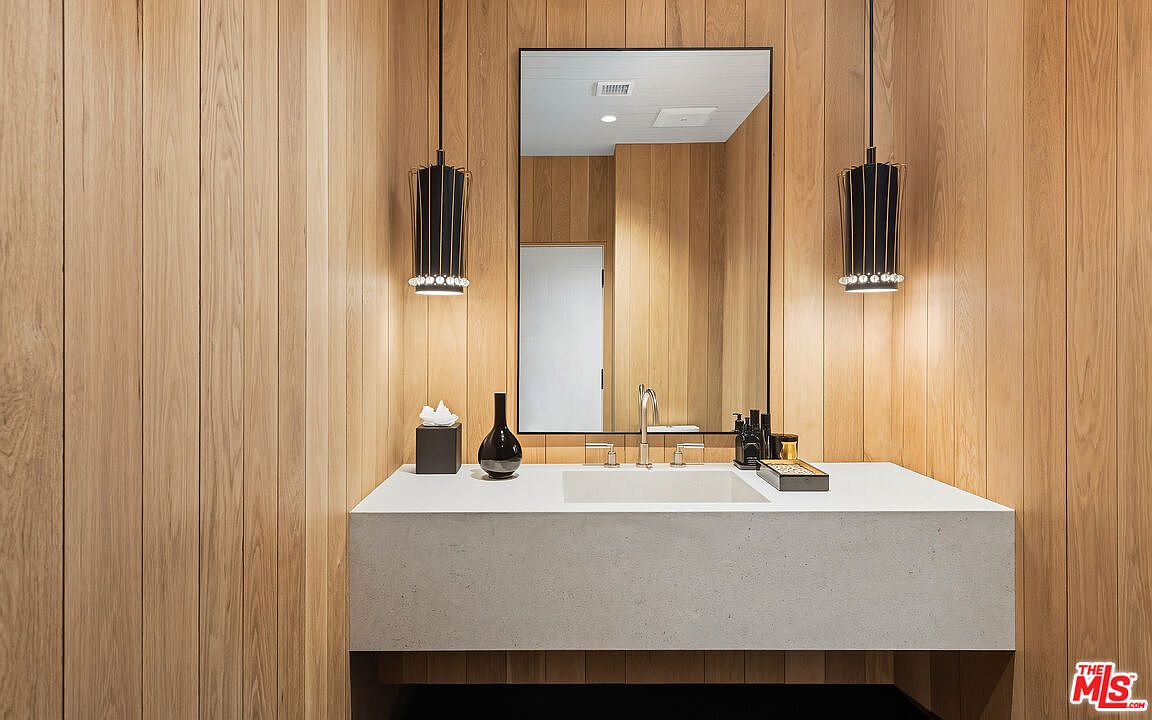
Upstairs, the primary suite commands its own architectural moment. Vaulted ceilings amplify the sense of volume, while warm vertical wood paneling and a sleek integrated fireplace create an interior that reads as both expansive and intimate. The private oceanfront balcony extends the suite into the open air, and the spa bath — organized around a freestanding soaking tub framed by a floor-to-ceiling ocean-view window — elevates the daily routine to something genuinely restorative. Dual stone vanities, a glass-enclosed shower, generous closets, and a private sauna complete a suite that rivals the finest hospitality anywhere on the California coast.
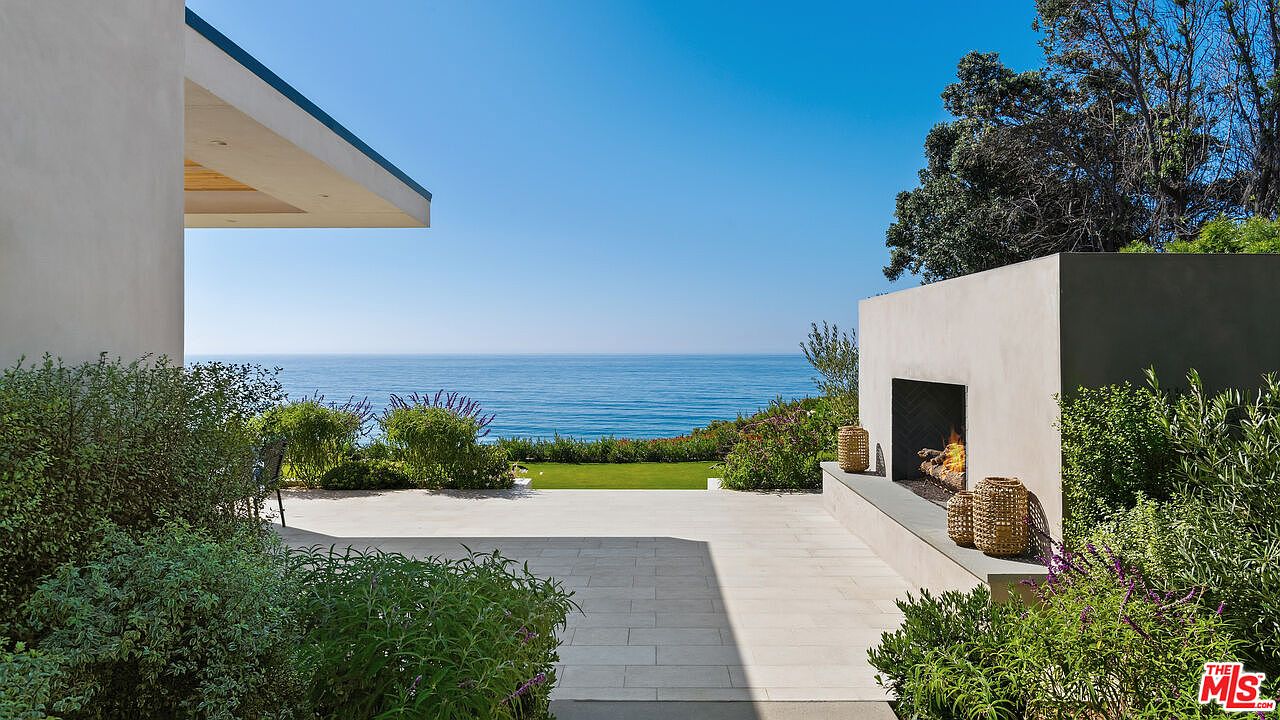
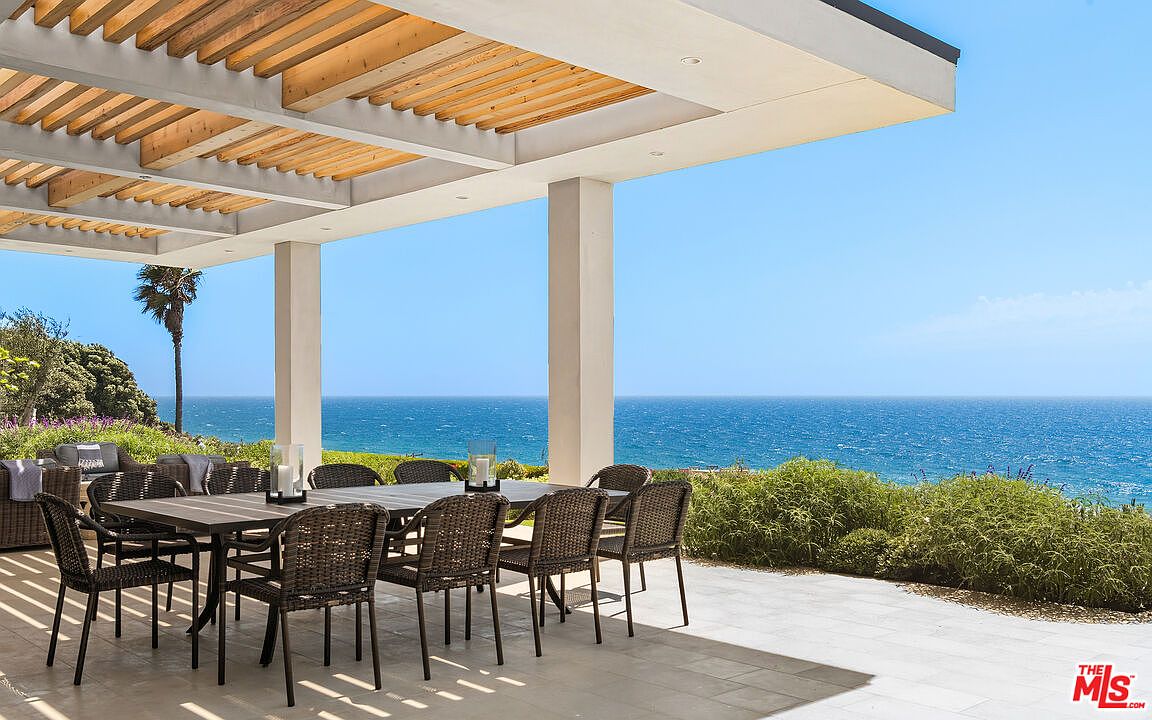
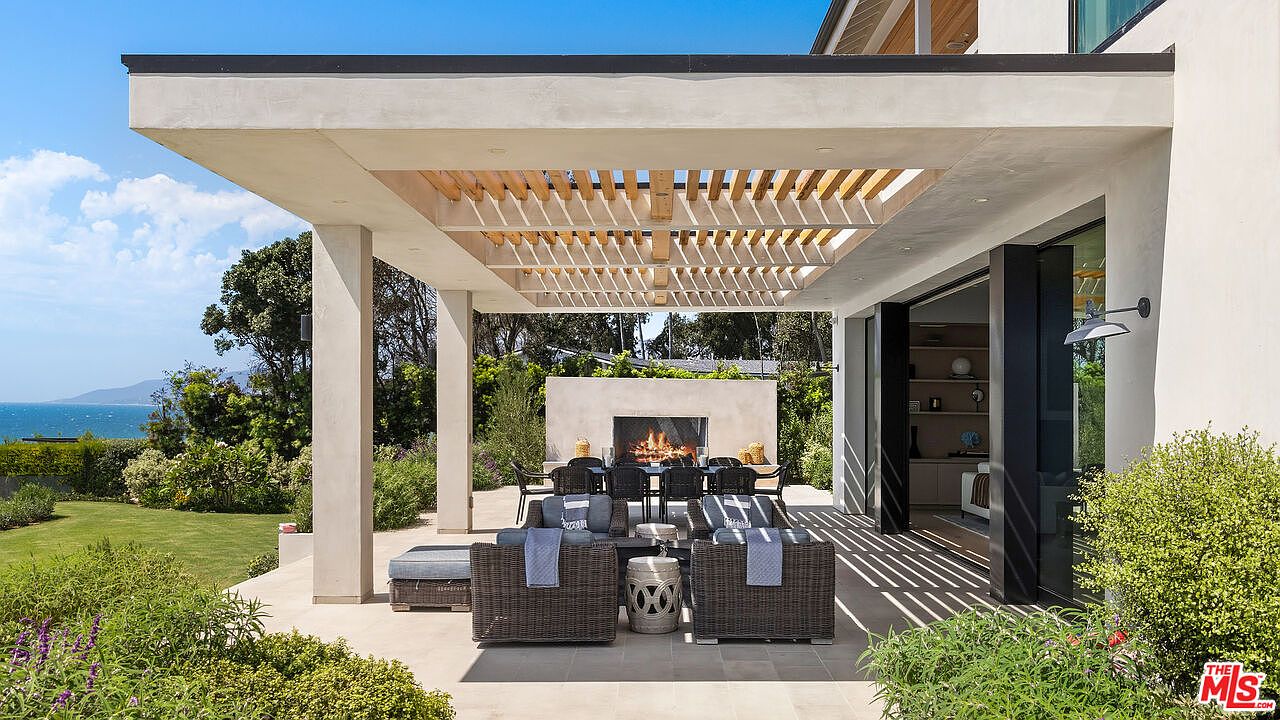
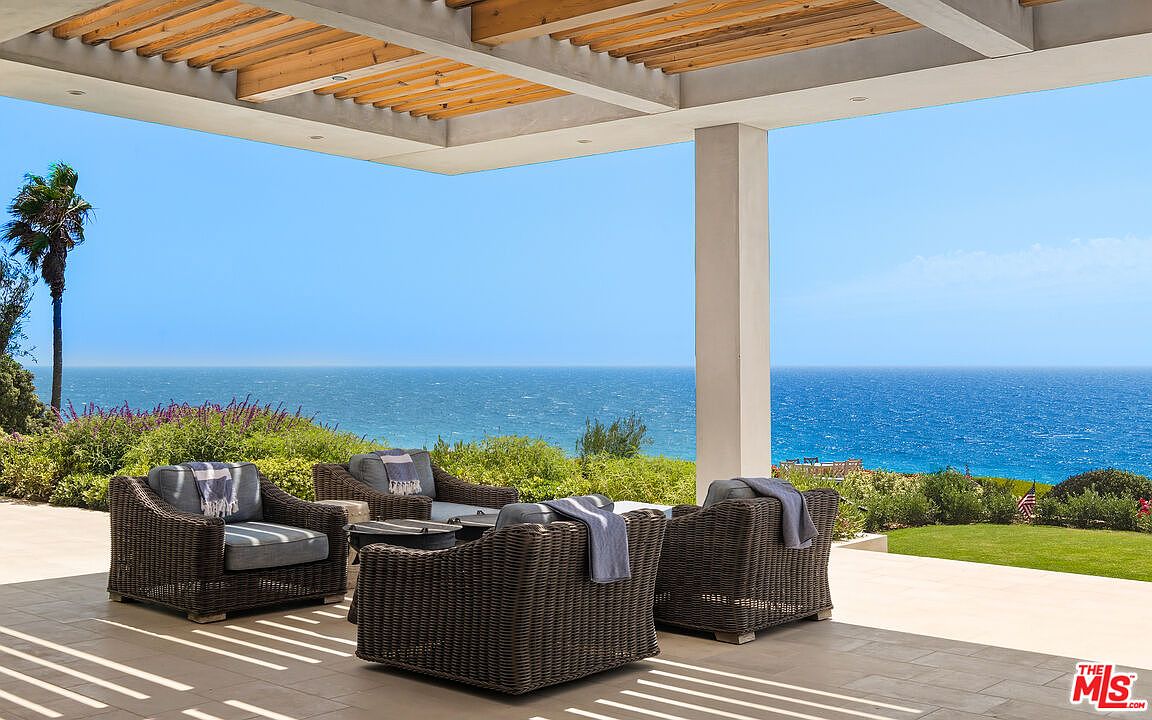
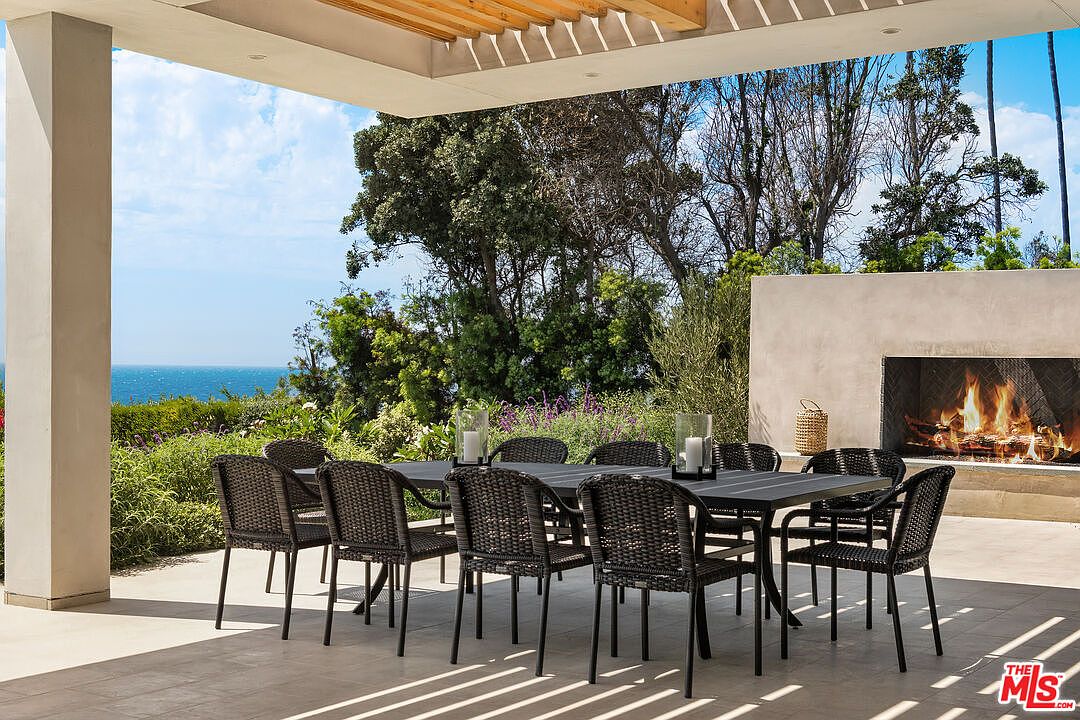
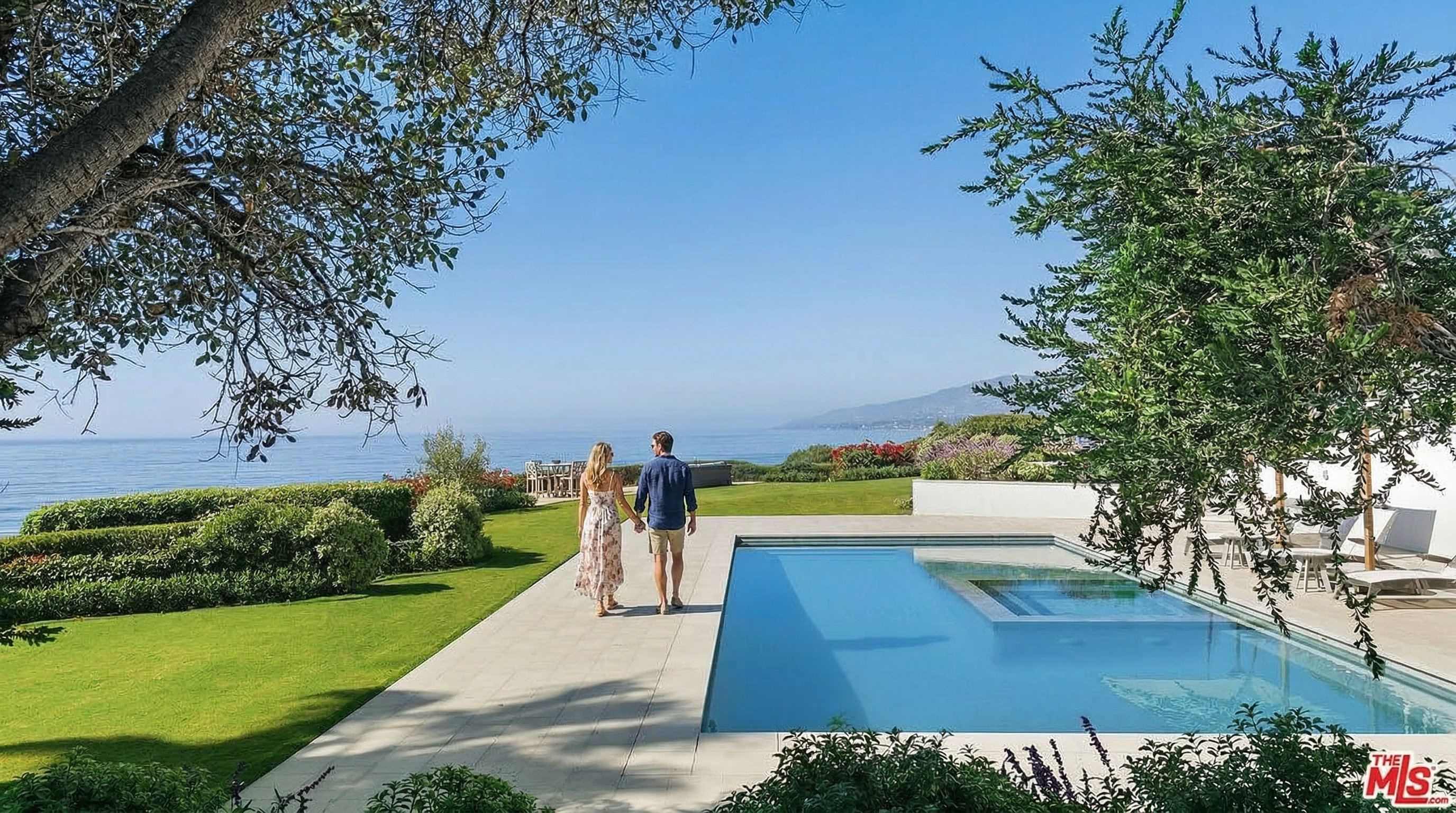
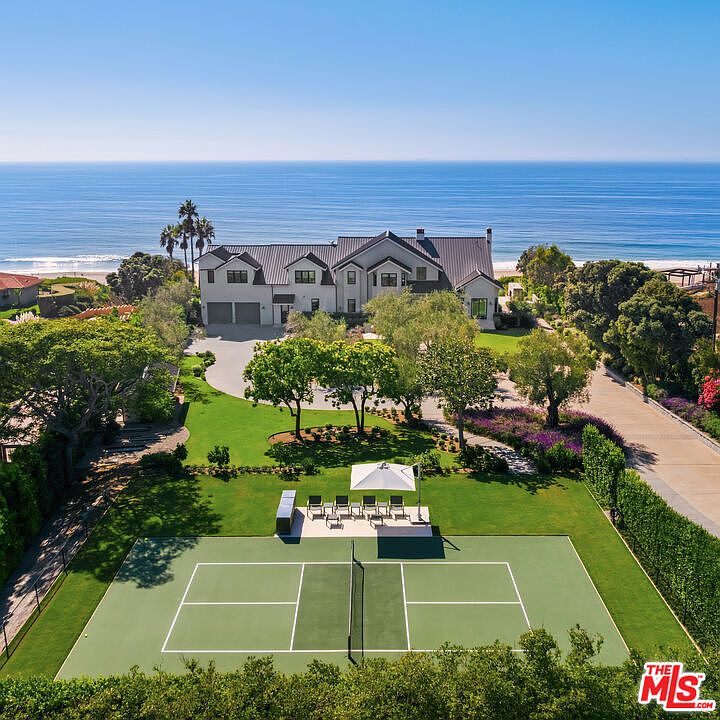
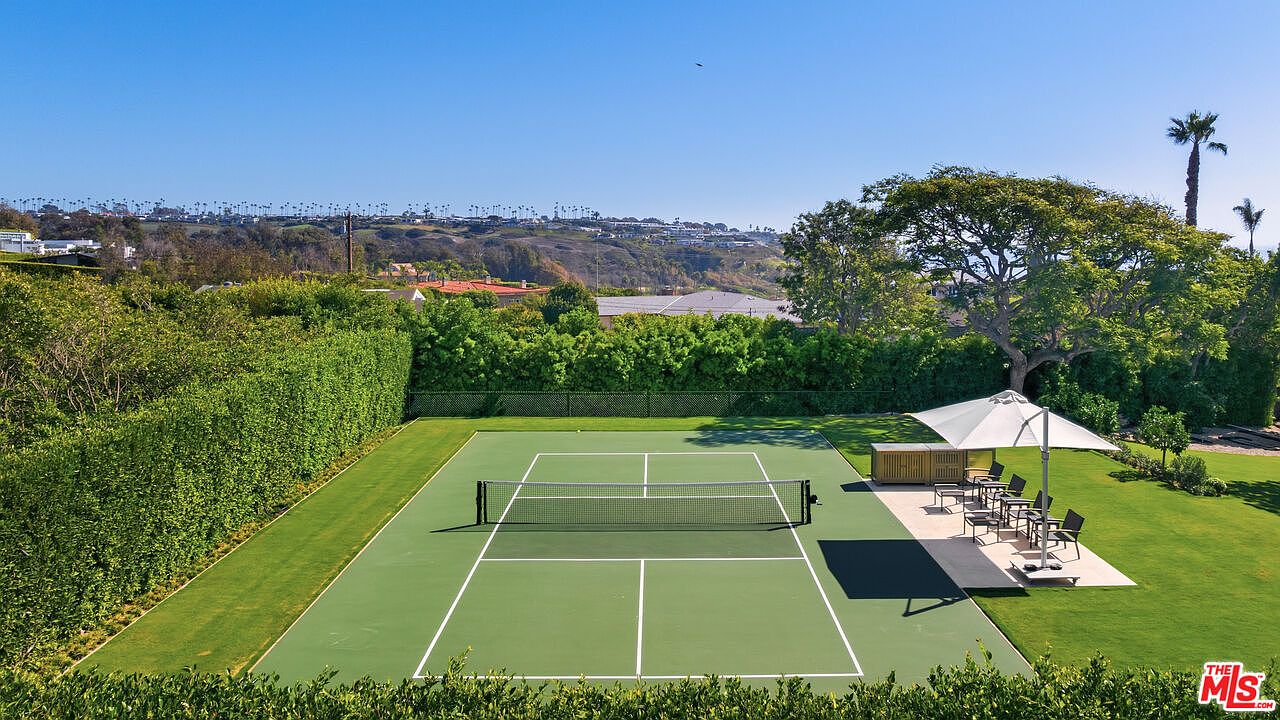
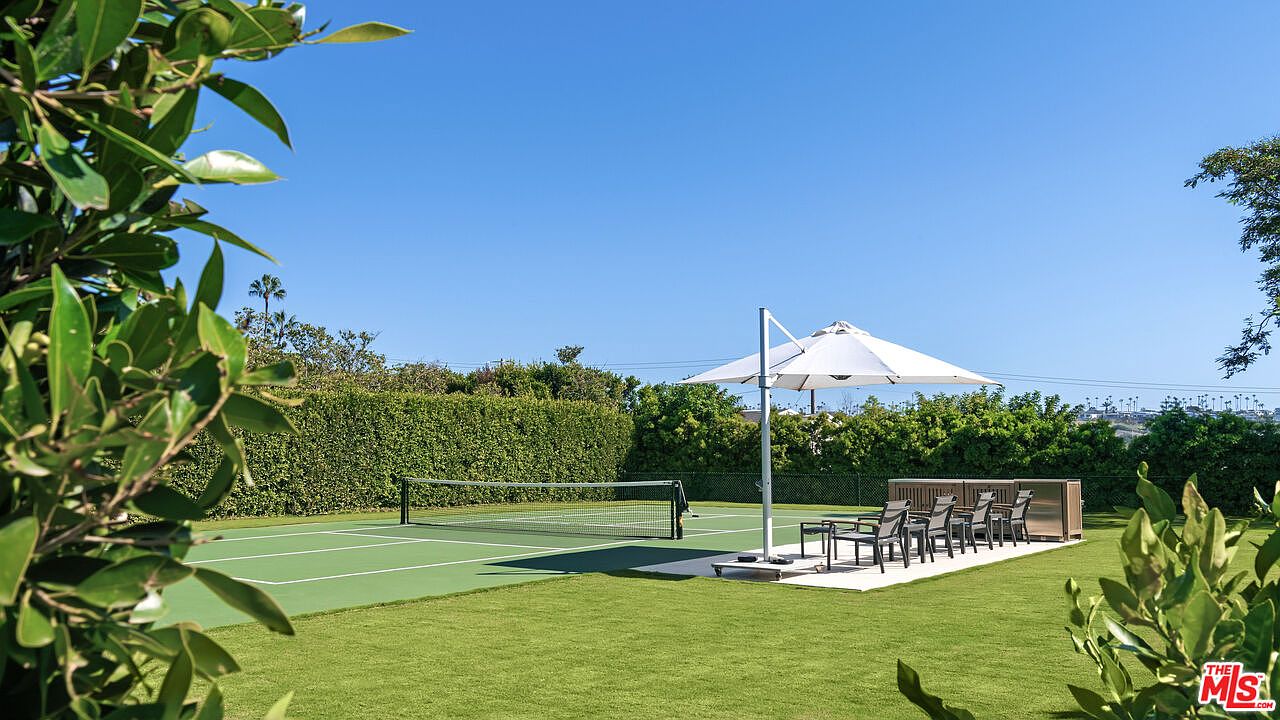
Outdoors, multiple terraces, a pergola-covered lounge with built-in fireplace, a manicured lawn, a resort-style infinity pool and spa, and a dedicated pickleball court are all oriented southward along the Malibu coastline. The entire property is governed by a Crestron smart home platform, full-perimeter security, and camera systems — infrastructure that disappears entirely into the experience of the house, as the best technology always should.
Malibu occupies a singular position in the American imagination — and an equally singular position on the California coastline. Stretching roughly 27 miles along the Pacific Coast Highway between Los Angeles County's Santa Monica Mountains and the sea, it encompasses some of the most ecologically diverse and visually dramatic coastal terrain in the contiguous United States. The Santa Monica Mountains National Recreation Area, which frames Malibu to the north and east, is among the largest urban national parks in the country, preserving tens of thousands of acres of chaparral, canyon, and ridge that descend directly to the shore.
Malibu's character is defined by a persistent tension between accessibility and seclusion — it is close enough to Los Angeles to remain deeply connected to the cultural and professional life of the city, yet its geography, its geology, and its long history of privacy-seeking residents have ensured that it operates on its own terms. The community incorporated as a city only in 1991, and that relatively recent municipal identity reflects a place that has always been more interested in preserving its own particular quality of life than in conventional urban development.
The coastline itself is the primary amenity. Zuma Beach, one of the largest and most celebrated public beaches in Los Angeles County, lies a short distance along the PCH, while Malibu Lagoon State Beach and the historic Malibu Pier anchor the central village. Leo Carrillo State Park to the northwest offers tide pools, sea caves, and some of the most dramatic coastal scenery in Southern California. For those who orient their lives around the water — surfing, paddleboarding, open-water swimming, or simply the daily practice of proximity to the Pacific — few places on earth offer a more complete environment.
The Malibu Country Mart and the Cross Creek area provide the commercial heart of the community: a carefully curated collection of independent boutiques, acclaimed restaurants, and specialty food purveyors that reflect the tastes of a discerning, design-conscious population. Nobu Malibu, long one of the most recognized destination restaurants in Southern California, sits directly on the water nearby. The broader culinary and cultural scene continues to evolve while maintaining the low-density, low-rise character that distinguishes Malibu from other affluent coastal communities.
The Malibu school district serves the local community, and Pepperdine University — situated on a hillside above the Pacific Coast Highway with one of the most remarkable campus settings in American higher education — contributes an intellectual and cultural presence to the area. The university's Weisman Museum of Art presents a rotating program of exhibitions that draws visitors from across the region.
What Malibu ultimately offers is less a set of amenities than a particular quality of daily life — one organized around light, landscape, and the rhythms of the Pacific. Residents here measure their mornings by the state of the surf and their evenings by the color of the horizon. It is an orientation toward the natural world that, once experienced, becomes genuinely difficult to replicate anywhere else.
Featured Highlights
Curated Content • Presented by Christopher Cortazzo