The Story Behind
The Gables: Medina's Original Standard of Enduring Excellence
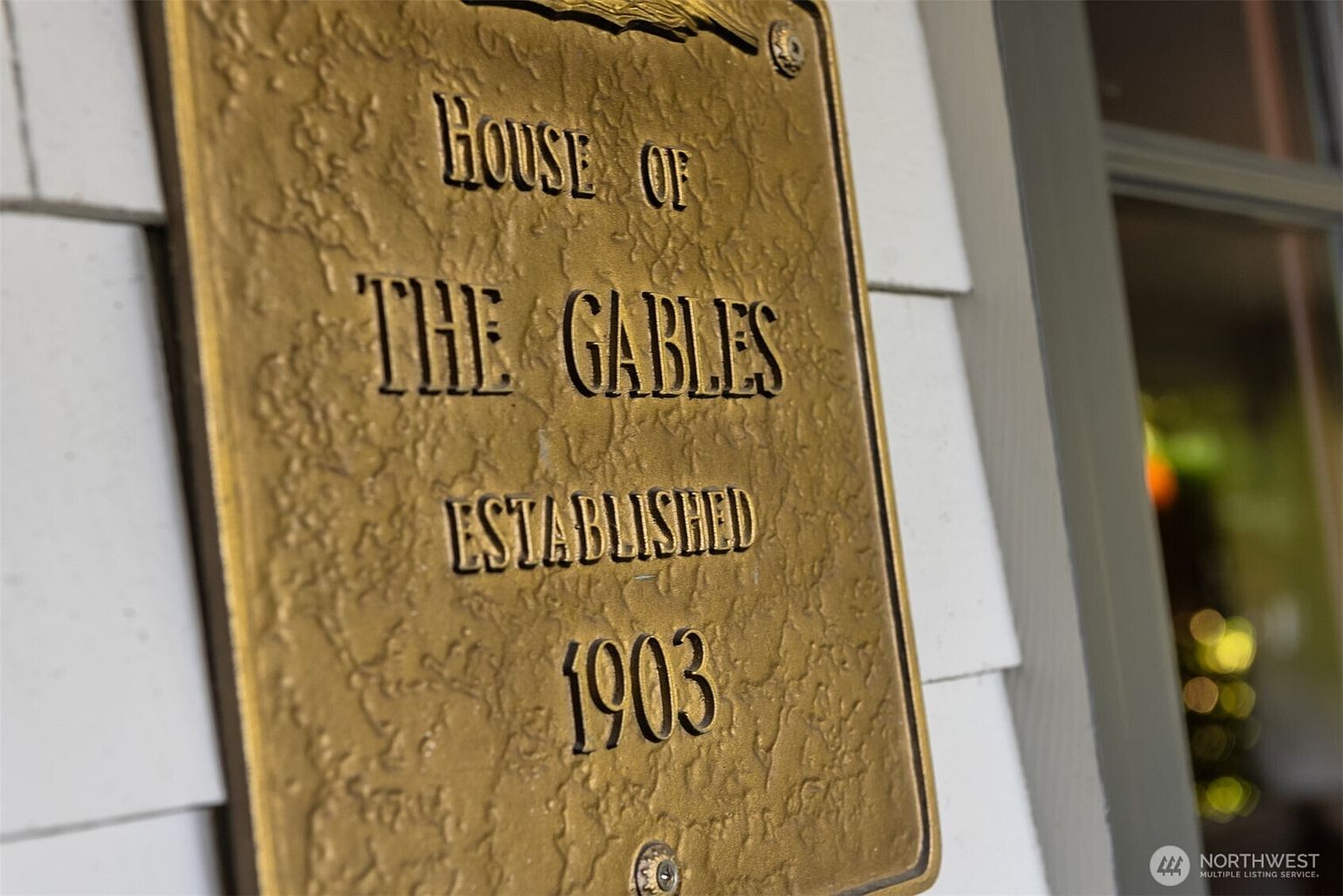
There is a brass plaque mounted to the white shingle siding near the entry — modest in scale, monumental in implication. It reads: HOUSE OF THE GABLES. ESTABLISHED 1903. In a neighborhood that has since become one of the most closely watched addresses in the world, that plaque is a quiet declaration of precedence. The Gables was here first, setting the standard before the standard existed.
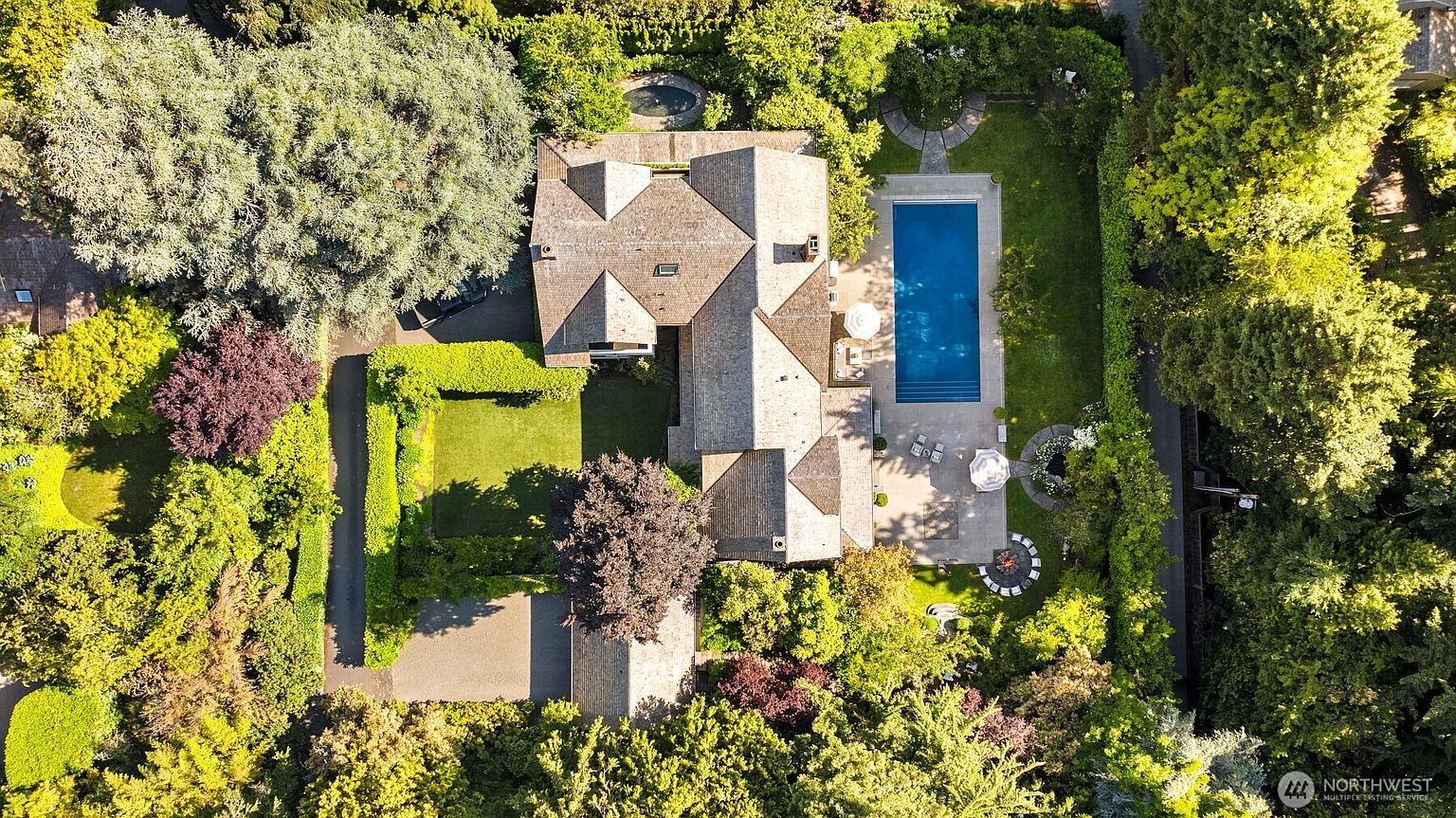
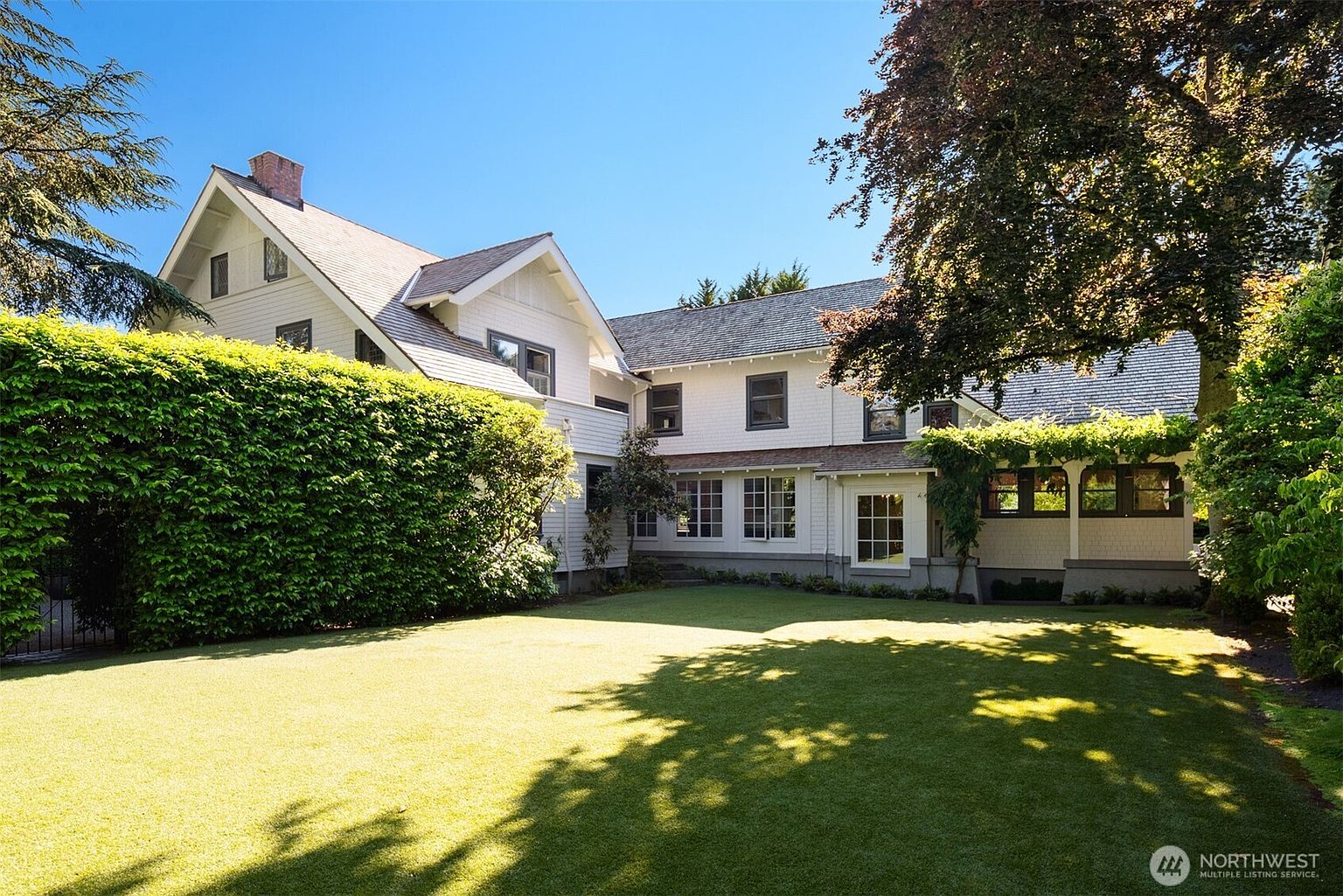
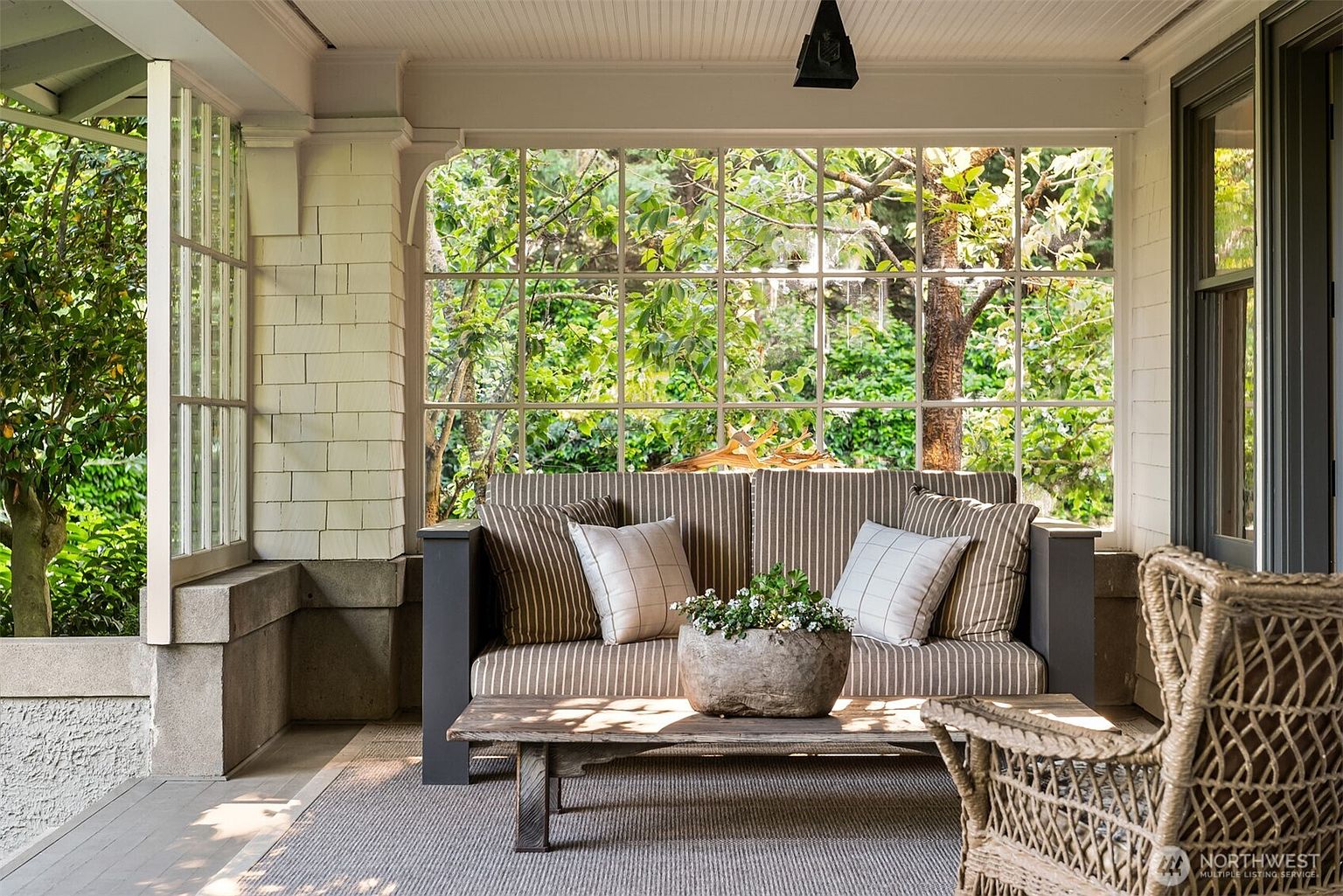
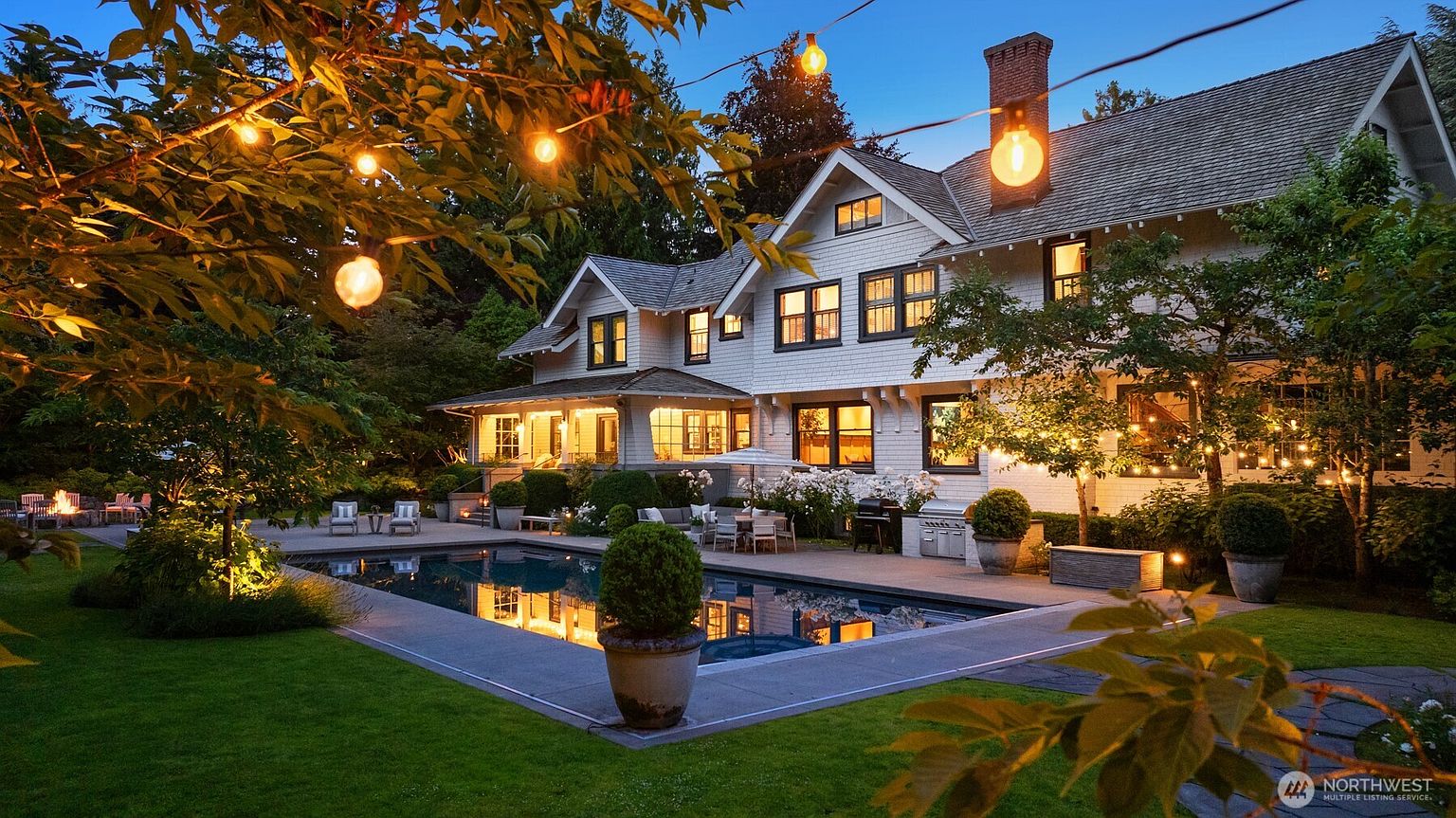
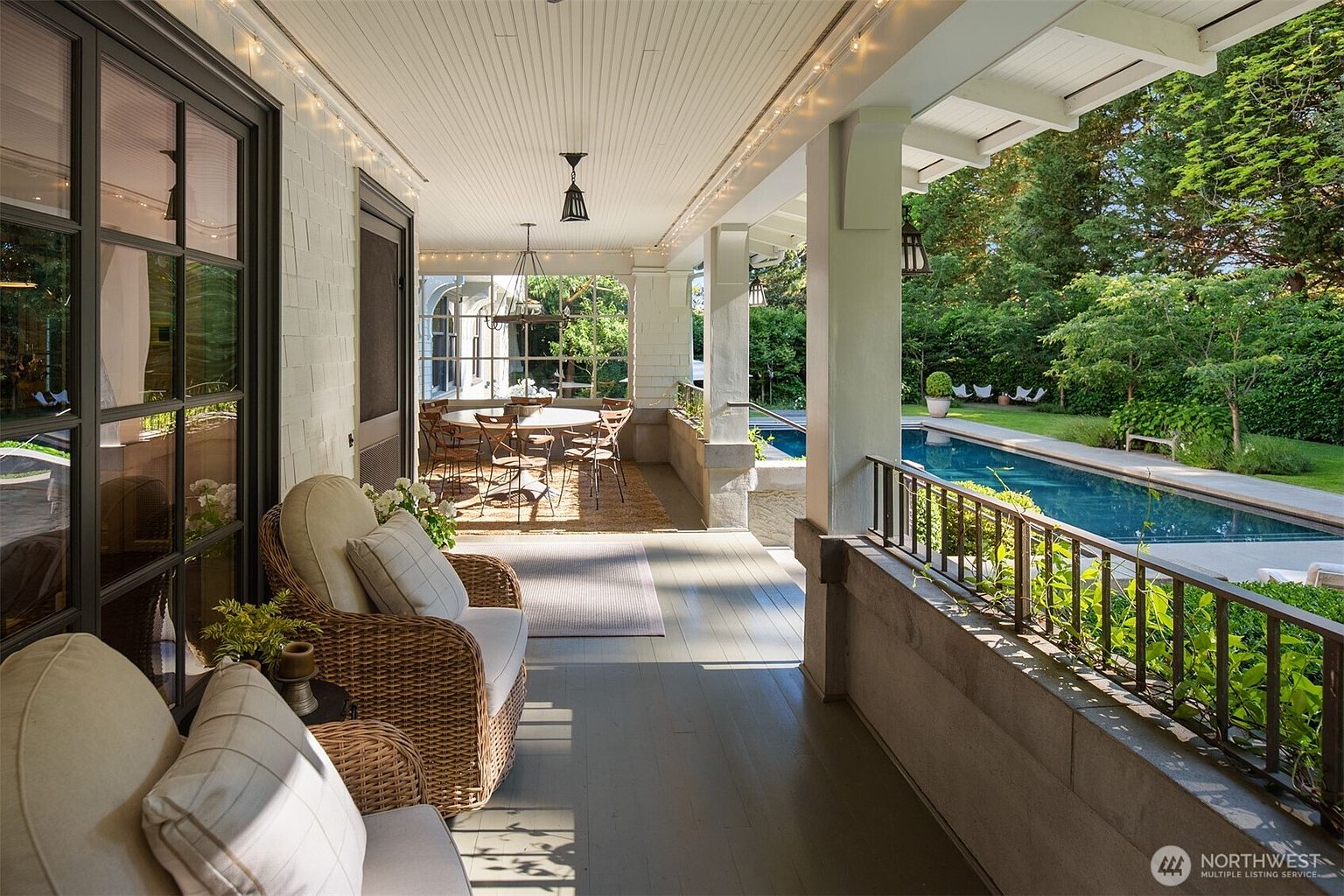
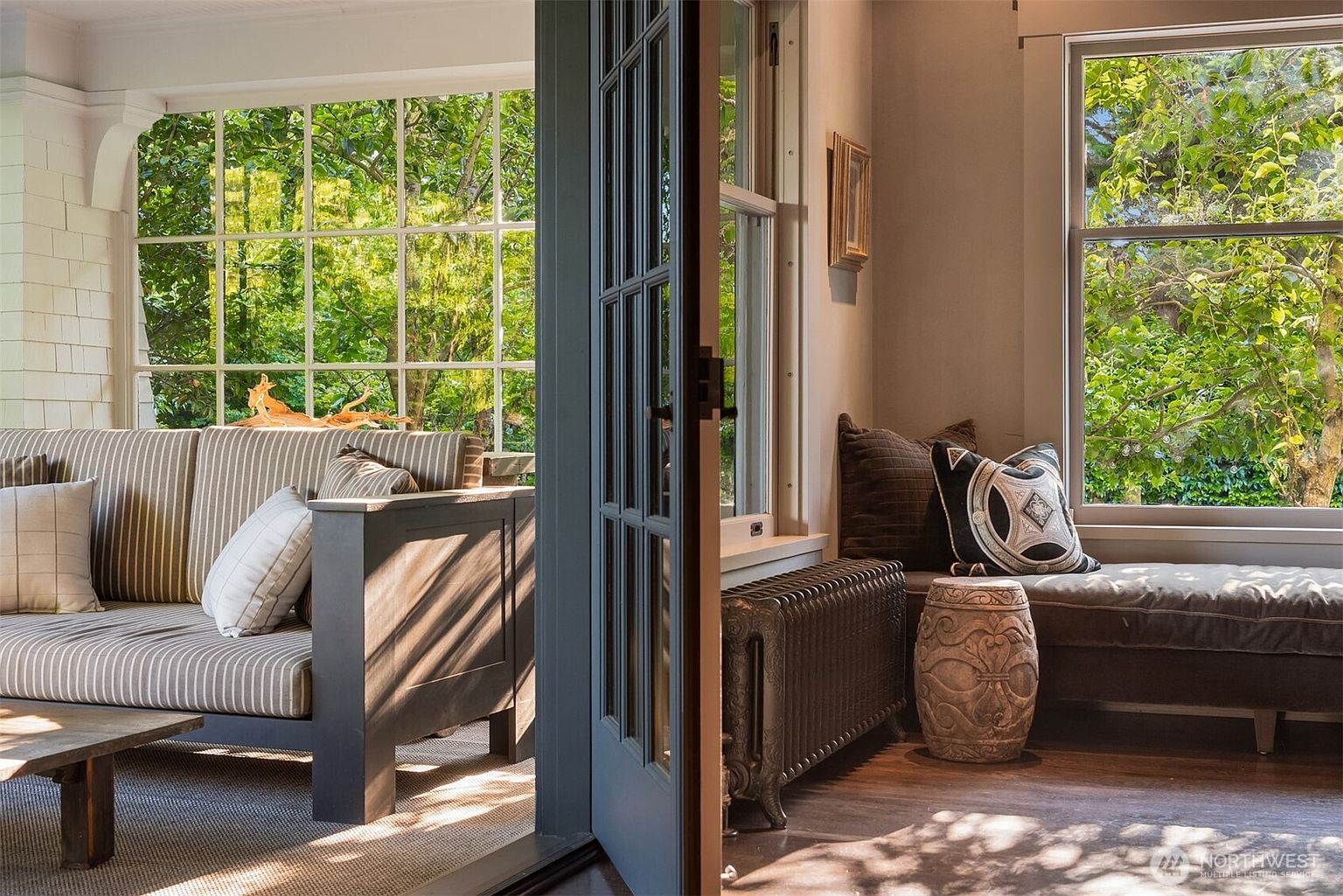
Visionary entrepreneur Edward Webster and his architects understood something that the best residential designers still chase: that a home's greatness is determined not by its size, but by the integrity of its composition. The multi-gabled roofline, the deep entertaining porches, the deliberate progression from motor court to garden to pool — every element was conceived as part of a coherent whole, a philosophy of domestic life made permanent in wood, stone, and brick.
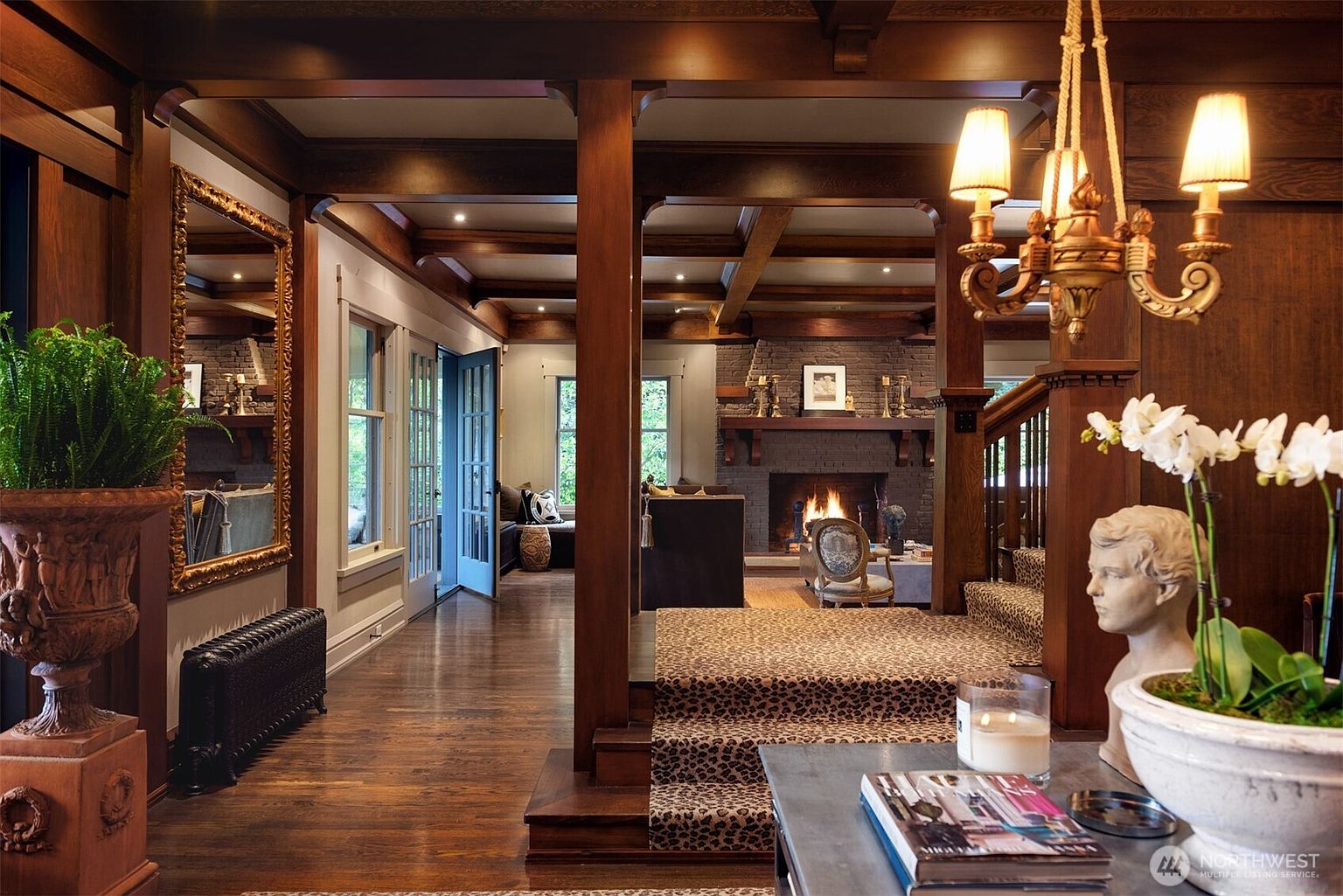
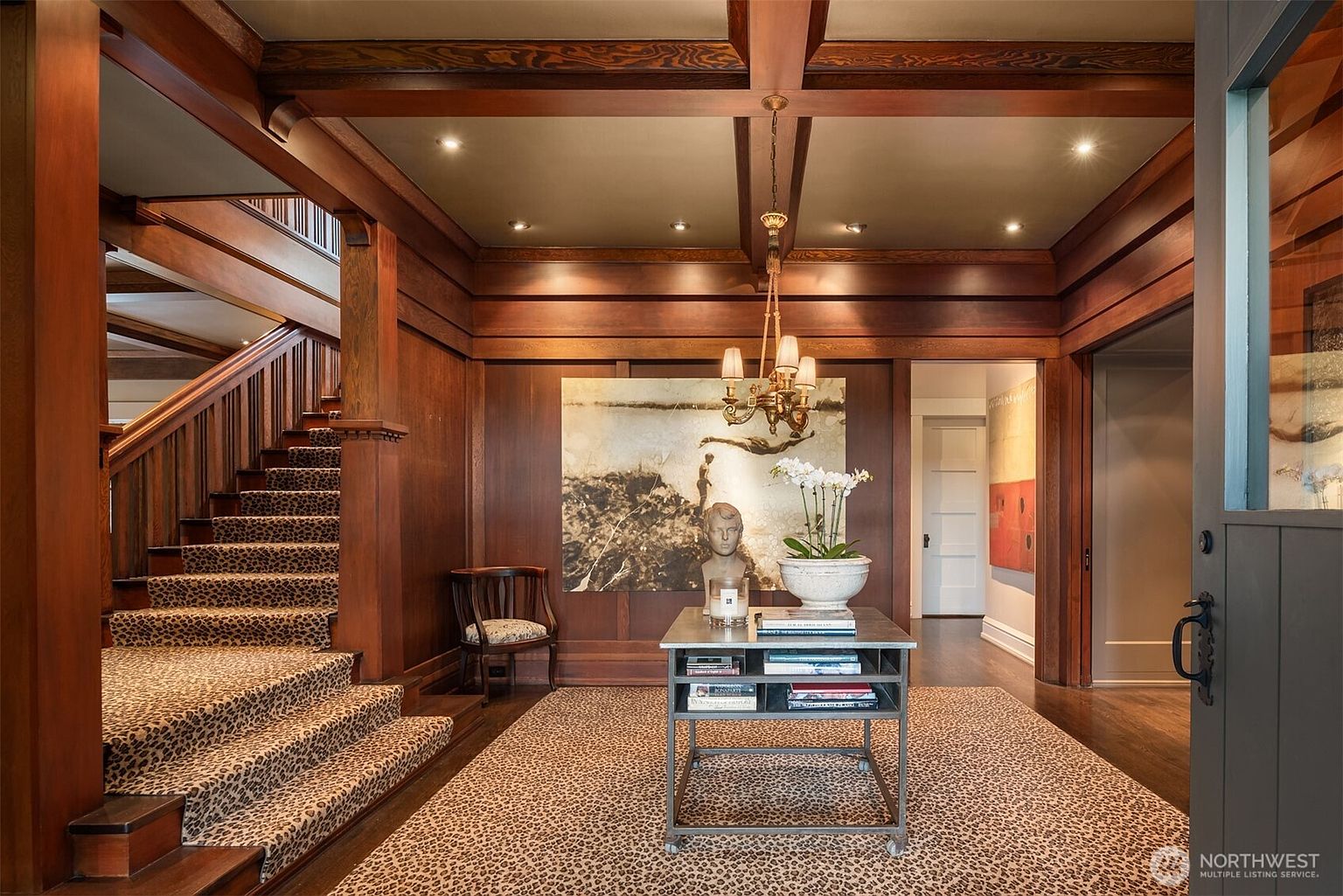
The entry announces the home's character without equivocation. Dark wood paneling rises to exposed ceiling beams, a leopard-print runner climbs the staircase, and a classic chandelier anchors the foyer in warmth. This is not a neutral first impression — it is a confident one, the kind that tells you exactly where you are and invites you to stay.
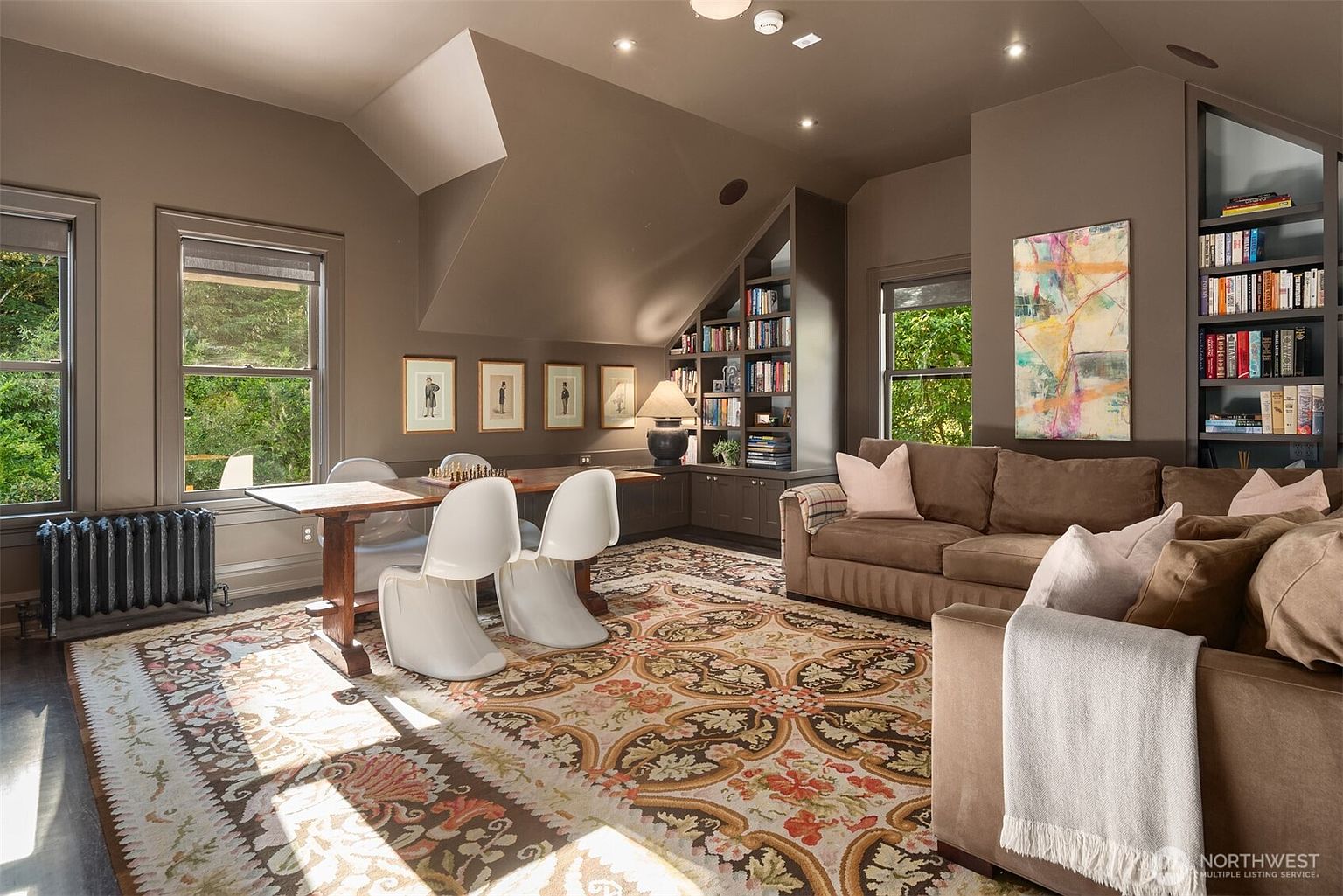
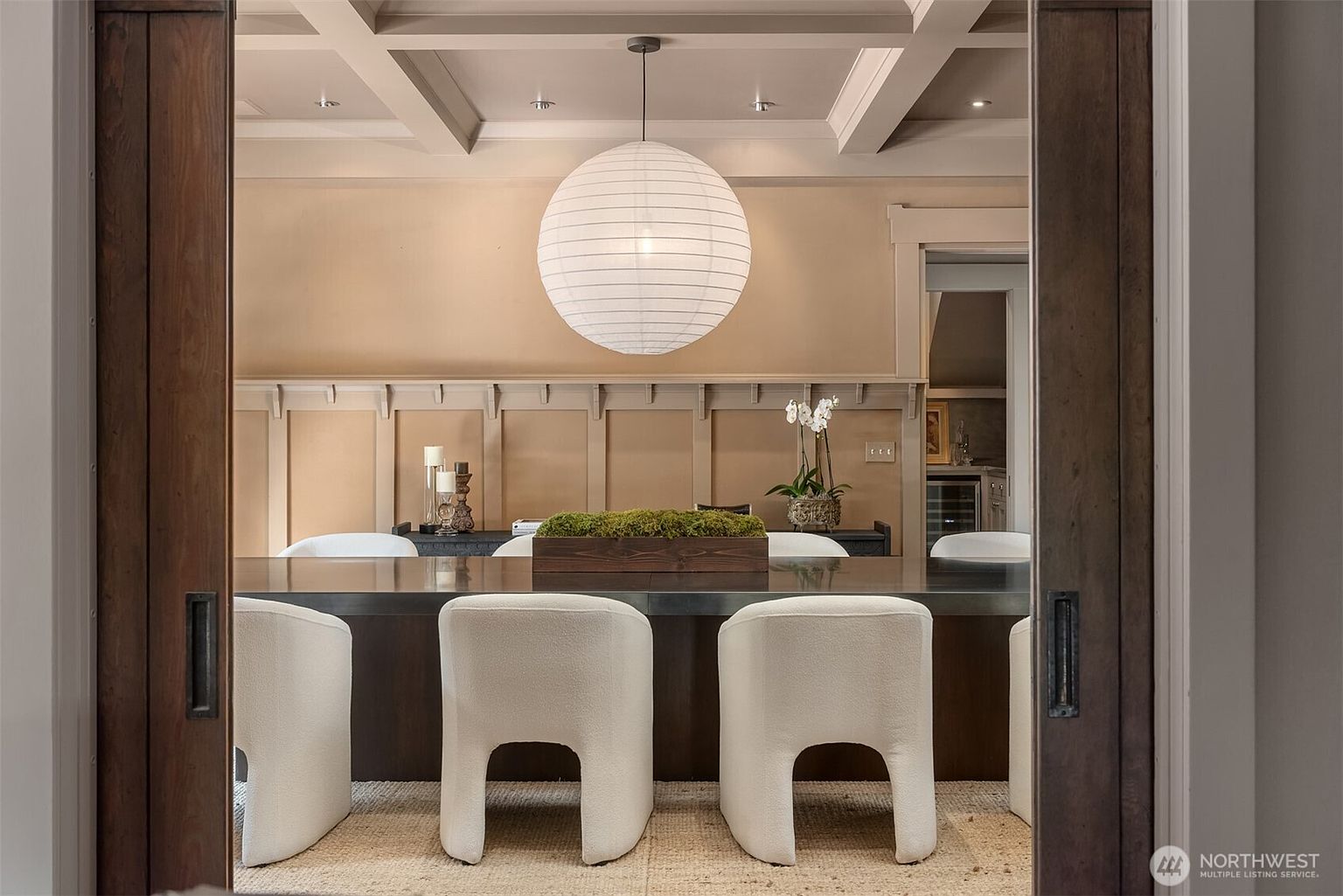
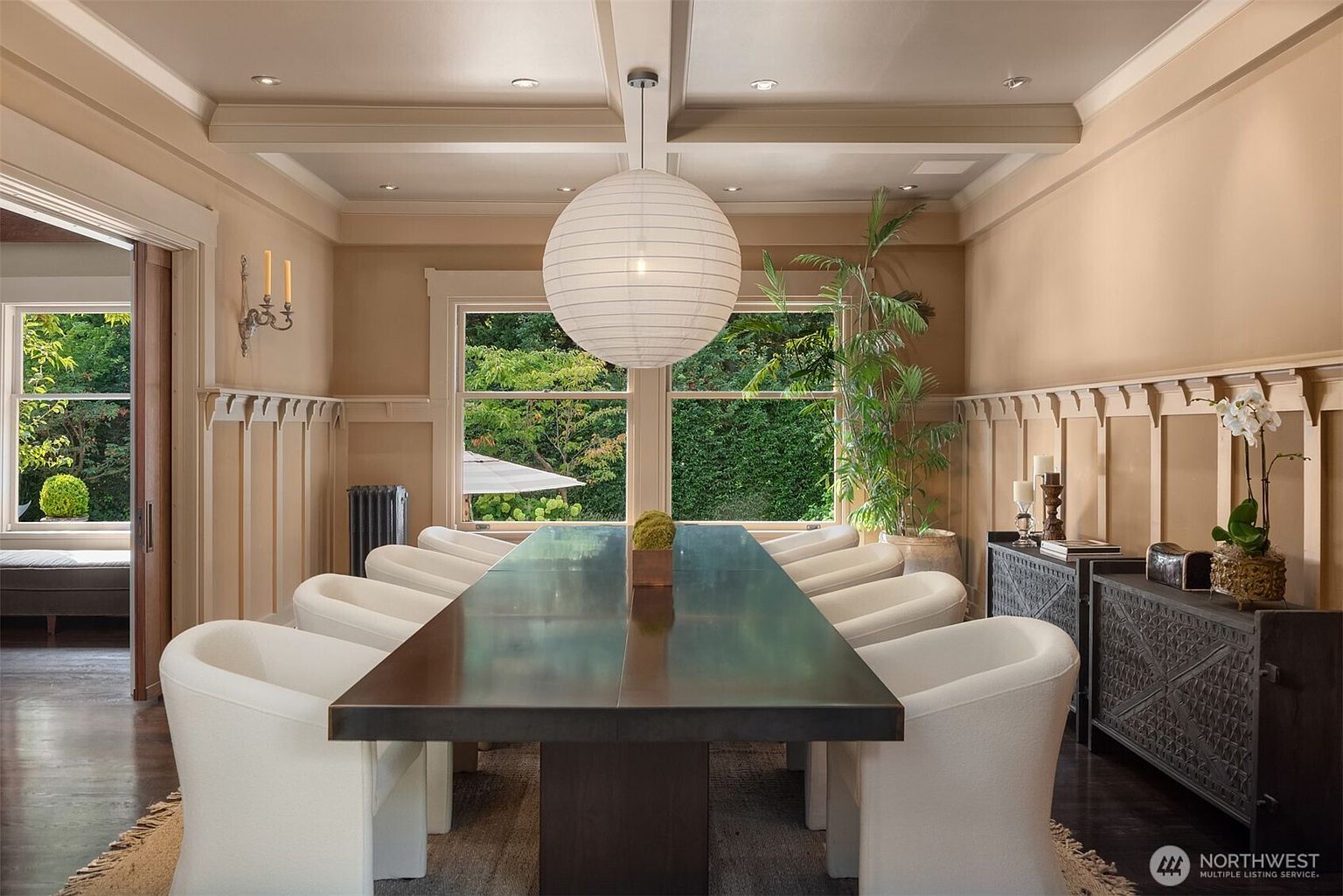
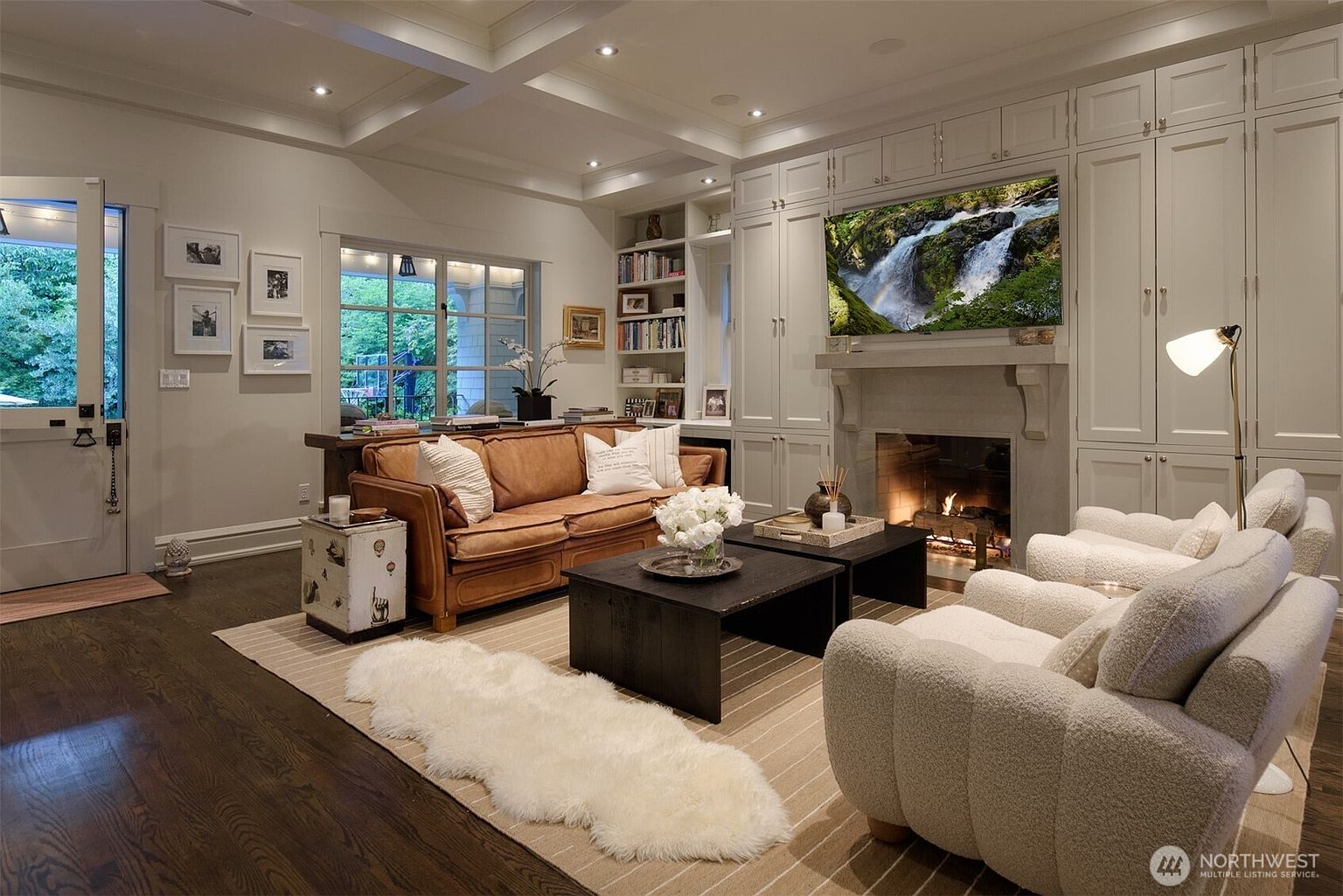
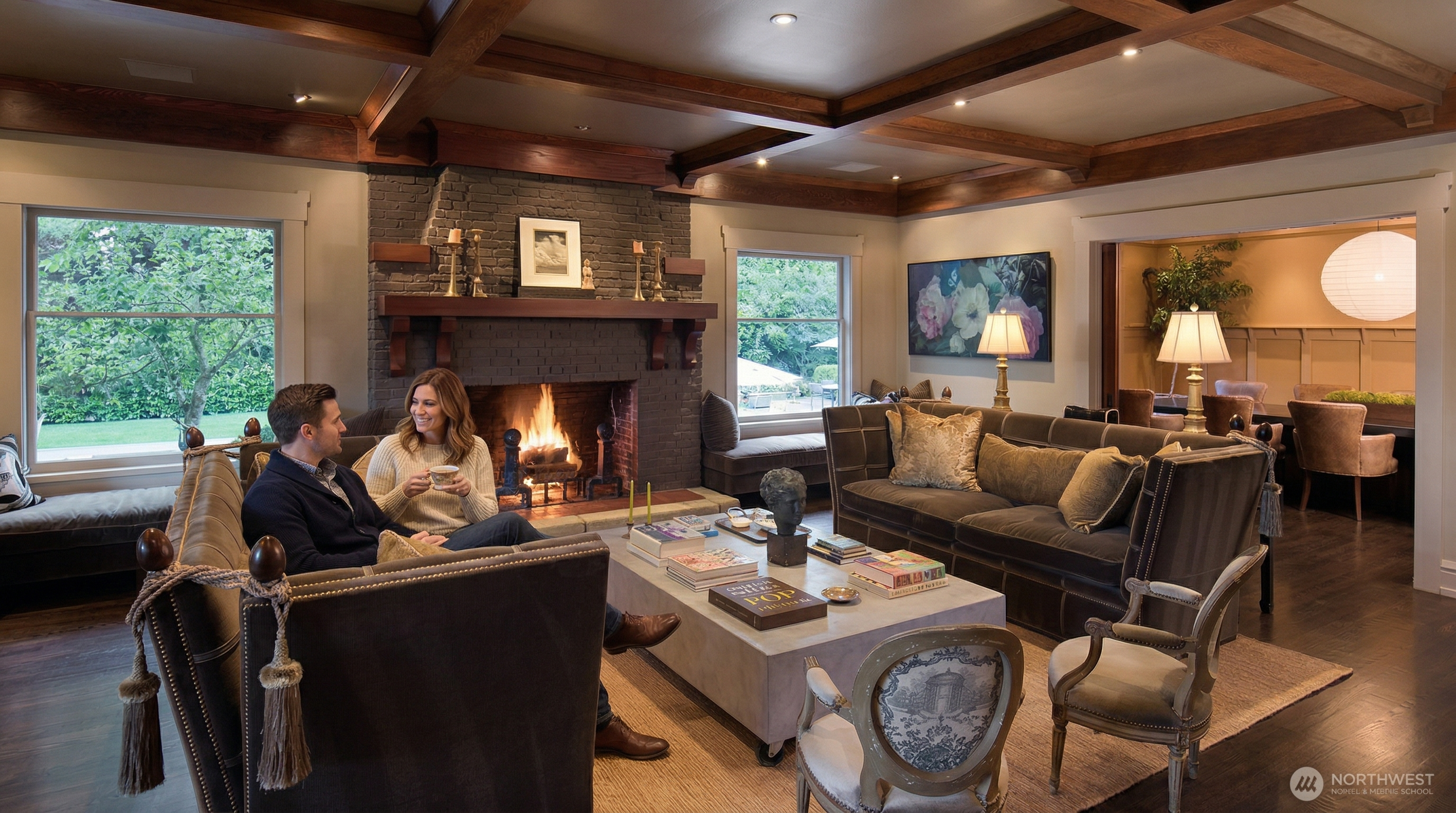
The main level unfolds with the logic of a well-edited essay. The living room is anchored by a dark brick fireplace beneath wood-beamed ceilings, its plush furnishings arranged to encourage both conversation and contemplation. An adjoining room, lined with built-in shelving and cabinetry framing a second fireplace, offers a seamless transition between social gathering and quiet retreat. The formal dining room, framed by dark wood sliding doors and finished with classic wainscoting beneath a coffered ceiling, seats a table for ten with the ease of a room that has hosted generations.
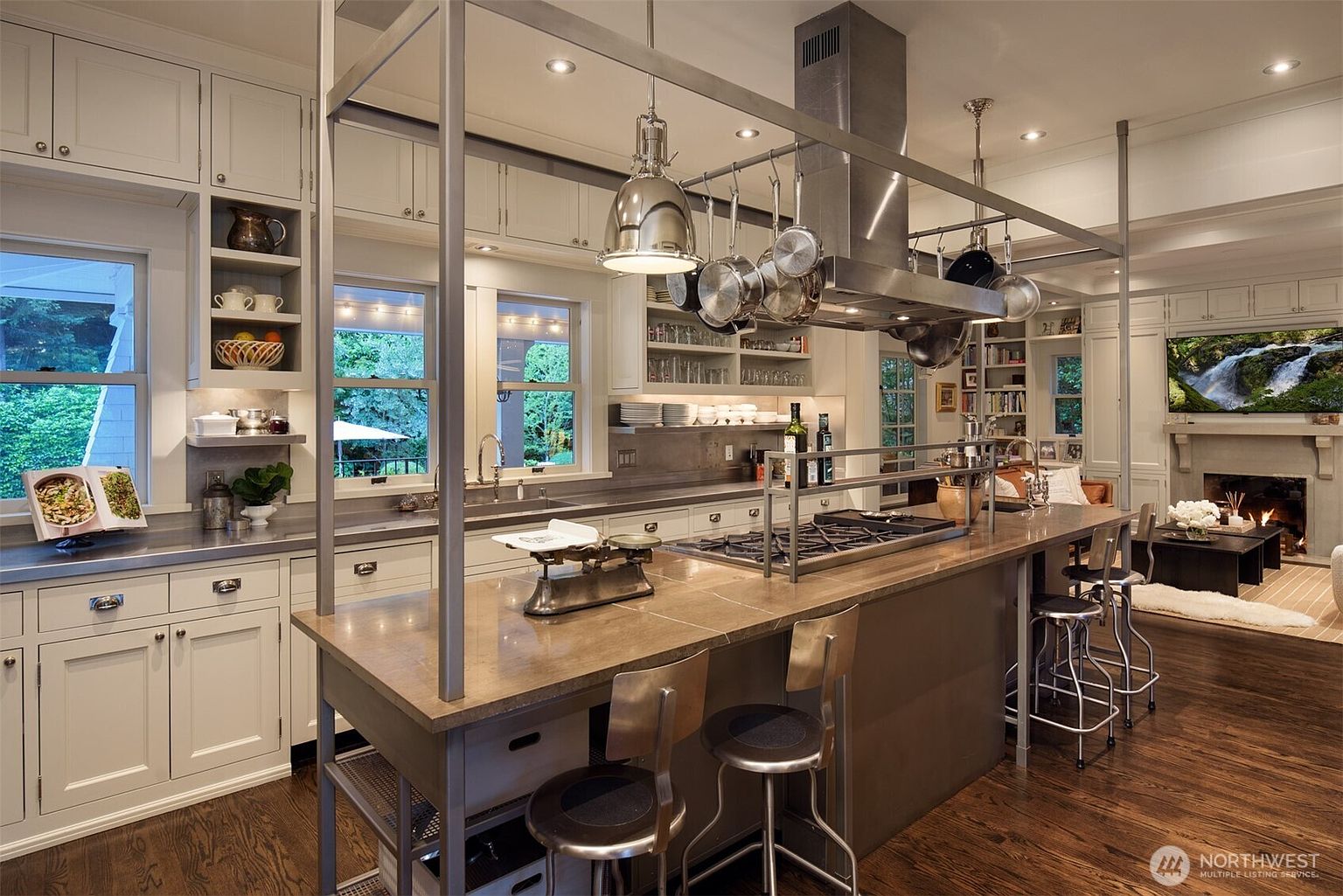
The kitchen is the estate's concession to modern ambition: a large central island with a stone countertop, professional-grade stainless steel appliances, and a range hood scaled to serious cooking, all flowing open to the adjacent living areas with the relaxed confidence of a home rebuilt for how people actually live.
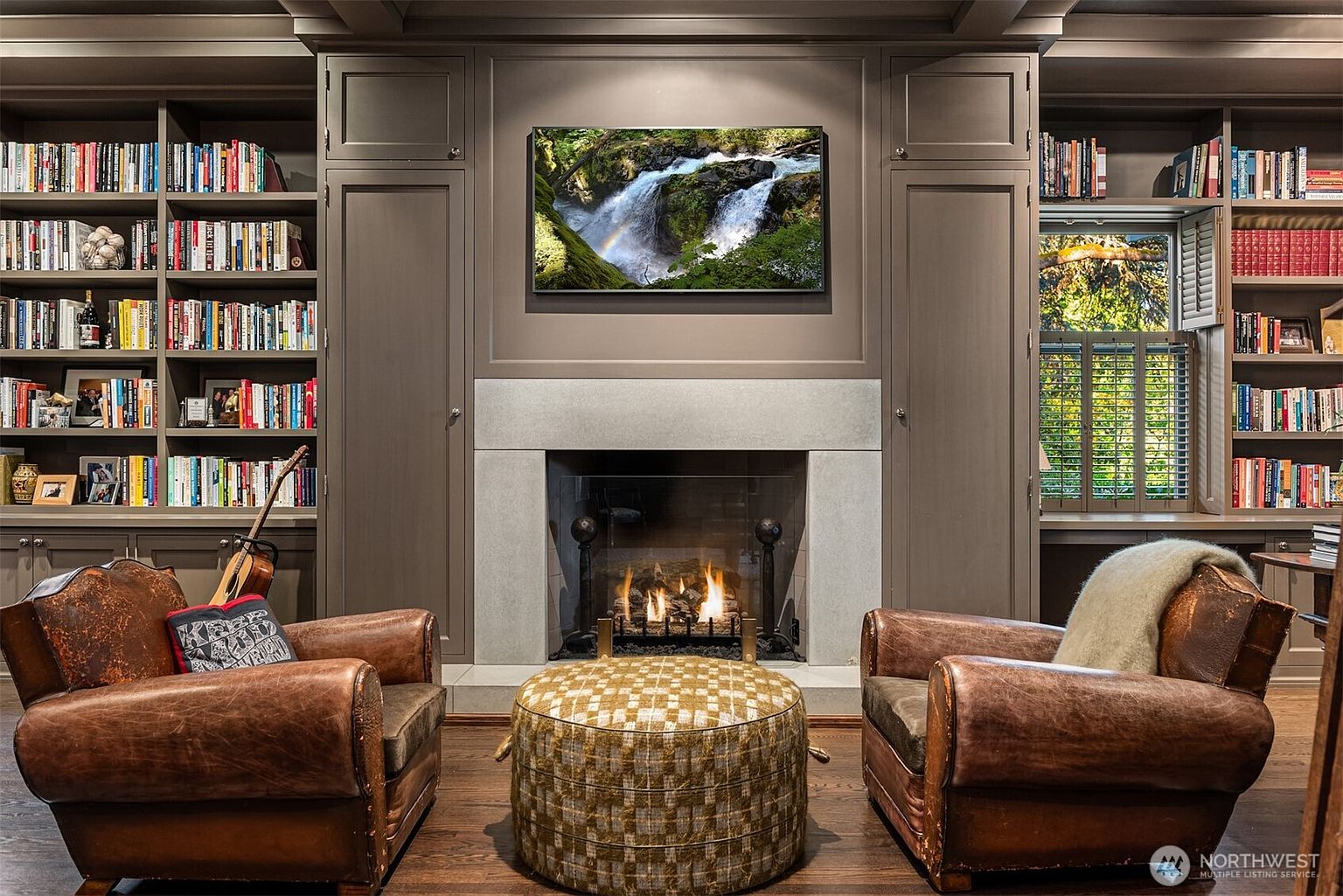
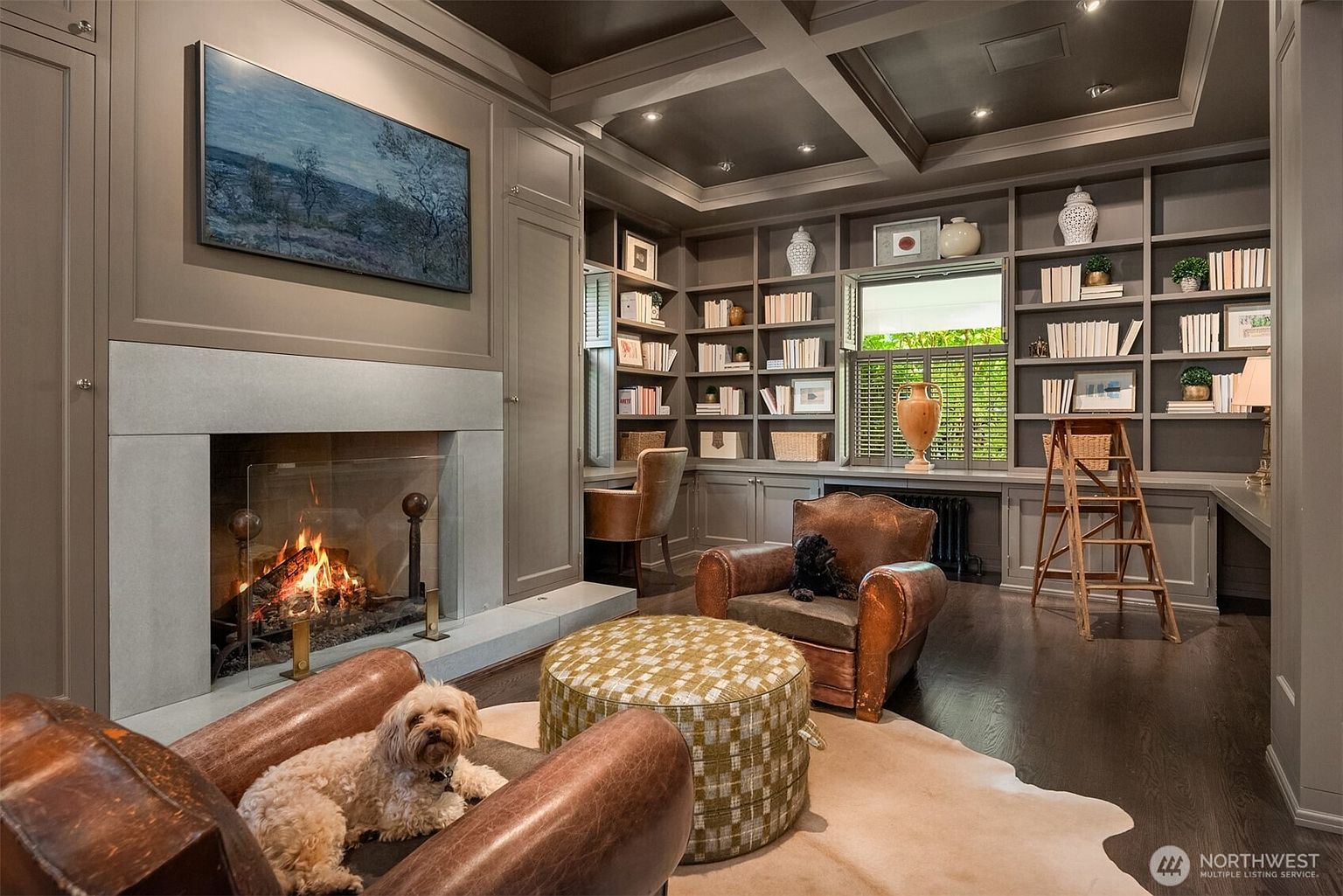
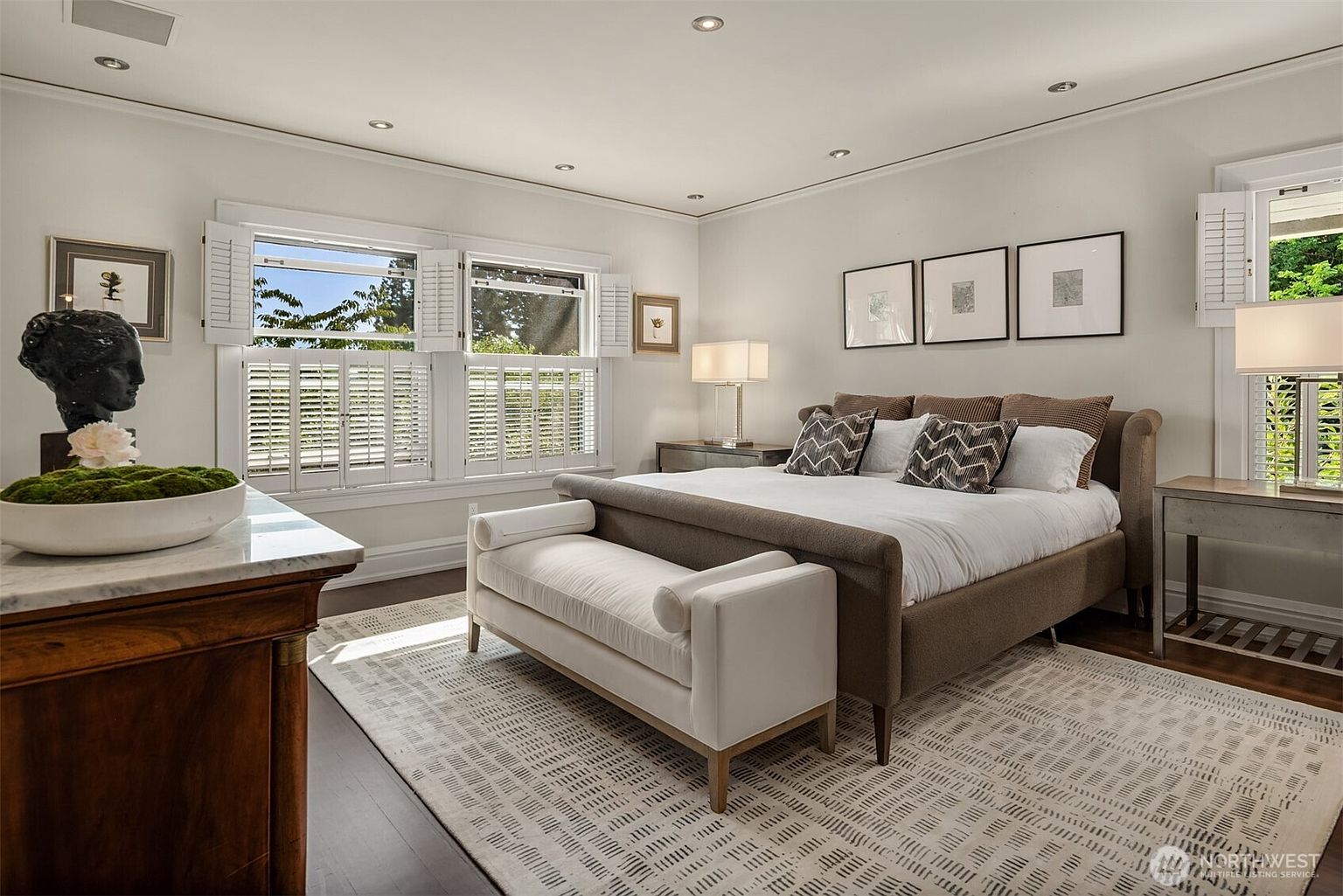
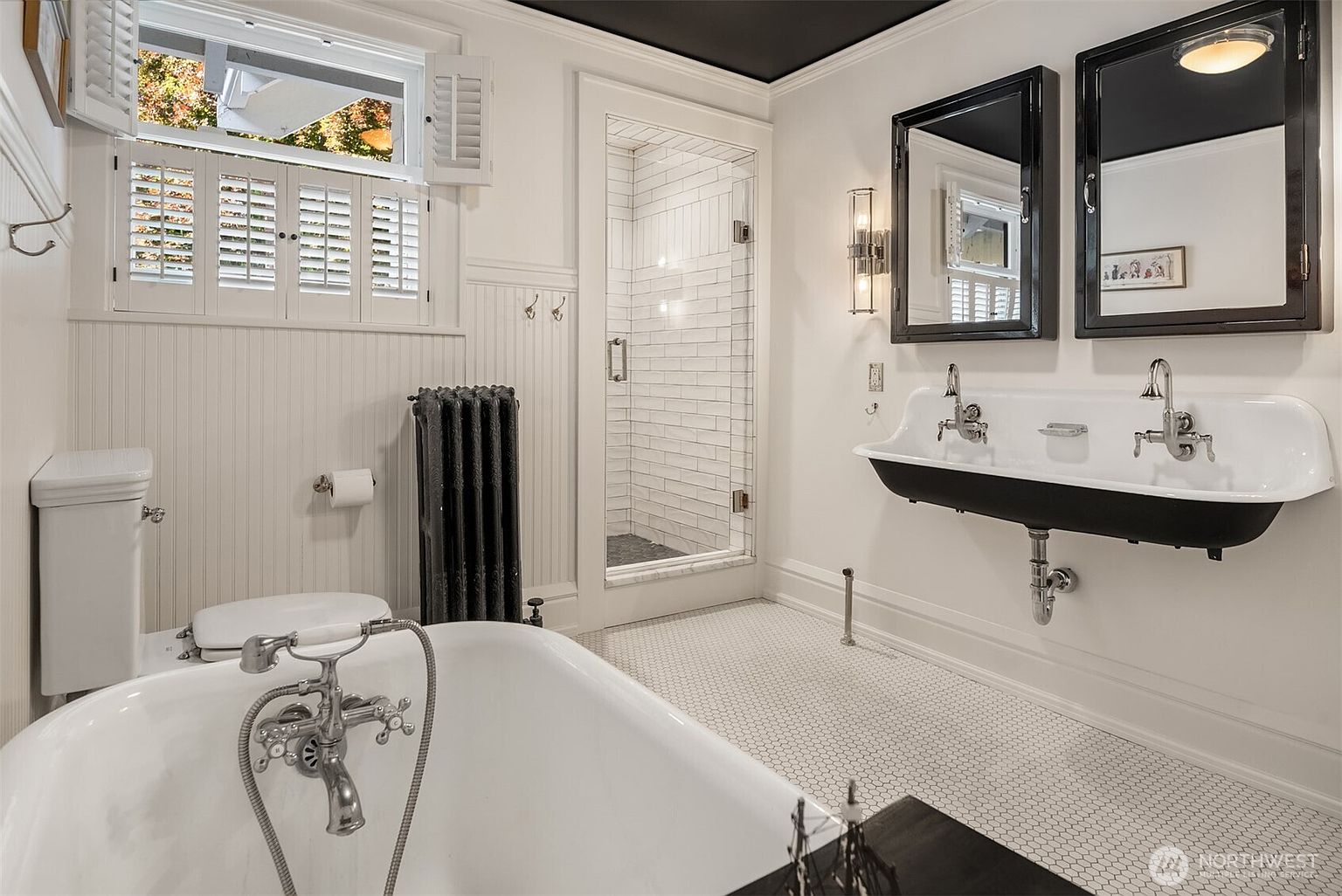
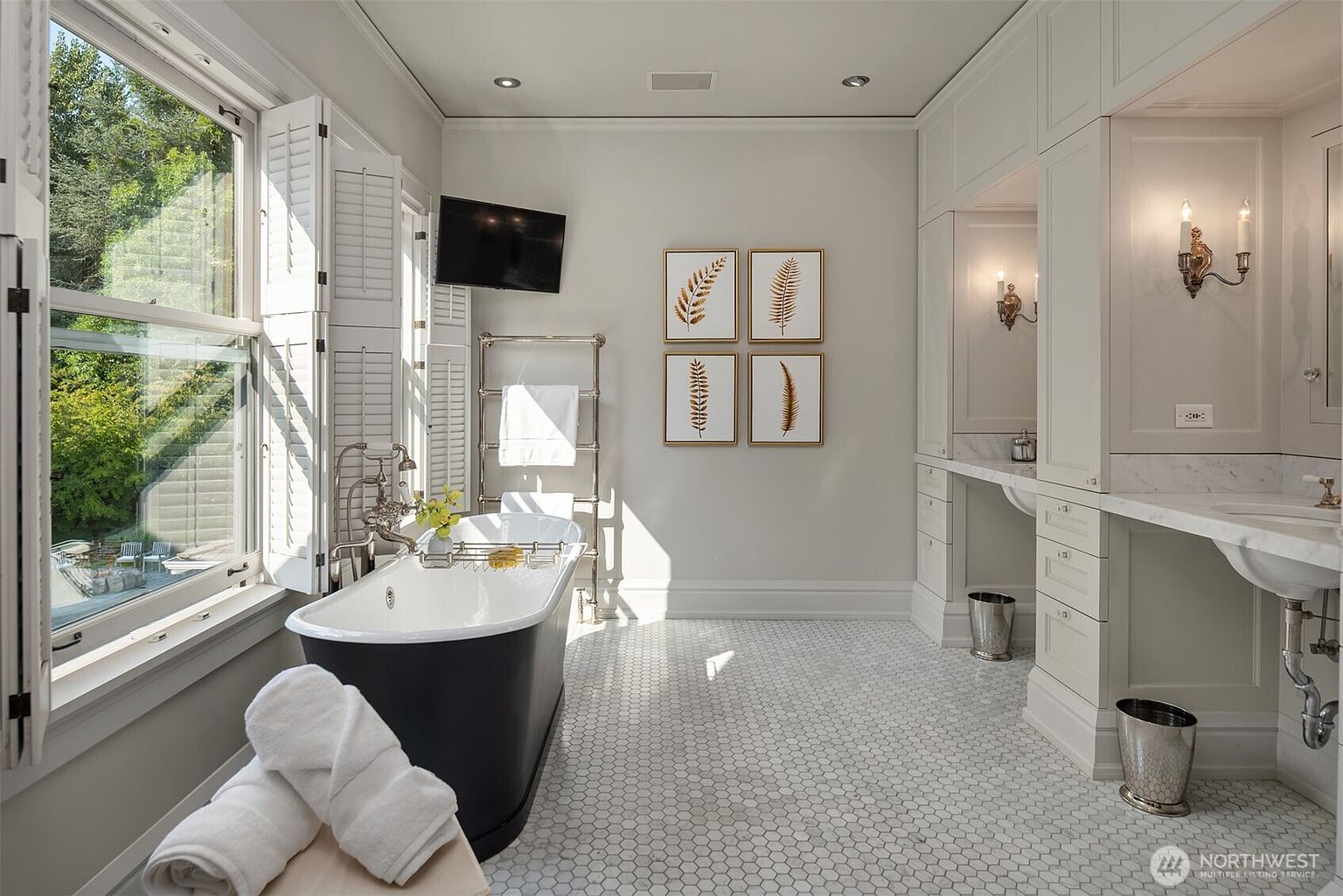
The library — coffered ceiling, floor-to-ceiling built-ins, stone fireplace, wooden ladder — is perhaps the home's most contemplative room, the kind of space that makes the act of reading feel like an occasion. The primary suite offers plantation-shuttered windows and an en-suite bath centered on a clawfoot tub, its black-and-white palette and vintage radiator evoking a spa with a sense of history.
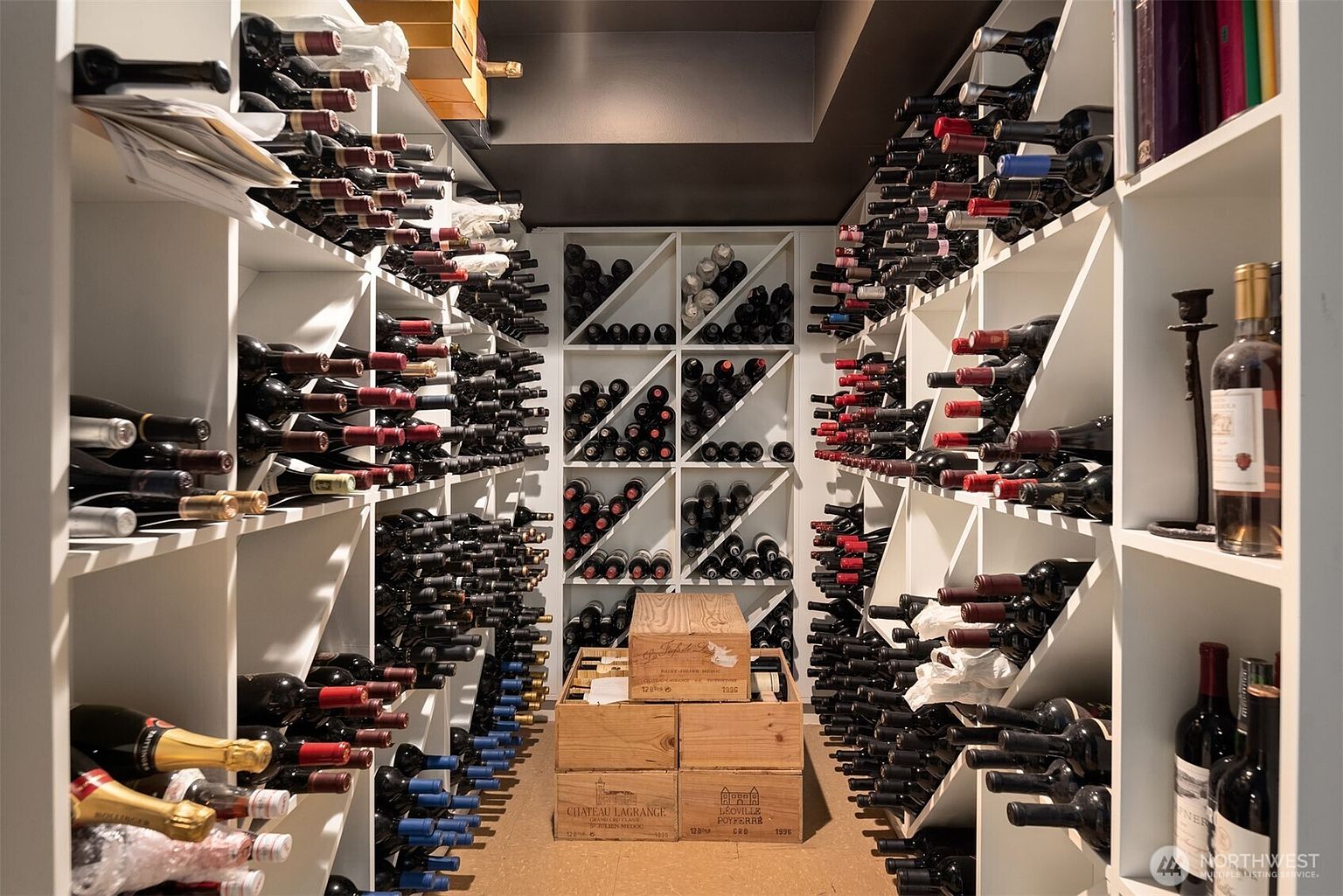
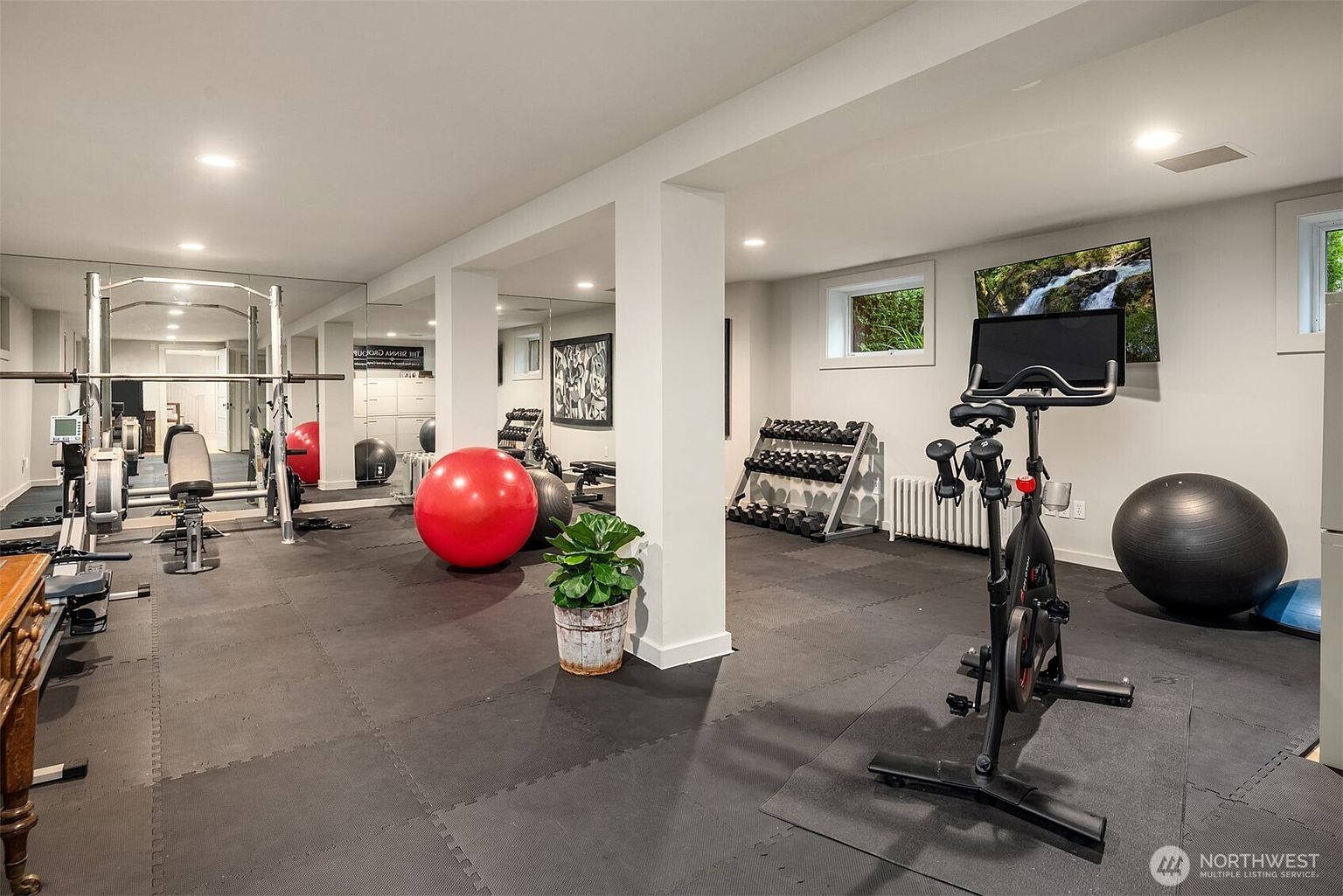
Below grade, a climate-controlled wine cellar houses a curated collection of fine bottles — Chateau Lagrange, Leoville Poyferre — arranged with the seriousness of a connoisseur. A fully equipped home gym with mirrored walls and professional-grade equipment completes the interior's commitment to considered living at every level.
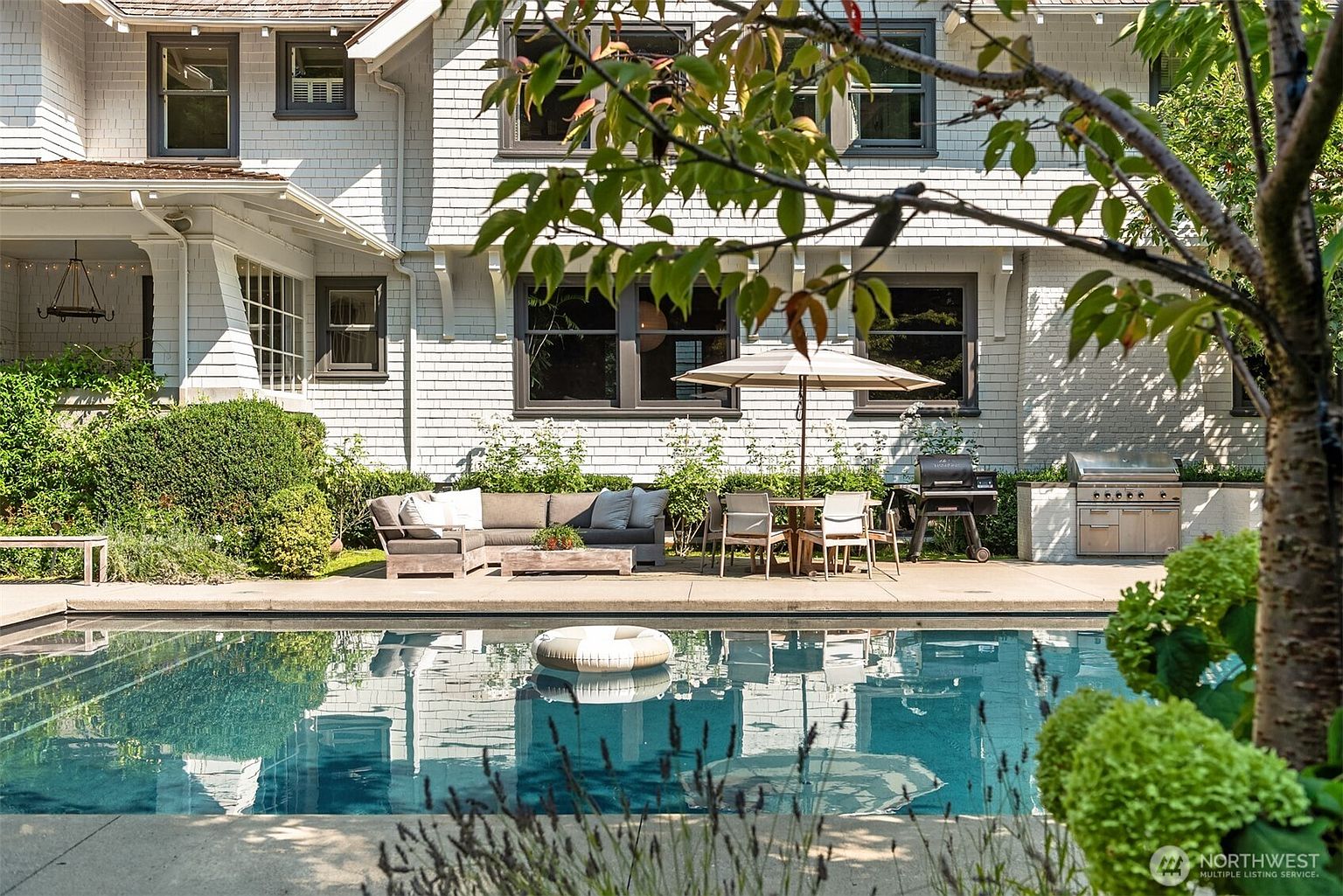
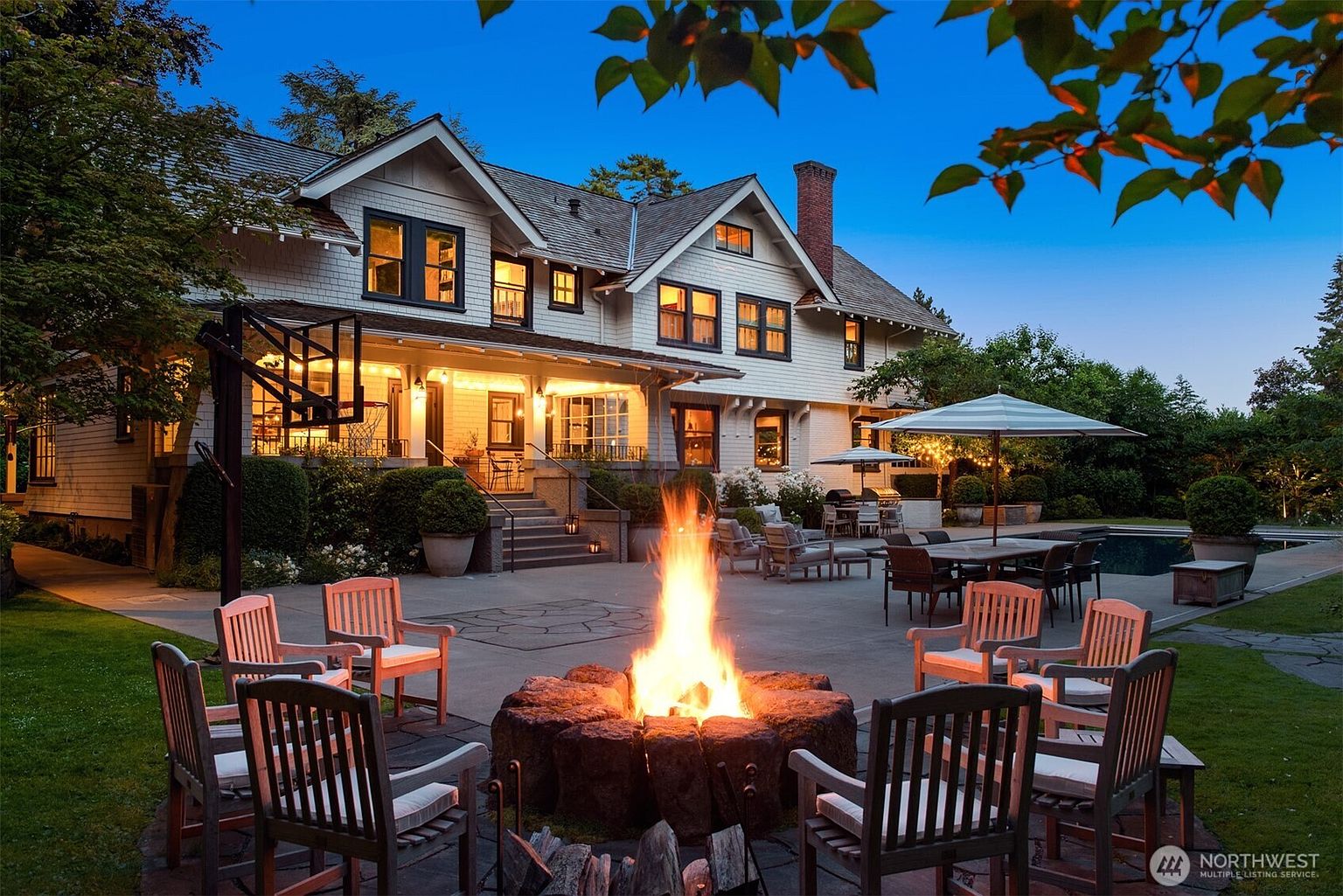
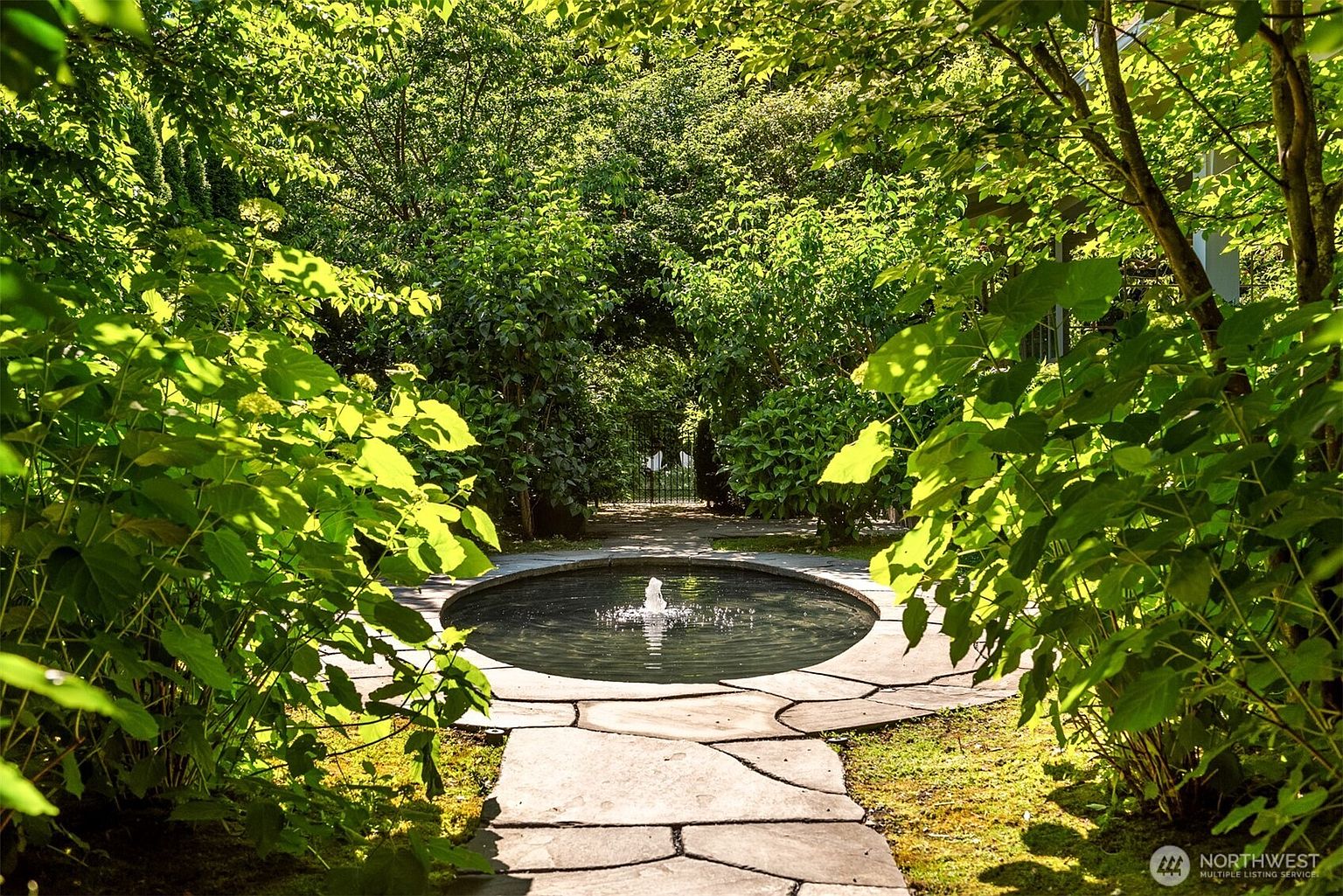
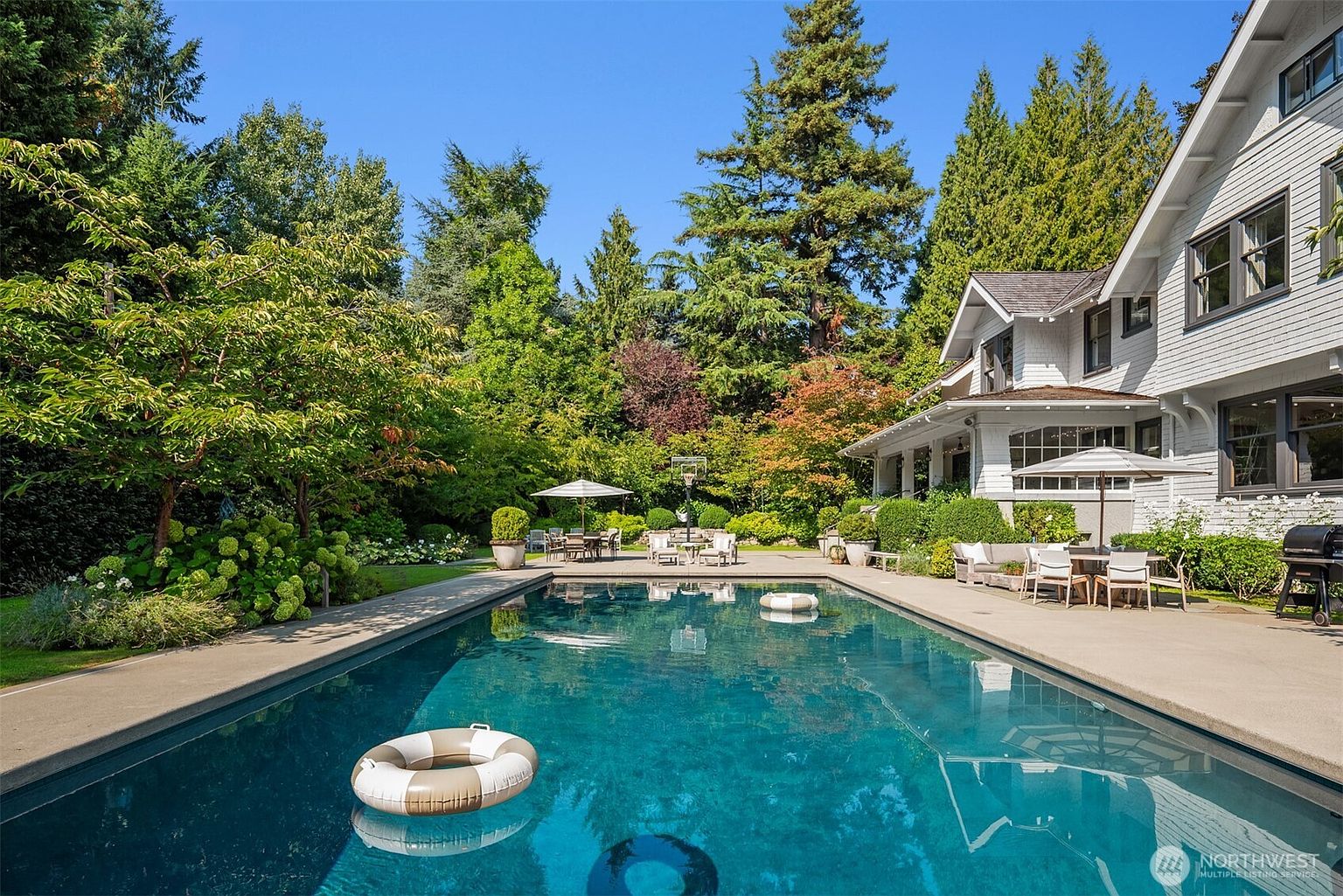
Outside, the estate's magic deepens. Magical pathways wind past an elliptical pond and espaliered apple trees, through garden gates, past brilliant hydrangeas and lavender borders, to a rectangular pool anchoring a stone patio with a fire pit. At dusk, fairy lights animate the garden, and the outdoor fireplace becomes the evening's gravitational center. This is a property built not for a season, but for a life.
Medina, Washington occupies a small, roughly two-square-mile peninsula on the eastern shore of Lake Washington, directly across the water from Seattle's Madison Park neighborhood. It is one of the smallest and wealthiest cities in Washington State — a place that has managed, through a combination of strict land-use ordinances, mature tree canopy, and deeply private culture, to remain genuinely secluded despite sitting within fifteen minutes of a major American city.
The city was incorporated in 1955, but its residential character was established decades earlier, when families of means began building substantial homes along the lake's eastern shore, drawn by the views, the water access, and the sense of remove from the urban grid. Overlake Drive W is the artery that defines the neighborhood's most storied corridor — the stretch known informally as the Gold Coast, where estates sit behind mature hedges and commanding gates, their presence suggested more than announced.
Medina's civic life is quiet by design. The city maintains its own police department and operates with a level of attentive local governance that residents have long valued. The streets are unhurried. The parks — including Medina Beach Park and Fairweather Nature Preserve — offer waterfront access and forested trails that feel improbably tranquil given their proximity to the broader Eastside metropolitan area.
For daily life, residents benefit from the full commercial and cultural infrastructure of the surrounding Eastside communities without bearing the density of any of them. Bellevue, immediately to the south, offers Bellevue Square and The Bravern for luxury retail, a thriving restaurant scene anchored by nationally recognized establishments, and a performing arts center that has grown into a significant regional cultural institution. Kirkland, to the north, provides a more relaxed waterfront village atmosphere, with independent restaurants, galleries, and a marina.
Seattle itself remains readily accessible via SR-520, a floating bridge that crosses Lake Washington and connects Medina directly to the University District, Capitol Hill, and downtown Seattle — home to Pike Place Market, the Seattle Art Museum, the Seattle Symphony, and a dining and hospitality culture that has earned consistent national recognition. For those who travel frequently, Seattle-Tacoma International Airport is approximately thirty minutes south, and Bellevue's growing professional infrastructure — including significant presences from Amazon, Microsoft, and a constellation of technology and finance firms — places Medina at the center of one of the most economically dynamic regions in the country.
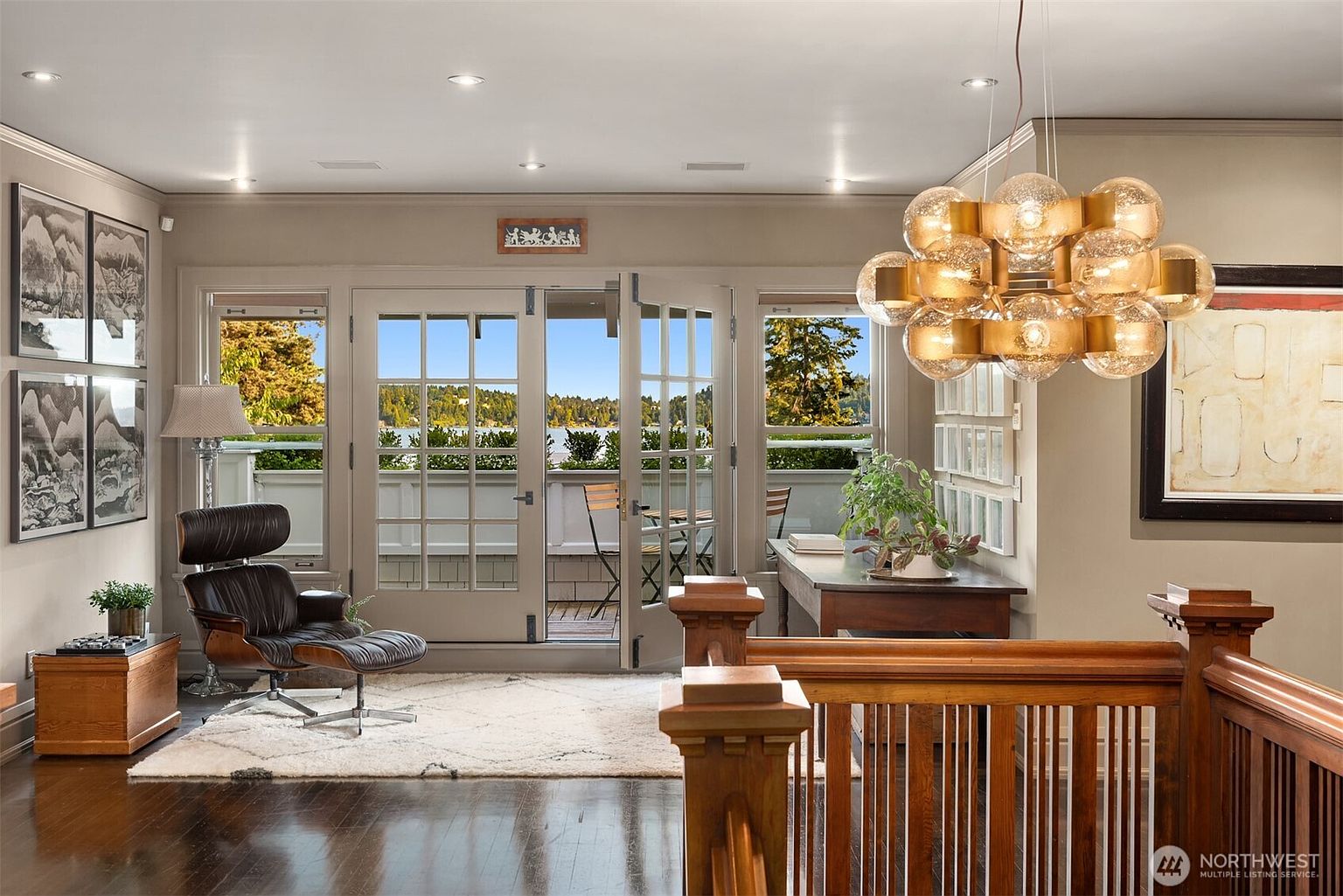
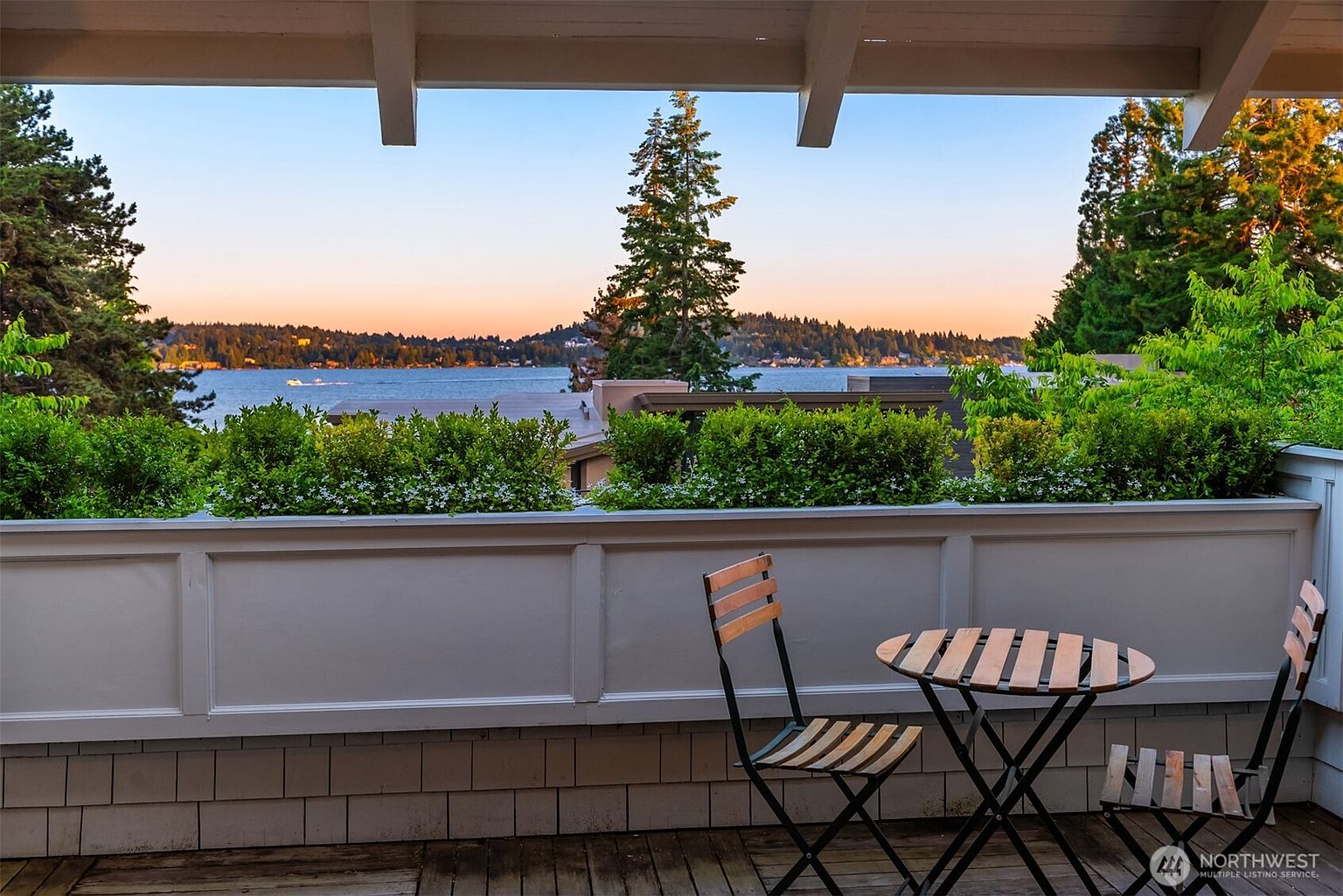
Yet what Medina ultimately offers cannot be measured in commute times or retail proximity. It is the quality of stillness — the sound of wind through old-growth Douglas firs, the light on Lake Washington in the early morning, the sense that one has arrived somewhere that has been carefully, deliberately preserved. For a century, The Gables has occupied one of this community's finest addresses, watching the neighborhood evolve around it while remaining, in its own character, entirely itself. That continuity — of place, of purpose, of quality — is perhaps the rarest luxury the Eastside has to offer.
Featured Highlights
Curated Content • Presented by Heija Nunn