The Story Behind
A Private Penthouse Above the Crown of San Francisco
There is a particular kind of rarity in San Francisco real estate — not merely the scarcity of inventory, but the convergence of address, scale, condition, and outlook that produces something genuinely unrepeatable. Apartment 701 at 1150 Sacramento Street is that convergence.
The story begins with the elevator. Rather than a corridor or a lobby, the private cab opens directly into the apartment itself — a threshold that quietly signals everything about what follows. From that moment, the residence asserts its own logic: generous, unhurried, and built with a seriousness of purpose that is increasingly rare in residential construction.
Muratore Corp, a firm long associated with high-standard Bay Area construction, gutted and rebuilt the home in 2001. The result is a residence that functions less like a renovated apartment and more like a ground-up architectural statement — one that has been maintained with care and used only occasionally in the decades since, leaving its finishes and systems in a condition that belies their age.
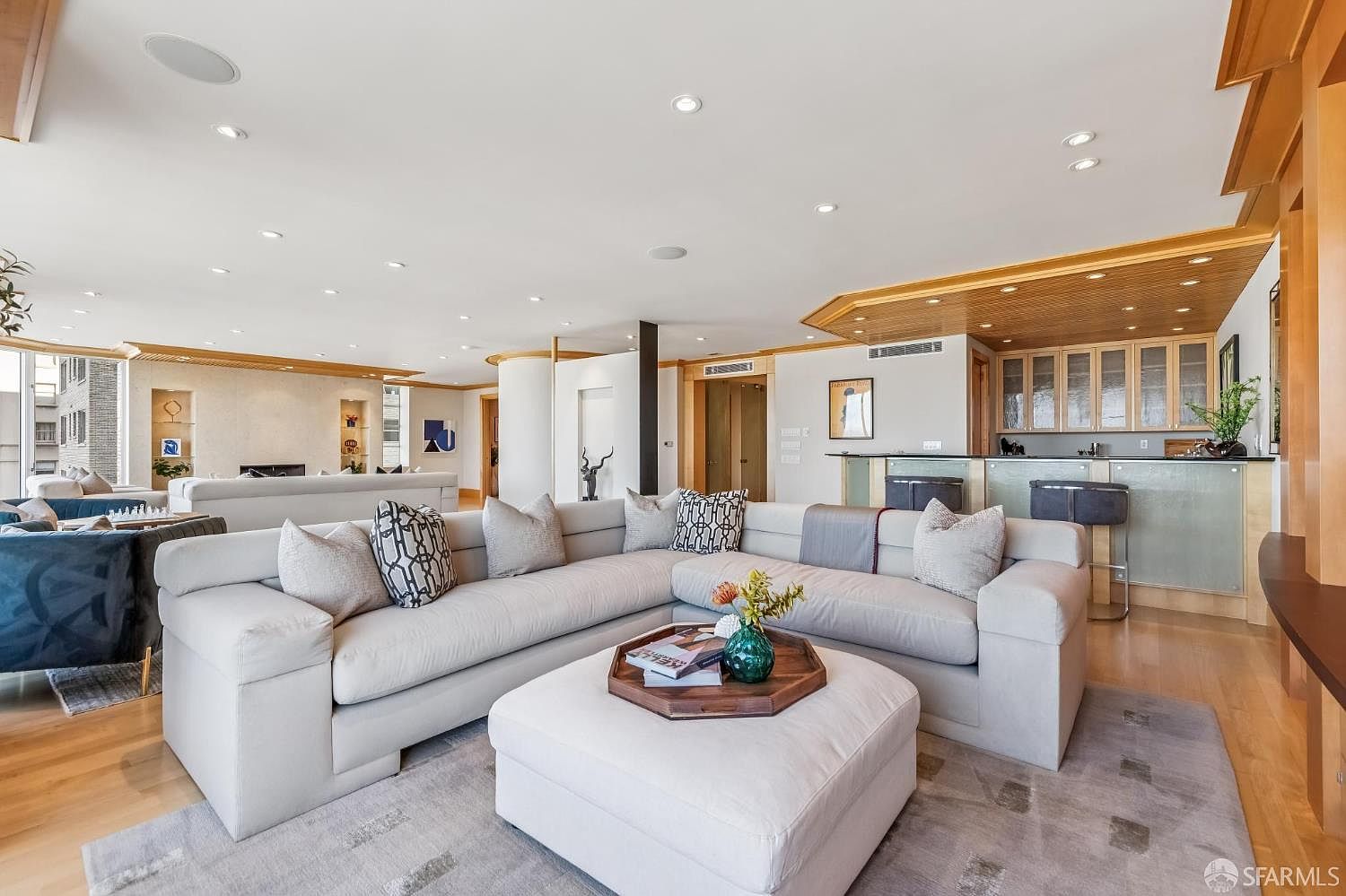
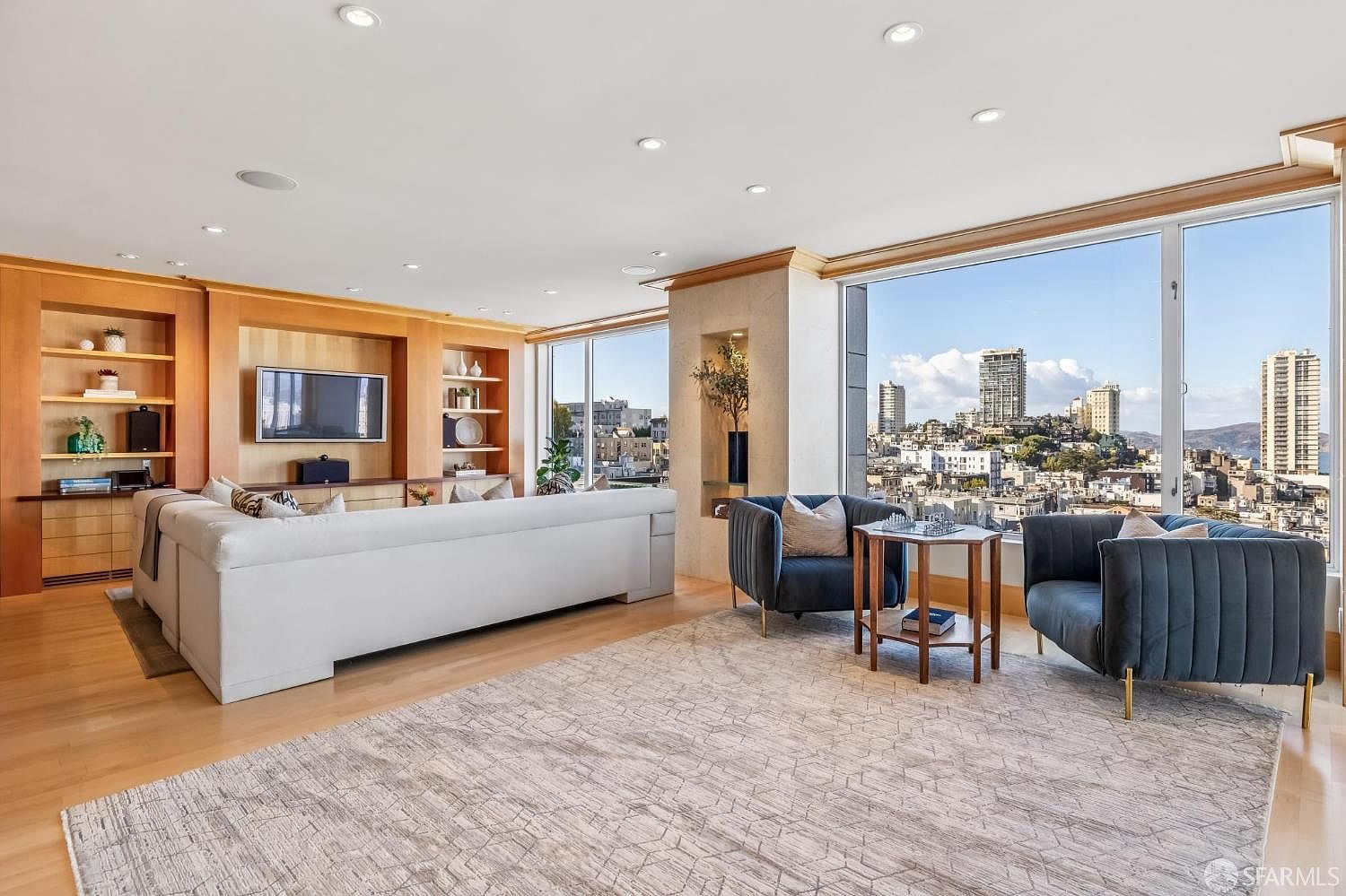
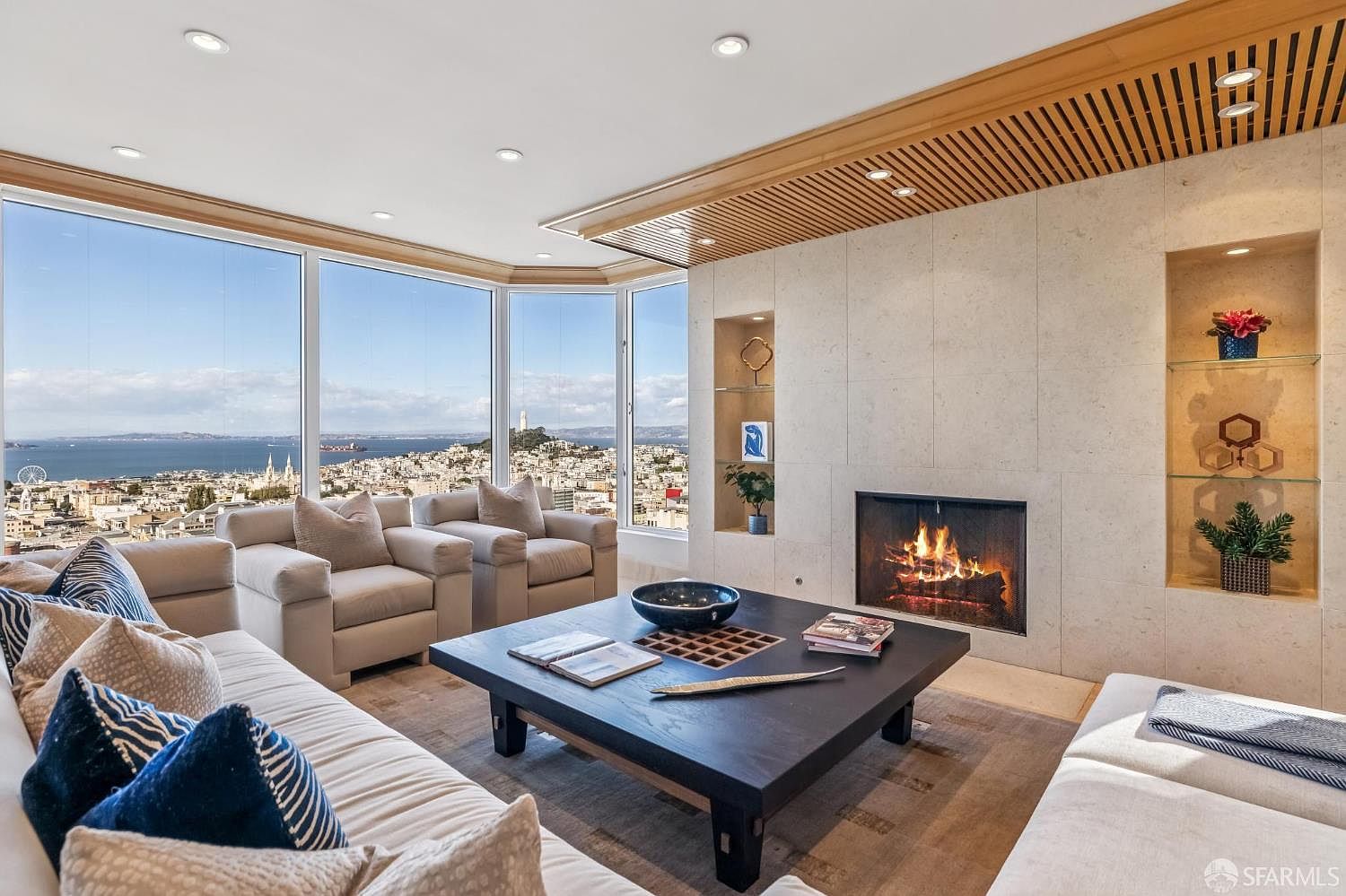
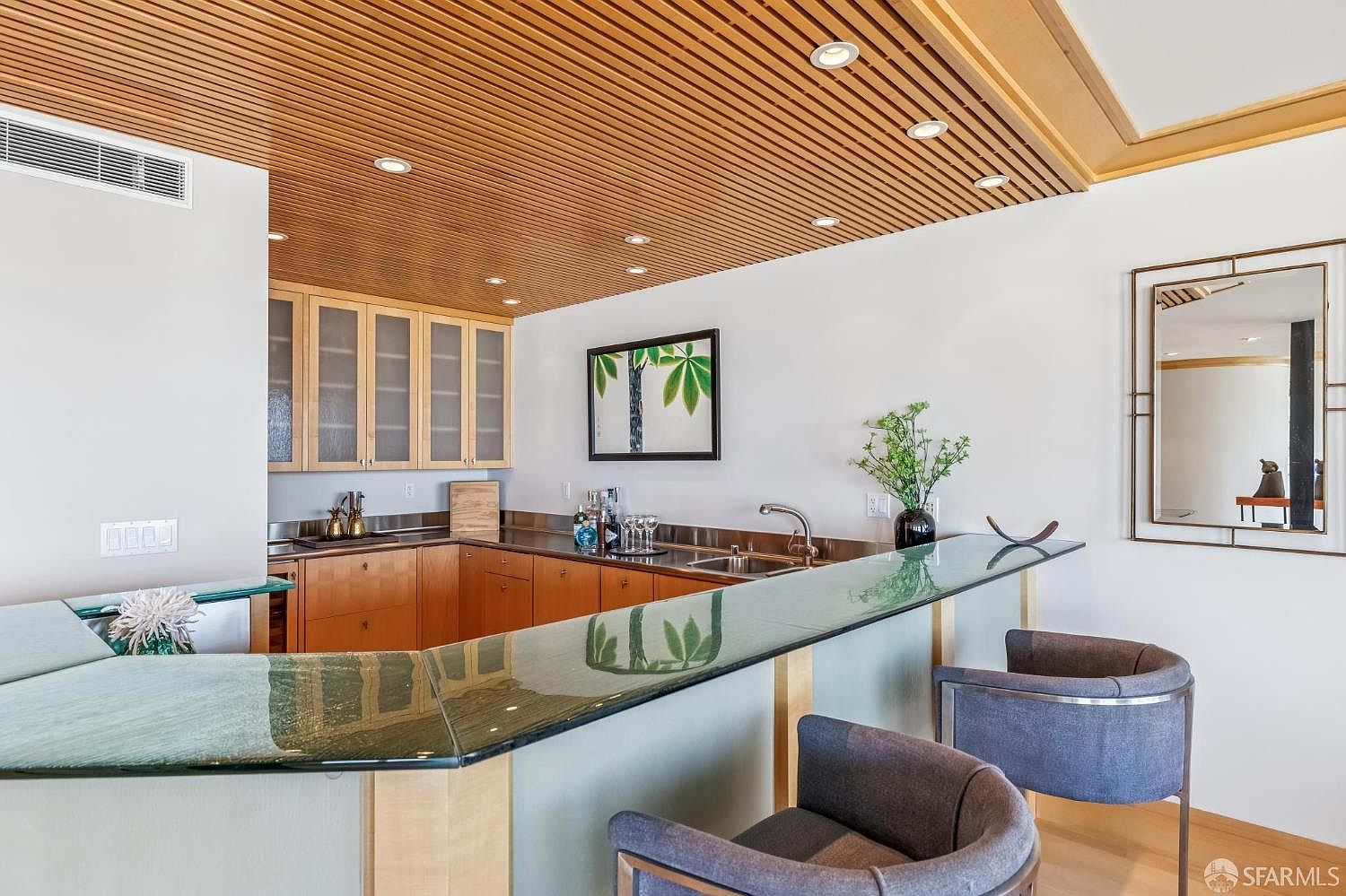
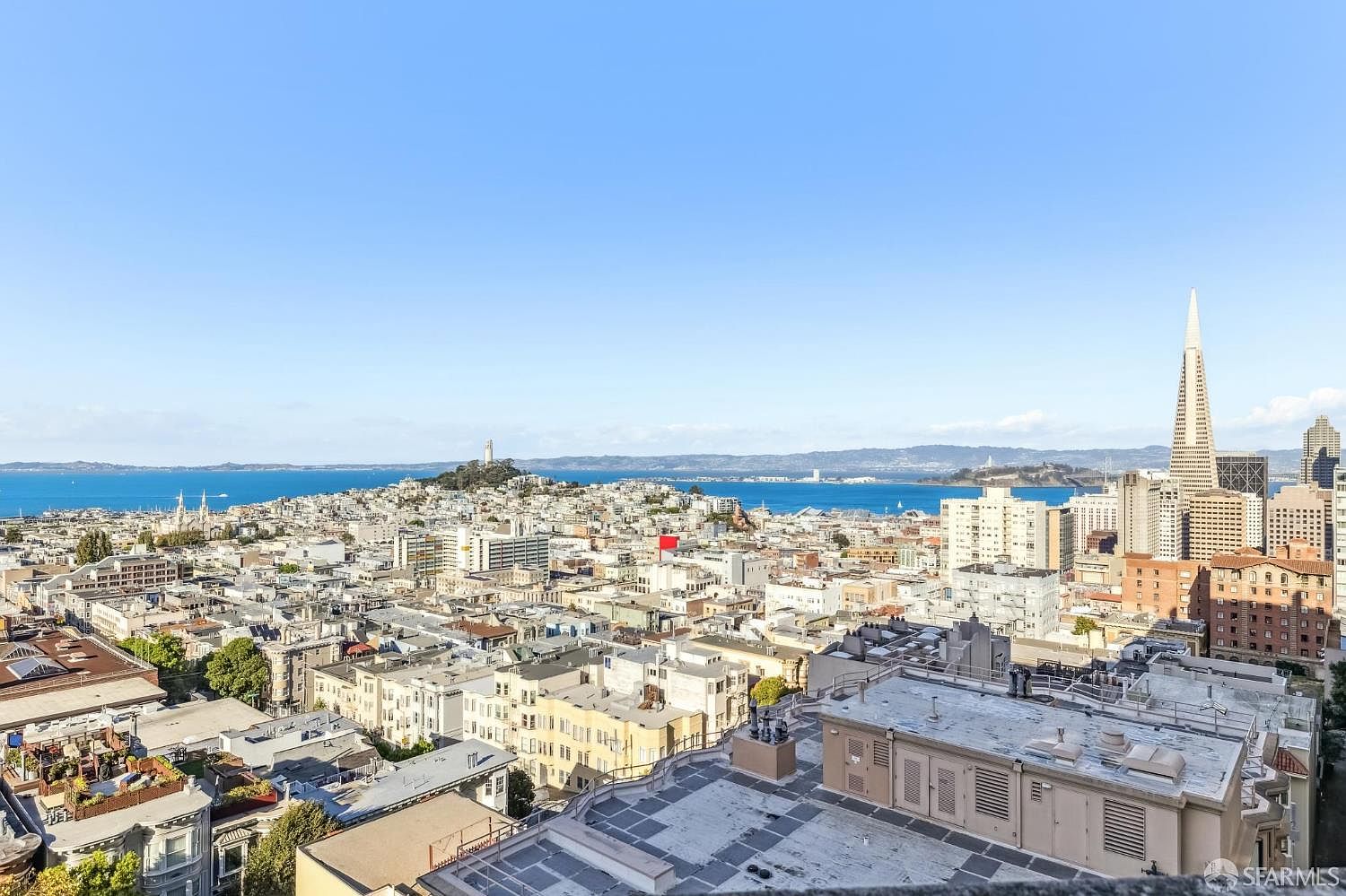
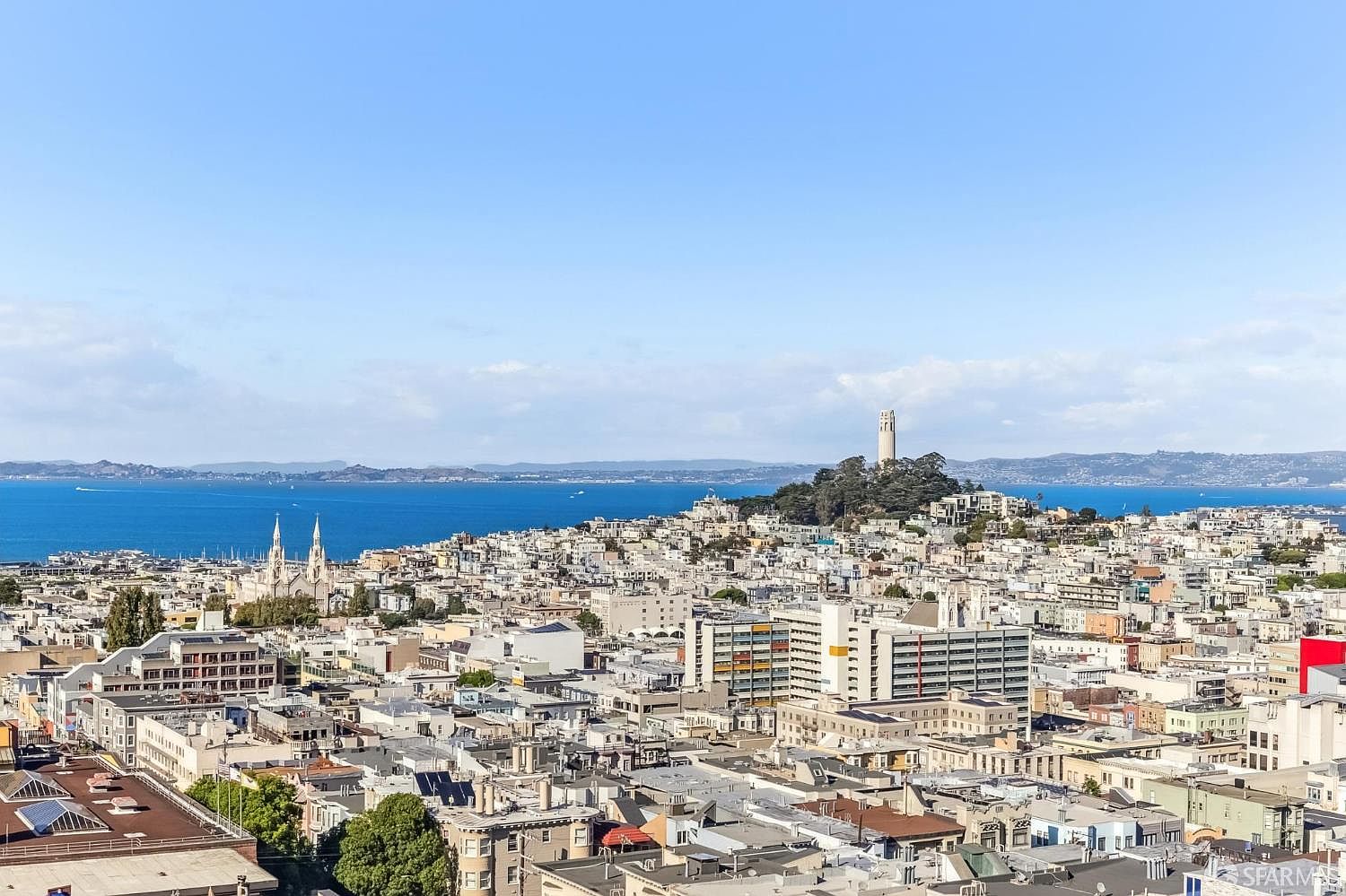
The principal living spaces are oriented toward the north, where unobstructed views stretch across the Bay, past the waterfront and Coit Tower, to the hills of Marin. The double-width living room — a rare spatial luxury in even the most generous San Francisco residences — accommodates serious furniture arrangements without compromise. A fireplace anchors the room, while a dedicated media room and a full wet bar extend the entertaining sequence laterally, creating a suite of interconnected spaces that can function as one grand salon or three distinct environments depending on the occasion.
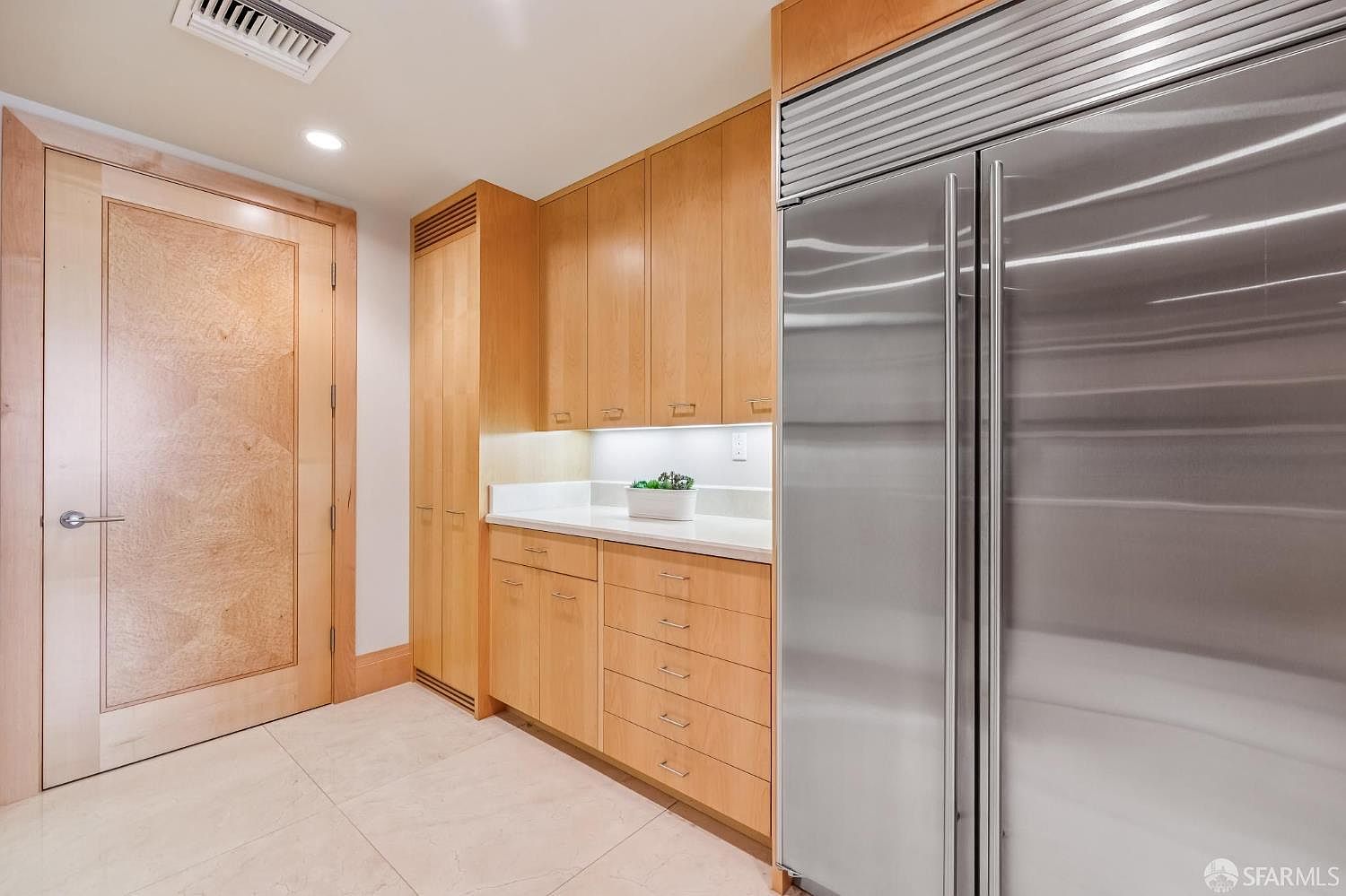
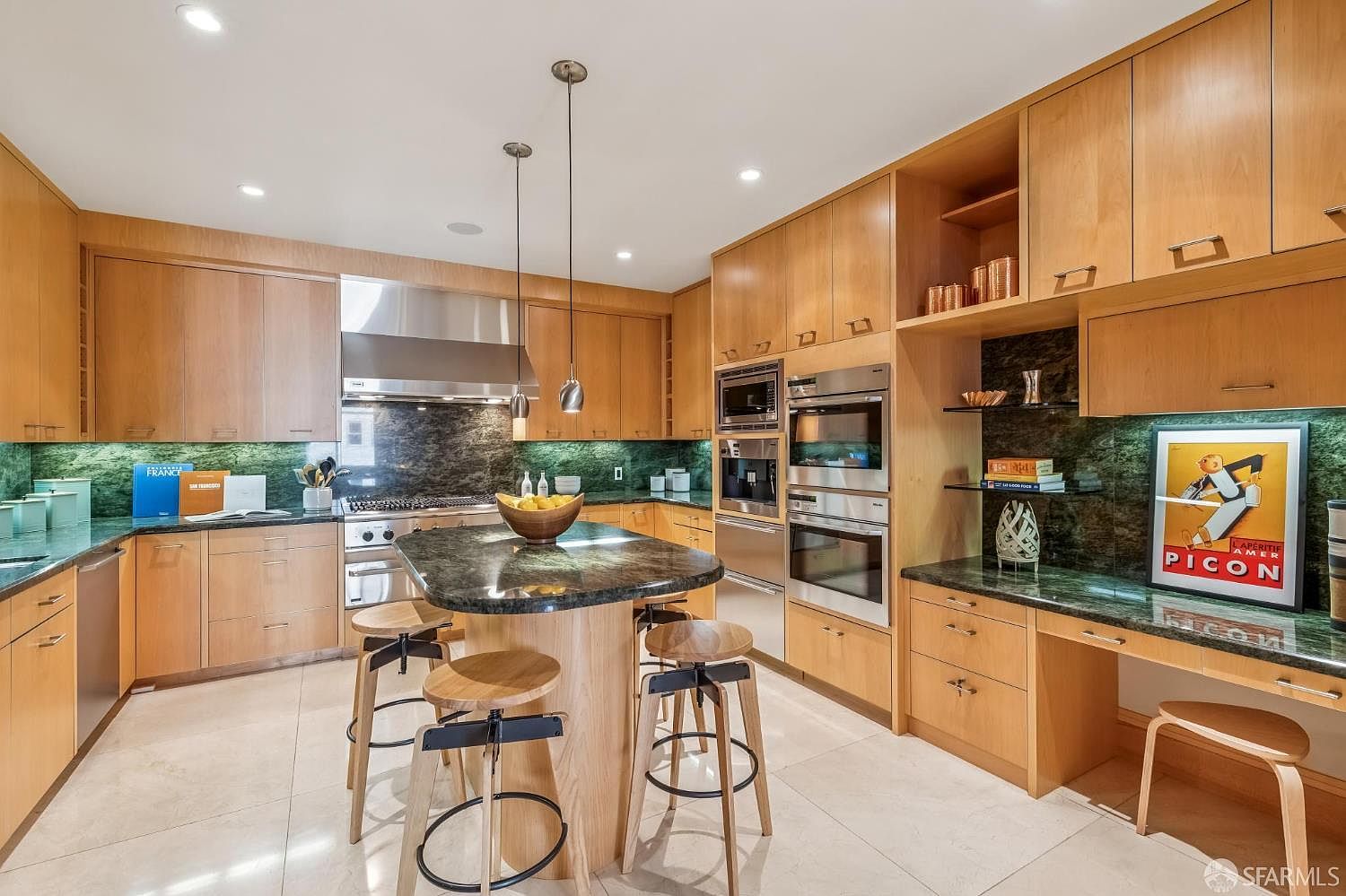
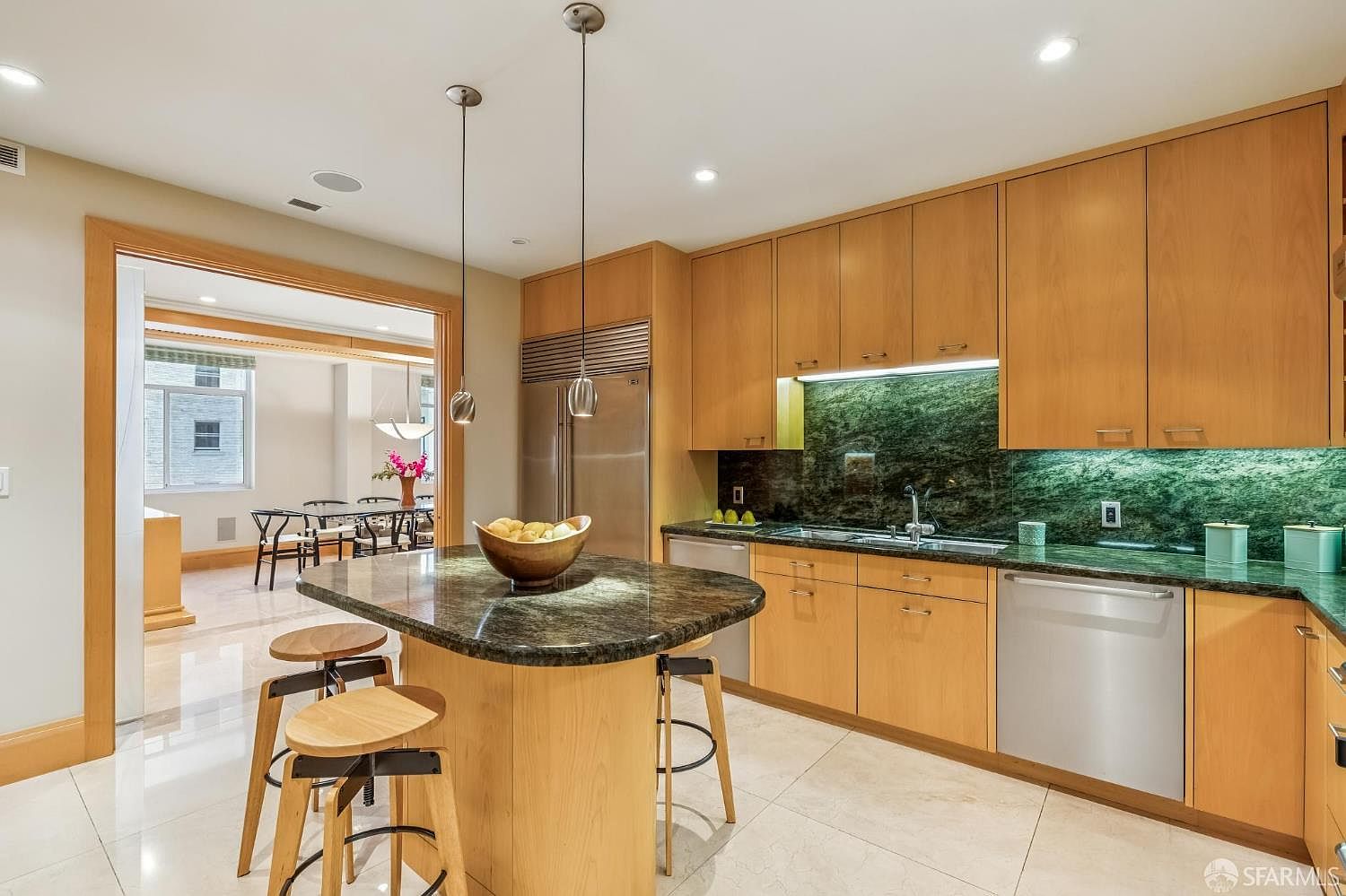
The kitchen is appointed for those who cook rather than those who merely equip. Two Sub-Zero refrigerators, a Thermador six-burner-plus range, Miele double ovens, two dishwashers, and a built-in Miele espresso machine are integrated into custom cabinetry with the precision of a professional kitchen — yet the space reads as refined and residential rather than institutional. The adjacent dining area, scaled for parties of ten or more, is separated from the kitchen by a natural transition rather than a wall, allowing the two rooms to breathe together.
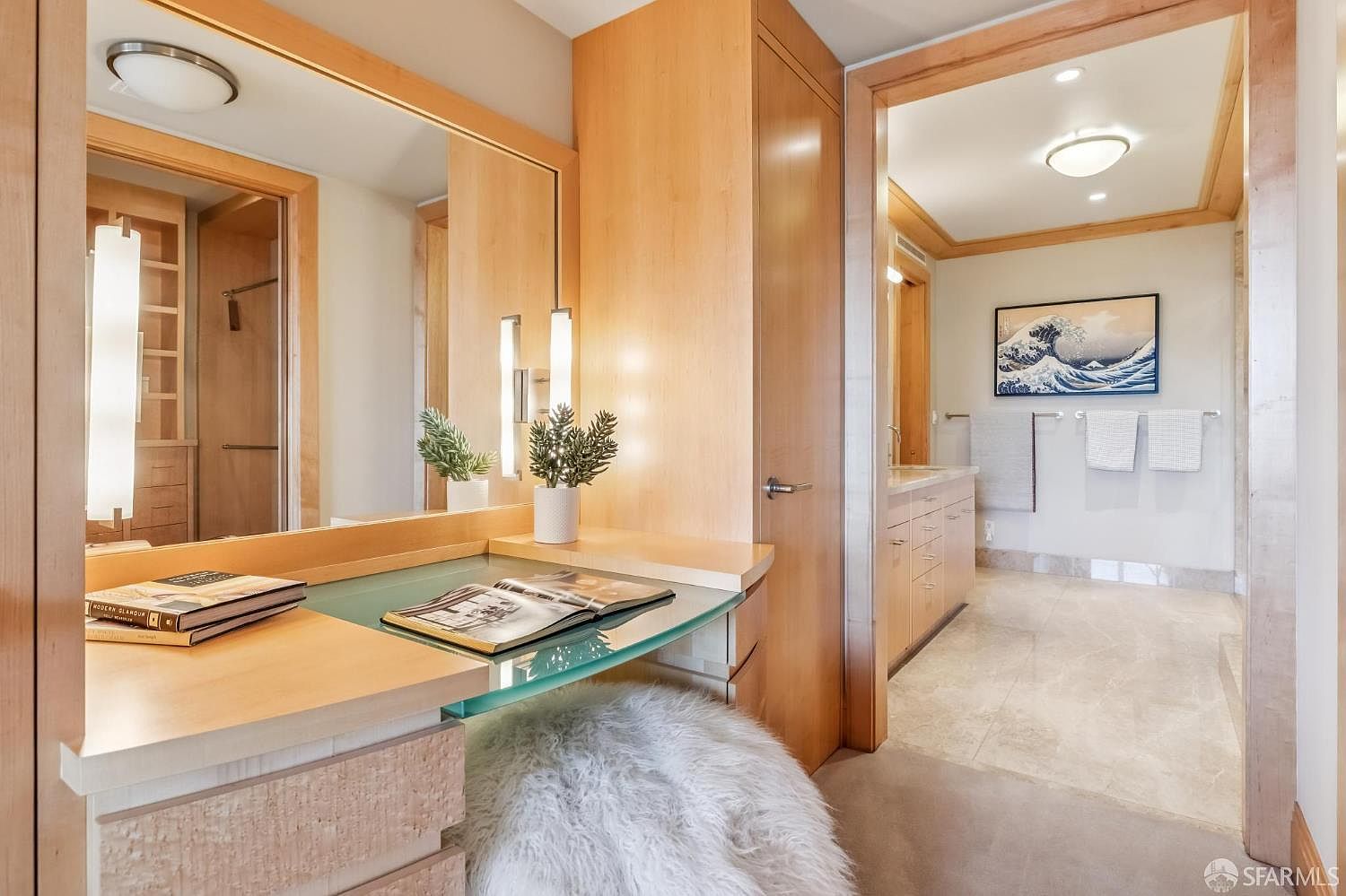
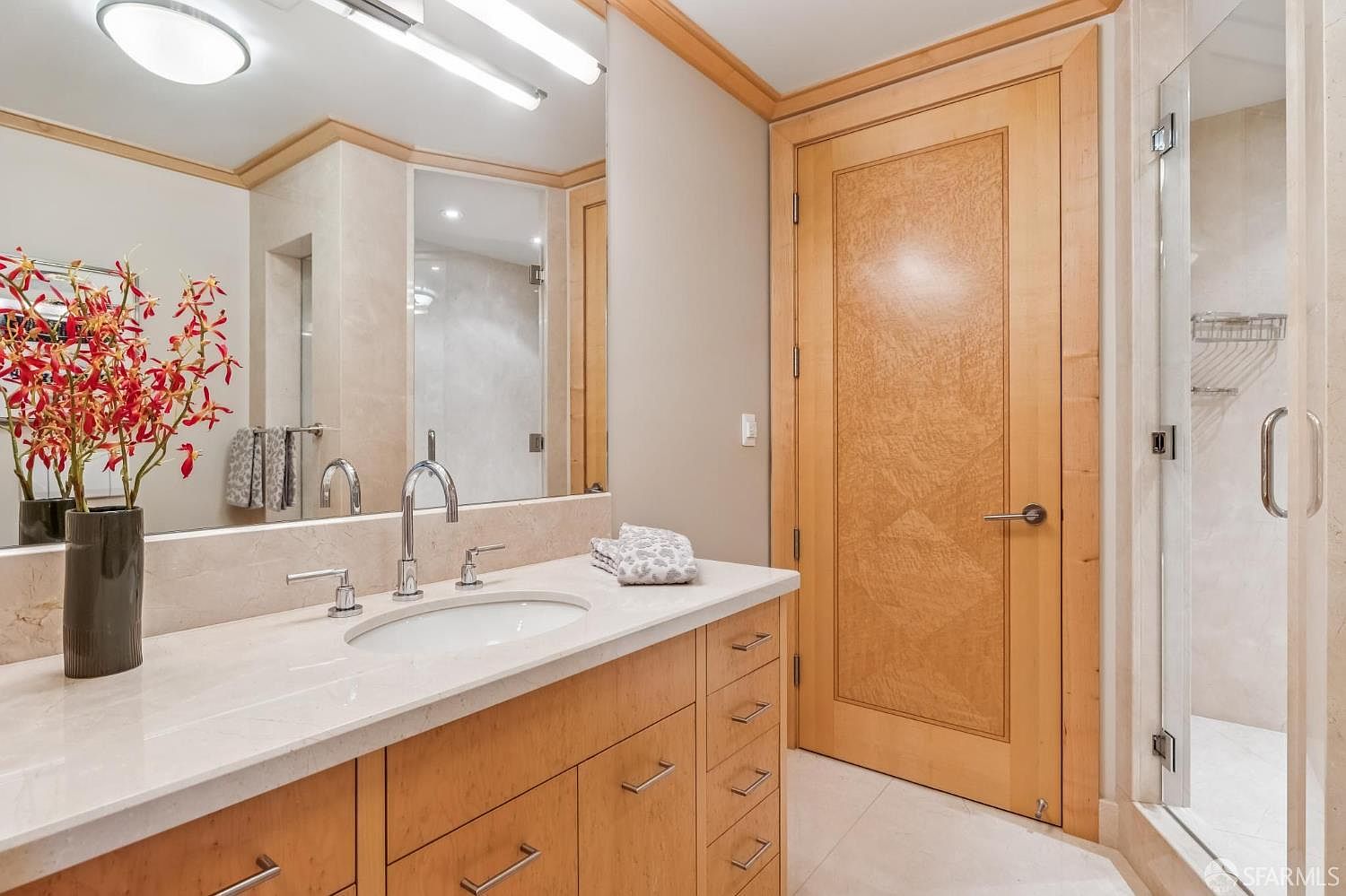
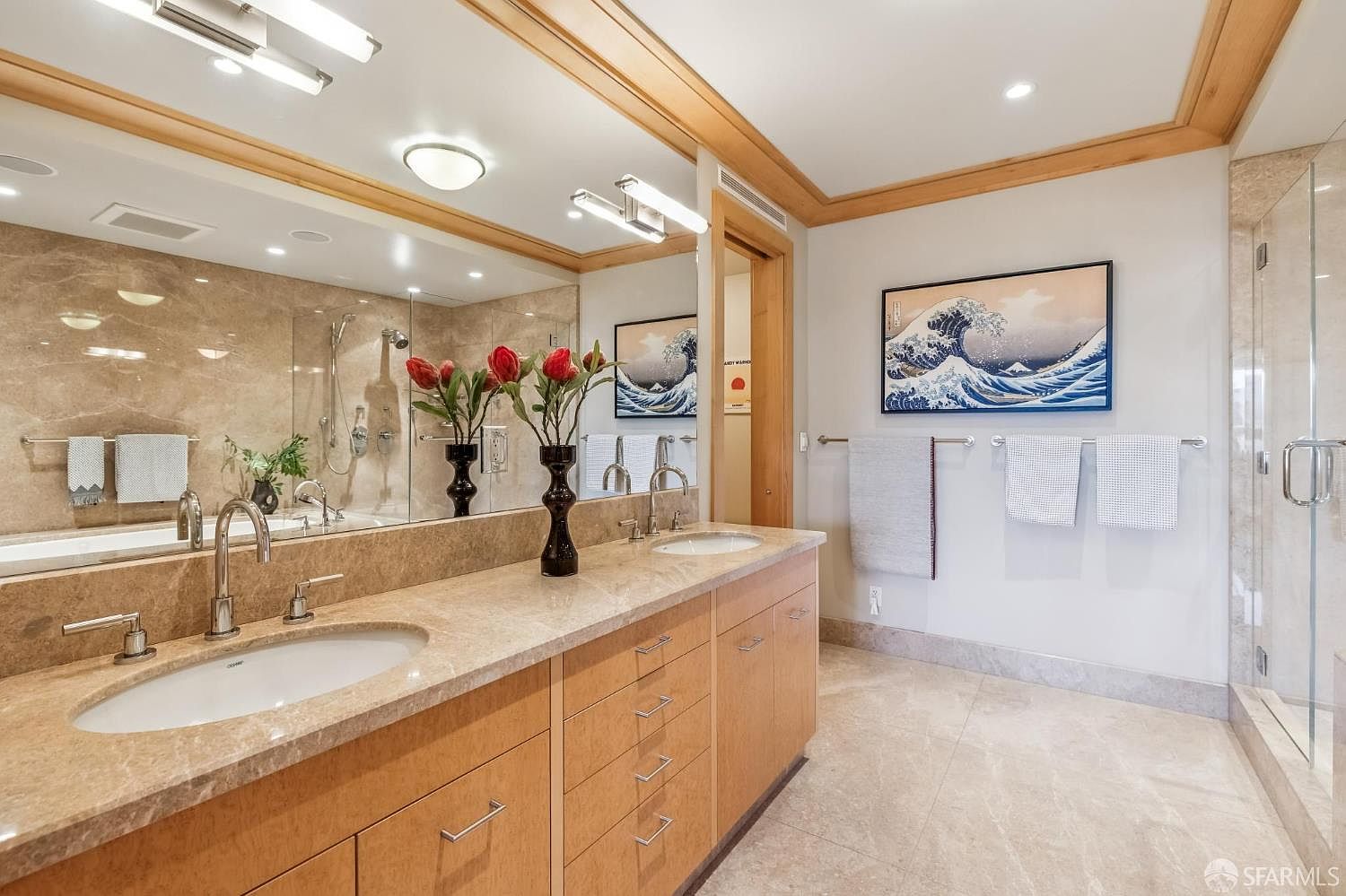
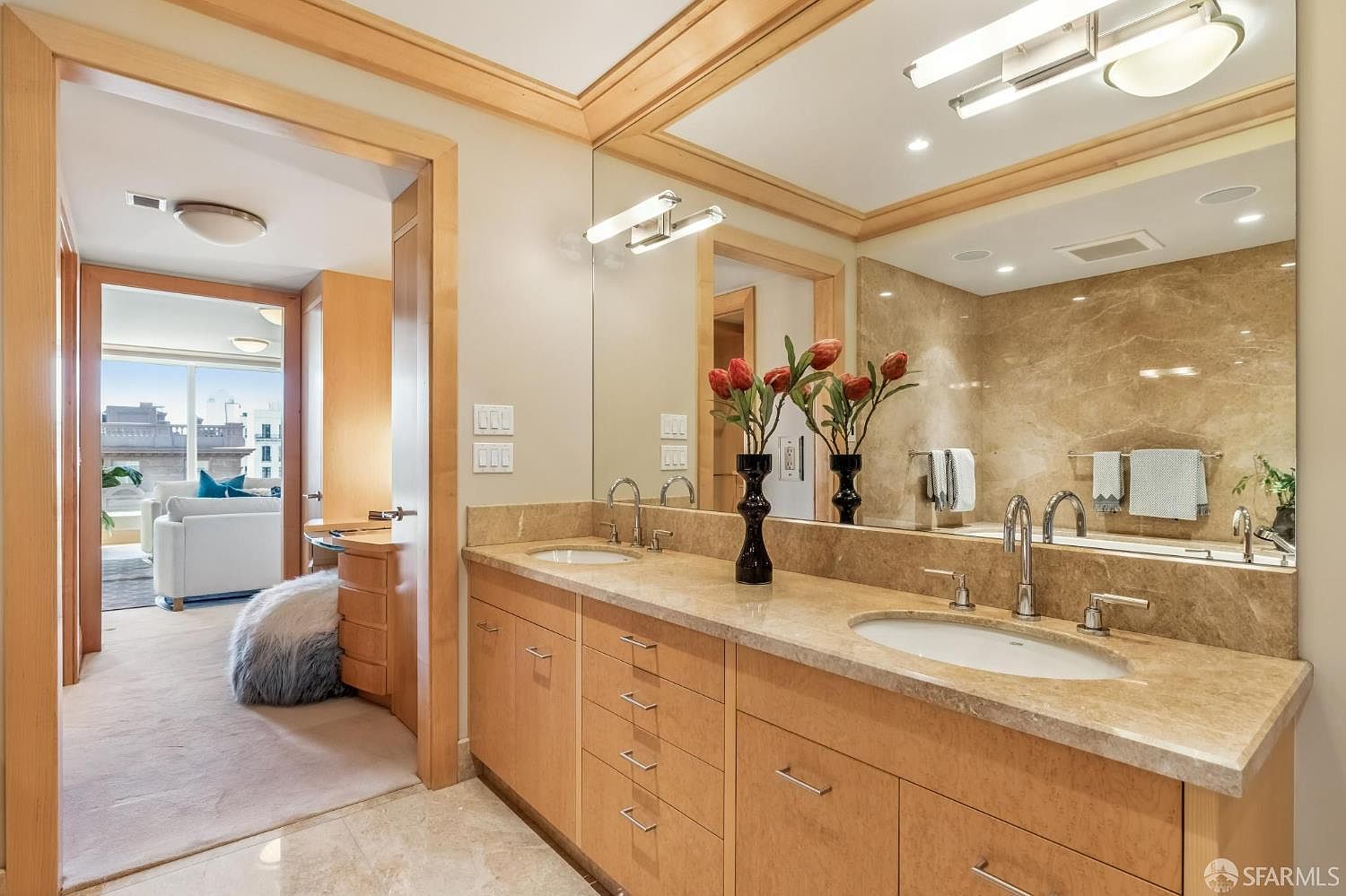
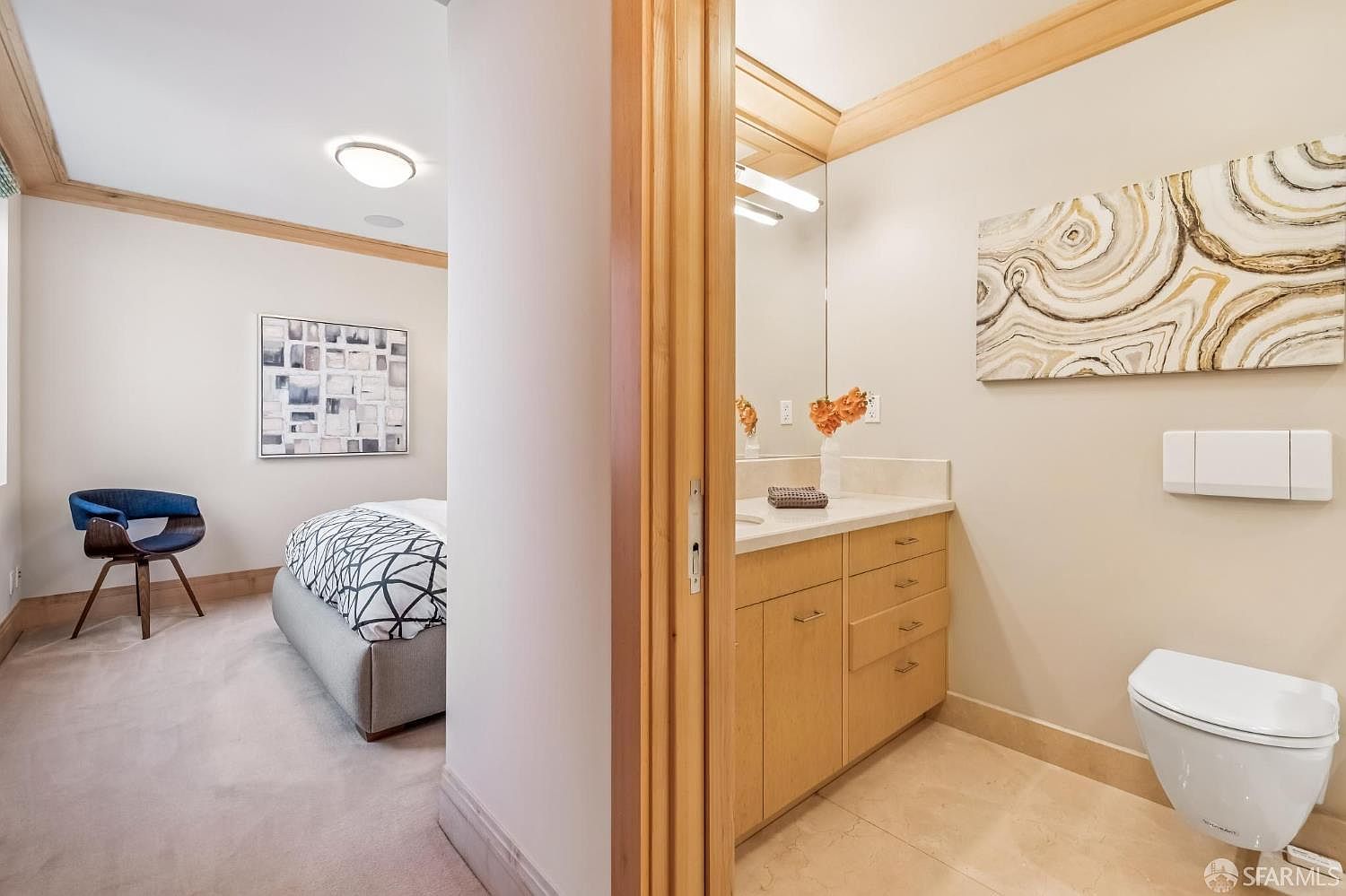
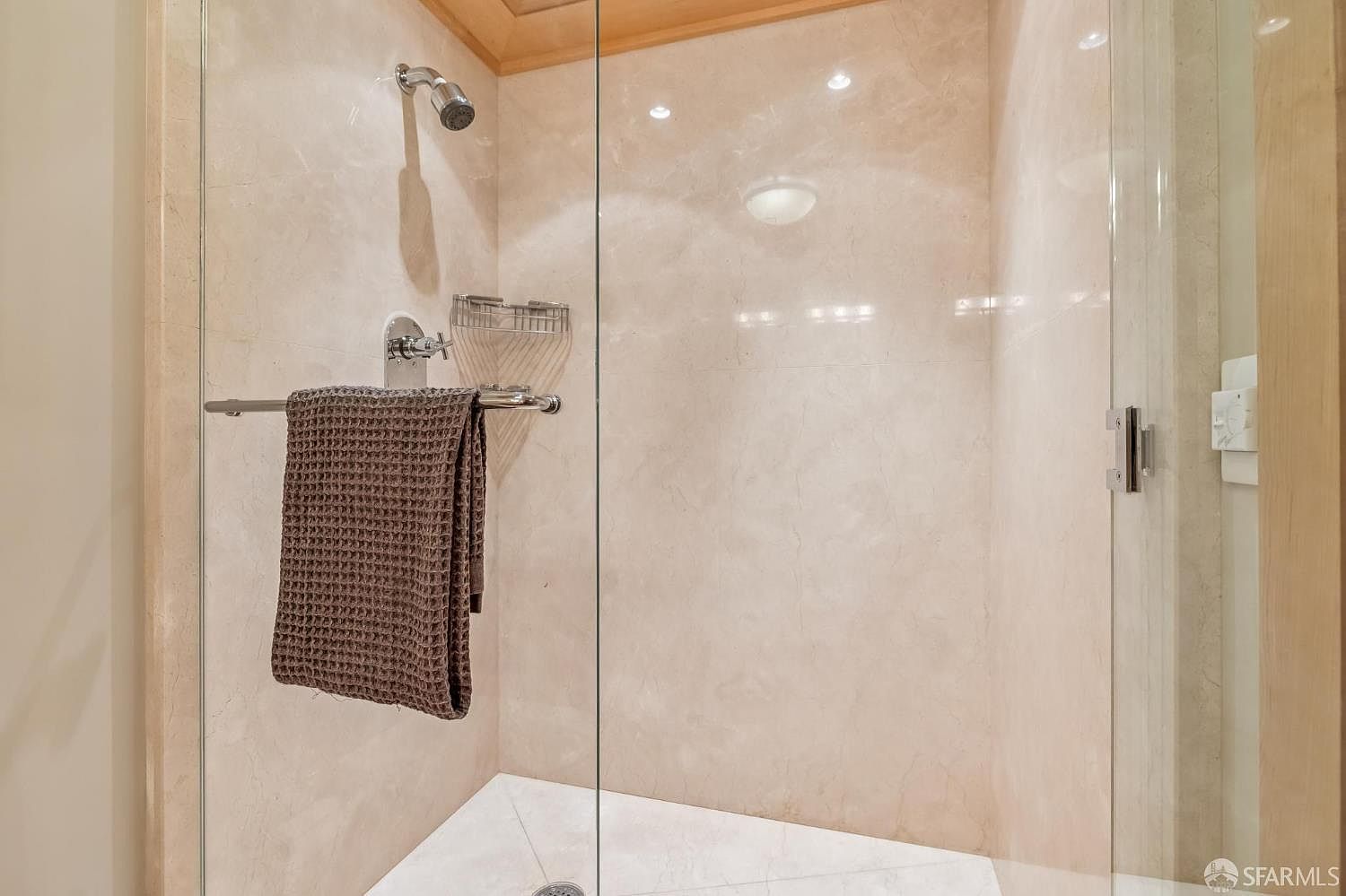
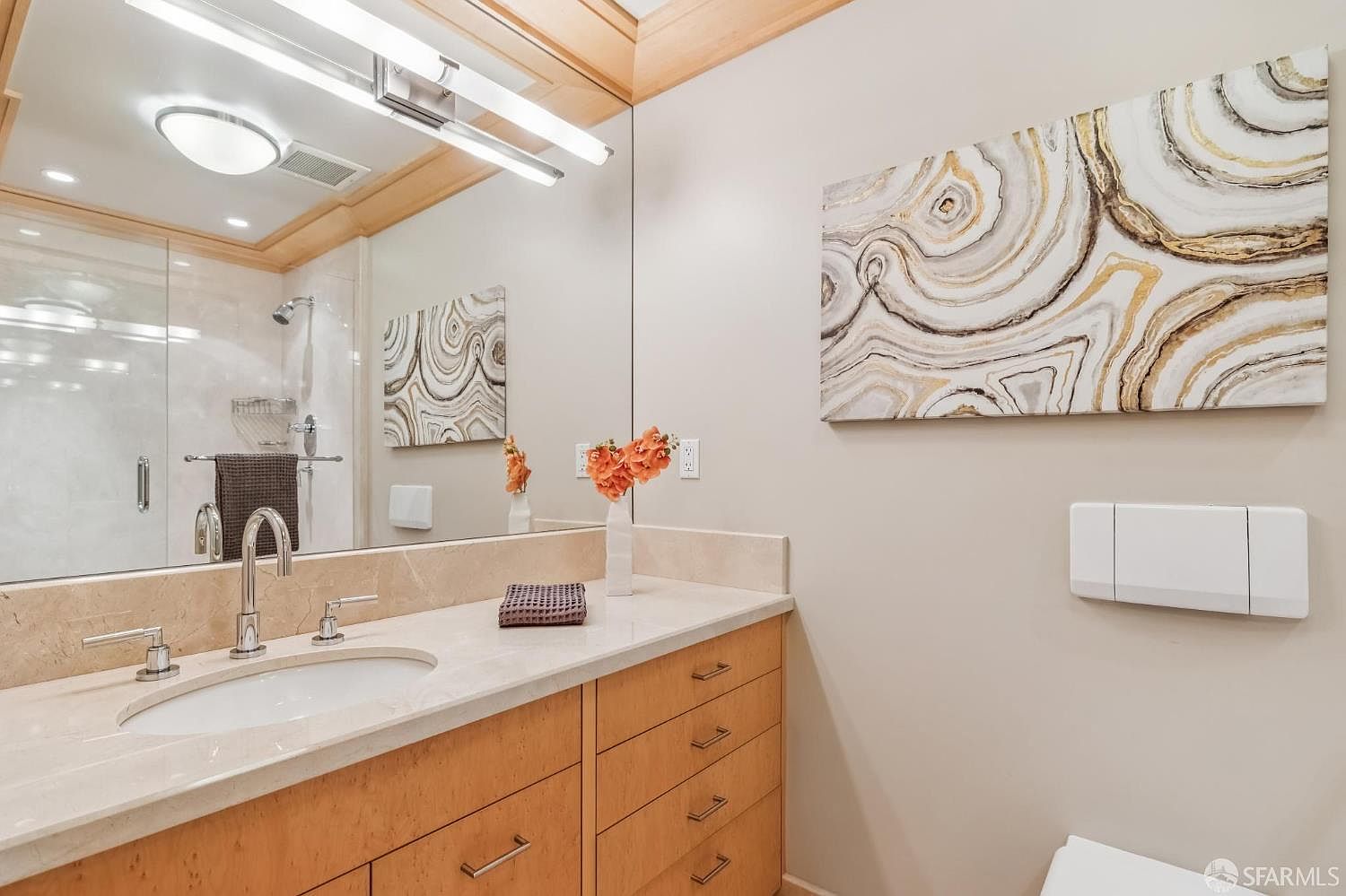
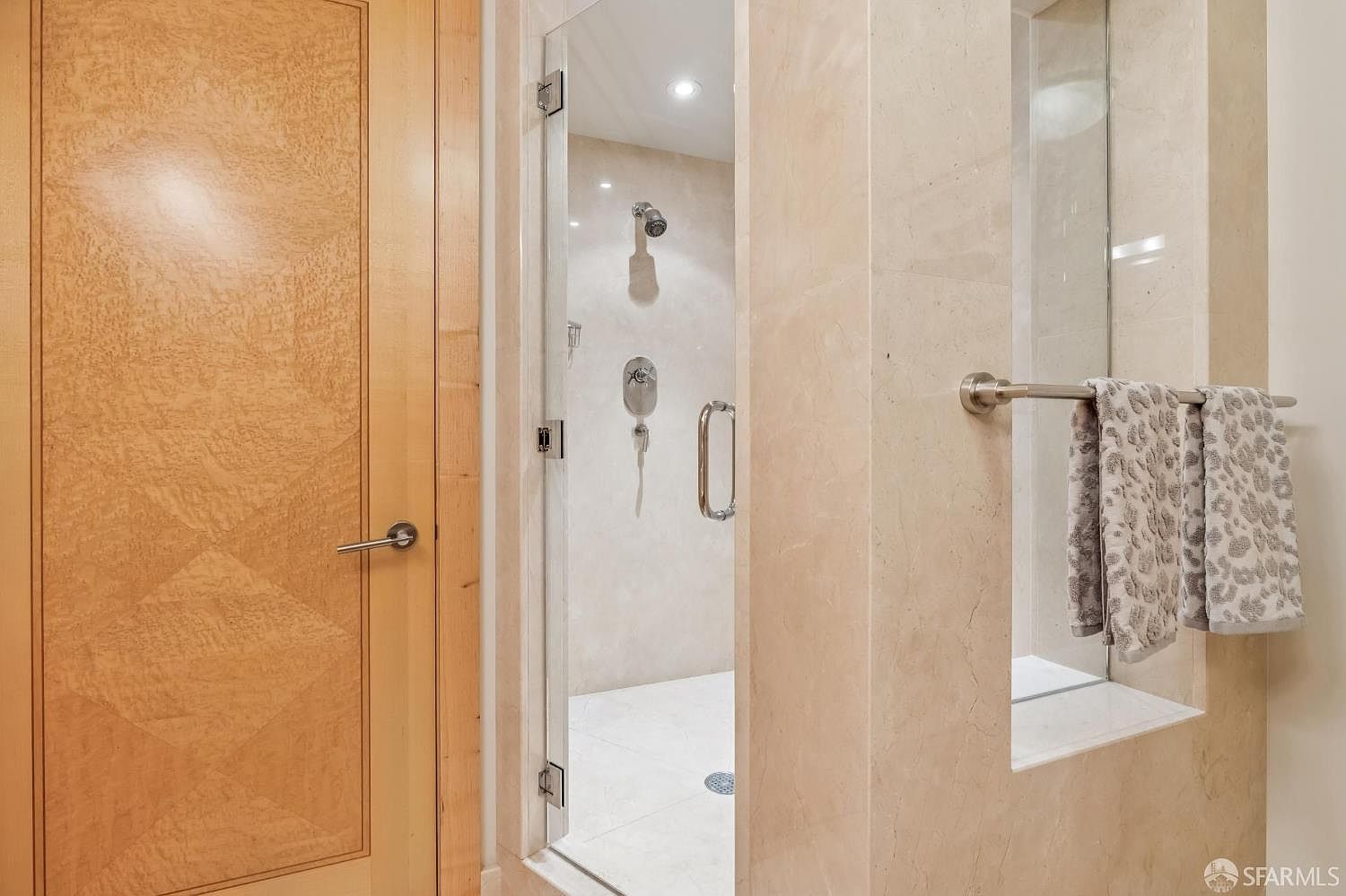
The primary suite occupies a quieter orientation, facing Huntington Park and the Pacific Union Club. A private balcony extends the room outward, while a fireplace creates the kind of intimate atmosphere that large primary suites often sacrifice in the pursuit of square footage. The en-suite bathroom is finished in polished travertine slabs — a material that rewards proximity, its veining and luminosity visible only at close range — with a deep soaking tub and a generously proportioned walk-in shower.
Above the main living level, the exclusive-use roof deck spans more than 2,500 square feet. It is among the largest private outdoor spaces in San Francisco's residential landscape — a platform above the city that is, in practical terms, a private park. Huntington Park and the Fairmont Hotel lie directly below; the Bay, the bridges, and the skyline extend in every direction. It is the kind of space that redefines how one thinks about city living.
Nob Hill occupies a singular position in the geography and mythology of San Francisco. Elevated both literally and figuratively above the city's commercial core, it has functioned for more than a century and a half as the address of consequence — the place where the city's most influential families built their homes, where its grandest hotels were established, and where the social and civic life of San Francisco has long found its most formal expression.
The neighborhood takes its name from the Nabobs — the railroad and silver barons of the late nineteenth century whose mansions once defined its summit. The 1906 earthquake and fire destroyed most of those structures, but the character they established endured. In their place rose the institutions that define Nob Hill today: the Fairmont Hotel, opened in 1907 just days after the earthquake, which has hosted heads of state and dignitaries for over a century; the Mark Hopkins InterContinental, whose Top of the Mark bar remains one of the city's most storied destinations; and the Pacific Union Club, housed in the sole surviving mansion from the pre-earthquake era, the brownstone James Flood Mansion now listed on the National Register of Historic Places.
At the center of it all sits Huntington Park, the neighborhood's four-acre public green space, which serves as Nob Hill's living room. Ringed by the Fairmont, Grace Cathedral, the Pacific Union Club, and the Huntington Hotel — itself recently revamped and restored to its former prominence — the park provides a rare urban amenity: open sky, mature trees, and the Fountain of the Tortoises at its center, a bronze replica of a sixteenth-century Roman fountain. For residents of 1150 Sacramento, Huntington Park is not a destination requiring transit — it is visible from the primary suite balcony and accessible in under a minute on foot.
Grace Cathedral, the Episcopal church completed in 1964 and modeled in part on Notre-Dame de Paris, anchors the block to the north and contributes to the neighborhood's sense of civic permanence. Its outdoor labyrinth, open to the public, and its regular musical programming make it a living cultural institution rather than merely an architectural landmark.
The practical geography of Nob Hill is equally compelling. The neighborhood sits at the intersection of some of the city's most walkable corridors — Polk Street's independent restaurants and cafés lie a short distance to the north, the shops and dining of Polk Gulch and Russian Hill are easily reached on foot, and the Powell-Hyde cable car line connects the summit to Fisherman's Wharf and Union Square. The Financial District and the Embarcadero are accessible by cable car or a brief ride, placing the full range of San Francisco's professional and cultural offerings within practical reach.
For those who have lived in San Francisco long enough to understand its micro-geographies, Nob Hill's flat blocks carry a particular significance. The city's famous topography creates dramatic distinctions between streets that are walkable and those that are not, and Sacramento Street at this block represents the neighborhood at its most livable — a quality that residents return to again and again as the detail that most distinguishes their daily experience of the city.
Featured Highlights
Curated Content • Presented by Callum C. Hutchins