The Story Behind
Chadeline: A Storied English Manor Reimagined for Modern Life
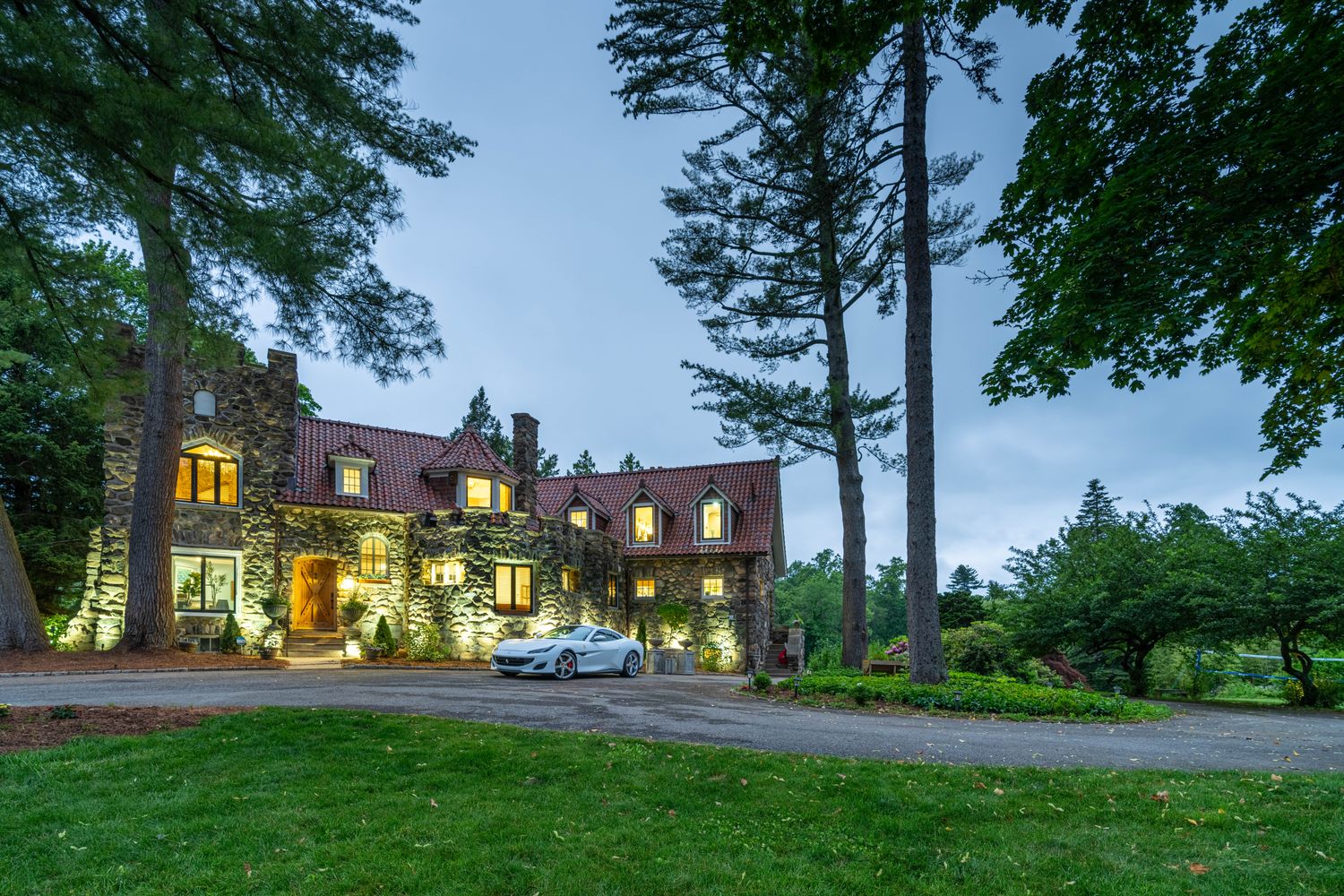
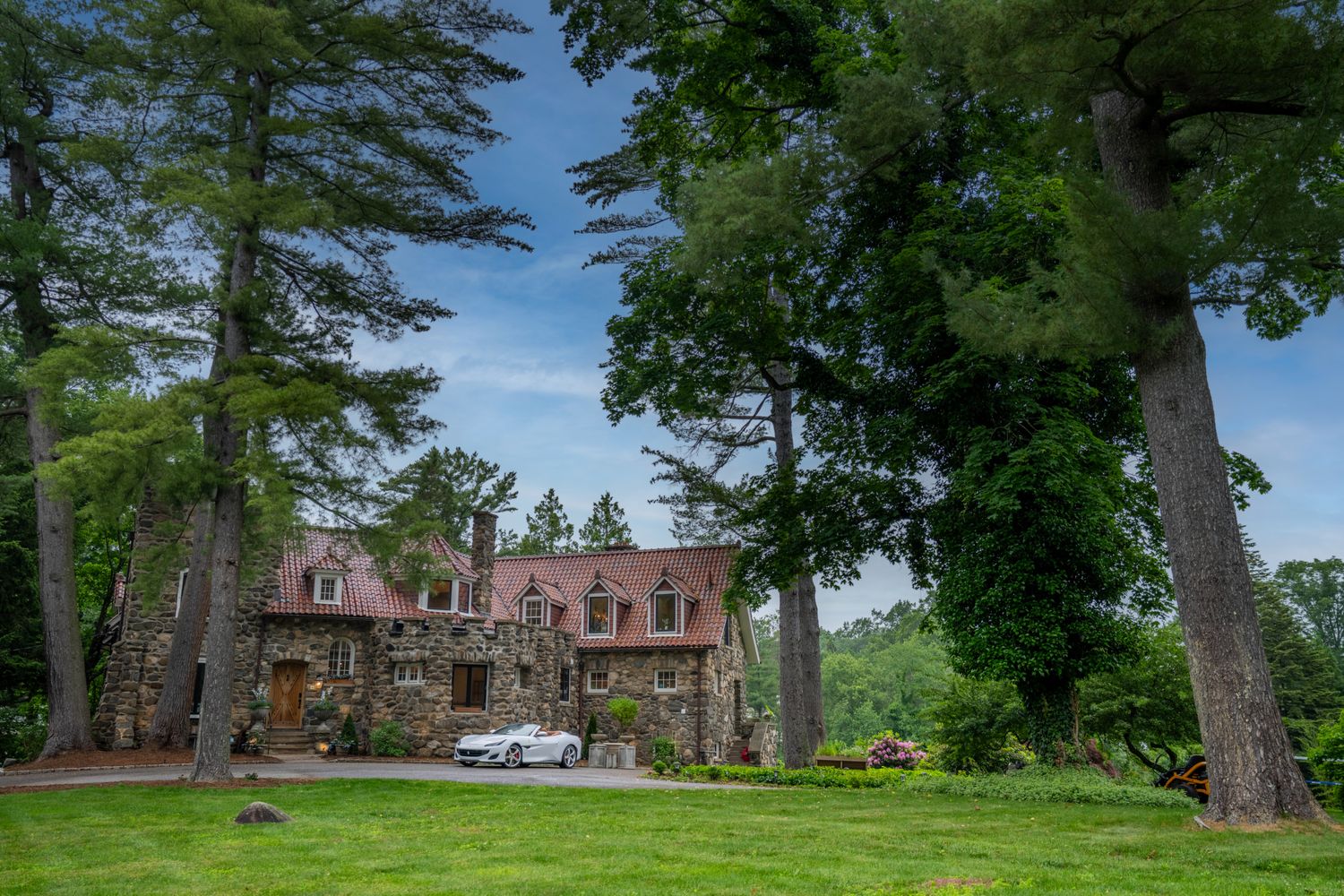
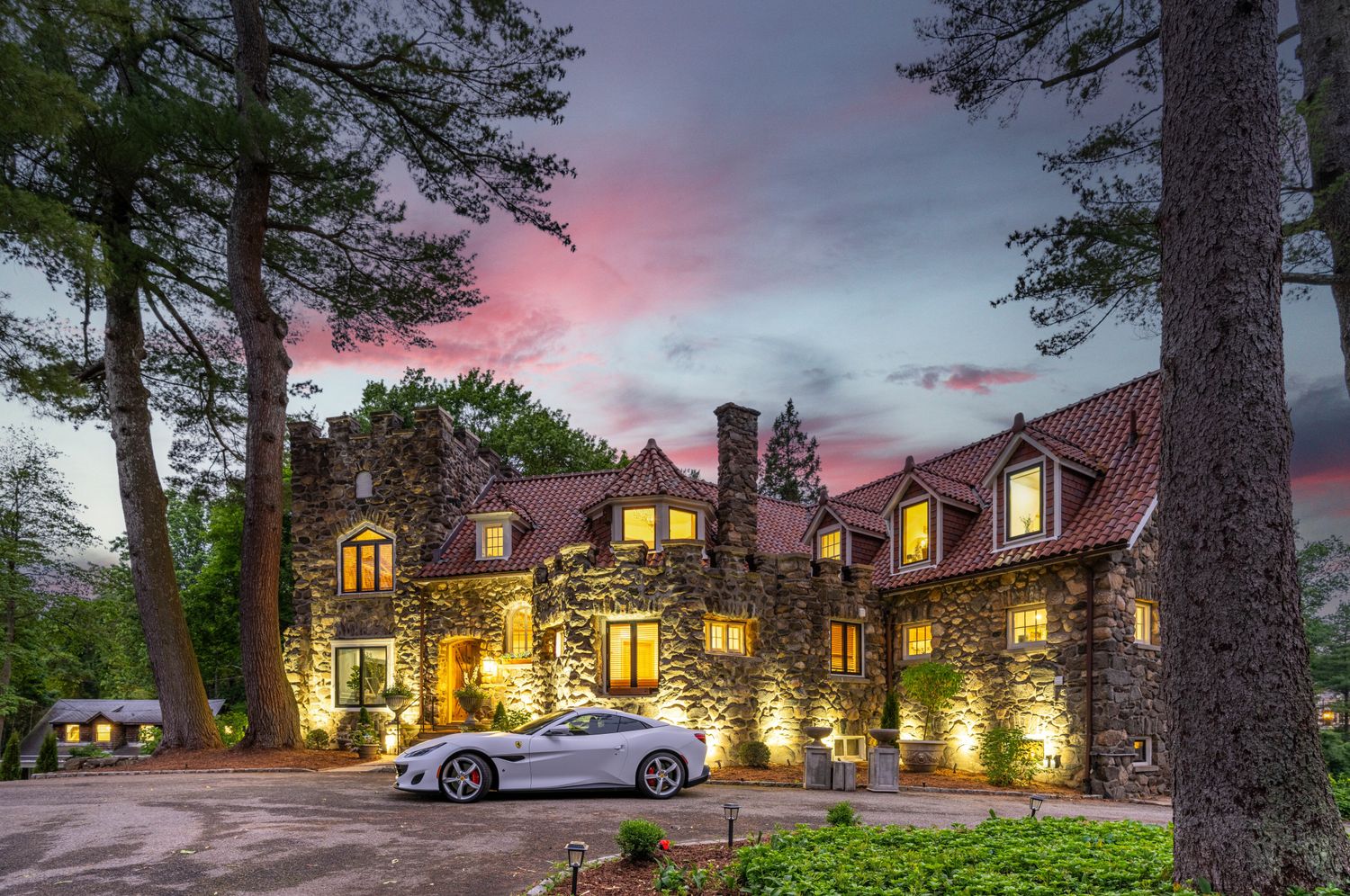
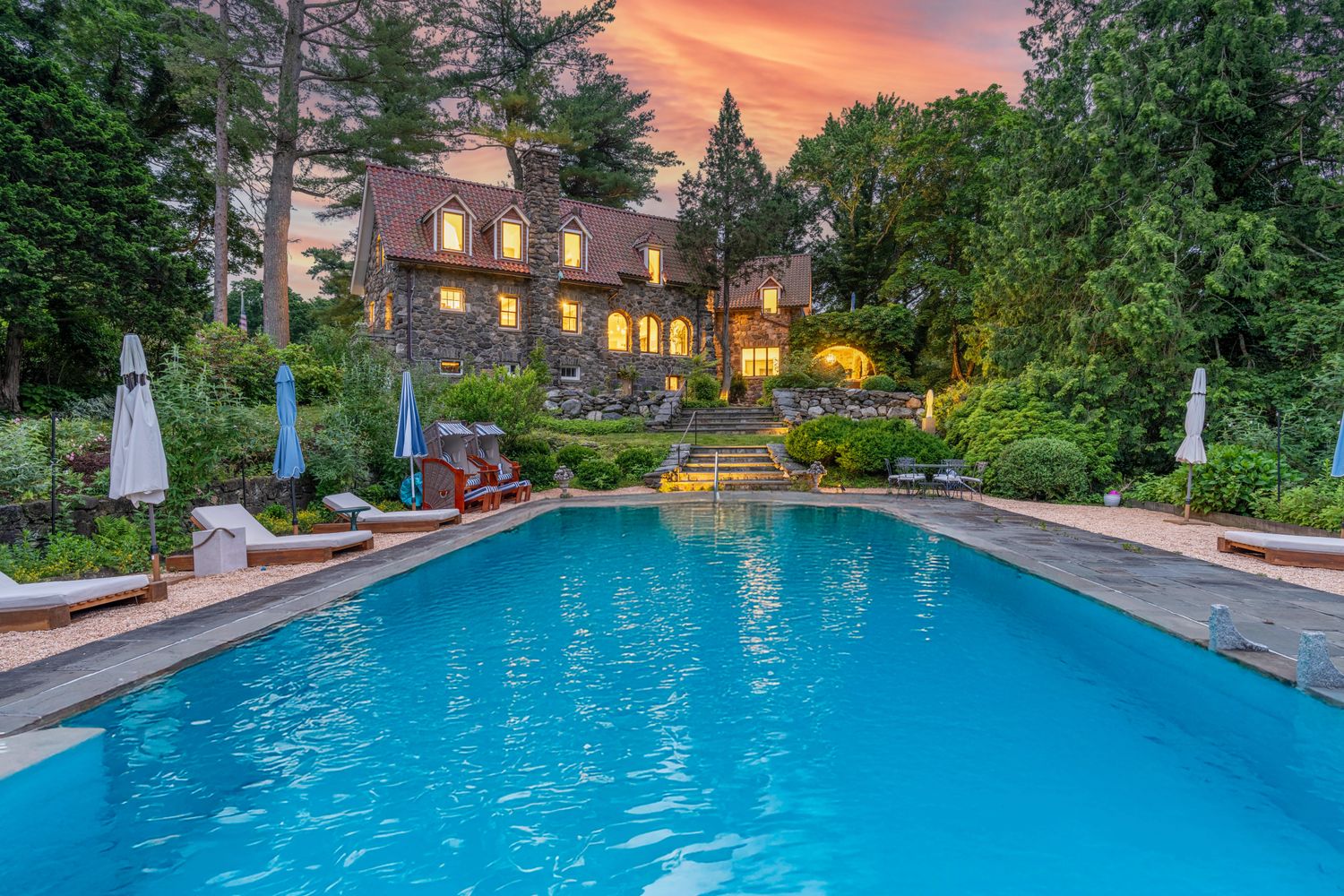
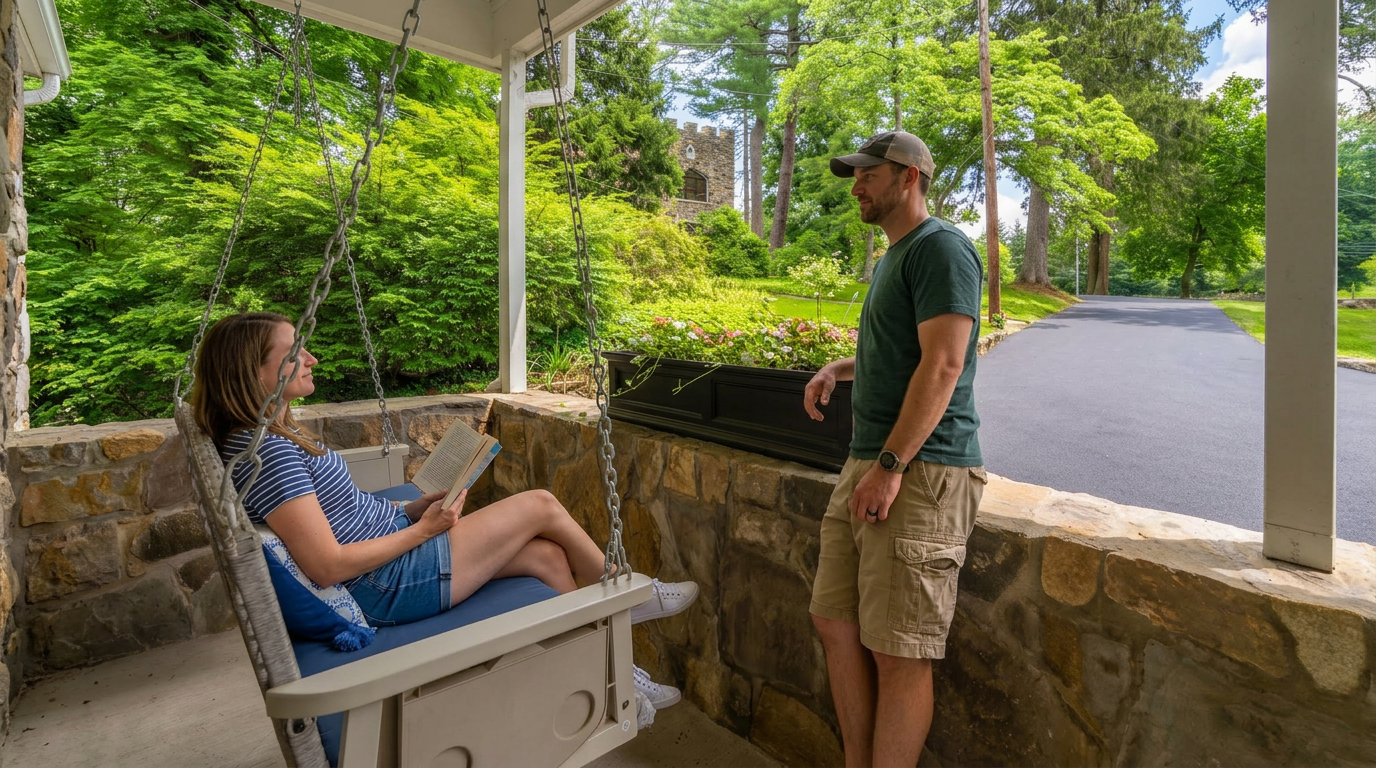
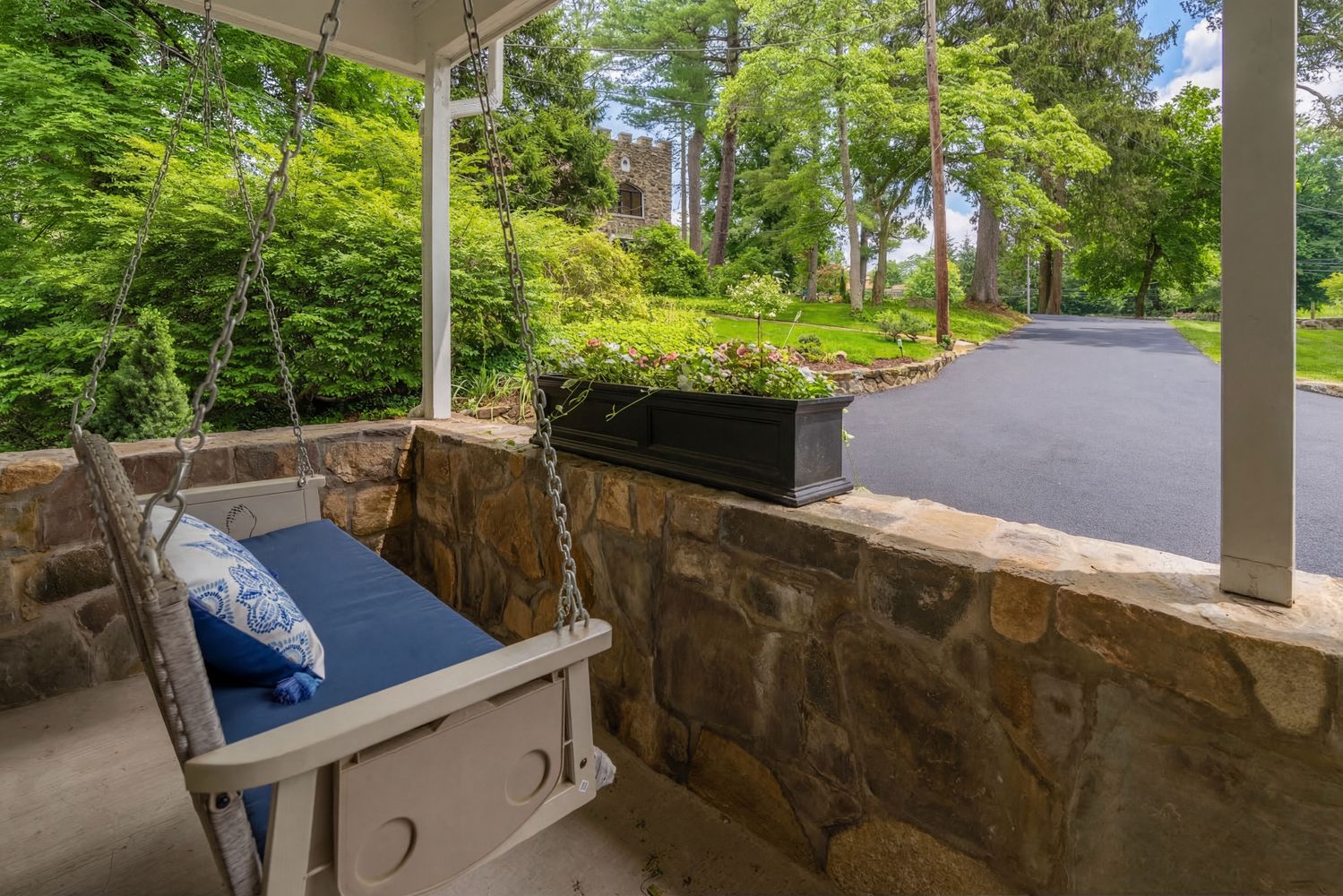
From the moment you turn onto Lake Avenue and the fieldstone turret emerges through the canopy of mature trees, Chadeline communicates something most homes cannot: that it has a story worth knowing. The circular drive, the red clay tile roof, the barn-style front door hewn from heavy timber—every detail announces arrival at a place of uncommon character. This is not a house that was built to impress. It is a house that simply is impressive, in the way that only genuinely historic architecture can be.
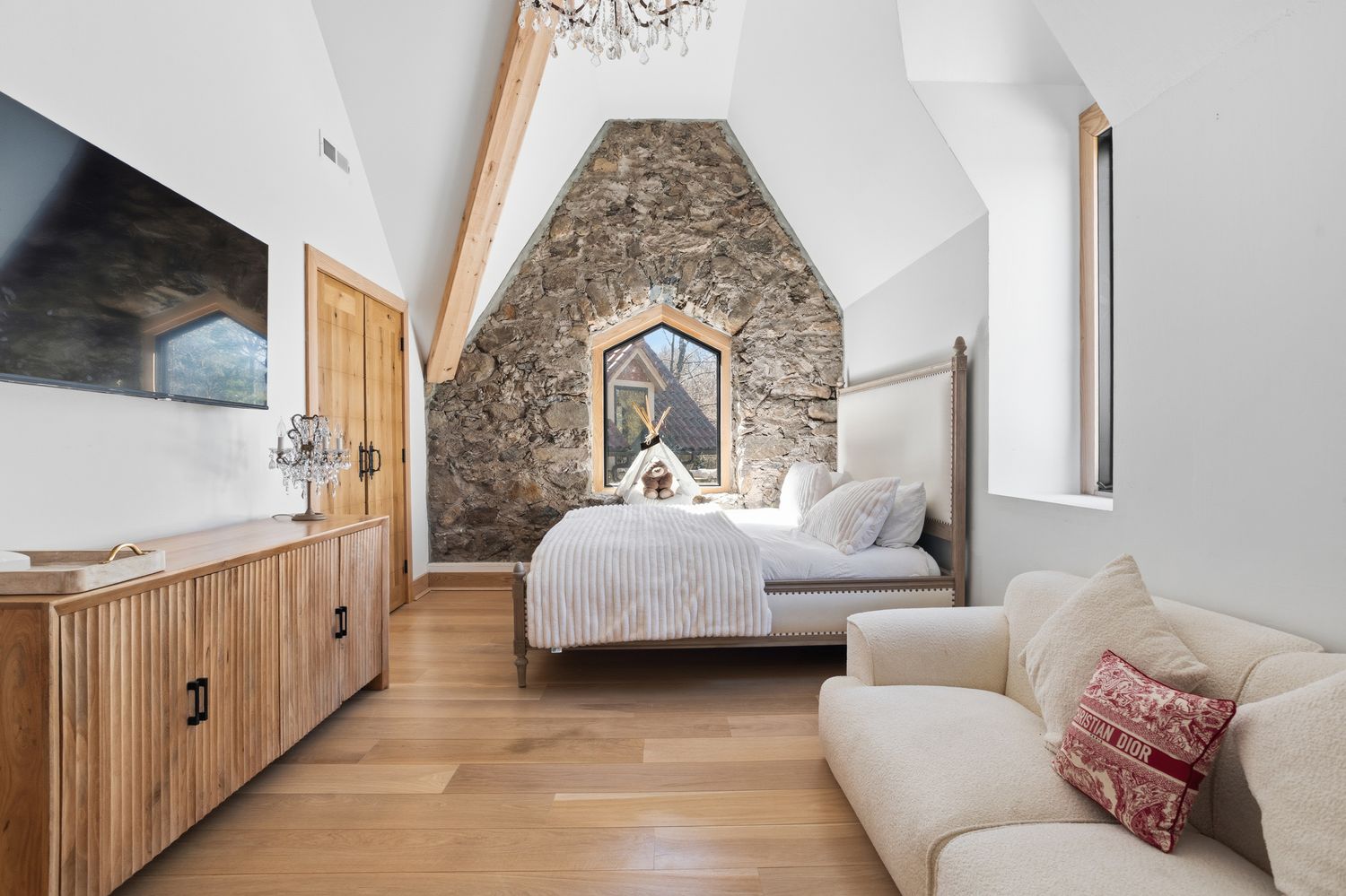
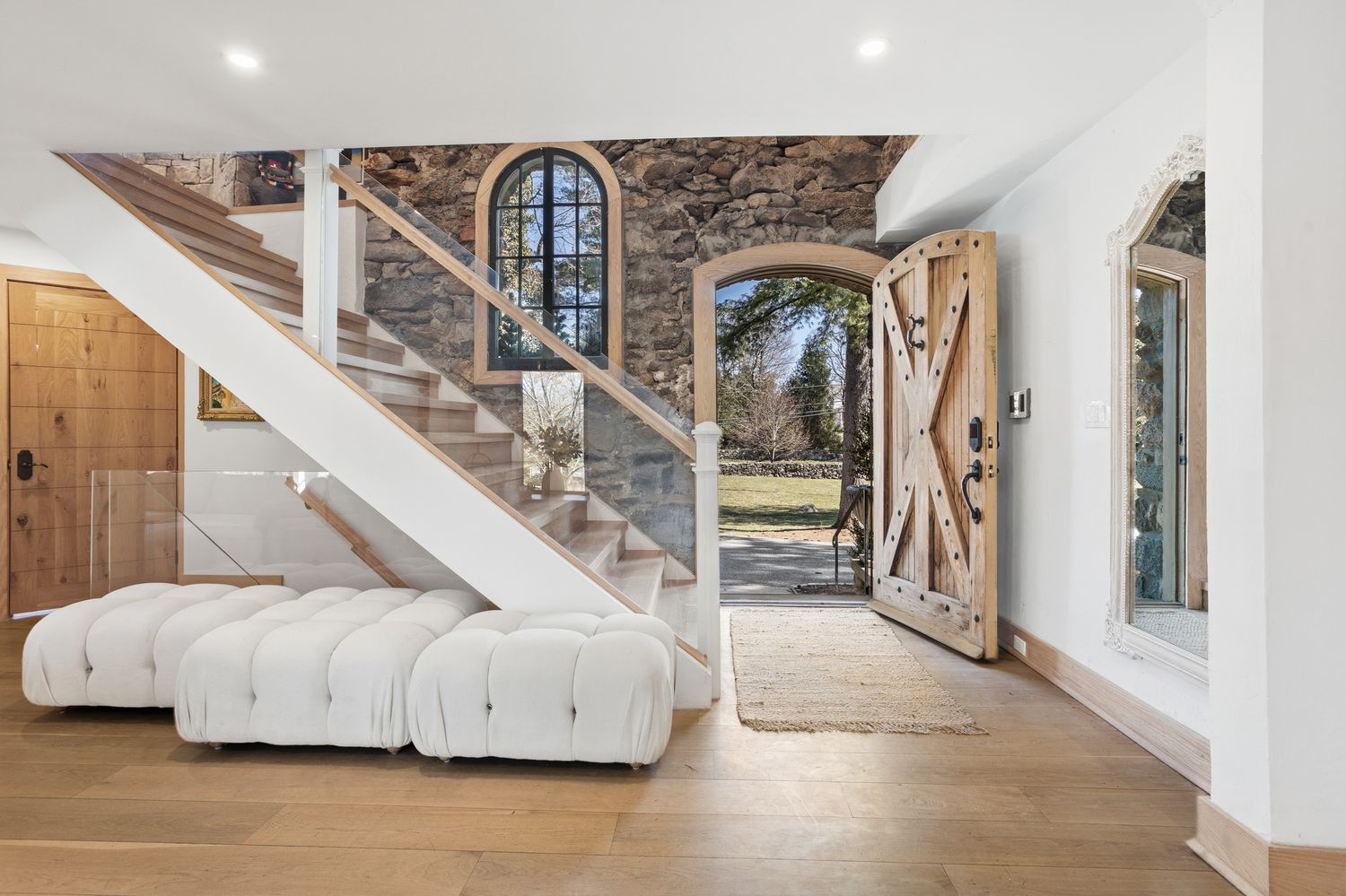
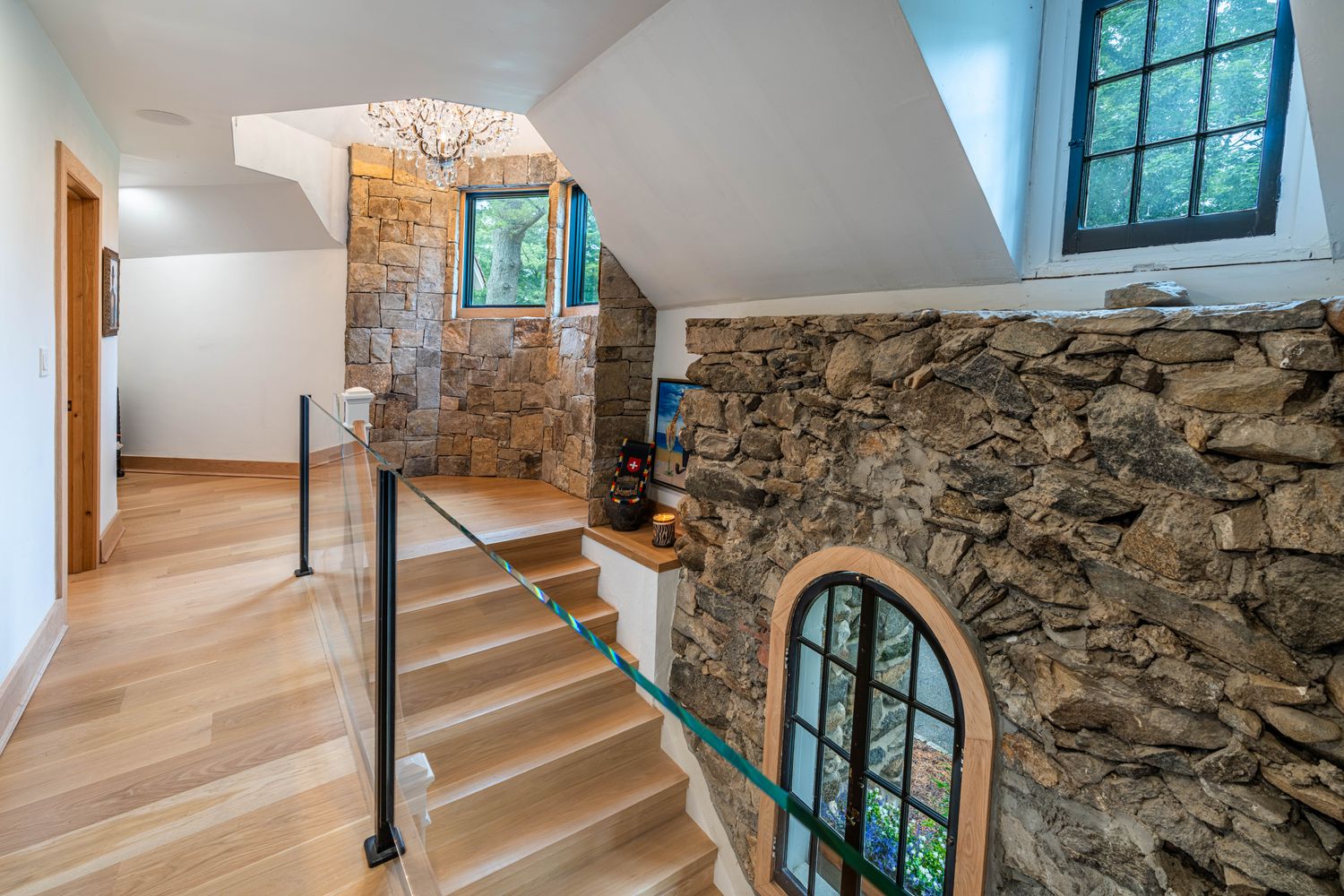
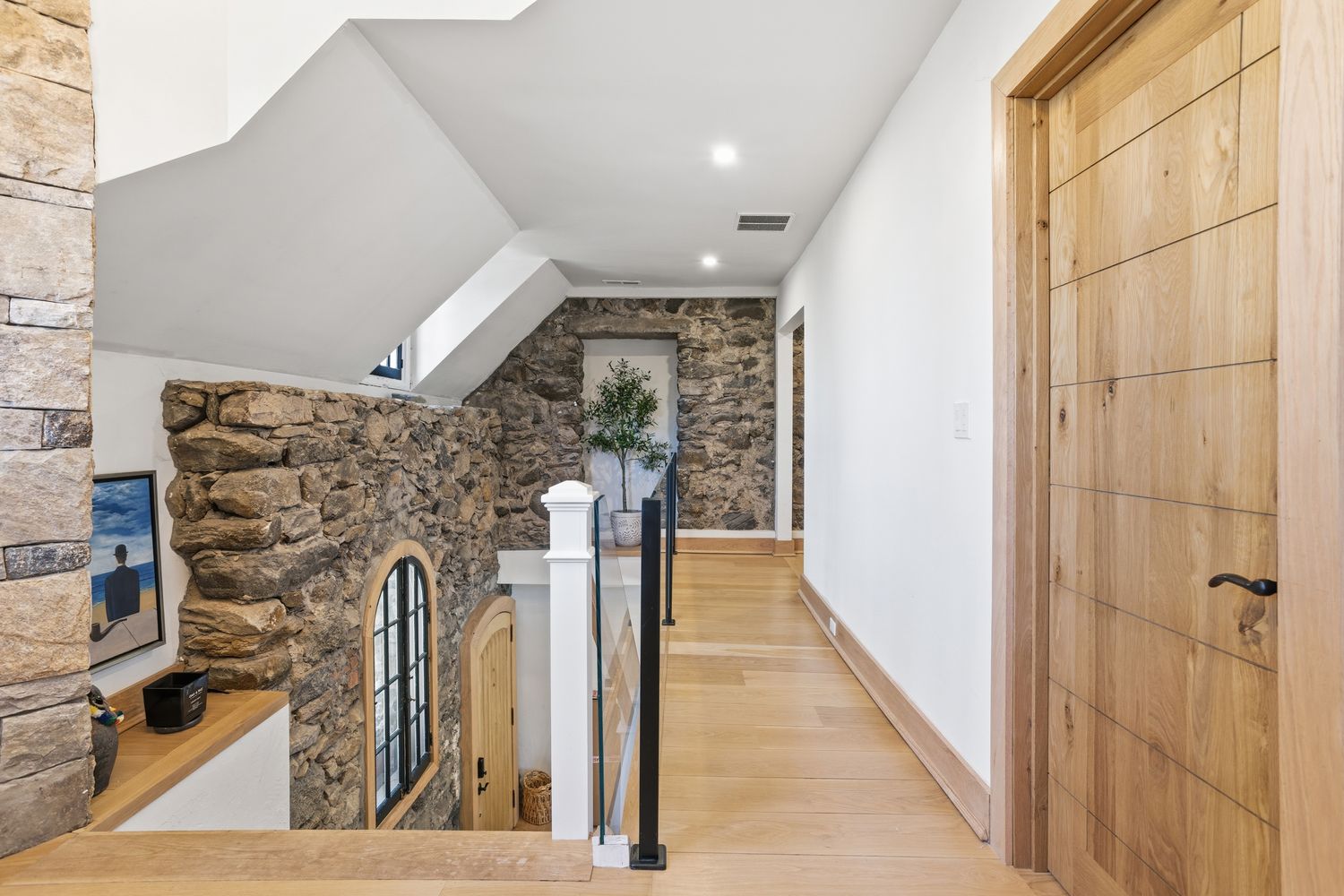
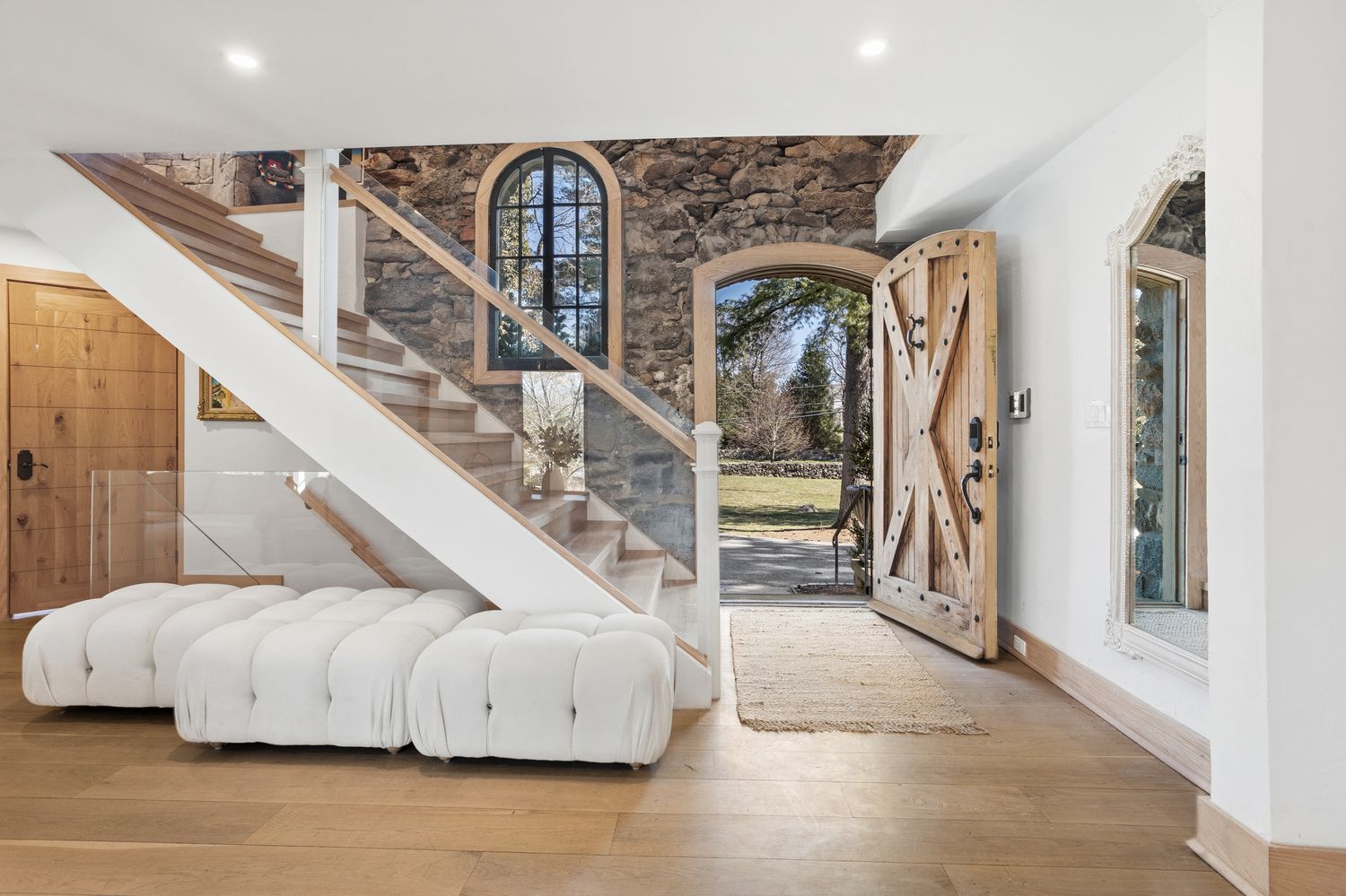
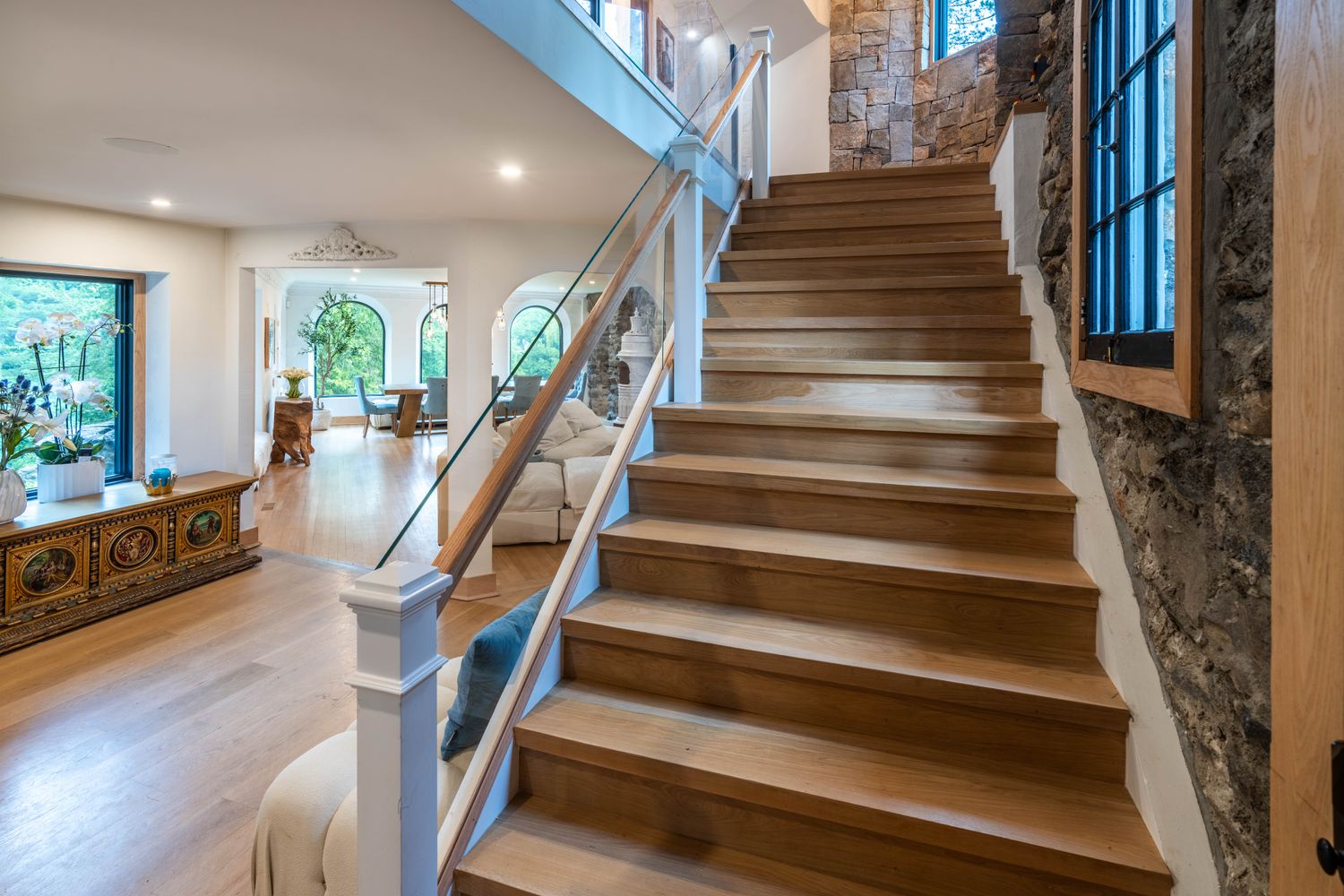
Step inside and the renovation reveals itself with quiet confidence. Light oak flooring runs beneath your feet while exposed stone walls rise around you, a dialogue between old and new that defines every room. The entry foyer sets the tone immediately: a glass-railed staircase ascends past a dramatic crystal chandelier, a tufted white bench sits beneath a grand ornate mirror, and the barn-style door frames a view back to the lawns as naturally as any painting. It is architecture that understands the power of threshold.
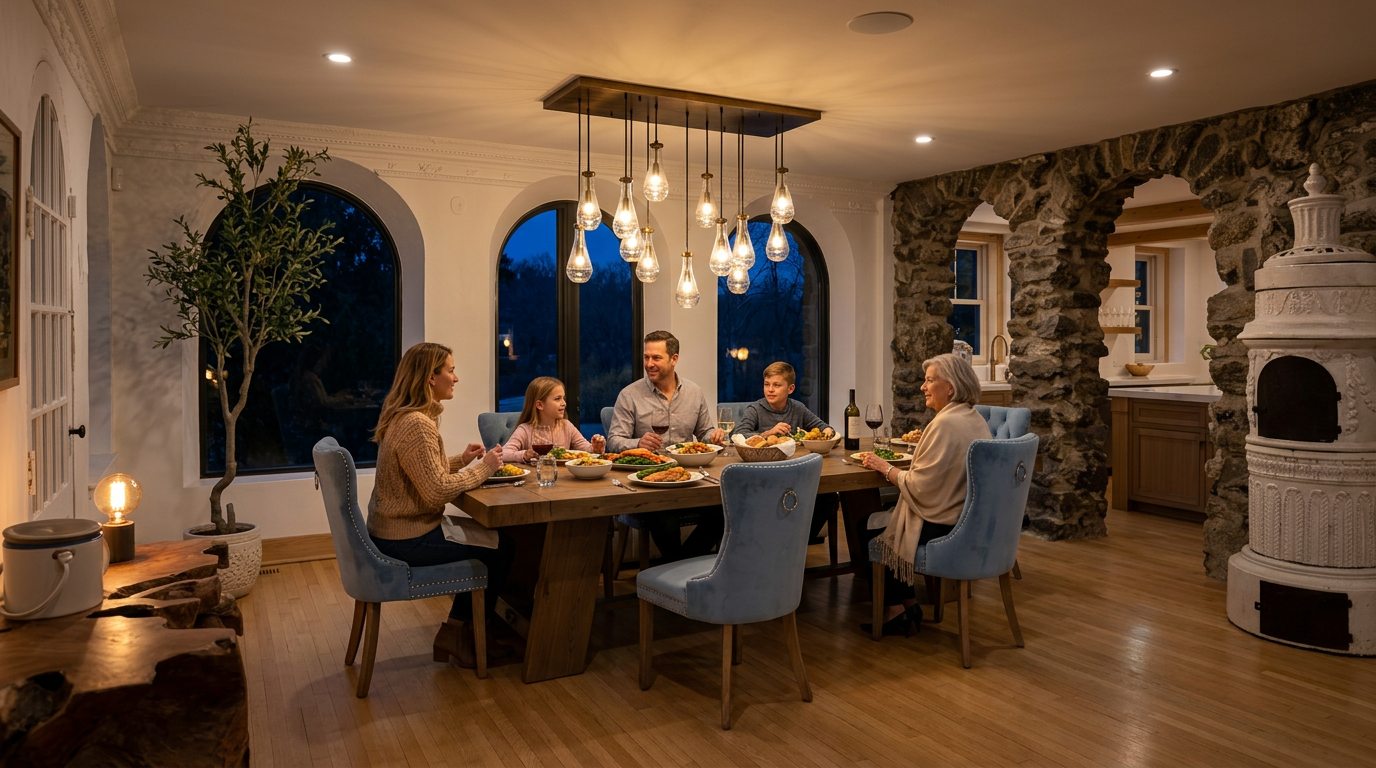
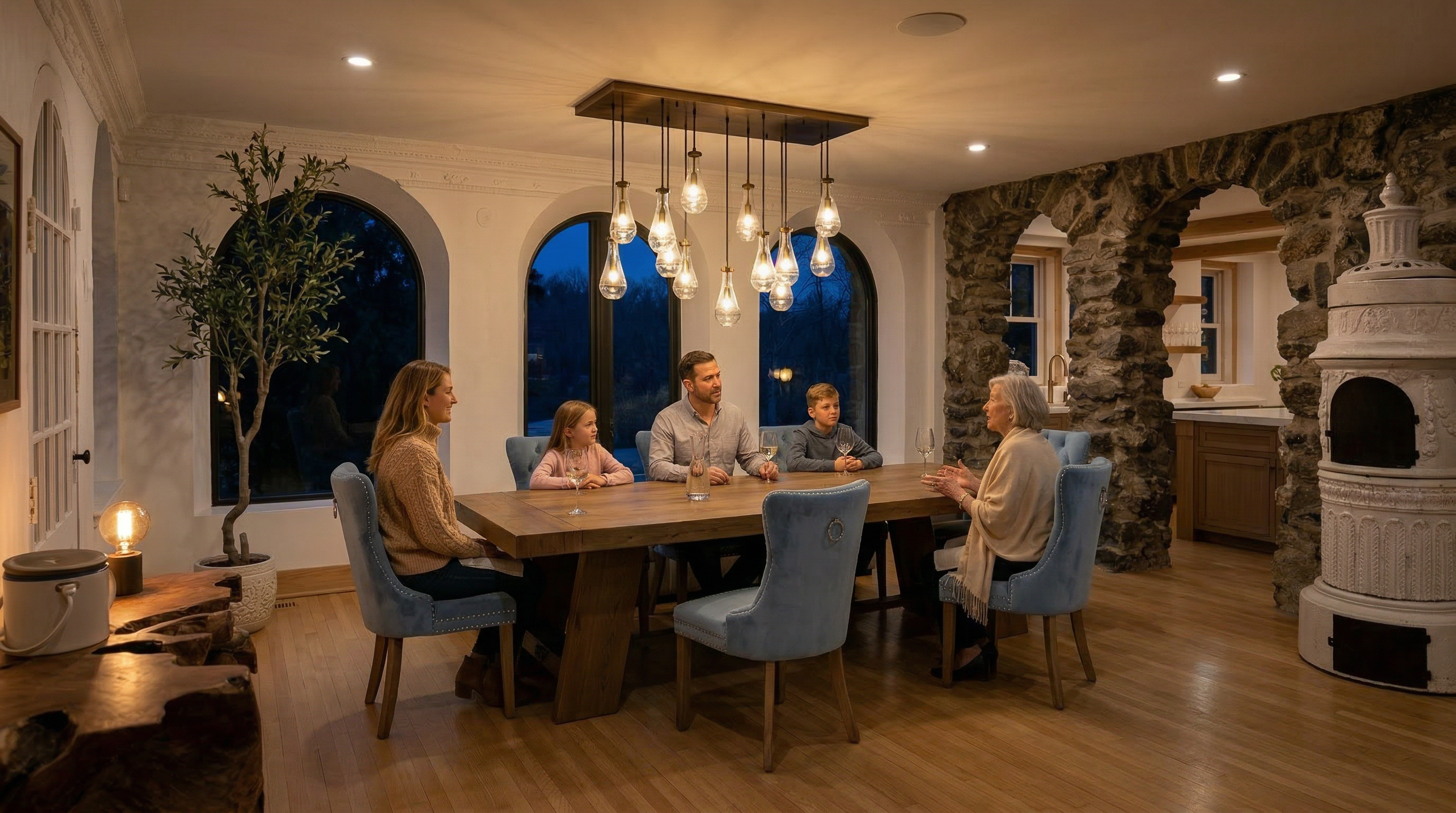
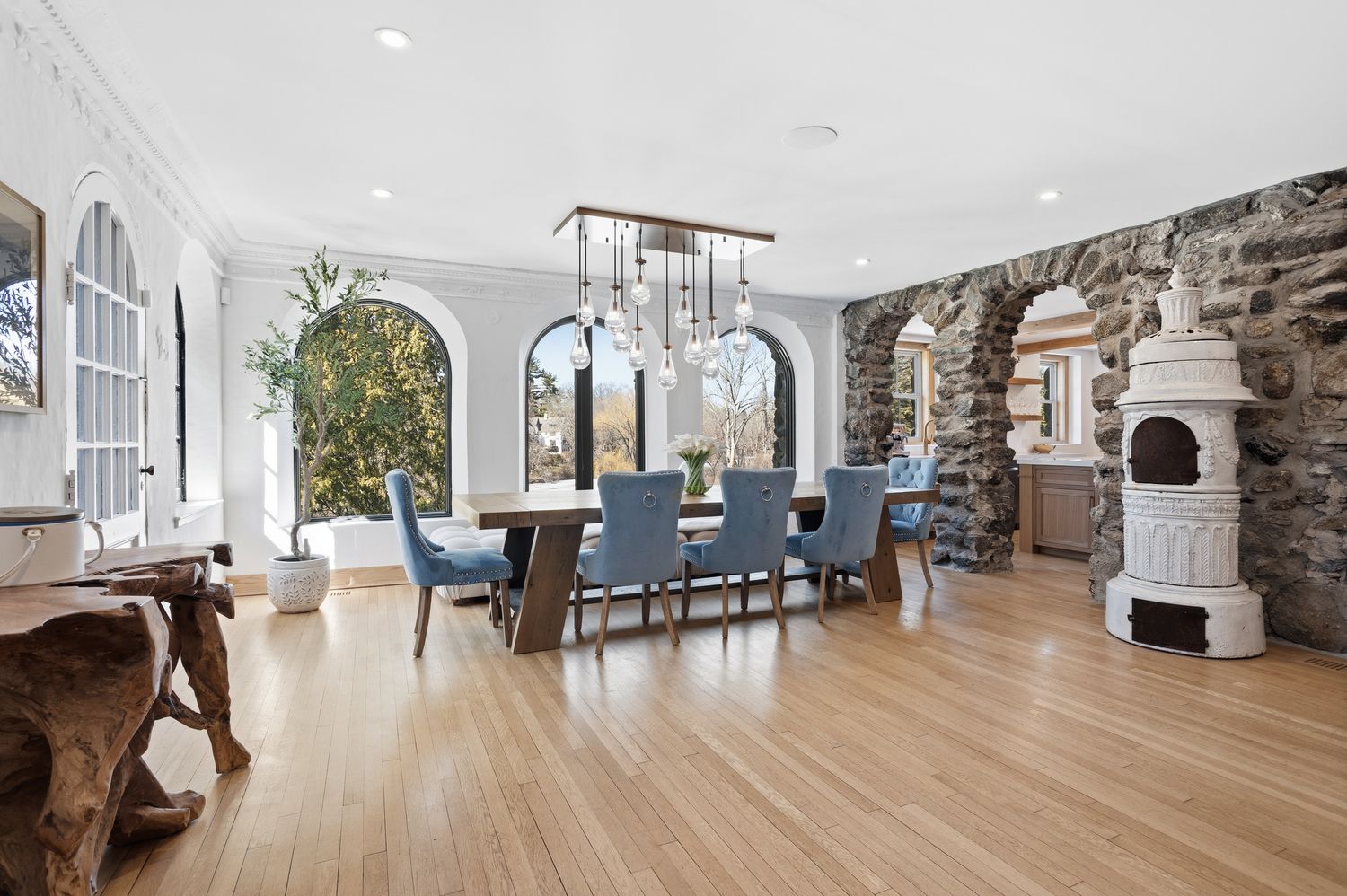
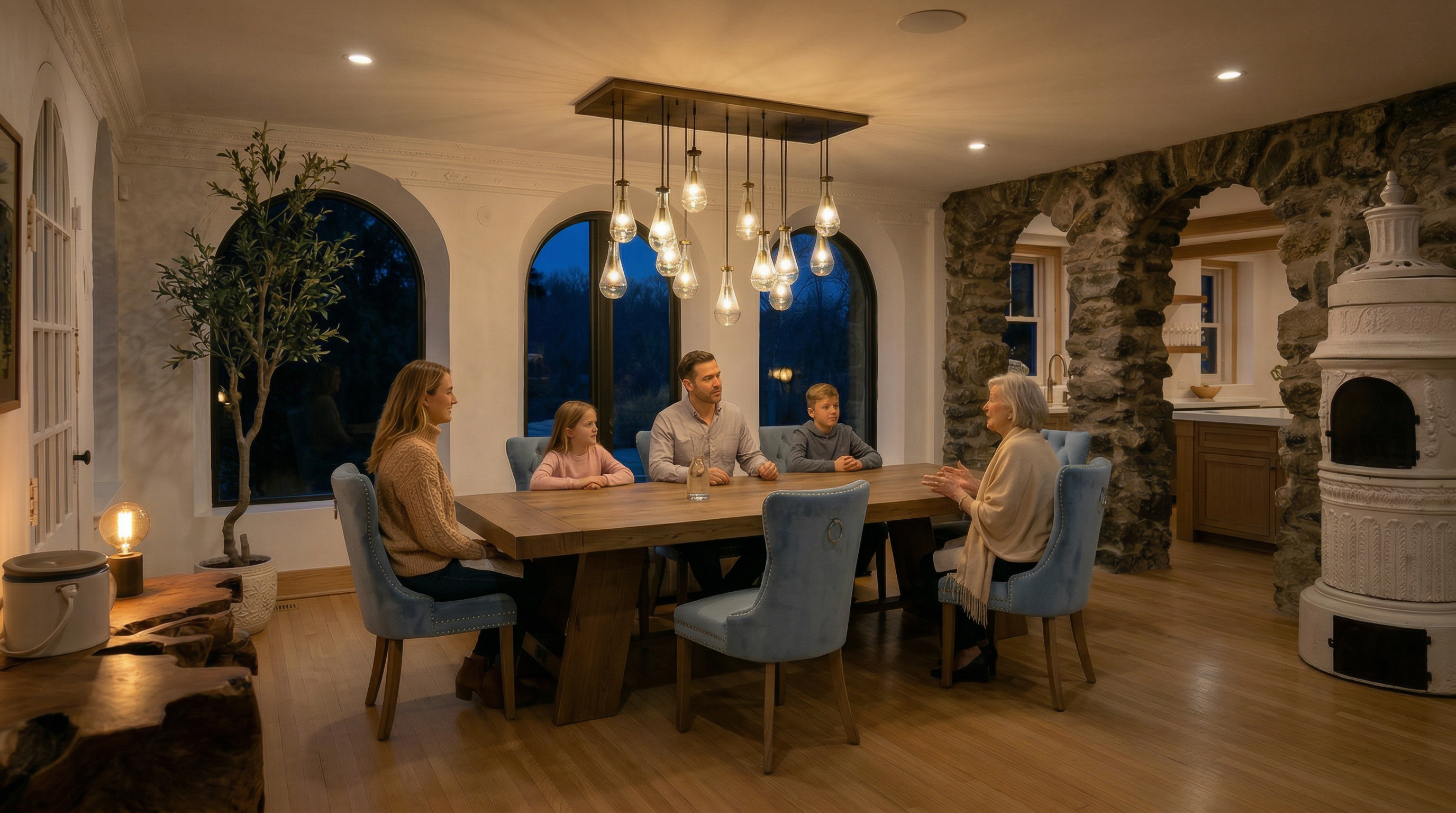
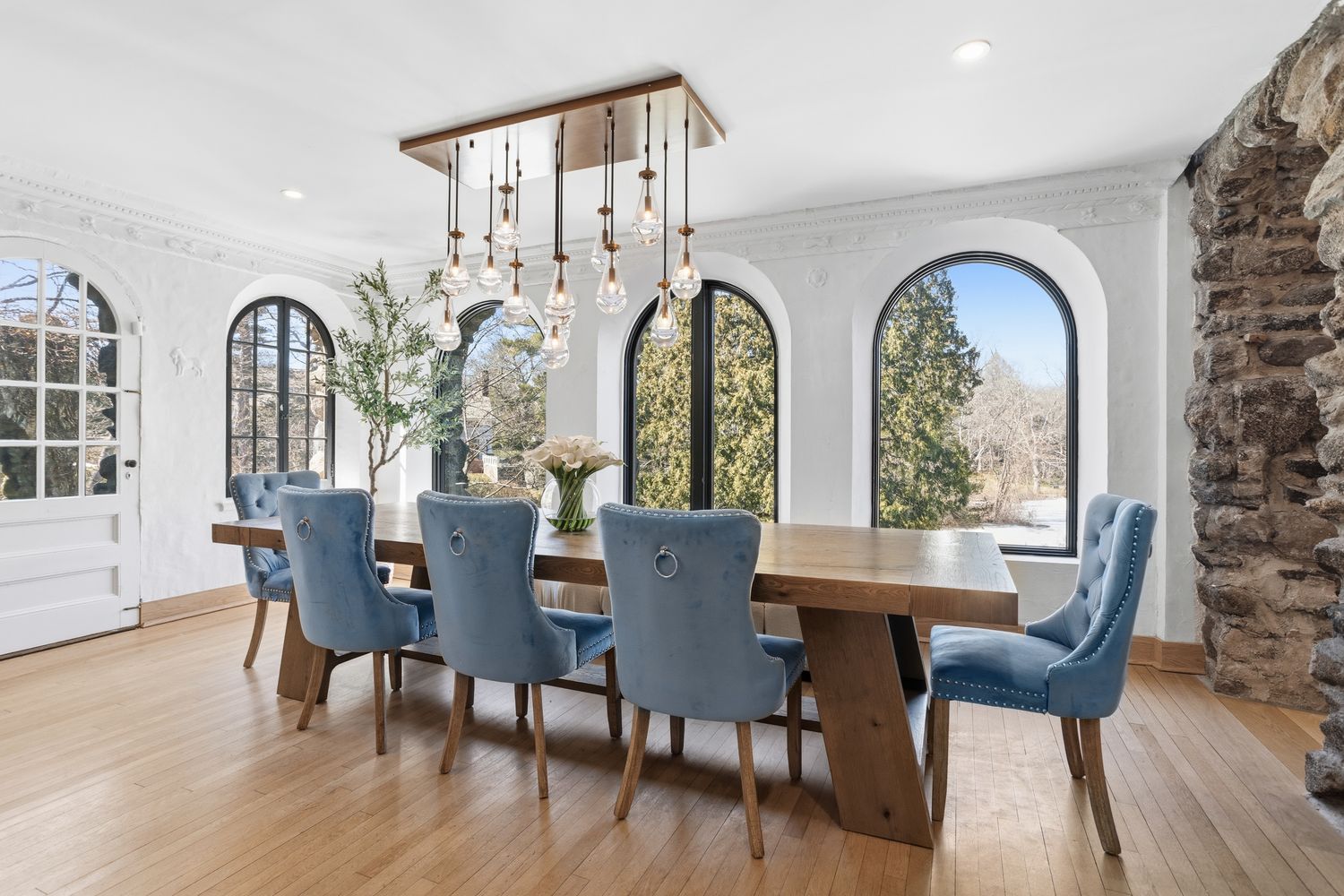
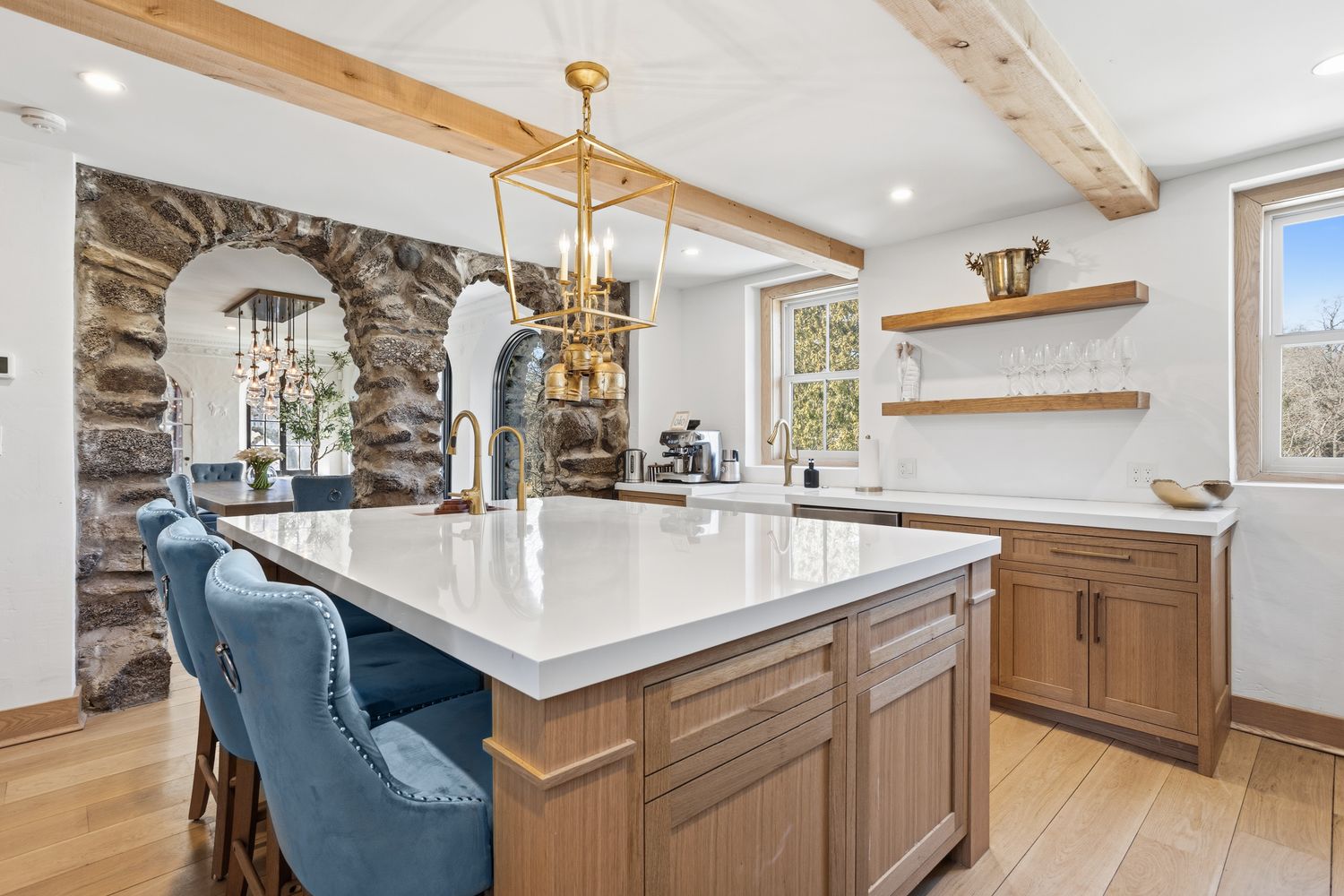
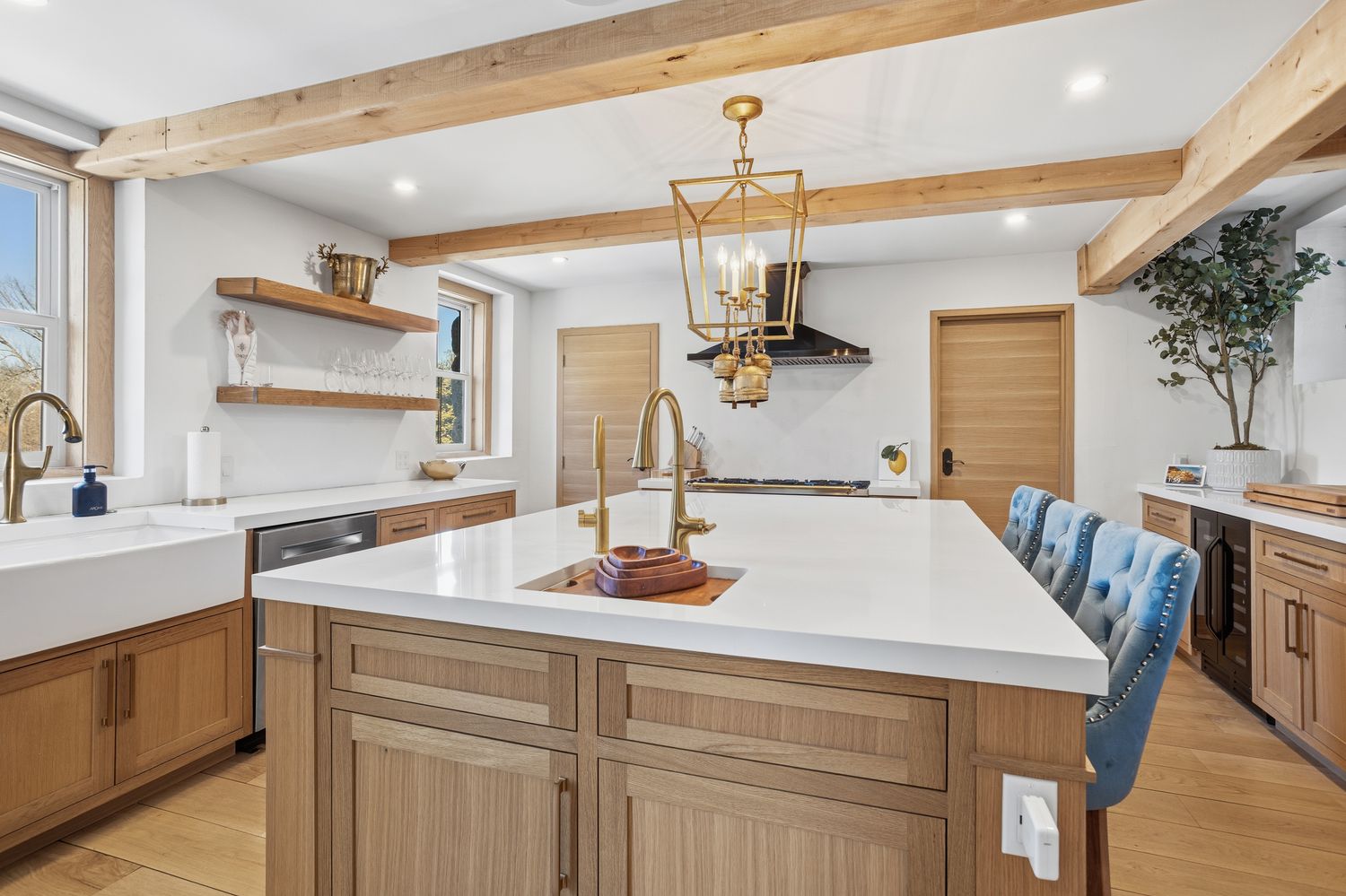
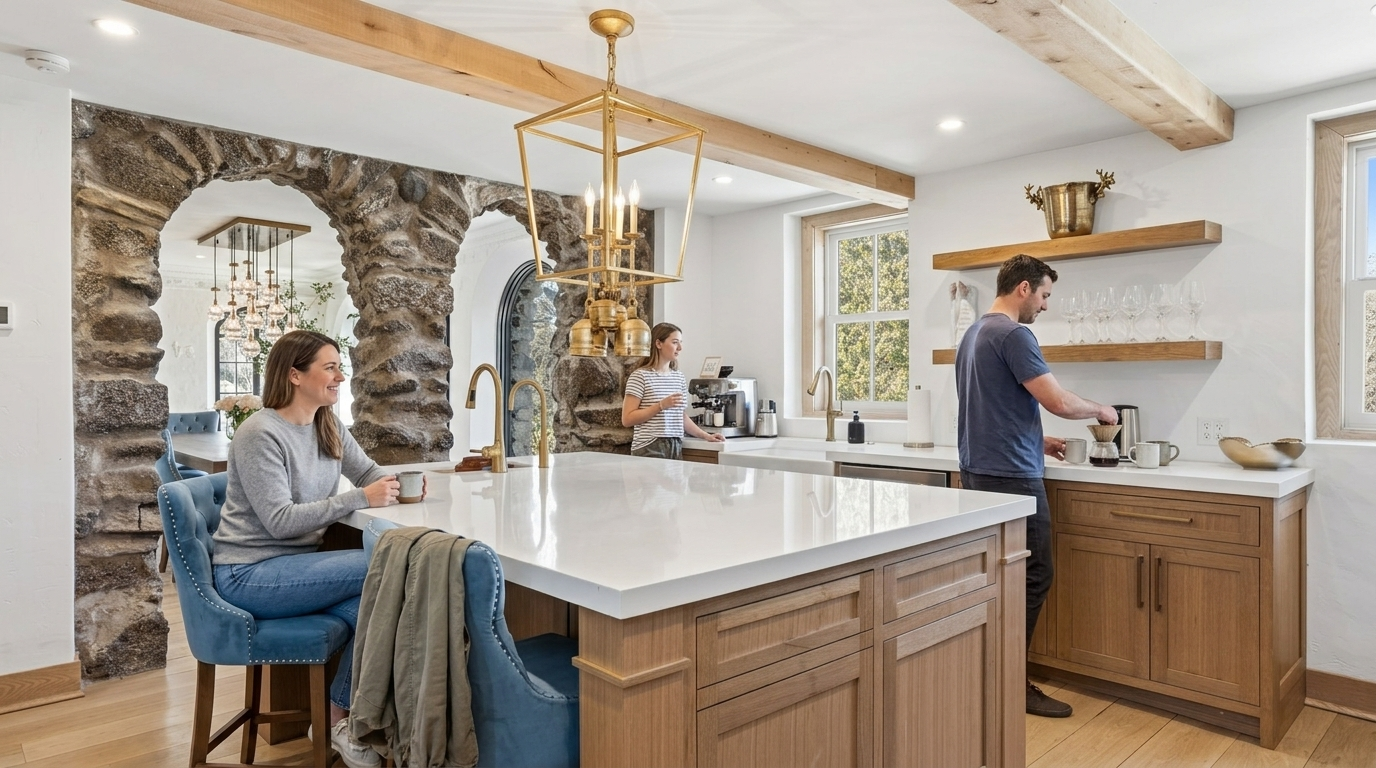
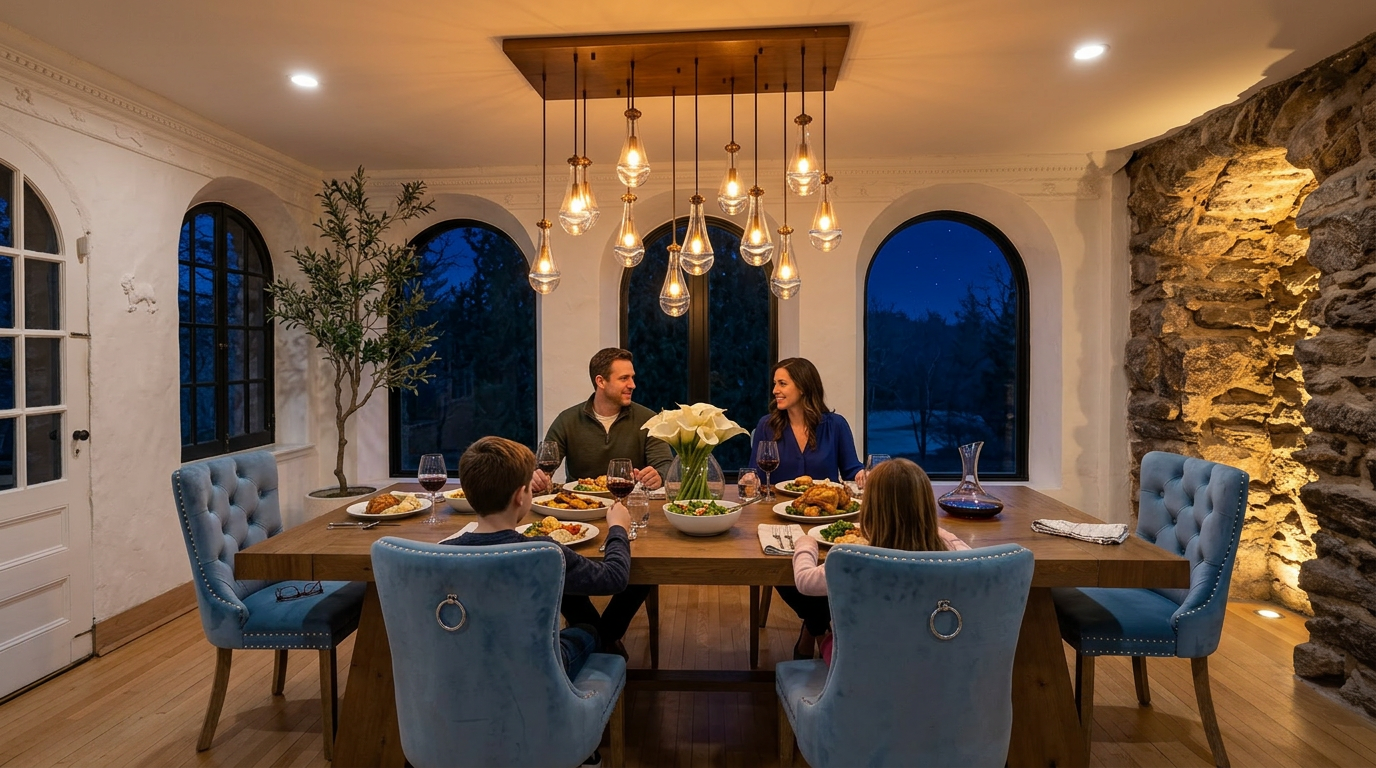
The heart of the home is its kitchen, a space where the estate's Tudor bones and its contemporary soul are most visibly reconciled. Stone archways—genuine, centuries-old in character—frame the room on multiple sides, while white quartz countertops, warm wood cabinetry with brass hardware, exposed ceiling beams, and a farmhouse sink establish a kitchen built for serious cooking and effortless entertaining in equal measure. Blue velvet bar stools at the central island soften the grandeur, and a gold lantern pendant casts the whole scene in warm, honeyed light. The adjacent dining room, framed by those same arched stone openings and anchored by a sculptural multi-pendant chandelier above a generous wooden table, seats a crowd with ease.
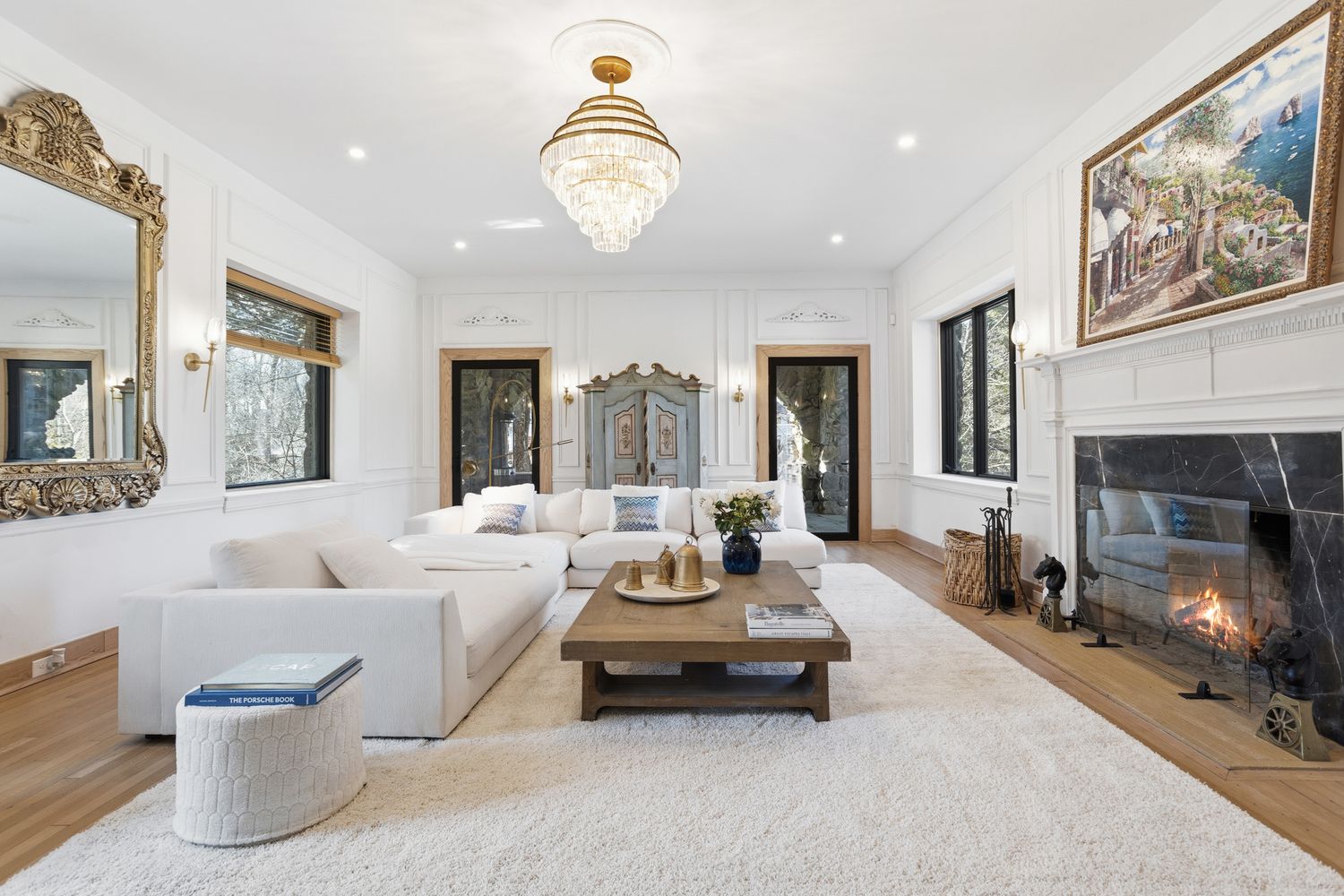
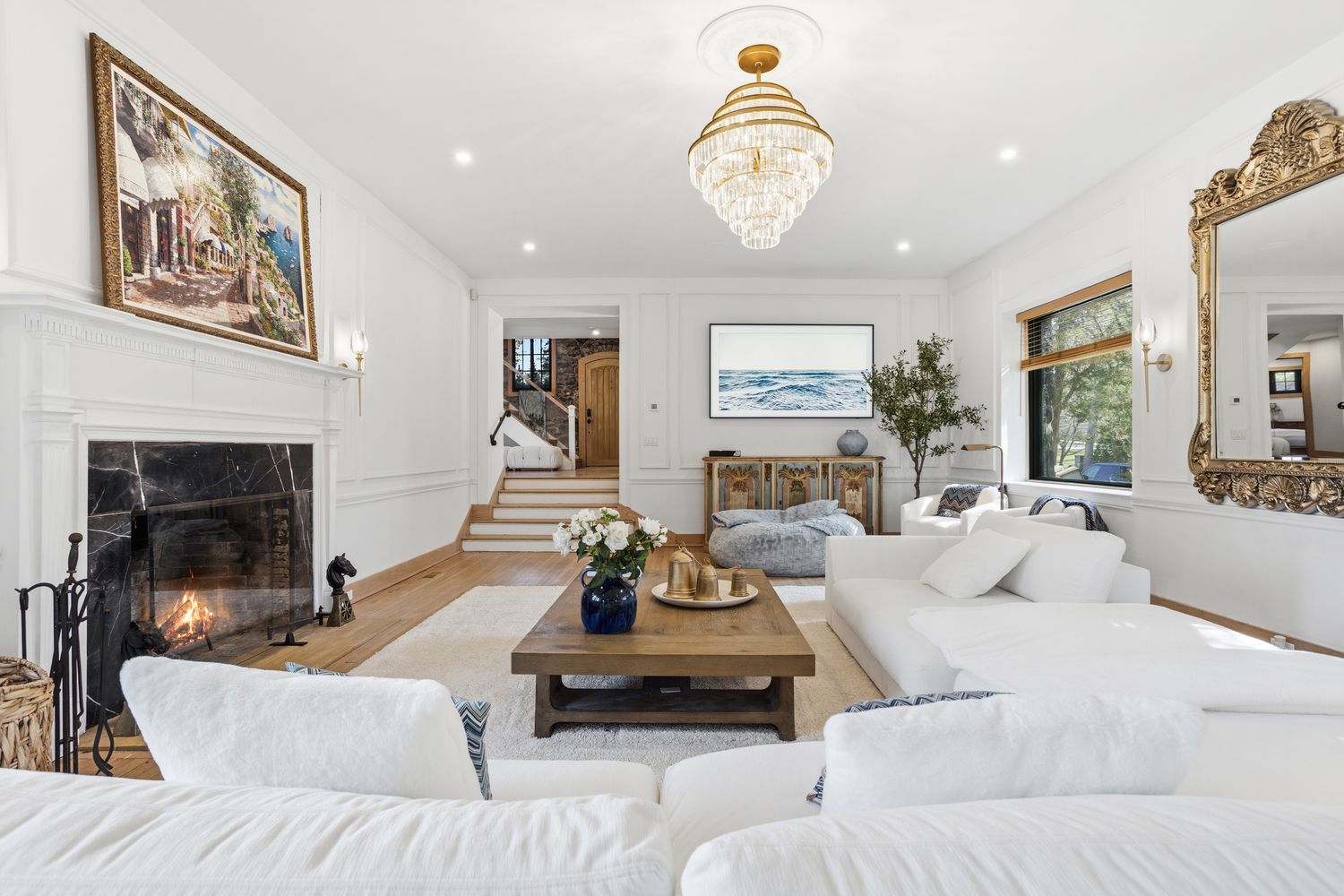
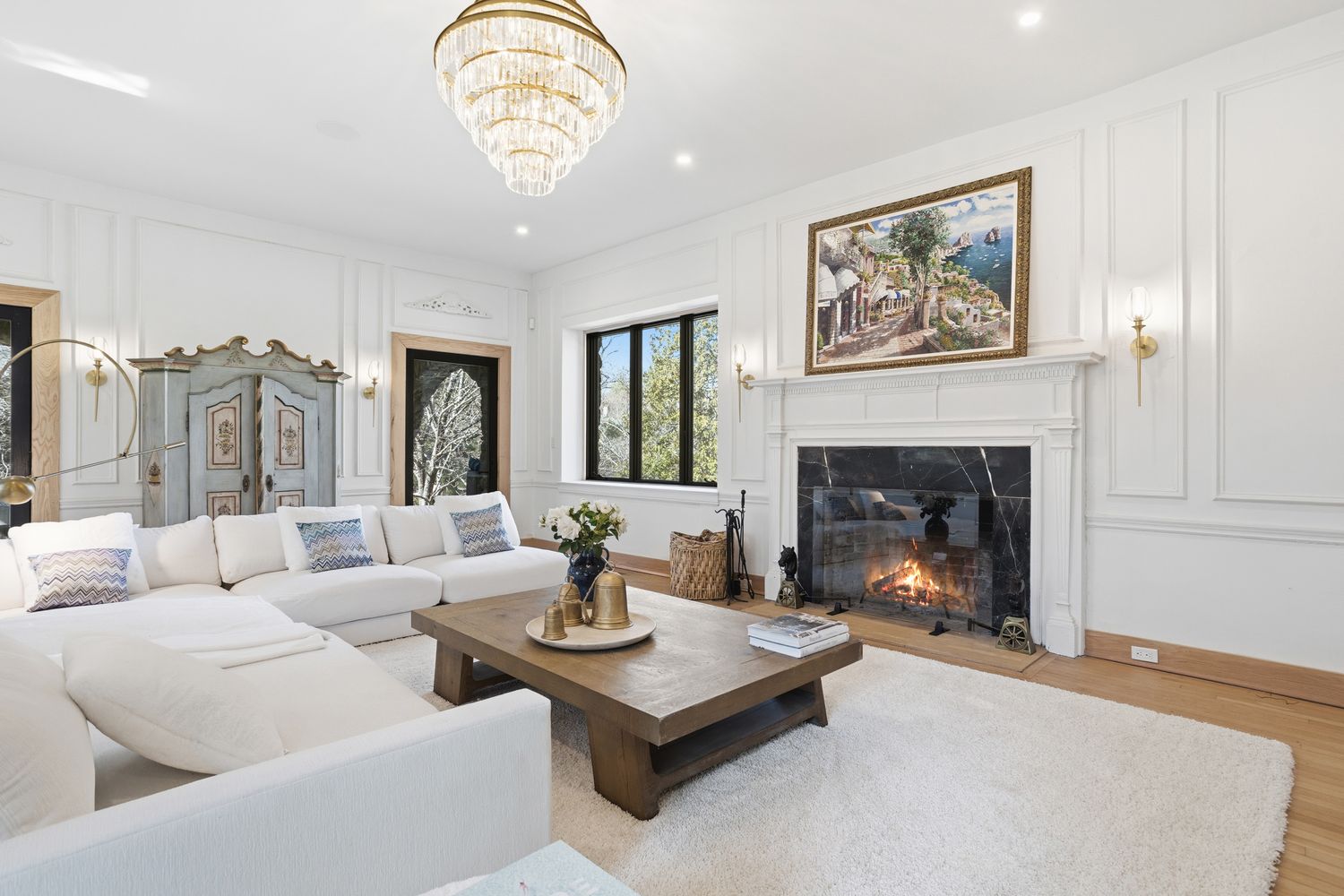
The living room is a study in refined restraint: white wainscoted walls, a black marble fireplace, a crystal chandelier, plush white seating, and a covered terrace beyond that overlooks the pool and cascading waterfalls. It is formal without being cold—a room that earns its grandeur through proportion and material rather than excess.
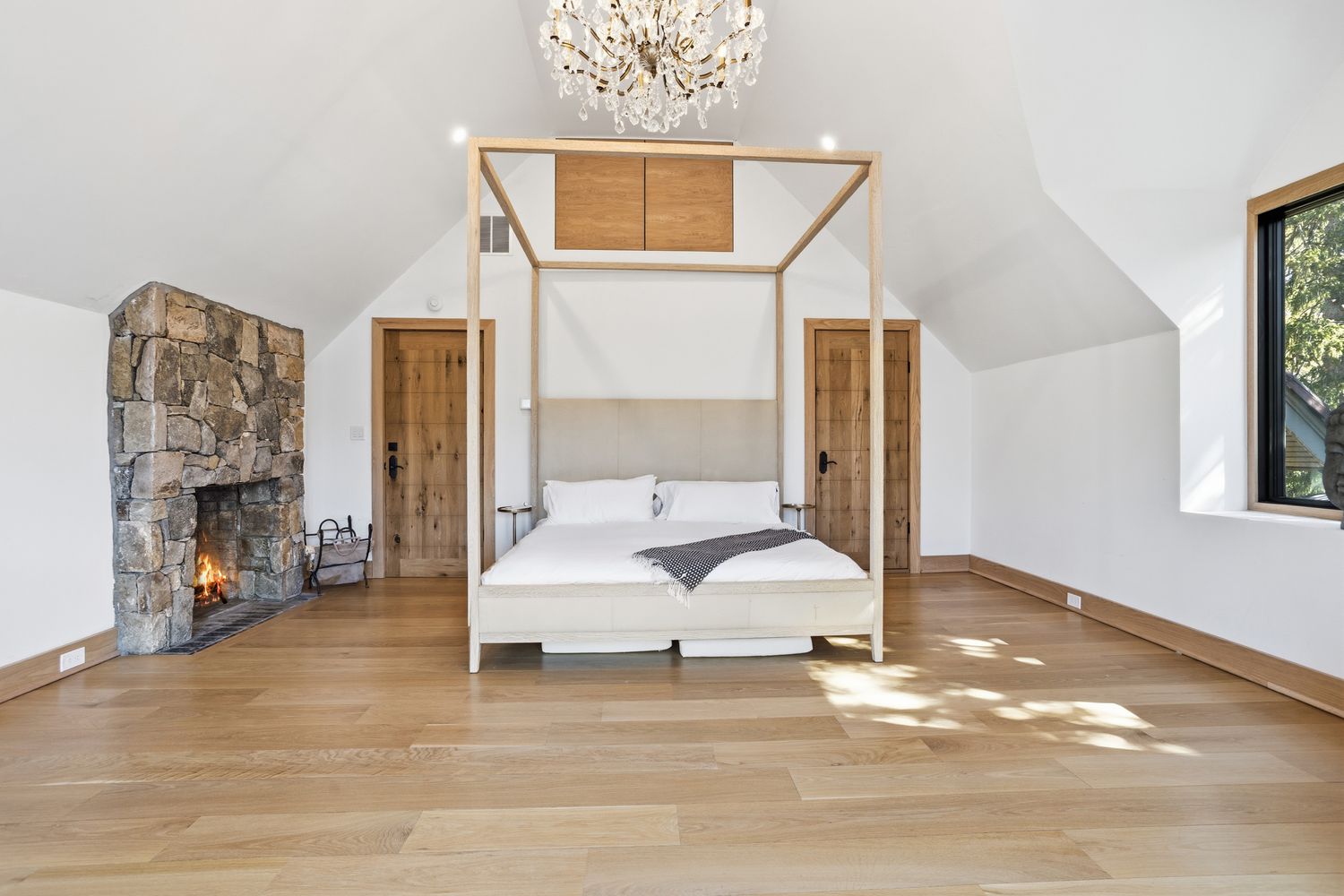
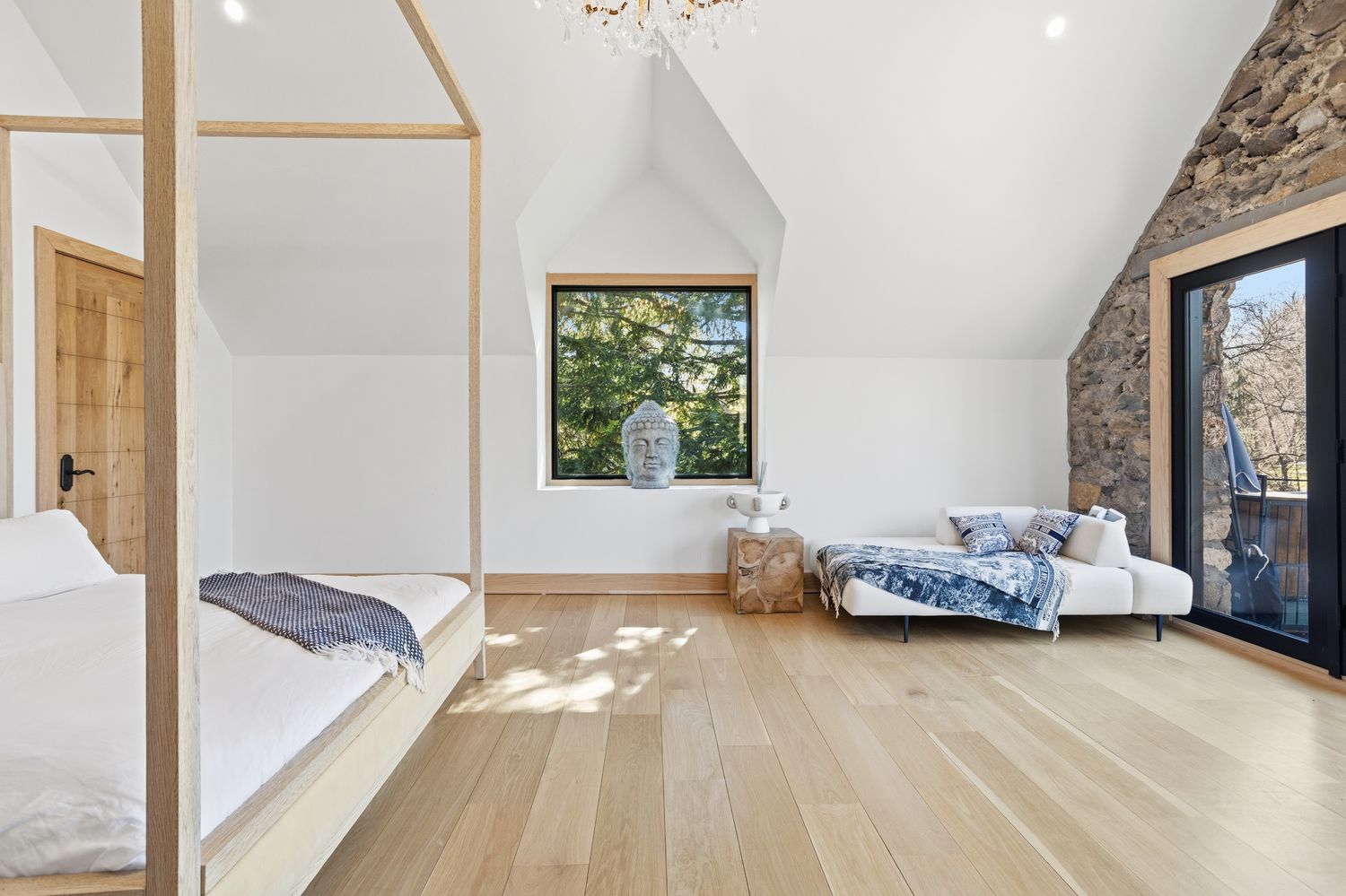
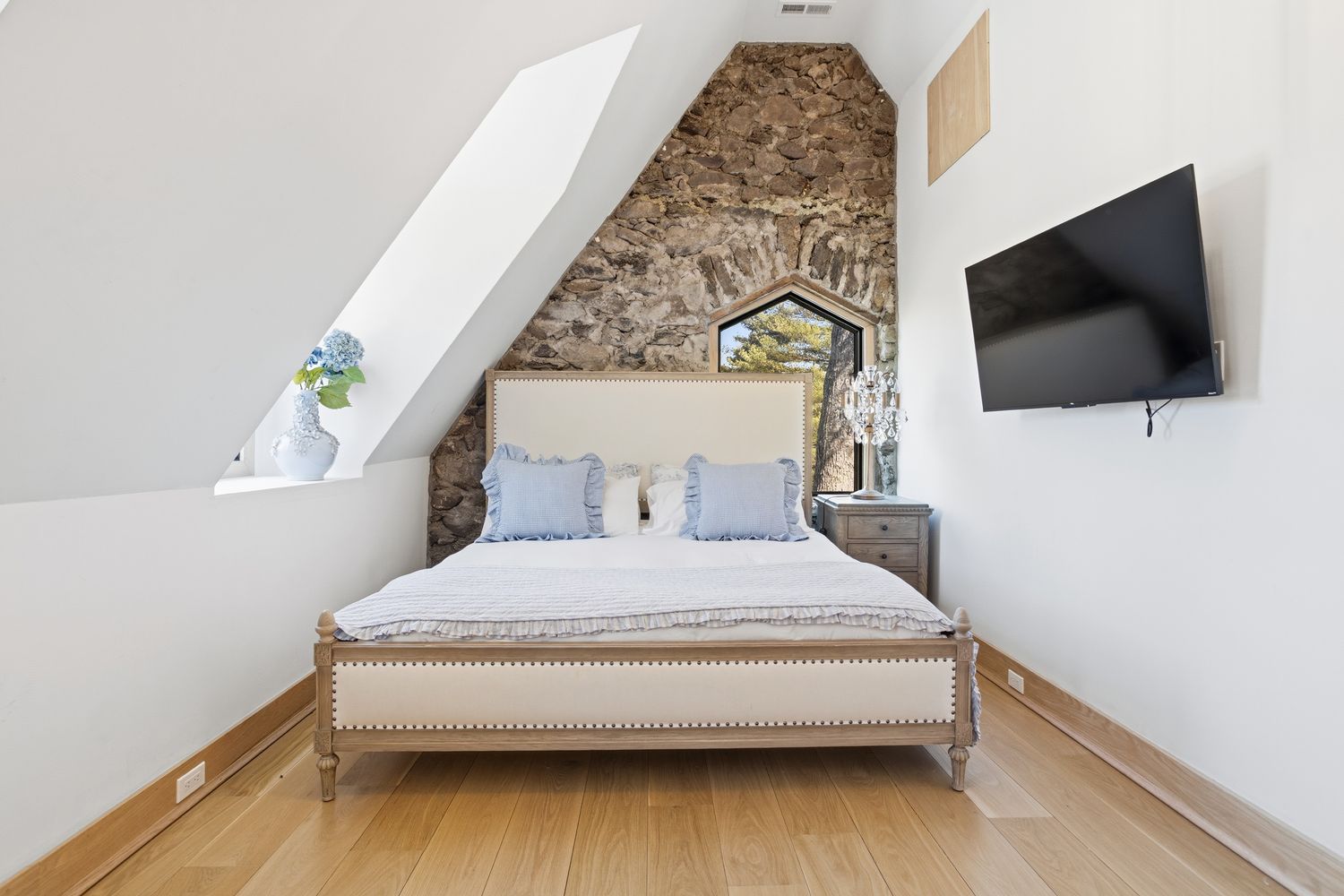
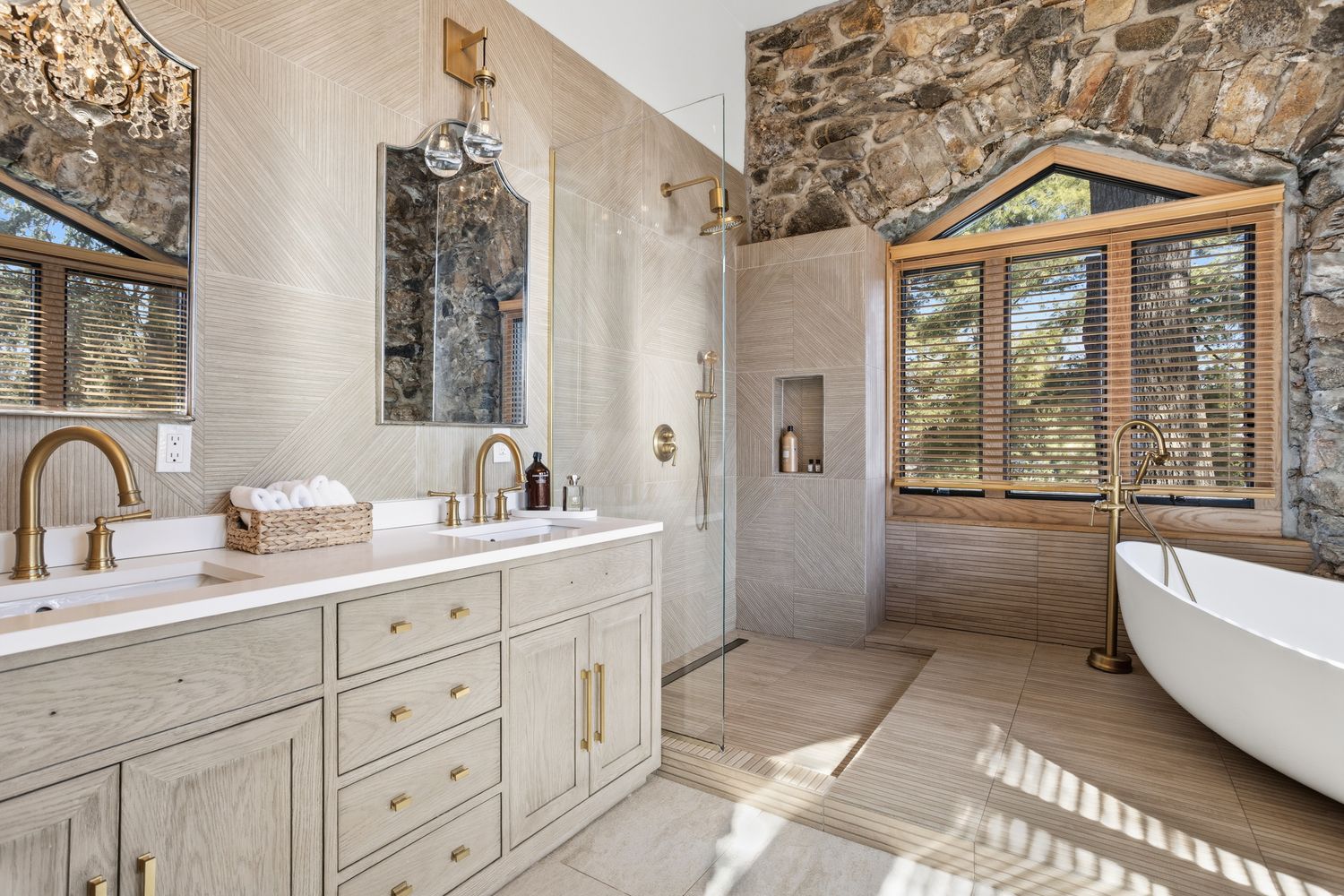
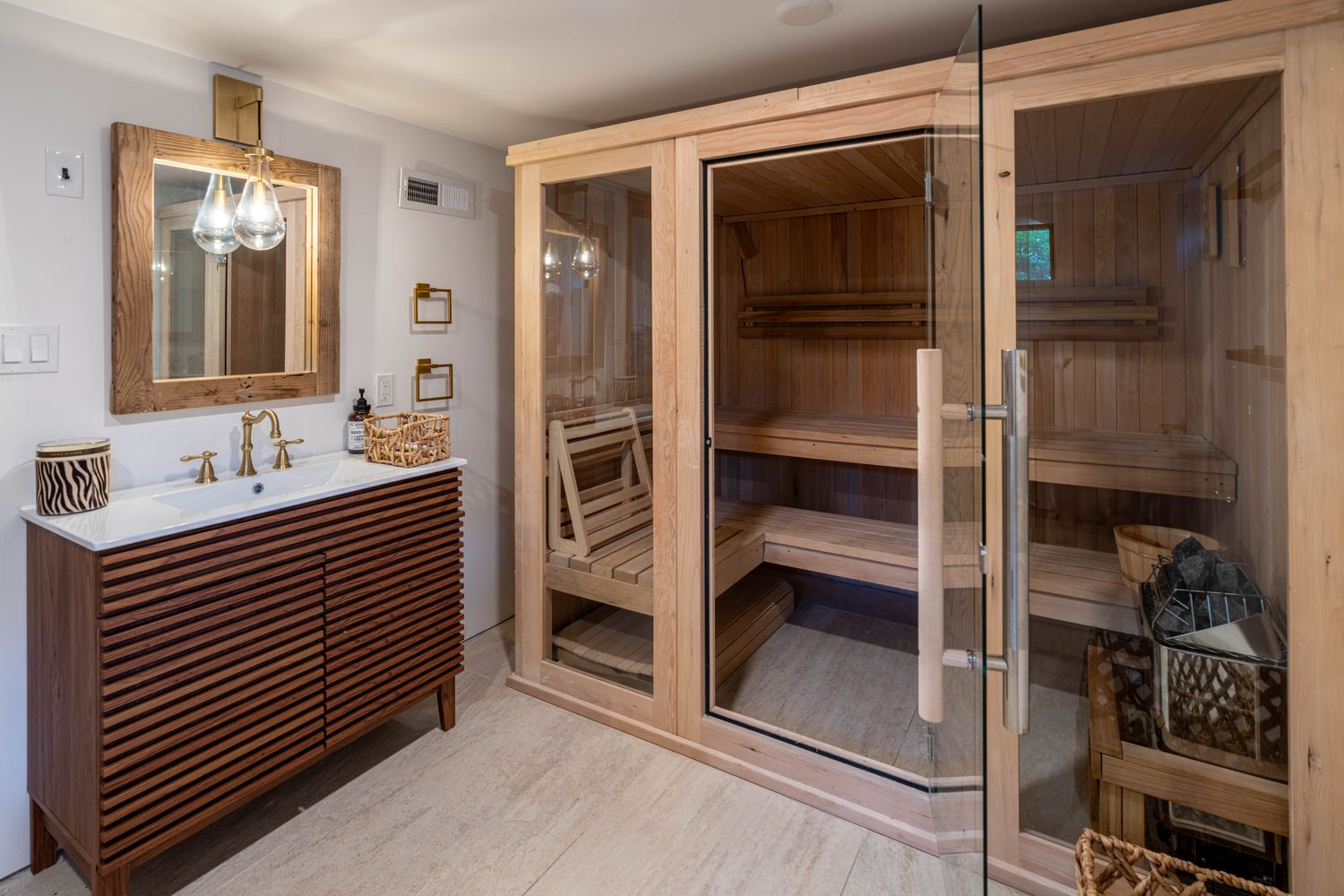
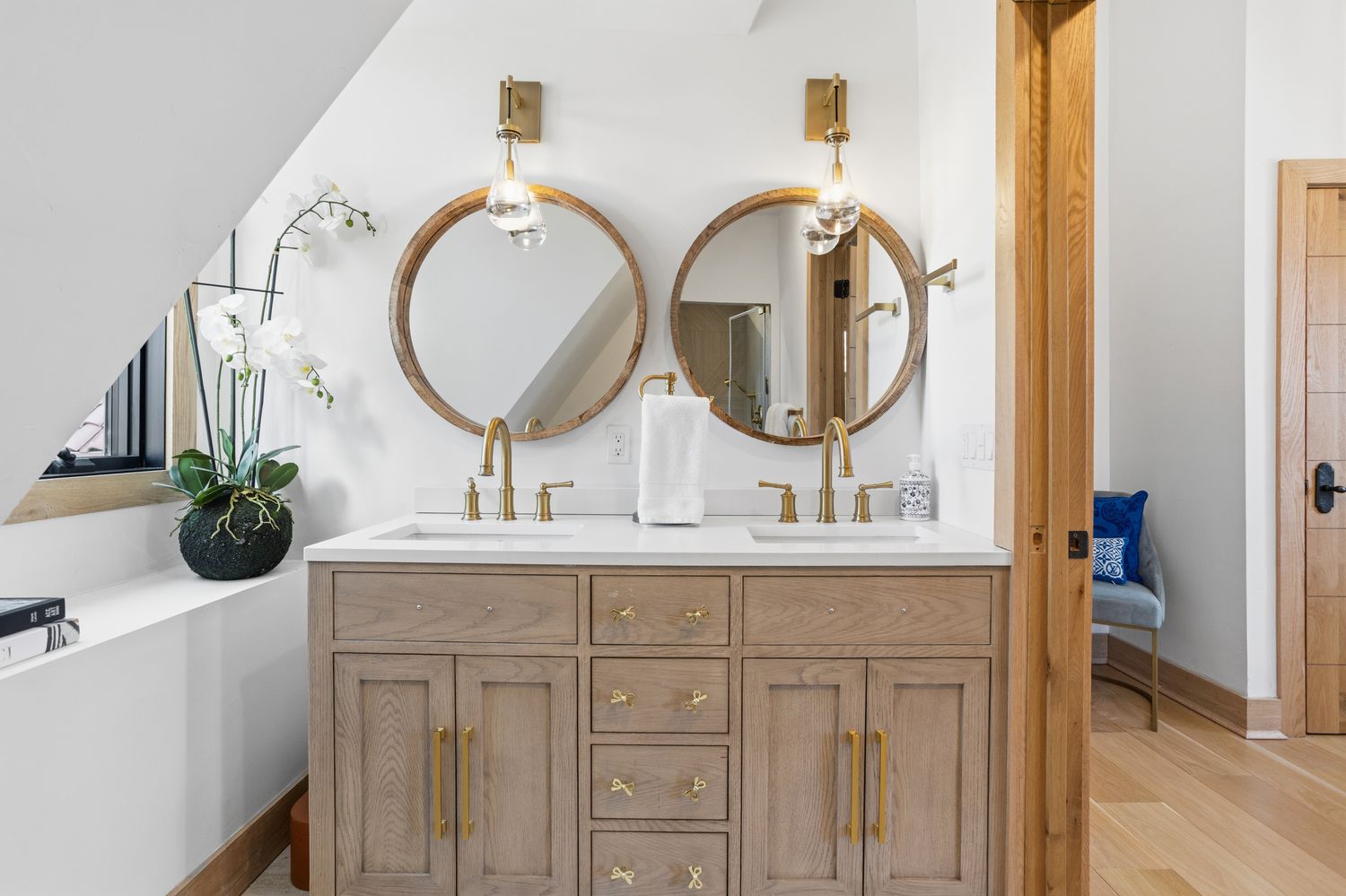
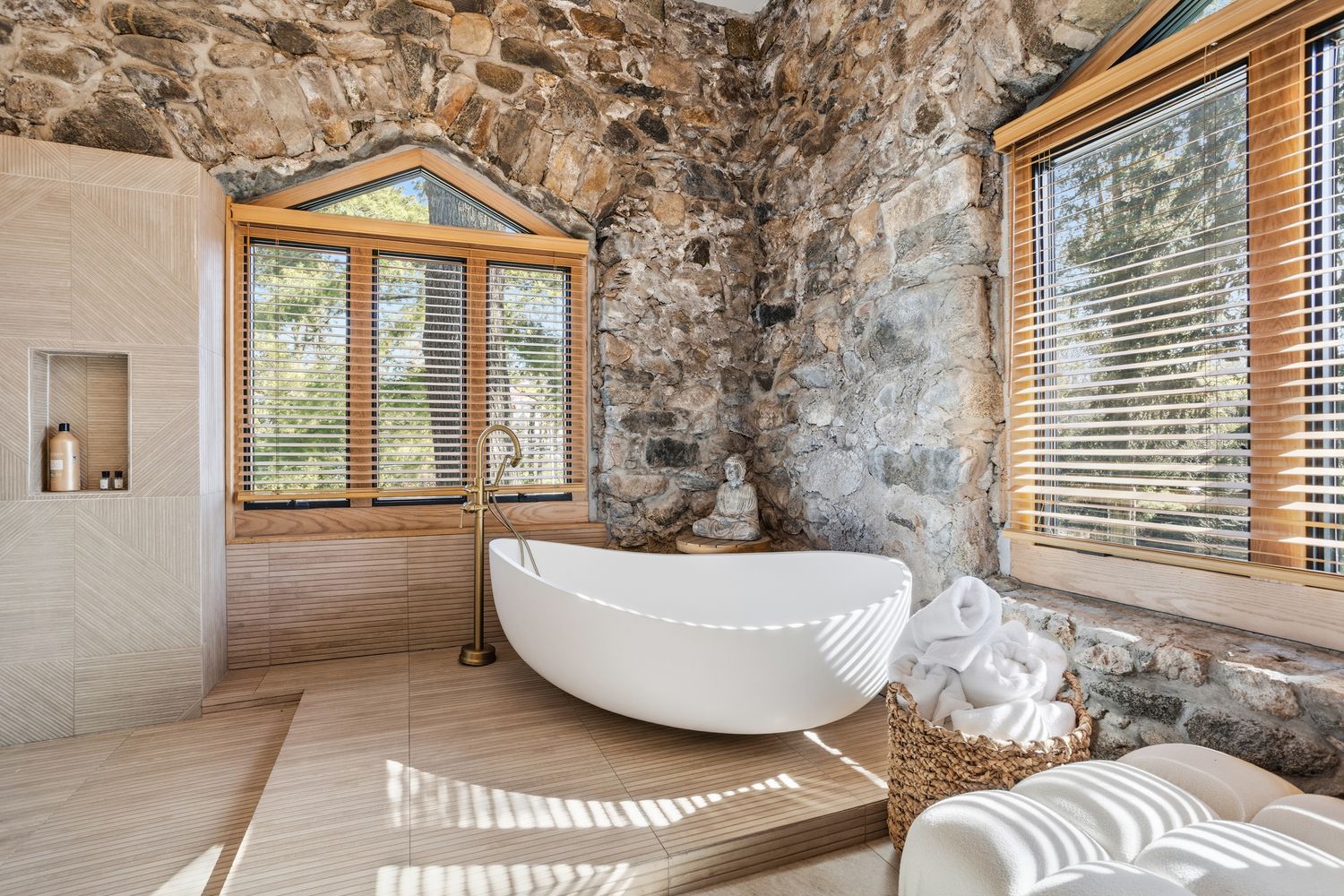
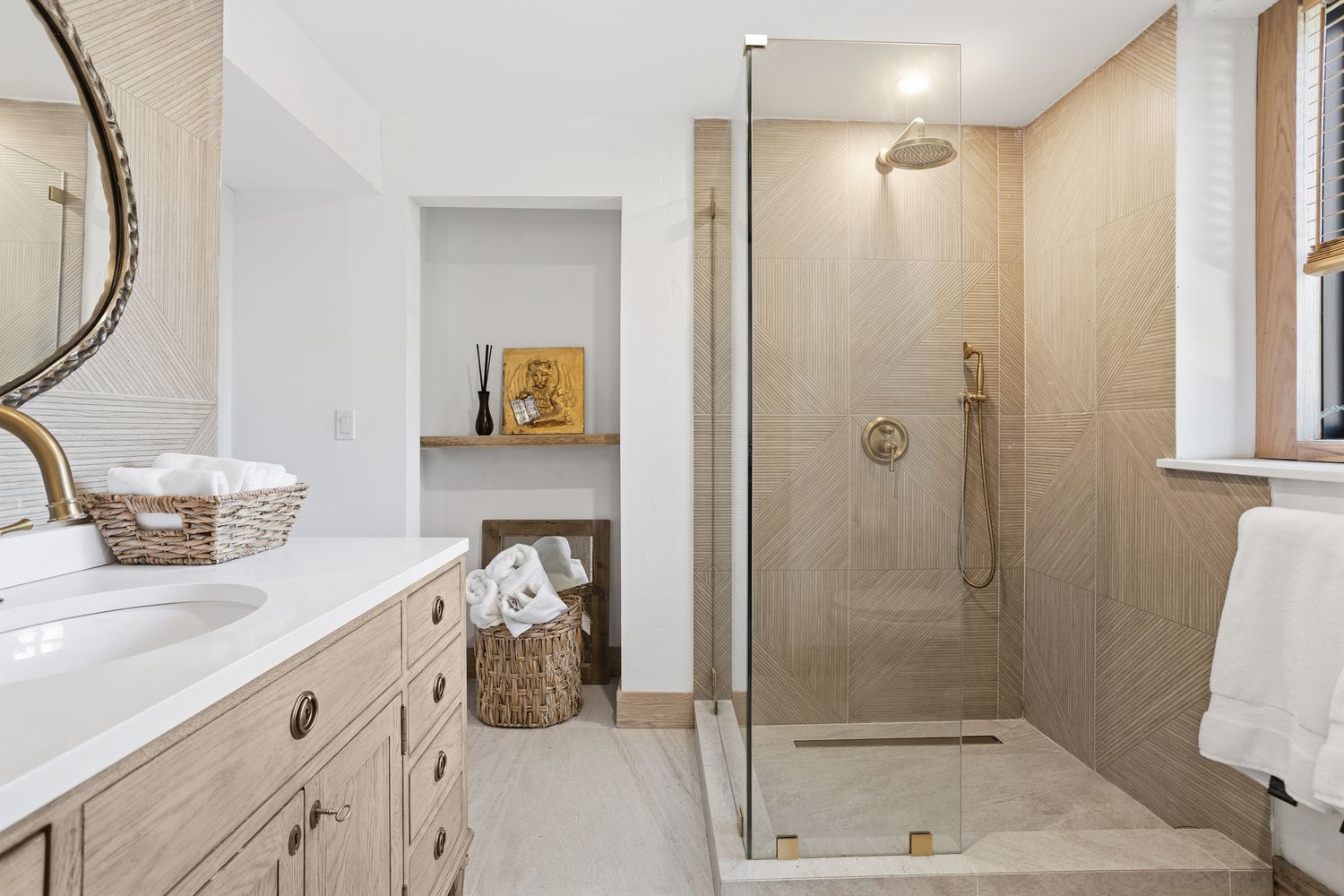
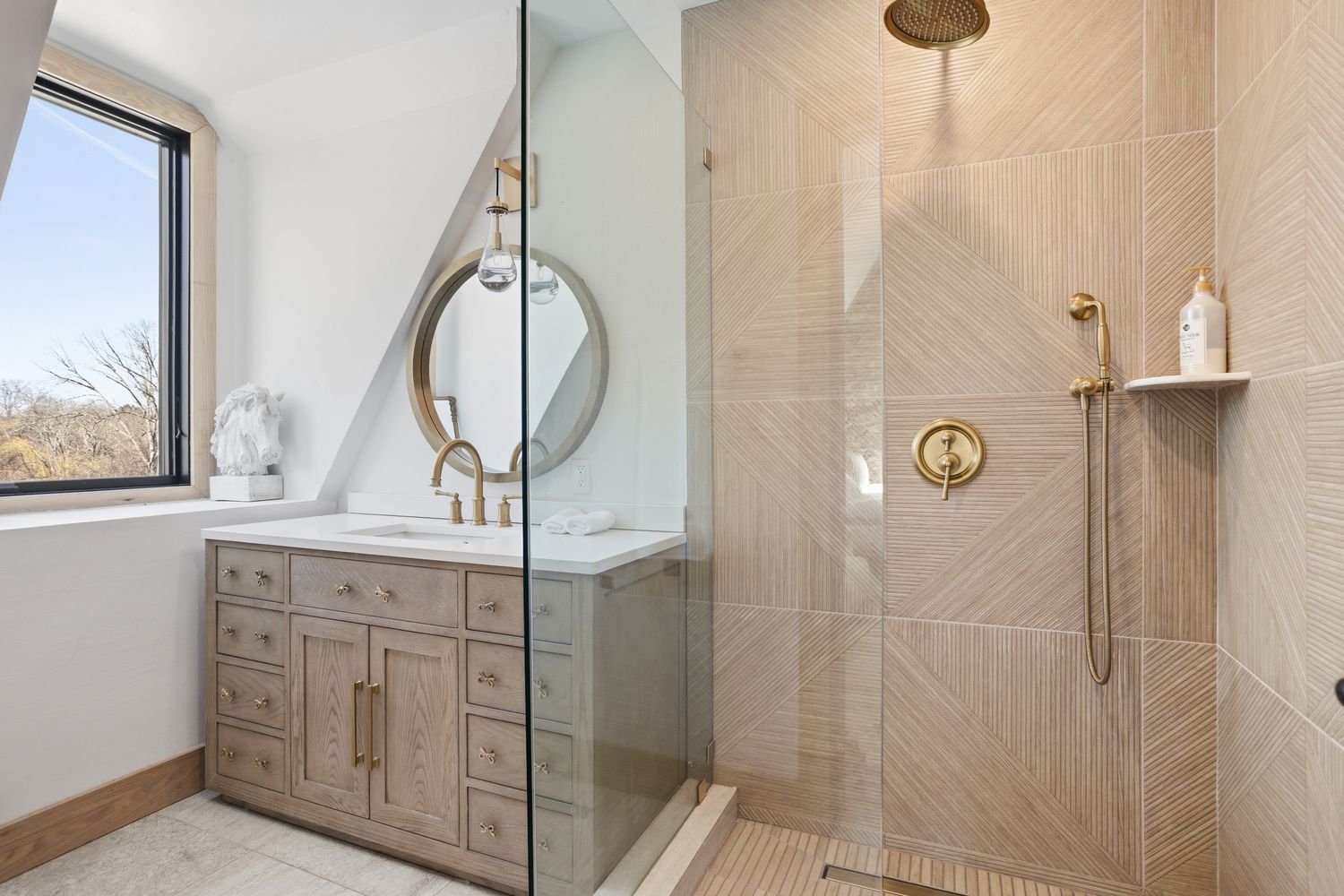
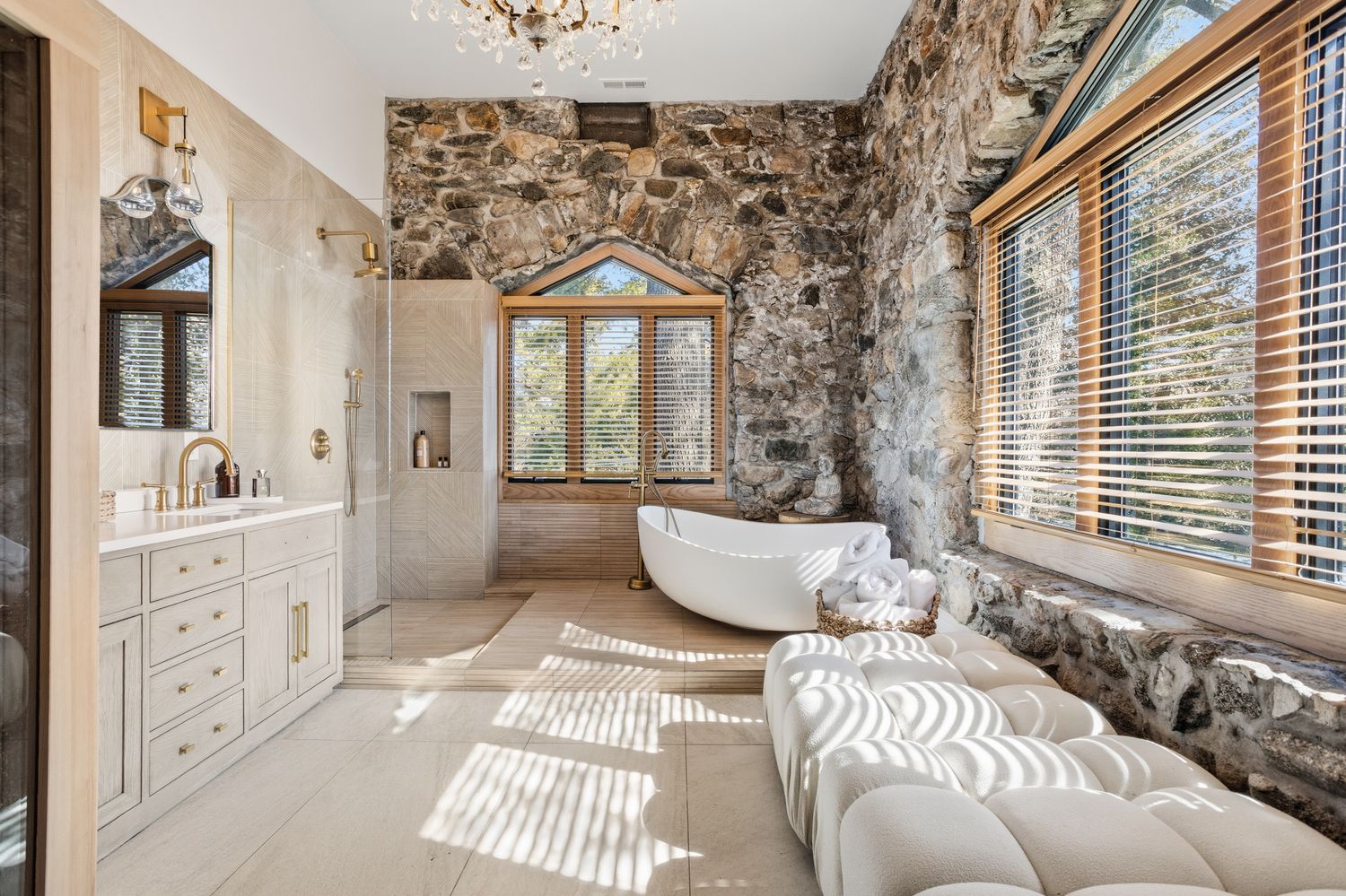
The primary suite rises to vaulted ceilings with a stone fireplace at its anchor and a four-poster light wood bed frame as its centerpiece. The ensuite bathroom achieves genuine spa caliber: a freestanding soaking tub positioned beneath a window, a glass-enclosed walk-in shower with textured tile and brass rainfall fixtures, a double vanity in light oak, and a custom wooden sauna that transforms the lower level into a complete wellness sanctuary.
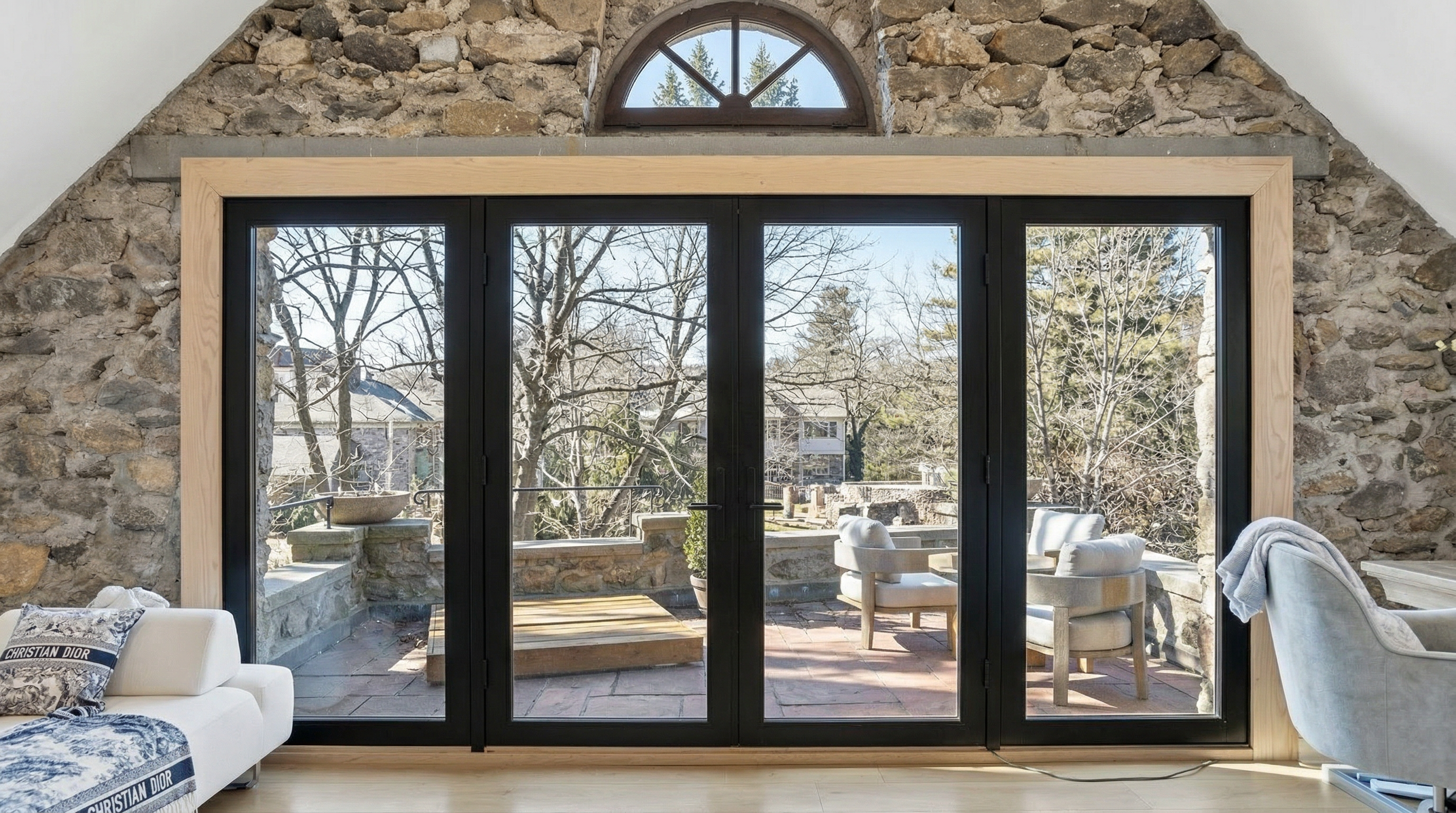
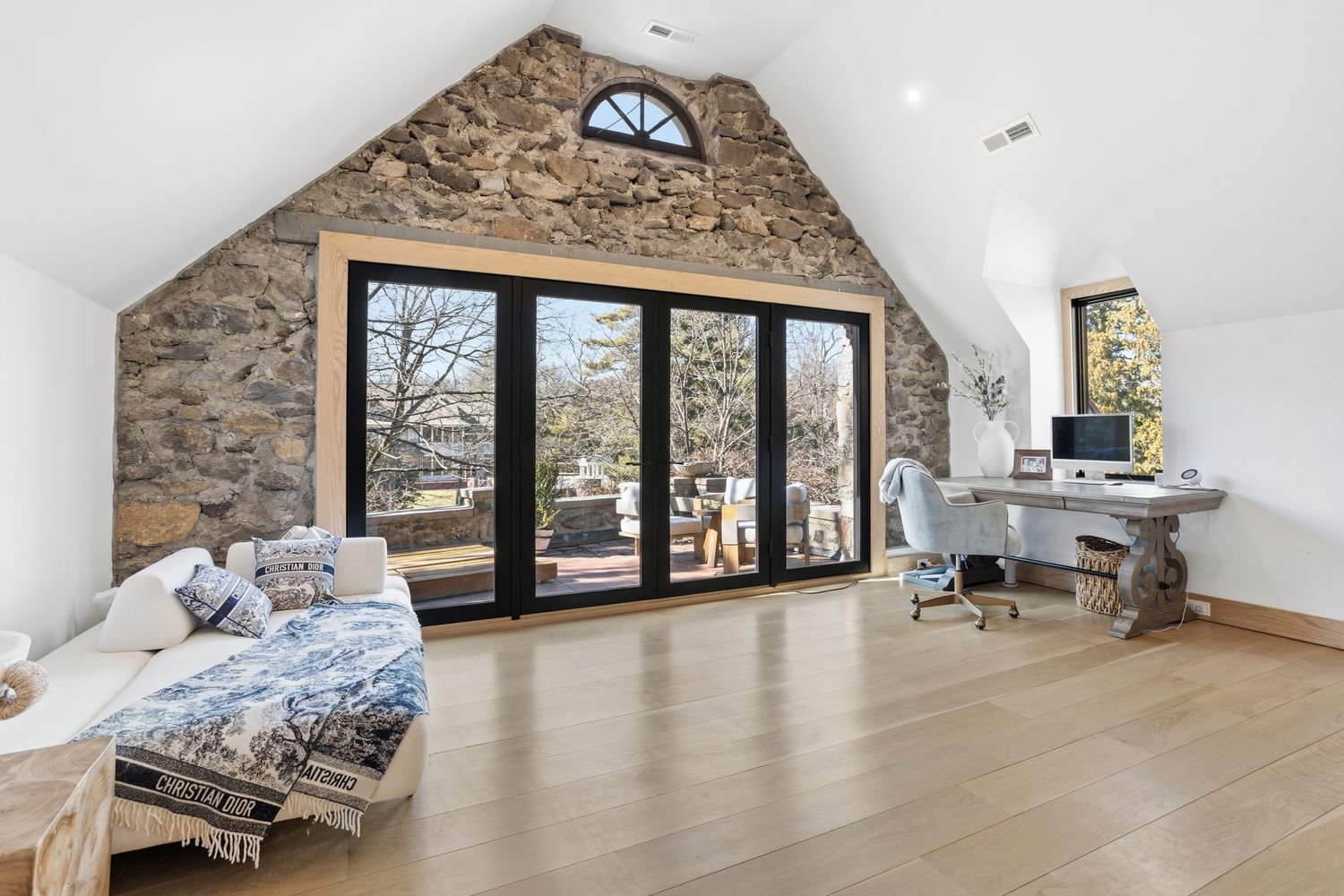
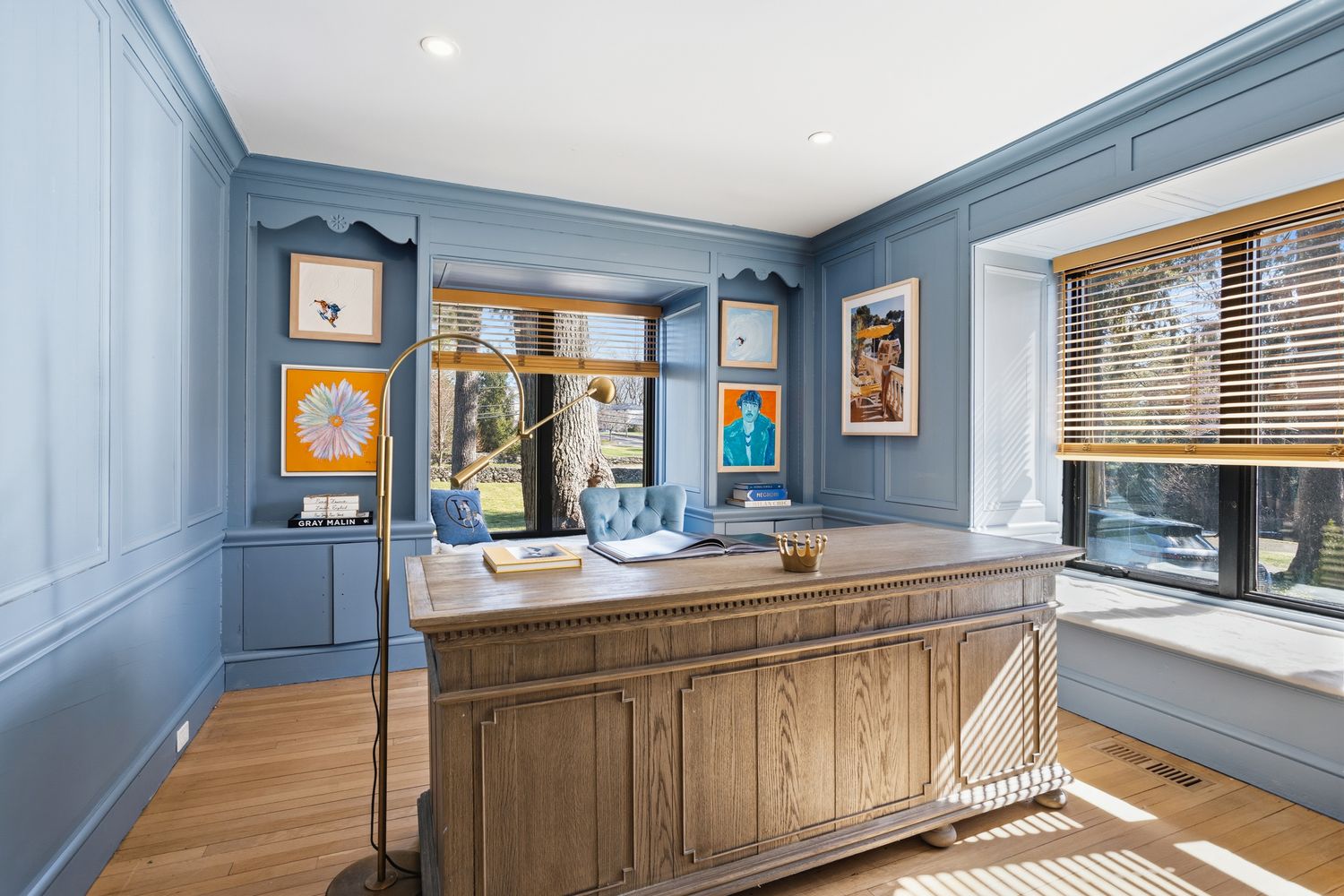
The home office, with its floor-to-ceiling stone accent wall, vaulted ceilings, and glass doors opening directly to a private patio, is the kind of space that makes working from home feel like a privilege. Throughout the residence, the renovation has honored rather than erased the estate's historic fabric—preserving the soul of Chadeline while delivering every comfort of contemporary luxury living.
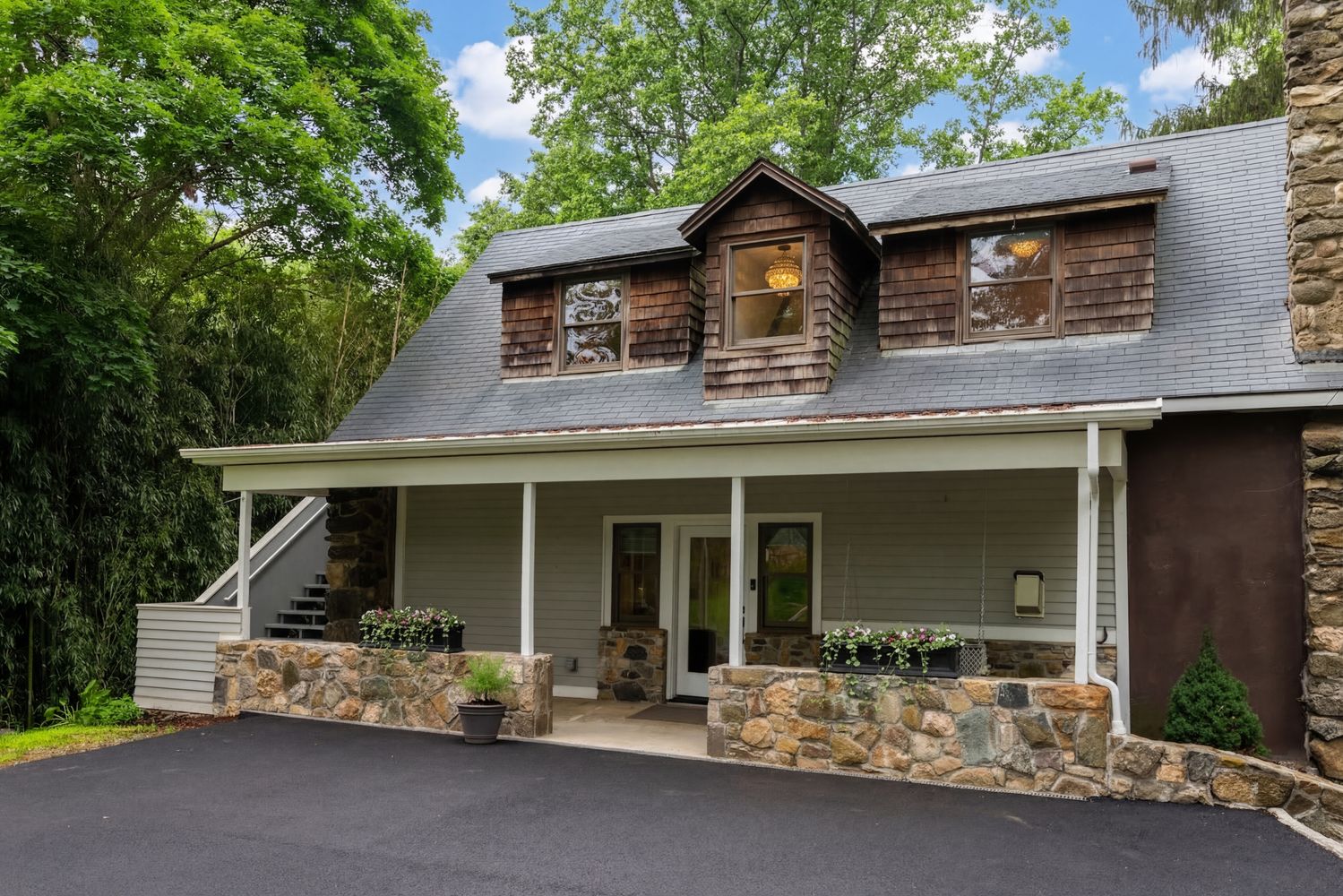
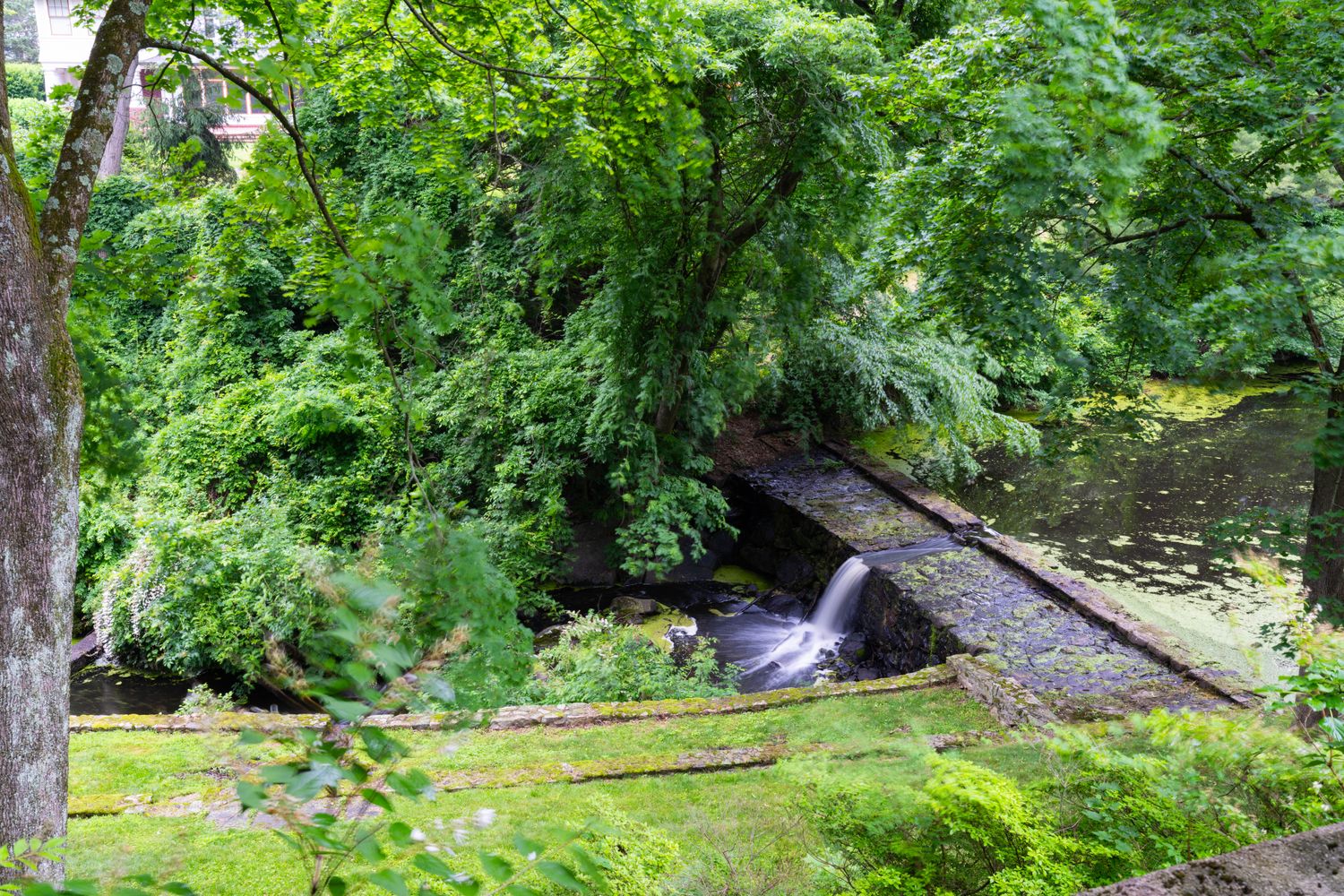
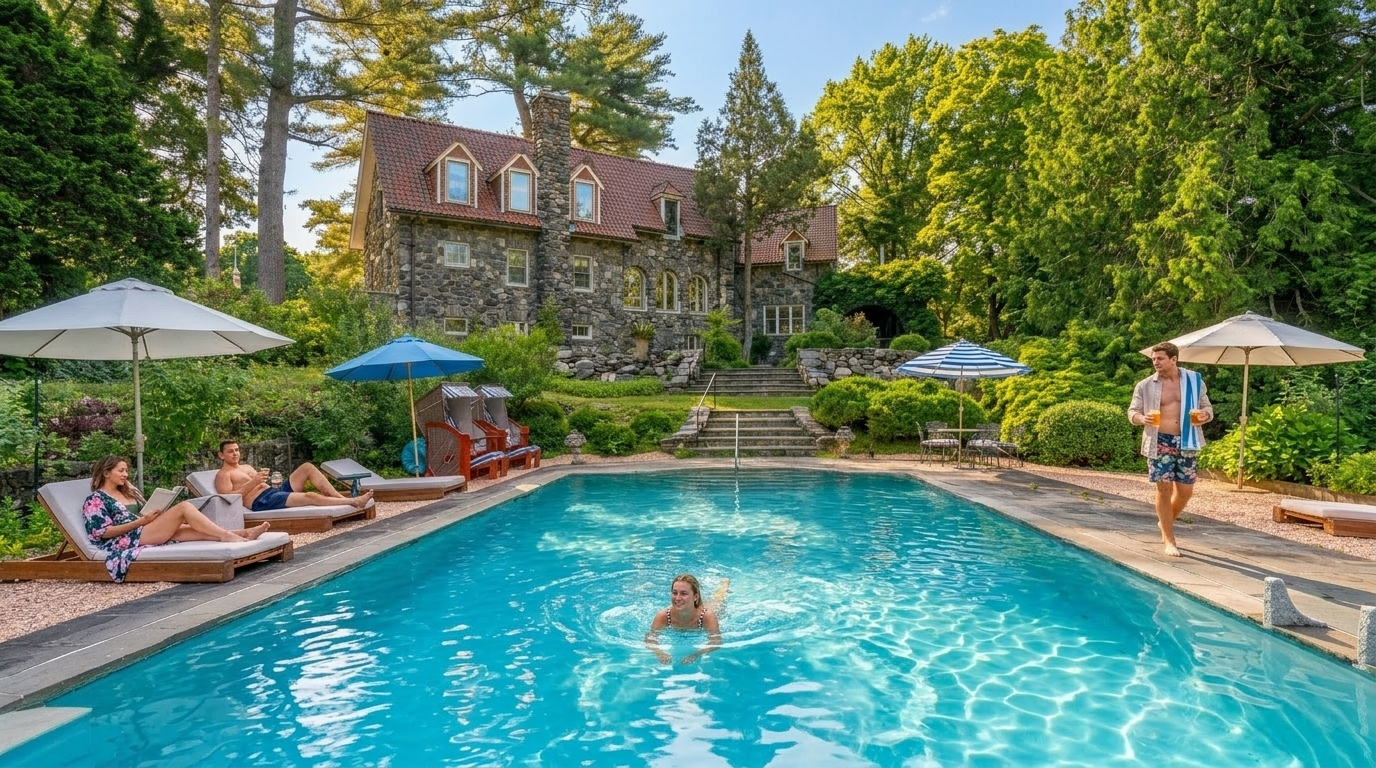
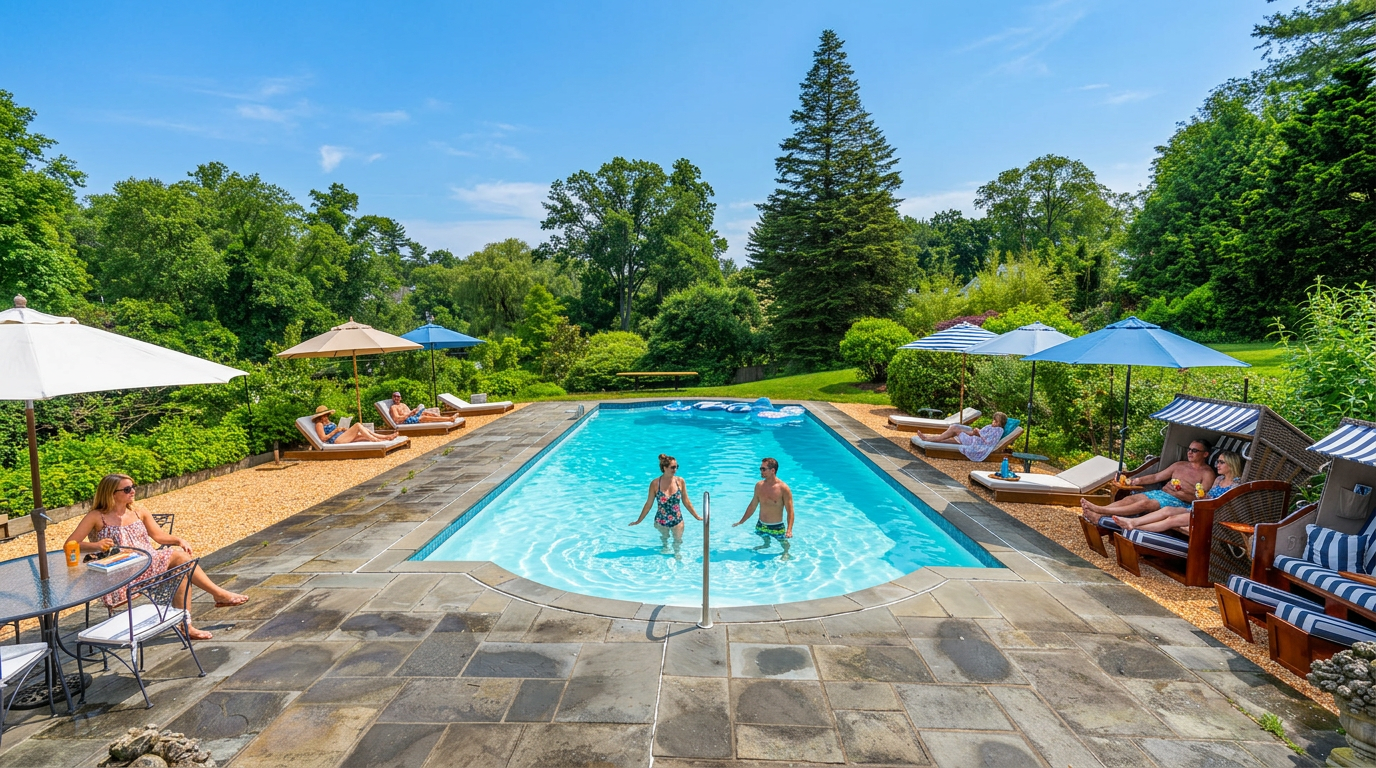
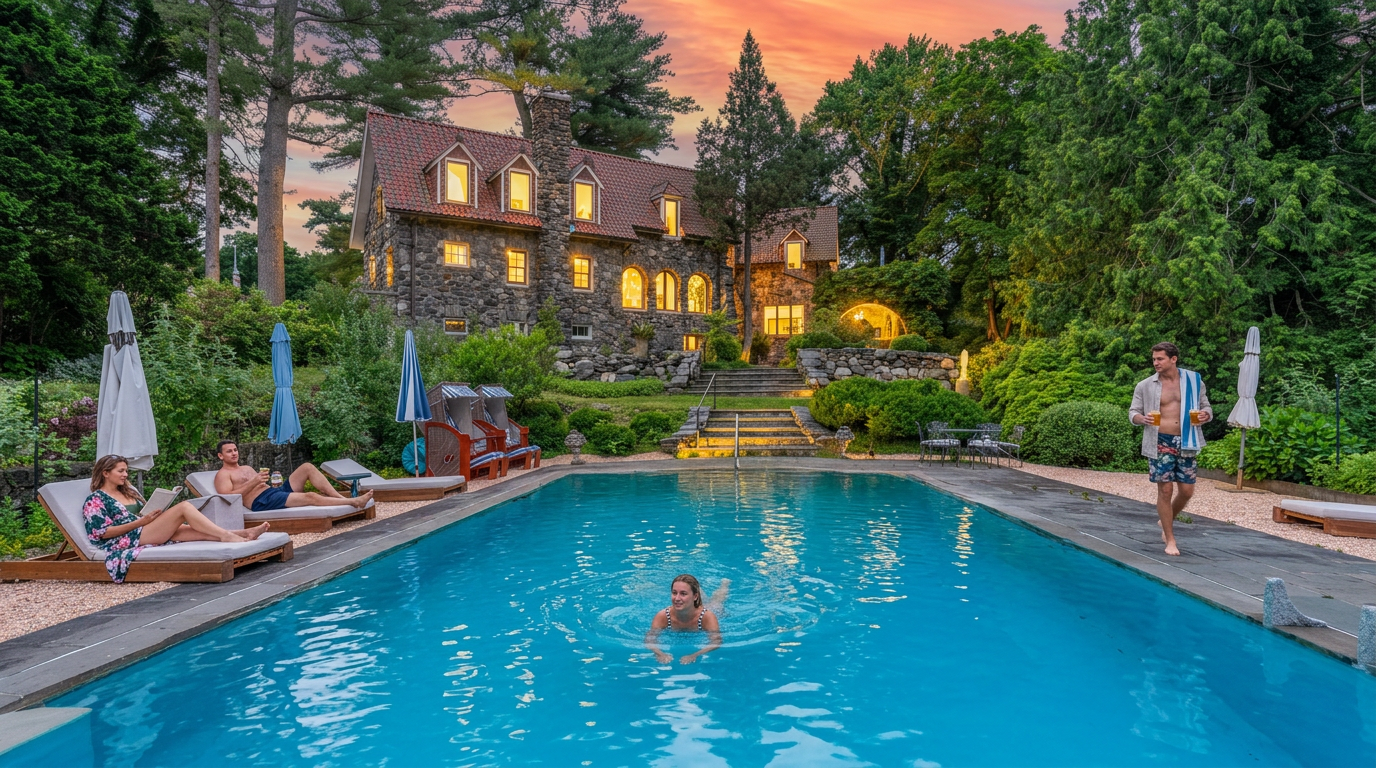
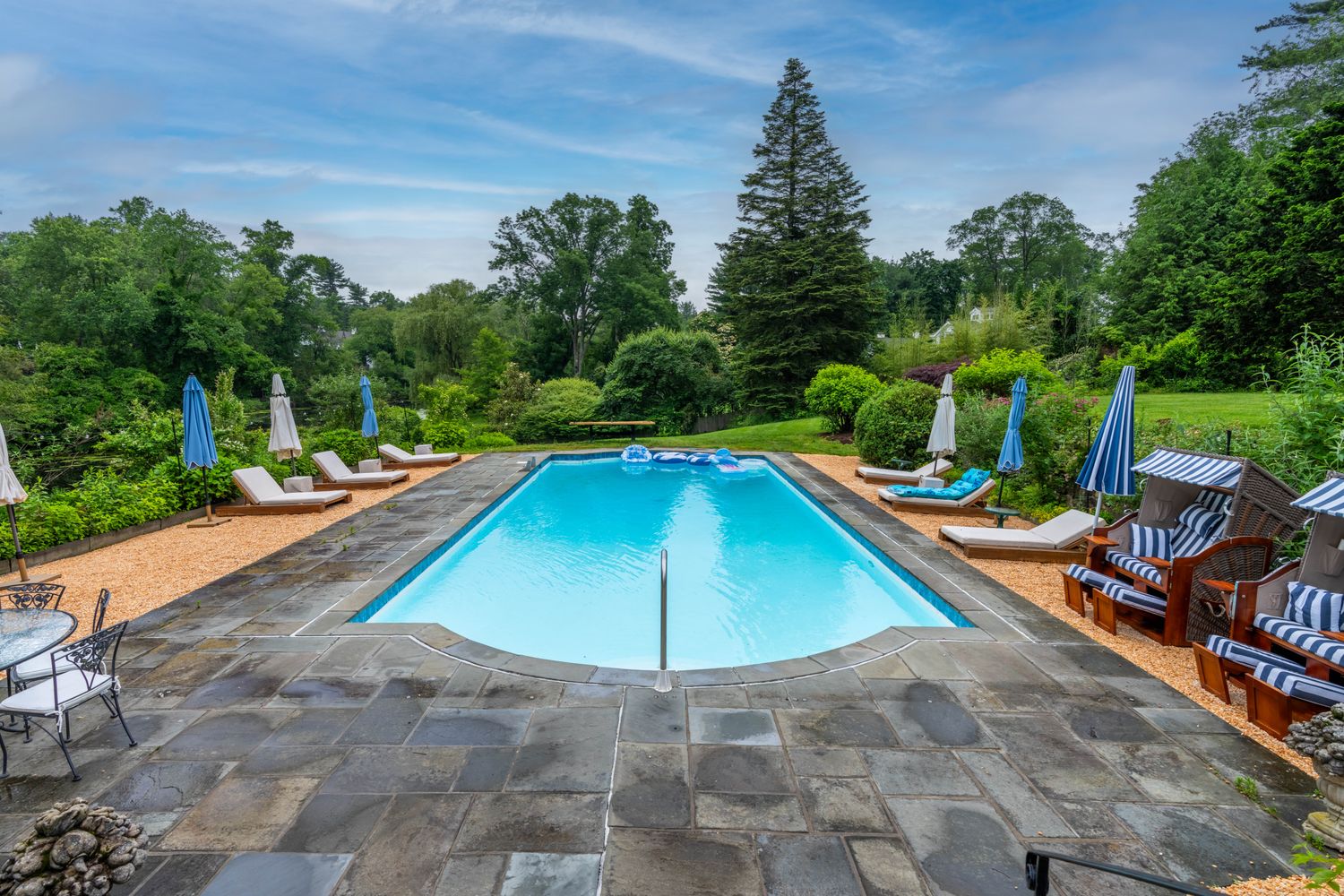
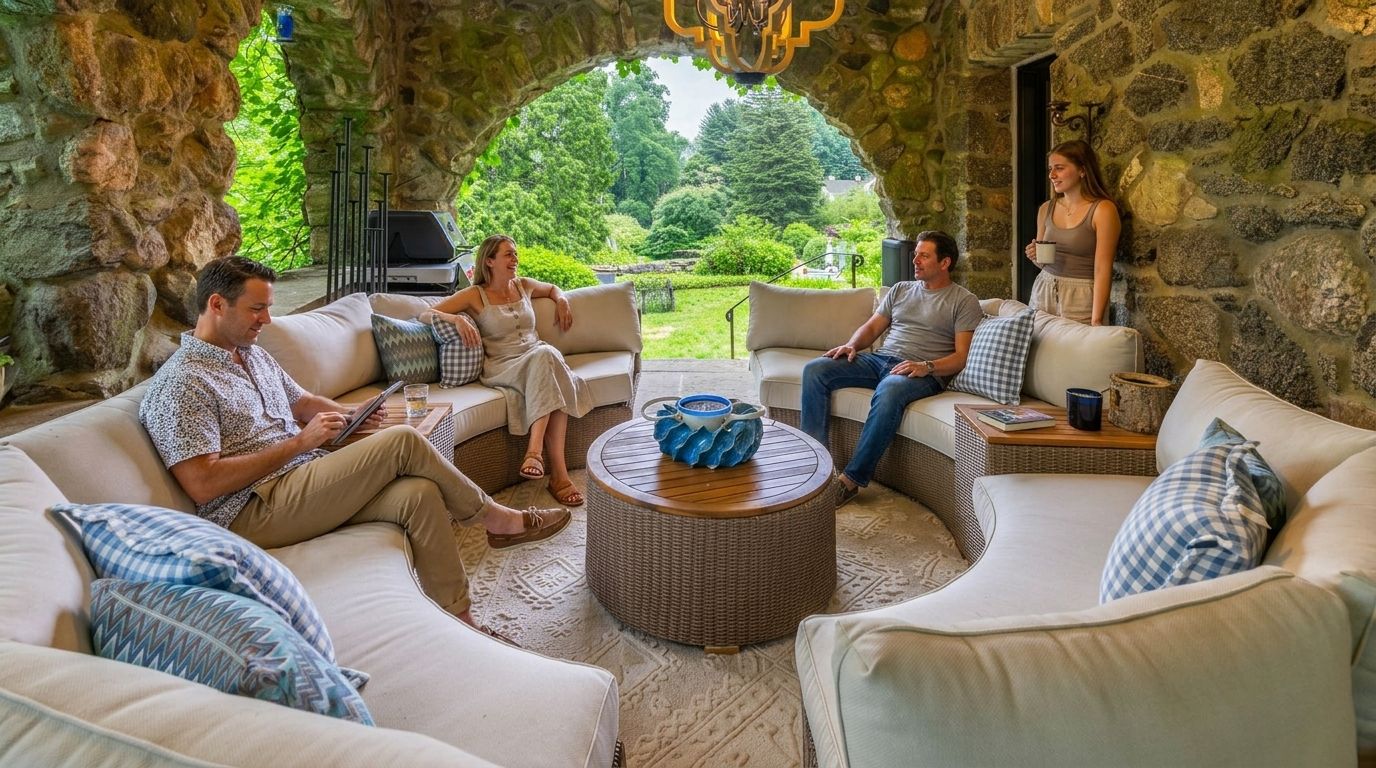
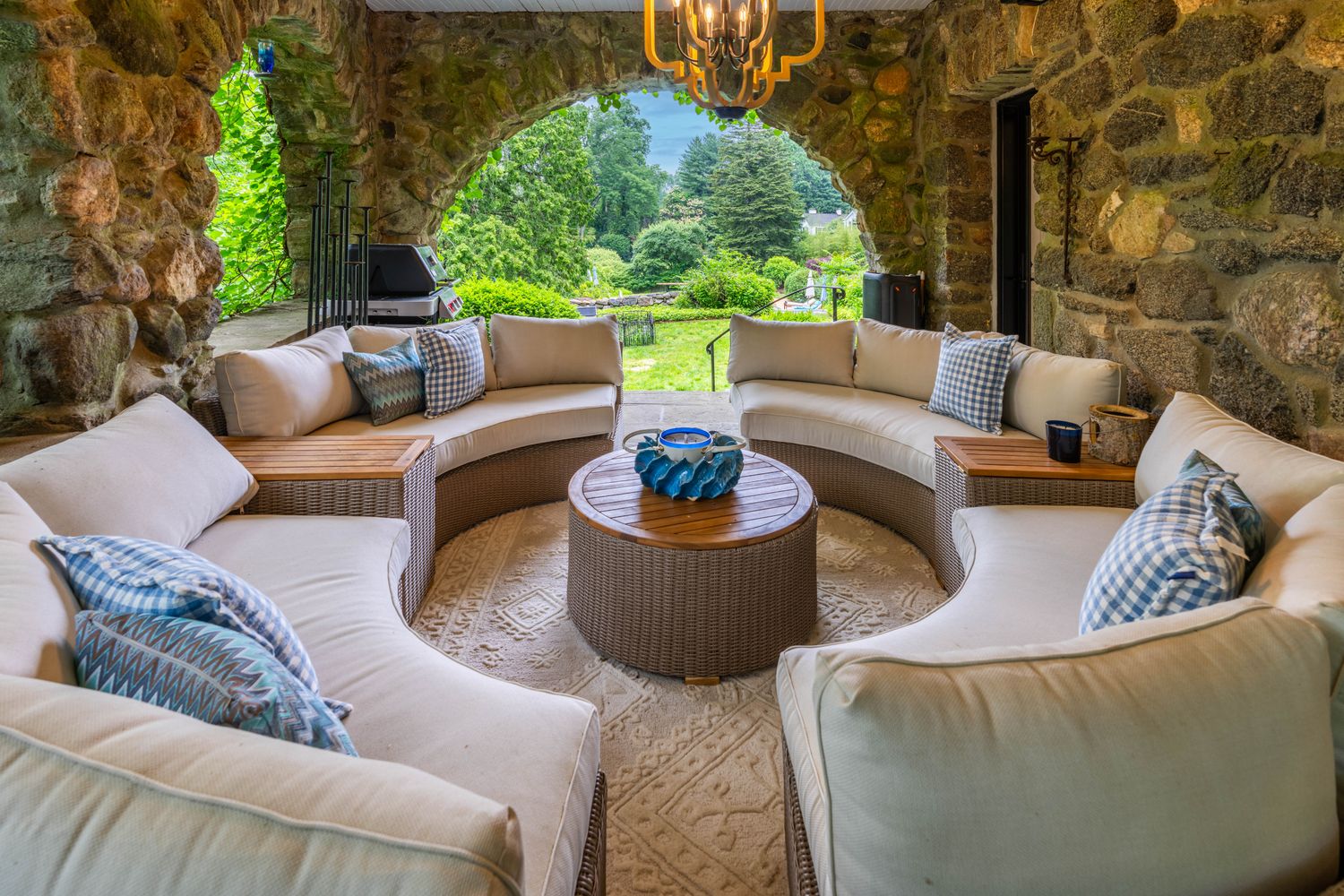
Beyond the main house, the grounds unfold with the generosity of a private estate: a rectangular pool set within a stone surround, a cascading waterfall moving through landscaped gardens, a semi-enclosed stone patio with a fire pit for evening entertaining, a tennis court, a private dock along the riverfront, and a two-bedroom guest cottage that offers visiting family or long-term guests a complete and luxurious retreat of their own.
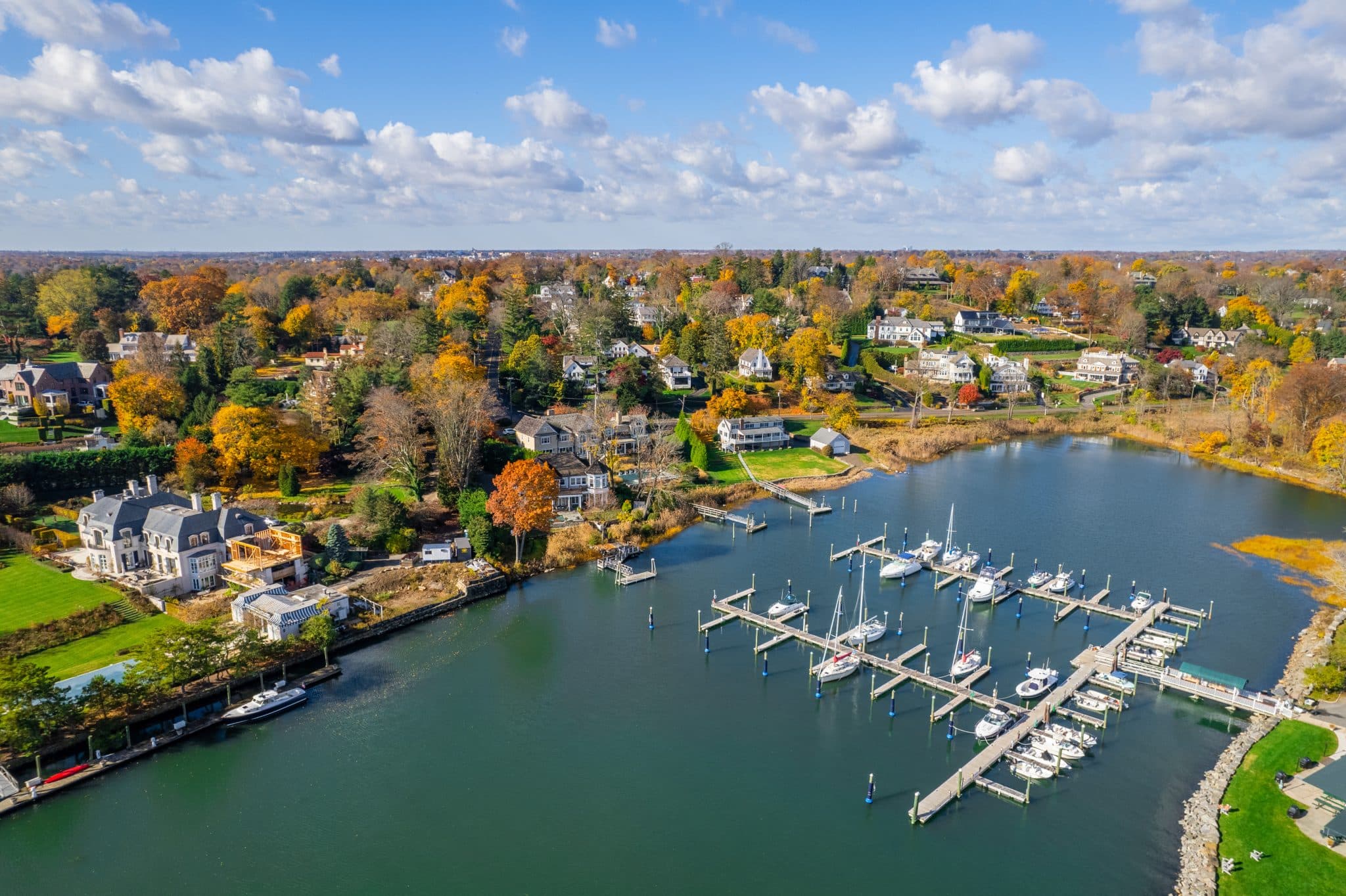
Greenwich, Connecticut occupies a particular and singular place in the American imagination—and on the American map. Situated at the southwestern tip of Connecticut along the Long Island Sound, it has been one of the most coveted addresses in the northeastern United States for well over a century, attracting financiers, diplomats, artists, and executives drawn by its exceptional schools, its natural beauty, its cultural institutions, and its proximity to New York City without the density or pace of urban life.
Lake Avenue itself is among Greenwich's most prestigious corridors, a mid-country address where estates of significant scale and architectural distinction have long defined the landscape. The mid-country section of Greenwich—stretching roughly between the Post Road and the Merritt Parkway—is characterized by larger properties, mature tree canopies, rolling terrain, and a sense of privacy that is increasingly rare within commuting distance of a major city. Properties along and near Lake Avenue regularly trade at significant premiums, and the surrounding neighborhood of comparable estates reflects the caliber of the address.
Greenwich's downtown—known simply as Greenwich Avenue—is one of the most accomplished small-city commercial districts in New England. Independent boutiques, acclaimed restaurants, art galleries, and specialty retailers occupy a compact, walkable stretch that manages to feel both cosmopolitan and genuinely local. Dining options range from established fine dining institutions to celebrated farm-to-table bistros, and the town's culinary scene has grown considerably in sophistication over the past decade. From Chadeline, the avenue is a five-minute drive.
For families, Greenwich's educational infrastructure is exceptional by any measure. Greenwich Academy, Brunswick School, and The Greenwich Country Day School are among the region's most respected independent institutions, each with long histories and strong university placement records. Greenwich's public school system is consistently ranked among the top in Connecticut. The town is also home to multiple country clubs—including the Greenwich Country Club, one of the oldest and most storied in the state—as well as tennis facilities, equestrian centers, yacht clubs, and extensive parkland including the 147-acre Greenwich Point Park on the Long Island Sound.
The town's cultural life is anchored by the Bruce Museum, a well-regarded institution presenting art and natural science exhibitions, as well as the Greenwich Arts Council and a robust calendar of community events throughout the year. The Cos Cob and Byram neighborhoods offer additional character and waterfront access, while the broader Fairfield County region provides easy reach to Westport, Darien, and New Canaan—each a destination in its own right.
For those who travel frequently or maintain professional ties to Manhattan, the Metro-North New Haven Line connects Greenwich to Grand Central Terminal in approximately 45 to 55 minutes, and Interstate 95 and the Merritt Parkway provide direct automobile access to the city and to Connecticut's major urban centers. Westchester County Airport is approximately 20 minutes by car, and John F. Kennedy and LaGuardia airports are within practical range for international travel.
To live in Greenwich at the level that Chadeline represents is to participate in a very specific and enduring tradition—one that values privacy, natural beauty, civic engagement, and the quiet confidence of a life well composed.
Featured Highlights
Curated Content • Presented by Kevin Sneddon