The Story Behind
An Elevated Wine Country Estate Redefining Quiet Luxury
There is a particular kind of arrival that sets the tone for everything that follows. A winding country lane leads through a gated entry, and as the valley opens before you — rows of iconic vines, layered ridgelines, the particular quality of afternoon light that belongs only to Sonoma County — the character of this place becomes immediately clear. This is not a property that announces itself loudly. It reveals itself slowly, and that restraint is precisely the point.
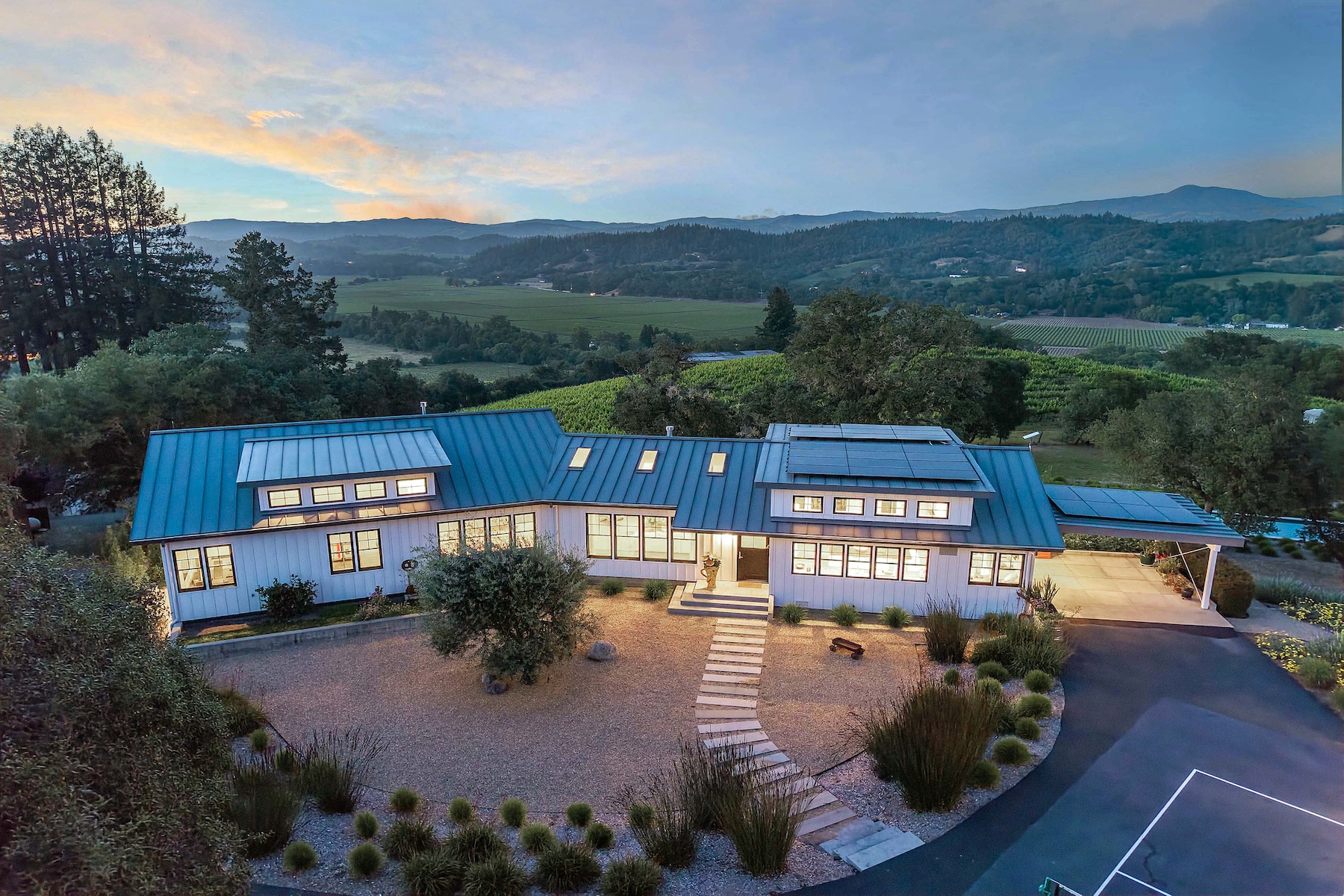
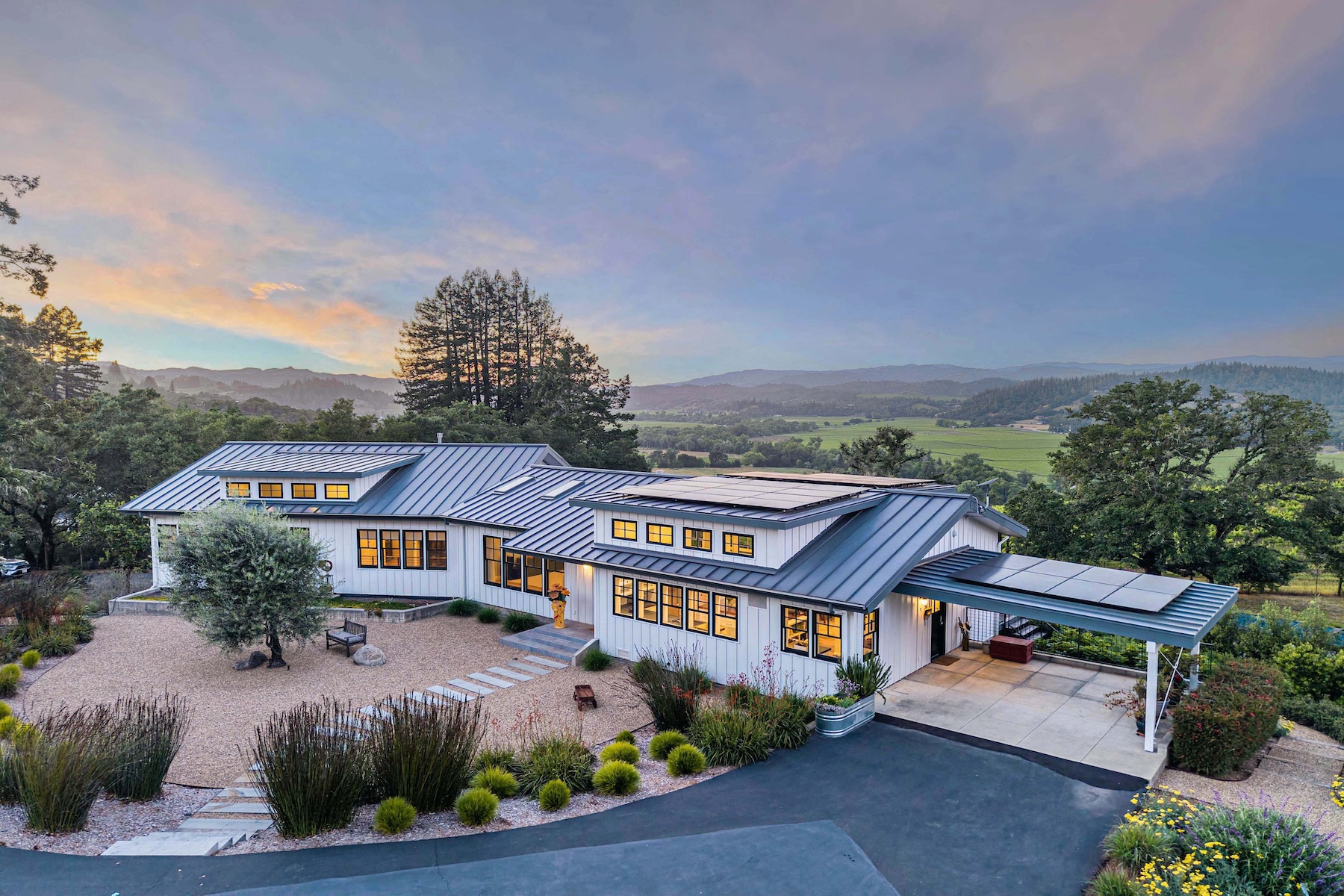
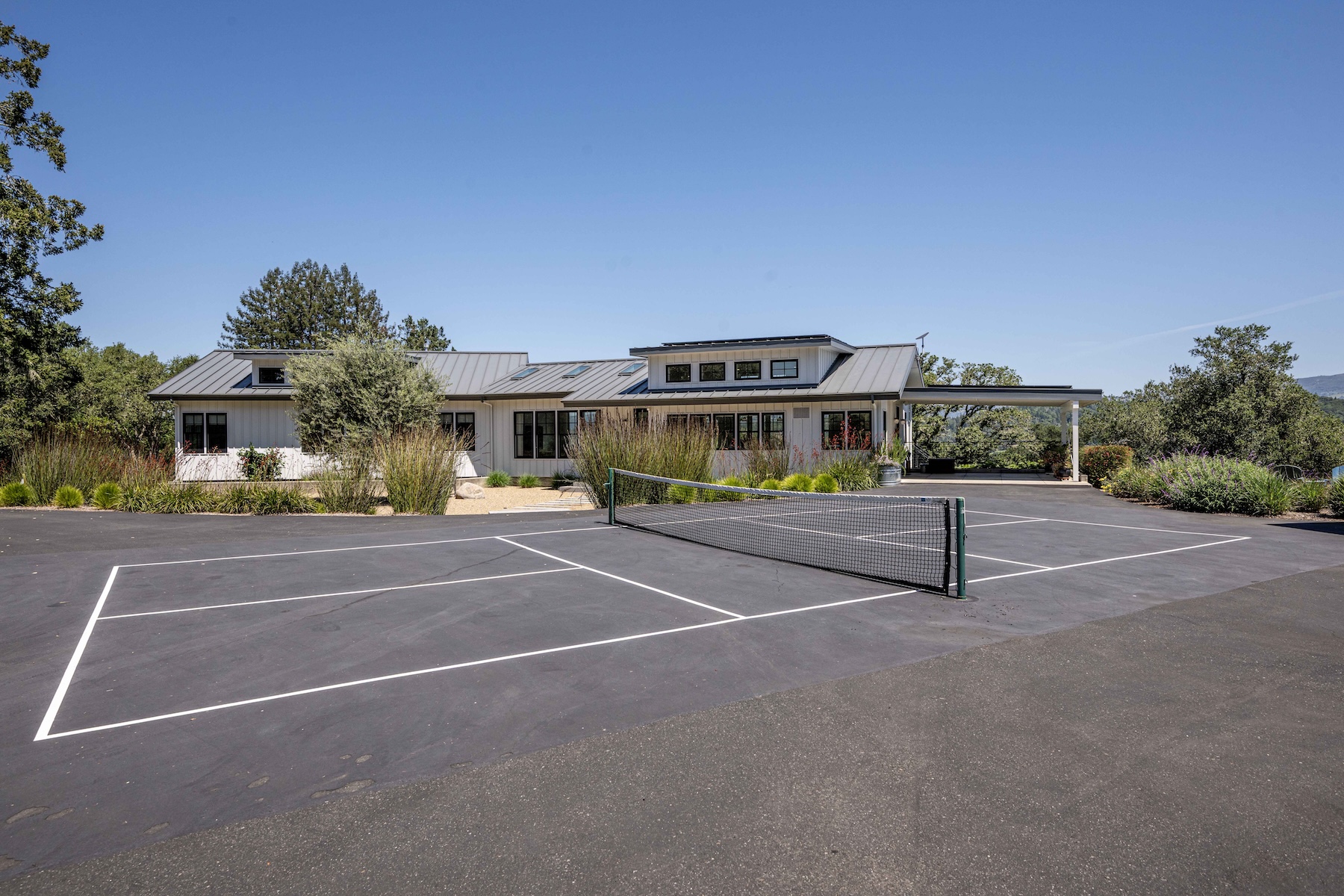
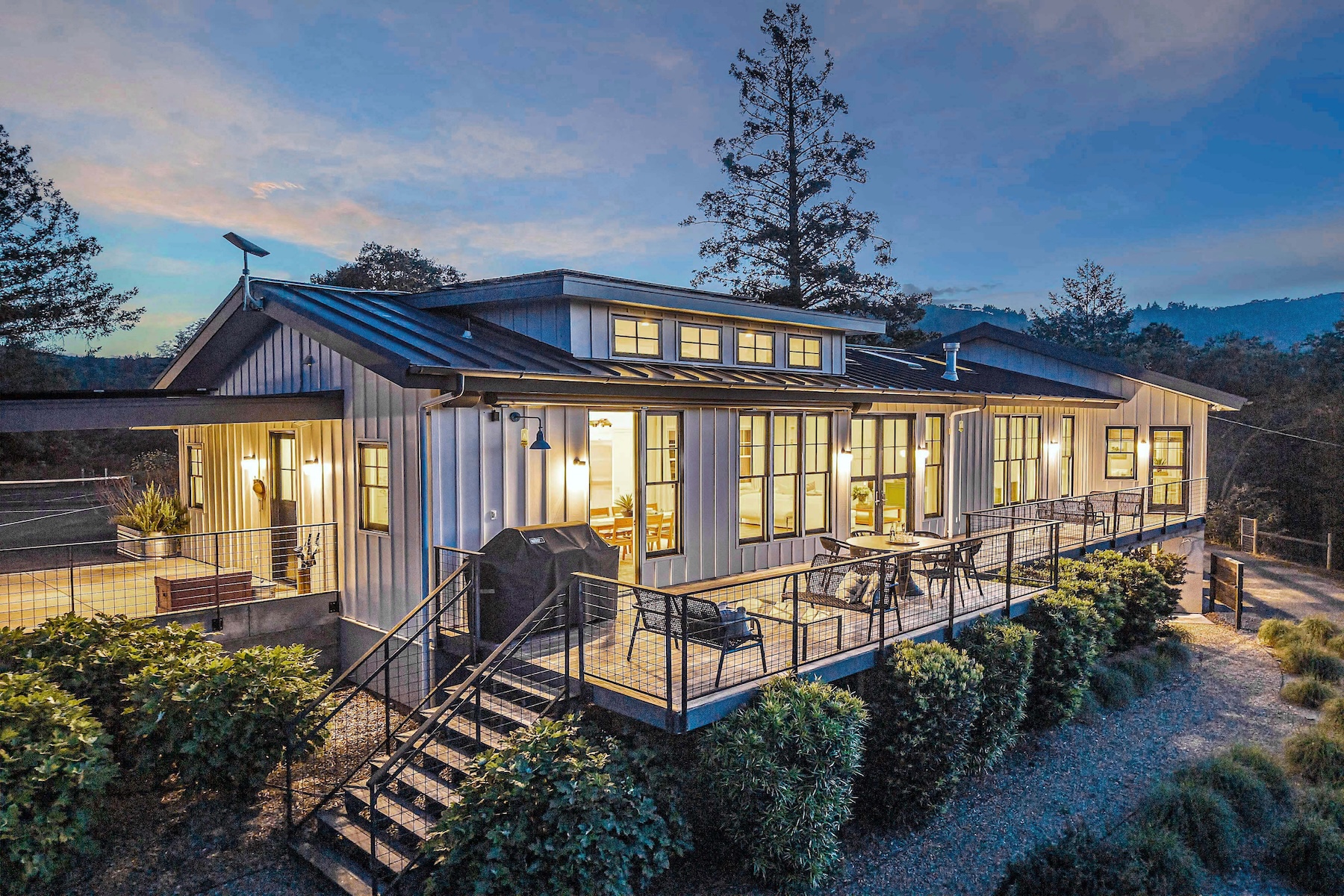
Originally a country farmhouse and comprehensively reimagined in 2014, the residence draws on agrarian California vernacular — board-and-batten siding, a standing-seam metal roof, generous covered porches — and filters it through a clean, contemporary lens. The result is architecture that feels both rooted and current: grounded in its landscape yet unencumbered by nostalgia.
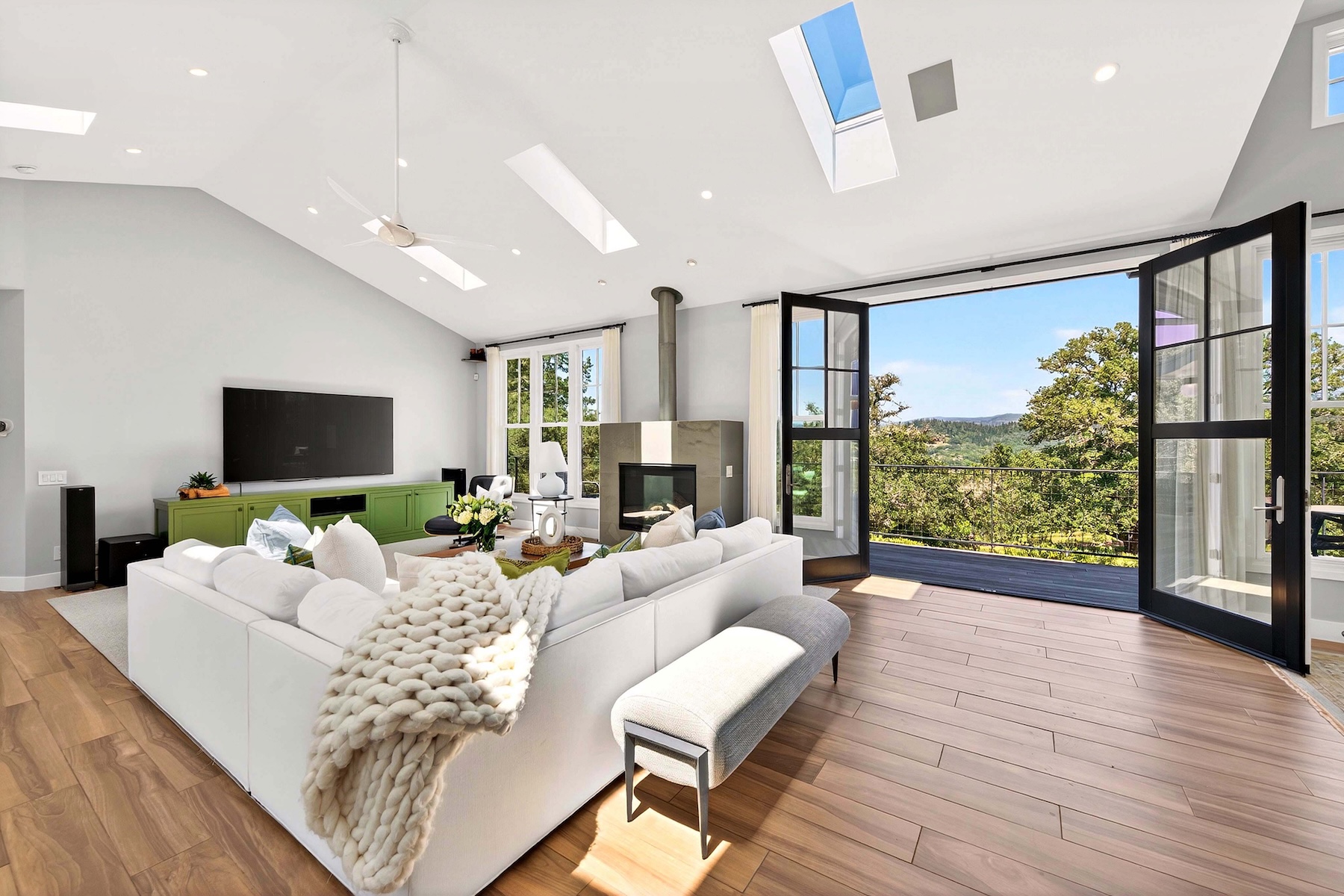
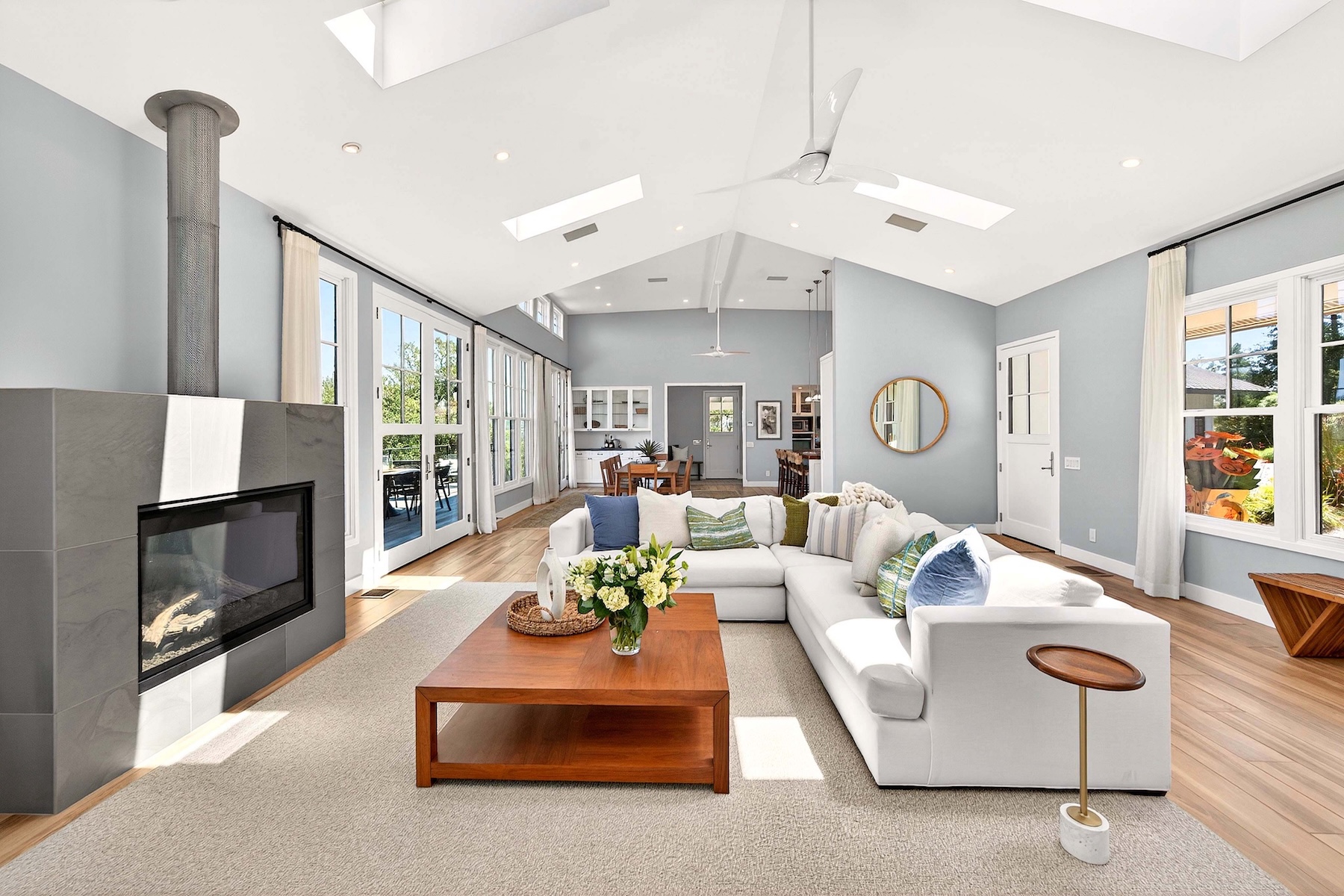
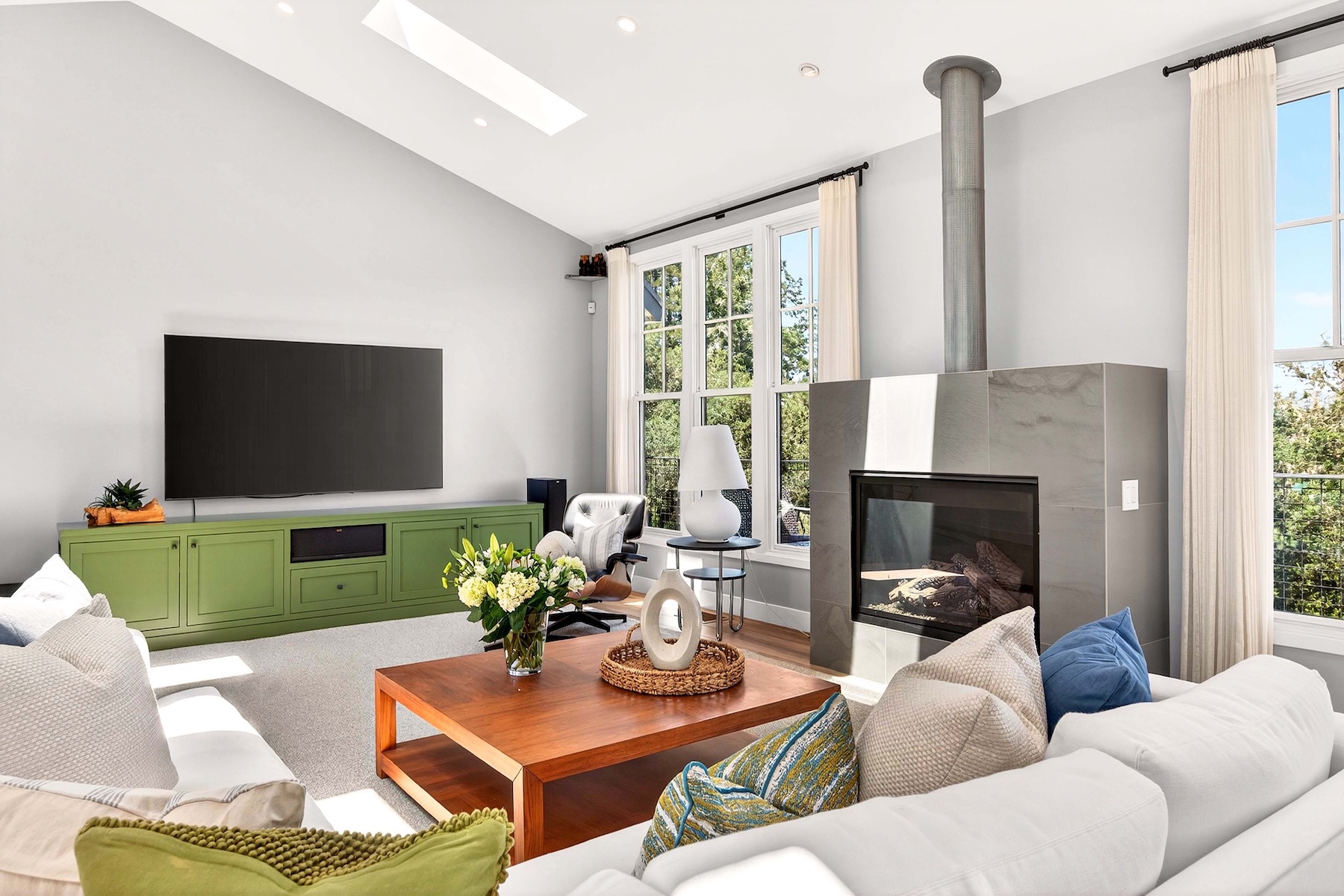
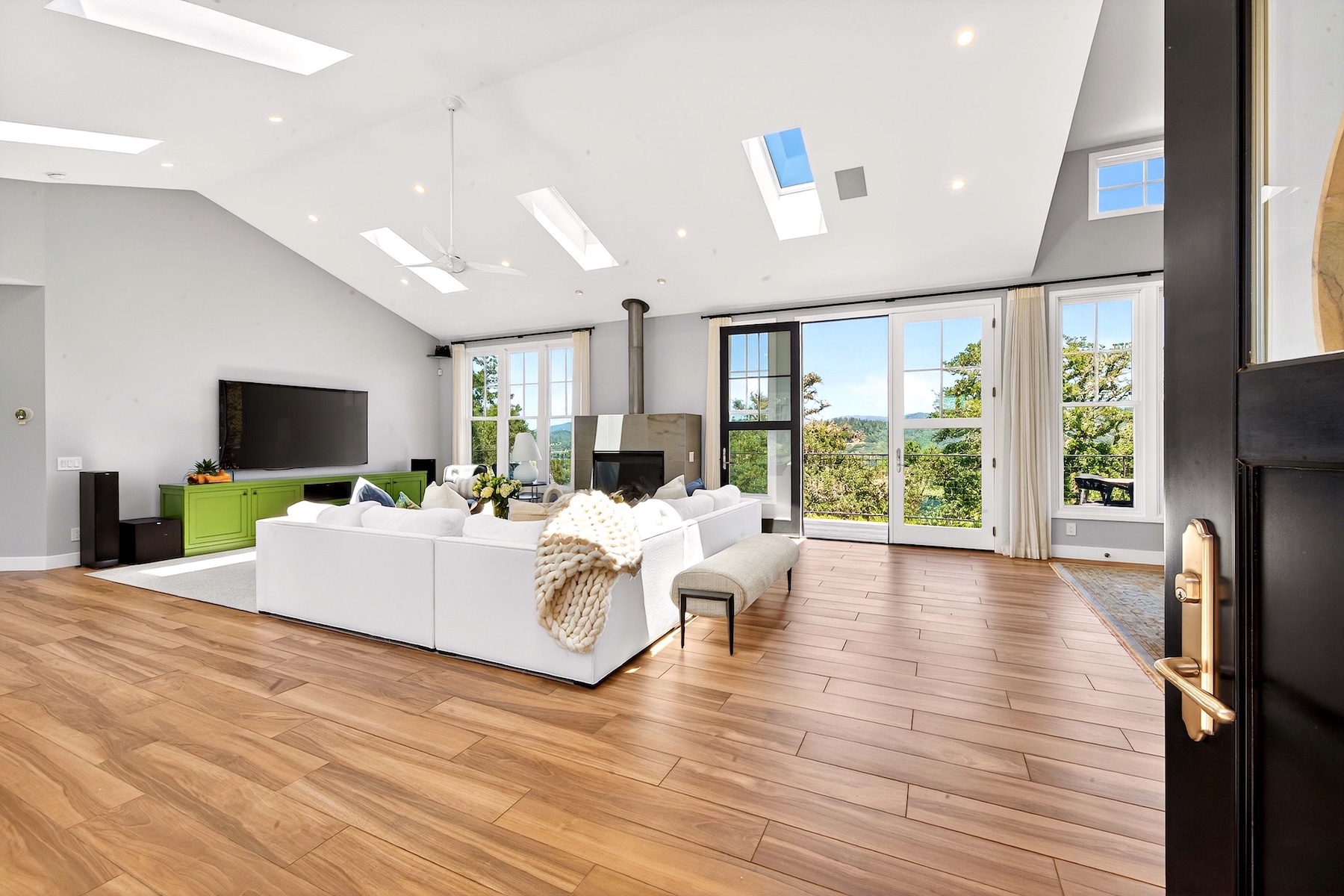
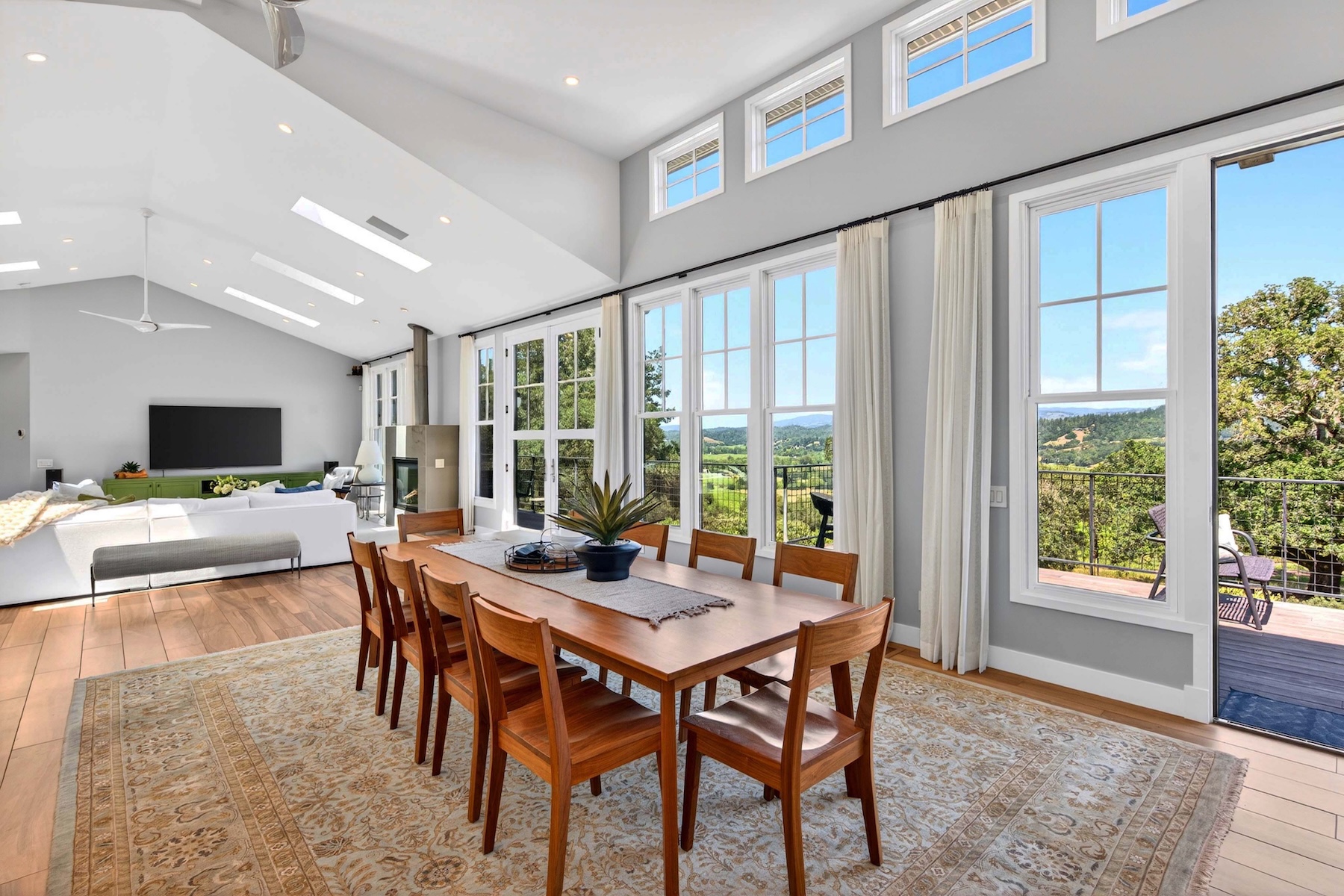
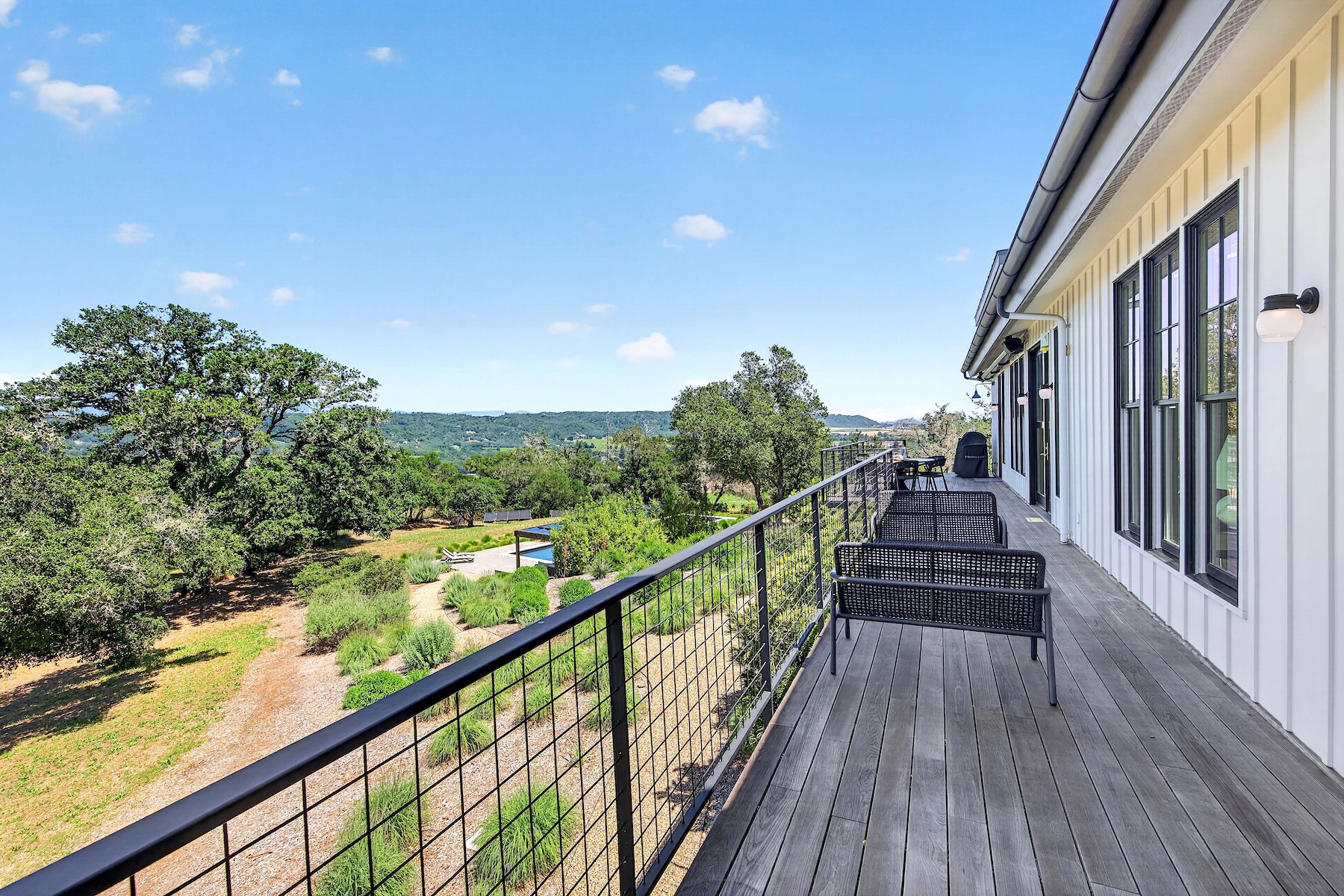
The interior's defining moment is the Great Room, where fifteen-foot vaulted ceilings soar overhead, skylights track the arc of the sun, and a dramatic stone-clad Lennox gas fireplace anchors one end of a space that feels simultaneously expansive and warmly inhabitable. Walls of windows and French doors dissolve the boundary between inside and out, opening onto an expansive entertaining deck that frames the valley and the solar-heated lap pool below. It is a room that understands how people actually live — how a morning coffee and a dinner party and a quiet Sunday afternoon all require the same quality of light and ease.
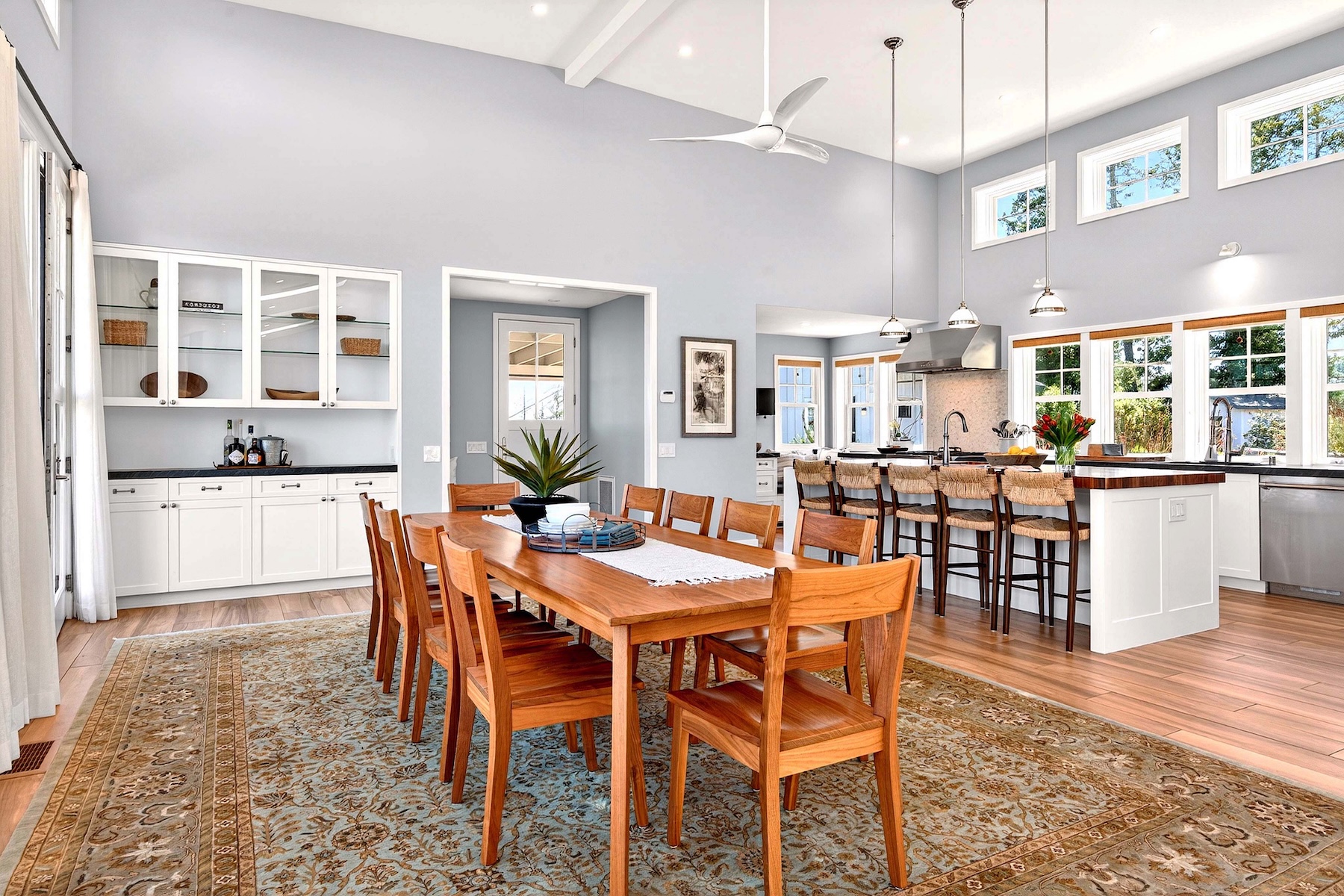
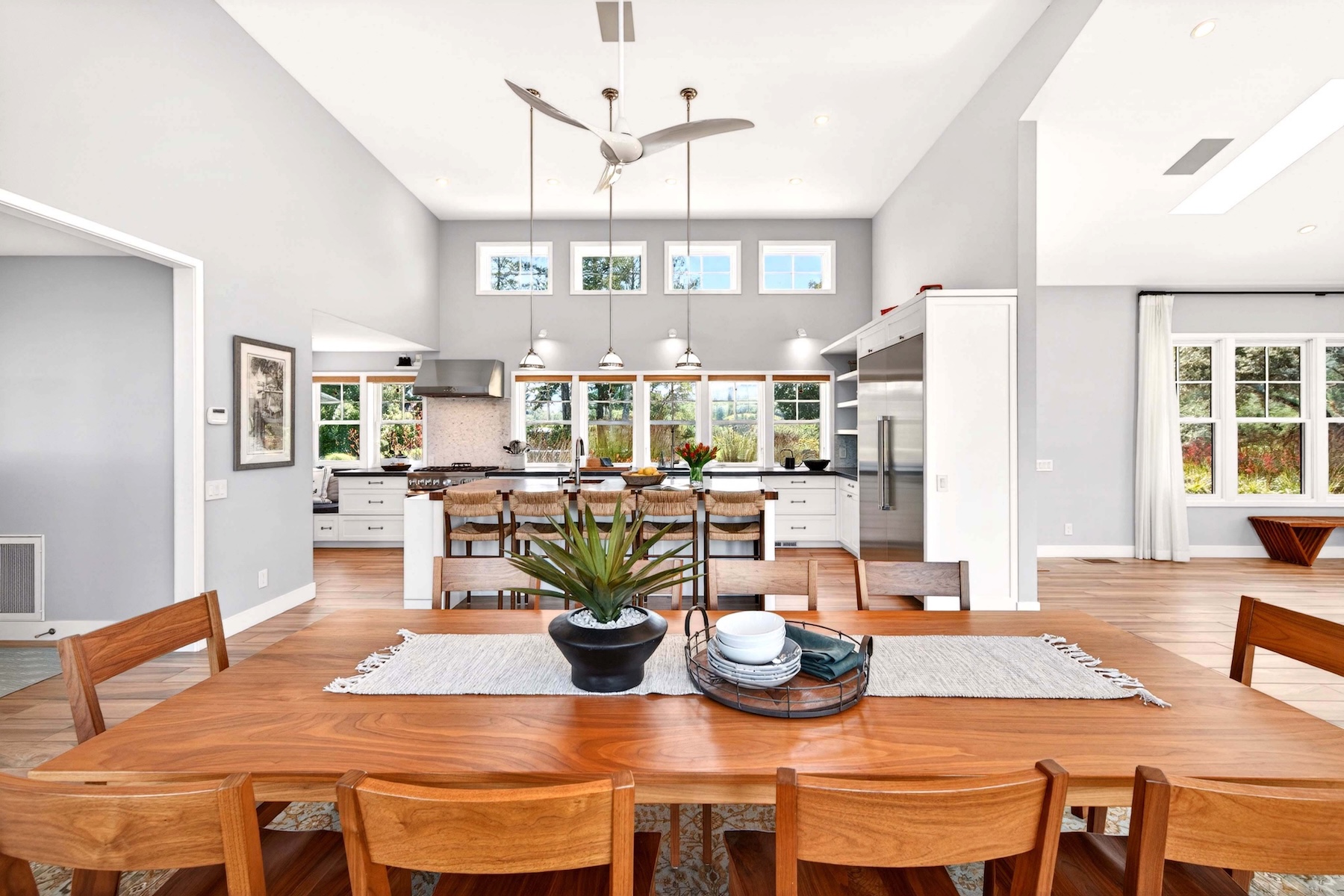
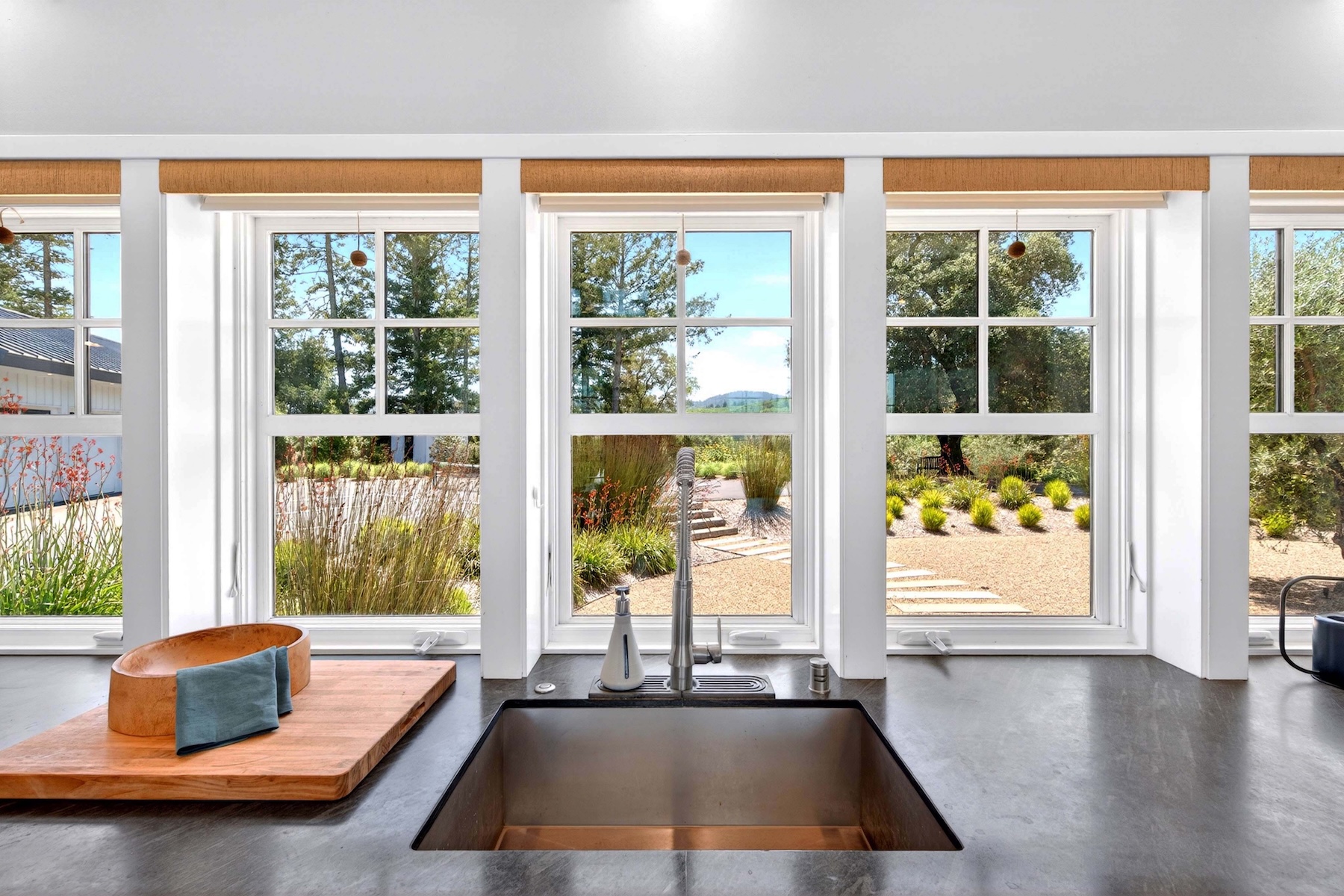
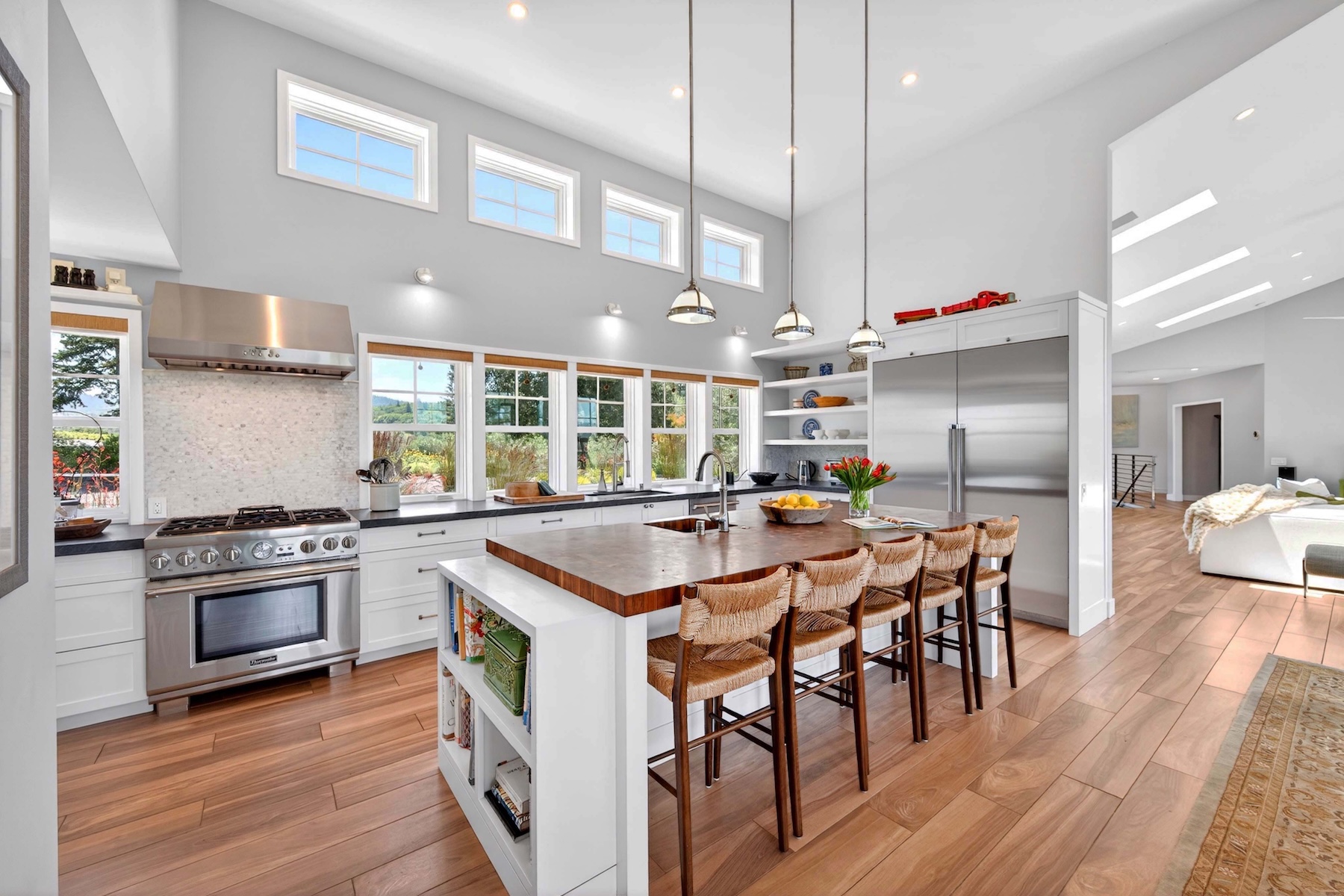
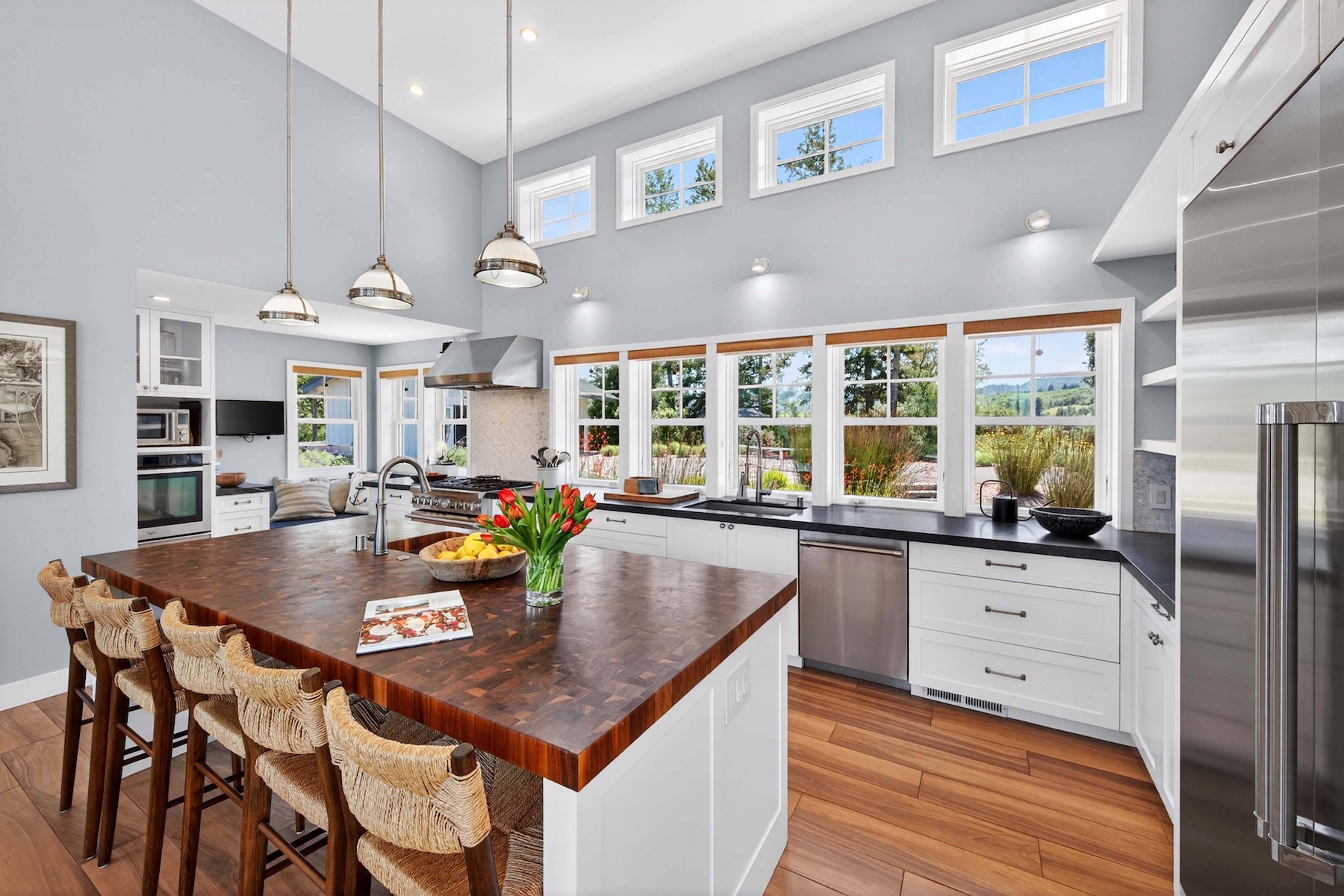
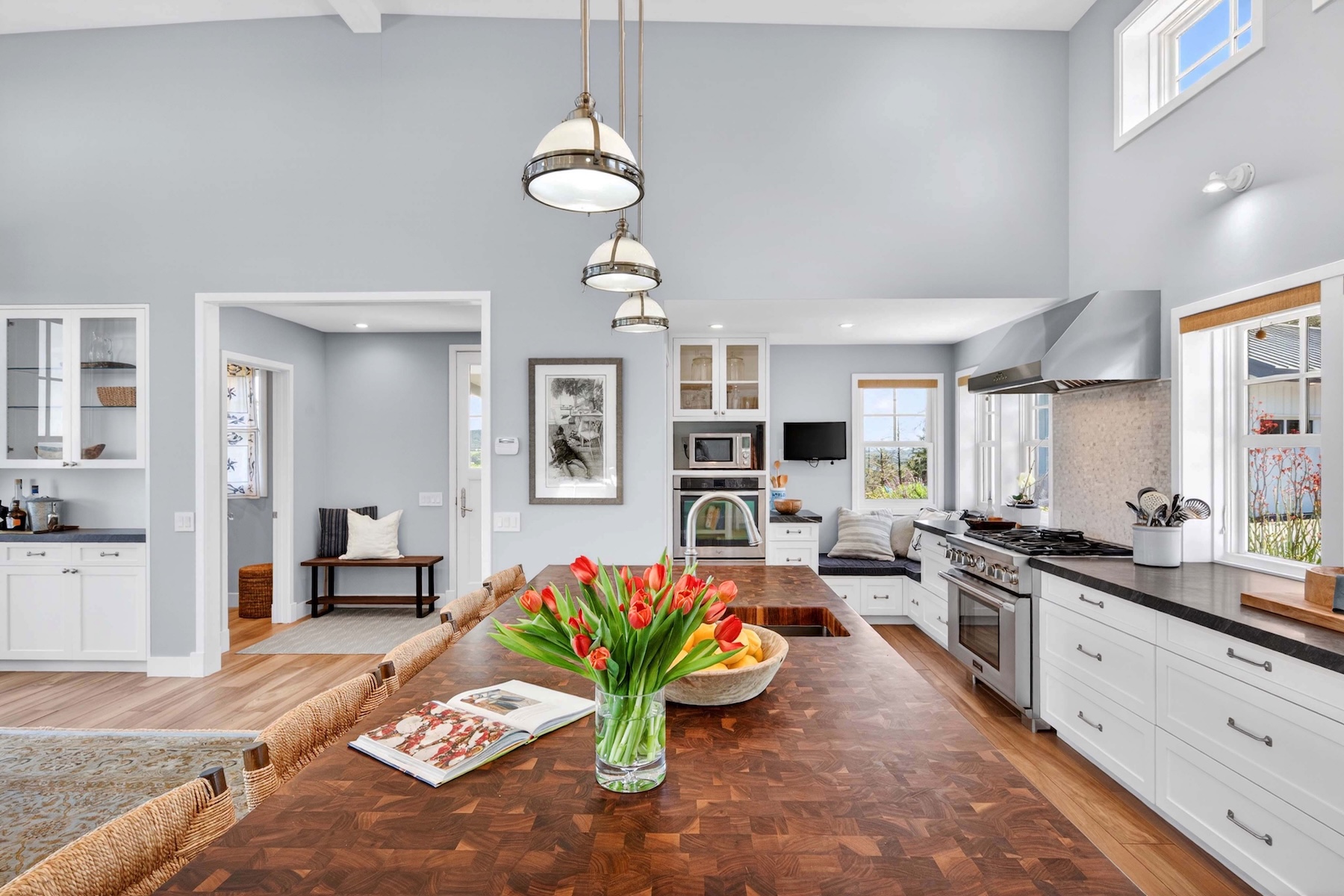
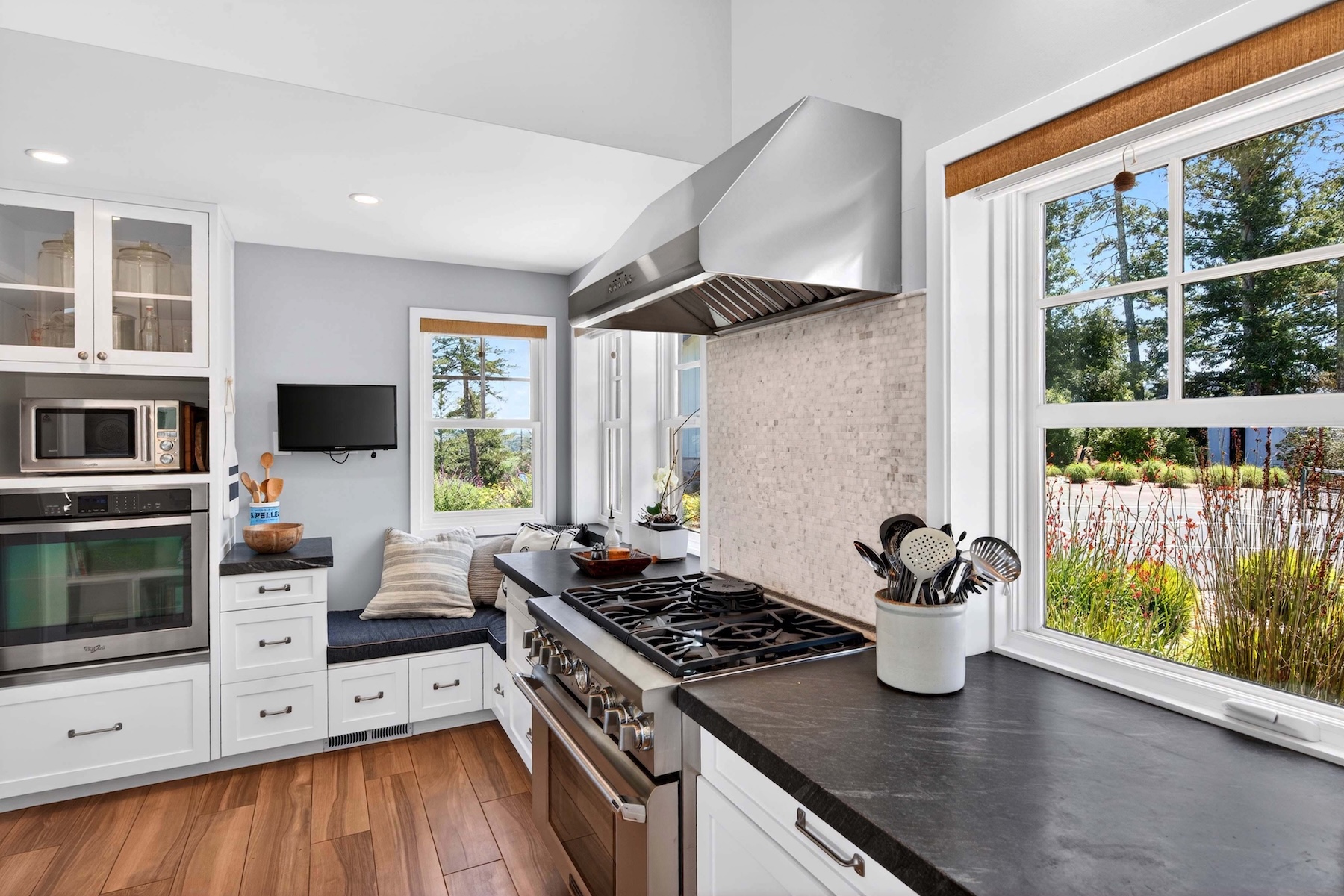
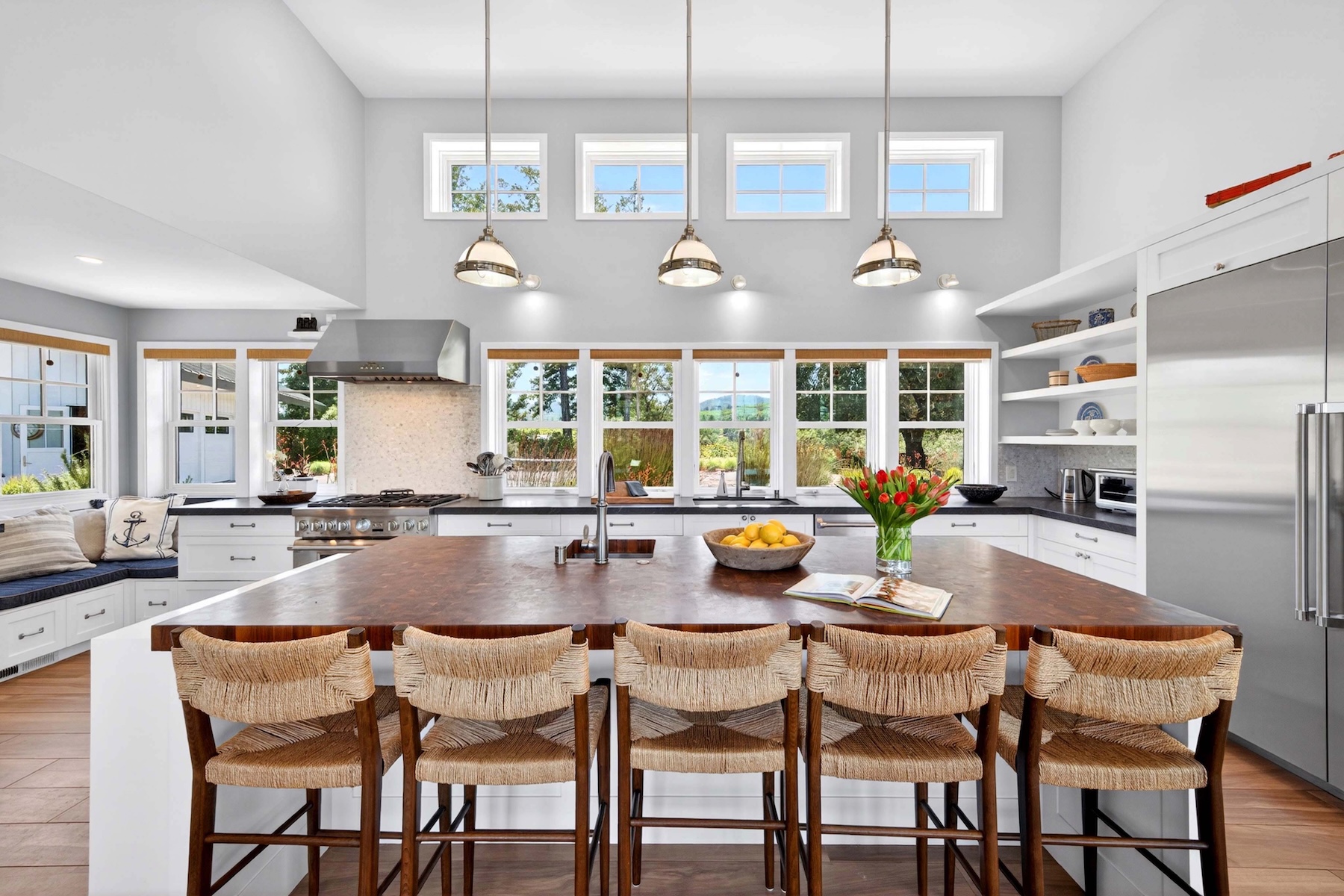
The chef's kitchen is purpose-built for the way people gather in Wine Country. A striking end-grain black walnut island commands the center of the space, surrounded by white cabinetry, Pietra Grigio natural stone countertops, and a full suite of Thermador appliances. A built-in window seat nook tucks into the corner, catching the morning light — the kind of detail that transforms a kitchen from functional to genuinely beloved.
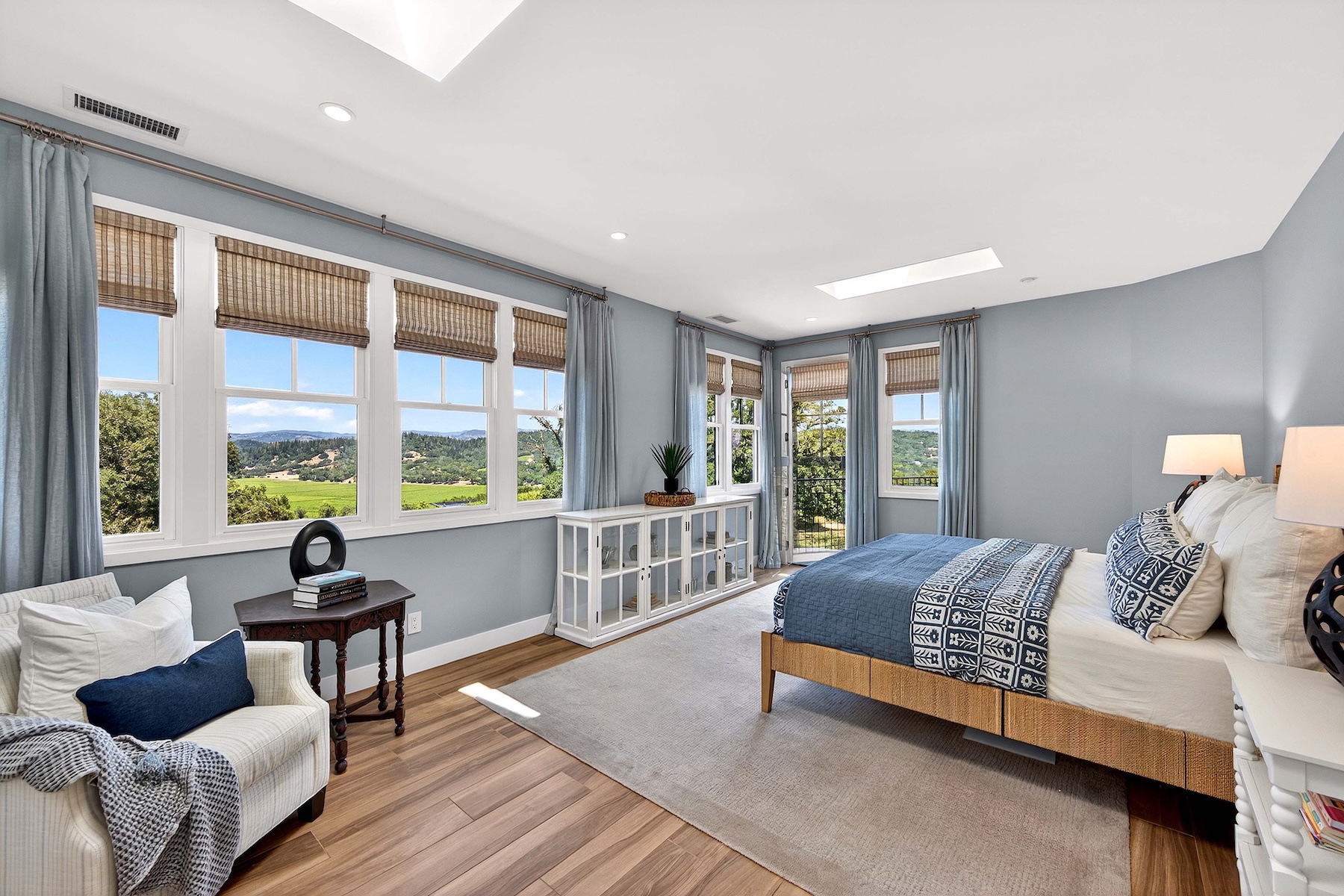
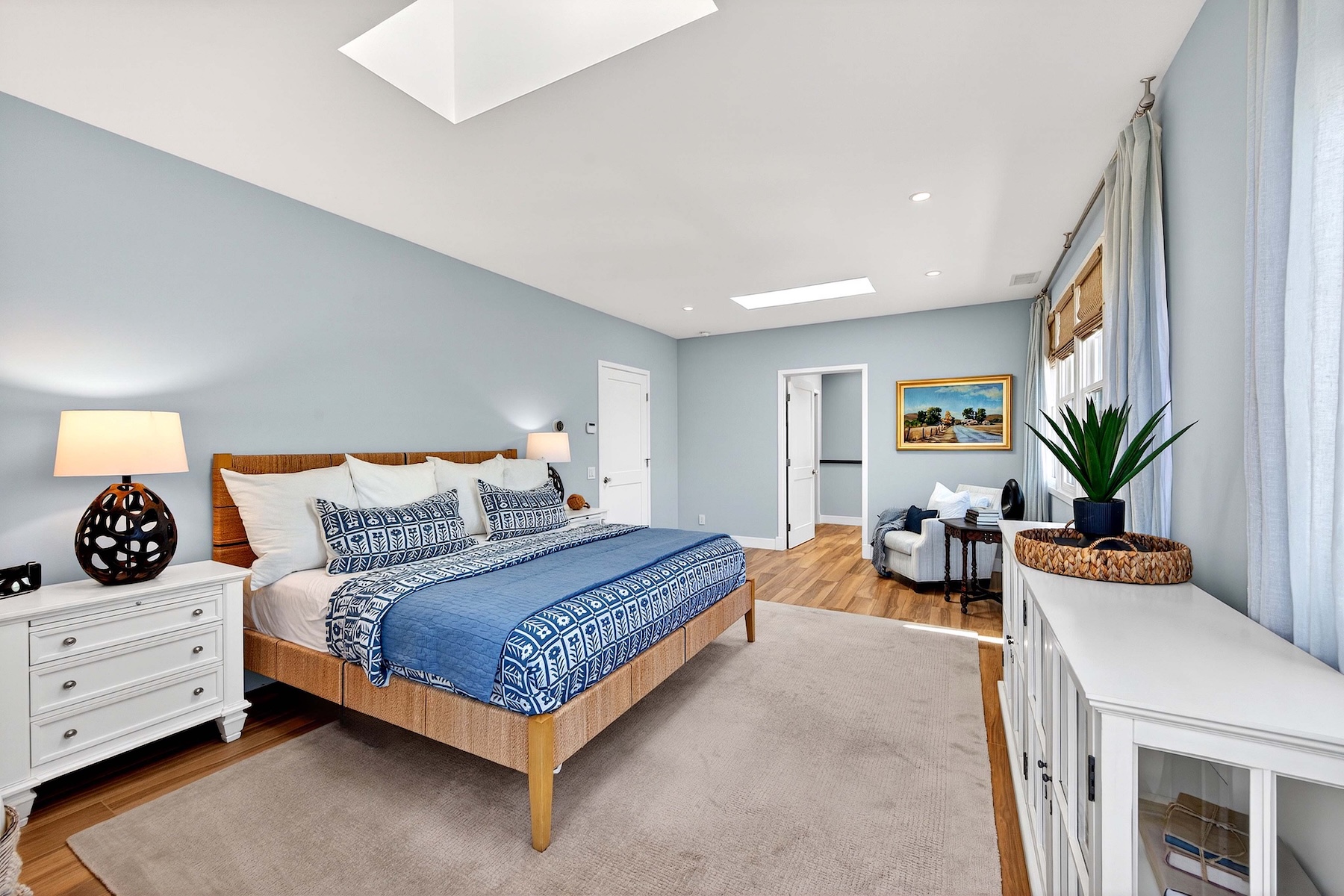
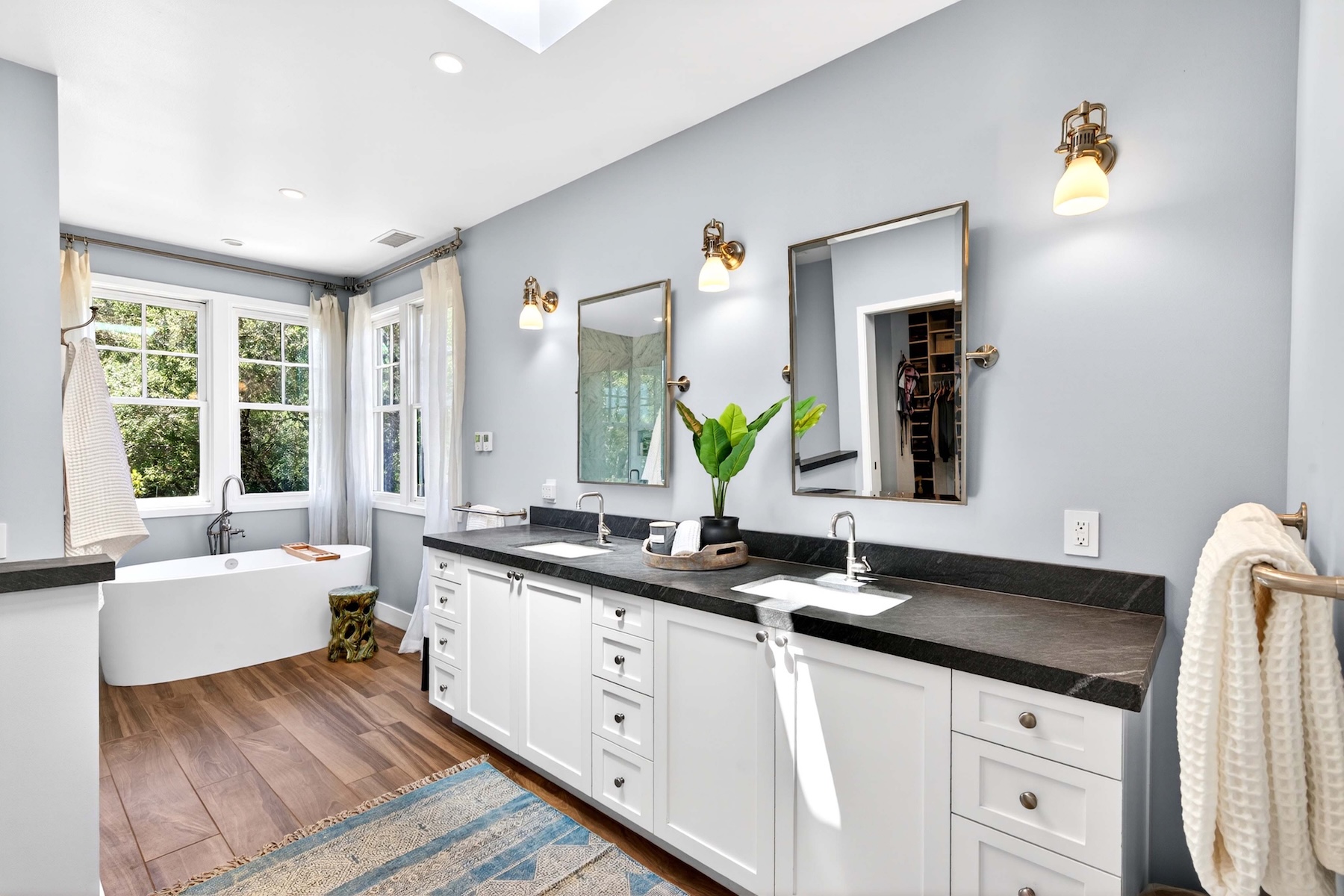
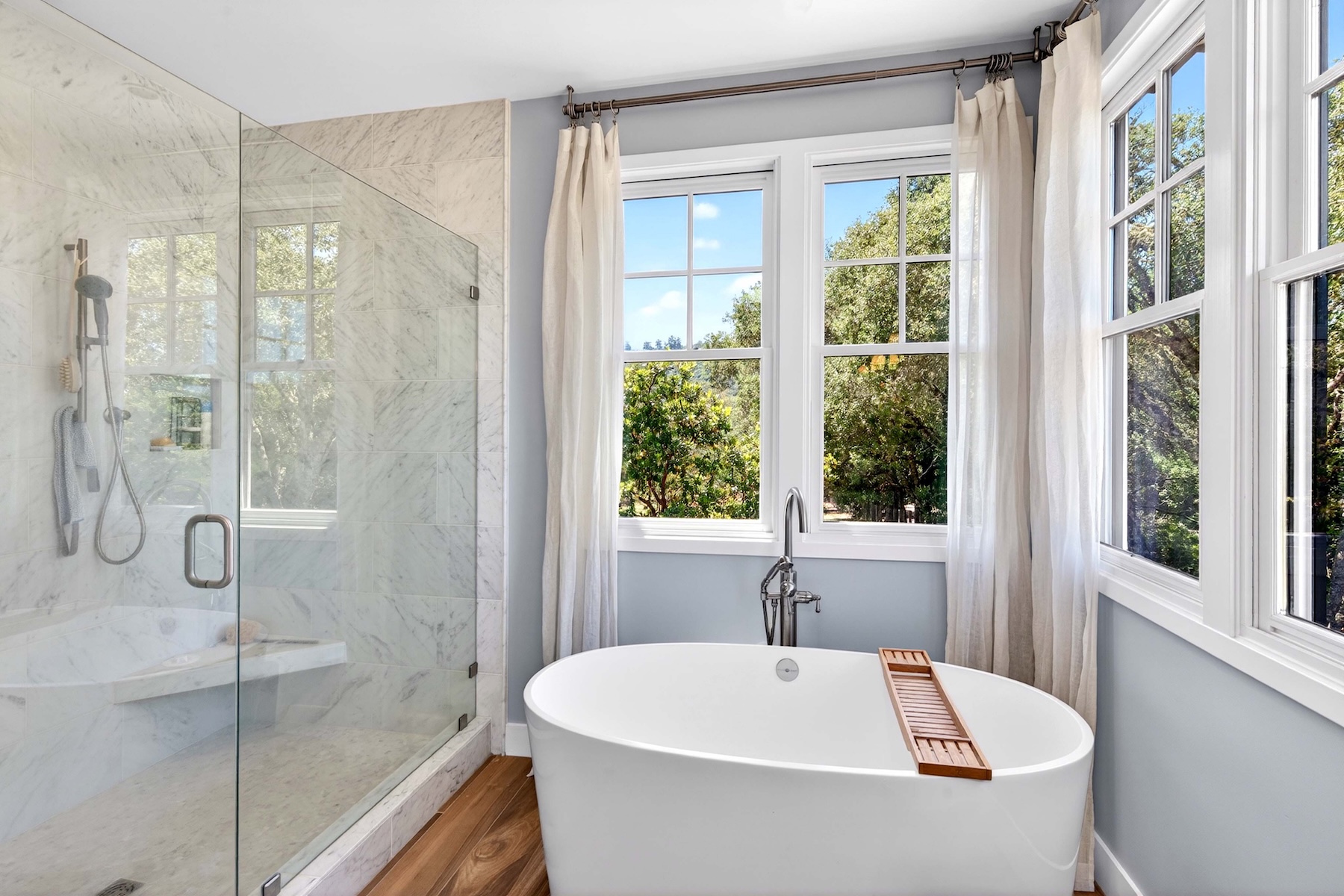
The main-level primary suite is designed as a private retreat: vineyard views, direct deck access, skylights, and a spa-calibrated bath featuring dual custom vanities, a freestanding soaking tub positioned beneath generous windows, radiant floor heating, and a Toto Japanese toilet. A spacious walk-in closet with in-suite laundry completes the sanctuary.
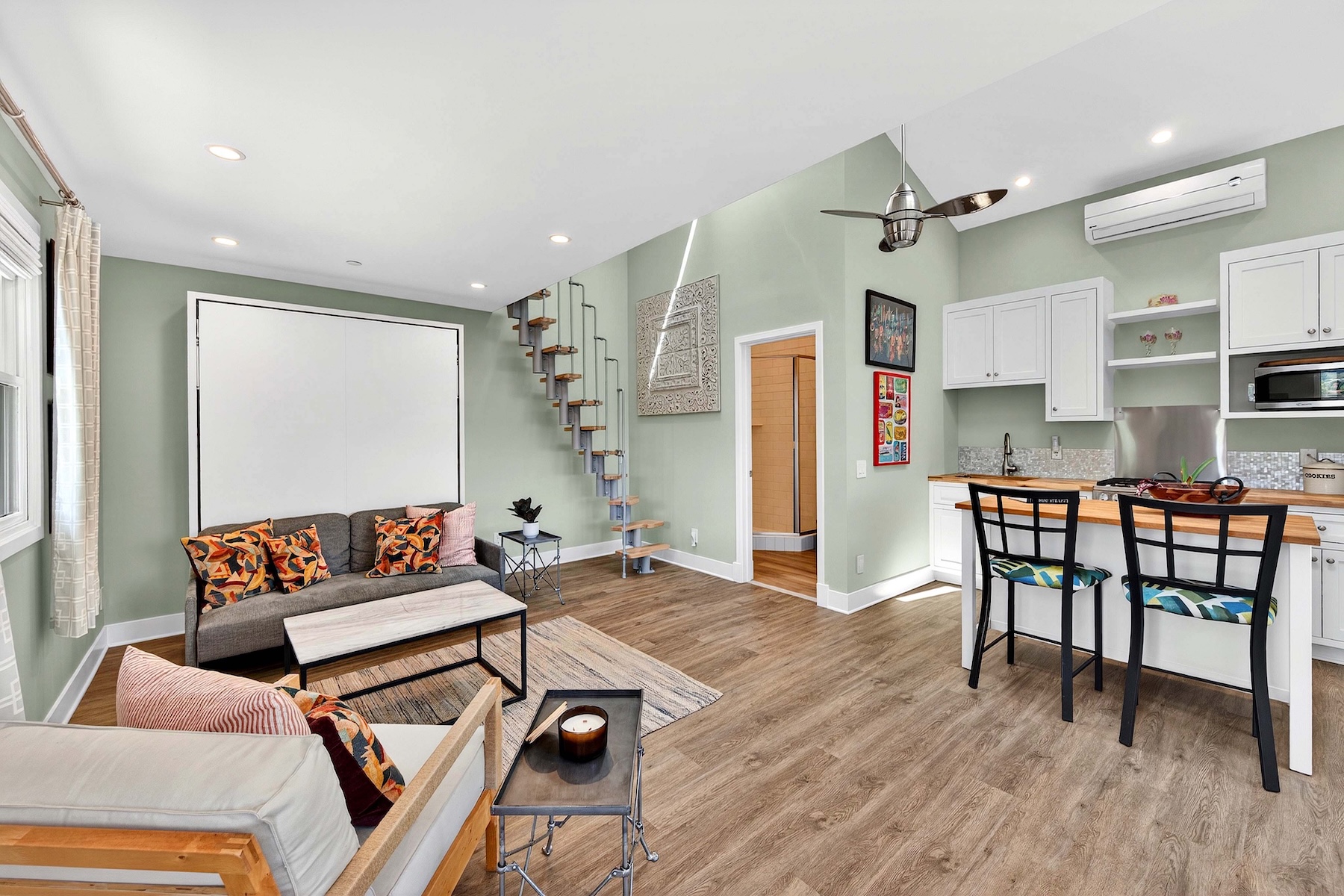
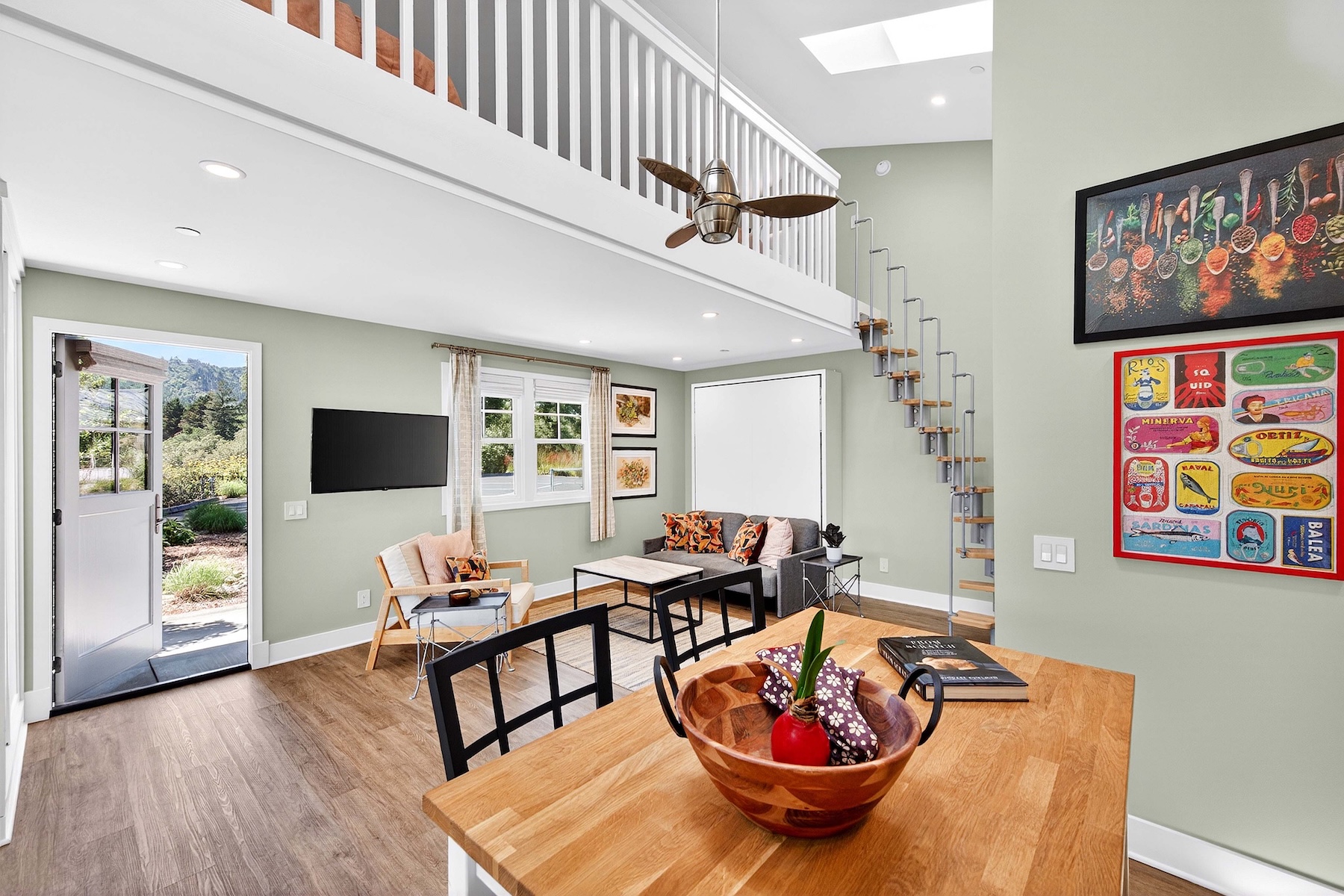
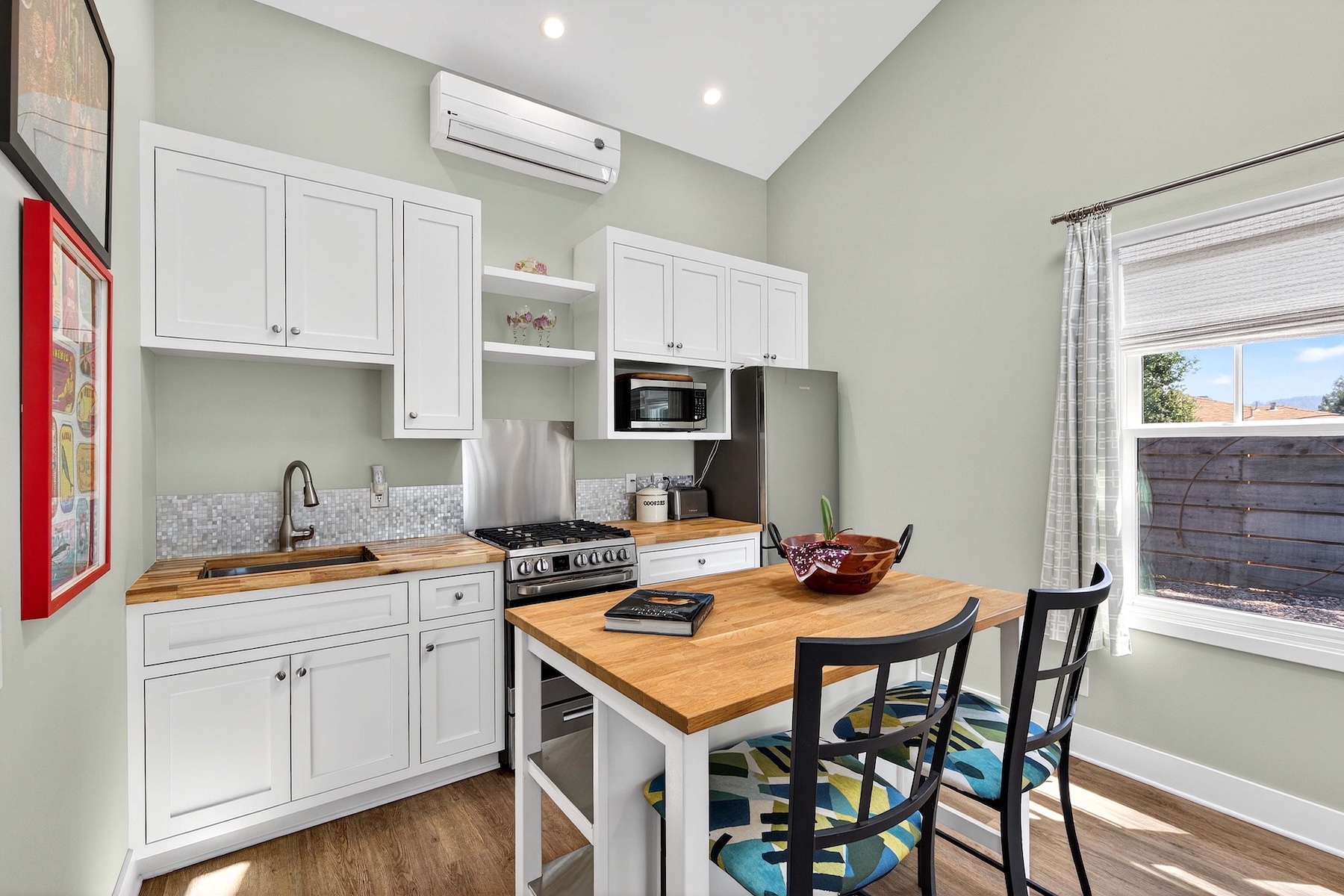
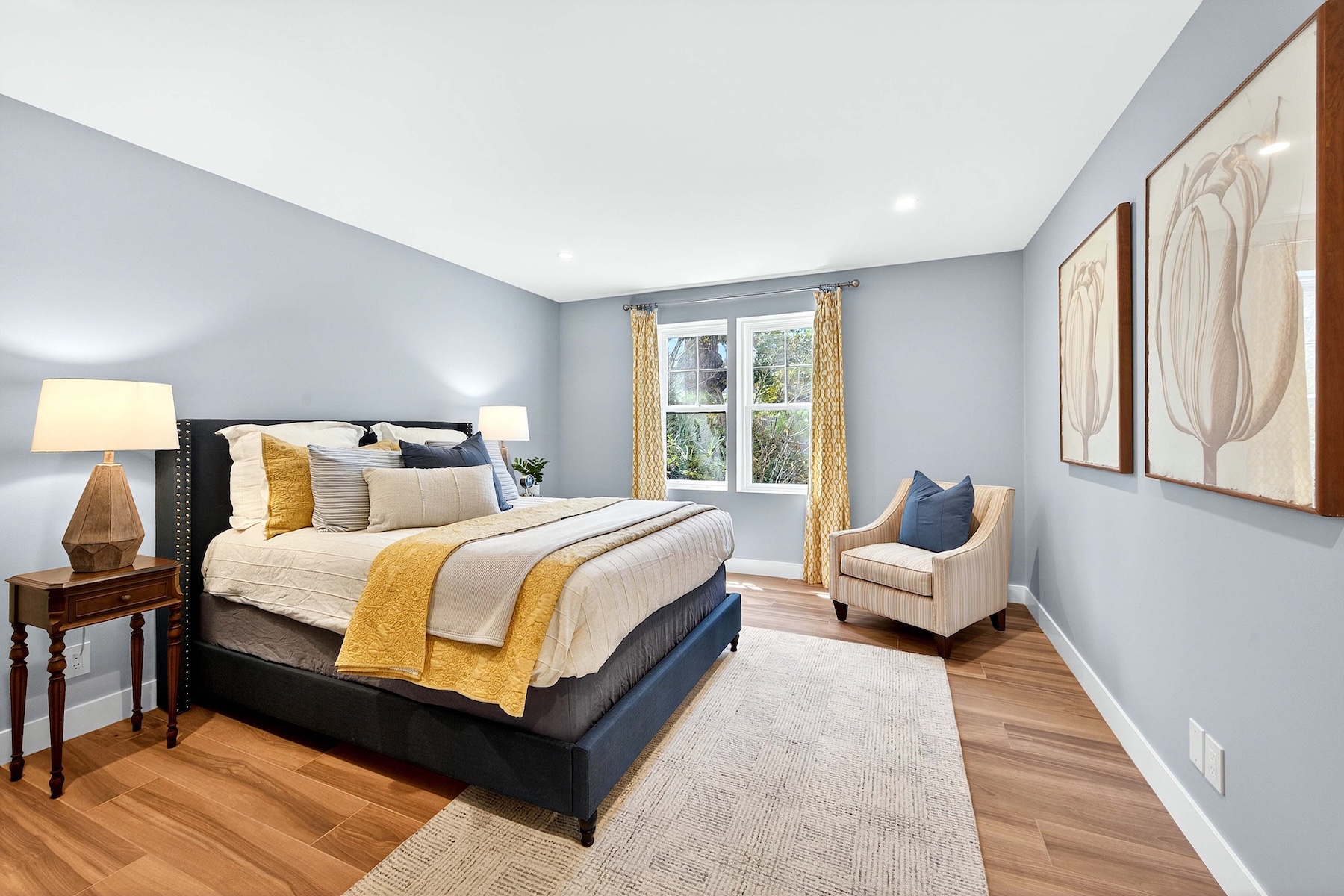
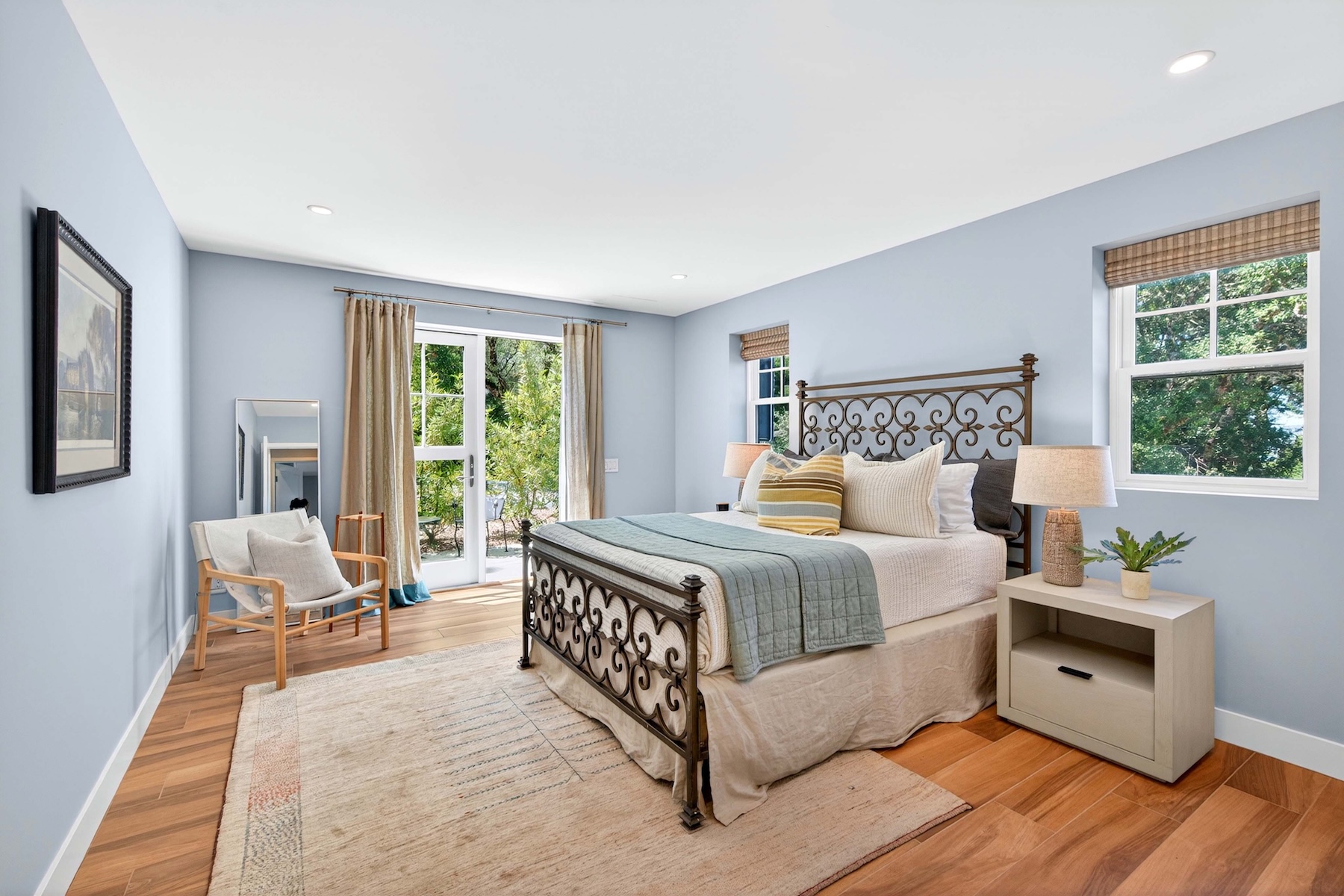
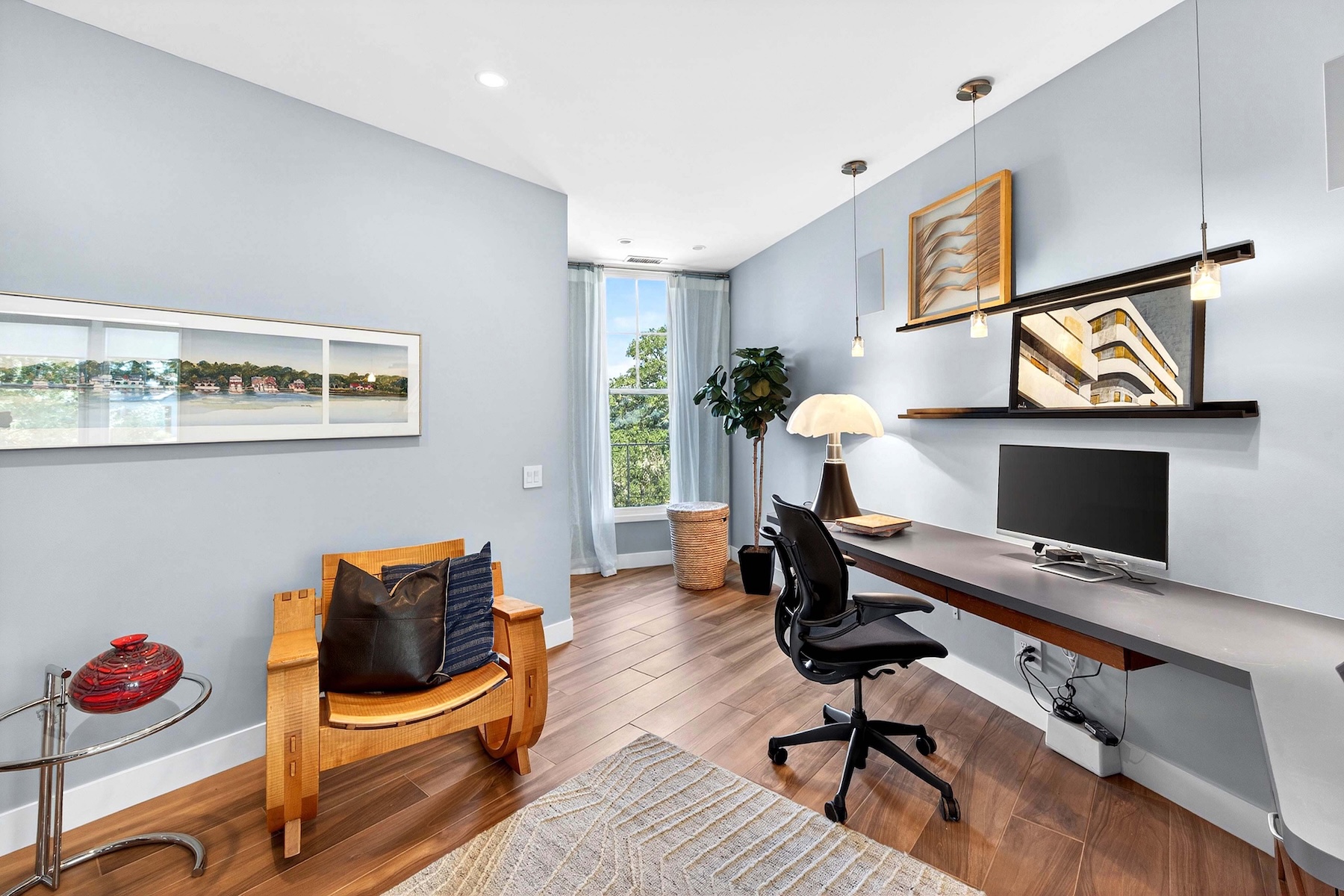
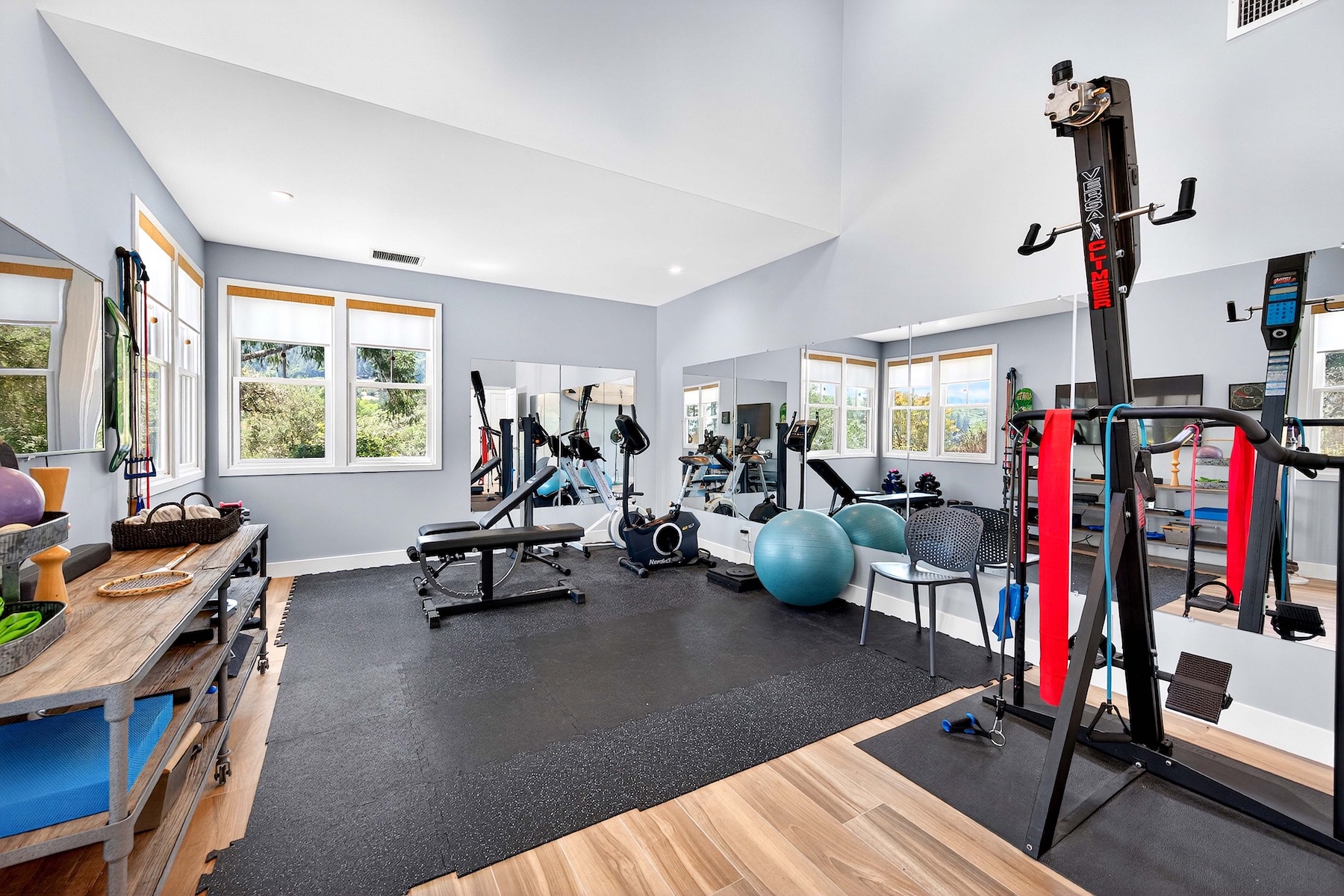
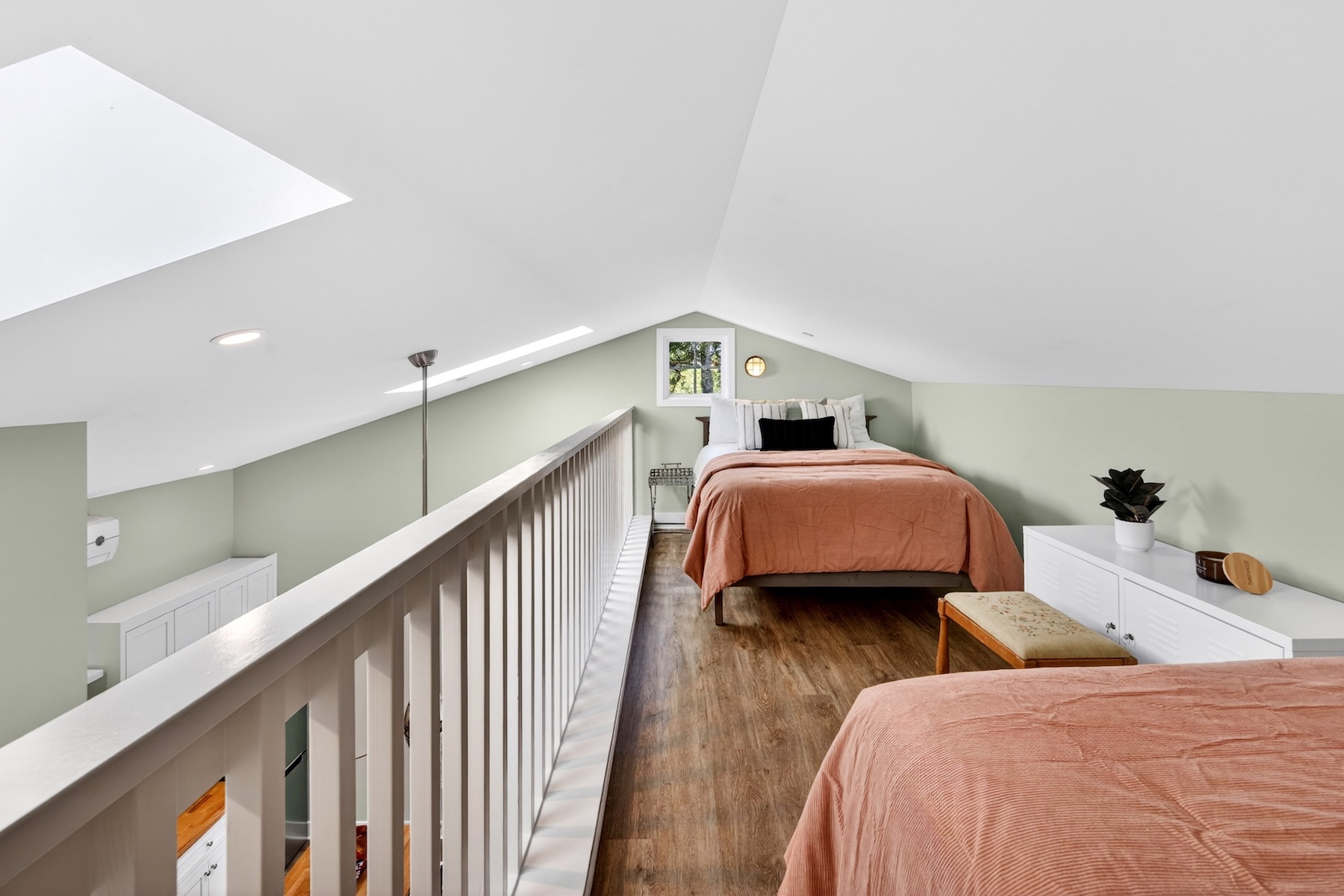
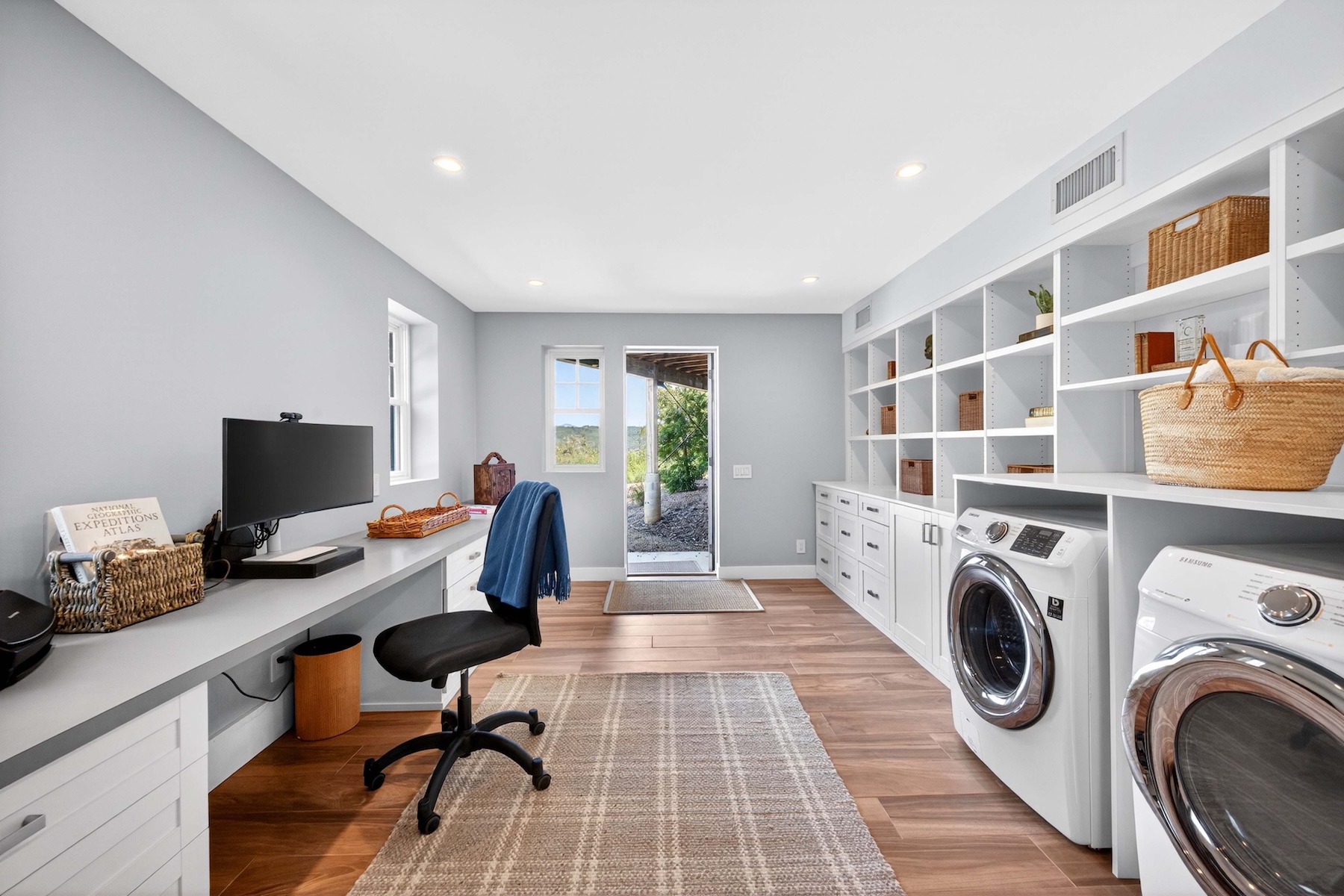
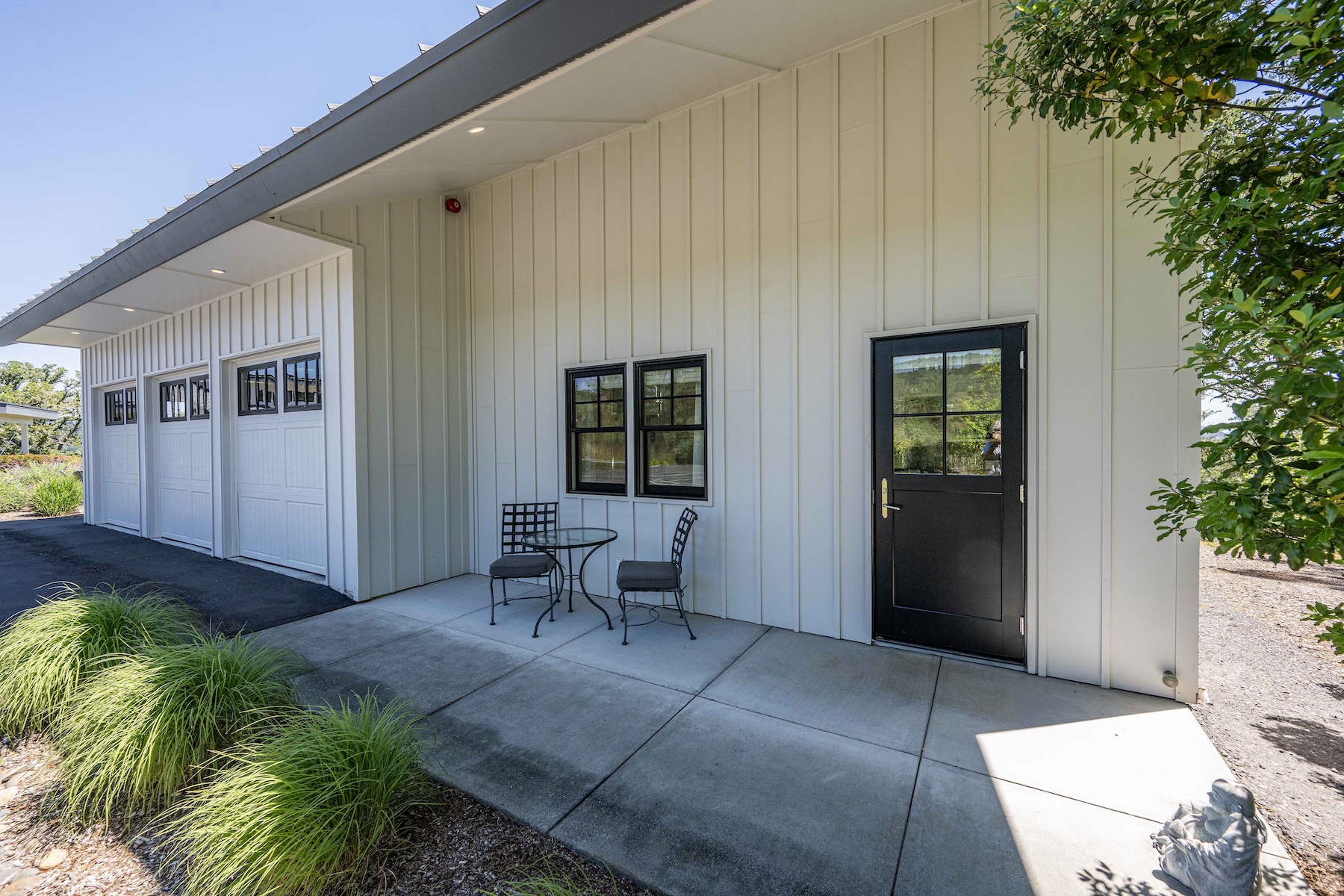
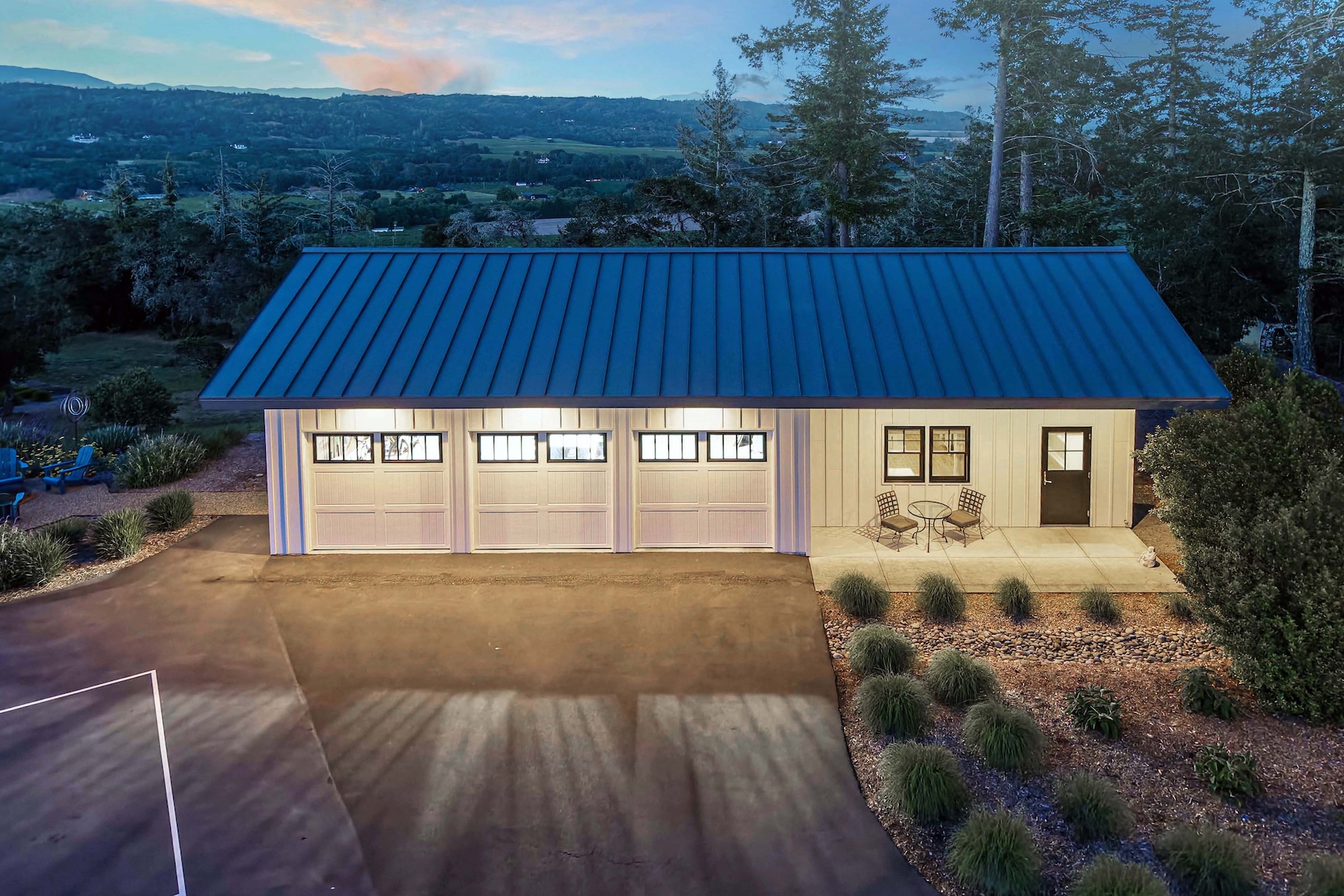
Adjacent, a quiet den or library is conveniently accessed, and a well-appointed gym with wall-to-wall mirrors, can be a flexible space for guests, den or hobby room. The lower level accommodates two generous guest bedrooms — one with private patio access, and a secondary office with built-in cabinetry. A separate 390± square-foot guest house, complete with sleeping loft, Murphy bed, full kitchen with island, living area, and full bath, provides genuine privacy for extended guests or visiting family.
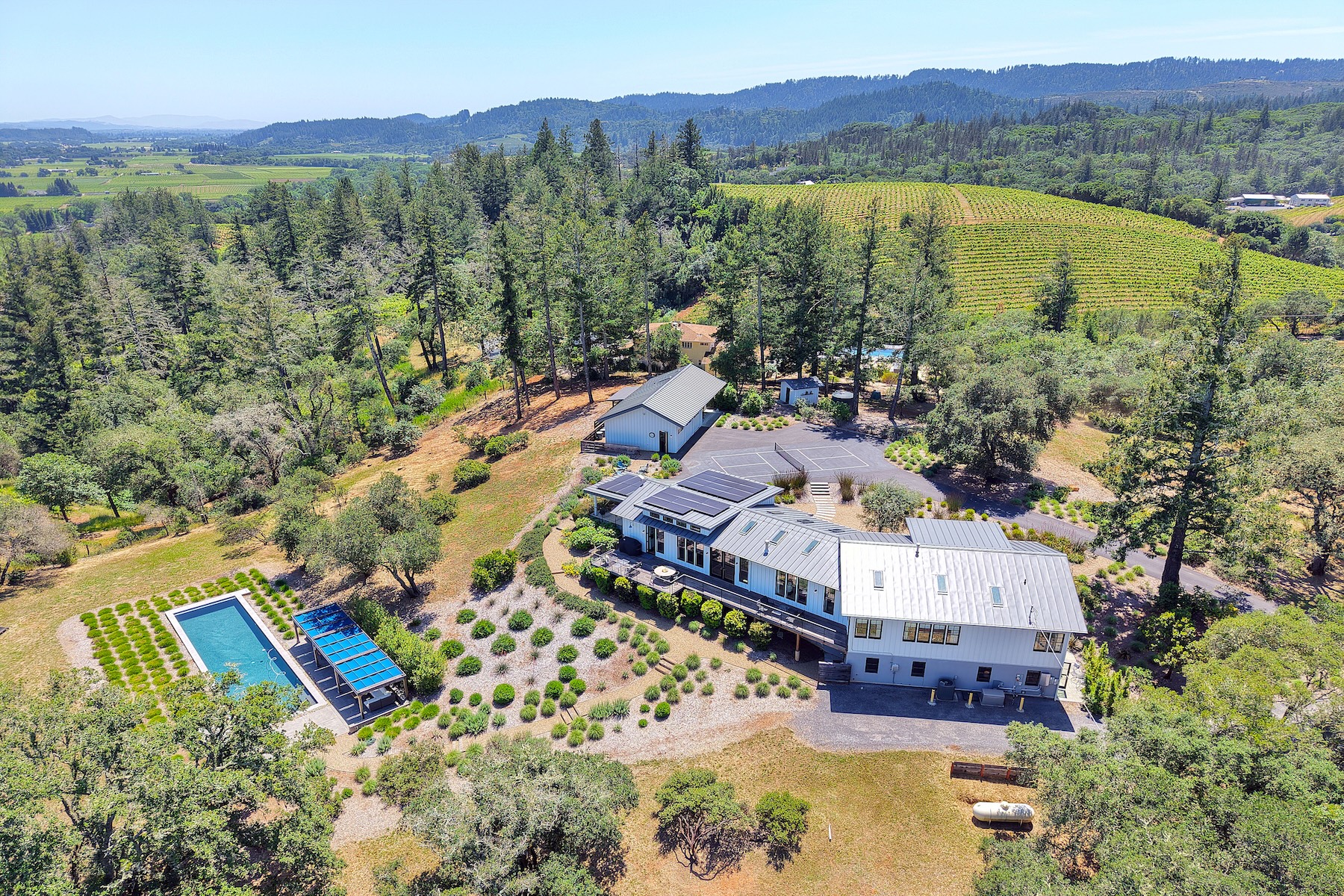
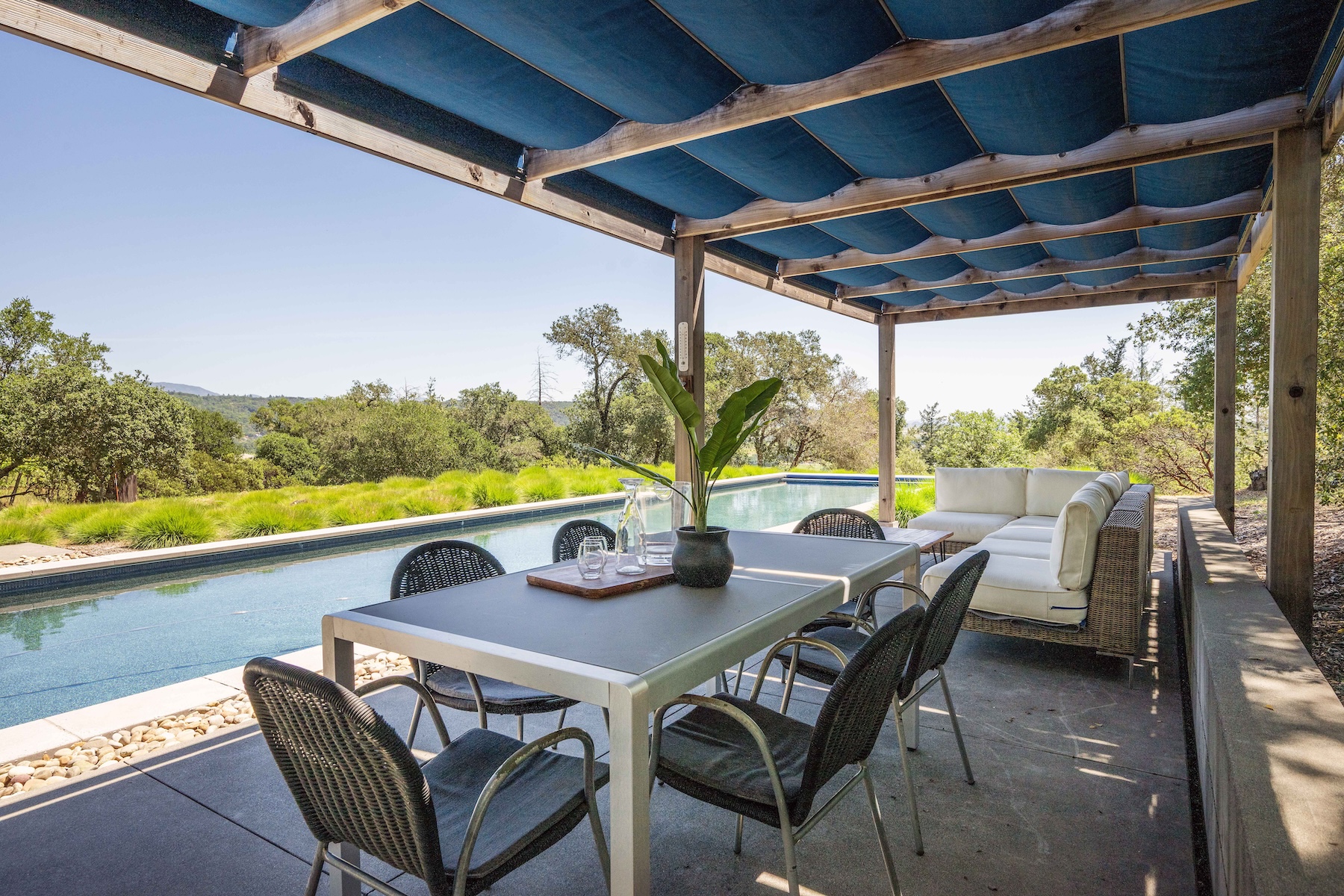
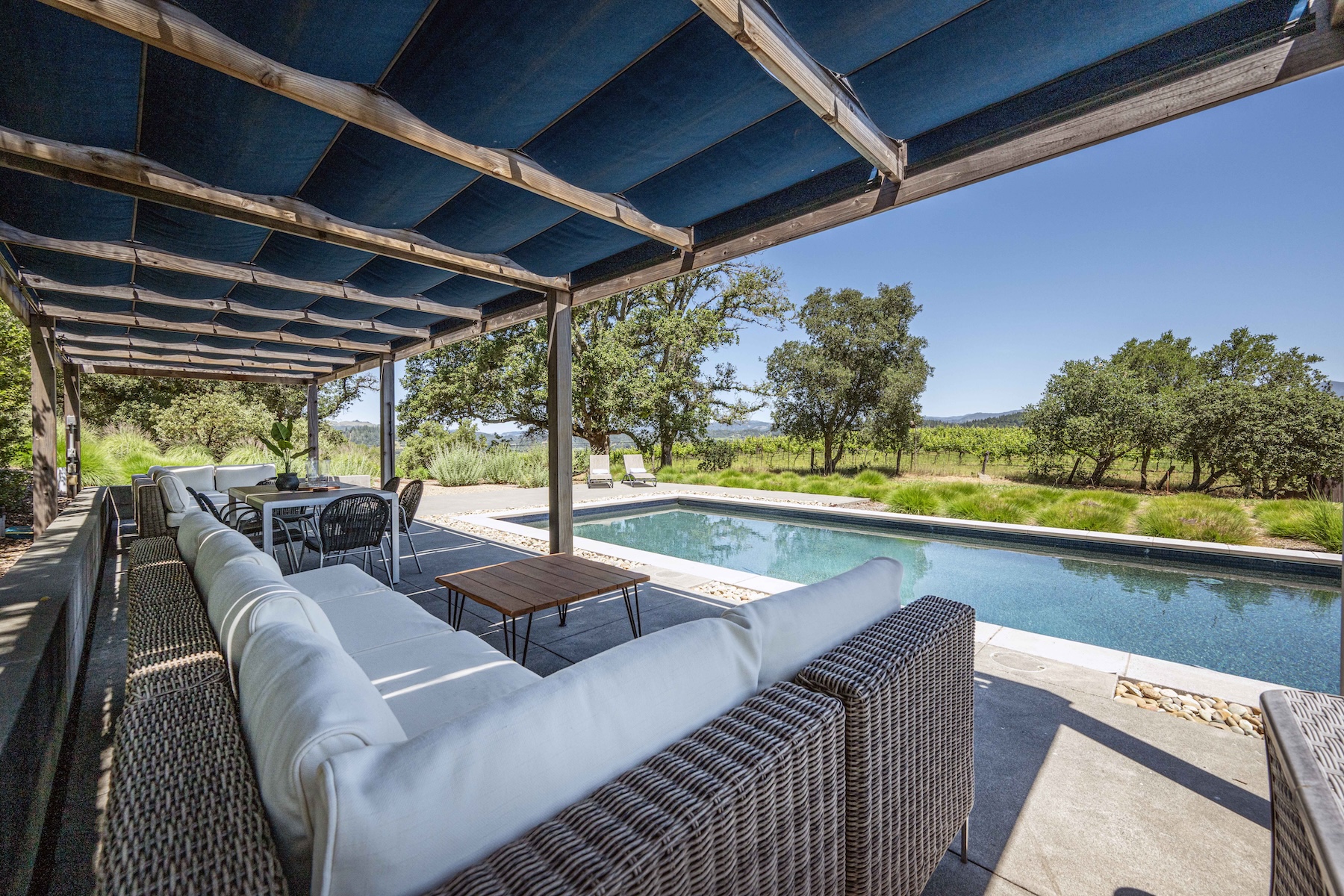
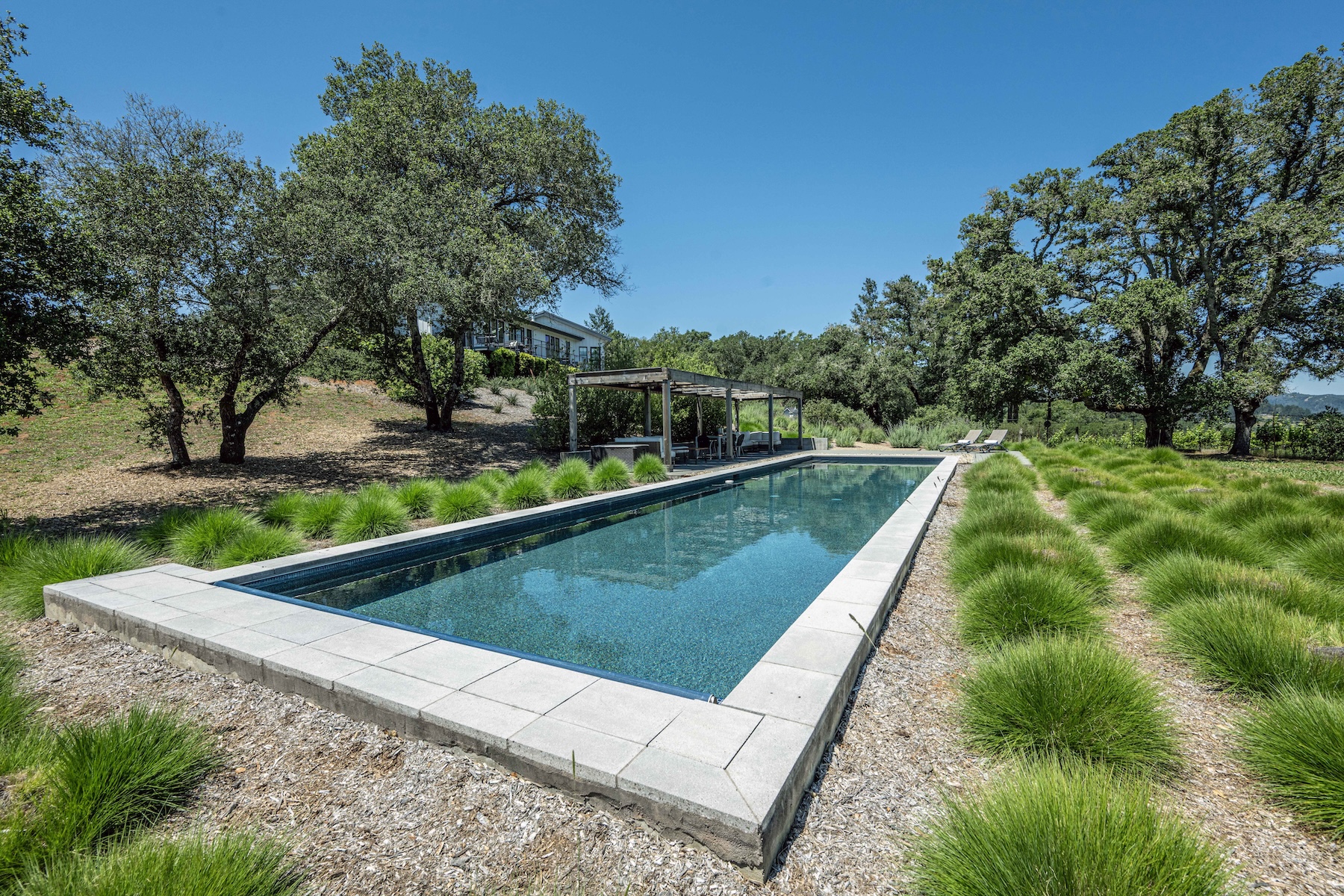
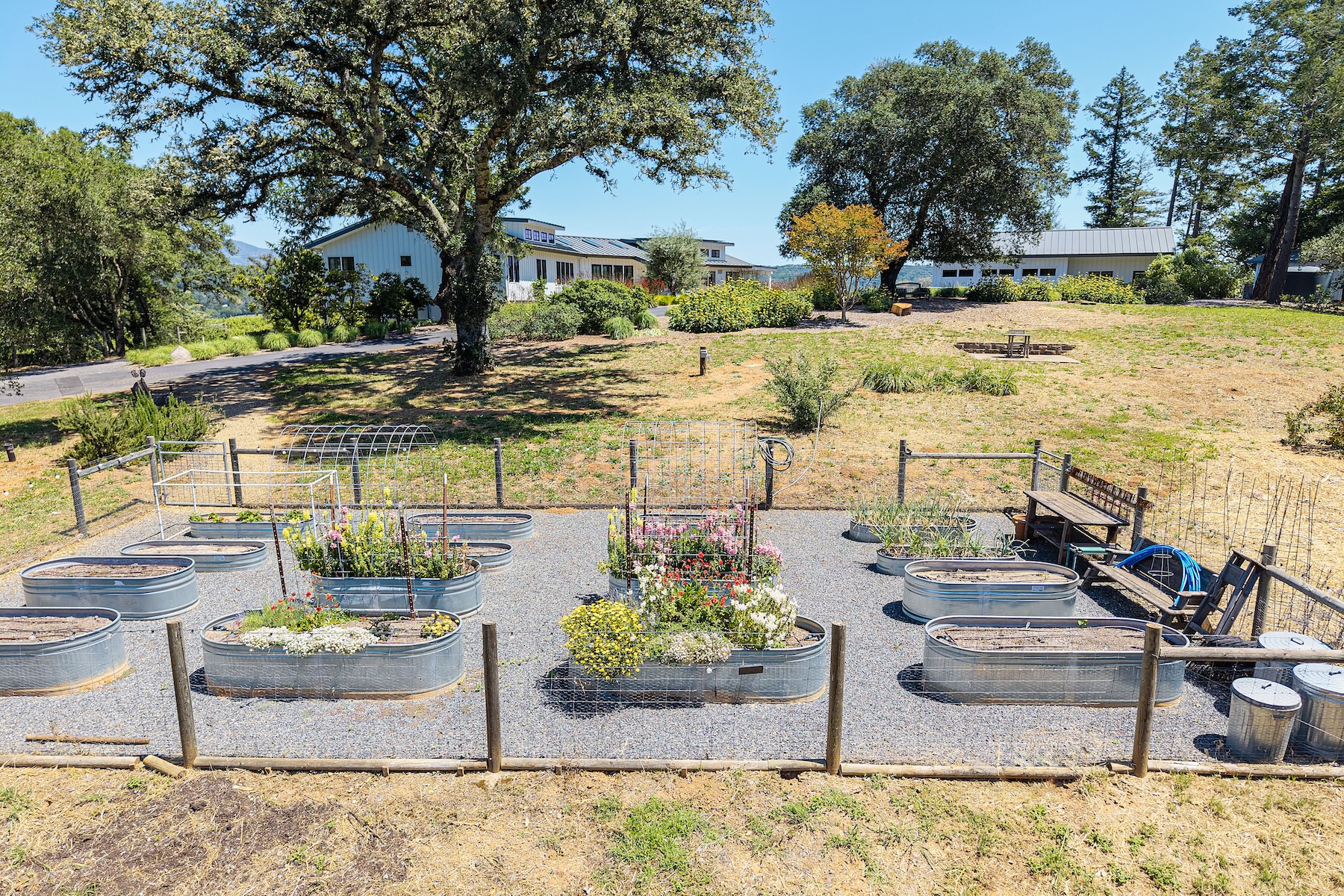
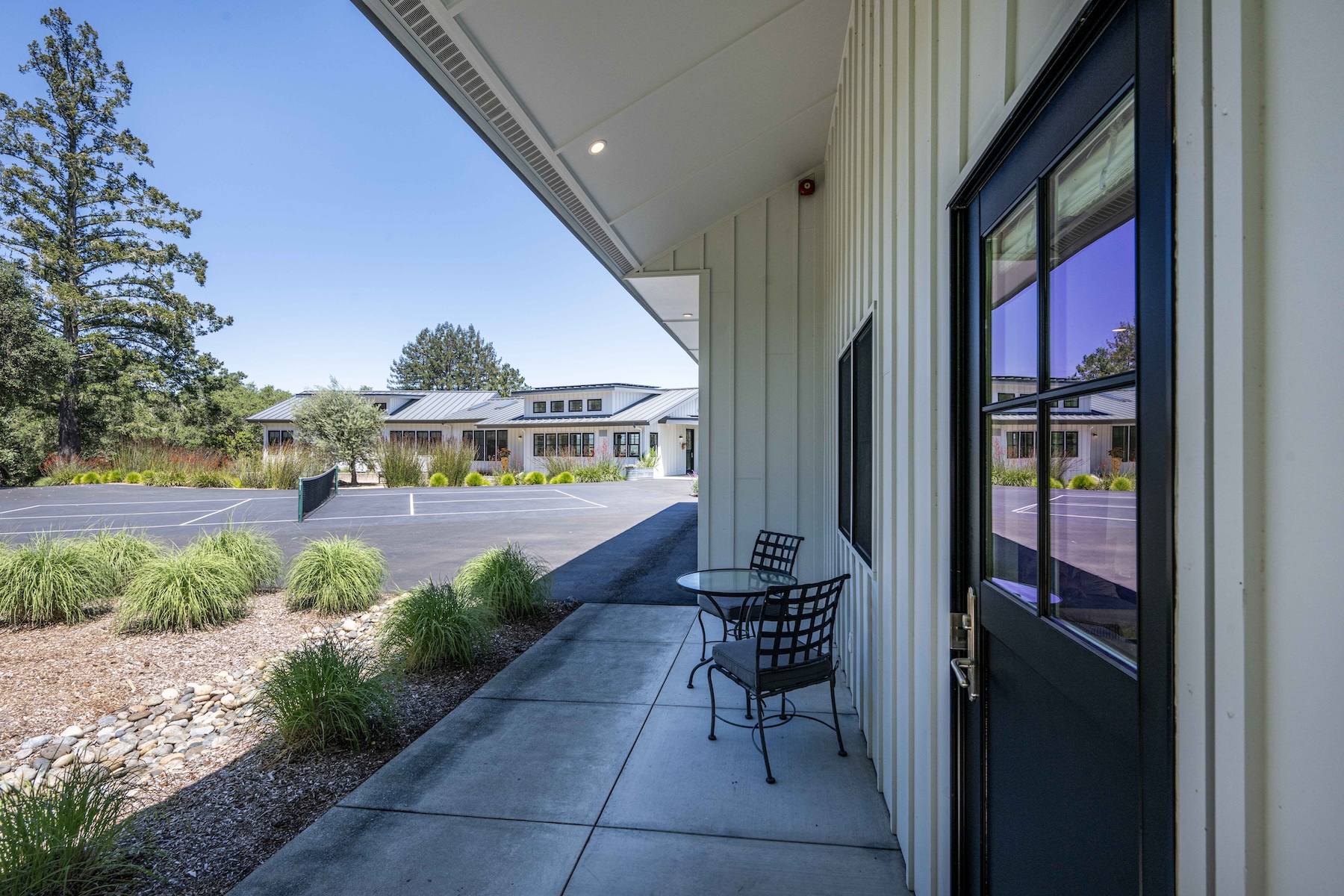
Outdoors, the grounds function as a private resort: a sixty-foot solar-heated lap pool with integrated cover, a wood arbor with retractable shade for lounging and al fresco dining, twelve raised vegetable garden beds within a dedicated fenced enclosure, a pickleball court, and extensive landscaping served by automated drip irrigation. Practical infrastructure — whole-home backup generator, PV solar with battery backup, private well with UV filtration and water softening, EV charger outlet, and built-in audio throughout — ensures that the ease of life here is never interrupted by the mechanics of it.
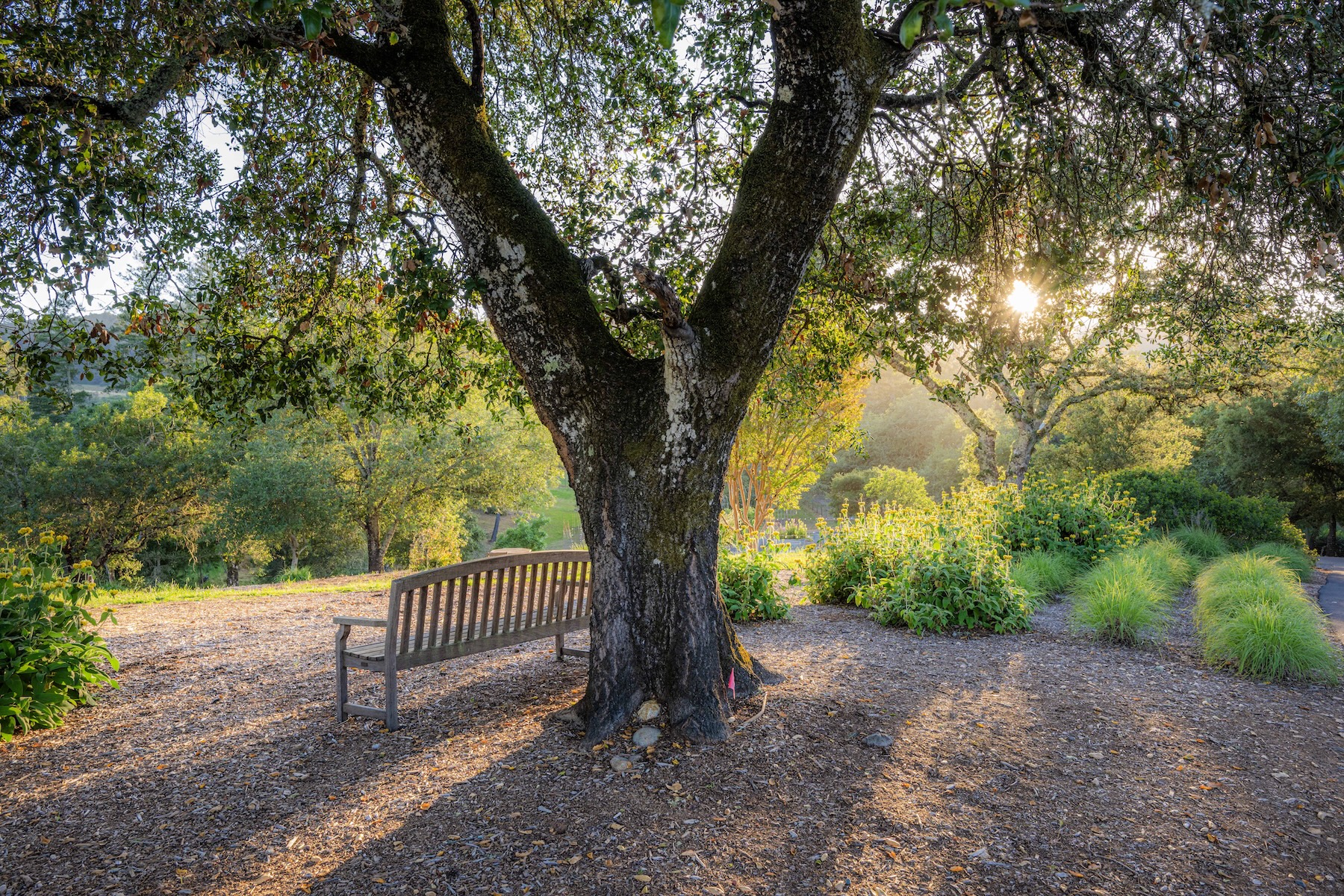
Dry Creek Valley occupies a singular position in the American wine landscape. Running roughly eleven miles through the western reaches of Sonoma County, this narrow, sun-drenched appellation is recognized by the Wine Institute as one of California's most distinguished wine regions — celebrated above all for Zinfandel and Cabernet Sauvignon vines that have been cultivated here since the late nineteenth century. The valley's well-drained benchland soils, warm days, and cool Pacific-influenced evenings create growing conditions that produce wines of genuine character and complexity, a fact that has drawn generations of serious winemakers and equally serious wine lovers to its gentle hillsides.
Healdsburg, the market town anchoring Dry Creek Valley's southern gateway, has undergone a remarkable evolution over the past two decades. Once a quiet agricultural community centered around its historic plaza, it has emerged as one of Northern California's most desirable small towns — a place where Michelin-recognized restaurants, acclaimed tasting rooms, independent boutiques, and a deeply rooted farming culture coexist with unusual grace. The town's tree-lined plaza, a California Historic Landmark, remains the social and civic heart of the community, hosting farmers markets, summer concerts, and the kind of unhurried daily life that feels increasingly rare.
Within a short radius of this estate, some of Dry Creek Valley's most storied wineries — among them Quivira Vineyards, Preston Farm and Winery, and Dry Creek Vineyard — offer tasting experiences that range from intimate and appointment-only to warmly casual. The Dry Creek General Store, a beloved local institution operating since 1881, sits just minutes away and serves as an informal gathering place for the valley's residents and visitors alike.
For those drawn to the outdoors, the surrounding landscape offers exceptional recreational variety. Lake Sonoma, a short drive north, provides boating, fishing, swimming, and hiking across more than 17,000 acres of protected watershed. The Warm Springs Dam Recreation Area and the surrounding Sonoma County trail network draw cyclists and hikers throughout the year. The Healdsburg area has become particularly well regarded among cycling enthusiasts for its network of low-traffic roads threading through vineyards and farmland.
Beyond leisure, the practical infrastructure of Sonoma County adds further appeal. Charles M. Schulz–Sonoma County Airport, located in nearby Santa Rosa, provides commercial service and convenient access for private aviation. Mayacama Golf Club, the celebrated Jack Nicklaus–designed private course set in the Mayacamas Mountains, is situated within the broader region. The cultural offerings of Santa Rosa — including the Sonoma County Museum and a thriving arts community — are easily accessible.
San Francisco, the region's metropolitan anchor, lies approximately ninety minutes south via US-101, a drive that underscores one of Dry Creek Valley's most compelling attributes: the ability to live in genuine countryside — surrounded by working farms, ancient oaks, and some of California's finest vineyards — while remaining meaningfully connected to one of the world's great cities. For those who have long imagined a life measured by seasons and harvests rather than traffic and timelines, this valley offers a rare and enduring answer.
Featured Highlights
Curated Content • Presented by Sheri Morgensen & Jessica Wynne