The Story Behind
The Nike House: A Singular Modern Ranch Above the Pacific
There are homes that shelter, and then there are homes that speak. The Nike House — 18 Crest Road East in Rolling Hills — belongs emphatically to the latter category. From the moment its geometric white portico comes into view, framing a set of substantial double wooden doors, it is clear that this property operates by a different set of ambitions entirely.
Robert L. Thompson, the architect entrusted with shaping the physical language of the Nike Campus across more than 70 structures, brought that same rigorous, humanist design intelligence to bear on this estate. The result is a home that feels simultaneously of its hillside and apart from it — a composition of clean lines, deliberate geometry, and materials chosen not for spectacle alone, but for the way they age, breathe, and interact with the Southern California light.
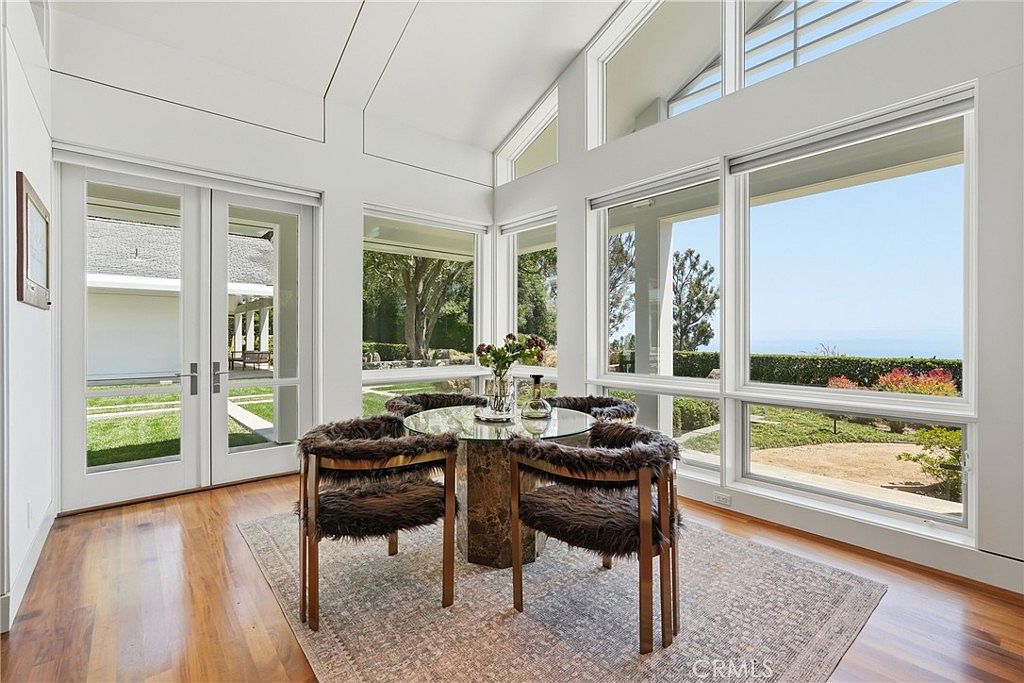
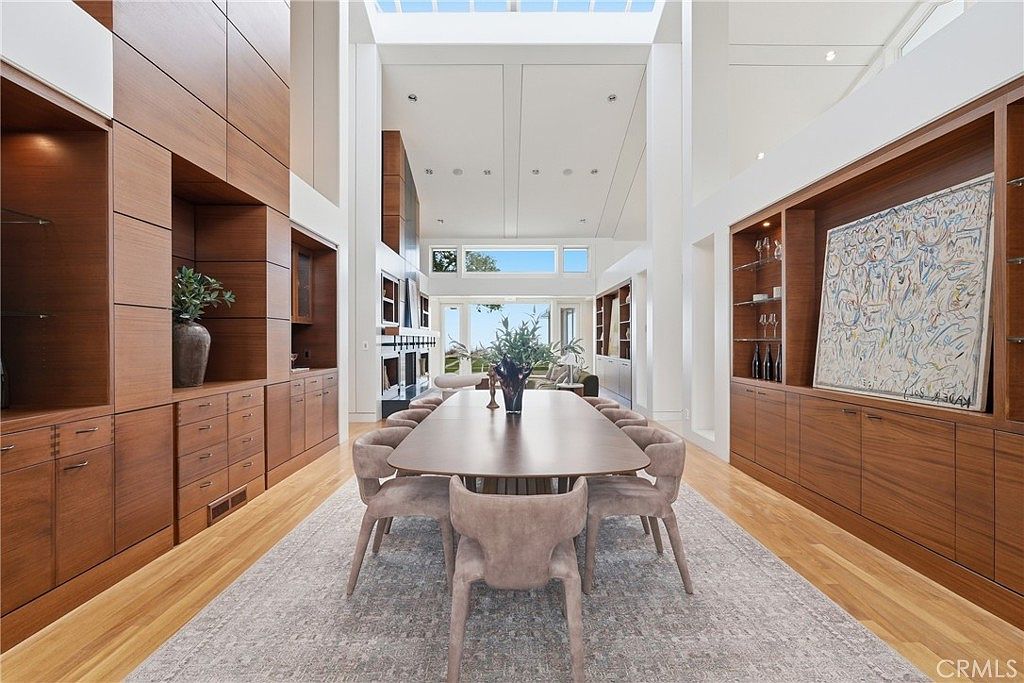
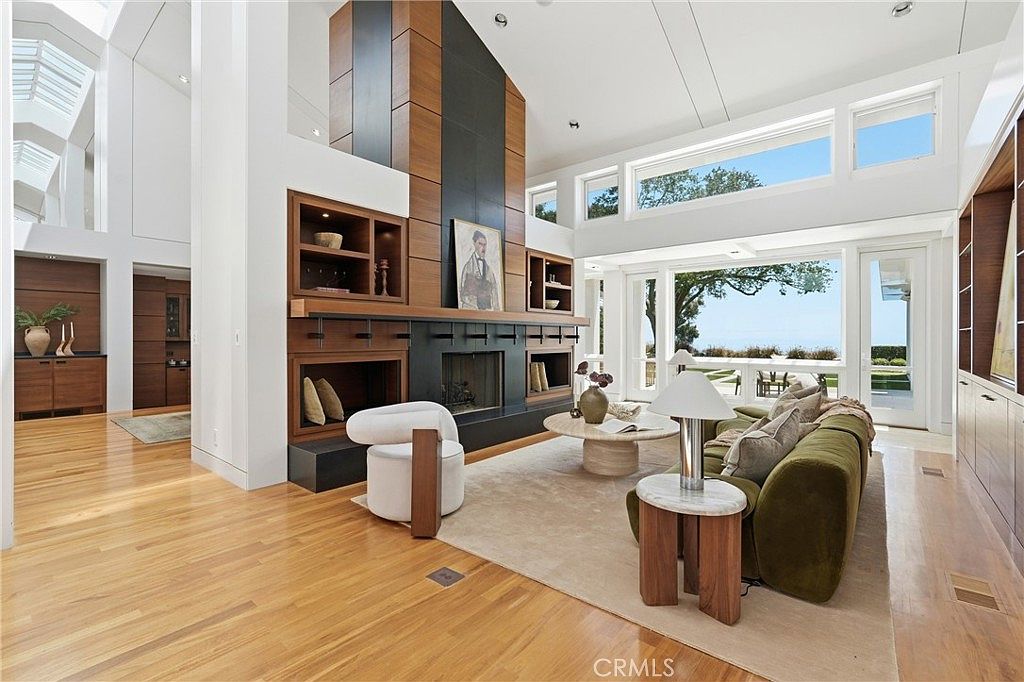
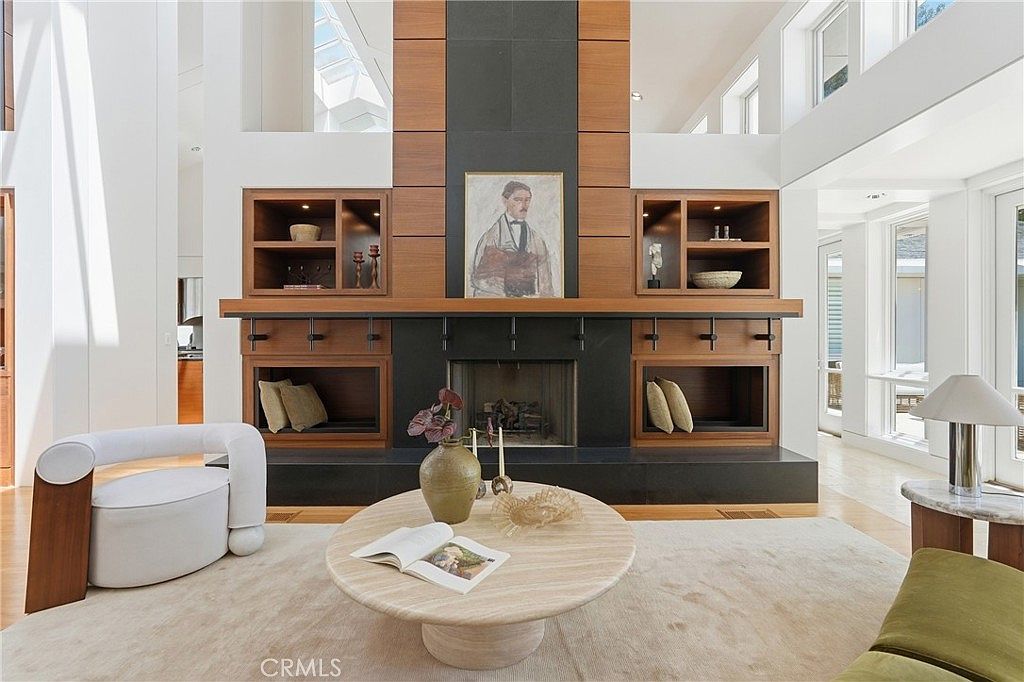
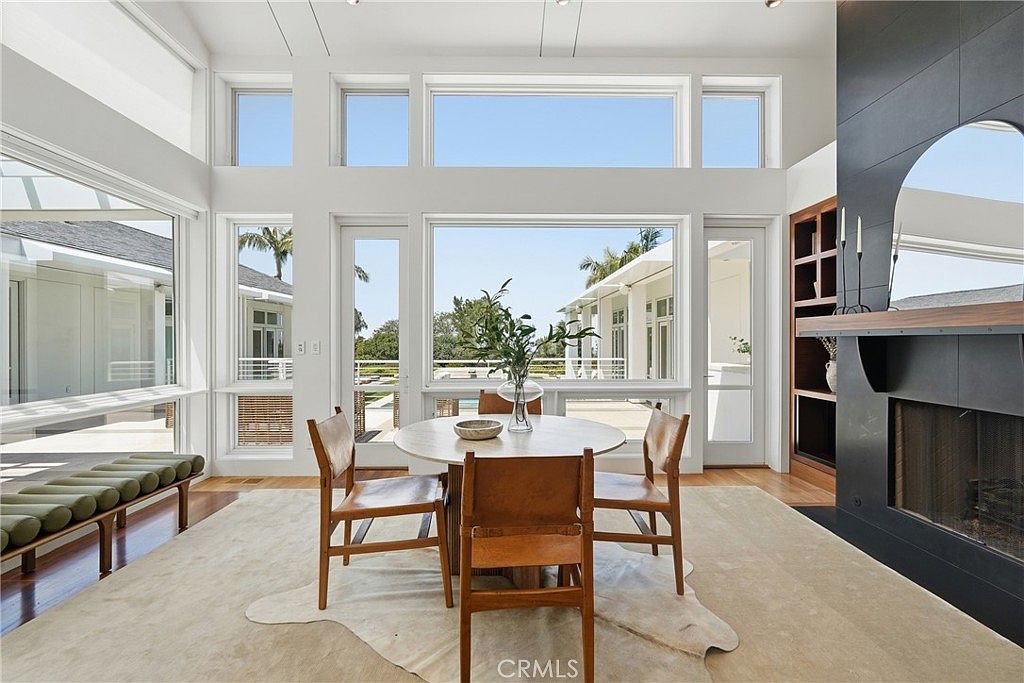
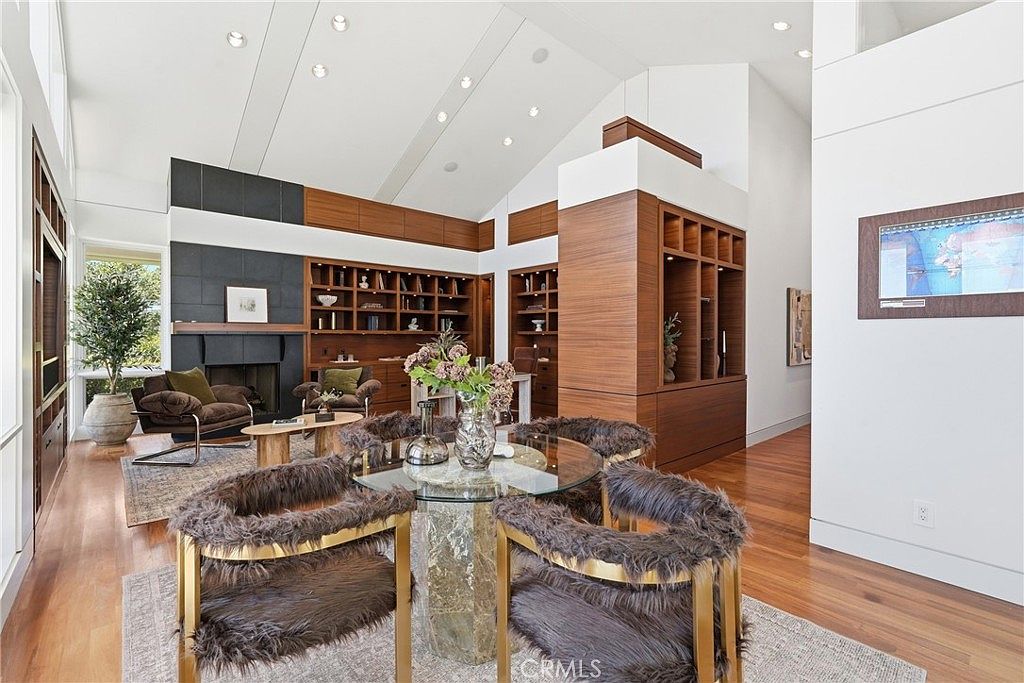
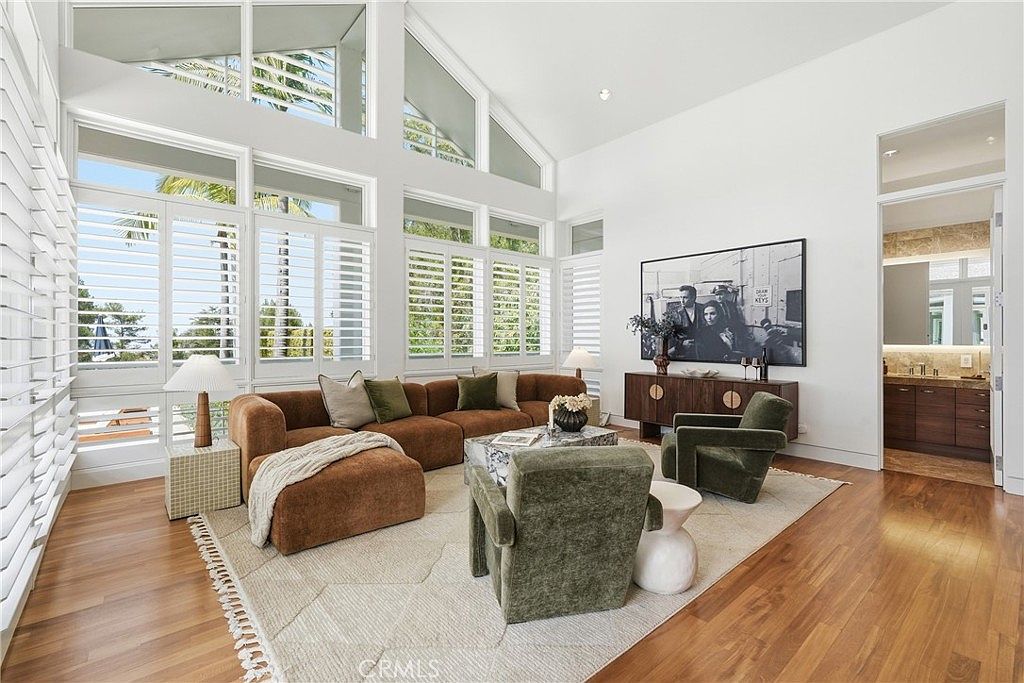
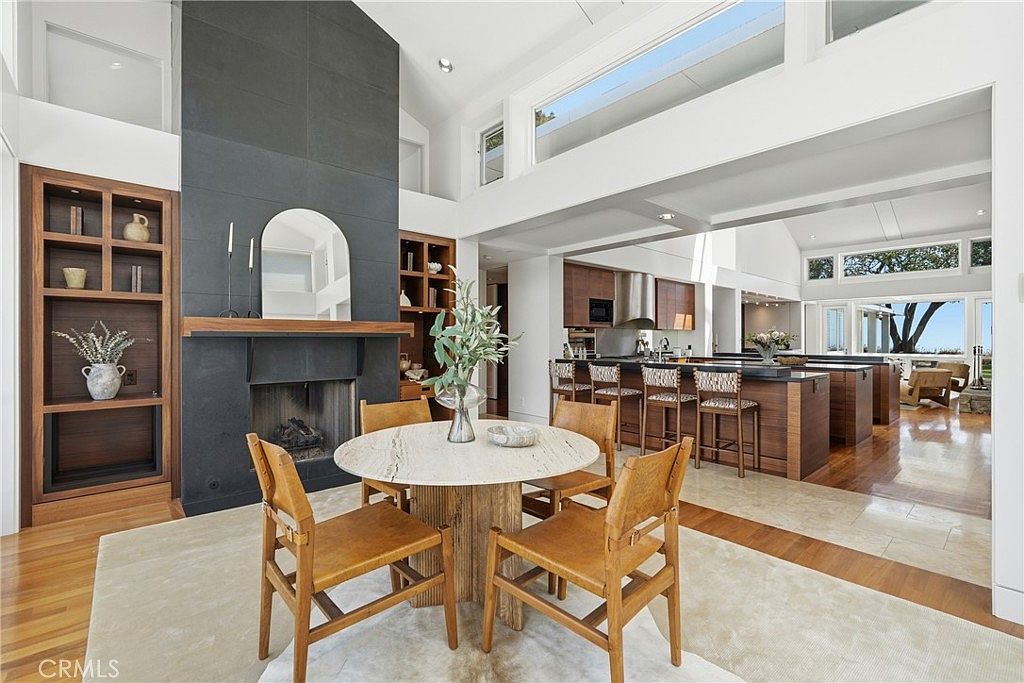
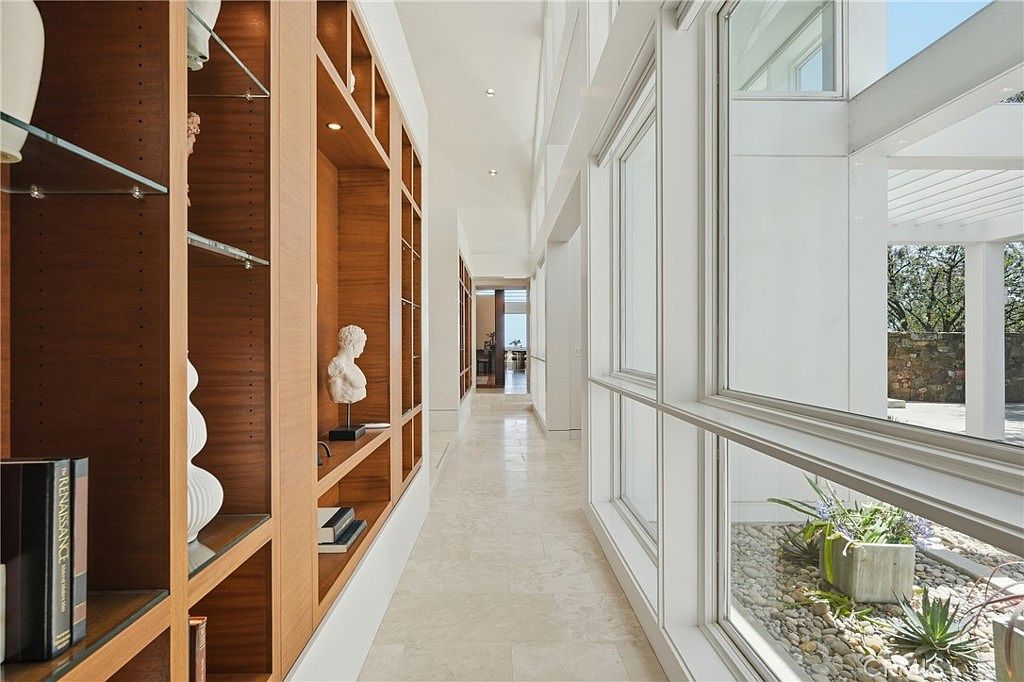
Inside, soaring vaulted ceilings establish the register immediately. Clerestory windows draw ribbons of natural light deep into the open-concept living spaces, where stone-clad chimney breasts anchor rooms of genuine scale without sacrificing warmth. The kitchen is a study in considered contrast: warm wood cabinetry set against dark stone countertops, a substantial central island, and a stainless steel range beneath a commanding vent hood — a space that functions as both a serious culinary environment and a natural gathering point. Skylights overhead ensure the room never loses its connection to the sky.
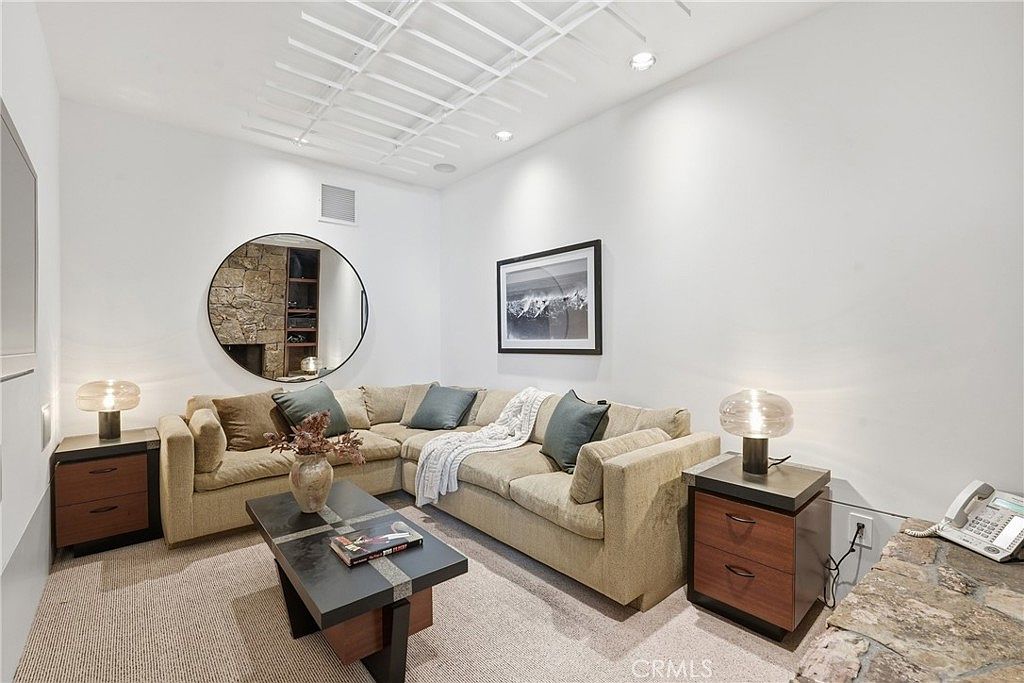
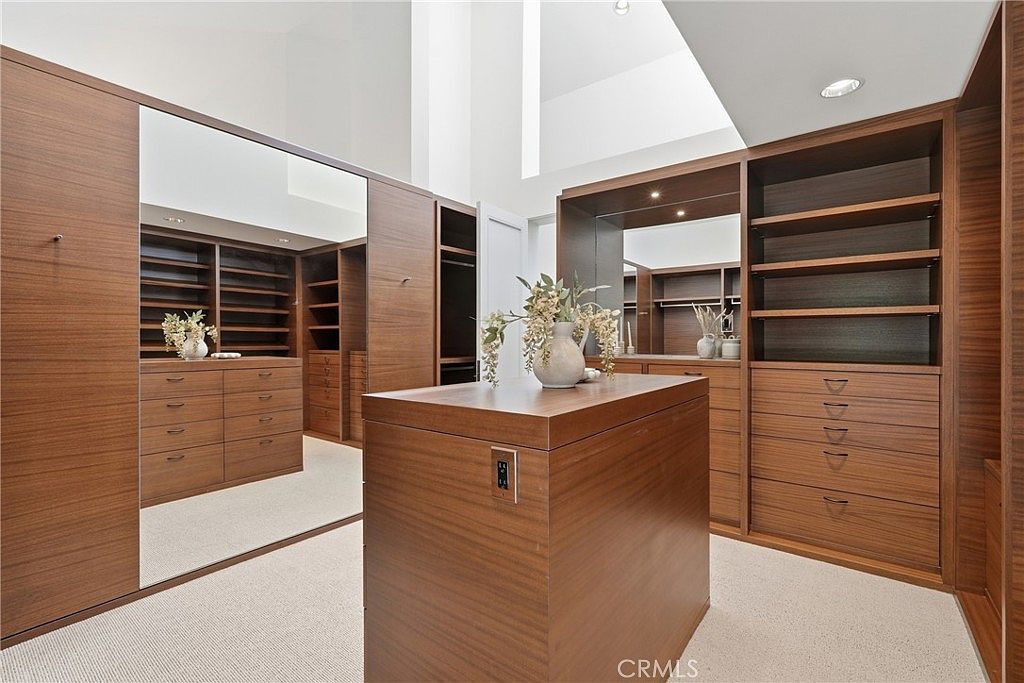
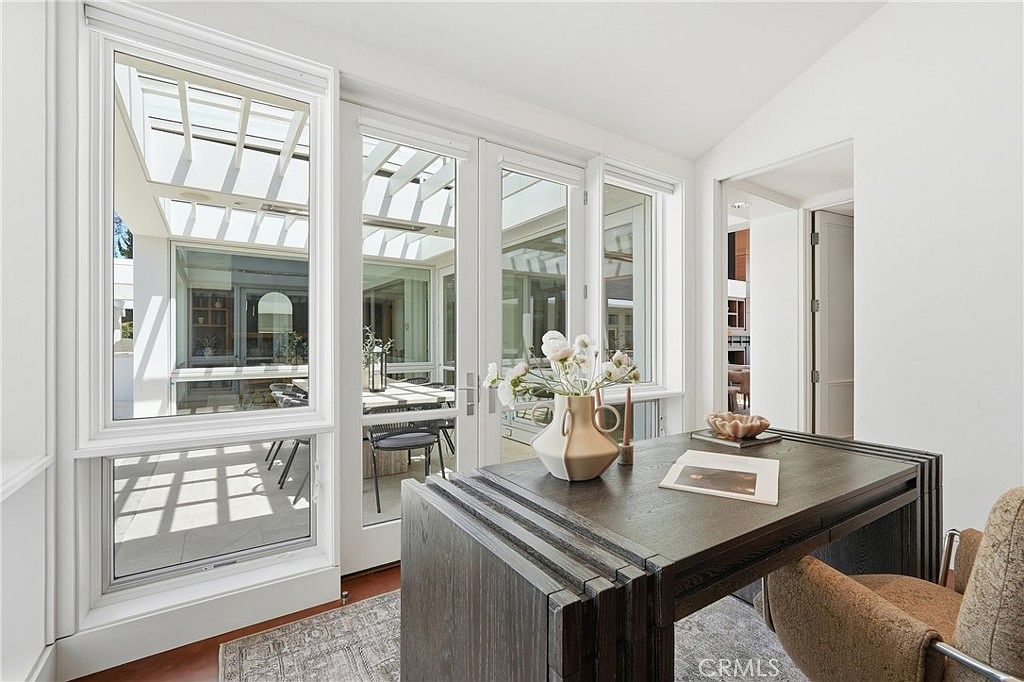
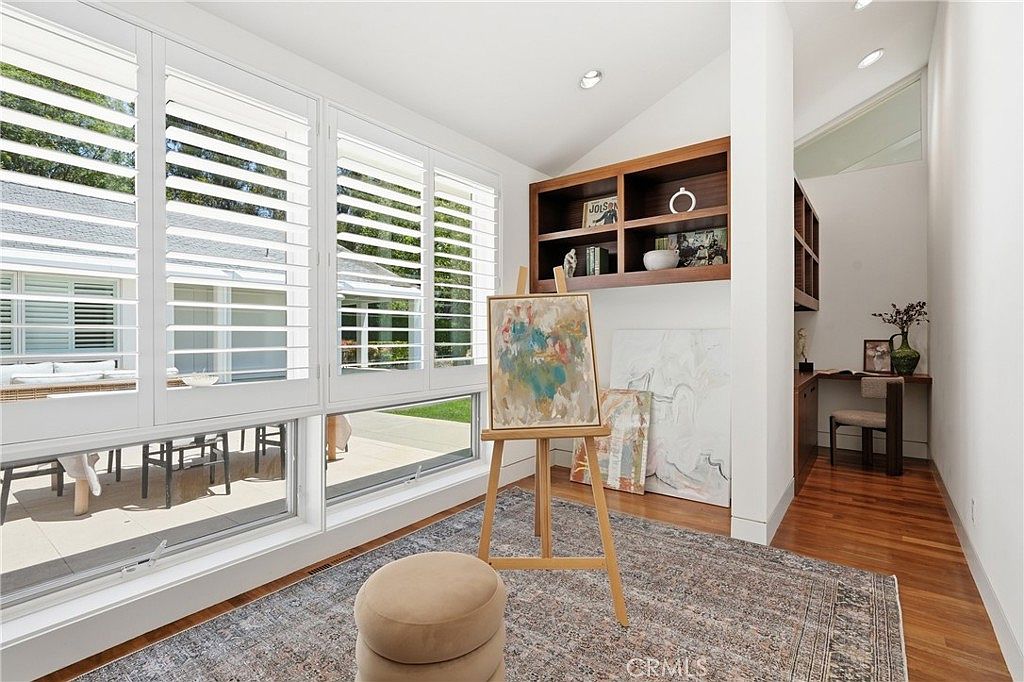
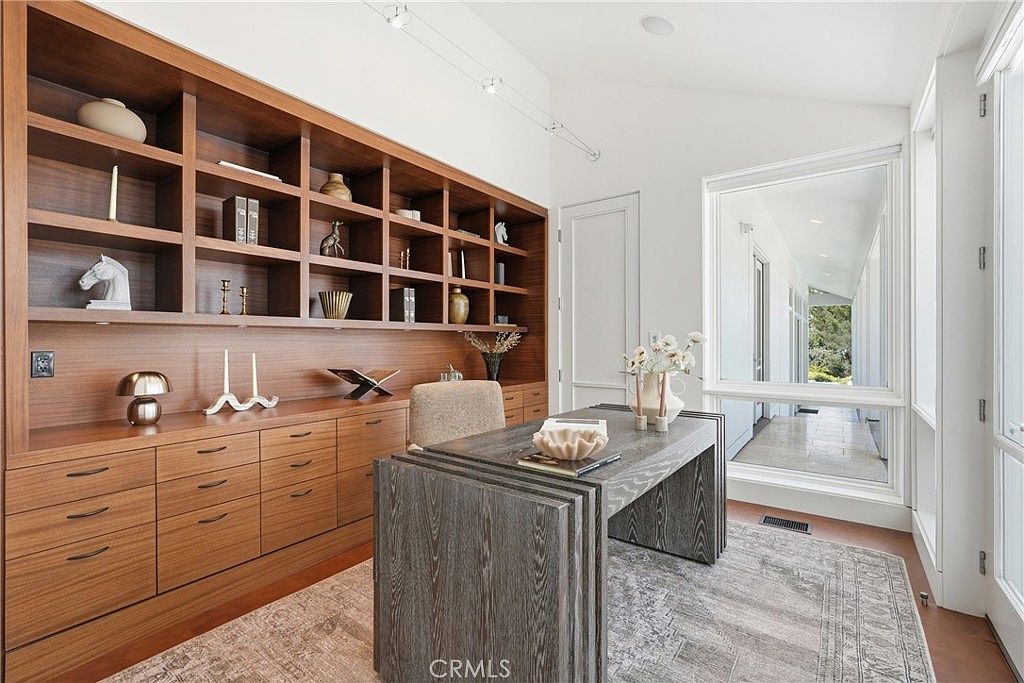
The estate's commitment to purposeful living extends throughout. A magnificent primary office suite overlooks a contemplative Asian garden, creating a workspace of rare psychological clarity. Two additional private offices offer further flexibility for the executive household. A dedicated screening room, a professional gym with expansive glass walls opening to the landscape, and a custom wood-paneled sauna — its tiered benches and volcanic rock heater recalling the finest Scandinavian spa traditions — complete an interior amenity program that rivals the most accomplished private retreats.
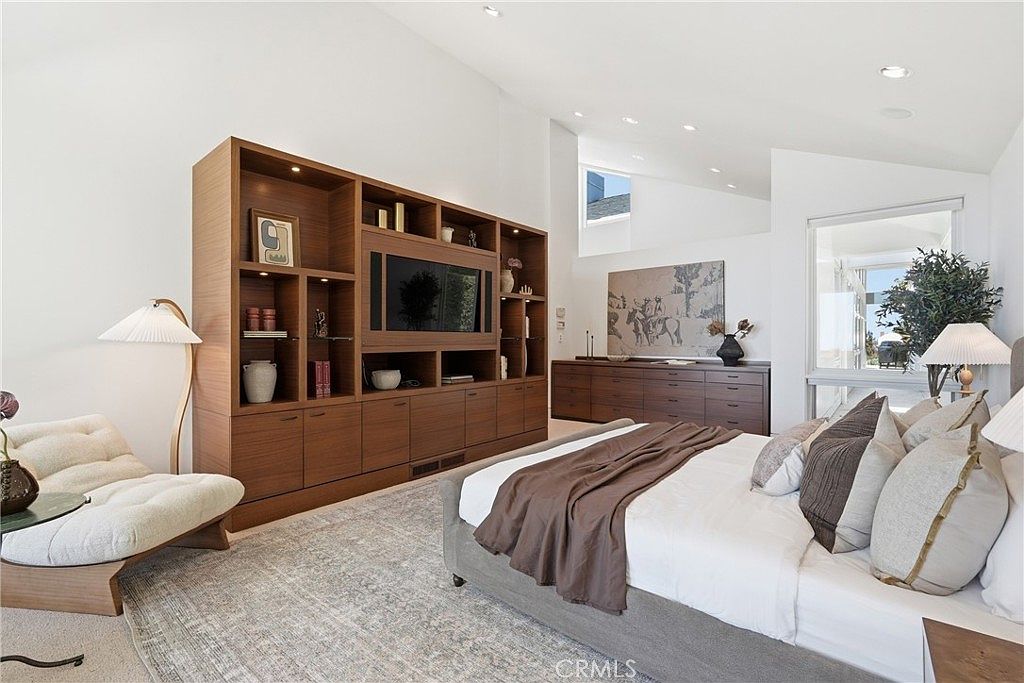
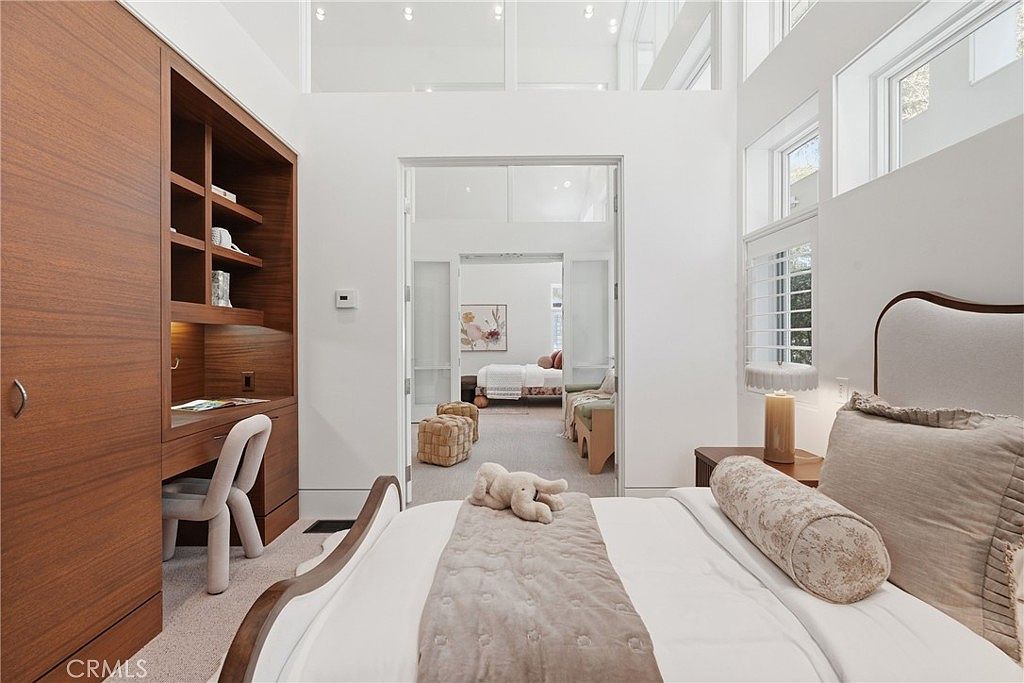
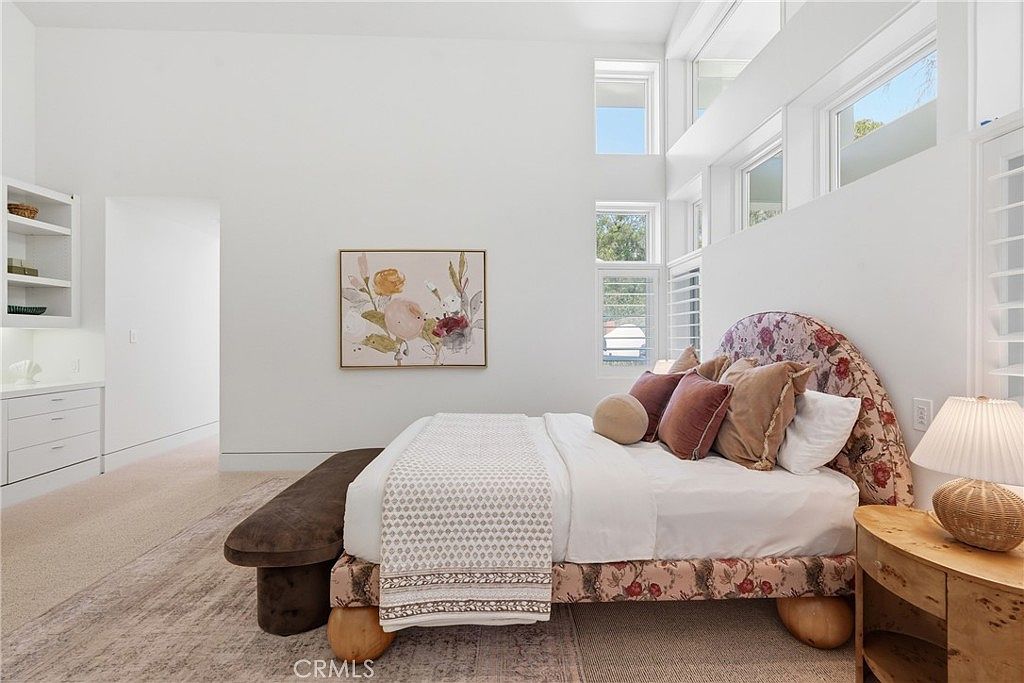
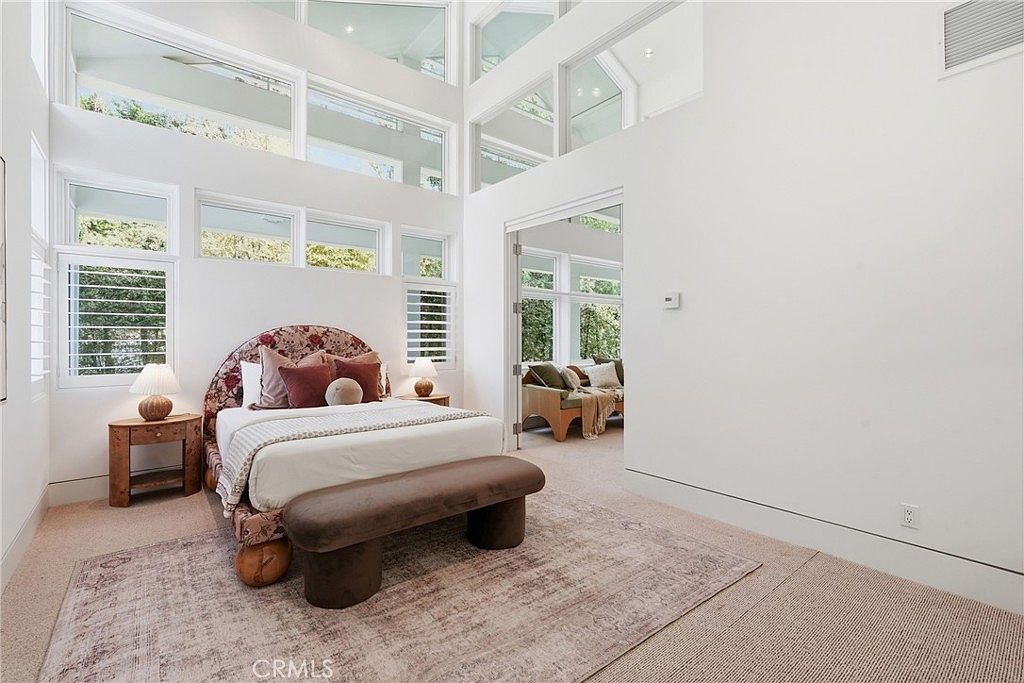
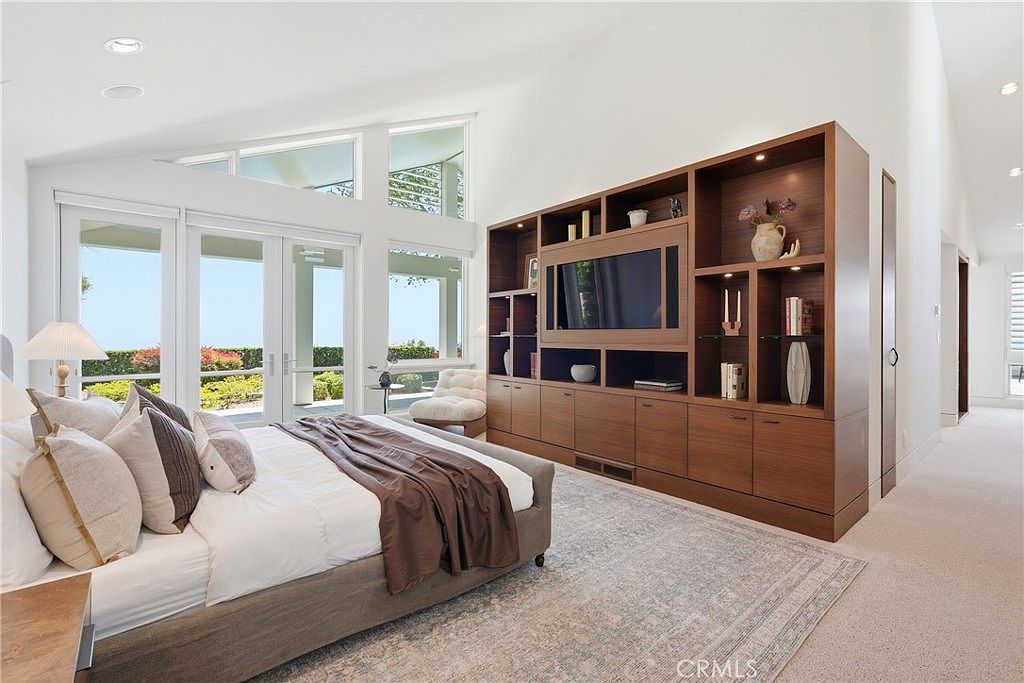
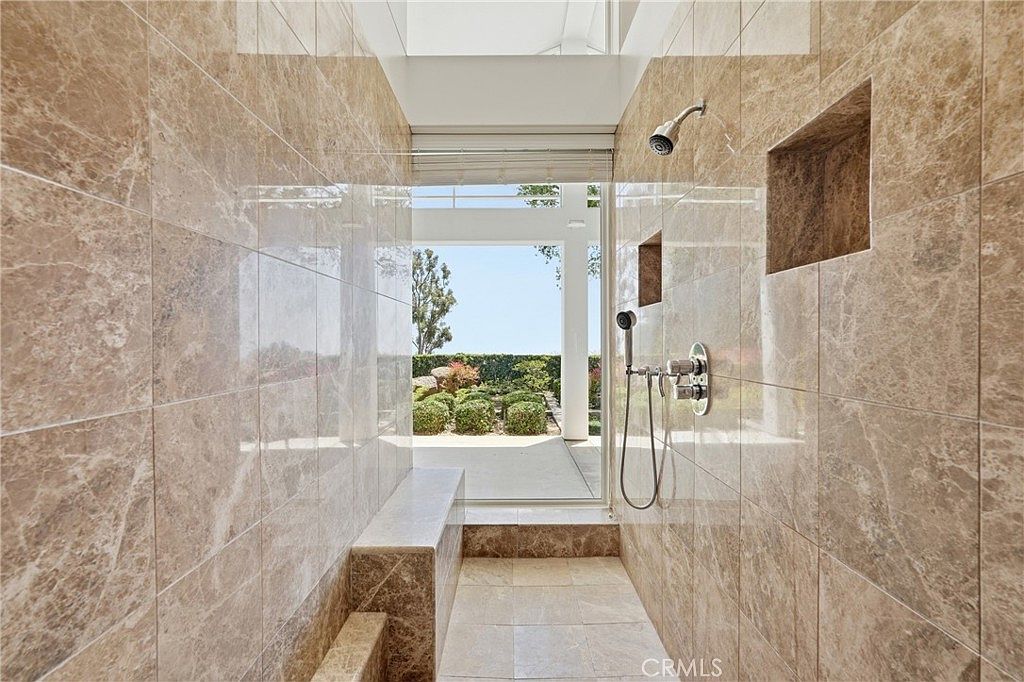
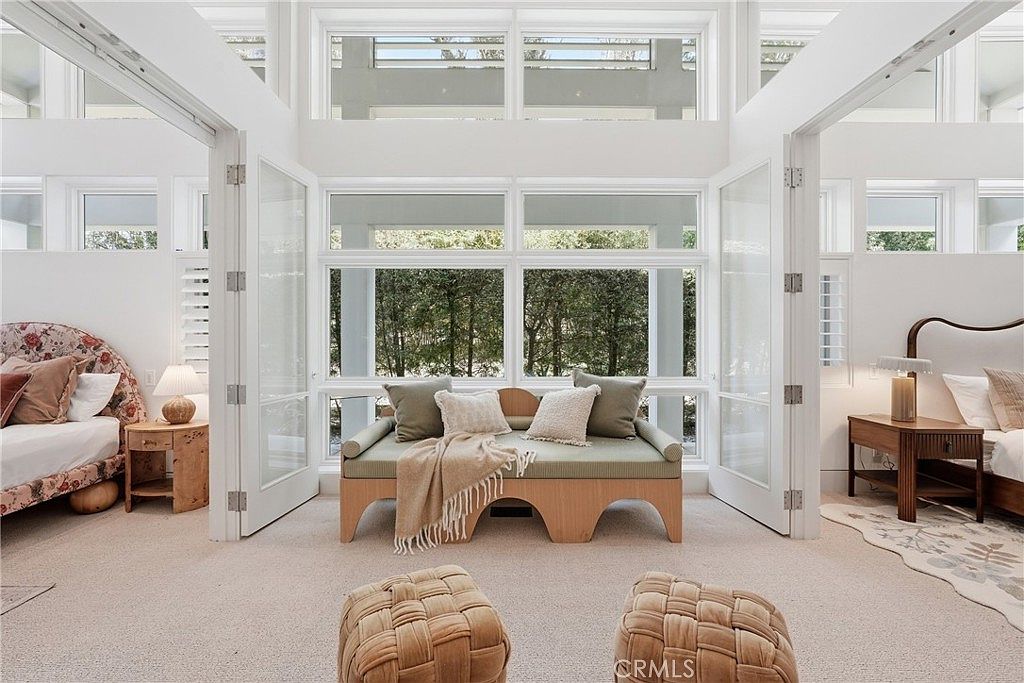
The primary bedroom suites are sanctuaries in the truest sense, their vaulted ceilings and generous fenestration framing views of the surrounding greenery while maintaining an atmosphere of serene enclosure. Primary bathrooms feature stone-encased soaking tubs, dual vanities in dark wood and stone, and walk-in showers that open directly to private garden courts — an indoor-outdoor intimacy that feels both considered and quietly extraordinary.
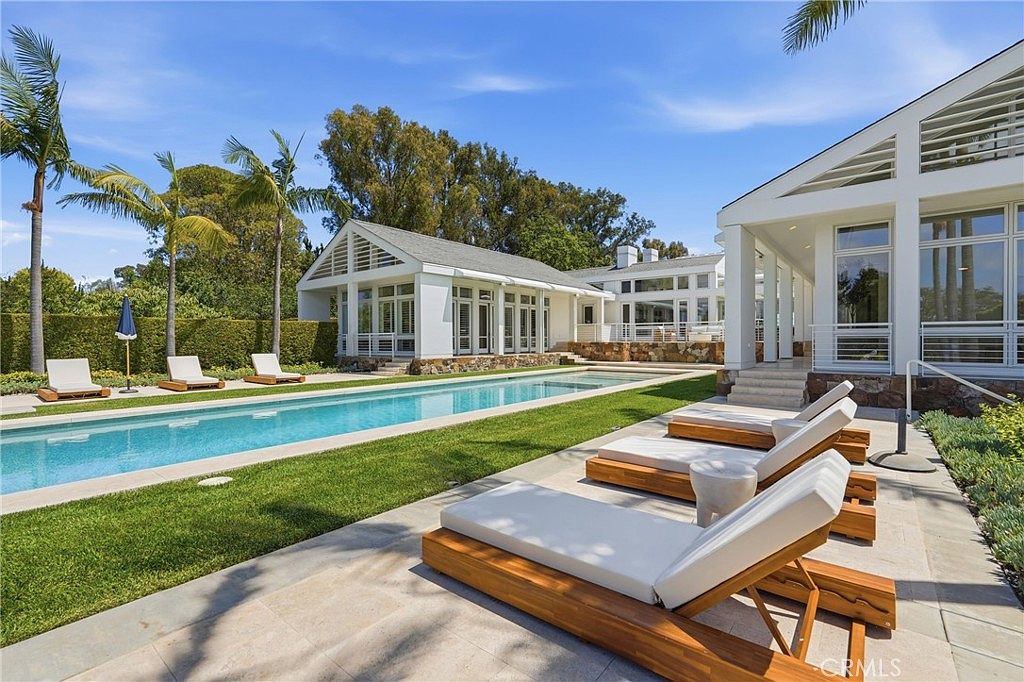
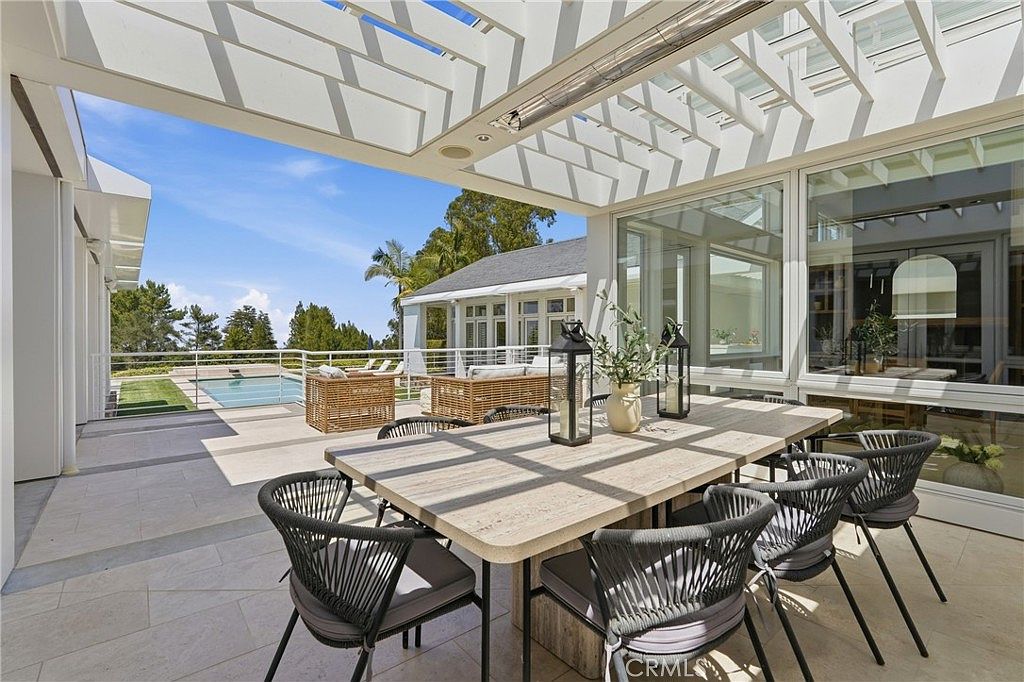
Beyond the main residence, a poolside guest house with two bedrooms, a full bathroom, and a spacious living area offers self-contained accommodation of genuine quality. The rectangular pool itself sits at the heart of manicured stone-decked lawns, flanked by symmetrical white structures that frame the water with architectural precision. A covered outdoor kitchen and patio extend the home's entertaining vocabulary into the open air, where the Pacific horizon serves as the permanent backdrop.
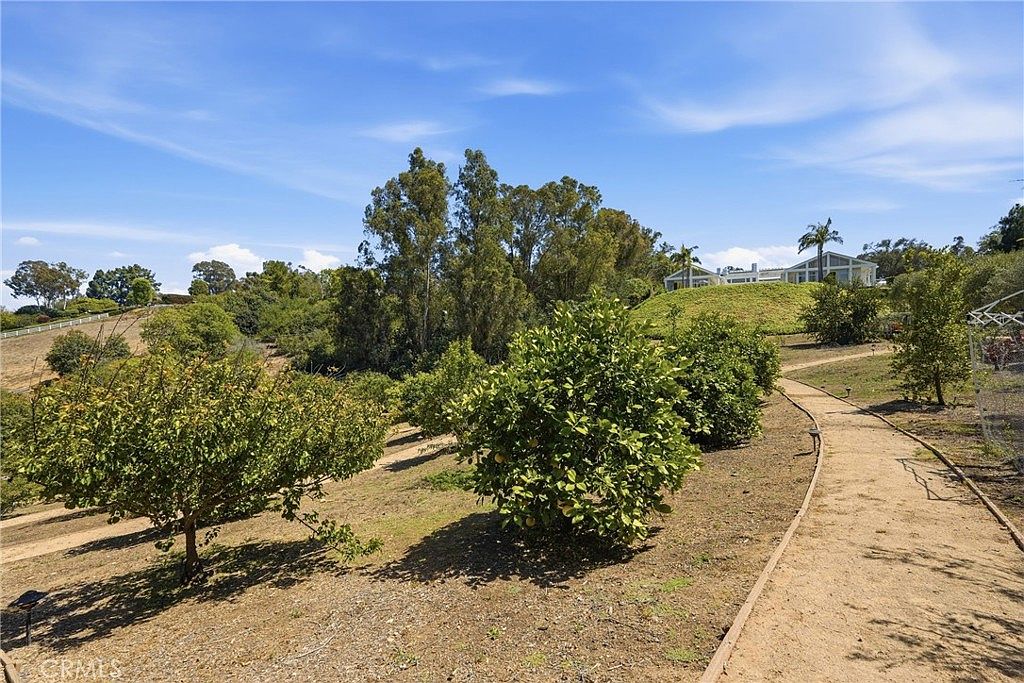
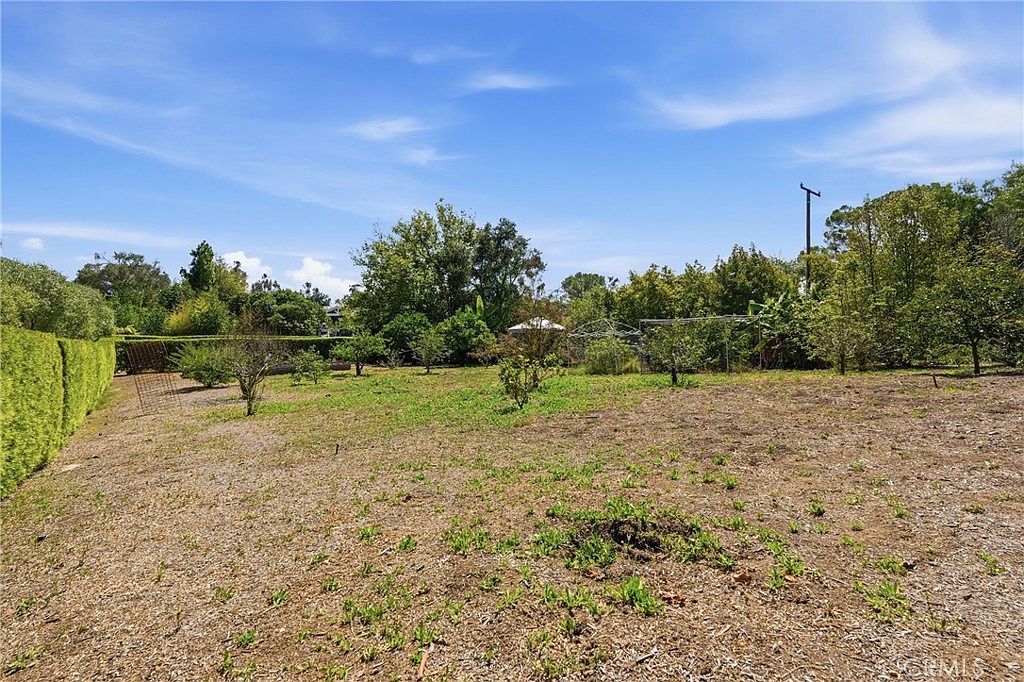
Perhaps most remarkable is what surrounds it all: nearly four acres of fully usable land, traversed by a picturesque olive tree alley that opens onto an expansive orchard of citrus, avocado, and exotic fruits — a living landscape that nourishes as much as it delights.
Rolling Hills is, by almost any measure, one of the most deliberately private residential communities in the state of California. Incorporated as an independent city in 1957, it was conceived from the outset as a place apart — a gated, equestrian-zoned enclave occupying the western crest of the Palos Verdes Peninsula, governed by its own city administration and maintained by the Rolling Hills Community Association. Entry is controlled through staffed security gates, and the community's roads remain private, lending the city an atmosphere of genuine seclusion that is increasingly rare within the greater Los Angeles metropolitan area.
The Peninsula itself rises dramatically from the surrounding coastal plain, its geography defined by ancient marine terraces, native coastal sage scrub, and some of the most commanding ocean views available anywhere in Southern California. At elevations approaching 1,400 feet, the air is measurably cleaner, the pace perceptibly slower, and the horizon — encompassing the arc of Santa Monica Bay, the outline of Catalina Island, and on clear days the Channel Islands beyond — feels like a private endowment.
Rolling Hills has long attracted those for whom privacy, land, and architectural distinction matter above all else. The city's zoning mandates minimum lot sizes and prohibits subdivision in ways that have preserved its open, ranch-like character across decades of surrounding development. Equestrian trails wind through the community, maintained for residents who keep horses on their properties — a tradition that speaks to the unhurried, land-connected lifestyle the city was founded to protect.
For practical amenities, the neighboring city of Rolling Hills Estates and the broader Palos Verdes Peninsula offer a full complement of services within a short drive. The Peninsula Center provides everyday retail and dining, while Malaga Cove — the Peninsula's historic commercial nucleus, designed in a Spanish Colonial Revival style in the 1920s — offers boutique shopping, cafés, and a genuine sense of place. The Palos Verdes Library District operates branch locations throughout the Peninsula, and the area is served by the Palos Verdes Peninsula Unified School District, consistently recognized among the highest-performing public school districts in California.
Culturally, the Peninsula punches well above its residential scale. The Palos Verdes Art Center has operated as a community cultural institution for decades, while the Wayfarers Chapel — designed by Lloyd Wright and perched above the Pacific on the Peninsula's southern tip — draws visitors from around the world for its architectural and spiritual significance. The Terranea Resort, situated on a dramatic oceanfront promontory in nearby Rancho Palos Verdes, offers world-class dining, spa facilities, and coastal access that Peninsula residents regard as a natural extension of their lifestyle.
For those who require proximity to Los Angeles without immersion in it, the location is precise: close enough to reach the city's cultural, financial, and creative centers with ease, yet elevated — literally and figuratively — above the density and noise that define the urban core. The Nike House does not merely occupy this setting. It commands it.
Featured Highlights
Curated Content • Presented by Charlie Raine