The Story Behind
A Rare Lakefront Compound on Little Squam's Private Shores
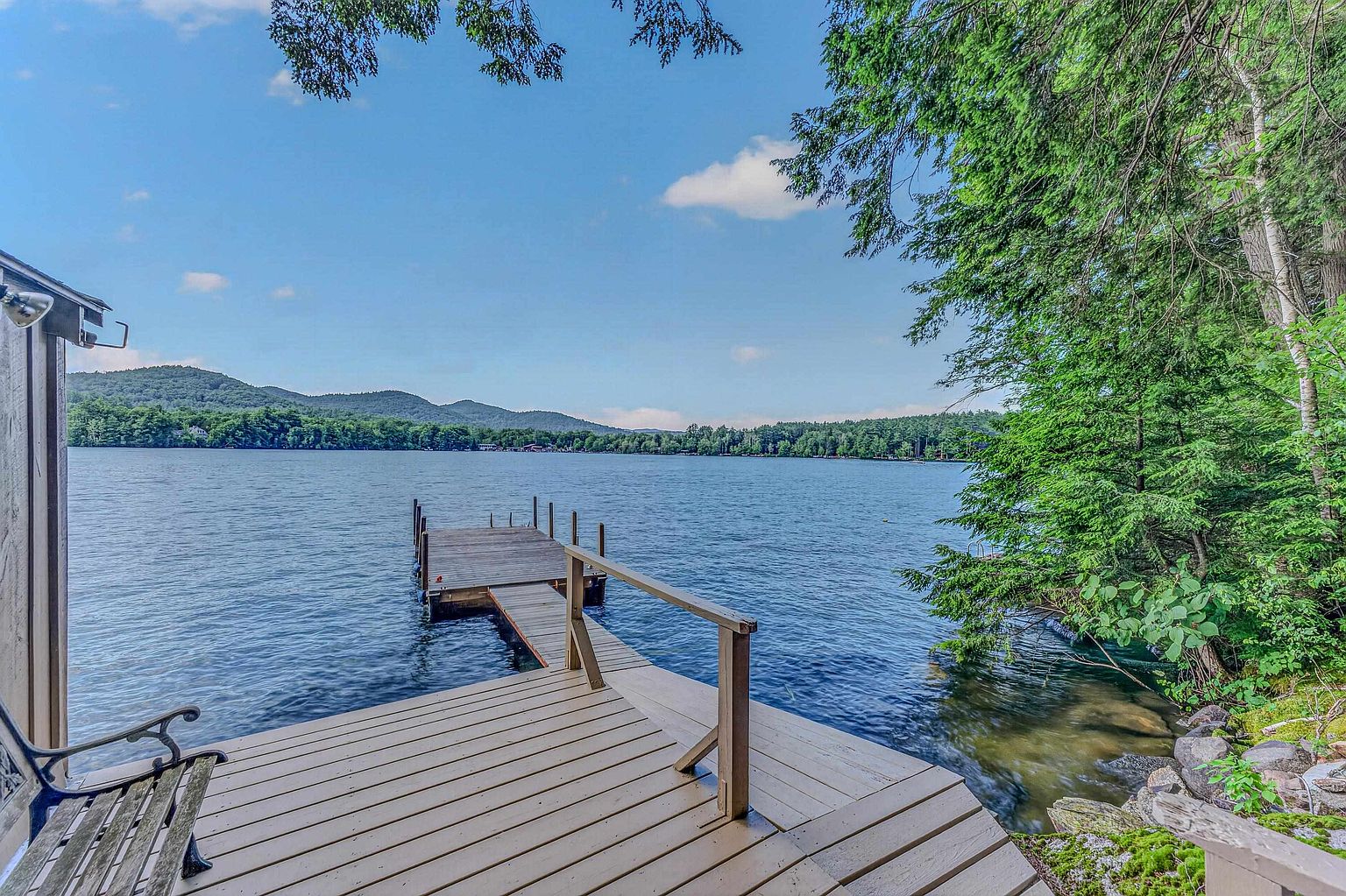
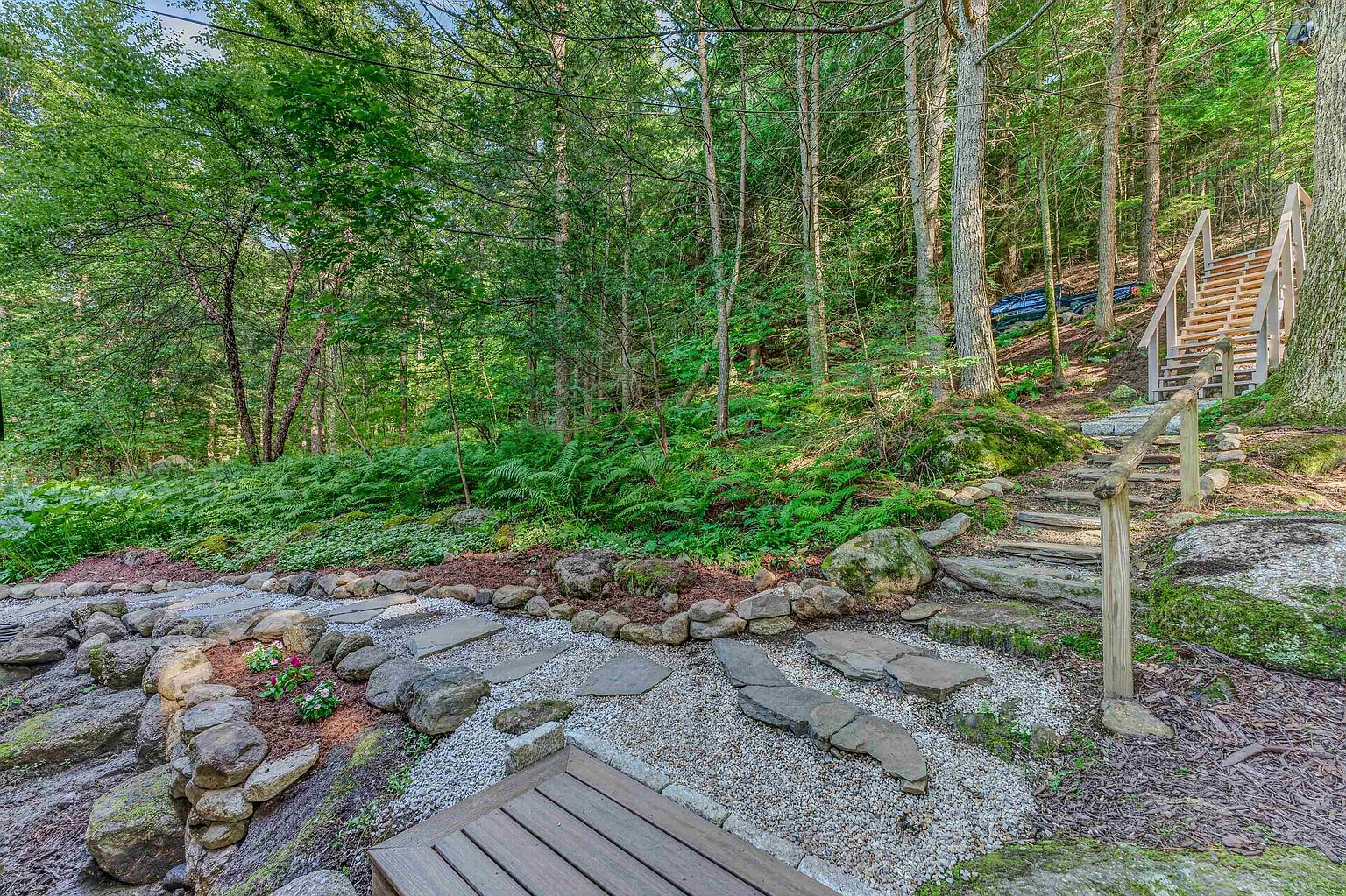
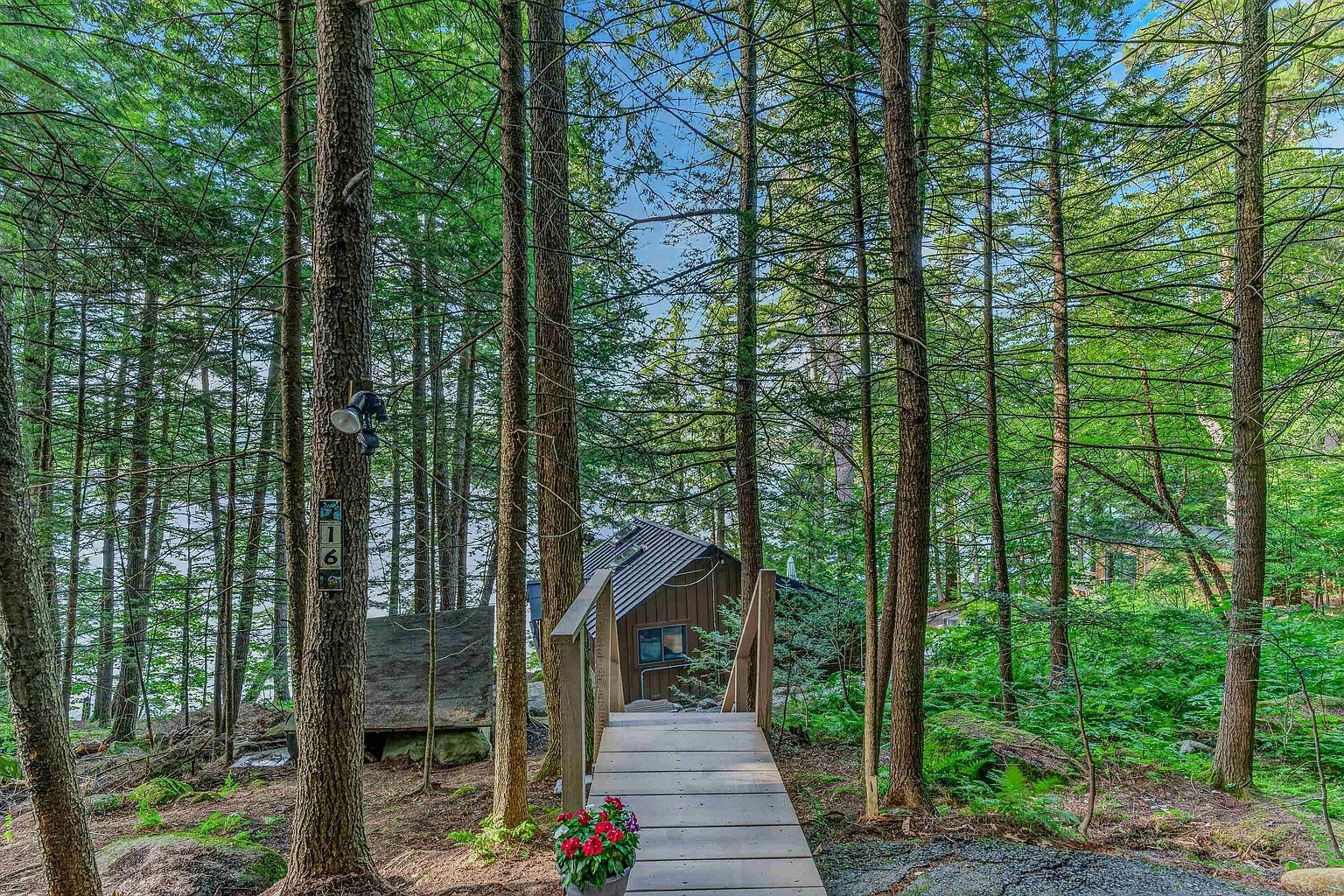
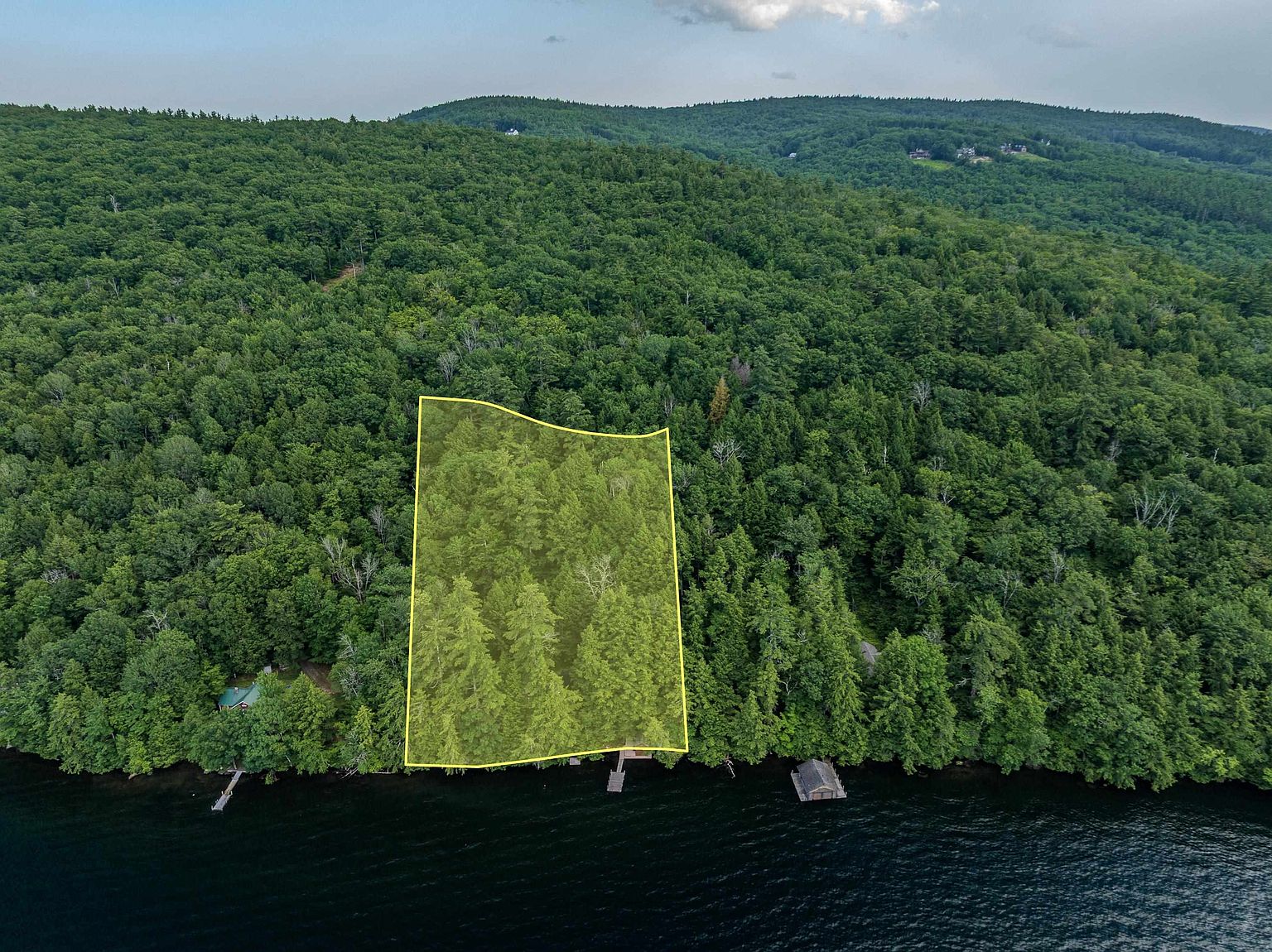
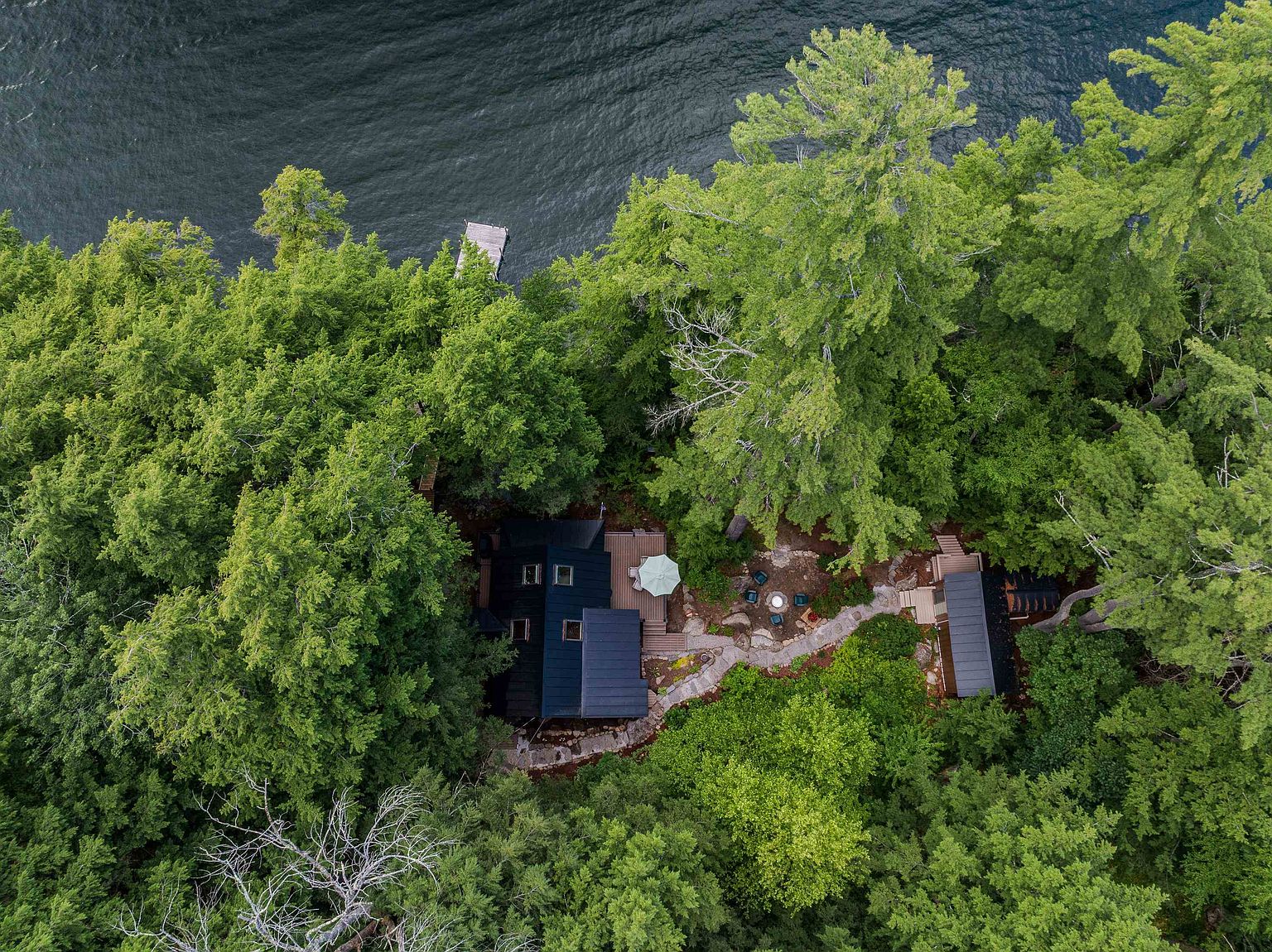
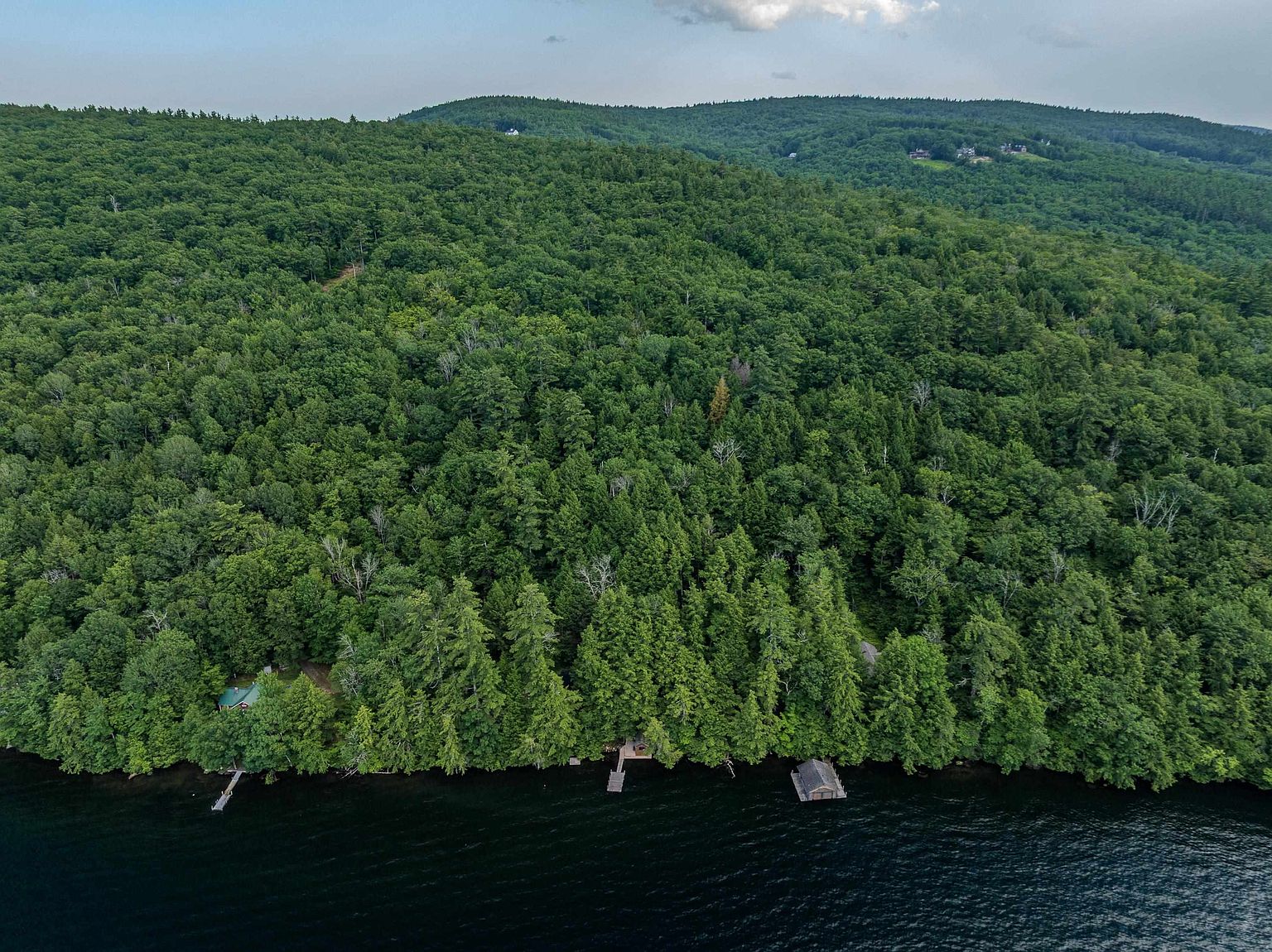
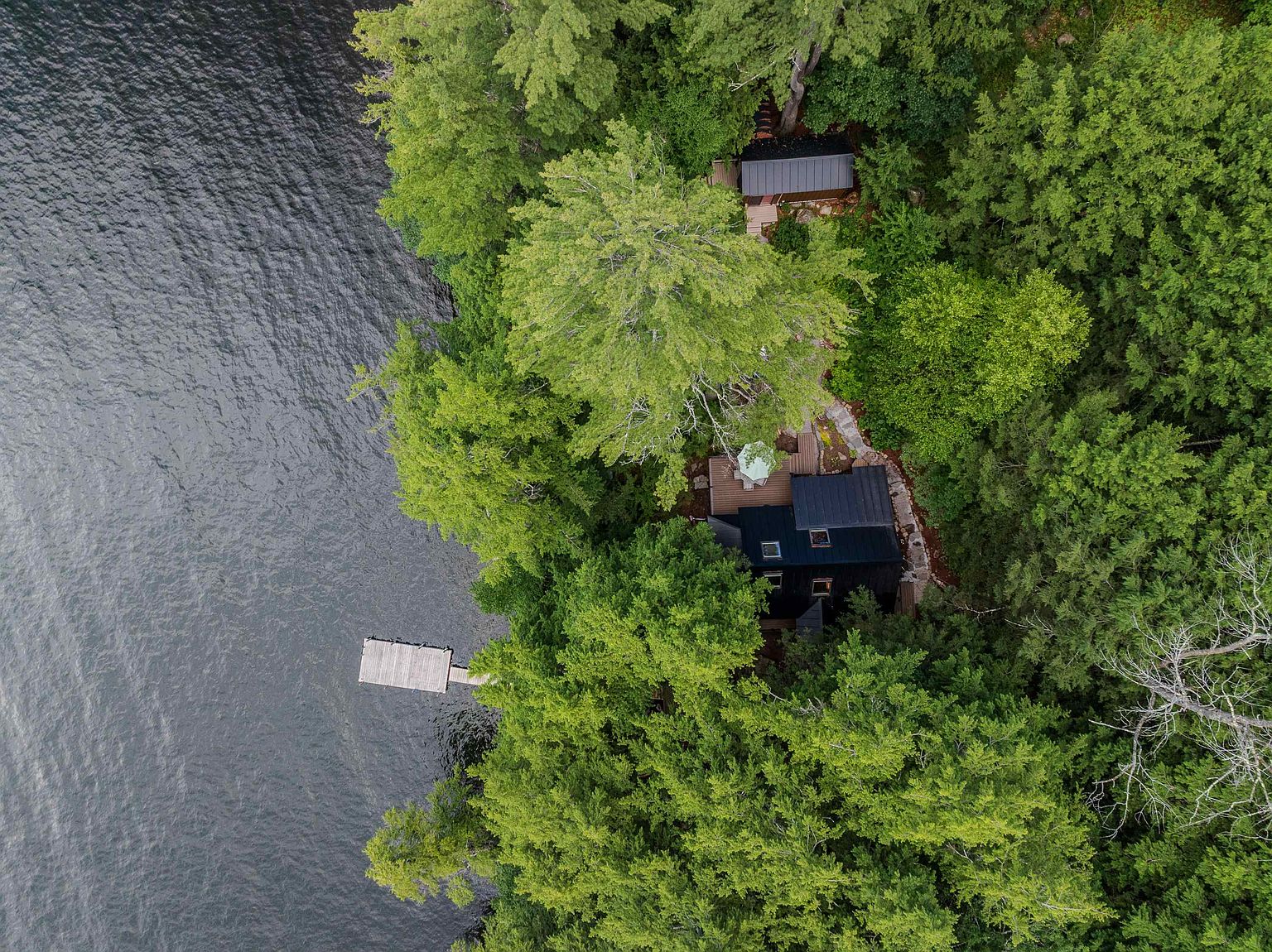
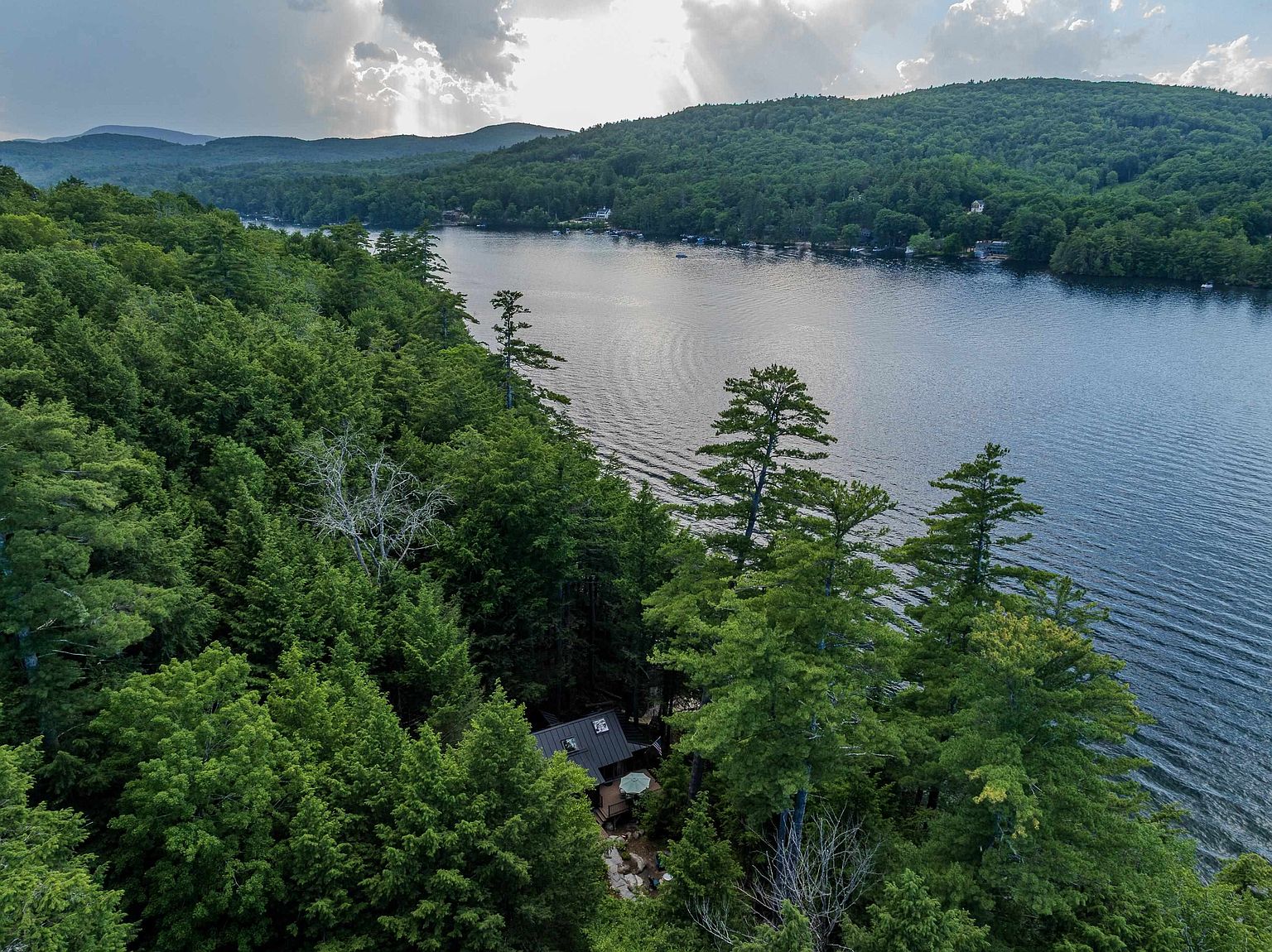
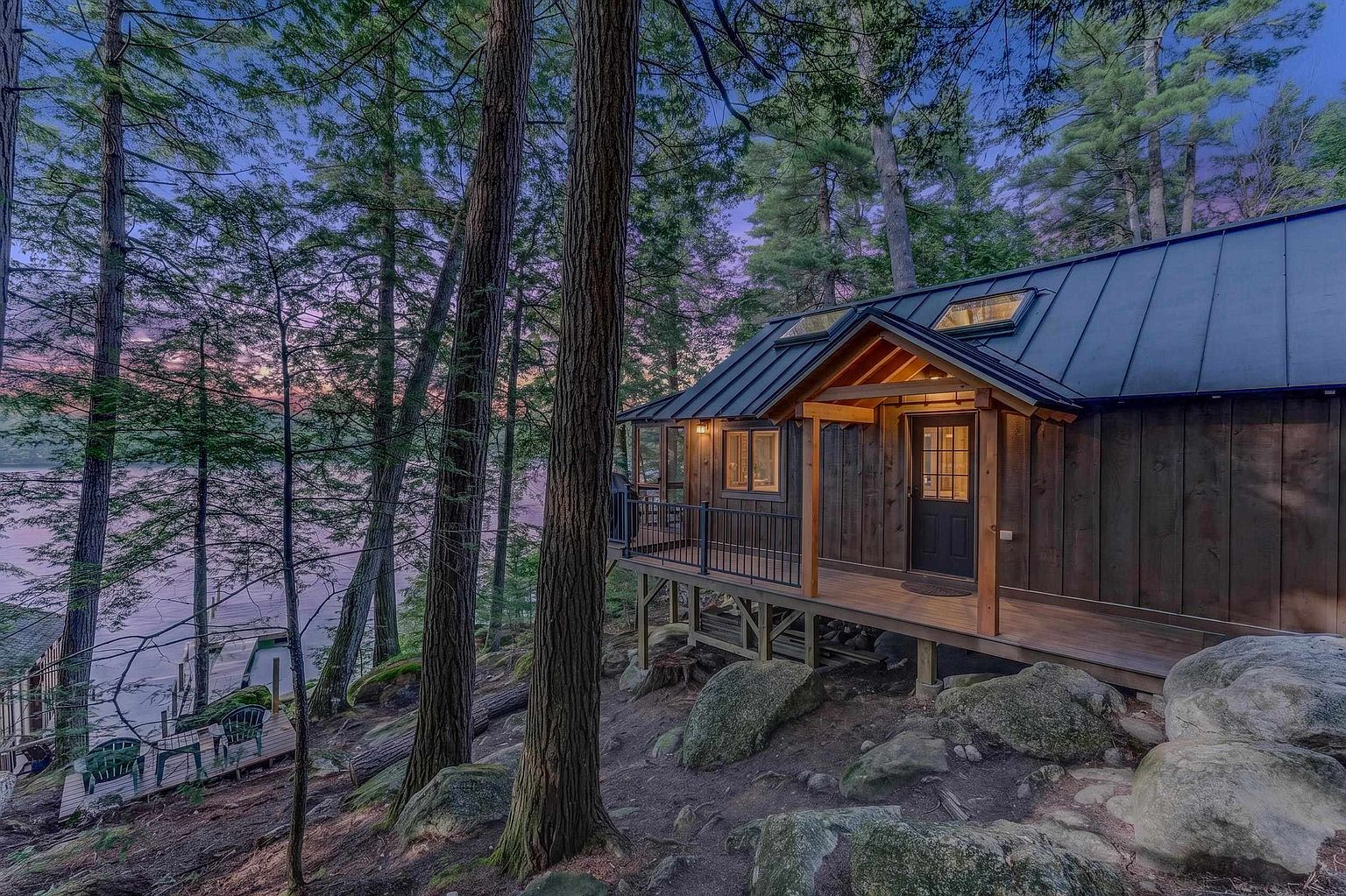
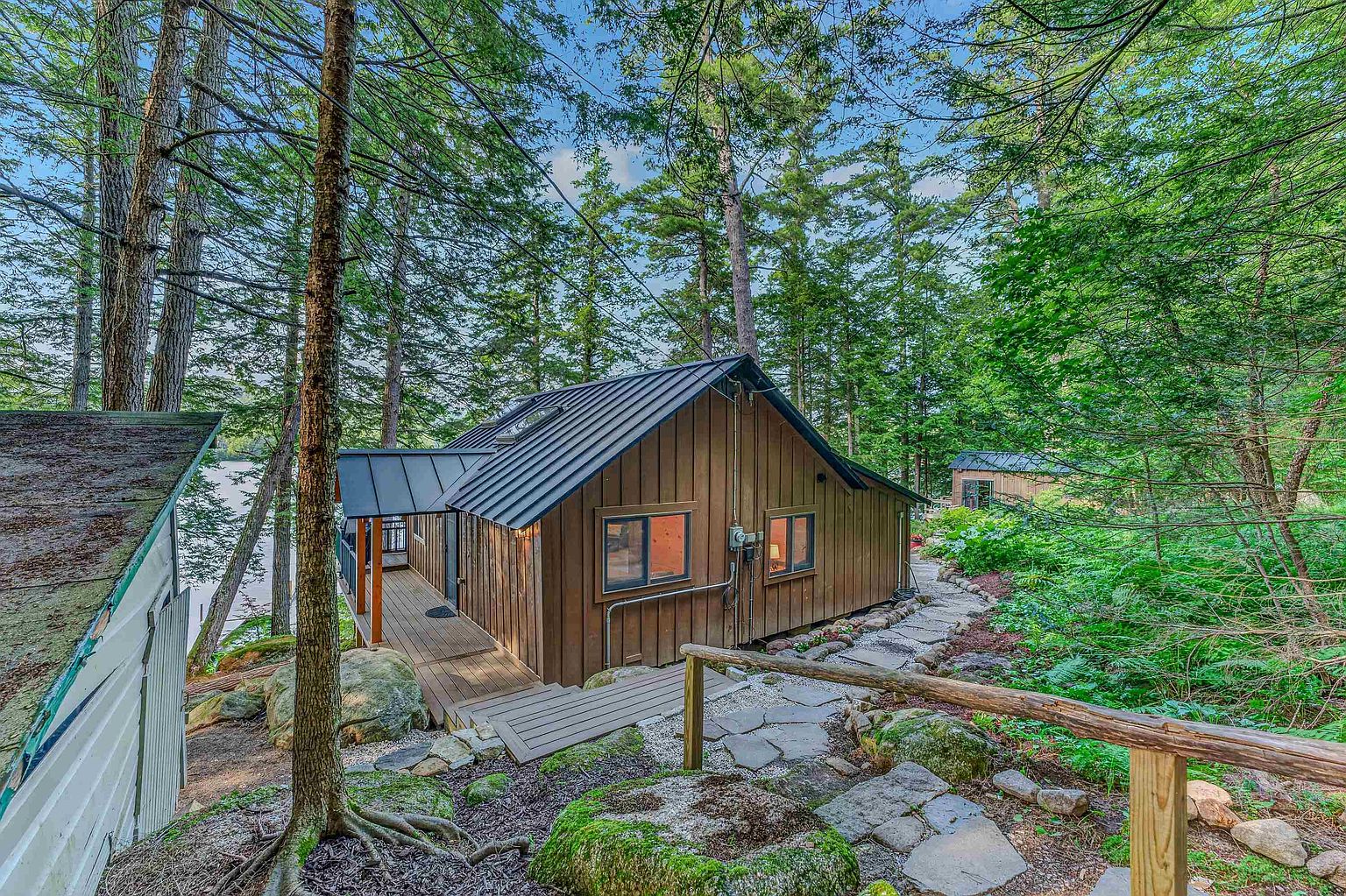
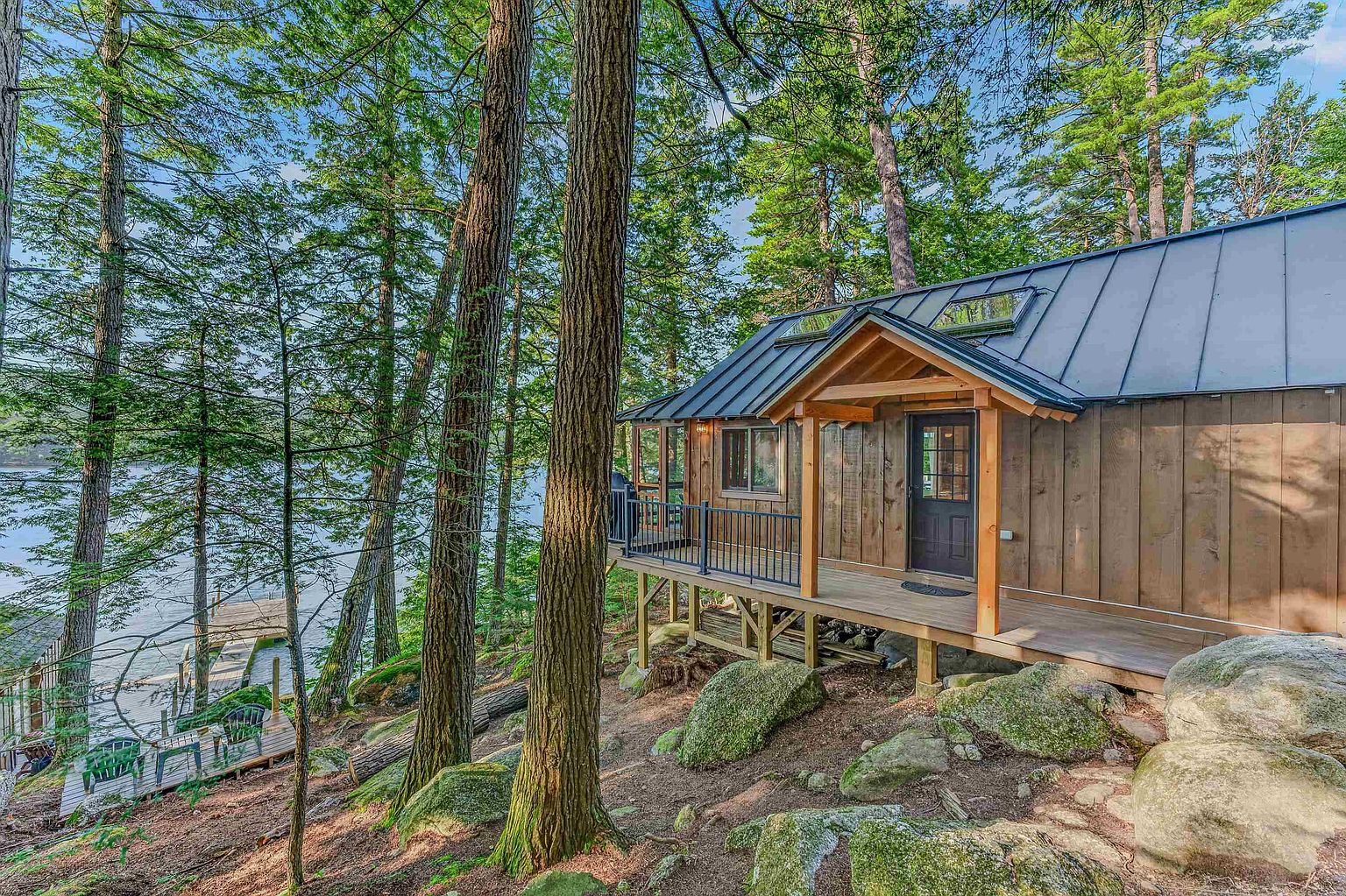
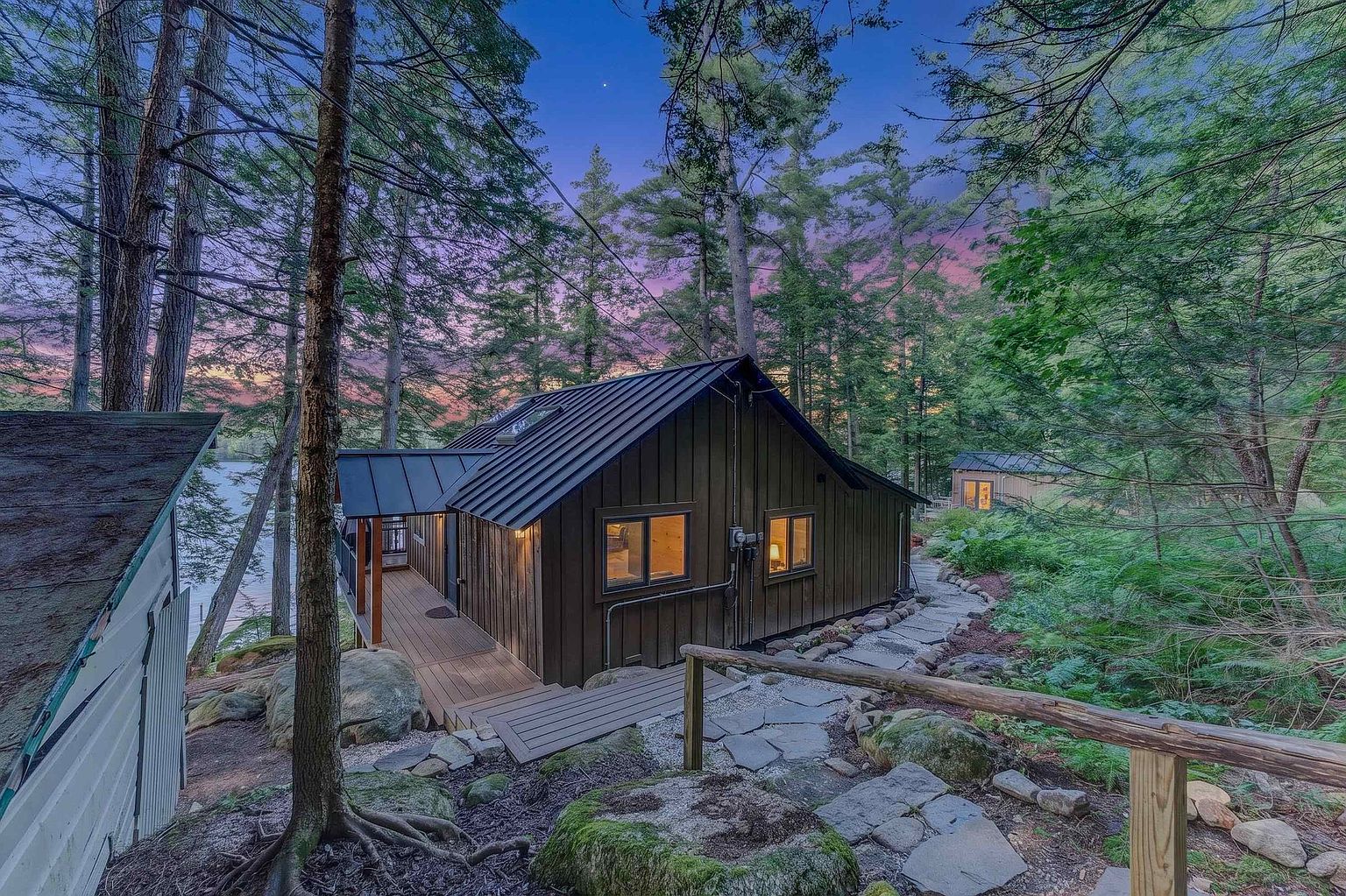
There is a particular quality of light on Little Squam Lake in the early morning — still, silver, and entirely unhurried — and 16 Hemlock Way is positioned to receive it fully. The compound sits at the water's edge with the kind of natural integration that only comes from a property shaped by its landscape rather than imposed upon it. Mossy boulders anchor the shoreline, mature pines frame every sightline, and a wooden footbridge leads from the road down through the trees to a world that feels genuinely removed from ordinary time.
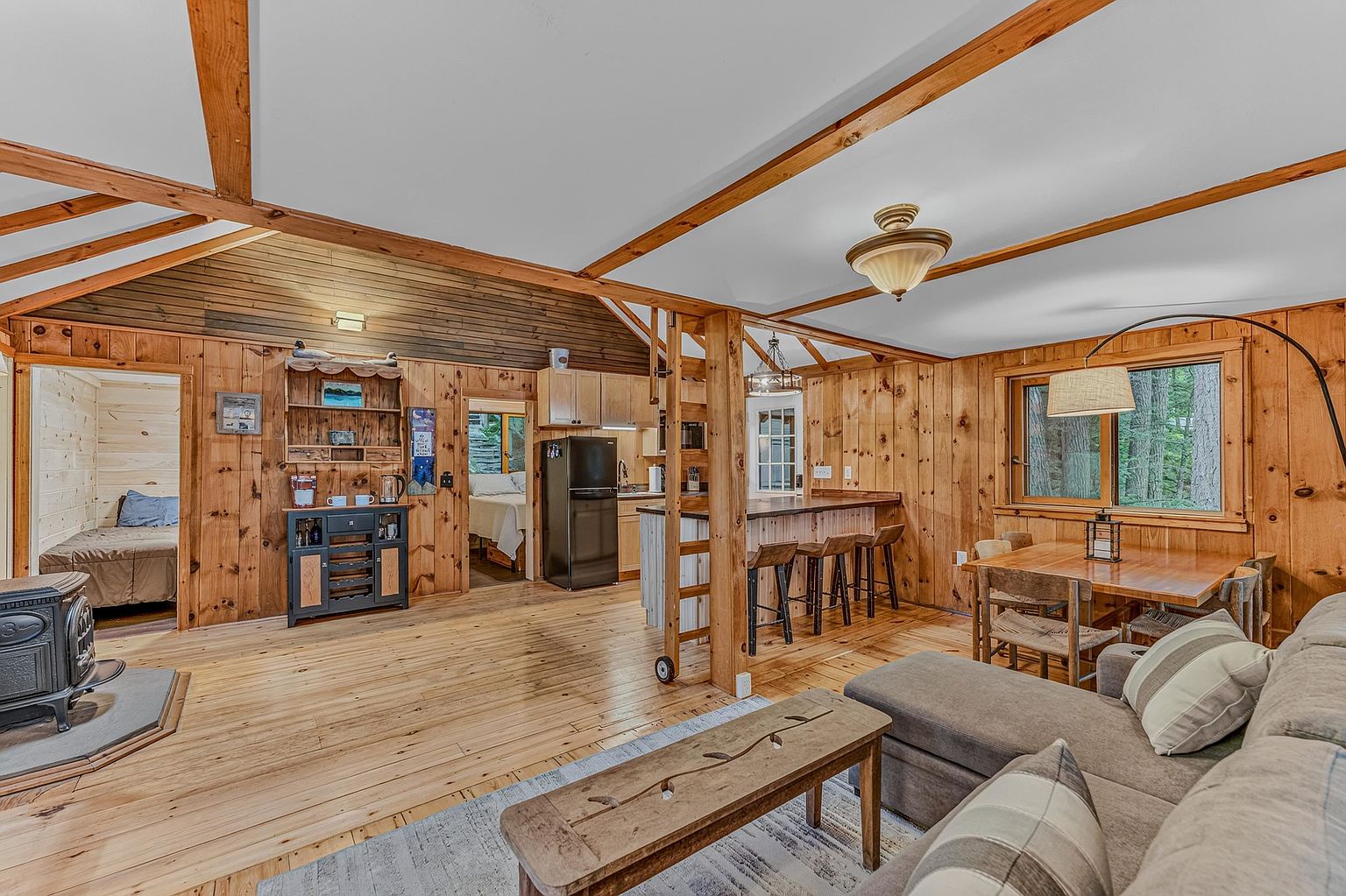
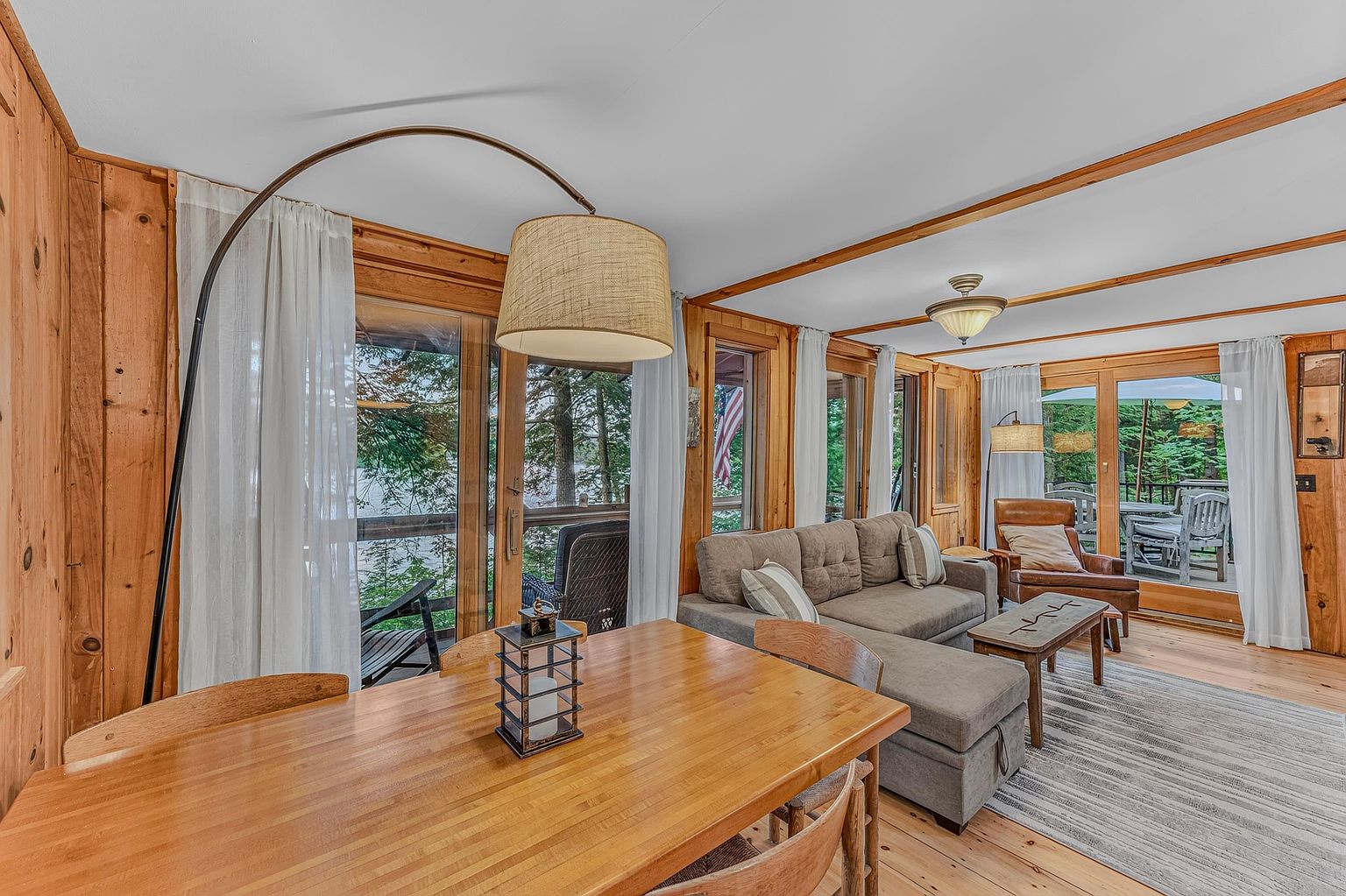
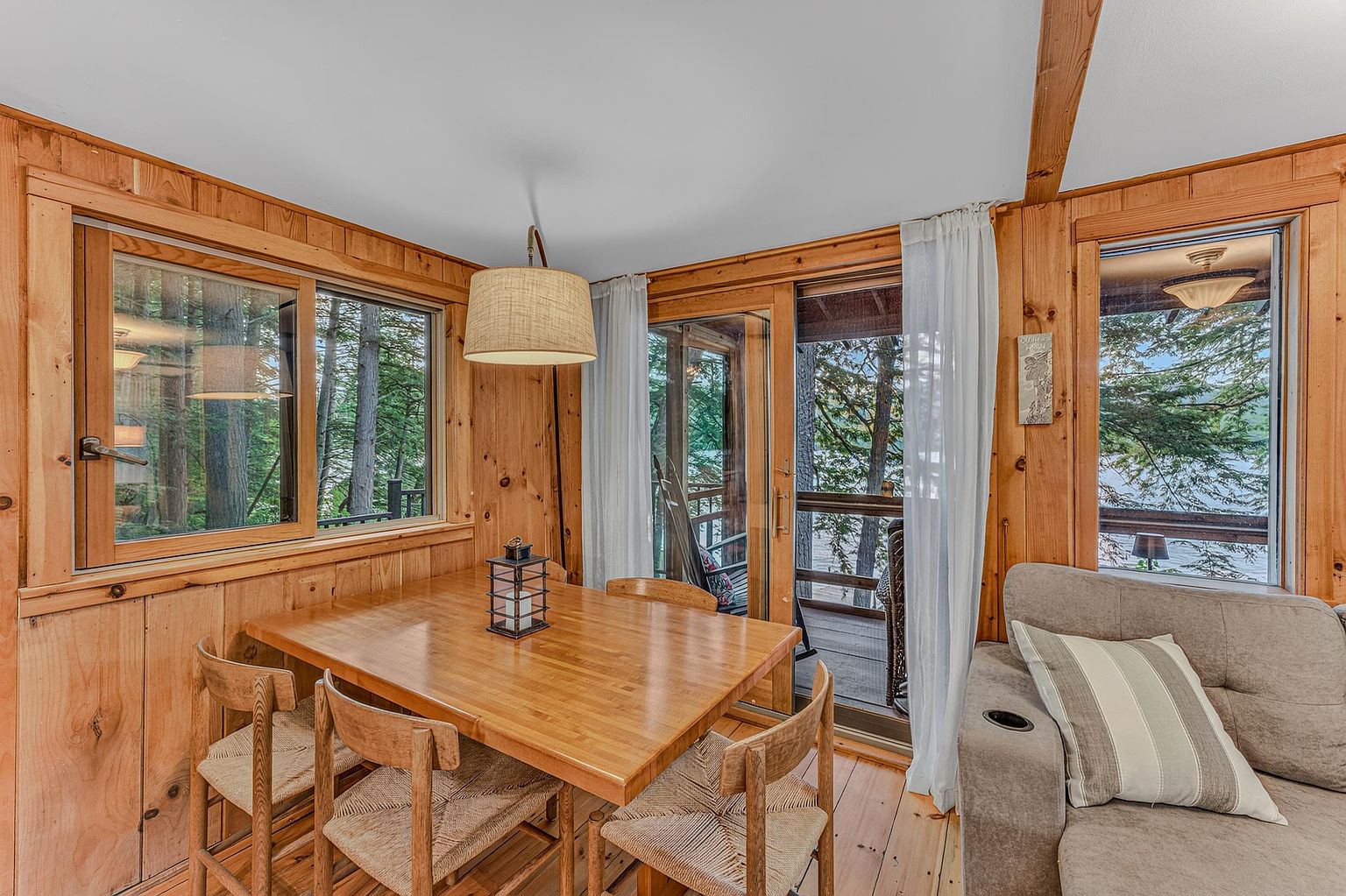
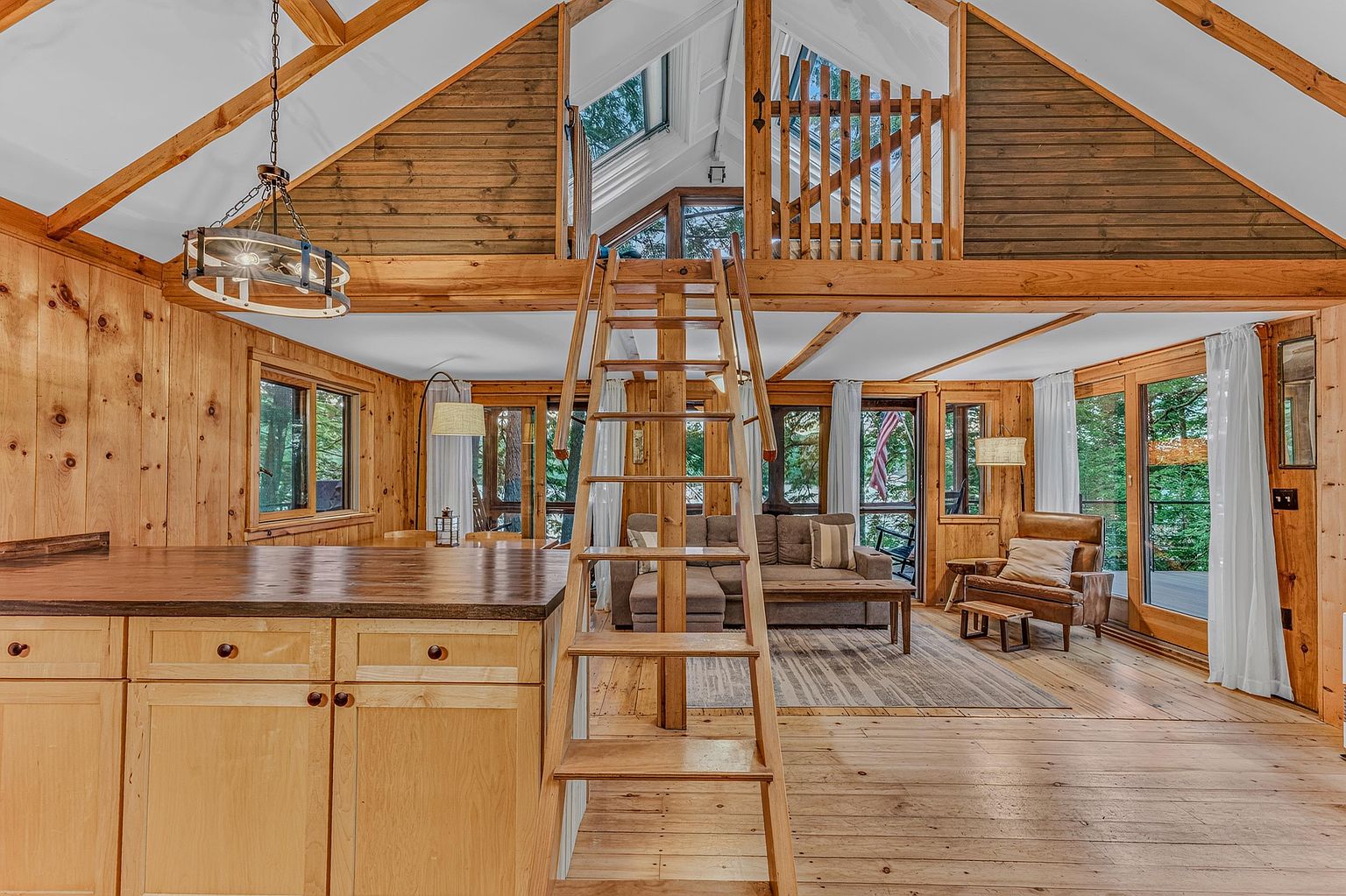
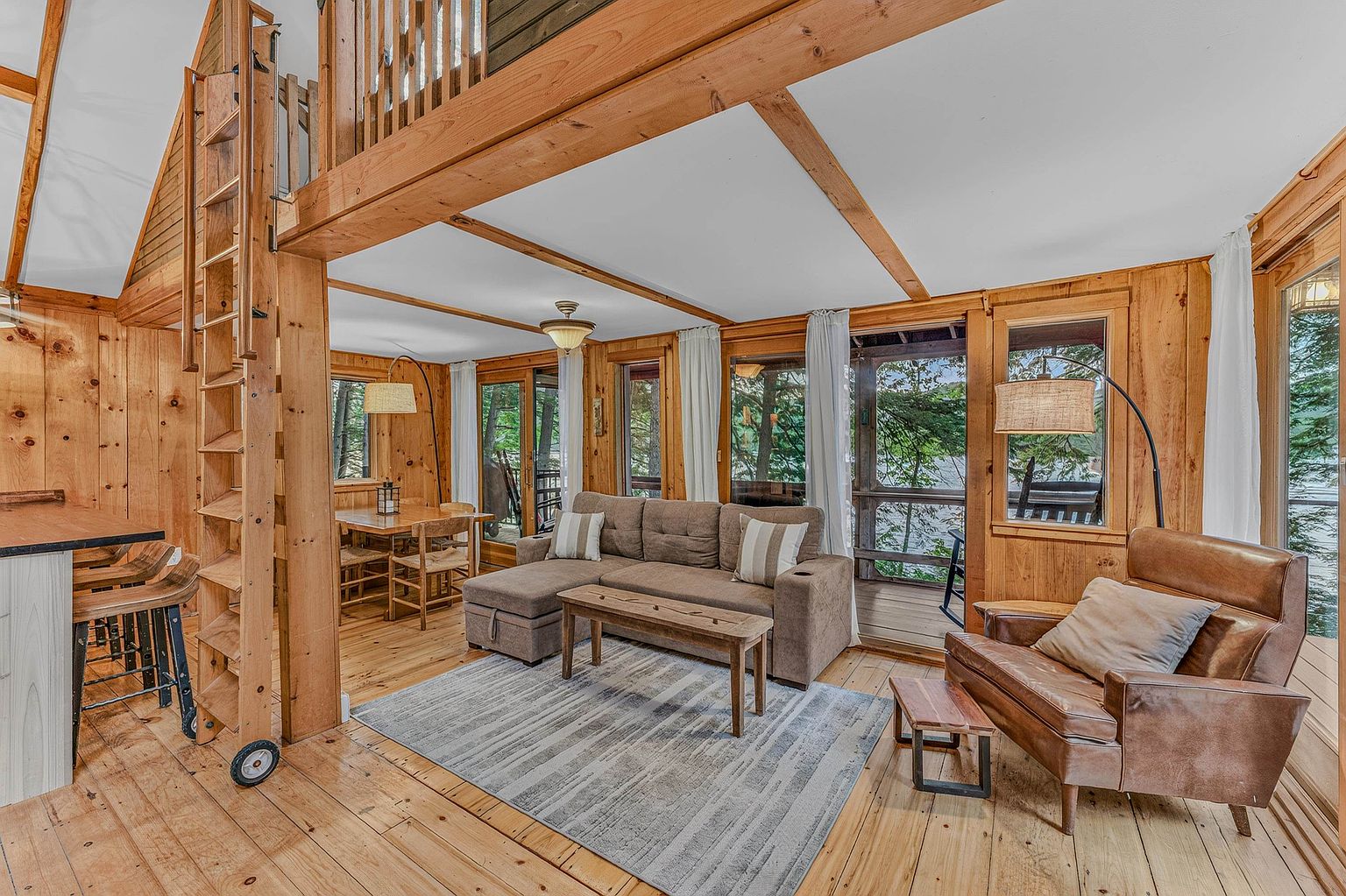
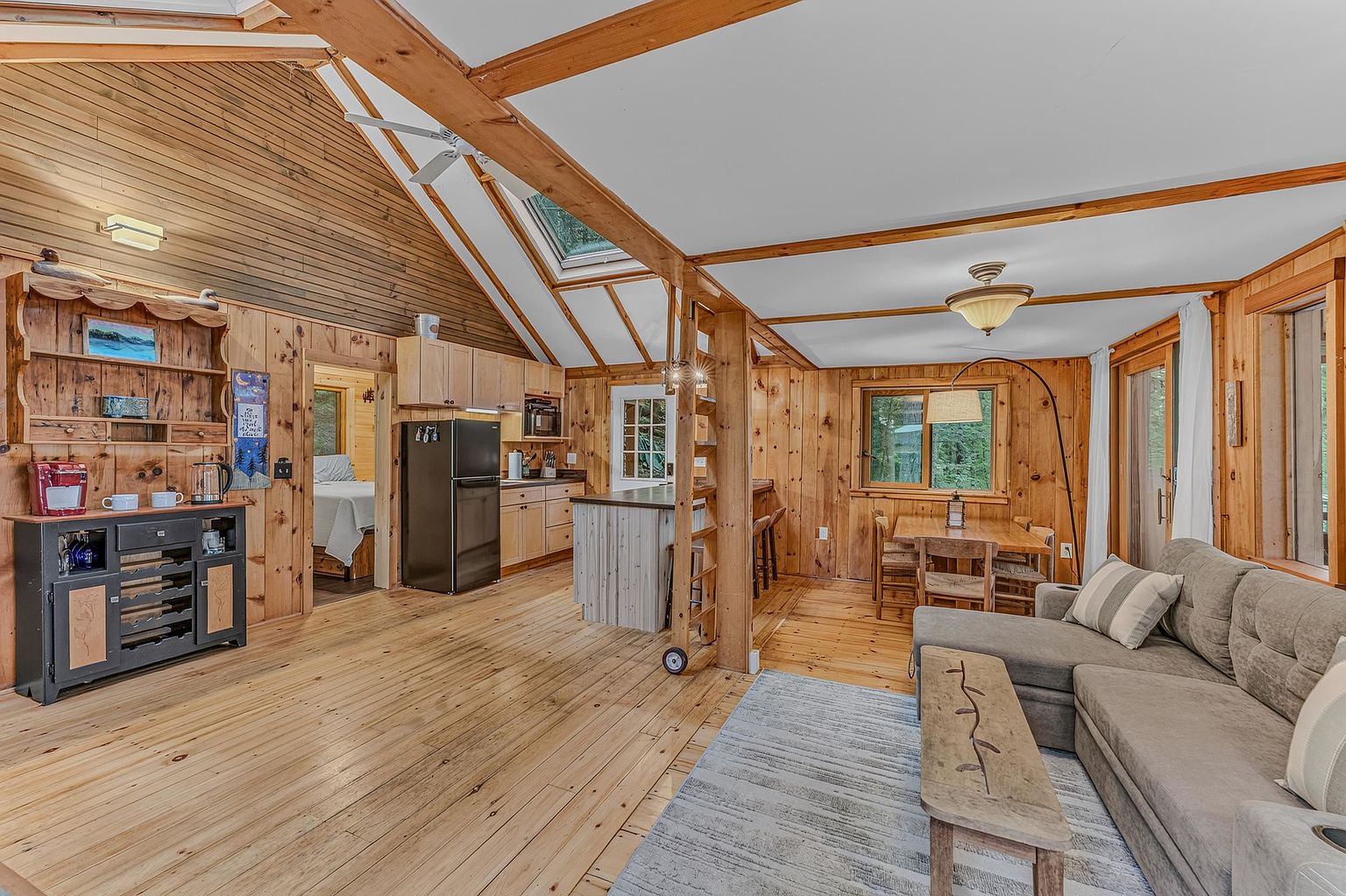
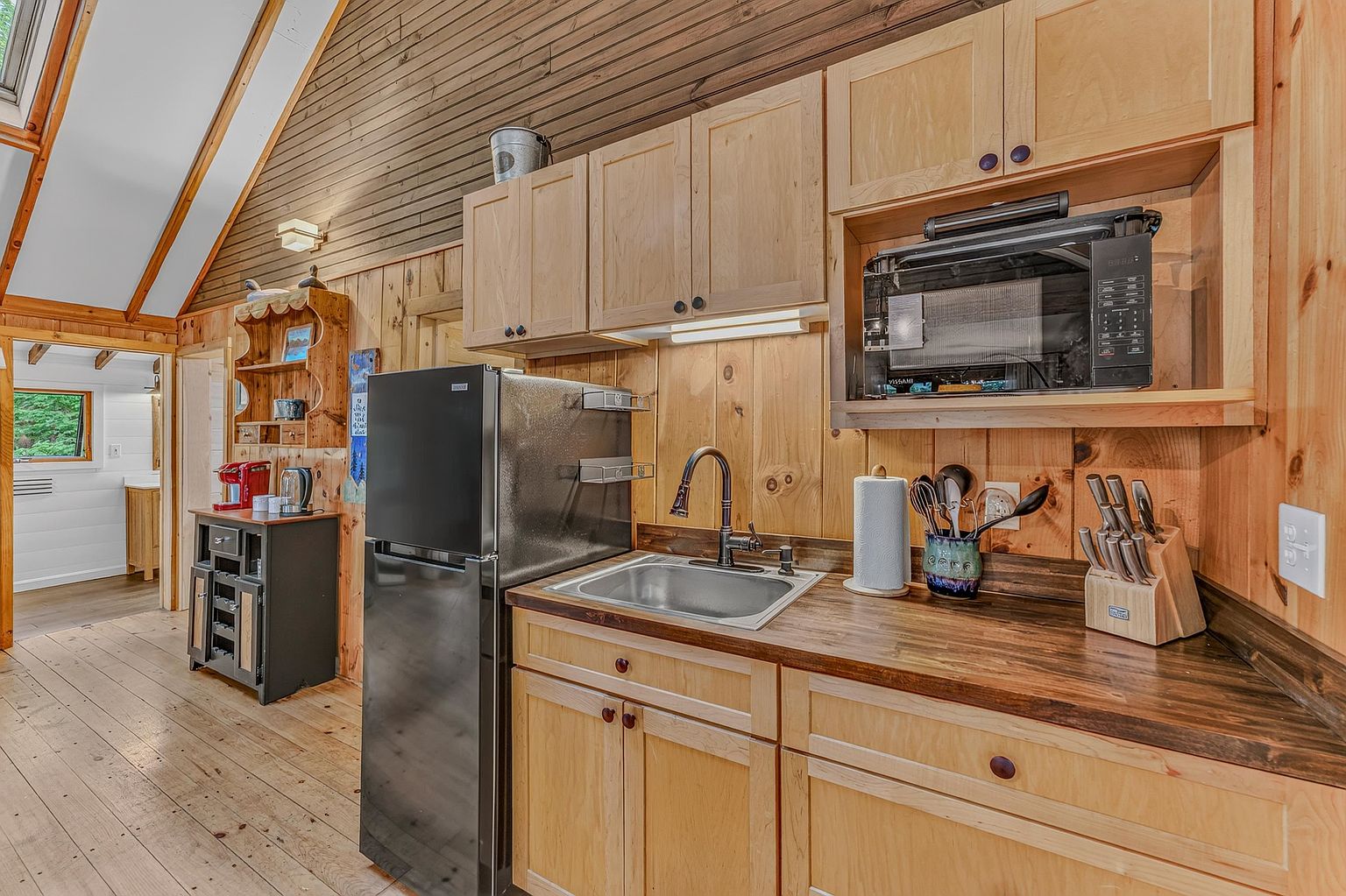
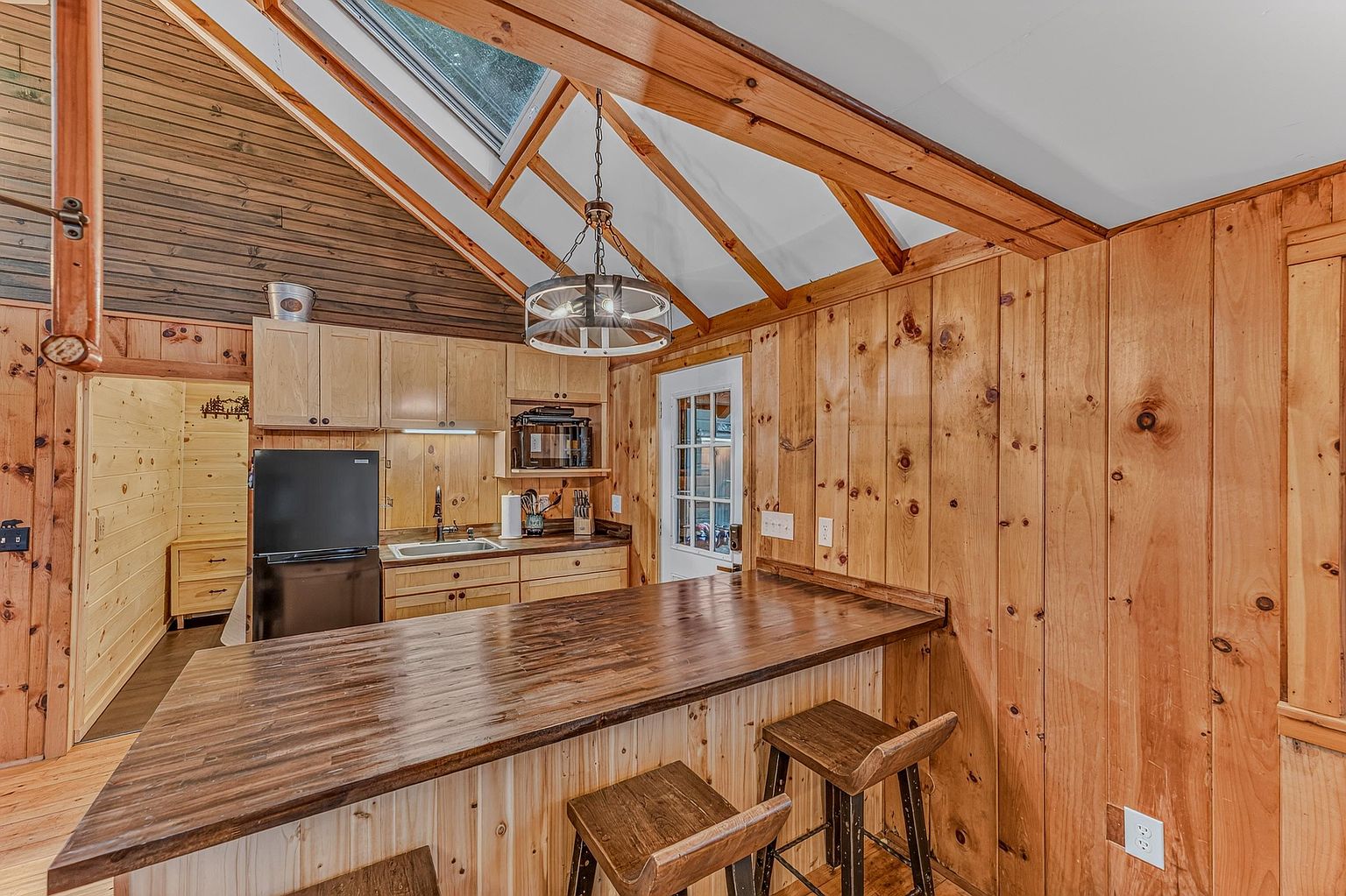
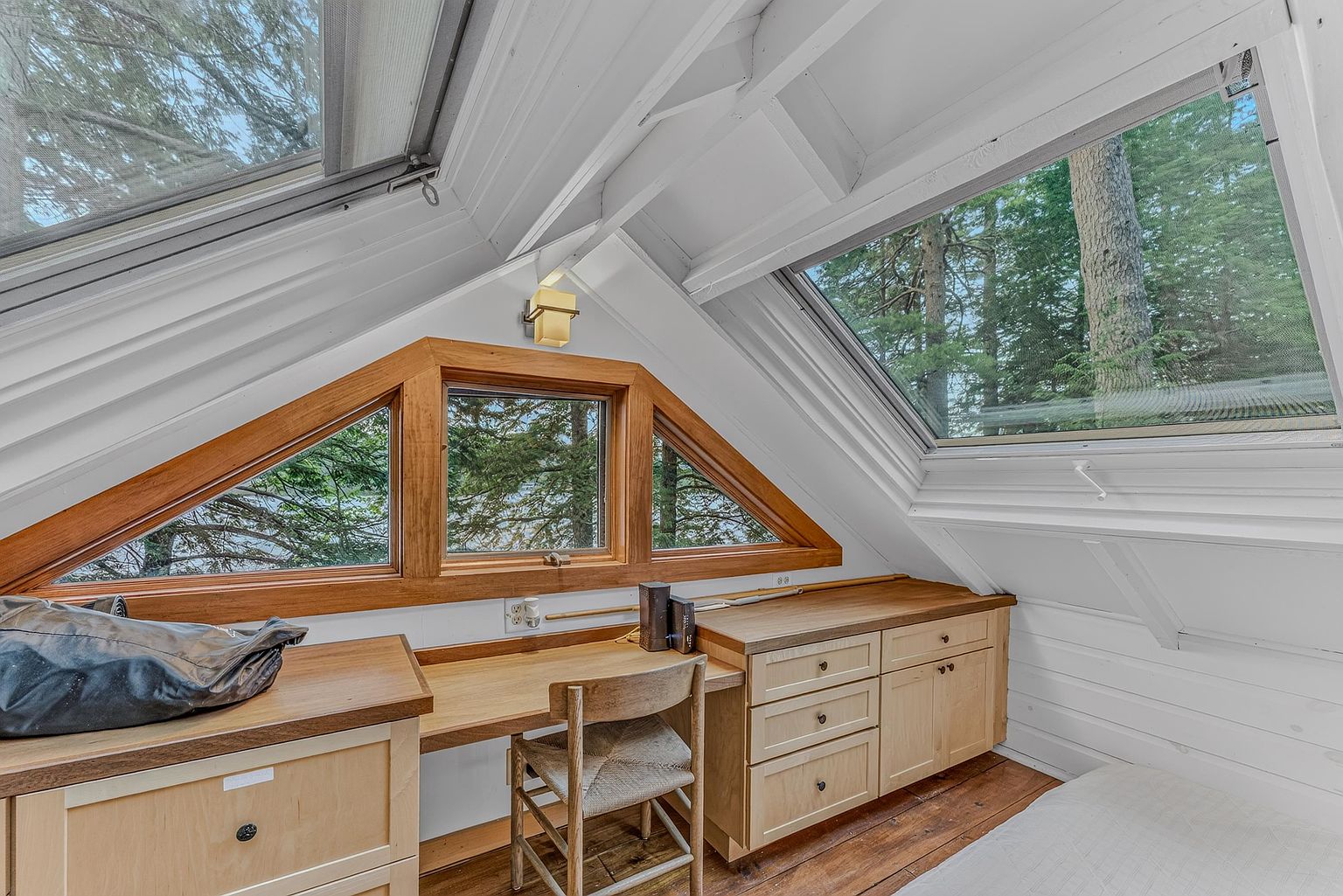
The main cabin has been transformed through an extensive and thoughtful renovation that preserves the warmth of its original character while eliminating every compromise. Warm wood-paneled walls and exposed ceiling beams remain the defining interior language, but everything behind them is new: PEX plumbing runs throughout, electrical systems have been fully updated, and walls have been insulated to a standard that makes year-round use a genuine possibility. The kitchen has been redesigned with new countertops and appliances, and a skylight above the breakfast bar draws natural light deep into the space. A wood-burning stove set on a stone hearth anchors the open-concept living area, where a sectional sofa faces outward toward glass doors and the lake beyond. A loft accessed by a central wooden ladder adds a quiet, elevated retreat above the main floor.
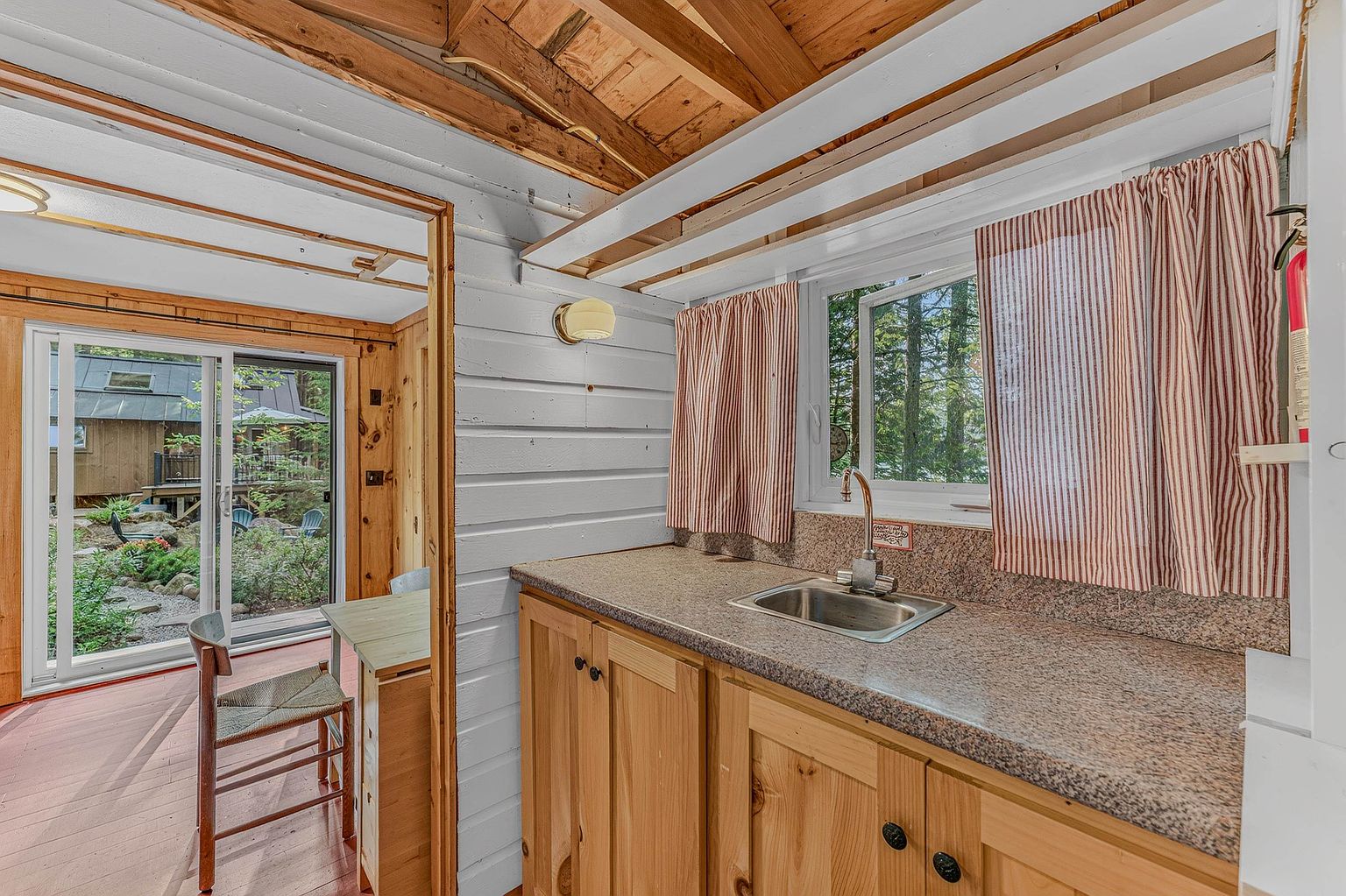
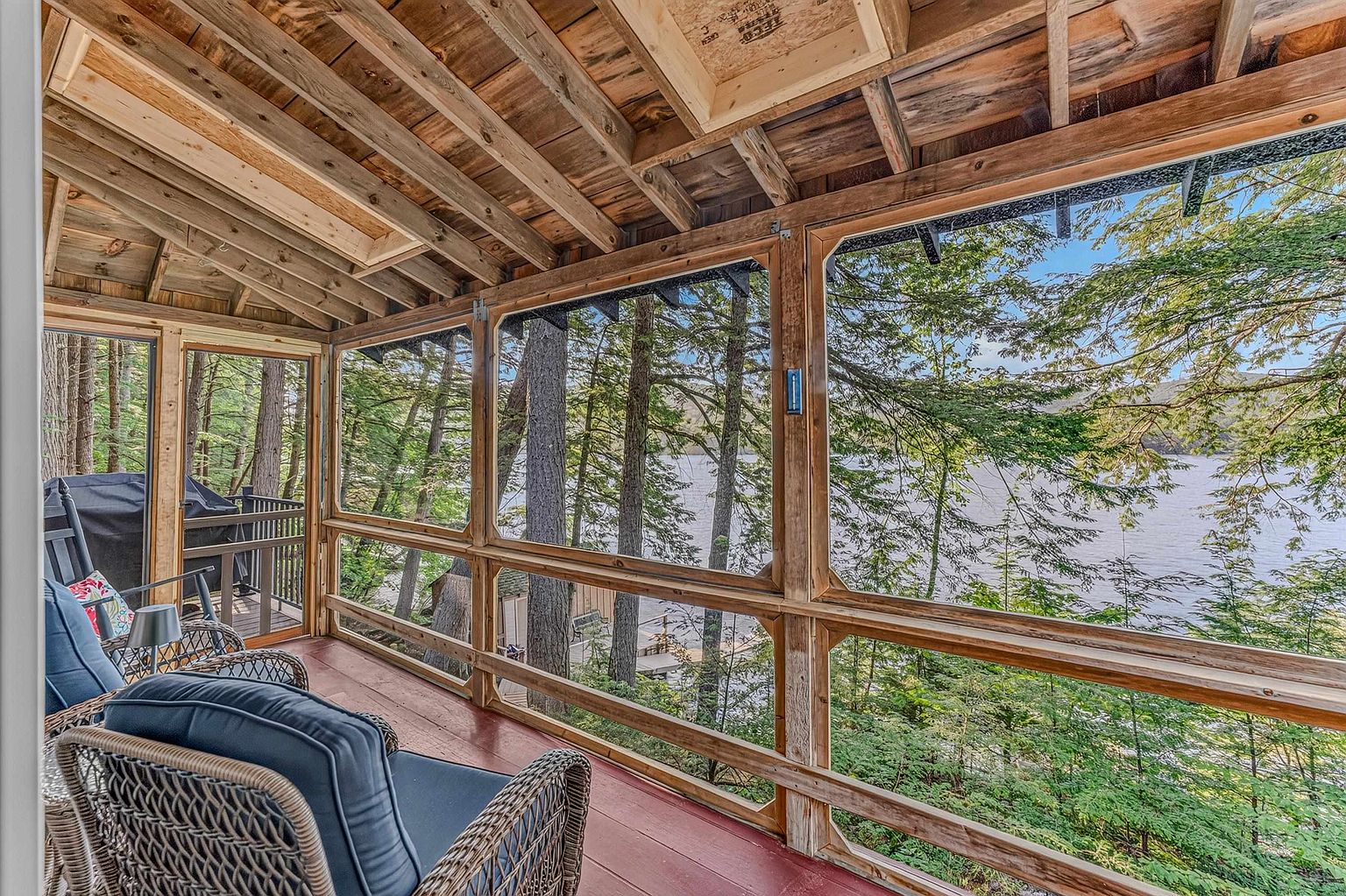
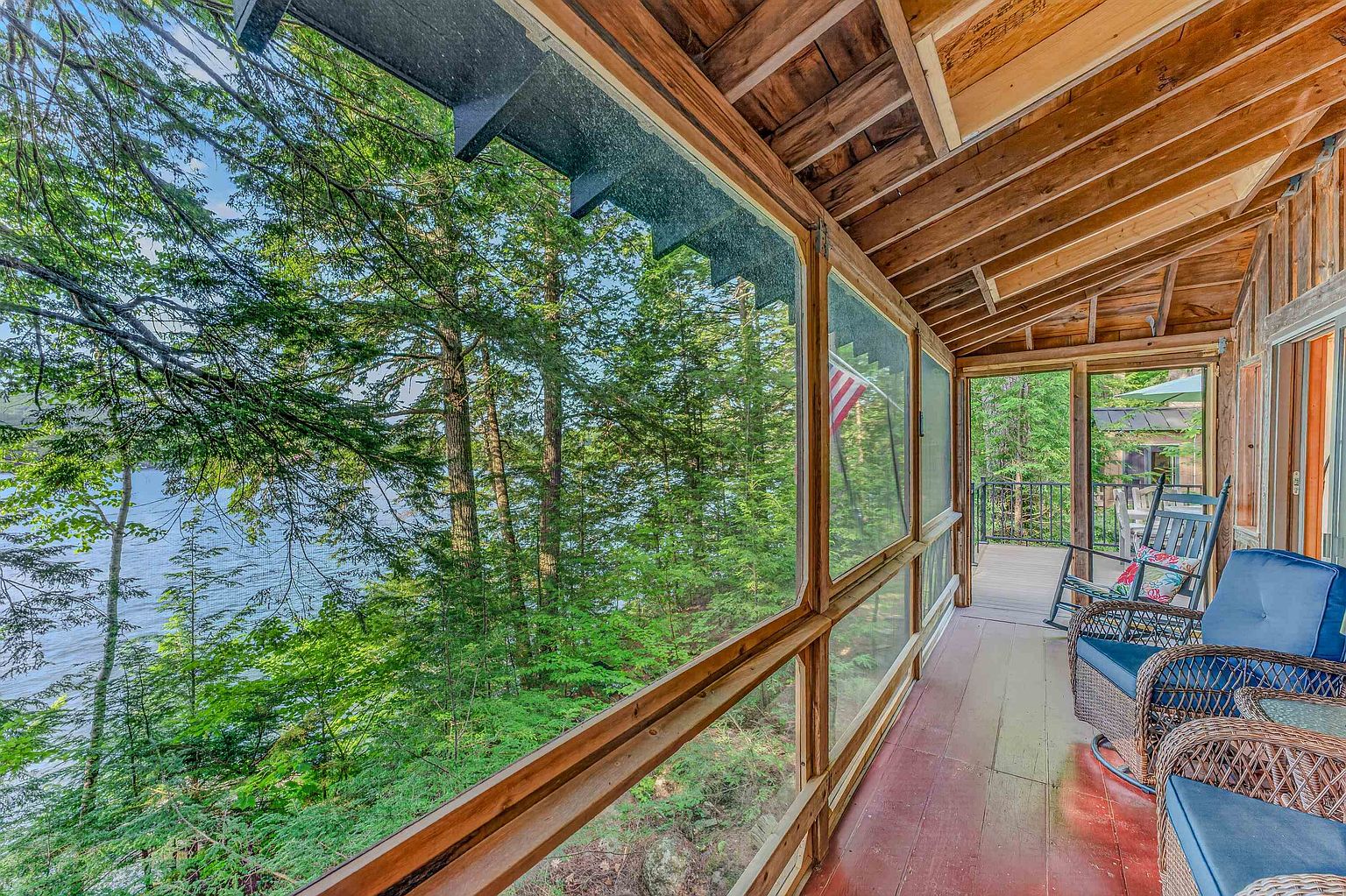
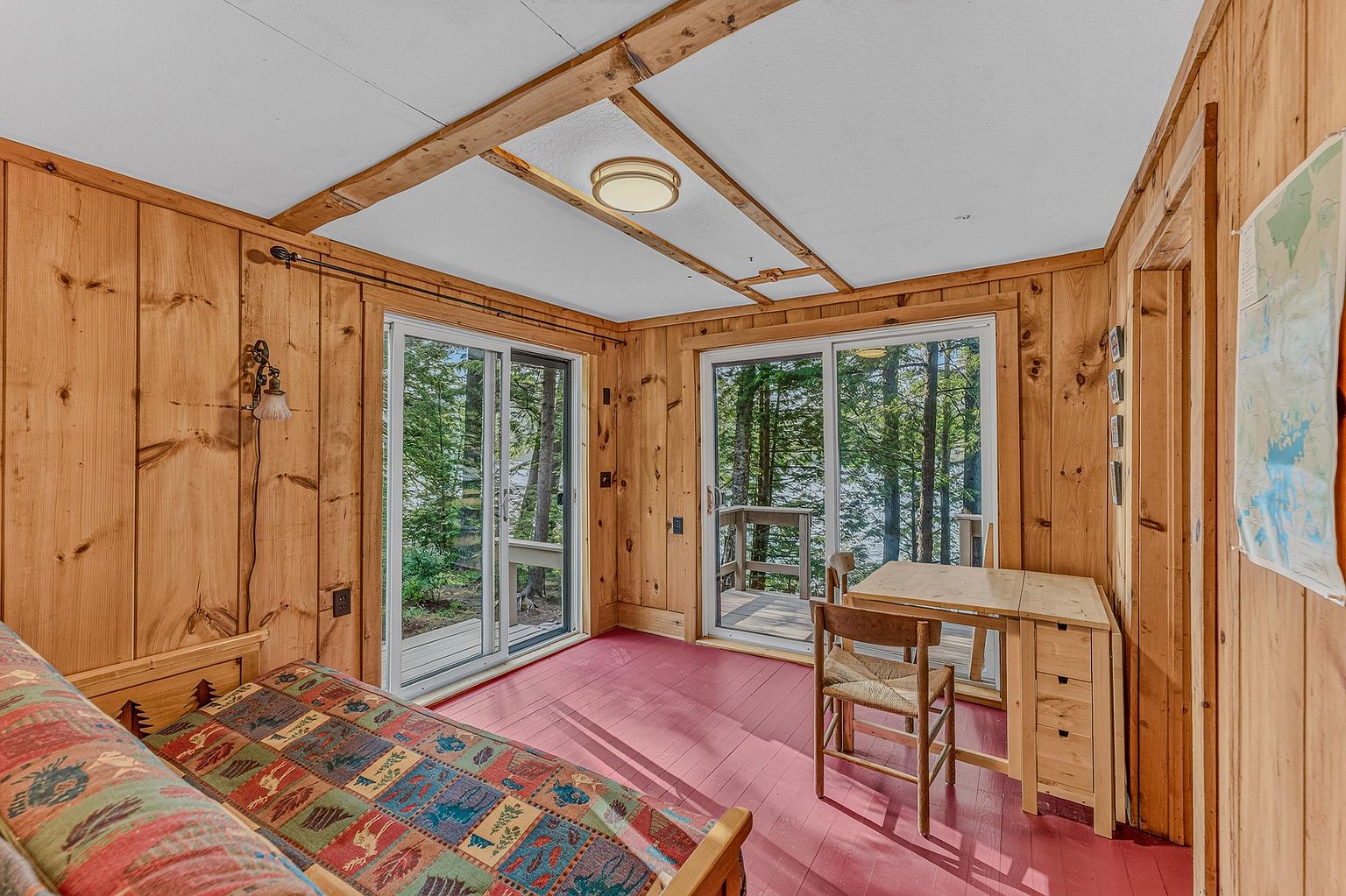
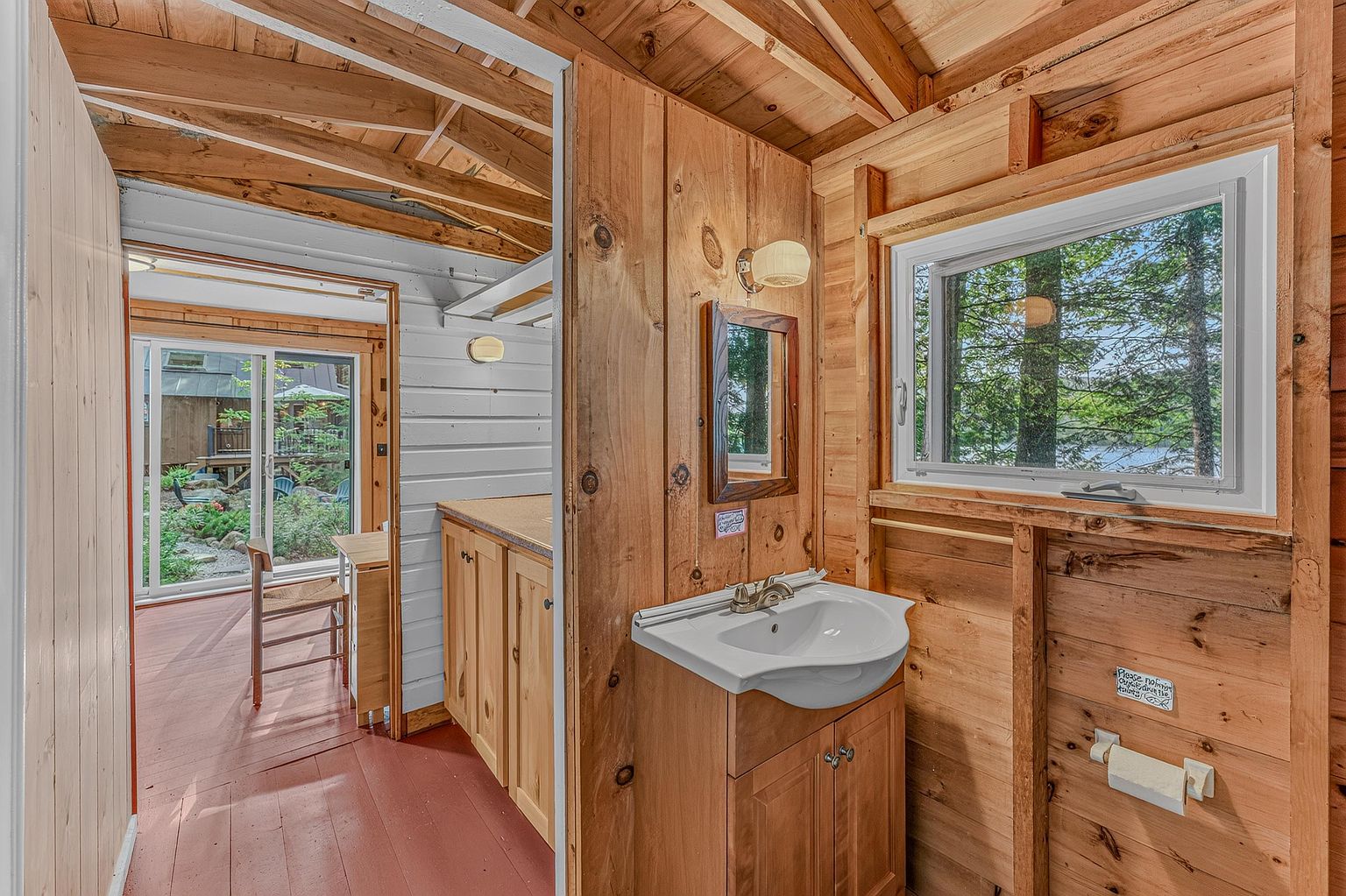
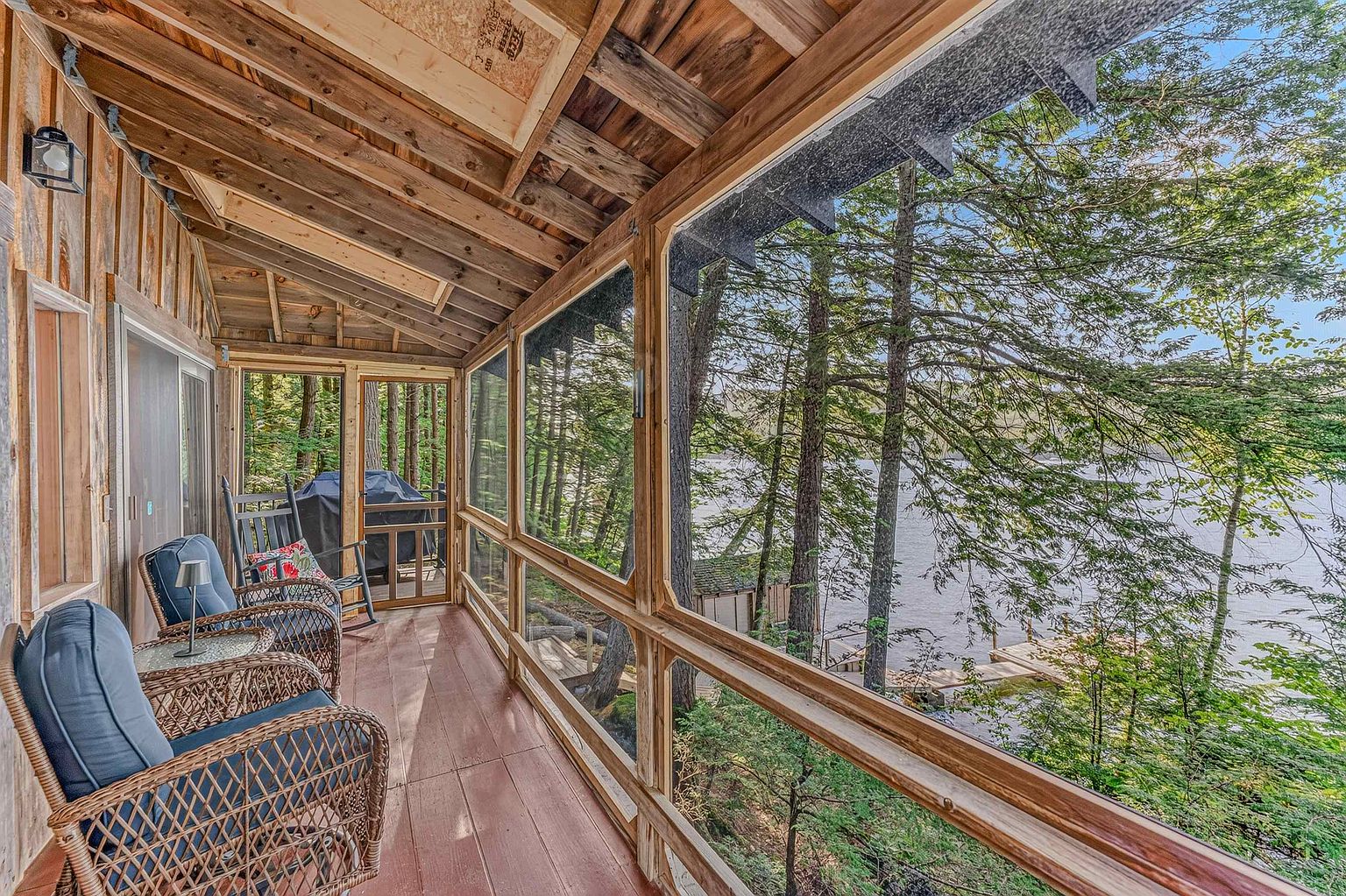
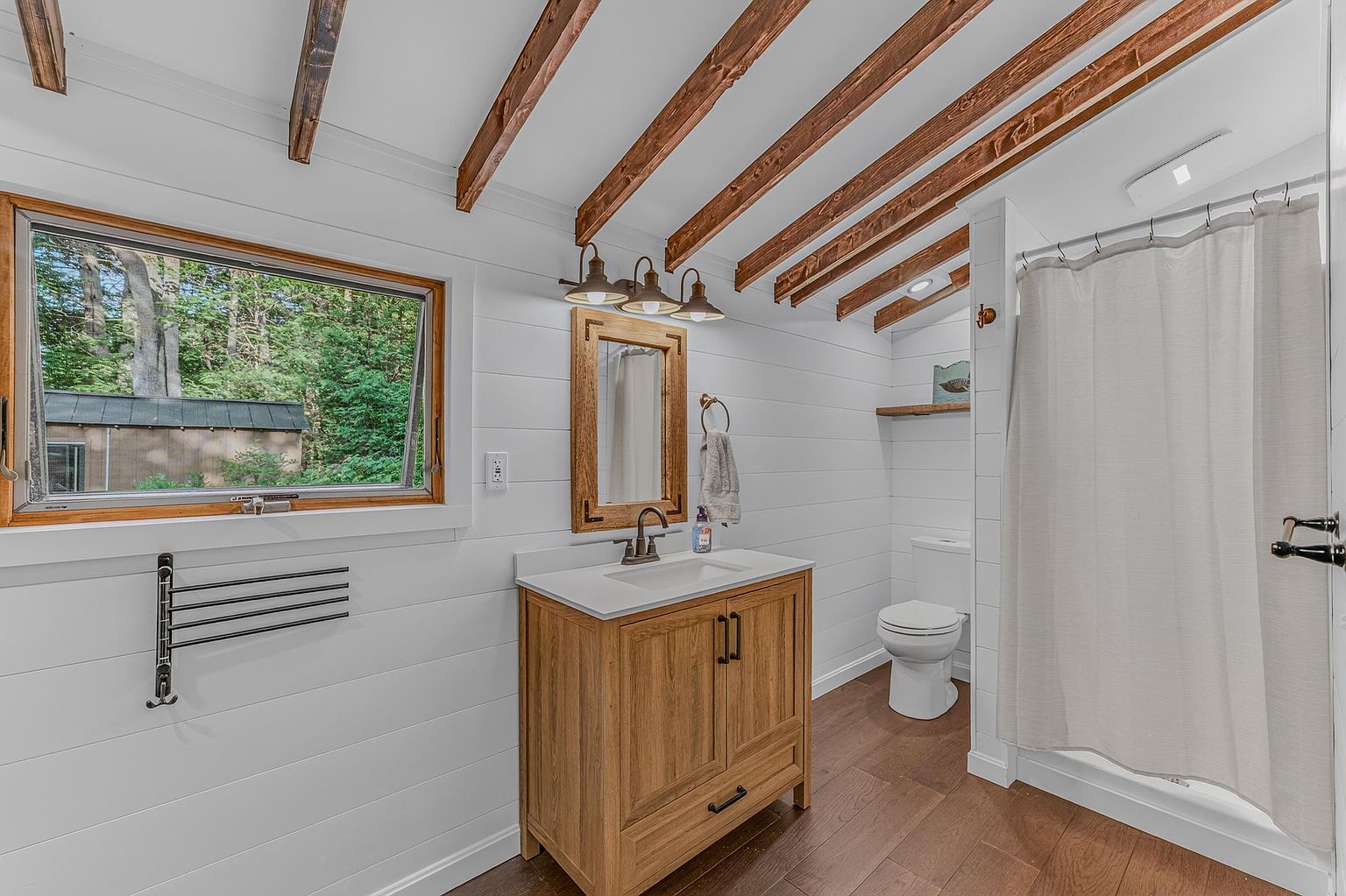
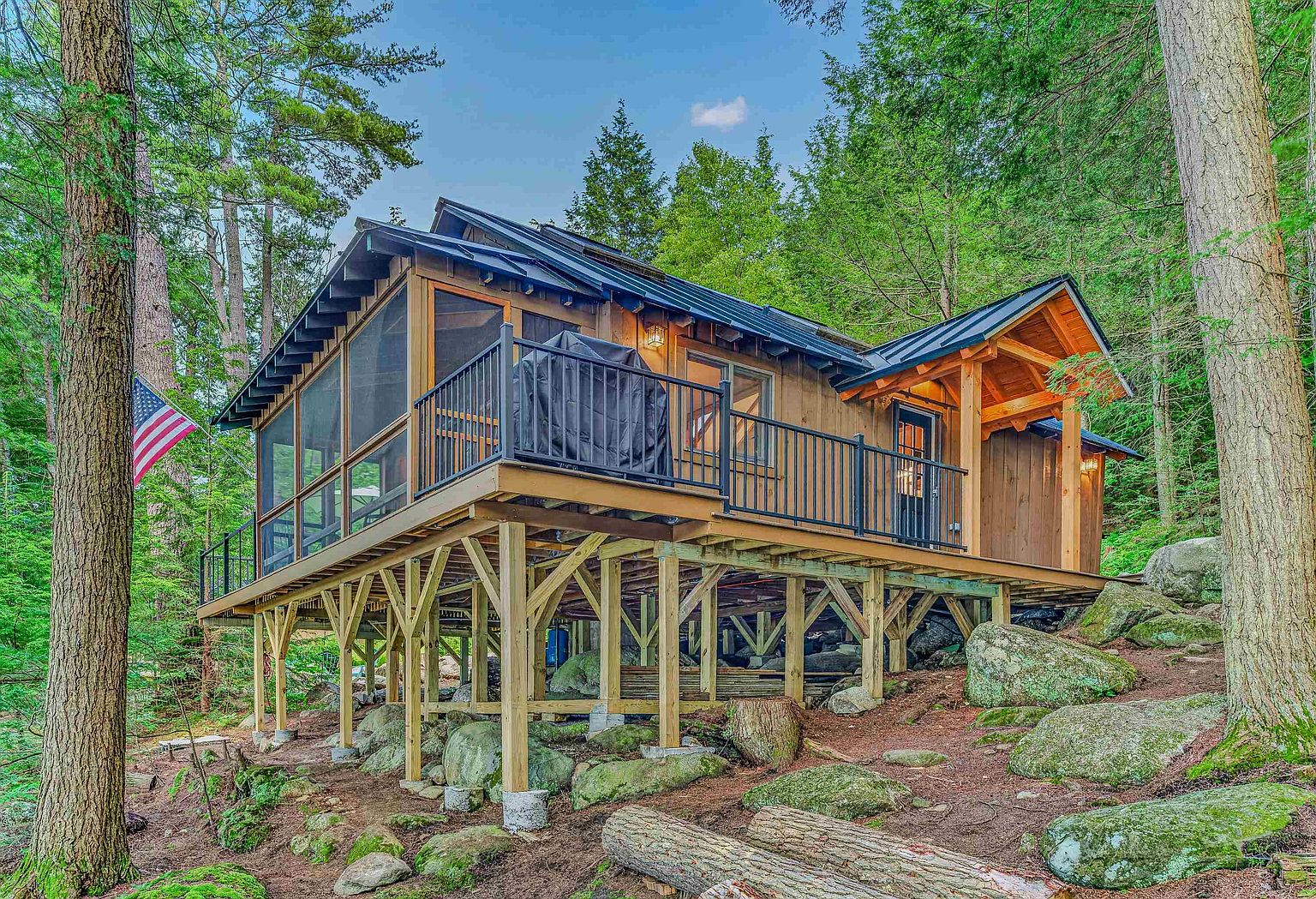
The rebuilt bathroom reflects the same commitment to craft found throughout — white shiplap walls, exposed wooden ceiling beams, a walk-in shower, and a large window that frames the surrounding greenery with the simplicity of a painting. The guest cabin carries its own distinct character, with a screened-in porch furnished with wicker seating and framed by lake views through wide mesh panels — a space that manages to feel both sheltered and completely immersed in the outdoors.
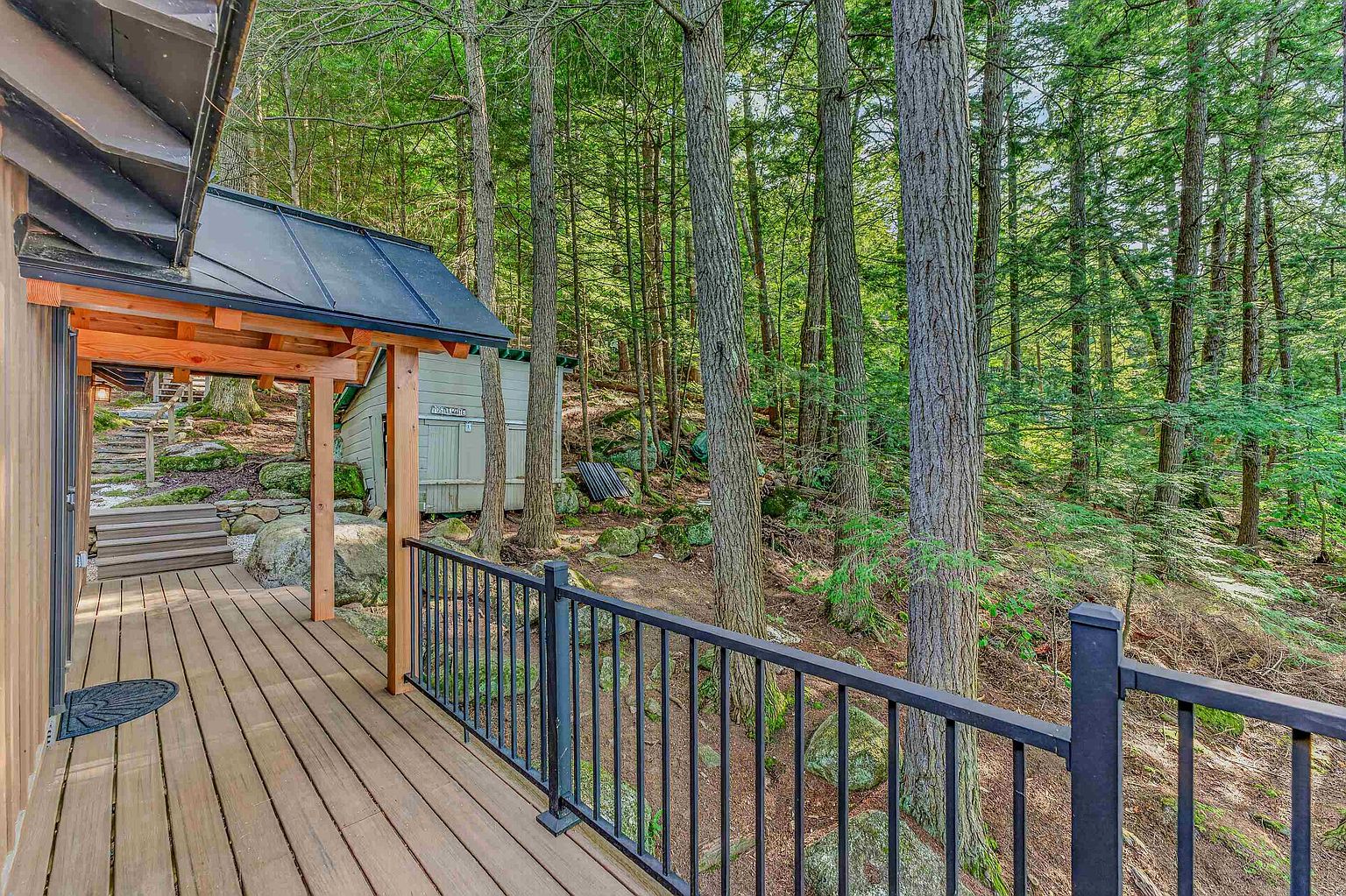
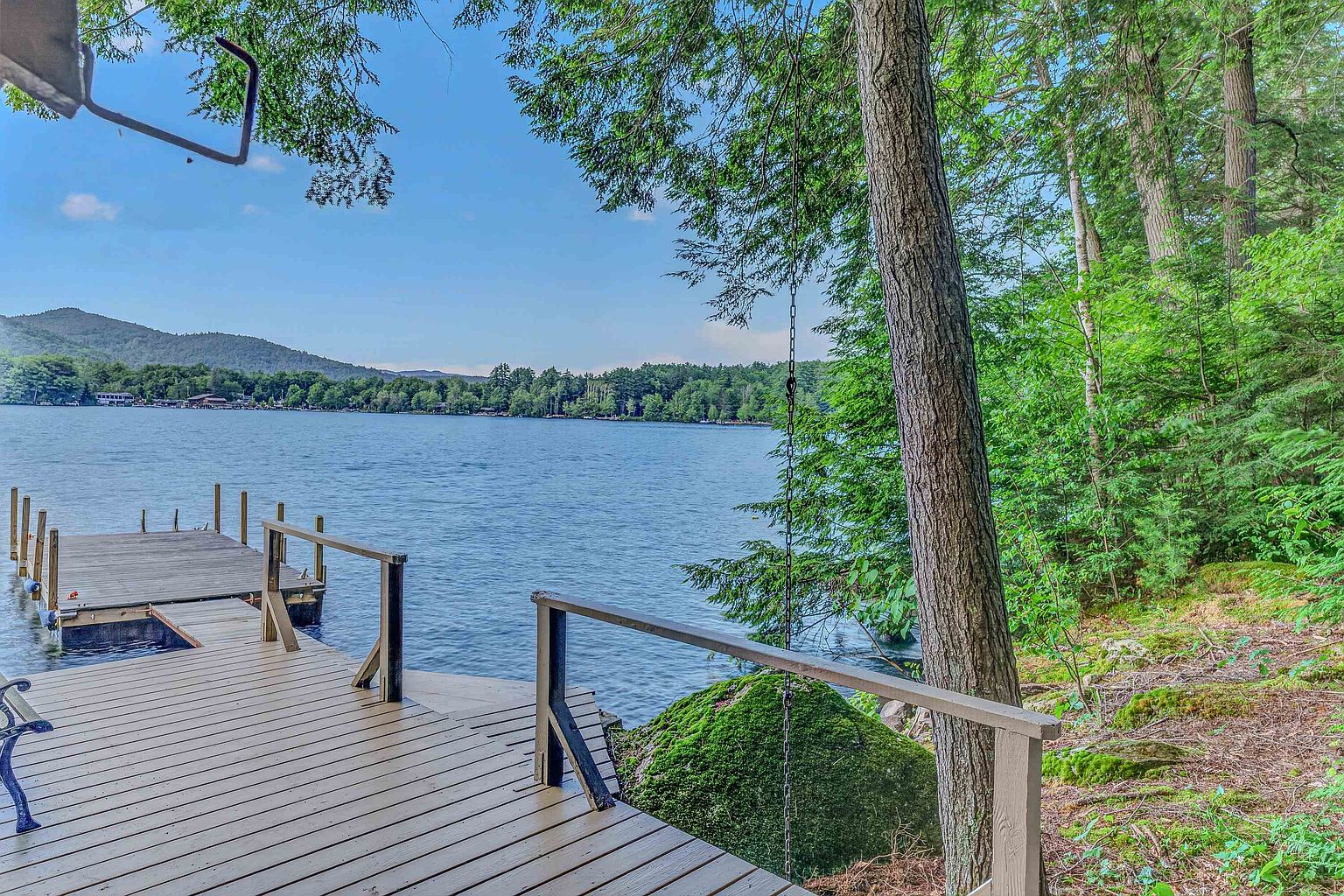
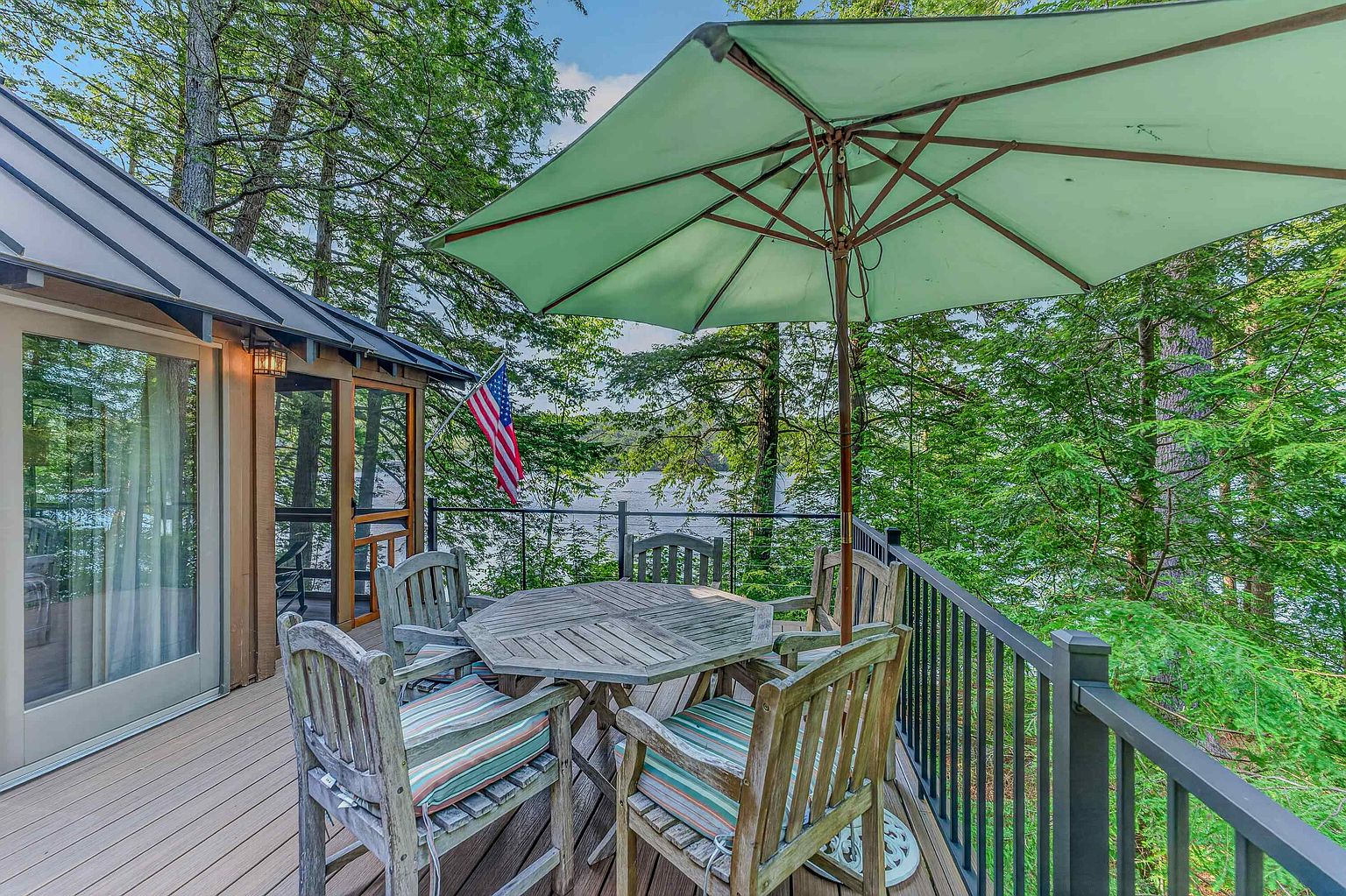
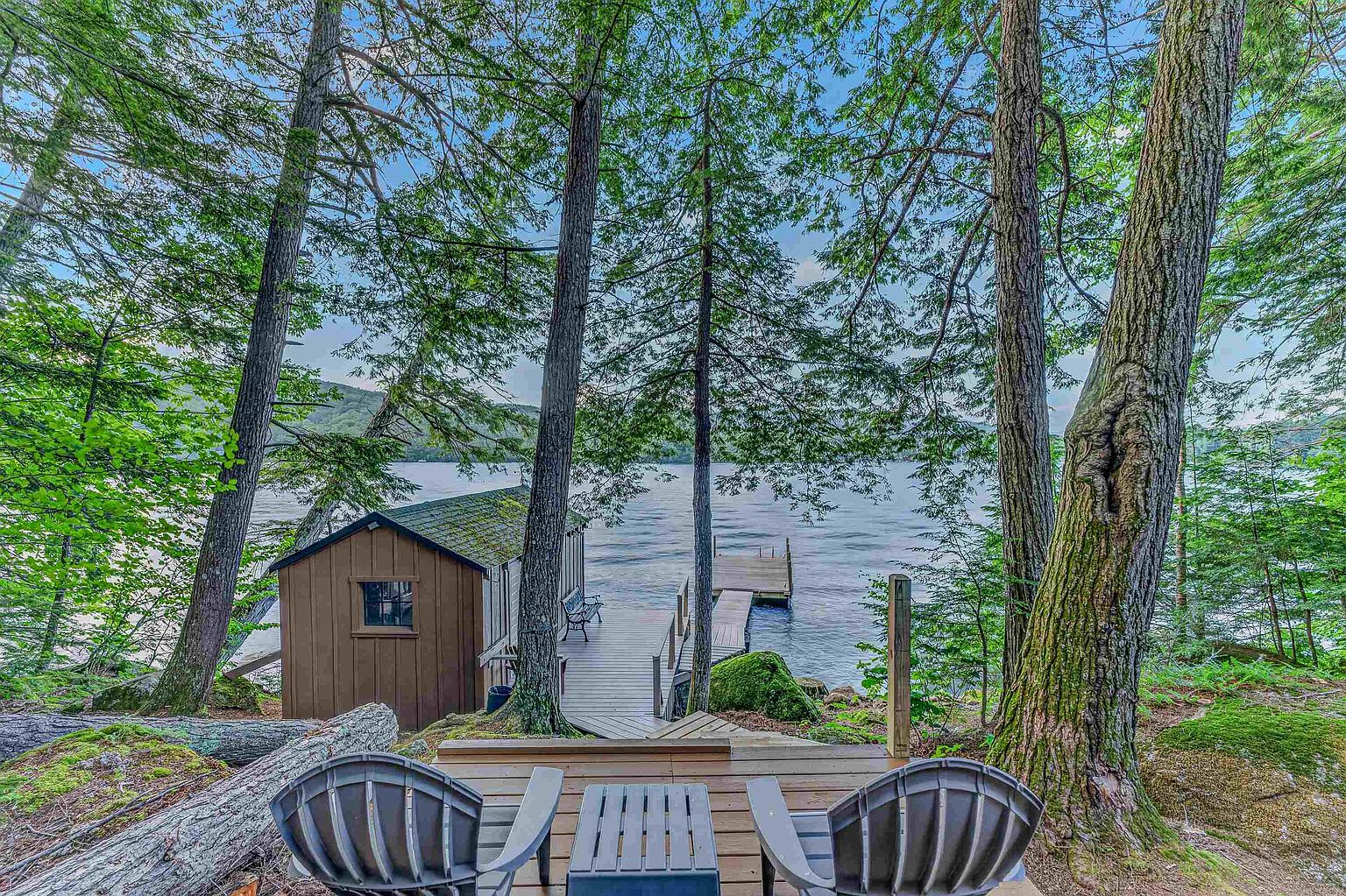
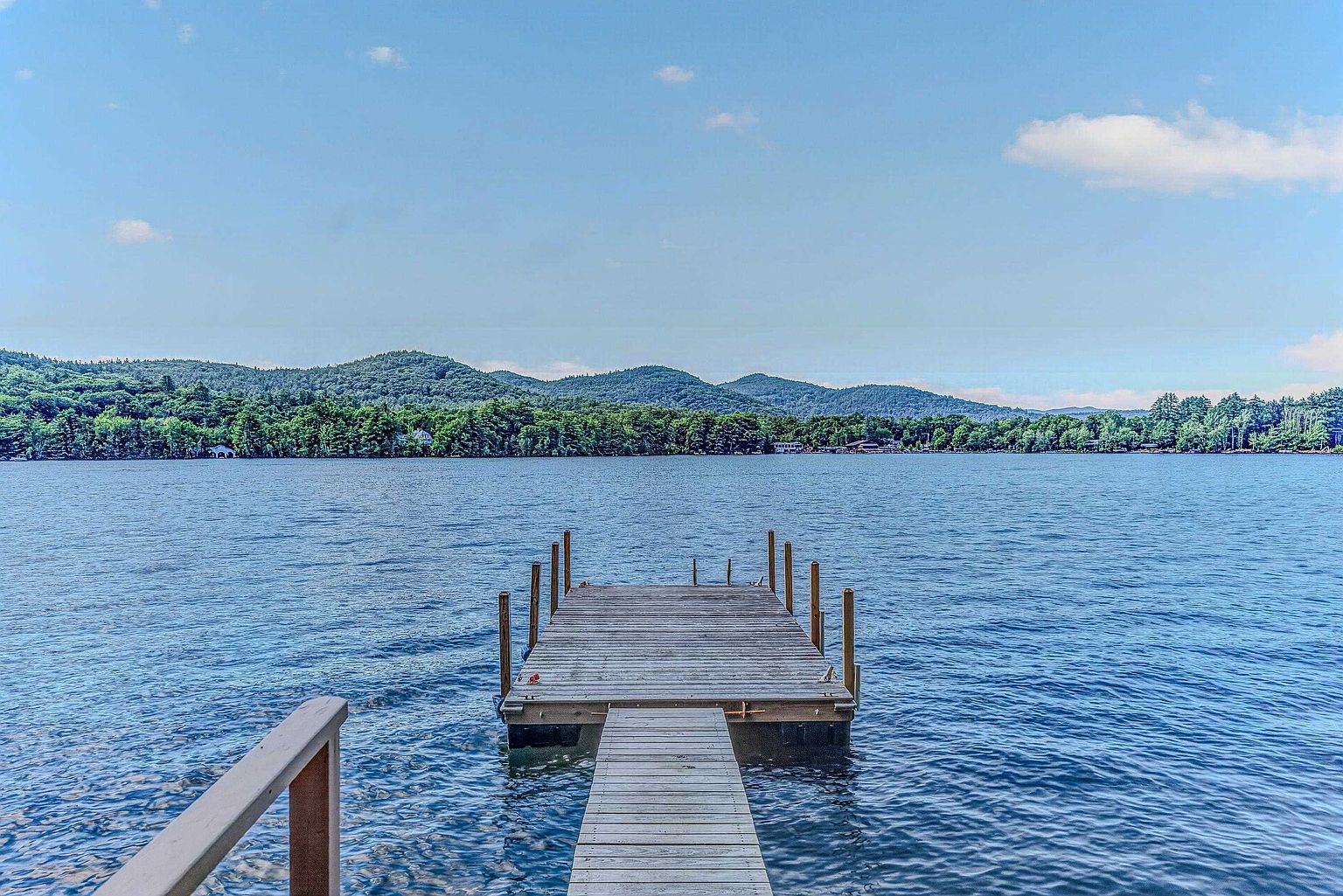
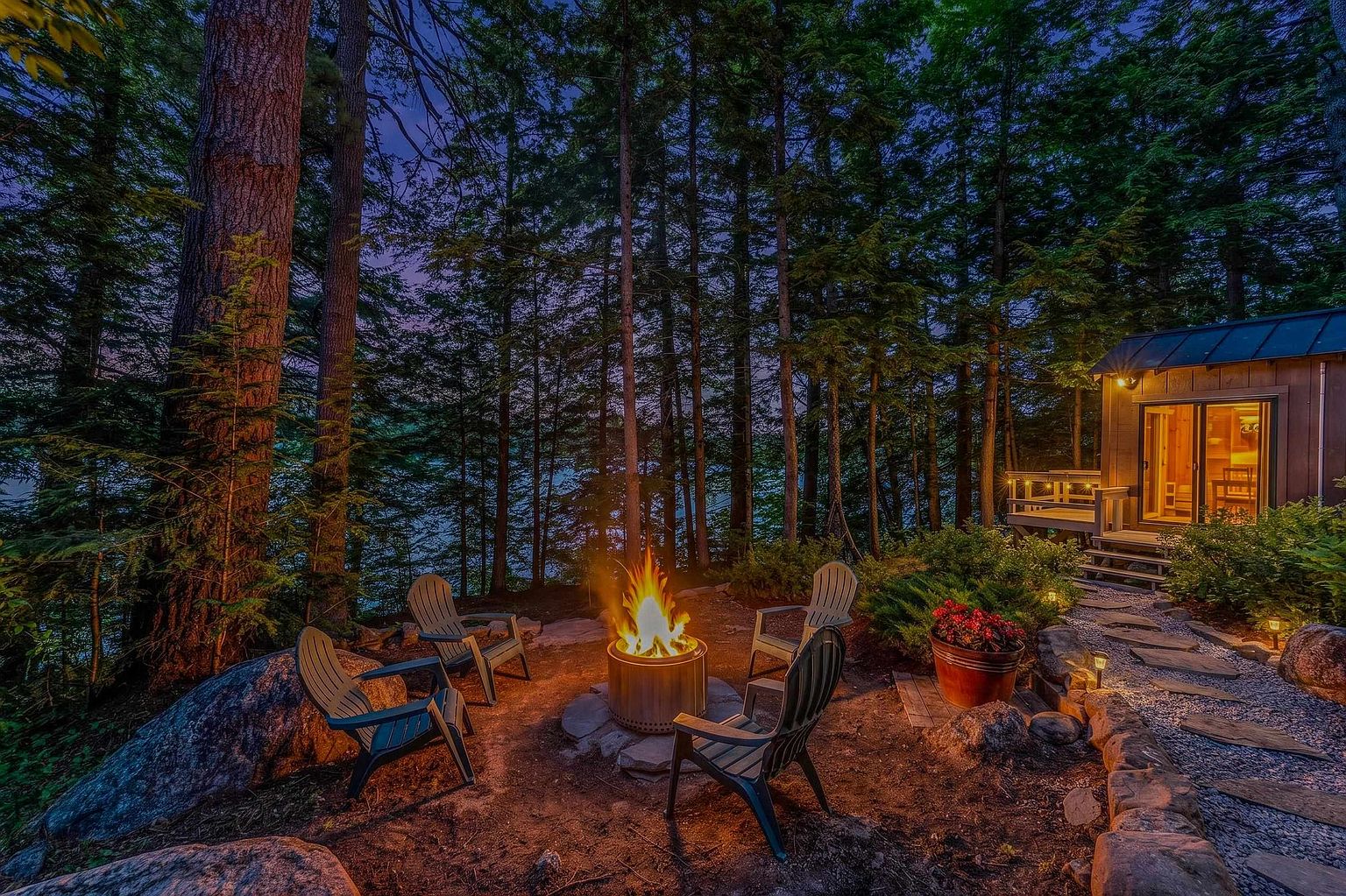
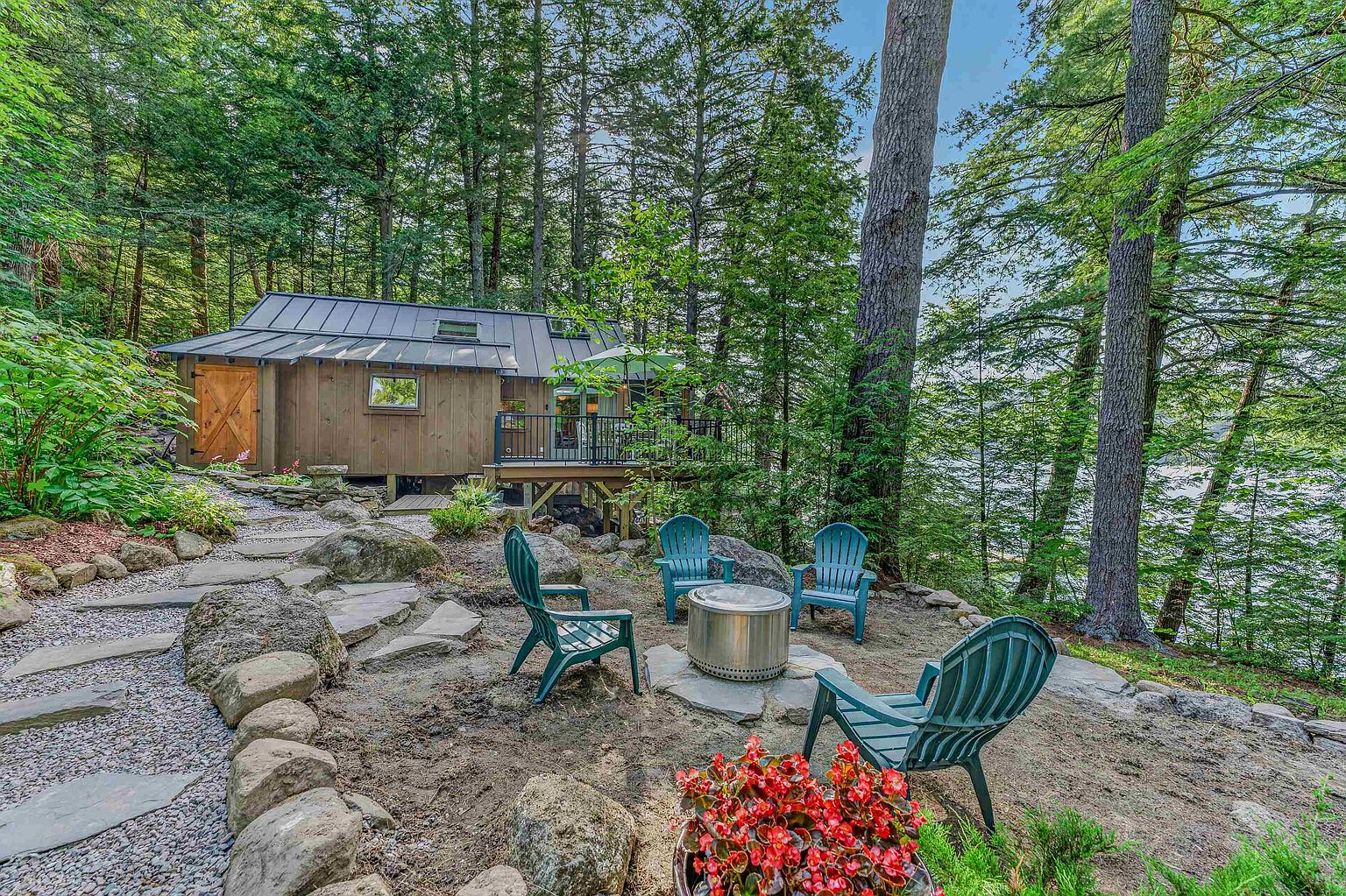
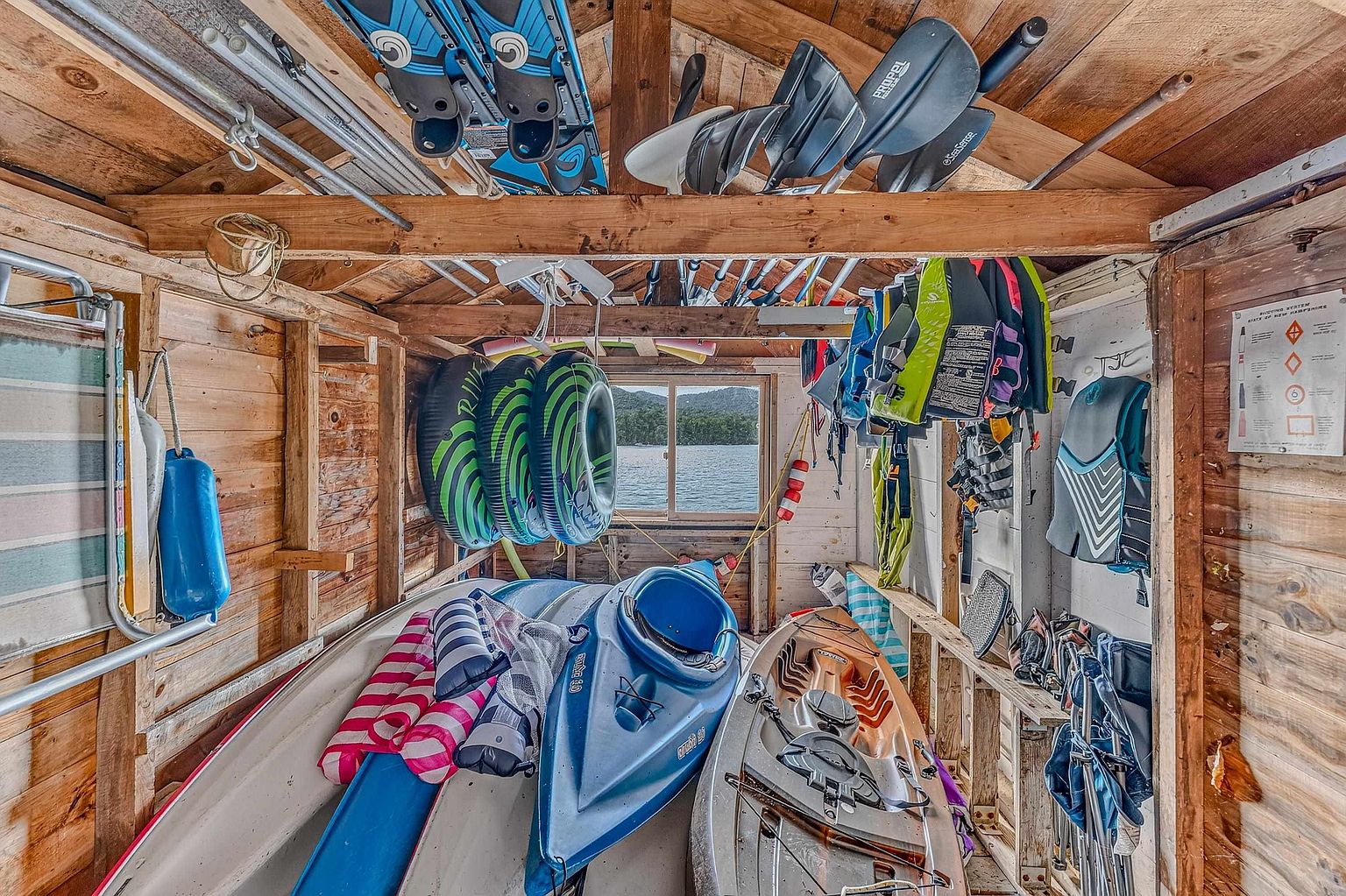
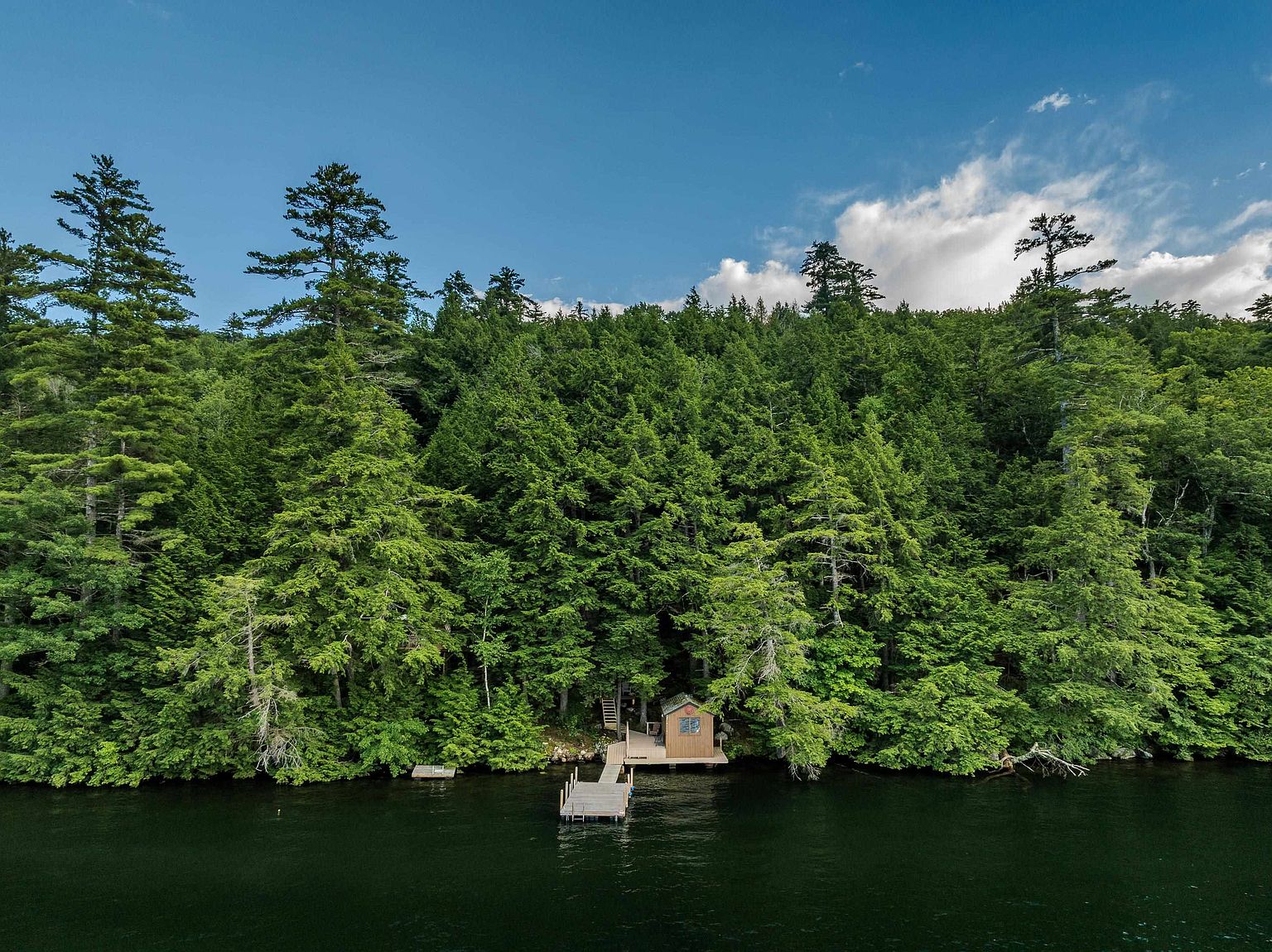
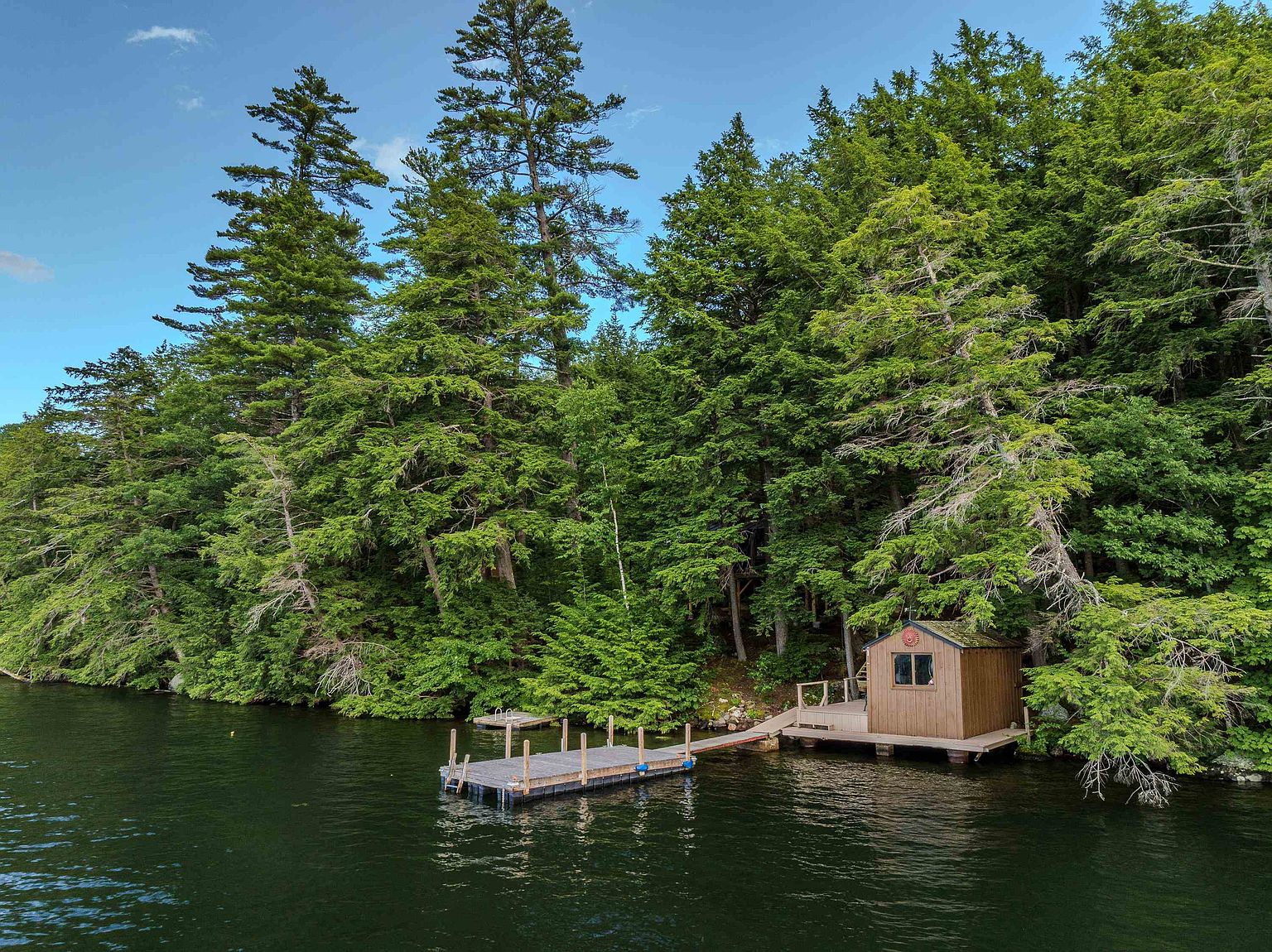
Outside, the grounds have been designed for layered enjoyment. New Trex decking wraps the main cabin, and a deck with a hexagonal dining table and umbrella provides an elevated vantage point over the water. Bluestone and gravel walkways connect the cabins, the boathouse, and the fire pit area — four Adirondack chairs arranged around a modern fire pit with the lake visible just beyond. The boathouse doubles as a well-organized equipment room, stocked with kayaks, paddles, life vests, and inflatables, with a central window that looks directly out to the water. Rebuilt dock stairs descend to a private dock that extends into the lake's calm, dark water.
A standing seam metal roof crowns both cabins — a detail that signals, from the first approach, that the care taken here is both visible and durable. The existing shed footprint on the property offers future potential for a gazebo, screened retreat, or new outbuilding, adding a layer of possibility to an already complete offering. Offered mostly furnished, this is a compound that asks very little of its next owner except to arrive.
Holderness, New Hampshire occupies a quiet and privileged position in the Lakes Region, a part of the state that has drawn visitors seeking natural beauty and genuine respite since the nineteenth century. The town sits at the confluence of the Squam River and Squam Lake, and its identity has long been shaped by the water that surrounds it — not the commercial bustle that characterizes some New Hampshire lake towns, but a more deliberate, conservation-minded culture that has kept the landscape largely intact.
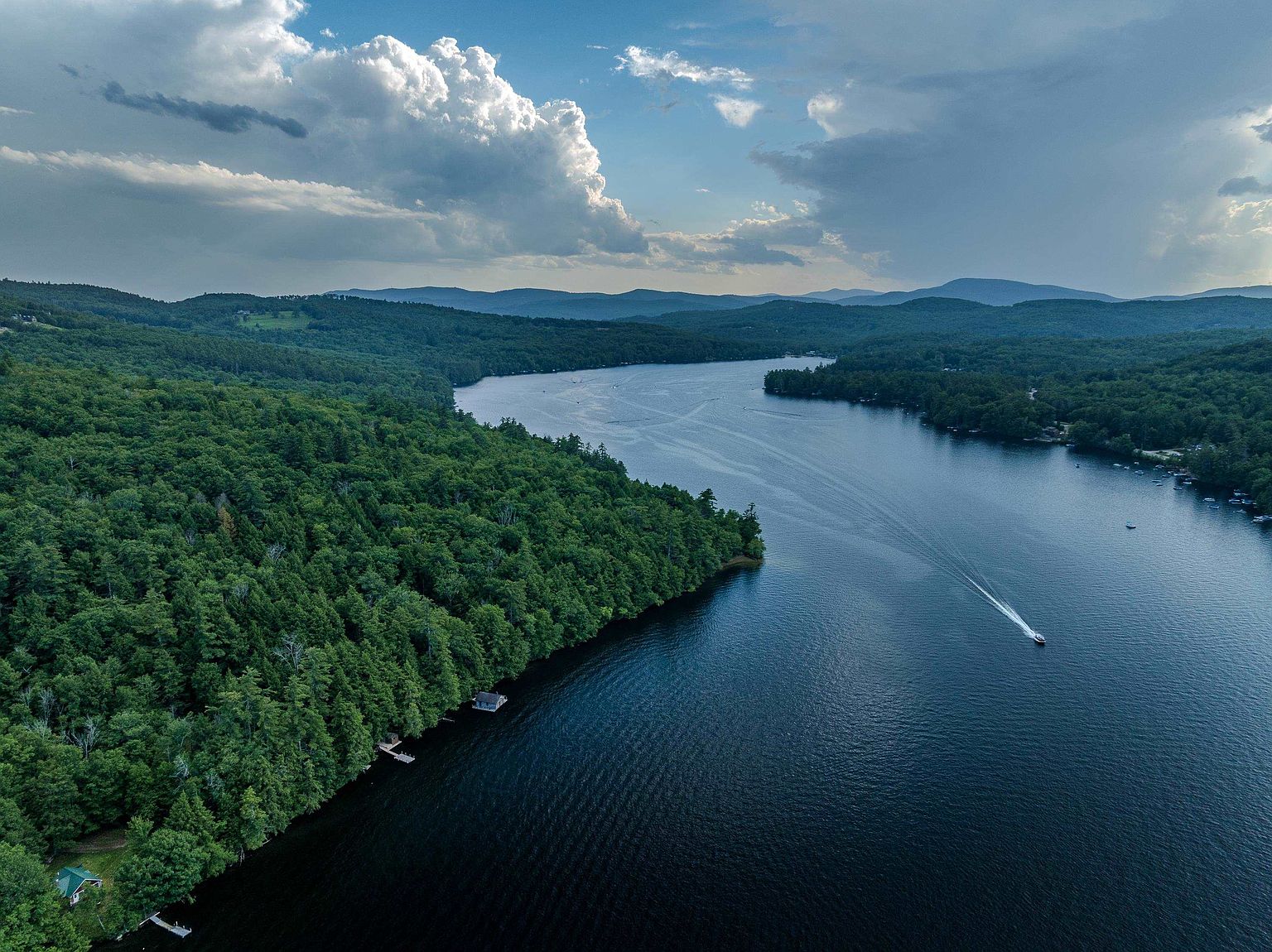
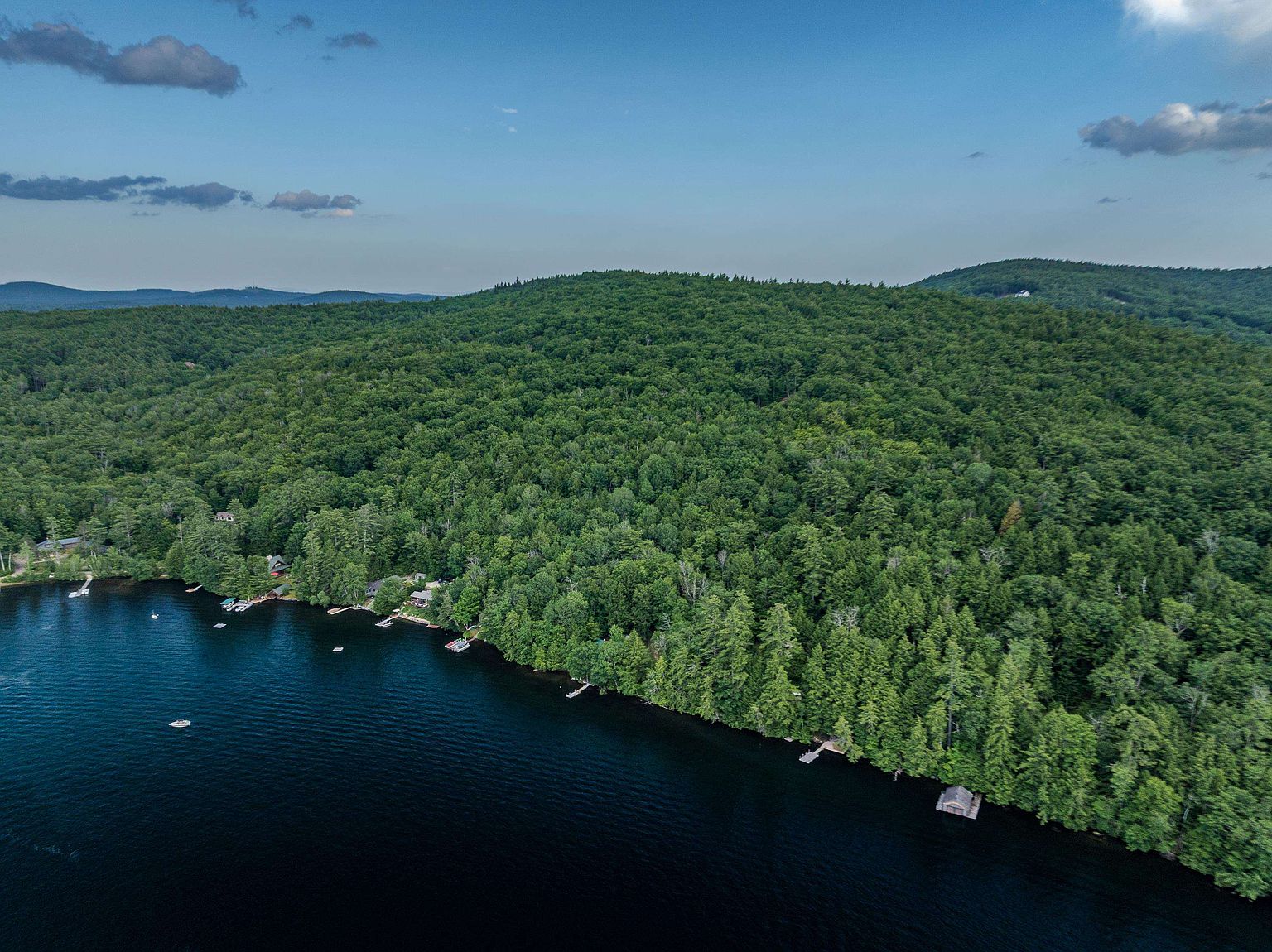
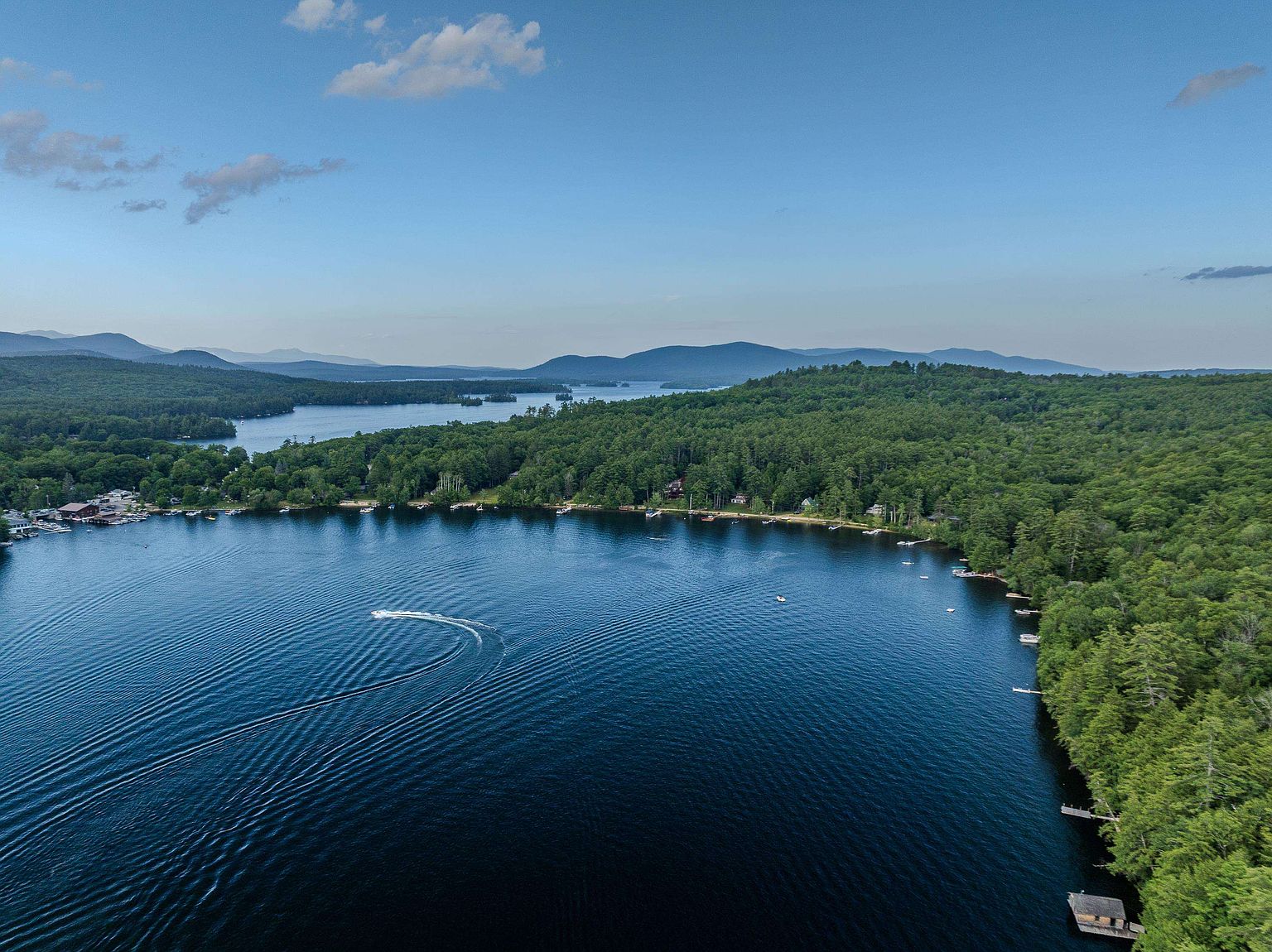
Little Squam Lake, where this property sits, is the smaller and arguably more intimate of the two Squam lakes. It connects to the larger Squam Lake via a navigable channel, giving waterfront owners on Little Squam access to one of the most celebrated bodies of water in New England without the exposure of a larger, more trafficked shoreline. Squam Lake is perhaps best known as the filming location for the 1981 film On Golden Pond, a distinction that cemented in popular imagination what those who live here have always known: this is a lake of uncommon stillness and beauty, surrounded by mountains that reflect in the water on calm mornings with almost photographic clarity.
The Squam Lakes Natural Science Center, located in Holderness, is one of the region's most respected institutions — a living wildlife museum and nature center set on sixty acres that offers educational programming, native animal exhibits, and guided lake cruises. It functions as both a community anchor and a reminder of the conservation values that define life here. The Squam Lakes Association, one of the oldest lake associations in New Hampshire, has worked for well over a century to protect water quality and the natural character of the watershed, ensuring that the experience of being on these lakes remains as it has always been.
Holderness is a small town by design and by choice. Its year-round population is modest, and the community that forms around the lake each summer is one that returns reliably, drawn by the consistency of the experience rather than novelty. The village center offers essential services, and the broader amenities of the Lakes Region — fine dining, independent shops, farmers markets, and galleries — are accessible in nearby Plymouth and the surrounding towns. Plymouth State University, located approximately eight miles away in Plymouth, brings a measure of cultural programming and community vitality to the region.
For those who prefer active pursuits, the surrounding landscape is exceptional. The White Mountain National Forest lies to the north, offering hiking, skiing, and backcountry access across hundreds of thousands of acres. Waterville Valley and Loon Mountain are both within a reasonable drive for winter skiing, while the lakes themselves provide paddling, boating, swimming, and fishing across three seasons. The Squam Lake region is also a recognized loon nesting habitat, and the call of a common loon across still water at dusk is among the more quietly extraordinary features of life here.
Owning on Little Squam Lake in Holderness is not simply a real estate decision. It is an alignment with a particular way of experiencing the world — unhurried, connected to nature, and grounded in a landscape that has been carefully preserved for generations.
Featured Highlights
Curated Content • Presented by Jacqueline Elliott