The Story Behind
A White Mountain Legacy, Rebuilt with Remarkable Precision
There are properties that are simply built, and then there are properties that are conceived — where every structural decision carries the weight of both history and intention. 908 Old Franconia Road belongs firmly in the latter category. Once the heart of the beloved Lotta Rock Dairy Farm, this estate has been the subject of a five-year transformation so carefully orchestrated that the result feels less like a renovation and more like an act of stewardship.
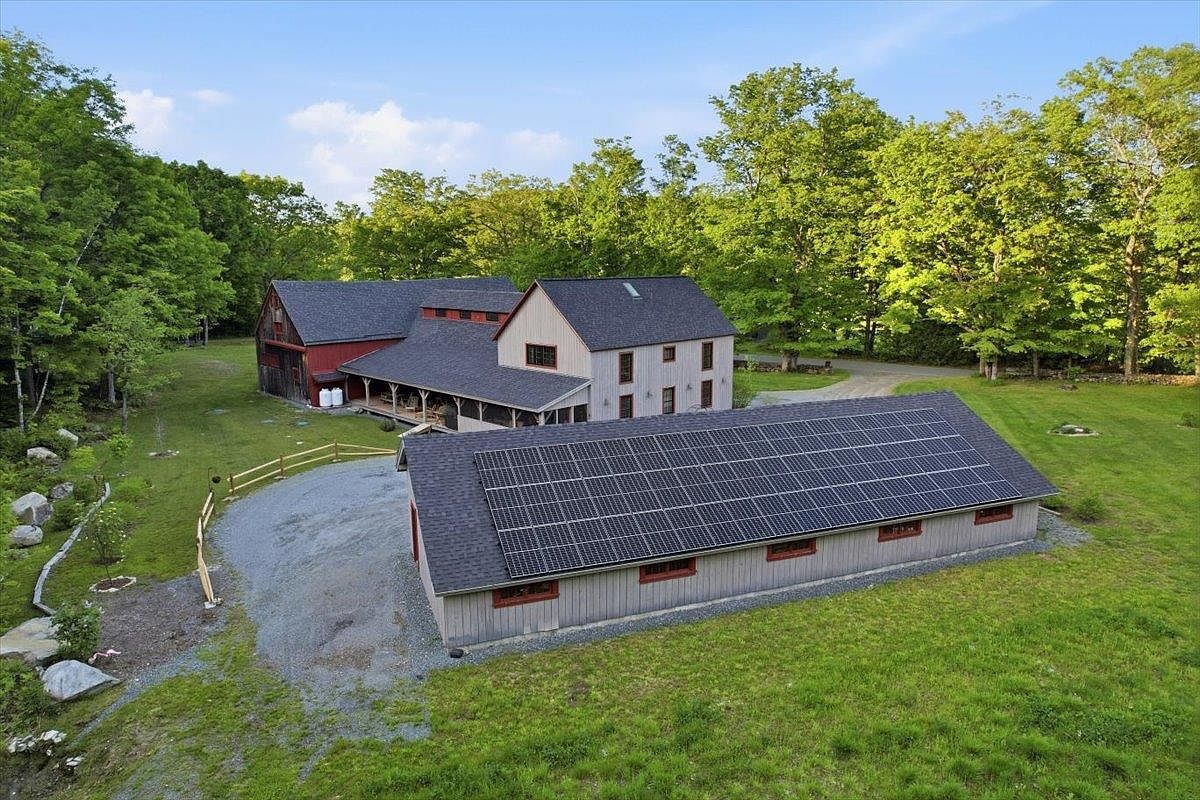
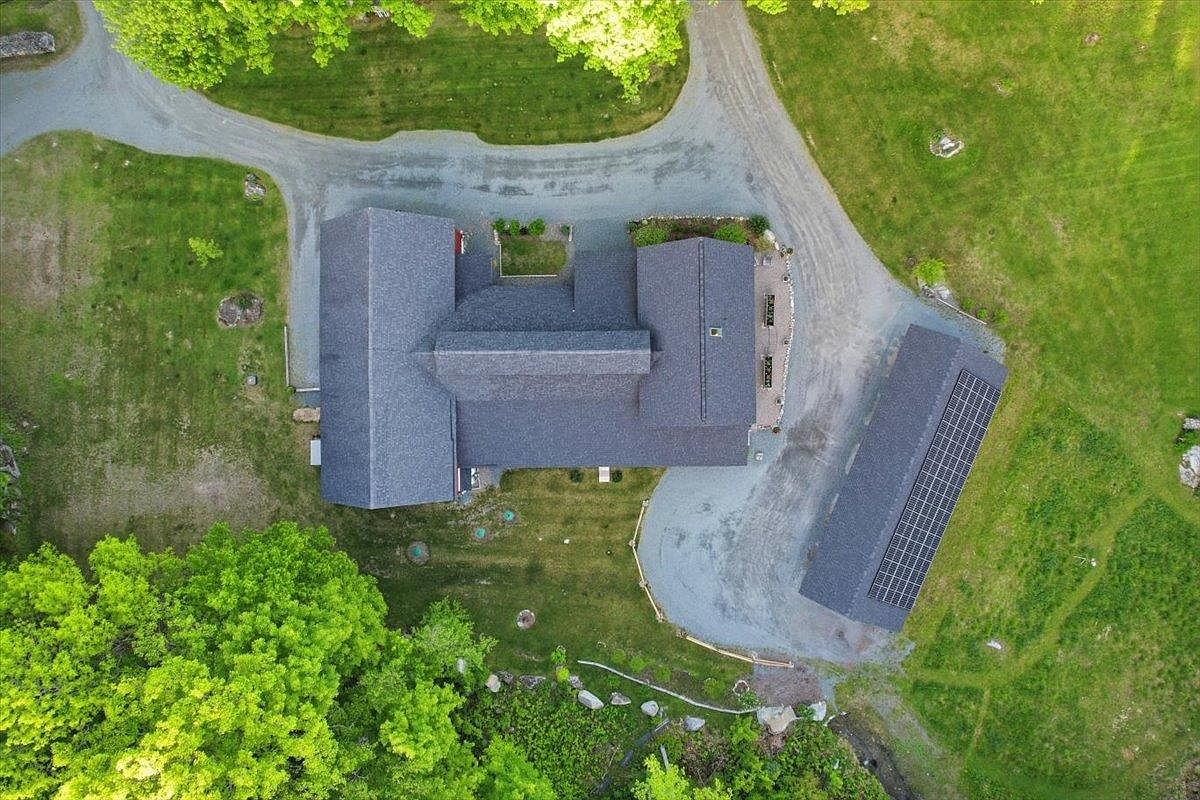
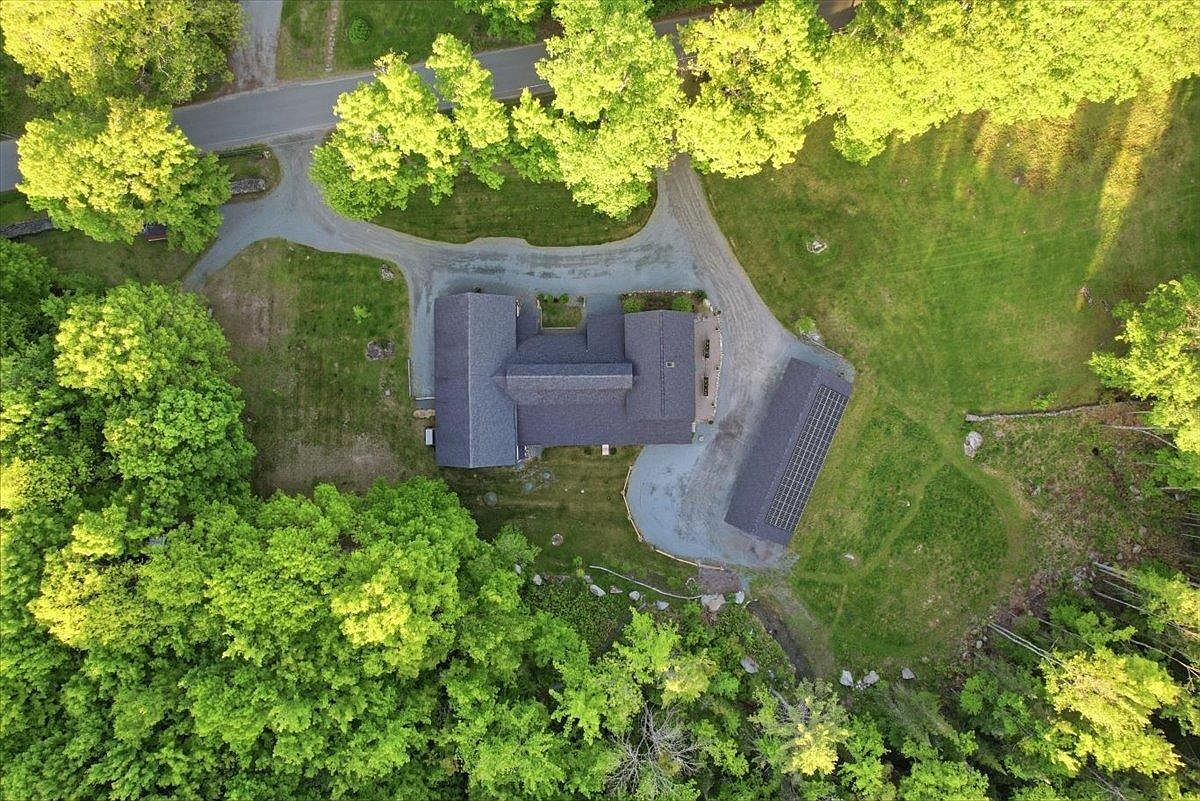
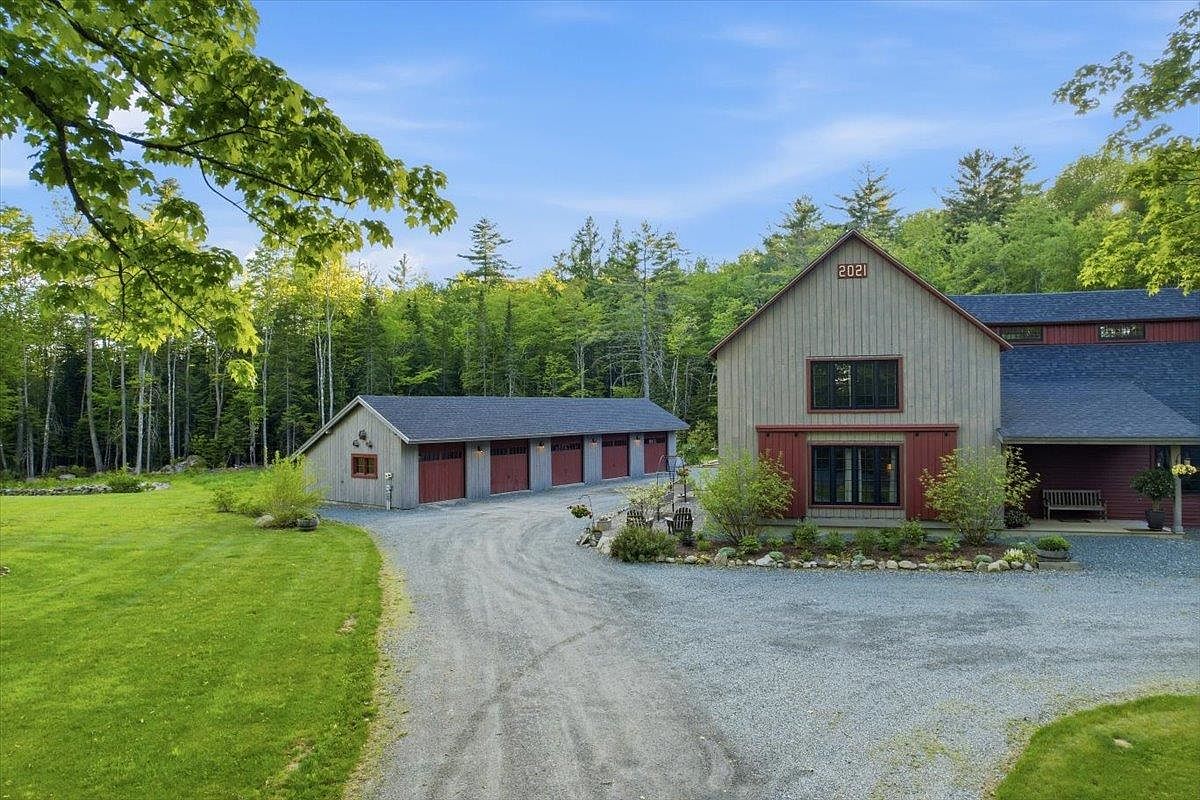
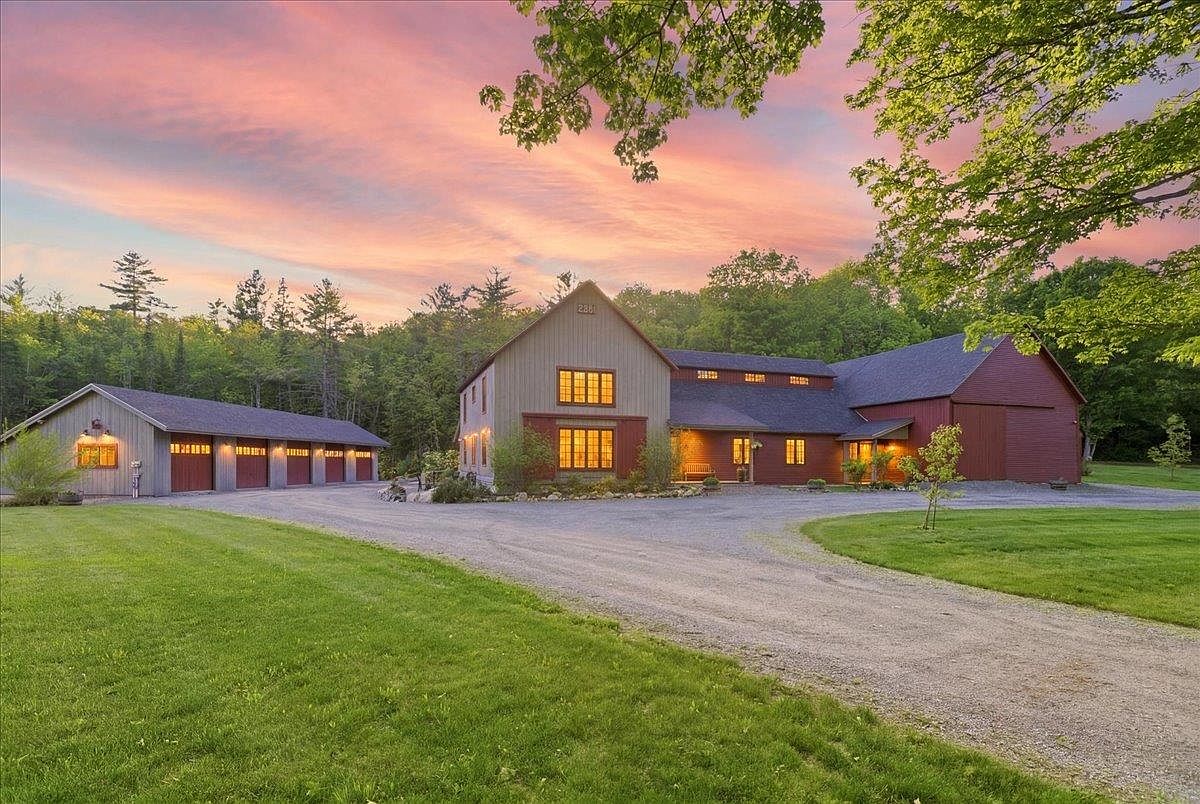
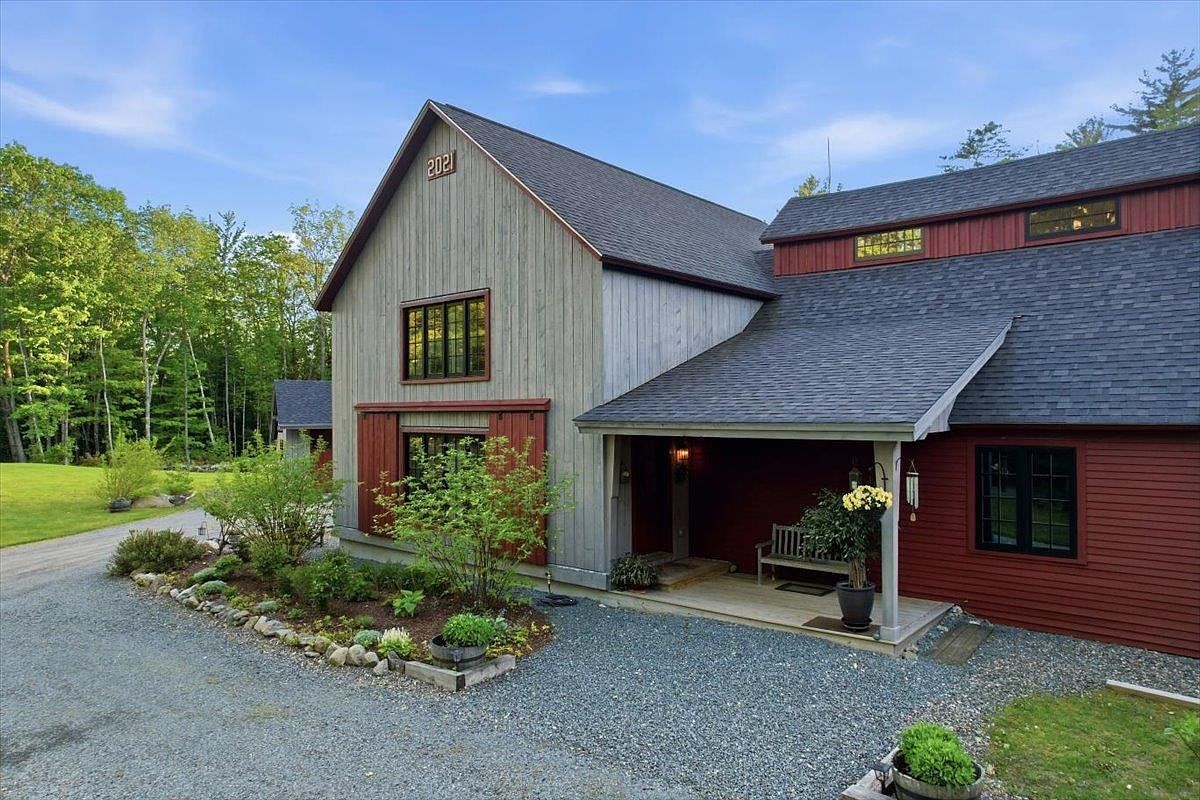
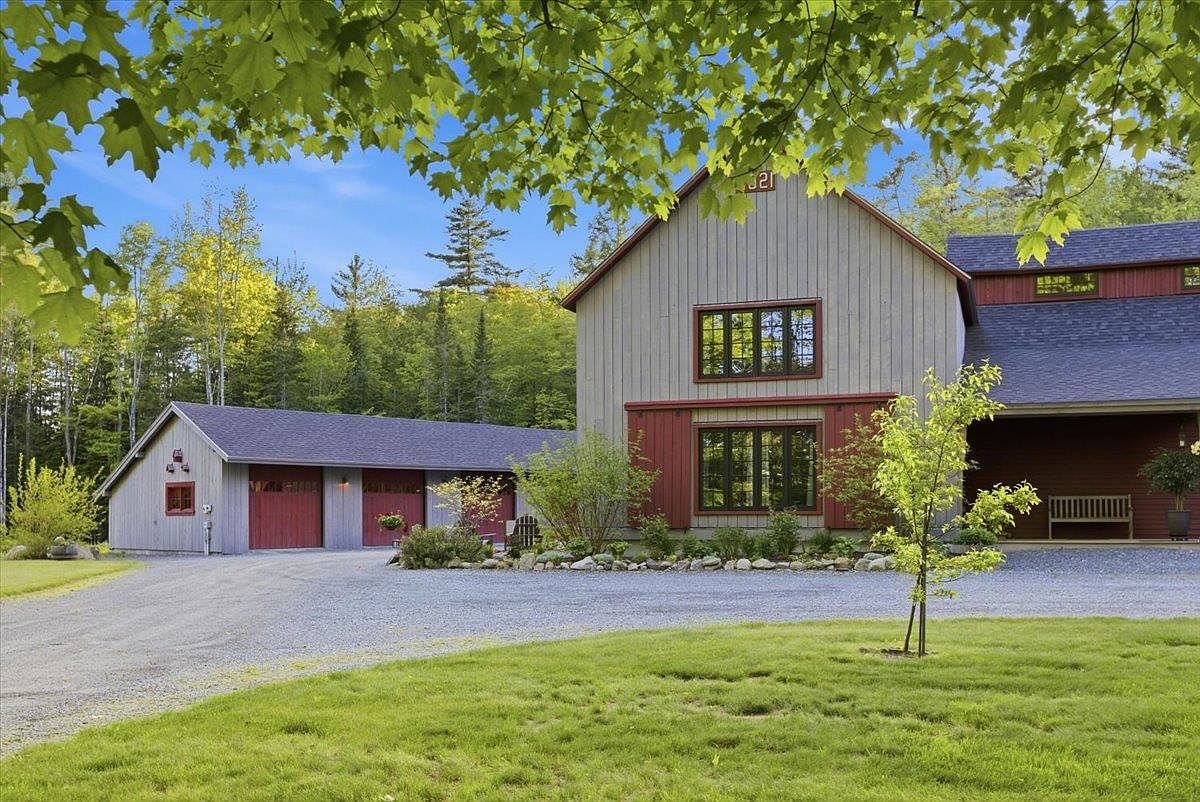
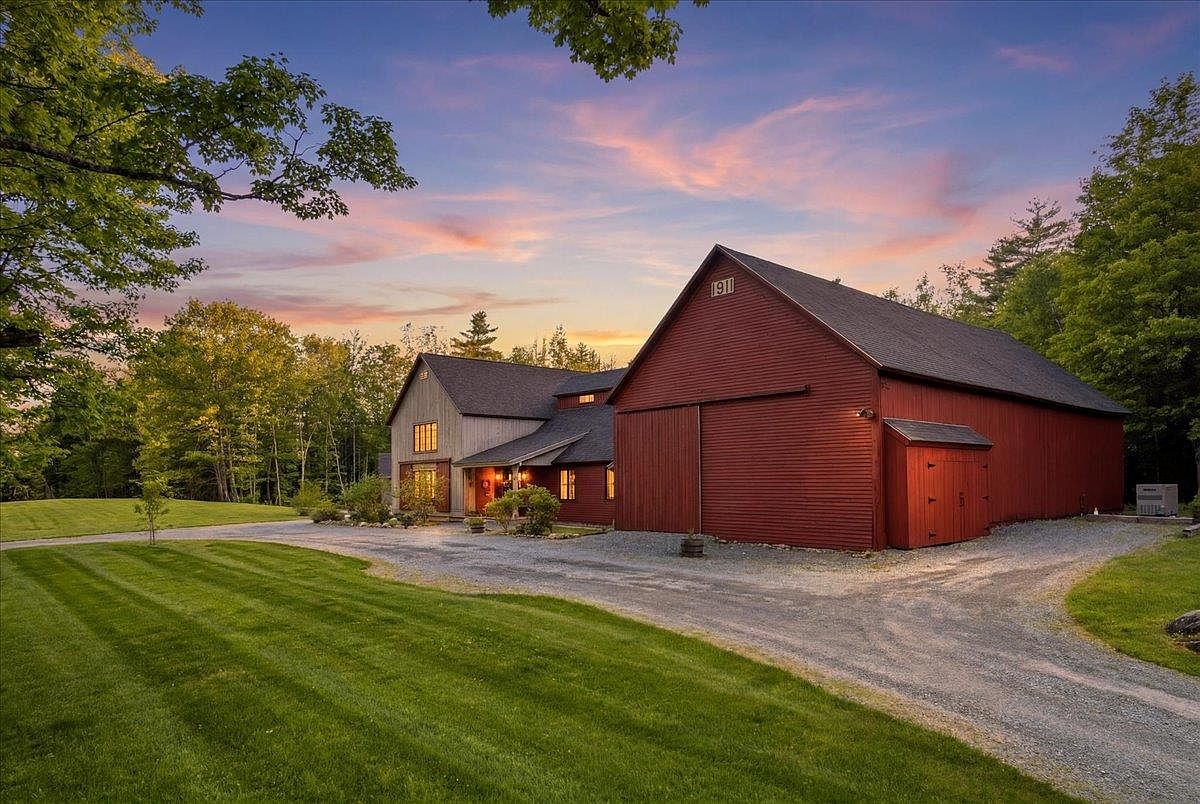
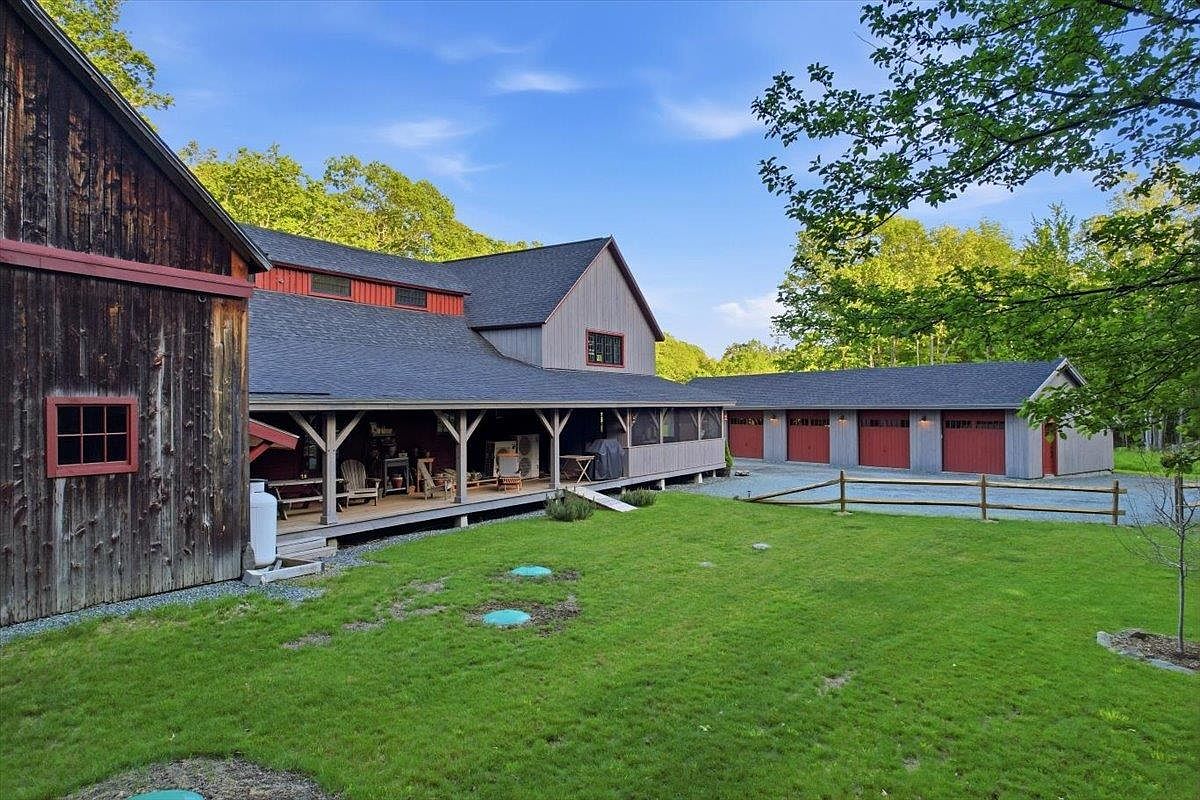
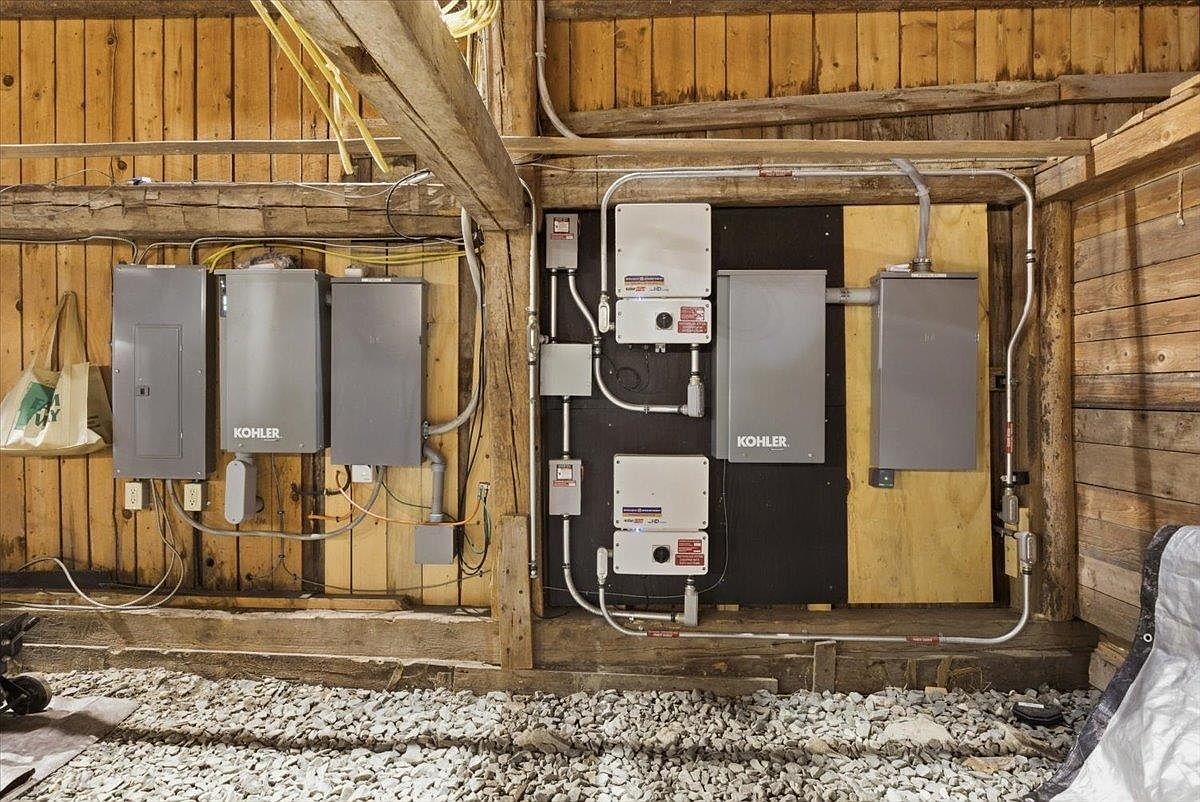
The centerpiece of the property is a newly constructed timber frame home — not a restoration of the original farmhouse, but a purpose-built residence designed from the ground up to honor the agrarian character of the land while embracing the standards of contemporary high-performance living. Structural Insulated Panel construction, known in the building industry as SIP, forms the thermal envelope of the home, working in concert with a rooftop solar array to deliver a HERS rating of 2. To place that figure in context: a standard new construction home earns a HERS rating of approximately 100. A rating of 2 represents near-total energy independence — a 98% improvement over the baseline. This is not a home that gestures toward sustainability; it achieves it.
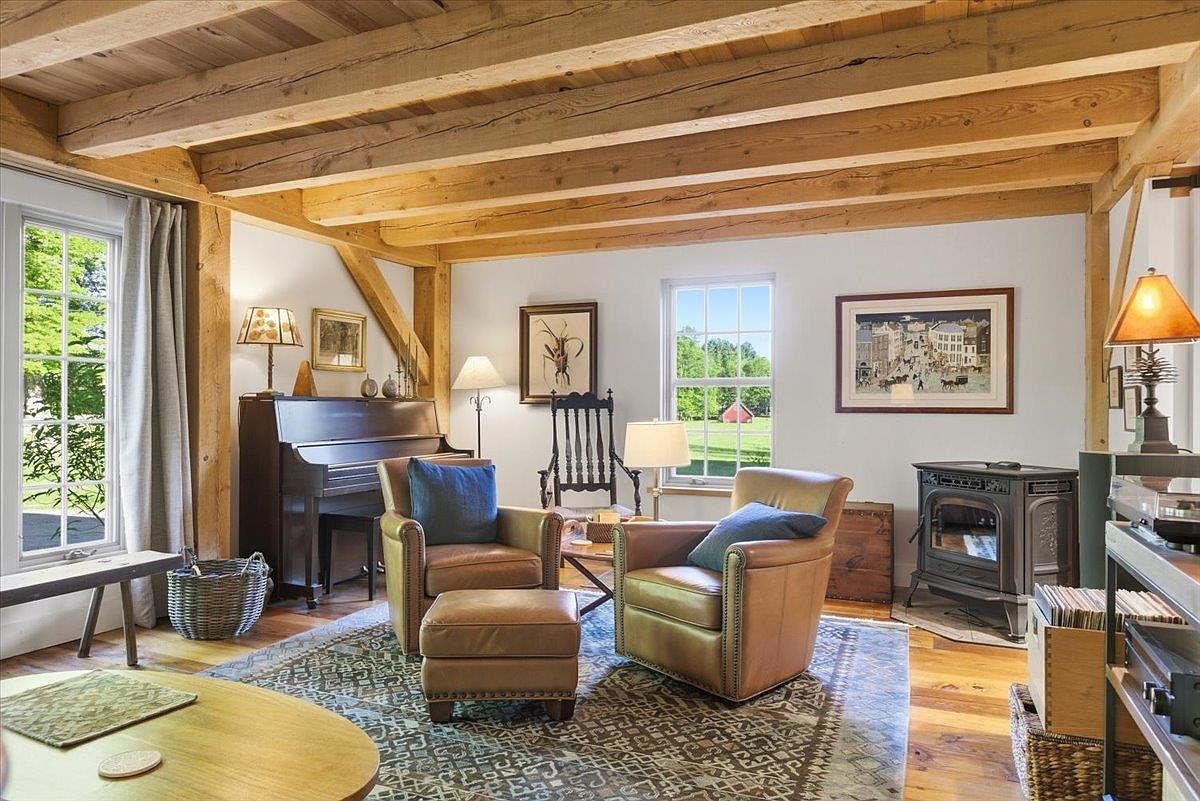
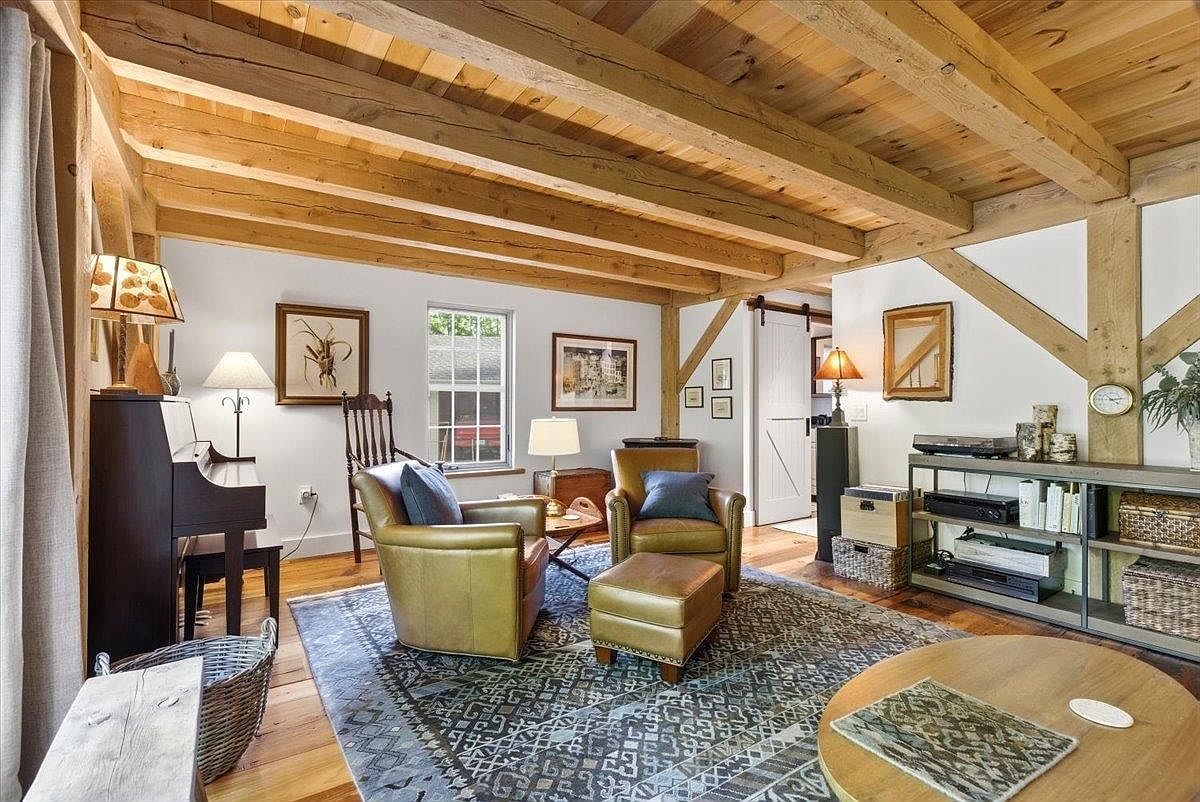
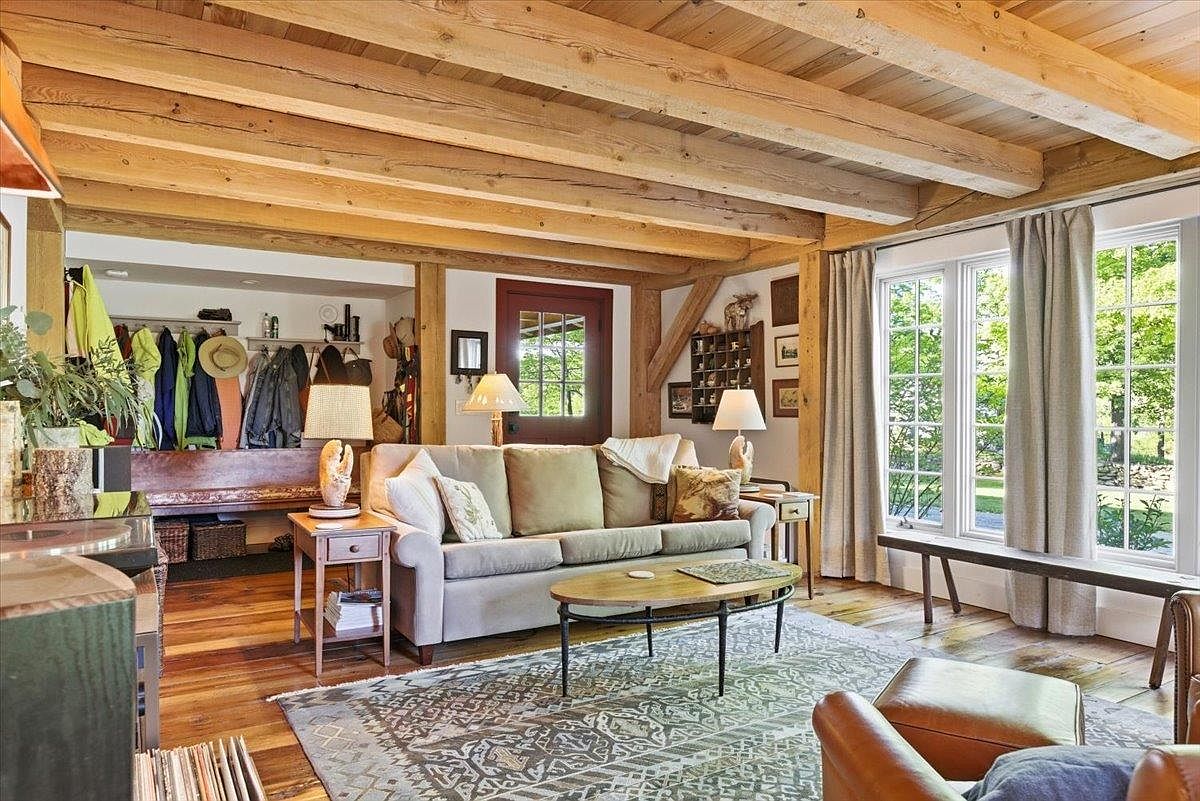
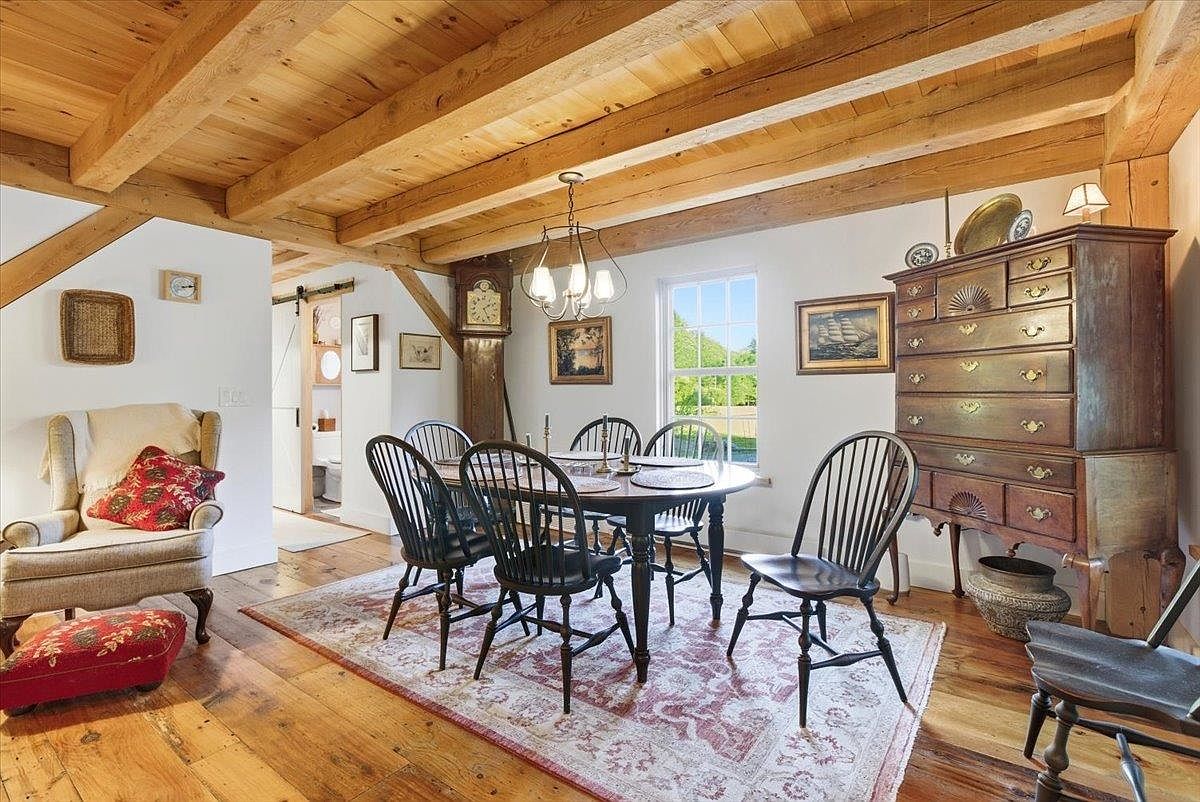
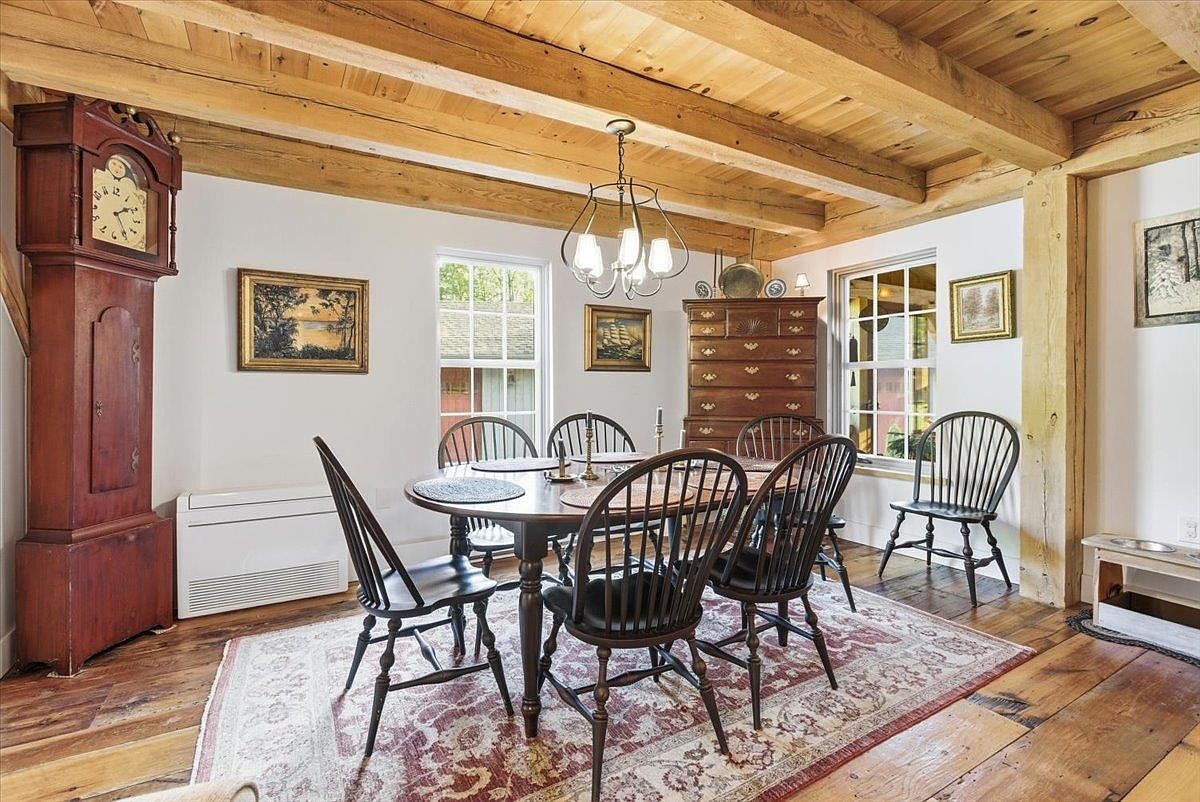
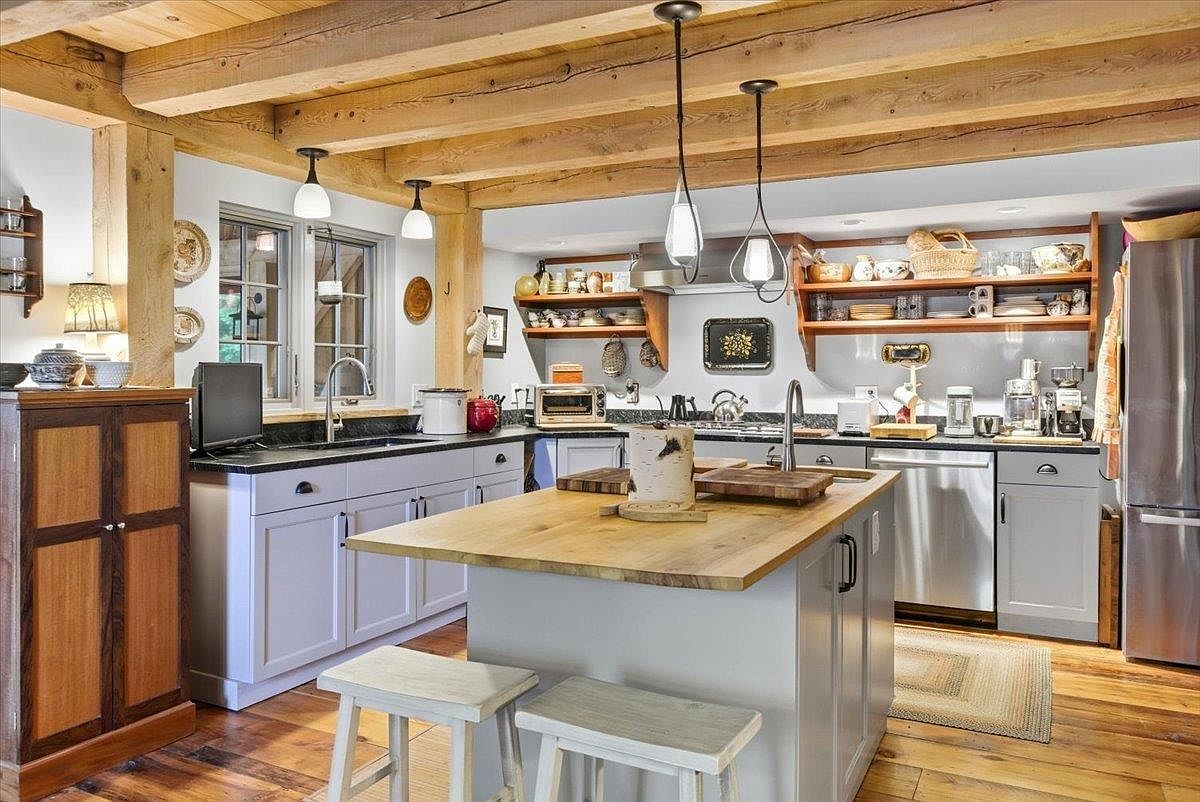
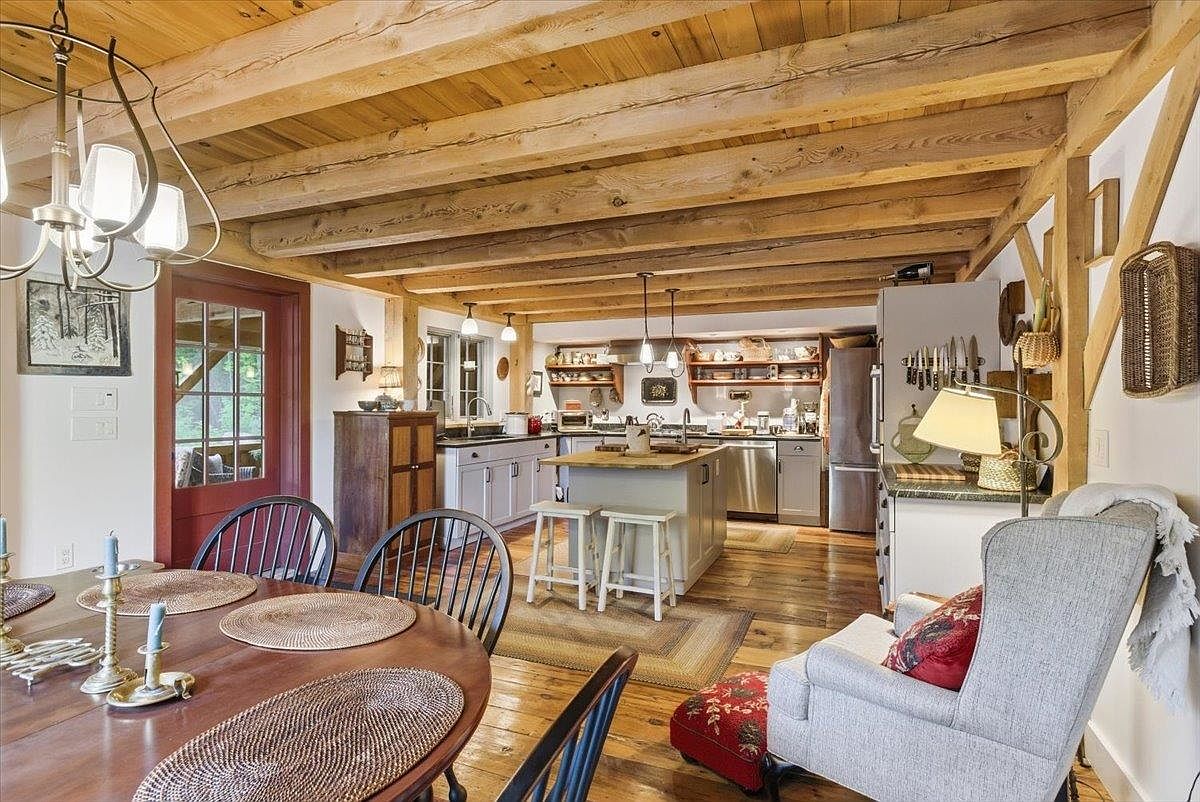
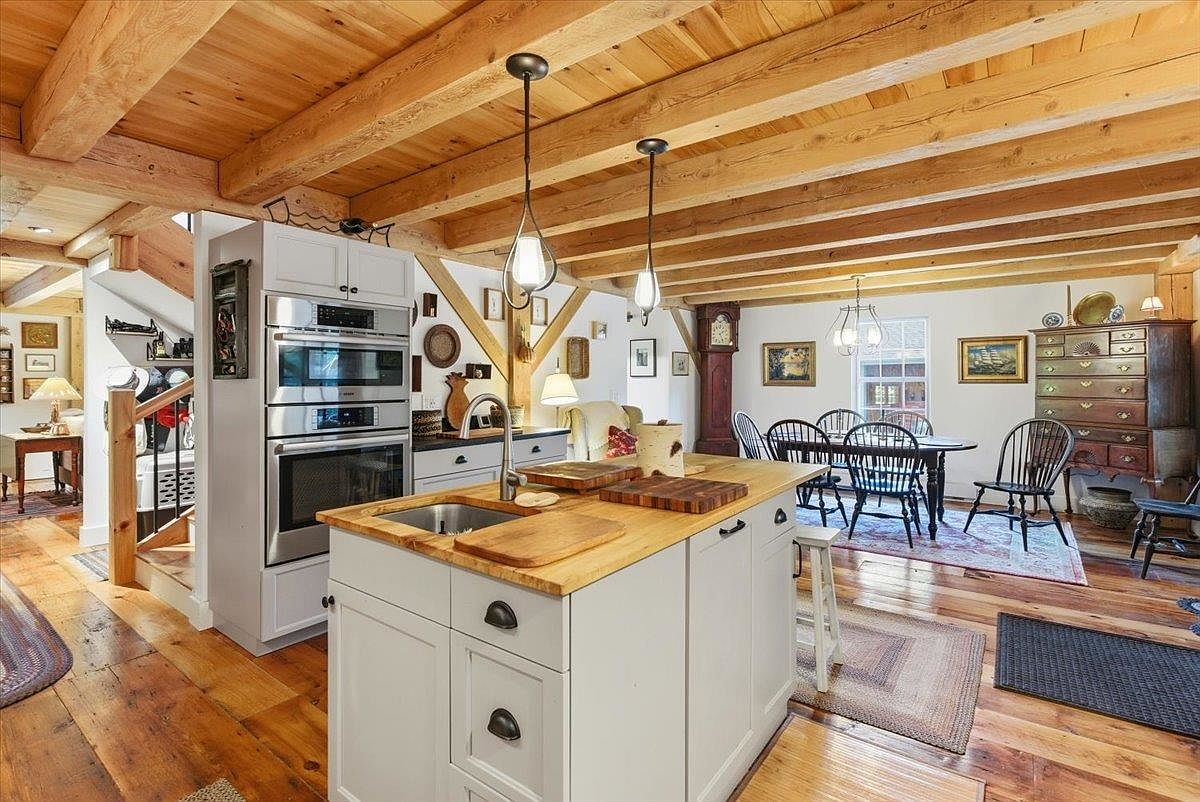
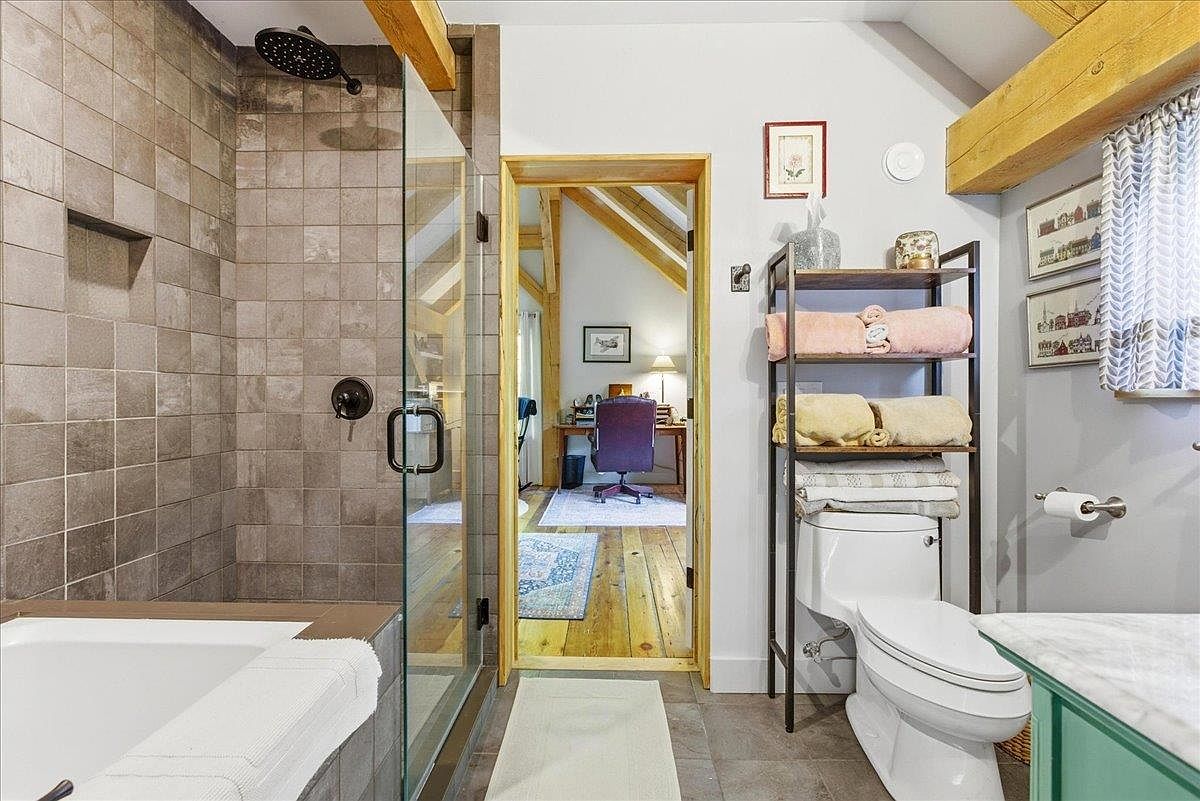
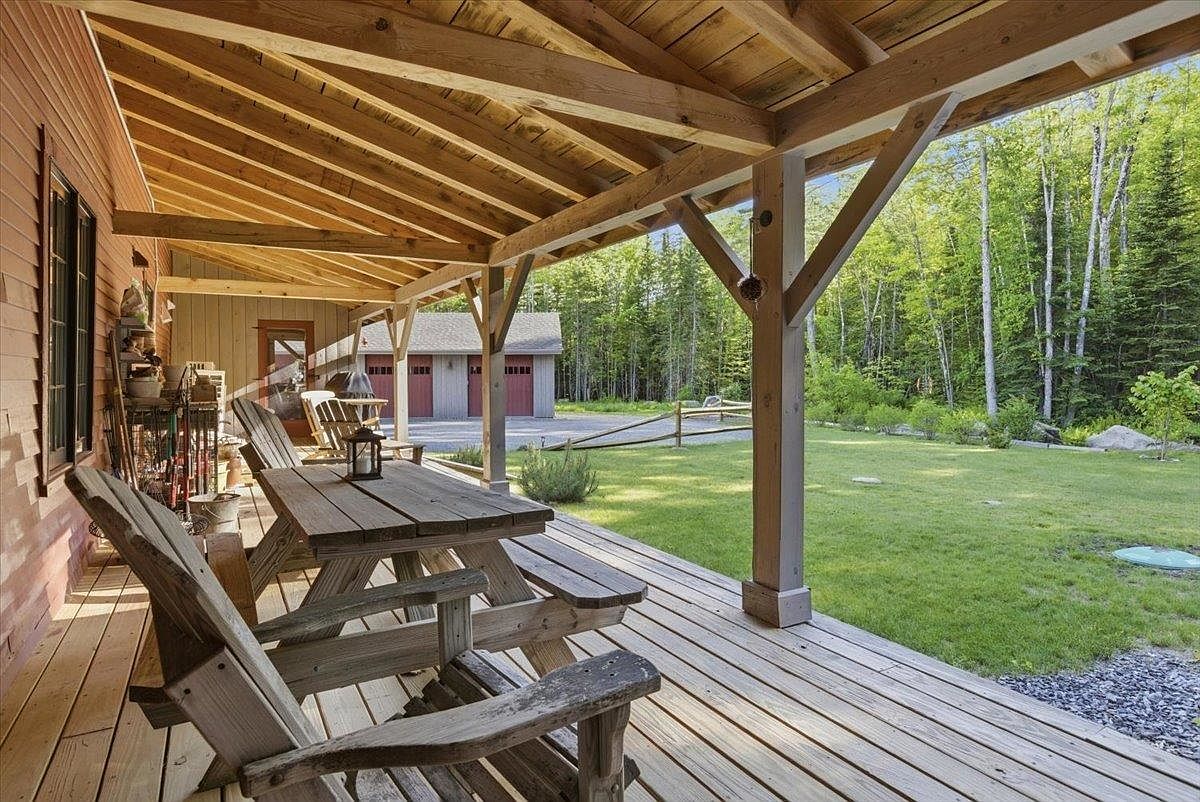
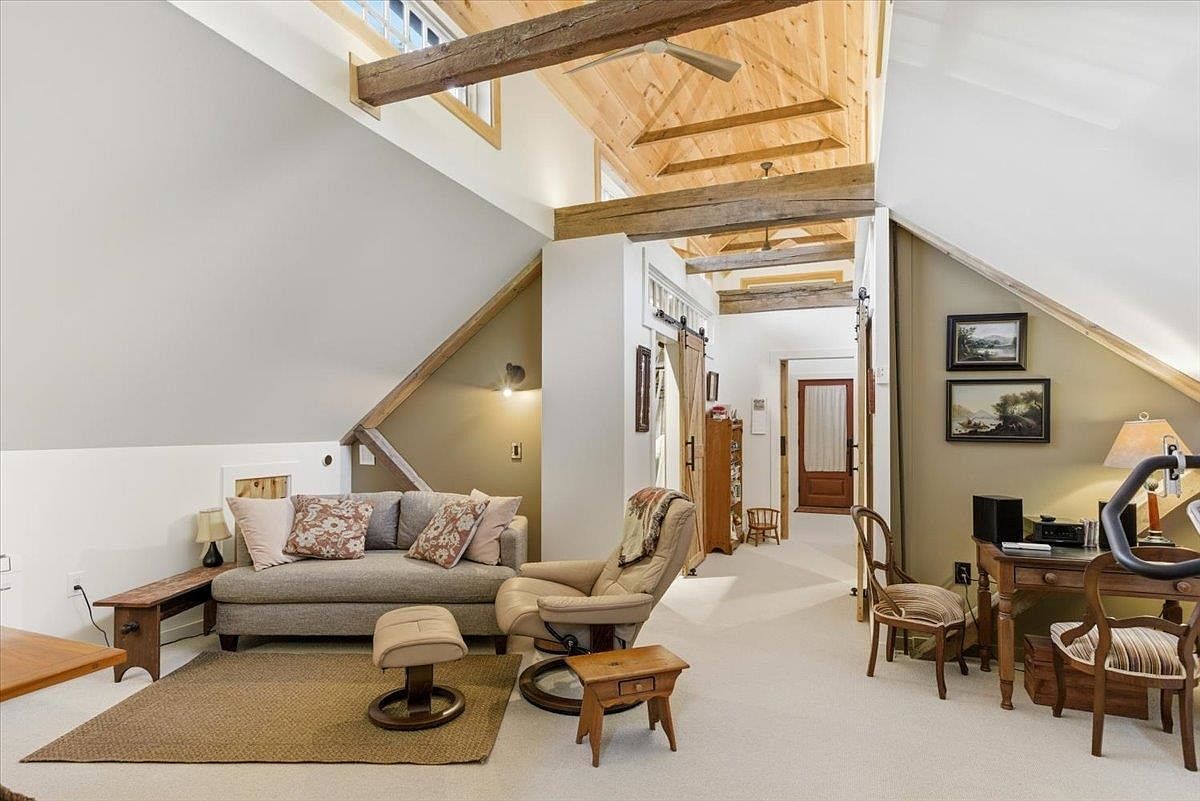
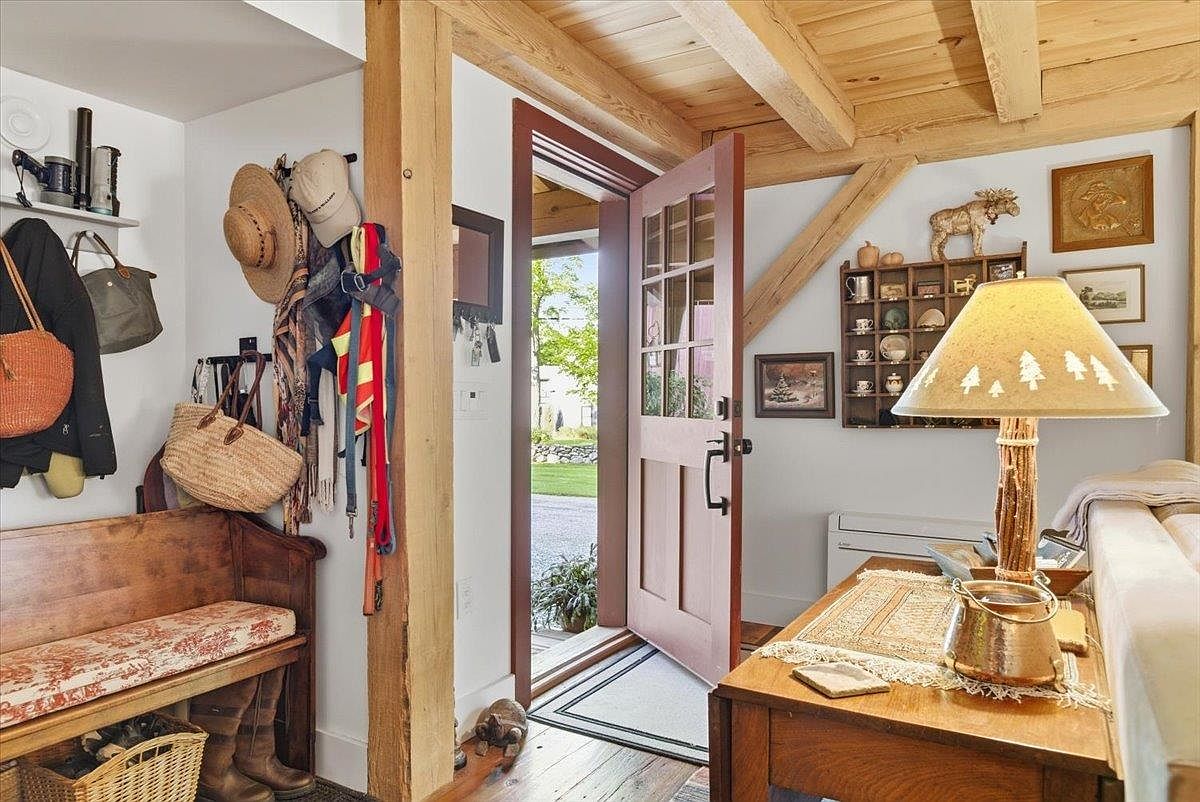
Inside, exposed timber beams define every principal living space, lending the home a structural honesty that is both visually commanding and deeply warm. The open-concept kitchen and dining area occupies the heart of the main level, anchored by a well-appointed island with bar seating, warm wood cabinetry, stainless appliances, and pendant lighting that casts an evening glow across the wide-plank flooring below. The living room, furnished with leather seating and centered around a wood-burning stove, opens naturally toward a rear screened porch — a gracious transitional space where the private, landscaped grounds become an extension of the interior.
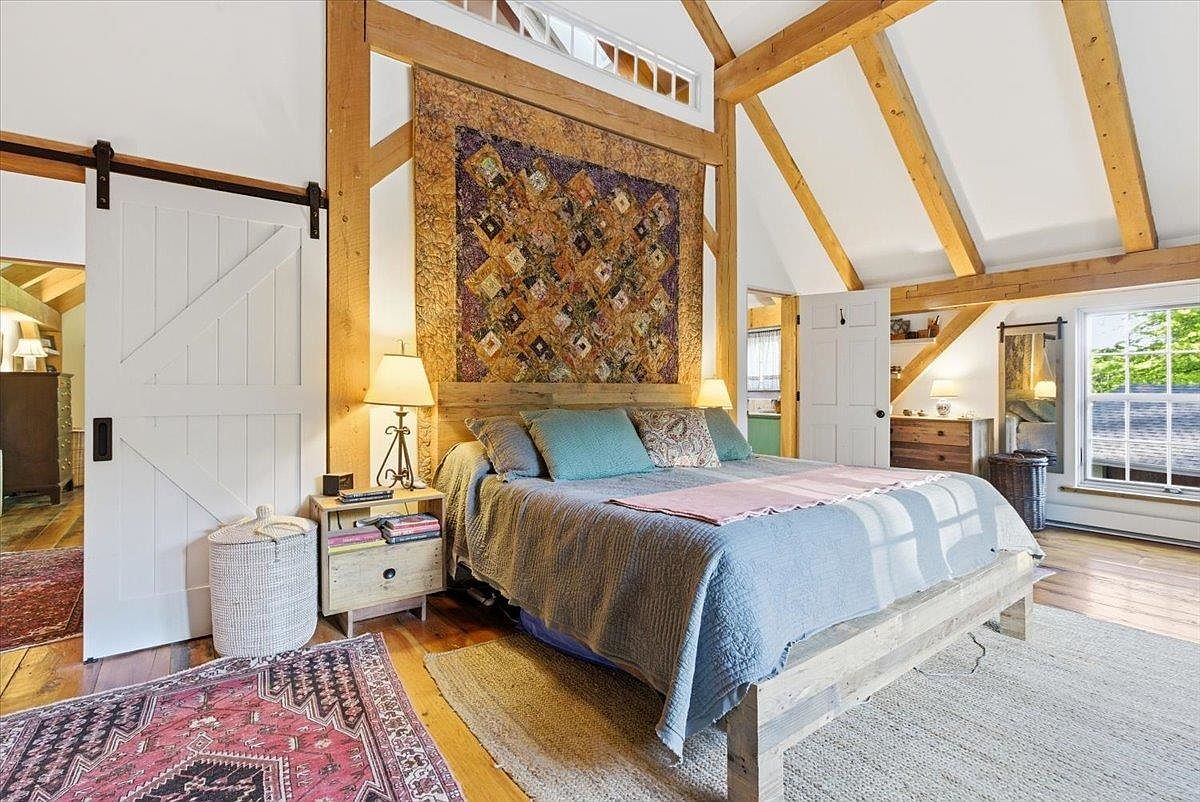
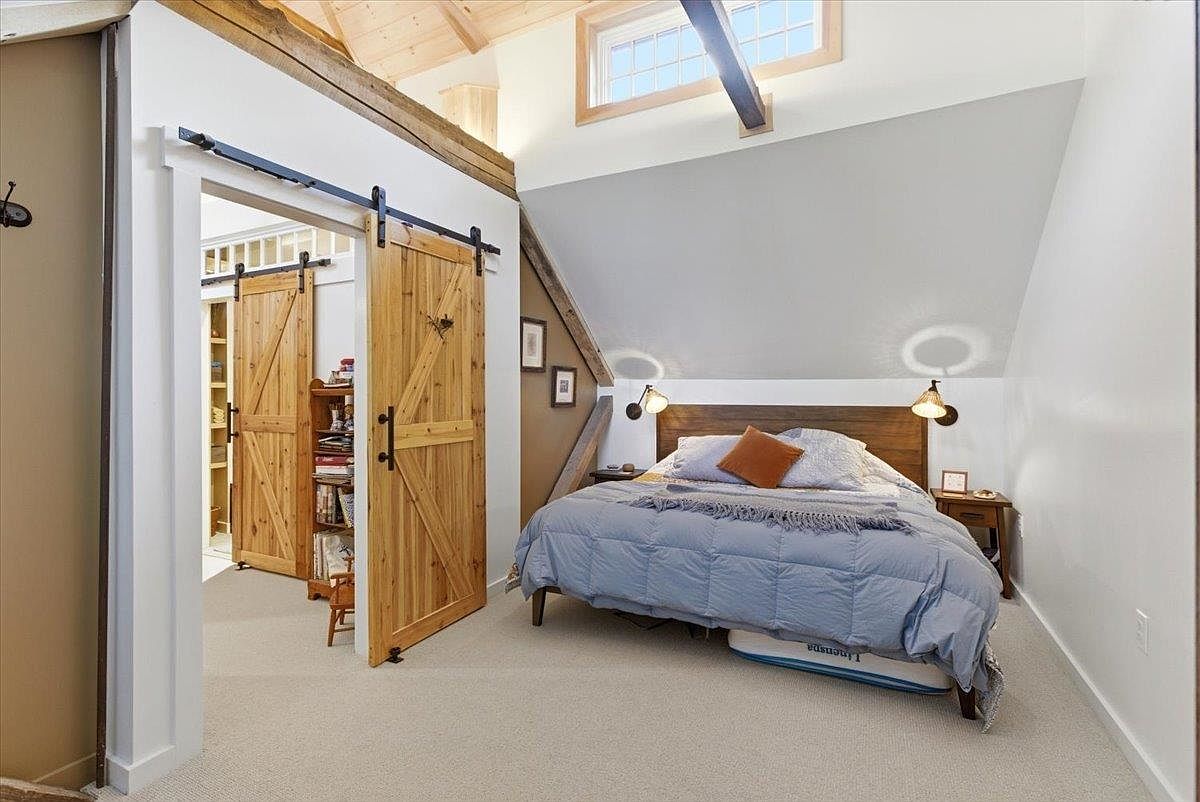
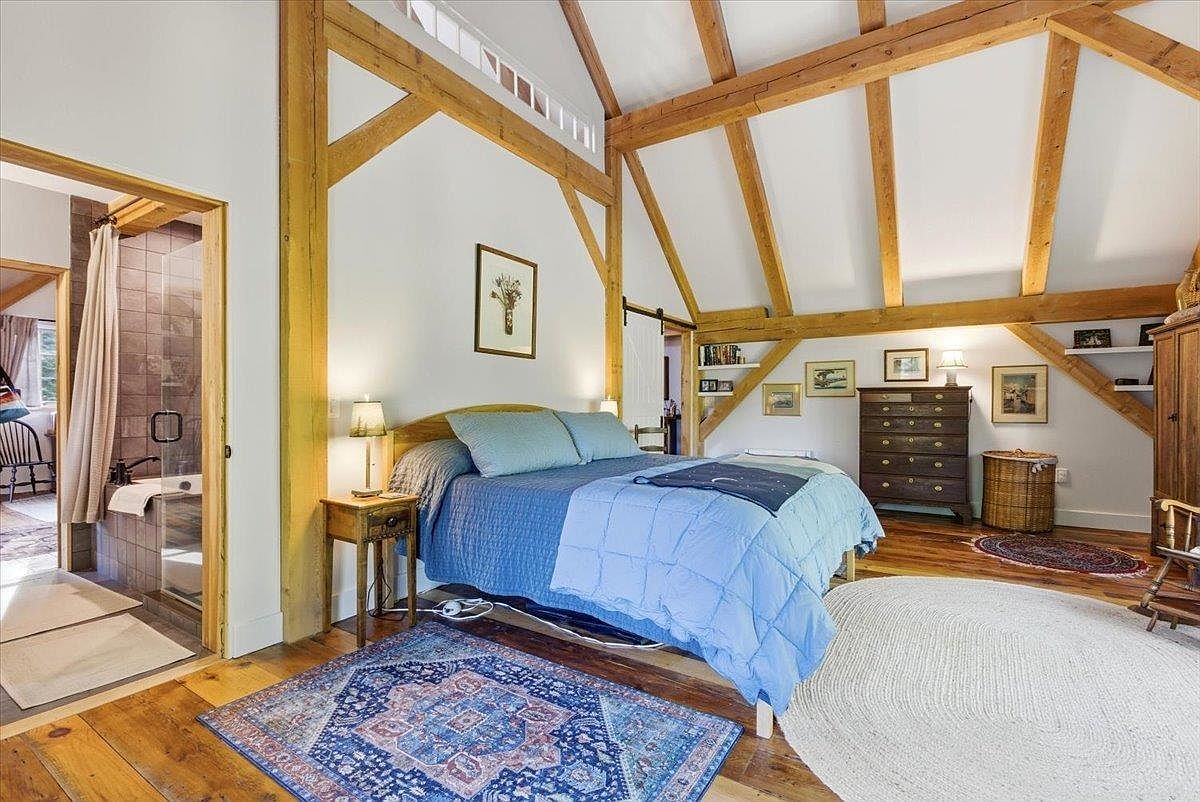
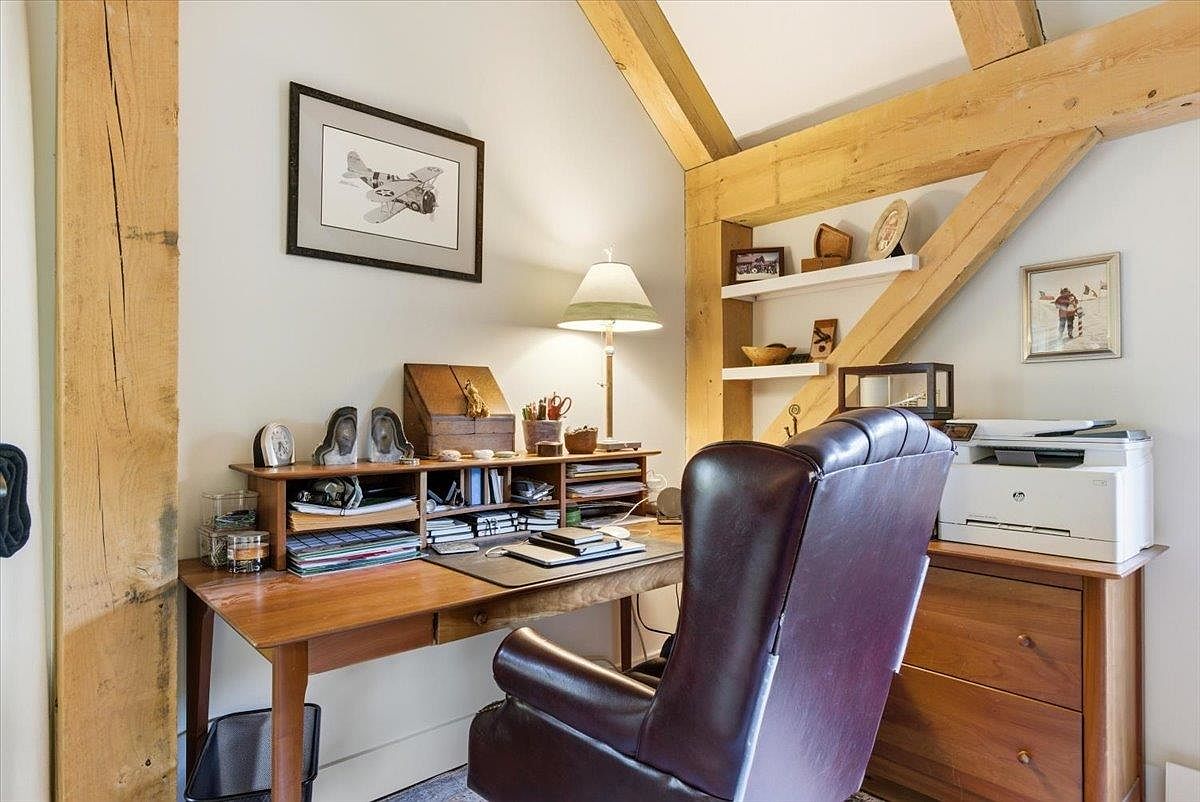
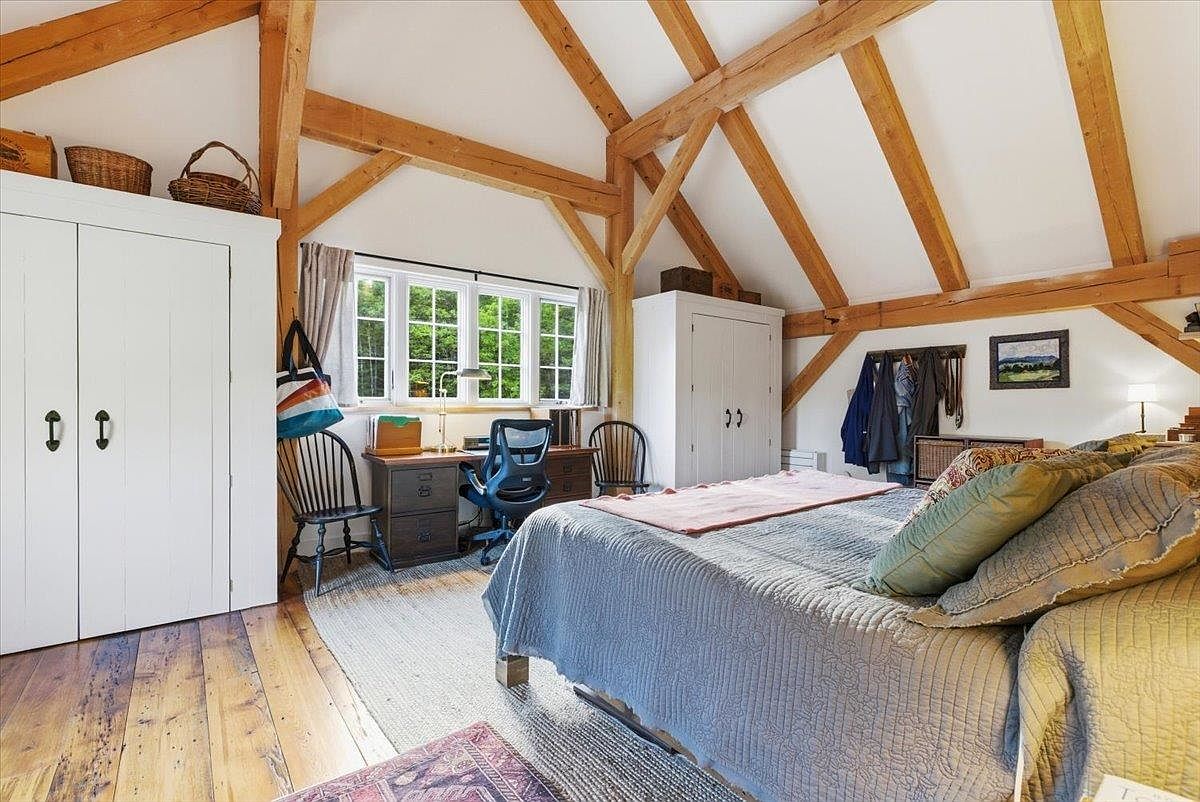
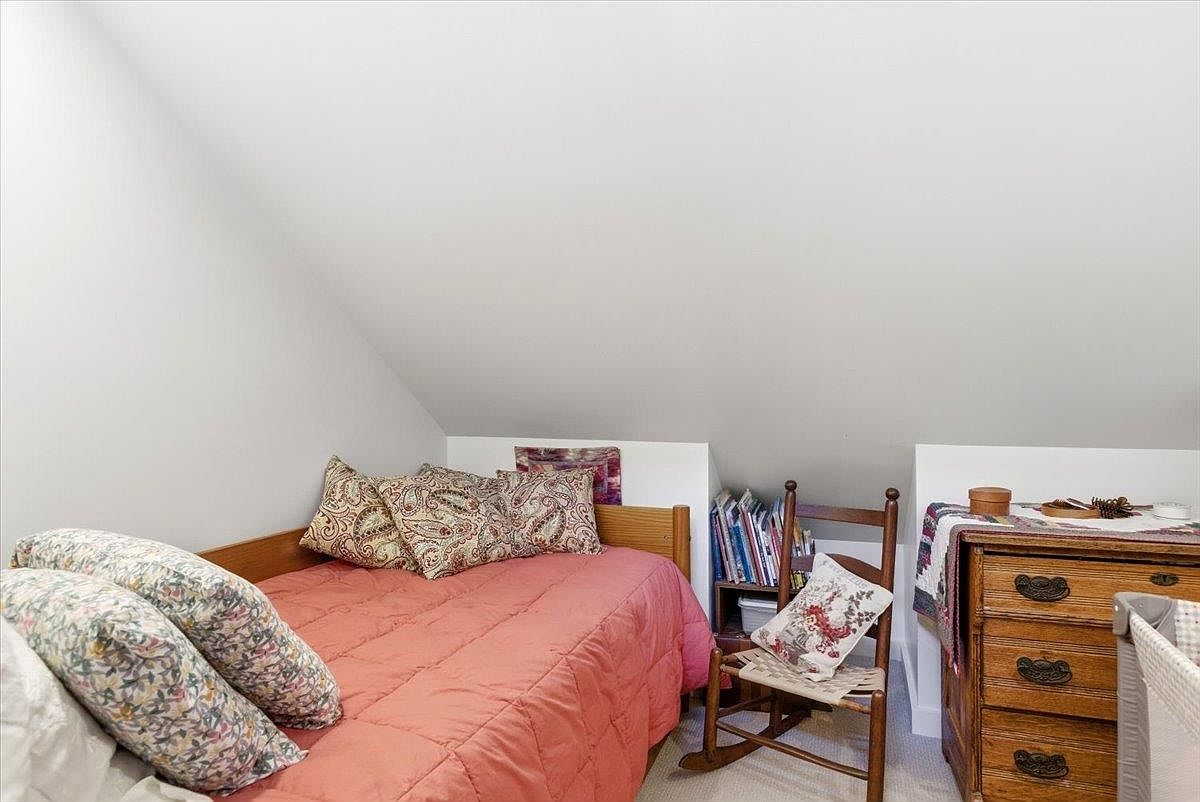
The upper level offers a generous primary suite with vaulted, beam-lined ceilings and a skylight that draws the eye upward, alongside two additional guest bedrooms and a dedicated den and sitting area — a versatile arrangement suited to family living, remote work, or hosting with ease.
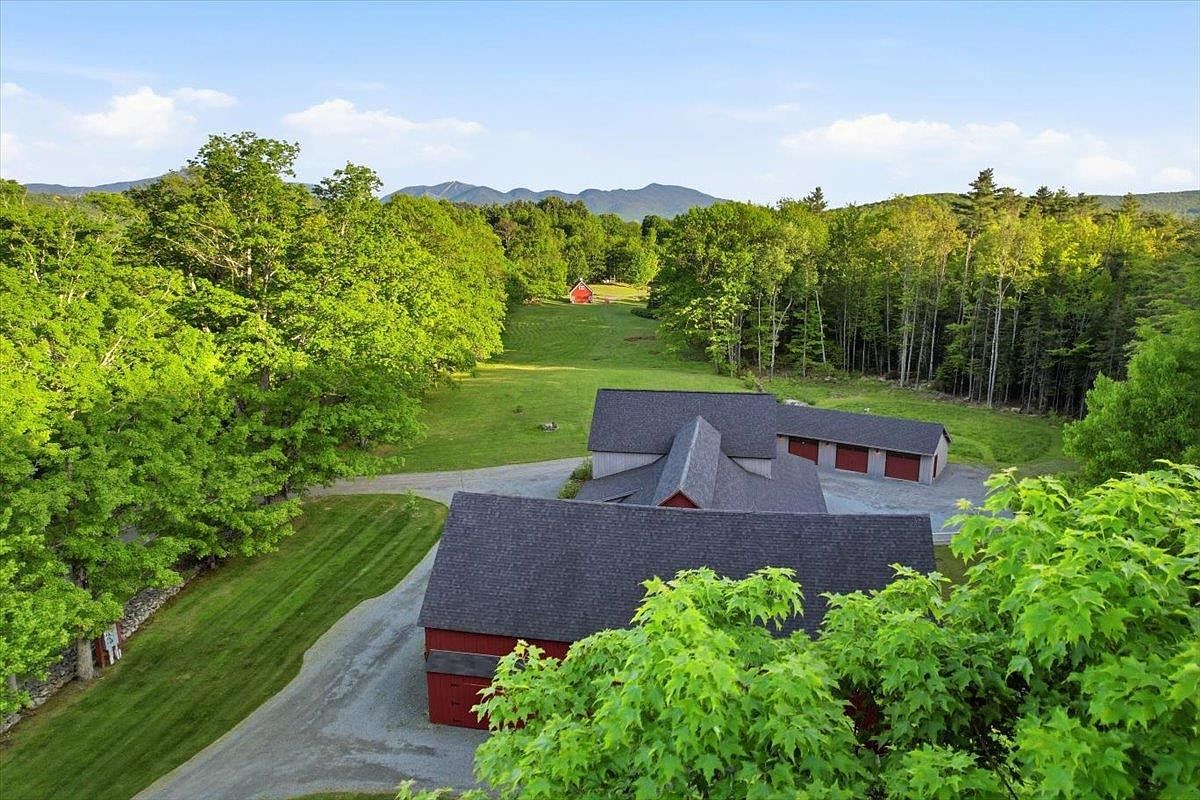
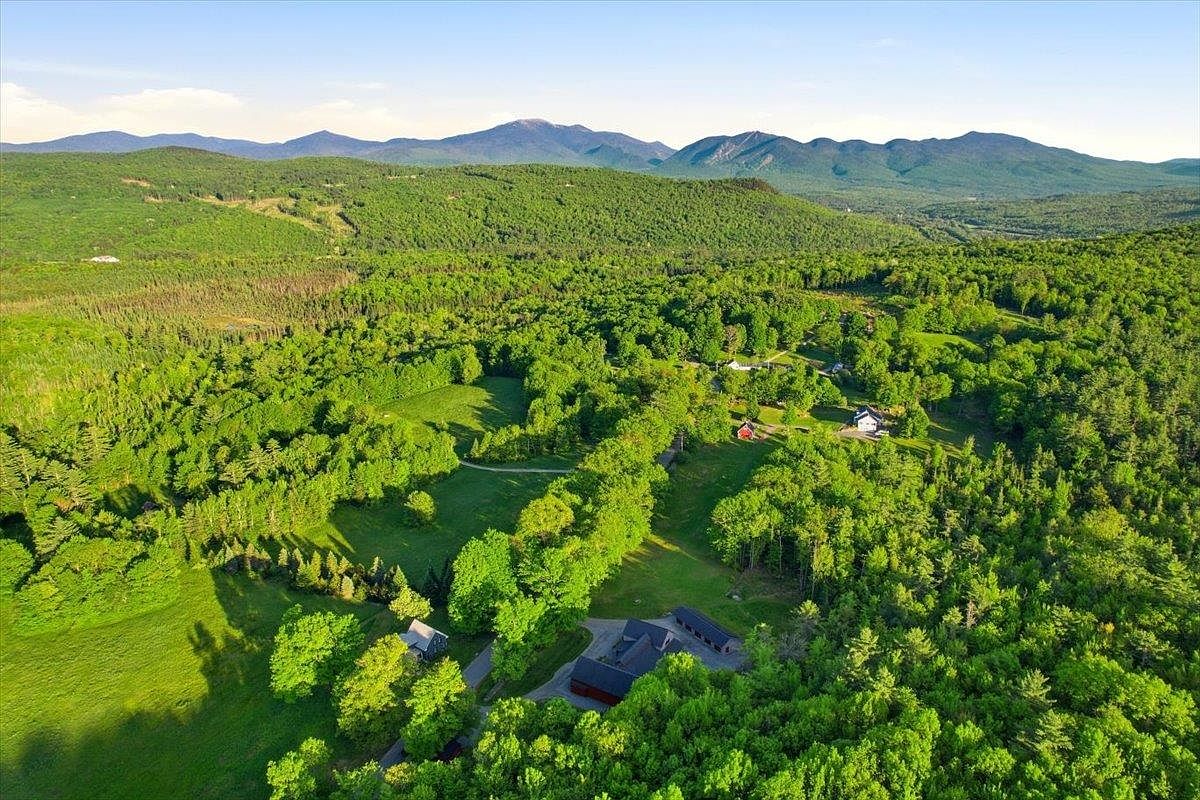
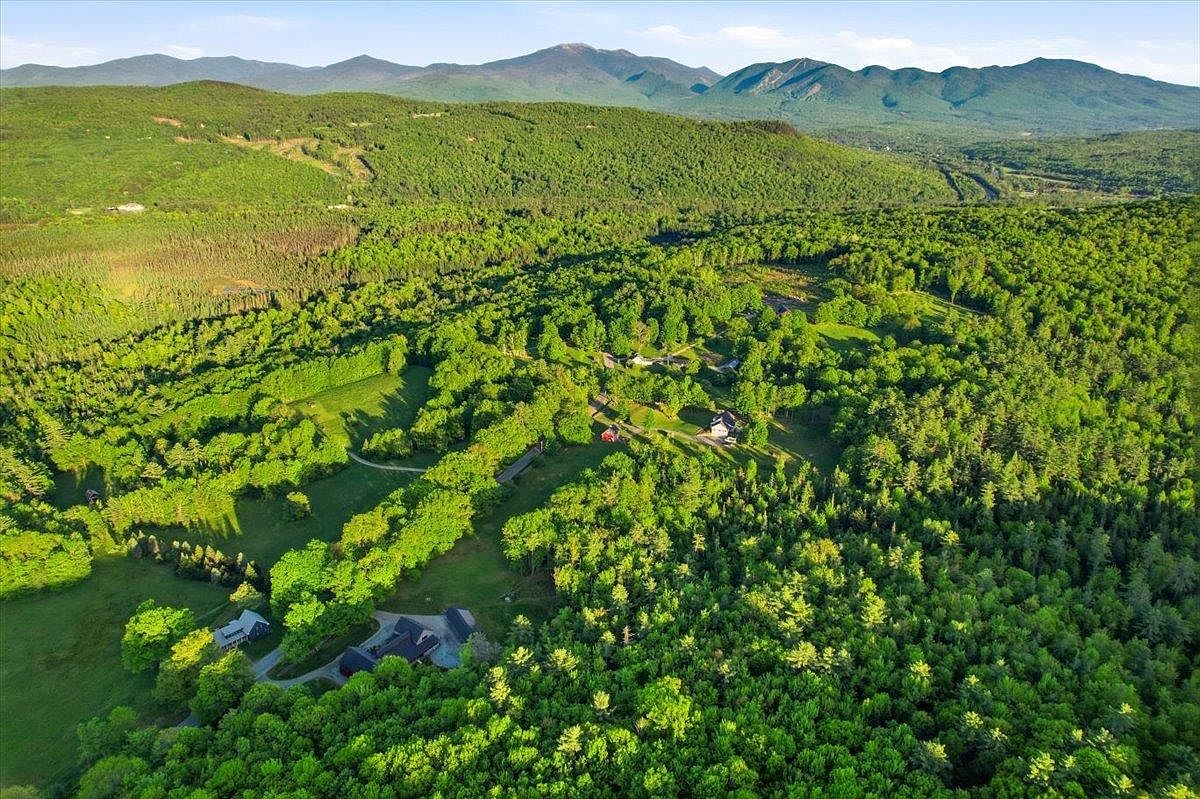
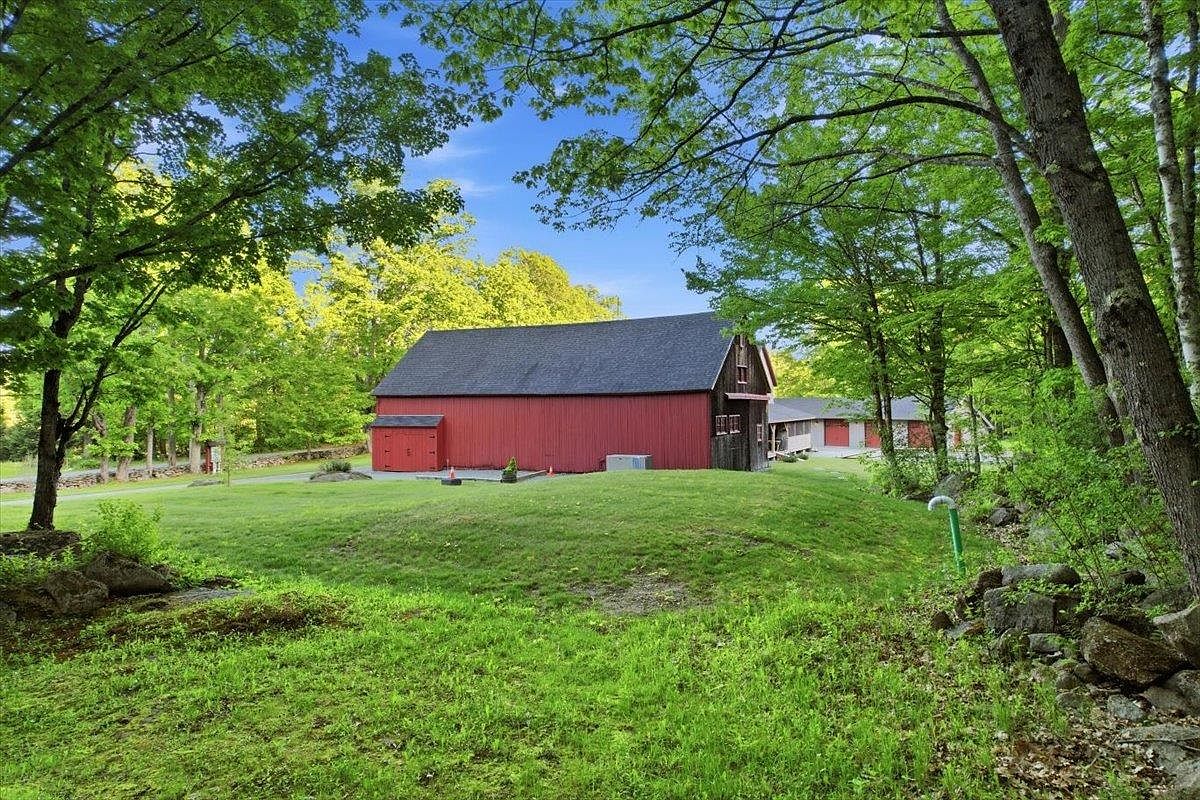
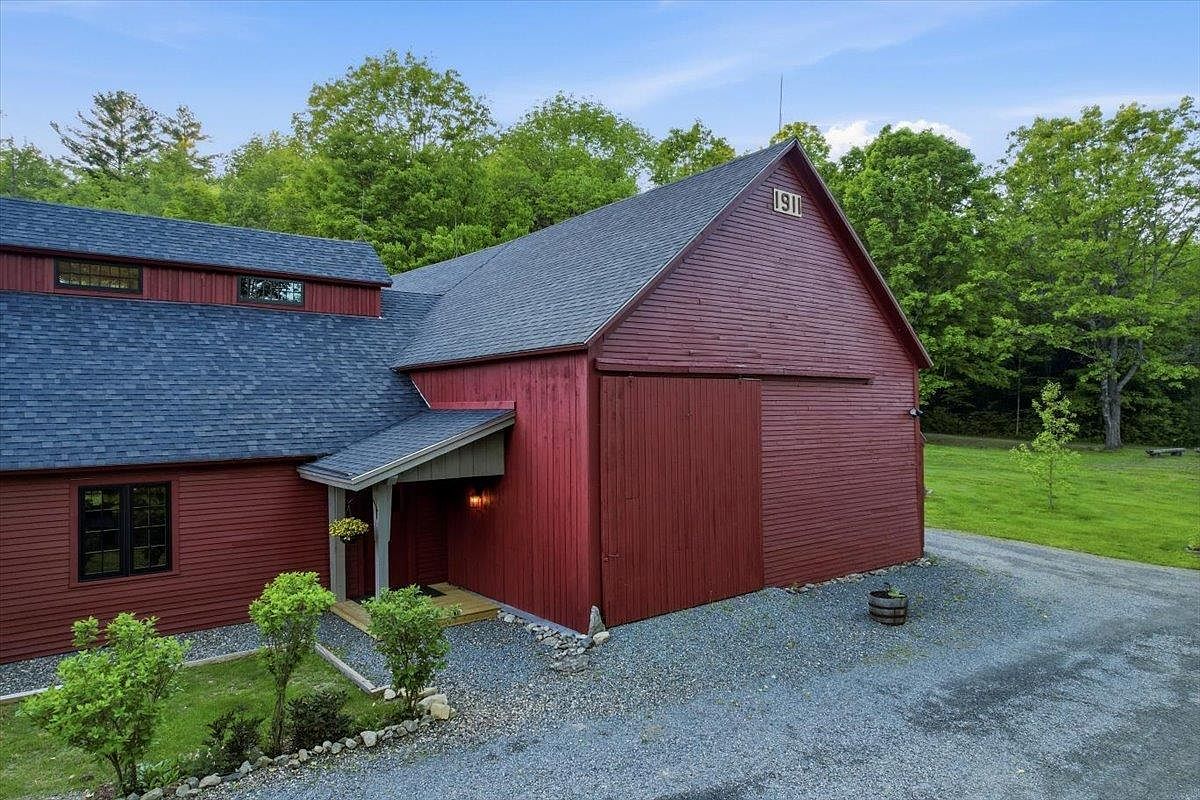
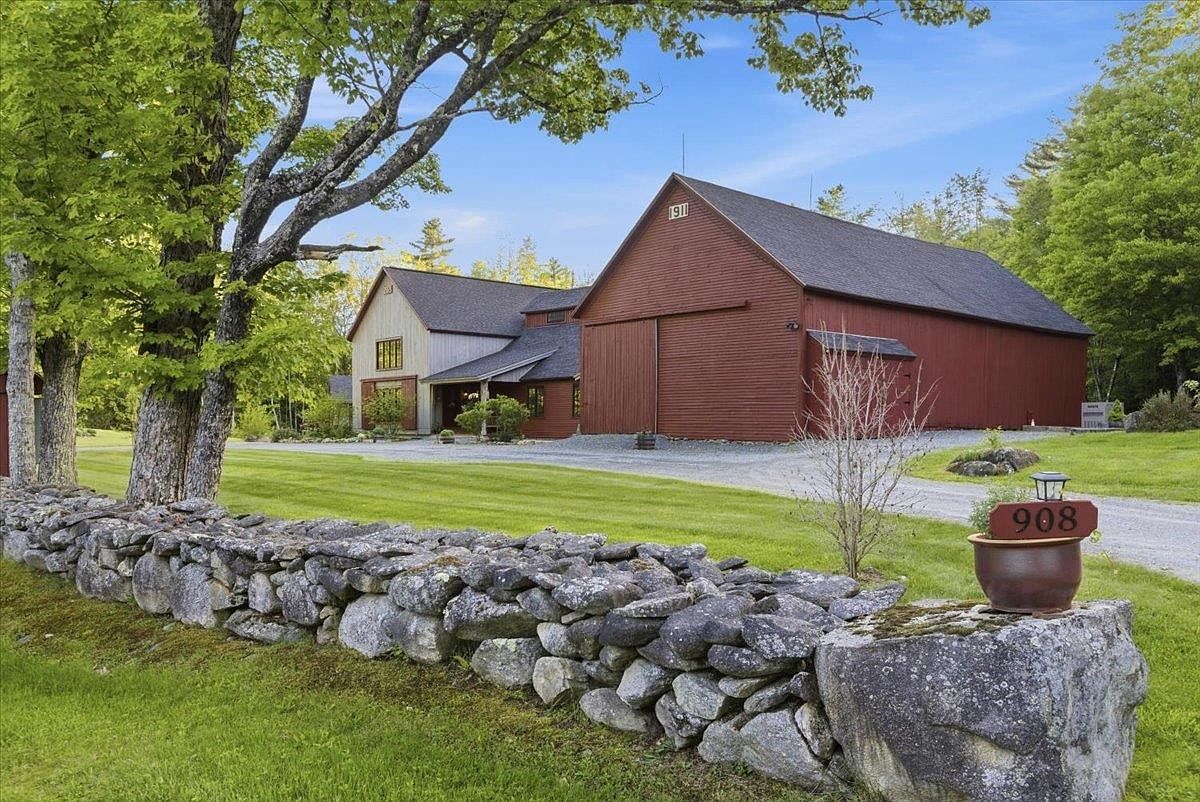
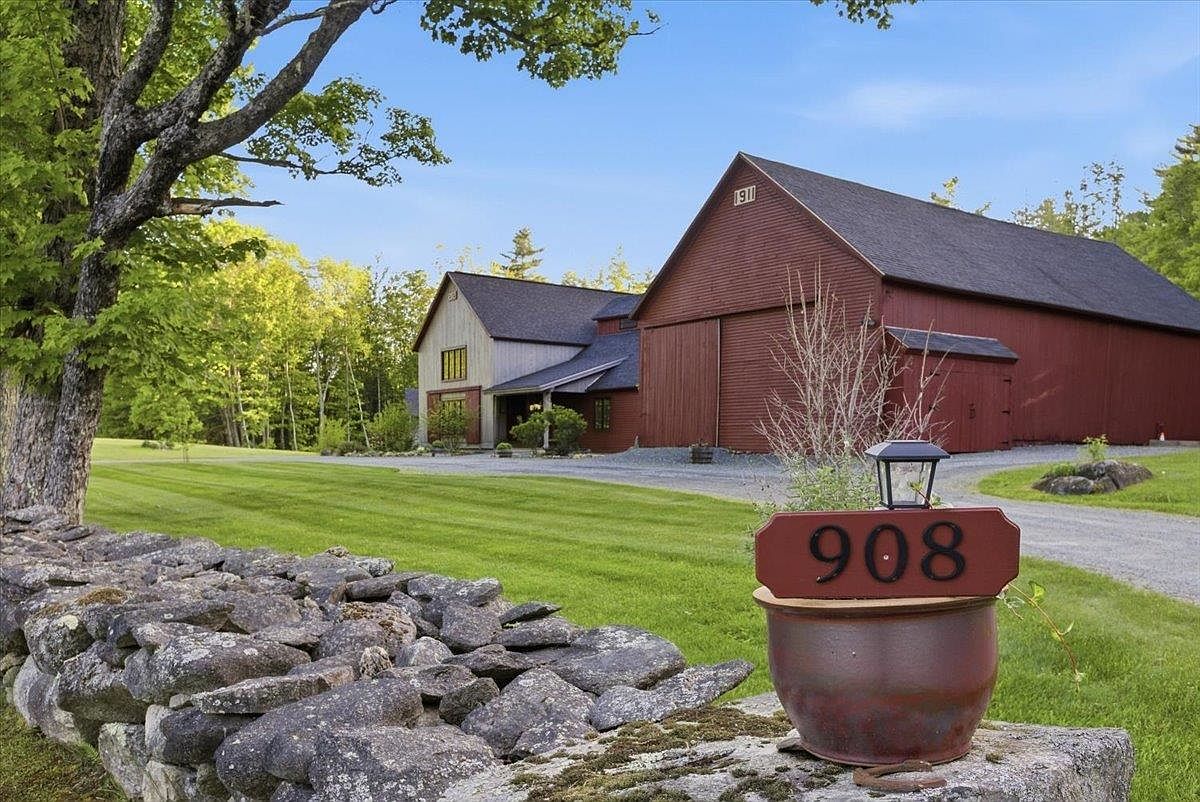
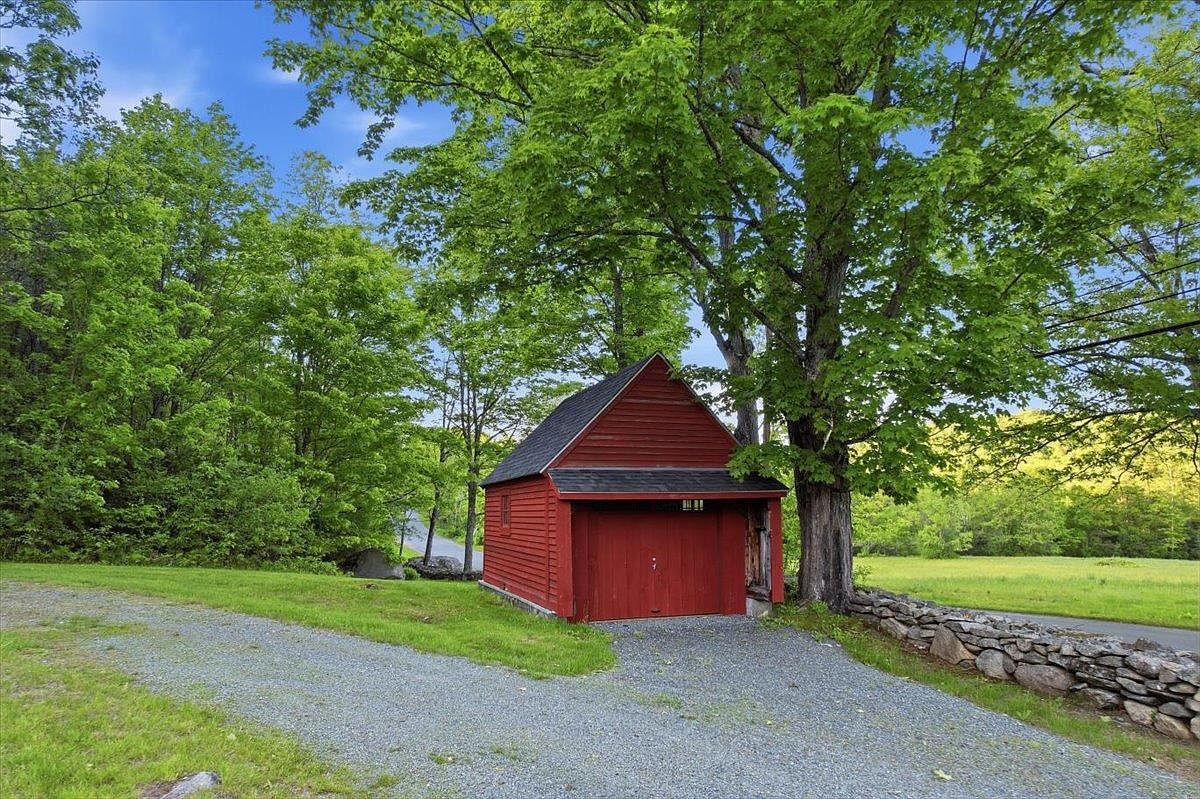
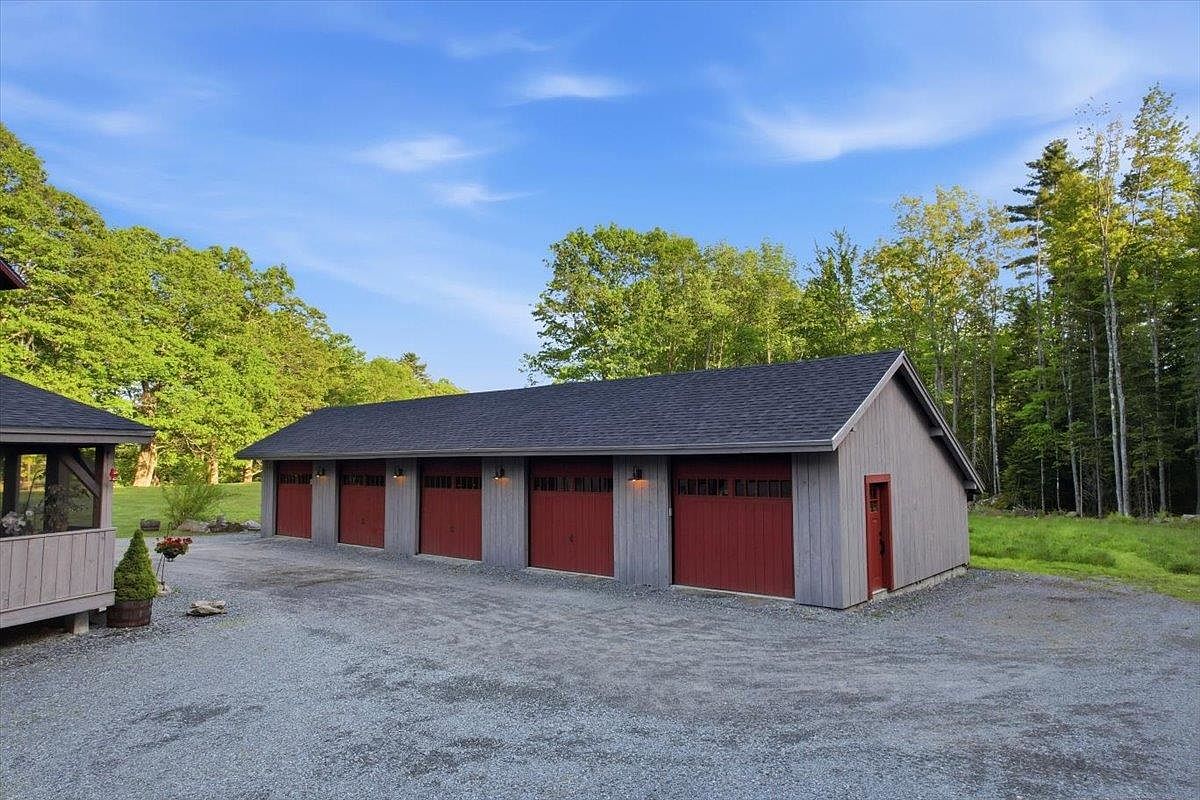
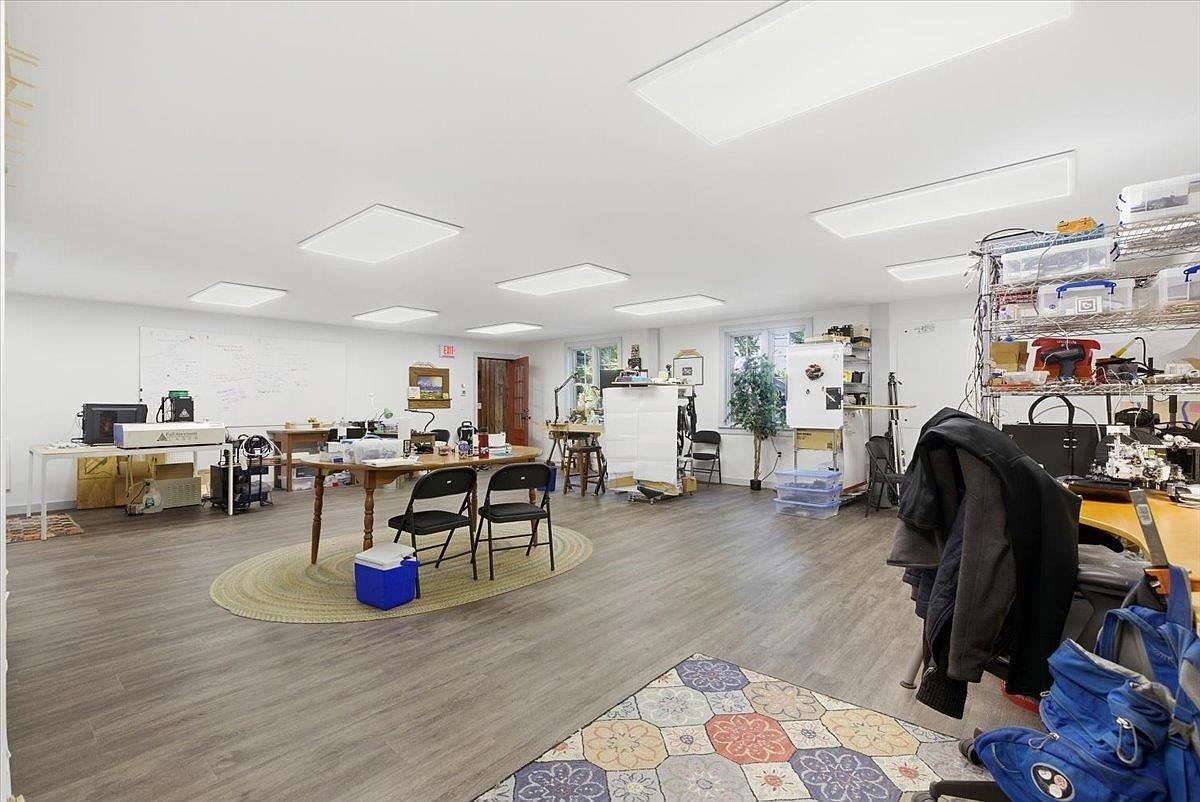
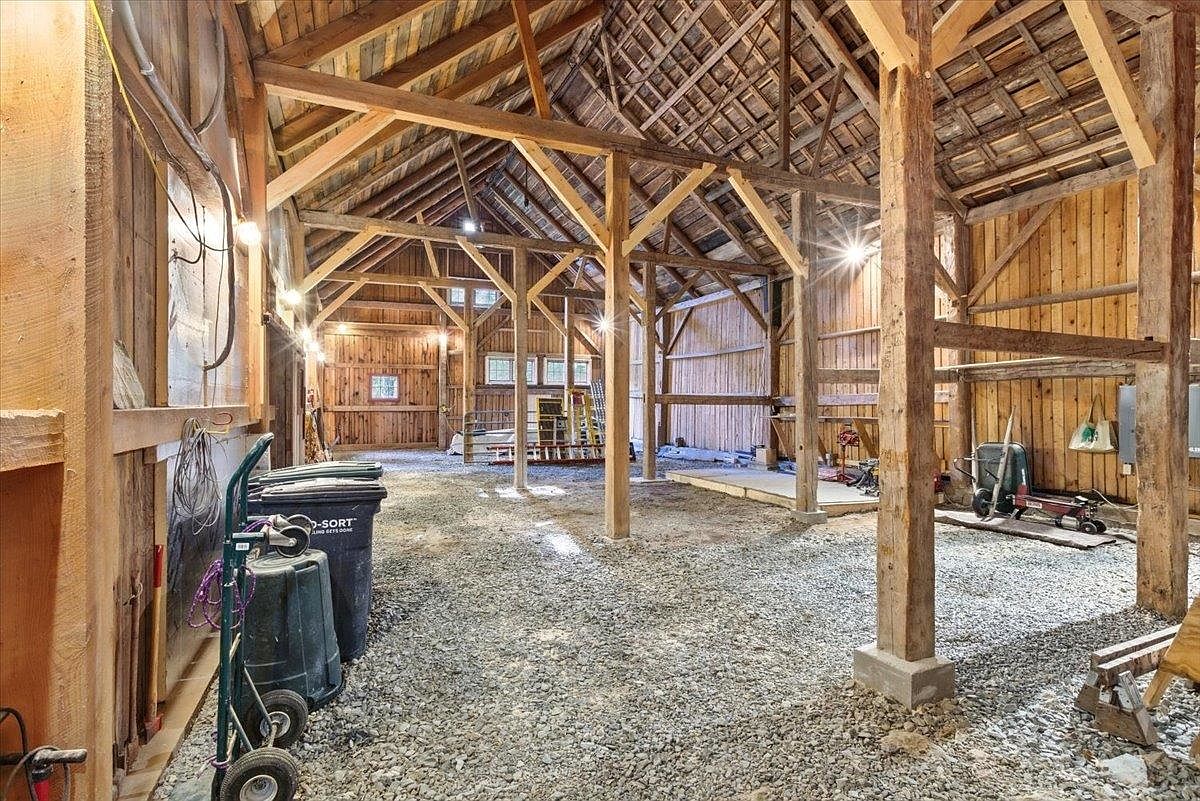
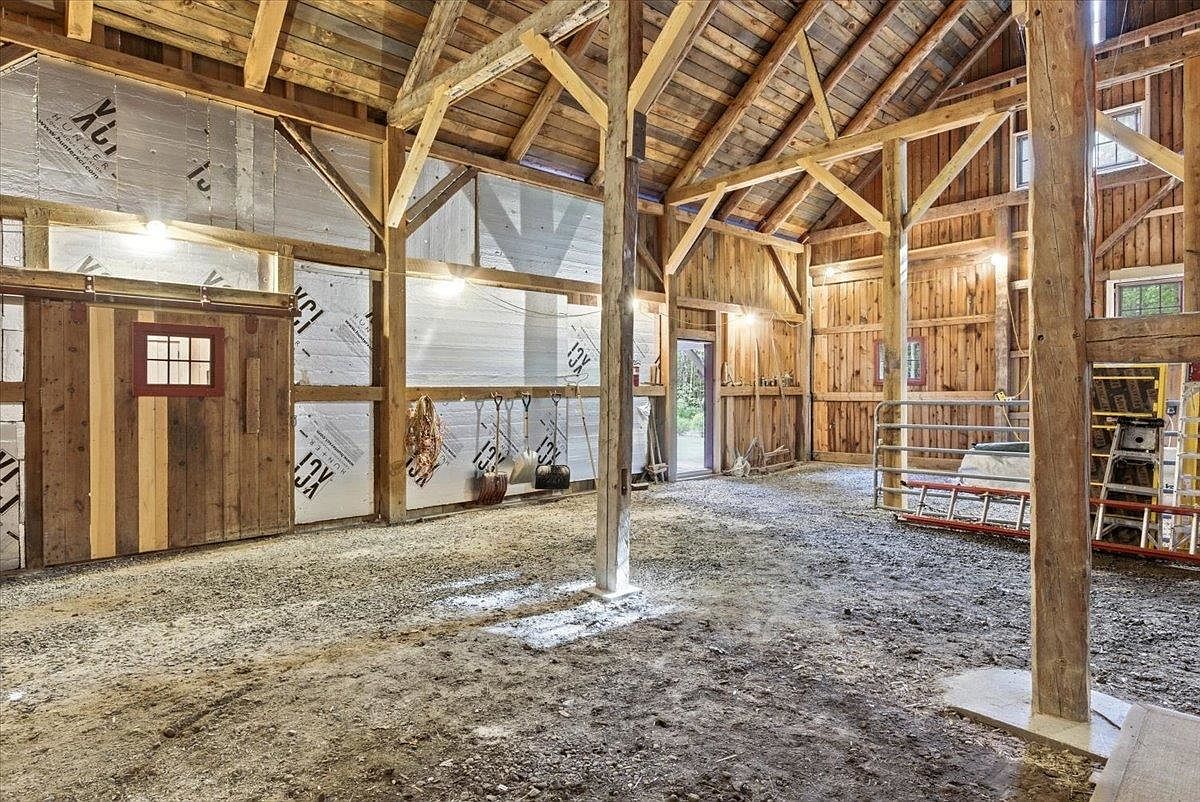
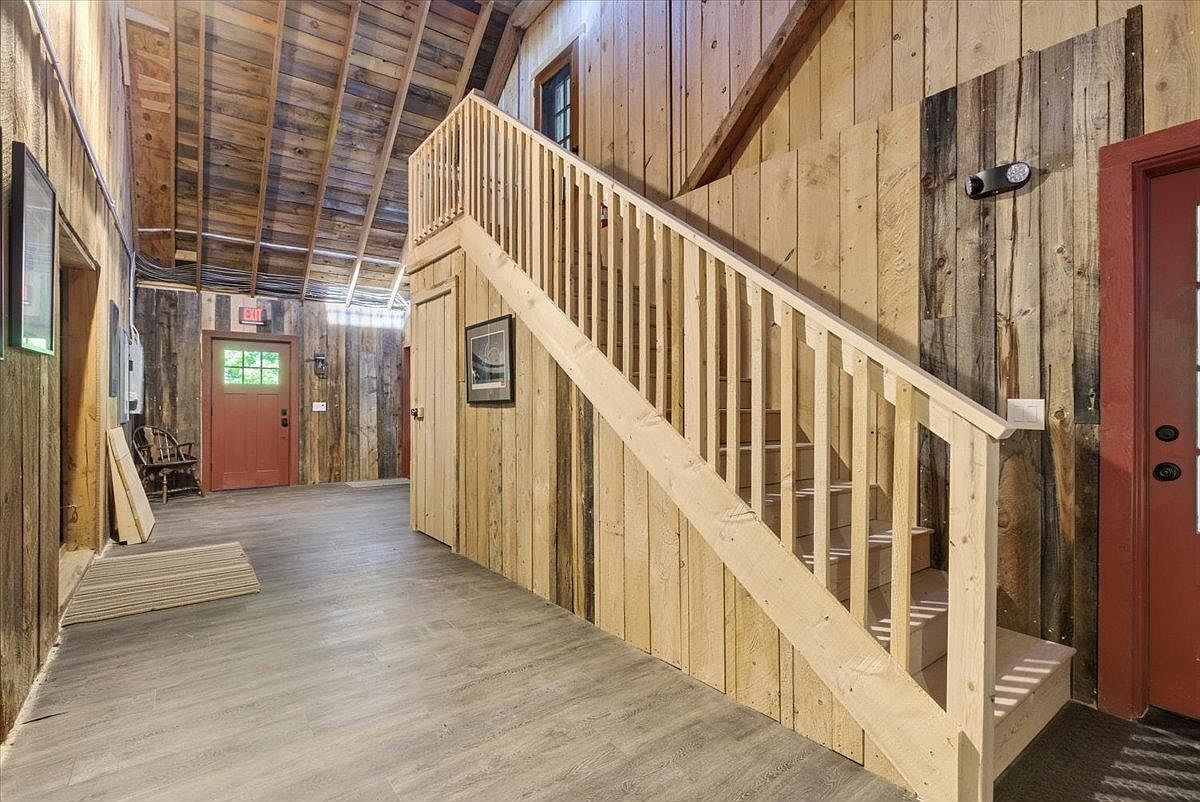
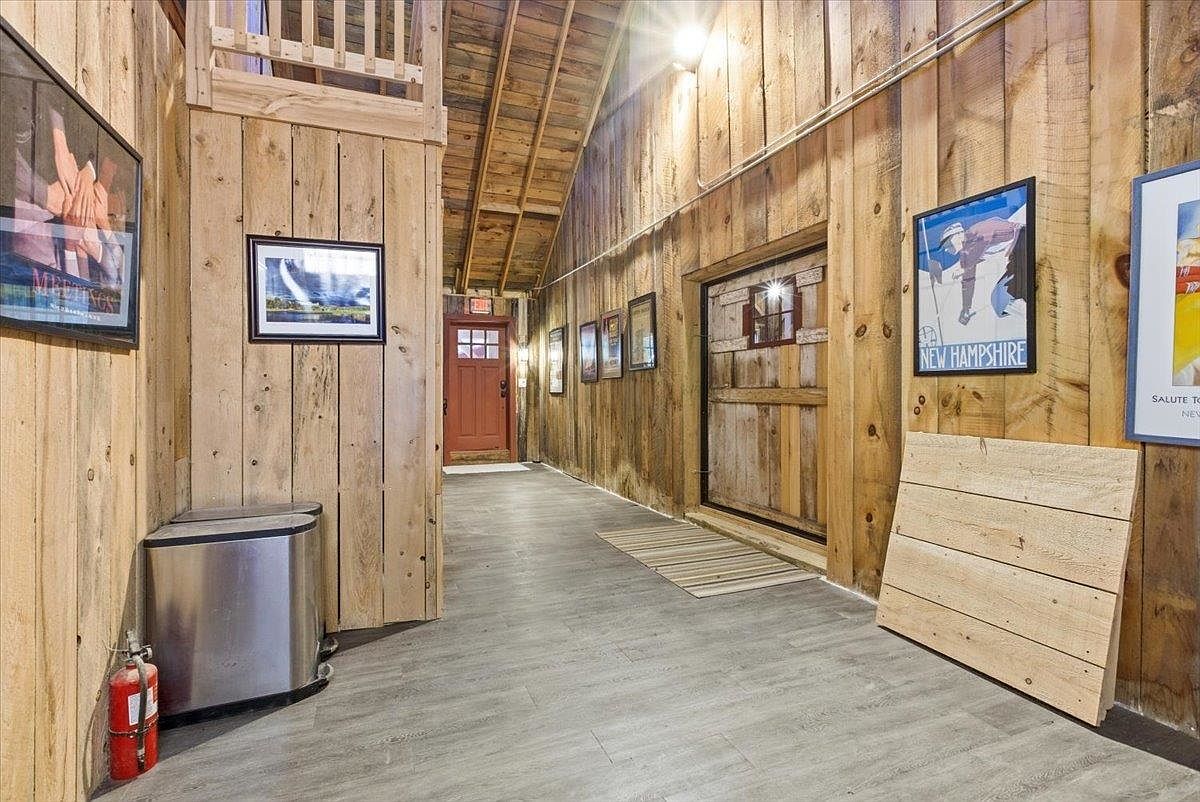
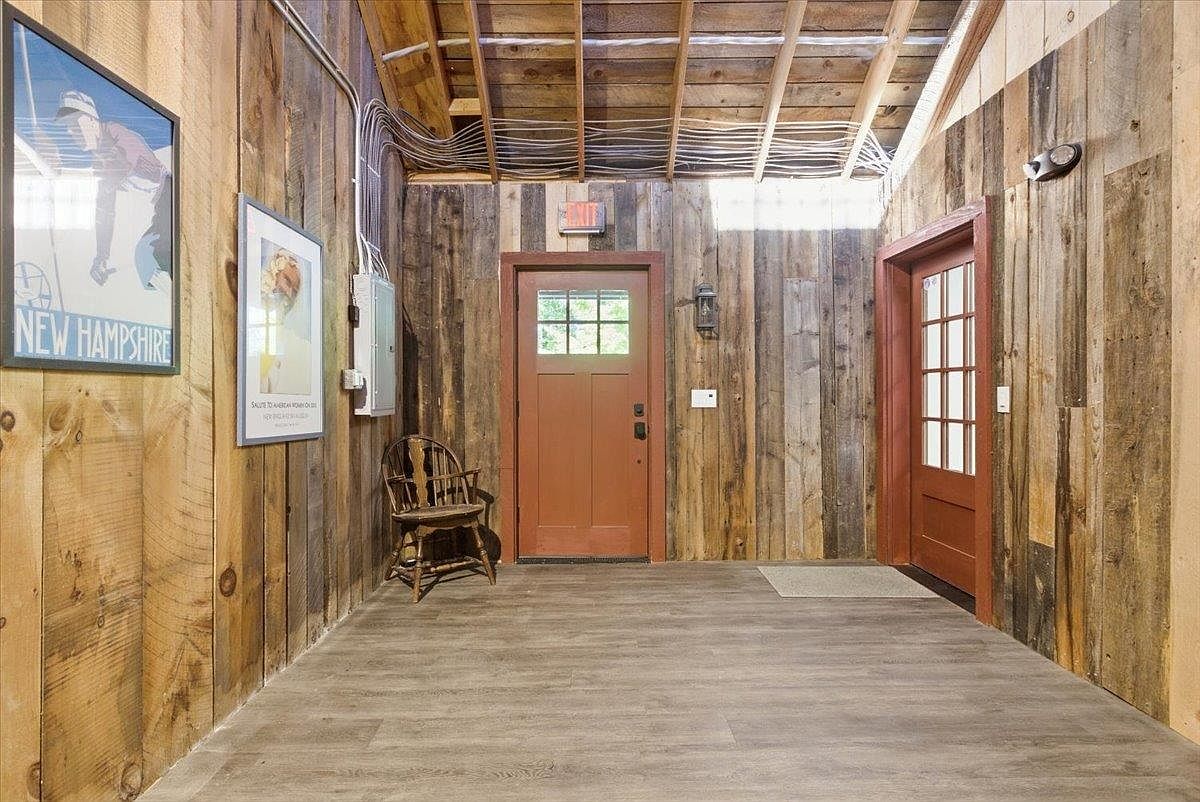
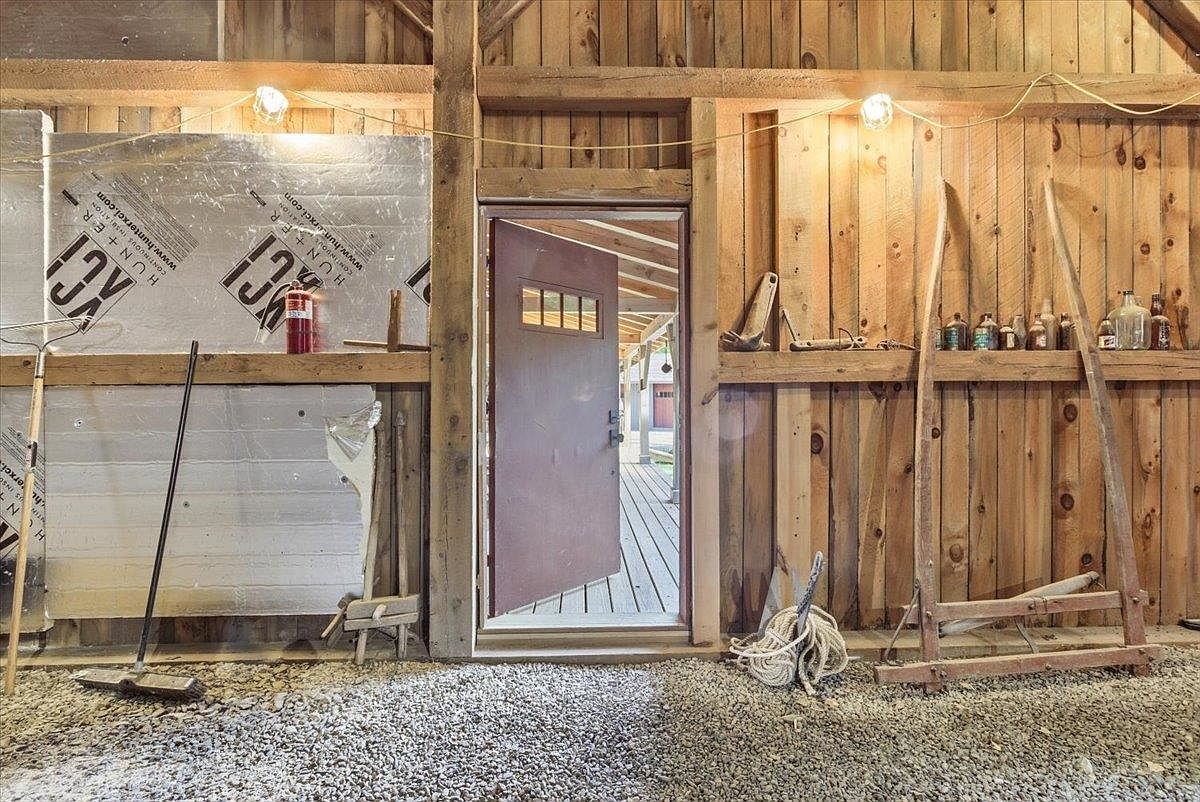
Beyond the residence, the estate's supporting structures are remarkable in their own right. A restored hay barn — dating to 1911 — presents extraordinary adaptive potential, whether reimagined as a horse stable, an agricultural facility, or an intimate events venue. The five-bay garage, finished with vertical siding and classic red doors, accommodates recreational equipment, vehicles, and workshop use with equal composure. A separate commercial office space provides income-generating flexibility rarely found in properties of this residential character.
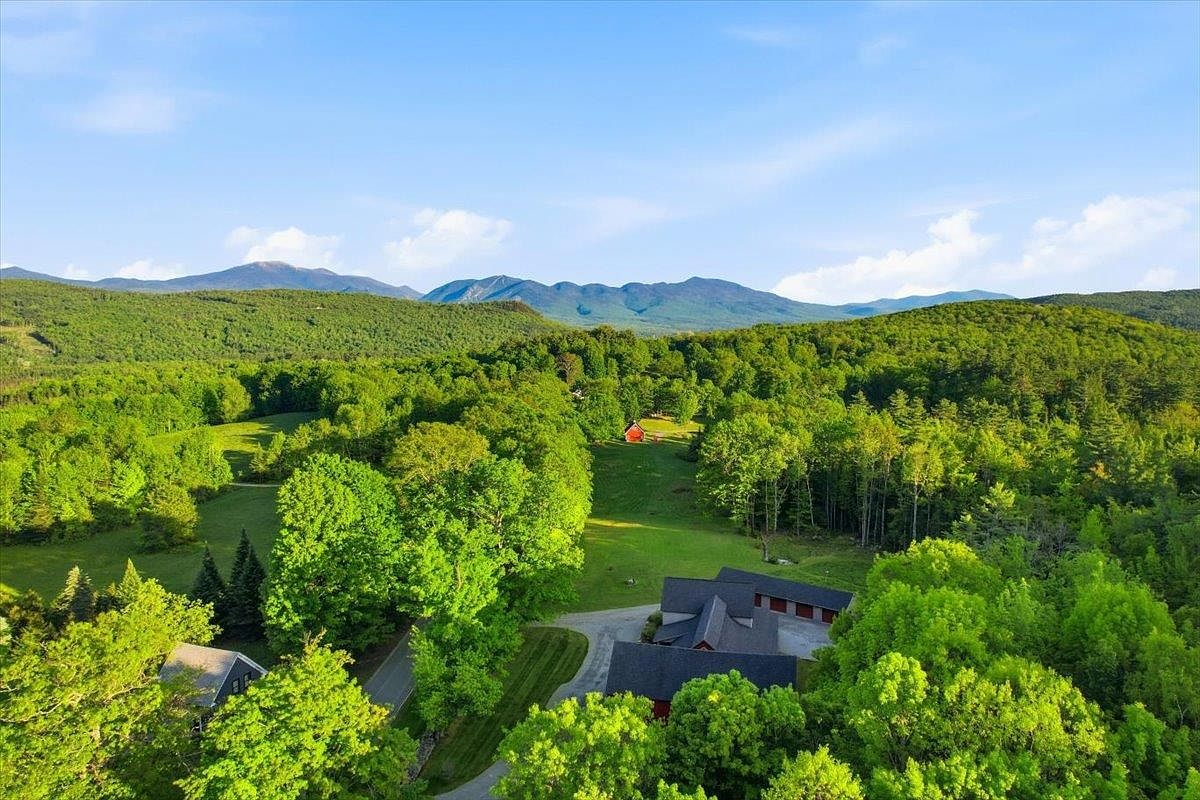
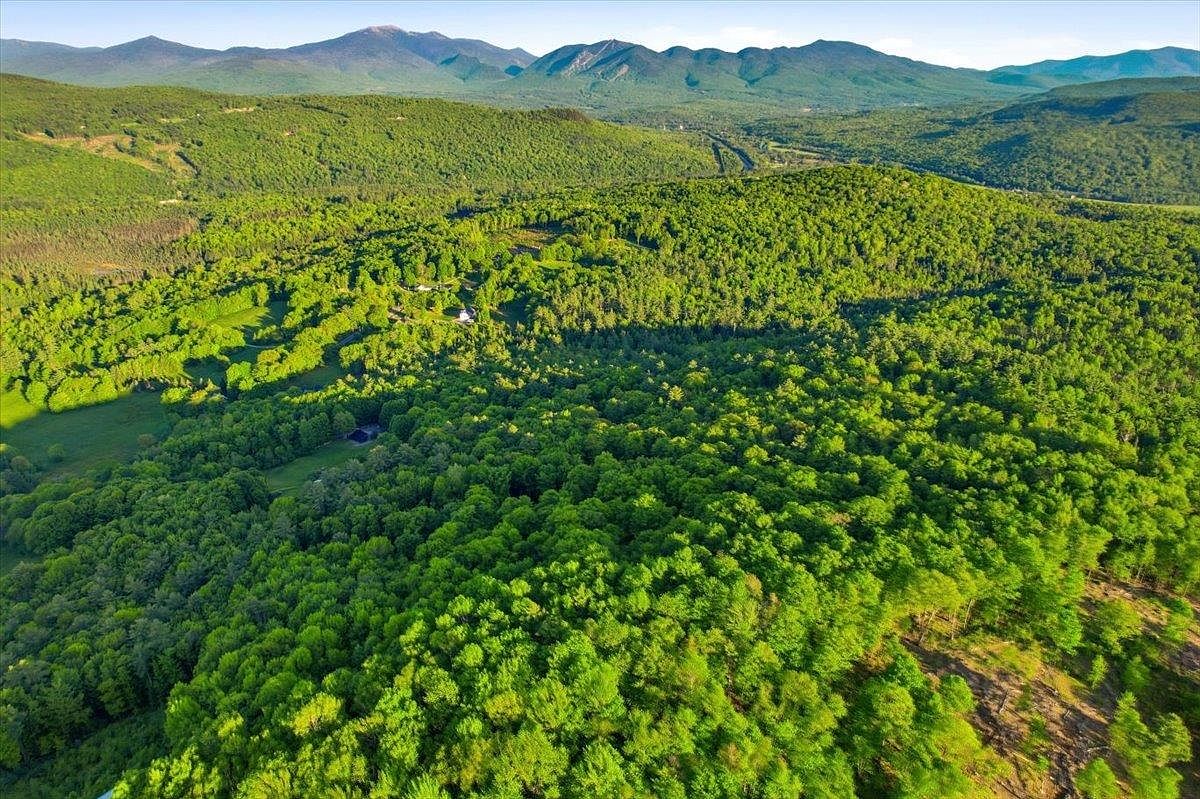
Throughout the grounds, more than 900 feet of dry-stacked stone walls trace the road frontage with quiet authority, while established walking, hiking, and riding trails ascend through open meadows and wooded acreage to reach panoramic Presidential Mountain views. This is an estate conceived with rare clarity of purpose — and executed without compromise.
Bethlehem, New Hampshire occupies a particular kind of place in the American imagination — one earned slowly, over generations, by the quality of its air, the scale of its mountains, and the unhurried character of its community. Situated in Grafton County within the White Mountains region, Bethlehem sits at an elevation of approximately 1,400 feet along the northern edge of the Franconia Notch corridor, a geography that has drawn artists, writers, and seekers of natural beauty since the mid-nineteenth century.
The town's history as a summer retreat is well documented. During the Gilded Age, Bethlehem became one of New England's most fashionable resort destinations, attracting visitors from Boston and New York who came for the clean mountain air — a quality believed at the time to offer relief from hay fever and respiratory ailments. Grand hotels once lined the main street, and the town developed a cultural sophistication that set it apart from its more rugged neighbors. While those hotels are largely gone, the sensibility they cultivated — a reverence for landscape, an appreciation for craft, a preference for the unhurried — persists in the character of the community today.
Modern Bethlehem is a town of artists, farmers, and outdoor enthusiasts who have chosen to build lives in one of northern New England's most scenically endowed settings. The nearby town of Franconia, approximately three miles from the property, offers a charming downtown with local services and community institutions embedded in a deeply New Hampshire sense of place. Littleton, just 2.5 miles to the east, is perhaps the region's most celebrated small-town main street — a walkable, award-winning commercial corridor lined with independent bookshops, galleries, farm-to-table restaurants, and specialty retailers that draw visitors from across the region.
For the outdoor-oriented buyer, the surrounding landscape is simply without parallel in the northeastern United States. Cannon Mountain, one of New Hampshire's most storied ski areas, lies within easy reach, offering alpine skiing and the aerial tramway that ascends to a summit with views across three states. The Appalachian Trail passes through the region, and Franconia Notch State Park — home to Echo Lake, the Flume Gorge, and Profile Lake — provides world-class hiking, cycling, and kayaking within minutes of the property. The Presidential Range, whose summits are visible from the estate's own trail network, includes Mount Washington, the highest peak in the northeastern United States.
The White Mountains region also supports a vibrant agricultural community, with farmers markets, local creameries, and working farms maintaining a living connection to the land that has defined this region for centuries. In this context, the heritage of 908 Old Franconia Road as the former Lotta Rock Dairy Farm is not incidental — it is a direct expression of the valley's deepest identity.
To own property here is to participate in a landscape that has shaped New England's cultural memory, while enjoying the practical comforts of a community that prizes quality, authenticity, and the considered life.
Featured Highlights
Curated Content • Presented by Charles Crannell