The Story Behind
A WSJ-Featured Organic Modern Sanctuary Redefining California Living
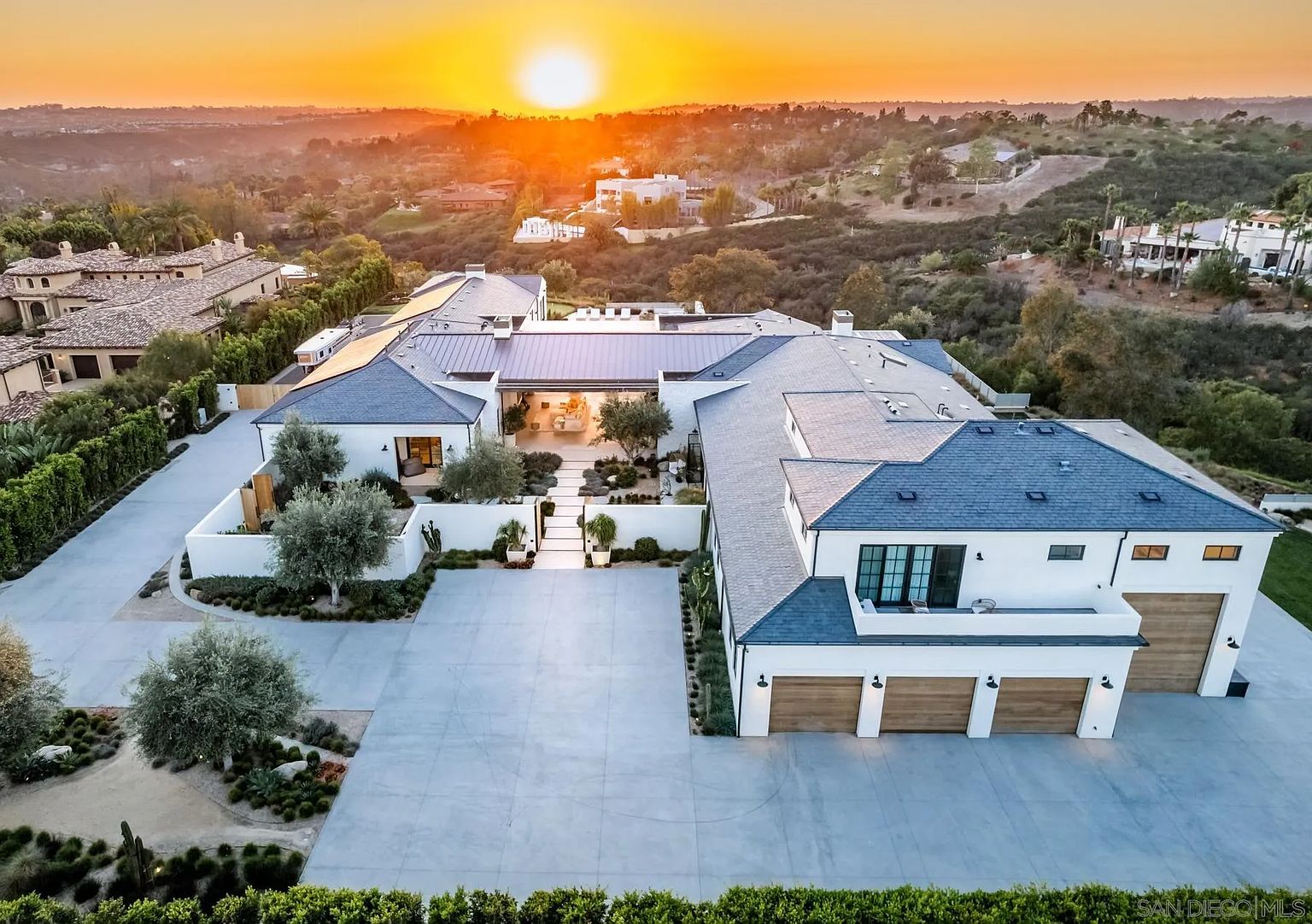
There are homes that are built, and there are homes that are authored. The estate at 14783 Roxbury Terrace belongs unambiguously to the latter category. Conceived under a philosophy of Californian Modern Organicism and executed over three painstaking years, every decision made here — from the orientation of a doorframe to the grain of a timber beam — was governed by a singular creative mandate: no room for error.
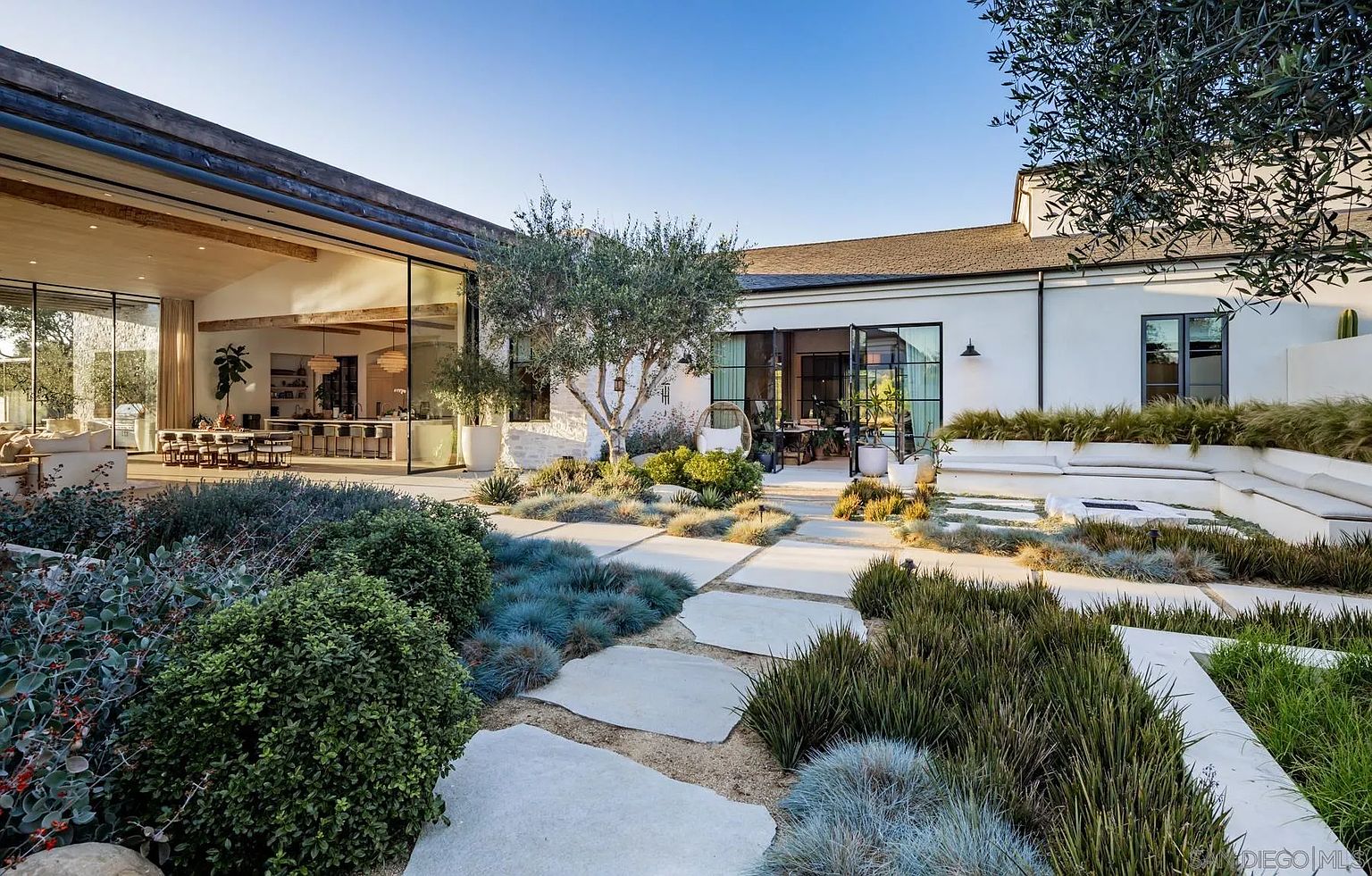
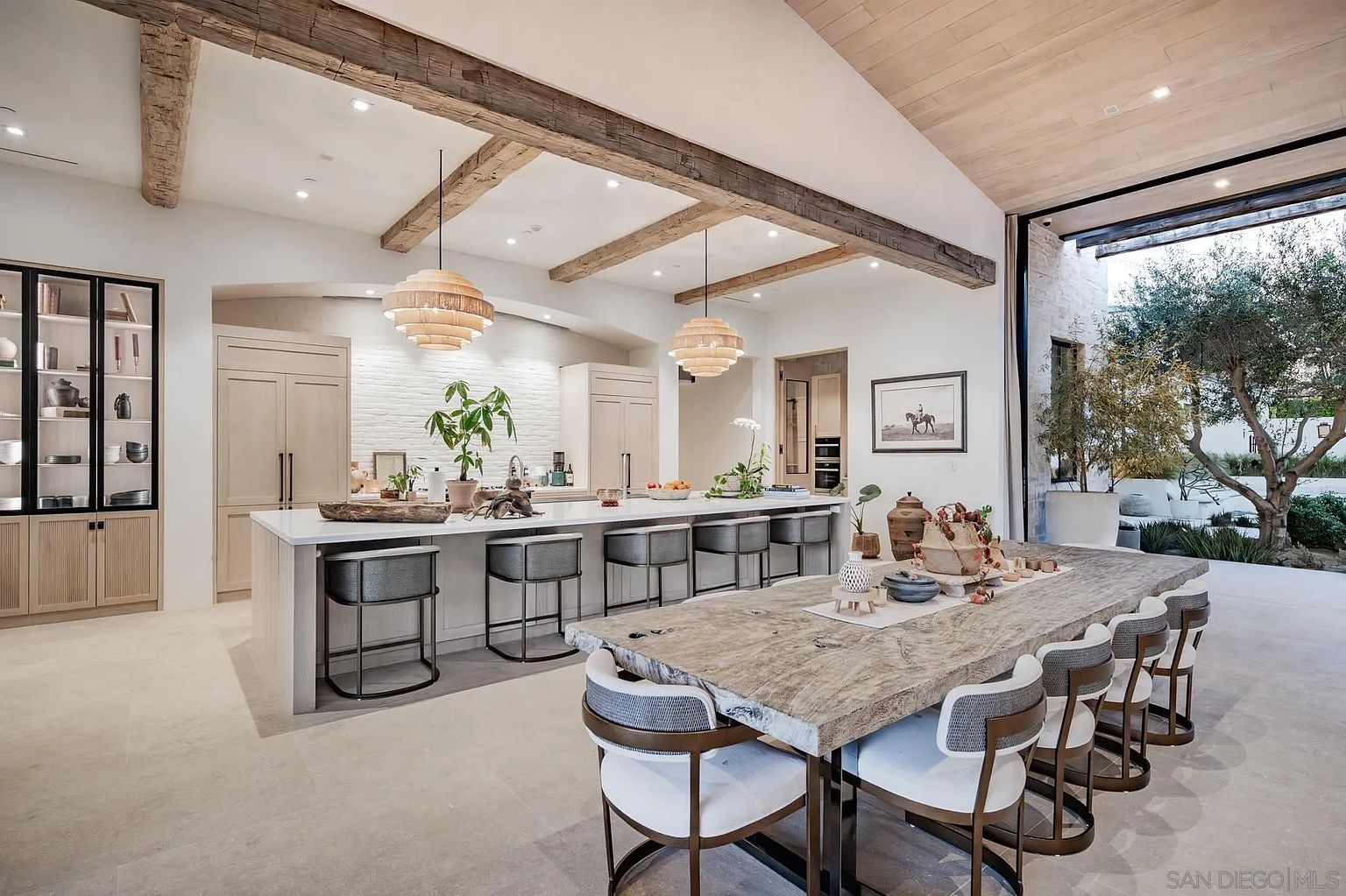
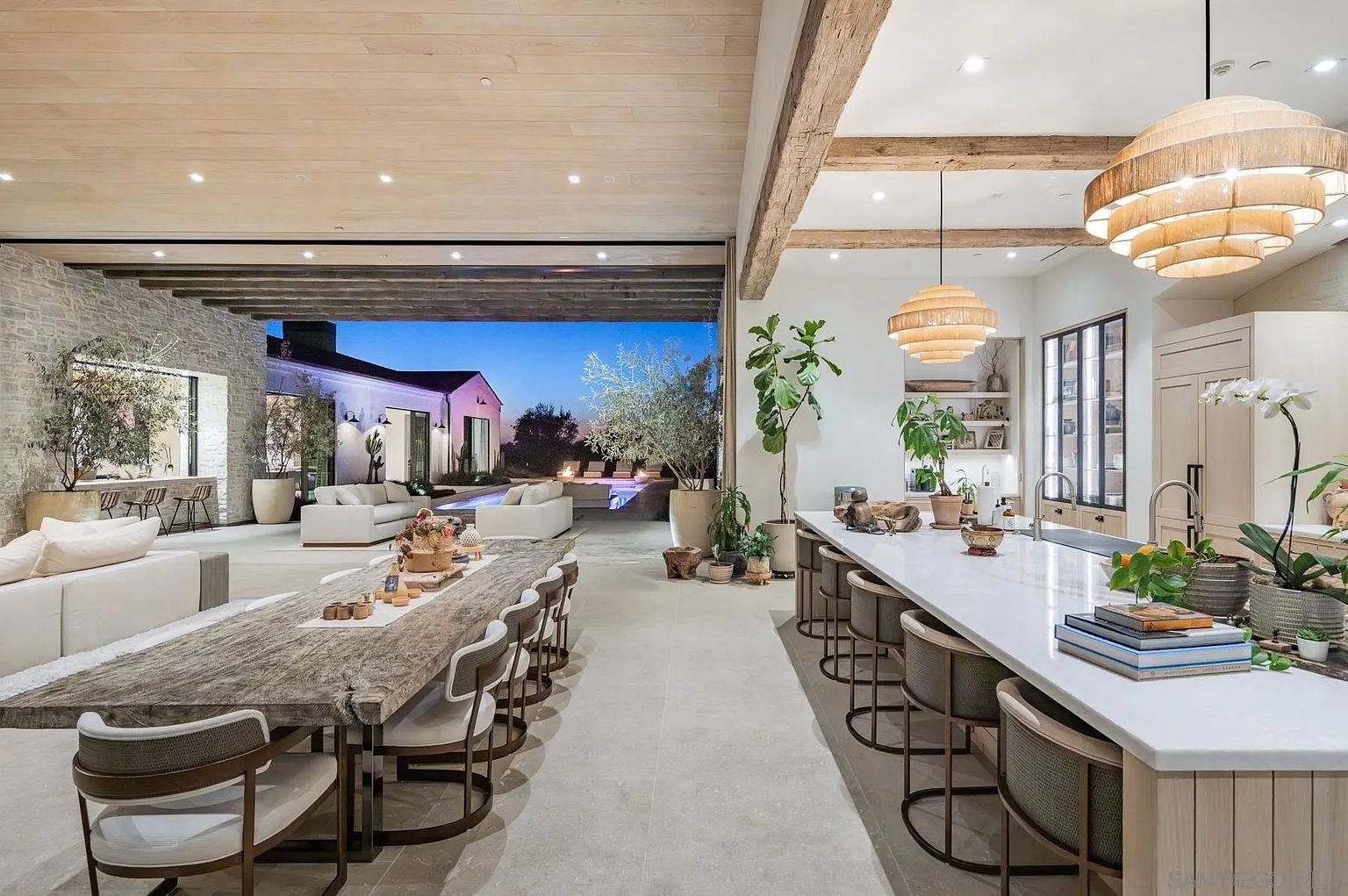
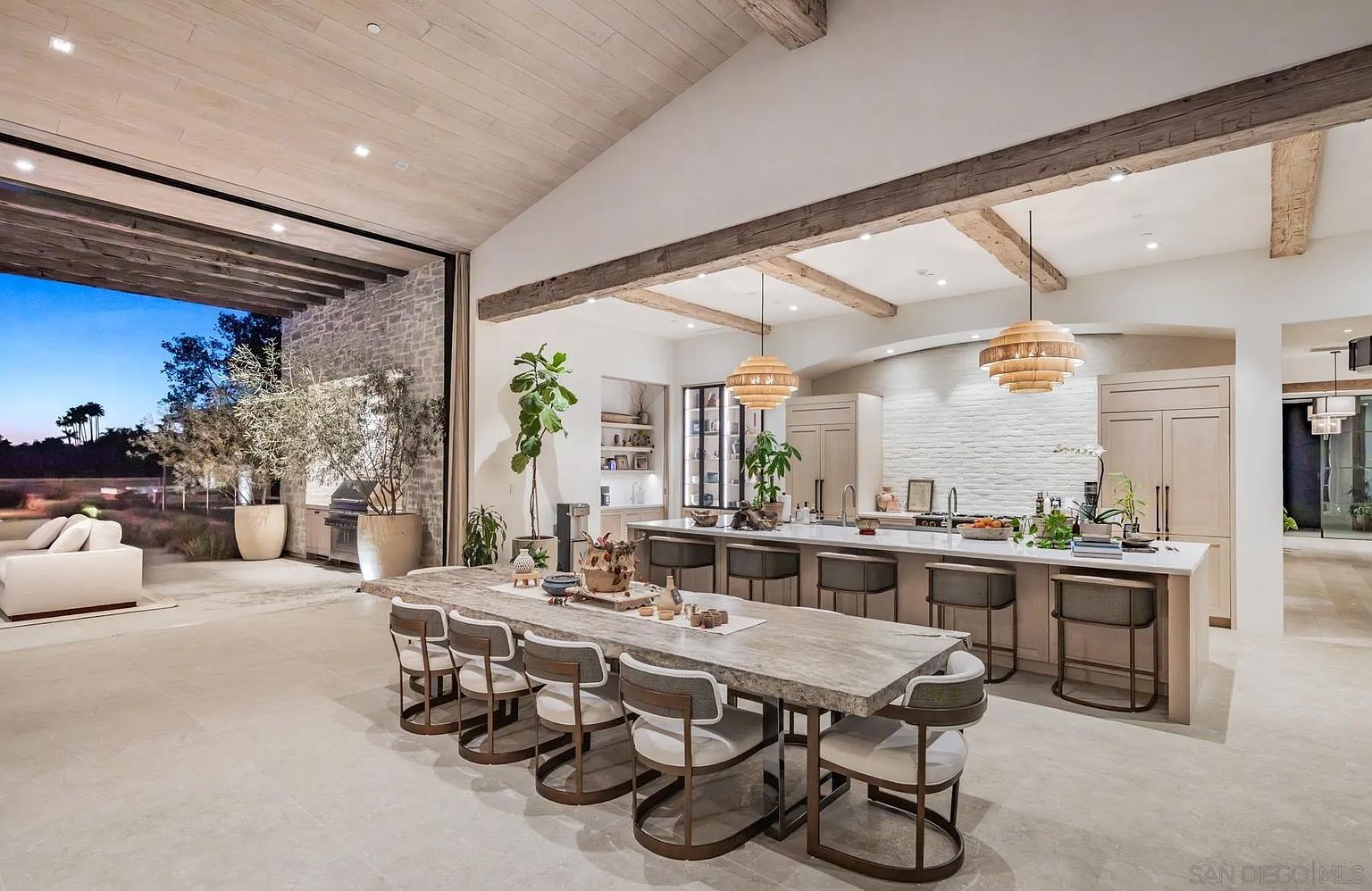
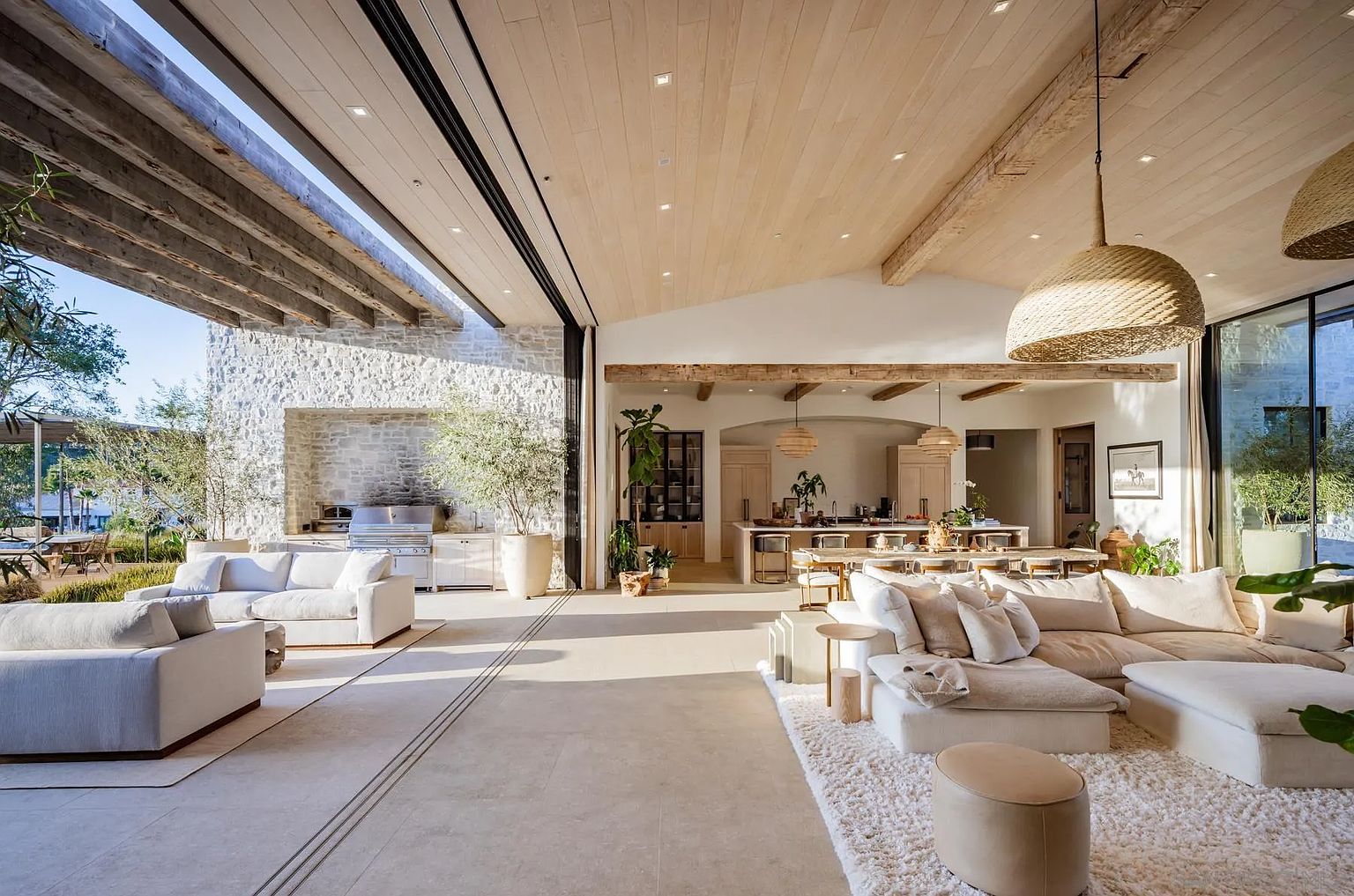
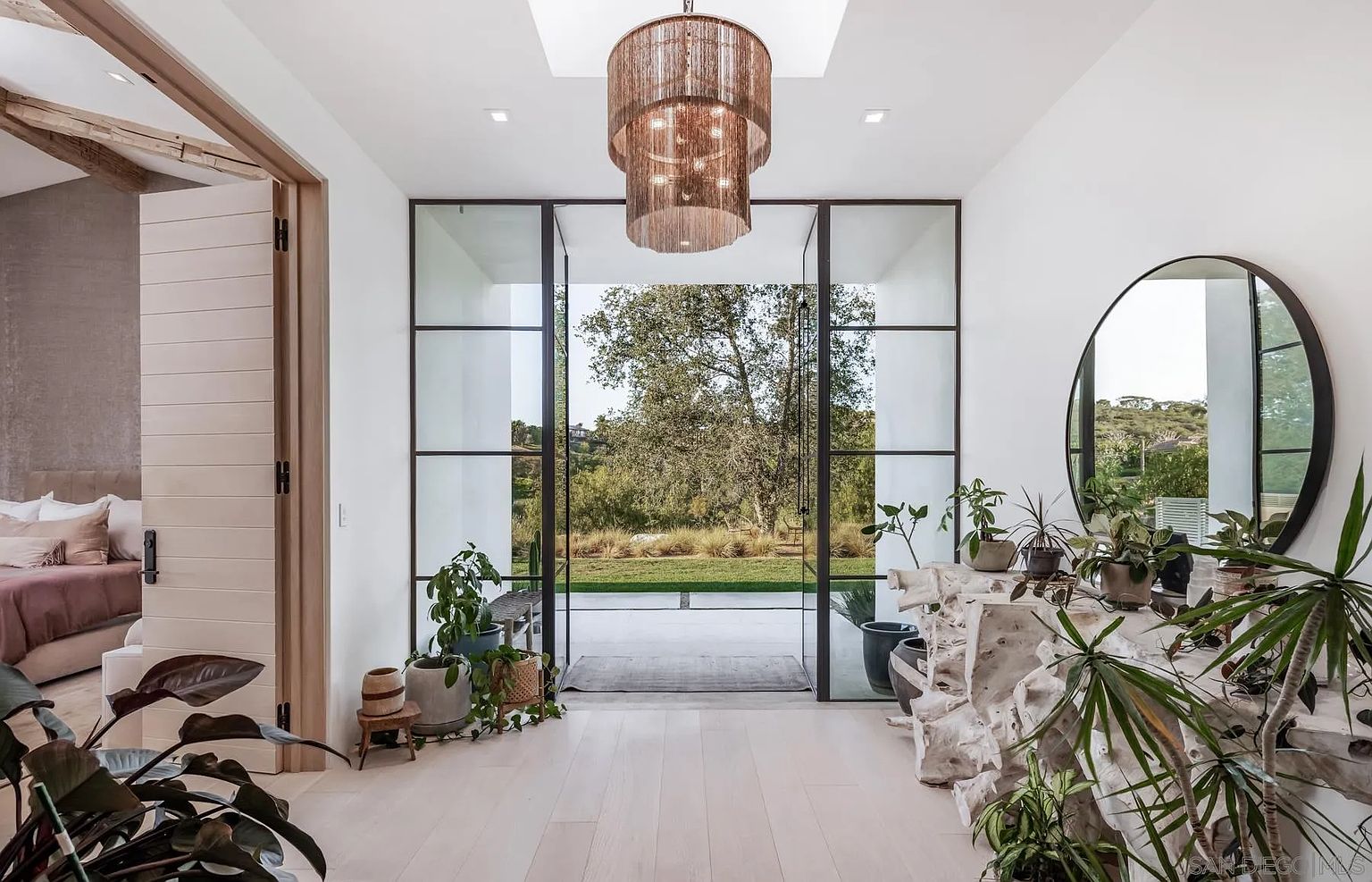
The approach to arrival sets the tone immediately. Rather than depositing guests at a conventional threshold, the home draws visitors through a curated courtyard sequence that compresses and releases, building anticipation before the great room opens in full. Here, the architecture reaches its most declarative moment: 16-foot tall steel pocket sliders, crafted with a precision that allows each panel to function like a freestanding window, dissolve the wall between interior and exterior entirely. The result is not a room with a view, but a room that is the view — one that frames the property's celebrated sunset panorama with the quiet confidence of a gallery.
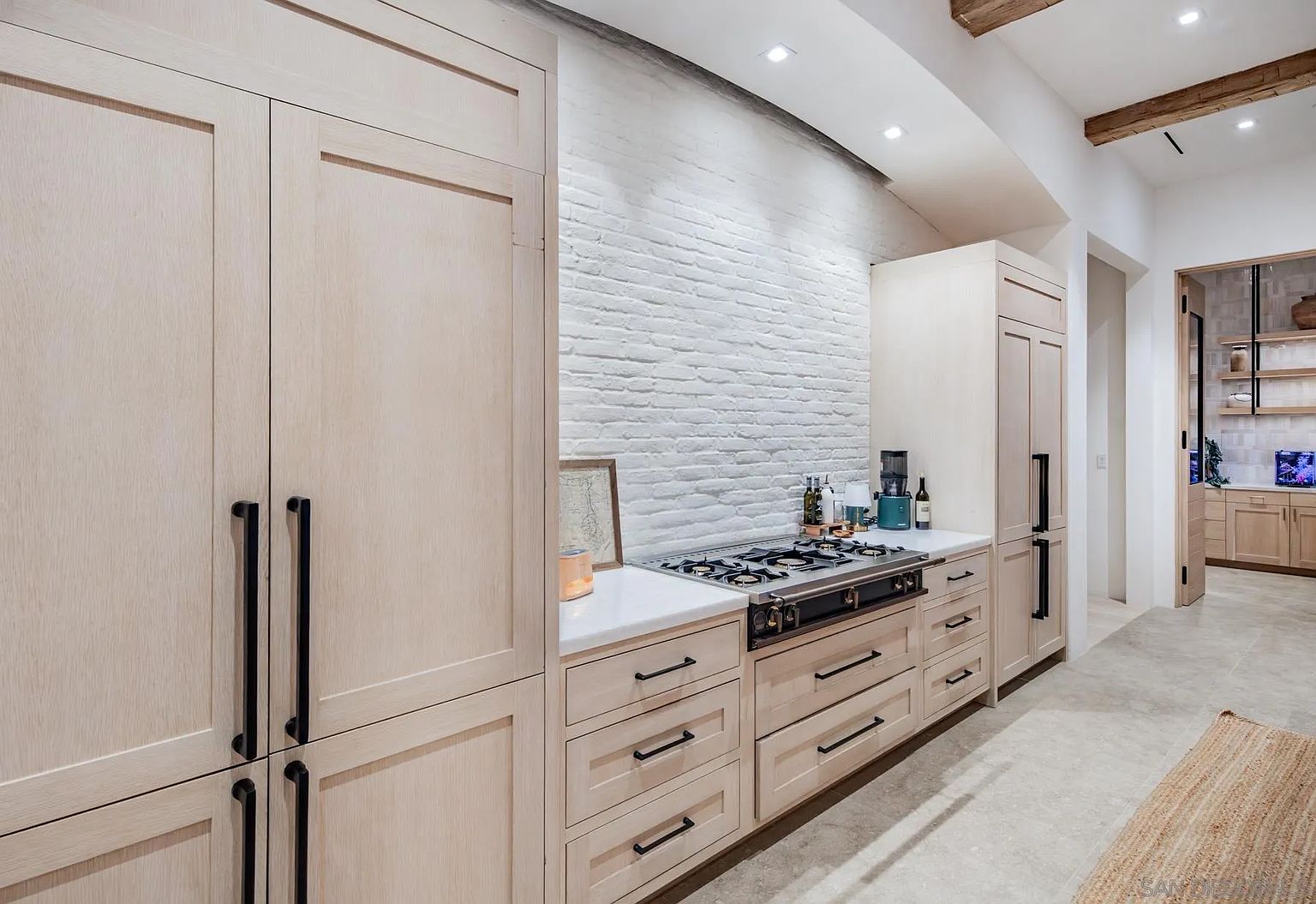
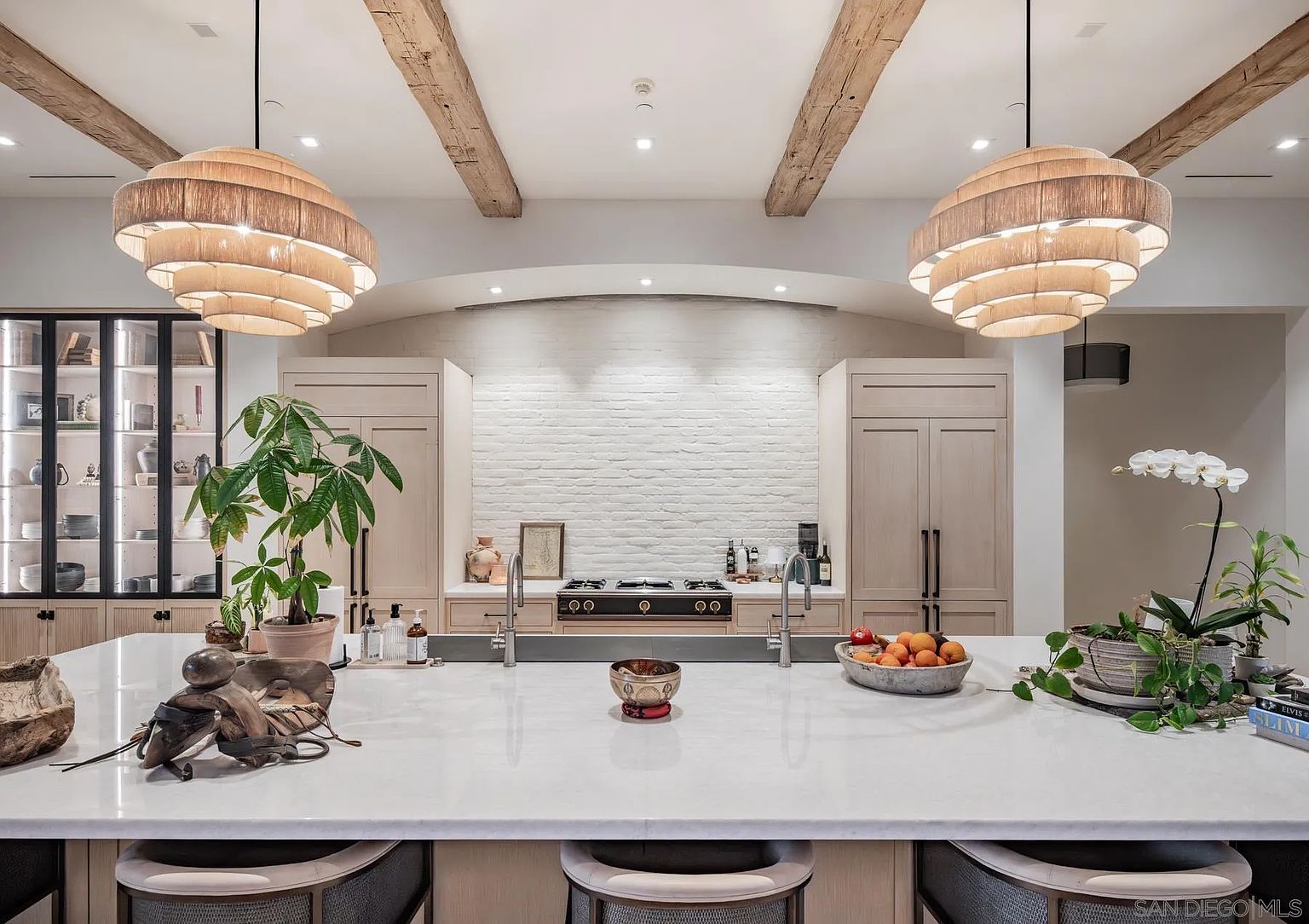
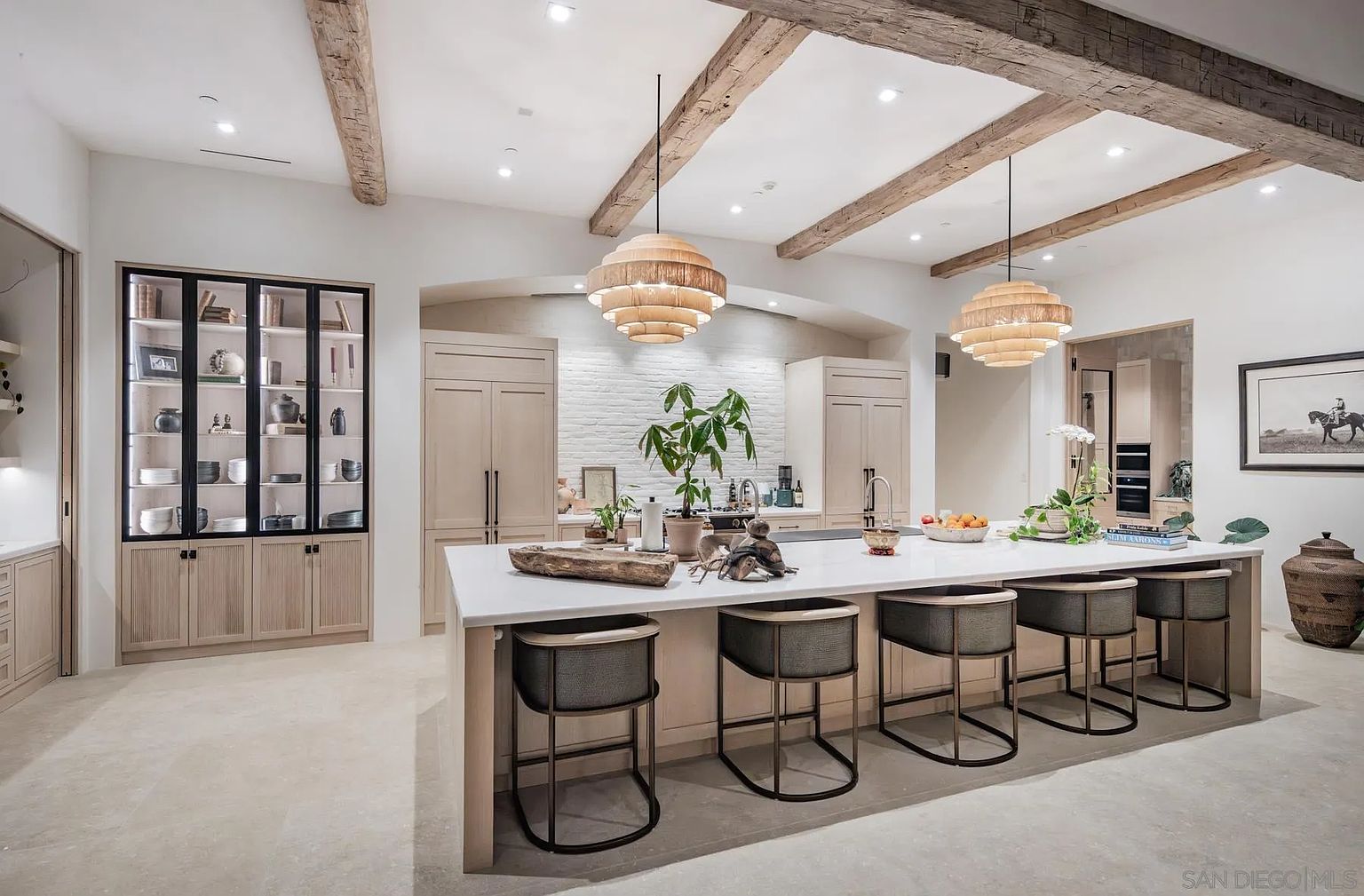
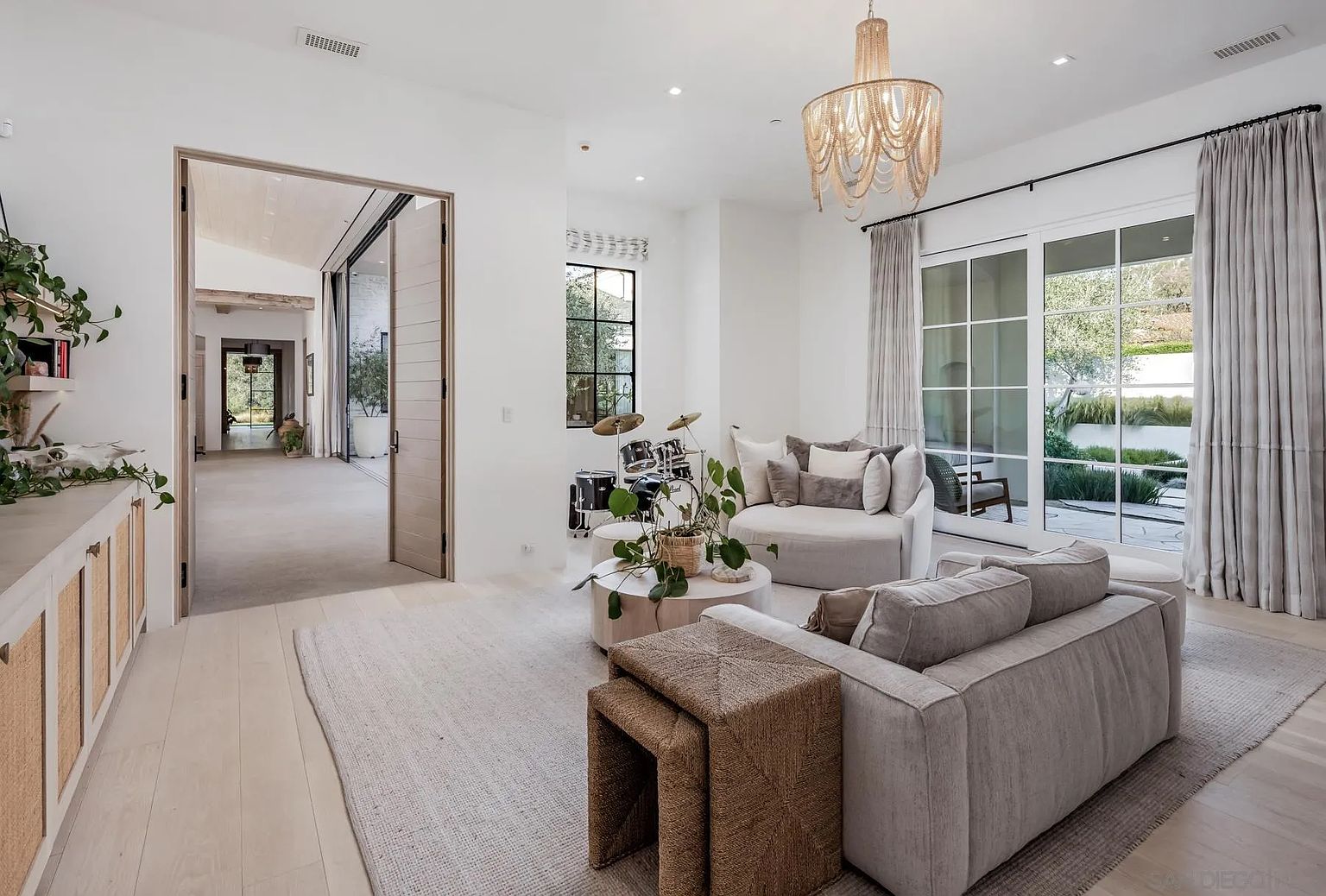
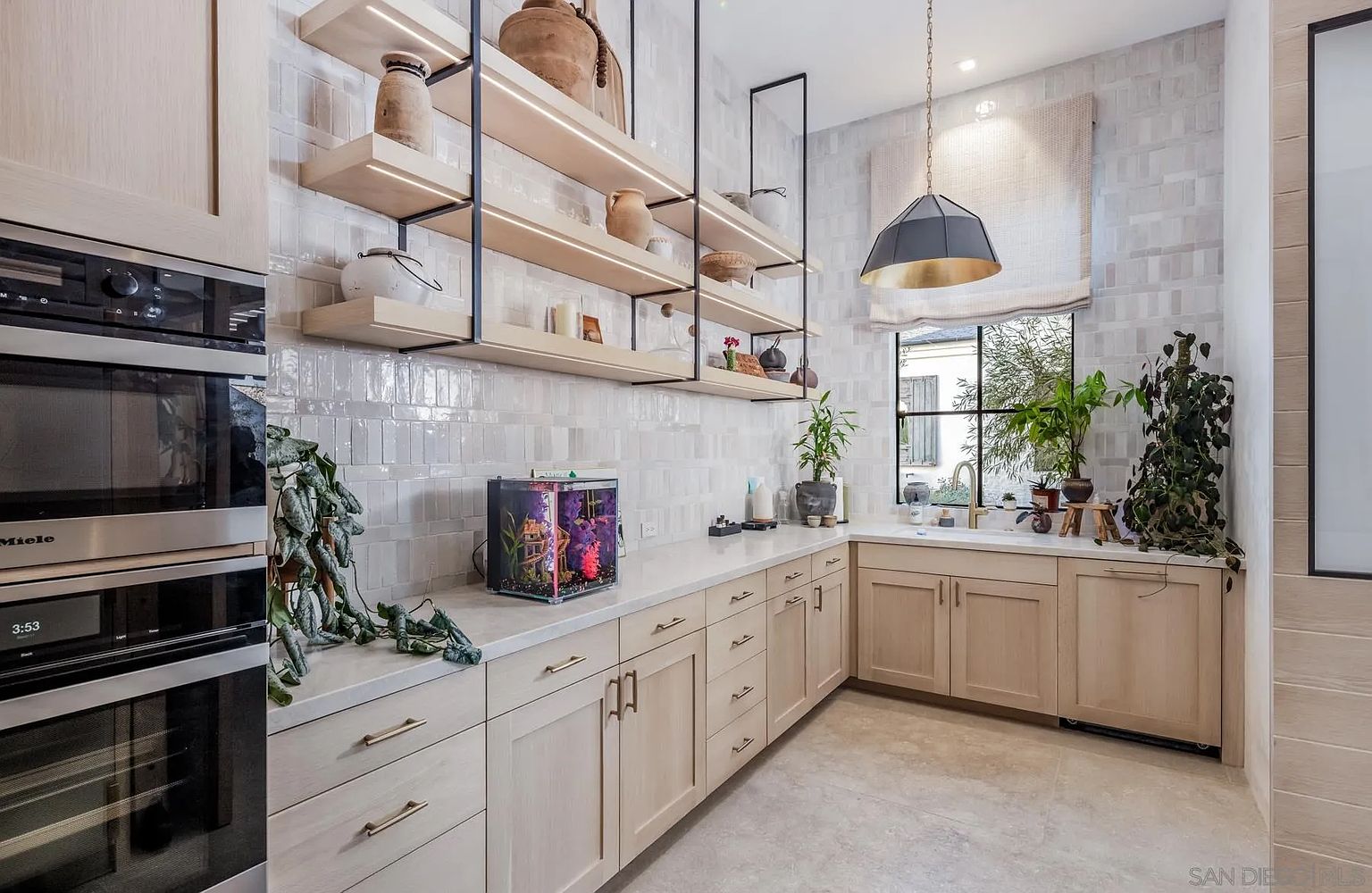
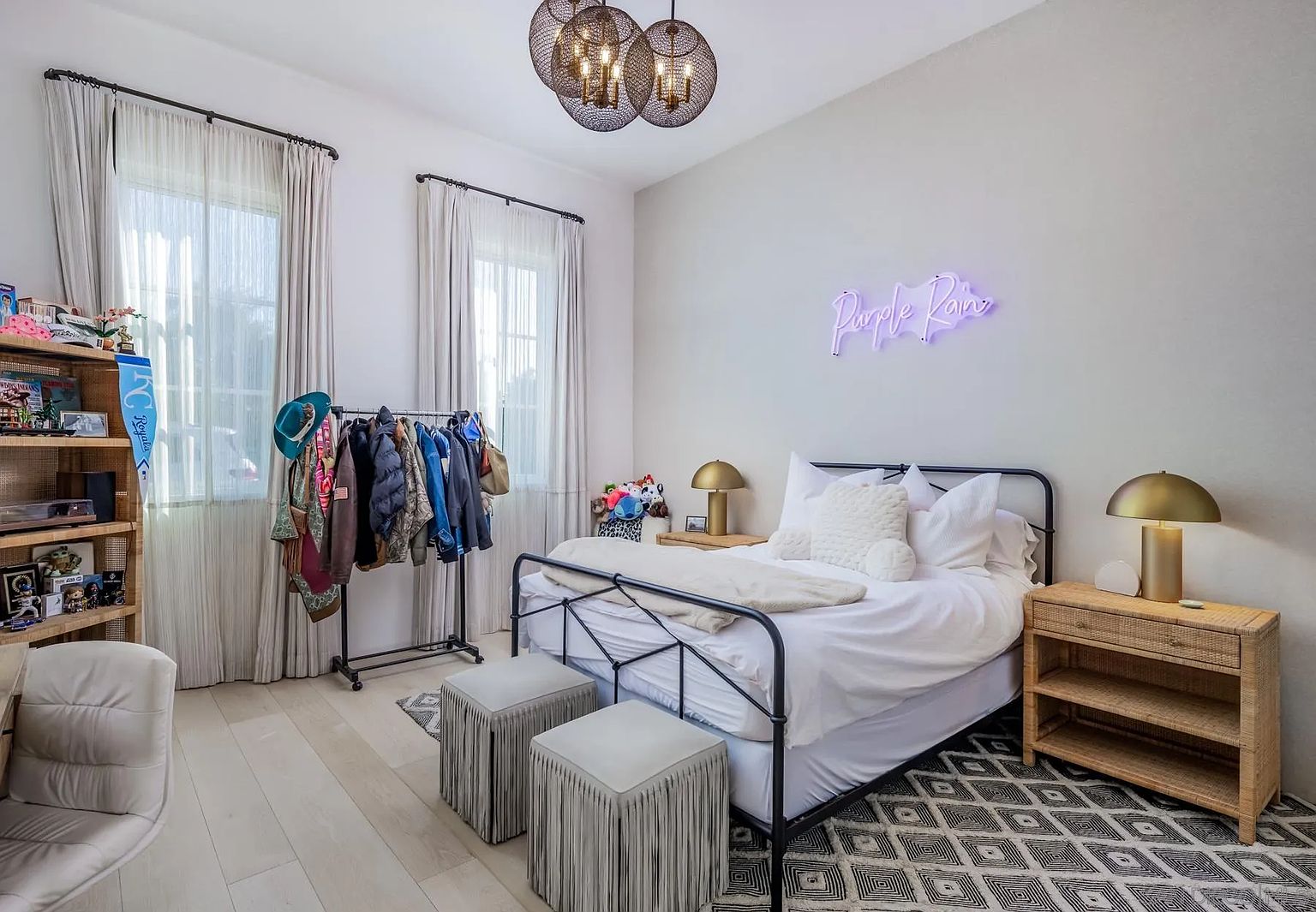
Throughout the residence, organic materials have been selected not for their trend value but for their permanence. Exposed timber beams traverse light-filled ceilings, light-toned stone floors anchor the open plan with understated authority, and bespoke steel finishes carry a restrained sophistication that deepens with time. The professional kitchen — appointed with Viking appliances, a white brick backsplash, a walk-in pantry with cane-front cabinetry, and a generously proportioned island — functions as both a culinary workspace and a social heart, its warmth amplified by the natural materials surrounding it.
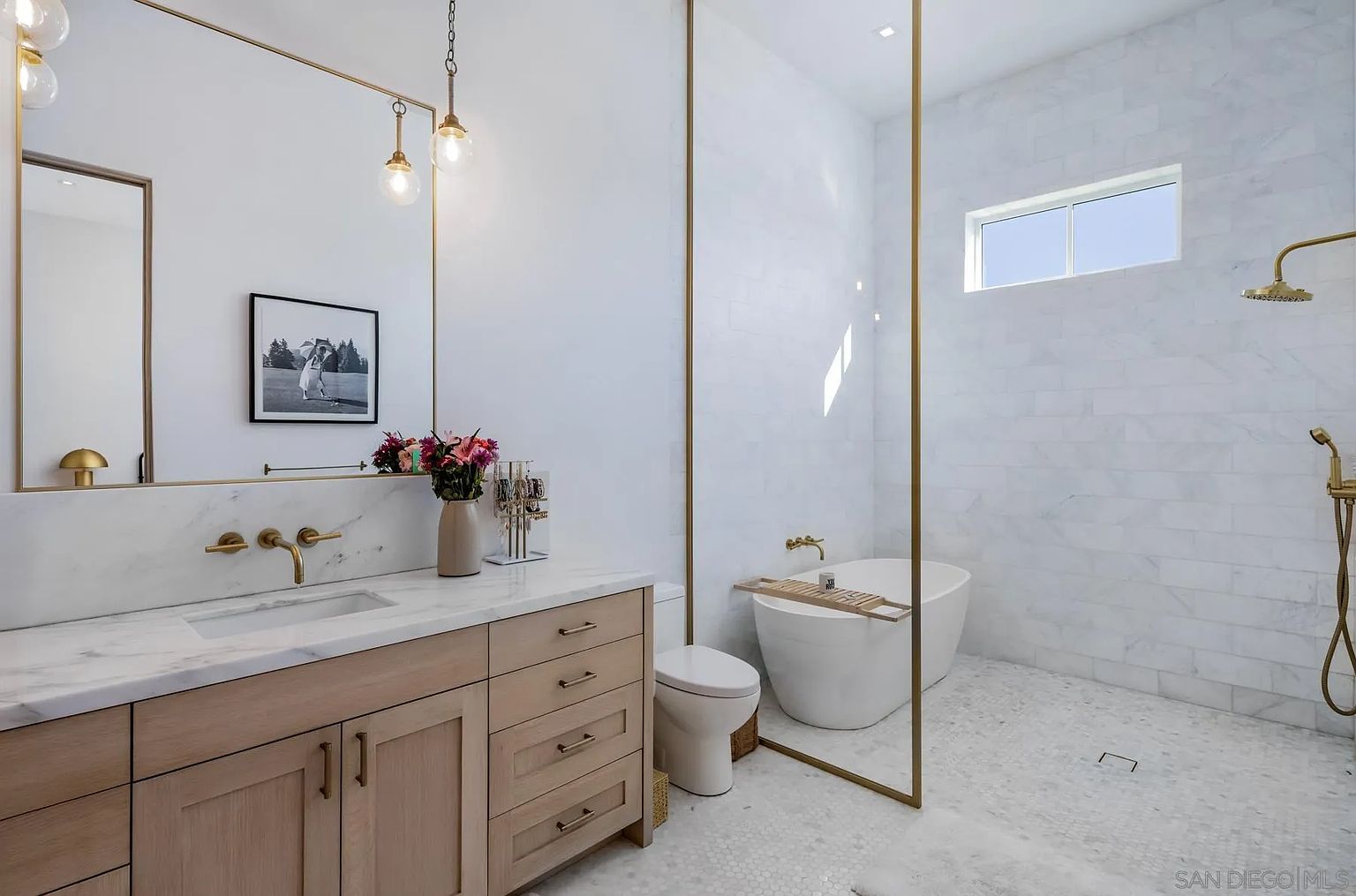
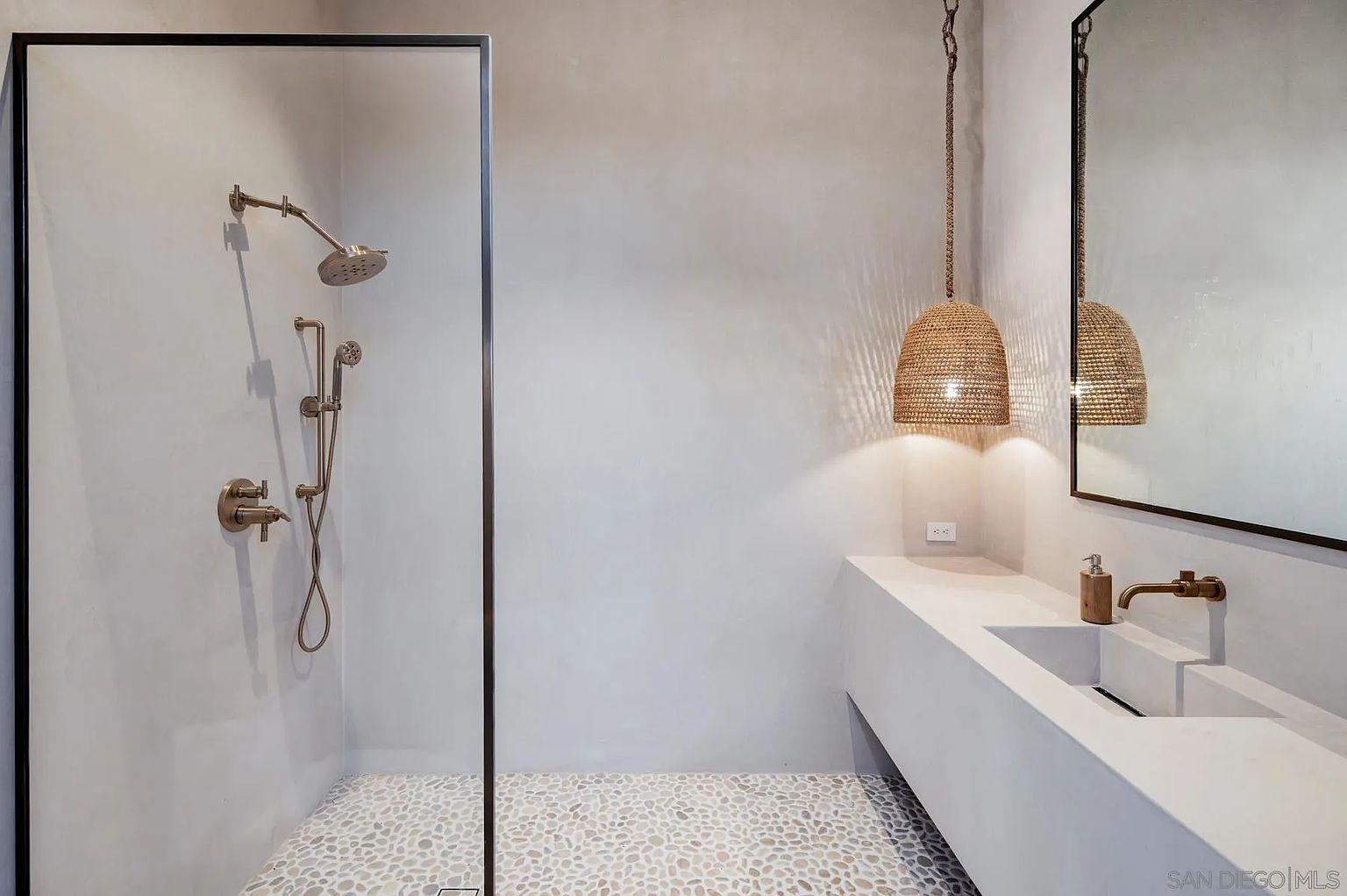
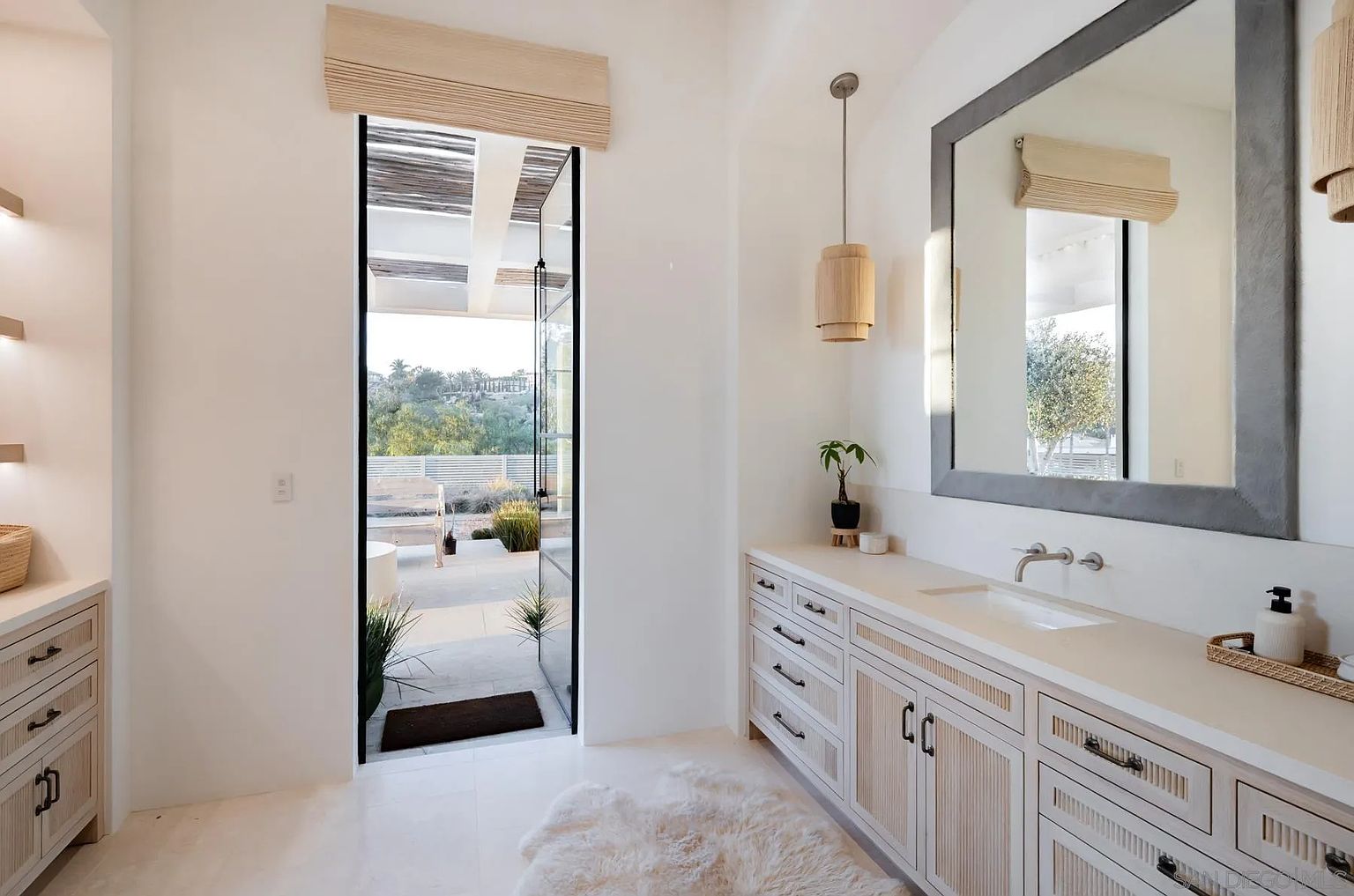
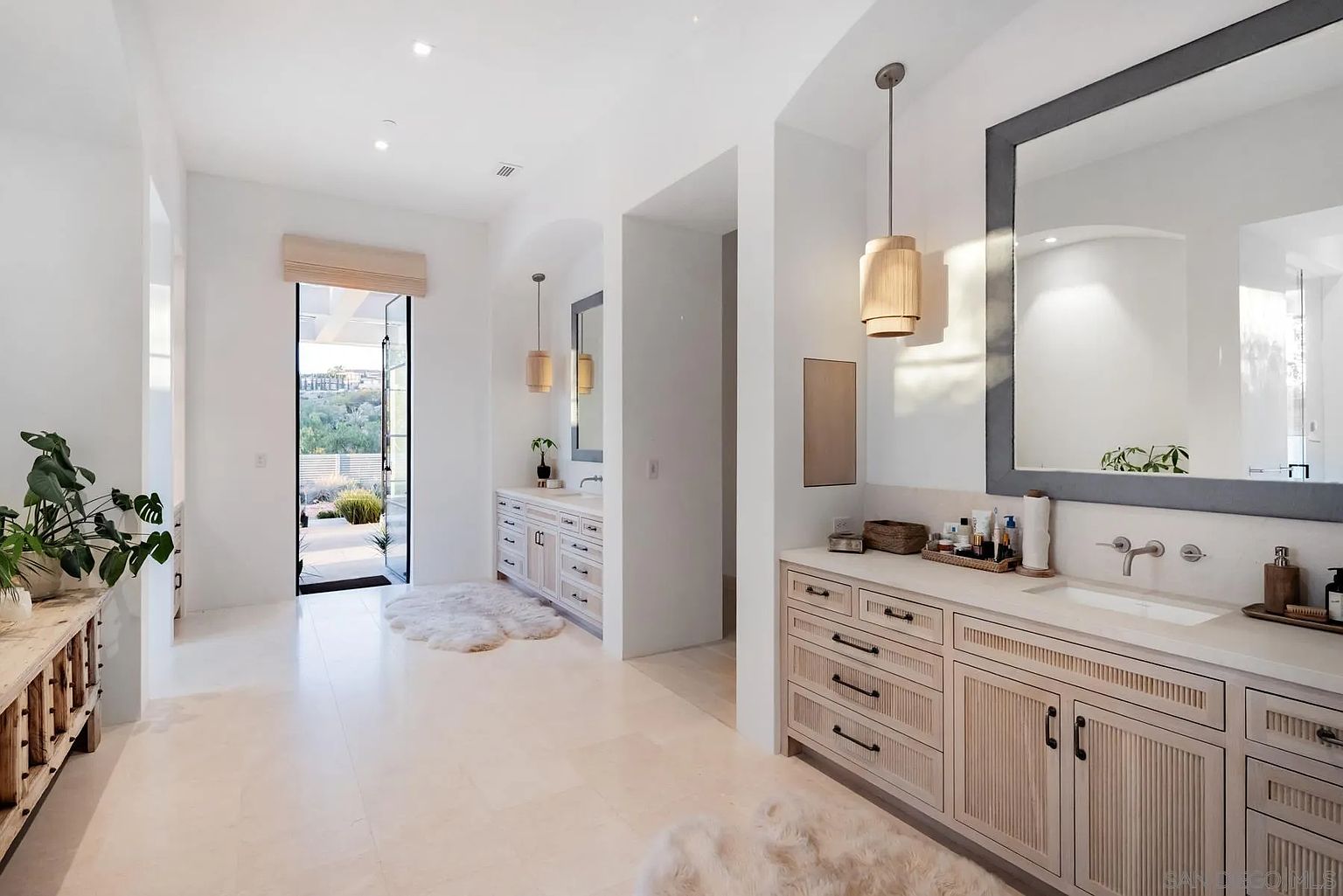
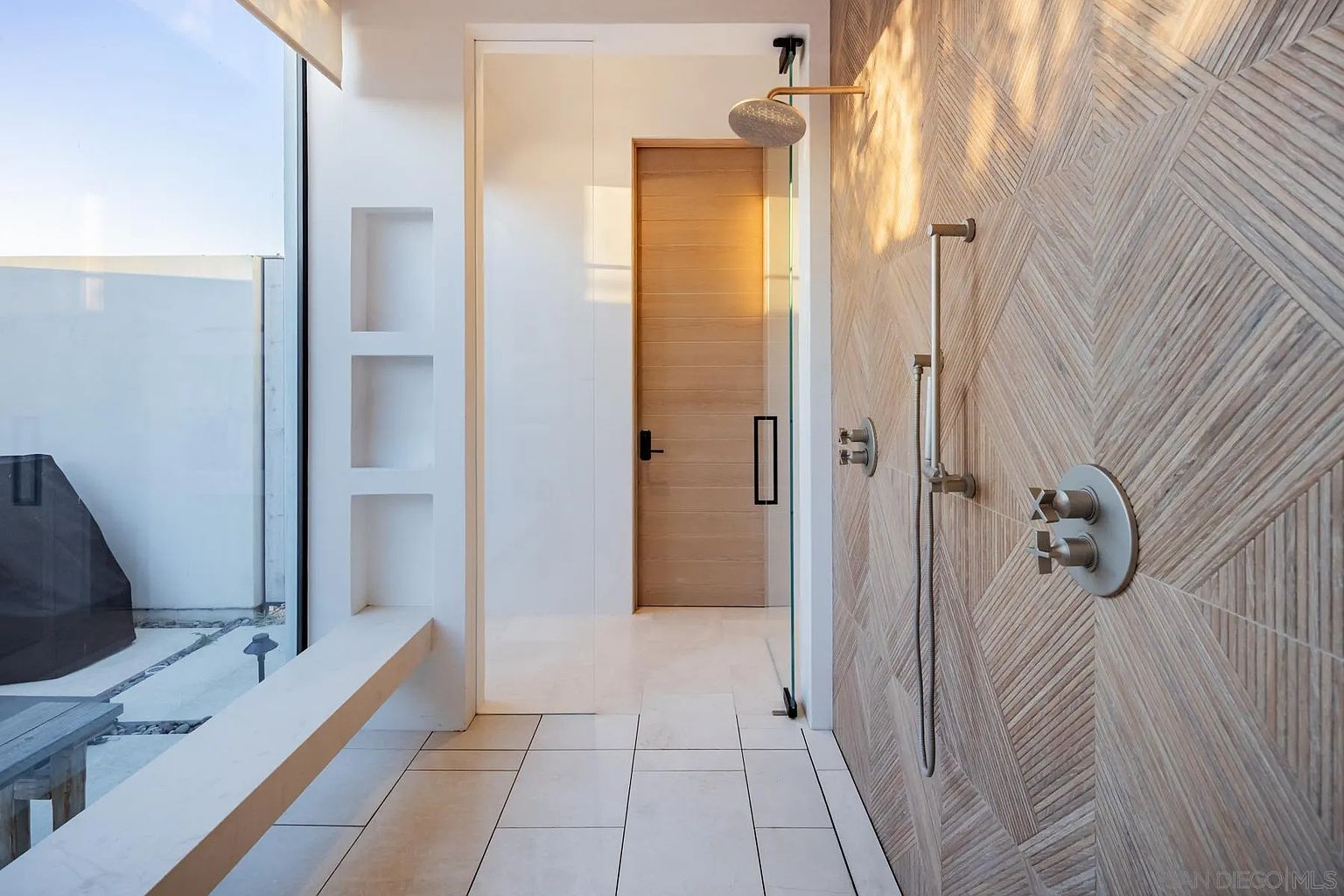
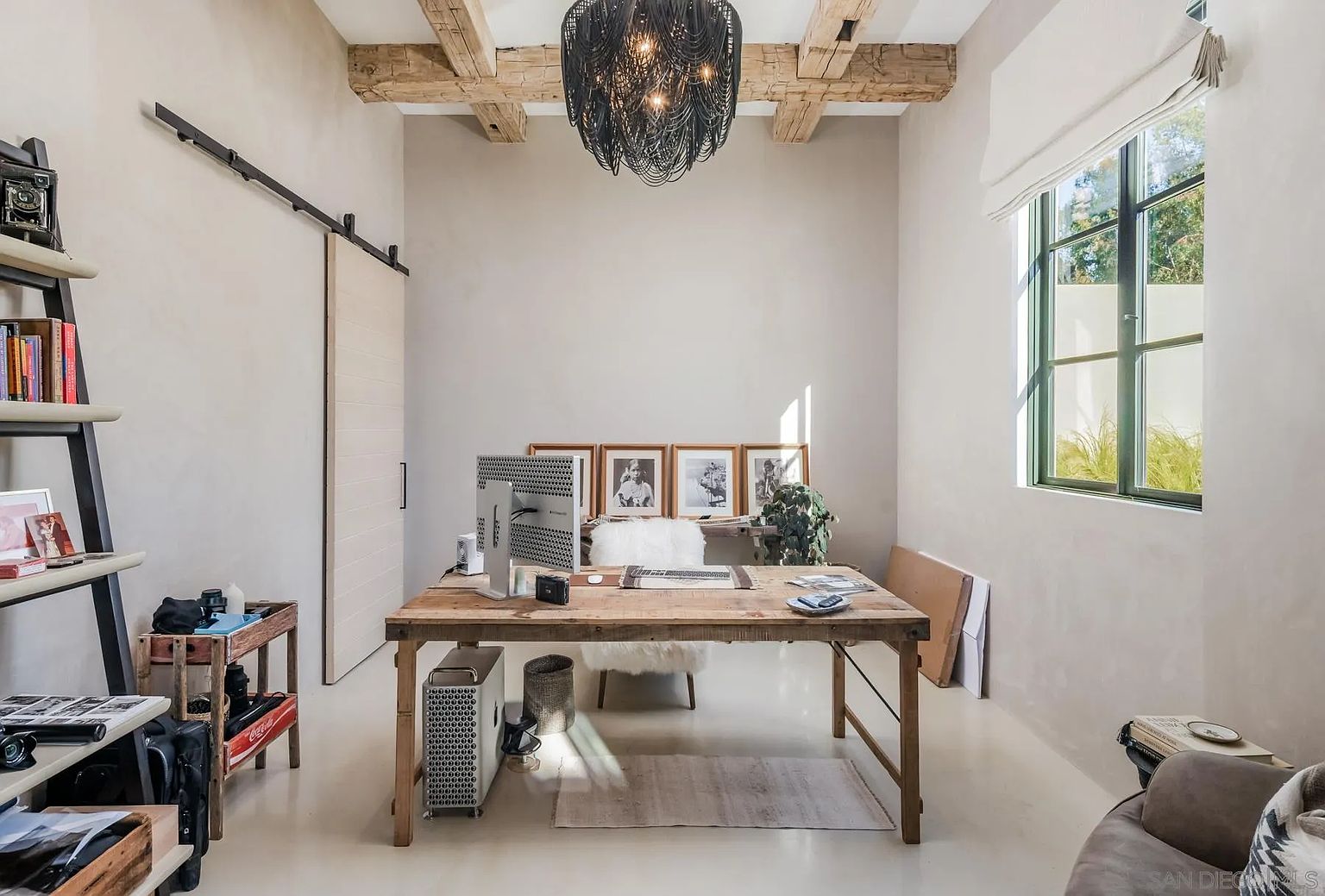
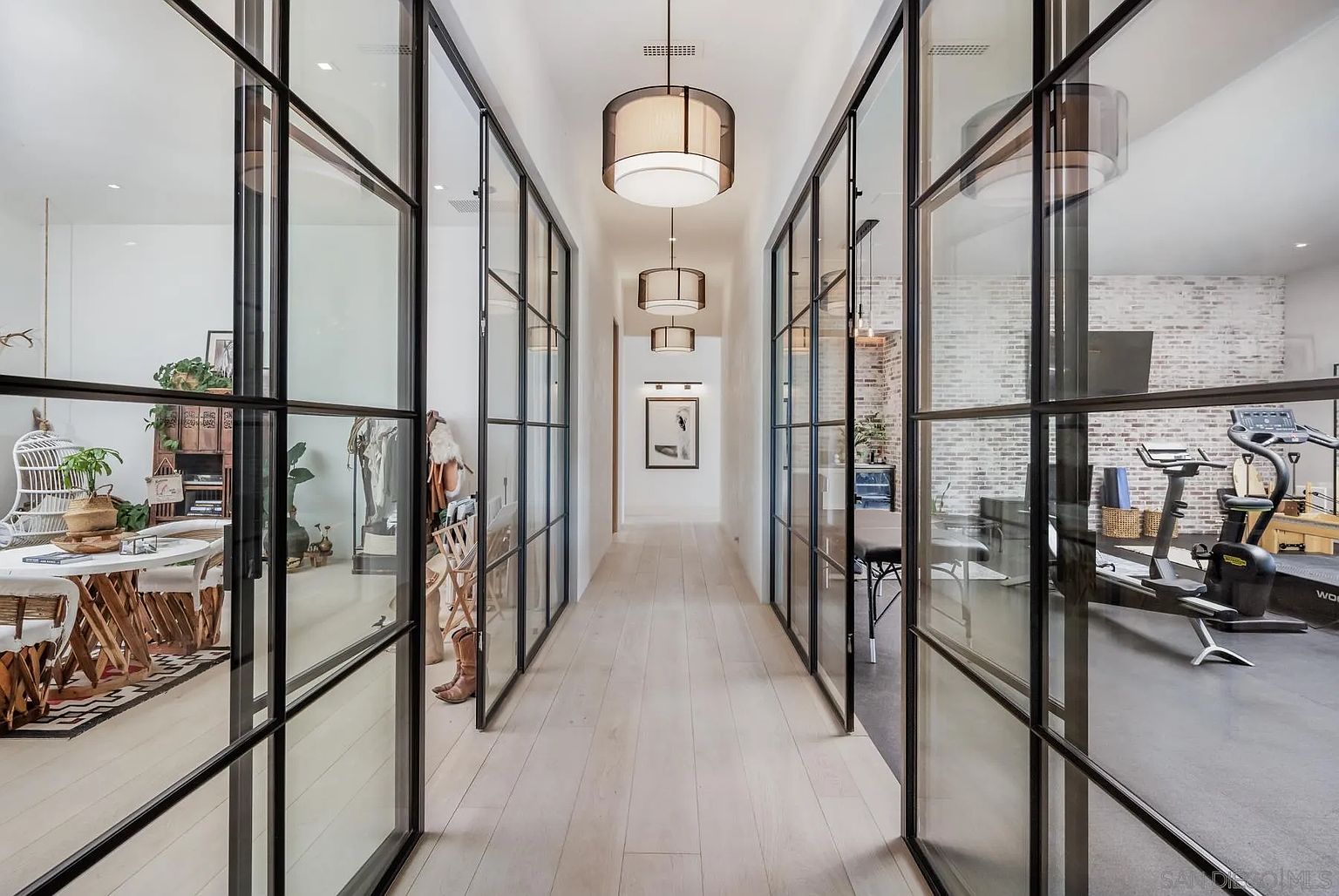
At the creative center of the home lies a photography studio suffused in natural light — a quiet, purposeful space that speaks to the home's deeper ambition: to serve not just as a residence, but as a platform for a life fully lived. That same spirit animates the primary suite, which operates as a private high-performance retreat. A built-in sauna, steam room, and a gold-framed wet room with freestanding soaking tub compose a personal spa of genuine resort caliber, while a dedicated home gym opens directly to the landscape through a retractable glass door.
The estate's technological infrastructure is equally considered. One of San Diego's most sophisticated automation systems governs the property with invisible precision — hidden mud-in speakers deliver ubiquitous sound throughout, while discrete room sensors allow a centralized climate command center to maintain perfect conditions without intruding on the architecture's clean aesthetic.
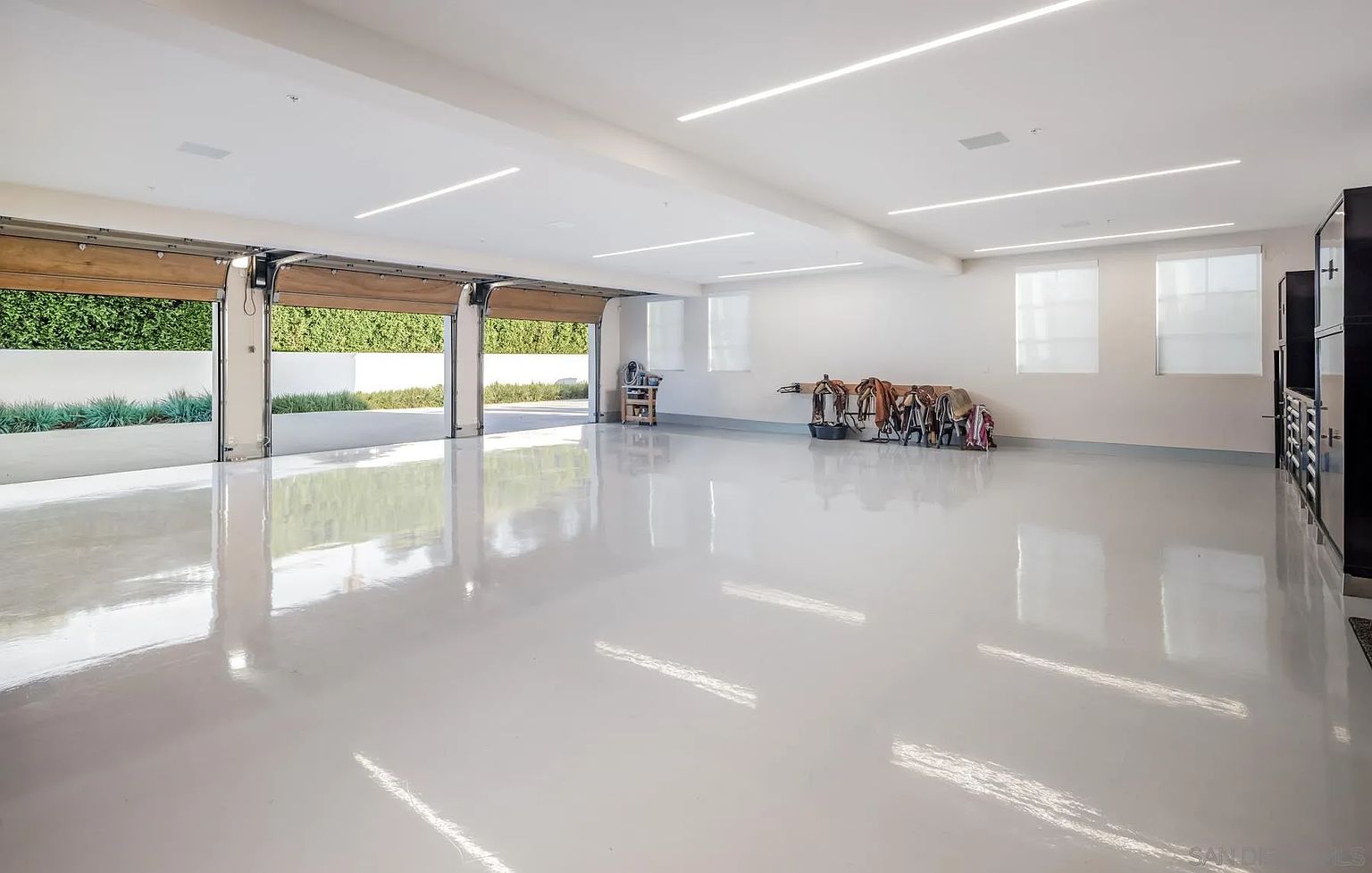
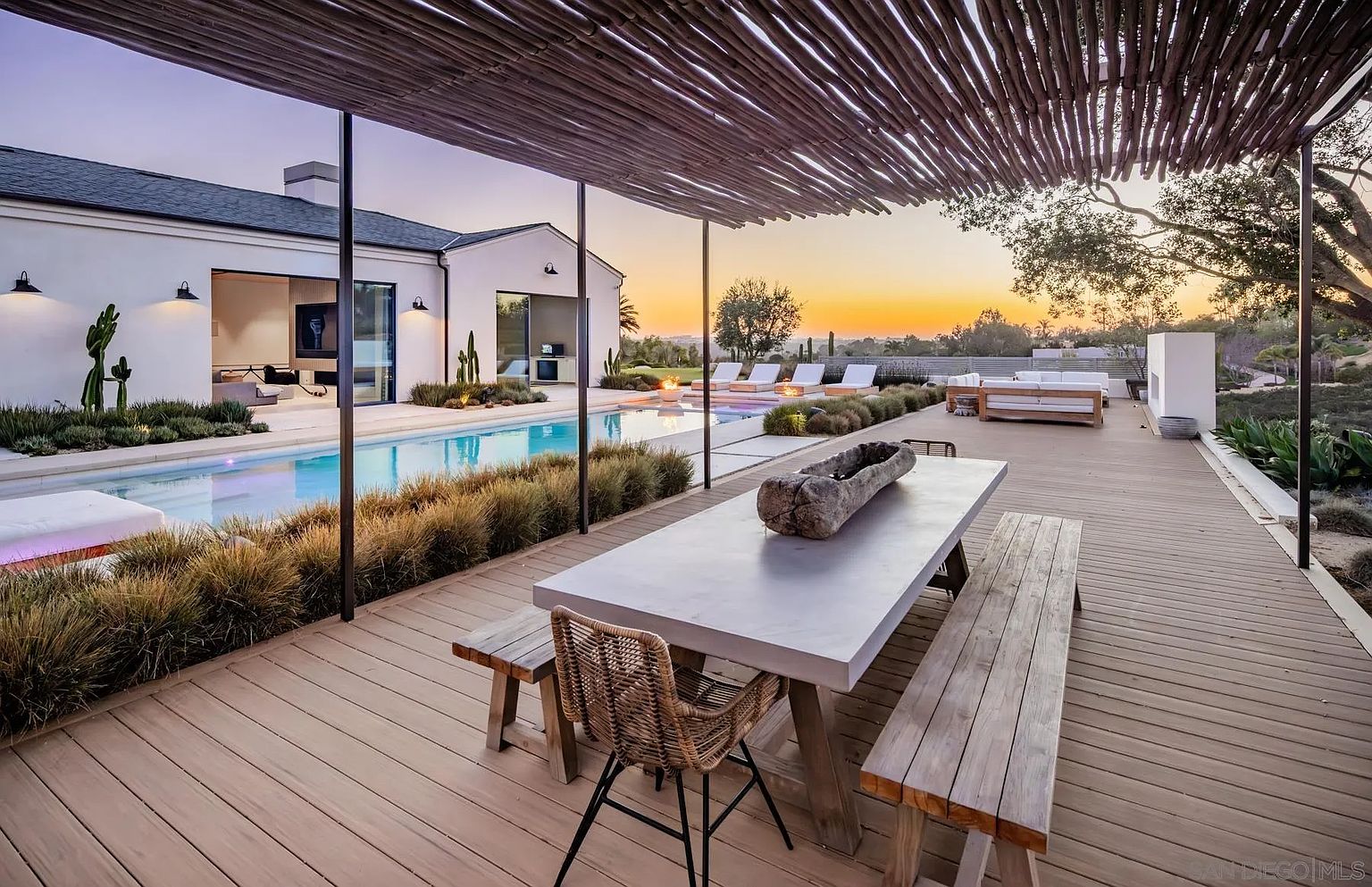
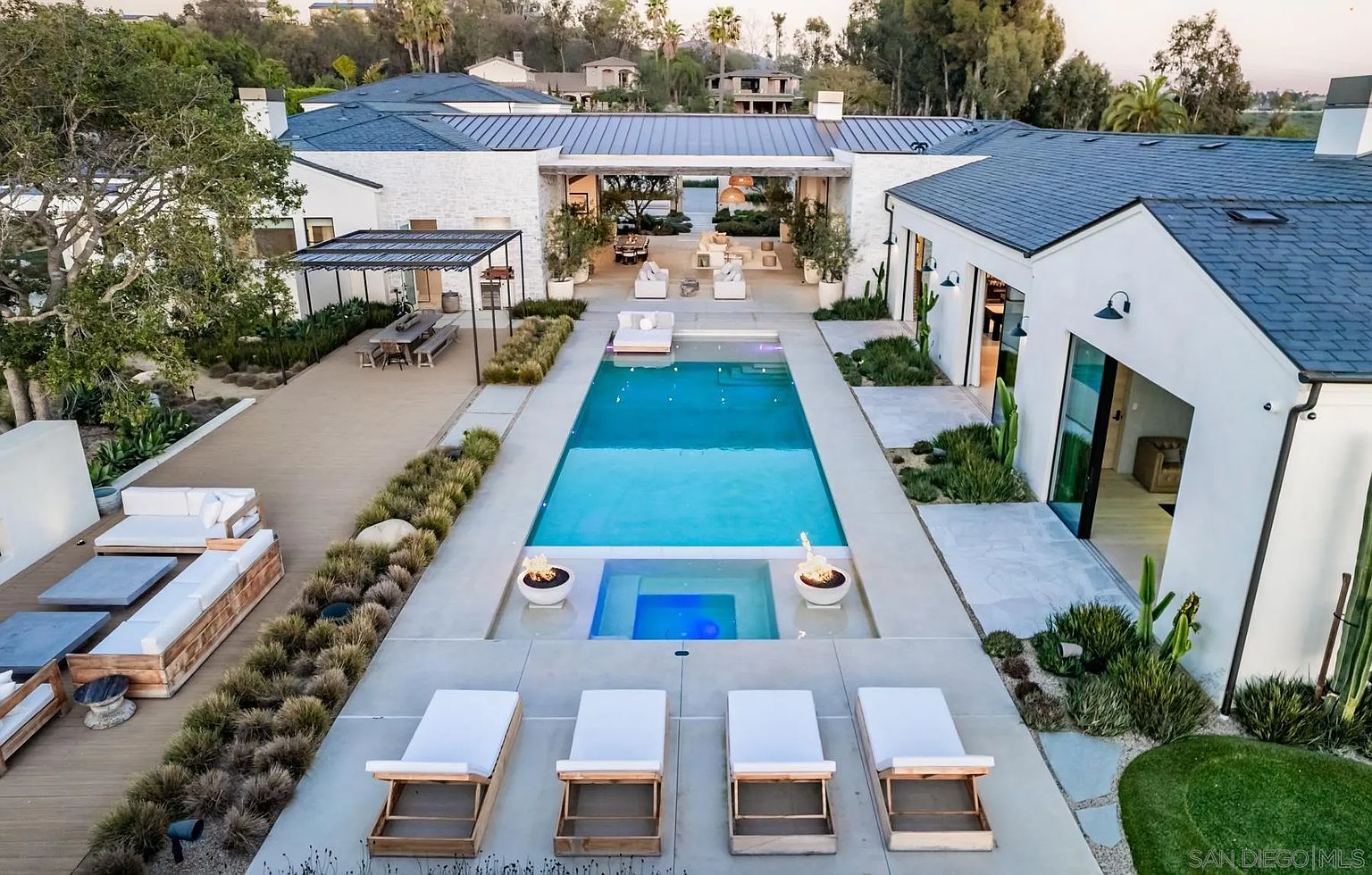
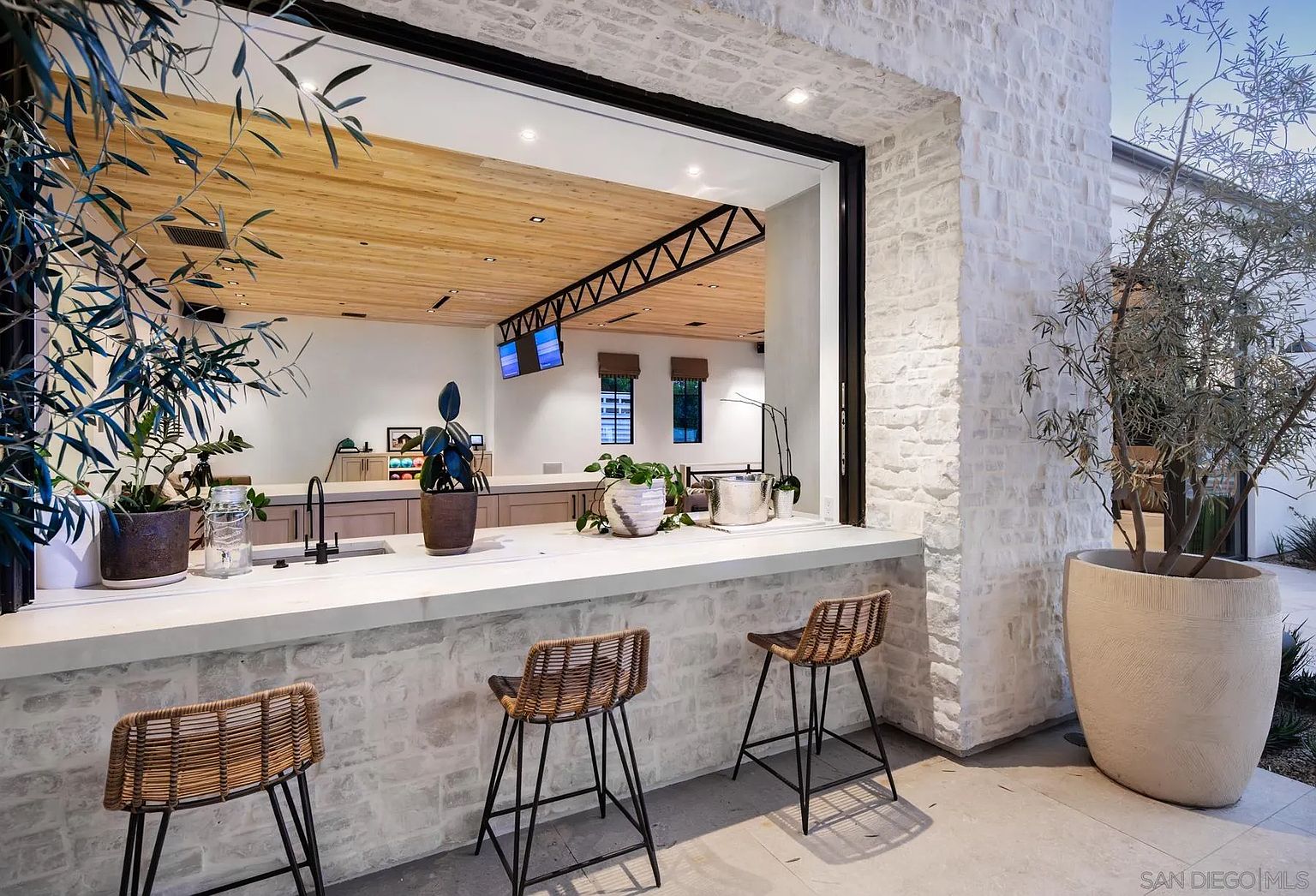
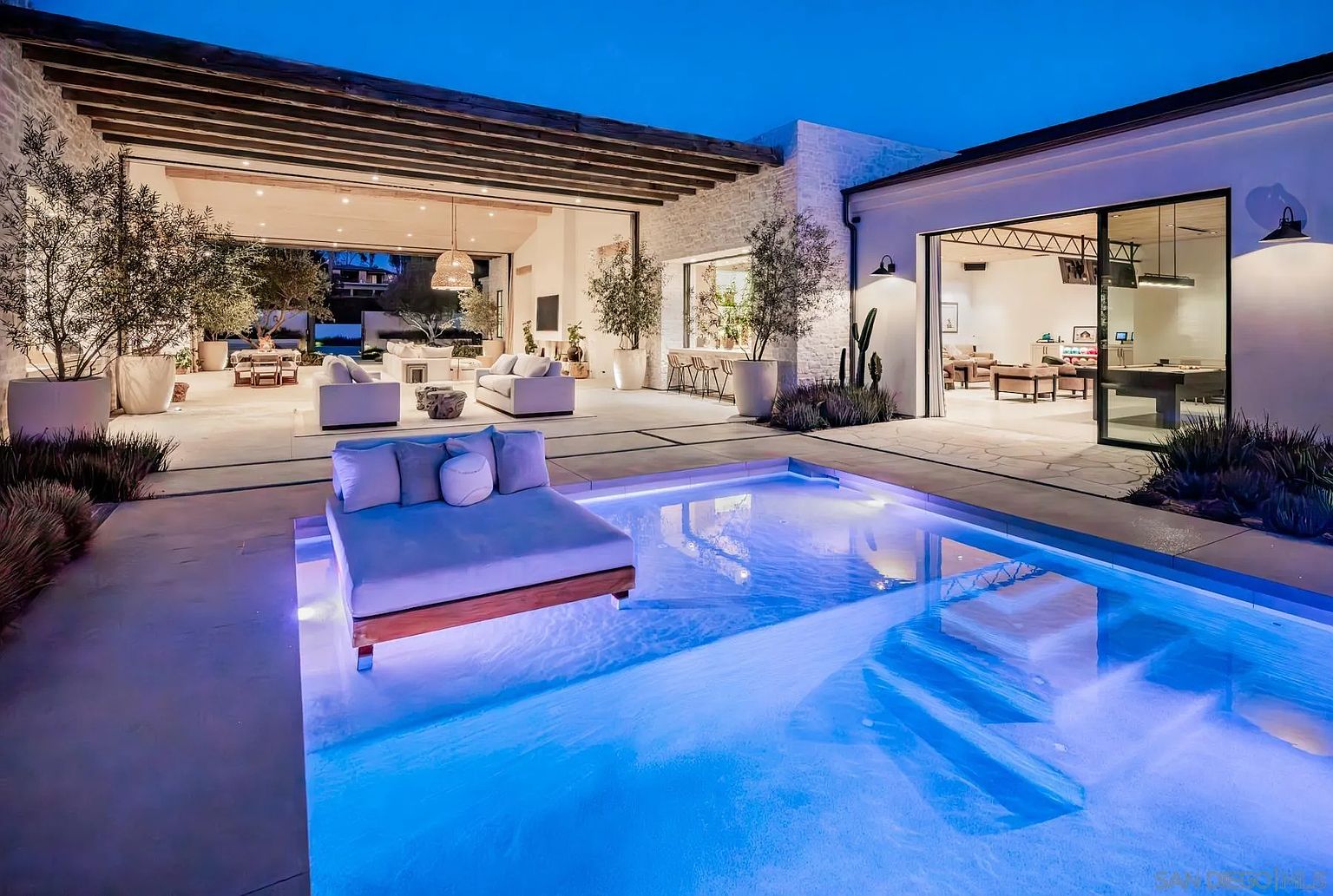
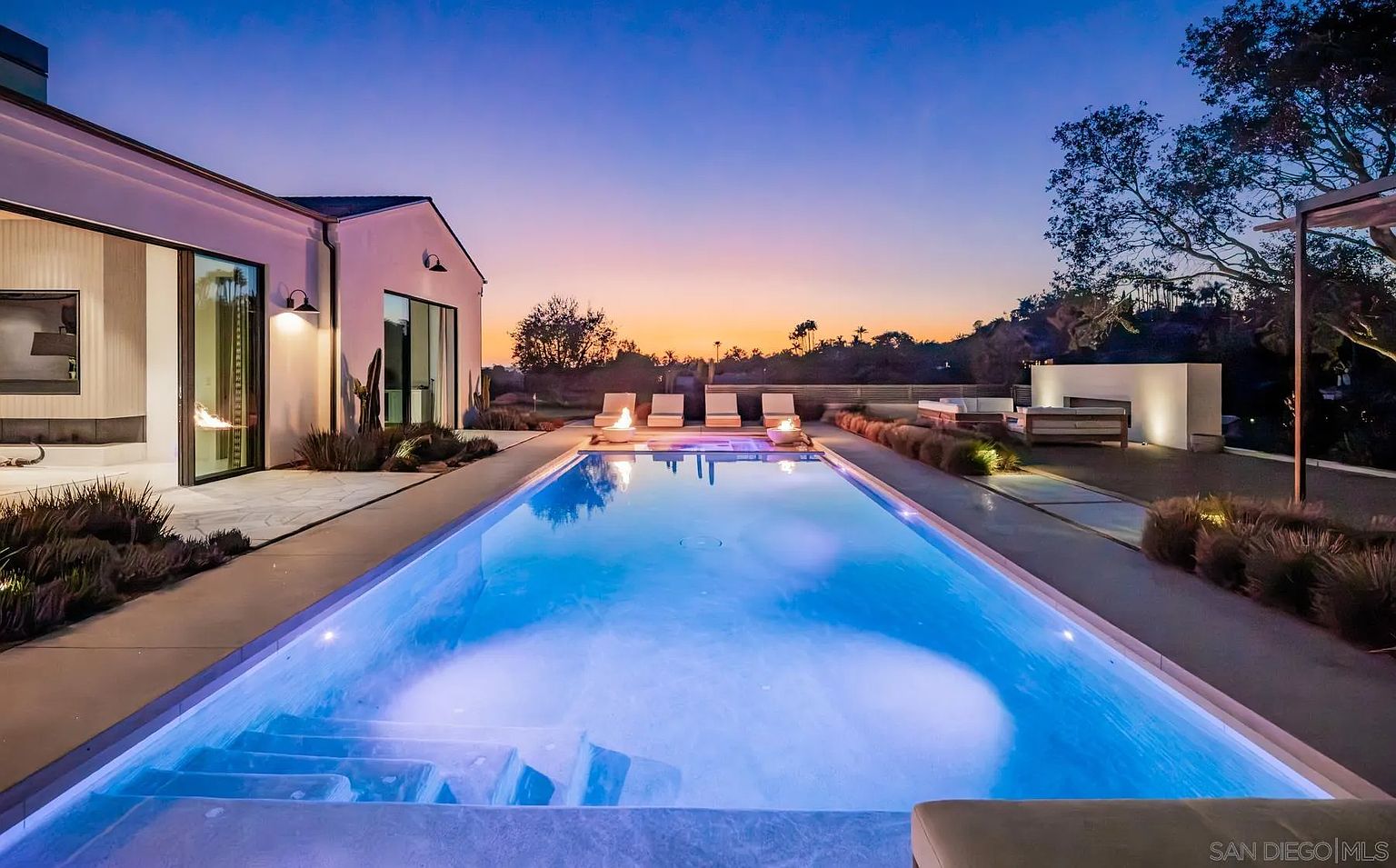
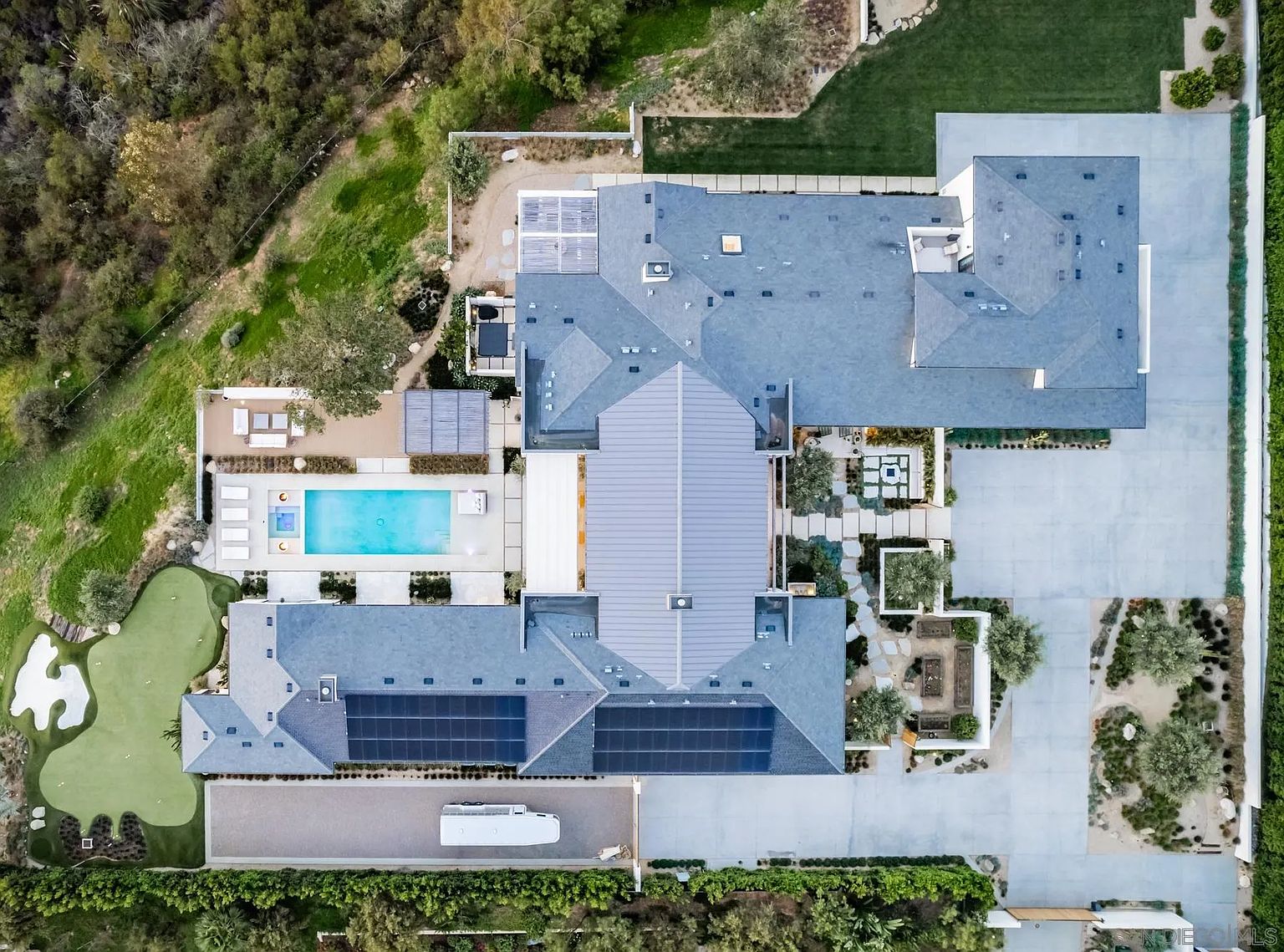
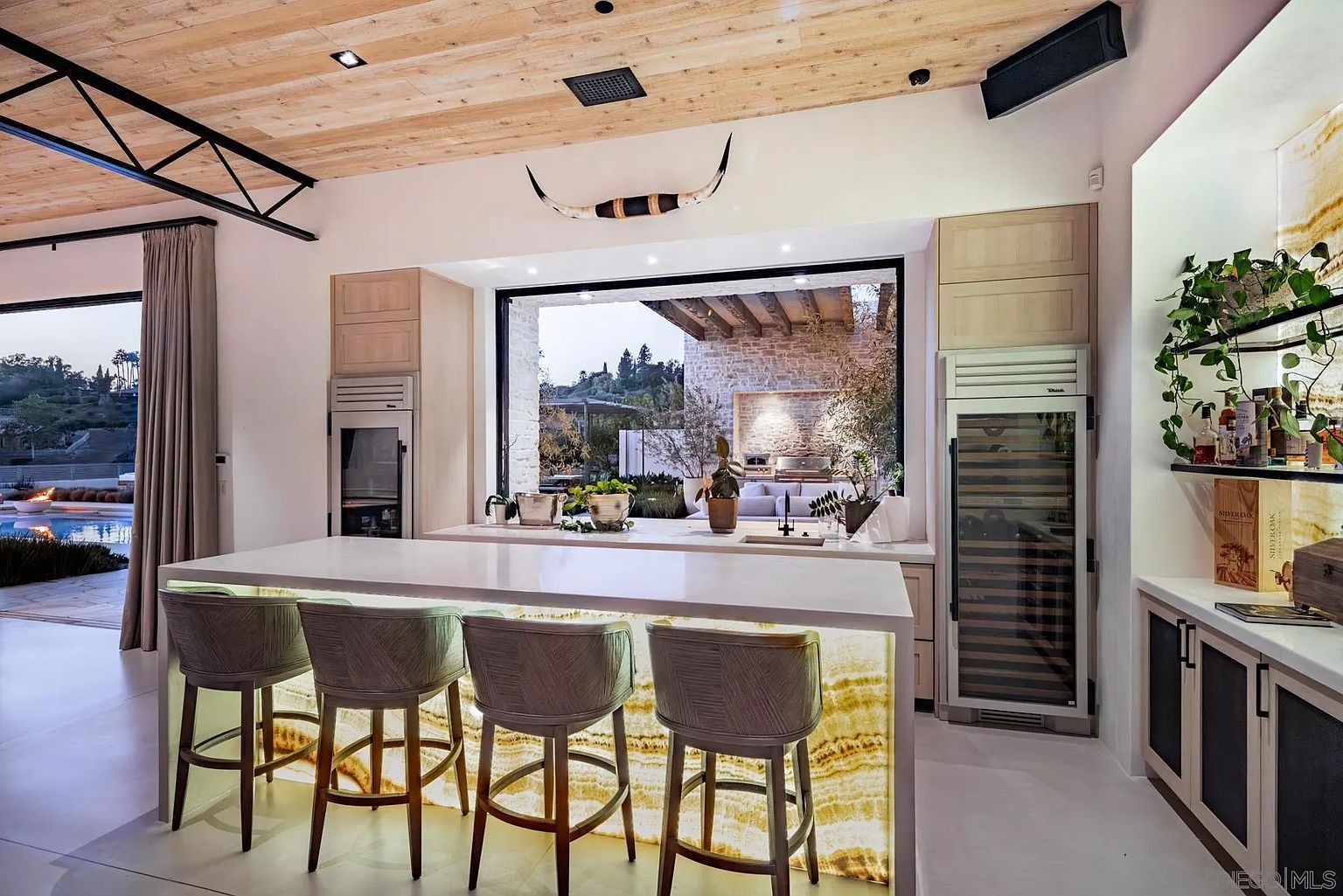
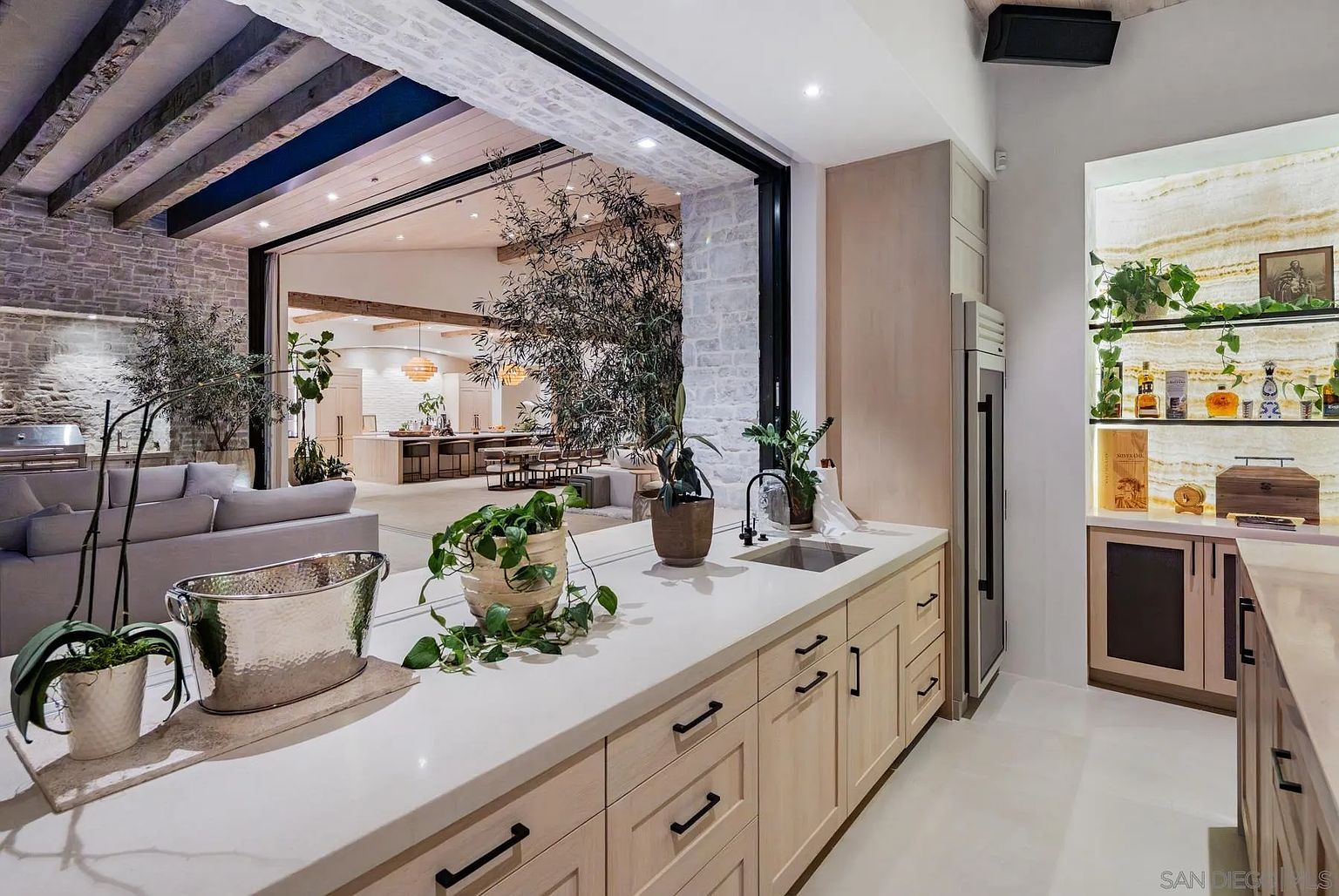
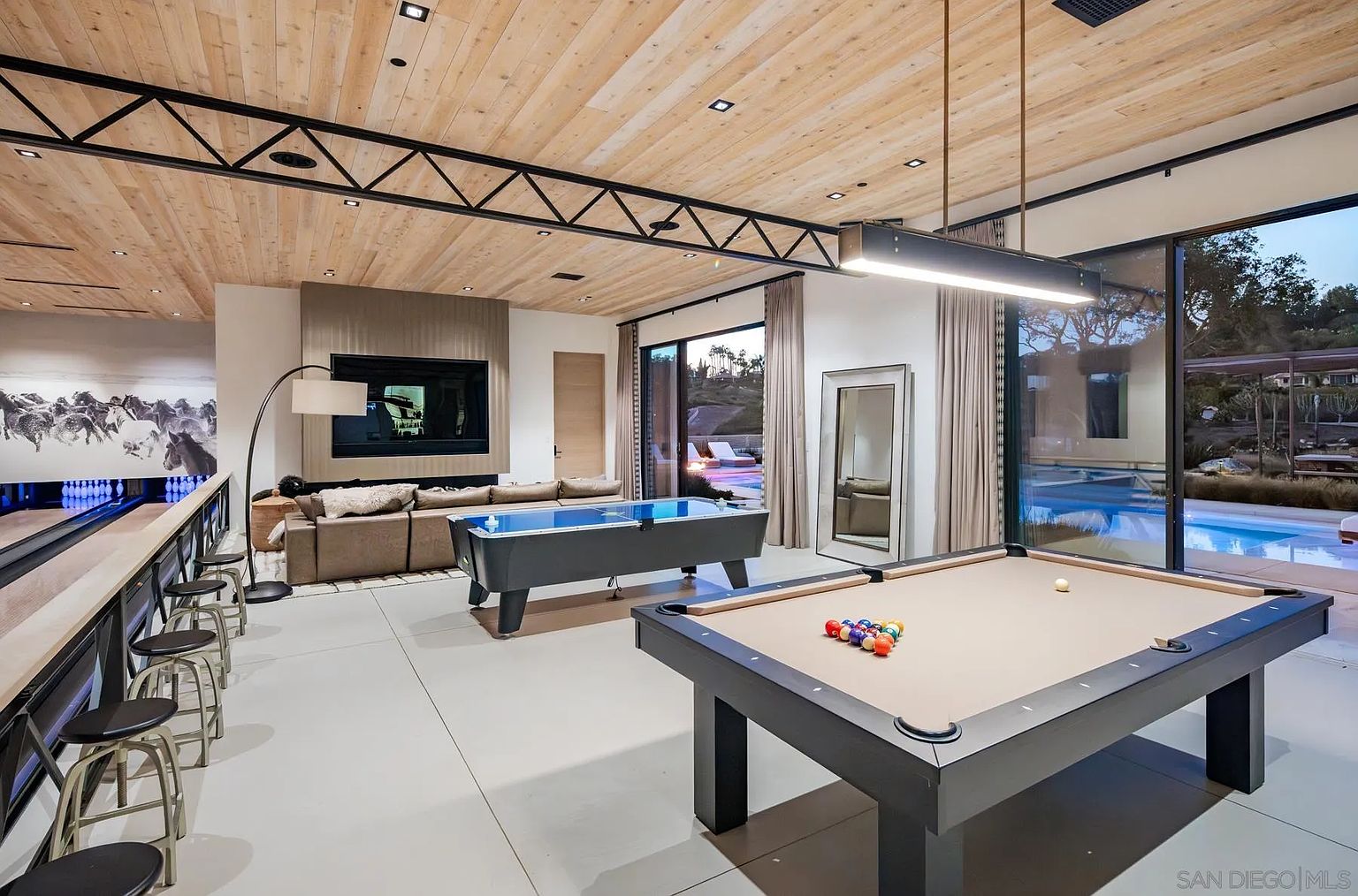
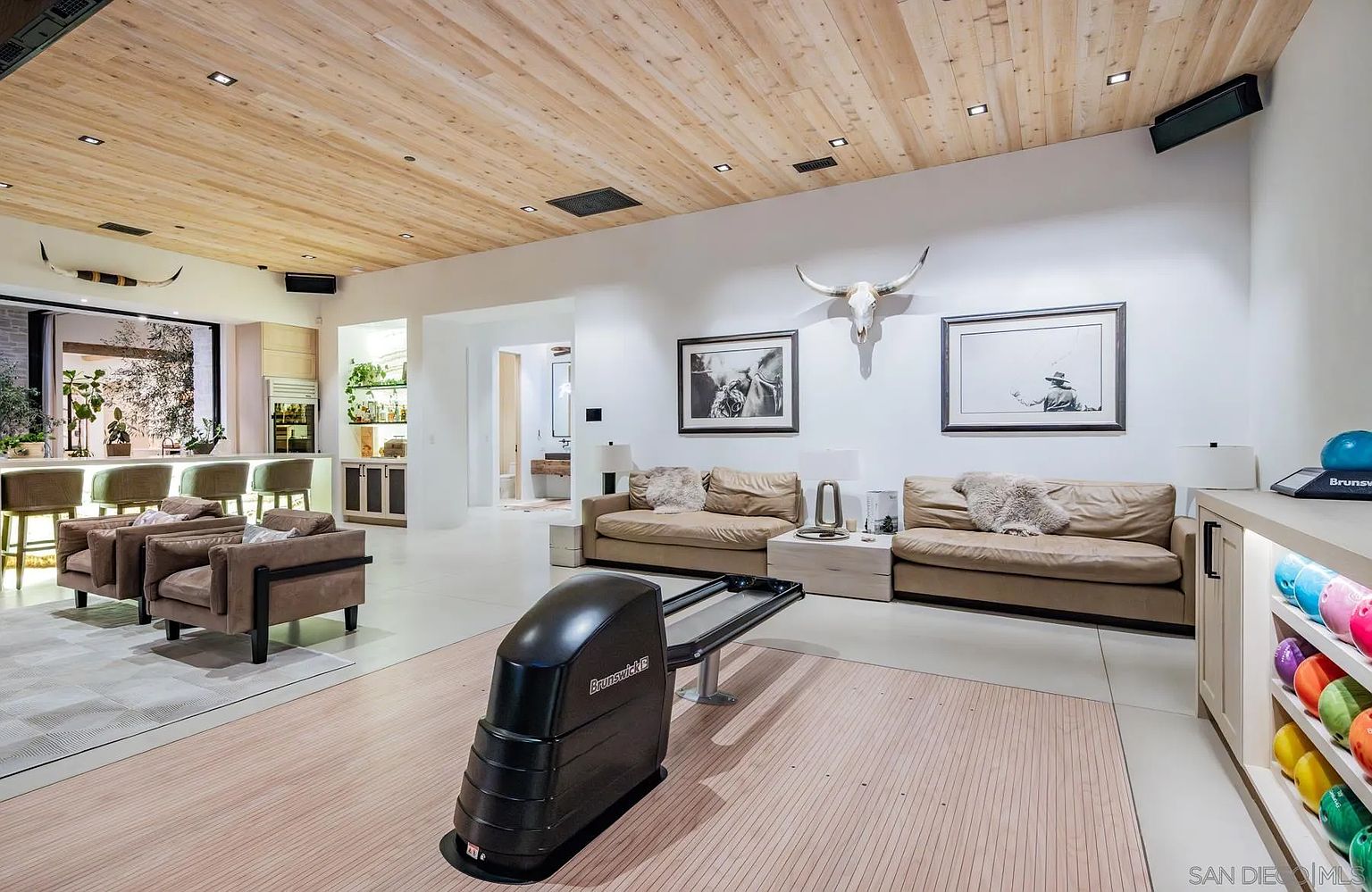
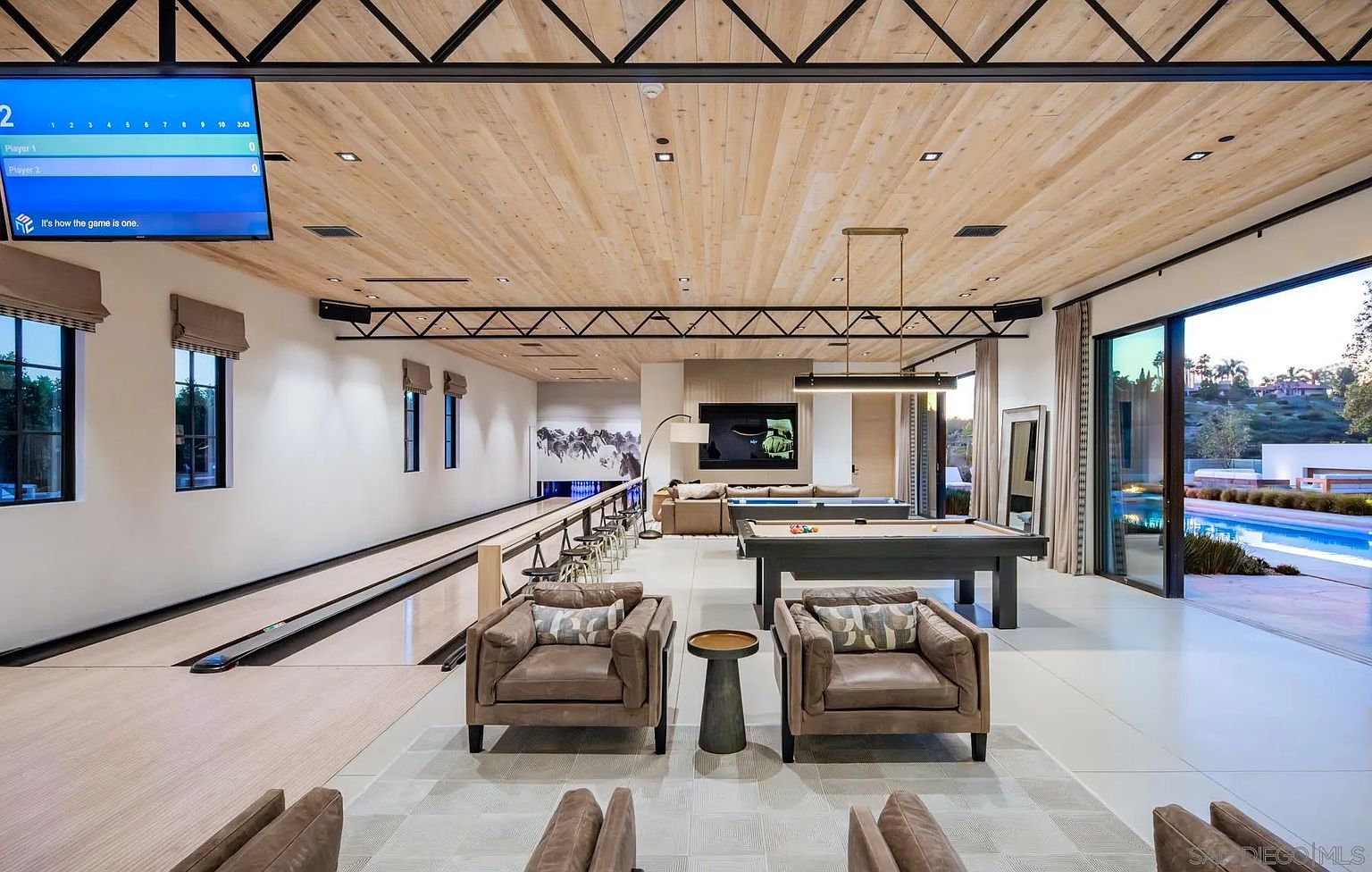
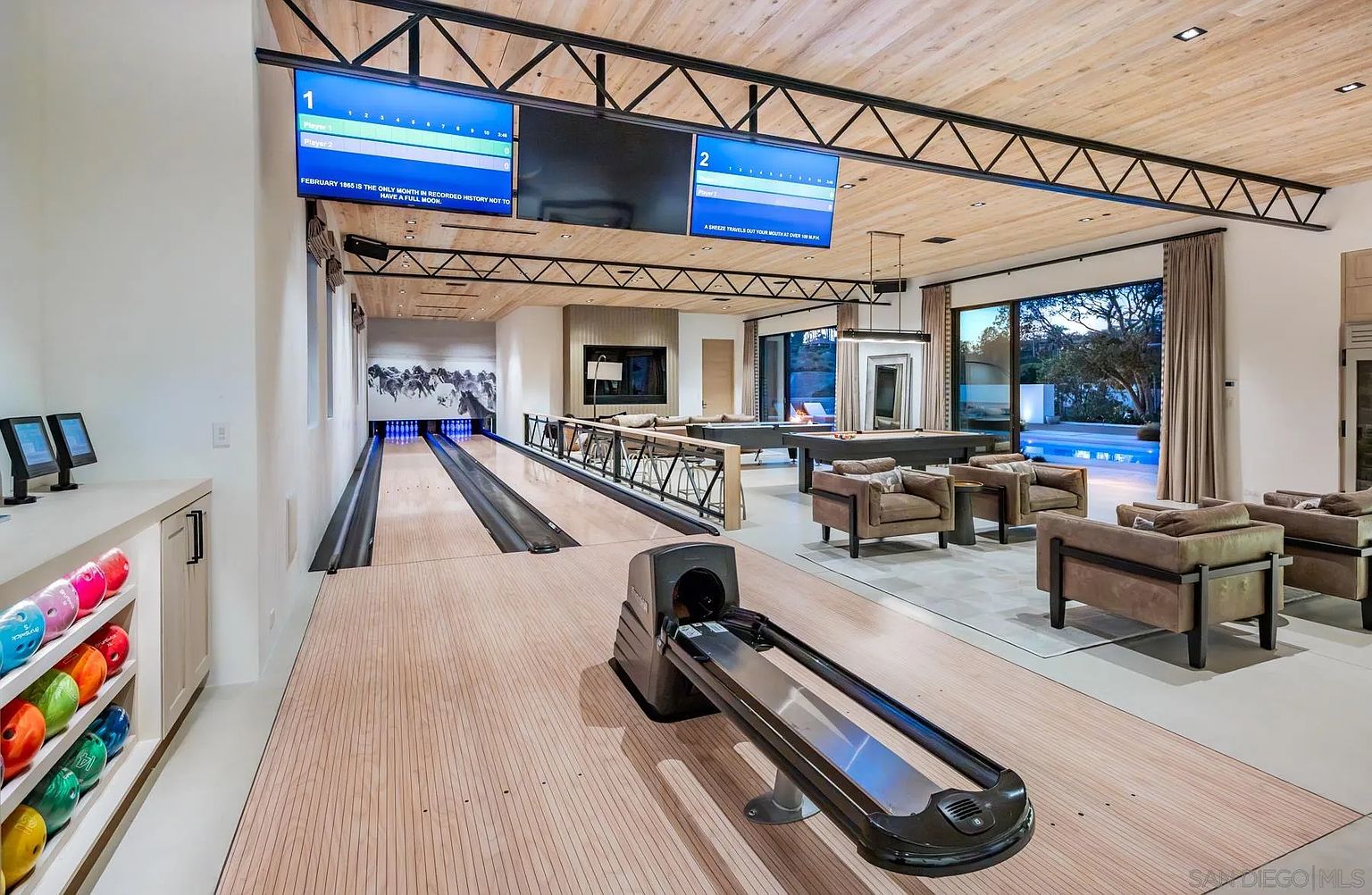
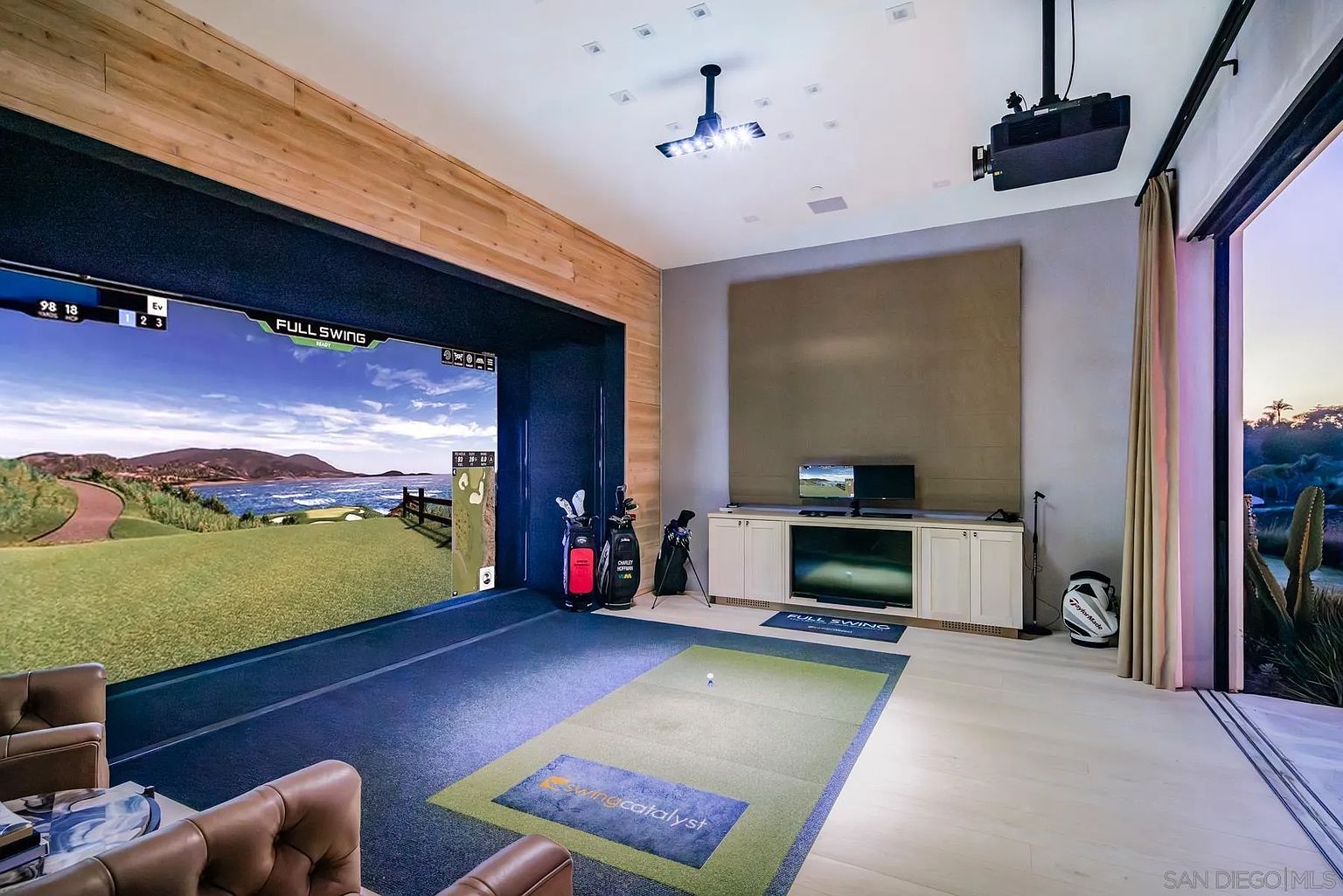
Outdoors, the 2.44 acres unfold as a curated ecosystem. A rectangular pool and integrated spa are flanked by dual fire bowls and served by a covered outdoor kitchen with a custom culinary island featuring bespoke dual pasta-board pullouts. A state-of-the-art indoor golf simulator and a custom Back Nine putting green with a sand bunker invite daily recreation without leaving the property. A private bowling alley and billiards room, opening directly to the pool deck through sliding glass walls, complete an entertainment offering of rare breadth.
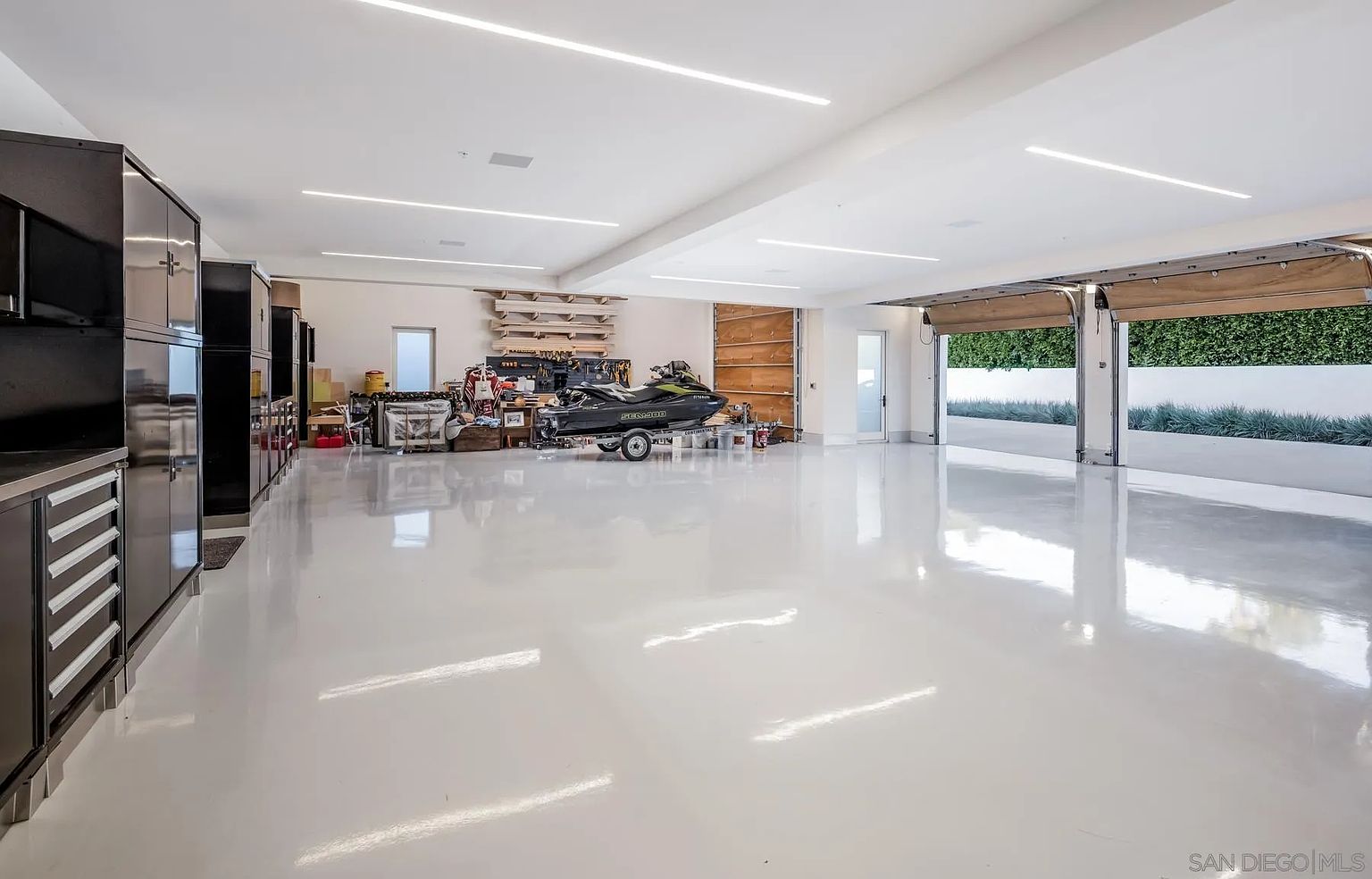
Sustainability and legacy have been woven into the estate's DNA with equal care. Ancient oak trees, citrus groves, and lavender plantings form a living landscape maintained exclusively by a dedicated, architecturally matched maintenance shed — a detail that speaks to the owner's commitment to preserving the property's integrity for generations. Dual security gates and a concealed safe room ensure that this sanctuary remains precisely that: entirely private, entirely protected, and entirely without compromise.
Rancho Santa Fe occupies a singular position in the Southern California landscape — not merely as one of the wealthiest communities in the United States, but as a place that has consciously chosen restraint over spectacle, permanence over trend. Situated in the inland hills of San Diego County, approximately 25 miles north of downtown San Diego and 90 miles south of Los Angeles, it is a community defined as much by what it has resisted as by what it has embraced.
The story of Rancho Santa Fe begins in the early 20th century, when the Santa Fe Railway Company purchased the land to cultivate eucalyptus trees intended for railroad ties. When the timber proved unsuitable for that purpose, the railroad pivoted — commissioning famed architect Lillian Rice and planner Richard Requa to design a planned community beginning in the 1920s. Rice's enduring influence established the area's signature Spanish Colonial Revival aesthetic, and the Rancho Santa Fe Association — one of California's oldest homeowner associations — has maintained strict architectural and land-use covenants ever since. The result is a community of remarkable visual cohesion and unhurried elegance, where estates are set behind mature trees and landscaped approaches rather than announced at the roadside.
The community's approximately 3,000 residents enjoy a lifestyle that is quietly extraordinary. The village center, centered along Paseo Delicias, offers a refined collection of boutique restaurants, wine bars, galleries, and specialty shops, all operating at a human scale that resists the commercialization common to other affluent enclaves. The Inn at Rancho Santa Fe, a historic property operating since 1923, anchors the village with its enduring sense of gracious California hospitality.
Equestrian life remains central to Rancho Santa Fe's identity, with miles of dedicated riding trails threading through the community alongside walking and cycling paths. The San Dieguito River Park and adjacent open space preserve the surrounding landscape's natural character, offering residents direct access to Southern California's coastal sage and chaparral ecosystem. The Rancho Santa Fe Golf Club, established in 1929 and designed by Max Behr, is among the region's most storied private clubs, while the Bridges at Rancho Santa Fe and the Morgan Run Resort and Club offer further recreational options within the immediate vicinity.
For families, the Rancho Santa Fe School District consistently ranks among the top-performing public school districts in California, and the area is served by a number of distinguished private institutions as well. The proximity to the coastal communities of Del Mar, Solana Beach, and Encinitas — each reachable within 15 to 20 minutes — extends the lifestyle palette considerably, offering world-class beaches, the Del Mar Thoroughbred Club, the Belly Up music venue, and the dining corridors of Cedros Avenue.
San Diego International Airport is approximately 30 miles to the south, and McClellan-Palomar Airport in Carlsbad serves private aviation needs just 12 miles to the north — a logistical advantage that residents of this caliber of home tend to appreciate deeply.
To live in Rancho Santa Fe is to inhabit a California that has been thoughtfully preserved: sun-drenched, unhurried, naturally beautiful, and quietly exceptional.
Featured Highlights
Curated Content • Presented by Eric Iantorno