The Story Behind
Landmarked Neo-Classical Mansion, Reimagined for the Modern Age
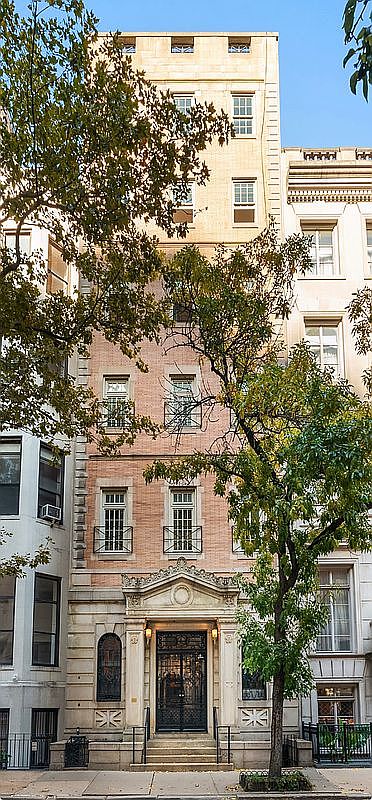
There are properties that are merely exceptional, and then there are those that exist in a category entirely their own. 5 East 63rd Street belongs unequivocally to the latter. From the moment one approaches the landmark brick-and-stone facade — a work originally conceived by Heins & LaFarge, the storied architectural firm responsible for some of New York's most enduring civic and ecclesiastical landmarks — the residence announces itself with quiet authority. What follows inside is nothing less than a masterwork of preservation and reinvention.
The four-year restoration that transformed this mansion was governed by a singular philosophy: honor every element of its historic pedigree while engineering a home of uncompromising contemporary performance. The result is a seamless dialogue between past and present, realized at a level of craftsmanship that is, by any measure, rare.
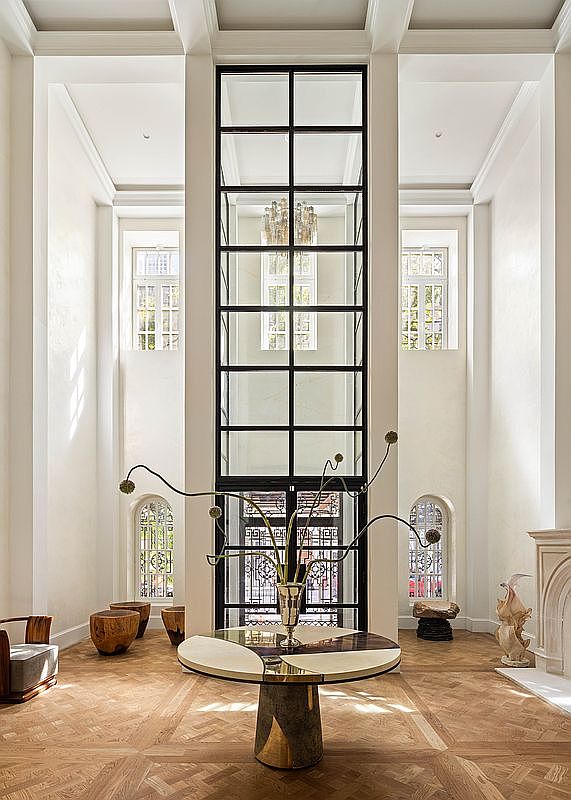
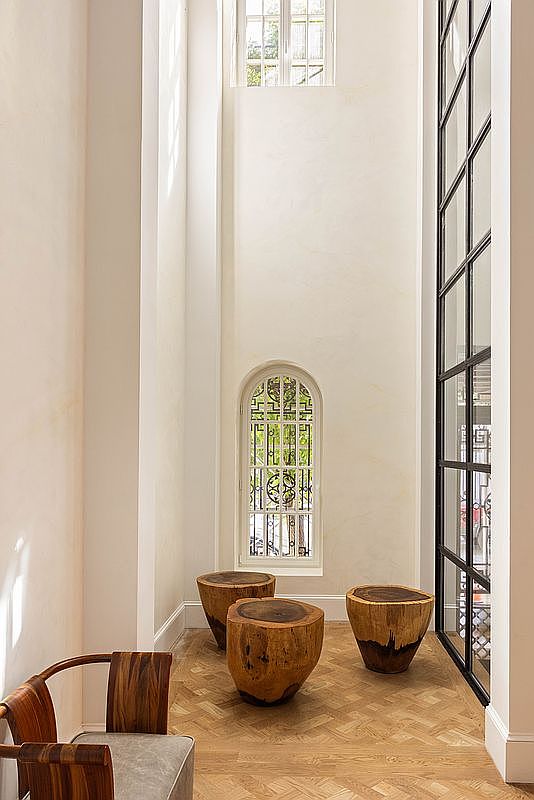
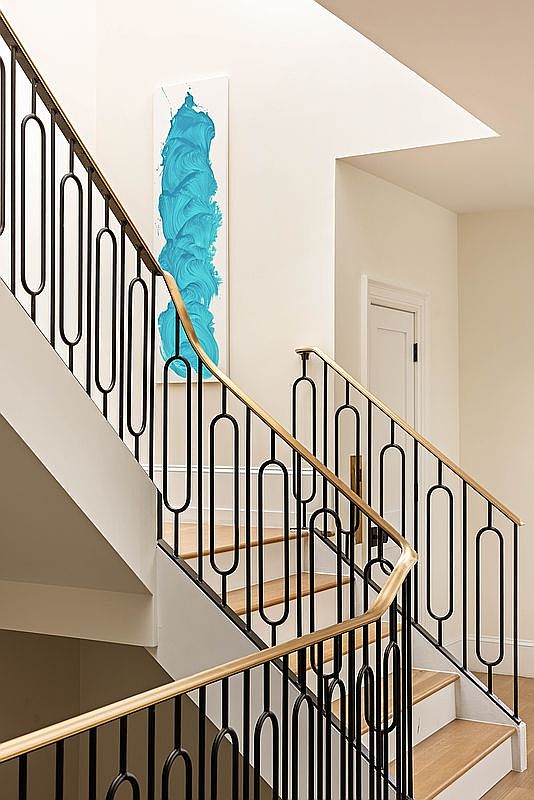
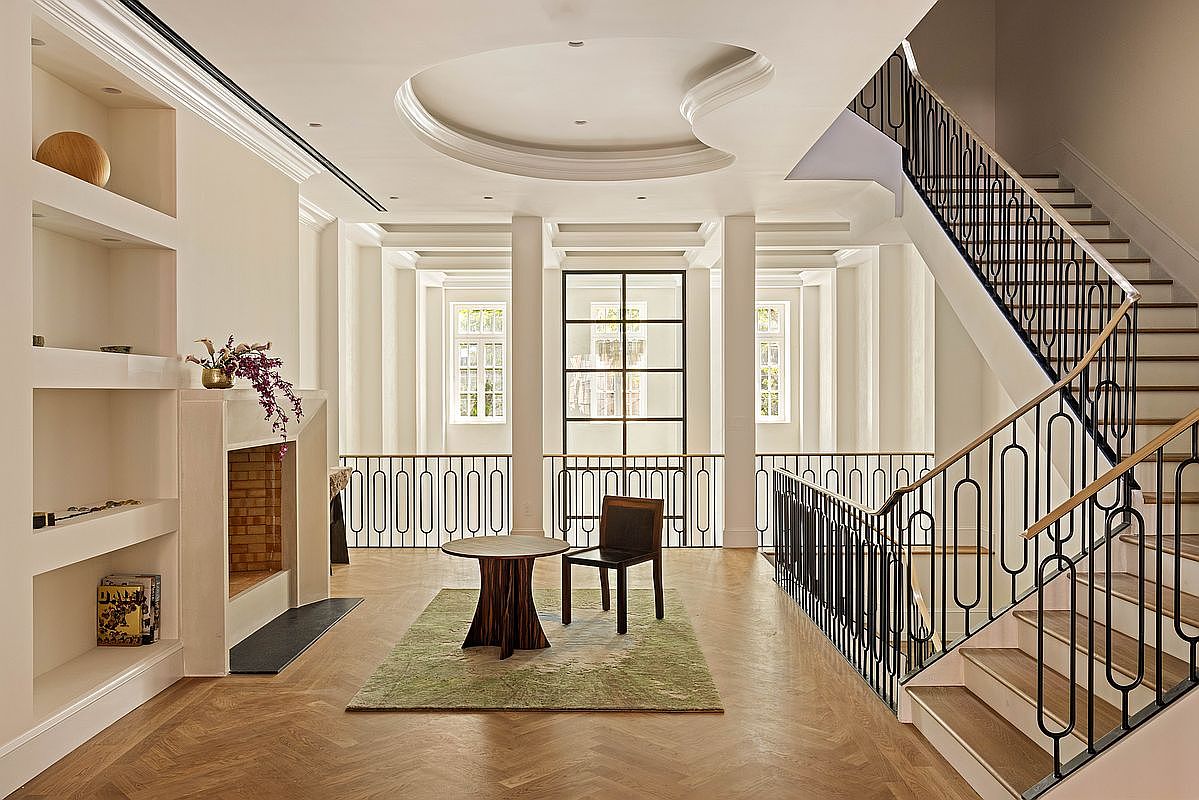
Arrival sets the tone immediately. A soaring 24-foot entrance hall — its floors laid in imported Italian ivory limestone — draws the eye upward along a magnificent custom hand-forged iron and brass staircase. The surrounding walls are dressed in Venetian plaster, applied by European master artisans whose techniques trace back centuries. This is not ornamentation applied after the fact; it is architecture felt in the bones of the building.
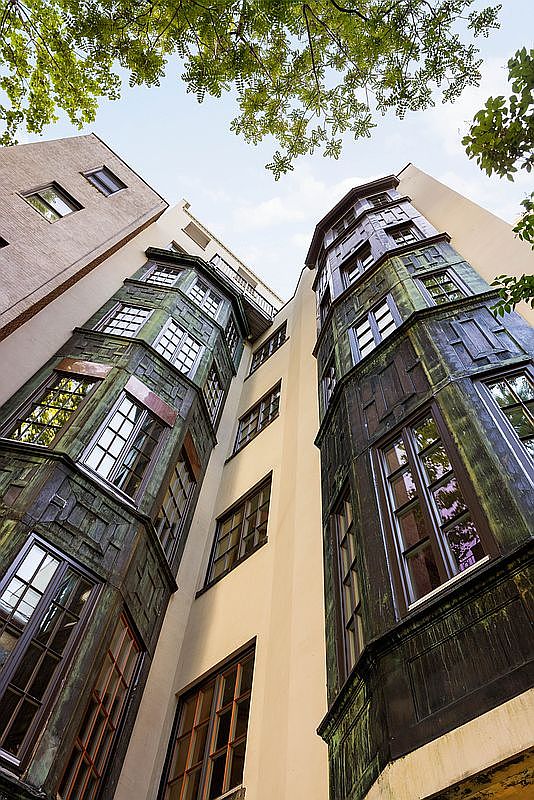
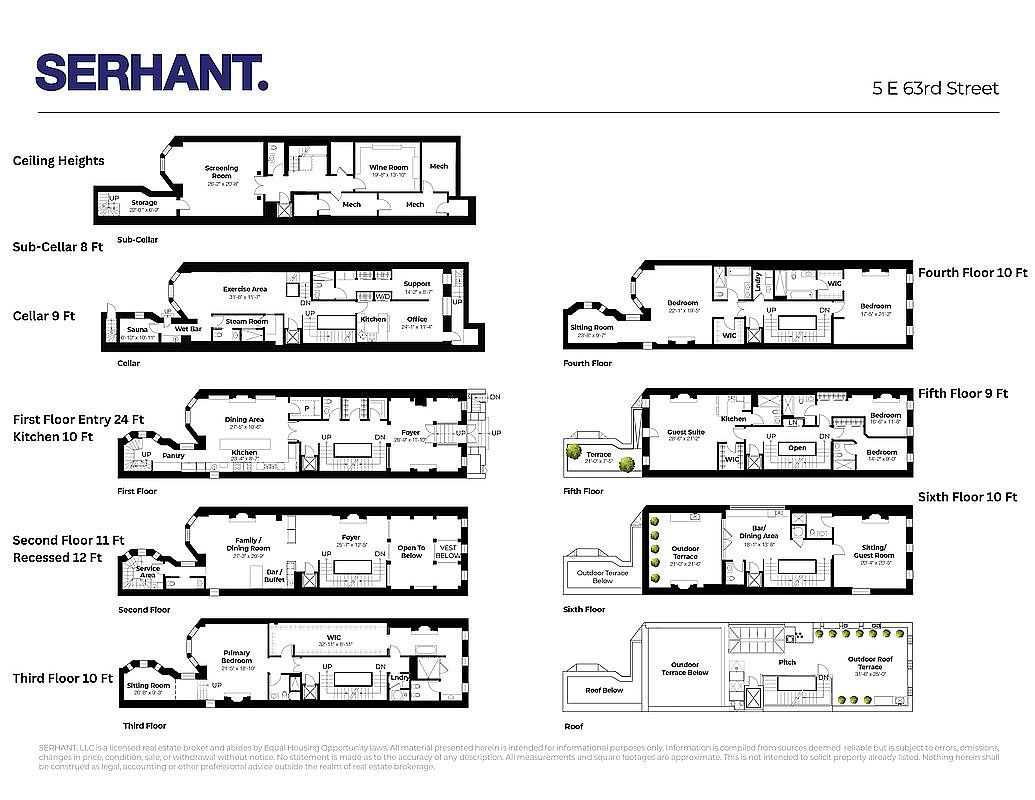
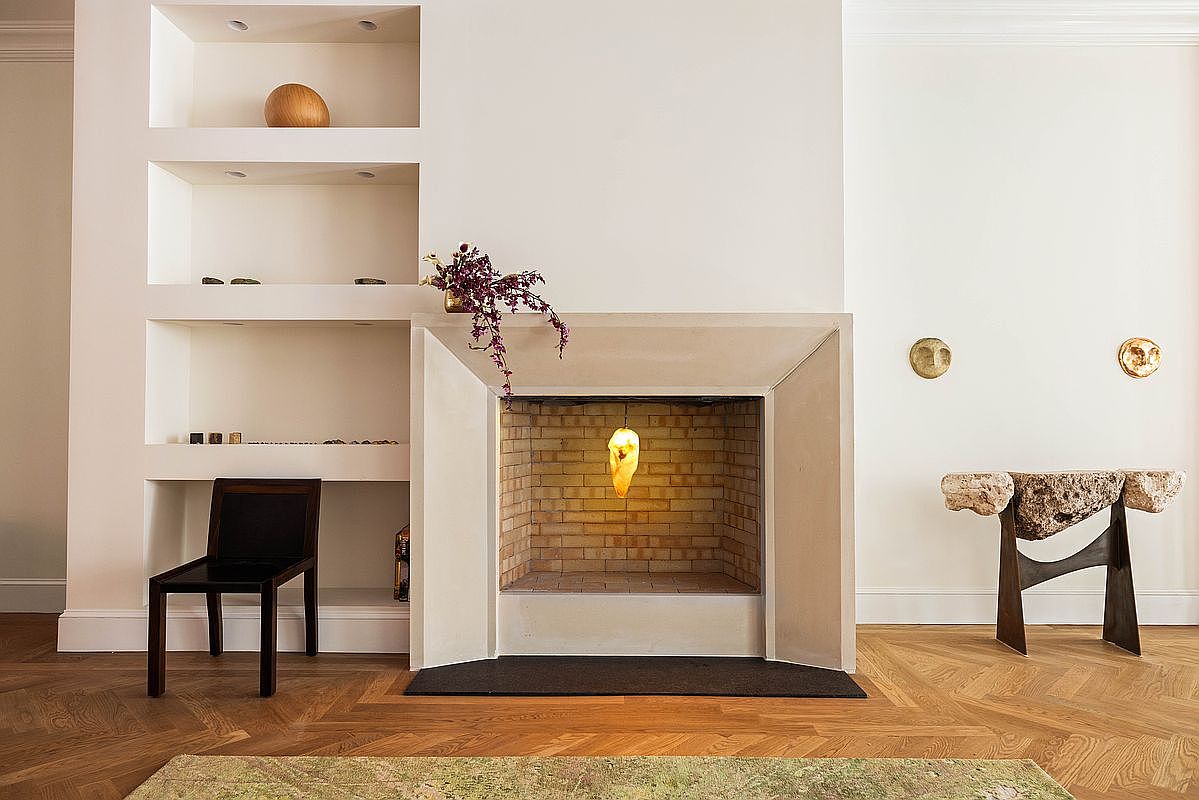
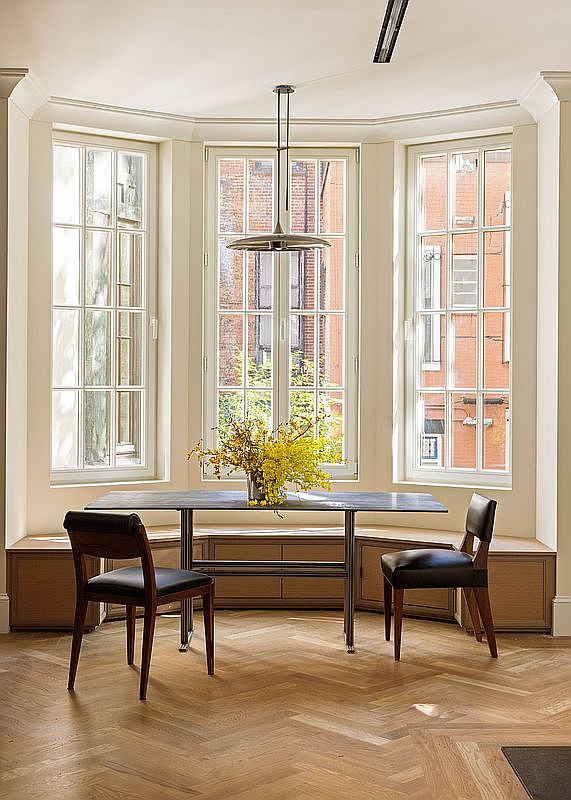
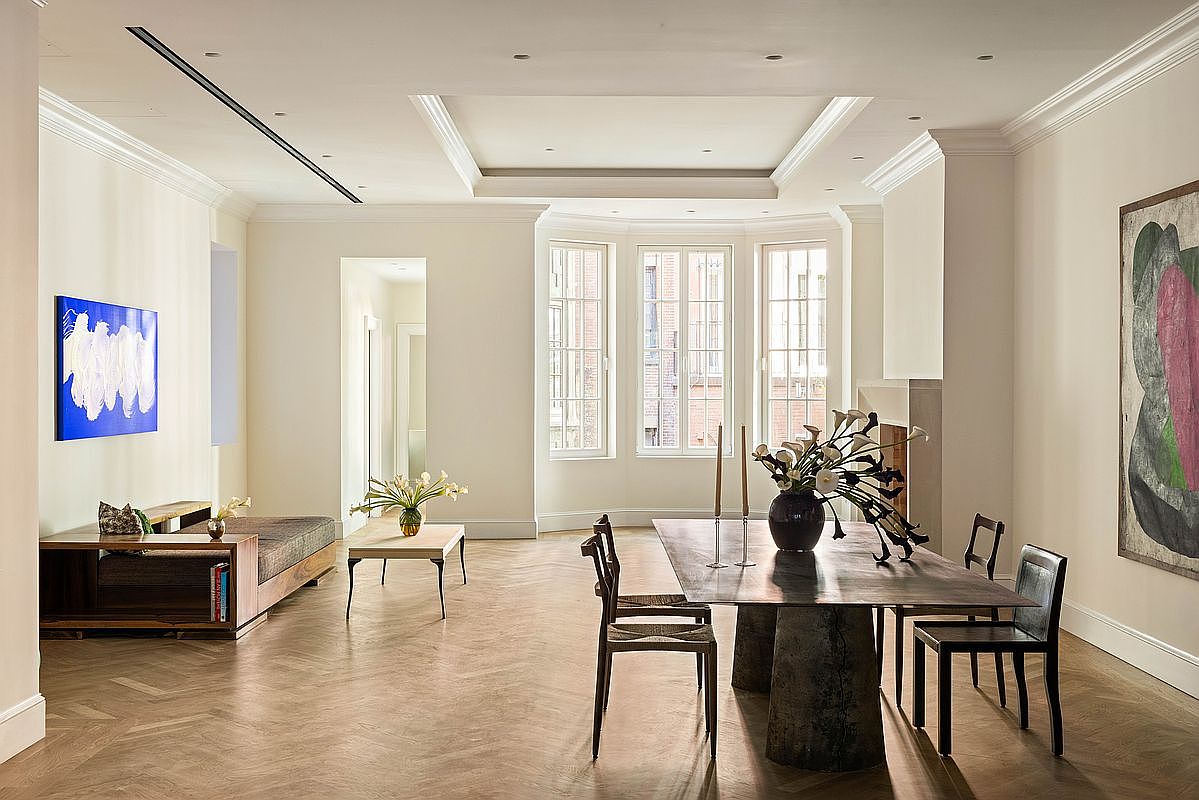
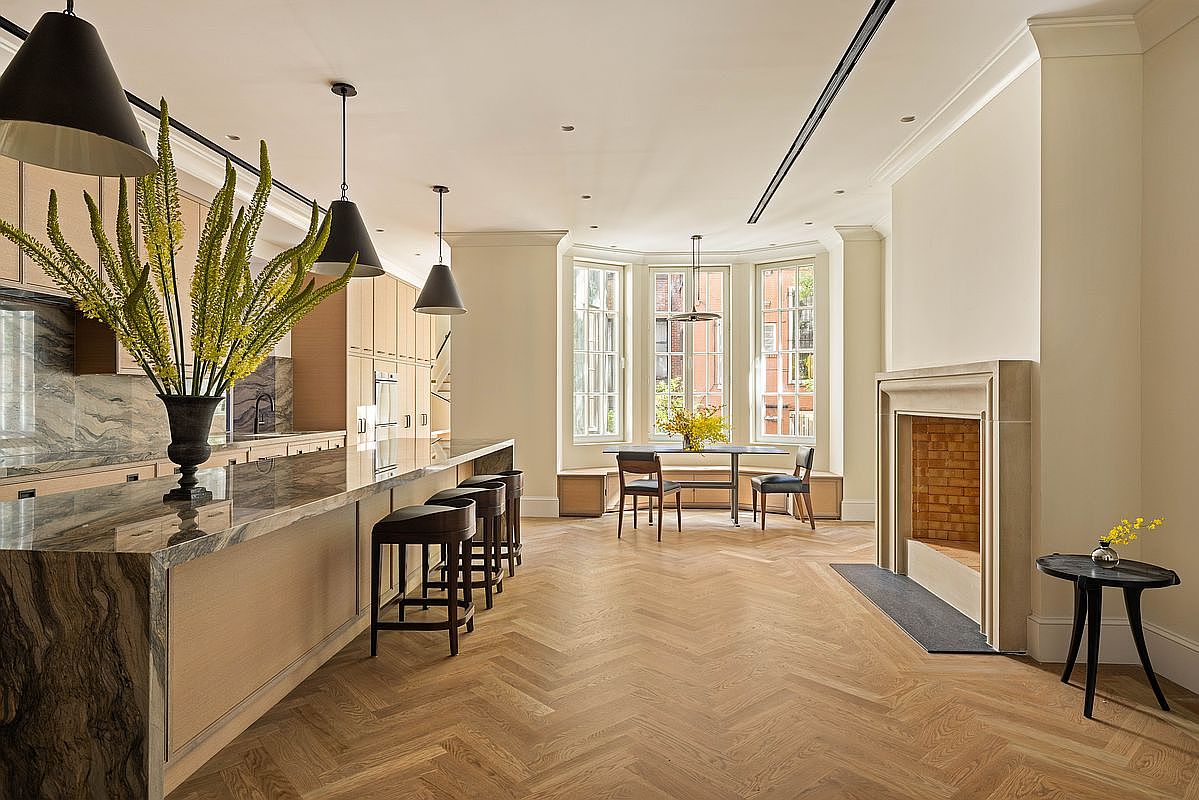
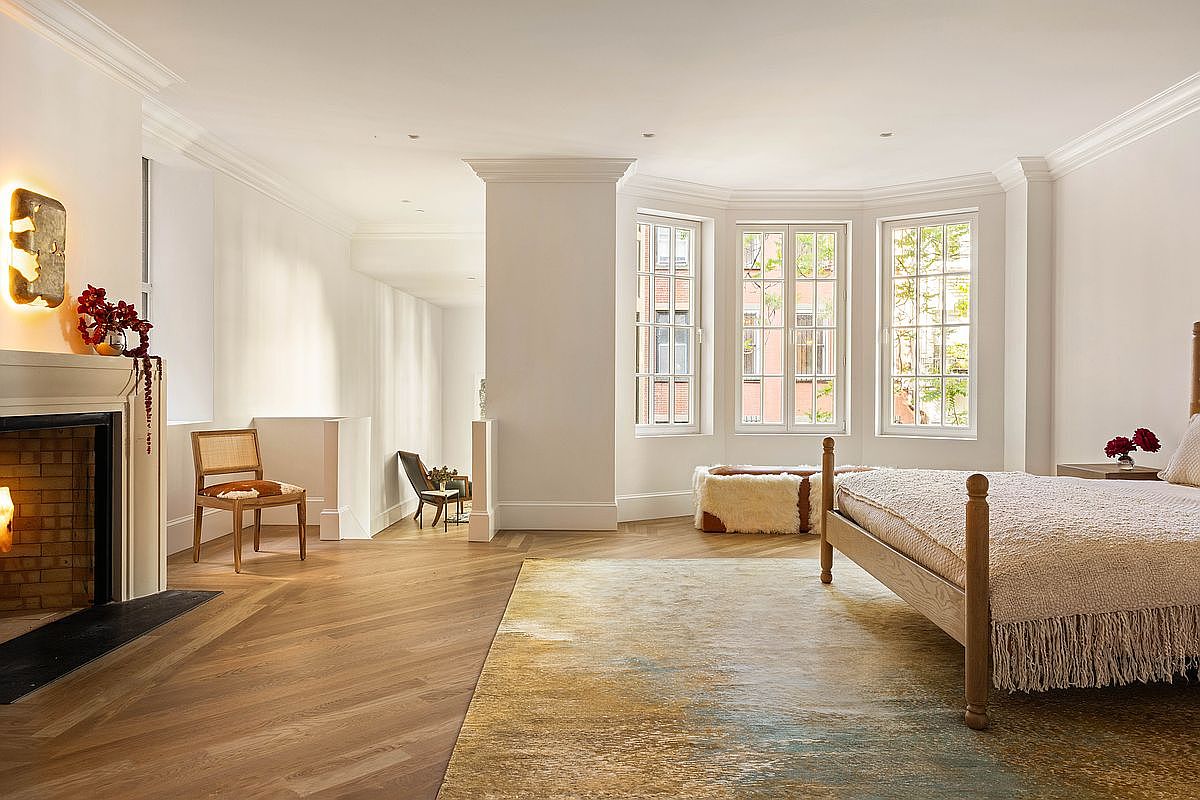
Custom-made Austrian casement windows and a remarkable walkable skylight pour natural light through the upper entertaining levels, animating herringbone wood floors and the twelve working wood-burning fireplaces that anchor the home's eight levels of refined living. Imported, sustainably sourced Italian marble appears throughout, each application considered and precise.
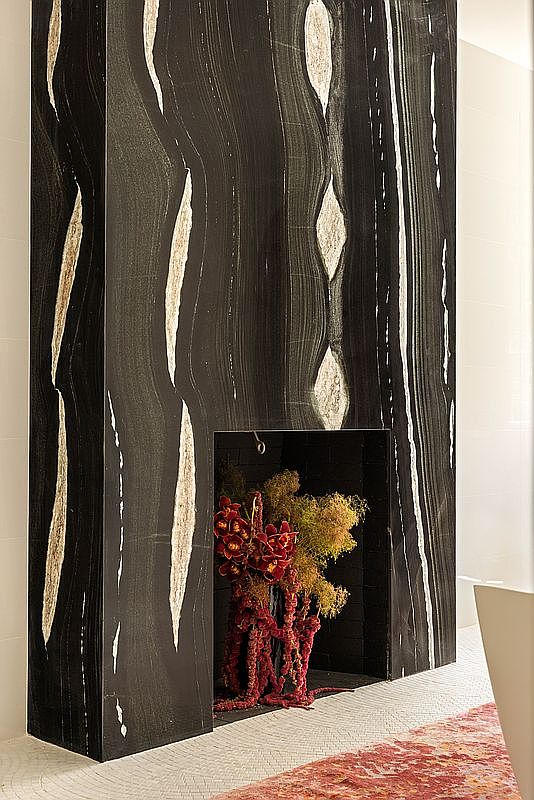
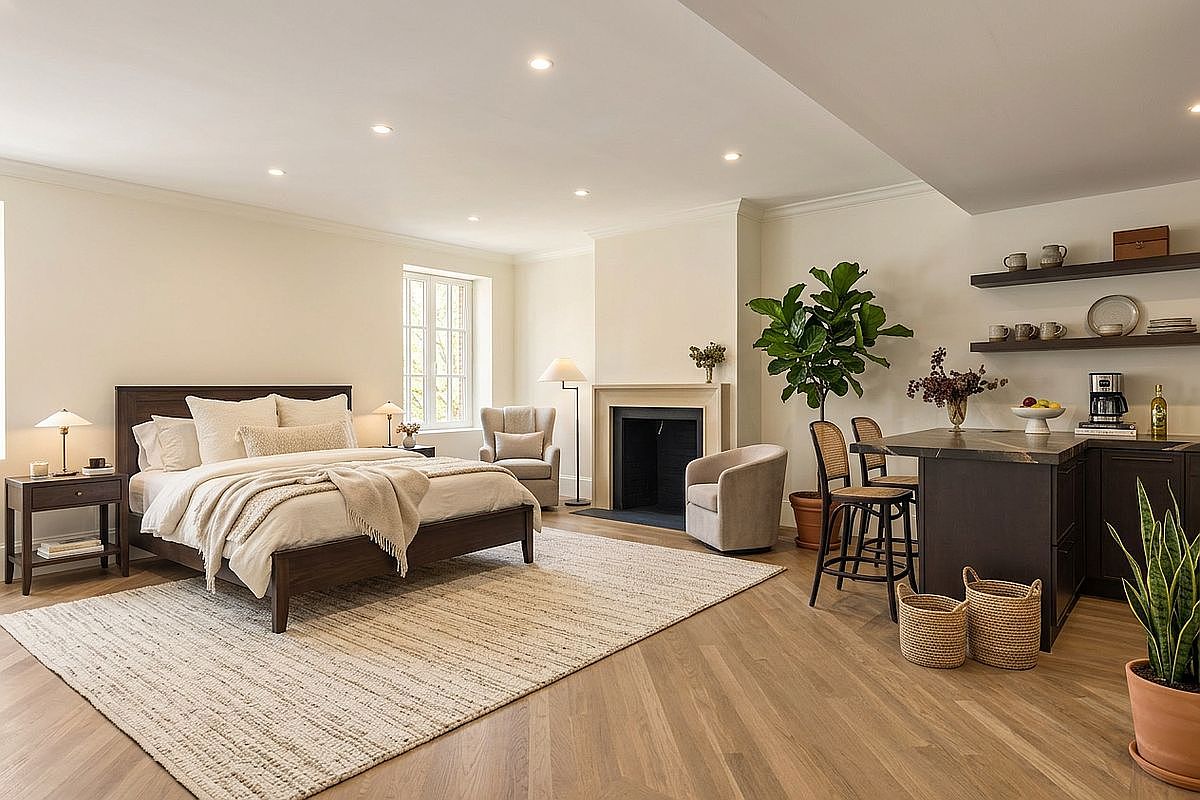
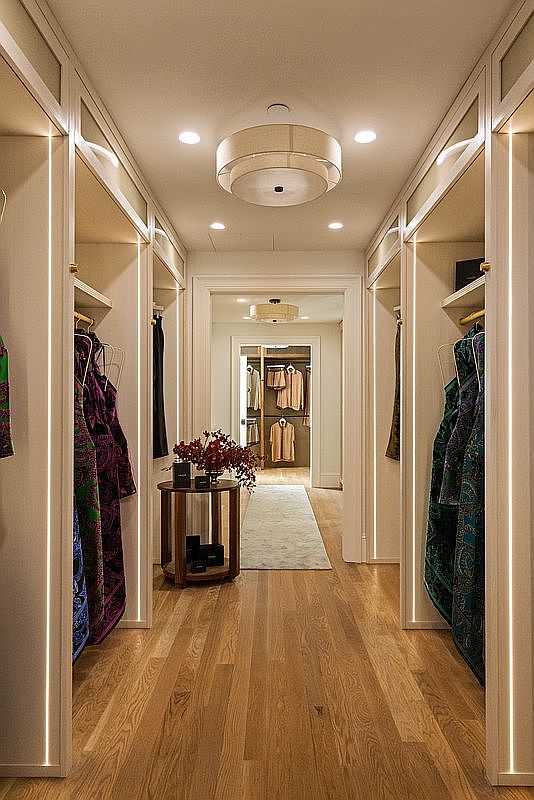
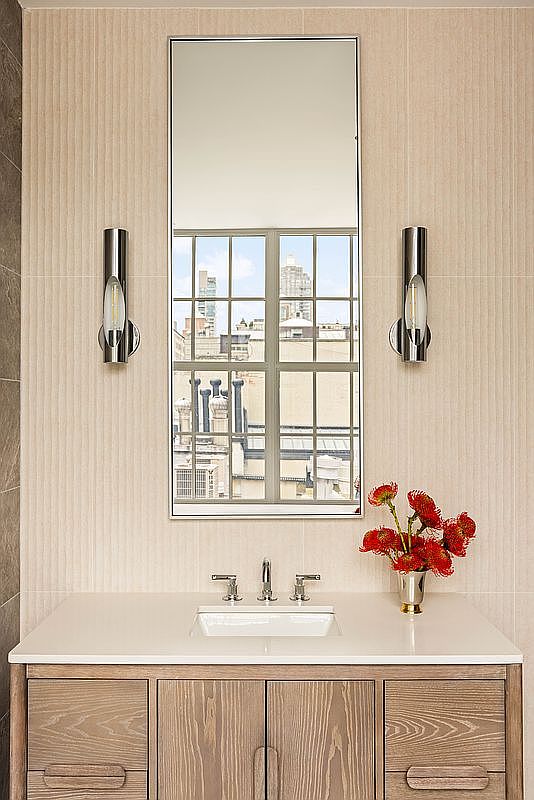
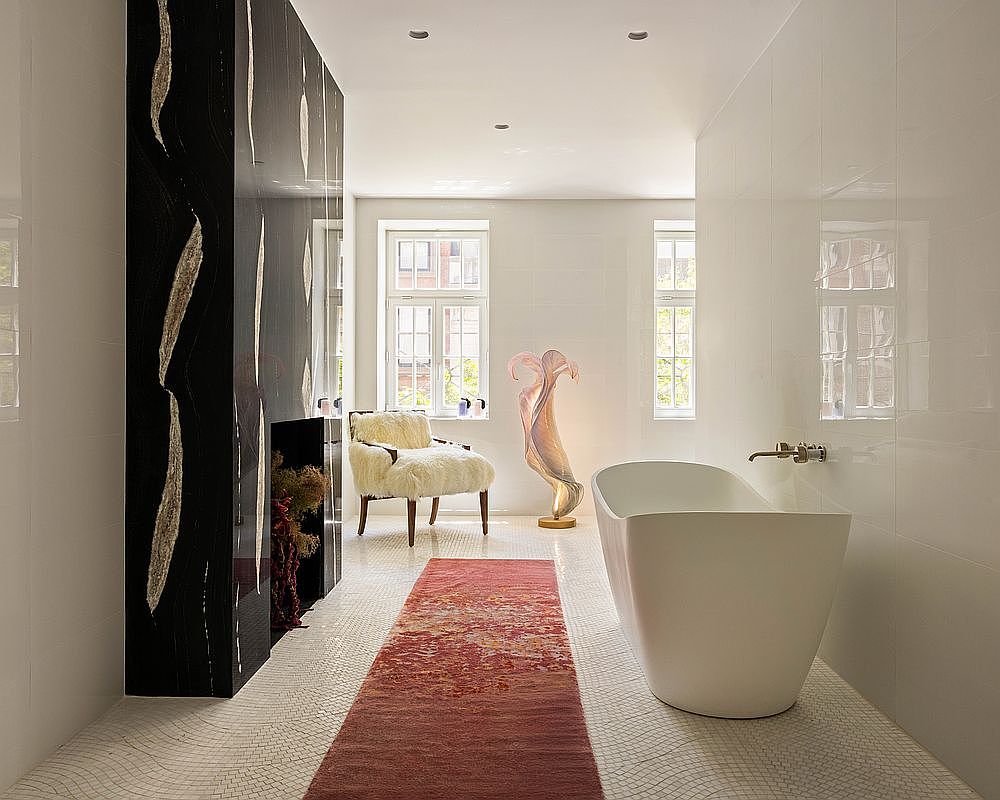
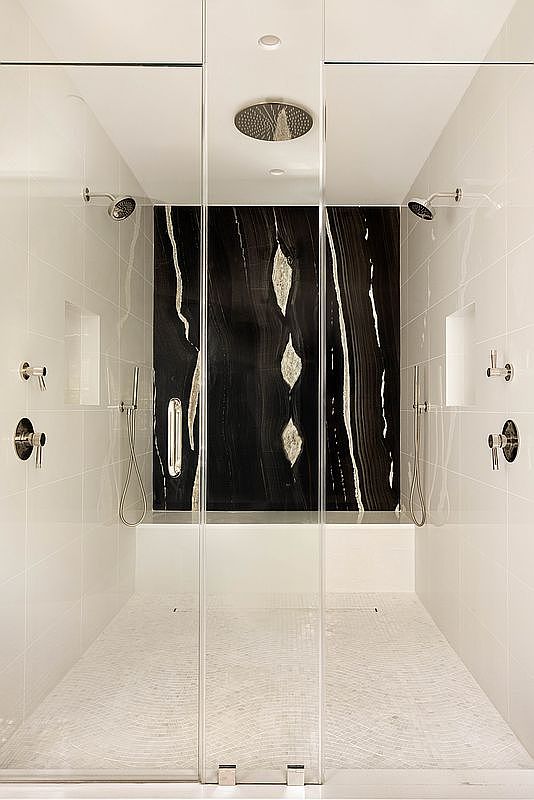
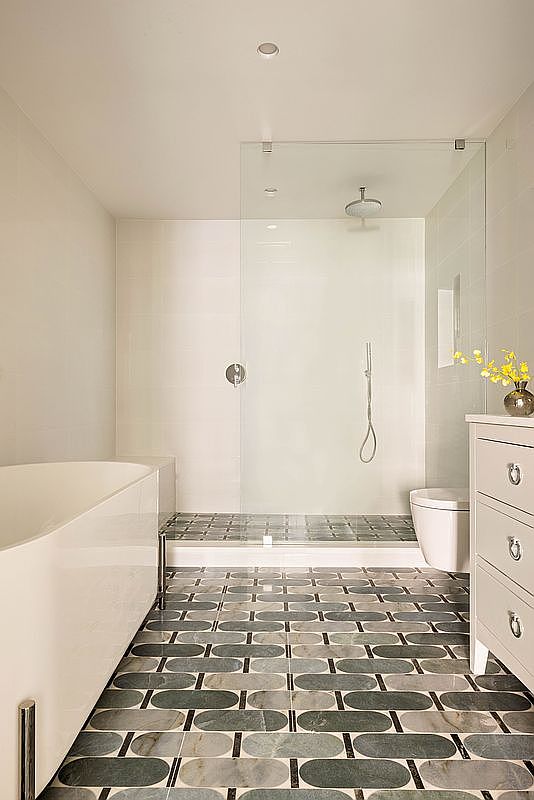
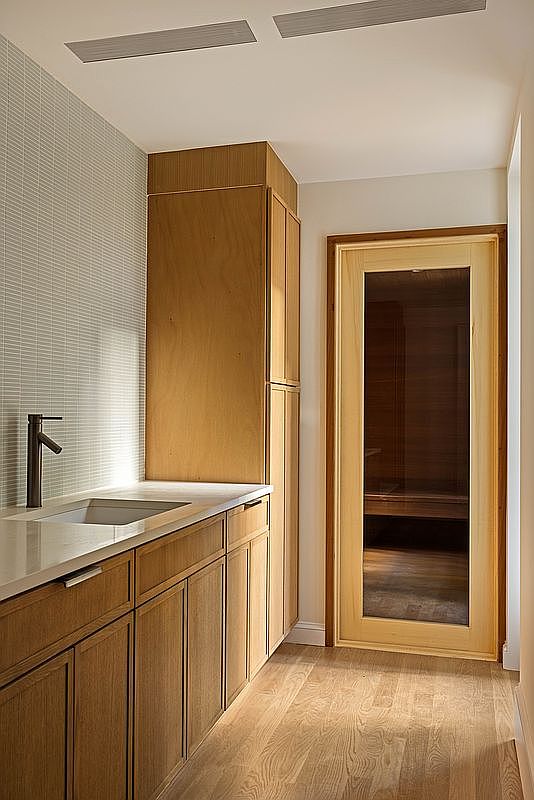
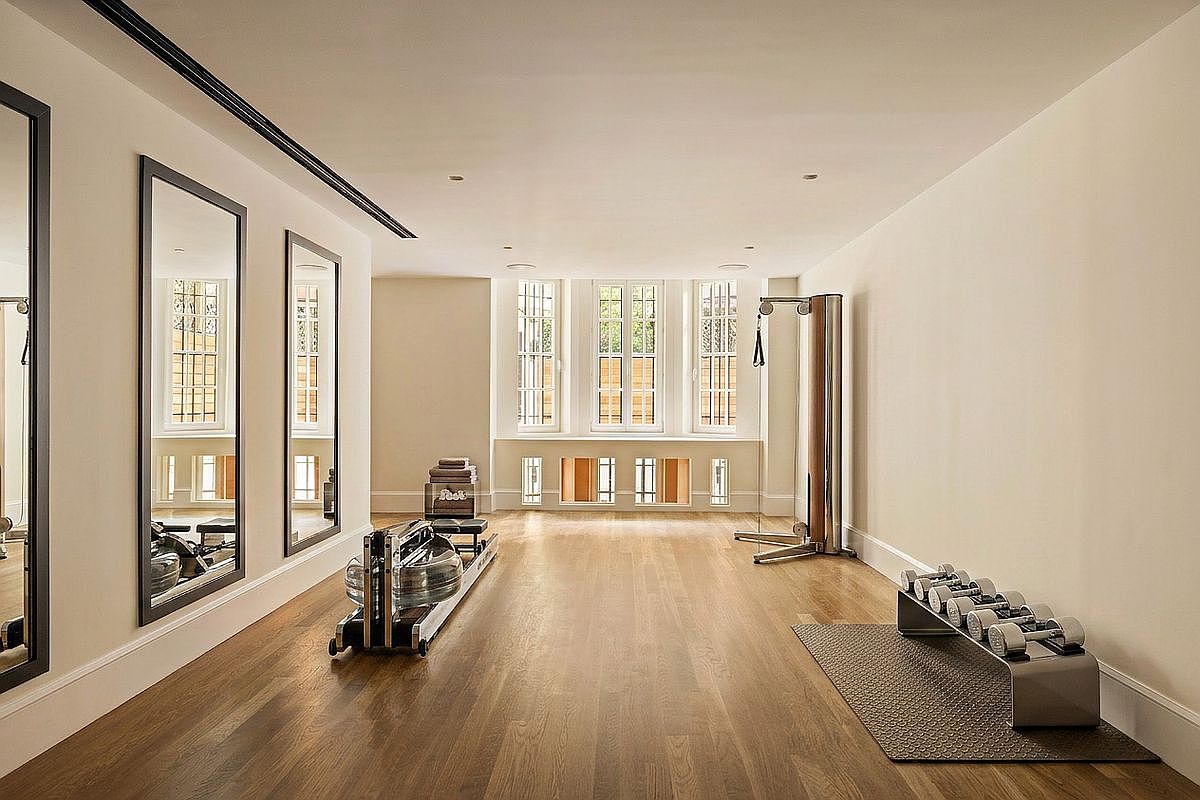
The third floor belongs entirely to the primary suite — a private world unto itself. A walk-through dressing gallery of gallery-caliber proportions connects to dual spa-inspired bathrooms finished in dark veined stone and luminous white tile, while a working fireplace imparts warmth and ceremony to the bedroom itself. Below, the wellness amenities rival those of the finest private clubs: a traditional Hammam, a Finnish cedar-lined sauna, and a fully equipped fitness center open onto a Zen-inspired garden, offering a counterpoint of stillness within one of the world's most dynamic cities.
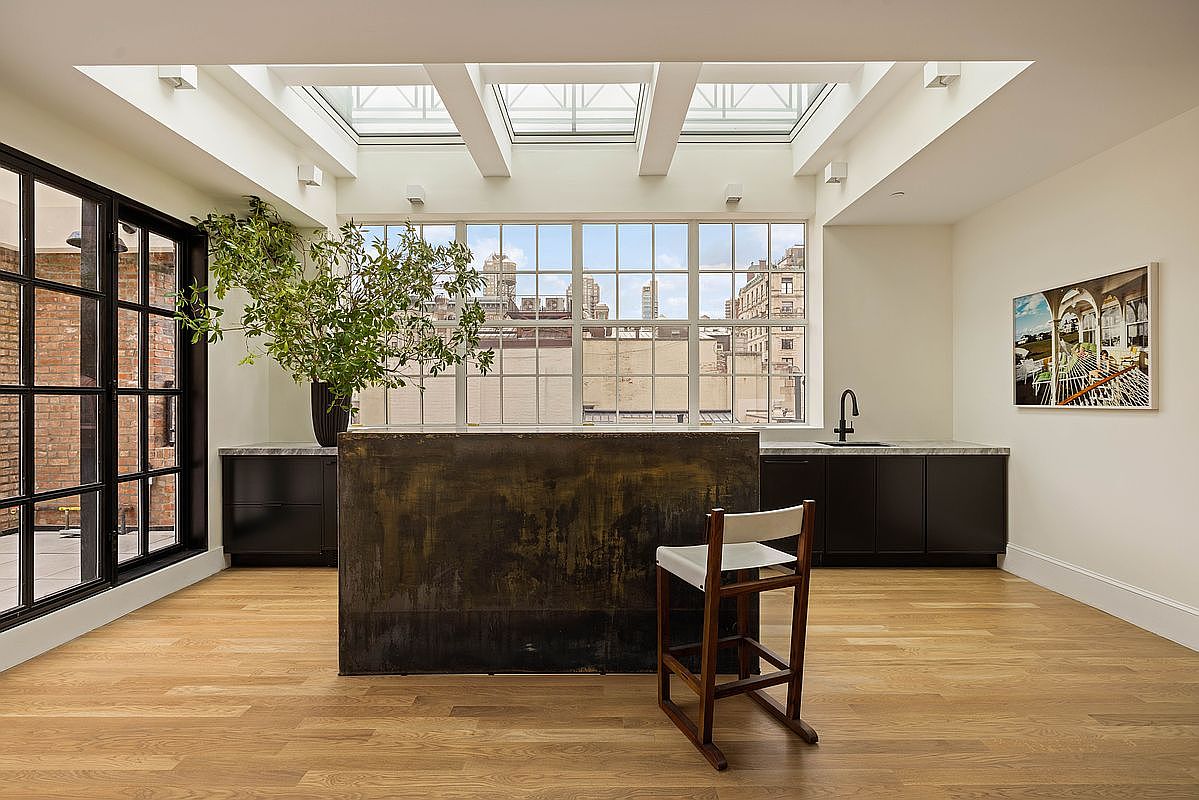
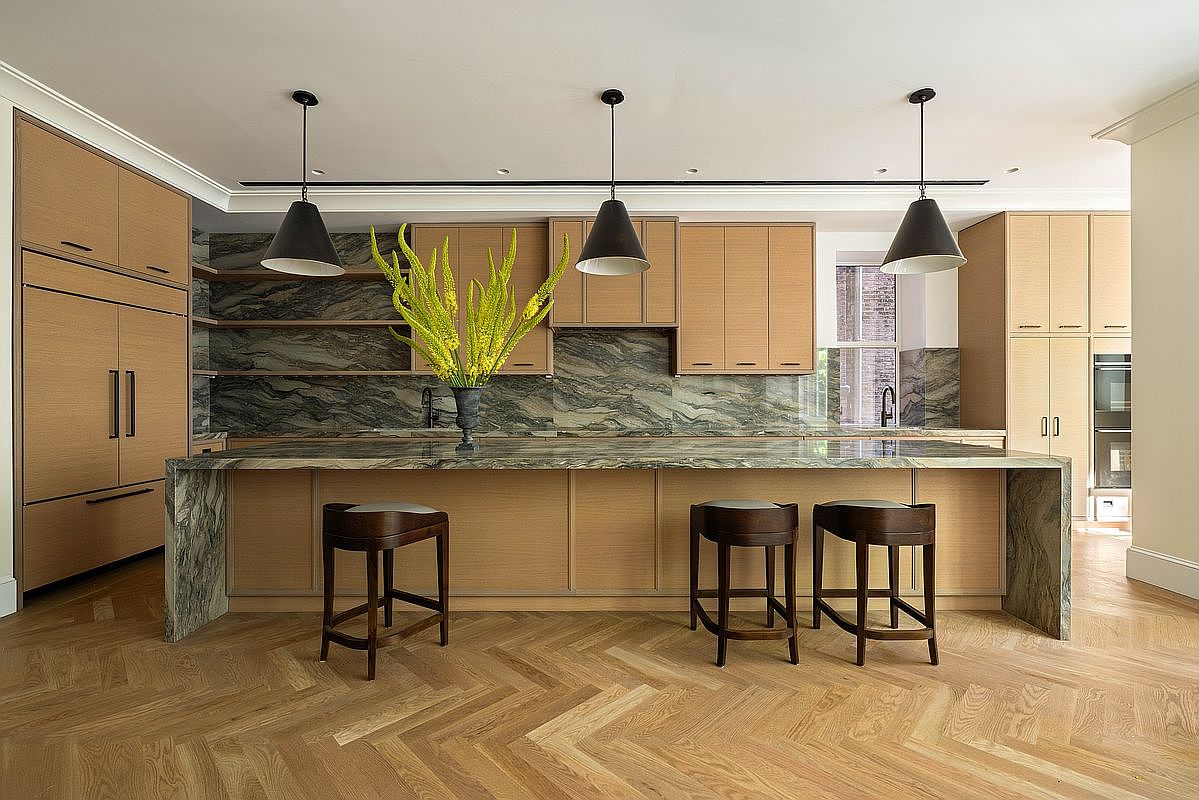
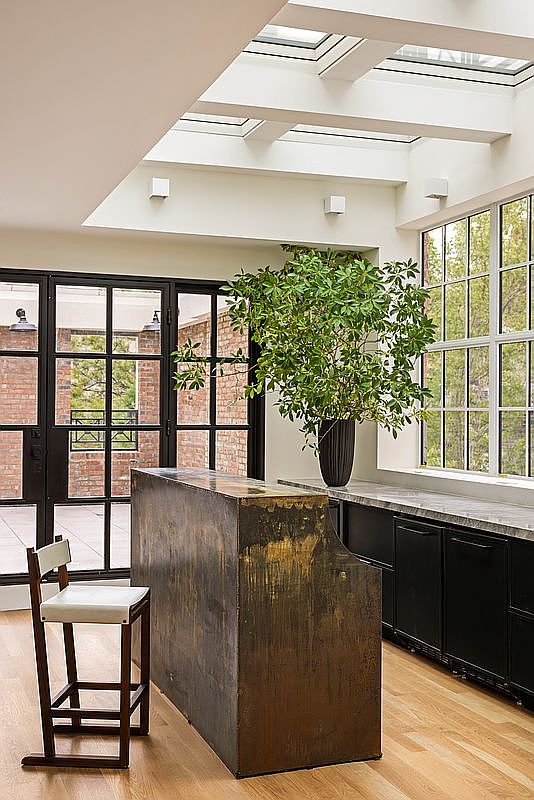
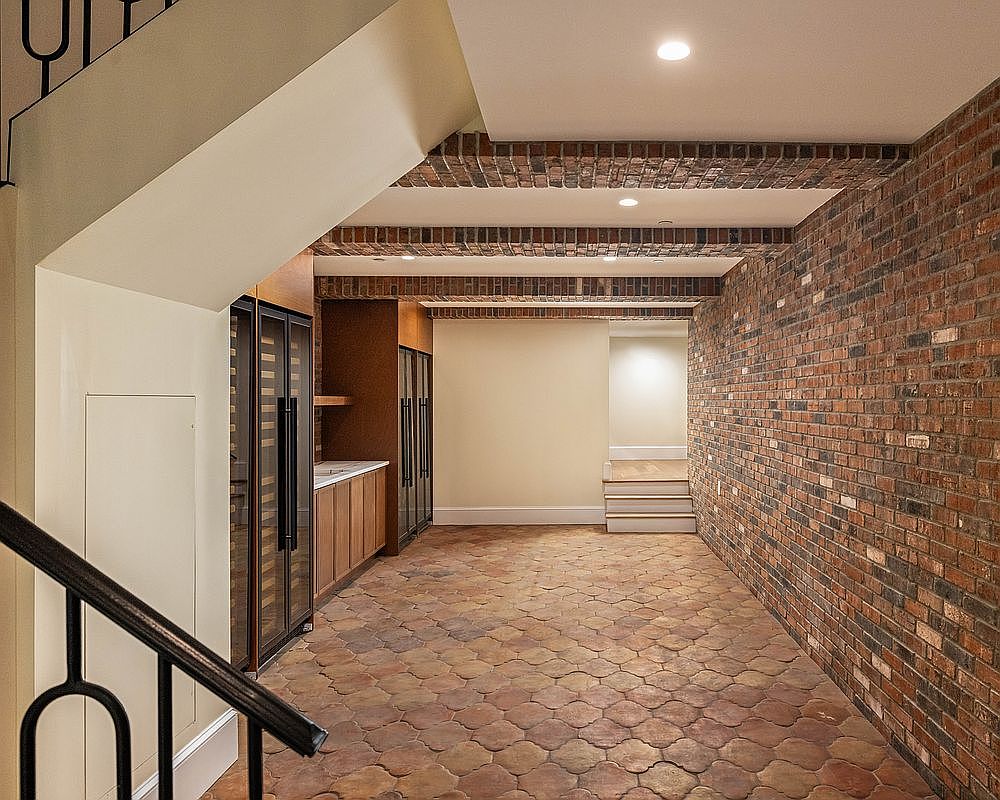
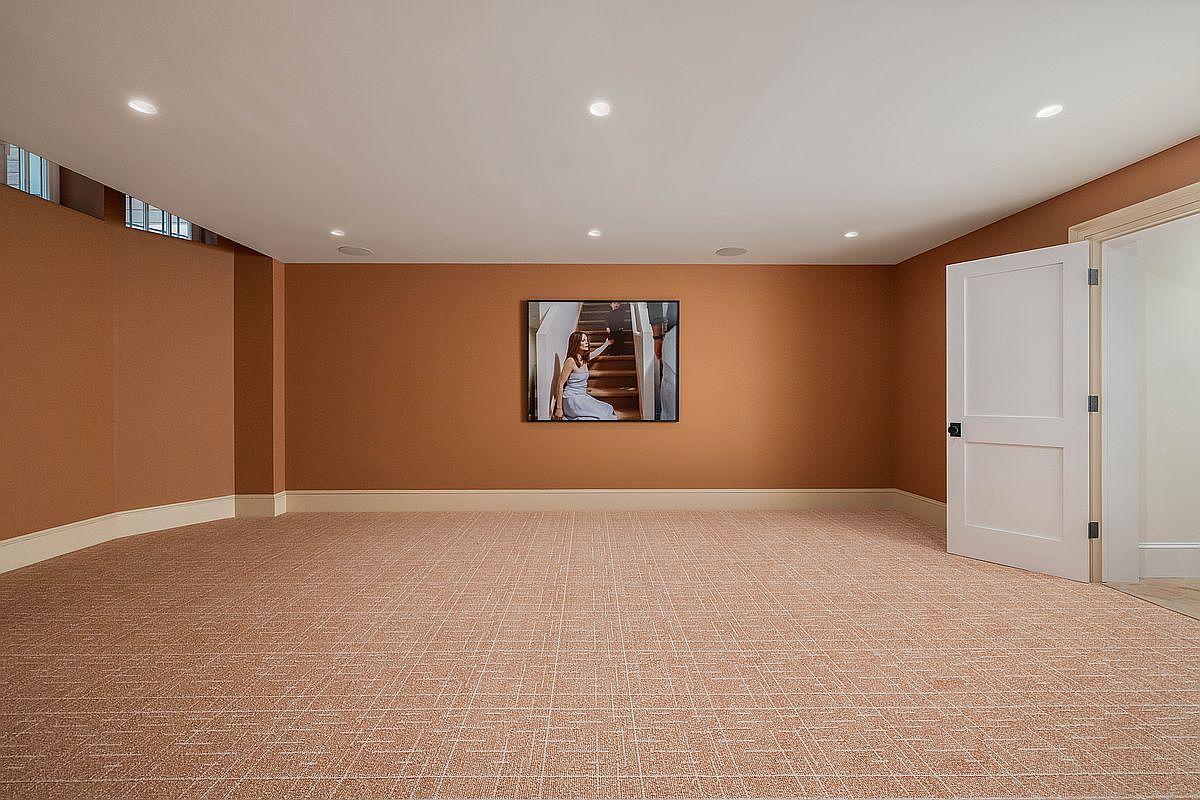
The lower levels speak equally to the pleasures of private life. A professionally designed home theater, an Old World wine cellar and tasting lounge finished in terracotta hexagonal tile and exposed brick arches, and a fully independent caretaker's suite with private entrance complete a program of extraordinary depth. A multi-kitchen configuration — including a chef's kitchen with waterfall-edge stone island and skylit ceilings — ensures that the home performs with equal distinction whether hosting an intimate dinner or a grand-scale gathering.
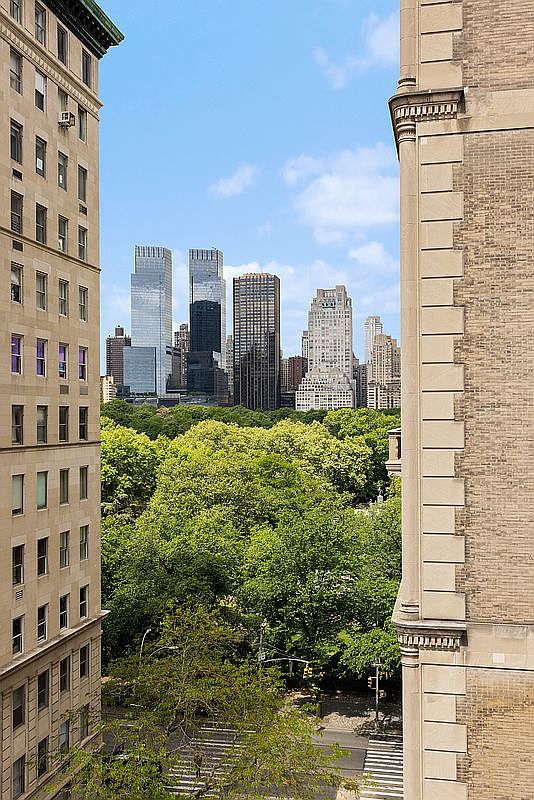
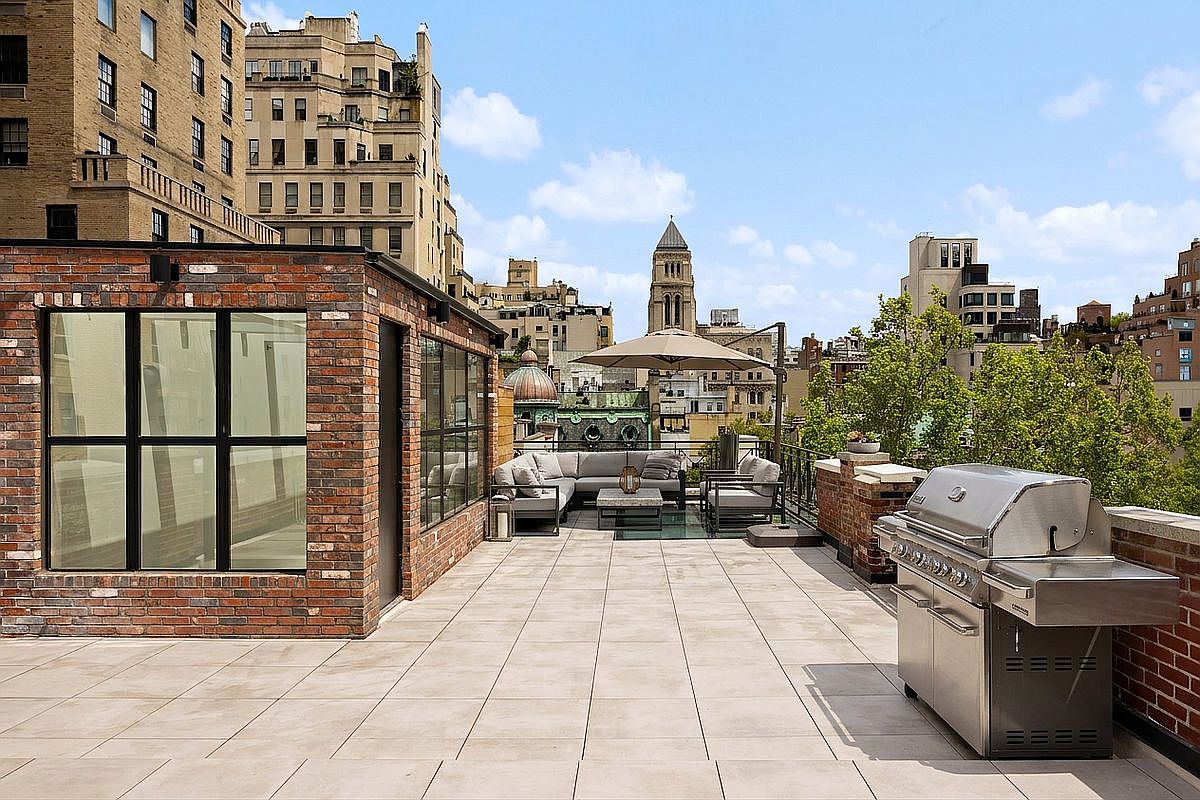
Above it all, the rooftop terrace delivers what only a handful of New York addresses can offer: unobstructed, panoramic views of Central Park and the Manhattan skyline — a prospect as rare as the residence beneath it.
To live between Fifth and Madison Avenues on the Upper East Side is to inhabit one of the most storied and carefully preserved residential corridors in the world. The two blocks that frame 5 East 63rd Street have long defined a particular ideal of New York life — one measured not in spectacle, but in permanence, culture, and an almost European sense of urban refinement.
Central Park lies just steps to the west, its 840 acres offering an ever-changing landscape of green that functions, for residents of this block, less as a destination than an extension of the private realm. Morning runs along the Reservoir, afternoon walks through the Conservatory Garden, and evening strolls along the Mall are the rhythms of daily life here — a relationship with nature that few urban addresses anywhere in the world can replicate.
The cultural institutions that define the Upper East Side's global reputation are equally close at hand. The Metropolitan Museum of Art, one of the largest and most encyclopedic art museums in the world, sits at the northern edge of the neighborhood along Fifth Avenue's Museum Mile. The Frick Collection, housed in its own Gilded Age mansion just blocks away, offers one of New York's most intimate and distinguished collections of Old Master paintings. The Whitney Museum's original Breuer building — now home to the Met Breuer and subsequently other cultural programs — reflects the neighborhood's long-standing commitment to serious artistic patronage.
Madison Avenue, to the immediate east, remains one of the world's preeminent luxury retail corridors. From Hermès and Giorgio Armani to the city's finest antique dealers and art galleries, the avenue offers a standard of commerce that is itself a reflection of the neighborhood's character. Acclaimed restaurants — from the classic elegance of Daniel to the understated excellence of smaller neighborhood tables — are woven throughout the surrounding blocks.
The Upper East Side's residential history is inseparable from the broader story of New York's architectural and social development. The blocks surrounding Carnegie Hill and the Gold Coast along Fifth Avenue contain some of the finest examples of Beaux-Arts, neo-Georgian, and neo-Classical townhouse architecture in America, many of them landmarked and meticulously maintained. The Landmarks Preservation Commission has ensured that the streetscape along this stretch retains the coherence and dignity that has distinguished it for more than a century.
Practically, the neighborhood is among the most convenient in Manhattan. The Lexington Avenue subway lines provide rapid access to Midtown and beyond, while the crosstown bus connects seamlessly to the West Side. The proximity to Madison Avenue's private schools — including some of New York's most prestigious independent institutions — has long made the Upper East Side a preferred address for families of discernment.
In every respect — cultural, architectural, practical, and civic — the block on which 5 East 63rd Street stands represents the Upper East Side at its most essential: a place where the grandeur of New York's past and the vitality of its present exist in rare and enduring harmony.
Featured Highlights
Curated Content • Presented by Katie Thurber