The Story Behind
Where Otter Creek Meets Five Thousand Square Feet of Intentional Living
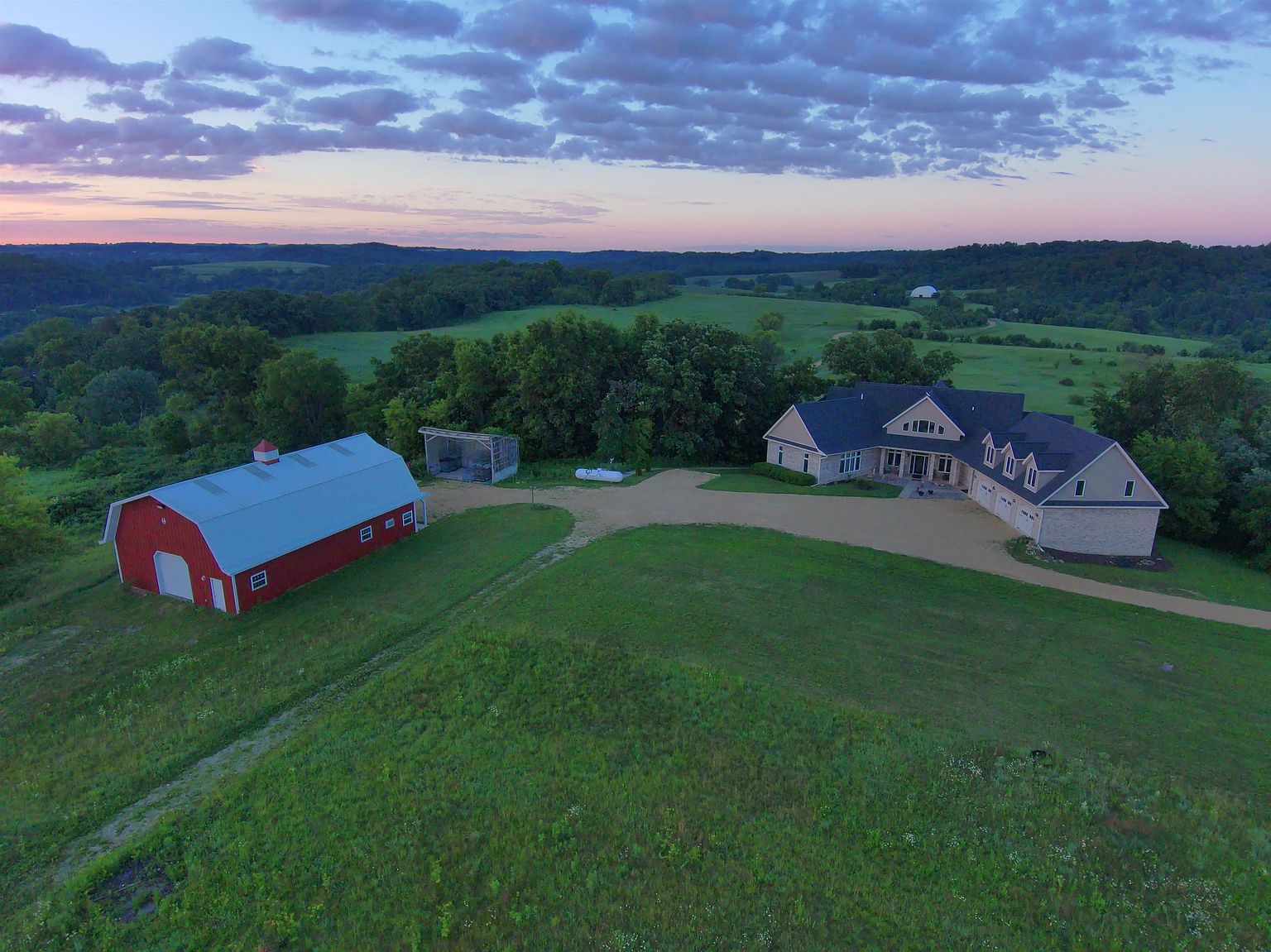
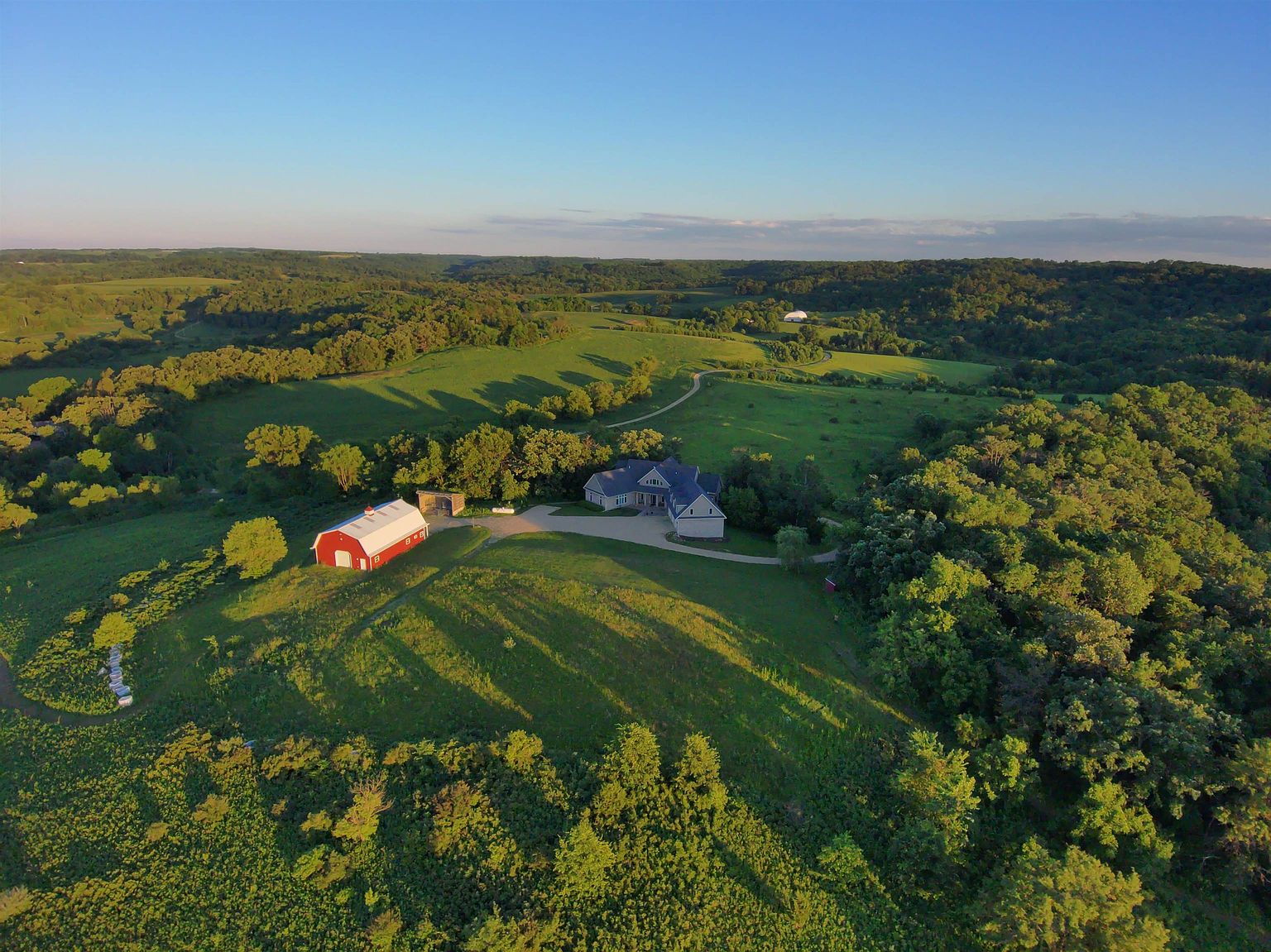
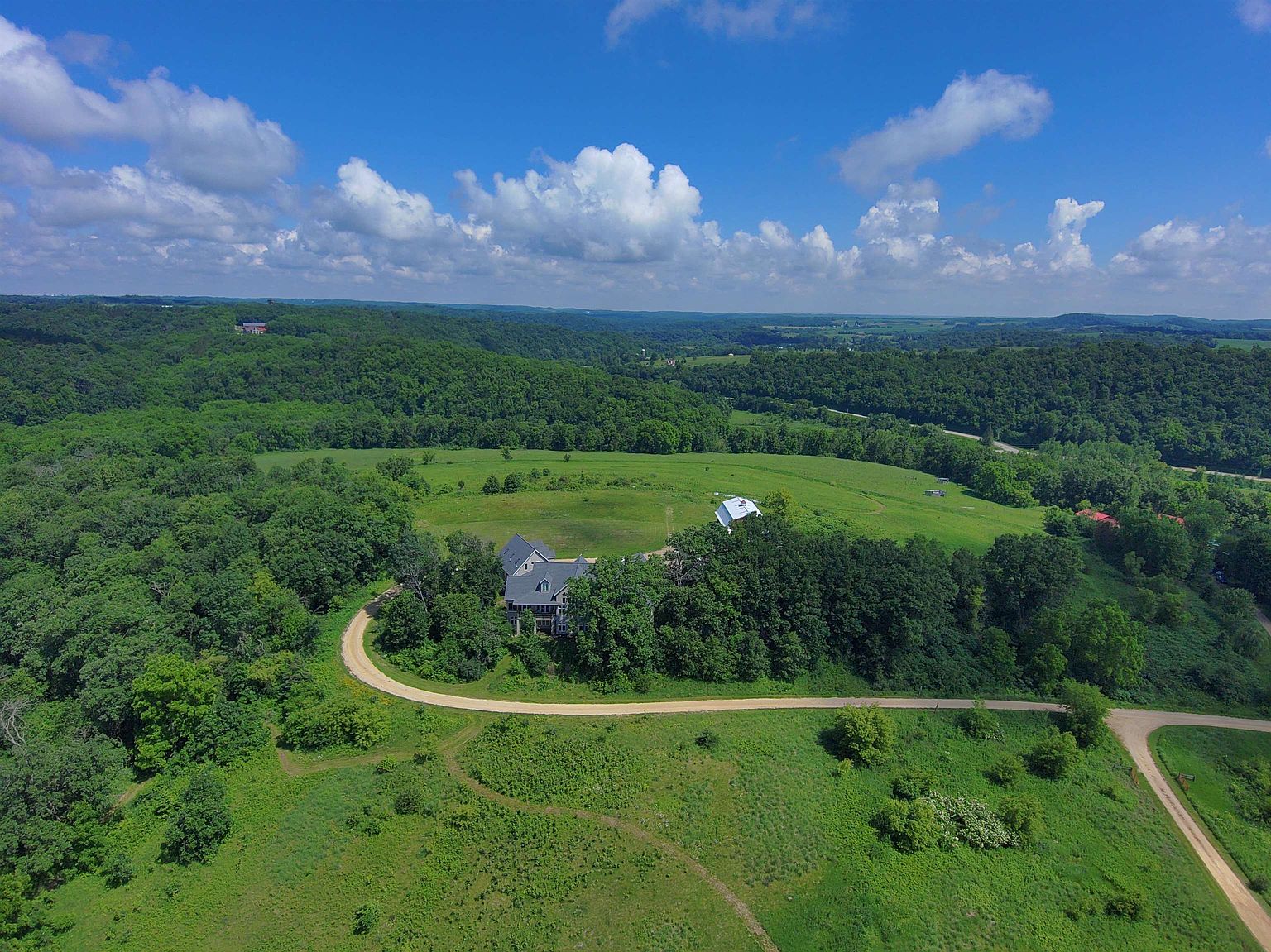
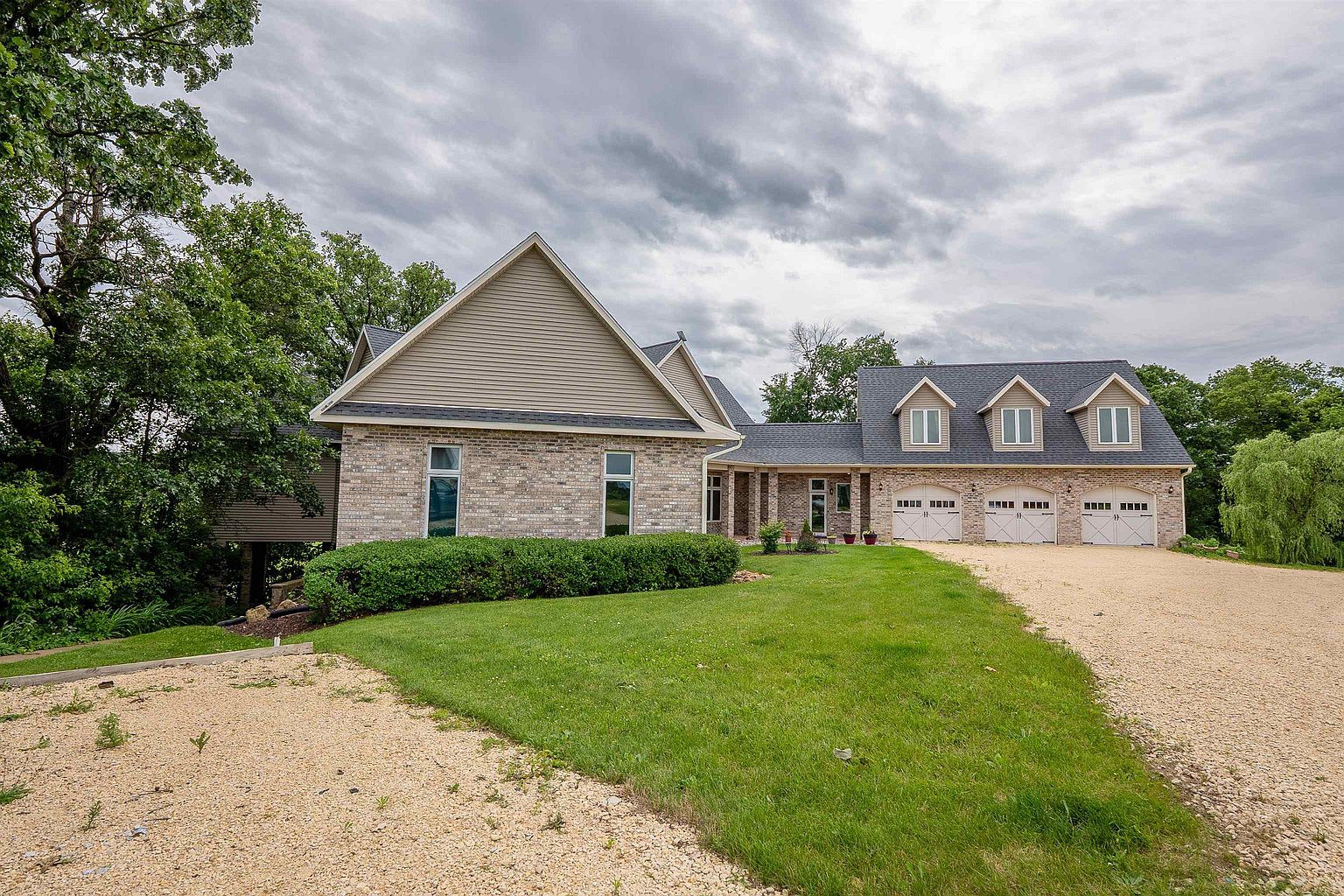
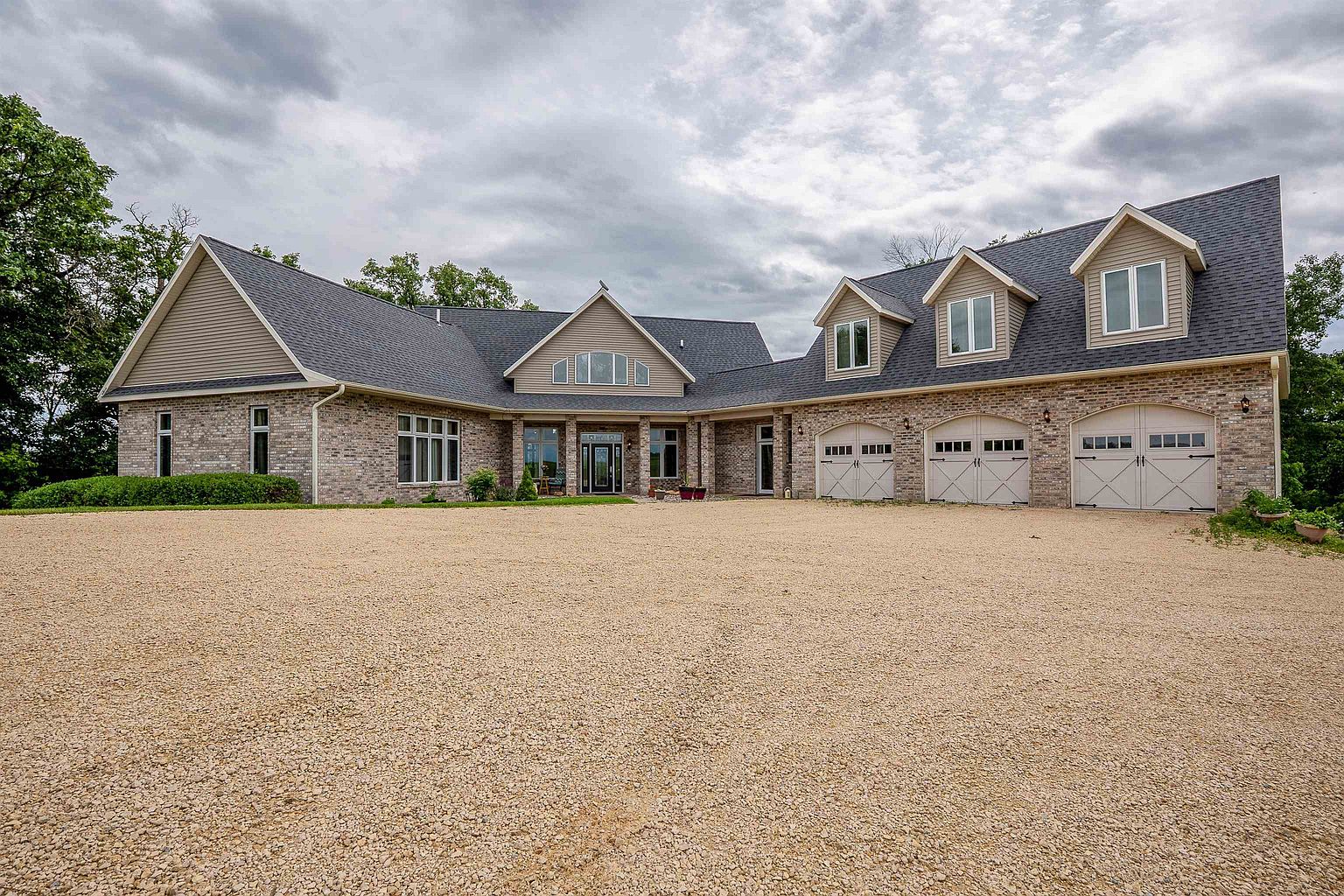
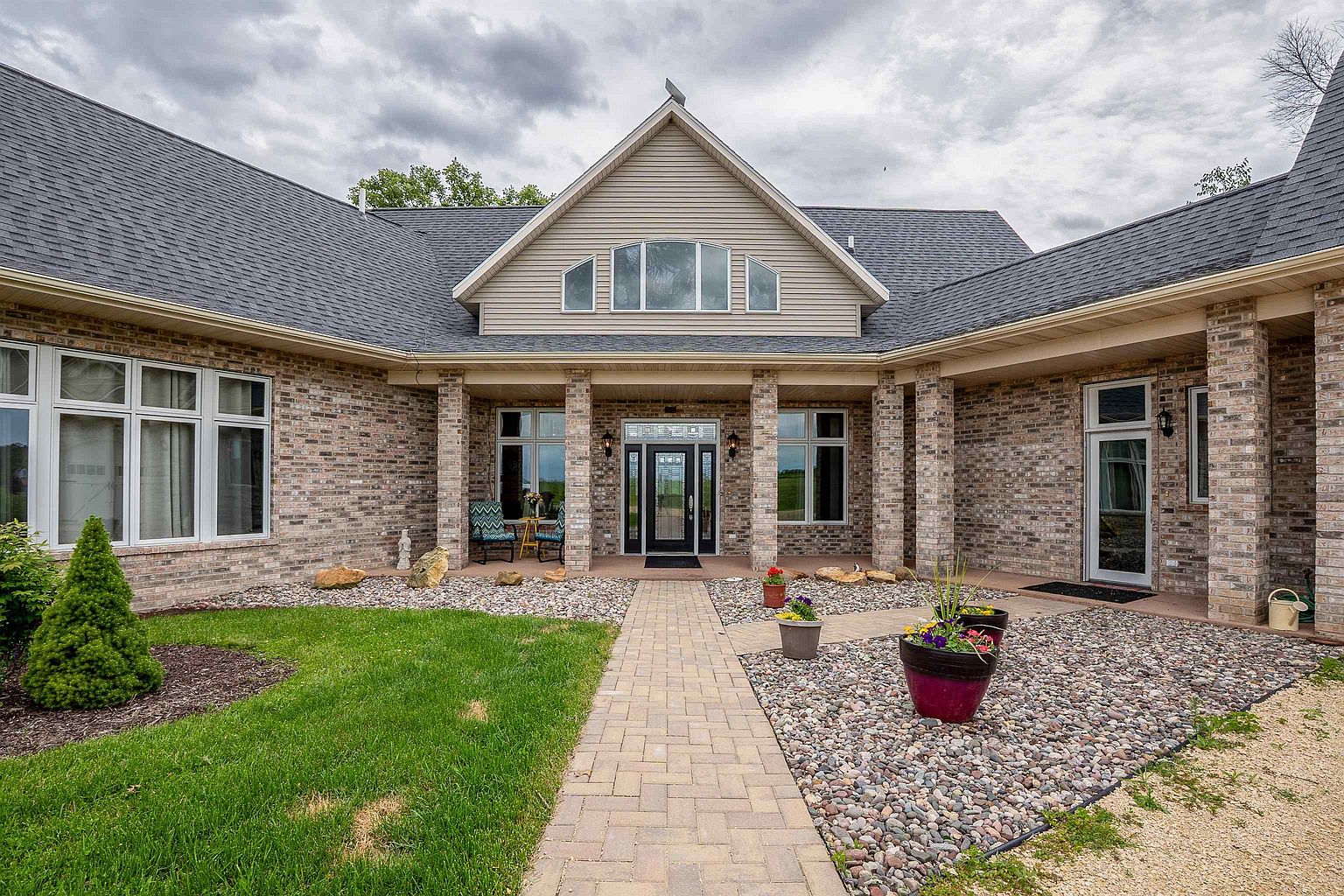
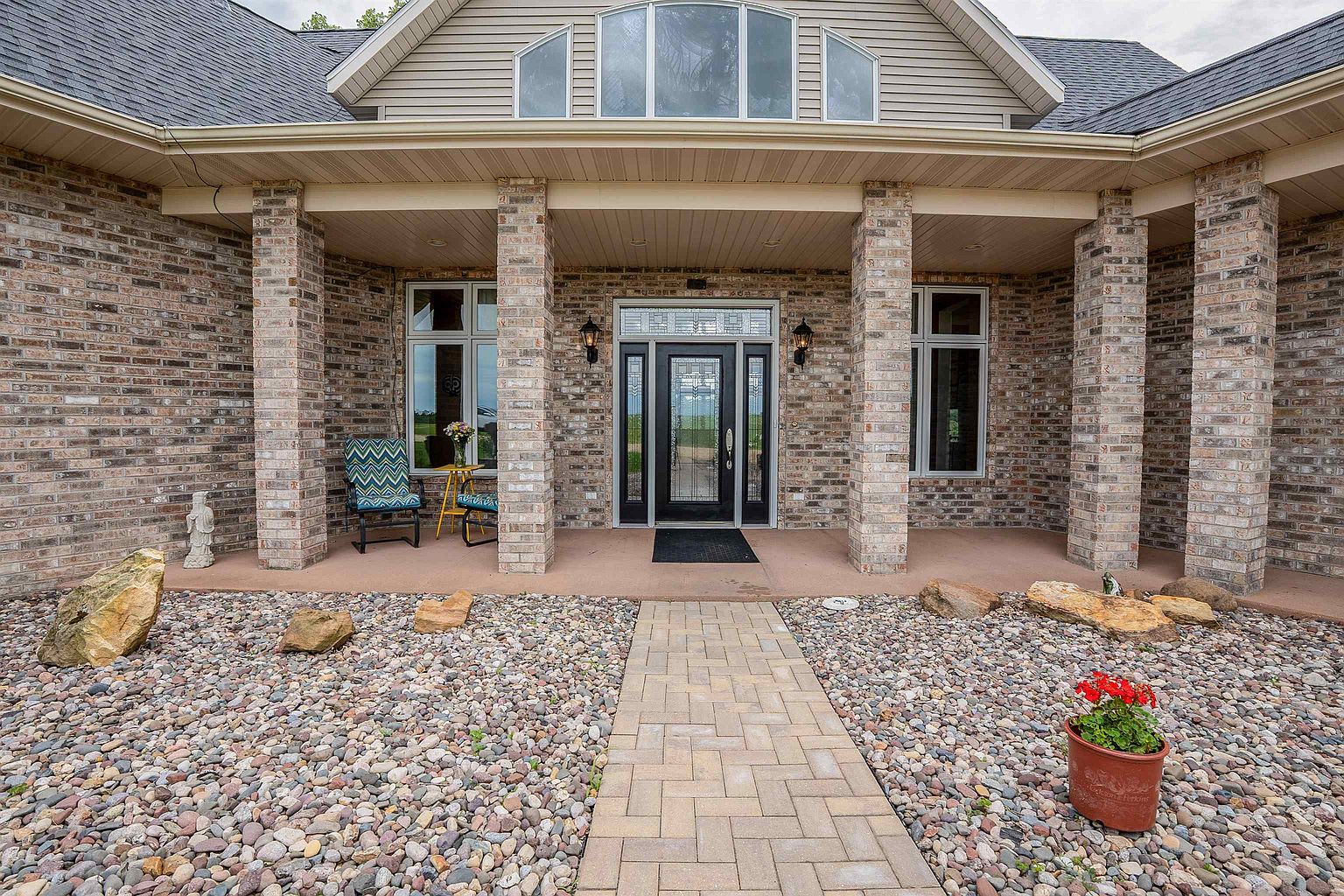
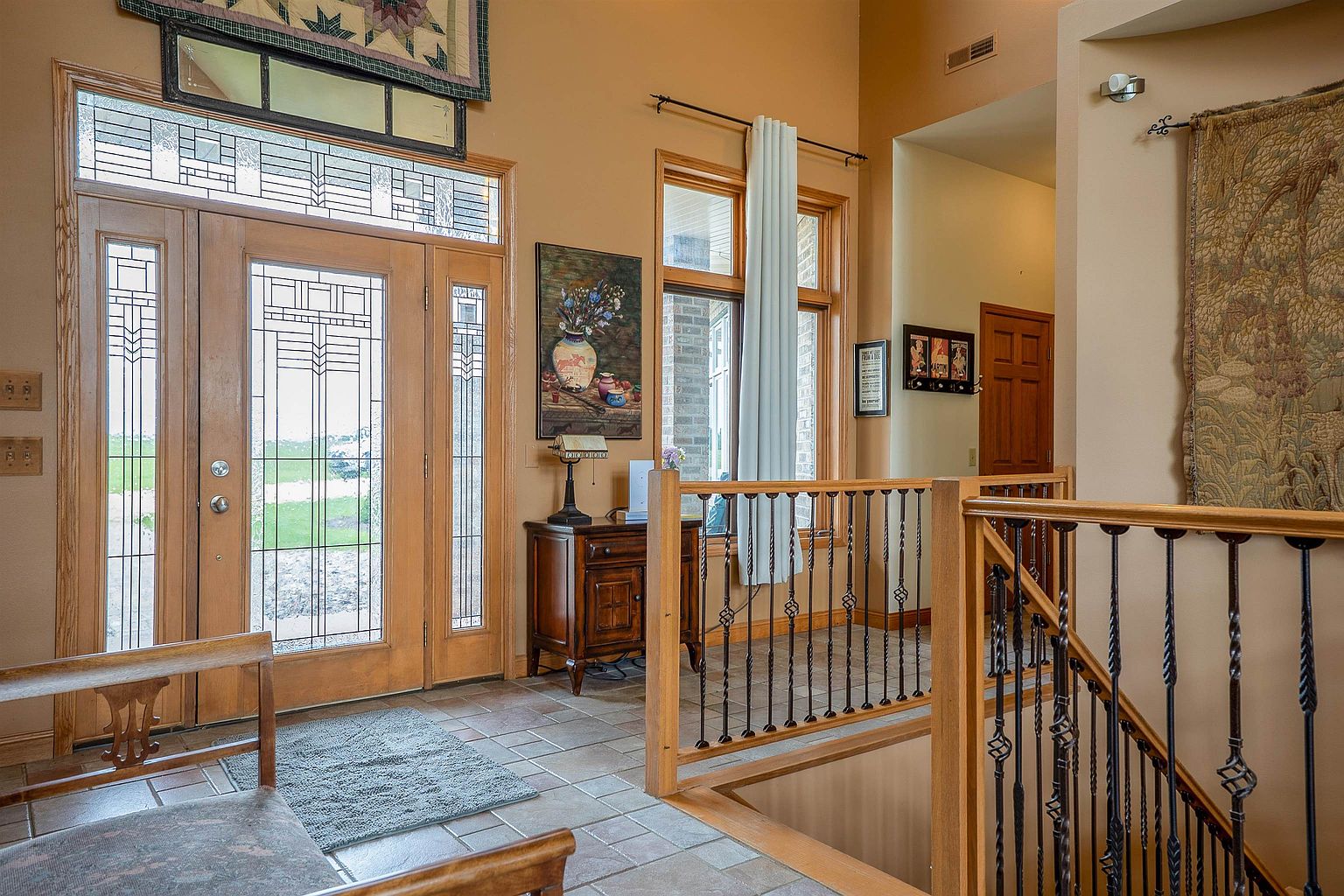
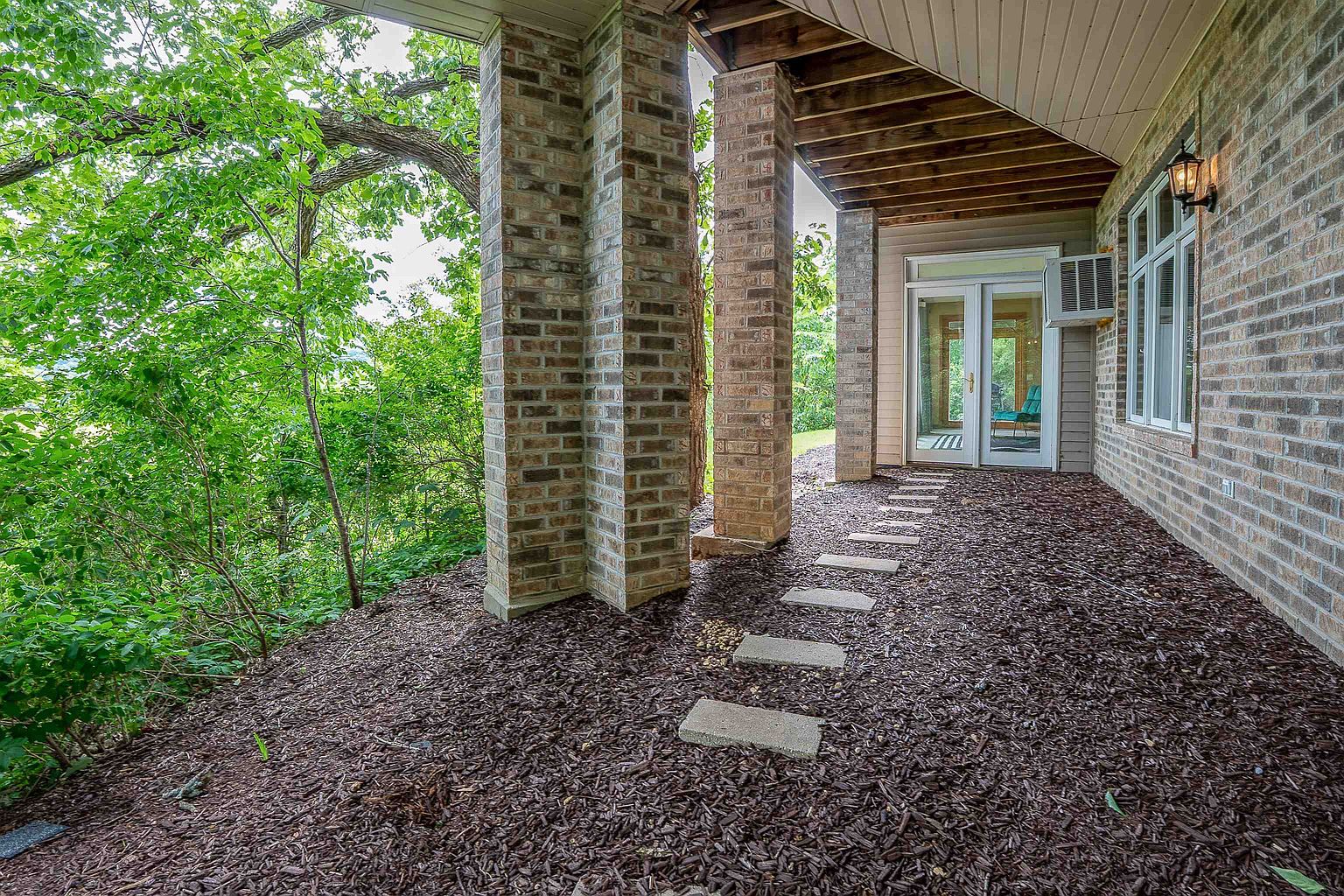
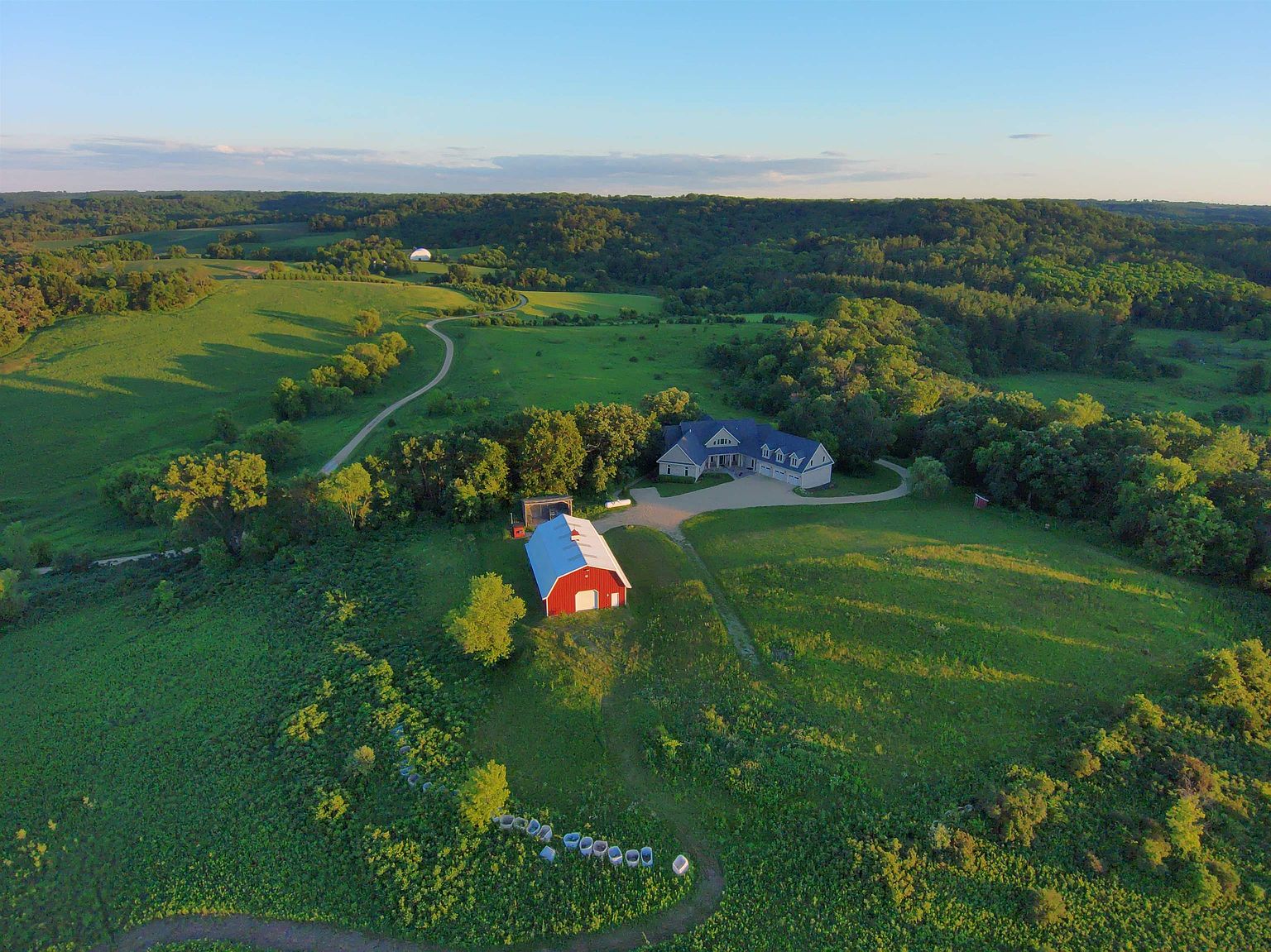
There is a particular kind of architecture that doesn't announce itself — it settles into its land as though it always belonged there. The entrance of this Highland compound reads exactly that way: unhurried, deliberate, and grounded in the Iowa County hillside that frames it. Before you reach the front door, the property has already made its intention clear.
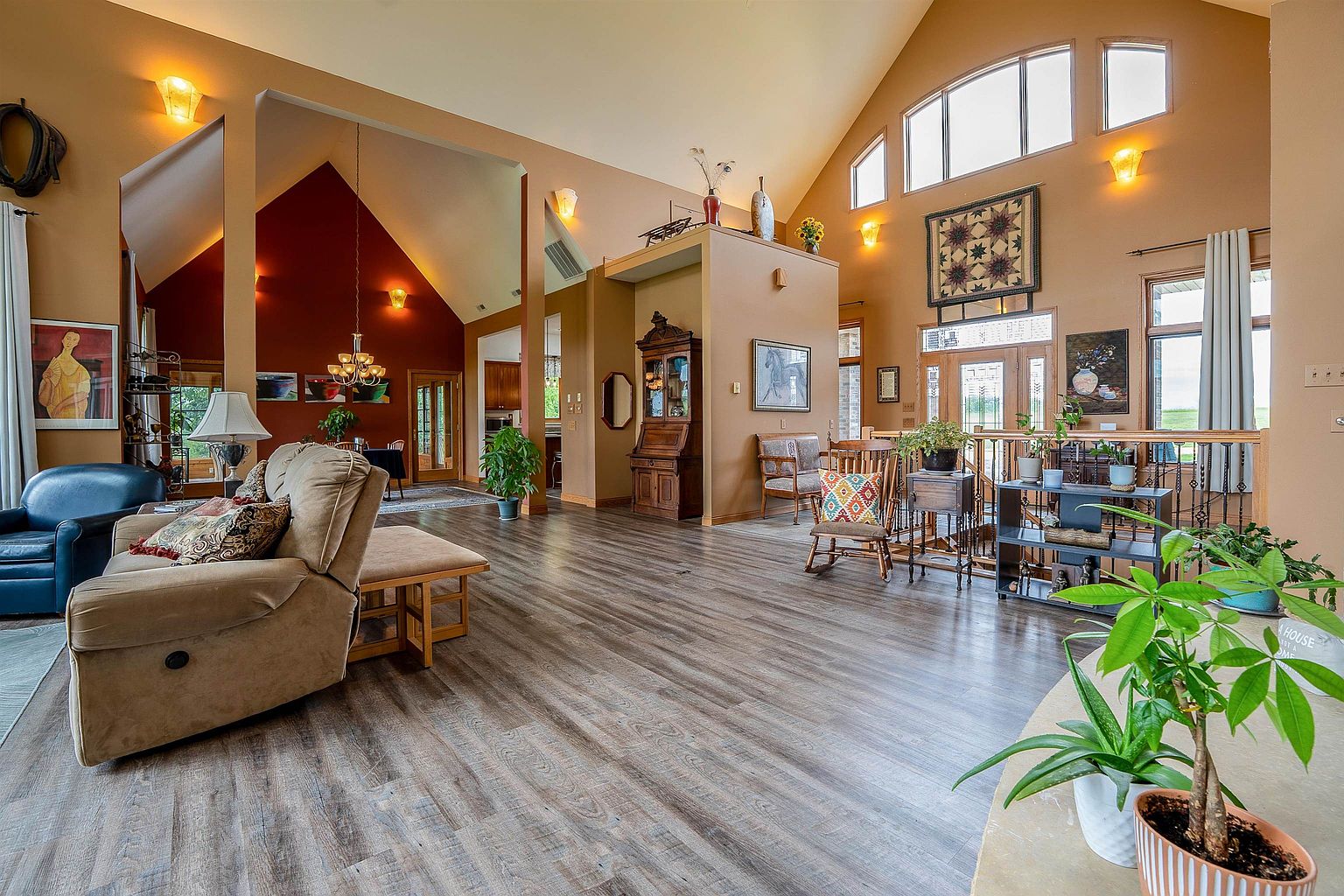
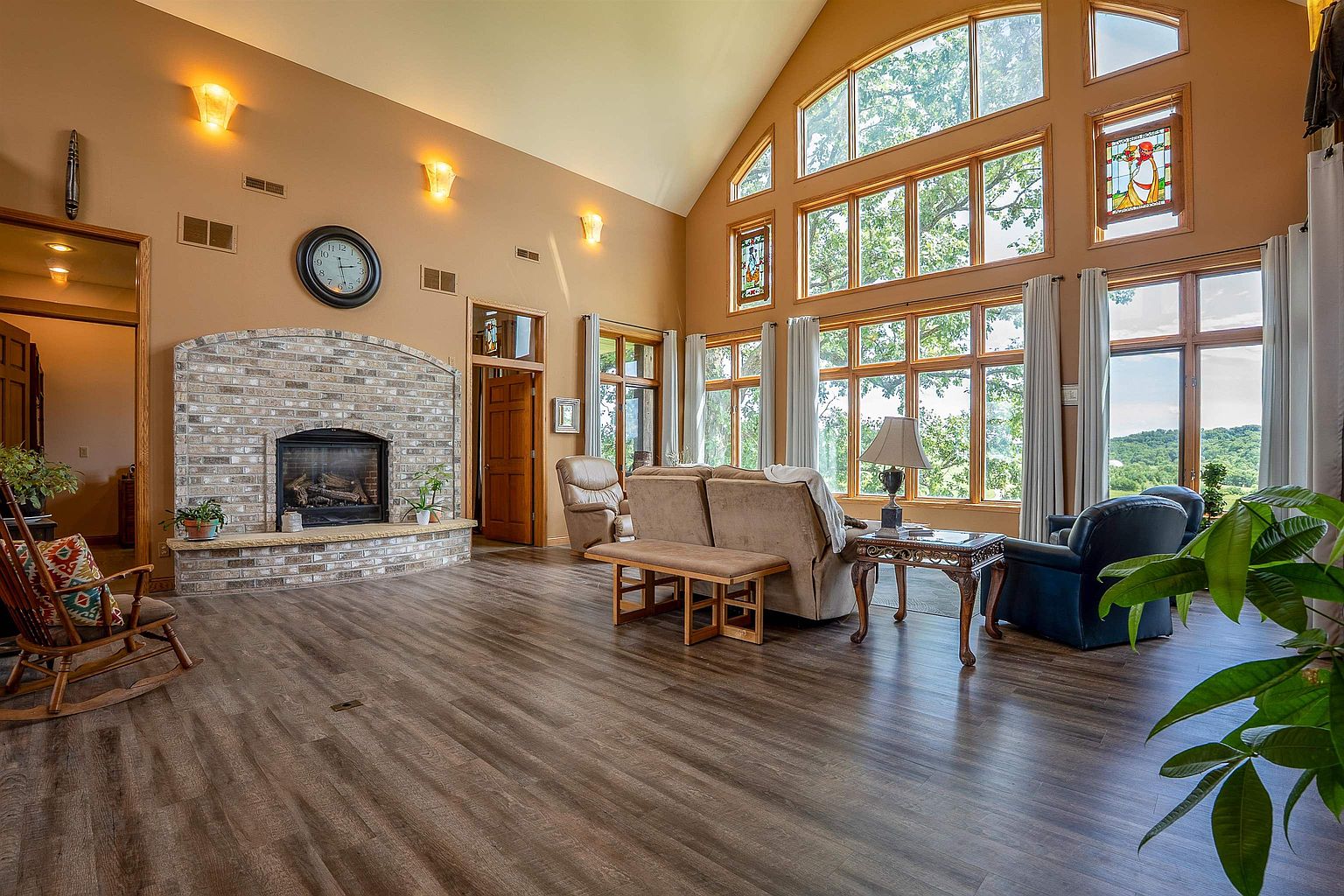
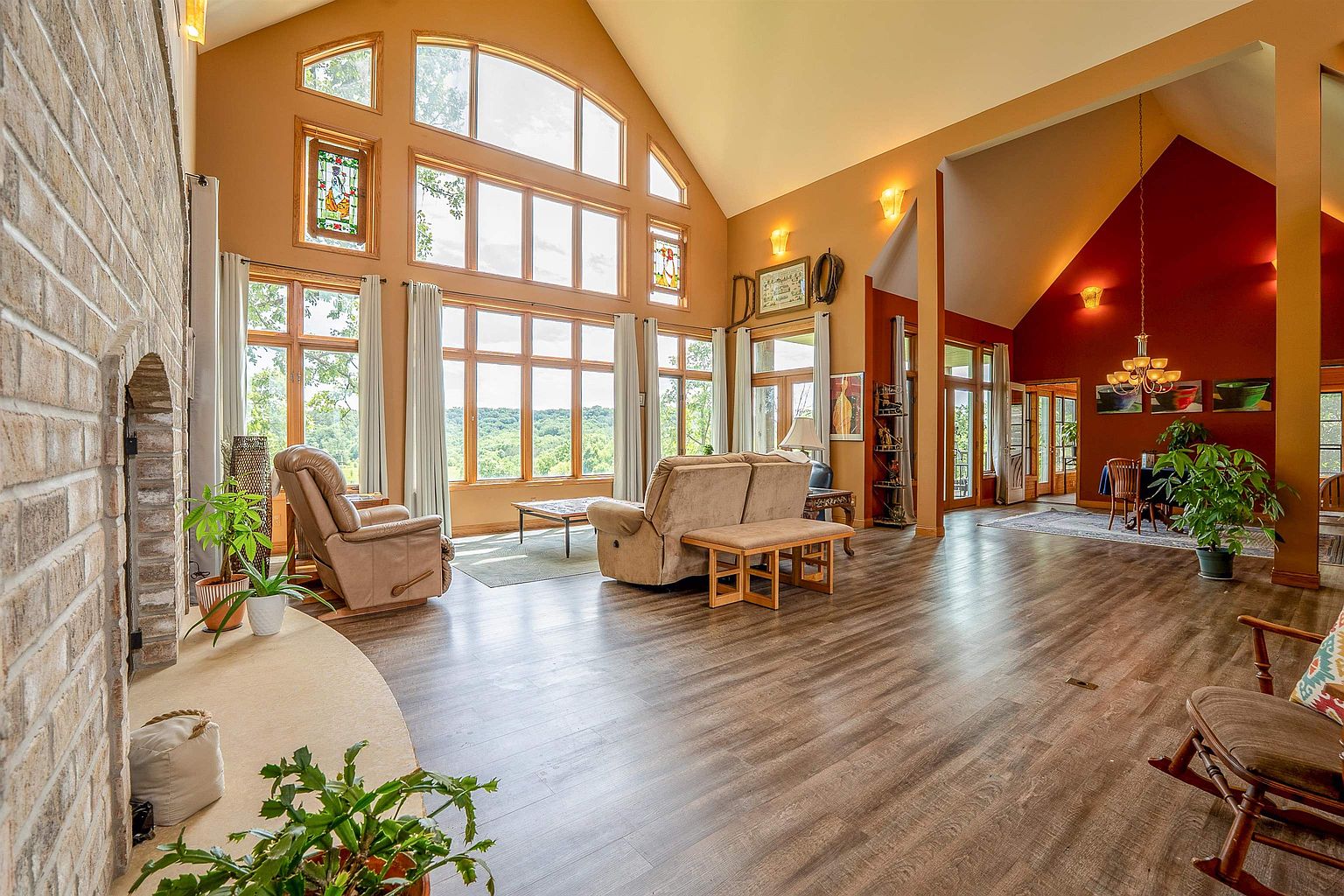
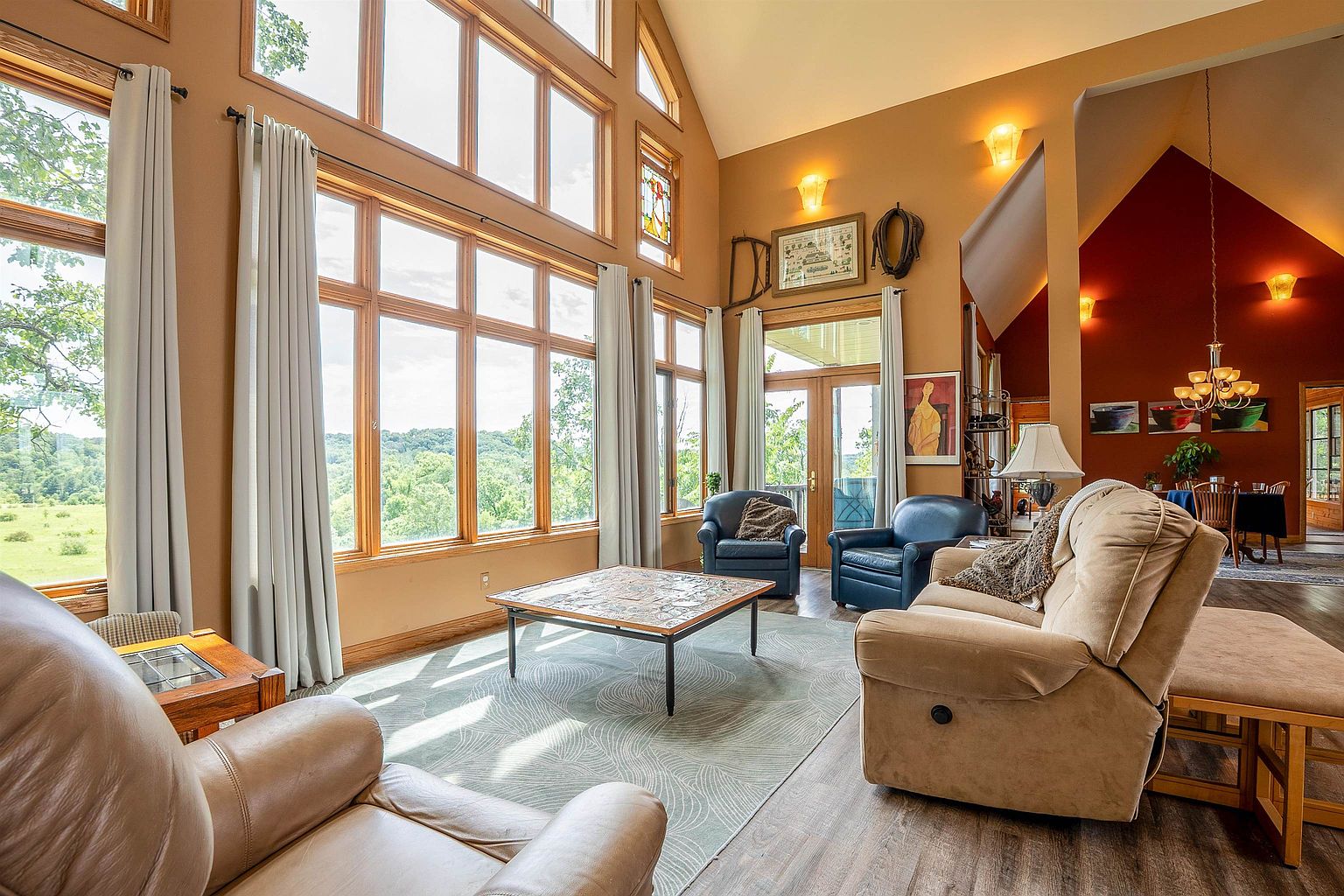
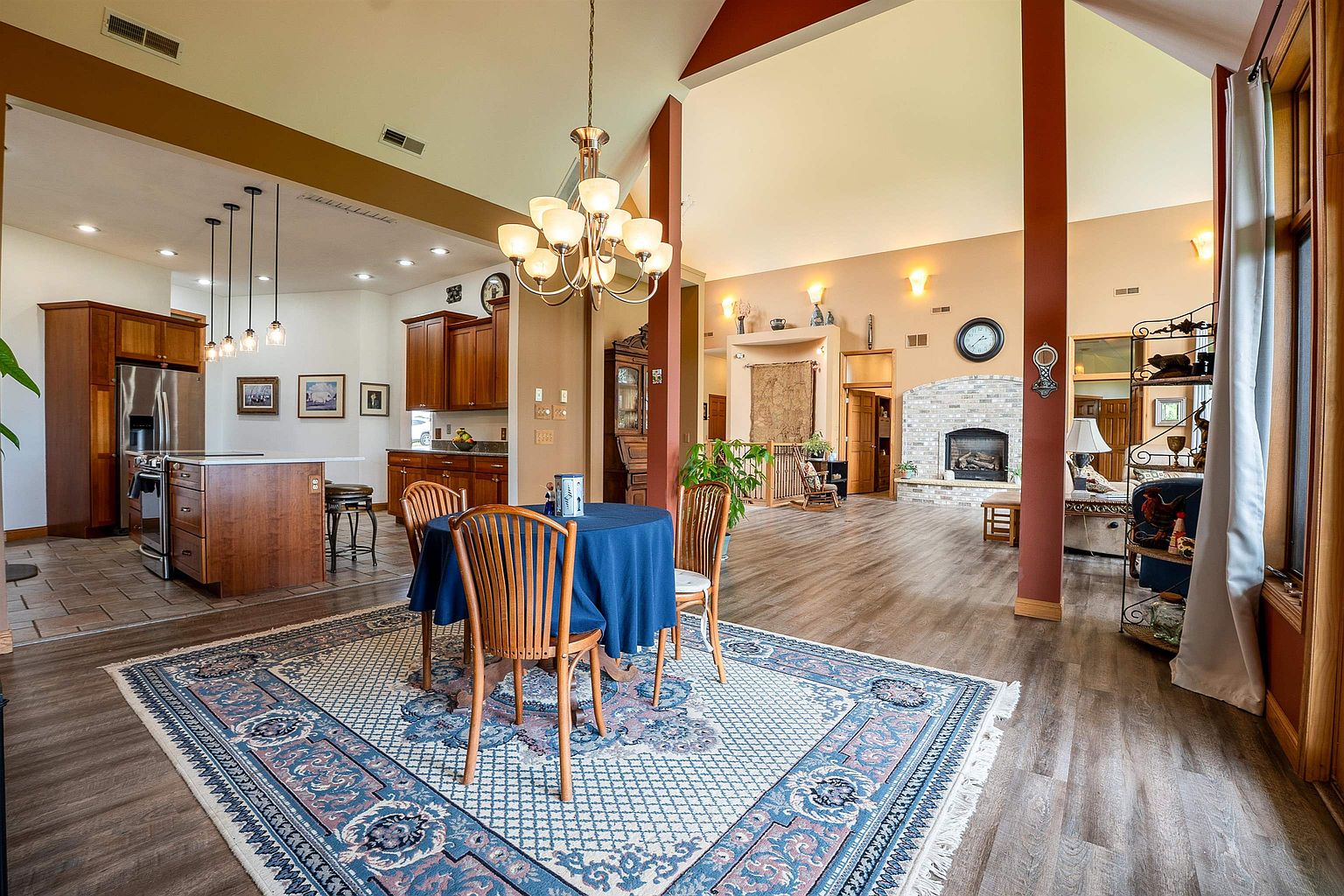
Step inside and the cathedral ceilings do what great architecture always does — they change your breathing. The main living space opens upward with a confidence that feels almost cinematic, anchored below by a gas fireplace framed in brick and stone, and bordered by a wall of picture windows that frame sweeping countryside views as precisely as any curated gallery. Wood-burning backup heat means the home performs through every Wisconsin winter with equal conviction.
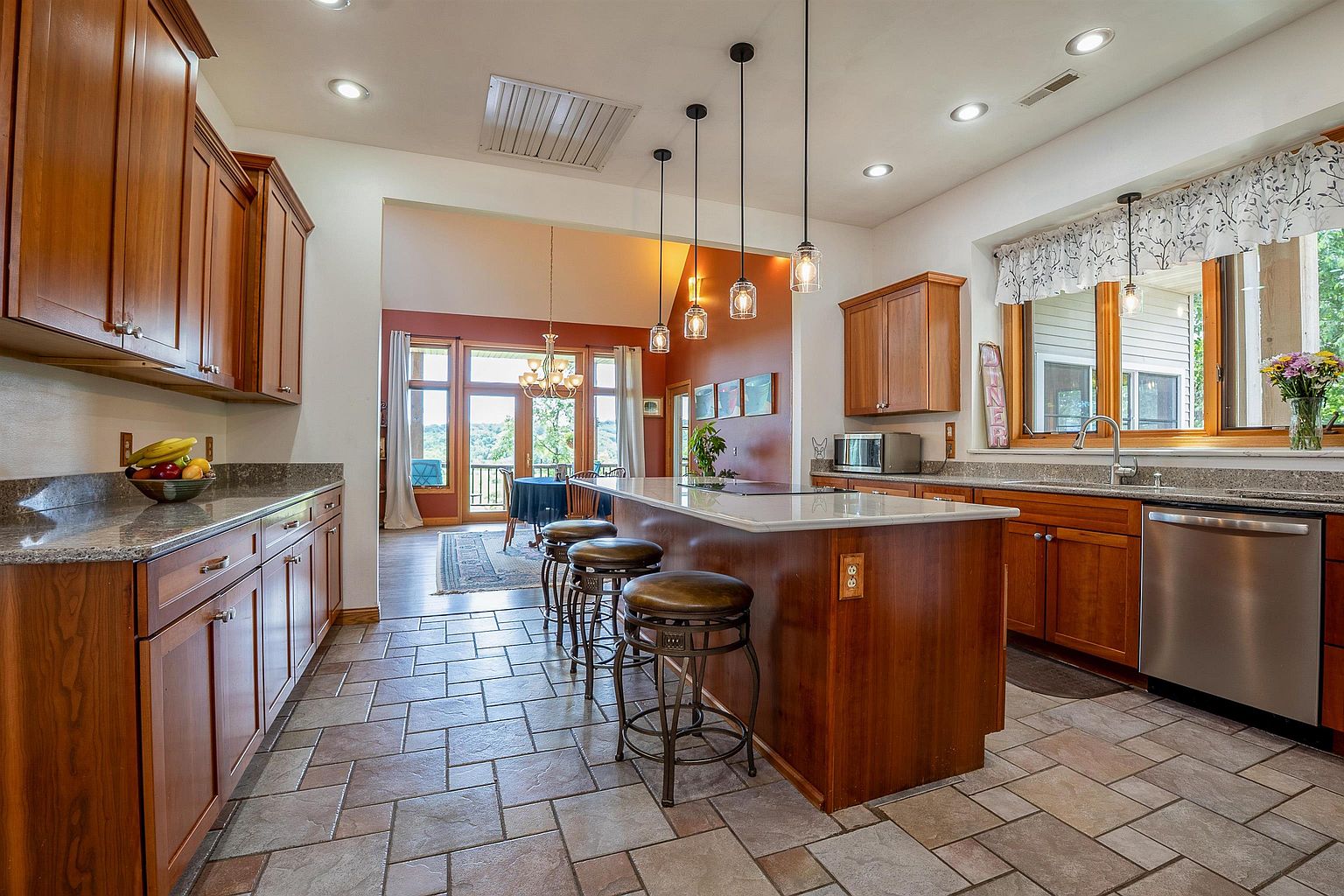
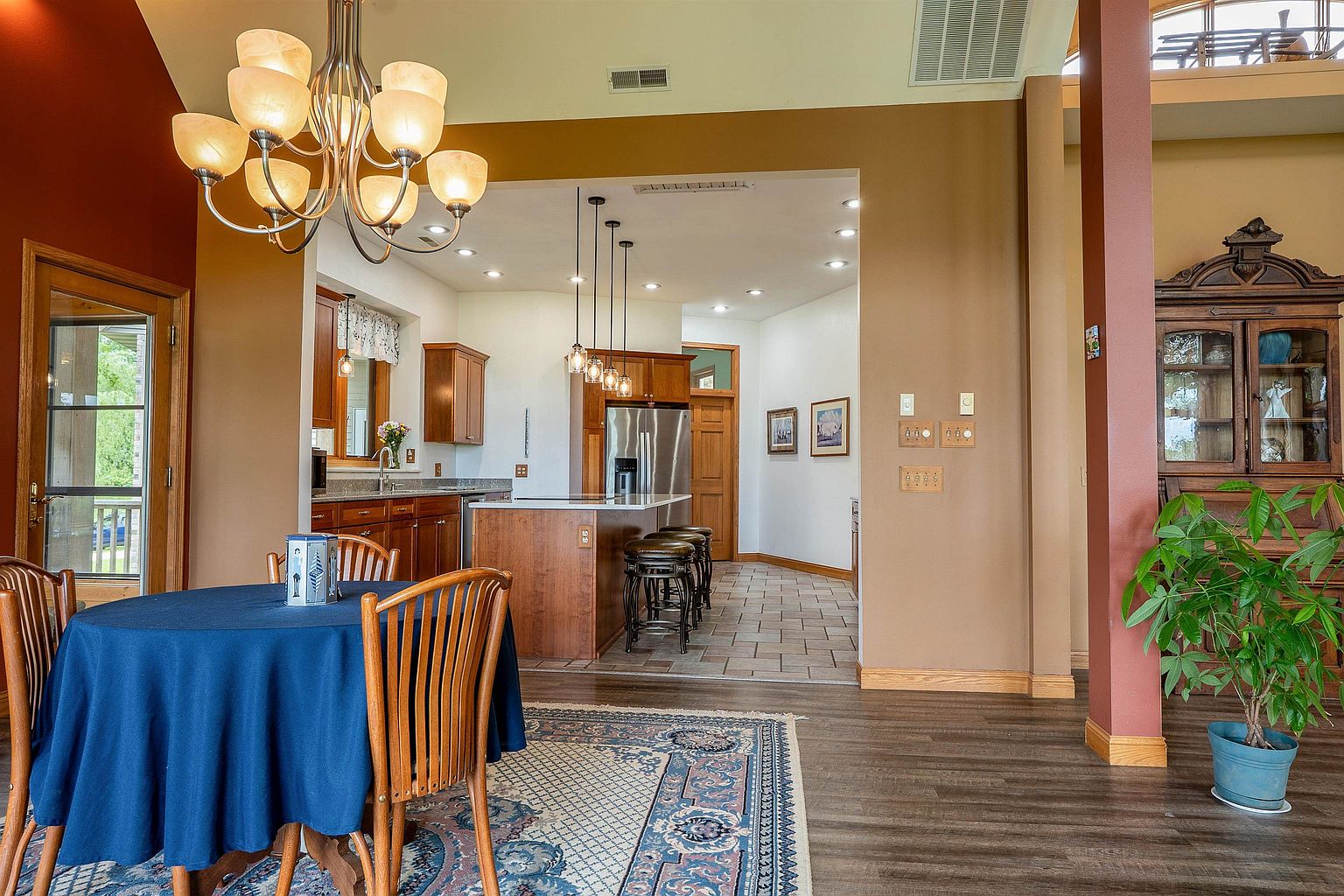
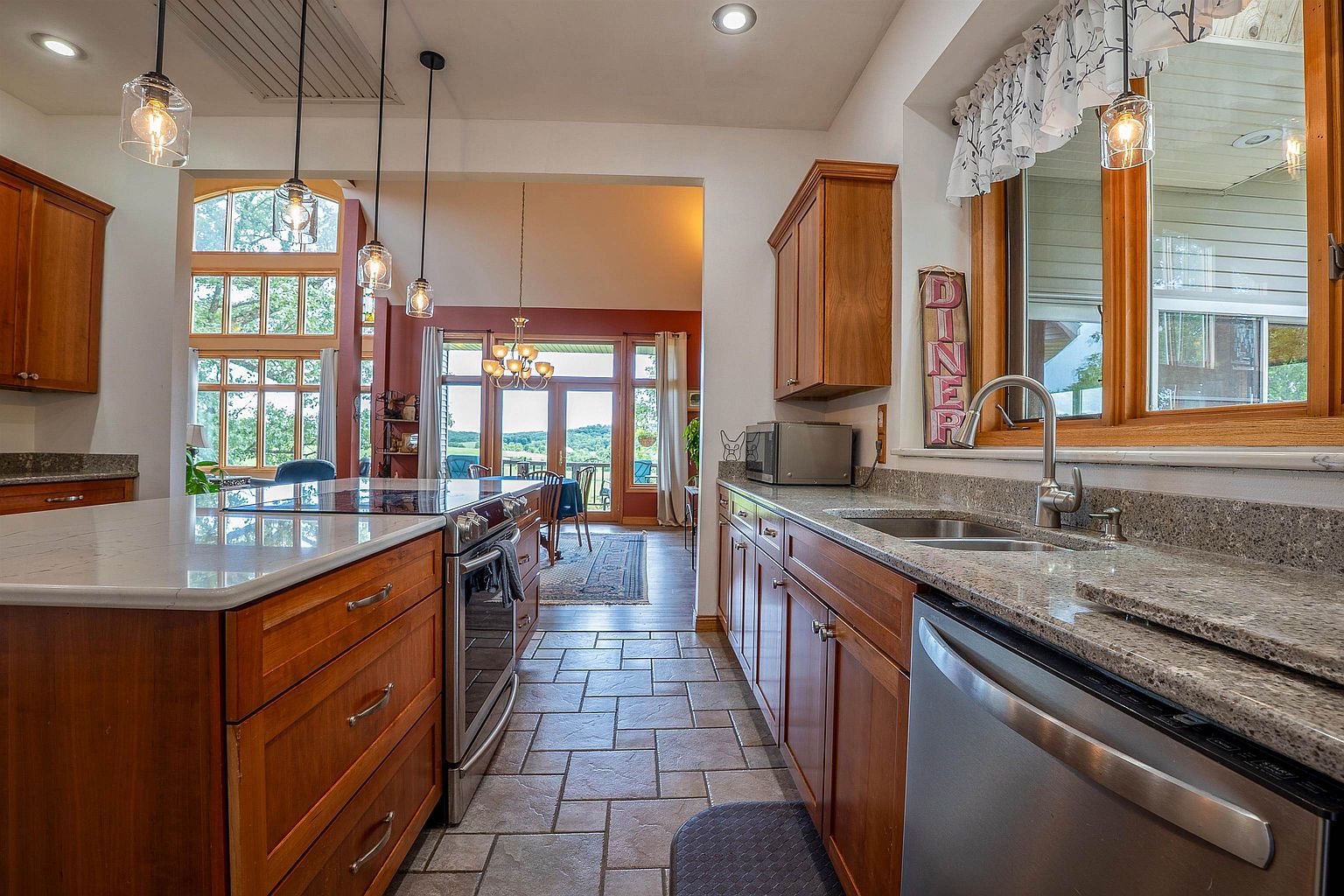
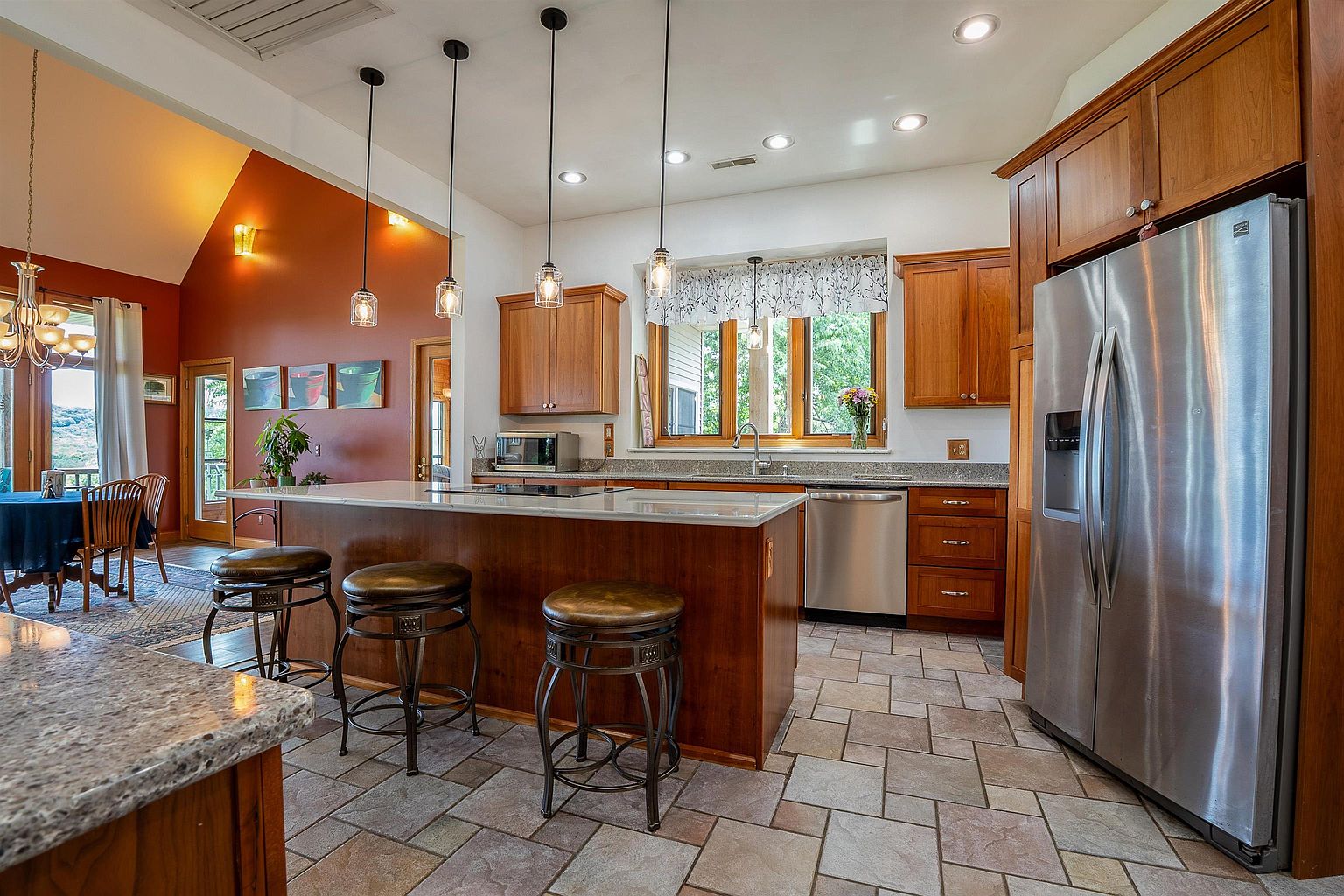
The kitchen is the kind of room that earns its reputation quietly. Custom cherry cabinetry runs the full length of the space, warm-toned and precisely fitted, while corian counters and a generous central island provide the working surface that serious cooking demands. A flexible single or double oven completes the space. Three pendant lights hang above the island at considered intervals. The patterned tile flooring transitions naturally into the adjacent dining area, where large windows bring the outside in without apology.
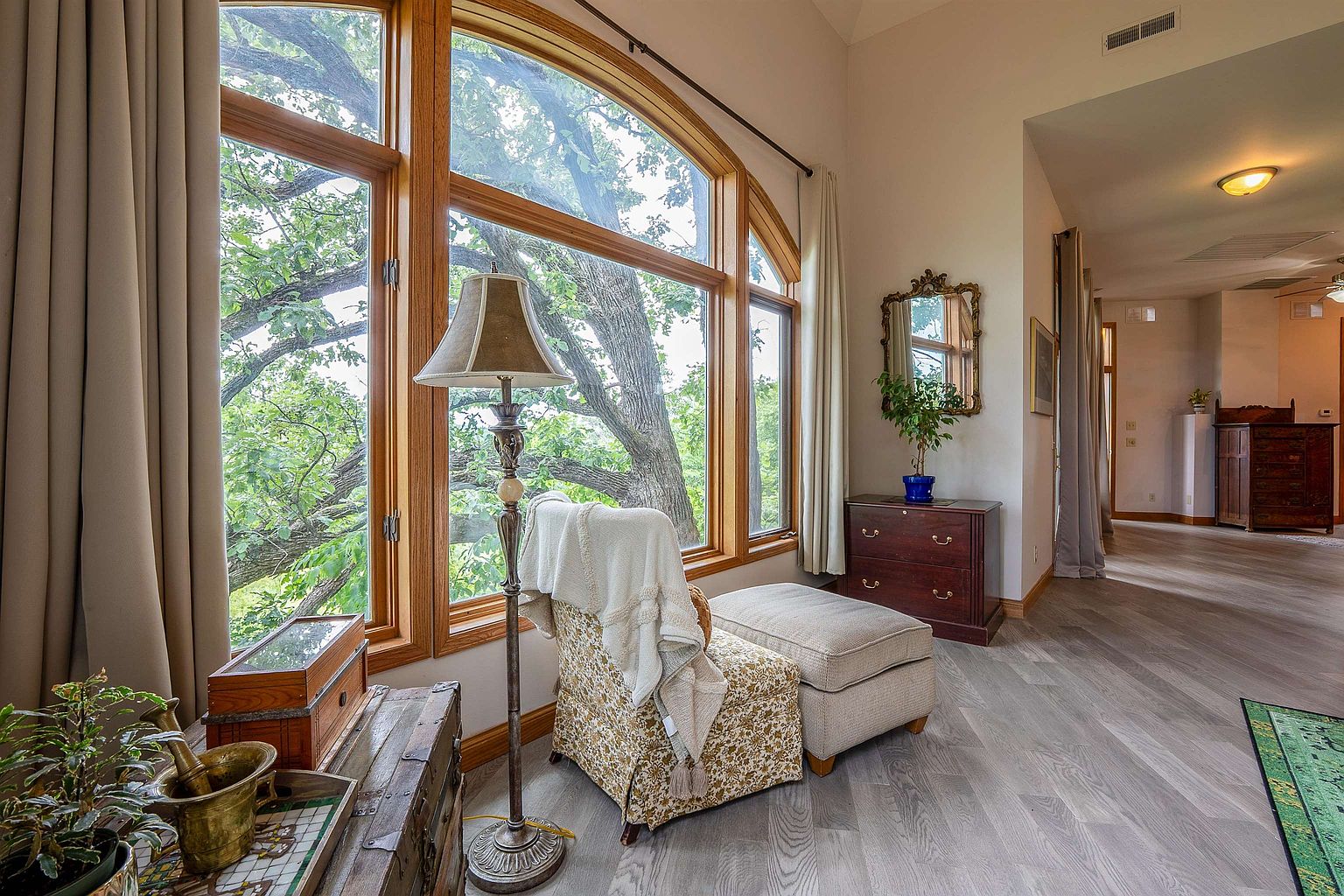
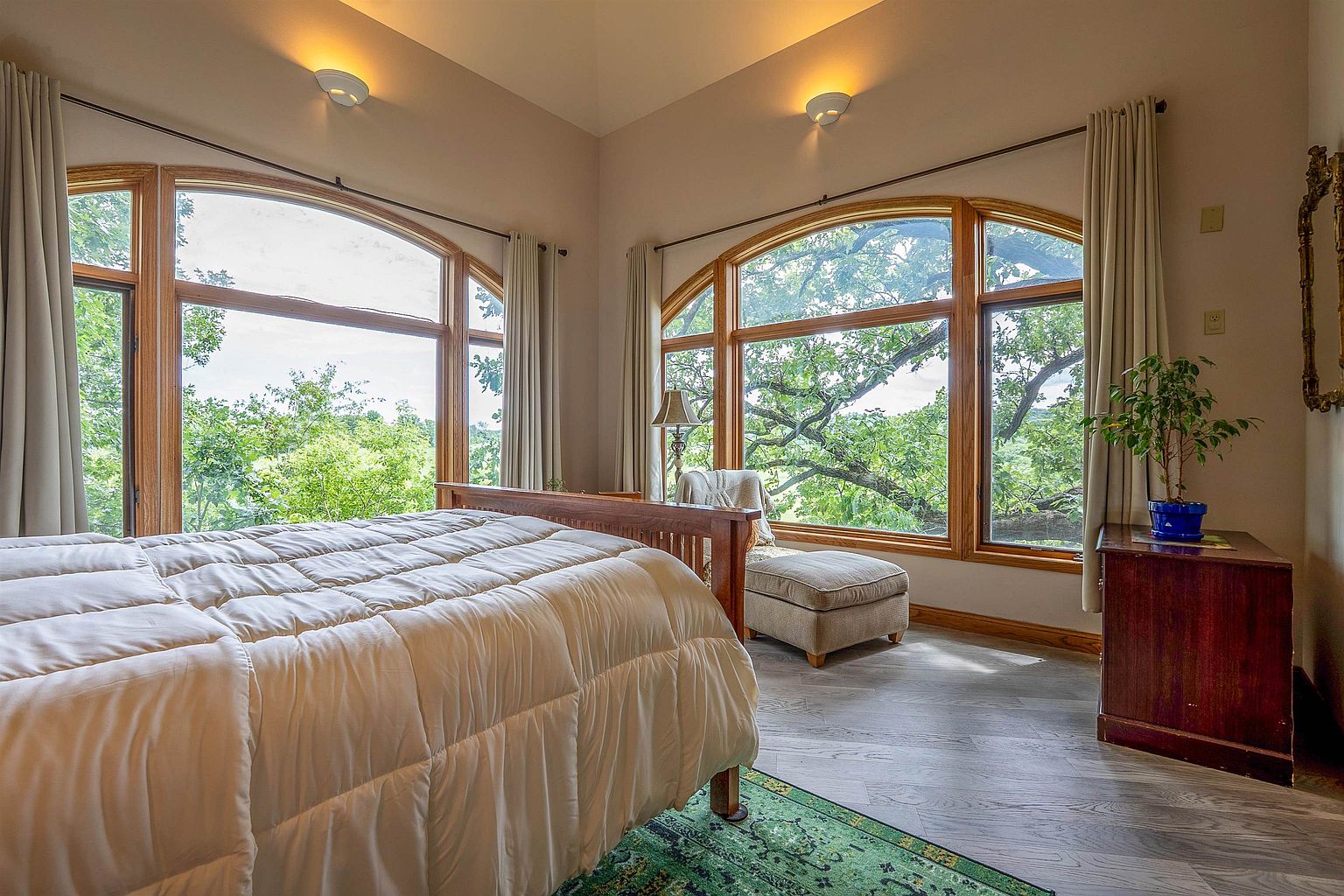
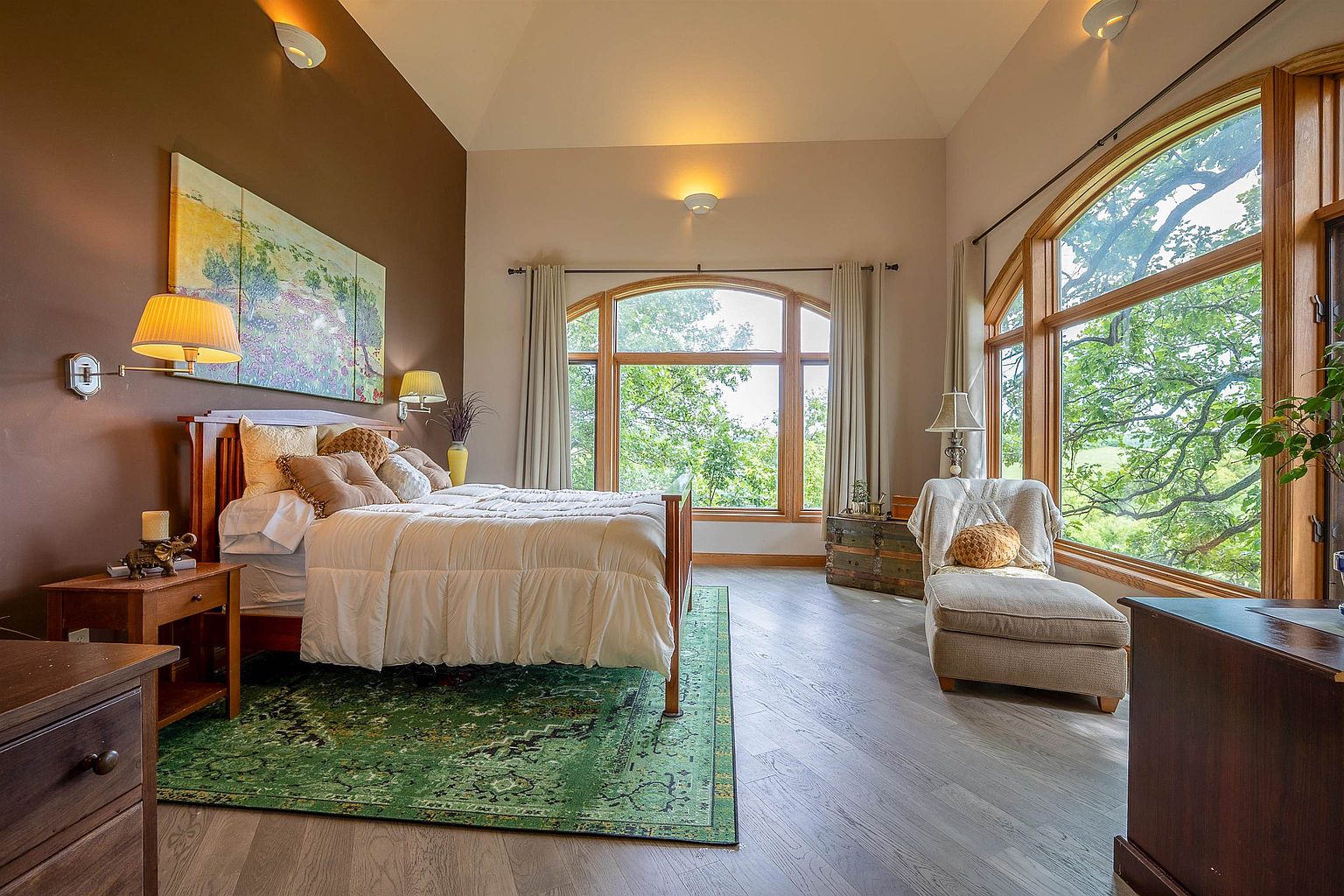
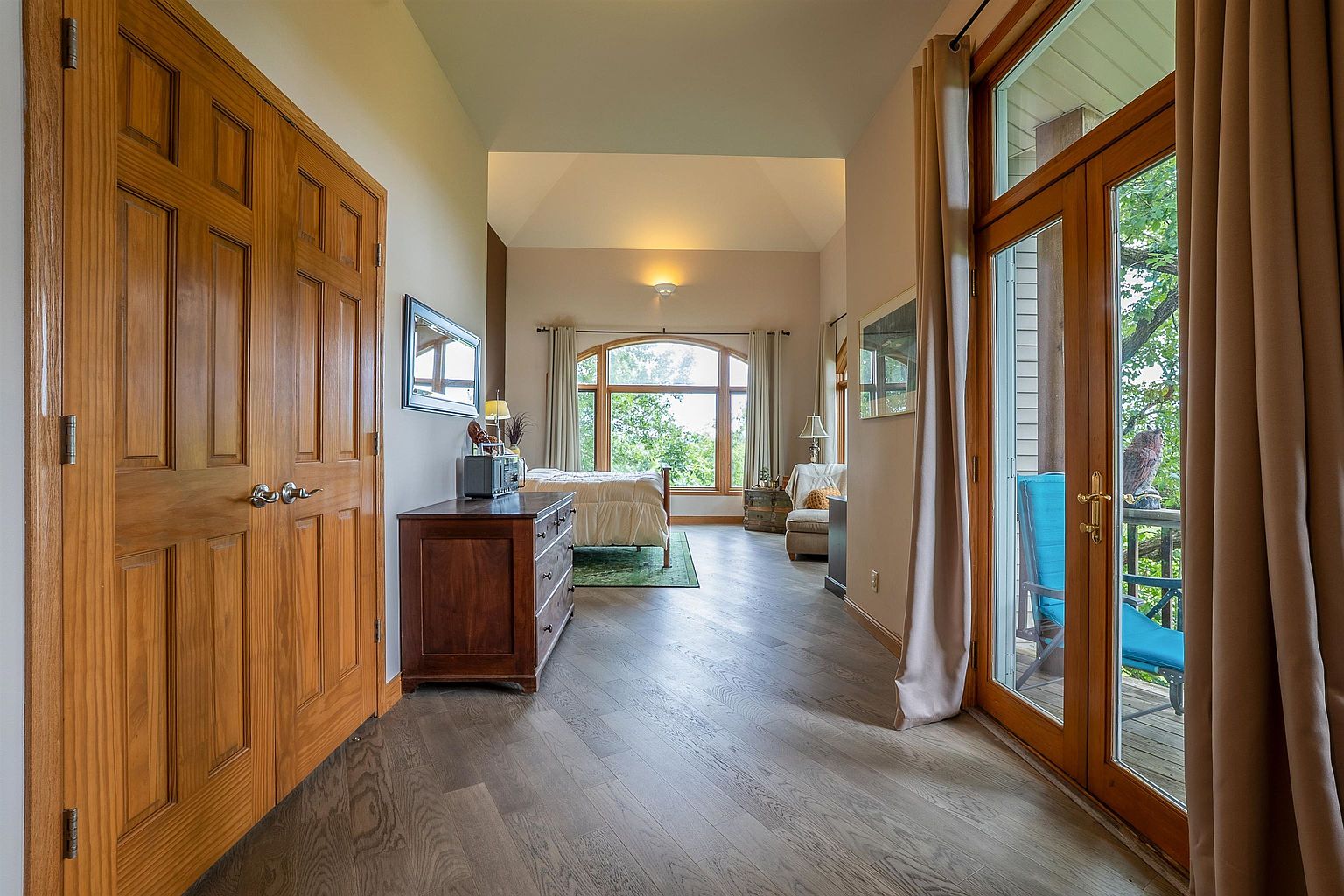
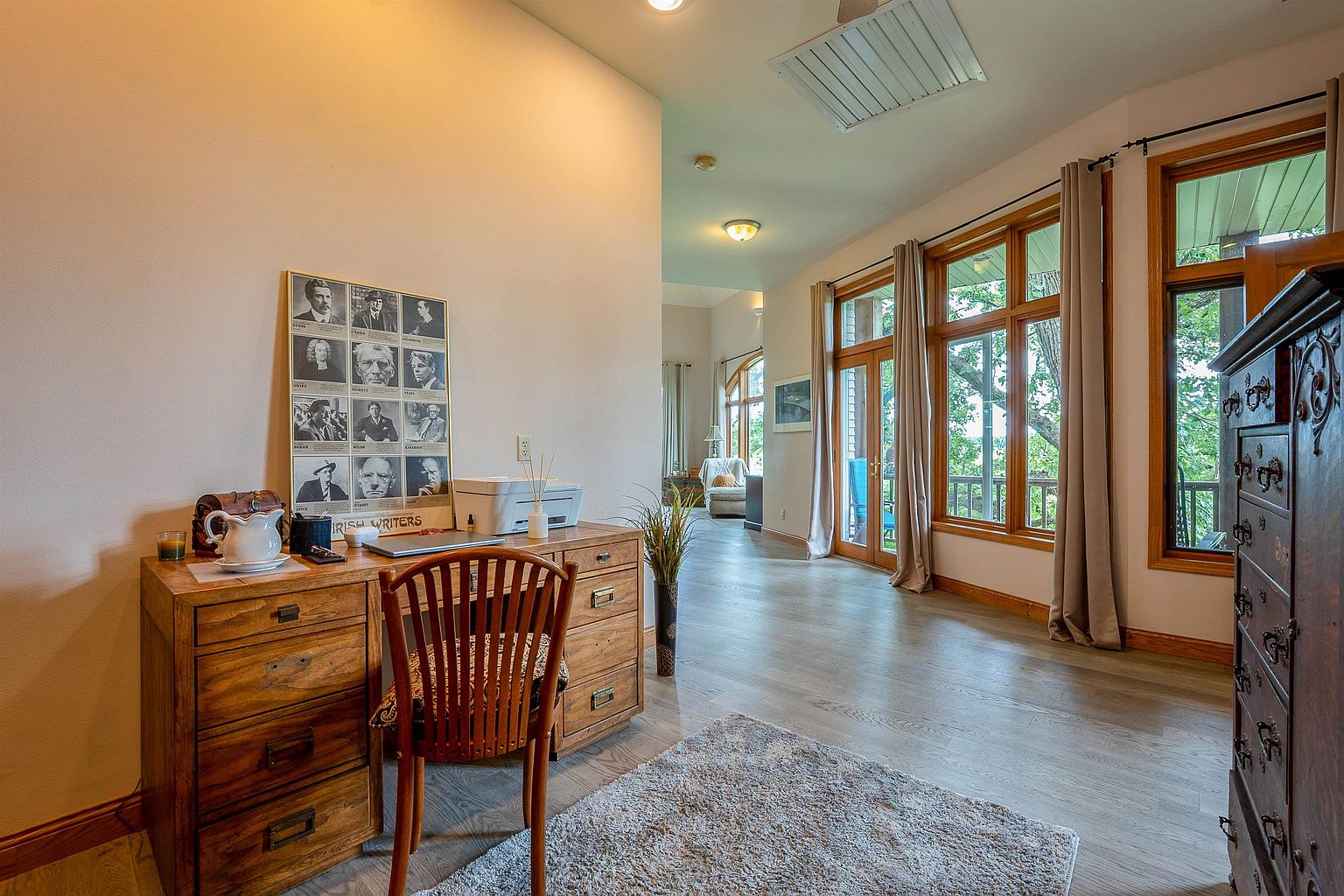
What genuinely distinguishes this property from others of comparable square footage is its architecture of independence. The main home is accessible. There are a total of three fully equipped living suites — each complete with its own kitchen, laundry, and full bath — allow multiple households to share a property without sharing a wall in any meaningful sense. The primary suite, with its arched windows, vaulted ceiling, deep brown accent wall, and private deck access through glass-paned double doors, functions as a genuine sanctuary. A chaise lounge positioned near the window is not a styling choice — it is an invitation.
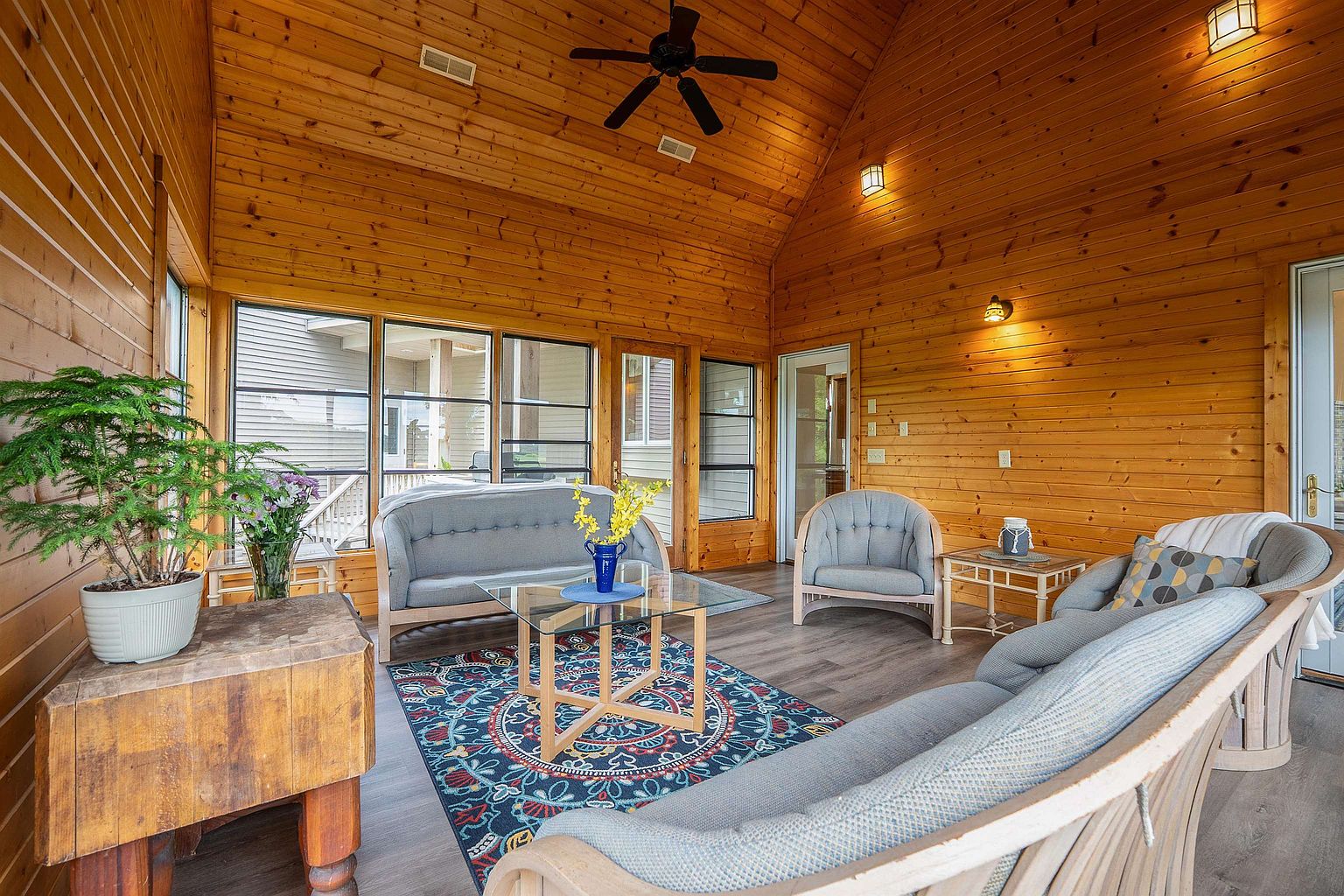
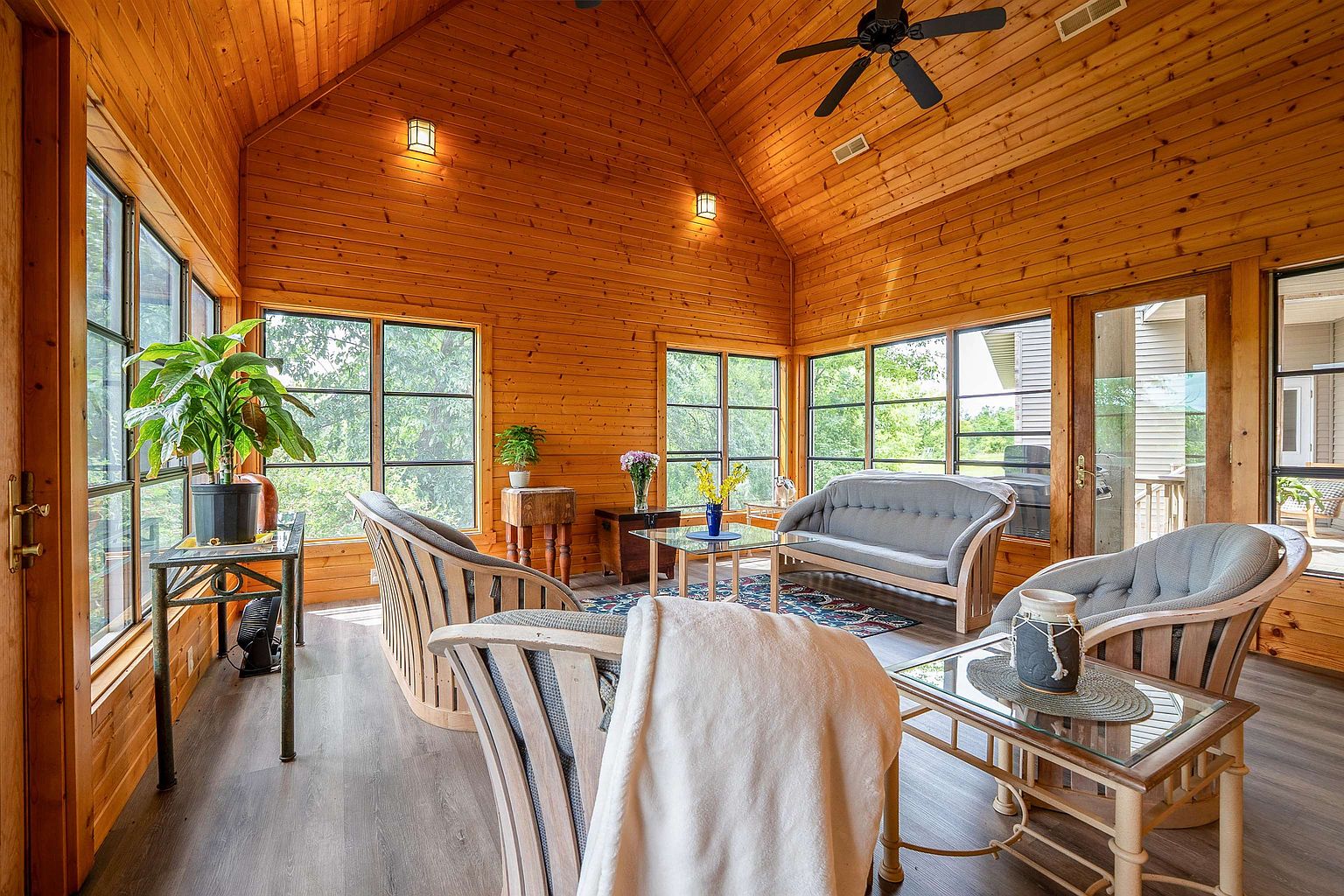
The sunroom, finished in warm wood paneling beneath a vaulted ceiling with a central fan, offers a different quality of light and comfort — the kind of room that earns year-round use through thoughtful design rather than seasonal novelty.
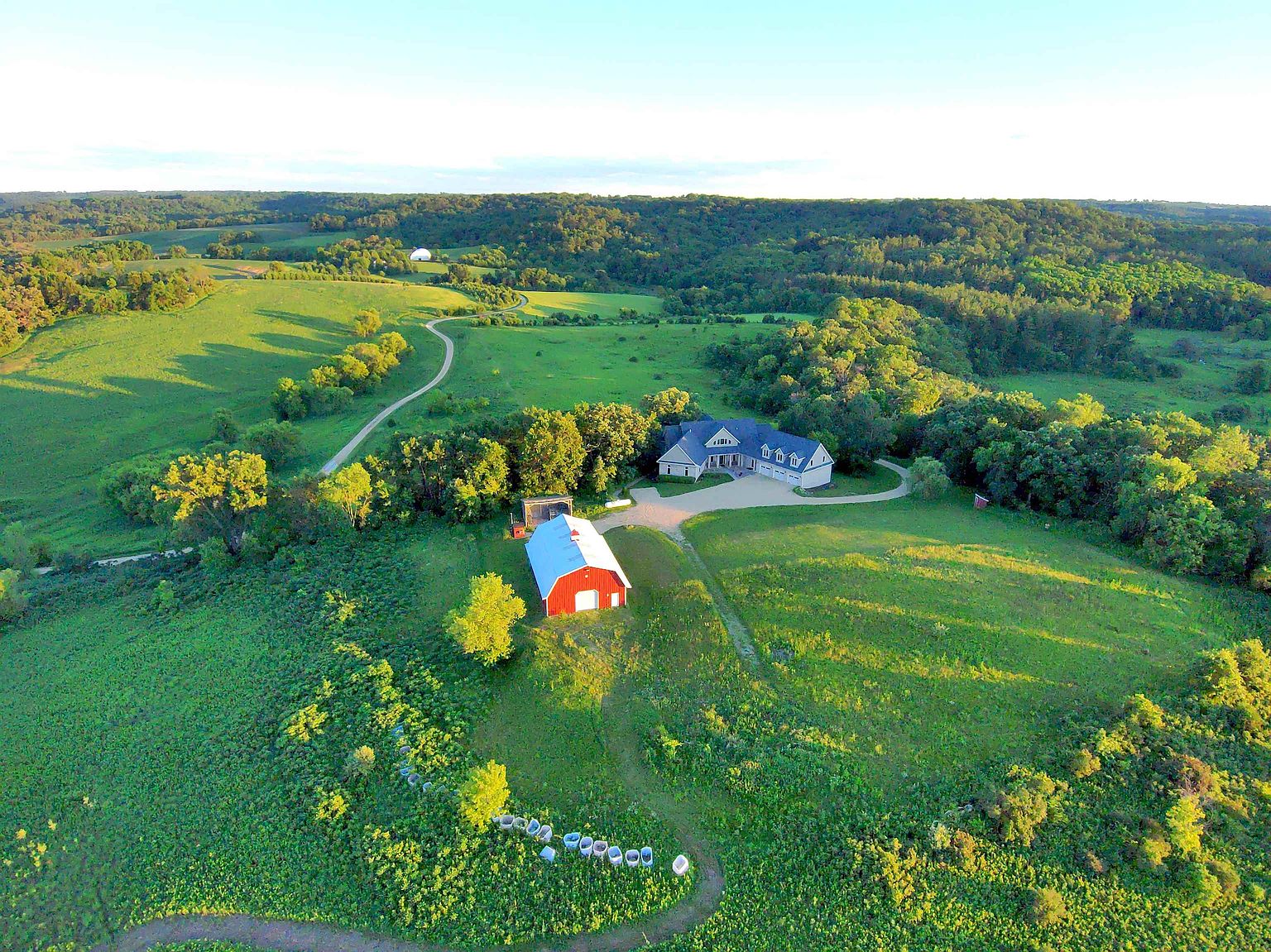
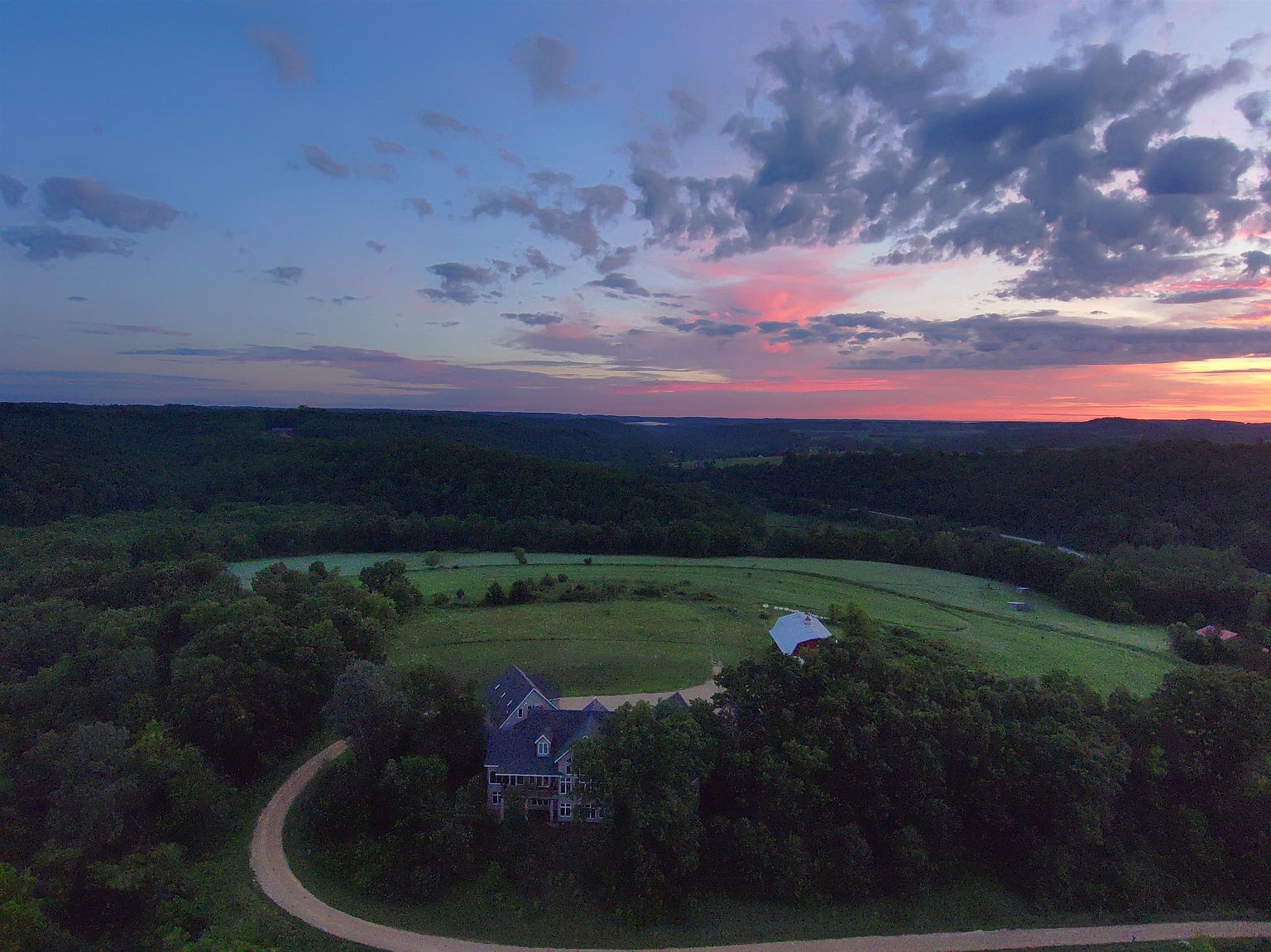
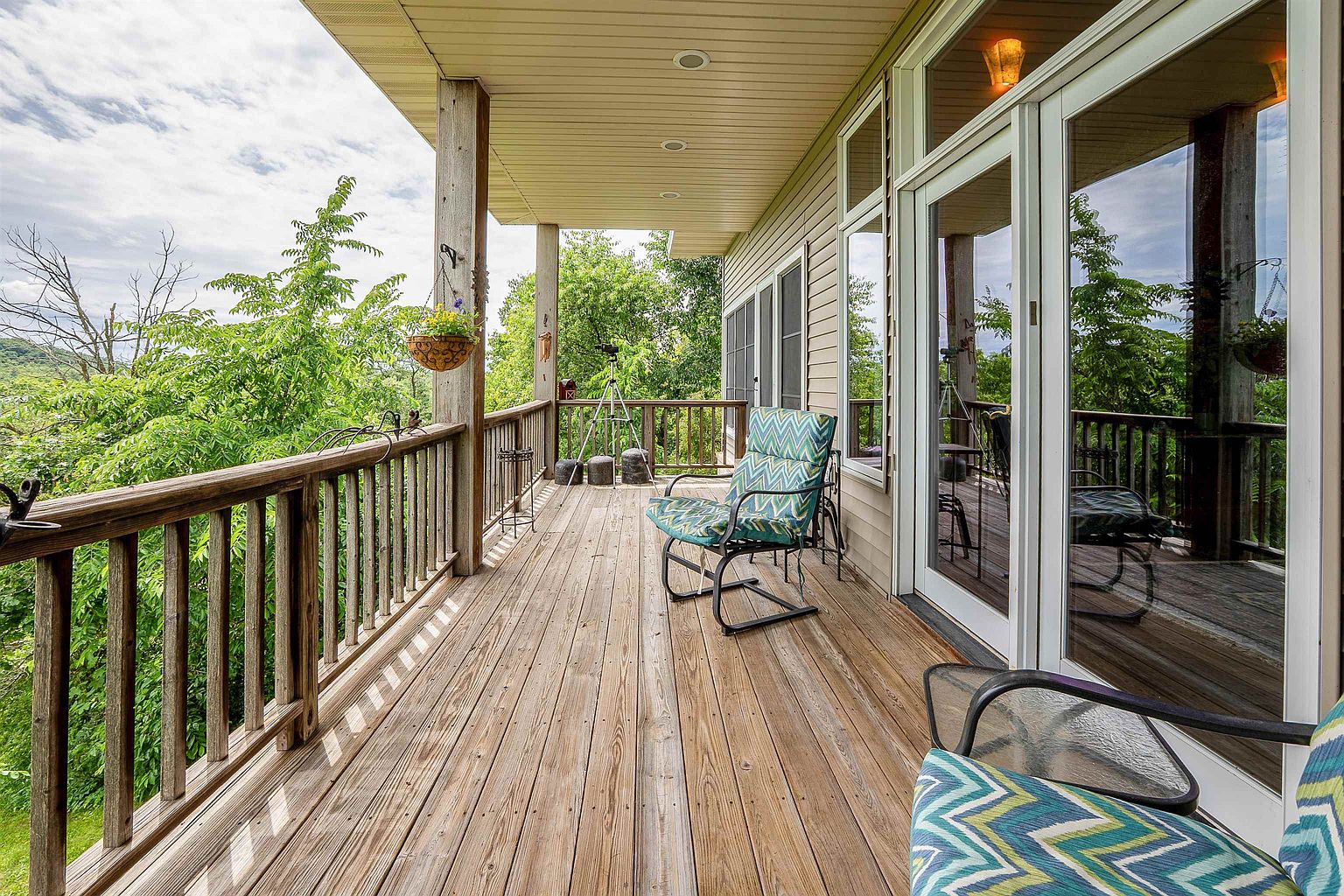
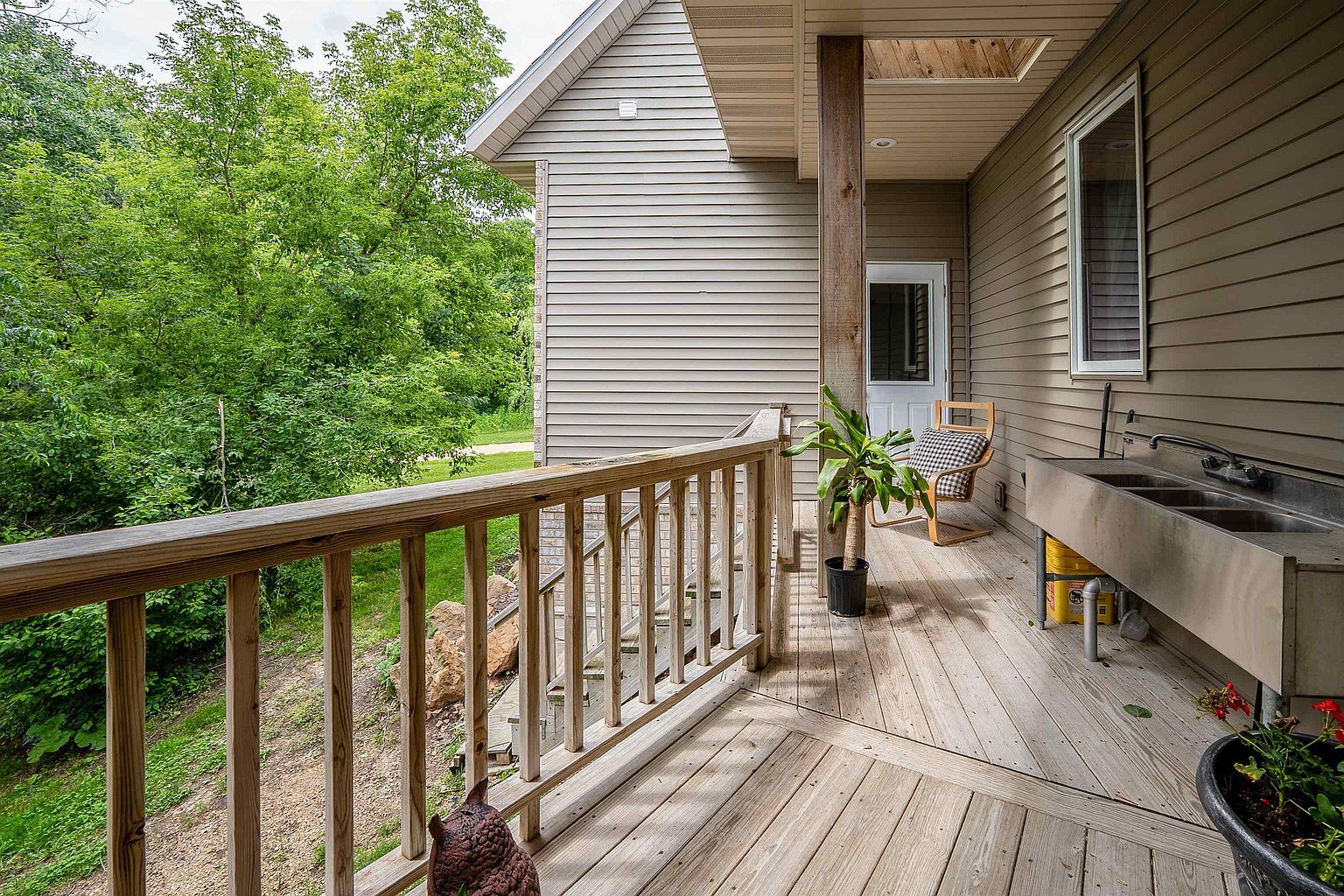
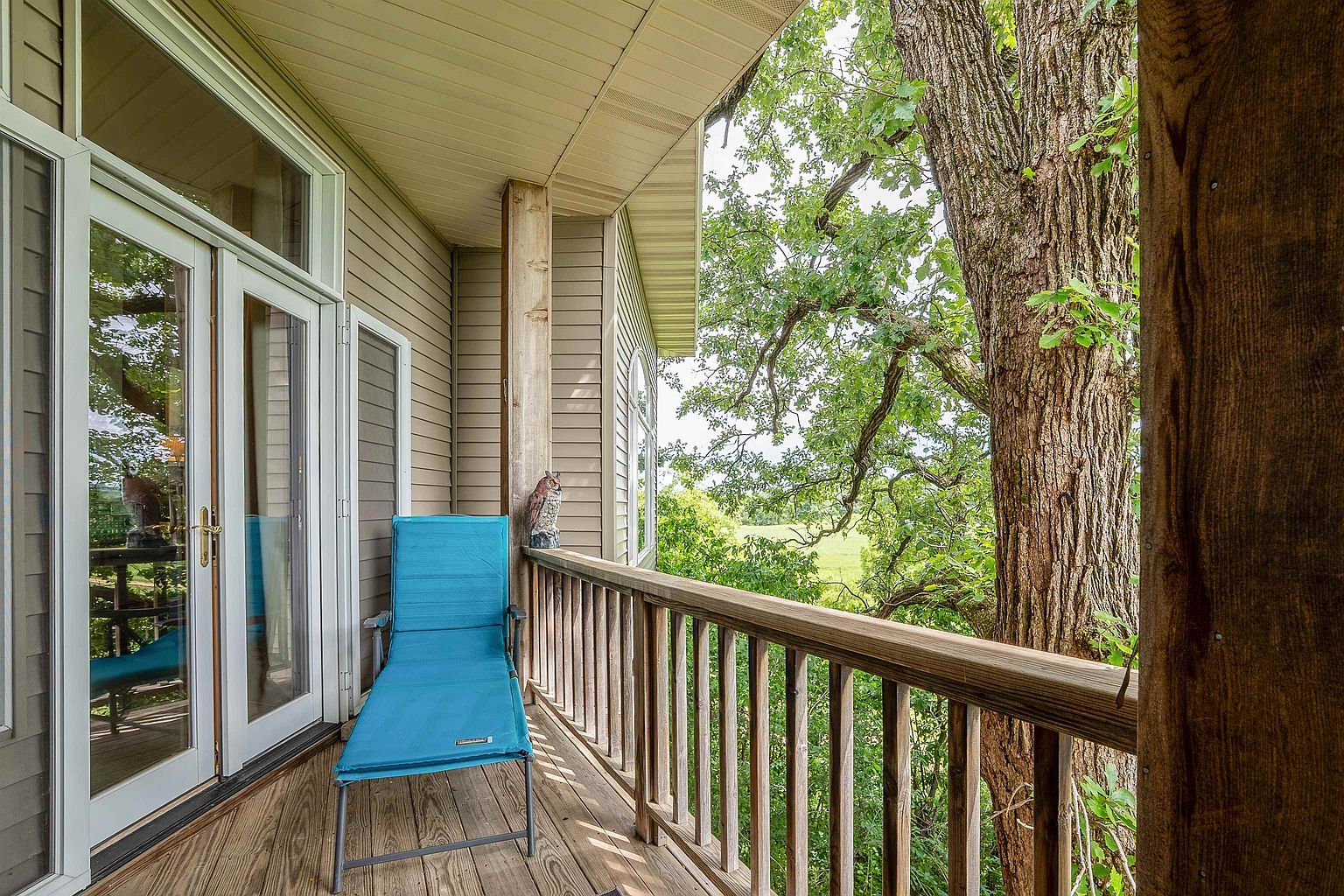
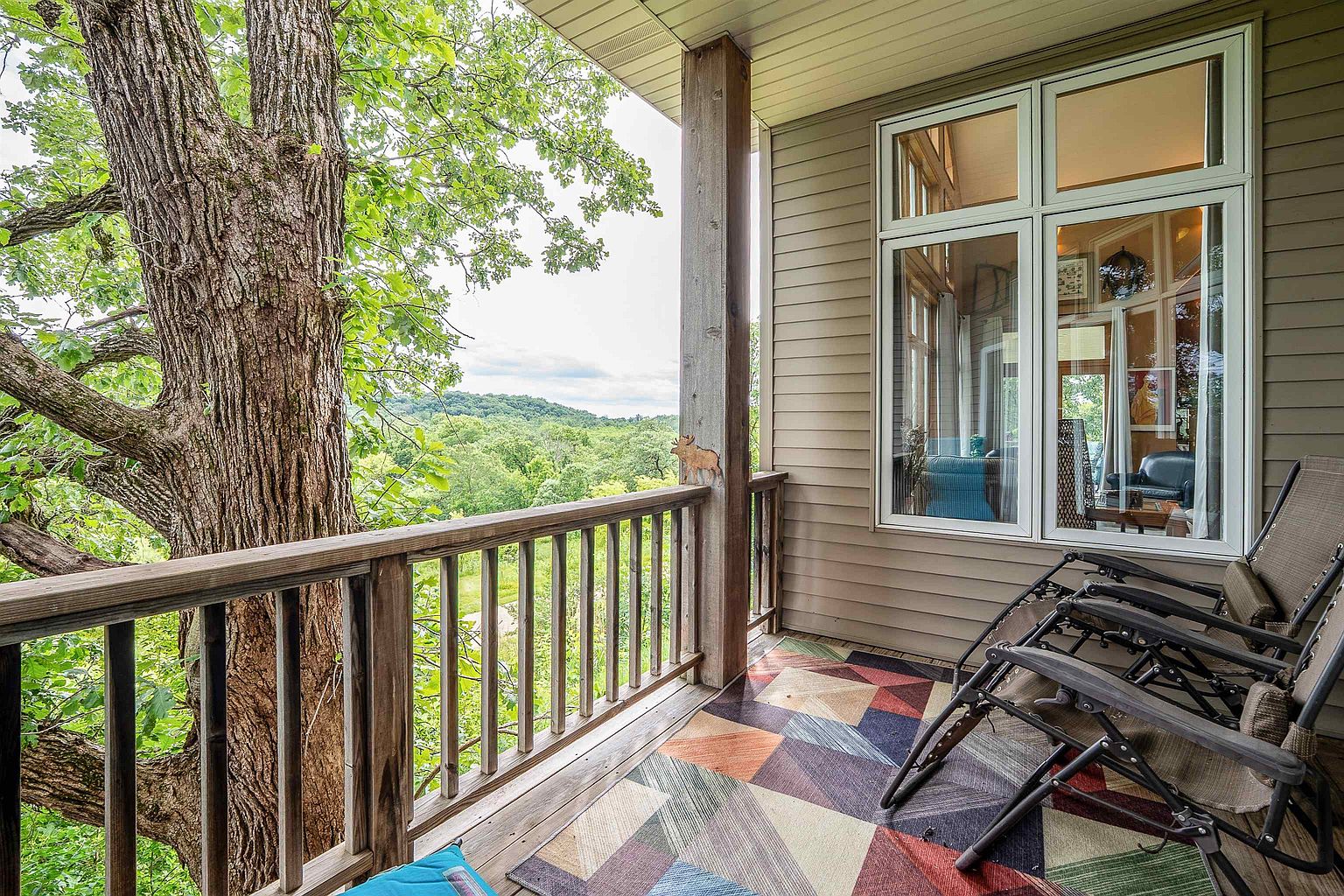
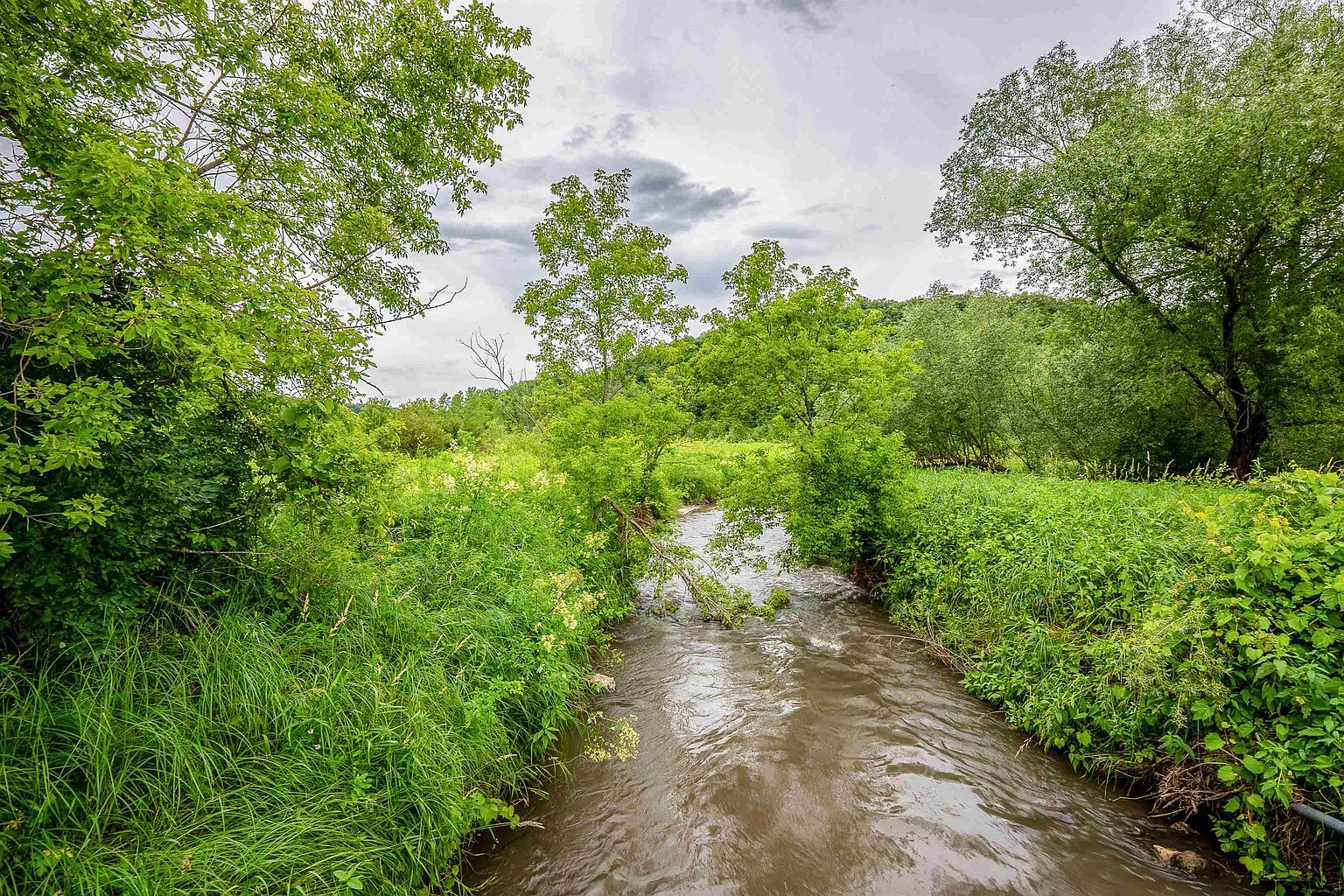
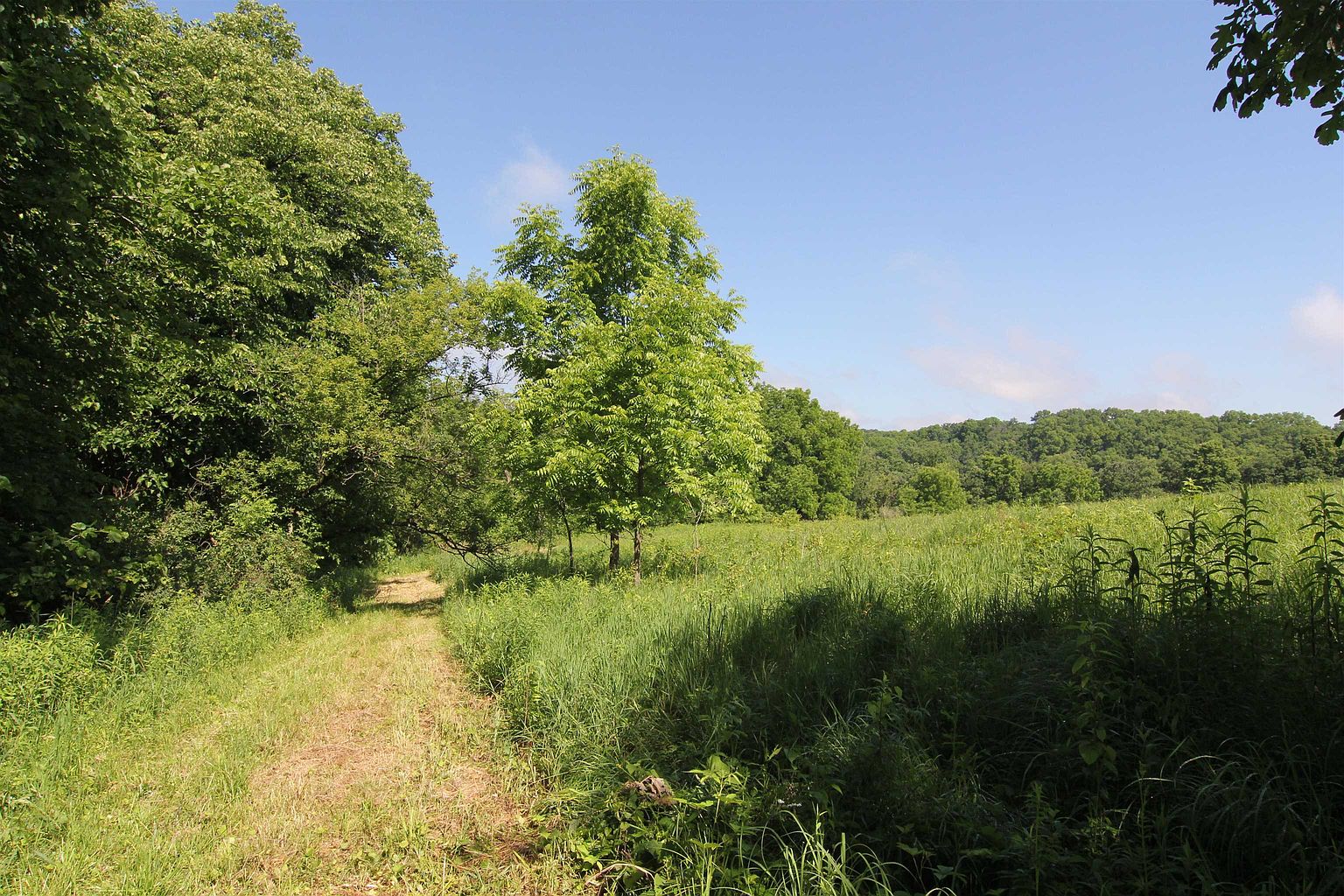
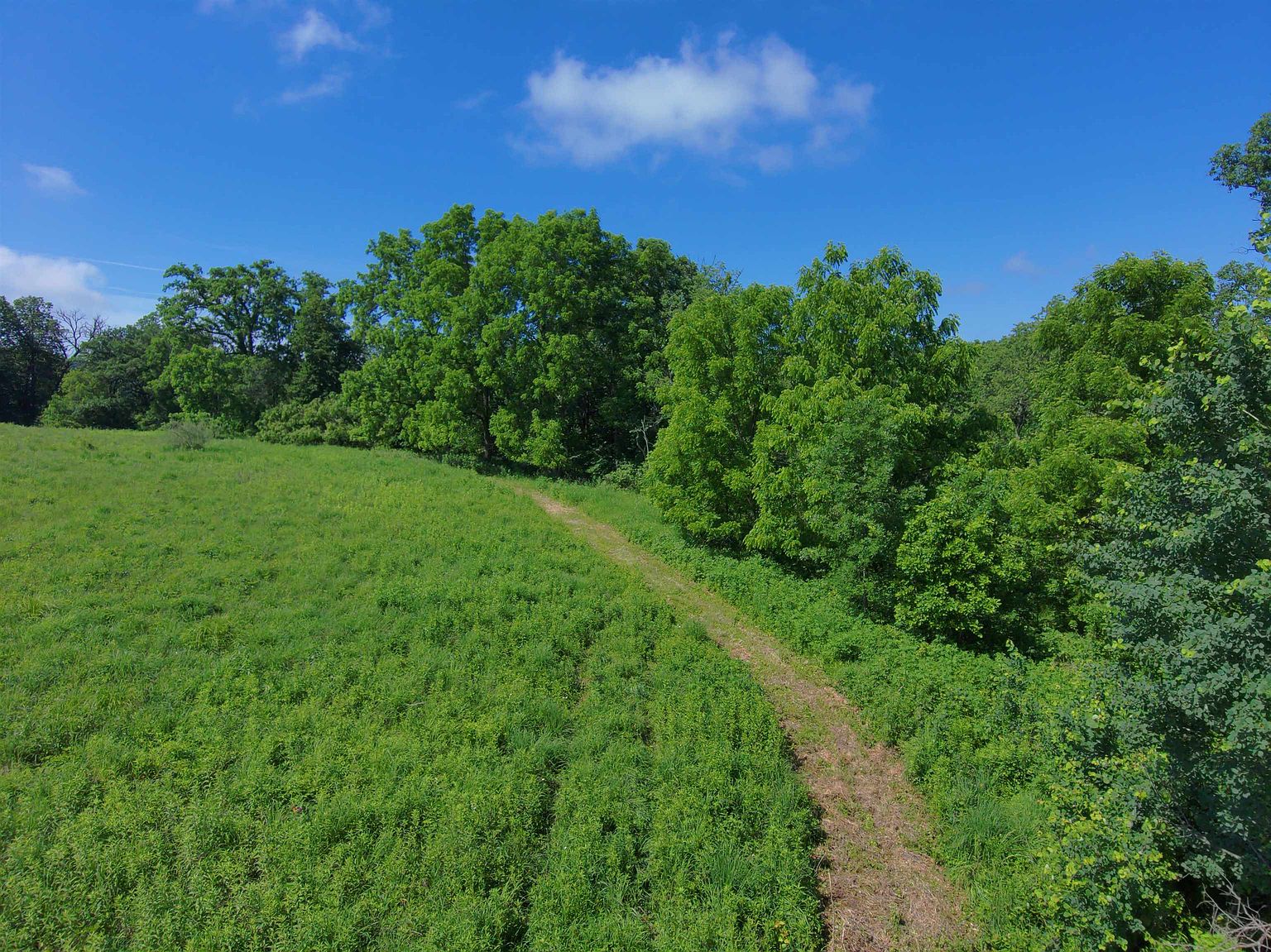
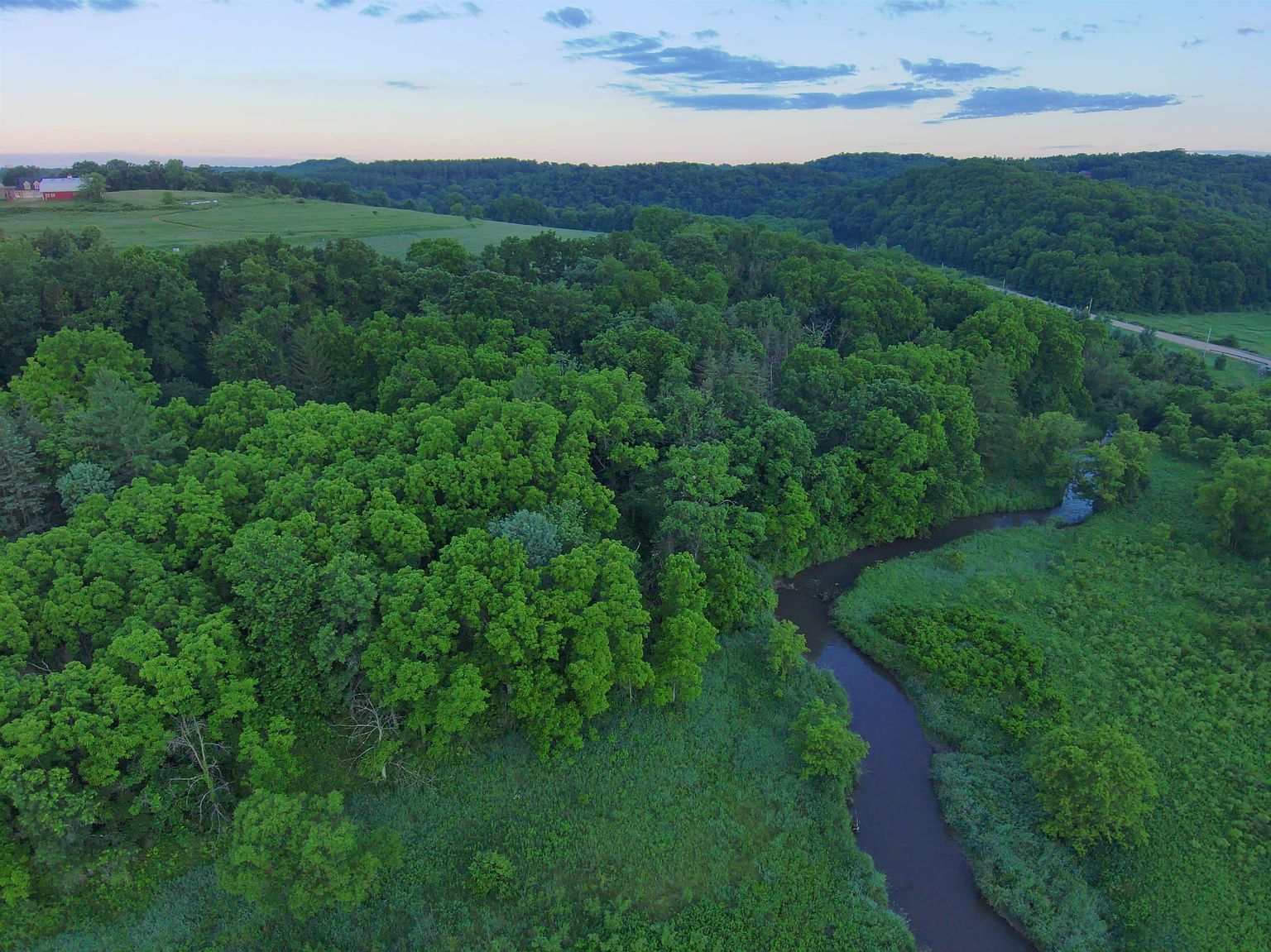
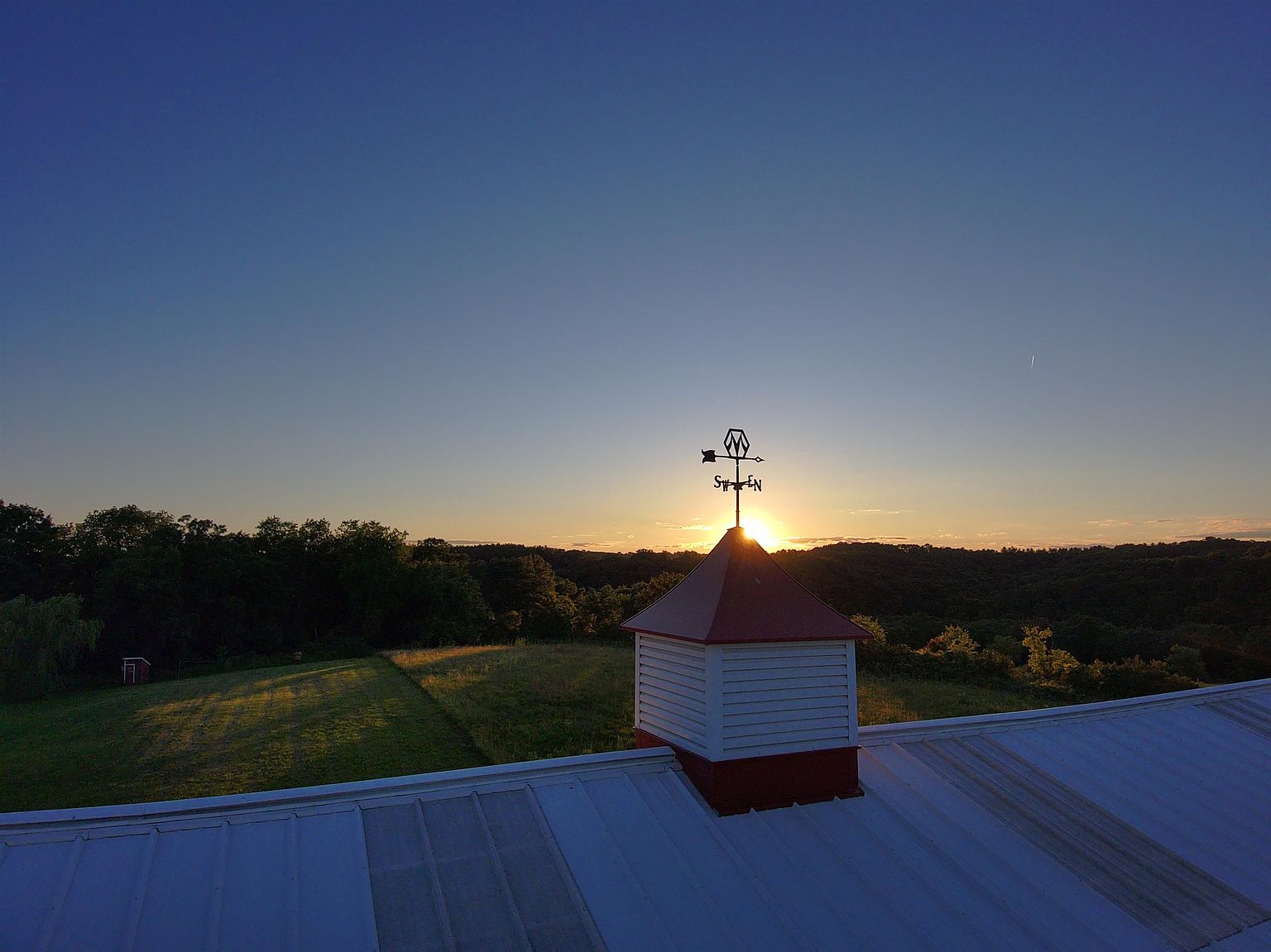
Outdoors, three private decks extend the living space into the landscape at different orientations, each offering its own relationship with the surrounding trees and rolling terrain. Otter Creek winds through the property providing a natural soundtrack that no architectural feature could replicate.
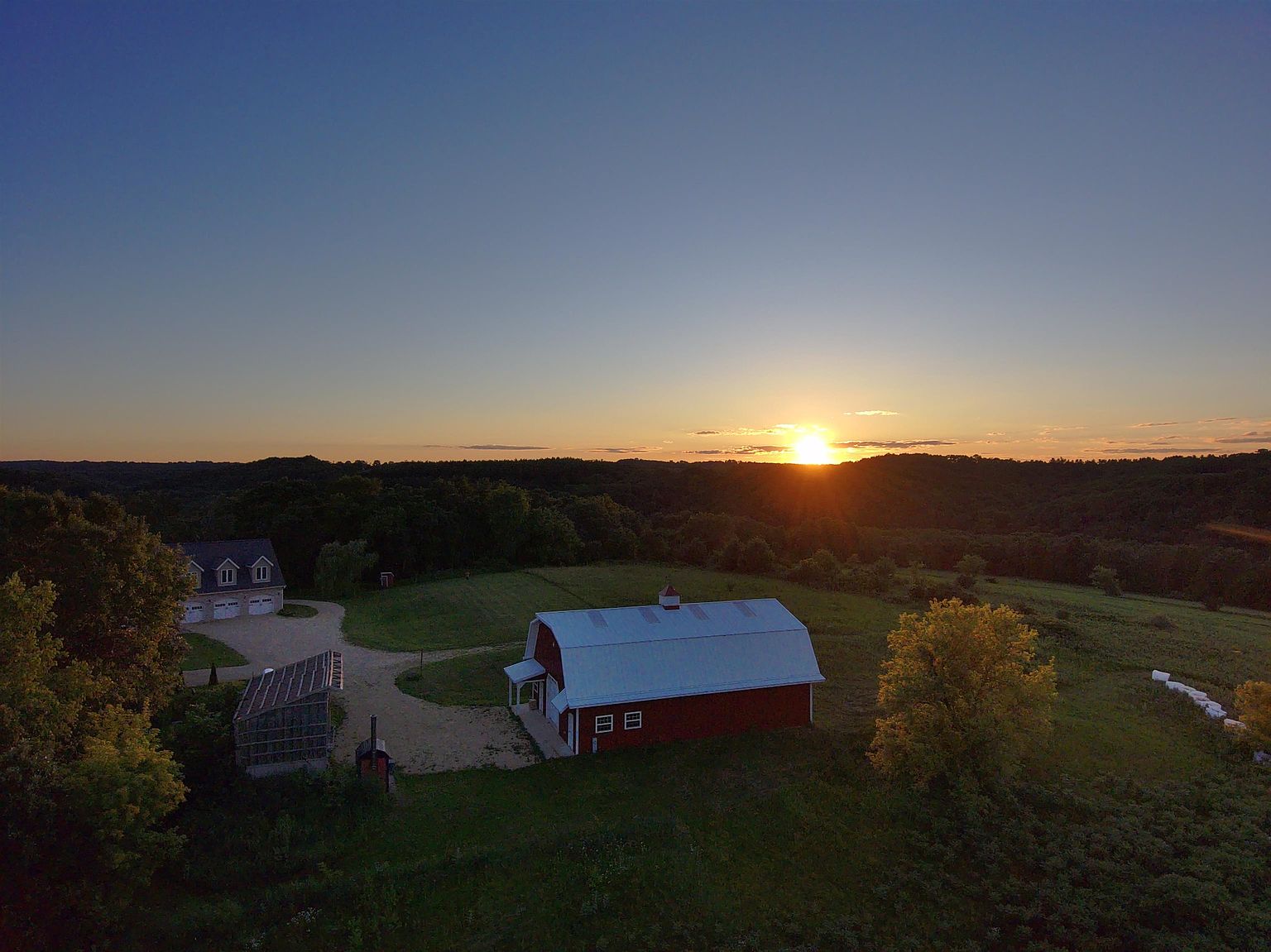
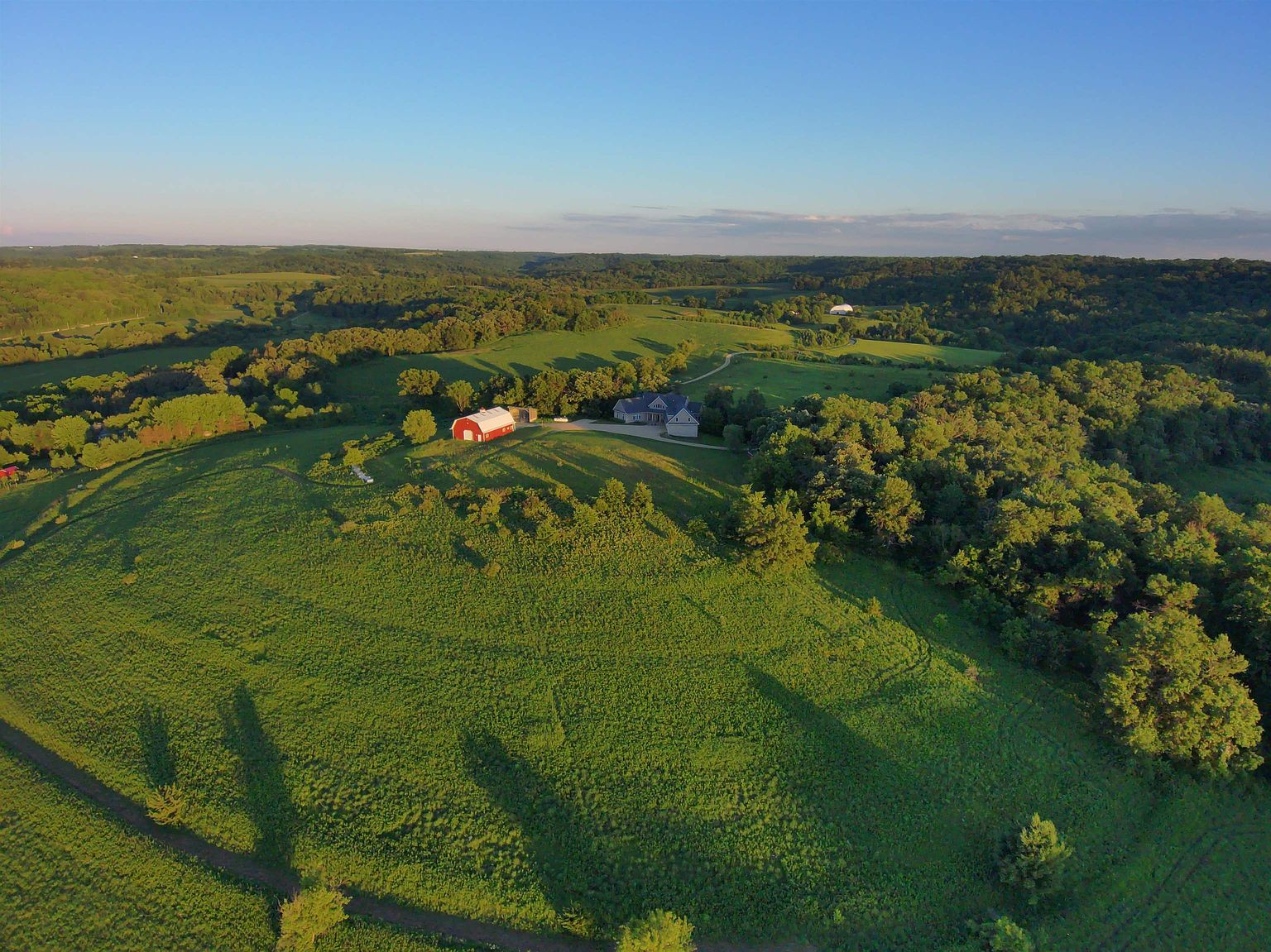
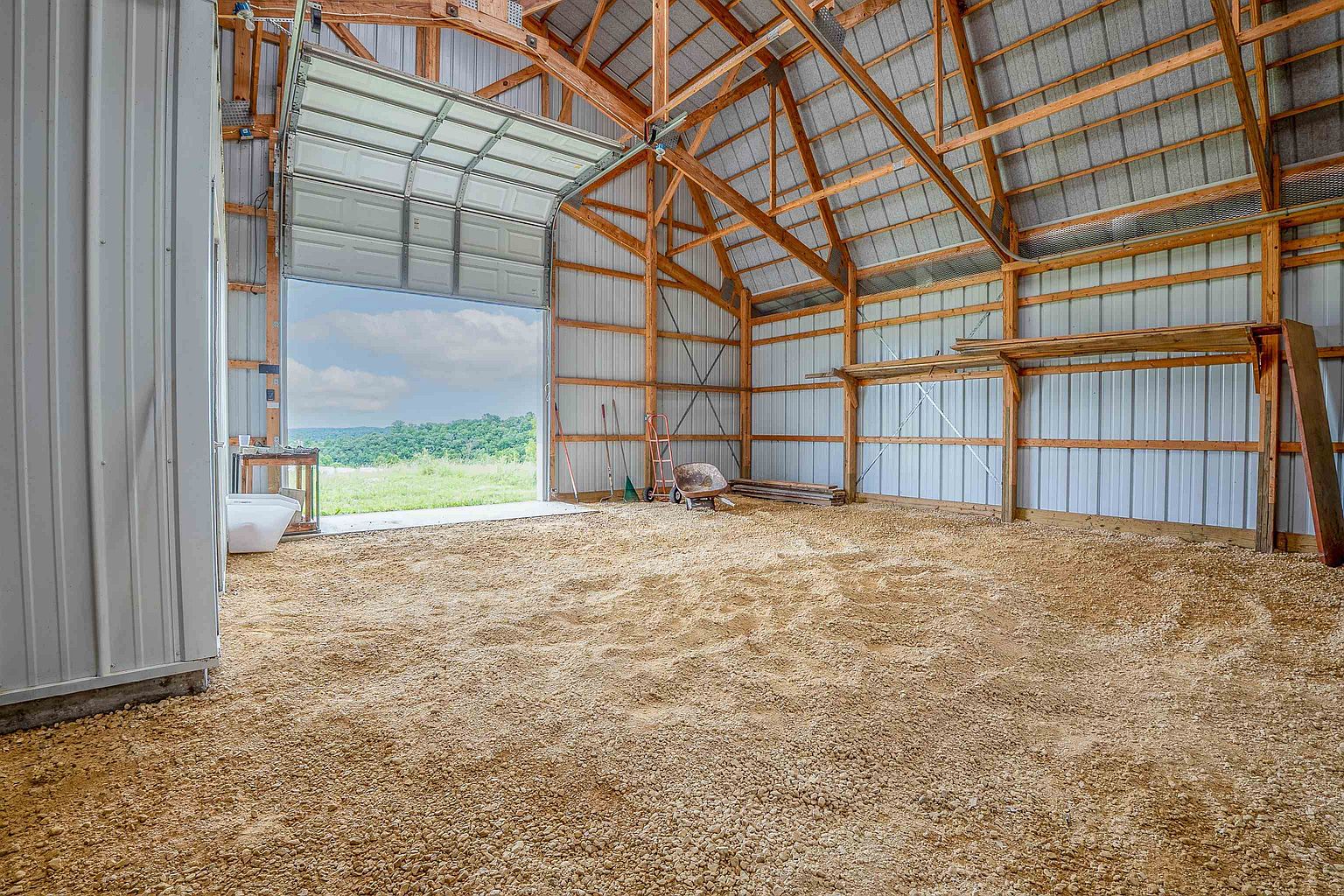
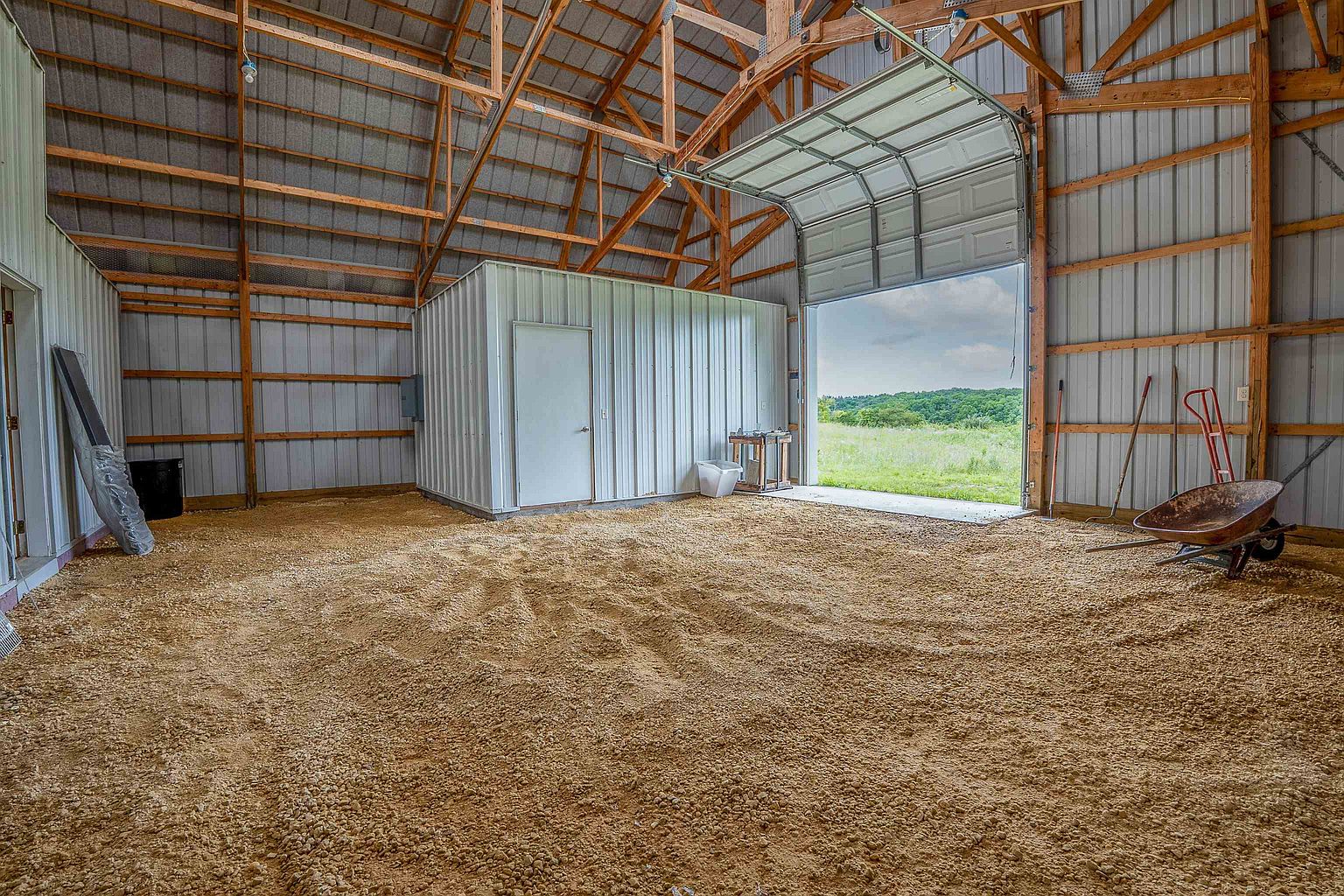
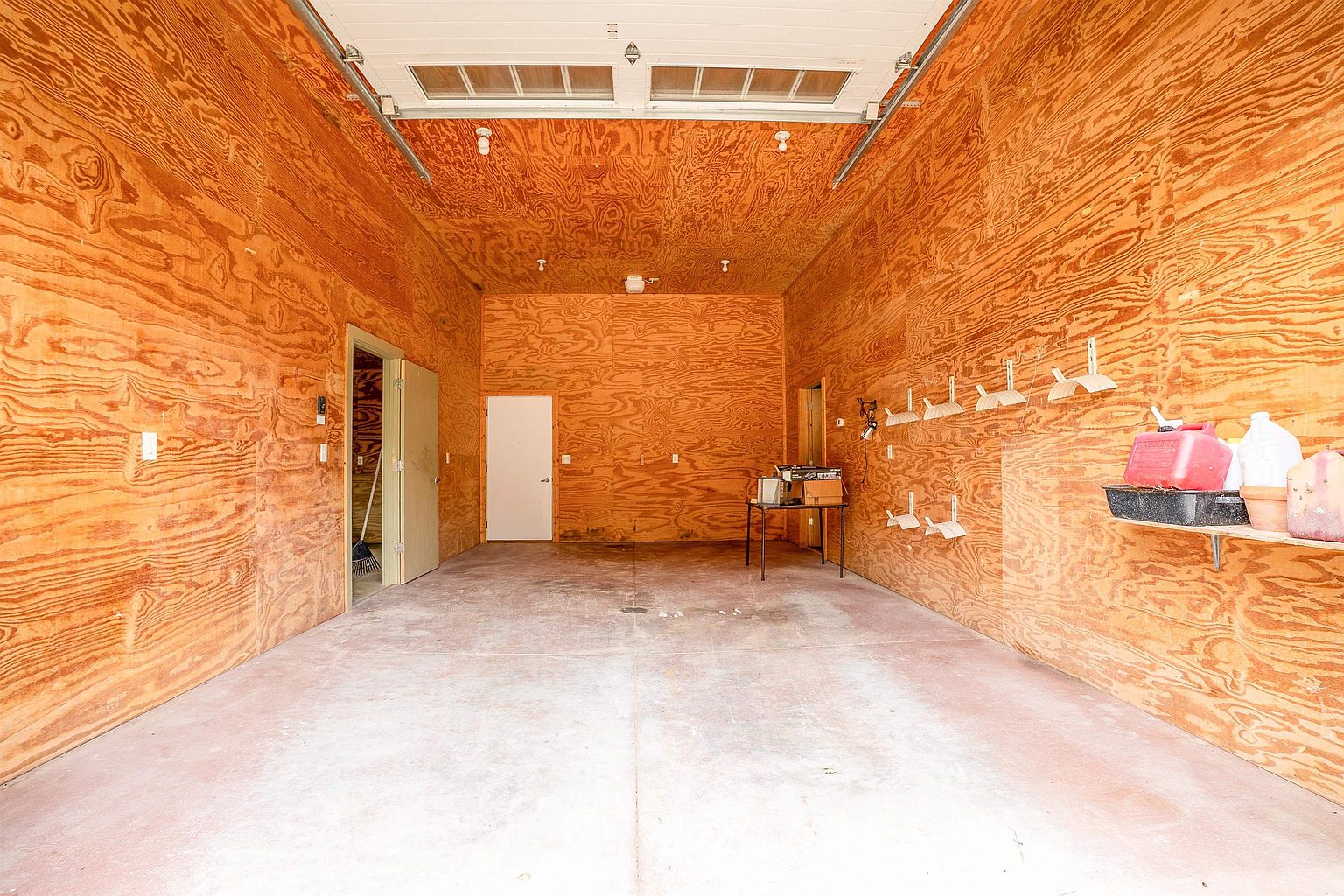
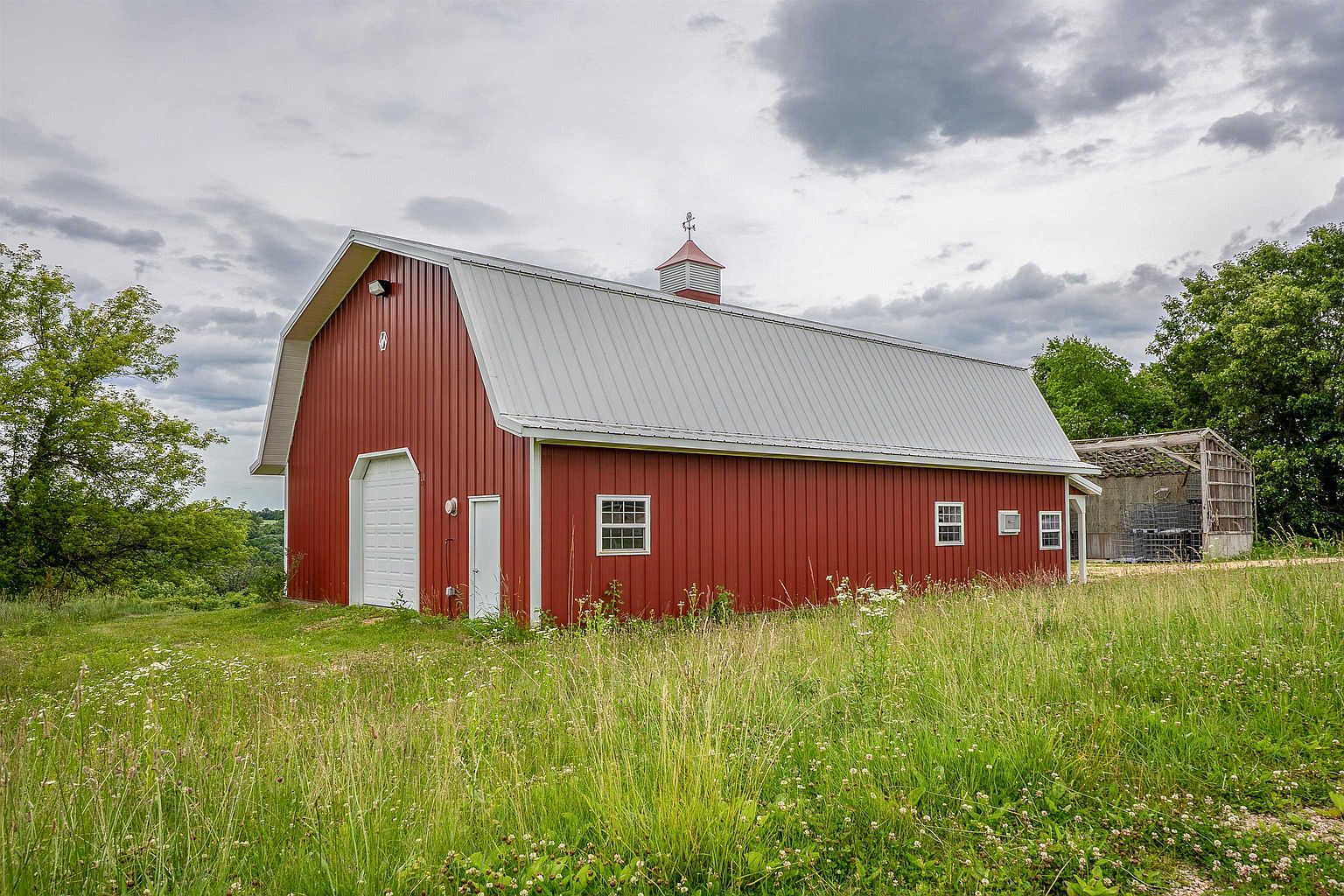
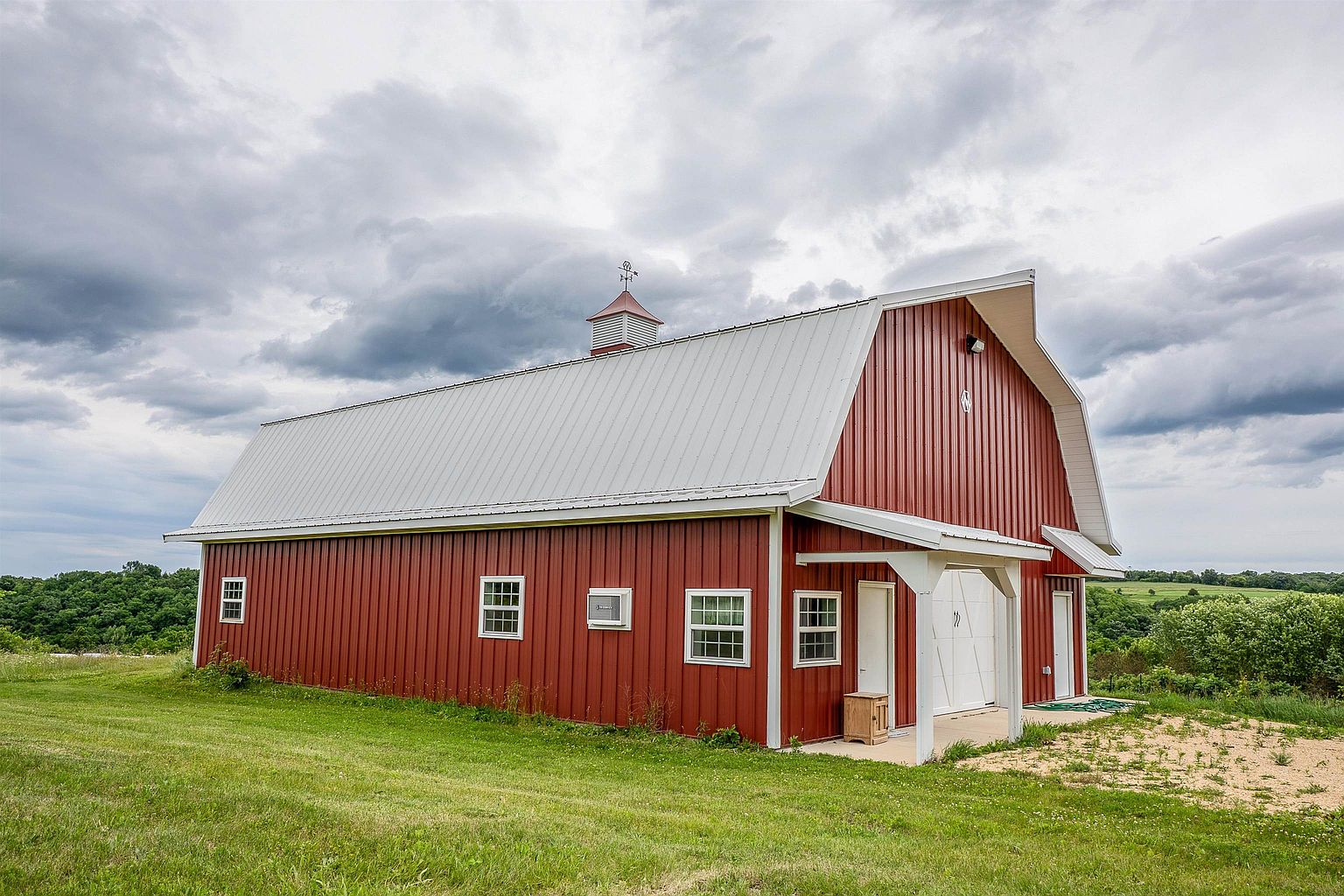
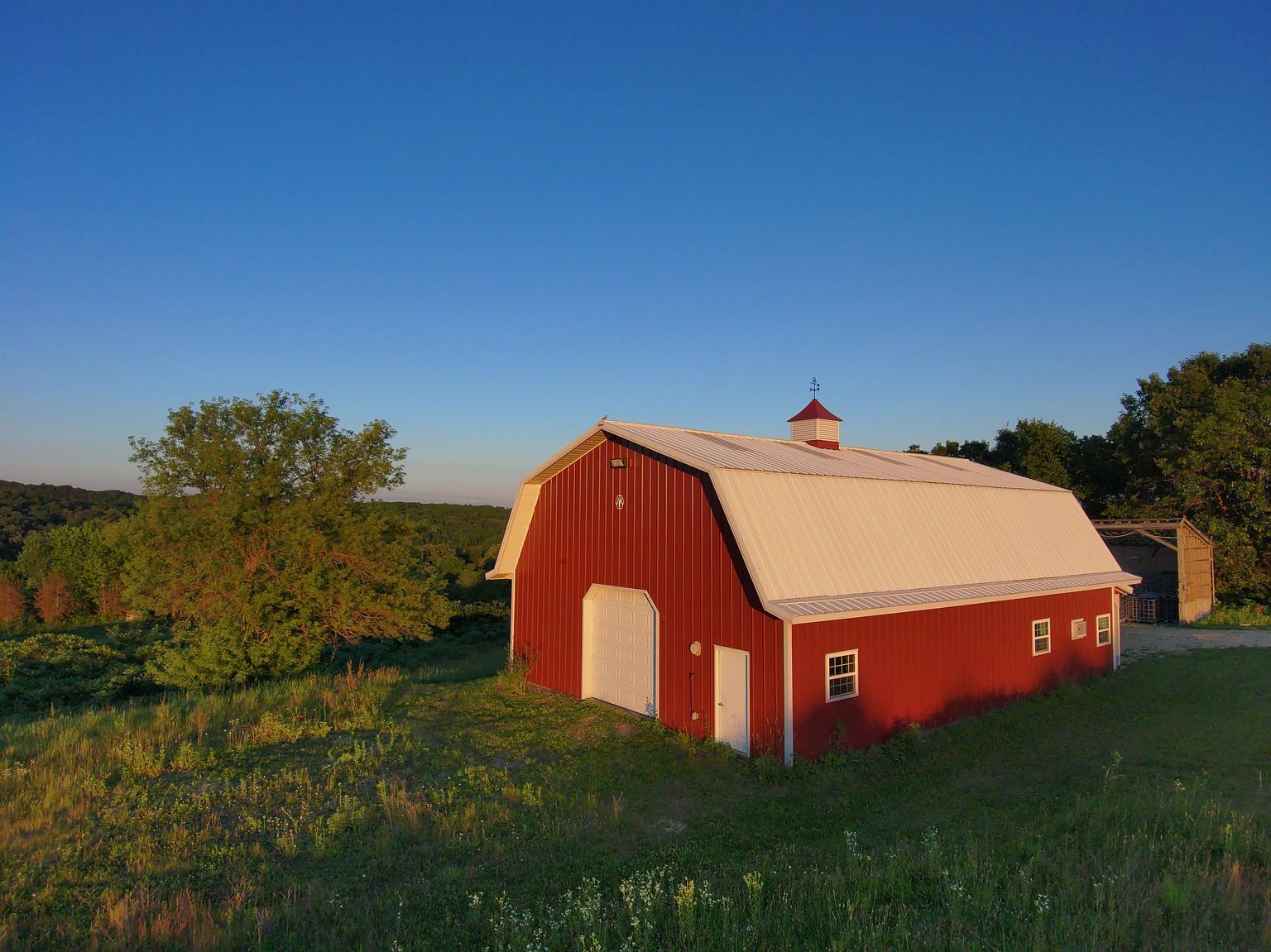
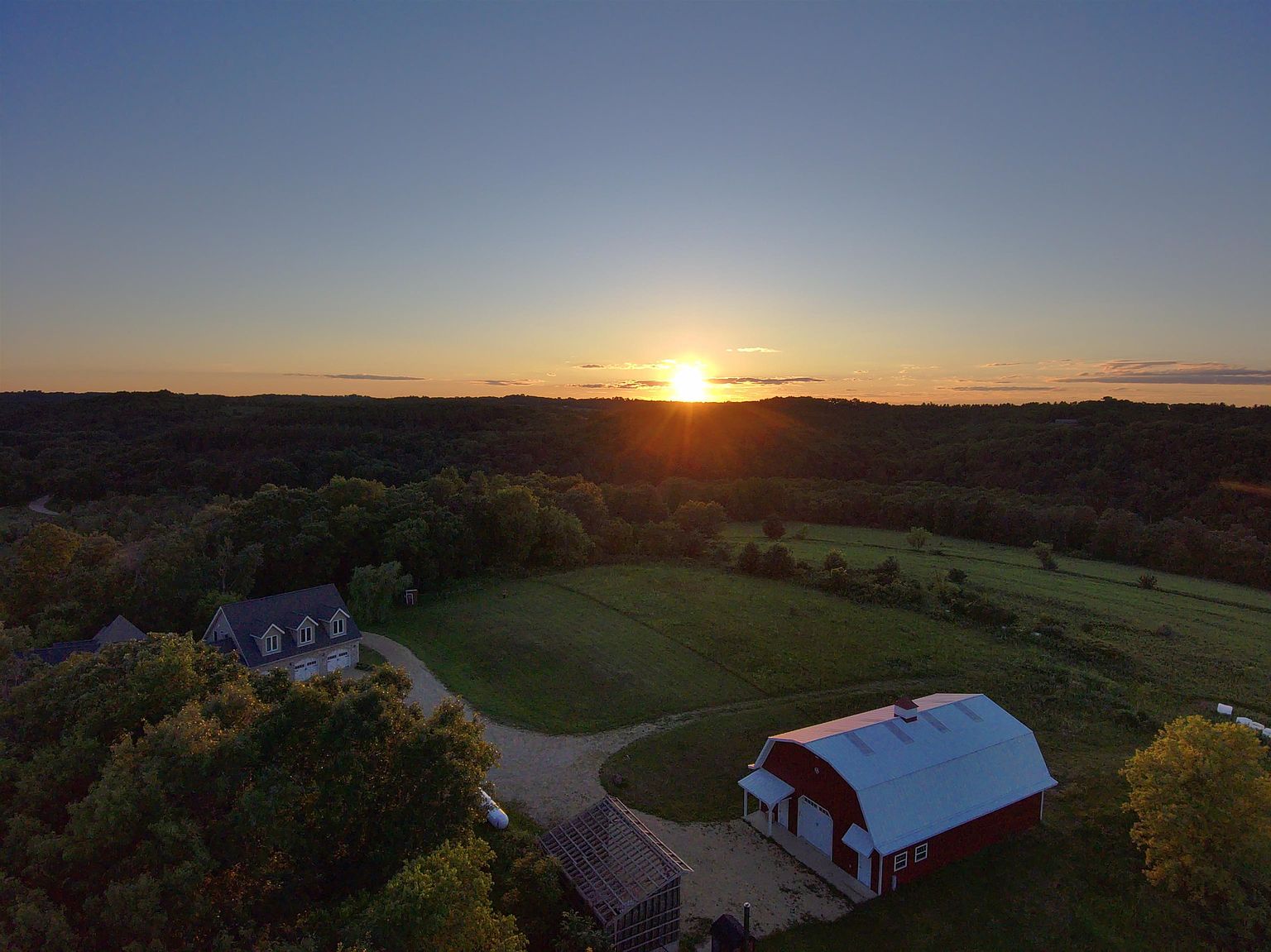
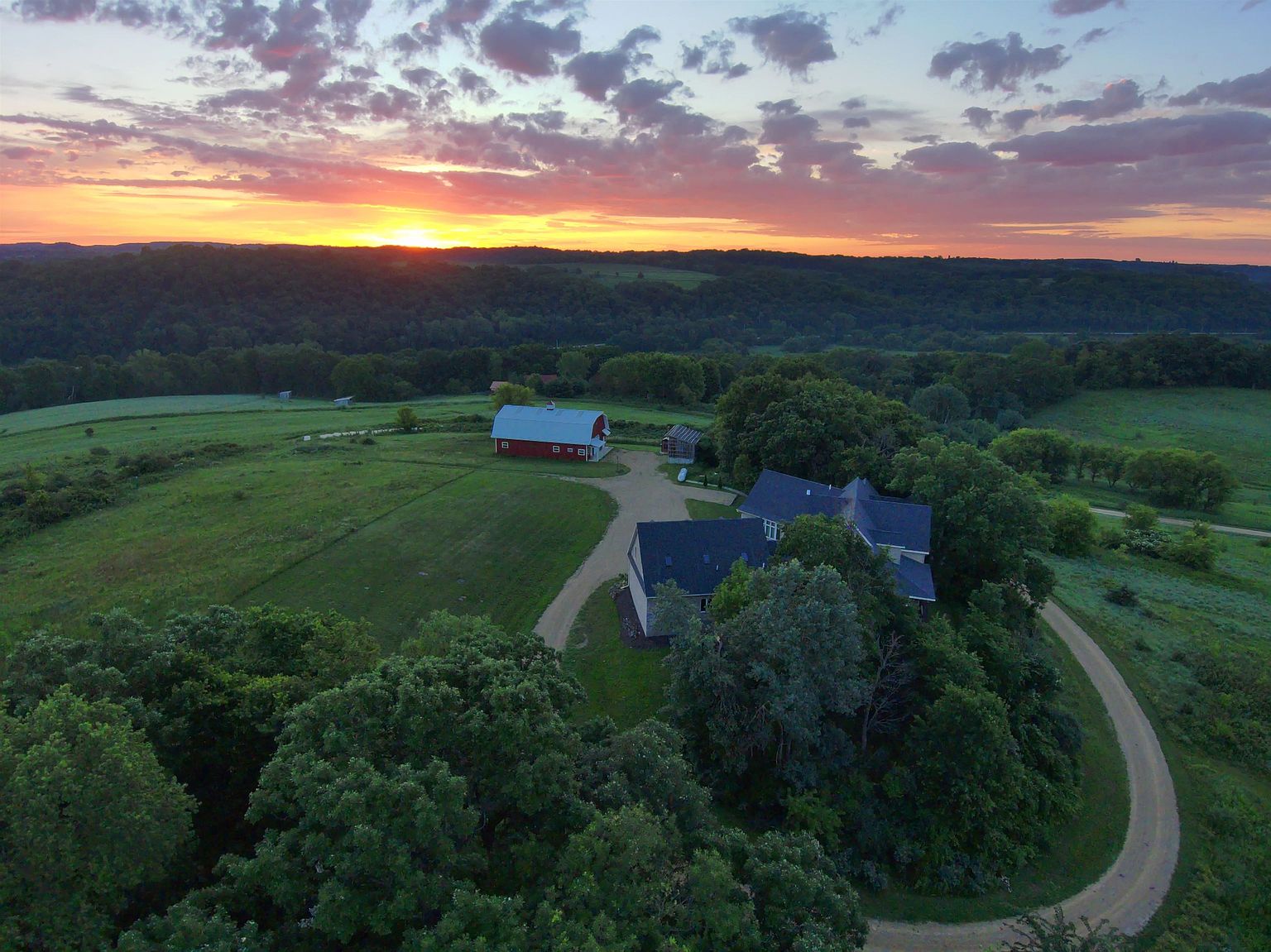
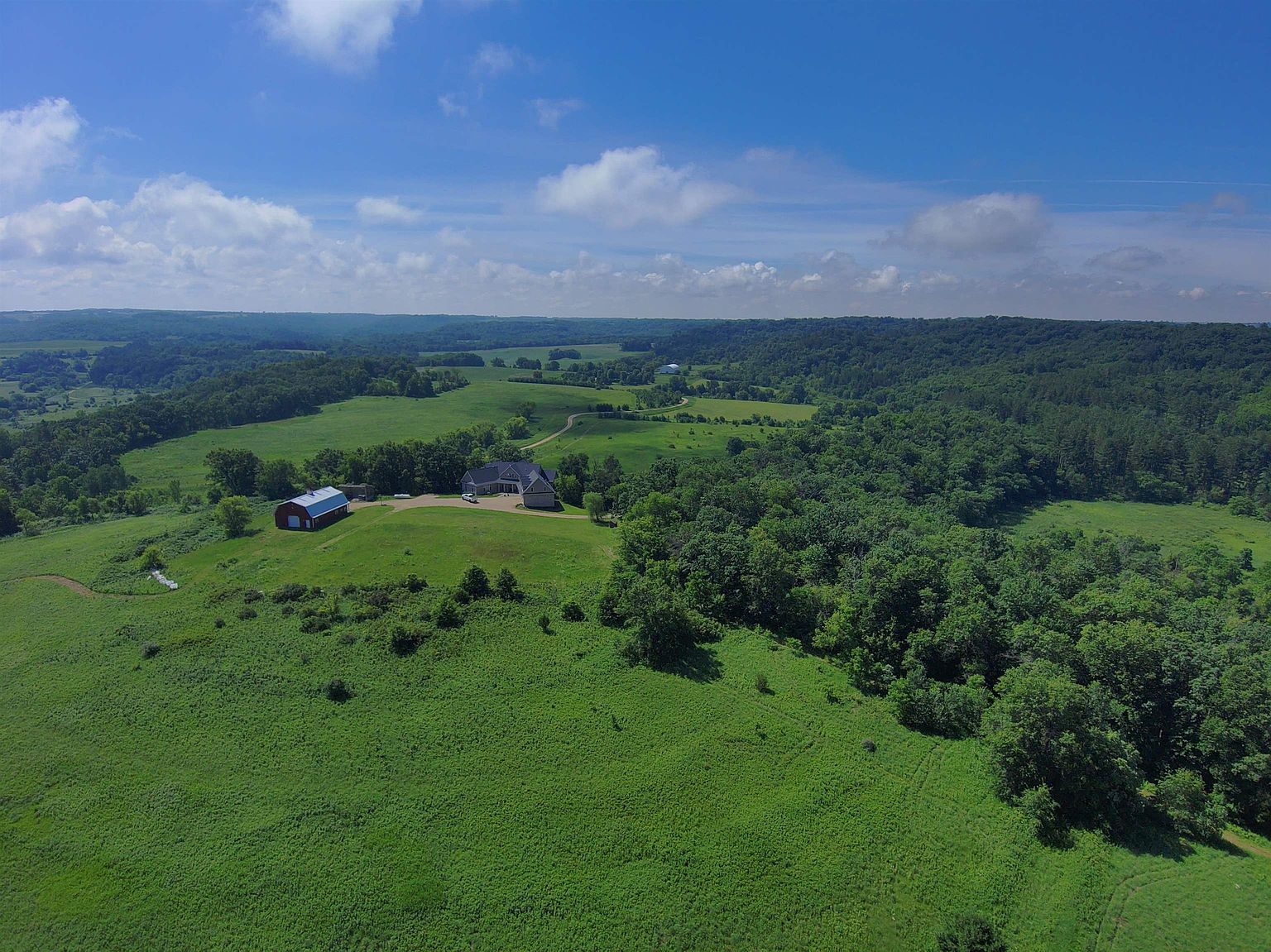
The heated three-car attached garage includes living quarters above — a practical and versatile addition that serves as guest space, home office, or caretaker quarters with equal ease. The barn and workshop, outfitted with water, electric, and heat, bring the same level of intentionality to the working side of the property. A dedicated garden room ensures that even the seasonal pursuits have a proper home. This is a compound that was designed by someone who understood that enough space, properly organized, is its own form of luxury.
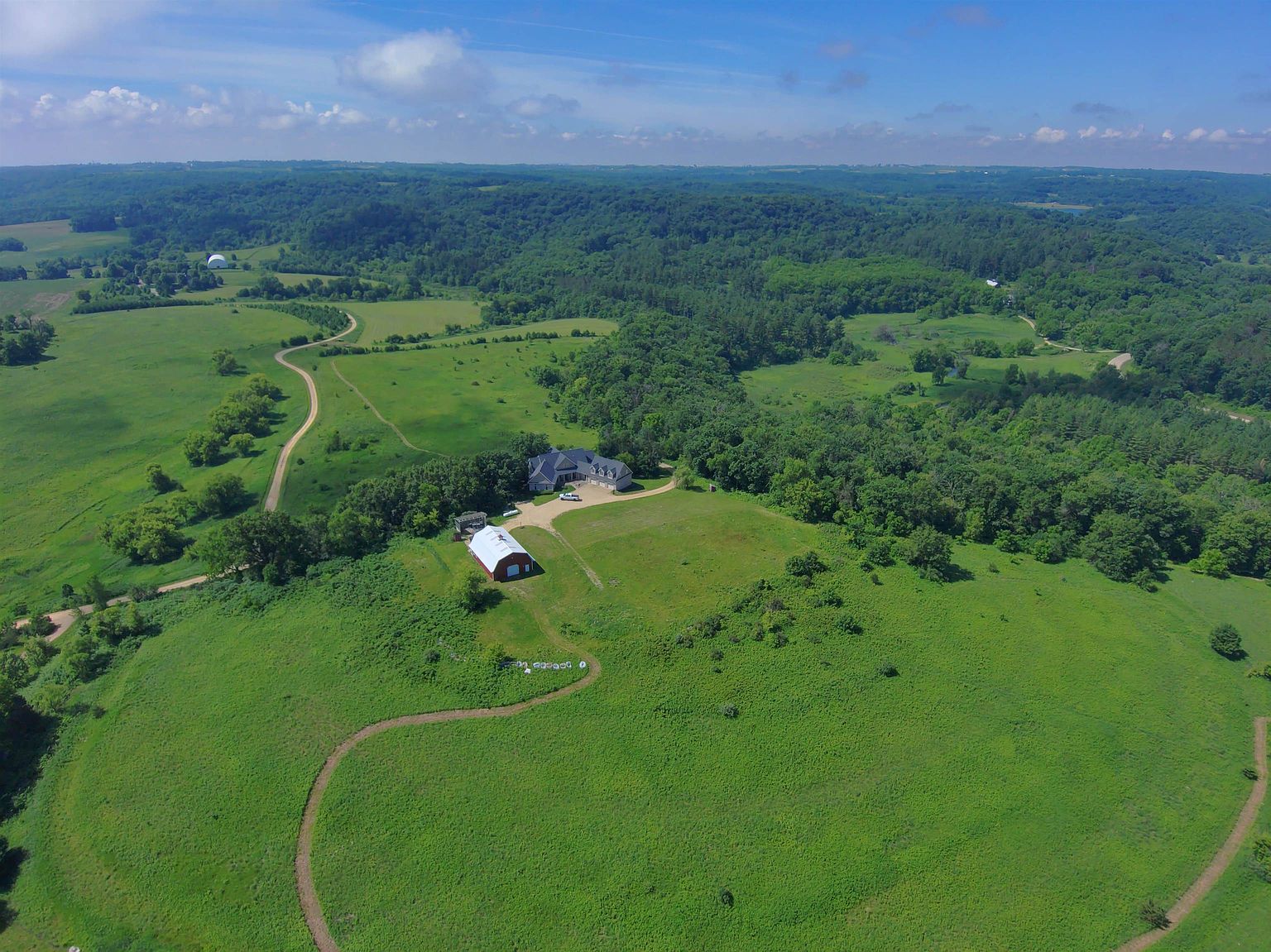
This property is near Dodgeville, in Highland township, Wisconsin and sits in the heart of Iowa County — a designation that confuses newcomers and charms everyone who takes the time to understand it. Iowa County is named not for the neighboring state but for the lead miners, the 'Badgers,' who worked this southwestern Wisconsin landscape in the early nineteenth century, and the region carries that history with a quiet pride. The village of Highland itself is a small, close-knit community in the Driftless Area, a geologically distinctive region that escaped the flattening effects of the last glacial advance and emerged instead as a landscape of steep ridges, deep coulees, spring-fed streams, and exceptional topographic variety.
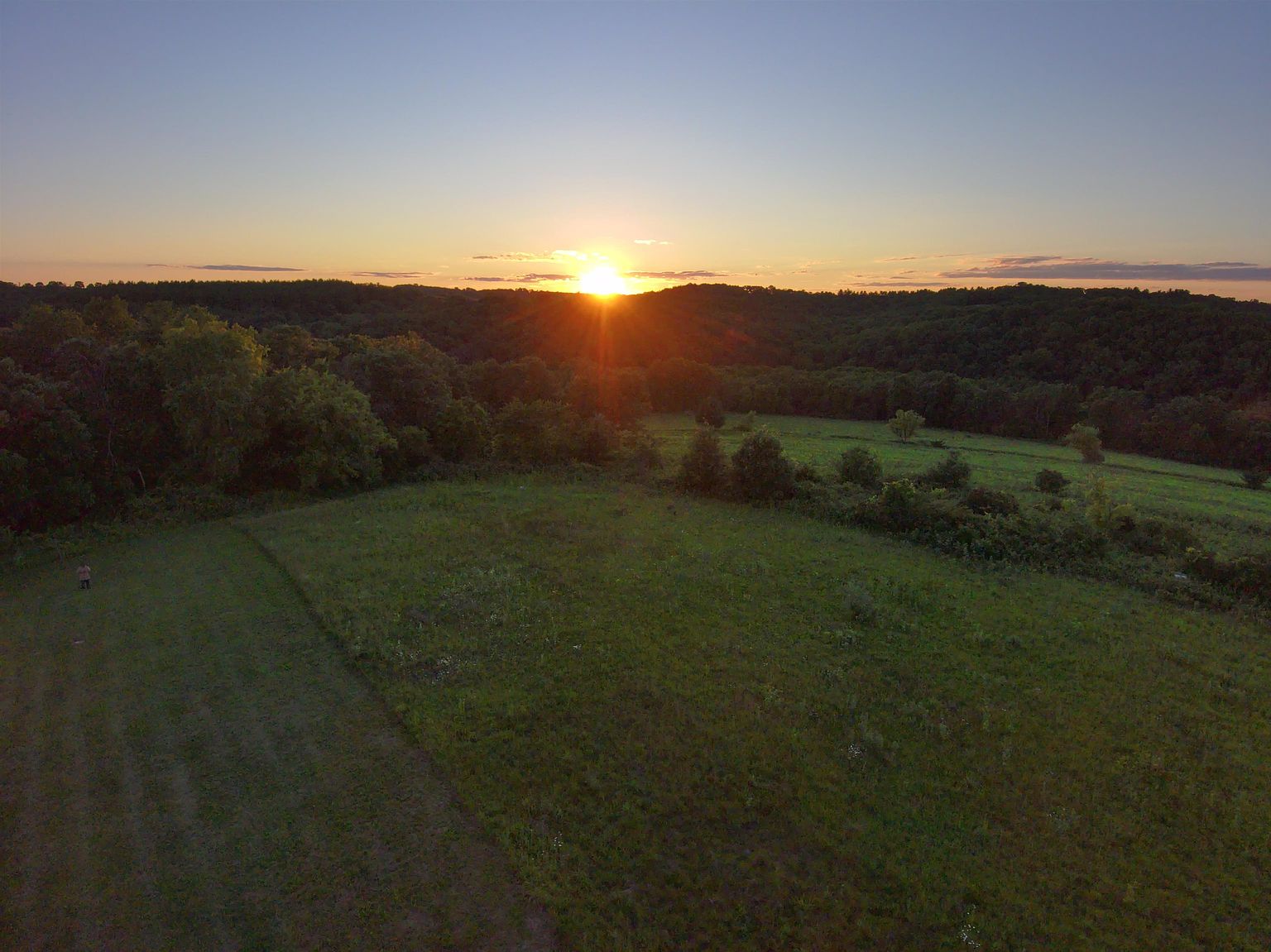
The Driftless Area is increasingly recognized — by ecologists, outdoor enthusiasts, and a growing wave of discerning buyers — as one of the most visually compelling and ecologically rich landscapes in the Upper Midwest. The region's undulating terrain, characterized by the kind of rolling hills and wooded ridgelines visible from every room of this property, is simply not replicated elsewhere in Wisconsin. Otter Creek, which winds through these forty-plus acres, is representative of the cold, clear waterways that define the Driftless landscape — the kind of creek that supports trout populations and rewards those who take the time to walk its banks.
Iowa County as a whole offers a meaningful combination of rural character and cultural access. The county seat of Dodgeville is a short drive and provides everyday essentials alongside a genuine small-town civic identity. Spring Green, home to the American Players Theatre — one of the most respected classical outdoor theater companies in the United States — sits within easy reach and draws audiences from across the region each season. Taliesin, the legendary home and studio of Frank Lloyd Wright, is located in Spring Green as well, lending the area a cultural gravity that extends well beyond its modest population.
For those drawn to the outdoors, Iowa County and the surrounding Driftless region offer trout fishing on numerous Class I and Class II streams, extensive hiking through state natural areas and county forests, cycling along the Military Ridge State Trail, and hunting across tens of thousands of acres of accessible public land. The landscape rewards those who move through it slowly.
Madison, the state capital and home to the University of Wisconsin, lies approximately one hour to the east — close enough to provide access to a major airport, world-class medical facilities, a vibrant restaurant and arts scene, and the full amenity set of a mid-sized American city, while remaining distant enough to preserve the fundamental quiet of this property. Chicago and Milwaukee are each approximately three hours by car, making this an entirely viable full-time residence for those who work remotely or travel selectively.
What this location ultimately offers is something that money can purchase but not manufacture: a genuine remove from density, noise, and the accumulated friction of urban life — set within a landscape of uncommon natural beauty, anchored by a property substantial enough to justify the journey.
Featured Highlights
Curated Content • Presented by LaDonna Steinert