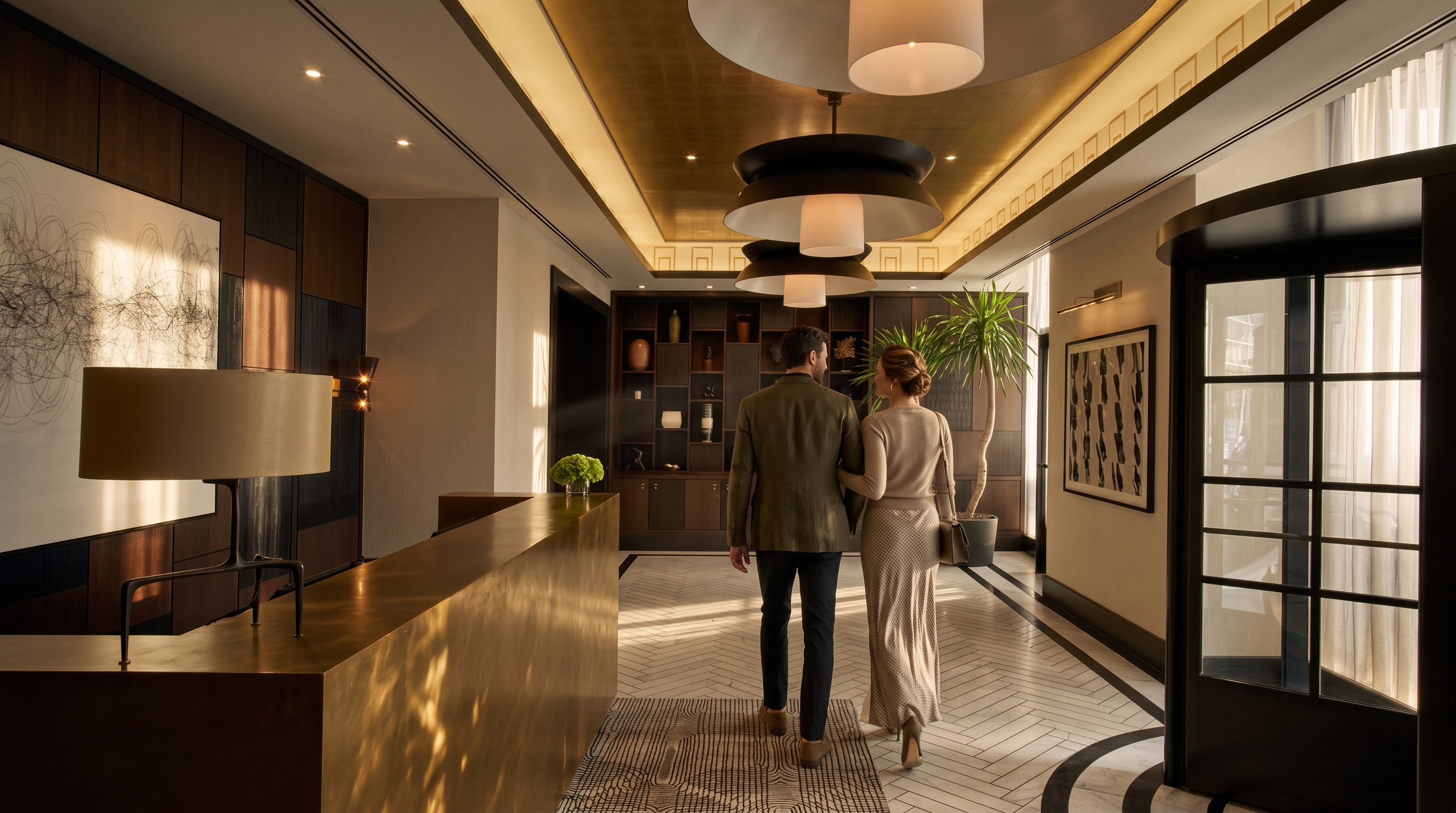
The Story Behind
A Ralph Walker Masterpiece Crowning Tribeca's Iconic Skyline
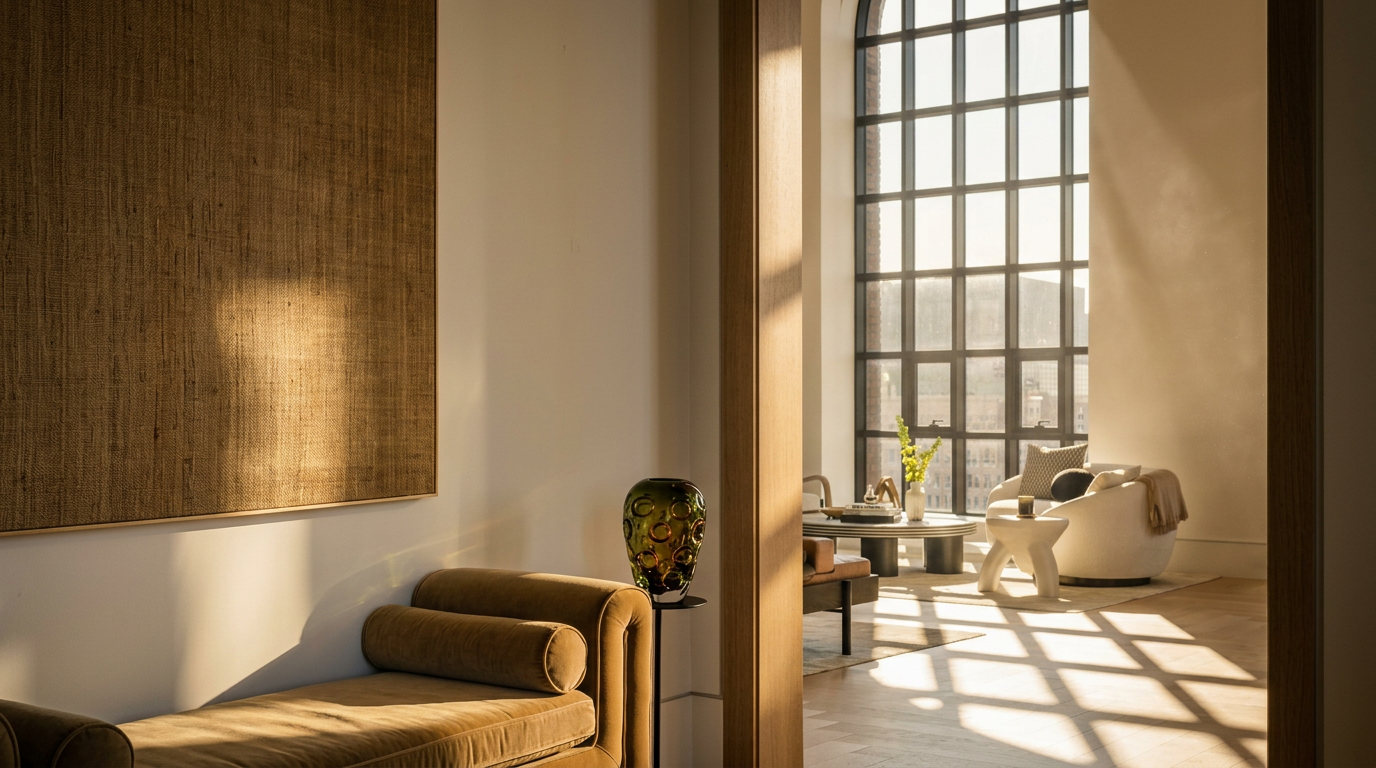
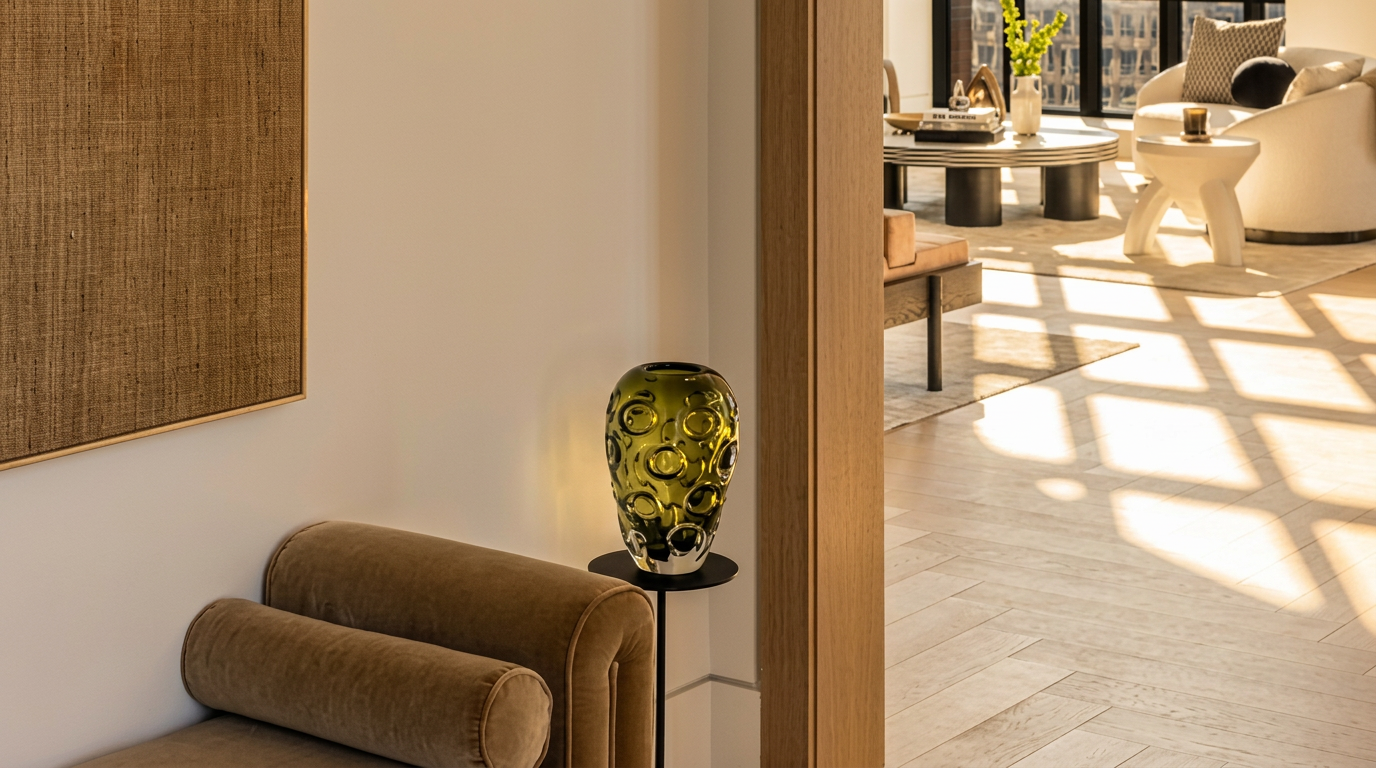
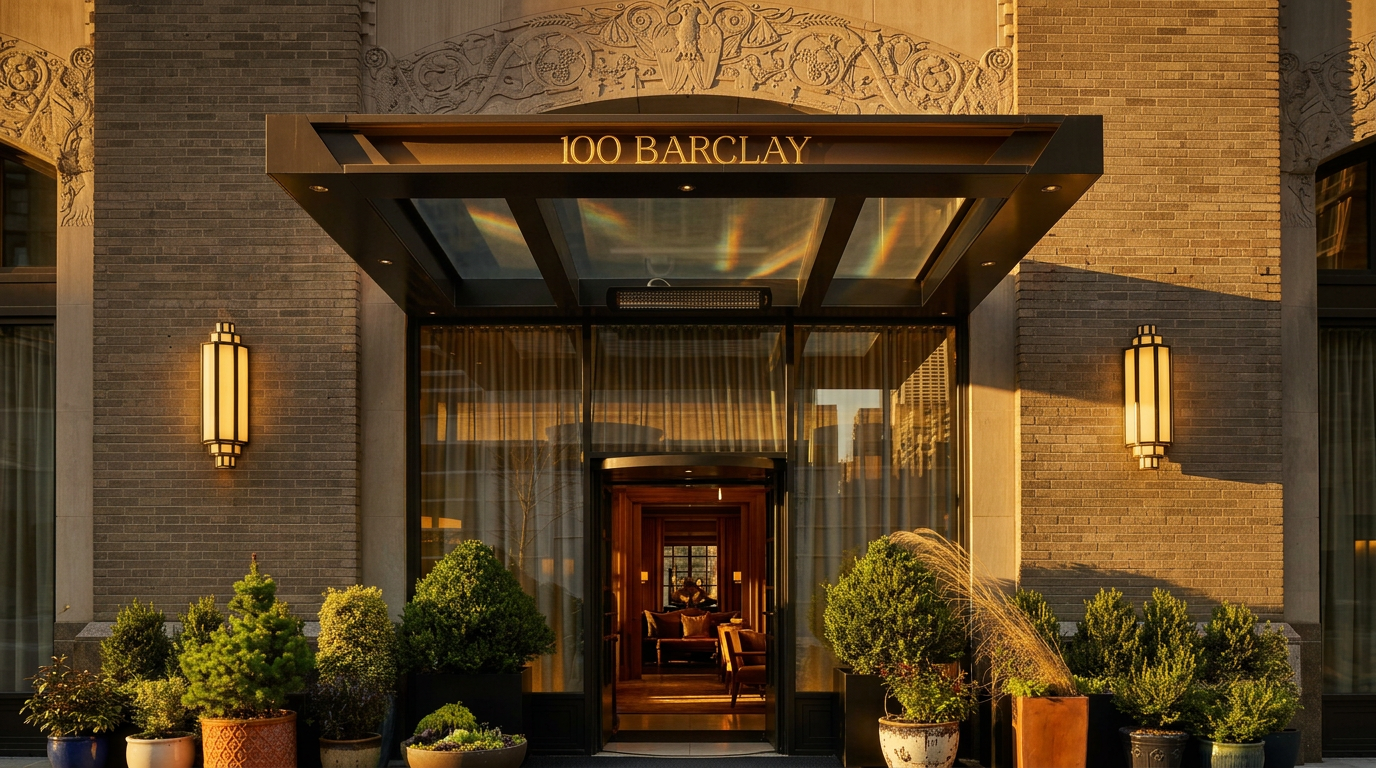
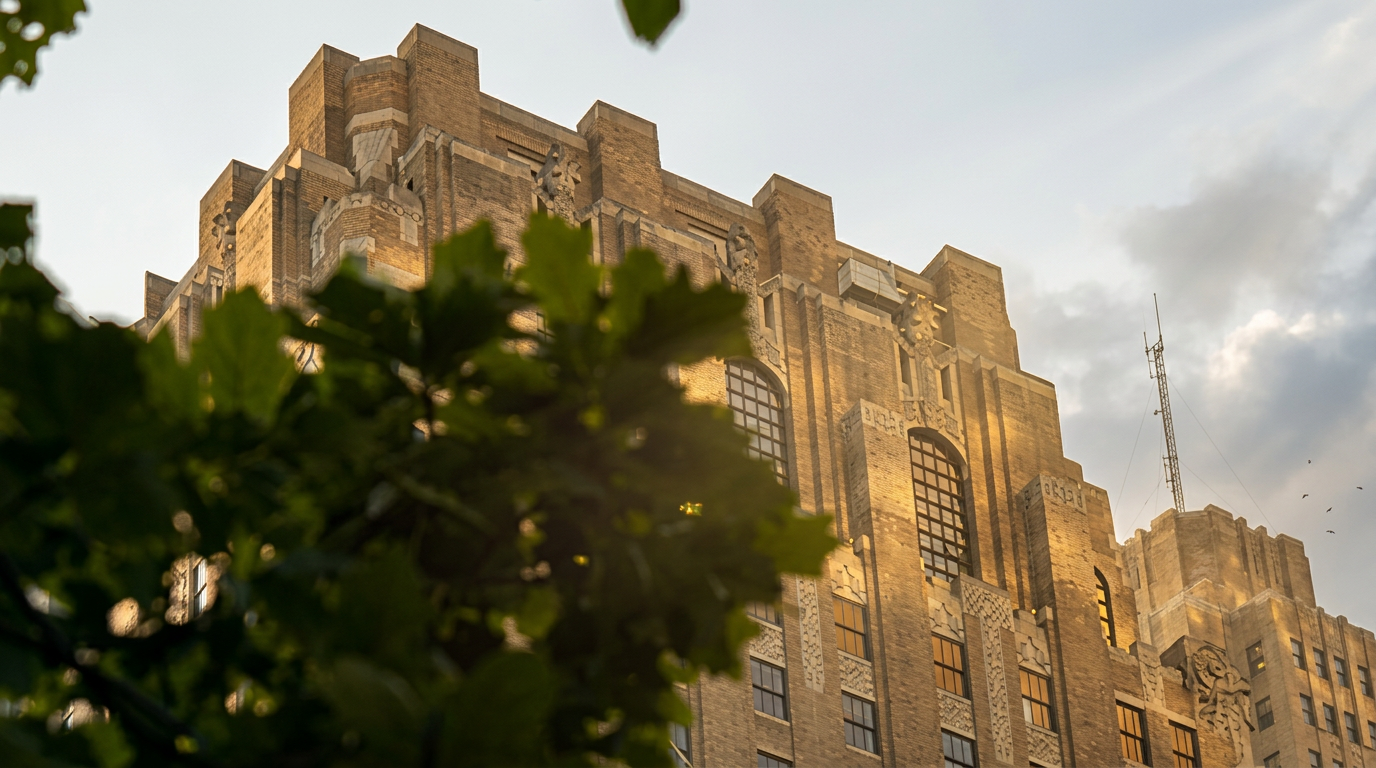
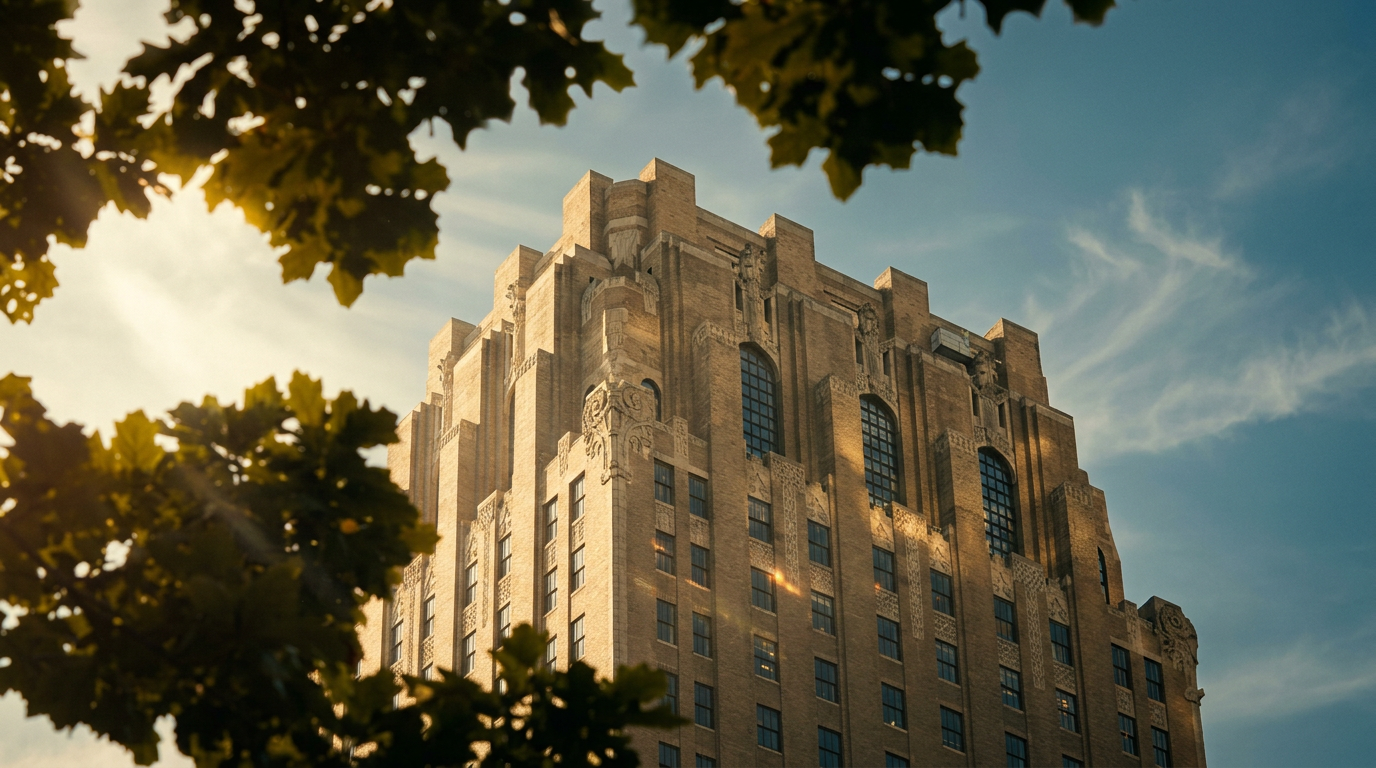
There are residences that impress, and there are residences that endure. Penthouse South at One Hundred Barclay belongs to the latter category — a home of genuine architectural weight, conceived not merely to dazzle but to stand as a permanent testament to the craft of making space. Situated at the crown of Ralph Walker's legendary 1927 Art Deco tower, the duplex spans 7,062 square feet across two levels, designed in its current incarnation by Paris Forino, whose interiors carry the quiet authority of someone who understands that true luxury is inseparable from restraint.
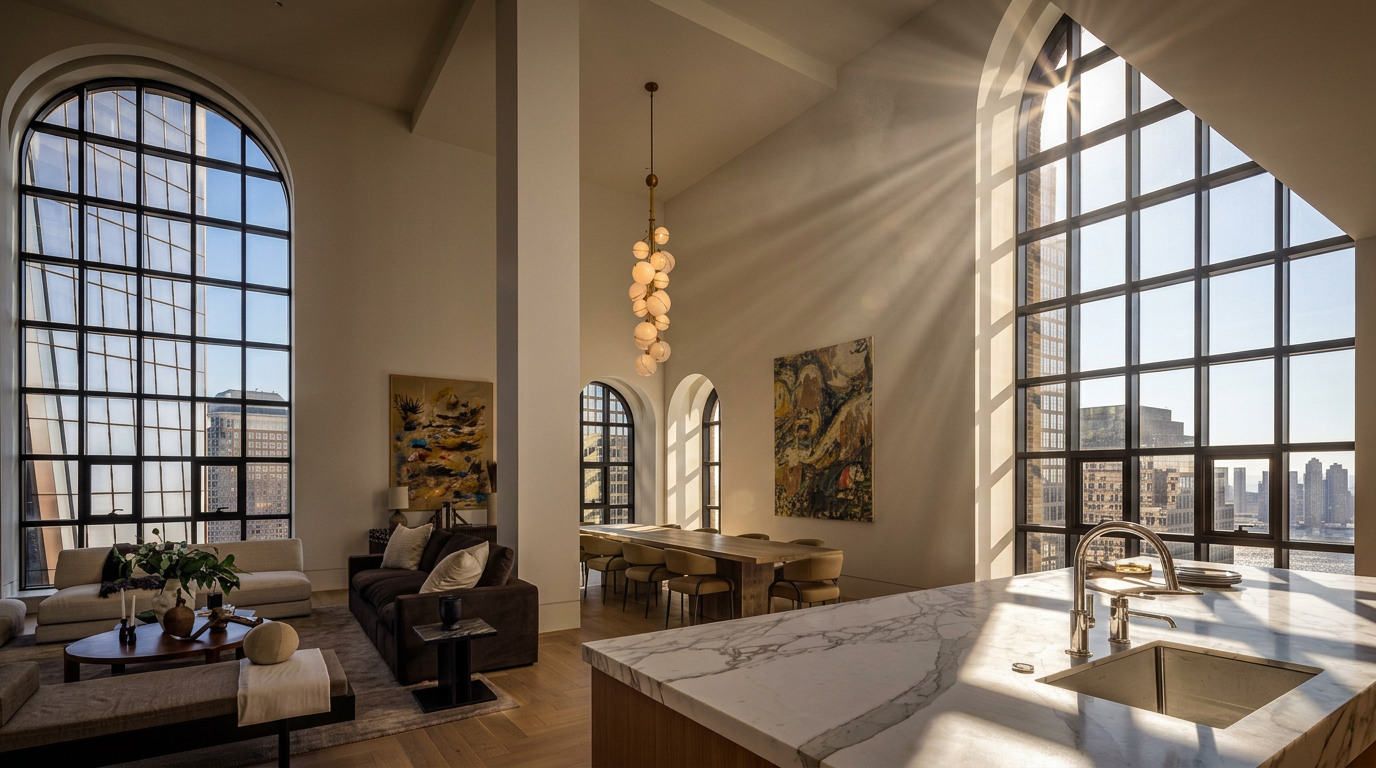
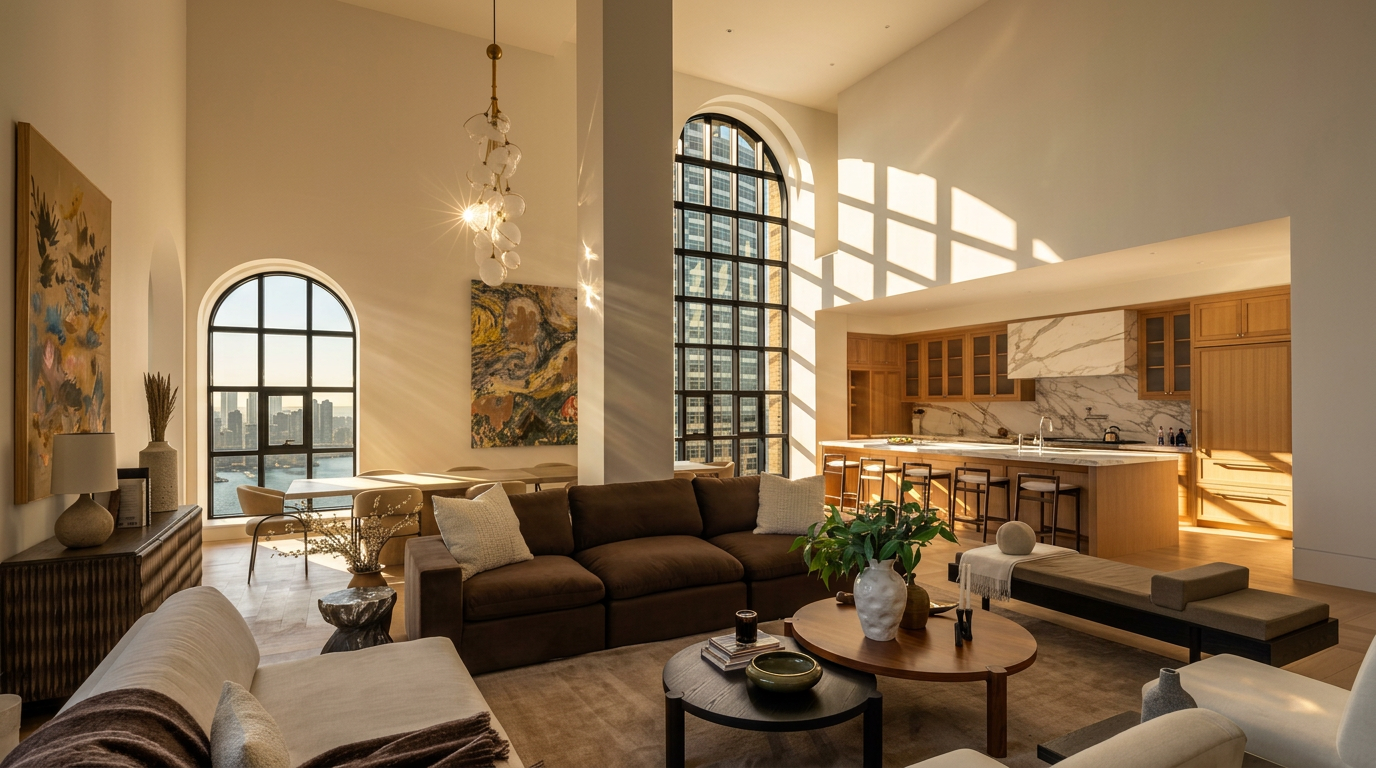
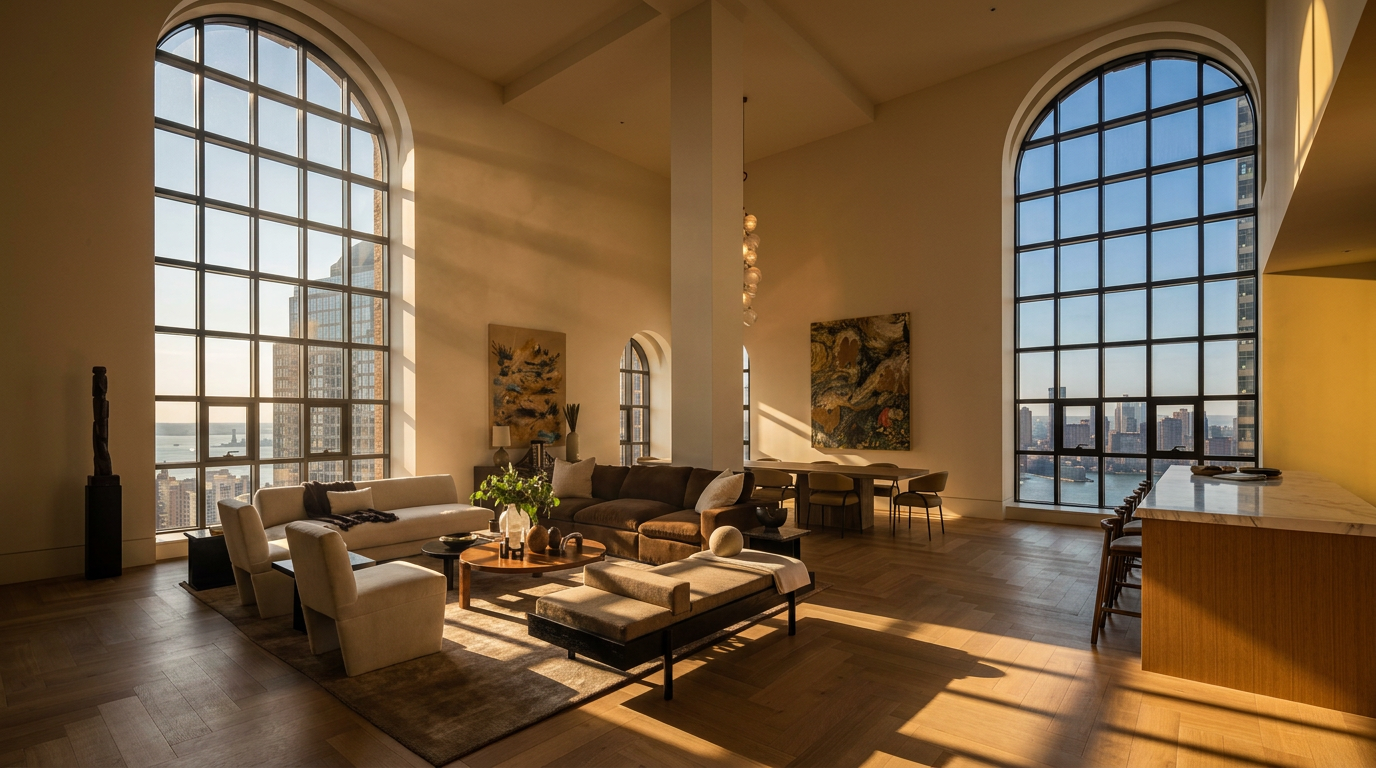
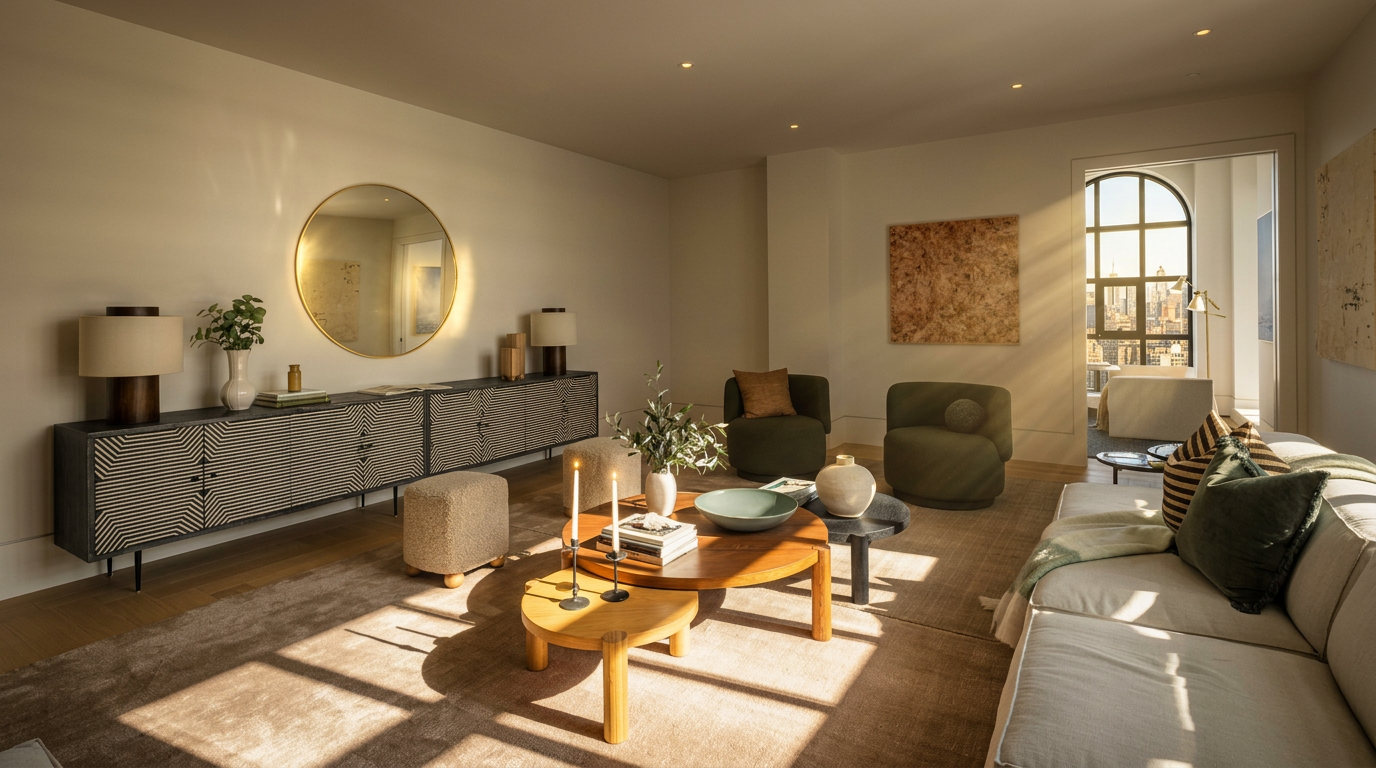
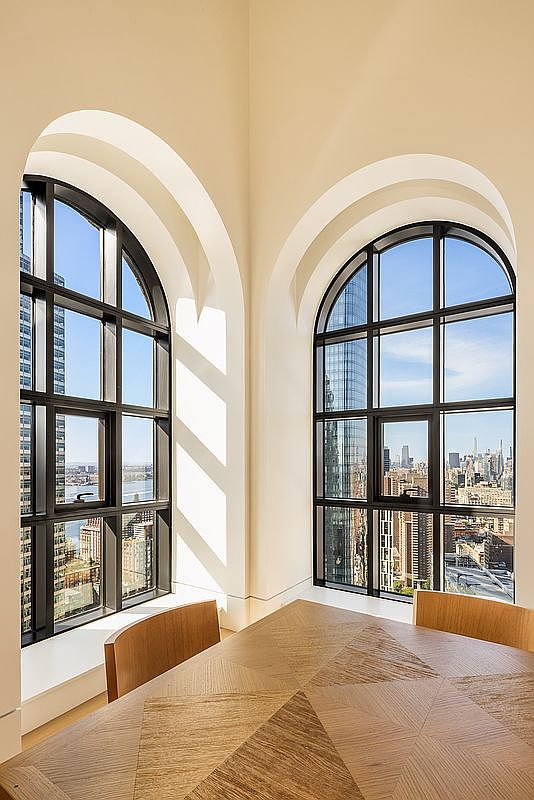
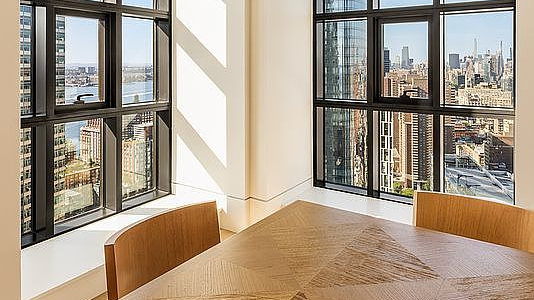
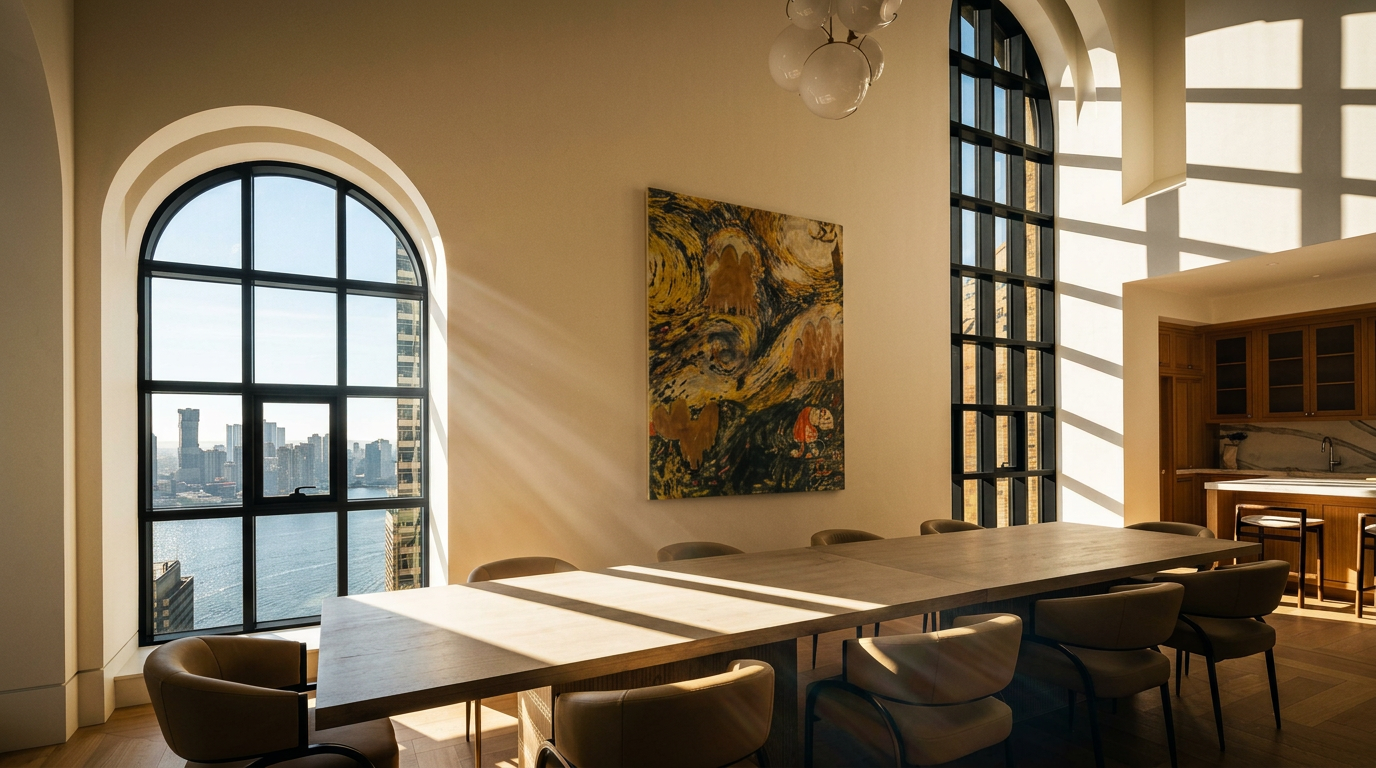
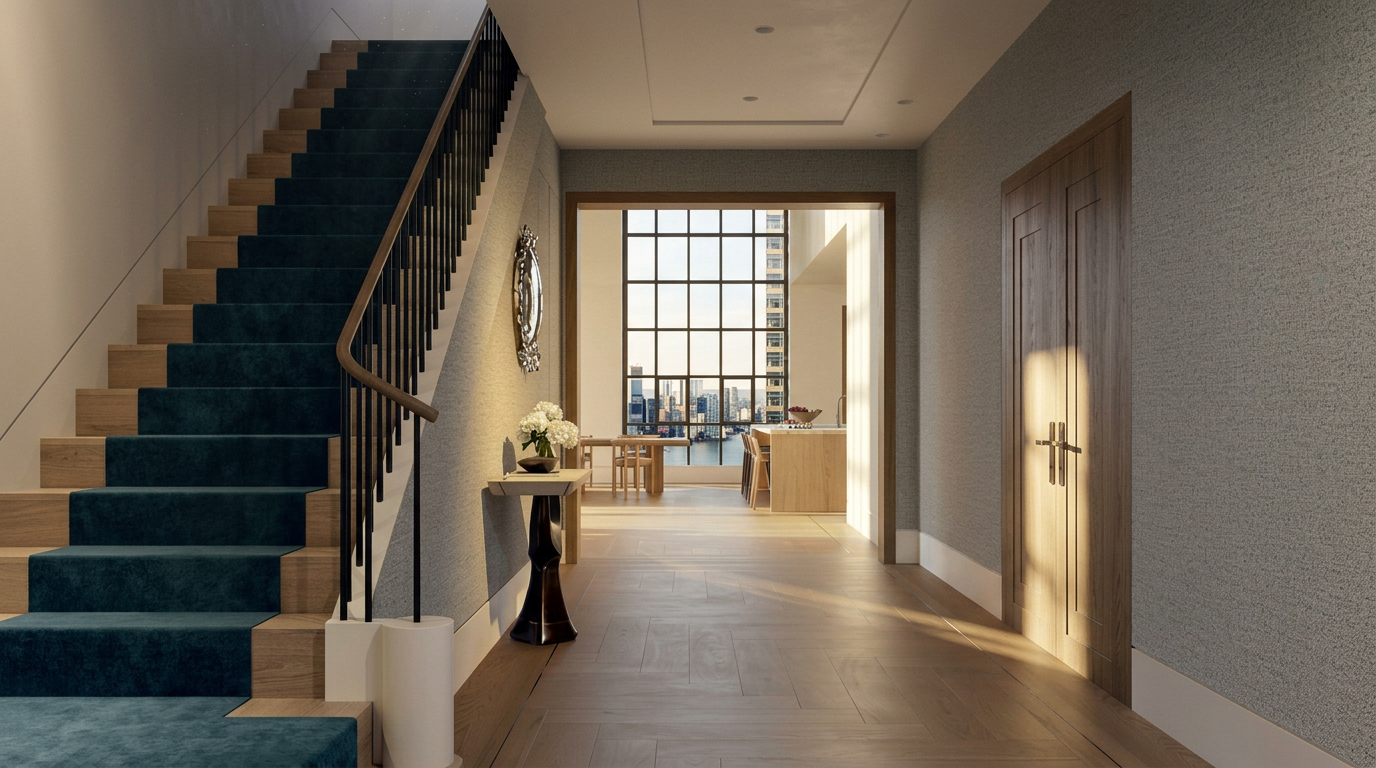
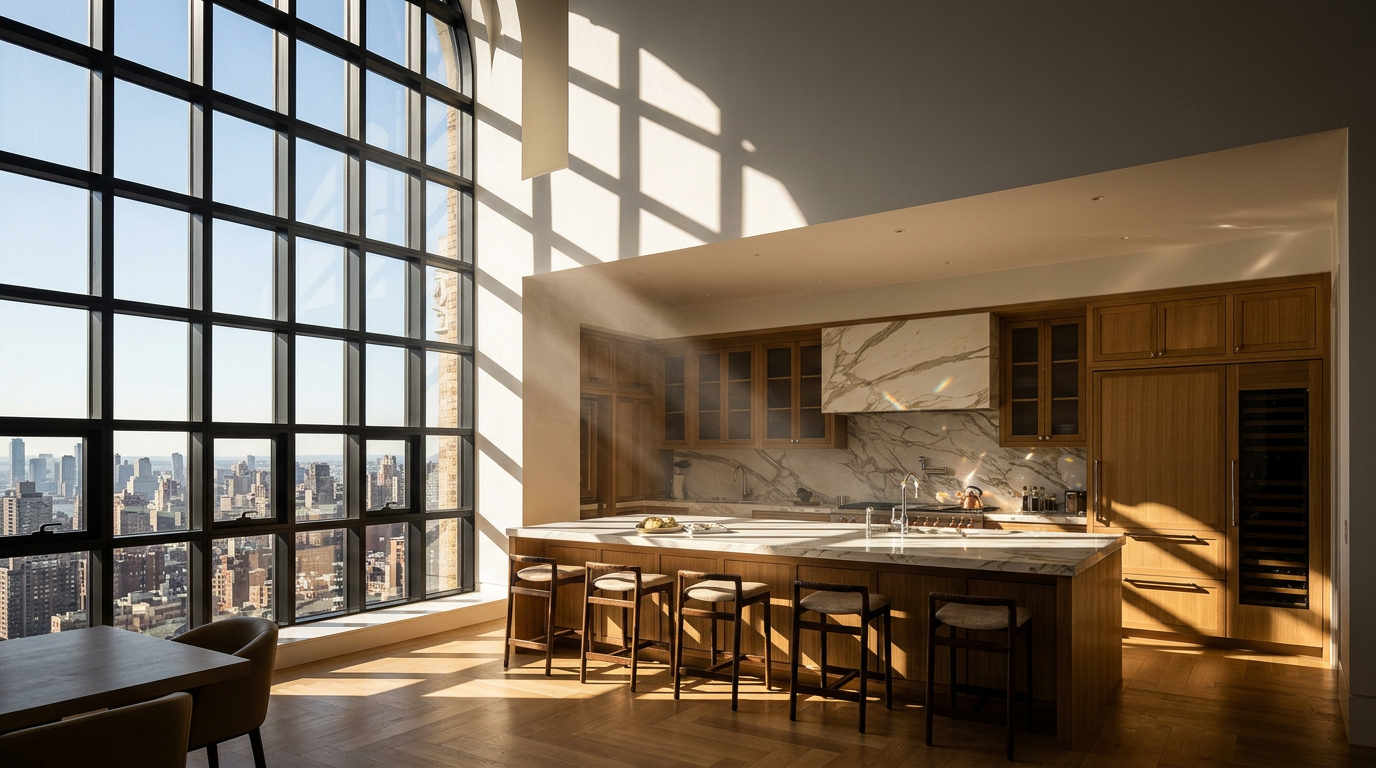
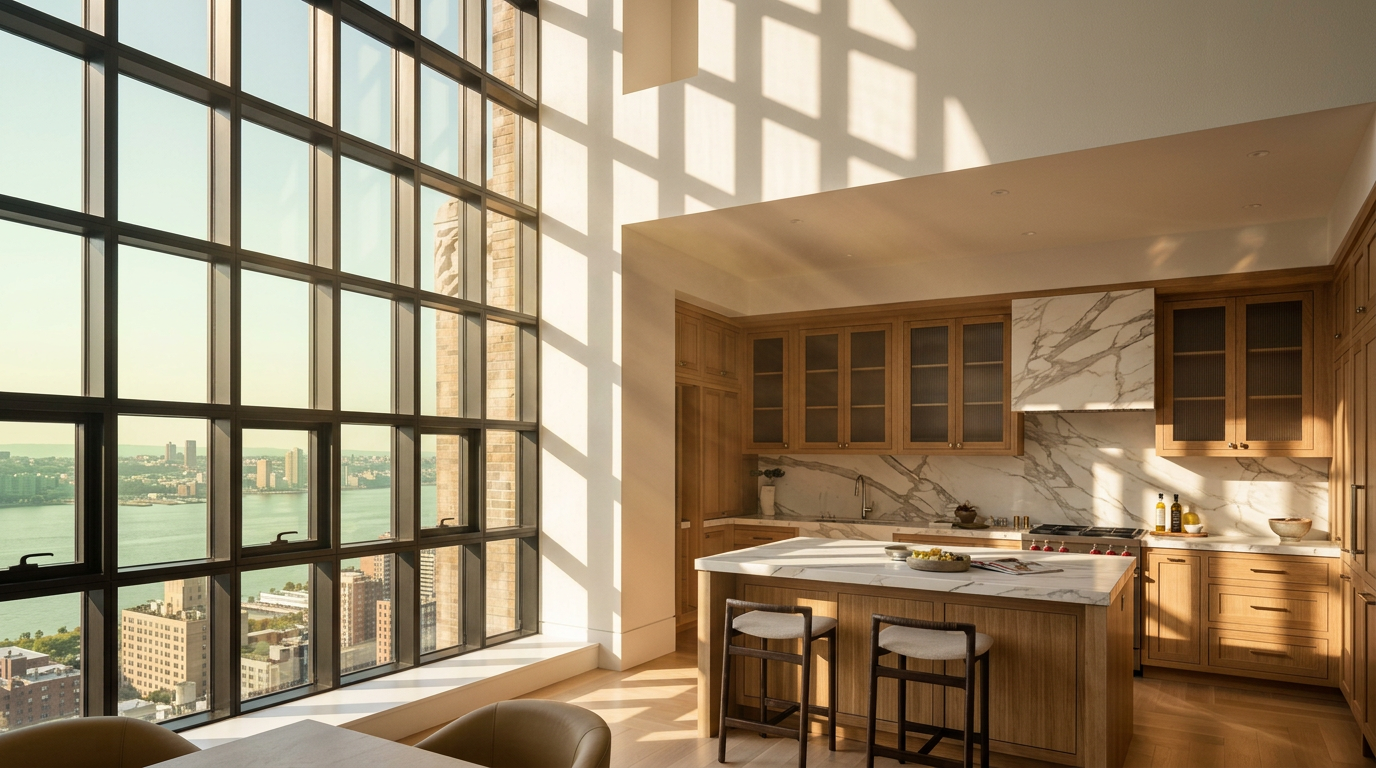
The sequence of arrival matters here. From the entry gallery, the great room announces itself with the full force of 21-foot ceilings and arched windows that frame the Hudson River and the Statue of Liberty in panoramic relief. It is a room scaled for living at full volume — gallery walls accommodate serious art, the herringbone white oak floors establish warmth and direction, and the oak-and-brass staircase rising to the upper level reads as both functional object and sculptural centerpiece. The proportions do not merely suggest grandeur; they deliver it.
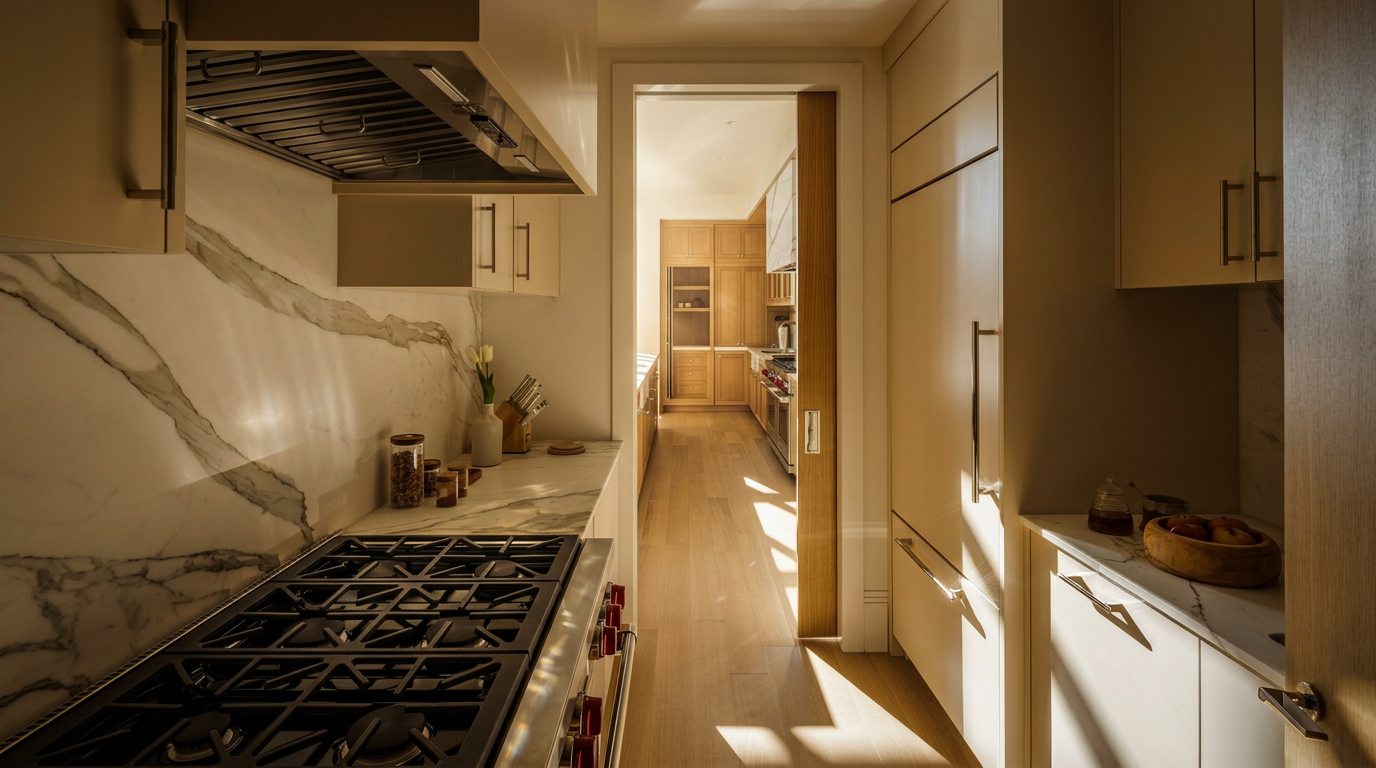
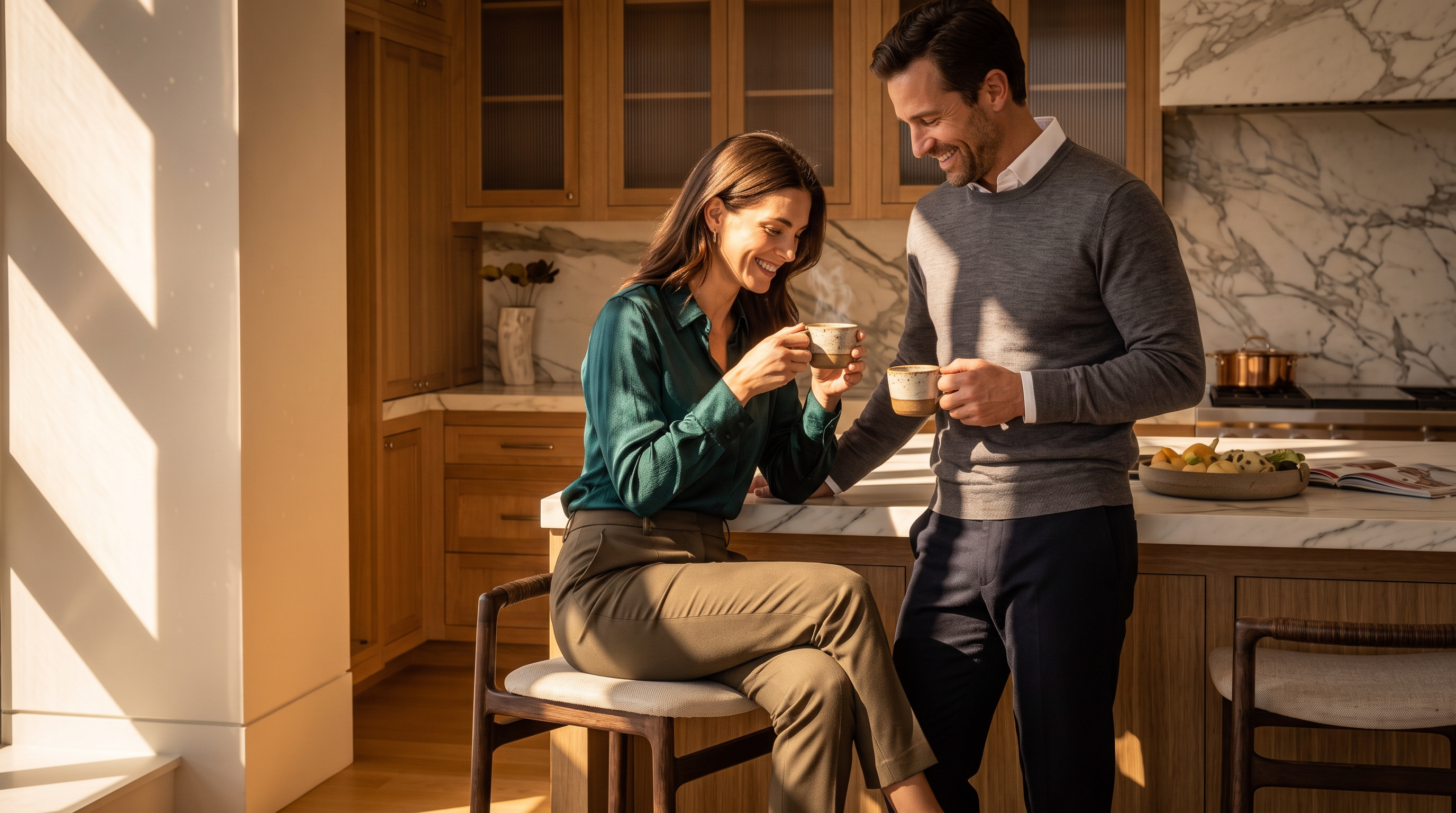
The kitchen is a study in considered material selection. Custom solid oak cabinetry with fluted glass detailing pairs with vein-matched Calacatta Gold marble countertops and backsplash, while an oversized island anchors the space for both casual gathering and serious culinary work. A complete suite of Wolf and Sub-Zero appliances, polished nickel Waterworks fixtures, and a full-scale catering kitchen ensure that entertaining at scale requires no compromise. Herringbone oak flooring continues through this space, maintaining the architectural language established throughout the residence.
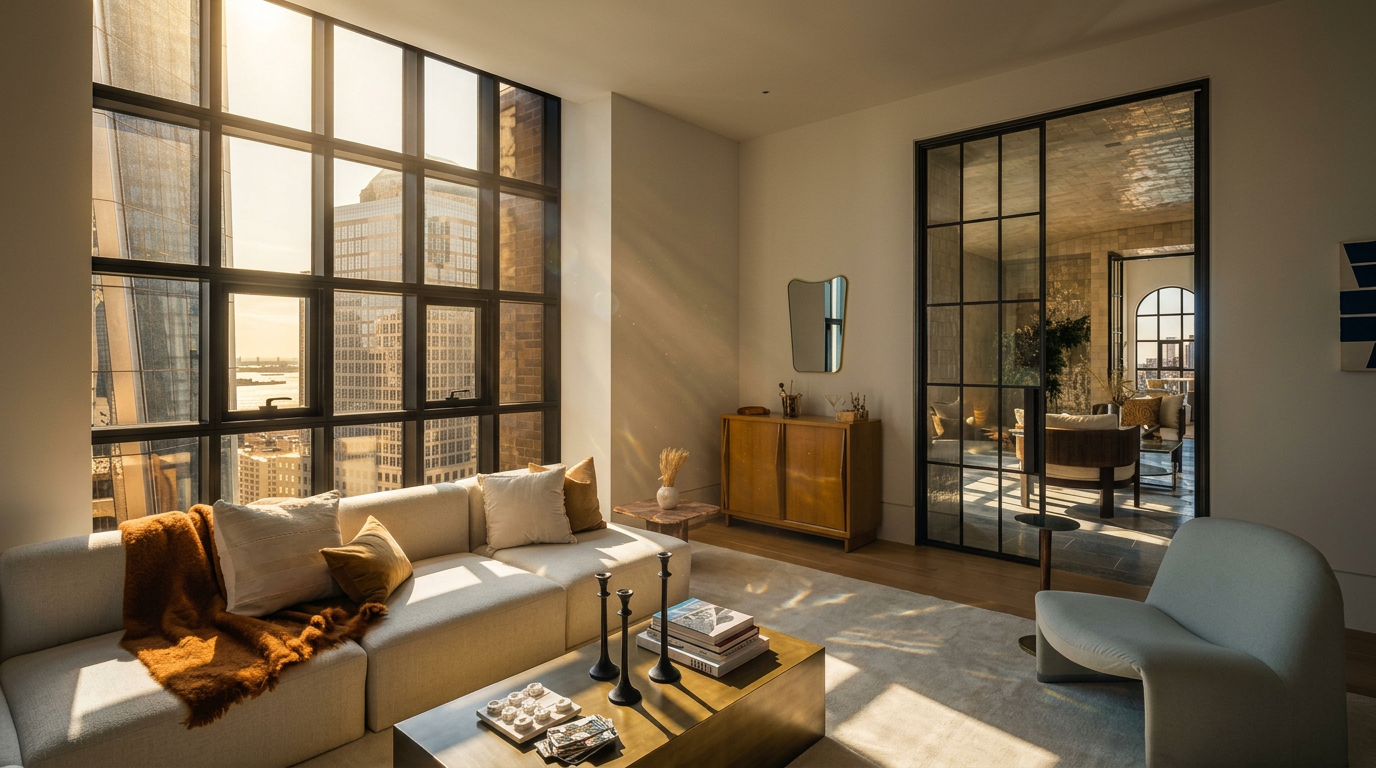
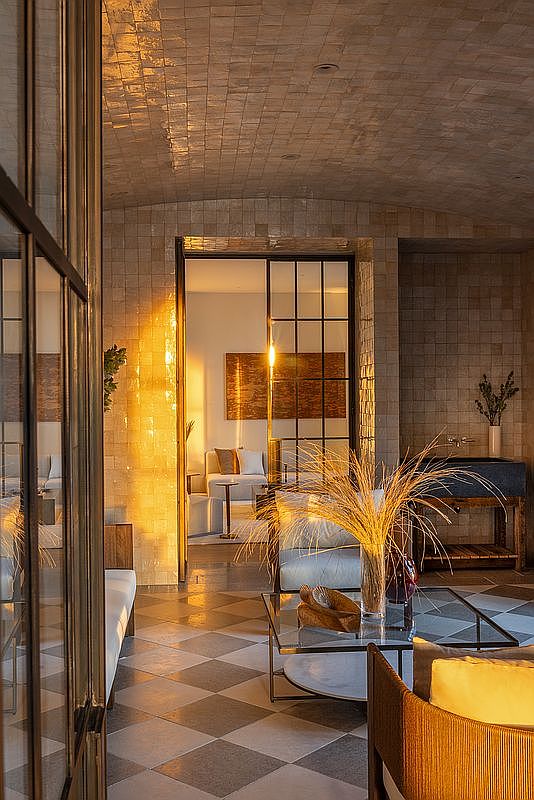
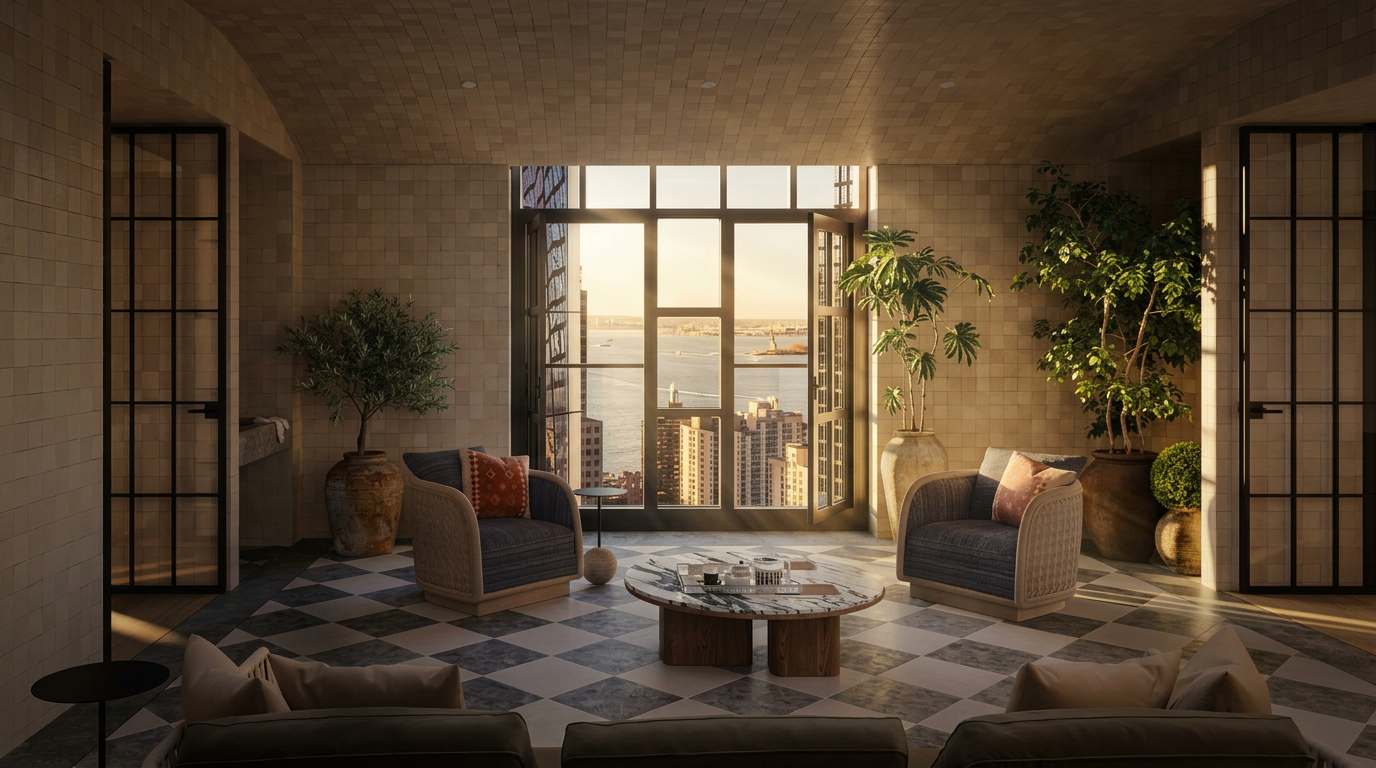
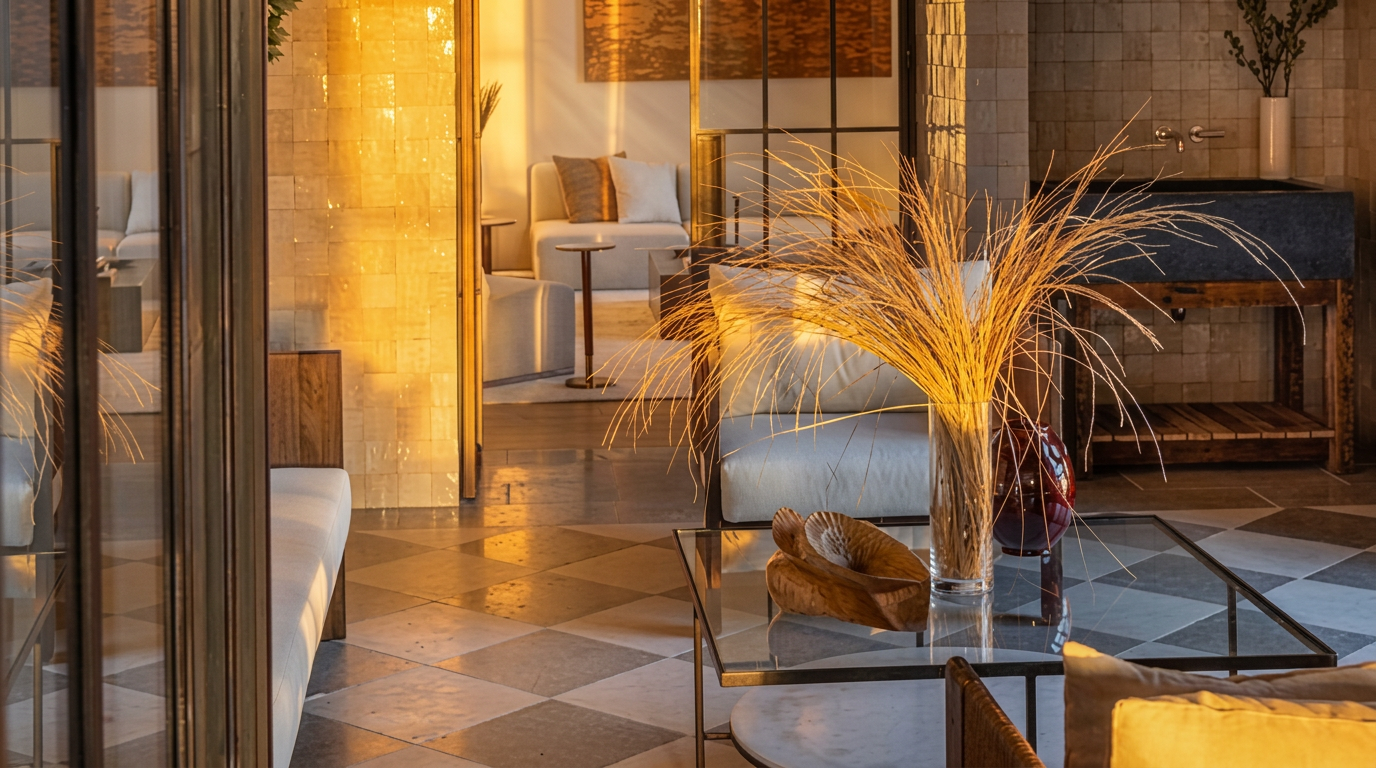
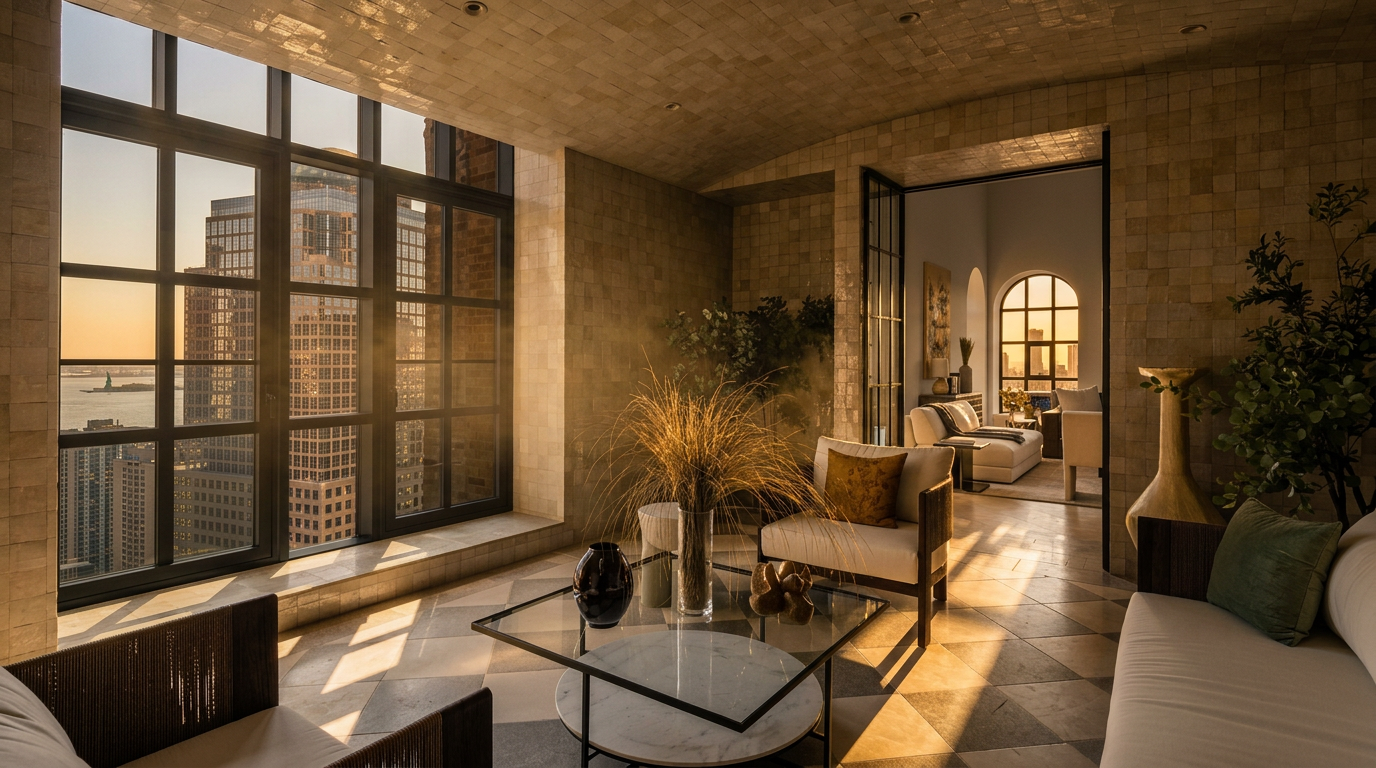
Perhaps the most singular feature of Penthouse South is its private loggia — a room that resists easy categorization. Barrel-vaulted ceilings clad in handmade ceramic tile, harlequin-pattern limestone floors with radiant heat, custom French glass-and-iron doors, a farmhouse sink, and a Juliet railing together compose an interior world apart, evoking the atmosphere of a Parisian conservatory suspended above the Manhattan skyline. It is the kind of space that, once experienced, becomes indispensable.
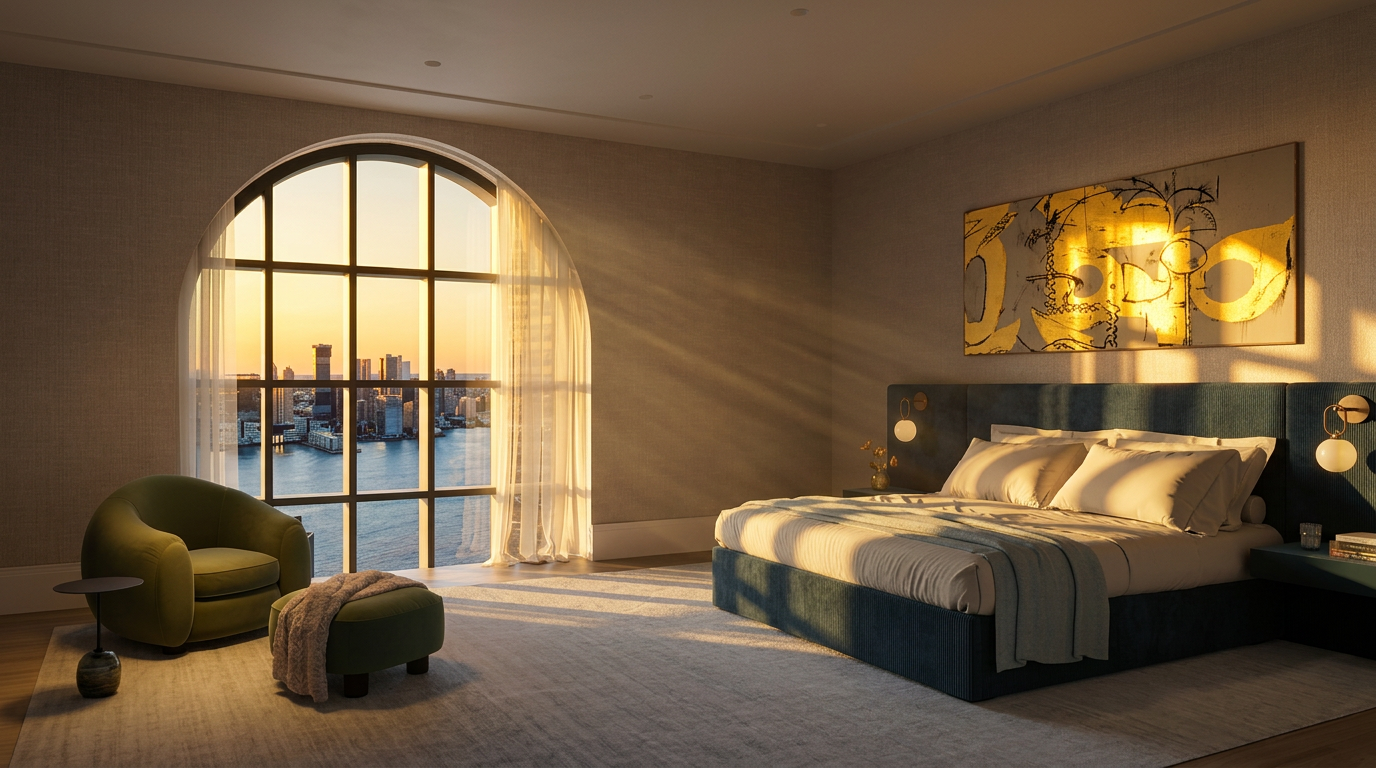
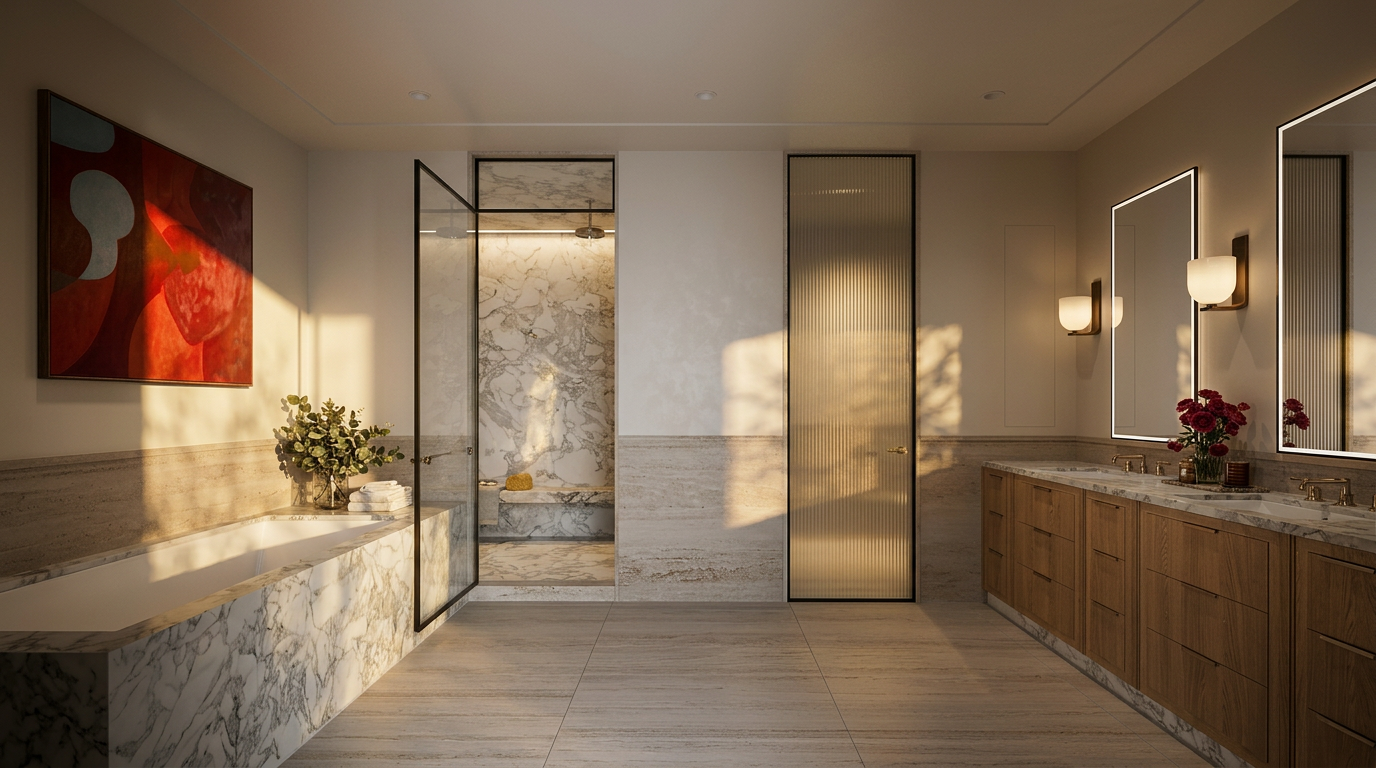
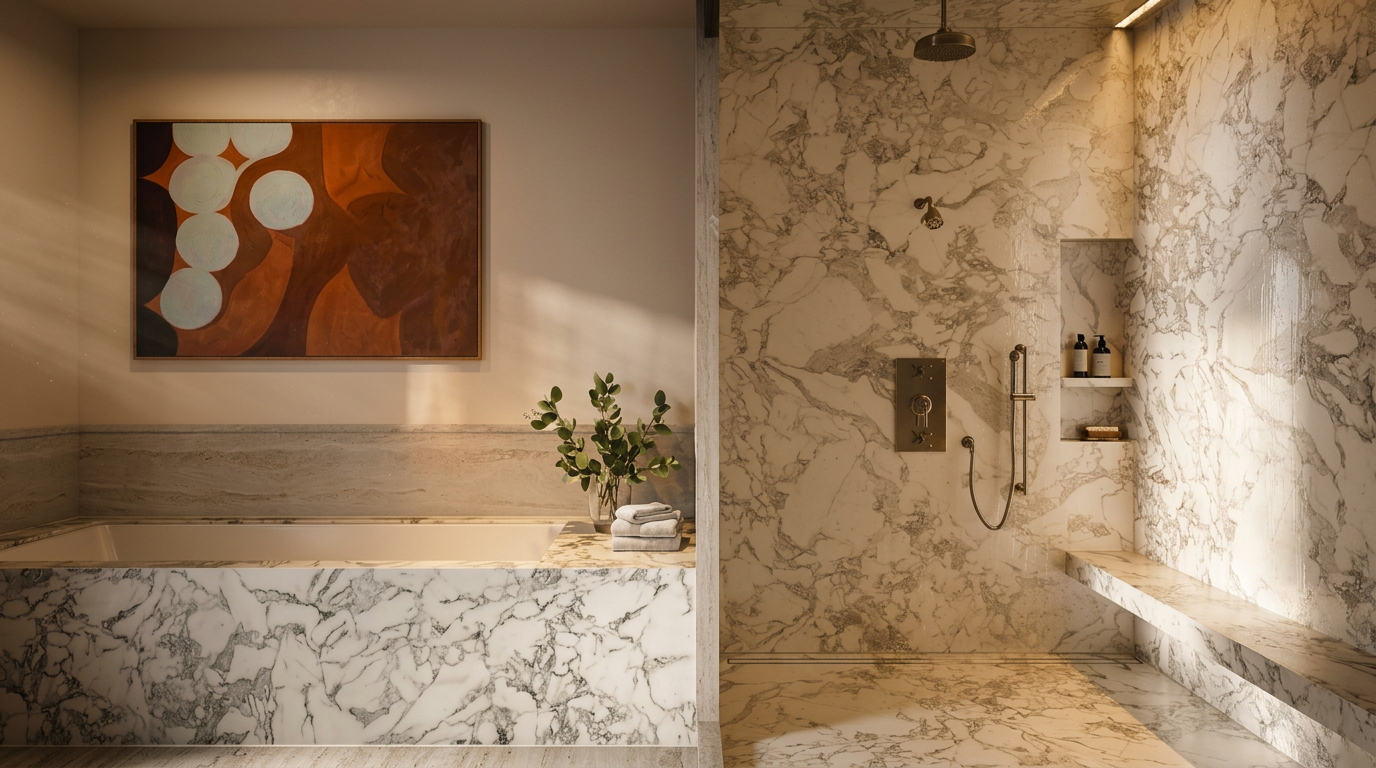
The nearly 1,000-square-foot primary suite occupies its own domain on the upper level, with dual temperature-controlled walk-in closets, a private night kitchen, and a spa-caliber bath finished entirely in Ivory Bone travertine. A steam shower, deep soaking tub, and radiant heated floors complete a bathroom that functions as a genuine sanctuary. Secondary bathrooms are appointed with equal care — Bianco Rhino marble countertops, Palisandro marble floors and showers, blackened bronze mirror frames, and polished nickel fixtures throughout.
Brass inlay set into hallway and powder room floors, custom crown moldings, flush-reveal baseboards, and wood-clad portals speak to a design intelligence that extends to every threshold and transition. The infrastructure is equally resolved: a zoned four-pipe fan coil HVAC system with air purification and humidification, a comprehensive Lutron lighting system, enhanced sound attenuation, and home automation pre-wiring deliver the kind of quiet, effortless comfort that is the true foundation of elevated living. This is a home that has been finished, not merely completed.
Tribeca — the Triangle Below Canal Street — occupies a particular position in New York's urban imagination. Once a warehouse and mercantile district defined by cast-iron facades and cobblestone streets, it underwent one of the city's most consequential residential transformations beginning in the 1970s, when artists claimed its vast industrial lofts as live-work spaces. What emerged over the following decades was something rare in Manhattan: a neighborhood that retained its architectural bones while acquiring the density of cultural life, culinary ambition, and civic investment that defines a truly complete urban address.
Today, Tribeca is widely regarded as one of New York City's most desirable residential neighborhoods — a distinction earned not through marketing but through the sustained choices of those who live here. Its residents have historically included artists, architects, financiers, and filmmakers drawn by the neighborhood's combination of physical scale, relative quiet, and proximity to the rest of the city without being absorbed by it. The streets around One Hundred Barclay retain a distinctly human character: wide sidewalks, low-rise streetscapes punctuated by significant landmark buildings, and an absence of the relentless commercial energy that defines midtown.
One Hundred Barclay itself sits at the northern edge of Tribeca, where the neighborhood meets the Civic Center and the Hudson River waterfront. The Hudson River Park — one of the city's most significant public green spaces, stretching four miles along the western edge of Manhattan — is immediately accessible, offering running and cycling paths, recreational piers, and open water views that extend to New Jersey and beyond. The proximity to the waterfront is not incidental; it shapes the quality of light and air that reaches the building, and it provides a natural counterweight to the density of the surrounding city.
The neighborhood's culinary landscape is among the most serious in New York. Restaurants of genuine distinction have long clustered in Tribeca, and the area around Barclay Street places residents within reach of a dining culture that ranges from celebrated destination restaurants to neighborhood institutions that have earned their longevity through consistency rather than novelty. The Tribeca Film Festival, founded in 2002 in the aftermath of September 11th as a deliberate act of cultural renewal, has become one of the city's defining annual cultural events, drawing filmmakers and audiences from around the world and reinforcing the neighborhood's identity as a place where creative life is taken seriously.
For families, the neighborhood offers access to some of Manhattan's most sought-after public and independent schools, along with PS 234 — consistently regarded as one of the finest public elementary schools in New York City. The neighborhood's parks, including Washington Market Park with its community garden and playgrounds, provide genuine civic infrastructure for daily life.
Transportation access is exceptional. Multiple subway lines converge near Barclay Street, connecting residents to the whole of the city with efficiency, while the proximity to the Brooklyn Bridge, the Holland Tunnel, and lower Manhattan's financial and civic institutions makes One Hundred Barclay a genuinely strategic address — one that places the full range of New York life within immediate reach.
Featured Highlights
Curated Content • Presented by Richard Hottinger