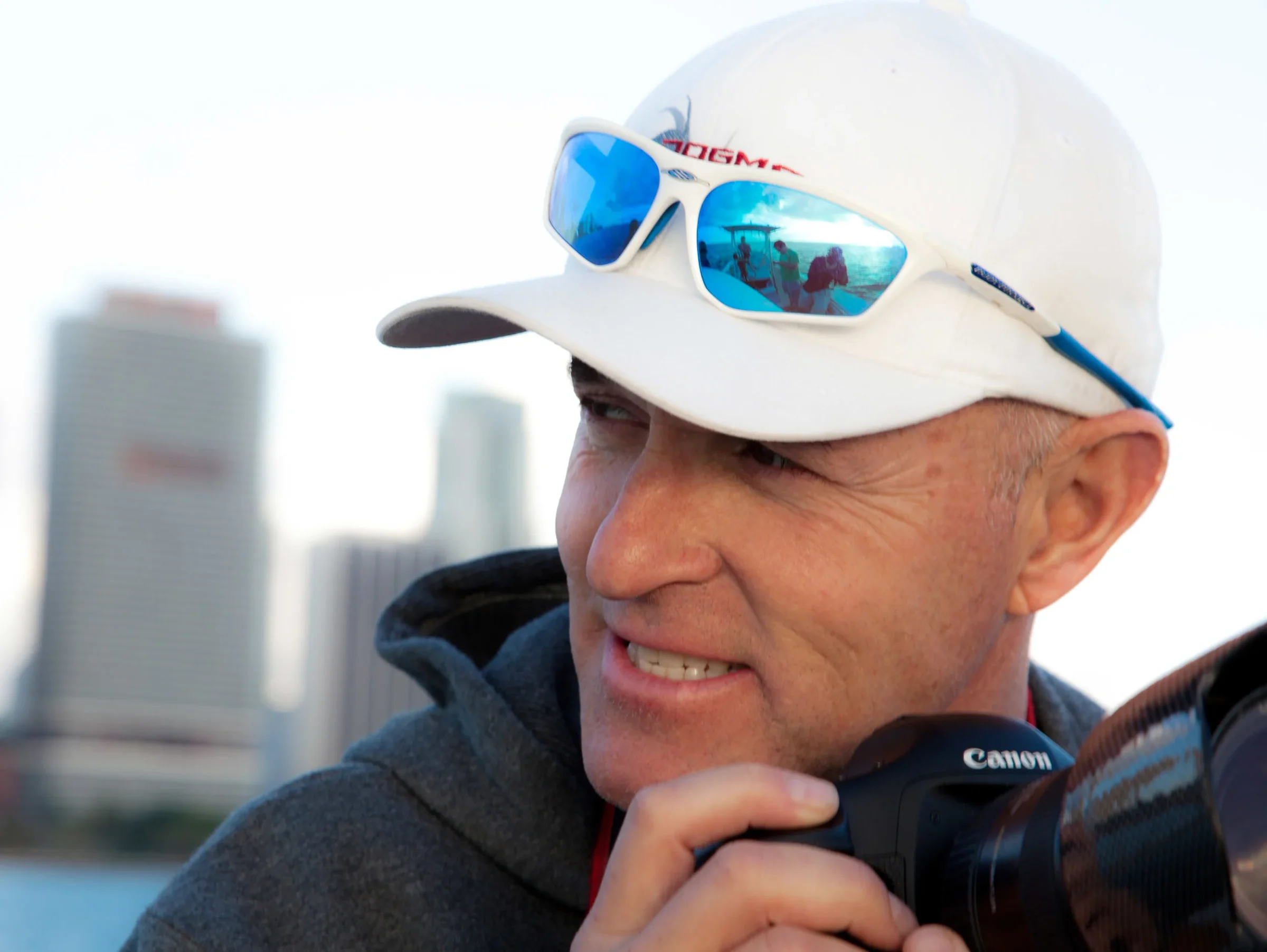
A Photographer’s Eye for the Vail Valley
The Slifer Smith & Frampton broker brings a production professional’s discipline and decades of mountain living to his work with buyers and sellers.
Jack Affleck came to the mountains after college with a temporary plan: spend one winter, then move on to an ambitious photography career. Instead, the Vail Valley became the setting for a much longer story. He met his partner, got a dog and had two daughters. Photography became his profession; mountain living became his life. Now a broker with Slifer Smith & Frampton, he brings both experiences to real estate, where the question of which home to buy is inseparable from a larger one: what kind of life might unfold there?
The homes he presents give that question architectural form. At 325 Jouflas Ranch Road, connected wings, an elevated walkway and extensive windows make the relationship between interior space and the surrounding landscape a defining feature. At 161 Kensington Drive in Edwards, vaulted ceilings, a stone fireplace and a kitchen designed for entertaining suggest a different emphasis: gathering people together. These are distinct expressions of mountain living, rather than variations on a single idea of the ideal retreat.
Avon Center 236 offers another possibility. Architect Kristi Volskis transformed former commercial space into a residence characterized by Scandinavian simplicity and natural materials. Alongside the detached mountain homes in Affleck’s represented-property collection, it illustrates the range of settings a buyer might consider. For a broker whose earlier career depended on seeing how light and space work together, those differences are meaningful: a home’s strongest qualities are specific to its architecture, not interchangeable features in a marketing template.
Photography taught him to prepare—and to communicate
Affleck’s photographic eye was developed through demanding work, not simply an appreciation for beautiful surroundings. His lifestyle and action assignments for Vail Resorts involved advance planning, specialist crews and large casts. A location might be scouted four times to understand access, lighting and weather before a production began. The finished image was only the visible outcome of that preparation. Behind it lay decisions about where people needed to be, what conditions would allow and how the entire group could accomplish a shared objective.
In his interview, he recalls directing sets with 15 professional models and lighting to manage. Clear communication was essential, and he explicitly connects that experience to real estate. The transferable skill is broader than making a room look attractive. It is the ability to keep people focused on an objective while handling the practical demands around it. His sports photography also required physical stamina: he remembers skiing and hiking with a 45-pound camera pack, carrying the equipment needed to make the work possible.
Over time, those physical demands, together with encouragement from friends, helped point him toward a different profession. Real estate offered a way to bring his accumulated skills into another kind of work. Slifer Smith & Frampton was already familiar territory: he had provided imaging services to the brokerage before joining it as a broker. The transition meant returning to people who knew his work and appreciated him. His description of that connection is direct: “These are my people.”
That sense of belonging extends beyond the office. His account of the valley spans more than four decades of living there, and his professional history includes photography work with Vail Resorts and the Vail Recreation District. Those connections give substance to his local roots. He came to know the area through the work of depicting its recreation and lifestyle, as well as through building a family life of his own—a combination that now informs his perspective as a broker.
Different homes, equally meaningful moves
For sellers, Affleck frames his responsibility around “proof of performance.” His central question is practical: “What are we doing that's going to differentiate your property and our services?” It is a natural extension of his production background, where a shared objective has to become tangible work. His understanding of light, space and a property’s strongest features gives that question a visual dimension. The emphasis is on recognizing what distinguishes an individual home and presenting those qualities clearly.
For buyers, his own examples reach well beyond one price bracket. He describes helping a local teacher purchase a $350,000 two-bedroom first home and helping another client purchase a $7.6 million property at the Vail Four Seasons. He presents the two experiences as equally meaningful. The contrast makes his priorities concrete: establishing a first foothold in the valley and purchasing at a luxury address are very different transactions, but each can represent an important change in someone’s life.
Affleck’s view of the valley’s appeal is personal. “People come here from out of town, and after about two days, they become themselves,” he says. It is an observation about how a place can alter someone’s sense of possibility. For him, recreation and raising a family belong in the same account of mountain life. His own decision to stay began with the attraction of a winter in the mountains and grew into something considerably more enduring.
That progression gives his stated purpose its resonance: “to take people from the life that they are living to the one that they want.” A photographer learns to recognize what deserves attention; a broker helps clients weigh what matters in a home. Affleck’s story brings those perspectives together. The architecture, the light and the setting remain important, but they serve a larger consideration—the place a home can hold in the next chapter of a client’s life.