



Most listings are sold as they are. Ari Afshar sells at the high end of the Los Angeles market, where a buyer is often paying for what a property could become rather than what it is. On a hillside parcel in Pacific Palisades he had a 4,000-square-foot ranch house from the 1960s and a question a photographer could not answer for him: how do you get a buyer to see a house that does not exist yet?
Afshar is the founder of Voyage Real Estate and was the founding agent for Compass in Los Angeles. His team represents properties, as he puts it, “pretty much at the higher end of the market.” He came to Home Stories through a friend, who described “this really cool company that was using AI to reimagine properties, or to tell a story of what the homes are and what they can be.”

The house as it stood
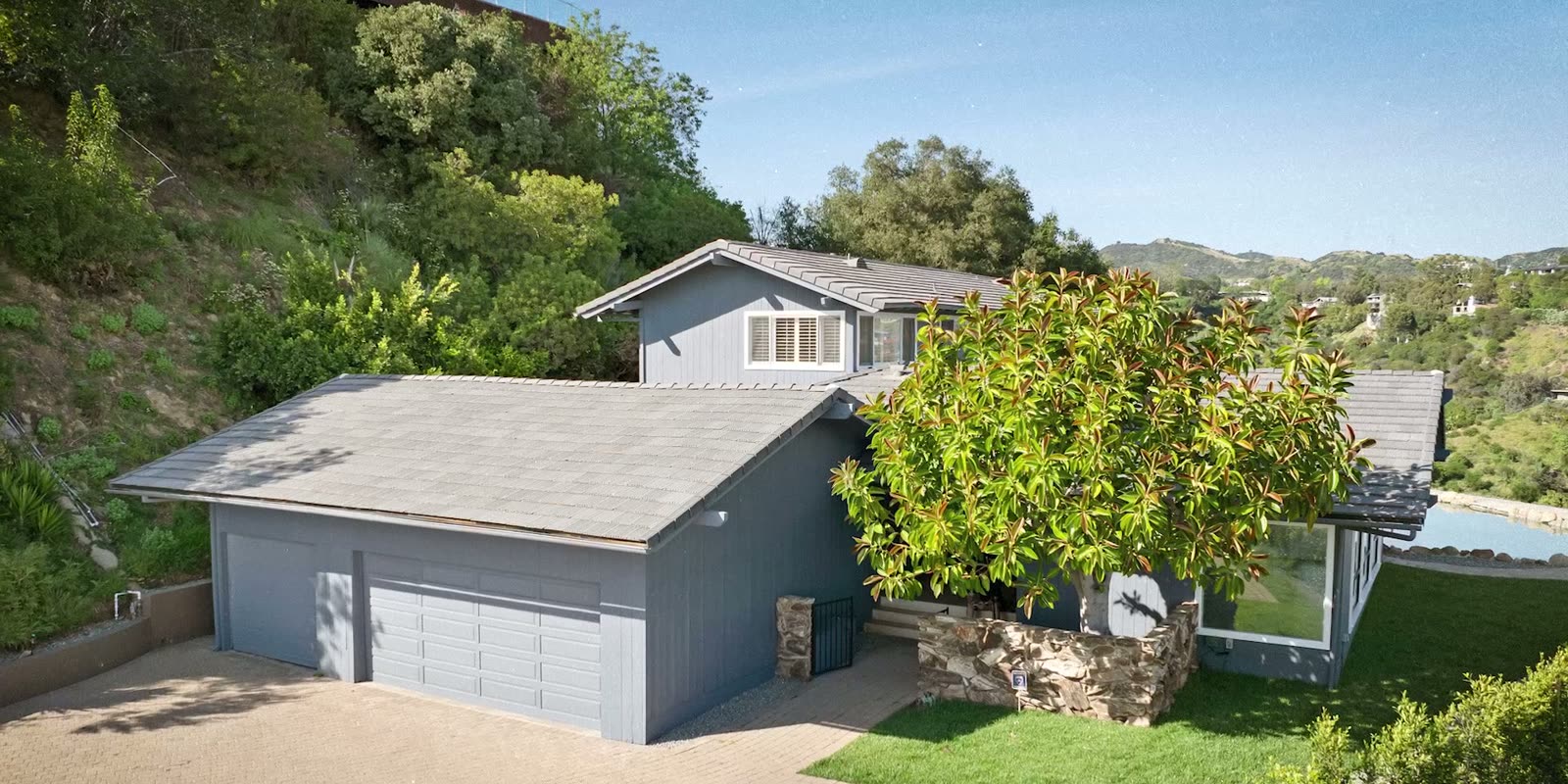
The Palisades property was traditional, ranch style, and, in Afshar’s words, “virtually untouched. It looks like the original house from back in the day.” Wide eaves, a stone chimney, a kidney pool ringed with boulders, a paver drive and a two-car garage. A good lot carrying a house from another era.
That is a familiar position for a luxury listing agent. “We oftentimes walk into houses that have really not been altered since they’ve originally been built or bought.” The seller is rarely in a position to remodel before listing. And the buyer who could is being asked to imagine the result from floor plans, photographs and, occasionally, a video of rooms that will not survive the renovation.

Pretend there’s no house
Afshar’s brief set the house aside entirely. “Let’s just pretend there’s no house that exists on that parcel of land at all,” he says, “and let’s envision what the ideal future buyer would want to buy had this property been fully developed to the maximum capability of the actual land.”

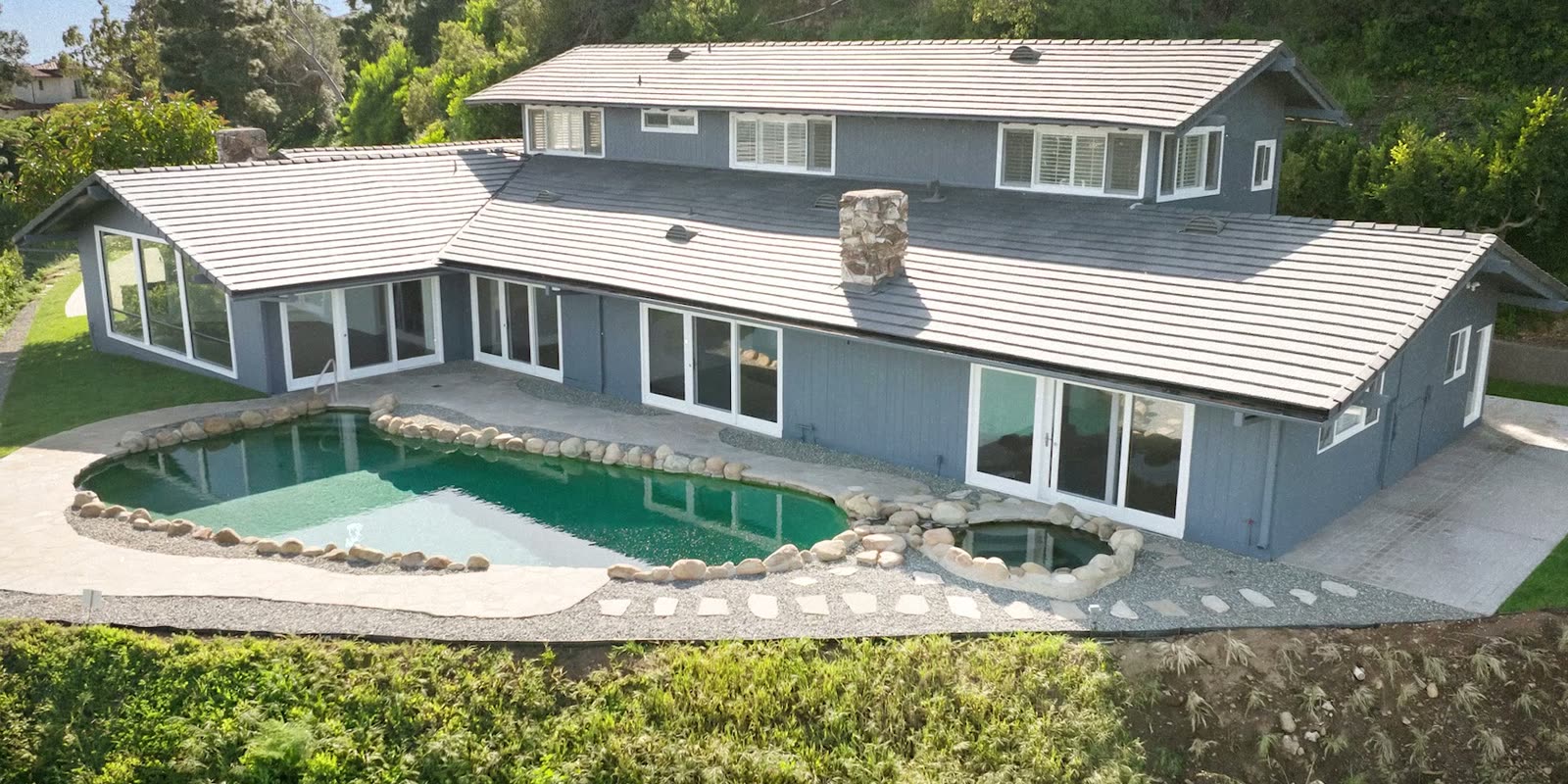
The original house and pool established the starting point for the reimagining.
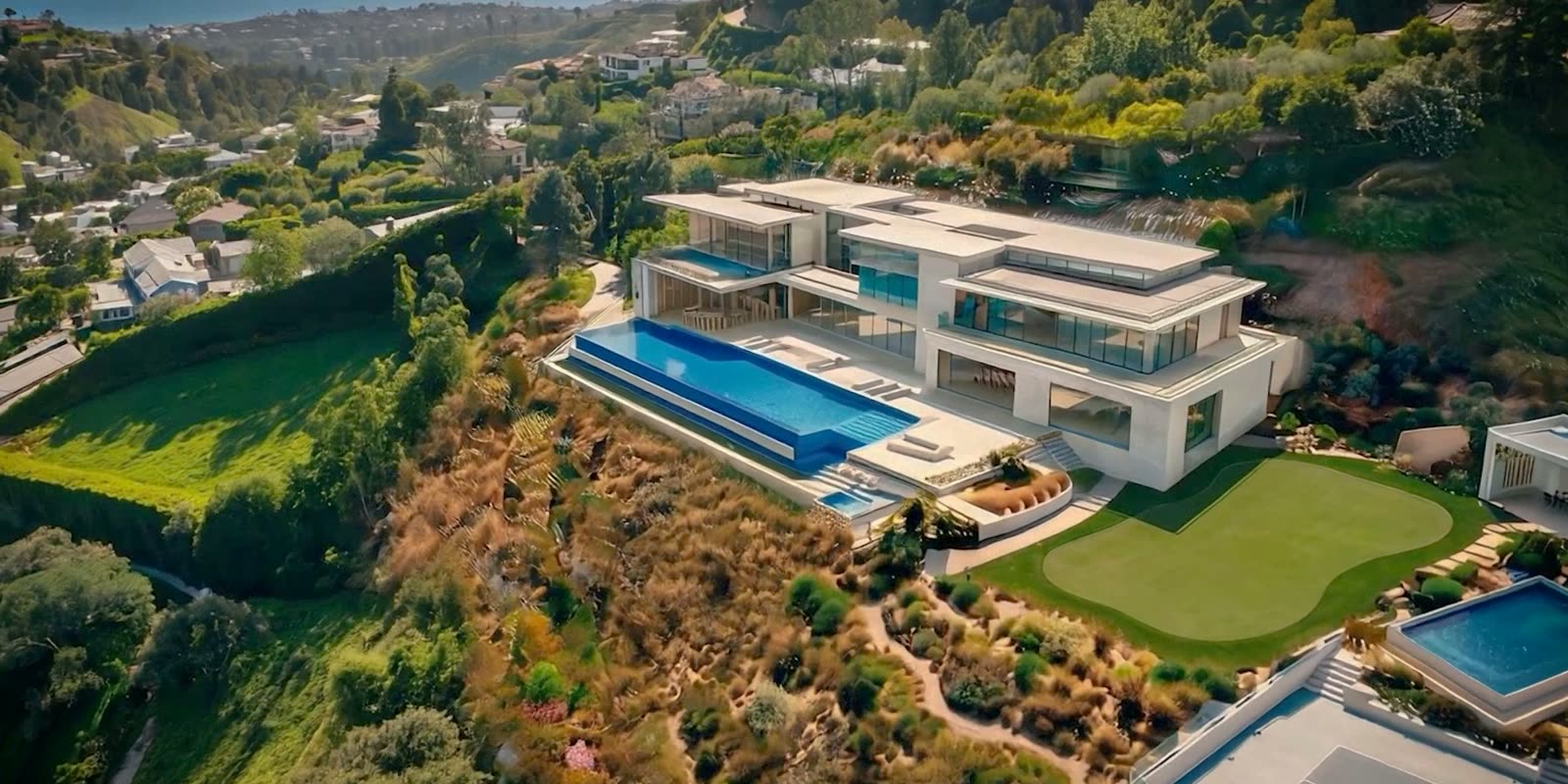
Home Stories used AI to show how a new estate could sit on the hillside, with a pool and terraced grounds.
Working from the site and the market, the Home Stories team designed a property from scratch: a glass-walled estate stepped into the hillside, an infinity-edge pool along the view line, a lawn and a court on the lower terraces. The concept was drawn first, then rendered, then put into motion.

The concept drawing mapped out a new home and pool before Home Stories brought them into the film.

AI gave the unbuilt estate the light and detail of a finished home.
Working with the Home Stories team, they literally designed a property from scratch.
A walk-through, not a floor plan
What Afshar had used before to sell potential was the standard kit. “Typically, we just use floor plans and images, and sometimes video.” What he got instead was a narrated film that moves through rooms that were never built. “A narrated version that actually feels like you’re walking through the property obviously adds a different element.”
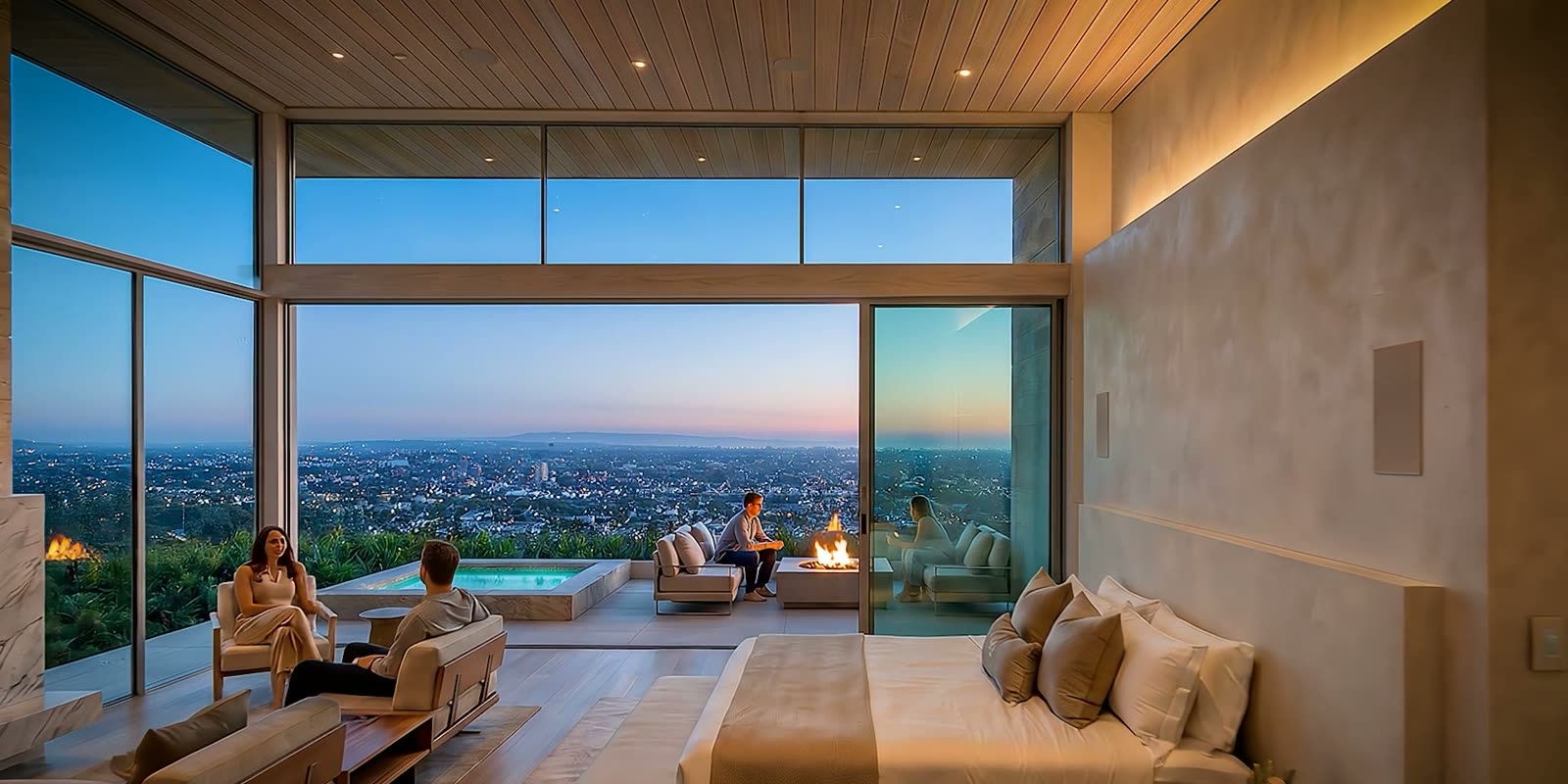


The film travels from the terrace to a living room open to the city at dusk, out to a pavilion in the garden, along the pool to an outdoor kitchen. The buyer sees the remodel finished. The agent gets a marketing asset that does in a few minutes of film what a rendering package cannot do in a single frame: it lets someone move through the house.
The human element
The detail Afshar singles out is the people. “One really neat feature that I would say Home Stories offers is the human element. People see themselves enjoying the jacuzzi, or enjoying the backyard, or enjoying the terrace and having dinner.”



Most renderings show empty rooms. A film with a family in the cabana and a table set for dinner asks a different question of the viewer, and it is the question that sells a house: is this your life?
Night and day
Speed is the other half of the argument, and it is the half a brokerage will recognize. Afshar has worked with rendering companies and knows the cadence: a round of drawings, a round of notes, another round. “The amount of times that it would take to go back and forth by creating standard renderings versus what Home Stories was able to do was night and day.” Of the Home Stories process: “It drastically shortens the time frame to produce the material that is requested.”

That time is an agent’s marketing window. “A lot of people talk, and they say that they can do certain things. The things that I was told Home Stories can do, they in fact do it, and they do it really well. Being able to have that trust in a group who can deliver on what they say they do is paramount for me.”
Cast the widest net
Afshar’s closing point is the one this page borrows for its headline, and it is not about renderings at all. It is about reach. “Story is how you get them in the door. To tell the story and then cast as wide of a net as you possibly can is, I would say, the single most important thing that you can do from a marketing perspective. That’s what Home Stories does better than anyone, I feel.”
For a brokerage, that is the case in one sentence. The story is the asset that gets a buyer to the door, and the wider it travels, the more doors it opens. A listing that would have been sold as a 1960s ranch was shown instead as the estate the land could hold. The film opens with the result.

Most people who come to the open houses have thought that it was an actual done home.
What this means for a brokerage
Sell the potential, not the photograph.
When the seller cannot remodel, the film shows the buyer the remodel anyway, designed for this lot rather than borrowed from a catalog.
Collapse the rendering cycle.
One brief, one team, a finished narrated film. Afshar’s comparison to the rendering houses he has used: night and day.
Put people in the picture.
Buyers saw themselves in the cabana and at the dinner table. Open-house visitors took the estate for a finished home.